WO2018097022A1 - 自動翻訳パターン学習装置、自動翻訳の前処理装置、及びコンピュータプログラム - Google Patents
自動翻訳パターン学習装置、自動翻訳の前処理装置、及びコンピュータプログラム Download PDFInfo
- Publication number
- WO2018097022A1 WO2018097022A1 PCT/JP2017/041249 JP2017041249W WO2018097022A1 WO 2018097022 A1 WO2018097022 A1 WO 2018097022A1 JP 2017041249 W JP2017041249 W JP 2017041249W WO 2018097022 A1 WO2018097022 A1 WO 2018097022A1
- Authority
- WO
- WIPO (PCT)
- Prior art keywords
- sentence
- language
- learning
- word
- division
- Prior art date
- Legal status (The legal status is an assumption and is not a legal conclusion. Google has not performed a legal analysis and makes no representation as to the accuracy of the status listed.)
- Ceased
Links
Images



Classifications
-
- G—PHYSICS
- G06—COMPUTING OR CALCULATING; COUNTING
- G06F—ELECTRIC DIGITAL DATA PROCESSING
- G06F40/00—Handling natural language data
- G06F40/40—Processing or translation of natural language
Definitions
- This invention relates to an automatic translation technique, and more particularly to a technique for improving the accuracy of automatic translation for highly standardized documents.
- Patent Document 1 proposes such a technique.
- the technique described in Patent Document 1 utilizes the fact that English claims and Japanese claims corresponding to the English claims have a common formality.
- the correspondence of the appearance order of each structural part often changes between the original text and the translated text.
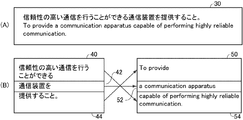
- the parallel translation 30 shown in FIG. 1B considering the correspondence of the structural part strings of the parallel translation 30, the Japanese structural part strings 40, 42 and 44 are translated into English structural part strings 54, 52 and 50, respectively.
- the appearance order of the structural component column 40 and the structural component column 44 is switched to the structural component columns 50 and 54 in English.
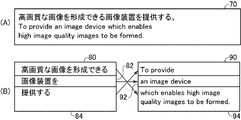
- the parallel translation 70 shown in FIG. In Japanese, the structural part rows 80, 82 and 84 appear in this order, whereas in English, the parts corresponding to the structural part rows 80 and 84 are switched, and appear in the order of the structural part rows 90, 92 and 94. is doing.
- Patent Document 1 uses this relationship between English claims and Japanese claims to improve the accuracy of automatic translation. That is, the structural part arrangement pattern is specified in advance for both the structural part of the English claim and the Japanese claim, and the correspondence (rearrangement) pattern of the structural part is specified. With this pattern, it is possible to specify the correspondence of the structural parts for the corresponding English claims and Japanese claims.
- an English claim is input at the time of translation
- an English claim pattern is specified, and the English claim is divided into components according to the pattern.
- the Japanese claim pattern corresponding to the specified pattern is specified, and the constituent elements of the English claim are rearranged according to the Japanese claim pattern. It has been reported that the accuracy of translation into Japanese is improved by automatically translating English claims with rearranged components into Japanese.
- Patent Document 1 makes it possible to translate English claims into Japanese claims with high accuracy.
- the cost for improvement is high.
- the above pattern creation and component correspondence are performed at lower costs. There is a need.
- An automatic translation pattern learning device decomposes a sentence in a first language into a plurality of structural parts in order to translate a sentence in a first language into a sentence in a second language by automatic translation. Learn the pattern to rearrange the order.
- This automatic translation pattern learning device includes a parallel translation storage means for storing a translation of a first language and a second language, and a sentence structure component of the first language for each of the parallel translations stored in the parallel translation storage means. The position where the correspondence between the appearance order of the second language sentence and the appearance order of the structural parts of the corresponding second language sentence changes is detected as the divided position of each of the first language sentence and the second language sentence.
- Machine learning learning data including a predetermined number of consecutive word strings of a sentence in the first language and correct information indicating whether or not there is a divided position at a predetermined position in the word string.
- the learning data generating means includes a predetermined number of consecutive word strings of the sentence in the first language, and data with correct answer information indicating whether or not there is a division position in the center of the word string. Is included as learning data for machine learning.
- the learning data generation means includes a predetermined number of consecutive word strings of the sentence in the first language, information indicating whether or not there is a division position at a predetermined position in the word string, and the division position Means for generating, as learning data for machine learning, for each of the preceding and following word strings, correct data including information indicating a rearrangement pattern of a component to which the word belongs in a sentence in the second language. Including.
- the preprocessing device divides a sentence in the first language into a plurality of structural component columns as preprocessing for translating the sentence in the first language into a sentence in the second language by automatic translation.
- the pre-processing device for rearranging the order, when a predetermined number of input word strings of a sentence in the first language are given, the sentence of the first language is placed at a predetermined position in the input word string. In order to determine whether or not there is a division position, a predetermined number of consecutive words constituting the input sentence in response to the determination means that has been learned in advance and the input sentence in the first language being given.
- a word string generation unit for generating a word string, and a division for specifying a division position of a component constituting an input sentence by giving each of a predetermined number of word strings generated by the word string generation unit to a determination unit Input at the position specified by the position specifying means and the dividing position specifying means It was divided into a plurality of structural components, in accordance with the sort pattern defined to correspond to the determining means, and a rearranging means for rearranging the plurality of components.
- the determination unit determines whether or not there is a sentence division position in the first language at a predetermined position in the input word string. Has been learned in advance so as to output division position information indicating where the structural parts to which the words before and after the division position belong in the input word string are arranged in the second language sentence.
- the rearranging means divides the input sentence into a plurality of structural parts at the division position determined by the division position specifying means, and rearranges the plurality of structural parts according to the division position information output by the determination means. Including means.
- the computer program according to the third aspect causes the computer to function as each unit of any of the above-described apparatuses.
- FIG. 6 It is a schematic diagram for demonstrating the operation
- movement of the program according to the pseudo code shown in FIG. 6 is a flowchart showing a control structure of a program for dividing an inputted sentence in the automatic translation system shown in FIG. It is a schematic diagram explaining the structure of the learning data in the 2nd Embodiment of this invention. It is a figure which shows the external appearance of the computer which implement
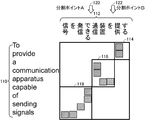
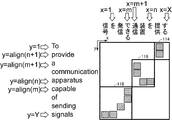
- the Japanese word sequence and the English word sequence constituting the first block 114, the second block 116, and the third block 118 are respectively a group. It is a component row, and it can be seen that these are rearranged together at the time of translation.
- One of the boundaries is a boundary between the first block 114 and the second block 116 (this is referred to as a dividing point B), and one of the other boundaries is the second block 116 and the third block 116. It can be seen that this is the boundary of the block 118 (this is called the dividing point A).
- a block consisting of a component part sequence divided by the division point is estimated by using this property of the translation between Japanese and English, estimating the division point of the input sentence.
- a block consisting of a component part sequence divided by the division point is estimated by using this property of the translation between Japanese and English, estimating the division point of the input sentence.
- a statistical model is used to estimate the division points.
- a support vector machine (SVM) is used as a statistical model.
- an automatic translation device is used to obtain a word correspondence table between parallel translations, and the information is used to examine the relationship between the order of words as shown in FIG. To do. It is known that a word correspondence table between parallel translations is required with high reliability.
- Fig. 4 shows the structure of learning data.
- two division points 120 and 122 in input sentence 112 are detected using the relationship shown in FIG. All word strings composed of four consecutive words in the input sentence are generated, whether or not there is a division point at the center, and the information is attached to each word string.
- a word string adjacent to the assumed division point position from the left side (front side) is referred to as a left adjacent word group, and a word string adjacent from the right side (rear side) is referred to as a right adjacent word group.
- information (tag) indicating whether or not there is a division point at the center position is attached to each of these word groups as correct answer data.
- Each row of the data 130 thus formed becomes learning data.
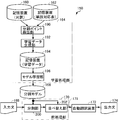
- the automatic translation system 150 associates a word correspondence table obtained by using the automatic translation apparatus with each parallel translation for each of the parallel translations stored in the storage device 160 and the parallel translation stored in the storage device 160.
- a storage device 162 for storing, and a learning processing unit 164 for learning the division model 166 made of SVM using the parallel translation stored in the storage device 160 and the word correspondence table stored in the storage device 162 are included.
- the automatic translation system 150 further receives the input sentence 168 in Japanese, refers to the division model 166, and divides the input sentence 168 if the input sentence 168 can be rearranged as shown in FIG.
- a pre-processing unit 170 that performs pre-processing that divides the block into three blocks and rearranges the order of each block into English in accordance with the correspondence shown in FIG. 3, and the pre-processing unit 170 performed the pre-processing.
- an automatic translation device 172 for generating an English output sentence 174 by performing automatic Japanese-English translation on the input sentence 171. Any device may be used as the automatic translation device 172. However, in the present embodiment, as will be described later, it is understood that automatic translation can be performed with particularly high accuracy when a device that performs pre-ordering of words is employed. It was.
- the learning processing unit 164 uses a corresponding word correspondence table stored in the storage device 162 to detect a division point for each Japanese translation stored in the storage device 160, and a division point detection unit 190.
- a learning data generation unit 192 for generating learning data according to the configuration shown in FIG. 4 and a learning data generation unit 192 generated from the Japanese sentence of each parallel translation in which the division point is detected by the division point detection unit 190 A storage device 194 for storing the learned data, and a model learning unit 196 for learning the divided model 166 made of SVM using the learning data stored in the storage device 194.
- the preprocessing unit 170 receives the input sentence 168, generates all word strings composed of continuous words having the same number of words as the learning data from the input sentence 168, and refers to the division model 166 for all of these word strings. 1 determines whether or not there is a division point at the center of these word strings, and if there is a division point in the input sentence 168, the division unit 200 that divides at the division point and the blocks divided by the division unit 200 are And a rearrangement unit 202 that performs a rearrangement process according to the replacement pattern as shown in FIG. 2 and outputs an input sentence 171 after the preprocessing.
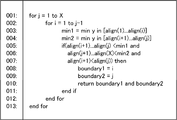
- FIG. 6 is a pseudo code showing a control structure of a program for realizing the division point detection unit 190 shown in FIG. 5, and FIG. 7 is a diagram for explaining the operation.
- the pseudo code in FIG. 6 has the structure of the Japanese input sentence in the order of block 118, block 116, and block 114 shown in FIG. 7, and the structure of the corresponding output sentence in English is block 114, block 116, and block 118. If so, two division points of the Japanese input sentence are detected. If the input sentence structure is not as described above, this program returns nothing. Therefore, the division point detection unit 190 shown in FIG. 5 outputs the division position when two division points are obtained from this program, but does not output the division point when nothing is obtained. As a result, when division points are obtained, learning data is created from the parallel translation to be processed, but when it is not obtained, the parallel translation to be processed is ignored and the corresponding learning data is not created.
- the first word in the Japanese sentence corresponds to the last word in the English translation, and after that, if the Japanese word is advanced to the i-th in order, the corresponding English word moves to the beginning of the sentence.
- this program is for detecting a division point of a translation that matches the rearrangement pattern as shown in FIGS.
- X be the total number of words in the Japanese sentence.
- the position of a Japanese word is represented by an x coordinate
- the position of an English word is represented by a y coordinate.
- the word position at the beginning of the sentence is 1.
- the origin is at the upper left
- the x coordinate extends from left to right
- the y coordinate extends from top to bottom.
- the Japanese word position on the left side of the boundary between the block 118 and the block 116 is m
- the word position on the left side of the boundary between the block 116 and the block 114 is n.
- the processing is based on the correspondence between Japanese and English, and as shown in FIG. 7, the conditions that are the boundaries of the constituent elements (blocks) that are the units of replacement are set according to the pattern of English claims and Japanese claims. Finding m and n to satisfy.
- the sixth line in FIG. 6 requires that the y coordinate of the English word corresponding to the j + 1th word to the last word is smaller than the y coordinate of the j + 1th word from the (i + 1) th word. This condition is satisfied if i and j are both in block 118, i is in block 118 and j is greater than or equal to n, and i and j are both in block 114. Limited to.
- the seventh line in FIG. 6 requests that the y coordinate of the English word corresponding to the i + 1th word is smaller than the y coordinate of the English word corresponding to the jth word.
- i is the position m and j of the rightmost Japanese word of the block 118 to be replaced, and the same is the rightmost Japanese word of the block 116 to be replaced.
- Position n will be represented.
- the fifth to seventh lines in FIG. 6 are processes for examining the above conditions. If m and n are found in this way, it is not necessary to continue further processing, so the two values are set as return values of boundary1 and boundary2 (line 8 to line 9), respectively, and this routine is terminated. Control may be returned to the parent routine that called this program (line 10).
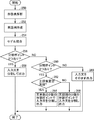
- FIG. 8 is a flowchart showing a control structure of a program that realizes the function of the dividing unit 200 shown in FIG. Referring to FIG. 8, this program uses step 250 for performing morphological analysis of Japanese input sentence 168 shown in FIG. 5 and a division model shown in FIG. 5 using the morpheme string obtained by the processing of step 250. And step 252 for creating a word string to be input to 166.
- the word strings created in step 252 are all word strings composed of four consecutive words in the input sentence 168.
- the program further provides all the word strings obtained in step 252 to the division model 166, thereby obtaining a determination result as to whether or not there is a division point at the center position of each word string, and in step 254, In step 256 for determining whether or not two division points have been obtained, and in response to obtaining two division points in the determination in step 256, the input sentence 168 is divided into structural parts at that position. In response to step 258 ending the process by outputting together with a signal indicating that the predetermined division has been performed and two division points were not obtained in the determination in step 256, further division in the determination in step 256 And step 260 for determining whether or not there are three points.
- the program further determines whether the language before translation is a so-called postfix language (Japanese, Korean, etc.) when the determination at step 260 is affirmative and the determination at step 262 is affirmative
- the input sentence is divided at the two division points at the end of the sentence before translation, and two instead of three Are output together with a signal indicating that the division points are obtained, and the processing ends and the determination in step 262 is negative, that is, the language before translation is a so-called head prefix language (English, Chinese, etc.) ),
- the input sentence is divided at two division points at the beginning of the sentence before translation, and output with a signal indicating that two division points are obtained instead of three.
- step 266 which outputs the input sentence 168 as it is and ends the processing.
- the automatic translation system 150 described above operates as follows. Referring to FIG. 5, the operation of automatic translation system 150 has two phases: learning of division model 166 and automatic translation of input sentence 168 using division model 166. These will be described in turn.
- ⁇ Learning phase of division model 166> Prior to this, it is assumed that a number of parallel translations are stored in the storage device 160. For each of these parallel translations, word correspondence between the parallel translations is made by the automatic translation apparatus, and the word correspondence table is stored in the storage device 162 in association with each parallel translation for which the word translation table is created.
- the division point detection unit 190 reads the parallel translations sequentially from the storage device 160, reads the corresponding word correspondence table from the storage device 162, and executes each parallel translation by a program having a control structure as shown by the pseudo code shown in FIG.
- the division point of the Japanese sentence is identified. It is assumed that these parallel translations are such that the blocks 114, 116, 118 are rearranged in the order of the blocks 118, 116, 114 by translation, as in Japanese and English.
- the division point detection unit 190 gives information identifying the two detected division points to the Japanese sentence of each parallel translation data, and outputs the information to the learning data generation unit 192.
- the learning data generation unit 192 generates all word strings composed of four consecutive words for each Japanese sentence of the translation provided from the division point detection unit 190, and whether or not there is a division point at the center. Is added to each word string and stored in the storage device 194 as learning data.
- the model learning unit 196 performs training of the divided model 166 using the learning data stored in the storage device 194. As a result of this training, when a word string consisting of four words is given, the division model 166 determines whether or not there is a division point at the center position, and outputs the determination result together with a score indicating its reliability.
- the parameter value is adjusted as follows.
- automatic translation can be performed by the preprocessing unit 170 and the automatic translation device 172 using the training result.
- automatic translation by automatic translation system 150 is performed as follows.
- the dividing unit 200 performs morphological analysis on the input sentence 168 (step 250 in FIG. 8), and uses the result, and consists of four consecutive words in the input sentence 168. All word strings are generated (step 252).
- the division unit 200 receives each generated word string as an input to the division model 166, and receives the determination result of the division model 166 regarding the presence / absence of the division point in the word string together with the above-described score indicating the reliability (step). 254).
- the division unit 200 divides the input sentence 168 at the division points, and the two division points are obtained. It outputs to the rearrangement part 202 with the signal of having been obtained (step 258). If the dividing point is 1 or less, or 4 or more, the dividing unit 200 outputs the input sentence 168 as it is (step 268). At this time, the division unit 200 outputs a signal indicating that two division points cannot be obtained to the rearrangement unit 202. Furthermore, when there are three division points, if the pre-translation language is a postfix translation language, the sentence is divided and output at the two division points at the end of the pre-translation sentence (step 264).
- step 266 If the previous language is a head prefix language, the sentence is divided and output at two division points on the head side (step 266). At this time, in both step 264 and step 266, a signal that two division points have been obtained is output to rearrangement section 202.
- the rearrangement unit 202 When the rearrangement unit 202 receives a signal from the division unit 200 that two division points have been obtained, the rearrangement unit 202 receives the three blocks received from the division unit 200 in accordance with the rearrangement pattern predetermined by the division model 166. Are rearranged and given to the automatic translation apparatus 172 as an input sentence 171. If the signal that two division points cannot be obtained is received, the rearrangement unit 202 provides the output of the division unit 200 as it is to the automatic translation device 172 as the input sentence 171.
- the automatic translation device 172 translates Japanese-English into the input sentence 171 and outputs an output sentence 174 in English.
- the translation by the automatic translation apparatus 172 takes the form in which the input sentence is close to the order of English words that are the output. As a result, it is known that translation accuracy is improved. As explained below, this was confirmed by experiments.
- RIBES value is known as an evaluation scale that emphasizes information on word rearrangement.
- a check mark indicates that the method described in the column heading is adopted.
- the division model 166 used in the automatic translation system 150 is effective only for the rearrangement pattern as shown in FIGS. However, there are other rearrangement patterns. The same method can be applied to such a rearrangement pattern, and it is easy to understand that learning data may be changed. Further, by using different division models together and applying the division models separately to the same input sentence, it is possible to perform translation by performing various sorts. In this case, it is considered effective to compare the scores of the division points output by a plurality of division models and use the determination of the division model that gave the highest score. The same applies to the case where the number of divisions by the division model is 2 or less and 4 or more.
- the block rearrangement method is determined in one way by one division model.
- the present invention is not limited to such an embodiment.
- learning data is created from these parallel translations and learning of the division model is performed.
- the problem is the format of the learning data.
- the division model is not limited to such a model. For example, by preparing learning data having a configuration as shown in FIG. 9, it is possible to specify a plurality of sort patterns with the same number of divisions in one division model.
- sentence 112 is divided into three blocks 300, 302, and 304 by dividing points 120 and 122.
- they are sorted in the order of blocks 304, 302, and 300.
- the learning data 330 is created under such conditions.
- the configuration of the learning data 330 is different from that shown in FIG. 4, not simply information indicating whether or not there is a division point at the center of the word string, but after the left adjacent word group and the right adjacent word group are rearranged. It has a block number pair column 340 which is information indicating which block it belongs to.
- this block number pair is the same numerical value (for example, “3, 3”), the left adjacent word group and the right adjacent word group belong to the same block even after rearrangement, that is, this word string may not have a division point. Recognize. Further, if the block number pair is a different numerical value, for example, “3, 2”, it can be seen that the left adjacent word group and the right adjacent word group are divided into the third and second blocks, respectively, after the rearrangement. That is, it can be seen that this word string has division points, and it can also be seen where to move after rearrangement by looking at the block number pairs. In this case also, it is assumed that the division point is at the center of the four words.
- the automatic translation system 150 and the components thereof according to the embodiment of the present invention can be realized by computer hardware and a computer program executed on the computer hardware.
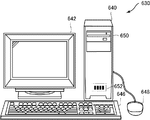
- FIG. 10 shows the external appearance of this computer system 630
- FIG. 11 shows the internal configuration of the computer system 630.
- a computer system 630 includes a computer 640 having a memory port 652 and a DVD (Digital Versatile Disk) drive 650, a keyboard 646, a mouse 648, and a monitor 642 all connected to the computer 640. Including.
- DVD Digital Versatile Disk
- the computer 640 includes a CPU (Central Processing Unit) 656, a bus 666 connected to the CPU 656, the memory port 652, and the DVD drive 650, and a startup program.
- ROM Read-only memory
- RAM random access memory
- Computer system 630 further includes a network interface (I / F) 644 that provides a connection to network 668 that allows communication with other terminals.
- the computer program for causing the computer system 630 to function as the automatic translation system 150 according to the above-described embodiment and the respective functional units thereof is stored in the DVD drive 650 or the DVD 662 or the removable memory 664 installed in the memory port 652, and Transferred to the hard disk 654.
- the program may be transmitted to the computer 640 through the network 668 and stored in the hard disk 654.
- the program is loaded into the RAM 660 when executed.
- the program may be loaded directly from the DVD 662 to the RAM 660 from the removable memory 664 or via the network 668.
- This program includes an instruction sequence including a plurality of instructions for causing the computer 640 to function as each functional unit of the automatic translation system 150 according to the above embodiment.
- Some of the basic functions necessary to cause computer 640 to perform this operation are an operating system or third party program running on computer 640 or various dynamically linked programming toolkits or programs installed on computer 640. Provided by the library. Therefore, this program itself does not necessarily include all the functions necessary for realizing the system, apparatus, and method of this embodiment.
- the program is a system as described above by dynamically calling an appropriate program in an appropriate function or programming toolkit or program library in a controlled manner to obtain a desired result among instructions, It is only necessary to include an instruction for realizing a function as an apparatus or a method. Of course, all necessary functions may be provided only by an independent program.
- the present invention has been described above by taking the embodiment as an example, the present invention is not limited to the above embodiment.
- a plurality of types of division models are used in parallel, and the input sentence is divided and rearranged according to the result of the division model in which the division point is detected with the highest score for the input sentence.
- Good As the automatic translation device 172, it has been found that the best accuracy is obtained when word rearrangement is used in the above experiment, but the automatic translation mechanism is not limited to the one using word rearrangement. . Any automatic translation device that performs translation using a statistical language model or a translation model can be used.
- the learning data of the division model in this case needs to be performed by a program that selects only the parallel translation according to the rearrangement pattern as the learning data and detects the division point as described above.
- a program can be created by examining the word associations associated with the rearrangement patterns and capturing their characteristics.
- the length of the word string input to the division model is set to 4, but the length is not limited to this value.
- the word string may have any length as long as it is 2 or more.
- the position for determining the presence / absence of the division point is the center of the word string, it is not limited thereto. Including the case where the length of the word string is an odd number, any position may be used as long as the position of the division point is other than the center and is between words in the word string. However, the position of the dividing point is probably most desirable at the center or around it.
- SVM is used as the division model, but the model to be used is not limited to SVM.
- a neural network may be used.
- Japanese and English are handled as a translation language pair.
- the present invention is not limited to such an embodiment, and can be applied to any language pair.
- language pairs whose word order is significantly different such as Japanese and English, Japanese and Chinese, etc., it is possible to obtain a greater effect than language pairs with similar word order. .
- the present invention is applicable not only to the so-called translation industry but also to all industries in which users may encounter languages other than their native language.
- the manufacturing industry the industry that carries out procedures for importing equipment, products or raw materials from abroad, the industry that correctly delivers such equipment, products or raw materials to the destination, the equipment and products that were delivered correctly set up, and the raw materials correctly
- the present invention can be used in a wide range of industries such as industries that need to be used.
- Second block 118 Third block 120, 122 Division point 150 Automatic translation system 160, 162, 194 Storage device 164 Learning processing unit 166 Division model 168, 171 Input sentence 170 Preprocessing unit 172 Automatic translation Device 190 Division point detection unit 192 Learning data generation unit 196 Model learning unit 200 Division unit 202 Rearrangement unit
Landscapes
- Engineering & Computer Science (AREA)
- Theoretical Computer Science (AREA)
- Health & Medical Sciences (AREA)
- Artificial Intelligence (AREA)
- Audiology, Speech & Language Pathology (AREA)
- Computational Linguistics (AREA)
- General Health & Medical Sciences (AREA)
- Physics & Mathematics (AREA)
- General Engineering & Computer Science (AREA)
- General Physics & Mathematics (AREA)
- Machine Translation (AREA)
Abstract
【課題】自動翻訳に先立って、原文の構成部品列を自動翻訳に適した順序に入れ替えるパターンを学習する自動翻訳パターン学習装置を提供する。 【解決手段】学習処理部164は、対訳のうち、原言語の文の構造部品の出現順序と、対応する訳文の構造部品の出現順序との対応関係が変化する位置を両者の文の分割位置として検出する分割ポイント検出部190と、原言語の文内の、連続する所定個数の構造部品列と、その中に分割位置があるか否かを示す正解情報とからなるデータを機械学習の学習データとして生成する学習データ生成部192と、生成された学習データを用いて、機械学習により、原言語の文の所定個数の入力構造部品列が与えられたときに、その中の所定位置に分割位置があるか否かを判定する分割モデル166の学習を行うモデル学習部196を含む。
Description
この発明は自動翻訳技術に関し、特に、定型性の高い文書に対する自動翻訳の精度を向上させる技術に関する。
自動翻訳では、定型的な文書を翻訳することが多い。典型的には特許出願書類のうちの権利範囲を定める部分の翻訳である。例えば、米国における先行技術調査を日本の技術者が行う場合、問題となるのはクレームの部分である。英語の文で記載された米国特許のクレームを技術者、弁護士、及び弁理士等がそのまま理解できれば理想的であるが、限られた時間に大量の英文クレームを読む負担は大きい。そのため、英文クレームを日本語に精度高く翻訳する技術が望まれている。
特許文献1において、そうした技術が提案されている。特許文献1に記載された技術では、英文クレームと、その英文クレームに対応する日本語クレームが共通した定型性を持っていることを利用する。
より具体的には、日英翻訳では、原文及び訳文の間で各構造部品の出現順序の対応関係が入替わることがしばしば起こる。例えば図1(A)に示される対訳30を考える。図1(B)に示すように、この対訳30の構造部品列の対応関係を考えると、日本語の構造部品列40、42及び44が、英語の構造部品列54,52及び50にそれぞれ翻訳されており、構造部品列40及び構造部品列44の出現順序が、英語では構造部品列50及び54となって互いに入れ替わっている。図2(A)に示される対訳70についても同様である。日本語では構造部品列80,82及び84がこの順序で出現しているのに対し、英語では構造部品列80及び84に対応する部分が入れ替わり、構造部品列90,92及び94の順序で出現している。
特許文献1に開示された技術は、英文クレームと日本語クレームとのこのような関係を利用することで、自動翻訳の精度の向上を図っている。すなわち、予め英文クレームの構造部品と日本語クレームとの双方について、構造部品の並びのパターンを特定し、構造部品の対応関係(並べ替え)のパターンを特定する。このパターンにより、対応する英文クレームと日本語クレームとについて、構造部品の対応関係が特定できる。翻訳時に英文クレームが入力されると、英文クレームのパターンを特定し、そのパターンにしたがって英文クレームを構成要素に分割する。特定されたパターンに対応する日本語クレームのパターンを特定し、英文クレームの構成要素を日本語クレームのパターンに応じて並べ替える。このように構成要素を並べ替えた英文クレームを日本語に自動翻訳することにより、日本語への翻訳の精度が向上すると報告されている。
特許文献1に記載された技術により、英文クレームを日本語クレームに精度高く翻訳することが可能になる。しかし、特許文献1に記載された技術では、英文クレームと日本語クレームとのパターンの作成及びそれらの構成要素の対応関係の特定はいずれも人手で行う必要があり、そのために自動翻訳の精度を向上させるためのコストが高いという問題がある。英文クレームを日本語クレームに翻訳する際のような、定型的な文章の翻訳をより精度高くかつ低コストで行うためには、上記したパターンの作成及び構成要素の対応関係をより低コストで行う必要がある。
それゆえに本発明は、定型的な文章を高い精度で自動翻訳するために、自動翻訳に先立って、文の構成部品列を自動翻訳に適した順序に並べ替えるパターンを学習する自動翻訳パターン学習装置、そのパターンを用いて自動翻訳の前処理を行う前処理装置、及びそのためのコンピュータプログラムを提供することである。
第1の局面に係る自動翻訳パターン学習装置は、第1の言語の文を第2の言語の文に自動翻訳により翻訳するために、第1の言語の文を複数個の構造部品に分解して順序を並べ替えるパターンを学習する。この自動翻訳パターン学習装置は、第1の言語及び第2の言語の対訳を記憶するための対訳記憶手段と、対訳記憶手段に記憶された対訳の各々について、第1の言語の文の構造部品の出現順序と、対応する第2の言語の文の構造部品の出現順序との対応関係が変化する位置を第1の言語の文及び第2の言語の文の各々の分割位置として検出するための検出手段と、第1の言語の文の、連続する所定個数の単語列と、当該単語列内の所定位置に分割位置があるか否かを示す正解情報を付したデータを機械学習の学習データとして生成するための学習データ生成手段と、学習データ生成手段により生成された学習データを用いて、機械学習により、第1の言語の文の所定個数の入力単語列が与えられたときに、当該入力単語列内の所定位置に分割位置があるか否かを判定するための判定モデルの学習を行うための学習手段とを含む。
好ましくは、学習データ生成手段は、第1の言語の文の、連続する所定の偶数個数の単語列と、当該単語列内の中央に分割位置があるか否かを示す正解情報を付したデータを機械学習の学習データとして生成するための手段を含む。
より好ましくは、学習データ生成手段は、第1の言語の文の、連続する所定個数の単語列と、当該単語列内の所定位置に分割位置があるか否かを示す情報、及び分割位置の前後の単語列の各々について、第2の言語の文における当該単語が属する構成部品の並べ替えパターンを示す情報とからなる正解情報を付したデータを機械学習の学習データとして生成するための手段を含む。
第2の局面に係る前処理装置は、第1の言語の文を第2の言語の文に自動翻訳により翻訳する前処理として、第1の言語の文を複数個の構造部品列に分割し、その順序を並べ替える前処理装置であって、第1の言語の文の所定個数の入力単語列が与えられたときに、当該入力単語列内の所定位置に、第1の言語の文の分割位置があるか否かを判定するように、予め学習済の判定手段と、第1の言語の入力文が与えられたことに応答して、当該入力文を構成する、連続する所定個数の単語列を生成するための単語列生成手段と、単語列生成手段により生成された所定個数の単語列の各々を判定手段に与えることにより、入力文を構成する構成部品の分割位置を特定する分割位置特定手段と、分割位置特定手段により特定された分割位置で入力文を複数個の構造部品に分割し、判定手段に対応して定められる並べ替えパターンにしたがって、当該複数個の構成部品を並べ替える並べ替え手段とを含む。
好ましくは、判定手段は、第1の言語の文の所定個数の入力単語列が与えられたときに、当該入力単語列内の所定位置に、第1の言語の文の分割位置があるか否かを判定し、当該入力単語列内の、分割位置前後の単語が属する構造部品が第2の言語の文のどの位置に配置されるかを示す分割位置情報を出力するように予め学習済の手段を含む。並べ替え手段は、分割位置特定手段により判定された分割位置で入力文を複数個の構造部品に分割し、判定手段により出力された分割位置情報にしたがって、当該複数個の構造部品を並べ替えるための手段を含む。
第3の局面に係るコンピュータプログラムは、コンピュータを、上記したいずれかの装置の各手段として機能させる。
以下の説明及び図面では、同一の部品には同一の参照番号を付してある。したがって、それらについての詳細な説明は繰返さない。
[基本的考え方]
以下に本願発明の実施の形態を説明する前に、本願発明の基礎となっている基本的考え方を説明する。図3を参照して、「信号を発信できる通信装置を提供する」という日本語の文112と、「To provide a communication apparatus capable of sending signals」というその対訳文110との間の単語の対応関係を示す。日本語と英語との間では、一般的に語順が逆転するが、図3に示すように、両者の単語の対応関係は3個のブロック114,116及び118に分けられる。第1のブロック114及び第3のブロック118では、英語の語順と日本語の語順とが互いに逆の関係になっている。これに対して第2のブロック116では、英語の語順と日本語の語順とが部分的ではあるが同一の関係になっている。図1及び図2と、図3とを比較すると、第1のブロック114、第2のブロック116,及び第3のブロック118を構成する日本語の単語列及び英語の単語列が、それぞれ一団の構成部品列となっていて、翻訳時にはこれらがそれぞれまとめて互いに並べ替えられる事がわかる。そして、その境界の1つは、第1のブロック114と第2のブロック116の境界(これを分割ポイントBという。)であり、他の境界の1つは、第2のブロック116と第3のブロック118の境界(これを分割ポイントAという。)であることが分かる。
以下に本願発明の実施の形態を説明する前に、本願発明の基礎となっている基本的考え方を説明する。図3を参照して、「信号を発信できる通信装置を提供する」という日本語の文112と、「To provide a communication apparatus capable of sending signals」というその対訳文110との間の単語の対応関係を示す。日本語と英語との間では、一般的に語順が逆転するが、図3に示すように、両者の単語の対応関係は3個のブロック114,116及び118に分けられる。第1のブロック114及び第3のブロック118では、英語の語順と日本語の語順とが互いに逆の関係になっている。これに対して第2のブロック116では、英語の語順と日本語の語順とが部分的ではあるが同一の関係になっている。図1及び図2と、図3とを比較すると、第1のブロック114、第2のブロック116,及び第3のブロック118を構成する日本語の単語列及び英語の単語列が、それぞれ一団の構成部品列となっていて、翻訳時にはこれらがそれぞれまとめて互いに並べ替えられる事がわかる。そして、その境界の1つは、第1のブロック114と第2のブロック116の境界(これを分割ポイントBという。)であり、他の境界の1つは、第2のブロック116と第3のブロック118の境界(これを分割ポイントAという。)であることが分かる。
以下の実施の形態では、日本語と英語との間の対訳の、このような性質を利用し、入力される文の分割ポイントを推定し、その分割ポイントで分けられた構成部品列からなるブロックの順番を、翻訳のターゲット言語の順番に並べ替え、その後に自動翻訳を行う。こうすることで、ターゲット言語での翻訳が精度よく行えるようになる。
なお、以下の説明は日本語から英語への翻訳を例にしているが、言語の組み合わせはこれには限定されない。特に、語順が変わる事が多い、日本語と欧州言語との間の翻訳に本発明を適用できる。
[第1の実施の形態]
<構成>
第1の実施の形態では、分割ポイントを推定するために統計的モデルを用いる。本実施の形態では統計的モデルとしてサポートベクターマシン(SVM)を用いる。
<構成>
第1の実施の形態では、分割ポイントを推定するために統計的モデルを用いる。本実施の形態では統計的モデルとしてサポートベクターマシン(SVM)を用いる。
SVMを用いるにあたって、その学習データが問題となる。本実施の形態では、自動翻訳装置を用いて対訳の間の単語対応表を求め、その情報を利用して図3に示すような単語の順序の間の関係を調べ、分割ポイントの位置を特定する。対訳の間の単語対応表は、高い信頼性で求められることが分かっている。
図4に、学習データの構成を示す。図4を参照して、日本語から英語に翻訳する際に、図3のような関係を利用して、入力文112の内の2個の分割ポイント120及び122を検出する。入力文内で連続する4個の単語からなる単語列を全て生成し、その中央に分割ポイントが存在するか否かを調べ、その情報を各単語列に付す。想定される分割ポイント位置に左側(前側)から隣接する単語列を左隣接単語群、右側(後側)から隣接する単語列を右隣接単語群という。図4では、これら各単語群に、その中央位置に分割ポイントがあるか否かを示す情報(タグ)を正解データとして付す。こうしてできたデータ130の各行が学習データとなる。
図5を参照して、第1の実施の形態に係る自動翻訳システム150について、日本語を英語に翻訳する事例を説明する。自動翻訳システム150は、学習データの元となる対訳を記憶する記憶装置160と、記憶装置160に記憶された対訳の各々について、自動翻訳装置を用いて求めた単語対応表を各対訳と関連付けて記憶する記憶装置162と、記憶装置160に記憶された対訳及び記憶装置162に記憶された単語対応表を用いて、SVMからなる分割モデル166の学習を行うための学習処理部164とを含む。
自動翻訳システム150はさらに、日本語の入力文168を受けて、分割モデル166を参照して、入力文168に対して図3に示すような並べ替えが可能であれば、入力文168を分割ポイントで3個のブロックに分割し、図3に示す対応関係にしたがって各ブロックの順番を英語の順番に並べ替える前処理を行う前処理部170と、前処理部170により前処理が行われた入力文171に対して、日英の自動翻訳を行って英語の出力文174を生成するための自動翻訳装置172とを含む。自動翻訳装置172としてはどのようなものを用いても良いが、本実施の形態では、後述するように、単語の事前並べ替えを行うものを採用すると特に高い精度で自動翻訳が行えることが分かった。
学習処理部164は、記憶装置160に記憶された対訳の各々の日本語について、記憶装置162に記憶された対応する単語対応表を用いて分割ポイントを検出するための分割ポイント検出部190と、分割ポイント検出部190により分割ポイントが検出された各対訳の日本語の文から、図4に示す構成にしたがった学習データを生成するための学習データ生成部192と、学習データ生成部192により生成された学習データを記憶するための記憶装置194と、記憶装置194に記憶された学習データを用いて、SVMからなる分割モデル166の学習を行うためのモデル学習部196とを含む。
前処理部170は、入力文168を受けて、入力文168から学習データと同じ単語数の、連続する単語からなる単語列を全て生成し、これら単語列の全てについて分割モデル166を参照することによりそれら単語列の中央に分割ポイントがあるか否かを判定し、入力文168に分割ポイントがあればその分割ポイントで分割する分割部200と、分割部200により分割されたブロックを、図1及び図2に示すような入替パターンにしたがって並べ替える処理を行って前処理後の入力文171を出力する並べ替え部202とを含む。
図6は、図5に示す分割ポイント検出部190を実現するためのプログラムの制御構造を表す擬似コードであり、図7はその動作を説明するための図である。図6の擬似コードは、日本語の入力文の構造が図7に示すブロック118、ブロック116、及びブロック114の順番で、対応する英語の出力文の構造がブロック114、ブロック116、及びブロック118である場合に、日本語の入力文の2個の分割ポイントを検出する。入力文の構造が上記したものでない場合には、このプログラムは何も返さない。したがって図5に示す分割ポイント検出部190は、このプログラムから2個の分割ポイントが得られたときにはその分割位置を出力するが、何も得られない場合には分割ポイントは出力しない。この結果、分割ポイントが得られたときには処理対象の対訳から学習データが作成されるが、得られないときには処理対象の対訳は無視され、対応する学習データは作成されない。
図6及び図7において、「align(i)」は、日本語の文のi番目の単語に対応付けられた英訳文の単語位置を示す。このプログラムは、以下のような条件を満たすi、jの組を求めるものである。
(1)日本語の文の1番目の単語が英訳文の末尾の単語に対応し、それ以後、日本語の単語をi番目まで順番に進めると、対応する英語の単語は文の先頭に向かって順番に進み、
(2)i+1番目の日本語の単語に到達すると、対応する英語の単語が、先頭に向かっていくつかの単語を飛び越して進み、以後日本語の単語をj番目まで順番に進めると、対応する英語の単語は末尾に向かって逆順に進み、
(3)最後に、j+1番目の日本語の単語に到達すると、対応する英語の単語が、(2)でジャンプした単語よりさらに文の先頭に近い部分にジャンプし、以後、日本語の単語を文の末尾のX番目の単語まで順番に進めると、英語の単語は文の先頭に向かって順番に進む。
(2)i+1番目の日本語の単語に到達すると、対応する英語の単語が、先頭に向かっていくつかの単語を飛び越して進み、以後日本語の単語をj番目まで順番に進めると、対応する英語の単語は末尾に向かって逆順に進み、
(3)最後に、j+1番目の日本語の単語に到達すると、対応する英語の単語が、(2)でジャンプした単語よりさらに文の先頭に近い部分にジャンプし、以後、日本語の単語を文の末尾のX番目の単語まで順番に進めると、英語の単語は文の先頭に向かって順番に進む。
以上から分かるように、このプログラムは、図1及び図2に示すような並べ替えパターンに適合する対訳について、その分割ポイントを検出するためのものである。図1及び図2に示した並べ替えパターンと異なる並べ替えパターンに適合する学習データを作成する場合には、図6に示したプログラムと同様の考え方を用いて、そのためのプログラムを作成する必要がある。
より具体的に、図7を参照しながら図6の擬似コードを説明する。日本語文の単語の総数をXとする。図7において日本語の単語の位置をx座標、英語の単語の位置をy座標で表す。いずれも文頭の単語位置が1である。図7では、原点は左上にあり、x座標は左から右に、y座標は上から下に伸びる。ブロック118とブロック116との境界の左側の日本語の単語位置をmとし、ブロック116とブロック114の境界の左側の単語位置をnとする。ここでの処理は、日本語及び英語の対応関係から、図7に示すように英文クレームと日本語クレームとのパターンに応じて、入れ替えの単位と成る構成要素(ブロック)の境界となる条件を満たすm及びnを求めることである。
第3行目で計算されるmin1の値は次のように変化する。なお、以下では、説明を簡明にするため、i番目の日本語単語が各ブロック(例えばブロック116)内に属するものであることを、「iがブロック116内にある」と記載する。
(A1)iがブロック118内にあるときにはalign(i)で表される英単語のy座標
(A2)iがブロック116内にあるときにはalign(m)(図7では"capable")で表される英単語のy座標
(A3)iがブロック114内にあるときにはalign(i)で表される英単語のy座標
第4行で計算されるmin2の値は次のように変化する。
(A2)iがブロック116内にあるときにはalign(m)(図7では"capable")で表される英単語のy座標
(A3)iがブロック114内にあるときにはalign(i)で表される英単語のy座標
第4行で計算されるmin2の値は次のように変化する。
(B1)i及びjがいずれもブロック118内にあるときにはiの値に関係なくalign(j)で表される英単語のy座標
(B2)jがブロック116内にあるときにはiの値に関係なくalign(m+1)で表される英単語(図7では"a")のy座標
(B3)jがブロック114内にあるときにはiの値に関係なくalign(j)で表される英単語のy座標
図6の5行目は、i+1番目の単語からj番目の単語までに対応する英単語のy座標がいずれも1番目の日本語単語からi番目の日本語単語に対応する英単語のy座標より小さいことを要求している。この条件が満足されるのは、iがブロック118内にある場合とiがブロック116内にあり、かつjがブロック114内にある場合だけである。
(B2)jがブロック116内にあるときにはiの値に関係なくalign(m+1)で表される英単語(図7では"a")のy座標
(B3)jがブロック114内にあるときにはiの値に関係なくalign(j)で表される英単語のy座標
図6の5行目は、i+1番目の単語からj番目の単語までに対応する英単語のy座標がいずれも1番目の日本語単語からi番目の日本語単語に対応する英単語のy座標より小さいことを要求している。この条件が満足されるのは、iがブロック118内にある場合とiがブロック116内にあり、かつjがブロック114内にある場合だけである。
図6の6行目は、j+1番目の単語から最後の単語までに対応する英単語のy座標が、いずれもi+1番目の単語からj番目の単語のy座標より小さいことを要求している。この条件が満足されるのは、i及びjがいずれもブロック118内にあるか、iがブロック118にあってかつjがn以上であるか、i及びjがいずれもブロック114内にある場合に限られる。
図6の5行目の条件と6行目の条件の論理積をとると、i及びjがいずれもブロック118内にあるか、iがブロック118にあってかつjがnであるか、のいずれかになる。
さらに、図6の7行目は、i+1番目の単語に対応する英単語のy座標が、j番目の単語に対応する英単語のy座標より小さいことを要求している。この条件が満足されるのは、i<jであることを考慮すると、i+1及びjがいずれもブロック116内にある場合に限られる。この条件と先の条件との論理積をとると、結局、iがブロック118内にあってかつi+1はmより大きく、かつjがnである、ということになる。iがブロック118内にあってかつi+1がmより大きくなるのはi=mのときに限られる。したがって、こうした条件を満足するi、jを求めれば、iは入れ替えの対象となるブロック118の右端の日本語単語の位置m、jは同じく入れ替えの対象となるブロック116の右端の日本語単語の位置nを表すことになる。
図6の第5行から第7行は、上記した条件を吟味するための処理である。このようにしてmとnが見つかれば、それ以上処理を続ける必要はないので、この2個の値をそれぞれboundary1及びboundary2という戻り値として(第8行~第9行)このルーチンを終了し、このプログラムを呼び出した親ルーチンに制御を戻せば良い(第10行)。
なお、図6に示した擬似コードはあくまで一例であって、これ以外にも上記した条件を満たすm及びnを見つけ出すアルゴリズムであればどのようなものを採用しても良い。
図8は、図5に示す分割部200の機能を実現するプログラムの制御構造を示すフローチャートである。図8を参照して、このプログラムは、図5に示す日本語の入力文168の形態素解析を行うステップ250と、ステップ250の処理により得られた形態素列を用いて、図5に示す分割モデル166に入力する単語列を作成するステップ252とを含む。ステップ252で作成される単語列は、入力文168の内の、連続する4個の単語からなる全ての単語列である。
このプログラムはさらに、ステップ252で得られた全ての単語列を分割モデル166に与えることにより、各単語列の中央位置に分割ポイントがあるか否かの判定結果を得るステップ254と、ステップ254で2個の分割ポイントが得られたか否かを判定するステップ256と、ステップ256の判定で2個の分割ポイントが得られたことに応答して、その位置で入力文168を構造部品に分割し、所定の分割がされたことを示す信号とともに出力して処理を終わるステップ258と、ステップ256の判定で2個の分割ポイントが得られなかったことに応答して、さらにステップ256の判定で分割ポイントが3個あったか否かを判定するステップ260とを含む。
このプログラムはさらに、ステップ260の判定が肯定であるときに、翻訳前の言語がいわゆる主辞後置型言語(日本語、韓国語等)か否かを判定するステップ262と、ステップ262の判定が肯定であることに応答して、ステップ260の判定で得られた3個の分割ポイントのうち、翻訳前の文の文末側の2個の分割ポイントで入力文を分割し、3個ではなく2個の分割ポイントが得られたことを示す信号とともに出力して処理を終わるステップ264と、ステップ262の判定が否定であること、すなわち翻訳前の言語がいわゆる主辞前置型言語(英語、中国語等)であることに応答して、翻訳前の文の文頭側の2個の分割ポイントで入力文を分割し、3個ではなく2個の分割ポイントが得られたことを示す信号とともに出力して処理を終わるステップ266と、ステップ260の判定が否定であること、すなわち分割ポイントが1個以下、又は4個以上であることに応答して、2個の分割ポイントが得られなかったことを示す信号とともに入力文168をそのまま出力して処理を終わるステップ268とを含む。
<動作>
以上に説明した自動翻訳システム150は以下のように動作する。図5を参照して、自動翻訳システム150の動作には、分割モデル166の学習と、分割モデル166を用いた入力文168の自動翻訳という2つのフェーズがある。これらを順番に説明する。
以上に説明した自動翻訳システム150は以下のように動作する。図5を参照して、自動翻訳システム150の動作には、分割モデル166の学習と、分割モデル166を用いた入力文168の自動翻訳という2つのフェーズがある。これらを順番に説明する。
〈分割モデル166の学習フェーズ〉
これに先立ち、記憶装置160には多数の対訳が記憶されているものとする。それら対訳の各々について、自動翻訳装置による対訳間の単語対応付がされ、単語対応表が作成された各対訳と関係付けて記憶装置162に記憶される。
これに先立ち、記憶装置160には多数の対訳が記憶されているものとする。それら対訳の各々について、自動翻訳装置による対訳間の単語対応付がされ、単語対応表が作成された各対訳と関係付けて記憶装置162に記憶される。
分割ポイント検出部190は、記憶装置160から順番に対訳を読出し、さらに記憶装置162から対応する単語対応表を読出し、図6に示す擬似コードで示されるような制御構造を持つプログラムによって、各対訳のうちの日本語の文の分割ポイントを特定する。なお、これら対訳は日本語と英語のように、いずれもブロック114、116、118が翻訳によりブロック118、116、114という順番に並べ替えられるような対訳であるものとする。分割ポイント検出部190は、各対訳データの日本語の文に、検出された2個の分割ポイントを特定する情報を付与して学習データ生成部192に出力する。
学習データ生成部192は、分割ポイント検出部190から与えられた対訳の各々の日本語の文について、連続する4個の単語からなる単語列を全て生成し、その中央に分割ポイントがあるか否かを示す情報を各単語列に付与し記憶装置194に学習データとして蓄積する。
モデル学習部196は、記憶装置194に蓄積された学習データを用いて分割モデル166のトレーニングを行う。このトレーニングの結果、分割モデル166は、4個の単語からなる単語列が与えられると、その中央位置に分割ポイントがあるか否かを判定し、判定結果をその信頼度を示すスコアとともに出力するようにそのパラメータの値が調整される。
全ての学習データによる分割モデル166のトレーニングが完了すると、そのトレーニング結果を用いた前処理部170及び自動翻訳装置172による自動翻訳を行うことができる。
〈自動翻訳フェーズ〉
図5を参照して、自動翻訳システム150による自動翻訳は以下のようにして行われる。日本語の入力文168が与えられると、分割部200は入力文168を形態素解析し(図8のステップ250)、その結果を用いて、入力文168の中で連続する4個の単語からなる単語列を全て生成する(ステップ252)。次いで分割部200は、生成された各単語列を分割モデル166への入力とし、当該単語列内の分割ポイントの有無に関する分割モデル166の判定結果を、上述した信頼度を示すスコアとともに受け取る(ステップ254)。ステップ254の処理により、全ての単語列の内に2個のみ分割ポイントがあるという判定結果が得られると、分割部200は、その分割ポイントで入力文168を分割し、2個の分割ポイントが得られたという信号とともに並べ替え部202に出力する(ステップ258)。もしも分割ポイントが1個以下、又は4個以上の場合には、分割部200は入力文168をそのまま出力する(ステップ268)。分割部200はこのとき、2個の分割ポイントが得られなかったことを示す信号を並べ替え部202に出力する。さらに、分割ポイントが3個あったときには、翻訳前の言語が主辞後置型言語であれば翻訳前の文の文末側の2個の分割ポイントで文を分割して出力し(ステップ264)、翻訳前の言語が主辞前置型言語であれば文頭側の2個の分割ポイントで文を分割して出力する(ステップ266)。このとき、ステップ264とステップ266のいずれにおいても、2個の分割ポイントが得られたという信号が並べ替え部202に出力される。
図5を参照して、自動翻訳システム150による自動翻訳は以下のようにして行われる。日本語の入力文168が与えられると、分割部200は入力文168を形態素解析し(図8のステップ250)、その結果を用いて、入力文168の中で連続する4個の単語からなる単語列を全て生成する(ステップ252)。次いで分割部200は、生成された各単語列を分割モデル166への入力とし、当該単語列内の分割ポイントの有無に関する分割モデル166の判定結果を、上述した信頼度を示すスコアとともに受け取る(ステップ254)。ステップ254の処理により、全ての単語列の内に2個のみ分割ポイントがあるという判定結果が得られると、分割部200は、その分割ポイントで入力文168を分割し、2個の分割ポイントが得られたという信号とともに並べ替え部202に出力する(ステップ258)。もしも分割ポイントが1個以下、又は4個以上の場合には、分割部200は入力文168をそのまま出力する(ステップ268)。分割部200はこのとき、2個の分割ポイントが得られなかったことを示す信号を並べ替え部202に出力する。さらに、分割ポイントが3個あったときには、翻訳前の言語が主辞後置型言語であれば翻訳前の文の文末側の2個の分割ポイントで文を分割して出力し(ステップ264)、翻訳前の言語が主辞前置型言語であれば文頭側の2個の分割ポイントで文を分割して出力する(ステップ266)。このとき、ステップ264とステップ266のいずれにおいても、2個の分割ポイントが得られたという信号が並べ替え部202に出力される。
並べ替え部202は、分割部200から2個の分割ポイントが得られたという信号を受け取ったときには、分割モデル166により予め定められた並べ替えパターンにしたがって、分割部200から受信した3個のブロックを並べ替え、入力文171として自動翻訳装置172に与える。もしも2個の分割ポイントが得られなかったという信号を受け取ったときには、並べ替え部202は分割部200の出力をそのまま入力文171として自動翻訳装置172に与える。
自動翻訳装置172は、入力文171を入力として、日英の翻訳を行い、英語の出力文174を出力する。分割部200による分割と並べ替え部202による並べ替えとが行われた場合、自動翻訳装置172による翻訳では、入力文が出力である英語の語順に近い形となる。その結果、翻訳の精度が高まることが知られている。以下に説明するように、実験でもそれが確認できた。
<実験結果>
実験では、日本の公開特許公報の英文抄録(PAJ)と、もとになった日本語抄録とについて、自動的に単語対応付けを行った対訳コーパスを用いた。統計的機械翻訳の学習用にこれらのうち1,000,000文を使用し、開発・テスト用にそれぞれ1,000文を使用した。この対訳コーパスのうち100,000文を対象に、上記した並べ替えの必要な38,194文を抽出し、これらから学習データを作成して分割モデル166としてSVMのトレーニングを行った。なお、以下の表では、上記実施の形態でのブロックごとの並べ替えを「グローバルな並べ替え」と呼び、以前から統計的機械翻訳で用いられている、単語レベルでの並べ替えを「単語並べ替え」と呼んでいる。
実験では、日本の公開特許公報の英文抄録(PAJ)と、もとになった日本語抄録とについて、自動的に単語対応付けを行った対訳コーパスを用いた。統計的機械翻訳の学習用にこれらのうち1,000,000文を使用し、開発・テスト用にそれぞれ1,000文を使用した。この対訳コーパスのうち100,000文を対象に、上記した並べ替えの必要な38,194文を抽出し、これらから学習データを作成して分割モデル166としてSVMのトレーニングを行った。なお、以下の表では、上記実施の形態でのブロックごとの並べ替えを「グローバルな並べ替え」と呼び、以前から統計的機械翻訳で用いられている、単語レベルでの並べ替えを「単語並べ替え」と呼んでいる。
自動翻訳は以下の4種類の設定で行い、翻訳結果はRIBES値により評価した。RIBES値は単語の並べ替えの情報を重視する評価尺度として知られている。チェックマークはその列の見出しに記載された手法を採用したことを示す。

なお、この実施の形態に係る自動翻訳システム150で使用する分割モデル166は、図1及び図2に示されるような並べ替えパターンに対してのみ有効である。しかし、これ以外にも並べ替えパターンはあり得る。そうした並べ替えパターンについても同様の手法を適用可能であり、学習データを変えればよいことは容易に理解可能である。さらに、そのように異なる分割モデルを併用し、同じ入力文に対してそれら分割モデルを別々に適用することで、種々の並べ替えを行って翻訳することが可能になる。この場合には、複数の分割モデルの出力する分割ポイントのスコアを比較し、最も高いスコアを与えた分割モデルの判定を用いることが有効と考えられる。分割モデルによる分割数が2個以下及び4個以上の場合についても同様である。
[第2の実施の形態]
上記第1の実施の形態では、1個の分割モデルによりブロックの並べ替え方法は一通りに定められる。しかし本発明はそのような実施の形態には限定されない。例えば、1個の分割モデルにより分割個数が同じ複数通りの並べ替えパターンを推定することも可能である。そのためには、学習データとして、分割個数が同じで並べ替えパターンが互いに異なる対訳を多数集めることが必要である。これら対訳から学習データを作成し、分割モデルの学習を行う点では第1の実施の形態と同様である。問題は、学習データの形式である。
上記第1の実施の形態では、1個の分割モデルによりブロックの並べ替え方法は一通りに定められる。しかし本発明はそのような実施の形態には限定されない。例えば、1個の分割モデルにより分割個数が同じ複数通りの並べ替えパターンを推定することも可能である。そのためには、学習データとして、分割個数が同じで並べ替えパターンが互いに異なる対訳を多数集めることが必要である。これら対訳から学習データを作成し、分割モデルの学習を行う点では第1の実施の形態と同様である。問題は、学習データの形式である。
第1の実施の形態では、各単語列の中央位置に分割ポイントがあるか否かのみを判定していた。しかし、分割モデルはそのようなものには限定されない。例えば、図9に示すような構成の学習データを準備することにより、1個の分割モデルで同じ分割数で複数通りの並べ替えパターンを特定できる。
図9を参照して、文112は分割ポイント120及び122により3個のブロック300、302、及び304に分割される。英語に翻訳すると、これらはブロック304、302、及び300の順番に並べ替えられる。このような条件で作成されるのが学習データ330である。学習データ330の構成が図4に示すものと異なるのは、単純に単語列の中央に分割ポイントがあるか否かを示す情報ではなく、左隣接単語群と右隣接単語群がそれぞれ並べ替え後にどのブロックに属するかを示す情報であるブロック番号ペア欄340を持つことである。このブロック番号ペアが同じ数値なら(例えば「3,3」)、左隣接単語群と右隣接単語群とは、並べ替え後も同じブロックに属する、すなわちこの単語列は分割ポイントを持たない事がわかる。また、ブロック番号ペアが異なる数値、例えば「3,2」であれば、左隣接単語群と右隣接単語群とが、並べ替え後にそれぞれ3番目と2番目のブロックに分けられることが分かる。すなわち、この単語列は分割ポイントを持つことが分かり、しかもブロック番号ペアを見ることによりそれぞれ並べ替え後にどの位置に移動するかも分かる。なお、この場合も分割ポイントは4個の単語の中央位置にあることを想定している。
こうした学習データを多数準備して分割モデルをトレーニングし、各単語列について並べ替え後のブロック番号ペアを推定することで、1個の分割モデルを用いて分割ポイントの位置と並べ替えパターンとを推定できる。
[コンピュータによる実現]
本発明の実施の形態に係る自動翻訳システム150及びその構成要素は、いずれもコンピュータハードウェアと、そのコンピュータハードウェア上で実行されるコンピュータプログラムとにより実現できる。図10はこのコンピュータシステム630の外観を示し、図11はコンピュータシステム630の内部構成を示す。
本発明の実施の形態に係る自動翻訳システム150及びその構成要素は、いずれもコンピュータハードウェアと、そのコンピュータハードウェア上で実行されるコンピュータプログラムとにより実現できる。図10はこのコンピュータシステム630の外観を示し、図11はコンピュータシステム630の内部構成を示す。
図10を参照して、コンピュータシステム630は、メモリポート652及びDVD(Digital Versatile Disk)ドライブ650を有するコンピュータ640と、いずれもコンピュータ640に接続されたキーボード646と、マウス648と、モニタ642とを含む。
図11を参照して、コンピュータ640は、メモリポート652及びDVDドライブ650に加えて、CPU(中央処理装置)656と、CPU656、メモリポート652及びDVDドライブ650に接続されたバス666と、起動プログラム等を記憶する読出専用メモリ(ROM)658と、バス666に接続され、上記自動翻訳システム150の各部の機能を実現するプログラム命令、システムプログラム及び作業データ等を記憶するランダムアクセスメモリ(RAM)660と、ハードディスク654を含む。コンピュータシステム630はさらに、他端末との通信を可能とするネットワーク668への接続を提供するネットワークインターフェイス(I/F)644を含む。
コンピュータシステム630を上記した実施の形態に係る自動翻訳システム150及びその各機能部として機能させるためのコンピュータプログラムは、DVDドライブ650又はメモリポート652に装着されるDVD662又はリムーバブルメモリ664に記憶され、さらにハードディスク654に転送される。又は、プログラムはネットワーク668を通じてコンピュータ640に送信されハードディスク654に記憶されてもよい。プログラムは実行の際にRAM660にロードされる。DVD662から、リムーバブルメモリ664から又はネットワーク668を介して、直接にRAM660にプログラムをロードしてもよい。
このプログラムは、コンピュータ640を、上記実施の形態に係る自動翻訳システム150の各機能部として機能させるための複数の命令からなる命令列を含む。コンピュータ640にこの動作を行わせるのに必要な基本的機能のいくつかはコンピュータ640上で動作するオペレーティングシステム若しくはサードパーティのプログラム又はコンピュータ640にインストールされる、ダイナミックリンク可能な各種プログラミングツールキット又はプログラムライブラリにより提供される。したがって、このプログラム自体はこの実施の形態のシステム、装置及び方法を実現するのに必要な機能全てを必ずしも含まなくてよい。このプログラムは、命令のうち、所望の結果が得られるように制御されたやり方で適切な機能又はプログラミングツールキット又はプログラムライブラリ内の適切なプログラムを実行時に動的に呼出すことにより、上記したシステム、装置又は方法としての機能を実現する命令のみを含んでいればよい。もちろん、独立したプログラムのみで必要な機能を全て提供してもよい。
以上、実施の形態を例として本願発明を説明したが、本願発明が上記実施の形態に限定されるわけではない。例えば、既に述べたように、複数種類の分割モデルを並列に用い、入力文に対して最も高いスコアで分割ポイントを検出した分割モデルの結果にしたがって入力文を分割し、並べ替えるようにしてもよい。また、自動翻訳装置172として、上記実験では単語並べ替えを用いた場合に最もよい精度が得られることが分かったが、自動翻訳の仕組みが単語並べ替えを用いたものに限定されるわけではない。統計的な言語モデル又は翻訳モデルを用いて翻訳を行う自動翻訳装置であればどのようなものでも用いることができる。なお、この場合の分割モデルの学習データは、前述したとおり、並べ替えパターンにしたがった対訳のみを学習データとして選択してその分割ポイントを検出するようなプログラムにより行う必要がある。そうしたプログラムは、並べ替えパターンに伴う単語の対応付けを検討し、その特徴を捉えるようにすることで作成できる。
また、上記実施の形態では、分割モデルに入力する単語列の長さを4としたが、この値に限定されるわけではない。単語列は2以上であればどのような長さでもよい。また、分割ポイントの有無を判定する位置は単語列の中央としたが、それには限定されない。単語列の長さが奇数の場合も含め、分割ポイントの位置が中央以外で単語列内の単語の間であればどのような位置でもよい。もっとも、おそらくは分割ポイントの位置は中央又はその前後が最も望ましいと考えられる。
上記実施の形態では、分割モデルとしてSVMを用いたが、使用するモデルがSVMに限定されるわけではない。例えばニューラルネットワークを用いてもよい。
また、上記実施の形態では、翻訳言語のペアとして日本語と英語とを扱った。しかし、本発明はそのような実施の形態には限定されず、任意の言語ペアに対して適用できる。ただし、日本語と英語、日本語と中国語等のように、互いの語順が大きく異なる言語ペアの間に本発明を適用することにより、語順が似通った言語ペアより大きな効果を得ることができる。
本発明は、いわゆる翻訳産業に限らず、利用者が母語以外の言語に遭遇する可能性がある産業全般に利用可能である。例えば製造業において外国から装置、製品又は原料を輸入するための手続きを行う産業、そうした装置、製品又は原料を目的地に正しく配送する産業、配送された装置及び製品を正しくセットアップし、原料を正しく利用することが必要な産業等、幅広い産業において本発明は利用可能である。
今回開示された実施の形態は単に例示であって、本発明が上記した実施の形態のみに制限されるわけではない。本発明の範囲は、発明の詳細な説明の記載を参酌した上で、請求の範囲の各請求項によって示され、そこに記載された文言と均等の意味及び範囲内での全ての変更を含む。
114 第1のブロック
116 第2のブロック
118 第3のブロック
120、122 分割ポイント
150 自動翻訳システム
160、162、194 記憶装置
164 学習処理部
166 分割モデル
168、171 入力文
170 前処理部
172 自動翻訳装置
190 分割ポイント検出部
192 学習データ生成部
196 モデル学習部
200 分割部
202 並べ替え部
116 第2のブロック
118 第3のブロック
120、122 分割ポイント
150 自動翻訳システム
160、162、194 記憶装置
164 学習処理部
166 分割モデル
168、171 入力文
170 前処理部
172 自動翻訳装置
190 分割ポイント検出部
192 学習データ生成部
196 モデル学習部
200 分割部
202 並べ替え部
Claims (6)
- 第1の言語の文を第2の言語の文に自動翻訳により翻訳するために、前記第1の言語の文を複数個の構造部品に分解して順序を並べ替えるパターンを学習する自動翻訳パターン学習装置であって、
前記第1の言語及び前記第2の言語の対訳を記憶するための対訳記憶手段と、
前記対訳記憶手段に記憶された対訳の各々について、前記第1の言語の文の構造部品の出現順序と、対応する前記第2の言語の文の構造部品の出現順序との対応関係が変化する位置を前記第1の言語の文及び前記第2の言語の文の各々の分割位置として検出するための検出手段と、
前記第1の言語の文の、連続する所定個数の単語列と、当該単語列内の所定位置に前記分割位置があるか否かを示す正解情報を付したデータを機械学習の学習データとして生成するための学習データ生成手段と、
前記学習データ生成手段により生成された学習データを用いて、機械学習により、前記第1の言語の文の前記所定個数の入力単語列が与えられたときに、当該入力単語列内の前記所定位置に前記分割位置があるか否かを判定するための判定モデルの学習を行うための学習手段とを含む、自動翻訳パターン学習装置。 - 前記学習データ生成手段は、前記第1の言語の文の、連続する所定の偶数個数の単語列と、当該単語列内の中央に前記分割位置があるか否かを示す正解情報を付したデータを前記機械学習の学習データとして生成するための手段を含む、請求項1に記載の自動翻訳パターン学習装置。
- 前記学習データ生成手段は、前記第1の言語の文の、連続する所定個数の単語列と、当該単語列内の所定位置に前記分割位置があるか否かを示す情報、及び前記分割位置の前後の単語列の各々について、前記第2の言語の文における当該単語が属する構成部品の並べ替えパターンを示す情報とからなる正解情報を付したデータを機械学習の学習データとして生成するための手段を含む、請求項1に記載の自動翻訳パターン学習装置。
- 第1の言語の文を第2の言語の文に自動翻訳により翻訳する前処理として、前記第1の言語の文を複数個の構造部品列に分割し、その順序を並べ替える前処理装置であって、
前記第1の言語の文の所定個数の入力単語列が与えられたときに、当該入力単語列内の所定位置に、前記第1の言語の文の分割位置があるか否かを判定するように、予め学習済の判定手段と、
前記第1の言語の入力文が与えられたことに応答して、当該入力文を構成する、連続する前記所定個数の単語列を生成するための単語列生成手段と、
前記単語列生成手段により生成された前記所定個数の単語列の各々を前記判定手段に与えることにより、前記入力文を構成する構成部品の分割位置を特定する分割位置特定手段と、
前記分割位置特定手段により特定された分割位置で前記入力文を複数個の構造部品に分割し、前記判定手段に対応して定められる並べ替えパターンにしたがって、当該複数個の構成部品を並べ替える並べ替え手段とを含む、前処理装置。 - 前記判定手段は、
前記第1の言語の文の所定個数の入力単語列が与えられたときに、当該入力単語列内の所定位置に、前記第1の言語の文の分割位置があるか否かを判定し、当該入力単語列内の、前記分割位置前後の単語が属する構造部品が前記第2の言語の文のどの位置に配置されるかを示す分割位置情報を出力するように予め学習済の手段を含み、
前記並べ替え手段は、前記分割位置特定手段により判定された分割位置で前記入力文を複数個の構造部品に分割し、前記判定手段により出力された前記分割位置情報にしたがって、当該複数個の構造部品を並べ替えるための手段を含む、請求項4に記載の前処理装置。 - コンピュータを、請求項1~請求項5のいずれかに記載の各手段として動作させる、コンピュータプログラム。
Applications Claiming Priority (2)
| Application Number | Priority Date | Filing Date | Title |
|---|---|---|---|
| JP2016-227583 | 2016-11-24 | ||
| JP2016227583A JP2018084952A (ja) | 2016-11-24 | 2016-11-24 | 自動翻訳パターン学習装置、自動翻訳の前処理装置、及びコンピュータプログラム |
Publications (1)
| Publication Number | Publication Date |
|---|---|
| WO2018097022A1 true WO2018097022A1 (ja) | 2018-05-31 |
Family
ID=62195237
Family Applications (1)
| Application Number | Title | Priority Date | Filing Date |
|---|---|---|---|
| PCT/JP2017/041249 Ceased WO2018097022A1 (ja) | 2016-11-24 | 2017-11-16 | 自動翻訳パターン学習装置、自動翻訳の前処理装置、及びコンピュータプログラム |
Country Status (2)
| Country | Link |
|---|---|
| JP (1) | JP2018084952A (ja) |
| WO (1) | WO2018097022A1 (ja) |
Cited By (1)
| Publication number | Priority date | Publication date | Assignee | Title |
|---|---|---|---|---|
| CN109657244A (zh) * | 2018-12-18 | 2019-04-19 | 语联网(武汉)信息技术有限公司 | 一种英文长句自动切分方法及系统 |
Families Citing this family (2)
| Publication number | Priority date | Publication date | Assignee | Title |
|---|---|---|---|---|
| CN113392653B (zh) * | 2020-03-13 | 2025-03-11 | 华为技术有限公司 | 翻译方法、相关装置、设备及计算机可读存储介质 |
| JP7477359B2 (ja) | 2020-05-11 | 2024-05-01 | 株式会社Nttドコモ | 文章作成装置 |
Citations (1)
| Publication number | Priority date | Publication date | Assignee | Title |
|---|---|---|---|---|
| JP2015153182A (ja) * | 2014-02-14 | 2015-08-24 | 日本電信電話株式会社 | 語順並べ替え装置、翻訳装置、方法、及びプログラム |
-
2016
- 2016-11-24 JP JP2016227583A patent/JP2018084952A/ja active Pending
-
2017
- 2017-11-16 WO PCT/JP2017/041249 patent/WO2018097022A1/ja not_active Ceased
Patent Citations (1)
| Publication number | Priority date | Publication date | Assignee | Title |
|---|---|---|---|---|
| JP2015153182A (ja) * | 2014-02-14 | 2015-08-24 | 日本電信電話株式会社 | 語順並べ替え装置、翻訳装置、方法、及びプログラム |
Non-Patent Citations (1)
| Title |
|---|
| WATANABE, TARO: "Field of Statistical Machine Translation", JOURNAL OF JAPANESE SOCIETY FOR ARTIFICIAL INTELLIGENCE, vol. 27, no. 3, 1 May 2012 (2012-05-01), pages 288 - 295, XP008181503 * |
Cited By (2)
| Publication number | Priority date | Publication date | Assignee | Title |
|---|---|---|---|---|
| CN109657244A (zh) * | 2018-12-18 | 2019-04-19 | 语联网(武汉)信息技术有限公司 | 一种英文长句自动切分方法及系统 |
| CN109657244B (zh) * | 2018-12-18 | 2023-04-18 | 语联网(武汉)信息技术有限公司 | 一种英文长句自动切分方法及系统 |
Also Published As
| Publication number | Publication date |
|---|---|
| JP2018084952A (ja) | 2018-05-31 |
Similar Documents
| Publication | Publication Date | Title |
|---|---|---|
| US10360294B2 (en) | Methods and systems for efficient and accurate text extraction from unstructured documents | |
| JP5144940B2 (ja) | 目次抽出におけるロバスト性向上 | |
| US11593557B2 (en) | Domain-specific grammar correction system, server and method for academic text | |
| CN110770735B (zh) | 具有嵌入式数学表达式的文档的编码转换 | |
| KR101544690B1 (ko) | 단어 분할 장치, 단어 분할 방법 및 단어 분할 프로그램 | |
| JP2019212115A (ja) | 検査装置、検査方法、プログラム及び学習装置 | |
| JP2020060970A (ja) | コンテキスト情報生成方法、コンテキスト情報生成装置およびコンテキスト情報生成プログラム | |
| WO2023183096A1 (en) | Self-supervised system for learning a user interface language | |
| US10936825B1 (en) | Methods and apparatus to improve disambiguation and interpretation in automated text analysis using transducers applied on a structured language space | |
| WO2019092868A1 (ja) | 情報処理装置、情報処理方法及びコンピュータ読み取り可能な記録媒体 | |
| WO2018097022A1 (ja) | 自動翻訳パターン学習装置、自動翻訳の前処理装置、及びコンピュータプログラム | |
| JP2016164707A (ja) | 自動翻訳装置及び翻訳用モデル学習装置 | |
| CN117115821B (zh) | 基于语义分析的图文识别修复方法、系统、设备及介质 | |
| JP5317061B2 (ja) | 単語間の意味的関係の有無についての、複数言語での同時分類器及びそのためのコンピュータプログラム。 | |
| US20220284188A1 (en) | Machine based expansion of contractions in text in digital media | |
| Chowdhury et al. | Implementation of an optical character reader (ocr) for bengali language | |
| JP2023043910A (ja) | 文字列抽出装置、文字列抽出方法、および文字列抽出プログラム | |
| NL2031111B1 (en) | Translation method, device, apparatus and medium for spanish geographical names | |
| CN103870800B (zh) | 信息处理设备和信息处理方法 | |
| JP2015130102A (ja) | 文書分析装置、文書分析システム、文書分析方法およびプログラム | |
| JP2014235584A (ja) | 文書分析システム、文書分析方法およびプログラム | |
| JPWO2024047764A5 (ja) | ||
| KR20220158571A (ko) | 문서 구조 분석 학습 장치 및 방법, 문서 구조 분석 장치 및 방법 | |
| KR20220097844A (ko) | 항목 및 항목 값 추출이 가능한 비정형 문서 처리장치 및 그 방법 | |
| JP2007323476A (ja) | 機械翻訳装置及びコンピュータプログラム |
Legal Events
| Date | Code | Title | Description |
|---|---|---|---|
| 121 | Ep: the epo has been informed by wipo that ep was designated in this application |
Ref document number: 17874940 Country of ref document: EP Kind code of ref document: A1 |
|
| NENP | Non-entry into the national phase |
Ref country code: DE |
|
| 122 | Ep: pct application non-entry in european phase |
Ref document number: 17874940 Country of ref document: EP Kind code of ref document: A1 |