WO2018086941A1 - System and method for providing virtual reality environments on a curved display - Google Patents
System and method for providing virtual reality environments on a curved display Download PDFInfo
- Publication number
- WO2018086941A1 WO2018086941A1 PCT/EP2017/077805 EP2017077805W WO2018086941A1 WO 2018086941 A1 WO2018086941 A1 WO 2018086941A1 EP 2017077805 W EP2017077805 W EP 2017077805W WO 2018086941 A1 WO2018086941 A1 WO 2018086941A1
- Authority
- WO
- WIPO (PCT)
- Prior art keywords
- display device
- image display
- radius
- curvature
- sensor
- Prior art date
- Legal status (The legal status is an assumption and is not a legal conclusion. Google has not performed a legal analysis and makes no representation as to the accuracy of the status listed.)
- Ceased
Links
Images

Classifications
-
- G—PHYSICS
- G06—COMPUTING OR CALCULATING; COUNTING
- G06F—ELECTRIC DIGITAL DATA PROCESSING
- G06F3/00—Input arrangements for transferring data to be processed into a form capable of being handled by the computer; Output arrangements for transferring data from processing unit to output unit, e.g. interface arrangements
- G06F3/14—Digital output to display device ; Cooperation and interconnection of the display device with other functional units
- G06F3/147—Digital output to display device ; Cooperation and interconnection of the display device with other functional units using display panels
-
- G—PHYSICS
- G09—EDUCATION; CRYPTOGRAPHY; DISPLAY; ADVERTISING; SEALS
- G09G—ARRANGEMENTS OR CIRCUITS FOR CONTROL OF INDICATING DEVICES USING STATIC MEANS TO PRESENT VARIABLE INFORMATION
- G09G3/00—Control arrangements or circuits, of interest only in connection with visual indicators other than cathode-ray tubes
- G09G3/001—Control arrangements or circuits, of interest only in connection with visual indicators other than cathode-ray tubes using specific devices not provided for in groups G09G3/02 - G09G3/36, e.g. using an intermediate record carrier such as a film slide; Projection systems; Display of non-alphanumerical information, solely or in combination with alphanumerical information, e.g. digital display on projected diapositive as background
- G09G3/003—Control arrangements or circuits, of interest only in connection with visual indicators other than cathode-ray tubes using specific devices not provided for in groups G09G3/02 - G09G3/36, e.g. using an intermediate record carrier such as a film slide; Projection systems; Display of non-alphanumerical information, solely or in combination with alphanumerical information, e.g. digital display on projected diapositive as background to produce spatial visual effects
-
- G—PHYSICS
- G09—EDUCATION; CRYPTOGRAPHY; DISPLAY; ADVERTISING; SEALS
- G09G—ARRANGEMENTS OR CIRCUITS FOR CONTROL OF INDICATING DEVICES USING STATIC MEANS TO PRESENT VARIABLE INFORMATION
- G09G3/00—Control arrangements or circuits, of interest only in connection with visual indicators other than cathode-ray tubes
- G09G3/03—Control arrangements or circuits, of interest only in connection with visual indicators other than cathode-ray tubes specially adapted for displays having non-planar surfaces, e.g. curved displays
-
- G—PHYSICS
- G09—EDUCATION; CRYPTOGRAPHY; DISPLAY; ADVERTISING; SEALS
- G09G—ARRANGEMENTS OR CIRCUITS FOR CONTROL OF INDICATING DEVICES USING STATIC MEANS TO PRESENT VARIABLE INFORMATION
- G09G3/00—Control arrangements or circuits, of interest only in connection with visual indicators other than cathode-ray tubes
- G09G3/20—Control arrangements or circuits, of interest only in connection with visual indicators other than cathode-ray tubes for presentation of an assembly of a number of characters, e.g. a page, by composing the assembly by combination of individual elements arranged in a matrix no fixed position being assigned to or needed to be assigned to the individual characters or partial characters
-
- G—PHYSICS
- G09—EDUCATION; CRYPTOGRAPHY; DISPLAY; ADVERTISING; SEALS
- G09G—ARRANGEMENTS OR CIRCUITS FOR CONTROL OF INDICATING DEVICES USING STATIC MEANS TO PRESENT VARIABLE INFORMATION
- G09G2320/00—Control of display operating conditions
- G09G2320/02—Improving the quality of display appearance
- G09G2320/0261—Improving the quality of display appearance in the context of movement of objects on the screen or movement of the observer relative to the screen
-
- G—PHYSICS
- G09—EDUCATION; CRYPTOGRAPHY; DISPLAY; ADVERTISING; SEALS
- G09G—ARRANGEMENTS OR CIRCUITS FOR CONTROL OF INDICATING DEVICES USING STATIC MEANS TO PRESENT VARIABLE INFORMATION
- G09G2320/00—Control of display operating conditions
- G09G2320/06—Adjustment of display parameters
- G09G2320/068—Adjustment of display parameters for control of viewing angle adjustment
-
- G—PHYSICS
- G09—EDUCATION; CRYPTOGRAPHY; DISPLAY; ADVERTISING; SEALS
- G09G—ARRANGEMENTS OR CIRCUITS FOR CONTROL OF INDICATING DEVICES USING STATIC MEANS TO PRESENT VARIABLE INFORMATION
- G09G2354/00—Aspects of interface with display user
-
- G—PHYSICS
- G09—EDUCATION; CRYPTOGRAPHY; DISPLAY; ADVERTISING; SEALS
- G09G—ARRANGEMENTS OR CIRCUITS FOR CONTROL OF INDICATING DEVICES USING STATIC MEANS TO PRESENT VARIABLE INFORMATION
- G09G2380/00—Specific applications
- G09G2380/02—Flexible displays
Definitions
- the present invention relates to a system and method for providing virtual reality environments on curved displays.
- Digital and interactive TV systems provide a comprehensive amount of TV features enriching every day. Considering the fact that a large number of television and multimedia services are being made available to consumers today, image display devices are provided with distinct features to enable a more satisfactory viewing experience for users.
- VR virtual reality
- head mounted displays are widely used for watching the content. Head mounted displays contain a sensor and one display for each eye, so that users can watch the content recorded at 360 o using said head mounted display uninterrupted and in 3D. Additionally, many users have LCD or OLED displays (e.g. television) in their homes. However, these displays do not provide the user a very wide perspective so their use in virtual reality applications has been limited.
- WO9720244A1 discloses an apparatus for displaying a virtual reality environment on a video display.
- the apparatus comprises a position processor and an image generator.
- the position processor generates a visual orientation signal indicating a visual orientation of the display with respect to the virtual reality environment.
- the image generator receives the visual orientation signals and generates a series of component images of the virtual reality environment accordingly.
- an offset shift signal is produced based on that change. Based on this offset shift signal, an image shifting device shifts the image on the display to improve the display of the virtual reality environment.
- the present invention provides a system and method for providing virtual reality environments on curved displays.
- the present invention therefore provides a curved image display device with a sensor-based system in the form of a user presence and locational information sensing system and a mechanical curvature adjustment mechanism dynamically adapting the curve TV angle of the image display device as provided by the characterizing features defined in Claim 1.
- Primary object of the present invention is to provide a system and method for providing virtual reality environments on curved displays by which the coverage of the virtual reality content is determined and modified in real time depending on the distance of the viewer from the display screen.
- the present invention proposes a dynamically adaptable display unit viewing area such that the image display device with a curved display unit is capable of sensing presence and location of a viewer through a sensor-based system for overcoming display quality issues depending on the viewing position of the viewer.
- the present invention detects the position of a person within a detection zone of a sensor-based system while the user views a virtual reality content.
- the curved image display device comprising the sensor-based system detects the viewing position of the user within a viewing zone of the sensor-based system so that the curved image display device automatically adapts its radius of curvature by means of a mechanical curvature adjustment mechanism so as to provide improved viewing quality.
- the present invention addresses the situation where a curved display is used to provide virtual reality environments.
- the invention provides that virtual reality applications can be used with curved displays without making use of virtual reality glasses.
- Virtual reality glasses determine the position of the head by a sensor and provide the viewer with the corresponding virtual reality content based on this position data. According to the system of the invention, as it is not necessary to continuously update the position of the user’s head, there are no lags due to sensor measurements and the overall system is simplified.
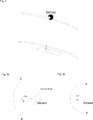
- Fig. 1 demonstrates a schematic view of an image display device with a curved display unit according to the present invention.
- Fig. 2 demonstrates a general view of an image display device with a curved display unit and an exemplary sensor-based system according to the present invention.
- Fig. 3a and 3b demonstrate schematic views of different curve TV radiuses and viewer to TV distances according to the present invention.
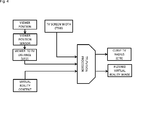
- Fig. 4 demonstrates a general diagram of the adaptive curve TV radius implementation according to the present invention.
- the present invention proposes a dynamically adaptable display unit viewing area such that the image display device with a curved display unit is capable of sensing presence and location of the viewer through a sensor-based system.
- the viewing area of the display unit is therefore structurally modified in the manner to reconfigure curve TV coverage angle in the viewing area.
- the sensor-based system of the image display device in connection with a control unit thereof receives locational information signals indicating position as well as distance of the user in front of the image display device.
- a memory unit coupled to said control unit stores locational information including distance information of the viewer within the detection range of the sensor-based system.
- the control unit of the image display device executes a position calculation algorithm to retrieve locational information within the viewing zone of the sensor-based system.
- location of the viewer within the viewing zone of the sensor-based system is determined and the optimum curve TV coverage angle which is most advantageous for providing virtual reality environments on the curved display unit is accordingly determined.
- the visibility efficiency of the viewing area of the display unit merely depends on the locational information of the viewer.
- a curvature adjustment mechanism of the image display device is operated by the control unit so as to change the curved structure of the display unit according to the input of the sensor-based system.
- the curvature adjustment mechanism integrated to the image display device configures the curved structure as determined by the control unit and either decreases the radius of curvature and flattens the display unit or increases the radius of curvature and creates a more curved screen.
- the curvature adjustment mechanism can be a reel to reel system, a gear system, a pneumatic system or any other suitable mechanism effectuating symmetrical displacement of the two outermost vertical edges of the display unit relative to each other, the surface of the display unit between said two edges curving or flattening in accordance with a changeable radius of curvature of a circular arc formed by any of the upper or lower edges of the display unit. Therefore, the curvature adjustment mechanism automatically changes the radius of the curvature of the display unit by moving the two lateral edges of the display unit closer to or away from each other in a guided manner during which the radius of curvature is reconfigured as determined by the control unit.
- a reel to reel mechanism being typically driven by an electric motor effects relative repositioning of the two laterally outermost edges of the display unit to readjust the amount of curvature.
- the curvature adjustment mechanism symmetrically displaces the two lateral edges A and B depending on distance C.
- OLED display units can be fabricated on flexible plastic substrates. OLED display units can be fabricated as roll-up units as well. Therefore, OLED display units operating without requiring a backlight are particularly suitable for application according to the present invention.
- LCD panel display units can also be used in accordance with the present invention provided that the curvature of the backlight unit also dynamically corresponds to that of the display unit so that occurrence of light leakage is prevented and luminance of the curved display unit is kept unchanged.
- the image display device comprises at least one sensing device in the sensor-based system of the image display device.
- the sensor-based system can typically be integrated to the image display device or can be positioned separately so as to scan and monitor the viewing zone directly in front of the image display device.
- the sensor-based system may incorporate an infrared sensor creating a pattern of projected infrared points to generate a dense 3D image, a thermal sensor or an ultrasonic sensor for identifying locational information (i.e. distance of the viewer). Using projected light patterns to determine shapes of objects is known to the skilled workman.
- the sensor-based system may for example comprise sensing devices in the form of an RGB camera and a depth sensor in the form of a structured-light 3D scanner.
- the curvature adjustment mechanism adapts the radius of curvature of the image display device in accordance with the user’s position and distance to the screen.
- Active state of the dynamically adaptable viewing area display unit can be cancelled by the user anytime through the operating system interface in the settings menu of the image display device.
- the control unit may typically initiate certain calibration methods to be implemented by the user to ameliorate the operating angles swept by the sensing devices of the sensor-based system. Therefore, boundaries of the individual viewing zones of different sensing devices can be accurately determined to be recalibrated later at any time.
- VTD viewer to TV distance
- CTR Curve TV radius
- CTR denotes Curve TV radius and an associated curved screen angle
- TSW stands for TV screen width
- VTD stands for Viewer to TV distance
- the calculation based on the above formula basically ensures that the Curve TV radius is decreased and increased respectively when the user approaches the display panel and moves away from the display panel. Accordingly, curved image display device is folded based on CTR value as calculated above.
- 360 o virtual reality content is filtered to fit to corresponding to CTR (Curve TV radius) value.
- CTR Cosmetic TV radius
- the electronic control unit automatically zoom out virtual reality content to cover at least a larger part of the content being displayed based on said determined distance and Curve TV radius values.
- virtual reality applications can be used with curved displays without making use of virtual reality glasses.
- the curved display of the invention displays all of the virtual reality content on the screen in an adaptively fitted manner without tracking head movements or eye displacements of the user.
- 360 o virtual reality content is adaptable to existing curved display device technology without compromising visibility of the entire screen area as the user’s position is used to physically readapt the curvature of the screen and the user can view the displayed content in its entirety.
- VTD Viewer to TV distance
- CTR Current TV radius
- the curved display is preferably folded to have a CTR (Curve TV radius) ensuring a screen angle of at least 150 o and the content is preferably additionally zoomed out by at least 35% to increase coverage of the content in all directions.
- CTR Cosmetic TV radius
- the adaptively curved structure of the display unit dynamically in dependence with the actual position of the user allows a more dynamically realistic interaction with the content.
- an mage display device comprising a display unit and a sensor-based system with at least one sensor device in connection with a control unit, the sensor-based system being capable of sensing location of a viewer in front of the image display device.
- control unit of the image display device is configured to receive from the sensor-based system locational information regarding distance of a viewer relative to the image display device.
- control unit is configured to display 360 o virtual reality content by filtering the same to fit to a screen angle corresponding to a Curve TV radius value calculated based on said distance relative to the image display device.
- said control unit is further configured to operate a curvature adjustment mechanism of the image display device to adapt the radius of curvature of the display unit to be equal to said calculated Curve TV radius value by structurally modifying the same.
- the electronic control unit automatically zooms out virtual reality content to cover at least a larger part of the content being displayed based on said determined distance and Curve TV radius values.
- curvature adjustment mechanism is dynamically operated to readapt said screen angle and associated Curve TV radius according to the locational information obtained by said sensor-based system.
- control unit of the image display device operates the curvature adjustment mechanism either to increase the radius of curvature by flattening the display unit, or to decrease the radius of curvature by creating a more curved display unit.
- the curvature adjustment mechanism effectuates symmetrical displacement of the two laterally outermost edges of the display unit relative to each other, the surface of the display unit between said two edges curving or flattening in accordance with a changeable radius of curvature of a circular arc formed by any of the upper or lower edges of the display unit extending between said laterally outermost edges.
- the curvature adjustment mechanism automatically changes the radius of curvature of the display unit by moving the two lateral edges of the display unit closer to or away from each other in a guided manner during which the radius of curvature is reconfigured as determined by the control unit.
- the curvature adjustment mechanism is a reel to reel mechanism, a gear system or a pneumatic system.
- the curvature adjustment mechanism is a reel to reel mechanism driven by an electric motor effecting relative repositioning of the two laterally outermost edges of the display unit to readjust the radius of curvature.
- the display unit of the image display device is an organic light-emitting diode (OLED) panel.
- OLED organic light-emitting diode
- the sensor-based system incorporates an infrared sensor creating a pattern of projected infrared points to generate a dense 3D image, a thermal sensor or an ultrasonic sensor for identifying locational information.
- the electronic control unit automatically zooms out virtual reality content by at least 35%.
- a Curve TV radius value corresponding to a screen angle of at least 150 o is determined and distance information in association with said Curve TV radius value is notified to the user.
- the user is guided to take a certain optimal position as reference position and position change away from the reference position in the opposite direction of the image display device is compensated by further zooming out the virtual reality content.
- position change of a user away from an optimum reference position as determined by the electronic control unit in the opposite direction of the image display device is compensated by further zooming out the virtual reality content.
- control unit executing the position calculation algorithm, is configured to process signals from the sensing devices and thereby determines the location and distance of the user relative to the screen.
- the electronic control unit activates the curvature adjustment mechanism to accordingly adapt the curvature of the image display device display unit to the location of the user.
Landscapes
- Engineering & Computer Science (AREA)
- Theoretical Computer Science (AREA)
- Physics & Mathematics (AREA)
- General Physics & Mathematics (AREA)
- Computer Hardware Design (AREA)
- Human Computer Interaction (AREA)
- General Engineering & Computer Science (AREA)
- Controls And Circuits For Display Device (AREA)
Abstract
The present invention relates to a system and method for providing virtual reality environments on curved displays. The present invention more particularly relates to an image display device comprising a display unit and a sensor-based system with at least one sensor device in connection with a control unit, the sensor-based system being capable of sensing location of a viewer in front of the image display device.
Description
The present invention relates to a system and method for providing virtual reality environments on curved displays.
Digital and interactive TV systems provide a comprehensive amount of TV features enriching every day. Considering the fact that a large number of television and multimedia services are being made available to consumers today, image display devices are provided with distinct features to enable a more satisfactory viewing experience for users.
Flat screens such as LCD and LED display units are conventionally used in image display devices such as TV panels and monitors. Advances in display technologies allowed the display unit to be configured in a curved manner offering an improved viewing experience to the users due to the fixed viewing angle with respect to different portions of the screen and a perception of an enlarged viewing area.
It is well-known that 360o virtual reality (VR) technology is becoming more common as content development advances and devices that support this technology become easier to access. Nowadays, head mounted displays are widely used for watching the content. Head mounted displays contain a sensor and one display for each eye, so that users can watch the content recorded at 360o using said head mounted display uninterrupted and in 3D. Additionally, many users have LCD or OLED displays (e.g. television) in their homes. However, these displays do not provide the user a very wide perspective so their use in virtual reality applications has been limited.
Among others, a prior art publication in the technical field of the invention may be referred to as WO9720244A1, which discloses an apparatus for displaying a virtual reality environment on a video display. The apparatus comprises a position processor and an image generator. The position processor generates a visual orientation signal indicating a visual orientation of the display with respect to the virtual reality environment. The image generator receives the visual orientation signals and generates a series of component images of the virtual reality environment accordingly. When a change is detected in the visual orientation signal from when the signal is used to generate each component image to when each component image is displayed on the display, an offset shift signal is produced based on that change. Based on this offset shift signal, an image shifting device shifts the image on the display to improve the display of the virtual reality environment.
The present invention provides a system and method for providing virtual reality environments on curved displays. The present invention therefore provides a curved image display device with a sensor-based system in the form of a user presence and locational information sensing system and a mechanical curvature adjustment mechanism dynamically adapting the curve TV angle of the image display device as provided by the characterizing features defined in Claim 1.
Primary object of the present invention is to provide a system and method for providing virtual reality environments on curved displays by which the coverage of the virtual reality content is determined and modified in real time depending on the distance of the viewer from the display screen.
The present invention proposes a dynamically adaptable display unit viewing area such that the image display device with a curved display unit is capable of sensing presence and location of a viewer through a sensor-based system for overcoming display quality issues depending on the viewing position of the viewer. The present invention detects the position of a person within a detection zone of a sensor-based system while the user views a virtual reality content. The curved image display device comprising the sensor-based system detects the viewing position of the user within a viewing zone of the sensor-based system so that the curved image display device automatically adapts its radius of curvature by means of a mechanical curvature adjustment mechanism so as to provide improved viewing quality.
The present invention addresses the situation where a curved display is used to provide virtual reality environments. The invention provides that virtual reality applications can be used with curved displays without making use of virtual reality glasses. Virtual reality glasses determine the position of the head by a sensor and provide the viewer with the corresponding virtual reality content based on this position data. According to the system of the invention, as it is not necessary to continuously update the position of the user’s head, there are no lags due to sensor measurements and the overall system is simplified.
Accompanying drawings are given solely for the purpose of exemplifying a system and method for providing virtual reality environments, whose advantages over prior art were outlined above and will be explained in brief hereinafter.
The drawings are not meant to delimit the scope of protection as identified in the Claims, nor should they be referred to alone in an effort to interpret the scope identified in said Claims without recourse to the technical disclosure in the description of the present invention.
Fig. 1 demonstrates a schematic view of an image display device with a curved display unit according to the present invention.
Fig. 2 demonstrates a general view of an image display device with a curved display unit and an exemplary sensor-based system according to the present invention.
Fig. 3a and 3b demonstrate schematic views of different curve TV radiuses and viewer to TV distances according to the present invention.
Fig. 4 demonstrates a general diagram of the adaptive curve TV radius implementation according to the present invention.
The present invention proposes a dynamically adaptable display unit viewing area such that the image display device with a curved display unit is capable of sensing presence and location of the viewer through a sensor-based system. The viewing area of the display unit is therefore structurally modified in the manner to reconfigure curve TV coverage angle in the viewing area. The sensor-based system of the image display device in connection with a control unit thereof receives locational information signals indicating position as well as distance of the user in front of the image display device. A memory unit coupled to said control unit stores locational information including distance information of the viewer within the detection range of the sensor-based system. The control unit of the image display device executes a position calculation algorithm to retrieve locational information within the viewing zone of the sensor-based system.
According to the present invention, location of the viewer within the viewing zone of the sensor-based system is determined and the optimum curve TV coverage angle which is most advantageous for providing virtual reality environments on the curved display unit is accordingly determined. The visibility efficiency of the viewing area of the display unit merely depends on the locational information of the viewer.
A curvature adjustment mechanism of the image display device is operated by the control unit so as to change the curved structure of the display unit according to the input of the sensor-based system. The curvature adjustment mechanism integrated to the image display device configures the curved structure as determined by the control unit and either decreases the radius of curvature and flattens the display unit or increases the radius of curvature and creates a more curved screen. The curvature adjustment mechanism can be a reel to reel system, a gear system, a pneumatic system or any other suitable mechanism effectuating symmetrical displacement of the two outermost vertical edges of the display unit relative to each other, the surface of the display unit between said two edges curving or flattening in accordance with a changeable radius of curvature of a circular arc formed by any of the upper or lower edges of the display unit. Therefore, the curvature adjustment mechanism automatically changes the radius of the curvature of the display unit by moving the two lateral edges of the display unit closer to or away from each other in a guided manner during which the radius of curvature is reconfigured as determined by the control unit. Preferably, a reel to reel mechanism being typically driven by an electric motor effects relative repositioning of the two laterally outermost edges of the display unit to readjust the amount of curvature. In reference with Fig. 3a and 3b, the curvature adjustment mechanism symmetrically displaces the two lateral edges A and B depending on distance C.
It is to be noted that an image display device preferably with an organic light-emitting diode (OLED) or an LCD panel display unit can be used according to the present invention. OLED display units can be fabricated on flexible plastic substrates. OLED display units can be fabricated as roll-up units as well. Therefore, OLED display units operating without requiring a backlight are particularly suitable for application according to the present invention. On the other hand, LCD panel display units can also be used in accordance with the present invention provided that the curvature of the backlight unit also dynamically corresponds to that of the display unit so that occurrence of light leakage is prevented and luminance of the curved display unit is kept unchanged.
The image display device comprises at least one sensing device in the sensor-based system of the image display device. The sensor-based system can typically be integrated to the image display device or can be positioned separately so as to scan and monitor the viewing zone directly in front of the image display device. The sensor-based system may incorporate an infrared sensor creating a pattern of projected infrared points to generate a dense 3D image, a thermal sensor or an ultrasonic sensor for identifying locational information (i.e. distance of the viewer). Using projected light patterns to determine shapes of objects is known to the skilled workman. The sensor-based system may for example comprise sensing devices in the form of an RGB camera and a depth sensor in the form of a structured-light 3D scanner.
The curvature adjustment mechanism according to the present invention adapts the radius of curvature of the image display device in accordance with the user’s position and distance to the screen.
Active state of the dynamically adaptable viewing area display unit can be cancelled by the user anytime through the operating system interface in the settings menu of the image display device.
The control unit may typically initiate certain calibration methods to be implemented by the user to ameliorate the operating angles swept by the sensing devices of the sensor-based system. Therefore, boundaries of the individual viewing zones of different sensing devices can be accurately determined to be recalibrated later at any time.
The system of the present invention is operated as will be delineated hereinafter: In the first step, based on the data obtained by the sensor-based system with at least one sensor device, viewer to TV distance (VTD) is determined by the electronic control unit of the image display device. Thereupon, the VTD value is used to calculate a Curve TV radius (CTR) value according to the following formula:

While CTR denotes Curve TV radius and an associated curved screen angle, TSW stands for TV screen width and VTD stands for Viewer to TV distance.
The calculation based on the above formula basically ensures that the Curve TV radius is decreased and increased respectively when the user approaches the display panel and moves away from the display panel. Accordingly, curved image display device is folded based on CTR value as calculated above.
According to the present invention, 360o virtual reality content is filtered to fit to corresponding to CTR (Curve TV radius) value. In other words, only a limited part of the 360o virtual reality content is displayed depending on the CTR value. To this end, in order for compensating for the non-displayable content, the electronic control unit automatically zoom out virtual reality content to cover at least a larger part of the content being displayed based on said determined distance and Curve TV radius values.
Therefore, according to the present invention, virtual reality applications can be used with curved displays without making use of virtual reality glasses. Instead of determining the position of the user’s head by a sensor and provide the viewer with the corresponding virtual reality content based on this position data, the curved display of the invention displays all of the virtual reality content on the screen in an adaptively fitted manner without tracking head movements or eye displacements of the user. This is particularly advantageous in that 360o virtual reality content is adaptable to existing curved display device technology without compromising visibility of the entire screen area as the user’s position is used to physically readapt the curvature of the screen and the user can view the displayed content in its entirety. In other words, according to the present invention, VTD (Viewer to TV distance) is continuously monitored and in the case that the distance is not constant, the CTR (Curve TV radius) value is then recalculated and the curvature is readapted.
In order to achieve a satisfactory virtual reality experience encompassing a sufficiently large portion of the 360o virtual reality content, the curved display is preferably folded to have a CTR (Curve TV radius) ensuring a screen angle of at least 150o and the content is preferably additionally zoomed out by at least 35% to increase coverage of the content in all directions. In other configurations, although the coverage area can be more limited, the adaptively curved structure of the display unit dynamically in dependence with the actual position of the user allows a more dynamically realistic interaction with the content.
In one embodiment of the present invention, an mage display device is proposed, comprising a display unit and a sensor-based system with at least one sensor device in connection with a control unit, the sensor-based system being capable of sensing location of a viewer in front of the image display device.
In a further embodiment of the present invention, the control unit of the image display device is configured to receive from the sensor-based system locational information regarding distance of a viewer relative to the image display device.
In a further embodiment of the present invention, the control unit is configured to display 360o virtual reality content by filtering the same to fit to a screen angle corresponding to a Curve TV radius value calculated based on said distance relative to the image display device.
In a further embodiment of the present invention, said control unit is further configured to operate a curvature adjustment mechanism of the image display device to adapt the radius of curvature of the display unit to be equal to said calculated Curve TV radius value by structurally modifying the same.
In a further embodiment of the present invention, the electronic control unit automatically zooms out virtual reality content to cover at least a larger part of the content being displayed based on said determined distance and Curve TV radius values.
In a further embodiment of the present invention, curvature adjustment mechanism is dynamically operated to readapt said screen angle and associated Curve TV radius according to the locational information obtained by said sensor-based system.
In a further embodiment of the present invention, the control unit of the image display device operates the curvature adjustment mechanism either to increase the radius of curvature by flattening the display unit, or to decrease the radius of curvature by creating a more curved display unit.
In a further embodiment of the present invention, the curvature adjustment mechanism effectuates symmetrical displacement of the two laterally outermost edges of the display unit relative to each other, the surface of the display unit between said two edges curving or flattening in accordance with a changeable radius of curvature of a circular arc formed by any of the upper or lower edges of the display unit extending between said laterally outermost edges.
In a further embodiment of the present invention, the curvature adjustment mechanism automatically changes the radius of curvature of the display unit by moving the two lateral edges of the display unit closer to or away from each other in a guided manner during which the radius of curvature is reconfigured as determined by the control unit.
In a further embodiment of the present invention, the curvature adjustment mechanism is a reel to reel mechanism, a gear system or a pneumatic system.
In a further embodiment of the present invention, the curvature adjustment mechanism is a reel to reel mechanism driven by an electric motor effecting relative repositioning of the two laterally outermost edges of the display unit to readjust the radius of curvature.
In a further embodiment of the present invention, the display unit of the image display device is an organic light-emitting diode (OLED) panel.
In a further embodiment of the present invention, the sensor-based system incorporates an infrared sensor creating a pattern of projected infrared points to generate a dense 3D image, a thermal sensor or an ultrasonic sensor for identifying locational information.
In a further embodiment of the present invention, the electronic control unit automatically zooms out virtual reality content by at least 35%.
In a further embodiment of the present invention, a Curve TV radius value corresponding to a screen angle of at least 150o is determined and distance information in association with said Curve TV radius value is notified to the user. Preferably, the user is guided to take a certain optimal position as reference position and position change away from the reference position in the opposite direction of the image display device is compensated by further zooming out the virtual reality content.
In a further embodiment of the present invention, position change of a user away from an optimum reference position as determined by the electronic control unit in the opposite direction of the image display device is compensated by further zooming out the virtual reality content.
Therefore, the control unit, executing the position calculation algorithm, is configured to process signals from the sensing devices and thereby determines the location and distance of the user relative to the screen. The electronic control unit activates the curvature adjustment mechanism to accordingly adapt the curvature of the image display device display unit to the location of the user.
Claims (13)
- An image display device comprising a display unit and a sensor-based system with at least one sensor device in connection with a control unit, the sensor-based system being capable of sensing location of a viewer in front of the image display device characterized in that;the control unit of the image display device is configured to receive from the sensor-based system locational information regarding distance of a viewer relative to the image display device,the control unit is configured to display 360o virtual reality content by filtering the same to fit to a screen angle corresponding to a Curve TV radius value calculated based on said distance relative to the image display device and,said control unit is further configured to operate a curvature adjustment mechanism of the image display device to adapt the radius of curvature of the display unit to be equal to said calculated Curve TV radius value by structurally modifying the same.
- An image display device as in Claim 1, characterized in that the electronic control unit automatically zooms out virtual reality content to cover at least a larger part of the content being displayed based on said determined distance and Curve TV radius values.
- An image display device as in Claim 1, characterized in that curvature adjustment mechanism is dynamically operated to readapt said screen angle and associated Curve TV radius according to the locational information obtained by said sensor-based system.
- An image display device as in Claim 1, 2 or 3, characterized in that the control unit of the image display device operates the curvature adjustment mechanism either to increase the radius of curvature by flattening the display unit, or to decrease the radius of curvature by creating a more curved display unit.
- An image display device as in Claim 4, characterized in that the curvature adjustment mechanism effectuates symmetrical displacement of the two laterally outermost edges of the display unit relative to each other, the surface of the display unit between said two edges curving or flattening in accordance with a changeable radius of curvature of a circular arc formed by any of the upper or lower edges of the display unit extending between said laterally outermost edges.
- An image display device as in Claim 5, characterized in that the curvature adjustment mechanism automatically changes the radius of curvature of the display unit by moving the two lateral edges of the display unit closer to or away from each other in a guided manner during which the radius of curvature is reconfigured as determined by the control unit.
- An image display device as in Claim 5 or 6, characterized in that the curvature adjustment mechanism is a reel to reel mechanism, a gear system or a pneumatic system.
- An image display device as in Claim 7, characterized in that the curvature adjustment mechanism is a reel to reel mechanism driven by an electric motor effecting relative repositioning of the two laterally outermost edges of the display unit to readjust the radius of curvature.
- An image display device as in any preceding Claim, characterized in that the display unit of the image display device is an organic light-emitting diode (OLED) panel.
- An image display device as in any preceding Claim, characterized in that the sensor-based system incorporates an infrared sensor creating a pattern of projected infrared points to generate a dense 3D image, a thermal sensor or an ultrasonic sensor for identifying locational information.
- An image display device as in Claim 2, characterized in that the electronic control unit automatically zooms out virtual reality content by at least 35%.
- An image display device as in any preceding Claim, characterized in that a Curve TV radius value corresponding to a screen angle of at least 150o is determined and distance information in association with said Curve TV radius value is notified.
- An image display device as in any preceding Claim, characterized in that position change of a user away from an optimum reference position as determined by the electronic control unit in the opposite direction of the image display device is compensated by further zooming out the virtual reality content.
Applications Claiming Priority (2)
| Application Number | Priority Date | Filing Date | Title |
|---|---|---|---|
| TR201615939 | 2016-11-08 | ||
| TRA2016/15939 | 2016-11-08 |
Publications (1)
| Publication Number | Publication Date |
|---|---|
| WO2018086941A1 true WO2018086941A1 (en) | 2018-05-17 |
Family
ID=60331583
Family Applications (1)
| Application Number | Title | Priority Date | Filing Date |
|---|---|---|---|
| PCT/EP2017/077805 Ceased WO2018086941A1 (en) | 2016-11-08 | 2017-10-30 | System and method for providing virtual reality environments on a curved display |
Country Status (1)
| Country | Link |
|---|---|
| WO (1) | WO2018086941A1 (en) |
Citations (4)
| Publication number | Priority date | Publication date | Assignee | Title |
|---|---|---|---|---|
| WO1997020244A1 (en) | 1995-11-27 | 1997-06-05 | Cae Electronics Ltd. | Method and apparatus for displaying a virtual environment on a video display |
| CN103915041A (en) * | 2014-03-14 | 2014-07-09 | 河海大学常州校区 | Automatic adjustment device and method of curved surface of flexible display screen |
| EP2809068A1 (en) * | 2013-05-31 | 2014-12-03 | LG Electronics, Inc. | Image display device and method of controlling the same |
| US20160133169A1 (en) * | 2014-11-10 | 2016-05-12 | Lg Display Co., Ltd. | Apparatus and method for correcting image distortion and curved display device including the same |
-
2017
- 2017-10-30 WO PCT/EP2017/077805 patent/WO2018086941A1/en not_active Ceased
Patent Citations (4)
| Publication number | Priority date | Publication date | Assignee | Title |
|---|---|---|---|---|
| WO1997020244A1 (en) | 1995-11-27 | 1997-06-05 | Cae Electronics Ltd. | Method and apparatus for displaying a virtual environment on a video display |
| EP2809068A1 (en) * | 2013-05-31 | 2014-12-03 | LG Electronics, Inc. | Image display device and method of controlling the same |
| CN103915041A (en) * | 2014-03-14 | 2014-07-09 | 河海大学常州校区 | Automatic adjustment device and method of curved surface of flexible display screen |
| US20160133169A1 (en) * | 2014-11-10 | 2016-05-12 | Lg Display Co., Ltd. | Apparatus and method for correcting image distortion and curved display device including the same |
Similar Documents
| Publication | Publication Date | Title |
|---|---|---|
| US9891442B2 (en) | Variable curvature display device and displaying method thereof | |
| KR102172980B1 (en) | Tiled display system and method for processing images thereof | |
| CN103236240B (en) | Driving method and system for dynamically stopping display corresponding to touch sensing | |
| US20180343441A1 (en) | Perspective altering display system | |
| CN105590615B (en) | Apparatus and method for correcting image distortion and curved display device including the same | |
| US20150077526A1 (en) | Display device and method of controlling the same | |
| US20120056902A1 (en) | Multi-display apparatus | |
| US20160353098A1 (en) | Active shutter head mounted display | |
| JP5050120B1 (en) | Stereoscopic image display device | |
| CN104238923A (en) | Display equipment and working method thereof | |
| KR20160050689A (en) | Display apparatus and Method for controlling the display apparatus | |
| US20170127535A1 (en) | System and method for controlling curvature of viewer adaptive type flexible display in order to increase immersive feeling | |
| US9317975B2 (en) | Method of displaying three-dimensional image and three-dimensional image display apparatus performing the same | |
| US11996023B2 (en) | Viewer synchronized illumination sensing | |
| EP3745718A1 (en) | Method of controlling pan-tilt-zoom camera by using fisheye camera and monitoring system | |
| CN102237013A (en) | Display screen adjustment system and method, and advertisement board with adjustment system | |
| KR20180003590A (en) | Generating images for stereoscopic image display without spectacles | |
| CN1350750A (en) | Display and display method | |
| US9804392B2 (en) | Method and apparatus for delivering and controlling multi-feed data | |
| CN106775518A (en) | A kind of mosaic screen changes the method and system of image size according to beholder's distance | |
| US20140071159A1 (en) | Method and Apparatus For Providing a User Interface For a File System | |
| CN109947384B (en) | Electronic equipment and processing method | |
| WO2018086941A1 (en) | System and method for providing virtual reality environments on a curved display | |
| WO2017036562A1 (en) | Image display device with user position adaptable curved display unit | |
| CN112669789B (en) | Control method and device |
Legal Events
| Date | Code | Title | Description |
|---|---|---|---|
| 121 | Ep: the epo has been informed by wipo that ep was designated in this application |
Ref document number: 17798146 Country of ref document: EP Kind code of ref document: A1 |
|
| NENP | Non-entry into the national phase |
Ref country code: DE |
|
| 122 | Ep: pct application non-entry in european phase |
Ref document number: 17798146 Country of ref document: EP Kind code of ref document: A1 |