WO2018080113A2 - TSCH 및 RPL 기반의 산업 IoT 네트워크에서의 스케줄링을 위한 장치 및 방법 - Google Patents
TSCH 및 RPL 기반의 산업 IoT 네트워크에서의 스케줄링을 위한 장치 및 방법 Download PDFInfo
- Publication number
- WO2018080113A2 WO2018080113A2 PCT/KR2017/011674 KR2017011674W WO2018080113A2 WO 2018080113 A2 WO2018080113 A2 WO 2018080113A2 KR 2017011674 W KR2017011674 W KR 2017011674W WO 2018080113 A2 WO2018080113 A2 WO 2018080113A2
- Authority
- WO
- WIPO (PCT)
- Prior art keywords
- scheduling
- node
- request message
- message
- slot
- Prior art date
- Legal status (The legal status is an assumption and is not a legal conclusion. Google has not performed a legal analysis and makes no representation as to the accuracy of the status listed.)
- Ceased
Links
Images




Classifications
-
- H—ELECTRICITY
- H04—ELECTRIC COMMUNICATION TECHNIQUE
- H04L—TRANSMISSION OF DIGITAL INFORMATION, e.g. TELEGRAPHIC COMMUNICATION
- H04L67/00—Network arrangements or protocols for supporting network services or applications
- H04L67/50—Network services
- H04L67/60—Scheduling or organising the servicing of application requests, e.g. requests for application data transmissions using the analysis and optimisation of the required network resources
-
- H—ELECTRICITY
- H04—ELECTRIC COMMUNICATION TECHNIQUE
- H04L—TRANSMISSION OF DIGITAL INFORMATION, e.g. TELEGRAPHIC COMMUNICATION
- H04L65/00—Network arrangements, protocols or services for supporting real-time applications in data packet communication
- H04L65/40—Support for services or applications
-
- H—ELECTRICITY
- H04—ELECTRIC COMMUNICATION TECHNIQUE
- H04L—TRANSMISSION OF DIGITAL INFORMATION, e.g. TELEGRAPHIC COMMUNICATION
- H04L67/00—Network arrangements or protocols for supporting network services or applications
- H04L67/34—Network arrangements or protocols for supporting network services or applications involving the movement of software or configuration parameters
-
- H—ELECTRICITY
- H04—ELECTRIC COMMUNICATION TECHNIQUE
- H04L—TRANSMISSION OF DIGITAL INFORMATION, e.g. TELEGRAPHIC COMMUNICATION
- H04L67/00—Network arrangements or protocols for supporting network services or applications
- H04L67/50—Network services
- H04L67/51—Discovery or management thereof, e.g. service location protocol [SLP] or web services
Definitions
- the present invention relates to a TSCH and RPL-based industrial IoT network, and more particularly, to an apparatus and method for scheduling in a TSCH and RPL-based industrial IoT network with low latency and high network efficiency. .
- IEEE 802.15.4e is a standard that improves the MAC layer for the industrial wireless sensor network environment.
- TSCH Time Slotted Channel Hopping
- time is divided into slots, and a slot frame is configured by a bundle of time slots.
- Every node continuously repeats the scheduled slot frame and performs one of the following operations: transmit, receive, and sleep in a time slot.
- TSCH reduces problems such as external interference and multi-path fading through channel hopping.
- the schedule is represented by a two-dimensional array of (slotOffset, channelOffset), and the elements of the array are called "cells".
- the cell can communicate with neighboring nodes in the cell.
- the IEE 802.15.4e standard does not define a scheduling scheme.
- DeTAS Decentralized Traffic Aware Scheduling
- DeTAS is scheduling that minimizes the active slot length.
- Each node sends its traffic information to the parent. When the traffic information is received, it updates its traffic information and sends it back to the parent. In this way, each node carries traffic information to the route.
- the root node divides the child nodes into even schedules or odd schedules.
- Odd-scheduled nodes behave the opposite of evem-scheduled nodes.
- DeTAS divides even and odd schedules, minimizing active slot length, and alternating transmit and receive slots, so that buffer overflow does not occur, and only one node is assigned to one slot for interference. It is characteristic that it does not occur.
- DeTAS is a new node to join or. If the parent node changes, the root node needs to re-determine even and odd schedules of the child nodes, and all nodes need to be rescheduled because there is no slot space for the new node.
- the present invention is to solve the problem of scheduling in the TSCH and RPL-based industrial IoT network of the prior art, TSCH and RPL-based industrial IoT network with reduced latency and high network efficiency with low overhead scheduling It is an object of the present invention to provide an apparatus and method for scheduling in.
- the present invention provides an apparatus and method for scheduling in a TSCH and RPL-based industrial IoT network to allocate the minimum slot that can meet the traffic required in the industrial IoT network, and to minimize the overhead required for scheduling Its purpose is.
- the present invention implements centralized scheduling that provides an appropriate slot with minimal overhead to satisfy the traffic of a node participating in a root node when a new node joins a network.
- An object of the present invention is to provide an apparatus and method for scheduling in an industrial IoT network based on TSCH and RPL.
- scheduling is performed in a TSCH and RPL-based industrial IoT network that reduces overhead by minimizing the number of overcontrol packets because the number of slots is not allocated or rescheduled, and only a few nodes are allocated or removed. It is an object of the present invention to provide an apparatus and method for the same.
- an apparatus for scheduling in an industrial IoT network based on TSCH and RPL selects a parent node by determining network participation, determines a link value, and selects a parent to change the parent node.
- Scheduling message transmission module for forwarding a Join Request message to the root node and sending a Deallocation Request message; Receives a Join Request message and Deallocation Request Scheduling message receiving module for receiving a message, slot information; Scheduling message processing module for performing a join request message processing, Deallocation Request message processing, slot information processing; Receives DIO message, neighbor node DIO message processing module for updating information; scheduling message reception, scheduling algorithm processing
- the scheduling manager module for performing a transmission slot information; scheduling table management, an active slot added, slot management module for performing an active slot deleted; characterized in that it comprises a.
- the parent selection management module includes a network participation determining unit determining network participation, a link value determining unit determining a link value, a parent node selecting unit selecting a parent node, and a parent node changing performing a parent node change.
- the scheduling message transmission module includes a connection request message transmission unit for transmitting a join request message to a root node, and a reassignment request message transmission unit for transmitting a relocation request message.
- the scheduling message receiving module may include: a connection request message receiving unit receiving a join request message, a relocation request message receiving unit reassigning request message, and a slot information receiving unit receiving slot information; And the scheduling message processing module is configured to process a join request message. And a connection request message processing unit, a reassignment request message processing unit processing a relocation request message, and a slot information processing unit processing slot information.
- the DIO message processing module includes a DIO message receiving unit for receiving a DIO message, a neighbor node information updating unit for updating neighbor node information, and the scheduling manager module performs a scheduling message receiving unit for receiving a scheduling message, and scheduling algorithm processing. And a slot information transmitter for performing slot information transmission.
- the slot management module includes a scheduling table manager for managing a scheduling table, an active slot adder for performing active slot addition, and an active slot deletion. It characterized in that it comprises an active slot deletion unit to perform.
- the slot management module may add or delete slots only for nodes related to a path without rescheduling the entire scheduling when a new node joins or a parent node is changed.
- a method for scheduling in a TSCH and RPL-based industrial IoT network according to the present invention for achieving another object includes a node u when a new node joins the network in scheduling in a TSCH and RPL-based industrial IoT network.
- a newly joined node when a new node joins a network, a newly joined node u puts link information into a link queue and transmits it to a parent node.
- the node receiving the message is not a root node. It handles the connection request message by distinguishing between the root node and the root node.If it is not the root node, it adds its own and parent's link information to the link queue and sends it to the parent node in the link request message. In this case, the scheduling request is made to the scheduling manager.
- EB Enhanced Beacon
- Join Request the connection request message is delivered to the root node, the root node requests the scheduling to the scheduling manager, the scheduling manager allocates a slot and delivers it to the node, characterized in that the scheduling proceeds.
- the node When the parent node is changed, if a neighbor node having a value smaller than the rank value of the parent node is created, the node changes the parent node to a neighbor node having a smaller rank and then changes the parent node. In addition, the slot is additionally allocated according to the changed routing, and the existing slot is removed.
- the node receiving the scheduling message receives the connection request message from the child node, the node determines its rank value and, if its rank is greater than 0, puts the link information in the link queue for additional slot allocation.
- the connection request message is transmitted to the parent node, and if its rank is less than or equal to 0, the connection request message is transmitted to the scheduling manager.
- the apparatus and method for scheduling in an industrial IoT network based on TSCH and RPL according to the present invention have the following effects.
- 1 is a routing graph and scheduling table when a new node joins a network
- 3 is a routing graph and scheduling table when a parent node is changed
- FIG. 5 is a block diagram of an apparatus for scheduling in an industrial IoT network based on TSCH and RPL according to the present invention
- FIG. 6 is a flowchart of a node newly joining a network or a parent node is changed.
- FIG. 7 is a flowchart of a node receiving a scheduling related message.
- 8A and 8B are flowcharts illustrating a scheduling algorithm of a scheduling manager.
- FIG. 1 is a routing graph and scheduling table when a new node joins a network
- FIG. 2 is a timing diagram when a new node joins a network.
- FIG. 3 is a routing graph and a scheduling table when the parent node is changed
- FIG. 4 is a timing diagram when the parent node is changed.
- the present invention implements centralized scheduling that provides an appropriate slot with minimal overhead to satisfy the traffic of a node participating in a root node when a new node joins a network. It is.
- the apparatus and method for scheduling in a TSCH and RPL-based industrial IoT network according to the present invention do not reschedule even if a change is made to the routing graph, and because only a few nodes are allocated or removed slots, the number of overcontrol packets Reduce the overhead to a minimum.
- An apparatus and method for scheduling in a TSCH and RPL based industrial IoT network according to the present invention have the following rules.
- a packet generated by each node within a slot frame includes a rule that must arrive to the root, and a node close to the root node needs an additional slot because the packet received from the child nodes must be forwarded.
- scheduling is performed so as not to generate interference.
- the configuration of an apparatus for scheduling in an industrial IoT network based on TSCH and RPL according to the present invention is as follows.
- a parent selection management module 10 which determines a network participation, determines a link value, selects a parent node, performs a parent node change, transmits a Join Request message to a root node, and a Deallocation Request message
- the scheduling message transmission module 20 for transmitting the message
- the scheduling message receiving module 30 for receiving the Join Request message and receiving the Deallocation Request message and the slot information, and the Join Request message processing, the Deallocation Request message processing, and the slot information processing.
- the parent selection management module 10 includes a network participation determining unit 10a for determining network participation, a link value determining unit 10b for determining a link value, and a parent node selecting unit 10c for selecting a parent node. And a parent node change unit 10d for performing a parent node change.
- the scheduling message transmission module 20 may further include a connection request message transmitter 20a for transmitting a join request message to a root node, and a reassignment request message transmitter for transmitting a relocation request message. (20b).
- the scheduling message receiving module 30 includes a connection request message receiving unit 30a that receives a connection request message, a relocation request message receiving unit 30b that receives a reassignment request message, and a slot. It includes a slot information receiver 30c for receiving information.
- the scheduling message processing module 40 includes a connection request message processing unit 40a for processing a connection request message, a reassignment request message processing unit 40b for processing a deallocation request message, and a slot.
- a slot information processing unit 40c for processing information is included.
- the DIO message processing module 50 includes a DIO message receiver 50a for receiving a DIO message and a neighbor node information updater 50b for updating neighbor node information.
- the scheduling manager module 60 includes a scheduling message receiver 60a for receiving a scheduling message, a scheduling algorithm processor 60b for scheduling algorithm processing, and a slot information transmitter 60c for slot information transmission.
- the slot management module 70 includes a scheduling table manager 70a that manages the scheduling table, an active slot adder 70b that performs active slot addition, and an active slot deleter 70c that performs active slot deletion. Include.
- Such an apparatus for scheduling in an industrial IoT network based on TSCH and RPL according to the present invention is (situation 1) when a new node joins the network, and (situation 2) when a parent node is changed as follows. It works.
- EB Enhanced Beacon
- the newly participating node sends a join request message to the parent node for scheduling to allocate additional slots.
- connection request message is delivered to the root node, which requests scheduling to the scheduling manager.
- the scheduling manager allocates an appropriate slot and then delivers it to the node.
- FIG. 1 illustrates a routing graph and a scheduling table when a new node joins a network.
- FIG. 2 shows a timing diagram when node n 3 participates in a network.
- Node n 3 sends a Join Request message to a parent node n 1 , and n 1 forwards a Join Request message to a root node n 0 .
- n 0 delivers a message to the scheduling manager to schedule the scheduling manager, and each node receives slot allocation information from the manager.
- Join Request message is sent including linkQueue.
- linkQueue is a queue that stores link information consisting of (u, Parent (u), DODAGrank (u), and Trans (u)).
- u denotes a local node included in the network
- Parent (u) denotes the parent node of node u.
- DODAGrank (u) means the DODAGrank value of node u
- Trans (u) means the number of slots required for node u to transmit in the slotframe.
- FIG. 6 is a flowchart of a node newly joining a network or a parent node is changed.
- FIG. 7 is a flowchart of a node receiving a scheduling related message
- FIG. 8 is a flowchart illustrating a scheduling algorithm of a scheduling manager.
- FIG. 6 shows a flowchart of a node newly participating in a network or a node whose parent node is changed.
- a node u newly joined in the network transmits link information to a parent node by putting link information in a link queue.
- join request message When a join request is received from a child node, if the node receiving the message is not the root node or the root node, the join request message is processed differently.
- a scheduling request is made to the scheduling manager.
- the operation in a node that newly joins the network or whose parent node is changed is performed as follows.
- node u joins the network (S610) ⁇ selects a parent node (S611) ⁇ inserts link information for slot allocation in the link queue (S612) ⁇ connects to the parent.
- the request message proceeds in the order of transmission (S613).
- FIG. 7 is a flowchart illustrating a node receiving a scheduling related message.
- scheduling begins.
- ts time slot offset
- ch (channel offset) is set to DODAGrank of the link minus 1.
- the ts value is incremented by 1 and repeated until assigned.
- the processing sequence at the node receiving the scheduling related message is as shown in FIG. 7, when [the connection request message message is received from the child (S720)], its own rank is greater than zero by determining its rank value. If (S721) ⁇ put link information for additional slot allocation in the link queue (S723) ⁇ sends a connection request message to its parent (S724), if its rank is less than or equal to 0 (S721) ⁇ scheduling The connection request message is sent to the manager in the order of S722.
- the slot information is inserted into the scheduling table (S731) ⁇ the slot is activated (S732).
- 8A and 8B are flowcharts illustrating a scheduling algorithm of a scheduling manager.
- Scheduling of the scheduling manager as shown in Figure 8a, [in the case of receiving a connection request message (S801) (S802) proceeds until the linkQueue is empty (S803) ⁇ remove the link from the linkQueue (S806) ⁇ the DODAGrank value of the link If this value is greater than 1, ts is calculated using the startTs function (last Ts of the parent node) (S808) ⁇ If the link's DODAGrank value is less than or equal to 1, ts becomes 0 (S809) ⁇ ch is 1 from the link's DODAGrank value.
- Subtracted value (S810) ⁇ The slot is available in the schedule table, and if there is no conflict, put it in the scheduling table (S811) ⁇ Repeat until the Trans value of the link becomes 0 (S813 ⁇ S816) ⁇ Corresponds to the schedule table If a slot is available and a collision occurs, while the value of ts is increased by 1 and repetition (S812)-> linkQueue becomes empty, scheduling is completed (S804), and the procedure is transmitted to the child node (S805).
- the neighbor information is updated.
- the node changes the parent node to a neighbor node having a rank of a smaller value.
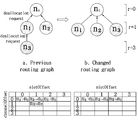
- FIG. 3 illustrates a routing graph and scheduling when a parent node is changed.
- FIG. 4 shows a timing diagram in the situation of FIG. 3.
- node n 3 When node n 3 changes its parent from node n 1 to node n 0 , it sends a relocation request message to node n 1 , the former parent, to remove the existing assigned slot. n 0 is sent a Join Request message to allocate a new slot.
- the reassignment request message is sent to the scheduling manager.
- the scheduling manager does not send a response message.
- connection request message is processed in the same way as described in (Scenario 1).
- Deallocation Request message is sent including cellList.
- cellList is a list of cells consisting of (ts, ch, txrx, neighbor).
- FIG. 6 shows a process in which a node whose parent has been changed through a DIO message transmits a Deallocation Request message to a previous parent node by inserting its tx cells in a cellList and transmits a Join Request to a new parent.
- FIG. 7 shows a process of processing when a Deallocation Request message is received.
- deallocation processing proceeds as long as cellList.
- the corresponding slot is removed from the assigned slot.
- the removed tx cells are added to the cellList and a Deallocation Request message is transmitted to the parent node.
- Such an apparatus and method for scheduling in a TSCH and RPL-based industrial IoT network allocates a minimum slot capable of meeting traffic required in an industrial IoT network and minimizes the overhead required for scheduling. It is to reduce.
- the present invention implements centralized scheduling that provides an appropriate slot with minimal overhead to satisfy the traffic of a node participating in a root node when a new node joins a network. It is.
- the present invention as described above is an apparatus for scheduling in the industrial IoT network based on TSCH and RPL to allocate the minimum slot that can meet the traffic required in the industrial IoT network, and to minimize the overhead required for scheduling And to a method.
Landscapes
- Engineering & Computer Science (AREA)
- Computer Networks & Wireless Communication (AREA)
- Signal Processing (AREA)
- Multimedia (AREA)
- Small-Scale Networks (AREA)
- Data Exchanges In Wide-Area Networks (AREA)
- Mobile Radio Communication Systems (AREA)
Abstract
본 발명은 TSCH 및 RPL 기반 산업 IoT 네트워크에서 지연시간을 줄이고, 오버헤드가 작은 스케줄링으로 네트워크 효율성을 높인 TSCH 및 RPL 기반의 산업 IoT 네트워크에서의 스케줄링을 위한 장치 및 방법에 관한 것으로, 네트워크 참여를 판단하고 링크값을 판단하여 부모 노드를 선택하고, 부모 노드 변경을 수행하는 부모 선정 관리 모듈;연결 요청(Join Request) 메시지를 루트 노드에게 전달하고, 재할당 요청(Deallocation Request) 메시지를 전송하는 스케줄링 메시지 전송 모듈;연결 요청(Join Request) 메시지를 수신하고 재할당 요청(Deallocation Request) 메시지, 슬랏 정보를 수신하는 스케줄링 메시지 수신 모듈;연결 요청(Join Request) 메시지 처리, 재할당 요청(Deallocation Request) 메시지 처리, 슬랏 정보 처리를 수행하는 스케줄링 메시지 처리 모듈;DIO 메시지를 수신하고, 이웃 노드 정보를 업데이트하는 DIO 메시지 처리 모듈;스케줄링 메시지 수신, 스케줄링 알고리즘 처리, 슬랏 정보 송신을 수행하는 스케줄링 매니저 모듈;스케줄링 테이블 관리, 액티브 슬랏 추가, 액티브 슬랏 삭제를 수행하는 슬랏 관리 모듈;을 포함하는 것이다.
Description
본 발명은 TSCH 및 RPL 기반 산업 IoT 네트워크에 관한 것으로, 구체적으로 지연시간을 줄이고, 오버헤드가 작은 스케줄링으로 네트워크 효율성을 높인 TSCH 및 RPL 기반의 산업 IoT 네트워크에서의 스케줄링을 위한 장치 및 방법에 관한 것이다.
IEEE 802.15.4e는 IEEE 802.15.4 표준을 산업용 무선 센서 네트워크 환경에 맞게 MAC 계층을 개선한 표준이다.
TSCH(Time Slotted Channel Hopping)는 IEEE 802.15.4e의 모드 중 하나로 높은 신뢰성과 저전력 동작을 보여준다. IEEE 802.15.4e 네트워크상의 모든 노드들은 동기화 되어진다.
TSCH에서 시간은 슬랏(slot) 단위로 쪼개지며, 타임 슬랏(time slot)의 묶음으로 슬랏 프레임(slotframe)이 구성된다.
모든 노드는 스케줄링된 슬랏 프레임(slotframe)을 계속 반복하며 타임 슬랏(time slot)에서 전송(transmit), 수신(receive), 슬립(sleep) 중에 하나의 동작을 하게 된다.
TSCH는 채널 홉핑을 통해 외부 간섭과 다중 경로 페이딩(multi-path fading) 같은 문제점을 줄이고 있다.
스케줄은 (slotOffset, channelOffset)의 2차원 배열로 나타내어 지며, 배 열의 요소는 "cell"로 지칭된다.
셀(cell)은 trnasmit 또는 receive로 스케줄 되면 해당 cell에서 이웃 노드와 통신을 할 수 있다. IEE 802.15.4e 표준은 스케줄링 방식에 대해 정의하지 않고 있다.
많이 알려진 스케줄링 방법으로는 DeTAS(Decentralized Traffic Aware Scheduling)가 있다.
DeTAS는 active 슬랏 길이를 최소화하는 스케줄링이다.
각각의 노드들은 자신의 트래픽 정보를 부모에게 전송한다. 트래픽정보를 전송받으면, 자신의 트래픽 정보를 업데이트하고 다시 부모에게 전송한다. 이러한 방식으로 각 노드들은 트래픽 정보를 루트까지 전달한다.
루트 노드는 자식 노드들을 even 스케줄 또는 odd 스케줄로 나눈다.
even 스케줄이된 노드는 짝수 slotOffset에서 전송을 하고, 홀수 slotOffset에서 수신을 한다. odd 스케줄이된 노드는 evem 스케줄된 노드와 반대의 동작을 한다.
DeTAS의 특징은 even 스케줄과 odd 스케줄을 나누어, active 슬랏 길이를 최소화하고, 전송 슬랏과 수신 슬랏이 번갈아가며 나타나기 떄문에 버퍼 오버플로우가 발생하지 않고, 하나의 슬랏에 하나의 노드만 배정하여 간섭이 생기지 않는 점이 특징이다.
하지만, DeTAS는 새로운 노드가 참여하거나. 부모 노드가 변경될 경우, 루트노드는 자식 노드들의 even, odd 스케줄을 다시 결정해야 하고, 새로운 노드가 들어갈 슬랏 공간이 없기 때문에 모든 노드들이 재 스케줄링이 필요하다.
그러므로 라우팅 그래프에 변화가 생기게 되면 스케줄링에 필요한 오버헤드가 커진다.
즉, 이와 같은 종래 기술은 스케줄링에 필요한 컨트롤 패킷수를 고려하지 않은 것으로, 라우팅 그래프에 변화가 생겼을 경우 전체 스케줄링을 재스케줄링해야 하기 때문에, 컨트롤 패킷수가 증가하게 되고, 오버헤드가 커지게 되는 문제가 있다.
따라서, 오버헤드가 작은 스케줄링으로 네트워크 효율성을 높인 새로운 TSCH 및 RPL 기반의 산업 IoT 네트워크에서의 스케줄링을 위한 기술의 개발이 요구되고 있다.
본 발명은 이와 같은 종래 기술의 TSCH 및 RPL 기반의 산업 IoT 네트워크에서의 스케줄링의 문제를 해결하기 위한 것으로, 지연시간을 줄이고, 오버헤드가 작은 스케줄링으로 네트워크 효율성을 높인 TSCH 및 RPL 기반의 산업 IoT 네트워크에서의 스케줄링을 위한 장치 및 방법을 제공하는데 그 목적이 있다.
본 발명은 산업용 IoT 네트워크에서 요구되는 트래픽을 충족할 수 있는 최소한의 슬랏을 할당하고, 스케줄링에 필요한 오버헤드를 최소한으로 줄이는 TSCH 및 RPL 기반의 산업 IoT 네트워크에서의 스케줄링을 위한 장치 및 방법을 제공하는데 그 목적이 있다.
본 발명은 트리형 경로를 형성하는 RPL 라우팅 프로토콜(protocol)에서 새로운 노드가 네트워크에 참여하였을 때, 루트 노드에서 참여한 노드의 트래픽을 충족시키는 적절한 슬랏을 최소한의 오버헤드로 제공하는 중앙집중식 스케줄링을 구현하는 TSCH 및 RPL 기반의 산업 IoT 네트워크에서의 스케줄링을 위한 장치 및 방법을 제공하는데 그 목적이 있다.
본 발명은 라우팅 그래프에 변화가 생겨도 재스케줄링을 하지 않고, 관련된 몇몇 노드들만 슬랏을 할당하거나 제거하기 때문에 오버컨트롤 패킷수를 최소한으로 줄여 오버헤드를 감소시킨 TSCH 및 RPL 기반의 산업 IoT 네트워크에서의 스케줄링을 위한 장치 및 방법을 제공하는데 그 목적이 있다.
본 발명의 목적들은 이상에서 언급한 목적들로 제한되지 않으며, 언급되지 않은 또 다른 목적들은 아래의 기재로부터 당업자에게 명확하게 이해될 수 있을 것이다.
이와 같은 목적을 달성하기 위한 본 발명에 따른 TSCH 및 RPL 기반의 산업 IoT 네트워크에서의 스케줄링을 위한 장치는 네트워크 참여를 판단하고 링크값을 판단하여 부모 노드를 선택하고, 부모 노드 변경을 수행하는 부모 선정 관리 모듈;연결 요청(Join Request) 메시지를 루트 노드에게 전달하고, 재할당 요청(Deallocation Request) 메시지를 전송하는 스케줄링 메시지 전송 모듈;연결 요청(Join Request) 메시지를 수신하고 재할당 요청(Deallocation Request) 메시지, 슬랏 정보를 수신하는 스케줄링 메시지 수신 모듈;연결 요청(Join Request) 메시지 처리, 재할당 요청(Deallocation Request) 메시지 처리, 슬랏 정보 처리를 수행하는 스케줄링 메시지 처리 모듈;DIO 메시지를 수신하고, 이웃 노드 정보를 업데이트하는 DIO 메시지 처리 모듈;스케줄링 메시지 수신, 스케줄링 알고리즘 처리, 슬랏 정보 송신을 수행하는 스케줄링 매니저 모듈;스케줄링 테이블 관리, 액티브 슬랏 추가, 액티브 슬랏 삭제를 수행하는 슬랏 관리 모듈;을 포함하는 것을 특징으로 한다.
여기서, 상기 부모 선정 관리 모듈은 네트워크 참여를 판단하는 네트워크 참여 판단부와, 링크값을 판단하는 링크값 판단부와, 부모 노드를 선택하는 부모 노드 선택부와, 부모 노드 변경을 수행하는 부모 노드 변경부를 포함하고, 상기 스케줄링 메시지 전송 모듈은 연결 요청(Join Request) 메시지를 루트 노드에게 전달하는 연결 요청 메지시 전송부와, 재할당 요청(Deallocation Request) 메시지를 전송하는 재할당 요청 메시지 전송부를 포함하고, 상기 스케줄링 메시지 수신 모듈은 연결 요청(Join Request) 메시지를 수신하는 연결 요청 메시지 수신부와, 재할당 요청 메시지를 수신하는 재할당 요청(Deallocation Request) 메시지 수신부와, 슬랏 정보를 수신하는 슬랏 정보 수신부를 포함하고, 상기 스케줄링 메시지 처리 모듈은 연결 요청(Join Request) 메시지를 처리하는 연결 요청 메시지 처리부와, 재할당 요청(Deallocation Request) 메시지를 처리하는 재할당 요청 메시지 처리부와, 슬랏 정보를 처리하는 슬랏 정보 처리부를 포함하는 것을 특징으로 한다.
그리고 상기 DIO 메시지 처리 모듈은 DIO 메시지를 수신하는 DIO 메시지 수신부와, 이웃 노드 정보를 업데이트하는 이웃 노드 정보 업데이트부를 포함하고, 상기 스케줄링 매니저 모듈은 스케줄링 메시지를 수신하는 스케줄링 메시지 수신부와, 스케줄링 알고리즘 처리를 하는 스케줄링 알고리즘 처리부와, 슬랏 정보 송신을 수행하는 슬랏 정보 송신부를 포함하고, 상기 슬랏 관리 모듈은 스케줄링 테이블을 관리하는 스케줄링 테이블 관리부와, 액티브 슬랏 추가를 수행하는 액티브 슬랏 추가부와, 액티브 슬랏 삭제를 수행하는 액티브 슬랏 삭제부를 포함하는 것을 특징으로 한다.
그리고 슬랏 관리 모듈은, 새로운 노드가 참여하거나 부모노드가 바뀐 경우, 전체 스케줄링을 재스케줄링 하지 않고, 경로에 관련된 노드들만 슬랏을 추가하거나 삭제하는 것을 특징으로 한다.
다른 목적을 달성하기 위한 본 발명에 따른 TSCH 및 RPL 기반의 산업 IoT 네트워크에서의 스케줄링을 위한 방법은 TSCH 및 RPL 기반의 산업 IoT 네트워크에서의 스케줄링에 있어서, 새로운 노드가 네트워크에 참여한 경우에는, 노드u가 네트워크에 연결을 하여 부모 노드를 선정하는 단계;링크 큐에 슬랏 할당을 위한 링크정보를 넣는 단계;부모 노드에게 연결 요청 메시지를 전송하는 단계;를 포함하고,부모노드가 변경된 노드의 경우에는, 이웃노드 V에게 DIO 메시지를 받고 이웃정보를 업데이트하는 단계;현재 부모 노드의 랭크값이 이웃노드 v보다 높은지를 판단하여 부모 노드를 바꾸는 단계;지워야할 셀(cell)들을 저장한 셀 리스트(cellList)에 자신의 tx 셀을 넣고 이전의 부모 노드에게 할당해제 요청 메세지를 보내는 단계;새로운 부모 노드를 위한 슬랏 할당을 위하여 새로운 부모 노드와의 링크 정보를 링크큐에 넣고 새로운 부모 노드에게 전송하는 단계;를 포함하는 것을 특징으로 한다.
여기서, 새로운 노드가 네트워크에 참여한 경우에는, 네트워크에 새로 참여한 노드 u는 링크 정보를 링크 큐에 넣어서 부모노드로 전송하고, 연결 요청 메시지를 자식 노드로부터 받게 되면 메시지를 받은 노드가 루트노드가 아닌 경우와 루트 노드인 경우를 구분하여 연결 요청 메시지를 처리하고, 루트노드가 아닌 경우에는 자기 자신과 부모의 링크 정보를 링크큐(linkQueue)에 추가하여 연결 요청 메시지에 담아 부모노드로 전송하고, 루트 노드인 경우는 스케줄링 매니저로 스케줄링 요청을 하는 것을 특징으로 한다.
그리고 새로운 노드가 네트워크에 참여한 경우에는, 이웃 노드로부터 EB(Enhanced Beacon)를 받게 되면 동기화가 이루어지고, 네트워크에 참여하고, 새로 참여한 노드는 추가적인 슬랏을 할당받는 스케줄링을 위해 부모 노드로 연결 요청 메시지(Join Request)를 보내고, 연결 요청 메시지는 루트 노드까지 전달되며, 루트 노드는 스케줄링 매니저로 스케줄링을 요청하고, 스케줄링 매니저는 슬랏을 할당한 뒤에 노드에게 전달해 주는 방식으로 스케줄링이 진행되는 것을 특징으로 한다.
그리고 부모 노드가 변경되었을 경우는, 부모노드의 rank값보다 작은 값을 가지는 이웃노드가 생기게 되면, 해당 노드는 부모노드를 더 작은 값의 rank를 가지는 이웃노드로 변경하고, 부모 노드를 변경하게 되면, 변경된 라우팅에 맞게 추가로 슬랏을 할당하고, 기존의 슬랏을 제거하는 것을 특징으로 한다.
그리고 스케줄링 관련 메시지를 받는 노드에서 연결 요청 메시지를 자식 노드로부터 받은 경우는, 자신의 랭크값을 판단하여 자신의 랭크가 0보다 클 경우에는 링크 큐에 추가적인 슬랏 할당을 위해 링크 정보를 넣고, 자신의 부모 노드에게 연결 요청 메시지를 전송하고, 자신의 랭크가 0보다 작거나 같을 경우에는 스케줄링 매니저에게 연결 요청 메시지를 전송하는 것을 특징으로 한다.
그리고 deallocation 메시지를 자식 노드로부터 받은 경우에는, 자신의 랭크값을 판단하여 자신의 랭크가 0보다 클 경우는 deallocation 프로세싱을 시작하여 셀 리스트(cellList)가 비워질 때까지 반복하여 셀 리스트(cellList)에서 셀(cell)을 꺼내 조건을 만족하는 rx cell이 있으면 삭제하고, tx cell 리스트 중에 삭제한 rx cell보다 큰 tx cell을 삭제하여 모든 삭제가 완료되면 부모 노드로 전송하고,자신의 랭크가 0보다 작거나 같을 경우에는 스케줄링 매니저에게 deallocation 요청을 하는 것을 특징으로 한다.
이와 같은 본 발명에 따른 TSCH 및 RPL 기반의 산업 IoT 네트워크에서의 스케줄링을 위한 장치 및 방법은 다음과 같은 효과를 갖는다.
첫째, TSCH 및 RPL 기반의 산업 IoT 네트워크에서의 스케줄링시에 지연시간을 줄이고, 오버헤드가 작은 스케줄링으로 네트워크 효율성을 높인다.
둘째, 산업용 IoT 네트워크에서 요구되는 트래픽을 충족할 수 있는 최소한의 슬랏을 할당하고, 스케줄링에 필요한 오버헤드를 최소한으로 줄일 수 있다.
셋째, 트리형 경로를 형성하는 RPL 라우팅 프로토콜(protocol)에서 새로운 노드가 네트워크에 참여하였을 때, 루트 노드에서 참여한 노드의 트래픽을 충족시키는 적절한 슬랏을 최소한의 오버헤드로 제공하는 중앙집중식 스케줄링을 구현할 수 있다.
넷째, 라우팅 그래프에 변화가 생겨도 재스케줄링을 하지 않고, 관련된 몇몇 노드들만 슬랏을 할당하거나 제거하기 때문에 오버컨트롤 패킷수를 최소한으로 줄여 오버헤드를 감소시킨다.
도 1은 새로운 노드가 네트워크에 참여하였을 경우의 라우팅 그래프 및 스케줄링 테이블
도 2는 새로운 노드가 네트워크에 참여하였을 경우 타이밍 다이어그램
도 3은 부모 노드가 변경되었을 경우 라우팅 그래프 및 스케줄링 테이블
도 4는 부모 노드가 변경되었을 경우 타이밍 다이어그램
도 5는 본 발명에 따른 TSCH 및 RPL 기반의 산업 IoT 네트워크에서의 스케줄링을 위한 장치의 구성도
도 6은 네트워크에 새로 참여하거나, 부모노드가 변경된 노드에서의 순서도
도 7은 스케줄링 관련 메시지를 받는 노드에서의 순서도
도 8a와 도 8b는 스케줄링 매니저의 스케줄링 알고리즘을 나타낸 순서도
이하, 본 발명에 따른 TSCH 및 RPL 기반의 산업 IoT 네트워크에서의 스케줄링을 위한 장치 및 방법의 바람직한 실시 예에 관하여 상세히 설명하면 다음과 같다.
본 발명에 따른 TSCH 및 RPL 기반의 산업 IoT 네트워크에서의 스케줄링을 위한 장치 및 방법의 특징 및 이점들은 이하에서의 각 실시 예에 대한 상세한 설명을 통해 명백해질 것이다.
도 1은 새로운 노드가 네트워크에 참여하였을 경우의 라우팅 그래프 및 스케줄링 테이블이고, 도 2는 새로운 노드가 네트워크에 참여하였을 경우 타이밍 다이어그램이다.
그리고 도 3은 부모 노드가 변경되었을 경우 라우팅 그래프 및 스케줄링 테이블이고, 도 4는 부모 노드가 변경되었을 경우 타이밍 다이어그램이다.
본 발명은 트리형 경로를 형성하는 RPL 라우팅 프로토콜(protocol)에서 새로운 노드가 네트워크에 참여하였을 때, 루트 노드에서 참여한 노드의 트래픽을 충족시키는 적절한 슬랏을 최소한의 오버헤드로 제공하는 중앙집중식 스케줄링을 구현하는 것이다.
이를 위한 본 발명에 따른 TSCH 및 RPL 기반의 산업 IoT 네트워크에서의 스케줄링을 위한 장치 및 방법은 라우팅 그래프에 변화가 생겨도 재스케줄링을 하지 않고, 관련된 몇몇 노드들만 슬랏을 할당하거나 제거하기 때문에 오버컨트롤 패킷수를 최소한으로 줄여 오버헤드를 감소시킨다.
본 발명에 따른 TSCH 및 RPL 기반의 산업 IoT 네트워크에서의 스케줄링을 위한 장치 및 방법은 다음과 같은 규칙을 갖는다.
첫째, 하나의 슬랏프레임 안에서 각각의 노드들이 생성한 패킷이 루트까지 도착해야 하는 규칙을 포함하고, 루트노드에 가까운 노드는 자식노드들로부터 받은 패킷을 포워딩 해야 하기 때문에 추가적인 슬랏을 필요로 한다.
둘째, 네트워크의 높은 신뢰성과 낮은 지연시간을 보장하기 위해 간섭을 발생시키지 않도록 스케줄링하는 구성을 포함한다.
셋째, 스케줄링에 필요한 오버헤드를 최소한으로 줄이기 위해, 새로운 노드가 참여하거나, 부모노드가 바뀐 경우, 전체 스케줄링을 재스케줄링 하지 않고, 경로에 관련된 노드들만 슬랏을 추가하거나 삭제한다.
본 발명에 따른 TSCH 및 RPL 기반의 산업 IoT 네트워크에서의 스케줄링을 위한 장치의 구성은 다음과 같다.
도 5에서와 같이, 네트워크 참여를 판단하고 링크값을 판단하여 부모 노드를 선택하고, 부모 노드 변경을 수행하는 부모 선정 관리 모듈(10)과, Join Request 메시지를 루트 노드에게 전달하고, Deallocation Request 메시지를 전송하는 스케줄링 메시지 전송 모듈(20)과, Join Request 메시지를 수신하고 Deallocation Request 메시지, 슬랏 정보를 수신하는 스케줄링 메시지 수신 모듈(30)과, Join Request 메시지 처리, Deallocation Request 메시지 처리, 슬랏 정보 처리를 수행하는 스케줄링 메시지 처리 모듈(40)과, DIO 메시지를 수신하고, 이웃 노드 정보를 업데이트하는 DIO 메시지 처리 모듈(50)과, 스케줄링 메시지 수신, 스케줄링 알고리즘 처리, 슬랏 정보 송신을 수행하는 스케줄링 매니저 모듈(60)과, 스케줄링 테이블 관리, 액티브 슬랏 추가, 액티브 슬랏 삭제를 수행하는 슬랏 관리 모듈(70)을 포함한다.
여기서, 부모 선정 관리 모듈(10)은 네트워크 참여를 판단하는 네트워크 참여 판단부(10a)와, 링크값을 판단하는 링크값 판단부(10b)와, 부모 노드를 선택하는 부모 노드 선택부(10c)와, 부모 노드 변경을 수행하는 부모 노드 변경부(10d)를 포함한다.
그리고 스케줄링 메시지 전송 모듈(20)은 연결 요청(Join Request) 메시지를 루트 노드에게 전달하는 연결 요청 메지시 전송부(20a)와, 재할당 요청(Deallocation Request) 메시지를 전송하는 재할당 요청 메시지 전송부(20b)를 포함한다.
그리고 스케줄링 메시지 수신 모듈(30)은 연결 요청(Join Request) 메시지를 수신하는 연결 요청 메시지 수신부(30a)와, 재할당 요청 메시지를 수신하는 재할당 요청(Deallocation Request) 메시지 수신부(30b)와, 슬랏 정보를 수신하는 슬랏 정보 수신부(30c)를 포함한다.
그리고 스케줄링 메시지 처리 모듈(40)은 연결 요청(Join Request) 메시지를 처리하는 연결 요청 메시지 처리부(40a)와, 재할당 요청(Deallocation Request) 메시지를 처리하는 재할당 요청 메시지 처리부(40b)와, 슬랏 정보를 처리하는 슬랏 정보 처리부(40c)를 포함한다.
그리고 DIO 메시지 처리 모듈(50)은 DIO 메시지를 수신하는 DIO 메시지 수신부(50a)와, 이웃 노드 정보를 업데이트하는 이웃 노드 정보 업데이트부(50b)를 포함한다.
그리고 스케줄링 매니저 모듈(60)은 스케줄링 메시지를 수신하는 스케줄링 메시지 수신부(60a)와, 스케줄링 알고리즘 처리를 하는 스케줄링 알고리즘 처리부(60b)와, 슬랏 정보 송신을 수행하는 슬랏 정보 송신부(60c)를 포함한다.
그리고 슬랏 관리 모듈(70)은 스케줄링 테이블을 관리하는 스케줄링 테이블 관리부(70a)와, 액티브 슬랏 추가를 수행하는 액티브 슬랏 추가부(70b)와, 액티브 슬랏 삭제를 수행하는 액티브 슬랏 삭제부(70c)를 포함한다.
이와 같은 본원 발명에 따른 TSCH 및 RPL 기반의 산업 IoT 네트워크에서의 스케줄링을 위한 장치는 (상황 1)새로운 노드가 네트워크에 참여하였을 경우, (상황 2)부모 노드가 변경되었을 경우의 상황에서 다음과 같은 동작을 한다.
(상황 1)새로운 노드가 네트워크에 참여하였을 경우
이웃 노드로부터 EB(Enhanced Beacon)를 받게 되면 동기화가 이루어지고, 네트워크에 참여하게 된다.
새로 참여한 노드는 추가적인 슬랏을 할당받는 스케줄링을 위해 부모 노드로 연결 요청 메시지(Join Request)를 보내게 된다.
연결 요청 메시지는 루트 노드까지 전달되며, 루트 노드는 스케줄링 매니저로 스케줄링을 요청하게 된다.
스케줄링 매니저는 적절한 슬랏을 할당한 뒤에 노드에게 전달해 주는 방식으로 스케줄링이 진행된다.
도 1은 새로운 노드가 네트워크에 참여 하였을 경우의 라우팅 그래프 및 스케줄링 테이블을 나타낸 것이다.
그리고 도 2는 노드 n3가 네트워크에 참여 하였을 경우의 타이밍 다이어그램을 나타낸 것이다.
노드 n3부모 노드인 n1에게 연결 요청 메시지(Join Request)를 보내고, n1은 연결 요청 메시지(Join Request)를 루트 노드인 n0에게 전달한다.
n0는 스케줄링 매니저로 메시지를 전달하여 스케줄링 매니저에서 스케줄이 이루어지고, 각 노드들은 슬랏 할당 정보를 매니저로부터 받게 된다.
연결 요청 메시지(Join Request)는 linkQueue를 포함하여 전송한다.
linkQueue는 (u,Parent(u),DODAGrank(u),Trans(u))로 이루어진 링크 정보를 저장한 큐이다. u는 네트워크에 포함되어 있는 local 노드를 뜻하며, Parent(u)는 노드 u의 부모노드를 뜻한다.
DODAGrank(u)는 노드 u의 DODAGrank값을 뜻하며, Trans(u)는 노드 u가 slotframe 안에서 전송하는데 필요한 슬랏의 개수를 뜻한다.
도 6은 네트워크에 새로 참여하거나, 부모노드가 변경된 노드에서의 순서도이다.
그리고 도 7은 스케줄링 관련 메시지를 받는 노드에서의 순서도이고, 도 8은 스케줄링 매니저의 스케줄링 알고리즘을 나타낸 순서도이다.
도 6은 네트워크에 새로 참여하거나, 부모노드가 변경된 노드에서의 순서도를 나타낸 것으로, 네트워크에 새로 참여한 노드 u는 링크 정보를 링크 큐에 넣어서 부모노드로 전송한다.
Join Request를 자식 노드로부터 받게 되면 메시지를 받은 노드가 루트노드가 아닌 경우, 루트 노드인 경우, 서로 다르게 join request 메시지를 처리한다.
먼저, 루트노드가 아닌 경우, 자기 자신과 부모의 링크 정보를 linkQueue에 추가하여 Join Request 메시지에 담아 부모노드로 전송한다.
루트 노드인 경우, 스케줄링 매니저로 스케줄링 요청을 하게 된다.
구체적으로, 네트워크에 새로 참여하거나, 부모노드가 변경된 노드에서의 동작은 다음과 같이 이루어진다.
도 6에서와 같이, [네트워크에 새로 참여한 경우]는 노드u가 네트워크에 조인(S610) → 부모 노드를 선정(S611) → 링크 큐에 슬랏 할당을 위한 링크정보를 넣음(S612) → 부모에게 연결 요청 메시지를 전송(S613)의 순서로 진행된다.
그리고 [부모노드가 변경된 노드의 경우]는 이웃노드 V에게 DIO 메시지를 받음(S601) → 이웃정보를 업데이트(S602) → 현재 부모의 랭크값이 이웃노드 v보다 높은지를 판단(S603) → 부모를 바꿈(S605) → 지워야할 cell들을 저장한 cellList에 자신의 tx셀을 넣음(S606) → 이전의 부모 노드에게 할당해제 요청메세지를 보냄(S607) → 새로운 부모를 위한 슬랏할당이 필요하므로 새로운 부모와의 링크 정보를 링크큐에 넣음(S612) → 새로운 부모에게 전송(S613)의 순서로 진행한다.
도 7은 스케줄링 관련 메시지를 받는 노드에서의 순서도를 나타낸다.
스케줄링 매니저가 JoinRequest를 받게 되면, 스케줄링이 시작된다.
스케줄링은 linkQueue가 다 없어질 때까지 진행된다.
먼저, linkQueue로부터 link를 가져온다.
해당 링크의 DODAGrank가 1보다 작으면, ts(time slot offset)는 0이 되고, DODAGrank가 1보다 크면, 해당 링크의 부모노드 스케줄링 정보중에 가장 마지막에 할당된 tx 슬랏에 1을 더한 값을 ts에 넣는다.
ch(channel offset)은 해당 링크의 DODAGrank에 1을 뺀 값을 넣는다.
만약 해당 (ts,ch)를 가지는 슬랏이 할당되어 있지 않고, 간섭을 발생시키지 않으면 해당 슬랏에 링크를 할당한다.
이미 슬랏이 할당되어 있거나, 간섭을 발생시킬 경우, ts값을 1씩 증가시켜서 할당될 때까지 계속 반복한다.
할당될 경우, 링크의 trans 값을 1 감소시키고, trans 값이 0보다 크면 다시 큐에 넣어서 추가로 슬랏을 할당받을 수 있도록 한다.
linkQueue가 다 없어지면, 할당된 슬랏 정보를 노드들에게 전송하고, 스케줄링이 끝나게 된다.
구체적으로, 스케줄링 관련 메시지를 받는 노드에서의 처리 순서는 도 7에서와 같이, [연결 요청 메시지 메시지를 자식으로부터 받은 경우(S720)]는, 자신의 랭크값을 판단하여 자신의 랭크가 0보다 클 경우(S721) → 링크 큐에 추가적인 슬랏 할당을 위해 링크 정보를 넣음(S723) → 자신의 부모에게 연결 요청 메시지를 전송함(S724), 자신의 랭크가 0보다 작거나 같을 경우(S721) → 스케줄링 매니저에게 연결 요청 메시지를 전송(S722)의 순서로 진행한다.
그리고 [deallocation 메시지를 자식으로부터 받은 경우(S701)]는 자신의 랭크값을 판단하여 자신의 랭크가 0보다 클 경우(S702) → deallocation processing시작(S704) → cellList가 empty가 될 때까지 반복 → cellList에서 cell을 꺼냄 → 조건을 만족하는 rx cell이 있으면 삭제 → tx cell 리스트 중에 삭제한 rx cell보다 큰 tx cell을 삭제(S705 ~ S714) → 모든 삭제가 완료되면 부모 노드로 전송(S709)의 순서로 진행한다.
그리고 자신의 랭크가 0보다 작거나 같을 경우(S702) → 스케줄링 매니저에게 deallocation 요청(S703)을 한다.
그리고 [스케줄링 매니저로부터 reponse 메시지를 받은 경우(S730)]는 스케줄링 테이블에 슬랏 정보를 넣음(S731) → 슬랏을 활성화(S732)의 순서로 진행한다.
도 8a와 도 8b는 스케줄링 매니저의 스케줄링 알고리즘을 나타내는 순서도이다.
스케줄링 매니저의 스케줄링은 도 8a에서와 같이, [연결 요청 메시지를 받은 경우(S801)(S802)]는 linkQueue가 empty 될 때까지 진행(S803) → linkQueue에서 링크를 꺼냄(S806) → 링크의 DODAGrank값이 1보다 크면 ts는 startTs 함수(부모노드의last Ts)를 통해 계산(S808) → 링크의 DODAGrank 값이 1보다 작거나 같으면 ts는 0이 됨(S809) → ch는 링크의 DODAGrank값에서 1을 뺀 값(S810) → 스케줄 테이블에 해당 슬랏이 사용가능 하고, 충돌이 발생하지 않으면 스케줄링 테이블에 넣음(S811) → link의 Trans값이 0이 될 때까지 반복(S813 ~ S816) → 스케줄 테이블에 해당 슬랏이 사용가능 하고, 충돌이 발생하면 ts값을 1씩 증가시키면서 반복(S812) -> linkQueue가 empty가 되면 스케줄링이 완료되고(S804), 자식 노드에게 전송(S805)의순서로 진행한다.
[deallocation 메시지를 받은 경우(S820)(S821)]는 도 8b에서와 같이, cellList가 empty가 될 때 까지 반복 → cellList에서 cell을 꺼냄 → 조건을 만족하는 rx cell이 있으면 삭제(S822 ~ S827)의 순서로 진행한다.
(상황 2) 부모 노드가 변경되었을 경우
이웃 노드로부터 RPL DIO 메시지를 받게 되면, 이웃 정보를 업데이트 하게 된다.
만약 부모노드의 rank값보다 작은 값을 가지는 이웃노드가 생기게 되면, 해당 노드는 부모노드를 더 작은 값의 rank를 가지는 이웃노드로 변경하게 된다.
부모 노드를 변경하게 되면, 변경된 라우팅에 맞게 추가로 슬랏을 할당하고, 기존의 슬랏을 제거해야 하기 때문에 스케줄링을 해야 한다.
도 3은 부모 노드가 변경되었을 경우 라우팅 그래프 및 스케줄링을 나타낸 것이다.
도 4는 도 3의 상황에서의 타이밍 다이어그램을 나타낸다.
노드 n3는 부모를 노드 n1에서 노드 n0로 변경하게 되면, 이전 부모였던 노드 n1에게는 기존의 할당된 슬랏 제거를 위해 재할당 요청 메시지(Deallocation Request)를 보내게 되고, 새로운 부모인 노드 n0에게는 새로운 슬랏 할당을 위한 연결 요청 메시지(Join Request)를 보내게 된다.
재할당 요청 메시지는 스케줄링 매니저까지 전달된다.
재할당 프로세싱(Deallocation processing)은 지역적으로 처리하기 때문에 스케줄링 매니저에서 응답(response) 메시지를 보내지 않는다.
연결 요청 메시지는 (상황 1)에서 설명한 방법과 똑같은 방법으로 진행된다.
Deallocation Request 메시지는 cellList를 포함하여 전송된다.
cellList는 (ts,ch,txrx,neighbor)로 이루어진 cell들의 list이다.
도 6은 DIO 메시지를 통해 부모가 변경된 노드는 자신의 tx cell들을 cellList에 넣어서 Deallocation Request 메시지를 이전의 부모노드에게 전송하고, Join Request를 새로운 부모에게 전송하는 과정을 보여준다.
도 7에서 Deallocation Request 메시지를 받게 되면 처리하는 과정을 보여준다.
자신이 루트노드가 아닐 경우, cellList의 길이만큼 deallocation processing이 진행된다.
cellList에서 cell을 가져온 뒤, 자신과 관련된 cell 이면, 할당된 슬랏 중에 해당 cell에 해당하는 슬랏을 제거한다.
그리고 자신의 tx cell중에서 해당 cell의 slot offset 값보다 큰 cell중에 가장 작은 값의 cell을 deallocate 한다.
deallocation processing가 끝나게 되면, 제거한 tx cell들을 cellList에 추가하여 부모노드로 Deallocation Request 메시지를 전송한다.
자신이 루트일 경우, 스케줄링 메니저로 전송하여, 스케줄링 테이블을 업데이트 하도록 한다.
이와 같은 본 발명에 따른 TSCH 및 RPL 기반의 산업 IoT 네트워크에서의 스케줄링을 위한 장치 및 방법은 산업용 IoT 네트워크에서 요구되는 트래픽을 충족할 수 있는 최소한의 슬랏을 할당하고, 스케줄링에 필요한 오버헤드를 최소한으로 줄일 수 있도록 한 것이다.
본 발명은 트리형 경로를 형성하는 RPL 라우팅 프로토콜(protocol)에서 새로운 노드가 네트워크에 참여하였을 때, 루트 노드에서 참여한 노드의 트래픽을 충족시키는 적절한 슬랏을 최소한의 오버헤드로 제공하는 중앙집중식 스케줄링을 구현하는 것이다.
이상에서의 설명에서와 같이 본 발명의 본질적인 특성에서 벗어나지 않는 범위에서 변형된 형태로 본 발명이 구현되어 있음을 이해할 수 있을 것이다.
그러므로 명시된 실시 예들은 한정적인 관점이 아니라 설명적인 관점에서 고려되어야 하고, 본 발명의 범위는 전술한 설명이 아니라 특허청구 범위에 나타나 있으며, 그와 동등한 범위 내에 있는 모든 차이점은 본 발명에 포함된 것으로 해석되어야 할 것이다.
이와 같은 본 발명은 산업용 IoT 네트워크에서 요구되는 트래픽을 충족할 수 있는 최소한의 슬랏을 할당하고, 스케줄링에 필요한 오버헤드를 최소한으로 줄일 수 있도록 한 TSCH 및 RPL 기반의 산업 IoT 네트워크에서의 스케줄링을 위한 장치 및 방법에 관한 것이다.
Claims (10)
- 네트워크 참여를 판단하고 링크값을 판단하여 부모 노드를 선택하고, 부모 노드 변경을 수행하는 부모 선정 관리 모듈;연결 요청(Join Request) 메시지를 루트 노드에게 전달하고, 재할당 요청(Deallocation Request) 메시지를 전송하는 스케줄링 메시지 전송 모듈;연결 요청(Join Request) 메시지를 수신하고 재할당 요청(Deallocation Request) 메시지, 슬랏 정보를 수신하는 스케줄링 메시지 수신 모듈;연결 요청(Join Request) 메시지 처리, 재할당 요청(Deallocation Request) 메시지 처리, 슬랏 정보 처리를 수행하는 스케줄링 메시지 처리 모듈;DIO 메시지를 수신하고, 이웃 노드 정보를 업데이트하는 DIO 메시지 처리 모듈;스케줄링 메시지 수신, 스케줄링 알고리즘 처리, 슬랏 정보 송신을 수행하는 스케줄링 매니저 모듈;스케줄링 테이블 관리, 액티브 슬랏 추가, 액티브 슬랏 삭제를 수행하는 슬랏 관리 모듈;을 포함하는 것을 특징으로 하는 TSCH 및 RPL 기반의 산업 IoT 네트워크에서의 스케줄링을 위한 장치.
- 제 1 항에 있어서, 상기 부모 선정 관리 모듈은 네트워크 참여를 판단하는 네트워크 참여 판단부와, 링크값을 판단하는 링크값 판단부와, 부모 노드를 선택하는 부모 노드 선택부와, 부모 노드 변경을 수행하는 부모 노드 변경부를 포함하고,상기 스케줄링 메시지 전송 모듈은 연결 요청(Join Request) 메시지를 루트 노드에게 전달하는 연결 요청 메지시 전송부와, 재할당 요청(Deallocation Request) 메시지를 전송하는 재할당 요청 메시지 전송부를 포함하고,상기 스케줄링 메시지 수신 모듈은 연결 요청(Join Request) 메시지를 수신하는 연결 요청 메시지 수신부와, 재할당 요청 메시지를 수신하는 재할당 요청(Deallocation Request) 메시지 수신부와, 슬랏 정보를 수신하는 슬랏 정보 수신부를 포함하고,상기 스케줄링 메시지 처리 모듈은 연결 요청(Join Request) 메시지를 처리하는 연결 요청 메시지 처리부와, 재할당 요청(Deallocation Request) 메시지를 처리하는 재할당 요청 메시지 처리부와, 슬랏 정보를 처리하는 슬랏 정보 처리부를 포함하는 것을 특징으로 하는 TSCH 및 RPL 기반의 산업 IoT 네트워크에서의 스케줄링을 위한 장치.
- 제 1 항에 있어서, 상기 DIO 메시지 처리 모듈은 DIO 메시지를 수신하는 DIO 메시지 수신부와, 이웃 노드 정보를 업데이트하는 이웃 노드 정보 업데이트부를 포함하고,상기 스케줄링 매니저 모듈은 스케줄링 메시지를 수신하는 스케줄링 메시지 수신부와, 스케줄링 알고리즘 처리를 하는 스케줄링 알고리즘 처리부와, 슬랏 정보 송신을 수행하는 슬랏 정보 송신부를 포함하고,상기 슬랏 관리 모듈은 스케줄링 테이블을 관리하는 스케줄링 테이블 관리부와, 액티브 슬랏 추가를 수행하는 액티브 슬랏 추가부와, 액티브 슬랏 삭제를 수행하는 액티브 슬랏 삭제부를 포함하는 것을 특징으로 하는 TSCH 및 RPL 기반의 산업 IoT 네트워크에서의 스케줄링을 위한 장치.
- 제 1 항에 있어서, 슬랏 관리 모듈은,새로운 노드가 참여하거나 부모노드가 바뀐 경우, 전체 스케줄링을 재스케줄링 하지 않고, 경로에 관련된 노드들만 슬랏을 추가하거나 삭제하는 것을 특징으로 하는 TSCH 및 RPL 기반의 산업 IoT 네트워크에서의 스케줄링을 위한 장치.
- TSCH 및 RPL 기반의 산업 IoT 네트워크에서의 스케줄링에 있어서,새로운 노드가 네트워크에 참여한 경우에는,노드u가 네트워크에 연결을 하여 부모 노드를 선정하는 단계;링크 큐에 슬랏 할당을 위한 링크정보를 넣는 단계;부모 노드에게 연결 요청 메시지를 전송하는 단계;를 포함하고,부모노드가 변경된 노드의 경우에는,이웃노드 V에게 DIO 메시지를 받고 이웃정보를 업데이트하는 단계;현재 부모 노드의 랭크값이 이웃노드 v보다 높은지를 판단하여 부모 노드를 바꾸는 단계;지워야할 셀(cell)들을 저장한 셀 리스트(cellList)에 자신의 tx 셀을 넣고 이전의 부모 노드에게 할당해제 요청 메세지를 보내는 단계;새로운 부모 노드를 위한 슬랏 할당을 위하여 새로운 부모 노드와의 링크 정보를 링크큐에 넣고 새로운 부모 노드에게 전송하는 단계;를 포함하는 것을 특징으로 하는 TSCH 및 RPL 기반의 산업 IoT 네트워크에서의 스케줄링을 위한 방법.
- 제 5 항에 있어서, 새로운 노드가 네트워크에 참여한 경우에는,네트워크에 새로 참여한 노드 u는 링크 정보를 링크 큐에 넣어서 부모노드로 전송하고,연결 요청 메시지를 자식 노드로부터 받게 되면 메시지를 받은 노드가 루트노드가 아닌 경우와 루트 노드인 경우를 구분하여 연결 요청 메시지를 처리하고,루트노드가 아닌 경우에는 자기 자신과 부모의 링크 정보를 링크큐(linkQueue)에 추가하여 연결 요청 메시지에 담아 부모노드로 전송하고, 루트 노드인 경우는 스케줄링 매니저로 스케줄링 요청을 하는 것을 특징으로 하는 TSCH 및 RPL 기반의 산업 IoT 네트워크에서의 스케줄링을 위한 방법.
- 제 5 항에 있어서, 새로운 노드가 네트워크에 참여한 경우에는,이웃 노드로부터 EB(Enhanced Beacon)를 받게 되면 동기화가 이루어지고, 네트워크에 참여하고,새로 참여한 노드는 추가적인 슬랏을 할당받는 스케줄링을 위해 부모 노드로 연결 요청 메시지(Join Request)를 보내고, 연결 요청 메시지는 루트 노드까지 전달되며, 루트 노드는 스케줄링 매니저로 스케줄링을 요청하고, 스케줄링 매니저는 슬랏을 할당한 뒤에 노드에게 전달해 주는 방식으로 스케줄링이 진행되는 것을 특징으로 하는 TSCH 및 RPL 기반의 산업 IoT 네트워크에서의 스케줄링을 위한 방법.
- 제 5 항에 있어서, 부모 노드가 변경되었을 경우는,부모노드의 rank값보다 작은 값을 가지는 이웃노드가 생기게 되면, 해당 노드는 부모노드를 더 작은 값의 rank를 가지는 이웃노드로 변경하고,부모 노드를 변경하게 되면, 변경된 라우팅에 맞게 추가로 슬랏을 할당하고, 기존의 슬랏을 제거하는 것을 특징으로 하는 TSCH 및 RPL 기반의 산업 IoT 네트워크에서의 스케줄링을 위한 방법.
- 제 5 항에 있어서, 스케줄링 관련 메시지를 받는 노드에서 연결 요청 메시지를 자식 노드로부터 받은 경우는,자신의 랭크값을 판단하여 자신의 랭크가 0보다 클 경우에는 링크 큐에 추가적인 슬랏 할당을 위해 링크 정보를 넣고, 자신의 부모 노드에게 연결 요청 메시지를 전송하고,자신의 랭크가 0보다 작거나 같을 경우에는 스케줄링 매니저에게 연결 요청 메시지를 전송하는 것을 특징으로 하는 TSCH 및 RPL 기반의 산업 IoT 네트워크에서의 스케줄링을 위한 방법.
- 제 5 항에 있어서, deallocation 메시지를 자식 노드로부터 받은 경우에는,자신의 랭크값을 판단하여 자신의 랭크가 0보다 클 경우는 deallocation 프로세싱을 시작하여 셀 리스트(cellList)가 비워질 때까지 반복하여 셀 리스트(cellList)에서 셀(cell)을 꺼내 조건을 만족하는 rx cell이 있으면 삭제하고, tx cell 리스트 중에 삭제한 rx cell보다 큰 tx cell을 삭제하여 모든 삭제가 완료되면 부모 노드로 전송하고,자신의 랭크가 0보다 작거나 같을 경우에는 스케줄링 매니저에게 deallocation 요청을 하는 것을 특징으로 하는 TSCH 및 RPL 기반의 산업 IoT 네트워크에서의 스케줄링을 위한 방법.
Applications Claiming Priority (2)
| Application Number | Priority Date | Filing Date | Title |
|---|---|---|---|
| KR10-2016-0140121 | 2016-10-26 | ||
| KR1020160140121A KR101970271B1 (ko) | 2016-10-26 | 2016-10-26 | TSCH 및 RPL 기반의 산업 IoT 네트워크에서의 스케줄링을 위한 장치 및 방법 |
Publications (2)
| Publication Number | Publication Date |
|---|---|
| WO2018080113A2 true WO2018080113A2 (ko) | 2018-05-03 |
| WO2018080113A3 WO2018080113A3 (ko) | 2018-08-09 |
Family
ID=62023767
Family Applications (1)
| Application Number | Title | Priority Date | Filing Date |
|---|---|---|---|
| PCT/KR2017/011674 Ceased WO2018080113A2 (ko) | 2016-10-26 | 2017-10-20 | TSCH 및 RPL 기반의 산업 IoT 네트워크에서의 스케줄링을 위한 장치 및 방법 |
Country Status (2)
| Country | Link |
|---|---|
| KR (1) | KR101970271B1 (ko) |
| WO (1) | WO2018080113A2 (ko) |
Families Citing this family (12)
| Publication number | Priority date | Publication date | Assignee | Title |
|---|---|---|---|---|
| KR102078770B1 (ko) * | 2018-07-04 | 2020-02-19 | 부산대학교 산학협력단 | Rpl 환경에서 이동성 노드로 향하는 하향 트래픽 지원을 위한 장치 및 방법 |
| KR102140254B1 (ko) | 2018-12-07 | 2020-07-31 | 부산대학교 산학협력단 | 산업 IoT 환경에서 무선 통신 충돌 해결 오버헤드 감소를 위한 지연된 셀 재배치 장치 및 방법 |
| KR102498349B1 (ko) * | 2020-11-05 | 2023-02-10 | 부산대학교 산학협력단 | 산업용 저전력 무선 네트워크의 역방향 슬롯 예약을 위한 장치 및 방법 |
| KR102545466B1 (ko) * | 2020-11-11 | 2023-06-20 | 재단법인대구경북과학기술원 | 산업 사물 인터넷에 기반한 네트워크 시스템 |
| KR102415902B1 (ko) | 2020-11-12 | 2022-07-01 | 부산대학교 산학협력단 | Tsch 프로토콜에서 트래픽 처리량을 높이기 위한 링크 기반 자율 셀 스케줄링 장치 및 방법 |
| KR102495379B1 (ko) * | 2020-12-28 | 2023-02-06 | 부산대학교 산학협력단 | 6TiSCH 네트워크에서 이동 노드의 고속 셀 할당 스케줄링 장치 및 방법 |
| KR102472163B1 (ko) | 2020-12-28 | 2022-11-29 | 부산대학교 산학협력단 | Tsch 프로토콜의 링크 기반 셀 스케줄링에서 충돌 발생시 셀의 효율적 사용을 위한 장치 및 방법 |
| KR102459830B1 (ko) | 2021-05-24 | 2022-10-26 | 영남대학교 산학협력단 | Q-러닝 기반의 사물 인터넷 라우팅 방법, 이를 수행하기 위한 기록 매체 및 장치 |
| KR102739040B1 (ko) * | 2022-05-16 | 2024-12-04 | 한림대학교 산학협력단 | 전력 셀 및 데이터 셀을 할당하는 액세스 포인트 장치, 시스템, 방법 및 프로그램 |
| KR20240094789A (ko) | 2022-12-16 | 2024-06-25 | 부산대학교 산학협력단 | 네트워크 수명 증가를 위해 Sub-Ghz 대역을 활용한 TSCH 오케스트라 기반 스케줄링 장치 및 방법 |
| KR102914186B1 (ko) | 2023-05-10 | 2026-01-16 | 서울과학기술대학교 산학협력단 | 산업 사물 인터넷 환경에서 블록체인을 기반으로 하는 데이터 신뢰 관리 시스템 |
| KR20250093864A (ko) | 2023-12-18 | 2025-06-25 | (주)늘푸른정보기술 | TSCH MAC 기반의 RPL(Routing Protocol for LLN)을 활용한 효율적인 제조업 물류관리 방법 |
Family Cites Families (6)
| Publication number | Priority date | Publication date | Assignee | Title |
|---|---|---|---|---|
| KR100979292B1 (ko) | 2009-11-12 | 2010-08-31 | 엘아이지넥스원 주식회사 | 무선 센서 네트워크의 자식 노드 연결 방법 및 이를 이용한 무선 센서 네트워크 시스템 |
| US8937886B2 (en) * | 2010-12-17 | 2015-01-20 | Cisco Technology, Inc. | Dynamic reroute scheduling in a directed acyclic graph (DAG) |
| KR101208400B1 (ko) | 2011-10-28 | 2012-12-05 | 삼성에스디에스 주식회사 | Rpl 라우팅 프로토콜에서의 혼합 모드 라우팅 노드 및 방법 |
| KR101346305B1 (ko) * | 2012-05-11 | 2014-01-06 | 영남대학교 산학협력단 | 컨텐션 경쟁구간을 이용한 릴레이기능을 가진 티디엠에이 제어방법 |
| US9485157B2 (en) * | 2014-07-21 | 2016-11-01 | Cisco Technology, Inc. | Synchronized routing updates for TSCH networks |
| KR101533037B1 (ko) | 2015-02-26 | 2015-07-01 | 성균관대학교산학협력단 | 무선 센서 네트워크의 스케줄링 장치 및 방법 |
-
2016
- 2016-10-26 KR KR1020160140121A patent/KR101970271B1/ko not_active Expired - Fee Related
-
2017
- 2017-10-20 WO PCT/KR2017/011674 patent/WO2018080113A2/ko not_active Ceased
Also Published As
| Publication number | Publication date |
|---|---|
| KR101970271B1 (ko) | 2019-04-18 |
| KR20180045590A (ko) | 2018-05-04 |
| WO2018080113A3 (ko) | 2018-08-09 |
Similar Documents
| Publication | Publication Date | Title |
|---|---|---|
| WO2018080113A2 (ko) | TSCH 및 RPL 기반의 산업 IoT 네트워크에서의 스케줄링을 위한 장치 및 방법 | |
| EP4037366B1 (en) | Method for realizing data transmission of time-sensitive network, related device and medium | |
| WO2010126282A2 (en) | Communication method and apparatus in mobile ad-hoc network | |
| WO2021066531A1 (en) | Apparatus and method for supporting tsc | |
| EP3884600B1 (en) | 5g system support for conveying tsn time synchronization | |
| WO2021235883A1 (en) | Apparatus and method for transmitting synchronization information in communication system | |
| WO2020036399A1 (en) | Wireless communication network in wireless communication system | |
| WO2021141295A1 (ko) | 이동통신 시스템에서 시간에 민감한 통신 지원 정보 갱신 방법 및 장치 | |
| WO2021141296A1 (ko) | 이동통신 시스템에서 시간 민감 네트워킹 동기화 정보 전달 방법 및 장치 | |
| WO2015062220A1 (zh) | 一种多类型无线链路并行传输的方法和系统 | |
| WO2021141337A1 (en) | Method and apparatus for supporting fully-distributed time-sensitive networking in mobile communication system | |
| WO2015126220A2 (ko) | 무선 통신 시스템에서 nan 클러스터로의 참가 방법 및 이를 위한 장치 | |
| WO2019027099A1 (ko) | 이더캣 네트워크의 마스터와 슬레이브들 간의 동기화 오차 보상을 위한 동기화 오차 보상시스템 및 그 동기화 오차 보상방법 | |
| WO2010143910A2 (ko) | 최적의 전송 프로토콜 선택 방법 및 그 장치 | |
| WO2017150826A1 (ko) | Sdn 기반 무선 가상 네트워크 환경에서 트래픽 변화를 고려한 대역폭 제어 장치 및 방법 | |
| WO2011142583A2 (en) | Method and system for isochronous communication in audio/video networks | |
| WO2022102841A1 (ko) | Tsch 프로토콜에서 트래픽 처리량을 높이기 위한 링크 기반 자율 셀 스케줄링 장치 및 방법 | |
| WO2011078564A2 (en) | Apparatus and method for assigning acid in persistent resource allocation | |
| WO2013022176A1 (ko) | 무선 개인 영역 통신망의 스케줄링 방법 및 그 장치 | |
| WO2021029530A1 (ko) | 사이드링크 통신에서 비주기적 데이터 전송을 위한 방법 및 장치 | |
| EP3834517A1 (en) | Wireless communication network in wireless communication system | |
| WO2011053067A2 (en) | Method and apparatus of requiring uplink resources for transmitting ranging request message in communication system | |
| WO2017065561A1 (ko) | 무선 통신 시스템에서 nan 단말이 프레임을 전송하는 방법 및 장치 | |
| WO2016148506A1 (ko) | 무선 통신 시스템에서 서비스 디스커버리를 수행하는 방법 및 장치 | |
| WO2009151210A2 (en) | Apparatus and method for allocating subchannels and controlling interference in ofdma systems |
Legal Events
| Date | Code | Title | Description |
|---|---|---|---|
| 121 | Ep: the epo has been informed by wipo that ep was designated in this application |
Ref document number: 17866048 Country of ref document: EP Kind code of ref document: A2 |
|
| NENP | Non-entry into the national phase |
Ref country code: DE |
|
| 122 | Ep: pct application non-entry in european phase |
Ref document number: 17866048 Country of ref document: EP Kind code of ref document: A2 |