WO2018070026A1 - 商品情報表示システム、商品情報表示方法、及びプログラム - Google Patents
商品情報表示システム、商品情報表示方法、及びプログラム Download PDFInfo
- Publication number
- WO2018070026A1 WO2018070026A1 PCT/JP2016/080422 JP2016080422W WO2018070026A1 WO 2018070026 A1 WO2018070026 A1 WO 2018070026A1 JP 2016080422 W JP2016080422 W JP 2016080422W WO 2018070026 A1 WO2018070026 A1 WO 2018070026A1
- Authority
- WO
- WIPO (PCT)
- Prior art keywords
- product
- attribute
- category
- categories
- information display
- Prior art date
- Legal status (The legal status is an assumption and is not a legal conclusion. Google has not performed a legal analysis and makes no representation as to the accuracy of the status listed.)
- Ceased
Links
Images





Classifications
-
- G—PHYSICS
- G06—COMPUTING OR CALCULATING; COUNTING
- G06Q—INFORMATION AND COMMUNICATION TECHNOLOGY [ICT] SPECIALLY ADAPTED FOR ADMINISTRATIVE, COMMERCIAL, FINANCIAL, MANAGERIAL OR SUPERVISORY PURPOSES; SYSTEMS OR METHODS SPECIALLY ADAPTED FOR ADMINISTRATIVE, COMMERCIAL, FINANCIAL, MANAGERIAL OR SUPERVISORY PURPOSES, NOT OTHERWISE PROVIDED FOR
- G06Q30/00—Commerce
- G06Q30/06—Buying, selling or leasing transactions
Definitions
- the present invention relates to a product information display system, a product information display method, and a program.
- Patent Literature 1 describes a system that searches for a product based on a keyword input by a user or searches for a product based on a category selected by the user.
- the present invention has been made in view of the above problems, and an object thereof is to present information useful for finding a desired product.
- the product information display system includes an acquisition unit that acquires product data indicating each category of a plurality of products for which keyword search is possible, and a keyword input by each of a plurality of users.
- an acquisition unit that acquires product data indicating each category of a plurality of products for which keyword search is possible, and a keyword input by each of a plurality of users.
- the specifying means for specifying the category of the product selected from the search results based on the product data
- a combination of the plurality of categories is specified. Recording means for recording the information in the storage means, and display control means for displaying information based on the combination on the display means.
- an acquisition step of acquiring product data indicating each category of a plurality of products that can be searched by a keyword, and a keyword input by each of a plurality of users are selected from search results.
- a specifying step of specifying a category of the product based on the product data, and a recording step of recording a combination of the plurality of categories in a storage means when a plurality of categories are specified for the same keyword by the specifying step And a display control step for causing the display means to display information based on the combination.
- the program according to the present invention includes an acquisition means for acquiring product data indicating each category of a plurality of products for which keyword search is possible, and a keyword selected from search results for keywords respectively input by a plurality of users.
- a specifying means for specifying a category based on the product data a recording means for recording a combination of the plurality of categories in a storage means when a plurality of categories are specified for the same keyword by the specifying means, based on the combination
- the computer is caused to function as display control means for displaying information on the display means.
- the information storage medium according to the present invention is a computer-readable information storage medium storing the above program.
- the recording unit extracts the attribute and the attribute value of the product based on each product description of the plurality of products included in the plurality of categories indicated by the combination, and stores the storage unit.
- the display control means causes the display means to display the information based on the attribute and the attribute value.
- the product description includes at least one of a table format description and a semi-structured text format description
- the recording unit includes the table format description in the product description
- the attribute and the attribute value are extracted from at least one of the descriptions in the semi-structured text format.
- the product description further includes a description in a free-input text format
- the recording unit is configured to store another product based on the attribute and the attribute value extracted from at least one product.
- the attribute and the attribute value are extracted from the description of the free input text format.
- the recording unit determines whether or not the plurality of attributes having different notations have the same meaning, and integrates the plurality of attributes determined to have the same meaning.
- the recording unit determines whether the similarity based on the number of types of attribute values common to the plurality of attributes is equal to or greater than a threshold value, so that the plurality of attributes are the same as each other. Determine if it makes sense.
- the display control unit provides each user with a screen on which at least one of the attribute and the attribute value can be selected, and the display unit displays the information based on a selection result for the screen. To display.
- the display control unit searches for other products that match at least one of the attribute and the attribute value of the product for which each user has requested display of the product page.
- the information is displayed on the display means by including a link to the product in the product page.
- the specifying unit or the recording unit determines a category to be processed based on the number of products belonging to each category.
- each product belongs to a category defined by a tree structure
- the recording unit is configured to identify a plurality of sibling node categories for the same keyword by the specifying unit.
- the combination of categories of the plurality of sibling nodes is recorded, and the display control unit causes the display unit to display the information when the category of the parent node of the combination is selected.
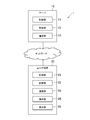
- FIG. 1 is a diagram showing an overall configuration of a product information display system.
- the product information display system 1 includes a server 10 and a user terminal 20, which are connected via a network so that data can be transmitted and received.
- the product information display system 1 includes a server 10 and a user terminal 20, which are connected via a network so that data can be transmitted and received.
- one server 10 and one user terminal 20 are shown, but a plurality of these may be provided.
- the server 10 is a server computer and includes, for example, a control unit 11, a storage unit 12, and a communication unit 13.
- the control unit 11 includes at least one processor.
- the control unit 11 executes processing according to programs and data stored in the storage unit 12.
- the storage unit 12 includes a main storage unit and an auxiliary storage unit.
- the main storage unit is a volatile memory such as a RAM
- the auxiliary storage unit is a non-volatile memory such as a hard disk or a flash memory.
- the communication unit 13 includes a communication interface for wired communication or wireless communication, and performs data communication via a network, for example.
- the user terminal 20 is a computer operated by the user, and is, for example, a personal computer, a portable information terminal (including a tablet computer), a mobile phone (including a smartphone), or the like.
- the user terminal 20 includes a control unit 21, a storage unit 22, a communication unit 23, an operation unit 24, and a display unit 25.
- the hardware configurations of the control unit 21, the storage unit 22, and the communication unit 23 may be the same as those of the control unit 11, the storage unit 12, and the communication unit 13, respectively.
- the operation unit 24 is an input device for a user to perform an operation, and is, for example, a pointing device such as a touch panel or a mouse, a keyboard, or the like.
- the operation unit 24 transmits the user's operation content to the control unit 21.
- the display unit 25 is, for example, a liquid crystal display unit or an organic EL display unit.
- the programs and data described as being stored in the storage units 12 and 22 may be supplied to these via a network.
- the hardware configurations of the server 10 and the user terminal 20 are not limited to the above example, and various hardware can be applied.
- the server 10 and the user terminal 20 each have a reading unit (for example, an optical disk drive or a memory card slot) that reads a computer-readable information storage medium or an input / output unit (eg, a USB) for directly connecting to an external device. Terminal).
- the program and data stored in the information storage medium may be supplied to the server 10 or the user terminal 20 via the reading unit or the input / output unit.
- the product information display system 1 can search for products handled in an online shopping mall.
- a search using a keyword may be possible, a search using a category may be possible, or a search combining these may be possible.
- the user operates the user terminal 20 to access the server 10
- the top page of the online shopping mall is displayed on the display unit 25, and a product can be searched.
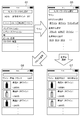
- FIG. 2 is a diagram showing how a user searches for a product.
- the top page G1 allows keyword input and category selection.
- categories are defined in a tree structure, and each category corresponds to a node. For example, only some categories are displayed on the top page G1.
- a category of a child node of the category may be selectable.
- each category may be selectable in turn until reaching a leaf node category in which no child node exists.
- search result screen G2 For example, when the user selects the category “wine” and inputs the keyword “Bordeaux”, a list of products that hit these two conditions is displayed as shown in the search result screen G2 of FIG. .
- the search result screen G2 belongs to one of these three categories, and , Products that hit the keyword “Bordeaux” are displayed.
- the product A which is a Bordeaux red wine
- the product B a Bordeaux white wine
- the product C a wine glass manufactured in Bordeaux
- the search result screen G2 displays a product C that is not wine together with products A and B that are wine itself. Since Bordeaux wine is popular worldwide, the above conditions are entered by a large number of users, but each user has a high probability of searching for the wine itself and a low probability of searching for wine goods. For this reason, in most cases, the search result screen G2 transits to the product page G3 of the product A and the product page G4 of the product B, and does not transit to the product page of the product C that happens to be hit.
- the server 10 analyzes the product selected by each user from the search result screen G2, and identifies a combination of related categories.
- Related categories are categories in which common items exist in the features of the product.
- related categories are categories in which the features of products that the user is interested in are similar.
- red wine” and white wine which are often selected from the three categories of sibling nodes, are categories to which the wine itself belongs, and are a combination of related categories.
- “wine goods” not selected is a category to which wine itself does not belong, and is a category that is not related to other sibling nodes.
- the server 10 can search the user from the search result screen G2.
- the relevance of the categories is specified based on the combination of categories to which the product actually selected belongs.
- the server 10 records the category of the product selected from the search result screen G2 for each keyword input in the past. For this reason, the server 10 can specify for each category what keyword is input when a product is selected.
- the server 10 determines that the plurality of categories are related if there is a common keyword between the plurality of categories at a threshold value or more.
- This threshold may be arbitrary and may be 1 or 2 or more. For example, in the case of the category “wine” in FIG. 2, when a threshold value is 2, a product of “red wine” and a product of “white wine” are selected for two or more common keywords. , “Red wine” and “white wine” are identified as a combination of related categories.
- the server 10 When the server 10 identifies the relationship between the “red wine” and the “white wine”, the server 10 finds the common items of the products in these two categories, the product descriptions of all the products belonging to the “red wine”, and the “white wine”.
- the attributes and attribute values of each product are extracted with reference to the product descriptions of all the products belonging to.
- the attribute is a character string that classifies the characteristics of the product, and the attribute value is a character string or a numerical value that indicates the specific content.
- the server 10 determines from the product description of the product A (product page G3 in FIG. 2) that the attribute “origin” and attribute value “France”, the attribute “production year” and attribute value “2016”, and the attribute “kind” and attribute. The value “red”, the attribute “frequency”, and the attribute value “11%” are extracted. Further, for example, the server 10 determines from the product description of the product B (product page G4 in FIG. 2) that the attribute “production area” and the attribute value “France”, the attribute “production year” and the attribute value “2015”, and the attribute “kind”. The attribute value “white”, the attribute “frequency”, and the attribute value “12%” are extracted. The server 10 stores the combination of the extracted attribute and attribute value in association with the product, and provides the attribute and attribute value to the user.
- FIG. 3 is a diagram showing how attributes and attribute values are provided to the user. As shown in FIG. 3, after the top page G1 is displayed, when the user selects the category of “wine” which is a child node of “beer / Western sake”, the display changes to the attribute display screen G5, where “red wine” and “ The attributes extracted from the “white wine” product and the representative attribute values of the attributes are displayed in a selectable manner.
- the attribute value “France” of the attribute “origin” from the attribute display screen G5 a list of products whose attribute value is “France” is displayed on the search result screen G6.
- a list of products from which the attribute “production year” is extracted is displayed on the search result screen G7.
- the attribute value is not particularly referred to because the “production year” attribute is only selected.
- the product information display system 1 specifies a combination of related categories based on the product selected for the keyword search result input by the user. And the merchandise information display system 1 provides a user with the attribute and attribute value which were extracted in the said combination. For this reason, it is possible to provide information across related categories while preventing some unrelated products from being displayed in search results, providing useful information for finding the desired product. can do.
- details of the configuration of the product information display system 1 will be described.
- FIG. 4 is a functional block diagram illustrating an example of functions realized by the product information display system 1.
- the data storage unit 100, the acquisition unit 101, the specifying unit 102, the recording unit 103, and the display control unit 104 are realized by the server 10.
- the data storage unit 100 is realized mainly by the storage unit 12, and the acquisition unit 101, the specifying unit 102, the recording unit 103, and the display control unit 104 are realized mainly by the control unit 11.
- the data storage unit 100 stores various data related to the online shopping mall.
- category definition data category definition data, product data, search query data, PV (Property-Value) seed data, and extended product metadata will be described as data stored in the data storage unit 100.
- PV Property-Value
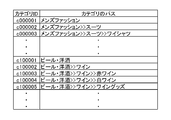
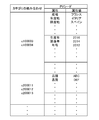
- FIG. 5 is a diagram showing an example of category definition data.
- the category definition data is master data defining all categories prepared in the online shopping mall.
- a category tree structure is defined in the category definition data.
- the category tree has a plurality of hierarchies (depths).
- the category definition data stores a category path in association with a category ID that uniquely identifies the category. Information from the root node to the category is stored as the category path.
- the character string “>>” in FIG. 5 means a branch between nodes. As shown in FIG. 5, the category name is generalized as the hierarchy is higher, and the category name is specified as the hierarchy is lower.
- FIG. 6 is a diagram showing an example of product data.
- the product data stores various information related to the product. For example, in the product data, a product name, a category ID, and a product description are stored in association with a product ID that uniquely identifies the product.
- the product data may store various information such as a product title, a handling shop, a unit price, a stock quantity, or a product page URL.
- the product description is input by the shop staff and includes, for example, a description in a table format, a description in a semi-structured text format, and a description in a free input text format.
- the product description need not include all of these, and may include only one or two of them.
- the product description may include at least one of a table format description and a semi-structured text format description.
- the table format description stores combinations of attributes and attribute values input by the shop staff. The number of rows and columns constituting the table may be arbitrary.
- a text in which a shop staff inputs a part of words of the fixed sentence is stored.
- a plurality of semi-structured texts are prepared, and the positions of words that can be input by the shop staff are determined in advance.
- text freely inputted by the shop staff is stored. HTML tag information may be input as free input text.
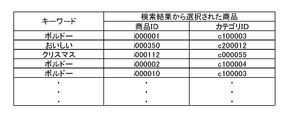
- FIG. 7 is a diagram illustrating an example of search query data.
- the search query data stores the relationship between the search condition input by the user and the user's action on the search result. For example, the keyword input by the user, the product ID of the product actually selected by the user from the search result, and the category ID of the product are associated with the search query data.
- a keyword search can also combine a plurality of keywords
- each of the plurality of keywords and a combination condition (“AND” or “OR”) are stored in the search query data.
- Good the category selected by the user during the search may be stored in the search query data.
- search query data is updated each time a user inputs a keyword and performs a search.
- the server 10 receives a keyword input by the user, the server 10 stores the keyword in search query data.
- the server 10 receives the selection result for the search result, the server 10 stores the product ID and category ID of the product selected by the user in the search query data.
- FIG. 8 is a diagram showing an example of PV seed data.
- PV seed is master data that defines a combination of attributes and attribute values. That is, the PV seed serves as a dictionary (sample) that is referred to in order to extract combinations of attributes and attribute values from the product description.
- the PV seed extracted in the combination is stored in association with the combination of the related categories.
- attributes having the same meaning but different notations are integrated into one.
- the attribute “origin” may be described as “production area” or “origin” depending on the shop. Since these meanings are the same, they are integrated as one attribute as shown in FIG. For this reason, a certain attribute may be composed of a plurality of notations. In this respect, the attribute value is the same, and one attribute value may be composed of a plurality of notations.
- information for identifying a representative notation among the integrated attributes may be stored in the PV seed data.
- “production area” may be a representative notation among “production area”, “production area”, and “origin”.
- information for identifying typical attribute values among them may be stored in the PV seed data.
- “France”, “Italy”, “Spain”, and the like that frequently appear as attribute values in the attribute “production area” may be representative attribute values.
- Representative attributes and attribute values may be determined based on the number of products from which they are extracted, or may be specified by a system administrator. When determined based on the number of products, the attribute and attribute value having the largest number of products may be representative values, or a predetermined number may be the representative value in order of increasing number of products.
- FIG. 9 is a diagram showing an example of extended product metadata.
- the extended product metadata is data indicating a combination of attributes and attribute values associated with each product.
- a combination of an attribute and an attribute value is stored in association with the product ID.
- the attribute and attribute value stored in the extended product metadata are hits in the product description of each product among the attributes and attribute values stored in the PV seed data.
- the data stored in the data storage unit 100 is not limited to the above example.
- the data storage unit 100 may store data necessary for the processing according to the embodiment.
- the data storage unit 100 may store HTML data of each screen.
- the acquisition unit 101 acquires product data indicating each category of a plurality of products for which keyword search is possible.
- the acquisition unit 101 acquires product data from the data storage unit 100.
- the acquisition unit 101 may acquire product data from the different system.
- the specifying unit 102 specifies the category of the product selected from the search results based on the product data for the keywords (one keyword or a plurality of keywords may be input) respectively input by a plurality of users. .
- the specifying unit 102 since the category ID is stored in the search query data updated based on the product data, the specifying unit 102 refers to the search query data, and each user who entered the keyword actually selects from the search result. Identify the product category. If the category ID is not stored in the search query data, the specifying unit 102 refers to the product data and acquires the category ID associated with the product ID stored in the search query data.
- the recording unit 103 stores the combination of the plurality of categories in the data storage unit 100. Record. In other words, when there are keywords common to a plurality of categories, the recording unit 103 identifies the plurality of categories as related combinations.
- the recording unit 103 generates search information that enables a search across a plurality of categories included in the combination based on the combination of categories.
- the search information may be any information that can be used in the product search, and may be a character string, a numerical value, or a combination thereof.
- the search information is for searching across a plurality of related categories, and products in unrelated categories are not hit.
- search information generated from products in a plurality of related categories is associated with products in the plurality of categories, and is not associated with products in other categories.
- Search information can be said to be a common item of products within a combination of related categories.
- the search information may not be a combination of attributes and attribute values, and may be a character string indicating the characteristics of a certain product or a partial character string of the product name.
- a combination of related categories may not necessarily be used for searching, but may be used for presenting information.
- the category combination recorded by the recording unit 103 may be displayed on the display unit 25 as it is, or the extracted attribute-attribute combination is simply presented as information in a state that is not particularly searchable. You may make it do.
- a combination of related categories may be presented as information together with a keyword referred to when specifying the combination.
- the category extraction process is a process for specifying a target category after the category integration process. That is, the category extraction process is a process for specifying a category for which relevance is determined. In other words, the category extraction process is a process for specifying a category for which a combination of attributes and attribute values is to be extracted.
- the category of a moderate number of goods is made into a process target by the category extraction process.
- the recording unit 103 determines that the number of products is greater than or equal to a first threshold (for example, 2 7 ) and the second threshold (for example, 2 15 ) from the entire tree based on the category definition data and the product data.
- a first threshold for example, 2 7
- the second threshold for example, 2 15
- a subtree that is less than or equal to is specified, and the category of the root node of the subtree is extracted.
- the recording unit 103 may extract not only the root node but all categories included in the subtree.
- the first threshold value and the second threshold value are stored in the data storage unit 100, and may be fixed values or variable values.
- the category integration process is a process for specifying a combination of related categories.
- the category integration process is a process of integrating related category combinations as one group.
- the recording unit 103 executes the category integration process based on the category extracted by the category extraction process and the search query data.
- the root node of a subtree to which a certain number of products belong is extracted by the category extraction process. Therefore, in the category integration process, the recording unit 103 performs, for each category of child nodes of the root node, the category of the category.
- the keywords entered when a product is selected are aggregated. Then, when there are more than the reference number (for example, 30) of common keywords among a plurality of categories, the recording unit 103 identifies the plurality of categories as a combination of related categories.
- the recording unit 103 stores the identified combination of categories in the PV seed data.
- the method for determining the relationship between categories is not limited to the above example.
- the recording unit 103 may determine that there is a relationship between categories when a plurality of categories are specified for a certain keyword and the number of users who input the keyword is greater than or equal to the reference number. That is, for example, categories that are not only selected by a certain set of users but selected by a large number of users may be used as combinations of related categories.
- the category may be set as a candidate for determining relevance.
- PV seed extraction process is a process for extracting the PV seed from the product description.
- the PV seed extracted by the PV seed extraction process is an initial value, and consent attributes are integrated or attribute value variations are increased by an attribute integration process and an attribute value expansion process described later.
- the recording unit 103 executes the PV seed extraction process based on the combination of categories specified in the category integration process and the product data. For example, the location where the attribute is stored in the product description is defined in the algorithm for extracting the PV seed. The storage location of the attribute may be determined in advance from the tendency of the product description input in the past. The recording unit 103 extracts a character string of a place determined by the algorithm from the product description as an attribute. Further, in this algorithm, the storage location of the attribute value relative to the storage location of the attribute is determined. The recording unit 103 extracts a character string or a numerical value at a place having a predetermined positional relationship with the extracted attribute as an attribute value.
- the recording unit 103 may extract attributes and attribute values from the table format description.
- the attribute is often stored in a specific column (for example, the first column) and the attribute value is stored in the adjacent column (for example, the second column). Therefore, the recording unit 103 uses a character string stored in a cell in a specific column as an attribute, and acquires a character string stored in the adjacent column as an attribute value. Then, the recording unit 103 extracts these combinations as PV seeds and stores them in the PV seed data.
- the recording unit 103 acquires the character string stored in each cell in the first column as an attribute and the character string stored in each cell in the second column as an attribute value. For example, from the product A, the recording unit 103 determines that the attribute “origin” and the attribute value “France”, the attribute “production year” and the attribute value “2016”, the attribute “type” and the attribute value “red”, and the attribute “frequency”. And the attribute value “11%” are extracted as PV seeds.
- the attribute “origin” and the attribute value “France”, the attribute “production year” and the attribute value “2015”, the attribute “kind” and the attribute value “white”, and the attribute “frequency” and the attribute value “ Four combinations of “12%” are extracted as PV seeds.
- the recording unit 103 uses the character string stored in the cell of the specific row as an attribute, A character string stored in a cell in the adjacent row may be acquired as an attribute value.
- the recording unit 103 may extract PV seeds based on the semi-structured text.
- the semi-structured text has a high probability of the word inserted at the first position being an attribute and the word inserted at the second position being an attribute value because the entire format is determined.
- the recording unit 103 refers to the first position of the semi-structured text, acquires the attribute, refers to the second position, acquires the attribute value, and extracts these combinations as PV seeds. It may be.
- the recording unit 103 may expand the extracted PV seed using the description in the free input text format.
- the recording unit 103 includes a character string similar to at least one of the attribute and attribute value of the PV seed extracted from the description in the table format or the semi-structured text format in the description in the free input text format. Determine whether. For example, when there is a character string similar to the current PV seed in the description in the sentence format, the recording unit 103 adds the character string to the PV seed as a new attribute. Further, for example, when a character string or numerical value similar to the attribute value of the current PV seed is in the description of the sentence format, the recording unit 103 adds the character string or numerical value to the PV seed as a new attribute value.
- the recording unit 103 uses an algorithm for determining a word break position and divides the sentence format description into words, Similarity determination between the attribute and the attribute value stored in the PV seed may be performed.
- the similarity of character strings may be determined using a set of divided words, or the similarity of character strings may be determined using a collocation consisting of a plurality of words.
- the attribute integration process is a process of integrating attributes having the same meaning among the attributes extracted as PV seeds. By the attribute integration process, the same type of attributes are integrated into one and the PV seed redundancy is reduced.
- the type of characters used may be different even for the same word.
- the meaning is the same when a word is written in hiragana, written in katakana, and written in kanji. Therefore, these are integrated as the same attribute by the attribute integration process.
- the recording unit 103 executes attribute integration processing based on the PV seed extracted by the PV seed extraction processing.
- attribute similarity is determined based on the commonality of attribute values.
- the recording unit 103 calculates the similarity L between the attributes stored in the PV seed based on the following formula 1.
- P 1 and P 2 in Equation 1 are arbitrary attributes extracted to the PV seed, respectively. That is, it is a combination of two attributes to be determined whether or not to integrate attributes.
- Left side of Equation 1 are two attributes P 1 of the P 2 similarity L.
- the similarity L is higher, the attributes P 1 and P 2 are more similar, and indicate that these should be integrated as the same attribute.
- the degree of similarity L attributes P 1 and P 2 are not similar, should not integrate these as the same attribute.
- m 1 is the range size of the attribute P 1
- m 2 is the range size of the attribute P 2
- the range size is a range covered by the attribute, and here means a variety of attribute values.
- the range size increases as the type of attribute value of a certain attribute increases, and the range size decreases as the type of attribute value decreases.
- the attribute value is represented by a numerical value
- the range size increases as the difference between the maximum value and the minimum value of the attribute value increases, and the range size decreases as the difference decreases.
- N in Equation 1 is the size of the common part of m 1 and m 2 . That is, the number of kinds of attribute values that are common between the attribute value of the attribute values and attribute P2 attributes P 1.
- L conf in Equation 1 is an increasing function that returns the probability that two attributes are similar. This probability, as intersection of the attribute value of the attribute P 1 and the attribute value of an attribute P 2 is large (i.e., larger the number of common attribute values) increases, the smaller the intersection is small.
- the function L conf is used to evaluate how much attribute values are common between the attribute P 1 and the attribute P 2 .
- L size in Equation 1 is a decreasing function for reducing the probability indicated by L conf .
- the function L size increases when the difference between the range size of the attribute P 1 and the range size of the attribute P 2 is small, and decreases when the difference is large. Even if there are many common parts between the attribute P 1 and the attribute P 2 , if there is a difference in size, it is doubtful that they may be regarded as the same, so the function L size Used to prevent.
- L error in Equation 1 is an increasing function for adjusting the similarity L when the first term on the right side is very large or has a very small value.
- the function L conf is an equation with m 1 , m 2 , and n as variables
- the function L size is an equation with m 1 and m 2 as variables
- the function L size is
- N is a mathematical expression.
- L conf (x) x
- L size exp ( ⁇ ax)
- L error (x) bx.
- the recording unit 103 integrates these two attributes as the same type when the similarity L between the two attributes is a reference value (for example, 0.1) or more.
- a reference value for example, 0.1
- the same kind of attributes are integrated in the related categories, it is also a condition for the integration that the categories of the products from which the two attributes are extracted are related to each other.
- the attribute integration processing is not limited to the above example, and similar attributes may be estimated by other evaluation methods.
- the recording unit 103 may integrate attributes determined to be agreement based on the synonym determination algorithm.
- synonyms may be determined based on synonym dictionary data defining synonyms.
- the recording unit 103 may estimate the attributes having specific attribute values as the same type by referring to the attribute values of the plurality of attributes extracted as the PV seed.
- the specific attribute value may be an attribute value designated in advance, but may be, for example, an industry term generally used among traders.
- the recording unit 103 is unlikely to have a plurality of phrases coexisting in one product description for a certain attribute, so that an attribute that appears in a certain product description is not estimated to be the same type. You may restrict to.
- the recording unit 103 may execute an attribute value filtering process. In the attribute value filtering process, an attribute value extracted as PV seed data may be discarded, or a certain attribute value and another attribute value may be integrated as the same type. For example, the recording unit 103 may discard attribute values that do not appear as keywords stored in the search query data.
- the attribute value expansion process is a process of increasing the attribute value variation and extending the attribute range size. That is, the attribute value expansion process is a process for adding a new attribute value to each attribute.
- the recording unit 103 executes attribute value expansion processing based on the product data.
- the recording unit 103 extracts new attribute value candidates from the product descriptions of the products belonging to the category included in the combination specified in the category integration process.
- the recording unit 103 may extract a character string or a numerical value similar to the attribute value stored in the current PV seed as a candidate attribute value.
- the recording unit 103 may extract a character string or a numerical value in the vicinity of a character string that matches the attribute stored in the current PV seed as a candidate attribute value.
- the recording unit 103 determines whether to add the candidate extracted as described above to the PV seed. The recording unit 103 repeats this process until there are no new candidates. For example, the recording unit 103 may add the extracted candidate as a new attribute value to the PV seed when two conditions are satisfied.
- the first condition is that the candidate is determined to be similar to the current attribute value based on the character similarity determination algorithm.
- the second condition is that no other attribute has an attribute value similar to the candidate. If there is another attribute having an attribute value similar to the candidate, the attribute value may be added to the other attribute.
- the recording unit 103 may calculate the evaluation value based on Equation 2.
- the left side of Equation 2 is an evaluation value.
- SP is an attribute.
- Mi is a character similarity determination algorithm to be used.
- the right side is the feature amount vector of the character indicated by the candidate, the feature amount vector of the existing attribute value, and the degree of deviation. Since these cosines are taken as shown on the right side, the evaluation value becomes higher as the vectors are directed in the same direction (that is, as the characters are more similar). If the evaluation value is greater than or equal to the threshold, the recording unit 103 adds the candidate as a new attribute value, and discards the candidate whose evaluation value is less than the threshold.
- the link process is a process for assigning an attribute and an attribute value to a product in each category that is considered to be related.
- the PV seed is used only as a dictionary. Therefore, at the time when the PV seed is extracted, attributes and attribute values are not yet given to the product.
- attributes and attribute values are assigned to the product, and extended product metadata is generated.
- the recording unit 103 performs link processing based on the product data and the PV seed data.
- the recording unit 103 extracts attributes and attribute values based on the description of the table format of each product and the PV seed data. That is, the recording unit 103 extracts, as an attribute and an attribute value of the product, if there is a match with the combination of the attribute and attribute value indicated by the PV seed in the table format description of each product.
- the recording unit 103 extracts attributes and attribute values based on the description of the semi-structured text format or free input text format of each product and the PV seed data. That is, the recording unit 103 extracts, as an attribute and an attribute value of the product, if any of the descriptions in the text format matches a combination of the attribute and attribute value indicated by the PV seed.
- the recording unit 103 considers that the attribute value is in the product description if the difference between the numerical value of the product description and the attribute value in the PV seed is less than the threshold value. Also good.
- the recording unit 103 of the present embodiment extracts the attributes and attribute values of the products based on the product descriptions of the products included in the plurality of categories indicated by the combination, and the data storage unit 100. To record.
- the recording unit 103 extracts attributes and attribute values for all products in a plurality of categories identified as having relevance. However, not all products need to be extracted from attributes and attribute values, and only some products in the plurality of categories may be extracted from attributes and attribute values.
- the recording unit 103 extracts attributes and attribute values from at least one of a table format description and a semi-structured text format description in the product description. For example, the recording unit 103 extracts attributes and attribute values from the table format description in the product description. The recording unit 103 extracts a character string of a specific cell in the description in the table format as an attribute, and extracts a character string or a numerical value of another cell having a predetermined positional relationship with the cell as an attribute value. Further, for example, the recording unit 103 extracts a character string at a predetermined position in the description of the semi-structured text format as an attribute, and extracts a character string or a numerical value at another position having a predetermined positional relationship with the position as an attribute value.
- This positional relationship may vary depending on the language used. For example, because the subject is an attribute and the predicate is an attribute value, the attribute is the first noun of the sentence in Japanese, the attribute value is the noun before the predicate, and the attribute is in English. Is the first noun of the sentence, and the attribute value may be the noun after the predicate.
- the recording unit 103 may extract the PV seed attribute from the table format description and extract the PV seed attribute value from both the table format description and the semi-structured text format description.
- the recording unit 103 may extract the attribute and attribute value from the description in the free input text format based on the PV seed including the extracted attribute and attribute value, and store the attribute and attribute value in association with the product.
- the recording unit 103 extracts attributes and attribute values from the description of the free input text format of other products based on the attributes and attribute values extracted from at least one product.
- the recording unit 103 may extract attributes and attribute values of other products based on attributes and attribute values extracted from different products. That is, the recording unit 103 may extract the attribute and the attribute value from the product Z based on the attribute extracted from the product X and the attribute value extracted from the product Y.
- the recording unit 103 specifies a character string that matches or is similar to an attribute extracted from the description of at least one product in the table format or semi-structured text format from the description in the free input text format of other products Extract as a new attribute.
- the recording unit 103 obtains a character string or a numerical value that matches or is similar to the attribute value extracted from the description of at least one product in the table format or semi-structured text format from the description in the free input text format of other products. If found, it is extracted as a new attribute value.
- the recording unit 103 determines whether a plurality of attributes having different notations have the same meaning, and integrates the plurality of attributes determined to have the same meaning. As described above, in the present embodiment, the recording unit 103 determines whether the similarity L (for example, Equation 1) based on the number of types of attribute values common to a plurality of attributes is greater than or equal to a threshold value. It is determined whether the plurality of attributes have the same meaning. For example, if the similarity L between attributes is equal to or greater than a threshold, the recording unit 103 determines that the attributes have the same meaning and integrates them. Note that the method of calculating the similarity is not limited to Equation 1, and other equations may be used.
- This mathematical formula may be a mathematical formula with the number of types of common attribute values as an argument, and may be a mathematical formula in which the degree of similarity increases as the number of types increases.
- the number of types of common attribute values may be the degree of similarity as it is.
- other methods may be used as a method for determining the similarity between words.
- the synonym dictionary data is stored in the data storage unit 100, and the recording unit 103 is based on the synonym dictionary data.
- a plurality of attributes may be integrated.
- the recording unit 103 determines a category to be processed based on the number of products belonging to each category.
- the recording unit 103 determines the relevance of other categories with respect to a category having a certain number of products, and extracts attributes and attribute values.
- the recording unit 103 since the category is a tree structure, the recording unit 103, when the category of a plurality of sibling nodes is specified for the same keyword by the specifying unit 102, the combination of the categories of the plurality of sibling nodes Record.
- the recording unit 103 generates a combination of attributes and attribute values when the specifying unit 102 specifies a combination of sibling node categories for the same keyword.
- the display control unit 104 causes the display unit 25 to display information based on the combination.
- the display control unit 104 causes the display unit 25 to display information based on the attribute and the attribute value.
- the display control unit 104 may cause the display unit 25 to display a search result based on what is selected by the user among the attributes and attribute values displayed on the display unit 25.
- the display control unit 104 may display the extracted attribute and attribute value on the display unit 25 or display information other than information related to the search on the display unit 25. May be.
- the display control unit 104 may display the related subcategories in the category tree on the display unit 25 so as to be identifiable.
- the display control unit 104 may provide information not only to a user who uses an online shopping mall, but also to an administrator of the online shopping mall. That is, the display control unit 104 may be able to display information on an arbitrary display unit other than the display unit 25 of the user terminal 20.
- the display control unit 104 executes a search across each category indicated by a combination of related categories based on a combination of attributes and attribute values.
- a search across categories is a search across a plurality of categories. Based on a single search condition, a product in the first category and a product in the second category are simultaneously searched. Is to search.
- the display control unit 104 provides each user with attribute display screens G5 and G6 capable of selecting at least one of an attribute and an attribute value, and causes the display unit 25 to display a search result based on the selection result for the screen. It will be.
- the display control unit 104 may perform a search across each category indicated by the combination based on the selection result for the attribute display screens G5 and G6.
- the display control unit 104 refers to the extended product metadata and displays the product associated with the attribute in the search result.
- the display control unit 104 refers to the extended product metadata and displays the product associated with the attribute value in the search result.
- the display control unit 104 causes the display unit 25 to display information when a category of a parent node of a combination of related categories is selected. Become. For example, when the category of the parent node is selected, the display control unit 104 performs a search across each category indicated by the combination of the related categories based on the combination of the attribute and the attribute value. . That is, the display control unit 104 displays the attribute display screens G5 and G6 indicating the attributes and attribute values extracted from the related categories among the child nodes of the category selected by the user, and displays the selection result for the screen. Based on this, a search across related child nodes is executed.
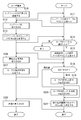
- FIG. 10 is a flowchart showing metadata generation processing.
- the metadata generation process is executed by the control unit 11 operating according to a program stored in the storage unit 12.
- the metadata generation process may be executed at a predetermined timing.
- the metadata generation process may be executed according to an instruction from the system administrator, or may be executed at a predetermined date and time.
- the control unit 11 executes a category extraction process based on the category definition data and the product data (S1).
- the control unit 11 identifies a category having a certain number of products from all categories, and extracts the category as a subsequent processing target.
- the control unit 11 executes the category integration process based on the category extracted in S1 and the search query data (S2).
- S ⁇ b> 2 the control unit 11 specifies a combination of product categories for which a product page is displayed using a common keyword, and holds the combination as a combination of related categories.
- the control unit 11 executes the PV seed extraction process based on the combination of categories specified in the category integration process and the product data (S3). In S3, the control unit 11 extracts the PV seed from the product description in the table format or the semi-structured text format, and expands it into the product description in the free input text format.
- the control unit 11 executes attribute integration processing based on the PV seed data (S4). In S4, the control unit 11 determines whether a plurality of attributes having different notations have the same meaning, and integrates a plurality of attributes having the same meaning.
- the control unit 11 executes attribute value expansion processing based on the product data (S5). In S5, the control unit 11 extracts a new attribute value from the product description and adds it to the PV seed. The control unit 11 executes the link process based on the product data and the PV seed data (S6), and this process ends. In S6, if there is a product that matches or resembles the PV seed in the product description, the control unit 11 extracts it as a combination of an attribute and an attribute value, and records it in the extended product metadata in association with the product.
- FIG. 11 is a flowchart showing the information display process.
- the information display process is executed by the control unit 11 operating according to the program stored in the storage unit 12 and the control unit 21 operating according to the program stored in the storage unit 22.
- the control unit 21 transmits a display request for the top page G ⁇ b> 1 to the server 10 in response to the user selecting a link for the top page G ⁇ b> 1 from the operation unit 24. (S10).
- the IP address or session ID of the user terminal 20 is transmitted, and the server 10 can specify which user terminal 20 is accessing. It has become.
- the control unit 11 when the display request for the top page G1 is received, the control unit 11 generates display data for the top page G1 and transmits it to the user terminal 20 (S11). In S11, the control unit 11 generates a top page G1 including a selectable category based on the category definition data, or selects an arbitrary product based on the product data and includes a link of the product. Or generate.
- the top page G1 may have any data format, and may be, for example, HTML data.
- the control unit 21 displays the top page G1 (S12). Based on the detection signal from the operation unit 24, the control unit 21 transmits the user operation details on the top page G1 to the server 10 (S13).
- the server 10 S13.
- keyword input or category selection is performed, but other operations may be possible.
- the control unit 11 determines whether the user has selected a category (S14). If it is not determined that the user has selected a category (S14; N), this process ends, and the control unit 11 executes a process based on the operation content. For example, when the user inputs a keyword, the control unit 11 performs a keyword search and transmits the search result to the user terminal 20. After that, when the server 10 receives information indicating the product selected by the user, the keyword input by the user and the category of the product selected from the search result are associated with each other and stored in the search query data.
- the control unit 11 when it is determined that the user has selected a category (S14; Y), the control unit 11 generates display data of an attribute display screen on which an attribute and an attribute value can be selected based on the PV seed data to generate a user. It transmits to the terminal 20 (S15). In S15, the control part 11 specifies the combination extracted as a relevant category among the child nodes of the category selected by the user. And the control part 11 produces
- the control unit 21 displays an attribute display screen (S16). Based on the detection signal from the operation unit 24, the control unit 21 transmits the user's operation content to the server 10 (S17). Here, selection of an attribute or selection of an attribute value is performed, but other operations may be possible.
- the control unit 11 when the operation content of the user is received, the control unit 11 refers to the operation content (S18). When it is determined that the user has selected the attribute (S18; attribute), the control unit 11 searches for a product associated with the attribute selected by the user based on the extended product metadata (S19). In S19, the control unit 11 compares the attribute selected by the user with the attribute stored in the extended product metadata, and extracts a product that hits the attribute selected by the user.
- the control unit 11 searches for a product associated with the attribute value selected by the user based on the extended product metadata (S20). ). In S20, the control unit 11 compares the attribute value selected by the user with the attribute value stored in the extended product metadata, and extracts a product that hits the attribute value selected by the user.
- the control unit 11 generates display data of a search result screen based on the search result of S19 or S20 and transmits it to the user terminal 20 (S21).
- the search result screen includes a thumbnail image or a link of the product hit in S19 or S20.
- the control unit 21 displays the search result screen (S22), and this process ends. Thereafter, the user selects a desired product from the search result screen and transitions to the product page.
- a combination of related categories is recorded and information based on the combination is displayed. Therefore, even if products are distributed in a plurality of categories, a desired category is displayed.
- Information useful for finding products can be presented. For example, if a search across a plurality of categories is executed based on search information common to a combination of related categories, products distributed in a plurality of categories can be included in one search result. A search result that makes it easy to find a desired product can be presented.
- the user can grasp in which category the desired product is distributed, and thus present useful information for the user. Can do.
- the product information display system 1 specifies the relationship between categories based on the product actually selected by the user, it is possible to find the relationship between categories according to the actual situation.
- the specifying unit 102 specifies a plurality of categories as a relevant combination when there are keywords that are common among a plurality of categories at a threshold value or more. ), It is possible to prevent an unrelated category from being identified as related by the user selecting a product by mistake. Furthermore, even if two or more products have been selected in order to be candidates for relevant categories, unrelated categories are identified as relevant due to the user's erroneous selection. Can be prevented.
- the product information display system 1 presents information based on attributes and attribute values extracted from the product description, it can present common terms between related categories as information.
- the user can obtain a hint for searching for products distributed in a plurality of categories based on the common item. For example, if an attribute and an attribute value are used as search information, the search can be executed based on a common term between related categories. For this reason, even if related products are distributed among a plurality of categories, it is possible to pinpoint desired products in each category and place them in the search results.
- the attribute and the attribute value are extracted from the product description, it is possible to present information that more accurately represents the characteristics of the product than the attribute keyword prepared in advance by the system administrator.
- the product information display system 1 when the product information display system 1 extracts the attribute and attribute value of each product from the description of the table format that makes it easy to specify the storage location of the attribute and attribute value, information that does not indicate the feature of the product is erroneously extracted. Can be prevented, and the accuracy of attributes and attribute values can be improved.
- the product information display system 1 also includes information that does not indicate the characteristics of the product even when extracting the attribute and attribute value of each product from the description in the semi-structured text format that makes it easy to specify the storage location of the attribute and attribute value. Extraction by mistake can be prevented, and the accuracy of attributes and attribute values can be increased.
- the product information display system 1 extracts attributes and attribute values from free input text using attributes and attribute values extracted from at least one of the descriptions in the table format and the semi-structured text format.
- the variation of attributes and attribute values can be increased by using free input text with a large amount of information.
- the product information display system 1 can prevent attributes having the same meaning from being extracted as different attributes by integrating attributes having the same meaning but different notations, thereby reducing attribute redundancy. can do.
- the merchandise information display system 1 can improve the accuracy of synonym determination by determining whether the attributes have the same meaning by referring to the similarity based on the number of types of attribute values common among the attributes. it can. For example, when synonyms are determined by the number of attribute values, if a store repeatedly uses the same attribute value in a product description, the number increases, and the attribute is not really synonymous due to the product description of this store. There is a possibility that they will be synonymous with each other. On the other hand, as described in the embodiment, when the synonym is determined based on the number of types of attribute values, the number of types remains the same no matter how many times it is used as a product description. As described above, attributes that are not synonymous can be prevented from being synonymous, and the accuracy of synonym determination can be increased.
- the product information display system 1 displays the attribute display screen on which at least one of the attribute and the attribute value can be selected on the user terminal 20, thereby allowing the user to grasp from what viewpoint the common item exists. it can. For example, if a search is executed according to the attribute or attribute value selected by the user, the search can be performed from the viewpoint according to the user's preference.
- the product information display system 1 can provide more effective information by determining the relationship between categories corresponding to child nodes of a category having a certain number of products and extracting attributes and attribute values. It becomes. For example, if there is a category with a general name such as “Drink”, there are too many products belonging to the category, so the products in this category have too different characteristics, and attributes and attribute values There is no point in analyzing On the other hand, in a category where the number of products is too small, since a desired product can be found immediately, there is no point in analyzing it. Therefore, it is possible to execute a search within a category in which a search based on attributes and attribute values is effective.
- a category that is a moderately specific category such as “Wine”, in which a moderate number of products exist, is a processing target
- a category corresponding to a child node of “Wine” here, “Red Wine”. , “White wine”, “wine goods”
- the product information display system 1 can provide information that crosses these categories. For this reason, after letting a user select a rough category, it is possible to provide information across categories that are related in terms of attributes and attribute values.
- the display control unit 104 of the modified example (1) searches for other products that match at least one of the attribute and attribute value of the product for which each user requested display of the product page, and links to the searched other products. Is included in the product page to display information on the display unit 25.
- the product page request may be made by selecting a product from the search result screen.
- the display control unit 104 acquires the attributes and attribute values of the products for which display of the product page is requested based on the extended product metadata, searches for products having the same attributes and attribute values, and You may make it include the link of goods in a goods page. Further, for example, the display control unit 104 identifies the category ID of the product for which display of the product page is requested based on the product data, and associates the category ID with the category ID if the category ID is registered in the PV seed data. One of the PV seeds obtained is acquired. Then, the display control unit 104 may search for a product based on the extended product metadata and the acquired PV seed, and include a link of the product in the product page.
- the modification (1) it is possible to recommend a product that the user is interested in. Also, by making recommendations based on attributes and attribute values, it is possible to provide information on highly probable products that are more interesting, so that effective recommendations can be made.
- the recording unit 103 determines the category to be processed based on the number of products belonging to each category, but the specifying unit 102 determines the number of products belonging to each category. Based on the above, the category to be processed may be determined. That is, the specifying unit 102 may refer only to a category having a certain number of products from the search query data.
- the category may not have a tree structure. That is, the categories do not have a hierarchy, and all categories may be handled in the same row. Even in this case, similar to the embodiment, the relevance of each other may be determined based on the selection result of the user with respect to the search result of the keyword search.
- search information may be extracted by extracting a keyword common to the products in the combination of the related categories regardless of the attribute.
- the combination of categories may be used as search information. In this case, for example, when the user selects the category of “wine”, only products in the categories of “red wine” and “white wine” that are related may be included in the search result.
- the combination of the attribute and the attribute value is extracted from the description in the table format has been described, but the combination of the attribute and the attribute value may be extracted only from the description in the free input text format.
- combinations of attributes and attribute values may not be extracted from the description in the semi-structured text format.
- the process of integrating the attributes of consent is not essential, and character strings having different notations may be different attributes.
- a category with a fixed number of products may not be processed, but all categories or a category designated by an administrator may be processed.
- the acquisition unit 101, the identification unit 102, the recording unit 103, and the display control unit 104 may be realized by the user terminal 20, respectively. In this case, these functions are realized mainly by the control unit 11.
- the acquisition unit 101 acquires each data from the server 10 via the network, and the specifying unit 102, the recording unit 103, and the display control unit 104 may execute processing based on the data.
Landscapes
- Business, Economics & Management (AREA)
- Accounting & Taxation (AREA)
- Finance (AREA)
- Development Economics (AREA)
- Economics (AREA)
- Marketing (AREA)
- Strategic Management (AREA)
- Physics & Mathematics (AREA)
- General Business, Economics & Management (AREA)
- General Physics & Mathematics (AREA)
- Engineering & Computer Science (AREA)
- Theoretical Computer Science (AREA)
- Information Retrieval, Db Structures And Fs Structures Therefor (AREA)
- Management, Administration, Business Operations System, And Electronic Commerce (AREA)
Abstract
所望の商品を見つけるのに有用な情報を提示する。商品情報表示システム(1)の取得手段(101)は、キーワード検索が可能な複数の商品の各々のカテゴリを示す商品データを取得する。特定手段(102)は、複数のユーザがそれぞれ入力したキーワードに対し、検索結果の中から選択された商品のカテゴリを前記商品データに基づいて特定する。記録手段(103)は、特定手段(102)により同じキーワードに対して複数のカテゴリが特定された場合、当該複数のカテゴリの組み合わせを記憶手段(100)に記録する。表示制御手段(104)は、組み合わせに基づく情報を表示手段(25)に表示させる。
Description
本発明は、商品情報表示システム、商品情報表示方法、及びプログラムに関する。
従来、オンラインショッピングでは、ユーザが入力した検索条件に基づいて商品を検索する技術が知られている。例えば、特許文献1には、ユーザが入力したキーワードに基づいて商品を検索したり、ユーザが選択したカテゴリに基づいて商品を検索したりするシステムが記載されている。
しかしながら、キーワードに基づく検索では、単純な文字列一致により商品が検索されるので、所望の商品とは無関係の商品がたまたまヒットしてしまうことがある。一方、カテゴリに基づく検索では、ユーザが選択したカテゴリに多数の商品が属しているので、やはり無関係な商品がヒットしてしまう。更に、所望の商品は、1つのカテゴリに集中するわけではなく、互いに関連する複数のカテゴリに分散することが多い。このため、ユーザがカテゴリを選択しても、所望の商品の一部しか表示されず、関連性のある別カテゴリ内の商品は表示されない。
この点、カテゴリの名前が似ていたとしても、その中にある商品の種類が全く違うことも多いので、どのカテゴリに関連性があるかをユーザが判断するのは難しい。特許文献1の技術では、関連性のあるカテゴリの組み合わせに基づく情報をユーザに提供することができず、上記説明したように、無関係な商品が多い検索結果になったり、所望の商品の一部しかない検索結果になったりするので、ユーザは所望の商品を見つけにくかった。
本発明は上記課題に鑑みてなされたものであって、その目的は、所望の商品を見つけるのに有用な情報を提示することである。
上記課題を解決するために、本発明に係る商品情報表示システムは、キーワード検索が可能な複数の商品の各々のカテゴリを示す商品データを取得する取得手段と、複数のユーザがそれぞれ入力したキーワードに対し、検索結果の中から選択された商品のカテゴリを前記商品データに基づいて特定する特定手段と、前記特定手段により同じキーワードに対して複数のカテゴリが特定された場合、当該複数のカテゴリの組み合わせを記憶手段に記録する記録手段と、前記組み合わせに基づく情報を表示手段に表示させる表示制御手段と、を含むことを特徴とする。
本発明に係る商品情報表示方法は、キーワード検索が可能な複数の商品の各々のカテゴリを示す商品データを取得する取得ステップと、複数のユーザがそれぞれ入力したキーワードに対し、検索結果の中から選択された商品のカテゴリを前記商品データに基づいて特定する特定ステップと、前記特定ステップにより同じキーワードに対して複数のカテゴリが特定された場合、当該複数のカテゴリの組み合わせを記憶手段に記録する記録ステップと、前記組み合わせに基づく情報を表示手段に表示させる表示制御ステップと、を含むことを特徴とする。
本発明に係るプログラムは、キーワード検索が可能な複数の商品の各々のカテゴリを示す商品データを取得する取得手段、複数のユーザがそれぞれ入力したキーワードに対し、検索結果の中から選択された商品のカテゴリを前記商品データに基づいて特定する特定手段、前記特定手段により同じキーワードに対して複数のカテゴリが特定された場合、当該複数のカテゴリの組み合わせを記憶手段に記録する記録手段、前記組み合わせに基づく情報を表示手段に表示させる表示制御手段、としてコンピュータを機能させる。
また、本発明に係る情報記憶媒体は、上記のプログラムが記憶されたコンピュータ読み取り可能な情報記憶媒体である。
また、本発明の一態様では、前記記録手段は、前記組み合わせが示す複数のカテゴリに含まれる複数の商品の各々の商品説明に基づいて、当該商品の属性と属性値を抽出して前記記憶手段に記録し、前記表示制御手段は、前記属性と前記属性値とに基づく前記情報を前記表示手段に表示させる、ことを特徴とする。
また、本発明の一態様では、前記商品説明は、テーブル形式の説明と半構造化テキスト形式の説明の少なくとも一つを含み、前記記録手段は、前記商品説明の中の前記テーブル形式の説明と前記半構造化テキスト形式の説明の少なくとも一つから前記属性と前記属性値を抽出する。
また、本発明の一態様では、前記商品説明は、自由入力テキスト形式の説明を更に含み、前記記録手段は、少なくとも一つの商品から抽出した前記属性と前記属性値に基づいて、他の商品の前記自由入力テキスト形式の説明から前記属性と前記属性値を抽出する。
また、本発明の一態様では、前記記録手段は、表記の異なる複数の前記属性が互いに同じ意味であるかを判定し、同じ意味であると判定した前記複数の属性を統合する。
また、本発明の一態様では、前記記録手段は、前記複数の属性間で共通の属性値の種類数に基づく類似度が閾値以上であるかを判定することによって、当該複数の属性が互いに同じ意味であるかを判定する。
また、本発明の一態様では、前記表示制御手段は、前記属性と前記属性値の少なくとも一つを選択可能な画面を各ユーザに提供し、当該画面に対する選択結果に基づく前記情報を前記表示手段に表示させる。
また、本発明の一態様では、前記表示制御手段は、各ユーザが商品ページの表示を要求した商品の前記属性と前記属性値の少なくとも一つと一致する他の商品を検索し、当該検索した他の商品へのリンクを前記商品ページに含ませることによって、前記情報を前記表示手段に表示させる。
また、本発明の一態様では、前記特定手段又は前記記録手段は、各カテゴリに属する商品の数に基づいて、自身の処理対象とするカテゴリを決定する。
また、本発明の一態様では、各商品は、ツリー構造で定義されたカテゴリに属し、前記記録手段は、前記特定手段により同じキーワードに対して複数の兄弟ノードのカテゴリが特定された場合に、当該複数の兄弟ノードのカテゴリの組み合わせを記録し、前記表示制御手段は、前記組み合わせの親ノードのカテゴリが選択された場合に前記情報を前記表示手段に表示させる。
本発明によれば、所望の商品を見つけるのに有用な情報を提示することである。
[1.商品情報表示システムのハードウェア構成]
以下、本発明に関わる商品情報表示システムの実施形態の例を説明する。図1は、商品情報表示システムの全体構成を示す図である。図1に示すように、商品情報表示システム1は、サーバ10及びユーザ端末20を含み、これらはネットワークを介してデータ送受信可能に接続される。なお、図1では、サーバ10及びユーザ端末20を1台ずつ示しているが、これらは複数台あってもよい。
以下、本発明に関わる商品情報表示システムの実施形態の例を説明する。図1は、商品情報表示システムの全体構成を示す図である。図1に示すように、商品情報表示システム1は、サーバ10及びユーザ端末20を含み、これらはネットワークを介してデータ送受信可能に接続される。なお、図1では、サーバ10及びユーザ端末20を1台ずつ示しているが、これらは複数台あってもよい。
サーバ10は、サーバコンピュータであり、例えば、制御部11、記憶部12、及び通信部13を含む。制御部11は、少なくとも1つのプロセッサを含む。制御部11は、記憶部12に記憶されたプログラムやデータに従って処理を実行する。記憶部12は、主記憶部及び補助記憶部を含む。例えば、主記憶部はRAMなどの揮発性メモリであり、補助記憶部は、ハードディスクやフラッシュメモリなどの不揮発性メモリである。通信部13は、有線通信又は無線通信用の通信インタフェースを含み、例えば、ネットワークを介してデータ通信を行う。
ユーザ端末20は、ユーザが操作するコンピュータであり、例えば、パーソナルコンピュータ、携帯情報端末(タブレット型コンピュータを含む)、又は携帯電話機(スマートフォンを含む)等である。ユーザ端末20は、制御部21、記憶部22、通信部23、操作部24、及び表示部25を含む。制御部21、記憶部22、及び通信部23のハードウェア構成は、それぞれ制御部11、記憶部12、及び通信部13と同様であってよい。操作部24は、ユーザが操作を行うための入力デバイスであり、例えば、タッチパネルやマウス等のポインティングデバイスやキーボード等である。操作部24は、ユーザの操作内容を制御部21に伝達する。表示部25は、例えば、液晶表示部又は有機EL表示部等である。
なお、記憶部12,22に記憶されるものとして説明するプログラム及びデータは、ネットワークを介してこれらに供給されるようにしてもよい。また、サーバ10及びユーザ端末20のハードウェア構成は、上記の例に限られず、種々のハードウェアを適用可能である。例えば、サーバ10及びユーザ端末20は、それぞれコンピュータ読み取り可能な情報記憶媒体を読み取る読取部(例えば、光ディスクドライブやメモリカードスロット)や外部機器と直接的に接続するための入出力部(例えば、USB端子)を含んでもよい。この場合、情報記憶媒体に記憶されたプログラムやデータが読取部又は入出力部を介して、サーバ10又はユーザ端末20に供給されるようにしてもよい。
[2.商品情報表示システムの概要]
商品情報表示システム1は、オンラインショッピングモールで取り扱われる商品の検索が可能である。商品情報表示システム1では、キーワードを利用した検索が可能であってもよいし、カテゴリを利用した検索が可能であってもよいし、これらを組み合わせた検索が可能であってもよい。例えば、ユーザがユーザ端末20を操作してサーバ10にアクセスすると、オンラインショッピングモールのトップページが表示部25に表示され、商品の検索が可能となる。
商品情報表示システム1は、オンラインショッピングモールで取り扱われる商品の検索が可能である。商品情報表示システム1では、キーワードを利用した検索が可能であってもよいし、カテゴリを利用した検索が可能であってもよいし、これらを組み合わせた検索が可能であってもよい。例えば、ユーザがユーザ端末20を操作してサーバ10にアクセスすると、オンラインショッピングモールのトップページが表示部25に表示され、商品の検索が可能となる。
図2は、ユーザが商品を検索する様子を示す図である。図2に示すように、トップページG1は、キーワードの入力とカテゴリの選択とが可能となっている。本実施形態では、カテゴリがツリー構造で定義されており、個々のカテゴリは、ノードに相当する。例えば、トップページG1には、一部のカテゴリのみが表示される。ユーザがトップページG1に表示されたカテゴリを選択すると、当該カテゴリの子ノードのカテゴリが選択可能になるようにしてよい。
例えば、ユーザがトップページG1から「ビール・洋酒」というカテゴリを選択すると、当該カテゴリの子ノードである「ビール」、「ウイスキー」、及び「ワイン」のカテゴリが選択可能になる。そして、ユーザが「ワイン」というカテゴリを選択すると、当該カテゴリの子ノードである「赤ワイン」、「白ワイン」、及び「ワイングッズ」のカテゴリが選択可能になる。以降、子ノードが存在しない葉ノードのカテゴリに至るまで、各カテゴリを順番に選択可能であってよい。
例えば、ユーザが「ワイン」というカテゴリを選択し、かつ、「ボルドー」というキーワードを入力すると、図2の検索結果画面G2に示すように、これら2つの条件にヒットする商品の一覧が表示される。ここでは、「ワイン」の子ノードとして、「赤ワイン」、「白ワイン」、及び「ワイングッズ」の3つが存在するので、検索結果画面G2には、これら3つのカテゴリの何れかに属し、かつ、「ボルドー」というキーワードにヒットする商品が表示される。
図2の例では、ボルドー産の赤ワインである商品A、ボルドー産の白ワインである商品B、及びボルドーで製造されたワイングラスである商品Cが、同じ検索結果画面G2に表示される。即ち、検索結果画面G2には、ワインそのものである商品A及びBとともに、ワインではない商品Cが表示される。ボルドー産のワインは世界的に人気があるので、上記の条件は多数のユーザによって入力されるが、各ユーザは、ワインそのものを探している蓋然性が高く、ワイングッズを探している蓋然性は低い。このため、検索結果画面G2からは、商品Aの商品ページG3や商品Bの商品ページG4に遷移することがほとんどであり、たまたまヒットした商品Cの商品ページには遷移しない。
サーバ10は、検索結果画面G2から各ユーザが選択した商品を分析し、関連性のあるカテゴリの組み合わせを特定する。関連性のあるカテゴリとは、商品の特徴に共通項が存在するカテゴリである。別の言い方をすれば、関連性のあるカテゴリは、ユーザが興味を持つ商品の特徴が似ているカテゴリである。図2の例の場合、兄弟ノードの3つのカテゴリのうち、よく選択される「赤ワイン」と「白ワイン」は、ワインそのものが属するカテゴリであり、関連性のあるカテゴリの組み合わせである。一方、選択されない「ワイングッズ」は、ワインそのものは属しないカテゴリであり、他の兄弟ノードとは関連性のないカテゴリである。このように、カテゴリの定義上は兄弟の関係にあったとしても、表記が部分的に一致するだけで実際には関連性の薄いカテゴリも存在するので、サーバ10は、検索結果画面G2からユーザが実際に選択した商品が属するカテゴリの組み合わせに基づいて、カテゴリの関連性を特定する。
本実施形態では、サーバ10は、過去に入力されたキーワードごとに、検索結果画面G2から選択された商品のカテゴリを記録している。このため、サーバ10は、商品が選択された場合に何のキーワードが入力されたかを、カテゴリごとに特定可能となっている。サーバ10は、複数のカテゴリ間で共通のキーワードが閾値以上存在すれば、当該複数のカテゴリに関連性があると判断する。この閾値は、任意であってよく、1でもよいし、2以上であってもよい。例えば、図2の「ワイン」のカテゴリであれば、閾値を2とすると、2つ以上の共通のキーワードに対して、「赤ワイン」の商品と「白ワイン」の商品とが選択されていた場合、「赤ワイン」と「白ワイン」が関連性のあるカテゴリの組み合わせとして特定される。
なお、上記の説明では、あるカテゴリの商品が1つでも選択されていれば、関連性のある組み合わせの候補となる場合を説明したが、商品が複数選択された場合に、関連性のある組み合わせの候補となるようにしてもよい。この数は、任意であってよく、2つであってもよいし、3つ以上であってもよい。このようにすれば、例えば、ユーザが間違って「ワイングッズ」の商品を選択してしまったとしても、この1回の誤選択によって、「ワイングッズ」が関連性のあるカテゴリの組み合わせに含まれてしまうことを防止できる。
サーバ10は、「赤ワイン」と「白ワイン」の関連性を特定すると、これら2つのカテゴリ内の商品の共通項を見つけるために、「赤ワイン」に属する全商品の商品説明と、「白ワイン」に属する全商品の商品説明と、を参照し、各商品の属性と属性値を抽出する。属性は、商品の特徴を分類する文字列であり、属性値は、その具体的な内容を示す文字列又は数値である。
例えば、サーバ10は、商品Aの商品説明(図2の商品ページG3)から、属性「産地」と属性値「フランス」、属性「生産年」と属性値「2016」、属性「種類」と属性値「赤」、及び属性「度数」と属性値「11%」を抽出する。また例えば、サーバ10は、商品Bの商品説明(図2の商品ページG4)から、属性「産地」と属性値「フランス」、属性「生産年」と属性値「2015」、属性「種類」と属性値「白」、及び属性「度数」と属性値「12%」を抽出する。サーバ10は、抽出した属性と属性値の組み合わせを商品に関連付けて記憶し、当該属性と属性値をユーザに提供する。
図3は、属性と属性値がユーザに提供される様子を示す図である。図3に示すように、トップページG1が表示された後に、ユーザが「ビール・洋酒」の子ノードである「ワイン」のカテゴリを選択すると、属性表示画面G5に遷移し、「赤ワイン」と「白ワイン」の商品から抽出した属性と、当該属性の代表的な属性値と、が選択可能に表示される。
例えば、ユーザが属性表示画面G5の中から属性「産地」の属性値「フランス」を選択すると、「フランス」が属性値の商品の一覧が検索結果画面G6に表示される。また例えば、ユーザが属性表示画面G5の中から属性「生産年」を選択すると、「生産年」の属性が抽出された商品の一覧が検索結果画面G7に表示される。なお、この場合、「生産年」の属性が選択されただけなので、属性値は特に参照されない。
検索結果画面G6及びG7には、属性と属性値が抽出されなかった商品は検索結果にヒットしないので、キーワード検索とは異なり、無関係の商品が文字列一致でたまたまヒットすることを回避できる。例えば、関連性がないとされた「ワイングッズ」の商品は、属性と属性値が抽出されないので、検索結果画面G6及びG7には、「ワイングッズ」の商品は表示されない。更に、属性と属性値は、「赤ワイン」と「白ワイン」との間で共通なので、これらのカテゴリをまたいで商品を探すことが可能となる。更に、属性と属性値は、商品説明から抽出されたものなので、システム管理者が予め用意した属性のキーワードよりも、商品の特徴をより的確に表した情報を提供できる。
以上のように、商品情報表示システム1は、ユーザが入力したキーワードの検索結果に対して選択した商品に基づいて、関連性のあるカテゴリの組み合わせを特定する。そして、商品情報表示システム1は、当該組み合わせの中で抽出した属性と属性値をユーザに提供する。このため、一部無関係の商品が検索結果に表示されることを防止しつつ、関連性のあるカテゴリ間をまたいだ情報の提供が可能になり、所望の商品を見つけるのに有用な情報を提供することができる。以降、商品情報表示システム1が有する構成の詳細を説明する。
[3.本実施形態において実現される機能]
図4は、商品情報表示システム1で実現される機能の一例を示す機能ブロック図である。図4に示すように、本実施形態では、データ記憶部100、取得部101、特定部102、記録部103、及び表示制御部104がサーバ10で実現される。データ記憶部100は、記憶部12を主として実現され、取得部101、特定部102、記録部103、及び表示制御部104は、制御部11を主として実現される。
図4は、商品情報表示システム1で実現される機能の一例を示す機能ブロック図である。図4に示すように、本実施形態では、データ記憶部100、取得部101、特定部102、記録部103、及び表示制御部104がサーバ10で実現される。データ記憶部100は、記憶部12を主として実現され、取得部101、特定部102、記録部103、及び表示制御部104は、制御部11を主として実現される。
[3-1.データ記憶部]
データ記憶部100は、オンラインショッピングモールに関する種々のデータを記憶する。ここでは、データ記憶部100が記憶するデータとして、カテゴリ定義データ、商品データ、検索クエリデータ、PV(Property-Value)シードデータ、及び拡張商品メタデータを説明する。
データ記憶部100は、オンラインショッピングモールに関する種々のデータを記憶する。ここでは、データ記憶部100が記憶するデータとして、カテゴリ定義データ、商品データ、検索クエリデータ、PV(Property-Value)シードデータ、及び拡張商品メタデータを説明する。
図5は、カテゴリ定義データの一例を示す図である。図5に示すように、カテゴリ定義データは、オンラインショッピングモールにおいて用意された全カテゴリを定義したマスタデータである。先述したように、本実施形態では、各商品はツリー構造で定義されたカテゴリに属するので、カテゴリ定義データには、カテゴリのツリー構造が定義される。カテゴリのツリーは、複数の階層(深さ)を有する。
例えば、カテゴリ定義データには、カテゴリを一意に識別するカテゴリIDに関連付けて、カテゴリのパスが格納される。カテゴリのパスとしては、根ノードから当該カテゴリに至るまでの情報が格納される。なお、図5の「>>」の文字列は、ノード間の枝を意味する。図5に示すように、階層が上位であるほどカテゴリ名が一般化され、階層が下位であるほどカテゴリ名が具体化される。
図6は、商品データの一例を示す図である。図6に示すように、商品データには、商品に関する種々の情報が格納される。例えば、商品データには、商品を一意に識別する商品IDに関連付けて、商品名、カテゴリID、及び商品説明が格納される。なお、商品データには、商品のタイトル、取り扱いショップ、単価、在庫数、又は商品ページのURLなどの種々の情報が格納されてよい。
商品説明は、ショップ担当者により入力され、例えば、テーブル形式の説明、半構造化テキスト形式の説明、及び自由入力テキスト形式の説明を含む。なお、商品説明は、これら全てを含む必要はなく、何れか1つ又は2つだけ含んでいてもよい。例えば、商品説明は、テーブル形式の説明と半構造化テキスト形式の説明の少なくとも一つを含んでよい。テーブル形式の説明には、ショップ担当者が入力した属性と属性値の組み合わせが格納される。テーブルを構成する行数及び列数は任意であってよい。半構造化テキストの説明には、定型文の一部の単語をショップ担当者が入力したテキストが格納される。例えば、複数の半構造化テキストが用意されており、ショップ担当者が入力可能な単語の位置は予め決まっている。自由入力テキスト形式の説明には、ショップ担当者が自由に入力したテキストが格納される。自由入力テキストとして、HTMLのタグ情報を入力可能であってもよい。
図7は、検索クエリデータの一例を示す図である。図7に示すように、検索クエリデータには、ユーザが入力した検索条件と、検索結果に対するユーザのアクションと、の関係が格納される。例えば、検索クエリデータには、ユーザが入力したキーワードと、検索結果から実際にユーザが選択した商品の商品ID、及び当該商品のカテゴリIDが関連付けられている。
なお、キーワード検索は、複数のキーワードを組み合わせることもできるので、検索クエリデータには、複数のキーワードの各々と、これらの組み合わせの条件(「AND」又は「OR」)が格納されるようにしてよい。また、キーワードだけでなく、ユーザが検索の際に選択したカテゴリも検索クエリデータに格納されていてもよい。
本実施形態では、ユーザがキーワードを入力して検索するたびに、検索クエリデータが更新される。例えば、サーバ10は、ユーザが入力したキーワードを受信すると、当該キーワードを検索クエリデータに格納する。そして、サーバ10は、検索結果に対する選択結果を受信すると、ユーザが選択した商品の商品ID及びカテゴリIDを検索クエリデータに格納する。
図8は、PVシードデータの一例を示す図である。PVシードとは、属性と属性値の組み合わせを定義するマスタデータである。即ち、PVシードは、商品説明から属性と属性値の組み合わせを抽出するために参照される辞書(見本)の役割を果たす。例えば、PVシードデータには、関連性のあるカテゴリの組み合わせに関連付けて、当該組み合わせの中で抽出されたPVシードが格納される。
なお、本実施形態では、同じ意味であっても表記が異なる属性は1つに統合される。例えば、「産地」という属性は、ショップによっては「生産地」や「原産地」と記載されていることがある。これらの意味は同じなので、図8に示すように1つの属性として統合される。このため、ある1つの属性は、複数通りの表記から構成されることがある。この点は、属性値も同じであり、1つの属性値は、複数通りの表記から構成されてもよい。
また、統合された属性の中で代表的な表記を識別する情報がPVシードデータに格納されるようにしてよい。例えば、「産地」、「生産地」、「原産地」の中で、「産地」が代表的な表記とされてよい。また、ある1つの属性には、複数個の属性値が存在するので、その中で代表的な属性値を識別する情報が、PVシードデータに格納されるようにしてよい。例えば、属性「産地」の中で、属性値として多く登場する「フランス」、「イタリア」、「スペイン」などが代表的な属性値とされてもよい。代表的な属性及び属性値は、これらが抽出される商品数に基づいて定まってよいし、システム管理者が指定してもよい。商品数に基づいて定まる場合には、最も商品数が多い属性及び属性値が代表値になってもよいし、商品数が多い順番に所定個数のものが代表値になってもよい。
図9は、拡張商品メタデータの一例を示す図である。図9に示すように、拡張商品メタデータは、各商品に関連付けられた属性と属性値の組み合わせを示すデータである。例えば、拡張商品メタデータには、商品IDに関連付けて、属性と属性値の組み合わせが格納される。拡張商品メタデータに格納される属性と属性値は、PVシードデータに格納された属性と属性値のうち、各商品の商品説明でヒットしたものである。
なお、データ記憶部100に記憶されるデータは、上記の例に限られない。データ記憶部100は、実施形態に係る処理のために必要なデータを記憶すればよい。例えば、データ記憶部100は、各画面のHTMLデータを記憶してもよい。
[3-2.取得部]
取得部101は、キーワード検索が可能な複数の商品の各々のカテゴリを示す商品データを取得する。取得部101は、データ記憶部100から商品データを取得する。なお、データ記憶部100が、商品情報表示システム1とは異なるシステム内にある場合には、取得部101は、当該異なるシステムから商品データを取得するようにしてよい。
取得部101は、キーワード検索が可能な複数の商品の各々のカテゴリを示す商品データを取得する。取得部101は、データ記憶部100から商品データを取得する。なお、データ記憶部100が、商品情報表示システム1とは異なるシステム内にある場合には、取得部101は、当該異なるシステムから商品データを取得するようにしてよい。
[3-3.特定部]
特定部102は、複数のユーザがそれぞれ入力したキーワード(キーワードは、1つでもよいし、複数でもよい。)に対し、検索結果の中から選択された商品のカテゴリを商品データに基づいて特定する。本実施形態では、商品データに基づいて更新される検索クエリデータにカテゴリIDが格納されるので、特定部102は、検索クエリデータを参照し、キーワードを入力した各ユーザが検索結果から実際に選択した商品のカテゴリを特定する。なお、検索クエリデータにカテゴリIDが格納されない場合には、特定部102は、商品データを参照し、検索クエリデータに格納された商品IDに関連付けられたカテゴリIDを取得することになる。
特定部102は、複数のユーザがそれぞれ入力したキーワード(キーワードは、1つでもよいし、複数でもよい。)に対し、検索結果の中から選択された商品のカテゴリを商品データに基づいて特定する。本実施形態では、商品データに基づいて更新される検索クエリデータにカテゴリIDが格納されるので、特定部102は、検索クエリデータを参照し、キーワードを入力した各ユーザが検索結果から実際に選択した商品のカテゴリを特定する。なお、検索クエリデータにカテゴリIDが格納されない場合には、特定部102は、商品データを参照し、検索クエリデータに格納された商品IDに関連付けられたカテゴリIDを取得することになる。
[3-4.記録部]
記録部103は、特定部102により同じキーワード(キーワードは、1つでもよいし、複数でもよい。)に対して複数のカテゴリが特定された場合、当該複数のカテゴリの組み合わせをデータ記憶部100に記録する。別の言い方をすれば、記録部103は、複数のカテゴリに共通のキーワードが存在する場合、当該複数のカテゴリを関連性のある組み合わせとして特定する。
記録部103は、特定部102により同じキーワード(キーワードは、1つでもよいし、複数でもよい。)に対して複数のカテゴリが特定された場合、当該複数のカテゴリの組み合わせをデータ記憶部100に記録する。別の言い方をすれば、記録部103は、複数のカテゴリに共通のキーワードが存在する場合、当該複数のカテゴリを関連性のある組み合わせとして特定する。
本実施形態では、記録部103は、カテゴリの組み合わせに基づいて、当該組み合わせに含まれる複数のカテゴリをまたいだ検索を可能とする検索情報を生成する。検索情報は、商品検索で使用可能な情報であればよく、文字列であってもよいし、数値であってもよいし、これらの組み合わせであってもよい。検索情報は、関連性のある複数のカテゴリ間をまたいで検索するものであり、関連性のないカテゴリ内の商品はヒットしない。例えば、関連性のある複数のカテゴリ内の商品から生成された検索情報は、当該複数のカテゴリ内の商品に関連付けられ、それ以外のカテゴリの商品には関連付けられない。検索情報は、関連性のあるカテゴリの組み合わせ内の商品の共通項といえる。なお、検索情報は、属性と属性値の組み合わせでなくてもよく、ある商品の特徴を示す文字列であってもよいし、商品名の一部の文字列であってもよい。
また、関連性のあるカテゴリの組み合わせは、必ずしも検索に利用されなくてもよく、情報の提示に利用されるようにすればよい。例えば、記録部103が記録したカテゴリの組み合わせが、そのまま表示部25に表示されるようにしてもよいし、抽出された属性と属性の組み合わせが、特に検索可能ではない状態で単に情報として提示されるようにしてもよい。更に、関連性のあるカテゴリの組み合わせが、当該組み合わせを特定する際に参照されたキーワードとともに情報として提示されるようにしてもよい。
本実施形態では、記録部103は、主に下記の6つの処理を実行する場合を説明する。
(1)カテゴリ抽出処理
(2)カテゴリ統合処理
(3)PVシード抽出処理
(4)属性統合処理
(5)属性値拡張処理
(6)リンク処理
(1)カテゴリ抽出処理
(2)カテゴリ統合処理
(3)PVシード抽出処理
(4)属性統合処理
(5)属性値拡張処理
(6)リンク処理
[カテゴリ抽出処理]
カテゴリ抽出処理は、カテゴリ統合処理以降の対象となるカテゴリを特定する処理である。即ち、カテゴリ抽出処理は、関連性を判定する対象となるカテゴリを特定する処理である。別の言い方をすれば、カテゴリ抽出処理は、属性と属性値の組み合わせを抽出する対象となるカテゴリを特定する処理である。
カテゴリ抽出処理は、カテゴリ統合処理以降の対象となるカテゴリを特定する処理である。即ち、カテゴリ抽出処理は、関連性を判定する対象となるカテゴリを特定する処理である。別の言い方をすれば、カテゴリ抽出処理は、属性と属性値の組み合わせを抽出する対象となるカテゴリを特定する処理である。
例えば、カテゴリ内の商品数が多すぎると、商品が多様すぎるため属性と属性値を抽出してもあまり意味がなく、逆に商品数が少なすぎると、商品の種類が少なすぎるため属性と属性値を抽出してもあまり役に立たない。このため、本実施形態では、カテゴリ抽出処理によって、程よい商品数のカテゴリを処理対象としている。
例えば、記録部103は、カテゴリ定義データ及び商品データに基づいて、ツリー全体の中から、商品数が第1閾値(例えば、27)以上であり、かつ、第2閾値(例えば、215)未満である部分木を特定し、当該部分木の根ノードのカテゴリを抽出する。なお、記録部103は、根ノードだけではなく、当該部分木に含まれる全てのカテゴリを抽出してもよい。また、第1閾値と第2閾値は、データ記憶部100に記憶されており、固定値であってもよいし、可変値であってもよい。
[カテゴリ統合処理]
カテゴリ統合処理は、関連性のあるカテゴリの組み合わせを特定する処理である。即ち、カテゴリ統合処理は、関連性のあるカテゴリの組み合わせを1つのグループとして統合する処理である。記録部103は、カテゴリ抽出処理で抽出したカテゴリと、検索クエリデータと、に基づいて、カテゴリ統合処理を実行する
カテゴリ統合処理は、関連性のあるカテゴリの組み合わせを特定する処理である。即ち、カテゴリ統合処理は、関連性のあるカテゴリの組み合わせを1つのグループとして統合する処理である。記録部103は、カテゴリ抽出処理で抽出したカテゴリと、検索クエリデータと、に基づいて、カテゴリ統合処理を実行する
本実施形態では、カテゴリ抽出処理により、ある一定数の商品が属する部分木の根ノードが抽出されるので、カテゴリ統合処理では、記録部103は、当該根ノードの子ノードのカテゴリごとに、当該カテゴリの商品が選択された場合に入力されたキーワードを集計する。そして、記録部103は、複数のカテゴリの中で共通するキーワードが基準個数(例えば、30個)以上存在する場合、当該複数のカテゴリを、関連性のあるカテゴリの組み合わせとして特定する。記録部103は、特定したカテゴリの組み合わせをPVシードデータに格納する。
なお、カテゴリ間の関連性の判定方法は、上記の例に限られない。例えば、記録部103は、あるキーワードに対して複数のカテゴリが特定され、かつ、キーワードを入力したユーザが基準人数以上である場合に、カテゴリ間の関連性があると判定してもよい。即ち、例えば、ある1組のユーザだけが選択したのではなく、多数のユーザが商品を選択したカテゴリ同士を、関連性があるカテゴリの組み合わせとしてもよい。更に、先述したように、あるキーワードに対してカテゴリ内の複数の商品が選択された場合に、当該カテゴリが関連性の判定の候補とされるようにしてもよい。
[PVシード抽出処理]
PVシード抽出処理は、商品説明の中からPVシードを抽出する処理である。PVシード抽出処理により抽出されるPVシードは、初期値であり、後述する属性統合処理と属性値拡張処理によって、同意の属性が統合されたり属性値のバリエーションが増加されたりする。
PVシード抽出処理は、商品説明の中からPVシードを抽出する処理である。PVシード抽出処理により抽出されるPVシードは、初期値であり、後述する属性統合処理と属性値拡張処理によって、同意の属性が統合されたり属性値のバリエーションが増加されたりする。
記録部103は、カテゴリ統合処理で特定したカテゴリの組み合わせと、商品データと、に基づいて、PVシード抽出処理を実行する。例えば、PVシードを抽出するアルゴリズムに、商品説明の中で属性が格納されている場所が定められている。属性の格納場所は、過去に入力された商品説明の傾向から予め定めておけばよい。記録部103は、商品説明のうち、当該アルゴリズムにより定まる場所の文字列を属性として抽出する。更に、このアルゴリズムには、属性の格納場所に対する属性値の相対的な格納場所が定められている。記録部103は、抽出した属性と所定の位置関係を有する場所にある文字列又は数値を属性値として抽出する。
例えば、テーブル形式の説明は、セルごとに文字列が入力されるので、テキスト形式の商品説明に比べて、属性と属性値の格納場所を特定しやすい。このため、記録部103は、テーブル形式の説明から属性と属性値を抽出するようにしてよい。テーブル形式の説明では、特定の列(例えば、第1列)に属性が格納されており、その隣の列(例えば、第2列)に属性値が格納されていることが多い。このため、記録部103は、特定の列のセルに格納された文字列を属性とし、その隣の列に格納された文字列を属性値として取得する。そして、記録部103は、これらの組み合わせをPVシードとして抽出し、PVシードデータに格納する。
例えば、図2の商品A及びBの場合、商品ページP3及びP4に示すように、テーブル形式の商品説明のうち、1列目に属性の名称が格納され、2列目に属性値が格納される。このため、記録部103は、1列目の各セルに格納された文字列を属性とし、2列目の各セルに格納された文字列を属性値として取得する。例えば、記録部103は、商品Aから、属性「産地」と属性値「フランス」、属性「生産年」と属性値「2016」、属性「種類」と属性値「赤」、及び属性「度数」と属性値「11%」の4つの組み合わせをPVシードとして抽出する。また例えば、商品Bから、属性「産地」と属性値「フランス」、属性「生産年」と属性値「2015」、属性「種類」と属性値「白」、及び属性「度数」と属性値「12%」の4つの組み合わせをPVシードとして抽出する。
なお、テーブルによっては、特定の列はなく特定の行に属性が格納されている場合もあるので、この場合は、記録部103は、特定の行のセルに格納された文字列を属性とし、その隣の行のセルに格納された文字列を属性値として取得するようにしてよい。
また例えば、半構造化テキスト形式の説明は、単語の挿入場所が決まっているので、属性と属性値の格納場所を特定しやすい。このため、記録部103は、半構造化テキストに基づいて、PVシードを抽出してもよい。半構造化テキストは、全体のフォーマットが決まっているため、第1の位置に挿入される単語が属性であり、第2の位置に挿入される単語が属性値である蓋然性が高い。このため、記録部103は、半構造化テキストの第1の位置を参照して属性を取得し、第2の位置を参照して属性値を取得し、これらの組み合わせをPVシードとして抽出するようにしてもよい。
更に、記録部103は、抽出したPVシードを、自由入力テキスト形式の説明を利用して拡張してもよい。この場合、記録部103は、自由入力テキスト形式の説明の中に、テーブル形式又は半構造化テキスト形式の説明から抽出されたPVシードの属性と属性値の少なくとも一方と類似する文字列が存在するかを判定する。例えば、記録部103は、現在のPVシードと類似する文字列が文章形式の説明の中にある場合、当該文字列を新たな属性としてPVシードに追加する。また例えば、記録部103は、現在のPVシードの属性値と類似する文字列又は数値が文章形式の説明にある場合、当該文字列又は数値を新たな属性値としてPVシードに追加する。
なお、文字列の類否を判定する方法自体は、公知の種々の類否判定アルゴリズムを適用可能である。以降の他の処理において、文字列の類否を判定する場合も同様である。例えば、入力した文字列の特徴量ベクトルを返すWord2vecというアルゴリズムを利用してもよい。例えば、2つの文字列の特徴量ベクトルの差が閾値未満である場合に類似と判定され、差が閾値以上である場合に非類似と判定されるようにしてよい。また、日本語のように単語同士の間にスペースがない言語の場合、記録部103は、単語の区切り位置を判定するためのアルゴリズムを利用し、文章形式の説明を単語に分割したうえで、PVシードに格納された属性と属性値の類否判定を実行してもよい。更に、区切った単語の集合を利用して文字列の類似を判定してもよいし、複数の単語からなる連語を利用して文字列の類似を判定してもよい。
[属性統合処理]
属性統合処理は、PVシードとして抽出した属性のうち、表記は異なるが同じ意味の属性同士を統合する処理である。属性統合処理により、同種の属性が1つに統合され、PVシードの冗長性が軽減される。
属性統合処理は、PVシードとして抽出した属性のうち、表記は異なるが同じ意味の属性同士を統合する処理である。属性統合処理により、同種の属性が1つに統合され、PVシードの冗長性が軽減される。
例えば、同じ属性であったとしても、異なる言い回しが存在するので、属性統合処理では、異なる言い回しがなされた複数の属性が同じ属性として統合される。例えば、「製造元」と記載された属性と、「メーカ」と記載された属性と、がPVシードに存在する場合、これらは単に日本語と英語の違いだけであり、意味は同じなので、属性統合処理により、これらが同じ属性として統合される。
また例えば、日本語のように複数種類の文字が混在する言語では、同じ言葉でも、使用される文字の種類が異なることがある。例えば、ひらがな、カタカナ、及び漢字の3種類の文字が混在する日本語の場合、ある単語が、ひらがなで記載された場合、カタカナで記載された場合、及び漢字で記載された場合、意味は同じなので、属性統合処理により、これらが同じ属性として統合される。
記録部103は、PVシード抽出処理で抽出したPVシードに基づいて、属性統合処理を実行する。本実施形態では、属性値の共通性に基づいて属性の類否が判定される場合を説明する。例えば、記録部103は、下記の数式1に基づいて、PVシードに格納された属性同士の類似度Lを算出する。

数式1のP1とP2は、それぞれ、PVシードに抽出された任意の属性である。即ち、属性を統合するか否かの判定対象となる2つの属性の組みあわせである。数式1の左辺は、2つの属性P1とP2の類似度Lである。ここでは、類似度Lが高いほど属性P1とP2が類似し、これらを同じ属性として統合すべきことを示す。一方、類似度Lが低いほど属性P1とP2が類似しておらず、これらを同じ属性として統合すべきでないことを示す。
数式1のm1は、属性P1のレンジサイズであり、m2は、属性P2のレンジサイズである。なお、レンジサイズは、属性が及ぶ範囲であり、ここでは、属性値の多様性を意味する。例えば、ある属性の属性値の種類が多いほどレンジサイズが大きくなり、属性値の種類が少ないほどレンジサイズが小さくなる。また例えば、属性値が数値で表されるのであれば、属性値の最大値と最小値の差が大きいほどレンジサイズが大きくなり、当該差が小さいほどレンジサイズが小さくなる。数式1のnは、m1とm2の共通部分のサイズである。即ち、属性P1の属性値と属性P2の属性値との間で共通する属性値の種類数である。
数式1のLconfは、2つの属性が似ている確率を返す増加関数である。この確率は、属性P1の属性値と属性P2の属性値との共通部分が大きいほど(即ち、共通する属性値の個数が多いほど)大きくなり、共通部分が小さいほど小さくなる。関数Lconfは、属性P1と属性P2との間で、どの程度属性値が共通しているかを評価するために用いられる。
数式1のLsizeは、Lconfが示す確率を和らげるための減少関数である。関数Lsizeは、属性P1のレンジサイズと、属性P2のレンジサイズと、の差が小さい場合に大きくなり、当該差が大きい場合に小さくなる。属性P1と属性P2との間で共通部分が多かったとしても、そのサイズに差があるときは、これらを同じとみなしてよいか疑わしいため、関数Lsizeは、これらが統合されることを防止するために用いられる。数式1のLerrorは、右辺第1項が非常に大きい場合又は非常に小さい値である場合に、類似度Lを調整するための増加関数である。
数式1に示すように、関数Lconfは、m1、m2、及びnを変数とする数式であり、関数Lsizeは、m1及びm2を変数とする数式であり、関数Lsizeは、nを変数とする数式である。例えば、Lconf(x)=xであり、Lsize=exp(-ax)であり、かつ、Lerror(x)=bxであってよい。なお、aとbは係数であり、例えば、a=0.33であり、かつ、b=0.1であってよい。
記録部103は、ある2つの属性の類似度Lが基準値(例えば、0.1)以上である場合に、これら2つの属性を同種として統合する。なお、関連性のあるカテゴリの中で同種の属性が統合されるので、2つの属性が抽出された商品のカテゴリ同士が関連していることも、統合のための条件である。
なお、属性統合処理は、上記の例に限られず、他の評価方法によって同種の属性が推定されてもよい。例えば、公知の類語判定アルゴリズムを利用し、記録部103は、類語判定アルゴリズムに基づいて同意と判定した属性同士を統合してもよい。類語判定アルゴリズムでは、類語を定義した類語辞書データに基づいて、類語が判定されるようにしてよい。また例えば、記録部103は、PVシードとして抽出された複数の属性の各々の属性値を参照し、特定の属性値を有する属性同士を同種として推定してもよい。当該特定の属性値は、予め指定された属性値であってよいが、例えば、業者間で一般的に用いられる業界用語であってよい。
また例えば、記録部103は、ある同じ属性について、1つの商品説明の中で複数の言い回しが共存することは考えにくいので、ある商品説明の中で重複して登場した属性は同種と推定しないように制限してもよい。また、属性統合処理において、記録部103は、属性値のフィルタリング処理を実行してもよい。属性値のフィルタリング処理では、PVシードデータとして抽出された属性値が破棄されたり、ある属性値と他の属性値が同種として統合されたりしてもよい。例えば、記録部103は、検索クエリデータに格納されたキーワードとして登場しない属性値は破棄してもよい。
[属性値拡張処理]
属性値拡張処理は、属性値のバリエーションを増加させ、属性のレンジサイズを拡張する処理である。即ち、属性値拡張処理は、各属性に対して新たな属性値を追加する処理である。
属性値拡張処理は、属性値のバリエーションを増加させ、属性のレンジサイズを拡張する処理である。即ち、属性値拡張処理は、各属性に対して新たな属性値を追加する処理である。
例えば、記録部103は、商品データに基づいて、属性値拡張処理を実行する。記録部103は、カテゴリ統合処理で特定した組み合わせに含まれるカテゴリに属する商品の商品説明の中から、新たな属性値の候補を抽出する。例えば、記録部103は、現在のPVシードに格納された属性値と類似する文字列又は数値を属性値の候補として抽出してよい。また例えば、記録部103は、現在のPVシードに格納された属性と一致する文字列の付近にある文字列又は数値を属性値の候補として抽出してよい。
記録部103は、上記のように抽出した候補を、PVシードに追加するかを判定する。記録部103は、新たな候補が無くなるまで、この処理を繰り返す。例えば、記録部103は、2つの条件が満たされた場合に、抽出した候補を新たな属性値としてPVシードに追加するようにしてよい。第1の条件は、文字の類否判定アルゴリズムに基づいて、候補が現在の属性値と類似すると判定されることである。第2の条件は、候補と似ている属性値を有する属性が他にないことである。もし、候補と似ている属性値を有する属性が他にある場合には、当該他の属性に属性値が追加されるようにしてよい。
例えば、記録部103は、数式2に基づいて、評価値を計算するようにしてもよい。数式2の左辺は評価値である。SPは、属性である。Miは、利用する文字の類否判定アルゴリズムである。右辺は、候補が示す文字の特徴量ベクトルと、既存の属性値の特徴量ベクトルと、ずれ具合である。右辺に示すようにこれらの余弦を取っているので、ベクトルが同じ方向を向いているほど(即ち、文字として似ているほど)評価値が高くなる。記録部103は、評価値が閾値以上であれば候補を新たな属性値として追加し、評価値が閾値未満の候補は破棄する。

[リンク処理]
リンク処理は、関連性があるとされた各カテゴリの商品に対して属性と属性値を付与する処理である。先述したように、PVシードは、あくまで辞書として利用するので、PVシードを抽出した時点では、まだ商品に属性と属性値は付与されていない。リンク処理によって、商品に属性と属性値が付与されて、拡張商品メタデータが生成される。
リンク処理は、関連性があるとされた各カテゴリの商品に対して属性と属性値を付与する処理である。先述したように、PVシードは、あくまで辞書として利用するので、PVシードを抽出した時点では、まだ商品に属性と属性値は付与されていない。リンク処理によって、商品に属性と属性値が付与されて、拡張商品メタデータが生成される。
例えば、記録部103は、商品データとPVシードデータとに基づいて、リンク処理を実行する。記録部103は、各商品のテーブル形式の説明と、PVシードデータと、に基づいて、属性と属性値を抽出する。即ち、記録部103は、各商品のテーブル形式の説明の中に、PVシードが示す属性と属性値の組み合わせと一致するものがあれば、当該商品の属性と属性値として抽出する。
また例えば、記録部103は、各商品の半構造化テキスト形式又は自由入力テキスト形式の説明と、PVシードデータと、に基づいて、属性と属性値を抽出する。即ち、記録部103は、これらのテキスト形式の説明の中に、PVシードが示す属性と属性値の組み合わせと一致するものがあれば、当該商品の属性と属性値として抽出する。
なお、属性と属性値の抽出の際には、上記のような一致ではなく、先述した文字列の類似を判定するための類似判定アルゴリズムが用いられてもよい。また例えば、属性値が数値であれば、記録部103は、商品説明の数値とPVシード内の属性値との差が閾値未満であれば、当該属性値が商品説明の中にあるとみなしてもよい。
以上のように、本実施形態の記録部103は、組み合わせが示す複数のカテゴリに含まれる複数の商品の各々の商品説明に基づいて、当該商品の属性と属性値を抽出してデータ記憶部100に記録する。本実施形態では、記録部103は、関連性があるものとして特定された複数のカテゴリ内の全ての商品に対して属性と属性値を抽出する。ただし、全ての商品を必ず属性と属性値の抽出対象としなければならないわけではなく、当該複数のカテゴリ内の一部の商品だけが属性と属性値の抽出対象となってもよい。
また例えば、記録部103は、商品説明の中のテーブル形式の説明と半構造化テキスト形式の説明の少なくとも一つから属性と属性値を抽出する。例えば、記録部103は、商品説明の中のテーブル形式の説明から属性と属性値を抽出する。記録部103は、テーブル形式の説明内の特定のセルの文字列を属性として抽出し、当該セルと所定の位置関係にある他のセルの文字列又は数値を属性値として抽出する。また例えば、記録部103は、半構造化テキスト形式の説明の所定位置の文字列を属性として抽出し、当該位置と所定の位置関係にある他の位置の文字列又は数値を属性値として抽出する。この位置関係は、使用される言語によって異なってよい。例えば、主語が属性であり述語が属性値である蓋然性が高いので、日本語の場合は、属性は文章の最初の名詞であり、属性値は述語の前の名詞とし、英語の場合は、属性は文章の最初の名詞であり、属性値は述語の後の名詞としてよい。
例えば、記録部103は、テーブル形式の説明からPVシードの属性を抽出し、テーブル形式の説明と半構造化テキスト形式の説明の両方からPVシードの属性値を抽出するようにしてよい。記録部103は、これら抽出した属性と属性値を含むPVシードに基づいて、自由入力テキスト形式の説明から属性と属性値を抽出して商品と関連付けて保存するようにしてよい。
また例えば、記録部103は、少なくとも一つの商品から抽出した属性と属性値に基づいて、他の商品の自由入力テキスト形式の説明から属性と属性値を抽出する。なお、記録部103は、別々の商品から抽出された属性と属性値に基づいて、他の商品の属性と属性値を抽出してもよい。即ち、記録部103は、商品Xから抽出した属性と、商品Yから抽出した属性値と、に基づいて、商品Zから属性と属性値を抽出してもよい。例えば、記録部103は、少なくとも一つの商品のテーブル形式又は半構造化テキスト形式の説明から抽出した属性と一致又は類似する文字列を、他の商品の自由入力テキスト形式の説明から特定した場合は、新たな属性として抽出する。同様に、記録部103は、少なくとも一つの商品のテーブル形式又は半構造化テキスト形式の説明から抽出した属性値と一致又は類似する文字列又は数値を、他の商品の自由入力テキスト形式の説明から見つけた場合は、新たな属性値として抽出する。
また例えば、記録部103は、表記の異なる複数の属性が互いに同じ意味であるかを判定し、同じ意味であると判定した複数の属性を統合する。先述したように、本実施形態では、記録部103は、複数の属性間で共通の属性値の種類数に基づく類似度L(例えば、数式1)が閾値以上であるかを判定することによって、当該複数の属性が互いに同じ意味であるかを判定する。例えば、記録部103は、属性同士の類似度Lが閾値以上であれば、同じ意味の属性として判定し、これらを統合する。なお、類似度の算出方法は、数式1に限られず、他の数式を用いてもよい。この数式は、共通の属性値の種類数を引数とした数式であってよく、当該種類数が多いほど類似度が高くなるような数式であってよい。他にも例えば、共通の属性値の種類数がそのまま類似度となるようにしてもよい。また、単語同士の類似を判定する方法は、他の方法を利用してもよく、例えば、データ記憶部100に類語辞書データを記憶させておき、記録部103は、類語辞書データに基づいて、複数の属性を統合してもよい。
また例えば、記録部103は、各カテゴリに属する商品の数に基づいて、自身の処理対象とするカテゴリを決定する。記録部103は、一定範囲の商品数があるカテゴリに対し、他のカテゴリとの関連性を判定したり、属性と属性値を抽出したりする。また例えば、本実施形態では、カテゴリがツリー構造なので、記録部103は、特定部102により同じキーワードに対して複数の兄弟ノードのカテゴリが特定された場合に、当該複数の兄弟ノードのカテゴリの組み合わせを記録する。そして、記録部103は、特定部102により同じキーワードに対して兄弟ノードのカテゴリの組み合わせが特定された場合に属性と属性値の組み合わせを生成することになる。
[3-5.表示制御部]
表示制御部104は、組み合わせに基づく情報を表示部25に表示させる。例えば、表示制御部104は、属性と属性値に基づく情報を表示部25に表示させる。例えば、表示制御部104は、表示部25に表示された属性と属性値のうち、ユーザが選択したものに基づく検索結果を表示部25に表示させてもよい。また例えば、先述したように、表示制御部104は、抽出された属性と属性値を表示部25に表示させるようにしてもよいし、検索に関する情報以外の情報を表示部25に表示させるようにしてもよい。他にも例えば、表示制御部104は、カテゴリツリーの中で関連性のあるサブカテゴリ同士を識別可能に表示部25に表示させてもよい。表示制御部104が情報を提供するのは、オンラインショッピングモールを利用するユーザだけではなく、オンラインショッピングモールの管理者であってもよい。即ち、表示制御部104は、ユーザ端末20の表示部25以外の任意の表示部に情報を表示可能であってよい。
表示制御部104は、組み合わせに基づく情報を表示部25に表示させる。例えば、表示制御部104は、属性と属性値に基づく情報を表示部25に表示させる。例えば、表示制御部104は、表示部25に表示された属性と属性値のうち、ユーザが選択したものに基づく検索結果を表示部25に表示させてもよい。また例えば、先述したように、表示制御部104は、抽出された属性と属性値を表示部25に表示させるようにしてもよいし、検索に関する情報以外の情報を表示部25に表示させるようにしてもよい。他にも例えば、表示制御部104は、カテゴリツリーの中で関連性のあるサブカテゴリ同士を識別可能に表示部25に表示させてもよい。表示制御部104が情報を提供するのは、オンラインショッピングモールを利用するユーザだけではなく、オンラインショッピングモールの管理者であってもよい。即ち、表示制御部104は、ユーザ端末20の表示部25以外の任意の表示部に情報を表示可能であってよい。
本実施形態では、表示制御部104は、属性と属性値の組み合わせに基づいて、関連性のあるカテゴリの組み合わせが示す各カテゴリをまたいだ検索を実行する。カテゴリをまたいだ検索とは、複数のカテゴリを横断的に検索することであり、ある1つの検索条件に基づいて、第1のカテゴリ内の商品と、第2のカテゴリ内の商品と、を同時に検索することである。
例えば、表示制御部104は、属性と属性値の少なくとも一つを選択可能な属性表示画面G5,G6を各ユーザに提供し、当該画面に対する選択結果に基づく検索結果を、表示部25に表示させることになる。例えば、表示制御部104は、属性表示画面G5,G6に対する選択結果に基づいて、組み合わせが示す各カテゴリをまたいだ検索を実行するようにしてよい。表示制御部104は、ユーザが属性を選択した場合、拡張商品メタデータを参照し、当該属性が関連付けられた商品を検索結果に表示させる。また、表示制御部104は、ユーザが属性値を選択した場合、拡張商品メタデータを参照し、当該属性値が関連付けられた商品を検索結果に表示させる。
本実施形態では、カテゴリがツリー構造で定義されているので、表示制御部104は、関連性のあるカテゴリの組み合わせの親ノードのカテゴリが選択された場合に情報を表示部25に表示させることになる。例えば、表示制御部104は、親ノードのカテゴリが選択された場合に、属性と属性値の組み合わせに基づいて、関連性のあるカテゴリの組み合わせが示す各カテゴリをまたいだ検索を実行することになる。即ち、表示制御部104は、ユーザが選択したカテゴリの子ノードのうち、関連性のあるカテゴリから抽出された属性と属性値を示す属性表示画面G5,G6を表示させ、当該画面に対する選択結果に基づいて、関連性のある子ノードをまたいだ検索を実行することになる。
[4.本実施形態において実行される処理]
次に、商品情報表示システム1で実行される処理の流れを説明する。ここでは、関連性のあるカテゴリの組み合わせを特定して拡張商品メタデータを生成するメタデータ生成処理と、拡張商品メタデータに基づいて商品を検索する情報表示処理と、を説明する。メタデータ生成処理及び情報表示処理は、図4に示す機能ブロックにより実行される処理の一例である。
次に、商品情報表示システム1で実行される処理の流れを説明する。ここでは、関連性のあるカテゴリの組み合わせを特定して拡張商品メタデータを生成するメタデータ生成処理と、拡張商品メタデータに基づいて商品を検索する情報表示処理と、を説明する。メタデータ生成処理及び情報表示処理は、図4に示す機能ブロックにより実行される処理の一例である。
[4-1.メタデータ生成処理]
図10は、メタデータ生成処理を示すフロー図である。メタデータ生成処理は、制御部11が、記憶部12に記憶されたプログラムに従って動作することによって実行される。メタデータ生成処理は、所定のタイミングで実行されるようにすればよく、例えば、システム管理者の指示に応じて実行されてもよいし、予め定められた日時に実行されてもよい。
図10は、メタデータ生成処理を示すフロー図である。メタデータ生成処理は、制御部11が、記憶部12に記憶されたプログラムに従って動作することによって実行される。メタデータ生成処理は、所定のタイミングで実行されるようにすればよく、例えば、システム管理者の指示に応じて実行されてもよいし、予め定められた日時に実行されてもよい。
図10に示すように、まず、制御部11は、カテゴリ定義データ及び商品データに基づいて、カテゴリ抽出処理を実行する(S1)。S1においては、制御部11は、全カテゴリの中から、ある一定の商品数を有するカテゴリを特定し、以降の処理対象として当該カテゴリを抽出する。制御部11は、S1で抽出したカテゴリと、検索クエリデータと、に基づいて、カテゴリ統合処理を実行する(S2)。S2においては、制御部11は、共通のキーワードによって商品ページが表示された商品のカテゴリの組み合わせを特定し、関連性のあるカテゴリの組み合わせとして保持する。
制御部11は、カテゴリ統合処理で特定したカテゴリの組み合わせと、商品データと、に基づいて、PVシード抽出処理を実行する(S3)。S3においては、制御部11は、テーブル形式又は半構造化テキスト形式の商品説明からPVシードを抽出し、それを自由入力テキスト形式の商品説明に展開する。制御部11は、PVシードデータに基づいて、属性統合処理を実行する(S4)。S4においては、制御部11は、表記が異なる複数の属性が同じ意味であるかを判定し、同じ意味の複数の属性同士を統合する。
制御部11は、商品データに基づいて、属性値拡張処理を実行する(S5)。S5においては、制御部11は、商品説明の中から新たな属性値を抽出して、PVシードに追加する。制御部11は、商品データとPVシードデータとに基づいて、リンク処理を実行し(S6)、本処理は終了する。S6においては、制御部11は、商品説明の中にPVシードと一致又は類似するものがあれば、属性及び属性値の組み合わせとして抽出し、商品に関連付けて拡張商品メタデータに記録する。
[4-2.情報表示処理]
図11は、情報表示処理を示すフロー図である。情報表示処理は、制御部11が、記憶部12に記憶されたプログラムに従って動作し、制御部21が、記憶部22に記憶されたプログラムに従って動作することによって実行される。
図11は、情報表示処理を示すフロー図である。情報表示処理は、制御部11が、記憶部12に記憶されたプログラムに従って動作し、制御部21が、記憶部22に記憶されたプログラムに従って動作することによって実行される。
図11に示すように、まず、ユーザ端末20において、制御部21は、ユーザが操作部24からトップページG1のリンクを選択したことに応じて、トップページG1の表示要求をサーバ10に送信する(S10)。なお、ユーザ端末20からサーバ10に対してデータが送信される場合には、ユーザ端末20のIPアドレスやセッションIDなどが送信され、サーバ10は、どのユーザ端末20がアクセスしているかを特定可能となっている。
サーバ10においては、トップページG1の表示要求を受信すると、制御部11は、トップページG1の表示データを生成してユーザ端末20に送信する(S11)。S11においては、制御部11は、カテゴリ定義データに基づいて選択可能なカテゴリを含むトップページG1を生成したり、商品データに基づいて任意の商品を選択して当該商品のリンクを含むトップページG1を生成したりする。トップページG1は、任意のデータ形式であればよく、例えば、HTMLデータであってよい。
ユーザ端末20において、トップページG1の表示データを受信すると、制御部21は、トップページG1を表示させる(S12)。制御部21は、操作部24の検出信号に基づいて、トップページG1に対するユーザの操作内容をサーバ10に送信する(S13)。ここでは、キーワードの入力と、カテゴリの選択と、の何れかが行われるものとするが、他の操作が可能であってもよい。
サーバ10においては、ユーザの操作内容を受信すると、制御部11は、ユーザがカテゴリを選択したかを判定する(S14)。ユーザがカテゴリを選択したと判定されない場合(S14;N)、本処理は終了し、制御部11は、操作内容に基づいた処理を実行する。例えば、ユーザがキーワードを入力した場合は、制御部11は、キーワード検索を実行して検索結果をユーザ端末20に送信する。その後に、ユーザが選択した商品を示す情報をサーバ10が受信した場合には、ユーザが入力したキーワードと検索結果から選択した商品のカテゴリとを関連付けて検索クエリデータに格納する。
一方、ユーザがカテゴリを選択したと判定された場合(S14;Y)、制御部11は、PVシードデータに基づいて、属性と属性値を選択可能な属性表示画面の表示データを生成してユーザ端末20に送信する(S15)。S15においては、制御部11は、ユーザが選択したカテゴリの子ノードのうち、関連性のあるカテゴリとして抽出された組み合わせを特定する。そして、制御部11は、当該組み合わせに関連付けられたPVシードを選択可能な属性表示画面を生成する。なお、属性表示画面には、PVシードの全てが表示される必要はなく、その代表的な属性及び属性値のみが表示されればよい。
ユーザ端末20において、画面の表示データを受信すると、制御部21は、属性表示画面を表示させる(S16)。制御部21は、操作部24の検出信号に基づいて、ユーザの操作内容をサーバ10に送信する(S17)。ここでは、属性の選択又は属性値の選択が行われるものとするが、他の操作が可能であってもよい。
サーバ10においては、ユーザの操作内容を受信すると、制御部11は、その操作内容を参照する(S18)。ユーザが属性を選択したと判定された場合(S18;属性)、制御部11は、拡張商品メタデータに基づいて、ユーザが選択した属性が関連付けられた商品を検索する(S19)。S19においては、制御部11は、ユーザが選択した属性と、拡張商品メタデータに格納された属性と、を比較し、ユーザが選択した属性にヒットする商品を抽出する。
一方、ユーザが属性値を選択したと判定された場合(S18;属性値)、制御部11は、拡張商品メタデータに基づいて、ユーザが選択した属性値が関連付けられた商品を検索する(S20)。S20においては、制御部11は、ユーザが選択した属性値と、拡張商品メタデータに格納された属性値と、を比較し、ユーザが選択した属性値にヒットする商品を抽出する。
制御部11は、S19又はS20の検索結果に基づいて、検索結果画面の表示データを生成してユーザ端末20に送信する(S21)。検索結果画面には、S19又はS20でヒットした商品のサムネイル画像やリンクなどが含まれている。
ユーザ端末20において、検索結果画面の表示データを受信すると、制御部21は、検索結果画面を表示させ(S22)、本処理は終了する。以降、ユーザは検索結果画面から所望の商品を選択して商品ページに遷移することになる。
以上説明した商品情報表示システム1によれば、関連性のあるカテゴリの組み合わせを記録して、当該組み合わせに基づく情報が表示されるので、複数のカテゴリに商品が分散していたとしても、所望の商品を見つけるのに有用な情報を提示することができる。例えば、関連性のあるカテゴリの組み合わせに共通する検索情報に基づいて複数のカテゴリをまたいだ検索を実行するようにすれば、複数のカテゴリに分散する商品を1つの検索結果に載せることができ、所望の商品を見つけやすい検索結果を提示することができる。他にも例えば、関連性のあるカテゴリの組み合わせをそのまま表示させたとしても、ユーザはどのカテゴリに所望の商品が分散しているかを把握することができるので、ユーザにとって有用な情報を提示することができる。また、商品情報表示システム1は、実際にユーザが選択した商品に基づいてカテゴリ間の関連性を特定するので、実状に沿ったカテゴリ間の関連性を見出すことができる。また、先述したように、特定部102は、複数のカテゴリ間で共通のキーワードが閾値以上存在する場合に、これら複数のカテゴリを関連性のある組み合わせとして特定するが、当該閾値を2以上(複数)とした場合には、ユーザが間違って商品を選択したことにより、関連性のないカテゴリが関連性のあるものとして特定されてしまうことを防止することができる。更に、関連性のあるカテゴリの候補とするために、2以上の商品が選択されたことを条件とすることでも、ユーザの誤選択によって関連性のないカテゴリが関連性のあるものとして特定されてしまうことを防止することができる。
また、商品情報表示システム1は、商品説明から抽出した属性と属性値に基づく情報を提示するので、関連性のあるカテゴリ間の共通項を情報として提示することができる。ユーザは、当該共通項をもとに、複数のカテゴリに分散する商品を探すヒントを得ることができる。例えば、属性と属性値を検索情報とするようにすれば、関連性のあるカテゴリ間の共通項に基づいて検索を実行することができる。このため、関連性のある商品が複数のカテゴリ間に分散していたとしても、各カテゴリ内にある所望の商品をピンポイントで抽出して検索結果に載せることができる。更に、属性と属性値は、商品説明から抽出されたものなので、システム管理者が予め用意した属性のキーワードよりも、商品の特徴をより的確に表した情報を提示することが可能になる。
また、商品情報表示システム1は、属性と属性値の格納場所を特定しやすいテーブル形式の説明から各商品の属性と属性値を抽出する場合には、商品の特徴を示さない情報が誤って抽出されることを防止することができ、属性と属性値の精度を高めることができる。また、商品情報表示システム1は、属性と属性値の格納場所を特定しやすい半構造化テキスト形式の説明から各商品の属性と属性値を抽出する場合にも、商品の特徴を示さない情報が誤って抽出されることを防止することができ、属性と属性値の精度を高めることができる。
また、商品情報表示システム1は、テーブル形式と半構造化テキスト形式の説明の少なくとも一つから抽出した属性と属性値を使って、自由入力テキストの中から属性と属性値を抽出するので、より情報量の多い自由入力テキストを利用して属性と属性値のバリエーションを増やすことができる。
また、商品情報表示システム1は、表記は異なるが同じ意味の属性同士を統合することで、同じ意味の属性が異なる属性として抽出されてしまうことを防止することができ、属性の冗長性を軽減することができる。
また、商品情報表示システム1は、属性間で共通の属性値の種類数に基づく類似度を参照して同じ意味の属性であるかを判定することで、同義語の判定の精度を高めることができる。例えば、属性値の個数によって同義語を判定する場合には、ある店舗が同じ属性値を繰り返し商品説明で使用すると、個数が増加してしまい、この店舗の商品説明のせいで本当は同義ではない属性同士が同義とされてしまう可能性がある。これに対し、実施形態で説明したように、属性値の種類数によって同義語を判定する場合には、商品説明として何回使用されたとしても、種類数としては1つに変わりはないので、上記のように同義ではない属性同士が同義とされてしまうことを防止でき、同義語の判定精度を高めることができる。
また、商品情報表示システム1は、属性と属性値の少なくとも一方を選択可能な属性表示画面をユーザ端末20に表示させることで、どのような観点で共通項があるかをユーザに把握させることができる。例えば、ユーザが選択した属性又は属性値により検索を実行すれば、ユーザの好みに応じた観点での検索が可能となる。
また、商品情報表示システム1は、一定の商品数があるカテゴリの子ノードに相当するカテゴリ同士の関連性を判定して属性と属性値を抽出することにより、より効果的な情報の提供が可能となる。例えば、「ドリンク」のように、一般的な名称のカテゴリが存在した場合、当該カテゴリに属する商品の数が多すぎるので、このカテゴリ内の商品は、特徴が違いすぎてしまい、属性と属性値を分析しても意味がない。逆に商品数が少なすぎるカテゴリでは、所望の商品がすぐ見つかるため分析しても意味がないため、属性と属性値による検索が効果的なカテゴリ内で検索を実行することができる。このため、例えば、「ワイン」のように、程よく具体的なカテゴリであり、程よい数の商品が存在するカテゴリを処理対象とし、「ワイン」の子ノードに相当するカテゴリ(ここでは、「赤ワイン」、「白ワイン」、「ワイングッズ」)の中で、関連性があるカテゴリの組み合わせを特定することで、ユーザにとってより有益な情報を提供することができる。
また、商品情報表示システム1は、ユーザが選択したカテゴリの子ノードのカテゴリ同士に関連性がある場合、これらを横断する情報を提供することができる。このため、ユーザに大まかなカテゴリを選択させた後に、属性と属性値の観点から関連性のあるカテゴリをまたいだ情報を提供することができる。
[5.変形例]
なお、本発明は、以上に説明した実施の形態に限定されるものではない。本発明の趣旨を逸脱しない範囲で、適宜変更可能である。
なお、本発明は、以上に説明した実施の形態に限定されるものではない。本発明の趣旨を逸脱しない範囲で、適宜変更可能である。
(1)例えば、実施形態では、抽出された属性と属性値を選択可能な属性表示画面が表示される場合を説明したが、抽出された属性と属性値に基づく検索結果がユーザに提示されればよく、属性と属性値に基づいて検索した商品をユーザにリコメンドしてもよい。
変形例(1)の表示制御部104は、各ユーザが商品ページの表示を要求した商品の属性と属性値の少なくとも一つと一致する他の商品を検索し、当該検索した他の商品へのリンクを商品ページに含ませることによって、情報を表示部25に表示させる。商品ページの要求は、検索結果画面から商品が選択されることにより行われるようにしてよい。
例えば、表示制御部104は、拡張商品メタデータに基づいて、商品ページの表示が要求された商品の属性と属性値を取得し、これらと同じ属性と属性値を有する商品を検索して、当該商品のリンクを商品ページに含ませるようにしてもよい。また例えば、表示制御部104は、商品データに基づいて、商品ページの表示が要求された商品のカテゴリIDを特定し、PVシードデータに当該カテゴリIDが登録されていれば、当該カテゴリIDに関連付けられたPVシードの何れかを取得する。そして、表示制御部104は、拡張商品メタデータと取得したPVシードとに基づいて商品を検索し、当該商品のリンクを商品ページに含ませるようにしてもよい。
上記変形例(1)によれば、ユーザが興味を湧く商品をリコメンドすることができる。また、属性と属性値に基づいてリコメンドすることで、より興味が湧く蓋然性の高い商品に関する情報を提供することができるので、効果的なリコメンドをすることができる。
(2)また例えば、実施形態では、記録部103が、各カテゴリに属する商品の数に基づいて、自身の処理対象とするカテゴリを決定したが、特定部102が、各カテゴリに属する商品の数に基づいて、自身の処理対象とするカテゴリを決定してもよい。即ち、特定部102は、ある一定の商品数があるカテゴリしか検索クエリデータから参照しないようにしてもよい。
(3)また例えば、カテゴリは特にツリー構造でなくてもよい。即ち、カテゴリは、階層的を有しておらず、全てのカテゴリが同列の扱いであってもよい。この場合でも、実施形態と同様に、キーワード検索の検索結果に対するユーザの選択結果に基づいて、互いの関連性が判定されるようにすればよい。
また例えば、実施形態では、属性と属性値の組み合わせが検索情報として用いられる場合を説明したが、属性だけが抽出されて検索情報として用いられてもよい。更に、特に属性は関係なく、関連性のあるカテゴリの組み合わせ内の商品で共通するキーワードを抜き出して検索情報としてもよい。更に、カテゴリの組み合わせ自体が検索情報として用いられてもよい。この場合、例えば、ユーザが「ワイン」というカテゴリを選択すると、関連性のある「赤ワイン」と「白ワイン」のカテゴリの商品だけが検索結果に載るようにしてもよい。
また例えば、テーブル形式の説明から属性と属性値の組み合わせが抽出される場合を説明したが、自由入力テキスト形式の説明だけから属性と属性値の組み合わせが抽出されてもよい。同様に、半構造化テキスト形式の説明から属性と属性値の組み合わせが抽出されなくてもよい。また例えば、同意の属性を統合する処理は必須でなく、表記の異なる文字列を互いに異なる属性としてもよい。また例えば、商品数が一定のカテゴリが処理対象とされるのではなく、全カテゴリ又は管理者が指定したカテゴリが処理対象とされてもよい。
また例えば、取得部101、特定部102、記録部103、及び表示制御部104は、それぞれユーザ端末20で実現されるようにしてもよい。この場合、これら各機能は、制御部11を主として実現される。取得部101は、サーバ10からネットワークを介して各データを取得し、特定部102、記録部103、及び表示制御部104が、当該データに基づいて処理を実行すればよい。
Claims (12)
- キーワード検索が可能な複数の商品の各々のカテゴリを示す商品データを取得する取得手段と、
複数のユーザがそれぞれ入力したキーワードに対し、検索結果の中から選択された商品のカテゴリを前記商品データに基づいて特定する特定手段と、
前記特定手段により同じキーワードに対して複数のカテゴリが特定された場合、当該複数のカテゴリの組み合わせを記憶手段に記録する記録手段と、
前記組み合わせに基づく情報を表示手段に表示させる表示制御手段と、
を含むことを特徴とする商品情報表示システム。 - 前記記録手段は、前記組み合わせが示す複数のカテゴリに含まれる複数の商品の各々の商品説明に基づいて、当該商品の属性と属性値を抽出して前記記憶手段に記録し、
前記表示制御手段は、前記属性と前記属性値とに基づく前記情報を前記表示手段に表示させる、
ことを特徴とする請求項1に記載の商品情報表示システム。 - 前記商品説明は、テーブル形式の説明と半構造化テキスト形式の説明の少なくとも一つを含み、
前記記録手段は、前記商品説明の中の前記テーブル形式の説明と前記半構造化テキスト形式の説明の少なくとも一つから前記属性と前記属性値を抽出する、
ことを特徴とする請求項2に記載の商品情報表示システム。 - 前記商品説明は、自由入力テキスト形式の説明を更に含み、
前記記録手段は、少なくとも一つの商品から抽出した前記属性と前記属性値に基づいて、他の商品の前記自由入力テキスト形式の説明から前記属性と前記属性値を抽出する、
ことを特徴とする請求項3に記載の商品情報表示システム。 - 前記記録手段は、表記の異なる複数の前記属性が互いに同じ意味であるかを判定し、同じ意味であると判定した前記複数の属性を統合する、
ことを特徴とする請求項2~4の何れかに記載の商品情報表示システム。 - 前記記録手段は、前記複数の属性間で共通の属性値の種類数に基づく類似度が閾値以上であるかを判定することによって、当該複数の属性が互いに同じ意味であるかを判定する、
ことを特徴とする請求項5に記載の商品情報表示システム。 - 前記表示制御手段は、前記属性と前記属性値の少なくとも一つを選択可能な画面を各ユーザに提供し、当該画面に対する選択結果に基づく前記情報を前記表示手段に表示させる、
ことを特徴とする請求項2~6の何れかに記載の商品情報表示システム。 - 前記表示制御手段は、各ユーザが商品ページの表示を要求した商品の前記属性と前記属性値の少なくとも一つと一致する他の商品を検索し、当該検索した他の商品へのリンクを前記商品ページに含ませることによって、前記情報を前記表示手段に表示させる、
ことを特徴とする請求項2~7の何れかに記載の商品情報表示システム。 - 前記特定手段又は前記記録手段は、各カテゴリに属する商品の数に基づいて、自身の処理対象とするカテゴリを決定する、
ことを特徴とする請求項1~8の何れかに記載の商品情報表示システム。 - 各商品は、ツリー構造で定義されたカテゴリに属し、
前記記録手段は、前記特定手段により同じキーワードに対して複数の兄弟ノードのカテゴリが特定された場合に、当該複数の兄弟ノードのカテゴリの組み合わせを記録し、
前記表示制御手段は、前記組み合わせの親ノードのカテゴリが選択された場合に前記情報を前記表示手段に表示させる、
ことを特徴とする請求項1~9の何れかに記載の商品情報表示システム。 - キーワード検索が可能な複数の商品の各々のカテゴリを示す商品データを取得する取得ステップと、
複数のユーザがそれぞれ入力したキーワードに対し、検索結果の中から選択された商品のカテゴリを前記商品データに基づいて特定する特定ステップと、
前記特定ステップにより同じキーワードに対して複数のカテゴリが特定された場合、当該複数のカテゴリの組み合わせを記憶手段に記録する記録ステップと、
前記組み合わせに基づく情報を表示手段に表示させる表示制御ステップと、
を含むことを特徴とする商品情報表示方法。 - キーワード検索が可能な複数の商品の各々のカテゴリを示す商品データを取得する取得手段、
複数のユーザがそれぞれ入力したキーワードに対し、検索結果の中から選択された商品のカテゴリを前記商品データに基づいて特定する特定手段、
前記特定手段により同じキーワードに対して複数のカテゴリが特定された場合、当該複数のカテゴリの組み合わせを記憶手段に記録する記録手段、
前記組み合わせに基づく情報を表示手段に表示させる表示制御手段、
としてコンピュータを機能させるためのプログラム。
Priority Applications (3)
| Application Number | Priority Date | Filing Date | Title |
|---|---|---|---|
| JP2018544651A JP6533876B2 (ja) | 2016-10-13 | 2016-10-13 | 商品情報表示システム、商品情報表示方法、及びプログラム |
| PCT/JP2016/080422 WO2018070026A1 (ja) | 2016-10-13 | 2016-10-13 | 商品情報表示システム、商品情報表示方法、及びプログラム |
| TW106134996A TWI674511B (zh) | 2016-10-13 | 2017-10-13 | 商品資訊顯示系統、商品資訊顯示方法、及程式產品 |
Applications Claiming Priority (1)
| Application Number | Priority Date | Filing Date | Title |
|---|---|---|---|
| PCT/JP2016/080422 WO2018070026A1 (ja) | 2016-10-13 | 2016-10-13 | 商品情報表示システム、商品情報表示方法、及びプログラム |
Publications (1)
| Publication Number | Publication Date |
|---|---|
| WO2018070026A1 true WO2018070026A1 (ja) | 2018-04-19 |
Family
ID=61905329
Family Applications (1)
| Application Number | Title | Priority Date | Filing Date |
|---|---|---|---|
| PCT/JP2016/080422 Ceased WO2018070026A1 (ja) | 2016-10-13 | 2016-10-13 | 商品情報表示システム、商品情報表示方法、及びプログラム |
Country Status (3)
| Country | Link |
|---|---|
| JP (1) | JP6533876B2 (ja) |
| TW (1) | TWI674511B (ja) |
| WO (1) | WO2018070026A1 (ja) |
Cited By (5)
| Publication number | Priority date | Publication date | Assignee | Title |
|---|---|---|---|---|
| WO2020085086A1 (ja) * | 2018-10-23 | 2020-04-30 | 株式会社ピーステックラボ | 商品リコメンドシステム |
| JP2021064223A (ja) * | 2019-10-15 | 2021-04-22 | ヤフー株式会社 | 提供装置、提供方法及び提供プログラム |
| JP2023021946A (ja) * | 2021-08-02 | 2023-02-14 | ネイバー コーポレーション | データ検索方法及びシステム |
| JP2023066404A (ja) * | 2021-10-28 | 2023-05-15 | ラクテン アジア プライベート リミテッド | 電子商取引プラットフォームで商品マッチングを実行するための方法およびシステム |
| WO2025088986A1 (ja) * | 2023-10-25 | 2025-05-01 | 日本電気株式会社 | 情報処理装置、情報処理方法、及びプログラム |
Families Citing this family (1)
| Publication number | Priority date | Publication date | Assignee | Title |
|---|---|---|---|---|
| JP7382477B1 (ja) * | 2022-11-02 | 2023-11-16 | 楽天グループ株式会社 | 商品ページ送信装置、商品ページ送信方法、及び商品ページ送信プログラム |
Citations (5)
| Publication number | Priority date | Publication date | Assignee | Title |
|---|---|---|---|---|
| JP2001522496A (ja) * | 1997-05-01 | 2001-11-13 | ノーザン ライト テクノロジー,エルエルシー | データベースのデータを検索するための方法と装置 |
| WO2013180121A1 (ja) * | 2012-05-30 | 2013-12-05 | 楽天株式会社 | 情報処理装置、情報処理方法、情報処理プログラム及び記録媒体 |
| JP2013545189A (ja) * | 2010-11-02 | 2013-12-19 | アリババ・グループ・ホールディング・リミテッド | マルチステージを使用したカテゴリ情報の決定 |
| WO2014002549A1 (ja) * | 2012-06-27 | 2014-01-03 | 楽天株式会社 | 情報処理装置、情報処理方法及び情報処理プログラム |
| JP2014010715A (ja) * | 2012-06-29 | 2014-01-20 | Rakuten Inc | 情報処理システム、類似カテゴリ特定方法、およびプログラム |
Family Cites Families (1)
| Publication number | Priority date | Publication date | Assignee | Title |
|---|---|---|---|---|
| JP5492160B2 (ja) * | 2011-08-31 | 2014-05-14 | 楽天株式会社 | 関連付け装置、関連付け方法及び関連付けプログラム |
-
2016
- 2016-10-13 JP JP2018544651A patent/JP6533876B2/ja active Active
- 2016-10-13 WO PCT/JP2016/080422 patent/WO2018070026A1/ja not_active Ceased
-
2017
- 2017-10-13 TW TW106134996A patent/TWI674511B/zh active
Patent Citations (5)
| Publication number | Priority date | Publication date | Assignee | Title |
|---|---|---|---|---|
| JP2001522496A (ja) * | 1997-05-01 | 2001-11-13 | ノーザン ライト テクノロジー,エルエルシー | データベースのデータを検索するための方法と装置 |
| JP2013545189A (ja) * | 2010-11-02 | 2013-12-19 | アリババ・グループ・ホールディング・リミテッド | マルチステージを使用したカテゴリ情報の決定 |
| WO2013180121A1 (ja) * | 2012-05-30 | 2013-12-05 | 楽天株式会社 | 情報処理装置、情報処理方法、情報処理プログラム及び記録媒体 |
| WO2014002549A1 (ja) * | 2012-06-27 | 2014-01-03 | 楽天株式会社 | 情報処理装置、情報処理方法及び情報処理プログラム |
| JP2014010715A (ja) * | 2012-06-29 | 2014-01-20 | Rakuten Inc | 情報処理システム、類似カテゴリ特定方法、およびプログラム |
Cited By (11)
| Publication number | Priority date | Publication date | Assignee | Title |
|---|---|---|---|---|
| WO2020085086A1 (ja) * | 2018-10-23 | 2020-04-30 | 株式会社ピーステックラボ | 商品リコメンドシステム |
| JPWO2020085086A1 (ja) * | 2018-10-23 | 2021-11-25 | 株式会社ピーステックラボ | 商品リコメンドシステム |
| JP7353655B2 (ja) | 2018-10-23 | 2023-10-02 | 株式会社ピーステックラボ | 商品リコメンドシステム |
| US11995699B2 (en) | 2018-10-23 | 2024-05-28 | Peace Tec Lab Inc. | Commodity recommendation system |
| JP2021064223A (ja) * | 2019-10-15 | 2021-04-22 | ヤフー株式会社 | 提供装置、提供方法及び提供プログラム |
| JP2023021946A (ja) * | 2021-08-02 | 2023-02-14 | ネイバー コーポレーション | データ検索方法及びシステム |
| JP7367139B2 (ja) | 2021-08-02 | 2023-10-23 | ネイバー コーポレーション | データ検索方法及びシステム |
| JP2023066404A (ja) * | 2021-10-28 | 2023-05-15 | ラクテン アジア プライベート リミテッド | 電子商取引プラットフォームで商品マッチングを実行するための方法およびシステム |
| JP7497403B2 (ja) | 2021-10-28 | 2024-06-10 | ラクテン アジア プライベート リミテッド | 電子商取引プラットフォームで商品マッチングを実行するための方法およびシステム |
| US12499478B2 (en) | 2021-10-28 | 2025-12-16 | Rakuten Asia Pte. Ltd. | Method and system for performing product matching on an e-commerce platform |
| WO2025088986A1 (ja) * | 2023-10-25 | 2025-05-01 | 日本電気株式会社 | 情報処理装置、情報処理方法、及びプログラム |
Also Published As
| Publication number | Publication date |
|---|---|
| TW201820180A (zh) | 2018-06-01 |
| JPWO2018070026A1 (ja) | 2019-04-18 |
| TWI674511B (zh) | 2019-10-11 |
| JP6533876B2 (ja) | 2019-06-19 |
Similar Documents
| Publication | Publication Date | Title |
|---|---|---|
| JP5721818B2 (ja) | 検索におけるモデル情報群の使用 | |
| CN104160390B (zh) | 来自潜在关系数据的实体扩充服务 | |
| US10025819B2 (en) | Generating a query statement based on unstructured input | |
| US7917514B2 (en) | Visual and multi-dimensional search | |
| JP6533876B2 (ja) | 商品情報表示システム、商品情報表示方法、及びプログラム | |
| US9430573B2 (en) | Coherent question answering in search results | |
| US8880548B2 (en) | Dynamic search interaction | |
| US20090248707A1 (en) | Site-specific information-type detection methods and systems | |
| US20090144240A1 (en) | Method and systems for using community bookmark data to supplement internet search results | |
| US20160078038A1 (en) | Extraction of snippet descriptions using classification taxonomies | |
| US11100169B2 (en) | Alternative query suggestion in electronic searching | |
| JP2009026195A (ja) | 商品分類装置、商品分類方法及びプログラム | |
| US20100017378A1 (en) | Enhanced use of tags when storing relationship information of enterprise objects | |
| US10795938B2 (en) | Spell checker | |
| US20120323905A1 (en) | Ranking data utilizing attributes associated with semantic sub-keys | |
| US20160292275A1 (en) | System and method for extracting and searching for design | |
| US20090024616A1 (en) | Content retrieving device and retrieving method | |
| US20120179709A1 (en) | Apparatus, method and program product for searching document | |
| WO2018090468A1 (zh) | 视频节目的搜索方法和装置 | |
| US20110119261A1 (en) | Searching using semantic keys | |
| JP2018504686A (ja) | 検索データを処理するための方法及び装置 | |
| US10216792B2 (en) | Automated join detection | |
| KR102604450B1 (ko) | 키워드를 기초로 접속 기록을 저장하는 방법 및 장치 | |
| CN115599802B (zh) | 一种数据检索系统、方法、装置及存储介质 | |
| US9875298B2 (en) | Automatic generation of a search query |
Legal Events
| Date | Code | Title | Description |
|---|---|---|---|
| 121 | Ep: the epo has been informed by wipo that ep was designated in this application |
Ref document number: 16918617 Country of ref document: EP Kind code of ref document: A1 |
|
| ENP | Entry into the national phase |
Ref document number: 2018544651 Country of ref document: JP Kind code of ref document: A |
|
| NENP | Non-entry into the national phase |
Ref country code: DE |
|
| 122 | Ep: pct application non-entry in european phase |
Ref document number: 16918617 Country of ref document: EP Kind code of ref document: A1 |