WO2018011874A1 - 無線中継装置 - Google Patents
無線中継装置 Download PDFInfo
- Publication number
- WO2018011874A1 WO2018011874A1 PCT/JP2016/070517 JP2016070517W WO2018011874A1 WO 2018011874 A1 WO2018011874 A1 WO 2018011874A1 JP 2016070517 W JP2016070517 W JP 2016070517W WO 2018011874 A1 WO2018011874 A1 WO 2018011874A1
- Authority
- WO
- WIPO (PCT)
- Prior art keywords
- wireless
- relay device
- setting
- authentication
- file
- Prior art date
- Legal status (The legal status is an assumption and is not a legal conclusion. Google has not performed a legal analysis and makes no representation as to the accuracy of the status listed.)
- Ceased
Links
Images




Classifications
-
- G—PHYSICS
- G06—COMPUTING OR CALCULATING; COUNTING
- G06F—ELECTRIC DIGITAL DATA PROCESSING
- G06F16/00—Information retrieval; Database structures therefor; File system structures therefor
- G06F16/10—File systems; File servers
- G06F16/11—File system administration, e.g. details of archiving or snapshots
- G06F16/116—Details of conversion of file system types or formats
-
- H—ELECTRICITY
- H04—ELECTRIC COMMUNICATION TECHNIQUE
- H04B—TRANSMISSION
- H04B7/00—Radio transmission systems, i.e. using radiation field
- H04B7/14—Relay systems
-
- H—ELECTRICITY
- H04—ELECTRIC COMMUNICATION TECHNIQUE
- H04B—TRANSMISSION
- H04B7/00—Radio transmission systems, i.e. using radiation field
- H04B7/14—Relay systems
- H04B7/15—Active relay systems
- H04B7/155—Ground-based stations
-
- H—ELECTRICITY
- H04—ELECTRIC COMMUNICATION TECHNIQUE
- H04L—TRANSMISSION OF DIGITAL INFORMATION, e.g. TELEGRAPHIC COMMUNICATION
- H04L63/00—Network architectures or network communication protocols for network security
- H04L63/08—Network architectures or network communication protocols for network security for authentication of entities
- H04L63/0823—Network architectures or network communication protocols for network security for authentication of entities using certificates
-
- H—ELECTRICITY
- H04—ELECTRIC COMMUNICATION TECHNIQUE
- H04W—WIRELESS COMMUNICATION NETWORKS
- H04W12/00—Security arrangements; Authentication; Protecting privacy or anonymity
- H04W12/06—Authentication
- H04W12/069—Authentication using certificates or pre-shared keys
-
- H—ELECTRICITY
- H04—ELECTRIC COMMUNICATION TECHNIQUE
- H04W—WIRELESS COMMUNICATION NETWORKS
- H04W48/00—Access restriction; Network selection; Access point selection
- H04W48/08—Access restriction or access information delivery, e.g. discovery data delivery
-
- H—ELECTRICITY
- H04—ELECTRIC COMMUNICATION TECHNIQUE
- H04W—WIRELESS COMMUNICATION NETWORKS
- H04W48/00—Access restriction; Network selection; Access point selection
- H04W48/08—Access restriction or access information delivery, e.g. discovery data delivery
- H04W48/10—Access restriction or access information delivery, e.g. discovery data delivery using broadcasted information
-
- H—ELECTRICITY
- H04—ELECTRIC COMMUNICATION TECHNIQUE
- H04L—TRANSMISSION OF DIGITAL INFORMATION, e.g. TELEGRAPHIC COMMUNICATION
- H04L63/00—Network architectures or network communication protocols for network security
- H04L63/16—Implementing security features at a particular protocol layer
- H04L63/162—Implementing security features at a particular protocol layer at the data link layer
-
- H—ELECTRICITY
- H04—ELECTRIC COMMUNICATION TECHNIQUE
- H04W—WIRELESS COMMUNICATION NETWORKS
- H04W84/00—Network topologies
- H04W84/02—Hierarchically pre-organised networks, e.g. paging networks, cellular networks, WLAN [Wireless Local Area Network] or WLL [Wireless Local Loop]
- H04W84/10—Small scale networks; Flat hierarchical networks
- H04W84/12—WLAN [Wireless Local Area Networks]
Definitions
- the present invention relates to a communication relay device.
- Patent Document 1 a template that defines the initial setting item name and the attribute of each item for each network terminal model is read into the network management server, and the MAC address and initial setting value of each network terminal are automatically registered, so that the network administrator A technique capable of reducing work is disclosed (Patent Document 1).
- the present invention is intended to solve the problems associated with the prior art as described above, and an object of the present invention is to provide a communication relay device that can more easily control access to a network of a communication terminal. There is to offer.
- a setting file in a first format that defines the setting contents related to a wireless network, each of which corresponds to a plurality of types of data including information related to identification information of a wireless terminal.
- a receiving unit that receives a setting file defined by the user, an extracting unit that separates a plurality of types of data from the setting file and extracts individual data for each of a plurality of users, and an individual for each of the plurality of extracted users
- FIG. 1 is a conceptual diagram for explaining a situation in which user information is taken into a wireless relay device according to an embodiment of the present invention.
- the user information setting file 1 is taken into the wireless relay device 3 from the administrator terminal 2.
- the administrator creates the user information setting file 1 in the administrator terminal 2.
- This user information setting file 1 is stored in the storage device of the administrator terminal 2.
- the user information setting file 1 is transmitted from the administrator terminal 2 to the wireless relay device 3, whereby the user information setting file 1 is taken into the wireless relay device 3.
- the wireless relay device 3 is a wireless access point.
- the user information setting file 1 is a tabular file as shown in FIG.
- the user information setting file 1 is a file having a format described in a natural language.
- the user information setting file 1 may be a file in another format as long as the user can input it.
- the user information setting file 1 includes a user name column 11, a mail address column 12, an SSID column 13, an authentication method column 14, a MAC address column 15, and a time zone column 16.
- the user information setting file 1 may be provided with a user expiration date field and a comment field for storing a memo.
- the authentication method column 14 is provided, but there may be a case where the authentication method column 14 is not provided.
- a user name (user ID) is input.
- the user name is necessary for specifying the user who uses the wireless terminal when the wireless terminals 4a, 4b, and 4c (see FIG. 5) are connected to the wireless relay device 3 for communication. If there is no particular need for distinction, the wireless terminals 4a, 4b, and 4c are referred to as “wireless terminals 4”.
- Data input to the mail address column 12, the SSID column 13, the authentication method column 14, the MAC address column 15 and the time zone column 16 in the same column as the user name input to the user name column 11 is associated with the user.
- a plurality of user names are input in the user name column 11. This is because, by inputting a plurality of user names, it is possible to collectively set wireless network settings and authentication settings for a plurality of users.
- an email address corresponding to the user name is entered. If the user name is present, the user who uses the wireless terminal 4 can be specified, and therefore the e-mail address is not essential. However, if a mail address is input, it can be used as a destination for an electronic certificate or the like to be described later.
- an ESSID Extended Service Set IDentifier
- “Sales” meaning the sales department
- “Admin” meaning the general affairs department
- “Dev” meaning the development department
- “Guest” meaning the guest user
- the wireless relay devices 3b, 3c, etc. are VAPs (Virtual Access Points).
- VAPs Virtual Access Points
- a plurality of ESSIDs Multi ESSIDs
- the wireless relay devices 3b, 3c, etc. may not be VAP. Each wireless relay device may set a different ESSID.
- EAP-TLS is described in the authentication method column 14 corresponding to the user name “XXX”, but this means that the certificate method EAP (Extensible Authentication Protocol) -TLS is used. .
- EAP is one of the authentication methods used in IEEE 802.1X.
- IEEE 802.1X authentication a user connected to an access point is authenticated by a RADIUS (Remote Authentication Dial In User Service) server to determine whether or not access is possible.
- the RADIUS server may be built in the wireless relay device 3 as the authentication unit 38 as in the present embodiment. However, the RADIUS server may be separately provided outside the wireless relay device 3.
- EAP-PEAP is described in the authentication method column 14 corresponding to the user name “YYY”, this means that EAP-PEAP which is a password method is used.
- the values that are actually input are the user ID and password that the user using the wireless terminal 4 will input.
- WPA-PSK is described in the authentication method column 14 corresponding to the user name “XYZ”, this means that WPA-PSK (Wi-Fi Protected Access Pre-Shared Key) is used.
- nothing is entered in the authentication method column 14 corresponding to the user name “ZZZ”. This means that it can connect to the access point without authentication.
- the authentication method column 14 is not limited to the above example, and other EAP methods such as EAP-TTLS, EAP-FAST, EAP-MD5, WPA2-PSK (Wi-Fi Protected Access2 PSK) method, etc. are input. These schemes may be used.
- MAC address field 15 a MAC address is entered.
- the MAC address “12: 34: 56: 78: 90: ef” is input to the MAC address corresponding to the user name “ZZZ”.
- the user name “ZZZ” is authenticated by the wireless terminal 4 having the registered MAC address “12: 34: 56: 78: 90: ef”. This is so-called MAC address filtering.
- nothing is entered in the MAC address column 15 corresponding to the user name “XYZ”. This means that if there is a user name and a password, the MAC address is not questioned and the access point can be connected.
- time zone column 16 time zone information that can be connected to the access point is entered.
- Nothing is entered in the time zone column 16 corresponding to the user name “XXX”. This means that the access point can be connected at any time.
- “9: 00-18: 00” is entered in the time zone column 16 corresponding to the user name “XYZ”. This means that the wireless terminal 4b used by the user name “XYZ” can connect to the access point in the time period from 9:00 to 18:00.
- the wireless relay device 3 is a wireless LAN (Local Area Network) access point (AP).
- the wireless relay device 3 controls the other wireless relay devices 3b, 3c, etc., but the equipment is the same as the other wireless relay devices 3b, 3c, etc.
- it may be called a controller access point (controller AP) in the sense that it has a function of controlling other radio relay apparatuses 3b, 3c and the like.
- the other wireless relay devices 3b, 3c, etc. controlled by the controller access point may be called member access points.
- the administrator terminal 2 is wired to the wireless relay device 3.
- the administrator applies the user information setting file 1 from the administrator terminal 2 and causes the wireless relay device 3 in the initial state to capture the user information setting file 1.
- FIG. 2 is a block diagram showing a configuration of a wireless relay device according to an embodiment of the present invention.
- the wireless relay device 3 includes a control unit 30, a storage unit 60, an operation unit 40, a display unit 50, a connection unit 70, and a communication unit 80. Each of these components is connected via a bus.
- the control unit 30 includes an arithmetic processing circuit such as a CPU.
- the control unit 30 executes a program stored in the storage unit 60 by a CPU (computer) to realize a function for performing a setting process described later.
- Part or all of the configuration for realizing the functions here is not limited to being realized by software by executing a program, and may be realized by hardware.
- the functions realized by the control unit 30 include functions for controlling each unit of the apparatus, in addition to a function for performing setting processing (setting function).
- the storage unit 60 is a storage device such as a nonvolatile memory or a hard disk.
- the storage unit 60 includes a storage area for storing application programs for realizing various functions such as the above-described program, and a storage area for storing setting information set by setting processing or the like.
- the program only needs to be executable by a computer, and may be provided in a state of being stored in a computer-readable recording medium such as a magnetic recording medium, an optical recording medium, a magneto-optical recording medium, or a semiconductor memory.
- the wireless relay device 3 may include a device that reads the recording medium.
- the program may be downloaded via a network.
- the operation unit 40 outputs a signal corresponding to an operation input by the user with an operation button or the like to the control unit 30.
- the operation button may be, for example, an operator that includes a power switch, a cursor key, and the like and receives a user instruction.
- the display unit 50 is a display device such as a liquid crystal display or an organic EL display, and displays a screen (such as a setting screen) based on control by the control unit 30.
- the operation unit 40 and the display unit 50 may not be included in the wireless relay device 3. In this case, functions corresponding to the operation unit 40 and the display unit 50 in the external device connected to the wireless relay device 3 may be substituted.
- connection unit 70 is an interface for connecting to the administrator terminal 2 described above. In this example, the connection between the connection unit 70 and the administrator terminal 2 is wired.
- the communication unit 80 is connected to a network (not shown) based on the control of the control unit 30, and transmits / receives information to / from an external device.
- a network not shown
- the above is the description of the wireless relay device 3.
- FIG. 3 is a block diagram illustrating functional blocks of the control unit of the wireless relay device according to the embodiment of the present invention. Note that FIG. 3 also shows the storage unit 60 for convenience of explanation.
- the control unit 30 of the wireless relay device 3 includes a reception unit 31, a conversion unit 32, an extraction unit 33, a setting unit 34, a file generation unit 35, a first transmission unit 36, a second transmission unit 37, and an authentication unit 38.
- the receiving unit 31 is a setting file of a first format that defines the setting contents related to the wireless network, and is a setting that specifies a plurality of types of data including information related to identification information of the wireless terminal 4 corresponding to each of a plurality of users. Receive a file.
- the setting file may be a file that further defines setting contents related to authentication.
- the setting file includes a plurality of types of data such as information related to the identification information of the wireless terminal 4.
- the plurality of types of data may further include information on the authentication method. Therefore, as shown in this example, the receiving unit 31 is a setting file in the first format that defines the setting contents related to the wireless network and authentication, and includes a plurality of types of data including identification information of the wireless terminal 4 and information related to the authentication method.
- the identification information of the wireless terminal 4 is a MAC address.
- the information related to the authentication method is information indicating EAP and PSK.
- PSK a password is input.
- the plurality of types of data may include the user name, mail address, SSID, and time zone information.
- the first format is a format described in a natural language.
- the first format is, for example, a CSV (Comma Separated Values) format, an XML, HTML, or a spreadsheet software-specific format, but is not limited to these formats as long as the format can represent a table format.
- the receiving unit 31 receives data via the communication unit 80.
- the conversion unit 32 converts the setting file in the first format into the setting file in the second format.
- the conversion unit 32 converts the CSV format (first format) into a configuration file (environment setting file) that is the second format.
- the intermediate format it is possible to increase the types of formats that can be used as the first format.
- the extraction unit 33 separates a plurality of types of data from the setting file, and extracts individual data for each of the plurality of users (each user).
- the setting unit 34 sets a wireless network for each of the plurality of users based on the individual data for each of the plurality of users extracted by the extraction unit 33.
- the receiving unit 31 is a first format setting file that defines the setting contents related to the wireless network and authentication, and corresponds to each of a plurality of types of data including identification information of the wireless terminal 4 and information related to the authentication method.
- the setting unit 34 may further set authentication for each of the plurality of users based on the extracted individual data for each of the plurality of users.
- setting the wireless network means providing identification information of the wireless terminal 4 in order for the wireless terminal 4 to connect to the wireless network via the wireless relay device 3.
- the authentication means providing an authentication method for requesting the wireless terminal 4 in order for the wireless terminal 4 to connect to the wireless network via the wireless relay device 3.
- the user information setting file 1 for example, for the user name “XXX”, the SSID is set to “Sales” and the authentication method is set to “EAP-TLS”.
- the user information input to the user information setting file 1 is held in an external database.
- EAP-TLS a RADIUS server is used.
- the authentication unit 38 is incorporated in the wireless relay device 3 as described later.
- the RADIUS server is provided outside the wireless relay device 3, the user information may be held in the local database or in the external database.
- the first transmission unit 36 transmits individual data for each of the plurality of users extracted by the extraction unit 33 to the other wireless relay devices 3b, 3c and the like that cooperate with each other. Details will be described in the description of FIG.
- the first transmission unit 36 transmits data via the communication unit 80.
- the file generation unit 35 generates an execution file for setting the wireless terminal 4 based on the user information setting file 1.
- the file generation unit 35 adds a client certificate, a server certificate, in addition to the execution file for setting the wireless terminal 4.
- a document may be generated.
- the execution file is an execution program for setting a password for the wireless terminal 4 when the SSID or the authentication method is WPA-PSK.
- the second transmission unit 37 transmits the execution file generated by the file generation unit 35 or information on the execution file to the wireless terminal 4.
- the second transmission unit 37 may transmit the server certificate and client certificate generated by the file generation unit 35 to the wireless terminal 4.
- these data are transmitted to the wireless terminal 4 via a network different from the wireless network to which the wireless terminal 4 can be connected.
- the destination mail address is the mail address input in the mail address field 12 of the user information setting file 1.
- the information related to the execution file is not an electronic certificate setting execution program itself for the wireless terminal 4 to authenticate and connect to the wireless network, but a URL or a link from which the program or certificate can be downloaded. is there.
- the second transmission unit 37 also transmits data via the communication unit 80 in the same manner as the first transmission unit 36.
- the authentication unit 38 performs user authentication for the wireless terminal 4 to connect to the wireless network.
- the authentication unit 38 has a RADIUS server function. For example, in the case of EAP using a user name and password as an authentication key, first, when the wireless terminal 4 requests connection permission from the wireless relay device 3, the wireless relay device 3 makes an inquiry to the authentication unit 38.
- the authenticating unit 38 compares the user name and password transmitted from the wireless terminal 4 with the user name and password stored in the external database to identify whether or not the user is a regular user. If the authentication unit 38 determines that the user is an authorized user, a notification of successful authentication is given, and the wireless terminal 4 can connect to the wireless network via the wireless relay device 3.
- the RADIUS server may not be built in the wireless relay device 3. Therefore, the authentication unit 38 is not an essential configuration.
- control unit 30 of the wireless relay device 3 does not have to have all the above-described configurations.
- the minimum configuration of the control unit 30 of the wireless relay device 3 is a receiving unit 31, an extracting unit 33, and a setting unit 34 surrounded by a broken line portion in FIG. Other configurations can be added as appropriate.
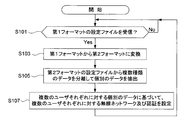
- FIG. 4A is a flowchart showing an operation example of the wireless relay device according to the embodiment of the present invention.
- step S101 it is determined whether the receiving unit 31 of the wireless relay device 3 has received the first format setting file. This step loops until the receiving unit 31 of the wireless relay device 3 receives the first format setting file. Of course, if the frequency of receiving the setting file of the first format is low, step S101 may be omitted and the operation may be started from step S103.
- the reception unit 31 of the wireless relay device 3 When the reception unit 31 of the wireless relay device 3 receives the setting file in the first format (Yes in step S101), it converts the first format to the second format (step S103).
- the extraction unit 33 of the wireless relay device 3 separates a plurality of types of data from the setting file of the second format, and extracts individual data for each of a plurality of users (step S105).
- the setting unit 34 of the wireless relay device 3 sets the wireless network and authentication for each of the plurality of users based on the extracted individual data for each of the plurality of users (step S107).
- the setting of the user to be authenticated by the authentication unit 38 or the RADIUS server is completed.
- the setting unit 34 sets the wireless network and authentication has been described.
- the setting unit 34 does not set the authentication.
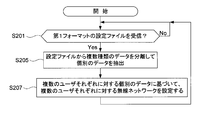
- FIG. 4B is a flowchart showing an operation example of the wireless relay device according to another embodiment of the present invention.
- the setting unit 34 of the wireless relay device 3 sets a wireless network for each of the plurality of users based on the extracted individual data for each of the plurality of users (step S207).
- the setting unit 34 sets the wireless network.
- the setting file also defines the setting contents related to authentication
- the setting unit 34 performs not only setting of the wireless network but also setting of authentication.
- the conversion function to the second format (Configuration File) accepts only the CSV format, and the first format is XML
- the file generation unit 35 of the wireless relay device 3 creates an execution file for setting the wireless terminal 4 based on the user information setting file 1.
- An operation flow is required in which the second transmission unit 37 transmits the execution file generated by the file generation unit 35 or information on the execution file to the wireless terminal 4. This flow is after step S107.
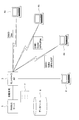
- FIG. 5 is a conceptual diagram for explaining a situation where a wireless relay device according to an embodiment of the present invention sets a wireless network and authentication for a user.
- the wireless relay device 3 does not include the authentication unit 38 and has a RADIUS server outside.
- the database is not a local database of the RADIUS server but an external database.
- the authentication method when the SSID is “Guest”, the authentication method is “WPA-PSK”. However, the authentication method is not limited to this and may be WPA2-PSK. Further, when the SSID is “Sales”, the authentication method is “EAP-TLS”. However, the authentication method is not limited to this, and other EAP methods may be used.
- FIG. 6 is a conceptual diagram illustrating that a wireless relay device according to an embodiment of the present invention transmits data to other wireless relay devices.
- the first transmission unit 36 of the wireless relay device (controller AP) 3a transmits individual data for each of a plurality of extracted users to the other wireless relay devices 3b, 3c, 3n and the like that cooperate with each other.
- Other wireless relay apparatuses 3b, 3c,..., 3n that cooperate with each other may be called member access points.
- the individual data for each of the plurality of users includes the mail address, SSID, information related to the authentication method, MAC address, time zone information, and the like shown in FIG.
- the 1st transmission part 36 of the radio relay apparatus (controller AP) 3a transmits the separate data with respect to each of these some users with respect to all the member access points.
- the wireless relay device 3a may select a member access point for each user and transmit individual data to the user.
- the member access point is not a VAP but an access point having one SSID.
- the setting file in the first format is a plurality of types of data including at least wireless terminal identification information and authentication method information for a plurality of users, and defines the setting contents of the wireless relay device. Then, based on the individual data for each of the plurality of users extracted from the setting file, the wireless network and authentication for each of the plurality of users are set.
- multiple elements can be set at once for a plurality of users.
- not only the initial setting scene, but also when changing the setting, the SSID, the authentication method, the MAC address filter, and the like can be changed at once.
- SSIDs that are no longer needed can be deleted in a timely manner.
- the PSK can be changed in a timely manner. You can delete accounts that are no longer needed.
- information (MAC address) of wireless terminals that are no longer needed can be deleted. Therefore, there is an effect that appropriate access control can be performed without connecting unnecessary wireless terminals to the wireless relay device 3.
- the conversion unit 32 of the wireless relay device 3 converts the first format into a configuration file (environment setting file) that is the second format. Therefore, the administrator can easily input to the first format setting file.
- the first transmission unit 37 of the wireless relay device (controller AP) 3 transmits individual data for each of a plurality of extracted users to another wireless relay device (member access point) that cooperates. . Therefore, the member access point can also be configured to set the wireless network and authentication for each of the plurality of users based on individual data for each of the plurality of users.
- the file generation unit 35 of the wireless relay device 3 generates an execution file for setting the wireless terminal 4 based on the user information setting file 1, and the second transmission unit 37 executes the execution file or the execution file.
- the information regarding is transmitted to the wireless terminal 4.
- the transmission unit 37 executes the execution file or the execution file.
- the information regarding is transmitted to the wireless terminal 4.
- the transmission file is executed in the wireless terminal 4, there is an effect that the setting for the authentication connection of the wireless terminal 4 to the wireless network is completed.
- the authentication method is EAP-TLS using an electronic certificate
- the execution file is an electronic certificate setting execution program for authenticating and connecting the wireless terminal 4 to the wireless network
- the electronic certificate is an authentication unit at the time of connection.
- 38 is a root certificate for verifying the server certificate presented by 38 on the wireless terminal 4 side. When the setting of the root certificate is completed on the wireless terminal 4 side, there is an effect that a more secure connection is possible.
- the time zone in which the wireless terminal can connect to the wireless network can be appropriately set for each SSID. There is an effect that access control can be performed.
- the communication relay device is a wireless access point and the communication terminal is a wireless terminal.
- the communication relay device may be a wired relay device, and the communication terminal may be a terminal using wired communication.
- the user information setting file does not have the SSID column 13 and the identifier of the wired relay device. There is a column.
- the communication relay device of the above embodiment can also be realized by a hardware configuration such as the following hardware configuration or a circuit using an FPGA (Field Programmable Gate Array).
- a hardware configuration such as the following hardware configuration or a circuit using an FPGA (Field Programmable Gate Array).
- FPGA Field Programmable Gate Array
- FIG. 7 is a block diagram showing a configuration of a wireless relay device according to a modification of the present invention. A description of the same configuration as that of the wireless relay device 3 is omitted.
- the wireless relay device 3A includes a format conversion circuit 32A, an extraction circuit 33A, a setting circuit 34A, a file generation circuit 35A, and an authentication circuit 38A.
- the control unit 30 of the wireless relay device 3 is realized by a format conversion circuit 32A, an extraction circuit 33A, a setting circuit 34A, a file generation circuit 35A, and an authentication circuit 38A.
- the format conversion circuit 32A corresponds to the conversion unit 32 of the wireless relay device 3
- the extraction circuit 33A corresponds to the extraction unit 33 of the wireless relay device 3
- the setting circuit 34A corresponds to the setting unit 34 of the wireless relay device 3
- the generation circuit 35A corresponds to the file generation unit 35 of the wireless relay device 3
- the authentication circuit 38A corresponds to the authentication unit of the wireless relay device 3. Also in this modification, there exists an effect similar to said embodiment.
- FIG. 8 is a block diagram showing a configuration of a wireless relay device according to another modification of the present invention.
- the storage unit 60B stores a conversion program 62B, an extraction program 63B, a setting program 64B, a file generation program 65B, and an authentication program 68B.
- the conversion unit 32B of the CPU executes the conversion program 62B stored in the storage unit 60B to convert the setting file in the first format into the setting file in the second format.
- the conversion unit 32 ⁇ / b> B corresponds to the conversion unit 32 of the wireless relay device 3.
- the extraction unit 33B corresponds to the extraction unit 33 of the wireless relay device 3
- the setting unit 34B corresponds to the setting unit 34 of the wireless relay device 3
- the file generation unit 35B corresponds to the file generation unit 35 of the wireless relay device 3.
- the authentication unit 38B corresponds to the authentication unit 38 of the wireless relay device 3, respectively. Also in this modification, there exists an effect similar to said embodiment.
Landscapes
- Engineering & Computer Science (AREA)
- Signal Processing (AREA)
- Computer Networks & Wireless Communication (AREA)
- Computer Security & Cryptography (AREA)
- Theoretical Computer Science (AREA)
- General Engineering & Computer Science (AREA)
- Physics & Mathematics (AREA)
- General Physics & Mathematics (AREA)
- Databases & Information Systems (AREA)
- Data Mining & Analysis (AREA)
- Computer Hardware Design (AREA)
- Computing Systems (AREA)
- Mobile Radio Communication Systems (AREA)
Abstract
【課題】通信端末のネットワークへのアクセスコントロールをより簡易に行うことができる通信中継装置を提供する。 【解決手段】 本発明の一実施形態に係る無線中継装置は、無線ネットワークに関する設定内容を規定する第1フォーマットの設定ファイルであって、無線端末の識別情報に関する情報を含む複数種類のデータを複数のユーザのそれぞれに対応して規定する設定ファイルを受信する受信部と、前記設定ファイルから複数種類のデータを分離して前記複数のユーザのそれぞれに対する個別のデータを抽出する抽出部と、前記抽出した前記複数のユーザのそれぞれに対する個別のデータに基づいて、前記複数のユーザのそれぞれに対する前記無線ネットワークを設定する設定部と、を備える。
Description
本発明は、通信中継装置に関する。
従来、ネットワーク端末の機種ごとに初期設定の項目名と各項目の属性を定義したテンプレートをネットワーク管理サーバに読み込み、各ネットワーク端末のMACアドレスと初期設定値を自動登録することによって、ネットワーク管理者の作業を軽減することができる技術が開示されている(特許文献1)。
しかしながら、特許文献1に開示された技術では、ネットワークそのものの設定は行われない。また、接続するのに認証が必要なネットワークの場合、端末への認証接続のための設定を別途行う必要があり、煩わしいという問題がある。
本発明は、上記のような従来技術に伴う課題を解決しようとするものであって、その目的とするところは、通信端末のネットワークへのアクセスコントロールをより簡易に行うことができる通信中継装置を提供するところにある。
本発明の一実施形態によれば、無線ネットワークに関する設定内容を規定する第1フォーマットの設定ファイルであって、無線端末の識別情報に関する情報を含む複数種類のデータを複数のユーザにそれぞれに対応して規定する設定ファイルを受信する受信部と、前記設定ファイルから複数種類のデータを分離して複数のユーザのそれぞれに対する個別のデータを抽出する抽出部と、前記抽出した複数のユーザのそれぞれに対する個別のデータに基づいて、複数のユーザのそれぞれに対する無線ネットワークを設定する設定部と、を備える無線中継装置が提供される。
本発明によれば、通信端末のネットワークへのアクセスコントロールをより簡易に行うことができる通信中継装置を提供することができる。
以下、本発明の一実施形態について、図面を参照しながら詳細に説明する。以下に示す実施形態は本発明の実施形態の一例であって、本発明はこれらの実施形態に限定されるものではない。なお、本実施形態で参照する図面において、同一部分または同様な機能を有する部分には同一の符号または類似の符号(数字の後にA、Bなどを付しただけの符号)を付し、その繰り返しの説明は省略する場合がある。また、図面の寸法比率は説明の都合上実際の比率とは異なったり、構成の一部が図面から省略されたりする場合がある。
<第1実施形態>
図1を用いて、無線中継装置3にユーザ情報を取り込む状況を説明する。図1は、本発明の一実施形態に係る無線中継装置にユーザ情報を取り込む状況を説明するための概念図である。
図1を用いて、無線中継装置3にユーザ情報を取り込む状況を説明する。図1は、本発明の一実施形態に係る無線中継装置にユーザ情報を取り込む状況を説明するための概念図である。
この例では、管理者端末2から、ユーザ情報設定ファイル1を無線中継装置3に取り込む。具体的には、管理者が、管理者端末2において、ユーザ情報設定ファイル1を作成する。このユーザ情報設定ファイル1は、管理者端末2の記憶装置に記憶される。そして、管理者端末2から、ユーザ情報設定ファイル1が無線中継装置3に送信されることによって、ユーザ情報設定ファイル1が無線中継装置3に取り込まれる。この例では、無線中継装置3は、無線アクセスポイントである。
ユーザ情報設定ファイル1は、図1に示すように、表形式のファイルである。ユーザ情報設定ファイル1は、自然言語で記載されているフォーマットのファイルである。もっとも、ユーザ情報設定ファイル1は、ユーザが入力することが可能であれば、別のフォーマットのファイルであってもよい。
ユーザ情報設定ファイル1には、この例では、ユーザ名欄11、メールアドレス欄12、SSID欄13、認証方式欄14、MACアドレス欄15及び時間帯欄16がある。ユーザ情報設定ファイル1には、ユーザの有効期限欄、メモを記憶するためのコメント欄を設けてもよい。この例では、認証方式欄14があるが、認証方式欄14がない場合があってもよい。ユーザ名欄11には、ユーザ名(ユーザID)が入力される。ユーザ名は、無線端末4a、4b及び4c(図5参照)が、無線中継装置3と通信接続する場合に、当該無線端末を利用するユーザを特定するために必要となる。特に区別の必要がない場合、無線端末4a、4b及び4cは、「無線端末4」と呼ぶ。
ユーザ名欄11に入力されたユーザ名と同じ列のメールアドレス欄12、SSID欄13、認証方式欄14、MACアドレス欄15及び時間帯欄16に入力されるデータは、当該ユーザに紐づけられたデータである。この例では、ユーザ名欄11には、複数のユーザ名が入力される。複数のユーザ名を入力することによって、複数のユーザについて、無線ネットワークの設定や認証の設定を一括して設定できるからである。
メールアドレス欄12には、ユーザ名に対応するメールアドレスが入力される。ユーザ名があれば、無線端末4を利用するユーザを特定することができるため、メールアドレスは必須ではない。もっとも、メールアドレスが入力されていると、後述の電子証明書等の送り先として利用することができる。
SSID欄13には、ESSID(Extended Service Set IDentifier)が入力される。この例では、営業部を意味する「Sales」、総務部を意味する「Admin」、開発部を意味する「Dev」、ゲストユーザを意味する「Guest」が入力されている。この例では、無線中継装置3b、3c等(図6参照)は、VAP(Virtual Access Point)である。無線中継装置3b、3c等がVAPの場合、複数のESSID(Multi ESSID)を設定することが可能である。もっとも、無線中継装置3b、3c等はVAPでなくてもよい。各無線中継装置で、それぞれ異なる一つのESSIDを設定してもよい。
認証方式欄14には、認証方式に関する情報が入力される。この例では、ユーザ名「XXX」に対応する認証方式欄14には、「EAP-TLS」と記載されているが、証明書方式であるEAP(Extensible Authentication Protocol)-TLSを用いるという意味である。この方式を用いる場合、クライアント証明書や秘密鍵を保護するためにパスワードを用いる。EAPは、IEEE 802.1Xで使用される認証方式の一つである。IEEE 802.1X認証では、アクセスポイントに接続してきたユーザをRADIUS(Remote Authentication Dial In User Service)サーバで認証し、アクセスの可否を判断する。RADIUSサーバは、本実施形態のように、認証部38として、無線中継装置3に内蔵してもよい。もっとも、RADIUSサーバは、無線中継装置3の外部に別途設けてもよい。
また、ユーザ名「YYY」に対応する認証方式欄14には、「EAP-PEAP」と記載されているが、パスワード方式であるEAP-PEAPを用いるという意味である。実際に入力される値は、無線端末4を利用するユーザが入力することになるユーザID及びパスワードである。ユーザ名「XYZ」に対応する認証方式欄14には、「WPA-PSK」と記載されているが、WPA-PSK(Wi-Fi Protected Access Pre-Shared Key)を用いるという意味である。また、ユーザ名「ZZZ」に対応する認証方式欄14には、何も入力されていない。これは、認証なしでアクセスポイントに接続することができることを意味する。認証方式欄14には、以上の例に限られず、EAP-TTLS、EAP-FAST、EAP-MD5などその他のEAP方式や、WPA2-PSK(Wi-Fi Protected Access2 PSK)方式などを入力して、これらの方式を使用してもよい。
MACアドレス欄15には、MACアドレスが入力される。ユーザ名「ZZZ」に対応するMACアドレスには、MACアドレス「12:34:56:78:90:ef」が入力されている。ユーザ名「ZZZ」については、登録されたMACアドレス「12:34:56:78:90:ef」を持つ無線端末4で認証される。これは、いわゆるMACアドレスフィルタリングである。他方、ユーザ名「XYZ」に対応するMACアドレス欄15には、何も入力されていない。これは、ユーザ名及びパスワードがあれば、MACアドレスは問われず、アクセスポイントに接続することができることを意味する。
時間帯欄16には、アクセスポイントに接続することができる時間帯情報が入力される。ユーザ名「XXX」に対応する時間帯欄16には、何も入力されていない。これは、どの時間帯であっても、アクセスポイントに接続することができることを意味する。他方、ユーザ名「XYZ」に対応する時間帯欄16には、「9:00-18:00」と入力されている。これは、ユーザ名「XYZ」が利用する無線端末4bが9:00から18:00までの時間帯において、アクセスポイントに接続することができることを意味する。
無線中継装置3は、この例では、無線LAN(Local Area Network)のアクセスポイント(AP)である。無線中継装置3は、この例では、他の無線中継装置3b、3c等を制御するが、機器としては、他の無線中継装置3b、3c等と同じである。ここでは、他の無線中継装置3b、3c等を制御する機能を有するという意味で、コントローラアクセスポイント(コントローラAP)と呼んでもよい。他方、コントローラアクセスポイントが制御する他の無線中継装置3b、3c等をメンバーアクセスポイントと呼んでもよい。
管理者端末2は、この例では、無線中継装置3に有線接続されている。管理者は、管理者端末2からユーザ情報設定ファイル1を適用し、初期状態にある無線中継装置3にユーザ情報設定ファイル1を取り込ませる。
[無線中継装置の構成]
次に、図2を用いて、無線中継装置3の構成について説明する。図2は、本発明の一実施形態に係る無線中継装置の構成を示すブロック図である。
次に、図2を用いて、無線中継装置3の構成について説明する。図2は、本発明の一実施形態に係る無線中継装置の構成を示すブロック図である。
無線中継装置3は、制御部30、記憶部60、操作部40、表示部50、接続部70および通信部80を備える。これらの各構成はバスを介して接続されている。
制御部30は、CPUなどの演算処理回路を含む。制御部30は、記憶部60に記憶されたプログラムをCPU(コンピュータ)により実行して、後述する設定処理を行うための機能を実現する。ここの機能を実現する構成の一部または全部は、プログラムの実行によってソフトウエアによって実現される場合に限られず、ハードウエアによって実現されてもよい。なお、制御部30によって実現される機能は、設定処理を行う機能(設定機能)以外にも、装置各部を制御する機能を含む。
記憶部60は、不揮発性メモリ、ハードディスク等の記憶装置である。記憶部60は、上述したプログラムなど、様々な機能を実現するためのアプリケーションプログラムを記憶する記憶領域、設定処理などによって設定される設定情報を記憶する記憶領域を含む。プログラムは、コンピュータにより実行可能であればよく、磁気記録媒体、光記録媒体、光磁気記録媒体、半導体メモリなどのコンピュータ読み取り可能な記録媒体に記憶した状態で提供されてもよい。この場合には、無線中継装置3は、記録媒体を読み取る装置を備えていてもよい。また、プログラムは、ネットワーク経由でダウンロードされてもよい。
操作部40は、操作ボタンなどによりユーザが入力した操作に応じた信号を制御部30に出力する。操作ボタンは、例えば、電源スイッチ、カーソルキーなどを含み、ユーザの指示を受け付ける操作子であればよい。表示部50は、液晶ディスプレイ、有機ELディスプレイ等の表示装置であり、制御部30による制御に基づいた画面(設定画面など)を表示する。なお、操作部40および表示部50については、無線中継装置3が有していなくてもよい。この場合には、無線中継装置3に接続される外部装置において操作部40および表示部50に相当する機能が代用されてもよい。
接続部70は、上述した管理者端末2と接続するためのインターフェイスである。この例では、接続部70と管理者端末2との接続は、有線である。
通信部80は、制御部30の制御に基づいてネットワーク(図示せず)に接続し、外部の装置と情報の送受信を行う。以上が、無線中継装置3の説明である。
次に、図3を用いて、無線中継装置3の制御部30の構成について説明する。図3は、本発明の一実施形態に係る無線中継装置の制御部の機能ブロックを示すブロック図である。なお、図3には説明の便宜のため、記憶部60も示している。
無線中継装置3の制御部30は、受信部31、変換部32、抽出部33、設定部34、ファイル生成部35、第1送信部36、第2送信部37及び認証部38を備える。
受信部31は、無線ネットワークに関する設定内容を規定する第1フォーマットの設定ファイルであって、無線端末4の識別情報に関する情報を含む複数種類のデータを複数のユーザのそれぞれに対応して規定する設定ファイルを受信する。設定ファイルは、認証に関する設定内容をさらに規定するファイルであってもよい。設定ファイルは、無線端末4の識別情報に関する情報など複数種類のデータを含む。複数種類のデータは、認証方式に関する情報をさらに含んでもよい。したがって、受信部31は、この例のように、無線ネットワーク及び認証に関する設定内容を規定する第1フォーマットの設定ファイルであって、無線端末4の識別情報及び認証方式に関する情報を含む複数種類のデータを複数のユーザのそれぞれに対応して規定する設定ファイルを受信してもよい。この例では、無線端末4の識別情報は、MACアドレスである。また、認証方式に関する情報は、EAPやPSKを示す情報である。PSKの場合には、パスワードが入力される。複数種類のデータには、上述のように、ユーザ名、メールアドレス、SSID、時間帯情報が含まれてもよい。第1フォーマットは、この例では、自然言語で記載されているフォーマットである。第1フォーマットは、例えば、CSV(Comma Separated Values)フォーマット、XML、HTML、表計算ソフトのアプリケーション固有のフォーマットであるが、表形式を表現できるフォーマットであれば、これらのフォーマットに限定されない。なお、受信部31は、通信部80を介して、データの受信を行う。
変換部32は、第1フォーマットの設定ファイルを第2フォーマットの設定ファイルに変換する。この例では、変換部32は、CSVフォーマット(第1フォーマット)から、第2フォーマットであるConfiguration File(環境設定ファイル)に変換する。なお、第1フォーマットから第2フォーマットへ変換する前に中間フォーマットへ変換してもよい。例えば、Configuration Fileへの変換機能の実装がCSVフォーマットのみ受け付ける場合、XMLからCSVフォーマットへいったん変換を行った後に、Configuration Fileへの返還を実行することで、XMLからConfiguration Fileへの変換を実現してもよい。中間フォーマットを用いることにより、第1フォーマットとして利用可能なフォーマットの種類を増やすことが可能となる。
抽出部33は、設定ファイルから複数種類のデータを分離して、複数のユーザのそれぞれ(各ユーザ)に対する個別のデータを抽出する。
設定部34は、抽出部33が抽出した複数のユーザのそれぞれに対する個別のデータに基づいて、複数のユーザのそれぞれに対する無線ネットワークを設定する。受信部31が無線ネットワーク及び認証に関する設定内容を規定する第1フォーマットの設定ファイルであって、無線端末4の識別情報及び認証方式に関する情報を含む複数種類のデータを複数のユーザのそれぞれに対応して規定する設定ファイルを受信する場合には、設定部34は、抽出した複数のユーザのそれぞれに対する個別のデータに基づいて、複数のユーザのそれぞれに対する認証をさらに設定してもよい。ここで、無線ネットワークを設定することは、無線端末4が無線中継装置3を介して無線ネットワークに接続するために無線端末4の識別情報を設けることである。認証を設定することは、無線端末4が無線中継装置3を介して無線ネットワークに接続するために無線端末4に要求する認証方式を設けることである。ユーザ情報設定ファイル1に示すように、例えば、ユーザ名「XXX」に対して、SSIDが「Sales」、認証方式が「EAP-TLS」と設定される。この例では、ユーザ情報設定ファイル1に入力されたユーザ情報は、外部データベースに保持される。EAP-TLSの場合、RADIUSサーバを用いるが、この例では、後述のとおり、認証部38として、無線中継装置3に内蔵されている。他方、RADIUSサーバを無線中継装置3の外部に設ける場合、ユーザ情報は、RADIUSサーバがローカルデータベースに保持してもよいし、外部データベースに保持してもよい。
第1送信部36は、連携する他の無線中継装置3b、3c等に対して、抽出部33が抽出した複数のユーザのそれぞれに対する個別のデータを送信する。詳細については、図6の説明の中で説明する。なお、第1送信部36は、通信部80を介して、データを送信する。
ファイル生成部35は、ユーザ情報設定ファイル1に基づいて、無線端末4の設定のための実行ファイルを生成する。ファイル生成部35は、ユーザ情報設定ファイル1に基づいて、認証方式欄14が「EAP-TLS」の場合には、無線端末4の設定のための実行ファイルに加えて、クライアント証明書、サーバ証明書を生成してもよい。この例では、実行ファイルは、無線端末4にSSIDや認証方式がWPA-PSKの場合にはパスワードを設定するための実行プログラムである。
第2送信部37は、ファイル生成部35が生成した実行ファイルまたは実行ファイルに関する情報を無線端末4に送信する。第2送信部37は、ファイル生成部35が生成したサーバ証明書、クライアント証明書を無線端末4に送信してもよい。ここで、これらのデータは、無線端末4が接続可能となる無線ネットワークとは別のネットワークを介して、無線端末4に送信される。送信先のメールアドレスは、ユーザ情報設定ファイル1のメールアドレス欄12に入力されたメールアドレスである。また、実行ファイルに関する情報とは、無線端末4が無線ネットワークへ認証接続するための電子証明書の設定実行プログラムそのものではなく、当該プログラムや証明書をダウンロードすることが可能なURLやリンクのことである。なお、第2送信部37も第1送信部36と同様に、通信部80を介して、データを送信する。
認証部38は、無線端末4が無線ネットワークに接続するためのユーザ認証を行う。認証方式としてEAPを用いる場合には、認証部38は、RADIUSサーバの機能を有する。例えば、ユーザ名とパスワードを認証キーとするEAPの場合、まず、無線端末4が無線中継装置3に対し、接続許可を要求すると、無線中継装置3は、認証部38に問い合わせを行う。認証部38は、無線端末4から送信されたユーザ名及びパスワードと、外部データベースに保持されているユーザ名及びパスワードとを照らし合わせて、正規ユーザかどうかを識別する。認証部38が正規ユーザだと判断した場合は、認証成功の通知がなされ、無線端末4は、無線中継装置3を介して、無線ネットワークに接続することができる。上述のとおり、RADIUSサーバを無線中継装置3に内蔵しなくてもよい。そのため、認証部38は、必須の構成ではない。
以上で無線中継装置3の制御部30の構成について説明したが、無線中継装置3の制御部30は、上記のすべての構成を備えていなければならないわけではない。無線中継装置3の制御部30の最小構成は、図3の破線部で囲む受信部31、抽出部33、設定部34である。その他の構成は、適宜追加することが可能な構成である。
[無線中継装置の動作]
次に、図4Aを用いて、無線中継装置3の動作について説明する。図4Aは、本発明の一実施形態に係る無線中継装置の動作例を示すフロー図である。
次に、図4Aを用いて、無線中継装置3の動作について説明する。図4Aは、本発明の一実施形態に係る無線中継装置の動作例を示すフロー図である。
まず、無線中継装置3の受信部31が、第1フォーマットの設定ファイルを受信したかどうかを判断する(ステップS101)。無線中継装置3の受信部31が、第1フォーマットの設定ファイルを受信するまで、このステップはループする。もっとも、第1フォーマットの設定ファイルを受信する頻度が少ない場合には、ステップS101を省略して、ステップS103から動作を開始してもよい。
無線中継装置3の受信部31が、第1フォーマットの設定ファイルを受信すると(ステップS101でYesの場合)、第1フォーマットから第2フォーマットに変換する(ステップS103)。
次に、無線中継装置3の抽出部33は、第2フォーマットの設定ファイルから複数種類のデータを分離して、複数のユーザのそれぞれに対する個別のデータを抽出する(ステップS105)。
続いて、無線中継装置3の設定部34は、抽出した複数のユーザのそれぞれに対する個別のデータに基づいて、複数のユーザのそれぞれに対する無線ネットワーク及び認証を設定する(ステップS107)。これによって、認証部38またはRADIUSサーバで認証するユーザの設定が完了する。なお、この例では、設定部34が無線ネットワーク及び認証を設定する例を説明した。設定ファイルが認証に関する設定内容を規定せずに無線ネットワークに関する設定内容を規定する場合には、設定部34は、認証の設定は行わない。
以上で、無線中継装置3の動作の一例について説明した。無線中継装置3が最小構成の場合には、ステップS103に対応するステップが省略される。具体的には、図4Bに示すとおりである。図4Bは、本発明の他の実施形態に係る無線中継装置の動作例を示すフロー図である。まず、無線中継装置3の受信部31が、第1フォーマットの設定ファイルを受信したかどうかを判断する(ステップS201)。無線中継装置3の受信部31が、第1フォーマットの設定ファイルを受信すると(ステップS201でYesの場合)、無線中継装置3の抽出部33は、受信した設定ファイルから複数種類のデータを分離して、複数のユーザのそれぞれに対する個別のデータを抽出する(ステップS205)。続いて、無線中継装置3の設定部34は、抽出した複数のユーザのそれぞれに対する個別のデータに基づいて、複数のユーザのそれぞれに対する無線ネットワークを設定する(ステップS207)。なお、この例では、設定部34が無線ネットワークを設定する例を説明した。設定ファイルが認証に関する設定内容をも規定する場合には、設定部34は、無線ネットワークの設定だけでなく認証の設定も行う。
また、例えば、第2フォーマット(Configuration File)への変換機能の実装がCSV形式のみ受け付ける場合で、第1フォーマットがXMLであるときは、XMLから中間フォーマットであるCSVフォーマットへ変換を行った後に、第2フォーマット(Configuration File)へ変換を行うというステップが入る。また、ユーザが無線端末4において無線ネットワーク及び認証の設定をするためには、無線中継装置3のファイル生成部35がユーザ情報設定ファイル1に基づいて、無線端末4の設定のための実行ファイルを生成し、第2送信部37が、ファイル生成部35が生成した実行ファイルまたは実行ファイルに関する情報を無線端末4に送信されるという動作フローが必要となる。このフローは、ステップS107以降になる。
次に、図5を用いて、無線中継装置3がユーザに対する無線ネットワーク及び認証を設定する状況を説明する。図5は、本発明の一実施形態に係る無線中継装置がユーザに対する無線ネットワーク及び認証を設定する状況を説明するための概念図である。
この例では、無線中継装置3は、認証部38を内蔵しておらず、外部にRADIUSサーバがある。また、データベースは、RADIUSサーバのローカルデータベースではなく、外部データベースである。
図1に示すように、管理者端末2からユーザ情報設定ファイル1を適用し、初期状態にある無線中継装置3にユーザ情報設定ファイル1を取り込ませると、ユーザ情報設定ファイル1に基づいて、複数のユーザのそれぞれに対する無線ネットワーク及び認証を自動設定する。ユーザ情報設定ファイル1の認証方式欄14に、RADIUSサーバ側の認証に電子証明書を用いるEAP-TLS、が入力されている場合、電子証明書(クライアント証明書)7を自動生成する。
図5の例では、SSIDが「Guest」の場合、認証方式が「WPA-PSK」となっているが、これに限定されるものではなく、WPA2-PSKであってもよい。また、SSIDが「Sales」の場合、認証方式が「EAP-TLS」となっているが、これに限定されるものではなく、その他のEAP方式であってもよい。
次に、図6を用いて、無線中継装置3が他の無線中継装置に対してデータを送信することを説明する。図6は、本発明の一実施形態に係る無線中継装置が他の無線中継装置に対してデータを送信することを示す概念図である。
無線中継装置(コントローラAP)3aの第1送信部36は、連携する他の無線中継装置3b、3c、3n等に対して抽出した複数のユーザのそれぞれに対する個別のデータを送信する。連携する他の無線中継装置3b、3c、・・・、3nは、メンバーアクセスポイントと呼んでもよい。複数のユーザのそれぞれに対する個別のデータは、図1に示すメールアドレス、SSID、認証方式に関する情報、MACアドレス、時間帯情報等である。この例では、無線中継装置(コントローラAP)3aの第1送信部36は、すべてのメンバーアクセスポイントに対し、これらの複数のユーザのそれぞれに対する個別のデータを送信する。
なお、無線中継装置3aは、ユーザ毎にメンバーアクセスポイントを選択して、ユーザに対する個別のデータを送信してもよい。この場合には、メンバーアクセスポイントは、VAPではなく、一つのSSIDを有するアクセスポイントである。
本実施形態では、第1フォーマットの設定ファイルは複数のユーザに対して少なくとも無線端末の識別情報及び認証方式に関する情報を含む複数種類のデータで、無線中継装置の設定内容を規定している。そして、この設定ファイルから抽出される複数のユーザのそれぞれに対する個別のデータに基づいて、複数のユーザのそれぞれに対する無線ネットワーク及び認証が設定される。本実施形態では、このように複数のユーザに対して、多要素を一括して設定することができるという効果を奏する。また、初期設定の場面に限らず、設定変更する場合にも、SSID、認証方式、MACアドレスフィルターなどを一括して変更することが可能であるという効果を奏する。その結果、適時に不要になったSSIDを削除することができる。また、適時にPSKを変更することができる。不要になったアカウントを削除することができる。さらに、不要になった無線端末の情報(MACアドレス)を削除することができる。そのため、不要な無線端末を無線中継装置3に接続させずに、適切なアクセスコントロールをすることができるという効果を奏する。
第1フォーマットの設定ファイルが自然言語で記載されているフォーマットの場合には、無線中継装置3の変換部32が第1フォーマットを第2フォーマットであるConfiguration File(環境設定ファイル)に変換する。そのため、管理者は、第1フォーマットの設定ファイルへの入力を簡易に行うことができるという効果を奏する。
本実施形態では、無線中継装置(コントローラAP)3の第1送信部37は、連携する他の無線中継装置(メンバーアクセスポイント)に対して抽出した複数のユーザのそれぞれに対する個別のデータを送信する。そのため、メンバーアクセスポイントに対しても、複数のユーザのそれぞれに対する個別のデータに基づいて、複数のユーザのそれぞれに対する無線ネットワーク及び認証を設定することができるという効果を奏する。
本実施形態では、無線中継装置3のファイル生成部35が、ユーザ情報設定ファイル1に基づいて、無線端末4の設定のための実行ファイルを生成し、第2送信部37が実行ファイルまたは実行ファイルに関する情報を無線端末4に送信する。そして、無線端末4において、送信された実行ファイルが実行されると、無線端末4が無線ネットワークへ認証接続するための設定が完了するという効果を奏する。特に、認証方式が電子証明書を用いるEAP-TLSの場合、実行ファイルは、無線端末4が無線ネットワークに認証接続するための電子証明書の設定実行プログラムで、電子証明書は、接続時に認証部38の提示するサーバ証明書に対し、無線端末4側でそれを検証するためのルート証明書である。無線端末4側でルート証明書の設定が完了すると、よりセキュアな接続が可能となるという効果を奏する。
本実施形態では、設定ファイルに無線端末が無線ネットワークに接続することが可能な時間帯情報を含むことによって、SSID毎に無線ネットワークへ接続可能な時間帯を適宜設定することができ、ユーザの属性によるアクセスコントロールをすることができるという効果を奏する。
<第2実施形態>
第1実施形態においては、通信中継装置が無線アクセスポイントであり、通信端末が無線端末であることを前提に説明した。しかし、通信中継装置は、有線の中継装置であり、通信端末は有線を用いる端末であってもよい。
第1実施形態においては、通信中継装置が無線アクセスポイントであり、通信端末が無線端末であることを前提に説明した。しかし、通信中継装置は、有線の中継装置であり、通信端末は有線を用いる端末であってもよい。
通信中継装置が有線の中継装置であり、通信端末が有線を用いる端末である場合には、第1実施形態と異なり、ユーザ情報設定ファイルには、SSID欄13がなく、有線の中継装置の識別子欄がある。
本実施形態においても、第1実施形態と同様の効果を奏する。
<変形例1>
以上の実施形態の通信中継装置は、次のようなハードウエア構成やFPGA(Field Programmbale Gate Array)を用いた回路などのハードウエア構成によっても実現することができる。以下では、無線中継装置3の例を示すが、有線の中継装置であっても同様である。図7は、本発明の変形例に係る無線中継装置の構成を示すブロック図である。無線中継装置3と重複する構成についての説明は省略する。図7に示すように、無線中継装置3Aは、フォーマット変換回路32A、抽出回路33A、設定回路34A、ファイル生成回路35A、認証回路38Aを備える。無線中継装置3の制御部30を、フォーマット変換回路32A、抽出回路33A、設定回路34A、ファイル生成回路35A、認証回路38Aで実現している。フォーマット変換回路32Aは無線中継装置3の変換部32に対応し、抽出回路33Aは無線中継装置3の抽出部33に対応し、設定回路34Aは無線中継装置3の設定部34に対応し、ファイル生成回路35Aは無線中継装置3のファイル生成部35に対応し、認証回路38Aは無線中継装置3の認証部にそれぞれ対応する。本変形例においても、上記の実施形態と同様の効果を奏する。
以上の実施形態の通信中継装置は、次のようなハードウエア構成やFPGA(Field Programmbale Gate Array)を用いた回路などのハードウエア構成によっても実現することができる。以下では、無線中継装置3の例を示すが、有線の中継装置であっても同様である。図7は、本発明の変形例に係る無線中継装置の構成を示すブロック図である。無線中継装置3と重複する構成についての説明は省略する。図7に示すように、無線中継装置3Aは、フォーマット変換回路32A、抽出回路33A、設定回路34A、ファイル生成回路35A、認証回路38Aを備える。無線中継装置3の制御部30を、フォーマット変換回路32A、抽出回路33A、設定回路34A、ファイル生成回路35A、認証回路38Aで実現している。フォーマット変換回路32Aは無線中継装置3の変換部32に対応し、抽出回路33Aは無線中継装置3の抽出部33に対応し、設定回路34Aは無線中継装置3の設定部34に対応し、ファイル生成回路35Aは無線中継装置3のファイル生成部35に対応し、認証回路38Aは無線中継装置3の認証部にそれぞれ対応する。本変形例においても、上記の実施形態と同様の効果を奏する。
<変形例2>
以上の実施形態の通信中継装置は、次のようなソフトウエア構成によっても実現することができる。以下では、無線中継装置3の例を示すが、有線の中継装置であっても同様である。図8は、本発明の他の変形例に係る無線中継装置の構成を示すブロック図である。図8に示すように、記憶部60Bには、変換プログラム62B、抽出プログラム63B、設定プログラム64B、ファイル生成プログラム65B、認証プログラム68Bが記憶されている。CPUの変換部32Bは、記憶部60Bに記憶された変換プログラム62Bを実行して、第1フォーマットの設定ファイルを第2フォーマットの設定ファイルに変換する。変換部32Bは、無線中継装置3の変換部32に対応する。同様に、抽出部33Bは無線中継装置3の抽出部33に対応し、設定部34Bは無線中継装置3の設定部34に対応し、ファイル生成部35Bは無線中継装置3のファイル生成部35に対応し、認証部38Bは無線中継装置3の認証部38にそれぞれ対応する。本変形例においても、上記の実施形態と同様の効果を奏する。
以上の実施形態の通信中継装置は、次のようなソフトウエア構成によっても実現することができる。以下では、無線中継装置3の例を示すが、有線の中継装置であっても同様である。図8は、本発明の他の変形例に係る無線中継装置の構成を示すブロック図である。図8に示すように、記憶部60Bには、変換プログラム62B、抽出プログラム63B、設定プログラム64B、ファイル生成プログラム65B、認証プログラム68Bが記憶されている。CPUの変換部32Bは、記憶部60Bに記憶された変換プログラム62Bを実行して、第1フォーマットの設定ファイルを第2フォーマットの設定ファイルに変換する。変換部32Bは、無線中継装置3の変換部32に対応する。同様に、抽出部33Bは無線中継装置3の抽出部33に対応し、設定部34Bは無線中継装置3の設定部34に対応し、ファイル生成部35Bは無線中継装置3のファイル生成部35に対応し、認証部38Bは無線中継装置3の認証部38にそれぞれ対応する。本変形例においても、上記の実施形態と同様の効果を奏する。
なお、本発明は上記の実施形態に限られたものではなく、趣旨を逸脱しない範囲で適宜変更することが可能である。
1:ユーザ情報設定ファイル 2:管理者端末 3:無線中継装置
4a、4b、4c:無線端末 5:RADIUSサーバ
6:データベース 7:電子証明書 11:ユーザ名欄
12:メールアドレス欄 13:SSID欄 14:認証方式欄
15:MACアドレス欄 16:時間帯欄 30:記憶部31:受信部
32:変換部 33:抽出部 34:設定部 35:ファイル生成部
36:第1送信部 37:第2送信部 38:認証部 40:操作部
50:表示部 60:記憶部 70:接続部 80:通信部
4a、4b、4c:無線端末 5:RADIUSサーバ
6:データベース 7:電子証明書 11:ユーザ名欄
12:メールアドレス欄 13:SSID欄 14:認証方式欄
15:MACアドレス欄 16:時間帯欄 30:記憶部31:受信部
32:変換部 33:抽出部 34:設定部 35:ファイル生成部
36:第1送信部 37:第2送信部 38:認証部 40:操作部
50:表示部 60:記憶部 70:接続部 80:通信部
Claims (11)
- 無線ネットワークに関する設定内容を規定する第1フォーマットの設定ファイルであって、無線端末の識別情報に関する情報を含む複数種類のデータを複数のユーザのそれぞれに対応して規定する設定ファイルを受信する受信部と、
前記設定ファイルから複数種類のデータを分離して前記複数のユーザのそれぞれに対する個別のデータを抽出する抽出部と、
前記抽出した前記複数のユーザのそれぞれに対する個別のデータに基づいて、前記複数のユーザのそれぞれに対する前記無線ネットワークを設定する設定部と、
を備える無線中継装置。 - 前記設定ファイルは、認証に関する設定内容をさらに規定し、
前記複数種類のデータは認証方式に関する情報をさらに含み、
前記設定部は、前記抽出した前記複数のユーザのそれぞれに対する個別のデータに基づいて、前記複数のユーザのそれぞれに対する認証を設定することを特徴とする請求項1に記載の無線中継装置。 - 前記第1フォーマットの設定ファイルを第2フォーマットの設定ファイルに変換する変換部をさらに備え、
前記抽出部は、前記第2フォーマットの設定ファイルから複数種類のデータを分離して前記複数のユーザのそれぞれに対する個別のデータを抽出することを特徴とする請求項1または請求項2に記載の無線中継装置。 - 連携する他の無線中継装置に対して前記抽出した前記複数のユーザのそれぞれに対する個別のデータを送信する第1送信部をさらに備えることを特徴とする請求項1から請求項3のいずれか一に記載の無線中継装置。
- 前記設定ファイルに基づいて、前記無線端末の設定のための実行ファイルを生成するファイル生成部と、
前記生成された実行ファイルまたは前記実行ファイルに関する情報を無線端末に送信する第2送信部と、
をさらに備えることを特徴とする請求項1または請求項2に記載の無線中継装置。 - 前記無線端末が前記無線ネットワークに接続するための認証を行う認証部をさらに備え、
前記認証部は、前記無線端末から当該無線端末に対応する前記認証方式に関する情報を受信した場合、前記無線端末に認証が成功したことを示す情報を送信することを特徴とする請求項1または請求項2に記載の無線中継装置。 - 前記設定ファイルは、無線端末が無線ネットワークに接続することが可能な時間帯情報を含むことを特徴とする請求項1または請求項2に記載の無線中継装置。
- 前記無線ネットワークを設定することは、前記無線端末が前記無線中継装置を介して前記無線ネットワークに接続するために前記無線端末の識別情報を含む情報を設けることであり、
前記認証を設定することは、前記無線端末が前記無線中継装置を介して前記無線ネットワークに接続するために前記無線端末に要求する認証方式を設けるであることを特徴とする請求項2に記載の無線中継装置。 - 前記認証方式に関する情報は、少なくともEAP-TLS、EAP-TTLS、EAP-PEAP、EAP-FAST、EAP-MD5、WPA-PSK及びWPA2-PSKのうちの一つに関する情報であることを特徴等する請求項1から請求項8のいずれか一に記載の無線中継装置。
- 前記無線端末の識別情報は、MACアドレスであり、
前記無線中継装置の識別情報は、ESSIDであることを特徴とする請求項1から請求項8のいずれか一に記載の無線中継装置。 - 無線ネットワークに関する設定内容を規定する第1フォーマットの設定ファイルであって、無線端末の識別情報に関する情報を含む複数種類のデータを複数のユーザのそれぞれに対応して規定する設定ファイルを受信し、
前記設定ファイルから複数種類のデータを分離して前記複数のユーザのそれぞれに対する個別のデータを抽出し、
前記抽出した前記複数のユーザのそれぞれに対する個別のデータに基づいて、前記複数のユーザのそれぞれに対する無線ネットワークを設定する、設定方法。
Priority Applications (3)
| Application Number | Priority Date | Filing Date | Title |
|---|---|---|---|
| JP2018527278A JP6614350B2 (ja) | 2016-07-12 | 2016-07-12 | 無線中継装置 |
| PCT/JP2016/070517 WO2018011874A1 (ja) | 2016-07-12 | 2016-07-12 | 無線中継装置 |
| US16/244,247 US20190149989A1 (en) | 2016-07-12 | 2019-01-10 | Wireless relay device and setting method |
Applications Claiming Priority (1)
| Application Number | Priority Date | Filing Date | Title |
|---|---|---|---|
| PCT/JP2016/070517 WO2018011874A1 (ja) | 2016-07-12 | 2016-07-12 | 無線中継装置 |
Related Child Applications (1)
| Application Number | Title | Priority Date | Filing Date |
|---|---|---|---|
| US16/244,247 Continuation US20190149989A1 (en) | 2016-07-12 | 2019-01-10 | Wireless relay device and setting method |
Publications (1)
| Publication Number | Publication Date |
|---|---|
| WO2018011874A1 true WO2018011874A1 (ja) | 2018-01-18 |
Family
ID=60951717
Family Applications (1)
| Application Number | Title | Priority Date | Filing Date |
|---|---|---|---|
| PCT/JP2016/070517 Ceased WO2018011874A1 (ja) | 2016-07-12 | 2016-07-12 | 無線中継装置 |
Country Status (3)
| Country | Link |
|---|---|
| US (1) | US20190149989A1 (ja) |
| JP (1) | JP6614350B2 (ja) |
| WO (1) | WO2018011874A1 (ja) |
Cited By (2)
| Publication number | Priority date | Publication date | Assignee | Title |
|---|---|---|---|---|
| WO2019230439A1 (ja) * | 2018-05-31 | 2019-12-05 | ソニーセミコンダクタソリューションズ株式会社 | 情報処理装置、情報処理方法、送信機、送信方法、受信機、受信方法 |
| KR102675599B1 (ko) * | 2023-11-08 | 2024-06-17 | 주식회사 베이스인 네트웍스 | 무선랜 환경 시간 기반 인증 서비스 제공 시스템 |
Families Citing this family (3)
| Publication number | Priority date | Publication date | Assignee | Title |
|---|---|---|---|---|
| US11223530B2 (en) * | 2019-09-06 | 2022-01-11 | International Business Machines Corporation | Natural language processing in modeling of network device configurations |
| US11968302B1 (en) | 2023-03-24 | 2024-04-23 | Srinivas Kumar | Method and system for pre-shared key (PSK) based secure communications with domain name system (DNS) authenticator |
| US12476793B2 (en) | 2023-03-24 | 2025-11-18 | Symmera Inc. | System and method to securely distribute authenticated and trusted data streams to AI systems |
Citations (6)
| Publication number | Priority date | Publication date | Assignee | Title |
|---|---|---|---|---|
| JP2005064737A (ja) * | 2003-08-08 | 2005-03-10 | Seiko Epson Corp | 無線lanシステムおよびアクセスポイント |
| JP2006060464A (ja) * | 2004-08-19 | 2006-03-02 | Fujitsu Ltd | 無線ネットワーク通信制御装置及びネットワークシステム |
| WO2006101065A1 (ja) * | 2005-03-22 | 2006-09-28 | Nec Corporation | 接続パラメータ設定システム、その方法、アクセスポイント、サーバ、無線端末、およびパラメータ設定装置 |
| JP2007110190A (ja) * | 2005-10-11 | 2007-04-26 | Matsushita Electric Ind Co Ltd | 無線lanシステム、無線lan端末、無線lan制御装置、及び無線lan端末の初期設定方法 |
| JP2011029985A (ja) * | 2009-07-27 | 2011-02-10 | Nec Corp | 無線通信装置、無線通信システム、通信制御方法、および制御プログラム |
| JP2011199458A (ja) * | 2010-03-18 | 2011-10-06 | Brother Industries Ltd | 無線通信システム |
-
2016
- 2016-07-12 WO PCT/JP2016/070517 patent/WO2018011874A1/ja not_active Ceased
- 2016-07-12 JP JP2018527278A patent/JP6614350B2/ja active Active
-
2019
- 2019-01-10 US US16/244,247 patent/US20190149989A1/en not_active Abandoned
Patent Citations (6)
| Publication number | Priority date | Publication date | Assignee | Title |
|---|---|---|---|---|
| JP2005064737A (ja) * | 2003-08-08 | 2005-03-10 | Seiko Epson Corp | 無線lanシステムおよびアクセスポイント |
| JP2006060464A (ja) * | 2004-08-19 | 2006-03-02 | Fujitsu Ltd | 無線ネットワーク通信制御装置及びネットワークシステム |
| WO2006101065A1 (ja) * | 2005-03-22 | 2006-09-28 | Nec Corporation | 接続パラメータ設定システム、その方法、アクセスポイント、サーバ、無線端末、およびパラメータ設定装置 |
| JP2007110190A (ja) * | 2005-10-11 | 2007-04-26 | Matsushita Electric Ind Co Ltd | 無線lanシステム、無線lan端末、無線lan制御装置、及び無線lan端末の初期設定方法 |
| JP2011029985A (ja) * | 2009-07-27 | 2011-02-10 | Nec Corp | 無線通信装置、無線通信システム、通信制御方法、および制御プログラム |
| JP2011199458A (ja) * | 2010-03-18 | 2011-10-06 | Brother Industries Ltd | 無線通信システム |
Cited By (5)
| Publication number | Priority date | Publication date | Assignee | Title |
|---|---|---|---|---|
| WO2019230439A1 (ja) * | 2018-05-31 | 2019-12-05 | ソニーセミコンダクタソリューションズ株式会社 | 情報処理装置、情報処理方法、送信機、送信方法、受信機、受信方法 |
| JPWO2019230439A1 (ja) * | 2018-05-31 | 2021-06-10 | ソニーセミコンダクタソリューションズ株式会社 | 情報処理装置、情報処理方法、送信機、送信方法、受信機、受信方法 |
| US11452150B2 (en) | 2018-05-31 | 2022-09-20 | Sony Semiconductor Solutions Corporation | Information processing device, information processing method, transmitter, transmission method, receiver, reception method |
| JP7438940B2 (ja) | 2018-05-31 | 2024-02-27 | ソニーセミコンダクタソリューションズ株式会社 | 情報処理装置、情報処理方法、送信機、送信方法、受信機、受信方法 |
| KR102675599B1 (ko) * | 2023-11-08 | 2024-06-17 | 주식회사 베이스인 네트웍스 | 무선랜 환경 시간 기반 인증 서비스 제공 시스템 |
Also Published As
| Publication number | Publication date |
|---|---|
| JP6614350B2 (ja) | 2019-12-04 |
| JPWO2018011874A1 (ja) | 2019-02-28 |
| US20190149989A1 (en) | 2019-05-16 |
Similar Documents
| Publication | Publication Date | Title |
|---|---|---|
| US20250365165A1 (en) | Information processing apparatus, method of controlling the same, and storage medium | |
| CN100581154C (zh) | 用于提高网络访问时的自动化水平的方法和系统 | |
| US9143939B2 (en) | Controlling device | |
| JP6614350B2 (ja) | 無線中継装置 | |
| US9450921B2 (en) | Systems and methods for controlling email access | |
| US8448225B2 (en) | Login process apparatus, login process method, and program | |
| US9021037B2 (en) | Systems and methods for controlling email access | |
| US11303625B2 (en) | Industrial automation device and cloud service | |
| US10637830B2 (en) | VPN access control system, operating method thereof, program, VPN router, and server | |
| JP2020078067A (ja) | モバイルデバイスを有するユーザがスタンドアロンコンピューティングデバイスの能力にアクセスすることをセキュアに可能にするためのシステム及び方法 | |
| EP3823320B1 (en) | Authentication method, device, and system | |
| US10061908B2 (en) | Program editing device, program management device, and computer readable medium | |
| US11853102B2 (en) | Remote control system, remote control method, and non-transitory information recording medium | |
| CN105577657B (zh) | 一种ssl/tls算法套件的扩展方法 | |
| US20140149559A1 (en) | Virtual private network (vpn) system utilizing configuration message including vpn character configuration string | |
| JP6728574B2 (ja) | 通信システム、通信方法、通信装置およびプログラム | |
| US20140157372A1 (en) | Image forming apparatus, wireless communication system, control method, and computer-readable medium | |
| JP4480346B2 (ja) | 情報機器用セキュリティ確保方法およびシステム、ならびに情報機器用セキュリティ確保プログラム | |
| US11481504B2 (en) | Cloud-based communication system | |
| US20080092206A1 (en) | Security protocol control apparatus and security protocol control method | |
| JPWO2013042412A1 (ja) | 通信システム、通信方法、及びプログラム | |
| US20250119739A1 (en) | Providing Secure Wireless Network Access | |
| JP7385285B2 (ja) | 情報処理方法、情報処理プログラム、情報処理装置及び情報処理システム | |
| JP5769133B2 (ja) | 通信中継装置、データ処理システムおよび通信中継方法 | |
| US20070250917A1 (en) | Method and Device for the Remote Configuration of an Access Unit |
Legal Events
| Date | Code | Title | Description |
|---|---|---|---|
| ENP | Entry into the national phase |
Ref document number: 2018527278 Country of ref document: JP Kind code of ref document: A |
|
| 121 | Ep: the epo has been informed by wipo that ep was designated in this application |
Ref document number: 16908778 Country of ref document: EP Kind code of ref document: A1 |
|
| NENP | Non-entry into the national phase |
Ref country code: DE |
|
| 122 | Ep: pct application non-entry in european phase |
Ref document number: 16908778 Country of ref document: EP Kind code of ref document: A1 |