WO2017216992A1 - バーチャルリアリティ画像表示システムおよびバーチャルリアリティ画像表示方法 - Google Patents
バーチャルリアリティ画像表示システムおよびバーチャルリアリティ画像表示方法 Download PDFInfo
- Publication number
- WO2017216992A1 WO2017216992A1 PCT/JP2017/001278 JP2017001278W WO2017216992A1 WO 2017216992 A1 WO2017216992 A1 WO 2017216992A1 JP 2017001278 W JP2017001278 W JP 2017001278W WO 2017216992 A1 WO2017216992 A1 WO 2017216992A1
- Authority
- WO
- WIPO (PCT)
- Prior art keywords
- information
- virtual reality
- attribute
- image
- reality image
- Prior art date
- Legal status (The legal status is an assumption and is not a legal conclusion. Google has not performed a legal analysis and makes no representation as to the accuracy of the status listed.)
- Ceased
Links
Images

Classifications
-
- G—PHYSICS
- G06—COMPUTING OR CALCULATING; COUNTING
- G06T—IMAGE DATA PROCESSING OR GENERATION, IN GENERAL
- G06T19/00—Manipulating three-dimensional [3D] models or images for computer graphics
-
- G—PHYSICS
- G06—COMPUTING OR CALCULATING; COUNTING
- G06F—ELECTRIC DIGITAL DATA PROCESSING
- G06F3/00—Input arrangements for transferring data to be processed into a form capable of being handled by the computer; Output arrangements for transferring data from processing unit to output unit, e.g. interface arrangements
- G06F3/01—Input arrangements or combined input and output arrangements for interaction between user and computer
- G06F3/011—Arrangements for interaction with the human body, e.g. for user immersion in virtual reality
-
- G—PHYSICS
- G06—COMPUTING OR CALCULATING; COUNTING
- G06F—ELECTRIC DIGITAL DATA PROCESSING
- G06F3/00—Input arrangements for transferring data to be processed into a form capable of being handled by the computer; Output arrangements for transferring data from processing unit to output unit, e.g. interface arrangements
- G06F3/01—Input arrangements or combined input and output arrangements for interaction between user and computer
- G06F3/048—Interaction techniques based on graphical user interfaces [GUI]
- G06F3/0481—Interaction techniques based on graphical user interfaces [GUI] based on specific properties of the displayed interaction object or a metaphor-based environment, e.g. interaction with desktop elements like windows or icons, or assisted by a cursor's changing behaviour or appearance
-
- G—PHYSICS
- G06—COMPUTING OR CALCULATING; COUNTING
- G06F—ELECTRIC DIGITAL DATA PROCESSING
- G06F3/00—Input arrangements for transferring data to be processed into a form capable of being handled by the computer; Output arrangements for transferring data from processing unit to output unit, e.g. interface arrangements
- G06F3/16—Sound input; Sound output
- G06F3/165—Management of the audio stream, e.g. setting of volume, audio stream path
-
- G—PHYSICS
- G06—COMPUTING OR CALCULATING; COUNTING
- G06F—ELECTRIC DIGITAL DATA PROCESSING
- G06F3/00—Input arrangements for transferring data to be processed into a form capable of being handled by the computer; Output arrangements for transferring data from processing unit to output unit, e.g. interface arrangements
- G06F3/16—Sound input; Sound output
- G06F3/167—Audio in a user interface, e.g. using voice commands for navigating, audio feedback
Definitions
- the present invention relates to a virtual reality image display system and a virtual reality image display method.
- VR virtual reality
- the images displayed in the virtual space are images of the same design, and the movement of the images is directly linked to the operation of the user himself / herself. For this reason, the user could only have a virtual experience of the virtual space based on the user's original sense.
- an object of the present invention is to provide a VR image display system that allows a user to experience a virtual space based on a sense of attributes different from the user himself / herself.
- a first VR image display system of the present invention includes: Storage means for storing attributes and body image information for each attribute; Selecting means for selecting the attribute; Sensing means for sensing user actions; Generating means for generating a virtual reality image from the body image information of the selected attribute; Control means for controlling movement of the generated virtual reality image based on the sensed user action information; Display means for displaying the controlled virtual reality image.
- the second VR image display system of the present invention is: Storage means for storing attributes, body image information, and physical function information for each attribute; Selecting means for selecting the attribute; Sensing means for sensing user actions; Correction means for correcting the sensed user action information based on the physical function information of the selected attribute; Generating means for generating a virtual reality image from the body image information; Control means for controlling the movement of the generated virtual reality image based on the corrected motion information; Display means for displaying the controlled virtual reality image.
- the third VR image display system of the present invention is Storage means for storing attributes, body image information for each attribute, and body function information associated with the body image; Selecting means for selecting the attribute; Sensing means for sensing user actions; Correction means for correcting the sensed user action information based on the physical function information of the selected attribute; Generating means for generating a virtual reality image from the body image information of the selected attribute based on the corrected motion information; Control means for controlling the movement of the generated virtual reality image based on the corrected motion information; Display means for displaying the controlled VR image.
- the first VR image display method of the present invention includes: A selection process for selecting attributes; A sensing process for sensing user actions; A generation step of generating a virtual reality image from the body image information of the selected attribute; A control step of controlling movement of the generated virtual reality image based on the sensed user motion information; And a display step of displaying the controlled virtual reality image.
- the second VR image display method of the present invention includes: A selection process for selecting attributes; A sensing process for sensing user actions; A correction step of correcting the sensed user motion information based on physical function information of a selected attribute; A generation process for generating a virtual reality image from body image information; A control step of controlling movement of the generated virtual reality image based on the corrected motion information; And a display step of displaying the controlled virtual reality image.
- the third VR image display method of the present invention is as follows. A selection process for selecting attributes; A sensing process for sensing user actions; A correction step of correcting the sensed user motion information based on physical function information of a selected attribute; A generating step of generating a virtual reality image from body image information of a selected attribute based on the corrected motion information; A control step of controlling movement of the generated virtual reality image based on the corrected motion information; A display step of displaying the controlled VR image.
- the program of the present invention is characterized in that the VR image display method of the present invention can be executed on a computer.
- the computer-readable recording medium of the present invention records the program of the present invention.
- FIG. 1 is a block diagram illustrating an example of the VR image display system according to the second and third embodiments.
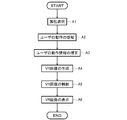
- FIG. 2 is a flowchart of the VR image display method according to the second and third embodiments.
- the attribute is at least one attribute selected from the group consisting of age, sex, height, presence / absence of a disability, and type of disability.
- the physical function information is at least one piece of information selected from the group consisting of speed of movement, range of motion, strength of power, hearing ability, and visual acuity.
- the VR image display system of the present invention further includes, for example, an audio output unit, and the audio output unit outputs audio based on the hearing information of the selected attribute.
- the attribute is at least one attribute selected from the group consisting of age, sex, height, presence / absence of a disorder, and type of disorder.
- the physical function information is at least one piece of information selected from the group consisting of speed of movement, range of motion, and strength of force.
- the VR image display method of the present invention further includes, for example, an audio output step,
- the sound output step outputs sound based on the hearing information of the selected attribute.
- the first embodiment relates to a first VR image display system and a VR image display method of the present invention.
- the VR image display system includes storage means, selection means, generation means, control means, sensing means, and display means.
- all means may be integrated and mounted on a device (for example, also referred to as a VR image display device), or any means may be separated.
- a device for example, also referred to as a VR image display device
- any means may be separated.
- a main body including a storage unit, a selection unit, a generation unit, and a control unit, and a terminal are provided, and both are electrically connected.
- the terminal and the main body may be connected via a communication network.
- the sensing means and the display means may be incorporated in the terminal, for example.
- the terminal is, for example, a terminal that can be worn by a user, and examples thereof include a head mounted display and VR goggles.
- the sensing means is, for example, a motion sensor.
- the terminal may further include audio output means such as a speaker.
- the storage unit and the data processing unit may be incorporated in the main body, for example.
- the selection unit, the generation unit, and the control unit may be incorporated in the data processing unit that is hardware, for example, or may be software or hardware in which the software is incorporated.
- the data processing means may include a central processing unit (CPU).
- the storage unit is electrically connected to the selection unit, the selection unit is electrically connected to the generation unit, and the control unit is connected to the generation unit and the sensing unit. Electrically connected, the display means is electrically connected to the control means.
- the VR image displayed by the VR image display system is, for example, a VR image of the body displayed in the virtual space, and specifically, a VR image of the body assumed to be visible from the user's eyes.
- the storage means stores attributes and body image information for each attribute.
- Examples of the storage means include random access memory (RAM), read only memory (ROM), flash memory, hard disk (HD), optical disk, floppy disk (FD), and the like.
- RAM random access memory
- ROM read only memory
- flash memory flash memory
- HD hard disk
- FD optical disk
- FD floppy disk
- the storage means may be, for example, a device built-in type or an external type such as an external storage device.
- the target of the attribute is, for example, a person.
- the attribute include age, sex, height, presence / absence of a disorder, type of disorder, and the like.
- the age may be, for example, a specific age group classification or a category classification such as infants, children, adults, and elderly people.
- the sex is, for example, male or female.
- the height may be classified by a specific numerical value or may be classified by a numerical range.
- the disorder is not particularly limited, and examples thereof include a lower body disorder and an upper body disorder.
- the body image information for each attribute is body image information corresponding to the attribute.
- the body image information may be, for example, a body image itself or information for generating a body image.
- the target body is not particularly limited, and examples thereof include a body part that can be visually recognized by a human in his / her field of view. Specific examples include the upper body of hands, arms, shoulders, chest, abdomen, legs, etc. Such as the lower body.
- the sensing means senses a user's action.
- Examples of the sensing means include sensors such as motion sensors.
- the terminal such as a head-mounted display
- the operation of the user wearing the terminal is sensed by the sensor of the terminal.
- the number of attributes stored in the storage means is not particularly limited and may be one, but is preferably two or more. Since the VR image display system can display a VR image according to the attribute selected by the user as will be described later, for example, a variety of VR images can be set by storing a plurality of attributes.
- the selection means selects an attribute of the VR image to be generated. Specifically, the attribute of the VR image to be generated is selected from the attributes stored in the storage unit.
- An example of the selection means is a CPU.
- the main body may further include display means and input means.
- storage means may be displayed on the said display means, and the attribute to select may be input by the said input means.
- the display means include a monitor such as a touch panel
- the generation unit generates a VR image from the body image information of the selected attribute.
- An example of the generation means is a CPU.
- the control means controls the movement of the generated VR image based on the sensed user operation information.
- Examples of the control means include a CPU.
- the display means displays the controlled VR image.
- Examples of the display means include a display such as a head mounted display.
- the VR image display method of the present embodiment is implemented as follows using the display system of the present embodiment, for example.
- the display method of the present embodiment includes an A1 step (attribute selection), an A2 step (sensing of user's motion), an A3 step (VR image generation), an A4 step (VR image control), and an A5 step (VR image control). Display).
- the A1 step, the A2 step, the A3 step, the A4 step, and the A5 step are performed in this order, but the first VR image display method of the present invention. Is not limited to this order.
- the A2 step to the A5 step may be performed in parallel, for example.
- step A1 Selection of attribute
- the attribute stored in the storage means is selected.
- body image information of the selected attribute is acquired.
- step A2 Sense of user action
- the user action is sensed.
- the A2 step for example, when the user wears a terminal equipped with the sensing means, the user's motion is sensed and motion information is acquired.
- step A3 (A3) Generation of VR Image
- a VR image of the selected attribute is generated based on the body image information of the selected attribute.
- (A4) VR image control In the A4 step, the movement of the generated VR image is controlled based on the sensed user action information.
- the display system and display method of the present embodiment will be described by taking as an example the case where the user is an adult and selects a child as an attribute.
- the present invention is not limited to this.
- a child is selected as an attribute.
- child body image information is acquired.
- the body image information is, for example, information for generating a VR image, and is, for example, information on a child's small hand, small foot, and the like.
- the motion of the adult user is detected.
- the user operates in a state in which a terminal such as a head mounted display with a sensor is mounted.
- a VR image is generated from the body image information of the selected child.
- a VR image of a small hand is generated from the body image information of the child.
- the movement of the generated VR image is controlled based on the operation information of the adult user.
- step A5 the controlled VR image is displayed. That is, unlike the actual adult user's body, a child's body image is displayed.
- the VR image display system of the present invention for example, even if the actual user is an adult, the VR image displayed in the virtual space is different from the body image recognized by the user himself, A body image of a small child is displayed. For this reason, the user can experience a body having an attribute different from that of the user in the virtual space.
- the second embodiment relates to a second VR image display system and a VR image display method of the present invention.
- FIG. 1 shows a block diagram of a VR image display system in the present embodiment.
- the VR image display system 1 of this embodiment includes a storage unit 11, a selection unit 121, a correction unit 122, a generation unit 123, a control unit 124, a sensing unit 101, and a display unit 102.
- FIG. 1 illustrates a configuration in which the main body 20 including the storage unit 11, the selection unit 121, the correction unit 122, the generation unit 123, and the control unit 124, and the terminal 10 are electrically connected.
- the terminal 10 and the main body 20 may be connected via a communication network.
- the sensing means 101 and the display means 102 may be incorporated in the terminal 10, for example.
- the terminal 10 is, for example, a terminal that can be worn by the user, and includes a head mounted display, VR goggles, and the like.
- the sensing means 101 is a motion sensor, for example.
- the terminal 10 may further include audio output means such as a speaker.
- the storage unit 11 and the data processing unit 12 may be incorporated in the main body 20, for example.
- the selection unit 121, the correction unit 122, the generation unit 123, and the control unit 124 may be incorporated into the data processing unit 12, which is hardware, for example, or may be software or hardware in which the software is incorporated.
- the data processing means 12 may include a central processing unit (CPU).
- the storage unit 11 is electrically connected to the selection unit 121, and the correction unit 122 is electrically connected to the selection unit 121, the sensing unit 101, the generation unit 123, and the control unit 124.
- the generation unit 123 is electrically connected to the control unit 124, and the display unit 102 is electrically connected to the control unit 124.
- the VR image displayed by the VR image display system 1 is, for example, a VR image of the body displayed in the virtual space, and specifically, a VR image of the body assumed to be visible from the user's eyes.
- the storage means 11 stores attributes, body image information, and body function information for each attribute.
- Examples of the storage means 11 include a random access memory (RAM), a read only memory (ROM), a flash memory, a hard disk (HD), an optical disk, and a floppy (registered trademark) disk (FD).
- the storage unit 11 may be, for example, a device built-in type or an external type such as an external storage device.
- the target of the attribute is, for example, a person.
- the attribute include age, sex, height, presence / absence of a disorder, type of disorder, and the like.
- the age may be, for example, a specific age group classification or a category classification such as infants, children, adults, and elderly people.
- the sex is, for example, male or female.
- the height may be classified by a specific numerical value or may be classified by a numerical range.
- the disorder is not particularly limited, and examples thereof include a lower body disorder and an upper body disorder.
- the body image information may be, for example, a body image itself or information for generating a body image.
- the target body is not particularly limited, and examples thereof include a body part that can be visually recognized by a human in his / her field of view. Specific examples include the upper body of hands, arms, shoulders, chest, abdomen, legs, etc. Such as the lower body.
- the physical function information for each attribute is physical function information corresponding to the attribute.
- Examples of the body function information include speed of movement, range of motion, strength of power, hearing ability, visual acuity, and the like.
- the sensing means 101 senses the user's operation.
- Examples of the sensing means 101 include sensors such as motion sensors.
- the operation of the user wearing the terminal 10 is detected by the sensor of the terminal 10.
- the number of attributes stored in the storage means 11 is not particularly limited and may be one, but is preferably two or more.
- the VR image display system 1 can display a VR image according to the attribute selected by the user. Therefore, by storing a plurality of attributes, for example, various VR images can be set.
- the selection means 121 selects an attribute for setting the motion of the VR image to be generated. Specifically, an attribute for setting the motion of the VR image to be generated is selected from the attributes stored in the storage unit 11.
- An example of the selection unit 121 is a CPU.
- the main body 20 may further include display means and input means.
- storage means 11 may be displayed on the said display means, and the attribute to select may be input by the said input means.
- the display means include a monitor such as a touch panel, and examples of the input means include a keyboard, a mouse, and a touch panel.
- the correcting unit 122 corrects the user's motion information sensed by the sensing unit 101 based on the physical function information of the selected attribute.
- An example of the correcting unit 122 is a CPU.
- the generating unit 123 generates a VR image from the body image information.
- An example of the generation unit 123 is a CPU.
- the control unit 124 controls the movement of the generated VR image based on the corrected operation information.
- An example of the control means 124 is a CPU.
- Display unit 102 displays the controlled VR image.
- Examples of the display means 102 include a display such as a head mounted display.
- FIG. 2 shows a flowchart of the VR image display method in the present embodiment.
- the VR image display method of this embodiment is implemented as follows, for example, using the display system of FIG.
- the display method of the present embodiment includes A1 step (attribute selection), A2 step (sensing of user's motion), A3 step (correction of user's motion information), A4 step (VR image generation), A5 step (VR image). Control), and A6 step (display of VR image).
- the A1 step, the A2 step, the A3 step, the A4 step, the A5 step, and the A6 step are performed in this order.
- the method is not limited to this order.
- the steps A2 to A6 may be performed in parallel, for example.
- step A1 Selection of attribute
- the attribute stored in the storage means is selected.
- the attribute physical function information of the selected attribute is acquired.
- step A2 Sense of user action
- the user action is sensed.
- the A2 step for example, when the user wears a terminal equipped with the sensing means, the user's motion is sensed and motion information is acquired.
- step A3 Correction of User Motion Information
- the sensed user motion information is corrected based on the physical function information of the selected attribute.
- A4 generation of VR Image In the A4 step, a VR image is generated based on the body image information stored in the storage unit.
- step A5 VR image control
- the movement of the generated VR image is controlled based on the corrected operation information.
- the display system and the display method of the present embodiment will be described by taking as an example a case where the user is male and selects female as an attribute.
- the present invention is not limited to this.
- the body function information is, for example, information such as weak force.
- step A2 the movement of the male user is detected.
- the user operates in a state in which a terminal such as a head mounted display with a sensor is mounted.
- step A3 the sensed male user's motion information is corrected based on the selected female physical function information.
- the operation information indicating the actual operation of the male user is compared with the physical function information of the female, for example, the operation information indicating that the male user is strong, the physical function information indicating that the female power is weak Based on the above, the motion information that the force is weak is corrected.
- step A4 a VR image is generated from the body image information.
- step A5 the movement of the generated VR image is controlled based on the corrected operation information.
- the action of the actual male user is a strong action, but since the selected female body function information is corrected to the action information indicating that the force is weak, the movement of the generated VR image Unlike the actual user's movement, the movement is controlled to have a weak force.
- step A6 the controlled VR image is displayed. That is, unlike the actual operation of the user, the VR image of the body is displayed with a motion with weak force. As a specific example, even if a male user performs an operation of lifting a load, an image of an operation that the load is not lifted is displayed in the virtual space.
- the VR image displayed in the virtual space is the user himself / herself. Unlike the movements that are experiencing, the movement is weak. Therefore, the user can experience the movement of a person having a physical function having an attribute different from that of the user in the virtual space.
- the third embodiment relates to a third VR image display system and a VR image display method of the present invention.
- the VR image display system in the present embodiment can be shown in the block diagram of FIG. 1 as in the second embodiment.
- the VR image display system 1 of this embodiment includes a storage unit 11, a selection unit 121, a correction unit 122, a generation unit 123, a control unit 124, a sensing unit 101, and a display unit 102.
- FIG. 1 illustrates a configuration in which the main body 20 including the storage unit 11, the selection unit 121, the correction unit 122, the generation unit 123, and the control unit 124, and the terminal 10 are electrically connected.
- the terminal 10 and the main body 20 may be connected via a communication network.
- the sensing means 101 and the display means 102 may be incorporated in the terminal 10, for example.
- the terminal 10 is, for example, a terminal that can be worn by the user, and includes a head mounted display, VR goggles, and the like.
- the sensing means 101 is a motion sensor, for example.
- the terminal 10 may further include audio output means such as a speaker.
- the storage unit 11 and the data processing unit 12 may be incorporated in the main body 20, for example.
- the selection unit 121, the correction unit 122, the generation unit 123, and the control unit 124 may be incorporated into the data processing unit 12, which is hardware, for example, or may be software or hardware in which the software is incorporated.
- the data processing means 12 may include a central processing unit (CPU).
- the storage unit 11 is electrically connected to the selection unit 121, and the correction unit 122 is electrically connected to the selection unit 121, the sensing unit 101, the generation unit 123, and the control unit 124.
- the generation unit 123 is electrically connected to the control unit 124, and the display unit 102 is electrically connected to the control unit 124.
- the VR image displayed by the VR image display system 1 is, for example, a VR image of the body displayed in the virtual space, and specifically, a VR image of the body assumed to be visible from the user's eyes.
- the storage means 11 stores body image information for each attribute and body function information associated with the body image.
- Examples of the storage means 11 include a random access memory (RAM), a read only memory (ROM), a flash memory, a hard disk (HD), an optical disk, and a floppy (registered trademark) disk (FD).
- the storage unit 11 may be, for example, a device built-in type or an external type such as an external storage device.
- the target of the attribute is, for example, a person.
- the attribute include age, sex, height, presence / absence of a disorder, type of disorder, and the like.
- the age may be, for example, a specific age group classification or a category classification such as infants, children, adults, and elderly people.
- the sex is, for example, male or female.
- the height may be classified by a specific numerical value or may be classified by a numerical range.
- the disorder is not particularly limited, and examples thereof include a lower body disorder and an upper body disorder.
- the body image information for each attribute is body image information corresponding to the attribute.
- the body image information may be, for example, a body image itself or information for generating a body image.
- the target body is not particularly limited, and examples thereof include a body part that can be visually recognized by a human in his / her field of view. Specific examples include the upper body of hands, arms, shoulders, chest, abdomen, legs, etc. Such as the lower body.
- the body function information includes speed of movement, range of motion, strength of power, hearing ability, visual acuity and the like.
- the sensing means 101 senses the user's operation.
- Examples of the sensing means 101 include sensors such as motion sensors.
- the operation of the user wearing the terminal 10 is detected by the sensor of the terminal 10.
- the number of attributes stored in the storage means 11 is not particularly limited and may be one, but is preferably two or more.
- the VR image display system 1 can display a VR image according to the attribute selected by the user. Therefore, by storing a plurality of attributes, for example, various VR images can be set.
- the selection unit 121 selects an attribute of the VR image to be generated. Specifically, the attribute of the VR image to be generated is selected from the attributes stored in the storage unit 11.
- An example of the selection unit 121 is a CPU.
- the main body 20 may further include display means and input means.
- storage means may be displayed on the said display means, and the attribute to select may be input by the said input means.
- the display means include a monitor such as a touch panel
- the correcting unit 122 corrects the user's motion information sensed by the sensing unit 101 based on the physical function information of the selected attribute.
- An example of the correcting unit 122 is a CPU.
- the generation unit 123 generates a VR image from the body image information of the selected attribute based on the corrected motion information.
- An example of the generation unit 123 is a CPU.
- the control unit 124 controls the movement of the generated VR image based on the corrected operation information.
- An example of the control means 124 is a CPU.
- Display unit 102 displays the controlled VR image.
- Examples of the display means 102 include a display such as a head mounted display.
- the VR image display method of this embodiment is implemented as follows, for example, using the display system of FIG.
- the display method of the present embodiment includes A1 step (attribute selection), A2 step (sensing of user's motion), A3 step (correction of user's motion information), A4 step (VR image generation), A5 step (VR image). Control), and A6 step (display of VR image).
- the A1 step, the A2 step, the A3 step, the A4 step, the A5 step, and the A6 step are performed in this order.
- the method is not limited to this order.
- the steps A2 to A6 may be performed in parallel, for example.
- step A1 Selection of attribute
- the attribute stored in the storage means is selected.
- the body image information of the selected attribute and the physical function information associated therewith are acquired.
- step A2 Sense of user action
- the user action is sensed.
- the A2 step for example, when the user wears a terminal equipped with the sensing means, the user's motion is sensed and motion information is acquired.
- step A3 Correction of User Motion Information
- the sensed user motion information is corrected based on the physical function information of the selected attribute.
- step A4 Generation of VR Image
- a VR image having the selected attribute is generated based on the corrected operation information.
- step A5 VR image control
- the movement of the generated VR image is controlled based on the corrected operation information.
- the display system and display method of the present embodiment will be described by taking as an example the case where the user is a younger generation and selects the older generation as an attribute.
- the present invention is not limited to this.
- the body image information of the elderly and the body function information of the elderly are acquired.
- the body image information is, for example, information for generating a VR image, and as specific examples, is information such as a hand with a wrinkle due to aging and a bent leg due to aging.
- the physical function information is, for example, information such as slow motion, hips bent and not stretched, legs bent and not stretched, legs not raised, hands not raised, waist cannot be twisted, face not lifted, etc. It is.
- step A2 the movement of the young user is detected.
- the user operates in a state in which a terminal such as a head mounted display with a sensor is mounted.
- the detected movement information of the young user is corrected based on the physical function information of the selected elderly person.
- the operation information indicating the actual operation of the young user is compared with the physical function information of the elderly user, for example, the operation information indicating that the operation of the young user is early, the operation of the elderly user is slow. Is corrected to motion information indicating that the motion is slow.
- a VR image is generated from the body image information of the selected elderly group based on the corrected motion information.
- a VR image of a hand with wrinkles due to aging is generated from body image information of the elderly.
- step A5 the movement of the generated VR image is controlled based on the corrected operation information.
- the actual movement of the young user is an early movement, but the movement of the generated VR image is corrected because the movement information of the selected elderly person is corrected to the movement information indicating that the movement is slow. Is controlled to a slow operation, unlike an actual user operation.
- step A6 the controlled VR image is displayed. That is, unlike an actual user operation, the VR image of the body is displayed with a slow movement.
- the VR image displayed in the virtual space is displayed by the user himself / herself even if the actual user is a young user and actually performs an agile operation. Unlike the movements that are experiencing, the movement is slow. Therefore, the user can experience the movement of a person having a physical function having an attribute different from that of the user in the virtual space.
- the VR image display system of the present invention allows the user to experience a virtual space based on a sense of attributes different from the user. Can be used for
- Barrier-free design is important to ensure safety for the elderly, the physically disabled, and infants.
- the physical function is different between the subject and the designer, so it may be difficult to determine whether the subject is actually suitable for the subject.
- the designed barrier-free room is displayed as a virtual space
- the target person for example, an elderly person
- the user is a target different from his / her own. Whether or not the design is appropriate can be confirmed by performing an operation on the virtual space according to the physical function of the person's attribute.
- the user himself performs a foot-raising operation that seems to be able to exceed the step based on his / her physical function.
- the generated VR image of the foot satisfies the actual height of the foot lift. It is displayed in the state without being able to cross the step.
- the user needs to raise his / her feet further, and as a result, the load is greater than the load in the real world for exceeding the step.
- the designed step is a step with a larger physical burden than the user feels, and can lead to a better barrier-free design.
- it is possible to perform a specific check by a pseudo-experience before actually building it is possible to reduce changes and repairs after construction.
- Examples of the building include a residence, an office, a store, a factory, a research institute, a station, an airport, a hotel and other accommodation facilities. Further, examples of objects to be checked include flow lines and the like in addition to barrier free.
- the case where the attribute is “old man” and the physical function information of the attribute is “function information that the hand movement is slow” can be exemplified.
- the image is displayed in the virtual space where the hand moves only slowly, unlike the actual movement, even though the hand is actually moving quickly. . For this reason, the user feels uncomfortable.
- the user slowly moves the actual movement and follows the movement of the VR image in the virtual space, the user can eliminate the uncomfortable feeling. In this way, the user feels uncomfortable with the image in the virtual space, and further simulates the sense of the selected attribute by matching the actual movement with the movement in the virtual space and eliminating the unnatural feeling. Can do.
- the attribute is “child”
- the physical image information of the attribute is “small hand image information”
- the physical function information of the attribute is “functional information that an object is difficult to grasp because of a small hand”. it can.
- the user if the user is an adult, the user can virtually experience a situation where the user cannot grab the object well in the virtual space, although the user can actually grasp the object easily.
- the attribute is “a person who has broken bone”
- the body image information of the attribute is “image information of a foot having a cast on one leg for a fracture”
- the physical function information of the attribute is “a function that a broken foot is difficult to step on”
- “information” can be exemplified. In this case, if the user is a healthy person, the user can virtually experience a state in which one foot cannot be stepped in the virtual space even though both legs can be stepped on easily.
- the VR image display system of the present invention may further include, for example, an alert output unit.
- the alert output means can output an alert when, for example, the actual movement of the user does not match the movement of the VR image in the virtual space. Thereby, it is possible to make the user recognize a more uncomfortable feeling.
- the alert may be, for example, a sound or an effect in the display means.
- the fourth embodiment is a modification of each of the first to third embodiments, and further relates to a display system of the present invention having an audio output means and a display method having an audio output step.
- a display system of the present invention having an audio output means and a display method having an audio output step.
- the description of the display system and display method of Embodiments 1 to 3 can be cited.
- the sound output means is means for outputting sound based on the hearing information of the selected attribute.
- the audio output means is mounted on the terminal, for example, similarly to the sensing means and the display means.
- the sound output step is a step of outputting a sound based on the hearing information of the selected attribute.
- the sound output unit or the sound output step is included, sound is output based on the hearing information of the selected attribute instead of the actual user's hearing ability.
- the auditory sense a pseudo-experience based on physical functions having attributes different from those of the user is possible.
- Personaization (1-1) It has a human body size database and can reproduce and simulate its physique. Furthermore, by inputting an age group, a simulation is performed with an average of the persons corresponding to the age group or a physique such as upper 95%, lower 95%, and the like. Thereby, it can be confirmed efficiently whether there is no problem in ergonomics. ⁇ If you want to consider on the basis of on-site workers rather than general physique conditions for Japanese and other races, for example, accumulate human body size data collected by Kinect (registered trademark), etc. 95% and the lower 95% can be set assuming an on-site worker.
- Kinect registered trademark
- (2-3) Create a situation to forget and forget memory. For example, if there is a task of “reading the manual” in order to accomplish the task, in the reproduction mode for people with dementia or forgetful things, can the task of reading the manual be skipped so that it can be carried out by people who forget things (For example, design is not dependent on short-term memory).
- ⁇ Create a situation that forcibly misunderstands. For example, if there is a task of “reading a manual” to accomplish a task, the contents of the manual are replaced.
- the program of this embodiment is a program that can execute the above-described VR image display method on a computer.
- the program of this embodiment may be recorded on a computer-readable recording medium, for example.
- the recording medium is not particularly limited, and examples thereof include a random access memory (RAM), a read-only memory (ROM), a hard disk (HD), an optical disk, and a floppy (registered trademark) disk (FD).
Landscapes
- Engineering & Computer Science (AREA)
- Theoretical Computer Science (AREA)
- General Engineering & Computer Science (AREA)
- Physics & Mathematics (AREA)
- General Physics & Mathematics (AREA)
- Human Computer Interaction (AREA)
- General Health & Medical Sciences (AREA)
- Audiology, Speech & Language Pathology (AREA)
- Health & Medical Sciences (AREA)
- Multimedia (AREA)
- Computer Graphics (AREA)
- Computer Hardware Design (AREA)
- Software Systems (AREA)
- User Interface Of Digital Computer (AREA)
- Processing Or Creating Images (AREA)
Abstract
本発明は、ユーザが、ユーザ自身とは異なる属性の感覚に基づいて仮想空間を疑似体験することを可能とするVR画像表示システムを提供する。 本発明のVR画像表示システム1は、属性と、属性ごとの身体画像情報と、前記身体画像に関連付けた身体機能情報とを記憶する記憶手段11と;ユーザの動作を感知する感知手段101と;前記感知したユーザの動作情報を、前記選択された属性の身体機能情報に基づいて補正する補正手段122と;前記補正された動作情報に基づいて、前記選択された属性の身体画像情報から、バーチャルリアリティ画像を生成する生成手段123と;前記補正された動作情報に基づいて、前記生成されたバーチャルリアリティ画像の動きを制御する制御手段124と;前記制御されたVR画像を表示する表示手段102とを含むことを特徴とする。
Description
本発明は、バーチャルリアリティ画像表示システムおよびバーチャルリアリティ画像表示方法に関する。
近年、可視化した仮想空間において、ユーザの動作に連動させた画像を表示することによって、ユーザに仮想空間を疑似体験させるバーチャルリアリティ(以下、VRともいう)システムの開発が盛んに行われている。前記VRシステムは、通常、ユーザがセンサ付きゴーグルを装着すると、前記ゴーグルのモニターに仮想空間が表示され、前記ユーザの動作を前記センサが感知して、前記仮想空間に前記ユーザの動きに応じた画像が表示される。
しかしながら、従来のVRシステムによると、仮想空間内に表示される画像は、同じデザインの画像であり、また、前記画像の動きは、前記ユーザ自身の動作に直接的に連動するものである。このため、ユーザは、ユーザ自身の元来の感覚に基づく仮想空間の疑似体験しかできなかった。
そこで、本発明は、ユーザが、ユーザ自身とは異なる属性の感覚に基づいて仮想空間を疑似体験することを可能とするVR画像表示システムの提供を目的とする。
前記目的を達成するために、本発明の第1のVR画像表示システムは、
属性と、属性ごとの身体画像情報とを記憶する記憶手段と、
前記属性を選択する選択手段と、
ユーザの動作を感知する感知手段と、
前記選択された属性の身体画像情報から、バーチャルリアリティ画像を生成する生成手段と、
前記感知したユーザの動作情報に基づいて、前記生成されたバーチャルリアリティ画像の動きを制御する制御手段と、
前記制御されたバーチャルリアリティ画像を表示する表示手段とを含むことを特徴とする。
属性と、属性ごとの身体画像情報とを記憶する記憶手段と、
前記属性を選択する選択手段と、
ユーザの動作を感知する感知手段と、
前記選択された属性の身体画像情報から、バーチャルリアリティ画像を生成する生成手段と、
前記感知したユーザの動作情報に基づいて、前記生成されたバーチャルリアリティ画像の動きを制御する制御手段と、
前記制御されたバーチャルリアリティ画像を表示する表示手段とを含むことを特徴とする。
本発明の第2のVR画像表示システムは、
属性と、身体画像情報と、属性ごとの身体機能情報とを記憶する記憶手段と、
前記属性を選択する選択手段と、
ユーザの動作を感知する感知手段と、
前記感知したユーザの動作情報を、前記選択された属性の身体機能情報に基づいて補正する補正手段と、
前記身体画像情報から、バーチャルリアリティ画像を生成する生成手段と、
前記補正された動作情報に基づいて、前記生成されたバーチャルリアリティ画像の動きを制御する制御手段と、
前記制御されたバーチャルリアリティ画像を表示する表示手段とを含むことを特徴とする。
属性と、身体画像情報と、属性ごとの身体機能情報とを記憶する記憶手段と、
前記属性を選択する選択手段と、
ユーザの動作を感知する感知手段と、
前記感知したユーザの動作情報を、前記選択された属性の身体機能情報に基づいて補正する補正手段と、
前記身体画像情報から、バーチャルリアリティ画像を生成する生成手段と、
前記補正された動作情報に基づいて、前記生成されたバーチャルリアリティ画像の動きを制御する制御手段と、
前記制御されたバーチャルリアリティ画像を表示する表示手段とを含むことを特徴とする。
本発明の第3のVR画像表示システムは、
属性と、属性ごとの身体画像情報と、前記身体画像に関連付けた身体機能情報とを記憶する記憶手段と、
前記属性を選択する選択手段と、
ユーザの動作を感知する感知手段と、
前記感知したユーザの動作情報を、前記選択された属性の身体機能情報に基づいて補正する補正手段と、
前記補正された動作情報に基づいて、前記選択された属性の身体画像情報から、バーチャルリアリティ画像を生成する生成手段と、
前記補正された動作情報に基づいて、前記生成されたバーチャルリアリティ画像の動きを制御する制御手段と、
前記制御されたVR画像を表示する表示手段とを含むことを特徴とする。
属性と、属性ごとの身体画像情報と、前記身体画像に関連付けた身体機能情報とを記憶する記憶手段と、
前記属性を選択する選択手段と、
ユーザの動作を感知する感知手段と、
前記感知したユーザの動作情報を、前記選択された属性の身体機能情報に基づいて補正する補正手段と、
前記補正された動作情報に基づいて、前記選択された属性の身体画像情報から、バーチャルリアリティ画像を生成する生成手段と、
前記補正された動作情報に基づいて、前記生成されたバーチャルリアリティ画像の動きを制御する制御手段と、
前記制御されたVR画像を表示する表示手段とを含むことを特徴とする。
本発明の第1のVR画像表示方法は、
属性を選択する選択工程と、
ユーザの動作を感知する感知工程と、
選択された属性の身体画像情報から、バーチャルリアリティ画像を生成する生成工程と、
前記感知したユーザの動作情報に基づいて、前記生成されたバーチャルリアリティ画像の動きを制御する制御工程と、
前記制御されたバーチャルリアリティ画像を表示する表示工程とを含むことを特徴とする。
属性を選択する選択工程と、
ユーザの動作を感知する感知工程と、
選択された属性の身体画像情報から、バーチャルリアリティ画像を生成する生成工程と、
前記感知したユーザの動作情報に基づいて、前記生成されたバーチャルリアリティ画像の動きを制御する制御工程と、
前記制御されたバーチャルリアリティ画像を表示する表示工程とを含むことを特徴とする。
本発明の第2のVR画像表示方法は、
属性を選択する選択工程と、
ユーザの動作を感知する感知工程と、
前記感知したユーザの動作情報を、選択された属性の身体機能情報に基づいて補正する補正工程と、
身体画像情報から、バーチャルリアリティ画像を生成する生成工程と、
前記補正された動作情報に基づいて、前記生成されたバーチャルリアリティ画像の動きを制御する制御工程と、
前記制御されたバーチャルリアリティ画像を表示する表示工程とを含むことを特徴とする。
属性を選択する選択工程と、
ユーザの動作を感知する感知工程と、
前記感知したユーザの動作情報を、選択された属性の身体機能情報に基づいて補正する補正工程と、
身体画像情報から、バーチャルリアリティ画像を生成する生成工程と、
前記補正された動作情報に基づいて、前記生成されたバーチャルリアリティ画像の動きを制御する制御工程と、
前記制御されたバーチャルリアリティ画像を表示する表示工程とを含むことを特徴とする。
本発明の第3のVR画像表示方法は、
属性を選択する選択工程と、
ユーザの動作を感知する感知工程と、
前記感知したユーザの動作情報を、選択された属性の身体機能情報に基づいて補正する補正工程と、
前記補正された動作情報に基づいて、選択された属性の身体画像情報から、バーチャルリアリティ画像を生成する生成工程と、
前記補正された動作情報に基づいて、前記生成されたバーチャルリアリティ画像の動きを制御する制御工程と、
前記制御されたVR画像を表示する表示工程とを含むことを特徴とする。
属性を選択する選択工程と、
ユーザの動作を感知する感知工程と、
前記感知したユーザの動作情報を、選択された属性の身体機能情報に基づいて補正する補正工程と、
前記補正された動作情報に基づいて、選択された属性の身体画像情報から、バーチャルリアリティ画像を生成する生成工程と、
前記補正された動作情報に基づいて、前記生成されたバーチャルリアリティ画像の動きを制御する制御工程と、
前記制御されたVR画像を表示する表示工程とを含むことを特徴とする。
本発明のプログラムは、前記本発明のVR画像表示方法をコンピュータ上で実行可能なことを特徴とする。
本発明のコンピュータ読み取り可能な記録媒体は、前記本発明のプログラムを記録していることを特徴とする。
本発明によれば、ユーザが、ユーザ自身とは異なる属性の感覚に基づいて仮想空間を疑似体験することが可能である。
本発明のVR画像表示システムは、例えば、前記属性が、年齢、性別、身長、障害の有無、および障害の種類からなる群から選択された少なくとも1つの属性である。
本発明のVR画像表示システムは、例えば、前記身体機能情報が、動作の早さ、可動域の範囲、力の強さ、聴力、および視力からなる群から選択された少なくとも1つの情報である。
本発明のVR画像表示システムは、例えば、さらに、音声出力手段を含み、前記音声出力手段は、前記選択された属性の聴力情報に基づいて、音声を出力する。
本発明のVR画像表示方法は、例えば、前記属性が、年齢、性別、身長、障害の有無、および障害の種類からなる群から選択された少なくとも1つの属性である。
本発明のVR画像表示方法は、例えば、前記身体機能情報が、動作の早さ、可動域の範囲、および力の強さからなる群から選択された少なくとも1つの情報である。
本発明のVR画像表示方法は、例えば、さらに、音声出力工程を含み、
前記音声出力工程は、前記選択された属性の聴力情報に基づいて、音声を出力する。
前記音声出力工程は、前記選択された属性の聴力情報に基づいて、音声を出力する。
つぎに、本発明の実施形態について説明する。なお、本発明は、下記の実施形態によって何ら限定および制限されない。なお、以下の図1および図2において、同一部分には、同一符号を付している。また、各実施形態の説明は、特に言及がない限り、互いの説明を援用できる。さらに、各実施形態の構成は、特に言及がない限り、組合せ可能である。以下、選択した属性の身体画像情報に基づくVR画像の生成、選択した属性の身体機能情報に基づくVR画像の動きの制御は、ユーザとは異なる属性に基づくことから、「ペルソナ化」ともいう。
[実施形態1]
実施形態1は、本発明の第1のVR画像表示システムおよびVR画像表示方法に関する。
実施形態1は、本発明の第1のVR画像表示システムおよびVR画像表示方法に関する。
本実施形態のVR画像表示システムは、記憶手段、選択手段、生成手段、制御手段、感知手段、および表示手段を含む。
VR画像表示システムは、例えば、全ての手段が一体化して装置(例えば、VR画像表示装置ともいう)に搭載されてもよいし、いずれかの手段が分離してもよい。具体例として、記憶手段、選択手段、生成手段、および制御手段を備える本体と、端末とを備え、両者が電気的に接続された形態があげられる。VR画像表示システムは、例えば、前記端末と前記本体とが、通信回線網を介して連結されてもよい。
前記感知手段および前記表示手段は、例えば、前記端末に組み込まれてもよい。前記端末は、例えば、ユーザが装着できる端末であり、ヘッドマウントディスプレイ、VRゴーグル等があげられる。前記端末において、前記感知手段は、例えば、モーションセンサである。前記端末は、さらに、スピーカー等の音声出力手段を含んでもよい。
前記記憶手段およびデータ処理手段は、例えば、前記本体に組み込まれてもよい。前記選択手段、前記生成手段、および前記制御手段は、例えば、ハードウェアである前記データ処理手段に組み込まれてもよく、ソフトウェアまたは前記ソフトウェアが組み込まれたハードウェアでもよい。前記データ処理手段は、中央演算装置(CPU)等を備えてもよい。
前記VR画像表示システムにおいて、前記記憶手段は、前記選択手段に電気的に接続され、前記選択手段は、前記生成手段に電気的に接続され、前記制御手段は、前記生成手段および前記感知手段に電気的に接続され、前記表示手段は、前記制御手段に電気的に接続されている。
前記VR画像表示システムにより表示されるVR画像は、例えば、仮想空間に表示される身体のVR画像であり、具体的には、ユーザの眼から見えると想定される身体のVR画像である。
前記記憶手段は、属性と、属性ごとの身体画像情報とを記憶する。記憶手段は、例えば、ランダムアクセスメモリ(RAM)、読み出し専用メモリ(ROM)、フラッシュメモリー、ハードディスク(HD)、光ディスク、フロッピー(登録商標)ディスク(FD)等があげられる。記憶手段は、例えば、装置内蔵型でもよいし、外部記憶装置のような外付け型であってもよい。
前記属性の対象は、例えば、人である。前記属性は、例えば、年齢、性別、身長、障害の有無、障害の種類等があげられる。年齢は、例えば、具体的な年齢層の分類でもよいし、幼児、子供、大人、老人等のカテゴリーの分類でもよい。性別は、例えば、男性、女性である。身長は、例えば、具体的な数値による分類でもよいし、数値範囲による分類でもよい。障害は、特に制限されず、例えば、下半身の障害、上半身の障害等があげられる。
前記属性ごとの身体画像情報とは、前記属性に該当する身体画像情報である。前記身体画像情報とは、例えば、身体画像そのものでもよいし、身体画像を生成するための情報であってもよい。対象となる身体は、特に制限されず、例えば、人間が自分の視界において視認できる自分自身の身体部位があげられ、具体例としては、手、腕、肩、胸、腹等の上半身、足等の下半身等があげられる。
前記感知手段は、ユーザの動作を感知する。前記感知手段は、例えば、モーションセンサ等のセンサがあげられる。ヘッドマウントディスプレイ等の前記端末をユーザが装着することで、前記端末のセンサにより、前記端末を装着したユーザの動作が感知される。
前記記憶手段に記憶される属性の数は、特に制限されず、1つでもよいが、2つ以上の複数であることが好ましい。前記VR画像表示システムでは、後述するように、ユーザが選択した属性に応じたVR画像が表示できることから、複数の属性を記憶させることで、例えば、多種多様なVR画像の設定が可能になる。
前記選択手段は、生成するVR画像の属性を選択する。具体的には、前記記憶手段に記憶された属性から、生成するVR画像の属性を選択する。前記選択手段は、例えば、CPU等があげられる。前記VR画像表示システムにおいて、例えば、前記本体は、さらに、表示手段および入力手段を有してもよい。この場合、前記表示手段に、前記記憶手段に記憶された属性が表示され、前記入力手段により、選択する属性が入力されてもよい。前記表示手段は、例えば、タッチパネル等のモニターがあげられ、前記入力手段は、例えば、キーボード、マウス、タッチパネル等があげられる。
前記生成手段は、前記選択された属性の身体画像情報からVR画像を生成する。前記生成手段は、例えば、CPU等があげられる。
前記制御手段は、前記感知したユーザの動作情報に基づいて、前記生成されたVR画像の動きを制御する。前記制御手段は、例えば、CPU等があげられる。
前記表示手段は、前記制御されたVR画像を表示する。前記表示手段は、例えば、ヘッドマウントディスプレイ等のディスプレイがあげられる。
つぎに、本実施形態におけるVR画像表示方法のフローチャートを示す。本実施形態のVR画像表示方法は、例えば、前記本実施形態の表示システムを用いて、つぎのように実施する。本実施形態の表示方法は、A1ステップ(属性選択)、A2ステップ(ユーザの動作の感知)、A3ステップ(VR画像の生成)、A4ステップ(VR画像の制御)、およびA5ステップ(VR画像の表示)を含む。本実施形態のVR画像表示方法は、前記A1ステップ、前記A2ステップ、前記A3ステップ、前記A4ステップ、および前記A5ステップをこの順序で実施しているが、本発明の第1のVR画像表示方法は、この順序に制限されず、例えば、前記A2ステップ~前記A5ステップを、例えば、並行して実施してもよい。
(A1)属性の選択
前記A1ステップでは、前記記憶手段に記憶された属性を選択する。前記属性の選択により、選択した前記属性の身体画像情報を取得する。
前記A1ステップでは、前記記憶手段に記憶された属性を選択する。前記属性の選択により、選択した前記属性の身体画像情報を取得する。
(A2)ユーザの動作の感知
前記A2ステップでは、ユーザの動作を感知する。前記A2ステップでは、例えば、ユーザが前記感知手段を備えた端末を装着することで、ユーザの動作を感知し、動作情報を取得する。
前記A2ステップでは、ユーザの動作を感知する。前記A2ステップでは、例えば、ユーザが前記感知手段を備えた端末を装着することで、ユーザの動作を感知し、動作情報を取得する。
(A3)VR画像の生成
前記A3ステップでは、前記選択された属性の身体画像情報に基づいて、前記選択された属性のVR画像を生成する。
前記A3ステップでは、前記選択された属性の身体画像情報に基づいて、前記選択された属性のVR画像を生成する。
(A4)VR画像の制御
前記A4ステップでは、前記感知されたユーザの動作情報に基づいて、前記生成されたVR画像の動きを制御する。
前記A4ステップでは、前記感知されたユーザの動作情報に基づいて、前記生成されたVR画像の動きを制御する。
(A5)VR画像の表示
前記A5ステップでは、前記制御されたVR画像を表示する。そして、ユーザが動いている間、前記(A2)~(A5)を繰り返し行い、終了する。
前記A5ステップでは、前記制御されたVR画像を表示する。そして、ユーザが動いている間、前記(A2)~(A5)を繰り返し行い、終了する。
以下に、本実施形態の表示システムおよび表示方法について、ユーザが大人であり、属性として子供を選択する場合を例にあげて説明する。なお、本発明は、これには制限されない。
前記A1ステップで、属性として子供を選択する。この選択により、子供の身体画像情報を取得する。前記身体画像情報は、例えば、VR画像を生成するための情報であり、具体例として、子供の小さい手、小さい足等の情報である。
つぎに、前記A2ステップでは、大人ユーザの動作を感知する。前記ユーザは、例えば、前述のように、センサ付きヘッドマウントディスプレイ等の端末を装着した状態で動作する。
そして、前記A3ステップでは、前記選択された子供の身体画像情報から、VR画像を生成する。この場合、例えば、子供の身体画像情報から、小さい手のVR画像を生成する。
さらに、前記A4ステップでは、前記大人ユーザの動作情報に基づいて、前記生成されたVR画像の動きを制御する。
そして、前記A5ステップでは、前記制御されたVR画像が表示される。つまり、実際の大人ユーザの身体とは異なり、子供の身体画像が表示される。
このように、本発明のVR画像表示システムによれば、例えば、実際のユーザが大人であっても、仮想空間に表示されるVR画像は、ユーザ自身が認識している身体画像とは異なり、サイズの小さな子供の身体画像が表示される。このため、ユーザは、自分とは異なる属性の身体を、仮想空間において、疑似体験することができる。
[実施形態2]
実施形態2は、本発明の第2のVR画像表示システムおよびVR画像表示方法に関する。
実施形態2は、本発明の第2のVR画像表示システムおよびVR画像表示方法に関する。
図1に、本実施形態におけるVR画像表示システムのブロック図を示す。図1に示すように、本実施形態のVR画像表示システム1は、記憶手段11、選択手段121、補正手段122、生成手段123、制御手段124、感知手段101、および表示手段102を含む。
VR画像表示システム1は、例えば、全ての手段が一体化して装置(例えば、VR画像表示装置ともいう)に搭載されてもよいし、いずれかの手段が分離してもよい。図1には、記憶手段11、選択手段121、補正手段122、生成手段123、および制御手段124を備える本体20と、端末10とを備え、両者が電気的に接続された形態を例示する。VR画像表示システム1は、例えば、端末10と本体20とが、通信回線網を介して連結されてもよい。
感知手段101および表示手段102は、例えば、端末10に組み込まれてもよい。端末10は、例えば、ユーザが装着できる端末であり、ヘッドマウントディスプレイ、VRゴーグル等があげられる。端末10において、感知手段101は、例えば、モーションセンサである。端末10は、さらに、スピーカー等の音声出力手段を含んでもよい。
記憶手段11およびデータ処理手段12は、例えば、本体20に組み込まれてもよい。選択手段121、補正手段122、生成手段123、および制御手段124は、例えば、ハードウェアであるデータ処理手段12に組み込まれてもよく、ソフトウェアまたは前記ソフトウェアが組み込まれたハードウェアでもよい。データ処理手段12は、中央演算装置(CPU)等を備えてもよい。
VR画像表示システム1において、記憶手段11は、選択手段121に電気的に接続され、補正手段122は、選択手段121、感知手段101、生成手段123、および制御手段124に電気的に接続され、生成手段123は、制御手段124に電気的に接続され、表示手段102は、制御手段124に電気的に接続されている。
VR画像表示システム1により表示されるVR画像は、例えば、仮想空間に表示される身体のVR画像であり、具体的には、ユーザの眼から見えると想定される身体のVR画像である。
記憶手段11は、属性と、身体画像情報と、属性ごとの身体機能情報とを記憶する。記憶手段11は、例えば、ランダムアクセスメモリ(RAM)、読み出し専用メモリ(ROM)、フラッシュメモリー、ハードディスク(HD)、光ディスク、フロッピー(登録商標)ディスク(FD)等があげられる。記憶手段11は、例えば、装置内蔵型でもよいし、外部記憶装置のような外付け型であってもよい。
前記属性の対象は、例えば、人である。前記属性は、例えば、年齢、性別、身長、障害の有無、障害の種類等があげられる。年齢は、例えば、具体的な年齢層の分類でもよいし、幼児、子供、大人、老人等のカテゴリーの分類でもよい。性別は、例えば、男性、女性である。身長は、例えば、具体的な数値による分類でもよいし、数値範囲による分類でもよい。障害は、特に制限されず、例えば、下半身の障害、上半身の障害等があげられる。
前記身体画像情報とは、例えば、身体画像そのものでもよいし、身体画像を生成するための情報であってもよい。対象となる身体は、特に制限されず、例えば、人間が自分の視界において視認できる自分自身の身体部位があげられ、具体例としては、手、腕、肩、胸、腹等の上半身、足等の下半身等があげられる。
前記属性ごとの身体機能情報とは、前記属性に該当する身体機能情報である。前記身体機能情報とは、動作の早さ、可動域の範囲、力の強さ、聴力、視力等があげられる。
感知手段101は、ユーザの動作を感知する。感知手段101は、例えば、モーションセンサ等のセンサがあげられる。ヘッドマウントディスプレイ等の端末10をユーザが装着することで、端末10のセンサにより、端末10を装着したユーザの動作が感知される。
記憶手段11に記憶される属性の数は、特に制限されず、1つでもよいが、2つ以上の複数であることが好ましい。VR画像表示システム1では、後述するように、ユーザが選択した属性に応じたVR画像が表示できることから、複数の属性を記憶させることで、例えば、多種多様なVR画像の設定が可能になる。
選択手段121は、生成するVR画像の動きを設定するための属性を選択する。具体的には、記憶手段11に記憶された属性から、生成するVR画像の動きを設定するための属性を選択する。選択手段121は、例えば、CPU等があげられる。VR画像表示システム1において、例えば、本体20は、さらに、表示手段および入力手段を有してもよい。この場合、前記表示手段に、記憶手段11に記憶された属性が表示され、前記入力手段により、選択する属性が入力されてもよい。前記表示手段は、例えば、タッチパネル等のモニターがあげられ、前記入力手段は、例えば、キーボード、マウス、タッチパネル等があげられる。
補正手段122は、感知手段101により感知したユーザの動作情報を、前記選択された属性の身体機能情報に基づいて補正する。補正手段122は、例えば、CPU等があげられる。
生成手段123は、前記身体画像情報からからVR画像を生成する。生成手段123は、例えば、CPU等があげられる。
制御手段124は、前記補正された動作情報に基づいて、前記生成されたVR画像の動きを制御する。制御手段124は、例えば、CPU等があげられる。
表示手段102は、前記制御されたVR画像を表示する。表示手段102は、例えば、ヘッドマウントディスプレイ等のディスプレイがあげられる。
つぎに、本実施形態におけるVR画像表示方法のフローチャートを、図2に示す。本実施形態のVR画像表示方法は、例えば、図1の表示システムを用いて、つぎのように実施する。本実施形態の表示方法は、A1ステップ(属性選択)、A2ステップ(ユーザの動作の感知)、A3ステップ(ユーザの動作情報の補正)、A4ステップ(VR画像の生成)、A5ステップ(VR画像の制御)、およびA6ステップ(VR画像の表示)を含む。本実施形態のVR画像表示方法は、前記A1ステップ、前記A2ステップ、前記A3ステップ、前記A4ステップ、前記A5ステップ、および前記A6ステップをこの順序で実施しているが、本発明のVR画像表示方法は、この順序に制限されず、例えば、前記A2ステップ~前記A6ステップを、例えば、並行して実施してもよい。
(A1)属性の選択
前記A1ステップでは、前記記憶手段に記憶された属性を選択する。前記属性の選択により、選択した前記属性の身体機能情報を取得する。
前記A1ステップでは、前記記憶手段に記憶された属性を選択する。前記属性の選択により、選択した前記属性の身体機能情報を取得する。
(A2)ユーザの動作の感知
前記A2ステップでは、ユーザの動作を感知する。前記A2ステップでは、例えば、ユーザが前記感知手段を備えた端末を装着することで、ユーザの動作を感知し、動作情報を取得する。
前記A2ステップでは、ユーザの動作を感知する。前記A2ステップでは、例えば、ユーザが前記感知手段を備えた端末を装着することで、ユーザの動作を感知し、動作情報を取得する。
(A3)ユーザの動作情報の補正
前記A3ステップでは、前記感知したユーザの動作情報を、前記選択された属性の身体機能情報に基づいて補正する。
前記A3ステップでは、前記感知したユーザの動作情報を、前記選択された属性の身体機能情報に基づいて補正する。
(A4)VR画像の生成
前記A4ステップでは、前記記憶手段に記憶された身体画像情報に基づいて、VR画像を生成する。
前記A4ステップでは、前記記憶手段に記憶された身体画像情報に基づいて、VR画像を生成する。
(A5)VR画像の制御
前記A5ステップでは、前記補正された動作情報に基づいて、前記生成されたVR画像の動きを制御する。
前記A5ステップでは、前記補正された動作情報に基づいて、前記生成されたVR画像の動きを制御する。
(A6)VR画像の表示
前記A6ステップでは、前記制御されたVR画像を表示する。そして、ユーザが動いている間、前記(A2)~(A6)を繰り返し行い、終了する。
前記A6ステップでは、前記制御されたVR画像を表示する。そして、ユーザが動いている間、前記(A2)~(A6)を繰り返し行い、終了する。
以下に、本実施形態の表示システムおよび表示方法について、ユーザが男性であり、属性として女性を選択する場合を例にあげて説明する。なお、本発明は、これには制限されない。
前記A1ステップで、属性として女性を選択する。この選択により、女性の身体機能情報を取得する。前記身体機能情報は、例えば、力が弱い等の情報である。
つぎに、前記A2ステップでは、男性ユーザの動作を感知する。前記ユーザは、例えば、前述のように、センサ付きヘッドマウントディスプレイ等の端末を装着した状態で動作する。
そして、前記A3ステップでは、前記感知した男性ユーザの動作情報を、前記選択された女性の身体機能情報に基づいて補正する。この場合、実際の男性ユーザの動作を示す動作情報と、前記女性の身体機能情報とを比較し、例えば、前記男性ユーザの力が強いという動作情報を、前記女性の力が弱いという身体機能情報に基づいて、力が弱いという動作情報に補正する。
つぎに、前記A4ステップでは、前記身体画像情報から、VR画像を生成する。
さらに、前記A5ステップでは、前記補正された動作情報に基づいて、前記生成されたVR画像の動きを制御する。この場合、実際の男性ユーザの動作は力が強い動作であるが、前記選択された女性の身体機能情報から、力が弱いという動作情報に補正されているため、前記生成されたVR画像の動きは、実際のユーザの動作とは異なり、力が弱い動作に制御される。
そして、前記A6ステップでは、前記制御されたVR画像が表示される。つまり、実際のユーザの動作とは異なり、身体のVR画像が、力が弱い動きで表示される。具体例としては、男性ユーザが、荷物を持ち上げるという動作を行っても、仮想空間においては、荷物が持ち上がらないという動作の画像が表示される。
このように、本発明のVR画像表示システムによれば、例えば、実際のユーザが男性であり、実際には力が強い動作を行っていても、仮想空間に表示されるVR画像は、ユーザ自身が体感している動きとは異なり、力が弱い動きである。このため、ユーザは、自分とは異なる属性の身体機能を有する人の動きを、仮想空間において、疑似体験することができる。
[実施形態3]
実施形態3は、本発明の第3のVR画像表示システムおよびVR画像表示方法に関する。
実施形態3は、本発明の第3のVR画像表示システムおよびVR画像表示方法に関する。
本実施形態におけるVR画像表示システムは、前記実施形態2と同様に、図1のブロック図で示すことができる。図1に示すように、本実施形態のVR画像表示システム1は、記憶手段11、選択手段121、補正手段122、生成手段123、制御手段124、感知手段101、および表示手段102を含む。
VR画像表示システム1は、例えば、全ての手段が一体化して装置(例えば、VR画像表示装置ともいう)に搭載されてもよいし、いずれかの手段が分離してもよい。図1には、記憶手段11、選択手段121、補正手段122、生成手段123、および制御手段124を備える本体20と、端末10とを備え、両者が電気的に接続された形態を例示する。VR画像表示システム1は、例えば、端末10と本体20とが、通信回線網を介して連結されてもよい。
感知手段101および表示手段102は、例えば、端末10に組み込まれてもよい。端末10は、例えば、ユーザが装着できる端末であり、ヘッドマウントディスプレイ、VRゴーグル等があげられる。端末10において、感知手段101は、例えば、モーションセンサである。端末10は、さらに、スピーカー等の音声出力手段を含んでもよい。
記憶手段11およびデータ処理手段12は、例えば、本体20に組み込まれてもよい。選択手段121、補正手段122、生成手段123、および制御手段124は、例えば、ハードウェアであるデータ処理手段12に組み込まれてもよく、ソフトウェアまたは前記ソフトウェアが組み込まれたハードウェアでもよい。データ処理手段12は、中央演算装置(CPU)等を備えてもよい。
VR画像表示システム1において、記憶手段11は、選択手段121に電気的に接続され、補正手段122は、選択手段121、感知手段101、生成手段123、および制御手段124に電気的に接続され、生成手段123は、制御手段124に電気的に接続され、表示手段102は、制御手段124に電気的に接続されている。
VR画像表示システム1により表示されるVR画像は、例えば、仮想空間に表示される身体のVR画像であり、具体的には、ユーザの眼から見えると想定される身体のVR画像である。
記憶手段11は、属性ごとの身体画像情報と、前記身体画像に関連付けた身体機能情報とを記憶する。記憶手段11は、例えば、ランダムアクセスメモリ(RAM)、読み出し専用メモリ(ROM)、フラッシュメモリー、ハードディスク(HD)、光ディスク、フロッピー(登録商標)ディスク(FD)等があげられる。記憶手段11は、例えば、装置内蔵型でもよいし、外部記憶装置のような外付け型であってもよい。
前記属性の対象は、例えば、人である。前記属性は、例えば、年齢、性別、身長、障害の有無、障害の種類等があげられる。年齢は、例えば、具体的な年齢層の分類でもよいし、幼児、子供、大人、老人等のカテゴリーの分類でもよい。性別は、例えば、男性、女性である。身長は、例えば、具体的な数値による分類でもよいし、数値範囲による分類でもよい。障害は、特に制限されず、例えば、下半身の障害、上半身の障害等があげられる。
前記属性ごとの身体画像情報とは、前記属性に該当する身体画像情報である。前記身体画像情報とは、例えば、身体画像そのものでもよいし、身体画像を生成するための情報であってもよい。対象となる身体は、特に制限されず、例えば、人間が自分の視界において視認できる自分自身の身体部位があげられ、具体例としては、手、腕、肩、胸、腹等の上半身、足等の下半身等があげられる。
前記身体機能情報とは、動作の早さ、可動域の範囲、力の強さ、聴力、視力等があげられる。
感知手段101は、ユーザの動作を感知する。感知手段101は、例えば、モーションセンサ等のセンサがあげられる。ヘッドマウントディスプレイ等の端末10をユーザが装着することで、端末10のセンサにより、端末10を装着したユーザの動作が感知される。
記憶手段11に記憶される属性の数は、特に制限されず、1つでもよいが、2つ以上の複数であることが好ましい。VR画像表示システム1では、後述するように、ユーザが選択した属性に応じたVR画像が表示できることから、複数の属性を記憶させることで、例えば、多種多様なVR画像の設定が可能になる。
選択手段121は、生成するVR画像の属性を選択する。具体的には、記憶手段11に記憶された属性から、生成するVR画像の属性を選択する。選択手段121は、例えば、CPU等があげられる。VR画像表示システム1において、例えば、本体20は、さらに、表示手段および入力手段を有してもよい。この場合、前記表示手段に、前記記憶手段に記憶された属性が表示され、前記入力手段により、選択する属性が入力されてもよい。前記表示手段は、例えば、タッチパネル等のモニターがあげられ、前記入力手段は、例えば、キーボード、マウス、タッチパネル等があげられる。
補正手段122は、感知手段101により感知したユーザの動作情報を、前記選択された属性の身体機能情報に基づいて補正する。補正手段122は、例えば、CPU等があげられる。
生成手段123は、前記補正された動作情報に基づいて、前記選択された属性の身体画像情報からVR画像を生成する。生成手段123は、例えば、CPU等があげられる。
制御手段124は、前記補正された動作情報に基づいて、前記生成されたVR画像の動きを制御する。制御手段124は、例えば、CPU等があげられる。
表示手段102は、前記制御されたVR画像を表示する。表示手段102は、例えば、ヘッドマウントディスプレイ等のディスプレイがあげられる。
つぎに、本実施形態におけるVR画像表示方法のフローチャートを、例えば、前記実施形態2と同様に、図2に示す。本実施形態のVR画像表示方法は、例えば、図1の表示システムを用いて、つぎのように実施する。本実施形態の表示方法は、A1ステップ(属性選択)、A2ステップ(ユーザの動作の感知)、A3ステップ(ユーザの動作情報の補正)、A4ステップ(VR画像の生成)、A5ステップ(VR画像の制御)、およびA6ステップ(VR画像の表示)を含む。本実施形態のVR画像表示方法は、前記A1ステップ、前記A2ステップ、前記A3ステップ、前記A4ステップ、前記A5ステップ、および前記A6ステップをこの順序で実施しているが、本発明のVR画像表示方法は、この順序に制限されず、例えば、前記A2ステップ~前記A6ステップを、例えば、並行して実施してもよい。
(A1)属性の選択
前記A1ステップでは、前記記憶手段に記憶された属性を選択する。前記属性の選択により、選択した前記属性の身体画像情報と、それに関連付けた身体機能情報を取得する。
前記A1ステップでは、前記記憶手段に記憶された属性を選択する。前記属性の選択により、選択した前記属性の身体画像情報と、それに関連付けた身体機能情報を取得する。
(A2)ユーザの動作の感知
前記A2ステップでは、ユーザの動作を感知する。前記A2ステップでは、例えば、ユーザが前記感知手段を備えた端末を装着することで、ユーザの動作を感知し、動作情報を取得する。
前記A2ステップでは、ユーザの動作を感知する。前記A2ステップでは、例えば、ユーザが前記感知手段を備えた端末を装着することで、ユーザの動作を感知し、動作情報を取得する。
(A3)ユーザの動作情報の補正
前記A3ステップでは、前記感知したユーザの動作情報を、前記選択された属性の身体機能情報に基づいて補正する。
前記A3ステップでは、前記感知したユーザの動作情報を、前記選択された属性の身体機能情報に基づいて補正する。
(A4)VR画像の生成
前記A4ステップでは、前記補正された動作情報に基づいて、前記選択された属性のVR画像を生成する。
前記A4ステップでは、前記補正された動作情報に基づいて、前記選択された属性のVR画像を生成する。
(A5)VR画像の制御
前記A5ステップでは、前記補正された動作情報に基づいて、前記生成されたVR画像の動きを制御する。
前記A5ステップでは、前記補正された動作情報に基づいて、前記生成されたVR画像の動きを制御する。
(A6)VR画像の表示
前記A6ステップでは、前記制御されたVR画像を表示する。そして、ユーザが動いている間、前記(A2)~(A6)を繰り返し行い、終了する。
前記A6ステップでは、前記制御されたVR画像を表示する。そして、ユーザが動いている間、前記(A2)~(A6)を繰り返し行い、終了する。
以下に、本実施形態の表示システムおよび表示方法について、ユーザが若年層であり、属性として、老年層を選択する場合を例にあげて説明する。なお、本発明は、これには制限されない。
前記A1ステップで、属性として老年層を選択する。この選択により、老年層の身体画像情報と、老年層の身体機能情報を取得する。前記身体画像情報は、例えば、VR画像を生成するための情報であり、具体例として、老化により皺の入った手、老化により曲がった足等の情報である。前記身体機能情報は、例えば、動作が遅い、腰が曲がって伸びない、足が曲がって伸びない、足が上がらない、手があがらない、腰をひねることができない、顔があがらない等の情報である。
つぎに、前記A2ステップでは、若年層ユーザの動作を感知する。前記ユーザは、例えば、前述のように、センサ付きヘッドマウントディスプレイ等の端末を装着した状態で動作する。
そして、前記A3ステップでは、前記感知した若年層ユーザの動作情報を、前記選択された老年層の身体機能情報に基づいて補正する。この場合、実際の若年層ユーザの動作を示す動作情報と、前記老年層の身体機能情報とを比較し、例えば、前記若年層ユーザの動作が早いという動作情報を、前記老年層の動作が遅いという身体機能情報に基づいて、動作が遅いという動作情報に補正する。
つぎに、前記A4ステップでは、前記補正された動作情報に基づいて、前記選択された老年層の身体画像情報から、VR画像を生成する。この場合、例えば、老年層の身体画像情報から、老化により皺の入った手のVR画像を生成する。
さらに、前記A5ステップでは、前記補正された動作情報に基づいて、前記生成されたVR画像の動きを制御する。この場合、実際の若年層ユーザの動作は早い動作であるが、前記選択された老年層の身体機能情報から、動作が遅いという動作情報に補正されているため、前記生成されたVR画像の動きは、実際のユーザの動作とは異なり、遅い動作に制御される。
そして、前記A6ステップでは、前記制御されたVR画像が表示される。つまり、実際のユーザの動作とは異なり、身体のVR画像が遅い動きで表示される。
このように、本発明のVR画像表示システムによれば、例えば、実際のユーザが若年層であり、実際には機敏な動作を行っていても、仮想空間に表示されるVR画像は、ユーザ自身が体感している動きとは異なり、鈍重な動きである。このため、ユーザは、自分とは異なる属性の身体機能を有する人の動きを、仮想空間において、疑似体験することができる。
本発明のVR画像表示システムは、このように、ユーザが、ユーザとは異なる属性の感覚に基づいて仮想空間を疑似体験が可能であることから、例えば、バリアフリー等の建築物の構造チェック等に使用することができる。
老人、身体障害者、幼児等に対する安全性の確保から、バリアフリー設計が重要となっている。しかし、設計に基づいて建築した場合には、対象者と設計者との間で身体機能が異なることから、実際に対象者にとって適しているか否かを判断しにくい場合がある。このような場合、本発明のVR画像表示システムにおいて、設計したバリアフリーの部屋を仮想空間として表示し、対象者(例えば、老人)が該当する属性を選択し、ユーザが、自分とは異なる対象者の属性の身体機能により、前記仮想空間に対して動作を行うことによって、設計が適切か否かを確認することができる。例えば、バリアフリーの条件を満たすとして設計された段差に対して、ユーザ自身は、自身の身体機能に基づき、段差を超えることができると思われる足上げの動作を行う。しかしながら、本発明のVR画像表示システムでは、実際の動作情報が、属性の身体機能情報に基づいて補正されているため、生成された足のVR画像は、実際の足上げの高さには満たない状態で表示され、段差を越えることができない。段差を超えるために、ユーザは、さらに足を上げる必要があり、段差を越えるために、結果的に、段差を越えるための現実世界での負荷よりも大きな負荷がかかることになる。この疑似体験から、設計した段差が、ユーザ自身が感じるよりも、対象者にとっては、より大きな身体的負担を伴う段差であることを理解することができ、よりよいバリアフリー設計につなげることができる。また、実際に建築するに先立って、疑似体験による具体的なチェックを行うことができるため、施工後の変更や修理等を減らすこともできる。
前記建築物としては、例えば、住居、オフィス、店舗、工場、研究所、駅、空港、ホテル等の宿泊施設等があげられる。また、チェックする対象としては、例えば、バリアフリーのほかに、動線等もあげられる。
例えば、前記属性を「老人」、前記属性の身体機能情報を「手の動きが遅いという機能情報」とする場合が例示できる。この場合、ユーザが若年層であると、実際には機敏に手を動かしているにもかかわらず、仮想空間においては、実際の動きとは異なり、手がゆっくりとしか動かないという画像表示となる。このため、ユーザは、違和感を覚える。これに対して、ユーザが、実際の動きをゆっくりとして、仮想空間におけるVR画像の動きに追従させれば、ユーザは、その違和感を解消することができる。このように、仮想空間における画像により、ユーザに違和感を覚えさせ、さらに、実際の動きを仮想空間での動きに合わせて、その違和感を解消することにより、選択した属性の感覚を疑似体験することができる。
例えば、前記属性を「子供」、前記属性の身体画像情報を「小さい手の画像情報」、前記属性の身体機能情報を「手が小さいために物がつかみにくいという機能情報」とする場合が例示できる。この場合、ユーザが大人であると、実際には容易に物をつかめるにもかかわらず、仮想空間においては、物をうまくつかむことができないという状態を、疑似体験することができる。
例えば、前記属性を「骨折した人」、前記属性の身体画像情報を「骨折のため片足にギブスがついている足の画像情報」、前記属性の身体機能情報を「骨折した足が踏み出しにくいという機能情報」とする場合が例示できる。この場合、ユーザが健常者であると、実際には容易に両脚を踏み出すことができるにもかかわらず、仮想空間においては、片足が踏み出すことができないという状態を、疑似体験することができる。
本発明のVR画像表示システムは、例えば、さらに、アラート出力手段を備えてもよい。前記アラート出力手段は、例えば、ユーザの実際の動きと、仮想空間におけるVR画像の動きとが一致しない場合、アラートを出力することができる。これによって、ユーザに、より違和感を認識させることができる。前記アラートは、例えば、音でもよいし、前記表示手段におけるエフェクトでもよい。
[実施形態4]
実施形態4は、前記実施形態1~3のそれぞれに対する変形例であり、さらに、音声出力手段を有する本発明の表示システムおよび音声出力工程を有する表示方法に関する。本実施形態の表示システムおよび表示方法は、例えば、実施形態1~3の表示システムおよび表示方法の説明を援用できる。
実施形態4は、前記実施形態1~3のそれぞれに対する変形例であり、さらに、音声出力手段を有する本発明の表示システムおよび音声出力工程を有する表示方法に関する。本実施形態の表示システムおよび表示方法は、例えば、実施形態1~3の表示システムおよび表示方法の説明を援用できる。
前記音声出力手段は、前記選択された属性の聴力情報に基づいて、音声を出力する手段である。前記音声出力手段は、例えば、前記感知手段および前記表示手段と同様に、前記端末に搭載されている。前記音声出力工程は、前記選択された属性の聴力情報に基づいて、音声を出力する工程である。
このように、前記音声出力手段または前記音声出力工程を有することによって、さらに、実際のユーザの聴力ではなく、前記選択した属性の聴力情報に基づいて、音声が出力されるため、視覚だけでなく聴覚においても、ユーザとは異なる属性の身体機能に基づいた疑似体験が可能となる。
[実施形態5]
本発明のVR画像表示システムおよびVR画像表示方法は、例えば、以下に示すような形態も適用できる。
本発明のVR画像表示システムおよびVR画像表示方法は、例えば、以下に示すような形態も適用できる。
(1)ペルソナ化
(1-1)人体寸法データベースを有し、その体格を再現して、シミュレーションできる。
・ さらに、年齢層を入力することで、前記年齢層に該当する人の平均、または上位95%、下位95%等の体格で、シミュレーションする。これにより、人間工学的に問題ないか、効率的に確認できる。
・ 日本人等の人種における一般的な体格の条件ではなく、現場の作業者をベースに検討したい場合は、例えば、Kinect(登録商標)等で収集した人体寸法データを蓄積し、平均、上位95%、下位95%を、現場の作業者を想定して設定できる。
(1-1)人体寸法データベースを有し、その体格を再現して、シミュレーションできる。
・ さらに、年齢層を入力することで、前記年齢層に該当する人の平均、または上位95%、下位95%等の体格で、シミュレーションする。これにより、人間工学的に問題ないか、効率的に確認できる。
・ 日本人等の人種における一般的な体格の条件ではなく、現場の作業者をベースに検討したい場合は、例えば、Kinect(登録商標)等で収集した人体寸法データを蓄積し、平均、上位95%、下位95%を、現場の作業者を想定して設定できる。
(1-2)妊婦体験ができる。
・ 視界の下の方に死角が増える等の視覚的フィードバック
・ 動作範囲の欠損を反映した手の表示
例えば、お腹が邪魔で手が届かない。
・ お腹への衝突の見える化
例えば、お腹が出ていることを忘れて、前に進み、机にお腹があたる。
例えば、向いから来る人とすれ違う際、避けようとして横を向いたら、お腹が出ているため、ぶつかった。
・ 視界の下の方に死角が増える等の視覚的フィードバック
・ 動作範囲の欠損を反映した手の表示
例えば、お腹が邪魔で手が届かない。
・ お腹への衝突の見える化
例えば、お腹が出ていることを忘れて、前に進み、机にお腹があたる。
例えば、向いから来る人とすれ違う際、避けようとして横を向いたら、お腹が出ているため、ぶつかった。
(1-3) 視野欠損体験ができる
・ 一部視野が欠損している人の体験ができる
・ 一部視野が欠損している人の体験ができる
(1-4)片耳難聴体験ができる
(1-5)前述のペルソナ体験の比較
・ ノーマルと片耳難聴体験等の両方を実施し、指定ステップごとの時間、移動、顔の動き(どちらから音がしたかを悩む顔の動き)、手の運動量等を、表等で比較表示する。
・ 時間、顔や手の運動量等の差異が大きいステップについては、表の色を変えたり、アイコン表示する等で目立つように表示する。
・ ノーマルと片耳難聴体験等の両方を実施し、指定ステップごとの時間、移動、顔の動き(どちらから音がしたかを悩む顔の動き)、手の運動量等を、表等で比較表示する。
・ 時間、顔や手の運動量等の差異が大きいステップについては、表の色を変えたり、アイコン表示する等で目立つように表示する。
(1-6)ペルソナシミュレーション
・ 普通に作業した後、その作業に対して、様々なペルソナ(例えば、視覚特性、聴覚特性、運動特性、妊婦、オスメイト、車いす、肢体欠損、子供等)が、同じようにはできない行為(例えば、背が小さくて手が届かない、車いすで階段を登れない、コントラスト不足でボタンの文字が読めない等)を表示することで、健常者以外の不便に気づけるようにする。その結果、UD設計が可能となる。
・ 普通に作業した後、その作業に対して、様々なペルソナ(例えば、視覚特性、聴覚特性、運動特性、妊婦、オスメイト、車いす、肢体欠損、子供等)が、同じようにはできない行為(例えば、背が小さくて手が届かない、車いすで階段を登れない、コントラスト不足でボタンの文字が読めない等)を表示することで、健常者以外の不便に気づけるようにする。その結果、UD設計が可能となる。
(2)属性の身体機能情報
(2-1)知覚
・ 視覚をぼやかせることで、白内症の方を理解
・ 音をぼやかせることで、難聴の方を理解
・ 視覚を欠損させることで、失明者の方を理解
・ 音を欠損またはモノラルにすることで、重度の難聴者を理解
・ 身長設定を変えたときに、前の身長設定では見えなかったものを目立つように表示する
・ 子供の設定にしたときに、普段は聞こえなかった高い音を聞こえるようにする
(2-1)知覚
・ 視覚をぼやかせることで、白内症の方を理解
・ 音をぼやかせることで、難聴の方を理解
・ 視覚を欠損させることで、失明者の方を理解
・ 音を欠損またはモノラルにすることで、重度の難聴者を理解
・ 身長設定を変えたときに、前の身長設定では見えなかったものを目立つように表示する
・ 子供の設定にしたときに、普段は聞こえなかった高い音を聞こえるようにする
(2-2)認知
・ 経験則を活用できなくする。
例えば、「トイレの看板を見て、男性用トイレに入る」というタスクがあったときに、トイレの性別のアイコンの色を変える。
・ 色に対する文化的解釈が異なる人が、正しく性別を判断できるかテストできる。
例えば、キーボード配列等をあべこべにして、初めてパソコンやスマートフォンを触る人の気持ちになれる。
例えば、ユーザに見せる情報(例えば、看板、標識等)で、重要な情報を右から左に配置する。
・ 経験則を活用できなくする。
例えば、「トイレの看板を見て、男性用トイレに入る」というタスクがあったときに、トイレの性別のアイコンの色を変える。
・ 色に対する文化的解釈が異なる人が、正しく性別を判断できるかテストできる。
例えば、キーボード配列等をあべこべにして、初めてパソコンやスマートフォンを触る人の気持ちになれる。
例えば、ユーザに見せる情報(例えば、看板、標識等)で、重要な情報を右から左に配置する。
(2-3)記憶
・ 強制的に忘れる状況を作り出す。
例えば、タスク達成に「マニュアルを読む」という作業があった場合に、認知症またはモノ忘れの多い人の再現モードでは、マニュアルを読むタスクをスキップさせることで、モノ忘れの多い人でも実施できるか(例えば、短期記憶に頼らない設計になっているか)を設計検証できる。
・ 強制的に勘違いする状況をつくりだす。
例えば、タスク達成に「マニュアルを読む」という作業があった場合に、マニュアルの中身をすりかえる。
・ 強制的に忘れる状況を作り出す。
例えば、タスク達成に「マニュアルを読む」という作業があった場合に、認知症またはモノ忘れの多い人の再現モードでは、マニュアルを読むタスクをスキップさせることで、モノ忘れの多い人でも実施できるか(例えば、短期記憶に頼らない設計になっているか)を設計検証できる。
・ 強制的に勘違いする状況をつくりだす。
例えば、タスク達成に「マニュアルを読む」という作業があった場合に、マニュアルの中身をすりかえる。
(2-4)運動
・ 片腕欠損や片手で荷物を持っている人を想定して、片手は認識しないようにする、または、荷物を持ち変える動作をして、初めて操作する手の左右切り替えができる。
・ 手がプルプルしている人を想定して、ボタンを押す時等、思った位置から少しずれるようにする。手の表示もプルプルと揺れている。
・ 片腕欠損や片手で荷物を持っている人を想定して、片手は認識しないようにする、または、荷物を持ち変える動作をして、初めて操作する手の左右切り替えができる。
・ 手がプルプルしている人を想定して、ボタンを押す時等、思った位置から少しずれるようにする。手の表示もプルプルと揺れている。
[実施形態6]
本実施形態のプログラムは、前述のVR画像表示方法を、コンピュータ上で実行可能なプログラムである。本実施形態のプログラムは、例えば、コンピュータ読み取り可能な記録媒体に記録されてもよい。前記記録媒体としては、特に限定されず、例えば、ランダムアクセスメモリ(RAM)、読み出し専用メモリ(ROM)、ハードディスク(HD)、光ディスク、フロッピー(登録商標)ディスク(FD)等があげられる。
本実施形態のプログラムは、前述のVR画像表示方法を、コンピュータ上で実行可能なプログラムである。本実施形態のプログラムは、例えば、コンピュータ読み取り可能な記録媒体に記録されてもよい。前記記録媒体としては、特に限定されず、例えば、ランダムアクセスメモリ(RAM)、読み出し専用メモリ(ROM)、ハードディスク(HD)、光ディスク、フロッピー(登録商標)ディスク(FD)等があげられる。
以上、実施形態を参照して本発明を説明したが、本発明は、上記実施形態に限定されるものではない。本発明の構成や詳細には、本発明のスコープ内で当業者が理解しうる様々な変更をできる。
この出願は、2016年6月17日に出願された日本出願特願2016-121107を基礎とする優先権を主張し、その開示の全てをここに取り込む。
本発明によれば、ユーザが、ユーザ自身とは異なる属性の感覚に基づいて仮想空間を疑似体験することが可能である。
1 VR画像表示システム
10 端末
101 感知手段
102 表示手段
20 本体
11 記憶手段
12 データ処理手段
121 選択手段
122 補正手段
123 生成手段
124 制御手段
10 端末
101 感知手段
102 表示手段
20 本体
11 記憶手段
12 データ処理手段
121 選択手段
122 補正手段
123 生成手段
124 制御手段
Claims (14)
- 属性と、属性ごとの身体画像情報とを記憶する記憶手段と、
前記属性を選択する選択手段と、
ユーザの動作を感知する感知手段と、
前記選択された属性の身体画像情報から、バーチャルリアリティ画像を生成する生成手段と、
前記感知したユーザの動作情報に基づいて、前記生成されたバーチャルリアリティ画像の動きを制御する制御手段と、
前記制御されたバーチャルリアリティ画像を表示する表示手段とを含むことを特徴とするバーチャルリアリティ画像表示システム。 - 属性と、身体画像情報と、属性ごとの身体機能情報とを記憶する記憶手段と、
前記属性を選択する選択手段と、
ユーザの動作を感知する感知手段と、
前記感知したユーザの動作情報を、前記選択された属性の身体機能情報に基づいて補正する補正手段と、
前記身体画像情報から、バーチャルリアリティ画像を生成する生成手段と、
前記補正された動作情報に基づいて、前記生成されたバーチャルリアリティ画像の動きを制御する制御手段と、
前記制御されたバーチャルリアリティ画像を表示する表示手段とを含むことを特徴とするバーチャルリアリティ画像表示システム。 - 属性と、属性ごとの身体画像情報と、前記身体画像に関連付けた身体機能情報とを記憶する記憶手段と、
前記属性を選択する選択手段と、
ユーザの動作を感知する感知手段と、
前記感知したユーザの動作情報を、前記選択された属性の身体機能情報に基づいて補正する補正手段と、
前記補正された動作情報に基づいて、前記選択された属性の身体画像情報から、バーチャルリアリティ画像を生成する生成手段と、
前記補正された動作情報に基づいて、前記生成されたバーチャルリアリティ画像の動きを制御する制御手段と、
前記制御されたバーチャルリアリティ画像を表示する表示手段とを含むことを特徴とするバーチャルリアリティ画像表示システム。 - 前記属性が、年齢、性別、身長、障害の有無、および障害の種類からなる群から選択された少なくとも1つの属性である、請求項1から3のいずれか一項に記載のバーチャルリアリティ画像表示システム。
- 前記身体機能情報が、動作の速さ、可動域の範囲、力の強さ、聴力、および視力からなる群から選択された少なくとも1つの情報である、請求項1から4のいずれか一項に記載のバーチャルリアリティ画像表示システム。
- さらに、音声出力手段を含み、
前記音声出力手段は、前記選択された属性の聴力情報に基づいて、音声を出力する、請求項1から5のいずれか一項に記載のバーチャルリアリティ画像表示システム。 - 属性を選択する選択工程と、
ユーザの動作を感知する感知工程と、
選択された属性の身体画像情報から、バーチャルリアリティ画像を生成する生成工程と、
前記感知したユーザの動作情報に基づいて、前記生成されたバーチャルリアリティ画像の動きを制御する制御工程と、
前記制御されたバーチャルリアリティ画像を表示する表示工程とを含むことを特徴とするバーチャルリアリティ画像表示方法。 - 属性を選択する選択工程と、
ユーザの動作を感知する感知工程と、
前記感知したユーザの動作情報を、選択された属性の身体機能情報に基づいて補正する補正工程と、
身体画像情報から、バーチャルリアリティ画像を生成する生成工程と、
前記補正された動作情報に基づいて、前記生成されたバーチャルリアリティ画像の動きを制御する制御工程と、
前記制御されたバーチャルリアリティ画像を表示する表示工程とを含むことを特徴とするバーチャルリアリティ画像表示方法。 - 属性を選択する選択工程と、
ユーザの動作を感知する感知工程と、
前記感知したユーザの動作情報を、選択された属性の身体機能情報に基づいて補正する補正工程と、
前記補正された動作情報に基づいて、選択された属性の身体画像情報から、バーチャルリアリティ画像を生成する生成工程と、
前記補正された動作情報に基づいて、前記生成されたバーチャルリアリティ画像の動きを制御する制御工程と、
前記制御されたバーチャルリアリティ画像を表示する表示工程とを含むことを特徴とするバーチャルリアリティ画像表示方法。 - 前記属性が、年齢、性別、身長、障害の有無、および障害の種類からなる群から選択された少なくとも1つの属性である、請求項7から9のいずれか一項に記載のバーチャルリアリティ画像表示方法。
- 前記身体機能情報が、動作の速さ、可動域の範囲、および力の強さからなる群から選択された少なくとも1つの情報である、請求項7から10のいずれか一項に記載のバーチャルリアリティ画像表示方法。
- さらに、音声出力工程を含み、
前記音声出力工程は、前記選択された属性の聴力情報に基づいて、音声を出力する、請求項7から11のいずれか一項に記載のバーチャルリアリティ画像表示方法。 - 請求項7から12のいずれか一項に記載の表示方法をコンピュータ上で実行可能なことを特徴とする、プログラム。
- 請求項13記載のプログラムを記録していることを特徴とする、コンピュータ読み取り可能な記録媒体。
Priority Applications (2)
| Application Number | Priority Date | Filing Date | Title |
|---|---|---|---|
| JP2018523287A JP6760613B2 (ja) | 2016-06-17 | 2017-01-16 | バーチャルリアリティ画像表示システムおよびバーチャルリアリティ画像表示方法 |
| US16/308,885 US10950045B2 (en) | 2016-06-17 | 2017-01-16 | Virtual reality image display system and virtual reality image display method for displaying a virtual reality image in accordance with a sensed motion |
Applications Claiming Priority (2)
| Application Number | Priority Date | Filing Date | Title |
|---|---|---|---|
| JP2016-121107 | 2016-06-17 | ||
| JP2016121107 | 2016-06-17 |
Publications (1)
| Publication Number | Publication Date |
|---|---|
| WO2017216992A1 true WO2017216992A1 (ja) | 2017-12-21 |
Family
ID=60663401
Family Applications (1)
| Application Number | Title | Priority Date | Filing Date |
|---|---|---|---|
| PCT/JP2017/001278 Ceased WO2017216992A1 (ja) | 2016-06-17 | 2017-01-16 | バーチャルリアリティ画像表示システムおよびバーチャルリアリティ画像表示方法 |
Country Status (3)
| Country | Link |
|---|---|
| US (1) | US10950045B2 (ja) |
| JP (1) | JP6760613B2 (ja) |
| WO (1) | WO2017216992A1 (ja) |
Cited By (1)
| Publication number | Priority date | Publication date | Assignee | Title |
|---|---|---|---|---|
| CN109117758A (zh) * | 2018-07-27 | 2019-01-01 | 北京字节跳动网络技术有限公司 | 用于生成信息的方法和装置 |
Citations (2)
| Publication number | Priority date | Publication date | Assignee | Title |
|---|---|---|---|---|
| JPH05282279A (ja) * | 1992-03-30 | 1993-10-29 | Toshiba Corp | 情報提示装置 |
| JPH10340039A (ja) * | 1997-04-09 | 1998-12-22 | Sekisui Chem Co Ltd | 擬似体験システム |
Family Cites Families (2)
| Publication number | Priority date | Publication date | Assignee | Title |
|---|---|---|---|---|
| US5999185A (en) * | 1992-03-30 | 1999-12-07 | Kabushiki Kaisha Toshiba | Virtual reality control using image, model and control data to manipulate interactions |
| US10157487B2 (en) * | 2015-07-30 | 2018-12-18 | International Business Machines Corporation | VR biometric integration |
-
2017
- 2017-01-16 US US16/308,885 patent/US10950045B2/en active Active
- 2017-01-16 JP JP2018523287A patent/JP6760613B2/ja active Active
- 2017-01-16 WO PCT/JP2017/001278 patent/WO2017216992A1/ja not_active Ceased
Patent Citations (2)
| Publication number | Priority date | Publication date | Assignee | Title |
|---|---|---|---|---|
| JPH05282279A (ja) * | 1992-03-30 | 1993-10-29 | Toshiba Corp | 情報提示装置 |
| JPH10340039A (ja) * | 1997-04-09 | 1998-12-22 | Sekisui Chem Co Ltd | 擬似体験システム |
Cited By (1)
| Publication number | Priority date | Publication date | Assignee | Title |
|---|---|---|---|---|
| CN109117758A (zh) * | 2018-07-27 | 2019-01-01 | 北京字节跳动网络技术有限公司 | 用于生成信息的方法和装置 |
Also Published As
| Publication number | Publication date |
|---|---|
| US10950045B2 (en) | 2021-03-16 |
| JP6760613B2 (ja) | 2020-09-23 |
| JPWO2017216992A1 (ja) | 2019-03-28 |
| US20200312024A1 (en) | 2020-10-01 |
Similar Documents
| Publication | Publication Date | Title |
|---|---|---|
| Kinateder et al. | Using an augmented reality device as a distance-based vision aid—promise and limitations | |
| US20140184384A1 (en) | Wearable navigation assistance for the vision-impaired | |
| US11544865B1 (en) | Posture detection and correction | |
| Phillips et al. | Social interaction without vision: an assessment of assistive technology for the visually impaired | |
| EP4173574B1 (en) | Device for estimating cognitive ability, and program | |
| JP6420329B2 (ja) | 情緒及び雰囲気データ入力、表示及び分析装置 | |
| US20160321955A1 (en) | Wearable navigation assistance for the vision-impaired | |
| McDaniel et al. | Affective haptics for enhancing access to social interactions for individuals who are blind | |
| JP6760613B2 (ja) | バーチャルリアリティ画像表示システムおよびバーチャルリアリティ画像表示方法 | |
| Riva | Virtual Reality vs. Virtual Body: The use of virtual environments in the treatment of body experience disturbances | |
| JP7189434B2 (ja) | 空間制御システム | |
| JP6531338B1 (ja) | リハビリテーション支援装置、リハビリテーション支援システム、リハビリテーション支援方法およびリハビリテーション支援プログラム | |
| Doughty et al. | Wearable devices to support rehabilitation and social care | |
| WO2017016941A1 (en) | Wearable device, method and computer program product | |
| JP7431402B2 (ja) | 情報処理装置、支援方法及びプログラム | |
| KR102189433B1 (ko) | 치매환자용 거울 겸용 디스플레이 장치 | |
| JP6978860B2 (ja) | 体操支援方法、体操支援システム、及び体操支援プログラム | |
| JP4032885B2 (ja) | 加齢効果予測人体モデル生成システム | |
| JP2023036050A (ja) | 支援装置、支援方法、支援システムおよびプログラム | |
| US20210041940A1 (en) | Multimedia effect | |
| Zaidi et al. | Enhancing access of the visually impaired through the smart cane | |
| KR101950598B1 (ko) | 센서를 이용한 운동 보조 시스템 및 방법, 이를 수행하기 위한 기록 매체 | |
| KR102543337B1 (ko) | 아바타를 생성한 사용자의 생체정보 기반 색채힐링콘텐츠를 제공하기 위한 사용자 맞춤 색채힐링콘텐츠 제공 시스템 및 방법 | |
| Profita et al. | Textile-based assistive wearables | |
| González et al. | Vision based interface: an alternative tool for children with cerebral palsy |
Legal Events
| Date | Code | Title | Description |
|---|---|---|---|
| ENP | Entry into the national phase |
Ref document number: 2018523287 Country of ref document: JP Kind code of ref document: A |
|
| 121 | Ep: the epo has been informed by wipo that ep was designated in this application |
Ref document number: 17812901 Country of ref document: EP Kind code of ref document: A1 |
|
| NENP | Non-entry into the national phase |
Ref country code: DE |
|
| 122 | Ep: pct application non-entry in european phase |
Ref document number: 17812901 Country of ref document: EP Kind code of ref document: A1 |