WO2017199538A1 - ハンドオーバ管理装置 - Google Patents
ハンドオーバ管理装置 Download PDFInfo
- Publication number
- WO2017199538A1 WO2017199538A1 PCT/JP2017/008601 JP2017008601W WO2017199538A1 WO 2017199538 A1 WO2017199538 A1 WO 2017199538A1 JP 2017008601 W JP2017008601 W JP 2017008601W WO 2017199538 A1 WO2017199538 A1 WO 2017199538A1
- Authority
- WO
- WIPO (PCT)
- Prior art keywords
- base station
- handover
- small cell
- cell
- station
- Prior art date
- Legal status (The legal status is an assumption and is not a legal conclusion. Google has not performed a legal analysis and makes no representation as to the accuracy of the status listed.)
- Ceased
Links
Images







Classifications
-
- H—ELECTRICITY
- H04—ELECTRIC COMMUNICATION TECHNIQUE
- H04W—WIRELESS COMMUNICATION NETWORKS
- H04W16/00—Network planning, e.g. coverage or traffic planning tools; Network deployment, e.g. resource partitioning or cells structures
- H04W16/24—Cell structures
- H04W16/32—Hierarchical cell structures
-
- H—ELECTRICITY
- H04—ELECTRIC COMMUNICATION TECHNIQUE
- H04W—WIRELESS COMMUNICATION NETWORKS
- H04W36/00—Hand-off or reselection arrangements
- H04W36/04—Reselecting a cell layer in multi-layered cells
-
- H—ELECTRICITY
- H04—ELECTRIC COMMUNICATION TECHNIQUE
- H04W—WIRELESS COMMUNICATION NETWORKS
- H04W36/00—Hand-off or reselection arrangements
- H04W36/08—Reselecting an access point
-
- H—ELECTRICITY
- H04—ELECTRIC COMMUNICATION TECHNIQUE
- H04W—WIRELESS COMMUNICATION NETWORKS
- H04W36/00—Hand-off or reselection arrangements
- H04W36/24—Reselection being triggered by specific parameters
- H04W36/32—Reselection being triggered by specific parameters by location or mobility data, e.g. speed data
- H04W36/324—Reselection being triggered by specific parameters by location or mobility data, e.g. speed data by mobility data, e.g. speed data
Definitions
- the present invention relates to a base station, a handover management device, a mobile communication system, and a handover control method.
- Non-Patent Documents 1 and 2 Conventionally, in a cellular mobile communication system, when a communicating mobile station traveling in a cell moves to another cell, the communicating base station to which the mobile station communicates is moved from the communication source base station to the destination cell. There is known a handover in which communication is continued by changing to a base station (for example, see Non-Patent Documents 1 and 2).
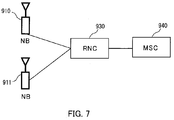
- FIG. 7 is an explanatory diagram showing a configuration example of a conventional cellular mobile communication system.
- the mobile communication system shown in FIG. 7 is a third generation mobile communication system using WCDMA (Wideband Code Division Multiple Access) system, and base station (NB: Node B) 910, 911 and radio network control.
- a device (RNC: Radio Network Controller) 930 and a mobile switching center (MSC: Mobile Switching Center) 940 are provided.
- RNC Radio Network Controller
- MSC Mobile Switching Center
- FIG. 8 when a mobile station (MS: Mobile Station) 900 communicating in the cell 910A moves to the cell 911A, the base station 910 in the cell 910A changes to the base station 911 in the cell 911A. Handover is controlled to continue communication by switching.
- MS Mobile Station
- the mobile station 900, the base station 910 of the cell 910A, the base station 911 of the cell 911A, and the radio network controller 930 cooperate with each other,
- the control device 930 the handover is controlled so that the communication path from the mobile station 900 to the network side is switched from the base station 910 to the base station 911.
- time is required for cooperation between the mobile station 900, the base station 910, the base station 911, and the radio network control device 930, and the handover requires time from several hundred milliseconds to several seconds.
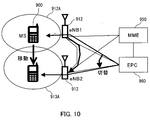
- FIG. 9 is an explanatory diagram showing another configuration example of a conventional cellular mobile communication system.
- the mobile communication system in FIG. 8 is a system of a fourth generation mobile communication system compliant with LTE (Long Term Evolution), and includes base stations (eNB: evolutional Node B) 912, 913 and a mobility management control device (MME: Mobility Management). Entity) 950 and an EPC (Evolved Packet Packet Core) 960.
- Each of the base stations (eNB: evolutional Node B) 912 and 913 has a function of accumulating packets received from the mobile communication packet switching station 960.
- LTE Long Term Evolution
- MME Mobility Management
- Entity Entity
- EPC Evolved Packet Packet Core
- the base station 912 in the cell 912A is switched to the base station 913 in the cell 913A to continue communication.
- handover is controlled.
- the mobile station 900, the base station 912 of the cell 912A, the base station 913 of the cell 913A, and the mobility management control device 950 cooperate with each other, Thus, handover is controlled.
- the transmitted packet sent from the mobile communication packet switching center 960 to the base station 912 of the cell 912A is transferred from the base station 912 to the base station 913 of the cell 913A, and then the mobile communication packet switching center 960 moves
- the handover is controlled so that the communication path from the station 900 to the network side is switched from the base station 912 to the base station 913.
- time is required for cooperation between the mobile station 900, the base stations 912 and 913, and the mobility management control device 950, and handover takes time from several hundred milliseconds to several seconds.
- a macro cell 914A of a small cell base station 915 has a micro cell, a pico cell, a femto cell, etc. as shown in FIG.
- an overlay cell configuration also referred to as “hierarchical cell configuration” in which small cells (also referred to as “minimal cells”) 915A are superimposed (overlaid).
- the size of the small cell 915A of the small cell base station 915 is about several tens of meters.
- the mobile station 900 when the mobile station 900 is traveling at a speed of 100 km / h (speed per second: about 30 m), in the macro cell configuration in which a plurality of macro cells 914A shown in FIG. Will cross.
- the small cell 915A having a cell size of tens of meters shown in FIG. 12B the mobile station 900 crosses one small cell 915A in several hundred milliseconds to several seconds (for example, around 1 second). . Since handover control requires a time of several hundred milliseconds to several seconds, it is extremely difficult to continue communication of the mobile station 900 that travels at high speed if the current handover control is applied as it is.
- the present invention has been made in view of the above problems, and its object is to provide a mobile station and a network side even when the mobile station is traveling at high speed in an overlay cell configuration in which a plurality of cells having different sizes overlap each other.
- a handover management device capable of continuing communication.
- a base station is a base station used in an overlay cell configuration in which a plurality of cells having different sizes are overlapped, and the traveling speed of a handover target mobile station communicating with the base station is determined.
- the determination unit compares the detection result of the traveling speed of the mobile station with a predetermined threshold value, and determines whether to perform handover to the switching destination candidate base station based on the comparison result. May be judged.
- the communication source base station of the handover is a macro cell base station
- the switching destination candidate base station is a small cell base station
- the detection result of the traveling speed of the mobile station is equal to or greater than the threshold value.
- the detection result of the traveling speed of the mobile station is smaller than the threshold without performing handover to the switching destination candidate small cell base station
- handover to the switching destination candidate small cell base station is performed. May be performed.
- the communication source base station of the handover is a small cell base station
- the switching destination candidate base station is a macro cell base station, regardless of the detection result of the traveling speed of the mobile station, You may make it perform the hand-over to the macro cell base station of the said switching destination candidate.
- the handover source base station is a small cell base station
- the switching destination candidate base station is a neighboring small cell base station adjacent to the small cell of the source base station.
- a handover management apparatus is a handover management apparatus that manages a handover in an overlay cell configuration in which a plurality of cells having different sizes overlap each other, and each of the base stations of the plurality of cells in the overlay cell configuration Is a macro cell base station or a small cell base station, and further, means for determining a macro base station of a macro cell where the small cell of the small cell base station is overlaid, and a result of the determination Means for notifying each of the plurality of base stations.
- the handover management apparatus for each of the plurality of base stations, means for calculating a threshold value to be compared with a detection result of a traveling speed of a mobile station to be handed over when determining whether or not to perform handover to the base station And means for notifying each of the plurality of base stations of the calculated threshold value.
- a handover control method is a handover control method for controlling handover in an overlay cell configuration in which a plurality of cells having different sizes overlap each other, and is a handover source base station in the overlay cell configuration Detecting a traveling speed of a mobile station in communication with the mobile station, and determining whether to perform a handover to the switching destination candidate base station based on a detection result of the traveling speed of the mobile station. .
- the handover control method further includes comparing a detection result of a traveling speed of the mobile station with a predetermined threshold value, and whether to perform handover to the switching destination candidate base station based on the comparison result It may be judged.
- the handover source base station is a macro cell base station
- the switching destination candidate base station is a small cell base station
- the detection result of the traveling speed of the mobile station is the threshold value.
- the switching destination candidate to the small cell base station Handover may be performed.
- the communication source base station of the handover is a small cell base station
- the switching destination candidate base station is a macro cell base station, regardless of the detection result of the traveling speed of the mobile station. The handover to the switching destination candidate macro cell base station may be performed.
- the handover source base station is a small cell base station
- the switching destination candidate base station is a neighboring small cell base station adjacent to the small cell of the source base station. If the detection result of the traveling speed of the mobile station is greater than or equal to the threshold value, the small cell of the small cell base station that is the communication source base station is overlaid without performing handover to the surrounding small cell base station. If the detected result of the traveling speed of the mobile station is smaller than the threshold value, a handover to the surrounding small cell base station may be performed.
- the handover control method may further include receiving information on the switching destination candidate base station from the mobile station.
- Explanatory drawing which shows an example of schematic structure of the mobile communication system of the overlay cell structure provided with the base station which concerns on embodiment of this invention.
- Explanatory drawing which shows an example of the detection method of the traveling speed of a mobile station.
- Explanatory drawing of the handover in which a mutually different control algorithm is applied in the mobile communication system of this embodiment.
- Explanatory drawing of the handover in which a mutually different control algorithm is applied in the mobile communication system of this embodiment.
- Explanatory drawing of the handover in which a mutually different control algorithm is applied in the mobile communication system of this embodiment.
- 5 is a flowchart showing an example of a handover control algorithm when a handover source base station is a macro cell base station in the mobile communication system of the present embodiment.
- FIG. 5 is a flowchart showing an example of a handover control algorithm when a handover source base station is a small cell base station in the mobile communication system of the present embodiment.
- Explanatory drawing which shows the mode of an example of a hand-over when the mobile station is drive
- Explanatory drawing which shows the structural example of the conventional cellular mobile communication system.
- Explanatory drawing of the handover in the mobile communication system of FIG. Explanatory drawing which shows the other structural example of the conventional cellular mobile communication system.
- Explanatory drawing of the overlay cell structure comprised by superposing a small cell on a macrocell.
- Explanatory drawing which shows an example of the relationship between the magnitude
- Explanatory drawing which shows an example of the relationship between the magnitude
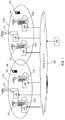
- FIG. 1 is an explanatory diagram illustrating an example of a schematic configuration of a mobile communication system having an overlay cell configuration including a base station according to an embodiment of the present invention.
- FIG. 1 shows a case where two small cells are superimposed on a macro cell
- the present invention can be applied to a case where one small cell is superimposed on a macro cell or three or more small cells on a macro cell. The same can be applied to the case where is superimposed.
- the mobile communication system is a cellular mobile communication system, and includes macro cell base stations (eNBs) 111 and 112 as first base stations and a small cell base as a second base station.
- the small cells 121A and 122A of the small cell base stations 121 and 122 are superimposed on the macro cell 111A of the macro cell base station 111, and the small cells 123A and 124A of the small cell base stations 123 and 124 are superimposed on the macro cell 112A of the macro cell base station 112. is doing.
- the handover management apparatus 150 is an apparatus that manages handover between cells of the base stations 111, 112, 121-124.
- a small cell base station has a transmission power of, for example, 1 W or less, and a wireless communication possible distance is about several meters to several hundred meters (for example, about several tens of meters). It is a small-capacity base station that can be installed indoors such as homes, stores, and offices. Since the small cell base station is provided so as to cover an area smaller than the area covered by the wide-area macro cell base station in the mobile communication network, it is called “femto base station”, “Home e-Node B”, Sometimes called “Home eNB”.
- the small cell base station is connected to the core network 140 of the mobile communication network via a line terminating device and a communication line such as an ADSL (Asymmetric Digital Subscriber Line) line or a broadband public communication line such as an optical line.
- a communication line such as an ADSL (Asymmetric Digital Subscriber Line) line or a broadband public communication line such as an optical line.
- ADSL Asymmetric Digital Subscriber Line
- a broadband public communication line such as an optical line.
- the macro cell base station has a transmission power of about 10 W, for example, and covers a macro cell which is a wide area with a radius of about several hundred m to several km installed outdoors in a mobile communication network.
- a wide-area base station sometimes called “Macro e-Node B”, “MeNB”, or the like.
- the macro cell base station is connected to another base station via a wired communication line, for example, and can communicate with a predetermined communication interface.
- the macro cell base station is connected to the core network 140 of the mobile communication network via a communication line such as a line termination device and a dedicated line, and various nodes such as a server device on the core network 140 and the handover management device 150 described above. Can communicate with each other via a predetermined communication interface.
- Each of the small cell base stations 121 to 124 and the macro cell base stations 111 and 112 includes hardware such as a computer device having a CPU and a memory, an external communication interface unit for the core network 140, and a wireless communication unit.
- a handover control described later is executed, or wireless communication with a mobile station that is a user terminal is performed using a predetermined communication method and wireless communication resources. can do.
- each of the small cell base stations 121 to 124 and the macro cell base stations 111 and 112 allows each of the following (1) to (3) to be executed by reading a predetermined program into the computer device and executing it.
- a handover control device (bHc) 130 is provided as a handover control unit that functions as a unit.
- Detection means for detecting the traveling speed v of the handover target mobile station 100 communicating with the base station.
- Judgment means for judging whether or not to perform handover to the switching destination candidate base station based on the detection result of the traveling speed v of the mobile station 100.
- the traveling speed v of the mobile station 100 is, for example, (i) a method using the Doppler frequency of the received signal, (ii) a method using the magnitude relationship between the reception levels of a plurality of antennas, and (iii) GPS (Global Positioning) System) can be detected by a method using position information.
- the traveling speed v of the mobile station 100 is calculated from the number of inversions.
- the mobile station 100 when the mobile station 100 has a GPS signal reception function, current position information (for example, latitude, longitude, and altitude) periodically transmitted from the mobile station 100 in communication is used. GPS position information) and the traveling speed v of the mobile station 100 is calculated based on the current position information.
- current position information for example, latitude, longitude, and altitude
- the mobile station 100 When the mobile station 100 is located in the macro cells 111A, 112A and the small cells 121A to 124A, the mobile station 100 obtains a predetermined communication method and radio communication resources between the macro cell base station and the small cell base station corresponding to the located cell. Can be used for wireless communication.
- the mobile station 100 is configured using hardware such as a computer device having a CPU, a memory, and the like, and a wireless communication unit, and performs wireless communication with the base station and the like by executing a predetermined program. Can do.
- the mobile station 100 has a GPS signal reception function as described above, and periodically acquires current position information (for example, GPS position information of latitude, longitude, and altitude) calculated based on the GPS signal. You may comprise so that it may transmit to the base station of the cell which is located.
- current position information for example, GPS position information of latitude, longitude, and altitude
- the handover management device 150 is configured by using hardware such as a computer device having a CPU, a memory, etc., an external communication interface unit for the core network 140, and the following various means are executed by executing a predetermined program. Can function as.
- the handover management apparatus 150 determines whether each of the base stations of a plurality of cells in the overlay cell configuration is the macro cell base station 111, 112 or the small cell base station 121-124, and further, the small cell base station 121- It also functions as means for determining the macro cell base station of the macro cell in which each of the 124 small cells is overlaid, and means for notifying each of the plurality of base stations of the determination result (type information of each base station, etc.). Based on the type information of each base station notified from the handover management device 150, the handover control device 130 of each of the small cell base stations 121 to 124 determines whether or not to hand over to the switching destination candidate base station.
- the handover management device 150 compares the macro cells 111A and 112A and the small cells 121A to 124A with the detection result of the traveling speed v of the mobile station 100 to be handed over when determining whether or not to perform handover to the cell.
- are means and for calculating a traveling speed threshold v th are also functions as a means for notifying the traveling speed threshold v th that the calculated respective macrocell base station 111, 112 and small cell base stations 121-124.
- the handover management apparatus 150 appropriately calculates the traveling speed threshold value v th set for each of the small cell base stations 121 to 124 according to the size of each small cell, and calculates the value of the traveling speed threshold value v th for each small cell base station.
- the handover control apparatus 130 of the stations 121 to 124 is notified.
- the handover control device 130 of each of the small cell base stations 121 to 124 switches the switching destination based on the travel speed threshold v th notified from the handover management device 150 and the detection result of the travel speed v of the mobile station 100 to be handed over. It is determined whether to hand over to the candidate base station.
- the traveling speed threshold v th may be calculated so as to be appropriately changed according to the change of the overlay cell configuration. For example, when another second small cell is added near the first small cell, the traveling speed threshold for the first small cell is set so as to reduce the substantial area size of the first small cell. You may change so that vth may be made small.
- 3A, 3B, and 3C are explanatory diagrams of handover to which different control algorithms are applied in the mobile communication system of this embodiment.
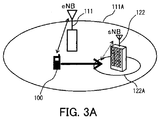
- FIG. 3A shows a case of handover when the mobile station 100 communicating with the macro cell 111A moves to the small cell 122A superimposed on the macro cell 111A.
- the traveling speed v of the mobile station 100 is compared with a predetermined traveling speed threshold v th set in advance, and when v> v th , it is determined that the handover control is not in time, and the handover is performed to the small cell 122A.
- the communication with the macro cell 111A is continued as it is.
- FIG. 3B shows a case of handover when the mobile station 100 communicating with the small cell 122A moves to the macro cell 111A on which the small cell 122A is superimposed.
- the switching is requested to the macro cell 111A on which the small cell 122A is superimposed, and the handover is performed.
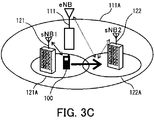
- FIG. 3C shows a case of handover when the mobile station 100 communicating with the small cell 121A superimposed on the macro cell 111A moves to the small cell 122A adjacent to the small cell 121A.
- the mobile station 100 can communicate with both the adjacent small cell 122A and the macro cell 111A on which the small cell 121A is superimposed.
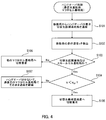
- FIG. 4 is a flowchart illustrating an example of a handover control algorithm when the handover source base station is the macrocell base station 111 in the mobile communication system of the present embodiment.
- the macro cell base station 111 which is the communication source base station of the handover, performs the handover from the mobile station 100 residing in the macro cell 111A together with the information of the switching destination candidate base station (for example, the cell number and the base station number).
- a request is received (S101).
- the mobile station 100 receives the transmission signal of the neighboring base station and determines the optimal switching destination candidate base station for the handover based on the reception result.
- the macro cell base station 111 detects the traveling speed v of the mobile station 100 in communication (S102).
- the traveling speed v of the mobile station 100 can be detected by the method described above, for example.
- the macro cell base station 111 obtains information on neighboring base stations previously acquired (the macro cell base station, the small cell base station, and the macro cell base station of the macro cell in which the small cell of the small cell base station is overlaid). , Etc.), it is determined whether the switching destination candidate base station is a small cell base station (S103).
- the peripheral base station information can be appropriately acquired from the handover management apparatus 150, for example.
- the macro cell base station 111 When it is determined in step S103 that the switching destination candidate base station is the small cell base station 121 (Yes in S103), the macro cell base station 111 indicates that the detected value of the traveling speed v of the mobile station 100 is the switching destination candidate base station. It is further determined whether or not it is smaller than a predetermined traveling speed threshold v th set for the small cell base station that is a station, that is, whether or not v ⁇ v th is satisfied (S104).
- the macro cell base station 111 Transmits a handover switching request to the small cell base station 121 which is the switching destination candidate base station (S105).
- step S103 When it is determined in step S103 that the switching destination candidate base station is not a small cell base station (No in S103), the macro cell base station 111 transmits a handover switching request to another macro cell base station 112 (S106).
- the macro cell base If the detected value of the travel speed v of the mobile station 100 is greater than or equal to the predetermined travel speed threshold v th in step S104, that is, if it is determined that v ⁇ v th is not satisfied (No in S104), the macro cell base The station 111 continues the communication with the mobile station 100 without performing a handover (S107).
- the handover from the macro cell base station 111 as the communication source base station to each of the small cell base station 121 and other macro cell base stations 112 is performed. Therefore, it is possible to perform the optimum handover control according to the traveling speed v of the mobile station 100 to be handed over.
- the switching destination candidate base station is a small cell base station (S103). Before detecting the traveling speed v, it may be determined whether the switching destination candidate base station is a small cell base station. In this case, when it is determined that the switching destination candidate base station is not a small cell base station, since the handover switching request is transmitted to the other macro cell base station 112 regardless of the detection result of the traveling speed v, the traveling speed v is detected. You may control not to perform.
- FIG. 5 is a flowchart illustrating an example of a handover control algorithm when the handover source base station is the small cell base station 121 in the mobile communication system of the present embodiment.
- the small cell base station 121 which is the communication source base station of the handover, from the mobile station 100 residing in the small cell 121A together with information (for example, cell number and base station number) of the switching destination candidate base station.
- a handover request is received (S201).
- the mobile station 100 receives the transmission signal of the neighboring base station and determines the optimal switching destination candidate base station for the handover based on the reception result.
- the small cell base station 121 detects the traveling speed v of the mobile station 100 in communication (S202).
- the traveling speed v of the mobile station 100 can be detected by the method described above, for example.
- the small cell base station 121 determines whether or not the switching destination candidate base station is a small cell base station based on the peripheral base station information acquired in advance (S203).
- the peripheral base station information can be appropriately acquired from the handover management apparatus 150, for example.
- step S203 If it is determined in step S203 that the switching destination candidate base station is a small cell base station (Yes in S203), the small cell base station 121 determines that the detected value of the traveling speed v of the mobile station 100 is the switching destination candidate base station. It is further determined whether or not it is smaller than a predetermined traveling speed threshold v th set in the small cell base station 122 that is a station, that is, whether or not v ⁇ v th is satisfied (S204).
- the small cell base station 121 transmits a handover switching request to the small cell base station 122 which is a switching destination candidate base station (S205).
- step S203 When it is determined in step S203 that the switching destination candidate base station is not a small cell base station (No in S203), the small cell base station 121 determines that the macro cell 111A of the macro cell 111A on which the small cell 121A is superimposed (overlaid). A handover switching request is transmitted to 111 (S206).
- step S204 if the detected value of the traveling speed v of the mobile station 100 is greater than or equal to a predetermined traveling speed threshold v th , that is, if it is determined that v ⁇ v th is not satisfied (No in S204), the small cell Similarly to the case of S206, the base station 121 transmits a handover switching request to the macro cell base station 111 of the macro cell 111A on which the small cell 121A is superimposed (S207).
- the macro cell base station 111 and the surrounding small cell bases are transferred from the small cell base station 121 which is the handover source base station.
- optimal handover control according to the traveling speed v of the mobile station 100 to be handed over can be performed.
- the switching destination candidate base station is a small cell base station (S203). Before detecting the traveling speed v, it may be determined whether the switching destination candidate base station is a small cell base station. In this case, when it is determined that the switching destination candidate base station is not a small cell base station, handover to the macro cell base station 111 of the macro cell 111A on which the small cell 121A is superimposed (overlaid) is performed regardless of the detection result of the traveling speed v. In order to transmit the switching request, it may be controlled not to detect the traveling speed v.
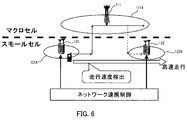
- FIG. 6 illustrates an example of a handover when the mobile station 100 is traveling at high speed so as to straddle the first small cell 121A, the macro cell 111A, and the second small cell 122A in the mobile communication system of the present embodiment. It is explanatory drawing shown.
- the small cell base station 121 receives a handover request together with information of the switching destination candidate base (macro cell base station 111) from the communicating mobile station 100 located in the small cell 121A, Regardless of the traveling speed v of the mobile station 100, the first handover is performed to switch the base station to be communicated to the macro cell base station 111 of the macro cell 111A on which the small cell 121A is superimposed (overlaid).
- the macro cell base station 111 performs handover with the information of the switching destination candidate base (second small cell base station 122) from the communicating mobile station 100 located in the macro cell 111A.
- handover is performed according to the traveling speed v of the mobile station 100 in communication. For example, when the travel speed v of the mobile station 100 is smaller than the travel speed threshold vth set for the small cell base station 122, the second base station 122 switches the base station to be communicated to the second small cell base station 122. The handover is performed.
- processing steps described in this specification and the components of the mobile communication system, the base station, and the user terminal device (mobile station) can be implemented by various means.
- these steps and components may be implemented in hardware, firmware, software, or a combination thereof.
- means such as a processing unit used to realize the above steps and components in an entity (for example, various wireless communication devices, NodeNoB, terminal, hard disk drive device, or optical disk drive device)
- a processing unit used to realize the above steps and components in an entity (for example, various wireless communication devices, NodeNoB, terminal, hard disk drive device, or optical disk drive device)
- One or more application specific ICs ASICs
- DSPs digital signal processors
- DSPDs digital signal processing units
- PLDs programmable logic devices
- FPGAs field programmable gate arrays
- processors A controller, a microcontroller, a microprocessor, an electronic device, other electronic units designed to perform the functions described herein, a computer, or a combination thereof.
- firmware and / or software implementation means such as processing units used to implement the above components may be programs (eg, procedures, functions, modules, instructions) that perform the functions described herein. , Etc.).
- any computer / processor readable medium that specifically embodies firmware and / or software code is means such as a processing unit used to implement the steps and components described herein. May be used to implement
- the firmware and / or software code may be stored in a memory, for example, in a control device, and executed by a computer or processor.
- the memory may be implemented inside the computer or processor, or may be implemented outside the processor.
- the firmware and / or software code may be, for example, random access memory (RAM), read only memory (ROM), nonvolatile random access memory (NVRAM), programmable read only memory (PROM), electrically erasable PROM (EEPROM) ), FLASH memory, floppy disk, compact disk (CD), digital versatile disk (DVD), magnetic or optical data storage, etc. Good.
- the code may be executed by one or more computers or processors, and may cause the computers or processors to perform the functional aspects described herein.
Landscapes
- Engineering & Computer Science (AREA)
- Computer Networks & Wireless Communication (AREA)
- Signal Processing (AREA)
- Mobile Radio Communication Systems (AREA)
Abstract
サービングセルに対する周辺セルからの干渉に起因したハンドオーバ失敗やピンポン・ハンドオーバ現象を防止することができるハンドオーバ管理装置を提供する。互いにサイズが異なる複数のセルが重複したオーバレイセル構成におけるハンドオーバを管理するハンドオーバ管理装置であって、オーバレイセル構成における複数のセルの基地局それぞれが、マクロセル基地局及びスモールセル基地局のいずれであるかを決定し、更に、スモールセル基地局のスモールセルがオーバレイしているマクロセルのマクロセル基地局を決定する手段と、前記決定の結果を複数の基地局それぞれに通知する手段と、を備える。
Description
本発明は、基地局、ハンドオーバ管理装置、移動通信システム及びハンドオーバ制御方法に関するものである。
従来、セルラー方式の移動通信システムにおいて、セルを走行している通信中の移動局が他のセルに移動した場合、移動局が通信する通信中の基地局を通信元基地局から移動先のセルの基地局に変えて通信を継続するハンドオーバが知られている(例えば、非特許文献1、2参照)。
図7は、従来のセルラー方式の移動通信システムの構成例を示す説明図である。図7の移動通信システムは、WCDMA(登録商標)(Wideband Code Division Multiple Access)方式を用いた第3世代移動通信方式のシステムであり、基地局(NB:Node B)910,911と無線ネットワーク制御装置(RNC:Radio Network Controller)930と移動通信交換局(MSC:Mobile Switching Center)940とを備えている。ここで、例えば図8に示すようにセル910Aで通信している移動局(MS:Mobile Station)900がセル911Aに移動した場合には、セル910Aの基地局910からセル911Aの基地局911に切り替えて通信を継続させるようにハンドオーバが制御される。パケット誤りやパケット損失等で通信品質を劣化させることなくハンドオーバさせるためには、移動局900、セル910Aの基地局910、セル911Aの基地局911及び無線ネットワーク制御装置930が互いに連携し、無線ネットワーク制御装置930において、移動局900から網側への通信経路を基地局910から基地局911に切り替えるようにハンドオーバが制御される。このハンドオーバ制御では、移動局900、基地局910、基地局911及び無線ネットワーク制御装置930の連携に時間を要し、ハンドオーバには数100ミリ秒から数秒の時間を要する。
図9は、従来のセルラー方式の移動通信システムの他の構成例を示す説明図である。図8の移動通信システムは、LTE(Long Term Evolution)に準拠した第4世代移動通信方式のシステムであり、基地局(eNB:evolutional Node B)912,913と移動管理制御装置(MME:Mobility Management Entity)950と移動通信パケット交換局(EPC:Evolved Packet Core)960とを備えている。基地局(eNB:evolutional Node B)912,913はそれぞれ移動通信パケット交換局960から受信したパケットを蓄積する機能を有している。ここで、例えば図10に示すようにセル912Aで通信している移動局MSがセル913Aに移動した場合には、セル912Aの基地局912からセル913Aの基地局913に切り替えて通信を継続させるようにハンドオーバが制御される。パケット誤りやパケット損失等で通信品質を劣化させることなくハンドオーバするためには、移動局900、セル912Aの基地局912、セル913Aの基地局913及び移動管理制御装置950が互いに連携し、次のようにハンドオーバが制御される。先ず、移動通信パケット交換局960からセル912Aの基地局912に送付された送付済みのパケットを、基地局912からセル913Aの基地局913に転送し、その後、移動通信パケット交換局960において、移動局900から網側への通信経路を基地局912から基地局913に切り替えるようにハンドオーバが制御される。このハンドオーバ制御では、移動局900、基地局912,913及び移動管理制御装置950の連携に時間を要し、ハンドオーバには数100ミリ秒から数秒の時間を要する。
進士昌明編「移動通信」、丸善、平成元年
桑原守二監修「自動車電話」、社団法人電子通信学会、昭和60年
近年、大都市部においては通信トラフィックが急増しており、通信トラフィックを効率よく運ぶセルラー方式の構成として、図11に示すようにスモールセル基地局915のマクロセル914Aにマイクロセル、ピコセル、フェムトセルなどのスモールセル(「極小セル」とも呼ばれる。)915Aを重畳(オーバレイ)して構成したオーバレイセル構成(「階層化セル構成」ともいう。)が知られている。スモールセル基地局915のスモールセル915Aのサイズは数十メートル程度である。そのため、高速走行する移動局が短時間でスモールセル915Aを移動する場合、マクロセル914Aとスモールセル915Aとの間のハンドオーバ制御や、互いに隣接するスモールセル915A間のハンドオーバ制御が間に合わず、移動局が網側との通信を継続できない場合がある。
例えば、移動局900が時速100km(秒速:約30m)で走行している場合、図12Aに示す複数のマクロセル914Aが配置されたマクロセル構成では、移動局900は数十秒で1つのマクロセル914Aを横断することになる。
これに対し、図12Bに示すセルの大きさが数十メートルのスモールセル915Aでは、移動局900は数百ミリ秒~数秒(例えば1秒前後)で1つのスモールセル915Aを横断することになる。ハンドオーバ制御には数100ミリ秒から数秒単位の時間を必要とするため、現状のハンドオーバ制御をそのまま適用すると、高速走行の移動局900の通信を継続することは極めて困難である。
これに対し、図12Bに示すセルの大きさが数十メートルのスモールセル915Aでは、移動局900は数百ミリ秒~数秒(例えば1秒前後)で1つのスモールセル915Aを横断することになる。ハンドオーバ制御には数100ミリ秒から数秒単位の時間を必要とするため、現状のハンドオーバ制御をそのまま適用すると、高速走行の移動局900の通信を継続することは極めて困難である。
本発明は以上の問題点に鑑みなされたものであり、その目的は、互いにサイズが異なる複数のセルが重複したオーバレイセル構成において移動局が高速走行しているときでも移動局と網側との通信を継続することができる基地局、ハンドオーバ管理装置、移動通信システム及びハンドオーバ制御方法を提供することである。
本発明の一態様に係る基地局は、互いにサイズが異なる複数のセルが重複したオーバレイセル構成に用いられる基地局であって、当該基地局と通信しているハンドオーバ対象の移動局の走行速度を検出する検出手段と、前記移動局の走行速度の検出結果に基づいて、切替先候補基地局へのハンドオーバを行うか否かを判断する判断手段と、を備える。
前記基地局において、前記判断手段は、前記移動局の走行速度の検出結果と所定の閾値とを比較し、その比較の結果に基づいて、前記切替先候補基地局へのハンドオーバを行うか否かを判断してもよい。
また、前記基地局において、前記ハンドオーバの通信元基地局が、マクロセル基地局であり、前記切替先候補基地局が、スモールセル基地局であり、前記移動局の走行速度の検出結果が前記閾値以上の場合は、前記切替先候補のスモールセル基地局へのハンドオーバを行わずに前記移動局の走行速度の検出結果が前記閾値よりも小さい場合は、前記切替先候補のスモールセル基地局へのハンドオーバを行うようにしてもよい。
また、前記基地局において、前記ハンドオーバの通信元基地局が、スモールセル基地局であり、前記切替先候補基地局が、マクロセル基地局であり、前記移動局の走行速度の検出結果にかかわらず、前記切替先候補のマクロセル基地局へのハンドオーバを行うようにしてもよい。
また、前記基地局において、前記ハンドオーバの通信元基地局が、スモールセル基地局であり、前記切替先候補基地局が、前記通信元基地局のスモールセルに隣接する周辺のスモールセル基地局であり、前記移動局の走行速度の検出結果が前記閾値以上の場合は、前記周辺のスモールセル基地局へのハンドオーバを行わずに、前記通信元基地局であるスモールセル基地局のスモールセルがオーバレイしているマクロセルのマクロセル基地局へのハンドオーバを行い、前記移動局の走行速度の検出結果が前記閾値よりも小さい場合は、前記周辺のスモールセル基地局へのハンドオーバを行うようにしてもよい。
また、前記基地局において、前記切替先候補基地局の情報を前記移動局から受信する手段を、更に備えてもよい。
前記基地局において、前記判断手段は、前記移動局の走行速度の検出結果と所定の閾値とを比較し、その比較の結果に基づいて、前記切替先候補基地局へのハンドオーバを行うか否かを判断してもよい。
また、前記基地局において、前記ハンドオーバの通信元基地局が、マクロセル基地局であり、前記切替先候補基地局が、スモールセル基地局であり、前記移動局の走行速度の検出結果が前記閾値以上の場合は、前記切替先候補のスモールセル基地局へのハンドオーバを行わずに前記移動局の走行速度の検出結果が前記閾値よりも小さい場合は、前記切替先候補のスモールセル基地局へのハンドオーバを行うようにしてもよい。
また、前記基地局において、前記ハンドオーバの通信元基地局が、スモールセル基地局であり、前記切替先候補基地局が、マクロセル基地局であり、前記移動局の走行速度の検出結果にかかわらず、前記切替先候補のマクロセル基地局へのハンドオーバを行うようにしてもよい。
また、前記基地局において、前記ハンドオーバの通信元基地局が、スモールセル基地局であり、前記切替先候補基地局が、前記通信元基地局のスモールセルに隣接する周辺のスモールセル基地局であり、前記移動局の走行速度の検出結果が前記閾値以上の場合は、前記周辺のスモールセル基地局へのハンドオーバを行わずに、前記通信元基地局であるスモールセル基地局のスモールセルがオーバレイしているマクロセルのマクロセル基地局へのハンドオーバを行い、前記移動局の走行速度の検出結果が前記閾値よりも小さい場合は、前記周辺のスモールセル基地局へのハンドオーバを行うようにしてもよい。
また、前記基地局において、前記切替先候補基地局の情報を前記移動局から受信する手段を、更に備えてもよい。
本発明の他の態様に係るハンドオーバ管理装置は、互いにサイズが異なる複数のセルが重複したオーバレイセル構成におけるハンドオーバを管理するハンドオーバ管理装置であって、前記オーバレイセル構成における複数のセルの基地局それぞれが、マクロセル基地局及びスモールセル基地局のいずれであるかを決定し、更に、該スモールセル基地局のスモールセルがオーバレイしているマクロセルのマクロ基地局を決定する手段と、前記決定の結果を前記複数の基地局それぞれに通知する手段と、を備える。
前記ハンドオーバ管理装置において、前記複数の基地局それぞれについて、該基地局へのハンドオーバを行うか否かの判断の際にハンドオーバ対象の移動局の走行速度の検出結果と比較される閾値を計算する手段と、前記計算した閾値を前記複数の基地局それぞれに通知する手段と、を更に備えてもよい。
前記ハンドオーバ管理装置において、前記複数の基地局それぞれについて、該基地局へのハンドオーバを行うか否かの判断の際にハンドオーバ対象の移動局の走行速度の検出結果と比較される閾値を計算する手段と、前記計算した閾値を前記複数の基地局それぞれに通知する手段と、を更に備えてもよい。
本発明の更に他の態様に係るハンドオーバ制御方法は、互いにサイズが異なる複数のセルが重複したオーバレイセル構成におけるハンドオーバを制御するハンドオーバ制御方法であって、前記オーバレイセル構成におけるハンドオーバの通信元基地局と通信している移動局の走行速度を検出することと、前記移動局の走行速度の検出結果に基づいて、切替先候補基地局へのハンドオーバを行うか否かを判断することと、を含む。
前記ハンドオーバ制御方法において、前記移動局の走行速度の検出結果と所定の閾値とを比較すること、を更に含み、前記比較の結果に基づいて、前記切替先候補基地局へのハンドオーバを行うか否かを判断してもよい。
また、前記ハンドオーバ制御方法において、前記ハンドオーバの通信元基地局が、マクロセル基地局であり、前記切替先候補基地局が、スモールセル基地局であり、前記移動局の走行速度の検出結果が前記閾値以上の場合は、前記切替先候補のスモールセル基地局へのハンドオーバを行わずに前記移動局の走行速度の検出結果が前記閾値よりも小さい場合は、前記切替先候補のスモールセル基地局へのハンドオーバを行うようにしてもよい。
また、前記ハンドオーバ制御方法において、前記ハンドオーバの通信元基地局が、スモールセル基地局であり、前記切替先候補基地局が、マクロセル基地局であり、前記移動局の走行速度の検出結果にかかわらず、前記切替先候補のマクロセル基地局へのハンドオーバを行うようにしてもよい。
また、前記ハンドオーバ制御方法において、前記ハンドオーバの通信元基地局が、スモールセル基地局であり、前記切替先候補基地局が、前記通信元基地局のスモールセルに隣接する周辺のスモールセル基地局であり、前記移動局の走行速度の検出結果が前記閾値以上の場合は、前記周辺のスモールセル基地局へのハンドオーバを行わずに、前記通信元基地局であるスモールセル基地局のスモールセルがオーバレイしているマクロセルのマクロセル基地局へのハンドオーバを行い、前記移動局の走行速度の検出結果が前記閾値よりも小さい場合は、前記周辺のスモールセル基地局へのハンドオーバを行うようにしてもよい。
また、前記ハンドオーバ制御方法において、前記切替先候補基地局の情報を前記移動局から受信することを更に含んでもよい。
前記ハンドオーバ制御方法において、前記移動局の走行速度の検出結果と所定の閾値とを比較すること、を更に含み、前記比較の結果に基づいて、前記切替先候補基地局へのハンドオーバを行うか否かを判断してもよい。
また、前記ハンドオーバ制御方法において、前記ハンドオーバの通信元基地局が、マクロセル基地局であり、前記切替先候補基地局が、スモールセル基地局であり、前記移動局の走行速度の検出結果が前記閾値以上の場合は、前記切替先候補のスモールセル基地局へのハンドオーバを行わずに前記移動局の走行速度の検出結果が前記閾値よりも小さい場合は、前記切替先候補のスモールセル基地局へのハンドオーバを行うようにしてもよい。
また、前記ハンドオーバ制御方法において、前記ハンドオーバの通信元基地局が、スモールセル基地局であり、前記切替先候補基地局が、マクロセル基地局であり、前記移動局の走行速度の検出結果にかかわらず、前記切替先候補のマクロセル基地局へのハンドオーバを行うようにしてもよい。
また、前記ハンドオーバ制御方法において、前記ハンドオーバの通信元基地局が、スモールセル基地局であり、前記切替先候補基地局が、前記通信元基地局のスモールセルに隣接する周辺のスモールセル基地局であり、前記移動局の走行速度の検出結果が前記閾値以上の場合は、前記周辺のスモールセル基地局へのハンドオーバを行わずに、前記通信元基地局であるスモールセル基地局のスモールセルがオーバレイしているマクロセルのマクロセル基地局へのハンドオーバを行い、前記移動局の走行速度の検出結果が前記閾値よりも小さい場合は、前記周辺のスモールセル基地局へのハンドオーバを行うようにしてもよい。
また、前記ハンドオーバ制御方法において、前記切替先候補基地局の情報を前記移動局から受信することを更に含んでもよい。
本発明によれば、互いにサイズが異なる複数のセルが重複したオーバレイセル構成において移動局が高速走行しているときでも移動局と網側との通信を継続することができる、という効果を奏する。
以下、図面を参照して、本発明の実施形態について説明する。
図1は、本発明の実施形態に係る基地局を備えたオーバレイセル構成の移動通信システムの概略構成の一例を示す説明図である。なお、図1では、マクロセルに2つのスモールセルが重畳している場合について示しているが、本発明は、マクロセルに1つのスモールセルが重畳している場合や、マクロセルに3つ以上のスモールセルが重畳している場合にも、同様に適用することができる。
図1は、本発明の実施形態に係る基地局を備えたオーバレイセル構成の移動通信システムの概略構成の一例を示す説明図である。なお、図1では、マクロセルに2つのスモールセルが重畳している場合について示しているが、本発明は、マクロセルに1つのスモールセルが重畳している場合や、マクロセルに3つ以上のスモールセルが重畳している場合にも、同様に適用することができる。
図1において、本実施形態の移動通信システムは、セルラー方式の移動通信システムであり、第1の基地局としてのマクロセル基地局(eNB)111,112と、第2の基地局としてのスモールセル基地局(sNB)121~124と、移動通信ネットワークのコアネットワーク140を介して各基地局111,112,121~124と通信可能なハンドオーバ管理装置(nHc)150とを備えている。スモールセル基地局121,122のスモールセル121A,122Aは、マクロセル基地局111のマクロセル111Aに重畳し、スモールセル基地局123,124のスモールセル123A,124Aは、マクロセル基地局112のマクロセル112Aに重畳している。また、ハンドオーバ管理装置150は、各基地局111,112,121~124のセル間のハンドオーバを管理する装置である。
ここで、スモールセル基地局は、広域のマクロセル基地局とは異なり、例えば1W以下の送信パワーを有し、無線通信可能距離が数m乃至数百m程度(例えば数10m程度)であり、一般家庭、店舗、オフィス等の屋内にも設置することができる小容量の基地局である。スモールセル基地局は、移動体通信網における広域のマクロセル基地局がカバーするエリアよりも小さなエリアをカバーするように設けられるため「フェムト基地局」と呼ばれたり、「Home e-Node B」や「Home eNB」と呼ばれたりする場合もある。スモールセル基地局は、回線終端装置及びADSL(Asymmetric Digital Subscriber Line)回線や光回線等のブロードバンド公衆通信回線などの通信回線を介して移動体通信網のコアネットワーク140に接続され、他の基地局や、コアネットワーク1040上のサーバ装置、前述のハンドオーバ管理装置150などの各種ノードとの間で所定の通信インターフェースにより通信可能になっている。
これに対して、マクロセル基地局は、例えば10W程度の送信パワーを有し、移動体通信網において屋外に設置されている通常の半径数百m乃至数km程度の広域エリアであるマクロセルをカバーする広域の基地局であり、「Macro e-Node B」、「MeNB」等と呼ばれる場合もある。マクロセル基地局は、他の基地局と例えば有線の通信回線で接続され、所定の通信インターフェースで通信可能になっている。また、マクロセル基地局は、回線終端装置及び専用回線などの通信回線を介して移動体通信網のコアネットワーク140に接続され、コアネットワーク140上のサーバ装置、前述のハンドオーバ管理装置150などの各種ノードとの間で所定の通信インターフェースにより通信可能になっている。
また、スモールセル基地局121~124及びマクロセル基地局111,112それぞれの基地局装置は、例えばCPUやメモリ等を有するコンピュータ装置、コアネットワーク140に対する外部通信インターフェース部、無線通信部などのハードウェアを用いて構成され、所定のプログラムが実行されることにより、後述のハンドオーバ制御を実行したり、所定の通信方式及び無線通信リソースを用いてユーザ端末である移動局との間の無線通信を行ったりすることができる。
また、スモールセル基地局121~124及びマクロセル基地局111,112それぞれの基地局装置は、コンピュータ装置に所定のプログラムが読み込まれて実行されることにより次の(1)~(3)に示す各手段として機能するハンドオーバ制御手段としてのハンドオーバ制御装置(bHc)130を備えている。
(1)当該基地局と通信しているハンドオーバ対象の移動局100の走行速度vを検出する検出手段。
(2)上記移動局100の走行速度vの検出結果に基づいて、切替先候補基地局へのハンドオーバを行うか否かを判断する判断手段。
(3)ハンドオーバの最適な切替先候補基地局の情報を移動局100から受信する手段。
(1)当該基地局と通信しているハンドオーバ対象の移動局100の走行速度vを検出する検出手段。
(2)上記移動局100の走行速度vの検出結果に基づいて、切替先候補基地局へのハンドオーバを行うか否かを判断する判断手段。
(3)ハンドオーバの最適な切替先候補基地局の情報を移動局100から受信する手段。
上記移動局100の走行速度vは、例えば(i)受信信号のドップラー周波数を利用する方法、(ii)複数のアンテナの受信レベルの大小関係を利用する方法、及び、(iii)GPS(Global Positioning System)位置情報を利用する方法で検出することができる。
上記(i)の方法は、図2に示すように、移動局100の走行速度vに比例して変動する移動局からの受信信号の変動(伝搬変動)をフーリエ変換し、最大ドップラー周波数(fD)を測定し、その測定値を、換算式(v=fD×波長)を用いて走行速度vに換算する方法である。
また、上記(ii)の方法は、移動局100からの信号を複数のアンテナ(例えば、アンテナ1、アンテナ2)で受信している場合に、アンテナ1とアンテナ2の受信レベルの大小を比較し、大小の反転回数から、移動局100の走行速度vを計算する方法である。
また、上記(iii)の方法は、移動局100がGPS信号の受信機能を備えている場合に、通信中の移動局100から定期的に送信される現在位置情報(例えば、緯度、経度及び高度のGPS位置情報)を受信し、現在位置情報に基づいて、移動局100の走行速度vを計算する方法である。
移動局100は、マクロセル111A,112Aやスモールセル121A~124Aに在圏するときに、その在圏するセルに対応するマクロセル基地局やスモールセル基地局と間で所定の通信方式及び無線通信リソースを用いて無線通信することができる。移動局100は、例えばCPUやメモリ等を有するコンピュータ装置、無線通信部などのハードウェアを用いて構成され、所定のプログラムが実行されることにより基地局等との間の無線通信等を行うことができる。
また、移動局100は、前述のようにGPS信号の受信機能を備え、GPS信号に基づいて算出した現在位置情報(例えば、緯度、経度及び高度のGPS位置情報)を、定期的に、自身が在圏するセルの基地局に送信するように構成してもよい。
ハンドオーバ管理装置150は、例えばCPUやメモリ等を有するコンピュータ装置、コアネットワーク140に対する外部通信インターフェース部などのハードウェアを用いて構成され、所定のプログラムが実行されることにより、次のような各種手段として機能することができる。
例えば、ハンドオーバ管理装置150は、オーバレイセル構成における複数のセルの基地局それぞれがマクロセル基地局111,112及びスモールセル基地局121~124のいずれであるかを決定し、さらにスモールセル基地局121~124のスモールセルそれぞれがオーバレイしているマクロセルのマクロセル基地局を決定する手段や、その決定の結果(各基地局の種別情報等)を前記複数の基地局それぞれに通知する手段としても機能する。各スモールセル基地局121~124のハンドオーバ制御装置130は、ハンドオーバ管理装置150から通知された各基地局の種別情報に基づいて、切替先候補基地局にハンドオーバするか否かの判断を行う。
また、ハンドオーバ管理装置150は、マクロセル111A,112A及びスモールセル121A~124Aそれぞれについて、セルへのハンドオーバを行うか否かの判断の際にハンドオーバ対象の移動局100の走行速度vの検出結果と比較される走行速度閾値vthを計算する手段や、その計算した走行速度閾値vthをマクロセル基地局111,112及びスモールセル基地局121~124それぞれに通知する手段としても機能する。
一般に、走行速度閾値vthは切替先候補のスモールセルの大きさに依存するため、その値は各スモールセル毎に異なる。そこで、ハンドオーバ管理装置150は、各スモールセル基地局121~124に設定する走行速度閾値vthを各スモールセルのサイズに応じて適宜計算し、その走行速度閾値vthの値を各スモールセル基地局121~124のハンドオーバ制御装置130に通知する。各スモールセル基地局121~124のハンドオーバ制御装置130は、ハンドオーバ管理装置150から通知された走行速度閾値vthと、ハンドオーバ対象の移動局100の走行速度vの検出結果とに基づいて、切替先候補基地局にハンドオーバするか否かの判断を行う。
なお、走行速度閾値vthは、オーバレイセル構成の変更に応じて適宜変更するように計算してもよい。例えば、第1のスモールセルの近くに他の第2のスモールセルが追加された場合は、第1のスモールセルの実質的なエリアサイズを小さくするように、第1のスモールセルに対する走行速度閾値vthを小さくするように変更してもよい。
図3A、図3B及び図3Cはそれぞれ、本実施形態の移動通信システムにおける互いに異なる制御アルゴリズムが適用されるハンドオーバの説明図である。
図3Aは、マクロセル111Aと通信中の移動局100が、そのマクロセル111Aに重畳しているスモールセル122Aに移動するときのハンドオーバの場合を示している。この場合、移動局100の走行速度vと予め設定した所定の走行速度閾値vthとを比較し、v>vthの場合にはハンドオーバ制御が間に合わないと判断して、スモールセル122Aにハンドオーバをさせないでマクロセル111Aとの通信をそのまま継続させる。一方、v<=vthの場合にはハンドオーバ制御が間に合うと判断して、切替先候補のスモールセル122Aに切替を要求し、ハンドオーバをさせる。
図3Bは、スモールセル122Aと通信中の移動局100が、そのスモールセル122Aが重畳しているマクロセル111Aに移動するときのハンドオーバの場合を示している。この場合、移動局100の走行速度vに関係なく、スモールセル122Aが重畳しているマクロセル111Aに切替を要求し、ハンドオーバをさせる。
図3Cは、マクロセル111Aに重畳しているスモールセル121Aと通信中の移動局100が、スモールセル121Aに隣接するスモールセル122Aに移動するときのハンドオーバの場合を示している。この場合、移動局100は、隣接するスモールセル122A及びスモールセル121Aが重畳しているマクロセル111Aの両方に通信可能である。v<=vthの場合にはハンドオーバ制御が間に合うと判断して、隣接する切替先候補のスモールセル122Aに切替を要求し、ハンドオーバをさせる。一方、v>vthの場合には、隣接する切替先候補のスモールセル122Aにはハンドオーバをさせないで、スモールセル121Aが重畳しているマクロセル111Aに切替を要求し、ハンドオーバをさせる。
図4は、本実施形態の移動通信システムにおいてハンドオーバの通信元基地局がマクロセル基地局111の場合のハンドオーバ制御アルゴリズムの一例を示すフローチャートである。
図4において、まず、ハンドオーバの通信元基地局であるマクロセル基地局111は、マクロセル111Aに在圏する移動局100から、切替先候補基地局の情報(例えばセル番号や基地局番号)とともにハンドオーバの要求を受信する(S101)。ハンドオーバの最適な切替先候補基地局は、例えば、移動局100が周辺基地局の送信信号を受信し、その受信結果に基づいて決定する。
図4において、まず、ハンドオーバの通信元基地局であるマクロセル基地局111は、マクロセル111Aに在圏する移動局100から、切替先候補基地局の情報(例えばセル番号や基地局番号)とともにハンドオーバの要求を受信する(S101)。ハンドオーバの最適な切替先候補基地局は、例えば、移動局100が周辺基地局の送信信号を受信し、その受信結果に基づいて決定する。
次に、マクロセル基地局111は、通信中の移動局100の走行速度vを検出する(S102)。この移動局100の走行速度vは例えば前述の方法で検出することができる。
次に、マクロセル基地局111は、予め取得しておいた周辺の基地局情報(マクロセル基地局、スモールセル基地局、及び、そのスモールセル基地局のスモールセルがオーバレイしているマクロセルのマクロセル基地局、等)に基づいて、切替先候補基地局がスモールセル基地局か否かを判断する(S103)。周辺の基地局情報は、例えばハンドオーバ管理装置150から適宜取得しておくことができる。
上記ステップS103において、切替先候補基地局がスモールセル基地局121であると判断した場合(S103でYes)、マクロセル基地局111は、移動局100の走行速度vの検出値が、切替先候補基地局であるスモールセル基地局に設定された所定の走行速度閾値vthよりも小さいか否か、すなわち、v<vthを満たすか否かを更に判断する(S104)。
上記ステップS104において、移動局100の走行速度vの検出値が所定の走行速度閾値vthよりも小さい場合、すなわち、v<vthを満たすと判断した場合(S104でYes)、マクロセル基地局111は、切替先候補基地局であるスモールセル基地局121に、ハンドオーバの切替要求を送信する(S105)。
上記ステップS103において、切替先候補基地局がスモールセル基地局でないと判断した場合(S103でNo)、マクロセル基地局111は、他のマクロセル基地局112にハンドオーバの切替要求を送信する(S106)。
また、上記ステップS104において、移動局100の走行速度vの検出値が所定の走行速度閾値vth以上の場合、すなわち、v<vthを満たさないと判断した場合(S104でNo)、マクロセル基地局111は、ハンドオーバさせないで移動局100との通信をそのまま継続する(S107)。
図4のハンドオーバ制御によれば、マクロセルとスモールセルとが重複したオーバレイセル構成において、通信元基地局であるマクロセル基地局111からスモールセル基地局121及び他のマクロセル基地局112それぞれへのハンドオーバについて、ハンドオーバ対象の移動局100の走行速度vに応じた最適なハンドオーバ制御を行うことができる。
なお、図4のハンドオーバ制御では、通信中の移動局100の走行速度vを検出した(S102)後、切替先候補基地局がスモールセル基地局か否かを判断している(S103)が、走行速度vの検出前に、切替先候補基地局がスモールセル基地局か否かの判断を行ってもよい。この場合、切替先候補基地局がスモールセル基地局でないと判断したとき、走行速度vの検出結果にかかわらず他のマクロセル基地局112にハンドオーバの切替要求を送信するため、走行速度vの検出を行わないように制御してもよい。
図5は、本実施形態の移動通信システムにおいてハンドオーバの通信元基地局がスモールセル基地局121の場合のハンドオーバ制御アルゴリズムの一例を示すフローチャートである。
図5において、まず、ハンドオーバの通信元基地局であるスモールセル基地局121は、スモールセル121Aに在圏する移動局100から、切替先候補基地局の情報(例えばセル番号や基地局番号)とともにハンドオーバの要求を受信する(S201)。ハンドオーバの最適な切替先候補基地局は、例えば、移動局100が周辺基地局の送信信号を受信し、その受信結果に基づいて決定する。
図5において、まず、ハンドオーバの通信元基地局であるスモールセル基地局121は、スモールセル121Aに在圏する移動局100から、切替先候補基地局の情報(例えばセル番号や基地局番号)とともにハンドオーバの要求を受信する(S201)。ハンドオーバの最適な切替先候補基地局は、例えば、移動局100が周辺基地局の送信信号を受信し、その受信結果に基づいて決定する。
次に、スモールセル基地局121は、通信中の移動局100の走行速度vを検出する(S202)。この移動局100の走行速度vは例えば前述の方法で検出することができる。
次に、スモールセル基地局121は、予め取得しておいた周辺の基地局情報に基づいて、切替先候補基地局がスモールセル基地局か否かを判断する(S203)。周辺の基地局情報は、例えばハンドオーバ管理装置150から適宜取得しておくことができる。
上記ステップS203において、切替先候補基地局がスモールセル基地局であると判断した場合(S203でYes)、スモールセル基地局121は、移動局100の走行速度vの検出値が、切替先候補基地局であるスモールセル基地局122に設定された所定の走行速度閾値vthよりも小さいか否か、すなわち、v<vthを満たすか否かを更に判断する(S204)。
上記ステップS204において、移動局100の走行速度vの検出値が所定の走行速度閾値vthよりも小さい場合、すなわち、v<vthを満たすと判断した場合(S204でYes)、スモールセル基地局121は、切替先候補基地局であるスモールセル基地局122に、ハンドオーバの切替要求を送信する(S205)。
上記ステップS203において、切替先候補基地局がスモールセル基地局でないと判断した場合(S203でNo)、スモールセル基地局121は、スモールセル121Aが重畳(オーバレイ)しているマクロセル111Aのマクロセル基地局111に、ハンドオーバの切替要求を送信する(S206)。
また、上記ステップS204において、移動局100の走行速度vの検出値が所定の走行速度閾値vth以上の場合、すなわち、v<vthを満たさないと判断した場合(S204でNo)、スモールセル基地局121は、上記S206の場合と同様に、スモールセル121Aが重畳(オーバレイ)しているマクロセル111Aのマクロセル基地局111に、ハンドオーバの切替要求を送信する(S207)。
図5のハンドオーバ制御によれば、マクロセル111Aとスモールセル121A、122Aとが重複したオーバレイセル構成において、ハンドオーバの通信元基地局であるスモールセル基地局121からマクロセル基地局111及び周辺のスモールセル基地局122それぞれへのハンドオーバについて、ハンドオーバ対象の移動局100の走行速度vに応じた最適なハンドオーバ制御を行うことができる。
なお、図5のハンドオーバ制御では、通信中の移動局100の走行速度vを検出した(S202)後、切替先候補基地局がスモールセル基地局か否かを判断している(S203)が、走行速度vの検出前に、切替先候補基地局がスモールセル基地局か否かの判断を行ってもよい。この場合、切替先候補基地局がスモールセル基地局でないと判断したとき、走行速度vの検出結果にかかわらずスモールセル121Aが重畳(オーバレイ)しているマクロセル111Aのマクロセル基地局111に、ハンドオーバの切替要求を送信するため、走行速度vの検出を行わないように制御してもよい。
図6は、本実施形態の移動通信システムにおいて第1のスモールセル121Aとマクロセル111Aと第2のスモールセル122Aとをまたがるように移動局100が高速走行しているときのハンドオーバの一例の様子を示す説明図である。
図6において、スモールセル基地局121がスモールセル121Aに在圏している通信中の移動局100から切替先候補基地(マクロセル基地局111)の情報とともにハンドオーバの要求を受信すると、その通信中の移動局100の走行速度vにかかわらず、通信対象の基地局を、スモールセル121Aが重畳(オーバレイ)しているマクロセル111Aのマクロセル基地局111に切り替える第1のハンドオーバが実施される。
図6において、スモールセル基地局121がスモールセル121Aに在圏している通信中の移動局100から切替先候補基地(マクロセル基地局111)の情報とともにハンドオーバの要求を受信すると、その通信中の移動局100の走行速度vにかかわらず、通信対象の基地局を、スモールセル121Aが重畳(オーバレイ)しているマクロセル111Aのマクロセル基地局111に切り替える第1のハンドオーバが実施される。
次に、上記第1のハンドオーバの後、マクロセル基地局111がマクロセル111Aに在圏している通信中の移動局100から切替先候補基地(第2のスモールセル基地局122)の情報とともにハンドオーバの要求を受信すると、その通信中の移動局100の走行速度vに応じてハンドオーバが実施される。
例えば、移動局100の走行速度vがスモールセル基地局122に対して設定されている走行速度閾値vthよりも小さい場合は、通信対象の基地局を第2のスモールセル基地局122に切り替える第2のハンドオーバが実施される。
一方、移動局100の走行速度vがスモールセル基地局122に対して設定されている走行速度閾値vth以上の場合は、ハンドオーバを実施せずに、移動局100とマクロセル基地局111との通信がそのまま継続される。
例えば、移動局100の走行速度vがスモールセル基地局122に対して設定されている走行速度閾値vthよりも小さい場合は、通信対象の基地局を第2のスモールセル基地局122に切り替える第2のハンドオーバが実施される。
一方、移動局100の走行速度vがスモールセル基地局122に対して設定されている走行速度閾値vth以上の場合は、ハンドオーバを実施せずに、移動局100とマクロセル基地局111との通信がそのまま継続される。
以上、本実施形態によれば、互いにサイズが異なるマクロセルとスモールセルとが重複したオーバレイセル構成において、マクロセル基地局とスモールセル基地局との間のハンドオーバ及びスモールセル基地局と隣接する周辺のスモールセル基地局との間のハンドオーバそれぞれについて、ハンドオーバ対象の移動局100の走行速度vに応じた最適なハンドオーバ制御を行うことができる。従って、互いにサイズが異なるマクロセルとスモールセルとが重複したオーバレイセル構成において、パケット誤りやパケット損失等で通信品質を劣化させることなくスムーズなハンドオーバ制御を実現できる。
なお、本明細書で説明された処理工程並びに移動通信システム、基地局及びユーザ端末装置(移動局)の構成要素は、様々な手段によって実装することができる。例えば、これらの工程及び構成要素は、ハードウェア、ファームウェア、ソフトウェア、又は、それらの組み合わせで実装されてもよい。
ハードウェア実装については、実体(例えば、各種無線通信装置、Node B、端末、ハードディスクドライブ装置、又は、光ディスクドライブ装置)において上記工程及び構成要素を実現するために用いられる処理ユニット等の手段は、1つ又は複数の、特定用途向けIC(ASIC)、デジタルシグナルプロセッサ(DSP)、デジタル信号処理装(DSPD)、プログラマブル・ロジック・デバイス(PLD)、フィールド・プログラマブル・ゲート・アレイ(FPGA)、プロセッサ、コントローラ、マイクロコントローラ、マイクロプロセッサ、電子デバイス、本明細書で説明された機能を実行するようにデザインされた他の電子ユニット、コンピュータ、又は、それらの組み合わせの中に実装されてもよい。
また、ファームウェア及び/又はソフトウェア実装については、上記構成要素を実現するために用いられる処理ユニット等の手段は、本明細書で説明された機能を実行するプログラム(例えば、プロシージャ、関数、モジュール、インストラクション、などのコード)で実装されてもよい。一般に、ファームウェア及び/又はソフトウェアのコードを明確に具体化する任意のコンピュータ/プロセッサ読み取り可能な媒体が、本明細書で説明された上記工程及び構成要素を実現するために用いられる処理ユニット等の手段の実装に利用されてもよい。例えば、ファームウェア及び/又はソフトウェアコードは、例えば制御装置において、メモリに記憶され、コンピュータやプロセッサにより実行されてもよい。そのメモリは、コンピュータやプロセッサの内部に実装されてもよいし、又は、プロセッサの外部に実装されてもよい。また、ファームウェア及び/又はソフトウェアコードは、例えば、ランダムアクセスメモリ(RAM)、リードオンリーメモリ(ROM)、不揮発性ランダムアクセスメモリ(NVRAM)、プログラマブルリードオンリーメモリ(PROM)、電気的消去可能PROM(EEPROM)、FLASHメモリ、フロッピー(登録商標)ディスク、コンパクトディスク(CD)、デジタルバーサタイルディスク(DVD)、磁気又は光データ記憶装置、などのような、コンピュータやプロセッサで読み取り可能な媒体に記憶されてもよい。そのコードは、1又は複数のコンピュータやプロセッサにより実行されてもよく、また、コンピュータやプロセッサに、本明細書で説明された機能性のある態様を実行させてもよい。
また、本明細書で開示された実施形態の説明は、当業者が本開示を製造又は使用するのを可能にするために提供される。本開示に対するさまざまな修正は当業者には容易に明白になり、本明細書で定義される一般的原理は、本開示の趣旨又は範囲から逸脱することなく、他のバリエーションに適用可能である。それゆえ、本開示は、本明細書で説明される例及びデザインに限定されるものではなく、本明細書で開示された原理及び新規な特徴に合致する最も広い範囲に認められるべきである。
100 移動局
111,112 マクロセル基地局(eNB)
111A,112A マクロセル
121~124 スモールセル基地局(sNB)
121A~124A スモールセル
130 ハンドオーバ制御装置(bHc)
140 コアネットワーク
150 ハンドオーバ管理装置(nHc)
111,112 マクロセル基地局(eNB)
111A,112A マクロセル
121~124 スモールセル基地局(sNB)
121A~124A スモールセル
130 ハンドオーバ制御装置(bHc)
140 コアネットワーク
150 ハンドオーバ管理装置(nHc)
Claims (2)
- 互いにサイズが異なる複数のセルが重複したオーバレイセル構成におけるハンドオーバを管理するハンドオーバ管理装置であって、
前記オーバレイセル構成における複数のセルの基地局それぞれが、マクロセル基地局及びスモールセル基地局のいずれであるかを決定し、更に、該スモールセル基地局のスモールセルがオーバレイしているマクロセルのマクロセル基地局を決定する手段と、
前記決定の結果を前記複数の基地局それぞれに通知する手段と、を備えることを特徴とするハンドオーバ管理装置。 - 請求項1のハンドオーバ管理装置において、
前記複数の基地局それぞれについて、該基地局へのハンドオーバを行うか否かの判断の際にハンドオーバ対象の移動局の走行速度の検出結果と比較される閾値を計算する手段と、
前記計算した閾値を前記複数の基地局それぞれに通知する手段と、を更に備えることを特徴とするハンドオーバ管理装置。
Applications Claiming Priority (2)
| Application Number | Priority Date | Filing Date | Title |
|---|---|---|---|
| JP2016098448A JP6293815B2 (ja) | 2016-05-17 | 2016-05-17 | 基地局、ハンドオーバ管理装置、移動通信システム及びハンドオーバ制御方法 |
| JP2016-098448 | 2016-05-17 |
Publications (1)
| Publication Number | Publication Date |
|---|---|
| WO2017199538A1 true WO2017199538A1 (ja) | 2017-11-23 |
Family
ID=56686255
Family Applications (1)
| Application Number | Title | Priority Date | Filing Date |
|---|---|---|---|
| PCT/JP2017/008601 Ceased WO2017199538A1 (ja) | 2016-05-17 | 2017-03-03 | ハンドオーバ管理装置 |
Country Status (2)
| Country | Link |
|---|---|
| JP (1) | JP6293815B2 (ja) |
| WO (1) | WO2017199538A1 (ja) |
Cited By (1)
| Publication number | Priority date | Publication date | Assignee | Title |
|---|---|---|---|---|
| CN112138345A (zh) * | 2020-08-18 | 2020-12-29 | 盐城锐特健康发展有限公司 | 一种乒乓球用拾取分离装置 |
Families Citing this family (1)
| Publication number | Priority date | Publication date | Assignee | Title |
|---|---|---|---|---|
| WO2018198305A1 (ja) * | 2017-04-28 | 2018-11-01 | 三菱電機株式会社 | 無線通信システム、接続方法、サービスエリア構築装置およびサービスエリア構築プログラム |
Citations (2)
| Publication number | Priority date | Publication date | Assignee | Title |
|---|---|---|---|---|
| WO2013020584A1 (en) * | 2011-08-09 | 2013-02-14 | Nokia Siemens Networks Oy | Mobility robustness optimization with an extended key performance indicator message |
| WO2014025907A1 (en) * | 2012-08-07 | 2014-02-13 | Marvell World Trade Ltd. | User mobility control for heterogeneous wireless networks |
-
2016
- 2016-05-17 JP JP2016098448A patent/JP6293815B2/ja active Active
-
2017
- 2017-03-03 WO PCT/JP2017/008601 patent/WO2017199538A1/ja not_active Ceased
Patent Citations (2)
| Publication number | Priority date | Publication date | Assignee | Title |
|---|---|---|---|---|
| WO2013020584A1 (en) * | 2011-08-09 | 2013-02-14 | Nokia Siemens Networks Oy | Mobility robustness optimization with an extended key performance indicator message |
| WO2014025907A1 (en) * | 2012-08-07 | 2014-02-13 | Marvell World Trade Ltd. | User mobility control for heterogeneous wireless networks |
Cited By (1)
| Publication number | Priority date | Publication date | Assignee | Title |
|---|---|---|---|---|
| CN112138345A (zh) * | 2020-08-18 | 2020-12-29 | 盐城锐特健康发展有限公司 | 一种乒乓球用拾取分离装置 |
Also Published As
| Publication number | Publication date |
|---|---|
| JP2016146676A (ja) | 2016-08-12 |
| JP6293815B2 (ja) | 2018-03-14 |
Similar Documents
| Publication | Publication Date | Title |
|---|---|---|
| CN104170470B (zh) | 在无线通信网络中操作用户设备的方法以及关联的用户设备 | |
| CN103974275B (zh) | 无线通信系统中的装置和方法 | |
| JP6002276B2 (ja) | スキャン時間制御に基づく装置のモビリティ | |
| US20140146794A1 (en) | Modification of Mobility Priority Based on speed of User Equipment and Priority for Cell Operation | |
| CN102625388B (zh) | 切换方法、基站和系统 | |
| CN103796256B (zh) | 基于移动状态信息和邻区邻近度的移动鲁棒性优化方法及装置 | |
| CN103404201A (zh) | 异质网络中小小区发现方法 | |
| US9526059B2 (en) | Mobility management based on cell size | |
| CN103781133B (zh) | 一种异构蜂窝网下的切换方法 | |
| WO2012143607A1 (en) | Method and apparatus for providing a network search function | |
| WO2013144434A1 (en) | Methods, apparatuses and computer program products for optimizing mobility in heterogeneous networks | |
| WO2021142641A1 (zh) | 测量放松的方法及装置 | |
| CN104782186A (zh) | 宏辅助的增强型局部区域中的局部小区发现 | |
| JP6293815B2 (ja) | 基地局、ハンドオーバ管理装置、移動通信システム及びハンドオーバ制御方法 | |
| WO2020199060A1 (zh) | 网络接入方法及相关设备 | |
| JP6133814B2 (ja) | 基地局、ハンドオーバ管理装置、移動通信システム及びハンドオーバ制御方法 | |
| WO2013091557A1 (zh) | 无线通信系统中的用户设备切换方法、用户设备及基站 | |
| CN102869035B (zh) | 异构网中的测量方法 | |
| WO2013037214A1 (zh) | 邻区信息的管理方法及系统 | |
| HK1206531B (en) | Mobility parameter adjustment and mobility state estimation in heterogeneous networks |
Legal Events
| Date | Code | Title | Description |
|---|---|---|---|
| NENP | Non-entry into the national phase |
Ref country code: DE |
|
| 121 | Ep: the epo has been informed by wipo that ep was designated in this application |
Ref document number: 17798975 Country of ref document: EP Kind code of ref document: A1 |
|
| 122 | Ep: pct application non-entry in european phase |
Ref document number: 17798975 Country of ref document: EP Kind code of ref document: A1 |