WO2017199356A1 - ジェスチャ認識装置、ジェスチャ認識パターン情報のキャリブレーション方法、及びそれを用いた通信端末 - Google Patents
ジェスチャ認識装置、ジェスチャ認識パターン情報のキャリブレーション方法、及びそれを用いた通信端末 Download PDFInfo
- Publication number
- WO2017199356A1 WO2017199356A1 PCT/JP2016/064681 JP2016064681W WO2017199356A1 WO 2017199356 A1 WO2017199356 A1 WO 2017199356A1 JP 2016064681 W JP2016064681 W JP 2016064681W WO 2017199356 A1 WO2017199356 A1 WO 2017199356A1
- Authority
- WO
- WIPO (PCT)
- Prior art keywords
- information
- gesture recognition
- gesture
- user
- input
- Prior art date
- Legal status (The legal status is an assumption and is not a legal conclusion. Google has not performed a legal analysis and makes no representation as to the accuracy of the status listed.)
- Ceased
Links
Images










Classifications
-
- G—PHYSICS
- G06—COMPUTING OR CALCULATING; COUNTING
- G06F—ELECTRIC DIGITAL DATA PROCESSING
- G06F3/00—Input arrangements for transferring data to be processed into a form capable of being handled by the computer; Output arrangements for transferring data from processing unit to output unit, e.g. interface arrangements
- G06F3/01—Input arrangements or combined input and output arrangements for interaction between user and computer
Definitions
- the present invention mainly relates to recognition technology for gesture recognition devices.
- Patent Document 1 As one of gesture recognition technologies, there is WO2015 / 015543 (Patent Document 1).
- Patent Document 1 “by calculating the feature amount of the hand movement based on the coordinate system of the hand or by calculating the feature amount of the hand shape and the feature amount of the hand or finger movement, Even if there is a difference in the angle of the hand that can be placed in the operation area, the direction of the hand movement, etc., it is possible to perform gesture determination with little misrecognition, and the operation of the device based on the gesture determination matches the intention of the operator. It is possible to do this. "
- the device operation by the gesture is effective as a device operation method because the user does not need to prepare for taking the operation device and can operate the device with a simple operation.
- it is difficult to recognize a gesture because each gesture has a different size, speed, angle, and the like.
- Patent Document 1 there is disclosed a method for reducing misrecognition by performing gesture determination in consideration of a difference in hand angle or direction of hand-shaking action.
- the display is normally turned off and not displayed.
- the display is turned on and information is displayed by a gesture of looking at a wristwatch.
- the display does not light up even if you make a gesture to watch this wristwatch, and the display turns on even if you do not make a gesture to watch the wristwatch.
- the ease of use is poor, and even when the technique as in Patent Document 1 is applied, the problems of erroneous recognition and malfunction have not been solved yet.
- the present invention is, for example, a gesture recognition device that recognizes a gesture and executes a corresponding operation, and holds gesture recognition pattern information serving as a reference for recognizing the gesture.
- a holding unit a matching unit that matches the user's gesture information and gesture recognition pattern information, an input unit that receives input from the user, and a calibration unit that calibrates the gesture recognition pattern information.
- the correct / incorrect information on the operation corresponding to the gesture is input, and the calibration unit recognizes the gesture according to the operation state of the user, the operation state corresponding to the gesture, and the input correct / incorrect information and / or information corresponding to the correct / incorrect information. Configure to change pattern information.
- the present invention it is possible to provide a user-friendly gesture recognition device, a gesture recognition pattern information calibration method, and a communication terminal using the same.
- FIG. 1 It is a block diagram of the gesture recognition apparatus in Example 1. It is the schematic which shows the classification
- FIG. It is a specific example of the classification
- FIG. 10 is a flow in which a gesture recognition device according to a fifth embodiment acquires reference information from a server device and reflects the information in the gesture recognition device. It is the flow in which the server apparatus in Example 5 transmits reference
- FIG. 1 is a block diagram illustrating a gesture recognition apparatus according to the present embodiment.
- a gesture recognition apparatus 100 includes a control unit 101, an input unit 102, a sensing unit 103, a matching unit 104, a calibration unit 105, a command processing unit 106, and a display unit 107.
- Gesture recognition pattern information is stored in a memory or the like, for example.
- the gesture recognition pattern information held in the holding unit 108 may be described as “gesture recognition pattern information 108”).
- This gesture recognition pattern information 108 is used as information serving as a reference for recognizing a gesture.
- the control unit 101 controls the entire gesture recognition device.
- the input unit 102 inputs input information by a user operation.
- the sensing unit 103 senses the user's gesture operation and the surrounding environment. For example, when the user wears the gesture recognition device itself, sensor information is acquired using sensors such as the angular velocity, acceleration, geomagnetism, and optical sensor of the device. For example, when the user does not wear the gesture recognition device itself, the user's operation is recognized by a camera or the like to acquire the user's operation.
- the sensing unit 103 is a sensor for specifying a user's action and is not limited thereto.
- the matching unit 104 matches the information indicating the user's operation characteristics acquired by the sensing unit 103 with the predetermined gesture recognition pattern information 108.
- the calibration unit 105 calibrates the gesture recognition pattern information 108 to a pattern according to the user.
- the command processing unit 106 performs an operation corresponding to a gesture that matches the reference gesture recognition pattern information 108 in the matching unit 104 (hereinafter, may be described as command processing or command operation).
- the display unit 107 displays input information from the input unit 102 and various status displays. Note that an input / output unit integrated with the input unit 102, such as a touch display, may be configured.
- a calibration method in the present embodiment a method of calibrating the reference gesture recognition pattern information according to the user will be shown, and it will be possible to prevent erroneous recognition or improve the recognition rate.
- the calibration method according to the present embodiment is classified into a state in which the user intentionally performed a specific gesture operation, as a result, what operation the gesture recognition device has performed, and whether the operation has been recognized by the user. To do.
- the gesture recognition pattern information is calibrated each time.
- FIG. 2 is used to show a device operation corresponding to the user's operation content and a classification of the user's recognition state with respect to the device operation in a general gesture recognition device.
- the user intentionally performs a gesture operation, and the user recognizes that the gesture recognition device performs an expected operation according to the user's intention, resulting in an expected operation. It is a case.
- the state shown in B is a case where the user does not perform the gesture operation, and the user recognizes the erroneous operation when the gesture recognition device performs the erroneous recognition and performs the erroneous operation.
- the state shown in C is a case where the user has not performed the gesture operation and the user has not recognized the operation when the gesture recognition device has erroneously recognized and performed an incorrect operation.
- the user In the state shown in D, when the user intentionally performs a gesture operation, and the gesture recognition device performs an incorrect operation that does not match the user's intention and is not an expected operation, the user does not perform the expected operation. It is a case where it is recognized.
- the state shown in E is a case where the user does not perform the gesture operation, and the gesture recognition apparatus operates as expected by the user and recognizes that the user has performed the expected operation.
- the state shown in F is when the user does not intentionally perform the gesture operation, and the gesture recognition apparatus operates as expected by the user, and the user does not recognize that the operation is the expected operation. is there.
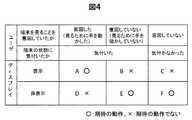
- FIG. 4 is a wristwatch-type gesture recognition device, in which the display is turned on by a gesture of looking at a wristwatch, and the outline of the classification indicating the device operation corresponding to the operation content of the user and the user's recognition state with respect to the device operation.
- FIG. 4 the state shown in A is a case where the user performs a gesture to watch the wristwatch so that the display is turned on, the display is turned on, and the user recognizes it.
- the state shown in B is a case where the user does not make a gesture of looking at the wristwatch, but the display is turned on and the user recognizes that the display is turned on.
- the state shown in C is a case where the user does not make a gesture to watch the wristwatch, but the display is turned on and the user does not recognize that the display is turned on.
- the state shown in D is when the user performs a gesture to watch the watch so that the display is turned on, but the display is not turned on and the user recognizes that the display is not turned on.
- the state shown in E is a state in which the user is not gesturing to watch the wristwatch, the display is not lit because the user is not gesturing, and the user is aware that the display is not lit.
- the state shown in F is a state in which the user is not gesturing to watch the wristwatch, the display is not lit because the user is not gesturing, and the user is not aware that the display is not lit. .
- the gesture recognition device performs an operation as expected by the user.
- the state B, the state C, and the state D the gesture recognition device does not perform the operation expected by the user, and misrecognition in these states is a burden on the user in terms of ease of use and extra power consumption. It has become.
- state B state C, and state D
- the gesture recognition device since the gesture recognition device has performed an operation different from the user's intention, it is necessary to correct this.
- the state B and the state D since the user recognizes whether or not the operation is an expected operation, the user can input correctness / incorrectness. Since the user does not recognize that the state C is not an expected operation, it is impossible to input correct / incorrect.
- the state A by inputting that the operation is an expected operation, the user recognizes that there is no correct / incorrect input from the user even though the gesture recognition device performs the operation corresponding to the gesture. Since it is considered equivalent to not noticing the corresponding action, it is possible to estimate the state C.
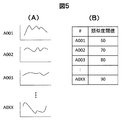
- FIG. 5A is an example of gesture recognition pattern information.
- reference gesture recognition pattern information A001, A002,... A0XX is registered as a gesture for executing the command A.
- These may be patterns of different gestures linked to the command A, or may be patterns of the same gesture linked to the command A but having different features.
- the pattern may be information obtained by normalizing the position or acceleration of the user action sensed by the sensing unit 103, but is not limited to this as long as it is information for recognizing the user's gesture.
- FIG. 5B shows a threshold value of similarity with the sensing data when the matching unit 104 matches the sensed pattern information with the sensed data.
- gesture recognition pattern information of A001 if the similarity with this pattern exceeds 60, it is considered that the matching has been performed, and the command A is executed.
- gesture recognition suitable for the user is performed by flexibly setting similarity thresholds for a plurality of patterns.
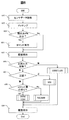
- step 601 sensor data is acquired by the sensing unit 103.
- step 602 the matching unit 104 performs matching between the acquired sensor data and the gesture recognition pattern information shown in FIG. 5A, for example, and calculates the similarity of the sensor data to the gesture recognition pattern information.
- step 603 a comparison is made with the similarity threshold set for the gesture recognition pattern information. If the similarity calculated in step 602 is greater than or equal to the set threshold, it is determined that matching has been performed, and the process proceeds to step 604.
- step 604 the command processing unit 106 executes an operation (command) corresponding to the gesture associated with the recognized gesture in accordance with an instruction from the control unit 101.
- step 605 the unique ID indicating the sensed sensor data and / or the matching gesture recognition pattern information which is the matching processing result or / and the similarity and / or the command execution history and / or the processing execution time of the matching processing result. As a history.
- step 606 it is determined whether correct / incorrect information is input via the user input unit 102 with respect to the command processing execution content of the gesture recognition device. If there is an input, the process proceeds to step 607. If there is no input, the process proceeds to Step 1000 or Step 1100 corresponding to the state C. In this case, either step 1000 or step 1100 may be performed, and these may be set in advance by the gesture recognition device, or may be set by the user.
- step 607 it is determined whether the input content by the user is an input of whether the operation of the gesture recognition device is correct, incorrect, or correct. That is, it corresponds to the determination of ⁇ ⁇ in FIGS.
- the determination is performed for the states A, B, and D.
- the process proceeds to step 900 corresponding to the state A.
- the process proceeds to step 608 corresponding to state B or state D.
- step 608 it is determined whether or not a command is executed. When the command is executed, the process proceeds to Step 1000 or Step 1100 corresponding to the state B. When the command is not executed, the process proceeds to step 700 or step 800 corresponding to the state D.
- step 700 or step 800 may be performed, and these may be set in advance by the gesture recognition device, or may be set by the user.
- step 609 in addition to the history in step 605, the gesture recognition pattern information before calibration and / or the presence / absence of correct / incorrect input and correct / incorrect information are stored as history information.
- Step 700 and step 800 which are the update flow of the gesture recognition pattern information in state D, will be described with reference to FIGS.
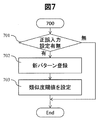
- FIG. 7 shows the processing contents of step 700, which is a processing flow for newly registering the gesture recognition pattern information created based on the sensor data of the gesture performed by the user.
- step 701 it is determined whether or not the setting is such that the user performs correct / incorrect input to the state D. If correct / incorrect input is set, the process proceeds to step 702, and if not set, the process ends. Since this state D is a case where the user intentionally performed the gesture operation but did not achieve the expected operation, the calibration unit 105 creates based on the sensor data related to the gesture performed by the user in step 702. The newly registered gesture recognition pattern information is registered.
- a similarity threshold for the pattern is set.
- the similarity threshold value may be, for example, a default similarity threshold value stored in the gesture recognition device, and is newly registered gesture recognition pattern information. Therefore, the similarity threshold value is less than the default similarity threshold value so that malfunction due to erroneous recognition is less likely to occur. May be set higher. As described above, it is possible to further improve the recognition rate by newly registering the recognition pattern of the user's gesture.
- FIG. 8 shows the processing content of step 800, and is a processing flow for changing the similarity threshold of the gesture recognition pattern information having high similarity to the sensor data of the gesture performed by the user.
- step 801 it is determined whether or not the setting is such that the user performs correct / incorrect input to the state D. If correct / incorrect input is set, the process proceeds to step 802, and if not set, the process ends.
- step 802 matching is performed between the sensor data relating to the gesture performed by the user and the gesture recognition pattern information held by the gesture recognition apparatus.
- the pattern having the highest similarity than the result of the matching process is acquired.
- the calibration unit 105 sets the similarity threshold of the corresponding pattern to be lower than the set threshold.
- the recognition rate can be further improved by setting the similarity threshold value of the gesture recognition pattern information held in advance by the gesture recognition device to be low.
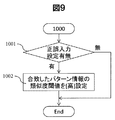
- Step 1000 and Step 1100 which are the update flow of the gesture recognition pattern information in the state B and the state C will be described with reference to FIGS. 9 and 10.
- FIG. 9 shows the processing contents of step 1000.
- step 1001 it is determined whether or not the setting is such that the user performs correct / incorrect input to the state B. If correct / incorrect input is set, the process proceeds to step 1002, and if not set, the process ends. Since the state B is a case where the user does not intentionally perform the gesture operation, but the gesture recognition apparatus erroneously recognizes and executes an incorrect command, in step 1002, the calibration unit 105 displays the matched gesture recognition pattern information.
- the similarity threshold is set high. By setting the similarity threshold value high, it is possible to prevent erroneous recognition by making it difficult to match the user's gesture.
- step 1001 the state C is a state that can be determined equivalently by performing correct / incorrect input to the state A. Therefore, it is determined whether or not the user makes a correct / incorrect input to the state A. judge. If correct / incorrect input is set, the process proceeds to step 1002, and if not set, the process ends. Since the state C is a case where the user does not intentionally perform the gesture operation, but the gesture recognition device performs an operation (command) corresponding to the erroneous gesture that has been erroneously recognized, in step 1002, the calibration unit 105 The similarity threshold value of the matched gesture recognition pattern information is set high. By setting the similarity threshold value high, it is possible to prevent erroneous recognition by making it difficult to match the user's gesture.
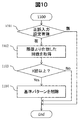
- FIG. 10 shows the processing contents of step 1100 and describes another update flow of the gesture recognition pattern information in the state B and the state C.
- step 1101 it is determined whether or not the setting is such that the user performs correct / incorrect input to state B. If correct / incorrect input is set, the process proceeds to step 1102; otherwise, the process ends.
- the state B is a case in which the user does not intentionally perform the gesture operation, but the gesture recognition apparatus performs the operation corresponding to the erroneous gesture that is erroneously recognized. Therefore, in step 1102, the calibration unit 105 displays the history information. As a result, the number of times of matching with the corresponding gesture recognition pattern information but erroneous operation is acquired. In step 1103, it is determined whether or not the acquired number of times is equal to or greater than a specified number.
- step 1104 If it is equal to or greater than the specified number of times, the process proceeds to step 1104, and if it is less than the specified number of times, the process ends.
- the specified number of times may be set in advance by the gesture recognition device or may be arbitrarily set by the user.
- this pattern is deleted from the reference pattern. It is possible to prevent misrecognition by deleting patterns with many misrecognitions.
- Step 1101 the state C is a state that can be equivalently determined by performing correct / incorrect input to the state A. Therefore, it is determined whether or not the user sets correct / incorrect input to the state A. judge. If correct / incorrect input is set, the process proceeds to step 1102; otherwise, the process ends. Since the state C is a case where the user does not intentionally perform the gesture operation, but the gesture recognition apparatus performs the operation corresponding to the erroneous gesture by erroneous recognition, in Step 1102, the gesture recognition is performed based on the history information. Acquires the number of times that the pattern information was matched but the operation was incorrect. In step 1103, it is determined whether or not the acquired number of times is equal to or greater than a specified number.
- the specified number of times may be set in advance by the gesture recognition device or may be arbitrarily set by the user. If it is equal to or greater than the specified number of times, the process proceeds to step 1104, and if it is less than the specified number of times, the process ends. In step 1104, this pattern is deleted from the reference pattern. It is possible to prevent misrecognition by deleting patterns with many misrecognitions.
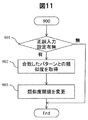
- FIG. 11 shows the processing contents of step 900, and the update flow of the gesture recognition pattern information in state A will be described.
- step 901 it is determined whether or not the setting is such that the user performs correct / incorrect input to the state A. If correct / incorrect input is set, the process proceeds to step 902, and if not set, the process ends.
- This state A is a case where the user intentionally performs a gesture operation and the gesture recognition device performs an operation corresponding to the user's expected gesture.
- the similarity with the matched gesture recognition pattern information is acquired.
- the calibration unit 105 changes the similarity threshold of the matched gesture recognition pattern information.
- the similarity threshold for example, the similarity when matching is set.
- Matching with the user's gesture means that the similarity threshold is exceeded, and the user's gesture is highly similar to the gesture recognition pattern information, and the user is likely to be able to reproduce this pattern. Therefore, misrecognition can be prevented by using the similarity threshold when the similarity threshold is matched.
- the similarity threshold to be changed is not the similarity threshold when matched, but the average of the similarity threshold when matched with a preset similarity threshold or a value obtained by multiplying these by an arbitrary coefficient May be.
- the present embodiment it is possible to obtain gesture recognition pattern information suitable for the user by correcting the predetermined gesture recognition pattern information according to the user, and the gesture recognition rate is improved. It is possible to provide a user-friendly device for the user.
- This embodiment describes a case where the user always recognizes the operation of the gesture recognition device in the gesture recognition device.
- a case will be described in which a display is turned on by a wristwatch-type gesture recognition device, and a user can be notified of the fact that the display is turned on simultaneously with turning on the display by vibrating the wristwatch.
- step 1306 it is determined whether or not the user's correct / incorrect information is input with respect to the command processing execution content of the gesture recognition device. If there is an input, the process proceeds to step 1307. When there is no input, it ends. In step 1307, it is determined whether or not a command is executed (operation corresponding to a gesture). When the command is executed, the process proceeds to step 1000 or step 1100. If the command is not executed, the process proceeds to step 700 or step 800. Either step 700 or step 800 may be performed, and these may be set in advance by the gesture recognition device, or may be set by the user.
- the gesture recognition apparatus can perform the operation corresponding to the gesture and can notify the user that the operation has been performed, it is possible to reduce the pattern that requires the user's correct input.
- This example describes a method for correcting correct / incorrect information input by a user. That is, since the user cannot always input correct / incorrect information for the operation (command operation) corresponding to the gesture of the gesture recognition device, the calibrated gesture recognition pattern information can be corrected.
- step 1401 the history information stored in step 605 or / and 609 in FIG. 6 is acquired, and the user inputs correct information and / or correct information for state E from state A to state E. Sum the number of times.
- step 1402 the collected information is displayed.
- FIG. 15 and FIG. 16 for example, a summary of the device operation corresponding to the user's operation contents for one day and the user's recognition state for the device operation is shown.
- FIG. 15 shows the number of times the user in the state A to the state D inputs the correct / incorrect information and / or the information corresponding to the correct / incorrect information
- FIG. 16 shows the ratio.
- step 1403 the presence or absence of reliability by the user is confirmed. If there is an input, the process proceeds to step 1404, and if there is no input, the process ends.
- the reliability input by the user is acquired.
- the reliability may be a value indicating the reliability with respect to the number of times from the state A to the state D, or may be the number of times or the ratio after the correction from the state A to the state D.
- the reliability is represented by the following formula (1), 100-
- the reliability calculation method is not limited to this.
- step 1405 based on the history information acquired in 1401 and the reliability, the positive / negative direction of the similarity threshold value changed and set at the time of calibration is corrected and set to the original direction.
- step 1701 the history information stored in step 605 and / or 609 in FIG. 6 is acquired, and the process execution time is acquired from state A to state E.
- step 1702 the processing execution time is displayed.
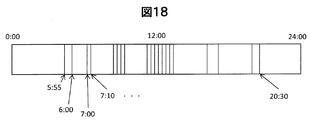
- FIG. 18 shows, for example, the processing execution time of one day.
- the processing execution times are indicated by vertical lines in time series.
- the user refers to the displayed time-series processing execution time, confirms whether there is an error in the time and time zone when the correct / incorrect input is performed, and corrects it.
- step 1703 whether or not there is a correction input is confirmed.
- step 1703 If there is an input, the process proceeds to step 1703, and if there is no input, the process ends.
- the information input by the user may be a processing time to be deleted or a time zone to be deleted.
- step 1704 it is determined whether calibration has been performed at the time or time zone input by the user. When the change setting is performed at the corresponding time or time zone, the process proceeds to step 1705. If no change setting has been made, the process ends.
- step 1705 the correction by the calibration process performed in the corresponding time zone is canceled and the history information is used to return to the original gesture recognition device pattern information.
- the start of the calibration period may be the timing when the gesture recognition device is used for the first time, the timing when the user sets the calibration period start provided by the gesture recognition device, or the start time set by the user.
- the end of the calibration period is, for example, the timing when the number and ratio of the state A to the state D shown in FIG. 15 and FIG. It may be a timing, or may be a timing provided by the gesture recognition device when the end of the calibration period is set, or an end time set by the user.
- an input device attached to the gesture recognition device, a touch panel display device, or the like may be used as a method for inputting correct / incorrect information by the user.
- the gesture recognition device recognizes the user's gesture operation, performs an operation corresponding to the gesture, and accepts an input by putting the input device into a reception state or displaying an input button on a touch panel display unit.
- a sensor such as an acceleration sensor is provided, for example, the gesture recognition device is stroked to input “correct”, or the gesture recognition device is input to input “error”. You may input by gesture operation, such as hitting a ton.
- the present embodiment calibrates the gesture recognition pattern information when the user inputs whether the classified state is recognized or wrong, but retains the user input.
- the gesture recognition pattern information is calibrated based on the information accumulated for a certain period.
- FIG. 19 shows a flow of accumulating calibration information of the gesture recognition apparatus in this embodiment.
- step 1901 sensor data is acquired by the sensing unit 103.
- step 1902 the sensor data acquired by the matching unit 104 is matched with the gesture recognition pattern information, and the similarity of the sensor data to the gesture recognition pattern information is calculated.
- step 1903 the calibration unit compares the threshold value with the similarity threshold set for the gesture recognition pattern information. If the similarity calculated in step 1902 is equal to or greater than a set threshold value, it is determined that matching has been performed. Proceed to step 1904. If the similarity calculated in step 1902 is less than the set threshold value, it is determined that matching has not been performed, and the process proceeds to step 1905.
- step 1905 the presence / absence of correct / incorrect input from the user and the correct / incorrect information are confirmed, and in step 1906, the unique ID or / and matching process indicating the sensed sensor data and / or the matched gesture recognition pattern information which is the matching process result.
- the similarity and / or command execution history and / or the execution time of these processes and / or the presence / absence of correct / incorrect input, and correct / incorrect information are stored as history information. Thereby, information used for calibration of the gesture recognition pattern information is accumulated.
- step 2001 all sensor data in the state D is acquired from the information accumulated in the flow of FIG.
- step 2002 the similarity between the acquired sensor data is calculated.
- step 2003 the pattern is classified into a pattern having a similarity equal to or greater than a certain value or a pattern having a similarity less than a certain value.
- step 2005 the similarity of the pattern is determined. If the degree of similarity is greater than or equal to a certain level, the process proceeds to step 2006, and if it is less than a certain level, the process proceeds to step 2007.
- step 2006 the recognition threshold of the registered new pattern is set lower than the reference, thereby improving the gesture recognition rate.
- step 2007, the similarity threshold value of the registered new pattern is set higher than the reference, thereby improving the gesture recognition rate and making it difficult to cause erroneous recognition.
- step 2101 gesture recognition pattern information that matches the sensor data in state B or state C is acquired from the information accumulated in step 1900.
- the similarity threshold is adjusted in consideration of the average and variance based on the sensor data matched with the same gesture recognition pattern information and the number of times, and the similarity threshold is set in step 2103. For example, when the number of times of entering the state B or the state C is large, the similarity threshold value of the matched gesture recognition pattern information is set high so that erroneous recognition is difficult.
- the operation of the gesture recognition device and the user's recognition state, correct / incorrect information indicating whether the operation is as expected by the user is input, and the information accumulated for a predetermined period is used to recognize the gesture. It is possible to calibrate the pattern information and prevent erroneous recognition or improve the recognition rate.
- the user inputs whether the classified state is recognized or wrong, and the gesture recognition pattern information is based on the information accumulated each time or for a certain period.
- the gesture recognition pattern information is calibrated by using, for example, the gesture recognition pattern information and the calibration period information classified based on features such as the gender, age, height, and weight of the user. The point which aims at acceleration is demonstrated.
- FIG. 22 is a block diagram showing the gesture recognition apparatus in the present embodiment.
- the communication unit 109 communicates with a device having a communication function other than the gesture recognition device 400.
- the information management unit 110 manages characteristic information regarding a user who owns the gesture recognition device 400.
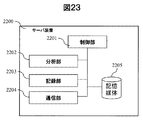
- FIG. 23 is a block diagram illustrating the server device according to the present embodiment.
- the server device 2200 includes a control unit 2201, an analysis unit 2202, a recording unit 2203, a communication unit 2204, and a recording medium 2205.
- the control unit 2201 controls the entire server device.
- a communication unit 2204 performs communication between external devices that hold communication functions, in this example, gesture recognition devices.
- the analysis unit 2202 analyzes information acquired from the gesture recognition device.
- the recording unit 2203 controls recording of information acquired or analyzed through communication, and records the information on the recording medium 2205.
- the gesture recognizing device 400 appropriately stores, in the server device 2200, characteristic information such as gender, age, height, and weight and / or gesture recognition pattern information and / or calibration history information managed and held by the information management unit 110.
- the calibration history information includes information such as the transition of the calibration state and the period from the start to the end of the calibration.
- step 2041 information from the gesture recognition device is received. This is, for example, characteristic information such as gender, age, height, and weight of the user and / or gesture recognition pattern information and / or calibration history information.
- the analysis unit 2202 performs classification for each of the user's characteristic information and / or gesture recognition pattern information and / or calibration history information based on the received information, and extracts features such as the user's gender, New recommended gesture recognition pattern information and calibration period are created for features such as age.
- step 2043 the recording unit 2203 records the received information and the created reference information on the recording medium 2205.
- the gesture recognition device acquires reference information from the server device and reflects the information on the gesture recognition device.
- the gesture recognition apparatus transmits characteristic information of the user of the gesture recognition apparatus and a reference information acquisition request to the server apparatus.
- reference information including gesture recognition pattern information is acquired from the server.
- the acquired reference information that is, the gesture recognition pattern information and the calibration period information indicating the period from the start to the end of calibration are set and held.
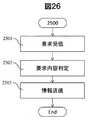
- step 2051 the request described in step 2301 is received.
- step 2502 received information is determined, and what data is to be transmitted is determined. For example, it is determined whether the reference gesture recognition pattern information is transmitted, the reference calibration period is transmitted, or both are transmitted.
- step 2503 necessary information is transmitted to the gesture recognition device in accordance with this determination.
- the gesture recognition device is recorded in advance on the gesture recognition device by using the gesture recognition pattern information that is the result of analysis based on information on a large number of users.
- the gesture recognition pattern information more suitable for the user can be used than the gesture recognition pattern information, and calibration can be accelerated.
- this invention is not limited to the above-mentioned Example, Various modifications are included.
- the above-described embodiments have been described in detail for easy understanding of the present invention, and are not necessarily limited to those having all the configurations described.
- a part of the configuration of one embodiment can be replaced with the configuration of another embodiment, and the configuration of another embodiment can be added to the configuration of one embodiment.
- each of the above-described configurations, functions, processing units, processing means, and the like may be realized by hardware by designing a part or all of them with, for example, an integrated circuit.
- Each of the above-described configurations, functions, and the like may be realized by software by interpreting and executing a program that realizes each function by the processor.
- Information such as a program for realizing each function can be stored in a recording device such as a memory, a hard disk, or an SSD, or a recording medium such as an IC card, an SD card, or a DVD.
- control lines and information lines indicate what is considered necessary for the explanation, and not all the control lines and information lines on the product are necessarily shown. Actually, it may be considered that almost all the components are connected to each other.
- Gesture recognition device 101 Control unit 102: Input unit 103: Sensing unit 104: Matching unit 105: Calibration unit 106: Command processing unit 107: Display unit 108: Holding unit Gesture recognition pattern information, 109: communication unit, 110: information management unit, 2200: server device, 2201: control unit, 2202: analysis unit, 2203: recording unit, 2204: communication unit, 2205: recording medium
Landscapes
- Engineering & Computer Science (AREA)
- General Engineering & Computer Science (AREA)
- Theoretical Computer Science (AREA)
- Human Computer Interaction (AREA)
- Physics & Mathematics (AREA)
- General Physics & Mathematics (AREA)
- User Interface Of Digital Computer (AREA)
Abstract
ジェスチャ認識装置において、ユーザのジェスチャ動作の特徴の違いにより誤認識が発生する。本発明は、認識率を向上させ、使用勝手のよいジェスチャ認識装置を提供することを目的とする。 そのために、ジェスチャを認識するための基準となるジェスチャ認識パターン情報を保持する保持部と、ユーザのジェスチャ情報とジェスチャ認識パターン情報とをマッチングするマッチング部と、ユーザからの入力を受け付ける入力部と、ジェスチャ認識パターン情報をキャリブレーションするキャリブレーション部とを有し、入力部はジェスチャに対応した動作に対する正誤情報が入力され、キャリブレーション部は、ユーザの操作状態とジェスチャに対応した動作の状態と入力された正誤情報及び/または正誤情報に相当する情報に応じてジェスチャ認識パターン情報を変更する構成とする。
Description
本発明は、主にジェスチャ認識装置の認識技術に関する。
家電機器や車両に搭載された機器操作に関して、特定の操作装置を用いず、ユーザの手の形状やジェスチャを用いた操作方法が考案されており普及しつつある。
ジェスチャ認識技術の一つとして、WO2015/015843号公報(特許文献1)がある。特許文献1では、「手の座標系に基づいて手の動きの特徴量を算出することで、或いは手の形状の特徴量と手又は指の動きの特徴量を算出することで、操作者によって、操作領域に入れられる手の角度、手振り動作の方向などに違いがあっても、誤認識の少ないジェスチャー判定が可能となり、該ジェスチャー判定に基づく機器の操作を操作者の意図に合致したものとすることが可能となる。」と記載されている。
ジェスチャによる機器操作は、ユーザが操作装置を手に取るなどの準備が不要で、簡単な動作により機器を操作することが可能であるため機器操作の方法として有効である。しかし、ジェスチャは個々にジェスチャ動作の大きさ、速度や角度などが異なるためにジェスチャを認識し難い場合がある。
そこで、特許文献1に記載のように、手の角度或いは手振り動作の方向の違いを考慮した上でジェスチャ判定を行うことで誤認識を低減させる方法が開示されている。
一方、近年、腕時計型の通信端末が普及している。省電力化のため、ディスプレイは通常消灯され表示されておらず、例えば腕時計を見るジェスチャによりディスプレイが点灯し情報が表示されるなどといった機能を具備している。しかし、この腕時計を見るジェスチャを行ってもディスプレイが点灯表示されないことや、また逆に腕時計を見るジェスチャを行っていない場合でもディスプレイが点灯表示されてしまうといった誤認識が発生しており、ユーザにとって使い勝手が悪く、特許文献1のような技術を適用しても、未だ誤認識や誤動作という問題は解決されていない。
上記課題を解決するため、本発明は、その一例を挙げるならば、ジェスチャを認識し対応した動作を実行するジェスチャ認識装置であって、ジェスチャを認識するための基準となるジェスチャ認識パターン情報を保持する保持部と、ユーザのジェスチャ情報とジェスチャ認識パターン情報とをマッチングするマッチング部と、ユーザからの入力を受け付ける入力部と、ジェスチャ認識パターン情報をキャリブレーションするキャリブレーション部とを有し、入力部はジェスチャに対応した動作に対する正誤情報が入力され、キャリブレーション部は、ユーザの操作状態とジェスチャに対応した動作の状態と入力された正誤情報及び/または正誤情報に相当する情報に応じてジェスチャ認識パターン情報を変更するように構成する。
本発明によれば、使用勝手のよいジェスチャ認識装置、ジェスチャ認識パターン情報のキャリブレーション方法、及びそれを用いた通信端末を提供することが出来る。
以下、本発明の実施例を図面を用いて説明する。
まず、本実施例におけるジェスチャ認識装置の基本的動作について説明する。図1は、本実施例におけるジェスチャ認識装置を示すブロック図である。図1において、ジェスチャ認識装置100は、制御部101、入力部102、センシング部103、マッチング部104、キャリブレーション部105、コマンド処理部106、表示部107から成り、ジェスチャ認識パターン情報を例えばメモリ等の保持部108に保持する(以下では、保持部108に保持されたジェスチャ認識パターン情報を「ジェスチャ認識パターン情報108」と記述する場合もある)。このジェスチャ認識パターン情報108は、ジェスチャを認識するための基準となる情報として使用される。
制御部101は、ジェスチャ認識装置全体を制御するものである。入力部102はユーザ操作による入力情報を入力する。センシング部103は、ユーザのジェスチャ動作及び周囲環境の状況などをセンシングする。例えばユーザがジェスチャ認識装置そのものを身に付けている場合、装置の角速度、加速度、地磁気、光センサなどのセンサを用いセンサ情報を取得する。例えばユーザがジェスチャ認識装置そのものを身に付けていない場合は、ユーザの動作をカメラなどにより認識しユーザの動作を取得する。なお、センシング部103は、ユーザの動作を特定するためのセンサでありこれらに限らない。マッチング部104は、センシング部103で取得したユーザの動作特徴を示す情報と、予め決められたジェスチャ認識パターン情報108とをマッチングする。キャリブレーション部105は、ジェスチャ認識パターン情報108をユーザに応じたパターンにキャリブレーションする。コマンド処理部106はマッチング部104で基準のジェスチャ認識パターン情報108と合致したジェスチャに対応する動作(以下、コマンド処理、または、コマンド動作と記述する場合もある)を実施する。表示部107は、入力部102からの入力情報の表示や、各種状態表示等を行なう。なお、タッチディスプレイなどのように入力部102と一体となった入出力部を構成していても良い。
次に、本実施例におけるキャリブレーション方法として、基準となるジェスチャ認識パターン情報をユーザに応じてキャリブレーションする方法について示し、誤認識を防ぐまたは認識率を向上させることが可能となることを示す。
本実施例におけるキャリブレーション方法では、ユーザが意図して特定のジェスチャ動作を行ったか、その結果ジェスチャ認識装置がどのような動作を行ったか、そしてその動作をユーザが認識したかどうかという状態に分類する。分類した状態に対して認識があっていたか間違っていたかをユーザが入力することで、その都度ジェスチャ認識パターン情報をキャリブレーションする。
まず、図2を用いて一般的なジェスチャ認識装置における、ユーザの操作内容に対応する装置動作と装置動作に対するユーザの認識状態の分類を示す。
図2において、例えば、Aに示す状態は、ユーザが意図してジェスチャ動作を行い、ジェスチャ認識装置がユーザの意図にあった期待の動作を行い、期待の動作となったことをユーザが認識している場合である。Bに示す状態は、ユーザがジェスチャ動作を行っておらず、ジェスチャ認識装置が誤認識し、誤った動作を行った際、ユーザがその誤った動作を認識した場合である。Cに示す状態は、ユーザがジェスチャ動作を行っておらず、ジェスチャ認識装置が誤認識し誤った動作を行った際、ユーザがその動作を認識しなかった場合である。Dに示す状態は、ユーザが意図してジェスチャ動作を行い、ジェスチャ認識装置がユーザの意図に合わず期待の動作でない誤った動作を行ってしまった際、ユーザがその期待の動作にならなかったことを認識した場合である。Eに示す状態は、ユーザがジェスチャ動作を行っておらず、ジェスチャ認識装置はユーザの期待通りの動作となり、ユーザが期待の動作であったことを認識した場合である。最後に、Fに示す状態は、ユーザが意図してジェスチャ動作を行っておらず、ジェスチャ認識装置はユーザの期待通りの動作となり、ユーザが期待の動作であったことを認識しなかった場合である。
次に、具体的な例を上げて、ユーザの操作内容に対応する装置動作と装置動作に対するユーザの認識状態の分類を説明する。例えば、図3に示すように、腕時計型の通信端末であるジェスチャ認識装置100で腕時計を見るジェスチャの例を用いて説明する。
図4は、腕時計型のジェスチャ認識装置で、腕時計を見るジェスチャによりディスプレイが点灯する仕様であった場合の、ユーザの操作内容に対応する装置動作と装置動作に対するユーザの認識状態を示す分類の概略図である。図4において、Aに示す状態は、ユーザがディスプレイを点灯するように腕時計を見るジェスチャを行い、ディスプレイが点灯表示され、それをユーザが認識している場合である。Bに示す状態は、ユーザが腕時計を見るジェスチャをしていないが、ディスプレイが点灯表示され、ディスプレイが点灯したことをユーザが認識した場合である。Cに示す状態は、ユーザが腕時計を見るジェスチャをしていないが、ディスプレイが点灯表示され、ディスプレイが点灯したことをユーザが認識しなかった場合である。Dに示す状態は、ユーザがディスプレイを点灯するように腕時計を見るジェスチャを行ったがディスプレイが点灯表示されず、ディスプレイが点灯しなかったことをユーザが認識した場合である。Eに示す状態は、ユーザが腕時計を見るジェスチャをしておらず、ジェスチャをしていないためディスプレイも点灯せず、ディスプレイが点灯していないことをユーザが認識している状態である。最後に、Fに示す状態は、ユーザが腕時計を見るジェスチャをしておらず、ジェスチャをしていないためディスプレイも点灯せず、ディスプレイが点灯していないことをユーザが認識していない状態である。
ここで、状態A、状態E、状態Fにおいて、ジェスチャ認識装置はユーザの期待したとおりの動作を行っている。逆に、状態B、状態C、状態Dにおいて、ジェスチャ認識装置はユーザの期待した動作となっておらず、これらの状態での誤認識は、ユーザに使い勝手や余計な電力消費といった点で負担となっている。
以降では、図2及び図4で分類した状態に対して、ユーザがジェスチャ認識装置の動作が正しかったか、間違っていたかという正誤情報を入力することでキャリブレーションが可能であることを説明する。
状態B、状態C、状態Dでは、ジェスチャ認識装置はユーザの意図と異なる動作を行ったため、これを正す必要がある。ここで、状態Bと状態Dは、ユーザが期待の動作であったかどうかをユーザが認識しているためユーザにより正誤を入力することが可能である。状態Cは、期待の動作でなかったことをユーザが認識していないため正誤を入力することは不可能である。しかし、状態Aにおいて、期待の動作であったことを入力することにより、ジェスチャ認識装置がジェスチャに対応した動作を行ったにも関わらずユーザからの正誤入力が無いということが、ユーザがジェスチャに対応した動作に気付かなかったということと等価と考えられるため、状態Cであることを推定することが可能となる。
よって、全ての状態に対してユーザが正誤情報を入力することが負担となる可能性があるため、例えば、状態Dまたは/及び状態Bのみに対して正誤情報を入力することで、キャリブレーションを行うことが可能である。なお、どの状態に対してユーザが正誤情報を入力しキャリブレーションを行うかの正誤入力の設定有無は、ジェスチャ認識装置で予め設定してもよく、ユーザが任意に設定してもよい。
まず初めに、図5を用いて本実施例におけるジェスチャ認識パターン情報について説明する。図5(A)はジェスチャ認識パターン情報の一例である。例えば、コマンドAを実行するためのジェスチャとして基準となるジェスチャ認識パターン情報A001、A002、・・・A0XXが登録されている。これらは、コマンドAに紐付ける異なるジェスチャのパターンであってもよく、コマンドAに紐付ける同じジェスチャであるが特徴が異なるパターンでもよい。このパターンは、例えばセンシング部103でセンシングしたユーザ動作の位置や加速度などを正規化した情報が考えられるが、ユーザのジェスチャを認識するための情報であればこれらに限らない。図5(B)はマッチング部104が、ジェスチャ認識パターン情報に対して、センシングしたデータとマッチングを行う際、センシングデータとの類似度の閾値を示す。例えばA001のジェスチャ認識パターン情報の場合、このパターンとの類似度が60を超えた場合にマッチングしたとみなし、コマンドAを実行する。このように複数のパターンに対し類似度の閾値を柔軟に設定することで、ユーザにあったジェスチャ認識を行う。
次に、具体的なキャリブレーション処理フローを説明する。図6で主に図2及び図4で分類した状態の判定に関する処理フローを説明する。図6において、ステップ601では、センシング部103でセンサデータを取得する。ステップ602では、マッチング部104が、取得したセンサデータと例えば図5(A)に示したジェスチャ認識パターン情報とのマッチングを行い、センサデータのジェスチャ認識パターン情報に対する類似度を算出する。ステップ603では、ジェスチャ認識パターン情報に対して設定されている類似度の閾値との比較を行う。ステップ602で算出した類似度が、設定されている閾値以上であればマッチングしたと判定し、ステップ604に進む。ステップ602で算出した類似度が、設定されている閾値未満であればマッチングしなかったと判定しステップ605に進む。ステップ604では、制御部101の指示によりコマンド処理部106において、認識したジェスチャに紐付けられるジェスチャに対応した動作(コマンド)を実行する。ステップ605では、センシングしたセンサデータ及び/またはマッチング処理結果であるマッチングしたジェスチャ認識パターン情報を示す固有IDまたは/及びマッチング処理結果である類似度及び/またはコマンド実行履歴及び/またはこれらの処理実行時刻を履歴として保存する。
ステップ606では、ジェスチャ認識装置のコマンド処理実行内容に対するユーザの入力部102を介した正誤情報の入力有無を判定する。入力有の場合はステップ607に進む。入力無しの場合は状態Cに対応してステップ1000またはステップ1100に進む。この場合、ステップ1000とステップ1100のどちらのステップでも良く、これらをジェスチャ認識装置で予め設定してもよく、ユーザが設定してもよい。
ステップ607では、ユーザによる入力内容が、ジェスチャ認識装置の動作が正しかったか間違っていたか正誤どちらの入力であるかを判定する。すなわち、図2、図4の○×の判定に対応する。なお、ここでは、状態A、B、Dに対して判定を行っている。「正」入力の場合は状態Aに対応してステップ900に進む。「誤」入力の場合は状態Bまたは状態Dに対応してステップ608に進む。ステップ608では、コマンド実行の有無を判定する。コマンド実行した場合は状態Bに対応してステップ1000またはステップ1100に進む。コマンド実行していない場合は状態Dに対応してステップ700またはステップ800に進む。この場合、ステップ700とステップ800のどちらのステップでも良く、これらをジェスチャ認識装置で予め設定してもよく、ユーザが設定してもよい。ステップ609ではステップ605の履歴に加え、キャリブレーション前のジェスチャ認識パターン情報または/及び正誤入力の有無、正誤情報を履歴情報として保存する。
状態Dにおける、ジェスチャ認識パターン情報の更新フローであるステップ700とステップ800について図7と図8を用いて説明する。図7は、ステップ700の処理内容であり、ユーザが行ったジェスチャのセンサデータをもとに作成したジェスチャ認識パターン情報を新たに登録する処理フローである。図7において、初めにステップ701で、状態Dへの正誤入力をユーザが行う設定であるかどうかを判定する。正誤入力の設定有りの場合はステップ702に進み、設定無しの場合は終了する。本状態Dはユーザが意図してジェスチャ動作を行ったが、期待した動作とならなかった場合であるため、キャリブレーション部105は、ステップ702ではユーザが行ったジェスチャに関するセンサデータをもとに作成したジェスチャ認識パターン情報を新たに登録する。ステップ703ではそのパターンの類似度閾値を設定する。ここで類似度閾値は例えば、ジェスチャ認識装置で保持するデフォルトの類似度閾値でもよく、新たに登録するジェスチャ認識パターン情報であるため、誤認識による誤動作が発生しにくいようにデフォルトの類似度閾値よりも高く設定しても良い。このように、ユーザのジェスチャの認識パターンを新たに登録することでより認識率を向上させることが可能となる。
図8は、ステップ800の処理内容であり、ユーザが行ったジェスチャのセンサデータと類似性の高いジェスチャ認識パターン情報の類似度閾値を変更する処理フローである。図8において、初めにステップ801で、状態Dへの正誤入力をユーザが行う設定であるかどうかを判定する。正誤入力の設定有りの場合はステップ802に進み、設定無しの場合は終了する。ステップ802ではユーザが行ったジェスチャに関するセンサデータと、ジェスチャ認識装置が保持しているジェスチャ認識パターン情報とのマッチングを行う。ステップ803では、前記マッチング処理の結果より最も類似度が高かったパターンを取得する。キャリブレーション部105は、ステップ804では、該当のパターンの類似度閾値を設定されていた閾値よりも低く設定する。このように、予めジェスチャ認識装置が保持しているジェスチャ認識パターン情報の類似度閾値を低く設定することにより、より認識率を向上させることが可能となる。
次に、状態B及び状態Cにおける、ジェスチャ認識パターン情報の更新フローであるステップ1000とステップ1100について図9と図10を用いて説明する。図9は、ステップ1000の処理内容である。
まず、状態Bにおける、ジェスチャ認識パターン情報の更新フローを説明する。図9において、初めにステップ1001で、状態Bへの正誤入力をユーザが行う設定であるかどうかを判定する。正誤入力の設定有りの場合はステップ1002に進み、設定無しの場合は終了する。状態Bはユーザが意図してジェスチャ動作を行っていないが、ジェスチャ認識装置が誤認識し誤ったコマンドを実行した場合であるため、ステップ1002では、キャリブレーション部105は、合致したジェスチャ認識パターン情報の類似度閾値を高く設定する。類似度閾値を高く設定することにより、ユーザのジェスチャと合致し難くすることで誤認識を防ぐことが可能となる。
次に、状態Cにおける、ジェスチャ認識パターン情報の更新フローを説明する。図9において、初めにステップ1001で、状態Cは、状態Aへの正誤入力を行うことにより等価的に判定できる状態であるため、状態Aへの正誤入力をユーザが行う設定であるかどうかを判定する。正誤入力の設定有りの場合はステップ1002に進み、設定無しの場合は終了する。状態Cはユーザが意図してジェスチャ動作を行っていないが、ジェスチャ認識装置が誤認識し誤ったジェスチャに対応した動作(コマンド)を実行した場合であるため、ステップ1002では、キャリブレーション部105は、合致したジェスチャ認識パターン情報の類似度閾値を高く設定する。類似度閾値を高く設定することにより、ユーザのジェスチャと合致し難くすることで誤認識を防ぐことが可能となる。
図10はステップ1100の処理内容であり、状態B及び状態Cにおける、ジェスチャ認識パターン情報の他の更新フローを説明する。
まず、状態Bにおける、ジェスチャ認識パターン情報の更新フローを説明する。
図10において、初めにステップ1101で、状態Bへの正誤入力をユーザが行う設定であるかどうかを判定する。正誤入力の設定有りの場合はステップ1102に進み、設定無しの場合は終了する。状態Bはユーザが意図してジェスチャ動作を行っていないが、ジェスチャ認識装置が誤認識し誤ったジェスチャに対応した動作を実行した場合であるため、ステップ1102では、キャリブレーション部105は、履歴情報より、該当のジェスチャ認識パターン情報と合致したが動作が誤っていた回数を取得する。ステップ1103で、取得した回数が規定の回数以上かどうかを判定する。規定回数以上の場合はステップ1104に進み、規定回数未満であった場合は終了する。規定回数は、ジェスチャ認識装置で予め設定してもよく、ユーザが任意に設定してもよい。ステップ1104では、本パターンを基準パターンより削除する。誤認識の多かったパターンを削除することにより、誤認識を防ぐことが可能となる。
次に、状態Cにおける、ジェスチャ認識パターン情報の更新フローを説明する。
図10において、初めにステップ1101で、状態Cは、状態Aへの正誤入力を行うことにより等価的に判定できる状態であるため、状態Aへの正誤入力をユーザが行う設定であるかどうかを判定する。正誤入力の設定有りの場合はステップ1102に進み、設定無しの場合は終了する。状態Cはユーザが意図してジェスチャ動作を行っていないが、ジェスチャ認識装置が誤認識し誤ったジェスチャに対応した動作を実行した場合であるため、ステップ1102では、履歴情報より、該当のジェスチャ認識パターン情報と合致したが動作が誤っていた回数を取得する。ステップ1103で、取得した回数が規定の回数以上かどうかを判定する。規定回数は、ジェスチャ認識装置で予め設定してもよく、ユーザが任意に設定してもよい。規定回数以上の場合はステップ1104に進み、規定回数未満であった場合は終了する。ステップ1104では、本パターンを基準パターンより削除する。誤認識の多かったパターンを削除することにより、誤認識を防ぐことが可能となる。
図11はステップ900の処理内容であり、状態Aにおける、ジェスチャ認識パターン情報の更新フローを説明する。図11において、初めにステップ901で、状態Aへの正誤入力をユーザが行う設定であるかどうかを判定する。正誤入力の設定有りの場合はステップ902に進み、設定無しの場合は終了する。本状態Aはユーザが意図してジェスチャ動作を行い、ジェスチャ認識装置がユーザの期待のジェスチャに対応した動作を行った場合である。ステップ902では、合致したジェスチャ認識パターン情報との類似度を取得する。ステップ903では、キャリブレーション部105は、合致したジェスチャ認識パターン情報の類似度閾値を変更する。ここで、類似度閾値は、例えば合致した際の類似度を設定する。ユーザのジェスチャと合致するということは、類似度閾値を超えていた場合であり、ユーザのジェスチャはジェスチャ認識パターン情報との類似性が高く、ユーザがこのパターンを再現できる可能性が高いということであるため類似度閾値を合致した際の類似度閾値とすることで、誤認識を防ぐことが可能となる。なお、変更する類似度閾値は、合致した際の類似度閾値ではなく、予め設定されていた類似度閾値と合致した際の類似度閾値の平均や、これらに任意の係数を掛けた値を設定してもよい。
以上のように、本実施例によれば、予め決められたジェスチャ認識パターン情報をユーザに応じて修正することで、ユーザにあったジェスチャ認識パターン情報とすることが可能となり、ジェスチャ認識率が向上しユーザにとって使用勝手のよい機器を提供することが出来る。
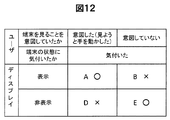
本実施例は、ジェスチャ認識装置においてユーザが必ずジェスチャ認識装置の動作を認識している場合について説明する。一例として、腕時計型のジェスチャ認識装置で、腕時計を見るジェスチャによりディスプレイが点灯し、ディスプレイを点灯させると同時に点灯したことを、腕時計を振動させるなどの方法でユーザに通知できる場合について説明する。この場合、図4に示したユーザの操作内容に対応する装置動作と装置動作に対するユーザの認識状態の分類のうち、状態Cと状態Fのユーザが気付かなかった状態がなくなり、図12で示す分類となる。
図13を用いて、本実施例における具体的なキャリブレーション処理フローを説明する。図13において、ステップ601から605は、図6で説明したステップと同様であるので、その説明は省略する。ステップ1306では、ジェスチャ認識装置のコマンド処理実行内容に対するユーザの正誤情報の入力有無を判定する。入力がある場合はステップ1307に進む。入力が無い場合は終了する。ステップ1307では、コマンド実行(ジェスチャに対応した動作)の有無を判定する。コマンド実行した場合はステップ1000またはステップ1100に進む。コマンド実行していない場合はステップ700またはステップ800に進む。ステップ700とステップ800のどちらのステップでも良く、これらをジェスチャ認識装置で予め設定してもよく、ユーザが設定してもよい。
このように、ジェスチャ認識装置がジェスチャに対応した動作を行うと同時にユーザに動作を行ったことを通知できる場合は、ユーザの正誤入力が必要なパターンを減らすことが可能である。
本実施例は、ユーザが入力した正誤情報の修正方法について説明する。すなわち、ユーザが必ずジェスチャ認識装置のジェスチャに対応した動作(コマンド動作)に対して正誤情報を入力できるとは限らないため、キャリブレーションしたジェスチャ認識パターン情報の修正を可能とする。
図14を用いて、本実施例における修正フローについて説明する。図14において、まず、ステップ1401で、図6のステップ605または/及び609で保存した履歴情報を取得し、状態Aから状態Eについて、ユーザが正誤情報及び/または正誤情報に相当する情報を入力した回数を合計する。ステップ1402では、前記集計した情報を表示する。図15及び図16に表示例として、例えば一日のユーザの操作内容に対応する装置動作と装置動作に対するユーザの認識状態についての集計結果を示す。図15では、状態Aから状態Dのユーザが正誤情報及び/または正誤情報に相当する情報を入力した回数を示し、図16ではその比率を示している。ステップ1403では、ユーザによる信頼度の有無を確認する。入力がある場合はステップ1404に進み、入力が無い場合は終了する。ステップ1404ではユーザが入力した信頼度を取得する。ここで信頼度は、状態Aから状態Dの回数に対する信頼性を示す値でもよく、状態Aから状態Dの修正後の回数または比率でもよい。例えば回数の場合は、信頼度は、下記式(1)、
100-|(修正後回数―修正前回数)/修正前回数×100| …(1)
で表すことが可能であるが、信頼度の算出方法はこれに限らない。ステップ1405では、1401で取得した履歴情報と、信頼度を元に、キャリブレーション時に変更設定した類似度閾値の正負方向を元に戻す方向に修正、設定する。
100-|(修正後回数―修正前回数)/修正前回数×100| …(1)
で表すことが可能であるが、信頼度の算出方法はこれに限らない。ステップ1405では、1401で取得した履歴情報と、信頼度を元に、キャリブレーション時に変更設定した類似度閾値の正負方向を元に戻す方向に修正、設定する。
また、このユーザが入力した正誤情報の修正方法の変形例について以下説明する。図17を用いて、本実施例における修正フローについて説明する。図17において、ステップ1701で、図6のステップ605または/及び609で保存した履歴情報を取得し、状態Aから状態Eについて、処理実行時刻を取得する。ステップ1702では、処理実行時刻を表示する。図18に表示例として、例えば一日の処理実行時刻を示す。時系列に、処理実行時刻を縦線で示している。ユーザは表示された時系列の処理実行時刻を参照し、正誤入力を行った時刻や時間帯に間違いが無いかを確認し、修正を行う。ステップ1703では、修正入力の有無を確認し入力がある場合はステップ1703に進み、入力が無い場合は終了する。ここで、ユーザが入力する情報は、削除したい処理時刻でもよく、削除したい時間帯でもよい。ステップ1704では、ユーザが入力した時刻または時間帯において、キャリブレーションを行ったかどうかを判定する。該当時刻または時間帯に変更設定を行った場合はステップ1705に進む。変更設定を行っていない場合は終了する。ステップ1705では、該当時間帯で行ったキャリブレーション処理による修正を取り消し、履歴情報を用い元のジェスチャ認識装置パターン情報に戻す。
キャリブレーション期間の開始は、ジェスチャ認識装置を初めて使用するタイミングでもよく、ジェスチャ認識装置が提供する、キャリブレーション期間の開始設定をユーザが行ったタイミング、またはユーザが設定した開始時期でもよい。また、キャリブレーション期間の終了は、例えば、図15や図16に示した状態Aから状態Dの回数及び比率が一定比率となったタイミングや、毎日の各状態の回数及び比率の変動が収束したタイミングでもよく、ジェスチャ認識装置が提供する、キャリブレーション期間の終了設定を行ったタイミング、またはユーザが設定した終了時期でもよい。
また、ユーザによる正誤情報の入力方法は、ジェスチャ認識装置付属の入力装置や、タッチパネル式の表示装置などを用いてもよい。この時、ジェスチャ認識装置はユーザのジェスチャ動作を認識し、ジェスチャに対応した動作を行うとともに、入力装置を受付状態とすることや、タッチパネル式の表示部に入力ボタンを表示させることにより入力を受け付ける。また、入力装置が無い場合でも、加速度センサなどのセンサを具備している場合、例えば、「正しい」ことを入力するためにジェスチャ認識装置をなでる、「誤り」を入力するためにジェスチャ認識装置をトントンとたたく、などのジェスチャ動作により入力してもよい。
このように、ユーザのジェスチャ動作とジェスチャ認識装置の動作及びユーザの認識状態に応じて、ユーザの期待通りの動作であったかという正誤情報を入力することで、ジェスチャ認識パターン情報をキャリブレーションし、誤認識を防ぐまたは認識率を向上させることが可能となる。
本実施例は、実施例1と同様に、分類した状態に対して認識があっていたか間違っていたかをユーザが入力することで、ジェスチャ認識パターン情報をキャリブレーションするが、そのユーザ入力を保持し、一定期間蓄積した情報を元に、ジェスチャ認識パターン情報をキャリブレーションする。
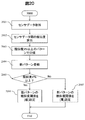
図19を用いて、本実施例におけるジェスチャ認識装置のキャリブレーション用情報の蓄積処理フローを示す。図19において、ステップ1901では、センシング部103でセンサデータを取得する。ステップ1902では、マッチング部104で取得したセンサデータとジェスチャ認識パターン情報とのマッチングを行い、センサデータのジェスチャ認識パターン情報に対する類似度を算出する。ステップ1903では、キャリブレーション部は、ジェスチャ認識パターン情報に対して設定されている類似度の閾値との比較を行う。ステップ1902で算出した類似度が、設定されている閾値以上であればマッチングしたと判定し。ステップ1904に進む。ステップ1902で算出した類似度が、設定されている閾値未満であればマッチングしなかったと判定しステップ1905に進む。ステップ1905では、ユーザからの正誤入力の有無とその正誤情報を確認し、ステップ1906では、センシングしたセンサデータ及び/またはマッチング処理結果であるマッチングしたジェスチャ認識パターン情報を示す固有IDまたは/及びマッチング処理結果である類似度及び/またはコマンド実行履歴及び/またはこれらの処理実行時刻及び/または正誤入力の有無、正誤情報を履歴情報として保存する。これにより、ジェスチャ認識パターン情報のキャリブレーションに使用する情報を蓄積する。
図20を用いて、キャリブレーション部105における、状態Dでのキャリブレーション処理フローを説明する。ステップ2001で、図19のフローで蓄積した情報から、状態Dにおける、全てのセンサデータを取得する。ステップ2002では、取得したセンサデータ間の類似度を算出する。
ステップ2003では、類似度が一定値以上のパターンか、一定値未満のパターンに分類する。ステップ2004では、データを正規化するなどして新しいパターンを作成し、登録する。ステップ2005では、そのパターンの類似度を判定する。類似度がある一定以上であればステップ2006に進み、ある一定未満の場合はステップ2007に進む。ステップ2006では登録した新パターンの類似度閾値を基準よりも低く設定することで、ジェスチャの認識率を向上させる。ステップ2007では、登録した新パターンの類似度閾値を基準よりも高く設定することで、ジェスチャの認識率を向上させ、誤認識を発生しにくくする。
図21を用いて、キャリブレーション部105における、状態Bまたは状態Cでのキャリブレーション処理フローを説明する。ステップ2101で、ステップ1900で蓄積した情報より、状態Bまたは状態Cにおける、センサデータと合致したジェスチャ認識パターン情報を取得する。ステップ2102では、同一のジェスチャ認識パターン情報と合致したセンサデータやその回数などより、平均や分散などを考慮し類似度閾値を調整し、ステップ2103で類似度閾値の設定を行う。例えば、状態Bまたは状態Cとなった回数が多い場合は、合致したジェスチャ認識パターン情報の類似度閾値を高く設定し、誤認識し難くする。
このように、ユーザのジェスチャ動作とジェスチャ認識装置の動作及びユーザの認識状態に応じて、ユーザの期待通りの動作であったかという正誤情報を入力し、所定期間蓄積した情報を用いることで、ジェスチャ認識パターン情報をキャリブレーションし、誤認識を防ぐまたは認識率を向上させることが可能となる。
本実施例は、実施例1や4と同様に、分類した状態に対して認識があっていたか間違っていたかをユーザが入力し、その都度または一定期間蓄積した情報を元に、ジェスチャ認識パターン情報をキャリブレーションするが、この時、ジェスチャ認識パターン情報を、例えばユーザの性別、年齢、身長、体重などの特徴を元に分類されたジェスチャ認識パターン情報やキャリブレーション期間情報を用いることでキャリブレーションの加速を図る点について説明する。
以下、本実施例における図22に示すジェスチャ認識装置と図23に示す外部サーバ装置による実現方法を説明する。
図22は、本実施例におけるジェスチャ認識装置を示すブロック図である。ジェスチャ認識装置400において、図1と同様の機能は同じ符号を付しており、その説明は省略する。通信部109は、ジェスチャ認識装置400以外の通信機能を具備した機器との通信を行う。情報管理部110は、ジェスチャ認識装置400を所持するユーザに関する特性情報を管理する。
図23は、本実施例におけるサーバ装置を示すブロック図である。サーバ装置2200は、制御部2201、分析部2202、記録部2203、通信部2204、記録媒体2205から成る。制御部2201は、サーバ装置全体を制御するものである。通信部2204は、通信機能を保持する外部装置、本例ではジェスチャ認識装置間での通信を行う。分析部2202は、ジェスチャ認識装置より取得した情報を分析する。記録部2203は、通信により取得した情報または分析した情報の記録を制御し、記録媒体2205に記録する。
ジェスチャ認識装置400は、情報管理部110で管理、保持しているユーザの性別、年齢、身長、体重などの特性情報及び/またはジェスチャ認識パターン情報及び/またはキャリブレーション履歴情報をサーバ装置2200に適宜送信する。ここでキャリブレーション履歴情報とは、キャリブレーション状態の変遷やキャリブレーション開始から終了までの期間といった情報を含む。
図24を用いて、サーバ装置のデータ収集、分析フローについて説明する。ステップ2041では、ジェスチャ認識装置からの情報を受信する。これは、例えばユーザの性別、年齢、身長、体重などの特性情報及び/またはジェスチャ認識パターン情報及び/またはキャリブレーション履歴情報である。ステップ2402では、分析部2202は受信した情報を元に、ユーザの特性情報及び/またはジェスチャ認識パターン情報及び/またはキャリブレーション履歴情報ごとに分類を行い、特徴を抽出し、例えば、ユーザの性別、年齢等の特徴に対して推奨の新たなジェスチャ認識パターン情報やキャリブレーション期間などを作成する。ステップ2043では、記録部2203は受信した情報や、前記作成した基準情報を記録媒体2205に記録する。
図25を用いて、ジェスチャ認識装置がサーバ装置より基準情報を取得しジェスチャ認識装置に情報を反映するフローを説明する。ステップ2301では、ジェスチャ認識装置は、サーバ装置に対して、ジェスチャ認識装置のユーザの特性情報を送信するとともに、基準情報取得要求を送信する。ステップ2302では、サーバよりジェスチャ認識パターン情報をはじめとする基準情報を取得する。ステップ2303では、取得した基準情報である、ジェスチャ認識パターン情報やキャリブレーションの開始から終了までの期間を示すキャリブレーション期間情報を設定、保持する。
図26を用いて、サーバ装置がジェスチャ認識装置へ基準情報を送信するフローを説明する。ステップ2051では、ステップ2301に記載の要求を受信する。ステップ2502では、受信情報を判定し、どのようなデータを送信するかを判定する。例えば、基準のジェスチャ認識パターン情報を送信するか、基準のキャリブレーション期間を送信するか、またはその両方を送信するかなどの判定を行う。ステップ2503では、この判定に応じて必要な情報をジェスチャ認識装置に送信する。
このように、本実施例によれば、ジェスチャ認識装置は、多数のユーザに係る情報を元に分析を行った結果であるジェスチャ認識パターン情報などを用いることにより、ジェスチャ認識装置に予め記録されていたジェスチャ認識パターン情報よりも、よりユーザに合ったジェスチャ認識パターン情報を使用することができ、キャリブレーションの加速が可能となる。
なお、本発明は上記した実施例に限定されるものではなく、様々な変形例が含まれる。例えば、上記した実施例は本発明を分かりやすく説明するために詳細に説明したものであり、必ずしも説明した全ての構成を備えるものに限定されるものではない。また、ある実施例の構成の一部を他の実施例の構成に置き換えることが可能であり、また、ある実施例の構成に他の実施例の構成を加えることも可能である。また、各実施例の構成の一部について、他の構成の追加・削除・置換をすることが可能である。
また、上記の各構成、機能、処理部、処理手段等は、それらの一部又は全部を、例えば集積回路で設計する等によりハードウェアで実現しても良い。また、上記の各構成、機能等は、プロセッサがそれぞれの機能を実現するプログラムを解釈し、実行することによりソフトウェアで実現しても良い。各機能を実現するプログラム等の情報は、メモリや、ハードディスク、SSD等の記録装置、または、ICカード、SDカード、DVD等の記録媒体に置くことができる。
また、制御線や情報線は説明上必要と考えられるものを示しており、製品上必ずしも全ての制御線や情報線を示しているとは限らない。実際には殆ど全ての構成が相互に接続されていると考えても良い。
100:ジェスチャ認識装置、101:制御部、102:入力部、103:センシング部、104:マッチング部、105:キャリブレーション部、106:コマンド処理部、107:表示部、108:保持部、または、ジェスチャ認識パターン情報、109:通信部、110:情報管理部、2200:サーバ装置は、2201:制御部、2202:分析部、2203:記録部、2204:通信部、2205:記録媒体
Claims (14)
- ジェスチャを認識し対応した動作を実行するジェスチャ認識装置であって、
前記ジェスチャを認識するための基準となるジェスチャ認識パターン情報を保持する保持部と、
ユーザのジェスチャ情報と前記ジェスチャ認識パターン情報とをマッチングするマッチング部と、
ユーザからの入力を受け付ける入力部と、
前記ジェスチャ認識パターン情報をキャリブレーションするキャリブレーション部とを有し、
前記入力部はジェスチャに対応した動作に対する正誤情報が入力され、
前記キャリブレーション部は、ユーザの操作状態と前記ジェスチャに対応した動作の状態と前記入力された正誤情報及び/または該正誤情報に相当する情報に応じて前記ジェスチャ認識パターン情報を変更することを特徴とするジェスチャ認識装置。 - 請求項1に記載のジェスチャ認識装置であって、
前記ジェスチャ認識パターン情報は、ジェスチャ認識パターン及びジェスチャ認識パターンとの類似度閾値を含み、
前記マッチング部は、ユーザのジェスチャが前記ジェスチャ認識パターンとの類似度閾値を超えた際にジェスチャが合致したと判定し、
前記キャリブレーション部は、ユーザの操作状態と前記ジェスチャに対応した動作の状態と前記入力された正誤情報及び/または正誤情報に相当する情報に応じて前記ジェスチャ認識パターンの類似度閾値を変更することを特徴とするジェスチャ認識装置。 - 請求項1に記載のジェスチャ認識装置であって、
前記キャリブレーション部は、ユーザの操作状態と前記ジェスチャに対応した動作の状態と前記入力された正誤情報及び/または正誤情報に相当する情報に応じて前記ジェスチャ認識パターン情報を変更または削除することを特徴とするジェスチャ認識装置。 - 請求項1に記載のジェスチャ認識装置であって、
前記入力部は前記入力された正誤情報の信頼度が入力され、
前記キャリブレーション部は、前記入力された正誤情報の信頼度に応じて前記ジェスチャ認識パターン情報を修正することを特徴とするジェスチャ認識装置。 - 請求項1に記載のジェスチャ認識装置であって、
前記ジェスチャ認識パターン情報を管理する情報管理部と、
外部サーバから情報を取得するための通信部を有し、
前記情報管理部は、前記通信部を介し、外部サーバへユーザの特性情報を送信すること及び/または前記ジェスチャ認識パターン情報と前記ジェスチャに対応した動作の情報を送信することを特徴とするジェスチャ認識装置。 - 請求項5記載のジェスチャ認識装置であって、
前記外部サーバからユーザの特性情報に応じた前記ジェスチャ認識パターン情報及び/またはキャリブレーション期間情報を取得することを特徴とするジェスチャ認識装置。 - 請求項6に記載のジェスチャ認識装置と情報を通信するサーバ装置であって、
ネットワークを介して情報を取得、送信する通信部と、
取得した情報を蓄積する記録部及び記憶媒体と、
取得した情報を分析する分析部とを有し、
前記通信部は、前記ジェスチャ認識装置からジェスチャ認識装置を使用するユーザの特性情報及び/または前記ジェスチャ認識パターン情報と前記ジェスチャに対応した動作の情報及び/または前記キャリブレーション期間情報を受信し、
前記分析部は、前記受信した情報を用いて同類のユーザの特性情報ごと及び/または前記ジェスチャ認識パターン情報ごとに分類し、新たなジェスチャ認識パターン情報を作成し、
前記通信部は、前記分類した結果をジェスチャ認識装置の要求に応じて送信することを特徴とするサーバ装置。 - ジェスチャ認識パターン情報のキャリブレーション方法であって、
ジェスチャに対応した動作に対するユーザからの正誤情報を受け付けるステップと、
ユーザの操作状態と前記ジェスチャに対応した動作の状態と前記入力された正誤情報及び/または正誤情報に相当する情報に応じて前記ジェスチャ認識パターン情報を変更するステップを有することを特徴とするキャリブレーション方法。 - 請求項8に記載のキャリブレーション方法であって、
ユーザのジェスチャと前記ジェスチャ認識パターン情報との類似度閾値を超えた際に、ジェスチャが合致したと判定するステップと、
ユーザの操作状態と前記ジェスチャに対応した動作の状態と前記入力された正誤情報及び/または正誤情報に相当する情報に応じて前記ジェスチャ認識パターン情報に対する前記類似度の閾値を変更するステップを有することを特徴とするキャリブレーション方法。 - 請求項8に記載のキャリブレーション方法であって、
ユーザの操作状態と前記ジェスチャに対応した動作の状態と前記入力された正誤情報及び/または正誤情報に相当する情報に応じて前記ジェスチャ認識パターン情報を削除するステップを有することを特徴とするキャリブレーション方法。 - 請求項8に記載のキャリブレーション方法であって、
ユーザにより入力された正誤情報の信頼度の入力を受け付けるステップと、
前記入力された信頼度に応じて前記ジェスチャ認識パターン情報を修正するステップを有することを特徴とするキャリブレーション方法。 - 請求項8に記載のキャリブレーション方法であって、
外部サーバへユーザの特性情報を送信するステップ及び/または
前記ジェスチャ認識パターン情報と前記ジェスチャに対応した動作の情報を送信するステップを有することを特徴とするキャリブレーション方法。 - 請求項12に記載のキャリブレーション方法であって、
前記外部サーバからユーザの特性情報に応じた前記ジェスチャ認識パターン情報及び/またはキャリブレーション期間情報を取得するステップを有することを特徴とするキャリブレーション方法。 - 通信端末であって、
ジェスチャを認識し対応したコマンドを実行するジェスチャ認識機能を有しており、
認識対象となるジェスチャ認識パターン情報と、
ユーザのジェスチャ情報と前記ジェスチャ認識パターン情報とをマッチングするマッチング部と、
ユーザからの入力を受け付ける入力部と情報を表示するディスプレイを兼用した入出力部と、
前記ジェスチャ認識パターン情報をキャリブレーションするキャリブレーション部とを有し、
前記入出力部はジェスチャに対応した動作に対する正誤情報が入力され、
前記キャリブレーション部は、ユーザの操作状態と前記ジェスチャに対応した動作の状態と前記入力された正誤情報及び/または該正誤情報に相当する情報に応じて前記ジェスチャ認識パターン情報を変更することを特徴とする通信端末。
Priority Applications (1)
| Application Number | Priority Date | Filing Date | Title |
|---|---|---|---|
| PCT/JP2016/064681 WO2017199356A1 (ja) | 2016-05-18 | 2016-05-18 | ジェスチャ認識装置、ジェスチャ認識パターン情報のキャリブレーション方法、及びそれを用いた通信端末 |
Applications Claiming Priority (1)
| Application Number | Priority Date | Filing Date | Title |
|---|---|---|---|
| PCT/JP2016/064681 WO2017199356A1 (ja) | 2016-05-18 | 2016-05-18 | ジェスチャ認識装置、ジェスチャ認識パターン情報のキャリブレーション方法、及びそれを用いた通信端末 |
Publications (1)
| Publication Number | Publication Date |
|---|---|
| WO2017199356A1 true WO2017199356A1 (ja) | 2017-11-23 |
Family
ID=60326390
Family Applications (1)
| Application Number | Title | Priority Date | Filing Date |
|---|---|---|---|
| PCT/JP2016/064681 Ceased WO2017199356A1 (ja) | 2016-05-18 | 2016-05-18 | ジェスチャ認識装置、ジェスチャ認識パターン情報のキャリブレーション方法、及びそれを用いた通信端末 |
Country Status (1)
| Country | Link |
|---|---|
| WO (1) | WO2017199356A1 (ja) |
Cited By (2)
| Publication number | Priority date | Publication date | Assignee | Title |
|---|---|---|---|---|
| CN114924647A (zh) * | 2022-05-27 | 2022-08-19 | 重庆长安新能源汽车科技有限公司 | 一种基于手势识别的车辆控制方法、装置、控制设备及介质 |
| WO2023016076A1 (zh) * | 2021-08-09 | 2023-02-16 | 中兴通讯股份有限公司 | 终端触摸屏的控制方法、终端设备和存储介质 |
Citations (2)
| Publication number | Priority date | Publication date | Assignee | Title |
|---|---|---|---|---|
| JP2014182612A (ja) * | 2013-03-19 | 2014-09-29 | Casio Comput Co Ltd | 情報表示装置、方法及びプログラム |
| JP2016507851A (ja) * | 2013-02-22 | 2016-03-10 | サルミック ラブス インコーポレイテッド | ジェスチャに基づいて制御するための筋活動センサ信号と慣性センサ信号とを結合する方法および装置 |
-
2016
- 2016-05-18 WO PCT/JP2016/064681 patent/WO2017199356A1/ja not_active Ceased
Patent Citations (2)
| Publication number | Priority date | Publication date | Assignee | Title |
|---|---|---|---|---|
| JP2016507851A (ja) * | 2013-02-22 | 2016-03-10 | サルミック ラブス インコーポレイテッド | ジェスチャに基づいて制御するための筋活動センサ信号と慣性センサ信号とを結合する方法および装置 |
| JP2014182612A (ja) * | 2013-03-19 | 2014-09-29 | Casio Comput Co Ltd | 情報表示装置、方法及びプログラム |
Cited By (2)
| Publication number | Priority date | Publication date | Assignee | Title |
|---|---|---|---|---|
| WO2023016076A1 (zh) * | 2021-08-09 | 2023-02-16 | 中兴通讯股份有限公司 | 终端触摸屏的控制方法、终端设备和存储介质 |
| CN114924647A (zh) * | 2022-05-27 | 2022-08-19 | 重庆长安新能源汽车科技有限公司 | 一种基于手势识别的车辆控制方法、装置、控制设备及介质 |
Similar Documents
| Publication | Publication Date | Title |
|---|---|---|
| TWI547837B (zh) | 電子設備及其觸摸輸入控制方法 | |
| CN108694312B (zh) | 用于存储指纹信息的电子设备和方法 | |
| US10095851B2 (en) | Electronic device and inputted signature processing method of electronic device | |
| US8782763B2 (en) | Authentication system, authentication method, authentication device, information terminal, program and information recording medium | |
| CN102662462B (zh) | 电子装置、手势识别方法及手势应用方法 | |
| EP3133473A1 (en) | Method of sensing pressure by touch sensor and electronic device adapted thereto | |
| US9557821B2 (en) | Gesture recognition apparatus and control method of gesture recognition apparatus | |
| CN103702156A (zh) | 一种自定义手势轨迹的方法及装置 | |
| US10983635B2 (en) | Control parameter adjustment device | |
| CN104049874A (zh) | 触控笔的触摸笔迹生成方法和系统 | |
| CN101833532A (zh) | 计算器以及计算机可读介质 | |
| US9244567B2 (en) | Electronic apparatus, calibration method and storage medium | |
| WO2023016076A1 (zh) | 终端触摸屏的控制方法、终端设备和存储介质 | |
| KR101365083B1 (ko) | 모션 인식을 통한 인터페이스 장치 및 이의 제어방법 | |
| US20170177144A1 (en) | Touch display device and touch display method | |
| TWI638309B (zh) | 虛擬鍵盤的調整方法及觸控裝置 | |
| CN106527717A (zh) | 一种信息输入识别方法及装置 | |
| US10802593B2 (en) | Device and method for recognizing gestures for a user control interface | |
| US20130093698A1 (en) | Contact detecting device, record display device, non-transitory computer readable medium, and contact detecting method | |
| US20190018503A1 (en) | Cursor control method and cursor control system | |
| WO2019023878A1 (zh) | 触摸检测方法和触控芯片 | |
| US10282037B1 (en) | Adjusting method of a virtual keyboard and touch device | |
| JP7818699B2 (ja) | 仮想入力デバイスの人間工学ベース再設定 | |
| WO2017219641A1 (zh) | 触摸时间获取方法和系统、触摸图形显示方法和系统 | |
| US9185512B2 (en) | Information processing apparatus, information processing method, and program |
Legal Events
| Date | Code | Title | Description |
|---|---|---|---|
| NENP | Non-entry into the national phase |
Ref country code: DE |
|
| 121 | Ep: the epo has been informed by wipo that ep was designated in this application |
Ref document number: 16902375 Country of ref document: EP Kind code of ref document: A1 |
|
| 122 | Ep: pct application non-entry in european phase |
Ref document number: 16902375 Country of ref document: EP Kind code of ref document: A1 |
|
| NENP | Non-entry into the national phase |
Ref country code: JP |