WO2017192228A1 - Pak1 inhibitors and uses thereof - Google Patents
Pak1 inhibitors and uses thereof Download PDFInfo
- Publication number
- WO2017192228A1 WO2017192228A1 PCT/US2017/025673 US2017025673W WO2017192228A1 WO 2017192228 A1 WO2017192228 A1 WO 2017192228A1 US 2017025673 W US2017025673 W US 2017025673W WO 2017192228 A1 WO2017192228 A1 WO 2017192228A1
- Authority
- WO
- WIPO (PCT)
- Prior art keywords
- formula
- compound
- halogen
- pakl
- independently
- Prior art date
- Legal status (The legal status is an assumption and is not a legal conclusion. Google has not performed a legal analysis and makes no representation as to the accuracy of the status listed.)
- Ceased
Links
- 0 *c1c(*)c(*)c(*)[n]2c1nc(-c1c(*)c(*)c(*)c(*)c1*)c2N* Chemical compound *c1c(*)c(*)c(*)[n]2c1nc(-c1c(*)c(*)c(*)c(*)c1*)c2N* 0.000 description 2
- JRRLDUOUNOZOIP-UHFFFAOYSA-N CCC(CC=C1C=C2c(c(Cl)c3)ccc3-c3ccc[o]3)=C(Nc(cc3)ccc3N3CCN(C)CC3)N=C1N(CC)C2=O Chemical compound CCC(CC=C1C=C2c(c(Cl)c3)ccc3-c3ccc[o]3)=C(Nc(cc3)ccc3N3CCN(C)CC3)N=C1N(CC)C2=O JRRLDUOUNOZOIP-UHFFFAOYSA-N 0.000 description 1
- JDDNGTNJWNGLNP-UHFFFAOYSA-N CCC(CCCC1)N1c1cc(C)nc2nc(-c3ccc(C)cc3)n[n]12 Chemical compound CCC(CCCC1)N1c1cc(C)nc2nc(-c3ccc(C)cc3)n[n]12 JDDNGTNJWNGLNP-UHFFFAOYSA-N 0.000 description 1
- FVRGORPOMWVFQG-UHFFFAOYSA-N CCN(c1c(C=C2c(ccc(-c3cnc[s]3)c3)c3Cl)cnc(Nc(cc3)ccc3N3CCNCC3)n1)C2=O Chemical compound CCN(c1c(C=C2c(ccc(-c3cnc[s]3)c3)c3Cl)cnc(Nc(cc3)ccc3N3CCNCC3)n1)C2=O FVRGORPOMWVFQG-UHFFFAOYSA-N 0.000 description 1
- RYSBTOIKBUBCET-UHFFFAOYSA-N CCN(c1c(C=C2c(ccc(-c3n[o]c(C(F)(F)F)n3)c3)c3Cl)cnc(NC(C=C3)=CCC3(C)N3CCN(C)CC3)n1)C2=O Chemical compound CCN(c1c(C=C2c(ccc(-c3n[o]c(C(F)(F)F)n3)c3)c3Cl)cnc(NC(C=C3)=CCC3(C)N3CCN(C)CC3)n1)C2=O RYSBTOIKBUBCET-UHFFFAOYSA-N 0.000 description 1
- BQXXPWLXYIFQHA-UHFFFAOYSA-N COc1cc(-c(nc2cc3)c(Nc4c-5cccc4)[n]2c-5c3Cl)ccc1O Chemical compound COc1cc(-c(nc2cc3)c(Nc4c-5cccc4)[n]2c-5c3Cl)ccc1O BQXXPWLXYIFQHA-UHFFFAOYSA-N 0.000 description 1
Classifications
-
- A—HUMAN NECESSITIES
- A61—MEDICAL OR VETERINARY SCIENCE; HYGIENE
- A61K—PREPARATIONS FOR MEDICAL, DENTAL OR TOILETRY PURPOSES
- A61K31/00—Medicinal preparations containing organic active ingredients
- A61K31/33—Heterocyclic compounds
- A61K31/395—Heterocyclic compounds having nitrogen as a ring hetero atom, e.g. guanethidine or rifamycins
- A61K31/495—Heterocyclic compounds having nitrogen as a ring hetero atom, e.g. guanethidine or rifamycins having six-membered rings with two or more nitrogen atoms as the only ring heteroatoms, e.g. piperazine or tetrazines
- A61K31/505—Pyrimidines; Hydrogenated pyrimidines, e.g. trimethoprim
- A61K31/519—Pyrimidines; Hydrogenated pyrimidines, e.g. trimethoprim ortho- or peri-condensed with heterocyclic rings
-
- A—HUMAN NECESSITIES
- A61—MEDICAL OR VETERINARY SCIENCE; HYGIENE
- A61K—PREPARATIONS FOR MEDICAL, DENTAL OR TOILETRY PURPOSES
- A61K31/00—Medicinal preparations containing organic active ingredients
- A61K31/33—Heterocyclic compounds
- A61K31/395—Heterocyclic compounds having nitrogen as a ring hetero atom, e.g. guanethidine or rifamycins
- A61K31/435—Heterocyclic compounds having nitrogen as a ring hetero atom, e.g. guanethidine or rifamycins having six-membered rings with one nitrogen as the only ring hetero atom
- A61K31/4353—Heterocyclic compounds having nitrogen as a ring hetero atom, e.g. guanethidine or rifamycins having six-membered rings with one nitrogen as the only ring hetero atom ortho- or peri-condensed with heterocyclic ring systems
- A61K31/437—Heterocyclic compounds having nitrogen as a ring hetero atom, e.g. guanethidine or rifamycins having six-membered rings with one nitrogen as the only ring hetero atom ortho- or peri-condensed with heterocyclic ring systems the heterocyclic ring system containing a five-membered ring having nitrogen as a ring hetero atom, e.g. indolizine, beta-carboline
-
- A—HUMAN NECESSITIES
- A61—MEDICAL OR VETERINARY SCIENCE; HYGIENE
- A61K—PREPARATIONS FOR MEDICAL, DENTAL OR TOILETRY PURPOSES
- A61K31/00—Medicinal preparations containing organic active ingredients
- A61K31/33—Heterocyclic compounds
- A61K31/395—Heterocyclic compounds having nitrogen as a ring hetero atom, e.g. guanethidine or rifamycins
- A61K31/495—Heterocyclic compounds having nitrogen as a ring hetero atom, e.g. guanethidine or rifamycins having six-membered rings with two or more nitrogen atoms as the only ring heteroatoms, e.g. piperazine or tetrazines
- A61K31/496—Non-condensed piperazines containing further heterocyclic rings, e.g. rifampin, thiothixene or sparfloxacin
-
- A—HUMAN NECESSITIES
- A61—MEDICAL OR VETERINARY SCIENCE; HYGIENE
- A61K—PREPARATIONS FOR MEDICAL, DENTAL OR TOILETRY PURPOSES
- A61K31/00—Medicinal preparations containing organic active ingredients
- A61K31/33—Heterocyclic compounds
- A61K31/395—Heterocyclic compounds having nitrogen as a ring hetero atom, e.g. guanethidine or rifamycins
- A61K31/54—Heterocyclic compounds having nitrogen as a ring hetero atom, e.g. guanethidine or rifamycins having six-membered rings with at least one nitrogen and one sulfur as the ring hetero atoms, e.g. sulthiame
- A61K31/541—Non-condensed thiazines containing further heterocyclic rings
-
- A—HUMAN NECESSITIES
- A61—MEDICAL OR VETERINARY SCIENCE; HYGIENE
- A61P—SPECIFIC THERAPEUTIC ACTIVITY OF CHEMICAL COMPOUNDS OR MEDICINAL PREPARATIONS
- A61P35/00—Antineoplastic agents
-
- C—CHEMISTRY; METALLURGY
- C07—ORGANIC CHEMISTRY
- C07D—HETEROCYCLIC COMPOUNDS
- C07D471/00—Heterocyclic compounds containing nitrogen atoms as the only ring hetero atoms in the condensed system, at least one ring being a six-membered ring with one nitrogen atom, not provided for by groups C07D451/00 - C07D463/00
- C07D471/02—Heterocyclic compounds containing nitrogen atoms as the only ring hetero atoms in the condensed system, at least one ring being a six-membered ring with one nitrogen atom, not provided for by groups C07D451/00 - C07D463/00 in which the condensed system contains two hetero rings
- C07D471/04—Ortho-condensed systems
Definitions
- AML Acute myeloid leukemia
- MDS myelodysplastic syndromes
- AML Acute myeloid leukemia
- MDS myelodysplastic syndromes
- Hlx pre-leukemic hematopoietic stem and progenitor cells
- the invention provides methods of treating acute myeloid leukemia (AML), myelodysplastic syndrome (MDS), or a tumor having elevated expression of H2.0-like homeobox (HLX) and/or elevated expression of p21 protein (Cdc42/Rac)-activated kinase (PAKl) in a subject, the methods comprising administering to the subject a compound of Formula I, II, III or IV, as disclosed herein, in an amount effective to inhibit PAKl in a subject.
- AML acute myeloid leukemia
- MDS myelodysplastic syndrome
- HLX H2.0-like homeobox
- PAKl p21 protein
- the invention also provides methods of inhibiting PAKl in a subject, the methods comprising administering to the subject a compound of Formula I, II, III or IV in an amount effective to inhibit PAKl in a subject.
- FIG. 1A-1D Concentration response curves for PAKl inhibitor compounds.
- A- D show results with different compounds (Cpd). Results are compared with known PAKl inhibitor IPA-3.
- Fig. 2 Examples of PAKl inhibitor compounds selected for further study. IC50 values are shown.
- FIG. 3A-3B Selectivity of Compound C273-0489 for PAKl against a panel of kinases. A-B show results with different kinases.
- FIG. 4 Microsomal stability assessment for Compound C273-0489. HLM - human, RLM - rat, MLM - mouse.
- Fig. 5A-5B Pharmacokinetic (PK) assessment of Compound C273-0489 performed in rats.
- FIG. 6A-6B Selectivity of Compound T813-0242 for PAKl against a panel of kinases. A-B show results with different kinases.
- FIG. 7 Microsomal stability assessment for Compound T813-0242.
- Fig. 8A-8B Pharmacokinetic (PK) assessment of Compound T813-0242 performed in rats.
- FIG. 9A-9B Selectivity of Compound D245-0091 for PAKl against a panel of kinases. A-B show results with different kinases.
- FIG. 10 Microsomal stability assessment for Compound D245-0091. HLM - human, RLM - rat, MLM - mouse.
- Fig. 1 1A-1 1B Pharmacokinetic (PK) assessment of Compound D245-0091 performed in rats.
- Fig. 12 Pharmacokinetic (PK) assessment of Compound 42-0125 1 performed in rats. Plasma concentration after 3 mg/kg IV injection and after 30 mg/kg PO administration.
- the invention provides a method of treating acute myeloid leukemia (AML), myelodysplastic syndrome (MDS), or a tumor having elevated expression of H2.0-like homeobox (HLX) and/or elevated expression of p21 protein (Cdc42/Rac)-activated kinase (PAKl) in a subject, the method comprising administering to the subject a compound of Formula I, II, III or IV in an amount effective to inhibit PAKl in a subject.
- AML acute myeloid leukemia
- MDS myelodysplastic syndrome
- HLX H2.0-like homeobox
- PAKl p21 protein
- the invention also provides methods of inhibiting PAKl in a subject, the methods comprising administering to the subject a compound of Formula I, II, III or IV in an amount effective to inhibit PAKl in a subject.
- the subject can be, for example, an individual with elevated expression of PAKl and/or increased PAKl activity.
- Acute myeloid leukemia is a cancer of the myeloid line of blood cells, characterized by the rapid growth of abnormal white blood cells that accumulate in the bone marrow and interfere with the production of normal blood cells.
- the myelodysplastic syndromes are a collection of hematological conditions that involve ineffective production (or dysplasia) of the myeloid class of blood cells. Patients with MDS often develop severe anemia and require frequent blood transfusions. In most cases, the disease worsens and the patient develops cytopenias (low blood counts) due to progressive bone marrow failure. In about one third of patients with MDS, the disease transforms into acute myelogenous leukemia (AML), usually within months to a few years.
- AML acute myelogenous leukemia
- the myelodysplasia syndromes are all disorders of the stem cell in the bone marrow.
- the subject has AML or the subject has MDS.
- the subject may have elevated expression of HLX.
- the subject can have, for example, a tumor having elevated expression of HLX or a tumor having elevated expression of HLX and elevated expression of PAK1.
- the subject can have a tumor where the activity of PAK1 is increased.
- elevated expression of HLX and elevated expression of PAK1 means a level that is elevated compared to the level of HLX or PAK1 in a subject who does not have AML, MDS, or a cancer.
- increased PAK1 activity means that the activity of PAK1 is increased compared to the activity level in a subject who does not have AML, MDS, or a cancer.
- Examples of cell types for testing PAK1 expression and activity and HLX expression include but are not limited to: 1) tumor bulk cells "blast cells" of an AML or MDS patient, 2) total mononuclear cells from the blood or marrow of an AML or MDS patient, and/or 3) leukemic stem cells of an AML or MDS patient.
- Controls could include, but are not limited to, for example: total mononuclear cells from the blood or marrow of a healthy donor, CD34 enriched cells from a healthy donor, and/or hematopoietic stem cells from a healthy donor.
- the HLX or PAK1 expression level or activity level of the gene product thereof is detected using a detectable agent.
- the detectable agent can be an antibody or a fragment of an antibody, which is itself detectable, e.g. by a secondary antibody, or which is labeled with a detectable marker such as a radioisotope, a fluorophore, a dye etc. permitting detection of the presence of the bound agent by the appropriate machine, or optionally in the case of visually detectable agents, with the human eye.
- the amount of detectable agent can be quantified.
- the PAK1 inhibitor reduces proliferation of AML, MDS and/or tumor cells having elevated expression of HLX and/or PAK1.
- the PAK1 inhibitor induces apoptosis in AML, MDS and/or tumor cells having elevated expression of HLX and/or PAK1.
- the PAK1 inhibitor reduces colony formation of AML, MDS and/or tumor cells having elevated expression of HLX and/or PAK1.
- Rl, R2, R3 and R4 of Formula I are independently H, halogen, -OH, -NH 2 , or 6-membered cyclic or heterocyclic, 5- or 6-membered aryl or heteroaryl, wherein the heteroaryl or heterocyclic contains one or more of the same or different heteroatom, or optionally substituted phenyl or benzyl, wherein the phenyl or benzyl is optionally substituted with one or more of halogen, -
- R5, R6, R7, R8 and R9 of Formula I are independently H, halogen, -OH,
- cyclic or heterocyclic 5- or 6-membered aryl or heteroaryl, wherein the heteroaryl or heterocyclic contains one or more of the same or different heteroatom, or optionally substituted phenyl or benzyl, wherein the phenyl or benzyl is optionally substituted with one or more of halogen, -
- A is a heteroaryl or heterocyclic containing one or more of the same or
- RIO, Rl l, R12, R13 and R14 of Formula I are independently H, halogen, cyclic or heterocyclic, or 5-
- heteroaryl or heterocyclic contains one or more of the same or different heteroatom, and/or RIO and Rl 1, or Rl 1 and R12, or R12 and R13, or R13 and R14 of Formula I together form a 5- or 6-membered hetrocyclic or heteroaryl containing one or more of the same or different heteroatom;
- Formula II has the structure:
- Rl , R2, R3, R4, R5 and R6 of Formula II are independently H, halogen,
- Formula III has the structure:
- Rl , R2, R3, R4, R5, R6, R7, R8, R9, R10, Rl l and R12 of Formula III are independently H, halogen,
- Formula IV has the structure: , wherein Rl, R2, R3, R4, R5, R6, R7, R8, R9, RIO, Rl l, R12, R13, R14, R15 and R16 of Formula IV are independently H, halogen, -OH, -NH 2 , -NHCH 3 , -N(CH 3 ) 2 , C1-C6 alkyl, -OCH 3 , -COCH 3 , -SH, or -SCH 3 ;
- A3 of Formula IV is O or N, and when A3 is N, R6 is a C2 alkyl that bonds to the N of A3;
- R2 and R6 of Formula I can be, for example, halogen.
- One or more of Rl, R4, RIO and R14 of Formula I can be, for example, -CH 3 .
- R7 of Formula I can be, for example, -OH, -OCH 3 , -N(CH 3 ) 2 or -SCH 3 .
- R6 or R7 of Formula I can be, for example, is -OCH 3 .
- a of Formula I can be, for example, a pyridine, pyrimidine or pyrazine.
- the compound of Formula I can have, for example, Formula la or Formula lb:
- Formula IV can have the formula
- XI, X2, X3 and X4 are CH.
- XI is N
- X2, X3 and X4 are CH.
- X2 is N
- XI, X3 and X4 are CH.
- XI and X3 are N
- X2 and X4 are CH.
- X5 is N
- X6 and X7 are CH.
- X5 and X7 are N
- X6 is CH.
- X6 is N
- embodiment of the compound of Formula IV, X5 is N
- X5 is N
- any halogen can independently be, for example, Br, CI or I.
- Any C1-C6 alkyl can independently be, for example -
- the compound of Formula I is selected from the group consisting of
- the compound of Formula III can have the structure
- the compound of Formula IV can have the structure
- heterocyclic structures include, but are not limited to, the following:
- the PAKl inhibitor causes only 0-30% reduction in the activity of PAK2, PAK3, PAK4, PAK5, PAK6 or PAK7 at the same dose that is used to inhibit PAKl . More preferably, the PAKl inhibitor causes only 0-15% reduction in the activity of PAK2, PAK3, PAK4, PAK5, PAK6 or PAK7 at the same dose that is used to inhibit PAKl . Still more preferably, the PAKl inhibitor causes only 0-10% reduction in the activity of PAK2, PAK3, PAK4, PAK5, PAK6 or PAK7 at the same dose that is used to inhibit PAKl . Most preferably, the PAKl inhibitor causes only 0-5% reduction in the activity of PAK2, PAK3, PAK4, PAK5, PAK6 or PAK7 at the same dose that is used to inhibit PAKl .
- HLX gene is a human gene encoding H2.0-like homeobox protein. (Convention has upper case “HLX” as the human gene and "Hlx” as non-human equivalents).
- the HLX gene has RefSeq Accession no. NM_021958.3.
- PAKl is p21 protein (Cdc42/Rac)-activated kinase (a serine/threonine-protein kinase enzyme) that in humans is encoded by the PAKl gene.
- Human PAKl has the amino acid sequence (GenBank: AAI09300.1 , SEQ ID NO:3):
- salts that can be used with compounds of the present invention are non-toxic salts derived, for example, from inorganic or organic acids including, but not limited to, salts derived from hydrochloric, sulfuric, phosphoric, acetic, lactic, fumaric, succinic, tartaric, gluconic, citric, methanesulphonic and p-toluenesulphonic acids.
- the compounds described herein are administered in the form of a composition comprising the compound and a carrier.
- carrier is used in accordance with its art-understood meaning, to refer to a material that is included in a pharmaceutical composition but does not abrogate the biological activity of pharmaceutically active agent(s) that are also included within the composition. Typically, carriers have very low toxicity to the animal to which such compositions are to be administered. In some embodiments, carriers are inert.
- Pharmaceutically acceptable carriers and diluents that can be used herewith encompasses any of the standard pharmaceutical carriers or diluents, such as, for example, a sterile isotonic saline, phosphate buffered saline solution, water, and emulsions, such as an oil/water or water/oil emulsions.
- the compounds and compositions of the present invention can be administered to subjects using routes of administration known in the art.
- the administration can be systemic or localized to a specific site.
- Routes of administration include, but are not limited to, intravenous, intramuscular, intrathecal or subcutaneous injection, oral or rectal administration, and injection into a specific site.
- C1 -C6 alkyl includes, for example, the subset of alkyls which are 1-3 carbon atoms, the subset of alkyls which are 2-5 carbon atoms etc. as well as an alkyl which has 1 carbon atom, an alkyl which has 3 carbon atoms, an alkyl which has 6 carbon atom, etc.
- the subject can be any animal such as, for example, a farm animal or veterinary animal, and is preferably a human.
- Human AML cell lines THP1 and MOLM13 were cultured under standard conditions.
- cell proliferation assays manual cell counts were performed by culturing cells in 24- or 48-well plates. Viable cells were counted using trypan blue exclusion and cell density was re-adjusted in each well every 3-5 days.
- cell cycle assays the Click-iTTM EdU Flow Cytometry Assay system (Invitrogen) was used following the manufacturer's instructions.
- apoptosis assays apoptotic and necrotic cells were analyzed by use of Annexin V/DAPI staining.
- multi-channel pipettor (12 channels) or any pipetting device that can accurately deliver repeated volumes of 2.5 ⁇ l and 5 ⁇ l.
- the Kinase Reaction contains IX inhibitor, IX Kinase, IX ATP, and 2 ⁇ Z ' - LYTE® Ser/Thr 19 Peptide Substrate.
- the 20- ⁇ 1 (final volume) assay contains 1 ⁇ Z ' -LYTE® Ser/Thr 19 Peptide Substrate.
- multi-channel pipettor (12 channels) or any pipetting device that can accurately deliver repeated volumes of 2.5 ⁇ l and 5 ⁇ l.
- Kinase Reaction Buffer Add 2 ml 5X Kinase Buffer to 8 ml water to prepare 5 ml of Kinase Buffer A.
- IL1PAC nomenclature is used for atom numbering. Purities of all synthesized compounds were confirmed by LC-MS analysis performed with a Shimadzu HPLC instrument with PE SCIEX API 150EX mass- and Shimadzu UV- (254 and 215 nm) detectors. Separation was achieved with a XBridge C18 3.5 ⁇ (4.6* 100 mm) column with use of a gradient (5- 95%) of acetonitrile in water both with 0.05% TF A over 10 min at 0.9 mLmin -1 . [0081] Compound 3. Compound 1 (0.5 mol) was dissolved in glacial acetic acid (150 mL) with heating and compound 2 (0.75 mol) was added. The mixture was refluxed for about 6 hours. The reaction mixture was cooled down and the precipitate was filtered off. The product was crystallized from isopropanol. Yield of compound 3 was 77% (70 g).
- D245-0091 7-(2-Ethylpiperidin- l-yl)-5-methyl-2-(p-tolyl)- [ 1,2,4] triazolo [1,5- a]pyrimidine.
- Compound 4 0.5 g was dissolved in benzene (30 mL) with heating and compound 5 (stoichiometric amount) was added. The mixture was refluxed for 0.5 hour, benzene was removed in vacuo, and the residue was crystallized from isopropanol. Yield of compound D245-0091 was 65 %.
- lUPAC nomenclature is used for atom numbering. Purities of all synthesized compounds were confirmed by LC-MS analysis performed with a Shimadzu HPLC instrument with PE SCIEX API 1 50EX mass- and Shimadzu UV- (254 and 215 nm) detectors. Separation was achieved with a XBridge C 18 3.5 ⁇ (4.6* 100 mm) column with use of a gradient (5- 95%) of acetonitrile in water both with 0.05% TFA over 10 min at 0.9 mLmin "1 .
- a cell-based small molecule screening with 50,024 compounds was performed based on AML cell lines that grow in a PAKl -dependent manner, which has been previously described (Pandolfi et al, 2015). This was followed by single point PAKl enzymatic activity screening against 360 compounds. Forty-six identified compounds that scored positive in this assay were subjected to enzymatic activity assays against other PAK family kinases including PAK2, PAK3, PAK4, PAK6, and PAK7. Compounds that were highly selective for PAKl and showed less than 30% inhibitory activity towards all other family members were selected for further testing and subjected to an additional round of PAKl enzymatic testing by concentration response curves (Fig. 1). This is resulted in the identification of lead scaffold compounds (Fig. 2). Those compounds were studied in further detail and key biochemical, pharmacokinetic, and structure-activity characteristics were determined.
- C273 series Compound C273-0489 showed an IC50 of 470 nM against PAKl , but no significant inhibitory activity against any of the other PAK family members (Table 1). Also, there was no significant inhibition against a larger kinase panel (Fig. 3); thus series C273 compounds appear to be highly selective for inhibiting PAK1.
- Microsomal stability assays were performed (human, rat, and mouse) for Compound C273-0489 and are summarized in Fig. 4 and Table 2.
- Pharmacokinetic (PK) assessment was performed in rats after 2mg/kg C273-0489 IV injection, and after 10 mg/kg C273-0489 PO administration (Fig. 5 and Table 3).
- SAR structure-activity relationship
- low molecular weight which will enable addition of substituents for further optimization
- T813 series Compound T813-0242 showed an IC50 of 900 nM against PAK1, but no significant inhibitory activity against any of the other PAK family members (Table 4). Also, there was no significant inhibition against a larger kinase panel (Fig. 6). Thus, series T813 seems to be highly selective for inhibiting PAK1.
- Microsomal stability assays were performed (human, rat, and mouse) and are shown in Fig. 7 and Table 5.
- PK assessment was performed in rats after 2mg/kg IV injection, and 10 mg/kg PO administration (Fig. 8 and Table 6).
- the data show that series T813 has low molecular weight (which will enable addition of substituents for further optimization), high specificity for PAKl, and favorable biochemical and PK properties.
- D245 series Compound D245-0091 showed an IC50 of 5 ⁇ against PAKl, but no significant inhibitory activity against any of the other PAK family members (Table 7). Also, there was no significant inhibition against a larger kinase panel (Fig. 9). Thus series D245 appears to be highly selective for inhibiting PAKl .
- Microsomal stability assays were performed (human, rat, and mouse) and are shown in Fig. 10 and Table 8. PK assessment was performed in rats after 2mg/kg IV injection, and 10 mg/kg PO administration (Fig. 11 and Table 9). In summary, the data show that series D245 has low molecular weight (which will enable addition of substituents for further optimization) and high specificity for PAK1.
- Compound 42-0125 1 showed an IC50 of ⁇ 30 nM against PAK1.
- Pharmacokinetic properties were determined in rats upon IV (3 mg/kg) and PO (30 mg/kg) application (Fig. 12 and Table 14).
- a diverged homeobox gene is involved in the proliferation and lineage commitment of human hematopoietic progenitors and highly expressed in acute myelogenous leukemia. Blood 11 , 2841-2848.
- Hlx homeo box gene is essential for an inductive tissue interaction that drives expansion of embryonic liver and gut. Genes Dev. 1 , 70-79.
- PAK1 is a therapeutic target in acute myeloid leukemia and myelodysplastic syndrome. Blood 27; 126(9): 11 18-27. Epub 2015 Jul 13.
Landscapes
- Health & Medical Sciences (AREA)
- Chemical & Material Sciences (AREA)
- Animal Behavior & Ethology (AREA)
- Pharmacology & Pharmacy (AREA)
- Life Sciences & Earth Sciences (AREA)
- Medicinal Chemistry (AREA)
- General Health & Medical Sciences (AREA)
- Public Health (AREA)
- Veterinary Medicine (AREA)
- Epidemiology (AREA)
- Organic Chemistry (AREA)
- Chemical Kinetics & Catalysis (AREA)
- General Chemical & Material Sciences (AREA)
- Nuclear Medicine, Radiotherapy & Molecular Imaging (AREA)
- Pharmaceuticals Containing Other Organic And Inorganic Compounds (AREA)
Abstract
Methods are disclosed for treating acute myeloid leukemia (AML) and myelodysplastic syndromes (MDS) using compounds that inhibit p21 protein (Cdc42/Rac)-activated kinase (PAKl).
Description
PAK1 INHIBITORS AND USES THEREOF
CROSS REFERENCE TO RELATED APPLICATIONS
[0001] This application claims the benefit of U.S. Provisional Application No. 62/332,508, filed on May 6, 2016, the contents of which are hereby incorporated by reference.
BACKGROUND OF THE INVENTION
[0002] Throughout this application various publications are referred to in parentheses. Full citations for these references may be found at the end of the specification. The disclosures of these publications, and of all patents, patent application publications and books referred to herein, are hereby incorporated by reference in their entirety into the subject application to more fully describe the art to which the subject invention pertains.
[0003] Acute myeloid leukemia (AML) and myelodysplastic syndromes (MDS) are heterogeneous clonal neoplastic diseases that originate from transformed cells that have progressively acquired critical genetic changes that disrupt key differentiation- and growth- regulatory pathways (Hanahan and Weinberg, 2000; Marcucci et al, 201 1). Less than one third of AML patients achieve durable remission with current treatment regimens, and prognostication and risk stratification of individual patients remains very challenging, in particular in favorable and standard risk groups.
[0004] Analysis of pre-leukemic hematopoietic stem and progenitor cells (HSPC) in a murine model of AML revealed the non-clustered H2.0-like homeobox (Hlx) gene to be 4- fold upregulated compared to wild-type (WT) HSPC (Steidl et al, 2006) suggesting that Hlx may be involved in malignant transformation. HLX is the highly conserved human/murine homologue of the homeobox gene H2.0, which shows tissue-specific expression throughout development in Drosophila melanogaster (Allen et al, 1991 ; Hentsch et al., 1996). Additional studies two decades ago detected HLX expression in hematopoietic progenitors and in leukemic blasts of patients with AML, and a study of HLX-deficient fetal liver cells suggested a decrease of colony-formation capacity (Deguchi and Kehrl, 1991 ; Deguchi et al, 1992).
[0005] Inhibition of p21 protein (Cdc42/Rac)-activated kinase (PAK1) for treatment of AML and MDS has been described (U. S. Patent Application Publication Nos.
2015/0299336 Al and 2015/0359815 Al). The present invention addresses the need for small molecule treatments for AML and MDS as well as for tumors expressing elevated levels of HLX.
SUMMARY OF THE INVENTION
[0006] The invention provides methods of treating acute myeloid leukemia (AML), myelodysplastic syndrome (MDS), or a tumor having elevated expression of H2.0-like homeobox (HLX) and/or elevated expression of p21 protein (Cdc42/Rac)-activated kinase (PAKl) in a subject, the methods comprising administering to the subject a compound of Formula I, II, III or IV, as disclosed herein, in an amount effective to inhibit PAKl in a subject.
[0007] The invention also provides methods of inhibiting PAKl in a subject, the methods comprising administering to the subject a compound of Formula I, II, III or IV in an amount effective to inhibit PAKl in a subject.
BRIEF DESCRIPTION OF THE DRAWINGS
[0008] Fig. 1A-1D. Concentration response curves for PAKl inhibitor compounds. A- D show results with different compounds (Cpd). Results are compared with known PAKl inhibitor IPA-3.
[0009] Fig. 2. Examples of PAKl inhibitor compounds selected for further study. IC50 values are shown.
[0010] Fig. 3A-3B. Selectivity of Compound C273-0489 for PAKl against a panel of kinases. A-B show results with different kinases.
[0011] Fig. 4. Microsomal stability assessment for Compound C273-0489. HLM - human, RLM - rat, MLM - mouse.
[0012] Fig. 5A-5B. Pharmacokinetic (PK) assessment of Compound C273-0489 performed in rats. A. Plasma concentration after 2mg/kg IV injection. B. Plasma concentrations after 2mg/kg IV injection and after 10 mg/kg PO administration.
[0013] Fig. 6A-6B. Selectivity of Compound T813-0242 for PAKl against a panel of kinases. A-B show results with different kinases.
[0014] Fig. 7. Microsomal stability assessment for Compound T813-0242. HLM - human, RLM - rat, MLM - mouse.
[0015] Fig. 8A-8B. Pharmacokinetic (PK) assessment of Compound T813-0242 performed in rats. A. Plasma concentration after 2mg/kg IV injection. B. Plasma concentrations after 10 mg/kg PO administration.
[0016] Fig. 9A-9B. Selectivity of Compound D245-0091 for PAKl against a panel of kinases. A-B show results with different kinases.
[0017] Fig. 10. Microsomal stability assessment for Compound D245-0091. HLM - human, RLM - rat, MLM - mouse.
[0018] Fig. 1 1A-1 1B. Pharmacokinetic (PK) assessment of Compound D245-0091 performed in rats. A. Plasma concentration after 2mg/kg IV injection. B. Plasma concentrations after 10 mg/kg PO administration.
[0019] Fig. 12. Pharmacokinetic (PK) assessment of Compound 42-0125 1 performed in rats. Plasma concentration after 3 mg/kg IV injection and after 30 mg/kg PO administration.
DETAILED DESCRIPTION OF THE INVENTION
[0020] The invention provides a method of treating acute myeloid leukemia (AML), myelodysplastic syndrome (MDS), or a tumor having elevated expression of H2.0-like homeobox (HLX) and/or elevated expression of p21 protein (Cdc42/Rac)-activated kinase (PAKl) in a subject, the method comprising administering to the subject a compound of Formula I, II, III or IV in an amount effective to inhibit PAKl in a subject.
[0021] The invention also provides methods of inhibiting PAKl in a subject, the methods comprising administering to the subject a compound of Formula I, II, III or IV in an amount effective to inhibit PAKl in a subject. The subject can be, for example, an individual with elevated expression of PAKl and/or increased PAKl activity.
[0022] Acute myeloid leukemia (AML) is a cancer of the myeloid line of blood cells, characterized by the rapid growth of abnormal white blood cells that accumulate in the bone marrow and interfere with the production of normal blood cells.
[0023] The myelodysplastic syndromes (MDS, formerly known as preleukemia) are a collection of hematological conditions that involve ineffective production (or dysplasia) of the myeloid class of blood cells. Patients with MDS often develop severe anemia and require frequent blood transfusions. In most cases, the disease worsens and the patient develops cytopenias (low blood counts) due to progressive bone marrow failure. In about one third of patients with MDS, the disease transforms into acute myelogenous leukemia
(AML), usually within months to a few years. The myelodysplasia syndromes are all disorders of the stem cell in the bone marrow.
[0024] In different embodiments, for example, the subject has AML or the subject has MDS. The subject may have elevated expression of HLX. The subject can have, for example, a tumor having elevated expression of HLX or a tumor having elevated expression of HLX and elevated expression of PAK1. In other embodiments, the subject can have a tumor where the activity of PAK1 is increased.
[0025] As used herein, elevated expression of HLX and elevated expression of PAK1 means a level that is elevated compared to the level of HLX or PAK1 in a subject who does not have AML, MDS, or a cancer. Similarly, increased PAK1 activity means that the activity of PAK1 is increased compared to the activity level in a subject who does not have AML, MDS, or a cancer.
[0026] Examples of cell types for testing PAK1 expression and activity and HLX expression include but are not limited to: 1) tumor bulk cells "blast cells" of an AML or MDS patient, 2) total mononuclear cells from the blood or marrow of an AML or MDS patient, and/or 3) leukemic stem cells of an AML or MDS patient. Controls could include, but are not limited to, for example: total mononuclear cells from the blood or marrow of a healthy donor, CD34 enriched cells from a healthy donor, and/or hematopoietic stem cells from a healthy donor.
[0027] In one embodiment of the methods, the HLX or PAK1 expression level or activity level of the gene product thereof is detected using a detectable agent. The detectable agent can be an antibody or a fragment of an antibody, which is itself detectable, e.g. by a secondary antibody, or which is labeled with a detectable marker such as a radioisotope, a fluorophore, a dye etc. permitting detection of the presence of the bound agent by the appropriate machine, or optionally in the case of visually detectable agents, with the human eye. In an embodiment, the amount of detectable agent can be quantified.
[0028] Preferably, the PAK1 inhibitor reduces proliferation of AML, MDS and/or tumor cells having elevated expression of HLX and/or PAK1. Preferably, the PAK1 inhibitor induces apoptosis in AML, MDS and/or tumor cells having elevated expression of HLX and/or PAK1. Preferably, the PAK1 inhibitor reduces colony formation of AML, MDS and/or tumor cells having elevated expression of HLX and/or PAK1.
[0029] Preferably, treatment of the subject with the PAK1 inhibitor increases survival of the subject compared to untreated control subjects.
[0030] As used herein, compounds of Formula I have the structure:

wherein Rl, R2, R3 and R4 of Formula I are independently H, halogen, -OH, -NH2,
 or 6-membered cyclic or heterocyclic, 5- or 6-membered aryl or heteroaryl, wherein the heteroaryl or heterocyclic contains one or more of the same or different heteroatom, or optionally substituted phenyl or benzyl, wherein the phenyl or benzyl is optionally substituted with one or more of halogen, -

wherein R5, R6, R7, R8 and R9 of Formula I are independently H, halogen, -OH,

cyclic or heterocyclic, 5- or 6-membered aryl or heteroaryl, wherein the heteroaryl or heterocyclic contains one or more of the same or different heteroatom, or optionally substituted phenyl or benzyl, wherein the phenyl or benzyl is optionally substituted with one or more of halogen, -

wherein A is a heteroaryl or heterocyclic containing one or more of the same or
different heteroatom, or
 where ( ) represents the point of attachment to the molecular scaffold;
wherein RIO, Rl l, R12, R13 and R14 of Formula I are independently H, halogen, cyclic or heterocyclic, or 5-

or 6-membered aryl or heteroaryl, wherein the heteroaryl or heterocyclic contains one or more of the same or different heteroatom, and/or RIO and Rl 1, or Rl 1 and R12, or R12 and
R13, or R13 and R14 of Formula I together form a 5- or 6-membered hetrocyclic or heteroaryl containing one or more of the same or different heteroatom;
or a pharmaceutically acceptable salt thereof.
[0031] Formula II has the structure:

wherein Rl , R2, R3, R4, R5 and R6 of Formula II are independently H, halogen,

or a pharmaceutically acceptable salt thereof.
[0032] Formula III has the structure:

wherein Rl , R2, R3, R4, R5, R6, R7, R8, R9, R10, Rl l and R12 of Formula III are independently H, halogen,

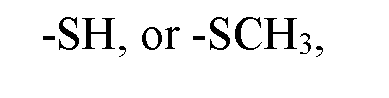

wherein A3 of Formula IV is O or N, and when A3 is N, R6 is a C2 alkyl that bonds to the N of A3;
or a pharmaceutically acceptable salt thereof.
[0034] Regarding Formula I, in different embodiments, one or both of R2 and R6 of Formula I can be, for example, halogen. One or more of Rl, R4, RIO and R14 of Formula I can be, for example, -CH3. R7 of Formula I can be, for example, -OH, -OCH3, -N(CH3)2 or -SCH3. R6 or R7 of Formula I can be, for example, is -OCH3. A of Formula I can be, for example, a pyridine, pyrimidine or pyrazine.
[0035] In different embodiments, the compound of Formula I can have, for example, Formula la or Formula lb:


Formula IV can have the formula

(IVb);
or a pharmaceutically acceptable salt thereof.
[0037] Regarding the compound of Formula IV, in one embodiment, XI, X2, X3 and X4 are CH. In another embodiment of the compound of Formula IV, XI is N, and X2, X3 and X4 are CH. In another embodiment of the compound of Formula IV, X2 is N, and XI, X3 and X4 are CH. In another embodiment of the compound of Formula IV, XI and X3 are N, and X2 and X4 are CH. In another embodiment of the compound of Formula IV, X5 is N, and X6 and X7 are CH. In another embodiment of the compound of Formula IV, X5 and X7 are N, and X6 is CH. In another embodiment of the compound of Formula IV, X6 is N,
embodiment of the compound of Formula IV, X5 is N,

[0038] Different examples of the compound of Formula IV include the following:


and wherein the circle on the right can any of the structures shown in the circle or ellipse on the left.
[0039] In any of the formulas, any halogen can independently be, for example, Br, CI or I. Any C1-C6 alkyl can independently be, for example -

[0040] In different embodiments, the compound of Formula I is selected from the group consisting of


or a pharmaceutically acceptable salt thereof.
[0041] The comp

or a pharmaceutically acceptable salt thereof.
[0042] The compound of Formula III can have the structure

or a pharmaceutically acceptable salt thereof.
[0043] The compound of Formula IV can have the structure

or a pharmaceutically acceptable salt thereof.
[0044] In any of the Formula, examples of heterocyclic structures include, but are not limited to, the following:

Preferably, the PAKl inhibitor causes only 0-30% reduction in the activity of PAK2, PAK3, PAK4, PAK5, PAK6 or PAK7 at the same dose that is used to inhibit PAKl . More preferably, the PAKl inhibitor causes only 0-15% reduction in the activity of PAK2, PAK3, PAK4, PAK5, PAK6 or PAK7 at the same dose that is used to inhibit PAKl . Still more preferably, the PAKl inhibitor causes only 0-10% reduction in the activity of PAK2, PAK3, PAK4, PAK5, PAK6 or PAK7 at the same dose that is used to inhibit PAKl . Most
preferably, the PAKl inhibitor causes only 0-5% reduction in the activity of PAK2, PAK3, PAK4, PAK5, PAK6 or PAK7 at the same dose that is used to inhibit PAKl .
[0046] Also provided is a compound having the structure

[0047] As used herein, HLX gene is a human gene encoding H2.0-like homeobox protein. (Convention has upper case "HLX" as the human gene and "Hlx" as non-human equivalents).
[0048] The HLX gene has RefSeq Accession no. NM_021958.3.


[0050] PAKl is p21 protein (Cdc42/Rac)-activated kinase (a serine/threonine-protein kinase enzyme) that in humans is encoded by the PAKl gene. Human PAKl has the amino acid sequence (GenBank: AAI09300.1 , SEQ ID NO:3):

[0051] Pharmaceutically acceptable salts that can be used with compounds of the present invention are non-toxic salts derived, for example, from inorganic or organic acids including, but not limited to, salts derived from hydrochloric, sulfuric, phosphoric, acetic, lactic, fumaric, succinic, tartaric, gluconic, citric, methanesulphonic and p-toluenesulphonic acids.
[0052] In an embodiment, the compounds described herein are administered in the form of a composition comprising the compound and a carrier. The term "carrier" is used in accordance with its art-understood meaning, to refer to a material that is included in a pharmaceutical composition but does not abrogate the biological activity of pharmaceutically active agent(s) that are also included within the composition. Typically, carriers have very low toxicity to the animal to which such compositions are to be administered. In some embodiments, carriers are inert. Pharmaceutically acceptable carriers and diluents that can be used herewith encompasses any of the standard pharmaceutical carriers or diluents, such as, for example, a sterile isotonic saline, phosphate buffered saline solution, water, and emulsions, such as an oil/water or water/oil emulsions.
[0053] The compounds and compositions of the present invention can be administered to subjects using routes of administration known in the art. The administration can be systemic or localized to a specific site. Routes of administration include, but are not limited to, intravenous, intramuscular, intrathecal or subcutaneous injection, oral or rectal administration, and injection into a specific site.
[0054] All combinations of the various elements described herein, including all subsets, are within the scope of the invention unless otherwise indicated herein or otherwise clearly contradicted by context. Where a numerical range is provided herein for any parameter, it is understood that all numerical subsets of that numerical range, and all the individual integer values contained therein, are provided as part of the invention. Thus, C1 -C6 alkyl includes, for example, the subset of alkyls which are 1-3 carbon atoms, the subset of alkyls which are 2-5 carbon atoms etc. as well as an alkyl which has 1 carbon atom, an alkyl which has 3 carbon atoms, an alkyl which has 6 carbon atom, etc.
[0055] Specifically excluded from Formula I, II, III and IV are any compounds that were known to be inhibitors of PAK1 at the time of the filing of the present application.
[0056] The subject can be any animal such as, for example, a farm animal or veterinary animal, and is preferably a human.
[0057] This invention will be better understood from the Experimental Details, which follow. However, one skilled in the art will readily appreciate that the specific methods and results discussed are merely illustrative of the invention as described more fully in the claims that follow thereafter.
EXPERIMENTAL DETAILS
Summary
[0058] Inhibition of PAK1 for treatment of AML and MDS has been described (U. S. Patent Application Publication Nos. 2015/0299336 Al and 2015/0359815 Al). The present invention addresses the need for small molecule treatments for AML and MDS as well as for tumors expressing elevated levels of HLX and for other conditions in which it is desirable to inhibit PAK1.
Materials and Methods
[0059] Human AML cell lines THP1 and MOLM13 were cultured under standard conditions. For cell proliferation assays, manual cell counts were performed by culturing cells in 24- or 48-well plates. Viable cells were counted using trypan blue exclusion and cell density was re-adjusted in each well every 3-5 days. For cell cycle assays, the Click-iT™ EdU Flow Cytometry Assay system (Invitrogen) was used following the manufacturer's instructions. For apoptosis assays, apoptotic and necrotic cells were analyzed by use of Annexin V/DAPI staining.
[0060] Compounds were screened for PAK1 inhibition using a 50,024 compound library by ChemDiv (San Diego, CA).
Protocol for PAK1 compound primary screen at [ATP]=10xKm; [PAK1 ]=lng
[0061] Materials.
384-well Black Low volume non-binding plates (Cat #4514, Corning),
96-well plates with well volume of up to

multi-channel pipettor (12 channels) or any pipetting device that can accurately deliver repeated volumes of 2.5 μl and 5 μl.

[0063] Prepare Reagents.
Note: Thaw and store the kinase and Development Reagent on ice prior to preparation of dilutions. Equilibrate all other assay components to room temperature.
1. 1.33X Kinase Buffer
Dilute 2 ml of 5X Kinase Buffer to 1.33X with water and any required kinase supplements. In the screen, because the test compounds are in 4% DMSO, the 10 μl kinase reaction will contain all the kinase components in IX Kinase Buffer and 1% DMSO.
2. 4X Test Compounds
Prepare single concentrations of the test compounds in 4% DMSO (in water) at four times the concentrations desired in the 10-μ1 kinase reactions. For an array of wells, A to H by 1 to 12, add 48 μl of water to wells A2-H10, add 2 μl of compound (in DMSO) to wells A2- H10 (to get 25-fold dilution which equals 4%).
3. Kinase/Z'-LYTE® Peptide Substrate Mixture
Prepare 2000 μl of a kinase/Z'-LYTE® Ser/Thr 19 Peptide Substrate Mixture by diluting the kinase to 2X the empirically previously determined optimal concentration (1 ng/^l=0.1ng U, 2X=0.2ng^l) and the Z'-LYTE® Ser/Thr 19 Peptide Substrate to 4 μΜ (8 μl) in 1.33X kinase buffer. Add μl of PAK1 to 1992 μl of 1.33X kinase buffer, add 8 μl
of Z'-LYTE® Ser/Thr 19 Peptide Substrate to the mixture from the previous step, mix gently by pipetting; do not vortex.
4. Phospho-peptide Solution
Add 2 μl of Z'-LYTE® Ser/Thr 19 Phospho-peptide to 498 μl of 1.33X kinase buffer. Mix thoroughly.
5. ATP Solution
Prepare 1110 μl of an ATP solution by diluting the 10 mM ATP in 1.33X kinase buffer to 4X the desired ATP concentration (500μΜ).
6. Development Solution
Prepare Development Solution as specified in the Development Reagent Certificate of
Analysis included with kit.
[0064] Assay Protocol.
1. Kinase Reaction (Primary Reaction)
Add each component in the following order at the appropriate time points according to the table below:


room temperature.
Note: The Kinase Reaction contains IX inhibitor, IX Kinase, IX ATP, and 2 μΜ Z'- LYTE® Ser/Thr 19 Peptide Substrate.
2. Development Reaction (Secondary Reaction)
Add 5 μl of Development Solution to all working wells, mix contents of wells of assay plate and incubate the 15 μl development reaction for 1 hour at room temperature.
3. Stop Step and Fluorescence Detection
Add 5 μl of Stop Reagent to all working wells, mix contents of wells of assay plate and measure fluorescence signals.
Note: The 20-μ1 (final volume) assay contains 1 μΜ Z'-LYTE® Ser/Thr 19 Peptide Substrate.
Protocol for determining IC 50 Values for test compounds at [ATP]=10xKm; [PAK1 ]=lng
[0065] Materials.
384-well Black Low volume non-binding plates (Cat #4514, Corning),
96-well plates with well volume of up to 300 μl . (Corning),
multi-channel pipettor (12 channels) or any pipetting device that can accurately deliver repeated volumes of 2.5 μl and 5 μl.
[0066] Reagents.
Z'-LYTE® Kinase Assay Kit

[0067] Prepare Reagents.
Note: Thaw and store the kinase and Development Reagent on ice before preparing dilutions. Equilibrate all other assay components to room temperature.
1. Kinase Reaction Buffer
Add 2 ml 5X Kinase Buffer to 8 ml water to prepare 5 ml of Kinase Buffer A.
2. Test Compounds
Thaw the concentrated stock of test compound at room temperature.
2.1. Add 10 μl of 100% DMSO to row A, columns 2-11 (wells A2-A11) in a 96-well assay plate (non-binding surface). To well Al, add 15 μl of the concentrated stock of test compound. This will be the highest concentration of test compound in a 10-point titration curve. Use a concentration that is 100X the final desired IX concentration per 10 μl kinase reaction. For example, if the final IX concentration of 100 μΜ is desired for the highest concentration of test compound in the 10 point titration curve, add 15 μl of 10 mM test compound to well Al.
2.2. Titrate the 100X test compound three-fold across the assay plate from well Al to well A10. To perform this threefold titration, transfer 5 μl of the 100X test compound from well Al to the 10 μl of 100% DMSO in well A2. Repeat for wells A2-A10. Discard the final 5 μl from well A10 so that all wells contain 10 μl. Do not titrate the compound into wells Al l and A12, because these will be vehicle-only (DMSO) control for the 0% inhibition, 0% phosphorylation, and 100% phosphorylation controls. This completes the 10-point threefold titration of test compound at 100X concentration.
2.3. Transfer a 2 μl aliquot of the 100X test compound titration series from each well in row A of the 96-well assay plate (wells A1-A12) to row B (wells B1-B12). Add 48 μl of complete kinase reaction buffer to each well in row B to dilute the 100X three-fold titration series of test compound to 4X (the DMSO will also be diluted, to 4%).
2.4. Transfer 2.5 μl of the 4X concentrated three-fold titration series of test compound from row B of the 96-well assay plates to quadruplicate wells of a 384-well assay plate. Each well in columns 21-24 should contain 2.5 μl of 4% DMSO (no compound) in complete kinase reaction buffer. This 2.5 μl addition of 4X test compound in 4% DMSO produces a IX concentration of test compound in 1% DMSO for a 10 μl kinase reaction.
2.5. Dispense 2.5 μl of complete kinase reaction buffer to each well in columns 23-24 of the 384-well assay plate.
[0068] Prepare Reagents
1. Prepare 500 μl of 4 μΜ Z'-LYTE® Phospho-peptide by adding 2 μl of 1 mM Z'-LYTE® Phospho-peptide to 498 μl of complete kinase reaction buffer.
2. Dispense 5 μl of the 4 μΜ Z'-LYTE® Phospho-peptide (2X) to each well in column 24 of the 384-well assay plate.
3. Prepare 1000 μl of 4 μΜ Z'-LYTE® Peptide Substrate (2X)/2X kinase solution in complete kinase reaction buffer. If necessary, prepare an intermediate dilution of the kinase in complete kinase reaction buffer before preparing the Z'-LYTE™ Peptide Substrate (2X)/2X kinase solution. Use the appropriate 2X kinase concentration in the assay to phosphorylate 20-50% of the 0% inhibition controls at the ATP concentration desired.
4. Dispense 5 μl of the Z'-LYTE® Peptide Substrate (2X)/2X kinase solution to each well in columns 1-23.
5. Prepare 1000 μl of 4X ATP in complete kinase reaction buffer. Use the appropriate 4X ATP concentration at the desired kinase concentration to achieve 20-50% phosphorylation of the 0% inhibition controls in the assay.
6. Dispense 2.5 μl of the 4X ATP in complete kinase reaction buffer to each well in columns 1-22.
7. Shake the assay plate on a plate shaker for 30 seconds to mix the reactions thoroughly.
8. Incubate the assay plate for one hour at room temperature (20-25°C).
[0069] Prepare Development Solution
1. Prepare Development Solution as specified in the Development Reagent Certificate of Analysis included with this kit. The Certificate of Analysis indicates the correct dilution for each lot of Development Reagent into Development Buffer. Dilution factors for the Development Reagent can vary from lot to lot.
2. Add 5 μl of Development Solution to each well in the 384-well assay plate.
3. Shake the assay plate on a plate shaker for 30 seconds to mix the reactions thoroughly.
4. Incubate the assay plate for one hour at room temperature (20-25°C).
[0070] Stop Step and Fluorescence Detection
1. Add 5 μl of Stop Reagent to each well in the 384-well assay plate.
2. Shake the assay plate on a plate shaker for 30 seconds to mix the reactions thoroughly.
3. Measure the coumarin and fluorescein emission signals on a fluorescence plate reader (excitation: 400 nm; emission 445 and 520 nm, respectively).
[0071] Analyze Data.
1. Calculate the emission ratio for each sample and control well.
2. Calculate the percent phosphorylation for each sample well and control well.
3. Calculate the percent inhibition for each sample well in the inhibitor titration series using the following equation:

4. Graph the percent inhibition (y-axis) versus the log concentration of the text compound (x-axis) using an appropriate graphing software program. From this graph, calculate the test compound concentration that inhibits kinase activity by 50% (the IC50 value).

[0072] General procedure. Analytical thin layer chromatography (TLC) was performed with Sorbfil TLC plates. Visualization was accomplished by irradiation under a 254 nm UV lamp.
 spectra, at 400 and 100 MHz, respectively, were recorded with a Bruker DPX-400 spectrometer; chemical shifts are reported in ppm with the solvent resonance as the internal standard
 dimethyl sulfoxide (DMSO-de) 2.49 ppm. The following abbreviations are used in NMR spectra descriptions: s = singlet, d = doublet, t = triplet, q = quartet, m = multiplet, br = broad. lUPAC nomenclature is used for atom numbering. Purities of all synthesized compounds were confirmed by LC-MS analysis performed with a Shimadzu HPLC instrument with PE SCIEX API 150EX mass- and Shimadzu UV- (254 and 215 nm) detectors. Separation was achieved with a XBridge C18 3.5μ (4.6* 100 mm) column with use of a gradient (5- 95%) of acetonitrile in water both with 0.05% TFA over 10 min at 0.9 mLmin"1.
[0073] The starting amine 1 and an aldehyde 2 in equimolar amounts was mixed in anhydrous MeCN and the resulting solution was heated at reflux for 2 h to ensure complete formation of the respective imine intermediate. The reaction mixture was then cooled to room temperature and evaporated to dryness. The solid residue was further dried by
addition of toluene and concentration of the resulting suspension in vacuo (repeated twice). The residue was then suspended in anhydrous MeCN and treated with a solution of an equimolar amount of TMSC1 in anhydrous DCM. The mixture was stirred at ambient temperature for 30 min (in most cases the suspension cleared), and then treated with a solution of isocyanide 3 (1 equiv) in MeCN and heated at 70 °C overnight. At this stage, all of the reactions described herein were complete by LCMS analyses (as judged by the disappearance of 1). In a number of cases the products isolated by filtration were at least 90% pure as judged from LCMS and 1H NMR data. In some cases, chromatographic isolation of the products was required (silica gel, eluted by appropriate gradients of 0-10% methanol in dichloromethane).

[0074] 4-( 6-Chloro-3-(o-tolylamino)imidazo[ 1, 2-a ]pyridin-2-yl)-2-methoxyphenol.

 NMR (400 MHz, DMSO-d6) δ ppm: 9.10 (s, 1H), 8.14 (s, 1H), 7.66 (d, J = 9.54 Hz, 1H), 7.52 (s, 1H), 7.47 - 7.45 (m, 2H), 7.33 (dd, J = 9.41 , 2.08 Hz, 1H), 7.16 (d, J = 7.21 Hz, 1H), 6.84 (t, J = 7.46 Hz, 1H), 6.77 (d, J = 8.31 Hz, 1H), 6.66 (t, J = 7.46 Hz, 1H), 5.88 (d, J = 7.95 Hz, 1H) 3.58 (s, 3H), 2.41 s, 3H). LCMS m/z 380.3 (M+H)+ Rt 5.41 min.

[0075] 2-(4-Methoxyphenyl)-5-methyl-N-(o-tolyl)imidazo[ l, 2-a]pyridin-3-amine.

[0076]

MHz, DMSO-de) δ ppm: 8.06 (d, J= 7.34 Hz, 2H), 7.77 (d, J= 6.60 Hz, 1H), 7.52 (s, 1H), 7.37 (t, J= 7.46 Hz, 2H), 7.26 (t, J= 7.21 Hz, 1H), 7.13 (dd, J= 12.59, 6.72 Hz, 2H), 6.82 (q, J= 13.57, 6.72 Hz, 2H), 6.84 (t, J= 7.21 Hz, 1H), 5.86 (d, J= 7.95 Hz, 1H), 2.58 (s, 3H), 2.41 (s, 3H). LCMS m/z 314.4 M+H)+ Rt 5.58 min.
[0077]

methylimidazo[l,2-a]pyridin-3-amine. l NMR (400 MHz, DMSO-d6) δ ppm: 7.88 (d, J = 8.68 Hz, 2H), 7.77 (d, J= 6.72 Hz, 1H), 7.73 (s, 1H), 7.30 (s, 1H), 6.69 - 6.73 (m, 3H), 6.64 (d, J= 6.68 Hz, 1H), 6.00 (dd, J= 8.56, 2.69 Hz, 1H), 5.90 (d, J= 2.45 Hz, 1H), 4.12 (m, 4H), 2.90 (s, 6H), 2.35 (s, 3H). LCMS m/z 401.3 M+H)+ Rt 5.41 min.
[0078]

(methylthio)phenyl)imidazo[l,2-a]pyridin-3-amine. XH NMR (400 MHz, DMSO-de) δ ppm: 8.01 (d, J= 8.44 Hz, 2H), 7.74 (s, 1H), 7.42 (d, J= 8.80 Hz, 1H), 7.27 (d, J= 8.44 Hz, 2H), 7.15 (dd, J= 8.80, 6.85 Hz, 1H), 6.66 (d, J= 8.56 Hz, 1H), 6.59 (d, J= 7.21 Hz, 1H), 5.83-


[0080] General procedure. Analytical thin layer chromatography (TLC) was performed with Sorbfil TLC plates. Visualization was accomplished by irradiation under a 254 nm UV lamp.
 spectra, at 400 and 100 MHz, respectively, were recorded with a Bruker DPX-400 spectrometer; chemical shifts are reported in ppm with the solvent resonance as the internal standard (CDCI3 7.26 ppm, dimethyl sulfoxide (DMSO-de) 2.49 ppm. The following abbreviations are used in NMR spectra descriptions: s = singlet, d = doublet, t = triplet, q = quartet, m = multiplet, br = broad. IL1PAC nomenclature is used for atom numbering. Purities of all synthesized compounds were confirmed by LC-MS analysis performed with a Shimadzu HPLC instrument with PE SCIEX API 150EX mass- and Shimadzu UV- (254 and 215 nm) detectors. Separation was achieved with a XBridge C18 3.5μ (4.6* 100 mm) column with use of a gradient (5- 95%) of acetonitrile in water both with 0.05% TF A over 10 min at 0.9 mLmin-1.
[0081] Compound 3. Compound 1 (0.5 mol) was dissolved in glacial acetic acid (150 mL) with heating and compound 2 (0.75 mol) was added. The mixture was refluxed for about 6 hours. The reaction mixture was cooled down and the precipitate was filtered off. The product was crystallized from isopropanol. Yield of compound 3 was 77% (70 g).
spectra, at 400 and 100 MHz, respectively, were recorded with a Bruker DPX-400 spectrometer; chemical shifts are reported in ppm with the solvent resonance as the internal standard (CDCI3 7.26 ppm, dimethyl sulfoxide (DMSO-de) 2.49 ppm. The following abbreviations are used in NMR spectra descriptions: s = singlet, d = doublet, t = triplet, q = quartet, m = multiplet, br = broad. IL1PAC nomenclature is used for atom numbering. Purities of all synthesized compounds were confirmed by LC-MS analysis performed with a Shimadzu HPLC instrument with PE SCIEX API 150EX mass- and Shimadzu UV- (254 and 215 nm) detectors. Separation was achieved with a XBridge C18 3.5μ (4.6* 100 mm) column with use of a gradient (5- 95%) of acetonitrile in water both with 0.05% TF A over 10 min at 0.9 mLmin-1.
[0081] Compound 3. Compound 1 (0.5 mol) was dissolved in glacial acetic acid (150 mL) with heating and compound 2 (0.75 mol) was added. The mixture was refluxed for about 6 hours. The reaction mixture was cooled down and the precipitate was filtered off. The product was crystallized from isopropanol. Yield of compound 3 was 77% (70 g).
[0082] Compound 4. Compound 3 (0.3 mol) was added to POCI3 (0.3 mol) and the mixture was refluxed for 3 hours. POCI3 was removed in vacuo and chloroform (300 mL) was added to the residue. The solution was poured into water containing ice, neutralized with saturated aqueous NaHCCb to pH=8, the organic layer was separated, washed with water, dried over MgS04 and concentrated in vacuo. The residue was crystallized from benzene. Yield of compound 4 was 60%.
[0083] D245-0091 7-(2-Ethylpiperidin- l-yl)-5-methyl-2-(p-tolyl)- [ 1,2,4] triazolo [1,5- a]pyrimidine. Compound 4 (0.5 g) was dissolved in benzene (30 mL) with heating and compound 5 (stoichiometric amount) was added. The mixture was refluxed for 0.5 hour, benzene was removed in vacuo, and the residue was crystallized from isopropanol. Yield of compound D245-0091 was 65 %. lH NMR (400 MHz, DMSO-d6) δ ppm: 8.05 (d, J = 8.07 Hz, 2H), 7.35 (d, J= 8.07 Hz, 2H), 6.47 (s, 1H), 5.03 (br. s, 1H), 4.13 (d, J= 11.86 Hz, 1H), 3.35 (m, 1H), 2.45 (s, 3H), 2.37 (s, 3H), 1.59-1.86 (m, 8H), 0.83 (t, J = 7.34 Hz, 3H). LCMS m/z 336.5 (M+H)+ Rt 6.85 min.

[0084] General procedure. Analytical thin layer chromatography (TLC) was performed with Sorbfil TLC plates. Visualization was accomplished by irradiation under a 254 nm UV lamp. lR and liC NMR spectra, at 400 and 100 MHz, respectively, were recorded with a Bruker DPX-400 spectrometer; chemical shifts are reported in ppm with the solvent
resonance as the internal standard (CDCI3 7.26 ppm, dimethyl sulfoxide (DMSO-de) 2.49 ppm. The following abbreviations are used in NMR spectra descriptions: s ::= singlet, d = doublet, t = triplet, q = quartet, m = multiplet, br = broad. lUPAC nomenclature is used for atom numbering. Purities of all synthesized compounds were confirmed by LC-MS analysis performed with a Shimadzu HPLC instrument with PE SCIEX API 1 50EX mass- and Shimadzu UV- (254 and 215 nm) detectors. Separation was achieved with a XBridge C 18 3.5μ (4.6* 100 mm) column with use of a gradient (5- 95%) of acetonitrile in water both with 0.05% TFA over 10 min at 0.9 mLmin"1.
[0085] Compound 2. Compound 1 (27.1 g, 141 mmol) was dissolved in toluene (100 mL). DMF-DMA (17.6 g, 148.0mmol) was added and the reaction mixture was stirred at 70 °C. When the starting material was consumed (monitored by TLC), the reaction mixture was allowed to cool to room temperature, and the solvent was evaporated to furnish 34.1 g (87%) of the title compound 2 (> 95% pure) which was used in the next step.
[0086] Compound 3. Compound 2 (34.0 g, 138 mmol) and hydroxylamine hydrochloride (10.1 g, 145 mmol) were dissolved in MeOH (150 mL) and the resulting solution was stirred at room temperature. The reaction was monitored by HPLC. After 18 h, 90% of the solvent was evaporated and the residue was dissolved in CH2C12, washed with water and dried The solvent was evaporated to furnish 28.5 g (yield 84%) (> 95%

pure) of the compound 3.
[0087] Compound 4. Compound 3 (28.5g, 115 mmol) was dissolved in 100 mL of dry THF and added to the suspension of L1AIH4 (4.4g, 115 mmol) in dry THF (200ml) at a rate that maintains the reaction temperature at -20 - 5°C The mixture was stirred at 0°C for 1 h. The mixture was cooled to -15°C and 9 ml saturated solution of potassium tartrate in was added at a rate that maintains the temperature under 10°C After complete addition the mixture was stirred for 12 h at room temperature. The precipitate was collected by filtration, washed with THF. Concentration of the filtrate afforded compound 4 (20.3g, 86%).
[0088] Compound 5. A 1-L Erlenmeyer flask, fitted with a magnetic stirrer, was charged with compound 4 (20.0 g, 97 mmol) and 400 ml of dry CH2C12. Activated Mn02 (59.3 g, 682 mmol, 7 eq.) was slowly added. After a complete addition, a reflux condenser was attached to the reaction vessel, and the mixture was stirred at 40°C for 20 h until acceptable conversion by NMR. The reaction was cooled, filtered through Celite™, and the residue was extracted several times with warm CH2CI2. The combined extracts were evaporated to give compound 5 (15.5g, 78%).
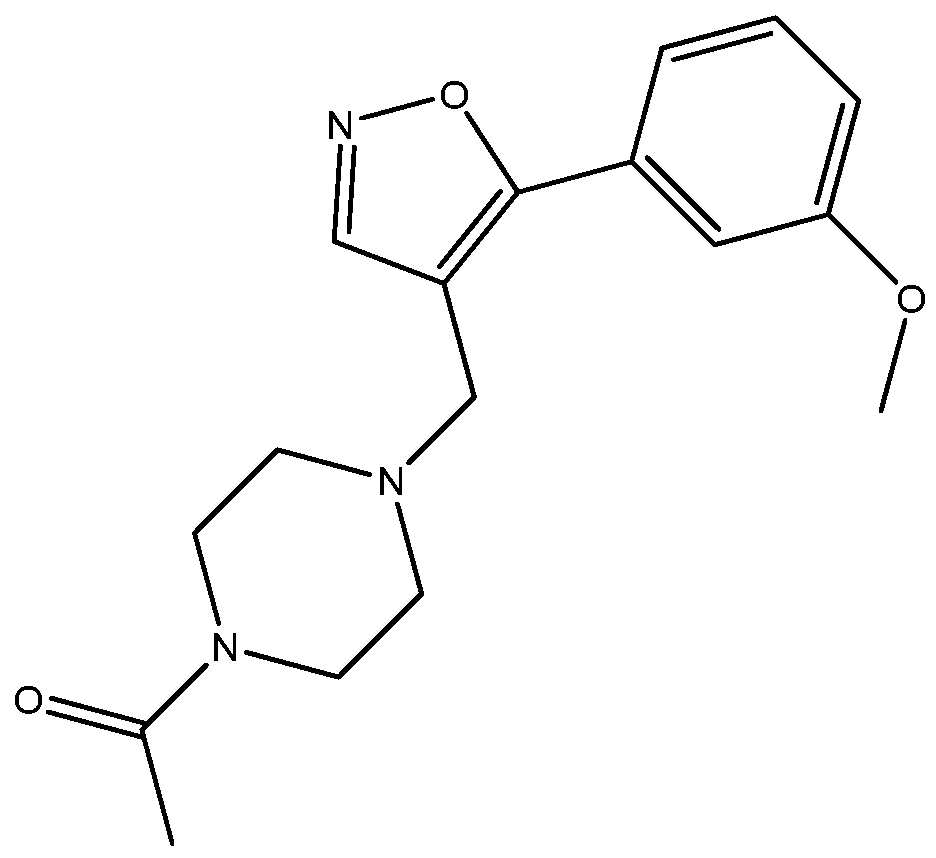
[0089] T813-0242 l-(4-((5-(3-Methoxyphenyl)isoxazol-4-yl)methyl)piperazin-l- yl)ethanone. The mixture of compound 5 (0.500g, 2.46 mmol) and compound 6 (0.347g, 2.71 mmol) in 10 mL of dichloromethane was stirred at RT for 1 h, then sodium triacetoxyborohydride (1.304g, 6.15 mmol) was added and the mixture was stirred at RT overnight. The mixture was diluted with dichloromethane, washed with 1 0 % aqueous solution of sodium carbonate, water and brine, dried over anhydrous , filtered and

concentrated under reduced pressure. The obtained residue was separated by chromatography on silica gel to give T813-0242 (0.630g, 81%). l NMR (400 MHz, δ ppm: 8.62 (s, 1H), 7.40-7.51 (m, 3H), 7.10 (m, 1H), 3.83 (s, 3H), 3.50 (s, 2H),

3.42 (m, 4H), 2.42 (dt, J = 23.84, 4.52 Hz, 4H), 1.98 (s, 3H). LCMS m/z 316.3 (M+H)+ Rt 4.01 min.
[0090] Additional derivatives of these compounds can be synthesized by standard techniques in the art, for example, see Modem Organic Synthesis in the Laboratory, Oxford University Press, USA (September 10, 2007), and Advanced Organic Chemistry: Reactions, Mechanisms and Structure, Jerry March, John Wiley & Sons, New York (1992), which are hereby incorporated by reference.
Results and Discussion
[0091] A cell-based small molecule screening with 50,024 compounds was performed based on AML cell lines that grow in a PAKl -dependent manner, which has been previously described (Pandolfi et al, 2015). This was followed by single point PAKl enzymatic activity screening against 360 compounds. Forty-six identified compounds that scored positive in this assay were subjected to enzymatic activity assays against other PAK family kinases including PAK2, PAK3, PAK4, PAK6, and PAK7. Compounds that were highly selective for PAKl and showed less than 30% inhibitory activity towards all other family members were selected for further testing and subjected to an additional round of PAKl enzymatic testing by concentration response curves (Fig. 1). This is resulted in the identification of lead scaffold compounds (Fig. 2). Those compounds were studied in further detail and key biochemical, pharmacokinetic, and structure-activity characteristics were determined.
[0092] C273 series: Compound C273-0489 showed an IC50 of 470 nM against PAKl , but no significant inhibitory activity against any of the other PAK family members (Table
1). Also, there was no significant inhibition against a larger kinase panel (Fig. 3); thus series C273 compounds appear to be highly selective for inhibiting PAK1.
Table 1. Selectivity of Compound C273-0489 inhibition for PAK1
versus related PAK kinases.
DiscoveRx Gene Symbol Entrez Gene Symbol C273-0489

[0093] Microsomal stability assays were performed (human, rat, and mouse) for Compound C273-0489 and are summarized in Fig. 4 and Table 2. Pharmacokinetic (PK) assessment was performed in rats after 2mg/kg C273-0489 IV injection, and after 10 mg/kg C273-0489 PO administration (Fig. 5 and Table 3). In summary, the data show that series C273 has multiple active derivatives, favorable structure-activity relationship (SAR), low molecular weight (which will enable addition of substituents for further optimization), and favorable initial PK properties.
Table 2. Microsomal stability assessment of Compound C273-0489.


[0094] T813 series: Compound T813-0242 showed an IC50 of 900 nM against PAK1, but no significant inhibitory activity against any of the other PAK family members (Table 4). Also, there was no significant inhibition against a larger kinase panel (Fig. 6). Thus, series T813 seems to be highly selective for inhibiting PAK1.

versus related PAK kinases.
DiscoveRx Gene Symbol Entrez Gene Symbol T813 -0242

[0095] Microsomal stability assays were performed (human, rat, and mouse) and are shown in Fig. 7 and Table 5. PK assessment was performed in rats after 2mg/kg IV injection, and 10 mg/kg PO administration (Fig. 8 and Table 6). In summary, the data show that series T813 has low molecular weight (which will enable addition of substituents for further optimization), high specificity for PAKl, and favorable biochemical and PK properties.
Table 5. Microsomal stability assessment of Compound T813-0242.

Table 6. Pharmacokinetic (PK) assessment of Compound T813-0242 performed in rats after 2 mg/kg IV injection, and after 10 mg/kg PO administration.


[0096] D245 series: Compound D245-0091 showed an IC50 of 5 μΜ against PAKl, but no significant inhibitory activity against any of the other PAK family members (Table 7). Also, there was no significant inhibition against a larger kinase panel (Fig. 9). Thus series D245 appears to be highly selective for inhibiting PAKl .

versus related PAK kinases.
DiscoveRx Gene Symbol Entrez Gene Symbol D245-0091

[0097] Microsomal stability assays were performed (human, rat, and mouse) and are shown in Fig. 10 and Table 8. PK assessment was performed in rats after 2mg/kg IV injection, and 10 mg/kg PO administration (Fig. 11 and Table 9). In summary, the data show that series D245 has low molecular weight (which will enable addition of substituents for further optimization) and high specificity for PAK1.
Table 8. Microsomal stability assessment of Compound D245-0091.

Table 9. Pharmacokinetic (PK) assessment of Compound D245-0091 performed in rats after 2 mg/kg IV injection, and after 10 mg/kg PO administration.


[0098] 42-0125 1 series: Three active compounds were identified in the screen, which had been previously reported in the literature. Their structures are shown below:

[0099] Structure-activity relationship analysis showed that the left side of the molecule is critical of selectivity. Optimization of the biaryl moiety led to the design and preparation of novel molecule, 42-0125_l :

[00100] Compound 42-0125 1 showed an IC50 of < 30 nM against PAK1. Assessment of this novel compound for microsomal stability (Table 10), solubility (Table 11), CYP inhibition (Table 12), and caco-2 permeability (Table 13) properties revealed favorable characteristics. Pharmacokinetic properties were determined in rats upon IV (3 mg/kg) and PO (30 mg/kg) application (Fig. 12 and Table 14).
Table 10. Microsomal stability assessment of Compound 42-0125_l .

Table 11. Solubility assessment of Compound 42-0125_l .


Table 13. Caco-2 permeability assessment of Compound


Table 14. Pharmacokinetic (PK) assessment of Compound 4
 performed in rats after 3 mg/kg IV injection, and after 30 mg/kg PO administration

Allen, J.D., Lints, T., Jenkins, N.A., Copeland, N.G., Strasser, A., Harvey, R.P. and Adams, J.M. (1991). Novel murine homeo box gene on chromosome 1 expressed in specific hematopoietic lineages and during embryogenesis. Genes Dev. 4, 509-520.
Deguchi, Y. and Kehrl, J.H. (1991). Selective expression of two homeobox genes in CD34- positive cells from human bone marrow. Blood 2, 323-328.
Deguchi, Y., Kirschenbaum, A. and Kehrl, J.H. (1992). A diverged homeobox gene is involved in the proliferation and lineage commitment of human hematopoietic progenitors and highly expressed in acute myelogenous leukemia. Blood 11 , 2841-2848.
Hanahan D, Weinberg RA: The hallmarks of cancer. Cell 2000, 100(l):57-70.
Hentsch, B., Lyons, I., Li, R., Hartley, L., Lints, T.J., Adams, J.M. and Harvey, R.P. (1996). Hlx homeo box gene is essential for an inductive tissue interaction that drives expansion of embryonic liver and gut. Genes Dev. 1 , 70-79.
Marcucci, G, Haferlach, T. and Dohner, H. (2011). Molecular genetics of adult acute myeloid leukemia: prognostic and therapeutic implications. J. Clin. Oncol. 5, 475-486.
Pandolfi A, Stanley RF, Yu Y, Bartholdy B, Pendurti G, Gritsman K, Boultwood J, Chernoff J, Verma A, Steidl U. (2015). PAK1 is a therapeutic target in acute myeloid leukemia and myelodysplastic syndrome. Blood 27; 126(9): 11 18-27. Epub 2015 Jul 13.
Steidl, U., Rosenbauer, F., Verhaak, R.G., Gu, X., Ebralidze, A., Otu, H.H., Klippel, S., Steidl, C, Bruns, I., Costa, D.B. et al. (2006). Essential role of Jun family transcription factors in PU. l knockdown-induced leukemic stem cells. Nat. Genet. 11 , 1269-1277.
U.S. Patent Application Publication No. 2015/0299336 Al , published October 22, 2015, Steidl, Therapeutic and diagnostic target gene in acute myeloid leukemia.
U.S. Patent Application Publication No. 2015/0359815 Al , published December 15, 2015, Steidl, et al, PAKl inhibition for treatment of acute myeloid leukemia and myelodysplastic syndromes.
Claims
1. A method of treating acute myeloid leukemia (AML), myelodysplasia syndrome (MDS), or a tumor having elevated expression of H2.0-like homeobox (HLX) and/or elevated expression of p21 protein (Cdc42/Rac)-activated kinase (PAK1) in a subject, the method comprising administering to the subject a compound of Formula I, II, III or IV in an amount effective to inhibit PAK1 in a subject, wherein Formula I has the structure:


heteroaryl, wherein the heteroaryl or heterocyclic contains one or more of the same or different heteroatom, or optionally substituted phenyl or benzyl, wherein the phenyl or benzyl is optionally substituted with one or more of halogen, -OH, -NH2, -CH3, or -OCH3; wherein R5, R6, R7, R8 and R9 of Formula I are independently H, halogen, -OH, -NH2, or 6-membered cyclic

or heterocyclic, or 5- or 6-membered aryl or heteroaryl, wherein the heteroaryl or heterocyclic contains one or more of the same or different heteroatom, or optionally substituted phenyl or benzyl, wherein the phenyl or benzyl is optionally substituted with one or more of halogen,

heteroatom, or
 represents the point of attachment to the molecular scaffold; wherein RIO, Rl l, R12, R13 and R14 of Formula I are independently H, halogen, -OH,
 cyclic or heterocyclic, or 5- or 6- membered aryl or heteroaryl, wherein the heteroaryl or heterocyclic contains one or more of the same or different heteroatom, and/or RIO and Rl 1 , or Rl 1 and R12, or R12 and R13, or R13 and R14 of Formula I together form a 5- or 6-membered hetrocyclic or heteroaryl containing one or more of the same or different heteroatom; or a pharmaceutically acceptable salt thereof; wherein Formula II has the structure:

wherein Rl, R2, R3, R4, R5 and R6 of Formula II are independently H, halogen, -OH, -NH2, -NHCH3, -N(CH3)2, C1 -C6 alkyl, -OCH3, -COCH3, -SH, or -SCH3,
or a pharmaceutically acceptable salt thereof; wherein Formula III has the structure:
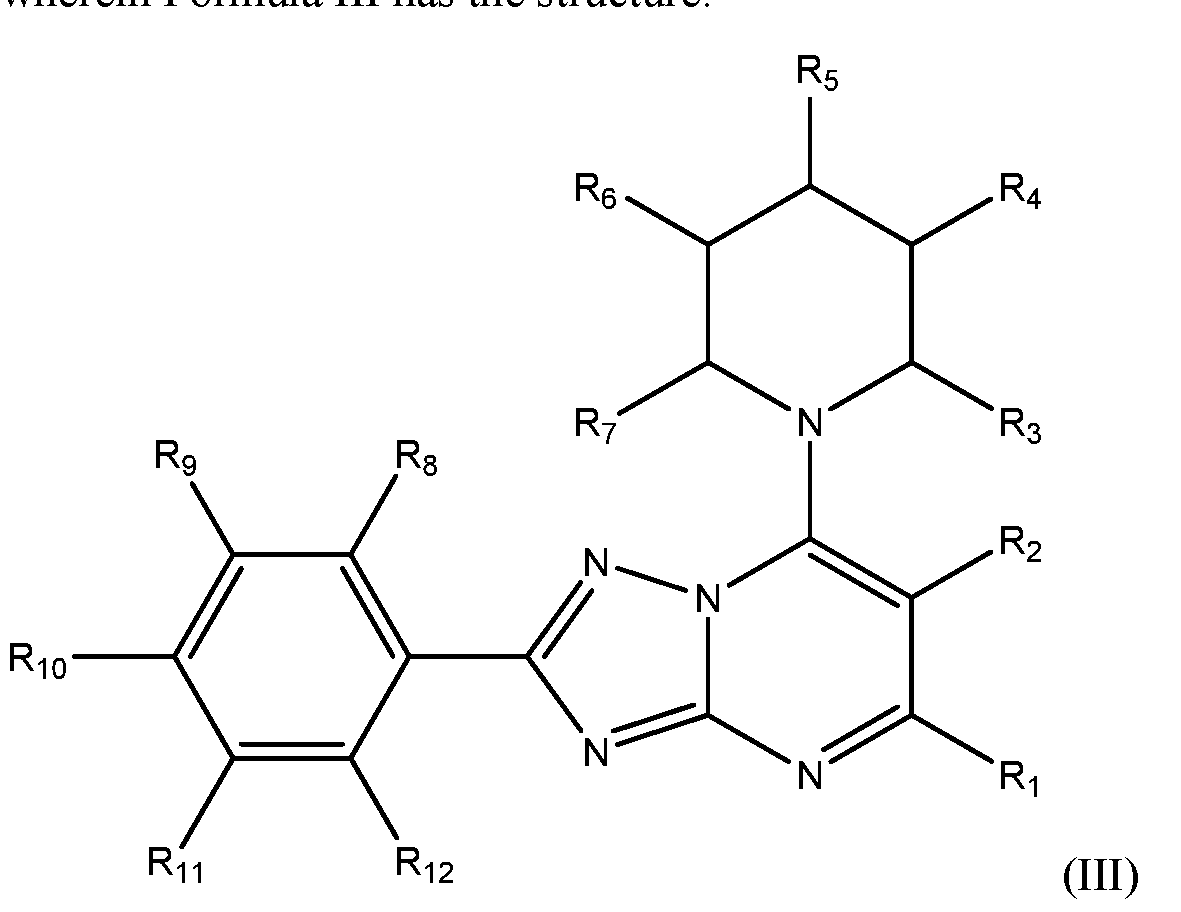
wherein Rl, R2, R3, R4, R5, R6, R7, R8, R9, RIO, Rl l and R12 of Formula III are independently H, halogen,


wherein Al and A2 of Formula IV are independently

2. The method of claim 1, wherein one or both of R2 and R6 of Formula I is halogen.
3. The method of claim 1 or 2, wherein one or more of Rl , R4, RIO and R14 of Formula I is -CH3.
4. The method of any of claims 1 -3, wherein R7 of Formula I is -OH, -OCH3,

5. The method of any of claims 1-3, wherein R6 or R7 of Formula I is -OCH3.
6. The method of any of claims 1 -5, wherein A of Formula I is a pyridine, pyrimidine or pyrazine.
7. The method of any of claims 1-5, wherein the compound of Formula I has the formula


wherein any X is independently CH2, NH, O or S, or a pharmaceutically acceptable salt thereof.
8. The method of claim 1, wherein in the compound of Formula IV, XI, X2, X3 and X4 are CH.
9. The method of claim 1, wherein in the compound of Formula IV, XI is N, and X2, X3 and X4 are CH.
10. The method of claim 1, wherein in the compound of Formula IV, X2 is N, and XI, X3 and X4 are CH.
11. The method of claim 1, wherein in the compound of Formula IV, XI and X3 are N, and X2 and X4 are CH.
12. The method of claim 1, wherein in the compound of Formula IV, X5 is N, and X6 and X7 are CH.
13. The method of claim 1, wherein in the compound of Formula IV, X5 and X7 are N, and X6 is CH.
14. The method of claim 1, wherein in the compound of Formula IV, X6 is N, and X5 and X7 are CH.
15. The method of claim 1, wherein in the compound of Formula IV, X5 is N, X7 is CH,
and

16. The method of claim 1, wherein the compound of Formula IV has the formula

(IVb), or a pharmaceutically acceptable salt thereof.
17. The method of any of claims 1-16, wherein any halogen is independently Br, CI or I.
18. The method of any of claims 1-17, wherein any C1 -C6 alkyl is independently -CH3

19. The method of claim 1, wherein the compound of Formula I is selected from the group consisting of

or a pharmaceutically acceptable salt thereof.
20. The method of claim 1, wherein the compound of Formula II has the structure
or a pharmaceutically acceptable salt thereof.
The method of claim 1, wherein the compound of Formula III has the structure
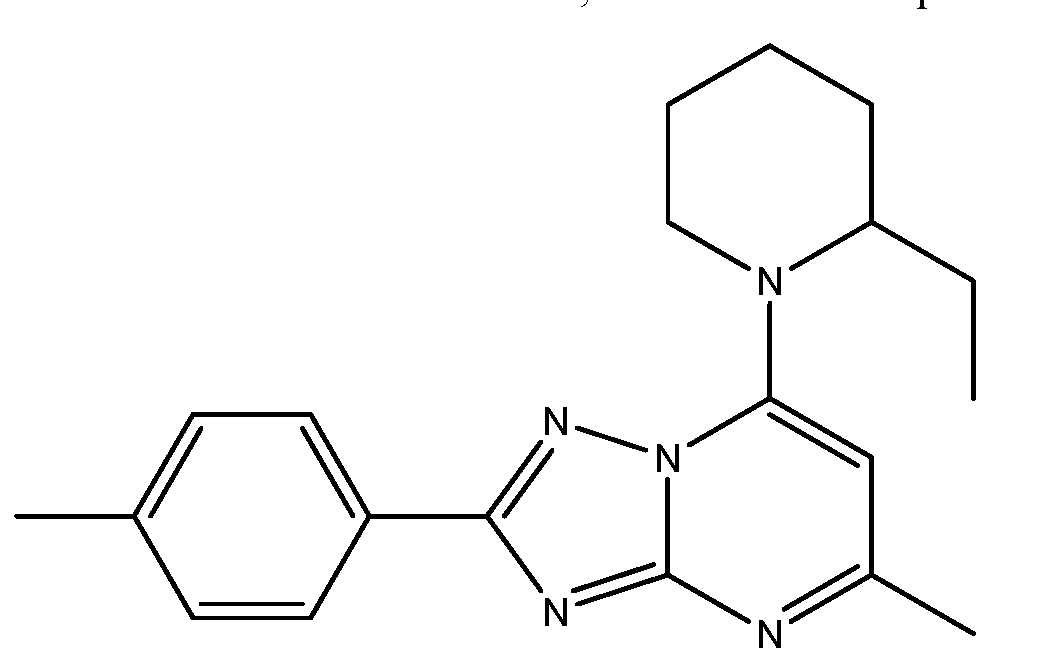
or a pharmaceutically acceptable salt thereof.
22. The method of claim 1, wherein the compound of Formula IV has the structure

or a pharmaceutically acceptable salt thereof.
23. The method of any of claims 1 -22, wherein the PAK1 inhibitor causes only 0-5% reduction in the activity of PAK2, PAK3, PAK4, PAK5, PAK6 or PAK7 at the same dose that is used to inhibit PAK1.
24. The method of any of claims 1 -22, wherein the PAK1 inhibitor causes only 0-10% reduction in the activity of PAK2, PAK3, PAK4, PAK5, PAK6 or PAK7 at the same dose that is used to inhibit PAK1.
25. The method of any of claims 1 -22, wherein the PAK1 inhibitor causes only 0-15% reduction in the activity of PAK2, PAK3, PAK4, PAK5, PAK6 or PAK7 at the same dose that is used to inhibit PAK1.
26. The method of any of claims 1 -22, wherein the PAK1 inhibitor causes only 0-30% reduction in the activity of PAK2, PAK3, PAK4, PAK5, PAK6 or PAK7 at the same dose that is used to inhibit PAK1.
27. The method of any of claims 1-26, wherein the subject has AML.
28. The method of any of claims 1-26, wherein the subject has MDS.
29. The method of any of claims 1-26, wherein the subject has elevated expression of HLX.
30. The method of any of claims 1-26, wherein the subject has a tumor having elevated expression of HLX.
31. The method of any of claims 1-26, wherein the subject has a tumor having elevated expression of HLX and elevated expression of PAKl.
32. The method of any of claims 1-26, wherein the subject has a tumor having increased PAKl activity.
33. The method of any of claims 1-26, wherein the PAKl inhibitor reduces proliferation of AML, MDS and/or tumor cells having elevated expression of HLX and/or PAKl.
34. The method of any of claims 1-26, wherein the PAKl inhibitor induces apoptosis in AML, MDS and/or tumor cells having elevated expression of HLX and/or PAKl.
35. The method of any of claims 1-26, wherein the PAKl inhibitor reduces colony formation of AML, MDS and/or tumor cells having elevated expression of HLX and/or PAKl.
36. The method of any of claims 1-26, wherein administration of the PAKl inhibitor to the subject is effective to increase survival of the subject compared to untreated controls.
37. A method of inhibiting PAKl in a subject, the method comprising administering to the subject a compound of Formula I, II, III or IV in an amount effective to inhibit PAKl in a subject, wherein Formula I has the structure:


or 6-membered cyclic or heterocyclic, 5- or 6-membered aryl or

heteroaryl, wherein the heteroaryl or heterocyclic contains one or more of the same or different heteroatom, or optionally substituted phenyl or benzyl, wherein the phenyl or benzyl is optionally substituted with one or more of halogen,

wherein R5, R6, R7, R8 and R9 of Formula I are independently H, halogen, -OH, -NH2,
 cyclic or heterocyclic, 5- or 6-membered aryl or heteroaryl, wherein the heteroaryl or heterocyclic contains one or more of the same or different heteroatom, or optionally substituted phenyl or benzyl, wherein the phenyl or benzyl is optionally substituted with one or more of halogen,

heteroatom, or
 represents the point of attachment to the molecular scaffold; wherein RIO, Rl l, R12, R13 and R14 of Formula I are independently H, halogen, -OH, and/or RIO and Rl l, or Rl l and R12, or R12 and
 R13, or R13 and R14 of Formula I together form a 5- or 6-membered hetrocyclic or heteroaryl containing one or more of the same or different heteroatom;
or a pharmaceutically acceptable salt thereof;
wherein Formula II has the structure:

wherein Rl, R2, R3, R4, R5 and R6 of Formula II are independently H, halogen, -OH,

or a pharmaceutically acceptable salt thereof;
wherein Formula III has the structure:

wherein
 and R12 of Formula III are independently H, halogen,


38. The method of claim 37, wherein the subj ect has elevated expression of PAKl and/or increased PAKl activity.
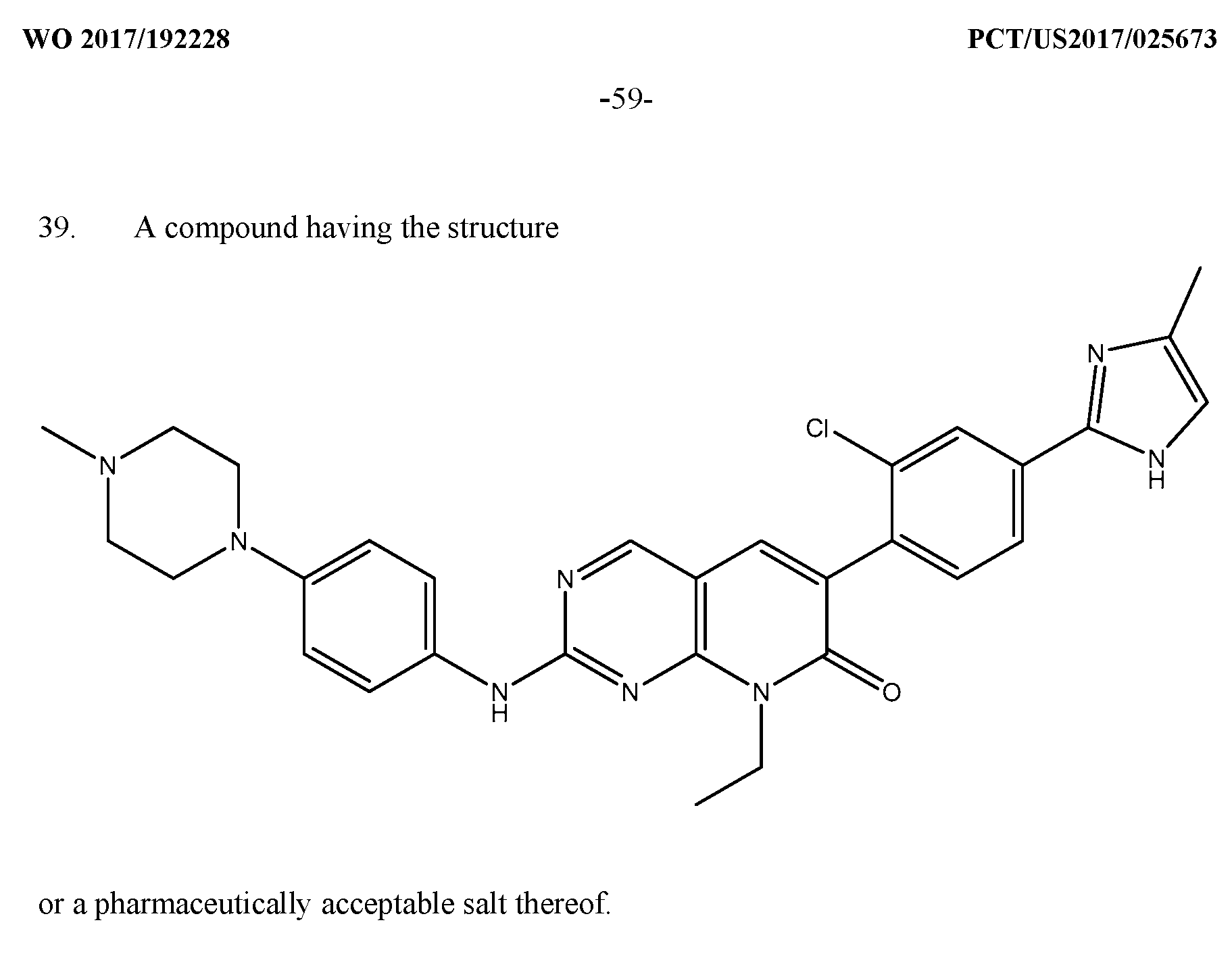
Priority Applications (1)
| Application Number | Priority Date | Filing Date | Title |
|---|---|---|---|
| US16/095,709 US11065251B2 (en) | 2016-05-06 | 2017-04-03 | PAK1 inhibitors and uses thereof |
Applications Claiming Priority (2)
| Application Number | Priority Date | Filing Date | Title |
|---|---|---|---|
| US201662332508P | 2016-05-06 | 2016-05-06 | |
| US62/332,508 | 2016-05-06 |
Publications (1)
| Publication Number | Publication Date |
|---|---|
| WO2017192228A1 true WO2017192228A1 (en) | 2017-11-09 |
Family
ID=60203150
Family Applications (1)
| Application Number | Title | Priority Date | Filing Date |
|---|---|---|---|
| PCT/US2017/025673 Ceased WO2017192228A1 (en) | 2016-05-06 | 2017-04-03 | Pak1 inhibitors and uses thereof |
Country Status (2)
| Country | Link |
|---|---|
| US (1) | US11065251B2 (en) |
| WO (1) | WO2017192228A1 (en) |
Cited By (1)
| Publication number | Priority date | Publication date | Assignee | Title |
|---|---|---|---|---|
| WO2025078334A1 (en) * | 2023-10-09 | 2025-04-17 | Institut National de la Santé et de la Recherche Médicale | Combination of pak1 inhibitors and clk inhibitors for preventing resistance to chemotherapy in patients suffering from acute myeloid leukemia |
Citations (8)
| Publication number | Priority date | Publication date | Assignee | Title |
|---|---|---|---|---|
| US20090197862A1 (en) * | 2008-02-04 | 2009-08-06 | Osi Pharmaceuticals, Inc. | 2-aminopyridine kinase inhibitors |
| WO2010032195A1 (en) * | 2008-09-16 | 2010-03-25 | Csir | Imidazopyridines and imidazopyrimidines as hiv-i reverse transcriptase inhibitors |
| US20100173930A1 (en) * | 2006-08-01 | 2010-07-08 | Alex Muci | Certain Chemical Entities, Compositions and Methods |
| US20120101122A1 (en) * | 2009-04-07 | 2012-04-26 | Farkas Nee Dahan Nurit Esperance | Imidazo[1,2 a] pyridine 6 carboxamide derivatives, their use for the treatment of colon cancer and their method of manufacture |
| US20120270866A1 (en) * | 2009-10-09 | 2012-10-25 | Afraxis Inc. | 8-ethyl-6-(aryl)pyrido[2,3-d]pyrimidin-7(8h)-ones for the treatment of cns disorders |
| US20140303140A1 (en) * | 2013-03-14 | 2014-10-09 | Galapagos Nv | Novel compounds and pharmaceutical compositions thereof for the treatment of inflammatory disorders |
| US20140343066A1 (en) * | 2007-06-08 | 2014-11-20 | Abbvie Inc. | 5-substituted indazoles as kinase inhibitors |
| US20150359815A1 (en) * | 2013-03-15 | 2015-12-17 | Albert Einstein College Of Medicine Of Yeshiva University | Pak1 inhibition for treatment of acute myeloid leukemia and myelodysplastic syndromes |
Family Cites Families (1)
| Publication number | Priority date | Publication date | Assignee | Title |
|---|---|---|---|---|
| EP3307728A4 (en) * | 2015-06-12 | 2019-07-17 | Dana Farber Cancer Institute, Inc. | ASSOCIATION THERAPY USING TRANSCRIPTION INHIBITORS AND KINASE INHIBITORS |
-
2017
- 2017-04-03 US US16/095,709 patent/US11065251B2/en active Active
- 2017-04-03 WO PCT/US2017/025673 patent/WO2017192228A1/en not_active Ceased
Patent Citations (8)
| Publication number | Priority date | Publication date | Assignee | Title |
|---|---|---|---|---|
| US20100173930A1 (en) * | 2006-08-01 | 2010-07-08 | Alex Muci | Certain Chemical Entities, Compositions and Methods |
| US20140343066A1 (en) * | 2007-06-08 | 2014-11-20 | Abbvie Inc. | 5-substituted indazoles as kinase inhibitors |
| US20090197862A1 (en) * | 2008-02-04 | 2009-08-06 | Osi Pharmaceuticals, Inc. | 2-aminopyridine kinase inhibitors |
| WO2010032195A1 (en) * | 2008-09-16 | 2010-03-25 | Csir | Imidazopyridines and imidazopyrimidines as hiv-i reverse transcriptase inhibitors |
| US20120101122A1 (en) * | 2009-04-07 | 2012-04-26 | Farkas Nee Dahan Nurit Esperance | Imidazo[1,2 a] pyridine 6 carboxamide derivatives, their use for the treatment of colon cancer and their method of manufacture |
| US20120270866A1 (en) * | 2009-10-09 | 2012-10-25 | Afraxis Inc. | 8-ethyl-6-(aryl)pyrido[2,3-d]pyrimidin-7(8h)-ones for the treatment of cns disorders |
| US20140303140A1 (en) * | 2013-03-14 | 2014-10-09 | Galapagos Nv | Novel compounds and pharmaceutical compositions thereof for the treatment of inflammatory disorders |
| US20150359815A1 (en) * | 2013-03-15 | 2015-12-17 | Albert Einstein College Of Medicine Of Yeshiva University | Pak1 inhibition for treatment of acute myeloid leukemia and myelodysplastic syndromes |
Non-Patent Citations (1)
| Title |
|---|
| DATABASE PUBCHEM [O] 29 July 2006 (2006-07-29), XP055440513, retrieved from NCBI Database accession no. 7338118 * |
Cited By (1)
| Publication number | Priority date | Publication date | Assignee | Title |
|---|---|---|---|---|
| WO2025078334A1 (en) * | 2023-10-09 | 2025-04-17 | Institut National de la Santé et de la Recherche Médicale | Combination of pak1 inhibitors and clk inhibitors for preventing resistance to chemotherapy in patients suffering from acute myeloid leukemia |
Also Published As
| Publication number | Publication date |
|---|---|
| US11065251B2 (en) | 2021-07-20 |
| US20200323855A1 (en) | 2020-10-15 |
Similar Documents
| Publication | Publication Date | Title |
|---|---|---|
| EP3055290B1 (en) | Inhibitors of kras g12c | |
| EP2915806B1 (en) | Quinoline compound and use thereof | |
| KR100832593B1 (en) | Quinazoline derivatives as an signal trnasduction inhibitor and method for the preparation thereof | |
| US20100204221A1 (en) | Pyrrolopyrimidinyl axl kinase inhibitors | |
| KR101335746B1 (en) | Disubstituted phthalazine hedgehog pathway antagonists | |
| JP2022504541A (en) | Small MDM2 Protein Degrader | |
| JP7050093B2 (en) | Substituted 5- and 6-membered heterocyclic compounds, methods of preparation thereof, combinations of agents and their use | |
| RS53831B1 (en) | Pyrazoloquinoline Derivates As DNA-PK Inhibitors | |
| EP4352054A1 (en) | Compounds that bind non-canonical g-quadruplex structures and methods of making and using the same | |
| EP1805175B1 (en) | Novel azaindole thiazolinones as anti-cancer agents | |
| Zhou et al. | Small molecules inhibit STAT3 activation, autophagy, and cancer cell anchorage-independent growth | |
| JP2006518726A (en) | Chemical derivatives that bind very specifically to G-quadruplex DNA structures and their use as specific anti-cancer agents | |
| US11065251B2 (en) | PAK1 inhibitors and uses thereof | |
| US20190330197A1 (en) | Substituted naphthalene diimides and their use | |
| AU2016302748B2 (en) | 4-(3-pyrazolylamino)-benzimidazole compounds and their use as JAK1 inhibitors | |
| CN102731525A (en) | Benzomorpholine derivative | |
| US20070232572A1 (en) | Chemical derivatives as antitelomerase agents which bind specifically to the G-quadruplex DNA structures and their application as a specific anticancer agent | |
| WO2014170421A1 (en) | Serine/threonine kinase inhibitors | |
| CN120289432B (en) | Quinoline compound with aurora kinase B and epidermal growth factor receptor dual inhibition effect and application thereof | |
| EP4671245A1 (en) | HETEROAROMATIC RING COMPOUND AS A CDK7 KINASE Inhibitor, MANUFACTURE AND USE OF IT | |
| CN120329284A (en) | Cell cycle dependent kinase degrader and preparation method and use thereof | |
| PL237263B1 (en) | Derivatives of quinazoline and their applications | |
| NZ719076B2 (en) | Inhibitors of kras g12c | |
| KR20010086658A (en) | Benzodiazepine derivatives and cyclin dependent kinase inhibitor compositions comprising the same | |
| CN108084179A (en) | A kind of compound with spirane structure, its preparation method and application |
Legal Events
| Date | Code | Title | Description |
|---|---|---|---|
| NENP | Non-entry into the national phase |
Ref country code: DE |
|
| 121 | Ep: the epo has been informed by wipo that ep was designated in this application |
Ref document number: 17792979 Country of ref document: EP Kind code of ref document: A1 |
|
| 122 | Ep: pct application non-entry in european phase |
Ref document number: 17792979 Country of ref document: EP Kind code of ref document: A1 |