WO2017190043A1 - Cephalosporin-type compounds - Google Patents
Cephalosporin-type compounds Download PDFInfo
- Publication number
- WO2017190043A1 WO2017190043A1 PCT/US2017/030177 US2017030177W WO2017190043A1 WO 2017190043 A1 WO2017190043 A1 WO 2017190043A1 US 2017030177 W US2017030177 W US 2017030177W WO 2017190043 A1 WO2017190043 A1 WO 2017190043A1
- Authority
- WO
- WIPO (PCT)
- Prior art keywords
- compound
- alkyl
- antibiotic
- replicating
- groups
- Prior art date
- Legal status (The legal status is an assumption and is not a legal conclusion. Google has not performed a legal analysis and makes no representation as to the accuracy of the status listed.)
- Ceased
Links
- 0 CC(CS[C@@]1[C@@]2NC(Cc3ccccc3)=O)=C(c3nnc(*)[o]3)N1C2=O Chemical compound CC(CS[C@@]1[C@@]2NC(Cc3ccccc3)=O)=C(c3nnc(*)[o]3)N1C2=O 0.000 description 12
- NVIAYEIXYQCDAN-CLZZGJSISA-N CC(CS[C@@H]1[C@@H]2N)=C(C(O)=O)N1C2=O Chemical compound CC(CS[C@@H]1[C@@H]2N)=C(C(O)=O)N1C2=O NVIAYEIXYQCDAN-CLZZGJSISA-N 0.000 description 1
- WJMBESPANHTSED-DYESRHJHSA-N CCCc1n[o]c(C2=C(C)CS[C@H]([C@@H]3NC(CCc(cc4)ccc4Cl)=O)N2C3=O)n1 Chemical compound CCCc1n[o]c(C2=C(C)CS[C@H]([C@@H]3NC(CCc(cc4)ccc4Cl)=O)N2C3=O)n1 WJMBESPANHTSED-DYESRHJHSA-N 0.000 description 1
- FGQCAADNNMULLU-XMSQKQJNSA-N CCCc1n[o]c(C2=C(C)CS[C@H]([C@@H]3NC(CCc(cc4)ccc4OC)=O)N2C3=O)n1 Chemical compound CCCc1n[o]c(C2=C(C)CS[C@H]([C@@H]3NC(CCc(cc4)ccc4OC)=O)N2C3=O)n1 FGQCAADNNMULLU-XMSQKQJNSA-N 0.000 description 1
- BPFHQEWULUUXOY-PRHODGIISA-N CCSC(N[C@@H]([C@H]1SCC(C)=C(c2nc(C)n[o]2)N11)C1=O)=O Chemical compound CCSC(N[C@@H]([C@H]1SCC(C)=C(c2nc(C)n[o]2)N11)C1=O)=O BPFHQEWULUUXOY-PRHODGIISA-N 0.000 description 1
- UKZMOZPWRSWJEP-PRHODGIISA-N Cc1n[o]c(C2=C(C)CS[C@H]([C@@H]3NC(OC[IH]C)=O)N2C3=O)n1 Chemical compound Cc1n[o]c(C2=C(C)CS[C@H]([C@@H]3NC(OC[IH]C)=O)N2C3=O)n1 UKZMOZPWRSWJEP-PRHODGIISA-N 0.000 description 1
Classifications
-
- A—HUMAN NECESSITIES
- A61—MEDICAL OR VETERINARY SCIENCE; HYGIENE
- A61K—PREPARATIONS FOR MEDICAL, DENTAL OR TOILETRY PURPOSES
- A61K31/00—Medicinal preparations containing organic active ingredients
- A61K31/33—Heterocyclic compounds
- A61K31/395—Heterocyclic compounds having nitrogen as a ring hetero atom, e.g. guanethidine or rifamycins
-
- A—HUMAN NECESSITIES
- A61—MEDICAL OR VETERINARY SCIENCE; HYGIENE
- A61K—PREPARATIONS FOR MEDICAL, DENTAL OR TOILETRY PURPOSES
- A61K31/00—Medicinal preparations containing organic active ingredients
- A61K31/33—Heterocyclic compounds
- A61K31/395—Heterocyclic compounds having nitrogen as a ring hetero atom, e.g. guanethidine or rifamycins
- A61K31/41—Heterocyclic compounds having nitrogen as a ring hetero atom, e.g. guanethidine or rifamycins having five-membered rings with two or more ring hetero atoms, at least one of which being nitrogen, e.g. tetrazole
- A61K31/42—Oxazoles
- A61K31/424—Oxazoles condensed with heterocyclic ring systems, e.g. clavulanic acid
-
- A—HUMAN NECESSITIES
- A61—MEDICAL OR VETERINARY SCIENCE; HYGIENE
- A61K—PREPARATIONS FOR MEDICAL, DENTAL OR TOILETRY PURPOSES
- A61K31/00—Medicinal preparations containing organic active ingredients
- A61K31/33—Heterocyclic compounds
- A61K31/395—Heterocyclic compounds having nitrogen as a ring hetero atom, e.g. guanethidine or rifamycins
- A61K31/435—Heterocyclic compounds having nitrogen as a ring hetero atom, e.g. guanethidine or rifamycins having six-membered rings with one nitrogen as the only ring hetero atom
- A61K31/47—Quinolines; Isoquinolines
- A61K31/4709—Non-condensed quinolines and containing further heterocyclic rings
-
- A—HUMAN NECESSITIES
- A61—MEDICAL OR VETERINARY SCIENCE; HYGIENE
- A61K—PREPARATIONS FOR MEDICAL, DENTAL OR TOILETRY PURPOSES
- A61K31/00—Medicinal preparations containing organic active ingredients
- A61K31/33—Heterocyclic compounds
- A61K31/395—Heterocyclic compounds having nitrogen as a ring hetero atom, e.g. guanethidine or rifamycins
- A61K31/495—Heterocyclic compounds having nitrogen as a ring hetero atom, e.g. guanethidine or rifamycins having six-membered rings with two or more nitrogen atoms as the only ring heteroatoms, e.g. piperazine or tetrazines
- A61K31/496—Non-condensed piperazines containing further heterocyclic rings, e.g. rifampin, thiothixene or sparfloxacin
-
- A—HUMAN NECESSITIES
- A61—MEDICAL OR VETERINARY SCIENCE; HYGIENE
- A61K—PREPARATIONS FOR MEDICAL, DENTAL OR TOILETRY PURPOSES
- A61K31/00—Medicinal preparations containing organic active ingredients
- A61K31/33—Heterocyclic compounds
- A61K31/395—Heterocyclic compounds having nitrogen as a ring hetero atom, e.g. guanethidine or rifamycins
- A61K31/495—Heterocyclic compounds having nitrogen as a ring hetero atom, e.g. guanethidine or rifamycins having six-membered rings with two or more nitrogen atoms as the only ring heteroatoms, e.g. piperazine or tetrazines
- A61K31/505—Pyrimidines; Hydrogenated pyrimidines, e.g. trimethoprim
-
- A—HUMAN NECESSITIES
- A61—MEDICAL OR VETERINARY SCIENCE; HYGIENE
- A61K—PREPARATIONS FOR MEDICAL, DENTAL OR TOILETRY PURPOSES
- A61K31/00—Medicinal preparations containing organic active ingredients
- A61K31/33—Heterocyclic compounds
- A61K31/395—Heterocyclic compounds having nitrogen as a ring hetero atom, e.g. guanethidine or rifamycins
- A61K31/535—Heterocyclic compounds having nitrogen as a ring hetero atom, e.g. guanethidine or rifamycins having six-membered rings with at least one nitrogen and one oxygen as the ring hetero atoms, e.g. 1,2-oxazines
- A61K31/5375—1,4-Oxazines, e.g. morpholine
- A61K31/5383—1,4-Oxazines, e.g. morpholine ortho- or peri-condensed with heterocyclic ring systems
-
- A—HUMAN NECESSITIES
- A61—MEDICAL OR VETERINARY SCIENCE; HYGIENE
- A61K—PREPARATIONS FOR MEDICAL, DENTAL OR TOILETRY PURPOSES
- A61K31/00—Medicinal preparations containing organic active ingredients
- A61K31/33—Heterocyclic compounds
- A61K31/395—Heterocyclic compounds having nitrogen as a ring hetero atom, e.g. guanethidine or rifamycins
- A61K31/54—Heterocyclic compounds having nitrogen as a ring hetero atom, e.g. guanethidine or rifamycins having six-membered rings with at least one nitrogen and one sulfur as the ring hetero atoms, e.g. sulthiame
- A61K31/542—Heterocyclic compounds having nitrogen as a ring hetero atom, e.g. guanethidine or rifamycins having six-membered rings with at least one nitrogen and one sulfur as the ring hetero atoms, e.g. sulthiame ortho- or peri-condensed with heterocyclic ring systems
- A61K31/545—Compounds containing 5-thia-1-azabicyclo [4.2.0] octane ring systems, i.e. compounds containing a ring system of the formula:, e.g. cephalosporins, cefaclor, or cephalexine
- A61K31/546—Compounds containing 5-thia-1-azabicyclo [4.2.0] octane ring systems, i.e. compounds containing a ring system of the formula:, e.g. cephalosporins, cefaclor, or cephalexine containing further heterocyclic rings, e.g. cephalothin
-
- A—HUMAN NECESSITIES
- A61—MEDICAL OR VETERINARY SCIENCE; HYGIENE
- A61K—PREPARATIONS FOR MEDICAL, DENTAL OR TOILETRY PURPOSES
- A61K31/00—Medicinal preparations containing organic active ingredients
- A61K31/63—Compounds containing para-N-benzenesulfonyl-N-groups, e.g. sulfanilamide, p-nitrobenzenesulfonyl hydrazide
- A61K31/635—Compounds containing para-N-benzenesulfonyl-N-groups, e.g. sulfanilamide, p-nitrobenzenesulfonyl hydrazide having a heterocyclic ring, e.g. sulfadiazine
-
- A—HUMAN NECESSITIES
- A61—MEDICAL OR VETERINARY SCIENCE; HYGIENE
- A61K—PREPARATIONS FOR MEDICAL, DENTAL OR TOILETRY PURPOSES
- A61K31/00—Medicinal preparations containing organic active ingredients
- A61K31/65—Tetracyclines
-
- A—HUMAN NECESSITIES
- A61—MEDICAL OR VETERINARY SCIENCE; HYGIENE
- A61K—PREPARATIONS FOR MEDICAL, DENTAL OR TOILETRY PURPOSES
- A61K45/00—Medicinal preparations containing active ingredients not provided for in groups A61K31/00 - A61K41/00
- A61K45/06—Mixtures of active ingredients without chemical characterisation, e.g. antiphlogistics and cardiaca
-
- C—CHEMISTRY; METALLURGY
- C07—ORGANIC CHEMISTRY
- C07D—HETEROCYCLIC COMPOUNDS
- C07D501/00—Heterocyclic compounds containing 5-thia-1-azabicyclo [4.2.0] octane ring systems, i.e. compounds containing a ring system of the formula:, e.g. cephalosporins; Such ring systems being further condensed, e.g. 2,3-condensed with an oxygen-, nitrogen- or sulfur-containing hetero ring
- C07D501/14—Compounds having a nitrogen atom directly attached in position 7
- C07D501/16—Compounds having a nitrogen atom directly attached in position 7 with a double bond between positions 2 and 3
- C07D501/18—7-Aminocephalosporanic or substituted 7-aminocephalosporanic acids
-
- C—CHEMISTRY; METALLURGY
- C07—ORGANIC CHEMISTRY
- C07D—HETEROCYCLIC COMPOUNDS
- C07D501/00—Heterocyclic compounds containing 5-thia-1-azabicyclo [4.2.0] octane ring systems, i.e. compounds containing a ring system of the formula:, e.g. cephalosporins; Such ring systems being further condensed, e.g. 2,3-condensed with an oxygen-, nitrogen- or sulfur-containing hetero ring
- C07D501/14—Compounds having a nitrogen atom directly attached in position 7
- C07D501/16—Compounds having a nitrogen atom directly attached in position 7 with a double bond between positions 2 and 3
- C07D501/20—7-Acylaminocephalosporanic or substituted 7-acylaminocephalosporanic acids in which the acyl radicals are derived from carboxylic acids
- C07D501/22—7-Acylaminocephalosporanic or substituted 7-acylaminocephalosporanic acids in which the acyl radicals are derived from carboxylic acids with radicals containing only hydrogen and carbon atoms, attached in position 3
Definitions
- the present technology is directed to compounds, compositions, and methods related to the treatment of bacterial and fungal infections.
- the present technology is parti culary suited to treat non-replicating bacteria such as non-replicating Mycobacterium tuberculosis.
- R 1 is H, halo, amino, amide, carboxylate, ester, cyano, trifluoromethyl, nitro,
- pentafluorosulfanyl isocyano, isothiocyano, alkyl, cycloalkyl, heterocyclyl, alkenyl, alkynyl, aryl, heteroaryl, alkanoyl, alkanoyloxy, aryloyl, aryloyloxy, cycloalkyloyl, cycloalkyloyloxy, heterocyclyloyl, heterocyclyloyloxy, heteroaryloyl, heteroaryloyloxy, OR 3 , thiol, sulfide, sulfone, sulfonamido, sulfonyl, or S(0) 2 OH;
- R 2 is alkyl, cycloalkyl, heterocyclyl, aryl, heteroaryl, alkanoyl, alkanoxyoyl, aryloyl, aryloxyoyl, cycloalkyloyl, cycloal
- a pharmaceutical composition that includes an effective amount of a compound of Formula I for treating a condition and a pharmaceutical carrier, where the condition is a bacterial or a fungal infection.
- a method includes administering an effective amount of a compound of Formula I for treating a condition, where the condition is a bacterial or a fungal infection.
- FIG. 1 illustrates the cell-free stability of compound 5 of the present technology, where compound 5 was incubated at 37° C in PBS (open circles) or non-replicating medium without (asterisks) or with (open triangles) NaN0 2 . Data are averages of replicate samples ⁇ standard deviation.
- FIGs. 2A-B illustrate the stability of comparative compound 1, cephalexin (4), and compound 5 of the present technology in mouse plasma (FIG. 2A) and human plasma (FIG. 2B) at the indicated time points. Stability was inferred by monitoring the parent ion. One of two similar experiments. Compound 1 was tested once in human plasma.
- FIG. 3 illustrates compound 5 of the present technology exhibits selective activity against non-replicating M tuberculosis and lacks broad-spectrum activity against other microbes.
- Compound 5 was tested for activity against a panel of replicating Gram negative ⁇ Escherichia coli, Pseudomonas aeruginosa) and Gram positive (Staphylococcus aureus, Mycobacterium bovis BCG, Mycobacterium smegmatis) bacteria, and a yeast (Candida albicans). Values are means of triplicates +/- standard deviation.
- FIGs. 5A-F illustrate that compounds of the present technology kill wild-type, non- replicating M tuberculosis.
- Bacilli in the multi-stress model of non-replicating at an ODs 8 o of 0.01 were exposed to compounds of the present technology, namely 5 (FIG. 5 A), 18d (FIG. 5B), 19d (FIG. 5C), 21b (FIG.5D), 22c (FIG. 5E), or 23 (FIG. 5F), for seven days, after which a standard outgrowth was initiated (left Y axis, MIC 90 , red dots) or plated onto CARA microplates to predict bactericidal activity (right Y axis, NR-CARA, blue dots). Data are the average of two replicates.
- FIGs. 6A-E illustrates potentiation of activity of cephalosporins against non-replicating M. tuberculosis by reactive nitrogen species.
- Wild-type M. tuberculosis was re-suspended at an OD 580 of 0.1 in non-replicating medium containing indicated concentrations of NaN0 2 (0 - 1 mM) and dispensed into separate microtiter plates for each NaN0 2 concentration.
- Cells were then exposed to comparative compound 1 (FIG. 6A) or rifampicin (FIG. 6B) for 7 days, after which a standard outgrowth assay was initiated to estimate the number of surviving cells.
- FIGs. 7A-B provide the bactericidal activity of comparative compound 1 (FIG. 7A) and compound 5 of the present technology (FIG. 7B) against intracellular M tuberculosis.
- Mouse bone marrow derived macrophages (either activated with 50 ng/mL IFNy or not activated) were infected with wild-type M tuberculosis. After a four hour period for bacterial uptake, macrophages were washed and treated with 100 ⁇ g/mL of comparative compound 1 for 4 days (FIG. 7A) or compound 5 of the present technology for 3 days (FIG. 7B). Morphology of the macrophages was not affected by addition of compound 1 or compound 5 at the concentrations shown. One of five similar experiments. DETAILED DESCRIPTION
- the present technology provides compounds and methods for treatment of bacterial and fungal infections, and are parti culary suited to treat non-replicating bacteria such as non-replicating Mycobacterium tuberculosis.
- the compounds provided herein can be formulated into pharmaceutical compositions and medicaments that are useful in the disclosed methods. Also provided is the use of the compounds in preparing pharmaceutical formulations and medicaments.
- references to a certain element such as hydrogen or H is meant to include all isotopes of that element.
- an R group is defined to include hydrogen or H, it also includes deuterium and tritium.
- Compounds comprising radioisotopes such as tritium, 14 C, 32 P, and 35 S are thus within the scope of the present technology. Procedures for inserting such labels into the compounds of the present technology will be readily apparent to those skilled in the art based on the disclosure herein.
- substituted refers to an organic group as defined below (e.g., an alkyl group) in which one or more bonds to a hydrogen atom contained therein are replaced by a bond to non-hydrogen or non-carbon atoms.
- Substituted groups also include groups in which one or more bonds to a carbon(s) or hydrogen(s) atom are replaced by one or more bonds, including double or triple bonds, to a heteroatom.
- a substituted group is substituted with one or more substituents, unless otherwise specified.
- a substituted group is substituted with 1, 2, 3, 4, 5, or 6 substituents.
- substituent groups include: halogens (i.e., F, CI, Br, and I); hydroxyls; alkoxy, alkenoxy, aryloxy, aralkyloxy, heterocyclyl, heterocyclylalkyl, heterocyclyloxy, and heterocyclylalkoxy groups; carbonyls (oxo);
- carboxylates esters; urethanes; oximes; hydroxylamines; alkoxyamines; aralkoxyamines; thiols; sulfides; sulfoxides; sulfones; sulfonyls; pentafluorosulfanyl (i.e., SF 5 ), sulfonamides; amines; N-oxides; hydrazines; hydrazides; hydrazones; azides; amides; ureas; amidines; guanidines; enamines; imides; isocyanates; isothiocyanates; cyanates; thiocyanates; imines; nitro groups; nitriles (i.e., CN); and the like.
- Substituted ring groups such as substituted cycloalkyl, aryl, heterocyclyl and heteroaryl groups also include rings and ring systems in which a bond to a hydrogen atom is replaced with a bond to a carbon atom. Therefore, substituted cycloalkyl, aryl, heterocyclyl and heteroaryl groups may also be substituted with substituted or unsubstituted alkyl, alkenyl, and alkynyl groups as defined below.
- Alkyl groups include straight chain and branched chain alkyl groups having from 1 to 12 carbon atoms, and typically from 1 to 10 carbons or, in some embodiments, from 1 to 8, 1 to 6, or 1 to 4 carbon atoms. Alkyl groups may be substituted or unsubstituted. Examples of straight chain alkyl groups include groups such as methyl, ethyl, n-propyl, n-butyl, n-pentyl, n-hexyl, n-heptyl, and n-octyl groups.
- branched alkyl groups include, but are not limited to, isopropyl, iso-butyl, sec-butyl, tert-butyl, neopentyl, isopentyl, and 2,2- dimethylpropyl groups.
- Representative substituted alkyl groups may be substituted one or more times with substituents such as those listed above, and include without limitation haloalkyl (e.g., trifluoromethyl), hydroxyalkyl, thioalkyl, aminoalkyl, alkylaminoalkyl, dialkylaminoalkyl, alkoxyalkyl, carboxyalkyl, and the like.
- Cycloalkyl groups include mono-, bi- or tricyclic alkyl groups having from 3 to 12 carbon atoms in the ring(s), or, in some embodiments, 3 to 10, 3 to 8, or 3 to 4, 5, or 6 carbon atoms. Cycloalkyl groups may be substituted or unsubstituted. Exemplary monocyclic cycloalkyl groups include, but not limited to, cyclopropyl, cyclobutyl, cyclopentyl, cyclohexyl, cycloheptyl, and cyclooctyl groups.
- the cycloalkyl group has 3 to 8 ring members, whereas in other embodiments the number of ring carbon atoms range from 3 to 5, 3 to 6, or 3 to 7.
- Bi- and tricyclic ring systems include both bridged cycloalkyl groups and fused rings, such as, but not limited to, bicyclo[2.1.1]hexane, adamantyl, decalinyl, and the like.
- Substituted cycloalkyl groups may be substituted one or more times with, non-hydrogen and non-carbon groups as defined above.
- substituted cycloalkyl groups also include rings that are substituted with straight or branched chain alkyl groups as defined above.
- Representative substituted cycloalkyl groups may be mono-substituted or substituted more than once, such as, but not limited to, 2,2-, 2,3-, 2,4- 2,5- or 2,6-disubstituted cyclohexyl groups, which may be substituted with substituents such as those listed above.
- Cycloalkylalkyl groups are alkyl groups as defined above in which a hydrogen or carbon bond of an alkyl group is replaced with a bond to a cycloalkyl group as defined above. Cycloalkylalkyl groups may be substituted or unsubstituted. In some embodiments,
- cycloalkylalkyl groups have from 4 to 16 carbon atoms, 4 to 12 carbon atoms, and typically 4 to 10 carbon atoms. Substituted cycloalkylalkyl groups may be substituted at the alkyl, the cycloalkyl or both the alkyl and cycloalkyl portions of the group. Representative substituted cycloalkylalkyl groups may be mono-substituted or substituted more than once, such as, but not limited to, mono-, di- or tri-substituted with substituents such as those listed above.
- Alkenyl groups include straight and branched chain alkyl groups as defined above, except that at least one double bond exists between two carbon atoms. Alkenyl groups may be substituted or unsubstituted. Alkenyl groups have from 2 to 12 carbon atoms, and typically from 2 to 10 carbons or, in some embodiments, from 2 to 8, 2 to 6, or 2 to 4 carbon atoms. In some embodiments, the alkenyl group has one, two, or three carbon-carbon double bonds. Examples include, but are not limited to vinyl,
- substituted alkenyl groups may be mono-substituted or substituted more than once, such as, but not limited to, mono-, di- or tri-substituted with substituents such as those listed above.
- Cycloalkenyl groups include cycloalkyl groups as defined above, having at least one double bond between two carbon atoms. Cycloalkenyl groups may be substituted or unsubstituted. In some embodiments the cycloalkenyl group may have one, two or three double bonds but does not include aromatic compounds. Cycloalkenyl groups have from 4 to 14 carbon atoms, or, in some embodiments, 5 to 14 carbon atoms, 5 to 10 carbon atoms, or even 5, 6, 7, or 8 carbon atoms. Examples of cycloalkenyl groups include cyclohexenyl, cyclopentenyl, cyclohexadienyl, cyclobutadienyl, and cyclopentadienyl.
- Cycloalkenylalkyl groups are alkyl groups as defined above in which a hydrogen or carbon bond of the alkyl group is replaced with a bond to a cycloalkenyl group as defined above. Cycloalkenylalkyl groups may be substituted or unsubstituted. Substituted cycloalkenylalkyl groups may be substituted at the alkyl, the cycloalkenyl or both the alkyl and cycloalkenyl portions of the group. Representative substituted cycloalkenylalkyl groups may be substituted one or more times with substituents such as those listed above.
- Alkynyl groups include straight and branched chain alkyl groups as defined above, except that at least one triple bond exists between two carbon atoms. Alkynyl groups may be substituted or unsubstituted. Alkynyl groups have from 2 to 12 carbon atoms, and typically from 2 to 10 carbons or, in some embodiments, from 2 to 8, 2 to 6, or 2 to 4 carbon atoms. In some embodiments, the alkynyl group has one, two, or three carbon-carbon triple bonds.
- Examples include, but are not limited to -
- substituted alkynyl groups may be mono- substituted or substituted more than once, such as, but not limited to, mono-, di- or tri-substituted with substituents such as those listed above.
- Aryl groups are cyclic aromatic hydrocarbons that do not contain heteroatoms.
- Aryl groups may be substituted or unsubstituted.
- Aryl groups herein include monocyclic, bicyclic and tricyclic ring systems.
- aryl groups include, but are not limited to, phenyl, azulenyl, heptalenyl, biphenyl, fluorenyl, phenanthrenyl, anthracenyl, indenyl, indanyl, pentalenyl, and naphthyl groups.
- aryl groups contain 6-14 carbons, and in others from 6 to 12 or even 6-10 carbon atoms in the ring portions of the groups.
- the aryl groups are phenyl or naphthyl.
- aryl groups includes groups containing fused rings, such as fused aromatic-aliphatic ring systems (e.g., indanyl, tetrahydronaphthyl, and the like).
- Representative substituted aryl groups may be mono-substituted or substituted more than once.
- monosubstituted aryl groups include, but are not limited to, 2-, 3-, 4-, 5-, or 6-substituted phenyl or naphthyl groups, which may be substituted with substituents such as those listed above.
- Aralkyl groups are alkyl groups as defined above in which a hydrogen or carbon bond of an alkyl group is replaced with a bond to an aryl group as defined above.
- Aralkyl groups may be substituted or unsubstituted.
- aralkyl groups contain 7 to 16 carbon atoms, 7 to 14 carbon atoms, or 7 to 10 carbon atoms.
- Substituted aralkyl groups may be substituted at the alkyl, the aryl or both the alkyl and aryl portions of the group.
- Representative aralkyl groups include but are not limited to benzyl and phenethyl groups and fused
- (cycloalkylaryl)alkyl groups such as 4-indanylethyl.
- Representative substituted aralkyl groups may be substituted one or more times with substituents such as those listed above.
- Heterocyclyl groups include aromatic (also referred to as heteroaryl) and non-aromatic ring compounds containing 3 or more ring members, of which one or more is a heteroatom such as, but not limited to, N, O, and S. Heterocyclyl groups may be substituted or unsubstituted. In some embodiments, the heterocyclyl group contains 1, 2, 3 or 4 heteroatoms. In some embodiments, heterocyclyl groups include mono-, bi- and tricyclic rings having 3 to 16 ring members, whereas other such groups have 3 to 6, 3 to 10, 3 to 12, or 3 to 14 ring members.
- Heterocyclyl groups encompass aromatic, partially unsaturated and saturated ring systems, such as, for example, imidazolyl, imidazolinyl and imidazolidinyl groups.
- the phrase "heterocyclyl group” includes fused ring species including those comprising fused aromatic and non-aromatic groups, such as, for example, benzotriazolyl, 2,3-dihydrobenzo[l,4]dioxinyl, and
- Heterocyclyl groups include, but are not limited to, aziridinyl, azetidinyl, pyrrolidinyl, imidazolidinyl, pyrazolidinyl, thiazolidinyl, tetrahydrothiophenyl, tetrahydrofuranyl, dioxolyl, furanyl, thiophenyl, pyrrolyl, pyrrolinyl, imidazolyl, imidazolinyl, pyrazolyl, pyrazolinyl, triazolyl, tetrazolyl, oxazolyl, isoxazolyl, thiazolyl, thiazolinyl, isothiazolyl, thiadiazolyl, oxadiazolyl,
- substituted heterocyclyl groups may be mono-substituted or substituted more than once, such as, but not limited to, pyridyl or morpholinyl groups, which are 2-, 3-, 4-, 5-, or 6-substituted, or disubstituted with various substituents such as those listed above.
- Heteroaryl groups are aromatic ring compounds containing 5 or more ring members, of which, one or more is a heteroatom such as, but not limited to, N, O, and S. Heteroaryl groups may be substituted or unsubstituted.
- Heteroaryl groups include, but are not limited to, groups such as pyrrolyl, pyrazolyl, triazolyl, tetrazolyl, oxazolyl, isoxazolyl, thiazolyl, pyridinyl, pyridazinyl, pyrimidinyl, pyrazinyl, thiophenyl, benzothiophenyl, furanyl, benzofuranyl, indolyl, azaindolyl (pyrrolopyridinyl), indazolyl, benzimidazolyl, imidazopyridinyl (azabenzimidazolyl), pyrazolopyridinyl, triazolopyridinyl, benzotriazolyl, benzoxazolyl, benzothiazolyl,
- Heteroaryl groups include fused ring compounds in which all rings are aromatic such as indolyl groups and include fused ring compounds in which only one of the rings is aromatic, such as 2,3-dihydro indolyl groups.
- the phrase "heteroaryl groups" includes fused ring compounds. Representative substituted heteroaryl groups may be substituted one or more times with various substituents such as those listed above.
- Heterocyclylalkyl groups are alkyl groups as defined above in which a hydrogen or carbon bond of an alkyl group is replaced with a bond to a heterocyclyl group as defined above. Heterocyclylalkyl groups may be substituted or unsubstituted. Substituted heterocyclylalkyl groups may be substituted at the alkyl, the heterocyclyl or both the alkyl and heterocyclyl portions of the group.
- Representative heterocyclyl alkyl groups include, but are not limited to, morpholin-4-yl-ethyl, furan-2-yl-methyl, imidazol-4-yl-m ethyl, pyridin-3-yl-methyl,
- substituted heterocyclylalkyl groups may be substituted one or more times with substituents such as those listed above.
- Heteroaralkyl groups are alkyl groups as defined above in which a hydrogen or carbon bond of an alkyl group is replaced with a bond to a heteroaryl group as defined above.
- Heteroaralkyl groups may be substituted or unsubstituted. Substituted heteroaralkyl groups may be substituted at the alkyl, the heteroaryl or both the alkyl and heteroaryl portions of the group. Representative substituted heteroaralkyl groups may be substituted one or more times with substituents such as those listed above.
- Groups described herein having two or more points of attachment i.e., divalent, trivalent, or polyvalent
- ene groups described herein having two or more points of attachment within the compound of the present technology are designated by use of the suffix, "ene.”
- divalent alkyl groups are alkylene groups
- divalent aryl groups are arylene groups
- divalent heteroaryl groups are divalent heteroarylene groups, and so forth.
- Substituted groups having a single point of attachment to the compound of the present technology are not referred to using the "ene” designation.
- chloroethyl is not referred to herein as chloroethyl ene.
- Alkoxy groups are hydroxyl groups (-OH) in which the bond to the hydrogen atom is replaced by a bond to a carbon atom of a substituted or unsubstituted alkyl group as defined above. Alkoxy groups may be substituted or unsubstituted. Examples of linear alkoxy groups include but are not limited to methoxy, ethoxy, propoxy, butoxy, pentoxy, hexoxy, and the like. Examples of branched alkoxy groups include but are not limited to isopropoxy, sec-butoxy, tert- butoxy, isopentoxy, isohexoxy, and the like.
- cycloalkoxy groups include but are not limited to cyclopropyloxy, cyclobutyloxy, cyclopentyloxy, cyclohexyloxy, and the like.
- Representative substituted alkoxy groups may be substituted one or more times with substituents such as those listed above.
- alkanoyl and “alkanoyloxy” as used herein can refer, respectively, to - C(0)-alkyl groups and -0-C(0)-alkyl groups, each containing 2-5 carbon atoms.
- aryloyl and “aryloyloxy” refer to -C(0)-aryl groups and -0-C(0)-aryl groups.
- aryloxy and arylalkoxy refer to, respectively, a substituted or unsubstituted aryl group bonded to an oxygen atom and a substituted or unsubstituted aralkyl group bonded to the oxygen atom at the alkyl. Examples include but are not limited to phenoxy, naphthyloxy, and benzyloxy. Representative substituted aryloxy and arylalkoxy groups may be substituted one or more times with substituents such as those listed above.
- carboxylate refers to a -C(0)OH group.
- protected carboxylate refers to -C(0)0-G groups, where G is a carboxylate protecting group.
- Carboxylate protecting groups are well known to one of ordinary skill in the art. An extensive list of protecting groups for the carboxylate group functionality may be found in Protective Groups in Organic Synthesis, Greene, T.W.; Wuts, P. G. M., John Wiley & Sons, New York, NY, (3rd Edition, 1999) which can be added or removed using the procedures set forth therein and which is hereby incorporated by reference in its entirety and for any and all purposes as if fully set forth herein.
- esters refers to -COOR 70 .
- R 70 is a substituted or
- amide includes C- and N-amide groups, i.e., -C(0) R 71 R 72 ,
- R and R are independently hydrogen, or a substituted or unsubstituted alkyl, alkenyl, alkynyl, cycloalkyl, aiyl, aralkyl, heterocyclylalkyl or heterocyclyl group as defined herein.
- Amido groups therefore include but are not limited to carbamoyl groups (-C(0) H 2 ) and formamide groups (- HC(O)H).
- the amide is - R 71 C(0)-(Ci -5 alkyl) and the group is termed "carbonylamino," and in others the amide is - HC(0)-alkyl and the group is termed "alkanoylamino.”
- nitrile or "cyano” as used herein refers to the -CN group.
- Urethane groups include N- and O-urethane groups, i.e., - R 73 C(0)OR 74
- R and R are independently a substituted or unsubstituted alkyl, alkenyl, alkynyl, cycloalkyl, aiyl, aralkyl, heterocyclylalkyl, or heterocyclyl group as defined herein.
- R 73 may also be H.
- amine refers to - R 75 R 76 groups, wherein R 75 and R 76 are independently hydrogen, or a substituted or unsubstituted alkyl, alkenyl, alkynyl, cycloalkyl, aiyl, aralkyl, heterocyclylalkyl or heterocyclyl group as defined herein.
- the amine is alkylamino, dialkylamino, arylamino, or alkylarylamino.
- the amine is NH 2 , methylamino, dimethylamino, ethylamino, diethylamino, propylamino, isopropylamino, phenylamino, or benzylamino.
- sulfonamido includes S- and N-sulfonamide groups, i.e., -S0 2 R 78 R 79 and
- R and R are independently hydrogen, or a substituted or unsubstituted alkyl, alkenyl, alkynyl, cycloalkyl, aiyl, aralkyl, heterocyclylalkyl, or heterocyclyl group as defined herein.
- Sulfonamido groups therefore include but are not limited to sulfamoyl groups (-S0 2 NH 2 ).
- the sulfonamido is -NHS0 2 -alkyl and is referred to as the "alkylsulfonylamino" group.
- thiol refers to -SH groups
- sulfides include -SR 80 groups
- sulfoxides include -S(0)R 81 groups
- sulfones include -S0 2 R 82 groups
- sulfonyls
- R° , R° ⁇ R , and R OJ are each independently a substituted or unsubstituted alkyl, cycloalkyl, alkenyl, alkynyl, aiyl aralkyl, heterocyclyl or heterocyclylalkyl group as defined herein.
- the sulfide is an alkylthio group, -S-alkyl.
- urea refers to - R 84 -C(0)- R 85 R 86 groups.
- R 84 , R 85 , and R 86 groups are independently hydrogen, or a substituted or unsubstituted alkyl, alkenyl, alkynyl, cycloalkyl, aryl, aralkyl, heterocyclyl, or heterocyclylalkyl group as defined herein.
- amidine refers to -C( R 87 ) R 88 R 89 and - R 87 C( R 88 )R 89 , wherein R 87 , R 88 , and R 89 are each independently hydrogen, or a substituted or unsubstituted alkyl, cycloalkyl, alkenyl, alkynyl, aryl aralkyl, heterocyclyl or heterocyclylalkyl group as defined herein.
- guanidine refers to -NR 90 C( R 91 ) R 92 R 93 , wherein R 90 , R 91 , R 92 and R 93 are each independently hydrogen, or a substituted or unsubstituted alkyl, cycloalkyl, alkenyl, alkynyl, aryl aralkyl, heterocyclyl or heterocyclylalkyl group as defined herein.
- halogen refers to bromine, chlorine, fluorine, or iodine. In some embodiments, the halogen is fluorine. In other embodiments, the halogen is chlorine or bromine.
- hydroxyl as used herein can refer to -OH or its ionized form, -O " .
- a "hydroxyalkyl” group is a hydroxyl-substituted alkyl group, such as HO-CH 2 -.
- imide refers to -C(0) R 98 C(0)R 99 , wherein R 98 and R 99 are each independently hydrogen, or a substituted or unsubstituted alkyl, cycloalkyl, alkenyl, alkynyl, aryl aralkyl, heterocyclyl or heterocyclylalkyl group as defined herein.
- the term "imine” refers to -CR 100 ( R 101 ) and -N(CR 100 R 101 ) groups, wherein R 100 and R 101 are each independently hydrogen or a substituted or unsubstituted alkyl, cycloalkyl, alkenyl, alkynyl, aryl aralkyl, heterocyclyl or heterocyclylalkyl group as defined herein, with the proviso that R 100 and R 101 are not both simultaneously hydrogen.
- nitro refers to an -N0 2 group.
- trifluoromethyl refers to -CF 3 .
- trifluoromethoxy refers to -OCF 3 .
- azido refers to -N 3 .
- trialkyl ammonium refers to a -N(alkyl) 3 group. A trialkylammonium group is positively charged and thus typically has an associated anion, such as halogen anion
- isocyano refers to -NC.
- non-replicating bacteria is well understood by a person of ordinay skill in the art and may vary to some extent depending on the context in which the phrase is used. If there are uses of the phrase which are not clear to persons of ordinary skill in the art, given the context in which the phrase is used, the phrase at minimum refers refers to bacteria that exhibit no net increase or decrease in colony forming units over time and such meaning as further described in Balaban, N.Q., K. Gerdes, K. Lewis & J.D. McKinney, (2013) A problem of persistence: still more questions than answers? Nat Rev Microbiol 11: 587-591; Balaban, N.Q., J. Merrin, R. Chait, L. Kowalik & S.
- a range includes each individual member.
- a group having 1-3 atoms refers to groups having 1, 2, or 3 atoms.
- a group having 1-5 atoms refers to groups having 1, 2, 3, 4, or 5 atoms, and so forth.
- Pharmaceutically acceptable salts of compounds described herein are within the scope of the present technology and include acid or base addition salts which retain the desired pharmacological activity and is not biologically undesirable (e.g., the salt is not unduly toxic, allergenic, or irritating, and is bioavailable).
- pharmaceutically acceptable salts can be formed with inorganic acids (such as hydrochloric acid, hydroboric acid, nitric acid, sulfuric acid, and phosphoric acid), organic acids (e.g.
- alginate formic acid, acetic acid, benzoic acid, gluconic acid, fumaric acid, oxalic acid, tartaric acid, lactic acid, maleic acid, citric acid, succinic acid, malic acid, methanesulfonic acid, benzenesulfonic acid, naphthalene sulfonic acid, and p-toluenesulfonic acid) or acidic amino acids (such as aspartic acid and glutamic acid).
- an acidic group such as for example, a carboxylic acid group
- it can form salts with metals, such as alkali and earth alkali metals (e.g.
- ammonia or organic amines e.g. dicyclohexylamine, trimethylamine, triethylamine, pyridine, picoline, ethanolamine, diethanolamine,
- salts can be prepared in situ during isolation and purification of the compounds or by separately reacting the purified compound in its free base or free acid form with a suitable acid or base, respectively, and isolating the salt thus formed.
- Tautomers refers to isomeric forms of a compound that are in equilibrium with each other. The presence and concentrations of the isomeric forms will depend on the environment the compound is found in and may be different depending upon, for example, whether the compound is a solid or is in an organic or aqueous solution. For example, in aqueous solution, quinazolinones may exhibit the following isomeric forms, which are referred to as tautomers of each other:
- guanidines may exhibit the following isomeric forms in protic organic solution, also referred to as tautomers of each other:
- Stereoisomers of compounds include all chiral, diastereomeric, and racemic forms of a structure, unless the specific stereochemistry is expressly indicated.
- compounds used in the present technology include enriched or resolved optical isomers at any or all asymmetric atoms as are apparent from the depictions.
- racemic and diastereomeric mixtures, as well as the individual optical isomers can be isolated or synthesized so as to be substantially free of their enantiomeric or diastereomeric partners, and these stereoisomers are all within the scope of the present technology.
- the compounds of the present technology may exist as solvates, especially hydrates. Hydrates may form during manufacture of the compounds or compositions comprising the compounds, or hydrates may form over time due to the hygroscopic nature of the compounds.
- Compounds of the present technology may exist as organic solvates as well, including DMF, ether, and alcohol solvates among others. The identification and preparation of any particular solvate is within the skill of the ordinary artisan of synthetic organic or medicinal chemistry.
- Z is N ' S ' ⁇ R , 1 1 is H, halo, amino, amide, carboxylate, ester, cyano, trifluoromethyl, nitro, pentafluorosulfanyl, isocyano, isothiocyano, alkyl, cycloalkyl, heterocyclyl, alkenyl, alkynyl, aryl, heteroaryl, alkanoyl, alkanoyloxy, aryloyl, aryloyloxy, cycloalkyloyl, cycloalkyloyloxy, heterocyclyloyl,
- R 2 is alkyl, cycloalkyl, heterocyclyl, aryl, heteroaryl, alkanoyl, alkanoxyoyl, aryloyl, aryloxyoyl, cycloalkyloyl, cycloalkyloxyoyl, heterocyclyloyl,
- R 3 is H, alkyl, cycloalkyl, heterocyclyl, aryl, heteroaryl, alkanoyl, aryloyl, cycloalkyloyl, heterocyclyloyl, or heteroaryloyl; and R 4 is alkyl, cycloalkyl, heterocyclyl, aryl, or heteroaryl.
- X 1 may be a nitrogen-containing heterocyclyl or heteroaryl.
- X 1 may be a non-aromatic unsaturated heterocyclyl or a saturated heterocyclyl.
- the compound may be of Formula II
- R 5 is H, halo, amino, amide, carboxylate, ester, cyano, trifluoromethyl, nitro, pentafluorosulfanyl, isocyano, isothiocyano, alkyl, cycloalkyl, heterocyclyl, alkenyl, alkynyl, aryl, heteroaryl, alkanoyl, alkanoyloxy, aryloyl, aryloyloxy, cycloalkyloyl, cycloalkyloyloxy, heterocyclyloyl,
- heterocyclyloyloxy heteroaryloyl, heteroaryloyloxy, OR 6 , thiol, sulfide, sulfone, sulfonamido, sulfonyl, or S(0) 2 OH; and R 6 is H, alkyl, cycloalkyl, heterocyclyl, aryl, heteroaryl, alkanoyl, aryloyl, cycloalkyloyl, heterocyclyloyl, or heteroaryloyl.
- the compound may be of Formula III
- X 2 may be a nitrogen-containing
- X 2 may be a non-aromatic unsaturated heterocyclylene or a saturated heterocyclylene.
- R 1 may be halo, trifluoromethyl, pentafluorosulfanyl, Ci -6 alkyl, Ci -6 alkoxy, alkanoyloxyalkyl, aralkyl, heteroaralkyl, or heteroaryl-S-alkyl. It may be that R 1 is H or Ci-6 alkyl; R 1 may be an unsubstituted Ci -6 alkyl.
- R 2 may be Ci-6 alkyl, cycloalkenylalkyl, heterocyclylalkyl, aralkyl, heteroaralkyl, heteroaryl-S-alkyl, alkyl-S-alkyl, alkanoyl, aryloyl, aralkyloyl, -C(0)-SR 4 , or -C(0)-OR 7 ; where R 7 is alkyl, heterocyclyl, aryl, aralkyl, or heteroaryl.
- R 2 may be Ci -6 alkyl, aralkyl, aryloyl, aralkyloyl, aryl- O-alkanoyl, -C(0)-SR 4 , or -C(0)-OR 7 , where R 4 and R 7 may each independently be Ci -6 alkyl or C7-C12 aralkyl.
- R 2 may be Ci -6 alkyl, -C(0)-(CH 2 ) compassion-phenyl, -C(O)- (CH 2 ) m -0-phenyl, -C(0)-0-Ci -6 alkyl, or -C(0)-(CH)(NH 2 )-phenyl; where n is 0, 1, 2, 3, or 4; m is 1, 2, 3, or 4; and as discussed in the definitions of terms above phenyl may independently at each occurrence be substituted or unsubstituted. In such embodiments, it may be phenyl is substituted with a chloro, fluoro, Ci -6 alkyl, or Ci -6 alkoxy group.
- X 1 may be, or X 2 and R 5 together may be,
- Y 1 , Y 2 , Y 3 , Y 4 , Y 5 , Y 6 , Y 7 , or Y 8 are each independently O, S, or N(R 8 ); and R 8 is independently at each occurrence H or alkyl. It may be that X 1 is, or X 2 and R 5 together
- the compound of any embodiment herein may be of Formula IV or a stereoisomer thereof, a tautomer thereof, a solvate thereof, and/or pharmaceutically acceptable salt thereof.
- R 5 may be H, halo, Ci -6 alkyl, alkynyl, aryl, or heteroaryl.
- a composition that includes any one of the aspects and embodiments of compounds of Formulas I-IV and a pharmaceutically acceptable carrier.
- a pharmaceutical composition is provided, the pharmaceutical composition including an effective amount of the compound of any one of the aspects and embodiments of compounds of Formulas I-IV for treating a condition; and where the condition is a bacterial or a fungal infection.
- a method in a further related aspect, includes administering an effective amount of a compound of any one of the aspects and embodiments of compounds of Formulas I-IV or administering a pharmaceutical composition comprising an effective amount of a compound of any one of the aspects and embodiments of compounds of Formulas I-IV to a subject suffering from a bacterial or a fungal infection.
- the bacterial infection may include non-replicating bacteria.
- the bacterial infection may include non-replicating Mycobacterium tuberculosis.
- the bacterial infection may include replicating bacteria, such as replicating Mycobacterium tuberculosis.
- Effective amount refers to the amount of a compound or composition required to produce a desired effect.
- One example of an effective amount includes amounts or dosages that yield acceptable toxicity and bioavailability levels for therapeutic (pharmaceutical) use including, but not limited to, the treatment of non-replicating Mycobacterium tuberculosis.
- Another example of an effective amount includes amounts or dosages that are capable of reducing symptoms associated with Mycobacterium tuberculosis, such as, for example, reducing the number of non-replicating Mycobacterium tuberculosis.
- a "subject” or “patient” is a mammal, such as a cat, dog, rodent or primate. Typically the subject is a human, and, preferably, a human suffering from or suspected of suffering from an addiction. The term “subject” and “patient” can be used interchangeably.
- compositions and medicaments comprising any of the compounds disclosed herein (e.g., compounds of Formulas I-IV) and a pharmaceutically acceptable carrier or one or more excipients or fillers (collectively, such carriers, excipients, fillers, etc., will be referred to as "pharmaceutically acceptable carriers” unless a more specific term is used).
- pharmaceutically acceptable carriers collectively, such carriers, excipients, fillers, etc., will be referred to as "pharmaceutically acceptable carriers” unless a more specific term is used).
- pharmaceutically acceptable carriers collectively acceptable carriers
- Such compositions and medicaments include a therapeutically effective amount of any compound as described herein, including but not limited to a compound of Formulas I-IV, for treating one or more of the herein-described conditions.
- the pharmaceutical composition may be packaged in unit dosage form.
- the unit dosage form is effective in treating an infection caused by non-replicating Mycobacterium tuberculosis by reducing symptoms associated with the infection when administered to a subject in need thereof.
- compositions and medicaments may be prepared by mixing one or more compounds of the present technology, pharmaceutically acceptable salts thereof, stereoisomers thereof, tautomers thereof, or solvates thereof, with pharmaceutically acceptable carriers, excipients, binders, diluents or the like to prevent and treat disorders associated with bacterial and/or fungal infections, such as infections by non-replicating Mycobacterium tuberculosis.
- pharmaceutically acceptable carriers such as infections by non-replicating Mycobacterium tuberculosis.
- the compounds and compositions described herein may be used to prepare formulations and medicaments that prevent or treat a variety of disorders associated with such bacterial and/or fungal infections.
- compositions can be in the form of, for example, granules, powders, tablets, capsules, syrup, suppositories, injections, emulsions, elixirs, suspensions or solutions.
- the instant compositions can be formulated for various routes of administration, for example, by oral, parenteral, topical, rectal, nasal, vaginal administration, or via implanted reservoir.
- Parenteral or systemic administration includes, but is not limited to, subcutaneous, intravenous, intraperitoneal, and intramuscular, injections.
- the following dosage forms are given by way of example and should not be construed as limiting the instant present technology.
- powders, suspensions, granules, tablets, pills, capsules, gelcaps, and caplets are acceptable as solid dosage forms. These can be prepared, for example, by mixing one or more compounds of the instant present technology, or pharmaceutically acceptable salts or tautomers thereof, with at least one additive such as a starch or other additive.
- Suitable additives are sucrose, lactose, cellulose sugar, mannitol, maltitol, dextran, starch, agar, alginates, chitins, chitosans, pectins, tragacanth gum, gum arabic, gelatins, collagens, casein, albumin, synthetic or semi-synthetic polymers or glycerides.
- oral dosage forms can contain other ingredients to aid in administration, such as an inactive diluent, or lubricants such as magnesium stearate, or preservatives such as paraben or sorbic acid, or anti-oxidants such as ascorbic acid, tocopherol or cysteine, a disintegrating agent, binders, thickeners, buffers, sweeteners, flavoring agents or perfuming agents. Tablets and pills may be further treated with suitable coating materials known in the art.
- suitable coating materials known in the art.
- Liquid dosage forms for oral administration may be in the form of pharmaceutically acceptable emulsions, syrups, elixirs, suspensions, and solutions, which may contain an inactive diluent, such as water.
- Pharmaceutical formulations and medicaments may be prepared as liquid suspensions or solutions using a sterile liquid, such as, but not limited to, an oil, water, an alcohol, and combinations of these.
- Pharmaceutically suitable surfactants, suspending agents, emulsifying agents may be added for oral or parenteral administration.
- suspensions may include oils.
- oils include, but are not limited to, peanut oil, sesame oil, cottonseed oil, corn oil and olive oil.
- Suspension preparation may also contain esters of fatty acids such as ethyl oleate, isopropyl myristate, fatty acid glycerides and acetylated fatty acid glycerides.
- Suspension formulations may include alcohols, such as, but not limited to, ethanol, isopropyl alcohol, hexadecyl alcohol, glycerol and propylene glycol.
- Ethers such as but not limited to, poly(ethyleneglycol), petroleum hydrocarbons such as mineral oil and petrolatum; and water may also be used in suspension formulations.
- Injectable dosage forms generally include aqueous suspensions or oil suspensions which may be prepared using a suitable dispersant or wetting agent and a suspending agent. Injectable forms may be in solution phase or in the form of a suspension, which is prepared with a solvent or diluent. Acceptable solvents or vehicles include sterilized water, Ringer's solution, or an isotonic aqueous saline solution. An isotonic solution will be understood as isotonic with the subject. Alternatively, sterile oils may be employed as solvents or suspending agents.
- the oil or fatty acid is non-volatile, including natural or synthetic oils, fatty acids, mono-, di- or tri-glycerides.
- the pharmaceutical formulation and/or medicament may be a powder suitable for reconstitution with an appropriate solution as described above.
- these include, but are not limited to, freeze dried, rotary dried or spray dried powders, amorphous powders, granules, precipitates, or particulates.
- the formulations may optionally contain stabilizers, pH modifiers, surfactants, bioavailability modifiers and combinations of these.
- Compounds of the present technology may be administered to the lungs by inhalation through the nose or mouth.
- suitable pharmaceutical formulations for inhalation include solutions, sprays, dry powders, or aerosols containing any appropriate solvents and optionally other compounds such as, but not limited to, stabilizers, antimicrobial agents, antioxidants, pH modifiers, surfactants, bioavailability modifiers and combinations of these.
- the carriers and stabilizers vary with the requirements of the particular compound, but typically include nonionic surfactants (Tweens, Pluronics, or polyethylene glycol), innocuous proteins like serum albumin, sorbitan esters, oleic acid, lecithin, amino acids such as glycine, buffers, salts, sugars or sugar alcohols.
- Aqueous and nonaqueous (e.g., in a fluorocarbon propellant) aerosols are typically used for delivery of compounds of the present technology by inhalation.
- Dosage forms for the topical (including buccal and sublingual) or transdermal administration of compounds of the present technology include powders, sprays, ointments, pastes, creams, lotions, gels, solutions, and patches.
- the active component may be mixed under sterile conditions with a pharmaceutically-acceptable carrier or excipient, and with any preservatives, or buffers, which may be required.
- Powders and sprays can be prepared, for example, with excipients such as lactose, talc, silicic acid, aluminum hydroxide, calcium silicates and polyamide powder, or mixtures of these substances.
- the ointments, pastes, creams and gels may also contain excipients such as animal and vegetable fats, oils, waxes, paraffins, starch, tragacanth, cellulose derivatives, polyethylene glycols, silicones, bentonites, silicic acid, talc and zinc oxide, or mixtures thereof.
- Absorption enhancers can also be used to increase the flux of the compounds of the present technology across the skin. The rate of such flux can be controlled by either providing a rate controlling membrane (e.g., as part of a transdermal patch) or dispersing the compound in a polymer matrix or gel.
- compositions of the present technology may be designed to be short-acting, fast- releasing, long-acting, and sustained-releasing as described below.
- the pharmaceutical formulations may also be formulated for controlled release or for slow release.
- compositions may also comprise, for example, micelles or liposomes, or some other encapsulated form, or may be administered in an extended release form to provide a prolonged storage and/or delivery effect. Therefore, the pharmaceutical formulations and medicaments may be compressed into pellets or cylinders and implanted intramuscularly or subcutaneously as depot injections or as implants such as stents. Such implants may employ known inert materials such as silicones and biodegradable polymers.
- Specific dosages may be adjusted depending on conditions of disease, the age, body weight, general health conditions, sex, and diet of the subject, dose intervals, administration routes, excretion rate, and combinations of drugs. Any of the above dosage forms containing effective amounts are well within the bounds of routine experimentation and therefore, well within the scope of the instant present technology.
- Those skilled in the art are readily able to determine an effective amount by simply administering a compound of the present technology to a patient in increasing amounts until (for a bacterial infection) the number of bacteria is decreased.
- the compounds of the present technology can be administered to a patient at dosage levels in the range of about 0.1 to about 1,000 mg per day. For a normal human adult having a body weight of about 70 kg, a dosage in the range of about 0.01 to about 100 mg per kg of body weight per day is sufficient.
- the specific dosage used can vary or may be adjusted as considered appropriate by those of ordinary skill in the art. For example, the dosage can depend on a number of factors including the requirements of the patient, the severity of the condition being treated and the pharmacological activity of the compound being used. The determination of optimum dosages for a particular patient is well known to those skilled in the art.
- Effectiveness of the compositions and methods of the present technology may also be demonstrated by a decrease in the symptoms of a bacterial and/or fungal infection, such as, for example, Mycobacterium tuberculosis and/or a reducition in the population of Mycobacterium tuberculosis. Effectiveness of the compositions and methods of the present technology may also be demonstrated by a decrease in the population of non-replicating Mycobacterium tuberculosis.
- test subjects will exhibit a 10%, 20%, 30%), 50% or greater reduction, up to a 75-90%), or 95% or greater, reduction, in one or more symptom(s) caused by, or associated with, the disorder in the subject, compared to placebo-treated or other suitable control subjects.
- a pharmaceutical composition of the present technology may further include an antibiotic different than the compounds of Formulas I-IV.
- the pharmaceutical composition may further include an effective amount of an antibiotic active on replicating bacteria.
- antibiotics active on replicating bacteria include, but are not limited to, a tetracycline antibiotic (e.g., tetracycline, doxycycline), a glycylcycline antibiotic (e.g., tigecycline), a quinolone antibiotic (e.g., moxifloxacin, levofloxacin), an ansamycin antibiotic (e.g., geldanamycin, rifampicin), a sulfonamide antibiotic (e.g., sulfamethoxazole,
- a tetracycline antibiotic e.g., tetracycline, doxycycline
- a glycylcycline antibiotic e.g., tigecycline
- a quinolone antibiotic e.g., moxifloxacin, levofloxacin
- an ansamycin antibiotic e.g., geldanamycin, rifampicin
- sulfadimethoxine, trimethoprim-sulfamethoxazole a beta-lactam antibiotic
- a beta-lactam antibiotic e.g., penicillins (amoxicillin, ampicillin), a cephalosporin (e.g., cephalexin, cefdinir); a carbapenem ((e.g., meropenem, imipenem); a monobactam ((e.g.,aztreonam, nocardicin A); an aminoglycoside antibiotic (e.g., streptomycin, kanamycin), a glycopeptide antibiotic (e.g., vancomycin, teicoplanin), a streptogramin antibiotic (e.g., pristinamycin IIA, pristinamycin 1A), a macrolide antibiotic (e.g., erythromycin, clarithromycin, azithromycin), a oxazolidinone antibiotic (e.g., line
- the pharmaceutical composition of any embodiment herein may include a beta-lactamase inhibitor (e.g.,clavulanate).
- the pharmaceutical composition may include an effective amount of an antibiotic active on replicating Mycobacterium tuberculosis.
- antibiotics active on replicating Mycobacterium tuberculosis include, but are not limited to, a quinolone (e.g., moxifloxacin, levofloxacin), an ansamycin (e.g., rifampicin, rifapentine, rifabutin), a beta-lactam (e.g., a carbapenems [e.g., meropenem] administered with beta-lactamase inhibitor
- an aminoglycoside e.g., streptomycin, amikacin, kanamycin, capreomycin
- a macrolide e.g., erythromycin, clarithromycin, azithromycin
- an oxazolidinone e.g., linezolid, radezolid
- chloramphenicol e.g., a thioamide (e.g., ethionamide, prothionamide), Cycloserine, Ethambutol, Isoniazid, Pyrazinamide, an aminosalicylate (e.g., 4-aminosalicylic acid), cycloserine, a diarylquinoline (e.g., TMC207 (Bedaquiline, SirturoTM, Janssen)), or a nitroimidazole (e.g., PA-824 and DelamidTM (Otsuka Pharmaceuticals)).
- an aminoglycoside e.g., streptomycin, amikacin
- the administration may include oral administration, parenteral administration, or nasal administration.
- the administration may include subcutaneous injections, intravenous injections, intraperitoneal injections, or intramuscular injections.
- the administration may include oral administration.
- the methods of the present technology can also comprise administering, either sequentially or in combination with one or more compounds of the present technology, a conventional therapeutic agent in an amount that can potentially or synergistically be effective for the treatment of bacterial and/or fungal infections.
- the methods of the present technology may include administering an effective amount of an antibiotic active on replicating bacteria.
- the methods may include administering an effective amount of an antibiotic active on replicating Mycobacterium tuberculosis.
- a compound of the present technology is administered to a patient in an amount or dosage suitable for therapeutic use.
- a unit dosage comprising a compound of the present technology will vary depending on patient considerations. Such considerations include, for example, age, protocol, condition, sex, extent of disease, contraindications, concomitant therapies and the like.
- An exemplary unit dosage based on these considerations can also be adjusted or modified by a physician skilled in the art.
- a unit dosage for a patient comprising a compound of the present technology can vary from 1 x 10 ⁇ 4 g/kg to 1 g/kg, preferably, 1 ⁇ 10 ⁇ 3 g/kg to 1.0 g/kg. Dosage of a compound of the present technology can also vary from 0.01 mg/kg to 100 mg/kg or, preferably, from 0.1 mg/kg to 10 mg/kg.
- a compound of the present technology can also be modified, for example, by the covalent attachment of an organic moiety or conjugate to improve pharmacokinetic properties, toxicity or bioavailability (e.g., increased in vivo half-life).
- the conjugate can be a linear or branched hydrophilic polymeric group, fatty acid group or fatty acid ester group.
- a polymeric group can comprise a molecular weight that can be adjusted by one of ordinary skill in the art to improve, for example, pharmacokinetic properties, toxicity or bioavailability.
- Exemplary conjugates can include a polyalkane glycol (e.g., polyethylene glycol (PEG), polypropylene glycol (PPG)), carbohydrate polymer, amino acid polymer or polyvinyl pyrolidone and a fatty acid or fatty acid ester group, each of which can independently comprise from about eight to about seventy carbon atoms.
- a polyalkane glycol e.g., polyethylene glycol (PEG), polypropylene glycol (PPG)
- carbohydrate polymer e.g., amino acid polymer or polyvinyl pyrolidone and a fatty acid or fatty acid ester group, each of which can independently comprise from about eight to about seventy carbon atoms.
- Conjugates for use with a compound of the present technology can also serve as linkers to, for example, any suitable substituents or groups, radiolabels (marker or tags), halogens, proteins, enzymes, polypeptides, other therapeutic agents (for example, a pharmaceutical or drug), nucleosides, dyes, oligonucleotides, lipids, phospholipids and/or liposomes.
- conjugates can include polyethylene amine (PEI), polyglycine, hybrids of PEI and polyglycine, polyethylene glycol (PEG) or methoxypoly ethylene glycol (mPEG).
- a conjugate can also link a compound of the present technology to, for example, a label (fluorescent or luminescent) or marker (radionuclide, radioisotope and/or isotope) to comprise a probe of the present technology.
- Conjugates for use with a compound of the present technology can, in one aspect, improve in vivo half-life.
- Other exemplary conjugates for use with a compound of the present technology as well as applications thereof and related techniques include those generally described by U.S. Patent No. 5,672,662, which is hereby incorporated by reference herein.
- the present technology provides methods of identifying a target of interest including contacting the target of interest with a detectable or imaging effective quantity of a labeled compound of the present technology.
- a detectable or imaging effective quantity is a quantity of a labeled compound of the present technology necessary to be detected by the detection method chosen.
- a detectable quantity can be an administered amount sufficient to enable detection of binding of the labeled compound to a target of interest including, but not limited to, a non-replicating Mycobacterium tuberculosis.
- Suitable labels are known by those skilled in the art and can include, for example, radioisotopes, radionuclides, isotopes, fluorescent groups, biotin (in conjunction with streptavidin complexation), and chemoluminescent groups.
- the target may be isolated, purified and further characterized such as by determining the amino acid sequence of a protein to which the labeled compound of the present technology is bound.
- association and/or binding can mean a chemical or physical interaction, for example, between a compound of the present technology and a target of interest.
- associations or interactions include covalent bonds, ionic bonds, hydrophilic-hydrophilic interactions, hydrophobic-hydrophobic interactions and complexes.
- Associated can also refer generally to "binding” or “affinity” as each can be used to describe various chemical or physical interactions. Measuring binding or affinity is also routine to those skilled in the art.
- compounds of the present technology can bind to or interact with a target of interest or precursors, portions, fragments and peptides thereof and/or their deposits.
- the examples herein are provided to illustrate advantages of the present technology and to further assist a person of ordinary skill in the art with preparing or using the compounds of the present technology or salts, pharmaceutical compositions, derivatives, solvates, metabolites, prodrugs, racemic mixtures or tautomeric forms thereof.
- the examples herein are also presented in order to more fully illustrate the preferred aspects of the present technology. The examples should in no way be construed as limiting the scope of the present technology, as defined by the appended claims.
- the examples can include or incorporate any of the variations, aspects or aspects of the present technology described above.
- the variations, aspects or aspects described above may also further each include or incorporate the variations of any or all other variations, aspects or aspects of the present technology.
- the analytical method conditions included a Waters Aquity BEH C 18 column (2.1 x 50 mm, 1.7 ⁇ ) and elution with a linear gradient of 5% acetonitrile in pH 9.8 buffered aqueous ammonium formate to 100% acetonitrile at 0.4 mL/min flow rate. Automated preparative reverse phase HPLC purification was performed using an Agilent 1200 Mass-Directed
- Fractionation system (Prep Pump G1361 with gradient extension, make-up pump G1311A, pH modification pump G131 1A, HTS PAL autosampler, UV-DAD detection G1315D, fraction collector G1364B, and Agilent 6120 quadrapole spectrometer G6120A).
- the preparative chromatography conditions included a Waters X-Bridge C18 column (19 x 150 mm, 5 um, with 19 x 10-mm guard column), elution with a water and acetonitrile gradient, which increases 20% in acetonitrile content over 4 min at a flow rate of 20 mL/min (modified to pH 9.8 through addition of NH 4 OH by auxiliary pump), and sample dilution in DMSO.
- the preparative gradient, triggering thresholds, and UV wavelength were selected according to the analytical RP HPLC analysis of each crude sample.
- Compound purity was measured on the basis of peak integration (area under the curve) from UV-Vis absorbance at 214 nm, and compound identity was determined on the basis of mass spectral and NMR analyses. Except where noted otherwise, all compounds had >95% purity as determined using the HPLC methods described above.
- ACN acetonitrile
- 7-ADCA 7-aminodeacetoxycephalosporanic acid
- CARA charcoal agar resazurin assay
- CDD Collaborative Drug Discovery
- CFU colony -forming unit
- DlaT dihydrolipoamide acyltransferase
- DMEM Dulbecco's modified eagle medium
- IFNy interferon ⁇
- LDT L,D-transpeptidase
- MDT modular dispense technology
- MRM multiple reaction monitoring
- Mtb Mycobacterium tuberculosis
- OADC oleic albumin dextrose catalase
- PBS-Tyl PBS containing tyloxapol
- RNS reactive nitrogen species
- TW80 Tween80.
- Example 1 N-((6R,7R)-3-Methyl-2-(3-methyl-l,2,4-oxadiazol-5-yl)-8-oxo-5-thia-l- azabicyclo[4.2.0]oct-2-en-7-yl)-2-phenoxyacetamide (5).
- Example 2 N-((6R,7R)-3-Methyl-2-(3-methyl-l,2,4-oxadiazol-5-yl)-8-oxo-5-thia- 1-azabicyclo [4.2.0] oct-2-en-7-yl)-2-phenylacetamide (16a).
- Example 3 N-((6R,7R)-3-Methyl-2-(3-methyl-l,2,4-oxadiazol-5-yl)-8-oxo-5-thia-l- azabicyclo[4.2.0]oct-2-en-7-yl)-2-(p-tolyl)acetamide (16b).
- Example 4 2-(4-Methoxyphenyl)-N-((6R,7R)-3-methyl-2-(3-methyl-l,2,4- oxadiazol-5-yl)-8-oxo-5-thia-l-azabicyclo[4.2.0]oct-2-en-7-yl)acetamide (16c).
- Example 5 2-(4-Chlorophenyl)-N-((6R,7R)-3-methyl-2-(3-methyl-l,2,4-oxadiazol- 5-yl)-8-oxo-5-thia-l-azabicyclo[4.2.0]oct-2-en-7-yl)acetamide (16d).
- Example 6 2-(3,4-Dichlorophenyl)-N-((6R,7R)-3-methyl-2-(3-methyl-l,2,4- oxadiazol-5-yl)-8-oxo-5-thia-l-azabicyclo[4.2.0]oct-2-en-7-yl)acetamide (16e).
- Example 7 3-(4-Methoxyphenyl)-N-((6R,7R)-3-methyl-2-(3-methyl-l,2,4- oxadiazol-5-yl)-8-oxo-5-thia-l-azabicyclo[4.2.0]oct-2-en-7-yl)propanamide (17a).
- Example 8 3-(4-Butoxyphenyl)-N-((6R,7R)-3-methyl-2-(3-methyl-l,2,4-oxadiazol- 5-yl)-8-oxo-5-thia-l-azabicyclo[4.2.0]oct-2-en-7-yl)propanamide (17b).
- Example 9 N-((6R,7R)-3-Methyl-2-(3-methyl-l,2,4-oxadiazol-5-yl)-8-oxo-5-thia-l- azabicyclo[4.2.0]oct-2-en-7-yl)-2-(p-tolyloxy)acetamide (18a).
- Example 10 2-(4-Methoxyphenoxy)-N-((6R,7R)-3-methyl-2-(3-methyl-l,2,4- oxadiazol-5-yl)-8-oxo-5-thia-l-azabicyclo[4.2.0]oct-2-en-7-yl)acetamide (18b).
- Example 11 2-(3-Chlorophenoxy)-N-((6R,7R)-3-methyl-2-(3-methyl-l,2,4- oxadiazol-5-yl)-8-oxo-5-thia-l-azabicyclo[4.2.0]oct-2-en-7-yl)acetamide (18c).
- Example 12 2-(4-Chlorophenoxy)-N-((6R,7R)-3-methyl-2-(3-methyl-l,2,4- oxadiazol-5-yl)-8-oxo-5-thia-l-azabicyclo[4.2.0]oct-2-en-7-yl)acetamide (18d).
- Example 13 N-((6R,7R)-3-Methyl-2-(3-methyl-l,2,4-oxadiazol-5-yl)-8-oxo-5-thia- l-azabicyclo[4.2.0]oct-2-en-7-yl)-2-(4-(trifluoromethyl)phenoxy)acetamide (18e).
- Example 14 tert-butyl ((6R,7R)-3-methyl-2-(3-methyl-l,2,4-oxadiazol-5-yl)-8-oxo- 5-thia-l-azabicyclo[4.2.0]oct-2-en-7-yl)carbamate (19a).
- Example 15 S-Ethyl ((6R,7R)-3-methyl-2-(3-methyl-l,2,4-oxadiazol-5-yl)-8-oxo-5- thia-l-azabicyclo[4.2.0]oct-2-en- -yl)carbamothioate (19b).
- Example 16 Neopentyl ((6R,7R)-3-methyl-2-(3-methyl-l,2,4-oxadiazol-5-yl)-8- oxo-5-thia-l-azabicyclo[4.2.0]oct-2-en-7-yl)carbamate (19c).
- Example 17 2,2,2-Trichloroethyl ((6R,7R)-3-methyl-2-(3-methyl-l,2,4-oxadiazol- 5-yl)-8-oxo-5-thia-l-azabicyclo[4.2.0]oct-2-en-7-yl)carbamate (19d).
- Example 18 N-((6R,7R)-3-Methyl-8-oxo-2-(3-propyl-l,2,4-oxadiazol-5-yl)-5-thia- 1-azabicyclo [4.2.0] oct-2- -7-yl)-2-phenylacetamide (20a).
- Example 19 N-((6R,7R)-3-Methyl-8-oxo-2-(3-propyl-l,2,4-oxadiazol-5-yl)-5-thia- 1-azabicyclo [4.2.0] oct-2-en- -yl)-2-(p-tolyl)acetamide (20b).
- Example 20 2-(4-Methoxyphenyl)-N-((6R,7R)-3-methyl-8-oxo-2-(3-propyl-l,2,4- oxadiazol-5-yl)-5-thia-l-azabicyclo[4.2.0]oct-2-en-7-yl)acetamide (20c).
- Example 21 2-(4-Chlorophenyl)-N-((6R,7R)-3-methyl-8-oxo-2-(3-propyl-l,2,4- oxadiazol-5-yl)-5-thia-l-azabicyclo[4.2.0]oct-2-en-7-yl)acetamide (20d).
- Example 22 N-((6R,7R)-3-Methyl-8-oxo-2-(3-propyl-l,2,4-oxadiazol-5-yl)-5-thia- 1-azabicyclo [4.2.0] oct-2-en-7-yl)-3-(p-tolyl)propanamide (21a).
- Example 23 3-(4-Methoxyphenyl)-N-((6R,7R)-3-methyl-8-oxo-2-(3-propyl-l,2,4- oxadiazol-5-yl)-5-thia-l-azabicyclo[4.2.0]oct-2-en-7-yl)propanamide (21b).
- Example 24 3-(4-Butoxyphenyl)-N-((6R,7R)-3-methyl-8-oxo-2-(3-propyl-l,2,4- oxadiazol-5-yl)-5-thia-l-azabicyclo[4.2.0]oct-2-en-7-yl)propanamide (21c).
- Example 25 3-(4-Chlorophenyl)-N-((6R,7R)-3-methyl-8-oxo-2-(3-propyl-l,2,4- oxadiazol-5-yl)-5-thia-l-azabicyclo[4.2.0]oct-2-en-7-yl)propanamide (21d).
- Example 26 3-(2-Chlorophenyl)-N-((6R,7R)-3-methyl-8-oxo-2-(3-propyl-l,2,4- oxadiazol-5-yl)-5-thia-l-azabicyclo[4.2.0]oct-2-en-7-yl)propanamide (21e).
- Example 27 3-(4-Fluorophenyl)-N-((6R,7R)-3-methyl-8-oxo-2-(3-propyl-l,2,4- oxadiazol-5-yl)-5-thia-l-azabicyclo[4.2.0]oct-2-en-7-yl)propanamide (21f).
- Example 28 N-((6R,7R)-3-Methyl-8-oxo-2-(3-propyl- 1 ,2,4-oxadiazol-5-yl)-5-thia- 1-azabicyclo [4.2.0] oct-2-en-7-yl)-2-(p-tolyloxy)acetamide (22a).
- Example 29 2-(4-Chlorophenoxy)-N-((6R,7R)-3-methyl-8-oxo-2-(3-propyl-l,2,4- oxadiazol-5-yl)-5-thia-l-azabicyclo[4.2.0]oct-2-en-7-yl)acetamide (22c).
- Example 30 4-Chloro-N-((6R,7R)-3-methyl-8-oxo-2-(3-propyl-l,2,4-oxadiazol-5- yl)-5-thia-l-azabicyclo[4.2.0]oct-2-en-7-yl)benzamide (23).
- Example 31 N-((6R,7R)-3-methyl-2-(5-methyl-l,3,4-oxadiazol-2-yl)-8-oxo-5-thia- 1-azabicyclo [4.2.0] oct-2-en-7-yl)-2-phenylacetamide (24).
- wild-type tuberculosis H37Rv was cultivated at 20% 0 2 and 5% C0 2 in Middlebrook 7H9 bacteriologic medium containing 0.2% glycerol, tyloxapol (0.02%) and 10% OADC supplement and theM tuberculosis strain, mc 2 6220 (ApanCDAlysA) * was grown in similar medium with minor modifications: additional glycerol (final: 0.5%), OADC supplement, casamino acids (0.05 %), L-lysine (240 ⁇ g/mL) and pantothenate (24 ⁇ g/mL).
- tuberculosis mc 2 6220 was washed 2x in PBS containing tyloxapol (0.02%; PBS-Tyl) and resuspended in non-replicating medium containing 0.5 mM NaN0 2 , and 15 ⁇ . cells were dispensed into 384-well tissue culture plates (Greiner, reference 781091). Cells were exposed to 150 nL of test compounds in DMSO and plates were incubated for 7 days at 1% 0 2 , 5% C0 2 . After a 3 -day exposure to test agents, M.
- tuberculosis in each well was diluted 5-fold by addition of 60 ⁇ fresh replicating medium using a reagent dispenser (ThermoScientific), which also served to mix cells. After 7 day outgrowth at 20% 0 2 and 5% C0 2 , the OD 580 was determined. Primary screening hits and downstream assay data were managed using the CDD Vault from Collaborative Drug Discovery (Burlingame, CA. www.collaborativedrug.com) and JChem for Excel and MarvinView (ChemAxon).
- tuberculosis single cell suspensions in 96-well tissue culture treated plates (Corning). At select time points, aliquots of cells were serially diluted in PBS-Tyl and spread on Middlebrook 7H11 agar plates containing 10% OADC supplement. Colonies were enumerated ⁇ 3 weeks post- plating. The minimal bacteriocidal concentration leading to 99% reduction in colony forming units (MBC99) was extrapolated from CFU data.
- HepG2 toxicity assays Toxicity assays using the human hepatoma cell line HepG2 were as described in Zheng, P. et al. J. Med. Chem. 2014, 57, 3755-3772. Briefly, HepG2 cells were propagated in Dulbecco's Modified Eagle Medium (DMEM) containing 10% fetal bovine serum (FBS), pyruvate, glutamine and non-essential amino acids. HepG2 cells were incubated for 2 days with DMSO vehicle control or test compounds ( ⁇ 1% DMSO final) at 3000 cells/well in 384-well tissue culture plates (Greiner reference 781091). Cellular viability was determined after two days by measuring ATP content with a CellTiter-Glo kit (Promega).
- DMEM Dulbecco's Modified Eagle Medium
- FBS fetal bovine serum
- test compounds ⁇ 1% DMSO final
- Staphylococcus aureus Escherichia coli, Pseudomonas aeruginosa
- yeast Candidadida albicans
- Bacteriologic medium and assay conditions were as described in Gold, B. et al. Proc. Natl. AcadSci. USA 2012, 109, 16004-16011.
- 200 ⁇ L ⁇ cells at an OD 580 of 0.01 in a sterile, clear tissue culture treated Corning 96-well plate were exposed to DMSO or drug and growth determined by optical density.
- Stability assay Compounds are dissolved at 50 ⁇ g/mL in cell-free PBS (pH 7.4) or cell-free non-replicating medium (pH 5.0) containing or not 0.5 mM NaN0 2 . Poorly soluble compounds are dissolved at 5 ⁇ g/mL and in a 50:50 (vokvol) solution of acetonitrile and PBS, or acetonitrile and non-replicating medium containing 0.5 mM NaN0 2 or not containing NaN0 2 .
- the non-replicating medium are as described above in "Strains and growth conditions" except that BSA, tyloxapol, lysine and pantothenate are omitted.
- Comparative compound 1 (see Table 1 below), compound 5, and cephalexin, were spiked into lithium heparin treated human and CD-I mouse plasma
- ACN:H 2 0; vol/vol were added.
- a reference sample was created by adding 20 ⁇ . of unspiked plasma to 200 ⁇ . of the extraction solvent. After the plasma enzymes were denatured by the extraction solvent, 20 ⁇ . of a 1 ⁇ g/mL solution in 1 : 1 ACN:H 2 0 was added to the reference sample. Extracted samples were vortexed 5 minutes and then centrifuged at 3000 RPM for 5 minutes. 100 ⁇ ⁇ of extract was transferred to 100 ⁇ ⁇ of ddH 2 0 for LC-MS analysis.
- LC-MS analysis was performed with an Agilent 1260 liquid chromatography system coupled to a 4000 Qtrap mass spectrometer (AB Sciex) in MRM (multiple reaction monitoring) mode with positive electrospray ionization (ESI) and an Agilent column, SB-C8, 2.1 x 30mm, 3.5 ⁇ .
- Mobile phase A was 0.1% formic acid in 100% H 2 0 and mobile phase B was 0.1% formic acid in 100%) acetonitrile. Injection volumes were routinely 2 ⁇ ..
- the ions monitored were:
- CARA Charcoal agar resazurin assay
- Macrophage infections Primary bone marrow derived macrophage infections were performed as described in Bryk, R. et al. Cell Host Microbe 2008, 3, 137-145; Shi, S. et al. J. Exp. Med. 2003, 198, 987-997; Shi, S.; Ehrt, S. Infect. Immun. 2006, 74, 56-63; and Ehrt, S. et al. J. Exp. Med. 2001, 194, 1123-1140.
- ⁇ 1 x 10 5 macrophages isolated from 8-week old female C57B16 mice were grown in 48 well plates in DMEM supplemented with 4.5 g/1 glucose, 0.584 g/1 L-glutamine, 1 mM pyruvate, 10% FBS, 10% L-cell conditioned medium, containing or not 50 ng/mL recombinant mouse IFNy, and infected with wild-type M.
- tuberculosis H37Rv at a multiplicity of infection of 1-5.
- Log-phase, wild-type M. tuberculosis was allowed to infect macrophages for 4 hours, after which medium and extracellular M.
- tuberculosis were removed by two washes with PBS, and replaced with fresh medium containing compounds or not at 1% DMSO final. At times indicated, macrophages were washed and lysed with PBS supplemented with 0.5% Triton-XlOO. Surviving bacilli were enumerated on 7H11-0 ADC agar plates. Macrophage supernatants were assayed for nitrite with the Greiss assay.
- Results are summarized in Tables 1-6 below. As illustrated by Tables 1-3 below, compounds of the present technology are active against non-replicating M. tuberculosis. The Tables also provide comparative data for comparative compound 1 (see structure in Table 1) and known cephalosporins ⁇ e.g., Cefdinir, Cephalothin). Atty. Dkt. No. 104434-0137 (16KU057L-03) Table 1. Survey of Cephalosporins
- Compound 5 was chosen for additional studies as a representative molecule of cephalosporins of the present technology active against non-replicating M. tuberculosis, while cephalexin, cefdinir, and cephalothin were chosen as representatives of cephalosporins lacking such activity. Comparative compound 1 was also included as a cephalosporin active against on-replicating M tuberculosis.
- the active cephalosporins (compound 5 and comparative compound 1) shared higher values for clogP and pKa, whereas other properties such as H-bond donors, H-bond acceptors, molecular weight, heavy atom count, and rotatable bonds were similar (Table 4).
- compound 5 of the present technology is stable in cell-free non-replicating medium containing NaN0 2 .
- the hydrolytic stability of compound 5 was then assessed under strongly acidic conditions, such as would be encountered in the stomach.
- Both compound 5 and comparative compound 1 were more stable at pH 2 (100% remaining after 4 hours) than cephalexin (ca. 74% remaining) (Table 5), whereas all three compounds were stable at pH 7 and degraded in base (pH 12).
- Compound 5 and cephalexin were soluble at 84 ⁇ and 76 ⁇ at pH 7.4, respectively, while 1 was less soluble at 23 ⁇ (Table 5).
- Narrow spectrum bactericidal activity is preferred for TB drugs for two reasons.
- Monotherapy of TB often selects for emergence of genetically resistant strains. The spread of such strains in the community would render the new drug progressively less useful for the treatment of TB. Hence it was important to test the antimicrobial spectrum of the new cephalosporins against other bacteria.
- Compound 5 had MIC E ' S > 100 ⁇ g/mL against replicating Pseudomonas aeruginosa, Escherichia coli, Staphylococcus aureus, Mycobacterium smegmatis and Mycobacterium bovis BCG, as well as against the fungus Candida albicans (FIG. 3).
- microplates to predict bactericidal activity (right Y axis, R-CARA, open squares); such bactericidal data is also shown for compounds 18d, 19d, 21b, 22c and 23 (FIGs. 5B-5F).
- Reactive nitrogen species enhance bactericidal activity Compound 5 against non-replicating M tuberculosis.
- the activity of 1 against non-replicating M. tuberculosis increased in relation to the concentration of NaN0 2 (FIG. 6 A), while that of rifampicin did not at ⁇ 0.5 mM NaN0 2 (FIG. 6B).
- rifampicin did not at ⁇ 0.5 mM NaN0 2 (FIG. 6B).
- 1 mM NaN0 2 double the concentration used in the non-replicating screening, we observed nitrite-dependent killing with rifampicin as well.
- Both compounds 1 and 5 were tested for nitrite-dependence by coupling the outgrowth to a CFU- surrogate assay (charcoal agar resazurin assay; CARA) that determines the approximate concentration of compound leading to > 2-3 logio CFU reduction as reflected by the ability of survivors to convert resazurin to a fluorescent product.
- CFU- surrogate assay charcoal agar resazurin assay; CARA
- Both 1 and 5 decreased fluorescence in a dose-dependent manner that was strongly enhanced by the addition of NaN0 2 (FIGs. 6C- E).
- the activities of both 1 and 5 were more potent at a 10-fold lower inoculum of 0.01 and 7-day exposure (FIGs. 6D-E).
- Wild-type M tuberculosis is typically growth-arrested, or replicates slowly, in activated macrophages, due in part to phagosomal acidification and macrophage production of reactive nitrogen species (RNS).
- RNS reactive nitrogen species
- mouse bone marrow derived macrophages were either stimulated with IFNy or left unstimulated, followed by infection with wild-type M. tuberculosis and subsequently treating with 1, 5, or with diluent alone. Approximately 1-2 logio CFU reduction of intracellular M. tuberculosis in activated macrophages treated with 1 or 5 was observed, with no apparent toxicity to the macrophages (FIGs. 7A-B).
- Plasma samples will be extracted and analyzed, using using appropriate internal standards, in liquid chromatography-mass spectrophotometry (LC-MS) methods such as described in Kjellsson MC et al. 2012. Pharmacokinetic evaluation of the penetration of antituberculosis agents in rabbit pulmonary lesions. Antimicrob Agents Chemother 56:446-457 ( http://dx.doi.org/10.1128/AAC.05208-11). Relevant pharmacokinetic (PK) parameters will be calculated.
- LC-MS liquid chromatography-mass spectrophotometry
- M. tuberculosis cultures will be grown to mid-log phase and frozen in aliquots for aerosol infection, such as described in Reed MB et al. 2004. A glycolipid of hypervirulent tuberculosis strains that inhibits the innate immune response. Nature 431:84-87. (http://dx.doi.org/10.1038/nature02837), incorporated herein by reference.
- M. tuberculosis-bearing tissue samples and samples of the aerosol inoculum titered to deliver a standard CFU/liter aerosol will be plated in triplicate, such as described in Via LE, et al. 2013. Differential virulence and disease progression following
- R 1 is H, halo, amino, amide, carboxylate, ester, cyano, trifluoromethyl, nitro,
- pentafluorosulfanyl isocyano, isothiocyano, alkyl, cycloalkyl, heterocyclyl, alkenyl, alkynyl, aryl, heteroaryl, alkanoyl, alkanoyloxy, aryloyl, aryloyloxy, cycloalkyloyl, cycloalkyloyloxy, heterocyclyloyl, heterocyclyloyloxy, heteroaryl oyl, heteroaryloyloxy, OR 3 , thiol, sulfide, sulfone, sulfonamido, sulfonyl, or S(0) 2 OH;
- R 2 is alkyl, cycloalkyl, heterocyclyl, aryl, heteroaryl, alkanoyl, alkanoxyoyl, aryloyl, aryloxyoyl, cycloalkyloyl, cycloalkyloxyoyl, heterocyclyloyl, heterocyclyloxyoyl, heteroaryl oyl, heteroaryloxyoyl, -C(0)-SR 4 ;
- R 3 is H, alkyl, cycloalkyl, heterocyclyl, aryl, heteroaryl, alkanoyl, aryloyl,
- R 4 is alkyl, cycloalkyl, heterocyclyl, aryl, or heteroaryl.
- X 2 is heterocyclylene or heteroarylene
- R 5 is H, halo, amino, amide, carboxylate, ester, cyano, trifluoromethyl, nitro,
- pentafluorosulfanyl isocyano, isothiocyano, alkyl, cycloalkyl, heterocyclyl, alkenyl, alkynyl, aryl, heteroaryl, alkanoyl, alkanoyloxy, aryloyl, aryloyloxy, cycloalkyloyl, cycloalkyloyloxy, heterocyclyloyl, heterocyclyloyloxy, heteroaryl oyl, heteroaryloyloxy, OR 6 , thiol, sulfide, sulfone, sulfonamido, sulfonyl, or S(0) 2 OH; and
- R 6 is H, alkyl, cycloalkyl, heterocyclyl, aryl, heteroaryl, alkanoyl, aryloyl,
- cycloalkyloyl cycloalkyloyl, heterocyclyloyl, or heteroaryl oyl.
- R 2 is Ci- 6 alkyl, cycloalkenylalkyl, heterocyclylalkyl, aralkyl, heteroaralkyl,
- heteroaryl-S-alkyl alkyl-S-alkyl, alkanoyl, aryloyl, aralkyloyl, -C(0)-SR 4 , C(0)-OR 7 ;
- R 7 is alkyl, heterocyclyl, aryl, aralkyl, or heteroaryl.
- Y 1 , Y 2 , Y 3 , Y 4 , Y 5 , Y 6 , Y 7 , or Y 8 are each independently O, S, or N(R 8 ); and R 8 is independently at each occurrence H or alkyl.
- R 2 is Ci-6 alkyl, aralkyl, aryloyl, aralkyloyl, aiyl-O-alkanoyl, -C(0)-SR 4 , or -C(O)- OR 7 ;
- R 4 and R 7 are each independently Ci -6 alkyl or C7-C 12 aralkyl.
- R 2 is Ci-6 alkyl, -C(0)-(CH 2 ) complicat-phenyl, -C(0)-(CH 2 ) m -0-phenyl, -C(0)-0-Ci -6 alkyl, or
- n 0, 1, 2, 3, or 4;
- n 1, 2, 3, or 4;
- phenyl may independently at each occurrence be substituted or unsubstituted.
- a composition comprising a compound of any one of Paragraphs A-M and a pharmaceutically acceptable carrier.
- composition of Paragraph N wherein the compound is included in an amount of about 0.1 mg to about 1,000 mg.
- a pharmaceutical composition comprising
- condition is a bacterial or a fungal infection.
- composition is formulated for oral administration, parenteral administration, or topical administration.
- composition is formulated for oral administration.
- the pharmaceutical composition of Paragraphs V, wherein the antibiotic active on a replicating bacteria is a tetracycline antibiotic ⁇ e.g., tetracycline, doxycycline), a glycylcycline antibiotic ⁇ e.g., tigecycline), a quinolone antibiotic ⁇ e.g., moxifloxacin, levofloxacin), an ansamycin antibiotic ⁇ e.g., geldanamycin, rifampicin), a sulfonamide antibiotic ⁇ e.g., sulfamethoxazole, sulfadimethoxine, trimethoprim-sulfamethoxazole), a beta-lactam antibiotic ⁇ e.g., penicillins (amoxicillin, ampicillin), a cephalosporin (e.g., cephalexin, cefdinir); a carbapenem ((e.g., meropenem
- X The pharmaceutical composition of any one of Paragraphs P-W, further comprising a beta-lactamase inhibitor (e.g.,clavulanate).
- a beta-lactamase inhibitor e.g.,clavulanate
- replicating Mycobacterium tuberculosis is a quinolone (e.g., moxifloxacin, levofloxacin), an ansamycin (e.g., rifampicin, rifapentine, rifabutin), a beta-lactam (e.g., a carbapenems [e.g., meropenem] administered with beta-lactamase inhibitor [e.g.,clavulanate]), an aminoglycoside (e.g., streptomycin, amikacin, kanamycin, capreomycin), a macrolide (e.g., erythromycin, clarithromycin, azithromycin), an oxazolidinone (e.g., linezolid, radezolid), chloramphenicol, a thioamide (e.g., ethionamide, prothionamide), Cycloserine, Ethambutol, Isoniazid, Pyrazin
- a method comprising administering an effective amount of a compound of any one of Paragraphs A-M for treating a condition, wherein the condition is a bacterial or a fungal infection.
- AD The method of any one of Paragraphs AA-AC, wherein the bacterial infection
- AE The method of any one of Paragraphs AA-AD, wherein the bacterial infection comprises replicating Mycobacterium tuberculosis.
- Mycobacterium tuberculosis is a quinolone ⁇ e.g., moxifloxacin, levofloxacin), an ansamycin ⁇ e.g., rifampicin, rifapentine, rifabutin), a beta-lactam ⁇ e.g., a carbapenems [e.g., meropenem] administered with beta-lactamase inhibitor [e.g.,clavulanate]), an aminoglycoside ⁇ e.g., streptomycin, amikacin, kanamycin, capreomycin), a macrolide ⁇ e.g., erythromycin, clarithromycin, azithromycin), an oxazolidinone ⁇ e.g., linezolid, radezolid), chloramphenicol, a thioamide ⁇ e.g., ethionamide, prothionamide),
- aminosalicylate e.g., 4- aminosalicylic acid
- cycloserine a diarylquinoline ⁇ e.g., TMC207 (Bedaquiline, SirturoTM, Janssen)
- a nitroimidazole e.g., PA-824 and DelamidTM (Otsuka Pharmaceuti cal s)
- AI The method of any one of Paragraphs AA-AH, further comprising administering an
- a beta-lactamase inhibitor e.g.,clavulanate
Landscapes
- Health & Medical Sciences (AREA)
- Chemical & Material Sciences (AREA)
- Medicinal Chemistry (AREA)
- Pharmacology & Pharmacy (AREA)
- Epidemiology (AREA)
- Life Sciences & Earth Sciences (AREA)
- Animal Behavior & Ethology (AREA)
- General Health & Medical Sciences (AREA)
- Public Health (AREA)
- Veterinary Medicine (AREA)
- Organic Chemistry (AREA)
- Pharmaceuticals Containing Other Organic And Inorganic Compounds (AREA)
Abstract
The present technology is directed to compounds, compositions, and methods related to the treatment of bacterial and fungal infections. The compounds are of Formula I or stereoisomers, tautomers, solvates, and/or pharmaceutically acceptable salts thereof. The present technology is especially well-suited for use in treating non-replicating Mycobacterium tuberculosis.
Description
CEPHALOSPORIN-TYPE COMPOUNDS CROSS-REFERENCE TO RELATED APPLICATIONS
[0001] This application claims the benefit of priority to U.S. Provisional Application No. 62/329,808, filed April 29, 2016, the entirety of which is hereby incorporated by reference for any and all purposes.
U.S. GOVERNMENT FUNDING
[0002] This invention was made with government support under P50 GM069663, U54 HG005031, and U19 All 11143 awarded by the National Institutes of Health. The government has certain rights in the invention.
FIELD
[0003] The present technology is directed to compounds, compositions, and methods related to the treatment of bacterial and fungal infections. The present technology is parti culary suited to treat non-replicating bacteria such as non-replicating Mycobacterium tuberculosis.
SUMMARY
[0004] In an aspect, a compound according to Formula I is provided


pentafluorosulfanyl, isocyano, isothiocyano, alkyl, cycloalkyl, heterocyclyl, alkenyl, alkynyl, aryl, heteroaryl, alkanoyl, alkanoyloxy, aryloyl, aryloyloxy, cycloalkyloyl, cycloalkyloyloxy, heterocyclyloyl, heterocyclyloyloxy, heteroaryloyl, heteroaryloyloxy, OR3, thiol, sulfide, sulfone, sulfonamido, sulfonyl, or S(0)2OH; R2 is alkyl, cycloalkyl, heterocyclyl, aryl, heteroaryl, alkanoyl, alkanoxyoyl, aryloyl, aryloxyoyl, cycloalkyloyl, cycloalkyloxyoyl, heterocyclyloyl, heterocyclyloxyoyl, heteroaryloyl, heteroaryloxyoyl, -C(0)-SR4; R3 is H, alkyl, cycloalkyl, heterocyclyl, aryl, heteroaryl, alkanoyl, aryloyl, cycloalkyloyl, heterocyclyloyl, or heteroaryloyl; and R4 is alkyl, cycloalkyl, heterocyclyl, aryl, or heteroaryl.
[0005] In a related aspect, a pharmaceutical composition is provided that includes an effective amount of a compound of Formula I for treating a condition and a pharmaceutical carrier, where the condition is a bacterial or a fungal infection.
[0006] In a further related aspect, a method is provided that includes administering an effective amount of a compound of Formula I for treating a condition, where the condition is a bacterial or a fungal infection.
DESCRIPTION OF THE DRAWINGS
[0007] FIG. 1 illustrates the cell-free stability of compound 5 of the present technology, where compound 5 was incubated at 37° C in PBS (open circles) or non-replicating medium without (asterisks) or with (open triangles) NaN02. Data are averages of replicate samples ± standard deviation.
[0008] FIGs. 2A-B illustrate the stability of comparative compound 1, cephalexin (4), and compound 5 of the present technology in mouse plasma (FIG. 2A) and human plasma (FIG. 2B) at the indicated time points. Stability was inferred by monitoring the parent ion. One of two similar experiments. Compound 1 was tested once in human plasma.
[0009] FIG. 3 illustrates compound 5 of the present technology exhibits selective activity against non-replicating M tuberculosis and lacks broad-spectrum activity against other microbes. Compound 5 was tested for activity against a panel of replicating Gram negative {Escherichia coli, Pseudomonas aeruginosa) and Gram positive (Staphylococcus aureus, Mycobacterium bovis BCG, Mycobacterium smegmatis) bacteria, and a yeast (Candida albicans). Values are means of triplicates +/- standard deviation.
[0010] FIG. 4 illustrates the bactericidal activity of compound 5 of the present technology and comparative compound 1 for non-replicating M tuberculosis. Non-replicating wild-type M. tuberculosis at an OD580 of 0.01 was exposed to compounds for 7 days and surviving bacilli were enumerated on 7H11-OADC agar plates. The inoculum is shown in yellow. The limit of detection was 1 colony arising from 10 μΙ_, of undiluted sample. Error bars represent standard deviations of triplicates. One of two similar experiments.
[0011] FIGs. 5A-F illustrate that compounds of the present technology kill wild-type, non- replicating M tuberculosis. Bacilli in the multi-stress model of non-replicating at an ODs8o of 0.01 were exposed to compounds of the present technology, namely 5 (FIG. 5 A), 18d (FIG. 5B), 19d (FIG. 5C), 21b (FIG.5D), 22c (FIG. 5E), or 23 (FIG. 5F), for seven days, after which a standard outgrowth was initiated (left Y axis, MIC90, red dots) or plated onto CARA microplates to predict bactericidal activity (right Y axis, NR-CARA, blue dots). Data are the average of two replicates.
[0012] FIGs. 6A-E illustrates potentiation of activity of cephalosporins against non-replicating M. tuberculosis by reactive nitrogen species. Wild-type M. tuberculosis was re-suspended at an OD580 of 0.1 in non-replicating medium containing indicated concentrations of NaN02 (0 - 1 mM) and dispensed into separate microtiter plates for each NaN02 concentration. Cells were then exposed to comparative compound 1 (FIG. 6A) or rifampicin (FIG. 6B) for 7 days, after which a standard outgrowth assay was initiated to estimate the number of surviving cells. In a separate experiment, non-replicating M tuberculosis at a standard OD580 of 0.1 (FIG. 6C) or lower inoculum of OD580 of 0.01 (FIG. 6D-E) were treated with either comparative compound 1 or compound 5 of the present technology in the presence or absence of 0.5 mM NaN02 for 7 days. CARA fluorescence provides an estimate of mycobacterial viability; complete loss of fluorescence is associated with > 2-3 logio CFU reduction.
[0013] FIGs. 7A-B provide the bactericidal activity of comparative compound 1 (FIG. 7A) and compound 5 of the present technology (FIG. 7B) against intracellular M tuberculosis. Mouse bone marrow derived macrophages (either activated with 50 ng/mL IFNy or not activated) were infected with wild-type M tuberculosis. After a four hour period for bacterial uptake, macrophages were washed and treated with 100 μg/mL of comparative compound 1 for 4 days (FIG. 7A) or compound 5 of the present technology for 3 days (FIG. 7B). Morphology of the macrophages was not affected by addition of compound 1 or compound 5 at the concentrations shown. One of five similar experiments.
DETAILED DESCRIPTION
[0014] In various aspects, the present technology provides compounds and methods for treatment of bacterial and fungal infections, and are parti culary suited to treat non-replicating bacteria such as non-replicating Mycobacterium tuberculosis.. The compounds provided herein can be formulated into pharmaceutical compositions and medicaments that are useful in the disclosed methods. Also provided is the use of the compounds in preparing pharmaceutical formulations and medicaments.
[0015] The following terms are used throughout as defined below.
[0016] As used herein and in the appended claims, singular articles such as "a" and "an" and "the" and similar referents in the context of describing the elements (especially in the context of the following claims) are to be construed to cover both the singular and the plural, unless otherwise indicated herein or clearly contradicted by context. Recitation of ranges of values herein are merely intended to serve as a shorthand method of referring individually to each separate value falling within the range, unless otherwise indicated herein, and each separate value is incorporated into the specification as if it were individually recited herein. All methods described herein can be performed in any suitable order unless otherwise indicated herein or otherwise clearly contradicted by context. The use of any and all examples, or exemplary language {e.g., "such as") provided herein, is intended merely to better illuminate the embodiments and does not pose a limitation on the scope of the claims unless otherwise stated. No language in the specification should be construed as indicating any non-claimed element as essential.
[0017] As used herein, "about" will be understood by persons of ordinary skill in the art and will vary to some extent depending upon the context in which it is used. If there are uses of the term which are not clear to persons of ordinary skill in the art, given the context in which it is used, "about" will mean up to plus or minus 10% of the particular term.
[0018] Generally, reference to a certain element such as hydrogen or H is meant to include all isotopes of that element. For example, if an R group is defined to include hydrogen or H, it also includes deuterium and tritium. Compounds comprising radioisotopes such as tritium, 14C, 32P, and 35S are thus within the scope of the present technology. Procedures for inserting such labels into the compounds of the present technology will be readily apparent to those skilled in the art based on the disclosure herein.
[0019] In general, "substituted" refers to an organic group as defined below (e.g., an alkyl group) in which one or more bonds to a hydrogen atom contained therein are replaced by a bond to non-hydrogen or non-carbon atoms. Substituted groups also include groups in which one or more bonds to a carbon(s) or hydrogen(s) atom are replaced by one or more bonds, including double or triple bonds, to a heteroatom. Thus, a substituted group is substituted with one or more substituents, unless otherwise specified. In some embodiments, a substituted group is substituted with 1, 2, 3, 4, 5, or 6 substituents. Examples of substituent groups include: halogens (i.e., F, CI, Br, and I); hydroxyls; alkoxy, alkenoxy, aryloxy, aralkyloxy, heterocyclyl, heterocyclylalkyl, heterocyclyloxy, and heterocyclylalkoxy groups; carbonyls (oxo);
carboxylates; esters; urethanes; oximes; hydroxylamines; alkoxyamines; aralkoxyamines; thiols; sulfides; sulfoxides; sulfones; sulfonyls; pentafluorosulfanyl (i.e., SF5), sulfonamides; amines; N-oxides; hydrazines; hydrazides; hydrazones; azides; amides; ureas; amidines; guanidines; enamines; imides; isocyanates; isothiocyanates; cyanates; thiocyanates; imines; nitro groups; nitriles (i.e., CN); and the like.
[0020] Substituted ring groups such as substituted cycloalkyl, aryl, heterocyclyl and heteroaryl groups also include rings and ring systems in which a bond to a hydrogen atom is replaced with a bond to a carbon atom. Therefore, substituted cycloalkyl, aryl, heterocyclyl and heteroaryl groups may also be substituted with substituted or unsubstituted alkyl, alkenyl, and alkynyl groups as defined below.
[0021] Alkyl groups include straight chain and branched chain alkyl groups having from 1 to 12 carbon atoms, and typically from 1 to 10 carbons or, in some embodiments, from 1 to 8, 1 to 6, or 1 to 4 carbon atoms. Alkyl groups may be substituted or unsubstituted. Examples of straight chain alkyl groups include groups such as methyl, ethyl, n-propyl, n-butyl, n-pentyl, n-hexyl, n-heptyl, and n-octyl groups. Examples of branched alkyl groups include, but are not limited to, isopropyl, iso-butyl, sec-butyl, tert-butyl, neopentyl, isopentyl, and 2,2- dimethylpropyl groups. Representative substituted alkyl groups may be substituted one or more times with substituents such as those listed above, and include without limitation haloalkyl (e.g., trifluoromethyl), hydroxyalkyl, thioalkyl, aminoalkyl, alkylaminoalkyl, dialkylaminoalkyl, alkoxyalkyl, carboxyalkyl, and the like.
[0022] Cycloalkyl groups include mono-, bi- or tricyclic alkyl groups having from 3 to 12 carbon atoms in the ring(s), or, in some embodiments, 3 to 10, 3 to 8, or 3 to 4, 5, or 6 carbon atoms. Cycloalkyl groups may be substituted or unsubstituted. Exemplary monocyclic cycloalkyl groups include, but not limited to, cyclopropyl, cyclobutyl, cyclopentyl, cyclohexyl,
cycloheptyl, and cyclooctyl groups. In some embodiments, the cycloalkyl group has 3 to 8 ring members, whereas in other embodiments the number of ring carbon atoms range from 3 to 5, 3 to 6, or 3 to 7. Bi- and tricyclic ring systems include both bridged cycloalkyl groups and fused rings, such as, but not limited to, bicyclo[2.1.1]hexane, adamantyl, decalinyl, and the like. Substituted cycloalkyl groups may be substituted one or more times with, non-hydrogen and non-carbon groups as defined above. However, substituted cycloalkyl groups also include rings that are substituted with straight or branched chain alkyl groups as defined above.
Representative substituted cycloalkyl groups may be mono-substituted or substituted more than once, such as, but not limited to, 2,2-, 2,3-, 2,4- 2,5- or 2,6-disubstituted cyclohexyl groups, which may be substituted with substituents such as those listed above.
[0023] Cycloalkylalkyl groups are alkyl groups as defined above in which a hydrogen or carbon bond of an alkyl group is replaced with a bond to a cycloalkyl group as defined above. Cycloalkylalkyl groups may be substituted or unsubstituted. In some embodiments,
cycloalkylalkyl groups have from 4 to 16 carbon atoms, 4 to 12 carbon atoms, and typically 4 to 10 carbon atoms. Substituted cycloalkylalkyl groups may be substituted at the alkyl, the cycloalkyl or both the alkyl and cycloalkyl portions of the group. Representative substituted cycloalkylalkyl groups may be mono-substituted or substituted more than once, such as, but not limited to, mono-, di- or tri-substituted with substituents such as those listed above.
[0024] Alkenyl groups include straight and branched chain alkyl groups as defined above, except that at least one double bond exists between two carbon atoms. Alkenyl groups may be substituted or unsubstituted. Alkenyl groups have from 2 to 12 carbon atoms, and typically from 2 to 10 carbons or, in some embodiments, from 2 to 8, 2 to 6, or 2 to 4 carbon atoms. In some embodiments, the alkenyl group has one, two, or three carbon-carbon double bonds. Examples include, but are not limited to vinyl,
allyl, -CH=CH(CH3), -CH=C(CH3)2, -C(CH3)=CH2, -C(CH3)=CH(CH3), -C(CH2CH3)=CH2, among others. Representative substituted alkenyl groups may be mono-substituted or substituted more than once, such as, but not limited to, mono-, di- or tri-substituted with substituents such as those listed above.
[0025] Cycloalkenyl groups include cycloalkyl groups as defined above, having at least one double bond between two carbon atoms. Cycloalkenyl groups may be substituted or unsubstituted. In some embodiments the cycloalkenyl group may have one, two or three double bonds but does not include aromatic compounds. Cycloalkenyl groups have from 4 to 14 carbon atoms, or, in some embodiments, 5 to 14 carbon atoms, 5 to 10 carbon atoms, or even 5, 6, 7, or
8 carbon atoms. Examples of cycloalkenyl groups include cyclohexenyl, cyclopentenyl, cyclohexadienyl, cyclobutadienyl, and cyclopentadienyl.
[0026] Cycloalkenylalkyl groups are alkyl groups as defined above in which a hydrogen or carbon bond of the alkyl group is replaced with a bond to a cycloalkenyl group as defined above. Cycloalkenylalkyl groups may be substituted or unsubstituted. Substituted cycloalkenylalkyl groups may be substituted at the alkyl, the cycloalkenyl or both the alkyl and cycloalkenyl portions of the group. Representative substituted cycloalkenylalkyl groups may be substituted one or more times with substituents such as those listed above.
[0027] Alkynyl groups include straight and branched chain alkyl groups as defined above, except that at least one triple bond exists between two carbon atoms. Alkynyl groups may be substituted or unsubstituted. Alkynyl groups have from 2 to 12 carbon atoms, and typically from 2 to 10 carbons or, in some embodiments, from 2 to 8, 2 to 6, or 2 to 4 carbon atoms. In some embodiments, the alkynyl group has one, two, or three carbon-carbon triple bonds.
Examples include, but are not limited to -
C≡CH, -C≡CCH3, -CH2C≡CCH3, -C≡CCH2CH(CH2CH3)2, among others. Representative substituted alkynyl groups may be mono- substituted or substituted more than once, such as, but not limited to, mono-, di- or tri-substituted with substituents such as those listed above.
[0028] Aryl groups are cyclic aromatic hydrocarbons that do not contain heteroatoms. Aryl groups may be substituted or unsubstituted. Aryl groups herein include monocyclic, bicyclic and tricyclic ring systems. Thus, aryl groups include, but are not limited to, phenyl, azulenyl, heptalenyl, biphenyl, fluorenyl, phenanthrenyl, anthracenyl, indenyl, indanyl, pentalenyl, and naphthyl groups. In some embodiments, aryl groups contain 6-14 carbons, and in others from 6 to 12 or even 6-10 carbon atoms in the ring portions of the groups. In some embodiments, the aryl groups are phenyl or naphthyl. The phrase "aryl groups" includes groups containing fused rings, such as fused aromatic-aliphatic ring systems (e.g., indanyl, tetrahydronaphthyl, and the like). Representative substituted aryl groups may be mono-substituted or substituted more than once. For example, monosubstituted aryl groups include, but are not limited to, 2-, 3-, 4-, 5-, or 6-substituted phenyl or naphthyl groups, which may be substituted with substituents such as those listed above.
[0029] Aralkyl groups are alkyl groups as defined above in which a hydrogen or carbon bond of an alkyl group is replaced with a bond to an aryl group as defined above. Aralkyl groups may be substituted or unsubstituted. In some embodiments, aralkyl groups contain 7 to 16 carbon atoms, 7 to 14 carbon atoms, or 7 to 10 carbon atoms. Substituted aralkyl groups may be
substituted at the alkyl, the aryl or both the alkyl and aryl portions of the group. Representative aralkyl groups include but are not limited to benzyl and phenethyl groups and fused
(cycloalkylaryl)alkyl groups such as 4-indanylethyl. Representative substituted aralkyl groups may be substituted one or more times with substituents such as those listed above.
[0030] Heterocyclyl groups include aromatic (also referred to as heteroaryl) and non-aromatic ring compounds containing 3 or more ring members, of which one or more is a heteroatom such as, but not limited to, N, O, and S. Heterocyclyl groups may be substituted or unsubstituted. In some embodiments, the heterocyclyl group contains 1, 2, 3 or 4 heteroatoms. In some embodiments, heterocyclyl groups include mono-, bi- and tricyclic rings having 3 to 16 ring members, whereas other such groups have 3 to 6, 3 to 10, 3 to 12, or 3 to 14 ring members. Heterocyclyl groups encompass aromatic, partially unsaturated and saturated ring systems, such as, for example, imidazolyl, imidazolinyl and imidazolidinyl groups. The phrase "heterocyclyl group" includes fused ring species including those comprising fused aromatic and non-aromatic groups, such as, for example, benzotriazolyl, 2,3-dihydrobenzo[l,4]dioxinyl, and
benzo[l,3]dioxolyl. The phrase also includes bridged polycyclic ring systems containing a heteroatom such as, but not limited to, quinuclidyl. Heterocyclyl groups include, but are not limited to, aziridinyl, azetidinyl, pyrrolidinyl, imidazolidinyl, pyrazolidinyl, thiazolidinyl, tetrahydrothiophenyl, tetrahydrofuranyl, dioxolyl, furanyl, thiophenyl, pyrrolyl, pyrrolinyl, imidazolyl, imidazolinyl, pyrazolyl, pyrazolinyl, triazolyl, tetrazolyl, oxazolyl, isoxazolyl, thiazolyl, thiazolinyl, isothiazolyl, thiadiazolyl, oxadiazolyl, piperidyl, piperazinyl, morpholinyl, thiomorpholinyl, tetrahydropyranyl, tetrahydrothiopyranyl, oxathiane, dioxyl, dithianyl, pyranyl, pyridyl, pyrimidinyl, pyridazinyl, pyrazinyl, triazinyl, dihydropyridyl, dihydrodithiinyl, dihydrodithionyl, homopiperazinyl, quinuclidyl, indolyl, indolinyl, isoindolyl,azaindolyl (pyrrolopyridyl), indazolyl, indolizinyl, benzotriazolyl, benzimidazolyl, benzofuranyl, benzothiophenyl, benzthiazolyl, benzoxadiazolyl, benzoxazinyl, benzodithiinyl, benzoxathiinyl, benzothiazinyl, benzoxazolyl, benzothiazolyl, benzothiadiazolyl, benzo[ 1,3] dioxolyl, pyrazolopyridyl, imidazopyridyl (azabenzimidazolyl), triazolopyridyl, isoxazolopyridyl, purinyl, xanthinyl, adeninyl, guaninyl, quinolinyl, isoquinolinyl, quinolizinyl, quinoxalinyl, quinazolinyl, cinnolinyl, phthalazinyl, naphthyridinyl, pteridinyl, thianaphthyl, dihydrobenzothiazinyl, dihydrobenzofuranyl, dihydroindolyl, dihydrobenzodioxinyl, tetrahydroindolyl,
tetrahydroindazolyl, tetrahydrobenzimidazolyl, tetrahydrobenzotriazolyl,
tetrahydropyrrolopyridyl, tetrahydropyrazolopyridyl, tetrahydroimidazopyridyl,
tetrahydrotriazolopyridyl, and tetrahydroquinolinyl groups. Representative substituted heterocyclyl groups may be mono-substituted or substituted more than once, such as, but not
limited to, pyridyl or morpholinyl groups, which are 2-, 3-, 4-, 5-, or 6-substituted, or disubstituted with various substituents such as those listed above.
[0031] Heteroaryl groups are aromatic ring compounds containing 5 or more ring members, of which, one or more is a heteroatom such as, but not limited to, N, O, and S. Heteroaryl groups may be substituted or unsubstituted. Heteroaryl groups include, but are not limited to, groups such as pyrrolyl, pyrazolyl, triazolyl, tetrazolyl, oxazolyl, isoxazolyl, thiazolyl, pyridinyl, pyridazinyl, pyrimidinyl, pyrazinyl, thiophenyl, benzothiophenyl, furanyl, benzofuranyl, indolyl, azaindolyl (pyrrolopyridinyl), indazolyl, benzimidazolyl, imidazopyridinyl (azabenzimidazolyl), pyrazolopyridinyl, triazolopyridinyl, benzotriazolyl, benzoxazolyl, benzothiazolyl,
benzothiadiazolyl, imidazopyridinyl, isoxazolopyridinyl, thianaphthyl, purinyl, xanthinyl, adeninyl, guaninyl, quinolinyl, isoquinolinyl, tetrahydroquinolinyl, quinoxalinyl, and
quinazolinyl groups. Heteroaryl groups include fused ring compounds in which all rings are aromatic such as indolyl groups and include fused ring compounds in which only one of the rings is aromatic, such as 2,3-dihydro indolyl groups. The phrase "heteroaryl groups" includes fused ring compounds. Representative substituted heteroaryl groups may be substituted one or more times with various substituents such as those listed above.
[0032] Heterocyclylalkyl groups are alkyl groups as defined above in which a hydrogen or carbon bond of an alkyl group is replaced with a bond to a heterocyclyl group as defined above. Heterocyclylalkyl groups may be substituted or unsubstituted. Substituted heterocyclylalkyl groups may be substituted at the alkyl, the heterocyclyl or both the alkyl and heterocyclyl portions of the group. Representative heterocyclyl alkyl groups include, but are not limited to, morpholin-4-yl-ethyl, furan-2-yl-methyl, imidazol-4-yl-m ethyl, pyridin-3-yl-methyl,
tetrahydrofuran-2-yl-ethyl, and indol-2-yl-propyl. Representative substituted heterocyclylalkyl groups may be substituted one or more times with substituents such as those listed above.
[0033] Heteroaralkyl groups are alkyl groups as defined above in which a hydrogen or carbon bond of an alkyl group is replaced with a bond to a heteroaryl group as defined above.
Heteroaralkyl groups may be substituted or unsubstituted. Substituted heteroaralkyl groups may be substituted at the alkyl, the heteroaryl or both the alkyl and heteroaryl portions of the group. Representative substituted heteroaralkyl groups may be substituted one or more times with substituents such as those listed above.
[0034] Groups described herein having two or more points of attachment (i.e., divalent, trivalent, or polyvalent) within the compound of the present technology are designated by use of the suffix, "ene." For example, divalent alkyl groups are alkylene groups, divalent aryl groups
are arylene groups, divalent heteroaryl groups are divalent heteroarylene groups, and so forth. Substituted groups having a single point of attachment to the compound of the present technology are not referred to using the "ene" designation. Thus, e.g., chloroethyl is not referred to herein as chloroethyl ene.
[0035] Alkoxy groups are hydroxyl groups (-OH) in which the bond to the hydrogen atom is replaced by a bond to a carbon atom of a substituted or unsubstituted alkyl group as defined above. Alkoxy groups may be substituted or unsubstituted. Examples of linear alkoxy groups include but are not limited to methoxy, ethoxy, propoxy, butoxy, pentoxy, hexoxy, and the like. Examples of branched alkoxy groups include but are not limited to isopropoxy, sec-butoxy, tert- butoxy, isopentoxy, isohexoxy, and the like. Examples of cycloalkoxy groups include but are not limited to cyclopropyloxy, cyclobutyloxy, cyclopentyloxy, cyclohexyloxy, and the like. Representative substituted alkoxy groups may be substituted one or more times with substituents such as those listed above.
[0036] The terms "alkanoyl" and "alkanoyloxy" as used herein can refer, respectively, to - C(0)-alkyl groups and -0-C(0)-alkyl groups, each containing 2-5 carbon atoms. Similarly, "aryloyl" and "aryloyloxy" refer to -C(0)-aryl groups and -0-C(0)-aryl groups.
[0037] The terms "aryloxy" and "arylalkoxy" refer to, respectively, a substituted or unsubstituted aryl group bonded to an oxygen atom and a substituted or unsubstituted aralkyl group bonded to the oxygen atom at the alkyl. Examples include but are not limited to phenoxy, naphthyloxy, and benzyloxy. Representative substituted aryloxy and arylalkoxy groups may be substituted one or more times with substituents such as those listed above.
[0038] The term "carboxylate" as used herein refers to a -C(0)OH group. The term
"protected carboxylate" refers to -C(0)0-G groups, where G is a carboxylate protecting group. Carboxylate protecting groups are well known to one of ordinary skill in the art. An extensive list of protecting groups for the carboxylate group functionality may be found in Protective Groups in Organic Synthesis, Greene, T.W.; Wuts, P. G. M., John Wiley & Sons, New York, NY, (3rd Edition, 1999) which can be added or removed using the procedures set forth therein and which is hereby incorporated by reference in its entirety and for any and all purposes as if fully set forth herein.
[0039] The term "ester" as used herein refers to -COOR70. R70 is a substituted or
unsubstituted alkyl, cycloalkyl, alkenyl, alkynyl, aryl, aralkyl, heterocyclylalkyl or heterocyclyl group as defined herein.
[0040] The term "amide" (or "amido") includes C- and N-amide groups, i.e., -C(0) R71R72,
71 72 71 72
and - R C(0)R groups, respectively. R and R are independently hydrogen, or a substituted or unsubstituted alkyl, alkenyl, alkynyl, cycloalkyl, aiyl, aralkyl, heterocyclylalkyl or heterocyclyl group as defined herein. Amido groups therefore include but are not limited to carbamoyl groups (-C(0) H2) and formamide groups (- HC(O)H). In some embodiments, the amide is - R71C(0)-(Ci-5 alkyl) and the group is termed "carbonylamino," and in others the amide is - HC(0)-alkyl and the group is termed "alkanoylamino."
[0041] The term "nitrile" or "cyano" as used herein refers to the -CN group.
[0042] Urethane groups include N- and O-urethane groups, i.e., - R73C(0)OR74
73 74 73 74
and -OC(0) R R groups, respectively. R and R are independently a substituted or unsubstituted alkyl, alkenyl, alkynyl, cycloalkyl, aiyl, aralkyl, heterocyclylalkyl, or heterocyclyl group as defined herein. R73 may also be H.
[0043] The term "amine" (or "amino") as used herein refers to - R75R76 groups, wherein R75 and R76 are independently hydrogen, or a substituted or unsubstituted alkyl, alkenyl, alkynyl, cycloalkyl, aiyl, aralkyl, heterocyclylalkyl or heterocyclyl group as defined herein. In some embodiments, the amine is alkylamino, dialkylamino, arylamino, or alkylarylamino. In other embodiments, the amine is NH2, methylamino, dimethylamino, ethylamino, diethylamino, propylamino, isopropylamino, phenylamino, or benzylamino.
[0044] The term "sulfonamido" includes S- and N-sulfonamide groups, i.e., -S02 R78R79 and
78 79 78 79
-NR S02R groups, respectively. R and R are independently hydrogen, or a substituted or unsubstituted alkyl, alkenyl, alkynyl, cycloalkyl, aiyl, aralkyl, heterocyclylalkyl, or heterocyclyl group as defined herein. Sulfonamido groups therefore include but are not limited to sulfamoyl groups (-S02NH2). In some embodiments herein, the sulfonamido is -NHS02-alkyl and is referred to as the "alkylsulfonylamino" group.
[0045] The term "thiol" refers to -SH groups, while "sulfides" include -SR80 groups,
"sulfoxides" include -S(0)R81 groups, "sulfones" include -S02R82 groups, and "sulfonyls"
83 80 81 82 83
include -S02OROJ. R° , R°\ R , and ROJ are each independently a substituted or unsubstituted alkyl, cycloalkyl, alkenyl, alkynyl, aiyl aralkyl, heterocyclyl or heterocyclylalkyl group as defined herein. In some embodiments the sulfide is an alkylthio group, -S-alkyl.
[0046] The term "urea" refers to - R84-C(0)- R85R86 groups. R84, R85, and R86 groups are independently hydrogen, or a substituted or unsubstituted alkyl, alkenyl, alkynyl, cycloalkyl, aryl, aralkyl, heterocyclyl, or heterocyclylalkyl group as defined herein.
[0047] The term "amidine" refers to -C( R87) R88R89 and - R87C( R88)R89, wherein R87, R88, and R89 are each independently hydrogen, or a substituted or unsubstituted alkyl, cycloalkyl, alkenyl, alkynyl, aryl aralkyl, heterocyclyl or heterocyclylalkyl group as defined herein.
[0048] The term "guanidine" refers to -NR90C( R91) R92R93, wherein R90, R91, R92 and R93 are each independently hydrogen, or a substituted or unsubstituted alkyl, cycloalkyl, alkenyl, alkynyl, aryl aralkyl, heterocyclyl or heterocyclylalkyl group as defined herein.
[0049] The term "enamine" refers to -C(R94)=C(R95) R96R97 and
- R94C(R95)=C(R96)R97, wherein R94, R95, R96 and R97 are each independently hydrogen, a substituted or unsubstituted alkyl, cycloalkyl, alkenyl, alkynyl, aryl aralkyl, heterocyclyl or heterocyclylalkyl group as defined herein.
[0050] The term "halogen" or "halo" as used herein refers to bromine, chlorine, fluorine, or iodine. In some embodiments, the halogen is fluorine. In other embodiments, the halogen is chlorine or bromine.
[0051] The term "hydroxyl" as used herein can refer to -OH or its ionized form, -O". A "hydroxyalkyl" group is a hydroxyl-substituted alkyl group, such as HO-CH2-.
[0052] The term "imide" refers to -C(0) R98C(0)R99, wherein R98 and R99 are each independently hydrogen, or a substituted or unsubstituted alkyl, cycloalkyl, alkenyl, alkynyl, aryl aralkyl, heterocyclyl or heterocyclylalkyl group as defined herein.
[0053] The term "imine" refers to -CR100( R101) and -N(CR100R101) groups, wherein R100 and R101 are each independently hydrogen or a substituted or unsubstituted alkyl, cycloalkyl, alkenyl, alkynyl, aryl aralkyl, heterocyclyl or heterocyclylalkyl group as defined herein, with the proviso that R100 and R101 are not both simultaneously hydrogen.
[0054] The term "nitro" as used herein refers to an -N02 group.
[0055] The term "trifluoromethyl" as used herein refers to -CF3.
[0056] The term "trifluoromethoxy" as used herein refers to -OCF3.
[0057] The term "azido" refers to -N3.
[0058] The term "trialkyl ammonium" refers to a -N(alkyl)3 group. A trialkylammonium group is positively charged and thus typically has an associated anion, such as halogen anion
[0059] The term "isocyano" refers to -NC.
[0060] The term "isothiocyano" refers to -NCS. [0061] The term "pentafluorosulfanyl" refers to -SF5.
[0062] The term "non-replicating bacteria" is well understood by a person of ordinay skill in the art and may vary to some extent depending on the context in which the phrase is used. If there are uses of the phrase which are not clear to persons of ordinary skill in the art, given the context in which the phrase is used, the phrase at minimum refers refers to bacteria that exhibit no net increase or decrease in colony forming units over time and such meaning as further described in Balaban, N.Q., K. Gerdes, K. Lewis & J.D. McKinney, (2013) A problem of persistence: still more questions than answers? Nat Rev Microbiol 11: 587-591; Balaban, N.Q., J. Merrin, R. Chait, L. Kowalik & S. Leibler, (2004) Bacterial persistence as a phenotypic switch. Science 305: 1622-1625; Bigger, J., (1944) Treatment of staphylococcal infections with penicillin by intermittent sterilisation. The Lancet 244: 497-500; Bryk, R., B. Gold, A.
Venugopal, J. Singh, R. Samy, K. Pupek, H. Cao, C. Popescu, M. Gurney, S. Hotha, J. Cherian, K. Rhee, L. Ly, P.J. Converse, S. Ehrt, O. Vandal, X. Jiang, J. Schneider, G. Lin & C. Nathan, (2008) Selective killing of nonreplicating mycobacteria. Cell Host Microbe 3: 137-145; Cho, S.H., S. Warit, B. Wan, C.H. Hwang, G.F. Pauli & S.G. Franzblau, (2007) Low-oxygen- recovery assay for high-throughput screening of compounds against nonreplicating
Mycobacterium tuberculosis. Antimicrob Agents Chemother 51: 1380-1385; Gold, B., M.
Pingle, S.J. Brickner, N. Shah, J. Roberts, M. Rundell, W.C. Bracken, T. Warrier, S. Somersan, A. Venugopal, C. Darby, X. Jiang, J.D. Warren, J. Fernandez, O. Ouerfelli, E.L. Nuermberger,
A. Cunningham-Bussel, P. Rath, T. Chidawanyika, H. Deng, R. Realubit, J.F. Glickman & C.F. Nathan, (2012) Nonsteroidal anti-inflammatory drug sensitizes Mycobacterium tuberculosis to endogenous and exogenous antimicrobials. Proc Natl Acad Sci U S A 109: 16004-16011; Gold,
B. , J. Roberts, Y. Ling, L. Lopez Quezada, J. Glasheen, E. Ballinger, S. Somersan-Karakaya, T. Warrier, J.D. Warren & C. Nathan, (2015) Rapid, semi-quantitative assay to discriminate among compounds with activity against replicating or non-replicating Mycobacterium tuberculosis. Antimicrob Agents Chemother.; Gold, B., T. Warrier & C. Nathan, (2015b) A Multi-Stress Model for High Throughput Screening Against Non-replicating Mycobacterium tuberculosis. In: Mycobacteria Protocols, Methods in Molecular Biology. T. Parish & D. Roberts (eds). Springer, pp. 293-315; Gomez, J.E. & J.D. McKinney, (2004) M. tuberculosis persistence, latency, and
drug tolerance. Tuberculosis (Edinb) 84: 29-44; Grant, S.S., B.B. Kaufmann, N.S. Chand, N. Haseley & D.T. Hung, (2012) Eradication of bacterial persisters with antibiotic-generated hydroxyl radicals. Proc Natl Acad Sci USA 109: 12147-12152; Mak, P.A., S.P. Rao, M. Ping Tan, X. Lin, J. Chyba, J. Tay, S.H. Ng, B.H. Tan, J. Cherian, J. Duraiswamy, P. Bifani, V. Lim, B.H. Lee, N. Ling Ma, D. Beer, P. Thayalan, K. Kuhen, A. Chatterjee, F. Supek, R. Glynne, J. Zheng, H.I. Boshoff, C.E. Barry, 3rd, T. Dick, K. Pethe & L.R. Camacho, (2012) A high- throughput screen to identify inhibitors of ATP homeostasis in non-replicating Mycobacterium tuberculosis. ACS chemical biology 7: 1190-1197; Mukamolova, G.V., O. Turapov, J. Malkin, G. Woltmann & M.R. Barer, (2010) Resuscitation-promoting factors reveal an occult population of tubercle Bacilli in Sputum. Am J Respir Crit Care Med 181 : 174-180; Orman, M.A. & M.P. Brynildsen, (2013) Dormancy is not necessary or sufficient for bacterial persistence. Antimicrob Agents Chemother 57: 3230-3239; Nathan, C, (2011) Making space for anti-infective drug discovery. Cell Host Microbe 9: 343-348; Nathan, C, (2012) Fresh approaches to anti-infective therapies. Science translational medicine 4: 140srl42; Nathan, C. & C.E. Barry, 3rd, (2015) TB drug development: immunology at the table. Immunol Rev 264: 308-318; Wakamoto, Y., N. Dhar, R. Chait, K. Schneider, F. Signorino-Gelo, S. Leibler & J.D. McKinney, (2013) Dynamic persistence of antibiotic-stressed mycobacteria. Science 339: 91-95; Wang, F., D. Sambandan, R. Haider, J. Wang, S.M. Batt, B. Weinrick, I. Ahmad, P. Yang, Y. Zhang, J. Kim, M. Hassani, S. Huszar, C. Trefzer, Z. Ma, T. Kaneko, K.E. Mdluli, S. Franzblau, A.K. Chatterjee, K.
Johnsson, K. Mikusova, G.S. Besra, K. Futterer, S.H. Robbins, S.W. Barnes, J.R. Walker, W.R. Jacobs, Jr. & P.G. Schultz, (2013) Identification of a small molecule with activity against drug- resistant and persistent tuberculosis. Proc Natl Acad Sci USA 110: E2510-2517; and Warrier, T., M. Martinez-Hoyos, M. Marin- Ami eva, G. Colmenarejo, E. Porras-De Francisco, A.I.
Alvarez-Pedraglio, M.T. Fraile-Gabaldon, P. A. Torres-Gomez, L. Lopez-Quezada, B. Gold, J. Roberts, Y. Ling, S. Somersan-Karakaya, D. Little, N. Cammack, C. Nathan & A. Mendoza- Losana, (2015) Identification of Novel Anti-mycobacterial Compounds by Screening a
Pharmaceutical Small-Molecule Library against Nonreplicating Mycobacterium tuberculosis. ACS Infectious Diseases.
[0063] As will be understood by one skilled in the art, for any and all purposes, particularly in terms of providing a written description, all ranges disclosed herein also encompass any and all possible subranges and combinations of subranges thereof. Any listed range can be easily recognized as sufficiently describing and enabling the same range being broken down into at least equal halves, thirds, quarters, fifths, tenths, etc. As a non-limiting example, each range discussed herein can be readily broken down into a lower third, middle third and upper third, etc.
As will also be understood by one skilled in the art all language such as "up to," "at least," "greater than," "less than," and the like include the number recited and refer to ranges which can be subsequently broken down into subranges as discussed above. Finally, as will be understood by one skilled in the art, a range includes each individual member. Thus, for example, a group having 1-3 atoms refers to groups having 1, 2, or 3 atoms. Similarly, a group having 1-5 atoms refers to groups having 1, 2, 3, 4, or 5 atoms, and so forth.
[0064] Pharmaceutically acceptable salts of compounds described herein are within the scope of the present technology and include acid or base addition salts which retain the desired pharmacological activity and is not biologically undesirable (e.g., the salt is not unduly toxic, allergenic, or irritating, and is bioavailable). When the compound of the present technology has a basic group, such as, for example, an amino group, pharmaceutically acceptable salts can be formed with inorganic acids (such as hydrochloric acid, hydroboric acid, nitric acid, sulfuric acid, and phosphoric acid), organic acids (e.g. alginate, formic acid, acetic acid, benzoic acid, gluconic acid, fumaric acid, oxalic acid, tartaric acid, lactic acid, maleic acid, citric acid, succinic acid, malic acid, methanesulfonic acid, benzenesulfonic acid, naphthalene sulfonic acid, and p-toluenesulfonic acid) or acidic amino acids (such as aspartic acid and glutamic acid). When the compound of the present technology has an acidic group, such as for example, a carboxylic acid group, it can form salts with metals, such as alkali and earth alkali metals (e.g. Na , Li , K , Ca , Mg , Zn ), ammonia or organic amines (e.g. dicyclohexylamine, trimethylamine, triethylamine, pyridine, picoline, ethanolamine, diethanolamine,
triethanolamine) or basic amino acids (e.g. arginine, lysine and ornithine). Such salts can be prepared in situ during isolation and purification of the compounds or by separately reacting the purified compound in its free base or free acid form with a suitable acid or base, respectively, and isolating the salt thus formed.
[0065] Those of skill in the art will appreciate that compounds of the present technology may exhibit the phenomena of tautomerism, conformational isomerism, geometric isomerism and/or stereoisomerism. As the formula drawings within the specification and claims can represent only one of the possible tautomeric, conformational isomeric, stereochemical or geometric isomeric forms, it should be understood that the present technology encompasses any
tautomeric, conformational isomeric, stereochemical and/or geometric isomeric forms of the compounds having one or more of the utilities described herein, as well as mixtures of these various different forms.
[0066] "Tautomers" refers to isomeric forms of a compound that are in equilibrium with each other. The presence and concentrations of the isomeric forms will depend on the environment the compound is found in and may be different depending upon, for example, whether the compound is a solid or is in an organic or aqueous solution. For example, in aqueous solution, quinazolinones may exhibit the following isomeric forms, which are referred to as tautomers of each other:

As another example, guanidines may exhibit the following isomeric forms in protic organic solution, also referred to as tautomers of each other:
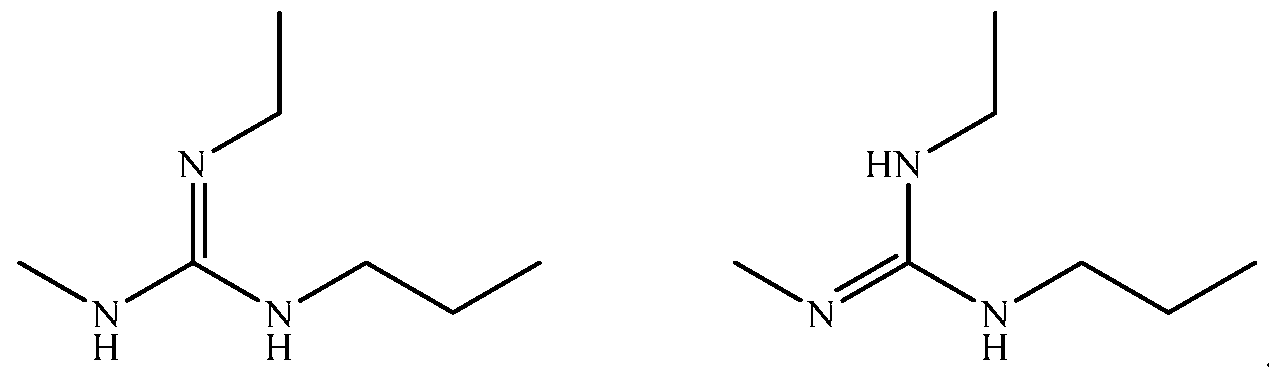
[0067] Because of the limits of representing compounds by structural formulas, it is to be understood that all chemical formulas of the compounds described herein represent all tautomeric forms of compounds and are within the scope of the present technology.
[0068] Stereoisomers of compounds (also known as optical isomers) include all chiral, diastereomeric, and racemic forms of a structure, unless the specific stereochemistry is expressly indicated. Thus, compounds used in the present technology include enriched or resolved optical isomers at any or all asymmetric atoms as are apparent from the depictions. Both racemic and diastereomeric mixtures, as well as the individual optical isomers can be isolated or synthesized so as to be substantially free of their enantiomeric or diastereomeric partners, and these stereoisomers are all within the scope of the present technology.
[0069] The compounds of the present technology may exist as solvates, especially hydrates. Hydrates may form during manufacture of the compounds or compositions comprising the compounds, or hydrates may form over time due to the hygroscopic nature of the compounds. Compounds of the present technology may exist as organic solvates as well, including DMF,
ether, and alcohol solvates among others. The identification and preparation of any particular solvate is within the skill of the ordinary artisan of synthetic organic or medicinal chemistry.
[0070] In an aspect, a compound according to Formula I is provided

or a stereoisomer thereof, a tautomer thereof, a solvate thereof, and/or pharmaceutically acceptable salt thereof. In Formula I, each independently designates a single or a double bond; one of a and b is a doubl a heterocyclyl or
heteroaryl; Z is N 'S' <~
 R , 11 is H, halo, amino, amide, carboxylate, ester, cyano, trifluoromethyl, nitro, pentafluorosulfanyl, isocyano, isothiocyano, alkyl, cycloalkyl, heterocyclyl, alkenyl, alkynyl, aryl, heteroaryl, alkanoyl, alkanoyloxy, aryloyl, aryloyloxy, cycloalkyloyl, cycloalkyloyloxy, heterocyclyloyl,
heterocyclyloyloxy, heteroaryloyl, heteroaryloyloxy, OR3, thiol, sulfide, sulfone, sulfonamido, sulfonyl, or S(0)20H; R2 is alkyl, cycloalkyl, heterocyclyl, aryl, heteroaryl, alkanoyl, alkanoxyoyl, aryloyl, aryloxyoyl, cycloalkyloyl, cycloalkyloxyoyl, heterocyclyloyl,
heterocyclyloxyoyl, heteroaryloyl, heteroaryloxyoyl, -C(0)-SR4; R3 is H, alkyl, cycloalkyl, heterocyclyl, aryl, heteroaryl, alkanoyl, aryloyl, cycloalkyloyl, heterocyclyloyl, or heteroaryloyl; and R4 is alkyl, cycloalkyl, heterocyclyl, aryl, or heteroaryl. In any embodiment herein, X1 may be a nitrogen-containing heterocyclyl or heteroaryl. In any embodiment herein, X1 may be a non-aromatic unsaturated heterocyclyl or a saturated heterocyclyl.
[0071] In any embodiment herein, the compound may be of Formula II

or a stereoisomer thereof, a tautomer thereof, a solvate thereof, and/or pharmaceutically acceptable salt thereof, where X2 is heterocyclylene or heteroarylene; R5 is H, halo, amino, amide, carboxylate, ester, cyano, trifluoromethyl, nitro, pentafluorosulfanyl, isocyano, isothiocyano, alkyl, cycloalkyl, heterocyclyl, alkenyl, alkynyl, aryl, heteroaryl, alkanoyl, alkanoyloxy, aryloyl, aryloyloxy, cycloalkyloyl, cycloalkyloyloxy, heterocyclyloyl,
heterocyclyloyloxy, heteroaryloyl, heteroaryloyloxy, OR6, thiol, sulfide, sulfone, sulfonamido, sulfonyl, or S(0)2OH; and R6 is H, alkyl, cycloalkyl, heterocyclyl, aryl, heteroaryl, alkanoyl, aryloyl, cycloalkyloyl, heterocyclyloyl, or heteroaryloyl. In any embodiment herein, the compound may be of Formula III

or a stereoisomer thereof, a tautomer thereof, a solvate thereof, and/or pharmaceutically acceptable salt thereof. In any embodiment herein, X2 may be a nitrogen-containing
heterocyclylene or heteroarylene. In any embodiment herein, X2 may be a non-aromatic unsaturated heterocyclylene or a saturated heterocyclylene.
[0072] In any embodiment herein, R1 may be halo, trifluoromethyl, pentafluorosulfanyl, Ci-6 alkyl, Ci-6 alkoxy, alkanoyloxyalkyl, aralkyl, heteroaralkyl, or heteroaryl-S-alkyl. It may be that R1 is H or Ci-6 alkyl; R1 may be an unsubstituted Ci-6 alkyl. In any embodiment herein, R2 may be Ci-6 alkyl, cycloalkenylalkyl, heterocyclylalkyl, aralkyl, heteroaralkyl, heteroaryl-S-alkyl, alkyl-S-alkyl, alkanoyl, aryloyl, aralkyloyl, -C(0)-SR4, or -C(0)-OR7; where R7 is alkyl, heterocyclyl, aryl, aralkyl, or heteroaryl. R2 may be Ci-6 alkyl, aralkyl, aryloyl, aralkyloyl, aryl- O-alkanoyl, -C(0)-SR4, or -C(0)-OR7, where R4 and R7 may each independently be Ci-6 alkyl or
C7-C12 aralkyl. In any embodiment herein, R2 may be Ci-6 alkyl, -C(0)-(CH2)„-phenyl, -C(O)- (CH2)m-0-phenyl, -C(0)-0-Ci-6 alkyl, or -C(0)-(CH)(NH2)-phenyl; where n is 0, 1, 2, 3, or 4; m is 1, 2, 3, or 4; and as discussed in the definitions of terms above phenyl may independently at each occurrence be substituted or unsubstituted. In such embodiments, it may be phenyl is substituted with a chloro, fluoro, Ci-6 alkyl, or Ci-6 alkoxy group.
[0073] In an embodiment herein, X1 may be, or X2 and R5 together may be,

where Y1, Y2, Y3, Y4, Y5, Y6, Y7, or Y8 are each independently O, S, or N(R8); and R8 is independently at each occurrence H or alkyl. It may be that X1 is, or X2 and R5 together

[0074] The compound of any embodiment herein may be of Formula IV
 or a stereoisomer thereof, a tautomer thereof, a solvate thereof, and/or pharmaceutically acceptable salt thereof. In any embodiment herein, R5 may be H, halo, Ci-6 alkyl, alkynyl, aryl, or heteroaryl.
[0075] In an aspect of the present technology, a composition is provided that includes any one of the aspects and embodiments of compounds of Formulas I-IV and a pharmaceutically acceptable carrier. In a related aspect, a pharmaceutical composition is provided, the pharmaceutical composition including an effective amount of the compound of any one of the aspects and embodiments of compounds of Formulas I-IV for treating a condition; and where the condition is a bacterial or a fungal infection. In a further related aspect, a method is provided that includes administering an effective amount of a compound of any one of the aspects and embodiments of compounds of Formulas I-IV or administering a pharmaceutical composition comprising an effective amount of a compound of any one of the aspects and embodiments of compounds of Formulas I-IV to a subject suffering from a bacterial or a fungal infection. The bacterial infection may include non-replicating bacteria. The bacterial infection may include non-replicating Mycobacterium tuberculosis. The bacterial infection may include replicating bacteria, such as replicating Mycobacterium tuberculosis.
[0076] "Effective amount" refers to the amount of a compound or composition required to produce a desired effect. One example of an effective amount includes amounts or dosages that yield acceptable toxicity and bioavailability levels for therapeutic (pharmaceutical) use including, but not limited to, the treatment of non-replicating Mycobacterium tuberculosis. Another example of an effective amount includes amounts or dosages that are capable of reducing symptoms associated with Mycobacterium tuberculosis, such as, for example, reducing the number of non-replicating Mycobacterium tuberculosis. As used herein, a "subject" or
"patient" is a mammal, such as a cat, dog, rodent or primate. Typically the subject is a human, and, preferably, a human suffering from or suspected of suffering from an addiction. The term "subject" and "patient" can be used interchangeably.
[0077] Thus, the instant present technology provides pharmaceutical compositions and medicaments comprising any of the compounds disclosed herein (e.g., compounds of Formulas I-IV) and a pharmaceutically acceptable carrier or one or more excipients or fillers (collectively, such carriers, excipients, fillers, etc., will be referred to as "pharmaceutically acceptable carriers" unless a more specific term is used). The compositions may be used in the methods and treatments described herein. Such compositions and medicaments include a therapeutically effective amount of any compound as described herein, including but not limited to a compound of Formulas I-IV, for treating one or more of the herein-described conditions. The
pharmaceutical composition may be packaged in unit dosage form. For example, the unit dosage form is effective in treating an infection caused by non-replicating Mycobacterium tuberculosis by reducing symptoms associated with the infection when administered to a subject in need thereof.
[0078] The pharmaceutical compositions and medicaments may be prepared by mixing one or more compounds of the present technology, pharmaceutically acceptable salts thereof, stereoisomers thereof, tautomers thereof, or solvates thereof, with pharmaceutically acceptable carriers, excipients, binders, diluents or the like to prevent and treat disorders associated with bacterial and/or fungal infections, such as infections by non-replicating Mycobacterium tuberculosis. The compounds and compositions described herein may be used to prepare formulations and medicaments that prevent or treat a variety of disorders associated with such bacterial and/or fungal infections. Such compositions can be in the form of, for example, granules, powders, tablets, capsules, syrup, suppositories, injections, emulsions, elixirs, suspensions or solutions. The instant compositions can be formulated for various routes of administration, for example, by oral, parenteral, topical, rectal, nasal, vaginal administration, or via implanted reservoir. Parenteral or systemic administration includes, but is not limited to, subcutaneous, intravenous, intraperitoneal, and intramuscular, injections. The following dosage forms are given by way of example and should not be construed as limiting the instant present technology.
[0079] For oral, buccal, and sublingual administration, powders, suspensions, granules, tablets, pills, capsules, gelcaps, and caplets are acceptable as solid dosage forms. These can be prepared, for example, by mixing one or more compounds of the instant present technology, or
pharmaceutically acceptable salts or tautomers thereof, with at least one additive such as a starch or other additive. Suitable additives are sucrose, lactose, cellulose sugar, mannitol, maltitol, dextran, starch, agar, alginates, chitins, chitosans, pectins, tragacanth gum, gum arabic, gelatins, collagens, casein, albumin, synthetic or semi-synthetic polymers or glycerides. Optionally, oral dosage forms can contain other ingredients to aid in administration, such as an inactive diluent, or lubricants such as magnesium stearate, or preservatives such as paraben or sorbic acid, or anti-oxidants such as ascorbic acid, tocopherol or cysteine, a disintegrating agent, binders, thickeners, buffers, sweeteners, flavoring agents or perfuming agents. Tablets and pills may be further treated with suitable coating materials known in the art.
[0080] Liquid dosage forms for oral administration may be in the form of pharmaceutically acceptable emulsions, syrups, elixirs, suspensions, and solutions, which may contain an inactive diluent, such as water. Pharmaceutical formulations and medicaments may be prepared as liquid suspensions or solutions using a sterile liquid, such as, but not limited to, an oil, water, an alcohol, and combinations of these. Pharmaceutically suitable surfactants, suspending agents, emulsifying agents, may be added for oral or parenteral administration.
[0081] As noted above, suspensions may include oils. Such oils include, but are not limited to, peanut oil, sesame oil, cottonseed oil, corn oil and olive oil. Suspension preparation may also contain esters of fatty acids such as ethyl oleate, isopropyl myristate, fatty acid glycerides and acetylated fatty acid glycerides. Suspension formulations may include alcohols, such as, but not limited to, ethanol, isopropyl alcohol, hexadecyl alcohol, glycerol and propylene glycol. Ethers, such as but not limited to, poly(ethyleneglycol), petroleum hydrocarbons such as mineral oil and petrolatum; and water may also be used in suspension formulations.
[0082] Injectable dosage forms generally include aqueous suspensions or oil suspensions which may be prepared using a suitable dispersant or wetting agent and a suspending agent. Injectable forms may be in solution phase or in the form of a suspension, which is prepared with a solvent or diluent. Acceptable solvents or vehicles include sterilized water, Ringer's solution, or an isotonic aqueous saline solution. An isotonic solution will be understood as isotonic with the subject. Alternatively, sterile oils may be employed as solvents or suspending agents.
Typically, the oil or fatty acid is non-volatile, including natural or synthetic oils, fatty acids, mono-, di- or tri-glycerides.
[0083] For injection, the pharmaceutical formulation and/or medicament may be a powder suitable for reconstitution with an appropriate solution as described above. Examples of these include, but are not limited to, freeze dried, rotary dried or spray dried powders, amorphous
powders, granules, precipitates, or particulates. For injection, the formulations may optionally contain stabilizers, pH modifiers, surfactants, bioavailability modifiers and combinations of these.
[0084] Compounds of the present technology may be administered to the lungs by inhalation through the nose or mouth. Suitable pharmaceutical formulations for inhalation include solutions, sprays, dry powders, or aerosols containing any appropriate solvents and optionally other compounds such as, but not limited to, stabilizers, antimicrobial agents, antioxidants, pH modifiers, surfactants, bioavailability modifiers and combinations of these. The carriers and stabilizers vary with the requirements of the particular compound, but typically include nonionic surfactants (Tweens, Pluronics, or polyethylene glycol), innocuous proteins like serum albumin, sorbitan esters, oleic acid, lecithin, amino acids such as glycine, buffers, salts, sugars or sugar alcohols. Aqueous and nonaqueous (e.g., in a fluorocarbon propellant) aerosols are typically used for delivery of compounds of the present technology by inhalation.
[0085] Dosage forms for the topical (including buccal and sublingual) or transdermal administration of compounds of the present technology include powders, sprays, ointments, pastes, creams, lotions, gels, solutions, and patches. The active component may be mixed under sterile conditions with a pharmaceutically-acceptable carrier or excipient, and with any preservatives, or buffers, which may be required. Powders and sprays can be prepared, for example, with excipients such as lactose, talc, silicic acid, aluminum hydroxide, calcium silicates and polyamide powder, or mixtures of these substances. The ointments, pastes, creams and gels may also contain excipients such as animal and vegetable fats, oils, waxes, paraffins, starch, tragacanth, cellulose derivatives, polyethylene glycols, silicones, bentonites, silicic acid, talc and zinc oxide, or mixtures thereof. Absorption enhancers can also be used to increase the flux of the compounds of the present technology across the skin. The rate of such flux can be controlled by either providing a rate controlling membrane (e.g., as part of a transdermal patch) or dispersing the compound in a polymer matrix or gel.
[0086] Besides those representative dosage forms described above, pharmaceutically acceptable excipients and carriers are generally known to those skilled in the art and are thus included in the instant present technology. Such excipients and carriers are described, for example, in "Remingtons Pharmaceutical Sciences" Mack Pub. Co., New Jersey (1991), which is incorporated herein by reference.
[0087] The formulations of the present technology may be designed to be short-acting, fast- releasing, long-acting, and sustained-releasing as described below. Thus, the pharmaceutical formulations may also be formulated for controlled release or for slow release.
[0088] The instant compositions may also comprise, for example, micelles or liposomes, or some other encapsulated form, or may be administered in an extended release form to provide a prolonged storage and/or delivery effect. Therefore, the pharmaceutical formulations and medicaments may be compressed into pellets or cylinders and implanted intramuscularly or subcutaneously as depot injections or as implants such as stents. Such implants may employ known inert materials such as silicones and biodegradable polymers.
[0089] Specific dosages may be adjusted depending on conditions of disease, the age, body weight, general health conditions, sex, and diet of the subject, dose intervals, administration routes, excretion rate, and combinations of drugs. Any of the above dosage forms containing effective amounts are well within the bounds of routine experimentation and therefore, well within the scope of the instant present technology.
[0090] Those skilled in the art are readily able to determine an effective amount by simply administering a compound of the present technology to a patient in increasing amounts until (for a bacterial infection) the number of bacteria is decreased. The compounds of the present technology can be administered to a patient at dosage levels in the range of about 0.1 to about 1,000 mg per day. For a normal human adult having a body weight of about 70 kg, a dosage in the range of about 0.01 to about 100 mg per kg of body weight per day is sufficient. The specific dosage used, however, can vary or may be adjusted as considered appropriate by those of ordinary skill in the art. For example, the dosage can depend on a number of factors including the requirements of the patient, the severity of the condition being treated and the pharmacological activity of the compound being used. The determination of optimum dosages for a particular patient is well known to those skilled in the art.
[0091] Various assays and model systems can be readily employed to determine the therapeutic effectiveness of the treatment according to the present technology.
[0092] Effectiveness of the compositions and methods of the present technology may also be demonstrated by a decrease in the symptoms of a bacterial and/or fungal infection, such as, for example, Mycobacterium tuberculosis and/or a reducition in the population of Mycobacterium tuberculosis. Effectiveness of the compositions and methods of the present technology may also be demonstrated by a decrease in the population of non-replicating Mycobacterium tuberculosis.
[0093] For each of the indicated conditions described herein, test subjects will exhibit a 10%, 20%, 30%), 50% or greater reduction, up to a 75-90%), or 95% or greater, reduction, in one or more symptom(s) caused by, or associated with, the disorder in the subject, compared to placebo-treated or other suitable control subjects.
[0094] The compounds of the present technology can also be administered to a patient along with other conventional therapeutic agents that may be useful in the treatment of bacterial and/or fungal infections. Thus, a pharmaceutical composition of the present technology may further include an antibiotic different than the compounds of Formulas I-IV. For example, the pharmaceutical composition may further include an effective amount of an antibiotic active on replicating bacteria. Such antibiotics active on replicating bacteria include, but are not limited to, a tetracycline antibiotic (e.g., tetracycline, doxycycline), a glycylcycline antibiotic (e.g., tigecycline), a quinolone antibiotic (e.g., moxifloxacin, levofloxacin), an ansamycin antibiotic (e.g., geldanamycin, rifampicin), a sulfonamide antibiotic (e.g., sulfamethoxazole,
sulfadimethoxine, trimethoprim-sulfamethoxazole), a beta-lactam antibiotic (e.g., penicillins (amoxicillin, ampicillin), a cephalosporin (e.g., cephalexin, cefdinir); a carbapenem ((e.g., meropenem, imipenem); a monobactam ((e.g.,aztreonam, nocardicin A); an aminoglycoside antibiotic (e.g., streptomycin, kanamycin), a glycopeptide antibiotic (e.g., vancomycin, teicoplanin), a streptogramin antibiotic (e.g., pristinamycin IIA, pristinamycin 1A), a macrolide antibiotic (e.g., erythromycin, clarithromycin, azithromycin), a oxazolidinone antibiotic (e.g., linezolid, radezolid), a lipopeptide antibiotic (e.g., daptomycin), a chloramphenicol -type antibiotic (e.g., chloramphenicol), a nitroimidazole antibiotic (e.g., metronidazole), a nitrofuran antibiotic (e.g., nitrofurantoin (macrobid)), or a lincosamide antibiotic (e.g., clindamycin). The pharmaceutical composition of any embodiment herein may include a beta-lactamase inhibitor (e.g.,clavulanate). The pharmaceutical composition may include an effective amount of an antibiotic active on replicating Mycobacterium tuberculosis. Such antibiotics active on replicating Mycobacterium tuberculosis include, but are not limited to, a quinolone (e.g., moxifloxacin, levofloxacin), an ansamycin (e.g., rifampicin, rifapentine, rifabutin), a beta-lactam (e.g., a carbapenems [e.g., meropenem] administered with beta-lactamase inhibitor
[e.g.,clavulanate]), an aminoglycoside (e.g., streptomycin, amikacin, kanamycin, capreomycin), a macrolide (e.g., erythromycin, clarithromycin, azithromycin), an oxazolidinone (e.g., linezolid, radezolid), chloramphenicol, a thioamide (e.g., ethionamide, prothionamide), Cycloserine, Ethambutol, Isoniazid, Pyrazinamide, an aminosalicylate (e.g., 4-aminosalicylic acid), cycloserine, a diarylquinoline (e.g., TMC207 (Bedaquiline, Sirturo™, Janssen)), or a nitroimidazole (e.g., PA-824 and Delamid™ (Otsuka Pharmaceuticals)). The administration
may include oral administration, parenteral administration, or nasal administration. In any of these embodiments, the administration may include subcutaneous injections, intravenous injections, intraperitoneal injections, or intramuscular injections. In any of these embodiments, the administration may include oral administration. The methods of the present technology can also comprise administering, either sequentially or in combination with one or more compounds of the present technology, a conventional therapeutic agent in an amount that can potentially or synergistically be effective for the treatment of bacterial and/or fungal infections. Thus, the methods of the present technology may include administering an effective amount of an antibiotic active on replicating bacteria. For example, the methods may include administering an effective amount of an antibiotic active on replicating Mycobacterium tuberculosis.
[0095] In one aspect, a compound of the present technology is administered to a patient in an amount or dosage suitable for therapeutic use. Generally, a unit dosage comprising a compound of the present technology will vary depending on patient considerations. Such considerations include, for example, age, protocol, condition, sex, extent of disease, contraindications, concomitant therapies and the like. An exemplary unit dosage based on these considerations can also be adjusted or modified by a physician skilled in the art. For example, a unit dosage for a patient comprising a compound of the present technology can vary from 1 x 10~4 g/kg to 1 g/kg, preferably, 1 χ 10~3 g/kg to 1.0 g/kg. Dosage of a compound of the present technology can also vary from 0.01 mg/kg to 100 mg/kg or, preferably, from 0.1 mg/kg to 10 mg/kg.
[0096] A compound of the present technology can also be modified, for example, by the covalent attachment of an organic moiety or conjugate to improve pharmacokinetic properties, toxicity or bioavailability (e.g., increased in vivo half-life). The conjugate can be a linear or branched hydrophilic polymeric group, fatty acid group or fatty acid ester group. A polymeric group can comprise a molecular weight that can be adjusted by one of ordinary skill in the art to improve, for example, pharmacokinetic properties, toxicity or bioavailability. Exemplary conjugates can include a polyalkane glycol (e.g., polyethylene glycol (PEG), polypropylene glycol (PPG)), carbohydrate polymer, amino acid polymer or polyvinyl pyrolidone and a fatty acid or fatty acid ester group, each of which can independently comprise from about eight to about seventy carbon atoms. Conjugates for use with a compound of the present technology can also serve as linkers to, for example, any suitable substituents or groups, radiolabels (marker or tags), halogens, proteins, enzymes, polypeptides, other therapeutic agents (for example, a pharmaceutical or drug), nucleosides, dyes, oligonucleotides, lipids, phospholipids and/or liposomes. In one aspect, conjugates can include polyethylene amine (PEI), polyglycine, hybrids of PEI and polyglycine, polyethylene glycol (PEG) or methoxypoly ethylene glycol
(mPEG). A conjugate can also link a compound of the present technology to, for example, a label (fluorescent or luminescent) or marker (radionuclide, radioisotope and/or isotope) to comprise a probe of the present technology. Conjugates for use with a compound of the present technology can, in one aspect, improve in vivo half-life. Other exemplary conjugates for use with a compound of the present technology as well as applications thereof and related techniques include those generally described by U.S. Patent No. 5,672,662, which is hereby incorporated by reference herein.
[0097] In another aspect, the present technology provides methods of identifying a target of interest including contacting the target of interest with a detectable or imaging effective quantity of a labeled compound of the present technology. A detectable or imaging effective quantity is a quantity of a labeled compound of the present technology necessary to be detected by the detection method chosen. For example, a detectable quantity can be an administered amount sufficient to enable detection of binding of the labeled compound to a target of interest including, but not limited to, a non-replicating Mycobacterium tuberculosis. Suitable labels are known by those skilled in the art and can include, for example, radioisotopes, radionuclides, isotopes, fluorescent groups, biotin (in conjunction with streptavidin complexation), and chemoluminescent groups. Upon binding of the labeled compound to the target of interest, the target may be isolated, purified and further characterized such as by determining the amino acid sequence of a protein to which the labeled compound of the present technology is bound.
[0098] The terms "associated" and/or "binding" can mean a chemical or physical interaction, for example, between a compound of the present technology and a target of interest. Examples of associations or interactions include covalent bonds, ionic bonds, hydrophilic-hydrophilic interactions, hydrophobic-hydrophobic interactions and complexes. Associated can also refer generally to "binding" or "affinity" as each can be used to describe various chemical or physical interactions. Measuring binding or affinity is also routine to those skilled in the art. For example, compounds of the present technology can bind to or interact with a target of interest or precursors, portions, fragments and peptides thereof and/or their deposits.
[0099] The examples herein are provided to illustrate advantages of the present technology and to further assist a person of ordinary skill in the art with preparing or using the compounds of the present technology or salts, pharmaceutical compositions, derivatives, solvates, metabolites, prodrugs, racemic mixtures or tautomeric forms thereof. The examples herein are also presented in order to more fully illustrate the preferred aspects of the present technology. The examples should in no way be construed as limiting the scope of the present technology, as
defined by the appended claims. The examples can include or incorporate any of the variations, aspects or aspects of the present technology described above. The variations, aspects or aspects described above may also further each include or incorporate the variations of any or all other variations, aspects or aspects of the present technology.
EXAMPLES
[0100] General synthetic and analytical details:
[0101] All solvents and reagents were used as received from commercial suppliers, unless noted otherwise. 1H and 13C NMR spectra were recorded on a Bruker AM 400 spectrometer (operating at 400 and 101 MHz respectively) or a Bruker AVIII spectrometer (operating at 500 and 126 MHz respectively) in DMSO-<¾. The chemical shifts (δ) reported are given in parts per million (ppm) and the coupling constants (J) are in Hertz (Hz). The spin multiplicities are reported as s = singlet, d = doublet, t = triplet, q = quartet, dd = doublet of doublet, ddd = doublet of doublet of doublet, dt = doublet of triplet, td = triplet of doublet, and m = multiplet. Column chromatography separations were performed using the Teledyne Isco CombiFlash Rf using RediSep Rf silica gel columns. The analytical reverse phase LC method used an Agilent 1200 RRLC system with UV detection (Agilent 1200 DAD SL) and mass detection (Agilent 6224 TOF). The analytical method conditions included a Waters Aquity BEH C18 column (2.1 x 50 mm, 1.7 μιη) and elution with a linear gradient of 5% acetonitrile in pH 9.8 buffered aqueous ammonium formate to 100% acetonitrile at 0.4 mL/min flow rate. Automated preparative reverse phase HPLC purification was performed using an Agilent 1200 Mass-Directed
Fractionation system (Prep Pump G1361 with gradient extension, make-up pump G1311A, pH modification pump G131 1A, HTS PAL autosampler, UV-DAD detection G1315D, fraction collector G1364B, and Agilent 6120 quadrapole spectrometer G6120A). The preparative chromatography conditions included a Waters X-Bridge C18 column (19 x 150 mm, 5 um, with 19 x 10-mm guard column), elution with a water and acetonitrile gradient, which increases 20% in acetonitrile content over 4 min at a flow rate of 20 mL/min (modified to pH 9.8 through addition of NH4OH by auxiliary pump), and sample dilution in DMSO. The preparative gradient, triggering thresholds, and UV wavelength were selected according to the analytical RP HPLC analysis of each crude sample. Compound purity was measured on the basis of peak integration (area under the curve) from UV-Vis absorbance at 214 nm, and compound identity was determined on the basis of mass spectral and NMR analyses. Except where noted otherwise, all compounds had >95% purity as determined using the HPLC methods described above.
[0102] Abbreviations:
AB: Alamar blue;
ACN: acetonitrile;
7-ADCA: 7-aminodeacetoxycephalosporanic acid;
CARA: charcoal agar resazurin assay;
CDD: Collaborative Drug Discovery;
CFU: colony -forming unit;
DlaT: dihydrolipoamide acyltransferase;
DMEM: Dulbecco's modified eagle medium;
IFNy: interferon γ;
IS: internal standard;
LDT: L,D-transpeptidase;
MDT: modular dispense technology;
MRM: multiple reaction monitoring;
Mtb: Mycobacterium tuberculosis;
NR. non-replicating;
OADC: oleic albumin dextrose catalase;
PBS-Tyl: PBS containing tyloxapol;
R. replicating;
RNS: reactive nitrogen species;
TW80: Tween80.
[0103] Representative Synthesis of Compounds of the Present Technology. Representative syntheses are provided below.
[0104] Example 1: N-((6R,7R)-3-Methyl-2-(3-methyl-l,2,4-oxadiazol-5-yl)-8-oxo-5-thia-l- azabicyclo[4.2.0]oct-2-en-7-yl)-2-phenoxyacetamide (5).

Ci8Hi9N404S+ [M + H]+: 387.1122, found 387.1088.
[0105] Example 2: N-((6R,7R)-3-Methyl-2-(3-methyl-l,2,4-oxadiazol-5-yl)-8-oxo-5-thia- 1-azabicyclo [4.2.0] oct-2-en-7-yl)-2-phenylacetamide (16a).

Synthesized according to the procedure described for compound 5. Yellow solid (8.5 mg, 6.75% yield). [a]D 21 = +150.3 (c = 0.34, CH2C12); IR (film) vmax = 3295, 1779, 1667, 1532, 1331, 1159, 696 cm"1; 1H NMR (500 MHz, DMSO-i¾) δ 9.14 (d, J= 8.2 Hz, 1H), 7.33 - 7.19 (m, 3H), 5.73 (dd, J= 8.2, 4.7 Hz, 1H), 5.19 (s, 3H), 3.71 (dd, J= 18.3, 1.3 Hz, 1H), 3.60 - 3.54 (m, 2H), 3.50 (d, J= 13.9 Hz, 1H), 2.41 (s, 3H), 2.13 (s, 3H); 13C NMR (126 MHz, DMSO) δ 171.01, 170.11, 167.22, 165.22, 135.82, 132.13, 129.04, 128.24, 126.50, 115.69, 59.14, 57.50, 41.56, 28.91, 19.73, 11.30; HRMS (ESI-TOF) calcd for Ci8Hi9N403S+ [M + H]+: 371.12, found 371.1123.
[0106] Example 3: N-((6R,7R)-3-Methyl-2-(3-methyl-l,2,4-oxadiazol-5-yl)-8-oxo-5-thia-l- azabicyclo[4.2.0]oct-2-en-7-yl)-2-(p-tolyl)acetamide (16b).

Synthesized according to the procedure described for compound 5. Yellow solid (35.8 mg, 54% yield). [a]D 21 = +65.2 (c = 1.43, CH2C12); IR (film) vmax = 3283, 2925, 1769, 1660, 1535, 1515, 1331, 996, 812 cm" 1 . 1HNMR (500 MHz, DMSO-i¾) δ 9.10 (d, J= 8.2 Hz, 1H), 7.19 - 7.13 (m, 2H), 7.15 - 7.07 (m, 2H), 5.73 (dd, J= 8.2, 4.7 Hz, 1H), 5.19 (d, J= 4.6 Hz, 1H), 3.71 (d, J = 18.2, 1.3 Hz, 1H), 3.59 - 3.46 (m, 2H), 3.35 (s, 1H), 2.41 (s, 3H), 2.27 (s, 3H), 2.14 (s, 3H). 13C MR (126 MHz, DMSO) δ 171.12, 170.06, 167.16, 165.19, 135.44, 132.68, 132.04, 128.84, 128.73, 115.65, 59.08, 57.45, 41.11, 28.86, 20.61, 19.67, 11.24. HRMS (ESI-TOF) calcd for Ci9H2iN403S+ [M + H]+: 385.13, found 385.1310.
[0107] Example 4: 2-(4-Methoxyphenyl)-N-((6R,7R)-3-methyl-2-(3-methyl-l,2,4- oxadiazol-5-yl)-8-oxo-5-thia-l-azabicyclo[4.2.0]oct-2-en-7-yl)acetamide (16c).

Synthesized according to the procedure described for compound 5. Yellow solid (5.4 mg, 5.4% yield). [a]D 22 = 68.1 (c = 0.22, CH2C12); IR (film) Vmax = 3265, 2931, 1766, 1657, 1513, 1333, 1243, 1178, 913, 819 cm" 1H MR (500 MHz, DMSO-i¾) δ 9.07 (d, J= 8.3 Hz, 1H), 7.23 - 7.16 (m, 2H), 6.90 - 6.83 (m, 2H), 5.72 (dd, J= 8.2, 4.6 Hz, 1H), 5.19 (d, J= 4.7 Hz, 1H), 3.73 (s, 3H), 3.76 - 3.67 (m, 1H), 3.57 (d, J= 18.3 Hz, 1H), 3.50 (d, J= 14.0 Hz, 1H), 3.42 (d, J = 13.9 Hz, 1H), 2.41 (s, 3H), 2.16 - 2.12 (m, 3H). 13C NMR (126 MHz, DMSO) δ 171.34, 170.11, 167.21, 165.27, 157.97, 132.10, 130.02, 127.71, 115.69, 113.65, 59.13, 57.49, 55.03, 40.66,
28.90, 19.73, 11.30. HRMS (ESI-TOF) calcd for Ci9H2iN404S+ [M + H]+: 401.13, found 401.1248.
[0108] Example 5: 2-(4-Chlorophenyl)-N-((6R,7R)-3-methyl-2-(3-methyl-l,2,4-oxadiazol- 5-yl)-8-oxo-5-thia-l-azabicyclo[4.2.0]oct-2-en-7-yl)acetamide (16d).

Synthesized according to the procedure described for compound 5. Yellow solid (20.5 mg,
17.8% yield). [<x]D = +76.5 (c = 0.82, CH2C12); IR (film) vmax = 3264, 3043, 2929, 1766, 1656, 1540, 1493, 1333, 914 cm"1; 1H MR (500 MHz, DMSO-i¾) δ 9.16 (d, J= 8.2 Hz, 1H), 7.41 - 7.34 (m, 2H), 7.33 - 7.26 (m, 2H), 5.72 (dd, J= 8.2, 4.7 Hz, 1H), 5.20 (d, J= 4.7 Hz, 1H), 3.71 (d, J= 18.2, 1.3 Hz, 1H), 3.60 - 3.48 (m, 2H), 3.34 (s, 1H), 2.41 (s, 3H), 2.14 (s, 3H). 13C MR (126 MHz, DMSO) 5 170.62, 170.04, 167.16, 165.06, 134.76, 132.13, 131.21, 130.87, 128.13, 115.63, 59.10, 57.41, 40.70, 28.86, 19.67, 11.24. HRMS (ESI-TOF) calcd for CI8HI8C1N403S+ [M + H]+: 405.08, found 405.0766.
[0109] Example 6: 2-(3,4-Dichlorophenyl)-N-((6R,7R)-3-methyl-2-(3-methyl-l,2,4- oxadiazol-5-yl)-8-oxo-5-thia-l-azabicyclo[4.2.0]oct-2-en-7-yl)acetamide (16e).

Synthesized according to the procedure described for compound 5. Yellow solid (3.8 mg, 2% yield). [a]D 23 = +94.7 (c = 0.15, CH2C12); IR (film) vmax = 3285, 1780, 1671, 1541, 1472, 1331, 1032, 669 cm" 1 1H MR (500 MHz, DMSO-i¾) δ 9.20 (d, J= 8.1 Hz, 1H), 7.61 - 7.52 (m, 2H),
7.27 (dd, J= 8.2, 2.1 Hz, 1H), 5.72 (dd, J= 8.1, 4.7 Hz, 1H), 5.20 (d, J= 4.7 Hz, 1H), 3.76 - 3.63 (m, 1H), 3.65 - 3.51 (m, 3H), 2.41 (s, 3H), 2.14 (s, 3H). 13C NMR (126 MHz, DMSO) δ 170.18, 170.03, 167.17, 164.95, 136.85, 132.21, 131.03, 130.65, 130.31, 129.50, 129.22, 115.62, 59.12, 57.40, 40.38, 28.87, 19.67, 11.24. HRMS (ESI-TOF) calcd for Ci8Hi7Cl2N403S+ [M + H]+: 439.04, found 439.0359.
[0110] Example 7: 3-(4-Methoxyphenyl)-N-((6R,7R)-3-methyl-2-(3-methyl-l,2,4- oxadiazol-5-yl)-8-oxo-5-thia-l-azabicyclo[4.2.0]oct-2-en-7-yl)propanamide (17a).

Synthesized according to the procedure described for compound 5. Orange solid (7.3 mg, 8% yield). [a]D = +68.2 (c = 0.18, CH2C12); IR (film) = 1775, 1651, 1542, 1513, 1361, 1246 cm"1; 1H MR (500 MHz, DMSO) δ 8.88 (d, J= 8.2 Hz, 1H), 7.13 (m, 2H), 6.83 (m, 2H), 5.74 (dd, J= 8.2, 4.7 Hz, 1H), 5.21 (d, J= 4.7 Hz, 1H), 3.72 (m, 4H), 3.56 (d, J= 18.3 Hz, 1H), 2.77 (m, 2H), 2.47 (td, J= 7.6, 2.9 Hz, 2H), 2.41 (s, 3H), 2.14 (s, 3H); 13C NMR (126 MHz, DMSO) δ 172.33, 167.15, 165.29, 157.48, 132.83, 132.04, 129.14, 129.08, 115.65, 113.67, 58.99, 57.46, 54.93, 36.63, 30.04, 28.86, 19.66, 11.24; HRMS (ESI-TOF) calcd for C2oH23N404S+ [M + H]+: 415.1435, found 415.1414.
[0111] Example 8: 3-(4-Butoxyphenyl)-N-((6R,7R)-3-methyl-2-(3-methyl-l,2,4-oxadiazol- 5-yl)-8-oxo-5-thia-l-azabicyclo[4.2.0]oct-2-en-7-yl)propanamide (17b).

[0112] Example 9: N-((6R,7R)-3-Methyl-2-(3-methyl-l,2,4-oxadiazol-5-yl)-8-oxo-5-thia-l- azabicyclo[4.2.0]oct-2-en-7-yl)-2-(p-tolyloxy)acetamide (18a).

Synthesized according to the procedure described for compound 5. Brown solid (22.2 mg, 32% yield). [a]D 22 = +91.8 (c = 0.89, MeOH); IR (film) νΜΧ = 1778, 1686, 1509, 1330, 1225, 1052, 1026, 1007, 817 cm"1; 1H NMR (500 MHz, DMSO-i¾) δ 9.20 (d, J= 8.2 Hz, 1H), 7.35 - 7.28 (m, 1H), 7.05 - 6.99 (m, 2H), 6.95 - 6.89 (m, 1H), 5.77 (dd, J= 8.1, 4.7 Hz, 1H), 5.25 (d, J = 4.7 Hz, 1H), 4.68 (m, 2H), 3.71 (d, J= 18.1 Hz, 1H), 3.59 (d, J= 18.1 Hz, 1H), 2.41 (s, 3H), 2.23 (s, 3H), 2.16 (s, 3H). 13C NMR (126 MHz, DMSO) δ 170.04, 168.66, 167.17, 164.61, 155.60, 132.84, 129.78, 129.72, 115.77, 114.32, 66.24, 58.82, 57.44, 28.97, 20.03, 19.67, 11.24 HRMS (ESI-TOF) calcd for Ci9H2iN404S+ [M + H]+: 401.1278, found 401.1271.
[0113] Example 10: 2-(4-Methoxyphenoxy)-N-((6R,7R)-3-methyl-2-(3-methyl-l,2,4- oxadiazol-5-yl)-8-oxo-5-thia-l-azabicyclo[4.2.0]oct-2-en-7-yl)acetamide (18b).

Synthesized according to the procedure described for compound 5. Brown solid (176.0 mg, 32% yield). [a]D 25 = +90.6 (c = 7.04, MeOH); IR (film) νΜΧ = 1778, 1505, 1220 cm"1; 1H NMR (500 MHz, DMSO) δ 9.09 (d, J= 8.3 Hz, 1H), 6.87 (m, 4H), 5.78 (dd, J= 8.3, 4.7 Hz, 1H), 5.25 (d, J = 4.7 Hz, 1H), 4.59, 4.54 (ABq, JAB = 14.9 Hz, 2H), 3.70 (d, J= 18.9 Hz, 4H), 3.60 (d, J= 18.2 Hz, 1H), 2.42 (s, 3H), 2.16 (s, 3H); 13C NMR (126 MHz, DMSO) δ 170.05, 168.75, 167.17, 164.62, 153.72, 151.71, 132.88, 115.80, 115.48, 114.47, 66.83, 58.82, 57.45, 55.31, 28.98, 19.67, 11.23; HRMS (ESI-TOF) calcd for Ci9H2iN405S+ [M + H]+: 417.1227, found 417.1224.
[0114] Example 11: 2-(3-Chlorophenoxy)-N-((6R,7R)-3-methyl-2-(3-methyl-l,2,4- oxadiazol-5-yl)-8-oxo-5-thia-l-azabicyclo[4.2.0]oct-2-en-7-yl)acetamide (18c).

Synthesized according to the procedure described for compound 5. Brown solid (58.3 mg, 30% yield). [a]D 22 = +96.6 (c = 2.33, MeOH); IR (film) νΜΧ = 1777, 1688, 1594, 1478, 1329, 1223, 1075, 1051, 1025, 1007, 762, 681 cm"1; 1H NMR (500 MHz, DMSO) δ 9.20 (d, J= 8.2 Hz, 1H), 7.32 (m, 1H), 7.02 (m, 2H), 6.92 (ddd, J= 8.4, 2.4, 0.9 Hz, 1H), 5.77 (dd, J= 8.2, 4.7 Hz, 1H), 5.25 (d, J= 4.7 Hz, 1H), 4.72, 4.67 (ABq, JAB = 15.1 Hz, 2H), 3.71, 3.59 (ABq, JAB = 18.2 Hz, 2H), 2.42 (s, 3H), 2.16 (s, 3H); 13C NMR (126 MHz, DMSO) δ 170.04, 168.19, 167.17, 164.50, 158.60, 133.61, 132.88, 130.77, 121.05, 115.79, 114.69, 113.61, 66.27, 58.87, 57.43, 28.99,
19.67, 1 1.24; HRMS (ESI-TOF) calcd for CI8HI8C1N404S+ [M + H]+: 421.0732, found
421.0728.
[01 15] Example 12: 2-(4-Chlorophenoxy)-N-((6R,7R)-3-methyl-2-(3-methyl-l,2,4- oxadiazol-5-yl)-8-oxo-5-thia-l-azabicyclo[4.2.0]oct-2-en-7-yl)acetamide (18d).

Synthesized according to the procedure described for compound 5. Orange solid (13.1 mg, 30% yield). [<x]D = +51.8 (c = 0.44, CH2C12); IR (film) = 1777, 1684, 1522, 1489, 1328, 1234, 1053, 825, 733, 700 cm"1; 1H MR (500 MHz, DMSO) δ 9.18 (d, J= 8.2 Hz, 1H), 7.34 (m, 2H), 6.96 (m, 2H), 5.76 (dd, J= 8.2, 4.7 Hz, 1H), 5.24 (d, J= 4.7 Hz, 1H), 4.68, 4.63 (ABq, JAB = 15.0 Hz, 2H), 3.71, 3.60 (ABq, JAB = 18.2 Hz, 2H), 2.42 (s, 3H), 2.15 (s, 3H); 13C MR (126 MHz, DMSO) 5 170.03, 168.27, 167.18, 164.52, 156.57, 132.83, 129.15, 124.78, 116.33, 115.76, 66.35, 58.84, 57.42, 28.98, 19.68, 11.24; HRMS (ESI-TOF) calcd for CI8HI8C1N404S+ [M + H]+: 421.0732, found 421.0738.
[0116] Example 13: N-((6R,7R)-3-Methyl-2-(3-methyl-l,2,4-oxadiazol-5-yl)-8-oxo-5-thia- l-azabicyclo[4.2.0]oct-2-en-7-yl)-2-(4-(trifluoromethyl)phenoxy)acetamide (18e).

[0117] Example 14: tert-butyl ((6R,7R)-3-methyl-2-(3-methyl-l,2,4-oxadiazol-5-yl)-8-oxo- 5-thia-l-azabicyclo[4.2.0]oct-2-en-7-yl)carbamate (19a).

19a
Synthesized according to the procedure described for compound 5. Orange solid (19.6 mg, 20% yield). [a]D 25 = +40.5 (c = 0.64, CH2C12); IR (film) Vmax = 1781, 1709, 1366, 1323, 1268, 1247, 1158, 1047, 1023, 732, 701 cm"1; 1H NMR (500 MHz, DMSO) δ 8.05 (d, J = 8.9 Hz, 1H), 5.51 (dd, J= 8.9, 4.6 Hz, 1H), 5.17 (d, J= 4.7 Hz, 1H), 3.66, 3.56 (ABq, Jm = 18.1 Hz, 2H), 2.41 (s, 3H), 2.15 (s, 3H), 1.41 (s, 9H); 13C NMR (126 MHz, DMSO) δ 170.15, 167.13, 165.25, 156.54, 133.27, 115.87, 79.11, 60.76, 58.09, 33.32, 28.00, 19.69, 11.23; HRMS (ESI-TOF) calcd for Ci5H2oN404SNH4 + [M + NH4]+: 370.1544, found 370.1541.
[0118] Example 15: S-Ethyl ((6R,7R)-3-methyl-2-(3-methyl-l,2,4-oxadiazol-5-yl)-8-oxo-5- thia-l-azabicyclo[4.2.0]oct-2-en- -yl)carbamothioate (19b).

Synthesized according to the procedure described for compound 5. Yellow solid (9.1 mg, 5% yield). [a]D 22 = +81.5 (c = 0.2, CH2C12); IR (film) vmax = 3281, 2927, 1781, 1665, 1525, 1332, 1210, 911, 691 cm" 1 1H NMR (400 MHz, DMSO-i¾) δ 9.21 (d, J= 8.2 Hz, 1H), 5.73 (q, J= 4.5 Hz, 1H), 5.19 (d, J= 4.6 Hz, 1H), 3.67 (d, J= 16.9 Hz, 1H), 3.55 (d, J= 18.1 Hz, 1H), 2.79 (q, J = 7.3 Hz, 2H), 2.39 (s, 3H), 2.13 (s, 3H), 1.18 (t, J= 7.3 Hz, 3H). 13C NMR (101 MHz, DMSO) δ 170.53, 167.94, 167.64, 164.93, 133.44, 116.26, 60.74, 58.20, 29.47, 23.75, 20.16, 16.08, 11.72. HRMS (ESI-TOF) calcd for Ci3Hi7N403S2 + [M + H]+: 341.07, found 341.0726.
[0119] Example 16: Neopentyl ((6R,7R)-3-methyl-2-(3-methyl-l,2,4-oxadiazol-5-yl)-8- oxo-5-thia-l-azabicyclo[4.2.0]oct-2-en-7-yl)carbamate (19c).

Synthesized according to the procedure described for compound 5. Yellow solid (78 mg, 11% yield). [a]D 22 = +82 (c = 2.96, CH2C12); IR (film) vmax = 3276, 2960, 1780, 1714, 1523, 1322, 1244, 1044, 732 cm" 1 1H NMR (400 MHz, DMSO-i¾) δ 8.32 (d, J= 8.8 Hz, 1H), 5.53 (dd, J = 8.8, 4.6 Hz, 1H), 5.18 (d, J= 4.6 Hz, 1H), 3.78 - 3.61 (m, 3H), 3.54 (d, J= 18.1 Hz, 1H), 2.39 (s, 3H), 2.14 (s, 3H), 0.89 (s, 9H). 13C NMR (101 MHz, DMSO) δ 170.60, 167.60, 165.39, 156.70, 133.58, 116.34, 73.99, 61.54, 58.45, 55.32, 40.87, 26.58, 20.16, 11.70. HRMS (ESI- TOF) calcd for Ci6H23N403S+ [M + H]+: 367.14, found 367.1371.
[0120] Example 17: 2,2,2-Trichloroethyl ((6R,7R)-3-methyl-2-(3-methyl-l,2,4-oxadiazol- 5-yl)-8-oxo-5-thia-l-azabicyclo[4.2.0]oct-2-en-7-yl)carbamate (19d).

Synthesized according to the procedure described for compound 5. Yellow solid (21.5 mg, 22% yield). [a]D 25 = +70.7 (c = 0.72, CH2C12); IR (film) Vmax = 1780, 1731, 1536, 1364, 1325, 1242, 1190, 1102, 1042, 817, 732 cm"1; 1H MR (500 MHz, DMSO) δ 9.00 (d, J = 8.6 Hz, 1H), 5.60 (dd, J= 8.6, 4.6 Hz, 1H), 5.23 (d, J= 4.7 Hz, 1H), 4.89 (s, 2H), 3.68, 3.60 (ABq, JAB = 18.1 Hz, 2H), 2.41 (s, 3H), 2.16 (s, 3H); 13C NMR (126 MHz, DMSO) δ 170.06, 167.16, 164.13, 154.44, 133.68, 115.84, 95.81, 73.71, 61.07, 57.80, 29.00, 19.71, 11.24; HRMS (ESI-TOF) calcd for C13H14N4CI3O4S [M+H]+ Isotope: [A + 2 ]: 428.9723, found 428.9782.
[0121] Example 18: N-((6R,7R)-3-Methyl-8-oxo-2-(3-propyl-l,2,4-oxadiazol-5-yl)-5-thia- 1-azabicyclo [4.2.0] oct-2- -7-yl)-2-phenylacetamide (20a).

Synthesized according to the procedure described for compound 5. Yellow solid (53.5 mg, 53% yield). [a]D 21 = +65.3 (c = 2.14, CH2C12); IR (film) vmax = 3278, 2964, 1771, 1664, 1537, 1349, 1250, 914, 697 cm"1. 1H NMR (500 MHz, DMSO-i¾) δ 9.14 (d, J= 8.2 Hz, 1H), 7.32 - 7.27 (m, 4H), 7.25 - 7.21 (m, 1H), 5.74 (dd, J= 8.3, 4.6 Hz, 1H), 5.20 (d, J= 4.7 Hz, 1H), 3.71 (d, J = 18.3, 1.3 Hz, 1H), 3.58 (m, 2H), 3.51 (d, J= 13.9 Hz, 1H), 2.75 (t, J= 7.3 Hz, 2H), 2.13 (s, 3H),
1.72 (h, J= 7.4 Hz, 2H), 0.93 (t, 7= 7.4 Hz, 3H). C NMR (126 MHz, DMSO) δ 170.94, 170.21, 170.03, 165.11, 135.76, 131.84, 128.98, 128.18, 126.45, 115.73, 59.12, 57.50, 41.52, 28.85, 27.02, 19.82, 19.66, 13.25. HRMS (ESI-TOF) calcd for C2oH23N403S+ [M + H]+: 399.15, found 399.1448.
[0122] Example 19: N-((6R,7R)-3-Methyl-8-oxo-2-(3-propyl-l,2,4-oxadiazol-5-yl)-5-thia- 1-azabicyclo [4.2.0] oct-2-en- -yl)-2-(p-tolyl)acetamide (20b).

Synthesized according to the procedure described for compound 5. Yellow solid (36.8 mg, 10.4% yield). [a]D 21 = +55.4 (c = 1.47, CH2C12); IR (film) vmax = 3276, 2927, 1771, 1659, 1538, 1353, 913, 670 cm" 1H MR (500 MHz, DMSO-i¾) δ 9.09 (d, 7= 8.3 Hz, 1H), 7.19 - 7.07 (m, 4H), 5.72 (dd, 7= 8.3, 4.6 Hz, 1H), 5.20 (d, 7= 4.7 Hz, 1H), 3.71 (dd, 7= 18.2, 1.3 Hz, 1H), 3.60 - 3.47 (m, 2H), 3.45 (d, 7= 13.9 Hz, 1H), 2.74 (t, 7= 7.3 Hz, 2H), 2.27 (s, 3H), 2.13 (s, 3H), 1.72 (h, 7= 7.4 Hz, 2H), 0.93 (t, 7= 7.4 Hz, 3H). 13C NMR (126 MHz, DMSO) δ 171.10, 170.21, 170.03, 165.13, 135.43, 132.68, 131.81, 128.84, 128.73, 115.71, 59.10, 57.49, 41.11, 28.84, 27.01, 20.61, 19.81, 19.66, 13.26. HRMS (ESI-TOF) calcd for C2iH25N403S+ [M + H]+: 413.16, found 413.1625.
[0123] Example 20: 2-(4-Methoxyphenyl)-N-((6R,7R)-3-methyl-8-oxo-2-(3-propyl-l,2,4- oxadiazol-5-yl)-5-thia-l-azabicyclo[4.2.0]oct-2-en-7-yl)acetamide (20c).

20c
Synthesized according to the procedure described for compound 5. Yellow solid (3.9 mg, 7% yield). [a]D 22 = +28.2 (c = 0.16, CH2C12); IR (film) vmax = 3291, 2963, 1777, 1664, 1512, 1246, 1178, 817 cm" 1 1H MR (500 MHz, DMSO-i¾) δ 9.06 (d, J= 8.4 Hz, 1H), 7.22 - 7.15 (m, 2H), 6.90 - 6.83 (m, 2H), 5.71 (dd, J= 8.2, 4.7 Hz, 1H), 5.19 (d, J= 4.6 Hz, 1H), 3.72 (s, 3H), 3.69 (d, J= 1.3 Hz, 1H), 3.56 (d, 1H), 3.50 (d, J= 13.9 Hz, 1H), 3.42 (d, J= 14.0 Hz, 1H), 2.74 (t, J= 7.3 Hz, 2H), 2.13 (s, 3H), 1.72 (h, J= 7.4 Hz, 2H), 0.93 (t, J= 7.4 Hz, 3H). 13C MR (126 MHz, DMSO) δ 171.27, 170.03, 165.15, 157.92, 131.81, 130.03, 129.97, 127.65, 115.71, 113.60, 59.10, 57.49, 54.97, 40.62, 28.83, 27.01, 19.81, 19.66, 13.26. HRMS (ESI-TOF) calcd for C2iH25N404S+ [M + H]+: 429.16, found 429.1583.
[0124] Example 21: 2-(4-Chlorophenyl)-N-((6R,7R)-3-methyl-8-oxo-2-(3-propyl-l,2,4- oxadiazol-5-yl)-5-thia-l-azabicyclo[4.2.0]oct-2-en-7-yl)acetamide (20d).

20d
Synthesized according to the procedure described for compound 5. Orange solid (1.9 mg, 2% yield). [a]D = +55.6 (c = 0.04, CH2C12); IR (film) = 1770, 1657, 1537, 1492, 1377, 1353,
1089, 807 cm"1; 1H MR (500 MHz, DMSO) δ 9.15 (d, J= 8.2 Hz, 1H), 7.37 (m, 2H), 7.30 (m, 2H), 5.72 (dd, J= 8.1, 4.7 Hz, 1H), 5.20 (d, J= 4.7 Hz, 1H), 3.71 (d, J= 18.2 Hz, 1H), 3.55 (m, 3H), 2.74 (t, J= 7.3 Hz, 2H), 2.13 (s, 3H), 1.72 (h, J= 7.4 Hz, 2H), 0.93 (t, J= 7.4 Hz, 3H); 13C MR (126 MHz, DMSO) δ 170.61, 170.22, 170.01, 165.00, 134.77, 131.90, 131.21, 130.87, 128.13, 115.71, 59.12, 57.46, 40.70, 28.84, 27.01, 19.81, 19.66, 13.26; HRMS (ESI-TOF) calcd for C2oH22ClN403S+ [M + H]+: 433.1096, found 433.1100.
[0125] Example 22: N-((6R,7R)-3-Methyl-8-oxo-2-(3-propyl-l,2,4-oxadiazol-5-yl)-5-thia- 1-azabicyclo [4.2.0] oct-2-en-7-yl)-3-(p-tolyl)propanamide (21a).

Synthesized according to the procedure described for compound 5. Orange solid (5.7 mg, 6% yield). [a]D 23 = +30.6 (c = 0.12, CH2C12); IR (film) Vmax = 1780, 1662, 1521, 1357 cm"1; 1H
MR (500 MHz, DMSO) δ 8.89 (d, J= 8.2 Hz, 1H), 7.09 (m, 4H), 5.73 (dd, J= 8.2, 4.7 Hz, 1H), 5.21 (d, J= 4.7 Hz, 1H), 3.71 (d, J= 18.3 Hz, 1H), 3.55 (d, J= 18.3 Hz, 1H), 2.79 (m, 2H), 2.74 (t, J= 7.3 Hz, 2H), 2.48 (m, 2H), 2.25 (s, 3H), 2.13 (s, 3H), 1.72 (h, J= 7.4 Hz, 2H), 0.93 (t, J= 7.4 Hz, 3H); 13C NMR (126 MHz, DMSO) δ 172.29, 170.20, 170.04, 165.23, 137.85, 134.76, 131.84, 128.82, 127.99, 115.73, 59.02, 57.51, 36.37, 30.45, 28.85, 27.01, 20.59, 19.81, 19.66, 13.26; HRMS (ESI-TOF) calcd for C22H27N403S+ [M + H]+: 427.1798, found 427.1804.
[0126] Example 23: 3-(4-Methoxyphenyl)-N-((6R,7R)-3-methyl-8-oxo-2-(3-propyl-l,2,4- oxadiazol-5-yl)-5-thia-l-azabicyclo[4.2.0]oct-2-en-7-yl)propanamide (21b).

Synthesized according to the procedure described for compound 5. Orange solid (9.3 mg, 10% yield). [a]D 24 = +47.5 (c = 0.24, CH2C12); IR (film) Vmax = 1777, 1660, 1511, 1243, 1177, 734 cm"1; 1H MR (500 MHz, DMSO) δ 8.88 (d, J= 8.2 Hz, 1H), 7.13 (m, 2H), 6.83 (m, 2H), 5.73 (dd, J= 8.2, 4.6 Hz, 1H), 5.21 (d, J= 4.7 Hz, 1H), 3.71 (m, 4H), 3.55 (d, J= 18.3 Hz, 1H), 2.75 (m, 4H), 2.47 (td, J= 7.6, 2.7 Hz, 2H), 2.13 (s, 3H), 1.72 (h, J= 7.3 Hz, 2H), 0.93 (t, J= 7.4 Hz, 3H); 13C MR (126 MHz, DMSO) δ 172.31, 170.20, 170.04, 165.24, 157.48, 132.82, 131.82, 129.08, 115.73, 113.67, 59.02, 57.51, 54.93, 36.63, 30.04, 28.85, 27.01, 19.81, 19.65, 13.26; HRMS (ESI-TOF) calcd for C22H27N404S+ [M + H]+: 443.1748, found 443.1730.
[0127] Example 24: 3-(4-Butoxyphenyl)-N-((6R,7R)-3-methyl-8-oxo-2-(3-propyl-l,2,4- oxadiazol-5-yl)-5-thia-l-azabicyclo[4.2.0]oct-2-en-7-yl)propanamide (21c).

Synthesized according to the procedure described for compound 5. Yellow solid (8.3 mg, 10% yield). [a]D 23 = +77.2 (c = 0.18, CH2C12); IR (film) = 1779, 1661, 1511, 1242 cm"1; 1H
NMR (500 MHz, DMSO) δ 8.87 (d, J= 8.2 Hz, 1H), 7.11 (m, 2H), 6.82 (m, 2H), 5.73 (dd, J = 8.2, 4.7 Hz, 1H), 5.21 (d, J= 4.7 Hz, 1H), 3.92 (t, J= 6.5 Hz, 2H), 3.71 (d, J= 18.3 Hz, 1H), 3.55 (d, J= 18.3 Hz, 1H), 2.75 (m, 4H), 2.46 (td, J= 7.4, 2.3 Hz, 2H), 2.13 (s, 3H), 1.69 (m, 4H), 1.42 (m, 2H), 0.93 (td, J= 7.4, 3.2 Hz, 6H); 13C NMR (126 MHz, DMSO) δ 172.33, 170.20, 170.04, 165.23, 156.91, 132.69, 131.82, 129.06, 115.73, 114.21, 66.95, 59.02, 57.51, 36.62, 30.76, 30.04, 28.85, 27.01, 19.81, 19.65, 18.72, 13.68, 13.26; HRMS (ESI-TOF) calcd for C25H33N404S+ [M + H]+: 485.2217, found 485.2224.
[0128] Example 25: 3-(4-Chlorophenyl)-N-((6R,7R)-3-methyl-8-oxo-2-(3-propyl-l,2,4- oxadiazol-5-yl)-5-thia-l-azabicyclo[4.2.0]oct-2-en-7-yl)propanamide (21d).

Synthesized according to the procedure described for compound 5. Orange solid (1.5 mg, 2% yield). [a]D = -105.0 (c = 0.02, CH2C12); IR (film) νΜΧ = 2931, 1704, 1643, 1526, 1493, 1226 cm"1; 1H MR (500 MHz, DMSO) δ 8.26 (d, J= 7.9 Hz, 1H), 7.32 (m, 2H), 7.21 (m, 2H), 3.95 (m, 1H), 3.45 (m, 1H), 2.83 (t, J= 7.6 Hz, 2H), 2.56 (t, J= 8.0 Hz, 2H), 1.70 (m, 2H), 1.55 (m, 2H), 1.39 (m, 2H), 1.22 (m, 6H); 13C NMR (126 MHz, DMSO) δ 168.55, 153.39, 140.12, 130.54, 130.44, 130.22, 130.16, 130.04, 129.89, 128.14, 52.67, 49.46, 35.35, 31.64, 30.30, 29.83, 25.38, 25.01, 24.29; HRMS (ESI-TOF) calcd for C2iH23ClN403SNH4 + [M + NH4]+: 464.1518, found 464.1580.
[0129] Example 26: 3-(2-Chlorophenyl)-N-((6R,7R)-3-methyl-8-oxo-2-(3-propyl-l,2,4- oxadiazol-5-yl)-5-thia-l-azabicyclo[4.2.0]oct-2-en-7-yl)propanamide (21e).

Synthesized according to the procedure described for compound 5. Orange solid (6.4 mg, 7% yield). [a]D = +38.5 (c = 0.16, CH2C12); IR (film) νΜΧ = 1778, 1659, 1536, 1375, 1355, 754 cm"1; 1H MR (500 MHz, DMSO) δ 8.95 (d, J= 8.2 Hz, 1H), 7.42 (dd, J= 7.6, 1.6 Hz, 1H), 7.35 (dd, J= 7.4, 1.8 Hz, 1H), 7.27 (m, 2H), 5.74 (dd, J= 8.2, 4.7 Hz, 1H), 5.21 (d, J= 4.7 Hz, 1H), 3.71 (d, J= 19.2 Hz, 1H), 3.55 (d, J= 18.3 Hz, 1H), 2.94 (td, J= 7.5, 3.6 Hz, 2H), 2.74 (t, J= 7.3 Hz, 2H), 2.54 (m, 2H), 2.13 (s, 3H), 1.72 (q, J= 7.4 Hz, 2H), 0.93 (t, J= 7.4 Hz, 3H); 13C MR (126 MHz, DMSO) δ 171.84, 170.21, 170.03, 165.15, 138.19, 132.81, 131.92, 130.37, 129.14, 127.99, 127.28, 115.73, 59.05, 57.49, 34.20, 28.85, 28.49, 27.01, 19.81, 19.66, 13.26; HRMS (ESI-TOF) calcd for C2iH24ClN403S+ [M + H]+: 447.1252, found 447.1258.
[0130] Example 27: 3-(4-Fluorophenyl)-N-((6R,7R)-3-methyl-8-oxo-2-(3-propyl-l,2,4- oxadiazol-5-yl)-5-thia-l-azabicyclo[4.2.0]oct-2-en-7-yl)propanamide (21f).

Synthesized according to the procedure described for compound 5. Brown solid (5.8 mg, 6% yield). [a]D 24 = +50.0 (c = 0.13, CH2C12); IR (film) = 1776, 1662, 1509, 1356, 1220 cm"1;
1H MR (500 MHz, DMSO) δ 8.88 (d, J= 8.2 Hz, 1H), 7.25 (m, 2H), 7.09 (m, 2H), 5.73 (dd, J = 8.2, 4.7 Hz, 1H), 5.20 (d, J= 4.7 Hz, 1H), 3.71 (d, J= 18.2 Hz, 1H), 3.55 (d, J= 18.3 Hz, 1H), 2.82 (m, 2H), 2.74 (t, J= 7.3 Hz, 2H), 2.51 (m, 2H), 2.13 (s, 3H), 1.72 (h, J= 7.4 Hz, 2H), 0.93 (t, J= 7.4 Hz, 3H); 13C NMR (126 MHz, DMSO) δ 172.12, 170.20, 170.03, 165.19, 161.60, 159.69, 137.06, 131.82, 129.96, 115.71, 59.01, 57.48, 36.29, 29.97, 28.84, 27.01, 19.81, 19.65, 13.26; HRMS (ESI-TOF) calcd for C2iH24FN403S+ [M + H]+: 431.1548, found 431.1552.
[0131] Example 28 : N-((6R,7R)-3-Methyl-8-oxo-2-(3-propyl- 1 ,2,4-oxadiazol-5-yl)-5-thia- 1-azabicyclo [4.2.0] oct-2-en-7-yl)-2-(p-tolyloxy)acetamide (22a).

Synthesized according to the procedure described for compound 5. Orange oil (3.6 mg, 15% yield). [a]D 25 = +40.3 (c = 0.14, CH2C12); IR (film) = 1779, 1683, 1508, 1226, 1053 cm"1; 1H MR (500 MHz, DMSO) δ 9.10 (d, J= 8.3 Hz, 1H), 7.09 (m, 2H), 6.83 (m, 2H), 5.76 (dd, J = 8.3, 4.7 Hz, 1H), 5.24 (d, J= 4.7 Hz, 1H), 4.61, 4.56 (ABq, JAB = 14.9 Hz, 2H), 3.71, 3.60 (ABq, JAB = 18.1 Hz, 2H), 2.75 (t, J= 7.3 Hz, 2H), 2.23 (s, 3H), 2.15 (s, 3H), 1.71 (q, J= 7.4 Hz, 2H), 0.94 (t, J= 7.4 Hz, 3H); 13C NMR (126 MHz, DMSO) δ 170.22, 170.01, 168.64, 164.56, 155.60, 132.56, 129.77, 129.72, 115.83, 114.33, 66.24, 58.83, 57.47, 28.95, 27.02, 20.03, 19.82, 19.67, 13.27; HRMS (ESI-TOF) calcd for C2iH25N404S+ [M + H]+: 429.1591, found 429.1588.
[0132] Example 29: 2-(4-Chlorophenoxy)-N-((6R,7R)-3-methyl-8-oxo-2-(3-propyl-l,2,4- oxadiazol-5-yl)-5-thia-l-azabicyclo[4.2.0]oct-2-en-7-yl)acetamide (22c).

Synthesized according to the procedure described for compound 5. Orange oil (13.6 mg, 35% yield). [a]D = +38.2 (c = 0.41, CH2C12); IR (film) Vmax = 1681, 1519, 1489, 1231, 1053, 824, 733, 699 cm"1; 1H MR (500 MHz, DMSO-i¾) δ 9.17 (d, J= 8.2 Hz, 1H), 7.37 - 7.31 (m, 2H), 6.99 - 6.93 (m, 2H), 5.76 (dd, J= 8.2, 4.7 Hz, 1H), 5.24 (d, J= 4.7 Hz, 1H), 4.71 - 4.59 (m, 2H), 3.71 (d, J= 18.0 Hz, 1H), 3.59 (d, J= 18.1 Hz, 1H), 2.75 (t, J= 7.3 Hz, 2H), 2.15 (s, 3H), 1.72 (q, J= 7.4 Hz, 2H), 0.94 (t, J= 7.4 Hz, 3H). 13C MR (126 MHz, DMSO) δ 170.22, 170.00, 168.26, 164.46, 156.56, 132.57, 129.14, 124.78, 116.33, 115.83, 66.36, 58.86, 57.46, 33.32, 28.96, 27.02, 19.82, 13.26; HRMS (ESI-TOF) calcd for C2oH22ClN404S+ [M + H]+: 449.1045, found 449.1051.
[0133] Example 30: 4-Chloro-N-((6R,7R)-3-methyl-8-oxo-2-(3-propyl-l,2,4-oxadiazol-5- yl)-5-thia-l-azabicyclo[4.2.0]oct-2-en-7-yl)benzamide (23).

Synthesized according to the procedure described for compound 5. Orange oil (19.2 mg, 20% yield). [a]D 24 = +48.1 (c = 0.63, CH2C12); IR (film) = 1777, 1661, 1594, 1571, 1526, 1484,
1376, 1321, 1275, 1092, 1015, 848, 757 cm"1; 1H NMR (500 MHz, DMSO) δ 9.54 (d, 7= 7.9 Hz, 1H), 7.94 (m, 2H), 7.58 (m, 2H), 5.89 (dd, 7= 7.8, 4.6 Hz, 1H), 5.32 (d, 7= 4.6 Hz, 1H), 3.70 (d, 7= 18.1 Hz, 1H), 3.60 (d, 7= 18.0 Hz, 1H), 2.75 (t, 7= 7.3 Hz, 2H), 2.15 (s, 3H), 1.73 (h, 7= 7.4 Hz, 2H), 0.94 (t, 7= 7.4 Hz, 3H); 13C NMR (126 MHz, DMSO) δ 170.24, 170.05, 165.95, 164.27, 136.73, 132.86, 131.69, 129.67, 128.45, 116.03, 59.94, 57.88, 28.95, 27.03, 19.84, 19.66, 13.26; HRMS (ESI-TOF) calcd for Ci9H2oClN403S+ [M + H]+: 419.0939, found 419.0944.
[0134] Example 31: N-((6R,7R)-3-methyl-2-(5-methyl-l,3,4-oxadiazol-2-yl)-8-oxo-5-thia- 1-azabicyclo [4.2.0] oct-2-en-7-yl)-2-phenylacetamide (24).

[0135] To a 250 mL round bottom flask was sequentially added (6R,7R)-7-amino-3-methyl-8- oxo-5-thia-l-azabicyclo[4.2.0]oct-2-ene-2-carboxylic acid (4.28 grams, 20 mmol), sat. sodium bicarbonate (40 ml). The mixture was stirred at room temperature under air until all solids were dissolved. 2-Phenylacetyl chloride (2.64 mL, 20 mmol) in acetone (15 mL) was added and the mixture continued to stir at room temperature under air for 16 h. The mixture was then washed with ethyl acetate, followed by neutralization of the aqueous layer with 6N HC1 to form the precipitate. The aqueous layer was filtered and the precipitate was collected and dried overnight
to obtain Intermediate i as a light yellow solid (3.1 g, 47% yield) which was used in the next reaction without further purification. 1H NMR (500 MHz, DMSO) δ 1H MR (400 MHz, DMSO-i¾) δ 9.06 (d, J= 8.2 Hz, 1H), 7.26 (m, 5H), 5.55 (dd, J= 8.2, 4.6 Hz, 1H), 4.99 (d, J = 4.6 Hz, 1H), 3.37 (d, J= 18.1 Hz, 1H), 3.34 (d, J= 18.1 Hz, 1H), 1.99 (s, 3H). 13C MR (101 MHz, dmso) 5 171.45, 164.78, 163.95, 136.28, 130.26, 129.45, 128.67, 128.65, 126.91, 123.19, 59.31, 57.54, 42.01, 29.39, 19.84.
[0136] To a solution of Intermediate i (1.662 g, 5 mmol) and 4-methylmorpholine (1.1 mL, 10 mmol) in 20 mL THF was added isobutyl carbonochloridate (1.3 mL, 10 mmol). This mixture was stirred for 30 mins and subsequently filtered. To the filtrate was added hydrazine (0.155 mL, 5 mmol) at r.t. and stirring continued for about 2 hours, whereupon the solvent was removed under reduced pressure and purified by reversed phase column chromatography with ACN/H20 (10%ACN-100%ACN) to obtain Intermediate ii (0.52 g, 30% yield) as a light yellow solid. 1H NMR (400 MHz, DMSO-i¾) δ 9.39 (s, 1H), 9.03 (d, J= 8.4 Hz, 1H), 7.33 - 7.22 (m, 4H), 7.27 - 7.16 (m, 1H), 5.45 (dd, J= 8.4, 4.6 Hz, 1H), 4.91 (d, J= 4.6 Hz, 1H), 4.40 (s, 2H), 3.56 (d, J= 14.0 Hz, 1H), 3.49 (d, J= 14.0 Hz, 1H), 3.46 - 3.36 (m, 1H), 3.26 (d, J= 17.5 Hz, 1H), 1.96 (s, 3H). 13C NMR (101 MHz, dmso) δ 171.41, 165.02, 161.77, 136.30, 129.47, 128.64, 127.44, 126.90, 124.51, 59.37, 57.85, 42.03, 29.17, 19.21.
[0137] To a 10 mL thick-walled glass tube was charged Intermediate ii (42 mg, 0.12 mmol), triethyl orthopropionate (0.046 mL, 0.24 mmol), and glacial AcOH (2 mL) , whereupon the 10 mL thick-walled glass tube and crimp-sealed. The glass tube was placed in microwave system operating at 125 °C and irradiated for 10 min. After cooling, the excess orthoester and AcOH were removed under reduced pressure. The crude product was purified by column
chromatography over silica gel using an eluent of 100%EtOAC to obtain compound 24 as a white solid (20 mg, 45% yield). 1H NMR (400 MHz, DMSO-i¾) δ 9.11 (d, J= 8.3 Hz, 1H), 7.33 - 7.22 (m, 4H), 7.27 - 7.16 (m, 1H), 5.69 (dd, J= 8.2, 4.7 Hz, 1H), 5.17 (d, J= 4.7 Hz, 1H), 3.67 (d, J= 18.1, 1H), 3.57 (d, J= 14.0 Hz, 1H), 3.55 - 3.44 (m, 2H), 2.52 (s, 3H), 2.03 (s, 3H). 13C NMR (101 MHz, dmso) δ 171.43, 165.26, 164.27, 159.50, 136.24, 129.53, 129.45, 128.66, 128.43, 126.93, 115.39, 59.54, 58.06, 42.01, 29.06, 19.99, 10.97.
[0138] Representative Biological Assays and Representative Biological Activity of
Compounds of the Present Technology
[0139] Conditions
[0140] Strains and growth conditions. Mycobacterial strains and media were prepared as described in Gold, B. et al. Proc. Natl. AcadSci. USA 2012, 109, 16004-16011 and Gold, B. et al. "A Multi-Stress Model for High Throughput Screening Against Non-replicating
Mycobacterium tuberculosis " In Mycobacteria Protocols, Methods in Molecular Biology, Third ed.; Parish, T.; Roberts, D., Eds. Springer: 2015; Vol. 1285, pp 293-315. Briefly, wild-type tuberculosis H37Rv was cultivated at 20% 02 and 5% C02 in Middlebrook 7H9 bacteriologic medium containing 0.2% glycerol, tyloxapol (0.02%) and 10% OADC supplement and theM tuberculosis strain, mc26220 (ApanCDAlysA)* was grown in similar medium with minor modifications: additional glycerol (final: 0.5%), OADC supplement, casamino acids (0.05 %), L-lysine (240 μg/mL) and pantothenate (24 μg/mL). Cells were rendered non-replicating at 1% 02, 5% C02 in a Sauton's-based medium (per liter: 0.5 g KH2P04, 0.5 g MgS04, 0.05 g ferric ammonium citrate, BSA (0.5%), NaCl (0.085%), tyloxapol (0.02%), L-lysine (240 μg/mL), pantothenate (24 μg/mL), butyrate (0.05%), and 0.5 mM NaN02). *See Larsen, M. H. et al. Vaccine 2009, 27, 4709-4717 and Sambandamurthy, V. K. et al. Infect. Immun. 2005, 73, 1196- 1203
[0141] High throughput screen. Molecules from the University of Kansas in-house library were screened using a reported protocol (Gold, B. et al. Proc. Natl. Acad.Sci. USA 2012, 109, 16004-16011 and Gold, B. et al. "A Multi-Stress Model for High Throughput Screening Against Non-replicating Mycobacterium tuberculosis " In Mycobacteria Protocols, Methods in
Molecular Biology, Third ed.; Parish, T.; Roberts, D., Eds. Springer: 2015; Vol. 1285, pp 293- 315) with minor modifications. For the replicating screen, 500 nL test agent was added to 50 μΕ replicating M. tuberculosis mc26220 at an ODsso = 0.01, giving a final concentration of 20 μg/mL and 1% DMSO. After 7 days incubation at 20% 02 and 5% C02, the OD580 was determined. For the non-replicating screen, M. tuberculosis mc26220 was washed 2x in PBS containing tyloxapol (0.02%; PBS-Tyl) and resuspended in non-replicating medium containing 0.5 mM NaN02, and 15 μΐ. cells were dispensed into 384-well tissue culture plates (Greiner, reference 781091). Cells were exposed to 150 nL of test compounds in DMSO and plates were incubated for 7 days at 1% 02, 5% C02. After a 3 -day exposure to test agents, M. tuberculosis in each well was diluted 5-fold by addition of 60 μΕ fresh replicating medium using a reagent dispenser (ThermoScientific), which also served to mix cells. After 7 day outgrowth at 20% 02
and 5% C02, the OD580 was determined. Primary screening hits and downstream assay data were managed using the CDD Vault from Collaborative Drug Discovery (Burlingame, CA. www.collaborativedrug.com) and JChem for Excel and MarvinView (ChemAxon).
[0142] Activity against replicating and non-replicating M. tuberculosis. For minimal inhibitory concentration (MIC) assays, compounds were serially diluted two-fold in DMSO from 10 to 0.04 mM using a Perkin Elmer Janus robot with a P30 row/column MDT head to make 100X compound source stocks in Greiner compound plates (384-well small volume conical well, reference number 784201). Compounds were then distributed into 384-well replicating and non-replicating assays with M tuberculosis mc26220 in 384-well microplates as described above. For colony forming unit assays, experiments were set up using wild-type M. tuberculosis single cell suspensions in 96-well tissue culture treated plates (Corning). At select time points, aliquots of cells were serially diluted in PBS-Tyl and spread on Middlebrook 7H11 agar plates containing 10% OADC supplement. Colonies were enumerated ~3 weeks post- plating. The minimal bacteriocidal concentration leading to 99% reduction in colony forming units (MBC99) was extrapolated from CFU data.
[0143] HepG2 toxicity assays. Toxicity assays using the human hepatoma cell line HepG2 were as described in Zheng, P. et al. J. Med. Chem. 2014, 57, 3755-3772. Briefly, HepG2 cells were propagated in Dulbecco's Modified Eagle Medium (DMEM) containing 10% fetal bovine serum (FBS), pyruvate, glutamine and non-essential amino acids. HepG2 cells were incubated for 2 days with DMSO vehicle control or test compounds (<1% DMSO final) at 3000 cells/well in 384-well tissue culture plates (Greiner reference 781091). Cellular viability was determined after two days by measuring ATP content with a CellTiter-Glo kit (Promega).
[0144] Microbial spectrum. Select compounds were tested for activity against a panel of replicating Gram positive and Gram negative bacteria (Mycobacterium smegmatis,
Staphylococcus aureus, Escherichia coli, Pseudomonas aeruginosa) and yeast (Candida albicans). Bacteriologic medium and assay conditions were as described in Gold, B. et al. Proc. Natl. AcadSci. USA 2012, 109, 16004-16011. In brief, 200 μL· cells at an OD580 of 0.01 in a sterile, clear tissue culture treated Corning 96-well plate were exposed to DMSO or drug and growth determined by optical density.
[0145] Stability assay. Compounds are dissolved at 50 μg/mL in cell-free PBS (pH 7.4) or cell-free non-replicating medium (pH 5.0) containing or not 0.5 mM NaN02. Poorly soluble compounds are dissolved at 5 μg/mL and in a 50:50 (vokvol) solution of acetonitrile and PBS,
or acetonitrile and non-replicating medium containing 0.5 mM NaN02 or not containing NaN02. The non-replicating medium are as described above in "Strains and growth conditions" except that BSA, tyloxapol, lysine and pantothenate are omitted. Solutions containing acetonitrile have their pH adjusted to 5.0 (the additional acetonitrile increases the pH from 5.0 to 5.8). Samples are incubated at 37° C and aliquots removed every 12 hours for analysis by LC-MS. Data represent % remaining of the parent compound compared to that at the start of the experiment.
[0146] Cheminformatics. Tanimoto similarity between molecules and cheminformatic analysis of chemical properties (including ClogP values) were determined in CDD
(Collaborative Drug Discovery (Burlingame, CA. www.collaborativedrug.com) using
ChemAxon software.
[0147] Physicochemical, permeability, and metabolism studies. These assays were performed by BioDuro (Shanghai, China). Mouse and human liver microsomal stability was assayed at 0, 15, 30, 45 and 60 minutes, in triplicate.
[0148] Plasma stability. Comparative compound 1 (see Table 1 below), compound 5, and cephalexin, were spiked into lithium heparin treated human and CD-I mouse plasma
(bioreclammation) at 1 μg/mL. Spiked samples were incubated at 37 °C, and extractions were performed at 5, 15, 30, 60 and 180 minutes. The reactions were quenched and proteins precipitated at each time point by adding 20 μΐ. spiked plasma to 200 μΐ. of extraction solvent containing methanol: acetonitrile (1 : 1; vol/vol) and 10 ng/mL of verapamil (Toronto Research Chemicals, Inc) as an internal standard (IS). In addition 20 μΐ. of 1 : 1 acetonitrile:water
(ACN:H20; vol/vol) were added. A reference sample was created by adding 20 μΐ. of unspiked plasma to 200 μΐ. of the extraction solvent. After the plasma enzymes were denatured by the extraction solvent, 20 μΐ. of a 1 μg/mL solution in 1 : 1 ACN:H20 was added to the reference sample. Extracted samples were vortexed 5 minutes and then centrifuged at 3000 RPM for 5 minutes. 100 μΐ^ of extract was transferred to 100 μΐ^ of ddH20 for LC-MS analysis. LC-MS analysis was performed with an Agilent 1260 liquid chromatography system coupled to a 4000 Qtrap mass spectrometer (AB Sciex) in MRM (multiple reaction monitoring) mode with positive electrospray ionization (ESI) and an Agilent column, SB-C8, 2.1 x 30mm, 3.5 μιη. Mobile phase A was 0.1% formic acid in 100% H20 and mobile phase B was 0.1% formic acid in 100%) acetonitrile. Injection volumes were routinely 2 μΐ.. The ions monitored were:
compound 1 (m/z 387.1/195.9), compound 5 (391.1/199.9), cephalexin (348.1/158.1), and verapamil (455.4/165.2). The percentage remaining was determined at each time point by dividing the sample analyte/IS peak area ratio by the reference sample analyte/IS peak area ratio.
[0149] Charcoal agar resazurin assay (CARA). The CARA was used as described in Gold et al. Antimicrob. Agents Chemother. 2015, 59(10), 6521-6538. In brief, 10 μΙ_, aliquots from replicating or non-replicating MIC90 assay plates were removed and spotted onto microplates containing 200 μΙ_, 7H11-0 ADC-charcoal agar in each well. The microplates were then incubated 7-10 days at 37° C at 20% 02 and 5% C02. The film of bacterial growth
(microcolonies) on the microplates was semi-quantitated by the addition of 40 μΙ_, of a 1 : 1 (v/v) mixture of Alamar blue™ (AB) and Tween80 (TW80) and 1 hour of further incubation at 37 °C at 20% 02 and 5% C02. In some cases, if CARA microplate appeared dry, all wells were pre- wetted with 40 μΙ_, PBS prior to the addition of the AB:TW80 developing solution. Fluorescence was determined by top-read with excitation at 530 nm and emission at 590 nm. The CARA- minimal bactericidal concentration leading to > 99% loss in CFUs (CARA-MBC>99) was estimated as the lowest concentration of drug leading to complete loss of Alamar blue fluorescence.
[0150] Macrophage infections. Primary bone marrow derived macrophage infections were performed as described in Bryk, R. et al. Cell Host Microbe 2008, 3, 137-145; Shi, S. et al. J. Exp. Med. 2003, 198, 987-997; Shi, S.; Ehrt, S. Infect. Immun. 2006, 74, 56-63; and Ehrt, S. et al. J. Exp. Med. 2001, 194, 1123-1140. In brief, ~ 1 x 10⁵ macrophages isolated from 8-week old female C57B16 mice were grown in 48 well plates in DMEM supplemented with 4.5 g/1 glucose, 0.584 g/1 L-glutamine, 1 mM pyruvate, 10% FBS, 10% L-cell conditioned medium, containing or not 50 ng/mL recombinant mouse IFNy, and infected with wild-type M.
tuberculosis H37Rv at a multiplicity of infection of 1-5. Log-phase, wild-type M. tuberculosis was allowed to infect macrophages for 4 hours, after which medium and extracellular M.
tuberculosis were removed by two washes with PBS, and replaced with fresh medium containing compounds or not at 1% DMSO final. At times indicated, macrophages were washed and lysed with PBS supplemented with 0.5% Triton-XlOO. Surviving bacilli were enumerated on 7H11-0 ADC agar plates. Macrophage supernatants were assayed for nitrite with the Greiss assay.
[0151] Results
[0152] Results are summarized in Tables 1-6 below. As illustrated by Tables 1-3 below, compounds of the present technology are active against non-replicating M. tuberculosis. The Tables also provide comparative data for comparative compound 1 (see structure in Table 1) and known cephalosporins {e.g., Cefdinir, Cephalothin).
Atty. Dkt. No. 104434-0137 (16KU057L-03) Table 1. Survey of Cephalosporins

Atty. Dkt. No. 104434-0137 (16KU057L-03)

a: These data were from a 3-day exposure to compound, n.d. = not determined
n.t. = not tested
Atty. Dkt. No. 104434-0137 (16KU057L-03) Table 2. Oxadiazole variant of cephalexin.

Atty. Dkt. No. 104434-0137 (16KU057L-03)
Table 3. C-2 cephalosporin oxadiazoles

Atty. Dkt. No. 104434-0137 (16KU057L-03)

Atty. Dkt. No. 104434-0137 (16KU057L-03)

Atty. Dkt. No. 104434-0137 (16KU057L-03)

Atty. Dkt. No. 104434-0137 (16KU057L-03)

n.d. = not determined
n.t. = not tested
Table 4. Predicted properties of cephalosporins.

Atty. Dkt. No. 104434-0137 (16KU057L-03)

Table 5. Stability and solubility of 4, 1, and 5

Atty. Dkt. No. 104434-0137 (16KU057L-03)

a: % remaining after a 4 hour incubation at 37°C
b: Determined after shaking at room temperature for 4 hours.
Table 6. Preliminar harmacokinetic ro erties of 4, 1 and 5

a: no compound detected
b: both compounds 1 and 5 unstable in assay conditions c: no metabolism observed at < 60 minutes
[0153] Compound 5 was chosen for additional studies as a representative molecule of cephalosporins of the present technology active against non-replicating M. tuberculosis, while cephalexin, cefdinir, and cephalothin were chosen as representatives of cephalosporins lacking such activity. Comparative compound 1 was also included as a cephalosporin active against on-replicating M tuberculosis. The active cephalosporins (compound 5 and comparative compound 1) shared higher values for clogP and pKa, whereas other properties such as H-bond donors, H-bond acceptors, molecular weight, heavy atom count, and rotatable bonds were similar (Table 4).
[0154] As illustrated in FIG. 1, compound 5 of the present technology is stable in cell-free non-replicating medium containing NaN02. The hydrolytic stability of compound 5 was then assessed under strongly acidic conditions, such as would be encountered in the stomach. Both compound 5 and comparative compound 1 were more stable at pH 2 (100% remaining after 4 hours) than cephalexin (ca. 74% remaining) (Table 5), whereas all three compounds were stable at pH 7 and degraded in base (pH 12). Compound 5 and cephalexin were soluble at 84 μΜ and 76 μΜ at pH 7.4, respectively, while 1 was less soluble at 23 μΜ (Table 5).
[0155] Parallel artificial membrane permeability assays (PAMPA) predicted that both compound 5 and comparative compound 1 would be membrane permeable (Table 8). Unlike cephalexin, both compound 5 and comparative compound 1 were rapidly metabolized by mouse liver microsomes (Table 6). However, compound 5 was less susceptible to metabolism by human liver microsomes, with a half-life of about 80 minutes and a CLint value suggestive of slow metabolism (Table 6).
[0156] Both compounds 1 and 5 were completely transformed in mouse plasma in <5 minutes (FIG. 2A). However, in human plasma, compounds 1 and 5 had half-lives of approximately 2-3 hours (FIG. 2B).
[0157] Selective bactericidal action of cephalosporins on non-replicating M.
tuberculosis. Narrow spectrum bactericidal activity is preferred for TB drugs for two reasons. First, TB treatment is protracted, and long-term exposure to broad-spectrum antibacterial agents can precipitate severe and sometimes fatal intestinal dysfunction, such as that caused by overgrowth of Clostridium difficile. Second, efficacy of a given drug against other bacterial infections can prompt its use in the community, including in people who have undiagnosed TB. Monotherapy of TB often selects for emergence of genetically resistant
strains. The spread of such strains in the community would render the new drug progressively less useful for the treatment of TB. Hence it was important to test the antimicrobial spectrum of the new cephalosporins against other bacteria.
[0158] Compound 5 had MICE' S > 100 μg/mL against replicating Pseudomonas aeruginosa, Escherichia coli, Staphylococcus aureus, Mycobacterium smegmatis and Mycobacterium bovis BCG, as well as against the fungus Candida albicans (FIG. 3).
[0159] To determine the extent of bacterial kill, non-replicating wild-type M. tuberculosis was exposed at an OD580 of 0.01 (low inoculum) to 1 and 5 for 7 days (FIG. 4). At ~ 0.7-0.8 μg/mL, both compounds reduced colony-forming units (CFUs) by 2 logio. Compounds 1 and 5, at 3 μg/mL and 10 μg/mL, respectively, reduced CFU to the extent that there were no recoverable colonies when 10 μΐ. of undiluted sample was plated (> 3.4 logio kill). Thus, no class I phenotypic tolerance was observed. The bactericidal activity against non-replicating wild-type M. tuberculosis is also illustrated in FIG. 5 A which provides the MIC90 from a standard outgrowth (left Y axis, closed circles) as well as from plating onto CARA
microplates to predict bactericidal activity (right Y axis, R-CARA, open squares); such bactericidal data is also shown for compounds 18d, 19d, 21b, 22c and 23 (FIGs. 5B-5F).
[0160] Reactive nitrogen species enhance bactericidal activity Compound 5 against non-replicating M tuberculosis. The activity of 1 against non-replicating M. tuberculosis increased in relation to the concentration of NaN02 (FIG. 6 A), while that of rifampicin did not at < 0.5 mM NaN02 (FIG. 6B). At 1 mM NaN02, double the concentration used in the non-replicating screening, we observed nitrite-dependent killing with rifampicin as well. Both compounds 1 and 5 were tested for nitrite-dependence by coupling the outgrowth to a CFU- surrogate assay (charcoal agar resazurin assay; CARA) that determines the approximate concentration of compound leading to > 2-3 logio CFU reduction as reflected by the ability of survivors to convert resazurin to a fluorescent product. Both 1 and 5 decreased fluorescence in a dose-dependent manner that was strongly enhanced by the addition of NaN02 (FIGs. 6C- E). As observed for many of the β-lactams in this study, the activities of both 1 and 5 were more potent at a 10-fold lower inoculum of 0.01 and 7-day exposure (FIGs. 6D-E). Both compounds displayed nitrite-independent activity at the lower inoculum (FIGs. 6C-E). Thus, nitrite contributed to a 32- to 64-fold enhancement of activity, but activity was not strictly dependent on an exogenous source of nitrite (FIGs. 6D-E).
[0161] Non-replicating-active cephalosporins kill M. tuberculosis in macrophages.
Wild-type M tuberculosis is typically growth-arrested, or replicates slowly, in activated macrophages, due in part to phagosomal acidification and macrophage production of reactive nitrogen species (RNS). See MacMicking, J. D. et al. Proc. Natl. Acad. Sci. USA 1997, 94, 5243-5248; MacMicking, J. D. et al. Science 2003, 302, 654-659 (incorporated herein by reference). The multi-stress non-replicating assay conditions were designed in part to mimic this phagosomal microenvironment. To test whether cephalosporins active in the non- replicating model might be bactericidal against intracellular M. tuberculosis, mouse bone marrow derived macrophages were either stimulated with IFNy or left unstimulated, followed by infection with wild-type M. tuberculosis and subsequently treating with 1, 5, or with diluent alone. Approximately 1-2 logio CFU reduction of intracellular M. tuberculosis in activated macrophages treated with 1 or 5 was observed, with no apparent toxicity to the macrophages (FIGs. 7A-B).
[0162] Marmoset Studies: Compounds of the present technology will be tested in marmosets according to known marmoset study protocols to further assess pharmacokinetics, including Cmax (the maximum concentration achieved in blood), AUC (area under the curve), half-life, time above the MIC90, and tolerability (to test for potential toxicity with repeated dosing).. For example, protocols similar to those described in Via LE, et al. 2013.
Differential virulence and disease progression following Mycobacterium tuberculosis complex infection of the common marmoset (Callithrix jacchus). Infect Immun 81:2909- 2919 (http://dx.doi.org/10.1128/IAI.00632-13) and/or Via et al. A sterilizing tuberculosis treatment regimen is associated with faster clearance of bacteria in cavitary lesions in marmosets. Antimicrob Agents Chemother 59: 4181-4189 (each of which is incorporated by reference) may be utilized in carrying out such studies. Success in a marmoset model of tuberculosis is indicated by resolution of lung lesions, a decrease in M tuberculosis colony forming units (CFU) in lung homogenates, or both, and may include further evaluation in combination studies with standard and novel antimycobacterial drugs (rifampicin, pyrazinamide, isoniazid, PA-824, etc.) to resolve marmoset tuberculosis. Compounds of the present technology showing an impact on marmoset tuberculosis may be submitted as candidates for phase I human trials.
An exemplary, non-limiting description of a particular series of studies is as follows:
These studies will be carried out in accordance with the recommendations in the Guide for the Care and Use of Laboratory Animals (National Research Council. 2011. Guide for the care and use of laboratory animals, 8th ed. National Academies Press, Washington, DC). Common marmosets, bred by NIH, are expected to be used and between 2 and 5 years of age (median age, 3.3 years), of both genders, with a weight range of -300 to 500 g. They will be housed individually or paired in biocontainment cages in a biological level 3 animal facility approved for the containment of
Mycobacterium tuberculosis. Efforts will be made to provide intellectual and physical enrichment and minimize suffering.
Plasma samples will be extracted and analyzed, using using appropriate internal standards, in liquid chromatography-mass spectrophotometry (LC-MS) methods such as described in Kjellsson MC et al. 2012. Pharmacokinetic evaluation of the penetration of antituberculosis agents in rabbit pulmonary lesions. Antimicrob Agents Chemother 56:446-457 ( http://dx.doi.org/10.1128/AAC.05208-11). Relevant pharmacokinetic (PK) parameters will be calculated.
M. tuberculosis cultures will be grown to mid-log phase and frozen in aliquots for aerosol infection, such as described in Reed MB et al. 2004. A glycolipid of hypervirulent tuberculosis strains that inhibits the innate immune response. Nature 431:84-87. (http://dx.doi.org/10.1038/nature02837), incorporated herein by reference. M. tuberculosis-bearing tissue samples and samples of the aerosol inoculum titered to deliver a standard CFU/liter aerosol will be plated in triplicate, such as described in Via LE, et al. 2013. Differential virulence and disease progression following
Mycobacterium tuberculosis complex infection of the common marmoset (Callithrix jacchus). Infect Immun 81:2909-2919 (http://dx.doi.org/10.1128/IAI.00632-13). The marmosets will be infected, monitored, and positron emission tomography (PET) and computed tomography (CT) scanned similar to the protocol in Via LE, et al. 2013. Differential virulence and disease progression following Mycobacterium tuberculosis complex infection of the common marmoset (Callithrix jacchus). Infect Immun
81:2909-2919 (http://dx.doi.Org/10. l 128/IAI.00632-13). Within each set of animals, individuals will be randomly assigned to the control or to the compound-testing groups.
[0164] While certain embodiments have been illustrated and described, a person with ordinary skill in the art, after reading the foregoing specification, can effect changes, substitutions of equivalents and other types of alterations to the compounds of the present technology or salts, pharmaceutical compositions, derivatives, prodrugs, metabolites, tautomers or racemic mixtures thereof as set forth herein. Each aspect and embodiment described above can also have included or incorporated therewith such variations or aspects as disclosed in regard to any or all of the other aspects and embodiments.
[0165] The present technology is also not to be limited in terms of the particular aspects described herein, which are intended as single illustrations of individual aspects of the present technology. Many modifications and variations of this present technology can be made without departing from its spirit and scope, as will be apparent to those skilled in the art. Functionally equivalent methods within the scope of the present technology, in addition to those enumerated herein, will be apparent to those skilled in the art from the foregoing descriptions. Such modifications and variations are intended to fall within the scope of the appended claims. It is to be understood that this present technology is not limited to particular methods, reagents, compounds, compositions, labeled compounds or biological systems, which can, of course, vary. It is also to be understood that the terminology used herein is for the purpose of describing particular aspects only, and is not intended to be limiting. Thus, it is intended that the specification be considered as exemplary only with the breadth, scope and spirit of the present technology indicated only by the appended claims, definitions therein and any equivalents thereof.
[0166] The embodiments, illustratively described herein may suitably be practiced in the absence of any element or elements, limitation or limitations, not specifically disclosed herein. Thus, for example, the terms "comprising," "including," "containing," etc. shall be read expansively and without limitation. Additionally, the terms and expressions employed herein have been used as terms of description and not of limitation, and there is no intention in the use of such terms and expressions of excluding any equivalents of the features shown and described or portions thereof, but it is recognized that various modifications are possible within the scope of the claimed technology. Additionally, the phrase "consisting essentially of will be understood to include those elements specifically recited and those additional elements that do not materially affect the basic and novel characteristics of the claimed technology. The phrase "consisting of excludes any element not specified.
[0167] In addition, where features or aspects of the disclosure are described in terms of Markush groups, those skilled in the art will recognize that the disclosure is also thereby described in terms of any individual member or subgroup of members of the Markush group. Each of the narrower species and subgeneric groupings falling within the generic disclosure also form part of the invention. This includes the generic description of the invention with a proviso or negative limitation removing any subject matter from the genus, regardless of whether or not the excised material is specifically recited herein.
[0168] As will be understood by one skilled in the art, for any and all purposes, particularly in terms of providing a written description, all ranges disclosed herein also encompass any and all possible subranges and combinations of subranges thereof. Any listed range can be easily recognized as sufficiently describing and enabling the same range being broken down into at least equal halves, thirds, quarters, fifths, tenths, etc. As a non-limiting example, each range discussed herein can be readily broken down into a lower third, middle third and upper third, etc. As will also be understood by one skilled in the art all language such as "up to," "at least," "greater than," "less than," and the like, include the number recited and refer to ranges which can be subsequently broken down into subranges as discussed above. Finally, as will be understood by one skilled in the art, a range includes each individual member.
[0169] All publications, patent applications, issued patents, and other documents (for example, journals, articles and/or textbooks) referred to in this specification are herein incorporated by reference as if each individual publication, patent application, issued patent, or other document was specifically and individually indicated to be incorporated by reference in its entirety. Definitions that are contained in text incorporated by reference are excluded to the extent that they contradict definitions in this disclosure.
[0170] The present technology may include, but is not limited to, the features and combinations of features recited in the following lettered paragraphs, it being understood that the following paragraphs should not be interpreted as limiting the scope of the claims as appended hereto or mandating that all such features must necessarily be included in such claims:
A. A compound of Formula I

or stereoisomers, tautomers, solvates, and/or pharmaceutically acceptable salts
hereof, wherein

R1 is H, halo, amino, amide, carboxylate, ester, cyano, trifluoromethyl, nitro,
pentafluorosulfanyl, isocyano, isothiocyano, alkyl, cycloalkyl, heterocyclyl, alkenyl, alkynyl, aryl, heteroaryl, alkanoyl, alkanoyloxy, aryloyl, aryloyloxy, cycloalkyloyl, cycloalkyloyloxy, heterocyclyloyl, heterocyclyloyloxy, heteroaryl oyl, heteroaryloyloxy, OR3, thiol, sulfide, sulfone, sulfonamido, sulfonyl, or S(0)2OH;
R2 is alkyl, cycloalkyl, heterocyclyl, aryl, heteroaryl, alkanoyl, alkanoxyoyl, aryloyl, aryloxyoyl, cycloalkyloyl, cycloalkyloxyoyl, heterocyclyloyl, heterocyclyloxyoyl, heteroaryl oyl, heteroaryloxyoyl, -C(0)-SR4;
R3 is H, alkyl, cycloalkyl, heterocyclyl, aryl, heteroaryl, alkanoyl, aryloyl,
cycloalkyloyl, heterocyclyloyl, or heteroaryl oyl; and
R4 is alkyl, cycloalkyl, heterocyclyl, aryl, or heteroaryl.
The compound of Paragraph A, wherein the compound is of Formula II

or tautomers, solvates, and/or pharmaceutically acceptable salts thereof, wherein X2 is heterocyclylene or heteroarylene;
R5 is H, halo, amino, amide, carboxylate, ester, cyano, trifluoromethyl, nitro,
pentafluorosulfanyl, isocyano, isothiocyano, alkyl, cycloalkyl, heterocyclyl, alkenyl, alkynyl, aryl, heteroaryl, alkanoyl, alkanoyloxy, aryloyl, aryloyloxy, cycloalkyloyl, cycloalkyloyloxy, heterocyclyloyl, heterocyclyloyloxy, heteroaryl oyl, heteroaryloyloxy, OR6, thiol, sulfide, sulfone, sulfonamido, sulfonyl, or S(0)2OH; and
R6 is H, alkyl, cycloalkyl, heterocyclyl, aryl, heteroaryl, alkanoyl, aryloyl,
cycloalkyloyl, heterocyclyloyl, or heteroaryl oyl.
The compound of Paragraph A or Paragraph B, wherein the compound is of Formula III

or tautomers, solvates, and/or pharmaceutically acceptable salts thereof.
The compound of any one of Paragraphs A-C, wherein R1 is halo, trifluoromethyl,
pentafluorosulfanyl, Ci-6 alkyl, Ci-6 alkoxy, alkanoyloxyalkyl, aralkyl, heteroaralkyl, or heteroaryl-S-alkyl.
The compound of any one of Paragraphs A-D, wherein
R2 is Ci-6 alkyl, cycloalkenylalkyl, heterocyclylalkyl, aralkyl, heteroaralkyl,
heteroaryl-S-alkyl, alkyl-S-alkyl, alkanoyl, aryloyl, aralkyloyl, -C(0)-SR4, C(0)-OR7;
R7 is alkyl, heterocyclyl, aryl, aralkyl, or heteroaryl.
The compound of any one of Paragraphs B-E, wherein X2 and R5 are
5

where Y1, Y2, Y3, Y4, Y5, Y6, Y7, or Y8 are each independently O, S, or N(R8); and R8 is independently at each occurrence H or alkyl.
The compound of any one of Paragraphs A-F, wherein X1 is, or X2 and R5 together are,


I. The compound of any one of Paragraphs B-H, wherein R5 is H, halo, Ci-6 alkyl, alkynyl, aryl, or heteroaryl.
J. The compound of any one of Paragraphs A-I, wherein
R2 is Ci-6 alkyl, aralkyl, aryloyl, aralkyloyl, aiyl-O-alkanoyl, -C(0)-SR4, or -C(O)- OR7;
R4 and R7 are each independently Ci-6 alkyl or C7-C 12 aralkyl.
K. The compound of any one of Paragraphs A- J, wherein
R2 is Ci-6 alkyl, -C(0)-(CH2)„-phenyl, -C(0)-(CH2)m-0-phenyl, -C(0)-0-Ci-6 alkyl, or
-C(0)-(CH)( H2)-phenyl;
n is 0, 1, 2, 3, or 4;
m is 1, 2, 3, or 4; and
phenyl may independently at each occurrence be substituted or unsubstituted.
L. The compound of any one of Paragraphs A-K, wherein R1 is H or Ci-6 alkyl.
M. The compound of any one of Paragraphs A-L, wherein the compound is any one of
entries 1-30 of Table 3 and compound 4c, a tautomer of any one of entries 1-30 of Table 3 and compound 4c, a pharmaceutically acceptable salt any one of entries 1-30 of Table 3 and compound 4c, or a solvate of any one thereof.
N. A composition comprising a compound of any one of Paragraphs A-M and a pharmaceutically acceptable carrier.
O. The composition of Paragraph N, wherein the compound is included in an amount of about 0.1 mg to about 1,000 mg.
P. A pharmaceutical composition comprising
an effective amount of a compound of any one of Paragraphs A-M for treating a
condition in a subject; and
a pharmaceutically acceptable carrier;
wherein the condition is a bacterial or a fungal infection.
Q. The pharmaceutical composition of Paragraph P, wherein the bacterial infection
comprises non-replicating bacteria.
R. The pharmaceutical composition of Paragraph P or Paragraph Q, wherein the bacterial infection comprises non-replicating Mycobacterium tuberculosis.
S. The pharmaceutical composition of any one of Paragraphs P-R, wherein the
pharmaceutical composition is formulated for oral administration, parenteral administration, or topical administration.
T. The pharmaceutical composition of any one of Paragraphs P-S, wherein the
pharmaceutical composition is formulated for oral administration.
U. The pharmaceutical composition of any one of Paragraphs P-T, further comprising an antibiotic.
V. The pharmaceutical composition of any one of Paragraphs P-U, further comprising an effective amount of an antibiotic active on replicating bacteria.
W. The pharmaceutical composition of Paragraphs V, wherein the antibiotic active on a replicating bacteria is a tetracycline antibiotic {e.g., tetracycline, doxycycline), a glycylcycline antibiotic {e.g., tigecycline), a quinolone antibiotic {e.g., moxifloxacin, levofloxacin), an ansamycin antibiotic {e.g., geldanamycin, rifampicin), a sulfonamide antibiotic {e.g., sulfamethoxazole, sulfadimethoxine, trimethoprim-sulfamethoxazole), a beta-lactam antibiotic {e.g., penicillins (amoxicillin, ampicillin), a cephalosporin
(e.g., cephalexin, cefdinir); a carbapenem ((e.g., meropenem, imipenem); a monobactam ((e.g.,aztreonam, nocardicin A); an aminoglycoside antibiotic (e.g., streptomycin, kanamycin), a glycopeptide antibiotic (e.g., vancomycin, teicoplanin), a streptogramin antibiotic (e.g., pristinamycin IIA, pristinamycin 1A), a macrolide antibiotic (e.g., erythromycin, clarithromycin, azithromycin), a oxazolidinone antibiotic (e.g., linezolid, radezolid), a lipopeptide antibiotic (e.g., daptomycin), a chloramphenicol -type antibiotic (e.g., chloramphenicol), a nitroimidazole antibiotic (e.g., metronidazole), a nitrofuran antibiotic (e.g., nitrofurantoin (macrobid)), or a lincosamide antibiotic (e.g., clindamycin).
X. The pharmaceutical composition of any one of Paragraphs P-W, further comprising a beta-lactamase inhibitor (e.g.,clavulanate).
Y. The pharmaceutical composition of any one of Paragraphs P-X, further comprising an effective amount of an antibiotic active on replicating Mycobacterium tuberculosis.
Z. The pharmaceutical composition of Paragraph Y, wherein the antibiotic active on
replicating Mycobacterium tuberculosis is a quinolone (e.g., moxifloxacin, levofloxacin), an ansamycin (e.g., rifampicin, rifapentine, rifabutin), a beta-lactam (e.g., a carbapenems [e.g., meropenem] administered with beta-lactamase inhibitor [e.g.,clavulanate]), an aminoglycoside (e.g., streptomycin, amikacin, kanamycin, capreomycin), a macrolide (e.g., erythromycin, clarithromycin, azithromycin), an oxazolidinone (e.g., linezolid, radezolid), chloramphenicol, a thioamide (e.g., ethionamide, prothionamide), Cycloserine, Ethambutol, Isoniazid, Pyrazinamide, an aminosalicylate (e.g., 4-aminosalicylic acid), cycloserine, a diarylquinoline (e.g., TMC207 (Bedaquiline, Sirturo™, Janssen)), or a nitroimidazole (e.g., PA-824 and Delamid™ (Otsuka Pharmaceuticals)).
AA. A method comprising administering an effective amount of a compound of any one of Paragraphs A-M for treating a condition, wherein the condition is a bacterial or a fungal infection.
The method of Paragraph AA, wherein the bacterial infection comprises non-replicating bacteria.
AC. The method of Paragraph AA or Paragraph AB, wherein the bacterial infection comprises non-replicating Mycobacterium tuberculosis.
AD. The method of any one of Paragraphs AA-AC, wherein the bacterial infection
comprises replicating bacteria.
AE. The method of any one of Paragraphs AA-AD, wherein the bacterial infection comprises replicating Mycobacterium tuberculosis.
AF. The method of any one of Paragraphs AA-AE, further comprising administering an effective amount of an antibiotic active on replicating bacteria.
AG. The method of any one of Paragraphs AA-AF, further comprising administering an effective amount of an antibiotic active on replicating Mycobacterium tuberculosis.
AH. The method of Paragraph AG, wherein the antibiotic active on replicating
Mycobacterium tuberculosis is a quinolone {e.g., moxifloxacin, levofloxacin), an ansamycin {e.g., rifampicin, rifapentine, rifabutin), a beta-lactam {e.g., a carbapenems [e.g., meropenem] administered with beta-lactamase inhibitor [e.g.,clavulanate]), an aminoglycoside {e.g., streptomycin, amikacin, kanamycin, capreomycin), a macrolide {e.g., erythromycin, clarithromycin, azithromycin), an oxazolidinone {e.g., linezolid, radezolid), chloramphenicol, a thioamide {e.g., ethionamide, prothionamide),
Cycloserine, Ethambutol, Isoniazid, Pyrazinamide, an aminosalicylate {e.g., 4- aminosalicylic acid), cycloserine, a diarylquinoline {e.g., TMC207 (Bedaquiline, Sirturo™, Janssen)), or a nitroimidazole {e.g., PA-824 and Delamid™ (Otsuka Pharmaceuti cal s)) .
AI. The method of any one of Paragraphs AA-AH, further comprising administering an
effective amount of a beta-lactamase inhibitor (e.g.,clavulanate).
AJ. The method of any one of Paragraphs AA-AI, comprising oral administration, parenteral administration, or topical administration of the compound.
AK. The method of any one of Paragraphs AA-AJ, comprising oral administration.
[0171] Other embodiments are set forth in the following claims, along with the full scope of equivalents to which such claims are entitled.
Claims
What is claimed is:
1. A compound of Formula I

or stereoisomers, tautomers, solvates, and/or pharmaceutically acceptable salts
hereof, wherein

R1 is H, halo, amino, amide, carboxylate, ester, cyano, trifluoromethyl, nitro,
pentafluorosulfanyl, isocyano, isothiocyano, alkyl, cycloalkyl, heterocyclyl, alkenyl, alkynyl, aryl, heteroaryl, alkanoyl, alkanoyloxy, aryloyl, aryloyloxy, cycloalkyloyl, cycloalkyloyloxy, heterocyclyloyl, heterocyclyloyloxy, heteroaryl oyl, heteroaryloyloxy, OR3, thiol, sulfide, sulfone, sulfonamido, sulfonyl, or S(0)2OH;
R2 is alkyl, cycloalkyl, heterocyclyl, aryl, heteroaryl, alkanoyl, alkanoxyoyl, aryloyl, aryloxyoyl, cycloalkyloyl, cycloalkyloxyoyl, heterocyclyloyl, heterocyclyloxyoyl, heteroaryl oyl, heteroaryloxyoyl, -C(0)-SR4;
R3 is H, alkyl, cycloalkyl, heterocyclyl, aryl, heteroaryl, alkanoyl, aryloyl,
cycloalkyloyl, heterocyclyloyl, or heteroaryl oyl; and
R4 is alkyl, cycloalkyl, heterocyclyl, aryl, or heteroaryl.
The compound of claim 1, wherein the compound is of Formula II

or tautomers, solvates, and/or pharmaceutically acceptable salts thereof, wherein
X2 is heterocyclylene or heteroarylene;
R5 is H, halo, amino, amide, carboxylate, ester, cyano, trifluoromethyl, nitro,
pentafluorosulfanyl, isocyano, isothiocyano, alkyl, cycloalkyl, heterocyclyl, alkenyl, alkynyl, aryl, heteroaiyl, alkanoyl, alkanoyloxy, aiyloyl, aiyloyloxy, cycloalkyloyl, cycloalkyloyloxy, heterocyclyloyl, heterocyclyloyloxy, heteroaiyl oyl, heteroaryloyloxy, OR6, thiol, sulfide, sulfone, sulfonamido, sulfonyl, or S(0)2OH; and
R6 is H, alkyl, cycloalkyl, heterocyclyl, aryl, heteroaiyl, alkanoyl, aiyloyl,
cycloalkyloyl, heterocyclyloyl, or heteroaiyl oyl.
The com ound of claim 2, wherein the compound is of Formula III

or tautomers, solvates, and/or pharmaceutically acceptable salts thereof.
The compound of claim 1, wherein R1 is halo, trifluoromethyl, pentafluorosulfanyl, Ci-6 alkyl, alkoxy, alkanoyloxyalkyl, aralkyl, heteroaralkyl, or heteroaryl-S-alkyl.
The compound of claim 1, wherein
R2 is Ci-6 alkyl, cycloalkenylalkyl, heterocyclylalkyl, aralkyl, heteroaralkyl, heteroaryl-S-alkyl, alkyl-S-alkyl, alkanoyl, aryloyl, aralkyloyl, -C(0)-SR4, or - C(0)-OR7;
R7 is alkyl, heterocyclyl, aryl, aralkyl, or heteroaryl.
The compound of claim 2, wherein X2 and R5 are
5

where Y1, Y2, Y3, Y4, Y5, Y6, Y7, or Y8 are each independently O, S, or N(R8); and R8 is independently at each occurrence H or alkyl.
The compound of claim 6, wherein X2 and R5 are
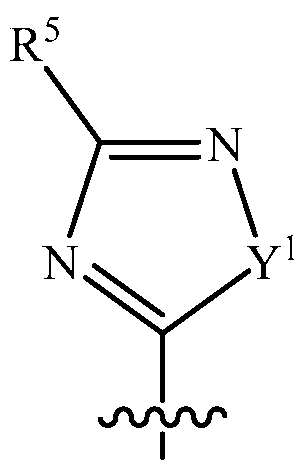
8. The compound of claim 2, wherein the compound is of Formula IV

9. The compound of claim 2, wherein R5 is H, halo, Ci-6 alkyl, alkynyl, aryl, or heteroaryl.
10. The compound of claim 1, wherein
R2 is Ci.6 alkyl, aralkyl, aryloyl, aralkyloyl, aiyl-O-alkanoyl, -C(0)-SR4, or -C(O)- OR7;
R4 and R7 are each independently Ci-6 alkyl or C7-C12 aralkyl.
11. The compound of claim 1, wherein
R2 is C1.6 alkyl, -C(0)-(CH2)„-phenyl, -C(0)-(CH2)m-0-phenyl, -C(0)-0-Ci-6 alkyl, or
-C(0)-(CH)( H2)-phenyl;
« is 0, 1, 2, 3, or 4;
m is 1, 2, 3, or 4; and
phenyl may independently at each occurrence be substituted or unsubstituted.
12. The compound of claim 1, wherein R1 is H or Ci-6 alkyl.
13. A composition comprising a compound of claim 1 or claim 2 and a pharmaceutically acceptable carrier.
14. A pharmaceutical composition comprising
an effective amount of a compound of claim 1 or claim 2 for treating a condition in a subject; and
a pharmaceutically acceptable carrier;
wherein the condition is a bacterial or a fungal infection.
15. The pharmaceutical composition of claim 14, wherein the bacterial infection comprises non-replicating bacteria.
16. The pharmaceutical composition of claim 14, wherein the bacterial infection comprises non-replicating Mycobacterium tuberculosis.
17. The pharmaceutical composition of claim 14, wherein the pharmaceutical composition is formulated for oral administration, parenteral administration, or topical
administration.
18. The pharmaceutical composition of claim 14, further comprising an antibiotic.
19. The pharmaceutical composition of claim 14, further comprising an effective amount of an antibiotic active on replicating bacteria.
20. The pharmaceutical composition of claim 19, wherein the antibiotic active on a
replicating bacteria is a tetracycline antibiotic {e.g., tetracycline, doxycycline), a glycylcycline antibiotic {e.g., tigecycline), a quinolone antibiotic {e.g., moxifloxacin, levofloxacin), an ansamycin antibiotic {e.g., geldanamycin, rifampicin), a sulfonamide antibiotic {e.g., sulfamethoxazole, sulfadimethoxine, trimethoprim-sulfamethoxazole), a beta-lactam antibiotic {e.g., penicillins (amoxicillin, ampicillin), a cephalosporin {e.g., cephalexin, cefdinir); a carbapenem {{e.g., meropenem, imipenem); a
monobactam ((e.g.,aztreonam, nocardicin A); an aminoglycoside antibiotic {e.g., streptomycin, kanamycin), a glycopeptide antibiotic {e.g., vancomycin, teicoplanin), a streptogramin antibiotic {e.g., pristinamycin IIA, pristinamycin 1A), a macrolide antibiotic {e.g., erythromycin, clarithromycin, azithromycin), a oxazolidinone antibiotic {e.g., linezolid, radezolid), a lipopeptide antibiotic {e.g., daptomycin), a chloramphenicol -type antibiotic {e.g., chloramphenicol), a nitroimidazole antibiotic {e.g., metronidazole), a nitrofuran antibiotic {e.g., nitrofurantoin (macrobid)), or a lincosamide antibiotic {e.g., clindamycin).
21. The pharmaceutical composition of claim 14, further comprising a beta-lactamase
inhibitor (e.g.,clavulanate).
22. The pharmaceutical composition of claim 14, further comprising an effective amount of an antibiotic active on replicating Mycobacterium tuberculosis.
23. The pharmaceutical composition of claim 22, wherein the antibiotic active on replicating
Mycobacterium tuberculosis is a quinolone {e.g., moxifloxacin, levofloxacin), an ansamycin {e.g., rifampicin, rifapentine, rifabutin), a beta-lactam {e.g., a carbapenems [e.g., meropenem] administered with beta-lactamase inhibitor [e.g.,clavulanate]), an aminoglycoside {e.g., streptomycin, amikacin, kanamycin, capreomycin), a macrolide {e.g., erythromycin, clarithromycin, azithromycin), an oxazolidinone {e.g., linezolid, radezolid), chloramphenicol, a thioamide {e.g., ethionamide, prothionamide), Cycloserine, Ethambutol, Isoniazid, Pyrazinamide, an aminosalicylate {e.g., 4- aminosalicylic acid), cycloserine, a diarylquinoline {e.g., TMC207 (Bedaquiline, Sirturo™, Janssen)), or a nitroimidazole {e.g., PA-824 and Delamid™ (Otsuka Pharmaceuti cal s)) .
24. A method comprising administering an effective amount of a compound of claim 1 or claim 2 for treating a condition, wherein the condition is a bacterial or a fungal infection.
25. The method of claim 24, wherein the bacterial infection comprises non-replicating
bacteria.
26. The method of claim 24, wherein the bacterial infection comprises non-replicating
Mycobacterium tuberculosis.
27. The method of claim 25, wherein the bacterial infection further comprises replicating bacteria.
28. The method of claim 26, wherein the bacterial infection further comprises replicating
Mycobacterium tuberculosis.
29. The method of claim 27, further comprising administering an effective amount of an antibiotic active on replicating bacteria.
30. The method of any claim 28, further comprising administering an effective amount of an antibiotic active on replicating Mycobacterium tuberculosis.
31. The method of claim 30, wherein the antibiotic active on replicating Mycobacterium tuberculosis is a quinolone (e.g., moxifloxacin, levofloxacin), an ansamycin (e.g., rifampicin, rifapentine, rifabutin), a beta-lactam (e.g., a carbapenems [e.g., meropenem] administered with beta-lactamase inhibitor [e.g.,clavulanate]), an aminoglycoside (e.g., streptomycin, amikacin, kanamycin, capreomycin), a macrolide (e.g., erythromycin, clarithromycin, azithromycin), an oxazolidinone (e.g., linezolid, radezolid), chloramphenicol, a thioamide (e.g., ethionamide, prothionamide), Cycloserine, Ethambutol, Isoniazid, Pyrazinamide, an aminosalicylate (e.g., 4- aminosalicylic acid), cycloserine, a diarylquinoline (e.g., TMC207 (Bedaquiline, Sirturo™, Janssen)), or a nitroimidazole (e.g., PA-824 and Delamid™ (Otsuka Pharmaceuti cal s)) .
32. The method of claim 24, further comprising administering an effective amount of a beta- lactamase inhibitor (e.g.,clavulanate).
33. The method of claim 24, comprising oral administration, parenteral administration, or topical administration of the compound.
Applications Claiming Priority (2)
| Application Number | Priority Date | Filing Date | Title |
|---|---|---|---|
| US201662329808P | 2016-04-29 | 2016-04-29 | |
| US62/329,808 | 2016-04-29 |
Publications (1)
| Publication Number | Publication Date |
|---|---|
| WO2017190043A1 true WO2017190043A1 (en) | 2017-11-02 |
Family
ID=60160124
Family Applications (1)
| Application Number | Title | Priority Date | Filing Date |
|---|---|---|---|
| PCT/US2017/030177 Ceased WO2017190043A1 (en) | 2016-04-29 | 2017-04-28 | Cephalosporin-type compounds |
Country Status (1)
| Country | Link |
|---|---|
| WO (1) | WO2017190043A1 (en) |
Citations (7)
| Publication number | Priority date | Publication date | Assignee | Title |
|---|---|---|---|---|
| US4013651A (en) * | 1975-05-12 | 1977-03-22 | Eli Lilly And Company | 3-substituted amino-cephalosporins |
| US4014874A (en) * | 1974-02-05 | 1977-03-29 | Ciba-Geigy Corporation | Process for the manufacture of 3-substituted thiomethyl-7-amino-2-cephem-4-carboxylic acid compound |
| US4109085A (en) * | 1976-02-17 | 1978-08-22 | Pfizer Inc. | 7-amino-3-substituted-cephem compounds |
| US20130289012A1 (en) * | 2012-03-30 | 2013-10-31 | Cubist Pharmaceuticals, Inc. | 1,2,4-oxadiazole and 1,2,4-thiadiazole beta-lactamase inhibitors |
| US20140194385A1 (en) * | 2013-01-04 | 2014-07-10 | Rempex Pharmaceuticals, Inc. | Boronic acid derivatives and therapeutic uses thereof |
| US20140288064A1 (en) * | 2011-08-30 | 2014-09-25 | Wockhardt Limited | Nitrogen containing heterocyclic compounds |
| US20150322087A1 (en) * | 2012-11-02 | 2015-11-12 | University Of Kansas | Cephalosporin derivatives and methods of use |
-
2017
- 2017-04-28 WO PCT/US2017/030177 patent/WO2017190043A1/en not_active Ceased
Patent Citations (7)
| Publication number | Priority date | Publication date | Assignee | Title |
|---|---|---|---|---|
| US4014874A (en) * | 1974-02-05 | 1977-03-29 | Ciba-Geigy Corporation | Process for the manufacture of 3-substituted thiomethyl-7-amino-2-cephem-4-carboxylic acid compound |
| US4013651A (en) * | 1975-05-12 | 1977-03-22 | Eli Lilly And Company | 3-substituted amino-cephalosporins |
| US4109085A (en) * | 1976-02-17 | 1978-08-22 | Pfizer Inc. | 7-amino-3-substituted-cephem compounds |
| US20140288064A1 (en) * | 2011-08-30 | 2014-09-25 | Wockhardt Limited | Nitrogen containing heterocyclic compounds |
| US20130289012A1 (en) * | 2012-03-30 | 2013-10-31 | Cubist Pharmaceuticals, Inc. | 1,2,4-oxadiazole and 1,2,4-thiadiazole beta-lactamase inhibitors |
| US20150322087A1 (en) * | 2012-11-02 | 2015-11-12 | University Of Kansas | Cephalosporin derivatives and methods of use |
| US20140194385A1 (en) * | 2013-01-04 | 2014-07-10 | Rempex Pharmaceuticals, Inc. | Boronic acid derivatives and therapeutic uses thereof |
Similar Documents
| Publication | Publication Date | Title |
|---|---|---|
| US10471028B2 (en) | Small molecule efflux pump inhibitors | |
| US12195419B2 (en) | Glutamine antagonists and uses thereof | |
| Lin et al. | Truncated antimicrobial peptides from marine organisms retain anticancer activity and antibacterial activity against multidrug-resistant Staphylococcus aureus | |
| Kotb et al. | Phenylthiazoles with tert-Butyl side chain: Metabolically stable with anti-biofilm activity | |
| US20160015686A1 (en) | Methods and Compositions for Increasing Antibiotic Activity | |
| BG108548A (en) | Heterocyclic compounds and their use as d-alanyl-d-alanine ligase inhibitors | |
| AU2010275375B2 (en) | Spectinamides as anti-tuberculosis agents | |
| US10829453B2 (en) | Antagonists of the kappa opioid receptor | |
| DK2882771T3 (en) | COMBINATIONS WITH A BACKBONE CYCLIZED PEPTID | |
| US20250382261A1 (en) | Pentamidine analogs | |
| DK2882770T3 (en) | COMBINATIONS WITH A BACKBONE CYCLIZED PEPTID | |
| AU2015339039B2 (en) | Synergistic compositions for treating microbial infections | |
| US10870625B2 (en) | Zwitterionic propargyl-linked antifolates useful for treating bacterial infections | |
| US12263156B2 (en) | Use of small molecule inhibitors of the BfrB:Bfd interaction in biofilms | |
| US10961214B2 (en) | Small molecule lipid II inhibitors | |
| US20260138981A1 (en) | Dihydrofolate reductase inhibitors for anti-biotic resistant infections | |
| US11617741B1 (en) | Method for inhibiting growth of bacteria | |
| Jasim et al. | Studying the Biological Activity of Some Oxazepine Derivatives Against Some G (+) and G (-) Bacteria | |
| Cox | Using Small Molecule Adjuvants to Combat Bacterial Resistance Mechanisms | |
| US10660874B2 (en) | Ecteinamycin, compositions and uses thereof |
Legal Events
| Date | Code | Title | Description |
|---|---|---|---|
| NENP | Non-entry into the national phase |
Ref country code: DE |
|
| 121 | Ep: the epo has been informed by wipo that ep was designated in this application |
Ref document number: 17790568 Country of ref document: EP Kind code of ref document: A1 |
|
| 122 | Ep: pct application non-entry in european phase |
Ref document number: 17790568 Country of ref document: EP Kind code of ref document: A1 |