WO2017186313A1 - Cluster control of heterogeneous clusters of thermostatically controlled loads using tracer devices - Google Patents
Cluster control of heterogeneous clusters of thermostatically controlled loads using tracer devices Download PDFInfo
- Publication number
- WO2017186313A1 WO2017186313A1 PCT/EP2016/059695 EP2016059695W WO2017186313A1 WO 2017186313 A1 WO2017186313 A1 WO 2017186313A1 EP 2016059695 W EP2016059695 W EP 2016059695W WO 2017186313 A1 WO2017186313 A1 WO 2017186313A1
- Authority
- WO
- WIPO (PCT)
- Prior art keywords
- devices
- cluster
- heat
- simulated
- simulated tracer
- Prior art date
- Legal status (The legal status is an assumption and is not a legal conclusion. Google has not performed a legal analysis and makes no representation as to the accuracy of the status listed.)
- Ceased
Links
Classifications
-
- G—PHYSICS
- G05—CONTROLLING; REGULATING
- G05B—CONTROL OR REGULATING SYSTEMS IN GENERAL; FUNCTIONAL ELEMENTS OF SUCH SYSTEMS; MONITORING OR TESTING ARRANGEMENTS FOR SUCH SYSTEMS OR ELEMENTS
- G05B19/00—Program-control systems
- G05B19/02—Program-control systems electric
- G05B19/04—Program control other than numerical control, i.e. in sequence controllers or logic controllers
- G05B19/042—Program control other than numerical control, i.e. in sequence controllers or logic controllers using digital processors
-
- G—PHYSICS
- G06—COMPUTING OR CALCULATING; COUNTING
- G06Q—INFORMATION AND COMMUNICATION TECHNOLOGY [ICT] SPECIALLY ADAPTED FOR ADMINISTRATIVE, COMMERCIAL, FINANCIAL, MANAGERIAL OR SUPERVISORY PURPOSES; SYSTEMS OR METHODS SPECIALLY ADAPTED FOR ADMINISTRATIVE, COMMERCIAL, FINANCIAL, MANAGERIAL OR SUPERVISORY PURPOSES, NOT OTHERWISE PROVIDED FOR
- G06Q10/00—Administration; Management
- G06Q10/04—Forecasting or optimisation specially adapted for administrative or management purposes, e.g. linear programming or "cutting stock problem"
-
- G—PHYSICS
- G06—COMPUTING OR CALCULATING; COUNTING
- G06N—COMPUTING ARRANGEMENTS BASED ON SPECIFIC COMPUTATIONAL MODELS
- G06N20/00—Machine learning
-
- G—PHYSICS
- G06—COMPUTING OR CALCULATING; COUNTING
- G06Q—INFORMATION AND COMMUNICATION TECHNOLOGY [ICT] SPECIALLY ADAPTED FOR ADMINISTRATIVE, COMMERCIAL, FINANCIAL, MANAGERIAL OR SUPERVISORY PURPOSES; SYSTEMS OR METHODS SPECIALLY ADAPTED FOR ADMINISTRATIVE, COMMERCIAL, FINANCIAL, MANAGERIAL OR SUPERVISORY PURPOSES, NOT OTHERWISE PROVIDED FOR
- G06Q50/00—Information and communication technology [ICT] specially adapted for implementation of business processes of specific business sectors, e.g. utilities or tourism
- G06Q50/06—Energy or water supply
-
- G—PHYSICS
- G05—CONTROLLING; REGULATING
- G05B—CONTROL OR REGULATING SYSTEMS IN GENERAL; FUNCTIONAL ELEMENTS OF SUCH SYSTEMS; MONITORING OR TESTING ARRANGEMENTS FOR SUCH SYSTEMS OR ELEMENTS
- G05B2219/00—Program-control systems
- G05B2219/20—Pc systems
- G05B2219/26—Pc applications
- G05B2219/2639—Energy management, use maximum of cheap power, keep peak load low
Definitions
- the present invention relates to methods, controllers and systems for the control of distribution systems like energy distribution systems, e.g. heat or electrical power distribution as well as software which when executed on a processing engine is able to perform any of such methods.
- distribution systems like energy distribution systems, e.g. heat or electrical power distribution
- software which when executed on a processing engine is able to perform any of such methods.
- WO 2011/074950 describes a market-based demand side management system as known in the art.
- the power/energy a device wants to consume or can produce is translated into a bidding function.
- a demand-supply balance is found. All devices consume/produce the power that, according to their bidding function, corresponds with the market balance priority.
- WO'950 provides a robust, simple, generic mechanism where privacy is guaranteed, as the devices only communicate their bidding function.
- DSM demand side management
- DSM can also be applied to avoid transformer overloading or voltage profile control in distribution systems. Studies have shown that load response is an effective measure to solve power system constraints in a distribution system with high wind power penetrations. As DSM will involve millions of customers, centralized control will be not manageable as limits of computational complexity and communication overhead will be reached. Different authors therefore propose multi-agent systems to obtain a scalable system.
- a multi-agent system can be applied to reduce imbalance costs with EVs.
- a multi-agent based Virtual Power Plant consisting of domestic devices can be created to compensate imbalance caused by wind energy.
- Aggregate power consumptions can exhibit continuous behavior as opposed to generally discrete control responses of large customers.
- TCLs such as air conditioners, water heaters, electric heaters, and heat pumps possess considerable potential for direct load control since they represent approximately 20% of the total electric energy in a country such as USA.
- temperature constraints set by the user can be manipulated by the aggregator while remaining within comfort constraints.
- Time varying battery models with or without dissipation terms for TCL aggregation using various dispatch methodologies have been proposed. These are used to compute near- optimal control trajectories at a certain computational burden.
- TCL Thermostatically controlled load (heat pump, air conditioning, electric water heater, refrigerator, deep freezer,..)
- TTLs Thermostatically Controlled Loads
- Embodiments of the present invention relate to the control and operation of devices in an electrical or heat distribution network which devices can be, for example, particularly or mainly thermostatically controlled loads (TCL) such as heat pumps, air conditioners, refrigerators, electric water heaters, any system with thermal storage, e.g.
- TCL thermostatically controlled loads
- thermal storage that stores excess thermal energy to be collected for later use, including heating for individual buildings, district, town or regional scale heat storage schemes, pump storage schemes, water or ice-slush tanks, underground heat storage in masses of native earth or bedrock accessed with heat exchangers in clusters of small-diameter boreholes, deep aquifers contained between impermeable strata, shallow, lined pits filled with gravel and water and top-insulated, or thermal storage systems using eutectic, phase-change materials.
- embodiments of the present invention provide electrical devices or heat storage devices and methods for balancing economically high shares of variable renewable electricity or heat production and integration of electricity and/or heating sectors in energy systems almost or completely fed by renewable energy.
- Embodiments of the present invention provide control methods, systems and controllers based on modeling a network with representative simulated tracer devices.
- a limited number of simulated tracer devices are used, i.e. limited in number compared to the number of devices in the electrical or heat distribution network.
- the simulated tracer devices are preferably governed by and have characteristics that are similar to those of actual devices in the electrical or heat distribution network or are representative of a major type of such devices.
- the simulated tracer device can be a simulated device representative one or more types of TCLs and these simulated tracer devices can be used in embodiments of the present invention to represent behavior, for example, of an entire cluster of homogeneous or heterogeneous TCLs.
- the present invention is not limited to TCL's.
- Embodiments of the present invention may be extended to photovoltaic or battery devices for example.
- the present invention includes within its scope more than one control scheme, e.g. a three step process in which the optimization is particularly suited to EV's or smart white good appliances combined with another control scheme, e.g. a three step process in which the optimization is particularly suited to TCL's.
- control scheme e.g. a three step process in which the optimization is particularly suited to TCL's.
- TCL thermostatically controlled loads
- tracer device is used in this application to refer to the fact that the
- simulated tracer devices are used for tracking the behavior of the network, so that the behaviors of these devices are "traces" of this behavior.
- simulated tracer devices can represent a class of actual devices in the network thus reducing the dimensionality of any optimization problem.
- Embodiments of the present invention provide an accurate reduced order device model that can be used to describe the dynamics of an entire cluster of devices such as TCL's.
- the simulated tracer devices can be based on second order models of devices which are the same as or are representative of actual devices in the network, e.g. representative of higher order actual devices. These simulated tracer devices preferably can capture both steady-state and transient population dynamics, as well as, optionally, cluster heterogeneity. These simulated, second order model devices can be identified in a nonintrusive manner, for example using Machine Learning (ML) techniques, and can capture both steady- state and transient population dynamics as well as cluster heterogeneity.
- ML Machine Learning
- these simulated tracer devices are used in an optimization of the distribution of electric energy or heat energy in electrical power or heat distribution systems.
- Embodiments of the present invention can use a three step approach, e.g. aggregation, optimization and dispatch. Additionally, in some
- the dispatch mechanism can be included in the optimization, further improving the tracking performance.
- the devices can be controlled in the dispatch phase by remote or local activations of ON/OFF switches or can make use of a modulated approach, e.g. by locally or remotely changing set points in local controllers.
- use of a parameterizable number of simulated tracer devices is useful in a tradeoff between computational intensity and accuracy.
- these simulated tracer devices can represent TCL's and other devices and can be used to create a scalable and parameterizable cluster model that allows to incorporate a device population and dispatch dynamics.
- Embodiments of the present invention can provide an advantage of better efficiency and economy of operation and less power deviations especially for those embodiments that integrate dispatch dynamics in the optimization.
- root mean square dispatch errors can be reduced by more than 10% when integrating the dispatch mechanism.
- Networks can be controlled or operated with a low number of simulated tracer devices, or if more accuracy is required (at expense of increased computational effort) the number of simulated tracer devices can be increased.
- Embodiments of the present invention provide systems and methods and controllers for a cluster of devices which consume or generate or store electricity or consume or generate or store thermal energy (hot or cold) including aggregate and dispatch control steps for a portfolio of flexibility carriers comprise the following steps.
- generating an aggregated model able to capture transient and steady state dynamics e.g. as part of an operation phase of the network.
- device state and parameter information of the entire cluster is optionally aggregated.
- the cluster demand profile for the next time period is optimized by performing an optimization (optionally performed centrally or in a distributed manner, e.g. in the cloud) of the aggregated model of the simulated tracer devices including the dynamics of the simulated tracer devices and an optimal value is obtained, e.g. for power or energy for the next time step e.g. as part of an operation phase of the network.
- aggregated control signals e.g. as part of an operation phase of the network.
- dispatching information is provided to the cluster, e.g. as a broadcast signal, e.g. as part of an operation phase of the network.
- both the dynamics of the tracer devices and the dispatch algorithm are explicitly included in the central optimization, which results in better tracking performance, e.g. as part of an operation phase of the network.
- the devices of a cluster can be controlled either remotely or locally. Switches can be controlled locally or remotely to execute the dispatch information.
- Embodiments of the present invention can make use of a second order equivalent thermal parameter (ETP) model to provide simulated tracer device descriptions, which can, for example, include the thermal mass of a building to capture steady- state and transient dynamics accurately.
- ETP second order equivalent thermal parameter
- Embodiments of the present invention can avoid or reduce cluster state of charge (SoC) divergence, e.g. which can decrease and increase cyclically during the heating and cooling phases, respectively.
- SoC cluster state of charge
- a second order heterogeneous aggregated model for defining the simulated tracer devices according to the present invention can capture steady- state and dynamic population behavior, and allows direct dynamic dispatch effect integration in the optimization.
- Embodiments of the present invention can provide an aggregated model offering a closed-loop solution by using representative simulated second-order model tracer devices that allow to achieve a desired performance and complexity tradeoff. Higher order models are included within the scope of the invention.
- the present invention provides a computer based system for operating an electrical power or heat supply network having at least one cluster of a plurality of heat or electrical energy consuming devices and virtual simulated tracer devices to simulate a plurality of the electrical energy or heat consuming devices, the system comprising: Means for generating an aggregated model of a cluster which aggregates device state and parameter information of the entire cluster
- Means for optimizing a cluster demand profile for a next time period by performing an optimization of the aggregated model with the simulated tracer devices including the dynamics of the simulated tracer devices and generating a control action which is a direct or indirect power or energy value for the next time period,
- the present invention provides a controller for controlling operation an electrical power or heat supply network having at least one cluster of a plurality of heat or electrical energy consuming devices and virtual simulated tracer devices to simulate a plurality of the electrical energy or heat consuming devices, the controller comprising:
- Means for generating an aggregated model of a cluster which aggregates device state and parameter information of the entire cluster
- Means for optimizing a cluster demand profile for a next time period by performing an optimization of the aggregated model with the simulated tracer devices including the dynamics of the simulated tracer devices and generating a control action which is a direct or indirect power or energy value for the next time period,
- Figure 1 illustrates a electrical supply network with which embodiments of the present invention can be used.
- Figure 2 shows a non-convex modular bid function for a simulated tracer device divided into three zones for Big-M reformulation, the original convex constraint thereby being converted to a set of constraints describing the same feasible set using auxiliary binary variables and additional constraints according to an embodiment of the present invention.
- Figure 3 (left) illustrates a bid function of a power modular TCL as used in embodiments of the present invention.
- Figure 3 (right) illustrates a bid function of a discrete TCL as used in embodiments of the present invention.
- Figure 4 is a flow diagram illustrating a method of configuring tracer devices according to an embodiment of the present invention.
- Figure 5 is a flow diagram illustrating a method according to an embodiment of the present invention.
- Figure 6 illustrates mean relative RMSE dispatch deviations when using TSA and enhanced TSA for optimizing a cluster of TCL's according to embodiments of the present invention.
- the lines with filled rounds in the upper pair of lines relate to an enhanced TSA process including the dispatch algorithm in the optimization whereas the upper line with unfilled squares is not enhanced in this way.
- the lines with filled rounds in the lower pair of lines relate to an enhanced TSA process including the dispatch algorithm in the optimization whereas the lower line with unfilled squares is not enhanced in this way, whereby CEM distributions are used for the lower pair.
- ibility information used in this application relates to a freedom to choose a time for use of power or energy.
- “Flexibility information of a device relates to the ability of the device to adjust a timing with respect to when energy is consumed or generated. From this flexibility comes the possibility to optimise use or generation of energy.
- bid or bidding function used in the application relates to the need or necessity that a certain amount of power or energy is consumed or generated by a device. Hence this consuming or generating is in function of a virtual measure expressing the necessity or urgency of consuming energy, such as a priority, e.g. each device can define a necessity or need , i.e. a priority a consumer assigns to a certain power consumption or generation level.
- a bid function describes a relation between power consumption or generation and a virtual measure expressing the necessity or urgency of consuming power and/or energy referred to as a "priority" or necessity for distributing an energy flow.
- a bid or bidding function thus can be represented as an amount of power or energy to be traded as function of a virtual price or cost.
- the bidding functions may be piece- wise linear bid functions, for example.
- a bidding function of a consuming device will have a negative slope, that is a high priority can only be associated with a low amount of energy or power.
- the power or energy versus priority curve for a consuming device will have a negative slope optionally including steps.
- It can be a decreasing function such as a monotonically decreasing function.
- It can be a step-wise decreasing function, for example a monotonically decreasing function or a monotonically stepwise decreasing function.
- Priority is related to State of Charge (SoC). If the SoC of a device or cluster is low there is a need and hence a priority to charge. If the SoC is high there is only a low priority to charge.
- SoC State of Charge
- Embodiments of the present invention can be applied to a power system 40 shown schematically in Figure 1 where there are different producers 42, 43 and consumer devices 7 or clusters 45 of consumer devices 7 which generate or consume electric energy (or generate and consume heat energy) and which are coupled through an electricity supply network 41.
- This electricity supply network 41 allows for generation and transmission of electric energy between consumer devices 7, and clusters of devices 45 and producers 42, 43 and can include a central controller 46 for controlling operation of the electricity supply network 41.
- Embodiments of the present invention can be used in the control of the operation of the consumption of energy such as electricity of large heterogeneous clusters of consuming devices which exhibit some flexibility, i.e. having the freedom to adjust the usage of energy over time.
- the central controller 46 will in general carry out the optimization step whereas the cluster controller 49 and the local controller 47 will assist in the aggregation step and the collection of relevant information from the devices of the network.
- the cluster controller 49 and the local controller 47 can also assist in the dispatch step, i.e. with the broadcasting and receiving of commands.
- Embodiments of the present invention provide a market based control of an electricity or heat supply network, whereby each possible equilibrium priority can result in a control of a consumption level of each device defined by a priority or by e.g. a bid function.
- the control function including implementation of a three step optimization can be carried out in a centralised controller or can be distributed over several controllers, e.g. cloud-based computing systems can be used where application functionality, memory, data storage and retrieval and relevant and required processing functions may be operated remotely from each other over a distributed computing network, such as the Internet or an intranet.
- Embodiments of the present invention can make use of a three step process for the scalable control of TCL's for example.
- the first step flexibility information of the entire cluster population of homogeneous or heterogeneous devices is collected whereby in the case of large clusters the flexibility information is aggregated as disclosed below.
- an aggregated model with reduced dimensionality is developed for the entire cluster, which makes the centralized optimization tractable.
- the optimal control action e.g. an optimal power set point or an ON/OFF control of switches is projected onto local control actions using a dispatch mechanism such as a market-based dispatch mechanism. This procedure allows for accurate TCL control.
- a method and a system and a controller are provided able to carry out a method whereby in the first step mentioned above, distributions of thermal properties and user comfort constraints are determined or estimated for devices such as household devices.
- representative simulated tracer devices with second-order models are used as a flexible reduced-order meta-model that describes the dynamics of the entire population of homogeneous or heterogeneous devices.
- An additional source of uncertainty concerns the reference signal tracking error as a result of using an identical broadcasted dispatch signal. Since power deviations can be costly, an extension to this embodiment with increased tracking performance is presented.
- the tracking performance can be enhanced by including dispatch dynamics explicitly in the optimization constraints.
- a dispatch mechanism is provided.
- Embodiments of the present invention use a second-order heterogeneous aggregated model which can capture steady- state and dynamic population behaviour, and also allows direct dynamic dispatch effect integration in the optimization.
- Embodiments of the present invention provide aggregated models, systems and methods that offer a closed-loop solution by using representative second-order model simulated tracer devices that allow a desired performance and complexity trade-off to be achieved.
- Embodiments of the present invention make use of a Three-Step Approach (TSA).
- TSA Three-Step Approach
- Embodiments of the present invention are adapted to provide for TCLs transient and steady- state thermal dynamics by identifying a set of simulated tracer devices. Use of these simulated tracer devices allows an estimation at least of the evolution of the state density distribution of the entire cluster.
- Embodiments of the present invention using these TCL simulated devices provide a scalable and parametrizable cluster model that allows to incorporate population and dispatch dynamics.
- Embodiments of the present invention offer significant practical advantages, such as a low computational complexity at device level and a tractable optimization at aggregator level.
- Embodiments of the present invention provide an accurate reduced-order model that describes the dynamics of the entire cluster. Additionally, the dispatch dynamics can be included explicitly in the central optimization in further embodiments of the present invention. These embodiments improve the accuracy and results in better tracking performance.
- control function is first configured preferably by a method 100 shown in Figure 4 in accordance with an embodiment of the present invention.
- This method identifies simulated tracer devices to be used in a method, system or controller for executing control.
- Such a method of control 200 is shown in Figure 5.
- a first step of an embodiment of the present invention properties and user comfort constraints for distributions of thermal household devices (or other devices) are estimated (step 102 in Figure 4).
- representative simulated tracer devices e.g. with second-order models, are identified (step 104 in Figure 4) and a parametrizable amount of simulated tracer devices, which offers an adjustable trade-off between complexity and tracking performance during dispatch is determined (step 106 in Figure 4).
- the representative simulated tracer devices are used as a flexible reduced-order meta-model that describes the dynamics of the entire population of heterogeneous devices of a cluster.
- An additional source of uncertainty concerns the reference signal tracking error as a result of using an identical broadcasted dispatch signal. Since power deviations can be costly, an extension to this method with increased tracking performance is provided in further embodiments of the present invention.
- the tracking performance can be enhanced in embodiments of the present invention by including the dispatch dynamics explicitly in the (second step) optimization constraints (step 210 in Figure 5).
- a suitable dispatch mechanism to the clusters and to the TCLs and/or other devices is used such as EVs or batteries (steps 206, 208 in Figure 5).
- the TSA as proposed in embodiments of the present invention is not limited to devices that create their energy and power constraints locally and send them to an aggregator agent. For example with EV's arrival and departure times are usually specified manually, so that these are typically well-known. This also applies for smart white good appliances where the user explicitly enters completion deadlines and manufacturers provide power train profiles for chosen programs.
- Embodiments of the present invention are suited not only for such devices but also TCLs. For TCL's it is generally much harder to derive individual energy constraints, which require accurate forecasting of local heat demand and a calibrated physical model. To capture cluster heterogeneity and dynamics, embodiments of the present invention provide a TCL flexibility learning method at an aggregated level. The methodology is summarized in Algorithm 1 below.
- the aggregated model is built using L representative sampled simulated tracer devices.
- the resulting Linear Programming (LP) optimization problem can be solved rapidly for many simulated tracer devices. However, it does not include the dispatch dynamics. To include these, simulated tracer device consumption of energy, e.g. TCL consumption of energy needs to be constrained for each of the upcoming optimization time steps to their respective piece- wise linear bid functions. Implicit inclusion of the dispatch dynamics into the
- the TSA model according to an embodiment of the present invention which includes despatch dynamics has been implemented using the commercial CPLEX solver (version 12.6) by adding additional constraints in the TSA optimization problem.
- a Walrasian dispatch mechanism can be used.
- a Walrasian auction is a type of simultaneous auction where each agent calculates its demand for the good at every possible price and submits this to an auctioneer. The price is then set so that the total demand across all agents equals the total amount of the good. Thus, a Walrasian auction perfectly matches the supply and the demand.
- a Walrasian dispatch mechanism requires each device and/or each cluster of devices to prepare (or to have prepared) a priority versus power or energy graph, e.g. for each time step. Instead of price, a priority or need or necessity of consuming energy or power is used to control equitably which devices can consume energy in the next time step.
- a value of priority is selected by the optimization step of the TSA such that if each device consumes the amount of energy that is related to that priority or to higher priorities then the total amount of energy consumed over the next time step should be the total amount available or closely related to it.
- thermostatically controlled loads using tracer devices by Sandro Iacovella et al, 1949- 3053, 2015 IEEE, is incorporated herein by reference in its entirety.
- Step 1 Basic Aggregation embodiment
- individual device consumption (or generation) constraints are aggregated. 7 is defined as the set of participating devices at time t ET, which is assumed to remain equal over time. T equals the set of time samples with horizon T and granularity At The constraints can be classified into two types: 1) energy and 2) power constraints. Energy constraints define the boundaries to which the energy can be
- instantaneous power demand can be adjusted. They are aggregated by and means for aggregation as follows at each time step t:
- the scheduled and optionally consumed power at time step t thus depends on the corner priority p t ,i of device /, which specifies the necessity (or in other words a priority) for consuming power, the factor ⁇ that determines the slope of the bid function allowing for power modular scheduling, and the equilibrium priority p * t from the aggregator.
- an optimal collective charging plan or profile for the cluster of devices is derived at every time step based on the aggregated flexibility boundaries.
- the optimization problem for a generalized cost model can be formulated as follows:
- Step 3 Basic Real-Time Control embodiment
- a uniform control signal is created for all devices by using a Walrasian market mechanism with demand and supply functions [16].
- the corner priority heuristics for each device determine the inflection points of the aggregated demand function This vector is then used to translate P*i to an optimal clearing priority
- This clearing priority is sent to all clusters and/or devices and/or device agents, which identify their individual optimal charging power Pi,i locally based on their bid function bi(p*) (3).
- the computer based system is adapted to send this clearing priority to all clusters and/or devices and/or device agents, which identify their individual optimal charging power Pi,i locally based on their bid function bi(p*) (3).
- the devices can be controlled remotely or locally, e.g. by remotely operated local switches or by local control of such switches, or by remote or local modulation of the operation of the devices e.g. by changing a set point of a local controller. This local control can be performed, for example by a demand response adaptor as disclosed in EP-A-2 618 445 which is incorporated herein by reference.
- the three steps of aggregation, optimization, and dispatch are repeated in a receding horizon manner.
- the means for aggregation, optimization, and dispatch are adapted to repeat these steps in a receding horizon manner.
- Step 1 Aggregation - embodiment of the invention
- Embodiments of the present invention provide methods, systems and/or controllers adapted to capture cluster device heterogeneity and dynamics, using a TCL flexibility learning method at an aggregated level. Firstly, a representative ensemble of simulated (virtual) tracer devices is identified that can describe population dynamics of the devices in the network. Hence the computer based system is adapted to use a virtual
- the thermal environment of residential housing can be modelled based on interior air (T a ) and mass structure (T m ) temperature differential equations for the ETP model of a residential heating/cooling system:
- U a equals the conductance of the building envelope
- T 0 is the outside air temperature
- T a is the inside air temperature
- T m is the inner mass temperature
- H m is the conductance between the inner air and the solid mass
- C a and C m represent the thermal mass of the air and interior solid mass, respectively.
- the heat flux into the interior air mass Q a is given by a fraction a of the solar heat gains Q s , a fraction ⁇ of the heat gains of the internal loads Qi, and the heat gain generated by the heat pump Qh P .
- the latter equals the heat pump power Ph P multiplied with its coefficient of performance (COP).
- the remaining fraction of Qi and Q s is added to the interior solid mass Q m
- Identifying the ETP model parameter distributions for a heterogeneous collection of thousands of TCLs can be determined by different methods of which one is the cross- entropy method (CEM) [ 17], which is closely related to estimation of distribution algorithms (EDAs).
- CEM cross- entropy method
- EDAs estimation of distribution algorithms
- This algorithm is a simple, efficient and general method of solving a great variety of estimation, and optimization problems, especially NP-hard problems. Other techniques such as genetic algorithms can also be used for this distribution fitting.
- the CEM aims to find the (approximate) optimal solution s* for a learning task defined as [18]
- Algorithm 1 methodology is summarized in Algorithm 1 and the computer based system is preferably adapted to execute this algorithm.
- Vector maintains ETP parameter (10), (11) densities from the domain A. Since it is desired to estimate these parameters in a nonintrusive way, this function is preferably based solely on observed aggregated power consumptions (Pi) and TCL corner (p) and clearing (p*) priorities over a time period T. This relaxation of total power estimation assumes that the parameters to be estimated are within the same order of magnitude (for example no combinations of large industrial and small domestic TCLs). CEM converges to s* by iteratively drawing samples a from the ETP parameter densities (line 5
- 7 is redefined as the set of the TCL population, and 7i c 7 is defined as the representative subset of simulated tracer devices. Furthermore, % equals the set of time
- ETP model parameters are sampled for each simulated tracer device / from a*. Since only a limited number of tracer devices L are to be incorporated in the optimization problem, quota sampling is used by generating L equiprobable population segments.
- the TSA aggregated energy constraint vector (2) is replaced by the inside air and the mass temperature differential equations (10), which are initialized as The power constraint (6) now applies for each individual simulated tracer device with power limit whilst the energy constraint vectors from (equation 2)
- the computer based system is adapted to execute and to provide means for executing any of the steps of any algorithm described above.
- the aggregated model can be built (and the computer based system can be
- the optimal collective demand profile for the cluster of TCLs is derived and the computer based system is adapted to derive and has means to derive the collective demand profile based on the sampled tracer device parameters, with a power
- TSA linear programming optimization problem
- TCL linear programming simulated tracer device consumption needs to be constrained (and the computer based system has means for constraining) for each of the T upcoming time steps to their respective piece-wise linear bid functions b/(p), resulting in a bilevel mathematical program.
- the upper level program constitutes the LP cost minimization problem (18)
- the lower level problem constitutes the market clearing and corresponding equilibrium priority formation (9) [19], [20] .
- bilevel programs and mixed integer programs (MIPs) are well known. It was shown in [21] that there exists an implicit reformulation of a bilevel program as an MIP. Specifically, this bilevel model can be reduced to a 0/1 MIP by introducing integer variables Y, and a large finite constant M [22] . To do so, an unconstrained bid function power variable added first :
- tracer device Big-M constraints are added for the zones Y 1 , Y 2 , and Y 3 (see Figure 2) at each timestep t
- the nonconvex power modular bid function of each tracer device is divided into three zones (and the computer based system is adapted to divide) using the Big-M reformulation.
- the original nonconvex constraint is thereby converted to a set of constraints describing the same feasible set, using auxiliary binary variables, and additional constraints.
- the simplex algorithm is the original and still one of the most widely used methods for solving linear maximization problems. However, to apply it, the origin (all variables equal to 0) must be a feasible point. This condition is satisfied only when all the constraints (except non-negativity) are less-than constraints with a positive constant on the right-hand side.
- the Big M method introduces surplus and artificial variables to convert all inequalities into that form.
- the "Big M" refers to a large number associated with the artificial variables, represented by the letter M.
- Implicit inclusion of the dispatch dynamics into the optimization allows for the use of the resulting optimal market priorities in the real-time control step and
- the computer based system is adapted to implicitly include the dispatch dynamics into the optimization and the computer based system allows for the use of the resulting optimal market priorities p This closed-loop approach translates to a decrease
- Step 3 Real-Time Control - embodiment of the invention
- the Walrasian dispatch mechanism as discussed above is modified preferably in this embodiment and the computer based system is adapted to use the modified Walrasian dispatch mechanism.
- the priority based control signal inherently minimizes ON/OFF switching actions.
- a modulated control is preferable to ON/OFF control.
- a broadcasted equilibrium priority leads to minimal communication overhead and compatibility with other device classes [15] .
- the SoC is preferably the primary state indicator of a TCL such as a thermal buffer for any demand response control system [23] and does not require extensive local
- H is the Heaviside step function.
- simulated tracer devices can modulate their power consumption, with bid functions that are identical or similar to those of EVs.
- a suitable bid function is shown in Figure 3 (left).
- An aggregator can minimize cost of electricity bought in a day-ahead setting for example, by setting control time steps (e.g. of 1 minute), and At (e.g. of 15 minutes) and
- the devices can be controlled remotely or locally, e.g. by remotely operated local switches or by local control of such switches, or by remote or local modulation of the operation of the devices e.g. by changing a set point of a local controller.
- This local control can be performed by a demand response adaptor as disclosed in EP-A-2 618 445 which is incorporated herein by reference.
- the three steps of aggregation, optimization, and dispatch are repeated in a receding horizon manner.
- the means for aggregation, optimization, and dispatch are adapted to repeat these steps in a receding horizon manner.
- One method to find the representative simulated tracer devices is to use a "Goodness of Fit" test, for example convergence in the Goodness of fit can be understood from table II;
- an increasing number of simulated tracer devices can be used until there is no or only marginal performance gain (e.g. less than 10% or 5% or 1% gain).
- the number of simulated tracer devices can be limited to the number when the marginal performance gain is lower than marginal operational/computational cost.
- the number of simulated tracer simulated devices can be selected to be equal to a minimal number of tracers as indicated during goodness-of-fit test and/or dispatch deviation results, using metrics known to the skilled person such as RMSE.
- Gaussian probability distribution relative standard deviations for ⁇ and ⁇ are chosen as 5% and 15%, respectively.
- goodness-of-fit tests can be used [25], for example the Anderson-Darling and Kolmogorov-Smirnov tests to verify the hypothesized distributions. The null
- Both methods according to the present invention being TSA and enhanced TSA (which is enhanced by including the dispatch algorithm in the optimization) exhibit a non-linear execution time for increasing numbers of simulated tracer devices. Because of the parametrizable nature of both control methodologies (TSA and enhanced TSA according to embodiments of the present invention), the number of simulated tracer devices used can be chosen depending on the respective business case timeslot length, i.e. how much time can be allowed for executing the optimisation of the second step. Since the control objective time slot period can exceed all execution times, the enhanced TSA approach with 5 tracers can be used in this business case, for example.
- controller e.g. the central controller 46, and/or the cluster controller 49 and/or the local controller 47
- processing capability such as provided by one or more
- microprocessors FPGA's, or a central processing unit (CPU) and/or a Graphics
- GPU Central Processing Unit
- References to software can encompass any type of programs in any language executable directly or indirectly by a processor, either via a compiled or interpretative language.
- the implementation of any of the methods of the present invention can be performed by logic circuits, electronic hardware, processors or circuitry which can encompass any kind of logic or analog circuitry, integrated to any degree, and not limited to general purpose processors, digital signal processors, ASICs, FPGAs, discrete components or transistor logic gates and similar.
- Such a controller may have memory (such as non-transitory computer readable medium, RAM and/or ROM), an operating system, optionally a display such as a fixed format display, data entry devices such as a keyboard, a pointer device such as a "mouse”, serial or parallel ports to communicate other devices, network cards and connections to connect to any of the networks.
- memory such as non-transitory computer readable medium, RAM and/or ROM
- an operating system optionally a display such as a fixed format display, data entry devices such as a keyboard, a pointer device such as a "mouse”, serial or parallel ports to communicate other devices, network cards and connections to connect to any of the networks.
- the software can be adapted to perform a method controlling demand of heat energy or electrical energy to be distributed to constrained cluster elements grouped in clusters in a demand response system when executed on a processing engine in the controller, for example.
- the software can be embodied in a computer program product adapted to carry out the means and functions itemised below when the software is loaded onto the controller and executed on one or more processing engines such as microprocessors, ASIC's, FPGA's etc.
- controller for use with any of the embodiments of the present invention can incorporate a computer system capable of running one or more computer applications in the form of computer software.
- the controller is preferably the central controller 46, and/or the cluster controller 49 and/or the local controller 47.
- the method, system and the controller can be adapted to determine the amount of the heat energy or electrical energy to be distributed to the constrained cluster elements during a next control time step using a control technique including three steps of aggregation, optimization and dispatch of a control signal to clusters of devices.
- Any of the methods described above can be performed by one or more computer application programs running on the computer system by being loaded into a memory and run on or in association with an operating system such as WindowsTM supplied by
- the computer system can include a main memory, preferably random access memory (RAM), and may also include a non- transitory hard disk drive and/or a removable non-transitory memory, and/or a non- transitory solid state memory.
- RAM random access memory
- Non-transitory removable memory can be an optical disk such as a compact disc (CD-ROM or DVD-ROM), a magnetic tape, which is read by and written to by a suitable reader.
- the removable non-transitory memory can be a computer readable medium having stored therein computer software and/or data.
- the non- volatile storage memory can be used to store persistent information that should not be lost if the computer system is powered down.
- the application programs may use and store information in the non- volatile memory. Other applications may be loaded into the memory and run on the computing system.
- the computer system may also include an interface for receiving information on the operating parameters of the devices in the clusters and their bidding functions, e.g. at each time step.
- the interface may be for receiving data from a local source, e.g. by input by a keyboard or from a peripheral memory device, e.g. from an optical disk such as a compact disc (CD-ROM or DVD- ROM), or from a magnetic tape, which is read by and written to by a suitable reader, or from solid state memory such as a flash drive or directly from sensors.
- the computer system can execute one or more embodiments disclosed herein.
- the embodiments and functionalities described herein may operate over distributed systems (e.g., cloud-based computing systems), where application functionality, memory, data storage and retrieval and various processing functions may be operated remotely from each other over a distributed computing network, such as the Internet or an intranet.
- the computer system may include a communication interface.
- the communication interface allows software and data to be transferred between the computer system and external devices including networks or the "cloud". Examples of communication interface may include a modem, a network interface such as an Ethernet card, a communication port, or a PCMCIA slot and card, etc.
- Software and data transferred via communication interface are in the form of signals which may be, for example, electronic, electromagnetic, optical, or other signals capable of being received by the communication interface. These signals are provided to communication interface via a local or remote communication channel.
- This communication channel carries signals and may be implemented using wire or cable, fibre optics, a phone line, a cellular phone link, an RF link, and/or other communication channels.
- a non-transitory signal storage device can store computer-executable instructions that, when executed by at least one processor, perform any of the methods of the present invention or provide any means according to the present invention.
- Computer program products also called computer control logic
- Computer programs products can be stored in main memory and/or secondary memory. Computer programs products may also be received via a
- Such computer program products when run, enable the computer system to perform the features of the present invention as discussed herein. Accordingly, such computer programs represent controllers of the computer system.
- the software embodied in the computer program product is adapted to carry out the following functions and to provide the following means when the software is loaded onto the respective device or devices and executed on one or more processing engines such as microprocessors, ASIC's, FPGA's etc.: operating an electrical power or heat supply network having at least one cluster of a plurality of heat or electrical energy consuming devices and virtual simulated tracer devices to simulate a plurality of the electrical energy or heat consuming devices
- the software embodied in the computer program product is adapted to carry out the following functions and to provide the following means when the software is loaded onto the respective device or devices and executed on one or more processing engines such as microprocessors, ASIC's, FPGA's etc.:
- the software embodied in the computer program product is adapted to carry out the following functions and to provide the following means when the software is loaded onto the respective device or devices and executed on one or more processing engines such as microprocessors, ASIC's, FPGA's etc.: optimizing a cluster demand profile for a next time period by performing a optimization (e.g. central or distributed or in the cloud) of the aggregated model with the simulated tracer devices including the dynamics of the simulated tracer devices and generating a control action which is a direct or indirect power or energy value for the next time period.
- a optimization e.g. central or distributed or in the cloud
- the software embodied in the computer program product is adapted to carry out the following functions and to provide the following means when the software is loaded onto the respective device or devices and executed on one or more processing engines such as microprocessors, ASIC's, FPGA's etc.: converting the control action to individual device or aggregated devices control signals.
- the software embodied in the computer program product is adapted to carry out the following functions and to provide the following means when the software is loaded onto the respective device or devices and executed on one or more processing engines such as microprocessors, ASIC's, FPGA's etc.:
- the software embodied in the computer program product is adapted to carry out the following functions and to provide the following means when the software is loaded onto the respective device or devices and executed on one or more processing engines such as microprocessors, ASIC's, FPGA's etc.: steps of aggregation, optimization and dispatch.
- the software embodied in the computer program product is adapted to carry out the following functions and to provide the following means when the software is loaded onto the respective device or devices and executed on one or more processing engines such as microprocessors, ASIC's, FPGA's etc.:
- the dispatching information is sent as a broadcast signal.
- the software embodied in the computer program product is adapted to carry out the following functions and to provide the following means when the software is loaded onto the respective device or devices and executed on one or more processing engines such as microprocessors, ASIC's, FPGA's etc.:
- the software embodied in the computer program product is adapted to carry out the following functions and to provide the following means when the software is loaded onto the respective device or devices and executed on one or more processing engines such as microprocessors, ASIC's, FPGA's etc.:
- thermostatically controlled loads TCL
- the TCLs are any of air conditioners, refrigerators, electric water heaters, thermal storage systems, buildings including heating, district, town or regional scale heat storage schemes, water or ice- slush tanks.
- the software embodied in the computer program product is adapted to carry out the following functions and to provide the following means when the software is loaded onto the respective device or devices and executed on one or more processing engines such as microprocessors, ASIC's, FPGA's etc.:
- the simulated tracer devices are based on second order models of representative heat or electrical energy consuming devices in the cluster. Higher order models are reported in [26].
- the software embodied in the computer program product is adapted to carry out the following functions and to provide the following means when the software is loaded onto the respective device or devices and executed on one or more processing engines such as microprocessors, ASIC's, FPGA's etc.:
- the software embodied in the computer program product is adapted to carry out the following functions and to provide the following means when the software is loaded onto the respective device or devices and executed on one or more processing engines such as microprocessors, ASIC's, FPGA's etc.:
- the second order models are equivalent thermal parameter (ETP) models.
- the software embodied in the computer program product is adapted to carry out the following functions and to provide the following means when the software is loaded onto the respective device or devices and executed on one or more processing engines such as microprocessors, ASIC's, FPGA's etc.: the cluster demand profile for the cluster is derived based on sampled simulated tracer device parameters.
- the software embodied in the computer program product is adapted to carry out the following functions and to provide the following means when the software is loaded onto the respective device or devices and executed on one or more processing engines such as microprocessors, ASIC's, FPGA's etc.:
- the optimizing step is solved for a plurality of simulated tracer devices using Linear Programming (LP).
- LP Linear Programming
- the software embodied in the computer program product is adapted to carry out the following functions and to provide the following means when the software is loaded onto the respective device or devices and executed on one or more processing engines such as microprocessors, ASIC's, FPGA's etc.:
- Any of the above software may be implemented as a computer program product which has been compiled for a processing engine in any of the servers or nodes of the network.
- the computer program product may be stored on a non-transitory signal storage medium such as an optical disk (CD-ROM or DVD-ROM), a digital magnetic tape, a magnetic disk, a solid state memory such as a USB flash memory, a ROM, or in the cloud etc.
Landscapes
- Engineering & Computer Science (AREA)
- Business, Economics & Management (AREA)
- Economics (AREA)
- Physics & Mathematics (AREA)
- Theoretical Computer Science (AREA)
- General Physics & Mathematics (AREA)
- Human Resources & Organizations (AREA)
- Strategic Management (AREA)
- Health & Medical Sciences (AREA)
- General Business, Economics & Management (AREA)
- Tourism & Hospitality (AREA)
- Marketing (AREA)
- Software Systems (AREA)
- General Health & Medical Sciences (AREA)
- Quality & Reliability (AREA)
- Game Theory and Decision Science (AREA)
- Development Economics (AREA)
- Public Health (AREA)
- Water Supply & Treatment (AREA)
- Operations Research (AREA)
- Primary Health Care (AREA)
- Entrepreneurship & Innovation (AREA)
- Computer Vision & Pattern Recognition (AREA)
- Data Mining & Analysis (AREA)
- Evolutionary Computation (AREA)
- Medical Informatics (AREA)
- Artificial Intelligence (AREA)
- Computing Systems (AREA)
- General Engineering & Computer Science (AREA)
- Mathematical Physics (AREA)
- Automation & Control Theory (AREA)
- Management, Administration, Business Operations System, And Electronic Commerce (AREA)
Abstract
Control methods, systems and controllers of devices in an electrical or heat distribution network which devices can be, for example, particularly or mainly thermostatically controlled loads (TCL) such as heat pumps are described. The methods are based on modeling a network with representative simulated tracer devices. Preferably, only a limited number of simulated tracer devices are used, i.e. limited in number compared to the number of devices in the electrical or heat distribution network. The simulated tracer devices are preferably governed by and have characteristics that are similar to those of actual devices in the electrical or heat distribution network or are representative of a major type of such devices. These simulated tracer devices can be used in embodiments of the present invention to represent behavior, for example, of an entire cluster of homogeneous or heterogeneous TCLs.
Description
CLUSTER CONTROL OF HETEROGENEOUS CLUSTERS OF
THERMOSTATICALLY CONTROLLED LOADS USING TRACER DEVICES
The present invention relates to methods, controllers and systems for the control of distribution systems like energy distribution systems, e.g. heat or electrical power distribution as well as software which when executed on a processing engine is able to perform any of such methods.
Background
WO 2011/074950 describes a market-based demand side management system as known in the art. The power/energy a device wants to consume or can produce is translated into a bidding function. By combining the bidding functions of all devices taking part in the demand response, a demand-supply balance is found. All devices consume/produce the power that, according to their bidding function, corresponds with the market balance priority. WO'950 provides a robust, simple, generic mechanism where privacy is guaranteed, as the devices only communicate their bidding function.
However, high penetration of wind or solar power challenges the future grid operation. Proper electric system operation requires a way to handle the effects of the variability and randomness of wind or solar power and power of other intermittent sources. When transferring the philosophy of demand side management (DSM) for wind power balancing, one preferably has to match the consumer demand with the power generation, rather than to use expensive reserves of flexible generators. Different electric appliances commonly found in a household can shift their consumption over different time slots. Examples of these flexible devices are refrigerators, air conditioners, dish washers, electric boilers and electric vehicles (EVs). In case of a high excess of wind energy most flexible devices will preferably consume power. This might overload the low voltage network distribution transformer or making it difficult to comply with national standards to keep the voltage within acceptable limits. Simultaneous charging of electric vehicle can create undervoltage problems in low voltage networks. Therefore measures needs to be taken to avoid voltage problems. DSM can also be applied to avoid transformer overloading or voltage profile control in distribution systems. Studies have shown that load response is an effective measure to solve power system constraints in a distribution system with high wind power penetrations. As DSM will involve millions of customers,
centralized control will be not manageable as limits of computational complexity and communication overhead will be reached. Different authors therefore propose multi-agent systems to obtain a scalable system. A multi-agent system can be applied to reduce imbalance costs with EVs. A multi-agent based Virtual Power Plant consisting of domestic devices can be created to compensate imbalance caused by wind energy.
Reducing peak demand can be obtained with a decentralized control.
Ideally at all times during operation of an electricity or heat distribution there needs to be a balance between production and consumption. With a continued integration of renewable energy, these balancing requirements become more demanding in terms of energy and power and speed of reaction. Inefficiencies can be incurred when ramping up of mainly gas fired power plants is necessary which have unfavorable energy efficiencies. This results in excessive energy consumption and pollution. Demand flexibility of large clusters of flexibility carriers, such as electric vehicles (EVs) and thermostatically controlled loads (TCLs) can help mitigate power imbalances related to increased renewable generation and electrification of heating and transportation. Aggregated control of large populations of appliances such as residential appliances in demand response systems offers several advantages compared with the interaction with a small number of large customers. Aggregate power consumptions can exhibit continuous behavior as opposed to generally discrete control responses of large customers. Of the different types of residential loads, TCLs such as air conditioners, water heaters, electric heaters, and heat pumps possess considerable potential for direct load control since they represent approximately 20% of the total electric energy in a country such as USA. Furthermore, temperature constraints set by the user can be manipulated by the aggregator while remaining within comfort constraints. However, there is a risk of correlated behavior in large heterogeneous clusters of residential devices which can result in unstable aggregated transients. In addition, as the installed capacity of intermittent and
unpredictable generation increases, the stochastic nature of wind and solar output may result in increased imbalances that system operators have to deal with. The development of an efficient, practical and reliable control schemes poses a significant problem because of the large dimensionality of the problem and the need to absorb significant transients.
A centralized manner of controlling an aggregated heterogeneous cluster of TCLs would require simulating thousands of individual TCLs [1], [2] using first [3] or second order models [4]. This approach is intractable due to several reasons. First, individual TCL parameters, states, and human behavior factors are difficult to predict on an individual household level [5]. Secondly, the computational burden for optimal control of thousands of TCLs is very large [6] and problems remain even if distributed optimization approaches are used [7].
Distributed optimization approaches have planning issues. Therefore, numerous simplified aggregated models have been proposed. Early work on aggregated modeling of TCLs can be found in [3], [8] and this had the drawbacks of a difficult solution computation and controller design. More recently, a different class of linear population- bin transition models based on Markov chains has been proposed, which mitigates these issues [9] . However, it has been shown that the aggregated forecasting capability deteriorates for longer prediction horizons or when the cluster is pushed repeatedly to its temperature limits [1]. Recent research indicates that using reduced order models in combination with a broadcasted dispatch control signal might offer a solution.
Time varying battery models with or without dissipation terms for TCL aggregation using various dispatch methodologies have been proposed. These are used to compute near- optimal control trajectories at a certain computational burden.
One problem is the neglect of second-order dynamic effects in both detailed and aggregated representations. Another is ignoring heterogeneity in the TCL population. The effects of cluster heterogeneity results in consumption deviations because of differences in thermal properties as well as comfort constraints.
Therefore, a need exists for improved methods and systems for distributing and/or controlling an energy flow in an electricity or heat network.
References
[1] Kamgarpour, M.; Ellen, C; Soudjani, S.E.Z.; Gerwinn, S.; Mathieu, J.L.; Mullner, N.; Abate, A.; Callaway, D.S.; Franzle, M.; Lygeros, J., "Modeling options for demand side
participation of thermostatically controlled loads," in Bulk Power System Dynamics and Control - IX Optimization, Security and Control of the Emerging Power Grid (IREP), 2013 IREP Symposium , vol., no., pp.1-15, 25-30 Aug. 2013
[2] Biegel, B.; Andersen, P.; Pedersen, T.S.; Nielsen, K.M.; Stoustrup, J.; Hansen, L.H., "Smart grid dispatch strategy for ON/OFF demand-side devices," in Control Conference (ECC), 2013 European , vol., no., pp.25412548, 17-19 July 2013
[3] Hiara, S.; Schweppe, F.C., "Physically Based Modeling of Cold Load Pickup," in Power Apparatus and Systems, IEEE Transactions on , vol.PAS-100, no.9, pp.4142-4150, Sept. 1981
[4] Chassin, D.P.; Schneider, K.; Gerkensmeyer, C, "GridLAB-D: An open-source power systems modeling and simulation environment," in Transmission and Distribution Conference and Exposition, 2008. T&D. IEEE/PES , vol., no., pp.1-5, 21-24 April 2008 [5] Biegel, B.; Andersen, P.; Stoustrup, J.; Madsen, M.B.; Hansen, L.H., "Lumped thermal household model," in Innovative Smart Grid Technologies Europe (ISGT
EUROPE), 2013 4th IEEE/PES , vol., no., pp.1-5, 6-9 Oct. 2013
[6] Gatsis, N.; Giannakis, G.B., "Residential Load Control: Distributed Scheduling and Convergence With Lost AMI Messages," in Smart Grid, IEEE Transactions on , vol.3, no.2, pp.770-786, June 2012
[7] Toersche, H.A.; Bakker, V.; Molderink, A.; Nykamp, S.; Hurink, J.L.; Smit, G.J.M., "Controlling the heating mode of heat pumps with the TRIANA three step methodology," in Innovative Smart Grid Technologies (ISGT), 2012 IEEE PES , vol., no., pp.1-7, 16-20 Jan. 2012
[8] Malhame, R.; Chong, Chee-Yee, "Electric load model synthesis by diffusion approximation of a high-order hybrid-state stochastic system," in Automatic Control, IEEE Transactions on , vol.30, no.9, pp.854-860, Sep 1985
[9] Mathieu, J.L.; Koch, S.; Callaway, D.S., "State Estimation and Control of Electric Loads to Manage RealTime Energy Imbalance," in Power Systems, IEEE Transactions on, vol.28, no.l, pp.430-440, Feb. 2013
[10] Mathieu, J.L.; Kamgarpour, M.; Lygeros, J.; Callaway, D.S., "Energy arbitrage with thermostatically controlled loads," in Control Conference (ECC), 2013 European , vol., no., pp.2519-2526, 17-19 July 2013
[11] Heussen, K.; Koch, S.; Ulbig, A.; Andersson, G., "Unified System-Level Modeling of Intermittent Renewable Energy Sources and Energy Storage for Power System
Operation," in Systems Journal, IEEE , vol.6, no. l, pp.140-151, March 2012
[12] Wei Zhang; Kalsi, K.; Fuller, J.; Elizondo, M.; Chassin, D., "Aggregate model for heterogeneous thermostatically controlled loads with demand response," in Power and Energy Society General Meeting, 2012 IEEE , vol., no., pp.1-8, 22-26 July 2012
[13] H. Hao, B. M. Sanandaji, K. Poolla, and T. L. Vincent, "Aggregate flexibility of thermostatically controlled loads," IEEE Trans, on Power Syst, vol. 30, no. 1, pp. 1-10, June 2014. [14] R. Pedersen, B. Biegel, J. Schwensen, J. Stoustrup, T. Green "Aggregation and Control of Supermarket Refrigeration Systems in a Smart Grid" IF AC 2014, August 2014.
[15] Vandael, S.; Claessens, B.; Hommelberg, M.; Holvoet, T.; Deconinck, G., "A Scalable Three-Step Approach for Demand Side Management of Plug-in Hybrid
Vehicles," in Smart Grid, IEEE Transactions on , vol.4, no.2, pp.720-728, June 2013
[16] F. Ygge, "Market-oriented programming and its application to power load management," Ph.D. dissertation, Dept. Comput. Sci., Lund University, Lund, Sweden, 1998.
[17] R. Rubinstein, "The cross-entropy method for combinatorial and continuous optimization," Methodol. Comput. Appl. Probab., vol. 1, no. 2, pp. 127-190, Sep. 1999.
[18] L. Busoniu, R. Babuska, B. De Schutter, and D. Ernst, Reinforcement Learning and Dynamic Programming Using Function Approximators. Boca Raton, FL, USA: CRC Press, 2010.
[19] M. Gonzalez Vaya and G. Andersson, "Optimal bidding strategy of a plug-in electric vehicle aggregator in day-ahead electricity markets," in Proc. 10th Int. Conf. Eur. Energy Market (EEM), Stockholm, Sweden, May 2013, pp. 1-6.
[20] L. Brotcorne, P. Marcotte, and G. Savard, "Bilevel programming: The Montreal school," Inf. Syst. Oper. Res., vol. 46, no. 4, pp. 231-246, 2008.
[21] C. Audet, P. Hansen, B. Jaumard, and G. Savard, "Links between linear bilevel and mixed 0-1 programming problems," J. Optim. Theory Appl., vol. 93, no. 2, pp. 273-300, 1997.
[22] G. Kunapuli, "A bilevel optimization approach to machine learning," Ph.D.
dissertation, Dept. Math., Rensselaer Polytech. Inst., Troy, NY, USA, 2008.
[23] S. Weckx, R. D'Hulst, and J. Driesen, "Primary and secondary frequency support by a multi-agent demand control system," IEEE Trans. Power Syst., vol. 30, no. 3, pp. 1394- 1404, May 2015.
[24] K. Vanthournout, R. D'hulst, D. Geysen, and G. Jacobs, "A smart domestic hot water buffer," IEEE Trans. Smart Grid, vol. 3, no. 4, pp. 2121-2127, Dec. 2012.
[25] M. A. Stephens, "EDF statistics for goodness of fit and some comparisons," J. Amer. Stat. Assoc., vol. 69, no. 347, pp. 730-737, 1974.
[26] Reynders, Glenn; Diriken, Jan; Saelens, Dirk; "Quality of grey-box models and identified parameters as function of the accuracy of input and observation signals" Energy and Buildings,82„263-274,2014,Elsevier
Abbreviations
TCL: Thermostatically controlled load (heat pump, air conditioning, electric water heater, refrigerator, deep freezer,..)
ML: Machine learning TSA: Three-step-approach
EV: Electric vehicle
SoC: State-of-charge
ETP: Equivalent Thermal Parameter
Summary of the present invention An aim of the present invention is to manage the aggregated demand of large
heterogeneous clusters of energy consuming or generating devices especially
Thermostatically Controlled Loads (TCLs) (i.e. to provide systems, methods and controllers).
Embodiments of the present invention relate to the control and operation of devices in an electrical or heat distribution network which devices can be, for example, particularly or mainly thermostatically controlled loads (TCL) such as heat pumps, air conditioners, refrigerators, electric water heaters, any system with thermal storage, e.g. thermal storage that stores excess thermal energy to be collected for later use, including heating for individual buildings, district, town or regional scale heat storage schemes, pump storage schemes, water or ice-slush tanks, underground heat storage in masses of native earth or bedrock accessed with heat exchangers in clusters of small-diameter boreholes, deep aquifers contained between impermeable strata, shallow, lined pits filled with gravel and water and top-insulated, or thermal storage systems using eutectic, phase-change materials. For example, embodiments of the present invention provide electrical devices or heat storage devices and methods for balancing economically high shares of variable renewable electricity or heat production and integration of electricity and/or heating sectors in energy systems almost or completely fed by renewable energy.
Embodiments of the present invention provide control methods, systems and controllers based on modeling a network with representative simulated tracer devices. Preferably, only a limited number of simulated tracer devices are used, i.e. limited in number compared to the number of devices in the electrical or heat distribution network. The simulated tracer devices are preferably governed by and have characteristics that are similar to those of actual devices in the electrical or heat distribution network or are representative of a major type of such devices. Hence, the simulated tracer device can be a simulated device representative one or more types of TCLs and these simulated tracer devices can be used in embodiments of the present invention to represent behavior, for example, of an entire cluster of homogeneous or heterogeneous TCLs. However the present invention is not limited to TCL's. Embodiments of the present invention may be extended to photovoltaic or battery devices for example. The present invention includes within its scope more than one control scheme, e.g. a three step process in which the
optimization is particularly suited to EV's or smart white good appliances combined with another control scheme, e.g. a three step process in which the optimization is particularly suited to TCL's. Thus embodiments of the present invention extend prior art schemes while maintain the capabilities of these known schemes. In embodiments of the present invention systems, methods and controllers are provided for controlling clusters especially large clusters of devices which consume or generate heat or electric power including devices that are thermostatically controlled loads (TCL).
The word "tracer device" is used in this application to refer to the fact that the
representative simulated devices are used for tracking the behavior of the network, so that the behaviors of these devices are "traces" of this behavior. Thus simulated tracer devices can represent a class of actual devices in the network thus reducing the dimensionality of any optimization problem.
Embodiments of the present invention provide an accurate reduced order device model that can be used to describe the dynamics of an entire cluster of devices such as TCL's. In embodiments of the present invention the simulated tracer devices can be based on second order models of devices which are the same as or are representative of actual devices in the network, e.g. representative of higher order actual devices. These simulated tracer devices preferably can capture both steady-state and transient population dynamics, as well as, optionally, cluster heterogeneity. These simulated, second order model devices can be identified in a nonintrusive manner, for example using Machine Learning (ML) techniques, and can capture both steady- state and transient population dynamics as well as cluster heterogeneity.
In embodiments of the present invention these simulated tracer devices are used in an optimization of the distribution of electric energy or heat energy in electrical power or heat distribution systems. Embodiments of the present invention can use a three step approach, e.g. aggregation, optimization and dispatch. Additionally, in some
embodiments, the dispatch mechanism can be included in the optimization, further improving the tracking performance. The devices can be controlled in the dispatch phase by remote or local activations of ON/OFF switches or can make use of a modulated approach, e.g. by locally or remotely changing set points in local controllers.
In embodiments of the present invention, use of a parameterizable number of simulated tracer devices is useful in a tradeoff between computational intensity and accuracy. In particular, these simulated tracer devices can represent TCL's and other devices and can be used to create a scalable and parameterizable cluster model that allows to incorporate a device population and dispatch dynamics. Embodiments of the present invention can provide an advantage of better efficiency and economy of operation and less power deviations especially for those embodiments that integrate dispatch dynamics in the optimization. For example, root mean square dispatch errors can be reduced by more than 10% when integrating the dispatch mechanism. Networks can be controlled or operated with a low number of simulated tracer devices, or if more accuracy is required (at expense of increased computational effort) the number of simulated tracer devices can be increased.
Further advantages of embodiments of the present invention include a low computational complexity at device level and a tractable optimization at aggregator level.
Embodiments of the present invention provide systems and methods and controllers for a cluster of devices which consume or generate or store electricity or consume or generate or store thermal energy (hot or cold) including aggregate and dispatch control steps for a portfolio of flexibility carriers comprise the following steps.
1) Identifying representative tracer devices to provide a description and preferably a more accurate description of the dynamics of the entire cluster, e.g. as part of an initial configuration of the network.
2) Allowing for a parameterizable amount of tracer devices, which offers an adjustable tradeoff between complexity and tracking performance during dispatch, e.g. as part of an initial configuration of the network
3) Optionally, generating an aggregated model able to capture transient and steady state dynamics, e.g. as part of an operation phase of the network. For example, device state and parameter information of the entire cluster is optionally aggregated.
4) The cluster demand profile for the next time period is optimized by performing an optimization (optionally performed centrally or in a distributed manner, e.g. in the cloud) of the aggregated model of the simulated tracer devices including the dynamics of the simulated tracer devices and an optimal value is obtained, e.g. for
power or energy for the next time step e.g. as part of an operation phase of the network.
5) The resulting optimal power or energy value is translated into individual or
aggregated control signals e.g. as part of an operation phase of the network.
6) Based on the control signals, dispatching information is provided to the cluster, e.g. as a broadcast signal, e.g. as part of an operation phase of the network.
7) Optionally, both the dynamics of the tracer devices and the dispatch algorithm are explicitly included in the central optimization, which results in better tracking performance, e.g. as part of an operation phase of the network. The devices of a cluster can be controlled either remotely or locally. Switches can be controlled locally or remotely to execute the dispatch information.
Embodiments of the present invention can make use of a second order equivalent thermal parameter (ETP) model to provide simulated tracer device descriptions, which can, for example, include the thermal mass of a building to capture steady- state and transient dynamics accurately. Embodiments of the present invention can avoid or reduce cluster state of charge (SoC) divergence, e.g. which can decrease and increase cyclically during the heating and cooling phases, respectively.
A second order heterogeneous aggregated model for defining the simulated tracer devices according to the present invention can capture steady- state and dynamic population behavior, and allows direct dynamic dispatch effect integration in the optimization.
Embodiments of the present invention can provide an aggregated model offering a closed-loop solution by using representative simulated second-order model tracer devices that allow to achieve a desired performance and complexity tradeoff. Higher order models are included within the scope of the invention. In another aspect the present invention provides a computer based system for operating an electrical power or heat supply network having at least one cluster of a plurality of heat or electrical energy consuming devices and virtual simulated tracer devices to simulate a plurality of the electrical energy or heat consuming devices, the system comprising:
Means for generating an aggregated model of a cluster which aggregates device state and parameter information of the entire cluster
Means for optimizing a cluster demand profile for a next time period by performing an optimization of the aggregated model with the simulated tracer devices including the dynamics of the simulated tracer devices and generating a control action which is a direct or indirect power or energy value for the next time period,
Means for converting the control action to individual device or aggregated devices control signals;
Means for providing dispatching information to the cluster, based on the control signals, and the plurality of the electrical energy or heat consuming devices consuming electrical energy or heat in accordance with the dispatching information.
In another aspect the present invention provides a controller for controlling operation an electrical power or heat supply network having at least one cluster of a plurality of heat or electrical energy consuming devices and virtual simulated tracer devices to simulate a plurality of the electrical energy or heat consuming devices, the controller comprising:
Means for generating an aggregated model of a cluster which aggregates device state and parameter information of the entire cluster
Means for optimizing a cluster demand profile for a next time period by performing an optimization of the aggregated model with the simulated tracer devices including the dynamics of the simulated tracer devices and generating a control action which is a direct or indirect power or energy value for the next time period,
Means for converting the control action to individual device or aggregated devices control signals;
Means for providing dispatching information to the cluster, based on the control signals, to allow the plurality of the electrical energy or heat consuming devices to consume electrical energy or heat in accordance with the dispatching information in a next time step.
Brief description of the drawings
Figure 1 illustrates a electrical supply network with which embodiments of the present invention can be used.
Figure 2 shows a non-convex modular bid function for a simulated tracer device divided into three zones for Big-M reformulation, the original convex constraint thereby being converted to a set of constraints describing the same feasible set using auxiliary binary variables and additional constraints according to an embodiment of the present invention.
Figure 3 (left) illustrates a bid function of a power modular TCL as used in embodiments of the present invention. Figure 3 (right) illustrates a bid function of a discrete TCL as used in embodiments of the present invention.
Figure 4 is a flow diagram illustrating a method of configuring tracer devices according to an embodiment of the present invention.
Figure 5 is a flow diagram illustrating a method according to an embodiment of the present invention.
Figure 6 illustrates mean relative RMSE dispatch deviations when using TSA and enhanced TSA for optimizing a cluster of TCL's according to embodiments of the present invention. The lines with filled rounds in the upper pair of lines relate to an enhanced TSA process including the dispatch algorithm in the optimization whereas the upper line with unfilled squares is not enhanced in this way. The lines with filled rounds in the lower pair of lines relate to an enhanced TSA process including the dispatch algorithm in the optimization whereas the lower line with unfilled squares is not enhanced in this way, whereby CEM distributions are used for the lower pair.
Definitions
The term "flexibility information" used in this application relates to a freedom to choose a time for use of power or energy. "Flexibility information of a device relates to the ability of the device to adjust a timing with respect to when energy is consumed or
generated. From this flexibility comes the possibility to optimise use or generation of energy.
The term "bid or bidding function" used in the application relates to the need or necessity that a certain amount of power or energy is consumed or generated by a device. Hence this consuming or generating is in function of a virtual measure expressing the necessity or urgency of consuming energy, such as a priority, e.g. each device can define a necessity or need , i.e. a priority a consumer assigns to a certain power consumption or generation level. A bid function describes a relation between power consumption or generation and a virtual measure expressing the necessity or urgency of consuming power and/or energy referred to as a "priority" or necessity for distributing an energy flow. A bid or bidding function thus can be represented as an amount of power or energy to be traded as function of a virtual price or cost. The bidding functions may be piece- wise linear bid functions, for example. Generally a bidding function of a consuming device will have a negative slope, that is a high priority can only be associated with a low amount of energy or power. Thus the power or energy versus priority curve for a consuming device will have a negative slope optionally including steps. It can be a decreasing function such as a monotonically decreasing function. It can be a step-wise decreasing function, for example a monotonically decreasing function or a monotonically stepwise decreasing function. Priority is related to State of Charge (SoC). If the SoC of a device or cluster is low there is a need and hence a priority to charge. If the SoC is high there is only a low priority to charge. Several suitable bid functions are shown in Figures 2 and 3, Figure 2 illustrating a step function with a linear decreasing function over at least part of the priority range and Figure 3 right illustrating a single step function).
Description of illustrative embodiments
Embodiments of the present invention can be applied to a power system 40 shown schematically in Figure 1 where there are different producers 42, 43 and consumer devices 7 or clusters 45 of consumer devices 7 which generate or consume electric energy (or generate and consume heat energy) and which are coupled through an electricity supply network 41. This electricity supply network 41 allows for generation and transmission of electric energy between consumer devices 7, and clusters of devices 45 and producers 42, 43 and can include a central controller 46 for controlling operation of the electricity supply network 41. There can also be local controllers 47 which control a
consumer device 7 or a cluster controller 47 for controlling portion of the consumer devices 7 in a cluster 45.
Ideally at all times during operation of such a power system 40 there needs to be a balance between production and consumption. Embodiments of the present invention can be used in the control of the operation of the consumption of energy such as electricity of large heterogeneous clusters of consuming devices which exhibit some flexibility, i.e. having the freedom to adjust the usage of energy over time. The central controller 46 will in general carry out the optimization step whereas the cluster controller 49 and the local controller 47 will assist in the aggregation step and the collection of relevant information from the devices of the network. The cluster controller 49 and the local controller 47 can also assist in the dispatch step, i.e. with the broadcasting and receiving of commands.
Embodiments of the present invention provide a market based control of an electricity or heat supply network, whereby each possible equilibrium priority can result in a control of a consumption level of each device defined by a priority or by e.g. a bid function. The control function including implementation of a three step optimization can be carried out in a centralised controller or can be distributed over several controllers, e.g. cloud-based computing systems can be used where application functionality, memory, data storage and retrieval and relevant and required processing functions may be operated remotely from each other over a distributed computing network, such as the Internet or an intranet. Embodiments of the present invention can make use of a three step process for the scalable control of TCL's for example. In the first step, flexibility information of the entire cluster population of homogeneous or heterogeneous devices is collected whereby in the case of large clusters the flexibility information is aggregated as disclosed below. In the second step, an aggregated model with reduced dimensionality is developed for the entire cluster, which makes the centralized optimization tractable. In the third step, the optimal control action, e.g. an optimal power set point or an ON/OFF control of switches is projected onto local control actions using a dispatch mechanism such as a market-based dispatch mechanism. This procedure allows for accurate TCL control.
In embodiments of the present invention, a method and a system and a controller are provided able to carry out a method whereby in the first step mentioned above, distributions of thermal properties and user comfort constraints are determined or
estimated for devices such as household devices. In the second step mentioned above, representative simulated tracer devices with second-order models are used as a flexible reduced-order meta-model that describes the dynamics of the entire population of homogeneous or heterogeneous devices. An additional source of uncertainty concerns the reference signal tracking error as a result of using an identical broadcasted dispatch signal. Since power deviations can be costly, an extension to this embodiment with increased tracking performance is presented. The tracking performance can be enhanced by including dispatch dynamics explicitly in the optimization constraints. In the third step, a dispatch mechanism is provided. Embodiments of the present invention use a second-order heterogeneous aggregated model which can capture steady- state and dynamic population behaviour, and also allows direct dynamic dispatch effect integration in the optimization.
Embodiments of the present invention provide aggregated models, systems and methods that offer a closed-loop solution by using representative second-order model simulated tracer devices that allow a desired performance and complexity trade-off to be achieved.
Managing the aggregated demand of large heterogeneous clusters of Thermostatically Controlled Loads (TCLs) is considered a sequential decision-making problem under uncertainty. Efficient, practical, and reliable control schemes, systems and methods according to embodiments of the present invention, including combinations of such control schemes, systems and methods allow control of large numbers of devices thus providing a solution to the dimensionality problem. By using representative second-order model simulated tracer devices, embodiments of the present invention offer a scalable and nonintrusive solution capturing steady-state and dynamic population behaviour.
Embodiments of the present invention make use of a Three-Step Approach (TSA).
Embodiments of the present invention are adapted to provide for TCLs transient and steady- state thermal dynamics by identifying a set of simulated tracer devices. Use of these simulated tracer devices allows an estimation at least of the evolution of the state density distribution of the entire cluster. Embodiments of the present invention using these TCL simulated devices provide a scalable and parametrizable cluster model that allows to incorporate population and dispatch dynamics.
Embodiments of the present invention offer significant practical advantages, such as a low computational complexity at device level and a tractable optimization at aggregator level. Embodiments of the present invention provide an accurate reduced-order model that describes the dynamics of the entire cluster. Additionally, the dispatch dynamics can be included explicitly in the central optimization in further embodiments of the present invention. These embodiments improve the accuracy and results in better tracking performance.
Embodiments of the present invention involve a configuration phase:
• Identifying representative simulated tracer devices to provide a more accurate description of the dynamics of an entire cluster of TCLs and/or other devices. For example, the aggregated model and system is able to capture transient and steady state dynamics since air and mass temperatures are taken into account.
For example, the control function is first configured preferably by a method 100 shown in Figure 4 in accordance with an embodiment of the present invention. This method identifies simulated tracer devices to be used in a method, system or controller for executing control. Such a method of control 200 is shown in Figure 5.
These methods can
• Include the dynamics of the simulated tracer devices and optionally include the dispatch algorithm explicitly in the optimization, which results in better tracking performance and improved service provisioning.
• Allow for a parametrizable amount of simulated tracer devices, which offers an adjustable trade-off between complexity and tracking performance during dispatch. This enables application of embodiments of the present invention in a multitude of demand response services.
In a first step of an embodiment of the present invention, properties and user comfort constraints for distributions of thermal household devices (or other devices) are estimated (step 102 in Figure 4). In the second step, representative simulated tracer devices, e.g. with second-order models, are identified (step 104 in Figure 4) and a parametrizable amount of simulated tracer devices, which offers an adjustable trade-off between
complexity and tracking performance during dispatch is determined (step 106 in Figure 4).
In a method to control and operate an network according to an embodiment of the present invention (steps 202 to 208 of Figure 5) the representative simulated tracer devices, e.g. with second-order models, are used as a flexible reduced-order meta-model that describes the dynamics of the entire population of heterogeneous devices of a cluster. An additional source of uncertainty concerns the reference signal tracking error as a result of using an identical broadcasted dispatch signal. Since power deviations can be costly, an extension to this method with increased tracking performance is provided in further embodiments of the present invention. The tracking performance can be enhanced in embodiments of the present invention by including the dispatch dynamics explicitly in the (second step) optimization constraints (step 210 in Figure 5). In the third step, a suitable dispatch mechanism to the clusters and to the TCLs and/or other devices is used such as EVs or batteries (steps 206, 208 in Figure 5).
With respect to other devices that can be used in embodiments of the present invention the TSA as proposed in embodiments of the present invention is not limited to devices that create their energy and power constraints locally and send them to an aggregator agent. For example with EV's arrival and departure times are usually specified manually, so that these are typically well-known. This also applies for smart white good appliances where the user explicitly enters completion deadlines and manufacturers provide power train profiles for chosen programs. Embodiments of the present invention are suited not only for such devices but also TCLs. For TCL's it is generally much harder to derive individual energy constraints, which require accurate forecasting of local heat demand and a calibrated physical model. To capture cluster heterogeneity and dynamics, embodiments of the present invention provide a TCL flexibility learning method at an aggregated level. The methodology is summarized in Algorithm 1 below.

In a second optimization step, the aggregated model is built using L representative sampled simulated tracer devices. An optimal collective demand profile for the cluster of TCLs is derived based on the sampled tracer device parameters, with a power consumption scaled according to the undersampling factor U = N/L. The resulting Linear Programming (LP) optimization problem can be solved rapidly for many simulated tracer devices. However, it does not include the dispatch dynamics. To include these, simulated tracer device consumption of energy, e.g. TCL consumption of energy needs to be constrained for each of the upcoming optimization time steps to their respective piece- wise linear bid functions. Implicit inclusion of the dispatch dynamics into the
optimization allows for the use of the resulting optimal market priorities in the real-time control step. This closed loop approach translates to a decrease in dispatch deviations compared with the open-loop receding horizon optimization. For example the TSA model according to an embodiment of the present invention which includes despatch
dynamics has been implemented using the commercial CPLEX solver (version 12.6) by adding additional constraints in the TSA optimization problem.
In the final real-time control step, a Walrasian dispatch mechanism can be used. A Walrasian auction is a type of simultaneous auction where each agent calculates its demand for the good at every possible price and submits this to an auctioneer. The price is then set so that the total demand across all agents equals the total amount of the good. Thus, a Walrasian auction perfectly matches the supply and the demand. With respect to any of the embodiments of the present invention a Walrasian dispatch mechanism requires each device and/or each cluster of devices to prepare (or to have prepared) a priority versus power or energy graph, e.g. for each time step. Instead of price, a priority or need or necessity of consuming energy or power is used to control equitably which devices can consume energy in the next time step. A value of priority is selected by the optimization step of the TSA such that if each device consumes the amount of energy that is related to that priority or to higher priorities then the total amount of energy consumed over the next time step should be the total amount available or closely related to it.
In the two following three step aggregating, optimizing and dispatch systems, methods, systems and controllers programmed in a computer based system to provide the relevant means, are described. These two approaches can be used to control the operation of different devices in parallel, e.g. batteries on the one hand and TCL's on the other in the same system. The disclosure of "Cluster control of heterogeneous clusters of
thermostatically controlled loads using tracer devices", by Sandro Iacovella et al, 1949- 3053, 2015 IEEE, is incorporated herein by reference in its entirety.
A first embodiment of the present invention will now be described.
Step 1 : Basic Aggregation embodiment
In a first aspect of an aggregation step and also in means for aggregation provided by the computer based system, individual device consumption (or generation) constraints are aggregated. 7 is defined as the set of participating devices at time t ET, which is assumed to remain equal over time. T equals the set of time samples with horizon T and granularity At
 The constraints can be classified into two types: 1) energy and 2) power constraints. Energy constraints define the boundaries to which the energy can be

shifted in time, whereas power constraints express the limits to which the

instantaneous power demand can be adjusted. They are aggregated by and means for aggregation as follows at each time step t:

Individual device power consumption can vary between 0 and All possible


priority-dependent power values of a device at time are given by the demand


vector according to their piecewise linear bid function b


The scheduled and optionally consumed power at time step t thus depends on the corner priority pt,i of device /, which specifies the necessity (or in other words a priority) for consuming power, the factor γ that determines the slope of the bid function allowing for power modular scheduling, and the equilibrium priority p *t from the aggregator.
Step 2: Basic Optimization embodiment
In the optimization step and in the means for optimization provided by the computer based system, an optimal collective charging plan or profile for the cluster of devices is derived at every time step based on the aggregated flexibility boundaries. The optimization problem for a generalized cost model can be formulated as follows:


where / specifies the business case dependent objective function.


Finally, in the real-time control step and in the means for real time control provided by the computer based system, a uniform control signal is created for all devices by using a Walrasian market mechanism with demand and supply functions [16]. The corner priority heuristics for each device determine the inflection points of the aggregated demand function This vector is then used to translate P*i to an optimal clearing priority


This clearing priority is sent to all clusters and/or devices and/or device agents, which identify their individual optimal charging power Pi,i locally based on their bid function bi(p*) (3). Hence the computer based system is adapted to send this clearing priority to all clusters and/or devices and/or device agents, which identify their individual optimal charging power Pi,i locally based on their bid function bi(p*) (3). The devices can be controlled remotely or locally, e.g. by remotely operated local switches or by local control of such switches, or by remote or local modulation of the operation of the devices e.g. by changing a set point of a local controller. This local control can be performed, for example by a demand response adaptor as disclosed in EP-A-2 618 445 which is incorporated herein by reference.
The three steps of aggregation, optimization, and dispatch are repeated in a receding
horizon manner. Hence the means for aggregation, optimization, and dispatch are adapted to repeat these steps in a receding horizon manner.
Step 1 : Aggregation - embodiment of the invention
Embodiments of the present invention provide methods, systems and/or controllers adapted to capture cluster device heterogeneity and dynamics, using a TCL flexibility learning method at an aggregated level. Firstly, a representative ensemble of simulated (virtual) tracer devices is identified that can describe population dynamics of the devices in the network. Hence the computer based system is adapted to use a virtual
representative ensemble of simulated (virtual) tracer devices and to identify such virtual tracer devices that can describe population dynamics of the physical devices in the network These virtual tracer devices can be based on a suitable second order model, for example, an ETP model. As an example, the thermal environment of residential housing can be modelled based on interior air (Ta) and mass structure (Tm) temperature differential equations for the ETP model of a residential heating/cooling system:


The use of higher order models is included within the scope of the present invention and are reported in [26] .
Identifying the ETP model parameter distributions for a heterogeneous collection of thousands of TCLs can be determined by different methods of which one is the cross- entropy method (CEM) [ 17], which is closely related to estimation of distribution algorithms (EDAs). This algorithm is a simple, efficient and general method of solving a great variety of estimation, and optimization problems, especially NP-hard problems. Other techniques such as genetic algorithms can also be used for this distribution fitting. The CEM aims to find the (approximate) optimal solution s* for a learning task defined as [18]

With the fitness function that describes the quality of a solution. The

methodology is summarized in Algorithm 1 and the computer based system is preferably adapted to execute this algorithm.
Vector
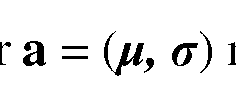 maintains ETP parameter (10), (11) densities from the domain A. Since it is desired to estimate these parameters in a nonintrusive way, this function is preferably based solely on observed aggregated power consumptions (Pi) and TCL corner (p) and clearing (p*) priorities over a time period T. This relaxation of total power estimation assumes that the parameters to be estimated are within the same order of magnitude (for example no combinations of large industrial and small domestic TCLs). CEM converges to s* by iteratively drawing samples a from the ETP parameter densities (line 5

of Algorithm 1). The sampled ETP parameter values ay are used to create representative tracer devices. From line 6 of Algorithm 1, it can be seen that their power consumption Pij and priorities p y are simulated by using the temperature differential equations (eq 10), (11), initial values (16), and comfort boundaries (17). These sampled devices then respond locally to the observed market priorities p* based on their priority-dependent (24)
bid function (3). The backup controller from Algorithm 2 overrules set points when temperature constraints are violated. Finally, their fitness value s(a) is calculated in line 8 and the ETP model probability distribution parameters

This minimization is based on observed and simulated total cluster power consumptions (Pi, Pi ) and priority distributions deviations where (line 7)


7 is redefined as the set of the TCL population, and 7i c 7 is defined as the representative subset of simulated tracer devices. Furthermore, % equals the set of time

samples used for the ETP model calculations, with horizon Ts and granularity Ats

ETP model parameters are sampled for each simulated tracer device / from a*. Since only a limited number of tracer devices L are to be incorporated in the optimization problem, quota sampling is used by generating L equiprobable population segments. The TSA aggregated energy constraint vector (2) is replaced by the inside air and the mass temperature differential equations (10), which are initialized as
 The power constraint (6) now applies for each individual simulated tracer device with power limit whilst the energy constraint vectors from (equation 2)


are transformed into static air temperature boundaries as specified by

the user

The computer based system is adapted to execute and to provide means for executing any of the steps of any algorithm described above.
B. Step 2: Optimization - embodiment of the invention
The main advantage of fitting probability distributions of model parameters from the entire TCL population of size N simulated tracer devices, stems from the fact

that the aggregated model can be built (and the computer based system can be
programmed for) using a reduced number such as L representative sampled simulated tracer devices. The optimal collective demand profile for the cluster of TCLs is derived and the computer based system is adapted to derive and has means to derive the collective demand profile based on the sampled tracer device parameters, with a power
consumption scaled according to the undersampling factor
 The revised constraints for the original optimization problem (equation 5) can be summarized as follows:

This linear programming (LP) optimization problem, hereafter termed TSA, can be solved rapidly for many simulated tracer devices and the computer based system is adapted to solve and has means to solve the linear programming (LP) optimization problem. However these methods, systems and means but do not include the dispatch dynamics. To include these, TCL simulated tracer device consumption needs to be
constrained (and the computer based system has means for constraining) for each of the T upcoming time steps to their respective piece-wise linear bid functions b/(p), resulting in a bilevel mathematical program. The upper level program constitutes the LP cost minimization problem (18), whereas the lower level problem constitutes the market clearing and corresponding equilibrium priority formation (9) [19], [20] . These two problems are linked through the equilibrium priority p*, appearing on both levels. The connections between bilevel programs and mixed integer programs (MIPs) are well known. It was shown in [21] that there exists an implicit reformulation of a bilevel program as an MIP. Specifically, this bilevel model can be reduced to a 0/1 MIP by introducing integer variables Y, and a large finite constant M [22] . To do so, an unconstrained bid function power variable added first :


Since the consumable demand is constrained to a bid function (3) for each simulated

tracer device
 Big-M constraints are added for the zones Y1, Y2, and Y3 (see Figure 2) at each timestep t

As shown in Figure 2, the nonconvex power modular bid function of each tracer device is divided into three zones (and the computer based system is adapted to divide) using the Big-M reformulation. The original nonconvex constraint is thereby converted to a set of constraints describing the same feasible set, using auxiliary binary variables, and additional constraints. The simplex algorithm is the original and still one of the most widely used methods for solving linear maximization problems. However, to apply it, the origin (all variables equal to 0) must be a feasible point. This condition is satisfied only when all the constraints (except non-negativity) are less-than constraints with a positive constant on the right-hand side. The Big M method introduces surplus and artificial
variables to convert all inequalities into that form. The "Big M" refers to a large number associated with the artificial variables, represented by the letter M.
The steps in the algorithm are as follows:
Multiply the inequality constraints to ensure that the right hand side is positive. If the problem is of minimization, transform to maximization by multiplying the objective by -1
For any greater-than constraints, introduce surplus and artificial variables (as shown below)
Choose a large positive M and introduce a term in the objective of the form -M multiplying the artificial variables
For less-than or equal constraints, introduce slack variables so that all constraints are equalities
Solve the problem using the usual simplex method.
Implicit inclusion of the dispatch dynamics into the optimization allows for the use of the resulting optimal market priorities in the real-time control step and

the computer based system is adapted to implicitly include the dispatch dynamics into the optimization and the computer based system allows for the use of the resulting optimal market priorities p This closed-loop approach translates to a decrease

in dispatch deviations compared with the open-loop receding horizon optimization from (18). This enhanced TSA model has been implemented using the commercial CPLEX solver (version 12.6) by adding (19)-(24) as constraints in the TSA optimization problem

C. Step 3: Real-Time Control - embodiment of the invention
The Walrasian dispatch mechanism as discussed above is modified preferably in this embodiment and the computer based system is adapted to use the modified Walrasian dispatch mechanism. Firstly, the priority based control signal inherently minimizes ON/OFF switching actions. However under some circumstances a modulated control is preferable to ON/OFF control. For example for a building with an existing local
controller it may be preferred to alter a set point for the controller rather than to interfere in the local switching process. Secondly a broadcasted equilibrium priority leads to minimal communication overhead and compatibility with other device classes [15] .
Finally, these priorities can also be used to encode pricing and service quality [13] . As opposed to the strategies from [13] and scenarios 1 and 2 from [9] this dispatch mechanism does not require an expensive measurement of the power consumption of each TCL. The corner priority pt,i equals the necessity of consumption for each TCL / at time instance t, which is dependent on the SoC

The SoC is preferably the primary state indicator of a TCL such as a thermal buffer for any demand response control system [23] and does not require extensive local
computational requirements [24] . The closer the temperature drops to the minimum local temperature comfort setting, the more urgent is its scheduling. The bid function of a discrete TCL with fixed maximum power consumption and priority pt,i can be

defined as (see Fig. 3 (right)):

where H is the Heaviside step function. To minimize rounding errors when extrapolating the simulated tracer device power consumption to that of the cluster, it is assume that simulated tracer devices can modulate their power consumption, with bid functions that are identical or similar to those of EVs. A suitable bid function is shown in Figure 3 (left).
An aggregator can minimize cost of electricity bought in a day-ahead setting for example, by setting control time steps (e.g. of 1 minute), and At (e.g. of 15 minutes) and

known prices


The devices can be controlled remotely or locally, e.g. by remotely operated local switches or by local control of such switches, or by remote or local modulation of the operation of the devices e.g. by changing a set point of a local controller. This local
control can be performed by a demand response adaptor as disclosed in EP-A-2 618 445 which is incorporated herein by reference.
The three steps of aggregation, optimization, and dispatch are repeated in a receding horizon manner. Hence the means for aggregation, optimization, and dispatch are adapted to repeat these steps in a receding horizon manner.
Determination of the representative tracer devices
One method to find the representative simulated tracer devices is to use a "Goodness of Fit" test, for example convergence in the Goodness of fit can be understood from table II; In accordance with embodiments of the present invention an increasing number of simulated tracer devices can be used until there is no or only marginal performance gain (e.g. less than 10% or 5% or 1% gain). The number of simulated tracer devices can be limited to the number when the marginal performance gain is lower than marginal operational/computational cost. Additionally, or alternatively the number of simulated tracer simulated devices can be selected to be equal to a minimal number of tracers as indicated during goodness-of-fit test and/or dispatch deviation results, using metrics known to the skilled person such as RMSE.
For example, assume that n population ETP parameters is

chosen to be normally distributed stochastic variables (Table I). It is assumed that all other parameters are equal amongst all households. Parameter distribution identification is performed over a time period T of 96 quarter hours by observing

and is initialized according to 1 - , with equal to 0.5. Initial ETP


Gaussian probability distribution relative standard deviations for μι and σι are chosen as 5% and 15%, respectively. The remaining CEM parameters can be chosen as: a = 0.5, np0p = 10,000 (this is the number of devices in cluster), ngen = 30, and npts = 100. To estimate the parameter fitting performance, numerous goodness-of-fit tests can be used [25], for example the Anderson-Darling and Kolmogorov-Smirnov tests to verify the hypothesized distributions. The null

hypothesis is that the sampled distribution corresponds to the actual distribution, whereas the alternative hypothesis is that it does not. A result of 1 indicates that the test rejects the null hypothesis at the 5% significance level, and vice- versa for a result of 0. The
diminishing number of test rejections for increasing numbers of estimation tracer devices can be seen in Table II. The root mean square error (RMSE) deviations are also depicted in this table. All tests confirm the strongly diminishing benefits beyond iitac = 4. ETP distribution estimations for this quantity of simulated tracer devices are therefore used. Therefore as can be seen Table II and Figure 6, the relative RMSE (normalized by range of optimized power values) dispatch deviation converges at 5 tracer devices for both techniques when sampling from either distribution. Therefore, there is a clear connection between the number of simulated tracer devices and the quality of the aggregated model and a quality criterion can be used to select the number of devices and their
characteristics, e.g. that the dispatch deviation is less than 10% or 5% RMSE (see Figure 6). Both methods according to the present invention being TSA and enhanced TSA (which is enhanced by including the dispatch algorithm in the optimization) exhibit a non-linear execution time for increasing numbers of simulated tracer devices. Because of the parametrizable nature of both control methodologies (TSA and enhanced TSA according to embodiments of the present invention), the number of simulated tracer devices used can be chosen depending on the respective business case timeslot length, i.e. how much time can be allowed for executing the optimisation of the second step. Since the control objective time slot period can exceed all execution times, the enhanced TSA approach with 5 tracers can be used in this business case, for example.

Computer based implementations
Any of the methods of the present invention described above can be performed by a controller (e.g. the central controller 46, and/or the cluster controller 49 and/or the local controller 47) with processing capability such as provided by one or more
microprocessors, FPGA's, or a central processing unit (CPU) and/or a Graphics
Processing Unit (GPU), and which is/are adapted to carry out the respective functions by being programmed with software, i.e. one or more computer programmes. References to software can encompass any type of programs in any language executable directly or indirectly by a processor, either via a compiled or interpretative language. The implementation of any of the methods of the present invention can be performed by logic circuits, electronic hardware, processors or circuitry which can encompass any kind of logic or analog circuitry, integrated to any degree, and not limited to general purpose processors, digital signal processors, ASICs, FPGAs, discrete components or transistor
logic gates and similar.
Such a controller may have memory (such as non-transitory computer readable medium, RAM and/or ROM), an operating system, optionally a display such as a fixed format display, data entry devices such as a keyboard, a pointer device such as a "mouse", serial or parallel ports to communicate other devices, network cards and connections to connect to any of the networks.
The software can be adapted to perform a method controlling demand of heat energy or electrical energy to be distributed to constrained cluster elements grouped in clusters in a demand response system when executed on a processing engine in the controller, for example. The software can be embodied in a computer program product adapted to carry out the means and functions itemised below when the software is loaded onto the controller and executed on one or more processing engines such as microprocessors, ASIC's, FPGA's etc. Hence controller for use with any of the embodiments of the present invention can incorporate a computer system capable of running one or more computer applications in the form of computer software. The controller is preferably the central controller 46, and/or the cluster controller 49 and/or the local controller 47.
The method, system and the controller can be adapted to determine the amount of the heat energy or electrical energy to be distributed to the constrained cluster elements during a next control time step using a control technique including three steps of aggregation, optimization and dispatch of a control signal to clusters of devices.
Any of the methods described above can be performed by one or more computer application programs running on the computer system by being loaded into a memory and run on or in association with an operating system such as Windows™ supplied by
Microsoft Corp, USA, Linux, Android or similar. The computer system can include a main memory, preferably random access memory (RAM), and may also include a non- transitory hard disk drive and/or a removable non-transitory memory, and/or a non- transitory solid state memory. Non-transitory removable memory can be an optical disk such as a compact disc (CD-ROM or DVD-ROM), a magnetic tape, which is read by and written to by a suitable reader. The removable non-transitory memory can be a computer readable medium having stored therein computer software and/or data.
The non- volatile storage memory can be used to store persistent information that should
not be lost if the computer system is powered down. The application programs may use and store information in the non- volatile memory. Other applications may be loaded into the memory and run on the computing system. The computer system may also include an interface for receiving information on the operating parameters of the devices in the clusters and their bidding functions, e.g. at each time step. The interface may be for receiving data from a local source, e.g. by input by a keyboard or from a peripheral memory device, e.g. from an optical disk such as a compact disc (CD-ROM or DVD- ROM), or from a magnetic tape, which is read by and written to by a suitable reader, or from solid state memory such as a flash drive or directly from sensors. The computer system can execute one or more embodiments disclosed herein. In addition, the embodiments and functionalities described herein may operate over distributed systems (e.g., cloud-based computing systems), where application functionality, memory, data storage and retrieval and various processing functions may be operated remotely from each other over a distributed computing network, such as the Internet or an intranet. Hence, the computer system may include a communication interface. The communication interface allows software and data to be transferred between the computer system and external devices including networks or the "cloud". Examples of communication interface may include a modem, a network interface such as an Ethernet card, a communication port, or a PCMCIA slot and card, etc. Software and data transferred via communication interface are in the form of signals which may be, for example, electronic, electromagnetic, optical, or other signals capable of being received by the communication interface. These signals are provided to communication interface via a local or remote communication channel. This communication channel carries signals and may be implemented using wire or cable, fibre optics, a phone line, a cellular phone link, an RF link, and/or other communication channels.
A non-transitory signal storage device can store computer-executable instructions that, when executed by at least one processor, perform any of the methods of the present invention or provide any means according to the present invention. Computer program products (also called computer control logic) can be stored in main memory and/or secondary memory. Computer programs products may also be received via a
communication interface. Such computer program products, when run, enable the computer system to perform the features of the present invention as discussed herein.
Accordingly, such computer programs represent controllers of the computer system.
The software embodied in the computer program product is adapted to carry out the following functions and to provide the following means when the software is loaded onto the respective device or devices and executed on one or more processing engines such as microprocessors, ASIC's, FPGA's etc.: operating an electrical power or heat supply network having at least one cluster of a plurality of heat or electrical energy consuming devices and virtual simulated tracer devices to simulate a plurality of the electrical energy or heat consuming devices The software embodied in the computer program product is adapted to carry out the following functions and to provide the following means when the software is loaded onto the respective device or devices and executed on one or more processing engines such as microprocessors, ASIC's, FPGA's etc.:
generating an aggregated model of a cluster which aggregates device state and parameter information of the entire cluster.
The software embodied in the computer program product is adapted to carry out the following functions and to provide the following means when the software is loaded onto the respective device or devices and executed on one or more processing engines such as microprocessors, ASIC's, FPGA's etc.: optimizing a cluster demand profile for a next time period by performing a optimization (e.g. central or distributed or in the cloud) of the aggregated model with the simulated tracer devices including the dynamics of the simulated tracer devices and generating a control action which is a direct or indirect power or energy value for the next time period.
The software embodied in the computer program product is adapted to carry out the following functions and to provide the following means when the software is loaded onto the respective device or devices and executed on one or more processing engines such as microprocessors, ASIC's, FPGA's etc.: converting the control action to individual device or aggregated devices control signals.
The software embodied in the computer program product is adapted to carry out the following functions and to provide the following means when the software is loaded onto the respective device or devices and executed on one or more processing engines such as microprocessors, ASIC's, FPGA's etc.:
providing dispatching information to the cluster, based on the control signals, and the plurality of the electrical energy or heat consuming devices consuming electrical energy or heat in accordance with the dispatching information.
The software embodied in the computer program product is adapted to carry out the following functions and to provide the following means when the software is loaded onto the respective device or devices and executed on one or more processing engines such as microprocessors, ASIC's, FPGA's etc.: steps of aggregation, optimization and dispatch.
The software embodied in the computer program product is adapted to carry out the following functions and to provide the following means when the software is loaded onto the respective device or devices and executed on one or more processing engines such as microprocessors, ASIC's, FPGA's etc.:
the dispatching information is sent as a broadcast signal.
The software embodied in the computer program product is adapted to carry out the following functions and to provide the following means when the software is loaded onto the respective device or devices and executed on one or more processing engines such as microprocessors, ASIC's, FPGA's etc.:
including both dynamics of the simulated tracer devices and a dispatch algorithm explicitly in the central optimization. The software embodied in the computer program product is adapted to carry out the following functions and to provide the following means when the software is loaded onto the respective device or devices and executed on one or more processing engines such as microprocessors, ASIC's, FPGA's etc.:
heat or electrical energy consuming devices are any thermostatically controlled loads (TCL) and/or
the TCLs are any of air conditioners, refrigerators, electric water heaters, thermal storage
systems, buildings including heating, district, town or regional scale heat storage schemes, water or ice- slush tanks.
The software embodied in the computer program product is adapted to carry out the following functions and to provide the following means when the software is loaded onto the respective device or devices and executed on one or more processing engines such as microprocessors, ASIC's, FPGA's etc.:
the simulated tracer devices are based on second order models of representative heat or electrical energy consuming devices in the cluster. Higher order models are reported in [26].
The software embodied in the computer program product is adapted to carry out the following functions and to provide the following means when the software is loaded onto the respective device or devices and executed on one or more processing engines such as microprocessors, ASIC's, FPGA's etc.:
identifying the simulated tracer devices in a nonintrusive manner using Machine Learning (ML) techniques.
The software embodied in the computer program product is adapted to carry out the following functions and to provide the following means when the software is loaded onto the respective device or devices and executed on one or more processing engines such as microprocessors, ASIC's, FPGA's etc.:
the second order models are equivalent thermal parameter (ETP) models.
The software embodied in the computer program product is adapted to carry out the following functions and to provide the following means when the software is loaded onto the respective device or devices and executed on one or more processing engines such as microprocessors, ASIC's, FPGA's etc.: the cluster demand profile for the cluster is derived based on sampled simulated tracer device parameters.
The software embodied in the computer program product is adapted to carry out the following functions and to provide the following means when the software is loaded onto the respective device or devices and executed on one or more processing engines such as
microprocessors, ASIC's, FPGA's etc.:
the optimizing step is solved for a plurality of simulated tracer devices using Linear Programming (LP).
The software embodied in the computer program product is adapted to carry out the following functions and to provide the following means when the software is loaded onto the respective device or devices and executed on one or more processing engines such as microprocessors, ASIC's, FPGA's etc.:
constraining the simulated tracer device simulated consumption of energy for each future optimization time steps to respective piece- wise linear bid functions, and/or Local control of the devices in a cluster by a demand response adaptor as disclosed in EP- A-2 618 445 which is incorporated herein by reference.
Any of the above software may be implemented as a computer program product which has been compiled for a processing engine in any of the servers or nodes of the network. The computer program product may be stored on a non-transitory signal storage medium such as an optical disk (CD-ROM or DVD-ROM), a digital magnetic tape, a magnetic disk, a solid state memory such as a USB flash memory, a ROM, or in the cloud etc.
Claims
Claims 1. A method for operating an electrical power or heat supply network having at least one cluster of a plurality of heat or electrical energy consuming devices , the method comprising: identifying simulated tracer devices to simulate a plurality of the electrical energy or heat consuming devices; generating an aggregated model of a cluster which aggregates device state and parameter information of the entire cluster; optimizing a cluster demand profile for a next time period by performing an optimization of the aggregated model with the simulated tracer devices including the dynamics of the simulated tracer devices and generating a control action which is a direct or indirect power or energy value for the next time period, converting the control action to individual device or aggregated devices control signals; providing dispatching information to the cluster, based on the control signals, and the plurality of the electrical energy or heat consuming devices consuming electrical energy or heat in accordance with the dispatching information.
2. The method of claim 1 comprising the steps of aggregation, optimization and dispatch.
3. The method of claim 1 or 2 wherein the dispatching information is sent as a broadcast signal.
4. The method of any previous claim including both dynamics of the simulated tracer devices and a dispatch algorithm explicitly in the central optimization.
5. The method of any previous claim wherein heat or electrical energy consuming devices are thermostatically controlled loads (TCL).
6. The method of claim 5 wherein the TCLs are any of air conditioners, refrigerators, electric water heaters, thermal storage systems, buildings including heating, district, town or regional scale heat storage schemes, water or ice-slush tanks.
7. The method of any previous claim, wherein the simulated tracer devices are based on second order or higher models of representative heat or electrical energy consuming devices in the cluster.
8. The method of claim 7, wherein identifying simulated tracer devices is performed in a nonintrusive manner using Machine Learning (ML) techniques.
9. The method of claims 7 or 8 wherein the second order models are equivalent thermal parameter (ETP) models.
10. The method of any of the previous claims wherein the cluster demand profile for the cluster is derived based on sampled simulated tracer device parameters.
11. The method of any of the previous claims wherein the optimizing step is solved for a plurality of simulated tracer devices using Linear Programming (LP).
12. The method of any of the previous claims, further comprising constraining the simulated tracer device simulated consumption of energy for each future optimization time steps to respective piece-wise linear bid functions.
13. A computer based method for operating an electrical power or heat supply network having at least one cluster of a plurality of heat or electrical energy consuming devices and virtual simulated tracer devices to simulate a plurality of the electrical energy or heat consuming devices, the method comprising: generating an aggregated model of a cluster which aggregates device state and parameter information of the entire cluster optimizing a cluster demand profile for a next time period by performing an optimization of the aggregated model with the simulated tracer devices including the dynamics of the simulated tracer devices and generating a control action which is a direct or indirect power or energy value for the next time period,
converting the control action to individual device or aggregated devices control signals; providing dispatching information to the cluster, based on the control signals, and the plurality of the electrical energy or heat consuming devices consuming electrical energy or heat in accordance with the dispatching information.
14. The method of claim 13 comprising the steps of aggregation, optimization and dispatch.
15. The method of claim 13 or 14 wherein the dispatching information is sent as a broadcast signal.
16. The method of any of claims 13 to 15, wherein the plurality of heat or electrical energy consuming devices are controlled by remote or local switching in accordance with the dispatch information.
17. The method of any of the claims 13 to 16 including both dynamics of the simulated tracer devices and a dispatch algorithm explicitly in the central optimization.
18. The method of any of the claims 13 to 17 wherein heat or electrical energy consuming devices are thermostatically controlled loads (TCL).
19. The method of claim 18 wherein the TCLs are any of air conditioners,
refrigerators, electric water heaters, thermal storage systems, buildings including heating, district, town or regional scale heat storage schemes, water or ice-slush tanks.
20. The method of any of the claims 13 to 19, wherein the simulated tracer devices are based on second order or higher models of representative heat or electrical energy consuming devices in the cluster.
21. The method of any of the claims 13 to 20, further comprising identifying the simulated tracer devices in a nonintrusive manner using Machine Learning (ML) techniques.
22. The method of claims 20 or 21 wherein the second order models are equivalent thermal parameter (ETP) models.
23. The method of any of the claims 13 to 22 wherein the cluster demand profile for the cluster is derived based on sampled simulated tracer device parameters.
24. The method of any of the claims 13 to 23 wherein the optimizing step is solved for a plurality of simulated tracer devices using Linear Programming (LP).
25. The method of any of the claims 13 to 24, further comprising constraining the simulated tracer device simulated consumption of energy for each future optimization time steps to respective piece-wise linear bid functions.
26. The method of any of the claims 1 to 25 wherein the simulated tracer devices are identified by a Goodness of Fit test.
27. A computer based system for operating an electrical power or heat supply network having at least one cluster of a plurality of heat or electrical energy consuming devices and virtual simulated tracer devices to simulate a plurality of the electrical energy or heat consuming devices, the system comprising: means for generating an aggregated model of a cluster which aggregates device state and parameter information of the entire cluster means for optimizing a cluster demand profile for a next time period by performing an optimization of the aggregated model with the simulated tracer devices including the dynamics of the simulated tracer devices and generating a control action which is a direct or indirect power or energy value for the next time period, means for converting the control action to individual device or aggregated devices control signals; means for providing dispatching information to the cluster, based on the control signals, and the plurality of the electrical energy or heat consuming devices consuming electrical energy or heat in accordance with the dispatching information.
28. The system of claim 27 wherein the means for providing dispatching information is adapted to send the dispatching information as a broadcast signal.
29. The system of any of the claims 27 or 28 wherein the Means for optimizing a cluster demand profile and the Means for providing dispatching information are adapted to include both dynamics of the simulated tracer devices and a dispatch algorithm explicitly in the central optimization.
30. The system of any of the claims 27 to 29 wherein heat or electrical energy consuming devices are thermostatically controlled loads (TCL).
31. The system of claim 30 wherein the TCLs are any of air conditioners, refrigerators, electric water heaters, thermal storage systems, buildings including heating, district, town or regional scale heat storage schemes, water or ice-slush tanks.
32. The system of any of the claims 27 to 31, wherein the simulated tracer devices are based on second order or higher models of representative heat or electrical energy consuming devices in the cluster.
33. The system of any of the claims 27 to 32, further comprising means for identifying the simulated tracer devices in a nonintrusive manner using Machine Learning (ML) techniques.
34. The system of any of the claims 32 or 33 wherein the second order models are equivalent thermal parameter (ETP) models.
35. The system of any of the claims 27 to 34 wherein the means for optimizing a cluster demand profile is adapted to derive the cluster demand profile for the cluster based on sampled simulated tracer device parameters.
36. The system of any of the claims 27 to 35 wherein the means for optimizing a cluster demand profile is adapted to solve for a plurality of simulated tracer devices using Linear Programming (LP).
37. The method of any of the claims 27 to 36, further comprising means for constraining the simulated tracer device simulated consumption of energy for each future time steps to respective piece-wise linear bid functions.
38. A controller for controlling operation an electrical power or heat supply network having at least one cluster of a plurality of heat or electrical energy consuming devices and virtual simulated tracer devices to simulate a plurality of the electrical energy or heat consuming devices, the controller comprising: means for generating an aggregated model of a cluster which aggregates device state and parameter information of the entire cluster means for optimizing a cluster demand profile for a next time period by performing an optimization of the aggregated model with the simulated tracer devices including the dynamics of the simulated tracer devices and generating a control action which is a direct or indirect power or energy value for the next time period, means for converting the control action to individual device or aggregated devices control signals; eans for providing dispatching information to the cluster, based on the control signals, to allow the plurality of the electrical energy or heat consuming devices to consume electrical energy or heat in accordance with the dispatching information in a next time step.
39. The controller of claim 38 wherein the means for providing dispatching information is adapted to send the dispatching information as a broadcast signal.
40. The controller of any of the claims 38 or 39 wherein the Means for optimizing a cluster demand profile and the Means for providing dispatching information are adapted to include both dynamics of the simulated tracer devices and a dispatch algorithm explicitly in the central optimization.
41. The controller of any of the claims 38 to 40 wherein heat or electrical energy consuming devices are thermostatically controlled loads (TCL).
42. The controller of claim 41 wherein the TCLs are any of air conditioners, refrigerators, electric water heaters, thermal storage systems, buildings including heating, district, town or regional scale heat storage schemes, water or ice- slush tanks.
43. The controller of any of the claims 38 to 42, wherein the simulated tracer devices are based on second order or higher models of representative heat or electrical energy consuming devices in the cluster.
44. The controller of any of the claims 38 to 43, further comprising means for identifying the simulated tracer devices in a nonintrusive manner using Machine Learning (ML) techniques.
45. The controller of any of the claims 43 or 44 wherein the second order models are equivalent thermal parameter (ETP) models.
46. The controller of any of the claims 38 to 45 wherein the Means for optimizing a cluster demand profile is adapted to derive the cluster demand profile for the cluster based on sampled simulated tracer device parameters.
47. The controller of any of the claims 38 to 46 wherein the Means for optimizing a cluster demand profile is adapted to solve for a plurality of simulated tracer devices using Linear Programming (LP).
48. The controller of any of the claims 38 to 47, further comprising means for constraining the simulated tracer device simulated consumption of energy for each future time steps to respective piece-wise linear bid functions.
49. A computer program product comprising software which when executed on a processing engine carries out any of the method steps of claims 1 to 26.
50. A non-transient signal storage means for storing the computer program product of claim 49.
Priority Applications (2)
| Application Number | Priority Date | Filing Date | Title |
|---|---|---|---|
| PCT/EP2016/059695 WO2017186313A1 (en) | 2016-04-29 | 2016-04-29 | Cluster control of heterogeneous clusters of thermostatically controlled loads using tracer devices |
| US16/096,343 US20190129368A1 (en) | 2016-04-29 | 2016-04-29 | Cluster control of heterogeneous clusters of thermostatically controlled loads using tracker devices |
Applications Claiming Priority (1)
| Application Number | Priority Date | Filing Date | Title |
|---|---|---|---|
| PCT/EP2016/059695 WO2017186313A1 (en) | 2016-04-29 | 2016-04-29 | Cluster control of heterogeneous clusters of thermostatically controlled loads using tracer devices |
Publications (1)
| Publication Number | Publication Date |
|---|---|
| WO2017186313A1 true WO2017186313A1 (en) | 2017-11-02 |
Family
ID=56024239
Family Applications (1)
| Application Number | Title | Priority Date | Filing Date |
|---|---|---|---|
| PCT/EP2016/059695 Ceased WO2017186313A1 (en) | 2016-04-29 | 2016-04-29 | Cluster control of heterogeneous clusters of thermostatically controlled loads using tracer devices |
Country Status (2)
| Country | Link |
|---|---|
| US (1) | US20190129368A1 (en) |
| WO (1) | WO2017186313A1 (en) |
Cited By (5)
| Publication number | Priority date | Publication date | Assignee | Title |
|---|---|---|---|---|
| CN111552912A (en) * | 2020-04-21 | 2020-08-18 | 三峡大学 | Double-layer economic optimization method for micro-grid connection |
| CN112825103A (en) * | 2019-11-20 | 2021-05-21 | 天津大学 | Reverse design device and method for gasification process |
| CN114091718A (en) * | 2021-06-29 | 2022-02-25 | 华能南京燃机发电有限公司 | A research method for optimizing the combined operation of electric and heat for combined cycle heating units |
| CN116757453A (en) * | 2023-08-18 | 2023-09-15 | 国网智能电网研究院有限公司 | Low-carbon park building cluster coordination and optimization scheduling methods, devices, equipment and media |
| CN117313501A (en) * | 2023-11-30 | 2023-12-29 | 国网浙江省电力有限公司电力科学研究院 | A rapid calculation method and system for temperature rise of oil-immersed power transformer windings |
Families Citing this family (12)
| Publication number | Priority date | Publication date | Assignee | Title |
|---|---|---|---|---|
| US11183878B2 (en) | 2017-08-07 | 2021-11-23 | Landis+Gyr Innovations, Inc. | Maintaining connectivity information for meters and transformers located in a power distribution network |
| US10908198B2 (en) * | 2017-08-07 | 2021-02-02 | Landis+Gyr Innovations, Inc. | Determining meter phase using interval voltage measurements |
| US10873188B2 (en) * | 2017-11-03 | 2020-12-22 | Opus One Solutions Energy Corporation | Dynamic hosting capacity system and method for DER integration and management on distribution utility networks |
| US11916422B2 (en) | 2019-01-31 | 2024-02-27 | General Electric Company | Battery charge and discharge power control in a power grid |
| US11176818B2 (en) * | 2019-05-02 | 2021-11-16 | International Business Machines Corporation | Cluster-based management of vehicle power consumption |
| US11245260B2 (en) | 2020-02-25 | 2022-02-08 | Landis+Gyr Innovations, Inc. | Automatic discovery of electrical supply network topology and phase |
| US11646602B2 (en) | 2020-03-11 | 2023-05-09 | Landis+Gyr Innovations, Inc. | Topology and phase detection for electrical supply network |
| DE102020209046A1 (en) | 2020-07-20 | 2022-01-20 | Siemens Aktiengesellschaft | Method for controlling heat exchanges between multiple energy systems and control platform |
| US11515725B2 (en) | 2020-09-21 | 2022-11-29 | Landis+Gyr Innovations, Inc. | Autonomous topology validation for electrical supply network |
| CN112886595A (en) * | 2021-01-18 | 2021-06-01 | 山东大学 | Method for flexibly aggregating clusters of constant-temperature control load into battery-like energy storage model |
| CN113864854B (en) * | 2021-10-12 | 2022-07-19 | 华北电力大学 | Multi-objective optimization method and system for heat accumulating type electric heating to participate in wind power consumption |
| CN114593505B (en) * | 2022-03-29 | 2023-08-29 | 海南省电力学校(海南省电力技工学校) | Variable-frequency air conditioner load virtual energy storage modeling method based on second-order equivalent thermal parameter model |
Citations (2)
| Publication number | Priority date | Publication date | Assignee | Title |
|---|---|---|---|---|
| WO2011074950A2 (en) | 2009-12-16 | 2011-06-23 | Stichting Energieonderzoek Centrum Nederland | Distributed status calculations in an electricity network with the aid of agents |
| EP2618445A1 (en) | 2012-01-17 | 2013-07-24 | Vlaamse Instelling voor Technologisch Onderzoek (VITO) | Demand response adaptor for connecting a device to a demand response system or home automation system, device and such demand response adaptor and use thereof |
-
2016
- 2016-04-29 US US16/096,343 patent/US20190129368A1/en not_active Abandoned
- 2016-04-29 WO PCT/EP2016/059695 patent/WO2017186313A1/en not_active Ceased
Patent Citations (2)
| Publication number | Priority date | Publication date | Assignee | Title |
|---|---|---|---|---|
| WO2011074950A2 (en) | 2009-12-16 | 2011-06-23 | Stichting Energieonderzoek Centrum Nederland | Distributed status calculations in an electricity network with the aid of agents |
| EP2618445A1 (en) | 2012-01-17 | 2013-07-24 | Vlaamse Instelling voor Technologisch Onderzoek (VITO) | Demand response adaptor for connecting a device to a demand response system or home automation system, device and such demand response adaptor and use thereof |
Non-Patent Citations (28)
| Title |
|---|
| BIEGEL, B.; ANDERSEN, P.; PEDERSEN, T.S.; NIELSEN, K.M.; STOUSTRUP, J.; HANSEN, L.H.: "Smart grid dispatch strategy for ON/OFF demand-side devices", CONTROL CONFERENCE (ECC), 2013 EUROPEAN, 17 July 2013 (2013-07-17), pages 25412548 |
| BIEGEL, B.; ANDERSEN, P.; STOUSTRUP, J.; MADSEN, M.B.; HANSEN, L.H.: "Lumped thermal household model", INNOVATIVE SMART GRID TECHNOLOGIES EUROPE (ISGT EUROPE), 2013 4TH IEEE/PES, 6 October 2013 (2013-10-06), pages 1 - 5, XP032550074, DOI: doi:10.1109/ISGTEurope.2013.6695320 |
| C. AUDET; P. HANSEN; B. JAUMARD; G. SAVARD: "Links between linear bilevel and mixed 0-1 programming problems", J. OPTIM. THEORY APPL., vol. 93, no. 2, 1997, pages 273 - 300 |
| CHASSIN, D.P.; SCHNEIDER, K.; GERKENSMEYER, C.: "GridLAB-D: An open-source power systems modeling and simulation environment", TRANSMISSION AND DISTRIBUTION CONFERENCE AND EXPOSITION, 2008. T&D. IEEE/PES, 21 April 2008 (2008-04-21), pages 1 - 5, XP002621422, DOI: doi:10.1109/TDC.2008.4517260 |
| F. YGGE: "Market-oriented programming and its application to power load management", PH.D. DISSERTATION, 1998 |
| G. KUNAPULI: "A bilevel optimization approach to machine learning", PH.D. DISSERTATION, 2008 |
| GATSIS, N.; GIANNAKIS, G.B: "Residential Load Control: Distributed Scheduling and Convergence With Lost AMI Messages", SMART GRID, IEEE TRANSACTIONS ON, vol. 3, no. 2, June 2012 (2012-06-01), pages 770 - 786, XP011445348, DOI: doi:10.1109/TSG.2011.2176518 |
| H. HAO; B. M. SANANDAJI; K. POOLLA; T. L. VINCENT: "Aggregate flexibility of thermostatically controlled loads", IEEE TRANS. ON POWER SYST., vol. 30, no. 1, June 2014 (2014-06-01), pages 1 - 10 |
| HEUSSEN, K.; KOCH, S.; ULBIG, A.; ANDERSSON, G.: "Systems Journal", vol. 6, March 2012, IEEE, article "Unified System-Level Modeling of Intermittent Renewable Energy Sources and Energy Storage for Power System Operation", pages: 140 - 151 |
| IHARA, S; SCHWEPPE, F.C.: "Physically Based Modeling of Cold Load Pickup", POWER APPARATUS AND SYSTEMS, IEEE TRANSACTIONS ON, vol. PAS-100, no. 9, September 1981 (1981-09-01), pages 4142 - 4150, XP011169224, DOI: doi:10.1109/TPAS.1981.316965 |
| K. VANTHOURNOUT; R. D'HULST; D. GEYSEN; G. JACOBS: "A smart domestic hot water buffer", IEEE TRANS. SMART GRID, vol. 3, no. 4, December 2012 (2012-12-01), pages 2121 - 2127, XP011486139, DOI: doi:10.1109/TSG.2012.2205591 |
| KAMGARPOUR, M.; ELLEN, C.; SOUDJANI, S.E.Z.; GERWINN, S.; MATHIEU, J.L; MULLNER, N.; ABATE, A.; CALLAWAY, D.S.; FRANZLE, M.; LYGER: "Modeling options for demand side participation of thermostatically controlled loads", BULK POWER SYSTEM DYNAMICS AND CONTROL - IX OPTIMIZATION, SECURITY AND CONTROL OF THE EMERGING POWER GRID (IREP), 2013 IREP SYMPOSIUM, 25 August 2013 (2013-08-25), pages 1 - 15, XP032513238, DOI: doi:10.1109/IREP.2013.6629396 |
| L. BROTCORNE; P. MARCOTTE; G. SAVARD: "Bilevel programming: The Montreal school", INF. SYST. OPER. RES., vol. 46, no. 4, 2008, pages 231 - 246 |
| L. BUSONIU; R. BABUSKA; B. DE SCHUTTER; D. ERNST: "Reinforcement Learning and Dynamic Programming Using Function Approximators", 2010, CRC PRESS |
| M. A. STEPHENS: "EDF statistics for goodness of fit and some comparisons", J. AMER. STAT. ASSOC., vol. 69, no. 347, 1974, pages 730 - 737 |
| M. GONZALEZ VAYA; G. ANDERSSON: "Optimal bidding strategy of a plug-in electric vehicle aggregator in day-ahead electricity markets", PROC. 10TH INT. CONF. EUR. ENERGY MARKET (EEM), STOCKHOLM, SWEDEN, May 2013 (2013-05-01), pages 1 - 6, XP032486528, DOI: doi:10.1109/EEM.2013.6607304 |
| MALHAME, R.; CHONG, CHEE-YEE: "Electric load model synthesis by diffusion approximation of a high-order hybrid-state stochastic system", AUTOMATIC CONTROL, IEEE TRANSACTIONS ON, vol. 30, no. 9, September 1985 (1985-09-01), pages 854 - 860 |
| MATHIEU, J.L.; KAMGARPOUR, M.; LYGEROS, J.; CALLAWAY, D.S.: "Energy arbitrage with thermostatically controlled loads", CONTROL CONFERENCE (ECC), 2013 EUROPEAN, 17 July 2013 (2013-07-17), pages 2519 - 2526, XP032526620 |
| MATHIEU, J.L.; KOCH, S.; CALLAWAY, D.S.: "State Estimation and Control of Electric Loads to Manage RealTime Energy Imbalance", POWER SYSTEMS, IEEE TRANSACTIONS ON, vol. 28, no. L, February 2013 (2013-02-01), pages 430 - 440, XP011488407, DOI: doi:10.1109/TPWRS.2012.2204074 |
| R. PEDERSEN; B. BIEGEL; J. SCHWENSEN; J. STOUSTRUP; T. GREEN: "Aggregation and Control of Supermarket Refrigeration Systems in a Smart Grid", IFAC 2014, August 2014 (2014-08-01) |
| R. RUBINSTEIN: "The cross-entropy method for combinatorial and continuous optimization", METHODOL. COMPUT. APPL. PROBAB., vol. 1, no. 2, September 1999 (1999-09-01), pages 127 - 190 |
| REYNDERS, GLENN; DIRIKEN, JAN; SAELENS, DIRK: "Energy and Buildings", vol. 82, 2014, ELSEVIER, article "Quality of grey-box models and identified parameters as function of the accuracy of input and observation signals", pages: 263 - 274 |
| S. WECKX; R. D'HULST; J. DRIESEN: "Primary and secondary frequency support by a multi-agent demand control system", IEEE TRANS. POWER SYST., vol. 30, no. 3, May 2015 (2015-05-01), pages 1394 - 1404, XP011578998, DOI: doi:10.1109/TPWRS.2014.2340582 |
| SANDRO IACOVELLA ET AL.: "Cluster control of heterogeneous clusters of thermostatically controlled loads using tracer devices", IEEE, 2015, pages 1949 - 3053 |
| SANDRO IACOVELLA ET AL: "Cluster Control of Heterogeneous Thermostatically Controlled Loads Using Tracer Devices", IEEE TRANSACTIONS ON SMART GRID, vol. PP, no. 99, 26 October 2015 (2015-10-26), USA, pages 1 - 9, XP055283266, ISSN: 1949-3053, DOI: 10.1109/TSG.2015.2483506 * |
| TOERSCHE, H.A.; BAKKER, V.; MOLDERINK, A.; NYKAMP, S.; HURINK, J.L.; SMIT, G.J.M.: "Controlling the heating mode of heat pumps with the TRIANA three step methodology", INNOVATIVE SMART GRID TECHNOLOGIES (ISGT), 2012 IEEE PES, 16 January 2012 (2012-01-16), pages 1 - 7, XP032153723, DOI: doi:10.1109/ISGT.2012.6175662 |
| VANDAEL, S.; CLAESSENS, B.; HOMMELBERG, M.; HOLVOET, T.; DECONINCK, G.: "A Scalable Three-Step Approach for Demand Side Management of Plug-in Hybrid Vehicles", SMART GRID, IEEE TRANSACTIONS ON, vol. 4, no. 2, June 2013 (2013-06-01), pages 720 - 728, XP011510759, DOI: doi:10.1109/TSG.2012.2213847 |
| WEI ZHANG; KALSI, K.; FULLER, J.; ELIZONDO, M.; CHASSIN, D.: "Aggregate model for heterogeneous thermostatically controlled loads with demand response", POWER AND ENERGY SOCIETY GENERAL MEETING, 22 July 2012 (2012-07-22), pages 1 - 8, XP032465975, DOI: doi:10.1109/PESGM.2012.6345351 |
Cited By (8)
| Publication number | Priority date | Publication date | Assignee | Title |
|---|---|---|---|---|
| CN112825103A (en) * | 2019-11-20 | 2021-05-21 | 天津大学 | Reverse design device and method for gasification process |
| CN112825103B (en) * | 2019-11-20 | 2022-05-03 | 天津大学 | Reverse design device and method for gasification process |
| CN111552912A (en) * | 2020-04-21 | 2020-08-18 | 三峡大学 | Double-layer economic optimization method for micro-grid connection |
| CN114091718A (en) * | 2021-06-29 | 2022-02-25 | 华能南京燃机发电有限公司 | A research method for optimizing the combined operation of electric and heat for combined cycle heating units |
| CN116757453A (en) * | 2023-08-18 | 2023-09-15 | 国网智能电网研究院有限公司 | Low-carbon park building cluster coordination and optimization scheduling methods, devices, equipment and media |
| CN116757453B (en) * | 2023-08-18 | 2023-10-27 | 国网智能电网研究院有限公司 | Low-carbon park building cluster coordination optimization scheduling method, device, equipment and medium |
| CN117313501A (en) * | 2023-11-30 | 2023-12-29 | 国网浙江省电力有限公司电力科学研究院 | A rapid calculation method and system for temperature rise of oil-immersed power transformer windings |
| CN117313501B (en) * | 2023-11-30 | 2024-03-19 | 国网浙江省电力有限公司电力科学研究院 | A rapid calculation method and system for temperature rise of oil-immersed power transformer windings |
Also Published As
| Publication number | Publication date |
|---|---|
| US20190129368A1 (en) | 2019-05-02 |
Similar Documents
| Publication | Publication Date | Title |
|---|---|---|
| US20190129368A1 (en) | Cluster control of heterogeneous clusters of thermostatically controlled loads using tracker devices | |
| Iacovella et al. | Cluster control of heterogeneous thermostatically controlled loads using tracer devices | |
| Sanseverino et al. | An execution, monitoring and replanning approach for optimal energy management in microgrids | |
| EP2806520A1 (en) | Power supply network control system and method | |
| Mbungu et al. | Smart energy coordination of autonomous residential home | |
| Bakker | Triana: a control strategy for Smart Grids: Forecasting, planning & real-time control | |
| Beaudin et al. | Home energy management systems: A review of modelling and complexity | |
| Dai et al. | Robust energy management for a corporate energy system with shift-working V2G | |
| Barbato et al. | Model and algorithms for the real time management of residential electricity demand | |
| Parkinson et al. | Wind integration in self-regulating electric load distributions | |
| Talab et al. | Energy management in microgrids using model-free deep reinforcement learning approach | |
| Najafi et al. | Decentralized control of DR using a multi-agent method | |
| De Filippo et al. | Robust optimization for virtual power plants | |
| Fotouhi Ghazvini et al. | Two‐stage demand‐side management in energy flexible residential buildings | |
| Faria et al. | Plug-and-play framework for assessment of renewable energy community strategies | |
| Zhang et al. | Game theory-based demand-side management for efficient energy collaboration in smart networks: A neighborhood-scale optimization framework | |
| Roudnil et al. | Energy Management of Microgrids: An MPC‐Based Techno‐Economic Optimisation for RES Integration and ESS Utilisation | |
| Saad Hussein | A method for evaluating building retrofit effects on a decentral energy system by a sector coupling operation and expansion model | |
| Riccardi et al. | A benchmark for the application of distributed control techniques to the electricity network of the European economic area | |
| Ali et al. | Minimizing grid interaction of solar generation and DHW loads in nZEBs using model-free reinforcement learning | |
| Athanasiadis et al. | Multi-objective data-driven framework to support network operation via residential flexibility | |
| Nyeng | System integration of distributed energy resources | |
| Aragón et al. | Optimization Framework for short-term control of Energy Storage Systems | |
| Kiguchi | Residential Demand Response using Electricity Smart Meter Data | |
| Blaauwbroek | Flexibility in active distribution network management: a new horizon in monitoring and control for grid supportive demand side management |
Legal Events
| Date | Code | Title | Description |
|---|---|---|---|
| NENP | Non-entry into the national phase |
Ref country code: DE |
|
| 121 | Ep: the epo has been informed by wipo that ep was designated in this application |
Ref document number: 16723680 Country of ref document: EP Kind code of ref document: A1 |
|
| 122 | Ep: pct application non-entry in european phase |
Ref document number: 16723680 Country of ref document: EP Kind code of ref document: A1 |