WO2017154767A1 - 有機ニトロキシドラジカル化合物、その製造方法、ナノエマルション粒子及びその用途 - Google Patents
有機ニトロキシドラジカル化合物、その製造方法、ナノエマルション粒子及びその用途 Download PDFInfo
- Publication number
- WO2017154767A1 WO2017154767A1 PCT/JP2017/008469 JP2017008469W WO2017154767A1 WO 2017154767 A1 WO2017154767 A1 WO 2017154767A1 JP 2017008469 W JP2017008469 W JP 2017008469W WO 2017154767 A1 WO2017154767 A1 WO 2017154767A1
- Authority
- WO
- WIPO (PCT)
- Prior art keywords
- nanoemulsion
- surfactant
- magnetic
- compound
- nitroxide radical
- Prior art date
- Legal status (The legal status is an assumption and is not a legal conclusion. Google has not performed a legal analysis and makes no representation as to the accuracy of the status listed.)
- Ceased
Links
Images

















Classifications
-
- A—HUMAN NECESSITIES
- A61—MEDICAL OR VETERINARY SCIENCE; HYGIENE
- A61K—PREPARATIONS FOR MEDICAL, DENTAL OR TOILETRY PURPOSES
- A61K9/00—Medicinal preparations characterised by special physical form
- A61K9/10—Dispersions; Emulsions
- A61K9/107—Emulsions ; Emulsion preconcentrates; Micelles
-
- A—HUMAN NECESSITIES
- A61—MEDICAL OR VETERINARY SCIENCE; HYGIENE
- A61K—PREPARATIONS FOR MEDICAL, DENTAL OR TOILETRY PURPOSES
- A61K47/00—Medicinal preparations characterised by the non-active ingredients used, e.g. carriers or inert additives; Targeting or modifying agents chemically bound to the active ingredient
- A61K47/30—Macromolecular organic or inorganic compounds, e.g. inorganic polyphosphates
- A61K47/34—Macromolecular compounds obtained otherwise than by reactions only involving carbon-to-carbon unsaturated bonds, e.g. polyesters, polyamino acids, polysiloxanes, polyphosphazines, copolymers of polyalkylene glycol or poloxamers
-
- A—HUMAN NECESSITIES
- A61—MEDICAL OR VETERINARY SCIENCE; HYGIENE
- A61K—PREPARATIONS FOR MEDICAL, DENTAL OR TOILETRY PURPOSES
- A61K49/00—Preparations for testing in vivo
- A61K49/06—Nuclear magnetic resonance [NMR] contrast preparations; Magnetic resonance imaging [MRI] contrast preparations
- A61K49/20—Nuclear magnetic resonance [NMR] contrast preparations; Magnetic resonance imaging [MRI] contrast preparations containing free radicals, e.g. trityl radical for overhauser
-
- C—CHEMISTRY; METALLURGY
- C07—ORGANIC CHEMISTRY
- C07D—HETEROCYCLIC COMPOUNDS
- C07D207/00—Heterocyclic compounds containing five-membered rings not condensed with other rings, with one nitrogen atom as the only ring hetero atom
- C07D207/46—Heterocyclic compounds containing five-membered rings not condensed with other rings, with one nitrogen atom as the only ring hetero atom with hetero atoms directly attached to the ring nitrogen atom
Definitions
- the present invention relates to an organic nitroxide radical compound, a production method thereof, nanoemulsion particles and use thereof.
- gadolinium preparations such as Gd-DTPA are used as intravascularly administered contrast agents used in magnetic resonance imaging (MRI).
- MRI magnetic resonance imaging
- metal-free contrast agents that do not contain metals.
- Non-Patent Documents 1 and 2 an amphiphilic block copolymer polymer compound in which an organic nitroxide radical called TEMPO (2,2,6,6-tetramethylpiperidine 1-oxyl) is covalently bonded is synthesized. It was disclosed that core / shell nanoparticles were prepared in water using Patent Document 1 discloses a polymer having a nitroxide radical in the side chain and a polymer micelle comprising the polymer. However, in any case, the synthesis and purification of the polymer compound is complicated, the particle size distribution is wide, and the nitroxide radical is easily reduced by vitamin C or the like in the blood, so that the function of the radical cannot be exhibited. is there.
- TEMPO organic nitroxide radical
- the main problem to be solved by the present invention is to provide nanoemulsion particles that can be used as a metal-free contrast agent such as MRI, and organic nitroxide radical compounds that can easily prepare the nanoemulsion particles. It is to be.
- the present inventors have determined that a specific ratio of an organic nitroxide radical compound having a specific structure and a nonionic surfactant in an aqueous solvent. It was found that the nanoemulsion particles encapsulating nitroxide radicals can be produced by mixing with, thereby solving the above problems.
- the present invention has been completed based on such findings.
- the present invention relates to organic nitroxide radical compounds, production methods, nanoemulsion particles and the like shown in the following items 1 to 7.
- Item 1. Formula (1):
- R 2 represents a linear alkyl group having 10 to 26 carbon atoms.
- N is an integer of 2 or more.
- Item 5 The nanoemulsion particle according to Item 3 or 4, which is a polyoxyethylene alkyl ether represented by: Item 6.
- a contrast agent for MRI comprising the nanoemulsion particles according to any one of items 3 to 5.
- Item 7. 6.
- a drug delivery system carrier comprising the nanoemulsion particles according to any one of items 3 to 5.
- the organic nitroxide radical compound of the present invention is a novel compound not described in any literature, which was first synthesized by the present inventors.
- a nonionic surfactant By mixing the organic nitroxide radical compound with a nonionic surfactant at a specific ratio in an aqueous solvent, nanoemulsion particles encapsulating the nitroxide radical can be easily produced.
- This nanoemulsion particle is an amphiphilic particle with the outside of the molecule being hydrophilic and the inside of the molecule being hydrophobic, and has magnetism due to the inclusion of nitroxide radicals inside the molecule. It can be suitably used as a contrast agent. Moreover, the nanoemulsion particles of the present invention are extremely stable in an aqueous solvent and are not easily reduced by vitamin C or the like. Furthermore, since a hydrophobic substance such as an anticancer agent can be encapsulated inside the molecule, it can also be used as a drug delivery system carrier.
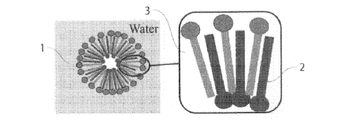
- FIG. 1 It is a schematic diagram of the nested structure which a compound (1) and a nonionic surfactant form.
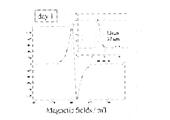
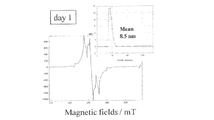
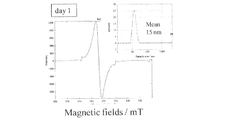
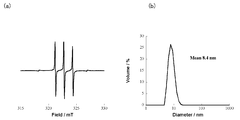
- the result of EPR and DLS measured 1 day after the nanoemulsion particles obtained in Example 1 is shown.
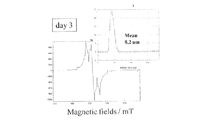
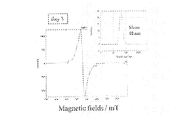
- the result of EPR and DLS measured 3 days after the nanoemulsion particles obtained in Example 1 is shown.
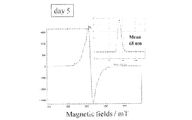
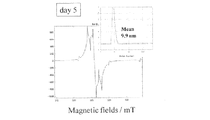
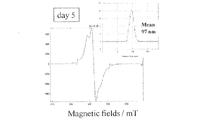
- the result of EPR and DLS measured 5 days after the nanoemulsion particles obtained in Example 1 is shown.
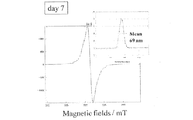
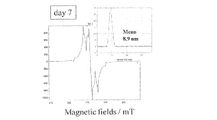
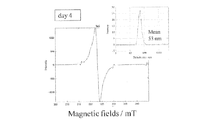
- the result of EPR and DLS measured 7 days after the nanoemulsion particles obtained in Example 1 is shown.
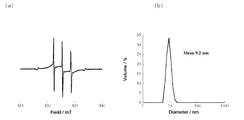
- the result of EPR and DLS measured 1 day after the nanoemulsion particles obtained in Comparative Example 1 is shown.
- the result of EPR and DLS measured 3 days after the nanoemulsion particles obtained in Comparative Example 1 is shown.
- the result of EPR and DLS measured 5 days after the nanoemulsion particles obtained in Comparative Example 1 is shown.
- the result of EPR and DLS measured 7 days after the nanoemulsion particles obtained in Comparative Example 1 is shown.
- the result of EPR and DLS measured 1 day after the nanoemulsion particles obtained in Comparative Example 2 is shown.
- the result of EPR and DLS measured 3 days after the nanoemulsion particles obtained in Comparative Example 2 is shown.
- the result of EPR and DLS measured 5 days after the nanoemulsion particles obtained in Comparative Example 2 is shown.
- the result of EPR and DLS measured 7 days after the nanoemulsion particles obtained in Comparative Example 2 is shown.
- the result of EPR and DLS before dilution of the nanoemulsion particles obtained in Example 1 and after 10-fold dilution is shown.
- the EPR and DLS results measured one day after nanoemulsion particles prepared in a phosphate buffered aqueous solution are shown.
- the EPR and DLS results measured after 4 days for nanoemulsion particles prepared in an aqueous phosphate buffer solution are shown.
- the EPR and DLS results measured after 7 days of nanoemulsion particles prepared in phosphate buffered water are shown.
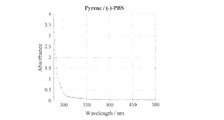
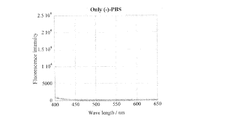
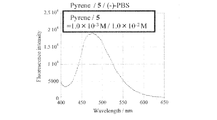
- FIG. 24 is an enlarged view of an absorption spectrum in a range of 350 to 500 nm in FIG. It is a fluorescence spectrum of only phosphate buffer aqueous solution (Only (-)-PBS). It is a fluorescence spectrum of a supernatant solution (Pyrene® / ( ⁇ )-PBS) after adding pyrene to an aqueous phosphate buffer solution.
- FIG. 29 is an enlarged view of a fluorescence spectrum in a range of 425 to 500 nm in FIG. 28.
- the concentrations of Surfactant 1 and ( ⁇ ) -3 are each 10 mM.
- (A) EPR and (b) measured 3 hours and 3 and a half hours after preparation of surfactant 1 magnetic nanoemulsion particles encapsulating ( ⁇ ) -2) (n 4) in PBS It is a result of DLS.
- (-)-EPR results measured from (a) 2 hours and (b) 2 days after preparation of magnetic nanoemulsion particles of surfactant 1 encapsulating ( ⁇ ) -214 (n 14) in PBS It is.
- (-)-DLS results measured immediately after (a) preparation and (b) two days after preparation of surfactant 1 magnetic nanoemulsion particles encapsulating ( ⁇ ) -2 (n 14) in PBS is there.
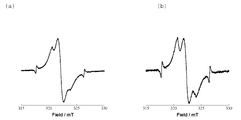
- (A) 4 hours after preparation of surfactant 1 magnetic nanoemulsion particles encapsulating ( ⁇ ) -2 (n 16) in PBS (PBS) (b) 2 days later and (c) 6 days It is a result of EPR measured later.
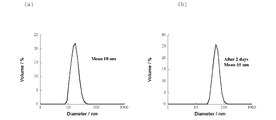
- A) 2 hours after preparation of surfactant 1 magnetic nanoemulsion particles encapsulating ( ⁇ ) -2 (n 16) in PBS () (b) 2 days later and (c) 6 days It is the result of DLS measured later.
- (A) 2 hours, (b) 2 days, (c) 7 days after preparation of surfactant 1 magnetic nanoemulsion particles encapsulating ( ⁇ ) -2 (n 18) in PBS And (d) EPR results measured after 14 days.
- A) 2 hours after preparation of surfactant 1 magnetic nanoemulsion particles encapsulating ( ⁇ ) -2 (n 20) in PBS () (b) 2 days later and (c) 6 days It is a result of EPR measured later.
- A) 1 hour after preparation of surfactant 1 magnetic nanoemulsion particles encapsulating ( ⁇ ) -2 (n 20) in PBS ()) (b) 2 days later and (c) 6 days It is the result of DLS measured later.
- organic nitroxide radical compound of the present invention has the formula (1):
- R 1 represents a linear alkyl group having 10 to 26 carbon atoms
- compound (1) The organic nitroxide radical compound has an amphipathic property in which R 1 is a hydrophobic part and the other part is a hydrophilic part.
- R 1 is a linear alkyl group having 10 to 26 carbon atoms, and examples thereof include n-decyl, lauryl, myristyl, cetyl, stearyl, icosyl groups and the like.
- R 1 is preferably a linear alkyl group having 16 to 22 carbon atoms, more preferably a linear alkyl group having 18 to 22 carbon atoms, and particularly preferably a linear alkyl group having 18 to 20 carbon atoms.
- the organic nitroxide radical compound of the present invention can be either racemic or optically active.
- R 1 is the same as above.
- compound (2) to generate radicals by oxidation.
- the oxidation can be performed, for example, in a suitable solvent using a divalent copper compound as a catalyst in the presence of a base and using an oxidizing agent.
- the solvent a compound that can easily dissolve or disperse the compound (2) and does not adversely affect the oxidation reaction can be used.
- examples of such a solvent include alcohols such as methanol and ethanol, tetrahydrofuran, and the like.
- the amount of the solvent to be used is generally about 40 to 60 parts by mass, preferably about 35 to 55 parts by mass with respect to 1 part by mass of compound (2).
- Examples of the base include aqueous ammonia and sodium hydroxide.
- the amount of the solvent to be used is generally about 3 to 5 parts by mass, preferably about 2 to 4 parts by mass, relative to 1 part by mass of compound (2).
- the catalyst examples include divalent copper compounds such as copper acetate (II) and copper nitrate (II).
- the usage-amount of a catalyst can be selected suitably. For example, with respect to 1 mole of the compound (2), it is usually used in an amount of about 2 to 5 moles, preferably about 3 to 4 moles.
- oxidizing agent examples include oxygen, ozone, air, silver oxide, and hydrogen peroxide.
- the amount of the oxidizing agent to be used is generally about 2 to 5 mol, preferably about 3 to 4 mol, per 1 mol of compound (2).
- the reaction temperature and reaction time can be appropriately adjusted depending on the amount of the compound (2) used, the oxidizing agent, and the like.
- the reaction temperature is usually about 10 to 40 ° C., preferably about 20 to 30 ° C.
- the reaction time is usually about 1 to 5 minutes, preferably about 1 to 2 minutes.
- the compound (2) a commercially available product can be used.
- the compound (2) can be produced by applying a known production method.
- it can be produced by a Grignard reaction between nitrone and a Grignard reagent in which the 1- and 4-positions of the benzene ring are substituted with a BrMg group and an OR 1 group, respectively.
- the production of the Grignard reagent and the Grignard reaction can be carried out according to the conditions normally used in the Grignard reaction. Detailed reaction conditions and the like are described in the examples.
- Nanoemulsion particles and use thereof comprise the organic nitroxide radical compound and the nonionic surfactant in a molar ratio of 0.8: 1 to 1.2: 1, and contain nitroxide radicals. It is what has been.
- the nanoemulsion particles of the present invention are composed of the organic nitroxide radical compound and a nonionic surfactant, and the organic nitroxide radical compound is 0.8 to 1.2 with respect to 1 mol of the nonionic surfactant. Mole is contained, and nitroxide radicals are included in the particles.
- the organic nitroxide radical compound can exist as emulsion particles stable in an aqueous solvent. In order to obtain more stable emulsion particles, the molar ratio of the organic nitroxide radical compound to the nonionic surfactant is preferably 1: 1.
- the organic nitroxide radical compound is as described above.
- Nonionic surfactants are amphiphilic compounds having a hydrophobic portion and a hydrophilic portion.
- the nonionic surfactant include ester type surfactants such as glyceryl laurate, glyceryl monostearate, sorbitan fatty acid ester, and sucrose fatty acid ester; ethers such as polyoxyalkylene alkyl ether and polyoxyalkylene alkylphenyl ether Type surfactants; ester ether type surfactants such as polyoxyethylene sorbitan fatty acid ester and sorbitan fatty acid ester polyalkylene glycol; alkanolamide type surfactants such as lauric acid diethanolamide and stearic acid diethanolamide; decyl glycoside, lauryl glycoside And higher alcohols such as cetanol and stearyl alcohol.
- ester type surfactants such as glyceryl laurate, glyceryl monostearate, sorbitan fatty acid ester, and suc
- nonionic surfactants those having a linear alkyl group having 10 to 26 carbon atoms are preferred. More preferably, the following formula (3):
- R 2 represents a linear alkyl group having 10 to 26 carbon atoms. N is an integer of 2 or more. It is polyoxyethylene alkyl ether represented by these.
- R 2 is a hydrophobic part, and the other part is a hydrophilic part.
- R 2 is a linear alkyl group having 10 to 26 carbon atoms, and examples thereof include n-decyl, lauryl, myristyl, cetyl, stearyl, icosyl and the like.
- the number of carbon atoms in R 2 is preferably close to the number of carbon atoms in R 1, and are preferably the same as the number of carbon atoms in R 1.
- R 2 is preferably a linear alkyl group having 16 to 22 carbon atoms, more preferably a linear alkyl group having 18 to 22 carbon atoms, and particularly preferably a linear alkyl group having 18 to 20 carbon atoms.
- polyoxyethylene alkyl ether having a linear alkyl group having 10 to 26 carbon atoms examples include polyoxyethylene lauryl ether, polyoxyethylene cetyl ether, polyoxyethylene oleyl ether, polyoxyethylene tridecyl ether and the like.
- N is an integer of 2 or more, preferably an integer of 10 to 20.
- the nonionic surfactant is preferably biocompatible.
- Nonionic surfactant examples include Brij (registered trademark) 30, Brij (registered trademark) 35, Brij (registered trademark) 56, Brij (registered trademark) 58, Brij (registered trademark) 78, Brij (registered trademark) 98, and the like.
- the nanoemulsion particles of the present invention are obtained by mixing the organic nitroxide radical compound (compound (1)) and the nonionic surfactant (compound (2)) in an aqueous solvent, and then heating the mixture. be able to.
- Examples of the aqueous solvent used for producing the nanoemulsion particles of the present invention include water, a hydrophilic organic solvent, or a mixed solvent of water and a hydrophilic organic solvent.
- hydrophilic organic solvents include alcohol solvents such as methanol, ethanol, isopropyl alcohol, and tert-butanol; ketone solvents such as acetone, methyl ethyl ketone, and methyl isobutyl ketone; ester solvents such as methyl acetate, ethyl acetate, and butyl acetate; Aprotic polar solvents such as N, N-dimethylformamide, dimethyl sulfoxide, sulfolane and N-methylpyrrolidone; glycol ethers such as diethylene glycol monomethyl ether and propylene glycol monomethyl ether acetate; glycol solvents such as ethylene glycol and propylene glycol; Ether solvents such as diethyl ether, tetra
- the concentration of the organic nitroxide radical compound in the solvent is preferably 1 ⁇ 10 ⁇ 3 to 1 ⁇ 10 ⁇ 2 mol / L, and more preferably 1 ⁇ 10 ⁇ 2 mol / L. By setting the concentration within the above range, nanoemulsion particles having good stability can be obtained.
- the molar concentration of the nonionic surfactant in the solvent is preferably 1 ⁇ 10 ⁇ 3 to 1 ⁇ 10 ⁇ 1 mol / L, more preferably 1 ⁇ 10 ⁇ 2 mol / L. By setting the concentration within the above range, nanoemulsion particles having good stability can be obtained.
- the organic nitroxide radical compound (compound (1)) and the nonionic surfactant (compound (2)) are mixed in an aqueous solvent.
- the mixing of the compound (1) and the compound (2) is preferably performed with stirring. More preferably, the compound (1) and the compound (2) are stirred under normal pressure for several seconds to several hours. Stirring and mixing can be performed, for example, using a magnetic stirrer or the like, or by irradiation with ultrasonic waves or microwaves.
- the organic nitroxide radical compound is added dropwise to the stirring aqueous solution of the nonionic surfactant and stirred, and then both are mixed by ultrasonic irradiation. It is preferable to do.
- the organic nitroxide radical compound is dissolved in advance in a hydrophilic organic solvent in which the organic nitroxide radical compound is soluble, and the resulting solution is dissolved in an aqueous solution of the nonionic surfactant. It is preferable to drop it into
- the heating temperature after mixing is preferably about 60 to 90 ° C, more preferably about 85 to 90 ° C.
- the heating time is preferably about 15 to 40 minutes, more preferably about 30 minutes.
- nanoemulsion particles can be confirmed by changing the color of the solution from cloudy to transparent, but is not limited thereto.
- the nanoemulsion particles of the present invention are amphiphilic particles in which the outside of the particles is hydrophilic and the inside of the particles is hydrophobic, and nitroxide radicals are encapsulated inside the molecule. Therefore, the nanoemulsion particles of the present invention have a stable radical structure and are not easily reduced by vitamin C or the like.
- the nanoemulsion particles of the present invention have paramagnetism due to a nitroxide radical, and can be used as a functional organic material that can be controlled by a magnetic field.
- the radical structure can be efficiently organized, it can be applied to substance transport by magnetic field control, and can be used for drug drug delivery systems (DDS) containing stable radicals.
- DDS drug drug delivery systems
- the nanoemulsion particles of the present invention can be used as a contrast agent for MRI because magnetic particles can be traced in real time to the deep part of the body by MRI.
- numerator is hydrophobic in the nanoemulsion particle
- hydrophobic substances such as an anticancer agent
- the particle diameter is about 70 nm and the particles are stable, it is possible to induce the anticancer agent to the tumor tissue by applying an external magnetic field to the nanoemulsion particles encapsulating the anticancer agent. It becomes. Therefore, the nanoemulsion particles of the present invention can be used as a DDS carrier. According to this method, it is possible to efficiently deliver an anticancer drug to cancer cells by installing a magnet in the vicinity of the cancer cells, particularly directly under the skin of skin cancer, breast cancer, etc. It is expected to show its power in targeting cancer cells.
- a fluorescent agent is encapsulated in the nanoemulsion particles of the present invention, the position of cancer cells can be specified.
- Electron paramagnetic resonance (EPR) EPR was measured using a pulse ESR device (JES-PX1050 type, manufactured by JEOL Ltd.). Specifically, the sample was enclosed in an EPR capillary tube and both ends were closed with putty. Next, this capillary was inserted into an EPR tube, and this was installed in the cavity. The EPR measurement was performed by irradiating the sample with microwaves at room temperature and under a magnetic field application condition of 0.33T.
- DLS Dynamic light scattering measurement
- DLS Dynamic light scattering measurement
- Example 1 (1) Synthesis of organic nitroxide radical compound (Synthesis example of 18 carbon atoms and results of elemental analysis) An organic nitroxide radical compound (compound 1a) in which R 1 is a linear alkyl group having 14 carbon atoms in the formula (1) was synthesized as follows.
- nitrone (1.27 g, 10.0 mmol) synthesized in Production Example 1 was placed in a two-necked flask and azeotroped with several drops of benzene.
- the inside of the two-necked flask was evacuated and then filled with argon.
- Tetrahydrofuran (20 mL) was added thereto, cooled to ⁇ 78 ° C., and a Grignard reagent was added dropwise. The mixture was slowly warmed and then stirred at room temperature overnight.
- the reaction mixture was poured into a saturated aqueous ammonium chloride solution (50 mL) and extracted with dichloromethane (50 mL). After drying over anhydrous magnesium sulfate, the solvent was distilled off.
- Example 1 (2) To the surfactant aqueous solution (1 ⁇ 10 ⁇ 2 M) prepared in Example 1 (2), the organic nitroxide radical compound (2.76 mg, 10 ⁇ mol) obtained above was added dropwise with a microsyringe. When this was irradiated with ultrasonic waves for 5 seconds, a macroemulsion (particle diameter of about 1 mm) was formed and settled to the bottom of the vial. This macroemulsion responded to permanent magnets (up to 500 mT) and moved freely in water. This is based on the organic nitroxide compound in the macroemulsion having magnetism. From this, it can be easily predicted that the nanoemulsion particles prepared in Example 1 having the same organic nitroxide compound also have magnetism.
- nanoemulsion particles were prepared by heating at 90 ° C. for 30 minutes.
- nanoemulsion particles were prepared in the same manner as in Example 1 (2).
- Test Example 1 (Stability evaluation of nanoemulsion particles) For the nanoemulsion particles prepared in Example 1, Comparative Example 1 and Comparative Example 2, EPR and DLS were measured after 1 day, 3 days, 5 days, and 7 days. The results of the nanoemulsion particles of Example 1 are shown in FIGS. 2 to 5, the results of the nanoemulsion particles of Comparative Example 1 are shown in FIGS. 6 to 9, and the results of the nanoemulsion particles of Comparative Example 3 are shown in FIGS.
- the nanoemulsion particles of Example 1 rapidly increased in particle size from the first day to the second day, and the particle size became constant (about 70 nm) after the second day. It was found to exist stably over 7 days. Since no peak (three lines) derived from the compound 1a was observed in the EPR spectrum, it was found that almost all of the dropped compound 1a was included in the nanoemulsion particles.
- the particle size was constant (approximately 9 nm) over 7 days, and the EPR spectrum linearity did not change significantly, indicating that nanoemulsion particles exist stably over 7 days. I understood. However, since three EPR spectrum peaks were seen, it was found that the compound 1a leaked from the nanoemulsion particles.
- the particle size was constant (about 100 nm) over 7 days, and the EPR spectrum linearity did not change greatly, indicating that the nanoemulsion particles exist stably over 7 days. I understood. However, since two EPR spectrum peaks were seen, it was found that the compound 1a leaked from the nanoemulsion particles.
- Test Example 2 (Stability evaluation of nanoemulsion particles (10-fold dilution)) After preparing nanoemulsion particles in Example 1, the concentration of the aqueous solution was diluted 10 times, and EPR and DLS were measured. The result is shown in FIG.
- Example 2 Nanoemulsions were prepared in phosphate buffer.
- Test Example 3 Stability evaluation of nanoemulsion particles in phosphate buffer
- stability evaluation of nanoemulsion particles of the surfactant encapsulating Compound 1a in a phosphate buffer aqueous solution was evaluated by EPR spectroscopy and DLS measurement. The results are shown in FIGS.
- the emulsion particles were united on the 7th day. This is considered to have changed to another structure other than the emulsion (associated micelle, lamellar structure, etc.). Therefore, it is considered that nanoemulsion particles cannot be stabilized as much as pure water in a phosphate buffered aqueous solution.
- Test Example 4 Stability evaluation of nanoemulsion particles in phosphate buffer against ascorbic acid
- ascorbic acid 3.59 mg, 0.02 mmol
- phosphate buffer aqueous solution 2.0 mL
- Example 3 Surfactant nanoemulsion particles encapsulating pyrene (pseudo-drug) and compound 1a in a phosphate buffer were prepared.
- Test Example 5 Measurement of absorption spectrum and fluorescence spectrum of nanoemulsion particles encapsulating pyrene in phosphate buffer
- the absorption spectrum of the nanoemulsion particles (Pyrene / ( ⁇ ) -10c / 5 / ( ⁇ )-PBS) prepared in Example 3 was measured.
- phosphate buffer solution only Only (-)-PBS
- supernatant solution after adding pyrene to phosphate buffer solution Pyrene / (-)-PBS
- micelle containing pyrene Pyrene / 5 /
- the absorption spectrum of (-)-PBS) was measured.
- the particle size of the nanoemulsion particles (Pyrene / ( ⁇ ) -10c / 5 / ( ⁇ )-PBS) encapsulating Compound 1a and pyrene was about 15 nm (FIG. 23). Since the particle size of micelle (Pyrene / 5 / ( ⁇ )-PBS) containing only pyrene without compound 1a is about 10 nm (FIG. 22), the amount of pyrene contained in one emulsion particle is very small. Conceivable.
- Example 4 Evaluation of MRI imaging ability of magnetic nanoemulsion and cytotoxicity evaluation of magnetic nanoemulsion containing anticancer drug
- tetramethylnitrone (0.635 g, 5.00 mmol) synthesized in Production Example 1 was placed in a two-necked flask and azeotroped with several drops of benzene.
- the inside of the two-necked flask was evacuated and then filled with argon.
- Tetrahydrofuran (20 mL) was added thereto, cooled to ⁇ 78 ° C., and Grignard reagent was added dropwise. The mixture was slowly warmed and then stirred at room temperature overnight.
- the reaction mixture was poured into a saturated aqueous ammonium chloride solution (100 mL) and extracted with dichloromethane (100 mL). After drying over anhydrous magnesium sulfate, the solvent was distilled off.
- the residue was dissolved in a mixed solution of methanol (30 mL) and dichloromethane (30 mL), 25% concentrated aqueous ammonia (2 mL) and copper acetate (0.805 g, 4.00 mmol) were added, and oxygen was blown in for 1 minute. After changing to dark blue, the reaction solution was concentrated under reduced pressure to distill off methanol, and saturated aqueous sodium hydrogen carbonate solution (100 mL) was added to the residue, followed by extraction with dichloromethane (100 mL).
- a magnetic nanoemulsion was prepared.
- Ascorbic acid was added to the obtained magnetic nanoemulsion, and EPR measurement and DLS measurement were immediately performed.
- the change in radical concentration was calculated by integrating the EPR spectrum twice and setting the double integration value of the EPR spectrum immediately after the start to 100 (FIG. 30). As a result, it was found that this magnetic nanoemulsion undergoes reduction more slowly than water-soluble radicals such as TEMPOL. This result indicated that the magnetic nanoemulsion has excellent reduction resistance against ascorbic acid. In this measurement, JEOL RE-2X was used as the EPR device.
- FIG. 31a shows an MR image obtained.
- a triplet component was observed in the EPR spectrum.
- micear aqueous solution [1 concentration: 10 mM]
- each well was washed twice with (-)-PBS and evaluated by the ckk-8 evaluation method (Dojindo Laboratories, LOT JH159).
- the ckk-8 reagent was added, followed by incubation for 30 minutes, and the absorbance (wavelength: 450 nm) corresponding to the number of cells was measured with a microplate reader (TECAN, infinite M200).
- the cell viability in each sample was calculated with the cell viability obtained when (-)-PBS alone was added as a control as 100%.
- 4 wells were used for each sample, and the average cell viability obtained from each well was calculated.
- the micellar aqueous solution and all magnetic emulsions were prepared in ( ⁇ )-PBS.
- Example 5 Data showing the process of compound optimization Pure organic magnetic nanoemulsions were prepared in phosphate buffer (-)-PBS using surfactant 1 and hydrophobic radicals having different alkyl side chains, and their stability was evaluated. Specifically, the stability of the magnetic nanoemulsion prepared in (-)-PBS was evaluated by EPR spectroscopy and DLS method. The result of the stabilization conditions of a magnetic nanoemulsion is shown.
- Surfactant 1 magnetic nanoemulsion containing ( ⁇ ) -3 Preparation of a magnetic nanoemulsion was attempted by dissolving ( ⁇ ) -3 in ether and dispersing this solution in an aqueous surfactant solution, and the stability of the magnetic nanoemulsion was evaluated by EPR spectroscopy and DLS method.
- the preparation method is to prepare a nanoemulsion by adding 1 mL of a surfactant aqueous solution to a solution of ( ⁇ ) -3 dissolved in a small amount of ether and then heating at 90 ° C to remove the ether from the system. did.
- FIG. 33 shows the EPR spectrum and average particle diameter after preparation. From the EPR measurement results, a triple line component was confirmed. This indicates that the radicals are dispersed in ( ⁇ )-PBS.
- FIG. 34 shows the EPR spectrum and average particle diameter after preparation. As in the case of ( ⁇ ) -3, when the EPR spectrum was measured, a triple line component was confirmed. This indicates that the radicals are dispersed in ( ⁇ )-PBS.
- the stability of the magnetic nanoemulsion was evaluated by EPR spectroscopy and DLS method (FIGS. 35 and 36).
- the amount of radicals is half that of the surfactant.
- Nanoemulsion particles 2
- Nonionic surfactant 1
Landscapes
- Health & Medical Sciences (AREA)
- Chemical & Material Sciences (AREA)
- Life Sciences & Earth Sciences (AREA)
- Organic Chemistry (AREA)
- Epidemiology (AREA)
- Animal Behavior & Ethology (AREA)
- General Health & Medical Sciences (AREA)
- Public Health (AREA)
- Veterinary Medicine (AREA)
- Medicinal Chemistry (AREA)
- Pharmacology & Pharmacy (AREA)
- Radiology & Medical Imaging (AREA)
- Inorganic Chemistry (AREA)
- Proteomics, Peptides & Aminoacids (AREA)
- Nuclear Medicine, Radiotherapy & Molecular Imaging (AREA)
- Dispersion Chemistry (AREA)
- Medicines Containing Antibodies Or Antigens For Use As Internal Diagnostic Agents (AREA)
- Medicinal Preparation (AREA)
- Pyrrole Compounds (AREA)
Abstract
MRI等のメタルフリー造影剤として利用可能なナノエマルション粒子、及び該ナノエマルション粒子を容易に調製することができる有機ニトロキシドラジカル化合物を提供すること。 式(1)(式中、R1は、炭素数10~26の直鎖アルキル基を示す。)で表される有機ニトロキシドラジカル化合物、及び該有機ニトロキシドラジカル化合物と非イオン性界面活性剤とが0.8:1から1.2:1のモル比で構成され、ニトロキシドラジカルが内包されている、ナノエマルション粒子。
Description
本発明は、有機ニトロキシドラジカル化合物、その製造方法、ナノエマルション粒子及びその用途に関するものである。
現在、磁気共鳴画像法(MRI)に使用される血管内投与造影剤として、Gd-DTPA等のガドリニウム製剤が用いられている。しかしながら、ガドリニウム製剤は副作用があることが知られているため、金属を含まないメタルフリーの造影剤を使用することが望まれている。
有機ニトロキシドラジカルは常磁性を有しているため、近年、MRI等のメタルフリー造影剤としての応用が研究されている。例えば、非特許文献1及び2にはTEMPO(2,2,6,6-テトラメチルピペリジン1-オキシル)という有機ニトロキシドラジカルを共有結合させた両親媒性ブロック共重合高分子化合物を合成し、これを用いて水中でコア・シェル型ナノ粒子を調製したことが開示されている。
また、特許文献1には、ニトロキシドラジカルを側鎖に有するポリマー、及び該ポリマーからなる高分子ミセルが開示されている。しかしながら、いずれの場合も、高分子化合物の合成及び精製が煩雑であり、粒径分布が広く、さらにニトロキシドラジカルが血液中でビタミンC等により還元されやすく、ラジカルの機能を発揮できない等の問題がある。
また、特許文献1には、ニトロキシドラジカルを側鎖に有するポリマー、及び該ポリマーからなる高分子ミセルが開示されている。しかしながら、いずれの場合も、高分子化合物の合成及び精製が煩雑であり、粒径分布が広く、さらにニトロキシドラジカルが血液中でビタミンC等により還元されやすく、ラジカルの機能を発揮できない等の問題がある。
X. Zhuang et al., Journal of Polymer Science: Part A: Polymer Chemistry, Vol. 48, 5404-5410 (2010)
T. Yoshitomi et al., Biomacromolecules, 10, 596-601 (2009)
かかる状況において、本発明が解決しようとする主な課題は、MRI等のメタルフリー造影剤として利用可能なナノエマルション粒子、及び該ナノエマルション粒子を容易に調製することができる有機ニトロキシドラジカル化合物を提供することである。
本発明者らはメタルフリー造影剤として利用可能なナノエマルション粒子を開発すべく鋭意検討した結果、水系溶媒中で特定の構造を有する有機ニトロキシドラジカル化合物と非イオン性界面活性剤とを特定の割合で混合することによりニトロキシドラジカルを内包したナノエマルション粒子を製造することができ、上記課題を解決できることを見出した。本発明はこのような知見に基づき完成されたものである。
すなわち、本発明は、下記項1~7に示す有機ニトロキシドラジカル化合物、製造方法、ナノエマルション粒子等に係る。
項1. 式(1):
項1. 式(1):
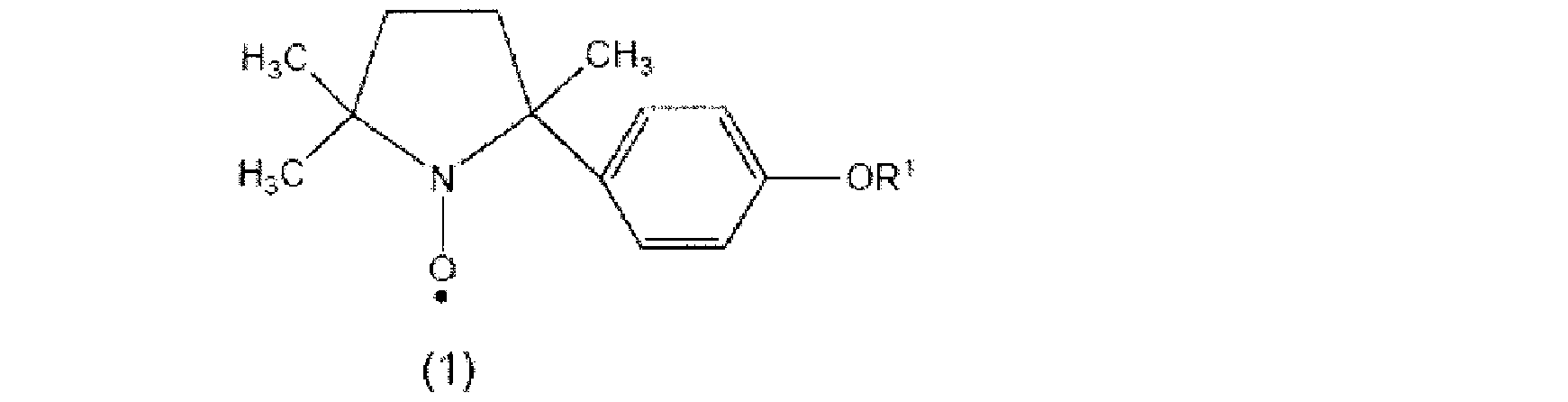
(式中、R1は、炭素数10~26の直鎖アルキル基を示す。)
で表される有機ニトロキシドラジカル化合物。
項2. 上記項1に記載の有機ニトロキシドラジカル化合物の製造方法であって、式(2):
で表される有機ニトロキシドラジカル化合物。
項2. 上記項1に記載の有機ニトロキシドラジカル化合物の製造方法であって、式(2):

(式中、R1は、炭素数10~26の直鎖アルキル基を示す。)
で表される化合物を2価の銅化合物の存在下で酸化する、製造方法。
項3. 上記項1に記載の有機ニトロキシドラジカル化合物と非イオン性界面活性剤とが0.8:1から1.2:1のモル比で構成され、ニトロキシドラジカルが内包されている、ナノエマルション粒子。
項4. 前記非イオン性界面活性剤が、炭素数10~26の直鎖アルキル基を有する非イオン性界面活性剤である、上記項3に記載のナノエマルション粒子。
項5. 前記非イオン性界面活性剤が、式(3):
で表される化合物を2価の銅化合物の存在下で酸化する、製造方法。
項3. 上記項1に記載の有機ニトロキシドラジカル化合物と非イオン性界面活性剤とが0.8:1から1.2:1のモル比で構成され、ニトロキシドラジカルが内包されている、ナノエマルション粒子。
項4. 前記非イオン性界面活性剤が、炭素数10~26の直鎖アルキル基を有する非イオン性界面活性剤である、上記項3に記載のナノエマルション粒子。
項5. 前記非イオン性界面活性剤が、式(3):

(式中、R2は、炭素数10~26の直鎖アルキル基を示す。nは2以上の整数である。)
で表されるポリオキシエチレンアルキルエーテルである、上記項3又は4に記載のナノエマルション粒子。
項6. 上記項3~5のいずれか1項に記載のナノエマルション粒子を含むMRI用造影剤。
項7. 上記項3~5のいずれか1項に記載のナノエマルション粒子を含むドラッグデリバリーシステムキャリアー。
で表されるポリオキシエチレンアルキルエーテルである、上記項3又は4に記載のナノエマルション粒子。
項6. 上記項3~5のいずれか1項に記載のナノエマルション粒子を含むMRI用造影剤。
項7. 上記項3~5のいずれか1項に記載のナノエマルション粒子を含むドラッグデリバリーシステムキャリアー。
本発明の有機ニトロキシドラジカル化合物は、本発明者らが初めて合成に成功した、文献未記載の新規化合物である。かかる有機ニトロキシドラジカル化合物を、水系溶媒中において、非イオン性界面活性剤と特定の割合で混合することによりニトロキシドラジカルを内包したナノエマルション粒子を容易に製造することができる。
このナノエマルション粒子は、分子の外側が親水性、分子の内部が疎水性という両親媒性の粒子であって、分子の内部にニトロキシドラジカルを内包していることにより磁性を有することから、MRI等の造影剤として好適に利用することができる。
また、本発明のナノエマルション粒子は、水系溶媒中で極めて安定であり、ビタミンC等により還元されにくい。さらに分子の内部に抗がん剤等の疎水性物質を内包させることができることから、ドラッグデリバリーシステムキャリアーとして利用することもできる。
また、本発明のナノエマルション粒子は、水系溶媒中で極めて安定であり、ビタミンC等により還元されにくい。さらに分子の内部に抗がん剤等の疎水性物質を内包させることができることから、ドラッグデリバリーシステムキャリアーとして利用することもできる。
以下、本発明の有機ニトロキシドラジカル化合物、その製造方法、ナノエマルション粒子及びその用途について詳細に説明する。
有機ニトロキシドラジカル化合物
本発明の有機ニトロキシドラジカル化合物は、式(1):
本発明の有機ニトロキシドラジカル化合物は、式(1):
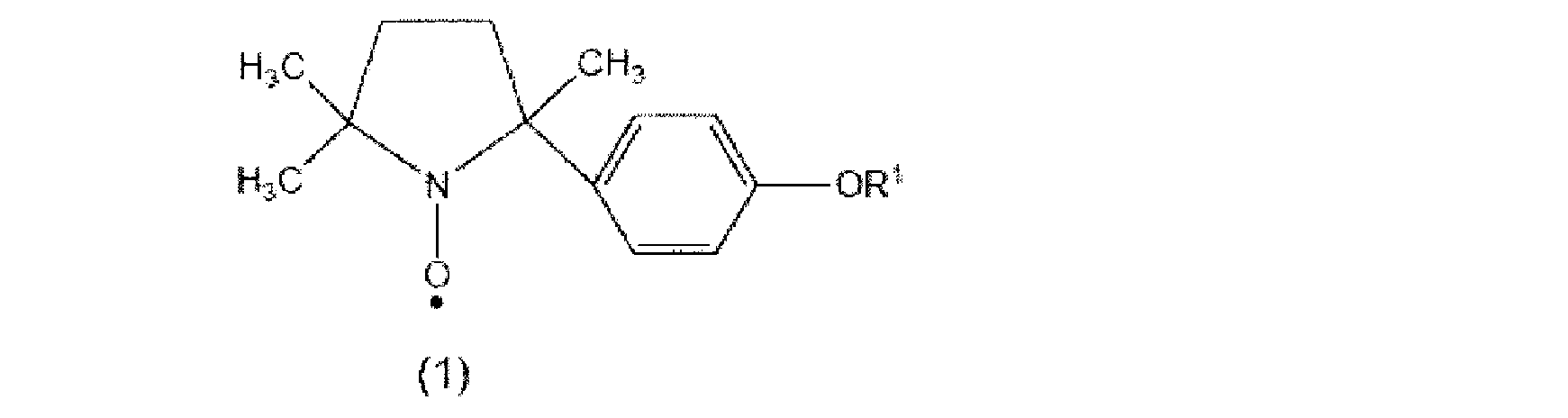
(式中、R1は、炭素数10~26の直鎖アルキル基を示す。)
で表される化合物である(以下、単に「化合物(1)」ともいう。)。該有機ニトロキシドラジカル化合物は、R1が疎水性部分であり、その他の部分が親水性部分である両親媒性を有している。
で表される化合物である(以下、単に「化合物(1)」ともいう。)。該有機ニトロキシドラジカル化合物は、R1が疎水性部分であり、その他の部分が親水性部分である両親媒性を有している。
R1は、炭素数10~26の直鎖アルキル基であり、例えば、n-デシル、ラウリル、ミリスチル、セチル、ステアリル、イコシル基等が挙げられる。
R1として、炭素数16~22の直鎖アルキル基が好ましく、炭素数18~22の直鎖アルキル基がより好ましく、炭素数18~20の直鎖アルキル基が特に好ましい。
R1として、炭素数16~22の直鎖アルキル基が好ましく、炭素数18~22の直鎖アルキル基がより好ましく、炭素数18~20の直鎖アルキル基が特に好ましい。
本発明の有機ニトロキシドラジカル化合物は、ラセミ体及び光学活性体のいずれかであることができる。
有機ニトロキシドラジカル化合物の製造方法
化合物(1)は、例えば、式(2):
化合物(1)は、例えば、式(2):
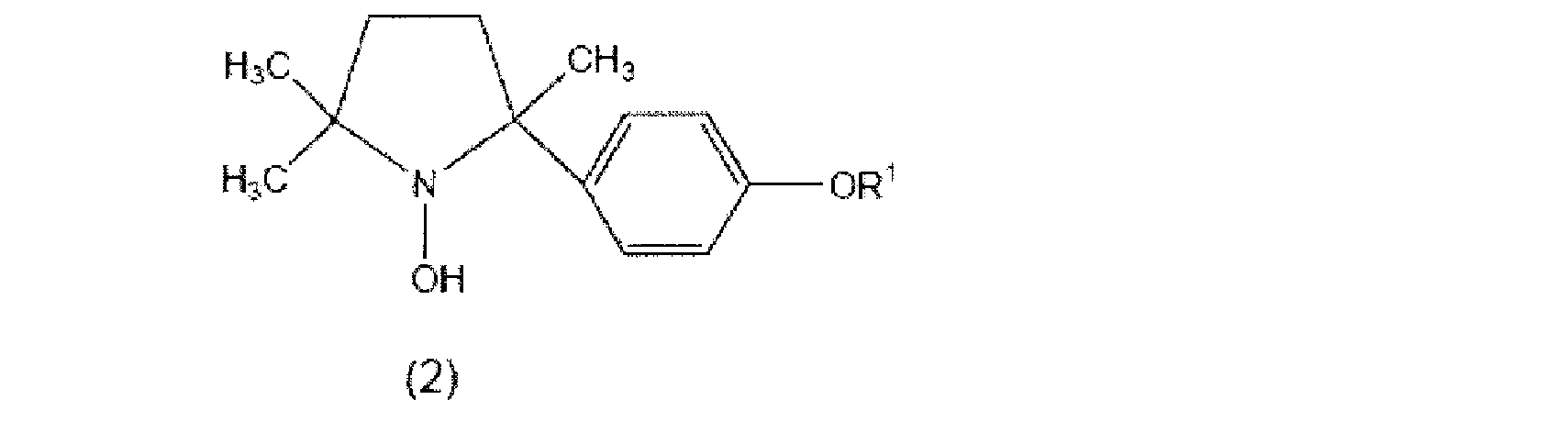
(式中、R1は、前記に同じ。)
で表される化合物(以下、単に「化合物(2)」ともいう。)を酸化してラジカルを発生させることにより製造することができる。
で表される化合物(以下、単に「化合物(2)」ともいう。)を酸化してラジカルを発生させることにより製造することができる。
酸化は、例えば、適当な溶媒中、塩基の存在下で2価の銅化合物を触媒とし、酸化剤を用いて行うことができる。
溶媒は、化合物(2)が溶解又は分散し易く、酸化反応に悪影響を及ぼさないものを使用することができる。このような溶媒として、例えば、メタノール、エタノール等のアルコール、テトラヒドロフラン等が挙げられる。溶媒の使用量は、化合物(2)1質量部に対して、通常40~60質量部程度であり、35~55質量部程度が好ましい。
塩基として、例えば、アンモニア水、水酸化ナトリウム等が挙げられる。溶媒の使用量は、化合物(2)1質量部に対して、通常3~5質量部程度であり、2~4質量部程度が好ましい。
触媒として、酢酸銅(II)、硝酸銅(II)等の2価の銅化合物が挙げられる。触媒の使用量は適宜選択することができる。例えば、化合物(2)1モルに対して、通常2~5モル程度、好ましくは3~4モル程度使用することができる。
酸化剤として、酸素、オゾン、空気、酸化銀、過酸化水素等を挙げられる。酸化剤の使用量は、化合物(2)1モルに対して、通常2~5モル程度、好ましくは3~4モル程度使用することができる。
反応温度及び反応時間は、使用する化合物(2)の量、酸化剤等により適宜調整することができる。例えば、反応温度は、通常10~40℃程度、好ましくは20~30℃程度である。反応時間は、通常1~5分間程度、好ましくは1~2分間程度である。
化合物(2)は、市販されている製品を使用することができる。或いは、化合物(2)を公知の製造方法を適用して製造することができる。例えば、ニトロンと、ベンゼン環の1位及び4位がそれぞれBrMg基及びOR1基で置換されたグリニャール試薬とのグリニャール反応により製造することができる。
グリニャール試薬の製造、及びグリニャール反応は、グリニャール反応で通常用いられる条件等に従って行うことができる。詳細な反応条件等は、実施例に記載する。
グリニャール試薬の製造、及びグリニャール反応は、グリニャール反応で通常用いられる条件等に従って行うことができる。詳細な反応条件等は、実施例に記載する。
ナノエマルション粒子及びその用途
本発明のナノエマルション粒子は、前記有機ニトロキシドラジカル化合物と非イオン性界面活性剤とが0.8:1から1.2:1のモル比で構成され、ニトロキシドラジカルが内包されているものである。
本発明のナノエマルション粒子は、前記有機ニトロキシドラジカル化合物と非イオン性界面活性剤とが0.8:1から1.2:1のモル比で構成され、ニトロキシドラジカルが内包されているものである。
本発明のナノエマルション粒子は、前記有機ニトロキシドラジカル化合物と非イオン性界面活性剤とで構成され、前記有機ニトロキシドラジカル化合物が前記非イオン性界面活性剤1モルに対して0.8~1.2モル含まれており、粒子中にニトロキシドラジカルが内包されていることが特徴である。
前記有機ニトロキシドラジカル化合物と前記非イオン性界面活性剤とのモル比が0.8:1から1.2:1であることにより、水系溶媒中で安定なエマルション粒子として存在することができる。より安定なエマルション粒子が得られることから、前記有機ニトロキシドラジカル化合物と非イオン性界面活性剤とのモル比は、1:1であることが好ましい。
前記有機ニトロキシドラジカル化合物と前記非イオン性界面活性剤とのモル比が0.8:1から1.2:1であることにより、水系溶媒中で安定なエマルション粒子として存在することができる。より安定なエマルション粒子が得られることから、前記有機ニトロキシドラジカル化合物と非イオン性界面活性剤とのモル比は、1:1であることが好ましい。
有機ニトロキシドラジカル化合物は、上述した通りである。
非イオン性界面活性剤は、疎水性部分と親水性部分とを有する両親媒性化合物である。
該非イオン性界面活性剤として、例えば、ラウリン酸グリセリン、モノステアリン酸グリセリン、ソルビタン脂肪酸エステル、ショ糖脂肪酸エステル等のエステル型界面活性剤;ポリオキシアルキレンアルキルエーテル、ポリオキシアルキレンアルキルフェニルエーテル等のエーテル型界面活性剤;ポリオキシエチレンソルビタン脂肪酸エステル、ソルビタン脂肪酸エステルポリアルキレングリコール等のエステルエーテル型界面活性剤;ラウリン酸ジエタノールアミド、ステアリン酸ジエタノールアミド等のアルカノールアミド型界面活性剤;デシルグリコシド、ラウリルグリコシド等のアルキルグリコシド、セタノール、ステアリルアルコール等の高級アルコール等が挙げられる。
該非イオン性界面活性剤として、例えば、ラウリン酸グリセリン、モノステアリン酸グリセリン、ソルビタン脂肪酸エステル、ショ糖脂肪酸エステル等のエステル型界面活性剤;ポリオキシアルキレンアルキルエーテル、ポリオキシアルキレンアルキルフェニルエーテル等のエーテル型界面活性剤;ポリオキシエチレンソルビタン脂肪酸エステル、ソルビタン脂肪酸エステルポリアルキレングリコール等のエステルエーテル型界面活性剤;ラウリン酸ジエタノールアミド、ステアリン酸ジエタノールアミド等のアルカノールアミド型界面活性剤;デシルグリコシド、ラウリルグリコシド等のアルキルグリコシド、セタノール、ステアリルアルコール等の高級アルコール等が挙げられる。
これらの非イオン性界面活性剤の中で、炭素数10~26の直鎖アルキル基を有するものが好ましい。より好ましくは、下記式(3):

(式中、R2は、炭素数10~26の直鎖アルキル基を示す。nは2以上の整数である。)
で表されるポリオキシエチレンアルキルエーテルである。なお、前記式(3)の非イオン性界面活性剤においては、R2が疎水性部分であり、その他の部分が親水性部分である。
で表されるポリオキシエチレンアルキルエーテルである。なお、前記式(3)の非イオン性界面活性剤においては、R2が疎水性部分であり、その他の部分が親水性部分である。
R2は、炭素数10~26の直鎖アルキル基であり、例えば、n-デシル、ラウリル、ミリスチル、セチル、ステアリル、イコシル等が挙げられる。
R2の炭素数は、R1の炭素数に近いことが好ましく、R1の炭素数と同じであることがより好ましい。R2として、炭素数16~22の直鎖アルキル基が好ましく、炭素数18~22の直鎖アルキル基がより好ましく、炭素数18~20の直鎖アルキル基が特に好ましい。
炭素数10~26の直鎖アルキル基を有するポリオキシエチレンアルキルエーテルとして、例えば、ポリオキシエチレンラウリルエーテル、ポリオキシエチレンセチルエーテル、ポリオキシエチレンオレイルエーテル、ポリオキシエチレントリデシルエーテル等が挙げられる。
R2の炭素数は、R1の炭素数に近いことが好ましく、R1の炭素数と同じであることがより好ましい。R2として、炭素数16~22の直鎖アルキル基が好ましく、炭素数18~22の直鎖アルキル基がより好ましく、炭素数18~20の直鎖アルキル基が特に好ましい。
炭素数10~26の直鎖アルキル基を有するポリオキシエチレンアルキルエーテルとして、例えば、ポリオキシエチレンラウリルエーテル、ポリオキシエチレンセチルエーテル、ポリオキシエチレンオレイルエーテル、ポリオキシエチレントリデシルエーテル等が挙げられる。
nは2以上の整数であり、好ましくは、10~20の整数である。
また、前記非イオン性界面活性剤は、生体適合性を有するものが好ましい。
前記非イオン性界面活性剤として、市販品を使用することができる。例えば、Brij(登録商標)30、Brij(登録商標)35、Brij(登録商標)56、Brij(登録商標)58、Brij(登録商標)78、Brij(登録商標)98等を挙げることができる。
本発明のナノエマルション粒子は、水系溶媒中で前記有機ニトロキシドラジカル化合物(化合物(1))と前記非イオン性界面活性剤(化合物(2))とを混合した後、混合物を加熱することにより得ることができる。
本発明のナノエマルション粒子の製造に用いる水系溶媒としては、水、親水性有機溶媒、又は水と親水性有機溶媒との混合溶媒が挙げられる。
親水性有機溶媒としては、メタノール、エタノール、イソプロピルアルコール、tert-ブタノール等のアルコール系溶媒;アセトン、メチルエチルケトン、メチルイソブチルケトン等のケトン系溶媒;酢酸メチル、酢酸エチル、酢酸ブチル等のエステル系溶媒;N,N-ジメチルホルムアミド、ジメチルスルホキシド、スルホラン、N-メチルピロリドン等の非プロトン性極性溶媒;ジエチレングリコールモノメチルエーテル、プロピレングリコールモノメチルエーテルアセテート等のグリコールエーテル類;エチレングリコール、プロピレングリコール等のグリコール系溶媒;ジエチルエーテル、テトラヒドロフラン、ジオキサン等のエーテル系溶媒等を使用することができる。
水系溶媒としては、水が好ましい。
親水性有機溶媒としては、メタノール、エタノール、イソプロピルアルコール、tert-ブタノール等のアルコール系溶媒;アセトン、メチルエチルケトン、メチルイソブチルケトン等のケトン系溶媒;酢酸メチル、酢酸エチル、酢酸ブチル等のエステル系溶媒;N,N-ジメチルホルムアミド、ジメチルスルホキシド、スルホラン、N-メチルピロリドン等の非プロトン性極性溶媒;ジエチレングリコールモノメチルエーテル、プロピレングリコールモノメチルエーテルアセテート等のグリコールエーテル類;エチレングリコール、プロピレングリコール等のグリコール系溶媒;ジエチルエーテル、テトラヒドロフラン、ジオキサン等のエーテル系溶媒等を使用することができる。
水系溶媒としては、水が好ましい。
溶媒における前記有機ニトロキシドラジカル化合物の濃度は、1×10⁻³~1×10⁻²mol/Lが好ましく、1×10-2mol/Lがより好ましい。濃度を前記範囲にすることにより、安定性の良好なナノエマルション粒子を得ることができる。
溶媒における前記非イオン性界面活性剤のモル濃度は、1×10⁻³~1×10⁻¹mol/Lが好ましく、1×10-2mol/Lがより好ましい。濃度の前記範囲にすることにより、安定性の良好なナノエマルション粒子を得ることができる。
前記有機ニトロキシドラジカル化合物と前記非イオン性界面活性剤との混合比率は、有機ニトロキシドラジカル化合物:非イオン性界面活性剤=0.8:1から1.2:1のモル比の範囲内が好ましく、1:1のモル比がより好ましい。前記有機ニトロキシドラジカル化合物と前記非イオン性界面活性剤とを前記比率で混合することにより、安定性の良好なナノエマルション粒子を得ることができる。
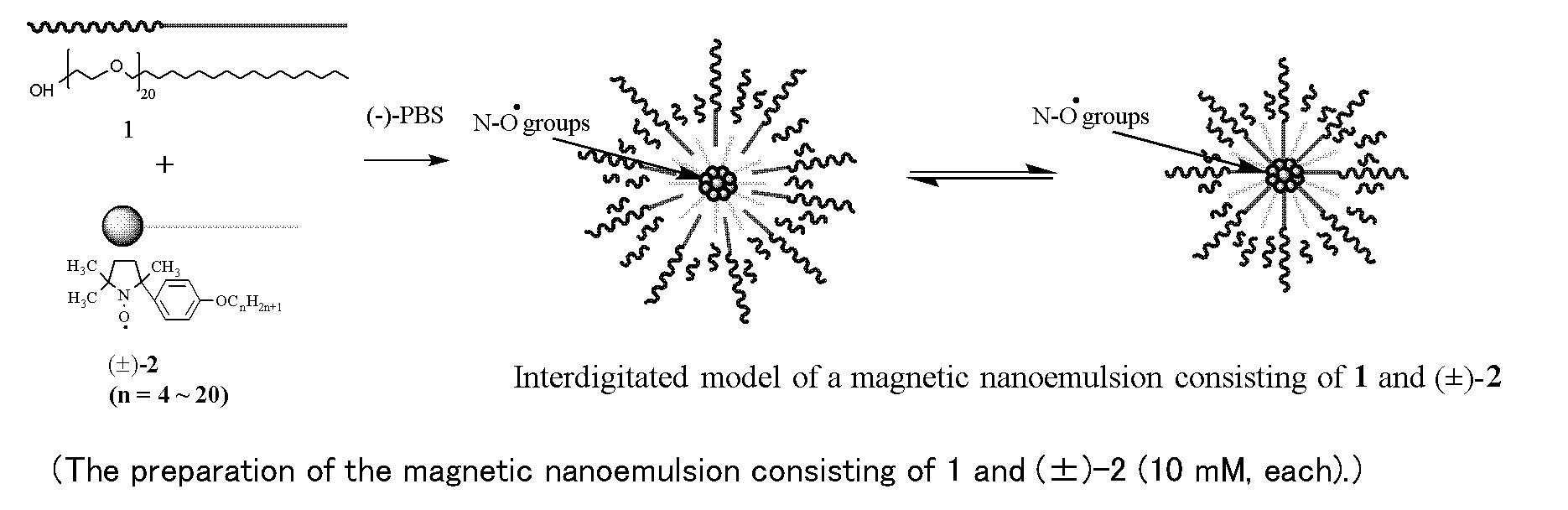
このことから、本発明のナノエマルション粒子は、図1に示すような前記有機ニトロキシドラジカル化合物と前記非イオン性界面活性剤との入れ子構造により形成されているものと推察される。
さらに、前記非イオン性界面活性剤の炭素鎖(R2)と前記有機ニトロキシドラジカル化合物の炭素鎖(R1)とがほぼ等しい長さである場合には、図1のような入れ子構造を形成する際、炭素鎖同士が密に組み合わされ、分子間で働く相互作用も増大するため、より安定なナノエマルション粒子が得られることが考えられる。
このことから、本発明のナノエマルション粒子は、図1に示すような前記有機ニトロキシドラジカル化合物と前記非イオン性界面活性剤との入れ子構造により形成されているものと推察される。
さらに、前記非イオン性界面活性剤の炭素鎖(R2)と前記有機ニトロキシドラジカル化合物の炭素鎖(R1)とがほぼ等しい長さである場合には、図1のような入れ子構造を形成する際、炭素鎖同士が密に組み合わされ、分子間で働く相互作用も増大するため、より安定なナノエマルション粒子が得られることが考えられる。
水系溶媒中で前記有機ニトロキシドラジカル化合物(化合物(1))と前記非イオン性界面活性剤(化合物(2))とを混合する。化合物(1)と化合物(2)とを混合は、好ましくは攪拌下で行われる。化合物(1)と化合物(2)とを、常圧下で、数秒間から数時間攪拌しながら行うことがより好ましい。
攪拌及び混合は、例えば、マグネチックスターラー等を用いて行うこともできるし、超音波又はマイクロウェーブを照射することにより行うこともできる。例えば、水系溶媒中でとして水を用いる場合、攪拌している前記非イオン性界面活性剤の水溶液中に、前記有機ニトロキシドラジカル化合物を滴下して攪拌し、さらに超音波照射することにより両者を混合することが好ましい。
前記有機ニトロキシドラジカル化合物が水に難溶である場合には、前記有機ニトロキシドラジカル化合物が可溶である親水性有機溶媒に予め溶解させ、得られた溶液を前記非イオン性界面活性剤の水溶液中に滴下することが好ましい。混合した後に加熱する温度としては、60~90℃程度が好ましく、85~90℃程度がより好ましい。加熱時間は、15~40分間程度が好ましく、30分間程度がより好ましい。
攪拌及び混合は、例えば、マグネチックスターラー等を用いて行うこともできるし、超音波又はマイクロウェーブを照射することにより行うこともできる。例えば、水系溶媒中でとして水を用いる場合、攪拌している前記非イオン性界面活性剤の水溶液中に、前記有機ニトロキシドラジカル化合物を滴下して攪拌し、さらに超音波照射することにより両者を混合することが好ましい。
前記有機ニトロキシドラジカル化合物が水に難溶である場合には、前記有機ニトロキシドラジカル化合物が可溶である親水性有機溶媒に予め溶解させ、得られた溶液を前記非イオン性界面活性剤の水溶液中に滴下することが好ましい。混合した後に加熱する温度としては、60~90℃程度が好ましく、85~90℃程度がより好ましい。加熱時間は、15~40分間程度が好ましく、30分間程度がより好ましい。
ナノエマルション粒子が形成されたことは、溶液の色が濁色から透明に変化することにより確認することができるが、これに限定されるものではない。
本発明のナノエマルション粒子は、粒子の外側が親水性、粒子の内部が疎水性という両親媒性の粒子であって、分子内部にニトロキシドラジカルを内包している。よって、本発明のナノエマルション粒子は、安定的なラジカル構造を有しており、ビタミンC等による還元を受けにくい。
本発明のナノエマルション粒子は、ニトロキシドラジカルにより常磁性を有しており、磁場による運動制御が可能な機能性有機材料として使用することができる。また、ラジカル構造の組織化を効率的におこなうことができるため、磁場制御による物質輸送等への応用、安定ラジカルを含む医薬品ドラッグデリバリーシステム(DDS)への活用が可能である。
本発明のナノエマルション粒子は、ニトロキシドラジカルにより常磁性を有しており、磁場による運動制御が可能な機能性有機材料として使用することができる。また、ラジカル構造の組織化を効率的におこなうことができるため、磁場制御による物質輸送等への応用、安定ラジカルを含む医薬品ドラッグデリバリーシステム(DDS)への活用が可能である。
詳細には、本発明のナノエマルション粒子は、磁性粒子をMRIにより体内の深部までリアルタイムに追跡できることから、MRI用造影剤として利用することが可能である。
また、本発明のナノエマルション粒子は、分子の内部が疎水性であることから、分子内部に抗がん剤等の疎水性物質を内包させることができる。さらに粒子径が70nm程度であって、粒子として安定であることから、抗がん剤を内包したナノエマルション粒子に外部磁場を印加することにより、抗がん剤を腫瘍組織に誘導することが可能となる。よって、本発明のナノエマルション粒子は、DDSキャリアーとして利用することが可能である。
この手法によれば、がん細胞近辺に磁石を設置することにより、がん細胞へ効率的に抗がん剤を送達することが可能であり、特に皮膚がん、乳がん等の皮膚直下にできるがん細胞へのターゲッティングに威力を発揮することが期待される。また、本発明のナノエマルション粒子の内部に蛍光剤を内包させれば、がん細胞の位置を特定することが可能となる。
この手法によれば、がん細胞近辺に磁石を設置することにより、がん細胞へ効率的に抗がん剤を送達することが可能であり、特に皮膚がん、乳がん等の皮膚直下にできるがん細胞へのターゲッティングに威力を発揮することが期待される。また、本発明のナノエマルション粒子の内部に蛍光剤を内包させれば、がん細胞の位置を特定することが可能となる。
以下に実施例および比較例を示して本発明をより具体的に説明する。なお、本発明は以下の実施例に限定されるものではない。
実施例における分析および評価は、以下の方法によって実施した。なお、実施例で使用した試薬は、特に断りがない限り、市販品を購入し、精製せずにそのまま用いた。
実施例における分析及び評価は、以下の方法によって実施した。
(1)電子常磁性共鳴(EPR)
EPRは、パルスESR装置(日本電子株式会社製、JES-PX1050型)を使用して測定した。詳細には、サンプルをEPRキャピラリー管内に封入し、両端をパテで閉じた。次にこのキャピラリーをEPR管に挿入し、これをキャビティーに設置した。EPR測定は、室温化、0.33Tの磁場印加条件下でサンプルにマイクロ波を照射して行った。
(2)動的光散乱測定(DLS)
DLSは、動的光散乱解析装置(マイクロトラック・ベル社製、UPA-UT151)を用いて、動的光散乱(DLS)法によって流体力学的直径を測定した。
(3)吸収スペクトル
吸収スペクトルは、紫外可視近赤外分光光度計(株式会社島津製作所製、UV-3600型)を使用して測定した。
(4)蛍光スペクトル
蛍光スペクトルは、BioTek Instruments, Inc.製、Cytation 5 Cell Imaging Multi-Mode Readerを使用して測定した。
(1)電子常磁性共鳴(EPR)
EPRは、パルスESR装置(日本電子株式会社製、JES-PX1050型)を使用して測定した。詳細には、サンプルをEPRキャピラリー管内に封入し、両端をパテで閉じた。次にこのキャピラリーをEPR管に挿入し、これをキャビティーに設置した。EPR測定は、室温化、0.33Tの磁場印加条件下でサンプルにマイクロ波を照射して行った。
(2)動的光散乱測定(DLS)
DLSは、動的光散乱解析装置(マイクロトラック・ベル社製、UPA-UT151)を用いて、動的光散乱(DLS)法によって流体力学的直径を測定した。
(3)吸収スペクトル
吸収スペクトルは、紫外可視近赤外分光光度計(株式会社島津製作所製、UV-3600型)を使用して測定した。
(4)蛍光スペクトル
蛍光スペクトルは、BioTek Instruments, Inc.製、Cytation 5 Cell Imaging Multi-Mode Readerを使用して測定した。
製造例1(ニトロンの合成)
常圧下、110℃で蒸留した3-ブテン-2-オン(22.0g、0.314mol)を2-ニトロプロパン(139g、1.56mol)に溶解させた。得られた溶液に、0℃でテトラメチルグアニジン(10.8g、0.094mol)をゆっくり加え、混合物を常温で一晩攪拌し、その後、2N塩酸を加えてジエチルエーテルで抽出した。
有機層を飽和炭酸水素ナトリウム水溶液及び飽和塩化ナトリウム水溶液で洗浄し、無水硫酸マグネシウムで乾燥した後、溶媒を除去した。さらに、減圧蒸留により未反応の2-ニトロプロパンを除き、5-メチル-5-ニトロヘキサン-2-オン(14.4g、0.090mol、収率29%)を得た。
常圧下、110℃で蒸留した3-ブテン-2-オン(22.0g、0.314mol)を2-ニトロプロパン(139g、1.56mol)に溶解させた。得られた溶液に、0℃でテトラメチルグアニジン(10.8g、0.094mol)をゆっくり加え、混合物を常温で一晩攪拌し、その後、2N塩酸を加えてジエチルエーテルで抽出した。
有機層を飽和炭酸水素ナトリウム水溶液及び飽和塩化ナトリウム水溶液で洗浄し、無水硫酸マグネシウムで乾燥した後、溶媒を除去した。さらに、減圧蒸留により未反応の2-ニトロプロパンを除き、5-メチル-5-ニトロヘキサン-2-オン(14.4g、0.090mol、収率29%)を得た。
次に、5-メチル-5-ニトロヘキサン-2-オン(20.1g、0.125mol)に水(139mL)及び塩化アンモニウム(17.301g、0.323mol)を加えた。得られた混合物に0℃で亜鉛粉末(77.9g、0.236mol)をゆっくり加えて4時間反応させた。溶液を吸引濾過して固体をメタノールで洗浄した。
濾液をクロロホルム(50mL×3)で抽出して無水硫酸マグネシウムで乾燥した。クロロホルムを除去した後、ベンゼン共沸により乾燥した。3時間真空乾燥した後、ニトロン((±)-11)を得た(4.83g、0.038mol、収率30%)。
濾液をクロロホルム(50mL×3)で抽出して無水硫酸マグネシウムで乾燥した。クロロホルムを除去した後、ベンゼン共沸により乾燥した。3時間真空乾燥した後、ニトロン((±)-11)を得た(4.83g、0.038mol、収率30%)。
実施例1
(1)有機ニトロキシドラジカル化合物の合成(炭素数18の合成例および元素分析結果)
式(1)において、R1が炭素数14の直鎖アルキル基である有機ニトロキシドラジカル化合物(化合物1a)を、以下のようにして合成した。
(1)有機ニトロキシドラジカル化合物の合成(炭素数18の合成例および元素分析結果)
式(1)において、R1が炭素数14の直鎖アルキル基である有機ニトロキシドラジカル化合物(化合物1a)を、以下のようにして合成した。
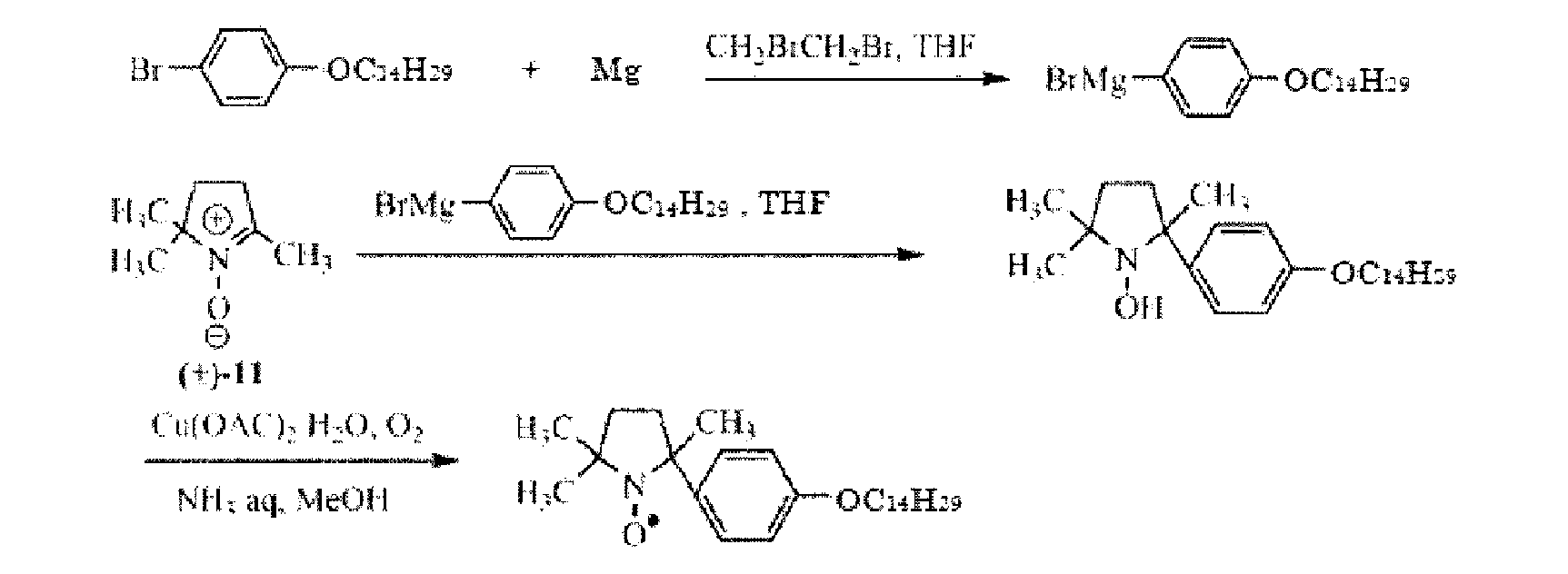
マグネシウム(0.506g、20.0mmol)を二口フラスコに入れ、減圧下で乾燥させ、フラスコをアルゴンで満たした。これにテトラヒドロフラン(20mL)及び1-ブロモ-4-テトラデシロキシベンゼン(7.10g、20.0mmol)を加えた。さらに、1,2-ジブロモエタンを少量入れて反応を開始させ、常温で4時間攪拌し、グリニャール試薬を調製した。
一方で、製造例1で合成したニトロン(1.27g、10.0mmol)を二口フラスコに入れ、数滴のベンゼンで共沸させた。二口フラスコ内を真空にした後、アルゴンで満たした。そこにテトラヒドロフラン(20mL)を加え、-78℃に冷却し、グリニャール試薬を滴下した。混合物をゆっくり昇温した後、常温で一晩撹拌を続けた。反応液を飽和塩化アンモニウム水溶液(50mL)に注ぎ、ジクロロメタン(50mL)で抽出した。無水硫酸マグネシウムで乾燥した後、溶媒を留去した。
残渣をメタノール(30mL)に溶解させ、25%濃アンモニア水(2mL)及び酢酸銅(0.805g、4.00mmol)を加え、酸素を1分間吹き込んだ。溶液が濃青色に変化した後、反応液を減圧濃縮し、メタノールを留去した。残渣に飽和炭酸水素ナトリウム水溶液(50mL)を加え、ジクロロメタン(50mL)で抽出した。得られた有機層を無水硫酸マグネシウムで乾燥した後、溶媒を留去した。
最後に、シリカゲルカラムクロマトグラフィー(n-ヘキサン/ジエチルエーテル=90/10(容積比))により精製し、化合物1a(0.478g、1.15mmol、収率11.5%)を得た。
最後に、シリカゲルカラムクロマトグラフィー(n-ヘキサン/ジエチルエーテル=90/10(容積比))により精製し、化合物1a(0.478g、1.15mmol、収率11.5%)を得た。
元素分析Calculated (%): C, 77.83; H, 11.13; N, 3.36. Found (%): C, 77.61; H, 11.01; N, 3.34.
EPR(THF, 25℃):g=2.0067, aN=1.38 mT
EPR(THF, 25℃):g=2.0067, aN=1.38 mT
(2)ナノエマルション粒子の調製
界面活性剤として、シグマ・アルドリッチ社製Brij(登録商標)58(ポリオキシエチレンセチルエーテル、n=20)(0.114g)をバイアルに入れ、必要量の水を加え、2分間超音波照射を行い、1×10⁻²Mの界面活性剤水溶液10mLを調製した。
界面活性剤として、シグマ・アルドリッチ社製Brij(登録商標)58(ポリオキシエチレンセチルエーテル、n=20)(0.114g)をバイアルに入れ、必要量の水を加え、2分間超音波照射を行い、1×10⁻²Mの界面活性剤水溶液10mLを調製した。
化合物1a(8.52mg、20.4μmol)を少量のジエチルエーテルに溶解させた。得られたジエチルエーテル溶液を、激しく攪拌している界面活性剤水溶液(2.0mL)中に少しずつ滴下し、30分間攪拌させた。その後、3分間超音波照射し、続いて90℃で30分間加熱することによりナノエマルション粒子を調製した。
比較例1
1-ブロモ-4-テトラデシロキシベンゼンの代わりに1-ブロモ-4-ブトキシベンゼン(4.58g、20.0mmol)を使用した以外は、実施例1と同様にして、式(1)においてR1が炭素数4の直鎖アルキル基である有機ニトロキシドラジカル化合物を合成した(0.396g、1.43mmol、収率14.3%)。
1-ブロモ-4-テトラデシロキシベンゼンの代わりに1-ブロモ-4-ブトキシベンゼン(4.58g、20.0mmol)を使用した以外は、実施例1と同様にして、式(1)においてR1が炭素数4の直鎖アルキル基である有機ニトロキシドラジカル化合物を合成した(0.396g、1.43mmol、収率14.3%)。
元素分析Calculated (%): C, 73.87; H, 9.48; N, 5.07. Found (%): C, 73.63; H, 9.66; N, 5.02.
EPR(THF, 25℃):g=2.0067, aN=1.39 mT
EPR(THF, 25℃):g=2.0067, aN=1.39 mT
実施例1(2)で調製した界面活性剤水溶液(1×10⁻²M)に、上で得られた有機ニトロキシドラジカル化合物(2.76mg、10μmol)をマイクロシリンジで滴下した。そこに5秒間超音波照射するとマクロエマルション(粒子径約1mm)が生成し、バイアル底部に沈降した。このマクロエマルションは永久磁石(最大500mT)に応答し、水中を自由に動いた。
これは、該マクロエマルション中の有機ニトロキシド化合物が磁性を有していることに基づくものである。これより、同様の有機ニトロキシド化合物を有している実施例1で調製したナノエマルション粒子も、磁性を有していることが容易に予想できる。
これは、該マクロエマルション中の有機ニトロキシド化合物が磁性を有していることに基づくものである。これより、同様の有機ニトロキシド化合物を有している実施例1で調製したナノエマルション粒子も、磁性を有していることが容易に予想できる。
その後、再度超音波照射し(20秒間)、次いで90℃で30分間加熱することによりナノエマルション粒子を調製した。
比較例2
1-ブロモ-4-テトラデシロキシベンゼンの代わりに1-ブロモ-4-オクトキシベンゼン(5.71g、20.0mmol)を使用した以外は、実施例1と同様にして、式(1)においてR1が炭素数8の直鎖アルキル基である有機ニトロキシドラジカル化合物を合成した(0.686g、2.06mmol、収率20.6%)。
1-ブロモ-4-テトラデシロキシベンゼンの代わりに1-ブロモ-4-オクトキシベンゼン(5.71g、20.0mmol)を使用した以外は、実施例1と同様にして、式(1)においてR1が炭素数8の直鎖アルキル基である有機ニトロキシドラジカル化合物を合成した(0.686g、2.06mmol、収率20.6%)。
元素分析Calculated (%): C, 75.86; H, 10.31; N, 4.21. Found (%): C, 75.99; H, 10.35; N, 4.19.
EPR(THF, 25℃):g=2.0066, aN=1.39 mT
EPR(THF, 25℃):g=2.0066, aN=1.39 mT
上記で得られた有機ニトロキシドラジカル化合物を用い、実施例1(2)と同様にしてナノエマルション粒子を調製した。
試験例1(ナノエマルション粒子の安定性評価)
実施例1、比較例1及び比較例2で調製したナノエマルション粒子について、1日後、3日後、5日後、及び7日後にEPR及びDLSを測定した。実施例1のナノエマルション粒子の結果を図2~5に、比較例1のナノエマルション粒子の結果を図6~9に、及び比較例3のナノエマルション粒子の結果を図10~13に示す。
実施例1、比較例1及び比較例2で調製したナノエマルション粒子について、1日後、3日後、5日後、及び7日後にEPR及びDLSを測定した。実施例1のナノエマルション粒子の結果を図2~5に、比較例1のナノエマルション粒子の結果を図6~9に、及び比較例3のナノエマルション粒子の結果を図10~13に示す。
図2~5より、実施例1のナノエマルション粒子は、1日目から2日目にかけて粒径が急激に増加し、2日目以降、粒径が一定(約70nm)となったことから、7日間にわたって安定に存在することが分かった。EPRスペクトルに化合物1a由来のピーク(3本線)が見られなかったことから、滴下したほぼすべての化合物1aがナノエマルション粒子内部に内包されていることがわかった。
図6~9より、7日間にわたって粒径は一定(約9nm)であり、EPRスペクトルの線形にも大きな変化が見られなったことから、ナノエマルション粒子は7日間にわたって安定に存在していることがわかった。しかし、EPRスペクトルのピークが若干3本見えていることから、ナノエマルション粒子から化合物1aの漏れが生じていることがわかった。
図10~13より、7日間にわたって粒径は一定(約100nm)であり、EPRスペクトルの線形にも大きな変化が見られなったことから、ナノエマルション粒子は7日間にわたって安定に存在していることがわかった。しかし、EPRスペクトルのピークが若干2本見えていることから、ナノエマルション粒子から化合物1aの漏れが生じていることがわかった。
上記結果より、実施例1のナノエマルション粒子は水中で安定に存在することがわかった。
試験例2(ナノエマルション粒子の安定性評価(10倍希釈))
実施例1でナノエマルション粒子を調製した後、水溶液の濃度を10倍に希釈し、EPR及びDLSを測定した。その結果を図14に示す。
実施例1でナノエマルション粒子を調製した後、水溶液の濃度を10倍に希釈し、EPR及びDLSを測定した。その結果を図14に示す。
図14より、希釈の前後でEPRスペクトルの線形に大きな変化はなく、粒子径も変わらないことから、実施例1で調製したナノエマルション粒子は、10倍希釈後も安定に存在することがわかった。
実施例2
ナノエマルションをリン酸バッファー中で調製した。
ナノエマルションをリン酸バッファー中で調製した。
界面活性剤であるBrij(登録商標)58(0.114g)をバイアルに入れ、必要量のリン酸緩衝水溶液((-)-PBS)を加え、2分間超音波照射を行い、1×10⁻²Mの界面活性剤のリン酸緩衝水溶液10mLを調製した。
化合物1a(8.52mg、20.4μmol)を少量のエーテルに溶解させた。得られたエーテル溶液を、激しく攪拌している界面活性剤のリン酸緩衝水溶液(2.0mL)中に少しずつ滴下し、30分間攪拌させた。その後、3分間超音波照射し、続いて90℃で1時間加熱することによりナノエマルション溶液(2.0mL)を調製した。
試験例3(リン酸バッファー中におけるナノエマルション粒子の安定性評価)
実用性を評価する目的で、化合物1aを内包した界面活性剤のナノエマルション粒子のリン酸緩衝水溶液中における安定性(経時変化)をEPR分光法及びDLS測定により評価した。結果を図15~18に示す。
実用性を評価する目的で、化合物1aを内包した界面活性剤のナノエマルション粒子のリン酸緩衝水溶液中における安定性(経時変化)をEPR分光法及びDLS測定により評価した。結果を図15~18に示す。
図15~18より、純水中とは異なり、7日目にはエマルション粒子同士が合一した。これは、エマルション以外の別の構造体(会合ミセル、ラメラ構造等)に変化したと考えられる。よって、ナノエマルション粒子は、リン酸緩衝水溶液中においては純水中ほど安定することができないと考えられる。
試験例4(リン酸バッファー中におけるナノエマルション粒子のアスコルビン酸に対する安定性評価)
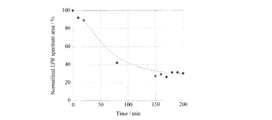
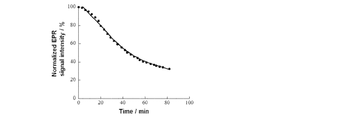
アスコルビン酸に対する安定性を評価するため、実施例2と同様にして調製したナノエマルション粒子のリン酸緩衝水溶液(2.0mL)に、アスコルビン酸(3.59mg、0.02mmol)を添加し、EPRスペクトルを測定した。測定開始直後の314.5mT~339.5mT(3145~3395ガウス)の範囲のEPRスペクトルの面積値(2回積分値)を100%として、スペクトル面積値の時間変化を測定した。結果を図19に示す。
アスコルビン酸に対する安定性を評価するため、実施例2と同様にして調製したナノエマルション粒子のリン酸緩衝水溶液(2.0mL)に、アスコルビン酸(3.59mg、0.02mmol)を添加し、EPRスペクトルを測定した。測定開始直後の314.5mT~339.5mT(3145~3395ガウス)の範囲のEPRスペクトルの面積値(2回積分値)を100%として、スペクトル面積値の時間変化を測定した。結果を図19に示す。
図19より、化合物1aの濃度が一定となるまでに約150分かかった。よって、このナノエマルション粒子は還元剤に対して徐々に還元されるため、DDS、MRI用造影剤等への適用に有利であると考えられる。
実施例3
リン酸バッファー中でピレン(疑似薬剤)及び化合物1aを内包した界面活性剤のナノエマルション粒子を調製した。
リン酸バッファー中でピレン(疑似薬剤)及び化合物1aを内包した界面活性剤のナノエマルション粒子を調製した。
化合物1a(8.52mg、20.4μmol)及びピレン(0.20mg、0.99μmol)を少量のエーテルに溶解させた。得られたエーテル溶液を、激しく攪拌している界面活性剤のリン酸緩衝水溶液(2.0mL)中に少しずつ滴下し、30分間攪拌させた。その後、3分間超音波照射し、続いて90℃で1時間加熱することによりナノエマルション溶液(2.0mL)を調製した。
試験例5(リン酸バッファー中におけるピレンを内包したナノエマルション粒子の吸収スペクトル及び蛍光スペクトルの測定)
エマルション内部にピレンが内包されていることを確認するために、実施例3で調製したナノエマルション粒子(Pyrene/(±)-10c/5/(-)-PBS)の吸収スペクトルを測定した。
比較として、リン酸緩衝水溶液のみ(Only (-)-PBS)、ピレンをリン酸緩衝水溶液に添加した後の上澄み溶液(Pyrene /(-)-PBS)、ピレンを内包したミセル(Pyrene /5/(-)-PBS)の吸収スペクトルをそれぞれ測定した。
また、ナノエマルション粒子(Pyrene/(±)-10c/5/(-)-PBS)及びピレンを内包したミセル(Pyrene /5/(-)-PBS)についてはDLSを測定した。それらの結果を図20~23に示す。
また、ナノエマルション粒子(Pyrene/(±)-10c/5/(-)-PBS)については、350~500nmの範囲の吸収スペクトルの拡大図を図24に示す。
エマルション内部にピレンが内包されていることを確認するために、実施例3で調製したナノエマルション粒子(Pyrene/(±)-10c/5/(-)-PBS)の吸収スペクトルを測定した。
比較として、リン酸緩衝水溶液のみ(Only (-)-PBS)、ピレンをリン酸緩衝水溶液に添加した後の上澄み溶液(Pyrene /(-)-PBS)、ピレンを内包したミセル(Pyrene /5/(-)-PBS)の吸収スペクトルをそれぞれ測定した。
また、ナノエマルション粒子(Pyrene/(±)-10c/5/(-)-PBS)及びピレンを内包したミセル(Pyrene /5/(-)-PBS)についてはDLSを測定した。それらの結果を図20~23に示す。
また、ナノエマルション粒子(Pyrene/(±)-10c/5/(-)-PBS)については、350~500nmの範囲の吸収スペクトルの拡大図を図24に示す。
図23より、化合物1aとともにピレンが内包された界面活性剤のナノエマルション粒子(Pyrene/(±)-10c/5/(-)-PBS)では、ピレン由来の吸収スペクトルが確認された。また、ピレンは通常水に極めて難溶でありバイアルの底部に沈殿するが、実施例3で調製したエマルション溶液ではバイアルの底部に沈殿物は確認されなかった。よって、加えられたピレンは磁性エマルションの内部に内包されていると考えられる。
また、DLS測定より、化合物1a及びピレンを内包したナノエマルション粒子(Pyrene/(±)-10c/5/(-)-PBS)の粒径は約15nmとなった(図23)。
化合物1aなしでピレンのみを内包したミセル(Pyrene /5/(-)-PBS)の粒径が約10nmであることから(図22)、エマルション粒子1個に内包されるピレンは微量であると考えられる。
化合物1aなしでピレンのみを内包したミセル(Pyrene /5/(-)-PBS)の粒径が約10nmであることから(図22)、エマルション粒子1個に内包されるピレンは微量であると考えられる。
さらに、化合物1aとともにピレンが内包された界面活性剤のナノエマルション粒子(Pyrene/(±)-10c/5/(-)-PBS)については蛍光スペクトルを測定した。比較のために、リン酸緩衝水溶液のみ(Only (-)-PBS)、ピレンをリン酸緩衝水溶液に添加した後の上澄み溶液(Pyrene /(-)-PBS)、ピレンを内包したミセル(Pyrene /5/(-)-PBS)の蛍光スペクトルをそれぞれ測定した。
図23の吸収スペクトルから最大吸収波長を見積もり、励起波長(λex=320±10nm)を決定した。それらの結果を図25~28に示す。
また、ナノエマルション粒子(Pyrene/(±)-10c/5/(-)-PBS)については、425~500nmの範囲の蛍光スペクトルの拡大図を図29に示す。
図23の吸収スペクトルから最大吸収波長を見積もり、励起波長(λex=320±10nm)を決定した。それらの結果を図25~28に示す。
また、ナノエマルション粒子(Pyrene/(±)-10c/5/(-)-PBS)については、425~500nmの範囲の蛍光スペクトルの拡大図を図29に示す。
図28より、化合物1a及びピレンを内包したナノエマルション粒子に関しては、強度の大きい発光現象は見られなかった。この原因は、化合物1a中のニトロキシドラジカル(N-O・)がn-π*遷移(450nm)を有しているため(図24参照)、蛍光消光するためと考えられる。
その証拠に、図28の化合物1a及びピレンを内包したナノエマルション粒子(Pyrene/(±)-10c/5/(-)-PBS)の蛍光スペクトルを拡大すると、450nm近傍にわずかながら発光が見られた(図29)。
その証拠に、図28の化合物1a及びピレンを内包したナノエマルション粒子(Pyrene/(±)-10c/5/(-)-PBS)の蛍光スペクトルを拡大すると、450nm近傍にわずかながら発光が見られた(図29)。
実施例4
磁性ナノエマルションのMRI造影能評価と抗癌剤内包磁性ナノエマルションの細胞毒性評価
磁性ナノエマルションのMRI造影能評価と抗癌剤内包磁性ナノエマルションの細胞毒性評価
(1)有機ニトロキシドラジカル化合物(±)-2(n=18)の合成
式(1)において、R1が炭素数18の直鎖アルキル基である有機ニトロキシドラジカル化合物(化合物1b)を、以下のようにして合成した。
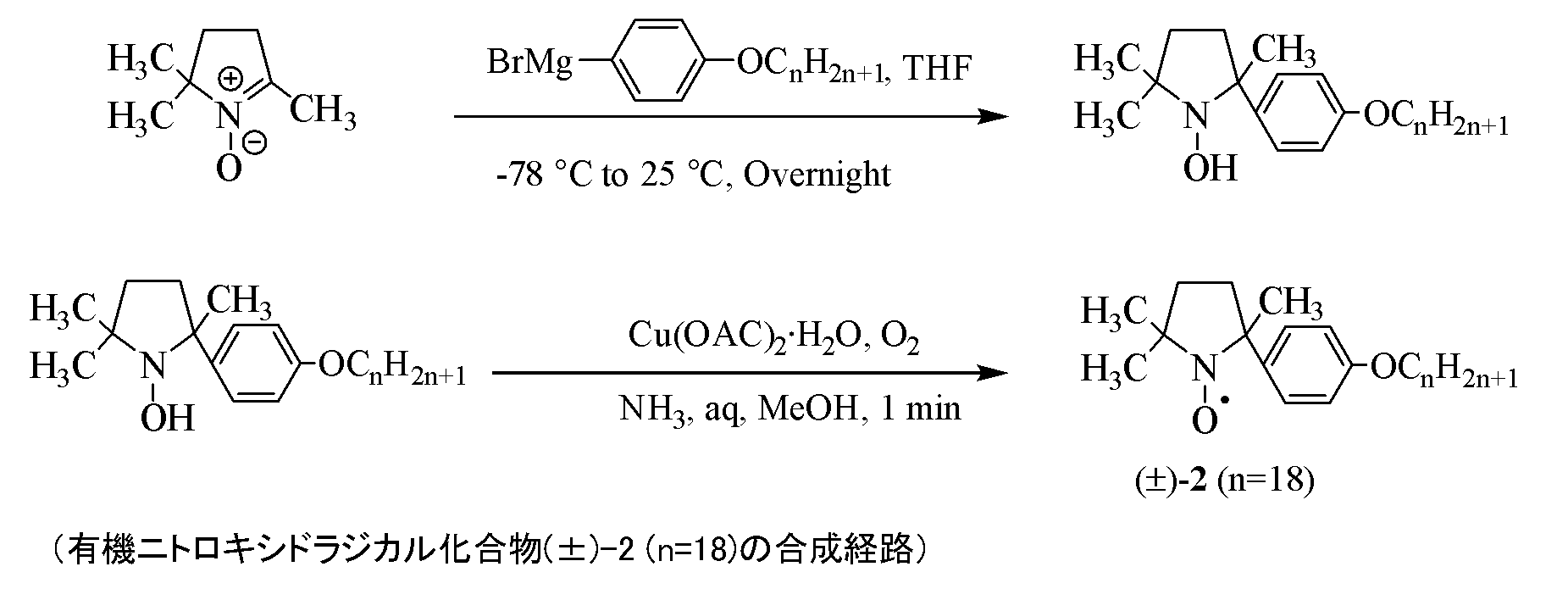
式(1)において、R1が炭素数18の直鎖アルキル基である有機ニトロキシドラジカル化合物(化合物1b)を、以下のようにして合成した。
削り状のマグネシウム(0.253 g, 10 mmol)を二口フラスコに入れ、減圧下で乾燥させ、フラスコをアルゴンで満たした。これにテトラヒドロフラン(10 mL)及び少量の1,2-ジブロモエタンを加え、10分間撹拌させた。これに、事前にベンゼン共沸により乾燥させた1-ブロモ-4-オクタデシロキシベンゼン(4.255 g, 10 mmol)を溶解させたテトラヒドロフラン溶液(40 mL)を加えた。常温で2時間攪拌し、グリニャール試薬を調製した。
一方で、製造例1で合成したテトラメチルニトロン(0.635 g, 5.00 mmol)を二口フラスコに入れ、数滴のベンゼンで共沸させた。二口フラスコ内を真空にした後、アルゴンで満たした。そこにテトラヒドロフラン (20 mL) を加え、-78 oCに冷却し、グリニャール試薬を滴下した。混合物をゆっくり昇温した後、常温で一晩撹拌を続けた。反応液を飽和塩化アンモニウム水溶液(100 mL) に注ぎ、ジクロロメタン (100 mL) で抽出した。無水硫酸マグネシウムで乾燥した後、溶媒を留去した。
残渣をメタノール(30 mL)とジクロロメタン(30 mL) の混合溶液に溶解させ、25%濃アンモニア水(2 mL)及び酢酸銅(0.805g, 4.00 mmolを加え、酸素を1分間吹き込んだ。溶液が濃青色に変化した後、反応液を減圧濃縮し、メタノールを留去した。残渣に飽和炭酸水素ナトリウム水溶液(100 mL)を加え、ジクロロメタン(100 mL)で抽出した。
得られた有機層を無水硫酸マグネシウムで乾燥した後、溶媒を留去した。最後に、シリカゲルカラムクロマトグラフィー (n-ヘキサン/ジエチルエーテル=90/10 (容積比))により精製し、有機ニトロキシドラジカル化合物(±)-2 (n=18)(0.440 g, 0.93 mmol、収率18.6 %)を得た。
元素分析Calculated (%): C, 78.76; H, 11.51; N, 2.96. Found (%): C, 78.89; H, 11.49; N, 2.78.
EPR (0.1 mM in THF, 25 oC): g=2.0068, aN=1.39 mT
元素分析Calculated (%): C, 78.76; H, 11.51; N, 2.96. Found (%): C, 78.89; H, 11.49; N, 2.78.
EPR (0.1 mM in THF, 25 oC): g=2.0068, aN=1.39 mT
(2)(-)-PBS中における(±)-2 (n=18)を内包した界面活性剤1の磁性
(ナノエマルション粒子の調製)
界面活性剤として、シグマ・アルドリッチ社製Brij(登録商標)58(ポリオキシエチレンセチルエーテル、n=20) (0.225 g, 200 μmol)をバイアルに入れ、必要量の(-)-PBSを加え、加熱(90 oC, 2分間)と超音波照射 (1分間)を行い、10 mMの界面活性剤水溶液20 mLを調製した。
化合物(±)-2 (n=18) (7.06 mg, 15μmol)を少量のジエチルエーテルに溶解させた。これに界面活性剤水溶液(1.5 mL) を滴下し、1分間攪拌させた。その後、90 oCで10分間加熱することにより(±)-2 (n=18)を内包した界面活性剤1の磁性ナノエマルションを調製した。
(ナノエマルション粒子の調製)
界面活性剤として、シグマ・アルドリッチ社製Brij(登録商標)58(ポリオキシエチレンセチルエーテル、n=20) (0.225 g, 200 μmol)をバイアルに入れ、必要量の(-)-PBSを加え、加熱(90 oC, 2分間)と超音波照射 (1分間)を行い、10 mMの界面活性剤水溶液20 mLを調製した。
化合物(±)-2 (n=18) (7.06 mg, 15μmol)を少量のジエチルエーテルに溶解させた。これに界面活性剤水溶液(1.5 mL) を滴下し、1分間攪拌させた。その後、90 oCで10分間加熱することにより(±)-2 (n=18)を内包した界面活性剤1の磁性ナノエマルションを調製した。
(3)(±)-2 (n=18)を内包した界面活性剤1の磁性ナノエマルションの還元耐性
(±)-2 (n=18)を内包した界面活性剤1の磁性ナノエマルションをダルベッコリン酸緩衝液(-)-PBS(Wako, Lot. DSJ7024)中で作製し、磁性ナノエマルションの還元剤に対する安定性を評価した。具体的には、(±)-2 (n=18)を内包した界面活性剤1の磁性ナノエマルションの水溶液にラジカルに対して1.75倍のアスコルビン酸を添加し、磁性ナノエマルションのアスコルビン酸耐性をDLS法とEPR分光法を用いて評価した。
界面活性剤1と(±)-2 (n=18)とアスコルビン酸の濃度比は、[1/ (±)-2 (n=18) / Ascorbic acid = 1.0 ×10⁻² mM / 1.0 ×10⁻² mM / 1.75 ×10⁻² mM]とした。調製方法は、少量のエーテルに溶解させた(±)-2 (n=18)の溶液に界面活性剤水溶液を1.5 mL加えた後、90 ℃で加熱し、エーテルを系から除去することで、磁性ナノエマルションを調製した。得られた磁性ナノエマルションにアスコルビン酸を添加し、EPR測定とDLS測定を直ちに行った。
ラジカル濃度の変化については、EPRスペクトルを二回積分し、開始直後のEPRスペクトルの二回積分値を100として計算を行った(図30)。
その結果、この磁性ナノエマルションはTEMPOLのような水溶性ラジカルと比べて、ゆっくりと還元を受けることが分かった。この結果は、磁性ナノエマルションがアスコルビン酸に対して優れた還元耐性を有していることが示された。
本測定では、EPR装置としてJEOL RE-2Xを使用した。
その結果、この磁性ナノエマルションはTEMPOLのような水溶性ラジカルと比べて、ゆっくりと還元を受けることが分かった。この結果は、磁性ナノエマルションがアスコルビン酸に対して優れた還元耐性を有していることが示された。
本測定では、EPR装置としてJEOL RE-2Xを使用した。
(4)MRIファントム測定
ガドリニウム製剤に代わるMRI造影剤として(±)-2 (n=18)を内包した界面活性剤1の磁性ナノエマルションが有効であると考えた。
そこで、4.7 Tの磁場印加条件下でMRIファントム測定を行い、磁性ナノエマルションと疎水性擬似ドラッグ或いはドラッグを内包した磁性エマルションのMRIにおける画像造影能力を評価した。
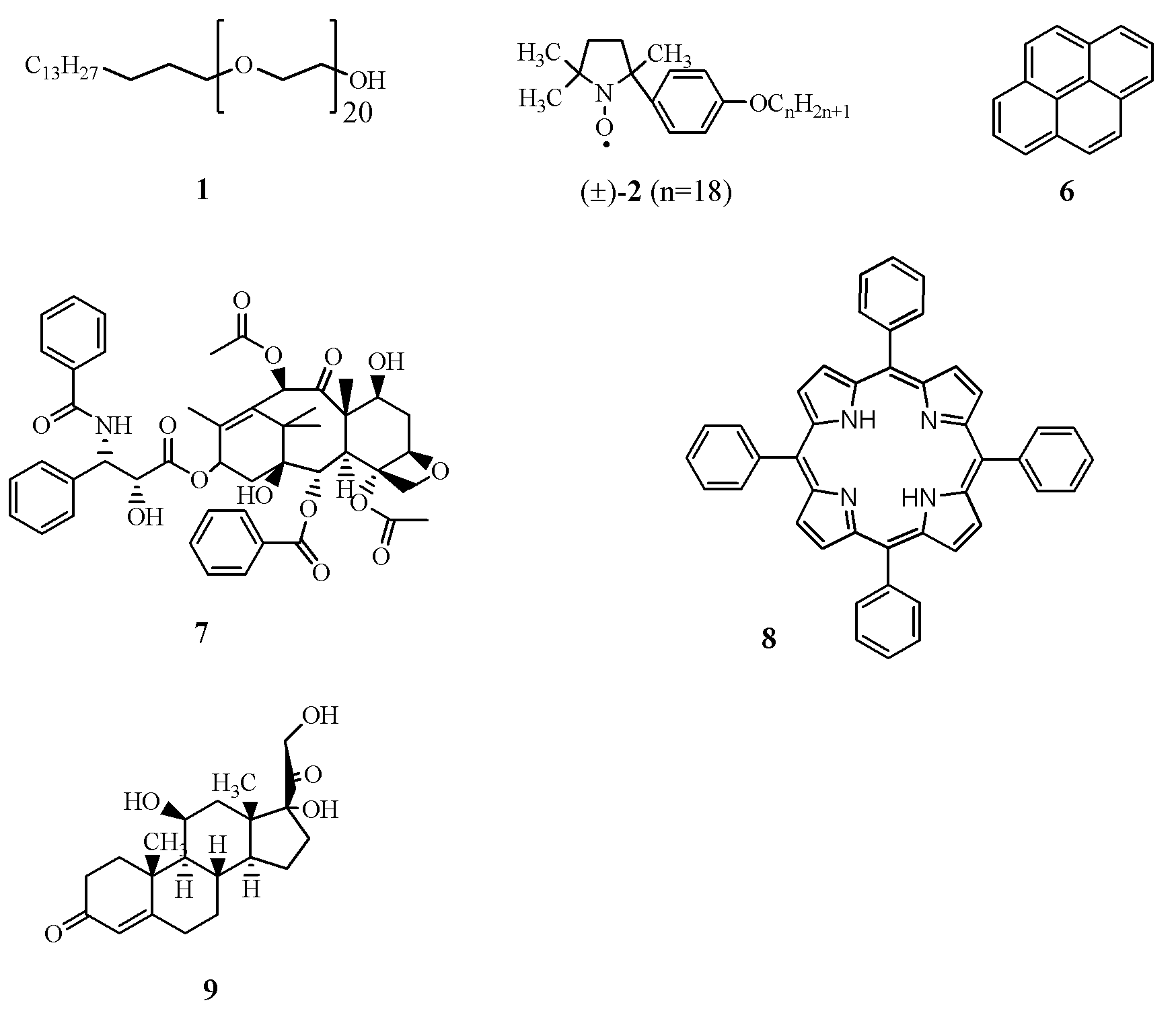
擬似ドラッグとしてピレン6 (SIGMA-ALDRICH, Lot. S22012)、テトラフェニルポルフィリン8を使用した。また、疎水性のドラッグとしてヒドロコルチゾン9 (TCI, LOT. SZ6YA)とパクリタキセル7 (サワイ、パクリタキセル注射液30 mg)を使用した。7は実際に医療現場で使用されている抗がん剤である。
ガドリニウム製剤に代わるMRI造影剤として(±)-2 (n=18)を内包した界面活性剤1の磁性ナノエマルションが有効であると考えた。
そこで、4.7 Tの磁場印加条件下でMRIファントム測定を行い、磁性ナノエマルションと疎水性擬似ドラッグ或いはドラッグを内包した磁性エマルションのMRIにおける画像造影能力を評価した。
擬似ドラッグとしてピレン6 (SIGMA-ALDRICH, Lot. S22012)、テトラフェニルポルフィリン8を使用した。また、疎水性のドラッグとしてヒドロコルチゾン9 (TCI, LOT. SZ6YA)とパクリタキセル7 (サワイ、パクリタキセル注射液30 mg)を使用した。7は実際に医療現場で使用されている抗がん剤である。
測定法
本測定では、Bruker 4.7 Tマシン (BioSpec 47 USR) を使用した。(-)-PBS中で (±)-2 (n=18)を内包した界面活性剤1の磁性ナノエマルション[1 / (±)-2 (n=18) = 10 mM / 10 mM]を調製した。さらに、この溶液を1/2, 1/8, 1/16に希釈し、1.25 mMから10 mMの(±)-2 (n=18)を内包した磁性ナノエマルションを計4種類調製した。
本測定では、Bruker 4.7 Tマシン (BioSpec 47 USR) を使用した。(-)-PBS中で (±)-2 (n=18)を内包した界面活性剤1の磁性ナノエマルション[1 / (±)-2 (n=18) = 10 mM / 10 mM]を調製した。さらに、この溶液を1/2, 1/8, 1/16に希釈し、1.25 mMから10 mMの(±)-2 (n=18)を内包した磁性ナノエマルションを計4種類調製した。
また、擬似ドラッグ或いはドラッグを内包した磁性エマルションについては、(±)-2 (n=18)に対して10 mol%の疎水性化合物6, 7, 8或いは9を内包した磁性ナノエマルション [1と(±)-2 (n=18)の最終濃度: 各々10 mM] を調製した。ただし、7を内包した界面活性剤1と(±)-2 (n=18)から構成された磁性ナノエマルションについては、先と同様に水溶液を希釈し、1.25 mMから10 mMの(±)-2 (n=18)を内包した磁性ナノエマルションを計4種類調製した。
これらのサンプルから1 mLをプラスチック製のチューブに移し、それをサンプルホルダーに設置した。続いてこのホルダーをMR装置内に挿入した。最後に、レーザーによるサンプルの位置決めを行った後、室温条件下で測定を行った。測定手法としてはスピンエコー法を用いた。画像用の測定条件とr1値算出用の測定条件は異なっており、それぞれ次のようになっている。
[画像用の条件; エコー時間 (TE) = 20 ms, 繰り返し時間 (TR) = 200 ms, r1値算出用の測定条件; エコー時間 (TE) = 10 ms, 繰り返し時間 (TR) = 5000, 3000, 1500, 800, 400 and 200 ms].
測定結果
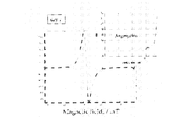
図31aに得られたMR画像を示す。
(a) パネル(A-D): (±)-2 (n=18)を内包した界面活性剤1の磁性ナノエマルションのT1強調画像 [1 と(±)-2 (n=18)の最終濃度: 各々10, 5, 2.5, 1.25 mM] パネル(E-H): 10 mol%の7を内包した界面活性剤1 と(±)-2 (n=18)から構成された磁性ナノエマルションのT1強調画像 [1と(±)-2(n=18)の最終濃度: 各々10, 5, 2.5, 1.25 mM] パネル(I-K): 10 mol%の(I) 6、(J) 8、(K) 9を内包した界面活性剤1と (±)-2 (n=18)から構成された磁性ナノエマルションのT1強調画像 [1と(±)-2 (n=18)の最終濃度: 各々10 mM] パネル(L): コントロール(-)-PBS.
図31aより、コントロール[(-)-PBS]と比較して、何れのサンプルからもコントラストの増加が観察されたが、10 mMの(±)-2 (n=18)を内包した界面活性剤1の磁性ナノエマルションは優れた造影効果を示した。
さらに、10 mol%の7を内包した界面活性剤1と(±)-2 (n=18)から構成された磁性ナノエマルションはより優れた造影効果を示すことが分かった。
(±)-2 (n=18)を内包した界面活性剤1の磁性ナノエマルションと7を内包した界面活性剤1と(±)-2 (n=18)から構成された磁性ナノエマルションに関しては、各々の濃度におけるT1緩和時間を算出し、(±)-2 (n=18)の造影能力の指標となるr1値を算出した。r1値はy軸にT1緩和時間の逆数を、x軸に(±)-2 (n=18)の濃度をとって描いた近似直線の傾きとして求められる。
図31aに得られたMR画像を示す。
(a) パネル(A-D): (±)-2 (n=18)を内包した界面活性剤1の磁性ナノエマルションのT1強調画像 [1 と(±)-2 (n=18)の最終濃度: 各々10, 5, 2.5, 1.25 mM] パネル(E-H): 10 mol%の7を内包した界面活性剤1 と(±)-2 (n=18)から構成された磁性ナノエマルションのT1強調画像 [1と(±)-2(n=18)の最終濃度: 各々10, 5, 2.5, 1.25 mM] パネル(I-K): 10 mol%の(I) 6、(J) 8、(K) 9を内包した界面活性剤1と (±)-2 (n=18)から構成された磁性ナノエマルションのT1強調画像 [1と(±)-2 (n=18)の最終濃度: 各々10 mM] パネル(L): コントロール(-)-PBS.
図31aより、コントロール[(-)-PBS]と比較して、何れのサンプルからもコントラストの増加が観察されたが、10 mMの(±)-2 (n=18)を内包した界面活性剤1の磁性ナノエマルションは優れた造影効果を示した。
さらに、10 mol%の7を内包した界面活性剤1と(±)-2 (n=18)から構成された磁性ナノエマルションはより優れた造影効果を示すことが分かった。
(±)-2 (n=18)を内包した界面活性剤1の磁性ナノエマルションと7を内包した界面活性剤1と(±)-2 (n=18)から構成された磁性ナノエマルションに関しては、各々の濃度におけるT1緩和時間を算出し、(±)-2 (n=18)の造影能力の指標となるr1値を算出した。r1値はy軸にT1緩和時間の逆数を、x軸に(±)-2 (n=18)の濃度をとって描いた近似直線の傾きとして求められる。
図31bと図31cは、それぞれ、 (±)-2 (n=18)を内包した界面活性剤1の磁性ナノエマルションと7を内包した界面活性剤1と(±)-2 (n=18)から構成された磁性ナノエマルション中に含まれる(±)-2 (n=18)の濃度とT1緩和時間の関係を示す。
(b) (±)-2 (n=18)を内包した界面活性剤1の磁性ナノエマルションと(c) 7を内包した界面活性剤1 と(±)-2 (n=18)から構成された磁性ナノエマルションにおける(±)-2 (n=18)の濃度とT1緩和時間の関係.
グラフの傾きからr1値を算出すると、それぞれ0.12 s-1/mMと0.16 s-1/mMと算出された。この結果は、7を内包した界面活性剤1と(±)-2 (n=18)から構成された磁性ナノエマルションが、(±)-2 (n=18)のみを内包した磁性ナノエマルションと比べて水の緩和をより効果的に短縮することを示唆している。
7を内包した界面活性剤1と(±)-2 (n=18)から構成された磁性ナノエマルションの粒径は12 nmであり、(±)-2 (n=18)のみを内包した界面活性剤1の磁性ナノエマルション (粒径16 nm)よりも小さい。また、EPRスペクトルは三本線成分が観察された。
これらのことを勘案すると、7を内包した界面活性剤1と(±)-2 (n=18)から構成された磁性ナノエマルションにおいては、その内部に存在している水分子と外部に存在している水分子との間で早い交換が起こっていると考えられる。さらに、(±)-2 (n=18)の回転相関時間が増加していることを示唆されている。
(b) (±)-2 (n=18)を内包した界面活性剤1の磁性ナノエマルションと(c) 7を内包した界面活性剤1 と(±)-2 (n=18)から構成された磁性ナノエマルションにおける(±)-2 (n=18)の濃度とT1緩和時間の関係.
グラフの傾きからr1値を算出すると、それぞれ0.12 s-1/mMと0.16 s-1/mMと算出された。この結果は、7を内包した界面活性剤1と(±)-2 (n=18)から構成された磁性ナノエマルションが、(±)-2 (n=18)のみを内包した磁性ナノエマルションと比べて水の緩和をより効果的に短縮することを示唆している。
7を内包した界面活性剤1と(±)-2 (n=18)から構成された磁性ナノエマルションの粒径は12 nmであり、(±)-2 (n=18)のみを内包した界面活性剤1の磁性ナノエマルション (粒径16 nm)よりも小さい。また、EPRスペクトルは三本線成分が観察された。
これらのことを勘案すると、7を内包した界面活性剤1と(±)-2 (n=18)から構成された磁性ナノエマルションにおいては、その内部に存在している水分子と外部に存在している水分子との間で早い交換が起こっていると考えられる。さらに、(±)-2 (n=18)の回転相関時間が増加していることを示唆されている。
(5)In vitroにおける細胞毒性評価
(±)-2 (n=18)を内包した界面活性剤1の磁性ナノエマルションと、7を内包した界面活性剤1と(±)-2 (n=18)から構成された磁性ナノエマルションのHeLa細胞に対する毒性評価行った。
(±)-2 (n=18)を内包した界面活性剤1の磁性ナノエマルションと、7を内包した界面活性剤1と(±)-2 (n=18)から構成された磁性ナノエマルションのHeLa細胞に対する毒性評価行った。
測定法
10%のウシ胎児血清 (SIGMA-ALDRICH, LOT 14A189)と1%のペニシリン/ストレプトマイシン(Wako, Penicillin-Streptomycin Solution (×100))を含むダルベッコ改変イーグル培地 (Wako, LOT DSG7015)中で培養されたHeLa細胞を、96ウェルマイクロプレート (ThermoFisher SCIENTIFIC, Nunclon(TM)Delta 96-Well MicroWell(TM) Plates, Sterile)の各ウェルにHeLa細胞を9,000個/100 μLずつ播種した。
続いて界面活性剤1のミセル水溶液、(±)-2 (n=18)を内包した界面活性剤1の磁性ナノエマルション、0.001 mol%の7を内包した界面活性剤1と(±)-2 (n=18)から構成された磁性ナノエマルション、7の(-)-PBS溶液をそれぞれ10 μLずつウェルに加え、インキュベータ(Thermo SCIENTIFIC, HERACELL 150i)で24時間培養 (温度: 37 oC、二酸素濃度: 5%)した。
ミセル水溶液 [1の濃度: 10 mM]、(±)-2 (n=18)を内包した界面活性剤1の磁性ナノエマルション [1 と(±)-2 (n=18)の濃度: 各々10 mM]と7の(-)-PBS溶液 [7の濃度: 10 μM]は、ウェルに添加される前に(-)-PBSで1/32 [1 と(±)-2 (n=18)の最終濃度: 各々0.313 mM]、1/64 [0.156 mM]、1/128 [0.078 mM]、1/256 [0.039 mM]に希釈された。
続いて、これらの水溶液を各ウェルに添加した。24時間培養後、各ウェルを(-)-PBSで二回洗浄し、cck-8 評価法(同仁化学研究所、LOT JH159)により評価した。
本測定では、cck-8試薬を添加後、30分間培養し、マイクロプレートリーダー (TECAN、infinite M200)により細胞数に応じた吸光度 (波長: 450 nm)を測定した。解析の際は、コントロールとして(-)-PBSのみを添加した際に得られた細胞生存率を100%として各サンプルにおける細胞生存率を算出した。また、一つのサンプルにつき4ウェル使用し、各ウェルから得られた細胞生存率の平均を算出した。
なお、ミセル水溶液とすべての磁性エマルションは(-)-PBS中で調製した。
10%のウシ胎児血清 (SIGMA-ALDRICH, LOT 14A189)と1%のペニシリン/ストレプトマイシン(Wako, Penicillin-Streptomycin Solution (×100))を含むダルベッコ改変イーグル培地 (Wako, LOT DSG7015)中で培養されたHeLa細胞を、96ウェルマイクロプレート (ThermoFisher SCIENTIFIC, Nunclon(TM)Delta 96-Well MicroWell(TM) Plates, Sterile)の各ウェルにHeLa細胞を9,000個/100 μLずつ播種した。
続いて界面活性剤1のミセル水溶液、(±)-2 (n=18)を内包した界面活性剤1の磁性ナノエマルション、0.001 mol%の7を内包した界面活性剤1と(±)-2 (n=18)から構成された磁性ナノエマルション、7の(-)-PBS溶液をそれぞれ10 μLずつウェルに加え、インキュベータ(Thermo SCIENTIFIC, HERACELL 150i)で24時間培養 (温度: 37 oC、二酸素濃度: 5%)した。
ミセル水溶液 [1の濃度: 10 mM]、(±)-2 (n=18)を内包した界面活性剤1の磁性ナノエマルション [1 と(±)-2 (n=18)の濃度: 各々10 mM]と7の(-)-PBS溶液 [7の濃度: 10 μM]は、ウェルに添加される前に(-)-PBSで1/32 [1 と(±)-2 (n=18)の最終濃度: 各々0.313 mM]、1/64 [0.156 mM]、1/128 [0.078 mM]、1/256 [0.039 mM]に希釈された。
続いて、これらの水溶液を各ウェルに添加した。24時間培養後、各ウェルを(-)-PBSで二回洗浄し、cck-8 評価法(同仁化学研究所、LOT JH159)により評価した。
本測定では、cck-8試薬を添加後、30分間培養し、マイクロプレートリーダー (TECAN、infinite M200)により細胞数に応じた吸光度 (波長: 450 nm)を測定した。解析の際は、コントロールとして(-)-PBSのみを添加した際に得られた細胞生存率を100%として各サンプルにおける細胞生存率を算出した。また、一つのサンプルにつき4ウェル使用し、各ウェルから得られた細胞生存率の平均を算出した。
なお、ミセル水溶液とすべての磁性エマルションは(-)-PBS中で調製した。
測定結果
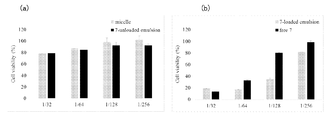
図32a:界面活性剤1のミセル水溶液と(±)-2 (n=18)を内包した界面活性剤1の磁性ナノエマルションの細胞毒性.
図32b:7を内包した界面活性剤1と(±)-2 (n=18)から構成された磁性ナノエマルションと、7の(-)-PBS溶液の細胞毒性.
図32aより、32倍かそれ以上の希釈条件ではHeLa細胞に対してほとんど毒性を示さないことがわかった。
一方、図32bより、7を内包した界面活性剤1と(±)-2 (n=18)から構成された磁性ナノエマルションと7の(-)PBS溶液は、32倍かそれ以上の希釈条件においてもHeLa細胞に対して毒性を示した。
この結果は、抗がん剤を磁性ナノエマルションに内包させた場合でも、それが抗がん剤として有効に働くことを示している。さらに、64倍と128倍希釈条件における殺細胞効果を見ると、磁性ナノエマルションに内包された7が、溶液中に分散した状態でいる7よりも2倍の細胞毒性を示すことが分かった。
このことは、比較的低濃度条件において、7を内包した界面活性剤1と(±)-2 (n=18)から構成された磁性ナノエマルションがHeLa細胞内に効果的に取り込まれることを示している。磁性ナノエマルション内部から放出された7が薬剤活性であるという事実は、7を内包した界面活性剤1と(±)-2 (n=18)から構成された磁性ナノエマルションが薬剤送達システムのキャリヤとして有効であることを示している。
図32a:界面活性剤1のミセル水溶液と(±)-2 (n=18)を内包した界面活性剤1の磁性ナノエマルションの細胞毒性.
図32b:7を内包した界面活性剤1と(±)-2 (n=18)から構成された磁性ナノエマルションと、7の(-)-PBS溶液の細胞毒性.
図32aより、32倍かそれ以上の希釈条件ではHeLa細胞に対してほとんど毒性を示さないことがわかった。
一方、図32bより、7を内包した界面活性剤1と(±)-2 (n=18)から構成された磁性ナノエマルションと7の(-)PBS溶液は、32倍かそれ以上の希釈条件においてもHeLa細胞に対して毒性を示した。
この結果は、抗がん剤を磁性ナノエマルションに内包させた場合でも、それが抗がん剤として有効に働くことを示している。さらに、64倍と128倍希釈条件における殺細胞効果を見ると、磁性ナノエマルションに内包された7が、溶液中に分散した状態でいる7よりも2倍の細胞毒性を示すことが分かった。
このことは、比較的低濃度条件において、7を内包した界面活性剤1と(±)-2 (n=18)から構成された磁性ナノエマルションがHeLa細胞内に効果的に取り込まれることを示している。磁性ナノエマルション内部から放出された7が薬剤活性であるという事実は、7を内包した界面活性剤1と(±)-2 (n=18)から構成された磁性ナノエマルションが薬剤送達システムのキャリヤとして有効であることを示している。
実施例5
化合物の最適化の経緯を示すデータ

界面活性剤1とそれぞれ長さの異なるアルキル側鎖を有する疎水性のラジカルを用いて、リン酸緩衝液(-)-PBS中で純有機磁性ナノエマルションを作製し、その安定性を評価した。
具体的には(-)-PBS中で作製した磁性ナノエマルションの安定性をEPR分光法とDLS法により評価した。
磁性ナノエマルションの安定化条件の結果を示す。
化合物の最適化の経緯を示すデータ
具体的には(-)-PBS中で作製した磁性ナノエマルションの安定性をEPR分光法とDLS法により評価した。
磁性ナノエマルションの安定化条件の結果を示す。
(1)(±)-3を内包した界面活性剤1の磁性ナノエマルション
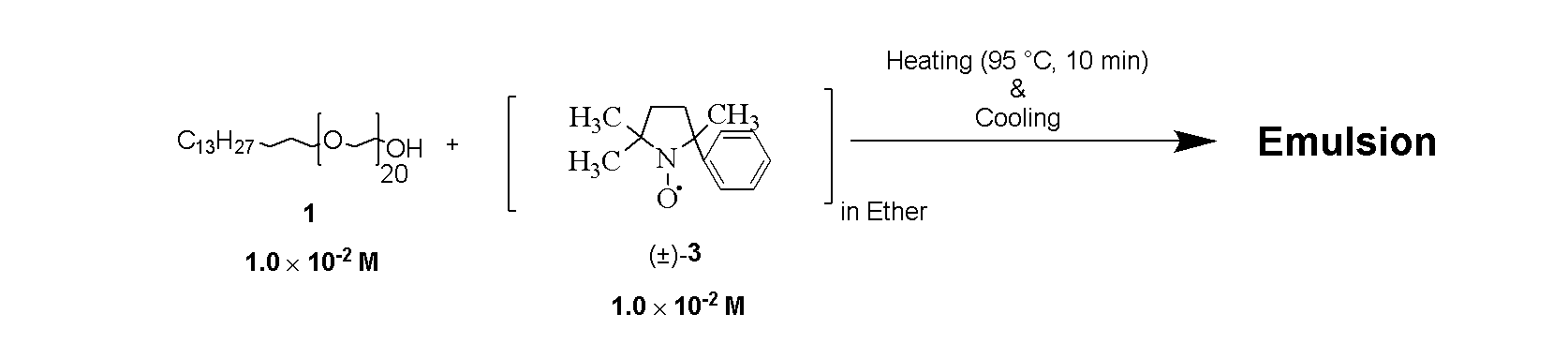
(±)-3をエーテルに溶解させて、この溶液を界面活性剤水溶液で分散させることにより磁性ナノエマルションの調製を試み、磁性ナノエマルションの安定性をEPR分光法とDLS法により評価した。
界面活性剤1と(±)-3の濃度比は、[1 /(±)-3 = 10 mM / 10 mM]とした。調製方法は、少量のエーテルに溶解させた(±)-3の溶液に、界面活性剤水溶液を1 mL加えた後、90 ℃で加熱し、エーテルを系から除去することで、ナノエマルションを調製した。系からエーテルが除去されると、溶液の色が黄濁色から黄色透明に変化した。
図33は調製後のEPRスペクトルと平均粒径である。EPR測定の結果から、三本線成分が確認された。これは、ラジカルが(-)-PBS中で分散していることを示している。
界面活性剤1と(±)-3の濃度比は、[1 /(±)-3 = 10 mM / 10 mM]とした。調製方法は、少量のエーテルに溶解させた(±)-3の溶液に、界面活性剤水溶液を1 mL加えた後、90 ℃で加熱し、エーテルを系から除去することで、ナノエマルションを調製した。系からエーテルが除去されると、溶液の色が黄濁色から黄色透明に変化した。
図33は調製後のEPRスペクトルと平均粒径である。EPR測定の結果から、三本線成分が確認された。これは、ラジカルが(-)-PBS中で分散していることを示している。
(2)(±)-2 (n=4)を内包した界面活性剤1の磁性ナノエマルション
同様に、(±)-2 (n=4)をエーテルに溶解させて、この溶液を界面活性剤水溶液で分散させることにより磁性ナノエマルションの調製を試み、磁性ナノエマルションの安定性をEPR分光法とDLS法により評価した。
界面活性剤1と(±)-2 (n=4)の濃度比は、[1 / (±)-2 (n=4) = 10 mM / 5.0 mM]とした。界面活性剤に対してラジカルの量は半分である。調製方法は、少量のエーテルに溶解させた(±)-2 (n=4)の溶液に、界面活性剤水溶液を1 mL加えた後、90 ℃で加熱し、エーテルを系から除去することで、ナノエマルションを調製した。
系からエーテルが除去されると、溶液の色が黄濁色から黄色透明に変化した。図34は調製後のEPRスペクトルと平均粒径である。(±)-3の場合と同様に、EPRスペクトルを測定すると三本線成分が確認された。
これは、ラジカルが(-)-PBS中で分散していることを示す。
同様に、(±)-2 (n=4)をエーテルに溶解させて、この溶液を界面活性剤水溶液で分散させることにより磁性ナノエマルションの調製を試み、磁性ナノエマルションの安定性をEPR分光法とDLS法により評価した。
界面活性剤1と(±)-2 (n=4)の濃度比は、[1 / (±)-2 (n=4) = 10 mM / 5.0 mM]とした。界面活性剤に対してラジカルの量は半分である。調製方法は、少量のエーテルに溶解させた(±)-2 (n=4)の溶液に、界面活性剤水溶液を1 mL加えた後、90 ℃で加熱し、エーテルを系から除去することで、ナノエマルションを調製した。
系からエーテルが除去されると、溶液の色が黄濁色から黄色透明に変化した。図34は調製後のEPRスペクトルと平均粒径である。(±)-3の場合と同様に、EPRスペクトルを測定すると三本線成分が確認された。
これは、ラジカルが(-)-PBS中で分散していることを示す。
(3)(±)-2 (n=8)を内包した界面活性剤1の磁性ナノエマルション
(±)-2 (n=8)をエーテルに溶解させて、この溶液を界面活性剤水溶液で分散させることにより磁性ナノエマルションの調製を試み、磁性ナノエマルションの安定性をEPR分光法とDLS法により評価した(図35及び36)。
界面活性剤1と(±)-2 (n=8)の濃度比は、[1 / (±)-2 (n=8) = 10 mM / 5.0 mM]とした。界面活性剤に対してラジカルの量は半分である。調製方法は、少量のエーテルに溶解させた(±)-2 (n=8)の溶液に、界面活性剤水溶液を1 mL加えた後、90 ℃で加熱し、エーテルを系から除去することで、磁性ナノエマルションを調製した。
系からエーテルが除去されると、溶液の色が黄濁色から黄色透明に変化した。調製してから20分経過しないうちに溶液が白濁した。DLS測定の結果から、調製3日後に1000 nm付近に大きな会合体由来のピークが観察された。
これらの結果は、(±)-2 (n=8)を内包した界面活性剤1の磁性ナノエマルションが(-)-PBS中で非常に不安定であることを示す。
(±)-2 (n=8)をエーテルに溶解させて、この溶液を界面活性剤水溶液で分散させることにより磁性ナノエマルションの調製を試み、磁性ナノエマルションの安定性をEPR分光法とDLS法により評価した(図35及び36)。
界面活性剤1と(±)-2 (n=8)の濃度比は、[1 / (±)-2 (n=8) = 10 mM / 5.0 mM]とした。界面活性剤に対してラジカルの量は半分である。調製方法は、少量のエーテルに溶解させた(±)-2 (n=8)の溶液に、界面活性剤水溶液を1 mL加えた後、90 ℃で加熱し、エーテルを系から除去することで、磁性ナノエマルションを調製した。
系からエーテルが除去されると、溶液の色が黄濁色から黄色透明に変化した。調製してから20分経過しないうちに溶液が白濁した。DLS測定の結果から、調製3日後に1000 nm付近に大きな会合体由来のピークが観察された。
これらの結果は、(±)-2 (n=8)を内包した界面活性剤1の磁性ナノエマルションが(-)-PBS中で非常に不安定であることを示す。
(4)(±)-2 (n=14)を内包した界面活性剤1の磁性ナノエマルション
(±)-2 (n=14)は水に難溶である。そこで、(±)-2 (n=14)をエーテルに溶解させて、この溶液を界面活性剤水溶液で分散させることにより磁性ナノエマルションの調製を試み、磁性ナノエマルションの安定性をEPR分光法とDLS法により評価した(図37及び38)。
界面活性剤1と(±)-2 (n=14)の濃度比は、[1 /(±)-2 (n=14) = 1.0 ×10⁻² M / 1.0 ×10⁻² M]とした。調製方法は、少量のエーテルに溶解させた(±)-2 (n=14)の溶液に、界面活性剤水溶液を1 mL加えた後、90 ℃で加熱し、エーテルを系から除去することで、ナノエマルションを調製した。
エーテルが除去されると、溶液の色が黄濁色から黄色透明に変化した。DLS測定の結果から、2日後の磁性ナノエマルションの粒径が調製直後と比較して増加していることが分かった。また、水溶液の色も黄色透明から黄濁色に変化していた。6日後には、水溶液中に浮遊物が確認された。
この水溶液は0.45μmφのmembrane filterを通過出来なかったため、DLS測定等は行っていない。
以上の結果から、(±)-2 (n=14)を内包した界面活性剤1の磁性ナノエマルションは(-)-PBS中で不安定であると考えられる。
(±)-2 (n=14)は水に難溶である。そこで、(±)-2 (n=14)をエーテルに溶解させて、この溶液を界面活性剤水溶液で分散させることにより磁性ナノエマルションの調製を試み、磁性ナノエマルションの安定性をEPR分光法とDLS法により評価した(図37及び38)。
界面活性剤1と(±)-2 (n=14)の濃度比は、[1 /(±)-2 (n=14) = 1.0 ×10⁻² M / 1.0 ×10⁻² M]とした。調製方法は、少量のエーテルに溶解させた(±)-2 (n=14)の溶液に、界面活性剤水溶液を1 mL加えた後、90 ℃で加熱し、エーテルを系から除去することで、ナノエマルションを調製した。
エーテルが除去されると、溶液の色が黄濁色から黄色透明に変化した。DLS測定の結果から、2日後の磁性ナノエマルションの粒径が調製直後と比較して増加していることが分かった。また、水溶液の色も黄色透明から黄濁色に変化していた。6日後には、水溶液中に浮遊物が確認された。
この水溶液は0.45μmφのmembrane filterを通過出来なかったため、DLS測定等は行っていない。
以上の結果から、(±)-2 (n=14)を内包した界面活性剤1の磁性ナノエマルションは(-)-PBS中で不安定であると考えられる。
(5)(±)-2 (n=16)を内包した界面活性剤1の磁性ナノエマルション
(±)-2 (n=16)をエーテルに溶解させて、この溶液を界面活性剤水溶液で分散させることにより黄色透明の磁性ナノエマルションの調製を試み、磁性ナノエマルションの安定性をEPR分光法とDLS法により評価した(図39及び40)。
EPR測定の結果、(-)-PBS中では、会合体形成に由来するブロードな一本線のみが観測された。また、粒形の経時変化は1日目が16 nm、2日後が27 nm、6日後が37 nmであり、徐々に大きくなった。
この結果から、磁性ナノエマルションは7日間に渡って、安定に存在していることがわかった。
(±)-2 (n=16)をエーテルに溶解させて、この溶液を界面活性剤水溶液で分散させることにより黄色透明の磁性ナノエマルションの調製を試み、磁性ナノエマルションの安定性をEPR分光法とDLS法により評価した(図39及び40)。
EPR測定の結果、(-)-PBS中では、会合体形成に由来するブロードな一本線のみが観測された。また、粒形の経時変化は1日目が16 nm、2日後が27 nm、6日後が37 nmであり、徐々に大きくなった。
この結果から、磁性ナノエマルションは7日間に渡って、安定に存在していることがわかった。
(6)(±)-2 (n=18)を内包した界面活性剤1の磁性ナノエマルション
(±)-2 (n=18)をエーテルに溶解させて、この溶液を界面活性剤水溶液で分散させることにより黄色透明の磁性ナノエマルションの調製を試み、磁性ナノエマルションの安定性をEPR分光法とDLS法により評価した(図41及び42)。
EPR測定の結果、(-)-PBS中では、会合体形成に由来するブロードな一本線のみが観測された。また、粒形の経時変化は1日目が16 nm、2日後が17 nm、14日後が24 nmであり、徐々に大きくなった。
この結果から、磁性ナノエマルションは14日間に渡って、安定に存在していることがわかった。また、DLS測定の結果から(±)-2 (n=16)を内包した界面活性剤1の磁性ナノエマルションと比較して、会合し難いことが分かった。
このことは、(±)-2 (n=18)を内包した界面活性剤1の磁性ナノエマルションが、(±)-2 (n=16)を内包した界面活性剤1の磁性ナノエマルションよりも(-)PBS中で安定であることを示している。
(±)-2 (n=18)をエーテルに溶解させて、この溶液を界面活性剤水溶液で分散させることにより黄色透明の磁性ナノエマルションの調製を試み、磁性ナノエマルションの安定性をEPR分光法とDLS法により評価した(図41及び42)。
EPR測定の結果、(-)-PBS中では、会合体形成に由来するブロードな一本線のみが観測された。また、粒形の経時変化は1日目が16 nm、2日後が17 nm、14日後が24 nmであり、徐々に大きくなった。
この結果から、磁性ナノエマルションは14日間に渡って、安定に存在していることがわかった。また、DLS測定の結果から(±)-2 (n=16)を内包した界面活性剤1の磁性ナノエマルションと比較して、会合し難いことが分かった。
このことは、(±)-2 (n=18)を内包した界面活性剤1の磁性ナノエマルションが、(±)-2 (n=16)を内包した界面活性剤1の磁性ナノエマルションよりも(-)PBS中で安定であることを示している。
(7)(±)-2 (n=20)を内包した界面活性剤1の磁性ナノエマルション
同様に、(±)-2 (n=20)をエーテルに溶解させて、この溶液を界面活性剤水溶液で分散させることにより黄色透明の磁性ナノエマルションの調製を試み、磁性ナノエマルションの安定性をEPR分光法とDLS法により評価した(図43及び44)。
EPR測定の結果、(-)-PBS中では、会合体形成に由来するブロードな一本線のみが観測された。また、粒形の経時変化は7日間に渡って17 nmで一定となった。
この結果から、(±)-2 (n=20)を内包した界面活性剤1の磁性ナノエマルションが、(±)-2 (n=18)を内包した界面活性剤1の磁性ナノエマルションと同様に、(-)-PBS中で7日間以上、安定であることが分かった。
同様に、(±)-2 (n=20)をエーテルに溶解させて、この溶液を界面活性剤水溶液で分散させることにより黄色透明の磁性ナノエマルションの調製を試み、磁性ナノエマルションの安定性をEPR分光法とDLS法により評価した(図43及び44)。
EPR測定の結果、(-)-PBS中では、会合体形成に由来するブロードな一本線のみが観測された。また、粒形の経時変化は7日間に渡って17 nmで一定となった。
この結果から、(±)-2 (n=20)を内包した界面活性剤1の磁性ナノエマルションが、(±)-2 (n=18)を内包した界面活性剤1の磁性ナノエマルションと同様に、(-)-PBS中で7日間以上、安定であることが分かった。
(8)類似のPEG系界面活性剤から構成された磁性ナノエマルション

界面活性剤4と界面活性剤5を用いて、(-)-PBS中で安定な(±)-2 (n = 12, 14, 16, 18 or 20)を内包した磁性ナノエマルションを調製することはできなかった。この理由としては、入れ子構造を形成するには、4と5のポリエチレングリコール鎖或いは、アルキル鎖の長さが短すぎると考えられる。
(9)結論
(±)-2 (n=18)を内包した界面活性剤1の磁性ナノエマルションの平均粒径は16 nm (調製直後)となった。この値は、界面活性剤1のミセル水溶液の粒径(9.0 nm)と(±)-2 (n=18)の分子長(3.3 nm, MM2計算より)の2倍値(6.6 nm)の合計(15.6 nm)とほぼ等しい値である。
(±)-2 (n=20)を内包した界面活性剤1の磁性ナノエマルションの場合は、(±)-2 (n=20)の分子長が3.4 nmであるので、合計(15.8 nm)となる。この値も、DLS測定の結果とよく一致している。
以上より、(±)-2 (n=18)と1または、(±)-2 (n=20)と1の組み合わせが、安定な磁性ナノエマルションを作製する上で最適な選択肢であると結論付けられる。
(±)-2 (n=18)を内包した界面活性剤1の磁性ナノエマルションの平均粒径は16 nm (調製直後)となった。この値は、界面活性剤1のミセル水溶液の粒径(9.0 nm)と(±)-2 (n=18)の分子長(3.3 nm, MM2計算より)の2倍値(6.6 nm)の合計(15.6 nm)とほぼ等しい値である。
(±)-2 (n=20)を内包した界面活性剤1の磁性ナノエマルションの場合は、(±)-2 (n=20)の分子長が3.4 nmであるので、合計(15.8 nm)となる。この値も、DLS測定の結果とよく一致している。
以上より、(±)-2 (n=18)と1または、(±)-2 (n=20)と1の組み合わせが、安定な磁性ナノエマルションを作製する上で最適な選択肢であると結論付けられる。
1 ナノエマルション粒子
2 有機ニトロキシドラジカル化合物
3 非イオン性界面活性剤
2 有機ニトロキシドラジカル化合物
3 非イオン性界面活性剤
Claims (7)
- 式(1):
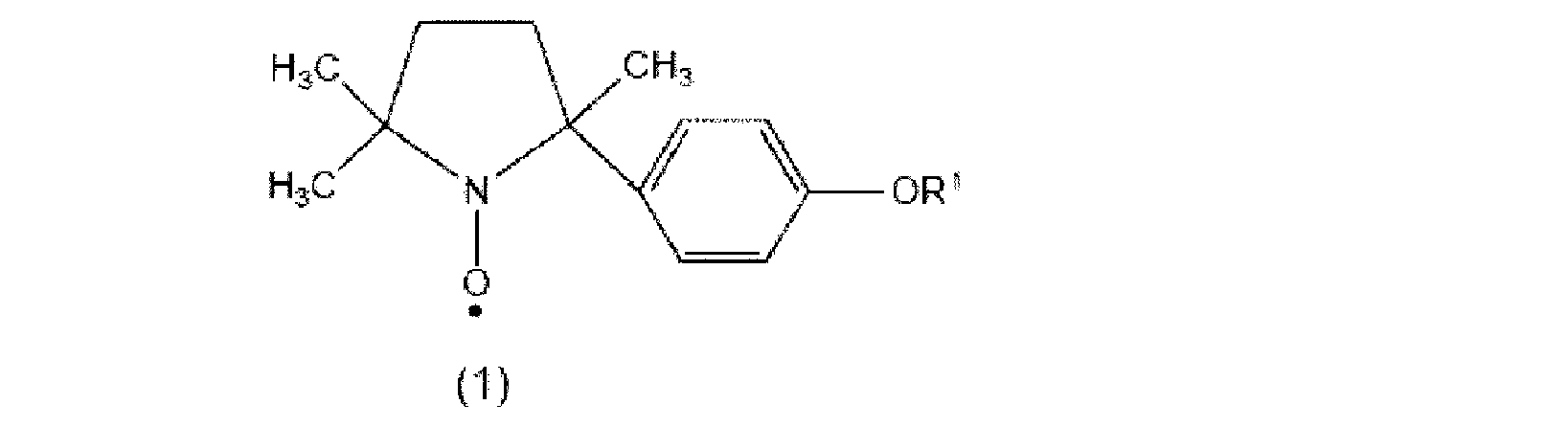
で表される有機ニトロキシドラジカル化合物。 - 請求項1に記載の有機ニトロキシドラジカル化合物の製造方法であって、式(2):

で表される化合物を2価の銅化合物の存在下で酸化する、製造方法。 - 請求項1に記載の有機ニトロキシドラジカル化合物と非イオン性界面活性剤とが0.8:1から1.2:1のモル比で構成され、ニトロキシドラジカルが内包されている、ナノエマルション粒子。
- 前記非イオン性界面活性剤が、炭素数10~26の直鎖アルキル基を有する非イオン性界面活性剤である、請求項3に記載のナノエマルション粒子。
- 前記非イオン性界面活性剤が、式(3):

で表されるポリオキシエチレンアルキルエーテルである、請求項3又は4に記載のナノエマルション粒子。 - 請求項3~5のいずれか1項に記載のナノエマルション粒子を含むMRI用造影剤。
- 請求項3~5のいずれか1項に記載のナノエマルション粒子を含むドラッグデリバリーシステムキャリアー。
Priority Applications (1)
| Application Number | Priority Date | Filing Date | Title |
|---|---|---|---|
| JP2018504443A JPWO2017154767A1 (ja) | 2016-03-08 | 2017-03-03 | 有機ニトロキシドラジカル化合物、その製造方法、ナノエマルション粒子及びその用途 |
Applications Claiming Priority (2)
| Application Number | Priority Date | Filing Date | Title |
|---|---|---|---|
| JP2016-044450 | 2016-03-08 | ||
| JP2016044450 | 2016-03-08 |
Publications (1)
| Publication Number | Publication Date |
|---|---|
| WO2017154767A1 true WO2017154767A1 (ja) | 2017-09-14 |
Family
ID=59789308
Family Applications (1)
| Application Number | Title | Priority Date | Filing Date |
|---|---|---|---|
| PCT/JP2017/008469 Ceased WO2017154767A1 (ja) | 2016-03-08 | 2017-03-03 | 有機ニトロキシドラジカル化合物、その製造方法、ナノエマルション粒子及びその用途 |
Country Status (2)
| Country | Link |
|---|---|
| JP (1) | JPWO2017154767A1 (ja) |
| WO (1) | WO2017154767A1 (ja) |
Citations (4)
| Publication number | Priority date | Publication date | Assignee | Title |
|---|---|---|---|---|
| US4099918A (en) * | 1977-04-18 | 1978-07-11 | State Board Of Higher Education For And On Behalf Of The University Of Oregon | Proxyl nitroxides as spin labels |
| JP2009215182A (ja) * | 2008-03-07 | 2009-09-24 | Toray Fine Chemicals Co Ltd | 新規有機常磁性イオン液体化合物及びそれを含む支持電解質 |
| WO2009133647A1 (ja) * | 2008-05-02 | 2009-11-05 | 国立大学法人筑波大学 | 高分子化環状二トロキシドラジカル化合物およびその使用 |
| JP2012188388A (ja) * | 2011-03-10 | 2012-10-04 | Kyoto Univ | 安定ラジカル構造を有する両親媒性化合物、該両親媒性化合物を用いた界面活性剤、該両親媒性化合物を用いたミセル、及び該両親媒性化合物を用いたエマルション |
-
2017
- 2017-03-03 JP JP2018504443A patent/JPWO2017154767A1/ja active Pending
- 2017-03-03 WO PCT/JP2017/008469 patent/WO2017154767A1/ja not_active Ceased
Patent Citations (4)
| Publication number | Priority date | Publication date | Assignee | Title |
|---|---|---|---|---|
| US4099918A (en) * | 1977-04-18 | 1978-07-11 | State Board Of Higher Education For And On Behalf Of The University Of Oregon | Proxyl nitroxides as spin labels |
| JP2009215182A (ja) * | 2008-03-07 | 2009-09-24 | Toray Fine Chemicals Co Ltd | 新規有機常磁性イオン液体化合物及びそれを含む支持電解質 |
| WO2009133647A1 (ja) * | 2008-05-02 | 2009-11-05 | 国立大学法人筑波大学 | 高分子化環状二トロキシドラジカル化合物およびその使用 |
| JP2012188388A (ja) * | 2011-03-10 | 2012-10-04 | Kyoto Univ | 安定ラジカル構造を有する両親媒性化合物、該両親媒性化合物を用いた界面活性剤、該両親媒性化合物を用いたミセル、及び該両親媒性化合物を用いたエマルション |
Non-Patent Citations (2)
| Title |
|---|
| SHOBHA,J.: "Diffrential Modes of Incorporation of Probe Molecules in Micelles and in Bilayer Vesicles", THE JOURNAL OF PHYSICAL CHEMISTRY, vol. 93, no. 1, 1989, pages 17 - 20, XP055414125 * |
| YOSHITOMI,T.: "Design of Core-Shell-Type Nanoparticles Carrying Stable Radicals in the Core", BIOMACROMOLECULES, vol. 10, no. 3, 9 March 2009 (2009-03-09), pages 596 - 601, XP055414127 * |
Also Published As
| Publication number | Publication date |
|---|---|
| JPWO2017154767A1 (ja) | 2019-01-10 |
Similar Documents
| Publication | Publication Date | Title |
|---|---|---|
| Xu et al. | Tuning molecular aggregation to achieve highly bright AIE dots for NIR-II fluorescence imaging and NIR-I photoacoustic imaging | |
| Wu et al. | Phenolic-enabled nanotechnology: versatile particle engineering for biomedicine | |
| Yang et al. | Ultra-small BaGdF5-based upconversion nanoparticles as drug carriers and multimodal imaging probes | |
| Chung et al. | Recent advances in luminescence properties of lanthanide-doped up-conversion nanocrystals and applications for bio-imaging, drug delivery, and optosensing | |
| Zhang et al. | Multifunctional core− shell nanoparticles as highly efficient imaging and photosensitizing agents | |
| Hong et al. | Intense red-emitting upconversion nanophosphors (800 nm-driven) with a core/double-shell structure for dual-modal upconversion luminescence and magnetic resonance in vivo imaging applications | |
| Yao et al. | Construction of magnetic-carbon-quantum-dots-probe-labeled apoferritin nanocages for bioimaging and targeted therapy | |
| Li et al. | Ratiometric monitoring of intracellular drug release by an upconversion drug delivery nanosystem | |
| He et al. | Visible and near-infrared dual-emission carbogenic small molecular complex with high RNA selectivity and renal clearance for nucleolus and tumor imaging | |
| US20140147391A1 (en) | BIOPROBE BASED ON SINGLE-PHASE UPCONVERSION NANOPARTICLES (UCNPs) FOR MULTI-MODAL BIOIMAGING | |
| Zhang et al. | Mass production of poly (ethylene glycol) monooleate-modified core-shell structured upconversion nanoparticles for bio-imaging and photodynamic therapy | |
| CN105288668B (zh) | 一种锌掺杂的普鲁士蓝纳米颗粒及其制备方法和应用 | |
| Ouyang et al. | DNA nanoribbon-assisted intracellular biosynthesis of fluorescent gold nanoclusters for cancer cell imaging | |
| Tezuka et al. | Upconversion luminescent nanostructure with ultrasmall ceramic nanoparticles coupled with rose bengal for NIR-induced photodynamic therapy | |
| Shao et al. | Facile fabrication of hypericin-entrapped glyconanoparticles for targeted photodynamic therapy | |
| Xu et al. | One-step synthesis of europium complexes containing polyamino acids through ring-opening polymerization and their potential for biological imaging applications | |
| Xu et al. | Silane modified upconversion nanoparticles with multifunctions: imaging, therapy and hypoxia detection | |
| Qiu et al. | A dendritic nano-sized hexanuclear ruthenium (II) complex as a one-and two-photon luminescent tracking non-viral gene vector | |
| Liu et al. | Organic nanoparticles with ultrahigh quantum yield and aggregation-induced emission characteristics for cellular imaging and real-time two-photon lung vasculature imaging | |
| Li et al. | DNA-assisted upconversion nanoplatform for imaging-guided synergistic therapy and laser-switchable drug detoxification | |
| Lv et al. | Multilevel nanoarchitecture exhibiting biosensing for cancer diagnostics by dual-modal switching of optical and magnetic resonance signals | |
| Bu et al. | Design, synthesis, and biomedical application of multifunctional fluorescent polymer nanomaterials | |
| Yang et al. | Endoplasmic reticulum-targetable selenium-doped carbon nanodots with redox-responsive fluorescence for in situ free-radical scavenging in cells and mice | |
| Fan et al. | Controlling the Energy Relaxation: Organic Doping in AIEgen Nanoparticles for Highly Enhanced Intravital Two‐Photon Imaging | |
| Liu et al. | Organic nanoparticles with aggregation-induced emission and two-photon excitation for fluorescence imaging of living cells/tissues |
Legal Events
| Date | Code | Title | Description |
|---|---|---|---|
| ENP | Entry into the national phase |
Ref document number: 2018504443 Country of ref document: JP Kind code of ref document: A |
|
| NENP | Non-entry into the national phase |
Ref country code: DE |
|
| 121 | Ep: the epo has been informed by wipo that ep was designated in this application |
Ref document number: 17763107 Country of ref document: EP Kind code of ref document: A1 |
|
| 122 | Ep: pct application non-entry in european phase |
Ref document number: 17763107 Country of ref document: EP Kind code of ref document: A1 |