WO2017138616A1 - データ構造、及びデータ処理装置 - Google Patents
データ構造、及びデータ処理装置 Download PDFInfo
- Publication number
- WO2017138616A1 WO2017138616A1 PCT/JP2017/004766 JP2017004766W WO2017138616A1 WO 2017138616 A1 WO2017138616 A1 WO 2017138616A1 JP 2017004766 W JP2017004766 W JP 2017004766W WO 2017138616 A1 WO2017138616 A1 WO 2017138616A1
- Authority
- WO
- WIPO (PCT)
- Prior art keywords
- field
- data
- unit
- authentication information
- encrypted
- Prior art date
- Legal status (The legal status is an assumption and is not a legal conclusion. Google has not performed a legal analysis and makes no representation as to the accuracy of the status listed.)
- Ceased
Links
Images








Classifications
-
- H—ELECTRICITY
- H04—ELECTRIC COMMUNICATION TECHNIQUE
- H04L—TRANSMISSION OF DIGITAL INFORMATION, e.g. TELEGRAPHIC COMMUNICATION
- H04L9/00—Cryptographic mechanisms or cryptographic arrangements for secret or secure communications; Network security protocols
- H04L9/14—Cryptographic mechanisms or cryptographic arrangements for secret or secure communications; Network security protocols using a plurality of keys or algorithms
Definitions
- the present disclosure relates to a data structure having an array structure and a data processing device.
- Patent Document 1 As a technique for ensuring the confidentiality of information, as described in Patent Document 1, there is a technique for covering a part of a selected page in document data and encrypting the covered part. Proposed.
- the information management system since the information management system is used for medical purposes, it is necessary to maintain the accuracy of captured images and measured vital signs, and maintenance is important. In maintenance, it is efficient that a person in charge of maintenance confirms what information is managed by the information management system.
- Patent Document 1 Suppose that the technology described in Patent Document 1 is applied to the information management system in order to ensure the confidentiality of the information managed by the information management system. In this case, in order to confirm what information the person in charge of maintenance manages with the information management system, it is necessary to decode the covered portion of the data.
- One aspect of the present disclosure is to provide a technique for ensuring the confidentiality of information while enabling recognition of minimum necessary information.
- One aspect of the present disclosure relates to a data structure of data in which data values are arranged according to an array.
- This data structure includes a plurality of field portions and a plurality of field header portions.
- the plurality of field portions are obtained by partitioning data according to a regulation rule defined based on the order of arrangement of data values in the array.
- the plurality of field header portions represent the contents of each of the plurality of field portions.
- the data value included in at least one field portion of the plurality of field portions is encrypted.
- the unencrypted field portion data value can be browsed without being decrypted. For this reason, the user can grasp a part of the entire image of the data from the data value of the unencrypted field portion.
- the field header portion represents the contents of each field portion. Therefore, with such a data structure, without decrypting the encrypted field portion, the user can determine what information is included in the field portion, and thus what information is included in the data. Can be recognized.
- the user can be made to recognize the content of the minimum necessary data.
- the data value included in the encrypted field portion cannot be decrypted unless the decryption code is known, the confidentiality of the entire data can be ensured.
- another aspect of the present disclosure may be a data processing device including an acquisition unit, a classification unit, an addition unit, an encryption processing unit, and a generation unit.
- the acquisition unit acquires data in which data values are arranged according to the array.
- the classification unit generates a plurality of field units in which each of the data values in the data acquired by the acquisition unit is classified according to a specified rule defined based on the order of arrangement of the data values in the array.
- the addition part adds a field header part representing the contents of each of the plurality of field parts generated by the classification part.
- the encryption processing unit encrypts a data value included in at least one field unit among the plurality of field units generated by the classification unit.
- the generation unit has a plurality of field portions and a plurality of field header portions based on the plurality of field portions, the field header portion, and the encrypted field portion.
- the generation unit generates data in which a data value included in at least one field portion of the plurality of field portions is encrypted.
- the acquired data can be converted into data having the data structure described above. For this reason, according to the data processor, the same effect as the data structure mentioned above can be acquired.
- a data processing apparatus 1 illustrated in FIG. 1 is an apparatus that acquires original data that is one of data and generates specific data. Furthermore, the data processing device 1 is a device that executes display based on specific data.
- the specific data is data obtained by encrypting at least a part of the data value of the original data, and is data having a data structure described later in detail.
- the data processing apparatus 1 includes a data acquisition unit 12, a display unit 14, an information reception unit 16, an output unit 18, a storage unit 20, and a control unit 22.
- the data acquisition unit 12 acquires the original data.
- the original data is data in which data values are arranged according to a predetermined array.
- the data value is a discretized value.
- An array means that the order is determined.
- the original data in the present embodiment is image data captured by the imaging device.
- Image data is data in which pixel values are arranged as data values.
- the pixel value is a value representing the intensity of luminance at each pixel.
- the image data in the present embodiment may be a medical image, for example.
- a medical image is an image of a human body or an image of measurement results.
- the medical image includes, for example, an image taken by a camera, an image taken by X-ray, an image taken by computed tomography, a nuclear magnetic resonance image, an image taken by an endoscope, and the like.
- the display unit 14 displays information based on a signal from the control unit 22.
- the display unit 14 includes, for example, a liquid crystal display.
- the information receiving unit 16 is a well-known mechanism that receives input of information from the outside.
- well-known input mechanisms such as a keyboard, a mouse
- the information reception part 16 may be comprised integrally with the display part 14.
- the output unit 18 outputs information according to a signal from the control unit 22.
- a network communication network, a printer, an external storage device, or the like can be considered as an output destination from which the output unit 18 outputs information.
- the storage unit 20 is a non-volatile storage device configured to be able to read and write stored contents.
- the storage unit 20 stores various processing programs and various data.
- the control unit 22 includes a known computer having at least a ROM 24, a RAM 26, and a CPU 28.
- the ROM 24 of the control unit 22 stores a program for the control unit 22 to execute data generation processing for generating specific data.
- the ROM 24 of the control unit 22 stores a program for the control unit 22 to execute a display process for executing display based on specific data.
- the control unit 22 generates a plurality of field units 30 (see FIG. 3) in which the original data acquired in S110 is divided according to the specified rule (S120).
- the prescribed rule is a rule prescribed in advance based on the order of arrangement of data values in the array of original data.
- the prescription rule in the embodiment is to divide into each field in the interlace format.
- the interlace format is a format related to image scanning, and is a format in which scanning of an image is performed in a discrete manner for each specified pixel.
- Adam7 which is a well-known algorithm that scans in the prescribed pixel order, may be used as an interlaced implementation method.
- the field part is the original data divided according to the specified rules.
- Each of the field units 30 in the present embodiment is a field in an interlace format.
- control unit 22 adds a field header unit 32 (see FIG. 3) to each of the plurality of field units 30 generated in S120 (S130).
- the field header portion 32 is information representing the contents of the field portion 30 and is provided for each field portion 30.
- the contents of the field part include the data size included in each field, transfer information of each field, and the like.
- the control unit 22 acquires authentication information via the information receiving unit 16 (S140).
- the authentication information is information for identifying a user, for example, an ID and a password.
- authentication information is acquired for each group of field parts 30 to be encrypted.
- control part 22 performs encryption of the data value contained in the at least 1 field part 30 among the several field parts 30 produced
- the encryption in S150 is performed on the data values included in the prescribed number of field portions 30 among the plurality of field portions 30.
- the prescribed number in the present embodiment is the number of field portions 30.
- the data values included in all the field parts 30 are encrypted.
- encryption is a process that makes it impossible for a third party who does not know the authentication information to view the data.
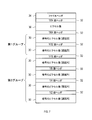
- two 1/64 part fields and three field parts 30 ie, the first group
- Encryption is performed using the authentication information B of the authentication information acquired in S140.
- the remaining four field parts 30 that is, the second group
- the control unit 22 reconstructs and stores the original data on which the steps from S120 to S150 have been executed as specific data (S160).
- the specific data is data in which data values are arranged according to an array, and is data in which at least a part of the field part 30 is encrypted.
- the specific data in the present embodiment includes a plurality of field portions 30, a field header portion 32 for each field portion 30, and a file header portion 34 that represents the contents of the entire data.
- the field unit 30 of the first group among the plurality of field units 30 is encrypted using the authentication information B. Further, the field part 30 of the second group is encrypted using the authentication information A which is information different from the authentication information B.
- the reconfiguration is to generate data including a plurality of field parts 30 and a plurality of field header parts 32.
- the storage destination for storing the specific data may be the storage unit 20 or an external storage device.
- the external storage device includes a server connected to the data processing device 1.
- control unit 22 ends the data generation process. That is, in this data generation process, the original data is converted into interlaced data, and a part of the field part 30 in the interlaced data is encrypted using the authentication information A. Further, the remaining field part 30 is encrypted using the authentication information B. Then, specific data including these encrypted field portions 30 is generated.
- the specific data includes a plurality of field parts 30, a field header part 32, and a file header part 34, and a data structure in which a data value included in the field part 30 is encrypted. It becomes. ⁇ 1.3 Display processing> Next, when the display process shown in FIG. 4 is started, the control unit 22 first acquires specific data designated via the information receiving unit 16 (S210).
- the control unit 22 acquires authentication information via the information receiving unit 16 (S220).
- the authentication information acquired in S220 is referred to as input information.
- the control part 22 collates the input information acquired by S220 with the authentication information contained in the specific data acquired by S210, and determines whether authentication was successful (S230). In the present embodiment, if the authentication information included in the specific data matches the input information, it is determined that the authentication is successful, and if the authentication information does not match, the authentication may not be successful.
- control unit 22 displays an image encrypted based on the specific data on the display unit 14 (S240). Thereafter, the control unit 22 ends the display process.
- control unit 22 decodes the data value included in the field unit 30 that has been successfully authenticated (S250). Subsequently, the control unit 22 displays an image based on the decoded data value on the display unit 14 (S260).
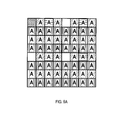
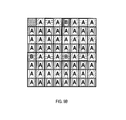
- the control unit 22 is included in the field unit 30 encrypted with the authentication information B as shown in FIG.
- the display unit 14 displays an image based on the data value decoded in step. If the authentication information A among the plurality of authentication information is successfully authenticated, in S260, the control unit 22 is included in the field unit 30 encrypted with the authentication information A as shown in FIG.
- the display unit 14 displays an image based on the data value decoded in step.
- pixels corresponding to undecoded data values may be complemented based on the decoded data values.
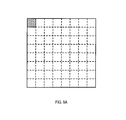
- the control unit 22 is included in all the field units 30 as shown in FIG. An image based on the data value (that is, all pixel values) is displayed on the display unit 14.
- a user who knows part of the authentication information can recognize the outline of what the specific data is, that is, the minimum necessary information. As a result, it is possible to improve the efficiency of maintenance of a system that captures and manages images used for medical purposes.
- the second embodiment mainly differs from the first embodiment in the data structure of specific data. For this reason, in this embodiment, the data structure of specific data different from the first embodiment will be described.
- the specific data of the present embodiment includes a plurality of field parts 30, a field header part 32, and a file header part 34, as shown in FIG.
- the data value included in at least one field portion 30 among the plurality of field portions 30 is not encrypted. That is, in S150 of the data generation process, two field units 30 among the plurality of field units 30 are encrypted as the first group using the authentication information B. Then, the four field units 30 among the plurality of field units 30 are encrypted as the second group using the authentication information A. For the remaining one field part 30, specific data is generated in S160 without encryption.
- the control unit 22 displays an image based on the data value of the unencrypted field unit 30 on the display unit 14 as shown in FIG. 8A.
- the control unit 22 displays the data value of the unencrypted field unit 30, and An image based on the data value included in the field part 30 encrypted with the authentication information B and decrypted in S250 is displayed on the display part 14.
- the control unit 22 stores the data value of the unencrypted field unit 30, and An image based on the data value included in the field part 30 encrypted with the authentication information A and decrypted in S250 is displayed on the display part 14.
- control unit 22 displays an image based on the data values included in all the field units 30 on the display unit 14 as shown in FIG. 9B. .
- FIGS. 8A, 8B, 9A, and 9B means the difference in the field portion 30.
- FIG. [2.2 Effects of Second Embodiment] According to the specific data having such a data structure, the user can grasp the data value of the unencrypted field portion 30 without decrypting it. For this reason, the user can grasp a part of the whole specific data from the data value of the field part 30 which is not encrypted.
- the third embodiment is mainly different from the first embodiment in the data structure of specific data. For this reason, in this embodiment, the data structure of specific data different from the third embodiment will be described.
- the specific data of the present embodiment includes a file header portion 34, a main body field portion 40, and a duplicate field portion 42.
- the main body field part 40 has all the field parts 30. That is, the main body field portion 40 is all the field portions 30 in which the data values included in the original data are classified according to the regulation rule.
- the overlapping field part 42 is a field part 30 having the same contents as a part of the field part 30 included in the main body field part 40.
- the field part 30 having the same contents is at least one field part 30 having overlapping positions and data values in the array. That is, each of the field parts 30 in the overlapping field part 42 has the same data value as the field part 30 included in the main body field part 40.
- the number of field portions 30 of the overlapping field portion 42 is three.
- each of the field parts 30 in the main body field part 40 is encrypted using the authentication information B.
- Each of the field parts 30 in the duplicate field part 42 is encrypted using authentication information A different from the authentication information B.
- each field section 30 in the main body field section 40 is encrypted as the second group using the authentication information A.
- Each of the field parts 30 in the duplicate field part 42 is encrypted using the authentication information B as the first group.
- the control unit 22 displays an image encrypted based on the specific data on the display unit 14.
- the control unit 22 decodes the data value of the field unit 30 in the duplicate field unit 42 as shown in FIG. An image based on the obtained data value is displayed on the display unit 14. If the authentication information A is successfully authenticated, in S260, the control unit 22 decodes the data value included in the field unit 30 in the main body field unit 40 as shown in FIG. An image based on the data value is displayed on the display unit 14.
- this indication is not limited to the above-mentioned embodiment, and can be carried out in various modes in the range which does not deviate from the gist of this indication.
- the arrangement in the specific data is described as having 8 rows and 8 columns. However, the arrangement in the specific data is not limited to this.
- the arrangement in the specific data may be 16 rows and 16 columns as shown in FIG.
- the effect described above can be obtained by increasing the number of field portions 30 as shown in FIG.
- the difference in hatching in FIG. 12 means the difference in the field portion 30.
- the arrangement of the specific data is not limited to this, and may be 1 row and M columns, M rows and 1 columns, or M as long as they are arranged in a predetermined order. It may be in row N column. However, M and N are integers of 1 or more.
- the well-known Adam7 is used as the interlaced scanning method, but the interlaced scanning method is not limited to this.
- the interlaced scanning method uses a specific line and a line after a specified number of lines from the specific line as the first field, and the remaining lines as the first field.
- the second field may be a format in which image scanning is performed in a skipped manner.
- the interlace scanning method uses a specific column and a column after a specified number of columns from the specific column as the first field, and the remaining columns.
- the second field may be used as the second field.
- a specified pixel in a specific row is a first field, and all the remaining pixels are a second field.
- a format in which scanning of an image is performed in a skipping manner may be used.
- a plurality of field portions 30 are encrypted with one authentication information.
- the object to be encrypted with one authentication information is not limited to this.
- One field part 30 may be encrypted with information. That is, it may be encrypted using different authentication information for each field unit 30.
- the original data is acquired as image data.
- the target acquired as the original data is not limited to this.
- the target acquired as the original data may be waveform data whose data value is a value obtained by sampling the amplitude in the waveform, for example, as shown in FIG. This waveform data may indicate a measurement result measured by a measuring device.
- Part or all of the functions executed by the control unit 22 in the above embodiment may be configured in hardware by one or a plurality of ICs.
- the program is stored in the ROM 24.
- the storage medium for storing the program is not limited to this, and is stored in a non-transitional physical storage medium such as a semiconductor memory. It may be.
- control unit 22 may execute a program stored in a non-transitional tangible recording medium. By executing this program, a method corresponding to the program is realized.
- the reference numerals used in the description of the above embodiments are also used in the claims as appropriate, but are used for the purpose of facilitating the understanding of the present disclosure according to each claim. It is not intended to limit the technical scope of the present disclosure.
- the function obtained by executing S110 of the data generation process corresponds to the acquisition unit.
- the function obtained by executing S120 corresponds to the classification unit.
- the function obtained by executing S130 corresponds to an adding unit.
- a function obtained by executing S140 to S150 corresponds to an encryption processing unit.
- the function obtained by executing S160 corresponds to the generation unit.
Landscapes
- Engineering & Computer Science (AREA)
- Computer Security & Cryptography (AREA)
- Computer Networks & Wireless Communication (AREA)
- Signal Processing (AREA)
- Storage Device Security (AREA)
Abstract
データ処理装置は、取得部と、分類部と、付加部と、暗号処理部と、生成部とを備える。分類部は、配列に従ってデータ値が並べられたデータを、配列におけるデータ値の配置の順序に基づいて規定された規定ルールに従って区分けした複数のフィールド部を生成する。付加部は、複数のフィールド部の各々に、当該フィールド部の内容を表すヘッダ部を付加する。暗号処理部は、複数のフィールド部のうちの少なくとも1つのフィールド部に含まれるデータ値を暗号化する。これによって生成されるデータのデータ構造は、複数のフィールド部(30)と、複数のフィールドヘッダ部(32)とを備え、複数のフィールド部のうちの少なくとも1つのフィールド部に含まれるデータ値が暗号化されたものである。
Description
本国際出願は、2016年2月10日に日本国特許庁に出願された日本国特許出願第2016-23909号に基づく優先権を主張するものであり、日本国特許出願第2016-23909号の全内容を本国際出願に参照により援用する。
本開示は、配列構造を有したデータ構造、及びデータ処理装置に関する。
医療の用途に用いられる画像を撮像して管理するシステムや、バイタルサインを計測して管理するシステムである情報管理システムが知られている。情報管理システムでは、管理する情報、即ち、画像やバイタルサインなどの情報の機密性を担保することが求められている。
情報の機密性を担保することを目的とした技術として、特許文献1に記載されているように、文書データにおいて選択されたページの一部分を被覆し、その被覆された部分を暗号化する技術が提案されている。
一方、情報管理システムは、医療の用途に用いられるものであるため、撮像される画像や計測されたバイタルサインの正確性を保つ必要があり、メンテナンスが重要となる。メンテナンスにおいては、情報管理システムにて管理する情報がどのような情報であるのかを、メンテナンスの担当者が確認しながら実施することが効率的である。
情報管理システムにて管理する情報の機密性を担保するために、情報管理システムに対して特許文献1に記載された技術を適用することを想定する。この場合、メンテナンスの担当者が情報管理システムにて管理する情報がどのような情報であるのかを確認するためには、データにおいて被覆されている部分を復号する必要がある。
しかしながら、メンテナンスの担当者は、復号のコードを知らないことが多く、情報管理システムにて管理している情報がどのような情報であるのかを認識できず、メンテナンスを効率よく実施できない。
また、メンテナンスの担当者が復号のコードを知得した場合には、被覆された全ての領域を閲覧可能となるため、情報の機密性を担保することが困難となる。
つまり、発明者の詳細な検討の結果、従来の技術では、最低限必要な情報を認識可能としつつ、情報の機密性を確保することが困難であるという課題が見出された。
つまり、発明者の詳細な検討の結果、従来の技術では、最低限必要な情報を認識可能としつつ、情報の機密性を確保することが困難であるという課題が見出された。
本開示の一局面は、最低限必要な情報を認識可能としつつ、情報の機密性を確保する技術を提供することにある。
本開示の一態様は、配列に従ってデータ値が並べられたデータのデータ構造に関する。
本開示の一態様は、配列に従ってデータ値が並べられたデータのデータ構造に関する。
このデータ構造は、複数のフィールド部と、複数のフィールドヘッダ部とを備えている。
複数のフィールド部は、配列におけるデータ値の配置の順序に基づいて規定された規定ルールに従って、データを区分けしたものである。複数のフィールドヘッダ部は、複数のフィールド部の各々の内容を表すものである。
複数のフィールド部は、配列におけるデータ値の配置の順序に基づいて規定された規定ルールに従って、データを区分けしたものである。複数のフィールドヘッダ部は、複数のフィールド部の各々の内容を表すものである。
さらに、データ構造においては、複数のフィールド部のうちの少なくとも1つのフィールド部に含まれるデータ値が暗号化されている。
このようなデータ構造において、暗号化されていないフィールド部のデータ値については復号することなく閲覧できる。このため、利用者は、暗号化されていないフィールド部のデータ値から、データの全体像の一部分を把握できる。
このようなデータ構造において、暗号化されていないフィールド部のデータ値については復号することなく閲覧できる。このため、利用者は、暗号化されていないフィールド部のデータ値から、データの全体像の一部分を把握できる。
しかも、フィールドヘッダ部は、フィールド部の各々の内容を表すものである。そのため、このようなデータ構造であれば、暗号化されたフィールド部を復号しなくとも、利用者は、そのフィールド部にどのような情報が含まれているのか、ひいては、データがどのような情報であるのかを認識できる。
これらのことから、このようなデータ構造によれば、最低限必要なデータの内容を利用者に認識させることができる。
一方、このようなデータ構造によれば、暗号化されたフィールド部に含まれるデータ値については、復号のコードの知らない限り復号することができないため、データの全体像に対する機密性を担保できる。
一方、このようなデータ構造によれば、暗号化されたフィールド部に含まれるデータ値については、復号のコードの知らない限り復号することができないため、データの全体像に対する機密性を担保できる。
つまり、このようなデータ構造を用いることで、最低限必要な情報を認識可能としつつ、情報の機密性を確保できる。
なお、本開示の別の態様は、取得部と、分類部と、付加部と、暗号処理部と、生成部とを備えるデータ処理装置であってもよい。
なお、本開示の別の態様は、取得部と、分類部と、付加部と、暗号処理部と、生成部とを備えるデータ処理装置であってもよい。
取得部は、配列に従ってデータ値が並べられたデータを取得する。分類部は、取得部で取得したデータにおけるデータ値の各々を、配列におけるデータ値の配置の順序に基づいて規定された規定ルールに従って分類した複数のフィールド部を生成する。
付加部は、分類部で生成された複数のフィールド部の各々の内容を表すフィールドヘッダ部を付加する。暗号処理部は、分類部で生成された複数のフィールド部のうちの少なくとも1つのフィールド部に含まれるデータ値を暗号化する。
生成部は、複数のフィールド部、フィールドヘッダ部、及び暗号化されたフィールド部に基づいて、複数のフィールド部と、複数のフィールドヘッダ部とを有する。生成部は、複数のフィールド部のうちの少なくとも1つのフィールド部に含まれるデータ値が暗号化されているデータを生成する。
このようなデータ処理装置によれば、取得したデータを、上述したデータ構造のデータへと変換できる。このため、データ処理装置によれば、上述したデータ構造と同様の効果を得ることができる。
以下に本開示の実施形態を図面と共に説明する。
[第1実施形態]
<1.1 データ処理装置>
図1に示すデータ処理装置1は、データの1つである原データを取得して特定データを生成する装置である。さらに、データ処理装置1は、特定データに基づく表示を実行する装置である。
[第1実施形態]
<1.1 データ処理装置>
図1に示すデータ処理装置1は、データの1つである原データを取得して特定データを生成する装置である。さらに、データ処理装置1は、特定データに基づく表示を実行する装置である。
特定データとは、原データの少なくとも一部のデータ値を暗号化したデータであり、詳しくは後述するデータ構造のデータである。
データ処理装置1は、データ取得部12と、表示部14と、情報受付部16と、出力部18と、記憶部20と、制御部22とを備えている。
データ処理装置1は、データ取得部12と、表示部14と、情報受付部16と、出力部18と、記憶部20と、制御部22とを備えている。
このうち、データ取得部12は、原データを取得する。原データは、定められた配列に従ってデータ値が並べられたデータである。データ値とは、離散化された値である。配列とは、順序を決めて並べることの意味である。
本実施形態における原データは、撮像装置で撮像した画像データである。画像データとは、データ値として画素値を並べたデータである。画素値とは、各ピクセルにおける輝度の強さを表す値である。
本実施形態における画像データは、例えば、医用画像であってもよい。医用画像とは、人体を撮影または計測結果を画像化したものである。医用画像には、例えば、カメラで撮影した画像、X線撮影された画像、コンピュータ断層撮影された画像、核磁気共鳴画像、内視鏡にて撮影された画像、などを含む。
表示部14は、制御部22からの信号に基づいて情報を表示する。この表示部14として、例えば、液晶ディスプレイなどを含む。
情報受付部16は、外部からの情報の入力を受け付ける周知の機構である。この情報受付部16として、例えば、キーボードやマウス、タッチパネルなどの周知の入力機構を含む。なお、情報受付部16がタッチパネルによって構成されている場合には、情報受付部16は、表示部14と一体に構成されていてもよい。
情報受付部16は、外部からの情報の入力を受け付ける周知の機構である。この情報受付部16として、例えば、キーボードやマウス、タッチパネルなどの周知の入力機構を含む。なお、情報受付部16がタッチパネルによって構成されている場合には、情報受付部16は、表示部14と一体に構成されていてもよい。
出力部18は、制御部22からの信号に従って情報を出力する。この出力部18が情報を出力する出力先として、ネットワーク通信網や、プリンタ、外部記憶装置などが考えられる。
記憶部20は、記憶内容を読み書き可能に構成された不揮発性の記憶装置である。この記憶部20には、各種処理プログラムや各種データが記憶される。
また、制御部22は、ROM24、RAM26、CPU28を少なくとも有した周知のコンピュータ備えている。
また、制御部22は、ROM24、RAM26、CPU28を少なくとも有した周知のコンピュータ備えている。
このうち、制御部22のROM24には、特定データを生成するデータ生成処理を制御部22が実行するためのプログラムが格納されている。また、制御部22のROM24には、特定データに基づく表示を実行する表示処理を制御部22が実行するためのプログラムが格納されている。
<1.2 データ生成処理>
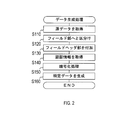
図2に示すデータ生成処理が起動されると、制御部22は、まず、データ取得部12を介して原データを取得する(S110)。
<1.2 データ生成処理>
図2に示すデータ生成処理が起動されると、制御部22は、まず、データ取得部12を介して原データを取得する(S110)。
続いて、制御部22は、S110で取得した原データを、規定ルールに従って区分けした複数のフィールド部30(図3参照)を生成する(S120)。規定ルールとは、原データの配列におけるデータ値の配置の順序に基づいて予め規定された規則である。実施形態における規定ルールは、インタレース形式におけるフィールドの各々へと区分けすることである。インタレース形式とは、画像の走査に関する形式であり、規定された画素ごとに画像の走査を飛び飛びに実施する形式である。本実施形態においては、インタレース形式の実現手法として、規定されたピクセルの順序で走査する周知のアルゴリズムであるAdam7を用いればよい。
また、フィールド部とは、原データを規定ルールに従って区分けしたものである。本実施形態におけるフィールド部30の各々は、インタレース形式におけるフィールドである。
さらに、制御部22は、S120で生成した複数のフィールド部30の各々にフィールドヘッダ部32(図3参照)を付加する(S130)。フィールドヘッダ部32とは、フィールド部30の内容を表す情報であり、フィールド部30ごとに設けられる。フィールド部の内容とは、各フィールドに含まれるデータサイズや、各フィールドの転送情報などである。
続いて、制御部22は、情報受付部16を介して認証情報を取得する(S140)。認証情報とは、利用者を識別する情報であり、例えば、IDとパスワードである。本実施形態においては、認証情報を、暗号化されるフィールド部30のグループごとに取得する。
そして、制御部22は、S140で取得した認証情報に基づいて、S120で生成した複数のフィールド部30のうち少なくとも1つのフィールド部30に含まれるデータ値の暗号化を実行する(S150)。S150における暗号化は、複数のフィールド部30のうち規定された数のフィールド部30に含まれるデータ値に対して実行する。本実施形態における規定された数とは、フィールド部30の個数である。S150では、全てのフィールド部30に含まれるデータ値が暗号化される。
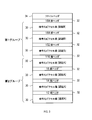
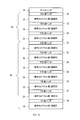
また、暗号化とは、認証情報を知らない第三者がデータを閲覧不可能とする処理である。本実施形態においては、図3に示すように、複数のフィールド部30のうち、2つの1/64部フィールド、及び1/32部フィールドの3つのフィールド部30(即ち、第1グループ)については、S140で取得した認証情報のうちの認証情報Bを用いて暗号化する。複数のフィールド部30のうち、残りの4つのフィールド部30(即ち、第2グループ)については、S140で取得した認証情報のうちの認証情報Aを用いて暗号化する。これらの認証情報は、フィールド部30に付加される。
続いて、制御部22は、S120からS150までのステップが実行された原データを特定データとして再構成して記憶する(S160)。
特定データとは、配列に従ってデータ値が並べられたデータであり、少なくとも一部のフィールド部30が暗号化されたデータである。本実施形態における特定データは、図3に示すように、複数のフィールド部30と、各フィールド部30に対するフィールドヘッダ部32と、データ全体の内容を表すファイルヘッダ部34とを備えている。
特定データとは、配列に従ってデータ値が並べられたデータであり、少なくとも一部のフィールド部30が暗号化されたデータである。本実施形態における特定データは、図3に示すように、複数のフィールド部30と、各フィールド部30に対するフィールドヘッダ部32と、データ全体の内容を表すファイルヘッダ部34とを備えている。
本実施形態においては、複数のフィールド部30のうちの第1グループのフィールド部30については、認証情報Bを用いて暗号化されている。また、第2グループのフィールド部30については、認証情報Bとは異なる情報である認証情報Aを用いて暗号化されている。
また、再構成とは、複数のフィールド部30と、複数のフィールドヘッダ部32とを備えたデータを生成することである。本実施形態においては、原データを特定データへと変換するという意味である。
なお、S160において、特定データを記憶する記憶先は、記憶部20であってもよいし、外部記憶装置であってもよい。外部記憶装置には、データ処理装置1に接続されたサーバを含む。
制御部22は、その後、本データ生成処理を終了する。
つまり、本データ生成処理では、原データをインタレース形式のデータへと変換し、そのインタレース形式のデータにおけるフィールド部30の一部を、認証情報Aを用いて暗号化する。また、残りのフィールド部30を、認証情報Bを用いて暗号化する。そして、これらの暗号化されたフィールド部30を備えた特定データを生成する。
つまり、本データ生成処理では、原データをインタレース形式のデータへと変換し、そのインタレース形式のデータにおけるフィールド部30の一部を、認証情報Aを用いて暗号化する。また、残りのフィールド部30を、認証情報Bを用いて暗号化する。そして、これらの暗号化されたフィールド部30を備えた特定データを生成する。
このため、特定データは、図3に示すように、複数のフィールド部30と、フィールドヘッダ部32と、ファイルヘッダ部34とを備え、フィールド部30に含まれるデータ値が暗号化されたデータ構造となる。
<1.3 表示処理>
次に、図4に示す表示処理が起動されると、制御部22は、まず、情報受付部16を介して指定された特定データを取得する(S210)。
<1.3 表示処理>
次に、図4に示す表示処理が起動されると、制御部22は、まず、情報受付部16を介して指定された特定データを取得する(S210)。
続いて、制御部22は、情報受付部16を介して認証情報を取得する(S220)。以下、S220で取得した認証情報を入力情報と称す。
そして、制御部22は、S220で取得した入力情報を、S210で取得した特定データに含まれる認証情報に照合し、認証に成功したか否かを判定する(S230)。本実施形態では、特定データに含まれる認証情報と入力情報が一致していれば、認証に成功したものと判定し、不一致であれば、認証に成功していないものとすればよい。
そして、制御部22は、S220で取得した入力情報を、S210で取得した特定データに含まれる認証情報に照合し、認証に成功したか否かを判定する(S230)。本実施形態では、特定データに含まれる認証情報と入力情報が一致していれば、認証に成功したものと判定し、不一致であれば、認証に成功していないものとすればよい。
このS230での判定の結果、認証に成功していなければ(S230:NO)、制御部22は、特定データに基づいて暗号化された画像を表示部14に表示する(S240)。
制御部22は、その後、本表示処理を終了する。
制御部22は、その後、本表示処理を終了する。
一方、S230での判定の結果、認証に成功していれば(S230:YES)、制御部22は、認証に成功したフィールド部30に含まれるデータ値を復号する(S250)。続いて、制御部22は、復号したデータ値に基づく画像を表示部14に表示する(S260)。
すなわち、複数の認証情報のうち、認証情報Bに対する認証に成功した場合、S260では、制御部22は、図5Aに示すように、認証情報Bで暗号化されたフィールド部30に含まれ、S250で復号されたデータ値に基づく画像を表示部14に表示する。また、複数の認証情報のうち、認証情報Aに対する認証に成功した場合、S260では、制御部22は、図5Bに示すように、認証情報Aで暗号化されたフィールド部30に含まれ、S250で復号されたデータ値に基づく画像を表示部14に表示する。
このように、一部のデータ値に基づく画像を表示する場合、復号されていないデータ値に対応するピクセルは、復号されたデータ値に基づいて補完されていてもよい。
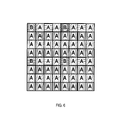
一方、複数の認証情報のうち、認証情報A、及び認証情報Bの双方での認証に成功した場合、S260では、制御部22は、図6に示すように、全てのフィールド部30に含まれるデータ値(即ち、全画素値)に基づく画像を表示部14に表示する。
一方、複数の認証情報のうち、認証情報A、及び認証情報Bの双方での認証に成功した場合、S260では、制御部22は、図6に示すように、全てのフィールド部30に含まれるデータ値(即ち、全画素値)に基づく画像を表示部14に表示する。
なお、図5A,図5B,図6におけるハッチングの相違は、フィールド部30の相違を意味する。
制御部22は、その後、本表示処理を終了する。
制御部22は、その後、本表示処理を終了する。
つまり、表示処理では、認証に成功したフィールド部30に含まれるデータ値を復号し、その復号されたデータ値に基づく画像を表示する。
[1.4 第1実施形態の効果]
(1A) したがって、メンテナンスの担当者などの利用者の一部に、複数の認証情報のうちの一部だけを教示すれば、その利用者は、特定データの一部だけを復号でき、特定データの全ては復号できない。
[1.4 第1実施形態の効果]
(1A) したがって、メンテナンスの担当者などの利用者の一部に、複数の認証情報のうちの一部だけを教示すれば、その利用者は、特定データの一部だけを復号でき、特定データの全ては復号できない。
したがって、認証情報のうちの一部の認証情報を知る利用者は、特定データがどのような情報であるのかの大枠、即ち、必要最低限の情報を認識できる。
この結果、医療の用途に用いられる画像を撮像して管理するシステムのメンテナンスの効率化を図ることができる。
この結果、医療の用途に用いられる画像を撮像して管理するシステムのメンテナンスの効率化を図ることができる。
(1B) 一方、認証情報のうちの一部の認証情報を知る利用者は、特定データの全容を把握することはできない。
よって、上述したデータ構造を有した特定データによれば、データの機密性を担保できる。
よって、上述したデータ構造を有した特定データによれば、データの機密性を担保できる。
(1C) つまり、上述したデータ構造を有した特定データによれば、複数の認証情報を使い分けて復号可能な範囲を変更することで、医療の用途に用いられる画像を撮像して管理するシステムの利用者が最低限必要な情報を認識可能としつつ、情報の機密性を確保できる。
(1D) さらに、表示処理において、認証に成功したフィールド部30だけに含まれ、復号されたデータ値に基づく画像を表示部14に表示する場合に、復号されていないデータ値に対応するピクセルを、復号されたデータ値に基づいて補完してもよい。このようにすれば、情報の機密性を確保しつつも、その画像の視認性を向上させることができる。
(1E) なお、全ての認証情報を知っている利用者であれば、特定データの全容を認識できる。
[第2実施形態]
第2実施形態は、第1実施形態とは、主として、特定データのデータ構造が異なる。このため、本実施形態においては、第1実施形態と相違する特定データのデータ構造について説明する。
[第2実施形態]
第2実施形態は、第1実施形態とは、主として、特定データのデータ構造が異なる。このため、本実施形態においては、第1実施形態と相違する特定データのデータ構造について説明する。
<2.1 特定データ>
本実施形態の特定データは、図7に示すように、複数のフィールド部30と、フィールドヘッダ部32と、ファイルヘッダ部34とを備える。
本実施形態の特定データは、図7に示すように、複数のフィールド部30と、フィールドヘッダ部32と、ファイルヘッダ部34とを備える。
本実施形態においては、複数のフィールド部30のうちの少なくとも1つのフィールド部30に含まれるデータ値は暗号化しない。
すなわち、データ生成処理のS150では、複数のフィールド部30のうち、2つのフィールド部30を第1グループとして、認証情報Bを用いて暗号化する。そして、複数のフィールド部30のうち、4つのフィールド部30を第2グループとして、認証情報Aを用いて暗号化する。残りの1つのフィールド部30については、暗号化することなく、S160にて、特定データを生成する。
すなわち、データ生成処理のS150では、複数のフィールド部30のうち、2つのフィールド部30を第1グループとして、認証情報Bを用いて暗号化する。そして、複数のフィールド部30のうち、4つのフィールド部30を第2グループとして、認証情報Aを用いて暗号化する。残りの1つのフィールド部30については、暗号化することなく、S160にて、特定データを生成する。
さらに、表示処理のS240では、制御部22は、図8Aに示すように暗号化されていないフィールド部30のデータ値に基づく画像を表示部14に表示する。
一方、複数の認証情報のうち認証情報Bに対する認証に成功した場合、表示処理のS260では、制御部22は、図8Bに示すように、暗号化されていないフィールド部30のデータ値、及び、認証情報Bで暗号化されたフィールド部30に含まれ、S250で復号されたデータ値に基づく画像を表示部14に表示する。また、複数の認証情報のうち認証情報Aに対する認証に成功した場合、表示部のS260では、制御部22は、図9Aに示すように、暗号化されていないフィールド部30のデータ値、及び、認証情報Aで暗号化されたフィールド部30に含まれ、S250で復号されたデータ値に基づく画像を表示部14に表示する。
一方、複数の認証情報のうち認証情報Bに対する認証に成功した場合、表示処理のS260では、制御部22は、図8Bに示すように、暗号化されていないフィールド部30のデータ値、及び、認証情報Bで暗号化されたフィールド部30に含まれ、S250で復号されたデータ値に基づく画像を表示部14に表示する。また、複数の認証情報のうち認証情報Aに対する認証に成功した場合、表示部のS260では、制御部22は、図9Aに示すように、暗号化されていないフィールド部30のデータ値、及び、認証情報Aで暗号化されたフィールド部30に含まれ、S250で復号されたデータ値に基づく画像を表示部14に表示する。
認証情報A,認証情報Bの双方の認証に成功した場合には、制御部22は、図9Bに示すように、全てのフィールド部30に含まれるデータ値に基づく画像を表示部14に表示する。
なお、図8A,図8B,図9A,図9Bにおけるハッチングの相違は、フィールド部30の相違を意味する。
[2.2 第2実施形態の効果]
このようなデータ構造を有した特定データによれば、利用者は、暗号化されていないフィールド部30については、復号することなくデータ値を把握できる。このため、利用者は、暗号化していないフィールド部30のデータ値から、特定データの全容の一部を把握できる。
[2.2 第2実施形態の効果]
このようなデータ構造を有した特定データによれば、利用者は、暗号化されていないフィールド部30については、復号することなくデータ値を把握できる。このため、利用者は、暗号化していないフィールド部30のデータ値から、特定データの全容の一部を把握できる。
一方、利用者は、全ての認証情報を知っていれば、特定データの全容を認識できる。
[第3実施形態]
第3実施形態は、第1実施形態とは、主として、特定データのデータ構造が異なる。このため、本実施形態においては、第3実施形態と相違する特定データのデータ構造について説明する。
[第3実施形態]
第3実施形態は、第1実施形態とは、主として、特定データのデータ構造が異なる。このため、本実施形態においては、第3実施形態と相違する特定データのデータ構造について説明する。
<3.1 特定データ>
本実施形態の特定データは、図10に示すように、ファイルヘッダ部34と、本体フィールド部40と、重複フィールド部42とを備える。
本実施形態の特定データは、図10に示すように、ファイルヘッダ部34と、本体フィールド部40と、重複フィールド部42とを備える。
本体フィールド部40は、全てのフィールド部30を有している。すなわち、本体フィールド部40は、原データに含まれるデータ値を、規定ルールに従って分類した全てのフィールド部30である。
重複フィールド部42は、本体フィールド部40に含まれるフィールド部30の一部と同じ内容のフィールド部30である。この同じ内容のフィールド部30とは、配列における位置及びデータ値が重複する少なくとも1つのフィールド部30である。すなわち、重複フィールド部42におけるフィールド部30の各々は、本体フィールド部40に含まれるフィールド部30と、同じデータ値を有している。本実施形態における重複フィールド部42のフィールド部30の個数は、3つである。
なお、本実施形態において、本体フィールド部40におけるフィールド部30の各々は、認証情報Bを用いて暗号化される。また、重複フィールド部42におけるフィールド部30の各々は、認証情報Bとは異なる認証情報Aを用いて暗号化される。
すなわち、データ生成処理のS150では、本体フィールド部40におけるフィールド部30の各々を第2グループとして、認証情報Aを用いて暗号化する。重複フィールド部42におけるフィールド部30の各々を第1グループとして、認証情報Bを用いて暗号化する。
さらに、表示処理のS240では、制御部22は、特定データに基づいて暗号化された画像を表示部14に表示する。
一方、表示処理のS260では、制御部22は、認証情報Bによる認証に成功していれば、図11Aに示すように、重複フィールド部42におけるフィールド部30のデータ値を復号し、その復号されたデータ値に基づく画像を表示部14に表示する。また、認証情報Aによる認証に成功した場合には、S260では、制御部22は、図11Bに示すように、本体フィールド部40におけるフィールド部30に含まれるデータ値を復号し、その復号されたデータ値に基づく画像を表示部14に表示する。
一方、表示処理のS260では、制御部22は、認証情報Bによる認証に成功していれば、図11Aに示すように、重複フィールド部42におけるフィールド部30のデータ値を復号し、その復号されたデータ値に基づく画像を表示部14に表示する。また、認証情報Aによる認証に成功した場合には、S260では、制御部22は、図11Bに示すように、本体フィールド部40におけるフィールド部30に含まれるデータ値を復号し、その復号されたデータ値に基づく画像を表示部14に表示する。
なお、図11A,図11Bにおけるハッチングの相違は、フィールド部30の相違を意味する。
[3.2 第3実施形態の効果]
このようなデータ構造によれば、重複フィールド部42を復号した場合には、データ値の一部が認識可能となり、本体フィールド部40を復号した場合には、全てのデータ値を認識可能となる。
[3.2 第3実施形態の効果]
このようなデータ構造によれば、重複フィールド部42を復号した場合には、データ値の一部が認識可能となり、本体フィールド部40を復号した場合には、全てのデータ値を認識可能となる。
よって、このようなデータ構造によれば、複数の認証情報を使い分けて復号可能な範囲を変更することで、データの機密性を担保しつつ、データの利用における利便性を高めることができる。
[4. その他の実施形態]
以上、本開示の実施形態について説明したが、本開示は上記実施形態に限定されるものではなく、本開示の要旨を逸脱しない範囲において、様々な態様にて実施することが可能である。
[4. その他の実施形態]
以上、本開示の実施形態について説明したが、本開示は上記実施形態に限定されるものではなく、本開示の要旨を逸脱しない範囲において、様々な態様にて実施することが可能である。
(4.1) 上記第1実施形態から第3実施形態では、特定データにおける配列を8行8列であるものとして説明したが、特定データにおける配列は、これに限るものではない。
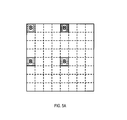
例えば、特定データにおける配列は、図12に示すように、16行16列であってもよい。この場合、特定データのデータ構造では、図13に示すように、フィールド部30の個数を増加させることで、上述した効果が得られる。
なお、図12におけるハッチングの相違は、フィールド部30の相違を意味する。
また、特定データにおける配列は、これに限るものではなく、順序を決めて並べられたものであれば、1行M列であってもよいし、M行1列であってもよいし、M行N列であってもよい。ただし、M,Nは1以上の整数である。
また、特定データにおける配列は、これに限るものではなく、順序を決めて並べられたものであれば、1行M列であってもよいし、M行1列であってもよいし、M行N列であってもよい。ただし、M,Nは1以上の整数である。
(4.2) 上記実施形態においては、インタレース形式の走査方法として、周知のAdam7を用いていたが、インタレース形式の走査方法は、これに限るものではない。
インタレース形式の走査方法は、例えば、図14A,図14Bに示すように、特定の行と、その特定の行から規定数の行の後の行を第1のフィールドとし、残りの行を第2のフィールドとして、画像の走査を飛び飛びに実施する形式であってもよい。
インタレース形式の走査方法は、例えば、図14A,図14Bに示すように、特定の行と、その特定の行から規定数の行の後の行を第1のフィールドとし、残りの行を第2のフィールドとして、画像の走査を飛び飛びに実施する形式であってもよい。
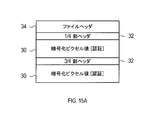
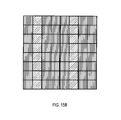
また、インタレース形式の走査方法は、例えば、図15A,図15Bに示すように、特定の列と、その特定の列から規定数の列の後の列を第1のフィールドとし、残りの列を第2のフィールドとして、画像の走査を飛び飛びに実施する形式であってもよい。
さらには、インタレース形式の走査方法は、例えば、図16A,図16Bに示すように、特定の行における規定されたピクセルを第1のフィールドとし、残りの全てのピクセルを第2のフィールドとして、画像の走査を飛び飛びに実施する形式であってもよい。
なお、図14B,図15B,図16Bにおけるハッチングの相違は、第1のフィールドと第2のフィールドとの相違を意味する。
(4.3) 上記実施形態では、1つの認証情報で複数のフィールド部30を暗号化していたが、1つの認証情報で暗号化する対象は、これに限るものではなく、例えば、1つの認証情報で1つのフィールド部30を暗号化してもよい。すなわち、フィールド部30ごとに異なる認証情報を用いて暗号化されていてもよい。
(4.3) 上記実施形態では、1つの認証情報で複数のフィールド部30を暗号化していたが、1つの認証情報で暗号化する対象は、これに限るものではなく、例えば、1つの認証情報で1つのフィールド部30を暗号化してもよい。すなわち、フィールド部30ごとに異なる認証情報を用いて暗号化されていてもよい。
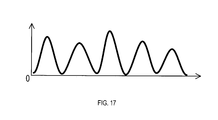
(4.4) 上記実施形態では、原データを画像データとして取得していたが、原データとして取得する対象は、これに限るものではない。原データとして取得する対象は、例えば、図17に示すように、波形における振幅を標本化した値をデータ値とした波形データであってもよい。この波形データは、計測機器にて計測した計測結果を示すものであってもよい。
(4.5) 上記実施形態における制御部22が実行する機能の一部または全部は、一つあるいは複数のIC等によりハードウェア的に構成されていてもよい。
(4.6) 上記実施形態においては、ROM24にプログラムが格納されていたが、プログラムを格納する記憶媒体は、これに限るものではなく、半導体メモリなどの非遷移的実体的記憶媒体に格納されていてもよい。
(4.6) 上記実施形態においては、ROM24にプログラムが格納されていたが、プログラムを格納する記憶媒体は、これに限るものではなく、半導体メモリなどの非遷移的実体的記憶媒体に格納されていてもよい。
(4.7) また、制御部22は非遷移的実体的記録媒体に格納されたプログラムを実行してもよい。このプログラムが実行されることで、プログラムに対応する方法が実現される。
(4.8) なお、上記実施形態の構成の一部を省略した態様も本開示の実施形態である。また、上記実施形態と変形例とを適宜組み合わせて構成される態様も本開示の実施形態である。また、特許請求の範囲に記載した文言によって特定される本開示の本質を逸脱しない限度において考え得るあらゆる態様も本開示の実施形態である。
(4.9)上記実施形態の説明で用いる符号を特許請求の範囲にも適宜使用しているが、各請求項に係る本開示の理解を容易にする目的で使用しており、各請求項に係る本開示の技術的範囲を限定する意図ではない。
[5. 対応関係]
データ生成処理のS110を実行することで得られる機能が、取得部に相当する。S120を実行することで得られる機能が、分類部に相当する。さらに、S130を実行することで得られる機能が、付加部に相当する。そして、S140~S150を実行することで得られる機能が、暗号処理部に相当する。S160を実行することで得られる機能が、生成部に相当する。
[5. 対応関係]
データ生成処理のS110を実行することで得られる機能が、取得部に相当する。S120を実行することで得られる機能が、分類部に相当する。さらに、S130を実行することで得られる機能が、付加部に相当する。そして、S140~S150を実行することで得られる機能が、暗号処理部に相当する。S160を実行することで得られる機能が、生成部に相当する。
Claims (8)
- データ処理装置(1)であって、
配列に従ってデータ値が並べられたデータを取得する取得部(22,S110)と、
前記取得部で取得したデータを、前記配列におけるデータ値の配置の順序に基づいて規定された規定ルールに従って区分けした複数のフィールド部を生成する分類部(22,S120)と、
前記分類部で生成された複数のフィールド部の各々の内容を表すフィールドヘッダ部を付加する付加部(22,S130)と、
前記分類部で生成された複数のフィールド部のうちの少なくとも1つのフィールド部に含まれるデータ値を暗号化する暗号処理部(22,S140,S150)と、
前記分類部で生成された複数のフィールド部、前記付加部で付加されたフィールドヘッダ部、及び前記暗号処理部で暗号化されたフィールド部に基づいて、複数のフィールド部(30)と、前記複数のフィールドヘッダ部(32)とを有し、前記複数のフィールド部のうちの少なくとも1つのフィールド部に含まれるデータ値が暗号化されているデータを生成する生成部(22,S160)と
を備える、データ処理装置。 - 配列に従ってデータ値が並べられたデータのデータ構造であって、
前記配列におけるデータ値の配置の順序に基づいて規定された規定ルールに従って、前記データを区分けした複数のフィールド部(30)と、
前記複数のフィールド部の各々の内容を表す複数のフィールドヘッダ部(32)と
を備え、
前記複数のフィールド部のうちの少なくとも1つのフィールド部に含まれるデータ値が暗号化されている、データ構造。 - 前記複数のフィールド部のうちの1つのフィールド部は、暗号化されていない、請求項2に記載のデータ構造。
- 前記複数のフィールド部のうち、前記データ値が暗号化されたフィールド部は、
認証に用いられる情報である認証情報を更に有する、請求項2または請求項3に記載のデータ構造。 - 前記認証情報は、
前記フィールド部ごとに規定されている、請求項4に記載のデータ構造。 - 前記配列における配置、及び前記データ値が重複する少なくとも1つのフィールド部である重複フィールド部(42)を更に備え、
前記複数のフィールド部において、前記重複フィールド部以外の全てのフィールド部を本体フィールド部(40)とし、
前記本体フィールド部に対する認証情報と、前記重複フィールド部に対する認証情報とが異なる、請求項4または請求項5に記載のデータ構造。 - 前記データ値は、画素値であり、
前記フィールド部は、
インタレース形式におけるフィールドである、請求項2から請求項6までのいずれか一項に記載のデータ構造。 - 前記データ値は、波形における振幅を標本化した値である、請求項2から請求項6までのいずれか一項に記載のデータ構造。
Applications Claiming Priority (2)
| Application Number | Priority Date | Filing Date | Title |
|---|---|---|---|
| JP2016023909A JP2017143432A (ja) | 2016-02-10 | 2016-02-10 | データ構造、及びデータ処理装置 |
| JP2016-023909 | 2016-02-10 |
Publications (1)
| Publication Number | Publication Date |
|---|---|
| WO2017138616A1 true WO2017138616A1 (ja) | 2017-08-17 |
Family
ID=59563320
Family Applications (1)
| Application Number | Title | Priority Date | Filing Date |
|---|---|---|---|
| PCT/JP2017/004766 Ceased WO2017138616A1 (ja) | 2016-02-10 | 2017-02-09 | データ構造、及びデータ処理装置 |
Country Status (2)
| Country | Link |
|---|---|
| JP (1) | JP2017143432A (ja) |
| WO (1) | WO2017138616A1 (ja) |
Citations (4)
| Publication number | Priority date | Publication date | Assignee | Title |
|---|---|---|---|---|
| JPS61264371A (ja) * | 1985-05-20 | 1986-11-22 | 森 亮一 | デ−タ保護方式 |
| JP2001216045A (ja) * | 2000-02-03 | 2001-08-10 | Nec Corp | バイオメトリクス入力装置及びバイオメトリクス照合装置 |
| JP2003319158A (ja) * | 2002-04-18 | 2003-11-07 | Toshiyuki Tani | 画像処理システム |
| JP2007243256A (ja) * | 2006-03-06 | 2007-09-20 | Dainippon Printing Co Ltd | 医療用画像暗号化装置 |
-
2016
- 2016-02-10 JP JP2016023909A patent/JP2017143432A/ja active Pending
-
2017
- 2017-02-09 WO PCT/JP2017/004766 patent/WO2017138616A1/ja not_active Ceased
Patent Citations (4)
| Publication number | Priority date | Publication date | Assignee | Title |
|---|---|---|---|---|
| JPS61264371A (ja) * | 1985-05-20 | 1986-11-22 | 森 亮一 | デ−タ保護方式 |
| JP2001216045A (ja) * | 2000-02-03 | 2001-08-10 | Nec Corp | バイオメトリクス入力装置及びバイオメトリクス照合装置 |
| JP2003319158A (ja) * | 2002-04-18 | 2003-11-07 | Toshiyuki Tani | 画像処理システム |
| JP2007243256A (ja) * | 2006-03-06 | 2007-09-20 | Dainippon Printing Co Ltd | 医療用画像暗号化装置 |
Also Published As
| Publication number | Publication date |
|---|---|
| JP2017143432A (ja) | 2017-08-17 |
Similar Documents
| Publication | Publication Date | Title |
|---|---|---|
| US12073939B2 (en) | Volumetric imaging technique for medical imaging processing system | |
| Tang et al. | Efficient image encryption with block shuffling and chaotic map | |
| US8873744B2 (en) | Electronic document processing system | |
| US9152810B2 (en) | Information output system, method, and program for tampering detection | |
| US9094204B2 (en) | Image encryption system and image decryption system | |
| US20090214033A1 (en) | Image encryption apparatus and image decryption apparatus | |
| Lata et al. | Deep learning-based brain tumor detection in privacy-preserving smart health care systems | |
| CN103514579A (zh) | 信息处理装置、信息处理系统和信息处理方法 | |
| US7770026B2 (en) | Document management system, information processing device and method, and computer program | |
| Abirami et al. | Secured DICOM medical image transition with optimized chaos method for encryption and customized deep learning model for watermarking | |
| Das et al. | A metamorphic cryptography approach towards securing medical data using chaotic sequences and Ramanujan conjecture | |
| Mata-Mendoza et al. | An improved ROI-based reversible data hiding scheme completely separable applied to encrypted medical images | |
| CN107977580B (zh) | 医学图像的加密、解密方法和装置及医学图像的处理系统 | |
| US11276138B2 (en) | Image data encryption and rendering system | |
| JP2007206762A (ja) | 二次元コードを用いた通信方法および通信装置 | |
| US20110280395A1 (en) | Image encryption device, image decryption device and methods | |
| WO2017138616A1 (ja) | データ構造、及びデータ処理装置 | |
| Arafat et al. | Decentralized Medical Image Sharing: A Blockchain Based Approach with Subject Sensitive Hashing for Enhanced Privacy and Integrity | |
| Prabhu et al. | Secured transmission of medical images in radiology using aes technique | |
| Marakumbi et al. | Efficient reconfigurable architecture to enhance medical image security | |
| JP2007243256A (ja) | 医療用画像暗号化装置 | |
| Mohan et al. | An Efficient Framework to Protect Medical Images. | |
| Al-Haija | Biomedical image security | |
| Andreatos et al. | Secure Chaotic Cryptosystem for 3D Medical Images | |
| CN115396222B (zh) | 设备指令执行方法、系统、电子设备及可读存储介质 |
Legal Events
| Date | Code | Title | Description |
|---|---|---|---|
| 121 | Ep: the epo has been informed by wipo that ep was designated in this application |
Ref document number: 17750337 Country of ref document: EP Kind code of ref document: A1 |
|
| NENP | Non-entry into the national phase |
Ref country code: DE |
|
| 122 | Ep: pct application non-entry in european phase |
Ref document number: 17750337 Country of ref document: EP Kind code of ref document: A1 |