WO2017134618A1 - Monocarbonyl ruthenium and osmium catalysts - Google Patents

Monocarbonyl ruthenium and osmium catalysts Download PDF

Info

Publication number
WO2017134618A1
WO2017134618A1 PCT/IB2017/050598 IB2017050598W WO2017134618A1 WO 2017134618 A1 WO2017134618 A1 WO 2017134618A1 IB 2017050598 W IB2017050598 W IB 2017050598W WO 2017134618 A1 WO2017134618 A1 WO 2017134618A1
Authority
WO
WIPO (PCT)
Prior art keywords
formula
phosphine
bis
groups
independently selected
Prior art date
Legal status (The legal status is an assumption and is not a legal conclusion. Google has not performed a legal analysis and makes no representation as to the accuracy of the status listed.)
Ceased
Application number
PCT/IB2017/050598
Other languages
French (fr)
Inventor
Walter Baratta
Salvatore Baldino
Steven GIBOULOT
Current Assignee (The listed assignees may be inaccurate. Google has not performed a legal analysis and makes no representation or warranty as to the accuracy of the list.)
Universita degli Studi di Udine
Innovation Factory SRL
Original Assignee
Universita degli Studi di Udine
Innovation Factory SRL
Priority date (The priority date is an assumption and is not a legal conclusion. Google has not performed a legal analysis and makes no representation as to the accuracy of the date listed.)
Filing date
Publication date
Application filed by Universita degli Studi di Udine, Innovation Factory SRL filed Critical Universita degli Studi di Udine
Priority to US16/075,315 priority Critical patent/US11278876B2/en
Priority to EP17706312.0A priority patent/EP3411347B1/en
Priority to JP2018541274A priority patent/JP6923542B2/en
Priority to CN201780018674.6A priority patent/CN108779042B/en
Priority to GB1814431.1A priority patent/GB2565443B/en
Publication of WO2017134618A1 publication Critical patent/WO2017134618A1/en
Anticipated expiration legal-status Critical
Priority to US17/673,220 priority patent/US11577233B2/en
Priority to US18/150,909 priority patent/US11819837B2/en
Ceased legal-status Critical Current

Links

Classifications

    • B—PERFORMING OPERATIONS; TRANSPORTING
    • B01—PHYSICAL OR CHEMICAL PROCESSES OR APPARATUS IN GENERAL
    • B01J—CHEMICAL OR PHYSICAL PROCESSES, e.g. CATALYSIS OR COLLOID CHEMISTRY; THEIR RELEVANT APPARATUS
    • B01J31/00—Catalysts comprising hydrides, coordination complexes or organic compounds
    • B01J31/16—Catalysts comprising hydrides, coordination complexes or organic compounds containing coordination complexes
    • B01J31/24—Phosphines, i.e. phosphorus bonded to only carbon atoms, or to both carbon and hydrogen atoms, including e.g. sp2-hybridised phosphorus compounds such as phosphabenzene, phosphole or anionic phospholide ligands
    • B01J31/2404—Cyclic ligands, including e.g. non-condensed polycyclic ligands, the phosphine-P atom being a ring member or a substituent on the ring
    • B01J31/2442—Cyclic ligands, including e.g. non-condensed polycyclic ligands, the phosphine-P atom being a ring member or a substituent on the ring comprising condensed ring systems
    • B01J31/2447—Cyclic ligands, including e.g. non-condensed polycyclic ligands, the phosphine-P atom being a ring member or a substituent on the ring comprising condensed ring systems and phosphine-P atoms as substituents on a ring of the condensed system or on a further attached ring
    • B01J31/2452—Cyclic ligands, including e.g. non-condensed polycyclic ligands, the phosphine-P atom being a ring member or a substituent on the ring comprising condensed ring systems and phosphine-P atoms as substituents on a ring of the condensed system or on a further attached ring with more than one complexing phosphine-P atom
    • C—CHEMISTRY; METALLURGY
    • C07—ORGANIC CHEMISTRY
    • C07F—ACYCLIC, CARBOCYCLIC OR HETEROCYCLIC COMPOUNDS CONTAINING ELEMENTS OTHER THAN CARBON, HYDROGEN, HALOGEN, OXYGEN, NITROGEN, SULFUR, SELENIUM OR TELLURIUM
    • C07F15/00—Compounds containing elements of Groups 8, 9, 10 or 18 of the Periodic Table
    • B—PERFORMING OPERATIONS; TRANSPORTING
    • B01—PHYSICAL OR CHEMICAL PROCESSES OR APPARATUS IN GENERAL
    • B01J—CHEMICAL OR PHYSICAL PROCESSES, e.g. CATALYSIS OR COLLOID CHEMISTRY; THEIR RELEVANT APPARATUS
    • B01J31/00—Catalysts comprising hydrides, coordination complexes or organic compounds
    • B01J31/16—Catalysts comprising hydrides, coordination complexes or organic compounds containing coordination complexes
    • B01J31/18—Catalysts comprising hydrides, coordination complexes or organic compounds containing coordination complexes containing nitrogen, phosphorus, arsenic or antimony as complexing atoms, e.g. in pyridine ligands, or in resonance therewith, e.g. in isocyanide ligands C=N-R or as complexed central atoms
    • B01J31/1805—Catalysts comprising hydrides, coordination complexes or organic compounds containing coordination complexes containing nitrogen, phosphorus, arsenic or antimony as complexing atoms, e.g. in pyridine ligands, or in resonance therewith, e.g. in isocyanide ligands C=N-R or as complexed central atoms the ligands containing nitrogen
    • B01J31/181—Cyclic ligands, including e.g. non-condensed polycyclic ligands, comprising at least one complexing nitrogen atom as ring member, e.g. pyridine
    • B01J31/1815—Cyclic ligands, including e.g. non-condensed polycyclic ligands, comprising at least one complexing nitrogen atom as ring member, e.g. pyridine with more than one complexing nitrogen atom, e.g. bipyridyl, 2-aminopyridine
    • B01J31/182—Cyclic ligands, including e.g. non-condensed polycyclic ligands, comprising at least one complexing nitrogen atom as ring member, e.g. pyridine with more than one complexing nitrogen atom, e.g. bipyridyl, 2-aminopyridine comprising aliphatic or saturated rings
    • B—PERFORMING OPERATIONS; TRANSPORTING
    • B01—PHYSICAL OR CHEMICAL PROCESSES OR APPARATUS IN GENERAL
    • B01J—CHEMICAL OR PHYSICAL PROCESSES, e.g. CATALYSIS OR COLLOID CHEMISTRY; THEIR RELEVANT APPARATUS
    • B01J31/00—Catalysts comprising hydrides, coordination complexes or organic compounds
    • B01J31/16—Catalysts comprising hydrides, coordination complexes or organic compounds containing coordination complexes
    • B01J31/18—Catalysts comprising hydrides, coordination complexes or organic compounds containing coordination complexes containing nitrogen, phosphorus, arsenic or antimony as complexing atoms, e.g. in pyridine ligands, or in resonance therewith, e.g. in isocyanide ligands C=N-R or as complexed central atoms
    • B01J31/189—Catalysts comprising hydrides, coordination complexes or organic compounds containing coordination complexes containing nitrogen, phosphorus, arsenic or antimony as complexing atoms, e.g. in pyridine ligands, or in resonance therewith, e.g. in isocyanide ligands C=N-R or as complexed central atoms containing both nitrogen and phosphorus as complexing atoms, including e.g. phosphino moieties, in one at least bidentate or bridging ligand
    • B—PERFORMING OPERATIONS; TRANSPORTING
    • B01—PHYSICAL OR CHEMICAL PROCESSES OR APPARATUS IN GENERAL
    • B01J—CHEMICAL OR PHYSICAL PROCESSES, e.g. CATALYSIS OR COLLOID CHEMISTRY; THEIR RELEVANT APPARATUS
    • B01J31/00—Catalysts comprising hydrides, coordination complexes or organic compounds
    • B01J31/16—Catalysts comprising hydrides, coordination complexes or organic compounds containing coordination complexes
    • B01J31/24—Phosphines, i.e. phosphorus bonded to only carbon atoms, or to both carbon and hydrogen atoms, including e.g. sp2-hybridised phosphorus compounds such as phosphabenzene, phosphole or anionic phospholide ligands
    • B01J31/2404—Cyclic ligands, including e.g. non-condensed polycyclic ligands, the phosphine-P atom being a ring member or a substituent on the ring
    • B01J31/2419—Cyclic ligands, including e.g. non-condensed polycyclic ligands, the phosphine-P atom being a ring member or a substituent on the ring comprising P as ring member
    • B01J31/2428—Cyclic ligands, including e.g. non-condensed polycyclic ligands, the phosphine-P atom being a ring member or a substituent on the ring comprising P as ring member with more than one complexing phosphine-P atom
    • B01J31/2433—Cyclic ligands, including e.g. non-condensed polycyclic ligands, the phosphine-P atom being a ring member or a substituent on the ring comprising P as ring member with more than one complexing phosphine-P atom comprising aliphatic or saturated rings
    • C—CHEMISTRY; METALLURGY
    • C07—ORGANIC CHEMISTRY
    • C07B—GENERAL METHODS OF ORGANIC CHEMISTRY; APPARATUS THEREFOR
    • C07B41/00—Formation or introduction of functional groups containing oxygen
    • C07B41/02—Formation or introduction of functional groups containing oxygen of hydroxy or O-metal groups
    • C—CHEMISTRY; METALLURGY
    • C07—ORGANIC CHEMISTRY
    • C07C—ACYCLIC OR CARBOCYCLIC COMPOUNDS
    • C07C201/00—Preparation of esters of nitric or nitrous acid or of compounds containing nitro or nitroso groups bound to a carbon skeleton
    • C07C201/06—Preparation of nitro compounds
    • C07C201/12—Preparation of nitro compounds by reactions not involving the formation of nitro groups
    • C—CHEMISTRY; METALLURGY
    • C07—ORGANIC CHEMISTRY
    • C07C—ACYCLIC OR CARBOCYCLIC COMPOUNDS
    • C07C29/00—Preparation of compounds having hydroxy or O-metal groups bound to a carbon atom not belonging to a six-membered aromatic ring
    • C07C29/132—Preparation of compounds having hydroxy or O-metal groups bound to a carbon atom not belonging to a six-membered aromatic ring by reduction of an oxygen containing functional group
    • C07C29/136—Preparation of compounds having hydroxy or O-metal groups bound to a carbon atom not belonging to a six-membered aromatic ring by reduction of an oxygen containing functional group of >C=O containing groups, e.g. —COOH
    • C07C29/14—Preparation of compounds having hydroxy or O-metal groups bound to a carbon atom not belonging to a six-membered aromatic ring by reduction of an oxygen containing functional group of >C=O containing groups, e.g. —COOH of a —CHO group
    • C—CHEMISTRY; METALLURGY
    • C07—ORGANIC CHEMISTRY
    • C07C—ACYCLIC OR CARBOCYCLIC COMPOUNDS
    • C07C29/00—Preparation of compounds having hydroxy or O-metal groups bound to a carbon atom not belonging to a six-membered aromatic ring
    • C07C29/132—Preparation of compounds having hydroxy or O-metal groups bound to a carbon atom not belonging to a six-membered aromatic ring by reduction of an oxygen containing functional group
    • C07C29/136—Preparation of compounds having hydroxy or O-metal groups bound to a carbon atom not belonging to a six-membered aromatic ring by reduction of an oxygen containing functional group of >C=O containing groups, e.g. —COOH
    • C07C29/143—Preparation of compounds having hydroxy or O-metal groups bound to a carbon atom not belonging to a six-membered aromatic ring by reduction of an oxygen containing functional group of >C=O containing groups, e.g. —COOH of ketones
    • C—CHEMISTRY; METALLURGY
    • C07—ORGANIC CHEMISTRY
    • C07C—ACYCLIC OR CARBOCYCLIC COMPOUNDS
    • C07C29/00—Preparation of compounds having hydroxy or O-metal groups bound to a carbon atom not belonging to a six-membered aromatic ring
    • C07C29/132—Preparation of compounds having hydroxy or O-metal groups bound to a carbon atom not belonging to a six-membered aromatic ring by reduction of an oxygen containing functional group
    • C07C29/136—Preparation of compounds having hydroxy or O-metal groups bound to a carbon atom not belonging to a six-membered aromatic ring by reduction of an oxygen containing functional group of >C=O containing groups, e.g. —COOH
    • C07C29/143—Preparation of compounds having hydroxy or O-metal groups bound to a carbon atom not belonging to a six-membered aromatic ring by reduction of an oxygen containing functional group of >C=O containing groups, e.g. —COOH of ketones
    • C07C29/145—Preparation of compounds having hydroxy or O-metal groups bound to a carbon atom not belonging to a six-membered aromatic ring by reduction of an oxygen containing functional group of >C=O containing groups, e.g. —COOH of ketones with hydrogen or hydrogen-containing gases
    • C—CHEMISTRY; METALLURGY
    • C07—ORGANIC CHEMISTRY
    • C07C—ACYCLIC OR CARBOCYCLIC COMPOUNDS
    • C07C41/00—Preparation of ethers; Preparation of compounds having groups, groups or groups
    • C07C41/01—Preparation of ethers
    • C07C41/18—Preparation of ethers by reactions not forming ether-oxygen bonds
    • C07C41/26—Preparation of ethers by reactions not forming ether-oxygen bonds by introduction of hydroxy or O-metal groups
    • C—CHEMISTRY; METALLURGY
    • C07—ORGANIC CHEMISTRY
    • C07F—ACYCLIC, CARBOCYCLIC OR HETEROCYCLIC COMPOUNDS CONTAINING ELEMENTS OTHER THAN CARBON, HYDROGEN, HALOGEN, OXYGEN, NITROGEN, SULFUR, SELENIUM OR TELLURIUM
    • C07F15/00—Compounds containing elements of Groups 8, 9, 10 or 18 of the Periodic Table
    • C07F15/0006—Compounds containing elements of Groups 8, 9, 10 or 18 of the Periodic Table compounds of the platinum group
    • C07F15/002—Osmium compounds
    • C—CHEMISTRY; METALLURGY
    • C07—ORGANIC CHEMISTRY
    • C07F—ACYCLIC, CARBOCYCLIC OR HETEROCYCLIC COMPOUNDS CONTAINING ELEMENTS OTHER THAN CARBON, HYDROGEN, HALOGEN, OXYGEN, NITROGEN, SULFUR, SELENIUM OR TELLURIUM
    • C07F15/00—Compounds containing elements of Groups 8, 9, 10 or 18 of the Periodic Table
    • C07F15/0006—Compounds containing elements of Groups 8, 9, 10 or 18 of the Periodic Table compounds of the platinum group
    • C07F15/0046—Ruthenium compounds
    • C—CHEMISTRY; METALLURGY
    • C07—ORGANIC CHEMISTRY
    • C07F—ACYCLIC, CARBOCYCLIC OR HETEROCYCLIC COMPOUNDS CONTAINING ELEMENTS OTHER THAN CARBON, HYDROGEN, HALOGEN, OXYGEN, NITROGEN, SULFUR, SELENIUM OR TELLURIUM
    • C07F15/00—Compounds containing elements of Groups 8, 9, 10 or 18 of the Periodic Table
    • C07F15/0006—Compounds containing elements of Groups 8, 9, 10 or 18 of the Periodic Table compounds of the platinum group
    • C07F15/0046—Ruthenium compounds
    • C07F15/0053—Ruthenium compounds without a metal-carbon linkage
    • B—PERFORMING OPERATIONS; TRANSPORTING
    • B01—PHYSICAL OR CHEMICAL PROCESSES OR APPARATUS IN GENERAL
    • B01J—CHEMICAL OR PHYSICAL PROCESSES, e.g. CATALYSIS OR COLLOID CHEMISTRY; THEIR RELEVANT APPARATUS
    • B01J2231/00—Catalytic reactions performed with catalysts classified in B01J31/00
    • B01J2231/60—Reduction reactions, e.g. hydrogenation
    • B01J2231/64—Reductions in general of organic substrates, e.g. hydride reductions or hydrogenations
    • B01J2231/641—Hydrogenation of organic substrates, i.e. H2 or H-transfer hydrogenations, e.g. Fischer-Tropsch processes
    • B—PERFORMING OPERATIONS; TRANSPORTING
    • B01—PHYSICAL OR CHEMICAL PROCESSES OR APPARATUS IN GENERAL
    • B01J—CHEMICAL OR PHYSICAL PROCESSES, e.g. CATALYSIS OR COLLOID CHEMISTRY; THEIR RELEVANT APPARATUS
    • B01J2531/00—Additional information regarding catalytic systems classified in B01J31/00
    • B01J2531/02—Compositional aspects of complexes used, e.g. polynuclearity
    • B01J2531/0238—Complexes comprising multidentate ligands, i.e. more than 2 ionic or coordinative bonds from the central metal to the ligand, the latter having at least two donor atoms, e.g. N, O, S, P
    • B01J2531/0241—Rigid ligands, e.g. extended sp2-carbon frameworks or geminal di- or trisubstitution
    • B01J2531/0244—Pincer-type complexes, i.e. consisting of a tridentate skeleton bound to a metal, e.g. by one to three metal-carbon sigma-bonds
    • B—PERFORMING OPERATIONS; TRANSPORTING
    • B01—PHYSICAL OR CHEMICAL PROCESSES OR APPARATUS IN GENERAL
    • B01J—CHEMICAL OR PHYSICAL PROCESSES, e.g. CATALYSIS OR COLLOID CHEMISTRY; THEIR RELEVANT APPARATUS
    • B01J2531/00—Additional information regarding catalytic systems classified in B01J31/00
    • B01J2531/80—Complexes comprising metals of Group VIII as the central metal
    • B01J2531/82—Metals of the platinum group
    • B01J2531/821—Ruthenium
    • B—PERFORMING OPERATIONS; TRANSPORTING
    • B01—PHYSICAL OR CHEMICAL PROCESSES OR APPARATUS IN GENERAL
    • B01J—CHEMICAL OR PHYSICAL PROCESSES, e.g. CATALYSIS OR COLLOID CHEMISTRY; THEIR RELEVANT APPARATUS
    • B01J2531/00—Additional information regarding catalytic systems classified in B01J31/00
    • B01J2531/80—Complexes comprising metals of Group VIII as the central metal
    • B01J2531/82—Metals of the platinum group
    • B01J2531/825—Osmium
    • C—CHEMISTRY; METALLURGY
    • C07—ORGANIC CHEMISTRY
    • C07C—ACYCLIC OR CARBOCYCLIC COMPOUNDS
    • C07C2602/00—Systems containing two condensed rings
    • C07C2602/02—Systems containing two condensed rings the rings having only two atoms in common
    • C07C2602/04—One of the condensed rings being a six-membered aromatic ring
    • C07C2602/10—One of the condensed rings being a six-membered aromatic ring the other ring being six-membered, e.g. tetraline

Definitions

  • the invention relates to monocarbonyl complexes of ruthenium and osmium with bi- and tridentate nitrogen and phosphine ligands.
  • the invention relates to methods for preparing these complexes and the use of these complexes, isolated or prepared in situ, as catalysts for reduction reactions of ketones and aldehydes both via transfer hydrogenation or hydrogenation with hydrogen.
  • the carbonyl compounds (aldehydes and ketones) can be easily reduced to alcohols by molecular hydrogen (hydrogenation) or hydrogen donor molecules (transfer hydrogenation) through the use of catalysts based on rhodium, iridium, iron, ruthenium and osmium.
  • the transfer hydrogenation reaction has also been developed using 2-propanol or formic acid as hydrogen source, with the advantage of employing non-pressure systems and reducing the risk.
  • the purpose of the present invention relates to the synthesis of complexes of ruthenium and osmium containing a CO ligand in combination with bidentate and tridentate nitrogen ligands and achiral or chiral phosphines. These complexes can be used as catalysts in the (asymmetric) reduction of carbonyl compounds by transfer hydrogenation or hydrogenation with molecular hydrogen.
  • a further object of the present invention is to obtain ruthenium (II) and osmium (II) complexes which can be generated in situ during the reduction of carbonyl compounds or by transfer hydrogenation or hydrogenation with molecular hydrogen.
  • the present disclosure refers to a pentacoordinate or hexacoordinate complex of formula (1 ): [MXY a (CO)L b L' c ]Wd (1 )
  • a, b and d are independently 0 or 1 ;
  • c 1 or 2;
  • X, Y are independently selected among halides, hydride, C1 -C20 carboxylates and C1 - C20 alkoxides;
  • W is selected among halides, C1 -C20 carboxylates and C1 -C20 alkoxides;
  • L is a nitrogen-containing ligand selected among:
  • R 1 - R 15 are independently selected among H, C1 -C20 aliphatic groups and C5-C20 aromatic groups;
  • L' is at least one phosphorus-containing ligand selected among: - a phosphine (P) selected among: a phosphine of formula PR 16 R 17 R 18 , wherein R 16 - R 18 are independently selected among H, C1 -C20 aliphatic groups and C5-C20 aromatic groups; an optically active phosphine selected among (S)- neomenthyldiphenylphosphine and (fl)-(+)-2-(diphenylphosphino)-2'-methoxy-1 ,1 '- binaphthyl;
  • diphosphine selected among: a diphosphine of formula P(R 19 )2 - Z -P(R 20 )2, wherein Z is a C2-C4 aliphatic group or ferrocene optionally substituted with C1 -C20 aliphatic groups, and wherein R 19 and R 20 are independently selected among C1 -C20 aliphatic groups and C5-C20 aromatic groups; an optically active diphosphine selected from the group consisting of (fl)-(6,6'-dimethoxybiphenyl-2,2'- diyl)bis(diphenylphosphine], (ft)-(1 ,1 '-binaphthalene-2,2'-diyl)bis(diphenylphosphine), (ft)-(1 ,1 '-binaphthalene-2,2'-diyl)bis[bis(3,5-dimethylmethyl)phosphine], (ft)-1 -
  • pj2i _ pj29 are j nc
  • the present disclosure refers to the use of said ruthenium or osmium complexes as catalyst or pre-catalyst for the reduction reaction of ketones or aldehydes to alcohols by transfer hydrogenation or hydrogenation with molecular hydrogen.
  • aliphatic group refers to acyclic or cyclic, linear or branched, saturated or unsaturated hydrocarbons, excluding aromatic groups.
  • substituted aliphatic group refers to an aliphatic group in which at least one hydrogen atom is replaced by at least one substituent group selected among -OR, -NRR', -NRCOR', -NO 2 , -NH 2 , -COR, -COOR, -CONRR' and halides, wherein R and R' are equal or different and can be a H or a C1 -C20 aliphatic or aromatic group.
  • aromatic group also include aromatic compounds substituted with aliphatic groups.
  • substituted aromatic group refers to an aromatic group in which at least one aromatic hydrogen atom is replaced with at least one substituent group selected among -R, -OR, -NRR', -NRCOR', -NO 2 , -NH 2 , -COR, -COOR, -CONRR' and halides, wherein R and R' are equal or different and can be a H or a C1 -C20 aliphatic or aromatic group.
  • heteromatic group refers to aromatic groups in which at least one carbon atom which is part of the aromatic ring is replaced with one heteroatom selected among N, S, O and P.
  • hydrogen-donor refers to a compound that transfers a hydrogen atom to another compound.
  • (transfer)hydrogenation refers to hydrogenation with molecular hydrogen or to transfer hydrogenation using a hydrogen donor compound.
  • Table 1 the abbreviations listed in Table 1 are used:
  • the present disclosure refers to a pentacoordinate or hexacoordinate complex of formula (1 ): [MXY a (CO)L b L' c ]W d (1 )
  • a, b and d are independently 0 or 1 ;
  • c is 1 or 2;
  • X, Y are independently selected among halides, hydride, C1 -C20 carboxylates and C1 - C20 alkoxides;
  • W is selected among halides, C1 -C20 carboxylates and C1 -C20 alkoxides;
  • L is a nitrogen-containing ligand selected among:
  • R 1 - R 15 are independently selected among H, C1 -C20 aliphatic groups and C5-C20 aromatic groups, preferably R 1 and R 2 may be independently selected among H and a phenyl group and/or R 3 -R 6 and R 8 -R 15 may be H and/or R 7 may be 4-methyl;
  • L' is at least one phosphorus-containing ligand selected among:
  • a phosphine selected among: a phosphine of formula PR 16 R 17 R 18 , wherein R 16 - R 18 are independently selected among H, C1 -C20 aliphatic groups and C5-C20 aromatic groups; an optically active phosphine selected among (S)- neomenthyldiphenylphosphine and (fl)-(+)-2-(diphenylphosphino)-2'-methoxy-1 ,1 '- binaphthyl;
  • diphosphine selected among: a diphosphine of formula P(R 19 )2 - Z -P(R 20 )2, wherein Z is a C2-C4 aliphatic group or ferrocene optionally substituted with C1 -C20 aliphatic groups, and wherein R 19 and R 20 are independently selected among C1 -C20 aliphatic groups and C5-C20 aromatic groups; an optically active diphosphine selected from the group consisting of (ft)-(6,6'-dimethoxybiphenyl-2,2'- diyl)bis(diphenylphosphine], (fi)-(1 ,1 '-binaphthalene-2,2'-diyl)bis(diphenylphosphine), (fl)-(1 ,1 '-binaphthalene-2,2'-diyl)bis[bis(3,5-dimethylmethyl)phosphine], (fl)-1 -
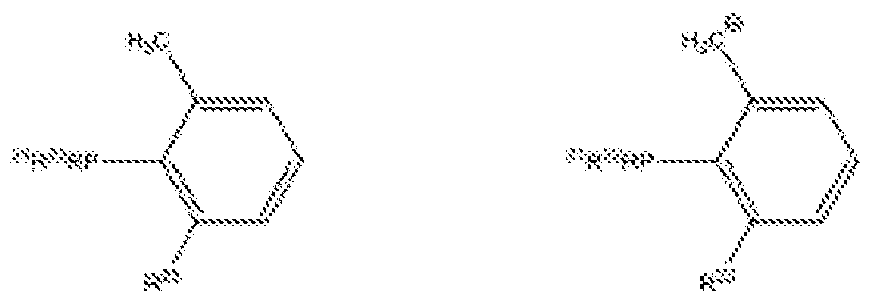
  • R 21 - R 23 are independently selected among H, C1 -C20 aliphatic groups and C5-C20 aromatic groups, preferably R 23 may be -CH 3 and/or R 21 - R 22 may be C6-C20 cycloaliphatic group or C6-C20 aromatic group, more preferably R 23 may be -CH 3 and/or R 21 - R 22 may be independently selected among phenyl and cyclohexyl group - a PNN compound of formula (V)
  • R 24 - R 29 are independently selected among H, C1 -C20 aliphatic groups and C5-C20 aromatic groups, preferably R 24 and R 27 -R 29 may be H and/or R 25 and R 26 may be a C1 - C20 aromatic group, more preferably a phenyl group;
  • L ethylenediamine or 2- (aminomethyl)pyridine, L' is not Ph 2 P(CH2CH 2 CH2)PPh2;
  • the high modularity of the nitrogen-containing ligands (la-c), (lla-d) and (Ilia) in combination with phosphines (P), diphosphines (PP), HCP phosphines and PNN phosphines, allows to obtain a large number of well-defined catalysts displaying high chemo- and stereoselectivity.
  • the bidentate (NN) ligands of type (la-c) have the ability, through the nitrogen atoms of a -NH 2 group or of a heterocycle in combination with monodentate phosphines, to coordinate the metal.
  • the present disclosure may refer to a complex of formula (VI)
  • M, X, Y, (NN) and (P) are as defined above, provided that when X and Y are CI, R 16 _ R 18 are not ph en y
  • the present disclosure may refer to complexes of formula (VI) wherein M, X, Y, (NN) and (P) are as defined above, provided that when X and Y are CI, R 16 - R 18 are not aromatic groups.
  • Complexes of formula (VI) can be obtained as a mixture of frans-isomers (eg. complex 4 and 6 below) and c/ ' s-isomers (eg. complex 5 and 7).
  • the present disclosure also refers to a process to obtain complexes of formula (VI) comprising reacting a compound of formula MXY(CO)(PPh 3 ) 2 , or of formula MXY(CO)(PPh 3 ) 2 (dmf), wherein M, X, Y are as defined above and (dmf) is dimethylformamide, with a phosphine (P) selected among:
  • R 16 - R 18 are independently selected among H, C1 -C20 aliphatic group and C5-C20 aromatic groups;
  • an optically active phosphine selected among (S)-neomenthyldiphenylphosphine and (fl)-(+)-2-(diphenylphosphino)-2'-methoxy-1 ,1 '-binaphthyl;
  • R 1 - R 6 are independently selected among H, C1 -C20 aliphatic group and C5-C20 aromatic group, preferably R 1 and R 2 may be independently selected among H and a phenyl group and/or R 3 -R 6 may be H.
  • Compounds of formula MXY(CO)(PPh 3 ) 2 or of formula MXY(CO)(PPh 3 ) 2 (dmf) may be prepared by reacting compounds of formula MXY(PPh 3 )k, wherein k is 2 or 3 with carbon monoxide, in the presence of a suitable organic solvent and optionally of dimethylformamide.
  • the compound MCI 2 (CO)(PPh 3 ) 2 (dmf) may be formed by reacting MCI 2 (PPh 3 ) 3 with CO in the presence of dimethylformamide and a suitable organic solvent.
  • M is Ru
  • the compound RuCl 2 (CO)(PPh 3 ) 2 (dmf) may be formed by reacting RuCl 2 (PPh 3 ) 3 with CO in the presence of dimethylformamide and a suitable organic solvent.
  • the compound M(OAc) 2 (CO)(PPh 3 ) 2 may be formed by reacting M(OAc) 2 (PPh 3 ) 2 with CO in the presence of a suitable organic solvent.
  • M is Ru
  • the compound Ru(OAc) 2 (CO)(PPh 3 ) 2 may be formed by reacting Ru(OAc) 2 (PPh 3 ) 2 with CO in the presence of a suitable organic solvent.
  • R 1 - R 6 are independently selected among H, C1 -C20 aliphatic group and C5-C20 aromatic group, preferably R 1 and R 2 may be independently selected among H and a phenyl group and/or R 3 -R 6 may be H.
  • the present disclosure may refer to a process to obtain complexes of formula (VI) with the limitations described above.
  • the synthesis of the monocarbonyl complexes 1 -3 involves the use of t,t,t- RuCl2(CO)(dmf)(PPh 3 ) 2 as starting product which can be prepared by reaction between the commercially available compound RuCI 2 (PPh 3 )3 with CO in dimethylformamide (dmf).
  • the complex 1 was obtained by reacting RuCl2(CO)(dmf)(PPh 3 ) 2 with PCy 3 via the mixed phosphine intermediate RuCI 2 (CO)(dmf)(PPh 3 )(PCy3) in CH 2 CI 2 and further addition of ethylenediamine, whereas reaction with 2-(aminomethyl)pyridine, in place of ethylenediamine, gave complex 2.
  • complex 3 was prepared using P/Pr 3 , in place of PCy 3 , with ethylenediamine.
  • the complexes 4-7 of the invention were prepared from Ru(OAc) 2 (CO)(PPh 3 )2 as starting product, which can be easily prepared on gram-scale by reaction between Ru(OAc)2(PPh 3 ) 2 with CO in MeOH.
  • the complexes 4 and 5 were obtained as a mixture by reacting Ru(OAc)2(CO)(PPh 3 ) 2 with the ligand ethylenediamine in CH2CI2, whereas reaction with 2-(aminomethyl)pyridine, in place of ethylenediamine, gave complexes 6 and 7 in a similar ratio of isomer (about 2/3, in favour of the c/s-OAc isomers).
  • the activity in transfer hydrogenation of complex 2 is higher than that of complexes known in the art, such as RuCI 2 (CO)(ampy)(PPh 3 ), reported by Cavarzan et al. ⁇ Polyhedron 2013, 62, 75), since the presence of the more basic phosphine allows the reduction at lower catalyst loading (S/C 5000 vs. 500).
  • the present disclosure may refer to a complex of formula (VII)
  • M, X, W, (NN) and (PP) are as defined above and provided that when X is CI or H, (NN) is not ethylenediamine or 2-(aminomethyl)pyridine and the diphosphine (PP) is not Ph 2 P(CH2CH 2 CH2)PPh2.
  • the present disclosure may refer to complexes of formula (VII) wherein M, X, and (NN) are as defined above, provided that when X is CI or H, the diphosphine (PP) may be selected among:
  • an optically active diphosphine selected from the group consisting of (fl)-(6,6'- dimethoxybiphenyl-2,2'-diyl)bis(diphenylphosphine], (A)-(1 ,1 '-binaphthalene-2,2'- diyl)bis(diphenylphosphine), (ft)-(1 ,1 '-binaphthalene-2,2'-diyl)bis[bis(3,5- dimethylmethyl)phosphine], (R)-1 - ⁇ -2-[diphenylphosphine]ferrocenyl ⁇ ethyldicyclohexyl phosphine, (ft)-1 - ⁇ -2-[bis(3,5-dimethyl-4- methoxyphenyl)phosphine]ferrocenyl ⁇ ethyldicyclohexyl phosphine and (2fl,4fl)-2,4- bis(diphenylphosphin
  • the present disclosure also refers to a process to obtain complexes of formula (VII) comprising reacting [MXY(CO) 2 ]n, MXY(CO)(PPh 3 ) 2 or MXY(CO)(PPh 3 ) 2 (dmf), wherein M, X and Y are as defined above and (dmf) is dimethylformamide, with a diphosphine (PP) selected among:
  • an optically active diphosphine selected from the group consisting of (ft)-(6,6'- dimethoxybiphenyl-2,2'-diyl)bis(diphenylphosphine], (fi)-(1 ,1 '-binaphthalene-2,2'- diyl)bis(diphenylphosphine), (ft)-( 1 ,1 '-binaphthalene-2,2'-diyl)bis[bis(3,5- dimethylmethyl)phosphine], (ft)-1 - ⁇ -2-
  • R 1 - R 6 are independently selected among H, C1 -C20 aliphatic group and C5-C20 aromatic group, preferably R 1 and R 2 may be independently selected among H and a phenyl group and/or R 3 -R 6 may be H.
  • diphosphine of formula P(R 19 ) 2 - Z -P(R 20 ) 2 wherein Z is a C2-C4 aliphatic group or ferrocene, optionally substituted with C1 -C20 aliphatic groups, wherein R 19 and R 20 are independently selected among C1 -C20 aliphatic groups and C5-C20 aromatic groups; and
  • an optically active diphosphine selected from the group consisting of (R)-(6,6'- dimethoxybiphenyl-2,2'-diyl)bis(diphenylphosphine], (fi)-(1 ,1 '-binaphthalene-2,2'- diyl)bis(diphenylphosphine), (ft)-( 1 ,1 '-binaphthalene-2,2'-diyl)bis[bis(3,5- dimethylmethyl)phosphine], - ⁇ -2- [diphenylphosphine]ferrocenyl ⁇ ethyldicyclohexyl phosphine, - ⁇ -2-[bis(3,5- dimethyl-4-methoxyphenyl)phosphine]ferrocenyl ⁇ ethyldicyclohexyl phosphine and (2fl,4fl)-2,4-bis(diphenylphosphine)pentane;
  • R 1 - R 6 are independently selected among H, C1 -C20 aliphatic group and C5-C20 aromatic group, preferably R 1 and R 2 may be independently selected among H and a phenyl group and/or R 3 -R 6 may be H.
  • the present disclosure may refer to a process to obtain complexes of formula (VII) with the limitations described above.
  • the synthetic route described above gives access to several diphosphine derivatives, including derivatives of achiral and chiral diphosphine ligands.
  • Non limiting examples of preferred complexes of formula (VII) are:
  • the cationic monocarbonyl derivatives 8 and 9 were obtained either from the polymer [RuCI 2 (CO)2] n , synthesized by reaction of RuCI 3 -2.5H 2 O with formic acid or from the complex RuCI 2 (CO)(dmf)(PPh 3 )2. Reaction of [RuCI 2 (CO) 2 ]n with 1 ,4- bis(diphenylphosphino) butane and ethylenediamine in 2-propanol led to 8, whereas using 1 ,1 '-bis(diphenylphosphino) ferrocene, in place of 1 ,4-bis(diphenylphosphino) butane, gave 9. Reaction of RuCI 2 (CO)(dmf)(PPh 3 ) 2 takes place in CH 2 CI 2 and affords the same products.
  • the cationic monocarbonyl derivatives 10-15 were obtained from the complex Ru(OAc) 2 (CO)(PPh 3 ) 2 as starting product.
  • the complex 10 was obtained by a one-pot reaction of Ru(OAc) 2 (CO)(PPh 3 ) 2 with the ligands 1 ,4-bis(diphenylphosphino)butane and ethylenediamine in CH 2 CI 2 .
  • the complex 11 was obtained, in a similar manner, by using 2-(aminomethyl)pyridine in place of ethylenediamine.
  • the complexes 12 and 13 were obtained using the ligand 1 ,1 '-bis(diphenylphosphino)ferrocene in place of 1 ,4- bis(diphenylphosphino)butane and the ligands ethylenediamine and 2- (aminomethyl)pyridine, respectively.
  • the complexes 14 and 15 were obtained from the diphosphine (fl)-1 -[(Sp)-2- (diphenylphosphino)ferrocenylethyl]diphenylphosphine and the ligands (1 fl,2fl)-1 ,2- diphenylethylenediamine and (1 S,2S)-1 ,2-diphenylethylenediamine.
  • the ligands of the type HCNN (lla-b) have the ability to act both as bidentate (lla-b) or tridentate ligands of the type (llc-d) when deprotonated.
  • the coordination occurs through the nitrogen atom of the -NH 2 group and a second nitrogen atom of the heterocycle, in combination with a monophosphine to the metal.
  • the present disclosure may refer to a complex of formula (VIII)
  • M, X, Y, (HCNN) and (P) are as defined above.
  • the monodentate phosphine (P) is a phosphine of formula PR 16 R 17 R 18 , wherein R 16 - R 18 are independently selected among H, C1 -C20 aliphatic groups and C5-C20 aromatic groups.
  • the present disclosure also refers to a process to obtain complexes of formula (VIII) comprising reacting a compound of formula MXY(CO)(PPh 3 ) 2 , or of formula MXY(CO)(PPh 3 ) 2 (dmf), wherein M, X, Y are as defined above and (dmf) is dimethylformamide, with a nitrogen-containing compound HCNN selected among:
  • R 7 - R 13 are independently selected among H, C1 -C20 aliphatic groups, and C5-C20 aromatic groups, preferably R 8 -R 13 may be H and/or R 7 may be 4-methyl, and optionally with a phosphine (P) selected among:
  • R 16 - R 18 are independently selected among H, C1 -C20 aliphatic groups and C5-C20 aromatic groups;
  • an optically active phosphine selected among (S)-neomenthyldiphenylphosphine and (fl)-(+)-2-(diphenylphosphino)-2'-methoxy-1 ,1 '-binaphthyl.
  • R 7 - R 13 are independently selected among H, C1 -C20 aliphatic group and C5-C20 aromatic group, preferably R 8 -R 13 may be H and/or R 7 may be 4-methyl.
  • the monocarbonyl phosphine derivatives 16-18 were isolated from RuCI 2 (CO)(PPh 3 )2(dmf) and 6-(4-methylphenyl)-2-(aminomethyl)pyridine, 2- (aminomethyl)benzo[/7]quinoline and 4-phenyl-2-(aminomethyl) benzo[/7]quinoline in CHCI3.
  • the neutral acetate monocarbonyl triphenylphosphine derivative 19 was obtained by reacting Ru(OAc) 2 (CO)(PPh 3 )2 and 6-(4-methylphenyl)-2-(aminomethyl)pyridine in toluene.
  • the present disclosure may refer to complexes of formula (IX)
  • M, X, (CNN) and (P) are as defined above.
  • the present disclosure also refers to a process to obtain complexes of formula (IX) by (i) reacting a compound of formula MXY(PPh 3 ) 3 , wherein M, X and Y are as described above, with a nitrogen-containing ligand (CNN) of formula (lie) or (lid)
  • R 7 - R 13 are independently selected among H, C1 -C20 aliphatic group and C5-C20 aromatic group, preferably R 8 -R 13 may be H and/or R 7 may be 4-methyl, and optionally a phosphine (P) selected among:
  • phosphine of formula PR 16 R 17 R 18 wherein R 16 - R 18 are independently selected among H, C1 -C20 aliphatic groups and C5-C20 aromatic groups; - an optically active phosphine selected among (S)-neomenthyldiphenylphosphine and (R)-(+)-2-(diphenylphosphino)-2'-methoxy-1 ,1 '-binaphthyl, thereby obtaining an intermediate derivative and
  • R 7 - R 13 are independently selected among H, C1 -C20 aliphatic group and C5-C20 aromatic group, preferably R 8 -R 13 may be H and/or R 7 may be 4-methyl.
  • RuCI(CNN)(PPh 3 ) 2 can be prepared according to processes known in the art, for example as described in WO2009/007443.
  • Non limiting examples of preferred complexes of formula (IX) are:
  • the anionic bidentate ligands of the type (IVb), obtained by deprotonation of an ortho- methyl group, have the ability through P and C atoms, in combination with a NN ligand, to coordinate ruthenium or osmium. Therefore, according to an embodiment, the present disclosure may refer to the complex of formula (X)
  • R 23 may be -CH 3 and/or R 21 - R 22 may be C6-C20 cycloaliphatic group or C6-C20 aromatic group, more preferably R 23 may be -CH 3 and/or R 21 - R 22 may be independently selected among phenyl and cyclohexyl group.
  • the present disclosure may refer to a complex of formula (X) wherein M, X, (NN) and (CP) are as defined above, with the proviso that when X is CI, R 21 and R 22 are not aromatic groups.
  • the present disclosure may refer to a complex of formula (X) in which M, X, (NN) are as defined above, (CP) is a ligand of formula (IVb)
  • pj2i _ pj23 are j nc
  • the present disclosure refers also to a process to obtain complexes of formula (X) comprising:
  • M and X are as defined above and R 21 - R 23 are independently selected among H, C1 - C20 aliphatic groups and C5-C20 aromatic groups, thereby obtaining an intermediate complex of formula (XI); and (ii) reacting the complex of formula (XI) with a (NN) ligand of formula la to lc:
  • R 1 - R 6 are independently selected among H, C1 -C20 aliphatic group and C5-C20 aromatic group, preferably R 1 and R 2 may be independently selected among H and a phenyl group and/or R 3 -R 6 may be H.
  • the present disclosure may refer to a process to obtain a complex of formula (X) wherein M is Ru and X is CI, comprising:
  • R 5 21 - r R.23 are independently selected among H, C1 -C20 aliphatic groups and C5-C20 aromatic groups, thereby obtaining an intermediate complex of formula (XI); and (ii) reacting the complex of formula (XI) with a (NN) ligand of formula (la-lc):
  • R 1 - R 6 are independently selected among H, C1 -C20 aliphatic group and C5-C20 aromatic group, preferably R 1 and R 2 may be independently selected among H and a phenyl group and/or R 3 -R 6 may be H.
  • the present disclosure may refer to a process to obtain complexes of formula (X) with the limitations described above.
  • Non limiting examples of preferred complexes of formula (X) are:
  • the present disclosure may refer to a complex of formula (XI)
  • R 23 may be -CH 3 and/or R 21 - R 22 may be C6-C20 cycloaliphatic group or C6-C20 aromatic group, preferably R 21 - R 22 may be cyclohexyl groups.
  • the present disclosure may refer to complexes of formula (XI) wherein M, X, (CP) and (HCP) are as defined above, with the proviso that when X is CI, R 21 and R 22 are not an aromatic groups.
  • the complex of formula (XI) is a pentacoordinate complex.
  • the present disclosure also refers to a process to obtain complexes of formula (XI) comprising reacting MX 3 -xH 2 O with a HCP compound of formula (IVa)
  • R - R are independently selected among H, C1 - C20 aliphatic groups and C5-C20 aromatic groups
  • R 23 may be -CH 3 and/or
  • R 21 - R 22 may be C6-C20 cycloaliphatic group or C6-C20 aromatic group, preferably R 21 - R 22 may be cyclohexyl groups.
  • the present disclosure may refer to a process to obtain complexes of formula (XI) in which M is Ru and X is CI by reacting RuCI 3 -xH 2 O with a HCP compound of formula (IVa) wherein
  • R 23 may be -CH 3 and/or R 21 - R 22 may be C6-C20 cycloaliphatic group or C6-C20 aromatic group, preferably R 21 - R 22 may be cyclohexyl groups.
  • the present disclosure may refer to a process to prepare complexes of formula (XI) with the limitations described above.
  • Non limiting examples of preferred complexes of formula (XI) is:
  • the complexes of formula (XI) may be synthesized using the anionic bidentate ligands of the type (IVb), obtained by deprotonation of an ortho-methyl group, which have the ability through P and C atoms, to coordinate ruthenium and osmium.
  • the cyclometallated monocarbonyl derivatives 25 was prepared by reaction of RuCI 3 -xH 2 O with (2,6-dimethylphenyl)dicyclohexylphosphine in ethanol and the presence of formaldehyde and triethylamine.
  • the present disclosure may refer to complexes of formula
  • (P) is triphenylphosphine
  • the present disclosure also refers to a process to obtain the complexes of formula (XII) comprising reacting a compound of formula MXY(CO)(PPh 3 ) 2 , or of formula MXY(CO)(PPh 3 ) 2 (dmf), wherein M, X, Y are as defined above and (dmf) is dimethylformamide, with a phosphine (P) selected among: a phosphine of formula PR 16 R 17 R 18 , wherein R 16 - R 18 are independently selected among H, C1 -C20 aliphatic group and C5-C20 aromatic groups;
  • an optically active phosphine selected among (S)-neomenthyldiphenylphosphine and
  • diphosphine selected among:
  • an optically active diphosphine selected from the group consisting of (ft)-(6,6'- dimethoxybiphenyl-2,2'-diyl)bis(diphenylphosphine], (ft)-( 1 ,1 '-binaphthalene-2,2'- diyl)bis(diphenylphosphine), (ft)-(1 ,1 '-binaphthalene-2,2'-diyl)bis[bis(3,5- dimethylmethyl)phosphine], (R)-1 - ⁇ -2-[diphenylphosphine]ferrocenyl ⁇ ethyldicyclohexyl phosphine, (fl)-1 - ⁇ -2-[bis(3,5-dimethyl-4- methoxyphenyl)phosphine]ferrocenyl ⁇ ethyldicyclohexyl phosphine and (2fl,4fl)-2,4- bis(diphenylphos
  • the present disclosure refers to a process to obtain a complex of formula (XII) in which M is Ru and X is CI or acetate group (OAc), by reacting RuCI 2 (CO)(PPh 3 )2(dmf) or Ru(OAc) 2 (CO)(PPh 3 ) 2 with a phosphine (P) selected among:
  • phosphine of formula PR 16 R 17 R 18 wherein R 16 - R 18 are independently selected among H, C1 -C20 aliphatic group and C5-C20 aromatic groups;
  • an optically active phosphine selected among (S)-neomenthyldiphenylphosphine and (ft)-(+)-2-(diphenylphosphino)-2'-methoxy-1 ,1 '-binaphthyl;
  • diphosphine selected among:
  • diphosphine of formula P(R 19 ) 2 - Z -P(R 20 ) 2 wherein Z is a C2-C4 aliphatic group or ferrocene optionally substituted with C1 -C20 aliphatic groups, and wherein R 19 and R 20 are independently selected among C1 -C20 aliphatic groups and C5-C20 aromatic groups;
  • an optically active diphosphine selected from the group consisting of (fl)-(6,6'- dimethoxybiphenyl-2,2'-diyl)bis(diphenylphosphine], (ft)-( 1 ,1 '-binaphthalene-2,2'- diyl)bis(diphenylphosphine), (ft)-(1 ,1 '-binaphthalene-2,2'-diyl)bis[bis(3,5- dimethylmethyl)phosphine], (R)-1 - ⁇ -2-[diphenylphosphine]ferrocenyl ⁇ ethyldicyclohexyl phosphine, (fl)-1 - ⁇ -2-[bis(3,5-dimethyl-4- methoxyphenyl)phosphine]ferrocenyl ⁇ ethyldicyclohexyl phosphine and (2fl,4fl)-2,4- bis(diphenylphos
  • Non limitin examples of preferred complexes of formula (XII) are:
  • the present disclosure may refer to a complex of formula (XIII)
  • M, X, Y, (HCN) and (PP) are as defined above.
  • the diphosphine (PP) is selected among a diphosphine of formula P(R 19 )2 - Z -P(R 20 )2, wherein Z is a C2-C4 aliphatic group or ferrocene optionally substituted with C1 -C20 aliphatic groups, and wherein R 19 and R 20 are independently selected among C1 -C20 aliphatic groups and C5-C20 aromatic groups.
  • the present disclosure also refers to a process to obtain a complex of formula (XIII) comprising reacting a compound of formula MXY(CO)(PPh 3 ) 2 , or of formula MXY(CO)(PPh 3 )2(dmf), wherein M, X, Y are as defined above and (dmf) is dimethylformamide, with a diphosphine (PP) selected among:
  • an optically active diphosphine selected from the group consisting of (fl)-(6,6'- dimethoxybiphenyl-2,2'-diyl)bis(diphenylphosphine], (ft)-(1 ,1 '-binaphthalene-2,2'- diyl)bis(diphenylphosphine), (ft)-(1 ⁇ '-binaphthalene-2,2'-diyl)bis[bis(3,5- dimethylmethyl)phosphine], - ⁇ -2-[diphenylphosphine]ferrocenyl ⁇ ethyldicyclohexyl phosphine, (fl)-1 - ⁇ -2-[bis(3,5-dimethyl-4- methoxyphenyl)phosphine]ferrocenyl ⁇ ethyldicyclohexyl phosphine and (2fl,4fl)-2,4- bis(diphenylphosphine)p
  • HCN nitrogen-containing ligand
  • R 14 and R 15 are independently selected among H, C1 -C20 aliphatic groups and C5-C20 aromatic groups, preferably R 14 and R 15 may be independently H.
  • the present disclosure refers to a process to obtain a complex of formula (XIII) in which M is Ru and X is CI or acetate group, by reacting a compound of formula RuCI 2 (CO)(PPh 3 )2(dmf) or Ru(OAc) 2 (CO)(PPh 3 ) 2 with a phosphine (PP) selected among:
  • diphosphine of formula P(R 19 ) 2 - Z -P(R 20 ) 2 wherein Z is a C2-C4 aliphatic group or ferrocene optionally substituted with C1 -C20 aliphatic groups, and wherein R 19 and R are independently selected among C1 -C20 aliphatic groups and C5-C20 aromatic groups;
  • an optically active diphosphine selected from the group consisting of (fl)-(6,6'- dimethoxybiphenyl-2,2'-diyl)bis(diphenylphosphine], (fi)-(1 ,1 '-binaphthalene-2,2'- diyl)bis(diphenylphosphine), (fl)-(1 ,1 '-binaphthalene-2,2'-diyl)bis[bis(3,5- dimethylmethyl)phosphine], (fl)-1 - ⁇ -2- [diphenylphosphine]ferrocenyl ⁇ ethyldicyclohexyl phosphine, - ⁇ -2-[bis(3,5- dimethyl-4-methoxyphenyl)phosphine]ferrocenyl ⁇ ethyldicyclohexyl phosphine and (2ft,4ft)-2,4-bis(diphenylphosphine)pent
  • HCN nitrogen-containing ligand
  • R 1 - R 15 are independently selected among H, C1 -C20 aliphatic groups and C5-C20 aromatic groups, preferably R 14 and R 15 may be independently H.
  • Non limiting examples of preferred complexes of formula (XIII) are:
  • the present disclosure may refer to a complex of formula (XIV)
  • the present disclosure also refers to a method to obtain the complexes of formula (XIV) comprising reacting a compound of formula MXY(CO)(PPh 3 ) 2 , or of formula MXY(CO)(PPh 3 ) 2 (dmf), wherein M, X, Y are as defined above and (dmf) is dimethylformamide with a tridentate (PNN) ligand of formula (V)
  • R - R are independently selected among H, C1 -C20 alkyl group and C5-C20 aryl groups, preferably R 24 and R 27 -R 29 may be H and/or R 25 and R 26 may be a C1 -C20 aromatic group, more preferably a phenyl group.
  • the present disclosure may refer to a process to obtain a complex of formula (XIV) in which M is Ru and X is acetate group comprising reacting a compound of formula Ru(OAc) 2 (CO)(PPh 3 )2 with a tridentate (PNN) ligand of formula (V)
  • R 24 - R 29 are independently selected among H, C1 -C20 alkyl groups and C5-C20 aryl groups, preferably R 24 and R 27 -R 29 may be H and/or R 25 and R 26 may be a C1 -C20 aromatic group, more preferably a phenyl group.
  • the present disclosure may refer to a process to obtain a complex of formula (XIV) with the limitations described above.
  • a further aspect of the present disclosure is the use of the complex of formula (1 ) or of sub-formulas (VI-XIV) as catalysts or pre-catalyst for the reduction reaction of ketones or aldehydes to alcohols by transfer hydrogenation or hydrogenation with molecular hydrogen.
  • the present disclosure refers to a process for the reduction of ketones or aldehydes to the corresponding alcohols comprising the following steps:
  • the catalyst or pre-catalyst is a pentacoordinate or a hexacoordinate complex of general formula (1 ):
  • a, b and d are independently 0 or 1 ;
  • c 1 or 2;
  • X, Y are independently selected among halides, hydride, C1 -C20 carboxylates and C1 - C20 alkoxides;
  • W is selected among halides, C1 -C20 carboxylates and C1 -C20 alkoxides;
  • L is a nitrogen-containing ligand selected among:
  • R 1 - R 15 are independently selected among H, C1 -C20 aliphatic groups and C5-C20 aromatic groups, preferably R 1 and R 2 may be independently selected among H and a phenyl group and/or R 3 -R 6 and R 8 -R 15 may be H and/or R 7 may be 4-methyl;
  • L' is at least one phosphorus-containing ligand selected among:
  • a phosphine selected among: a phosphine of formula PR 16 R 17 R 18 , wherein R 16 - R 18 are independently selected among H, C1 -C20 aliphatic groups and C5-C20 aromatic groups; an optically active phosphine selected among (S)- neomenthyldiphenylphosphine and (fl)-(+)-2-(diphenylphosphino)-2'-methoxy-1 ,1 '- binaphthyl;
  • diphosphine selected among: a diphosphine of formula P(R 19 )2 - Z -P(R 20 )2, wherein Z is a C2-C4 aliphatic group or ferrocene optionally substituted with C1 -C20 aliphatic groups, and wherein R 19 and R 20 are independently selected among C1 -C20 aliphatic groups and C5-C20 aromatic groups; an optically active diphosphine selected from the group consisting of (fl)-(6,6'-dimethoxybiphenyl-2,2'- diyl)bis(diphenylphosphine], (fi)-(1 ,1 '-binaphthalene-2,2'-diyl)bis(diphenylphosphine), (H)-(1 ,1 '-binaphthalene-2,2'-diyl)bis[bis(3,5-dimethylmethyl)phosphine], (fl)-1 - ⁇
  • R 23 may be -CH 3 and/or R 21 - R 22 may be C6-C20 cycloaliphatic group or C6-C20 aromatic group, preferably R 21 - R 22 may be cyclohexyl groups;
  • R - R are independently selected among H, C1 -C20 aliphatic groups and C5-C20 aromatic groups, preferably R 24 and R 27 -R 29 may be H and/or R 25 and R 26 may be a C1 - C20 aromatic group, more preferably a phenyl group.
  • the present disclosure may refer to a process for the reduction of ketones or aldehydes to the corresponding alcohols, wherein the catalyst or pre-catalyst is a pentacoordinate or a hexacoordinate complex of general formula (1 ) with at least one of the limitations described above.
  • the complex of formula (1 ) containing only phosphorus-containing ligands L' is conveniently used as pre-catalyst in transfer hydrogenation or hydrogenation with molecular hydrogen, wherein the (transfer)hydrogenation is carried out in the presence of a nitrogen-containing ligand L.
  • the present disclosure refers to a process for the reduction of ketones or aldehydes to the corresponding alcohols, comprising the following steps:
  • a, b and d are independently 0 or 1 ;
  • c 1 or 2;
  • X, Y are independently selected among halides, hydride, C1 -C20 carboxylates and C1 - C20 alkoxides;
  • W is selected among halides, C1 -C20 carboxylates and C1 -C20 alkoxides;
  • L' is at least one phosphorus-containing ligand selected among:
  • a phosphine selected among: a phosphine of formula PR 16 R 17 R 18 , wherein R 16 - R 18 are independently selected among H, C1 -C20 aliphatic groups and C5-C20 aromatic groups; an optically active phosphine selected among (S)- neomenthyldiphenylphosphine and (fl)-(+)-2-(diphenylphosphino)-2'-methoxy-1 ,1 '- binaphthyl;
  • diphosphine selected among: a diphosphine of formula P(R 19 )2 - Z -P(R 20 )2, wherein Z is a C2-C4 aliphatic group or ferrocene optionally substituted with C1 -C20 aliphatic groups, and wherein R 19 and R 20 are independently selected among C1 -C20 aliphatic groups and C5-C20 aromatic groups; an optically active diphosphine selected from the group consisting of (fl)-(6,6'-dimethoxybiphenyl-2,2'- diyl)bis(diphenylphosphine], (ft)-(1 ,1 '-binaphthalene-2,2'-diyl)bis(diphenylphosphine), (ft)-(1 ,1 '-binaphthalene-2,2'-diyl)bis[bis(3,5-dimethylmethyl)phosphine], (ft)-1 -
  • R 21 - R 23 are independently selected among H, C1 -C20 aliphatic groups and C5-C20 aromatic groups
  • R 23 may be -CH 3 and/or
  • R 21 - R 22 may be C6-C20 cycloaliphatic group or C6-C20 aromatic group, preferably R 21 - R 22 may be cyclohexyl groups
  • step (a) is carried out by mixing said pre-catalyst with a solution further comprising at least one nitrogen-containing compound L selected among:
  • R 1 - R 15 and R 24 - R 29 are independently selected among H, C1 -C20 aliphatic groups and C5-C20 aromatic groups, preferably R 1 and R 2 and R 24 - R 29 may be independently selected among H and a phenyl group and/or R 3 -R 6 and R 8 -R 15 may be H and/or R 7 may be 4-methyl.
  • the nitrogen-containing compound is selected among NN compounds of formula (la) to (lc)
  • R 1 - R 6 are independently selected among H, C1 -C20 aliphatic groups and C5- C20 aromatic groups. More preferably, the nitrogen-containing compound is selected among ethylenediamine and 2-(aminomethyl)pyridine.
  • the step (a) of the processes described above may be conducted in the presence of a base, wherein said base may be potassium hydroxide, potassium carbonate or an alkali metal alkoxide preferably selected among sodium iso- propoxide, potassium tert-butoxide, more preferably is potassium tert-butoxide, and in step (b) the mixture is contacted with molecular hydrogen.
  • a base may be potassium hydroxide, potassium carbonate or an alkali metal alkoxide preferably selected among sodium iso- propoxide, potassium tert-butoxide, more preferably is potassium tert-butoxide
  • step (a) in the process of the disclosure in step (a) the base is sodium iso-propoxide and in step (b) the mixture is contacted with at least one hydrogen donor.
  • the transfer hydrogenation reduction process of the present disclosure may be carried out at a temperature of 30 - 82 °C.
  • the reduction reactions by hydrogenation may be carried out at 40- 70 Q C under hydrogen atmosphere (5-30 atm) in presence of methanol or ethanol as solvent. Under these reaction conditions the conversion of the ketone or aldehyde to alcohol is good to complete.
  • the complex of the present disclosure can be used for the preparation of alcohols, also chiral, by the reduction of C3-C41 ketones and of C2-C41 aldehydes.
  • the substrate may be:
  • the molar ratio substrate/catalyst or pre-catalyst may range from 1000/1 to 100000/1 , preferably from 1000/1 to 50000/1 .
  • the molar ratio substrate/base may range from 10/1 to 100/1 .
  • the present disclosure may refer to complexes of formula (1 ) and (2) and of sub-formulas (VI)-(XIV) as described above in which M is Ru.
  • the present disclosure may refer to complexes of formula (1 ) and (2) and of sub-formulas (VI-XIV) as described above, wherein X and Y are equal. More preferably, the present disclosure may refer to complexes of formula (1 ) and (2) and of sub-formulas (VI-XIV) as described above, wherein X and Y are equal and are selected among CI and acetate group.
  • the present disclosure may refer to a complex of formula (1 ) and (2) and of sub-formula (VII) as described above, wherein W is chlorine.
  • Example 10 Synthesis of the complex [Ru(OAc)(CO)(en)(dppf)]OAc (12)
  • Ru(OAc) 2 (CO)(dppf) (33) 31 .9 mg, 0.04 mmol, 1 equiv) suspended in 0.6 imL of toluene-d 8 , was reacted with the ligand en (3 ⁇ _, 0.05 mmol, 1 .1 equiv). After heating the mixture at 90 °C for 3 h, the sample was dried. The residue was dissolved in CD2CI2 and characterized by NMR. The sample was then dried under low pressure. Yield: 30.3 mg (88%). Anal. Calcd (%) for C 4 i H 42 FeN 2 O 5 P2Ru: C, 57.15;
  • Example 21 Synthesis of the complex RuCI[(2-CH2-6-Me-C 6 H 3 )PCy2](CO)(en) (23)
  • the complex RuCI[(2-CH 2 -6-Me-C 6 H3)PCy2](CO)[(2,6-Me2C 6 H3)PCy 2 ] (25) (15.5 mg, 0.02 mmol, 1 equiv) was dissolved in 0.6 imL of CD2CI2.
  • the ligand en (3 ⁇ _, 0.04 mmol, 2 equiv) was added. The solution was heated at 50 °C for two days.
  • the 31 P NMR analysis of the tube showed the displacement of one ligand PCy 2 (Xylyl) and the formation of two isomers of the desired complex 23.
  • 31 P NMR (81 MHz, CD 2 CI 2 ) ⁇ 97.4 (s, 1 %), 84.5 (s, 35%), 81 .1 (s, 23 %), 53.1 (s, 5%, OPCy 2 (Xylyl)), -4.23 (s, 37%, PCy 2 (Xylyl)).
  • Example 22 Synthesis of the complex RuCI[(2-CH2-6-Me-C 6 H 3 )PCy2](CO)(ampy) (24)
  • the complex RuCI[(2-CH 2 -6-Me-C 6 H3)PCy2](CO)[(2,6-Me2C 6 H3)PCy 2 ] (25) (15.5 mg, 0.02 mmol, 1 equiv) was dissolved in 0.6 imL of CD2CI2.
  • the ligand en (3 ⁇ _, 0.04 mmol, 2 equiv) was added. The solution was heated at 50 °C for two days with formation of complex 24.
  • Example 30 Synthesis of Ru(OAc) 2 (CO)(dppf) (33)
  • the complex Ru(OAc) 2 (CO)(PPh 3 )2 (200.5 mg, 0.26 mmol, 1 equiv) suspended in 5 mL of toluene, was reacted with the ligand dppf (167.3 mg, 0.26 mmol, 1 equiv).
  • the solution was concentrated to about 1 mL and the complex was precipitated by addition of 10 mL n-heptane, filtered, washed 3 times with 4 mL of n-heptane, 3 times with 3 mL of ethyl ether and dried under reduced pressure.
  • Example 32 Synthesis of Ru(OAc) 2 (CO)((R)-BINAP) (35)
  • the complex Ru(OAc) 2 (CO)(PPh 3 )2 (300.7 mg, 0.39 mmol, 1 equiv) suspended in 5 mL of toluene, was reacted with the ligand (fl)-BINAP (243 mg, 0.39 mmol, 1 equiv). After stirring at 1 10 °C for 2 h, the solution was concentrated to about 1 mL.
  • Example 37 catalytic reduction by transfer hydrogenation of ketones and aldehydes with complexes of examples 1-39.
  • the catalyst solution was prepared in a 10 mL Schlenk by adding 5 mL of 2-propanol to the chosen ruthenium complex (0.02 mmol). By stirring, the complex dissolved over a period of a few minutes.
  • a pre-catalyst solution was prepared by adding 5 mL of 2-propanol to the pre-catalyst (0.02 mmol) and the corresponding ligand (0.1 mmol) (see Tables 2 and 3) and the solution was stirred for 30 min at reflux.
  • the start of the reaction was considered to be when the base was added.
  • the molar ratio of substrate/catalyst (S/C) varied from 1000/1 to 50000/1 while the molar ratio substrate/base was in the range of 10/1 to 100/1 .
  • the reaction temperature was kept at 82 °C.
  • Example 38 catalytic reduction of ketones with complexes of examples 1 -36 using molecular hydrogen
  • the hydrogenation reactions were performed in an 8 vessels Endeavor Parr apparatus.
  • the vessels were charge with the catalysts (2.5 ⁇ ).
  • the vessels were closed, charged with 5 bar of N 2 and slowly vented five times.
  • the ketone (5 mmol), optionally ligand (5 ⁇ ), the solvent (0.9 mL) and 1 mL of a solution of f-BuOK 0.1 M were added.
  • the vessels were charged with 20 bar of H 2 and slowly vented four times.
  • the molar ratio of substrate/catalyst varied from 2000/1 to 25000/1 while the molar substrate/base ratio range from 10/1 to 100/1 .
  • Table 4 Catalytic hydrogenation (30 bar) of acetophenone to 1-phenylethanol in the presence of the complexes 1-25 using i-BuOK or KOH as base

Landscapes

  • Chemical & Material Sciences (AREA)
  • Organic Chemistry (AREA)
  • Chemical Kinetics & Catalysis (AREA)
  • Inorganic Chemistry (AREA)
  • Engineering & Computer Science (AREA)
  • Materials Engineering (AREA)
  • Catalysts (AREA)
  • Organic Low-Molecular-Weight Compounds And Preparation Thereof (AREA)
  • Low-Molecular Organic Synthesis Reactions Using Catalysts (AREA)

Abstract

The invention relates to monocarbonyl complexes of ruthenium and osmium with bi- and tridentate nitrogen and phosphine ligands. The invention relates to methods for preparing these complexes and the use of these complexes, isolated or prepared in situ, as catalysts for reduction reactions of ketones and aldehydes both via transfer hydrogenation or hydrogenation with hydrogen.

Description

"MONOCARBONYL RUTHENIUM AND OSMIUM CATALYSTS"
******
DESCRIZIONE
The invention relates to monocarbonyl complexes of ruthenium and osmium with bi- and tridentate nitrogen and phosphine ligands. The invention relates to methods for preparing these complexes and the use of these complexes, isolated or prepared in situ, as catalysts for reduction reactions of ketones and aldehydes both via transfer hydrogenation or hydrogenation with hydrogen.
State of the art
The carbonyl compounds (aldehydes and ketones) can be easily reduced to alcohols by molecular hydrogen (hydrogenation) or hydrogen donor molecules (transfer hydrogenation) through the use of catalysts based on rhodium, iridium, iron, ruthenium and osmium.
The development of complexes that catalyze the chemo- and stereo-selective reduction of carbonyl compounds is a subject of considerable academic and industrial interest, a target which can be achieved through the fine-tuning of the ligands of the complexes. The hydrogenation, which entails the use of hydrogen under pressure, is an industrial process for the synthesis of alcohols. A significant breakthrough for the development and application of this process was given in the late '90s by a new class of ruthenium complexes of formula RuCI2(P)2(diamine) and RuCI2(PP)(diamine) (P=phosphine and PP=diphosphine) for the catalytic enantioselective hydrogenation of ketones. By using a suitable combination of chiral diphosphine and diamine ligands, these complexes were proven to efficiently catalyze the asymmetric reductions of carbonyl compounds with production of chiral alcohols with high enantiomeric excess.
In addition to hydrogenation, the transfer hydrogenation reaction has also been developed using 2-propanol or formic acid as hydrogen source, with the advantage of employing non-pressure systems and reducing the risk.
In 2004 Baratta and collaborators have developed ruthenium complexes containing phosphines and bi- and tri-dentate aminopyridine ligands which show high catalytic activity in hydrogenation and transfer hydrogenation reactions.
Recently, the complexes irans-RuCI2(CO)(NN)(PR3) (R = Ph, p-tolyl; NN = ethylenediamine, 2-aminomethylpyridine and bipyridine) were isolated and they were found active in the transfer hydrogenation of ketones (D. A. Cavarzan et al., Polyhedron 2013, 62, 75). It is worth noting that the carbonyl complexes [RuX(CO)(NN)(PP)]CI (X = CI, H; NN = ethylenediamine or 2-aminomethylpyridine) and RuCI(CP)(CO)(NN) containing a cyclometallated phosphine (CP) isolated by Baratta and co-workers display high catalytic activity in the transfer hydrogenation of ketones (S. Zhang et al., Organometallics 2013, 32, 5299; W. Baratta et al., Angew. Chem. Int. Ed. 2004, 43, 3584; W. Baratta et al., Organometallics 2004, 23, 6264 and WO2005/051965). Complexes of the formula RuCl2(CO)(dmf)(PP) have been found active in hydrogenation, transfer hydrogenation, hydroformylation and carbonylation reactions (WO2012/123761 A1 ).
The interest in these systems stems from the fact that the presence of a Ru-CO bond makes the catalyst more robust and less sensitive to the decarbonylation reactions of the substrates which can deactivate the catalysts, preventing their use in very low quantities.
Moreover, to make the reduction of carbonyl compounds to alcohols economically competitive, via transfer hydrogenation or hydrogenation, the development of catalysts with high chemo- and stereoselectivity is a crucial issue. Furthermore, the catalysts have to display high productivity and should be easily prepared from commercial available starting material through simple and safe synthetic routes.
The purpose of the present invention relates to the synthesis of complexes of ruthenium and osmium containing a CO ligand in combination with bidentate and tridentate nitrogen ligands and achiral or chiral phosphines. These complexes can be used as catalysts in the (asymmetric) reduction of carbonyl compounds by transfer hydrogenation or hydrogenation with molecular hydrogen.
A further object of the present invention is to obtain ruthenium (II) and osmium (II) complexes which can be generated in situ during the reduction of carbonyl compounds or by transfer hydrogenation or hydrogenation with molecular hydrogen.
Summary of the invention
In order to achieve the purposes mentioned above the inventors have identified in a series of monocarbonyl complexes of ruthenium and osmium, containing nitrogen and phosphine ligands, the solution for obtaining catalysts with high catalytic activity in hydrogenation reactions with molecular hydrogen and transfer hydrogenation of carbonyl compounds to alcohols.
Accordingly, the present disclosure refers to a pentacoordinate or hexacoordinate complex of formula (1 ): [MXYa(CO)LbL'c]Wd (1 )
wherein
M = Ru or Os;
a, b and d are independently 0 or 1 ;
c is 1 or 2;
X, Y are independently selected among halides, hydride, C1 -C20 carboxylates and C1 - C20 alkoxides;
W is selected among halides, C1 -C20 carboxylates and C1 -C20 alkoxides;
L is a nitrogen-containing ligand selected among:
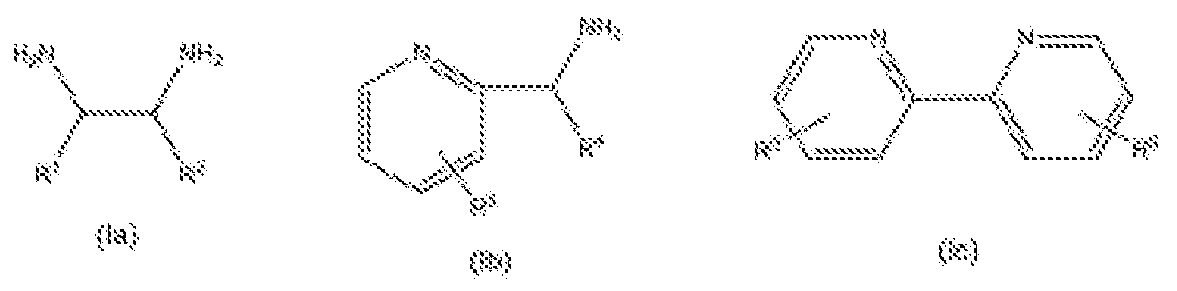
(I) a NN compound of formula la to lc:
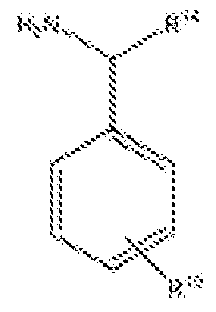
Figure imgf000004_0001
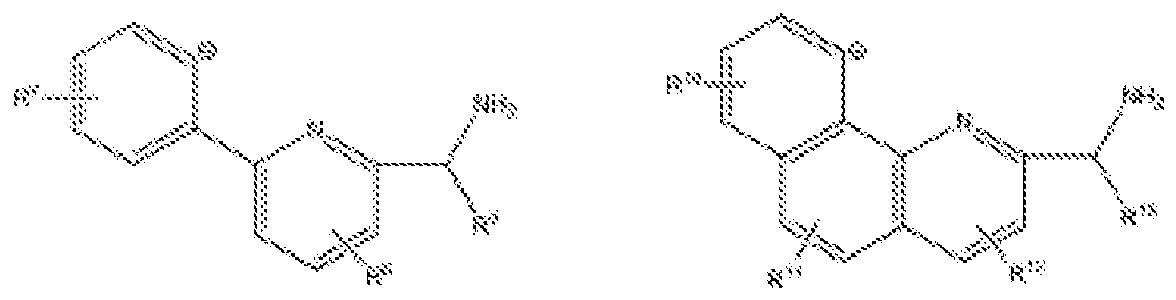
(II) a HCNN compound of formula lla - Mb and a CNN ligand of formula lie - lid:
Figure imgf000004_0002
Figure imgf000004_0003
(III) a HCN compound of formula Ilia
Figure imgf000004_0004
wherein
R1 - R15 are independently selected among H, C1 -C20 aliphatic groups and C5-C20 aromatic groups;
L' is at least one phosphorus-containing ligand selected among: - a phosphine (P) selected among: a phosphine of formula PR16R17R18, wherein R16 - R18 are independently selected among H, C1 -C20 aliphatic groups and C5-C20 aromatic groups; an optically active phosphine selected among (S)- neomenthyldiphenylphosphine and (fl)-(+)-2-(diphenylphosphino)-2'-methoxy-1 ,1 '- binaphthyl;
- a diphosphine (PP) selected among: a diphosphine of formula P(R19)2 - Z -P(R20)2, wherein Z is a C2-C4 aliphatic group or ferrocene optionally substituted with C1 -C20 aliphatic groups, and wherein R19 and R20 are independently selected among C1 -C20 aliphatic groups and C5-C20 aromatic groups; an optically active diphosphine selected from the group consisting of (fl)-(6,6'-dimethoxybiphenyl-2,2'- diyl)bis(diphenylphosphine], (ft)-(1 ,1 '-binaphthalene-2,2'-diyl)bis(diphenylphosphine), (ft)-(1 ,1 '-binaphthalene-2,2'-diyl)bis[bis(3,5-dimethylmethyl)phosphine], (ft)-1 -{-2- [diphenylphosphine]ferrocenyl}ethyldicyclohexyl phosphine, -{-2-[bis(3,5-dimethyl- 4-methoxyphenyl)phosphine]ferrocenyl}ethyldicyclohexyl phosphine and (2fl,4fl)-2,4- bis(diphenylphosphine)pentane;
- a HCP compound of formula (IVa) and a CP ligand of formula (IVb)
Figure imgf000005_0001
a PNN compound of formula (V)
Figure imgf000005_0002
wherein
pj2i _ pj29 are jnc|epenc|entiy selected among H, C1 -C20 aliphatic groups and C5-C20 aromatic groups;
provided that:
- when a = b = c = 1 ; d = 0; X = Y = CI; L is ethylenediamine or 2-(aminomethyl)pyridine or 2,2'-bipyridine or 4,4'-dimethyl-2,2'-bipyridine, L' is not a phosphine (P) of formula p R16R17R18 in wh ich R16 = R17 = R18 = pheny| Qr p_to|y| ; - when a = 0; b = c = d= 1 ; X = W = Cl or X = H and W = CI, L = ethylenediamine or 2- (aminomethyl)pyridine, L' is not Ph2P(CH2CH2CH2)PPh2;
- when a = d = 0; b = c = 1 ; X = CI; L = ethylenediamine or 2-(aminomethyl)pyridine, L' is not a ligand (CP) of formula (IVb) in which R21 = R22 = phenyl and R23 = methyl; and - when a, b and d are 0, c is 2, X is CI and R23 is -CH3, R21 and R22 are not phenyl groups.
In a further aspect, the present disclosure refers to the use of said ruthenium or osmium complexes as catalyst or pre-catalyst for the reduction reaction of ketones or aldehydes to alcohols by transfer hydrogenation or hydrogenation with molecular hydrogen.
This and other aspects as well as the characteristics and advantages of the present invention will be more apparent from the detailed description below and by the preferred embodiments given as non-limiting illustrations of the invention itself.
Description of the invention
As used therein, "aliphatic group" refers to acyclic or cyclic, linear or branched, saturated or unsaturated hydrocarbons, excluding aromatic groups.
As used therein, "substituted aliphatic group" refers to an aliphatic group in which at least one hydrogen atom is replaced by at least one substituent group selected among -OR, -NRR', -NRCOR', -NO2, -NH2, -COR, -COOR, -CONRR' and halides, wherein R and R' are equal or different and can be a H or a C1 -C20 aliphatic or aromatic group. As used therein, "aromatic group" also include aromatic compounds substituted with aliphatic groups.
As used therein, "substituted aromatic group" refers to an aromatic group in which at least one aromatic hydrogen atom is replaced with at least one substituent group selected among -R, -OR, -NRR', -NRCOR', -NO2, -NH2, -COR, -COOR, -CONRR' and halides, wherein R and R' are equal or different and can be a H or a C1 -C20 aliphatic or aromatic group.
As used therein, "heteroaromatic group" refers to aromatic groups in which at least one carbon atom which is part of the aromatic ring is replaced with one heteroatom selected among N, S, O and P.
As used therein, "hydrogen-donor" refers to a compound that transfers a hydrogen atom to another compound.
As used therein, "(transfer)hydrogenation" refers to hydrogenation with molecular hydrogen or to transfer hydrogenation using a hydrogen donor compound. In the present description and appended claims the abbreviations listed in Table 1 are used:
Table 1. Abbreviation of the nitrogen and phosphorus ligands
Figure imgf000007_0001
Figure imgf000008_0001
Figure imgf000009_0001
The present disclosure refers to a pentacoordinate or hexacoordinate complex of formula (1 ): [MXYa(CO)LbL'c]Wd (1 )
wherein
M = Ru or Os;
a, b and d are independently 0 or 1 ;
c is 1 or 2; X, Y are independently selected among halides, hydride, C1 -C20 carboxylates and C1 - C20 alkoxides;
W is selected among halides, C1 -C20 carboxylates and C1 -C20 alkoxides;
L is a nitrogen-containing ligand selected among:
(I) a NN compound of formula la to lc:
Figure imgf000010_0001
(II) a HCNN compound of formula lla - Mb and a CNN ligand of formula lie - lid:
Figure imgf000010_0002
Figure imgf000010_0003
a HCN compound of formula Ilia
Figure imgf000010_0004
wherein
R1 - R15 are independently selected among H, C1 -C20 aliphatic groups and C5-C20 aromatic groups, preferably R1 and R2 may be independently selected among H and a phenyl group and/or R3-R6 and R8-R15 may be H and/or R7 may be 4-methyl;
L' is at least one phosphorus-containing ligand selected among:
- a phosphine (P) selected among: a phosphine of formula PR16R17R18, wherein R16 - R18 are independently selected among H, C1 -C20 aliphatic groups and C5-C20 aromatic groups; an optically active phosphine selected among (S)- neomenthyldiphenylphosphine and (fl)-(+)-2-(diphenylphosphino)-2'-methoxy-1 ,1 '- binaphthyl;
- a diphosphine (PP) selected among: a diphosphine of formula P(R19)2 - Z -P(R20)2, wherein Z is a C2-C4 aliphatic group or ferrocene optionally substituted with C1 -C20 aliphatic groups, and wherein R19 and R20 are independently selected among C1 -C20 aliphatic groups and C5-C20 aromatic groups; an optically active diphosphine selected from the group consisting of (ft)-(6,6'-dimethoxybiphenyl-2,2'- diyl)bis(diphenylphosphine], (fi)-(1 ,1 '-binaphthalene-2,2'-diyl)bis(diphenylphosphine), (fl)-(1 ,1 '-binaphthalene-2,2'-diyl)bis[bis(3,5-dimethylmethyl)phosphine], (fl)-1 -{-2- [diphenylphosphine]ferrocenyl}ethyldicyclohexyl phosphine, (ft)-1 -{-2-[bis(3,5-dimethyl- 4-methoxyphenyl)phosphine]ferrocenyl}ethyldicyclohexyl phosphine and (2fl,4fl)-2,4- bis(diphenylphosphine)pentane;
- a HCP compound of formula (IVa) and a CP ligand of formula (IVb)
Figure imgf000011_0001
wherein
R21 - R23 are independently selected among H, C1 -C20 aliphatic groups and C5-C20 aromatic groups, preferably R23 may be -CH3 and/or R21 - R22 may be C6-C20 cycloaliphatic group or C6-C20 aromatic group, more preferably R23 may be -CH3 and/or R21 - R22 may be independently selected among phenyl and cyclohexyl group - a PNN compound of formula (V)
Figure imgf000011_0002
wherein
R24 - R29 are independently selected among H, C1 -C20 aliphatic groups and C5-C20 aromatic groups, preferably R24 and R27-R29 may be H and/or R25 and R26 may be a C1 - C20 aromatic group, more preferably a phenyl group;
provided that: - when a = b = c = 1 ; d = 0; X = Y = CI; L is ethylenediamine or 2-(aminomethyl)pyridine or 2,2'-bipyridine or 4,4'-dimethyl-2,2'-bipyridine, L' is not a phosphine (P) of formula pR16R17R18 in wh ich R16 = R17 = R18 = pheny| Qr p_to|y| ;
- when a = 0; b = c = d= 1 ; X = W = Cl or X = H and W = CI, L = ethylenediamine or 2- (aminomethyl)pyridine, L' is not Ph2P(CH2CH2CH2)PPh2;
- when a = d = 0; b = c = 1 ; X = CI; L = ethylenediamine or 2-(aminomethyl)pyridine, L' is not a ligand (CP) of formula (IVb) in which R21 = R22 = phenyl and R23 = methyl; and
- when a, b and d are 0, c is 2, X is CI and R23 is -CH3, R21 and R22 are not phenyl groups.
In complexes of formula (1 ), when c = 2 and L' represents two phosphorus-containing ligands independently selected among the phosphorus-containing compounds listed above, when one L' is CP and one L' is HCP, the complex of formula (1 ) is pentacoordinate complex.
The high modularity of the nitrogen-containing ligands (la-c), (lla-d) and (Ilia) in combination with phosphines (P), diphosphines (PP), HCP phosphines and PNN phosphines, allows to obtain a large number of well-defined catalysts displaying high chemo- and stereoselectivity.
For the purposes of the present invention, from the combination of the different meanings of X, Y, W, L, and L', the complexes of sub-formulas (VI - XIV) given below may be obtained, which are encompassed by the general formula (1 ).
According to an embodiment, the bidentate (NN) ligands of type (la-c) have the ability, through the nitrogen atoms of a -NH2 group or of a heterocycle in combination with monodentate phosphines, to coordinate the metal. Thus, the present disclosure may refer to a complex of formula (VI)
MXY(CO)(NN)(P) (VI)
wherein M, X, Y, (NN) and (P) are as defined above, provided that when X and Y are CI, R16 _ R18 are not pheny| or p-tolyl groups.
According to a specific embodiment, the present disclosure may refer to complexes of formula (VI) wherein M, X, Y, (NN) and (P) are as defined above, provided that when X and Y are CI, R16 - R18 are not aromatic groups.
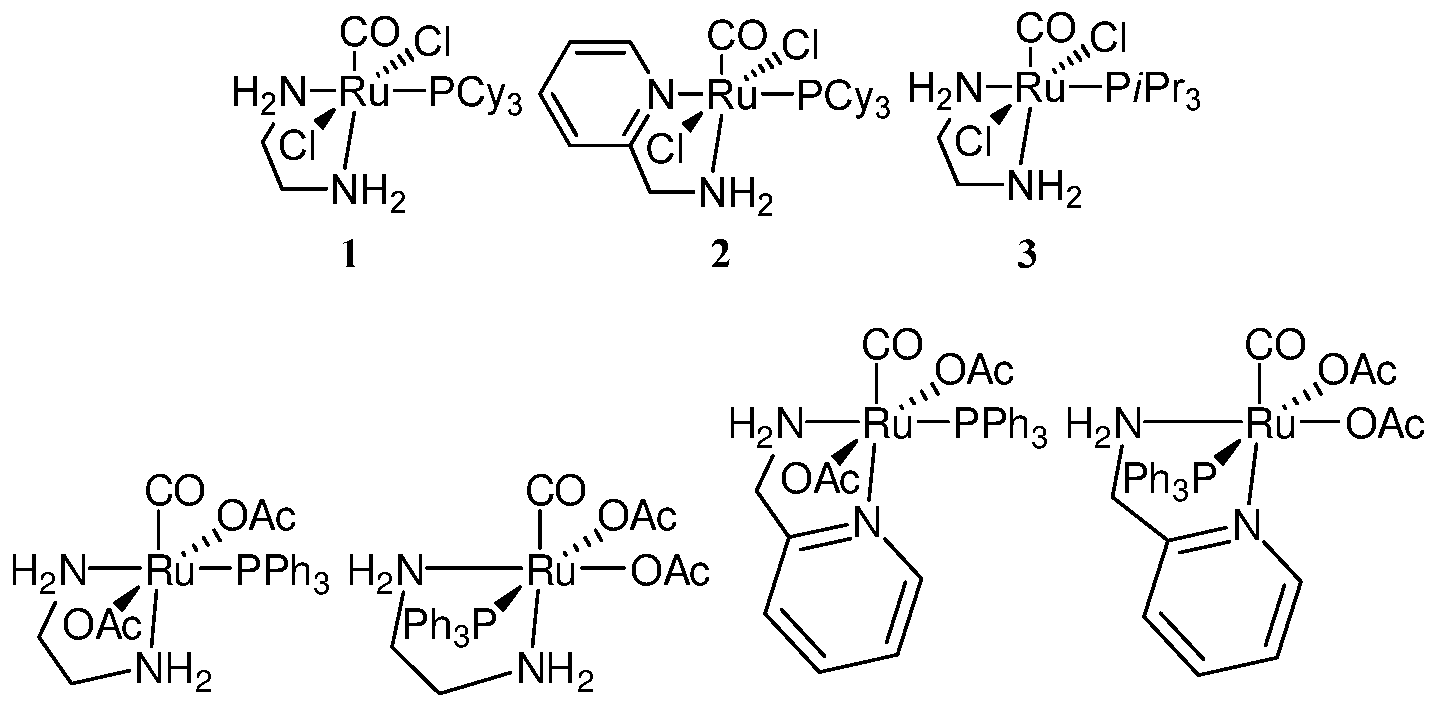
Complexes of formula (VI) can be obtained as a mixture of frans-isomers (eg. complex 4 and 6 below) and c/'s-isomers (eg. complex 5 and 7).
The present disclosure also refers to a process to obtain complexes of formula (VI) comprising reacting a compound of formula MXY(CO)(PPh3)2, or of formula MXY(CO)(PPh3)2(dmf), wherein M, X, Y are as defined above and (dmf) is dimethylformamide, with a phosphine (P) selected among:
- phosphines of formula PR16R17R18, wherein R16 - R18 are independently selected among H, C1 -C20 aliphatic group and C5-C20 aromatic groups; and
- an optically active phosphine selected among (S)-neomenthyldiphenylphosphine and (fl)-(+)-2-(diphenylphosphino)-2'-methoxy-1 ,1 '-binaphthyl;
and at least one nitrogen-containing compound NN selected among
Figure imgf000013_0001
wherein
R1 - R6 are independently selected among H, C1 -C20 aliphatic group and C5-C20 aromatic group, preferably R1 and R2 may be independently selected among H and a phenyl group and/or R3-R6 may be H. Compounds of formula MXY(CO)(PPh3)2 or of formula MXY(CO)(PPh3)2(dmf) may be prepared by reacting compounds of formula MXY(PPh3)k, wherein k is 2 or 3 with carbon monoxide, in the presence of a suitable organic solvent and optionally of dimethylformamide.
According to an embodiment, when X = Y = CI, the compound MCI2(CO)(PPh3)2(dmf) may be formed by reacting MCI2(PPh3)3 with CO in the presence of dimethylformamide and a suitable organic solvent. When M is Ru, the compound RuCl2(CO)(PPh3)2(dmf) may be formed by reacting RuCl2(PPh3)3 with CO in the presence of dimethylformamide and a suitable organic solvent.
According to an embodiment, when X = Y = acetate (OAc), the compound M(OAc)2(CO)(PPh3)2 may be formed by reacting M(OAc)2(PPh3)2 with CO in the presence of a suitable organic solvent. When M is Ru, the compound Ru(OAc)2(CO)(PPh3)2 may be formed by reacting Ru(OAc)2(PPh3)2 with CO in the presence of a suitable organic solvent.
Compounds such as RuCl2(PPh3)3 and Ru(OAc)2(PPh3)2 are commercially available. According to a preferred embodiment, the present disclosure may refer to a process to obtain a complex of formula (VI) wherein M is Ru and X=Y= CI or acetate (OAc), by reacting RuCI2(CO)(PPh3)2(dmf) or Ru(OAc)2(CO)(PPh3)2 with a phosphine (P) selected among: a phosphine of formula PR16R17R18, wherein R16 - R18 are independently selected among H, C1 -C20 aliphatic group and C5-C20 aromatic groups; and an optically active phosphine selected among (S)-neomenthyldiphenylphosphine and {R)-{+)- 2-(diphenylphosphino)-2'-methoxy-1 ,1 '-binaphthyl;
and at least one nitrogen-containing compound NN selected among
Figure imgf000014_0001
wherein
R1 - R6 are independently selected among H, C1 -C20 aliphatic group and C5-C20 aromatic group, preferably R1 and R2 may be independently selected among H and a phenyl group and/or R3-R6 may be H.
According to a further embodiment, the present disclosure may refer to a process to obtain complexes of formula (VI) with the limitations described above.
Non limiting examples of referred com lexes of for
Figure imgf000014_0002
4 5 6 7
The synthesis of the monocarbonyl complexes 1 -3 involves the use of t,t,t- RuCl2(CO)(dmf)(PPh3)2 as starting product which can be prepared by reaction between the commercially available compound RuCI2(PPh3)3 with CO in dimethylformamide (dmf). The complex 1 was obtained by reacting RuCl2(CO)(dmf)(PPh3)2 with PCy3 via the mixed phosphine intermediate RuCI2(CO)(dmf)(PPh3)(PCy3) in CH2CI2 and further addition of ethylenediamine, whereas reaction with 2-(aminomethyl)pyridine, in place of ethylenediamine, gave complex 2. Similarly, complex 3 was prepared using P/Pr3, in place of PCy3, with ethylenediamine. Similarly the complexes 4-7 of the invention were prepared from Ru(OAc)2(CO)(PPh3)2 as starting product, which can be easily prepared on gram-scale by reaction between Ru(OAc)2(PPh3)2 with CO in MeOH. The complexes 4 and 5 were obtained as a mixture by reacting Ru(OAc)2(CO)(PPh3)2 with the ligand ethylenediamine in CH2CI2, whereas reaction with 2-(aminomethyl)pyridine, in place of ethylenediamine, gave complexes 6 and 7 in a similar ratio of isomer (about 2/3, in favour of the c/s-OAc isomers).
The activity in transfer hydrogenation of complex 2 is higher than that of complexes known in the art, such as RuCI2(CO)(ampy)(PPh3), reported by Cavarzan et al. {Polyhedron 2013, 62, 75), since the presence of the more basic phosphine allows the reduction at lower catalyst loading (S/C 5000 vs. 500).
According to an embodiment, the present disclosure may refer to a complex of formula (VII)
[MX(CO)(NN)(PP)]W (VII)
wherein M, X, W, (NN) and (PP) are as defined above and provided that when X is CI or H, (NN) is not ethylenediamine or 2-(aminomethyl)pyridine and the diphosphine (PP) is not Ph2P(CH2CH2CH2)PPh2.
According to a specific embodiment, the present disclosure may refer to complexes of formula (VII) wherein M, X, and (NN) are as defined above, provided that when X is CI or H, the diphosphine (PP) may be selected among:
- ferrocene optionally substituted with C1 -C20 aliphatic groups;
- an optically active diphosphine selected from the group consisting of (fl)-(6,6'- dimethoxybiphenyl-2,2'-diyl)bis(diphenylphosphine], (A)-(1 ,1 '-binaphthalene-2,2'- diyl)bis(diphenylphosphine), (ft)-(1 ,1 '-binaphthalene-2,2'-diyl)bis[bis(3,5- dimethylmethyl)phosphine], (R)-1 -{-2-[diphenylphosphine]ferrocenyl}ethyldicyclohexyl phosphine, (ft)-1 -{-2-[bis(3,5-dimethyl-4- methoxyphenyl)phosphine]ferrocenyl}ethyldicyclohexyl phosphine and (2fl,4fl)-2,4- bis(diphenylphosphine)pentane.
The present disclosure also refers to a process to obtain complexes of formula (VII) comprising reacting [MXY(CO)2]n, MXY(CO)(PPh3)2 or MXY(CO)(PPh3)2(dmf), wherein M, X and Y are as defined above and (dmf) is dimethylformamide, with a diphosphine (PP) selected among:
a diphosphine of formula P(R19)2 - Z -P(R20)2, wherein Z is a C2-C4 aliphatic group or ferrocene, optionally substituted with C1 -C20 aliphatic groups, and wherein R19 and R20 are independently selected among C1 -C20 aliphatic groups and C5-C20 aromatic groups; and
an optically active diphosphine selected from the group consisting of (ft)-(6,6'- dimethoxybiphenyl-2,2'-diyl)bis(diphenylphosphine], (fi)-(1 ,1 '-binaphthalene-2,2'- diyl)bis(diphenylphosphine), (ft)-(1 ,1 '-binaphthalene-2,2'-diyl)bis[bis(3,5- dimethylmethyl)phosphine], (ft)-1 -{-2-
[diphenylphosphine]ferrocenyl}ethyldicyclohexyl phosphine, -{-2-[bis(3,5- dimethyl-4-methoxyphenyl)phosphine]ferrocenyl}ethyldicyclohexyl phosphine and (2fl,4fl)-2,4-bis(diphenylphosphine)pentane;
and at least one nitrogen-containing compound NN selected among:
Figure imgf000016_0001
wherein
R1 - R6 are independently selected among H, C1 -C20 aliphatic group and C5-C20 aromatic group, preferably R1 and R2 may be independently selected among H and a phenyl group and/or R3-R6 may be H.
According to a preferred embodiment, the present disclosure may refer to a process to obtain a complex of formula (VII) wherein M is Ru and X=Y= CI or acetate (OAc), by reacting [RuCI2(CO)2]n or RuCI2(CO)(PPh3)2(dmf) or Ru(OAc)2(CO)(PPh3)2 with a diphosphine (PP) selected among:
- a diphosphine of formula P(R19)2 - Z -P(R20)2, wherein Z is a C2-C4 aliphatic group or ferrocene, optionally substituted with C1 -C20 aliphatic groups, wherein R19 and R20 are independently selected among C1 -C20 aliphatic groups and C5-C20 aromatic groups; and
an optically active diphosphine selected from the group consisting of (R)-(6,6'- dimethoxybiphenyl-2,2'-diyl)bis(diphenylphosphine], (fi)-(1 ,1 '-binaphthalene-2,2'- diyl)bis(diphenylphosphine), (ft)-(1 ,1 '-binaphthalene-2,2'-diyl)bis[bis(3,5- dimethylmethyl)phosphine], -{-2- [diphenylphosphine]ferrocenyl}ethyldicyclohexyl phosphine, -{-2-[bis(3,5- dimethyl-4-methoxyphenyl)phosphine]ferrocenyl}ethyldicyclohexyl phosphine and (2fl,4fl)-2,4-bis(diphenylphosphine)pentane;
and at least one nitrogen-containing compound NN selected among:
Figure imgf000017_0001
wherein
R1 - R6 are independently selected among H, C1 -C20 aliphatic group and C5-C20 aromatic group, preferably R1 and R2 may be independently selected among H and a phenyl group and/or R3-R6 may be H.
According to a further embodiment, the present disclosure may refer to a process to obtain complexes of formula (VII) with the limitations described above.
The synthetic route described above gives access to several diphosphine derivatives, including derivatives of achiral and chiral diphosphine ligands.
Non limiting examples of preferred complexes of formula (VII) are:
Figure imgf000017_0002
8
Figure imgf000017_0003
10 11
Figure imgf000017_0004
14 15 The cationic monocarbonyl derivatives 8 and 9 were obtained either from the polymer [RuCI2(CO)2]n, synthesized by reaction of RuCI3-2.5H2O with formic acid or from the complex RuCI2(CO)(dmf)(PPh3)2. Reaction of [RuCI2(CO)2]n with 1 ,4- bis(diphenylphosphino) butane and ethylenediamine in 2-propanol led to 8, whereas using 1 ,1 '-bis(diphenylphosphino) ferrocene, in place of 1 ,4-bis(diphenylphosphino) butane, gave 9. Reaction of RuCI2(CO)(dmf)(PPh3)2 takes place in CH2CI2 and affords the same products.
The cationic monocarbonyl derivatives 10-15 were obtained from the complex Ru(OAc)2(CO)(PPh3)2 as starting product. The complex 10 was obtained by a one-pot reaction of Ru(OAc)2(CO)(PPh3)2 with the ligands 1 ,4-bis(diphenylphosphino)butane and ethylenediamine in CH2CI2. The complex 11 was obtained, in a similar manner, by using 2-(aminomethyl)pyridine in place of ethylenediamine. The complexes 12 and 13 were obtained using the ligand 1 ,1 '-bis(diphenylphosphino)ferrocene in place of 1 ,4- bis(diphenylphosphino)butane and the ligands ethylenediamine and 2- (aminomethyl)pyridine, respectively.
Similarly the complexes 14 and 15 were obtained from the diphosphine (fl)-1 -[(Sp)-2- (diphenylphosphino)ferrocenylethyl]diphenylphosphine and the ligands (1 fl,2fl)-1 ,2- diphenylethylenediamine and (1 S,2S)-1 ,2-diphenylethylenediamine.
The ligands of the type HCNN (lla-b) have the ability to act both as bidentate (lla-b) or tridentate ligands of the type (llc-d) when deprotonated.
According to an embodiment, in the case of bidentate ligand the coordination occurs through the nitrogen atom of the -NH2 group and a second nitrogen atom of the heterocycle, in combination with a monophosphine to the metal. Thus, the present disclosure may refer to a complex of formula (VIII)
MXY(CO)(HCNN)(P) (VIII)
wherein M, X, Y, (HCNN) and (P) are as defined above.
Preferably, the monodentate phosphine (P) is a phosphine of formula PR16R17R18, wherein R16 - R18 are independently selected among H, C1 -C20 aliphatic groups and C5-C20 aromatic groups.
The present disclosure also refers to a process to obtain complexes of formula (VIII) comprising reacting a compound of formula MXY(CO)(PPh3)2, or of formula MXY(CO)(PPh3)2(dmf), wherein M, X, Y are as defined above and (dmf) is dimethylformamide, with a nitrogen-containing compound HCNN selected among:
Figure imgf000019_0001
ί.ϋ* wherein
R7 - R13 are independently selected among H, C1 -C20 aliphatic groups, and C5-C20 aromatic groups, preferably R8-R13 may be H and/or R7 may be 4-methyl, and optionally with a phosphine (P) selected among:
- a phosphine of formula PR16R17R18, wherein R16 - R18 are independently selected among H, C1 -C20 aliphatic groups and C5-C20 aromatic groups; and
- an optically active phosphine selected among (S)-neomenthyldiphenylphosphine and (fl)-(+)-2-(diphenylphosphino)-2'-methoxy-1 ,1 '-binaphthyl.
According to a preferred embodiment, the present disclosure may refer to a process to obtain a complex of formula (VIII) wherein M is Ru and X=Y= CI or acetate (OAc) and P = PPh3 by reacting RuCI2(CO)(PPh3)2(dmf) or Ru(OAc)2(CO)(PPh3)2 with a nitrogen- containing compound HCNN selected among:
Figure imgf000019_0002
wherein
R7 - R13 are independently selected among H, C1 -C20 aliphatic group and C5-C20 aromatic group, preferably R8-R13 may be H and/or R7 may be 4-methyl.
Examples of preferred complexes of formula (VIII) are:
Figure imgf000019_0003
The monocarbonyl phosphine derivatives 16-18 were isolated from RuCI2(CO)(PPh3)2(dmf) and 6-(4-methylphenyl)-2-(aminomethyl)pyridine, 2- (aminomethyl)benzo[/7]quinoline and 4-phenyl-2-(aminomethyl) benzo[/7]quinoline in CHCI3.
The neutral acetate monocarbonyl triphenylphosphine derivative 19 was obtained by reacting Ru(OAc)2(CO)(PPh3)2 and 6-(4-methylphenyl)-2-(aminomethyl)pyridine in toluene.
Known complexes such as RuCI2(CO)(ampy)(PPh3) (Cavarzan et al., Polyhedron 2013, 62, 75) shows remarkably lower activity and require a higher catalyst loading compared to compound 16 in transfer hydrogenation. The presence of the aromatic ring in the 6 position or the presence of a benzoquinoline ring lead to catalysts with a remarkably higher activity with respect to those containing the simple 2-(aminomethyl)pyridine ligand on account of the cyclometalation which occurs in the catalysis.
The HCNN ligands of the type (lla), which contain a pyridine ring functionalized in the 6 position with an aromatic group, and those of the type (Mb), containing the benzo[/7]quinoline system, have the ability to act as anionic tridentate ligands (llc-d) through the nitrogen atom of the -NH2 group, a second nitrogen atom of the heterocycle and a cyclometalated carbon atom with the metal. Thus, according to a further embodiment, the present disclosure may refer to complexes of formula (IX)
MX(CO)(CNN)(P) (IX)
wherein M, X, (CNN) and (P) are as defined above.
The present disclosure also refers to a process to obtain complexes of formula (IX) by (i) reacting a compound of formula MXY(PPh3)3, wherein M, X and Y are as described above, with a nitrogen-containing ligand (CNN) of formula (lie) or (lid)
Figure imgf000020_0001
wherein
R7 - R13 are independently selected among H, C1 -C20 aliphatic group and C5-C20 aromatic group, preferably R8-R13 may be H and/or R7 may be 4-methyl, and optionally a phosphine (P) selected among:
- a phosphine of formula PR16R17R18, wherein R16 - R18 are independently selected among H, C1 -C20 aliphatic groups and C5-C20 aromatic groups; - an optically active phosphine selected among (S)-neomenthyldiphenylphosphine and (R)-(+)-2-(diphenylphosphino)-2'-methoxy-1 ,1 '-binaphthyl, thereby obtaining an intermediate derivative and
(ii) reacting said derivative with CO.
According to a preferred embodiment, the present disclosure may refer to a process to obtain a complex of formula (IX) wherein M is Ru, X=Y= CI and P=PPh3 by reacting RuCI(CNN)(PPh3)2 with CO where CNN is a nitrogen-containing ligand CNN selected among
Figure imgf000021_0001
wherein
R7 - R13 are independently selected among H, C1 -C20 aliphatic group and C5-C20 aromatic group, preferably R8-R13 may be H and/or R7 may be 4-methyl.
RuCI(CNN)(PPh3)2 can be prepared according to processes known in the art, for example as described in WO2009/007443.
Non limiting examples of preferred complexes of formula (IX) are:
Figure imgf000021_0002
20 21 22
The monocarbonyl complexes 20-22 were obtained from the diphosphine pincer precursors RuCI(CNN)(PPh3)2 (CNN = amtp, ambq and ambqPh) by reaction with CO in
The anionic bidentate ligands of the type (IVb), obtained by deprotonation of an ortho- methyl group, have the ability through P and C atoms, in combination with a NN ligand, to coordinate ruthenium or osmium. Therefore, according to an embodiment, the present disclosure may refer to the complex of formula (X)
MX(CO)(NN)(CP) (X) wherein M, X, (NN) and (CP) are as defined above, with the proviso that when X is CI, (NN) is not ethylenediamine or 2-(aminomethyl)pyridine and (CP) is not a compound of formula (IVb) in which R21 = R22 = phenyl and R23 = methyl.
According to an embodiment, R23 may be -CH3 and/or R21 - R22 may be C6-C20 cycloaliphatic group or C6-C20 aromatic group, more preferably R23 may be -CH3 and/or R21 - R22 may be independently selected among phenyl and cyclohexyl group. According to a further embodiment, the present disclosure may refer to a complex of formula (X) wherein M, X, (NN) and (CP) are as defined above, with the proviso that when X is CI, R21 and R22 are not aromatic groups.
According to a further embodiment, the present disclosure may refer to a complex of formula (X) in which M, X, (NN) are as defined above, (CP) is a ligand of formula (IVb)
Figure imgf000022_0001
wherein
pj2i _ pj23 are jnc|epenc|entiy selected among H, C1 -C20 aliphatic groups and C5-C20 aromatic groups, preferably R23 may be -CH3 and/or R21 - R22 may be C6-C20 cycloaliphatic group or C6-C20 aromatic group, more preferably R23 may be -CH3 and/or R21 - R22 may be independently selected among phenyl and cyclohexyl group; with the proviso that when X is CI, R21 and R22 are not aromatic groups.
The present disclosure refers also to a process to obtain complexes of formula (X) comprising:
(i) reacting MX3-xH2O with a HCP compound of formula (IVa)
Figure imgf000022_0002
wherein
M and X are as defined above and R21 - R23 are independently selected among H, C1 - C20 aliphatic groups and C5-C20 aromatic groups, thereby obtaining an intermediate complex of formula (XI); and (ii) reacting the complex of formula (XI) with a (NN) ligand of formula la to lc:
Figure imgf000023_0001
wherein
R1 - R6 are independently selected among H, C1 -C20 aliphatic group and C5-C20 aromatic group, preferably R1 and R2 may be independently selected among H and a phenyl group and/or R3-R6 may be H.
According to a preferred embodiment, the present disclosure may refer to a process to obtain a complex of formula (X) wherein M is Ru and X is CI, comprising:
(i) reacting RuCl3-xH2O with a HCP compound of formula (IVa)
Figure imgf000023_0002
wherein
R 521 - r R.23 are independently selected among H, C1 -C20 aliphatic groups and C5-C20 aromatic groups, thereby obtaining an intermediate complex of formula (XI); and (ii) reacting the complex of formula (XI) with a (NN) ligand of formula (la-lc):
Figure imgf000023_0003
¾ wherein
R1 - R6 are independently selected among H, C1 -C20 aliphatic group and C5-C20 aromatic group, preferably R1 and R2 may be independently selected among H and a phenyl group and/or R3-R6 may be H.
According to a further embodiment, the present disclosure may refer to a process to obtain complexes of formula (X) with the limitations described above.
Non limiting examples of preferred complexes of formula (X) are:
Figure imgf000024_0001
23 24
Complexes 23, 24 were synthesized from 25 by reaction with ethylenediamine or 2- (aminomethyl)pyridine, respectively, via displacement of the phosphine.
According to a further embodiment, the present disclosure may refer to a complex of formula (XI)
MX(CO)(CP)(HCP) (XI)
wherein M, X, (CP) and (HCP) are as defined above and with the proviso that when X is CI and R23 is -CH3, R21 and R22 are not phenyl groups. According to an embodiment, R23 may be -CH3 and/or R21 - R22 may be C6-C20 cycloaliphatic group or C6-C20 aromatic group, preferably R21 - R22 may be cyclohexyl groups.
According to a specific embodiment, the present disclosure may refer to complexes of formula (XI) wherein M, X, (CP) and (HCP) are as defined above, with the proviso that when X is CI, R21 and R22 are not an aromatic groups.
The complex of formula (XI) is a pentacoordinate complex.
The present disclosure also refers to a process to obtain complexes of formula (XI) comprising reacting MX3-xH2O with a HCP compound of formula (IVa)
Figure imgf000024_0002
wherein
M and X are as defined above and R - R are independently selected among H, C1 - C20 aliphatic groups and C5-C20 aromatic groups, R23 may be -CH3 and/or R21 - R22 may be C6-C20 cycloaliphatic group or C6-C20 aromatic group, preferably R21 - R22 may be cyclohexyl groups.
According to a preferred embodiment, the present disclosure may refer to a process to obtain complexes of formula (XI) in which M is Ru and X is CI by reacting RuCI3-xH2O with a HCP compound of formula (IVa)
Figure imgf000025_0001
wherein
pj2i _ pj23 are jnc|epenc|entiy selected among H, C1 -C20 aliphatic groups and C5-C20 aromatic groups, R23 may be -CH3 and/or R21 - R22 may be C6-C20 cycloaliphatic group or C6-C20 aromatic group, preferably R21 - R22 may be cyclohexyl groups.
According to an embodiment, the present disclosure may refer to a process to prepare complexes of formula (XI) with the limitations described above.
Non limiting examples of preferred complexes of formula (XI) is:
Figure imgf000025_0002
25
The complexes of formula (XI) may be synthesized using the anionic bidentate ligands of the type (IVb), obtained by deprotonation of an ortho-methyl group, which have the ability through P and C atoms, to coordinate ruthenium and osmium.
The cyclometallated monocarbonyl derivatives 25 was prepared by reaction of RuCI3-xH2O with (2,6-dimethylphenyl)dicyclohexylphosphine in ethanol and the presence of formaldehyde and triethylamine.
According to an embodiment, the present disclosure may refer to complexes of formula
(XII)
MXY(CO)(PP)(P) (XII)
wherein M, X, Y, (PP) and (P) are as defined above. Preferably, (P) is triphenylphosphine.
The present disclosure also refers to a process to obtain the complexes of formula (XII) comprising reacting a compound of formula MXY(CO)(PPh3)2, or of formula MXY(CO)(PPh3)2(dmf), wherein M, X, Y are as defined above and (dmf) is dimethylformamide, with a phosphine (P) selected among: a phosphine of formula PR16R17R18, wherein R16 - R18 are independently selected among H, C1 -C20 aliphatic group and C5-C20 aromatic groups;
- an optically active phosphine selected among (S)-neomenthyldiphenylphosphine and
(fl)-(+)-2-(diphenylphosphino)-2'-methoxy-1 ,1 '-binaphthyl;
and a diphosphine (PP) selected among:
a diphosphine of formula P(R19)2 - Z -P(R20)2, wherein Z is a C2-C4 aliphatic group or ferrocene optionally substituted with C1 -C20 aliphatic groups, and wherein R19 and R20 are independently selected among C1 -C20 aliphatic groups and C5-C20 aromatic groups;
- an optically active diphosphine selected from the group consisting of (ft)-(6,6'- dimethoxybiphenyl-2,2'-diyl)bis(diphenylphosphine], (ft)-(1 ,1 '-binaphthalene-2,2'- diyl)bis(diphenylphosphine), (ft)-(1 ,1 '-binaphthalene-2,2'-diyl)bis[bis(3,5- dimethylmethyl)phosphine], (R)-1 -{-2-[diphenylphosphine]ferrocenyl}ethyldicyclohexyl phosphine, (fl)-1 -{-2-[bis(3,5-dimethyl-4- methoxyphenyl)phosphine]ferrocenyl}ethyldicyclohexyl phosphine and (2fl,4fl)-2,4- bis(diphenylphosphine)pentane.
According to a preferred embodiment, the present disclosure refers to a process to obtain a complex of formula (XII) in which M is Ru and X is CI or acetate group (OAc), by reacting RuCI2(CO)(PPh3)2(dmf) or Ru(OAc)2(CO)(PPh3)2 with a phosphine (P) selected among:
a phosphine of formula PR16R17R18, wherein R16 - R18 are independently selected among H, C1 -C20 aliphatic group and C5-C20 aromatic groups;
- an optically active phosphine selected among (S)-neomenthyldiphenylphosphine and (ft)-(+)-2-(diphenylphosphino)-2'-methoxy-1 ,1 '-binaphthyl;
and a diphosphine (PP) selected among:
a diphosphine of formula P(R19)2 - Z -P(R20)2, wherein Z is a C2-C4 aliphatic group or ferrocene optionally substituted with C1 -C20 aliphatic groups, and wherein R19 and R20 are independently selected among C1 -C20 aliphatic groups and C5-C20 aromatic groups;
an optically active diphosphine selected from the group consisting of (fl)-(6,6'- dimethoxybiphenyl-2,2'-diyl)bis(diphenylphosphine], (ft)-(1 ,1 '-binaphthalene-2,2'- diyl)bis(diphenylphosphine), (ft)-(1 ,1 '-binaphthalene-2,2'-diyl)bis[bis(3,5- dimethylmethyl)phosphine], (R)-1 -{-2-[diphenylphosphine]ferrocenyl}ethyldicyclohexyl phosphine, (fl)-1 -{-2-[bis(3,5-dimethyl-4- methoxyphenyl)phosphine]ferrocenyl}ethyldicyclohexyl phosphine and (2fl,4fl)-2,4- bis(diphenylphosphine)pentane.
Non limitin examples of preferred complexes of formula (XII) are:
Figure imgf000027_0001
36
Complexes 26-36 have been synthesized by substitution of one or two triphenylphosphine from RuCI2(CO)(PPh3)2(dmf) or Ru(OAc)2(CO)(PPh3)2.
In a further embodiment, the present disclosure may refer to a complex of formula (XIII)
MXY(CO)(HCN)(PP) (XIII)
wherein M, X, Y, (HCN) and (PP) are as defined above.
Preferably, the diphosphine (PP) is selected among a diphosphine of formula P(R19)2 - Z -P(R20)2, wherein Z is a C2-C4 aliphatic group or ferrocene optionally substituted with C1 -C20 aliphatic groups, and wherein R19 and R20 are independently selected among C1 -C20 aliphatic groups and C5-C20 aromatic groups.
The present disclosure also refers to a process to obtain a complex of formula (XIII) comprising reacting a compound of formula MXY(CO)(PPh3)2, or of formula MXY(CO)(PPh3)2(dmf), wherein M, X, Y are as defined above and (dmf) is dimethylformamide, with a diphosphine (PP) selected among:
- a diphosphine of formula P(R19)2 - Z -P(R20)2, wherein Z is a C2-C4 aliphatic group or ferrocene optionally substituted with C1 -C20 aliphatic groups, and wherein R19 and R20 are independently selected among C1 -C20 aliphatic groups and C5-C20 aromatic groups;
- an optically active diphosphine selected from the group consisting of (fl)-(6,6'- dimethoxybiphenyl-2,2'-diyl)bis(diphenylphosphine], (ft)-(1 ,1 '-binaphthalene-2,2'- diyl)bis(diphenylphosphine), (ft)-(1 Λ '-binaphthalene-2,2'-diyl)bis[bis(3,5- dimethylmethyl)phosphine], -{-2-[diphenylphosphine]ferrocenyl}ethyldicyclohexyl phosphine, (fl)-1 -{-2-[bis(3,5-dimethyl-4- methoxyphenyl)phosphine]ferrocenyl}ethyldicyclohexyl phosphine and (2fl,4fl)-2,4- bis(diphenylphosphine)pentane;
and a nitrogen-containing ligand (HCN) of formula Ilia
Figure imgf000028_0001
wherein
R14 and R15 are independently selected among H, C1 -C20 aliphatic groups and C5-C20 aromatic groups, preferably R14 and R15 may be independently H.
According to a specific embodiment, the present disclosure refers to a process to obtain a complex of formula (XIII) in which M is Ru and X is CI or acetate group, by reacting a compound of formula RuCI2(CO)(PPh3)2(dmf) or Ru(OAc)2(CO)(PPh3)2 with a phosphine (PP) selected among:
a diphosphine of formula P(R19)2 - Z -P(R20)2, wherein Z is a C2-C4 aliphatic group or ferrocene optionally substituted with C1 -C20 aliphatic groups, and wherein R19 and R are independently selected among C1 -C20 aliphatic groups and C5-C20 aromatic groups;
an optically active diphosphine selected from the group consisting of (fl)-(6,6'- dimethoxybiphenyl-2,2'-diyl)bis(diphenylphosphine], (fi)-(1 ,1 '-binaphthalene-2,2'- diyl)bis(diphenylphosphine), (fl)-(1 ,1 '-binaphthalene-2,2'-diyl)bis[bis(3,5- dimethylmethyl)phosphine], (fl)-1 -{-2- [diphenylphosphine]ferrocenyl}ethyldicyclohexyl phosphine, -{-2-[bis(3,5- dimethyl-4-methoxyphenyl)phosphine]ferrocenyl}ethyldicyclohexyl phosphine and (2ft,4ft)-2,4-bis(diphenylphosphine)pentane;
and a nitrogen-containing ligand (HCN) of formula Ilia
Figure imgf000029_0001
wherein
R1 - R15 are independently selected among H, C1 -C20 aliphatic groups and C5-C20 aromatic groups, preferably R14 and R15 may be independently H.
Non limiting examples of preferred complexes of formula (XIII) are:
Figure imgf000029_0002
In a further embodiment, the present disclosure may refer to a complex of formula (XIV)
MXY(CO)(PNN) (XIV)
wherein M, X, Y and (PNN) are as defined above.
According to a specific embodiment, the present disclosure may refer to complexes of formula (XIV) wherein M, X, Y and (PNN) are as defined above, provided that when X = Y, X and Y are not CI.
The present disclosure also refers to a method to obtain the complexes of formula (XIV) comprising reacting a compound of formula MXY(CO)(PPh3)2, or of formula MXY(CO)(PPh3)2(dmf), wherein M, X, Y are as defined above and (dmf) is dimethylformamide with a tridentate (PNN) ligand of formula (V)
Figure imgf000029_0003
wherein
R - R are independently selected among H, C1 -C20 alkyl group and C5-C20 aryl groups, preferably R24 and R27-R29 may be H and/or R25 and R26 may be a C1 -C20 aromatic group, more preferably a phenyl group.
According to a specific embodiment, the present disclosure may refer to a process to obtain a complex of formula (XIV) in which M is Ru and X is acetate group comprising reacting a compound of formula Ru(OAc)2(CO)(PPh3)2 with a tridentate (PNN) ligand of formula (V)
Figure imgf000030_0001
wherein
R24 - R29 are independently selected among H, C1 -C20 alkyl groups and C5-C20 aryl groups, preferably R24 and R27-R29 may be H and/or R25 and R26 may be a C1 -C20 aromatic group, more preferably a phenyl group.
According to a further embodiment, the present disclosure may refer to a process to obtain a complex of formula (XIV) with the limitations described above.
A non-limiting example of complexes of formula (XIV) is:
Figure imgf000030_0002
39
Complexes of formula (1 ) and sub-formulas (VI-XIV) have been found to be highly active in transfer hydrogenation of ketones and aldehydes and can be used in hydrogenation of the same compounds using molecular hydrogen.
A further aspect of the present disclosure is the use of the complex of formula (1 ) or of sub-formulas (VI-XIV) as catalysts or pre-catalyst for the reduction reaction of ketones or aldehydes to alcohols by transfer hydrogenation or hydrogenation with molecular hydrogen.
In another aspect, the present disclosure refers to a process for the reduction of ketones or aldehydes to the corresponding alcohols comprising the following steps:
(a) mixing a catalyst or pre-catalyst with a solution comprising at least one base and at least one substrate selected from the group consisting of C3-C42 ketones and C2-C41 aldehydes thereby obtaining a mixture; and
(b) contacting said mixture with molecular H2 or with at least one hydrogen-donor, preferably 2-propanol, sodium formate, ammonium formate, a mixture of formic acid and triethylamine,
said process being characterized in that the catalyst or pre-catalyst is a pentacoordinate or a hexacoordinate complex of general formula (1 ):
[MXYa(CO)LbL'c]Wd (1 )
wherein
M = Ru or Os;
a, b and d are independently 0 or 1 ;
c is 1 or 2;
X, Y are independently selected among halides, hydride, C1 -C20 carboxylates and C1 - C20 alkoxides;
W is selected among halides, C1 -C20 carboxylates and C1 -C20 alkoxides;
L is a nitrogen-containing ligand selected among:
(I) a NN compound of formula la to lc:
Figure imgf000031_0001
a HCNN compound of formula lla - Mb and a CNN ligand of formula lie
Figure imgf000031_0002
Figure imgf000032_0001
ilia} iikii
(III) a HCN compound of formula Ilia
Figure imgf000032_0002
wherein
R1 - R15 are independently selected among H, C1 -C20 aliphatic groups and C5-C20 aromatic groups, preferably R1 and R2 may be independently selected among H and a phenyl group and/or R3-R6 and R8-R15 may be H and/or R7 may be 4-methyl;
L' is at least one phosphorus-containing ligand selected among:
- a phosphine (P) selected among: a phosphine of formula PR16R17R18, wherein R16 - R18 are independently selected among H, C1 -C20 aliphatic groups and C5-C20 aromatic groups; an optically active phosphine selected among (S)- neomenthyldiphenylphosphine and (fl)-(+)-2-(diphenylphosphino)-2'-methoxy-1 ,1 '- binaphthyl;
- a diphosphine (PP) selected among: a diphosphine of formula P(R19)2 - Z -P(R20)2, wherein Z is a C2-C4 aliphatic group or ferrocene optionally substituted with C1 -C20 aliphatic groups, and wherein R19 and R20 are independently selected among C1 -C20 aliphatic groups and C5-C20 aromatic groups; an optically active diphosphine selected from the group consisting of (fl)-(6,6'-dimethoxybiphenyl-2,2'- diyl)bis(diphenylphosphine], (fi)-(1 ,1 '-binaphthalene-2,2'-diyl)bis(diphenylphosphine), (H)-(1 ,1 '-binaphthalene-2,2'-diyl)bis[bis(3,5-dimethylmethyl)phosphine], (fl)-1 -{-2- [diphenylphosphine]ferrocenyl}ethyldicyclohexyl phosphine, -{-2-[bis(3,5-dimethyl- 4-methoxyphenyl)phosphine]ferrocenyl}ethyldicyclohexyl phosphine and (2fl,4fl)-2,4- bis(diphenylphosphine)pentane;
- a HCP compound of formula (IVa) and a CP ligand of formula (IVb)
Figure imgf000033_0001
wherein
pj2i _ pj23 are jnc|epenc|entiy selected among H, C1 -C20 aliphatic groups and C5-C20 aromatic groups, R23 may be -CH3 and/or R21 - R22 may be C6-C20 cycloaliphatic group or C6-C20 aromatic group, preferably R21 - R22 may be cyclohexyl groups;
- a PNN compound of formula (V)
Figure imgf000033_0002
wherein
R - R are independently selected among H, C1 -C20 aliphatic groups and C5-C20 aromatic groups, preferably R24 and R27-R29 may be H and/or R25 and R26 may be a C1 - C20 aromatic group, more preferably a phenyl group.
According to a further embodiment, the present disclosure may refer to a process for the reduction of ketones or aldehydes to the corresponding alcohols, wherein the catalyst or pre-catalyst is a pentacoordinate or a hexacoordinate complex of general formula (1 ) with at least one of the limitations described above.
The complex of formula (1 ) containing only phosphorus-containing ligands L' is conveniently used as pre-catalyst in transfer hydrogenation or hydrogenation with molecular hydrogen, wherein the (transfer)hydrogenation is carried out in the presence of a nitrogen-containing ligand L.
Therefore, according to an embodiment, the present disclosure refers to a process for the reduction of ketones or aldehydes to the corresponding alcohols, comprising the following steps:
(a) mixing a pre-catalyst with a solution comprising at least one base and at least one substrate selected from the group consisting of C3-C42 ketones and C2-C41 aldehydes thereby obtaining a mixture; and (b) contacting said mixture with molecular H2 or with at least one hydrogen-donor, preferably 2-propanol, sodium formate, ammonium formate, a mixture of formic acid and triethylamine,
wherein said pre-catalyst has general formula (2):
[MXYa(CO)L'c]Wd (2)
wherein
M = Ru or Os;
a, b and d are independently 0 or 1 ;
c is 1 or 2;
X, Y are independently selected among halides, hydride, C1 -C20 carboxylates and C1 - C20 alkoxides;
W is selected among halides, C1 -C20 carboxylates and C1 -C20 alkoxides;
L' is at least one phosphorus-containing ligand selected among:
- a phosphine (P) selected among: a phosphine of formula PR16R17R18, wherein R16 - R18 are independently selected among H, C1 -C20 aliphatic groups and C5-C20 aromatic groups; an optically active phosphine selected among (S)- neomenthyldiphenylphosphine and (fl)-(+)-2-(diphenylphosphino)-2'-methoxy-1 ,1 '- binaphthyl;
- a diphosphine (PP) selected among: a diphosphine of formula P(R19)2 - Z -P(R20)2, wherein Z is a C2-C4 aliphatic group or ferrocene optionally substituted with C1 -C20 aliphatic groups, and wherein R19 and R20 are independently selected among C1 -C20 aliphatic groups and C5-C20 aromatic groups; an optically active diphosphine selected from the group consisting of (fl)-(6,6'-dimethoxybiphenyl-2,2'- diyl)bis(diphenylphosphine], (ft)-(1 ,1 '-binaphthalene-2,2'-diyl)bis(diphenylphosphine), (ft)-(1 ,1 '-binaphthalene-2,2'-diyl)bis[bis(3,5-dimethylmethyl)phosphine], (ft)-1 -{-2-
[diphenylphosphine]ferrocenyl}ethyldicyclohexyl phosphine, -{-2-[bis(3,5-dimethyl- 4-methoxyphenyl)phosphine]ferrocenyl}ethyldicyclohexyl phosphine and (2fl,4fl)-2,4- bis(diphenylphosphine)pentane;
- a HCP compound of formula (IVa) and a CP ligand of formula (IVb)
Figure imgf000034_0001
wherein
R21 - R23 are independently selected among H, C1 -C20 aliphatic groups and C5-C20 aromatic groups R23 may be -CH3 and/or R21 - R22 may be C6-C20 cycloaliphatic group or C6-C20 aromatic group, preferably R21 - R22 may be cyclohexyl groups
and wherein
step (a) is carried out by mixing said pre-catalyst with a solution further comprising at least one nitrogen-containing compound L selected among:
(i) a NN compound of formula la to lc:
Figure imgf000035_0001
(ii) a HCNN compound of formula I la. - Mb and a CNN ligand of formula lie - lid:
Figure imgf000035_0002
Figure imgf000035_0003
{li ; (Mi
(iii) a HCN compound of formula Ilia
Figure imgf000035_0004
(iv) a PNN compound of formula (V)
Figure imgf000036_0001
wherein
R1 - R15 and R24 - R29 are independently selected among H, C1 -C20 aliphatic groups and C5-C20 aromatic groups, preferably R1 and R2 and R24 - R29 may be independently selected among H and a phenyl group and/or R3-R6 and R8-R15 may be H and/or R7 may be 4-methyl.
Preferably, the nitrogen-containing compound is selected among NN compounds of formula (la) to (lc)
Figure imgf000036_0002
wherein R1 - R6 are independently selected among H, C1 -C20 aliphatic groups and C5- C20 aromatic groups. More preferably, the nitrogen-containing compound is selected among ethylenediamine and 2-(aminomethyl)pyridine.
According to an embodiment, the step (a) of the processes described above may be conducted in the presence of a base, wherein said base may be potassium hydroxide, potassium carbonate or an alkali metal alkoxide preferably selected among sodium iso- propoxide, potassium tert-butoxide, more preferably is potassium tert-butoxide, and in step (b) the mixture is contacted with molecular hydrogen.
According to a further embodiment, in the process of the disclosure in step (a) the base is sodium iso-propoxide and in step (b) the mixture is contacted with at least one hydrogen donor.
The transfer hydrogenation reduction process of the present disclosure may be carried out at a temperature of 30 - 82 °C.
In one embodiment, the reduction reactions by hydrogenation may be carried out at 40- 70 QC under hydrogen atmosphere (5-30 atm) in presence of methanol or ethanol as solvent. Under these reaction conditions the conversion of the ketone or aldehyde to alcohol is good to complete. The complex of the present disclosure can be used for the preparation of alcohols, also chiral, by the reduction of C3-C41 ketones and of C2-C41 aldehydes.
In the process of the disclosure, the substrate may be:
- at least one C3-C41 ketone selected among compounds of formula R30C(=O)R31 wherein R30 and R31 are independently selected among C1 -C20 aliphatic, substituted aliphatic, aromatic, substituted aromatic and heteroaromatic groups wherein optionally R30 and R31 are linked to form a cycle;
- at least one C2-C41 aldehyde is selected among compounds of formula R32C(=O)H, wherein R32 is selected among C1 -C40 aliphatic, substituted aliphatic, aromatic, substituted aromatic and heteroaromatic groups; and
- mixtures thereof.
According to an embodiment, in the process of the present disclosure the molar ratio substrate/catalyst or pre-catalyst may range from 1000/1 to 100000/1 , preferably from 1000/1 to 50000/1 .
According to a further embodiment, in the process of the present disclosure the molar ratio substrate/base may range from 10/1 to 100/1 .
In a further embodiment, the present disclosure may refer to complexes of formula (1 ) and (2) and of sub-formulas (VI)-(XIV) as described above in which M is Ru.
In a further embodiment, the present disclosure may refer to complexes of formula (1 ) and (2) and of sub-formulas (VI-XIV) as described above, wherein X and Y are equal. More preferably, the present disclosure may refer to complexes of formula (1 ) and (2) and of sub-formulas (VI-XIV) as described above, wherein X and Y are equal and are selected among CI and acetate group.
In a further embodiment, the present disclosure may refer to a complex of formula (1 ) and (2) and of sub-formula (VII) as described above, wherein W is chlorine.
These and other objects as well as features and advantages of the present invention will be better understood from the following detailed description and from the preferred embodiments which are given for illustrative purposes and not limitative of the invention itself.
Example 1 : Synthesis of the complex RuCI2(CO)(en)(PCy3) (1)
The complex RuCl2(CO)(dmf)(PPh3)2 (250 mg, 0.31 mmol, 1 equiv), suspended in 5 mL of dichloromethane, was reacted with PCy3 (176 mg, 0.63 mmol, 2 equiv). After stirring the mixture for 3 hours at room temperature, the ligand en (25 μΙ_, 0.37 mmol, 1 .2 equiv) was added and the solution was stirred for 3 hours at room temperature. The volume was reduced to about half and the complex was precipitated by adding 5 mL of pentane. The obtained solid was filtered, washed 2 times with 10 mL of ethyl ether and dried under reduced pressure. Yield: 149 mg (89%). Anal. Calcd (%) for C2i H4iCI2N2OPRu: C, 46.66; H, 7.65; N, 5.18, Found: C, 46.39; H, 7.49; N, 5,36. 1H NMR (200 MHz, CD2CI2) δ 3.77 - 3.62 (m, 2H), 3.35 - 3.20 (m, 2H), 3.09 (dd, J = 10.9, 5.5 Hz, 2H), 2.92 (dd, J = 9.7, 6.0 Hz, 2H), 2.32 - 1 .08 (m, 33H). 13C NMR (50 MHz, CD2CI2) δ 206.0 (d, J = 16.8 Hz), 43.5 (d, J = 2.8 Hz), 42.3 (d, J = 1 .5 Hz), 35.3 (d, J = 21 .0 Hz), 29.7, 28.2 (d, J = 10.0 Hz), 27.0. 31 P NMR (81 .0 MHz, CD2CI2) δ 45.5. IR (cm"1): 1936.
Example 2: Synthesis of the complex RuCI2(CO)(ampy)(PCy3) (2)
The complex RuCI2(CO)(dmf)(PPh3)2 (300 mg, 0.38 mmol, 1 equiv), suspended in 5 mL of dichloromethane, was reacted with the ligand PCy3 (210 mg, 0.75 mmol, 2 equiv). After stirring the mixture for 3 hours at room temperature, the ligand ampy (47 μΐ, 0.45 mmol, 1 .2 equiv) was added. The solution was stirred for 3 hours at room temperature, the volume was reduced to about half and the complex was precipitated by adding 5 mL of pentane. The obtained solid was filtered, washed 2 times with 10 mL of ethyl ether and dried under reduced pressure. Yield: 187 mg (84%). Anal. Calcd (%) for C25H41CI2OPRu: C, 51 .02; H, 7.02; N, 4.76, Found: C, 51 .26; H, 7.22; N, 4.57. 1H NMR (200 MHz, CD2CI2) δ 9.1 1 (d, J = 5.5 Hz, 1 H), 7.88 - 7.62 (m, 1 H), 7.55 - 7.28 (m, 1 H), 7.28 - 7.10 (m, 1 H), 4.70 (t, J = 5.9 Hz, 2H), 4.20 (t, J = 5.6 Hz, 2H), 2.33 (ddt, J = 23.4, 12.1 , 2,8 Hz, 3H), 2.18 - 1 .06 (m, 30H). 13C NMR (50 MHz, CD2CI2) δ 207.5 (d, J = 17.8 Hz), 160.1 , 152.55, 137.6, 124.4 (d, J = 2.2 Hz), 1 21 .7 (d, J = 2.0 Hz), 50.6 (d, J = 2.3 Hz), 34.5 (d, J = 21 .1 Hz), 29.5, 28.1 (d, J = 10.1 Hz), 27.0. 31 P NMR (81 .0 MHz, CD2CI2) δ 45.9. IR (cm"1): 1941 .
Example 3: Synthesis of the complex RuCI2(CO)(en)(PiPr3) (3)
The complex RuCI2(CO)(dmf)(PPh3)2 (81 .7 mg, 0.10 mmol, 1 equiv), suspended in 5 mL of distilled dichloromethane, was reacted with the ligand P/Pr3 (25 μΐ, 0.13 mmol, 1 .3 equiv). After stirring the mixture for 3 hours at room temperature, the ligand en (1 1 μΐ, 0.16 mmol, 1 .6 equiv) was added. The solution was stirred for 3 hours at room temperature. The volume was reduced to about half and the complex was precipitated by adding 5 mL of pentane. The obtained solid was filtered, washed 2 times with 10 mL of ethyl ether and dried at reduced pressure. Yield: 28 mg (66%). Anal. Calcd (%) for Ci2H29CI2N2OPRu: C, 34.29; H, 6.95; N, 6.66, Found: C, 34.00; H, 7.20; N, 6.60. 1 H NMR (200 MHz, CD2CI2) δ 3.70 - 3.51 (m, 2H), 3.39 - 3.23 (m, 2H), 3.09 (dd, J = 1 1 .2, 5.7 Hz, 2H), 3.01 - 2.85 (m, 2H), 2.63 - 2.39 (m, 3H), 1 .33 (dd, J = 13.1 , 7.3 Hz, 18H). 13C NMR (50 MHz, CD2CI2) δ 205.8 (d, J = 17.0 Hz), 43.5 (d, J = 2.9 Hz), 42.2 (d, J = 1 .7 Hz), 25.1 (d, J = 22.4 Hz), 19.6 (d, J = 0.7 Hz). 31 P NMR (81 .0 MHz, CD2CI2) δ 55.8. IR (cm"1): 1921 .
Example 4: Synthesis of the complex Ru(OAc)2(CO)(en)(PPh3) (4 and 5)
The complex Ru(OAc)2(CO)(PPh3)2 (150 mg, 0.19 mmol, 1 equiv) suspended in CH2CI2 (2 mL) was reacted with the ligand en (16 μΐ, 0.24 mmol, 1 .2 equiv). After stirring the mixture for 2 h at room temperature, the volume was reduced to about half and the complex was precipitated by adding 10 mL of n-heptane. The obtained solid was filtered, washed 3 times with ethyl ether (3 mL), once with n-pentane (3 mL) and dried under reduced pressure. Yield: 64 mg (58%) as a mixture of cis and trans complexes 4 and 5, in 2/3 ratio respectively. Anal. Calcd (%) for C25H29N2O5PRu: C, 52.72; H, 5.13; N, 4.92, Found: C, 52.90; H, 5.02; N, 5.14. 1H NMR (200 MHz, CD2CI2) δ 7.92 - 7.20 (m, 21 H), 7.06 - 6.84 (m, 0.4H), 5.28 - 5.13 (m, 0.4H), 5.04 - 4.85 (m, 2H), 4.01 - 3.78 (m, 2H), 3.23 - 3.04 (m, 0.4H), 2.88 - 2.75 (m, 0.4H), 2.75 - 2.57 (m, 2.8H), 2.54 - 2.37 (m, 2.8H), 1 .98 (s, 1 .2H), 1 .62 (s, 6H), 1 .58 (s, 1 .2H). 13C NMR (50 MHz, CD2CI2) δ 205.1 (d, J = 17.9 Hz), 204.7 (d, J = 17.9 Hz), 181 .6, 180.4, 179.4, 134.4 (d, J = 1 .3 Hz), 134.0 (d, J = 10.4 Hz), 133.8 (d, J = 10.5 Hz), 133.5 (d, J = 1 .3 Hz), 133.2 (d, J = 1 .0 Hz), 130.3, 130.3, 128.8 (d, J = 3.8 Hz), 128.6 (d, J = 3.7 Hz), 46.8 (d, J = 3.1 Hz), 44.5 (d, J = 2.4 Hz), 44.0 (d, J = 1 .9 Hz), 43.4 (d, J = 4.1 Hz), 25.3, 24.4, 24.3. 31 P NMR (81 .0 MHz, CD2CI2) δ 51 .6, 47.3. IR (cm"1): 1934, 1924.
Example 5: Synthesis of the complex Ru(OAc)2(CO)(ampy)(PPh3) (6 and 7)
The complex Ru(OAc)2(CO)(PPh3)2 (150 mg, 0.19 mmol, 1 equiv) suspended in CH2CI2 (2 mL) was reacted with the ligand Ampy (25 μΐ, 0.24 mmol, 1 .2 equiv). After stirring the mixture for 2 h at room temperature, the volume was reduced to about half and the complex was precipitated by adding 10 mL of n-heptane. The obtained solid was filtered, washed 3 times with ethyl ether (3 mL), once with n-pentane (3 mL) and dried under reduced pressure. Yield: 77 mg (64%) as a mixture of 6 and 7 in a 2/3 ratio respectively. Anal. Calcd (%) for C29H29N2O5PRu: C, 56.40; H, 4.73; N, 4.54, Found: C, 56.75; H, 4.59; N, 4.23. 1 H NMR (200 MHz, CD2CI2) δ 9.49 - 9.42 (m, 0.7H), 9.10 - 8.66 (m, 0.7H), 8.59 - 8.48 (m, 1 H), 7.83 - 7.22 (m, 25H), 5.40 (t, J = 5.7 Hz, 1 .4H), 4.21 (t, J = 6.2 Hz, 1 .4), 4.08 (dd, J = 16.2, 5.0 Hz, 1 H), 3.87 (ddd, J = 15.7, 9.8, 5.8 Hz, 1 H), 2.08 (s, 2.1 H), 2.01 (s, 2.1 H), 1 .43 (s, 3H), 1 .33 (s, 3H). 13C NMR (50 MHz, CD2CI2) δ 205.8 (d, J = 17.7 Hz), 205.5 (d, J = 18.9 Hz), 182.1 , 179.8, 177.8, 163.4, 161 .3 (d, J = 1 .8 Hz), 154.7, 150.3, 138.5, 138.0, 134.2 (d, J = 10.5 Hz), 134.1 (d, J = 10.5 Hz), 133.4, 133.0, 132.5, 130.5 (d, J = 2.3 Hz), 130.4 (d, J = 2.5 Hz), 128.8 (d, J = 9.8 Hz), 128.6 (d, J = 9.8 Hz), 124.2 (d, J = 2.8 Hz), 123.6 (d, J = 2.4 Hz), 121 .2 (d, J = 1 .8 Hz), 121 .0 (d, J = 1 .4 Hz), 52.9 (d, J = 2.3 Hz), 49.5 (d, J = 3.5 Hz), 25.0, 24.3, 24.1 . 31 P NMR (81 .0 MHz, CD2CI2) δ 53.8, 49.8. IR (cm"1): 1945, 1923.
Example 6: Synthesis of the complex [RuCI(CO)(en)(dppb)]CI (8)
The complex [RuCI2(CO)2]n (50 mg, 0.22 mmol, 1 equiv) suspended in 5 mL of distilled isopropanol, was reacted with the ligand dppb (94 mg, 0.22 mmol, 1 equiv). After stirring the mixture for 2 hours at 90 °C, the ligand en (15 μΐ, 0.22 mmol, 1 equiv) was added and stirred for further 2 hours at 90 °C. The solution was evaporated in vacuum, and the solid was dissolved in CHCI3 (3 mL) and stirred for 3 hours at room temperature. The volume was reduced by half, the complex was precipitated by adding 5 mL of pentane. The obtained solid was filtered, washed 2 times with 10 mL of ethyl ether and dried at reduced pressure.Yield: 151 mg (98%). Anal. Calcd (%) for C32H36CIN2O2P2RU: C, 56.60; H, 5.34; N, 4.13, Found: C, 56.59; H, 5.39; N, 4.20. 1H NMR (200 MHz, CDCI3) δ 7.84 - 7.65 (m, 4H), 7.56 - 7.29 (m, 16H), 3.68 - 3.37 (m, 2H), 3.05 - 2.74 (m, 4H), 2.65 - 2.35 (m, 4H), 2.18 - 1 .87 (m, 2H), 1 .76 - 1 .52 (m, 4H). 13C NMR (50 MHz, CD2CI2) δ 199.5 (t, J = 13.6 Hz), 137.1 (t, J = 13.8 Hz), 135.9 (t, J = 13.9 Hz), 134.6 (t, J = 5.1 Hz), 131 .6 (d, J = 3.6 Hz), 130.4, 129.3 (t, J = 4.6 Hz), 129.0 (t, J = 5.0 Hz), 45.9, 25.5 (t, J = 13.8 Hz), 24.9 (t, J = 16.2 Hz), 22.1 . 31 P NMR (81 .0 MHz, CD2CI2) δ 37.4. IR (cm"1): 1969.
Example 7: Synthesis of the complex [RuCI(CO)(en)(dppf)]CI (9)
The complex RuCI2(CO)(dmf)(PPh3)2 (200 mg, 0.25 mmol, 1 equiv) dissolved in CH2CI2 (2 mL) was reacted with the ligand dppf (160 mg, 0.29 mmol, 1 .2 equiv) at room temperature for 2 h. The ligand en (15 μΐ, 0.37 mmol, 1 .5 equiv) was then added and the mixture was stirred at room temperature for 2 h. The solution was concentrated to about 0.5 mL and the complex was precipitated by addition of n-heptane (10 mL). The obtained solid was filtered and thoroughly washed 4 times with ethyl ether (3 mL) and dried under reduced pressure. Yield: 180 mg (88%). Anal. Calcd (%) for C37H36CI2FeN2OP2Ru: C, 54.56; H, 4.46; N, 3.44, Found: C, 54.50; H, 4.51 ; N, 3.47. 1H NMR (200 MHz, CD2CI2) δ 7.97 - 7.24 (m, 20H), 5.59 (s, 2H), 5.15 - 4.91 (m, 2H), 4.53 (s, 2H), 4.20 (s, 2H), 3.97 (s, 2H), 3.68 - 3.42 (m, 2H), 2.58 - 2.41 (m, 2H), 2.14 - 1 .85 (m, 2H). 13C NMR (50 MHz, CD2CI2) δ 204.0 (t, J = 14.8 Hz), 135.9 (t, J = 5.7 Hz), 134.2, 134.1 (d, J = 10.1 Hz), 133.4, 132.9 (t, J = 4.7 Hz), 132.0, 130.7, 130.4 (d, J = 2.4 Hz), 129.2 - 128.3 (m), 77.8 (t, J = 4.9 Hz), 75.7 (t, J = 3.2 Hz), 73.5 (t, J = 3.3 Hz), 71 .3 (t, J = 3.0 Hz), 45.7. 31 P NMR (81 .0 MHz, CD2CI2) δ 39.8. IR (cm"1): 1960.
Example 8: Synthesis of the complex [Ru(OAc)(CO)(en)(dppb)]OAc (10)
The complex Ru(OAc)2(CO)(PPh3)2 (200 mg, 0.26 mmol, 1 equiv) suspended in CH2CI2 (2 mL) was reacted with the ligand dppb (120 mg, 0.29 mmol, 1 .1 equiv) at room temperature for 6 h. The ligand en (25 μΙ_, 0.37 mmol, 1 .4 equiv) was added and the solution was stirred at room temperature for further 2 h. The solution was concentrated to about 0.5 mL and the complex was precipitated by addition of n-heptane (10 mL). The obtained solid was filtered and washed 4 times with ethyl ether (3 mL) and dried under reduced pressure. Yield: 182 mg (97%). Anal. Calcd (%) for C35H42N2O5P2Ru: C, 57.29; H, 5.77; N, 3.82 Found: C, 57.70; H, 5.90; N, 3.50. 1 H NMR (200 MHz, CD3OD) δ 7.64 - 7.30 (m, 21 H), 4.76 - 4.62 (m, 1 H), 4.30 - 4.14 (m, 1 H), 4.10 - 3.92 (m, 1 H), 2.92 - 2.47 (m, 6H), 1 .86 (s, 3H), 1 .58 (s, 3H), 1 .31 - 1 .18 (m, 2H). 13C NMR (50 MHz, CD3OD) δ 203.8 (t, J = 17.7 Hz), 182.7, 182.5, 134.8 (d, J = 10.5 Hz), 134.4 - 134.1 (m), 133.8 - 133.6 (m), 132.3, 131 .7, 131 .2 (d, J = 2.3 Hz), 130.1 (t, J = 4.8 Hz), 129.8 (t, J = 4.8 Hz), 129.4 (d, J = 9.7 Hz), 46.6 (d, J = 10.6 Hz), 44.7 (d, J = 1 1 .0 Hz), 30.1 (d, J = 6.7 Hz), 29.6 (d, J = 14.2 Hz), 25.5, 24.0, 23.5 . 31 P NMR (81 .0 MHz, CD3OD) δ 37.1 . IR (cm"1): 1939.
Example 9: Synthesis of the complex [Ru(OAc)(CO)(ampy)(dppb)]OAc (11)
In an NMR tube the complex Ru(OAc)2(CO)(dppb) (32) (31 mg, 0.05 mmol, 1 equiv) suspended in 0.6 mL of toluene-d8, was reacted with the ligand ampy (5 μΐ, 0.05 mmol, 1 equiv). After stirring the mixture at room temperature for 30 min, the sample was characterized by NMR. The sample was then dried under low pressure. Yield: 31 .3 mg (87%). Anal. Calcd (%) for C39H42N2O5P2Ru: C, 59.92; H, 5.42; N, 3.58 Found: C, 60.30; H, 5.60; N, 3.20. 1 H NMR (200 MHz, toluene-d8) δ 8.19 - 7.94 (m, 4H), 7.61 - 6.80 (m, 17H), 6.68 - 6.55 (m, 1 H), 6.47 (dd, J = 7.0, 5.1 Hz, 1 H), 6.33 - 6.06 (m, 1 H), 4.20 (t, J = 17.4 Hz, 1 H), 3.20 (t, J = 12.0 Hz, 1 H), 3.07 - 2.86 (m, 1 H), 2.66 - 2.42 (m, 1 H), 2.03 (s, 3H), 1 .93 (s, 3H), 1 .84 - 1 .56 (m, 3H), 1 .48 - 1 .12 (m, 5H). 13C NMR (50 MHz, toluene-ds) δ 203.3, 187.6, 177.0, 163.2, 159.8, 149.1 (d, J = 22.9 Hz), 135.6, 134.9 - 132.0 (m), 130.5 - 129.4 (m), 121 .3 (d, J = 13.4 Hz), 121 .3, 120.8, 50.4, 30.7, 30.1 , 29.9, 29.4, 25.8, 24.6 (d, J = 4.2 Hz). 31 P NMR (81 .0 MHz, toluene-d8) δ 46.4 (d, J = 28.8 Hz), 34.0 (d, J = 29.0 Hz). IR (cm 1): 1944, 1608, 1586.
Example 10: Synthesis of the complex [Ru(OAc)(CO)(en)(dppf)]OAc (12) In an NMR tube the complex Ru(OAc)2(CO)(dppf) (33) (31 .9 mg, 0.04 mmol, 1 equiv) suspended in 0.6 imL of toluene-d8, was reacted with the ligand en (3 μΙ_, 0.05 mmol, 1 .1 equiv). After heating the mixture at 90 °C for 3 h, the sample was dried. The residue was dissolved in CD2CI2 and characterized by NMR. The sample was then dried under low pressure. Yield: 30.3 mg (88%). Anal. Calcd (%) for C4i H42FeN2O5P2Ru: C, 57.15;
H, 4.91 ; N, 3.25 Found: C, 57.10; H, 4.50; N, 2.91 .1H NMR (200 MHz, CD2CI2) δ 7.94 - 7.20 (m, 20H), 4.67 - 4.04 (m, 8H), 3.08 - 2.46 (m, 8H), 1 .78 (s broad, 6H). 13C NMR (50 MHz, CD2CI2) δ 203.18 (t, J = 15.1 Hz), 181 .34 (s), 176.62 (dd, J = 12.1 , 5.5 Hz), 134.53 (t, J = 5.2 Hz), 134.01 (t, J = 5.3 Hz), 132.99 (dd, J = 16.2, 13.5 Hz), 131 .31 (s), 129.15 (t, J = 4.9 Hz), 128.57 (t, J = 4.9 Hz), 79.63 (dd, J = 65.8, 9.6 Hz), 75.90 (t, J = 4.2 Hz), 75.53 (t, J = 4.5 Hz), 73.09 (t, J = 3.1 Hz), 72.80 (t, J = 3.1 Hz), 45.70 (s), 26.06 (s). 31 P NMR (81 .0 MHz, CD2CI2) δ 40.1 . IR (cm"1): 1963, 1617, 1569.
Example 1 1 : Synthesis of the complex [Ru(OAc)(CO)(ampy)(dppf)]OAc (13)
In an NMR tube the complex Ru(OAc)2(CO)(dppf) (33) (30.4 mg, 0.04 mmol, 1 equiv) suspended in 0.6 imL of toluene-d8, was reacted with the ligand ampy (4 μΙ_, 0.04 mmol, 1 equiv). After stirring at room temperature for 2 h, the sample was characterized by NMR. The sample was then dried under low pressure. Yield: 30.1 mg (87%). Anal. Calcd (%) for C45H42FeN2O5P2Ru: C, 59.41 ; H, 4.65; N, 3.08 Found: C, 59.10; H, 4.40; N, 2.70. 1H NMR (200 MHz, toluene-d8) δ 8.68 (t, J = 8.5 Hz, 2H), 8.25 - 8.10 (m, 2H), 7.99 (t, J = 8.1 Hz, 2H), 7.75 (t, J = 8.5 Hz, 2H), 7.40 - 7.24 (m, 2H), 7.16 - 6.83 (m, 15H), 6.64 - 6.43 (m, 3H), 6.15 - 5.92 (m, 1 H), 5.80 (s, 1 H), 4.71 (s, 1 H), 4.21 (s, 1 H), 3.91 (s, 1 H), 3.72 (s, 1 H), 3.48 (s, 1 H), 2.54 (t, J = 14.6 Hz, 1 H), 2.41 - 2.25 (m, 1 H),
I .84 (s, 3H), 1 .66 (s, 3H). 13C NMR (50 MHz, toluene-d8) δ 210.1 (d, J = 17.6 Hz), 178.3, 177.0 (d, J = 2.8 Hz), 160.1 (d, J = 3.9 Hz), 149.1 , 136.0 (d, J = 1 1 .8 Hz), 135.5, 134.5 (d, J = 10.7 Hz), 133.2 (d, J = 9.9 Hz), 130.9, 130.0 (d, J = 17.4 Hz), 128.3, 127.3, 121 .3 (d, J = 15.4 Hz), 77.0 (d, J = 3.8 Hz), 76.5 (d, J = 7.1 Hz), 75.3 (d, J = 7.3 Hz), 75.0 (d, J = 5.4 Hz), 74.8, 71 .3 (d, J = 5.3 Hz), 71 .1 (d, J = 3.5 Hz), 70.3 (d, J = 5.8 Hz), 50.4, 26.1 , 24.6 (d, J = 5.8 Hz). 31 P NMR (81 .0 MHz, toluene-d8) δ 51 .2 (d, J = 29.1 Hz), 40.5 (d, J = 29.1 Hz). IR (cm"1): 1959, 1609, 1586.
Example 12: Synthesis of the complex [Ru(OAc)(CO)((R,R)-dpen)(R-Josiphos)]OAc (14)
In an NMR tube the complex Ru(OAc)2(CO)(ft-Josiphos) (34) (32.0 mg, 0.04 mmol, 1 equiv) suspended in 0.6 imL of toluene-d8, was reacted with the ligand (fl,fl)-dpen (8.2 mg, 0.04 mmol, 1 equiv). After stirring at room temperature for 2 h, the sample was characterized by NMR, showing that 2 isomers of the desired product were obtained in a 4/1 ratio. The sample was then dried under low pressure. Yield: 39.1 mg (97%). Anal. Calcd (%) for C55H54FeN2O5P2Ru: C, 63.40; H, 5.22; N, 2.69; Found: C, 63.00; H, 5.40; N, 2.50. 31 P NMR (81 .0 MHz, toluene-d8) δ 60.4 (d, J = 35.8 Hz, minor dia), 51 .0 (d, J = 34.7 Hz, major dia), 41 .1 (d, J = 34.6 Hz, major dia), 25.7 (d, J = 35.8 Hz, minor dia). IR (cm"1): 1957, 1601 , 1558
Example 13: Synthesis of the complex [Ru(OAc)(CO)((S,S)-dpen)(R-Josiphos)]OAc (15)
In an NMR tube the complex Ru(OAc)2(CO)(ft-Josiphos) (34) (29.9 mg, 0.04 mmol, 1 equiv) suspended in 0.6 mL of toluene-ds, was reacted with the ligand (S,S)-dpen (8.0 mg, 0.04 mmol, 1 equiv). After stirring at room temperature for 2 h, the sample was characterized by NMR, showing that 2 isomers of the desired product was obtained in a
7/3 ratio. The sample was then dried under low pressure. Yield: 36.7 mg (98%). Anal.
Calcd (%) for C55H54FeN2O5P2Ru: C, 63.40; H, 5.22; N, 2.69; Found: C, 63.30; H, 5.50; N, 2.60. 31 P NMR (81 .0 MHz, toluene-d8) δ 53.8 (d, J = 36.0 Hz, minor dia), 52.6 (d, J =
34.4 Hz, major dia), 41 .9 (d, J = 34.5 Hz, major dia), 36.1 (d, J = 36.1 Hz, minor dia). IR
(cm"1): 1956, 1602, 1562.
Example 14: Synthesis of the complex RuCI2(CO)(Hamtp)(PPh3) (16)
The complex RuCI2(CO)(dmf)(PPh3)2 (282.3 mg, 0.35 mmol, 1 equiv), suspended in 15 mL of CHCI3, was reacted with the ligand HCNN (70.9 mg, 0.36 mmol, 1 .1 equiv). The suspension was stirred at 60 °C overnight and the volume was reduced to about 1 mL. The complex was precipitated by addition of 10 mL of n-pentane. The obtained solid was filtered, washed two times with 5 mL of ethyl ether, one time with 5 mL of n- pentane and dried under reduced pressure. Yield: 160,3 mg (69%). Anal. Calcd (%) for C32H29CI2N2OPRU :C, 58.19; H, 4.43; N, 4.24; found: C, 58.20, H, 4.40; N, 4.. 1 H NMR (200 MHz, CD2CI2) δ 7.89 - 7.07 (m, 22H), 4.50 (t, J = 6.1 Hz, 2H), 3.13 (t, J = 5.7 Hz, 2H), 2.49 (s, 3H). 13C NMR (50 MHz, CD2CI2) δ 200.7 (d, J = 21 .5 Hz), 165.5, 161 .4, 140.4, 139.4, 137.1 , 134.1 (d, J = 9.6 Hz), 133.2, 132.3, 130.27, 130.2 (d, J = 2.4 Hz), 129.3, 128.3 (d, J = 10.0 Hz), 126.0 (d, J = 2.3 Hz), 1 19.8 (d, J = 1 .4 Hz), 66.0, 50.3, 21 .6 (d, J = 12.2 Hz). 31 P NMR (81 MHz, CD2CI2 ) δ 54.5. IR (cm"1): 1947.
Example 15: Synthesis of the complex RuCI2(CO)(Hambq)(PPh3) (17)
The complex RuCl2(CO)(dmf)(PPh3)2 (365 mg, 0.46 mmol, 1 equiv), suspended in 5 mL of n-BuOH, was reacted with the ligand Hambq (208 mg, 1 .03 mmol, 2.2 equiv). The suspension was stirred at 130 °C overnight, the solvent was evaporated under reduced pressure and the residue was dissolved in 1 mL of CHCI3. The solution was stirred for 1 hour at room temperature and the complex was precipitated by addition of 10 mL ethyl ether. The solution was filtered, and the solid was washed 2 times with 3 mL of ethyl ether, one time with 3 mL of n-pentane and dried under reduced pressure. Yield: 291 mg (95%). Anal. Calcd (%) for C33H27CI2N2OPRU: C, 59.1 1 ; H, 4.06; N, 4.18, found: C, 59.20; H, 4.10; N, 4.26. 1H NMR (200 MHz, CD2CI2) δ 8.12 - 6.87 (m, 23H), 4.36 - 4.14 (m, 1 H), 4.01 - 3.83 (m, 1 H), 3.54 - 3.28 (m, 1 H), 2.68 - 2.24 (m, 1 H). 31 P NMR (81 MHz, CD2CI2) δ 36.9. IR (cm"1): 1920.
Example 16: Synthesis of the complex RuCI2(CO)(HambqPh)(PPh3) (18)
The complex RuCl2(CO)(dmf)(PPh3)2 (245 mg, 0.31 mmol, 1 equiv), suspended in 5 mL of n-BuOH, was reacted with the ligand HCI*HambqPh (159 mg, 0.50 mmol, 1 .6 equiv) and the base n-Bu3N (0.5 mL, 2 mmol, 6.6 equiv). After stirring at 130 °C overnight, the solvent was evaporated under reduced pressure, the residue dissolved in 3 mL of CHCI3 and the base K2CO3 (200 mg, 1 .39 mmol, 4.5 equiv) was added. The mixture was stirred for 2 h at room temperature, the mixture was filtered. The volume was reduced to about 1 mL and the complex was precipitated by addition of 10 mL ethyl ether. The solution was filtered, and the solid was washed 2 times with 3 mL of ethyl ether, one time with 3 mL of n-pentane and dried under reduced pressure. Yield: 101 mg (46%). Anal. Calcd (%) for C39H31CI2N2OPRU: C, 62.74; H, 4.18; N, 3.75, found: C, 62.66; H, 4.10; N, 3.92. 1H NMR (200 MHz, CD2CI2) δ 9.21 - 9.13 (m, 1 H), 7.95 - 7.10 (m, 26H), 4.77 - 4.54 (m, 1 H), 4.26 - 4.00 (m, 1 H), 3.84 - 3.63 (m, 1 H), 3.19 - 2.98 (m, 1 H). 31 P NMR (81 MHz, CD2CI2) δ 36.9. IR (cm"1): 1924.
Example 17: Synthesis of the complex Ru(OAc)2(Hamtp)(CO)(PPh3) (19)
The complex Ru(OAc)2(CO)(PPh3)2 (100,3 mg, 0.13 mmol, 1 equiv), suspended in 5 mL of toluene, was reacted with the ligand Hamtp (26,7 mg, 0.13 mmol, 1 equiv). After stirring at 1 10 °C for 2 days, the solution was concentrated to V ~ 0.5 mL, and the complexe was precipitated by addition of 7 mL of n-pentane . The mixture was was filtered and the solid was washed 2 times with 5 mL of n-Heptane, two times with 3 mL of Et2O and dried under reduced pressure. Yield: 37,1 mg (40%). Anal. Calcd (%) for C36H35N2O5PRU: C, 61 .10; H, 4.98; N, 3.96, found: C, 60.90; H, 5.30; N, 3.80. 1H NMR (200 MHz, CD2CI2) δ 8.28 - 8.02 (m, 1 H), 7.79 - 7.60 (m, 6H), 7.46 - 7.37 (m, 6H), 7.30 - 7.17 (m, 6H), 7.10 - 7.03 (m, 1 H), 6.91 (d, J = 8.4 Hz, 1 H), 6.73 - 6.58 (m, 1 H), 4.41 (dd, J = 16.6, 6.5 Hz, 1 H), 4.32 - 4.07 (m, 2H), 3.53 - 3.30 (m, 1 H), 2.14 (s, 3H), 2.07 (s, 3H), 1 .20 (s, 3H). 31 P NMR (81 MHz, CD2CI2) δ 54,4. IR (cm"1): 1914, 1597, 1572. Example 18: Synthesis of the complex RuCI(amtp)(CO)(PPh3) (20)
The complex RuCI(CNN)(PPh3)2 (251 .9 mg, 0.29 mmol, 1 equiv) was suspended in 5 mL of CH2CI2 and the mixture was stirred under CO atmosphere (1 atm) overnight at room temperature. The solvent was evaporated under reduced pressure and the residue was purified by column chromatography, eluent CH2Cl2/Et2O (9/1 to 1 /1 ). Yield: 173 mg (94%). Anal. Calcd (%) for C32H28CIN2OPRu: C, 61 .59; H, 4.52; N, 4.49. Found: C, 61 .74; H, 4.85; N, 4.66. IR (cm 1): 1905.
Example 19: Synthesis of the complex RuCI(ambq)(CO)(PPh3) (21)
The complex RuCI(ambq)(PPh3)2 (226 mg, 0.26 mmol, 1 equiv) was suspended in 5 mL of CH2CI2, and the mixture was stirred under CO atmosphere (1 atm) overnight at room temperature. The solvent was evaporated under reduced pressure and the residue was purified by column chromatography, eluent CH2CI2/Et2O (9/1 to 1/1 ). Yield: 132 mg (80%). Anal. Calcd (%) for C33H26CIN2OPRu: C, 62.51 ; H, 4.13; N, 4.42. Found:C, 62.55; H, 4.10; N, 4.37. 1H NMR (200 MHz, CD2CI2) δ 8.06 - 7.80 (m, 2H), 7.51 - 6.92 (m, 20H), 4.53 (dd, J = 16.9, 6.7 Hz, 1 H), 4.13 - 3.96 (m, 1 H), 3.85 - 3.60 (m, 1 H), 2.76 (t, J = 8.7 Hz, 1 H) . 13C NMR (50 MHz, CD2CI2) δ 207.9 (d, J = 17.5 Hz), 172.2 (d, J = 12.8 Hz), 156.1 , 150.7, 142.5, 139.8, 135.5, 134.1 (d, J = 19.2 Hz), 133.4, 133.0 (d, J = 10.2 Hz), 133.0 (s,), 130.1 (d, J = 2.3 Hz), 129.6, 128.3 (d, J = 9.8 Hz), 125.5, 122.4, 1 19.8, 1 16.7, 51 .5. 31 P NMR (81 MHz, CD2CI2) δ 58.4. IR (cm"1): 1922.
Example 20: Synthesis of the complex RuCI(ambqPh)(CO)(PPh3) (22)
The complex RuCI(ambqPh)(PPh3)2 (1 19.8 mg, 0.13 mmol, 1 equiv) was suspended in 5 mL of CH2CI2 and the mixture stirred under CO atmosphere (1 atm) at room temperature overnight. The solvent was evaporated under reduced pressure and the residue was purified by column chromatography, eluent CH2CI2/Et2O (9/1 to 1 /1 ). Yield: 76.6 mg (85%). Anal. Calcd (%) for C39H30CIN2OPRu: C, 65.96; H, 4.26; N, 3.94. Found: C, 66.31 ; H, 3.33; N, 4.12. 1 H NMR (200 MHz, CD2CI2) δ 8.17 - 6.89 (m, 26H), 4.57 (dd, J = 16.9, 6.5 Hz, 1 H), 4.14 (dd, J = 17.4, 10.0 Hz, 1 H), 3.83 (dd, J = 17.0, 7.6 Hz, 1 H), 2.99 (dd, J = 9.1 , 7.0 Hz, 1 H) . 13C NMR (50 MHz, CD2CI2) δ 208.0 (d, J = 17.4 Hz, CO), 172.6 (d, J = 12.8 Hz, Ru-C), 155.8, 150.9, 148.7, 142.7, 139.9, 138.0, 134.0 (d, J = 9.1 Hz), 133.1 , 132.9, 132.9, 130.0 (d, J = 2.4 Hz), 129.9, 129.6, 129.1 , 128.8, 128.3 (d, J = 9.8 Hz), 123.6, 120.6, 1 19.6, 1 17.2, 51 .5. 31 P NMR (81 MHz, CD2CI2) δ 58.8. IR (cm"1): 1920. Example 21 : Synthesis of the complex RuCI[(2-CH2-6-Me-C6H3)PCy2](CO)(en) (23) In an NMR tube the complex RuCI[(2-CH2-6-Me-C6H3)PCy2](CO)[(2,6-Me2C6H3)PCy2] (25) (15.5 mg, 0.02 mmol, 1 equiv) was dissolved in 0.6 imL of CD2CI2. The ligand en (3 μΙ_, 0.04 mmol, 2 equiv) was added. The solution was heated at 50 °C for two days. The 31 P NMR analysis of the tube showed the displacement of one ligand PCy2(Xylyl) and the formation of two isomers of the desired complex 23. 31 P NMR (81 MHz, CD2CI2) δ 97.4 (s, 1 %), 84.5 (s, 35%), 81 .1 (s, 23 %), 53.1 (s, 5%, OPCy2(Xylyl)), -4.23 (s, 37%, PCy2(Xylyl)).
Example 22: Synthesis of the complex RuCI[(2-CH2-6-Me-C6H3)PCy2](CO)(ampy) (24) In an NMR tube the complex RuCI[(2-CH2-6-Me-C6H3)PCy2](CO)[(2,6-Me2C6H3)PCy2] (25) (15.5 mg, 0.02 mmol, 1 equiv) was dissolved in 0.6 imL of CD2CI2. The ligand en (3 μΙ_, 0.04 mmol, 2 equiv) was added. The solution was heated at 50 °C for two days with formation of complex 24.
Example 23: Synthesis of the complex RuCI[(2-CH2-6-Me-C6H3)PCy2](CO)[(2;6-
Figure imgf000046_0001
The complex RuCl3*xH2O (109 mg, 0.43 mmol, 1 equiv), suspended in 4 imL of EtOH, was reacted with the ligand (2,6-Me2C6H3)PCy2 (345 mg, 1 .14 mmol, 2.7 equiv) and the base Et3N (250 μΙ_, 1 .84 mmol, 4.3 equiv). After stirring at 80 °C for 1 h, formaldehyde (300 μΙ_, 37% solution in water, 3.70 mmol, 8.6 equiv) was added and the mixture was stirred at 80 °C overnight. The volume was reduced to about half and the obtained precipitated was filtered. The solid was washed two times with 2 imL of EtOH, once with 2 imL of Et2O and dried under reduced pressure. Yield: 107 mg (32%). Anal. Calcd (%) for C41 H61CIOP2Ru: C, 64.09; H, 8.00, Found: C, 63.99; H, 8.95. 1H NMR (200 MHz, CD2CI2) δ 7.32 - 6.86 (m, 6H), 3.78 (d, J = 12.9 Hz, 1 H), 3.58 (dd, J = 15.0, 6.7 Hz, 1 H), 2.97 - 1 .1 1 (m, 53H). 13C NMR (50 MHz, CD2CI2) δ 201 .6 (dd, J = 14.4, 12.1 Hz), 163.7 (dd, J = 33.6, 4.2 Hz), 140.8 (d, J = 1 .4 Hz), 133.8 (d, J = 3.0 Hz), 131 .3 (d, J = 1 .4 Hz), 130.9 (d, J = 1 .7 Hz), 130.5 (d, J = 2.5 Hz), 130.1 (d, J = 2.1 Hz), 129.8 (d, J = 0.9 Hz), 129.5 (d, J = 2.4 Hz), 129.1 (d, J = 1 .1 Hz), 128.9 (d, J = 1 .3 Hz), 127.7 (d, J = 5.5 Hz), 126.0 (d, J = 14.4 Hz), 41 .7 (d, J = 19.2 Hz), 40.6, 39.4 (d, J = 13.7 Hz), 39.2 (d, J = 8.1 Hz), 35.4 (d, J = 13.9 Hz), 33.9 (d, J = 25.5 Hz), 32.6 (d, J = 5.9 Hz), 31 .6 (d, J = 4.6 Hz), 30.8 (d, J = 10.5 Hz), 30.6 (d, J = 3.1 Hz), 30.1 (d, J = 4.1 Hz), 29.9, 29.6 (d, J = 4.0 Hz), 29.3, 28.8 (d, J = 8.5 Hz), 28.5 - 25.8 (m), 23.7 (d, J = 2.2 Hz), 23.2 (t, J = 4.0 Hz), 22.7. 31 P NMR (81 MHz, CD2CI2) δ 67.2 (d, J = 281 .4 Hz), 40.0 (d, J = 281 .6 Hz). IR (cm"1): 1903. Example 24: Synthesis of RuCI2(CO)(dppb)(PPh3) (27)
The complex RuCl2(CO)(dmf)(PPh3)2 (100.9 mg, 0.13 mmol, 1 equiv) suspended in 5 mL of CHCI3, was reacted with the ligand dppb (54.6 mg, 0.13 mmol, 1 equiv). After stirring at 60 °C overnight, the solution was concentrated to about 1 mL. The complex was precipitated by addition of 10 mL n-heptane. The obtained solid was filtered, washed 3 times with 4 mL of n-heptane, 3 times with 3 mL of ethyl ether and dried under reduced pressure. Yield: 1 12.4 mg (75%). Anal. Calcd (%) for C47H43Cl2OP3Ru: C, 63.52; H, 4.88 Found: C, 64.93; H, 5.99. 1 H NMR (200 MHz, CDCI3) δ 7.85 - 7.70 (m, 4H), 7.66 - 6.97 (m, 28H), 6.89 - 6.69 (m, 3H), 3.15 - 2.95 (m, 1 H), 2.72 - 2.40 (m, 3H), 2.34 - 2.16 (m, 2H), 1 .77 - 1 .52 (m, 2H). 31 P NMR (81 MHz, CD2CI2) δ 27.5 (t, J = 25.8 Hz, 1 P), 16.4 - 14.8 (m, 2P). IR (cm"1): 1954.
Example 25: Synthesis of RuCI2(CO)(dppf) (28)
The complex RuCl2(CO)(dmf)(PPh3)2 (199.3 mg, 0.25 mmol, 1 equiv) suspended in 5 mL of toluene, was reacted with the ligand dppf (141 .3 mg, 0.25 mmol, 1 equiv). After stirring the mixture at 1 10 °C for 2 h, the obtained solution was concentrated to about 1 mL, 10 mL n-heptane were added and the suspension was stirred at room temperature for 1 h. The precipitate was filtered, the obtained solid was washed 3 times with 4 mL of n-heptane, 3 times with 3 mL of ethyl ether and dried under reduced pressure. Yield: 99.5 mg (39%). Anal. Calcd (%) for C35H28CI2FeOP2Ru: C, 55.73; H, 3.74 Found: C, 55.41 ; H, 3.33. 31 P NMR (81 MHz, CD2CI2) δ 53.6 (d, J = 27.2 Hz), 46.6 (d, J = 26.8 Hz). IR (cm"1): 1979.
Example 26: Synthesis of RuCI2(CO)((R)-Josiphos)(PPh3) (29)
The complex RuCI2(CO)(dmf)(PPh3)2 (300.0 mg, 0.38 mmol, 1 equiv) suspended in 5 mL of toluene, was reacted with the ligand (fl)-Josiphos (225.2 mg, 0.39 mmol, 1 equiv). After stirring the mixture at 1 10 °C 2 h, the obtained solution was concentrated to about 1 mL. The complex was precipitated by addition of 10 mL n-heptane, filtered, washed 3 times with 4 mL of n-heptane, 3 times with 3 mL of ethyl ether and dried under reduced pressure. Yield: 345.8 mg. Anal. Calcd (%) for C55H47CI2FeOP3Ru: C, 63.23; H, 4.53; Found: C, 62.90; H, 4.20. 31 P NMR (81 MHz, CD2CI2) δ 47.5 (t, J = 22.9 Hz), 13.6 (d, J = 22.7 Hz). IR (cm"1): 1979.
Example 27: Synthesis of RuCI2(CO)((R)-BINAP)(PPh3) (30)
The complex RuCI2(CO)(dmf)(PPh3)2 (299.7 mg, 0.38 mmol, 1 equiv) suspended in 5 mL of toluene, was reacted with the ligand (fl)-BINAP (239.8 mg, 0.39 mmol, 1 equiv). After stirring at 1 10 °C 2 h, the obtained solution was concentrated to about 1 mL. The complex was precipitated by addition of 10 mL n-heptane, filtered, washed 3 times with 4 mL of n-heptane, 3 times with 3 mL of ethyl ether and dried under reduced pressure. Yield: 359.7 mg (87%). Anal. Calcd (%) for CesH^C OPaRu: C, 69.68; H, 4.37; Found: C, 69.80; H, 4.10. IR (cm 1): 1981
Example 28: Synthesis of RuCI2(CO)((R,R)-Skewphos)(PPh3) (31)
The complex RuCI2(CO)(dmf)(PPh3)2 (201 .1 mg, 0.26 mmol, 1 equiv) suspended in 5 mL of toluene, was reacted with the ligand {R,R)- Skewphos (1 13.0 mg, 0.26 mmol, 1 equiv). After stirring at 1 10 °C 2 h, the solution was concentrated to about 1 mL. The complex was precipitated by addition of 10 mL n-heptane, filtered, washed 3 times with 4 mL of n-heptane, 3 times with 3 mL of ethyl ether and dried under reduced pressure. Yield: 150.5 mg (65%). IR (cm"1): 1976.
Example 29: Synthesis of Ru(OAc)2(CO)(dppb) (32)
The complex Ru(OAc)2(CO)(PPh3)2 (300.3 mg, 0.39 mmol, 1 equiv) suspended in 5 mL of CH2CI2, was reacted with the ligand dppb (167.3 mg, 0.39 mmol, 1 equiv). After stirring the mixture at room temperature overnight, the obtained solution was concentrated to about 0.5 mL. The complex was precipitated by addition of 10 mL n- heptane, filtered, washed 3 times with 4 mL of n-heptane, 3 times with 3 mL of ethyl ether and dried under reduced pressure. Yield: 230.1 mg (88%). Anal. Calcd (%) for C33H34O5P2RU: C, 58.84; H, 5.09 Found: C, 58.50; H, 5.10.1 H NMR (200 MHz, CDCI3, 25 °C) δ 7.92 - 7.12 (m, 20H), 2.84 (m, 2H), 2.43 (m, 2H), 1 .79 (m, 4H), 1 .41 (s, 6H). 1 H NMR (200 MHz, CDCI3, -70 °C) δ 8.07 - 7.77 (m, 3H), 7.73 - 7.19 (m, 15H), 7.15 - 6.92 (m, 2H), 3.37 - 2.36 (m, 3H), 2.29 - 1 .38 (m, 5H), 1 .34 (s, 3H), 1 .14 (s, 3H).13C NMR (50 MHz, CD2CI2, 25 °C) δ 204.6 (broad), 133.77 - 132.48 (m), 130.80 (d, J = 25.6 Hz), 129.07 - 128.33 (m), 30.40 (s, broad), 29.75 (s, broad), 23.79 (s, broad), 23.53 (s, broad). 13C NMR (50 MHz, CD2CI2, -70 °C) δ 204.5 (dd, J = 21 .6, 15.8 Hz), 202.7 (t, J = 16.9 Hz), 189.1 , 182.4 (t, J = 38.8 Hz), 175.3, 136.8 (d, J = 51 .5 Hz), 133.4 (d, J = 18.8 Hz), 131 .8, 131 .2 - 130.5 (m), 130.4 (d, J = 8.7 Hz), 129.4 (d, J = 17.3 Hz), 129.1 - 128.5 (m), 128.0 (d, J = 8.9 Hz), 127.8 (d, J = 9.5 Hz) 29.9 (d, J = 35.3 Hz), 27.7 (d, J = 33.5 Hz), 25.2, 24.4, 21 .9 (d, J = 4.3 Hz), 20.5. 31 P NMR (81 MHz, CD2CI2, 25 °C) δ 46.7 (broad). 31 P NMR (81 MHz, CD2CI2, -70 °C) δ 48.0 (d, J = 27.1 Hz), 46.3 (d, J = 25.9 Hz), 38.7 (s, broad). IR (cm"1): 1954, 1945.
Example 30: Synthesis of Ru(OAc)2(CO)(dppf) (33) The complex Ru(OAc)2(CO)(PPh3)2 (200.5 mg, 0.26 mmol, 1 equiv) suspended in 5 mL of toluene, was reacted with the ligand dppf (167.3 mg, 0.26 mmol, 1 equiv). After stirring at 1 10 °C for 2 h, the solution was concentrated to about 1 mL and the complex was precipitated by addition of 10 mL n-heptane, filtered, washed 3 times with 4 mL of n-heptane, 3 times with 3 mL of ethyl ether and dried under reduced pressure. Yield: 139.6 mg (67%) determined to be a mixture of 3 isomers in a ratio of 7/2/1 at -70 °C, the mixture is interchanging at room temperature. Anal. Calcd (%) for C39H34FeO5P2Ru: C, 58.44; H, 4.28; Found: C, 58.10; H, 4.60. 1H NMR (200 MHz, CDCI3, 25 °C) δ 7.95 - 7.14 (m broad, 20 H), 4.68 - 4.24 (m broad, 8H), 1 .56 (s broad, 6H). 13C NMR (50 MHz, CD2CI2, 25 °C) δ 134.9 - 133.1 (m), 130.7 (d, J = 16.0 Hz), 129.1 - 127.2 (m), 75.5 (d, J = 36.2 Hz), 73.1 , 72.6, 24.2 (s, broad). 13C NMR (50 MHz, CD2CI2, -70 °C) δ 203.07 (t, J = 16.5 Hz), 182.69 (s), 181 .93 (s), 134.64 (dd, J = 22.9, 9.9 Hz), 132.95 (d, J = 9.7 Hz), 132.24 - 130.81 (m), 129.84 (s), 127.92 - 126.43 (m), 78.20 - 76.66 (m), 75.95 (d, J = 5.4 Hz), 75.53 - 74.02 (m), 72.71 (s), 71 .80 (d, J = 6.1 Hz), 71 .14 (d, J = 5.4 Hz), 25.40 (s), 24.47 (d, J = 4.8 Hz). 31 P NMR (81 MHz, CD2CI2, 25 °C) δ 50.8 (s broad). 31 P NMR (81 MHz, CD2CI2, -70 °C) δ 53.1 (d, J = 27.1 Hz, 10%), 52.0 (d, J = 26.7 Hz, 23%), 49.8 (d, J = 30.4 Hz), 45.4 (d, J = 30.4 Hz, 67%), 43.5 (d, J = 26.8 Hz, 10%). IR (cm"1): 1974, 1613.
Example 31 : Synthesis of Ru(OAc)2(CO)((R)-Josiphos) (34)
The complex Ru(OAc)2(CO)(PPh3)2 (300.3 mg, 0.39 mmol, 1 equiv) suspended in 5 mL of toluene, was reacted with the ligand (fl)-Josiphos (167.3 mg, 0.40 mmol, 1 equiv). After stirring at 1 10 °C for 2 h, the homogenous solution, was concentrated to about 1 mL and the complex was precipitated by addition of 10 mL n-heptane, filtered, washed 3 times with 4 mL of n-heptane, 3 times with 3 mL of ethyl ether and dried under reduced pressure, leading to a mixture of two diastereoisomers of the product in a 3/2 ratio. Yield: 273.6 mg (85%). Anal. Calcd (%) for C41 H38FeO5P2Ru: C, 59.36; H, 4.62 Found: C, 59.30; H, 4.30. 1 H NMR (200 MHz, CD2CI2, 25 °C) δ 8.25 - 7.99 (m, 3H), 7.70 - 7.07 (m, 31 H), 7.05 - 6.87 (m, 2H), 6.72 - 6.46 (m, 2H), 4.81 (s, 1 H, maj dia), 4.65 (s, 1 H min dia), 4.49 (s, 1 H), 4.44 - 4.32 (m, 2H), 4.24 - 4.00 (m, 2H), 3.91 (s, 3H min dia), 3.76 (s, 5H maj dia), 2.09 - 1 .65 (m, 4H), 1 .51 - 1 .25 (m, 8H). 31 P NMR (81 MHz, CD2CI2, 25 °C) δ 67.2 (broad, maj dia), 46.5 (broad, maj dia), 35.9 (broad, min dia), 30.5 (broad, min dia). IR (cm"1): 1975, 1950, 1614, 1568.
Example 32: Synthesis of Ru(OAc)2(CO)((R)-BINAP) (35) The complex Ru(OAc)2(CO)(PPh3)2 (300.7 mg, 0.39 mmol, 1 equiv) suspended in 5 mL of toluene, was reacted with the ligand (fl)-BINAP (243 mg, 0.39 mmol, 1 equiv). After stirring at 1 10 °C for 2 h, the solution was concentrated to about 1 mL. The complex was precipitated by addition of 10 mL n-heptane, filtered, washed 3 times with 4 mL of n-heptane, 3 times with 3 mL of ethyl ether and dried under reduced pressure. Yield: 314.1 mg (93%). Anal. Calcd (%) for C49H38O5P2Ru: C, 67.66; H, 4.40 Found: C, 68.00; H, 4.30. 1H NMR (200 MHz, CD2CI2, 25 °C) δ 7.97 - 7.81 (m, 2H), 7.71 - 7.27 (m, 20H), 7.24 - 6.99 (m, 4H), 6.92 - 6.52 (m, 6H), 1 .29 (s, 6H). 31 P NMR (81 MHz, CD2CI2, 25 °C) δ 49.87 (s broad), 43.21 (s broad). IR (cm"1): 1968, 1616, 1505.
Example 33: Synthesis of Ru(OAc)2(CO)((R,R)-Skewphos) (36)
The complex Ru(OAc)2(CO)(PPh3)2 (200.9 mg, 0.26 mmol, 1 equiv) suspended in 5 mL of toluene, was reacted with the ligand (fl,fl)-Skewphos (1 14 mg, 0.26 mmol, 1 equiv). After stirring at 1 10 °C for 2 h, the solution was concentrated to about 1 mL and the complex was precipitated by addition of 10 mL n-heptane, filtered, washed 3 times with 4 mL of n-heptane, 3 times with 3 mL of Et2O and dried under reduced pressure. Yield: 127.9 mg (71 %). Anal. Calcd (%) for C34H36O5P2Ru: C, 59.38; H, 5.28 Found: C, 59.20; H, 4.90; N, 4.10. 1 H NMR (200 MHz, CD2CI2, 25 °C) δ 7.78 - 7.34 (m, 16H), 7.32 - 7.08 (m, 4H), 3.28 - 3.03 (m, 1 H), 2.85 - 2.64 (m, 1 H), 2.26 - 2.06 (m, 1 H), 2.00 - 1 .77 (m, 1 H), 1 .57 (s broad, 6H), 0.95 (ddd, J = 19.4, 14.0, 7.1 Hz, 6H). 31 P NMR (81 MHz, CD2CI2, 25 °C) δ 55.0 (s, broad), 50.9 (s, broad). IR (cm-1 ): 1958, 1568.
Example 34: Synthesis of RuCI2(CO)(dppb)(HCN) (37)
The complex RuCI2(CO)(dmf)(PPh3)2 (159.1 mg, 0.20 mmol, 1 equiv) suspended in 3 mL of CH2CI2, was reacted with the ligand dppb (85.3 mg, 0.20 mmol, 1 equiv) and stirred at room temperature for 2 h. The solution was dried under vacuum and 2- propanol (3 ml) and the ligand HCN (0.3 mmol, 33 μΙ, 1 .5 eq.) were sequentially added to the obtained residue and the mixture refluxed for 2.5 h. The solvent was evaporated under reduced pressure and the crude product was treated with n-pentane and refluxed for 0.5 h. The precipitated complex was filtrated, washed 3 times with 4 mL of pentane and dried under reduced pressure. Yield: 92 mg (63%). 31 P NMR (81 MHz, CD2CI2, 25 °C) δ 47.6 (d, J = 30.2 Hz), 28.2 (d, J = 30.2 Hz).
Example 35: Synthesis of Ru(OAc)2(CO)(dppb)(HCN) (38)
The complex Ru(OAc)2(CO)(PPh3)2 (154.3 mg, 0.20 mmol, 1 equiv) suspended in 3 mL of CH2CI2, was reacted with the ligand dppb (85.3 mg, 0.20 mmol, 1 equiv) and stirred at room temperature for 2 h. The solvent was evaporated under reduced pressure and 2-propanol (3 ml) and the ligand HCN (0.3 mmol, 33 μΙ, 1 .5 eq.) were sequentially added and the mixture was refluxed for 2.5 h. The solvent was evaporated under reduced pressure and the crude product was treated with pentane and refluxed for 0.5 h (3 x 3 ml). The precipitated complex was filtrated and dried under reduced pressure. Yield: 90 mg (58%). 31 P NMR (81 MHz, CD2CI2, 25 °C) δ 45.1 (d, J = 29.1 Hz), 34.7 (d, J = 29.1 Hz).
Example 36: Synthesis of Ru(OAc)2(CO)(PNN) (39)
The complex Ru(OAc)2(CO)(PPh3)2 (201 .2 mg, 0.26 mmol, 1 equiv) suspended in 5 mL of toluene, was reacted with the ligand PNN (101 .4 mg, 0.27 mmol, 1 equiv). After stirring at 1 10 °C for 2 h, the solution was concentrated to about 1 imL The complex was precipitate by addition of 10 mL n-heptane, filtrated, washed 3 times with 4 imL of n-heptane, 3 times with 3 mL of ethyl ether and dried under reduced pressure. Yield: 142.1 mg (87%). Anal. Calcd (%) for C30H29N2O5PRU: C, 57.23; H, 4.64; N, 4.45 Found: C, 57.60; H, 4.50; N, 4.10. 1 H NMR (200 MHz, CD2CI2) δ 9.04 - 8.92 (m, 1 H), 8.36 (s, 1 H, N-H), 7.93 - 7.56 (m, 6H), 7.56 - 7.32 (m, 6H), 7.32 - 7.12 (m, 4H), 6.97 - 6.83 (m, 1 H), 4.15 - 4.07 (m, 2H), 3.82 - 3.64 (m, 1 H), 3.52 - 3.36 (m, 1 H), 1 .55 (s, 3H), 1 .25 (s, 3H). 13C NMR (50 MHz, CD2CI2) δ 205.0 (d, J = 16.5 Hz), 176.5, 176.2, 168.5 (d, J = 5.7 Hz), 161 .3, 151 .7, 138.3, 137.9, 135.8 (d, J = 8.7 Hz), 134.6 (d, J = 9.9 Hz), 134.1 , 134.1 (d, J = 10.3 Hz), 132.6 (d, J = 6.3 Hz), 131 .5 (d, J = 2.1 Hz), 130.8 (d, J = 2.6 Hz), 130.7 (d, J = 3.6 Hz), 130.0, 129.4, 128.7 (d, J = 10.3 Hz), 128.2 (d, J = 10.5 Hz), 125.1 (d, J = 2.8 Hz), 122.8 (d, J = 2.3 Hz), 63.5, 37.2, 24.4, 23.6 . 31 P NMR (81 MHz, CD2CI2) δ 49.0. IR (cm-1 ): 1940, 1626, 1607.
Example 37: catalytic reduction by transfer hydrogenation of ketones and aldehydes with complexes of examples 1-39.
The catalyst solution was prepared in a 10 mL Schlenk by adding 5 mL of 2-propanol to the chosen ruthenium complex (0.02 mmol). By stirring, the complex dissolved over a period of a few minutes. Separately, in a second Schlenk (20 mL), 250 μΐ of the previously prepared solution containing the catalyst and 200 μΐ of a 0.1 M sodium iso- propoxide solution in 2-propanol were added successively to a ketone or aldehyde solution (1 mmol) in 10 mL of 2-propanol under reflux (S/C = 1000, S/B = 50).
For the reactions, in which the catalyst was formed in situ, a pre-catalyst solution was prepared by adding 5 mL of 2-propanol to the pre-catalyst (0.02 mmol) and the corresponding ligand (0.1 mmol) (see Tables 2 and 3) and the solution was stirred for 30 min at reflux. The solution of the in situ formed catalyst was used in the reduction reaction as described above (S/C = 1000, L/C = 5, S/B = 50).
The start of the reaction was considered to be when the base was added. The molar ratio of substrate/catalyst (S/C) varied from 1000/1 to 50000/1 while the molar ratio substrate/base was in the range of 10/1 to 100/1 .
The reaction temperature was kept at 82 °C.
The results of the GC analysis for the reduction of acetophenone are reported in Table 2, while those for other ketones and aldehydes are shown in Table 3.
Table 2. Catalytic transfer hydrogenation of acetophenone (0.1 M) to 1- phenylethanol with the complexes 1-39 and NaOiPr or K2C03 as base
Conversion
Complex S/C Ligand Base (S/B)
% (min) TOF (h"1)a ee (%)
1 1000 - NaO/Pr (50/1 ) 54 (90) -
2 1000 - NaO/Pr (50/1 ) 42 (60) -
3 1000 - NaO/Pr (50/1 ) 27 (90)
4+5 1000 - NaO/Pr (50/1 ) 81 (90)
6+7 1000 - NaO/Pr (50/1 ) 95 (90)
8 1000 - NaO/Pr (50/1 ) 90 (90)
9 1000 - NaO/Pr (50/1 ) 88 (90)
16 1000 - NaO/Pr (50/1 ) 100 (2) 12000
16 10000 - NaO/Pr (50/1 ) 100 (36) 8000
18 10000 - NaO/Pr (50/1 ) 100 (17) 20000
20 10000 - NaO/Pr (50/1 ) 100 (0.06) 86000
20 50000 - NaO/Pr (50/1 ) 100 (0.45) 55000
21 1000 - K2C03 (20/1 ) 95 (30)
21 1000 - NaO/Pr (50/1 ) 96 (15)
22 10000 - NaO/Pr (50/1 ) 100 (17) 18000
27 1000 en NaO/Pr (50/1 ) 25 (120) -
27 1000 ampy NaO/Pr (50/1 ) 38 (120) -
28 1000 en NaO/Pr (50/1 ) 44 (120) -
28 1000 ampy NaO/Pr (50/1 ) 90 (120) 3500
29 1000 en NaO/Pr (50/1 ) 74 (120) 400 13
29 1000 ampy NaO/Pr (50/1 ) 95 (120) 1700 17
29 1000 (±)iPr-ampy NaO/Pr (50/1 ) 97 (30) 6700 17
29 1000 (R.R)-DPEN NaO/Pr (50/1 ) 96 (120) 1200 59
29 1000 (S.S)-DPEN NaO/Pr (50/1 ) 94 (120) 700 32
30 1000 en NaO/Pr (50/1 ) 92 (120) 900 22
30 1000 ampy NaO/Pr (50/1 ) 88 (300) 300 18 30 1000 (±)iPr-ampy NaO/Pr (50/1 ) 97 (120) 1200 25
30 1000 (R.R)-DPEN NaO/Pr (50/1 ) 93 (120) 8400 32
30 1000 (S.S)-DPEN NaO/Pr (50/1 ) 78 (120) 1 100 16
31 1000 en NaO/Pr (50/1 ) 48 (120) - 13
31 1000 ampy NaO/Pr (50/1 ) 86 (120) 1800 66
31 1000 (±)iPr-ampy NaO/Pr (50/1 ) 95 (30) 5800 67
31 1000 (R.R)-DPEN NaO/Pr (50/1 ) 85 (120) 800 46
31 1000 (S.S)-DPEN NaO/Pr (50/1 ) 46 (120) 300 53
32 1000 en NaO/Pr (50/1 ) 85 (120) 3700
32 1000 ampy NaO/Pr (50/1 ) 93 (120) 7400
33 1000 en NaO/Pr (50/1 ) 46 (120) -
33 1000 ampy NaO/Pr (50/1 ) 72 (120) 6850
34 1000 en NaO/Pr (50/1 ) 91 (120) 1200 9
34 1000 ampy NaO/Pr (50/1 ) 94 (30) 10650 2
34 1000 (±)iPr-ampy NaO/Pr (50/1 ) 94 (5) 16000 22
34 1000 (R.R)-DPEN NaO/Pr (50/1 ) 96 (30) 16000 23
34 1000 (S.S)-DPEN NaO/Pr (50/1 ) 96 (30) 16000 1
35 1000 en NaO/Pr (50/1 ) 97 (30) 6000 18
35 1000 ampy NaO/Pr (50/1 ) 94 (5) 16800 23
35 1000 (±)iPr-ampy NaO/Pr (50/1 ) 97 (5) 19200 24
35 1000 (R.R)-DPEN NaO/Pr (50/1 ) 97 (5) 15000 30
35 1000 (S.S)-DPEN NaO/Pr (50/1 ) 96 (5) 12000 19
36 1000 en NaO/Pr (50/1 ) 91 (30) 10100 25
36 1000 ampy NaO/Pr (50/1 ) 95 (30) 10100 25
36 1000 (±)iPr-ampy NaO/Pr (50/1 ) 90 (5) 15100 39
36 1000 (R.R)-DPEN NaO/Pr (50/1 ) 97 (30) 17700 12
36 1000 (S.S)-DPEN NaO/Pr (50/1 ) 92 (30) 15200 26
39 1000 - NaO/Pr (50/1 ) 96 (30) 13900 - a TOF = turnover frequency (moles of carbonyl compound converted to alcohol per mole of catalyst per hour) at 50% conversion. Table 3. Catalytic transfer hydrogenation of ketones and aldehydes (0.1 M) to alcohols with the complexes 1-21 using a ratio substrate/base (NaOiPr) of 50/1
Figure imgf000054_0001
Example 38: catalytic reduction of ketones with complexes of examples 1 -36 using molecular hydrogen
The hydrogenation reactions were performed in an 8 vessels Endeavor Parr apparatus. The vessels were charge with the catalysts (2.5 μιηοΙ). The vessels were closed, charged with 5 bar of N2 and slowly vented five times. The ketone (5 mmol), optionally ligand (5 μιηοΙ), the solvent (0.9 mL) and 1 mL of a solution of f-BuOK 0.1 M were added. The vessels were charged with 20 bar of H2 and slowly vented four times. The vessel was charged to 30 bars and heated to 70 °C (S/C = 2000, S/B = 50, L/C = 2). The molar ratio of substrate/catalyst varied from 2000/1 to 25000/1 while the molar substrate/base ratio range from 10/1 to 100/1 .
The hydrogen uptake was calculated by the apparatus and the results of the GC analysis at the end of the runs are shown in Tables 4 for the catalytic reduction of acetophenone and in Table 5 for other substrates.
For the in situ reactions, the vessel was charge with the precursor catalyst (2.5 μιηοΙ) and the corresponding ligand (5 μιηοΙ) (L/C = 2/1 ) (see Tables 4 and 5). Table 4. Catalytic hydrogenation (30 bar) of acetophenone to 1-phenylethanol in the presence of the complexes 1-25 using i-BuOK or KOH as base
Complex S/C ligand solvent Base (S/B) conversion
%(h)
1 2000 - EtOH f-BuOK (50/1 ) 100 (16)
2 2000 - EtOH f-BuOK (50/1 ) 100 (16)
3 2000 - EtOH f-BuOK (50/1 ) 100 (16)
8 2000 - EtOH f-BuOK (50/1 ) 100 (16)
16 2000 - MeOH f-BuOK (20/1 ) 63 (16)
17 2000 - MeOH f-BuOK (20/1 ) 100 (16)
20 2000 - EtOH f-BuOK (50/1 ) 61 (16)
20 2000 - MeOH f-BuOK (20/1 ) 25 (16)
21 2000 - EtOH f-BuOK (50/1 ) 43 (16)
21 2000 - MeOH f-BuOK (20/1 ) 13 (16)
22 2000 - EtOH f-BuOK (50/1 ) 42 (16)
22 2000 - MeOH f-BuOK (20/1 ) 36 (16)
25 2000 - EtOH f-BuOK (50/1 ) 72 (16)
25 2000 en EtOH f-BuOK (50/1 ) 100 (16)
25 2000 ampy EtOH f-BuOK (50/1 ) 100 (16)
25 10000 en EtOH f-BuOK (50/1 ) 100 (16)
25 10000 ampy EtOH f-BuOK (50/1 ) 92 (16)
25 10000 en MeOH f-BuOK (50/1 ) 28 (16)
25 10000 ampy MeOH f-BuOK (50/1 ) 81 (16)
25 10000 en MeOH KOH (50/1 ) 27 (16)
25 10000 ampy MeOH KOH (50/1 ) 91 (16)
25 25000 en MeOH KOH (50/1 ) 15 (16)
25 25000 ampy MeOH KOH (50/1 ) 45 (16)
Table 5. Catalytic hydrogenation (30 bar) of ketones to alcohols in the presence of the complexes 1-25 in ethanol using a ratio substrate/ f-BuOK of 50/1
Conversion
Complex Ketone S/C Ligand
% (h)
2 tetralone 10000 8 (16)
2 2'-Me-acetophenone 10000 100 (16)
2 4'-MeO-acetophenone 500 100 (3)
2 4'-NC>2-acetophenone 10000 10 (16)
2 benzophenone 500 100 (3)
2 benzoin 10000 5 (16)
2 2'-CI-acetophenone 10000 100 (16)
8 tetralone 10000 4 (16)
8 2'-Me-acetophenone 10000 28 (16)
8 4'-MeO-acetophenone 500 75 (3)
8 4'-NC>2-acetophenone 10000 1 (16)
8 benzophenone 500 100 (3)
8 benzoin 10000 9 (16)
8 2'-CI-acetophenone 10000 100 (16)
16 tetralone 10000 2 (16)
16 2'-Me-acetophenone 10000 76 (16)
16 4'-MeO-acetophenone 500 76 (3)
16 4'-NC>2-acetophenone 10000 5 (16)
16 benzophenone 500 99 (3)
16 benzoin 10000 7 (16)
16 2'-CI-acetophenone 10000 84 (16)
25 2-octanone 1000 ampy 36 (3)
25 isobutyrophenone 1000 ampy 61 (3)
25 tetralone 10000 ampy 7 (16)
25 tetralone 10000 en 3 (16)
25 2'-Me-acetophenone 10000 ampy 38 (16)
25 2'-Me-acetophenone 10000 en 100 (16)

Claims

1 . A pentacoordinate or hexacoordinate complex of formula (1 ):
[MXYa(CO)LbL'c]Wd (1 )
5 wherein
M = Ru or Os;
a, b and d are independently 0 or 1 ;
c is 1 or 2;
X, Y are independently selected among halides, hydride, C1 -C20 carboxylates and Cl i o C20 alkoxides;
W is selected among halides, C1 -C20 carboxylates and C1 -C20 alkoxides;
L is a nitrogen-containing ligand selected among:
(I) a NN compound of formula la to lc:
Figure imgf000057_0001
15 (II) a HCNN compound of formula lla - Mb and a CNN compound of formula lie - lid:
Figure imgf000057_0002
Figure imgf000057_0003
(CSS)
(III) a HCN compound of formula Ilia
Figure imgf000058_0001
wherein
R1 - R15 are independently selected among H, C1 -C20 aliphatic groups and C5-C20 aromatic groups;
L' is at least one phosphorus-containing ligand selected among:
- a phosphine (P) selected among: a phosphine of formula PR16R17R18, wherein R16 - R18 are independently selected among H, C1 -C20 aliphatic groups and C5-C20 aromatic groups; an optically active phosphine selected among (S)- neomenthyldiphenylphosphine and (fl)-(+)-2-(diphenylphosphino)-2'-methoxy-1 ,1 '- binaphthyl;
- a diphosphine (PP) selected among: a diphosphine of formula P(R19)2 - Z -P(R20)2, wherein Z is a C2-C4 aliphatic group or ferrocene optionally substituted with C1 -C20 aliphatic groups, and wherein R19 and R20 are independently selected among C1 -C20 aliphatic groups and C5-C20 aromatic groups; an optically active diphosphine selected from the group consisting of (ft)-(6,6'-dimethoxybiphenyl-2,2'- diyl)bis(diphenylphosphine], (ft)-(1 ,1 '-binaphthalene-2,2'-diyl)bis(diphenylphosphine), (ft)-(1 ,1 '-binaphthalene-2,2'-diyl)bis[bis(3,5-dimethylmethyl)phosphine], (ft)-1 -{-2-
[diphenylphosphine]ferrocenyl}ethyldicyclohexyl phosphine, -{-2-[bis(3,5-dimethyl- 4-methoxyphenyl)phosphine]ferrocenyl}ethyldicyclohexyl phosphine and (2fl,4fl)-2,4- bis(diphenylphosphine)pentane;
- a HCP compound of formula (IVa) and a CP ligand of formula (IVb)
Figure imgf000058_0002
- a PNN compound of formula (V)
Figure imgf000059_0001
wherein
pj2i _ pj29 are jnc|epenc|entiy selected among H, C1 -C20 aliphatic groups and C5-C20 aromatic groups;
provided that:
- when a = b = c = 1 ; d = 0; X = Y = CI; L = ethylenediamine or 2-(aminomethyl)pyridine or 2,2'-bipyridine or 4,4'-dimethyl-2,2'-bipyridine, L' is not a phosphine (P) of formula pR16R17R18 i n wh i ch R16 = R17 = R18 = ph e ny| Q r p_to|y| ;
- when a = 0; b = c = d = 1 ; X = W = Cl or X = H and W = CI, L = ethylenediamine or 2- (aminomethyl)pyridine, L' is not Ph2P(CH2CH2CH2)PPh2;
- when a = d = 0; b = c = 1 ; X = CI; L = ethylenediamine or 2-(aminomethyl)pyridine, L' is not a ligand (CP) of formula (IVb) in which R21 = R22 = phenyl and R23 = methyl; and
- when a, b and d are 0, c is 2, X is CI and R23 is -CH3, R21 and R22 are not phenyl groups.
2. The complex according to claim 1 , of formula (VI)
MXY(CO)(NN)(P) (VI)
wherein M, X, Y, (NN) and (P) are as defined in claim 1 , provided that when X and Y are CI, R16 - R18 are not phenyl or p-tolyl groups.
3. The complex according to claim 1 , of formula (VII)
[MX(CO)(NN)(PP)]W (VII)
wherein M, X, W, (NN) and (PP) are as defined in claim 1 and provided that when X is CI or H, (NN) is not ethylenediamine or 2-(aminomethyl)pyridine and the diphosphine (PP) is not Ph2P(CH2CH2CH2)PPh2.
4. The complex according to claim 1 , of formula (VIII)
MXY(CO)(HCNN)(P) (VIII)
wherein M, X, Y, (HCNN) and (P) are as defined in claim 1 .
5. The complex according to claim 1 , of formula (IX)
MX(CO)(CNN)(P) (IX) wherein M, X, (CNN) and (P) are as defined in claim 1 .
6. The complex according to claim 1 , of formula (X)
MX(CO)(NN)(CP) (X)
wherein M, X, (NN) and (CP) are as defined in claim 1 and provided that when X is CI, (NN) is not ethylenediamine or 2-(aminomethyl)pyridine and (CP) is not a compound of formula (IVb) in which R21 = R22 = phenyl and R23 = methyl.
7. The complex according to claim 1 , of formula (XI)
MX(CO)(CP)(HCP) (XI)
wherein M, X, (CP) and (HCP) are as defined in claim 1 and provided that when X is CI and R23 is -CH3, R21 - R22 are not phenyl groups.
8. The complex according to claim 1 , of formula (XII)
MXY(CO)(PP)(P) (XII)
wherein M, X, Y, (PP) and (P) are as defined in claim 1 .
9. The complex according to claim 1 , of formula (XIII)
MXY(CO)(HCN)(PP) (XIII)
wherein M, X, Y, (HCN) and (PP) are as defined in claim 1 .
10. The complex according to claim 1 , of formula (XIV)
MXY(CO)(PNN) (XIV)
wherein M, X, Y and (PNN) are as defined in claim 1 .
1 1 . The complex according to any one of claims 1 to 10, wherein X and Y are equal and are selected among CI, H, C1 -C20 alkoxides and C1 -C20 carboxylate group.
12. A process for preparing a complex of formula (VI) comprising reacting a compound of formula MXY(CO)(PPh3)2, or of formula MXY(CO)(PPh3)2(dmf), wherein M, X, Y are as defined above and (dmf) is dimethylformamide, with a phosphine (P) selected among:
- phosphines of formula PR16R17R18, wherein R16 - R18 are independently selected among H, C1 -C20 aliphatic group and C5-C20 aromatic groups; and
- an optically active phosphine selected among (S)-neomenthyldiphenylphosphine and (fl)-(+)-2-(diphenylphosphino)-2'-methoxy-1 ,1 '-binaphthyl;
and at least one nitrogen-containing compound NN selected among
Figure imgf000061_0001
wherein
R1 - R6 are independently selected among H, C1 -C20 aliphatic group and C5-C20 aromatic group.
13. A process for preparing a complex of formula (VII) comprising reacting [MXY(CO)2]n, MXY(CO)(PPh3)2 or MXY(CO)(PPh3)2(dmf), wherein M, X and Y are as defined above and (dmf) is dimethylformamide, with a diphosphine (PP) selected among:
a diphosphine of formula P(R19)2 - Z -P(R20)2, wherein Z is a C2-C4 aliphatic group or ferrocene, optionally substituted with C1 -C20 aliphatic groups, and wherein R19 and R are independently selected among C1 -C20 aliphatic groups and C5-C20 aromatic groups; and
an optically active diphosphine selected from the group consisting of (fl)-(6,6'- dimethoxybiphenyl-2,2'-diyl)bis(diphenylphosphine], (fi)-(1 ,1 '-binaphthalene-2,2'- diyl)bis(diphenylphosphine), (fl)-(1 ,1 '-binaphthalene-2,2'-diyl)bis[bis(3,5- dimethylmethyl)phosphine], (fl)-1 -{-2-
[diphenylphosphine]ferrocenyl}ethyldicyclohexyl phosphine, (fi)-1 -{-2-[bis(3,5- dimethyl-4-methoxyphenyl)phosphine]ferrocenyl}ethyldicyclohexyl phosphine and (2fl,4fl)-2,4-bis(diphenylphosphine)pentane;
and at least one nitrogen-containing compound NN selected among:
Figure imgf000061_0002
wherein
R1 - R6 are independently selected among H, C1 -C20 aliphatic group and C5-C20 aromatic group.
14. A process for preparing a complex of formula (VIII) comprising reacting a compound of formula MXY(CO)(PPh3)2, or of formula MXY(CO)(PPh3)2(dmf), wherein M, X, Y are as defined above and (dmf) is dimethylformamide, with a nitrogen-containing compound (HCNN) selected among:
Figure imgf000062_0001
wherein
R7 - R13 are independently selected among H, C1 -C20 aliphatic groups and C5-C20 aromatic groups, and optionally with a phosphine (P) selected among:
- a phosphine of formula PR16R17R18, wherein R16 - R18 are independently selected among H, C1 -C20 aliphatic groups and C5-C20 aromatic groups; and
- an optically active phosphine selected among (S)-neomenthyldiphenylphosphine and (ft)-(+)-2-(diphenylphosphino)-2'-methoxy-1 ,1 '-binaphthyl.
15. A process for preparing a complex of formula (IX) by
(i) reacting a compound of formula MXY(PPh3)3, wherein M, X and Y are as described above, with a nitrogen-containing ligand (CNN) of formula (lie) or (lid)
Figure imgf000062_0002
wherein
R7 - R13 are independently selected among H, C1 -C20 aliphatic group and C5-C20 aromatic group, and optionally a phosphine (P) selected among:
- a phosphine of formula PR16R17R18, wherein R16 - R18 are independently selected among H, C1 -C20 aliphatic groups and C5-C20 aromatic groups;
- an optically active phosphine selected among (S)-neomenthyldiphenylphosphine and (fl)-(+)-2-(diphenylphosphino)-2'-methoxy-1 ,1 '-binaphthyl, thereby obtaining an intermediate derivative and
(ii) reacting said derivative with CO.
16. A process for preparing a complex of formula (X) comprising:
(i) reacting MX3-xH2O with a HCP compound of formula (IVa)
Figure imgf000063_0001
wherein
M and X are as defined above and R21 - R23 are independently selected among H, C1 - C20 aliphatic groups and C5-C20 aromatic groups, thereby obtaining an intermediate complex of formula (XI); and
(ii) reacting the complex of formula (XI) with a (NN) ligand of formula la to lc:
Figure imgf000063_0002
wherein
R1 - R6 are independently selected among H, C1 -C20 aliphatic groups and C5-C20 aromatic groups.
17. A process for preparing a complex of formula (XI) comprising reacting MX3-xH2O with a (HCP) compound of formula (IVa)
Figure imgf000063_0003
wherein
M and X are as defined above and R21 - R23 are independently selected among H, C1 - C20 aliphatic groups and C5-C20 aromatic groups.
18. A process for preparing a complex of formula (XII) comprising reacting a compound of formula MXY(CO)(PPh3)2, or of formula MXY(CO)(PPh3)2(dmf), wherein M, X, Y are as defined above and (dmf) is dimethylformamide, with a phosphine (P) selected among:
a phosphine of formula PR16R17R18, wherein R16 - R18 are independently selected among H, C1 -C20 aliphatic group and C5-C20 aromatic groups; - an optically active phosphine selected among (S)-neomenthyldiphenylphosphine and
(fl)-(+)-2-(diphenylphosphino)-2'-methoxy-1 ,1 '-binaphthyl;
and a diphosphine (PP) selected among:
a diphosphine of formula P(R1 9)2 - Z -P(R20)2, wherein Z is a C2-C4 aliphatic group or ferrocene optionally substituted with C1 -C20 aliphatic groups, and wherein R1 9 and R20 are independently selected among C1 -C20 aliphatic groups and C5-C20 aromatic groups;
an optically active diphosphine selected from the group consisting of (R)-(6,6'- dimethoxybiphenyl-2,2'-diyl)bis(diphenylphosphine], (R)-(1 ,1 '-binaphthalene-2,2'- diyl)bis(diphenylphosphine), (R)-(1 ,1 '-binaphthalene-2,2'-diyl)bis[bis(3,5- dimethylmethyl)phosphine], (R)-1 -{-2-
[diphenylphosphine]ferrocenyl}ethyldicyclohexyl phosphine, (R)-1 -{-2-[bis(3,5- dimethyl-4-methoxyphenyl)phosphine]ferrocenyl}ethyldicyclohexyl phosphine and (2R,4R)-2,4- bis(diphenylphosphine)pentanemethoxyphenyl)phosphine]ferrocenyl}ethyldicycloh exyl phosphine and (2R,4R)-2,4-bis(diphenylphosphine)pentane.
1 9. A process for preparing a compound of formula (XIII) comprising reacting a compound of formula MXY(CO)(PPh3)2, or of formula MXY(CO)(PPh3)2(dmf), wherein M, X, Y are as defined above and (dmf) is dimethylformamide, with a diphosphine (PP) selected among:
- a diphosphine of formula P(R19)2 - Z -P(R20)2, wherein Z is a C2-C4 aliphatic group or ferrocene optionally substituted with C1 -C20 aliphatic groups, and wherein R19 and R20 are independently selected among C1 -C20 aliphatic groups and C5-C20 aromatic groups;
- an optically active diphosphine selected from the group consisting of (R)-(6,6'- dimethoxybiphenyl-2,2'-diyl)bis(diphenylphosphine], (ft)-(1 ,1 '-binaphthalene-2,2'- diyl)bis(diphenylphosphine), (ft)-(1 ,1 '-binaphthalene-2,2'-diyl)bis[bis(3,5- dimethylmethyl)phosphine], (R)-1 -{-2-[diphenylphosphine]ferrocenyl}ethyldicyclohexyl phosphine, (fl)-1 -{-2-[bis(3,5-dimethyl-4- methoxyphenyl)phosphine]ferrocenyl}ethyldicyclohexyl phosphine and (2fl,4fl)-2,4- bis(diphenylphosphine)pentane;
and a nitrogen-containing ligand (HCN) of formula Ilia
Figure imgf000065_0001
wherein
R14 and R15 are independently selected among H, C1 -C20 aliphatic groups and C5-C20 aromatic groupsR1 - R15 are independently selected among H, C1 -C20 aliphatic groups and C5-C20 aromatic groups.
20. A process for preparing a complex of formula (XIV) comprising reacting a compound of formula MXY(CO)(PPh3)2, or of formula MXY(CO)(PPh3)2(dmf), wherein M, X, Y are as defined above and (dmf) is dimethylformamide, with a tridentate (PNN) ligand of formula (V)
Figure imgf000065_0002
wherein
R - R are independently selected among H, C1 -C20 alkyl group and C5-C20 aryl groups.
21 . Use of the compounds according to any one of claims 1 to 10 as catalyst or pre- catalyst in the reduction of ketones or aldehydes to alcohols by transfer hydrogenation or hydrogenation with molecular hydrogen.
22. A process for the reduction of ketones or aldehydes to the corresponding alcohols comprising the following steps:
(a) mixing a catalyst or pre-catalyst with a solution comprising at least one base and at least one substrate selected from the group consisting of C3-C42 ketones and C2-C41 aldehydes thereby obtaining a mixture; and
(b) contacting said mixture with molecular H2 or with at least one hydrogen-donor, preferably 2-propanol, sodium formate, ammonium formate, a mixture of formic acid and triethylamine, said process being characterized in that the catalyst or pre-catalyst is a pentacoordinate or a hexacoordinate complex of general formula (1 ):
[MXYa(CO)LbL'c]Wd (1 )
wherein
M = Ru or Os;
a, b and d are independently 0 or 1 ;
c is 1 or 2;
X, Y are independently selected among halides, hydride, C1 -C20 carboxylates and C1 - C20 alkoxides;
W is selected among halides, C1 -C20 carboxylates and C1 -C20 alkoxides;
L is a nitrogen-containing ligand selected among:
(I) a NN compound of formula la to lc:
Figure imgf000066_0001
a HCNN compound of formula lla - Mb and a CNN ligand of formula lie
Figure imgf000066_0002
Figure imgf000066_0003
(III) a HCN compound of formula Ilia
Figure imgf000066_0004
wherein
R1 - R15 are independently selected among H, C1 -C20 aliphatic groups and C5-C20 aromatic groups;
L' is at least one phosphorus-containing ligand selected among:
- a phosphine (P) selected among: a phosphine of formula PR16R17R18, wherein R16 - R18 are independently selected among H, C1 -C20 aliphatic groups and C5-C20 aromatic groups; an optically active phosphine selected among (S)- neomenthyldiphenylphosphine and (fl)-(+)-2-(diphenylphosphino)-2'-methoxy-1 ,1 '- binaphthyl;
- a diphosphine (PP) selected among: a diphosphine of formula P(R19)2 - Z -P(R20)2, wherein Z is a C2-C4 aliphatic group or ferrocene optionally substituted with C1 -C20 aliphatic groups, and wherein R19 and R20 are independently selected among C1 -C20 aliphatic groups and C5-C20 aromatic groups; an optically active diphosphine selected from the group consisting of (ft)-(6,6'-dimethoxybiphenyl-2,2'- diyl)bis(diphenylphosphine], (ft)-(1 ,1 '-binaphthalene-2,2'-diyl)bis(diphenylphosphine), (ft)-(1 ,1 '-binaphthalene-2,2'-diyl)bis[bis(3,5-dimethylmethyl)phosphine], (ft)-1 -{-2-
[diphenylphosphine]ferrocenyl}ethyldicyclohexyl phosphine, -{-2-[bis(3,5-dimethyl- 4-methoxyphenyl)phosphine]ferrocenyl}ethyldicyclohexyl phosphine and (2fl,4fl)-2,4- bis(diphenylphosphine)pentane;
- a HCP compound of formula (IVa) and a CP ligand of formula (IVb)
Figure imgf000067_0001
fss; wherein
R21 - R23 are independently selected among H, C1 -C20 aliphatic groups and C5-C20 aromatic groups;
- a PNN compound of formula (V)
Figure imgf000068_0001
wherein
R24 - R29 are independently selected among H, C1 -C20 aliphatic groups and C5-C20 aromatic groups.
23. The process for the reduction of ketones or aldehydes to the corresponding alcohols according to claim 22, comprising the following steps:
(a) mixing a pre-catalyst with a solution comprising at least one base and at least one substrate selected from the group consisting of C3-C42 ketones and C2-C41 aldehydes thereby obtaining a mixture; and
(b) contacting said mixture with molecular H2 or with at least one hydrogen-donor, preferably 2-propanol, sodium formate, ammonium formate, a mixture of formic acid and triethylamine,
wherein said pre-catalyst has general formula (2):
[MXYa(CO)L'c]Wd (2)
wherein
M = Ru or Os;
a, b and d are independently 0 or 1 ;
c is 1 or 2;
X, Y are independently selected among halides, hydride, C1 -C20 carboxylates and C1 - C20 alkoxides;
W is selected among halides, C1 -C20 carboxylates and C1 -C20 alkoxides;
L' is at least one phosphorus-containing ligand selected among:
- a phosphine (P) selected among: a phosphine of formula PR16R17R18, wherein R16 - R18 are independently selected among H, C1 -C20 aliphatic groups and C5-C20 aromatic groups; an optically active phosphine selected among (S)- neomenthyldiphenylphosphine and (fl)-(+)-2-(diphenylphosphino)-2'-methoxy-1 ,1 '- binaphthyl; - a diphosphine (PP) selected among: a diphosphine of formula P(R19)2 - Z -P(R20)2, wherein Z is a C2-C4 aliphatic group or ferrocene optionally substituted with C1 -C20 aliphatic groups, and wherein R19 and R20 are independently selected among C1 -C20 aliphatic groups and C5-C20 aromatic groups; an optically active diphosphine selected from the group consisting of (fl)-(6,6'-dimethoxybiphenyl-2,2'- diyl)bis(diphenylphosphine], (fi)-(1 ,1 '-binaphthalene-2,2'-diyl)bis(diphenylphosphine), (fl)-(1 ,1 '-binaphthalene-2,2'-diyl)bis[bis(3,5-dimethylmethyl)phosphine], (fl)-1 -{-2- [diphenylphosphine]ferrocenyl}ethyldicyclohexyl phosphine, (ft)-1 -{-2-[bis(3,5-dimethyl- 4-methoxyphenyl)phosphine]ferrocenyl}ethyldicyclohexyl phosphine and (2fl,4fl)-2,4- bis(diphenylphosphine)pentane;
- a HCP compound of formula (IVa) and a CP ligand of formula (IVb)
Figure imgf000069_0001
SiVs ;IV wherein
pj2i _ pj23 are jnc|epenc|entiy selected among H, C1 -C20 aliphatic groups and C5-C20 aromatic groups;
and wherein
step (a) is carried out by mixing said pre-catalyst with a solution further comprising at least one nitrogen-containing compound L selected among:
(i) a NN compound of formula la to lc:
Figure imgf000069_0002
(ii) a HCNN compound of formula lla - Mb and a CNN ligand of formula lie - lid:
Figure imgf000069_0003
Figure imgf000070_0001
ilia}
(iii) a HCN compound of formula Ilia
Figure imgf000070_0002
(iv) a PNN compound of formula (V)
Figure imgf000070_0003
wherein
R1 - R15 and R24 - R29 are independently selected among H, C1 -C20 aliphatic groups and C5-C20 aromatic groups.
24. The process according to claim 22 or 23, wherein
- in step (a) the base is potassium hydroxide, potassium carbonate and an alkali metal alkoxide preferably selected among sodium iso-propoxide, potassium tert-butoxide, more preferably is potassium tert-butoxide; and
- in step (b) the mixture is contacted with molecular hydrogen.
25. The process according to claim 22 or 23, wherein in step (a) the base is sodium iso- propoxide and in step (b) the mixture is contacted with at least one hydrogen donor.
26. The process according to any one of claims 22 to 25, wherein the at least one C3- C41 ketone is selected among compounds of formula R30C(=O)R31 , wherein R30, R31 are independently selected among C1 -C20 aliphatic, substituted aliphatic, aromatic, substituted aromatic and heteroaromatic groups wherein optionally R30 and R31 are linked to form a cycle.
27. The process according to any one of claims 22 to 26, wherein the molar ratio substrate/catalyst or pre-catalyst ranges from 1000/1 to 100000/1 , preferably from 1000/1 to 50000/1 .
28. The process according to any one of claims 22 to 27, wherein the molar ratio substrate/base ranges from 10/1 to 100/1 .
PCT/IB2017/050598 2016-02-05 2017-02-03 Monocarbonyl ruthenium and osmium catalysts Ceased WO2017134618A1 (en)

Priority Applications (7)

Application Number Priority Date Filing Date Title
US16/075,315 US11278876B2 (en) 2016-02-05 2017-02-03 Monocarbonyl ruthenium and osmium catalysts
EP17706312.0A EP3411347B1 (en) 2016-02-05 2017-02-03 Monocarbonyl ruthenium and osmium catalysts
JP2018541274A JP6923542B2 (en) 2016-02-05 2017-02-03 Monocarbonyl Ruthenium Catalyst and Monocarbonyl Osmium Catalyst
CN201780018674.6A CN108779042B (en) 2016-02-05 2017-02-03 Ruthenium and osmium monocarbonyl catalysts
GB1814431.1A GB2565443B (en) 2016-02-05 2017-02-03 Monocarbonyl ruthenium and osmium catalysts
US17/673,220 US11577233B2 (en) 2016-02-05 2022-02-16 Monocarbonyl ruthenium and osmium catalysts
US18/150,909 US11819837B2 (en) 2016-02-05 2023-01-06 Monocarbonyl ruthenium and osmium catalysts

Applications Claiming Priority (2)

Application Number Priority Date Filing Date Title
IT102016000011905 2016-02-05
ITUB2016A000229A ITUB20160229A1 (en) 2016-02-05 2016-02-05 MONOCARBONYL RUTHENIUM AND OSMIUM CATALYSTS

Related Child Applications (2)

Application Number Title Priority Date Filing Date
US16/075,315 A-371-Of-International US11278876B2 (en) 2016-02-05 2017-02-03 Monocarbonyl ruthenium and osmium catalysts
US17/673,220 Division US11577233B2 (en) 2016-02-05 2022-02-16 Monocarbonyl ruthenium and osmium catalysts

Publications (1)

Publication Number Publication Date
WO2017134618A1 true WO2017134618A1 (en) 2017-08-10

Family

ID=55860959

Family Applications (1)

Application Number Title Priority Date Filing Date
PCT/IB2017/050598 Ceased WO2017134618A1 (en) 2016-02-05 2017-02-03 Monocarbonyl ruthenium and osmium catalysts

Country Status (7)

Country Link
US (3) US11278876B2 (en)
EP (1) EP3411347B1 (en)
JP (1) JP6923542B2 (en)
CN (1) CN108779042B (en)
GB (1) GB2565443B (en)
IT (1) ITUB20160229A1 (en)
WO (1) WO2017134618A1 (en)

Cited By (2)

* Cited by examiner, † Cited by third party
Publication number Priority date Publication date Assignee Title
CN109776610A (en) * 2017-11-14 2019-05-21 中国科学院大连化学物理研究所 Chiral P,N,N Ligand Compounds Based on Phenethylamine Skeleton and Preparation Methods and Applications
WO2021001240A1 (en) 2019-07-03 2021-01-07 Basf Se Hydrogenation of esters to alcohols in the presence of a ru-pnn complex

Families Citing this family (1)

* Cited by examiner, † Cited by third party
Publication number Priority date Publication date Assignee Title
CN116496324B (en) * 2023-04-26 2024-10-18 河北师范大学 Ruthenium complex and preparation method thereof and application in alkylation reaction of indole and alcohol

Citations (3)

* Cited by examiner, † Cited by third party
Publication number Priority date Publication date Assignee Title
WO2005051965A2 (en) 2003-11-26 2005-06-09 Universita' Degli Studi Di Udine Ruthenium complexes, their preparation and use as catalysts
WO2009007443A2 (en) 2007-07-11 2009-01-15 Universita' Degli Studi Di Udine New ligands of the benzo[h]quinoline class and transition metal complexes containing them and use of said complexes as catalysts
WO2012123761A1 (en) 2011-03-17 2012-09-20 Johnson Matthey Public Limited Company Ruthenium complexes comprising paracyclophane and carbonyl ligands, and their use as catalyst

Family Cites Families (4)

* Cited by examiner, † Cited by third party
Publication number Priority date Publication date Assignee Title
GB9217811D0 (en) 1992-08-21 1992-10-07 Graetzel Michael Organic compounds
FI98603C (en) 1995-11-09 1997-07-25 Neste Oy Process for producing catalytic converter for reaction of water gas and use of the catalytic converter
WO2005005196A1 (en) * 2003-07-14 2005-01-20 Fernando De Buen Unna Road signal for vehicles parked for emergency reasons
WO2011048727A1 (en) * 2009-10-23 2011-04-28 高砂香料工業株式会社 Novel ruthenium carbonyl complex having a tridentate ligand and manufacturing method and usage therefor

Patent Citations (3)

* Cited by examiner, † Cited by third party
Publication number Priority date Publication date Assignee Title
WO2005051965A2 (en) 2003-11-26 2005-06-09 Universita' Degli Studi Di Udine Ruthenium complexes, their preparation and use as catalysts
WO2009007443A2 (en) 2007-07-11 2009-01-15 Universita' Degli Studi Di Udine New ligands of the benzo[h]quinoline class and transition metal complexes containing them and use of said complexes as catalysts
WO2012123761A1 (en) 2011-03-17 2012-09-20 Johnson Matthey Public Limited Company Ruthenium complexes comprising paracyclophane and carbonyl ligands, and their use as catalyst

Non-Patent Citations (8)

* Cited by examiner, † Cited by third party
Title
BARUN BERA ET AL: "Dynamics of H-atom exchange in stable cis-dihydrogen/hydride complexes of ruthenium(ii) bearing phosphine and N-N bidentate ligands", DALTON TRANSACTIONS: THE INTERNATIONAL JOURNAL FOR INORGANIC, ORGANOMETALLIC AND BIOINORGANIC CHEMISTRY, vol. 43, no. 12, 1 January 2014 (2014-01-01), GB, pages 4726, XP055297938, ISSN: 1477-9226, DOI: 10.1039/c3dt52575a *
CAVARZAN DEIVIDI ALEXANDRE ET AL: "Neutral and cationic ruthenium carbonyl complexes [Ru(CO)(2,2'-dipyridylamine)(PR3)Cl2] and [Ru(CO)(N-N)(PPh3)2(H)]Cl: synthesis, structural characterization and transfer-hydrogena", TRANSITION METAL CHEMISTRY, CHAPMAN & HALL, GB, vol. 40, no. 1, 31 October 2014 (2014-10-31), pages 117 - 123, XP035432807, ISSN: 0340-4285, [retrieved on 20141031], DOI: 10.1007/S11243-014-9896-8 *
D. A. CAVARZAN ET AL., POLYHEDRON, vol. 62, 2013, pages 75
PRASHANT KUMAR ET AL: "Synthesis and characterization of ruthenium(II) complexes based on diphenyl-2-pyridylphosphine and their applications in transfer hydrogenation of ketones", INORGANICA CHIMICA ACTA, ELSEVIER BV, NL, vol. 368, no. 1, 21 December 2010 (2010-12-21), pages 124 - 131, XP028182335, ISSN: 0020-1693, [retrieved on 20101230], DOI: 10.1016/J.ICA.2010.12.057 *
S. ZHANG ET AL., ORGANOMETALLICS, vol. 32, 2013, pages 5299
THANGAVEL SATHIYA KAMATCHI ET AL: "Influence of carboxylic acid functionalities in ruthenium (II) polypyridyl complexes on DNA binding, cytotoxicity and antioxidant activity: Synthesis, structure and in vitro anticancer activity", EUROPEAN JOURNAL OF MEDICINAL CHEMISTRY., vol. 59, 1 January 2013 (2013-01-01), FR, pages 253 - 264, XP055297941, ISSN: 0223-5234, DOI: 10.1016/j.ejmech.2012.11.024 *
W. BARATTA ET AL., ANGEW. CHEM. INT. ED., vol. 43, 2004, pages 3584
W. BARATTA ET AL., ORGANOMETALLICS, vol. 23, 2004, pages 6264

Cited By (6)

* Cited by examiner, † Cited by third party
Publication number Priority date Publication date Assignee Title
CN109776610A (en) * 2017-11-14 2019-05-21 中国科学院大连化学物理研究所 Chiral P,N,N Ligand Compounds Based on Phenethylamine Skeleton and Preparation Methods and Applications
CN109776610B (en) * 2017-11-14 2021-05-14 中国科学院大连化学物理研究所 Chiral P, N, N ligand compound based on phenylethylamine skeleton, preparation method and application
WO2021001240A1 (en) 2019-07-03 2021-01-07 Basf Se Hydrogenation of esters to alcohols in the presence of a ru-pnn complex
CN114080379A (en) * 2019-07-03 2022-02-22 巴斯夫欧洲公司 Hydrogenation of esters to alcohols in the presence of Ru-PNN complexes
US11708316B2 (en) 2019-07-03 2023-07-25 Basf Se Hydrogenation of esters to alcohols in the presence of a Ru-PNN complex
CN114080379B (en) * 2019-07-03 2024-02-23 巴斯夫欧洲公司 Hydrogenation of esters to alcohols in the presence of Ru-PNN complexes

Also Published As

Publication number Publication date
JP6923542B2 (en) 2021-08-18
CN108779042B (en) 2022-07-19
CN108779042A (en) 2018-11-09
US20230145668A1 (en) 2023-05-11
EP3411347B1 (en) 2021-03-31
EP3411347A1 (en) 2018-12-12
GB2565443A (en) 2019-02-13
GB2565443B (en) 2022-04-06
ITUB20160229A1 (en) 2017-08-05
JP2019507140A (en) 2019-03-14
US11577233B2 (en) 2023-02-14
US11278876B2 (en) 2022-03-22
US11819837B2 (en) 2023-11-21
US20190030522A1 (en) 2019-01-31
GB201814431D0 (en) 2018-10-17
US20220168720A1 (en) 2022-06-02

Similar Documents

Publication Publication Date Title
US11819837B2 (en) Monocarbonyl ruthenium and osmium catalysts
Lee et al. Hemilabile β-aminophosphine ligands derived from 1, 3, 5-triaza-7-phosphaadamantane: Application in aqueous ruthenium catalyzed nitrile hydration
CA2566375C (en) Complexes of ruthenium with 2-(aminomethyl)pyridines and phosphines, their preparation and use as catalysts
EP0918781B1 (en) Asymmetric synthesis catalyzed by transition metal complexes with cyclic chiral phosphine ligands
JP4004123B2 (en) Method for producing alcohol compound using ruthenium complex as catalyst
JP7789566B2 (en) Hydrogenation of esters to alcohols in the presence of Ru-PNN complexes
EP1276745B1 (en) Ruthenium-diphosphine complexes and their use as catalysts
JP2005518926A (en) Metal catalysts for chemoselective, regioselective and stereoselective reactions and their corresponding precursors
CN101959898A (en) Ruthenium complexes with (P-P)-coordinated ferrocenyldiphosphine ligands, process for preparing them and their use in homogeneous catalysis
EP3411346B1 (en) Dicarbonyl ruthenium and osmium catalysts
Hill et al. Racemic N-aryl bis (amidines) and bis (amidinates): on the trail of enantioselective organolanthanide catalysts
JP6213991B2 (en) Rhodium catalyst and method for producing optically active compound using the same
WO2005051965A2 (en) Ruthenium complexes, their preparation and use as catalysts
CA2684197A1 (en) Iron(ii) catalysts containing diimino-diphosphine tetradentate ligands and their synthesis
JP5009613B2 (en) Chiral ligands for use in asymmetric synthesis
WO2011033022A2 (en) Osmium complexes usable as catalysts for the reduction of carbonyl compounds
Cosgrove Studies on the Phospho-Aldol Reaction Catalysed by Aluminium Salcyan and Related Complexes
Ibn El Alami et al. α-Amino-Oximes Based on Optically Pure.
JP2008074825A (en) Method for producing 2,2'-bipyridines

Legal Events

Date Code Title Description
121 Ep: the epo has been informed by wipo that ep was designated in this application

Ref document number: 17706312

Country of ref document: EP

Kind code of ref document: A1

ENP Entry into the national phase

Ref document number: 2018541274

Country of ref document: JP

Kind code of ref document: A

NENP Non-entry into the national phase

Ref country code: DE

ENP Entry into the national phase

Ref document number: 201814431

Country of ref document: GB

Kind code of ref document: A

Free format text: PCT FILING DATE = 20170203

WWE Wipo information: entry into national phase

Ref document number: 1814431.1

Country of ref document: GB

Ref document number: 2017706312

Country of ref document: EP

ENP Entry into the national phase

Ref document number: 2017706312

Country of ref document: EP

Effective date: 20180905