WO2017118241A1 - 一种机械振动隔离的无液氦消耗极低温制冷系统 - Google Patents
一种机械振动隔离的无液氦消耗极低温制冷系统 Download PDFInfo
- Publication number
- WO2017118241A1 WO2017118241A1 PCT/CN2016/107662 CN2016107662W WO2017118241A1 WO 2017118241 A1 WO2017118241 A1 WO 2017118241A1 CN 2016107662 W CN2016107662 W CN 2016107662W WO 2017118241 A1 WO2017118241 A1 WO 2017118241A1
- Authority
- WO
- WIPO (PCT)
- Prior art keywords
- helium
- refrigeration
- temperature
- heat exchange
- vibration isolation
- Prior art date
- Legal status (The legal status is an assumption and is not a legal conclusion. Google has not performed a legal analysis and makes no representation as to the accuracy of the status listed.)
- Ceased
Links
Images
Classifications
-
- F—MECHANICAL ENGINEERING; LIGHTING; HEATING; WEAPONS; BLASTING
- F25—REFRIGERATION OR COOLING; COMBINED HEATING AND REFRIGERATION SYSTEMS; HEAT PUMP SYSTEMS; MANUFACTURE OR STORAGE OF ICE; LIQUEFACTION SOLIDIFICATION OF GASES
- F25B—REFRIGERATION MACHINES, PLANTS OR SYSTEMS; COMBINED HEATING AND REFRIGERATION SYSTEMS; HEAT PUMP SYSTEMS
- F25B9/00—Compression machines, plants or systems, in which the refrigerant is air or other gas of low boiling point
- F25B9/14—Compression machines, plants or systems, in which the refrigerant is air or other gas of low boiling point characterised by the cycle used, e.g. Stirling cycle
-
- F—MECHANICAL ENGINEERING; LIGHTING; HEATING; WEAPONS; BLASTING
- F25—REFRIGERATION OR COOLING; COMBINED HEATING AND REFRIGERATION SYSTEMS; HEAT PUMP SYSTEMS; MANUFACTURE OR STORAGE OF ICE; LIQUEFACTION SOLIDIFICATION OF GASES
- F25B—REFRIGERATION MACHINES, PLANTS OR SYSTEMS; COMBINED HEATING AND REFRIGERATION SYSTEMS; HEAT PUMP SYSTEMS
- F25B9/00—Compression machines, plants or systems, in which the refrigerant is air or other gas of low boiling point
- F25B9/14—Compression machines, plants or systems, in which the refrigerant is air or other gas of low boiling point characterised by the cycle used, e.g. Stirling cycle
- F25B9/145—Compression machines, plants or systems, in which the refrigerant is air or other gas of low boiling point characterised by the cycle used, e.g. Stirling cycle pulse-tube cycle
-
- F—MECHANICAL ENGINEERING; LIGHTING; HEATING; WEAPONS; BLASTING
- F25—REFRIGERATION OR COOLING; COMBINED HEATING AND REFRIGERATION SYSTEMS; HEAT PUMP SYSTEMS; MANUFACTURE OR STORAGE OF ICE; LIQUEFACTION SOLIDIFICATION OF GASES
- F25B—REFRIGERATION MACHINES, PLANTS OR SYSTEMS; COMBINED HEATING AND REFRIGERATION SYSTEMS; HEAT PUMP SYSTEMS
- F25B49/00—Arrangement or mounting of control or safety devices
- F25B49/02—Arrangement or mounting of control or safety devices for compression type machines, plants or systems
-
- F—MECHANICAL ENGINEERING; LIGHTING; HEATING; WEAPONS; BLASTING
- F25—REFRIGERATION OR COOLING; COMBINED HEATING AND REFRIGERATION SYSTEMS; HEAT PUMP SYSTEMS; MANUFACTURE OR STORAGE OF ICE; LIQUEFACTION SOLIDIFICATION OF GASES
- F25B—REFRIGERATION MACHINES, PLANTS OR SYSTEMS; COMBINED HEATING AND REFRIGERATION SYSTEMS; HEAT PUMP SYSTEMS
- F25B9/00—Compression machines, plants or systems, in which the refrigerant is air or other gas of low boiling point
- F25B9/002—Compression machines, plants or systems, in which the refrigerant is air or other gas of low boiling point characterised by the refrigerant
-
- F—MECHANICAL ENGINEERING; LIGHTING; HEATING; WEAPONS; BLASTING
- F25—REFRIGERATION OR COOLING; COMBINED HEATING AND REFRIGERATION SYSTEMS; HEAT PUMP SYSTEMS; MANUFACTURE OR STORAGE OF ICE; LIQUEFACTION SOLIDIFICATION OF GASES
- F25B—REFRIGERATION MACHINES, PLANTS OR SYSTEMS; COMBINED HEATING AND REFRIGERATION SYSTEMS; HEAT PUMP SYSTEMS
- F25B2309/00—Gas cycle refrigeration machines
- F25B2309/001—Gas cycle refrigeration machines with a linear configuration or a linear motor
-
- F—MECHANICAL ENGINEERING; LIGHTING; HEATING; WEAPONS; BLASTING
- F25—REFRIGERATION OR COOLING; COMBINED HEATING AND REFRIGERATION SYSTEMS; HEAT PUMP SYSTEMS; MANUFACTURE OR STORAGE OF ICE; LIQUEFACTION SOLIDIFICATION OF GASES
- F25B—REFRIGERATION MACHINES, PLANTS OR SYSTEMS; COMBINED HEATING AND REFRIGERATION SYSTEMS; HEAT PUMP SYSTEMS
- F25B2309/00—Gas cycle refrigeration machines
- F25B2309/14—Compression machines, plants or systems characterised by the cycle used
-
- F—MECHANICAL ENGINEERING; LIGHTING; HEATING; WEAPONS; BLASTING
- F25—REFRIGERATION OR COOLING; COMBINED HEATING AND REFRIGERATION SYSTEMS; HEAT PUMP SYSTEMS; MANUFACTURE OR STORAGE OF ICE; LIQUEFACTION SOLIDIFICATION OF GASES
- F25B—REFRIGERATION MACHINES, PLANTS OR SYSTEMS; COMBINED HEATING AND REFRIGERATION SYSTEMS; HEAT PUMP SYSTEMS
- F25B2309/00—Gas cycle refrigeration machines
- F25B2309/14—Compression machines, plants or systems characterised by the cycle used
- F25B2309/1428—Control of a Stirling refrigeration machine
Definitions
- the invention belongs to the technical field of cryogenic refrigeration equipment, and particularly relates to a liquid-free enthalpy cryogenic refrigeration device with mechanical vibration isolation.
- the extremely low temperature environment refers to an environment with a gas-liquid phase temperature of 4.2K lower than that of ⁇ 4 under normal pressure. It has important applications in the fields of physics, chemistry, materials, biology, national defense, and information. Many high-end sophisticated scientific research and technical applications require not only extremely low temperature environments but also low vibration environments and vacuum, even ultra-high vacuum environments.
- refrigeration systems capable of obtaining extremely low temperature environments and low vibration environments in the field of extremely low temperature equipment, such as cold suction systems and dilution refrigeration systems.
- the operation of existing cold suction systems and dilution refrigeration systems requires the consumption of liquid helium with scarce resources and high cost, and high operating costs.
- the invention provides a mechanical vibration-isolated liquid-free enthalpy cryogenic refrigeration system, comprising: a closed cycle chiller system, a helium gas heat exchange gas refrigeration and vibration isolation system, a cryogenic throttle valve refrigeration system and a temperature feedback control system;
- the closed cycle refrigerator system includes: a cooling head, a compressor, and a helium gas transmission pipeline;
- the helium gas heat exchange gas refrigeration vibration isolation system includes: a cooling vibration isolation interface, a helium gas heat exchange gas, and a seal Helium gas and soft rubber that isolates vibration;
- the cryogenic throttle valve refrigeration system includes: a heat exchange mechanism, a throttle valve, a liquid helium tank (which may be a crucible 4 or helium 3), a vacuum pump, and inlet and outlet ducts;
- the temperature feedback control system is composed of a temperature measuring element, a heating element and a feedback temperature control element connected by a circuit.
- the refrigeration head of the closed cycle refrigerator extends into the cooling and vibration isolation interface, and the helium gas heat exchange gas is filled between the refrigeration head and the refrigeration vibration isolation interface as a cooling and cooling medium;
- the helium heat exchange gas is used as a heat exchange medium to cool the mechanical vibration of the cooling head.
- the heat exchange mechanism, the throttle valve, and the liquid helium pool are sequentially connected, and they are fixed at the low temperature end of the helium heat exchange gas refrigeration and vibration isolation system.
- the high-pressure helium gas exchanges heat with the heat exchange mechanism to obtain a low temperature;
- the vacuum pump is used to provide a low-pressure environment, and further cools down by the throttling and cooling function of the throttle valve to obtain a very low temperature.
- the liquid helium tank is used for storing liquid helium formed by partial helium gas liquefaction in an extremely low temperature and low pressure environment, and is the coldest end of the mechanical vibration isolation liquid-free helium cryogenic refrigeration system provided by the present invention.
- the minimum temperature can reach 1.4K; for ⁇ 3 media, the lowest temperature can reach 0.2K.
- the temperature feedback control system can be divided into two parts, which are respectively disposed at the low temperature end of the liquid pool and the cooling vibration isolation interface. Heating element, temperature measuring element and feedback temperature control element are connected, feedback temperature control The component controls the temperature through feedback adjustment. A wide range of temperature changes can be achieved with a temperature control system.
- the types of closed cycle refrigerators include, but are not limited to, Gifford-McMahon refrigerators, Stirling refrigerators, pulse tube refrigerators, and improved refrigerators based on these principles.
- the refrigeration power and minimum temperature of a closed cycle refrigerator differ according to the working principle and model of the refrigerator.
- the liquid-free enthalpy cryogenic refrigeration system for mechanical vibration isolation provided by the present invention is compatible with the high temperature baking conditions required by the user in an ultra-high vacuum environment, the refrigeration vibration isolation interface and the extremely low temperature section.
- the flow valve refrigeration system uses stainless steel (including but not limited to stainless steel 304, 316, 316L, etc.) and oxygen-free copper and other welding processes that are compatible with ultra-high vacuum.
- the invention combines a closed cycle refrigerator and a cryogenic throttle refrigeration system to achieve extremely low temperatures as low as 1.4K (based on ⁇ 4 medium) or 0.2K (based on ⁇ 3 medium). This solution solves the problem that the conventional closed cycle refrigerator cannot obtain extremely low temperatures.
- the helium gas heat exchange gas refrigeration and vibration isolation interface used in the invention effectively isolates the low frequency mechanical vibration during operation of the closed cycle refrigerator, and the solution also provides a working environment of extremely low temperature and low vibration.
- the temperature feedback control system adopted by the invention can realize accurate feedback temperature control and can realize a wide range of temperature change operation.
- the invention provides a solution for achieving extremely low temperature and low vibration under the condition of no liquid helium consumption. It can work in an ultra-high vacuum environment and can withstand the high temperature baking required to achieve an ultra-high vacuum environment.
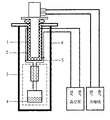
- FIG. 1 is a schematic view showing the principle of a mechanical vibration isolation liquid-free enthalpy cryogenic refrigeration device according to the present invention.
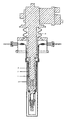
- FIG. 2 is a cross-sectional view showing an assembly of an embodiment of a cooling head unit, a helium heat exchange gas refrigerant isolation interface system, and an extremely low temperature throttle valve refrigeration system in a closed cycle refrigerator.
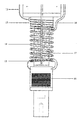
- FIG. 3 is a schematic view of an assembly of an embodiment of an extremely low temperature throttle valve refrigeration system.
- the device of the invention comprises: a closed cycle refrigerator system 1, a helium gas heat exchange gas refrigeration and vibration isolation interface system 2; a cryogenic throttle valve refrigeration system 3; a temperature feedback control system, which is divided into a first temperature feedback control system 4, Two temperature feedback control system 5.
- the closed cycle refrigerator system 1 includes a closed cycle refrigeration head 7, a compressor, and a helium gas delivery pipe.
- the gas heat exchange gas refrigeration and vibration isolation interface system 2 comprises: a cooling vibration isolation interface 8, a helium heat exchange gas 9, a heat shield 10 and a soft rubber 11 and the like.
- the cryogenic throttle valve refrigeration system 4 includes an intake duct 12, a helium heat exchanger 13, a counterflow heat exchange mechanism 14, a throttle valve 15, a liquid helium pool 16, a heat switch 17, and an air outlet duct 18.
- the cooling head 7 of the closed cycle refrigerator system extends into the cooling and vibration isolating interface 8, and the helium gas heat exchange gas is filled between the cooling head and the cooling vibration isolation interface.
- the soft rubber 11 is connected to the upper end of the sealing and cooling vibration isolation interface and the cooling head, which can seal the low frequency mechanical vibration of the cooling head while sealing the helium exchange gas.
- the heat radiation shield 10 is fixed on the cooling and vibration isolating interface for shielding the heat leakage caused by the high temperature radiation.
- the temperature feedback control system is composed of a temperature measuring element, a heating element and a feedback temperature control element connected by a circuit.
- the first temperature feedback control system 4 and the second temperature feedback control system 5 are respectively disposed at the low temperature end of the liquid helium pool 16 and the cooling vibration isolation interface 8.
- the helium heat exchanger 13, the heat switch 17, and the liquid helium pool 16 are sealed by welding.
- the cryogenic throttle valve refrigeration system is fixed at the low temperature end of the helium heat exchange gas refrigeration and vibration isolation interface system.
- the intake duct 12 is first heat exchanged with the helium heat exchanger to obtain a low temperature; then the intake duct is nested in the outlet duct 17 to constitute a counterflow heat exchange mechanism 13 to further reduce the temperature of the helium before the throttling.
- the throttle valve 15 is formed by a wire inserted into an intake pipe, and the diameter of the wire is close to the inner diameter of the intake pipe.
- the high pressure helium gas passes through the throttle valve to obtain a very low temperature, and a part of the helium gas is liquefied to form a liquid helium which is stored in the liquid helium pool 16.
- the outlet pipe is sealed and connected to the liquid helium pool by welding, and constitutes a counterflow heat exchange mechanism with the intake pipe.
- the vacuum pump is used to provide a low pressure environment in the liquid and gas outlets for continuous throttling and refrigeration.
- the thermal switch 17 when there is a certain amount of helium, the thermal switch is in a closed state; when hot When the switch is in a vacuum environment, the thermal switch is turned on.
- the thermal switch is used to control the heat conduction between the cryogenic throttle valve refrigeration system and the helium heat exchange gas refrigeration isolation interface system.
- the thermal switch is closed to increase the thermal conductivity, and the cooling effect of the cooling and vibration isolation interface can be used to quickly cool down; when the thermal switch is turned on, the heat conduction between the cooling and vibration isolation interface and the liquid helium pool is isolated to reduce heat leakage.
- the pipe diameter changes with different temperature and pressure states to ensure that the mass flow rate of helium in the pipe is constant.
- the closed cycle refrigerator system is used to solve the problem that a large amount of liquid helium is required for the conventional cryogenic refrigeration operation; the helium gas heat exchange gas refrigeration isolation interface is used to solve the micron level and above generated by the operation of the conventional refrigerator.
- Low-frequency mechanical vibration problem the use of extremely low-temperature throttle valve refrigeration system solves the problem that the traditional closed-cycle refrigerator can not obtain extremely low temperature; the temperature feedback control system is used for feedback temperature control, which can realize large-scale temperature-changing operation; using oxygen-free copper and Stainless steel 316L and other materials are used to make the cooling and vibration isolation interface and the cryogenic throttle valve refrigeration system in a vacuum environment, which is compatible with the high temperature baking conditions required for ultra-high vacuum environments.
Landscapes
- Engineering & Computer Science (AREA)
- Physics & Mathematics (AREA)
- Mechanical Engineering (AREA)
- Thermal Sciences (AREA)
- General Engineering & Computer Science (AREA)
- Separation By Low-Temperature Treatments (AREA)
- Containers, Films, And Cooling For Superconductive Devices (AREA)
Abstract
一种机械振动隔离的无液氦消耗极低温制冷系统包括:闭循环制冷机系统(1),氦气热交换气致冷隔振系统(2),极低温节流阀制冷系统(3)和温度反馈控制系统(4,5)。该系统提供的制冷方式能够在不需要消耗液氦的条件下实现低至1.4K(基于氦4媒质)或0.2K(基于氦3媒质)的极低温,同时能够非常有效的隔离闭循环制冷机系统(1)固有的机械振动;通过温度反馈控制系统(4,5)能够实现变温调控。该系统还可适用于需要经高温烘烤的超高真空环境。
Description
本发明属于极低温制冷设备技术领域,具体涉及机械振动隔离的无液氦消耗极低温制冷装置。
极低温环境指低于氦4在常压下的气液相变温度4.2K的环境,它在物理、化学、材料、生物、国防、信息等领域有重要应用。不少高端精密的科学研究和技术应用,不但需要极低温环境而且还需要低振动环境和真空、甚至超高真空环境。目前在极低温装备领域已经有能够获得极低温环境和低振动环境的制冷系统,如冷抽吸系统和稀释制冷系统等。但是现有冷抽吸系统和稀释制冷系统的运行都需要消耗资源稀缺且价格昂贵的液氦,运行成本较大。而且由于液氦杜瓦装置容量有限,极低温环境一般不能长时间连续维持。此外,这些系统由于受到制冷原理的限制,难以实现大范围变温操作。近年来由于液氦供应的日益短缺,国际上开始涌现了一些不需要液氦消耗的基于闭循环制冷机如吉福特-麦克马洪制冷机和脉管式制冷机等的低温和极低温制冷系统。但这类闭循环制冷机系统的运行本身会引入不可忽视的低频机械振动,限制了其在同时要求低振动和极低温环境领域的应用。所以开发能够在无需液氦消耗的情况下获得极低温并能够实现低振动环境和真空、超高真空兼容的装备具有十分重要的意义。
发明内容
本发明的目的在于提供一种运行不需要液氦,能获得极低温且温度大范围连续可调,低振动环境和与超高真空环境相兼容的机械振动隔离的无
液氦消耗极低温制冷系统。
本发明提供的机械振动隔离的无液氦消耗极低温制冷系统,包括:闭循环制冷机系统,氦气热交换气致冷隔振系统,极低温节流阀制冷系统和温度反馈控制系统;其中,所述闭循环制冷机系统包括:制冷头、压缩机和氦气输送管道;所述氦气热交换气致冷隔振系统包括:致冷隔振界面、氦气热交换气体及用于密封氦气和隔离振动的软橡胶等;所述极低温节流阀制冷系统包括:换热机构、节流阀、液氦(可为氦4或氦3)池、真空泵以及进、出气管道等;所述温度反馈控制系统由测温元件、加热元件和反馈控温元件经电路连接组成。
所述氦气热交换气致冷隔振系统中,闭循环制冷机的制冷头伸入致冷隔振界面内,制冷头和致冷隔振界面间填充氦气热交换气体作为制冷降温媒质;氦气热交换气作为热交换媒质致冷的同时能够隔离制冷头的机械振动。
所述极低温节流阀制冷系统中,换热机构、节流阀、液氦池顺次连接,它们固定在氦气热交换气致冷隔振系统的低温端。极低温节流阀制冷系统中,高压氦气与换热机构进行热交换获得低温;真空泵用于提供低压环境,并通过节流阀的节流制冷作用,进一步降温,获得极低温。所述液氦池用以储存在极低温和低压环境中部分氦气液化形成的液氦,它是本发明提供的机械振动隔离的无液氦消耗极低温制冷系统的最冷端。针对氦4媒质,最低温度可达1.4K;针对氦3媒质,最低温度可达0.2K。
所述温度反馈控制系统可分为两个部分,分别设置在液氦池和致冷隔振界面的低温端。加热元件、测温元件和反馈控温元件相连接,反馈控温
元件通过反馈调节控制温度。通过温度控制系统可以实现大范围的变温。
在上述方案中,闭循环制冷机的类型包括但不限于吉福特-麦克马洪制冷机、斯特林式制冷机、脉管式制冷机以及基于这些原理的改良型制冷机等。闭循环制冷机的制冷功率和最低温度根据制冷机的工作原理和型号有所区别。
在上述方案中,为使本发明提供的机械振动隔离的无液氦消耗极低温制冷系统与用户的超高真空环境所需的高温烘烤条件兼容,所述致冷隔振界面和极低温节流阀制冷系统采用不锈钢(包括但不限于不锈钢304,316,316L等)和无氧铜等材料以及与超高真空兼容的焊接加工技术。
本发明具有以下有益效果:
1.本发明采用的闭循环制冷机和极低温节流阀制冷系统的运行不需要液氦消耗。这种方案解决了传统极低温制冷设备需要消耗资源稀缺、价格昂贵的液氦的问题。
2.本发明结合闭循环制冷机和极低温节流阀制冷系统能获得低至1.4K(基于氦4媒质)或0.2K(基于氦3媒质)的极低温。这种方案解决了传统闭循环制冷机不能获得极低温的问题。
3.本发明采用的氦气热交换气致冷隔振界面有效的隔绝了闭循环制冷机工作时的低频机械振动,这种方案同时提供了极低温和低振动的工作环境。
4.本发明采用的温度反馈控制系统可以实现精确的反馈控温,可以实现大范围的变温操作。
5.本发明提供的在无液氦消耗的条件下实现极低温低振动的方案也
可以在超高真空环境中工作,可以承受实现超高真空环境需要的高温烘烤。
图1是本发明提出的机械振动隔离的无液氦消耗极低温制冷装置的原理示意图。
图2是闭循环制冷机中的制冷头部件、氦气热交换气致冷隔振界面系统和极低温节流阀制冷系统的实施例装配体剖面图。
图3是极低温节流阀制冷系统的实施例装配体示意图。
图中标号:1-闭循环制冷机系统,2-氦气热交换气致冷隔振系统,3-极低温节流阀制冷系统,4-第一温度反馈控制系统,5-第二温度反馈控制系统,6-用户的真空腔体,7-闭循环制冷头,8-致冷隔振界面,9-氦气热交换气,10-热辐射屏蔽罩,11-软橡胶,12-进气管道,13-氦气换热器,14-逆流换热机构,15-节流阀;16-液氦(可为氦4或氦3)池,17-热开关,18-出气管道。
为了使本发明的使用更加清楚明了,下面结合具体实施例,并参照附图,对本发明做进一步详细说明。
本发明装置包括:闭循环制冷机系统1,氦气热交换气致冷隔振界面系统2;极低温节流阀制冷系统3;温度反馈控制系统,分为第一温度反馈控制系统4,第二温度反馈控制系统5。其中,闭循环制冷机系统1包括:闭循环制冷头7、压缩机和氦气输送管道等。氦
气热交换气致冷隔振界面系统2包括:致冷隔振界面8、氦气热交换气9、热屏蔽罩10和软橡胶11等。极低温节流阀制冷系统4包括:进气管道12、氦气换热器13、逆流换热机构14、节流阀15、液氦池16、热开关17和出气管道18等。
所述氦气热交换气致冷隔振界面系统中,闭循环制冷机系统的制冷头7伸入致冷隔振界面8内,制冷头和致冷隔振界面间填充氦气热交换气9作为致冷降温媒质。所述软橡胶11连接密封致冷隔振界面的上端和制冷头,其密封氦气交换气的同时能够隔离制冷头的低频机械振动。所述热辐射屏蔽罩10固定在致冷隔振界面上,用于屏蔽高温辐射导致的漏热。
所述温度反馈控制系统由测温元件、加热元件和反馈控温元件经电路连接组成。其中,第一温度反馈控制系统4和第二温度反馈控制系统5分别设置在液氦池16和致冷隔振界面8的低温端。
所述极低温节流阀制冷系统3中,氦气换热器13、热开关17、和液氦池16通过焊接密封。极低温节流阀制冷系统固定在氦气热交换气致冷隔振界面系统的低温端。进气管道12首先与氦气换热器进行热交换获得低温;之后进气管道嵌套在出气管道17中构成逆流换热机构13以进一步降低节流前氦气的温度。所述节流阀15由一金属丝插入进气管道构成,金属丝的直径和进气管道内径相近。高压氦气通过节流阀后获得极低温,部分氦气液化后形成液氦储存于液氦池16中。出气管道通过焊接与液氦池密封连接,并与进气管道构成逆流换热机构。真空泵用于提供液氦池和出气管道中的低压环境,使节流制冷作用连续进行。
所述热开关17中,存在一定量氦气时,热开关处于闭合状态;当热
开关中为真空环境时,热开关处于打开状态。热开关用以控制极低温节流阀制冷系统与氦气热交换气致冷隔振界面系统之间的热传导。闭合热开关,增加热导率,利用致冷隔振界面的制冷作用,可以快速降温;打开热开关,致冷隔振界面和液氦池之间的热传导被隔绝以减少漏热。
所述进气管道12、出气管道18中,管径随不同温度和压力状态发生变化以保证管道中氦气的质量流率为一常量。
在本实施例中,采用闭循环制冷机系统解决了传统极低温制冷运行需要大量液氦的问题;采用氦气热交换气致冷隔振界面解决了传统制冷机运行产生的微米级及以上的低频机械振动的问题;采用极低温节流阀制冷系统解决了传统闭循环制冷机不能获得极低温的问题;采用温度反馈控制系统进行反馈控温,可以实现大范围变温操作;采用无氧铜和不锈钢316L等材料制成真空环境中致冷隔振界面和极低温节流阀致冷系统,与超高真空环境所需的高温烘烤条件相兼容。
以上所述的具体实施例,对本发明的目的、技术方案和有益效果作了进一步的描述说明。所应理解的是,以上所述仅为本发明的具体实施例而已,并不限于本发明。凡是在本发明精神和原则之内,所做的任何修改、等同替换和改进等,均应包含在本发明的保护范围之内。
Claims (3)
- 一种机械振动隔离的无液氦消耗极低温制冷系统,其特征在于包括:闭循环制冷机系统,氦气热交换气致冷隔振系统,极低温节流阀制冷系统和温度反馈控制系统;其中,所述闭循环制冷机系统包括:制冷头、压缩机和氦气输送管道;所述氦气热交换气致冷隔振系统包括:致冷隔振界面、氦气热交换气体及用于密封氦气和隔离振动的软橡胶;所述极低温节流阀制冷系统包括:换热机构、节流阀、液氦池、真空泵以及进、出气管道;所述温度反馈控制系统由测温元件、加热元件和反馈控温元件经电路连接组成;所述氦气热交换气致冷隔振系统中,闭循环制冷机的制冷头伸入致冷隔振界面内,制冷头和致冷隔振界面间填充氦气热交换气体作为制冷降温媒质;氦气热交换气作为热交换媒质致冷的同时用于隔离制冷头的机械振动;所述极低温节流阀制冷系统中,换热机构、节流阀、液氦池顺次连接,它们固定在氦气热交换气致冷隔振系统的低温端;极低温节流阀制冷系统中,高压氦气与换热机构进行热交换获得低温后;真空泵用于提供低压环境,并通过节流阀的节流制冷作用,进一步降温,获得极低温;所述液氦池用以储存在极低温和低压环境中部分氦气液化形成的液氦,所述液氦为氦4或氦3;所述温度反馈控制系统可分为两个部分,分别设置在液氦池和致冷隔振界面的低温端;其中,加热元件、测温元件和反馈控温元件相连接,反馈控温元件通过反馈调节控制温度。
- 根据权利要求1所述的机械振动隔离的无液氦消耗极低温制冷系统,其特征在于闭循环制冷机的类型为吉福特-麦克马洪制冷机、斯特林式制冷机、脉管式制冷机以及基于这些原理的改良型制冷机等。
- 根据权利要求1所述的机械振动隔离的无液氦消耗极低温制冷系统,其特征在于所述致冷隔振界面和极低温节流阀制冷系统采用不锈钢和无氧铜材料,并采用与超高真空兼容的焊接技术加工得到。
Priority Applications (1)
| Application Number | Priority Date | Filing Date | Title |
|---|---|---|---|
| US16/068,521 US10859293B2 (en) | 2016-01-06 | 2016-11-29 | Mechanical vibration-isolated, liquid helium consumption-free and extremely low temperature refrigerating system |
Applications Claiming Priority (2)
| Application Number | Priority Date | Filing Date | Title |
|---|---|---|---|
| CN201610002349.8A CN105571190B (zh) | 2016-01-06 | 2016-01-06 | 一种机械振动隔离的无液氦消耗极低温制冷系统 |
| CN201610002349.8 | 2016-01-06 |
Publications (1)
| Publication Number | Publication Date |
|---|---|
| WO2017118241A1 true WO2017118241A1 (zh) | 2017-07-13 |
Family
ID=55881610
Family Applications (1)
| Application Number | Title | Priority Date | Filing Date |
|---|---|---|---|
| PCT/CN2016/107662 Ceased WO2017118241A1 (zh) | 2016-01-06 | 2016-11-29 | 一种机械振动隔离的无液氦消耗极低温制冷系统 |
Country Status (3)
| Country | Link |
|---|---|
| US (1) | US10859293B2 (zh) |
| CN (1) | CN105571190B (zh) |
| WO (1) | WO2017118241A1 (zh) |
Cited By (1)
| Publication number | Priority date | Publication date | Assignee | Title |
|---|---|---|---|---|
| CN115235137A (zh) * | 2022-07-11 | 2022-10-25 | 中国科学院上海技术物理研究所 | 一种节流制冷机耦合气隙式热开关的降温结构及实现方法 |
Families Citing this family (21)
| Publication number | Priority date | Publication date | Assignee | Title |
|---|---|---|---|---|
| CN105571190B (zh) | 2016-01-06 | 2019-05-31 | 复旦大学 | 一种机械振动隔离的无液氦消耗极低温制冷系统 |
| CN106679217B (zh) * | 2016-12-16 | 2020-08-28 | 复旦大学 | 一种机械振动隔离的液氦再凝聚低温制冷系统 |
| CN107154799B (zh) * | 2017-04-01 | 2020-04-14 | 北京无线电计量测试研究所 | 一种蓝宝石微波频率源和控制方法 |
| CN107246741A (zh) * | 2017-07-07 | 2017-10-13 | 安徽万瑞冷电科技有限公司 | 一种低温恒温器 |
| CN107727481B (zh) * | 2017-09-25 | 2020-09-22 | 清华大学 | 基于小型低温制冷机的长距离冷量传递装置 |
| CN107560958A (zh) * | 2017-09-25 | 2018-01-09 | 清华大学 | 超低温超低振动摩擦测试装置 |
| US20220349628A1 (en) * | 2018-01-24 | 2022-11-03 | National Institute Of Standards And Technology (Nist) | Compact Low-power Cryo-Cooling Systems for Superconducting Elements |
| CN108479878A (zh) * | 2018-02-23 | 2018-09-04 | 中国工程物理研究院激光聚变研究中心 | 一种低振动低温测试装置 |
| CN108800638A (zh) * | 2018-03-13 | 2018-11-13 | 中国科学院理化技术研究所 | 一种低温恒温器 |
| CN110346384A (zh) * | 2018-04-08 | 2019-10-18 | 中国科学院理化技术研究所 | 一种基于微波谐振法的热物性测量装置 |
| CN108870821B (zh) * | 2018-06-27 | 2020-06-02 | 中国科学院理化技术研究所 | 一种以制冷机为冷源的低温冷却设备 |
| CN110132791B (zh) * | 2019-05-17 | 2021-11-26 | 杭州仰仪科技有限公司 | 液体低温流动性测试用导冷隔振样品容器 |
| CN110967258A (zh) * | 2019-11-18 | 2020-04-07 | 探普(南京)工业科技有限公司 | 一种无液氮高低温拉力试验装置 |
| CN113517106B (zh) * | 2020-04-10 | 2023-07-11 | 中国航天科工飞航技术研究院(中国航天海鹰机电技术研究院) | 一种制冷系统 |
| CN112503796B (zh) * | 2020-11-29 | 2021-08-20 | 清华大学 | 一种液氦温区微型节流制冷机 |
| CN112547153A (zh) * | 2020-12-24 | 2021-03-26 | 北京飞斯科科技有限公司 | 一种1k温度的无液氦超低温测试装置 |
| CN113405270B (zh) * | 2021-05-17 | 2022-08-19 | 复旦大学 | 一种带有主动式振动衰减结构的无液氦低温制冷系统 |
| CN113533397B (zh) * | 2021-07-01 | 2023-04-07 | 上海大学 | 一种原位研究二维材料低温晶体结构的装置及方法 |
| CN114739115B (zh) * | 2022-05-17 | 2024-10-22 | 中船鹏力(南京)超低温技术有限公司 | 一种低温气体液化装置 |
| CN115127247B (zh) * | 2022-05-27 | 2024-09-24 | 中科艾科米(北京)科技有限公司 | 一种采用制冷机远端液化的超低振动闭环降温装置 |
| CN117287866B (zh) * | 2023-11-24 | 2024-02-09 | 中国科学技术大学 | 热开关及稀释制冷机 |
Citations (5)
| Publication number | Priority date | Publication date | Assignee | Title |
|---|---|---|---|---|
| US7414250B1 (en) * | 2004-11-30 | 2008-08-19 | Northwestern University | Cryogenic variable temperature vacuum scanning tunneling microscope |
| CN103234661A (zh) * | 2013-04-10 | 2013-08-07 | 中国科学院理化技术研究所 | 一种具有独立真空室的检定装置 |
| CN103901232A (zh) * | 2014-03-13 | 2014-07-02 | 复旦大学 | 一种利用闭循环制冷机致冷的低温扫描隧道显微镜 |
| CN104236153A (zh) * | 2013-06-09 | 2014-12-24 | 中国科学院理化技术研究所 | 一种液氦温区小型节流制冷系统 |
| CN105571190A (zh) * | 2016-01-06 | 2016-05-11 | 复旦大学 | 一种机械振动隔离的无液氦消耗极低温制冷系统 |
Family Cites Families (4)
| Publication number | Priority date | Publication date | Assignee | Title |
|---|---|---|---|---|
| US5163297A (en) * | 1991-01-15 | 1992-11-17 | Iwatani International Corporation | Device for preventing evaporation of liquefied gas in a liquefied gas reservoir |
| US20080209919A1 (en) * | 2007-03-01 | 2008-09-04 | Philips Medical Systems Mr, Inc. | System including a heat exchanger with different cryogenic fluids therein and method of using the same |
| US20140202174A1 (en) * | 2013-01-24 | 2014-07-24 | Cryomech, Inc. | Closed Cycle 1 K Refrigeration System |
| EP3037746B1 (en) * | 2014-12-22 | 2020-08-12 | Sumitomo Heavy Industries, Ltd. | Cryocooler and operation method of cryocooler |
-
2016
- 2016-01-06 CN CN201610002349.8A patent/CN105571190B/zh active Active
- 2016-11-29 US US16/068,521 patent/US10859293B2/en active Active
- 2016-11-29 WO PCT/CN2016/107662 patent/WO2017118241A1/zh not_active Ceased
Patent Citations (5)
| Publication number | Priority date | Publication date | Assignee | Title |
|---|---|---|---|---|
| US7414250B1 (en) * | 2004-11-30 | 2008-08-19 | Northwestern University | Cryogenic variable temperature vacuum scanning tunneling microscope |
| CN103234661A (zh) * | 2013-04-10 | 2013-08-07 | 中国科学院理化技术研究所 | 一种具有独立真空室的检定装置 |
| CN104236153A (zh) * | 2013-06-09 | 2014-12-24 | 中国科学院理化技术研究所 | 一种液氦温区小型节流制冷系统 |
| CN103901232A (zh) * | 2014-03-13 | 2014-07-02 | 复旦大学 | 一种利用闭循环制冷机致冷的低温扫描隧道显微镜 |
| CN105571190A (zh) * | 2016-01-06 | 2016-05-11 | 复旦大学 | 一种机械振动隔离的无液氦消耗极低温制冷系统 |
Cited By (1)
| Publication number | Priority date | Publication date | Assignee | Title |
|---|---|---|---|---|
| CN115235137A (zh) * | 2022-07-11 | 2022-10-25 | 中国科学院上海技术物理研究所 | 一种节流制冷机耦合气隙式热开关的降温结构及实现方法 |
Also Published As
| Publication number | Publication date |
|---|---|
| US20190024949A1 (en) | 2019-01-24 |
| CN105571190B (zh) | 2019-05-31 |
| US10859293B2 (en) | 2020-12-08 |
| CN105571190A (zh) | 2016-05-11 |
Similar Documents
| Publication | Publication Date | Title |
|---|---|---|
| WO2017118241A1 (zh) | 一种机械振动隔离的无液氦消耗极低温制冷系统 | |
| CN101832675B (zh) | 带有弹性气库的脉管制冷机 | |
| WO2018107643A1 (zh) | 一种机械振动隔离的液氦再凝聚低温制冷系统 | |
| CN103615823B (zh) | 一种可快速制冷的斯特林-节流复合型制冷机 | |
| CN113778149B (zh) | 一种可进行宽温区连续变温控制的恒温器装置 | |
| CN108800638A (zh) | 一种低温恒温器 | |
| CN113803905B (zh) | 一种间隙式制冷机高效预冷及液化系统 | |
| CN103075834B (zh) | 一种利用富余冷量的1-2k复合型多级脉管制冷机 | |
| CN104197591B (zh) | 采用氦气作为回热介质的深低温回热器及其脉管制冷机 | |
| CN102980321A (zh) | 采用中继线性压缩机的多级脉管制冷机 | |
| CN104534721B (zh) | 一种采用多级热耦合v‑m型脉冲管制冷机的制冷系统 | |
| CN212362481U (zh) | 一种基于gm制冷机冷却的低振动低温磁场测量装置 | |
| CN209460179U (zh) | 一种深低温交变流动传热性能测试平台 | |
| CN215450002U (zh) | 一种可进行宽温区连续变温控制的恒温器装置 | |
| CN104949403B (zh) | 低温制冷机阀组及gm型脉管制冷机 | |
| CN104764237B (zh) | 一种可提高制冷效率的可控直流装置及改进型脉管制冷机 | |
| WO2026000632A1 (zh) | 一种采用回热式制冷机冷端直流作为液化工质的氦液化系统 | |
| CN100557339C (zh) | 一种多屏真空多层绝热的单级脉管制冷机 | |
| Ye et al. | Analysis on the cooling performance limits of a 4 K GM cryocooler based on regenerator performance optimization | |
| CN206377880U (zh) | 适用于超高真空环境的紧凑型无液氦1k低温制冷装置 | |
| CN205718044U (zh) | 一种斯特林制冷机金属泡沫换热器 | |
| CN208075384U (zh) | 一种内置球形颗粒填料的回热器 | |
| CN204787457U (zh) | 低温制冷机阀组及gm型脉管制冷机 | |
| CN110762876B (zh) | 一种液氦温区节流蒸发一体化装置 | |
| CN209944796U (zh) | 热容热阻双效耦合的深低温高精度控温装置 |
Legal Events
| Date | Code | Title | Description |
|---|---|---|---|
| 121 | Ep: the epo has been informed by wipo that ep was designated in this application |
Ref document number: 16883367 Country of ref document: EP Kind code of ref document: A1 |
|
| NENP | Non-entry into the national phase |
Ref country code: DE |
|
| 122 | Ep: pct application non-entry in european phase |
Ref document number: 16883367 Country of ref document: EP Kind code of ref document: A1 |