WO2017100514A1 - Lipophilic analogs of cj-16264, methods of use, and synthesis thereof - Google Patents
Lipophilic analogs of cj-16264, methods of use, and synthesis thereof Download PDFInfo
- Publication number
- WO2017100514A1 WO2017100514A1 PCT/US2016/065732 US2016065732W WO2017100514A1 WO 2017100514 A1 WO2017100514 A1 WO 2017100514A1 US 2016065732 W US2016065732 W US 2016065732W WO 2017100514 A1 WO2017100514 A1 WO 2017100514A1
- Authority
- WO
- WIPO (PCT)
- Prior art keywords
- compound
- substituted
- alkyl
- groups
- protecting group
- Prior art date
- Legal status (The legal status is an assumption and is not a legal conclusion. Google has not performed a legal analysis and makes no representation as to the accuracy of the status listed.)
- Ceased
Links
- 0 CCC[C@@](*)([C@@](C)N)C=*C Chemical compound CCC[C@@](*)([C@@](C)N)C=*C 0.000 description 10
Classifications
-
- A—HUMAN NECESSITIES
- A61—MEDICAL OR VETERINARY SCIENCE; HYGIENE
- A61K—PREPARATIONS FOR MEDICAL, DENTAL OR TOILETRY PURPOSES
- A61K31/00—Medicinal preparations containing organic active ingredients
- A61K31/33—Heterocyclic compounds
- A61K31/395—Heterocyclic compounds having nitrogen as a ring hetero atom, e.g. guanethidine or rifamycins
- A61K31/40—Heterocyclic compounds having nitrogen as a ring hetero atom, e.g. guanethidine or rifamycins having five-membered rings with one nitrogen as the only ring hetero atom, e.g. sulpiride, succinimide, tolmetin, buflomedil
- A61K31/407—Heterocyclic compounds having nitrogen as a ring hetero atom, e.g. guanethidine or rifamycins having five-membered rings with one nitrogen as the only ring hetero atom, e.g. sulpiride, succinimide, tolmetin, buflomedil condensed with other heterocyclic ring systems, e.g. ketorolac, physostigmine
-
- A—HUMAN NECESSITIES
- A61—MEDICAL OR VETERINARY SCIENCE; HYGIENE
- A61K—PREPARATIONS FOR MEDICAL, DENTAL OR TOILETRY PURPOSES
- A61K31/00—Medicinal preparations containing organic active ingredients
- A61K31/33—Heterocyclic compounds
- A61K31/395—Heterocyclic compounds having nitrogen as a ring hetero atom, e.g. guanethidine or rifamycins
- A61K31/41—Heterocyclic compounds having nitrogen as a ring hetero atom, e.g. guanethidine or rifamycins having five-membered rings with two or more ring hetero atoms, at least one of which being nitrogen, e.g. tetrazole
- A61K31/425—Thiazoles
- A61K31/427—Thiazoles not condensed and containing further heterocyclic rings
-
- A—HUMAN NECESSITIES
- A61—MEDICAL OR VETERINARY SCIENCE; HYGIENE
- A61K—PREPARATIONS FOR MEDICAL, DENTAL OR TOILETRY PURPOSES
- A61K31/00—Medicinal preparations containing organic active ingredients
- A61K31/33—Heterocyclic compounds
- A61K31/395—Heterocyclic compounds having nitrogen as a ring hetero atom, e.g. guanethidine or rifamycins
- A61K31/41—Heterocyclic compounds having nitrogen as a ring hetero atom, e.g. guanethidine or rifamycins having five-membered rings with two or more ring hetero atoms, at least one of which being nitrogen, e.g. tetrazole
- A61K31/425—Thiazoles
- A61K31/429—Thiazoles condensed with heterocyclic ring systems
- A61K31/43—Compounds containing 4-thia-1-azabicyclo [3.2.0] heptane ring systems, i.e. compounds containing a ring system of the formula, e.g. penicillins, penems
-
- A—HUMAN NECESSITIES
- A61—MEDICAL OR VETERINARY SCIENCE; HYGIENE
- A61K—PREPARATIONS FOR MEDICAL, DENTAL OR TOILETRY PURPOSES
- A61K31/00—Medicinal preparations containing organic active ingredients
- A61K31/33—Heterocyclic compounds
- A61K31/395—Heterocyclic compounds having nitrogen as a ring hetero atom, e.g. guanethidine or rifamycins
- A61K31/435—Heterocyclic compounds having nitrogen as a ring hetero atom, e.g. guanethidine or rifamycins having six-membered rings with one nitrogen as the only ring hetero atom
- A61K31/44—Non condensed pyridines; Hydrogenated derivatives thereof
- A61K31/445—Non condensed piperidines, e.g. piperocaine
- A61K31/4523—Non condensed piperidines, e.g. piperocaine containing further heterocyclic ring systems
- A61K31/454—Non condensed piperidines, e.g. piperocaine containing further heterocyclic ring systems containing a five-membered ring with nitrogen as a ring hetero atom, e.g. pimozide, domperidone
-
- A—HUMAN NECESSITIES
- A61—MEDICAL OR VETERINARY SCIENCE; HYGIENE
- A61K—PREPARATIONS FOR MEDICAL, DENTAL OR TOILETRY PURPOSES
- A61K31/00—Medicinal preparations containing organic active ingredients
- A61K31/33—Heterocyclic compounds
- A61K31/395—Heterocyclic compounds having nitrogen as a ring hetero atom, e.g. guanethidine or rifamycins
- A61K31/495—Heterocyclic compounds having nitrogen as a ring hetero atom, e.g. guanethidine or rifamycins having six-membered rings with two or more nitrogen atoms as the only ring heteroatoms, e.g. piperazine or tetrazines
- A61K31/496—Non-condensed piperazines containing further heterocyclic rings, e.g. rifampin, thiothixene or sparfloxacin
-
- A—HUMAN NECESSITIES
- A61—MEDICAL OR VETERINARY SCIENCE; HYGIENE
- A61K—PREPARATIONS FOR MEDICAL, DENTAL OR TOILETRY PURPOSES
- A61K31/00—Medicinal preparations containing organic active ingredients
- A61K31/33—Heterocyclic compounds
- A61K31/395—Heterocyclic compounds having nitrogen as a ring hetero atom, e.g. guanethidine or rifamycins
- A61K31/54—Heterocyclic compounds having nitrogen as a ring hetero atom, e.g. guanethidine or rifamycins having six-membered rings with at least one nitrogen and one sulfur as the ring hetero atoms, e.g. sulthiame
- A61K31/542—Heterocyclic compounds having nitrogen as a ring hetero atom, e.g. guanethidine or rifamycins having six-membered rings with at least one nitrogen and one sulfur as the ring hetero atoms, e.g. sulthiame ortho- or peri-condensed with heterocyclic ring systems
- A61K31/545—Compounds containing 5-thia-1-azabicyclo [4.2.0] octane ring systems, i.e. compounds containing a ring system of the formula:, e.g. cephalosporins, cefaclor, or cephalexine
-
- A—HUMAN NECESSITIES
- A61—MEDICAL OR VETERINARY SCIENCE; HYGIENE
- A61K—PREPARATIONS FOR MEDICAL, DENTAL OR TOILETRY PURPOSES
- A61K45/00—Medicinal preparations containing active ingredients not provided for in groups A61K31/00 - A61K41/00
- A61K45/06—Mixtures of active ingredients without chemical characterisation, e.g. antiphlogistics and cardiaca
-
- A—HUMAN NECESSITIES
- A61—MEDICAL OR VETERINARY SCIENCE; HYGIENE
- A61P—SPECIFIC THERAPEUTIC ACTIVITY OF CHEMICAL COMPOUNDS OR MEDICINAL PREPARATIONS
- A61P35/00—Antineoplastic agents
-
- C—CHEMISTRY; METALLURGY
- C07—ORGANIC CHEMISTRY
- C07D—HETEROCYCLIC COMPOUNDS
- C07D487/00—Heterocyclic compounds containing nitrogen atoms as the only ring hetero atoms in the condensed system, not provided for by groups C07D451/00 - C07D477/00
- C07D487/02—Heterocyclic compounds containing nitrogen atoms as the only ring hetero atoms in the condensed system, not provided for by groups C07D451/00 - C07D477/00 in which the condensed system contains two hetero rings
- C07D487/04—Ortho-condensed systems
-
- C—CHEMISTRY; METALLURGY
- C07—ORGANIC CHEMISTRY
- C07D—HETEROCYCLIC COMPOUNDS
- C07D491/00—Heterocyclic compounds containing in the condensed ring system both one or more rings having oxygen atoms as the only ring hetero atoms and one or more rings having nitrogen atoms as the only ring hetero atoms, not provided for by groups C07D451/00 - C07D459/00, C07D463/00, C07D477/00 or C07D489/00
- C07D491/12—Heterocyclic compounds containing in the condensed ring system both one or more rings having oxygen atoms as the only ring hetero atoms and one or more rings having nitrogen atoms as the only ring hetero atoms, not provided for by groups C07D451/00 - C07D459/00, C07D463/00, C07D477/00 or C07D489/00 in which the condensed system contains three hetero rings
- C07D491/16—Peri-condensed systems
Definitions
- This disclosure relates to the fields of medicine, pharmacology, chemistry, antimicrobial activity, and oncology.
- new compounds, compositions, methods of treatment, and methods of synthesis relating to antibiotic CJ-16,264 and derivatives thereof are disclosed.
- Antibiotic CJ-16,264 is a relatively new but rare compound, possessing high potency against a number of bacteria including many drug resistant bacteria (Nicolaou et al., 2015). While CJ-16,264 is an attractive new candidate for control of a number of bacteria, the preparation of the compound is difficult owing to the nine stereocenters within the molecule. Therefore, the development of compounds which are simpler to prepare, but retain the high activity of the base compound, is of considerable interest.
- R1 is alkyl(C ⁇ 24), cycloalkyl(C ⁇ 24), alkenyl(C ⁇ 24), aryl(C ⁇ 24), heteroaryl(C ⁇ 24), or a substituted version of any of these groups; or ⁇ A ⁇ R 6 , wherein:
- A is alkanediyl ( C ⁇ 24 ) , cycloalkanediyl ( C ⁇ 24 ) , alkenediyl ( C ⁇ 24 ) , arenediyl ( C ⁇ 24 ) , heteroarenediyl(C ⁇ 24), heterocycloalkanediyl(C ⁇ 24), or a substituted version of any of these groups; and
- R6 is alkyl(C ⁇ 24), cycloalkyl(C ⁇ 24), alkenyl(C ⁇ 24), heteroaryl(C ⁇ 12), heterocycloalkyl(C ⁇ 12), alkylamino (C ⁇ 12) , dialkylamino (C ⁇ 12) , alkoxy ( C ⁇ 24 ) , alkenyloxy ( C ⁇ 24 ) , aryloxy ( C ⁇ 24 ) , heteroaryloxy ( C ⁇ 24 ) , or a substituted version of any of these groups; or a ⁇ O ⁇ steroid or ⁇ O ⁇ steroid derivative;
- R2 is amino, hydroxy, or
- R 2 is taken together with R 3 and is ⁇ O ⁇ or ⁇ NR a ⁇ , wherein:
- R a is hydrogen, alkyl (C ⁇ 6) , or substituted alkyl (C ⁇ 6) ;
- R 3 is absent, hydrogen, hydroxy, or is taken together with R 2 as described above; provided that when R 3 is absent that the atom to which is bound is a part of a double bond; and provided that when the atom to which R3 is bound is a part of a double bond then R3 is absent;
- R4 is amino, hydroxy, or
- Rc is a monovalent amine protecting group or is taken together with Rd and is a divalent amine protecting group
- R d is hydrogen, a monovalent amine protecting group, or is taken together with R c and is a divalent amine protecting group;
- R 5 is absent, hydrogen, or hydroxy; provided that when R 5 is absent then the atom to which is bound is part of a double bond; and provide that when the atom to which R5 is bound is part of a double bond then R5 is absent; and
- X1, X2, and X3 are O, S, or NRe, wherein:
- Re is hydrogen, or substituted alkyl(C ⁇ 6)
- the compounds further defined as:
- R1 is alkyl(C ⁇ 24), cycloalkyl(C ⁇ 24), alkenyl(C ⁇ 24), aryl(C ⁇ 24), heteroaryl(C ⁇ 24), or a substituted version of any of these groups; or ⁇ A ⁇ R 6 , wherein:
- A is alkanediyl(C ⁇ 24), cycloalkanediyl(C ⁇ 24), alkenediyl(C ⁇ 24), arenediyl(C ⁇ 24), heteroarenediyl ( C ⁇ 24 ) , heterocycloalkanediyl ( C ⁇ 24 ) , or a substituted version of any of these groups;
- R 6 is alkyl ( C ⁇ 24 ) , cycloalkyl ( C ⁇ 24 ) , alkenyl ( C ⁇ 24 ) , heteroaryl (C ⁇ 12) , heterocycloalkyl (C ⁇ 12) , alkylamino(C ⁇ 12), dialkylamino(C ⁇ 12), alkoxy(C ⁇ 24), alkenyloxy(C ⁇ 24), aryloxy(C ⁇ 24), heteroaryloxy ( C ⁇ 24 ) , or a substituted version of any of these groups; or a ⁇ O ⁇ steroid or ⁇ O ⁇ steroid derivative;
- R 2 is amino, hydroxy, or
- R 2 is taken together with R 3 and is ⁇ O ⁇ or ⁇ NR a ⁇ , wherein: Ra is hydrogen, alkyl(C ⁇ 6), or substituted alkyl(C ⁇ 6);
- R3 is absent, hydrogen, hydroxy, or is taken together with R2 as described above; provided that when R 3 is absent that the atom to which is bound is a part of a double bond; and provided that when the atom to which R3 is bound is a part of a double bond then R3 is absent;
- R4 is amino, hydroxy, or
- Rb is a hydroxyl protecting group
- R c is a monovalent amine protecting group or is taken together with R d and is a divalent amine protecting group
- Rd is hydrogen, a monovalent amine protecting group, or is taken together with Rc and is a divalent amine protecting group
- R5 is absent, hydrogen, or hydroxy; provided that when R5 is absent then the atom to which is bound is part of a double bond; and provide that when the atom to which R 5 is bound is part of a double bond then R5 is absent;
- the compounds are further defined as:
- R1 is alkyl(C ⁇ 24), cycloalkyl(C ⁇ 24), alkenyl(C ⁇ 24), aryl(C ⁇ 24), heteroaryl(C ⁇ 24), or a substituted version of any of these groups; or ⁇ A ⁇ R 6 , wherein:
- A is alkanediyl(C ⁇ 24), cycloalkanediyl(C ⁇ 24), alkenediyl(C ⁇ 24), arenediyl(C ⁇ 24), heteroarenediyl ( C ⁇ 24 ) , heterocycloalkanediyl ( C ⁇ 24 ) , or a substituted version of any of these groups;
- R6 is alkyl(C ⁇ 24), cycloalkyl(C ⁇ 24), alkenyl(C ⁇ 24), heteroaryl(C ⁇ 12), heterocycloalkyl(C ⁇ 12), alkylamino(C ⁇ 12), dialkylamino(C ⁇ 12), alkoxy(C ⁇ 24), alkenyloxy(C ⁇ 24), aryloxy(C ⁇ 24), heteroaryloxy(C ⁇ 24), or a substituted version of any of these groups; or a ⁇ O ⁇ steroid or ⁇ O ⁇ steroid derivative;
- R 2 is amino, hydroxy, or
- R2 is taken together with R3 and is ⁇ O ⁇ or ⁇ NRa ⁇ , wherein:
- Ra is hydrogen, alkyl(C ⁇ 6), or substituted alkyl(C ⁇ 6);
- R3 is absent, hydrogen, hydroxy, or is taken together with R2 as described above; provided that when R3 is absent that the atom to which is bound is a part of a double bond; and provided that when the atom to which R 3 is bound is a part of a double bond then R 3 is absent; and
- R5 is absent, hydrogen, or hydroxy; provided that when R5 is absent then the atom to which is bound is part of a double bond; and provide that when the atom to which R5 is bound is part of a double bond then R 5 is absent;
- the compounds are further defined as:
- R 1 is alkyl ( C ⁇ 24 ) , cycloalkyl ( C ⁇ 24 ) , alkenyl ( C ⁇ 24 ) , aryl ( C ⁇ 24 ) , heteroaryl ( C ⁇ 24 ) , or a substituted version of any of these groups; or ⁇ A ⁇ R6, wherein:
- A is alkanediyl(C ⁇ 24), cycloalkanediyl(C ⁇ 24), alkenediyl(C ⁇ 24), arenediyl(C ⁇ 24), heteroarenediyl(C ⁇ 24), heterocycloalkanediyl(C ⁇ 24), or a substituted version of any of these groups;
- R 6 is alkyl ( C ⁇ 24 ) , cycloalkyl ( C ⁇ 24 ) , alkenyl ( C ⁇ 24 ) , heteroaryl (C ⁇ 12) , heterocycloalkyl (C ⁇ 12) , alkylamino(C ⁇ 12), dialkylamino(C ⁇ 12), alkoxy(C ⁇ 24), alkenyloxy(C ⁇ 24), aryloxy(C ⁇ 24), heteroaryloxy(C ⁇ 24), or a substituted version of any of these groups; or a ⁇ O ⁇ steroid or ⁇ O ⁇ steroid derivative; R2 is taken together with R3 and is ⁇ O ⁇ or ⁇ NRa ⁇ , wherein:
- Ra is hydrogen, alkyl(C ⁇ 6), or substituted alkyl(C ⁇ 6)
- R5 is hydrogen or hydroxy
- the compounds are further defined as:
- R1 is alkyl(C ⁇ 24), cycloalkyl(C ⁇ 24), alkenyl(C ⁇ 24), aryl(C ⁇ 24), heteroaryl(C ⁇ 24), or a substituted version of any of these groups; or ⁇ A ⁇ R 6 , wherein:
- A is alkanediyl ( C ⁇ 24 ) , cycloalkanediyl ( C ⁇ 24 ) , alkenediyl ( C ⁇ 24 ) , arenediyl ( C ⁇ 24 ) , heteroarenediyl ( C ⁇ 24 ) , heterocycloalkanediyl ( C ⁇ 24 ) , or a substituted version of any of these groups; and
- R6 is alkyl(C ⁇ 24), cycloalkyl(C ⁇ 24), alkenyl(C ⁇ 24), heteroaryl(C ⁇ 12), heterocycloalkyl(C ⁇ 12), alkylamino(C ⁇ 12), dialkylamino(C ⁇ 12), alkoxy(C ⁇ 24), alkenyloxy(C ⁇ 24), aryloxy(C ⁇ 24), heteroaryloxy ( C ⁇ 24 ) , or a substituted version of any of these groups; or a ⁇ O ⁇ steroid or ⁇ O ⁇ steroid derivative; and
- R 2 is amino, hydroxy, or
- R 1 is alkyl ( C ⁇ 24 ) or substituted alkyl ( C ⁇ 24 ) .
- R 1 is alkyl (C6-24) such as octyl, nonyl, decyl, undecyl, dodecyl, tridecyl, tetradecyl, pentadecyl, hexadecyl, heptadecyl, or octadecyl.
- R1 is substituted alkyl(C6-24) such as 1,1-difluorooctyl, 1,1-difluorononyl, 1,1-difluorodecyl, 1,1-difluoroundecyl, 1,1-difluorododecyl, 1,1-difluorotridecyl, 1,1-difluorotetradecyl, 1,1-difluoropentadecyl, 1,1-difluorohexadecyl, 1,1-difluoroheptadecyl, or 1,1- difluorooctadecyl.
- C6-24 such as 1,1-difluorooctyl, 1,1-difluorononyl, 1,1-difluorodecyl, 1,1-difluoroundecyl, 1,1-difluorododecyl, 1,1-difluorotride
- R1 is alkenyl(C ⁇ 24) or substituted alkenyl(C ⁇ 24).
- R 1 is alkenyl (C ⁇ 6-24) such as 2,6-dimethyl-hept-5-enyl, 2,6-dimethyl-hept-1,5-dienyl, 2,6,10-trimethyl-undec-1,5,9-trienyl, 2,6,10,14-tetramethyl-pentadec-1,5,9,13-tetraenyl, or heptadec- 8-enyl.
- R1 is substituted alkenyl(C ⁇ 24).
- R1 is cycloalkyl ( C ⁇ 24 ) or substituted cycloalkyl ( C ⁇ 24 ) .
- R 1 is cycloalkyl (C3-12) such as cyclohexyl.
- R1 is aryl(C ⁇ 24) or substituted aryl(C ⁇ 24).
- R1 is aryl (C6-24) such as phenyl.
- R 1 is ⁇ A ⁇ R 6 , wherein:
- A is alkanediyl ( C ⁇ 24 ) , cycloalkanediyl ( C ⁇ 24 ) , alkenediyl ( C ⁇ 24 ) , arenediyl ( C ⁇ 24 ) , heteroarenediyl ( C ⁇ 24 ) , heterocycloalkanediyl(C ⁇ 24), or a substituted version of any of these groups; and R6 is alkyl(C ⁇ 24), cycloalkyl(C ⁇ 24), alkenyl(C ⁇ 24), heteroaryl(C ⁇ 12), heterocycloalkyl(C ⁇ 12), alkylamino(C ⁇ 12), dialkylamino(C ⁇ 12), alkoxy(C ⁇ 24), alkenyloxy(C ⁇ 24), aryloxy(C ⁇ 24), heteroaryloxy ( C ⁇ 24 ) , or a substituted version of any of these groups; or a ⁇ O ⁇ steroid or ⁇ O ⁇ steroid derivative.
- A is alkanediyl ( C ⁇ 24 ) or substituted alkanediyl ( C ⁇ 24 ) .
- A is alkanediyl(C ⁇ 24) such as ⁇ CH2CH2 ⁇ .
- A is alkenediyl(C ⁇ 24) or substituted alkenediyl ( C ⁇ 24 ) .
- A is alkenediyl (C6-24) such as 2,6-dimethyl-non-1,5- diendiyl or 2,6,10-trimethyl-tridec-1,5,9-triendiyl.
- A is arenediyl(C ⁇ 24) or substituted arenediyl(C ⁇ 24).
- A is arenediyl(C ⁇ 24) such as benzenediyl. In other embodiments, A is heteroarenediyl ( C ⁇ 24 ) or substituted heteroarenediyl ( C ⁇ 24 ) . In some embodiments, A is heteroarenediyl(C ⁇ 24) such as thiazoldiyl.
- R6 is alkenyl(C ⁇ 24) or substituted alkenyl(C ⁇ 24). In some embodiments, R6 is alkenyl ( C ⁇ 24 ) such as 2,6-dimethyl-non-1,5-dienyl, 3,7,11-trimethyl-dodec-2,6,10-trienyl, or 2,6,10- trimethyl-tridec-1,5,9-trienyl. In other embodiments, R6 is heterocycloalkyl(C ⁇ 12) or substituted heterocycloalkyl(C ⁇ 12). In some embodiments, R6 is heterocycloalkyl(C ⁇ 12) such as piperadinyl or 4- methylpiperazinyl.
- R 6 is dialkylamino (C ⁇ 12) or substituted dialkylamino (C ⁇ 12) .
- R6 is dialkylamino(C ⁇ 12) such as diethylamino.
- R6 is alkenyloxy ( C ⁇ 24 ) or substituted alkenyloxy ( C ⁇ 24 ) .
- R 6 is alkenyloxy ( C ⁇ 24 ) such as 6- dimethyl-non-1,5-dienyloxy, 3,7,11-trimethyl-dodec-2,6,10-trienyloxy, or 2,6,10-trimethyl-tridec- 1,5,9-trienyoxy.
- R6 is heteroaryloxy(C ⁇ 12) or substituted heteroaryloxy(C ⁇ 12). In some embodiments, R 6 is heteroaryloxy (C ⁇ 12) such as 4-methylthiazolyloxy. In some embodiments, R 6 is a ⁇ O ⁇ steroid or ⁇ O ⁇ steroid derivative. In some embodiments, R6 is ⁇ O ⁇ steroid such as ⁇ O ⁇ cholesterol. In some embodiments, R6 is: .
- R 2 is taken together with R 3 and is ⁇ O ⁇ . In other embodiments, R 2 is taken together with R3 and is ⁇ NH ⁇ . In other embodiments, R2 is dialkylamino(C ⁇ 24) or substituted dialkylamino(C ⁇ 24). In some embodiments, R2 is dialkylamino(C ⁇ 12) or substituted dialkylamino(C ⁇ 12). In some embodiments, R2 is dialkylamino(C ⁇ 12) such as dimethylamino. In other embodiments, R2 is alkoxy ( C ⁇ 24 ) or substituted alkoxy ( C ⁇ 24 ) . In some embodiments, R 2 is alkoxy (C ⁇ 12) or substituted alkoxy(C ⁇ 12).
- R2 is alkoxy(C ⁇ 12) such as methoxy. In other embodiments, R2 is alkenyloxy ( C ⁇ 24 ) or substituted alkenyloxy ( C ⁇ 24 ) . In other embodiments, R 2 is aralkoxy (C ⁇ 12) or substituted aralkoxy (C ⁇ 12) . In some embodiments, R 2 is aralkoxy (C ⁇ 12) such as benzyloxy. In other embodiments, R2 is amino.
- R 3 is absent. In other embodiments, R 3 is taken together with R 2 and is ⁇ O ⁇ . In other embodiments, R 3 is taken together with R 2 and is ⁇ NH ⁇ . In some embodiments, R 3 is hydrogen.
- R 4 is hydroxy. In other embodiments, R 4 is ⁇ OR b wherein: R b is a hydroxyl protecting group. In some embodiments, R5 is absent. In other embodiments, R5 is hydrogen. In some embodiments, X1 is O. In some embodiments, X2 is O. In some embodiments, X3 is O.
- carbon atom 1 is in the (R) configuration. In other embodiments, carbon atom 1 is in the (S) configuration. In some embodiments, carbon atom 2 is in the (R) configuration. In other embodiments, carbon atom 2 is in the (S) configuration. In some embodiments, carbon atom 5 is in the (R) configuration. In other embodiments, carbon atom 5 is in the (S) configuration. In some embodiments, carbon atom 6 is in the (R) configuration. In other embodiments, carbon atom 6 is in the (S) configuration. In some embodiments, the carbon atom 1 is in the (R) configuration and carbon atoms 2, 5, and 6 are in the (S) configuration. In other embodiments, the carbon atom 1 is in the (S) configuration and carbon atoms 2, 5, and 6 are in the (R) configuration. In some embodiments, the compo
- compositions comprising:
- the pharmaceutical composition is formulated for administration: orally, intraadiposally, intraarterially, intraarticularly, intracranially, intradermally, intralesionally, intramuscularly, intranasally, intraocularly, intrapericardially, intraperitoneally, intrapleurally, intraprostatically, intrarectally, intrathecally, intratracheally, intratumorally, intraumbilically, intravaginally, intravenously, intravesicularlly, intravitreally, liposomally, locally, mucosally, parenterally, rectally, subconjunctival, subcutaneously, sublingually, topically, transbuccally, transdermally, vaginally, in crèmes, in lipid compositions, via a catheter, via a lavage, via continuous infusion, via infusion, via inhalation, via injection, via local delivery, or via localized perfusion.
- the pharmaceutical composition is formulated with a second therapeutic agent.
- the second therapeutic agent is an antibiotic.
- the second therapeutic agent is a chemotherapeutic compound.
- the pharmaceutical composition is formulated as a unit dose.
- the present disclosure provides methods of treating a disease or disorder in a patient in need thereof comprising administering to the patient a therapeutically effective amount of a compound or composition described herein.
- the disease or disorder is an infection caused by a bacterium.
- the bacterium is a Gram-positive bacterium.
- the Gram-positive bacterium is Bacillus subtilis 168, Staphylococcus aureus 131, Enteroccocus faecalis S613, and Enteroccocus faecium 105.
- the bacterium is a Gram-negative bacterium.
- the bacterium is resistant to one or more antibiotics.
- bacterium is resistant to a ⁇ -lactam antibiotic such as a bacterium that is resistant to methicillin or a bacterium that is resistant to a cephalosporin. In some embodiments, the bacterium is a methicillin-resistant Staphylococcus aureus 131. In some embodiments, the methods further comprise administering a second antibiotic compound.
- the second antibiotic compound is an antibiotic aminoglycoside, an ansamycin, a carbacephem, a carbapenem, a cephalosporin, an antibiotic glycopeptide, a lincosamide, an antibiotic lipopeptide, an antibiotic macrolide, a monobactam, an antibiotic nitrofuran, an oxazolidinone, a penicillin, an antibiotic polypeptide, an antibiotic quinolone or fluoroquinolone, an antibiotic sulfonamide, or a tetracycline.
- the disease or disorder is cancer.
- the cancer is a carcinoma, sarcoma, lymphoma, leukemia, melanoma, mesothelioma, multiple myeloma, or seminoma.
- the cancer is of the bladder, blood, bone, brain, breast, central nervous system, cervix, colon, endometrium, esophagus, gall bladder, gastrointestinal tract, genitalia, genitourinary tract, head, kidney, larynx, liver, lung, muscle tissue, neck, oral or nasal mucosa, ovary, pancreas, prostate, skin, spleen, small intestine, large intestine, stomach, testicle, or thyroid.
- the methods further comprise administering one or more additional anti-cancer therapies.
- the anti-cancer therapy is a second chemotherapeutic agent, a radiotherapy, an immunotherapy, or surgery.
- the method comprises administering the compound once. In some embodiments, the method comprises administering the compound two or more times. In some embodiments, the patient is a mammal such as a human.
- the present disclosure provides methods of preparing a compound of the formula:
- R1 is alkyl(C ⁇ 24), cycloalkyl(C ⁇ 24), alkenyl(C ⁇ 24), aryl(C ⁇ 24), heteroaryl(C ⁇ 24), or a substituted version of any of these groups; or ⁇ A ⁇ R 6 , wherein:
- A is alkanediyl ( C ⁇ 24 ) , cycloalkanediyl ( C ⁇ 24 ) , alkenediyl ( C ⁇ 24 ) , arenediyl ( C ⁇ 24 ) , heteroarenediyl ( C ⁇ 24 ) , heterocycloalkanediyl ( C ⁇ 24 ) , or a substituted version of any of these groups; and R6 is alkyl(C ⁇ 24), cycloalkyl(C ⁇ 24), alkenyl(C ⁇ 24), heteroaryl(C ⁇ 12), heterocycloalkyl(C ⁇ 12), alkylamino (C ⁇ 12) , dialkylamino (C ⁇ 12) , alkoxy ( C ⁇ 24 ) , alkenyloxy ( C ⁇ 24 ) , aryloxy ( C ⁇ 24 ) , heteroaryloxy(C ⁇ 24), or a substituted version of any of these groups; or a ⁇ O ⁇ steroid or ⁇ O ⁇ steroid
- R2 is amino, hydroxy, or
- R2 is taken together with R3 and is ⁇ O ⁇ or ⁇ NRa ⁇ , wherein:
- R a is hydrogen, alkyl (C ⁇ 6) , or substituted alkyl (C ⁇ 6) ;
- R 3 is absent, hydrogen, hydroxy, or is taken together with R 2 as described above; provided that when R3 is absent that the atom to which is bound is a part of a double bond; and provided that when the atom to which R3 is bound is a part of a double bond then R3 is absent;
- R 4 is amino, hydroxy, or
- alkoxy (C ⁇ 12) alkylamino (C ⁇ 12) , dialkylamino (C ⁇ 12) , or a substituted version of any of these groups; or
- R b is a hydroxyl protecting group
- Rc is a monovalent amine protecting group or is taken together with Rd and is a divalent amine protecting group
- R d is hydrogen, a monovalent amine protecting group, or is taken together with Rc and is a divalent amine protecting group;
- R 5 is absent, hydrogen, or hydroxy; provided that when R 5 is absent then the atom to which is bound is part of a double bond; and provide that when the atom to which R5 is bound is part of a double bond then R5 is absent; and
- X1 and X3 are each independently O, S, or NRe, wherein:
- Re is hydrogen, alkyl(C ⁇ 6), or substituted alkyl(C ⁇ 6);
- Y1 is amino, hydroxy, mercapto, alkylamino(C ⁇ 6), substituted alkylamino(C ⁇ 6), ⁇ OR b, ⁇ NR cRd, or–SRe wherein:
- Rb is a hydroxyl protecting group
- Rc is a monovalent amine protecting group or is taken together with Rd and is a divalent amine protecting group
- R d is hydrogen, a monovalent amine protecting group, or is taken together with R c and is a divalent amine protecting group
- R e is a thiol protecting group
- R 2 is amino, hydroxy, or
- alkoxy ( C ⁇ 24 ) alkenyloxy ( C ⁇ 24 ) , cycloalkenyloxy ( C ⁇ 24 ) , aryloxy (C ⁇ 12) , aralkoxy(C ⁇ 12), alkylamino(C ⁇ 24), dialkylamino(C ⁇ 24), cycloalkylamino(C ⁇ 24), dicycloalkylamino(C ⁇ 24), alkenylamino(C ⁇ 24), dialkenylamino(C ⁇ 24), or a substituted version of any of these groups; or
- R 2 is taken together with R 3 and is ⁇ O ⁇ or ⁇ NR a ⁇ , wherein:
- Ra is hydrogen, alkyl(C ⁇ 6), or substituted alkyl(C ⁇ 6);
- R3 is absent, hydrogen, hydroxy, or is taken together with R2 as described above; provided that when R 3 is absent that the atom to which is bound is a part of a double bond; and provided that when the atom to which R 3 is bound is a part of a double bond then R 3 is absent;
- R4 is amino, hydroxy, or
- alkoxy (C ⁇ 12) alkylamino (C ⁇ 12) , dialkylamino (C ⁇ 12) , or a substituted version of any of these groups; or
- Rb is a hydroxyl protecting group
- R c is a monovalent amine protecting group or is taken together with R d and is a divalent amine protecting group
- Rd is hydrogen, a monovalent amine protecting group, or is taken together with Rc and is a divalent amine protecting group
- R5 is absent, hydrogen, or hydroxy; provided that when R5 is absent then the atom to which is bound is part of a double bond; and provide that when the atom to which R 5 is bound is part of a double bond then R5 is absent;
- X1 and X3 are each independently O, S, or NRe, wherein:
- R e is hydrogen, alkyl (C ⁇ 6) , or substituted alkyl (C ⁇ 6) ;
- Y 2 is an activated group
- R 1 is alkyl ( C ⁇ 24 ) , cycloalkyl ( C ⁇ 24 ) , alkenyl ( C ⁇ 24 ) , aryl ( C ⁇ 24 ) , heteroaryl ( C ⁇ 24 ) , or a substituted version of any of these groups; or ⁇ A ⁇ R 6 , wherein:
- A is alkanediyl ( C ⁇ 24 ) , cycloalkanediyl ( C ⁇ 24 ) , alkenediyl ( C ⁇ 24 ) , arenediyl ( C ⁇ 24 ) , heteroarenediyl(C ⁇ 24), heterocycloalkanediyl(C ⁇ 24), or a substituted version of any of these groups; and
- R6 is alkyl(C ⁇ 24), cycloalkyl(C ⁇ 24), alkenyl(C ⁇ 24), heteroaryl(C ⁇ 12), heterocycloalkyl(C ⁇ 12), alkylamino (C ⁇ 12) , dialkylamino (C ⁇ 12) , alkoxy ( C ⁇ 24 ) , alkenyloxy ( C ⁇ 24 ) , aryloxy ( C ⁇ 24 ) , heteroaryloxy(C ⁇ 24), or a substituted version of any of these groups; or a ⁇ O ⁇ steroid or ⁇ O ⁇ steroid derivative;
- X2 is O, S, or NRe, wherein:
- Re is hydrogen, alkyl(C ⁇ 6), or substituted alkyl(C ⁇ 6);
- the Lewis acid is a metal, a boron compound, or an aluminum compound. In some embodiments, the Lewis acid is a boron compound such as triethylboron. In some embodiments, the methods comprise adding an amount of the boron compound from about 0.1 equivalents to about 10 equivalents relative to the compound of formula VII. In some embodiments, the amount of the Lewis acid is from about 0.5 equivalents to about 2.5 equivalents. In some embodiments, the amount of the Lewis acid is about 1.0 equivalents.
- the methods comprise adding an amount of the compound of formula VII from about 0.1 equivalent to about 10 equivalents relative to the compound of formula VIII. In some embodiments, the amount of the compound of formula VII is from about 1.0 to about 5 equivalents relative to the compound of formula VIII. In some embodiments, the amount of the compound of formula VII is about 2.5 equivalents. In some embodiments, the amount of the compound of formula VII is from about 0.1 to about 1 equivalents relative to the compound of formula VIII. In some embodiments, the amount of the compound of formula VII is about 0.25 equivalents.
- the methods further comprise reacting the compound of formula VII and the compound of formula VIII in an organic solvent.
- the organic solvent is a non-polar solvent.
- the organic solvent is a hydrocarbon solvent.
- the organic solvent is an arene (C ⁇ 12) such as toluene.
- the methods further comprise reacting the compound of formula VII and the compound of formula VIII at a temperature from about ⁇ 100 °C to about ⁇ 10 °C. In some embodiments, the temperature is from about ⁇ 90 °C to about ⁇ 50 °C such as about ⁇ 78 °C. In some embodiments, the methods further comprise reacting the compound of formula VII and the compound of formula VIII for a time period from about 10 minutes to about 8 hours. In some embodiments, the time period is from about 1 hour to about 4 hours. In some embodiments, the time period is about 2 hours.
- Y2 is a halo, mesylate, toslyate, or triflate. In some embodiments, Y2 is halo.
- the methods further comprise reacting the compound of formula VIII with an oxidizing agent to form a compound of formula I.
- the oxidizing agent is a hypervalent iodide compound such as Dess–Martin periodinane.
- the methods comprise adding an amount from about 1 equivalent to about 3 equivalents of the oxidizing agent relative to the compound of formula VIII. In some embodiments, the amount of the oxidizing agent is from about 1 equivalent to about 2 equivalents. In some embodiments, the amount of the oxidizing agent is from about 1.4 equivalents to about 1.8 equivalents. In some embodiments, the methods further comprise an organic solvent.
- the methods further comprise reacting the compound of formula VIII with an oxidizing agent at a temperature from about ⁇ 30 °C to about 30 °C. In some embodiments, the methods further comprise reacting the compound of formula VIII with an oxidizing agent for a time period from about 5 minutes to about 2 hours.
- the present disclosure provides methods of preparing a compound of the formula:
- R2 is amino, hydroxy, or alkoxy(C ⁇ 24), cycloalkoxy(C ⁇ 24), alkenyloxy(C ⁇ 24), cycloalkenyloxy(C ⁇ 24), aryloxy(C ⁇ 12), aralkoxy (C ⁇ 12) , alkylamino ( C ⁇ 24 ) , dialkylamino ( C ⁇ 24 ) , cycloalkylamino ( C ⁇ 24 ) , dicycloalkylamino(C ⁇ 24), alkenylamino(C ⁇ 24), dialkenylamino(C ⁇ 24), or a substituted version of any of these groups; or
- R2 is taken together with R3 and is ⁇ O ⁇ or ⁇ NRa ⁇ , wherein:
- Ra is hydrogen, alkyl(C ⁇ 6), or substituted alkyl(C ⁇ 6);
- R3 is hydroxy or is taken together with R2 as described above;
- R 4 is amino, hydroxy, or
- alkoxy (C ⁇ 12) alkylamino (C ⁇ 12) , dialkylamino (C ⁇ 12) , or a substituted version of any of these groups; or
- R b is a hydroxyl protecting group
- R c is a monovalent amine protecting group or is taken together with R d and is a divalent amine protecting group
- R d is hydrogen, a monovalent amine protecting group, or is taken together with Rc and is a divalent amine protecting group;
- R5 is halo
- X 1 and X 3 are each independently O, S, or NR e , wherein:
- R e is hydrogen, alkyl (C ⁇ 6) , or substituted alkyl (C ⁇ 6) ;
- R7 is an alkylsilyl(C ⁇ 12) or a substituted alkylsilyl(C ⁇ 12);
- R8 is a chiral auxiliary
- R8 is as defined above.
- R 9 is alkylsilyl (C ⁇ 12) or substituted alkylsilyl (C ⁇ 12) ;
- R 9 is as defined above.
- R7 is trimethylsilyl.
- the energy source is light.
- the base is imidazole.
- the silylating agent (C ⁇ 12) is t- butyldimethylsilyl chloride.
- the base of step (b) is lithium hydroxide.
- the halogen is an elemental halogen. In some embodiments, the halogen is I2.
- the present disclosure provides methods of preparing a compound of the formula:
- R2 is amino, hydroxy, or
- R2 is taken together with R3 and is ⁇ O ⁇ or ⁇ NRa ⁇ , wherein:
- Ra is hydrogen, alkyl(C ⁇ 6), or substituted alkyl(C ⁇ 6);
- R 3 is hydroxy or is taken together with R 2 as described above;
- R 4 is amino, hydroxy, or
- alkoxy (C ⁇ 12) alkylamino (C ⁇ 12) , dialkylamino (C ⁇ 12) , or a substituted version of any of these groups; or
- R b is a hydroxyl protecting group
- Rc is a monovalent amine protecting group or is taken together with Rd and is a divalent amine protecting group
- R d is hydrogen, a monovalent amine protecting group, or is taken together with Rc and is a divalent amine protecting group;
- R 5 is halo
- X 1 and X 3 are each independently O, S, or NR e , wherein:
- R e is hydrogen, alkyl (C ⁇ 6) , or substituted alkyl (C ⁇ 6) ;
- R7 is an alkylsilyl(C ⁇ 12) or a substituted alkylsilyl(C ⁇ 12);
- R 8 is a chiral auxiliary
- R8 is as defined above.
- R9 is alkylsilyl(C ⁇ 12) or substituted alkylsilyl(C ⁇ 12);
- R 9 is as defined above.
- the present disclosure provides methods of preparing a compound of the formula:
- R 2 is amino, hydroxy, or alkoxy(C ⁇ 24), cycloalkoxy(C ⁇ 24), alkenyloxy(C ⁇ 24), cycloalkenyloxy(C ⁇ 24), aryloxy(C ⁇ 12), aralkoxy (C ⁇ 12) , alkylamino ( C ⁇ 24 ) , dialkylamino ( C ⁇ 24 ) , cycloalkylamino ( C ⁇ 24 ) , dicycloalkylamino(C ⁇ 24), alkenylamino(C ⁇ 24), dialkenylamino(C ⁇ 24), or a substituted version of any of these groups; or
- R2 is taken together with R3 and is ⁇ O ⁇ or ⁇ NRa ⁇ , wherein:
- Ra is hydrogen, alkyl(C ⁇ 6), or substituted alkyl(C ⁇ 6);
- R3 is hydroxy or is taken together with R2 as described above;
- R 4 is amino, hydroxy, or
- alkoxy (C ⁇ 12) alkylamino (C ⁇ 12) , dialkylamino (C ⁇ 12) , or a substituted version of any of these groups; or
- R b is a hydroxyl protecting group
- R c is a monovalent amine protecting group or is taken together with R d and is a divalent amine protecting group
- R d is hydrogen, a monovalent amine protecting group, or is taken together with Rc and is a divalent amine protecting group;
- R5 is halo
- X 1 and X 3 are each independently O, S, or NR e , wherein:
- R e is hydrogen, alkyl (C ⁇ 6) , or substituted alkyl (C ⁇ 6) ;
- R 8 is a chiral auxillary
- R9 is alkylsilyl(C ⁇ 12) or substituted alkylsilyl(C ⁇ 12);
- R8 is a chiral N-heterocycloalkyl(C ⁇ 12) or substituted N- heterocycloalkyl (C ⁇ 12) such as a chiral unsubstituted or substituted N-pyrrolidinyl (C ⁇ 12) .
- R 8 is In some embodiments, the halonium reagent is an iodonium reagent such as I(sym-collidine) 2 ClO 4 .
- the methods may further comprise a base.
- the base is a nitrogenous base such as 2,4,6-collidine.
- one or more steps of the reaction further comprise purifying the reaction in a purification step.
- the purification method is chromatography.
- the purification method is column chromatography or high performance liquid chromatography.
- any method or composition described herein can be implemented with respect to any other method or composition described herein.
- an aldehyde synthesized by one method may be used in the preparation of a final compound according to a different method.
- the present disclosure provides lipophilic analogs of antibiotic CJ-16,264 which show increased activity in anti-microbial assays. These compounds show decreased complexity in the attached lipophilic group by reducing the number of chiral centers while increasing activity. These compounds may be used in the treatment of bacterial infections or as anti-tumor agents.
- the present disclosure provides compounds of the formula:
- R 1 is alkyl ( C ⁇ 24 ) , cycloalkyl ( C ⁇ 24 ) , alkenyl ( C ⁇ 24 ) , aryl ( C ⁇ 24 ) , heteroaryl ( C ⁇ 24 ) , or a substituted version of any of these groups; or ⁇ A ⁇ R6, wherein:
- A is alkanediyl(C ⁇ 24), cycloalkanediyl(C ⁇ 24), alkenediyl(C ⁇ 24), arenediyl(C ⁇ 24), heteroarenediyl(C ⁇ 24), heterocycloalkanediyl(C ⁇ 24), or a substituted version of any of these groups;
- R 6 is alkyl ( C ⁇ 24 ) , cycloalkyl ( C ⁇ 24 ) , alkenyl ( C ⁇ 24 ) , heteroaryl (C ⁇ 12) , heterocycloalkyl (C ⁇ 12) , alkylamino(C ⁇ 12), dialkylamino(C ⁇ 12), alkoxy(C ⁇ 24), alkenyloxy(C ⁇ 24), aryloxy(C ⁇ 24), heteroaryloxy(C ⁇ 24), or a substituted version of any of these groups; or a ⁇ O ⁇ steroid or ⁇ O ⁇ steroid derivative;
- R 2 is amino, hydroxy, or
- R2 is taken together with R3 and is ⁇ O ⁇ or ⁇ NRa ⁇ , wherein:
- Ra is hydrogen, alkyl(C ⁇ 6), or substituted alkyl(C ⁇ 6);
- R3 is absent, hydrogen, hydroxy, or is taken together with R2 as described above; provided that when R3 is absent that the atom to which is bound is a part of a double bond; and provided that when the atom to which R3 is bound is a part of a double bond then R3 is absent;
- R 4 is amino, hydroxy, or
- alkoxy (C ⁇ 12) alkylamino (C ⁇ 12) , dialkylamino (C ⁇ 12) , or a substituted version of any of these groups; or
- R b is a hydroxyl protecting group
- Rc is a monovalent amine protecting group or is taken together with Rd and is a divalent amine protecting group
- R d is hydrogen, a monovalent amine protecting group, or is taken together with R c and is a divalent amine protecting group;
- R 5 is absent, hydrogen, or hydroxy; provided that when R 5 is absent then the atom to which is bound is part of a double bond; and provide that when the atom to which R5 is bound is part of a double bond then R5 is absent; and
- X1, X2, and X3 are O, S, or NRe, wherein:
- Re is hydrogen, alkyl(C ⁇ 6), or substituted alkyl(C ⁇ 6);
- the compounds provided by the present disclosure are shown, for example, above in the summary section and in the examples and claims below. They may be made using the methods outlined in the Examples section.
- the CJ-16,264 derivatives can be synthesized according to the methods described, for example, in the Examples section below. These methods can be further modified and optimized using the principles and techniques of organic chemistry as applied by a person skilled in the art. Such principles and techniques are taught, for example, in March’s Advanced Organic Chemistry: Reactions, Mechanisms, and Structure (2007), which is incorporated by reference herein.
- the CJ-16,264 derivatives of the disclosure may contain one or more asymmetrically- substituted carbon or nitrogen atoms, and may be isolated in optically active or racemic form.
- optically active or racemic form all chiral, diastereomeric, racemic form, epimeric form, and all geometric isomeric forms of a chemical formula are intended, unless the specific stereochemistry or isomeric form is specifically indicated.
- Compounds may occur as racemates and racemic mixtures, single enantiomers, diastereomeric mixtures and individual diastereomers. In some embodiments, a single diastereomer is obtained.
- the chiral centers of the compounds of the present disclosure can have the (S) or the (R) configuration.
- Chemical formulas used to represent the CJ-16,264 derivatives of the present disclosure will typically only show one of possibly several different tautomers. For example, many types of ketone groups are known to exist in equilibrium with corresponding enol groups. Similarly, many types of imine groups exist in equilibrium with enamine groups. Regardless of which tautomer is depicted for a given compound, and regardless of which one is most prevalent, all tautomers of a given chemical formula are intended.
- the CJ-16,264 derivatives of the present disclosure may also have the advantage that they may be more efficacious than, be less toxic than, be longer acting than, be more potent than, produce fewer side effects than, be more easily absorbed than, and/or have a better pharmacokinetic profile (e.g., higher oral bioavailability and/or lower clearance) than, and/or have other useful pharmacological, physical, or chemical properties over, compounds known in the prior art, whether for use in the indications stated herein or otherwise.
- a better pharmacokinetic profile e.g., higher oral bioavailability and/or lower clearance
- atoms making up the CJ-16,264 derivatives of the present disclosure are intended to include all isotopic forms of such atoms.
- Isotopes include those atoms having the same atomic number but different mass numbers.
- isotopes of hydrogen include tritium and deuterium
- isotopes of carbon include 13 C and 14 C.
- the CJ-16,264 derivatives of the present disclosure may also exist in prodrug form. Since prodrugs are known to enhance numerous desirable qualities of pharmaceuticals (e.g., solubility, bioavailability, manufacturing, etc.), the compounds employed in some methods of the disclosure may, if desired, be delivered in prodrug form. Thus, the disclosure contemplates prodrugs of compounds of the present disclosure as well as methods of delivering prodrugs. Prodrugs of the CJ-16,264 derivatives employed in the disclosure may be prepared by modifying functional groups present in the compound in such a way that the modifications are cleaved, either in routine manipulation or in vivo, to the parent compound.
- prodrugs include, for example, compounds described herein in which a hydroxy, amino, or carboxy group is bonded to any group that, when the prodrug is administered to a subject, cleaves to form a hydroxy, amino, or carboxylic acid, respectively.
- the compounds are included within a pharmaceutical formulation.
- Materials for use in the preparation of microspheres and/or microcapsules are, e.g., biodegradable/bioerodible polymers such as polygalactin, poly(isobutyl cyanoacrylate), poly(2-hydroxyethyl-L-glutamine) and, poly(lactic acid).
- Biocompatible carriers that may be used when formulating a controlled release parenteral formulation are carbohydrates (e.g., dextrans), proteins (e.g., albumin), lipoproteins, or antibodies.
- Materials for use in implants can be non-biodegradable (e.g., polydimethyl siloxane) or biodegradable (e.g., poly(caprolactone), poly(lactic acid), poly(glycolic acid) or poly(ortho esters) or combinations thereof).
- biodegradable e.g., poly(caprolactone), poly(lactic acid), poly(glycolic acid) or poly(ortho esters) or combinations thereof.
- Formulations for oral use include tablets containing the active ingredient(s) (e.g., the CJ-16,264 derivatives) in a mixture with non-toxic pharmaceutically acceptable excipients.
- Excipients may be, for example, inert diluents or fillers (e.g., sucrose, sorbitol, sugar, mannitol, microcrystalline cellulose, starches including potato starch, calcium carbonate, sodium chloride, lactose, calcium phosphate, calcium sulfate, or sodium phosphate); granulating and disintegrating agents (e.g., cellulose derivatives including microcrystalline cellulose, starches including potato starch, croscarmellose sodium, alginates, or alginic acid); binding agents (e.g., sucrose, glucose, sorbitol, acacia, alginic acid, sodium alginate, gelatin, starch, pregelatinized starch, microcrystalline cellulose, magnesium aluminum silicate, carboxy
- the tablets may be uncoated or they may be coated by known techniques, optionally to delay disintegration and absorption in the gastrointestinal tract and thereby providing a sustained action over a longer period.
- the coating may be adapted to release the active drug in a predetermined pattern (e.g., in order to achieve a controlled release formulation) or it may be adapted not to release the active drug until after passage of the stomach (enteric coating).
- the coating may be a sugar coating, a film coating (e.g., based on hydroxypropyl methylcellulose, methylcellulose, methyl hydroxyethylcellulose, hydroxypropylcellulose, carboxymethylcellulose, acrylate copolymers, polyethylene glycols and/or polyvinylpyrrolidone), or an enteric coating (e.g., based on methacrylic acid copolymer, cellulose acetate phthalate, hydroxypropyl methylcellulose phthalate, hydroxypropyl methylcellulose acetate succinate, polyvinyl acetate phthalate, shellac, and/or ethylcellulose).
- a time delay material such as, e.g., glyceryl monostearate or glyceryl distearate may be employed.
- the compounds disclosed herein may be used to treat a bacterial infection. While humans contain numerous different bacteria on and inside their bodies, an imbalance in bacterial levels or the introduction of pathogenic bacteria can cause a symptomatic bacterial infection. Pathogenic bacteria cause a variety of different diseases including but not limited to numerous foodborne illness, typhoid fever, tuberculosis, pneumonia, syphilis, and leprosy.
- bacteria have a wide range of interactions with body and those interactions can modulate ability of the bacteria to cause an infection.
- bacteria can be conditionally pathogenic such that they only cause an infection under specific conditions.
- Staphylococcus and Streptococcus bacteria exist in the normal human bacterial biome, but these bacteria when they are allowed to colonize other parts of the body causing a skin infection, pneumonia, or sepsis.
- Other bacteria are known as opportunistic pathogens and only cause diseases in a patient with a weakened immune system or another disease or disorder.
- Bacteria can also be intracellular pathogens which can grow and reproduce within the cells of the host organism. Such bacteria can be divided into two major categories as either obligate intracellular parasites or facultative intracellular parasites. Obligate intracellular parasites require the host cell in order to reproduce and include such bacteria as but are not limited to Chlamydophila, Rickettsia, and Ehrlichia which are known to cause pneumonia, urinary tract infections, typhus, and Rocky Mountain spotted fever. Facultative intracellular parasites can reproduce either intracellular or extracellular.
- facultative intracellular parasites include Salmonella, Listeria, Legionella, Mycobacterium, and Brucella which are known to cause food poisoning, typhoid fever, sepsis, meningitis, Legionnaire’s disease, tuberculosis, leprosy, and brucellosis.
- the compounds described herein may be used for the treatment of bacterial infections, including those caused by Staphyloccoccus aureus.
- S. aureus is a major human pathogen, causing a wide variety of illnesses ranging from mild skin and soft tissue infections and food poisoning to life- threatening illnesses such as deep post-surgical infections, septicaemia, endocarditis, necrotizing pneumonia, and toxic shock syndrome.
- These organisms have a remarkable ability to accumulate additional antibiotic resistance determinants, resulting in the formation of multiply-drug-resistant strains.
- Methicillin being the first semi-synthetic penicillin to be developed, was introduced in 1959 to overcome the problem of penicillin-resistant S. aureus due to ⁇ -lactamase (penicillinase) production (Livermore, 2000).
- penicillinase penicillinase
- MRSA methicillin-resistant S. aureus
- the compounds of the present disclosure may be used to treat a Steptococcus pneumoniae infection.
- Streptococcus pneumoniae is a Gram-positive, alpha-hemolytic, bile soluble aerotolerant anaerobe and a member of the genus Streptococcus.
- a significant human pathogenic bacterium, S. pneumoniae was recognized as a major cause of pneumonia in the late 19th century and is the subject of many humoral immunity studies.
- the organism causes many types of pneumococcal infection other than pneumonia, including acute sinusitis, otitis media, meningitis, bacteremia, sepsis, osteomyelitis, septic arthritis, endocarditis, peritonitis, pericarditis, cellulitis, and brain abscess.
- S. pneumoniae is the most common cause of bacterial meningitis in adults and children, and is one of the top two isolates found in ear infection, otitis media.
- Pneumococcal pneumonia is more common in the very young and the very old.
- S. pneumoniae can be differentiated from S. viridans, some of which are also alpha hemolytic, using an optochin test, as S. pneumoniae is optochin sensitive. S. pneumoniae can also be distinguished based on its sensitivity to lysis by bile.
- the encapsulated, Gram-positive coccoid bacteria have a distinctive morphology on Gram stain, the so-called,“lancet shape.” It has a polysaccharide capsule that acts as a virulence factor for the organism; more than 90 different serotypes are known, and these types differ in virulence, prevalence, and extent of drug resistance.
- S. pneumoniae is part of the normal upper respiratory tract flora but as with many natural flora, it can become pathogenic under the right conditions (e.g., if the immune system of the host is suppressed).
- Invasins such as Pneumolysin, an anti-phagocytic capsule, various adhesins and immunogenic cell wall components are all major virulence factors.
- bacteria infections could be targeted to a specific location in or on the body.
- bacteria could be harmless if only exposed to the specific organs, but when it comes in contact with a specific organ or tissue, the bacteria can begin replicating and cause a bacterial infection.
- the compounds disclosed herein may be used to treat a bacterial infection by a Gram-positive bacteria.
- Gram-positive bacteria contain a thick peptidoglycan layer within the cell wall which prevents the bacteria from releasing the stain when dyed with crystal violet.
- the Gram-positive bacteria are often more susceptible to antibiotics.
- Gram-positive bacteria in addition to the thick peptidoglycan layer, also comprise a lipid monolayer and contain teichoic acids which react with lipids to form lipoteichoic acids that can act as a chelating agent.
- the peptidoglycan layer is outer surface of the bacteria.
- Gram-positive bacteria Many Gram-positive bacteria have been known to cause disease including, but are not limited to, Streptococcus, Straphylococcus, Corynebacterium, Enterococcus, Listeria, Bacillus, Clostridium, Rathybacter, Leifsonia, and Clavibacter.
- Streptococcus Straphylococcus
- Corynebacterium Enterococcus
- Listeria Bacillus
- Clostridium Clostridium
- Rathybacter Leifsonia
- Clavibacter and Clavibacter.
- the compounds disclosed herein may be used to treat a bacterial infection by a Gram-negative bacteria.
- Gram-negative bacteria do not retain the crystal violet stain after washing with alcohol.
- Gram-negative bacteria on the other hand, have a thin peptidoglycan layer with an outer membrane of lipopolysaccharides and phospholipids as well as a space between the peptidoglycan and the outer cell membrane called the periplasmic space.
- Gram- negative bacterial generally do not have teichoic acids or lipoteichoic acids in their outer coating.
- Gram-negative bacteria also release some endotoxin and contain prions which act as molecular transport units for specific compounds.
- Most bacteria are Gram-negative.
- Gram-negative bacteria include Bordetella, Borrelia, Burcelia, Campylobacteria, Escherichia, Francisella, Haemophilus, Helicobacter, Legionella, Leptospira, Neisseria, Pseudomonas, Rickettsia, Salmonella, Shigella, Treponema, Vibrio, and Yersinia.
- Bordetella Borrelia, Burcelia, Campylobacteria
- Escherichia Francisella
- Haemophilus Helicobacter
- Legionella Leptospira
- Neisseria Neisseria
- Pseudomonas Rickettsia
- Rickettsia Salmonella
- Shigella Shigella
- Treponema Vibrio
- Yersinia Yersinia
- the compounds disclosed herein may be used to treat a bacterial infection by a Gram-indeterminate bacteria.
- Gram-indeterminate bacteria do not full stain or partially stain when exposed to crystal violet.
- a Gram-indeteriminate bacteria may exhibit some of the properties of the Gram-positive and Gram-negative bacteria.
- a non- limiting example of a Gram-indeterminate bacteria include Mycobacterium tuberculosis or Mycobacterium leprae. III. Hyperproliferative Diseases
- cancer One of the key elements of cancer is that the cell’s normal apoptotic cycle is interrupted and thus agents that interrupt the growth of the cells are important as therapeutic agents for treating these diseases.
- the CJ- 16,264 derivatives may be used to lead to decreased cell counts and as such can potentially be used to treat a variety of types of cancer lines. In some aspects, it is anticipated that the CJ-16,264 derivatives of the present disclosure may be used to treat virtually any malignancy.
- Cancer cells that may be treated with the compounds of the present disclosure include but are not limited to cells from the bladder, blood, bone, bone marrow, brain, breast, colon, esophagus, gastrointestine, gum, head, kidney, liver, lung, nasopharynx, neck, ovary, prostate, skin, stomach, pancreas, testis, tongue, cervix, or uterus.
- the cancer may specifically be of the following histological type, though it is not limited to these: neoplasm, malignant; carcinoma; carcinoma, undifferentiated; giant and spindle cell carcinoma; small cell carcinoma; papillary carcinoma; squamous cell carcinoma; lymphoepithelial carcinoma; basal cell carcinoma; pilomatrix carcinoma; transitional cell carcinoma; papillary transitional cell carcinoma; adenocarcinoma; gastrinoma, malignant; cholangiocarcinoma; hepatocellular carcinoma; combined hepatocellular carcinoma and cholangiocarcinoma; trabecular adenocarcinoma; adenoid cystic carcinoma; adenocarcinoma in adenomatous polyp; adenocarcinoma, familial polyposis coli; solid carcinoma; carcinoid tumor, malignant; branchiolo-alveolar adenocarcinoma; papillary adenocarcinoma; chromophobe carcinoma; acid
- the tumor may comprise an osteosarcoma, angiosarcoma, rhabdosarcoma, leiomyosarcoma, Ewing sarcoma, glioblastoma, neuroblastoma, or leukemia.
- compositions in a form appropriate for the intended application.
- such formulation with the compounds of the present disclosure is contemplated.
- this will entail preparing compositions that are essentially free of pyrogens, as well as other impurities that could be harmful to humans or animals.
- Aqueous compositions of the present disclosure comprise an effective amount of the vector to cells, dissolved or dispersed in a pharmaceutically acceptable carrier or aqueous medium. Such compositions also are referred to as inocula.
- pharmaceutically acceptable carrier or aqueous medium Such compositions also are referred to as inocula.
- pharmaceutically or pharmacologically acceptable refers to molecular entities and compositions that do not produce adverse, allergic, or other untoward reactions when administered to an animal or a human.
- “pharmaceutically acceptable carrier” includes any and all solvents, dispersion media, coatings, antibacterial and antifungal agents, isotonic and absorption delaying agents and the like.
- the use of such media and agents for pharmaceutically active substances is well known in the art. Except insofar as any conventional media or agent is incompatible with the vectors or cells of the present disclosure, its use in therapeutic compositions is contemplated. Supplementary active ingredients also can be incorporated into the compositions.
- compositions of the present disclosure may include classic pharmaceutical preparations. Administration of these compositions according to the present disclosure will be via any common route so long as the target tissue is available via that route. Such routes include oral, nasal, buccal, rectal, vaginal or topical route. Alternatively, administration may be by orthotopic, intradermal, subcutaneous, intramuscular, intratumoral, intraperitoneal, or intravenous injection. Such compositions would normally be administered as pharmaceutically acceptable compositions, described supra.
- the active compounds may also be administered parenterally or intraperitoneally.
- Solutions of the active compounds as free base or pharmacologically acceptable salts can be prepared in water suitably mixed with a surfactant, such as hydroxypropylcellulose.
- Dispersions can also be prepared in glycerol, liquid polyethylene glycols, and mixtures thereof and in oils. Under ordinary conditions of storage and use, these preparations contain a preservative to prevent the growth of microorganisms.
- the pharmaceutical forms suitable for injectable use include sterile aqueous solutions or dispersions and sterile powders for the extemporaneous preparation of sterile injectable solutions or dispersions.
- the form must be sterile and must be fluid to the extent that easy syringability exists. It must be stable under the conditions of manufacture and storage and must be preserved against the contaminating action of microorganisms, such as bacteria and fungi.
- the carrier can be a solvent or dispersion medium containing, for example, water, ethanol, polyol (for example, glycerol, propylene glycol, and liquid polyethylene glycol, and the like), suitable mixtures thereof, and vegetable oils.
- the proper fluidity can be maintained, for example, by the use of a coating, such as lecithin, by the maintenance of the required particle size in the case of dispersion and by the use of surfactants.
- a coating such as lecithin
- surfactants for example, sodium sulfate, sodium sulfate, sodium sulfate, sodium sulfate, sodium sulfate, sodium sulfate, sodium sulfate, sodium sorbic acid, thimerosal, and the like.
- isotonic agents for example, sugars or sodium chloride.
- Prolonged absorption of the injectable compositions can be brought about by the use in the compositions of agents delaying absorption, for example, aluminum monostearate and gelatin.
- Sterile injectable solutions are prepared by incorporating the active compounds in the required amount in the appropriate solvent with several of the other ingredients enumerated above, as required, followed by filtered sterilization.
- dispersions are prepared by incorporating the various sterilized active ingredients into a sterile vehicle which contains the basic dispersion medium and the required other ingredients from those enumerated above.
- the preferred methods of preparation are vacuum-drying and freeze-drying techniques which yield a powder of the active ingredient plus any additional desired ingredient from a previously sterile-filtered solution thereof.
- “pharmaceutically acceptable carrier” includes any and all solvents, dispersion media, coatings, antibacterial and antifungal agents, isotonic and absorption delaying agents and the like.
- the use of such media and agents for pharmaceutical active substances is well known in the art. Except insofar as any conventional media or agent is incompatible with the active ingredient, its use in the therapeutic compositions is contemplated. Supplementary active ingredients can also be incorporated into the compositions.
- the CJ-16,264 derivatives of the present disclosure may be incorporated with excipients and used in the form of non-ingestible mouthwashes and dentifrices.
- a mouthwash may be prepared incorporating the active ingredient in the required amount in an appropriate solvent, such as a sodium borate solution (Dobell's Solution).
- the active ingredient may be incorporated into an antiseptic wash containing sodium borate, glycerin and potassium bicarbonate.
- the active ingredient may also be dispersed in dentifrices, including: gels, pastes, powders and slurries.
- the active ingredient may be added in a therapeutically effective amount to a paste dentifrice that may include water, binders, abrasives, flavoring agents, foaming agents, and humectants.
- compositions of the present disclosure may be formulated in a neutral or salt form.
- Pharmaceutically-acceptable salts include the acid addition salts and which are formed with inorganic acids such as, for example, hydrochloric or phosphoric acids, or such organic acids as acetic, oxalic, tartaric, mandelic, and the like. Salts formed with the free carboxyl groups can also be derived from inorganic bases such as, for example, sodium, potassium, ammonium, calcium, or ferric hydroxides, and such organic bases as isopropylamine, trimethylamine, histidine, procaine, and the like. Upon formulation, solutions will be administered in a manner compatible with the dosage formulation and in such amount as is therapeutically effective.
- the formulations are easily administered in a variety of dosage forms such as injectable solutions, drug release capsules and the like.
- parenteral administration in an aqueous solution for example, the solution should be suitably buffered if necessary and the liquid diluent first rendered isotonic with sufficient saline or glucose.
- aqueous solutions are especially suitable for intravenous, intramuscular, subcutaneous and intraperitoneal administration.
- sterile aqueous media which can be employed will be known to those of skill in the art in light of the present disclosure.
- one dosage could be dissolved in 1 ml of isotonic NaCl solution and either added to 1000 ml of hypodermoclysis fluid or injected at the proposed site of infusion, (see for example,“Remington's Pharmaceutical Sciences,” 15th Edition, pages 1035–1038 and 1570–1580). Some variation in dosage will necessarily occur depending on the condition of the subject being treated. The person responsible for administration will, in any event, determine the appropriate dose for the individual subject. Moreover, for human administration, preparations should meet sterility, pyrogenicity, general safety and purity standards as required by FDA’s Division of Biological Standards and Quality Control of the Office of Compliance and Biologics Quality. B. Methods of Treatment
- compositions that may be used in treating microbial infections and cancer in a subject are disclosed herein.
- the compositions described above are preferably administered to a mammal (e.g., rodent, human, non-human primates, canine, bovine, ovine, equine, feline, etc.) in an effective amount, that is, an amount capable of producing a desirable result in a treated subject (e.g., causing apoptosis of cancerous cells or killing bacterial cells).
- Toxicity and therapeutic efficacy of the compositions utilized in methods of the disclosure can be determined by standard pharmaceutical procedures.
- dosage for any one animal depends on many factors, including the subject's size, body surface area, body weight, age, the particular composition to be administered, time and route of administration, general health, the clinical symptoms of the infection or cancer and other drugs being administered concurrently.
- a composition as described herein is typically administered at a dosage that inhibits the growth or proliferation of a bacterial cell, inhibits the growth of a biofilm, or induces death of cancerous cells (e.g., induces apoptosis of a cancer cell), as assayed by identifying a reduction in hematological parameters (complete blood count - CBC), or cancer cell growth or proliferation.
- amounts of the CJ- 16,264 derivatives used to inhibit bacterial growth or induce apoptosis of the cancer cells is calculated to be from about 0.01 mg to about 10,000 mg/day. In some embodiments, the amount is from about 1 mg to about 1,000 mg/day. In some embodiments, these dosings may be reduced or increased based upon the biological factors of a particular patient such as increased or decreased metabolic breakdown of the drug or decreased uptake by the digestive tract if administered orally. Addtionally, the CJ-16,264 derivatives may be more efficacious and thus a smaller dose is required to achieve a similar effect. Such a dose is typically administered once a day for a few weeks or until sufficient reducing in cancer cells has been achieved.
- the therapeutic methods of the disclosure in general include administration of a therapeutically effective amount of the compositions described herein to a subject in need thereof, including a mammal, particularly a human.
- Such treatment will be suitably administered to subjects, particularly humans, suffering from, having, susceptible to, or at risk for a disease, disorder, or symptom thereof. Determination of those subjects "at risk” can be made by any objective or subjective determination by a diagnostic test or opinion of a subject or health care provider (e.g., genetic test, enzyme or protein marker, marker (as defined herein), family history, and the like).
- the disclosure provides a method of monitoring treatment progress.
- the method includes the step of determining a level of changes in hematological parameters and/or cancer stem cell (CSC) analysis with cell surface proteins as diagnostic markers (which can include, for example, but are not limited to CD34, CD38, CD90, and CD117) or diagnostic measurement (e.g., screen, assay) in a subject suffering from or susceptible to a disorder or symptoms thereof associated with cancer (e.g., leukemia) in which the subject has been administered a therapeutic amount of a composition as described herein.
- CSC cancer stem cell
- diagnostic measurement e.g., screen, assay
- the level of marker determined in the method can be compared to known levels of marker either in healthy normal controls or in other afflicted patients to establish the subject's disease status.
- a second level of marker in the subject is determined at a time point later than the determination of the first level, and the two levels are compared to monitor the course of disease or the efficacy of the therapy.
- a pre-treatment level of marker in the subject is determined prior to beginning treatment according to the methods described herein; this pre-treatment level of marker can then be compared to the level of marker in the subject after the treatment commences, to determine the efficacy of the treatment.
- CJ-16,264 derivatives may be used in combination therapies with an additional antimicrobial agent such as an antibiotic or a compound which mitigates one or more of the side effects experienced by the patient.
- These therapies would be provided in a combined amount effective to achieve a reduction in one or more disease parameter(s).
- This process may involve contacting the cells/subjects with both agents/therapies at the same time, e.g., using a single composition or pharmacological formulation that includes both agents, or by contacting the cell/subject with two distinct compositions or formulations, at the same time, wherein one composition includes the compound and the other includes the other agent.
- the CJ-16,264 derivatives may precede or follow the other treatment by intervals ranging from minutes to weeks.
- Agents or factors suitable for use in a combined therapy with agents according to the present disclosure against an infectious disease include antibiotics such as penicillins, cephalosporins, carbapenems, macrolides, aminoglycosides, quinolones (including fluoroquinolones), sulfonamides and tetracylcines. Other combinations are contemplated. The following is a general discussion of antibiotic, antiviral, and cancer therapies that may be used combination with the compounds of the present disclosure. 1. Antibiotics
- antibiotics are drugs which may be used to treat a bacterial infection through either inhibiting the growth of bacteria or killing bacteria. Without being bound by theory, it is believed that antibiotics can be classified into two major classes: bactericidal agents that kill bacteria or bacteriostatic agents that slow down or prevent the growth of bacteria.
- antibiotics can fall into a wide range of classes.
- the compounds of the present disclosure may be used in conjunction with another antibiotic.
- the compounds may be used in conjunction with a narrow spectrum antibiotic which targets a specific bacteria type.
- bactericidal antibiotics include penicillin, cephalosporin, polymyxin, rifamycin, lipiarmycin, quinolones, and sulfonamides.
- bacteriostatic antibiotics include macrolides, lincosamides, or tetracyclines.
- the antibiotic is an aminoglycoside such as kanamycin and streptomycin, an ansamycin such as rifaximin and geldanamycin, a carbacephem such as loracarbef, a carbapenem such as ertapenem, imipenem, a cephalosporin such as cephalexin, cefixime, cefepime, and ceftobiprole, a glycopeptide such as vancomycin or teicoplanin, a lincosamide such as lincomycin and clindamycin, a lipopeptide such as daptomycin, a macrolide such as clarithromycin, spiramycin, azithromycin, and telithromycin, a monobactam such as aztreonam, a nitrofuran such as furazolidone and nitrofurantoin, an oxazolidonones such as linezolid, a penicillin such as amoxicillin,
- the compounds could be combined with a drug which acts against mycobacteria such as cycloserine, capreomycin, ethionamide, rifampicin, rifabutin, rifapentine, and streptomycin.
- a drug which acts against mycobacteria such as cycloserine, capreomycin, ethionamide, rifampicin, rifabutin, rifapentine, and streptomycin.
- Other antibiotics that are contemplated for combination therapies may include arsphenamine, chloramphenicol, fosfomycin, fusidic acid, metronidazole, mupirocin, platensimycin, quinupristin, dalfopristin, thiamphenicol, tigecycline, tinidazole, or trimethoprim.
- chemotherapeutic agent is used to connote a compound or composition that is administered in the treatment of cancer.
- agents or drugs are categorized by their mode of activity within a cell, for example, whether and at what stage they affect the cell cycle.
- an agent may be characterized based on its ability to directly cross-link DNA, to intercalate into DNA, or to induce chromosomal and mitotic aberrations by affecting nucleic acid synthesis.
- Most chemotherapeutic agents fall into the following categories: alkylating agents, antimetabolites, antitumor antibiotics, mitotic inhibitors, and nitrosoureas.
- chemotherapeutic agents include alkylating agents such as thiotepa and cyclosphosphamide; alkyl sulfonates such as busulfan, improsulfan and piposulfan; aziridines such as benzodopa, carboquone, meturedopa, and uredopa; ethylenimines and methylamelamines including altretamine, triethylenemelamine, trietylenephosphoramide, triethiylenethiophosphoramide and trimethylolomelamine; acetogenins (especially bullatacin and bullatacinone); a camptothecin (including the synthetic analogue topotecan); bryostatin; callystatin; CC-1065 (including its adozelesin, carzelesin and bizelesin synthetic analogues); cryptophycins (particularly cryptophycin 1 and cryptophycin 8); dolastatin; duocarmycin (including
- dynemicin including dynemicin A uncialamycin and derivatives thereof; bisphosphonates, such as clodronate; an esperamicin; as well as neocarzinostatin chromophore and related chromoprotein enediyne antibiotic chromophores, aclacinomysins, actinomycin, authrarnycin, azaserine, bleomycins, cactinomycin, carabicin, carminomycin, carzinophilin, chromomycinis, dactinomycin, daunorubicin, detorubicin, 6-diazo-5-oxo-L-norleucine, doxorubicin (including morpholino-doxorubicin, cyanomorpholino-doxorubicin, 2-pyrrolino- doxorubicin and deoxydoxorubicin), epirubicin, esorubicin, idar
- Radiotherapy also called radiation therapy, is the treatment of cancer and other diseases with ionizing radiation. Ionizing radiation deposits energy that injures or destroys cells in the area being treated by damaging their genetic material, making it impossible for these cells to continue to grow. Although radiation damages both cancer cells and normal cells, the latter are able to repair themselves and function properly.
- Radiation therapy used according to the present disclosure may include, but is not limited to, the use of J-rays, X-rays, and/or the directed delivery of radioisotopes to tumor cells.
- Other forms of DNA damaging factors are also contemplated such as microwaves and UV-irradiation. It is most likely that all of these factors induce a broad range of damage on DNA, on the precursors of DNA, on the replication and repair of DNA, and on the assembly and maintenance of chromosomes.
- Dosage ranges for X-rays range from daily doses of 12.9 to 51.6 mC/kg for prolonged periods of time (3 to 4 wk), to single doses of 0.516 to 1.55 C/kg.
- Dosage ranges for radioisotopes vary widely, and depend on the half-life of the isotope, the strength and type of radiation emitted, and the uptake by the neoplastic cells.
- Radiotherapy may comprise the use of radiolabeled antibodies to deliver doses of radiation directly to the cancer site (radioimmunotherapy).
- Antibodies are highly specific proteins that are made by the body in response to the presence of antigens (substances recognized as foreign by the immune system). Some tumor cells contain specific antigens that trigger the production of tumor-specific antibodies. Large quantities of these antibodies can be made in the laboratory and attached to radioactive substances (a process known as radiolabeling). Once injected into the body, the antibodies actively seek out the cancer cells, which are destroyed by the cell-killing (cytotoxic) action of the radiation. This approach can minimize the risk of radiation damage to normal cells.
- Conformal radiotherapy uses the same radiotherapy machine, a linear accelerator, as the normal radiotherapy treatment but metal blocks are placed in the path of the X-ray beam to alter its shape to match that of the cancer. This ensures that a higher radiation dose is given to the tumor. Normal surrounding cells and nearby structures receive a lower dose of radiation, so the possibility of side effects is reduced.
- a device called a multi-leaf collimator has been developed and may be used as an alternative to the metal blocks.
- the multi-leaf collimator consists of a number of metal sheets which are fixed to the linear accelerator. Each layer can be adjusted so that the radiotherapy beams can be shaped to the treatment area without the need for metal blocks.
- Radiotherapy machine Precise positioning of the radiotherapy machine is very important for conformal radiotherapy treatment and a special scanning machine may be used to check the position of internal organs at the beginning of each treatment.
- High-resolution intensity modulated radiotherapy also uses a multi-leaf collimator. During this treatment the layers of the multi-leaf collimator are moved while the treatment is being given. This method is likely to achieve even more precise shaping of the treatment beams and allows the dose of radiotherapy to be constant over the whole treatment area.
- immunotherapeutics In the context of cancer treatment, immunotherapeutics, generally, rely on the use of immune effector cells and molecules to target and destroy cancer cells.
- Trastuzumab (HerceptinTM) is such an example.
- the immune effector may be, for example, an antibody specific for some marker on the surface of a tumor cell.
- the antibody alone may serve as an effector of therapy or it may recruit other cells to actually affect cell killing.
- the antibody also may be conjugated to a drug or toxin (chemotherapeutic, radionuclide, ricin A chain, cholera toxin, pertussis toxin, etc.) and serve merely as a targeting agent.
- toxin chemotherapeutic, radionuclide, ricin A chain, cholera toxin, pertussis toxin, etc.
- the effector may be a lymphocyte carrying a surface molecule that interacts, either directly or indirectly, with a tumor cell target.
- Various effector cells include cytotoxic T cells and NK cells. The combination of therapeutic modalities, i.e., direct cytotoxic activity and inhibition or reduction of ErbB2 would provide therapeutic benefit in the treatment of ErbB2 overexpressing cancers.
- the tumor cell must bear some marker that is amenable to targeting, i.e., is not present on the majority of other cells.
- Common tumor markers include carcinoembryonic antigen, prostate specific antigen, urinary tumor associated antigen, fetal antigen, tyrosinase (p97), gp68, TAG-72, HMFG, Sialyl Lewis Antigen, MucA, MucB, PLAP, estrogen receptor, laminin receptor, erb B and p155.
- An alternative aspect of immunotherapy is to combine anticancer effects with immune stimulatory effects.
- Immune stimulating molecules also exist including: cytokines such as IL-2, IL-4, IL-12, GM-CSF, J-IFN, chemokines such as MIP-1, MCP-1, IL-8 and growth factors such as FLT3 ligand.
- cytokines such as IL-2, IL-4, IL-12, GM-CSF, J-IFN
- chemokines such as MIP-1, MCP-1, IL-8
- growth factors such as FLT3 ligand.
- Combining immune stimulating molecules, either as proteins or using gene delivery in combination with a tumor suppressor has been shown to enhance anti-tumor effects (Ju et al., 2000).
- antibodies against any of these compounds may be used to target the anti-cancer agents discussed herein.
- immunotherapies currently under investigation or in use are immune adjuvants e.g., Mycobacterium bovis, Plasmodium falciparum, dinitrochlorobenzene and aromatic compounds (U.S. Patents 5,801,005 and 5,739,169; Hui and Hashimoto, 1998; Christodoulides et al., 1998), cytokine therapy, e.g., interferons ⁇ , E, and J; IL-1, GM-CSF and TNF (Bukowski et al., 1998; Davidson et al., 1998; Hellstrand et al., 1998) gene therapy, e.g., TNF, IL-1, IL-2, p53 (Qin et al., 1998; Austin- Ward and Villaseca, 1998; U.S.
- immune adjuvants e.g., Mycobacterium bovis, Plasmodium falciparum, dinitrochlorobenzene and aromatic compounds
- cytokine therapy e
- Patents 5,830,880 and 5,846,945) and monoclonal antibodies e.g., anti- ganglioside GM2, anti-HER-2, anti-p185 (Pietras et al., 1998; Hanibuchi et al., 1998; U.S. Patent 5,824,311). It is contemplated that one or more anti-cancer therapies may be employed with the gene silencing therapies described herein.
- an antigenic peptide, polypeptide or protein, or an autologous or allogenic tumor cell composition or“vaccine” is administered, generally with a distinct bacterial adjuvant (Ravindranath and Morton, 1991; Morton et al., 1992; Mitchell et al., 1990; Mitchell et al., 1993).
- the patient in adoptive immunotherapy, the patient’s circulating lymphocytes, or tumor-infiltrated lymphocytes, are isolated in vitro, activated by lymphokines such as IL-2 or transduced with genes for tumor necrosis, and readministered (Rosenberg et al., 1988; 1989). 5. Surgery
- Curative surgery is a cancer treatment that may be used in conjunction with other therapies, such as the treatment of the present disclosure, chemotherapy, radiotherapy, hormonal therapy, gene therapy, immunotherapy and/or alternative therapies.
- Curative surgery includes resection in which all or part of cancerous tissue is physically removed, excised, and/or destroyed.
- Tumor resection refers to physical removal of at least part of a tumor.
- treatment by surgery includes laser surgery, cryosurgery, electrosurgery, and microscopically controlled surgery (Mohs’ surgery). It is further contemplated that the present disclosure may be used in conjunction with removal of superficial cancers, precancers, or incidental amounts of normal tissue.
- a cavity may be formed in the body.
- Treatment may be accomplished by perfusion, direct injection or local application of the area with an additional anti-cancer therapy. Such treatment may be repeated, for example, every 1, 2, 3, 4, 5, 6, or 7 days, or every 1, 2, 3, 4, and 5 weeks or every 1, 2, 3, 4, 5, 6, 7, 8, 9, 10, 11, or 12 months. These treatments may be of varying dosages as well.
- an adjuvant treatment with a compound of the present disclosure is believed to be particularly efficacious in reducing the reoccurance of the tumor.
- the compounds of the present disclosure can also be used in a neoadjuvant setting.
- the compounds of this disclosure can be synthesized using the methods of organic chemistry as described in this application. These methods can be further modified and optimized using the principles and techniques of organic chemistry as applied by a person skilled in the art. Such principles and techniques are taught, for example, in March’s Advanced Organic Chemistry: Reactions, Mechanisms, and Structure (2007), which is incorporated by reference herein.
- the symbol“ ⁇ ” means a single bond
- “ ⁇ ” means triple bond.
- the symbol“ ” represents an optional bond, which if present is either single or double.
- the symbol“ ” represents a single bond or a double bond.
- the formula includes And it is understood that no one such ring atom forms part of more than one double bond.
- the covalent bond symbol“ ⁇ ”, when connecting one or two stereogenic atoms does not indicate any preferred stereochemistry. Instead, it covers all stereoisomers as well as mixtures thereof.
- the symbol “ ”, when drawn perpendicularly across a bond indicates a point of attachment of the group.
- the symbol“ ” means a single bond where the group attached to the thick end of the wedge is“out of the page.”
- the symbol“ ” means a single bond where the group attached to the thick end of the wedge is“into the page”.
- the symbol“ ” means a single bond where the geometry around a double bond (e.g., either E or Z) is undefined. Both options, as well as combinations thereof are therefore intended. Any undefined valency on an atom of a structure shown in this application implicitly represents a hydrogen atom bonded to that atom. A bold dot on a carbon atom indicates that the hydrogen attached to that carbon is oriented out of the plane of the paper.
- R may replace any hydrogen atom attached to any of the ring atoms, including a depicted, implied, or expressly defined hydrogen, so long as a stable structure is formed.
- a group“R” is depicted as a“floating group” on a fused ring system, as for example in the formula: ,
- R may replace any hydrogen attached to any of the ring atoms of either of the fused rings unless specified otherwise.
- Replaceable hydrogens include depicted hydrogens (e.g., the hydrogen attached to the nitrogen in the formula above), implied hydrogens (e.g., a hydrogen of the formula above that is not shown but understood to be present), expressly defined hydrogens, and optional hydrogens whose presence depends on the identity of a ring atom (e.g., a hydrogen attached to group X, when X equals ⁇ CH ⁇ ), so long as a stable structure is formed.
- R may reside on either the 5- membered or the 6-membered ring of the fused ring system.
- the subscript letter “y” immediately following the group“R” enclosed in parentheses represents a numeric variable. Unless specified otherwise, this variable can be 0, 1, 2, or any integer greater than 2, only limited by the maximum number of replaceable hydrogen atoms of the ring or ring system.
- the following parenthetical subscripts further define the group/class as follows:“(Cn)” defines the exact number (n) of carbon atoms in the group/class.“(Cdn)” defines the maximum number (n) of carbon atoms that can be in the group/class, with the minimum number as small as possible for the group in question, e.g., it is understood that the minimum number of carbon atoms in the group“alkenyl(Cd8)” or the class“alkene(Cd8)” is two.
- “alkoxy(Cd10)” designates those alkoxy groups having from 1 to 10 carbon atoms. (Cn-n ⁇ ) defines both the minimum (n) and maximum number (n ⁇ ) of carbon atoms in the group.
- “alkyl (C2-10) ” designates those alkyl groups having from 2 to 10 carbon atoms.
- saturated means the compound or group so modified has no carbon- carbon double and no carbon-carbon triple bonds, except as noted below.
- one or more carbon oxygen double bond or a carbon nitrogen double bond may be present. And when such a bond is present, then carbon-carbon double bonds that may occur as part of keto-enol tautomerism or imine/enamine tautomerism are not precluded.
- aliphatic when used without the“substituted” modifier signifies that the compound/group so modified is an acyclic or cyclic, but non-aromatic hydrocarbon compound or group.
- the carbon atoms can be joined together in straight chains, branched chains, or non-aromatic rings (alicyclic).
- Aliphatic compounds/groups can be saturated, that is joined by single bonds (alkanes/alkyl), or unsaturated, with one or more double bonds (alkenes/alkenyl) or with one or more triple bonds (alkynes/alkynyl).
- alkyl when used without the“substituted” modifier refers to a monovalent saturated aliphatic group with a carbon atom as the point of attachment, a linear or branched acyclic structure, and no atoms other than carbon and hydrogen.
- the groups ⁇ CH 3 (Me), ⁇ CH 2CH3 (Et), ⁇ CH 2CH2CH3 (n-Pr or propyl), ⁇ CH(CH3)2 (i-Pr, i Pr or isopropyl), ⁇ CH2CH2CH2CH3 (n-Bu), ⁇ CH(CH3)CH2CH3 (sec-butyl), ⁇ CH 2 CH(CH 3 ) 2 (isobutyl), ⁇ C(CH 3 ) 3 (tert-butyl, t-butyl, t-Bu or t Bu), and ⁇ CH 2 C(CH 3 ) 3 (neo-pentyl) are non-limiting examples of alkyl groups.
- alkanediyl when used without the “substituted” modifier refers to a divalent saturated aliphatic group, with one or two saturated carbon atom(s) as the point(s) of attachment, a linear or branched acyclic structure, no carbon-carbon double or triple bonds, and no atoms other than carbon and hydrogen.
- the groups, ⁇ CH2 ⁇ (methylene), ⁇ CH2CH2 ⁇ , ⁇ CH2C(CH3)2CH2 ⁇ , and ⁇ CH2CH2CH2 ⁇ are non-limiting examples of alkanediyl groups.
- alkylidene groups include: An“alkane” refers to the compound H ⁇ R, wherein R is alkyl as this term is defined above.
- one or more hydrogen atom has been independently replaced by ⁇ OH, ⁇ F, ⁇ Cl, ⁇ Br, ⁇ I, ⁇ NH2, ⁇ NO2, ⁇ CO 2 H, ⁇ CO 2 CH 3 , ⁇ CN, ⁇ SH, ⁇ OCH 3 , ⁇ OCH 2 CH 3 , ⁇ C(O)CH 3 , ⁇ NHCH 3 , ⁇ NHCH 2 CH 3 , ⁇ N(CH 3 ) 2 , ⁇ C(O)NH 2 , ⁇ OC(O)CH 3 , or ⁇ S(O) 2 NH 2 .
- the following groups are non-limiting examples of substituted alkyl groups: ⁇ CH2OH, ⁇ CH2Cl, ⁇ CF3, ⁇ CH2CN, ⁇ CH2C(O)OH, ⁇ CH2C(O)OCH3, ⁇ CH 2 C(O)NH 2 , ⁇ CH 2 C(O)CH 3 , ⁇ CH 2 OCH 3 , ⁇ CH 2 OC(O)CH 3 , ⁇ CH 2 NH 2 , ⁇ CH 2 N(CH 3 ) 2 , and ⁇ CH 2 CH 2 Cl.
- haloalkyl is a subset of substituted alkyl, in which one or more hydrogen atoms has been substituted with a halo group and no other atoms aside from carbon, hydrogen and halogen are present.
- the group, ⁇ CH2Cl is a non-limiting example of a haloalkyl.
- fluoroalkyl is a subset of substituted alkyl, in which one or more hydrogen has been substituted with a fluoro group and no other atoms aside from carbon, hydrogen and fluorine are present.
- the groups, ⁇ CH 2 F, ⁇ CF 3 , and ⁇ CH 2 CF 3 are non-limiting examples of fluoroalkyl groups.
- cycloalkyl when used without the“substituted” modifier refers to a monovalent saturated aliphatic group with a carbon atom on the saturated aliphatic group as the point of attachment, said carbon atom forms part of one or more either aliphatic or aromatic ring structures, a cyclo or cyclic structure, no carbon-carbon double or triple bonds other than those from the aryl groups present, and no atoms other than carbon and hydrogen.
- the term does not preclude the presence of one or more alkyl groups (carbon number limitation permitting) or aryl groups, either fused to one or more aliphatic rings or attached in a pendant fashion to any ring present.
- Non-limiting examples of cycloalkyl groups include: ⁇ CH(CH2)2 (cyclopropyl), cyclobutyl, cyclopentyl, 1,2,3,4- tetrahydronaphthalene, or cyclohexyl.
- the term“cycloalkanediyl” when used without the“substituted” modifier refers to a divalent saturated aliphatic group with one or two carbon atom as the point(s) of attachment, said carbon atom(s) forms part of one or more non-aromatic ring structures, a cyclo or c scrap structure no carbon-carbon double or tri le bonds other than those from the ar l rou s resent
- R is cycloalkyl as this term is defined above.
- R is cycloalkyl as this term is defined above.
- one or more hydrogen atom has been independently replaced by ⁇ OH, ⁇ F, ⁇ Cl, ⁇ Br, ⁇ I, ⁇ NH2, ⁇ NO2, ⁇ N3, ⁇ CO2H, ⁇ CO2CH3, ⁇ CN, ⁇ SH, ⁇ OCH3, ⁇ OCH2CH3, ⁇ C(O)CH3, ⁇ NHCH3, ⁇ NHCH 2 CH 3 , ⁇ N(CH 3 ) 2 , ⁇ C(O)NH 2 , ⁇ OC(O)CH 3 , or ⁇ S(O) 2 NH 2 .
- the following groups are non- limiting examples f i l lk l r ⁇ C(OH)(CH2)2, 6-methoxy-1,2,3,4-
- alkenyl when used without the“substituted” modifier refers to a monovalent unsaturated aliphatic group with a carbon atom as the point of attachment, a linear or branched, acyclic structure, at least one nonaromatic carbon-carbon double bond, no carbon-carbon triple bonds, and no atoms other than carbon and hydrogen.
- alkenediyl when used without the“substituted” modifier refers to a divalent unsaturated aliphatic group, with two carbon atoms as points of attachment, a linear or branched, cyclo, cyclic or acyclic structure, at least one nonaromatic carbon-carbon double bond, no carbon-carbon triple bonds, and no atoms other than carbon and hydrogen.
- alkene and refer to a compound having the formula H ⁇ R, wherein R is alkenyl as this term is defined above.
- A“terminal alkene” refers to an alkene having just one carbon-carbon double bond, wherein that bond forms a vinyl group at one end of the molecule.
- alkynyl when used without the“substituted” modifier refers to a monovalent unsaturated aliphatic group with a carbon atom as the point of attachment, a linear or branched, acyclic structure, at least one carbon-carbon triple bond, and no atoms other than carbon and hydrogen.
- alkynyl does not preclude the presence of one or more non-aromatic carbon-carbon double bonds.
- the groups, ⁇ C ⁇ CH, ⁇ C ⁇ CCH3, and ⁇ CH2C ⁇ CCH3, are non-limiting examples of alkynyl groups.
- An“alkyne” refers to the compound H ⁇ R, wherein R is alkynyl.
- one or more hydrogen atom has been independently replaced by ⁇ OH, ⁇ F, ⁇ Cl, ⁇ Br, ⁇ I, ⁇ NH2, ⁇ NO2, ⁇ N3, ⁇ CO2H, ⁇ CO2CH3, ⁇ CN, ⁇ SH, ⁇ OCH3, ⁇ OCH 2 CH 3 , ⁇ C(O)CH 3 , ⁇ NHCH 3 , ⁇ NHCH 2 CH 3 , ⁇ N(CH 3 ) 2 , ⁇ C(O)NH 2 , ⁇ OC(O)CH 3 , or ⁇ S(O) 2 NH 2 .
- aryl when used without the“substituted” modifier refers to a monovalent unsaturated aromatic group with an aromatic carbon atom as the point of attachment, said carbon atom forming part of a one or more six-membered aromatic ring structure, wherein the ring atoms are all carbon, and wherein the group consists of no atoms other than carbon and hydrogen. If more than one ring is present, the rings may be fused or unfused. As used herein, the term does not preclude the presence of one or more alkyl or aralkyl groups (carbon number limitation permitting) attached to the first aromatic ring or any additional aromatic ring present.
- Non-limiting examples of aryl groups include phenyl (Ph), methylphenyl, (dimethyl)phenyl, ⁇ C6H4CH2CH3 (ethylphenyl), naphthyl, and a monovalent group derived from biphenyl.
- the term“arenediyl” when used without the“substituted” modifier refers to a divalent aromatic group with two aromatic carbon atoms as points of attachment, said carbon atoms forming part of one or more six-membered aromatic ring structure(s) wherein the ring atoms are all carbon, and wherein the monovalent group consists of no atoms other than carbon and hydrogen.
- the term does not preclude the presence of one or more alkyl, aryl or aralkyl groups (carbon number limitation permitting) attached to the first aromatic ring or any additional aromatic ring present. If more than one ring is present, the rings may be fused or unfused. Unfused rings may be connected via one or more of the following: a covalent bond, alkanediyl, or alkenediyl groups (carbon n m r limi i n rmi in n-limi in x m l f r n i l r in l :
- An“arene” refers to the compound H ⁇ R, wherein R is aryl as that term is defined above. Benzene and toluene are non-limiting examples of arenes. When any of these terms are used with the“substituted” modifier one or more hydrogen atom has been independently replaced by ⁇ OH, ⁇ F, ⁇ Cl, ⁇ Br, ⁇ I, ⁇ NH2, ⁇ NO 2 , ⁇ N 3 , ⁇ CO 2 H, ⁇ CO 2 CH 3 , ⁇ CN, ⁇ SH, ⁇ OCH 3 , ⁇ OCH 2 CH 3 , ⁇ C(O)CH 3 , ⁇ NHCH 3 , ⁇ NHCH 2 CH 3 , ⁇ N(CH3)2, ⁇ C(O)NH2, ⁇ OC(O)CH3, or ⁇ S(O)2NH2.
- aralkyl when used without the“substituted” modifier refers to the monovalent group ⁇ alkanediyl ⁇ aryl, in which the terms alkanediyl and aryl are each used in a manner consistent with the definitions provided above.
- Non-limiting examples of aralkyls are: phenylmethyl (benzyl, Bn) and 2-phenyl-ethyl.
- aralkyl When the term aralkyl is used with the“substituted” modifier one or more hydrogen atom from the alkanediyl and/or the aryl group has been independently replaced by ⁇ OH, ⁇ F, ⁇ Cl, ⁇ Br, ⁇ I, ⁇ NH2, ⁇ NO2, ⁇ N3, ⁇ CO2H, ⁇ CO2CH3, ⁇ CN, ⁇ SH, ⁇ OCH3, ⁇ OCH2CH3, ⁇ C(O)CH3, ⁇ NHCH 3 , ⁇ NHCH 2 CH 3 , ⁇ N(CH 3 ) 2 , ⁇ C(O)NH 2 , ⁇ OC(O)CH 3 , or ⁇ S(O) 2 NH 2 .
- substituted aralkyls are: (3-chlorophenyl)-methyl, and 2-chloro-2-phenyl-eth-1-yl.
- heteroaryl when used without the“substituted” modifier refers to a monovalent aromatic group with an aromatic carbon atom or nitrogen atom as the point of attachment, said carbon atom or nitrogen atom forming part of one or more aromatic ring structures wherein at least one of the ring atoms is nitrogen, oxygen or sulfur, and wherein the heteroaryl group consists of no atoms other than carbon, hydrogen, aromatic nitrogen, aromatic oxygen and aromatic sulfur. If more than one ring is present, the rings may be fused or unfused. As used herein, the term does not preclude the presence of one or more alkyl, aryl, and/or aralkyl groups (carbon number limitation permitting) attached to the aromatic ring or aromatic ring system.
- heteroaryl groups include furanyl, imidazolyl, indolyl, indazolyl, isoxazolyl, methylpyridinyl, oxazolyl, phenylpyridinyl, pyridinyl, pyrrolyl, pyrimidinyl, pyrazinyl, quinolyl, quinazolyl, quinoxalinyl, triazinyl, tetrazolyl, thiazolyl, thienyl, and triazolyl.
- the term“N-heteroaryl” refers to a heteroaryl group with a nitrogen atom as the point of attachment.
- heteroaryl when used without the“substituted” modifier refers to an divalent aromatic group, with two aromatic carbon atoms, two aromatic nitrogen atoms, or one aromatic carbon atom and one aromatic nitrogen atom as the two points of attachment, said atoms forming part of one or more aromatic ring structure(s) wherein at least one of the ring atoms is nitrogen, oxygen or sulfur, and wherein the divalent group consists of no atoms other than carbon, hydrogen, aromatic nitrogen, aromatic oxygen and aromatic sulfur. If more than one ring is present, the rings may be fused or unfused.
- Unfused rings may be connected via one or more of the following: a covalent bond, alkanediyl, or alkenediyl groups (carbon number limitation permitting). As used herein, the term does not preclude the presence of one or more alkyl, aryl, and/or aralkyl groups (carbon number limitation permitting) attached to the aromatic ring or aromatic ring system.
- heteroarenediyl groups include:
- A“heteroarene” refers to the compound H ⁇ R, wherein R is heteroaryl. Pyridine and quinoline are non- limiting examples of heteroarenes. When these terms are used with the“substituted” modifier one or more hydrogen atom has been independently replaced by ⁇ OH, ⁇ F, ⁇ Cl, ⁇ Br, ⁇ I, ⁇ NH2, ⁇ NO2, ⁇ N3, ⁇ CO2H, ⁇ CO2CH3, ⁇ CN, ⁇ SH, ⁇ OCH3, ⁇ OCH2CH3, ⁇ C(O)CH3, ⁇ NHCH3, ⁇ NHCH2CH3, ⁇ N(CH3)2, ⁇ C(O)NH 2 , ⁇ OC(O)CH 3 , or ⁇ S(O) 2 NH 2 .
- heteroaralkyl when used without the“substituted” modifier refers to the monovalent group ⁇ alkanediyl ⁇ heteroaryl, in which the terms alkanediyl and heteroaryl are each used in a manner consistent with the definitions provided above.
- heteroaralkyls are: 2- pyridylmethyl and 2-indazolyl-ethyl.
- heteroaralkyl When the term heteroaralkyl is used with the“substituted” modifier one or more hydrogen atom from the alkanediyl and/or the heteroaryl group has been independently replaced by ⁇ OH, ⁇ F, ⁇ Cl, ⁇ Br, ⁇ I, ⁇ NH 2 , ⁇ N 3 , ⁇ NO 2 , ⁇ CO 2 H, ⁇ CO 2 CH 3 , ⁇ CN, ⁇ SH, ⁇ OCH3, ⁇ OCH2CH3, ⁇ C(O)CH3, ⁇ NHCH3, ⁇ NHCH2CH3, ⁇ N(CH3)2, ⁇ C(O)NH2, ⁇ OC(O)CH3, or ⁇ S(O) 2 NH 2 .
- substituted heteroaralkyls are: (3-chloroquinolyl)-methyl, and 2-chloro-2-thienyl-eth-1-yl.
- heterocycloalkyl when used without the“substituted” modifier refers to a monovalent non-aromatic group with a carbon atom or nitrogen atom as the point of attachment, said carbon atom or nitrogen atom forming part of one or more non-aromatic ring structures wherein at least one of the ring atoms is nitrogen, oxygen or sulfur, and wherein the heterocycloalkyl group consists of no atoms other than carbon, hydrogen, nitrogen, oxygen and sulfur. If more than one ring is present, the rings may be fused or unfused. As used herein, the term does not preclude the presence of one or more alkyl groups (carbon number limitation permitting) attached to the ring or ring system.
- heterocycloalkyl groups include aziridinyl, azetidinyl, pyrrolidinyl, piperidinyl, piperazinyl, morpholinyl, thiomorpholinyl, tetrahydrofuranyl, tetrahydrothiofuranyl, tetrahydropyranyl, pyranyl, oxiranyl, and oxetanyl.
- N-heterocycloalkyl refers to a heterocycloalkyl group with a nitrogen atom as the point of attachment.
- heterocycloalkanediyl when used without the“substituted” modifier refers to an divalent cyclic group, with two carbon atoms, two nitrogen atoms, or one carbon atom and one nitrogen atom as the two points of attachment, said atoms forming part of one or more ring structure(s) wherein at least one of the ring atoms is nitrogen, oxygen or sulfur, and wherein the divalent group consists of no atoms other than carbon, hydrogen, nitrogen, oxygen and sulfur. If more than one ring is present, the rings may be fused or unfused.
- Unfused rings may be connected via one or more of the following: a covalent bond, alkanediyl, or alkenediyl groups (carbon number limitation permitting).
- alkanediyl or alkenediyl groups (carbon number limitation permitting).
- the term does not preclude the presence of one or more alkyl groups (carbon number limitation permitting) attached to the ring or ring system.
- the term does not preclude the presence of one or more double bonds in the ring or ring system, provided that the resulting group remains non-aromatic.
- Non-limiting examples of heterocycloalkanedi l rou s include:
- one or more hydrogen atom has been independently replaced by ⁇ OH, ⁇ F, ⁇ Cl, ⁇ Br, ⁇ I, ⁇ NH2, ⁇ NO2, ⁇ N3, ⁇ CO2H, ⁇ CO2CH3, ⁇ CN, ⁇ SH, ⁇ OCH 3 , ⁇ OCH 2 CH 3 , ⁇ C(O)CH 3 , ⁇ NHCH 3 , ⁇ NHCH 2 CH 3 , ⁇ N(CH 3 ) 2 , ⁇ C(O)NH 2 , ⁇ OC(O)CH 3 , ⁇ S(O)2NH2, or ⁇ C(O)OC(CH3)3 (tert-butyloxycarbonyl, BOC).
- acyl when used without the“substituted” modifier refers to the group ⁇ C(O)R, in which R is a hydrogen, alkyl, cycloalkyl, aryl, aralkyl or heteroaryl, as those terms are defined above.
- the groups, ⁇ CHO, ⁇ C(O)CH3 (acetyl, Ac), ⁇ C(O)CH2CH3, ⁇ C(O)CH2CH2CH3, ⁇ C(O)CH(CH3)2, ⁇ C(O)CH(CH2)2, ⁇ C(O)C6H5, ⁇ C(O)C6H4CH3, ⁇ C(O)CH2C6H5, ⁇ C(O)(imidazolyl) are non-limiting examples of acyl groups.
- A“thioacyl” is defined in an analogous manner, except that the oxygen atom of the group ⁇ C(O)R has been replaced with a sulfur atom, ⁇ C(S)R.
- aldehyde corresponds to an alkane, as defined above, wherein at least one of the hydrogen atoms has been replaced with a ⁇ CHO group.
- one or more hydrogen atom (including a hydrogen atom directly attached the carbonyl or thiocarbonyl group, if any) has been independently replaced by ⁇ OH, ⁇ F, ⁇ Cl, ⁇ Br, ⁇ I, ⁇ NH 2 , ⁇ NO 2 , ⁇ N 3 , ⁇ CO 2 H, ⁇ CO 2 CH 3 , ⁇ CN, ⁇ SH, ⁇ OCH 3 , ⁇ OCH 2 CH 3 , ⁇ C(O)CH 3 , ⁇ NHCH 3 , ⁇ NHCH 2 CH 3 , ⁇ N(CH 3 ) 2 , ⁇ C(O)NH 2 , ⁇ OC(O)CH 3 , or ⁇ S(O)2NH2.
- the groups, ⁇ C(O)CH2CF3, ⁇ CO2H (carboxyl), ⁇ CO2CH3 (methylcarboxyl), ⁇ CO 2 CH 2 CH 3 , ⁇ C(O)NH 2 (carbamoyl), and ⁇ CON(CH 3 ) 2 are non-limiting examples of substituted acyl groups.
- alkylamino when used without the“substituted” modifier refers to the group ⁇ NHR, in which R is an alkyl, as that term is defined above.
- alkylamino groups include: ⁇ NHCH3 and ⁇ NHCH2CH3.
- dialkylamino when used without the“substituted” modifier refers to the group ⁇ NRR ⁇ , in which R and R ⁇ can each independently be the same or different alkyl groups, or R and R ⁇ can be taken together to represent an alkanediyl.
- dialkylamino groups include: ⁇ N(CH3)2, ⁇ N(CH3)(CH2CH3), and N-pyrrolidinyl.
- alkoxyamino refers to groups, defined as ⁇ NHR, in which R is alkoxy, cycloalkyl, alkenyl, cycloalkenyl, alkynyl, aryl, aralkyl, heteroaryl, heterocycloalkyl, and alkylsulfonyl, respectively.
- a non-limiting example of an arylamino group is ⁇ NHC 6 H 5 .
- a non-limiting example of an amido group is ⁇ NHC(O)CH3.
- alkylaminodiyl refers to the divalent group ⁇ NH ⁇ alkanediyl ⁇ , ⁇ NH ⁇ alkanediyl ⁇ NH ⁇ , or ⁇ alkanediyl ⁇ NH ⁇ alkanediyl ⁇ .
- alkoxy when used without the“substituted” modifier refers to the group ⁇ OR, in which R is an alkyl, as that term is defined above.
- R is an alkyl
- Non-limiting examples include: ⁇ OCH 3 (methoxy), ⁇ OCH2CH3 (ethoxy), ⁇ OCH2CH2CH3, ⁇ OCH(CH3)2 (isopropoxy), and ⁇ OC(CH3)3 (tert-butoxy).
- cycloalkoxy refers to groups, defined as ⁇ OR, in which R is cycloalkyl, alkenyl, alkynyl, aryl, aralkyl, heteroaryl, heterocycloalkyl, and acyl, respectively.
- alkoxydiyl refers to the divalent group ⁇ O ⁇ alkanediyl ⁇ , ⁇ O ⁇ alkanediyl ⁇ O ⁇ , or ⁇ alkanediyl ⁇ O ⁇ alkanediyl ⁇ .
- alkylthio and“acylthio” when used without the“substituted” modifier refers to the group ⁇ SR, in which R is an alkyl and acyl, respectively.
- alcohol corresponds to an alkane, as defined above, wherein at least one of the hydrogen atoms has been replaced with a hydroxy group.
- ether corresponds to an alkane or cycloalkane, as defined above, wherein at least one of the hydrogen atoms has been replaced with an alkoxy or cycloalkoxy group.
- the“substituted” modifier one or more hydrogen atom has been independently replaced by ⁇ OH, ⁇ F, ⁇ Cl, ⁇ Br, ⁇ I, ⁇ NH 2, ⁇ NO 2, ⁇ N3, ⁇ CO2H, ⁇ CO2CH3, ⁇ CN, ⁇ SH, ⁇ OCH3, ⁇ OCH2CH3, ⁇ C(O)CH3, ⁇ NHCH3, ⁇ NHCH2CH3, ⁇ N(CH3)2, ⁇ C(O)NH 2 , ⁇ OC(O)CH 3 , or ⁇ S(O) 2 NH 2 .
- alkylsilyl when used without the“substituted” modifier refers to the groups ⁇ SiR3, respectively, in which each R is an alkyl, as that term is defined above.
- alkenylsilyl “alkynylsilyl”,“arylsilyl”,“aralkylsilyl”,“heteroarylsilyl”, and“heterocycloalkylsilyl” are defined in an analogous manner.
- a“chiral auxiliary” refers to a removable chiral group that is capable of influencing the stereoselectivity of a reaction. Persons of skill in the art are familiar with such compounds, and many are commercially available.
- A“base” in the context of this application is a compound which has a lone pair of electron that can accept a proton.
- Non-limiting examples of a base can include triethylamine, a metal hydroxide, a metal alkoxide, a metal hydride, or a metal alkane.
- An alkyllithium or organolithium is a compound of the formula alkyl (C ⁇ 12) -Li.
- a nitrogenous base is an alkylamine, dialkylamino, trialkylamine, nitrogen containing heterocycloalkane or heteroarene wherein the base can accept a proton to form a positively charged species.
- a nitrogenous base could be 4,4-dimethylpyridine, pyridine, 1,8-diazabicyclo[5.4.0]undec-7-ene, diisopropylethylamine, or triethylamine.
- a metal alkoxide is an alkoxy group wherein the oxygen atom, which was the point of connectivity, has an extra electron and thus a negative charge which is charged balanced by the metal ion.
- a metal alkoxide could be a sodium tert-butoxide or potassium methoxide.
- A“halonium reagent” in the context of this application is a hypervalent halogen atom containing compound such as I(sym-collidine)2ClO4 which may be used to introduce a halogen atom to the compound.
- an iodonium reagent is a halonium reagent wherein the halogen atom is an iodine.
- ah halonium reagent include I(sym- collidine)2ClO4, PhI(OTs)OH, or Cl2IPh.
- An“oxidizing agent” in the context of this application is a compound which causes the oxidation of a compound by accepting an electron.
- oxidizing agent are oxygen gas, a hypervalent iodide compound such as the Dess–Martin periodinate, peroxides, chlorite, hypochlorite, or a chromium compound such as pyridinium chlorochromate or hydrochromic acid.
- A“Lewis acid” is a atom or functional group which can accept a pair of electrons.
- the Lewis acid is a metal atom. Without being bound by any theory, the Lewis acid increases the reactivity of one or more group to which it attached by increasing the polarization of a bond.
- A“silylating agent” in the context of this application is a reagent which contains an alkylsilyl, arylsilyl, or aralkylsilyl group bound to a halogen, mesylate, tosylate or other leaving group.
- silylating agents are t-butyldimehtylsilyl chloride (TBSCl) or trimethylsilyl chloride (TMSCl) which can be used to produce hydroxyl groups protected with the t-butyldimethylsilyl (TBS) or trimethylsilyl (TMS) group.
- An“amine protecting group” is well understood in the art.
- An amine protecting group is a group which prevents the reactivity of the amine group during a reaction which modifies some other portion of the molecule and can be easily removed to generate the desired amine.
- Amine protecting groups can be found at least in Greene and Wuts, 1999, which is incorporated herein by reference.
- amino protecting groups include formyl, acetyl, propionyl, pivaloyl, t- butylacetyl, 2-chloroacetyl, 2-bromoacetyl, trifluoroacetyl, trichloroacetyl, o-nitrophenoxyacetyl, ⁇ - chlorobutyryl, benzoyl, 4-chlorobenzoyl, 4-bromobenzoyl, 4-nitrobenzoyl, and the like; sulfonyl groups such as benzenesulfonyl, p-toluenesulfonyl and the like; alkoxy- or aryloxycarbonyl groups (which form urethanes with the protected amine) such as benzyloxycarbonyl (Cbz), p- chlorobenzyloxycarbonyl, p-methoxybenzyloxycarbonyl, p-nitrobenzyloxycarbonyl, 2- nitro
- the“amine protecting group” can be a divalent protecting group such that both hydrogen atoms on a primary amine are replaced with a single protecting group.
- the amine protecting group can be phthalimide (phth) or a substituted derivative thereof wherein the term“substituted” is as defined above.
- the halogenated phthalimide derivative may be tetrachlorophthalimide (TCphth).
- A“hydroxyl protecting group” is well understood in the art.
- a hydroxyl protecting group is a group which prevents the reactivity of the hydroxyl group during a reaction which modifies some other portion of the molecule and can be easily removed to generate the desired hydroxyl. Hydroxyl protecting groups can be found at least in Greene and Wuts, 1999, which is incorporated herein by reference.
- hydroxyl protecting groups include acyl groups such as formyl, acetyl, propionyl, pivaloyl, t-butylacetyl, 2-chloroacetyl, 2-bromoacetyl, trifluoroacetyl, trichloroacetyl, o-nitrophenoxyacetyl, ⁇ -chlorobutyryl, benzoyl, 4-chlorobenzoyl, 4-bromobenzoyl, 4- nitrobenzoyl, and the like; sulfonyl groups such as benzenesulfonyl, p-toluenesulfonyl and the like; acyloxy groups such as benzyloxycarbonyl (Cbz), p-chlorobenzyloxycarbonyl, p- methoxybenzyloxycarbonyl, p-nitrobenzyloxycarbonyl, 2-nitrobenzyloxycarbonyl, p- bro
- A“thiol protecting group” is well understood in the art.
- a thiol protecting group is a group which prevents the reactivity of the mercapto group during a reaction which modifies some other portion of the molecule and can be easily removed to generate the desired mercapto group.
- Thiol protecting groups can be found at least in Greene and Wuts, 1999, which is incorporated herein by reference.
- thiol protecting groups include acyl groups such as formyl, acetyl, propionyl, pivaloyl, t-butylacetyl, 2-chloroacetyl, 2-bromoacetyl, trifluoroacetyl, trichloroacetyl, o- nitrophenoxyacetyl, ⁇ -chlorobutyryl, benzoyl, 4-chlorobenzoyl, 4-bromobenzoyl, 4-nitrobenzoyl, and the like; sulfonyl groups such as benzenesulfonyl, p-toluenesulfonyl and the like; acyloxy groups such as benzyloxycarbonyl (Cbz), p-chlorobenzyloxycarbonyl, p-methoxybenzyloxycarbonyl, p- nitrobenzyloxycarbonyl, 2-nitrobenzyloxycarbonyl, p
- A“stereoisomer” or“optical isomer” is an isomer of a given compound in which the same atoms are bonded to the same other atoms, but where the configuration of those atoms in three dimensions differs.
- “Enantiomers” are stereoisomers of a given compound that are mirror images of each other, like left and right hands.
- “Diastereomers” are stereoisomers of a given compound that are not enantiomers.
- Chiral molecules contain a chiral center, also referred to as a stereocenter or stereogenic center, which is any point, though not necessarily an atom, in a molecule bearing groups such that an interchanging of any two groups leads to a stereoisomer.
- the chiral center is typically a carbon, phosphorus or sulfur atom, though it is also possible for other atoms to be stereocenters in organic and inorganic compounds.
- a molecule can have multiple stereocenters, giving it many stereoisomers.
- the total number of hypothetically possible stereoisomers will not exceed 2 n , where n is the number of tetrahedral stereocenters.
- Molecules with symmetry frequently have fewer than the maximum possible number of stereoisomers.
- a 50:50 mixture of enantiomers is referred to as a racemic mixture.
- a mixture of enantiomers can be enantiomerically enriched so that one enantiomer is present in an amount greater than 50%.
- enantiomers and/or diastereomers can be resolved or separated using techniques known in the art. It is contemplated that that for any stereocenter or axis of chirality for which stereochemistry has not been defined, that stereocenter or axis of chirality can be present in its (R) form, (S) form, or as a mixture of the (R) and (S) form, including racemic and non-racemic mixtures.
- the phrase “substantially free from other stereoisomers” means that the composition contains ⁇ 15%, more preferably ⁇ 10%, even more preferably ⁇ 5%, or most preferably ⁇ 1% of another stereoisomer(s). VII. Examples
- Scheme 4 summarizes the asymmetric synthesis of iodolactone (+)-7 starting from commercially available acid 8.
- the later was converted to TBS ether rac-9 following a known protocol (Lambert and Danishefsky, 2006; Figeriredo, et al., 2007).
- Amide bond formation between rac-9 and amine 10 was carried out using EDCI/HOAt to produce the diastereomerically pure amide 11 in 72% yield, which was converted to desired iodolactone (+)-7 in 44% yield using excess I(sym- collidine) 2 ClO 4 (Lemieux and Morgan, 1965).
- TLC thin-layer chromatography
- EMD silica gel 60F 254 pre-coated plates (0.25 mm thickness).
- TLC plates were visualized under UV light and/or by appropriate stains (p-anisaldehyde or cerric ammonium nitrate or potassium permanganate).
- Flash column chromatography (Still et al., 1978) was performed using Silica Gel (60, particle size 0.035–0.07 mm) obtained from Acros Organics.
- Preparative thin-layer chromatography (PTLC) separations were carried out on 0.25 or 0.50 mm E. Merck silica gel plates (60F254).
- Nuclear magnetic resonance (NMR) spectra were recorded on a Bruker Avance III HD 600 MHz instrument equipped with a 5 mm DCH cryoprobe and calibrated using residual undeuterated solvent for 1 H NMR [ ⁇ 7.26 (CDCl3), 7.20 (C6D6), and 2.05 (acetone-d6) ppm] and 13 C deuterated solvent for 13 C NMR [ ⁇ 77.16 (CDCl3), 128.0 (C6D6), and 206.2 (acetone-d6) ppm] as an internal reference at 298 K.
- the following abbreviations were used to explain the multiplicities: s, singlet; d, doublet; t, triplet; q, quartet; m, multiplet.
- NMR coupling constants and signal patterns are reported as J values in Hz and ⁇ values in parts per million (ppm).
- HRMS High resolution mass measurements
- EI/CI Thermo Electron Corporation MAT 95XP
- ESI Agilent 1200 HPLC-6130 MSD
- IR spectra were recorded on a Perkin-Elmer Spectrum 100 FT-IR spectrometer and are reported in terms of frequency of absorption (cm –1 ).
- 1,3-Carbonyl derivative 4 To a stirred solution of diol 3 (1.0 equiv) in degassed CH2Cl2 ( ⁇ 0.01 M) at 0 °C was added DMP (0.1 M solution in CH 2 Cl 2 , 1.4–1.8 equiv) and the resulting mixture was stirred for 30 minutes at the same temperature before it was diluted with Et 2 O (5 mL) and passed through a plug of Celite ⁇ . The resulting crude product was purified by passing through a short plug of silica (gradient from 10% EtOAc in hexaneso50% EtOAc in hexanes) furnishing pure 1,3- dicarbonyl derivative 4 as a colorless oil.
- DMP 0.1 M solution in CH 2 Cl 2 , 1.4–1.8 equiv
- the resulting crude product was purified by passing through a short plug of silica (gradient from 10% EtOAc in hexaneso50% EtOAc in hexanes) furnishing pure 7c-hydroxy TBS ether 5 (10 mg, 0.019 mmol, 61%, ca dr 1:1) as a colorless oil.
- 7c-Hydroxy dicarbonyl derivative (6) To a stirred solution of 7c-hydroxy TBS ether 5 (4.0 mg, 7.80 Pmol, 1.0 equiv) in THF (0.5 mL) at 25°C was added a drop of DMF and TASF (21 mg, 0.078 mmol, 10 equiv) and the resulting mixture was stirred for 30 minutes at the same temperature before it was quenched with H 2 O (2 mL). The reaction mixture was extracted with EtOAc (3 ⁇ 5 mL) and the combined organic layers were dried over MgSO4 and concentrated in vacuo.
- the resulting crude product was purified by flash column chromatography (silica, gradient from 10% EtOAc in hexaneso50% EtOAc in hexanes) providing pure pyrrolizidinone iodide 7 (5.0 mg, 0.016 mmol, 35% yield) as a colorless oil.
- Iodolactone 7 To a stirred solution of amide 11 (946 mg, 2.16 mmol, 1.0 equiv) in CH2Cl2:MeOH:H2O (1:1:0.05, 75 mL) at 25 °C was added 2,4,6-collidine (1.43 mL, 10.8 mmol, 5.0 equiv) and I(sym-collidine)2ClO4 (5.64 g, 10.8 mmol, 5.0 equiv). After stirring in the dark for 72 h at 25 °C, the reaction mixture was diluted with CH2Cl2 (100 mL). The reaction mixture was washed sequentially with sat. aq.
- MIC minimal inhibitory concentration
- compositions and/or methods disclosed and claimed herein can be made and executed without undue experimentation in light of the present disclosure. While the compositions and methods of this disclosure have been described in terms of preferred embodiments, it will be apparent to those of skill in the art that variations may be applied to the compositions and/or methods and in the steps or in the sequence of steps of the method described herein without departing from the concept, spirit and scope of the disclosure. More specifically, it will be apparent that certain agents which are both chemically and physiologically related may be substituted for the agents described herein while the same or similar results would be achieved. All such similar substitutes and modifications apparent to those skilled in the art are deemed to be within the spirit, scope and concept of the disclosure as defined by the appended claims. VIII. References
Landscapes
- Health & Medical Sciences (AREA)
- Chemical & Material Sciences (AREA)
- Animal Behavior & Ethology (AREA)
- Veterinary Medicine (AREA)
- Public Health (AREA)
- Medicinal Chemistry (AREA)
- General Health & Medical Sciences (AREA)
- Pharmacology & Pharmacy (AREA)
- Life Sciences & Earth Sciences (AREA)
- Organic Chemistry (AREA)
- Epidemiology (AREA)
- Nuclear Medicine, Radiotherapy & Molecular Imaging (AREA)
- General Chemical & Material Sciences (AREA)
- Chemical Kinetics & Catalysis (AREA)
- Organic Low-Molecular-Weight Compounds And Preparation Thereof (AREA)
Abstract
In one aspect, the present disclosure provides compounds and derivatives of CJ-16,264 of the formula (I) wherein the variables are as defined herein. The application also provides compositions, methods of treatment, and methods of synthesis thereof. In some embodiments, these compounds are used in the treatment of bacterial infections or in the treatment of cancer.
Description
DESCRIPTION LIPOPHILIC ANALOGS OF CJ-16264, METHODS OF USE, AND SYNTHESIS
THEREOF This application claims the benefit of United States Provisional Application No. 62/266,458, filed on December 11, 2015, the entirety of which is incorporated by reference herein.
This invention was made with federal government support from the National Institutes of Health Grant No.7R01AI055475. The government has certain rights in the invention.
BACKGROUND 1. Field
This disclosure relates to the fields of medicine, pharmacology, chemistry, antimicrobial activity, and oncology. In particular, new compounds, compositions, methods of treatment, and methods of synthesis relating to antibiotic CJ-16,264 and derivatives thereof are disclosed. 2. Related Art
Infectious diseases are currently the second leading cause of death worldwide and the third leading cause of death in economically advanced countries despite the development of antibiotics (Nathan, 2004). Furthermore, the threatening emergence of bacterial resistance (US Department of Health and Human Services, Center of Disease Control and Prevention, Antibiotic Resistance Threats in the United States, 2013, www.cdc.gov/drugresistance/threat-report-2013/pdf/ar-threats-2013- 508.pdf) to many antibiotics presents a serious challenge for their clinical use. Efforts to discover new and effective antibacterial agents which are effective in the treatment of bacterial strains which are resistant to a number of antibiotics. For these drug-resistant bacterial strains, development of antibiotics which possess different mechanisms of action from common antibitoics are particularly useful for this purpose. Antibiotic CJ-16,264 is a relatively new but rare compound, possessing high potency against a number of bacteria including many drug resistant bacteria (Nicolaou et al., 2015). While CJ-16,264 is an attractive new candidate for control of a number of bacteria, the preparation of the compound is difficult owing to the nine stereocenters within the molecule. Therefore, the development of compounds which are simpler to prepare, but retain the high activity of the base compound, is of considerable interest.
SUMMARY
Thus, the present disclosure provides compounds of the formula:

wherein:
R1 is alkyl(C≤24), cycloalkyl(C≤24), alkenyl(C≤24), aryl(C≤24), heteroaryl(C≤24), or a substituted version of any of these groups; or íAíR6, wherein:
A is alkanediyl(C≤24), cycloalkanediyl(C≤24), alkenediyl(C≤24), arenediyl(C≤24), heteroarenediyl(C≤24), heterocycloalkanediyl(C≤24), or a substituted version of any of these groups; and
R6 is alkyl(C≤24), cycloalkyl(C≤24), alkenyl(C≤24), heteroaryl(C≤12), heterocycloalkyl(C≤12), alkylamino(C^12), dialkylamino(C^12), alkoxy(C≤24), alkenyloxy(C≤24), aryloxy(C≤24), heteroaryloxy(C≤24), or a substituted version of any of these groups; or a íOísteroid or íOísteroid derivative;
R2 is amino, hydroxy, or
alkoxy(C≤24), cycloalkoxy(C≤24), alkenyloxy(C≤24), cycloalkenyloxy(C≤24), aryloxy(C^12), aralkoxy(C≤12), alkylamino(C≤24), dialkylamino(C≤24), cycloalkylamino(C≤24), dicycloalkylamino(C≤24), alkenylamino(C≤24), dialkenylamino(C≤24), or a substituted version of any of these groups; or
R2 is taken together with R3 and is íOí or íNRaí, wherein:
Ra is hydrogen, alkyl(C^6), or substituted alkyl(C^6);
R3 is absent, hydrogen, hydroxy, or is taken together with R2 as described above; provided that when R3 is absent that the atom to which is bound is a part of a double bond; and provided that when the atom to which R3 is bound is a part of a double bond then R3 is absent;
R4 is amino, hydroxy, or
alkoxy(C≤12), alkylamino(C≤12), dialkylamino(C≤12), or a substituted version of any of these groups; or
íORb or íNRcRd, wherein:
Rb is a hydroxyl protecting group;
Rc is a monovalent amine protecting group or is taken together with Rd and is a divalent amine protecting group; and
Rd is hydrogen, a monovalent amine protecting group, or is taken together with Rc and is a divalent amine protecting group;
R5 is absent, hydrogen, or hydroxy; provided that when R5 is absent then the atom to which is bound is part of a double bond; and provide that when the atom to which R5 is bound is part of a double bond then R5 is absent; and
X1, X2, and X3 are O, S, or NRe, wherein:
Re is hydrogen,
 or substituted alkyl(C≤6);
or a pharmaceutically acceptable salt thereof. In some embodiments, the compounds further defined as:

wherein:
R1 is alkyl(C≤24), cycloalkyl(C≤24), alkenyl(C≤24), aryl(C≤24), heteroaryl(C≤24), or a substituted version of any of these groups; or íAíR6, wherein:
A is alkanediyl(C≤24), cycloalkanediyl(C≤24), alkenediyl(C≤24), arenediyl(C≤24), heteroarenediyl(C≤24), heterocycloalkanediyl(C≤24), or a substituted version of any of these groups; and
R6 is alkyl(C≤24), cycloalkyl(C≤24), alkenyl(C≤24), heteroaryl(C^12), heterocycloalkyl(C^12), alkylamino(C≤12), dialkylamino(C≤12), alkoxy(C≤24), alkenyloxy(C≤24), aryloxy(C≤24), heteroaryloxy(C≤24), or a substituted version of any of these groups; or a íOísteroid or íOísteroid derivative;
R2 is amino, hydroxy, or
alkoxy(C≤24), cycloalkoxy(C≤24), alkenyloxy(C≤24), cycloalkenyloxy(C≤24), aryloxy(C^12), aralkoxy(C≤12), alkylamino(C≤24), dialkylamino(C≤24), cycloalkylamino(C≤24), dicycloalkylamino(C≤24), alkenylamino(C≤24), dialkenylamino(C≤24), or a substituted version of any of these groups; or
R2 is taken together with R3 and is íOí or íNRaí, wherein:
Ra is hydrogen, alkyl(C≤6), or substituted alkyl(C≤6);
R3 is absent, hydrogen, hydroxy, or is taken together with R2 as described above; provided that when R3 is absent that the atom to which is bound is a part of a double bond; and provided that when the atom to which R3 is bound is a part of a double bond then R3 is absent;
R4 is amino, hydroxy, or
alkoxy(C≤12), alkylamino(C≤12), dialkylamino(C≤12), or a substituted version of any of these groups; or
íORb or íNRcRd, wherein:
Rb is a hydroxyl protecting group;
Rc is a monovalent amine protecting group or is taken together with Rd and is a divalent amine protecting group; and
Rd is hydrogen, a monovalent amine protecting group, or is taken together with Rc and is a divalent amine protecting group; and
R5 is absent, hydrogen, or hydroxy; provided that when R5 is absent then the atom to which is bound is part of a double bond; and provide that when the atom to which R5 is bound is part of a double bond then R5 is absent;
or a pharmaceutically acceptable salt thereof. In some embodiments, the compounds are further defined as:

wherein:
R1 is alkyl(C≤24), cycloalkyl(C≤24), alkenyl(C≤24), aryl(C≤24), heteroaryl(C≤24), or a substituted version of any of these groups; or íAíR6, wherein:
A is alkanediyl(C≤24), cycloalkanediyl(C≤24), alkenediyl(C≤24), arenediyl(C≤24), heteroarenediyl(C≤24), heterocycloalkanediyl(C≤24), or a substituted version of any of these groups; and
R6 is alkyl(C≤24), cycloalkyl(C≤24), alkenyl(C≤24), heteroaryl(C≤12), heterocycloalkyl(C≤12), alkylamino(C≤12), dialkylamino(C≤12), alkoxy(C≤24), alkenyloxy(C≤24), aryloxy(C≤24),
heteroaryloxy(C≤24), or a substituted version of any of these groups; or a íOísteroid or íOísteroid derivative;
R2 is amino, hydroxy, or
alkoxy(C≤24), cycloalkoxy(C≤24), alkenyloxy(C≤24), cycloalkenyloxy(C≤24), aryloxy(C^12), aralkoxy(C^12), alkylamino(C≤24), dialkylamino(C≤24), cycloalkylamino(C≤24), dicycloalkylamino(C≤24), alkenylamino(C≤24), dialkenylamino(C≤24), or a substituted version of any of these groups; or
R2 is taken together with R3 and is íOí or íNRaí, wherein:
Ra is hydrogen, alkyl(C≤6), or substituted alkyl(C≤6);
R3 is absent, hydrogen, hydroxy, or is taken together with R2 as described above; provided that when R3 is absent that the atom to which is bound is a part of a double bond; and provided that when the atom to which R3 is bound is a part of a double bond then R3 is absent; and
R5 is absent, hydrogen, or hydroxy; provided that when R5 is absent then the atom to which is bound is part of a double bond; and provide that when the atom to which R5 is bound is part of a double bond then R5 is absent;
or a pharmaceutically acceptable salt thereof. In some embodiments, the compounds are further defined as:

wherein:
R1 is alkyl(C≤24), cycloalkyl(C≤24), alkenyl(C≤24), aryl(C≤24), heteroaryl(C≤24), or a substituted version of any of these groups; or íAíR6, wherein:
A is alkanediyl(C≤24), cycloalkanediyl(C≤24), alkenediyl(C≤24), arenediyl(C≤24), heteroarenediyl(C≤24), heterocycloalkanediyl(C≤24), or a substituted version of any of these groups; and
R6 is alkyl(C≤24), cycloalkyl(C≤24), alkenyl(C≤24), heteroaryl(C^12), heterocycloalkyl(C^12), alkylamino(C≤12), dialkylamino(C≤12), alkoxy(C≤24), alkenyloxy(C≤24), aryloxy(C≤24), heteroaryloxy(C≤24), or a substituted version of any of these groups; or a íOísteroid or íOísteroid derivative;
R2 is taken together with R3 and is íOí or íNRaí, wherein:
Ra is hydrogen, alkyl(C≤6), or substituted alkyl(C≤6); and
R5 is hydrogen or hydroxy;
or a pharmaceutically acceptable salt thereof. In some embodiments, the compounds are further defined as:
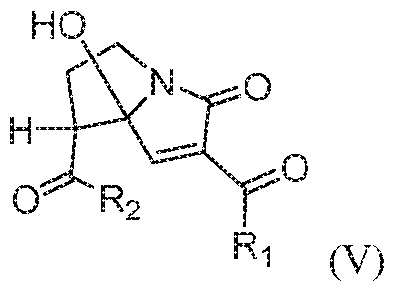
wherein:
R1 is alkyl(C≤24), cycloalkyl(C≤24), alkenyl(C≤24), aryl(C≤24), heteroaryl(C≤24), or a substituted version of any of these groups; or íAíR6, wherein:
A is alkanediyl(C≤24), cycloalkanediyl(C≤24), alkenediyl(C≤24), arenediyl(C≤24), heteroarenediyl(C≤24), heterocycloalkanediyl(C≤24), or a substituted version of any of these groups; and
R6 is alkyl(C≤24), cycloalkyl(C≤24), alkenyl(C≤24), heteroaryl(C≤12), heterocycloalkyl(C≤12), alkylamino(C≤12), dialkylamino(C≤12), alkoxy(C≤24), alkenyloxy(C≤24), aryloxy(C≤24), heteroaryloxy(C≤24), or a substituted version of any of these groups; or a íOísteroid or íOísteroid derivative; and
R2 is amino, hydroxy, or
alkoxy(C≤24), cycloalkoxy(C≤24), alkenyloxy(C≤24), cycloalkenyloxy(C≤24), aryloxy(C^12), aralkoxy(C≤12), alkylamino(C≤24), dialkylamino(C≤24), cycloalkylamino(C≤24), dicycloalkylamino(C≤24), alkenylamino(C≤24), dialkenylamino(C≤24), or a substituted version of any of these groups;
or a pharmaceutically acceptable salt thereof.
In some embodiments, R1 is alkyl(C≤24) or substituted alkyl(C≤24). In some embodiments, R1 is alkyl(C6-24) such as octyl, nonyl, decyl, undecyl, dodecyl, tridecyl, tetradecyl, pentadecyl, hexadecyl, heptadecyl, or octadecyl. In other embodiments, R1 is substituted alkyl(C6-24) such as 1,1-difluorooctyl, 1,1-difluorononyl, 1,1-difluorodecyl, 1,1-difluoroundecyl, 1,1-difluorododecyl, 1,1-difluorotridecyl, 1,1-difluorotetradecyl, 1,1-difluoropentadecyl, 1,1-difluorohexadecyl, 1,1-difluoroheptadecyl, or 1,1- difluorooctadecyl. In other embodiments, R1 is alkenyl(C≤24) or substituted alkenyl(C≤24). In some embodiments, R1 is alkenyl(C^6-24) such as 2,6-dimethyl-hept-5-enyl, 2,6-dimethyl-hept-1,5-dienyl, 2,6,10-trimethyl-undec-1,5,9-trienyl, 2,6,10,14-tetramethyl-pentadec-1,5,9,13-tetraenyl, or heptadec-
8-enyl. In other embodiments, R1 is substituted alkenyl(C≤24). In some embodiments, R1 is cycloalkyl(C≤24) or substituted cycloalkyl(C≤24). In some embodiments, R1 is cycloalkyl(C3-12) such as cyclohexyl. In other embodiments, R1 is aryl(C≤24) or substituted aryl(C≤24). In some embodiments, R1 is aryl(C6-24) such as phenyl. In some embodiments, R1 is íAíR6, wherein:
A is alkanediyl(C≤24), cycloalkanediyl(C≤24), alkenediyl(C≤24), arenediyl(C≤24), heteroarenediyl(C≤24), heterocycloalkanediyl(C≤24), or a substituted version of any of these groups; and R6 is alkyl(C≤24), cycloalkyl(C≤24), alkenyl(C≤24), heteroaryl(C≤12), heterocycloalkyl(C≤12), alkylamino(C≤12), dialkylamino(C≤12), alkoxy(C≤24), alkenyloxy(C≤24), aryloxy(C≤24), heteroaryloxy(C≤24), or a substituted version of any of these groups; or a íOísteroid or íOísteroid derivative.
In some embodiments, A is alkanediyl(C≤24) or substituted alkanediyl(C≤24). In some embodiments, A is alkanediyl(C≤24) such as íCH2CH2í. In other embodiments, A is alkenediyl(C≤24) or substituted alkenediyl(C≤24). In some embodiments, A is alkenediyl(C6-24) such as 2,6-dimethyl-non-1,5- diendiyl or 2,6,10-trimethyl-tridec-1,5,9-triendiyl. In other embodiments, A is arenediyl(C≤24) or substituted arenediyl(C≤24). In some embodiments, A is arenediyl(C≤24) such as benzenediyl. In other embodiments, A is heteroarenediyl(C≤24) or substituted heteroarenediyl(C≤24). In some embodiments, A is heteroarenediyl(C≤24) such as thiazoldiyl.
In some embodiments, R6 is alkenyl(C≤24) or substituted alkenyl(C≤24). In some embodiments, R6 is alkenyl(C≤24) such as 2,6-dimethyl-non-1,5-dienyl, 3,7,11-trimethyl-dodec-2,6,10-trienyl, or 2,6,10- trimethyl-tridec-1,5,9-trienyl. In other embodiments, R6 is heterocycloalkyl(C≤12) or substituted heterocycloalkyl(C≤12). In some embodiments, R6 is heterocycloalkyl(C≤12) such as piperadinyl or 4- methylpiperazinyl. In other embodiments, R6 is dialkylamino(C^12) or substituted dialkylamino(C^12). In some embodiments, R6 is dialkylamino(C≤12) such as diethylamino. In other embodiments, R6 is alkenyloxy(C≤24) or substituted alkenyloxy(C≤24). In some embodiments, R6 is alkenyloxy(C≤24) such as 6- dimethyl-non-1,5-dienyloxy, 3,7,11-trimethyl-dodec-2,6,10-trienyloxy, or 2,6,10-trimethyl-tridec- 1,5,9-trienyoxy. In other embodiments, R6 is heteroaryloxy(C≤12) or substituted heteroaryloxy(C≤12). In some embodiments, R6 is heteroaryloxy(C^12) such as 4-methylthiazolyloxy. In some embodiments, R6 is a íOísteroid or íO ísteroid derivative. In some embodiments, R6 is íOísteroid such as íOícholesterol. In some embodiments, R6 is:
 .
.
In some embodiments, R2 is taken together with R3 and is íOí. In other embodiments, R2 is taken together with R3 and is íNHí. In other embodiments, R2 is dialkylamino(C≤24) or substituted dialkylamino(C≤24). In some embodiments, R2 is dialkylamino(C≤12) or substituted dialkylamino(C≤12). In
some embodiments, R2 is dialkylamino(C≤12) such as dimethylamino. In other embodiments, R2 is alkoxy(C≤24) or substituted alkoxy(C≤24). In some embodiments, R2 is alkoxy(C^12) or substituted alkoxy(C≤12). In some embodiments, R2 is alkoxy(C≤12) such as methoxy. In other embodiments, R2 is alkenyloxy(C≤24) or substituted alkenyloxy(C≤24). In other embodiments, R2 is aralkoxy(C^12) or substituted aralkoxy(C^12). In some embodiments, R2 is aralkoxy(C^12) such as benzyloxy. In other embodiments, R2 is amino.
In some embodiments, R3 is absent. In other embodiments, R3 is taken together with R2 and is íOí. In other embodiments, R3 is taken together with R2 and is íNHí. In some embodiments, R3 is hydrogen.
In some embodiments, R4 is hydroxy. In other embodiments, R4 is íORb wherein: Rb is a hydroxyl protecting group. In some embodiments, R5 is absent. In other embodiments, R5 is hydrogen. In some embodiments, X1 is O. In some embodiments, X2 is O. In some embodiments, X3 is O.
In some embodiments, carbon atom 1 is in the (R) configuration. In other embodiments, carbon atom 1 is in the (S) configuration. In some embodiments, carbon atom 2 is in the (R) configuration. In other embodiments, carbon atom 2 is in the (S) configuration. In some embodiments, carbon atom 5 is in the (R) configuration. In other embodiments, carbon atom 5 is in the (S) configuration. In some embodiments, carbon atom 6 is in the (R) configuration. In other embodiments, carbon atom 6 is in the (S) configuration. In some embodiments, the carbon atom 1 is in the (R) configuration and carbon atoms 2, 5, and 6 are in the (S) configuration. In other embodiments, the carbon atom 1 is in the (S) configuration and carbon atoms 2, 5, and 6 are in the (R) configuration. In some embodiments, the compo


,

or a pharmaceutically acceptable salt thereof.
In still yet another aspect, the present disclosure provides pharmaceutical compositions comprising:
(a) a compound described herein; and
(b) a pharmaceutically acceptable carrier.
In some embodiments, the pharmaceutical composition is formulated for administration: orally, intraadiposally, intraarterially, intraarticularly, intracranially, intradermally, intralesionally, intramuscularly, intranasally, intraocularly, intrapericardially, intraperitoneally, intrapleurally, intraprostatically, intrarectally, intrathecally, intratracheally, intratumorally, intraumbilically, intravaginally, intravenously, intravesicularlly, intravitreally, liposomally, locally, mucosally, parenterally, rectally, subconjunctival, subcutaneously, sublingually, topically, transbuccally, transdermally, vaginally, in crèmes, in lipid compositions, via a catheter, via a lavage, via continuous infusion, via infusion, via inhalation, via injection, via local delivery, or via localized perfusion. In some embodiments, the pharmaceutical composition is formulated with a second therapeutic agent. In some embodiments, the second therapeutic agent is an antibiotic. In other embodiments, the second therapeutic agent is a chemotherapeutic compound. In some embodiments, the pharmaceutical composition is formulated as a unit dose.
In still yet another aspect, the present disclosure provides methods of treating a disease or disorder in a patient in need thereof comprising administering to the patient a therapeutically effective amount of a compound or composition described herein. In some embodiments, the disease or disorder is an infection caused by a bacterium. In some embodiments, the bacterium is a Gram-positive bacterium. In some embodiments, the Gram-positive bacterium is Bacillus subtilis 168, Staphylococcus
aureus 131, Enteroccocus faecalis S613, and Enteroccocus faecium 105. In other embodiments, the bacterium is a Gram-negative bacterium. In some embodiments, the bacterium is resistant to one or more antibiotics. In some embodiments, bacterium is resistant to a ȕ-lactam antibiotic such as a bacterium that is resistant to methicillin or a bacterium that is resistant to a cephalosporin. In some embodiments, the bacterium is a methicillin-resistant Staphylococcus aureus 131. In some embodiments, the methods further comprise administering a second antibiotic compound. In some embodiments, the second antibiotic compound is an antibiotic aminoglycoside, an ansamycin, a carbacephem, a carbapenem, a cephalosporin, an antibiotic glycopeptide, a lincosamide, an antibiotic lipopeptide, an antibiotic macrolide, a monobactam, an antibiotic nitrofuran, an oxazolidinone, a penicillin, an antibiotic polypeptide, an antibiotic quinolone or fluoroquinolone, an antibiotic sulfonamide, or a tetracycline.
In other embodiments, the disease or disorder is cancer. In some embodiments, the cancer is a carcinoma, sarcoma, lymphoma, leukemia, melanoma, mesothelioma, multiple myeloma, or seminoma. In some embodiments, the cancer is of the bladder, blood, bone, brain, breast, central nervous system, cervix, colon, endometrium, esophagus, gall bladder, gastrointestinal tract, genitalia, genitourinary tract, head, kidney, larynx, liver, lung, muscle tissue, neck, oral or nasal mucosa, ovary, pancreas, prostate, skin, spleen, small intestine, large intestine, stomach, testicle, or thyroid. In some embodiments, the methods further comprise administering one or more additional anti-cancer therapies. In some embodiments, the anti-cancer therapy is a second chemotherapeutic agent, a radiotherapy, an immunotherapy, or surgery.
In some embodiments, the method comprises administering the compound once. In some embodiments, the method comprises administering the compound two or more times. In some embodiments, the patient is a mammal such as a human.
In yet another aspect, the present disclosure provides methods of preparing a compound of the formula:

wherein:
R1 is alkyl(C≤24), cycloalkyl(C≤24), alkenyl(C≤24), aryl(C≤24), heteroaryl(C≤24), or a substituted version of any of these groups; or íAíR6, wherein:
A is alkanediyl(C≤24), cycloalkanediyl(C≤24), alkenediyl(C≤24), arenediyl(C≤24), heteroarenediyl(C≤24), heterocycloalkanediyl(C≤24), or a substituted version of any of these groups; and
R6 is alkyl(C≤24), cycloalkyl(C≤24), alkenyl(C≤24), heteroaryl(C≤12), heterocycloalkyl(C≤12), alkylamino(C^12), dialkylamino(C^12), alkoxy(C≤24), alkenyloxy(C≤24), aryloxy(C≤24), heteroaryloxy(C≤24), or a substituted version of any of these groups; or a íOísteroid or íOísteroid derivative;
R2 is amino, hydroxy, or
alkoxy(C≤24), cycloalkoxy(C≤24), alkenyloxy(C≤24), cycloalkenyloxy(C≤24), aryloxy(C≤12), aralkoxy(C^12), alkylamino(C≤24), dialkylamino(C≤24), cycloalkylamino(C≤24), dicycloalkylamino(C≤24), alkenylamino(C≤24), dialkenylamino(C≤24), or a substituted version of any of these groups; or
R2 is taken together with R3 and is íOí or íNRaí, wherein:
Ra is hydrogen, alkyl(C^6), or substituted alkyl(C^6);
R3 is absent, hydrogen, hydroxy, or is taken together with R2 as described above; provided that when R3 is absent that the atom to which is bound is a part of a double bond; and provided that when the atom to which R3 is bound is a part of a double bond then R3 is absent;
R4 is amino, hydroxy, or
alkoxy(C^12), alkylamino(C^12), dialkylamino(C^12), or a substituted version of any of these groups; or
íORb or íNRcRd, wherein:
Rb is a hydroxyl protecting group;
Rc is a monovalent amine protecting group or is taken together with Rd and is a divalent amine protecting group; and
Rd is hydrogen, a monovalent amine protecting group, or is taken together with Rc and is a divalent amine protecting group;
R5 is absent, hydrogen, or hydroxy; provided that when R5 is absent then the atom to which is bound is part of a double bond; and provide that when the atom to which R5 is bound is part of a double bond then R5 is absent; and
X1 and X3 are each independently O, S, or NRe, wherein:
Re is hydrogen, alkyl(C≤6), or substituted alkyl(C≤6);
Y1 is amino, hydroxy, mercapto, alkylamino(C≤6), substituted alkylamino(C≤6), íORb, íNRcRd, or–SRe wherein:
Rb is a hydroxyl protecting group;
Rc is a monovalent amine protecting group or is taken together with Rd and is a divalent amine protecting group;
Rd is hydrogen, a monovalent amine protecting group, or is taken together with Rc and is a divalent amine protecting group; and
Re is a thiol protecting group;
or a salt thereof comprising reacting a compound of the formula:

wherein:
R2 is amino, hydroxy, or
alkoxy(C≤24),
 alkenyloxy(C≤24), cycloalkenyloxy(C≤24), aryloxy(C^12), aralkoxy(C≤12), alkylamino(C≤24), dialkylamino(C≤24), cycloalkylamino(C≤24), dicycloalkylamino(C≤24), alkenylamino(C≤24), dialkenylamino(C≤24), or a substituted version of any of these groups; or
R2 is taken together with R3 and is íOí or íNRaí, wherein:
Ra is hydrogen, alkyl(C≤6), or substituted alkyl(C≤6);
R3 is absent, hydrogen, hydroxy, or is taken together with R2 as described above; provided that when R3 is absent that the atom to which is bound is a part of a double bond; and provided that when the atom to which R3 is bound is a part of a double bond then R3 is absent;
R4 is amino, hydroxy, or
alkoxy(C^12), alkylamino(C^12), dialkylamino(C^12), or a substituted version of any of these groups; or
íORb or íNRcRd, wherein:
Rb is a hydroxyl protecting group;
Rc is a monovalent amine protecting group or is taken together with Rd and is a divalent amine protecting group; and
Rd is hydrogen, a monovalent amine protecting group, or is taken together with Rc and is a divalent amine protecting group;
R5 is absent, hydrogen, or hydroxy; provided that when R5 is absent then the atom to which is bound is part of a double bond; and provide that when the atom to which R5 is bound is part of a double bond then R5 is absent;
X1 and X3 are each independently O, S, or NRe, wherein:
Re is hydrogen, alkyl(C^6), or substituted alkyl(C^6); and
Y2 is an activated group;
with a compound of the formula: (VIII)
wherein:
R1 is alkyl(C≤24), cycloalkyl(C≤24), alkenyl(C≤24), aryl(C≤24), heteroaryl(C≤24), or a substituted version of any of these groups; or íAíR6, wherein:
A is alkanediyl(C≤24), cycloalkanediyl(C≤24), alkenediyl(C≤24), arenediyl(C≤24), heteroarenediyl(C≤24), heterocycloalkanediyl(C≤24), or a substituted version of any of these groups; and
R6 is alkyl(C≤24), cycloalkyl(C≤24), alkenyl(C≤24), heteroaryl(C≤12), heterocycloalkyl(C≤12), alkylamino(C^12), dialkylamino(C^12), alkoxy(C≤24), alkenyloxy(C≤24), aryloxy(C≤24), heteroaryloxy(C≤24), or a substituted version of any of these groups; or a íOísteroid or íOísteroid derivative;
X2 is O, S, or NRe, wherein:
Re is hydrogen, alkyl(C≤6), or substituted alkyl(C≤6);
in the presence of a Lewis acid.
In some embodiments, the Lewis acid is a metal, a boron compound, or an aluminum compound. In some embodiments, the Lewis acid is a boron compound such as triethylboron. In some embodiments, the methods comprise adding an amount of the boron compound from about 0.1 equivalents to about 10 equivalents relative to the compound of formula VII. In some embodiments, the amount of the Lewis acid is from about 0.5 equivalents to about 2.5 equivalents. In some embodiments, the amount of the Lewis acid is about 1.0 equivalents.
In some embodiments, the methods comprise adding an amount of the compound of formula VII from about 0.1 equivalent to about 10 equivalents relative to the compound of formula VIII. In some embodiments, the amount of the compound of formula VII is from about 1.0 to about 5 equivalents relative to the compound of formula VIII. In some embodiments, the amount of the compound of
formula VII is about 2.5 equivalents. In some embodiments, the amount of the compound of formula VII is from about 0.1 to about 1 equivalents relative to the compound of formula VIII. In some embodiments, the amount of the compound of formula VII is about 0.25 equivalents.
In some embodiments, the methods further comprise reacting the compound of formula VII and the compound of formula VIII in an organic solvent. In some embodiments, the organic solvent is a non-polar solvent. In some embodiments, the organic solvent is a hydrocarbon solvent. In some embodiments, the organic solvent is an arene(C^12) such as toluene.
In some embodiments, the methods further comprise reacting the compound of formula VII and the compound of formula VIII at a temperature from about í100 °C to about í10 °C. In some embodiments, the temperature is from about í90 °C to about í50 °C such as about í78 °C. In some embodiments, the methods further comprise reacting the compound of formula VII and the compound of formula VIII for a time period from about 10 minutes to about 8 hours. In some embodiments, the time period is from about 1 hour to about 4 hours. In some embodiments, the time period is about 2 hours.
In some embodiments, Y2 is a halo, mesylate, toslyate, or triflate. In some embodiments, Y2 is halo.
In some embodiments, the methods further comprise reacting the compound of formula VIII with an oxidizing agent to form a compound of formula I. In some embodiments, the oxidizing agent is a hypervalent iodide compound such as Dess–Martin periodinane.
In some embodiments, the methods comprise adding an amount from about 1 equivalent to about 3 equivalents of the oxidizing agent relative to the compound of formula VIII. In some embodiments, the amount of the oxidizing agent is from about 1 equivalent to about 2 equivalents. In some embodiments, the amount of the oxidizing agent is from about 1.4 equivalents to about 1.8 equivalents. In some embodiments, the methods further comprise an organic solvent.
In some embodiments, the methods further comprise reacting the compound of formula VIII with an oxidizing agent at a temperature from about í30 °C to about 30 °C. In some embodiments, the methods further comprise reacting the compound of formula VIII with an oxidizing agent for a time period from about 5 minutes to about 2 hours.
In still yet another aspect, the present disclosure provides methods of preparing a compound of the formula:

wherein:
R2 is amino, hydroxy, or
alkoxy(C≤24), cycloalkoxy(C≤24), alkenyloxy(C≤24), cycloalkenyloxy(C≤24), aryloxy(C≤12), aralkoxy(C^12), alkylamino(C≤24), dialkylamino(C≤24), cycloalkylamino(C≤24), dicycloalkylamino(C≤24), alkenylamino(C≤24), dialkenylamino(C≤24), or a substituted version of any of these groups; or
R2 is taken together with R3 and is íOí or íNRaí, wherein:
Ra is hydrogen, alkyl(C≤6), or substituted alkyl(C≤6);
R3 is hydroxy or is taken together with R2 as described above;
R4 is amino, hydroxy, or
alkoxy(C^12), alkylamino(C^12), dialkylamino(C^12), or a substituted version of any of these groups; or
íORb or íNRcRd, wherein:
Rb is a hydroxyl protecting group;
Rc is a monovalent amine protecting group or is taken together with Rd and is a divalent amine protecting group; and
Rd is hydrogen, a monovalent amine protecting group, or is taken together with Rc and is a divalent amine protecting group;
R5 is halo;
X1 and X3 are each independently O, S, or NRe, wherein:
Re is hydrogen, alkyl(C^6), or substituted alkyl(C^6);
or a salt thereof comprising:
(a) reacting a compound of the formula:

wherein:
R7 is an alkylsilyl(C≤12) or a substituted alkylsilyl(C≤12);
with a compound of the formula:
 (X)
wherien:
(X)
wherien:
R8 is a chiral auxiliary;
in the presence of an energy source and followed by the addition of a proton source and then an alkylsilylhalide compound(C^12) or a substituted alkylsilylhalide compound(C^12) and a base to form a compound of the formula:

wherein:
R8 is as defined above; and
R9 is alkylsilyl(C^12) or substituted alkylsilyl(C^12);
(b) reacting the compound of formula XI with a base to obtain a compound of the formula:

wherein:
R9 is as defined above; and
(c) reacting the compound of formula XII with a halogen to form a compound of formula I.
In some embodiments, R7 is trimethylsilyl. In some embodiments, the energy source is light. In some embodiments, the base is imidazole. In some embodiments, the silylating agent(C^12) is t- butyldimethylsilyl chloride. In some embodiments, the base of step (b) is lithium hydroxide. In some embodiments, the halogen is an elemental halogen. In some embodiments, the halogen is I2.
In still yet another aspect, the present disclosure provides methods of preparing a compound of the formula:

wherein:
R2 is amino, hydroxy, or
alkoxy(C≤24), cycloalkoxy(C≤24), alkenyloxy(C≤24), cycloalkenyloxy(C≤24), aryloxy(C≤12), aralkoxy(C^12), alkylamino(C≤24), dialkylamino(C≤24), cycloalkylamino(C≤24), dicycloalkylamino(C≤24), alkenylamino(C≤24), dialkenylamino(C≤24), or a substituted version of any of these groups; or
R2 is taken together with R3 and is íOí or íNRaí, wherein:
Ra is hydrogen, alkyl(C≤6), or substituted alkyl(C≤6);
R3 is hydroxy or is taken together with R2 as described above;
R4 is amino, hydroxy, or
alkoxy(C^12), alkylamino(C^12), dialkylamino(C^12), or a substituted version of any of these groups; or
íORb or íNRcRd, wherein:
Rb is a hydroxyl protecting group;
Rc is a monovalent amine protecting group or is taken together with Rd and is a divalent amine protecting group; and
Rd is hydrogen, a monovalent amine protecting group, or is taken together with Rc and is a divalent amine protecting group;
R5 is halo;
X1 and X3 are each independently O, S, or NRe, wherein:
Re is hydrogen, alkyl(C^6), or substituted alkyl(C^6);
or a salt thereof comprising:
(a) reacting a compound of the formula:

wherein:
R7 is an alkylsilyl(C≤12) or a substituted alkylsilyl(C≤12);
with a compound of the formula:

wherein:
R8 is a chiral auxiliary;
followed by the addition of a silylating agent(C^12) and a base to form a compound of the formula:

wherein:
R8 is as defined above; and
R9 is alkylsilyl(C≤12) or substituted alkylsilyl(C≤12);
(b) reacting the compound of formula XI with a base to obtain a compound of the formula:

wherein:
R9 is as defined above; and
(c) reacting the compound of formula XII with a halogen to form a compound of formula I.
In some aspects, the present disclosure provides methods of preparing a compound of the formula:

wherein:
R2 is amino, hydroxy, or
alkoxy(C≤24), cycloalkoxy(C≤24), alkenyloxy(C≤24), cycloalkenyloxy(C≤24), aryloxy(C≤12), aralkoxy(C^12), alkylamino(C≤24), dialkylamino(C≤24), cycloalkylamino(C≤24), dicycloalkylamino(C≤24), alkenylamino(C≤24), dialkenylamino(C≤24), or a substituted version of any of these groups; or
R2 is taken together with R3 and is íOí or íNRaí, wherein:
Ra is hydrogen, alkyl(C≤6), or substituted alkyl(C≤6);
R3 is hydroxy or is taken together with R2 as described above;
R4 is amino, hydroxy, or
alkoxy(C^12), alkylamino(C^12), dialkylamino(C^12), or a substituted version of any of these groups; or
íORb or íNRcRd, wherein:
Rb is a hydroxyl protecting group;
Rc is a monovalent amine protecting group or is taken together with Rd and is a divalent amine protecting group; and
Rd is hydrogen, a monovalent amine protecting group, or is taken together with Rc and is a divalent amine protecting group;
R5 is halo;
X1 and X3 are each independently O, S, or NRe, wherein:
Re is hydrogen, alkyl(C^6), or substituted alkyl(C^6);
or a salt thereof comprising reacting a compound of the formula:

wherein:
R8 is a chiral auxillary; and
R9 is alkylsilyl(C≤12) or substituted alkylsilyl(C≤12);
with a halonium reagent to obtain a compound of formula I.
In some embodiments, R8 is a chiral N-heterocycloalkyl(C≤12) or substituted N- heterocycloalkyl(C^12) such as a chiral unsubstituted or substituted N-pyrrolidinyl(C^12). In one
embodiment, R8 is
 In some embodiments, the halonium reagent is an iodonium reagent such as I(sym-collidine)2ClO4. As described herein, the methods may further comprise a base. In some embodiments, the base is a nitrogenous base such as 2,4,6-collidine.
In some embodiments, one or more steps of the reaction further comprise purifying the reaction in a purification step. In some embodiments, the purification method is chromatography. In some embodiments, the purification method is column chromatography or high performance liquid chromatography.
It is contemplated that any method or composition described herein can be implemented with respect to any other method or composition described herein. For example, an aldehyde synthesized by one method may be used in the preparation of a final compound according to a different method.
The use of the word“a” or“an” when used in conjunction with the term“comprising” in the claims and/or the specification may mean“one,” but it is also consistent with the meaning of“one or more,”“at least one,” and“one or more than one.” The word“about” means plus or minus 5% of the stated number.
Other objects, features and advantages of the present disclosure will become apparent from the following detailed description. It should be understood, however, that the detailed description and the specific examples, while indicating specific embodiments of the disclosure, are given by way of illustration only, since various changes and modifications within the spirit and scope of the disclosure will become apparent to those skilled in the art from this detailed description.
DESCRIPTION OF ILLUSTRATIVE EMBODIMENTS
In some aspects, the present disclosure provides lipophilic analogs of antibiotic CJ-16,264 which show increased activity in anti-microbial assays. These compounds show decreased complexity in the attached lipophilic group by reducing the number of chiral centers while increasing activity. These compounds may be used in the treatment of bacterial infections or as anti-tumor agents. I. Compounds and Formulations Thereof
A. Compounds
In one aspect, the present disclosure provides compounds of the formula:
wherein:
 R1 is alkyl(C≤24), cycloalkyl(C≤24), alkenyl(C≤24), aryl(C≤24), heteroaryl(C≤24), or a substituted version of any of these groups; or íAíR6, wherein:
A is alkanediyl(C≤24), cycloalkanediyl(C≤24), alkenediyl(C≤24), arenediyl(C≤24), heteroarenediyl(C≤24), heterocycloalkanediyl(C≤24), or a substituted version of any of these groups; and
R6 is alkyl(C≤24), cycloalkyl(C≤24), alkenyl(C≤24), heteroaryl(C^12), heterocycloalkyl(C^12), alkylamino(C≤12), dialkylamino(C≤12), alkoxy(C≤24), alkenyloxy(C≤24), aryloxy(C≤24), heteroaryloxy(C≤24), or a substituted version of any of these groups; or a íOísteroid or íOísteroid derivative;
R2 is amino, hydroxy, or
alkoxy(C≤24), cycloalkoxy(C≤24), alkenyloxy(C≤24), cycloalkenyloxy(C≤24), aryloxy(C≤12), aralkoxy(C^12), alkylamino(C≤24), dialkylamino(C≤24), cycloalkylamino(C≤24), dicycloalkylamino(C≤24), alkenylamino(C≤24), dialkenylamino(C≤24), or a substituted version of any of these groups; or
R2 is taken together with R3 and is íOí or íNRaí, wherein:
Ra is hydrogen, alkyl(C≤6), or substituted alkyl(C≤6);
R3 is absent, hydrogen, hydroxy, or is taken together with R2 as described above; provided that when R3 is absent that the atom to which is bound is a part of a double bond; and
provided that when the atom to which R3 is bound is a part of a double bond then R3 is absent;
R4 is amino, hydroxy, or
alkoxy(C^12), alkylamino(C^12), dialkylamino(C^12), or a substituted version of any of these groups; or
íORb or íNRcRd, wherein:
Rb is a hydroxyl protecting group;
Rc is a monovalent amine protecting group or is taken together with Rd and is a divalent amine protecting group; and
Rd is hydrogen, a monovalent amine protecting group, or is taken together with Rc and is a divalent amine protecting group;
R5 is absent, hydrogen, or hydroxy; provided that when R5 is absent then the atom to which is bound is part of a double bond; and provide that when the atom to which R5 is bound is part of a double bond then R5 is absent; and
X1, X2, and X3 are O, S, or NRe, wherein:
Re is hydrogen, alkyl(C≤6), or substituted alkyl(C≤6);
or a pharmaceutically acceptable salt thereof.
Additionally, the compounds provided by the present disclosure are shown, for example, above in the summary section and in the examples and claims below. They may be made using the methods outlined in the Examples section. The CJ-16,264 derivatives can be synthesized according to the methods described, for example, in the Examples section below. These methods can be further modified and optimized using the principles and techniques of organic chemistry as applied by a person skilled in the art. Such principles and techniques are taught, for example, in March’s Advanced Organic Chemistry: Reactions, Mechanisms, and Structure (2007), which is incorporated by reference herein.
The CJ-16,264 derivatives of the disclosure may contain one or more asymmetrically- substituted carbon or nitrogen atoms, and may be isolated in optically active or racemic form. Thus, all chiral, diastereomeric, racemic form, epimeric form, and all geometric isomeric forms of a chemical formula are intended, unless the specific stereochemistry or isomeric form is specifically indicated. Compounds may occur as racemates and racemic mixtures, single enantiomers, diastereomeric mixtures and individual diastereomers. In some embodiments, a single diastereomer is obtained. The chiral centers of the compounds of the present disclosure can have the (S) or the (R) configuration.
Chemical formulas used to represent the CJ-16,264 derivatives of the present disclosure will typically only show one of possibly several different tautomers. For example, many types of ketone
groups are known to exist in equilibrium with corresponding enol groups. Similarly, many types of imine groups exist in equilibrium with enamine groups. Regardless of which tautomer is depicted for a given compound, and regardless of which one is most prevalent, all tautomers of a given chemical formula are intended.
The CJ-16,264 derivatives of the present disclosure may also have the advantage that they may be more efficacious than, be less toxic than, be longer acting than, be more potent than, produce fewer side effects than, be more easily absorbed than, and/or have a better pharmacokinetic profile (e.g., higher oral bioavailability and/or lower clearance) than, and/or have other useful pharmacological, physical, or chemical properties over, compounds known in the prior art, whether for use in the indications stated herein or otherwise.
In addition, atoms making up the CJ-16,264 derivatives of the present disclosure are intended to include all isotopic forms of such atoms. Isotopes, as used herein, include those atoms having the same atomic number but different mass numbers. By way of general example and without limitation, isotopes of hydrogen include tritium and deuterium, and isotopes of carbon include 13C and 14C.
The CJ-16,264 derivatives of the present disclosure may also exist in prodrug form. Since prodrugs are known to enhance numerous desirable qualities of pharmaceuticals (e.g., solubility, bioavailability, manufacturing, etc.), the compounds employed in some methods of the disclosure may, if desired, be delivered in prodrug form. Thus, the disclosure contemplates prodrugs of compounds of the present disclosure as well as methods of delivering prodrugs. Prodrugs of the CJ-16,264 derivatives employed in the disclosure may be prepared by modifying functional groups present in the compound in such a way that the modifications are cleaved, either in routine manipulation or in vivo, to the parent compound. Accordingly, prodrugs include, for example, compounds described herein in which a hydroxy, amino, or carboxy group is bonded to any group that, when the prodrug is administered to a subject, cleaves to form a hydroxy, amino, or carboxylic acid, respectively.
It should be recognized that the particular anion or cation forming a part of any salt form of a compound provided herein is not critical, so long as the salt, as a whole, is pharmacologically acceptable. Additional examples of pharmaceutically acceptable salts and their methods of preparation and use are presented in Handbook of Pharmaceutical Salts: Properties, and Use (2002), which is incorporated herein by reference.
Those skilled in the art of organic chemistry will appreciate that many organic compounds can form complexes with solvents in which they are reacted or from which they are precipitated or crystallized. These complexes are known as“solvates.” For example, a complex with water is known as a“hydrate.” Solvates of the CJ-16,264 derivatives provided herein are within the scope of the disclosure. It will also be appreciated by those skilled in organic chemistry that many organic compounds can exist in more than one crystalline form. For example, crystalline form may vary from solvate to solvate. Thus, all crystalline forms of the CJ-16,264 derivatives or the pharmaceutically acceptable solvates thereof are within the scope of the present disclosure.
B. Formulations
In some embodiments of the present disclosure, the compounds are included within a pharmaceutical formulation. Materials for use in the preparation of microspheres and/or microcapsules are, e.g., biodegradable/bioerodible polymers such as polygalactin, poly(isobutyl cyanoacrylate), poly(2-hydroxyethyl-L-glutamine) and, poly(lactic acid). Biocompatible carriers that may be used when formulating a controlled release parenteral formulation are carbohydrates (e.g., dextrans), proteins (e.g., albumin), lipoproteins, or antibodies. Materials for use in implants can be non-biodegradable (e.g., polydimethyl siloxane) or biodegradable (e.g., poly(caprolactone), poly(lactic acid), poly(glycolic acid) or poly(ortho esters) or combinations thereof).
Formulations for oral use include tablets containing the active ingredient(s) (e.g., the CJ-16,264 derivatives) in a mixture with non-toxic pharmaceutically acceptable excipients. Such formulations are known to the skilled artisan. Excipients may be, for example, inert diluents or fillers (e.g., sucrose, sorbitol, sugar, mannitol, microcrystalline cellulose, starches including potato starch, calcium carbonate, sodium chloride, lactose, calcium phosphate, calcium sulfate, or sodium phosphate); granulating and disintegrating agents (e.g., cellulose derivatives including microcrystalline cellulose, starches including potato starch, croscarmellose sodium, alginates, or alginic acid); binding agents (e.g., sucrose, glucose, sorbitol, acacia, alginic acid, sodium alginate, gelatin, starch, pregelatinized starch, microcrystalline cellulose, magnesium aluminum silicate, carboxymethylcellulose sodium, methylcellulose, hydroxypropyl methylcellulose, ethylcellulose, polyvinylpyrrolidone, or polyethylene glycol); and lubricating agents, glidants, and antiadhesives (e.g., magnesium stearate, zinc stearate, stearic acid, silicas, hydrogenated vegetable oils, or talc). Other pharmaceutically acceptable excipients can be colorants, flavoring agents, plasticizers, humectants, buffering agents, and the like.
The tablets may be uncoated or they may be coated by known techniques, optionally to delay disintegration and absorption in the gastrointestinal tract and thereby providing a sustained action over a longer period. The coating may be adapted to release the active drug in a predetermined pattern (e.g., in order to achieve a controlled release formulation) or it may be adapted not to release the active drug until after passage of the stomach (enteric coating). The coating may be a sugar coating, a film coating (e.g., based on hydroxypropyl methylcellulose, methylcellulose, methyl hydroxyethylcellulose, hydroxypropylcellulose, carboxymethylcellulose, acrylate copolymers, polyethylene glycols and/or polyvinylpyrrolidone), or an enteric coating (e.g., based on methacrylic acid copolymer, cellulose acetate phthalate, hydroxypropyl methylcellulose phthalate, hydroxypropyl methylcellulose acetate succinate, polyvinyl acetate phthalate, shellac, and/or ethylcellulose). Furthermore, a time delay material, such as, e.g., glyceryl monostearate or glyceryl distearate may be employed. II. Bacterial Infections
In some aspects of the present disclosure, the compounds disclosed herein may be used to treat a bacterial infection. While humans contain numerous different bacteria on and inside their bodies, an
imbalance in bacterial levels or the introduction of pathogenic bacteria can cause a symptomatic bacterial infection. Pathogenic bacteria cause a variety of different diseases including but not limited to numerous foodborne illness, typhoid fever, tuberculosis, pneumonia, syphilis, and leprosy.
Additionally, different bacteria have a wide range of interactions with body and those interactions can modulate ability of the bacteria to cause an infection. For example, bacteria can be conditionally pathogenic such that they only cause an infection under specific conditions. For example, Staphylococcus and Streptococcus bacteria exist in the normal human bacterial biome, but these bacteria when they are allowed to colonize other parts of the body causing a skin infection, pneumonia, or sepsis. Other bacteria are known as opportunistic pathogens and only cause diseases in a patient with a weakened immune system or another disease or disorder.
Bacteria can also be intracellular pathogens which can grow and reproduce within the cells of the host organism. Such bacteria can be divided into two major categories as either obligate intracellular parasites or facultative intracellular parasites. Obligate intracellular parasites require the host cell in order to reproduce and include such bacteria as but are not limited to Chlamydophila, Rickettsia, and Ehrlichia which are known to cause pneumonia, urinary tract infections, typhus, and Rocky Mountain spotted fever. Facultative intracellular parasites can reproduce either intracellular or extracellular. Some non-limiting examples of facultative intracellular parasites include Salmonella, Listeria, Legionella, Mycobacterium, and Brucella which are known to cause food poisoning, typhoid fever, sepsis, meningitis, Legionnaire’s disease, tuberculosis, leprosy, and brucellosis.
The compounds described herein may be used for the treatment of bacterial infections, including those caused by Staphyloccoccus aureus. S. aureus is a major human pathogen, causing a wide variety of illnesses ranging from mild skin and soft tissue infections and food poisoning to life- threatening illnesses such as deep post-surgical infections, septicaemia, endocarditis, necrotizing pneumonia, and toxic shock syndrome. These organisms have a remarkable ability to accumulate additional antibiotic resistance determinants, resulting in the formation of multiply-drug-resistant strains.
Methicillin, being the first semi-synthetic penicillin to be developed, was introduced in 1959 to overcome the problem of penicillin-resistant S. aureus due to ȕ-lactamase (penicillinase) production (Livermore, 2000). However, methicillin-resistant S. aureus (MRSA) strains were identified soon after the introduction of methicillin (Barber, 1961; Jevons, 1961). The compounds described herein may be used in the treatment of MRSA bacterial strains.
Additionally, the compounds of the present disclosure may be used to treat a Steptococcus pneumoniae infection. Streptococcus pneumoniae is a Gram-positive, alpha-hemolytic, bile soluble aerotolerant anaerobe and a member of the genus Streptococcus. A significant human pathogenic bacterium, S. pneumoniae was recognized as a major cause of pneumonia in the late 19th century and is the subject of many humoral immunity studies.
Despite the name, the organism causes many types of pneumococcal infection other than pneumonia, including acute sinusitis, otitis media, meningitis, bacteremia, sepsis, osteomyelitis, septic arthritis, endocarditis, peritonitis, pericarditis, cellulitis, and brain abscess. S. pneumoniae is the most common cause of bacterial meningitis in adults and children, and is one of the top two isolates found in ear infection, otitis media. Pneumococcal pneumonia is more common in the very young and the very old.
S. pneumoniae can be differentiated from S. viridans, some of which are also alpha hemolytic, using an optochin test, as S. pneumoniae is optochin sensitive. S. pneumoniae can also be distinguished based on its sensitivity to lysis by bile. The encapsulated, Gram-positive coccoid bacteria have a distinctive morphology on Gram stain, the so-called,“lancet shape.” It has a polysaccharide capsule that acts as a virulence factor for the organism; more than 90 different serotypes are known, and these types differ in virulence, prevalence, and extent of drug resistance.
S. pneumoniae is part of the normal upper respiratory tract flora but as with many natural flora, it can become pathogenic under the right conditions (e.g., if the immune system of the host is suppressed). Invasins such as Pneumolysin, an anti-phagocytic capsule, various adhesins and immunogenic cell wall components are all major virulence factors.
Finally, bacterial infections could be targeted to a specific location in or on the body. For example, bacteria could be harmless if only exposed to the specific organs, but when it comes in contact with a specific organ or tissue, the bacteria can begin replicating and cause a bacterial infection. A. Gram-Positive Bacteria
In some aspects of the present disclosure, the compounds disclosed herein may be used to treat a bacterial infection by a Gram-positive bacteria. Gram-positive bacteria contain a thick peptidoglycan layer within the cell wall which prevents the bacteria from releasing the stain when dyed with crystal violet. Without being bound by theory, the Gram-positive bacteria are often more susceptible to antibiotics. Generally, Gram-positive bacteria, in addition to the thick peptidoglycan layer, also comprise a lipid monolayer and contain teichoic acids which react with lipids to form lipoteichoic acids that can act as a chelating agent. Additionally, in Gram-positive bacteria, the peptidoglycan layer is outer surface of the bacteria. Many Gram-positive bacteria have been known to cause disease including, but are not limited to, Streptococcus, Straphylococcus, Corynebacterium, Enterococcus, Listeria, Bacillus, Clostridium, Rathybacter, Leifsonia, and Clavibacter. B. Gram-Negative Bacteria
In some aspects of the present disclosure, the compounds disclosed herein may be used to treat a bacterial infection by a Gram-negative bacteria. Gram-negative bacteria do not retain the crystal violet stain after washing with alcohol. Gram-negative bacteria, on the other hand, have a thin peptidoglycan layer with an outer membrane of lipopolysaccharides and phospholipids as well as a
space between the peptidoglycan and the outer cell membrane called the periplasmic space. Gram- negative bacterial generally do not have teichoic acids or lipoteichoic acids in their outer coating. Generally, Gram-negative bacteria also release some endotoxin and contain prions which act as molecular transport units for specific compounds. Most bacteria are Gram-negative. Some non- limiting examples of Gram-negative bacteria include Bordetella, Borrelia, Burcelia, Campylobacteria, Escherichia, Francisella, Haemophilus, Helicobacter, Legionella, Leptospira, Neisseria, Pseudomonas, Rickettsia, Salmonella, Shigella, Treponema, Vibrio, and Yersinia. C. Gram-Indeterminate Bacteria
In some aspects of the present disclosure, the compounds disclosed herein may be used to treat a bacterial infection by a Gram-indeterminate bacteria. Gram-indeterminate bacteria do not full stain or partially stain when exposed to crystal violet. Without being bound by theory, a Gram-indeteriminate bacteria may exhibit some of the properties of the Gram-positive and Gram-negative bacteria. A non- limiting example of a Gram-indeterminate bacteria include Mycobacterium tuberculosis or Mycobacterium leprae. III. Hyperproliferative Diseases
A. Cancer and Other Hyperproliferative Disease
While hyperproliferative diseases can be associated with any disease which causes a cell to begin to reproduce uncontrollably, the prototypical example is cancer. One of the key elements of cancer is that the cell’s normal apoptotic cycle is interrupted and thus agents that interrupt the growth of the cells are important as therapeutic agents for treating these diseases. In this disclosure, the CJ- 16,264 derivatives may be used to lead to decreased cell counts and as such can potentially be used to treat a variety of types of cancer lines. In some aspects, it is anticipated that the CJ-16,264 derivatives of the present disclosure may be used to treat virtually any malignancy.
Cancer cells that may be treated with the compounds of the present disclosure include but are not limited to cells from the bladder, blood, bone, bone marrow, brain, breast, colon, esophagus, gastrointestine, gum, head, kidney, liver, lung, nasopharynx, neck, ovary, prostate, skin, stomach, pancreas, testis, tongue, cervix, or uterus. In addition, the cancer may specifically be of the following histological type, though it is not limited to these: neoplasm, malignant; carcinoma; carcinoma, undifferentiated; giant and spindle cell carcinoma; small cell carcinoma; papillary carcinoma; squamous cell carcinoma; lymphoepithelial carcinoma; basal cell carcinoma; pilomatrix carcinoma; transitional cell carcinoma; papillary transitional cell carcinoma; adenocarcinoma; gastrinoma, malignant; cholangiocarcinoma; hepatocellular carcinoma; combined hepatocellular carcinoma and cholangiocarcinoma; trabecular adenocarcinoma; adenoid cystic carcinoma; adenocarcinoma in adenomatous polyp; adenocarcinoma, familial polyposis coli; solid carcinoma; carcinoid tumor, malignant; branchiolo-alveolar adenocarcinoma; papillary adenocarcinoma; chromophobe carcinoma;
acidophil carcinoma; oxyphilic adenocarcinoma; basophil carcinoma; clear cell adenocarcinoma; granular cell carcinoma; follicular adenocarcinoma; papillary and follicular adenocarcinoma; nonencapsulating sclerosing carcinoma; adrenal cortical carcinoma; endometroid carcinoma; skin appendage carcinoma; apocrine adenocarcinoma; sebaceous adenocarcinoma; ceruminous adenocarcinoma; mucoepidermoid carcinoma; cystadenocarcinoma; papillary cystadenocarcinoma; papillary serous cystadenocarcinoma; mucinous cystadenocarcinoma; mucinous adenocarcinoma; signet ring cell carcinoma; infiltrating duct carcinoma; medullary carcinoma; lobular carcinoma; inflammatory carcinoma; Paget's disease, mammary; acinar cell carcinoma; adenosquamous carcinoma; adenocarcinoma w/squamous metaplasia; thymoma, malignant; ovarian stromal tumor, malignant; thecoma, malignant; granulosa cell tumor, malignant; androblastoma, malignant; sertoli cell carcinoma; leydig cell tumor, malignant; lipid cell tumor, malignant; paraganglioma, malignant; extra-mammary paraganglioma, malignant; pheochromocytoma; glomangiosarcoma; malignant melanoma; amelanotic melanoma; superficial spreading melanoma; malignant melanoma in giant pigmented nevus; epithelioid cell melanoma; blue nevus, malignant; sarcoma; fibrosarcoma; fibrous histiocytoma, malignant; myxosarcoma; liposarcoma; leiomyosarcoma; rhabdomyosarcoma; embryonal rhabdomyosarcoma; alveolar rhabdomyosarcoma; stromal sarcoma; mixed tumor, malignant; Mullerian mixed tumor; nephroblastoma; hepatoblastoma; carcinosarcoma; mesenchymoma, malignant; Brenner tumor, malignant; phyllodes tumor, malignant; synovial sarcoma; mesothelioma, malignant; dysgerminoma; embryonal carcinoma; teratoma, malignant; struma ovarii, malignant; choriocarcinoma; mesonephroma, malignant; hemangiosarcoma; hemangioendothelioma, malignant; Kaposi's sarcoma; hemangiopericytoma, malignant; lymphangiosarcoma; osteosarcoma; juxtacortical osteosarcoma; chondrosarcoma; chondroblastoma, malignant; mesenchymal chondrosarcoma; giant cell tumor of bone; Ewing's sarcoma; odontogenic tumor, malignant; ameloblastic odontosarcoma; ameloblastoma, malignant; ameloblastic fibrosarcoma; pinealoma, malignant; chordoma; glioma, malignant; ependymoma; astrocytoma; protoplasmic astrocytoma; fibrillary astrocytoma; astroblastoma; glioblastoma; oligodendroglioma; oligodendroblastoma; primitive neuroectodermal; cerebellar sarcoma; ganglioneuroblastoma; neuroblastoma; retinoblastoma; olfactory neurogenic tumor; meningioma, malignant; neurofibrosarcoma; neurilemmoma, malignant; granular cell tumor, malignant; malignant lymphoma; Hodgkin's disease; paragranuloma; malignant lymphoma, small lymphocytic; malignant lymphoma, large cell, diffuse; malignant lymphoma, follicular; mycosis fungoides; other specified non-Hodgkin's lymphomas; malignant histiocytosis; multiple myeloma; mast cell sarcoma; immunoproliferative small intestinal disease; leukemia; lymphoid leukemia; plasma cell leukemia; erythroleukemia; lymphosarcoma cell leukemia; myeloid leukemia; basophilic leukemia; eosinophilic leukemia; monocytic leukemia; mast cell leukemia; megakaryoblastic leukemia; myeloid sarcoma; and hairy cell leukemia. In certain aspects, the tumor may comprise an osteosarcoma, angiosarcoma, rhabdosarcoma, leiomyosarcoma, Ewing sarcoma, glioblastoma, neuroblastoma, or leukemia.
IV. Therapies
A. Pharmaceutical Formulations and Routes of Administration
Where clinical applications are contemplated, it will be necessary to prepare pharmaceutical compositions in a form appropriate for the intended application. In some embodiments, such formulation with the compounds of the present disclosure is contemplated. Generally, this will entail preparing compositions that are essentially free of pyrogens, as well as other impurities that could be harmful to humans or animals.
One will generally desire to employ appropriate salts and buffers to render delivery vectors stable and allow for uptake by target cells. Buffers also will be employed when recombinant cells are introduced into a patient. Aqueous compositions of the present disclosure comprise an effective amount of the vector to cells, dissolved or dispersed in a pharmaceutically acceptable carrier or aqueous medium. Such compositions also are referred to as inocula. The phrase“pharmaceutically or pharmacologically acceptable” refers to molecular entities and compositions that do not produce adverse, allergic, or other untoward reactions when administered to an animal or a human. As used herein,“pharmaceutically acceptable carrier” includes any and all solvents, dispersion media, coatings, antibacterial and antifungal agents, isotonic and absorption delaying agents and the like. The use of such media and agents for pharmaceutically active substances is well known in the art. Except insofar as any conventional media or agent is incompatible with the vectors or cells of the present disclosure, its use in therapeutic compositions is contemplated. Supplementary active ingredients also can be incorporated into the compositions.
The active compositions of the present disclosure may include classic pharmaceutical preparations. Administration of these compositions according to the present disclosure will be via any common route so long as the target tissue is available via that route. Such routes include oral, nasal, buccal, rectal, vaginal or topical route. Alternatively, administration may be by orthotopic, intradermal, subcutaneous, intramuscular, intratumoral, intraperitoneal, or intravenous injection. Such compositions would normally be administered as pharmaceutically acceptable compositions, described supra.
The active compounds may also be administered parenterally or intraperitoneally. Solutions of the active compounds as free base or pharmacologically acceptable salts can be prepared in water suitably mixed with a surfactant, such as hydroxypropylcellulose. Dispersions can also be prepared in glycerol, liquid polyethylene glycols, and mixtures thereof and in oils. Under ordinary conditions of storage and use, these preparations contain a preservative to prevent the growth of microorganisms.
The pharmaceutical forms suitable for injectable use include sterile aqueous solutions or dispersions and sterile powders for the extemporaneous preparation of sterile injectable solutions or dispersions. In all cases, the form must be sterile and must be fluid to the extent that easy syringability exists. It must be stable under the conditions of manufacture and storage and must be preserved against the contaminating action of microorganisms, such as bacteria and fungi. The carrier can be a solvent or dispersion medium containing, for example, water, ethanol, polyol (for example, glycerol, propylene
glycol, and liquid polyethylene glycol, and the like), suitable mixtures thereof, and vegetable oils. The proper fluidity can be maintained, for example, by the use of a coating, such as lecithin, by the maintenance of the required particle size in the case of dispersion and by the use of surfactants. The prevention of the action of microorganisms can be brought about by various antibacterial and antifungal agents, for example, parabens, chlorobutanol, phenol, sorbic acid, thimerosal, and the like. In many cases, it will be preferable to include isotonic agents, for example, sugars or sodium chloride. Prolonged absorption of the injectable compositions can be brought about by the use in the compositions of agents delaying absorption, for example, aluminum monostearate and gelatin.
Sterile injectable solutions are prepared by incorporating the active compounds in the required amount in the appropriate solvent with several of the other ingredients enumerated above, as required, followed by filtered sterilization. Generally, dispersions are prepared by incorporating the various sterilized active ingredients into a sterile vehicle which contains the basic dispersion medium and the required other ingredients from those enumerated above. In the case of sterile powders for the preparation of sterile injectable solutions, the preferred methods of preparation are vacuum-drying and freeze-drying techniques which yield a powder of the active ingredient plus any additional desired ingredient from a previously sterile-filtered solution thereof.
As used herein,“pharmaceutically acceptable carrier” includes any and all solvents, dispersion media, coatings, antibacterial and antifungal agents, isotonic and absorption delaying agents and the like. The use of such media and agents for pharmaceutical active substances is well known in the art. Except insofar as any conventional media or agent is incompatible with the active ingredient, its use in the therapeutic compositions is contemplated. Supplementary active ingredients can also be incorporated into the compositions.
For oral administration, the CJ-16,264 derivatives of the present disclosure may be incorporated with excipients and used in the form of non-ingestible mouthwashes and dentifrices. A mouthwash may be prepared incorporating the active ingredient in the required amount in an appropriate solvent, such as a sodium borate solution (Dobell's Solution). Alternatively, the active ingredient may be incorporated into an antiseptic wash containing sodium borate, glycerin and potassium bicarbonate. The active ingredient may also be dispersed in dentifrices, including: gels, pastes, powders and slurries. The active ingredient may be added in a therapeutically effective amount to a paste dentifrice that may include water, binders, abrasives, flavoring agents, foaming agents, and humectants.
The compositions of the present disclosure may be formulated in a neutral or salt form. Pharmaceutically-acceptable salts include the acid addition salts and which are formed with inorganic acids such as, for example, hydrochloric or phosphoric acids, or such organic acids as acetic, oxalic, tartaric, mandelic, and the like. Salts formed with the free carboxyl groups can also be derived from inorganic bases such as, for example, sodium, potassium, ammonium, calcium, or ferric hydroxides, and such organic bases as isopropylamine, trimethylamine, histidine, procaine, and the like.
Upon formulation, solutions will be administered in a manner compatible with the dosage formulation and in such amount as is therapeutically effective. The formulations are easily administered in a variety of dosage forms such as injectable solutions, drug release capsules and the like. For parenteral administration in an aqueous solution, for example, the solution should be suitably buffered if necessary and the liquid diluent first rendered isotonic with sufficient saline or glucose. These particular aqueous solutions are especially suitable for intravenous, intramuscular, subcutaneous and intraperitoneal administration. In this connection, sterile aqueous media which can be employed will be known to those of skill in the art in light of the present disclosure. For example, one dosage could be dissolved in 1 ml of isotonic NaCl solution and either added to 1000 ml of hypodermoclysis fluid or injected at the proposed site of infusion, (see for example,“Remington's Pharmaceutical Sciences,” 15th Edition, pages 1035–1038 and 1570–1580). Some variation in dosage will necessarily occur depending on the condition of the subject being treated. The person responsible for administration will, in any event, determine the appropriate dose for the individual subject. Moreover, for human administration, preparations should meet sterility, pyrogenicity, general safety and purity standards as required by FDA’s Division of Biological Standards and Quality Control of the Office of Compliance and Biologics Quality. B. Methods of Treatment
In particular, the compositions that may be used in treating microbial infections and cancer in a subject (e.g., a human subject) are disclosed herein. The compositions described above are preferably administered to a mammal (e.g., rodent, human, non-human primates, canine, bovine, ovine, equine, feline, etc.) in an effective amount, that is, an amount capable of producing a desirable result in a treated subject (e.g., causing apoptosis of cancerous cells or killing bacterial cells). Toxicity and therapeutic efficacy of the compositions utilized in methods of the disclosure can be determined by standard pharmaceutical procedures. As is well known in the medical and veterinary arts, dosage for any one animal depends on many factors, including the subject's size, body surface area, body weight, age, the particular composition to be administered, time and route of administration, general health, the clinical symptoms of the infection or cancer and other drugs being administered concurrently. A composition as described herein is typically administered at a dosage that inhibits the growth or proliferation of a bacterial cell, inhibits the growth of a biofilm, or induces death of cancerous cells (e.g., induces apoptosis of a cancer cell), as assayed by identifying a reduction in hematological parameters (complete blood count - CBC), or cancer cell growth or proliferation. In some embodiments, amounts of the CJ- 16,264 derivatives used to inhibit bacterial growth or induce apoptosis of the cancer cells is calculated to be from about 0.01 mg to about 10,000 mg/day. In some embodiments, the amount is from about 1 mg to about 1,000 mg/day. In some embodiments, these dosings may be reduced or increased based upon the biological factors of a particular patient such as increased or decreased metabolic breakdown of the drug or decreased uptake by the digestive tract if administered orally. Addtionally, the CJ-16,264
derivatives may be more efficacious and thus a smaller dose is required to achieve a similar effect. Such a dose is typically administered once a day for a few weeks or until sufficient reducing in cancer cells has been achieved.
The therapeutic methods of the disclosure (which include prophylactic treatment) in general include administration of a therapeutically effective amount of the compositions described herein to a subject in need thereof, including a mammal, particularly a human. Such treatment will be suitably administered to subjects, particularly humans, suffering from, having, susceptible to, or at risk for a disease, disorder, or symptom thereof. Determination of those subjects "at risk" can be made by any objective or subjective determination by a diagnostic test or opinion of a subject or health care provider (e.g., genetic test, enzyme or protein marker, marker (as defined herein), family history, and the like).
In one embodiment, the disclosure provides a method of monitoring treatment progress. The method includes the step of determining a level of changes in hematological parameters and/or cancer stem cell (CSC) analysis with cell surface proteins as diagnostic markers (which can include, for example, but are not limited to CD34, CD38, CD90, and CD117) or diagnostic measurement (e.g., screen, assay) in a subject suffering from or susceptible to a disorder or symptoms thereof associated with cancer (e.g., leukemia) in which the subject has been administered a therapeutic amount of a composition as described herein. The level of marker determined in the method can be compared to known levels of marker either in healthy normal controls or in other afflicted patients to establish the subject's disease status. In preferred embodiments, a second level of marker in the subject is determined at a time point later than the determination of the first level, and the two levels are compared to monitor the course of disease or the efficacy of the therapy. In certain preferred embodiments, a pre-treatment level of marker in the subject is determined prior to beginning treatment according to the methods described herein; this pre-treatment level of marker can then be compared to the level of marker in the subject after the treatment commences, to determine the efficacy of the treatment. C. Combination Therapies
It is envisioned that the CJ-16,264 derivatives may be used in combination therapies with an additional antimicrobial agent such as an antibiotic or a compound which mitigates one or more of the side effects experienced by the patient.
Furthermore, it is very common in the field of cancer therapy to combine therapeutic modalities. The following is a general discussion of therapies that may be used in conjunction with the therapies of the present disclosure.
To treat cancers using the methods and compositions of the present disclosure, one would generally contact a tumor cell or subject with a compound and at least one other therapy. These therapies would be provided in a combined amount effective to achieve a reduction in one or more disease parameter(s). This process may involve contacting the cells/subjects with both agents/therapies at the same time, e.g., using a single composition or pharmacological formulation that includes both
agents, or by contacting the cell/subject with two distinct compositions or formulations, at the same time, wherein one composition includes the compound and the other includes the other agent.
Alternatively, the CJ-16,264 derivatives may precede or follow the other treatment by intervals ranging from minutes to weeks. One would generally ensure that a significant period of time did not expire between the time of each delivery, such that the therapies would still be able to exert an advantageously combined effect on the cell/subject. In such instances, it is contemplated that one would contact the cell with both modalities within about 12–24 hours of each other, within about 6–12 hours of each other, or with a delay time of only about 12 hours. In some situations, it may be desirable to extend the time period for treatment significantly; however, where several days (2, 3, 4, 5, 6 or 7) to several weeks (1, 2, 3, 4, 5, 6, 7 or 8) lapse between the respective administrations.
It also is conceivable that more than one administration of either the compound or the other therapy will be desired. Various combinations may be employed, where a compound of the present disclosure is“A,” and the other therapy is“B,” as exemplified below: A/B/A B/A/B B/B/A A/A/B B/A/A A/B/B B/B/B/A B/B/A/B
A/A/B/B A/B/A/B A/B/B/A B/B/A/A B/A/B/A B/A/A/B B/B/B/A
A/A/A/B B/A/A/A A/B/A/A A/A/B/A A/B/B/B B/A/B/B B/B/A/B Agents or factors suitable for use in a combined therapy with agents according to the present disclosure against an infectious disease include antibiotics such as penicillins, cephalosporins, carbapenems, macrolides, aminoglycosides, quinolones (including fluoroquinolones), sulfonamides and tetracylcines. Other combinations are contemplated. The following is a general discussion of antibiotic, antiviral, and cancer therapies that may be used combination with the compounds of the present disclosure. 1. Antibiotics
The term“antibiotics” are drugs which may be used to treat a bacterial infection through either inhibiting the growth of bacteria or killing bacteria. Without being bound by theory, it is believed that antibiotics can be classified into two major classes: bactericidal agents that kill bacteria or bacteriostatic agents that slow down or prevent the growth of bacteria.
The first commerically available antibiotic was released in the 1930’s. Since then, many different antibiotics have been developed and widely prescribed. In 2010, on average, 4 in 5 Americans are prescribed antibiotics annually. Given the prevalence of antibiotics, bacteria have started to develop resistance to specific antibiotics and antibiotic mechanisms. Without being bound by theory, the use of antibiotics in combination with another antibiotic may modulate resistance and enhance the efficacy of one or both agents.
In some embodiments, antibiotics can fall into a wide range of classes. In some embodiments, the compounds of the present disclosure may be used in conjunction with another antibiotic. In some
embodiments, the compounds may be used in conjunction with a narrow spectrum antibiotic which targets a specific bacteria type. In some non-limiting examples of bactericidal antibiotics include penicillin, cephalosporin, polymyxin, rifamycin, lipiarmycin, quinolones, and sulfonamides. In some non-limiting examples of bacteriostatic antibiotics include macrolides, lincosamides, or tetracyclines. In some embodiments, the antibiotic is an aminoglycoside such as kanamycin and streptomycin, an ansamycin such as rifaximin and geldanamycin, a carbacephem such as loracarbef, a carbapenem such as ertapenem, imipenem, a cephalosporin such as cephalexin, cefixime, cefepime, and ceftobiprole, a glycopeptide such as vancomycin or teicoplanin, a lincosamide such as lincomycin and clindamycin, a lipopeptide such as daptomycin, a macrolide such as clarithromycin, spiramycin, azithromycin, and telithromycin, a monobactam such as aztreonam, a nitrofuran such as furazolidone and nitrofurantoin, an oxazolidonones such as linezolid, a penicillin such as amoxicillin, azlocillin, flucloxacillin, and penicillin G, an antibiotic polypeptide such as bacitracin, polymyxin B, and colistin, a quinolone such as ciprofloxacin, levofloxacin, and gatifloxacin, a sulfonamide such as silver sulfadiazine, mefenide, sulfadimethoxine, or sulfasalazine, or a tetracycline such as demeclocycline, doxycycline, minocycline, oxytetracycline, or tetracycline. In some embodiments, the compounds could be combined with a drug which acts against mycobacteria such as cycloserine, capreomycin, ethionamide, rifampicin, rifabutin, rifapentine, and streptomycin. Other antibiotics that are contemplated for combination therapies may include arsphenamine, chloramphenicol, fosfomycin, fusidic acid, metronidazole, mupirocin, platensimycin, quinupristin, dalfopristin, thiamphenicol, tigecycline, tinidazole, or trimethoprim. 2. Chemotherapy
The term“chemotherapy” refers to the use of drugs to treat cancer. A“chemotherapeutic agent” is used to connote a compound or composition that is administered in the treatment of cancer. These agents or drugs are categorized by their mode of activity within a cell, for example, whether and at what stage they affect the cell cycle. Alternatively, an agent may be characterized based on its ability to directly cross-link DNA, to intercalate into DNA, or to induce chromosomal and mitotic aberrations by affecting nucleic acid synthesis. Most chemotherapeutic agents fall into the following categories: alkylating agents, antimetabolites, antitumor antibiotics, mitotic inhibitors, and nitrosoureas.
Examples of chemotherapeutic agents include alkylating agents such as thiotepa and cyclosphosphamide; alkyl sulfonates such as busulfan, improsulfan and piposulfan; aziridines such as benzodopa, carboquone, meturedopa, and uredopa; ethylenimines and methylamelamines including altretamine, triethylenemelamine, trietylenephosphoramide, triethiylenethiophosphoramide and trimethylolomelamine; acetogenins (especially bullatacin and bullatacinone); a camptothecin (including the synthetic analogue topotecan); bryostatin; callystatin; CC-1065 (including its adozelesin, carzelesin and bizelesin synthetic analogues); cryptophycins (particularly cryptophycin 1 and cryptophycin 8); dolastatin; duocarmycin (including the synthetic analogues, KW-2189 and CB1-
TM1); eleutherobin; pancratistatin; a sarcodictyin; spongistatin; nitrogen mustards such as chlorambucil, chlornaphazine, cholophosphamide, estramustine, ifosfamide, mechlorethamine, mechlorethamine oxide hydrochloride, melphalan, novembichin, phenesterine, prednimustine, trofosfamide, uracil mustard; nitrosureas such as carmustine, chlorozotocin, fotemustine, lomustine, nimustine, and ranimnustine; antibiotics such as the enediyne antibiotics (e.g., calicheamicin, especially calicheamicin ȖI
l and calicheamicin ^ I
1; dynemicin, including dynemicin A uncialamycin and derivatives thereof; bisphosphonates, such as clodronate; an esperamicin; as well as neocarzinostatin chromophore and related chromoprotein enediyne antibiotic chromophores, aclacinomysins, actinomycin, authrarnycin, azaserine, bleomycins, cactinomycin, carabicin, carminomycin, carzinophilin, chromomycinis, dactinomycin, daunorubicin, detorubicin, 6-diazo-5-oxo-L-norleucine, doxorubicin (including morpholino-doxorubicin, cyanomorpholino-doxorubicin, 2-pyrrolino- doxorubicin and deoxydoxorubicin), epirubicin, esorubicin, idarubicin, marcellomycin, mitomycins such as mitomycin C, mycophenolic acid, nogalarnycin, olivomycins, peplomycin, potfiromycin, puromycin, quelamycin, rodorubicin, streptonigrin, streptozocin, tubercidin, ubenimex, zinostatin, zorubicin; anti-metabolites such as methotrexate and 5-fluorouracil (5-FU); folic acid analogues such as denopterin, methotrexate, pteropterin, trimetrexate; purine analogs such as fludarabine, 6- mercaptopurine, thiamiprine, thioguanine; pyrimidine analogs such as ancitabine, azacitidine, 6- azauridine, carmofur, cytarabine, dideoxyuridine, doxifluridine, enocitabine, floxuridine; androgens such as calusterone, dromostanolone propionate, epitiostanol, mepitiostane, testolactone; anti-adrenals such as aminoglutethimide, mitotane, trilostane; folic acid replenisher such as folinic acid; aceglatone; aldophosphamide glycoside; aminolevulinic acid; eniluracil; amsacrine; bestrabucil; bisantrene; edatraxate; defofamine; demecolcine; diaziquone; elformithine; elliptinium acetate; an epothilone; etoglucid; gallium nitrate; hydroxyurea; lentinan; lonidainine; maytansinoids such as maytansine and ansamitocins; mitoguazone; mitoxantrone; mopidanmol; nitraerine; pentostatin; phenamet; pirarubicin; losoxantrone; podophyllinic acid; 2-ethylhydrazide; procarbazine; PSK polysaccharide complex); razoxane; rhizoxin; sizofiran; spirogermanium; tenuazonic acid; triaziquone; 2,2ƍ,2Ǝ- trichlorotriethylamine; trichothecenes (especially T-2 toxin, verracurin A, roridin A and anguidine); urethan; vindesine; dacarbazine; mannomustine; mitobronitol; mitolactol; pipobroman; gacytosine; arabinoside (“Ara-C”); cyclophosphamide; thiotepa; taxoids, e.g., paclitaxel and docetaxel; chlorambucil; gemcitabine; 6-thioguanine; mercaptopurine; methotrexate; platinum coordination complexes such as cisplatin, oxaliplatin and carboplatin; vinblastine; platinum; etoposide (VP-16); ifosfamide; mitoxantrone; vincristine; vinorelbine; novantrone; teniposide; edatrexate; daunomycin; aminopterin; xeloda; ibandronate; irinotecan (e.g., CPT-11); topoisomerase inhibitor RFS 2000; difluorometlhylornithine (DMFO); retinoids such as retinoic acid; capecitabine; cisplatin (CDDP), carboplatin, procarbazine, mechlorethamine, cyclophosphamide, camptothecin, ifosfamide, melphalan, chlorambucil, busulfan, nitrosurea, dactinomycin, daunorubicin, doxorubicin, bleomycin, plicomycin, mitomycin, etoposide (VP16), tamoxifen, raloxifene, estrogen receptor binding agents, taxol, paclitaxel,
docetaxel, gemcitabien, navelbine, farnesyl-protein tansferase inhibitors, transplatinum, 5-fluorouracil, vincristin, vinblastin and methotrexate and pharmaceutically acceptable salts, acids or derivatives of any of the above.
3. Radiotherapy
Radiotherapy, also called radiation therapy, is the treatment of cancer and other diseases with ionizing radiation. Ionizing radiation deposits energy that injures or destroys cells in the area being treated by damaging their genetic material, making it impossible for these cells to continue to grow. Although radiation damages both cancer cells and normal cells, the latter are able to repair themselves and function properly.
Radiation therapy used according to the present disclosure may include, but is not limited to, the use of J-rays, X-rays, and/or the directed delivery of radioisotopes to tumor cells. Other forms of DNA damaging factors are also contemplated such as microwaves and UV-irradiation. It is most likely that all of these factors induce a broad range of damage on DNA, on the precursors of DNA, on the replication and repair of DNA, and on the assembly and maintenance of chromosomes. Dosage ranges for X-rays range from daily doses of 12.9 to 51.6 mC/kg for prolonged periods of time (3 to 4 wk), to single doses of 0.516 to 1.55 C/kg. Dosage ranges for radioisotopes vary widely, and depend on the half-life of the isotope, the strength and type of radiation emitted, and the uptake by the neoplastic cells.
Radiotherapy may comprise the use of radiolabeled antibodies to deliver doses of radiation directly to the cancer site (radioimmunotherapy). Antibodies are highly specific proteins that are made by the body in response to the presence of antigens (substances recognized as foreign by the immune system). Some tumor cells contain specific antigens that trigger the production of tumor-specific antibodies. Large quantities of these antibodies can be made in the laboratory and attached to radioactive substances (a process known as radiolabeling). Once injected into the body, the antibodies actively seek out the cancer cells, which are destroyed by the cell-killing (cytotoxic) action of the radiation. This approach can minimize the risk of radiation damage to normal cells.
Conformal radiotherapy uses the same radiotherapy machine, a linear accelerator, as the normal radiotherapy treatment but metal blocks are placed in the path of the X-ray beam to alter its shape to match that of the cancer. This ensures that a higher radiation dose is given to the tumor. Normal surrounding cells and nearby structures receive a lower dose of radiation, so the possibility of side effects is reduced. A device called a multi-leaf collimator has been developed and may be used as an alternative to the metal blocks. The multi-leaf collimator consists of a number of metal sheets which are fixed to the linear accelerator. Each layer can be adjusted so that the radiotherapy beams can be shaped to the treatment area without the need for metal blocks. Precise positioning of the radiotherapy machine is very important for conformal radiotherapy treatment and a special scanning machine may be used to check the position of internal organs at the beginning of each treatment.
High-resolution intensity modulated radiotherapy also uses a multi-leaf collimator. During this treatment the layers of the multi-leaf collimator are moved while the treatment is being given. This method is likely to achieve even more precise shaping of the treatment beams and allows the dose of radiotherapy to be constant over the whole treatment area.
Although research studies have shown that conformal radiotherapy and intensity modulated radiotherapy may reduce the side effects of radiotherapy treatment, it is possible that shaping the treatment area so precisely could stop microscopic cancer cells just outside the treatment area being destroyed. This means that the risk of the cancer coming back in the future may be higher with these specialized radiotherapy techniques.
Scientists also are looking for ways to increase the effectiveness of radiation therapy. Two types of investigational drugs are being studied for their effect on cells undergoing radiation. Radiosensitizers make the tumor cells more likely to be damaged, and radioprotectors protect normal tissues from the effects of radiation. Hyperthermia, the use of heat, is also being studied for its effectiveness in sensitizing tissue to radiation. 4. Immunotherapy
In the context of cancer treatment, immunotherapeutics, generally, rely on the use of immune effector cells and molecules to target and destroy cancer cells. Trastuzumab (Herceptin™) is such an example. The immune effector may be, for example, an antibody specific for some marker on the surface of a tumor cell. The antibody alone may serve as an effector of therapy or it may recruit other cells to actually affect cell killing. The antibody also may be conjugated to a drug or toxin (chemotherapeutic, radionuclide, ricin A chain, cholera toxin, pertussis toxin, etc.) and serve merely as a targeting agent. Alternatively, the effector may be a lymphocyte carrying a surface molecule that interacts, either directly or indirectly, with a tumor cell target. Various effector cells include cytotoxic T cells and NK cells. The combination of therapeutic modalities, i.e., direct cytotoxic activity and inhibition or reduction of ErbB2 would provide therapeutic benefit in the treatment of ErbB2 overexpressing cancers.
In one aspect of immunotherapy, the tumor cell must bear some marker that is amenable to targeting, i.e., is not present on the majority of other cells. Many tumor markers exist and any of these may be suitable for targeting in the context of the present disclosure. Common tumor markers include carcinoembryonic antigen, prostate specific antigen, urinary tumor associated antigen, fetal antigen, tyrosinase (p97), gp68, TAG-72, HMFG, Sialyl Lewis Antigen, MucA, MucB, PLAP, estrogen receptor, laminin receptor, erb B and p155. An alternative aspect of immunotherapy is to combine anticancer effects with immune stimulatory effects. Immune stimulating molecules also exist including: cytokines such as IL-2, IL-4, IL-12, GM-CSF, J-IFN, chemokines such as MIP-1, MCP-1, IL-8 and growth factors such as FLT3 ligand. Combining immune stimulating molecules, either as proteins or using gene delivery in combination with a tumor suppressor has been shown to enhance anti-tumor
effects (Ju et al., 2000). Moreover, antibodies against any of these compounds may be used to target the anti-cancer agents discussed herein.
Examples of immunotherapies currently under investigation or in use are immune adjuvants e.g., Mycobacterium bovis, Plasmodium falciparum, dinitrochlorobenzene and aromatic compounds (U.S. Patents 5,801,005 and 5,739,169; Hui and Hashimoto, 1998; Christodoulides et al., 1998), cytokine therapy, e.g., interferons Į, E, and J; IL-1, GM-CSF and TNF (Bukowski et al., 1998; Davidson et al., 1998; Hellstrand et al., 1998) gene therapy, e.g., TNF, IL-1, IL-2, p53 (Qin et al., 1998; Austin- Ward and Villaseca, 1998; U.S. Patents 5,830,880 and 5,846,945) and monoclonal antibodies, e.g., anti- ganglioside GM2, anti-HER-2, anti-p185 (Pietras et al., 1998; Hanibuchi et al., 1998; U.S. Patent 5,824,311). It is contemplated that one or more anti-cancer therapies may be employed with the gene silencing therapies described herein.
In active immunotherapy, an antigenic peptide, polypeptide or protein, or an autologous or allogenic tumor cell composition or“vaccine” is administered, generally with a distinct bacterial adjuvant (Ravindranath and Morton, 1991; Morton et al., 1992; Mitchell et al., 1990; Mitchell et al., 1993).
In adoptive immunotherapy, the patient’s circulating lymphocytes, or tumor-infiltrated lymphocytes, are isolated in vitro, activated by lymphokines such as IL-2 or transduced with genes for tumor necrosis, and readministered (Rosenberg et al., 1988; 1989). 5. Surgery
Approximately 60% of persons with cancer will undergo surgery of some type, which includes preventative, diagnostic or staging, curative, and palliative surgery. Curative surgery is a cancer treatment that may be used in conjunction with other therapies, such as the treatment of the present disclosure, chemotherapy, radiotherapy, hormonal therapy, gene therapy, immunotherapy and/or alternative therapies.
Curative surgery includes resection in which all or part of cancerous tissue is physically removed, excised, and/or destroyed. Tumor resection refers to physical removal of at least part of a tumor. In addition to tumor resection, treatment by surgery includes laser surgery, cryosurgery, electrosurgery, and microscopically controlled surgery (Mohs’ surgery). It is further contemplated that the present disclosure may be used in conjunction with removal of superficial cancers, precancers, or incidental amounts of normal tissue.
Upon excision of part or all of cancerous cells, tissue, or tumor, a cavity may be formed in the body. Treatment may be accomplished by perfusion, direct injection or local application of the area with an additional anti-cancer therapy. Such treatment may be repeated, for example, every 1, 2, 3, 4, 5, 6, or 7 days, or every 1, 2, 3, 4, and 5 weeks or every 1, 2, 3, 4, 5, 6, 7, 8, 9, 10, 11, or 12 months. These treatments may be of varying dosages as well.
In some particular embodiments, after removal of the tumor, an adjuvant treatment with a compound of the present disclosure is believed to be particularly efficacious in reducing the reoccurance of the tumor. Additionally, the compounds of the present disclosure can also be used in a neoadjuvant setting.
It also should be pointed out that any of the foregoing therapies may prove useful by themselves in treating cancer. V. Synthetic Methods
In some aspects, the compounds of this disclosure can be synthesized using the methods of organic chemistry as described in this application. These methods can be further modified and optimized using the principles and techniques of organic chemistry as applied by a person skilled in the art. Such principles and techniques are taught, for example, in March’s Advanced Organic Chemistry: Reactions, Mechanisms, and Structure (2007), which is incorporated by reference herein. A. Process Scale-Up
The synthetic methods described herein can be further modified and optimized for preparative, pilot- or large-scale production, either batch of continuous, using the principles and techniques of process chemistry as applied by a person skilled in the art. Such principles and techniques are taught, for example, in Practical Process Research & Development (2000), which is incorporated by reference herein. The synthetic method described herein may be used to produce preparative scale amounts of the CJ-16,264 derivatives. B. Chemical Definitions
When used in the context of a chemical group:“hydrogen” means íH;“hydroxy” means íOH; “oxo” means =O;“carbonyl” means íC(=O)í;“carboxy” means íC(=O)OH (also written as íCOOH or íCO2H);“halo” means independently íF, íCl, íBr or íI;“amino” means íNH2;“hydroxyamino” means íNHOH;“nitro” means íNO2; imino means =NH;“cyano” means íCN;“isocyanate” means íN=C=O;“azido” means íN3; in a monovalent context“phosphate” means íOP(O)(OH)2 or a deprotonated form thereof; in a divalent context“phosphate” means íOP(O)(OH)Oí or a deprotonated form thereof;“mercapto” means íSH; and“thio” means =S;“sulfato” means–SO3H,“sulfamido” means íS(O)2NH2,“sulfonyl” means íS(O)2í; and“sulfinyl” means íS(O)í.
In the context of chemical formulas, the symbol“í” means a single bond,“=” means a double bond, and“Ł” means triple bond. The symbol“ ” represents an optional bond, which if present is either single or double. The symbol“ ” represents a single bond or a double bond. Thus, for example, the formula includes
 And it is understood that no one such ring atom forms part of more than one double bond. Furthermore, it is noted that the
covalent bond symbol“í”, when connecting one or two stereogenic atoms, does not indicate any preferred stereochemistry. Instead, it covers all stereoisomers as well as mixtures thereof. The symbol “ ”, when drawn perpendicularly across a bond (e.g., for methyl) indicates a point of attachment of the group. It is noted that the point of attachment is typically only identified in this manner for larger groups in order to assist the reader in unambiguously identifying a point of attachment. The symbol“ ” means a single bond where the group attached to the thick end of the wedge is“out of the page.” The symbol“ ” means a single bond where the group attached to the thick end of the wedge is“into the page”. The symbol“ ” means a single bond where the geometry around a double bond (e.g., either E or Z) is undefined. Both options, as well as combinations thereof are therefore intended. Any undefined valency on an atom of a structure shown in this application implicitly represents a hydrogen atom bonded to that atom. A bold dot on a carbon atom indicates that the hydrogen attached to that carbon is oriented out of the plane of the paper.
And it is understood that no one such ring atom forms part of more than one double bond. Furthermore, it is noted that the
covalent bond symbol“í”, when connecting one or two stereogenic atoms, does not indicate any preferred stereochemistry. Instead, it covers all stereoisomers as well as mixtures thereof. The symbol “ ”, when drawn perpendicularly across a bond (e.g., for methyl) indicates a point of attachment of the group. It is noted that the point of attachment is typically only identified in this manner for larger groups in order to assist the reader in unambiguously identifying a point of attachment. The symbol“ ” means a single bond where the group attached to the thick end of the wedge is“out of the page.” The symbol“ ” means a single bond where the group attached to the thick end of the wedge is“into the page”. The symbol“ ” means a single bond where the geometry around a double bond (e.g., either E or Z) is undefined. Both options, as well as combinations thereof are therefore intended. Any undefined valency on an atom of a structure shown in this application implicitly represents a hydrogen atom bonded to that atom. A bold dot on a carbon atom indicates that the hydrogen attached to that carbon is oriented out of the plane of the paper.
When a group“R” is depicted as a“floating group” on a ring system, for example, in the formula:

,
then R may replace any hydrogen atom attached to any of the ring atoms, including a depicted, implied, or expressly defined hydrogen, so long as a stable structure is formed. When a group“R” is depicted as a“floating group” on a fused ring system, as for example in the formula:
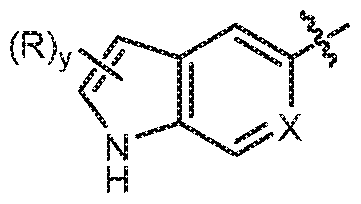 ,
,
then R may replace any hydrogen attached to any of the ring atoms of either of the fused rings unless specified otherwise. Replaceable hydrogens include depicted hydrogens (e.g., the hydrogen attached to the nitrogen in the formula above), implied hydrogens (e.g., a hydrogen of the formula above that is not shown but understood to be present), expressly defined hydrogens, and optional hydrogens whose presence depends on the identity of a ring atom (e.g., a hydrogen attached to group X, when X equals íCHí), so long as a stable structure is formed. In the example depicted, R may reside on either the 5- membered or the 6-membered ring of the fused ring system. In the formula above, the subscript letter “y” immediately following the group“R” enclosed in parentheses, represents a numeric variable. Unless specified otherwise, this variable can be 0, 1, 2, or any integer greater than 2, only limited by the maximum number of replaceable hydrogen atoms of the ring or ring system.
For the groups and classes below, the following parenthetical subscripts further define the group/class as follows:“(Cn)” defines the exact number (n) of carbon atoms in the group/class.“(Cdn)” defines the maximum number (n) of carbon atoms that can be in the group/class, with the minimum
number as small as possible for the group in question, e.g., it is understood that the minimum number of carbon atoms in the group“alkenyl(Cd8)” or the class“alkene(Cd8)” is two. For example,“alkoxy(Cd10)” designates those alkoxy groups having from 1 to 10 carbon atoms. (Cn-nƍ) defines both the minimum (n) and maximum number (nƍ) of carbon atoms in the group. Similarly,“alkyl(C2-10)” designates those alkyl groups having from 2 to 10 carbon atoms.
The term“saturated” as used herein means the compound or group so modified has no carbon- carbon double and no carbon-carbon triple bonds, except as noted below. In the case of substituted versions of saturated groups, one or more carbon oxygen double bond or a carbon nitrogen double bond may be present. And when such a bond is present, then carbon-carbon double bonds that may occur as part of keto-enol tautomerism or imine/enamine tautomerism are not precluded.
The term“aliphatic” when used without the“substituted” modifier signifies that the compound/group so modified is an acyclic or cyclic, but non-aromatic hydrocarbon compound or group. In aliphatic compounds/groups, the carbon atoms can be joined together in straight chains, branched chains, or non-aromatic rings (alicyclic). Aliphatic compounds/groups can be saturated, that is joined by single bonds (alkanes/alkyl), or unsaturated, with one or more double bonds (alkenes/alkenyl) or with one or more triple bonds (alkynes/alkynyl).
The term“alkyl” when used without the“substituted” modifier refers to a monovalent saturated aliphatic group with a carbon atom as the point of attachment, a linear or branched acyclic structure, and no atoms other than carbon and hydrogen. The groups íCH3 (Me), íCH2CH3 (Et), íCH2CH2CH3 (n-Pr or propyl), íCH(CH3)2 (i-Pr, iPr or isopropyl), íCH2CH2CH2CH3 (n-Bu), íCH(CH3)CH2CH3 (sec-butyl), íCH2CH(CH3)2 (isobutyl), íC(CH3)3 (tert-butyl, t-butyl, t-Bu or tBu), and íCH2C(CH3)3 (neo-pentyl) are non-limiting examples of alkyl groups. The term“alkanediyl” when used without the “substituted” modifier refers to a divalent saturated aliphatic group, with one or two saturated carbon atom(s) as the point(s) of attachment, a linear or branched acyclic structure, no carbon-carbon double or triple bonds, and no atoms other than carbon and hydrogen. The groups, íCH2í (methylene), íCH2CH2í, íCH2C(CH3)2CH2í, and íCH2CH2CH2í, are non-limiting examples of alkanediyl groups. The term“alkylidene” when used without the“substituted” modifier refers to the divalent group =CRRƍ in which R and Rƍ are independently hydrogen or alkyl. Non-limiting examples of alkylidene groups include:
 An“alkane” refers to the compound HíR, wherein R is alkyl as this term is defined above. When any of these terms is used with the“substituted” modifier one or more hydrogen atom has been independently replaced by íOH, íF, íCl, íBr, íI, íNH2, íNO2, íCO2H, íCO2CH3, íCN, íSH, íOCH3, íOCH2CH3, íC(O)CH3, íNHCH3, íNHCH2CH3, íN(CH3)2, íC(O)NH2, íOC(O)CH3, or íS(O)2NH2. The following groups are non-limiting examples of substituted alkyl groups: íCH2OH, íCH2Cl, íCF3, íCH2CN, íCH2C(O)OH, íCH2C(O)OCH3, íCH2C(O)NH2, íCH2C(O)CH3, íCH2OCH3, íCH2OC(O)CH3, íCH2NH2, íCH2N(CH3)2, and íCH2CH2Cl. The term“haloalkyl” is a subset of substituted alkyl, in which one or more hydrogen atoms has been substituted with a halo group and no other atoms aside from carbon, hydrogen and
halogen are present. The group, íCH2Cl is a non-limiting example of a haloalkyl. The term “fluoroalkyl” is a subset of substituted alkyl, in which one or more hydrogen has been substituted with a fluoro group and no other atoms aside from carbon, hydrogen and fluorine are present. The groups, íCH2F, íCF3, and íCH2CF3 are non-limiting examples of fluoroalkyl groups.
An“alkane” refers to the compound HíR, wherein R is alkyl as this term is defined above. When any of these terms is used with the“substituted” modifier one or more hydrogen atom has been independently replaced by íOH, íF, íCl, íBr, íI, íNH2, íNO2, íCO2H, íCO2CH3, íCN, íSH, íOCH3, íOCH2CH3, íC(O)CH3, íNHCH3, íNHCH2CH3, íN(CH3)2, íC(O)NH2, íOC(O)CH3, or íS(O)2NH2. The following groups are non-limiting examples of substituted alkyl groups: íCH2OH, íCH2Cl, íCF3, íCH2CN, íCH2C(O)OH, íCH2C(O)OCH3, íCH2C(O)NH2, íCH2C(O)CH3, íCH2OCH3, íCH2OC(O)CH3, íCH2NH2, íCH2N(CH3)2, and íCH2CH2Cl. The term“haloalkyl” is a subset of substituted alkyl, in which one or more hydrogen atoms has been substituted with a halo group and no other atoms aside from carbon, hydrogen and
halogen are present. The group, íCH2Cl is a non-limiting example of a haloalkyl. The term “fluoroalkyl” is a subset of substituted alkyl, in which one or more hydrogen has been substituted with a fluoro group and no other atoms aside from carbon, hydrogen and fluorine are present. The groups, íCH2F, íCF3, and íCH2CF3 are non-limiting examples of fluoroalkyl groups.
The term“cycloalkyl” when used without the“substituted” modifier refers to a monovalent saturated aliphatic group with a carbon atom on the saturated aliphatic group as the point of attachment, said carbon atom forms part of one or more either aliphatic or aromatic ring structures, a cyclo or cyclic structure, no carbon-carbon double or triple bonds other than those from the aryl groups present, and no atoms other than carbon and hydrogen. As used herein, the term does not preclude the presence of one or more alkyl groups (carbon number limitation permitting) or aryl groups, either fused to one or more aliphatic rings or attached in a pendant fashion to any ring present. Non-limiting examples of cycloalkyl groups include: íCH(CH2)2 (cyclopropyl), cyclobutyl, cyclopentyl, 1,2,3,4- tetrahydronaphthalene, or cyclohexyl. The term“cycloalkanediyl” when used without the“substituted” modifier refers to a divalent saturated aliphatic group with one or two carbon atom as the point(s) of attachment, said carbon atom(s) forms part of one or more non-aromatic ring structures, a cyclo or c clic structure no carbon-carbon double or tri le bonds other than those from the ar l rou s resent

HíR, wherein R is cycloalkyl as this term is defined above. When any of these terms is used with the “substituted” modifier one or more hydrogen atom has been independently replaced by íOH, íF, íCl, íBr, íI, íNH2, íNO2, íN3, íCO2H, íCO2CH3, íCN, íSH, íOCH3, íOCH2CH3, íC(O)CH3, íNHCH3, íNHCH2CH3, íN(CH3)2, íC(O)NH2, íOC(O)CH3, or íS(O)2NH2. The following groups are non- limiting examples f i l lk l r íC(OH)(CH2)2, 6-methoxy-1,2,3,4-
tetrahydronaphthalene,
 .
.
The term“alkenyl” when used without the“substituted” modifier refers to a monovalent unsaturated aliphatic group with a carbon atom as the point of attachment, a linear or branched, acyclic structure, at least one nonaromatic carbon-carbon double bond, no carbon-carbon triple bonds, and no atoms other than carbon and hydrogen. Non-limiting examples of alkenyl groups include: íCH=CH2 (vinyl), íCH=CHCH3, íCH=CHCH2CH3, íCH2CH=CH2 (allyl), íCH2CH=CHCH3, and íCH=CHCH=CH2. The term“alkenediyl” when used without the“substituted” modifier refers to a divalent unsaturated aliphatic group, with two carbon atoms as points of attachment, a linear or
branched, cyclo, cyclic or acyclic structure, at least one nonaromatic carbon-carbon double bond, no carbon-carbon triple bonds, and no atoms other than carbon and hydrogen. The groups, íCH=CHí, íCH=C(CH3)CH2í, and íCH=CHCH2í, are non-limiting examples of alkenediyl groups. It is noted that while the alkenediyl group is aliphatic, once connected at both ends, this group is not precluded from forming part of an aromatic structure. The terms“alkene” and refer to a compound having the formula HíR, wherein R is alkenyl as this term is defined above. A“terminal alkene” refers to an alkene having just one carbon-carbon double bond, wherein that bond forms a vinyl group at one end of the molecule. When any of these terms are used with the“substituted” modifier one or more hydrogen atom has been independently replaced by íOH, íF, íCl, íBr, íI, íNH2, íNO2, íN3, íCO2H, íCO2CH3, íCN, íSH, íOCH3, íOCH2CH3, íC(O)CH3, íNHCH3, íNHCH2CH3, íN(CH3)2, íC(O)NH2, íOC(O)CH 3, or íS(O) 2NH2. The groups, íCH=CHF, íCH=CHCl and íCH=CHBr, are non-limiting examples of substituted alkenyl groups.
The term“alkynyl” when used without the“substituted” modifier refers to a monovalent unsaturated aliphatic group with a carbon atom as the point of attachment, a linear or branched, acyclic structure, at least one carbon-carbon triple bond, and no atoms other than carbon and hydrogen. As used herein, the term alkynyl does not preclude the presence of one or more non-aromatic carbon-carbon double bonds. The groups, íCŁCH, íCŁCCH3, and íCH2CŁCCH3, are non-limiting examples of alkynyl groups. An“alkyne” refers to the compound HíR, wherein R is alkynyl. When any of these terms are used with the“substituted” modifier one or more hydrogen atom has been independently replaced by íOH, íF, íCl, íBr, íI, íNH2, íNO2, íN3, íCO2H, íCO2CH3, íCN, íSH, íOCH3, íOCH2CH3, íC(O)CH3, íNHCH3, íNHCH2CH3, íN(CH3)2, íC(O)NH2, íOC(O)CH3, or íS(O)2NH2.
The term“aryl” when used without the“substituted” modifier refers to a monovalent unsaturated aromatic group with an aromatic carbon atom as the point of attachment, said carbon atom forming part of a one or more six-membered aromatic ring structure, wherein the ring atoms are all carbon, and wherein the group consists of no atoms other than carbon and hydrogen. If more than one ring is present, the rings may be fused or unfused. As used herein, the term does not preclude the presence of one or more alkyl or aralkyl groups (carbon number limitation permitting) attached to the first aromatic ring or any additional aromatic ring present. Non-limiting examples of aryl groups include phenyl (Ph), methylphenyl, (dimethyl)phenyl, íC6H4CH2CH3 (ethylphenyl), naphthyl, and a monovalent group derived from biphenyl. The term“arenediyl” when used without the“substituted” modifier refers to a divalent aromatic group with two aromatic carbon atoms as points of attachment, said carbon atoms forming part of one or more six-membered aromatic ring structure(s) wherein the ring atoms are all carbon, and wherein the monovalent group consists of no atoms other than carbon and hydrogen. As used herein, the term does not preclude the presence of one or more alkyl, aryl or aralkyl groups (carbon number limitation permitting) attached to the first aromatic ring or any additional aromatic ring present. If more than one ring is present, the rings may be fused or unfused. Unfused
rings may be connected via one or more of the following: a covalent bond, alkanediyl, or alkenediyl groups (carbon n m r limi i n rmi in n-limi in x m l f r n i l r in l :

An“arene” refers to the compound HíR, wherein R is aryl as that term is defined above. Benzene and toluene are non-limiting examples of arenes. When any of these terms are used with the“substituted” modifier one or more hydrogen atom has been independently replaced by íOH, íF, íCl, íBr, íI, íNH2, íNO2, íN3, íCO2H, íCO2CH3, íCN, íSH, íOCH3, íOCH2CH3, íC(O)CH3, íNHCH3, íNHCH2CH3, íN(CH3)2, íC(O)NH2, íOC(O)CH3, or íS(O)2NH2.
The term“aralkyl” when used without the“substituted” modifier refers to the monovalent group íalkanediylíaryl, in which the terms alkanediyl and aryl are each used in a manner consistent with the definitions provided above. Non-limiting examples of aralkyls are: phenylmethyl (benzyl, Bn) and 2-phenyl-ethyl. When the term aralkyl is used with the“substituted” modifier one or more hydrogen atom from the alkanediyl and/or the aryl group has been independently replaced by íOH, íF, íCl, íBr, íI, íNH2, íNO2, íN3, íCO2H, íCO2CH3, íCN, íSH, íOCH3, íOCH2CH3, íC(O)CH3, íNHCH3, íNHCH2CH3, íN(CH3)2, íC(O)NH2, íOC(O)CH3, or íS(O)2NH2. Non-limiting examples of substituted aralkyls are: (3-chlorophenyl)-methyl, and 2-chloro-2-phenyl-eth-1-yl.
The term“heteroaryl” when used without the“substituted” modifier refers to a monovalent aromatic group with an aromatic carbon atom or nitrogen atom as the point of attachment, said carbon atom or nitrogen atom forming part of one or more aromatic ring structures wherein at least one of the ring atoms is nitrogen, oxygen or sulfur, and wherein the heteroaryl group consists of no atoms other than carbon, hydrogen, aromatic nitrogen, aromatic oxygen and aromatic sulfur. If more than one ring is present, the rings may be fused or unfused. As used herein, the term does not preclude the presence of one or more alkyl, aryl, and/or aralkyl groups (carbon number limitation permitting) attached to the aromatic ring or aromatic ring system. Non-limiting examples of heteroaryl groups include furanyl, imidazolyl, indolyl, indazolyl, isoxazolyl, methylpyridinyl, oxazolyl, phenylpyridinyl, pyridinyl, pyrrolyl, pyrimidinyl, pyrazinyl, quinolyl, quinazolyl, quinoxalinyl, triazinyl, tetrazolyl, thiazolyl, thienyl, and triazolyl. The term“N-heteroaryl” refers to a heteroaryl group with a nitrogen atom as the point of attachment. The term“heteroarenediyl” when used without the“substituted” modifier refers to an divalent aromatic group, with two aromatic carbon atoms, two aromatic nitrogen atoms, or one aromatic carbon atom and one aromatic nitrogen atom as the two points of attachment, said atoms forming part of one or more aromatic ring structure(s) wherein at least one of the ring atoms is nitrogen, oxygen or sulfur, and wherein the divalent group consists of no atoms other than carbon, hydrogen,
aromatic nitrogen, aromatic oxygen and aromatic sulfur. If more than one ring is present, the rings may be fused or unfused. Unfused rings may be connected via one or more of the following: a covalent bond, alkanediyl, or alkenediyl groups (carbon number limitation permitting). As used herein, the term does not preclude the presence of one or more alkyl, aryl, and/or aralkyl groups (carbon number limitation permitting) attached to the aromatic ring or aromatic ring system. Non-limiting examples of heteroarenediyl groups include:

A“heteroarene” refers to the compound HíR, wherein R is heteroaryl. Pyridine and quinoline are non- limiting examples of heteroarenes. When these terms are used with the“substituted” modifier one or more hydrogen atom has been independently replaced by íOH, íF, íCl, íBr, íI, íNH2, íNO2, íN3, íCO2H, íCO2CH3, íCN, íSH, íOCH3, íOCH2CH3, íC(O)CH3, íNHCH3, íNHCH2CH3, íN(CH3)2, íC(O)NH2, íOC(O)CH3, or íS(O)2NH2.
The term“heteroaralkyl” when used without the“substituted” modifier refers to the monovalent group íalkanediylíheteroaryl, in which the terms alkanediyl and heteroaryl are each used in a manner consistent with the definitions provided above. Non-limiting examples of heteroaralkyls are: 2- pyridylmethyl and 2-indazolyl-ethyl. When the term heteroaralkyl is used with the“substituted” modifier one or more hydrogen atom from the alkanediyl and/or the heteroaryl group has been independently replaced by íOH, íF, íCl, íBr, íI, íNH2, íN3, íNO2, íCO2H, íCO2CH3, íCN, íSH, íOCH3, íOCH2CH3, íC(O)CH3, íNHCH3, íNHCH2CH3, íN(CH3)2, íC(O)NH2, íOC(O)CH3, or íS(O)2NH2. Non-limiting examples of substituted heteroaralkyls are: (3-chloroquinolyl)-methyl, and 2-chloro-2-thienyl-eth-1-yl.
The term“heterocycloalkyl” when used without the“substituted” modifier refers to a monovalent non-aromatic group with a carbon atom or nitrogen atom as the point of attachment, said carbon atom or nitrogen atom forming part of one or more non-aromatic ring structures wherein at least one of the ring atoms is nitrogen, oxygen or sulfur, and wherein the heterocycloalkyl group consists of no atoms other than carbon, hydrogen, nitrogen, oxygen and sulfur. If more than one ring is present, the rings may be fused or unfused. As used herein, the term does not preclude the presence of one or more alkyl groups (carbon number limitation permitting) attached to the ring or ring system. Also, the term does not preclude the presence of one or more double bonds in the ring or ring system, provided that the resulting group remains non-aromatic. Non-limiting examples of heterocycloalkyl groups include aziridinyl, azetidinyl, pyrrolidinyl, piperidinyl, piperazinyl, morpholinyl, thiomorpholinyl, tetrahydrofuranyl, tetrahydrothiofuranyl, tetrahydropyranyl, pyranyl, oxiranyl, and oxetanyl. The term “N-heterocycloalkyl” refers to a heterocycloalkyl group with a nitrogen atom as the point of attachment. The term“heterocycloalkanediyl” when used without the“substituted” modifier refers to an divalent cyclic group, with two carbon atoms, two nitrogen atoms, or one carbon atom and one nitrogen atom as
the two points of attachment, said atoms forming part of one or more ring structure(s) wherein at least one of the ring atoms is nitrogen, oxygen or sulfur, and wherein the divalent group consists of no atoms other than carbon, hydrogen, nitrogen, oxygen and sulfur. If more than one ring is present, the rings may be fused or unfused. Unfused rings may be connected via one or more of the following: a covalent bond, alkanediyl, or alkenediyl groups (carbon number limitation permitting). As used herein, the term does not preclude the presence of one or more alkyl groups (carbon number limitation permitting) attached to the ring or ring system. Also, the term does not preclude the presence of one or more double bonds in the ring or ring system, provided that the resulting group remains non-aromatic. Non-limiting examples of heterocycloalkanedi l rou s include:

When these terms are used with the“substituted” modifier one or more hydrogen atom has been independently replaced by íOH, íF, íCl, íBr, íI, íNH2, íNO2, íN3, íCO2H, íCO2CH3, íCN, íSH, íOCH3, íOCH2CH3, íC(O)CH3, íNHCH3, íNHCH2CH3, íN(CH3)2, íC(O)NH2, íOC(O)CH3, íS(O)2NH2, or íC(O)OC(CH3)3 (tert-butyloxycarbonyl, BOC).
The term“acyl” when used without the“substituted” modifier refers to the group íC(O)R, in which R is a hydrogen, alkyl, cycloalkyl, aryl, aralkyl or heteroaryl, as those terms are defined above. The groups, íCHO, íC(O)CH3 (acetyl, Ac), íC(O)CH2CH3, íC(O)CH2CH2CH3, íC(O)CH(CH3)2, íC(O)CH(CH2)2, íC(O)C6H5, íC(O)C6H4CH3, íC(O)CH2C6H5, íC(O)(imidazolyl) are non-limiting examples of acyl groups. A“thioacyl” is defined in an analogous manner, except that the oxygen atom of the group íC(O)R has been replaced with a sulfur atom, íC(S)R. The term“aldehyde” corresponds to an alkane, as defined above, wherein at least one of the hydrogen atoms has been replaced with a íCHO group. When any of these terms are used with the“substituted” modifier one or more hydrogen atom (including a hydrogen atom directly attached the carbonyl or thiocarbonyl group, if any) has been independently replaced by íOH, íF, íCl, íBr, íI, íNH2, íNO2, íN3, íCO2H, íCO2CH3, íCN, íSH, íOCH3, íOCH2CH3, íC(O)CH3, íNHCH3, íNHCH2CH3, íN(CH3)2, íC(O)NH2, íOC(O)CH3, or íS(O)2NH2. The groups, íC(O)CH2CF3, íCO2H (carboxyl), íCO2CH3 (methylcarboxyl), íCO2CH2CH3, íC(O)NH2 (carbamoyl), and íCON(CH3)2, are non-limiting examples of substituted acyl groups.
The term“alkylamino” when used without the“substituted” modifier refers to the group íNHR, in which R is an alkyl, as that term is defined above. Non-limiting examples of alkylamino groups include: íNHCH3 and íNHCH2CH3. The term“dialkylamino” when used without the“substituted” modifier refers to the group íNRRƍ, in which R and Rƍ can each independently be the same or different alkyl groups, or R and Rƍ can be taken together to represent an alkanediyl. Non-limiting examples of dialkylamino groups include: íN(CH3)2, íN(CH3)(CH2CH3), and N-pyrrolidinyl. The terms “alkoxyamino”, “cycloalkylamino”, “alkenylamino”, “cycloalkenylamino”, “alkynylamino”,
“arylamino”,“aralkylamino”,“heteroarylamino”,“heterocycloalkylamino” and“alkylsulfonylamino” when used without the“substituted” modifier, refers to groups, defined as íNHR, in which R is alkoxy, cycloalkyl, alkenyl, cycloalkenyl, alkynyl, aryl, aralkyl, heteroaryl, heterocycloalkyl, and alkylsulfonyl, respectively. A non-limiting example of an arylamino group is íNHC6H5. The term“amido” (acylamino), when used without the“substituted” modifier, refers to the group íNHR, in which R is acyl, as that term is defined above. A non-limiting example of an amido group is íNHC(O)CH3. The term“alkylimino” when used without the“substituted” modifier refers to the divalent group =NR, in which R is an alkyl, as that term is defined above. The term“alkylaminodiyl” refers to the divalent group íNHíalkanediylí, íNHíalkanediylíNHí, or íalkanediylíNHíalkanediylí. When any of these terms is used with the“substituted” modifier one or more hydrogen atom has been independently replaced by íOH, íF, íCl, íBr, íI, íNH 2, íNO 2, íN3, íCO2H, íCO 2CH3, íCN, íSH, íOCH 3, íOCH2CH3, íC(O)CH3, íNHCH3, íNHCH2CH3, íN(CH3)2, íC(O)NH2, íOC(O)CH3, or íS(O)2NH2. The groups íNHC(O)OCH3 and íNHC(O)NHCH3 are non-limiting examples of substituted amido groups.
The term“alkoxy” when used without the“substituted” modifier refers to the group íOR, in which R is an alkyl, as that term is defined above. Non-limiting examples include: íOCH3 (methoxy), íOCH2CH3 (ethoxy), íOCH2CH2CH3, íOCH(CH3)2 (isopropoxy), and íOC(CH3)3 (tert-butoxy). The terms “cycloalkoxy”, “alkenyloxy”, “alkynyloxy”, “aryloxy”, “aralkoxy”, “heteroaryloxy”, “heterocycloalkoxy”, and“acyloxy”, when used without the“substituted” modifier, refers to groups, defined as íOR, in which R is cycloalkyl, alkenyl, alkynyl, aryl, aralkyl, heteroaryl, heterocycloalkyl, and acyl, respectively. The term“alkoxydiyl” refers to the divalent group íOíalkanediylí, íOíalkanediylíOí, or íalkanediylíOíalkanediylí. The term“alkylthio” and“acylthio” when used without the“substituted” modifier refers to the group íSR, in which R is an alkyl and acyl, respectively. The term“alcohol” corresponds to an alkane, as defined above, wherein at least one of the hydrogen atoms has been replaced with a hydroxy group. The term“ether” corresponds to an alkane or cycloalkane, as defined above, wherein at least one of the hydrogen atoms has been replaced with an alkoxy or cycloalkoxy group. When any of these terms is used with the“substituted” modifier one or more hydrogen atom has been independently replaced by íOH, íF, íCl, íBr, íI, íNH 2, íNO 2, íN3, íCO2H, íCO2CH3, íCN, íSH, íOCH3, íOCH2CH3, íC(O)CH3, íNHCH3, íNHCH2CH3, íN(CH3)2, íC(O)NH2, íOC(O)CH3, or íS(O)2NH2.
The term“alkylsilyl” when used without the“substituted” modifier refers to the groups íSiR3, respectively, in which each R is an alkyl, as that term is defined above. The terms“alkenylsilyl”, “alkynylsilyl”,“arylsilyl”,“aralkylsilyl”,“heteroarylsilyl”, and“heterocycloalkylsilyl” are defined in an analogous manner. When any of these terms is used with the“substituted” modifier one or more hydrogen atom has been independently replaced by íOH, íF, íCl, íBr, íI, íNH2, íNO2, íN3, íCO2H, íCO2CH3, íCN, íSH, íOCH3, íOCH2CH3, íC(O)CH3, íNHCH3, íNHCH2CH3, íN(CH3)2, íC(O)NH2, íOC(O)CH3, or íS(O)2NH2.
As used herein, a“chiral auxiliary” refers to a removable chiral group that is capable of influencing the stereoselectivity of a reaction. Persons of skill in the art are familiar with such compounds, and many are commercially available.
A“base” in the context of this application is a compound which has a lone pair of electron that can accept a proton. Non-limiting examples of a base can include triethylamine, a metal hydroxide, a metal alkoxide, a metal hydride, or a metal alkane. An alkyllithium or organolithium is a compound of the formula alkyl(C^12)-Li. A nitrogenous base is an alkylamine, dialkylamino, trialkylamine, nitrogen containing heterocycloalkane or heteroarene wherein the base can accept a proton to form a positively charged species. For example, but not limited to, a nitrogenous base could be 4,4-dimethylpyridine, pyridine, 1,8-diazabicyclo[5.4.0]undec-7-ene, diisopropylethylamine, or triethylamine. A metal alkoxide is an alkoxy group wherein the oxygen atom, which was the point of connectivity, has an extra electron and thus a negative charge which is charged balanced by the metal ion. For example, a metal alkoxide could be a sodium tert-butoxide or potassium methoxide.
A“halonium reagent” in the context of this application is a hypervalent halogen atom containing compound such as I(sym-collidine)2ClO4 which may be used to introduce a halogen atom to the compound. In one particular embodiment, an iodonium reagent is a halonium reagent wherein the halogen atom is an iodine. Some non-limiting example of ah halonium reagent include I(sym- collidine)2ClO4, PhI(OTs)OH, or Cl2IPh.
An“oxidizing agent” in the context of this application is a compound which causes the oxidation of a compound by accepting an electron. Some non-limiting examples of oxidizing agent are oxygen gas, a hypervalent iodide compound such as the Dess–Martin periodinate, peroxides, chlorite, hypochlorite, or a chromium compound such as pyridinium chlorochromate or hydrochromic acid.
A“Lewis acid” is a atom or functional group which can accept a pair of electrons. In some embodiments, the Lewis acid is a metal atom. Without being bound by any theory, the Lewis acid increases the reactivity of one or more group to which it attached by increasing the polarization of a bond.
A“silylating agent” in the context of this application is a reagent which contains an alkylsilyl, arylsilyl, or aralkylsilyl group bound to a halogen, mesylate, tosylate or other leaving group. Some non-limiting examples of silylating agents are t-butyldimehtylsilyl chloride (TBSCl) or trimethylsilyl chloride (TMSCl) which can be used to produce hydroxyl groups protected with the t-butyldimethylsilyl (TBS) or trimethylsilyl (TMS) group.
An“amine protecting group” is well understood in the art. An amine protecting group is a group which prevents the reactivity of the amine group during a reaction which modifies some other portion of the molecule and can be easily removed to generate the desired amine. Amine protecting groups can be found at least in Greene and Wuts, 1999, which is incorporated herein by reference. Some non-limiting examples of amino protecting groups include formyl, acetyl, propionyl, pivaloyl, t- butylacetyl, 2-chloroacetyl, 2-bromoacetyl, trifluoroacetyl, trichloroacetyl, o-nitrophenoxyacetyl, Į-
chlorobutyryl, benzoyl, 4-chlorobenzoyl, 4-bromobenzoyl, 4-nitrobenzoyl, and the like; sulfonyl groups such as benzenesulfonyl, p-toluenesulfonyl and the like; alkoxy- or aryloxycarbonyl groups (which form urethanes with the protected amine) such as benzyloxycarbonyl (Cbz), p- chlorobenzyloxycarbonyl, p-methoxybenzyloxycarbonyl, p-nitrobenzyloxycarbonyl, 2- nitrobenzyloxycarbonyl, p-bromobenzyloxycarbonyl, 3,4-dimethoxybenzyloxycarbonyl, 3,5- dimethoxybenzyloxycarbonyl, 2,4-dimethoxybenzyloxycarbonyl, 4-methoxybenzyloxycarbonyl, 2- nitro-4,5-dimethoxybenzyloxycarbonyl, 3,4,5-trimethoxybenzyloxycarbonyl, 1-(p-biphenylyl)-1- methylethoxycarbonyl, Į,Į-dimethyl-3,5-dimethoxybenzyloxycarbonyl, benzhydryloxycarbonyl, t- butyloxycarbonyl (Boc), diisopropylmethoxycarbonyl, isopropyloxycarbonyl, ethoxycarbonyl, methoxycarbonyl, allyloxycarbonyl (Alloc), 2,2,2-trichloroethoxycarbonyl, 2- trimethylsilylethyloxycarbonyl (Teoc), phenoxycarbonyl, 4-nitrophenoxycarbonyl, fluorenyl-9- methoxycarbonyl (Fmoc), cyclopentyloxycarbonyl, adamantyloxycarbonyl, cyclohexyloxycarbonyl, phenylthiocarbonyl and the like; aralkyl groups such as benzyl, triphenylmethyl, benzyloxymethyl and the like; and silyl groups such as trimethylsilyl and the like. Additionally, the“amine protecting group” can be a divalent protecting group such that both hydrogen atoms on a primary amine are replaced with a single protecting group. In such a situation the amine protecting group can be phthalimide (phth) or a substituted derivative thereof wherein the term“substituted” is as defined above. In some embodiments, the halogenated phthalimide derivative may be tetrachlorophthalimide (TCphth).
A“hydroxyl protecting group” is well understood in the art. A hydroxyl protecting group is a group which prevents the reactivity of the hydroxyl group during a reaction which modifies some other portion of the molecule and can be easily removed to generate the desired hydroxyl. Hydroxyl protecting groups can be found at least in Greene and Wuts, 1999, which is incorporated herein by reference. Some non-limiting examples of hydroxyl protecting groups include acyl groups such as formyl, acetyl, propionyl, pivaloyl, t-butylacetyl, 2-chloroacetyl, 2-bromoacetyl, trifluoroacetyl, trichloroacetyl, o-nitrophenoxyacetyl, Į-chlorobutyryl, benzoyl, 4-chlorobenzoyl, 4-bromobenzoyl, 4- nitrobenzoyl, and the like; sulfonyl groups such as benzenesulfonyl, p-toluenesulfonyl and the like; acyloxy groups such as benzyloxycarbonyl (Cbz), p-chlorobenzyloxycarbonyl, p- methoxybenzyloxycarbonyl, p-nitrobenzyloxycarbonyl, 2-nitrobenzyloxycarbonyl, p- bromobenzyloxycarbonyl, 3,4-dimethoxybenzyloxycarbonyl, 3,5-dimethoxybenzyloxycarbonyl, 2,4- dimethoxybenzyloxycarbonyl, 4-methoxybenzyloxycarbonyl, 2-nitro-4,5- dimethoxybenzyloxycarbonyl, 3,4,5-trimethoxybenzyloxycarbonyl, 1-(p-biphenylyl)-1- methylethoxycarbonyl, Į,Į-dimethyl-3,5-dimethoxybenzyloxycarbonyl, benzhydryloxycarbonyl, t- butyloxycarbonyl (Boc), diisopropylmethoxycarbonyl, isopropyloxycarbonyl, ethoxycarbonyl, methoxycarbonyl, allyloxycarbonyl (Alloc), 2,2,2-trichloroethoxycarbonyl, 2- trimethylsilylethyloxycarbonyl (Teoc), phenoxycarbonyl, 4-nitrophenoxycarbonyl, fluorenyl-9- methoxycarbonyl (Fmoc), cyclopentyloxycarbonyl, adamantyloxycarbonyl, cyclohexyloxycarbonyl,
phenylthiocarbonyl and the like; aralkyl groups such as benzyl, triphenylmethyl, benzyloxymethyl and the like; and silyl groups such as trimethylsilyl and the like.
A“thiol protecting group” is well understood in the art. A thiol protecting group is a group which prevents the reactivity of the mercapto group during a reaction which modifies some other portion of the molecule and can be easily removed to generate the desired mercapto group. Thiol protecting groups can be found at least in Greene and Wuts, 1999, which is incorporated herein by reference. Some non-limiting examples of thiol protecting groups include acyl groups such as formyl, acetyl, propionyl, pivaloyl, t-butylacetyl, 2-chloroacetyl, 2-bromoacetyl, trifluoroacetyl, trichloroacetyl, o- nitrophenoxyacetyl, Į-chlorobutyryl, benzoyl, 4-chlorobenzoyl, 4-bromobenzoyl, 4-nitrobenzoyl, and the like; sulfonyl groups such as benzenesulfonyl, p-toluenesulfonyl and the like; acyloxy groups such as benzyloxycarbonyl (Cbz), p-chlorobenzyloxycarbonyl, p-methoxybenzyloxycarbonyl, p- nitrobenzyloxycarbonyl, 2-nitrobenzyloxycarbonyl, p-bromobenzyloxycarbonyl, 3,4- dimethoxybenzyloxycarbonyl, 3,5-dimethoxybenzyloxycarbonyl, 2,4-dimethoxybenzyloxycarbonyl, 4-methoxybenzyloxycarbonyl, 2-nitro-4,5-dimethoxybenzyloxycarbonyl, 3,4,5- trimethoxybenzyloxycarbonyl, 1-(p-biphenylyl)-1-methylethoxycarbonyl, Į,Į-dimethyl-3,5- dimethoxybenzyloxycarbonyl, benzhydryloxycarbonyl, t-butyloxycarbonyl (Boc), diisopropylmethoxycarbonyl, isopropyloxycarbonyl, ethoxycarbonyl, methoxycarbonyl, allyloxycarbonyl (Alloc), 2,2,2-trichloroethoxycarbonyl, 2-trimethylsilylethyloxycarbonyl (Teoc), phenoxycarbonyl, 4-nitrophenoxycarbonyl, fluorenyl-9-methoxycarbonyl (Fmoc), cyclopentyloxycarbonyl, adamantyloxycarbonyl, cyclohexyloxycarbonyl, phenylthiocarbonyl and the like; aralkyl groups such as benzyl, triphenylmethyl, benzyloxymethyl and the like; and silyl groups such as trimethylsilyl and the like.
A“stereoisomer” or“optical isomer” is an isomer of a given compound in which the same atoms are bonded to the same other atoms, but where the configuration of those atoms in three dimensions differs.“Enantiomers” are stereoisomers of a given compound that are mirror images of each other, like left and right hands.“Diastereomers” are stereoisomers of a given compound that are not enantiomers. Chiral molecules contain a chiral center, also referred to as a stereocenter or stereogenic center, which is any point, though not necessarily an atom, in a molecule bearing groups such that an interchanging of any two groups leads to a stereoisomer. In organic compounds, the chiral center is typically a carbon, phosphorus or sulfur atom, though it is also possible for other atoms to be stereocenters in organic and inorganic compounds. A molecule can have multiple stereocenters, giving it many stereoisomers. In compounds whose stereoisomerism is due to tetrahedral stereogenic centers (e.g., tetrahedrally substituted carbon atoms), the total number of hypothetically possible stereoisomers will not exceed 2n, where n is the number of tetrahedral stereocenters. Molecules with symmetry frequently have fewer than the maximum possible number of stereoisomers. A 50:50 mixture of enantiomers is referred to as a racemic mixture. Alternatively, a mixture of enantiomers can be enantiomerically enriched so that one enantiomer is present in an amount greater than 50%. Typically,
enantiomers and/or diastereomers can be resolved or separated using techniques known in the art. It is contemplated that that for any stereocenter or axis of chirality for which stereochemistry has not been defined, that stereocenter or axis of chirality can be present in its (R) form, (S) form, or as a mixture of the (R) and (S) form, including racemic and non-racemic mixtures. As used herein, the phrase “substantially free from other stereoisomers” means that the composition contains ^ 15%, more preferably ^ 10%, even more preferably ^ 5%, or most preferably ^ 1% of another stereoisomer(s). VII. Examples
The following examples are included to demonstrate preferred embodiments of the disclosure. It should be appreciated by those of skill in the art that the techniques disclosed in the examples which follow represent techniques discovered by the inventor to function well in the practice of the disclosure, and thus can be considered to constitute preferred modes for its practice. However, those of skill in the art should, in light of the present disclosure, appreciate that many changes can be made in the specific embodiments which are disclosed and still obtain a like or similar result without departing from the spirit and scope of the disclosure.
EXAMPLE 1– Synthesis of CJ-16,264 Analogs
Scheme 1: Reaction of Compounds 2b-2f to obtain final analogs 4b-4f

As shown in Scheme 1, the Reformatsky-type coupling in the presence of a trialkylboron compound with protected pyrrolizine 1 and the apporpirate aldehyde leads to the protected hydroxy compounds 2b–2f. After deprotection in the presence of a fluoride source to obtain hydroxy compounds 3b–3f, the hydroxy group was oxidized to the corresponding carbonyl in the presence of an oxidizing agent, such as Dess–Martin periodinane, to obtain the final products 4b–4f.
Scheme 2: Preparation of Compound 6

Scheme 3: Preparation of Compound 7

Scheme 4: Stereospecific repara on o ompoun

aReagents and conditions: (a) rac-9 (1.0 equiv), EDCI (1.5 equiv), HOAt (1.0 equiv), 2 (0.5 equiv), i- Pr2NEt (3.0 equiv), CH2Cl2, 0→ 25 °C, 48 h, 72%; (b) I(sym-collidine)2ClO4 (5.0 equiv), 2,4,6- collidine (5.0 equiv), CH2Cl2:MeOH:H2O, 72 h, 44 % (68% brsm); HOAt = 1-hydroxy-7- azabenzotriazole.
Scheme 4 summarizes the asymmetric synthesis of iodolactone (+)-7 starting from commercially available acid 8. The later was converted to TBS ether rac-9 following a known protocol (Lambert and Danishefsky, 2006; Figeriredo, et al., 2007). Amide bond formation between rac-9 and amine 10 was carried out using EDCI/HOAt to produce the diastereomerically pure amide 11 in 72% yield, which was converted to desired iodolactone (+)-7 in 44% yield using excess I(sym- collidine)2ClO4 (Lemieux and Morgan, 1965).
EXAMPLE 2– General Methods and Materials
Unless otherwise noted, all reactions were performed in flame-dried or oven-dried glassware under nitrogen atmosphere. Non-aqueous reagents were transferred using syringe techniques under nitrogen atmosphere. Tetrahydrofuran (THF), toluene, dichloromethane (CH2Cl2), triethylamine (Et3N), and pyridine were obtained anhydrous by degassing with argon and then passing through activated alumina columns to remove water and oxygen (Pangborn, et al., 1996) Bulk grade hexanes, pentane, diethylether and ethyl acetate for chromatography were used without further treatment. Commercial
reagents were obtained at the highest commercial quality and used without further purification unless otherwise stated. Yields refer to chromatographically and spectroscopically (1H-NMR) homogeneous materials, unless otherwise stated.
Reactions were monitored by standard thin-layer chromatography (TLC) techniques using EMD silica gel 60F254 pre-coated plates (0.25 mm thickness). Following the run, TLC plates were visualized under UV light and/or by appropriate stains (p-anisaldehyde or cerric ammonium nitrate or potassium permanganate). Flash column chromatography (Still et al., 1978) was performed using Silica Gel (60, particle size 0.035–0.07 mm) obtained from Acros Organics. Preparative thin-layer chromatography (PTLC) separations were carried out on 0.25 or 0.50 mm E. Merck silica gel plates (60F254).
Nuclear magnetic resonance (NMR) spectra were recorded on a Bruker Avance III HD 600 MHz instrument equipped with a 5 mm DCH cryoprobe and calibrated using residual undeuterated solvent for 1H NMR [į 7.26 (CDCl3), 7.20 (C6D6), and 2.05 (acetone-d6) ppm] and 13C deuterated solvent for 13C NMR [į 77.16 (CDCl3), 128.0 (C6D6), and 206.2 (acetone-d6) ppm] as an internal reference at 298 K. The following abbreviations were used to explain the multiplicities: s, singlet; d, doublet; t, triplet; q, quartet; m, multiplet. NMR coupling constants and signal patterns are reported as J values in Hz and į values in parts per million (ppm). High resolution mass measurements (HRMS) were obtained on Thermo Electron Corporation MAT 95XP (EI/CI) or Agilent 1200 HPLC-6130 MSD (ESI). IR spectra were recorded on a Perkin-Elmer Spectrum 100 FT-IR spectrometer and are reported in terms of frequency of absorption (cm–1). Optical rotations ([Į]D, given in deg·ml·gí1·dmí1) were measured on the Schmidt+Haensch Polartronic M100 polarimeter at 589.44 nm using 100 mm cells and the solvent and concentration (g/100 mL) indicated. EXAMPLE 3– Compound Characterization h m 4 n r l r r f r BE m i R f rm k - ling between aldehydes

Procedure B: To a stirred solution of aldehyde (~3.0–5.0 equiv) and racemic iodide 1 (Lambert and Danishefsky, 2006) (1.0 equiv) in dry toluene (~ 0.05 M) at–78 °C was added BEt3 (1.0 M in hexanes, 1.0 equiv) dropwise and the resulting reaction mixture was stirred for 2 h at the same temperature before it was quenched with H2O (~2 mL) at cold. The reaction mixture was extracted with Et2O (3 × 10 mL) and the combined organic layers were dried over MgSO4 and concentrated in vacuo. The crude mixture was purified by flash column chromatography (silica, gradient from 100% hexaneso20% EtOAc in hexanes) providing pure alcohol 2 as a colorless oil.
TBS ether 2a:
T

Prepared according to Procedure A. (Nicolaou et al., 2015) Rf = 0.65 (silica, EtOAc:hexanes, 1:4); [Į]D 20 = +10.0 (c = 0.25, CHCl3); IR (film) ^max 2952, 2930, 1794, 1703, 1374, 1138, 839 cmí1; m.p. = 175–178 ºC; 1H NMR (600 MHz, CDCl3) į = 5.03 (s, 1H), 4.76 (d, J = 4.0 Hz, 1H), 4.31 (br s, 1H), 3.91– 3.85 (m, 1H), 3.60 (d, J = 3.1 Hz, 1H), 3.36– 3.26 (m, 2H), 3.10 (dd, J = 8.6, 2.4 Hz, 1H), 2.64– 2.51 (m, 2H), 2.46 (br s, 1H), 2.13 (dt, J = 14.4, 7.2 Hz, 1H), 2.00 (dd, J = 13.2, 3.2 Hz, 1H), 1.70 (s, 3H), 1.63 (d, J = 11.7 Hz, 1H), 1.59 (d, J = 12.6 Hz, 1H), 1.52 (d, J = 13.2 Hz, 1H), 1.45 – 1.36 (m, 1H), 1.34– 1.27 (m, 1H), 1.20 (d, J = 7.5 Hz, 3H), 0.99 (s, 3H), 0.90 (s, 9H), 0.87– 0.82 (m, 1H), 0.81 (d, J = 6.5 J, 3H), 0.73 (ddd, J = 15.5, 13.4, 3.4 Hz, 1H), 0.18 (s, 3H), 0.16 (s, 3H); 13C NMR (151 MHz, CDCl3) į = 176.3, 174.8, 136.1, 131.0, 100.9, 82.9, 70.4, 50.9, 49.7, 49.4, 42.5, 41.0, 38.9, 38.0, 37.0, 35.9, 31.7, 29.8, 29.1, 25.8, 25.6, 22.9, 22.4, 18.0, 15.8, í3.1, í3.4; HRMS calcd for C29H48NO5Si+ [M+H+] 518.3296 found 518.3300.
TBS ether 2b:


TBS ether 2c:

Prepared according to Procedure B using trans,trans-farnesal (62.3 mg, 0.283 mmol, 3.0 equiv) and iodide 1 (40 mg, 0.095 mmol, 1.0 equiv) to provide TBS ether 2c (47 mg, 0.091 mmol, 96% yield) as a colorless oil. Rf = 0.25 (silica, EtOAc:hexanes, 1:4); IR (film) ^max 3490, 2955, 2929, 2858, 1791, 1703, 1375, 1300, 1138, 837 cmí1; 1H NMR (600 MHz, CDCl3) į = 5.16 (d, J = 8.7 Hz, 1H), 5.08 (ddd, J = 8.1, 6.8, 3.5 Hz, 2H), 4.74 (t, J = 9.4 Hz, 1H), 4.56 (d, J = 3.9 Hz, 1H), 4.25 (s, 1H), 3.79
(dt, J = 11.8, 8.3 Hz, 1H), 3.32– 3.25 (m , 1H), 3.03 (ddd, J = 10.5, 7.9, 4.5 Hz, 2H), 2.58 (dd, J = 12.7, 5.9 Hz, 2H), 2.17– 2.00 (m, 6H), 1.97– 1.91 (m, 2H), 1.75 (d, J = 0.8 Hz, 3H), 1.67 (s, 3H), 1.59 (s, 3H), 1.59 (s, 3H), 0.88 (s, 9H), 0.15 (s, 3H), 0.13 (s, 3H); 13C NMR (151 MHz, CDCl3) į = 176.9, 174.9, 142.9, 135.6, 131.6, 124.4, 123.9, 122.6, 100.8, 82.3, 65.7, 52.3, 49.4, 42.4, 40.1, 40.0, 29.0, 27.0, 26.4, 25.9, 25.5, 17.92, 17.88, 17.2, 16.2, í3.2, í3.6; HRMS calcd for C29H47NO5SiNa+ [M+Na+] 540.3116 found 540.3097.

TBS ether 2e:

TBS ether 2f:

h m n r l r r f r n r i n f TB h r 2 1 - i r n l n l 4

Diol 3: To a stirred solution of TBS ether 2 (1.0 equiv) in THF (~ 0.05 M) at 0 °C was added TASF (1.8 equiv) and the resulting mixture was stirred for 3–5 minutes at the same temperature before it was quenched with H2O (2 mL). The reaction mixture was extracted with EtOAc (3 × 5 mL) and the combined organic layers were dried over MgSO4 and concentrated in vacuo. The resulting crude product was purified by flash column chromatography (silica, gradient from 10% EtOAc in hexaneso50% EtOAc in hexanes) providing pure diol 3 as a colorless oil.
1,3-Carbonyl derivative 4: To a stirred solution of diol 3 (1.0 equiv) in degassed CH2Cl2 (~0.01 M) at 0 °C was added DMP (0.1 M solution in CH2Cl2, 1.4–1.8 equiv) and the resulting mixture was stirred for 30 minutes at the same temperature before it was diluted with Et2O (5 mL) and passed through a plug of Celite^. The resulting crude product was purified by passing through a short plug
of silica (gradient from 10% EtOAc in hexaneso50% EtOAc in hexanes) furnishing pure 1,3- dicarbonyl derivative 4 as a colorless oil.
Diol 3b:

Prepared according to general procedure using TBS ether 2b (16 mg, 0.035 mmol, 1.0 equiv) to provide diol 3b (8 mg, 0.024 mmol, 68% yield, ca 1:1 dr) as a colorless oil. Rf = 0.20 (silica, EtOAc:hexanes, 1:1); IR (film) ^max 3363, 2960, 2923, 2854, 1789, 1689, 1379, 1332, 1305, 1072, 1059 cmí1; 1H NMR (600 MHz, CDCl3, ca 1:1 dr, *Indicates inclusion of signals of both diastereomers) į = 5.10* (d, J = 6.5 Hz, 2H), 4.84* (s, 2H), 4.30* (d, J = 20.7 Hz, 2H), 4.11* (t, J = 9.5 Hz, 2H), 4.07* (br s, 2H), 3.81* (br s, 2H), 3.35* (br s, 2H), 3.18* (d, J = 9.0 Hz, 2H), 3.04* (t, J = 9.7 Hz, 2H), 2.69* (dt, J = 15.5, 8.8 Hz, 2H), 2.56* (t, J = 9.0 Hz, 2H), 2.07– 1.94* (m, 3H), 1.91 (dd, J = 15.0, 8.0 Hz, 1H), 1.86– 1.81* (m, 2H), 1.68* (s, 6H), 1.57* (s, 6H), 1.58– 1.50 (m, 1H), 1.52– 1.34* (m, 2H), 1.34– 1.16* (m, 4H), 1.13– 1.03 (m, 1H), 0.96 (d, J = 6.7 Hz, 3H), 0.92 (d, J = 6.5 Hz, 3H); 13C NMR (151 MHz, CDCl3, ca 1:1 dr, *Indicates signals corresponding to the other diastereomer) į = 176.79, 176.76*, 174.94, 174.85*, 131.51, 131.46*, 124.92, 124.86*, 99.88, 99.84*, 81.21, 81.17*, 66.9, 66.6*, 52.45, 52.42*, 48.37, 48.36*, 42.2, 42.1, 41.7*, 38.4, 35.7*, 29.2, 28.8, 28.4*, 25.9, 25.7, 25.4*, 20.8, 18.7*, 17.9; HRMS calcd for C18H27NO5Na+ [M+Na+] 360.1781 found 360.1789.
1,3-dicarbonyl derivative 4b:

Prepared according to general procedure using diol 3b (4.0 mg, 0.012 mmol, 1.0 equiv) to provide 1,3-dicarbonyl derivative 4b (2.5 mg, 0.007 mmol, 63% yield, ca 1:1 dr) as a colorless oil. Rf = 0.43 (silica, EtOAc:hexanes, 1:1); IR (film) 3420, 2962, 2924, 2854, 1794, 1696, 1455, 1377, 1163, 1024 cmí1; 1H NMR (600 MHz, CDCl3, ca 1:1 dr, *Indicates inclusion of signals of both
diastereomers) į = 5.07* (m, 2H), 4.82 (s, 1H, diastereomer A), 4.81 (s, 1H, diastereomer B), 4.59* (br s, 2H), 4.04 (s, 1H, diastereomer A), 4.03 (s, 1H, diastereomer B), 3.83* (ddd, J = 12.0, 9.5, 5.5 Hz, 2H), 3.34* (ddd, J = 12.1, 9.9, 5.3 Hz, 2H), 3.27* (dd, J = 9.4, 1.9 Hz, 2H), 2.87 (dd, J = 17.7, 6.1 Hz, 1H, diastereomer A), 2.80– 2.65* (m, 4H), 2.62– 2.52* (m, 3H), 2.09– 1.90* (m, 6H), 1.69 (s, 3H, diastereomer A), 1.68 (s, 3H, diastereomer B), 1.61 (s, 3H, diastereomer A), 1.59 (s, 3H, diastereomer B), 1.38– 1.30 (m, 1H, diastereomer A), 1.30– 1.17* (m, 3H), 0.97 (d, J = 6.7 Hz, 3H, diastereomer A), 0.90 (d, J = 6.7 Hz, 3H , diastereomer B); 13C NMR (151 MHz, CDCl3, ca 1:1 dr, *Indicates signals corresponding to the other diastereomer) į = 206.8, 174.9, 167.14, 167.06*, 132.21, 132.18*, 124.1, 101.2, 80.4, 65.2, 51.3, 51.0*, 48.0, 42.0, 36.9, 36.7*, 30.2, 28.4, 28.3*, 25.93, 25.92*, 25.6, 25.5*, 19.9, 19.6*, 17.91, 17.88*; HRMS calcd for C18H25NO5Na+ [M+Na+] 358.1625 found 358.1631.

Prepared according to general procedure using TBS ether 2c (23 mg, 0.044 mmol, 1.0 equiv) to provide diol 3c (14 mg, 0.035 mmol, 79% yield) as a colorless oil. Rf = 0.23 (silica, EtOAc:hexanes, 1:1); IR (film) ^max 3298, 2964, 2922, 2855, 1792, 1697, 1385, 1304, 1305, 1064 cmí1; 1H NMR (600 MHz, CDCl3) į = 5.14– 5.05 (m, 3H), 4.76 (t, J = 9.5 Hz, 1H), 4.66 (d, J = 3.8 Hz, 1H), 4.60 (br s, 1H), 4.57 (s, 1H), 3.80 (ddd, J = 11.4, 9.3, 6.8 Hz, 1H), 3.35– 3.28 (m, 1H), 3.20 (dd, J = 9.7, 3.6 Hz, 1H), 3.12 (d, J = 8.1 Hz, 1H), 2.68 (ddd, J = 19.0, 12.6, 8.0 Hz, 1H), 2.58– 2.50 (m, 1H), 2.15– 2.09 (m, 2H), 2.08– 2.01 (m, 4H), 1.97 (t, J = 7.6 Hz, 2H), 1.76 (s, 3H), 1.68 (s, 3H), 1.60 (s, 6H); 13C NMR (151 MHz, CDCl3) į = 176.3, 175.1, 143.8, 135.8, 131.7, 124.4, 123.7, 122.1, 99.7, 81.5, 66.0, 52.0, 48.3, 41.9, 40.1, 40.0, 29.2, 26.9, 26.6, 25.9, 17.9, 17.2, 16.3; HRMS calcd for C23H33NO5Na+ [M+Na+] 426.2251 found 426.2255.
1,3-dicarbonyl derivative 4c:


1,3-di r n l ri i 4d:

Diol 3e:

Prepared according to general procedure using TBS ether 2e (30 mg, 0.074 mmol, 1.0 equiv) to provide diol 3e (12 mg, 0.041 mmol, 56% yield) as a colorless oil. Rf = 0.11 (silica, EtOAc:hexanes, 1:1); IR (film) ^max 3388, 2965, 2904, 1788, 1694, 1394, 1332, 1304, 1162, 1064 cmí1; 1H NMR (600 MHz, acetone-d6) į = 7.48 (d, J = 7.2 Hz, 2H), 7.39 (t, J = 7.5 Hz, 2H), 7.33 (t, J = 7.3 Hz, 1H), 6.17 (s, 1H), 4.95 (s, 1H), 4.94 (t, J = 5.0 Hz, 1H), 4.39 (d, J = 3.7 Hz, 1H), 3.78 (ddd, J = 11.5, 9.4, 6.7 Hz, 1H), 3.42 (dd, J = 9.8, 3.6 Hz, 1H), 3.33 (td, J = 10.8, 4.3 Hz, 1H), 3.25 (d, J = 8.9 Hz, 1H), 2.74– 2.63 (m, 1H), 2.51– 2.40 (m, 1H); 13C NMR (151 MHz, acetone-d6) į = 176.4, 175.8, 142.1, 129.2, 128.8, 127.6, 100.2, 81.9, 71.7, 71.6, 54.2, 48.9, 41.9; HRMS calcd for
 [M+Na+] 312.0842 found 312.0837.
1,3-di r n l ri i e 4e:

Prepared according to general procedure using diol 3e (5.0 mg, 0.017 mmol, 1.0 equiv) to provide 1,3-dicarbonyl derivative 4e (3.0 mg, 0.010 mmol, 61% yield) as a colorless oil. Rf = 0.33 (silica, EtOAc:hexanes, 3:2); IR (film) ^max 3455, 2631, 1789, 1715, 1663, 1290, 1020 cmí1; 1H NMR (600 MHz, CDCl3) į = 8.18 (d, J = 7.3 Hz, 2H), 7.70 (t, J = 7.4 Hz, 1H), 7.57 (t, J = 7.9 Hz, 2H), 5.03 (s, 1H), 4.98 (s, 1H), 4.86 (s, 1H), 3.88 (ddd, J = 12.1, 9.4, 5.6 Hz, 1H), 3.40– 3.28 (m, 2H), 2.78 (tdd, J = 15.2, 9.7, 5.6 Hz, 1H), 2.65– 2.53 (m, 1H); 13C NMR (151 MHz, CDCl3) į = 195.4, 175.1, 167.3, 135.6, 134.7, 130.3, 129.4, 101.1, 81.5, 61.0, 48.1, 42.0, 30.2; HRMS calcd for C15H13NO5Na+ [M+Na+] 310.0686 found 310.0691.
Diol 3f:

1,3-dicar n l ri i 4f


7c-Hydroxy dicarbonyl derivative (6): To a stirred solution of 7c-hydroxy TBS ether 5 (4.0 mg, 7.80 Pmol, 1.0 equiv) in THF (0.5 mL) at 25°C was added a drop of DMF and TASF (21 mg, 0.078 mmol, 10 equiv) and the resulting mixture was stirred for 30 minutes at the same temperature before it was quenched with H2O (2 mL). The reaction mixture was extracted with EtOAc (3 × 5 mL) and the combined organic layers were dried over MgSO4 and concentrated in vacuo. The resulting crude product was purified by flash column chromatography (silica, gradient from 10% EtOAc in hexaneso50% EtOAc in hexanes) providing pure 7'-Hydroxy-1,3-carbonyl derivative 6 (1.0 mg, 2.6 Pmol, 33% yield) as a colorless oil. Rf = 0.14 (silica, EtOAc:hexanes, 1:1); [Į]D 20 =–0.1 (c = 0.1, C6D6); IR (film) ^max 3381, 2924, 1800, 1721, 1377, 1033 cmí1; 1H NMR (600 MHz, C6D6) į = 5.03 (s, 1H), 4.81 (br s, 1H), 3.95 (dd, J = 7.1, 2.0 Hz, 1H), 3.62 (s, 1H), 3.29– 3.21 (m, 1H), 3.12– 3.04 (m 1H), 2.65– 2.57 (m, 1H), 2.38– 2.29 (m, 2H), 1.89– 1.65 (m, 5H), 1.64 (s, 3H), 1.49– 1.43 (m, 2H), 1.37 (s, 3H), 1.33 (d, J = 7.5 Hz, 3H), 1.05– 0.85 (m, 3H), 0.82 (d, J = 6.5 Hz, 3H); 13C NMR
(151 MHz, C6D6) į = 207.6, 173.3, 169.4, 135.0, 131.0, 100.6, 84.8, 83.9, 50.7, 47.8, 46.8, 41.7, 41.2, 37.5, 35.9, 33.8, 31.7, 29.8, 29.3, 25.9, 22.8, 22.6, 16.7; HRMS calcd for C23H31NO6Na+ [M+Na+] 418.2224 found 418.2209.
Py 7:


Amide 11: To a stirred solution of carboxylic acid rac-9 (Lambert and Danishefsky, 2006; Figueiredo, et al., 2007) (1.79 g, 6.00 mmol, 1.0 equiv) in CH2Cl2 (20 mL) at 0 °C was added EDCI (1.72 g, 9.0 mmol, 1.5 equiv) and 1-hydroxy-7-azabenzotriazole (1.21 g, 9.00 mmol, 1.5 equiv). After stirring for 20 min at this temperature, amine 10 (480 mg, 3.00 mmol, 0.5 equiv) followed by i-Pr2NEt (3.05 mL, 18.0 mmol, 3.0 equiv) was added. After stirring the resulting solution for an additional 48 h at 25 °C, the reaction mixture was then quenched with sat. aq. NH4Cl-solution (30 mL) and diluted with CH2Cl2 (50 mL). The phases were separated, the aqueous layer was extracted with CH2Cl2 (2 × 150 mL). The combined organic extracts were washed with sat. aq. NaHCO3 (50 ml), brine (50 mL), dried (Na2SO4), filtered, and concentrated under reduced pressure. Purification by flash column
chromatography (SiO2, gradient from 40% hexanes in EtOAco100% EtOAc) gave pure title compound (11, 946 mg, 2.16 mmol, 72 % yield) as a colorless oil. 11: Rf = 0.40 (silicagel, EtOAc); ^Į^25
D = +26 (c = 1.0 in C6H6); IR (film): ^max = 2954, 2892, 2858, 1718, 1638, 1423, 1322, 1251, 1112, 1073, 834, 810, 778 cm–1; 1H NMR (600 MHz, CDCl3) į 6.76 (d, J = 5.7 Hz, 1H), 6.00 (d, J = 5.7 Hz, 1H), 4.11– 4.08 (m, 1H), 4.06– 4.01 (m, 1H), 3.76 (dt, J = 10.7, 8.6 Hz, 1H), 3.43 (dd, J = 9.2, 3.0 Hz, 1H), 3.40– 3.35 (m, 5H), 3.32 (dd, J = 9.4, 7.0 Hz, 1H), 3.29– 3.22 (m, 5H), 2.61 (dtd, J = 12.8, 8.8, 7.3 Hz, 1H), 2.23– 2.12 (m, 2H), 1.97– 1.87 (m, 2H), 1.86– 1.81 (m, 1H), 0.86 (s, 9H), 0.07 (s, 3H), 0.01 (s, 3H) ppm; 13C-NMR (151 MHz, CDCl3) į 174.72, 170.97, 147.30, 128.71, 101.49, 75.29, 71.21, 59.09, 59.03, 57.82, 57.16, 50.54, 42.57, 33.67, 27.51, 25.73, 25.61, 17.92, í3.37, í3.98 ppm.
 Iodolactone 7: To a stirred solution of amide 11 (946 mg, 2.16 mmol, 1.0 equiv) in CH2Cl2:MeOH:H2O (1:1:0.05, 75 mL) at 25 °C was added 2,4,6-collidine (1.43 mL, 10.8 mmol, 5.0 equiv) and I(sym-collidine)2ClO4 (5.64 g, 10.8 mmol, 5.0 equiv). After stirring in the dark for 72 h at 25 °C, the reaction mixture was diluted with CH2Cl2 (100 mL). The reaction mixture was washed sequentially with sat. aq. HCl (0.5 M, 2 × 30 mL), sat. aq. Na2S2O3 (2 × 30 mL), and brine (30 mL). The organic layer was dried (Na2SO4), filtered, and concentrated. Purification by flash column chromatography (SiO2, hexanes:EtOAc, 4:1) gave pure title compound [(+)-7, 402 mg, 0.95 mmol, 44 % yield] as a light yellow solid and amide 11 (340 mg, 0.76 mmol) was recovered. (+)-7: Rf = 0.50 (hexanes:EtOAc, 2:1);^Į^25
D = +24 (c = 0.4 in CHCl3); IR (film): ^max = 3007, 2954, 2887, 2859, 1794, 1718, 1472, 1361, 1257, 1164, 1137, 1012, 889, 840, 780 cm–1; 1H-NMR (600 MHz, CDCl3) į 4.97 (s, 1H), 4.44 (s, 1H), 3.96– 3.91 (m, 1H), 3.34– 3.29 (m, 1H), 3.12 (dd, J = 9.4, 2.4 Hz, 1H), 2.69– 2.54 (m, 2H), 0.95 (s, 9H), 0.24 (s, 3H), 0.22 (s, 3H) ppm; 13C-NMR (151 MHz, CDCl3) į 174.26, 172.39, 102.15, 86.16, 49.42, 42.98, 30.06, 25.63, 18.04, 12.68, í3.19, í3.26 ppm.
EXAMPLE 4– Biological Activity
The minimal inhibitory concentration (MIC) of the compounds is shown in Table 1. Table 1: MIC values of CJ-16,264 and Analogs Thereof

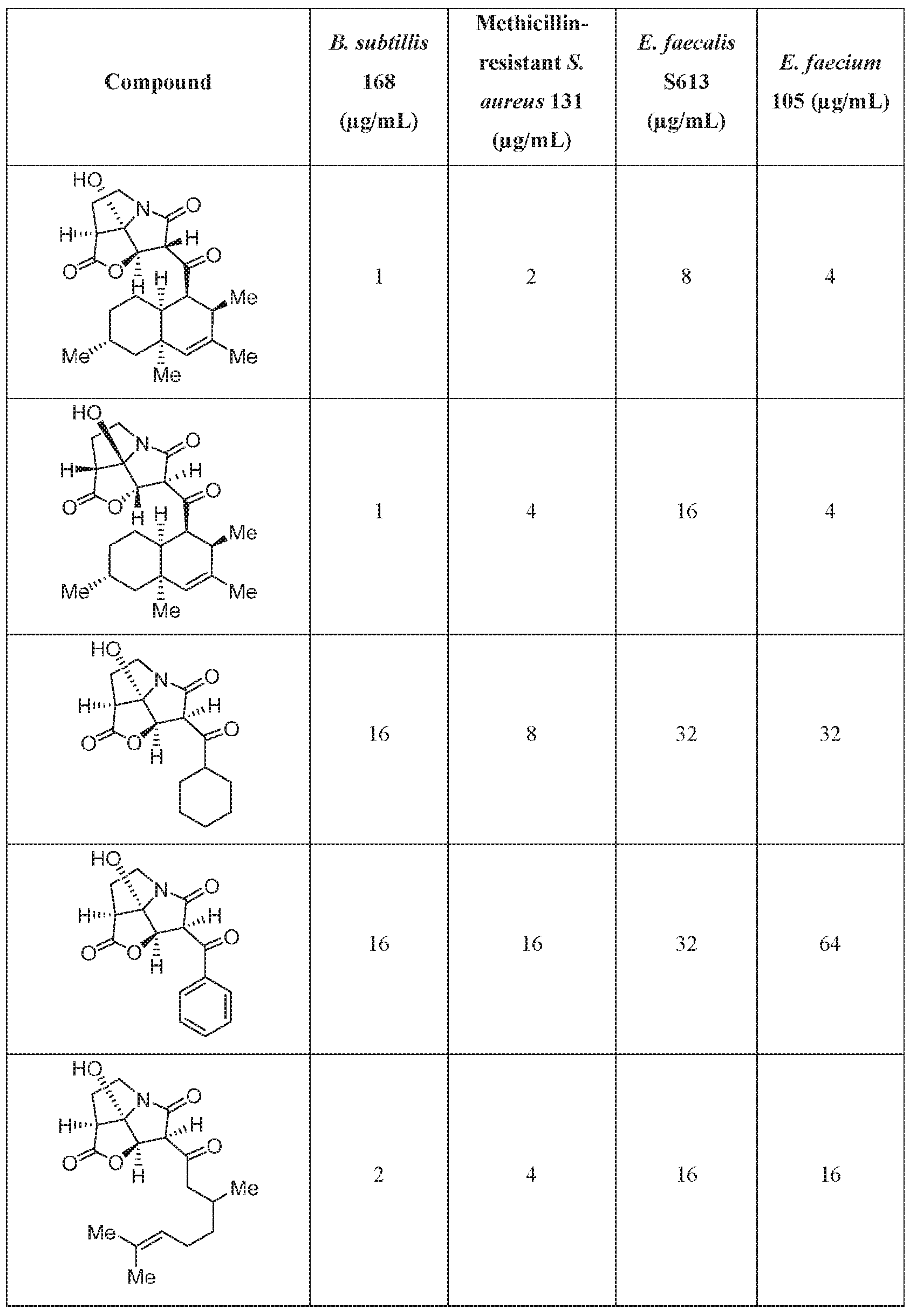

* * * * * * * * * * * * *
All of the compositions and/or methods disclosed and claimed herein can be made and executed without undue experimentation in light of the present disclosure. While the compositions and methods of this disclosure have been described in terms of preferred embodiments, it will be apparent to those of skill in the art that variations may be applied to the compositions and/or methods and in the steps or in the sequence of steps of the method described herein without departing from the concept, spirit and scope of the disclosure. More specifically, it will be apparent that certain agents which are both chemically and physiologically related may be substituted for the agents described herein while the same or similar results would be achieved. All such similar substitutes and modifications apparent to those skilled in the art are deemed to be within the spirit, scope and concept of the disclosure as defined by the appended claims.
VIII. References
The following references, to the extent that they provide exemplary procedural or other details supplementary to those set forth herein, are specifically incorporated herein by reference: Anderson, N.G., Practical Process Research & Development– A Guide For Organic Chemists, 2nd ed., Academic Press, New York, 2012.
Antibiotic Resistance Threats in the United States, 2013,
Austin-Ward and Villaseca, Rev. Med. Chil., 126 (7):838–845, 1998.
Barber, J. Clin. Pathol., 14:385–393, 1961.
Bukowski et al., Clin. Cancer Res., 4 (10):2337–2347, 1998.
Christodoulides et al., Microbiology, 144 (Pt 11):3027–3037, 1998.
Davidson et al., J. Immunother., 21 (5):389–398, 1998.
De Figueiredo, et al., Angew. Chem. Int. Ed., 46:2883–2886, 2007.
Greene’s Protective Groups in Organic Chemistry, Wuts and Greene, Ed., 1973
Hanibuchi et al., Int. J. Cancer, 78 (4):480–485, 1998.
Hellstrand et al., Acta Oncol., 37 (4):347–353, 1998.
Hui and Hashimoto, Infect. Immun., 66 (11):5329–5336, 1998.
Jevons, British Med. J., 1:124–125, 1961.
Ju et al., Gene Ther., 7 (19):1672–1679, 2000.
Lambert and Danishefsky, J. Am. Chem. Soc., 128:426–427, 2006.
Lemieux and Morgan, Can. J. Chem., 43:2190–2198, 1965.
Livermore, Int. J. Antimicrob. Agents, 16 (1):S3–10, 2000.
March’s Advanced Organic Chemistry: Reactions, Mechanisms, and Structure, 2007.
Mitchell et al., Ann. NY Acad. Sci., 690:153–166, 1993.
Mitchell et al., J. Clin. Oncol., 8 (5):856-869, 1990.
Morton et al., Arch. Surg., 127:392–399, 1992.
Nathan, Nature, 431:899–902, 2004.
Nicolaou et al., Angew. Chem. Int. Ed., 54:9203–9208, 2015.
Pangborn et al., Organometallics, 15:1518–1520, 1996.
Pietras et al., Oncogene, 17 (17):2235–2249, 1998.
Qin et al., Proc. Natl. Acad. Sci. USA, 95 (24):14411–14416, 1998.
Ravindranath and Morton, Intern. Rev. Immunol., 7: 303–329, 1991.
Remington’s Pharmaceutical Sciences, 15th Ed., 1035–1038 and 1570–1580, 1990.
Remington’s Pharmaceutical Sciences, 15th Ed., 3:624–652, 1990.
Rosenberg et al., Ann. Surg.210 (4):474–548, 1989.
Rosenberg et al., N. Engl. J. Med., 319:1676, 1988.
Still et al., J. Org. Chem., 43:2923–2925, 1978.
U.S. Patent No.5,739,169
U.S. Patent No.5,801,005
U.S. Patent No.5,824,311
U.S. Patent No.5,830,880
U.S. Patent No.5,846,945
US Department of Health and Human Services, Center of Disease Control andPrevention, www.cdc.gov/drugresistance/threat report-2013/pdf/ar-threats-2013-508.pdf. ***
Claims
CLAIMS WHAT IS CLAIMED IS: 1. A compound of the formula:

wherein:
R1 is alkyl(C≤24), cycloalkyl(C≤24), alkenyl(C≤24), aryl(C≤24), heteroaryl(C≤24), or a substituted version of any of these groups; or íAíR6, wherein:
A is alkanediyl(C≤24), cycloalkanediyl(C≤24), alkenediyl(C≤24), arenediyl(C≤24), heteroarenediyl(C≤24), heterocycloalkanediyl(C≤24), or a substituted version of any of these groups; and
R6 is alkyl(C≤24), cycloalkyl(C≤24), alkenyl(C≤24), heteroaryl(C^12), heterocycloalkyl(C≤12), alkylamino(C≤12), dialkylamino(C≤12), alkoxy(C≤24), alkenyloxy(C≤24), aryloxy(C≤24), heteroaryloxy(C≤24), or a substituted version of any of these groups; or a íOísteroid or íOísteroid derivative;
R2 is amino, hydroxy, or
alkoxy(C≤24), cycloalkoxy(C≤24), alkenyloxy(C≤24), cycloalkenyloxy(C≤24), aryloxy(C≤12), aralkoxy(C≤12), alkylamino(C≤24), dialkylamino(C≤24), cycloalkylamino(C≤24), dicycloalkylamino(C≤24), alkenylamino(C≤24), dialkenylamino(C≤24), or a substituted version of any of these groups; or
R2 is taken together with R3 and is íOí or íNRaí, wherein:
Ra is hydrogen, alkyl(C≤6), or substituted alkyl(C≤6);
R3 is absent, hydrogen, hydroxy, or is taken together with R2 as described above; provided that when R3 is absent that the atom to which is bound is a part of a double bond; and provided that when the atom to which R3 is bound is a part of a double bond then R3 is absent;
R4 is amino, hydroxy, or
alkoxy(C≤12), alkylamino(C≤12), dialkylamino(C≤12), or a substituted version of any of these groups; or
íORb or íNRcRd, wherein:
Rb is a hydroxyl protecting group;
Rc is a monovalent amine protecting group or is taken together with Rd and is a divalent amine protecting group; and
Rd is hydrogen, a monovalent amine protecting group, or is taken together with Rc and is a divalent amine protecting group; R5 is absent, hydrogen, or hydroxy; provided that when R5 is absent then the atom to which is bound is part of a double bond; and provide that when the atom to which R5 is bound is part of a double bond then R5 is absent; and
X1, X2, and X3 are O, S, or NRe, wherein:
Re is hydrogen, alkyl(C≤6), or substituted alkyl(C≤6);
or a pharmaceutically acceptable salt thereof.
2. The compound of claim 1, further defined as:

wherein:
R1 is alkyl(C≤24), cycloalkyl(C≤24), alkenyl(C≤24), aryl(C≤24), heteroaryl(C≤24), or a substituted version of any of these groups; or íAíR6, wherein:
A is alkanediyl(C≤24), cycloalkanediyl(C≤24), alkenediyl(C≤24), arenediyl(C≤24), heteroarenediyl(C≤24), heterocycloalkanediyl(C≤24), or a substituted version of any of these groups; and
R6 is alkyl(C≤24), cycloalkyl(C≤24), alkenyl(C≤24), heteroaryl(C^12), heterocycloalkyl(C^12), alkylamino(C^12), dialkylamino(C^12), alkoxy(C≤24), alkenyloxy(C≤24), aryloxy(C≤24), heteroaryloxy(C≤24), or a substituted version of any of these groups; or a íOísteroid or íOísteroid derivative;
R2 is amino, hydroxy, or
alkoxy(C≤24), cycloalkoxy(C≤24), alkenyloxy(C≤24), cycloalkenyloxy(C≤24), aryloxy(C^12), aralkoxy(C^12), alkylamino(C≤24), dialkylamino(C≤24), cycloalkylamino(C≤24), dicycloalkylamino(C≤24), alkenylamino(C≤24), dialkenylamino(C≤24), or a substituted version of any of these groups; or
R2 is taken together with R3 and is íOí or íNRaí, wherein:
Ra is hydrogen, alkyl(C^6), or substituted alkyl(C^6);
R3 is absent, hydrogen, hydroxy, or is taken together with R2 as described above; provided that when R3 is absent that the atom to which is bound is a part of a double bond; and provided that when the atom to which R3 is bound is a part of a double bond then R3 is absent;
R4 is amino, hydroxy, or
alkoxy(C≤12), alkylamino(C≤12), dialkylamino(C≤12), or a substituted version of any of these groups; or
íORb or íNRcRd, wherein:
Rb is a hydroxyl protecting group;
Rc is a monovalent amine protecting group or is taken together with Rd and is a divalent amine protecting group; and
Rd is hydrogen, a monovalent amine protecting group, or is taken together with Rc and is a divalent amine protecting group; and R5 is absent, hydrogen, or hydroxy; provided that when R5 is absent then the atom to which is bound is part of a double bond; and provide that when the atom to which R5 is bound is part of a double bond then R5 is absent;
or a pharmaceutically acceptable salt thereof.
3. The compound of either claim 1 or claim 2, further defined as:

wherein:
R1 is alkyl(C≤24), cycloalkyl(C≤24), alkenyl(C≤24), aryl(C≤24), heteroaryl(C≤24), or a substituted version of any of these groups; or íAíR6, wherein:
A is alkanediyl(C≤24), cycloalkanediyl(C≤24), alkenediyl(C≤24), arenediyl(C≤24), heteroarenediyl(C≤24), heterocycloalkanediyl(C≤24), or a substituted version of any of these groups; and
R6 is alkyl(C≤24), cycloalkyl(C≤24), alkenyl(C≤24), heteroaryl(C≤12), heterocycloalkyl(C≤12), alkylamino(C≤12), dialkylamino(C≤12), alkoxy(C≤24), alkenyloxy(C≤24), aryloxy(C≤24), heteroaryloxy(C≤24), or a substituted version of any of these groups; or a íOísteroid or íOísteroid derivative;
R2 is amino, hydroxy, or
alkoxy(C≤24), cycloalkoxy(C≤24), alkenyloxy(C≤24), cycloalkenyloxy(C≤24), aryloxy(C≤12), aralkoxy(C≤12), alkylamino(C≤24), dialkylamino(C≤24), cycloalkylamino(C≤24), dicycloalkylamino(C≤24), alkenylamino(C≤24), dialkenylamino(C≤24), or a substituted version of any of these groups; or
R2 is taken together with R3 and is íOí or íNRaí, wherein:
Ra is hydrogen, alkyl(C^6), or substituted alkyl(C^6);
R3 is absent, hydrogen, hydroxy, or is taken together with R2 as described above; provided that when R3 is absent that the atom to which is bound is a part of a double bond; and provided that when the atom to which R3 is bound is a part of a double bond then R3 is absent; and
R5 is absent, hydrogen, or hydroxy; provided that when R5 is absent then the atom to which is bound is part of a double bond; and provide that when the atom to which R5 is bound is part of a double bond then R5 is absent;
or a pharmaceutically acceptable salt thereof.
4. The compound according to any one of claims 1-3, further defined as:

wherein:
R1 is alkyl(C≤24), cycloalkyl(C≤24), alkenyl(C≤24), aryl(C≤24), heteroaryl(C≤24), or a substituted version of any of these groups; or íAíR6, wherein:
A is alkanediyl(C≤24), cycloalkanediyl(C≤24), alkenediyl(C≤24), arenediyl(C≤24), heteroarenediyl(C≤24), heterocycloalkanediyl(C≤24), or a substituted version of any of these groups; and
R6 is alkyl(C≤24), cycloalkyl(C≤24), alkenyl(C≤24), heteroaryl(C≤12), heterocycloalkyl(C≤12), alkylamino(C≤12), dialkylamino(C≤12), alkoxy(C≤24), alkenyloxy(C≤24), aryloxy(C≤24), heteroaryloxy(C≤24), or a substituted version of any of these groups; or a íOísteroid or íOísteroid derivative;
R2 is taken together with R3 and is íOí or íNRaí, wherein:
Ra is hydrogen, alkyl(C≤6), or substituted alkyl(C≤6); and R5 is hydrogen or hydroxy;
or a pharmaceutically acceptable salt thereof.
5. The compound according to any one of claims 1-3 further defined as:

wherein:
R1 is alkyl(C≤24), cycloalkyl(C≤24), alkenyl(C≤24), aryl(C≤24), heteroaryl(C≤24), or a substituted version of any of these groups; or íAíR6, wherein:
A is alkanediyl(C≤24), cycloalkanediyl(C≤24), alkenediyl(C≤24), arenediyl(C≤24), heteroarenediyl(C≤24), heterocycloalkanediyl(C≤24), or a substituted version of any of these groups; and
R6 is alkyl(C≤24), cycloalkyl(C≤24), alkenyl(C≤24), heteroaryl(C≤12), heterocycloalkyl(C^12), alkylamino(C^12), dialkylamino(C^12), alkoxy(C≤24), alkenyloxy(C≤24), aryloxy(C≤24), heteroaryloxy(C≤24), or a substituted version of any of these groups; or a íOísteroid or íOísteroid derivative; and
R2 is amino, hydroxy, or
alkoxy(C≤24), cycloalkoxy(C≤24), alkenyloxy(C≤24), cycloalkenyloxy(C≤24), aryloxy(C^12), aralkoxy(C^12), alkylamino(C≤24), dialkylamino(C≤24), cycloalkylamino(C≤24),
dicycloalkylamino(C≤24), alkenylamino(C≤24), dialkenylamino(C≤24), or a substituted version of any of these groups;
or a pharmaceutically acceptable salt thereof.
6. The compound according to any one of claims 1-5, wherein R1 is alkyl(C≤24) or substituted alkyl(C≤24).
7. The compound of claim 6, wherein R1

8. The compound of claim 7, wherein R1 is octyl, nonyl, decyl, undecyl, dodecyl, tridecyl, tetradecyl, pentadecyl, hexadecyl, heptadecyl, or octadecyl.
9. The compound of claim 6, wherein R1 is substituted alkyl(C6-24).
10. The compound of claim 9, wherein R1 is 1,1-difluorooctyl, 1,1-difluorononyl, 1,1- difluorodecyl, 1,1-difluoroundecyl, 1,1-difluorododecyl, 1,1-difluorotridecyl, 1,1- difluorotetradecyl, 1,1-difluoropentadecyl, 1,1-difluorohexadecyl, 1,1-difluoroheptadecyl, or 1,1-difluorooctadecyl.
11. The compound according to any one of claims 1-5, wherein R1 is alkenyl(C≤24) or substituted alkenyl(C≤24).
12. The compound of claim 11, wherein R1 is alkenyl(C^6-24).
13. The compound of claim 12, wherein R1 is 2,6-dimethyl-hept-5-enyl, 2,6-dimethyl-hept-1,5- dienyl, 2,6,10-trimethyl-undec-1,5,9-trienyl, 2,6,10,14-tetramethyl-pentadec-1,5,9,13- tetraenyl, or heptadec-8-enyl.
14. The compound of claim 11, wherein R1 is substituted alkenyl(C≤24).
15. The compound according to any one of claims 1-5, wherein R1 is cycloalkyl(C≤24) or substituted cycloalkyl(C≤24).
16. The compound of claim 15, wherein R1 is cycloalkyl(C3-12).
17. The compound of claim 16, wherein R1 is cyclohexyl.
18. The compound according to any one of claims 1-5, wherein R1 is aryl(C≤24) or substituted
19. The compound of claim 18, wherein R1 is aryl(C6-24).
20. The compound of claim 19, wherein R1 is phenyl.
21. The compound according to any one of claims 1-5, wherein R1 is íAíR6, wherein:
A is alkanediyl(C≤24), cycloalkanediyl(C≤24), alkenediyl(C≤24), arenediyl(C≤24), heteroarenediyl(C≤24), heterocycloalkanediyl(C≤24), or a substituted version of any of these groups; and
R6 is alkyl(C≤24), cycloalkyl(C≤24), alkenyl(C≤24), heteroaryl(C≤12), heterocycloalkyl(C≤12), alkylamino(C≤12), dialkylamino(C≤12), alkoxy(C≤24), alkenyloxy(C≤24), aryloxy(C≤24), heteroaryloxy(C≤24), or a substituted version of any of these groups; or a íOísteroid or íOísteroid derivative.
22. The compound of claim 21, wherein A is alkanediyl(C≤24) or substituted alkanediyl(C≤24).
23. The compound of claim 22, wherein A is alkanediyl(C≤24).
24. The compound of claim 23, wherein A is íCH2CH2í.
25. The compound of claim 21, wherein A is alkenediyl(C≤24) or substituted alkenediyl(C≤24).
26. The compound of claim 25, wherein A is alkenediyl(C6-24).
27. The compound of claim 26, wherein A is 2,6-dimethyl-non-1,5-diendiyl or 2,6,10-trimethyl- tridec-1,5,9-triendiyl.
28. The compound of claim 21, wherein A is arenediyl(C≤24) or substituted arenediyl(C≤24).
29. The compound of claim 28, wherein A is arenediyl(C≤24).
30. The compound of claim 29, wherein A is benzenediyl.
31. The compound of claim 21, wherein A is heteroarenediyl(C≤24) or substituted heteroarenediyl(C≤24).
32. The compound of claim 31, wherein A is heteroarenediyl(C≤24).
33. The compound of claim 32, wherein A is thiazoldiyl.
34. The compound according to any one of claims 21-33, wherein R6 is alkenyl(C≤24) or substituted alkenyl(C≤24).
35. The compound of claim 34, wherein R6 is alkenyl(C≤24).
36. The compound of claim 35, wherein R6 is 2,6-dimethyl-non-1,5-dienyl, 3,7,11-trimethyl- dodec-2,6,10-trienyl, or 2,6,10-trimethyl-tridec-1,5,9-trienyl.
37. The compound according to any one of claims 21-33, wherein R6 is heterocycloalkyl(C^12) or substituted heterocycloalkyl(C≤12).
38. The compound of claim 37, wherein R6 is heterocycloalkyl(C≤12).
39. The compound of claim 38, wherein R6 is piperadinyl or 4-methylpiperazinyl.
40. The compound according to any one of claims 21-33, wherein R6 is dialkylamino(C≤12) or substituted dialkylamino(C^12).
41. The compound of claim 40, wherein R6 is dialkylamino(C^12).
42. The compound of claim 41, wherein R6 is diethylamino.
43. The compound according to any one of claims 21-33, wherein R6 is alkenyloxy(C≤24) or substituted alkenyloxy(C≤24).
44. The compound of claim 43, wherein R6 is alkenyloxy(C≤24).
45. The compound of claim 44, wherein R6 is 6-dimethyl-non-1,5-dienyloxy, 3,7,11-trimethyl- dodec-2,6,10-trienyloxy, or 2,6,10-trimethyl-tridec-1,5,9-trienyoxy.
46. The compound according to any one of claims 21-33, wherein R6 is heteroaryloxy(C^12) or substituted heteroaryloxy(C^12).
47. The compound of claim 46, wherein R6 is heteroaryloxy(C^12).
48. The compound of claim 47, wherein R6 is 4-methylthiazolyloxy.
49. The compound according to any one of claims 21-33, wherein R6 is a íOísteroid or íOísteroid derivative.
50. The compound of claim 49, wherein R6 is íOísteroid.
51. The compound of claim 50, wherein R6 is íOícholesterol.
52. The compound of claim 51, wherein R6 is:
 .
.
53. The compound according to any one of claims 1-4 and 6-52, wherein R2 is taken together with
54. The compound according to any one of claims 1-4 and 6-52, wherein R2 is taken together with
55. The compound according to any one of claims 1-3 and 5-52, wherein R2 is dialkylamino(C≤24) or substituted dialkylamino(C≤24).
56. The compound of claim 55, wherein R2 is dialkylamino(C^12) or substituted dialkylamino(C^12).
57. The compound of claim 56, wherein R2 is dialkylamino(C≤12).
58. The compound of claim 57, wherein R2 is dimethylamino.
59. The compound according to any one of claims 1-3 and 5-52, wherein R2 is alkoxy(C≤24) or substituted alkoxy(C≤24).
60. The compound of claim 59, wherein R2 is alkoxy(C^12) or substituted alkoxy(C^12).
61. The compound of claim 60, wherein R2 is alkoxy(C^12).
62. The compound of claim 61, wherein R2 is methoxy.
63. The compound according to any one of claims 1-3 and 5-52, wherein R2 is alkenyloxy(C≤24) or substituted alkenyloxy(C≤24).
64. The compound according to any one of claims 1-3 and 5-52, wherein R2 is aralkoxy(C≤12) or substituted aralkoxy(C^12).
65. The compound of claim 64, wherein R2 is aralkoxy(C^12).
66. The compound of claim 65, wherein R2 is benzyloxy.
67. The compound according to any one of claims 1-3 and 5-52, wherein R2 is amino.
68. The compound according to any one of claims 1-3 and 6-67, wherein R3 is absent.
69. The compound according to any one of claims 1-4 and 6-67, wherein R3 is taken together with R2 and is íOí.
70. The compound according to any one of claims 1-4 and 6-67, wherein R3 is taken together with R2 and is íNHí.
71. The compound according to any one of claims 1-3 and 6-67, wherein R3 is hydrogen.
72. The compound according to any one of claims 1, 2, and 6-67, wherein R4 is hydroxy.
73. The compound according to any one of claims 1, 2, and 6-67, wherein R4 is íORb wherein: Rb is a hydroxyl protecting group.
74. The compound according to any one of claims 1-4 and 6-67, wherein R5 is absent.
75. The compound according to any one of claims 1-4 and 6-67, wherein R5 is hydrogen.
76. The compound according to any one of claims 1 and 6-75, wherein X1 is O.
77. The compound according to any one of claims 1 and 6-76, wherein X2 is O.
78. The compound according to any one of claims 1 and 6-77, wherein X3 is O.
79. The compound according to any one of claims 1-78, wherein carbon atom 1 is in the (R) configuration.
80. The compound according to any one of claims 1-78, wherein carbon atom 1 is in the (S) configuration.
81. The compound according to any one of claims 1-80, wherein carbon atom 2 is in the (R) configuration.
82. The compound according to any one of claims 1-80, wherein carbon atom 2 is in the (S) configuration.
83. The compound according to any one of claims 1-82, wherein carbon atom 5 is in the (R) configuration.
84. The compound according to any one of claims 1-82, wherein carbon atom 5 is in the (S) configuration.
85. The compound according to any one of claims 1-84, wherein carbon atom 6 is in the (R) configuration.
86. The compound according to any one of claims 1-84, wherein carbon atom 6 is in the (S) configuration.
87. The compound according to any one of claims 1-86, wherein the carbon atom 1 is in the (R) configuration and carbon atoms 2, 5, and 6 are in the (S) configuration.
88. The compound according to any one of claims 1-86, wherein the carbon atom 1 is in the (S) configuration and carbon atoms 2, 5, and 6 are in the (R) configuration.
89. The compound according to any one of claims 1-5, wherein the compound is further defined as:


,
or

or a pharmaceutically acceptable salt thereof.
90. A compound of the formula:
,

or a pharmaceutically acceptable salt thereof.
91. A pharmaceutical composition comprising:
(a) a compound according to any one of claims 1-90; and
(b) a pharmaceutically acceptable carrier.
92. The pharmaceutical composition of claim 91, wherein the pharmaceutical composition is formulated for administration: orally, intraadiposally, intraarterially, intraarticularly, intracranially, intradermally, intralesionally, intramuscularly, intranasally, intraocularly, intrapericardially, intraperitoneally, intrapleurally, intraprostatically, intrarectally, intrathecally, intratracheally, intratumorally, intraumbilically, intravaginally, intravenously, intravesicularlly, intravitreally, liposomally, locally, mucosally, parenterally, rectally, subconjunctival, subcutaneously, sublingually, topically, transbuccally, transdermally, vaginally, in crèmes, in lipid compositions, via a catheter, via a lavage, via continuous infusion, via infusion, via inhalation, via injection, via local delivery, or via localized perfusion.
93. The pharmaceutical composition of either claim 91 or claim 92, wherein the pharmaceutical composition is formulated with a second therapeutic agent.
94. The pharmaceutical composition of claim 93, wherein the second therapeutic agent is an antibiotic.
95. The pharmaceutical composition of claim 93, wherein the second therapeutic agent is a chemotherapeutic compound.
96. The pharmaceutical composition according to any one of claims 91-95, wherein the pharmaceutical composition is formulated as a unit dose.
97. A method of treating a disease or disorder in a patient in need thereof comprising administering to the patient a therapeutically effective amount of a compound or composition according to any one of claims 1-96.
98. The method of claim 97, wherein the disease or disorder is an infection caused by a bacterium.
99. The method of claim 98, wherein the bacterium is a Gram-positive bacterium.
100. The method of claim 99, wherein the Gram-positive bacterium is Bacillus subtilis 168, Staphylococcus aureus 131, Enteroccocus faecalis S613, and Enteroccocus faecium 105.
101. The method of claim 98, wherein the bacterium is a Gram-negative bacterium.
102. The method according to any one of claims 98-101, wherein the bacterium is resistant to one or more antibiotics.
103. The method of claim 102, wherein the bacterium is resistant to a ȕ-lactam antibiotic.
104. The method of claim 103, wherein the bacterium is resistant to methicillin.
105. The method of claim 103, wherein the bacterium is resistant to a cephalosporin.
106. The method according to any one of claims 98-100 and 102-105, wherein the bacterium is a methicillin-resistant Staphylococcus aureus 131.
107. The method according to any one of claims 98-106 further comprising administering a second antibiotic compound.
108. The method of claim 107, wherein the second antibiotic compound is an antibiotic aminoglycoside, an ansamycin, a carbacephem, a carbapenem, a cephalosporin, an antibiotic glycopeptide, a lincosamide, an antibiotic lipopeptide, an antibiotic macrolide, a monobactam, an antibiotic nitrofuran, an oxazolidinone, a penicillin, an antibiotic polypeptide, an antibiotic quinolone or fluoroquinolone, an antibiotic sulfonamide, or a tetracycline.
109. The method of claim 97, wherein the disease or disorder is cancer.
110. The method of claim 109, wherein the cancer is a carcinoma, sarcoma, lymphoma, leukemia, melanoma, mesothelioma, multiple myeloma, or seminoma.
111. The method of claim 109, wherein the cancer is of the bladder, blood, bone, brain, breast, central nervous system, cervix, colon, endometrium, esophagus, gall bladder, gastrointestinal tract, genitalia, genitourinary tract, head, kidney, larynx, liver, lung, muscle tissue, neck, oral or nasal mucosa, ovary, pancreas, prostate, skin, spleen, small intestine, large intestine, stomach, testicle, or thyroid.
112. The method according to any one of claims 109-111, wherein the method further comprises administering one or more additional anti-cancer therapies.
113. The method of claim 112, wherein the anti-cancer therapy is a second chemotherapeutic agent, a radiotherapy, an immunotherapy, or surgery.
114. The method according to any one of claims 97-113, wherein the method comprises administering the compound once.
115. The method according to any one of claims 97-113, wherein the method comprises administering the compound two or more times.
116. The method according to any one of claims 97-115, wherein the patient is a mammal.
117. The method of claim 116, wherein the patient is a human.
118. A method of preparing a compound of the formula:

wherein:
R1 is alkyl(C≤24), cycloalkyl(C≤24), alkenyl(C≤24), aryl(C≤24), heteroaryl(C≤24), or a substituted version of any of these groups; or íAíR6, wherein:
A is alkanediyl(C≤24), cycloalkanediyl(C≤24), alkenediyl(C≤24), arenediyl(C≤24), heteroarenediyl(C≤24), heterocycloalkanediyl(C≤24), or a substituted version of any of these groups; and
R6 is alkyl(C≤24), cycloalkyl(C≤24), alkenyl(C≤24), heteroaryl(C^12), heterocycloalkyl(C^12), alkylamino(C^12), dialkylamino(C^12), alkoxy(C≤24), alkenyloxy(C≤24), aryloxy(C≤24), heteroaryloxy(C≤24), or a substituted version of any of these groups; or a íOísteroid or íOísteroid derivative;
R2 is amino, hydroxy, or
alkoxy(C≤24), cycloalkoxy(C≤24), alkenyloxy(C≤24), cycloalkenyloxy(C≤24), aryloxy(C≤12), aralkoxy(C≤12), alkylamino(C≤24), dialkylamino(C≤24), cycloalkylamino(C≤24), dicycloalkylamino(C≤24), alkenylamino(C≤24), dialkenylamino(C≤24), or a substituted version of any of these groups; or
R2 is taken together with R3 and is íOí or íNRaí, wherein:
Ra is hydrogen, alkyl(C≤6), or substituted alkyl(C≤6);
R3 is absent, hydrogen, hydroxy, or is taken together with R2 as described above; provided that when R3 is absent that the atom to which is bound is a part of a double bond; and provided that when the atom to which R3 is bound is a part of a double bond then R3 is absent;
R4 is amino, hydroxy, or
alkoxy(C^12), alkylamino(C^12), dialkylamino(C^12), or a substituted version of any of these groups; or
íORb or íNRcRd, wherein:
Rb is a hydroxyl protecting group;
Rc is a monovalent amine protecting group or is taken together with Rd and is a divalent amine protecting group; and
Rd is hydrogen, a monovalent amine protecting group, or is taken together with Rc and is a divalent amine protecting group; R5 is absent, hydrogen, or hydroxy; provided that when R5 is absent then the atom to which is bound is part of a double bond; and provide that when the atom to which R5 is bound is part of a double bond then R5 is absent; and
X1 and X3 are each independently O, S, or NRe, wherein:
Re is hydrogen, alkyl(C^6), or substituted alkyl(C^6);
Y1 is amino, hydroxy, mercapto, alkylamino(C≤6), substituted alkylamino(C≤6), íORb, íNRcRd, or–SRe wherein:
Rb is a hydroxyl protecting group;
Rc is a monovalent amine protecting group or is taken together with Rd and is a divalent amine protecting group;
Rd is hydrogen, a monovalent amine protecting group, or is taken together with Rc and is a divalent amine protecting group; and
Re is a thiol protecting group;
or a salt thereof comprising reacting a compound of the formula:

wherein:
R2 is amino, hydroxy, or
alkoxy(C≤24), cycloalkoxy(C≤24), alkenyloxy(C≤24), cycloalkenyloxy(C≤24), aryloxy(C^12), aralkoxy(C^12), alkylamino(C≤24), dialkylamino(C≤24), cycloalkylamino(C≤24), dicycloalkylamino(C≤24), alkenylamino(C≤24), dialkenylamino(C≤24), or a substituted version of any of these groups; or
R2 is taken together with R3 and is íOí or íNRaí, wherein:
Ra is hydrogen, alkyl(C^6), or substituted alkyl(C^6);
R3 is absent, hydrogen, hydroxy, or is taken together with R2 as described above; provided that when R3 is absent that the atom to which is bound is a part of a double bond; and provided that when the atom to which R3 is bound is a part of a double bond then R3 is absent;
R4 is amino, hydroxy, or
alkoxy(C≤12), alkylamino(C≤12), dialkylamino(C≤12), or a substituted version of any of these groups; or
íORb or íNRcRd, wherein:
Rb is a hydroxyl protecting group;
Rc is a monovalent amine protecting group or is taken together with Rd and is a divalent amine protecting group; and
Rd is hydrogen, a monovalent amine protecting group, or is taken together with Rc and is a divalent amine protecting group; R5 is absent, hydrogen, or hydroxy; provided that when R5 is absent then the atom to which is bound is part of a double bond; and provide that when the atom to which R5 is bound is part of a double bond then R5 is absent; X1 and X3 are each independently O, S, or NRe, wherein:
Re is hydrogen, alkyl(C^6), or substituted alkyl(C^6); and
Y2 is an activated group;
with a compound of the formula: (VIII)
wherein:
R1 is alkyl(C≤24), cycloalkyl(C≤24), alkenyl(C≤24), aryl(C≤24), heteroaryl(C≤24), or a substituted version of any of these groups; or íAíR6, wherein:
A is alkanediyl(C≤24), cycloalkanediyl(C≤24), alkenediyl(C≤24), arenediyl(C≤24), heteroarenediyl(C≤24), heterocycloalkanediyl(C≤24), or a substituted version of any of these groups; and
R6 is alkyl(C≤24), cycloalkyl(C≤24), alkenyl(C≤24), heteroaryl(C≤12), heterocycloalkyl(C≤12), alkylamino(C≤12), dialkylamino(C≤12), alkoxy(C≤24), alkenyloxy(C≤24), aryloxy(C≤24), heteroaryloxy(C≤24), or a substituted version of any of these groups; or a íOísteroid or íOísteroid derivative;
X2 is O, S, or NRe, wherein:
Re is hydrogen, alkyl(C≤6), or substituted alkyl(C≤6);
in the presence of a Lewis acid.
119. The method of claim 118, wherein the Lewis acid is a metal, a boron compound, or an aluminum compound.
120. The method of claim 119, wherein the Lewis acid is a boron compound.
121. The method of claim 120, wherein the Lewis acid is triethylboron.
122. The method according to any one of claims 118-121, wherein the method comprises adding an amount of the boron compound from about 0.1 equivalents to about 10 equivalents relative to the compound of formula VII.
123. The method of claim 122, wherein the amount of the Lewis acid is from about 0.5 equivalents to about 2.5 equivalents.
124. The method of claim 123, wherein the amount of the Lewis acid is about 1.0 equivalents.
125. The method according to any one of claims 118-121, wherein the method comprises adding an amount of the compound of formula VII from about 0.1 equivalent to about 10 equivalents relative to the compound of formula VIII.
126. The method of claim 125, wherein the amount of the compound of formula VII is from about 1.0 to about 5 equivalents relative to the compound of formula VIII.
127. The method of claim 126, wherein the amount of the compound of formula VII is about 2.5 equivalents.
128. The method of claim 125, wherein the amount of the compound of formula VII is from about 0.1 to about 1 equivalents relative to the compound of formula VIII.
129. The method of claim 126, wherein the amount of the compound of formula VII is about 0.25 equivalents.
130. The method according to any one of claims 118-129, wherein the method further comprises reacting the compound of formula VII and the compound of formula VIII in an organic solvent.
131. The method of claim 130, wherein the organic solvent is a non-polar solvent.
132. The method of claim 131, wherein the organic solvent is a hydrocarbon solvent.
133. The method of claim 132, wherein the organic solvent is an arene(C≤12).
134. The method of claim 133, wherein the organic solvent is toluene.
135. The method according to any one of claims 118-134, wherein the method further comprises reacting the compound of formula VII and the compound of formula VIII at a temperature from about í100 °C to about í10 °C.
136. The method of claim 135, wherein the temperature is from about í90 °C to about í50 °C.
137. The method of claim 136, wherein the temperature is about í78 °C.
138. The method according to any one of claims 118-137, wherein the method further comprises reacting the compound of formula VII and the compound of formula VIII for a time period from about 10 minutes to about 8 hours.
139. The method of claim 138, wherein the time period is from about 1 hour to about 4 hours.
140. The method of claim 139, wherein the time period is about 2 hours.
141. The method according to any one of claims 118-140, wherein Y2 is a halo, mesylate, toslyate, or triflate.
142. The method of claim 141, wherein Y2 is halo.
143. The method according to any one of claims 118-141, wherein the method further comprises reacting the compound of formula VIII with an oxidizing agent to form a compound of formula I.
144. The method of claim 143, wherein the oxidizing agent is a hypervalent iodide compound.
145. The method of claim 144, wherein the oxidizing agent is Dess–Martin periodinane.
146. The method according to any one of claims 143-145, wherein the method comprises adding an amount from about 1 equivalent to about 3 equivalents of the oxidizing agent relative to the compound of formula VIII.
147. The method of claim 146, wherein the amount of the oxidizing agent is from about 1 equivalent to about 2 equivalents.
148. The method of claim 147, wherein the amount of the oxidizing agent is from about 1.4 equivalents to about 1.8 equivalents.
149. The method according to any one of claims 143-148, wherein the method further comprises an organic solvent.
150. The method according to any one of claims 143-149, wherein the method further comprises reacting the compound of formula VIII with an oxidizing agent at a temperature from about í30 °C to about 30 °C.
151. The method according to any one of claims 143-149, wherein the method further comprises reacting the compound of formula VIII with an oxidizing agent for a time period from about 5 minutes to about 2 hours.
152. A method of preparing a compound of the formula:

wherein:
R2 is amino, hydroxy, or
alkoxy(C≤24), cycloalkoxy(C≤24), alkenyloxy(C≤24), cycloalkenyloxy(C≤24), aryloxy(C^12), aralkoxy(C^12), alkylamino(C≤24), dialkylamino(C≤24), cycloalkylamino(C≤24), dicycloalkylamino(C≤24), alkenylamino(C≤24), dialkenylamino(C≤24), or a substituted version of any of these groups; or
R2 is taken together with R3 and is íOí or íNRaí, wherein:
Ra is hydrogen, alkyl(C≤6), or substituted alkyl(C≤6);
R3 is hydroxy or is taken together with R2 as described above;
R4 is amino, hydroxy, or
alkoxy(C≤12), alkylamino(C≤12), dialkylamino(C≤12), or a substituted version of any of these groups; or
íORb or íNRcRd, wherein:
Rb is a hydroxyl protecting group;
Rc is a monovalent amine protecting group or is taken together with Rd and is a divalent amine protecting group; and
Rd is hydrogen, a monovalent amine protecting group, or is taken together with Rc and is a divalent amine protecting group; R5 is halo;
X1 and X3 are each independently O, S, or NRe, wherein:
Re is hydrogen, alkyl(C≤6), or substituted alkyl(C≤6);
or a salt thereof comprising:
(a) reacting a compound of the formula:

wherein:
R7 is an alkylsilyl(C^12) or a substituted alkylsilyl(C^12);
with a compound of the formula:

wherien:
R8 is a chiral auxiliary;
in the presence of an energy source and followed by the addition of a proton source and then an alkylsilylhalide compound(C^12) or a substituted alkylsilylhalide compound(C^12) and a base to form a compound of the formula:

wherein:
R8 is as defined above; and
R9 is alkylsilyl(C^12) or substituted alkylsilyl(C^12);
(b) reacting the compound of formula XI with a base to obtain a compound of the formula:

wherein:
R9 is as defined above; and
(c) reacting the compound of formula XII with a halogen to form a compound of formula I.
153. The method of claim 152, wherein R7 is trimethylsilyl.
154. The method of claim 152, wherein the energy source is light.
155. The method of claim 152, wherein the base is imidazole.
156. The method of claim 152, wherein the silylating agent(C≤12) is t-butyldimethylsilyl chloride.
157. The method of claim 152, wherein the base of step (b) is lithium hydroxide.
158. The method of claim 152, wherein the halogen is an elemental halogen.
159. The method of claim 158, wherein the halogen is I2.
160. A method of preparing a compound of the formula:
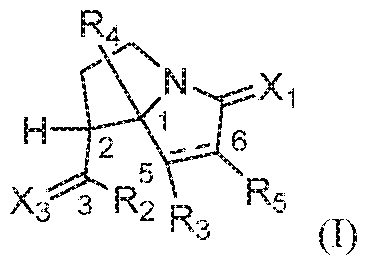
wherein:
R2 is amino, hydroxy, or
alkoxy(C≤24), cycloalkoxy(C≤24), alkenyloxy(C≤24), cycloalkenyloxy(C≤24), aryloxy(C^12), aralkoxy(C^12), alkylamino(C≤24), dialkylamino(C≤24), cycloalkylamino(C≤24), dicycloalkylamino(C≤24), alkenylamino(C≤24), dialkenylamino(C≤24), or a substituted version of any of these groups; or
R2 is taken together with R3 and is íOí or íNRaí, wherein:
Ra is hydrogen, alkyl(C^6), or substituted alkyl(C^6);
R3 is hydroxy or is taken together with R2 as described above;
R4 is amino, hydroxy, or
alkoxy(C≤12), alkylamino(C≤12), dialkylamino(C≤12), or a substituted version of any of these groups; or
íORb or íNRcRd, wherein:
Rb is a hydroxyl protecting group;
Rc is a monovalent amine protecting group or is taken together with Rd and is a divalent amine protecting group; and
Rd is hydrogen, a monovalent amine protecting group, or is taken together with Rc and is a divalent amine protecting group; R5 is halo;
X1 and X3 are each independently O, S, or NRe, wherein:
Re is hydrogen, alkyl(C≤6), or substituted alkyl(C≤6);
or a salt thereof comprising:
(a) reacting a compound of the formula:

wherein:
R7 is an alkylsilyl(C^12) or a substituted alkylsilyl(C^12);
with a compound of the formula:

wherein:
R8 is a chiral auxiliary;
followed by the addition of a silylating agent(C^12) and a base to form a compound of the formula:

wherein:
R8 is as defined above; and
R9 is alkylsilyl(C≤12) or substituted alkylsilyl(C≤12);
(b) reacting the compound of formula XI with a base to obtain a compound of the formula:

wherein:
R9 is as defined above; and
(c) reacting the compound of formula XII with a halogen to form a compound of formula I.
161. A method of preparing a compound of the formula:

wherein:
R2 is amino, hydroxy, or
alkoxy(C≤24), cycloalkoxy(C≤24), alkenyloxy(C≤24), cycloalkenyloxy(C≤24), aryloxy(C^12), aralkoxy(C^12), alkylamino(C≤24), dialkylamino(C≤24), cycloalkylamino(C≤24), dicycloalkylamino(C≤24), alkenylamino(C≤24), dialkenylamino(C≤24), or a substituted version of any of these groups; or
R2 is taken together with R3 and is íOí or íNRaí, wherein:
Ra is hydrogen, alkyl(C^6), or substituted alkyl(C^6);
R3 is hydroxy or is taken together with R2 as described above;
R4 is amino, hydroxy, or
alkoxy(C≤12), alkylamino(C≤12), dialkylamino(C≤12), or a substituted version of any of these groups; or
íORb or íNRcRd, wherein:
Rb is a hydroxyl protecting group;
Rc is a monovalent amine protecting group or is taken together with Rd and is a divalent amine protecting group; and
Rd is hydrogen, a monovalent amine protecting group, or is taken together with Rc and is a divalent amine protecting group; R5 is halo;
X1 and X3 are each independently O, S, or NRe, wherein:
Re is hydrogen, alkyl(C≤6), or substituted alkyl(C≤6);
or a salt thereof comprising reacting a compound of the formula:

wherein:
R8 is a chiral auxillary; and
R9 is alkylsilyl(C^12) or substituted alkylsilyl(C^12);
with a halonium reagent to obtain a compound of formula I.
162. The method of claim 161, wherein R8 is a chiral N-heterocycloalkyl(C≤12) or substituted N- heterocycloalkyl(C≤12).
163. The method of claim 162, wherein R8 is a chiral unsubstituted or substituted N- pyrrolidinyl(C≤12).
164. The method of claim 161, wherein R8 is
 .
.
165. The method according to any one of claims 161-164, wherein the halonium reagent is an iodonium reagent.
166. The method of claim 165, wherein the iodonium reagent is I(sym-collidine)2ClO4.
167. The method according to any one of claims 161-166, wherein the method further comprises a base.
168. The method of claim 167, wherein the base is a nitrogenous base.
169. The method of claim 168, wherein the base is 2,4,6-collidine.
Applications Claiming Priority (2)
| Application Number | Priority Date | Filing Date | Title |
|---|---|---|---|
| US201562266458P | 2015-12-11 | 2015-12-11 | |
| US62/266,458 | 2015-12-11 |
Publications (1)
| Publication Number | Publication Date |
|---|---|
| WO2017100514A1 true WO2017100514A1 (en) | 2017-06-15 |
Family
ID=59013605
Family Applications (1)
| Application Number | Title | Priority Date | Filing Date |
|---|---|---|---|
| PCT/US2016/065732 Ceased WO2017100514A1 (en) | 2015-12-11 | 2016-12-09 | Lipophilic analogs of cj-16264, methods of use, and synthesis thereof |
Country Status (1)
| Country | Link |
|---|---|
| WO (1) | WO2017100514A1 (en) |
Citations (1)
| Publication number | Priority date | Publication date | Assignee | Title |
|---|---|---|---|---|
| US6869971B1 (en) * | 1999-10-21 | 2005-03-22 | Kyowa Hakko Kogyo Co., Ltd. | UCS1025 derivatives |
-
2016
- 2016-12-09 WO PCT/US2016/065732 patent/WO2017100514A1/en not_active Ceased
Patent Citations (1)
| Publication number | Priority date | Publication date | Assignee | Title |
|---|---|---|---|---|
| US6869971B1 (en) * | 1999-10-21 | 2005-03-22 | Kyowa Hakko Kogyo Co., Ltd. | UCS1025 derivatives |
Non-Patent Citations (2)
| Title |
|---|
| NICOLAOU ET AL.: "Total Synthesis and Structural Revision of Antibiotic CJ-16,264", ANGEWANDTE CHEMIE - INTERNATIONAL EDITION, vol. 54, 3 August 2015 (2015-08-03), pages 9203 - 9208, XP055391766 * |
| SUGIE ET AL.: "New Pyrrolizidinone Antibiotics CJ-16,264 and CJ-16,367", THE JOURNAL OF ANTIBIOTICS., vol. 54, no. 10, November 2001 (2001-11-01), pages 917 - 925, XP055391771 * |
Similar Documents
| Publication | Publication Date | Title |
|---|---|---|
| US10889590B2 (en) | Derivatives of uncialamycin, methods of synthesis and their use as antitumor agents | |
| US11584754B2 (en) | Derivatives of thailanstatin A, methods of treatment and methods of synthesis thereof | |
| US10874646B2 (en) | Epothilone analogs, methods of synthesis, methods of treatment, and drug conjugates thereof | |
| US20190202774A1 (en) | Biaryl compounds as antimicrobial and chemotherapeutic agents | |
| US20160185745A1 (en) | Analogs of vinaxanthone and xanthofulvin, methods of synthesis, and methods of treatments thereof | |
| US11465997B2 (en) | Synthesis of disorazoles and analogs thereof as potent anticancer agents | |
| US10065924B2 (en) | Preparation and biological evaluation of viridicatumtoxin analogs | |
| CN107072970A (en) | Novel capsaicin analogs for the treatment of cancer and other proliferative diseases | |
| WO2017100514A1 (en) | Lipophilic analogs of cj-16264, methods of use, and synthesis thereof | |
| US10899773B2 (en) | Total synthesis of trioxacarcin DC-45-A2 and preparation of trioxacarcin analogs | |
| US10590158B2 (en) | Total synthesis of shishijimicin A and analogs thereof | |
| US20210230178A1 (en) | Trioxacarcin analogs and dimers as potent anticancer agents | |
| US12054470B2 (en) | Photoswitchable dibenzothienylmethyl triphenylphosphonium derivatives and methods of treating cancer therewith | |
| US10814010B2 (en) | FOXC2 inhibitor and methods of use thereof | |
| US20210238187A1 (en) | Aziridine containing epothilone analogs, methods of synthesis, methods of treatment, and drug conjugates | |
| WO2017180248A9 (en) | Enantioenriched viridicatumtoxin b analogs | |
| US20180237362A1 (en) | Novel polygodial analogs for the treatment of cancer and other proliferative diseases |
Legal Events
| Date | Code | Title | Description |
|---|---|---|---|
| 121 | Ep: the epo has been informed by wipo that ep was designated in this application |
Ref document number: 16873884 Country of ref document: EP Kind code of ref document: A1 |
|
| NENP | Non-entry into the national phase |
Ref country code: DE |
|
| 122 | Ep: pct application non-entry in european phase |
Ref document number: 16873884 Country of ref document: EP Kind code of ref document: A1 |