WO2017096570A1 - Visual recognition using deep learning attributes - Google Patents
Visual recognition using deep learning attributes Download PDFInfo
- Publication number
- WO2017096570A1 WO2017096570A1 PCT/CN2015/096882 CN2015096882W WO2017096570A1 WO 2017096570 A1 WO2017096570 A1 WO 2017096570A1 CN 2015096882 W CN2015096882 W CN 2015096882W WO 2017096570 A1 WO2017096570 A1 WO 2017096570A1
- Authority
- WO
- WIPO (PCT)
- Prior art keywords
- region
- pooling
- classifier
- input image
- soft
- Prior art date
- Legal status (The legal status is an assumption and is not a legal conclusion. Google has not performed a legal analysis and makes no representation as to the accuracy of the status listed.)
- Ceased
Links
Images



Classifications
-
- G—PHYSICS
- G06—COMPUTING OR CALCULATING; COUNTING
- G06V—IMAGE OR VIDEO RECOGNITION OR UNDERSTANDING
- G06V10/00—Arrangements for image or video recognition or understanding
- G06V10/40—Extraction of image or video features
- G06V10/44—Local feature extraction by analysis of parts of the pattern, e.g. by detecting edges, contours, loops, corners, strokes or intersections; Connectivity analysis, e.g. of connected components
- G06V10/443—Local feature extraction by analysis of parts of the pattern, e.g. by detecting edges, contours, loops, corners, strokes or intersections; Connectivity analysis, e.g. of connected components by matching or filtering
- G06V10/449—Biologically inspired filters, e.g. difference of Gaussians [DoG] or Gabor filters
- G06V10/451—Biologically inspired filters, e.g. difference of Gaussians [DoG] or Gabor filters with interaction between the filter responses, e.g. cortical complex cells
- G06V10/454—Integrating the filters into a hierarchical structure, e.g. convolutional neural networks [CNN]
-
- G—PHYSICS
- G06—COMPUTING OR CALCULATING; COUNTING
- G06F—ELECTRIC DIGITAL DATA PROCESSING
- G06F18/00—Pattern recognition
- G06F18/20—Analysing
- G06F18/24—Classification techniques
- G06F18/241—Classification techniques relating to the classification model, e.g. parametric or non-parametric approaches
- G06F18/2411—Classification techniques relating to the classification model, e.g. parametric or non-parametric approaches based on the proximity to a decision surface, e.g. support vector machines
-
- G—PHYSICS
- G06—COMPUTING OR CALCULATING; COUNTING
- G06N—COMPUTING ARRANGEMENTS BASED ON SPECIFIC COMPUTATIONAL MODELS
- G06N3/00—Computing arrangements based on biological models
- G06N3/02—Neural networks
- G06N3/04—Architecture, e.g. interconnection topology
- G06N3/045—Combinations of networks
-
- G—PHYSICS
- G06—COMPUTING OR CALCULATING; COUNTING
- G06N—COMPUTING ARRANGEMENTS BASED ON SPECIFIC COMPUTATIONAL MODELS
- G06N3/00—Computing arrangements based on biological models
- G06N3/02—Neural networks
- G06N3/04—Architecture, e.g. interconnection topology
- G06N3/0464—Convolutional networks [CNN, ConvNet]
-
- G—PHYSICS
- G06—COMPUTING OR CALCULATING; COUNTING
- G06N—COMPUTING ARRANGEMENTS BASED ON SPECIFIC COMPUTATIONAL MODELS
- G06N3/00—Computing arrangements based on biological models
- G06N3/02—Neural networks
- G06N3/08—Learning methods
-
- G—PHYSICS
- G06—COMPUTING OR CALCULATING; COUNTING
- G06N—COMPUTING ARRANGEMENTS BASED ON SPECIFIC COMPUTATIONAL MODELS
- G06N3/00—Computing arrangements based on biological models
- G06N3/02—Neural networks
- G06N3/08—Learning methods
- G06N3/09—Supervised learning
-
- G—PHYSICS
- G06—COMPUTING OR CALCULATING; COUNTING
- G06N—COMPUTING ARRANGEMENTS BASED ON SPECIFIC COMPUTATIONAL MODELS
- G06N3/00—Computing arrangements based on biological models
- G06N3/02—Neural networks
- G06N3/08—Learning methods
- G06N3/096—Transfer learning
-
- G—PHYSICS
- G06—COMPUTING OR CALCULATING; COUNTING
- G06V—IMAGE OR VIDEO RECOGNITION OR UNDERSTANDING
- G06V10/00—Arrangements for image or video recognition or understanding
- G06V10/70—Arrangements for image or video recognition or understanding using pattern recognition or machine learning
- G06V10/82—Arrangements for image or video recognition or understanding using pattern recognition or machine learning using neural networks
Definitions
- Embodiments of the present invention relate to visual recognition; more particularly, embodiments of the present invention relate to performing visual recognition using region proposals and the output from the soft-max layer of a convolutional neural network (CNN) models.
- CNN convolutional neural network
- CNN convolutional neural networks
- Figure 1 illustrates a traditional off-the-shelf CNN method of classification.
- Figure 2 is a flow diagram of one embodiment of a classification process.
- Figure 3 illustrates one embodiment of a deep attribute framework.
- Figure 4 is a flow diagram of one embodiment of a process for performing visual object recognition on an input image.
- Figure 5 is a block diagram of one embodiment of a processing device.
- Figure 6 illustrates one embodiment of a system.
- Embodiments of the present invention perform visual recognition by integrating semantic output with as well as region proposals to achieve compact yet effective visual representations.
- the semantic output comprises the output from the soft-max layer of a pre-trained CNN models.
- the visual representations comprise “deep attribute” (DA) data.
- DA deep attribute
- Figure 1 illustrates a traditional off-the-shelf CNN method of classification.
- an input image 101 is input into a CNN 102.
- CNN 102 produces a middle layer output.
- Linear classifier 103 receives the CNN middle layer output and uses it to perform classification.
- FIG 2 is a flow diagram of one embodiment of a classification process.
- an input image 201 undergoes region extraction 202 to generate multiple regions of input image 201. These regions are referred to herein as region proposals.
- extracting region proposals is accomplished by using selective search, which is well-known in the art. For more information, see J. Uijlings, et al., Selective Search for Object Recognition, IJCV, 2013.
- extracting region proposals is accomplished by using edge-box, which is well-known in the art. For more information, see C. Zitnick and P. Dollar, Edge boxes: Locating Object Proposals From Edges, in ECCV, 2014.
- Each of the regions is feed into a pre-trained CNN model 203 to perform feature extraction.
- CNN model 203 generate soft-max layer output.
- the soft-max layer output for each of the regions indicates the region features.
- CNN model 203 computes a response of each region to a number of predefined categories (e.g., 1000 categories) to generate a similarity score. Thus, an output is produced for each region that has similarity scores for each of the pre-defined categories.
- the soft-max layer output comprises computed neural codes, which are the probability response to the categories on which CNNs are trained (e.g., high level semantic from ImageNet) .
- pooling 204 is applied to the soft-max layer output from CNN model 203 to produce a representation of input image 201.
- pooling 204 comprises cross-proposal max-pooling that is applied to regional neural codes to obtain a holistic representation of the image. More specifically, pooling 204 aggregates the similarity scores for all the attributes by taking the maximum score for each attribute across all regions to create a set of data containing the high score for each of the attributes across the entire input image (or portion thereof undergoing image classification) . In one embodiment, this represents the deep attribute data. Note that cross-proposal max-pooling will suppress most noise regions, while keep most meaningful regions. The results of the cross-pooling operation are fed to classifier 205.
- Classifier 205 performs a classification operation to the results of pooling 204.
- classifier 205 comprises a linear classifier that performs image classification.
- classifier 205 compares a score for each attribute against a threshold for a category of object (e.g., person, horse, etc. ) and if the score is higher than the threshold for that category of object, classifier 205 determines the input image has that type of object.
- classifier 205 appends or adds the results of the image classification as metadata to input image 201. For example, if classifier 205 determines the image has a person and a horse, then information is added to the metadata of the image to indicate that determination. Note that the information can be added to packets (e.g., a packet header, a packet field, etc. ) that is being used to transport the image.
- packets e.g., a packet header, a packet field, etc.
- Figure 3 illustrates one embodiment of the deep attribute framework associated with Figure 2.
- the dot-product of wx yields a score y.
- the last column of Figure 3 shows the score on 20 categories. If the score is larger than zero, that means the corresponding category appears or is activated on the image.
- the disclosed process was evaluated on the PASCAL VOC 2007 and 2012 benchmarks for object recognition, which contains images of 20 categories including animals, handmade objects and natural objects.
- the objects are at different locations and scales with clutter background. Furthermore, there are usually multiple objects in one image which makes the problem difficult. Even if objects are annotated with bounding box, one embodiment of the object recognition process disclosed herein does not use this information in our experiments.
- Table 1 lists the results on both PASCAL VOC 2007 and 2012, in comparison to some state-of-the-art methods, along with their CNN settings.
- the techniques disclosed herein is fairly simple, without fine-tuning and data augmentation.
- the disclosed methods outperform the current state-of-the-art method very-deep (89.3%) with a notable margin (90.3%) , without using sophisticated multi-scale, multi-crop data augmentation and fusion strategy as that in very-deep experiment, which is well-known in the art.
- Simonyan et al. Very Deep Convolutional Networks for Large-Scale Image Recognition, ICLR 2015.
- the classification process includes a multi-scale extension (MSDA) and context region refinement extension (CRP-DA) .
- MSDA multi-scale extension
- CPP-DA context region refinement extension
- cross-region pooling is done on different scale interval according to region size proportion to the image size. For instance, in one embodiment, if two scale intervals are, [0, 1/2) , (1/2, 1) , when the region size is within 1/2 of the image size, the pooling is performed on the first scale intervals, while the region size is larger than 1/2, the pooling is performed separately on the 2 nd scale intervals.
- the feature for each of the scales is concatenated to a long feature vector to train SVM classifier.
- context region refinement is used to select a category-specific context region.
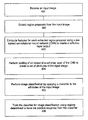
- Figure 4 is a flow diagram of one embodiment of a process for performing visual object recognition on an input image.
- the process is performed by processing logic that may comprise hardware (circuitry, dedicated logic, etc. ) , software (such as is run on a general purpose computer system or a dedicated machine) , firmware, or a combination of the three.
- processing logic begins by receiving an input image (processing block 401) .
- processing logic extracts region proposals from the input image (processing block 402) . That, processing logic divides the input image into multiple regions.
- extracting region proposals from the input image comprises generating possible object locations using a selective search with segmentation.
- extracting region proposals from the input image comprises locating objects based on edges.
- processing logic For each of the regions, processing logic computes features for each extracted region proposal using a pre-trained convolutional neural network (CNN) to create a soft-max layer output (processing block 403) .
- CNN convolutional neural network
- the soft-max layer output comprises regional neural codes.
- Processing logic performs pooling of an output of a soft-max layer of the CNN to create a set of attributes of the input image (processing block 404) .
- performing pooling of the output of the soft-max layer of the CNN comprises performing a cross-region max-pooling of regional neural codes from the output of the soft-max layer of the CNN.
- performing cross-region max-pooling is done on different scale intervals according to region size.
- processing logic After creating the set of attributes, processing logic performs image classification by applying a classifier to the attributes of the input image (processing block 405) .
- processing logic performs image classification by applying a classifier to the attributes of the input image comprises generating a score for each of a plurality of categories based on a comparison to the attributes to classifier coefficients.
- processing logic optionally trains the classifier for image classification using regions determined to have the positive response from the classifier (processing block 406) . That is, in one embodiment, processing logic classifies each region using a classifier to determine whether each region has a positive response from the classifier. In one embodiment, the classifier is built using attributes obtained from cross-region pooling.
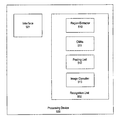
- FIG. 5 is a block diagram of one embodiment of a processing device that performs the operations describe above.
- the processing device comprises a processor, system-on-a-chip (SoC) , a controller, etc.
- SoC system-on-a-chip
- processing device 500 includes an interface 501 to receive an input image and a recognition unit 502 coupled to interface 501 to perform visual object recognition on the input image.
- recognition unit 502 includes a region extractor 510 to extract region proposals from the input image.
- region extractor 510 extracts region proposals from the input image by generating possible object locations using a selective search with segmentation.
- region extractor 510 extracts region proposals from the input image by locating objects based on edges.
- recognition unit 502 includes convolutional neural networks (CNNs) 511, with associated processing logic, to compute features for each extracted region proposal and create a soft-max layer output.
- CNNs convolutional neural networks
- processing logic to compute features for each extracted region proposal and create a soft-max layer output.
- the soft-max layer output comprises regional neural codes.
- recognition unit 502 includes a cross region pooling unit 512 that performs pooling of the soft-max layer output to create a set of attributes of the input image.
- the cross region pooling unit performs pooling of the output of the soft-max layer of the CNNs by performing a cross-region max-pooling of regional neural codes from the output of the soft-max layer of the CNNs.
- the cross region pooling unit performs cross-region max-pooling on different scale intervals according to region size.
- recognition unit 502 includes an image classifier 513 that performs image classification based on the attributes of the input image created by cross-region polling unit 512.
- image classifier 513 classifies each region to determine whether that region has a positive response from image classifier.
- the image classifier performs image classification by generating a score for each of a plurality of categories based on a comparison to the attributes to classifier coefficients.
- image classifier 512 is built using attributes obtained from the cross-region pooling unit. In one embodiment, the image classifier is trained based on results of determining whether each region has the positive response from the image classifier.
- recognition unit 502 comprises hardware (circuitry, dedicated logic, etc. ) , software (such as is run on a general purpose computer system or a dedicated machine) , firmware, or a combination of the three.
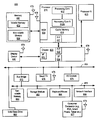
- Figure 6 is one embodiment of a system level diagram 600 that may incorporate the techniques described above, such as the image classification flow of Figures 2A, 2B or 4.
- the techniques described above may be incorporated into a processor core of a processor in system 600.
- system 600 includes, but is not limited to, a desktop computer, a laptop computer, a netbook, a tablet, a notebook computer, a personal digital assistant (PDA) , a server, a workstation, a cellular telephone, a mobile computing device, a smart phone, an Internet appliance or any other type of computing device.
- PDA personal digital assistant
- system 600 implements the methods disclosed herein and may be a system on a chip (SOC) system.
- SOC system on a chip
- processor 610 has one or more processor cores 612 to 612N, where 612N represents the Nth processor core inside the processor 610 where N is a positive integer.
- system 600 includes multiple processors including processors 610 and 605, where processor 605 has logic similar or identical to logic of processor 610.
- system 600 includes multiple processors including processors 610 and 605 such that processor 605 has logic that is completely independent from the logic of processor 610.
- a multi-package system 600 is a heterogeneous multi-package system because the processors 605 and 610 have different logic units.
- processing core 612 includes, but is not limited to, pre-fetch logic to fetch instructions, decode logic to decode the instructions, execution logic to execute instructions and the like.
- processor 610 has a cache memory 616 to cache instructions and/or data of the system 600.
- cache memory 616 includes level one, level two and level three, cache memory, or any other configuration of the cache memory within processor 610.
- processor 610 includes a memory control hub (MCH) 614, which is operable to perform functions that enable processor 610 to access and communicate with a memory 630 that includes a volatile memory 632 and/or a non-volatile memory 634.
- MCH memory control hub
- memory control hub (MCH) 614 is positioned outside of processor 610 as an independent integrated circuit.
- processor 610 is operable to communicate with memory 630 and a chipset 620.
- SSD 680 executes the computer-executable instructions when SSD 680 is powered up.
- processor 610 is also coupled to a wireless antenna 678 to communicate with any device configured to transmit and/or receive wireless signals.
- wireless antenna interface 678 operates in accordance with, but is not limited to, the IEEE 802.11 standard and its related family, HomePlug AV (HPAV) , Ultra Wide Band (UWB) , Bluetooth, WiMAX, or any form of wireless communication protocol.
- the volatile memory 632 includes, but is not limited to, Synchronous Dynamic Random Access Memory (SDRAM) , Dynamic Random Access Memory (DRAM) , RAMBUS Dynamic Random Access Memory (RDRAM) , and/or any other type of random access memory device.
- Non-volatile memory 634 includes, but is not limited to, flash memory (e.g., NAND, NOR) , phase change memory (PCM) , read-only memory (ROM) , electrically erasable programmable read-only memory (EEPROM) , or any other type of non-volatile memory device.
- Memory 630 stores information and instructions to be executed by processor 610.
- chipset 620 connects with processor 610 via Point-to-Point (PtP or P-P) interfaces 617 and 622.
- chipset 620 enables processor 610 to connect to other modules in the system 600.
- interfaces 617 and 622 operate in accordance with a PtP communication protocol such as the Intel QuickPath Interconnect (QPI) or the like.
- QPI QuickPath Interconnect
- chipset 620 is operable to communicate with processor 610, 605, display device 640, and other devices 672, 676, 674, 660, 662, 664, 666, 677, etc. In one embodiment, chipset 620 is also coupled to a wireless antenna 678 to communicate with any device configured to transmit and/or receive wireless signals.
- chipset 620 connects to a display device 640 via an interface 626.
- display device 640 includes, but is not limited to, liquid crystal display (LCD) , plasma, cathode ray tube (CRT) display, or any other form of visual display device.
- chipset 620 connects to one or more buses 650 and 655 that interconnect various modules 674, 660, 662, 664, and 666.
- buses 650 and 655 may be interconnected together via a bus bridge 672 if there is a mismatch in bus speed or communication protocol.
- chipset 620 couples with, but is not limited to, a non-volatile memory 660, a mass storage device (s) 662, a keyboard/mouse 664, and a network interface 666 via interface 624, smart TV 676, consumer electronics 677, etc.
- mass storage device 662 includes, but is not limited to, a solid state drive, a hard disk drive, a universal serial bus flash memory drive, or any other form of computer data storage medium.
- network interface 666 is implemented by any type of well-known network interface standard including, but not limited to, an Ethernet interface, a universal serial bus (USB) interface, a Peripheral Component Interconnect (PCI) Express interface, a wireless interface and/or any other suitable type of interface.
- modules shown in Figure 6 are depicted as separate blocks within the system 600, the functions performed by some of these blocks may be integrated within a single semiconductor circuit or may be implemented using two or more separate integrated circuits.
- a processing device comprises: an interface to receive an input image; and a recognition unit coupled to the interface and operable to perform visual object recognition on the input image, where the recognition unit has an extractor to extract region proposals from the input image, a convolutional neural network (CNN) to compute features for each extracted region proposal, the CNN being operable to create a soft-max layer output, a cross region pooling unit operable to perform pooling of the soft-max layer output to create a set of attributes of the input image, and an image classifier operable to perform image classification based on the attributes of the input image.
- CNN convolutional neural network
- the subject matter of the first example embodiment can optionally include that the soft-max layer output comprises regional neural codes.
- the subject matter of the first example embodiment can optionally include that the cross region pooling unit performs pooling of the output of the soft-max layer of the CNN by performing a cross-region max-pooling of regional neural codes from the output of the soft-max layer of the CNN.
- the subject matter of this example embodiment can optionally include that the cross region pooling unit performs cross-region max-pooling on different scale intervals according to region size.
- the subject matter of the first example embodiment can optionally include that the region extractor extracts region proposals from the input image by generating possible object locations using a selective search with segmentation or by locating objects based on edges.
- the subject matter of the first example embodiment can optionally include that the image classifier is operable to classify each region to determine whether said each region has a positive response from image classifier.
- the subject matter of the first example embodiment can optionally include that the image classifier is built using attributes obtained from the cross-region pooling unit. In another example embodiment, the subject matter of this example embodiment can optionally include that the image classifier is trained based on results of determining whether each region has the positive response from the image classifier.
- the subject matter of the first example embodiment can optionally include that the image classifier is operable to perform image classification by generating a score for each of a plurality of categories based on a comparison to the attributes to classifier coefficients.
- a method for performing visual object recognition on an input image comprises: extracting region proposals from the input image; computing features for each extracted region proposal using a pre-trained convolutional neural network (CNN) to create a soft-max layer output; performing pooling of an output of a soft-max layer of the CNN to create a set of attributes of the input image; and performing image classification by applying a classifier to the attributes of the input image.
- CNN convolutional neural network
- the subject matter of the second example embodiment can optionally include that the soft-max layer output comprises regional neural codes.
- the subject matter of the second example embodiment can optionally include that performing pooling of the output of the soft-max layer of the CNN comprises performing a cross-region max-pooling of regional neural codes from the output of the soft-max layer of the CNN.
- the subject matter of this example embodiment can optionally include that performing cross-region max-pooling is done on different scale intervals according to region size.
- the subject matter of the second example embodiment can optionally include that the extracting region proposals from the input image comprises generating possible object locations using a selective search with segmentation or by locating objects based on edges.
- the subject matter of the second example embodiment can optionally include classifying each region using a classifier to determine whether said each region has a positive response from the classifier.
- the subject matter of this example embodiment can optionally include that the classifier is built using attributes obtained from cross-region pooling.
- the subject matter of this example embodiment can optionally include training the classifier for image classification using regions determined to have the positive response from the classifier.
- the subject matter of the second example embodiment can optionally include that performing image classification by applying a classifier to the attributes of the input image comprises generating a score for each of a plurality of categories based on a comparison to the attributes to classifier coefficients.
- an article of manufacture has one or more non-transitory computer readable media storing instructions which, when executed by a system, cause the system to perform a method comprising: extracting region proposals from the input image; computing features for each extracted region proposal using a pre-trained convolutional neural network (CNN) to create a soft-max layer output; performing pooling of an output of a soft-max layer of the CNN to create a set of attributes of the input image; and performing image classification by applying a classifier to the attributes of the input image.
- CNN convolutional neural network
- the subject matter of the third example embodiment can optionally include that the soft-max layer output comprises regional neural codes.
- the subject matter of the third example embodiment can optionally include that performing pooling of the output of the soft-max layer of the CNN comprises performing a cross-region max-pooling of regional neural codes from the output of the soft-max layer of the CNN.
- the present invention also relates to apparatus for performing the operations herein.
- This apparatus may be specially constructed for the required purposes, or it may comprise a general purpose computer selectively activated or reconfigured by a computer program stored in the computer.
- a computer program may be stored in a computer readable storage medium, such as, but is not limited to, any type of disk including floppy disks, optical disks, CD-ROMs, and magnetic-optical disks, read-only memories (ROMs) , random access memories (RAMs) , EPROMs, EEPROMs, magnetic or optical cards, or any type of media suitable for storing electronic instructions, and each coupled to a computer system bus.
- a machine-readable medium includes any mechanism for storing or transmitting information in a form readable by a machine (e.g., a computer) .
- a machine-readable medium includes read only memory ( “ROM” ) ; random access memory ( “RAM” ) ; magnetic disk storage media; optical storage media; flash memory devices; etc.
Landscapes
- Engineering & Computer Science (AREA)
- Theoretical Computer Science (AREA)
- Physics & Mathematics (AREA)
- Evolutionary Computation (AREA)
- Artificial Intelligence (AREA)
- General Physics & Mathematics (AREA)
- Health & Medical Sciences (AREA)
- General Health & Medical Sciences (AREA)
- Life Sciences & Earth Sciences (AREA)
- Data Mining & Analysis (AREA)
- Software Systems (AREA)
- Molecular Biology (AREA)
- Computing Systems (AREA)
- Biomedical Technology (AREA)
- General Engineering & Computer Science (AREA)
- Mathematical Physics (AREA)
- Biophysics (AREA)
- Computational Linguistics (AREA)
- Computer Vision & Pattern Recognition (AREA)
- Multimedia (AREA)
- Databases & Information Systems (AREA)
- Medical Informatics (AREA)
- Biodiversity & Conservation Biology (AREA)
- Bioinformatics & Cheminformatics (AREA)
- Bioinformatics & Computational Biology (AREA)
- Evolutionary Biology (AREA)
- Image Analysis (AREA)
Abstract
A processing device for performing visual recognition using deep learning attributes and method for performing the same are described. In one embodiment, a processing device comprises: an interface to receive an input image; and a recognition unit coupled to the interface and operable to perform visual object recognition on the input image, where the recognition unit has an extractor to extract region proposals from the input image, a convolutional neural network (CNN) to compute features for each extracted region proposal, the CNN being operable to create a soft-max layer output, a cross region pooling unit operable to perform pooling of the soft-max layer output to create a set of attributes of the input image, and an image classifier operable to perform image classification based on the attributes of the input image.
Description
Embodiments of the present invention relate to visual recognition; more particularly, embodiments of the present invention relate to performing visual recognition using region proposals and the output from the soft-max layer of a convolutional neural network (CNN) models.
Since the work by Krizhevskyand others on ImageNet large scale visual recognition challenge (ILSVRC) in 2012, additional researchon convolutional neural networks (CNN) have been occurring. For example, research has been looking into transferring pre-trained CNN models on a large-scale dataset like ImageNet to other visual recognition tasks with limited new training data. The research appears focused on taking middle-layer activations of the pre-trained CNN models as rich feature representations to apply to various applications such as object detection, object recognition, image retrieval, etc. To achieve advanced and robust performance, people either fine-tune the pre-trained CNN models on their own tasks or make extensively data augmentation to get robust classifiers. These developed techniques have shown promising results in comparison to conventional methods using standard feature representations such as bag-of-words, sparse-coding, etc. However, the neural codes from the middle-layer have less semantic meaning, which could lead to the well-known semantic gap. In addition, such approaches may encounter the curse of dimensionality problem when employing pyramid or grid extension to middle-layer neural codes.
The present invention will be understood more fully from the detailed description given below and from the accompanying drawings of various embodiments of the invention, which, however, should not be taken to limit the invention to the specific embodiments, but are for explanation and understanding only.
Figure 1 illustrates a traditional off-the-shelf CNN method of classification.
Figure 2is a flow diagram of one embodiment of a classification process.
Figure 3 illustrates one embodiment of a deep attribute framework.
Figure 4 is a flow diagram of one embodiment of a process for performing visual object recognition on an input image.
Figure 5 is a block diagram of one embodiment of a processing device.
Figure 6 illustrates one embodiment of a system.
In the following description, numerous details are set forth to provide a more thorough explanation of the present invention. It will be apparent, however, to one skilled in the art, that the present invention may be practiced without these specific details. In other instances, well-known structures and devices are shown in block diagram form, rather than in detail, in order to avoid obscuring the present invention.
Embodiments of the present invention perform visual recognition by integrating semantic output with as well as region proposals to achieve compact yet effective visual representations. In one embodiment the semantic output comprises the output from the soft-max layer of a pre-trained CNN models. In one embodiment, the visual representations comprise “deep attribute” (DA) data. Thus, the techniques described herein combine region proposal with soft-max layer output of pre-trained CNN models as features for visual recognition tasks.
Figure 1 illustrates a traditional off-the-shelf CNN method of classification. Referring to Figure 1, an input image 101 is input into a CNN 102. In response, CNN 102 produces a middle layer output. Linear classifier 103 receives the CNN middle layer output and uses it to perform classification.
Figure 2 is a flow diagram of one embodiment of a classification process. Referring to Figure 2, an input image 201 undergoes region extraction 202 to generate multiple regions of input image 201. These regions are referred to herein as region proposals. In one embodiment, extracting region proposals is accomplished by using selective search, which is well-known in the art. For more information, see J. Uijlings, et al., Selective Search for Object Recognition, IJCV, 2013. In another embodiment, extracting region proposals is accomplished by using edge-box, which is well-known in the art. For more information, see C. Zitnick and P. Dollar, Edge boxes: Locating Object Proposals From Edges, in ECCV, 2014.
Each of the regions is feed into a pre-trained CNN model 203 to perform feature extraction. In response, CNN model 203 generate soft-max layer output. The soft-max layer output for each of the regions indicates the region features. In one embodiment, CNN model 203 computes a response of each region to a number of predefined categories (e.g., 1000 categories) to generate a similarity score. Thus, an output is produced for each region that has similarity scores for each of the pre-defined categories. In one embodiment, the soft-max layer output comprises computed neural codes, which are the probability response to the categories on which CNNs are trained (e.g., high level semantic from ImageNet) .
Next, pooling 204 is applied to the soft-max layer output from CNN model 203 to produce a representation of input image 201. In one embodiment, pooling 204 comprises cross-proposal max-pooling that is applied to regional neural codes to obtain a holistic representation of the image. More specifically, pooling 204 aggregates the similarity scores for all the attributes by
taking the maximum score for each attribute across all regions to create a set of data containing the high score for each of the attributes across the entire input image (or portion thereof undergoing image classification) . In one embodiment, this represents the deep attribute data. Note that cross-proposal max-pooling will suppress most noise regions, while keep most meaningful regions. The results of the cross-pooling operation are fed to classifier 205.
Figure 3 illustrates one embodiment of the deep attribute framework associated with Figure 2. Referring to Figure 3, in one embodiment, the classifier is a linear SVM classifier y=wx, where x is the input feature vector, w is the SVM coefficient or weight learned for a specific category c, andwx is a dot-product between w and x, with w and x having the same dimensionality. The dot-product of wx yields a score y. The last column of Figure 3 shows the score on 20 categories. If the score is larger than zero, that means the corresponding category appears or is activated on the image.
The disclosed process was evaluated on the PASCAL VOC 2007 and 2012 benchmarks for object recognition, which contains images of 20 categories including animals, handmade objects and natural objects. The objects are at different locations and scales with clutter background. Furthermore, there are usually multiple objects in one image which makes the problem difficult. Even if objects are annotated with bounding box, one embodiment of the object recognition process disclosed herein does not use this information in our experiments.
Table 1 below lists the results on both PASCAL VOC 2007 and 2012, in comparison to some state-of-the-art methods, along with their CNN settings. As shown, the techniques disclosed herein is fairly simple, without fine-tuning and data augmentation. The disclosed methods outperform the current state-of-the-art method very-deep (89.3%) with a notable margin (90.3%) , without using sophisticated multi-scale, multi-crop data augmentation and fusion strategy as that in very-deep experiment, which is well-known in the art. For more information on the very-deep experiment, see Simonyan et al., Very Deep Convolutional Networks for
Large-Scale Image Recognition, ICLR 2015.
Table 1 Results of Comparison on PASCAL VOC 2007 and 2012, with detailed CNN settings

The techniques were further evaluated on fine-grained flower recognition task using the Oxford follower dataset, which contains 102 categories of flowers, with each category containing 40 to 258 of images. The flowers appear at different scales, pose and lighting conditions. The evaluation follows the standard protocol of this benchmark and report mean Accuracy on the Oxford 102 flowers dataset in Table 2 below. It shows the proposed approach outperforms existing methods with a large margin about 4%.
Table 2 Results of Comparison on 102 categories for Flower Recognition

In one embodiment, the classification process includes a multi-scale extension (MSDA) and context region refinement extension (CRP-DA) . In MSDA, cross-region pooling is done on different scale interval according to region size proportion to the image size. For instance, in one embodiment, if two scale intervals are, [0, 1/2) , (1/2, 1) , when the region size is within 1/2 of the image size, the pooling is performed on the first scale intervals, while the region size is larger than 1/2, the pooling is performed separately on the 2nd scale intervals. In one embodiment, the feature for each of the scales is concatenated to a long feature vector to train SVM classifier.
Note that for a specific category classifier, only a few regions are context regions. For instance, for a car classifier, the car region and wheel regions are context regions, while the region with animals like horse are background clutter. In one embodiment, a strategy referred to herein as context region refinement is used to select a category-specific context region.
In this case, global pooling attributes are used first to build a classifier. Then this classifier
is used to classify each region to see whether the region is positive or negative relevant to the classifier. Based on the results, only those positive relevant regions are kept, and the pooling is performed again on these regions to train a new refined classifier. In one embodiment, this procedure is run for several iterations.
Note that the techniques described herein may be used to build consumer applications, such as, for example, image search/product search on mobile devices. This is very useful to a bricks-to-consumer (B2C) shopping provider.
Figure 4 is a flow diagram of one embodiment of a process for performing visual object recognition on an input image. The process is performed by processing logic that may comprise hardware (circuitry, dedicated logic, etc. ) , software (such as is run on a general purpose computer system or a dedicated machine) , firmware, or a combination of the three.
Referring to Figure 4, the process begins by receiving an input image (processing block 401) . In response to the input image, processing logic extracts region proposals from the input image (processing block 402) . That, processing logic divides the input image into multiple regions. In one embodiment, extracting region proposals from the input image comprises generating possible object locations using a selective search with segmentation. In another embodiment, extracting region proposals from the input image comprises locating objects based on edges.
For each of the regions, processing logic computes features for each extracted region proposal using a pre-trained convolutional neural network (CNN) to create a soft-max layer output (processing block 403) . In one embodiment, the soft-max layer output comprises regional neural codes.
Processing logic performs pooling of an output of a soft-max layer of the CNN to create a set of attributes of the input image (processing block 404) . In one embodiment, performing pooling of the output of the soft-max layer of the CNN comprises performing a cross-region max-pooling of regional neural codes from the output of the soft-max layer of the CNN. In one embodiment, performing cross-region max-pooling is done on different scale intervals according to region size.
After creating the set of attributes, processing logic performs image classification by applying a classifier to the attributes of the input image (processing block 405) . In one embodiment, processing logic performs image classification by applying a classifier to the attributes of the input image comprises generating a score for each of a plurality of categories based on a comparison to the attributes to classifier coefficients.
In one embodiment, processing logic optionally trains the classifier for image classification using regions determined to have the positive response from the classifier
(processing block 406) . That is, in one embodiment, processing logic classifies each region using a classifier to determine whether each region has a positive response from the classifier. In one embodiment, the classifier is built using attributes obtained from cross-region pooling.
Figure 5 is a block diagram of one embodiment of a processing device that performs the operations describe above. In one embodiment, the processing device comprises a processor, system-on-a-chip (SoC) , a controller, etc.
Referring to Figure 5, processing device 500 includes an interface 501 to receive an input image and a recognition unit 502 coupled to interface 501 to perform visual object recognition on the input image.
In one embodiment, recognition unit 502 includes a region extractor 510 to extract region proposals from the input image. In one embodiment, region extractor 510 extracts region proposals from the input image by generating possible object locations using a selective search with segmentation. In another embodiment, region extractor 510 extracts region proposals from the input image by locating objects based on edges.
In one embodiment, recognition unit 502 includes convolutional neural networks (CNNs) 511, with associated processing logic, to compute features for each extracted region proposal and create a soft-max layer output. In one embodiment, wherein the soft-max layer output comprises regional neural codes.
In one embodiment, recognition unit 502 includes a cross region pooling unit 512 that performs pooling of the soft-max layer output to create a set of attributes of the input image. In one embodiment, the cross region pooling unit performs pooling of the output of the soft-max layer of the CNNs by performing a cross-region max-pooling of regional neural codes from the output of the soft-max layer of the CNNs. In one embodiment, the cross region pooling unit performs cross-region max-pooling on different scale intervals according to region size.
In one embodiment, recognition unit 502 includes an image classifier 513 that performs image classification based on the attributes of the input image created by cross-region polling unit 512. In one embodiment, image classifier 513 classifies each region to determine whether that region has a positive response from image classifier. In one embodiment, the image classifier performs image classification by generating a score for each of a plurality of categories based on a comparison to the attributes to classifier coefficients.
In one embodiment, image classifier 512 is built using attributes obtained from the cross-region pooling unit. In one embodiment, the image classifier is trained based on results of determining whether each region has the positive response from the image classifier.
In one embodiment, recognition unit 502 comprises hardware (circuitry, dedicated logic,
etc. ) , software (such as is run on a general purpose computer system or a dedicated machine) , firmware, or a combination of the three.
Figure 6 is one embodiment of a system level diagram 600 that may incorporate the techniques described above, such as the image classification flow of Figures 2A, 2B or 4. For example, the techniques described above may be incorporated into a processor core of a processor in system 600.
Referring to Figure 6, system 600 includes, but is not limited to, a desktop computer, a laptop computer, a netbook, a tablet, a notebook computer, a personal digital assistant (PDA) , a server, a workstation, a cellular telephone, a mobile computing device, a smart phone, an Internet appliance or any other type of computing device. In another embodiment, system 600 implements the methods disclosed herein and may be a system on a chip (SOC) system.
In one embodiment, processor 610 has one or more processor cores 612 to 612N, where 612N represents the Nth processor core inside the processor 610 where N is a positive integer. In one embodiment, system 600 includes multiple processors including processors 610 and 605, where processor 605 has logic similar or identical to logic of processor 610. In one embodiment, system 600 includes multiple processors including processors 610 and 605 such that processor 605 has logic that is completely independent from the logic of processor 610. In such an embodiment, a multi-package system 600 is a heterogeneous multi-package system because the processors 605 and 610 have different logic units. In one embodiment, processing core 612 includes, but is not limited to, pre-fetch logic to fetch instructions, decode logic to decode the instructions, execution logic to execute instructions and the like. In one embodiment, processor 610 has a cache memory 616 to cache instructions and/or data of the system 600. In another embodiment of the invention, cache memory 616 includes level one, level two and level three, cache memory, or any other configuration of the cache memory within processor 610.
In one embodiment, processor 610 includes a memory control hub (MCH) 614, which is operable to perform functions that enable processor 610 to access and communicate with a memory 630 that includes a volatile memory 632 and/or a non-volatile memory 634. In one embodiment, memory control hub (MCH) 614 is positioned outside of processor 610 as an independent integrated circuit.
In one embodiment, processor 610 is operable to communicate with memory 630 and a chipset 620. In such an embodiment, SSD 680 executes the computer-executable instructions when SSD 680 is powered up.
In one embodiment, processor 610 is also coupled to a wireless antenna 678 to communicate with any device configured to transmit and/or receive wireless signals. In one embodiment, wireless antenna interface 678 operates in accordance with, but is not limited to,
the IEEE 802.11 standard and its related family, HomePlug AV (HPAV) , Ultra Wide Band (UWB) , Bluetooth, WiMAX, or any form of wireless communication protocol.
In one embodiment, the volatile memory 632 includes, but is not limited to, Synchronous Dynamic Random Access Memory (SDRAM) , Dynamic Random Access Memory (DRAM) , RAMBUS Dynamic Random Access Memory (RDRAM) , and/or any other type of random access memory device. Non-volatile memory 634 includes, but is not limited to, flash memory (e.g., NAND, NOR) , phase change memory (PCM) , read-only memory (ROM) , electrically erasable programmable read-only memory (EEPROM) , or any other type of non-volatile memory device.
In one embodiment, chipset 620 is operable to communicate with processor 610, 605, display device 640, and other devices 672, 676, 674, 660, 662, 664, 666, 677, etc. In one embodiment, chipset 620 is also coupled to a wireless antenna 678 to communicate with any device configured to transmit and/or receive wireless signals.
In one embodiment, chipset 620 connects to a display device 640 via an interface 626. In one embodiment, display device 640 includes, but is not limited to, liquid crystal display (LCD) , plasma, cathode ray tube (CRT) display, or any other form of visual display device. In addition, chipset 620 connects to one or more buses 650 and 655 that interconnect various modules 674, 660, 662, 664, and 666. In one embodiment, buses 650 and 655 may be interconnected together via a bus bridge 672 if there is a mismatch in bus speed or communication protocol. In one embodiment, chipset 620 couples with, but is not limited to, a non-volatile memory 660, a mass storage device (s) 662, a keyboard/mouse 664, and a network interface 666 via interface 624, smart TV 676, consumer electronics 677, etc.
In one embodiment, mass storage device 662 includes, but is not limited to, a solid state drive, a hard disk drive, a universal serial bus flash memory drive, or any other form of computer data storage medium. In one embodiment, network interface 666 is implemented by any type of well-known network interface standard including, but not limited to, an Ethernet interface, a universal serial bus (USB) interface, a Peripheral Component Interconnect (PCI) Express interface, a wireless interface and/or any other suitable type of interface.
While the modules shown in Figure 6 are depicted as separate blocks within the system 600, the functions performed by some of these blocks may be integrated within a single
semiconductor circuit or may be implemented using two or more separate integrated circuits.
In a first example embodiment, a processing device comprises: an interface to receive an input image; and a recognition unit coupled to the interface and operable to perform visual object recognition on the input image, where the recognition unit has an extractor to extract region proposals from the input image, a convolutional neural network (CNN) to compute features for each extracted region proposal, the CNN being operable to create a soft-max layer output, a cross region pooling unit operable to perform pooling of the soft-max layer output to create a set of attributes of the input image, and an image classifier operable to perform image classification based on the attributes of the input image.
In another example embodiment, the subject matter of the first example embodiment can optionally include that the soft-max layer output comprises regional neural codes.
In another example embodiment, the subject matter of the first example embodiment can optionally include that the cross region pooling unit performs pooling of the output of the soft-max layer of the CNN by performing a cross-region max-pooling of regional neural codes from the output of the soft-max layer of the CNN. In another example embodiment, the subject matter of this example embodiment can optionally include that the cross region pooling unit performs cross-region max-pooling on different scale intervals according to region size.
In another example embodiment, the subject matter of the first example embodiment can optionally include that the region extractor extracts region proposals from the input image by generating possible object locations using a selective search with segmentation or by locating objects based on edges.
In another example embodiment, the subject matter of the first example embodiment can optionally include that the image classifier is operable to classify each region to determine whether said each region has a positive response from image classifier.
In another example embodiment, the subject matter of the first example embodiment can optionally include that the image classifier is built using attributes obtained from the cross-region pooling unit. In another example embodiment, the subject matter of this example embodiment can optionally include that the image classifier is trained based on results of determining whether each region has the positive response from the image classifier.
In another example embodiment, the subject matter of the first example embodiment can optionally include that the image classifier is operable to perform image classification by generating a score for each of a plurality of categories based on a comparison to the attributes to classifier coefficients.
In a second example embodiment, a method for performing visual object recognition on an input image comprises: extracting region proposals from the input image; computing features for
each extracted region proposal using a pre-trained convolutional neural network (CNN) to create a soft-max layer output; performing pooling of an output of a soft-max layer of the CNN to create a set of attributes of the input image; and performing image classification by applying a classifier to the attributes of the input image.
In another example embodiment, the subject matter of the second example embodiment can optionally include that the soft-max layer output comprises regional neural codes.
In another example embodiment, the subject matter of the second example embodiment can optionally include that performing pooling of the output of the soft-max layer of the CNN comprises performing a cross-region max-pooling of regional neural codes from the output of the soft-max layer of the CNN. In another example embodiment, the subject matter of this example embodiment can optionally include that performing cross-region max-pooling is done on different scale intervals according to region size.
In another example embodiment, the subject matter of the second example embodiment can optionally include that the extracting region proposals from the input image comprises generating possible object locations using a selective search with segmentation or by locating objects based on edges.
In another example embodiment, the subject matter of the second example embodiment can optionally include classifying each region using a classifier to determine whether said each region has a positive response from the classifier. In another example embodiment, the subject matter of this example embodiment can optionally include that the classifier is built using attributes obtained from cross-region pooling. In another example embodiment, the subject matter of this example embodiment can optionally include training the classifier for image classification using regions determined to have the positive response from the classifier.
In another example embodiment, the subject matter of the second example embodiment can optionally include that performing image classification by applying a classifier to the attributes of the input image comprises generating a score for each of a plurality of categories based on a comparison to the attributes to classifier coefficients.
In a third example embodiment, an article of manufacture has one or more non-transitory computer readable media storing instructions which, when executed by a system, cause the system to perform a method comprising: extracting region proposals from the input image; computing features for each extracted region proposal using a pre-trained convolutional neural network (CNN) to create a soft-max layer output; performing pooling of an output of a soft-max layer of the CNN to create a set of attributes of the input image; and performing image classification by applying a classifier to the attributes of the input image.
In another example embodiment, the subject matter of the third example embodiment can
optionally include that the soft-max layer output comprises regional neural codes.
In another example embodiment, the subject matter of the third example embodiment can optionally include that performing pooling of the output of the soft-max layer of the CNN comprises performing a cross-region max-pooling of regional neural codes from the output of the soft-max layer of the CNN.
Some portions of the detailed descriptions above are presented in terms of algorithms and symbolic representations of operations on data bits within a computer memory. These algorithmic descriptions and representations are the means used by those skilled in the data processing arts to most effectively convey the substance of their work to others skilled in the art. An algorithm is here, and generally, conceived to be a self-consistent sequence of steps leading to a desired result. The steps are those requiring physical manipulations of physical quantities. Usually, though not necessarily, these quantities take the form of electrical or magnetic signals capable of being stored, transferred, combined, compared, and otherwise manipulated. It has proven convenient at times, principally for reasons of common usage, to refer to these signals as bits, values, elements, symbols, characters, terms, numbers, or the like.
It should be borne in mind, however, that all of these and similar terms are to be associated with the appropriate physical quantities and are merely convenient labels applied to these quantities. Unless specifically stated otherwise as apparent from the following discussion, it is appreciated that throughout the description, discussions utilizing terms such as "processing" or "computing" or "calculating" or "determining" or "displaying" or the like, refer to the action and processes of a computer system, or similar electronic computing device, that manipulates and transforms data represented as physical (electronic) quantities within the computer system's registers and memories into other data similarly represented as physical quantities within the computer system memories or registers or other such information storage, transmission or display devices.
The present invention also relates to apparatus for performing the operations herein. This apparatus may be specially constructed for the required purposes, or it may comprise a general purpose computer selectively activated or reconfigured by a computer program stored in the computer. Such a computer program may be stored in a computer readable storage medium, such as, but is not limited to, any type of disk including floppy disks, optical disks, CD-ROMs, and magnetic-optical disks, read-only memories (ROMs) , random access memories (RAMs) , EPROMs, EEPROMs, magnetic or optical cards, or any type of media suitable for storing electronic instructions, and each coupled to a computer system bus.
The algorithms and displays presented herein are not inherently related to any particular computer or other apparatus. Various general purpose systems may be used with programs in
accordance with the teachings herein, or it may prove convenient to construct more specialized apparatus to perform the required method steps. The required structure for a variety of these systems will appear from the description below. In addition, the present invention is not described with reference to any particular programming language. It will be appreciated that a variety of programming languages may be used to implement the teachings of the invention as described herein.
A machine-readable medium includes any mechanism for storing or transmitting information in a form readable by a machine (e.g., a computer) . For example, a machine-readable medium includes read only memory ( “ROM” ) ; random access memory ( “RAM” ) ; magnetic disk storage media; optical storage media; flash memory devices; etc.
Whereas many alterations and modifications of the present invention will no doubt become apparent to a person of ordinary skill in the art after having read the foregoing description, it is to be understood that any particular embodiment shown and described by way of illustration is in no way intended to be considered limiting. Therefore, references to details of various embodiments are not intended to limit the scope of the claims which in themselves recite only those features regarded as essential to the invention.
Claims (20)
- A processing device, the processing device comprising:an interface to receive an input image; anda recognition unit coupled to the interface and operable to perform visual object recognition on the input image, the recognition unit havingan extractor to extract region proposals from the input image;a convolutional neural network (CNN) to compute features for each extracted region proposal, the CNN being operable to create a soft-max layer output;a cross region pooling unit operable to perform pooling of the soft-max layer output to create a set of attributes of the input image; andan image classifier operable to perform image classification based on the attributes of the input image.
- The processing device defined in Claim 1 wherein the soft-max layer output comprises regional neural codes.
- The processing device defined in Claim 1 wherein the cross region pooling unit performs pooling of the output of the soft-max layer of the CNN by performing a cross-region max-pooling of regional neural codes from the output of the soft-max layer of the CNN.
- The processing device defined in Claim 3 wherein the cross region pooling unit performs cross-region max-pooling on different scale intervals according to region size.
- The processing device defined in Claim 1 wherein the region extractor extracts region proposals from the input image by generating possible object locations using a selective search with segmentation or by locating objects based on edges.
- The processing device defined in Claim 1 wherein the image classifier is operable to classify each region to determine whether said each region has a positive response from image classifier.
- The processing device defined in Claim 6 wherein the image classifier is built using attributes obtained from the cross-region pooling unit.
- The processing device defined in Claim 6 wherein the image classifier is trained based on results of determining whether each region has the positive response from the image classifier.
- The processing device defined in Claim 1 wherein the image classifier is operable to perform image classification by generating a score for each of a plurality of categories based on a comparison to the attributes to classifier coefficients.
- A method for performing visual object recognition on an input image, the method comprising:extracting region proposals from the input image;computing features for each extracted region proposal using a pre-trained convolutional neural network (CNN) to create a soft-max layer output;performing pooling of an output of a soft-max layer of the CNN to create a set of attributes of the input image; andperforming image classification by applying a classifier to the attributes of the input image.
- The method defined in Claim 10 wherein the soft-max layer output comprises regional neural codes.
- The method defined in Claim 10 wherein performing pooling of the output of the soft-max layer of the CNN comprises performing a cross-region max-pooling of regional neural codes from the output of the soft-max layer of the CNN.
- The method defined in Claim 12 wherein performing cross-region max-pooling is done on different scale intervals according to region size.
- The method defined in Claim 10 wherein the extracting region proposals from the input image comprises generating possible object locations using a selective search with segmentation or by locating objects based on edges.
- The method defined in Claim 10 further comprising classifying each region using a classifier to determine whether said each region has a positive response from the classifier.
- The method defined in Claim 15 wherein the classifier is built using attributes obtained from cross-region pooling.
- The method defined in Claim 10 wherein performing image classification by applying a classifier to the attributes of the input image comprises generating a score for each of a plurality of categories based on a comparison to the attributes to classifier coefficients.
- An article of manufacture having one or more non-transitory computer readable media storing instructions which, when executed by a system, cause the system to perform a method comprising:extracting region proposals from the input image;computing features for each extracted region proposal using a pre-trained convolutional neural network (CNN) to create a soft-max layer output;performing pooling of an output of a soft-max layer of the CNN to create a set of attributes of the input image; andperforming image classification by applying a classifier to the attributes of the input image.
- The article of manufacture defined in Claim 18 wherein the soft-max layer output comprises regional neural codes.
- The article of manufacture defined in Claim 18 wherein performing pooling of the output of the soft-max layer of the CNN comprises performing a cross-region max-pooling of regional neural codes from the output of the soft-max layer of the CNN.
Priority Applications (4)
| Application Number | Priority Date | Filing Date | Title |
|---|---|---|---|
| PCT/CN2015/096882 WO2017096570A1 (en) | 2015-12-10 | 2015-12-10 | Visual recognition using deep learning attributes |
| US15/300,474 US9971953B2 (en) | 2015-12-10 | 2015-12-10 | Visual recognition using deep learning attributes |
| DE112015007176.8T DE112015007176T5 (en) | 2015-12-10 | 2015-12-10 | Visual recognition using deep learning attributes |
| CN201580084496.8A CN108292369A (en) | 2015-12-10 | 2015-12-10 | Using Deep Learning Attributes for Visual Recognition |
Applications Claiming Priority (1)
| Application Number | Priority Date | Filing Date | Title |
|---|---|---|---|
| PCT/CN2015/096882 WO2017096570A1 (en) | 2015-12-10 | 2015-12-10 | Visual recognition using deep learning attributes |
Publications (1)
| Publication Number | Publication Date |
|---|---|
| WO2017096570A1 true WO2017096570A1 (en) | 2017-06-15 |
Family
ID=59012583
Family Applications (1)
| Application Number | Title | Priority Date | Filing Date |
|---|---|---|---|
| PCT/CN2015/096882 Ceased WO2017096570A1 (en) | 2015-12-10 | 2015-12-10 | Visual recognition using deep learning attributes |
Country Status (4)
| Country | Link |
|---|---|
| US (1) | US9971953B2 (en) |
| CN (1) | CN108292369A (en) |
| DE (1) | DE112015007176T5 (en) |
| WO (1) | WO2017096570A1 (en) |
Cited By (5)
| Publication number | Priority date | Publication date | Assignee | Title |
|---|---|---|---|---|
| CN108596163A (en) * | 2018-07-10 | 2018-09-28 | 中国矿业大学(北京) | A kind of Coal-rock identification method based on CNN and VLAD |
| WO2020042169A1 (en) * | 2018-08-31 | 2020-03-05 | Intel Corporation | 3d object recognition using 3d convolutional neural network with depth based multi-scale filters |
| CN112633265A (en) * | 2021-03-11 | 2021-04-09 | 耕宇牧星(北京)空间科技有限公司 | Pooling method and system for target rotating frame detection based on deep learning |
| EP3667286A4 (en) * | 2017-08-10 | 2021-04-28 | Bridgestone Corporation | Tire image recognition method and tire image recognition device |
| CN113228049A (en) * | 2018-11-07 | 2021-08-06 | 福斯分析仪器公司 | Milk analyzer for classifying milk |
Families Citing this family (27)
| Publication number | Priority date | Publication date | Assignee | Title |
|---|---|---|---|---|
| US10592729B2 (en) * | 2016-01-21 | 2020-03-17 | Samsung Electronics Co., Ltd. | Face detection method and apparatus |
| US10157332B1 (en) * | 2016-06-06 | 2018-12-18 | A9.Com, Inc. | Neural network-based image manipulation |
| US10929461B2 (en) | 2016-07-25 | 2021-02-23 | Evernote Corporation | Automatic detection and transfer of relevant image data to content collections |
| US9940729B1 (en) * | 2016-11-18 | 2018-04-10 | Here Global B.V. | Detection of invariant features for localization |
| CN106951847B (en) * | 2017-03-13 | 2020-09-29 | 百度在线网络技术(北京)有限公司 | Obstacle detection method, apparatus, device and storage medium |
| US10275646B2 (en) * | 2017-08-03 | 2019-04-30 | Gyrfalcon Technology Inc. | Motion recognition via a two-dimensional symbol having multiple ideograms contained therein |
| US10699358B2 (en) * | 2018-02-22 | 2020-06-30 | Mcafee, Llc | Image hidden information detector |
| US11080542B2 (en) | 2018-07-27 | 2021-08-03 | International Business Machines Corporation | Sparse region-of-interest pooling for object detection |
| CN110874608B (en) * | 2018-09-03 | 2024-04-05 | 京东科技控股股份有限公司 | Classification method, classification system and electronic equipment |
| CN112868024B (en) | 2018-10-15 | 2025-11-25 | 文塔纳医疗系统公司 | Systems and methods for cell sorting |
| WO2020077525A1 (en) * | 2018-10-16 | 2020-04-23 | Shanghai New York University | Systems and methods for model for incremental and adaptive object recognition using hierarchical representations |
| US11481576B2 (en) * | 2019-03-22 | 2022-10-25 | Qualcomm Technologies, Inc. | Subject-object interaction recognition model |
| DE102019204318A1 (en) | 2019-03-28 | 2020-10-01 | Conti Temic Microelectronic Gmbh | Automatic detection and classification of adversarial attacks |
| CN110681610B (en) * | 2019-10-30 | 2025-03-11 | 唐小青 | Visual recognition and material sorting system based on convolutional neural network and deep learning |
| US11514594B2 (en) | 2019-10-30 | 2022-11-29 | Vergence Automation, Inc. | Composite imaging systems using a focal plane array with in-pixel analog storage elements |
| US11295211B2 (en) * | 2019-12-02 | 2022-04-05 | International Business Machines Corporation | Multi-scale object detection with a trained neural network |
| KR102504319B1 (en) | 2020-02-17 | 2023-02-28 | 한국전자통신연구원 | Apparatus and Method for Classifying attribute of Image Object |
| US12230649B2 (en) | 2020-05-19 | 2025-02-18 | Vergence Automation, Inc. | AI system on chip (SOC) for robotics vision applications |
| CN111639704A (en) * | 2020-05-28 | 2020-09-08 | 深圳壹账通智能科技有限公司 | Target identification method, device and computer readable storage medium |
| CN111797259A (en) * | 2020-07-10 | 2020-10-20 | 杭州慕锐科技有限公司 | Rapid image searching method for wrinkled deformation |
| US12205037B2 (en) | 2020-10-27 | 2025-01-21 | Raytheon Company | Clustering autoencoder |
| US12141238B2 (en) * | 2020-10-27 | 2024-11-12 | Raytheon Company | Deep neural network hardener |
| CN112306951B (en) * | 2020-11-11 | 2022-03-22 | 哈尔滨工业大学 | An FPGA-based CNN-SVM Resource Efficient Acceleration Architecture |
| CN113888494B (en) * | 2021-09-28 | 2022-08-30 | 广州市华颉电子科技有限公司 | Artificial intelligence interface pin quality detection method of automobile domain controller |
| CN114596463B (en) * | 2022-02-28 | 2025-03-04 | 复旦大学 | A land parcel type classification method based on image |
| CN116310617B (en) * | 2022-09-07 | 2025-05-06 | 云南大学 | Fine-grained rodent recognition method based on convolutional neural network |
| CN115503724A (en) * | 2022-09-30 | 2022-12-23 | 中国第一汽车股份有限公司 | Multitasking method and device for intelligent driving |
Citations (3)
| Publication number | Priority date | Publication date | Assignee | Title |
|---|---|---|---|---|
| CN103824054A (en) * | 2014-02-17 | 2014-05-28 | 北京旷视科技有限公司 | Cascaded depth neural network-based face attribute recognition method |
| CN104217225A (en) * | 2014-09-02 | 2014-12-17 | 中国科学院自动化研究所 | A visual target detection and labeling method |
| EP2833295A2 (en) * | 2013-07-31 | 2015-02-04 | Fujitsu Limited | Convolutional-neural-network-based classifier and classifying method and training methods for the same |
Family Cites Families (11)
| Publication number | Priority date | Publication date | Assignee | Title |
|---|---|---|---|---|
| US6041137A (en) * | 1995-08-25 | 2000-03-21 | Microsoft Corporation | Radical definition and dictionary creation for a handwriting recognition system |
| US6128606A (en) * | 1997-03-11 | 2000-10-03 | At&T Corporation | Module for constructing trainable modular network in which each module inputs and outputs data structured as a graph |
| US6819790B2 (en) * | 2002-04-12 | 2004-11-16 | The University Of Chicago | Massive training artificial neural network (MTANN) for detecting abnormalities in medical images |
| US7164794B2 (en) * | 2002-08-22 | 2007-01-16 | Winbond Electronics Corp. | Unconstrained handwriting recognition |
| US7724957B2 (en) * | 2006-07-31 | 2010-05-25 | Microsoft Corporation | Two tiered text recognition |
| US7953268B2 (en) * | 2008-01-18 | 2011-05-31 | Mitek Systems, Inc. | Methods for mobile image capture and processing of documents |
| US8340452B2 (en) * | 2008-03-17 | 2012-12-25 | Xerox Corporation | Automatic generation of a photo guide |
| CN104463241A (en) * | 2014-10-31 | 2015-03-25 | 北京理工大学 | Vehicle type recognition method in intelligent transportation monitoring system |
| CN104408469A (en) * | 2014-11-28 | 2015-03-11 | 武汉大学 | Firework identification method and firework identification system based on deep learning of image |
| CN104463172B (en) * | 2014-12-09 | 2017-12-22 | 重庆中科云丛科技有限公司 | Face feature extraction method based on human face characteristic point shape driving depth model |
| CN104992142B (en) * | 2015-06-03 | 2018-04-17 | 江苏大学 | A kind of pedestrian recognition method being combined based on deep learning and attribute study |
-
2015
- 2015-12-10 DE DE112015007176.8T patent/DE112015007176T5/en not_active Ceased
- 2015-12-10 WO PCT/CN2015/096882 patent/WO2017096570A1/en not_active Ceased
- 2015-12-10 CN CN201580084496.8A patent/CN108292369A/en active Pending
- 2015-12-10 US US15/300,474 patent/US9971953B2/en active Active
Patent Citations (3)
| Publication number | Priority date | Publication date | Assignee | Title |
|---|---|---|---|---|
| EP2833295A2 (en) * | 2013-07-31 | 2015-02-04 | Fujitsu Limited | Convolutional-neural-network-based classifier and classifying method and training methods for the same |
| CN103824054A (en) * | 2014-02-17 | 2014-05-28 | 北京旷视科技有限公司 | Cascaded depth neural network-based face attribute recognition method |
| CN104217225A (en) * | 2014-09-02 | 2014-12-17 | 中国科学院自动化研究所 | A visual target detection and labeling method |
Non-Patent Citations (2)
| Title |
|---|
| BHARATH HARIHARAN ET AL.: "Simultaneous Detection and Segmentation", COMPUTER VISION - ECCV 2014, vol. 8695, 31 December 2014 (2014-12-31), pages 1 - 3 , and 5-7 * |
| YI YANG ET AL.: "Towards Real-Time Traffic Sign Detection and Classification", 2014 IEEE 17TH INTERNATIONAL CONFERENCE ON INTELLIGENT TRANSPORTATION SYSTEMS (ITSC, 11 October 2014 (2014-10-11), pages 2022 - 2031, XP011615529 * |
Cited By (8)
| Publication number | Priority date | Publication date | Assignee | Title |
|---|---|---|---|---|
| EP3667286A4 (en) * | 2017-08-10 | 2021-04-28 | Bridgestone Corporation | Tire image recognition method and tire image recognition device |
| US11176408B2 (en) | 2017-08-10 | 2021-11-16 | Bridgestone Corporation | Tire image recognition method and tire image recognition device |
| CN108596163A (en) * | 2018-07-10 | 2018-09-28 | 中国矿业大学(北京) | A kind of Coal-rock identification method based on CNN and VLAD |
| WO2020042169A1 (en) * | 2018-08-31 | 2020-03-05 | Intel Corporation | 3d object recognition using 3d convolutional neural network with depth based multi-scale filters |
| US11880770B2 (en) | 2018-08-31 | 2024-01-23 | Intel Corporation | 3D object recognition using 3D convolutional neural network with depth based multi-scale filters |
| CN113228049A (en) * | 2018-11-07 | 2021-08-06 | 福斯分析仪器公司 | Milk analyzer for classifying milk |
| CN113228049B (en) * | 2018-11-07 | 2024-02-02 | 福斯分析仪器公司 | Milk analyzer for classifying milk |
| CN112633265A (en) * | 2021-03-11 | 2021-04-09 | 耕宇牧星(北京)空间科技有限公司 | Pooling method and system for target rotating frame detection based on deep learning |
Also Published As
| Publication number | Publication date |
|---|---|
| US20180018535A1 (en) | 2018-01-18 |
| DE112015007176T5 (en) | 2018-08-23 |
| US9971953B2 (en) | 2018-05-15 |
| CN108292369A (en) | 2018-07-17 |
Similar Documents
| Publication | Publication Date | Title |
|---|---|---|
| US9971953B2 (en) | Visual recognition using deep learning attributes | |
| US10140522B2 (en) | Fully convolutional pyramid networks for pedestrian detection | |
| CN109871828B (en) | Video recognition method, recognition device, and storage medium | |
| KR102048390B1 (en) | Recognition apparatus based on deep neural network, training apparatus and methods thereof | |
| Wang et al. | Saliency detection with recurrent fully convolutional networks | |
| US20190377793A1 (en) | Method and apparatus for establishing a hierarchical intent system | |
| US20200143205A1 (en) | Convolutional neural network framework using reverse connections and objectness priors for object detection | |
| US10013637B2 (en) | Optimizing multi-class image classification using patch features | |
| Chen et al. | Learning deep features for image emotion classification | |
| CN115937655A (en) | Multi-level feature interaction target detection model and its construction method, device and application | |
| CN109492674B (en) | Generation method and device of SSD (solid State disk) framework for target detection | |
| CN108171233A (en) | Use the method and apparatus of the object detection of the deep learning model based on region | |
| US20170032276A1 (en) | Data fusion and classification with imbalanced datasets | |
| CN108510012A (en) | A kind of target rapid detection method based on Analysis On Multi-scale Features figure | |
| US20170132457A1 (en) | Human face similarity recognition method and system | |
| Suh et al. | Subgraph matching using compactness prior for robust feature correspondence | |
| CN112529029A (en) | Information processing method, neural network training method, device and storage medium | |
| CN103295026B (en) | Based on the image classification method of space partial polymerization description vectors | |
| CN108717436B (en) | A Fast Retrieval Method for Commodity Objects Based on Saliency Detection | |
| CN111783811B (en) | Pseudo-label generation method and device | |
| US20170277938A1 (en) | Automated facial recognition systems and methods | |
| CN109299887A (en) | A data processing method, device and electronic device | |
| CN107729909B (en) | Application method and device of an attribute classifier | |
| US11449789B2 (en) | System and method for hierarchical classification | |
| CN104391902A (en) | Maximum entropy topic model-based online document classification method and device |
Legal Events
| Date | Code | Title | Description |
|---|---|---|---|
| WWE | Wipo information: entry into national phase |
Ref document number: 15300474 Country of ref document: US |
|
| 121 | Ep: the epo has been informed by wipo that ep was designated in this application |
Ref document number: 15910045 Country of ref document: EP Kind code of ref document: A1 |
|
| WWE | Wipo information: entry into national phase |
Ref document number: 112015007176 Country of ref document: DE |
|
| 122 | Ep: pct application non-entry in european phase |
Ref document number: 15910045 Country of ref document: EP Kind code of ref document: A1 |