WO2017048712A1 - Anti-neoplastic compounds and methods targeting qsox1 - Google Patents
Anti-neoplastic compounds and methods targeting qsox1 Download PDFInfo
- Publication number
- WO2017048712A1 WO2017048712A1 PCT/US2016/051519 US2016051519W WO2017048712A1 WO 2017048712 A1 WO2017048712 A1 WO 2017048712A1 US 2016051519 W US2016051519 W US 2016051519W WO 2017048712 A1 WO2017048712 A1 WO 2017048712A1
- Authority
- WO
- WIPO (PCT)
- Prior art keywords
- qsox1
- sbi
- cancer
- tumor
- compounds
- Prior art date
- Legal status (The legal status is an assumption and is not a legal conclusion. Google has not performed a legal analysis and makes no representation as to the accuracy of the status listed.)
- Ceased
Links
Classifications
-
- A—HUMAN NECESSITIES
- A61—MEDICAL OR VETERINARY SCIENCE; HYGIENE
- A61K—PREPARATIONS FOR MEDICAL, DENTAL OR TOILETRY PURPOSES
- A61K31/00—Medicinal preparations containing organic active ingredients
- A61K31/33—Heterocyclic compounds
- A61K31/395—Heterocyclic compounds having nitrogen as a ring hetero atom, e.g. guanethidine or rifamycins
- A61K31/40—Heterocyclic compounds having nitrogen as a ring hetero atom, e.g. guanethidine or rifamycins having five-membered rings with one nitrogen as the only ring hetero atom, e.g. sulpiride, succinimide, tolmetin, buflomedil
- A61K31/402—1-aryl substituted, e.g. piretanide
-
- A—HUMAN NECESSITIES
- A61—MEDICAL OR VETERINARY SCIENCE; HYGIENE
- A61P—SPECIFIC THERAPEUTIC ACTIVITY OF CHEMICAL COMPOUNDS OR MEDICINAL PREPARATIONS
- A61P35/00—Antineoplastic agents
Definitions
- This disclosure relates to the field of anti -neoplastic compounds and methods and more particularly to such compounds and methods relating to QSOXl and its gene products.
- Cancer and other hyperproliferative diseases is characterized by uncontrolled cell proliferation.
- researchers have explored cancer treatment approaches that inhibit various proteins involved in uncontrolled signal transduction. What remains needed, however, are additional and improved inhibitors of regulatory proteins.
- QSOXl Quiescin sulfhydryl oxidase 1
- Two transcript variants encoding two different isoforms of QSOXl been found.
- Recombinant QSOXl has been expressed and used to screen a library of chemical compounds to identify any compounds that inhibit the enzymatic activity of QSOXl.
- this disclosure relates to a compound derived from a chemical library in the Sanford Burnham collection of compounds, 3-methoxy-N-[4-(l- pyrrolidinyl)phenyl]benzamide:
- this disclosure relates to stereoisomers, prodrugs and pharmaceutically acceptable salts of SBI-183.
- this disclosure relates to the use of SBI-183 and related compounds to inhibit QSOX1.
- this disclosure relates to the use of SBI-183 and related compounds to inhibit growth and invasive properties of neoplastic cells.
- this disclosure relates to the use of SBI-183 and related compounds to inhibit neoplastic cells that over-express the QSOX1 enzyme, such as in, for example, myeloma and pancreatic, renal, and breast cancer.
- a compound of the present disclosure or a pharmaceutically acceptable salt thereof can be administered as such to a human patient or can be administered in pharmaceutical compositions in which the foregoing materials are mixed with suitable carriers or excipient(s).
- suitable carriers or excipient(s) suitable carriers or excipient(s).
- FIG. 1 QSOX1 peptide levels in plasma from 28 normal donors, 53 patients with Pancreatic Ductal Adenocarcinoma (PDA) and 8 Type 2 Diabetes patients.
- PDA Pancreatic Ductal Adenocarcinoma
- FIG. 1 Figure 2.
- QSOX1 is over-expressed in multiple human cancers, but not or minimal in non-malignant tissues.
- Western blot showing QSOX1 expression in several tumor types.
- QSOXl-S and -L are short and long variants, respectively.
- Yellow arrows depict Epstein Barr Virus-transformed B cells from a healthy donor ( D 1 1 1) and non-transformed lymphocytes from NDl 1 1.
- MCF-IOA is a non-malignant breast cell line.
- 4T1, 3LL and B 16-F 10 are murine breast, lung and melanoma tumor cell lines, respectively.
- tumor cell lines are as follows: VI 81: Vaginal epithelial cell line; 3ECI: Ectocervical epithelial cell line ; A2: Endocervical epithelial cell line; sA2: Endocervical epithelial cell line (daughter of A2 above); CaCo: Colonic adenocarcinoma cell line; HEC-1A: Uterine epithelial cell line; INT 407: Embryonic small intestinal epithelial cell line in ATCC.
- FIG. 3 A QSOX1 not expressed in adjacent stroma. Lighter edge color in the boxed area indicates QSOX1 expression.
- FIG. 3B Dilated duct with dysplastic changes adjacent to invasive PanCa: QSOX1 staining highlighting pre-neoplastic cells adjacent to more normal morphology.
- FIG. 4A Colon Cancer. Spectrum of expression of QSOX1 (darker areas).
- FIG. 4B Lung Cancer. Spectrum of expression of QSOX1 (darker areas).
- FIG. 5A Invasive Ductal Carcinoma of the Breast. Expression of QSOX1 is shown by the darker areas.
- FIG. 5B Invasive Lobular Carcinoma of the Breast. Expression of QSOX1 is shown by the darker areas.
- Figure 7 An in vitro assay to screen for QSOX1 inhibitors; Fluorogenic assay (also can be HTS). Enzymatically active recombinant QSOX1 is incubated with individual compounds in individual wells of a 384 well plate. If compounds inhibit the activity of the enzyme, no H2O2 will be made by the enzyme because it can't fold RNAse A (surrogate substrate). Therefore, no fluorescence is observed. If compounds do not inhibit QSOX1, the enzyme with re-fold RNAse A, produce H2O2 and the fluorescent indicator will fluoresce.
- Fluorogenic assay also can be HTS.
- FIG. 9 Twenty lead compounds (provided by SBI from their HTS) were incubated at 3 different concentrations with MIAPaCa2 pancreatic cancer cells to determine if any of the compounds affected tumor cell viability.
- ES2 and MB6 are inhibitors of ALR, an enzyme similar to QSOX1.
- FIG. 10 Viability (MTT) assay. Twenty lead compounds (provided by SBI from their HTS) were incubated at 3 different concentrations with 786-0 kidney cancer cells to determine if any of the compounds affected tumor cell viability. ES2 and MB6 are inhibitors of ALR, an enzyme similar to QSOX1. Red box shows the activity of SBI-183.
- FIG. 11 Effect of Compound SBI-0143183 on Kidney cancer invasion through Matrigel (786-0). A boy den chamber experiment to determine if SBI-183 suppresses invasion of Kidney cancer cells through Matrigel.
- FIG. 12 786-0 Detection of laminin-oc4 using anti-LAMA4 antibody in kidney cancer cells after incubation with 15uM SBI-183. DAPI staining shows nuclei (blue).
- FIG. 13 SBI-183 suppresses invasion of MCF-10A-p53 overexpress and mutant p53 breast cancer cell lines.
- Boyden chamber experiment to determine if SBI-183 suppresses invasion through Matrigel of MIAPaCa2 (pancreatic) and breast cancer cell lines.
- P530E is MCF-IOA non-malignant breast cell line containing wild type (non-mutated) p53.
- R248W, R273C and Y220C are three different p53 mutants expressed in MCF-IOA breast cells.
- FIG. 14 SBI-183 suppresses the growth of UOK117 renal cell carcinoma xenografts in nude mice. Mice were inoculated with 1 million tumor cells in the hind flank. Treatment was started on day 7 by oral lavage at 20mg/kg/day.
- FIG. 15 MTT assay results from exposure of myeloma cell lines to SBI-183. Assay conditions: 25,000 cells per well were plated in a 96-well flat-bottom plate. 2-fold serial dilutions of SBI-183 were added to each well. % cell viability was calculated using the following formula: cmpd + cells/vehicle + cells * 100%.
- QSOX1 is Quiescin Sulfhydryl Oxidase 1, also called QSCN6.
- the protein accession number for the long variant of QSOX1 on the NCBI database is NP— 002817, and the accession number for the short form is NP— 001004128.
- QSOX1 refers to both the long and short variants of QSOX1.
- a compound derived from a chemical library in the Sanford Burnham collection of compounds 3-methoxy-N-[4-(l-pyrrolidinyl)phenyl]benzamide was discovered to be an inhibitor (designated SBI-0143183 or SBI-183 for short) of QSOX1.
- a peptide was identified in plasma from pancreatic cancer patients that mapped back to the QSOX1 parent protein (Figure 1, prior art).
- QSOX1 was shown to be over-expressed in many human and murine tumor types ( Figures 2-6).
- a high throughput screening assay (HTS) was employed to screen a library of chemical compounds (50,000 compounds). The assay detects H2O2 produced by QSOX1 when it is enzymatically active ( Figure 7). Inhibition of the enzymatic activity of QSOX1 (with a chemical compound) suppresses H2O2 production, decreasing fluorescent or bioluminescent signal in the assay.
- Figure 8 shows the chemical structure of SBI-183
- figures 9 and 10 demonstrate a secondary screening of 20 lead compounds identified as promising hits in HTS.
- the secondary screen consisted of incubating pancreatic (MIAPaCa2) and kidney (786-0) tumor cell lines with 20, 10, and 5 uM SBI-183 (0143183) for 48 hours followed by MTT assay (measure of mitochondrial respiration).
- FIG 11 demonstrates that SBI-183 suppressed invasion of 786-0 cells through Matrigel (in vitro surrogate for a basement membrane) in a dose-dependent manner. SBI-183 inhibits deposition of laminin-oc4 into the extracellular matrix at 15 uM as shown in Figure 12.
- Figure 13 demonstrates that SBI-183 suppresses invasion through Matrigel of MIAPaCa2 pancreatic tumor cells and highly invasive MCF-IOA breast cancer cell lines containing mutant p53. SBI-183 suppresses the growth of UOK 117 renal cell carcinoma xenografts implanted into nude mice compared to vehicle-treated and untreated mice.
- SBI-183 slows the growth and invasion of pancreatic, renal and breast cancer cells (Figs. 11-13).
- SBI-183 has been tested in-vivo in a murine model of cancer. SBI-183 suppresses the growth of UOK117 renal cell carcinoma xenografts in nude mice (Fig. 14).
- MTT assay results from exposure of myeloma cell lines to SBI-183 shows decreased viability at higher does (Fig. 15).
- the results disclosed herein indicate that the use of SBI-183 and related compounds inhibit neoplastic cells that over-express the QSOX1 enzyme, such as in, for example, myeloma and pancreatic, renal, and breast cancer.
- SBI-183 is believed to be first-in-class, as no sulfhydryl oxidase inhibitors appear to exist in the scientific literature (and especially not one that inhibits tumor growth and
- methods for neoplastic cell inhibition, tumor inhibition, and cancer treatment involving contacting a cell, a tumor, or a subject having cancer with an effective amount of SBI-183 or a pharmaceutically acceptable salt thereof.
- the subject can be any mammal, preferably a human.
- an amount effective refers to the amount of inhibitor that provides a suitable inhibition and/or treatment effect.
- treating tumors means accomplishing one or more of the following: (a) reducing tumor mass; (b) slowing the increase in tumor mass; (c) reducing tumor metastases; (d) slowing the incidence of tumor metastases; (e) limiting or preventing development of symptoms characteristic of cancer; (f) inhibiting worsening of symptoms characteristic of cancer; (g) limiting or preventing recurrence of symptoms characteristic of cancer in subjects that were previously symptomatic; (i) increasing subject survival time; and (j) limiting or reducing morbidity of therapy by enhancing current therapies, permitting decreased dose of current standard of care therapies.
- the methods of the invention can be used to treat any suitable tumor type.
- the methods are used to treat any tumor type that over-expresses QSOX1.
- Expression of QSOX1 can be assessed by any suitable method, including but not limited to immunohistochemistry of suitable tissue sample, polymerase chain reaction, or detection of QSOX1 peptides in suitable tissue.
- techniques that can be used in the analysis include mass spectrometry (MS), two dimensional gel electrophoresis, Western blotting, immunofluorescence, ELISAs, antigen capture assays (including dipstick antigen capture assays) and mass spec immunoassay (MSIA).
- Non-limiting tumor types that can be treated using the methods of the invention include pancreatic, kidney, and breast.
- the tumor is a pancreatic tumor, such as a pancreatic adenocarcinoma or a neuroendocrine tumor.
- the tumor comprises a pancreatic adenocarcinoma.
- the inhibitors for QSOX1 as disclosed herein can be administered via any suitable technique or formulation, including but not limited to lipid, virus, polymer, or any other physical, chemical or biological agent, but are generally administered as part of a pharmaceutical composition together with a pharmaceutically acceptable carrier, diluent, or excipient.
- a pharmaceutically acceptable carrier e.g., a pharmaceutically acceptable styrene, a pharmaceutically acceptable styrene, or excipient.
- Such compositions are substantially free of non-pharmaceutically acceptable components, i.e., contain amounts of non-pharmaceutically acceptable components lower than permitted by U.S. regulatory requirements at the time of filing this application.
- the composition if the compound is dissolved or suspended in water, the composition further optionally comprises an additional pharmaceutically acceptable carrier, diluent, or excipient.
- the pharmaceutical compositions described herein are solid pharmaceutical compositions (e.g., tablet, capsules, etc.).
- compositions can be prepared in a manner well known in the pharmaceutical art, and can be administered by a variety of routes, depending upon whether local or systemic treatment is desired and upon the area to be treated. Administration may be via physical injection with a needle to, for example, a tumor in the subject; topical (including ophthalmic and to mucous membranes including intranasal, vaginal and rectal delivery), pulmonary (e.g., by inhalation or insufflation of powders or aerosols, including by nebulizer; intratracheal, intranasal, epidermal and transdermal), ocular, oral or parenteral.
- routes for example, a tumor in the subject
- topical including ophthalmic and to mucous membranes including intranasal, vaginal and rectal delivery
- pulmonary e.g., by inhalation or insufflation of powders or aerosols, including by nebulizer; intratracheal, intranasal, epidermal and transdermal
- Methods for ocular delivery can include topical administration (eye drops), subconjunctival, periocular or intravitreal injection or introduction by balloon catheter or ophthalmic inserts surgically placed in the conjunctival sac.
- Parenteral administration includes intravenous, intraarterial, subcutaneous, intraperitoneal or intramuscular injection or infusion; or intracranial, e.g., intrathecal or intraventricular, administration.
- Pharmaceutical compositions and formulations for topical administration may include transdermal patches, ointments, lotions, creams, gels, drops, suppositories, sprays, liquids and powders. Conventional pharmaceutical carriers, aqueous, powder or oily bases, thickeners and the like may be necessary or desirable.
- the inhibitor described herein can also be formulated in combination with one or more additional active ingredients as desired.
- methods for limiting tumor metastasis comprising contacting a subject having a tumor with an amount effective of an inhibitor of QSOX1 activity, or pharmaceutically acceptable salt thereof, to limit metastasis of the tumor in the subject.
Landscapes
- Health & Medical Sciences (AREA)
- Animal Behavior & Ethology (AREA)
- Chemical & Material Sciences (AREA)
- Veterinary Medicine (AREA)
- Medicinal Chemistry (AREA)
- Public Health (AREA)
- General Health & Medical Sciences (AREA)
- Pharmacology & Pharmacy (AREA)
- Life Sciences & Earth Sciences (AREA)
- General Chemical & Material Sciences (AREA)
- Organic Chemistry (AREA)
- Nuclear Medicine, Radiotherapy & Molecular Imaging (AREA)
- Chemical Kinetics & Catalysis (AREA)
- Epidemiology (AREA)
- Pharmaceuticals Containing Other Organic And Inorganic Compounds (AREA)
Abstract
Compounds and methods involving inhibition of the enzymatic activity of QSOX1 (Fig. 13). The compounds and methods can be used in treatment of neoplastic cells, for example, to suppress tumor growth and invasion in a variety of cancers, including but not limited to myeloma and cancers of the breast, kidney, and pancreas.
Description
ANTI-NEOPLASTIC COMPOUNDS AND METHODS TARGETING QSOXl
CROSS-REFERENCE TO RELATED APPLICATIONS
[0001] This application claims priority to U.S. Provisional Patent Application No.
62/218,732 filed on September 15, 2015.
FIELD OF THE INVENTION
[0002] This disclosure relates to the field of anti -neoplastic compounds and methods and more particularly to such compounds and methods relating to QSOXl and its gene products.
BACKGROUND OF THE INVENTION
[0003] Cancer (and other hyperproliferative diseases) is characterized by uncontrolled cell proliferation. Researchers have explored cancer treatment approaches that inhibit various proteins involved in uncontrolled signal transduction. What remains needed, however, are additional and improved inhibitors of regulatory proteins.
SUMMARY OF THE INVENTION
[0004] Quiescin sulfhydryl oxidase 1 (QSOXl) is an enzyme that is over-expressed in many tumor types. Two transcript variants encoding two different isoforms of QSOXl been found. Recombinant QSOXl has been expressed and used to screen a library of chemical compounds to identify any compounds that inhibit the enzymatic activity of QSOXl.
[0005] In one aspect, this disclosure relates to a compound derived from a chemical library in the Sanford Burnham collection of compounds, 3-methoxy-N-[4-(l- pyrrolidinyl)phenyl]benzamide:
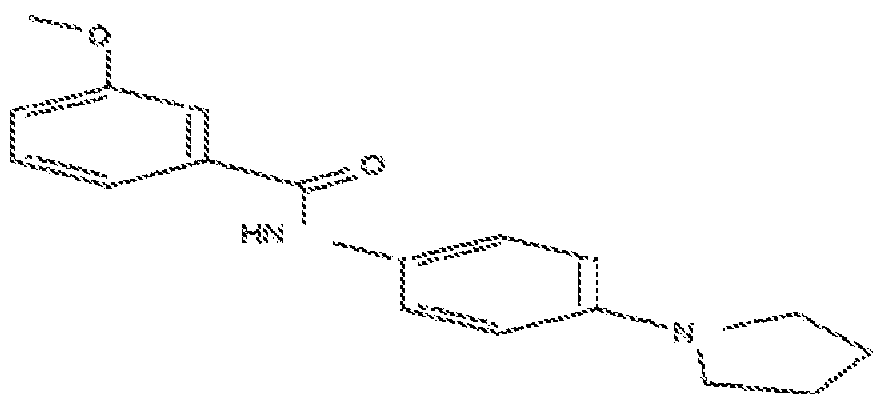
SBI-0143183 or SBI-183 for short
[0006] In an additional aspect, this disclosure relates to stereoisomers, prodrugs and pharmaceutically acceptable salts of SBI-183.
[0007] In another aspect, this disclosure relates to the use of SBI-183 and related compounds to inhibit QSOX1.
[0008] In a further aspect, this disclosure relates to the use of SBI-183 and related compounds to inhibit growth and invasive properties of neoplastic cells.
[0009] In still another aspect, this disclosure relates to the use of SBI-183 and related compounds to inhibit neoplastic cells that over-express the QSOX1 enzyme, such as in, for example, myeloma and pancreatic, renal, and breast cancer.
[0010] A compound of the present disclosure or a pharmaceutically acceptable salt thereof, can be administered as such to a human patient or can be administered in pharmaceutical compositions in which the foregoing materials are mixed with suitable carriers or excipient(s). Techniques for formulation and administration of drugs may be found, for example, in
REMINGTON'S PHARMACOLOGICAL SCIENCES, Mack Publishing Co., Easton, PA, latest edition.
[0011] These and other aspects will be apparent upon reference to the following detailed description and figures. To that end, any patent and other documents cited herein are hereby incorporated by reference in their entirety.
BRIEF DESCRIPTION OF THE DRAWINGS
[0012] Figure 1. QSOX1 peptide levels in plasma from 28 normal donors, 53 patients with Pancreatic Ductal Adenocarcinoma (PDA) and 8 Type 2 Diabetes patients.
[0013] Figure 2. QSOX1 is over-expressed in multiple human cancers, but not or minimal in non-malignant tissues. Western blot showing QSOX1 expression in several tumor types. QSOXl-S and -L are short and long variants, respectively. Yellow arrows depict Epstein Barr Virus-transformed B cells from a healthy donor ( D 1 1 1) and non-transformed lymphocytes from NDl 1 1. MCF-IOA is a non-malignant breast cell line. 4T1, 3LL and B 16-F 10 are murine breast, lung and melanoma tumor cell lines, respectively. Other tumor cell lines are as follows: VI 81: Vaginal epithelial cell line; 3ECI: Ectocervical epithelial cell line ; A2:
Endocervical epithelial cell line; sA2: Endocervical epithelial cell line (daughter of A2 above); CaCo: Colonic adenocarcinoma cell line; HEC-1A: Uterine epithelial cell line; INT 407: Embryonic small intestinal epithelial cell line in ATCC.
[0014] Figure 3 A. QSOX1 not expressed in adjacent stroma. Lighter edge color in the boxed area indicates QSOX1 expression.
[0015] Figure 3B. Dilated duct with dysplastic changes adjacent to invasive PanCa: QSOX1 staining highlighting pre-neoplastic cells adjacent to more normal morphology.
[0016] Figure 4A. Colon Cancer. Spectrum of expression of QSOX1 (darker areas).
[0017] Figure 4B. Lung Cancer. Spectrum of expression of QSOX1 (darker areas).
[0018] Figure 5A. Invasive Ductal Carcinoma of the Breast. Expression of QSOX1 is shown by the darker areas.
[0019] Figure 5B. Invasive Lobular Carcinoma of the Breast. Expression of QSOX1 is shown by the darker areas.
[0020] Figure 6. QSOX1 is over-expressed in Prostate cancer (darker areas).
[0021] Figure 7. An in vitro assay to screen for QSOX1 inhibitors; Fluorogenic assay (also can be HTS). Enzymatically active recombinant QSOX1 is incubated with individual compounds in individual wells of a 384 well plate. If compounds inhibit the activity of the enzyme, no H2O2 will be made by the enzyme because it can't fold RNAse A (surrogate substrate). Therefore, no fluorescence is observed. If compounds do not inhibit QSOX1, the enzyme with re-fold RNAse A, produce H2O2 and the fluorescent indicator will fluoresce.
[0022] Figure 8. High throughput screening results.
[0023] Figure 9. Twenty lead compounds (provided by SBI from their HTS) were incubated at 3 different concentrations with MIAPaCa2 pancreatic cancer cells to determine if any of the compounds affected tumor cell viability. ES2 and MB6 are inhibitors of ALR, an enzyme similar to QSOX1.
[0024] Figure 10. Viability (MTT) assay. Twenty lead compounds (provided by SBI from their HTS) were incubated at 3 different concentrations with 786-0 kidney cancer cells to
determine if any of the compounds affected tumor cell viability. ES2 and MB6 are inhibitors of ALR, an enzyme similar to QSOX1. Red box shows the activity of SBI-183.
[0025] Figure 11. Effect of Compound SBI-0143183 on Kidney cancer invasion through Matrigel (786-0). A boy den chamber experiment to determine if SBI-183 suppresses invasion of Kidney cancer cells through Matrigel.
[0026] Figure 12. 786-0 Detection of laminin-oc4 using anti-LAMA4 antibody in kidney cancer cells after incubation with 15uM SBI-183. DAPI staining shows nuclei (blue).
Secondary alone indicates the goat anti-mouse antibody that was used to detect binding of anti- LAMA4. This shows that lamin-4 is not deposited in the extracellular matrix of kidney cancer cells when the cells are exposed to SBI-183.
[0027] Figure 13. SBI-183 suppresses invasion of MCF-10A-p53overexpress and mutant p53 breast cancer cell lines. Boyden chamber experiment to determine if SBI-183 suppresses invasion through Matrigel of MIAPaCa2 (pancreatic) and breast cancer cell lines. P530E is MCF-IOA non-malignant breast cell line containing wild type (non-mutated) p53. R248W, R273C and Y220C are three different p53 mutants expressed in MCF-IOA breast cells.
[0028] Figure 14. SBI-183 suppresses the growth of UOK117 renal cell carcinoma xenografts in nude mice. Mice were inoculated with 1 million tumor cells in the hind flank. Treatment was started on day 7 by oral lavage at 20mg/kg/day.
[0029] Figure 15. MTT assay results from exposure of myeloma cell lines to SBI-183. Assay conditions: 25,000 cells per well were plated in a 96-well flat-bottom plate. 2-fold serial dilutions of SBI-183 were added to each well. % cell viability was calculated using the following formula: cmpd + cells/vehicle + cells * 100%.
DETAILED DESCRIPTION OF THE INVENTION
[0030] As used herein, "QSOX1" is Quiescin Sulfhydryl Oxidase 1, also called QSCN6. The protein accession number for the long variant of QSOX1 on the NCBI database is NP— 002817, and the accession number for the short form is NP— 001004128. As used herein, "QSOX1" refers to both the long and short variants of QSOX1.
[0031] In screening for inhibitors, recombinant QSOX1 was produced and tested in fluorogenic assays to make sure it was active. The recombinant enzyme then was sent to the Sanford Burnham Institute for use in the same/similar assay to screen libraries for chemical compounds that inhibit the enzymatic activity of QSOX1.
[0032] In one embodiment, a compound derived from a chemical library in the Sanford Burnham collection of compounds, 3-methoxy-N-[4-(l-pyrrolidinyl)phenyl]benzamide was discovered to be an inhibitor (designated SBI-0143183 or SBI-183 for short) of QSOX1.
[0033] A peptide was identified in plasma from pancreatic cancer patients that mapped back to the QSOX1 parent protein (Figure 1, prior art). QSOX1 was shown to be over-expressed in many human and murine tumor types (Figures 2-6). A high throughput screening assay (HTS) was employed to screen a library of chemical compounds (50,000 compounds). The assay detects H2O2 produced by QSOX1 when it is enzymatically active (Figure 7). Inhibition of the enzymatic activity of QSOX1 (with a chemical compound) suppresses H2O2 production, decreasing fluorescent or bioluminescent signal in the assay.
[0034] Figure 8 shows the chemical structure of SBI-183, while figures 9 and 10 demonstrate a secondary screening of 20 lead compounds identified as promising hits in HTS. The secondary screen consisted of incubating pancreatic (MIAPaCa2) and kidney (786-0) tumor cell lines with 20, 10, and 5 uM SBI-183 (0143183) for 48 hours followed by MTT assay (measure of mitochondrial respiration).
[0035] Figure 11 demonstrates that SBI-183 suppressed invasion of 786-0 cells through Matrigel (in vitro surrogate for a basement membrane) in a dose-dependent manner. SBI-183 inhibits deposition of laminin-oc4 into the extracellular matrix at 15 uM as shown in Figure 12. Figure 13 demonstrates that SBI-183 suppresses invasion through Matrigel of MIAPaCa2 pancreatic tumor cells and highly invasive MCF-IOA breast cancer cell lines containing mutant p53. SBI-183 suppresses the growth of UOK 117 renal cell carcinoma xenografts implanted into nude mice compared to vehicle-treated and untreated mice.
[0036] The QSOX1 enzyme is over-expressed in every histological type of tumor tested so far including blood cancers. Thus, in another embodiment, SBI-183 slows the growth and invasion of pancreatic, renal and breast cancer cells (Figs. 11-13).
[0037] In further embodiments, SBI-183 has been tested in-vivo in a murine model of cancer. SBI-183 suppresses the growth of UOK117 renal cell carcinoma xenografts in nude mice (Fig. 14).
[0038] Moreover, MTT assay results from exposure of myeloma cell lines to SBI-183 shows decreased viability at higher does (Fig. 15). Taken together, the results disclosed herein indicate that the use of SBI-183 and related compounds inhibit neoplastic cells that over-express the QSOX1 enzyme, such as in, for example, myeloma and pancreatic, renal, and breast cancer.
[0039] SBI-183 is believed to be first-in-class, as no sulfhydryl oxidase inhibitors appear to exist in the scientific literature (and especially not one that inhibits tumor growth and
metastasis).
[0040] In other embodiments, methods for neoplastic cell inhibition, tumor inhibition, and cancer treatment involving contacting a cell, a tumor, or a subject having cancer with an effective amount of SBI-183 or a pharmaceutically acceptable salt thereof. The subject can be any mammal, preferably a human. As used herein, the phrase "an amount effective" refers to the amount of inhibitor that provides a suitable inhibition and/or treatment effect.
[0041] As used herein, "treating tumors" means accomplishing one or more of the following: (a) reducing tumor mass; (b) slowing the increase in tumor mass; (c) reducing tumor metastases; (d) slowing the incidence of tumor metastases; (e) limiting or preventing development of symptoms characteristic of cancer; (f) inhibiting worsening of symptoms characteristic of cancer; (g) limiting or preventing recurrence of symptoms characteristic of cancer in subjects that were previously symptomatic; (i) increasing subject survival time; and (j) limiting or reducing morbidity of therapy by enhancing current therapies, permitting decreased dose of current standard of care therapies.
[0042] The methods of the invention can be used to treat any suitable tumor type. In one preferred embodiment, the methods are used to treat any tumor type that over-expresses QSOX1. Expression of QSOX1 can be assessed by any suitable method, including but not limited to immunohistochemistry of suitable tissue sample, polymerase chain reaction, or detection of QSOX1 peptides in suitable tissue.
[0043] In various non-limiting embodiments, techniques that can be used in the analysis include mass spectrometry (MS), two dimensional gel electrophoresis, Western blotting, immunofluorescence, ELISAs, antigen capture assays (including dipstick antigen capture assays) and mass spec immunoassay (MSIA).
[0044] Within this application, unless otherwise stated, the techniques utilized may be found in any of several well-known references such as: Molecular Cloning: A Laboratory Manual (Sambrook, et al., 1989, Cold Spring Harbor Laboratory Press), Gene Expression Technology (Methods in Enzymology, Vol. 185, edited by D. Goeddel, 1991. Academic Press, San Diego, Calif), "Guide to Protein Purification" in Methods in Enzymology (M. P. Deutshcer, ed., (1990) Academic Press, Inc.); PCR Protocols: A Guide to Methods and Applications (Innis, et al. 1990. Academic Press, San Diego, Calif), Culture of Animal Cells: A Manual of Basic Technique, 2nd Ed. (R. I. Freshney. 1987. Liss, Inc. New York, N.Y.), Gene Transfer and Expression Protocols, pp. 109-128, ed. E. J. Murray, The Humana Press Inc., Clifton, N.J.), and the Ambion 1998 Catalog (Ambion, Austin, Tex.).
[0045] All embodiments of any aspect of the invention can be used in combination, unless the context clearly dictates otherwise.
[0046] Non-limiting tumor types that can be treated using the methods of the invention include pancreatic, kidney, and breast. In a preferred embodiment, the tumor is a pancreatic tumor, such as a pancreatic adenocarcinoma or a neuroendocrine tumor. In a further preferred embodiment, the tumor comprises a pancreatic adenocarcinoma.
[0047] The inhibitors for QSOX1 as disclosed herein can be administered via any suitable technique or formulation, including but not limited to lipid, virus, polymer, or any other physical, chemical or biological agent, but are generally administered as part of a pharmaceutical composition together with a pharmaceutically acceptable carrier, diluent, or excipient. Such compositions are substantially free of non-pharmaceutically acceptable components, i.e., contain amounts of non-pharmaceutically acceptable components lower than permitted by U.S. regulatory requirements at the time of filing this application. In some embodiments of this aspect, if the compound is dissolved or suspended in water, the composition further optionally comprises an additional pharmaceutically acceptable carrier, diluent, or excipient. In other embodiments,
the pharmaceutical compositions described herein are solid pharmaceutical compositions (e.g., tablet, capsules, etc.).
[0048] These compositions can be prepared in a manner well known in the pharmaceutical art, and can be administered by a variety of routes, depending upon whether local or systemic treatment is desired and upon the area to be treated. Administration may be via physical injection with a needle to, for example, a tumor in the subject; topical (including ophthalmic and to mucous membranes including intranasal, vaginal and rectal delivery), pulmonary (e.g., by inhalation or insufflation of powders or aerosols, including by nebulizer; intratracheal, intranasal, epidermal and transdermal), ocular, oral or parenteral. Methods for ocular delivery can include topical administration (eye drops), subconjunctival, periocular or intravitreal injection or introduction by balloon catheter or ophthalmic inserts surgically placed in the conjunctival sac. Parenteral administration includes intravenous, intraarterial, subcutaneous, intraperitoneal or intramuscular injection or infusion; or intracranial, e.g., intrathecal or intraventricular, administration. Pharmaceutical compositions and formulations for topical administration may include transdermal patches, ointments, lotions, creams, gels, drops, suppositories, sprays, liquids and powders. Conventional pharmaceutical carriers, aqueous, powder or oily bases, thickeners and the like may be necessary or desirable.
[0049] The inhibitor described herein can also be formulated in combination with one or more additional active ingredients as desired.
[0050] In another embodiment, methods are provided for limiting tumor metastasis, comprising contacting a subject having a tumor with an amount effective of an inhibitor of QSOX1 activity, or pharmaceutically acceptable salt thereof, to limit metastasis of the tumor in the subject.
[0051] The claims are not intended to be limited to the materials, methods, embodiments and examples described herein.
Claims
1. A composition, comprising:
(a)

(SBI-183)
(b) a pharmaceutically acceptable carrier.
2. The composition of claim 1, wherein said composition is a stereoisomer, prodrug form, or pharmaceutically acceptable salt of SBI-183.
3. A method for neoplastic cell growth inhibition, comprising the step of contacting said neoplastic cell with an effective amount of SBI-183 or a pharmaceutically acceptable salt of SBI-183.
4. SBI-183 or a pharmaceutically acceptable salt thereof for use in the treatment of a tumor.
5. A method for cancer treatment, comprising administering to a subject having a tumor an amount effective of SBI-183 or a pharmaceutically acceptable salt thereof.
6. The method of claim 5, wherein said cancer is a cancer of the breast.
7. The method of claim 5, wherein said cancer is a cancer of the pancreas.
8. The method of claim 5, wherein said cancer is a cancer of the kidney.
9. The method of claim 5, wherein said cancer is myeloma.
Priority Applications (2)
| Application Number | Priority Date | Filing Date | Title |
|---|---|---|---|
| US15/748,784 US10894034B2 (en) | 2015-09-15 | 2016-09-13 | Anti-neoplastic compounds and methods targeting QSOX1 |
| US17/124,242 US20210137883A1 (en) | 2015-09-15 | 2020-12-16 | Anti-neoplastic compounds and methods targeting qsox1 |
Applications Claiming Priority (2)
| Application Number | Priority Date | Filing Date | Title |
|---|---|---|---|
| US201562218732P | 2015-09-15 | 2015-09-15 | |
| US62/218,732 | 2015-09-15 |
Related Child Applications (2)
| Application Number | Title | Priority Date | Filing Date |
|---|---|---|---|
| US15/748,784 A-371-Of-International US10894034B2 (en) | 2015-09-15 | 2016-09-13 | Anti-neoplastic compounds and methods targeting QSOX1 |
| US17/124,242 Continuation US20210137883A1 (en) | 2015-09-15 | 2020-12-16 | Anti-neoplastic compounds and methods targeting qsox1 |
Publications (1)
| Publication Number | Publication Date |
|---|---|
| WO2017048712A1 true WO2017048712A1 (en) | 2017-03-23 |
Family
ID=58289801
Family Applications (1)
| Application Number | Title | Priority Date | Filing Date |
|---|---|---|---|
| PCT/US2016/051519 Ceased WO2017048712A1 (en) | 2015-09-15 | 2016-09-13 | Anti-neoplastic compounds and methods targeting qsox1 |
Country Status (2)
| Country | Link |
|---|---|
| US (2) | US10894034B2 (en) |
| WO (1) | WO2017048712A1 (en) |
Families Citing this family (3)
| Publication number | Priority date | Publication date | Assignee | Title |
|---|---|---|---|---|
| WO2017048712A1 (en) * | 2015-09-15 | 2017-03-23 | Arizona Board Of Regents On Behalf Of Arizona State University | Anti-neoplastic compounds and methods targeting qsox1 |
| WO2020069000A1 (en) | 2018-09-28 | 2020-04-02 | Mayo Foundation For Medical Education And Research | Mot cells as a therapeutic screening tool for regulatory t cell activity |
| WO2021077031A1 (en) * | 2019-10-16 | 2021-04-22 | Sapphire Biotech, Inc. | Compounds and methods targeting qsox1 |
Citations (3)
| Publication number | Priority date | Publication date | Assignee | Title |
|---|---|---|---|---|
| US20130158035A1 (en) * | 2010-08-24 | 2013-06-20 | Brigham Young University | Antimetastatic compounds |
| US8946186B2 (en) * | 2010-09-20 | 2015-02-03 | Arizona Board Of Regents, A Body Corporate Of The State Of Arizona Acting For And On Behalf Of Arizona State University | QSOX1 as an anti-neoplastic drug target |
| US20150110786A1 (en) * | 2012-03-07 | 2015-04-23 | Yeda Research And Development Co. Ltd. | Compositions for inhibition of quiescin sulfhydryl oxidase (qsox1) and uses of same |
Family Cites Families (3)
| Publication number | Priority date | Publication date | Assignee | Title |
|---|---|---|---|---|
| US20140141015A1 (en) * | 2010-09-20 | 2014-05-22 | Douglas Lake | QSOX1 as an Anti-Neoplastic Drug Target |
| US8911959B2 (en) * | 2011-09-09 | 2014-12-16 | Arizona Board Of Regents, A Body Corporate Of The State Of Arizona Acting For And On Behalf Of Arizona State University | Methods of detection of coccidioides species in bodily fluid |
| WO2017048712A1 (en) * | 2015-09-15 | 2017-03-23 | Arizona Board Of Regents On Behalf Of Arizona State University | Anti-neoplastic compounds and methods targeting qsox1 |
-
2016
- 2016-09-13 WO PCT/US2016/051519 patent/WO2017048712A1/en not_active Ceased
- 2016-09-13 US US15/748,784 patent/US10894034B2/en not_active Expired - Fee Related
-
2020
- 2020-12-16 US US17/124,242 patent/US20210137883A1/en not_active Abandoned
Patent Citations (3)
| Publication number | Priority date | Publication date | Assignee | Title |
|---|---|---|---|---|
| US20130158035A1 (en) * | 2010-08-24 | 2013-06-20 | Brigham Young University | Antimetastatic compounds |
| US8946186B2 (en) * | 2010-09-20 | 2015-02-03 | Arizona Board Of Regents, A Body Corporate Of The State Of Arizona Acting For And On Behalf Of Arizona State University | QSOX1 as an anti-neoplastic drug target |
| US20150110786A1 (en) * | 2012-03-07 | 2015-04-23 | Yeda Research And Development Co. Ltd. | Compositions for inhibition of quiescin sulfhydryl oxidase (qsox1) and uses of same |
Non-Patent Citations (2)
| Title |
|---|
| DATABASE Pubchem [O] 10 July 2005 (2005-07-10), XP055371374, Database accession no. 1121741 * |
| HANAVAN ET AL.: "Small Molecule Inhibition of Quiescin Sulfhydryl Oxidase 1 (QSOX1), a Dynamic Pro-Tumorigenic Regulator of the Extracellular Matrix", December 2015 (2015-12-01), pages 1 - 92, XP055371443, Retrieved from the Internet <URL:https://repository.asu.edu/items/36521> * |
Also Published As
| Publication number | Publication date |
|---|---|
| US20210137883A1 (en) | 2021-05-13 |
| US10894034B2 (en) | 2021-01-19 |
| US20190008829A1 (en) | 2019-01-10 |
Similar Documents
| Publication | Publication Date | Title |
|---|---|---|
| Sun et al. | LINE-1 promotes tumorigenicity and exacerbates tumor progression via stimulating metabolism reprogramming in non-small cell lung cancer | |
| Mao et al. | Mechanisms through which hypoxia-induced caveolin-1 drives tumorigenesis and metastasis in hepatocellular carcinoma | |
| US20210137883A1 (en) | Anti-neoplastic compounds and methods targeting qsox1 | |
| Li et al. | Sinomenine hydrochloride suppresses the stemness of breast cancer stem cells by inhibiting Wnt signaling pathway through down-regulation of WNT10B | |
| Liu et al. | Niclosamide inhibits epithelial-mesenchymal transition and tumor growth in lapatinib-resistant human epidermal growth factor receptor 2-positive breast cancer | |
| Luo et al. | ERRα maintains mitochondrial oxidative metabolism and constitutes an actionable target in PGC1α-elevated melanomas | |
| CN101778637A (en) | Method for detecting and regulating sensitivity of tumor cells to antimitotic agents | |
| He et al. | Unraveling the role of CD24 in Hepatocellular carcinoma: Involvement of inactivated Hippo signaling and SOX4-mediated regulation | |
| EP3167887B1 (en) | Aryl amine substituted quinoxaline used as anticancer drugs | |
| Hui et al. | Fusaricide is a novel iron chelator that induces apoptosis through activating caspase-3 | |
| US20220233468A1 (en) | Methods for treating coronavirus infection | |
| CN110244056A (en) | ZNF521 gene is preparing the application in cancer treatment drug, diagnosis and prognosis evaluation reagent | |
| CN111249465B (en) | Application of TOPK as a therapeutic target for cisplatin-resistant cervical cancer | |
| KR102591642B1 (en) | Targets and their applications for drug treatment of tumor metastases | |
| CN114948947B (en) | Application of fenticonazole nitrate in the preparation of anti-tumor drugs | |
| CN115109850A (en) | Use of AKT2 in diagnosis and treatment of tumors | |
| CN110170054B (en) | Small molecule drug targeting MDM2 zinc finger domain and anti-tumor application thereof | |
| CN117180430B (en) | Use of NLN neurolysin in the preparation of drugs for treating lung cancer | |
| Ma et al. | NUCKS1, a gene targeted by miR-497-5p, suppresses the antitumor effect of Brusatol and enhances malignancy of HNSCC via upregulating S100A9 expression | |
| US20090285836A1 (en) | Use of salinosporamide a to inhibit metastasis | |
| JP2017512768A (en) | Novel inhibitor for ERG oncogene positive cancer | |
| Zhao et al. | Effect of dual-targeting MiR-4282 and ATP-binding cassette sub-family C member 4 on drug resistance of breast cancer cells and its molecular mechanism | |
| CN121422218A (en) | Application of USP14 inhibitors in the treatment of drug-resistant ovarian cancer | |
| CN121588220A (en) | Use of substances specifically binding STAMBP in preparation of tumor therapeutic drugs or tumor therapeutic drug enhancers | |
| Wang et al. | Degalactotigonin Exerts Effective Inhibition on the Growth, Metastasis and Sunitinib-Resistance of Renal Cell Carcinoma Through Inactivating YAP Signaling |
Legal Events
| Date | Code | Title | Description |
|---|---|---|---|
| 121 | Ep: the epo has been informed by wipo that ep was designated in this application |
Ref document number: 16847134 Country of ref document: EP Kind code of ref document: A1 |
|
| NENP | Non-entry into the national phase |
Ref country code: DE |
|
| 122 | Ep: pct application non-entry in european phase |
Ref document number: 16847134 Country of ref document: EP Kind code of ref document: A1 |