WO2016194290A1 - Systems and methods for delegating control of vehicle features to a wearable electronic device - Google Patents
Systems and methods for delegating control of vehicle features to a wearable electronic device Download PDFInfo
- Publication number
- WO2016194290A1 WO2016194290A1 PCT/JP2016/002152 JP2016002152W WO2016194290A1 WO 2016194290 A1 WO2016194290 A1 WO 2016194290A1 JP 2016002152 W JP2016002152 W JP 2016002152W WO 2016194290 A1 WO2016194290 A1 WO 2016194290A1
- Authority
- WO
- WIPO (PCT)
- Prior art keywords
- vehicle
- electronic device
- wearable electronic
- feature
- control
- Prior art date
- Legal status (The legal status is an assumption and is not a legal conclusion. Google has not performed a legal analysis and makes no representation as to the accuracy of the status listed.)
- Ceased
Links
Images


Classifications
-
- B—PERFORMING OPERATIONS; TRANSPORTING
- B60—VEHICLES IN GENERAL
- B60R—VEHICLES, VEHICLE FITTINGS, OR VEHICLE PARTS, NOT OTHERWISE PROVIDED FOR
- B60R25/00—Fittings or systems for preventing or indicating unauthorised use or theft of vehicles
- B60R25/01—Fittings or systems for preventing or indicating unauthorised use or theft of vehicles operating on vehicle systems or fittings, e.g. on doors, seats or windscreens
-
- G—PHYSICS
- G08—SIGNALLING
- G08C—TRANSMISSION SYSTEMS FOR MEASURED VALUES, CONTROL OR SIMILAR SIGNALS
- G08C17/00—Arrangements for transmitting signals characterised by the use of a wireless electrical link
- G08C17/02—Arrangements for transmitting signals characterised by the use of a wireless electrical link using a radio link
-
- B—PERFORMING OPERATIONS; TRANSPORTING
- B60—VEHICLES IN GENERAL
- B60R—VEHICLES, VEHICLE FITTINGS, OR VEHICLE PARTS, NOT OTHERWISE PROVIDED FOR
- B60R25/00—Fittings or systems for preventing or indicating unauthorised use or theft of vehicles
- B60R25/20—Means to switch the anti-theft system on or off
- B60R25/24—Means to switch the anti-theft system on or off using electronic identifiers containing a code not memorised by the user
- B60R25/241—Means to switch the anti-theft system on or off using electronic identifiers containing a code not memorised by the user whereby access privileges are related to the identifiers
-
- G—PHYSICS
- G07—CHECKING-DEVICES
- G07C—TIME OR ATTENDANCE REGISTERS; REGISTERING OR INDICATING THE WORKING OF MACHINES; GENERATING RANDOM NUMBERS; VOTING OR LOTTERY APPARATUS; ARRANGEMENTS, SYSTEMS OR APPARATUS FOR CHECKING NOT PROVIDED FOR ELSEWHERE
- G07C9/00—Individual registration on entry or exit
- G07C9/00174—Electronically operated locks; Circuits therefor; Nonmechanical keys therefor, e.g. passive or active electrical keys or other data carriers without mechanical keys
- G07C9/00658—Electronically operated locks; Circuits therefor; Nonmechanical keys therefor, e.g. passive or active electrical keys or other data carriers without mechanical keys operated by passive electrical keys
-
- H—ELECTRICITY
- H04—ELECTRIC COMMUNICATION TECHNIQUE
- H04W—WIRELESS COMMUNICATION NETWORKS
- H04W4/00—Services specially adapted for wireless communication networks; Facilities therefor
- H04W4/70—Services for machine-to-machine communication [M2M] or machine type communication [MTC]
-
- H—ELECTRICITY
- H04—ELECTRIC COMMUNICATION TECHNIQUE
- H04W—WIRELESS COMMUNICATION NETWORKS
- H04W4/00—Services specially adapted for wireless communication networks; Facilities therefor
- H04W4/80—Services using short range communication, e.g. near-field communication [NFC], radio-frequency identification [RFID] or low energy communication
-
- G—PHYSICS
- G08—SIGNALLING
- G08C—TRANSMISSION SYSTEMS FOR MEASURED VALUES, CONTROL OR SIMILAR SIGNALS
- G08C2201/00—Transmission systems of control signals via wireless link
- G08C2201/90—Additional features
- G08C2201/92—Universal remote control
-
- G—PHYSICS
- G08—SIGNALLING
- G08C—TRANSMISSION SYSTEMS FOR MEASURED VALUES, CONTROL OR SIMILAR SIGNALS
- G08C2201/00—Transmission systems of control signals via wireless link
- G08C2201/90—Additional features
- G08C2201/93—Remote control using other portable devices, e.g. mobile phone, PDA, laptop
Definitions
- the present disclosure relates to systems and methods for delegating control of vehicle features to a wearable electronic device.
- PEPS passive entry/passive start
- the person possessing the PEPS key fob can unlock the doors and trunk without using a physical key, such as by pressing a button on the door handles or trunk.
- the vehicle can be started by pressing a “start” button typically located on the dashboard.
- the functionality of a PEPS key fob can be delegated to a smart phone to eliminate the need to carry both a PEPS key fob and a smart phone.
- Wearable electronic devices are becoming more prevalent, such as in the form of activity monitors, smart watches, smart glasses, and jewelry. The present disclosure provides systems and methods for delegating control of vehicle features to such wearable electronic devices.
- a method for delegating control of a vehicle feature to a wearable electronic device includes the following: wireless pairing the wearable electronic device to at least one of a smart device or a vehicle controller onboard a vehicle; delegating control of the vehicle feature to the wearable electronic device using at least one of the smart device or the vehicle controller such that a wearer of the wearable electronic device can control the vehicle feature using the wearable electronic device; and operating the vehicle feature based on commands generated by the user using the wearable electronic device.
- a method for delegating control of a vehicle feature to a wearable electronic device including the following: wireless pairing the wearable electronic device to at least one of a smart device or a vehicle controller onboard a vehicle; delegating control of a passive entry/passive start feature to the wearable electronic device using at least one of the smart device or the vehicle controller; locking the vehicle and maintaining the vehicle in a locked state when at least one of a passive entry/passive start key fob or the smart device are within the vehicle and the wearable electronic device is outside of a predetermined distance from the vehicle; and permitting the vehicle to be unlocked when the wearable electronic device is moved back within the predetermined distance from the vehicle.
- a system for delegating control of a vehicle feature to a wearable electronic device includes a controller having a processor and a memory with instructions that when executed by the controller delegate control of the vehicle feature to the wearable electronic device such that a wearer of the wearable electronic device can control the vehicle feature using the wearable electronic device
- a system and a method for delegating control of vehicle features to a wearable electronic device is provided.
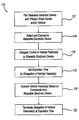
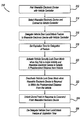
- FIG. 1 is a diagram illustrating a system according to the present disclosure that delegates control of vehicle features to a wearable electronic device
- FIG. 2 is a diagram illustrating a method according to the present disclosure for delegating control of vehicle features to a wearable electronic device
- FIG. 3 is a diagram illustrating another method according to the present disclosure for delegating control of vehicle features to a wearable electronic device
- FIG. 4 is a diagram illustrating another method according to the present disclosure for delegating control of vehicle features to a wearable electronic device.
- a system 10 is configured for use with any suitable vehicle, such as a passenger vehicle, a military vehicle, a mass transit vehicle, an aircraft, a recreational vehicle (such as a four wheeler, snowmobile, motorcycle, etc.) or any other suitable vehicle or transport device.
- Any suitable vehicle feature can be delegated to a wearable electronic device 22 using the system 10.
- the following exemplary features may be delegated: passive entry/passive start (including vehicle lock, vehicle unlock, vehicle on, and vehicle off), climate control, entertainment system control, communication system control, navigation system control, window control, lift gate control, or any other suitable vehicle feature.
- the system 10 generally includes, for example, a vehicle controller 12, a vehicle human machine interface (HMI) 14, a vehicle transmitter/receiver 16, a passive entry/passive start (PEPS) key fob 18, a primary smart device 20, and a wearable electronic device 22, which can be a secondary smart device.
- vehicle features may be delegated directly to the wearable electronic device 22 from the vehicle controller 12, thus making the primary smart device 20 unnecessary for delegating features to the wearable electronic device 22.
- the primary smart device 20 may be configured with PEPS functionality, thus making the PEPS key fob 18 unnecessary to unlock, lock, and start the vehicle.
- the vehicle controller 12 can be any suitable control device configured to control operation of the vehicle features identified above, as well as any other suitable vehicle features (including any suitable vehicle functionality).
- the vehicle controller 12 can be a single controller or a plurality of controllers.
- the vehicle controller 12 can include a Bluetooth low energy controller, an RF controller, a body control module (BCM) controller (configured to control vehicle lock/unlock, engine start, etc.), and/or a vehicle HMI controller.
- BCM body control module
- Bluetooth is a registered trademark.
- the vehicle controller 12 can be and/or include any suitable processor, CPU, memory, and storage device, as well as any other suitable devices, features, and/or components configured to permit the vehicle controller 12 to control the vehicle features listed above, as well as any other suitable vehicle features.
- the vehicle controller 12 can include any suitable storage and/or memory device including instructions, which when performed by the vehicle controller 12 delegate the vehicle features to the wearable electronic device 22, such as according to the methods described herein at reference numerals 110 (FIG. 2), 210 (FIG. 3), and 310 (FIG. 4), for example.
- the vehicle controller 12 may be or include original equipment, or may be or include an after-market product, such as an after-market stereo for example, which may include a Bluetooth low energy controller and at least a portion of the vehicle HMI 14.
- the vehicle HMI 14 can include any suitable device(s) configured to allow a user to input commands to the vehicle controller 12.
- the vehicle HMI 14 can include a touch screen, joystick, one or more dials, one or more buttons, and/or one or more levers, such as at a dashboard of the vehicle.
- the vehicle HMI 14 can also be configured to display status information generated by the vehicle controller 12, such as the vehicle features that have been delegated to the wearable electronic device 22, the operational status of the vehicle climate control system, the status of the vehicle communication system, etc.
- the vehicle transmitter/receiver 16 can be any suitable transmitter/receiver configured to transmit/receive data between the vehicle controller 12 and one or more of the PEPS key fob 18, the primary smart device 20, and the wearable electronic device 22.
- the vehicle transmitter/receiver 16 can wirelessly transmit and receive data in any suitable manner, such as through Bluetooth low-energy connectivity, WiFi, and/or NFC.
- the PEPS key fob 18 can be any suitable key fob configured with passive entry/passive start capabilities.
- the PEPS key fob 18 can be any key fob detectable by the vehicle controller 12 when the PEPS key fob 18 is within a predetermined distance from the vehicle.
- the vehicle controller 12 Upon detection of the PEPS key fob 18, the vehicle controller 12 is configured to permit the vehicle to be unlocked without insertion of a physical key.
- the vehicle controller 12 detects the PEPS key fob 18 as being within the vehicle, the vehicle controller 12 will permit the vehicle to be started, which with an internal combustion engine vehicle includes starting the engine.
- the vehicle controller 12 is unable to detect the PEPS key fob 18 within the predetermined distance from the vehicle, the vehicle controller 12 will maintain the vehicle in a locked state.
- the primary smart device 20 can be any suitable smart device, such as a smart phone, tablet computer, laptop computer, or any other device configured to communicate with the vehicle controller 12 by way of the vehicle transmitter/receiver 16, as well as wirelessly communicate with the wearable electronic device 22 in any suitable manner, such as by using Bluetooth low-energy connectivity.
- the primary smart device 20 can include any suitable controller, including any suitable processor, as well as any suitable memory and storage device configured to store instructions for delegating vehicle features to the wearable electronic device 22, such as according to the methods described herein at reference numerals 110, 210, and 310.
- the primary smart device can be an Apple iPhone, any suitable device configured to run the Android operating system, or any other suitable portable smart device operating any suitable mobile operating system.
- the primary smart device 20 can be configured with PEPS functionality such that the primary smart device 20 operates in the same manner as the PEPS key fob 18, thus eliminating the need for one to carry the PEPS key fob 18 in addition to the primary smart device 20.
- the primary smart device 20 is further configured to delegate vehicle features under control of the vehicle controller 12 to the wearable electronic device 22 in any suitable manner.
- an operator of the primary smart device can select, using the operating system thereof, at least the features identified above for delegation to the wearable electronic device 22.
- the primary smart device 20 can include an application listing the vehicle features available to delegate to the wearable electronic device 22, and a user can select one or more of the vehicle features for delegation to the wearable electronic device 22 so that the wearable electronic device 22 can be used to operate the delegated vehicle features.
- the wearable electronic device 22 can be any suitable wearable electronic device, such as a smart watch, smart glasses, an activity monitor (such as a Fit Bit for example) or a wearable electronic device incorporated into jewelry, such as an earring or necklace.
- the wearable electronic device 22 can thus be a secondary smart device or merely a monitor that does not possess significant data processing capabilities.
- the wearable electronic device 22 can include any suitable transmitter, and optionally a receiver, configured for communication with the primary smart device 20 and/or the vehicle controller 12 by way of the vehicle transmitter/receiver 16.
- the wearable electronic device 22 can include a Bluetooth low-energy transmitter/receiver, WiFi communication, and/or NFC communication.
- the wearable electronic device 22 can include one or more input devices, such as buttons and/or a touch screen, configured to accept inputs from a user thereof for operating features delegated to the wearable electronic device 22.
- the wearable electronic device 22 can include an accelerometer or any other suitable motion detector configured to detect motions of the wearer of the wearable electronic device corresponding to inputs for operating vehicle features delegated to the wearable electronic device 22. For example, if climate control functionality is delegated to the wearable electronic device 22, rotation of the user’s hand in a clockwise direction may represent a command to increase the temperature of the vehicle passenger cabin. Conversely, rotation of the user’s hand in a counterclockwise direction may represent a command to decrease the temperature.
- rotation of the wearer’s hand in a clockwise direction may be a command to change the radio to a higher channel setting
- rotation of the user’s hand in a counterclockwise direction may be a command to change the channel to a lower channel setting.
- Any other suitable hand gestures for operating any of the delegated vehicle features may be used as well, such as palm down and clockwise to palm up, and then counterclockwise to palm down, which can represent any suitable command.
- Another suitable hand gesture includes hand shaking.
- an exemplary method for delegating control of one or more vehicle features to the wearable electronic device 22 is generally illustrated at reference numeral 110.
- the wearable electronic device 22 is paired with the primary smart device 20 and/or the vehicle controller 12.
- the wearable electronic device 22 can be paired in any suitable manner, such as by transmitting any suitable device ID of the wearable electronic device 22, such as the MAC address for example, to the primary smart device 20 and/or the vehicle controller 12 and storage of the device ID at the primary smart device 20 and/or the vehicle controller 12 for future recognition of the wearable electronic device 22 by, and future connection to, the primary smart device 20 and/or the vehicle controller 12.
- the wearable electronic device 22 is recognized and selected by the primary smart device 20 and/or the vehicle controller 12 either automatically or by a user, and wirelessly connected thereto in any suitable manner, such as with a Bluetooth low-energy connection.
- a user can select one or more vehicle features and delegate the one or more vehicle features to the wearable electronic device 22 using the primary smart device 20, the vehicle controller 12 by way of the vehicle HMI 14, and/or the wearable electronic device 22.
- the primary smart device 20 and/or the vehicle controller 12 can execute any suitable application configured to perform the method 110, as well as the methods 210 and 310 described herein.
- the user can select and delegate one or more of the vehicle features to the wearable electronic device 22 in any suitable manner.
- the delegation may be performed such that the wearable electronic device 22 does not know which vehicle feature has been delegated to it, or in some applications whether it has been delegated any feature at all.
- the delegated feature is associated with the device ID at the vehicle controller 12 and/or at the primary smart device 20, thus eliminating the need to transmit detailed data regarding the delegated feature to the wearable electronic device 22.
- This will advantageously reduce the need for storage and processing power at the wearable electronic device 22, thus allowing the wearable electronic device 22 to be a simple activity monitor, for example, or any other wearable device with limited storage and processing capabilities.
- the features can be readily de-delegated from the wearable electronic device 22 by disassociating the device ID of the wearable electronic device with a previously delegated feature. Therefore, if the wearable electronic device 22 is lost or stolen, or the owner of the vehicle decides he or she no longer wants the person in possession of the wearable electronic device 22 to have access to the delegated feature, for example, the delegated feature can be easily de-delegated even if access to the wearable electronic device 22 is not available.
- delegation of features is based on recognition of the wearable electronic device’s device ID, no sensitive information is transmitted to the wearable electronic device 22, such as electronic key information that can be used to open the vehicle and which once transferred to the wearable electronic device 22 cannot be revoked without access to the wearable electronic device 22.
- the wearable electronic device 22 Using the primary smart device 20 or the vehicle HMI 14, at block 118 the user can set an expiration time for the delegated feature. Thus upon expiration of the set time, the wearable electronic device 22 will no longer be operable to control the delegated vehicle feature.
- the vehicle features delegated to the wearable electronic device 22 can be operated in any suitable manner using the wearable electronic device 22. If the wearable electronic device 22 is worn on the user’s arm, for example, the user can use hand gestures. For example, if the vehicle feature delegated is control of the vehicle climate control system, after making any suitable initiation gesture, such as holding his or hand in a raised position for a set period of time, the user can raise the temperature by rotating his or her hand in a clockwise direction. The user can decrease the temperature by rotating his or her hand in a counterclockwise direction. If the delegated feature is operation of the vehicle communication system, the user may answer an incoming call by raising his or her hand to his or her ear.
- any suitable initiation gesture such as holding his or hand in a raised position for a set period of time
- the user can raise the temperature by rotating his or her hand in a clockwise direction.
- the user can decrease the temperature by rotating his or her hand in a counterclockwise direction.
- the delegated feature is operation of
- the delegated feature When the delegated feature is the ability to the lock and/or unlock the vehicle doors, the user may lock the doors by raising or rotating his or her hand clockwise, and unlock the doors by lowering or rotating his or her hand counterclockwise.
- the delegated feature When the delegated feature is starting the vehicle, the user may start the vehicle by moving his or her hand in a circular motion.
- the delegated vehicle feature can also be operated by pressing one or more buttons or a touch panel of the wearable electronic device.
- the mere presence of the wearable electronic device 22 within a predetermined distance from the vehicle may constitute the command, which in such a configuration would constitute a passive command, if the wearable electronic device 22 was previously paired.
- detection of a previously paired wearable electronic device 22 within the predetermined range of the vehicle by the vehicle controller 12 would result in the vehicle controller 12 performing a function based on the delegated feature.
- the passive command would be to unlock the doors when the wearable electronic device 22 is within the predetermined distance and lock the doors when the wearable electronic device 22 is outside of the predetermined distance.
- an additional method according to the present disclosures for delegating control of vehicle features to the wearable electronic device 22 is generally illustrated at reference numeral 210.
- the primary smart device 20 having PEPS functionality is paired with the wearable electronic device 22 so that the wearable electronic device 22 is recognized by the primary smart device 20, such as by storing a device ID of the wearable electronic device 22 at the primary smart device 20 for connection therebetween.
- the wearable electronic device 22 is selected using the primary smart device 20, and the wearable electronic device 22 and the primary smart device 20 are wirelessly connected in any suitable manner, such as with a Bluetooth low-energy connection.
- the primary smart device 20 is used to delegate control of the vehicle door lock/unlock feature to the wearable electronic device 22.
- This feature can be delegated in any suitable manner, such as by using an application running on the primary smart device 20 based on instructions stored on the primary smart device 20.
- the user can use the primary smart device 20 to set an expiration time for operation of the delegated feature using the wearable electronic device 22.
- the vehicle controller 12 will deactivate and/or ignore the PEPS functionality of the primary smart device 20, which would typically inhibit locking the vehicle when the PEPS enabled primary smart device 20 is within the vehicle, and activate a security lockdown mode of the vehicle in which the vehicle is locked and cannot be opened as long as the wearable electronic device 22 is outside of the predetermined distance from the vehicle.
- a user can lock his or her primary smart device 20 within the vehicle while performing an activity away from the vehicle, such as riding a bicycle, and not be encumbered by having to carry his or her primary smart device 20.
- the vehicle controller 12 when the vehicle controller 12 determines that the wearable electronic device 22 has returned to within the predetermined distance from the vehicle, such as when the user returns to the vehicle after his or her bike ride, and the vehicle controller 12 identifies the device ID of the wearable electronic device 22 as a previously paired device, the vehicle controller 12 will deactivate the vehicle lockdown mode. As a result, at block 224 the user will be able to unlock the vehicle doors by, for example, pressing a button on the vehicle doors, or inputting an unlock command using the wearable electronic device 22 in any suitable manner, such as by pressing a button on the wearable electronic device 22 or using any suitable hand gesture. At block 226, if an expiration time for delegation of the vehicle feature to the wearable electronic device 22 has been set, the primary smart device 20 and/or the vehicle controller 12 will de-delegate the vehicle door lock/unlock feature at the set expiration time.
- an additional method for delegating control of one or more vehicle features to the wearable electronic device 22 is generally illustrated at reference numeral 310.
- the wearable electronic device 22 is paired with the vehicle controller 12, such that the vehicle controller 12 stores a device ID of the wearable electronic device 22 for future recognition of the wearable electronic device 22.
- the wearable electronic device 22 can be selected for connection of the vehicle controller 12 using the vehicle HMI 14.
- the wearable electronic device 22 can be connected to the vehicle controller 12 in any suitable manner, such as by a Bluetooth low-energy connection.
- a user can instruct the vehicle controller 12 to delegate the vehicle door lock/unlock feature to the wearable electronic device 22.
- the user can use the vehicle HMI 14 to input an expiration time to the vehicle controller 12 for terminating delegation of the vehicle door lock/unlock feature.
- the vehicle controller 12 deactivates and/or ignores the PEPS functionality of the PEPS key fob 18, which would typically inhibit locking the vehicle when the PEPS key fob 18 is within the vehicle, activates the vehicle security lockdown mode when the vehicle controller 12 detects that the PEPS key fob 18 is inside of the vehicle, and the wearable electronic device 22 is outside of a predetermined distance from the vehicle.
- the vehicle controller 12 deactivates the vehicle lockdown mode when it detects that the wearable electronic device 22 is returned to within the predetermined distance from the vehicle, such as by recognizing the device ID of the wearable electronic device 22.
- the vehicle controller 12 unlocks the vehicle doors, lift gate, and/or trunk in response to a user command input to the wearable electronic device 22 in any suitable manner, such as by using any suitable hand gesture or pressing a button or display screen on the wearable electronic device 22.
- the vehicle controller will de-delegate operation of the vehicle door lock/unlock feature from the wearable electronic device 22 at the expiration time.
- Example embodiments are provided so that this disclosure will be thorough, and will fully convey the scope to those who are skilled in the art. Numerous specific details are set forth such as examples of specific components, devices, and methods, to provide a thorough understanding of embodiments of the present disclosure. It will be apparent to those skilled in the art that specific details need not be employed, that example embodiments may be embodied in many different forms and that neither should be construed to limit the scope of the disclosure. In some example embodiments, known processes, known device structures, and known technologies are not described in detail.
- first, second, third, etc. may be used to describe various elements, components, regions, layers and/or sections, these elements, components, regions, layers and/or sections should not be limited by these terms. These terms may be only used to distinguish one element, component, region, layer or section from another region, layer or section. Terms such as “first,” “second,” and other numerical terms when used herein do not imply a sequence or order unless clearly indicated by the context. Thus, a first element, component, region, layer or section discussed below could be termed a second element, component, region, layer or section without departing from the disclosures of the example embodiments.
- spatially relative terms such as “inner,” “outer,” “beneath,” “below,” “lower,” “above,” “upper,” and the like, may be used for ease of description to describe one element or feature's relationship to another element(s) or feature(s) as illustrated in the figures.
- Spatially relative terms may be intended to encompass different orientations of the device in use or operation in addition to the orientation depicted in the figures. For example, if the device in the figures is turned over, elements described as “below” or “beneath” other elements or features would then be oriented “above” the other elements or features.
- the example term “below” can encompass both an orientation of above and below.
- the device may be otherwise oriented (rotated 90 degrees or at other orientations) and the spatially relative descriptors used herein interpreted accordingly.
- a method also referred to as a flowchart or a processing
- includes multiple blocks also referred to as steps or sections. Further, each block can be divided into several sub-blocks while several blocls can be combined into a single block.
Landscapes
- Engineering & Computer Science (AREA)
- Computer Networks & Wireless Communication (AREA)
- Physics & Mathematics (AREA)
- General Physics & Mathematics (AREA)
- Mechanical Engineering (AREA)
- Signal Processing (AREA)
- Lock And Its Accessories (AREA)
- Fittings On The Vehicle Exterior For Carrying Loads, And Devices For Holding Or Mounting Articles (AREA)
- Telephone Function (AREA)
Abstract
Description
According to further another example of the present disclosure, a system for delegating control of a vehicle feature to a wearable electronic device is provided. The system includes a controller having a processor and a memory with instructions that when executed by the controller delegate control of the vehicle feature to the wearable electronic device such that a wearer of the wearable electronic device can control the vehicle feature using the wearable electronic device
Claims (20)
- A method for delegating control of a vehicle feature to a wearable electronic device comprising:
wireless pairing the wearable electronic device to at least one of a smart device or a vehicle controller onboard a vehicle;
delegating control of the vehicle feature to the wearable electronic device using at least one of the smart device or the vehicle controller such that a wearer of the wearable electronic device can control the vehicle feature using the wearable electronic device; and
operating the vehicle feature based on commands generated by the user using the wearable electronic device. - The method according to claim 1, wherein:
the smart device is a smart phone. - The method according to claim 1, wherein:
the wearable electronic device is a smart watch, an activity monitor, smart glasses, or included with jewelry. - The method according to claim 1, wherein:
the vehicle feature includes at least one of the following:
locking and unlocking the vehicle;
turning the vehicle on and off;
operating an entertainment system of the vehicle;
operating a communication system of the vehicle;
operating a climate control system of the vehicle; or
operating a navigation system of the vehicle. - The method according to claim 1, further comprising:
setting a start time and an end time of the delegated control of the vehicle feature; and
terminating the delegated control of the vehicle feature at the end time. - The method according to claim 1, further comprising:
providing the smart device with vehicle passive entry passive start functionality. - The method according to claim 1, further comprising:
delegating control of the vehicle feature to the wearable electronic device using Bluetooth communication between the smart device and the wearable electronic device. - The method according to claim 1, further comprising:
delegating control of the vehicle feature to the wearable electronic device using Bluetooth communication between a transmitter of the vehicle and the wearable electronic device. - The method according to claim 1, wherein:
delegating control of the vehicle feature includes delegating vehicle passive entry passive start functionality to the wearable electronic device,
the method further comprising:
locking the vehicle when the smart device is within the vehicle and the wearable electronic device is located outside of a predetermined distance away from the vehicle;
maintaining the vehicle in a locked state while the smart device is within the vehicle and the wearable electronic device is located outside of the predetermined distance away from the vehicle; and
permitting the vehicle to be unlocked when the smart device is within the vehicle and the wearable electronic device is moved from outside of the predetermined distance to within the predetermined distance. - The method according to claim 1, wherein:
delegating control of the vehicle feature includes delegating vehicle passive entry passive start functionality to the wearable electronic device,
the method further comprising:
locking the vehicle when a passive entry passive start key fob is within the vehicle and the wearable electronic device is located outside of a predetermined distance away from the vehicle;
maintaining the vehicle in a locked state while the passive entry passive start key fob is within the vehicle and the wearable electronic device is located outside of the predetermined distance away from the vehicle; and
permitting the vehicle to be unlocked when the passive entry passive start key fob is within the vehicle and the wearable electronic device is moved from outside of the predetermined distance away from the vehicle to within the predetermined distance. - The method according to claim 1, wherein:
the vehicle feature is operated based on gesture commands generated by the user using the wearable device. - A method for delegating control of a vehicle feature to a wearable electronic device comprising:
wireless pairing the wearable electronic device to at least one of a smart device or a vehicle controller onboard a vehicle;
delegating control of a passive entry passive start feature to the wearable electronic device using at least one of the smart device or the vehicle controller;
locking the vehicle and maintaining the vehicle in a locked state when at least one of a passive entry passive start key fob or the smart device are within the vehicle and the wearable electronic device is outside of a predetermined distance from the vehicle; and
permitting the vehicle to be unlocked when the wearable electronic device is moved back within the predetermined distance from the vehicle. - The method according to claim 12, further comprising:
unlocking the vehicle in response to a command received from the wearable electronic device when the wearable electronic device is moved back within the predetermined distance from the vehicle. - The method according to claim 12, further comprising:
de-delegating control of the passive entry passive start feature after expiration of a predetermined period of time.
- A system for delegating control of a vehicle feature to a wearable electronic device comprising:
a controller including a processor and a storage device having instructions that when executed delegate control of the vehicle feature to the wearable electronic device such that a wearer of the wearable electronic device can control the vehicle feature using the wearable electronic device. - The system according to claim 15, wherein:
the controller is a smart phone controller. - The system according to claim 15, wherein:
the controller is an onboard vehicle controller. - The system according to claim 15, wherein:
the vehicle feature includes at least one of the following:
locking and unlocking the vehicle;
turning the vehicle on and off;
operating an entertainment system of the vehicle;
operating a communication system of the vehicle;
operating a climate control system of the vehicle; and
operating a navigation system of the vehicle. - The system according to claim 15, wherein:
the controller is configured to maintain the vehicle in a locked state when the wearable electronic device is outside of a predetermined distance from the vehicle and at least one of a passive entry passive start key fob and a smart device are within the vehicle. - The system according to claim 19, wherein:
the controller is configured to permit the vehicle to be unlocked when the wearable electronic device is returned to within the predetermined distance from the vehicle and the at least one of the passive entry passive start key fob and the smart device are within the vehicle.
Priority Applications (3)
| Application Number | Priority Date | Filing Date | Title |
|---|---|---|---|
| CN201680030042.7A CN107667043B (en) | 2015-05-29 | 2016-04-22 | System and method for authorizing control of vehicle features to a wearable electronic device |
| JP2017539056A JP2018510802A (en) | 2015-05-29 | 2016-04-22 | System and method for transferring control of vehicle functions to a wearable electronic device |
| DE112016002418.5T DE112016002418T5 (en) | 2015-05-29 | 2016-04-22 | SYSTEMS AND METHOD FOR TRANSFERRING THE CONTROL OF VEHICLE FEATURES TO A PORTABLE ELECTRONIC EQUIPMENT |
Applications Claiming Priority (2)
| Application Number | Priority Date | Filing Date | Title |
|---|---|---|---|
| US14/725,746 US9533653B2 (en) | 2015-05-29 | 2015-05-29 | Systems and methods for delegating control of vehicle features to a wearable electronic device |
| US14/725,746 | 2015-05-29 |
Publications (1)
| Publication Number | Publication Date |
|---|---|
| WO2016194290A1 true WO2016194290A1 (en) | 2016-12-08 |
Family
ID=56087481
Family Applications (1)
| Application Number | Title | Priority Date | Filing Date |
|---|---|---|---|
| PCT/JP2016/002152 Ceased WO2016194290A1 (en) | 2015-05-29 | 2016-04-22 | Systems and methods for delegating control of vehicle features to a wearable electronic device |
Country Status (5)
| Country | Link |
|---|---|
| US (1) | US9533653B2 (en) |
| JP (1) | JP2018510802A (en) |
| CN (1) | CN107667043B (en) |
| DE (1) | DE112016002418T5 (en) |
| WO (1) | WO2016194290A1 (en) |
Cited By (3)
| Publication number | Priority date | Publication date | Assignee | Title |
|---|---|---|---|---|
| CN110612555A (en) * | 2017-03-16 | 2019-12-24 | 罗伯特·博世有限公司 | Intelligent wireless access system and method for vehicles |
| CN110612554A (en) * | 2017-03-16 | 2019-12-24 | 罗伯特·博世有限公司 | Intelligent access system and method for vehicles |
| JP2020521113A (en) * | 2017-03-16 | 2020-07-16 | ローベルト ボツシユ ゲゼルシヤフト ミツト ベシユレンクテル ハフツングRobert Bosch Gmbh | Intelligent event system and method for a vehicle |
Families Citing this family (58)
| Publication number | Priority date | Publication date | Assignee | Title |
|---|---|---|---|---|
| US9038142B2 (en) | 2013-02-05 | 2015-05-19 | Google Inc. | Authorization flow initiation using short-term wireless communication |
| US20170102697A1 (en) * | 2015-10-08 | 2017-04-13 | General Motors Llc | Selecting a vehicle function to control using a wearable electronic device |
| US11540088B2 (en) * | 2015-10-08 | 2022-12-27 | Voxx International Corporation | System and method for locating a portable device in different zones relative to a vehicle and with device zone indicators |
| US10137777B2 (en) * | 2015-11-03 | 2018-11-27 | GM Global Technology Operations LLC | Systems and methods for vehicle system control based on physiological traits |
| KR20170061489A (en) * | 2015-11-26 | 2017-06-05 | 삼성전자주식회사 | Electronic device and method for controlling a transport device thereof |
| US10501054B2 (en) * | 2016-06-30 | 2019-12-10 | Ford Global Technologies, Llc | On-demand driver systems and methods |
| CN110402424A (en) * | 2017-02-01 | 2019-11-01 | 福特全球技术公司 | Vehicle Component Actuation |
| US10108272B1 (en) * | 2017-05-30 | 2018-10-23 | Motorola Mobility Llc | Wearable device with gesture recognition module |
| US10683034B2 (en) | 2017-06-06 | 2020-06-16 | Ford Global Technologies, Llc | Vehicle remote parking systems and methods |
| US10775781B2 (en) | 2017-06-16 | 2020-09-15 | Ford Global Technologies, Llc | Interface verification for vehicle remote park-assist |
| US10585430B2 (en) | 2017-06-16 | 2020-03-10 | Ford Global Technologies, Llc | Remote park-assist authentication for vehicles |
| US10068403B1 (en) * | 2017-09-21 | 2018-09-04 | Universal City Studios Llc | Locker management techniques |
| US10580304B2 (en) | 2017-10-02 | 2020-03-03 | Ford Global Technologies, Llc | Accelerometer-based external sound monitoring for voice controlled autonomous parking |
| US10627811B2 (en) | 2017-11-07 | 2020-04-21 | Ford Global Technologies, Llc | Audio alerts for remote park-assist tethering |
| US10578676B2 (en) | 2017-11-28 | 2020-03-03 | Ford Global Technologies, Llc | Vehicle monitoring of mobile device state-of-charge |
| US10737690B2 (en) | 2018-01-02 | 2020-08-11 | Ford Global Technologies, Llc | Mobile device tethering for a remote parking assist system of a vehicle |
| US10974717B2 (en) | 2018-01-02 | 2021-04-13 | Ford Global Technologies, I.LC | Mobile device tethering for a remote parking assist system of a vehicle |
| US11148661B2 (en) | 2018-01-02 | 2021-10-19 | Ford Global Technologies, Llc | Mobile device tethering for a remote parking assist system of a vehicle |
| US10585431B2 (en) | 2018-01-02 | 2020-03-10 | Ford Global Technologies, Llc | Mobile device tethering for a remote parking assist system of a vehicle |
| US10688918B2 (en) | 2018-01-02 | 2020-06-23 | Ford Global Technologies, Llc | Mobile device tethering for a remote parking assist system of a vehicle |
| US10814864B2 (en) | 2018-01-02 | 2020-10-27 | Ford Global Technologies, Llc | Mobile device tethering for a remote parking assist system of a vehicle |
| US10583830B2 (en) | 2018-01-02 | 2020-03-10 | Ford Global Technologies, Llc | Mobile device tethering for a remote parking assist system of a vehicle |
| US10684773B2 (en) | 2018-01-03 | 2020-06-16 | Ford Global Technologies, Llc | Mobile device interface for trailer backup-assist |
| US10747218B2 (en) | 2018-01-12 | 2020-08-18 | Ford Global Technologies, Llc | Mobile device tethering for remote parking assist |
| US10917748B2 (en) | 2018-01-25 | 2021-02-09 | Ford Global Technologies, Llc | Mobile device tethering for vehicle systems based on variable time-of-flight and dead reckoning |
| EP3746337A4 (en) | 2018-02-01 | 2022-01-19 | Strattec Security Corporation | METHODS AND SYSTEMS FOR PROVIDING BLUETOOTH-BASED PASSIVE ENTRY AND PASSIVE START (PEPS) FOR A VEHICLE |
| US10684627B2 (en) | 2018-02-06 | 2020-06-16 | Ford Global Technologies, Llc | Accelerometer-based external sound monitoring for position aware autonomous parking |
| US11188070B2 (en) | 2018-02-19 | 2021-11-30 | Ford Global Technologies, Llc | Mitigating key fob unavailability for remote parking assist systems |
| US10507868B2 (en) | 2018-02-22 | 2019-12-17 | Ford Global Technologies, Llc | Tire pressure monitoring for vehicle park-assist |
| US11097689B2 (en) * | 2018-03-27 | 2021-08-24 | Denso International America, Inc. | Passive entry and passive start system and method using temporary keys |
| US10732622B2 (en) | 2018-04-05 | 2020-08-04 | Ford Global Technologies, Llc | Advanced user interaction features for remote park assist |
| US10683004B2 (en) * | 2018-04-09 | 2020-06-16 | Ford Global Technologies, Llc | Input signal management for vehicle park-assist |
| US10793144B2 (en) | 2018-04-09 | 2020-10-06 | Ford Global Technologies, Llc | Vehicle remote park-assist communication counters |
| US10493981B2 (en) * | 2018-04-09 | 2019-12-03 | Ford Global Technologies, Llc | Input signal management for vehicle park-assist |
| US10759417B2 (en) | 2018-04-09 | 2020-09-01 | Ford Global Technologies, Llc | Input signal management for vehicle park-assist |
| US10943416B2 (en) | 2018-05-09 | 2021-03-09 | Strattec Security Corporation | Secured communication in passive entry passive start (PEPS) systems |
| CN109064607A (en) * | 2018-08-04 | 2018-12-21 | 韶关市英诺维科技设备有限公司 | A kind of wearable device method for unlocking based on radio-frequency technique |
| US10384605B1 (en) | 2018-09-04 | 2019-08-20 | Ford Global Technologies, Llc | Methods and apparatus to facilitate pedestrian detection during remote-controlled maneuvers |
| US10717432B2 (en) | 2018-09-13 | 2020-07-21 | Ford Global Technologies, Llc | Park-assist based on vehicle door open positions |
| US10821972B2 (en) | 2018-09-13 | 2020-11-03 | Ford Global Technologies, Llc | Vehicle remote parking assist systems and methods |
| US10967851B2 (en) | 2018-09-24 | 2021-04-06 | Ford Global Technologies, Llc | Vehicle system and method for setting variable virtual boundary |
| US10529233B1 (en) | 2018-09-24 | 2020-01-07 | Ford Global Technologies Llc | Vehicle and method for detecting a parking space via a drone |
| US10908603B2 (en) | 2018-10-08 | 2021-02-02 | Ford Global Technologies, Llc | Methods and apparatus to facilitate remote-controlled maneuvers |
| US10628687B1 (en) | 2018-10-12 | 2020-04-21 | Ford Global Technologies, Llc | Parking spot identification for vehicle park-assist |
| US11097723B2 (en) | 2018-10-17 | 2021-08-24 | Ford Global Technologies, Llc | User interfaces for vehicle remote park assist |
| US11137754B2 (en) | 2018-10-24 | 2021-10-05 | Ford Global Technologies, Llc | Intermittent delay mitigation for remote vehicle operation |
| US11102654B2 (en) * | 2018-11-01 | 2021-08-24 | Polaris Industries Inc. | Connected helmet system and method of operating the same |
| US11789442B2 (en) | 2019-02-07 | 2023-10-17 | Ford Global Technologies, Llc | Anomalous input detection |
| US11195344B2 (en) | 2019-03-15 | 2021-12-07 | Ford Global Technologies, Llc | High phone BLE or CPU burden detection and notification |
| US11169517B2 (en) | 2019-04-01 | 2021-11-09 | Ford Global Technologies, Llc | Initiation of vehicle remote park-assist with key fob |
| US11275368B2 (en) | 2019-04-01 | 2022-03-15 | Ford Global Technologies, Llc | Key fobs for vehicle remote park-assist |
| JP7287269B2 (en) * | 2019-12-25 | 2023-06-06 | 株式会社デンソー | Vehicle communication system |
| CN111786733B (en) * | 2020-05-14 | 2021-08-31 | 上海易托邦建筑科技有限公司 | Optical interaction system and optical interaction control method |
| DE102020119252A1 (en) * | 2020-07-21 | 2022-01-27 | Huf Hülsbeck & Fürst Gmbh & Co. Kg | Actuation system for a moving part of a vehicle |
| CN114302379A (en) * | 2021-11-12 | 2022-04-08 | 武汉小安科技有限公司 | Wearable device control method and device, electronic device and storage medium |
| US12061471B2 (en) * | 2022-03-01 | 2024-08-13 | Logistics and Supply Chain MultiTech R&D Centre Limited | Wearable remote control device and tracking system |
| US11798331B2 (en) | 2022-03-08 | 2023-10-24 | Motorola Solutions, Inc. | Method and apparatus for increasing security at an access point |
| US12143512B2 (en) * | 2022-07-01 | 2024-11-12 | GM Global Technology Operations LLC | Cascaded key delegation system for sharing a digital key associated with a vehicle |
Citations (9)
| Publication number | Priority date | Publication date | Assignee | Title |
|---|---|---|---|---|
| WO2003079298A2 (en) * | 2002-03-12 | 2003-09-25 | Siemens Vdo Automotive Corporation | Passive vehicle actuation card incorporated into personal use item |
| US20060255911A1 (en) * | 2005-05-11 | 2006-11-16 | Toyota Jidosha Kabushiki Kaisha | Remote control apparatus |
| US20090096578A1 (en) * | 2007-10-16 | 2009-04-16 | Denso Corporation | Smart entry system |
| US20100039215A1 (en) * | 2008-08-18 | 2010-02-18 | Gm Global Technology Operations, Inc. | Valet keyfob system |
| WO2013034556A1 (en) * | 2011-09-05 | 2013-03-14 | Land Rover | Security system and device therefor |
| DE102011083820A1 (en) * | 2011-09-30 | 2013-04-04 | Ford Global Technologies, Llc | Method for controlling access to e.g. passenger door of motor car, involves evaluating use code to determine conformity with access code such that access to motor car is allowed with respect to access mode that is assigned to access code |
| US20140379175A1 (en) * | 2012-03-06 | 2014-12-25 | Bayerische Motoren Werke Aktiengesellschaft | Buttonless Vehicle Key Having Gesture Recognition |
| DE102013016097A1 (en) * | 2013-09-27 | 2015-04-02 | Audi Ag | Method for unlocking a locking device of a motor vehicle |
| US20150120151A1 (en) * | 2013-10-29 | 2015-04-30 | Audi Ag | Vehicle system for activating a vehicle component |
Family Cites Families (12)
| Publication number | Priority date | Publication date | Assignee | Title |
|---|---|---|---|---|
| US1723234A (en) | 1926-02-04 | 1929-08-06 | Heltzel Steel Form & Iron Comp | Batcher |
| US8048174B2 (en) * | 2003-12-10 | 2011-11-01 | Panasonic Corporation | Theft prevention system |
| KR100756412B1 (en) | 2006-06-30 | 2007-09-10 | 김응열 | Smart key system and its control method |
| DE102007048696A1 (en) * | 2007-10-11 | 2009-04-30 | T-Mobile International Ag | Locking system, especially car keys via Bluetooth |
| JP2012046099A (en) * | 2010-08-27 | 2012-03-08 | Tokai Rika Co Ltd | Wireless interface device and electronic key |
| FR2965434B1 (en) * | 2010-09-28 | 2015-12-11 | Valeo Securite Habitacle | METHOD OF PAIRING A MOBILE TELEPHONE WITH A MOTOR VEHICLE AND LOCKING / UNLOCKING ASSEMBLY |
| JP2013106338A (en) | 2011-11-10 | 2013-05-30 | Tofit Corp | Bluetooth-equipped keyless entry system |
| US20140149742A1 (en) | 2012-11-28 | 2014-05-29 | Arnold Yau | Method and system of providing authentication of user access to a computer resource via a mobile device using multiple separate security factors |
| US20140293753A1 (en) | 2013-04-02 | 2014-10-02 | David Pearson | Smartphone activated vehicle entry device |
| FR3010571B1 (en) | 2013-09-09 | 2016-12-30 | Valeo Securite Habitacle | AUTHENTICATION OF A USER WITH A MOBILE DEVICE TO A VEHICLE |
| US9481326B2 (en) * | 2013-11-06 | 2016-11-01 | Harman International Industries, Incorporated | Adapting vehicle systems based on wearable devices |
| CN204150005U (en) | 2014-09-22 | 2015-02-11 | 广东欧珀移动通信有限公司 | A kind of wearable device |
-
2015
- 2015-05-29 US US14/725,746 patent/US9533653B2/en active Active
-
2016
- 2016-04-22 CN CN201680030042.7A patent/CN107667043B/en not_active Expired - Fee Related
- 2016-04-22 JP JP2017539056A patent/JP2018510802A/en active Pending
- 2016-04-22 WO PCT/JP2016/002152 patent/WO2016194290A1/en not_active Ceased
- 2016-04-22 DE DE112016002418.5T patent/DE112016002418T5/en not_active Withdrawn
Patent Citations (9)
| Publication number | Priority date | Publication date | Assignee | Title |
|---|---|---|---|---|
| WO2003079298A2 (en) * | 2002-03-12 | 2003-09-25 | Siemens Vdo Automotive Corporation | Passive vehicle actuation card incorporated into personal use item |
| US20060255911A1 (en) * | 2005-05-11 | 2006-11-16 | Toyota Jidosha Kabushiki Kaisha | Remote control apparatus |
| US20090096578A1 (en) * | 2007-10-16 | 2009-04-16 | Denso Corporation | Smart entry system |
| US20100039215A1 (en) * | 2008-08-18 | 2010-02-18 | Gm Global Technology Operations, Inc. | Valet keyfob system |
| WO2013034556A1 (en) * | 2011-09-05 | 2013-03-14 | Land Rover | Security system and device therefor |
| DE102011083820A1 (en) * | 2011-09-30 | 2013-04-04 | Ford Global Technologies, Llc | Method for controlling access to e.g. passenger door of motor car, involves evaluating use code to determine conformity with access code such that access to motor car is allowed with respect to access mode that is assigned to access code |
| US20140379175A1 (en) * | 2012-03-06 | 2014-12-25 | Bayerische Motoren Werke Aktiengesellschaft | Buttonless Vehicle Key Having Gesture Recognition |
| DE102013016097A1 (en) * | 2013-09-27 | 2015-04-02 | Audi Ag | Method for unlocking a locking device of a motor vehicle |
| US20150120151A1 (en) * | 2013-10-29 | 2015-04-30 | Audi Ag | Vehicle system for activating a vehicle component |
Cited By (7)
| Publication number | Priority date | Publication date | Assignee | Title |
|---|---|---|---|---|
| CN110612555A (en) * | 2017-03-16 | 2019-12-24 | 罗伯特·博世有限公司 | Intelligent wireless access system and method for vehicles |
| CN110612554A (en) * | 2017-03-16 | 2019-12-24 | 罗伯特·博世有限公司 | Intelligent access system and method for vehicles |
| JP2020516863A (en) * | 2017-03-16 | 2020-06-11 | ローベルト ボツシユ ゲゼルシヤフト ミツト ベシユレンクテル ハフツングRobert Bosch Gmbh | Intelligent access system and method for a vehicle |
| JP2020521113A (en) * | 2017-03-16 | 2020-07-16 | ローベルト ボツシユ ゲゼルシヤフト ミツト ベシユレンクテル ハフツングRobert Bosch Gmbh | Intelligent event system and method for a vehicle |
| JP7078636B2 (en) | 2017-03-16 | 2022-05-31 | ローベルト ボツシユ ゲゼルシヤフト ミツト ベシユレンクテル ハフツング | Intelligent event systems and methods for vehicles |
| JP2022110035A (en) * | 2017-03-16 | 2022-07-28 | ローベルト ボツシユ ゲゼルシヤフト ミツト ベシユレンクテル ハフツング | Intelligent access system and method for vehicle |
| JP7481393B2 (en) | 2017-03-16 | 2024-05-10 | ローベルト ボツシユ ゲゼルシヤフト ミツト ベシユレンクテル ハフツング | Intelligent access system and method for vehicles |
Also Published As
| Publication number | Publication date |
|---|---|
| US9533653B2 (en) | 2017-01-03 |
| CN107667043B (en) | 2020-06-30 |
| DE112016002418T5 (en) | 2018-03-08 |
| US20160347280A1 (en) | 2016-12-01 |
| JP2018510802A (en) | 2018-04-19 |
| CN107667043A (en) | 2018-02-06 |
Similar Documents
| Publication | Publication Date | Title |
|---|---|---|
| US9533653B2 (en) | Systems and methods for delegating control of vehicle features to a wearable electronic device | |
| US11029840B2 (en) | Vehicle manipulation device, vehicle system, vehicle manipulation method, and storage medium | |
| EP3612692B1 (en) | Multi-step vehicle entry authorization | |
| US20150279131A1 (en) | Key fob and smartdevice gestures for vehicle functions | |
| US9544742B2 (en) | Determining vehicle occupant location | |
| US9536365B2 (en) | System and method for keyless entry and remote starting vehicle with an OEM remote embedded in vehicle | |
| US9786108B2 (en) | NFC based secure car key | |
| US10706650B2 (en) | Key unit, control system, control method, and non-transitory computer-readable storage medium having program stored therein | |
| US10062223B2 (en) | Intermediary access device for communication with a vehicle | |
| US20150379793A1 (en) | Communication system, in-vehicle device, mobile device, and communication method | |
| US10493956B2 (en) | Control device and method for unlocking a motor vehicle with integrated NFC-control device | |
| US20160048249A1 (en) | Wearable computing device for handsfree controlling of vehicle components and method therefor | |
| JP2016169525A (en) | Electronic key system | |
| EP3943346B1 (en) | System and method for controlling vehicle | |
| US20170346934A1 (en) | Device for connecting a phone to a vehicle | |
| US20160055691A1 (en) | Smart key control system and method for vehicle | |
| KR20220098656A (en) | Vehicle authentication system and vehicle authentication method based on bluetooth low energy and fingerprint | |
| US20200127986A1 (en) | Moving object control system, moving object control device, and moving object control method | |
| US9978264B2 (en) | Method for device interaction and identification | |
| JP2014005678A (en) | Vehicle remote control system | |
| JP2015078523A (en) | Vehicle control system | |
| JP2019210622A (en) | Door operation control system | |
| KR20250074279A (en) | Vehicle control system using fingerprint recognition | |
| KR20170083371A (en) | Multi-functional smart key system for vehicle | |
| JP2017095881A (en) | Door lock control system |
Legal Events
| Date | Code | Title | Description |
|---|---|---|---|
| 121 | Ep: the epo has been informed by wipo that ep was designated in this application |
Ref document number: 16725947 Country of ref document: EP Kind code of ref document: A1 |
|
| ENP | Entry into the national phase |
Ref document number: 2017539056 Country of ref document: JP Kind code of ref document: A |
|
| WWE | Wipo information: entry into national phase |
Ref document number: 112016002418 Country of ref document: DE |
|
| 122 | Ep: pct application non-entry in european phase |
Ref document number: 16725947 Country of ref document: EP Kind code of ref document: A1 |