WO2016181413A1 - An enantiospecific process for the preparation of (r) and (s) enantiomers of sex pheromonesof the long tailed mealy bug - Google Patents
An enantiospecific process for the preparation of (r) and (s) enantiomers of sex pheromonesof the long tailed mealy bug Download PDFInfo
- Publication number
- WO2016181413A1 WO2016181413A1 PCT/IN2016/050136 IN2016050136W WO2016181413A1 WO 2016181413 A1 WO2016181413 A1 WO 2016181413A1 IN 2016050136 W IN2016050136 W IN 2016050136W WO 2016181413 A1 WO2016181413 A1 WO 2016181413A1
- Authority
- WO
- WIPO (PCT)
- Prior art keywords
- compound
- time period
- acetate
- followed
- ranging
- Prior art date
- Legal status (The legal status is an assumption and is not a legal conclusion. Google has not performed a legal analysis and makes no representation as to the accuracy of the status listed.)
- Ceased
Links
- LJJDMLPORNJBCT-JNHNWMDNSA-N CC(C)([C@@H](C1)C(C2)=O)C2(C)C1OC(C)=O Chemical compound CC(C)([C@@H](C1)C(C2)=O)C2(C)C1OC(C)=O LJJDMLPORNJBCT-JNHNWMDNSA-N 0.000 description 1
- KIHHMHVUSARQNS-INIZCTEOSA-N CC(C)CC1=CCC(C)(C)[C@@]1(C)CCOC(C)=O Chemical compound CC(C)CC1=CCC(C)(C)[C@@]1(C)CCOC(C)=O KIHHMHVUSARQNS-INIZCTEOSA-N 0.000 description 1
- FAASKABWCHEVQR-SNVBAGLBSA-N CC1(C)C=CC[C@]1(C)CCO Chemical compound CC1(C)C=CC[C@]1(C)CCO FAASKABWCHEVQR-SNVBAGLBSA-N 0.000 description 1
- HNQBXQNTRQLXGW-SNVBAGLBSA-N CC1(C)[C@@](C)(CCO)C=CC1 Chemical compound CC1(C)[C@@](C)(CCO)C=CC1 HNQBXQNTRQLXGW-SNVBAGLBSA-N 0.000 description 1
Classifications
-
- C—CHEMISTRY; METALLURGY
- C07—ORGANIC CHEMISTRY
- C07C—ACYCLIC OR CARBOCYCLIC COMPOUNDS
- C07C67/00—Preparation of carboxylic acid esters
- C07C67/08—Preparation of carboxylic acid esters by reacting carboxylic acids or symmetrical anhydrides with the hydroxy or O-metal group of organic compounds
-
- A—HUMAN NECESSITIES
- A01—AGRICULTURE; FORESTRY; ANIMAL HUSBANDRY; HUNTING; TRAPPING; FISHING
- A01N—PRESERVATION OF BODIES OF HUMANS OR ANIMALS OR PLANTS OR PARTS THEREOF; BIOCIDES, e.g. AS DISINFECTANTS, AS PESTICIDES OR AS HERBICIDES; PEST REPELLANTS OR ATTRACTANTS; PLANT GROWTH REGULATORS
- A01N31/00—Biocides, pest repellants or attractants, or plant growth regulators containing organic oxygen or sulfur compounds
- A01N31/04—Oxygen or sulfur attached to an aliphatic side-chain of a carbocyclic ring system
-
- A—HUMAN NECESSITIES
- A01—AGRICULTURE; FORESTRY; ANIMAL HUSBANDRY; HUNTING; TRAPPING; FISHING
- A01N—PRESERVATION OF BODIES OF HUMANS OR ANIMALS OR PLANTS OR PARTS THEREOF; BIOCIDES, e.g. AS DISINFECTANTS, AS PESTICIDES OR AS HERBICIDES; PEST REPELLANTS OR ATTRACTANTS; PLANT GROWTH REGULATORS
- A01N37/00—Biocides, pest repellants or attractants, or plant growth regulators containing organic compounds containing a carbon atom having three bonds to hetero atoms with at the most two bonds to halogen, e.g. carboxylic acids
- A01N37/06—Unsaturated carboxylic acids or thio analogues thereof; Derivatives thereof
-
- C—CHEMISTRY; METALLURGY
- C07—ORGANIC CHEMISTRY
- C07C—ACYCLIC OR CARBOCYCLIC COMPOUNDS
- C07C29/00—Preparation of compounds having hydroxy or O-metal groups bound to a carbon atom not belonging to a six-membered aromatic ring
- C07C29/132—Preparation of compounds having hydroxy or O-metal groups bound to a carbon atom not belonging to a six-membered aromatic ring by reduction of an oxygen containing functional group
- C07C29/136—Preparation of compounds having hydroxy or O-metal groups bound to a carbon atom not belonging to a six-membered aromatic ring by reduction of an oxygen containing functional group of >C=O containing groups, e.g. —COOH
- C07C29/147—Preparation of compounds having hydroxy or O-metal groups bound to a carbon atom not belonging to a six-membered aromatic ring by reduction of an oxygen containing functional group of >C=O containing groups, e.g. —COOH of carboxylic acids or derivatives thereof
-
- C—CHEMISTRY; METALLURGY
- C07—ORGANIC CHEMISTRY
- C07C—ACYCLIC OR CARBOCYCLIC COMPOUNDS
- C07C33/00—Unsaturated compounds having hydroxy or O-metal groups bound to acyclic carbon atoms
- C07C33/05—Alcohols containing rings other than six-membered aromatic rings
- C07C33/12—Alcohols containing rings other than six-membered aromatic rings containing five-membered rings
-
- C—CHEMISTRY; METALLURGY
- C07—ORGANIC CHEMISTRY
- C07C—ACYCLIC OR CARBOCYCLIC COMPOUNDS
- C07C67/00—Preparation of carboxylic acid esters
- C07C67/03—Preparation of carboxylic acid esters by reacting an ester group with a hydroxy group
-
- C—CHEMISTRY; METALLURGY
- C07—ORGANIC CHEMISTRY
- C07C—ACYCLIC OR CARBOCYCLIC COMPOUNDS
- C07C67/00—Preparation of carboxylic acid esters
- C07C67/30—Preparation of carboxylic acid esters by modifying the acid moiety of the ester, such modification not being an introduction of an ester group
- C07C67/31—Preparation of carboxylic acid esters by modifying the acid moiety of the ester, such modification not being an introduction of an ester group by introduction of functional groups containing oxygen only in singly bound form
-
- C—CHEMISTRY; METALLURGY
- C07—ORGANIC CHEMISTRY
- C07C—ACYCLIC OR CARBOCYCLIC COMPOUNDS
- C07C67/00—Preparation of carboxylic acid esters
- C07C67/30—Preparation of carboxylic acid esters by modifying the acid moiety of the ester, such modification not being an introduction of an ester group
- C07C67/317—Preparation of carboxylic acid esters by modifying the acid moiety of the ester, such modification not being an introduction of an ester group by splitting-off hydrogen or functional groups; by hydrogenolysis of functional groups
-
- C—CHEMISTRY; METALLURGY
- C07—ORGANIC CHEMISTRY
- C07C—ACYCLIC OR CARBOCYCLIC COMPOUNDS
- C07C69/00—Esters of carboxylic acids; Esters of carbonic or haloformic acids
- C07C69/608—Esters of carboxylic acids having a carboxyl group bound to an acyclic carbon atom and having a ring other than a six-membered aromatic ring in the acid moiety
-
- C—CHEMISTRY; METALLURGY
- C07—ORGANIC CHEMISTRY
- C07C—ACYCLIC OR CARBOCYCLIC COMPOUNDS
- C07C69/00—Esters of carboxylic acids; Esters of carbonic or haloformic acids
- C07C69/66—Esters of carboxylic acids having esterified carboxylic groups bound to acyclic carbon atoms and having any of the groups OH, O—metal, —CHO, keto, ether, acyloxy, groups, groups, or in the acid moiety
- C07C69/73—Esters of carboxylic acids having esterified carboxylic groups bound to acyclic carbon atoms and having any of the groups OH, O—metal, —CHO, keto, ether, acyloxy, groups, groups, or in the acid moiety of unsaturated acids
- C07C69/732—Esters of carboxylic acids having esterified carboxylic groups bound to acyclic carbon atoms and having any of the groups OH, O—metal, —CHO, keto, ether, acyloxy, groups, groups, or in the acid moiety of unsaturated acids of unsaturated hydroxy carboxylic acids
-
- C—CHEMISTRY; METALLURGY
- C07—ORGANIC CHEMISTRY
- C07C—ACYCLIC OR CARBOCYCLIC COMPOUNDS
- C07C69/00—Esters of carboxylic acids; Esters of carbonic or haloformic acids
- C07C69/66—Esters of carboxylic acids having esterified carboxylic groups bound to acyclic carbon atoms and having any of the groups OH, O—metal, —CHO, keto, ether, acyloxy, groups, groups, or in the acid moiety
- C07C69/73—Esters of carboxylic acids having esterified carboxylic groups bound to acyclic carbon atoms and having any of the groups OH, O—metal, —CHO, keto, ether, acyloxy, groups, groups, or in the acid moiety of unsaturated acids
- C07C69/738—Esters of keto-carboxylic acids or aldehydo-carboxylic acids
-
- C—CHEMISTRY; METALLURGY
- C07—ORGANIC CHEMISTRY
- C07D—HETEROCYCLIC COMPOUNDS
- C07D307/00—Heterocyclic compounds containing five-membered rings having one oxygen atom as the only ring hetero atom
- C07D307/77—Heterocyclic compounds containing five-membered rings having one oxygen atom as the only ring hetero atom ortho- or peri-condensed with carbocyclic rings or ring systems
- C07D307/93—Heterocyclic compounds containing five-membered rings having one oxygen atom as the only ring hetero atom ortho- or peri-condensed with carbocyclic rings or ring systems condensed with a ring other than six-membered
- C07D307/935—Not further condensed cyclopenta [b] furans or hydrogenated cyclopenta [b] furans
-
- C—CHEMISTRY; METALLURGY
- C07—ORGANIC CHEMISTRY
- C07B—GENERAL METHODS OF ORGANIC CHEMISTRY; APPARATUS THEREFOR
- C07B2200/00—Indexing scheme relating to specific properties of organic compounds
- C07B2200/07—Optical isomers
-
- C—CHEMISTRY; METALLURGY
- C07—ORGANIC CHEMISTRY
- C07C—ACYCLIC OR CARBOCYCLIC COMPOUNDS
- C07C2601/00—Systems containing only non-condensed rings
- C07C2601/06—Systems containing only non-condensed rings with a five-membered ring
- C07C2601/08—Systems containing only non-condensed rings with a five-membered ring the ring being saturated
-
- C—CHEMISTRY; METALLURGY
- C07—ORGANIC CHEMISTRY
- C07C—ACYCLIC OR CARBOCYCLIC COMPOUNDS
- C07C2601/00—Systems containing only non-condensed rings
- C07C2601/06—Systems containing only non-condensed rings with a five-membered ring
- C07C2601/10—Systems containing only non-condensed rings with a five-membered ring the ring being unsaturated
-
- C—CHEMISTRY; METALLURGY
- C07—ORGANIC CHEMISTRY
- C07C—ACYCLIC OR CARBOCYCLIC COMPOUNDS
- C07C2602/00—Systems containing two condensed rings
- C07C2602/36—Systems containing two condensed rings the rings having more than two atoms in common
- C07C2602/42—Systems containing two condensed rings the rings having more than two atoms in common the bicyclo ring system containing seven carbon atoms
Definitions
- the present invention relates to an enantiospecific process for the preparation of enantiomers of sex pheromones. More particularly, the present invention relates to an enantiospecific process for the preparation of (R) and (5) enantiomers of sex pheromones of the long-tailed mealybug with high enantiopurity.
- Pheromones are chemicals released by an organism into its environment enabling it to communicate with other members of its own species. Mealybugs are known to spoil crops such as grapes, pears etc., especially the long-tailed mealybug. The long-tailed mealybug is scientifically known as Pseudococcus longispinus (Targioni-Tozzetti). The racemic form of the pheromone was prepared synthetically by the Miller group after identifying the structure of isolated pheromone. Miller group has reported that 25 is sufficient to attract male mealybugs for three months and they can be trapped and killed; male population is thus decreased.
- Pheromones play an important role in chemical communication among organisms.
- Various chiral and non-racemic pheromones have been identified since the late 1960s. Their enantioselective syntheses were achieved so as to establish the absolute configuration of the naturally occurring pheromones and also to clarify the relationship between absolute configuration and the bioactivity of the chiral pheromones.
- Synthesis of pheromones is an important and arising field of research to establish the structures and also to provide sufficient material to carry out biological studies.
- natural pheromones are available in very limited quantities (usually in ug by killing several bugs) which restrict the extensive field trials. To overcome such constrain several methods have been reported in the literature to construct low molecular weight pheromones.
- the main objective of the present invention is to provide an enantiospecific process for the preparation of enantiomers of sex pheromones of the long-tailed mealybug with high enantiopurity.
- Another objective of the present invention is to provide novel intermediates which are useful for preparation of enantiomers of sex pheromones of the long-tailed mealybug.
- the present invention provides an enantiospecific process for the preparation of (R) and (5) enantiomers of sex pheromones of the long-tailed mealybug with high enantiopurity.
- the present invention further provides novel intermediates which are useful for preparation of enantiomers of sex pheromones of the long-tailed mealybug.
- the present invention provides a novel synthetic route for the preparation of enantiomers (represented by (+) 1 and (-) 1 of sex pheromones of the long-tailed mealybug with high enantiopurity having significant biological activity.
- the present invention provides an enantiospecific process for preparation of (R) and (5) enantiomers of sex pheromones of the long-tailed mealybug comprising the steps of:
- step (b) oxidizing alcohol (+)-3 of step (a) using Cornforth reagent to obtain lactone (+)- 4;
- step (b) hydrolyzing lactone(+)-4of step (b) with suitable hydrolyzing agent in methanol to give ⁇ - ⁇ -unsaturated cyclopentenone(+)-5;
- step (c) subjecting the cyclopentenone(+)-5 of step (c) to luche reduction to afford ally lie alcohol 6';
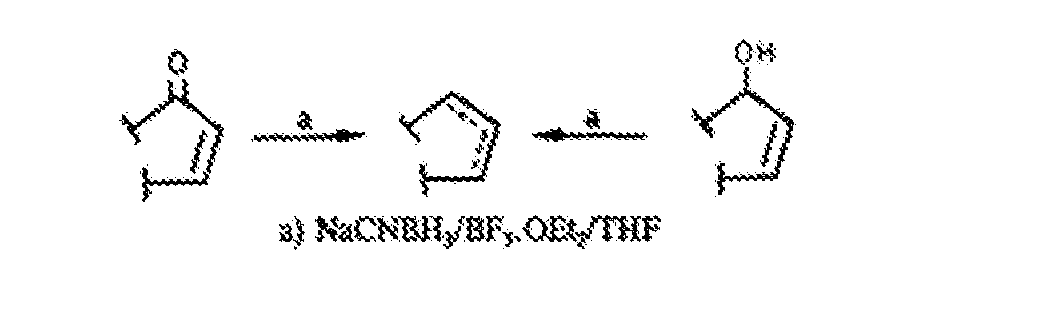
- step (d) subjecting the allylic alcohol 6'of step (d) to deoxygenation using dehydroxylation agent in tetrahydrofuran (THF)followed by reduction to afford 7b' and (+)-7a;
- step (e) subjecting alcohol (+)-7a of step (e) to acylation to afford compound (+)- pheromone.
- (-)-pheromone can be synthesized starting from (- )bornylacetate (-)-(2) through the intermediacy of (-)-3, (-)-4, (-)-5, 6 and (-)7a.
- said suitable oxidizing agent in step (a) is selected from hydrogen peroxide, preferably the oxidizing agent is hydrogen peroxide in acetic acid.
- said suitable base in step (a) is an inorganic base; said base is selected from sodium carbonate, sodium bicarbonate and calcium carbonate, preferably said base is potassium carbonate.
- the Cornforth reagent of step (b) is Pyridiniumdichromate (PDC).
- said suitable hydrolyzing agent of step (c) is p- Toluenesulfonic acid.
- step (d) The luchereduction in step (d) is carried out in presence of cerium (HQ) chloride heptahydrate and sodium borohy dride.
- said deoxygenation agent of step (e) issodium cyanoborohydride and boron trifluoride-etherate.
- the acylation reaction in step (f) is carried out using acylating agent, base and catalyst.
- said acylating agent of step (f) is selected from acetic anhydride, acetyl chloride, preferably said acylating agent is acetic anhydride.
- said base is selected from the group consisting of dimethylamine, diethylamine, trimethylamine, triethylamine, tributylamine, dimethylaniline, pyridine or mixtures thereof; preferably triethylamine in presence of suitable acylation catalyst such as 4-dimethylaminopyridine or the like.
- the present invention provides an enantiospecific process for preparation of (i?)-(-)-pheromone of the long-tailed mealybug with high enantiopurity comprising the steps of:
- step (b) adding pyridinium dichromate to a solution of compound of step (a) followed by stirring for the time period ranging from 8 to 10 h at the temperature ranging from 25 to 30°C to obtam3aS,6aR)-3a,4,4-trimethyltetrahydro-2H-cyclopenta[b]fi ⁇ 2,5(3H)-dione ((-)-4);
- step (c) adding cerium(m) chloride heptahydrate and sodium borohydride to a cooled solution of compound of step (c) in methanol followed by stirring the reaction mixture for the time period ranging from 1 to 2 h at the temperature ranging from
- step (e) adding lithium aluminium hydride (LAH) to a cold solution of compound of step (e) in tetrahydrofuran followed by stirring the reaction mixture for the time period ranging from 2 to 3 h at the temperature ranging from 25°C to 30°C to obtain(R)-
- LAH lithium aluminium hydride
- the ketone (-)-(2) is subjected to Baeyer-Villiger oxidation using H 2 0 2 in acetic acid in presence of H 2 S0 4 followed by acetate hydrolysis using K 2 C0 3 . Under these conditions, we obtained the compound (-)-3 which is confirmed by X-ray crystal structure analysis.
- the alcohol (-)-3 is oxidized to ketone (-)-4 using Pyridiniumdichromate (PDC).
- PDC Pyridiniumdichromate
- the lactone (-)-4 is hydrolysed with p-Toluenesulfonic acid (PTSA) in methanol to give ⁇ - ⁇ - unsaturated cyclopentenone (-)-5.
- PTSA p-Toluenesulfonic acid
- the ester is reduced with LAH and the regioisomers7b and (-)-7a can be separated at this stage.
- the alcohol (-)-7a is acylated to give the target compound (-)-pheromone.
- the same route is followed for the synthesis of the other antipode (5)-(+)-pheromone.
- the optical rotations also showed the same magnitude but with an inverse sign.
- the regioisomeric mixture obtained in the step (e) is used to prepare the title compound.
- the compound is then dissolved in tetrahydrofuran (THF), cooled to 0°C followed by addition of Lithium aluminium hydride (LAH) and stirred at room temperature for 2h.
- THF tetrahydrofuran
- LAH Lithium aluminium hydride
- the reaction mixture was quenched with saturated Sodium sulfate (Na 2 S0 4 ), ethyl acetate was added and the organic layer was separated, dried and purified by column chromatography. Both the regioisomers are separated by flash column chromatography.
- the present invention provides an enantioselective process for preparation of (5)-(+)-pheromone of the long-tailed mealybug with high enantiopurity wherein the process comprising the steps of:
- (+)-S-oxobornylacetate (+)-2 a) adding acetic acid, hydrogen peroxide and H 2 S0 4 to (+)-S-oxobornylacetate (+)-2 and stirred for the time period ranging from 24 to 26 h at the temperature ranging from 25°C to 30°C followed by work up, removal of solvent and addition of potassium carbonate and further stirring for the time period ranging from 3 to 4 h to obtain (3a5,55,6aR)-5-hydroxy-3a,4,4-trimethylhexahydro-2H- cyclopenta[b]furan-2-one ((+)-3);
- step (b) adding pyridinium dichromate to a solution of compound of step (a) followed by stirring for the time period ranging from 8 to 10 h at the temperature ranging from 25°C to 30°Cto obtain (3aS,6aR)-3a,4,4-trimethyltetrahydro-2H- cyclopenta[b]furan-2,5(3H)-dione ((+)-4);
- step (d) adding boron trifluoride, diethyl etherate and sodiumcyanoborohydride to a cold solution of compound of step (d) in tetrahydrofuran followed by refluxing the reaction mixture for 8 to 10 hours at the temperature ranging from 66°C to 70°C to obtain methyl (S)-2-(l,5 , 5-trimethylcy clopent-2-en- 1 -yl)acetate;
- the present invention provides novel intermediates which are useful for preparation of enantiomers of sex pheromones of the long-tailed mealybug.
- said novel intermediates are selected from (3aS,5S,6aR)-5- hydroxy-3a,4,4-trimethymexahydro-2H-cyclopenta[b]furan-2-one, (3aS,6aR)-3a,4,4- trimethyltetrahydro-2H-cyclopenta[b]furan-2,5(3H)-dione, methyl-2-( 1 , 5 , 5-trimethyl-4- oxocyclopent-2-en- 1 -y l)acetate, methyl 2-((lR)-4-hydroxy-l,5,5-trimethylcyclopent-2- en-l-yl)acetate, methyl 2-(l,5,5-trimethylcyclopent-2-en-l-yl)acetate, 2-(l,5,5- trimethylcyclopent-2-en- 1 -y l)ethan- 1 -ol.
- reaction mixture was passed through celite and the filtrate was concentrated and purified by column chromatography (230-400 silica gel) using 25 - 30% Ethylacetate - pet ether to afford the product as a colorless crystalline solid (832 mg, 50%).
- column chromatography 230-400 silica gel
- Ethylacetate - pet ether 25 - 30% Ethylacetate - pet ether
- X-ray crystal structure details of (-)-3 Single crystals of compound (-)-3was obtained from chloroform.
- the X-ray generator was operated at 50 kV and 30 mA.
- Diffraction data were collected with a ⁇ scan width of 0.5° and at different settings of ⁇ and 2 ⁇ .
- the sample-to-detector distance was fixed at 5.00 cm.
- the X-ray data acquisition was monitored by APEX ⁇ program suite.
- the compound (-)-4 was dissolved in dry methanol, PTSA was added and refluxed at 65°C for 24h. The reaction mass was cooled and solvent was removed under reduced pressure. Water and DCM was added and the organic layer was separated, aqueous layer was extracted with DCM and the combined organics were dried and concentrated under reduced pressure. The pure product was obtained by column chromatography (silica gel 100 -200) using 10% ethyl acetate - petether to afford the product as a colourless liquid (475 mg, 88% yield) along with recovery of starting material (30 mg).
- the regioisomeric mixture obtained in the above step was used to prepare the title compound.
- the compound 50 mg, 0.275 mmol
- LAH 31 mg, 0.824 mmol
- the reaction mixture was quenched with saturated Na 2 SC>4, ethyl acetate was added and the organic layer was separated, dried and purified by column chromatography (silica gel 230 - 400 mesh) using 5 % ethyl acetate - petether to give the product as a colourless liquid (40 mg, 95% along with its regioisomer).
- Example 8 Synthesis of (S)-(+)-pheromone: The same route was followed for the synthesis of the other antipode (S)-(+)-pheromone starting from (+)— 2. The NMR data of all the compounds were found to be exactly matching. The optical rotations also showed the same magnitude but with an inverse sign. The data of known compounds were compared with literature reports and found to be identical.
Landscapes
- Organic Chemistry (AREA)
- Chemical & Material Sciences (AREA)
- Life Sciences & Earth Sciences (AREA)
- Dentistry (AREA)
- Health & Medical Sciences (AREA)
- Engineering & Computer Science (AREA)
- Plant Pathology (AREA)
- General Health & Medical Sciences (AREA)
- Wood Science & Technology (AREA)
- Zoology (AREA)
- Environmental Sciences (AREA)
- Pest Control & Pesticides (AREA)
- Agronomy & Crop Science (AREA)
- Organic Low-Molecular-Weight Compounds And Preparation Thereof (AREA)
- Heterocyclic Carbon Compounds Containing A Hetero Ring Having Oxygen Or Sulfur (AREA)
Abstract
The present invention relates to an enantiospecific process for the preparation of (R) and (S) enantiomers of sex pheromones of the long-tailed mealybug with high enantiopurity.
Description
AN ENANTIOSPECIFIC PROCESS FOR THE PREPARATION OF (R) AND (S) ENANTIOMERS OF SEX PHEROMONESOF THE LONG TAILED MEALY BUG
FIELD OF THE INVENTION:
The present invention relates to an enantiospecific process for the preparation of enantiomers of sex pheromones. More particularly, the present invention relates to an enantiospecific process for the preparation of (R) and (5) enantiomers of sex pheromones of the long-tailed mealybug with high enantiopurity. BACKGROUND AND PRIOR ART:
Pheromones are chemicals released by an organism into its environment enabling it to communicate with other members of its own species. Mealybugs are known to spoil crops such as grapes, pears etc., especially the long-tailed mealybug. The long-tailed mealybug is scientifically known as Pseudococcus longispinus (Targioni-Tozzetti). The racemic form of the pheromone was prepared synthetically by the Miller group after identifying the structure of isolated pheromone. Miller group has reported that 25 is sufficient to attract male mealybugs for three months and they can be trapped and killed; male population is thus decreased.
Pheromones play an important role in chemical communication among organisms. Various chiral and non-racemic pheromones have been identified since the late 1960s. Their enantioselective syntheses were achieved so as to establish the absolute configuration of the naturally occurring pheromones and also to clarify the relationship between absolute configuration and the bioactivity of the chiral pheromones. Synthesis of pheromones is an important and arising field of research to establish the structures and also to provide sufficient material to carry out biological studies. In general, natural pheromones are available in very limited quantities (usually in ug by killing several bugs) which restrict the extensive field trials. To overcome such constrain several methods have been reported in the literature to construct low molecular weight pheromones.
Article titled "Sex pheromonal activity of (+)-bornyl acetate and related compounds to the American cockroach" by Manabe S et al. published in Journal of Chemical Ecology,
1983 ;9(3),pp 433-48 reports many compounds related to (+)-bomyl acetate (a sex phero- mone mimic of the American cockroach) were synthesized and tested for sex pheromonal activity. All compounds except for esters of (+)- and (-)-bomeol were inactive, whereas (+)-bomyl acetate (lb) and propionate (Ic) showed the activity at 0.05 mg. Although (-)- bomyl propionate (TV c) is the enantiomer of Ic, it exhibited weak activity at 0.5 mg dose. On the basis of the behavioral assay results, important chemical factors in lb for pheromonal activity were elucidated and are discussed in connection with another mimic, (+)-trans-verbenyl acetate. The M/ F ratio index in EAG was evaluated for both active and inactive compounds. The index demonstrated a good correlation with the behavioral activity.
Article titled "Syntheses and determination of absolute configurations and biological activities of the enantiomers of the long- tailed mealybug pheromone" by Remya Ramesh et al. published in Journal of Organic Chemistry, 2013, 78, pp 6281-6284 reports preparation and assignment of absolute configurations to both enantiomers of the sex pheromone of the long- tailed mealybug, an irregular monoterpenoid with extraordinary biological activity. Comparison of the biological activities of both enantiomers and the racemate in field trials showed that the (S)-(+)-enantiomer was highly attractive to male mealybugs, strongly suggesting that female long-tailed mealybugs produce this enantiomer. The (R)-(-)-enantiomer was benign, being neither attractive nor inhibitory. Article titled "Synthesis of Verbenols and related alcohols and their pmr spectra with shift reagent" by Chikao Nisiuno et al. published in Agricultural and Biological Chemistry, ,1979, 43 (9), pp 1967 1974reports (+)-bornyl acetate (bicydicmonoterpenoid) and three other plant-derived compounds excite males of the American cockroach showing the typical sexual response mentioned. Article titled "Useful Reactions in Modern Pheromone Synthesis" by Mori et al. published in Current Organic Synthesis, 2004, 1, pp 11-29 disclosed various aspects of pheromone synthesis where methodologies such as organoborane reactions, organotransition metal chemistry including olefin metathesis, asymmetric epoxidation, asymmetric dihydroxylation and other asymmetric chemical processes was demonstrated.
Article titled "The Baeyer-Villiger oxidation of aldehydes and ketones" by C. H. Hassall published in book titled "Organic Reactions" 2011, reports Baeyer and Vlliger showed that the oxidation of alicyclic ketones, menthone, tetrahydrocarvone, and camphor with permono-sulfuric acid led to the formation of lactones. Article titled "Chemoselective reductive deoxygenation of α,β-unsaturated ketones and allyl alcohols" by Adusumilli Srikrishna et al. published in Tetrahedron Letters, 1995, 36 (13), pp 2347-2350 reports asimple and convenient procedure for a highly chemoselective reductive deoxygenation of α,β-unsaturated ketones and allyl alcohols to olefins by sodium cyanoborohydride and boron trifluorideetherate in dry THF.
Article titled "Pyridiniumchlorochromate. An efficient reagent for oxidation of primary and secondary alcohols to carbonyl compounds" by E. J. Corey et al. published in Tetrahedron Letter, 1975, 16, pp 2647-2650 reports pyridiniumchlorochromate is a readily available, stable reagent, that oxidizes a wide variety of alcohols to carbonyl compounds with high efficiency.

Article titled "Mechanisms of lactone hydrolysis in acidic conditions" by Rafael Gomez- Bombarelli et al. published in Journal of Organic Chemistry, 2013, 78 (14), pp 6880- 6889 reports the acid-catalyzed hydrolysis of linear esters and lactones was studied using a hybrid supermolecule-polarizable continuum model (PCM) approach including up to six water molecules. The compounds studied included two linear esters, four β-lactones, two γ-lactones, and one 6-lactone: ethyl acetate, methyl formate, β-propiolactone, β- butyrolactone, β-isovalerolactone, diketene (4-methyleneoxetan-2-one), γ-butyrolactone, 2(5H)-furanone, and δ-valerolactone.
Article titled "Lanthanoids in organic synthesis. 6. Reduction of alpha-enones by sodium borohydride in the presence of lanthanoid chlorides: synthetic and mechanistic aspects." by Andre L. Gemalef al. published in Journal of American Chemical Society, 1981, 103 (18), pp 5454-5459 reports reduction of alpha-enones by sodium borohydride in the presence of lanthanoid chlorides.
Article titled "Reduction of ketones to hydrocarbons with triethylsilane: m- nitroethylbenzene" by James L. Fry et al. published in Organic Synthesis, 1981, 60, 108 et al. reports other carbonyl reduction methods include the familiar Clemmensen and Wolff-Kishner reactions. These are usually conducted for extended periods of time at elevated temperatures under strongly acidic or basic conditions, respectively. Mixed metal hydride-Lewis acid reagents constitute strong reducing systems that are often effective in the deoxygenation of diaryl ketones and some aryl alkyl ketones. However, even the mixed lithium aluminum hydride-aluminum chloride and sodium borohydride- boron trifluoride reagents reduce dialkyl ketones only to the corresponding alcohols, often with the formation of significant amounts of olefinic by-products.
Article titled "Acetic Anhydride" reports if the reaction is run at temperatures lower than 20 °C, primary alcohols can be acetylated over secondary alcohols selectively. Under these conditions, tertiary alcohols are not acylated. Most alcohols, including tertiary alcohols, can be acylated by the addition ofDMAP (4-Dimethylaminopyridine) and Acetyl Chloride to the reaction containing acetic anhydride and pyridine. In general, the addition ofDMAP increases the rate of acylation by 104 (eq 2).

Article titled "Improved Synthesis of the Pheromone of the Long tailed Mealybug" by Jocelyn G. Millar et al. published in Synlett 2010, No. 15, pp 2319-2321 reports synthesis of pheromones involving Ireland-Claisen conditions in seven steps also discloses commercial development for detection, monitoring, and control of long-tailed mealybugs and the leafroll viruses that they vector.
Scheme 1

In view of prior art, pheromones are usually obtained in ug to mg quantities which are insufficient for the determination of their absolute configuration as well as for the biological studies to examine their practicality in the field. Also in view of the technical constraints to scale up the material and cumbersome resolution, the present inventors have developed efficient synthesis for preparation of enantiomers of sex pheromones in good yields.
OBJECTIVE OF THE INVENTION:
The main objective of the present invention is to provide an enantiospecific process for the preparation of enantiomers of sex pheromones of the long-tailed mealybug with high enantiopurity.
Another objective of the present invention is to provide novel intermediates which are useful for preparation of enantiomers of sex pheromones of the long-tailed mealybug.
SUMMARY OF THE INVENTION:
Accordingly, the present invention provides an enantiospecific process for the preparation of (R) and (5) enantiomers of sex pheromones of the long-tailed mealybug with high enantiopurity.

In an embodiment, the present invention further provides novel intermediates which are useful for preparation of enantiomers of sex pheromones of the long-tailed mealybug.
DETAILED DESCRIPTION OF THE INVENTION:
The invention will now be described in detail in connection with certain preferred and optional embodiments, so that various aspects thereof may be more fully understood and appreciated.
The expression '(-)-l' or '(R)-l ' or '(-) pheromone' or '(RJ-enantiomer1 or \R)- pheromone' or '(-) 2-(l,5,5-trimethylcyclopent-2-en-l-yl)ethyl acetate' or '2-[(lR)- 1,5,5- trimethylcyclopent-2-en-l-yl]ethyl acetate' are used interchangeably throughout the specification.
Similarly, the expression '(+)-1' or '(S)-l ' or '(+) pheromone' or '(S)-enantiomer' or '(5)- pheromone' or '(+) 2-(l,5,5-trimethylcyclopent-2-en-l-yl)ethyl acetate' or "2-[(LS)-l,5,5- trimethylcyclopent-2-en-l-yl]ethyl acetate" are used interchangeably throughout the specification and the same may be appreciated as such by the person skilled in the art
The present invention provides a novel synthetic route for the preparation of enantiomers (represented by (+) 1 and (-) 1 of sex pheromones of the long-tailed mealybug with high enantiopurity having significant biological activity.

In an embodiment, the present invention provides an enantiospecific process for preparation of (R) and (5) enantiomers of sex pheromones of the long-tailed mealybug comprising the steps of:
a) oxidizing (+)bornylacetate(+)-(2) using suitable oxidizing agent in presence of sulfuric acid (H2S04)followed by acetate hydrolysis using suitable base to obtain compound (+)-3;
b) oxidizing alcohol (+)-3 of step (a) using Cornforth reagent to obtain lactone (+)- 4;
c) hydrolyzing lactone(+)-4of step (b) with suitable hydrolyzing agent in methanol to give α-β-unsaturated cyclopentenone(+)-5;
d) subjecting the cyclopentenone(+)-5 of step (c) to luche reduction to afford ally lie alcohol 6';
e) subjecting the allylic alcohol 6'of step (d) to deoxygenation using dehydroxylation agent in tetrahydrofuran (THF)followed by reduction to afford 7b' and (+)-7a;
f) subjecting alcohol (+)-7a of step (e) to acylation to afford compound (+)- pheromone.
Using similar procedure, (-)-pheromone can be synthesized starting from (- )bornylacetate (-)-(2) through the intermediacy of (-)-3, (-)-4, (-)-5, 6 and (-)7a.
In preferred embodiment, said suitable oxidizing agent in step (a) is selected from hydrogen peroxide, preferably the oxidizing agent is hydrogen peroxide in acetic acid.
In another preferred embodiment, said suitable base in step (a) is an inorganic base; said base is selected from sodium carbonate, sodium bicarbonate and calcium carbonate, preferably said base is potassium carbonate.
The Cornforth reagent of step (b) is Pyridiniumdichromate (PDC).
In still another preferred embodiment, said suitable hydrolyzing agent of step (c) is p- Toluenesulfonic acid.
The luchereduction in step (d) is carried out in presence of cerium (HQ) chloride heptahydrate and sodium borohy dride.
In yet another preferred embodiment, said deoxygenation agent of step (e) issodium cyanoborohydride and boron trifluoride-etherate. The acylation reaction in step (f) is carried out using acylating agent, base and catalyst.
In still yet another preferred embodiment, said acylating agent of step (f) is selected from acetic anhydride, acetyl chloride, preferably said acylating agent is acetic anhydride. In still yet another preferred embodiment, said base is selected from the group consisting of dimethylamine, diethylamine, trimethylamine, triethylamine, tributylamine, dimethylaniline, pyridine or mixtures thereof; preferably triethylamine in presence of suitable acylation catalyst such as 4-dimethylaminopyridine or the like.
In still yet another preferred embodiment, the present invention provides an enantiospecific process for preparation of (i?)-(-)-pheromone of the long-tailed mealybug with high enantiopurity comprising the steps of:
a) adding acetic acid, hydrogen peroxide and H2S04 to (-)S-oxobornylacetate and stirred for the time ranging from 24 to 26 h at the temperature ranging from 25 to
30°C followed by work up, concentration and addition of potassium carbonate and further stirring for the time period ranging from 3 to 4h to obtam(3a5,55,6aR)-5-hydroxy-3a,4,4-trimemylhexahydro-2H-cyclopenta[b]furan- 2-one ((-)-3);
b) adding pyridinium dichromate to a solution of compound of step (a) followed by stirring for the time period ranging from 8 to 10 h at the temperature ranging from 25 to 30°C to obtam3aS,6aR)-3a,4,4-trimethyltetrahydro-2H-cyclopenta[b]fi^ 2,5(3H)-dione ((-)-4);
c) refluxing, the reaction mixture of P-Toluene sulphonic acid and a solution of compound of step (b)in methanol for the time period ranging from 24 to 26 h at the temperature ranging from 65°C to 70°C to obtain methyl (R)-2-(l,5,5- trimethyl-4-oxocyclopent-2-en-l -yl)acetate ((-)-5);
d) adding cerium(m) chloride heptahydrate and sodium borohydride to a cooled solution of compound of step (c) in methanol followed by stirring the reaction mixture for the time period ranging from 1 to 2 h at the temperature ranging from
25°C to 30°C to obtain methyl 2-((lR)-4-hydroxy-l,5,5-trimethylcyclopent-2-en-
1- yl)acetate (6);
e) adding boron trifluoride diethyl etherate and sodiumcyanoborohydride to a cooled solution of compound of step (d) in tetrahydrofuran followed by refluxing the reaction mixture for the time period ranging from 8 to 10 h at the temperature ranging from 66°C to 70°C to obtain methyl (R)-2-(l,5,5-trimethylcyclopent-2- en-l-yl)acetate;
f) adding lithium aluminium hydride (LAH) to a cold solution of compound of step (e) in tetrahydrofuran followed by stirring the reaction mixture for the time period ranging from 2 to 3 h at the temperature ranging from 25°C to 30°C to obtain(R)-
2- (l,5,5-trimethylcyclopent-2-en-l-yl)ethan-l-ol ((-)-(7a);
g) stirring the reaction mixture of compound of step (f) in dichloromethane, triethylamine, acetic anhydride and 4-dimethylaminopyridine for the time period ranging from 3 to 4 h at the temperature ranging from 25°C to 30°C to obtain(R)- 2-( 1 , 5 , 5-trimethylcy clopent-2-en- 1 -yl)ethyl acetate.
The enantiospecific process for the preparation of (R)-(-)-pheromone of the long-tailed mealybug is as shown in scheme 3 below:

Scheme 3: Synthesis of (R)-(")-pheromone
The ketone (-)-(2)is subjected to Baeyer-Villiger oxidation using H202 in acetic acid in presence of H2S04followed by acetate hydrolysis using K2C03. Under these conditions, we obtained the compound (-)-3 which is confirmed by X-ray crystal structure analysis. The alcohol (-)-3 is oxidized to ketone (-)-4 using Pyridiniumdichromate (PDC).The lactone (-)-4 is hydrolysed with p-Toluenesulfonic acid (PTSA) in methanol to give α-β- unsaturated cyclopentenone (-)-5. The allylic alcohol 6obtained by luche reduction of (-)- Sis subjected to dehydroxylation using BF3.etherate and sodiumcyanoborohydride in dry THF to give a mixture of regioisomeric products. The ester is reduced with LAH and the regioisomers7b and (-)-7a can be separated at this stage. The alcohol (-)-7a is acylated to give the target compound (-)-pheromone. The same route is followed for the synthesis of
the other antipode (5)-(+)-pheromone. The optical rotations also showed the same magnitude but with an inverse sign.
The regioisomeric mixture obtained in the step (e) is used to prepare the title compound. The compound is then dissolved in tetrahydrofuran (THF), cooled to 0°C followed by addition of Lithium aluminium hydride (LAH) and stirred at room temperature for 2h. The reaction mixture was quenched with saturated Sodium sulfate (Na2S04), ethyl acetate was added and the organic layer was separated, dried and purified by column chromatography. Both the regioisomers are separated by flash column chromatography.
In still yet another preferred embodiment, the present invention provides an enantioselective process for preparation of (5)-(+)-pheromone of the long-tailed mealybug with high enantiopurity wherein the process comprising the steps of:
a) adding acetic acid, hydrogen peroxide and H2S04 to (+)-S-oxobornylacetate (+)-2 and stirred for the time period ranging from 24 to 26 h at the temperature ranging from 25°C to 30°C followed by work up, removal of solvent and addition of potassium carbonate and further stirring for the time period ranging from 3 to 4 h to obtain (3a5,55,6aR)-5-hydroxy-3a,4,4-trimethylhexahydro-2H- cyclopenta[b]furan-2-one ((+)-3);
b) adding pyridinium dichromate to a solution of compound of step (a) followed by stirring for the time period ranging from 8 to 10 h at the temperature ranging from 25°C to 30°Cto obtain (3aS,6aR)-3a,4,4-trimethyltetrahydro-2H- cyclopenta[b]furan-2,5(3H)-dione ((+)-4);
c) refluxing the reaction mixture of p-toluene sulphonic acid and a solution of compound of step (b)in methanol for the time period ranging from 24 to 26 h at the temperature ranging from 65°C to 70°C to obtain methyl (S)-2-(l,5,5- trimethyl-4-oxocyclopent-2-en-l -yl)acetate ((+)-5);
d) adding Cerium(m) chloride heptahydrate and sodium borohydride to a cold solution of compound of step (c) in methanol followed by stirring the reaction mixture for the time period ranging from 1 to 2 h at the temperature ranging from
25°C to 30°Cto obtain methyl 2-((lS)-4-hydroxy-l,5,5-trimethylcyclopent-2-en-
1- yl)acetate (6');
e) adding boron trifluoride, diethyl etherate and sodiumcyanoborohydride to a cold solution of compound of step (d) in tetrahydrofuran followed by refluxing the reaction mixture for 8 to 10 hours at the temperature ranging from 66°C to 70°C to obtain methyl (S)-2-(l,5 , 5-trimethylcy clopent-2-en- 1 -yl)acetate;
f) adding lithiumaluminiumhydride (LAH) to a cold solution of compound of step (e) in tetrahydrofuran followed by stirring the reaction mixture for the time period ranging from 2 to 3 h at the temperature ranging from 25°C to 30°C to obtain (S)-
2- (l,5,5-trimethylcyclopent-2-en-l-yl)ethan-l-ol ((+)-(7a);
g) stirring the reaction mixture of compound of step (f) in dichloromethane, triethylamine, acetic anhydride and 4-Dimethylaminopyridine for the time period ranging from 3 to 4 hat the temperature ranging from 25°C to 30°C to obtain (S)- 2-( 1 , 5 , 5-trimethylcy clopent-2-en- 1 -yl) ethyl acetate.
The enantiospecific process for preparation of (5)-(+)-pheromone of the long-tailed mealybug is as shown in scheme 4 below:

In preferred embodiments, said novel intermediates are selected from (3aS,5S,6aR)-5- hydroxy-3a,4,4-trimethymexahydro-2H-cyclopenta[b]furan-2-one, (3aS,6aR)-3a,4,4- trimethyltetrahydro-2H-cyclopenta[b]furan-2,5(3H)-dione, methyl-2-( 1 , 5 , 5-trimethyl-4- oxocyclopent-2-en- 1 -y l)acetate, methyl 2-((lR)-4-hydroxy-l,5,5-trimethylcyclopent-2- en-l-yl)acetate, methyl 2-(l,5,5-trimethylcyclopent-2-en-l-yl)acetate, 2-(l,5,5- trimethylcyclopent-2-en- 1 -y l)ethan- 1 -ol.
The following examples, which include preferred embodiments, will serve to illustrate the practice of this invention, it being understood that the particulars shown are by way of example and for purpose of illustrative discussion of preferred embodiments of the invention.
Examples:
Example 1: Synthesis of (3a5 S,6aR)-5-hydroxy-3a,4,4-trimethylhexahydro-2H- cyclopenta[b]furan-2-one ((-)-3):

Acetic acid (6 mL), H2O2 (35wt% in water, 5 mL) and H2SO4 (1 mL) was taken in an RB to which (-)-2(1.9 g, 9.03 mmol) was added and stirred at room temperature for 24 h. Ethyl acetate was added and the aqueous layers was extracted thrice. The organic layer was dried and the solvent was evaporated under reduced pressure. The crude thus obtained was dissolved in methanol, added K2C03 and stirred at room temperature for 3h. The reaction mixture was passed through celite and the filtrate was concentrated and purified by column chromatography (230-400 silica gel) using 25 - 30% Ethylacetate - pet ether to afford the product as a colorless crystalline solid (832 mg, 50%). The structure was unambiguously confirmed by X-ray crystal structure analysis. Mp = 224 -
226 °C; [ α]D29= -9.2 (c = 0.33); 1H NMR (400 MHz, CDC13) δ ppm 4.54 (d, 7=8.6 Hz, lH), 3.90 (d, 7=5.1 Hz, lH), 3.34 (d, 7=18.1 Hz, lH), 2.54 - 2.46 (m, lH), 2.06 (d, 7=18.1 Hz, lH), 1.86 (d, 7=15.9 Hz, lH), 1.13 (s, 3H), 1.03 (s, 3H), 0.84 (s, 3H); 13C NMR (100 MHz, CDCI3) δ ppm 177.8, 90.5, 81.4, 50.71, 46.5, 40.2, 39.8, 24.2, 22.2, 18.3;IR (thin film applied as CHC13 solution) 3470 (broad peak), 2969, 1764, 1069 cm"1; HRMS (ESI): m/z calculated for CioHi603Na [M + Na]+207.0992, found 207.0985.
A. X-ray crystal structure details of (-)-3: Single crystals of compound (-)-3was obtained from chloroform. X-ray intensity data were collected on a APEX Π CCD diffractometer with graphite-monochromatized (Mo Ka=0.71073 A) radiation at room temperature 296(2) K. The X-ray generator was operated at 50 kV and 30 mA. Diffraction data were collected with a ω scan width of 0.5° and at different settings of φ and 2 Θ. The sample-to-detector distance was fixed at 5.00 cm. The X-ray data acquisition was monitored by APEX Π program suite.14 All the data were corrected for Lorentz- polarization and absorption effects using SAINT and SADABS programs integrated in APEX Π program package.14 The structures were solved by direct method and refined by full matrix least squares, based on F2, using SHELX-97.15 ORTEP diagrams was generated using XSHELL program integrated in SHELXTL package15 with 30% probability displacement ellipsoids and H atoms are shown as small spheres of arbitrary radii. All the H-atoms were placed in geometrically idealized position (C-H = 0.97 A for the methylene H-atom, C-H = 0.96 A for the methyl H-atom, C-H = 0.98 A for the methine H-atom and O-H = 0.82 A for the hydroxyl H-atom) and constrained to ride on their parent atoms [Uiso(H) = 1.2Ueq(C) for the methylene and methine group, Uiso(Η) =
I.5Ueq(C) for the methyl group and Uiso(OH3) = 1.5Ueq,(0) for the hydroxyl group].
B. Crystallographic data for (-)-3: (CioHi603): M = 184.23, Crystal dimensions 0.64 x

Example 2: Synthesis of (3a5,6aR)-3a,4,4-trimethyltetrahydro-2H- cyclopenta[b]furan-2,5(3H)-dione ((-)-4):

To a solution of (-)-3 (1.2 g, 6.S mmol) in dry DCM, molecular sieves was added followed by PDC (3.7 g, 9.8 mmol) and stirred at room temperature for overnight. The reaction mass was filtered through celite. The filtrate was washed with IN HC1, dried and concentrated. The crude mass was purified by column chromatography (100-200 silica gel) using 15% ethyl acetate - pet ether to give the compound as a white crystalline solid (1.05 g, 89% yield). Mp = 169 - 171°C;[a]D 29= -98.28 (c = 0.32);^ NMR (400 MHz, CDC13) δ ppm 4.79 (dd, 7=9.0, 4.2 Hz, lH), 3.02 (dd, 7=20.3, 8.8 Hz, 1H), 2.44 (dd, 7=20.3, 4.2 Hz, lH), 2.32 (AB quartet, 2H), 1.27 (s, 3 H), 1.08 (s, 3H), 1.02 (s, 3H); 13C NMR (100 MHz, CDCI3) 5 ppm 216.3, 175.3, 82.7, 52.4, 50.1, 41.1, 39.0, 21.2, 19.3, 18.8;IR Vmax (thin film applied as CHCI3 solution) 2973, 2884, 1783, 1747, 1460, 1288, 1177, 1050 cm"1; HRMS (ESI): m/z calculated for C10H15O3 [M + H]+183.1016, found 183.1011. Example 3: Synthesis of methyl (R)-2-(1,5,5-trimethyl-4-oxocyclopent-2-en-l- yl)acetate ((-)-5):

The compound (-)-4was dissolved in dry methanol, PTSA was added and refluxed at 65°C for 24h. The reaction mass was cooled and solvent was removed under reduced pressure. Water and DCM was added and the organic layer was separated, aqueous layer
was extracted with DCM and the combined organics were dried and concentrated under reduced pressure. The pure product was obtained by column chromatography (silica gel 100 -200) using 10% ethyl acetate - petether to afford the product as a colourless liquid (475 mg, 88% yield) along with recovery of starting material (30 mg). [α]D29 = -4.45 (c = 0.34);1H NMR (500 MHz, CDC13) δ ppm 7.71 (d, 7=5.8 Hz, lH), 6.08 (d, 7=5.8 Hz, lH), 3.71 (s, 3H), 2.51 (d, 7=14.9 Hz, lH), 2.39 (d, 7=14.9 Hz, 1H), 1.18 (s, 3H), 1.09 (s, 3H), 1.06 (s, 3H); 13C NMR (125 MHz, CDCl3) δ ppm 213.5, 171.9, 168.5, 129.0, 51.6, 51.3, 48.5, 41.5, 23.0, 22.7, 20.9;IR (thin film applied as CHCl3 solution) 2969, 2883, 1715, 1594, 1203 cm_1;HRMS (ESI): m/z calculated for C11H17O3 [M + H]+ 197.1172, found 197.1173.
Example 4: Synthesis of methyl 2-((lR)-4-hydroxy-1,5,5-trimethylcyclopent-2-en-l- yl)acetate (6):

6
A solution of (-)-5(200 mg, 1.02 mmol) in dry methanol was cooled to 0 °C, added CeCl3.7H20 (418 mg, 1.12 mmol), followed by sodiumborohydride (77 mg, 2.04 mmol)and stirred at room temperature for lh. The reaction mass was cooled to 0°C, quenched with sat. NH4CI and methanol was removed in rotary evaporator. Ethyl acetate was added and the aqueous layer was extracted, dried over Na2S04 and concentrated to give the product as a colourless liquid (200 mg, quantitative). Data for major diastereomer: 1H NMR (400 MHz, CDCI3) δ ppm 5.98 (d, 7 = 5.6 Hz, lH), 5.78 - 5.74 (m, 1H),4.27 (d, 7 = 13.2 Hz, lH), 3.66 (s, 3H), 2.40 (AB quartet, 2H), 1.00 (s, 3H), 0.96 (s, 3H), 0.93 (s, 3H); 13C NMR (100 MHz, CDCI3) δ ppm 173.2, 141.8, 130.6, 84.4, 51.3, 49.6, 47.3, 43.4, 23.6, 20.2, 17.8.
Example 5: Synthesis of methyl (R)-2-(1,5,5-trimethylcyclopent-2-en-l-yl)acetate:

A solution of 6 (70 mg, 0.353 mmol) in dry THF was cooled to 0°C, added BF3.Et20 (0.13 mL, 1.059 mmol) followed by sodiumcyanoborohydride (66 mg, 1.059 mmol) and refluxed at 66 °C for overnight The reaction was quenched with 2-VNaOH, added DCM and the organic layer was separated. It was then dried, concentrated and purified by column chromatography (silica gel 230 - 400 gel) using 2% ethyl acetate - petether to give the product as a mixture with its regioisomer (55 mg, 86 % combined yield, 10:3 ratio by NMR).Data for major isomer: 1H NMR (400 MHz, CDC13) δ ppm 5.80 - 5.76 (m, lH), 5.68 - 5.65 (m, lH), 3.68 (s, 3H), 2.44- 2.07 (m, 4H), 0.99 (s, 6H), 0.96 (s, 3H); 13C NMR (100 MHz, CDCI3) 5 ppm 173.6, 138.7, 127.9, 51.2, 49.8, 46.7, 44.1, 40.6, 24.4, 24.0, 19.8.
Example 6: Synthesis of (R)-2-(1,5,5-trimethylcyclopent-2-en-l-yl)ethan-l-ol ((-)- (7a):

The regioisomeric mixture obtained in the above step was used to prepare the title compound. The compound (50 mg, 0.275 mmol) was dissolved in dry THF, cooled to 0°C, added LAH (31 mg, 0.824 mmol) and stirred at room temperature for 2h. The reaction mixture was quenched with saturated Na2SC>4, ethyl acetate was added and the organic layer was separated, dried and purified by column chromatography (silica gel 230 - 400 mesh) using 5 % ethyl acetate - petether to give the product as a colourless liquid (40 mg, 95% along with its regioisomer). Both the regioisomers could be separated by flash column chromatography although they were inseparable in TLC. [α]ο = -10.36 (c = l.U);lH NMR (400 MHz, CDCI3) δ ppm 5.65 - 5.63 (m, lH), 5.59 - 5.57 (m, lH), 3.81 - 3.68 (m, 2H), 2.15 - 2.13 (m, 2H), 1.73 - 1.65 (m, 1H), 1.59 - 1.52 (m, lH), 0.97 (s, 3H), 0.95 (s, 3H), 0.90 (s, 3H); 13C NMR (100 MHz, CDCI3) 5 ppm 139.1, 128.0,
60.8, 49.5, 46.8, 44.0, 39.2, 24.8, 23.9, 19.4;HRMS (ESI): m/z calculated for C10H19O [M + H]+ 155.1435, found 155.1430.
Example 7: Synthesis of (5)-2-(1,5,5 -Trimethylcyclopent-3-en-l-yl)ethaii-l- ol((+)-7b):

Example 7: Synthesis of(R)-2-(1,5,5-trimethylcyclopent-2-en-l-yl) ethyl acetate:

To a solution of (-)-7a(10 mg, 0.065 mmol) in dry DCM, triethylamine (36 μL, 0.26 mmol) and acetic anhydride (12 uL, 0.13 mmol) was added followed by a pinch of DMAP and stirred at room temperature for 3h. Water was added and the organic layer was separated, dried, concentrated and purified by column chromatography (100 - 200 silica gel) using 20 % DCM - pentane to afford the product as a colourless liquid (11 mg, 86%). [a]D 25 -20.6 (c 0.33, CHCI3); 1H NMR (400 MHz, CDCI3) δ ppm 5.66 - 5.63 (m, 1H), 5.58 - 5.56 (m, lH), 4.24- 4.07 (m, 2H), 2.14 (t, J = 2.2 Hz, 2H), 2.06 (s, 3H), 1.75 - 1.68 (m, 1H), 1.63 - 1.54 (m, 1H, merged with moisture peak), 0.97 (s, 3H), 0.96 (s, 3H), 0.91 (s, 3H); 13C NMR (100 MHz, CDCI3) δ ppm 171.2, 138.7, 128.2, 62.8, 49.4, 46.8, 44.0, 34.5, 24.6, 24.0, 21.1, 19.4;HRMS (ESI): m/z calculated for Ci2H2o02Na [M + Na]+ 219.1356, found 219.1355. Example 8: Synthesis of (S)-(+)-pheromone:
The same route was followed for the synthesis of the other antipode (S)-(+)-pheromone starting from (+)— 2. The NMR data of all the compounds were found to be exactly matching. The optical rotations also showed the same magnitude but with an inverse sign. The data of known compounds were compared with literature reports and found to be identical.

• Useful in the field of agriculture to improve the quantitative and qualitative production.
• Useful in crop protection and may help in protecting high value crops such as grapes, citrus, apples, pears, pomegranate, cotton and ornamental plants.
Claims
WE CLAIM:
1) An enantiospecific process for preparation of (R) and (S) enantiomers of sex
pheromones of the long tailed mealybug comprising the steps of:
a) oxidizing (+)bornylacetate(+)-(2) using suitable oxidizing agent in presence of sulfuric acid (H2S04) followed by acetate hydrolysis using suitable base to obtain compound (+)-3;
b) oxidizing alcohol (+)-3 of step (a) using Cornforth reagent to obtain
lactone (+)-4;
c) hydrolyzing lactone(+)-4 of step (b) with suitable hydrolyzing agent in methanol to give α,β-unsaturated cyclopentenone(+)-S;
d) subjecting the cyclopentenone(+)-S of step (c) Toluche reduction to afford ally lie alcohol 6';
e) subjecting the ally lie alcohol -6' of step (d) to deoxygenation using
dehydroxylation agent in tetrahydrofuran (THF) followed by reduction to afford 7b'and (+)-7a;
f) subjecting alcohol (+)-7a of step (e) to acylation to afford compound (+)- pheromone.
2) The process as claimed in claim 1, wherein said suitable oxidizing agent in step (a) is hydrogen peroxide in acetic acid.
3) The process as claimed in claim 1, wherein said suitable base in step (a) is an inorganic base; said base is selected from sodium carbonate, sodium bicarbonate and calcium carbonate; said base is potassium carbonate.
4) The process as claimed in claim 1, wherein said cornforth reagent of step (b) is Pyridiniumdichromate (PDC).
5) The process as claimed in claim 1, wherein said suitable hydrolyzing agent of step (c) is p-Toluenesulfonic acid.
6) The process as claimed in claim 1, wherein said luche reduction in step (d) is carried out in presence of cerium (ΙΠ) chloride heptahydrate and sodium borohydride.
7) The process as claimed in claim 1, wherein said deoxygenation agent of step (e) is sodium cyanoborohydride and boron trifluoride-etherate.
8) The process as claimed in claim 1, wherein said acylation reaction in step (f) is carried out using acylating agent, base and catalyst; wherein said acylating agent is selected from acetic anhydride, acetyl chloride; wherein said acylating agent is acetic anhydride, wherein said base in step f is selected from the group consisting of dimethylamine, diethylamine, trimethylamine, triethylamine, tributylamine, dimethylaniline, pyridine or mixtures thereof, said base is selected from triethylamine in presence of acylation catalyst such as 4-dimethylaminopyridine.
9) The process as claimed in claim 1, wherein said process for preparation of (RH~ )-pheromone comprising the steps of:
a) adding acetic acid, hydrogen peroxide and H2S04 to (-)S-oxobornylacetate and stirred for the time ranging from 24 to 26 h at the temperature ranging from 25 to 30°C followed by work up, concentration and addition of potassium carbonate and further stirring for the time period ranging from 3 to 4 h to obtain (3aS,5S,6aR)-5-hydroxy-3a,4,4-trimethylhexahydro-2H- cyclopenta[b]furan-2-one ((-)-3);
b) adding pyridinium dichromate to a solution of compound of step (a) followed by stirring for the time period ranging from 8 to 10 h at the temperature ranging from 25 to 30°C to obtain 3aS,6aR)-3a,4,4- trimethyltetrahydro-2H-cyclopenta[b]furan-2,5(3H)-dione ((-)-4); c) refluxing, the reaction mixture of P-Toluene sulphonic acid and a solution of compound of step (b) in methanol for the time period ranging from 24 to 26 h at the temperature ranging from 65°C to 70°C to obtain methyl (R)-2-(l,5,5-trimethyl-4-oxocyclopent-2-en-l-yl)acetate ((-)-5); d) adding cerium(III) chloride heptahydrate and sodium borohydride to a cooled solution of compound of step (c) in methanol followed by stirring the reaction mixture for the time period ranging from 1 to 2 h at the temperature ranging from 25°C to 30°C to obtain methyl 2-((lR)-4- hydroxy-l,5,5-trimethylcyclopent-2-en-l-yl)acetate (6);
e) adding boron trifluoride diethyl etherate and sodiumcyanoborohydride to a cooled solution of compound of step (d) in tetrahydrofuran followed by refluxing the reaction mixture for the time period ranging from 8 to 10 h at
the temperature ranging from 66°C to 70°C to obtain methyl (R)-2-(l,5,5- trimethy lcyclopent-2-en- 1 -y l)acetate;
f) adding lithium aluminium hydride (LAH) to a cold solution of compound of step (e) in tetrahydrofuran followed by stirring the reaction mixture for the time period ranging from 2 to 3 h at the temperature ranging from 25°C to 30°C to obtain (R)-2-(l,5,5-trimethylcyclopent-2-en-l-yl)ethan-
1- ol ((-)-(7a);
g) stirring the reaction mixture of compound of step (f) in dichloromethane, triethylamine, acetic anhydride and 4-dimethylaminopyridine for the ime period ranging from 3 to 4 h at the temperature ranging from 25°C to 30°C to obtam(R)-2-(l,5,5-trimethylcyclopent-2-en-l-yl)ethyl acetate.
10) The process as claimed in claim 1, wherein said process for preparation of
(S)-(+)-pheromone comprising the steps of:
a) adding acetic acid, hydrogen peroxide and H2S04 to (+)-5- oxobornylacetate and stirred for the time period ranging from 24 to 26 h at the temperature ranging from 25°C to 30°C followed by work up, removal of solvent and addition of potassium carbonate and further stirring for the time period ranging from 3 to 4 h to obtain (3aS,5S,6aR)-5- hydroxy-3a,4,4-trimethylhexahydro-2H-cyclopenta[b]furan-2-one ((+)-3); b) adding pyridinium dichromate to a solution of compound of step (a) followed by stirring for the time period ranging from 8 to 10 h at the temperature ranging from 25°C to 30°C to obtain (3aS,6aR)-3a,4,4- trimethyltetrahydro-2H-cyclopenta[b]furan-2,S(3H)-dione ((+)-4) ;
c) refluxing the reaction mixture of p-toluene sulphonic acid and a solution of compound of step (b) in methanol for the time period ranging from 24 to 26 h at the temperature ranging from 65°C to 70°C to obtain methyl (S)-
2- (l ,5,5-trimethyl-4-oxocyclopent-2-en-l -yl)acetate ((+)-5);
d) adding Cerium(III) chloride heptahydrate and sodium borohydride to a cold solution of compound of step (c) in methanol followed by stirring the reaction mixture for the time period ranging from 1 to 2 h at the
temperature ranging from 25°C to 30°C to obtain methyl 2-((lS)-4- hydroxy-l,5,5-trimethylcyclopent-2-en-l-yl)acetate (6');
e) adding boron trifluoride, diethyl etherate and sodiumcyanoborohydrideto a cold solution of compound of step (d) in tetrahydrofuran followed by refluxing the reaction mixture for 8 to 10 hours at the temperature ranging from 66°C to 70°C to obtain methyl (S)-2-(l,5,5-trimethylcyclopent-2-en- l-yl)acetate;
f) adding lithiumaluminiumhydride (LAH) to a cold solution of compound of step (e) in tetrahydrofuran followed by stirring the reaction mixture for the time period ranging from 2 to 3 h at the temperature ranging from 2S°C to 30°C to obtain (S)-2-(l,5,5-trimethylcyclopent-2-en-l-yl)ethan-l-ol ((+)- (7a);
g) stirring the reaction mixture of compound of step (f) in dichloromethane, triethylamine, acetic anhydride and 4-Dimethylaminopyridine for the time period ranging from 3 to 4 h at the temperature ranging from 25°C to 30°C to obtain (S)-2-(l,5,5-trimethylcyclopent-2-en-l-yl)ethyl acetate.
11) Novel intermediates of process as claimed in claim 1, wherein intermediates of said process are selected from (3aS,5S,6aR)-5-hydroxy-3a,4,4- trimethylhexahydro-2H-cyclopenta[b]furan-2-one, (3aS,6aR)-3a,4,4- trimemyltetrahydro-2H-cyclopenta[b]furan-2,5(3H)-dione, methyl-2-(l,5,5- trimethyl-4-oxocyclopent-2-en-l-yl)acetate, methyl 2-((lR)-4-hydroxy-l,5,5- trimethylcyclopent-2-en-l -yl)acetate, methyl 2-( 1 , 5, 5 -trimethy Icy clopent-2-en- 1 - yl)acetate, 2-(l ,5,5 -trimethy lcyclopent-2-en- 1 -y l)ethan- 1 -ol.
Priority Applications (1)
| Application Number | Priority Date | Filing Date | Title |
|---|---|---|---|
| US15/573,291 US10221122B2 (en) | 2015-05-12 | 2016-05-12 | Enantiospecific process for the preparation of (R) and (S) enantiomers of sex pheromonoes of the long tailed mealy bug |
Applications Claiming Priority (2)
| Application Number | Priority Date | Filing Date | Title |
|---|---|---|---|
| IN1323/DEL/2015 | 2015-05-12 | ||
| IN1323DE2015 | 2015-05-12 |
Publications (2)
| Publication Number | Publication Date |
|---|---|
| WO2016181413A1 true WO2016181413A1 (en) | 2016-11-17 |
| WO2016181413A4 WO2016181413A4 (en) | 2017-03-30 |
Family
ID=56507641
Family Applications (1)
| Application Number | Title | Priority Date | Filing Date |
|---|---|---|---|
| PCT/IN2016/050136 Ceased WO2016181413A1 (en) | 2015-05-12 | 2016-05-12 | An enantiospecific process for the preparation of (r) and (s) enantiomers of sex pheromonesof the long tailed mealy bug |
Country Status (2)
| Country | Link |
|---|---|
| US (1) | US10221122B2 (en) |
| WO (1) | WO2016181413A1 (en) |
Cited By (1)
| Publication number | Priority date | Publication date | Assignee | Title |
|---|---|---|---|---|
| CN112661636A (en) * | 2019-10-16 | 2021-04-16 | 信越化学工业株式会社 | Acyloxy and hydroxyketone compound containing 1,2, 2-trimethyl-3-cyclopentenyl and preparation method thereof |
Families Citing this family (1)
| Publication number | Priority date | Publication date | Assignee | Title |
|---|---|---|---|---|
| JP7483659B2 (en) | 2021-06-09 | 2024-05-15 | 信越化学工業株式会社 | Method for producing 2-(1,5,5-trimethyl-2-cyclopentenyl)ethyl acetate |
-
2016
- 2016-05-12 US US15/573,291 patent/US10221122B2/en active Active
- 2016-05-12 WO PCT/IN2016/050136 patent/WO2016181413A1/en not_active Ceased
Non-Patent Citations (14)
| Title |
|---|
| ADUSUMILLI SRIKRISHNA ET AL.: "Chemoselective reductive deoxygenation of ?,?-unsaturated ketones and allyl alcohols", TETRAHEDRON LETTERS, vol. 36, no. 13, 1995, pages 2347 - 2350, XP004028476, DOI: doi:10.1016/0040-4039(95)00252-8 |
| ANDRE L. GEMAL ET AL.: "Lanthanoids in organic synthesis. 6. Reduction of alpha-enones by sodium borohydride in the presence of lanthanoid chlorides: synthetic and mechanistic aspects", JOURNAL OF AMERICAN CHEMICAL SOCIETY, vol. 103, no. 18, 1981, pages 5454 - 5459 |
| C. H. HASSALL; BAEYER; VLLIGER: "Organic Reactions", 2011, article "The Baeyer-Villiger oxidation of aldehydes and ketones" |
| CHIKAO NISIUNO ET AL.: "Synthesis of Verbenols and related alcohols and their pmr spectra with shift reagent", AGRICULTURAL AND BIOLOGICAL CHEMISTRY, vol. 43, no. 9, 1979, pages 1967 - 197 |
| E. J. COREY ET AL.: "Pyridiniumchlorochromate. An efficient reagent for oxidation of primary and secondary alcohols to carbonyl compounds", TETRAHEDRON LETTER, vol. 16, 1975, pages 2647 - 2650, XP000602261, DOI: doi:10.1016/S0040-4039(00)75204-X |
| JAMES L. FRY: "Reduction of ketones to hydrocarbons with triethylsilane: m-nitroethylbenzene", ORGANIC SYNTHESIS, vol. 60, 1981, pages 108 |
| JOCELYN G. MILLAR ET AL.: "Improved Synthesis of the Pheromone of the Long ' tailed Mealybug", SYNLETT, 2010, pages 2319 - 2321, XP002721999, DOI: doi:10.1055/s-0030-1258025 |
| MANABE S ET AL.: "Sex pheromonal activity of (+)-bornyl acetate and related compounds to the American cockroach", JOURNAL OF CHEMICAL ECOLOGY, vol. 9, no. 3, 1983, pages 433 - 48 |
| MORI ET AL.: "Useful Reactions in Modern Pheromone Synthesis", CURRENT ORGANIC SYNTHESIS, vol. 1, 2004, pages 11 - 29 |
| RAFAEL GOMEZ-BOMBARELLI ET AL.: "Mechanisms of lactone hydrolysis in acidic conditions", JOURNAL OF ORGANIC CHEMISTRY, vol. 78, no. 14, 2013, pages 6880 - 6889, XP002756931, DOI: doi:10.1021/jo400258w |
| REMYA RAMESH ET AL.: "Syntheses and determination of absolute configurations and biological activities of the enantiomers of the long- tailed mealybug pheromone", JOURNAL OF ORGANIC CHEMISTRY, vol. 78, 2013, pages 6281 - 6284 |
| REMYA RAMESH ET AL: "Enantiospecific Synthesis of Both Enantiomers of the Longtailed Mealybug Pheromone and Their Evaluation in a New Zealand Vineyard", THE JOURNAL OF ORGANIC CHEMISTRY, vol. 80, no. 15, 7 August 2015 (2015-08-07), US, pages 7785 - 7789, XP055306009, ISSN: 0022-3263, DOI: 10.1021/acs.joc.5b01131 * |
| REMYA RAMESH ET AL: "Syntheses and Determination of Absolute Configurations and Biological Activities of the Enantiomers of the Longtailed Mealybug Pheromone", THE JOURNAL OF ORGANIC CHEMISTRY, vol. 78, no. 12, 21 June 2013 (2013-06-21), US, pages 6281 - 6284, XP055305934, ISSN: 0022-3263, DOI: 10.1021/jo400491n * |
| ZOU YUNFAN ET AL: "Improved synthesis of the pheromone of the long-tailed mealybug", SYNLETT, GEORG THIEME VERLAG, DE, no. 15, 30 August 2010 (2010-08-30), pages 2319 - 2321, XP002721999, ISSN: 0936-5214, [retrieved on 20100830], DOI: 10.1055/S-0030-1258025 * |
Cited By (5)
| Publication number | Priority date | Publication date | Assignee | Title |
|---|---|---|---|---|
| CN112661636A (en) * | 2019-10-16 | 2021-04-16 | 信越化学工业株式会社 | Acyloxy and hydroxyketone compound containing 1,2, 2-trimethyl-3-cyclopentenyl and preparation method thereof |
| EP3808727A1 (en) * | 2019-10-16 | 2021-04-21 | Shin-Etsu Chemical Co., Ltd. | Processes for preparing a 2-(1,2,2-trimethyl-3-cyclopentenyl)-2-oxoethyl carboxylate compound and hydroxymethyl 1,2,2-trimethyl-3-cyclopentenyl ketone, and a halomethyl (1,2,2-trimethyl-3-cyclopentenyl) ketone compound |
| JP2021063047A (en) * | 2019-10-16 | 2021-04-22 | 信越化学工業株式会社 | Methods for producing 2-(1,2,2-trimethyl-3-cyclopentenyl)-2-oxoethyl carboxylate compound and hydroxymethyl 1,2,2-trimethyl-3-cyclopentenyl ketone, and halomethyl (1,2,2-trimethyl-3-cyclopentenyl) ketone compound |
| JP7129394B2 (en) | 2019-10-16 | 2022-09-01 | 信越化学工業株式会社 | Process for producing 2-(1,2,2-trimethyl-3-cyclopentenyl)-2-oxoethyl carboxylate compound and hydroxymethyl 1,2,2-trimethyl-3-cyclopentenyl ketone, and halomethyl ( 1,2,2-trimethyl-3-cyclopentenyl)=ketone compound |
| US11530176B2 (en) | 2019-10-16 | 2022-12-20 | Shin-Etsu Chemical Co., Ltd. | Processes for preparing a 2-(1,2,2-trimethyl-3-cyclopentenyl)-2-oxoethyl carboxylate compound and hydroxymethyl 1,2,2-trimethyl-3-cyclopentenyl ketone, and a halomethyl (1,2,2-trimethyl-3-cyclopentenyl) ketone compound |
Also Published As
| Publication number | Publication date |
|---|---|
| US20180134650A1 (en) | 2018-05-17 |
| US10221122B2 (en) | 2019-03-05 |
| WO2016181413A4 (en) | 2017-03-30 |
Similar Documents
| Publication | Publication Date | Title |
|---|---|---|
| JP6980648B2 (en) | Production of 3-hydroxy-3,6-dimethylhexahydrobenzofuran-2-one and its derivatives | |
| CN109219601B (en) | Method for preparing optically active beraprost | |
| KR100789323B1 (en) | Site-selective preparation method of glycerol derivatives and intermediates thereof | |
| US10221122B2 (en) | Enantiospecific process for the preparation of (R) and (S) enantiomers of sex pheromonoes of the long tailed mealy bug | |
| Furuichi et al. | Common synthetic strategy for optically active cyclic terpenoids having a 1, 1, 5-trimethyl-trans-decalin nucleus: Syntheses of (+)-acuminolide,(−)-spongianolide A, and (+)-scalarenedial | |
| Hirano et al. | Total synthesis of (-)-flustramine B via one-pot intramolecular Ullmann coupling and Claisen rearrangement | |
| WO1996000206A1 (en) | Method for preparing (+)-(1r)-cis-3-oxo-2-pentyl-1-cyclopentaneacetic acid | |
| DE60213874T2 (en) | PROCESS FOR PREPARING PROTEASE-INHIBITING INTERMEDIATE PRODUCTS | |
| Liu et al. | A new approach to asymmetric synthesis of infectocaryone | |
| US9598346B2 (en) | Enantioselective process for the preparation of enantiomers of sex pheromones | |
| Fernandes et al. | Asymmetric dihydroxylation and one-pot epoxidation routes to (+)-and (−)-posticlure: a novel trans-epoxide as a sex pheromone component of Orgyia postica (Walker) | |
| Kancharla et al. | A concise route to (−)-shikimic acid and (−)-5-epi-shikimic acid, and their enantiomers via Barbier reaction and ring-closing metathesis | |
| KR101109375B1 (en) | Method for preparing (+)-dispersure and its enantiomers and trans-isomers | |
| CN106946705B (en) | Method for synthesizing (1R,2S) -methyl dihydrojasmonate | |
| Kawasaki et al. | Asymmetric synthesis of 5, 6-dehydrosenedigitalene using lipase-catalyzed highly enantioselective transesterification of a primary alcohol with vinyl 3-(4-trifluoromethylphenyl) propanoate | |
| CN105646431B (en) | Method for synthesizing marine natural product Puupehenone | |
| Langer et al. | A new stereoselective synthesis of grandisol | |
| JP6379078B2 (en) | Process for producing (Z) -2-benzoyloxy-12-heptadecene and (2S, 12Z) -2-hydroxy-12-heptadecene, and process for producing (2S, 12Z) -2-acetoxy-12-heptadecene | |
| JP2017501138A (en) | Improved glycol acylation process | |
| JP7486444B2 (en) | Kinetic optical resolution of (1RS,2SR)-(2-hydroxy-3,5,5-trimethyl-3-cyclopentenyl)methyl carboxylate compound, and method for producing optically active trans-α-necrodyl isobutyrate and γ-necrodyl isobutyrate | |
| RU2381221C2 (en) | Method for synthesis of (+)- and (-)-3-oxabicyclo[3,3,0]oct-6-en-2-ones | |
| CN105541779B (en) | Method for synthesizing marine natural product Haterumadienone | |
| Oritani et al. | Synthesis of (±)-4′-hydroxy-γ-ionylideneacetic acids, fungal biosynthetic intermediates of abscisic acid | |
| Shindo et al. | Synthesis of Xanthanolides Including New Acylations and Their Synthetic Applications | |
| Hua et al. | Resolution of 8′-alkoxy-and hydroxy-1, 1′-binaphthalen-8-ols |
Legal Events
| Date | Code | Title | Description |
|---|---|---|---|
| 121 | Ep: the epo has been informed by wipo that ep was designated in this application |
Ref document number: 16741706 Country of ref document: EP Kind code of ref document: A1 |
|
| WWE | Wipo information: entry into national phase |
Ref document number: 15573291 Country of ref document: US |
|
| NENP | Non-entry into the national phase |
Ref country code: DE |
|
| 122 | Ep: pct application non-entry in european phase |
Ref document number: 16741706 Country of ref document: EP Kind code of ref document: A1 |