WO2016120890A1 - An enantioselective process for the synthesis of (2s,4r)-4-hydroxypipecolic acid - Google Patents
An enantioselective process for the synthesis of (2s,4r)-4-hydroxypipecolic acid Download PDFInfo
- Publication number
- WO2016120890A1 WO2016120890A1 PCT/IN2016/050029 IN2016050029W WO2016120890A1 WO 2016120890 A1 WO2016120890 A1 WO 2016120890A1 IN 2016050029 W IN2016050029 W IN 2016050029W WO 2016120890 A1 WO2016120890 A1 WO 2016120890A1
- Authority
- WO
- WIPO (PCT)
- Prior art keywords
- formula
- reagents
- synthesis
- acid
- azido
- Prior art date
- Legal status (The legal status is an assumption and is not a legal conclusion. Google has not performed a legal analysis and makes no representation as to the accuracy of the status listed.)
- Ceased
Links
Classifications
-
- C—CHEMISTRY; METALLURGY
- C07—ORGANIC CHEMISTRY
- C07D—HETEROCYCLIC COMPOUNDS
- C07D211/00—Heterocyclic compounds containing hydrogenated pyridine rings, not condensed with other rings
- C07D211/04—Heterocyclic compounds containing hydrogenated pyridine rings, not condensed with other rings with only hydrogen or carbon atoms directly attached to the ring nitrogen atom
- C07D211/06—Heterocyclic compounds containing hydrogenated pyridine rings, not condensed with other rings with only hydrogen or carbon atoms directly attached to the ring nitrogen atom having no double bonds between ring members or between ring members and non-ring members
- C07D211/36—Heterocyclic compounds containing hydrogenated pyridine rings, not condensed with other rings with only hydrogen or carbon atoms directly attached to the ring nitrogen atom having no double bonds between ring members or between ring members and non-ring members with hetero atoms or with carbon atoms having three bonds to hetero atoms with at the most one bond to halogen, e.g. ester or nitrile radicals, directly attached to ring carbon atoms
- C07D211/60—Carbon atoms having three bonds to hetero atoms with at the most one bond to halogen, e.g. ester or nitrile radicals
-
- Y—GENERAL TAGGING OF NEW TECHNOLOGICAL DEVELOPMENTS; GENERAL TAGGING OF CROSS-SECTIONAL TECHNOLOGIES SPANNING OVER SEVERAL SECTIONS OF THE IPC; TECHNICAL SUBJECTS COVERED BY FORMER USPC CROSS-REFERENCE ART COLLECTIONS [XRACs] AND DIGESTS
- Y02—TECHNOLOGIES OR APPLICATIONS FOR MITIGATION OR ADAPTATION AGAINST CLIMATE CHANGE
- Y02P—CLIMATE CHANGE MITIGATION TECHNOLOGIES IN THE PRODUCTION OR PROCESSING OF GOODS
- Y02P20/00—Technologies relating to chemical industry
- Y02P20/50—Improvements relating to the production of bulk chemicals
- Y02P20/55—Design of synthesis routes, e.g. reducing the use of auxiliary or protecting groups
Definitions
- the present invention relates to an enantio selective process for the synthesis of (2s,4r)-4-hydroxypipecolic acid. Particularly, the present invention relates to an improved process for the synthesis of (25, 4R)-4-hydroxypipecolic acid via Co (III) (salen)-catalyzed two stereocentered Hydrolytic Kinetic Resolution (HKR) of racemic 1,3-azido epoxide.
- Pipecolic acid and 4-hydroxypipecolic acid are natural non-proteinogenic amino acids found in plants. In addition to the free amino acid, pipecolic acid is also found in complex biologically active molecules. Derivatives of pipecolic acid are known to display anaesthetic, NMDA agonist and antagonist, anticoagulant and glycosidase. Pipecolic acids have also been used in peptide chemistry as analogues of proline. In the light of the diverse activities displayed by such pipecolic acid derivatives, single enantiomer libraries using such compounds as the scaffold would be a highly desirable tool for screening.
- (2S,4R)-4-hydroxypipecolic acid 1 (Fig. 1) is a naturally occurring non proteinogenic amino acid, isolated from the leaves of Calliandra pittieri and Strophantus scandeus. It is a constituent of cyclodepsipeptide antibiotics such as virginiamycin S 2 . It is also a key precursor in the syntheses of NMDA receptor antagonists 4 and HIV-protease i
- pannavjr 2S,4R-4-hydroxypipecolic acid 1.
- (2S,4R)-4-hydroxypipecolic acid 1 2S,4R-4-hydroxypipecolic acid 1.
- Gadre reports synthesis of (2S,3S)-3-Hydroxypipecolic Acid.
- the acyclic (Z)- nitrone affords two cycloadducts in a 1: 1 ratio, which can be separated and converted into (2R,4R)- and (2S,4S)-4-hydroxypipecolic acids, respectively, in four steps.
- the cyclic (E)- nitrone reacts with complete diastereofacial selectivity and the elaboration of its sole adduct gives the methyl ester of (2R,4S)-4-hydroxypipecolic acid, albeit in low yield.
- the access to the cyclization precursors was achieved from 3-azido-4-oxoazetidine-2-carbaldehyde via metal-mediated carbonyl-allenylation in aqueous environment or by organocatalytic direct aldol reaction.
- the tin hydride-promoted cyclization of the 2-azetidinone-tethered azidoallene is totally regioselective for the central allenic carbon providing a fused piperidine.
- This product is resolved by an enzyme-catalyzed esterification using immobilized lipases from Candida antarctica (Novozym 435) and Burkholderia cepacia (lipase PS Amano IM). The latter provides the corresponding R esters and the S alcohol in 95 and 94 % ee, respectively.
- the Salcohol is then converted into 1-fagomine by a stereoselective hydroboration/oxidation as key steps and the cis-(2R,4S)-4-hydroxypipecolic acid by stereoselective hydrogenation.
- invention provide improved route for a short enantioselective synthesis of (25,4 ?)-4-hydroxy pipecolic acid 1, by employing two stereocentered Hydrolytic Kinetic Resolution (HKR) of racemic-l,3-azido epoxide as a key step with good yields and high optical purity without any protecting groups.
- HKR Hydrolytic Kinetic Resolution
- the main objective of the present invention is to provide an improved process for the synthesis of (2S, K)-4-hydroxypipecolic acid 1 with high optical purity using two stereocentered Hydrolytic Kinetic Resolution (HKR) of racemicl, 3-azido epoxide.
- the present invention provides an enantioselective process for the synthesis of (2S, K)-4-hydroxypipecolic acid of formula 1
- Formula 9 Formula 10 g) protecting primary hydroxyl group of azido diol of formula 9 of step (f) by using reagents to obtain hydroxyl protected azido diol of formula 11 ;
- step (k) 1) reducing cis-2,4-disubstituted piperidinone of step (k) in presence of reagents to obtain alkyl piperidine-4-ol of formula 16;
- the reagents of step (b) are di-ie/ -butyl dicarbonate, 4-dimethylaminopyridine and acetonitrile.
- the reagents of step (c) are N-Iodosuccinimide and acetonitrile.
- the reagents of step (d) are Potassium Carbonate and methanol.
- the reagents of step (g) are selected from the group consisting of 4-Toluenesulfonyl chloride, trimethylamine, dibutyltin oxideand 4- dimethylaminopyridine.
- the reagents of step (1) is selected from LiAlH 4 /THF.
- the alkyl piperidine-4-ol of step (1) is 2- Phenylpiperidine-4-ol.
- the reagents of step (m) are selected from the group consisting of TFAA/Et 3 N and K 2 C0 3 /THF,K 2 C0 3 /THF, Ac 2 0/Et 3 N/DMAP either alone or in combination.
- the reagents of step (n) are selected from the group consisting of NaI0 4 /RuCl 3 /CCyMeCN/H 2 0, K 2 C0 3 , Dowex 50 X8 resin (79%).
- Figure 1 depicts HPLC Data for showing higher optical purity.
- Scheme 1 and 2 depicts schematic representation of instant process for synthesis of (2S,4R)- 4-hydroxy pipecolic acid.
- Scheme 1 depicts reaction conditions for formation of compounds 4 to 10 (i) 3-bromoprop- lene, Zn, NH 4 C1, THF/H 2 0, 25°C, 2 h, 82%; (ii) (Boc) 2 0, DMAP, CH 3 CN, 25°C, 5 h, 92%; (iii) NIS, CH 3 CN, -40°C to 0°C, 12 h, 80%; (iv) K 2 C0 3 , MeOH, 0°C to 25°C, 4 h, 95%; (v) (a) MsCl, NEt 3 , CH 2 C1 2 , 0°C, 45 min.; (b) NaN 3 , DMF, 50°C, 4 h, 83% over two step; (vi) (tf,tf)-Co in (salen) (0.5 mol %), H 2 0 (0.49 equiv), 0 to 25°C, 12 h.
- Scheme 2 depicts reaction conditions for formation of compounds 11 to 17 and subsequently compound 1 from 17 (i) TsCl, NEt 3 , Bu 2 SnO, DMAP, 0°C, 2 h, 98%; (ii) NaCN, EtOH/H 2 0 (4: 1), 25°C, 24 h, 80%; (iii) NaOH, H 2 0, H 2 0 2 , 12 h, 50°C, 93%; (iv) H 2 S0 4 , EtOH, reflux, 4 h, 84%; (v) 10% Pd/C, 25 °C, 12 h, 87%; (vi) LiAlH 4 , 36 h (64%); (vii) i) TFAA/Et 3 N, ii) K 2 C0 3 /THF, iii) Ac 2 0/Et 3 N/DMAP (80%); (viii) i) NaI0 4 /RuCl 3 /CCl 4 /MeCN/H 2 0,
- the present invention provides an improved enantioselective process for the synthesis of (25,4 ?)-4-hydroxy pipecolic acid 1.
- the present invention provides an improved enantioselective process for the synthesis of (2S, K)-4-hydroxy pipecolic acid 1 by employing two stereocentered Hydrolytic Kinetic Resolution (HKR) of racemic-l,3-azido epoxide with good yields and high optical purity without any protecting groups.
- HKR Hydrolytic Kinetic Resolution
- the present invention provides an improved process for the synthesis of (25,4 ?)-4-hydroxy pipecolic acid 1 comprising the steps of : a) treating bezy aldehyde 3 with zinc allylbromide to obtain phenyl butenol 4;
- the ethyl ester 14 is subjected to intramolecular reductive cyclization over Pd/C, H 2 (1 atm) to provide the known key intermediate cis-2,4-disubstituted piperidinone 15 (overall yield 12%).
- the spectral data and optical rotation of the synthesized key intermediate cis-2,4-disubstituted piperidinone 15 are in good agreement with reported values.
- EXAMPLE 1 Synthesis of l-phenylbut-3-en-l-ol (4): Solvents were purified and dried by standard procedures before use. Optical rotations were measured using sodium D line on a JASCO-181 digital polarimeter. IR spectra were recorded on a Perkin-Elmer model 683 B and absorption is expressed in cm-1. 1H NMR and 13 C NMR spectra were recorded on Brucker AC-200 spectrometer unless mentioned otherwise. Elemental analysis was carried out on a Carlo Erba CHNS-0 analyzer. Purification was done using column chromatography (60-120 mesh). Enantiomeric excesses was determined on Agilent HPLC instrument equipped with a chiral column. HRMS data were recorded on a Thermo Scientific Q-Exactive, Accela 1250 pump.
- the crude acid thus obtained was diluted in methanol (15 mL); potassium carbonate (1.05 g, 7.6 mmol) was added, and the mixture was stirred at 27°C for 12 h.
- the solution was concentrated and acidified with 1 M HC1. Purification was performed over a column of Dowex 50W-X8 resin (100-200 mesh, 20 g) eluted with 5% NH 4 OH under a light pressure. The ninhydrin positive fractions were combined and evaporated in vacuo to give a solid which was recrystallized from hot 25% water in EtOH.
Landscapes
- Chemical & Material Sciences (AREA)
- Organic Chemistry (AREA)
- Hydrogenated Pyridines (AREA)
- Organic Low-Molecular-Weight Compounds And Preparation Thereof (AREA)
Abstract
The present invention relates to an improved process for synthesis of 4-hydroxy pipecolic acid. The present invention relates to an improved enantioselective process for the synthesis of (2S,4R)-4-hydroxypipecolic acid via Co(III) (salen)-catalyzed two stereocentered Hydrolytic Kinetic Resolution (HKR) of racemic 1,3-azido epoxide with good yields and high optical purity without any protecting groups. 10 31
Description
AN ENANTIOSELECTIVE PROCESS FOR THE SYNTHESIS OF (25,4R)-4-
HYDROXYPIPECOLIC ACID
FIELD OF THE INVENTION
The present invention relates to an enantio selective process for the synthesis of (2s,4r)-4-hydroxypipecolic acid. Particularly, the present invention relates to an improved process for the synthesis of (25, 4R)-4-hydroxypipecolic acid via Co (III) (salen)-catalyzed two stereocentered Hydrolytic Kinetic Resolution (HKR) of racemic 1,3-azido epoxide.
BACKGROUND OF THE INVENTION
Pipecolic acid and 4-hydroxypipecolic acid are natural non-proteinogenic amino acids found in plants. In addition to the free amino acid, pipecolic acid is also found in complex biologically active molecules. Derivatives of pipecolic acid are known to display anaesthetic, NMDA agonist and antagonist, anticoagulant and glycosidase. Pipecolic acids have also been used in peptide chemistry as analogues of proline. In the light of the diverse activities displayed by such pipecolic acid derivatives, single enantiomer libraries using such compounds as the scaffold would be a highly desirable tool for screening.
The synthesis of chiral functionalized pipecolic acids is of considerable interest since this structural unit is widely found in biologically active natural products and synthetic pharmaceuticals. In particular, (2S,4R)-4-hydroxypipecolic acid 1 (Fig. 1) is a naturally occurring non proteinogenic amino acid, isolated from the leaves of Calliandra pittieri and Strophantus scandeus. It is a constituent of cyclodepsipeptide antibiotics such as virginiamycin S2. It is also a key precursor in the syntheses of NMDA receptor antagonists 4 and HIV-protease i

pannavjr (2)
In addition, 4-hydroxypipecolic acid derivatives have been used in protein design to study its conformational effect in peptidomimetics. Due to its potential biomedical importance, considerable effort has been directed toward the enantioselective synthesis of (2S,4R)-4-hydroxypipecolic acid 1. However several of them suffer from certain limitations such as the use of chiral building blocks, inefficient separation of diastereoisomers, expensive reagents and a lengthy number of steps, etc.
A common synthetic route to racemic 4-hydroxypipecolic acid derivatives has been to use an acyliminium ion cyclisation on a suitably protected homoallylic amine (Hays et al.; J. Org. Chem. 1990, 56, 4084-4086). This approach has been adapted to furnish enantiomerically pure cis 4-hydroxypipecolic acid derivatives provided a chiral protecting group is used in the synthesis (Beaulieu et al.; J. Org Chem. 1997, 62, 3440-3448). However, the protecting group does not offer any asymmetric induction, and the enantiomers have to be separated by a laborious co-crystallisation with (-)-camphorsulphonic acid.
Another common theme in the synthesis of enantiomerically pure cis 4- hydroxypipecolic acid derivatives has been to fix the stereochemistry of the carboxylate group using a (L)-aspartic acid and use this stereocentre to direct reduction of a ketone at the 4-position (Golubev et al.; Tetrahedron Lett. 1995, 36, 2037-2440; Bousquet et al.; Tetrahedron 1997, 46, 15671-15680). Two routes derived from carbohydrate starting materials have been reported, an atom inefficient synthesis starting from D-glucoheptono-1,4- lactone (Di Nardo and Varela; J. Org. Chem. 1999, 64, 6119-6125) and from D-glucosamine (Nin et al.; Tetrahedron 1993, 42, 9459-9464). All of these approaches yield only the cis- diastereoisomer.
The most common approach has been to synthesise the cis-diastereoisomer followed by a tedious inversion of the 4-hydroxy group. An alternative approach has utilised a ring expansion of 4-hydroxy-L-proline (Pellicciari et al.; Med. Chem. Res. 1992, 2, 491-496) and provides access to both diastereoisomers of 4-hydroxy-L-pipecolates.
Article titled "Concise enantioselective synthesis of (+)-L-733,060 and (2S,3S)-3- hydroxypipecolic acid by cobalt(III)(salen)-catalyzed two-stereocenter hydrolytic kinetic resolution of racemic azido epoxides" by DA Devalankar et al. published in Synlett, 2014; 25(1) pp 102-104 reports an efficient synthesis of the 2,3-disubstituted piperidines (+)-L-
733,060 and (2S,3S)-3-hydroxypipecolic acid (>99% ee) in high optical purity from commercially available starting materials and on a two-stereocenter HKR of racemic azido epoxide. Article titled "Synthesis of (2R,4R)- and (2S,4S)-4-hydroxypipecolic acid derivatives and (2S,4S)-(-)-SS20846A" by Mark Sabat et al. published in Tetrahedron Letters, 2001, 42(7) pp 1209-1212 reports syntheses of protected derivatives of both enantiomers of trans- 4-hydroxypipecolic acid (2) and the natural product (-)-SS20846A (3) were accomplished from vinylglycinols. Key transformations involved construction of the piperidine ring via ring-closing metathesis (Grubbs' catalyst) and installation of the 4-hydroxy substituent by Prevost reaction. X-Ray diffraction analyses conclusively established the regio- and stereochemistry of key intermediates.
Article titled "Stereoselective synthesis of (2S,4R)-4-hydroxypipecolic acid" by Ernesto G. Occhiato et al. published in European Journal of Organic Chemistry, 2008, 3, pp 524-531 reports a new synthetic route to enantiopure (2S,4R)-4-hydroxypipecolic acid from commercial ethyl (3S)-4-chloro-3-hydroxybutanoate. The synthesis is based on the Pd- catalyzed methoxycarbonylation of a 4-alkoxy-substituted δ-valerolactam-derived vinyl triflate followed by the stereocontrolled hydrogenation of the enamine double bond. The final product was obtained after exhaustive hydrolysis in 20 % yield over 10 steps.
Article titled "Asymmetric synthesis of cis-4- and trans-3-hydroxypipecolic acids" by Carlos Alegret et al. published in European Journal of Organic Chemistry, 2008, 1789-1796 reports enantioselective syntheses of cis-4- and trans-3-hydroxypipecolic acids from 2,3- epoxy-5-hexen-l-ol (7) are described. Regioselective C-3 or C-2 ring opening of the epoxide by the appropriate nitrogen nucleophile is the key step in each route.
Article titled "Concise and straightforward asymmetric synthesis of a cyclic natural hydroxy-amino acid" by Mario J. Simirgiotis et al. published in Molecules 2014, 19, 19516- 19531 reports an enantioselective total synthesis of the natural amino acid (2S,4R,5R)-4,5- dihydroxy-pipecolic acid starting from D-glucoheptono-1, 4-lactone is presented. The best sequence employed as a key step the intramolecular nucleophilic displacement by an amino function of a 6-O-p-toluene-sulphonyl derivative of a methyl D-arabino-hexonate and involved only 12 steps with an overall yield of 19%.
Article titled "Synthesis and conformational analysis of 3-hydroxypipecolic acid analogs via CSI-mediated stereoselective animation" by In Su Kim et al. published in Tetrahedron, 2007, 63 pp 2622-2633 reports a short and efficient stereoselective synthetic approach toward substituted piperidines, involving (2S,3S)-3-hydroxypipecolic acid (2R,3S)- 3-hydroxypipecolic acid and their acid-reduced analogs has been developed.
Article titled "Asymmetric synthesis of bioactive molecules and methodologies involving oxidative functionalization of alkanes, alkenes and hydro silylation of ketones" by Pandurang Vilasrao Chouthaiwale published in a thesis submitted for the degree of doctor of philosophy in Chemistry reports Cobalt-catalyzed Hydrolytic Kinetic Resolution of Azido Epoxides: A Short Enantio selective Synthesis of (+)-Epi-cytoxazone, (-)-Cytoxazone and (+)- 2-Oxazolidone. Article titled "Formal synthesis of (2S,3S)-3-Hydroxypipecolic acid" by Shubhankar
Gadre reports synthesis of (2S,3S)-3-Hydroxypipecolic Acid.
Article titled "Application of hydrolytic kinetic resolution (HKR) in the synthesis of bioactive compounds" by Pradeep Kumar et al. published in Tetrahedron, 2007, 63 (13), pp 2745-2785 reports Hydrolytic kinetic resolution (HKR) developed by Jacobsen has emerged in recent times as a powerful tool to synthesize both terminal epoxides and their corresponding diols in highly enantiomerically pure form.
Article titled "The synthesis of 4-Hydroxypipecolic acids by stereoselective cycloaddition of configurationally stable nitrones" by Franca M. Cordero et al. published in European Journal of Organic Chemistry, 2006, 14, pp 3235-3241 reports the diastereo selective synthesis of trans- and cis-4-hydroxypipecolic acids has been achieved with geometry-controlled nitrone cycloaddition chemistry. The cycloaddition of 3-butenol to enantiopure C-aminocarbonyl and C-alkoxycarbonyl nitrones having a definite (Z) and (E) configuration, respectively, occurs with complete regio- and exo selectivity. The acyclic (Z)- nitrone affords two cycloadducts in a 1: 1 ratio, which can be separated and converted into (2R,4R)- and (2S,4S)-4-hydroxypipecolic acids, respectively, in four steps. The cyclic (E)- nitrone reacts with complete diastereofacial selectivity and the elaboration of its sole adduct gives the methyl ester of (2R,4S)-4-hydroxypipecolic acid, albeit in low yield.
Article titled "Synthesis of novel enantiopure 4-hydroxypipecolic acid derivatives with a bicyclic beta-lactam structure from a common 3-azido-4-oxoazetidine-2-carbaldehyde precursor" by Journal of Organic Chemistry, 2008, 73(4), pp 1635-8 reports two different stereocontrolled accesses to new 4-hydroxypipecolic acid analogues with a bicyclic beta- lactam structure have been developed by using intramolecular reductive amination or allenic hydroamination reactions in 2-azetidinone-tethered azides. The access to the cyclization precursors was achieved from 3-azido-4-oxoazetidine-2-carbaldehyde via metal-mediated carbonyl-allenylation in aqueous environment or by organocatalytic direct aldol reaction. The tin hydride-promoted cyclization of the 2-azetidinone-tethered azidoallene is totally regioselective for the central allenic carbon providing a fused piperidine.
Article titled "Chemoenzymatic synthesis of the four diastereoisomers of 4- hydroxypipecolic acid from N-acetyl-(R,S)-allylglycine: chiral scaffolds for drug discovery" by Richard C. Lloyd et al. published in Organic Process Research and Development 2002, 6 (6), pp 762-766 reports all four diastereoisomers of 4-hydroxypipecolic acid were prepared in a form conveniently protected for drug discovery applications with the use of industrially scaleable methodology. Resolution of the racemic starting material using proprietary acylases followed by an acyliminium ion cyclisation gave diastereomeric mixtures of 4- formyloxypipecolic acid, which were differentiated using an enzyme-catalysed hydrolysis. The products were separated by partition, and by following a sequence of straightforward chemical steps, the individual stereoisomers of the protected 4-hydroxypipecolates were crystallized to optical purity in 100 g quantities. Article titled "Enantioselective Synthesis of (2R,4S)- and (2S,4R)-4-
Hydroxypipecolic acid from d-Glucoheptono-l,4-lactone" by Christian Di Nardo et al. published in Journal of Organic Chemistry, 1999, 64 (17), pp 6119-6125 reports enantiomerically pure (2R,4S)-4-hydroxypipecolic acid [(+)-l] was synthesized from d- glucoheptono-l,4-lactone (2) via the 3,5-dideoxy-d-xylo-heptono-l,4-lactone (7). The latter was readily prepared by benzoylation of 2, followed by β-elimination and diastereoselective hydrogenation of the resulting furanones (4). Compound 7 was converted into the 6,7-0- cyclohexylidene derivative 11, which on treatment with tosyl chloride for long periods afforded the 2-chloro derivative 14, the precursor of the azide 15. Hydrogenolysis of 15 and protection of the amine gave the N-benzyloxycarbonyl derivative 19, having the required
configuration for the stereocenters at C-2 and C-4. Removal of the cyclohexylidene group by hydrolysis and subsequent oxidative degradation of the resulting glycol system afforded the hexurono-6,3-lactone 21 as a key intermediate. Chemoselective reduction of the aldehyde function of 21 led to the alcohol 23, which was derivatized as the mesylate 24. Releasing of the amino group by hydrogenation, and dissolution of resulting 25 in aqueous alkali, promoted the intramolecular nucleophilic displacement of the mesylate to give (+)-l. Its enantiomer [(_)-l] was prepared by a similar sequence starting from 2.
Article titled "Enantiodivergent chemoenzymatic synthesis of 4-hydroxypiperidine alkaloids" by Laura Bartali et al. published in European Journal of Organic Chemistry, 2010, 30, pages 5831-5840 reports an efficient chemoenzymatic synthesis of both enantiomers of fagomine, as well as of cis and trans-4-hydroxypipecolic acid is reported. The synthesis starts from commercial δ-valerolactam which, after a Pd-catalyzed methoxycarbonylation of the corresponding vinyl phosphate, is subjected to allylic oxidation to give a racemic 4- hydroxytetrahydropyridine derivative in 57 % overall yield. This product is resolved by an enzyme-catalyzed esterification using immobilized lipases from Candida antarctica (Novozym 435) and Burkholderia cepacia (lipase PS Amano IM). The latter provides the corresponding R esters and the S alcohol in 95 and 94 % ee, respectively. The Salcohol is then converted into 1-fagomine by a stereoselective hydroboration/oxidation as key steps and the cis-(2R,4S)-4-hydroxypipecolic acid by stereoselective hydrogenation. The corresponding d-fagomine and cis-(2S,4R)-4-hydroxypipecolic acid, as well as trans-(2R,4R)-4- hydroxypipecolic acid can be prepared by the same strategy after hydrolysis of the R ester obtained by kinetic resolution. Article titled "An asymmetric dihydroxylation route to (2S,3S)-3-hydroxypipecolic acid" by Mandar S. Bodas et al. published in Tetrahedron Letters, 2004, 45(46), pp 8461- 8463 reports a concise enantioselective synthesis of (2S,3S)-3-hydroxypipecolic acid starting from 1,4-butanediol using Sharpless asymmetric dihydroxylation and the regioselective nucleophilic opening of a cyclic sulfate as the key steps is described.
Article titled "Asymmetric synthesis of both the enantiomers of trans-3- Hydroxypipecolic Acid" by Pradeep Kumar et al. published in Journal of Organic Chemistry, 2005, 70 (1), pp 360-363 reports both the enantiomers of trans-3-hydroxypipecolic acid have
been synthesized employing the sharpies s asymmetric dihydroxylation and epoxidation as the key steps starting from a commercially available starting material 1,4-butanediol.
Article titled "A short enantio selective synthesis of N-Boc-(2R,3R)-3-methyl-3- hydroxypipecolic acid from geraniol" by Mark C. Noe et al. published in Journal of Organic Chemistry, ,2008, 73, (8), pp 3295-3298 reports the asymmetric synthesis of (2R,3R)-3- methyl- 3 -hydroxypipecolic acid, a key intermediate in the synthesis of dual MMP- 13/aggrecanase inhibitors, is described. The title compound is prepared in seven steps with an overall yield of 41% starting from geraniol. Key steps in the synthesis include sharpless asymmetric epoxidation, which establishes the chiral centers, and a one-pot oxidative olefin cleavage/reductive amination sequence that closes the piperidine ring.
Article titled "Synthesis of (-)-Deoxoprosophylline, (+)-2-epi-Deoxoprosopinine, and (2R,3R)- and (2R,3S)-3-Hydroxypipecolic Acids from D-Glycals" by Hari Prasad Kokatla et al. published in Journal of Organic Chemistry, 2010, 75(13) pp 4608-11 reports New syntheses of (-)-deoxoprosophylline, (+)-2-epi-deoxoprosopinine, and (2R,3R)- and (2R,3S)- 3 -hydroxypipecolic acids are reported. Utilization of the chiral functionalities of Perlin aldehydes, derived from 3,4,6-tri-O-benzyl glycals, has been done along with chemoselective saturation of olefins and reductive aminations as key steps.
The methods which are available in the literature for the synthesis of {2S,AR)-A- hydroxypipecolic acid aromatic have many limitations that includes the use of chiral building blocks, inefficient separation of diastereoisomers, expensive reagents, drastic reactions conditions, longer reaction sequences and poor yields.
Therefore, there is need in the art to develop a process which overcome the prior art drawbacks. Accordingly, invention provide improved route for a short enantioselective synthesis of (25,4 ?)-4-hydroxy pipecolic acid 1, by employing two stereocentered Hydrolytic Kinetic Resolution (HKR) of racemic-l,3-azido epoxide as a key step with good yields and high optical purity without any protecting groups.
OBJECTIVES OF THE INVENTION
The main objective of the present invention is to provide an improved process for the synthesis of (2S, K)-4-hydroxypipecolic acid 1 with high optical purity using two stereocentered Hydrolytic Kinetic Resolution (HKR) of racemicl, 3-azido epoxide.
SUMMARY OF THE INVENTION
Accordingly the present invention provides an enantioselective process for the synthesis of (2S, K)-4-hydroxypipecolic acid of formula 1

Formula 1
using (R,R)-salen Co (OAc) complex catalyst comprising the steps of : a) treating benzaldehyde of formula 3 with zinc allylbromide to obtain phenyl butenol of formula 4;

Formula 3 Formula 4 b) protecting phenyl butenol of formula 4 of step (a) by using reagents to obtain protected alcohol of formula 5;

Formula 5 c) treating protected alcohol of formula 5 of step (b) with reagents to obtain iodocarbonate derivative of formula 6 ;

(+)
Formula 6 treating iodocarbon derivative of formula 6 of step (c) with reagents to obtain racemic syn-epoxy alcohol of

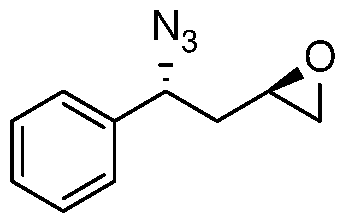
Formula 7 subjecting syn-epoxy alcohol of formula 7 of step (d) to mesylation reaction followed by treatment with NaN3 in DMF at 40-60°C to obtain anti-l, 3-azido epoxide of formula 8 ;
(+)
Formula 8 f) subjecting anti-l, 3-azido epoxide of formula 8 of step (e) to Hydrolytic Kinetic Resolution with (R,R)-salen CoEI(OAc) complex and H20 to obtain chiral anti-l, 3- azido diol of formula 9 and chiral anti-l, 3-azido epoxide of formula 10 in a ratio of 1.0

Formula 9 Formula 10 g) protecting primary hydroxyl group of azido diol of formula 9 of step (f) by using reagents to obtain hydroxyl protected azido diol of formula 11 ;

Formula 11 treating compound of formula 11 with hydroxly of step (g) with sodium cyanide obtain nitrile of formula 12 ;

Formula 12 i) hydrolysing nitrile of formula 12 of step (h) by hydrogen peroxide catalyzed hydrolysis in aqueous NaOH to obtain acid of formula 13;

Formula 13 iterifying acid of formula 13 of step (i) to obtain esters of formula 14;

Formula 14 subjecting ester of formula 14 of step (j) to intramolecular reductive cyclization over Pd(OH)2/H2to obtain cis-2,4-disubstituted piperidinone of formula 15;

Formula 15
1) reducing cis-2,4-disubstituted piperidinone of step (k) in presence of reagents to obtain alkyl piperidine-4-ol of formula 16;

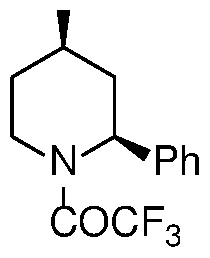
Formula 16 m) protecting hydroxyl group of alkyl piperidine-4-ol of formula 16 of step (1) product with reagents to obtain protected product of formula 17;

Formula 17 n) oxidizing of alkyl group protected product of formula 17 of step (m) using reagents to obtain (2S, K)-4-hydroxypipecolic acid of formula 1.
In an embodiment of present invention the reagents of step (b) are di-ie/ -butyl dicarbonate, 4-dimethylaminopyridine and acetonitrile.
In another embodiment of present invention the reagents of step (c) are N-Iodosuccinimide and acetonitrile.
In still another embodiment of present invention the reagents of step (d) are Potassium Carbonate and methanol.
In yet another embodiment of present invention the reagents of step (g) are selected from the group consisting of 4-Toluenesulfonyl chloride, trimethylamine, dibutyltin oxideand 4- dimethylaminopyridine.
In still another embodiment of present invention the reagents of step (1) is selected from LiAlH4/THF.
In still another embodiment of present invention the alkyl piperidine-4-ol of step (1) is 2- Phenylpiperidine-4-ol.
In yet another embodiment of present invention the reagents of step (m) are selected from the group consisting of TFAA/Et3N and K2C03/THF,K2C03/THF, Ac20/Et3N/DMAP either alone or in combination.
In yet another embodiment of present invention the reagents of step (n) are selected from the group consisting of NaI04/RuCl3/CCyMeCN/H20, K2C03, Dowex 50 X8 resin (79%).
BRIEF DESCRIPTION OF THE DRAWINGS
Figure 1 depicts HPLC Data for showing higher optical purity. Scheme 1 and 2 depicts schematic representation of instant process for synthesis of (2S,4R)- 4-hydroxy pipecolic acid.
Scheme 1 depicts reaction conditions for formation of compounds 4 to 10 (i) 3-bromoprop- lene, Zn, NH4C1, THF/H20, 25°C, 2 h, 82%; (ii) (Boc)20, DMAP, CH3CN, 25°C, 5 h, 92%; (iii) NIS, CH3CN, -40°C to 0°C, 12 h, 80%; (iv) K2C03, MeOH, 0°C to 25°C, 4 h, 95%; (v) (a) MsCl, NEt3, CH2C12, 0°C, 45 min.; (b) NaN3, DMF, 50°C, 4 h, 83% over two step; (vi) (tf,tf)-Coin(salen) (0.5 mol %), H20 (0.49 equiv), 0 to 25°C, 12 h.
Scheme 2 depicts reaction conditions for formation of compounds 11 to 17 and subsequently compound 1 from 17 (i) TsCl, NEt3, Bu2SnO, DMAP, 0°C, 2 h, 98%; (ii) NaCN, EtOH/H20 (4: 1), 25°C, 24 h, 80%; (iii) NaOH, H20, H202, 12 h, 50°C, 93%; (iv) H2S04, EtOH, reflux, 4 h, 84%; (v) 10% Pd/C, 25 °C, 12 h, 87%; (vi) LiAlH4, 36 h (64%); (vii) i) TFAA/Et3N, ii) K2C03/THF, iii) Ac20/Et3N/DMAP (80%); (viii) i) NaI04/RuCl3/CCl4/MeCN/H20, ii) K2C03, iii) Dowex 50 X8 resin (79% )
DETAILED DESCRIPTION OF THE INVENTION
The present invention provides an improved enantioselective process for the synthesis of (25,4 ?)-4-hydroxy pipecolic acid 1.
In another embodiment, the present invention provides an improved enantioselective process for the synthesis of (2S, K)-4-hydroxy pipecolic acid 1 by employing two stereocentered Hydrolytic Kinetic Resolution (HKR) of racemic-l,3-azido epoxide with good yields and high optical purity without any protecting groups.

The present invention provides an improved process for the synthesis of (25,4 ?)-4-hydroxy pipecolic acid 1 comprising the steps of : a) treating bezy aldehyde 3 with zinc allylbromide to obtain phenyl butenol 4;
b) protecting homoallylic alcohol 4 as its tert-butyl carbonate 5 using di-tert- butyldicarbonate, DMAP and CH3CN;
c) diastereo selective iodine-induced carbonate cyclization of 5 furnished iodocarbonate derivative 6;
d) methanolysis of 6 under basic conditions gives racemic syn-epoxy alcohol 7;
e) subjecting syn-epoxy alcohol 7 to mesylation reaction followed by treatment with NaN3 in DMF at 50°C to afford anti-l, 3-azido epoxide 8;
f) subjecting compound 8 to HKR with (R,R)-salen Coin(OAc) complex and H20, to obtain chiral anti-l, 3-azido diol9and chiral anti-l, 3-azido epoxide 10;
g) selective monotosylation of primary hydroxyl group of azido diol 9 afforded compound 11;
h) nucleophilic displacement of compound 11 with NaCN to give nitrilel2;
i) hydrogen peroxide catalyzed hydrolysis of the nitrile 12 in aqueous NaOH to give acid 13;
j) acid catalyzed esterification of 13 gives ethyl ester 14;
k) subjecting Ethyl ester 14 to intramolecular reductive cyclization over Pd(OH)2/H2 to provide czs-2,4-disubstituted piperidinone 15;
1) reduction of czs-2,4-disubstituted piperidinone 15 in presence ofLiAlH4/THF gives2- Phenylpiperidine-4-oll6;
m) protection of Hydroxyl group of compound 16 as acylate and amine as trifluroacetamide to give 17; and
n) oxidation of phenyl group of compound 17 to give target molecule 4-hydroxy pipecolic acid.
The synthesis of (2S,4R)-4-hydroxy pipecolic acid 1 commenced with commercially available bezyaldehyde 3, which on treatment with zinc allylbromide gave phenylbutenol 4 in 82% yield. The phenylbutenol 4 was then readily transformed into racemic syn-l,3-epoxy alcohol 7 in three- step steps:
(i) homoallylic alcohol 4, was protected as its tert-butyl carbonate 5 in 92% yield (di- tert-butyldicarbonate, DMAP and CH3CN);
(ii) diastereoselective iodine-inducedcarbonate cyclization of 5 furnished iodocarbonate derivative 6 in 80% yield(NIS, CH3CN, 0°C, 24 h) and methanolysis of 6 under basic conditions gave racemic syn-epoxy alcohol 7. The syn-epoxy alcohol 7 was further subjected to mesylation reaction followed by treatment with NaN3 in DMF at 50°C gives required racemic anti-l,3-azido epoxide 8 in 83% yield with complete inversion at benzylic position, which was confirmed by 1H and 13C-NMR. Compound 8 was then subjected to HKR with (R,R)-salen CoIII(OAc) complex (0.5 mol %) and H20 (0.49 equiv), which produced the corresponding chiral anti- 1,3 -azido diol 9 (48%, 99% ee) and chiral anti- 1,3 -azido epoxide 10 (49%, 98% ee) in high optical purity. Compounds 9 and 10 were readily separated by a simple flash column chromatographic purification. Azido diol 9 is further used for the synthesis of (2S,4R)-4-hydroxy pipecolic acid. Selective monotosylation of primary hydroxyl group of azido diol 9 afforded compound 11 (TsCl, NEt3, Bu2SnO, DMAP, 0°C). It is then subjected to nucleophilic displacement with NaCN to give nitrile 12 in 80% yield. The structure of 12 is confirmed by its characteristic IR frequencies (2100 and 2253 cm"1) due to azide and nitrile functions, respectively. Hydrogen peroxide catalyzed hydrolysis of the nitrile 12 in aqueous NaOH produced acid 13, which is converted to the ethyl ester 14 in 84% yield via acid catalyzed esterification (cat. H2S04, EtOH, reflux). Finally, the ethyl ester 14 is subjected to intramolecular
reductive cyclization over Pd/C, H2 (1 atm) to provide the known key intermediate cis-2,4-disubstituted piperidinone 15 (overall yield 12%). The spectral data and optical rotation of the synthesized key intermediate cis-2,4-disubstituted piperidinone 15 are in good agreement with reported values.
The schematic representation of instant process is given in scheme 1 and scheme 2. EXAMPLES Following examples are given by way of illustration and therefore should not be construed to limit the scope of the invention.
EXAMPLE 1: Synthesis of l-phenylbut-3-en-l-ol (4): Solvents were purified and dried by standard procedures before use. Optical rotations were measured using sodium D line on a JASCO-181 digital polarimeter. IR spectra were recorded on a Perkin-Elmer model 683 B and absorption is expressed in cm-1. 1H NMR and 13 C NMR spectra were recorded on Brucker AC-200 spectrometer unless mentioned otherwise. Elemental analysis was carried out on a Carlo Erba CHNS-0 analyzer. Purification was done using column chromatography (60-120 mesh). Enantiomeric excesses was determined on Agilent HPLC instrument equipped with a chiral column. HRMS data were recorded on a Thermo Scientific Q-Exactive, Accela 1250 pump.

Benzaldehyde (24 mmol) and 3-bromoprop-l-ene (29 mmol) in THF (30 mL) were added to zinc powder ( 48 mmol) in saturated NH4C1 solution (60 mL) at 25 °C . The resulting mixture was stirred for one hour, diluted with water, extracted with dichloromethane (3 x 50 mL), washed with brine, dried over Na2S04. Concentration of the organic phases in vacuo gave the crude reaction mixture which was purified via silica gel chromatography to afford the homoallylic alcohol as colorless oil (80% yield)
1H NMR (200 MHz, CDC13): 2.12 (bs, 1H), 2.44-2.52 (tq, 2H), 4.65-4.71 (t, 1H), 5.08-5.18 (m, 2H), 5.67-5.88 (m, 1H), 7.19-7.33 (m, 5H); 13C NMR (50 MHz, CDCI3): 4.38, 73.3, 118.3, 125.8, 127.5, 128.3, 134.4, 143.9. EXAMPLE 2: Synthesis of tert-butyl (l-phenylbut-3-en-l-yl) carbonate (5):

To a solution of alcohol 3 (36.7 mmol) in CH3CN (160 mL) were added Boc20 (55.03 mmol) and DMAP (14.7 mmol). After 5 h of stirring, the solvent was evaporated under reduced pressure. The residue was taken up in EtOH (110 mL), and imidazole (0.18 mol) was added. The resulting mixture was stirred at 26°C for 15 min, and then CH2C12 was added. The organic phase was washed with 5% HC1 solution (3x), dried over anhydrous NaS04, filtered, and concentrated in vacuo. Purification by flash chromatography (2% ethyl acetate/hexane) gave (90%) as a yellow oil.
1H NMR (200 MHz, CDC13): 1.44 (s, 9H), 2.40-2.76 (m, 2H), 5.01-5.13 (m,2H), 5.50-5.77 (m, 2H), 7.25-7.35 (m, 5H); 13C NMR (50 MHz, CDC13):27.8, 41.0, 78.3, 81.9, 118.2, 126.5, 128.0, 128.4, 133.2, 140.0, 152.9.
EXAMPLE 3: Synthesis of 4-(iodomethyl)-6-phenyl-l,3-dioxan-2-one (6):

A solution of tert-butyl (l-phenylbut-3-en-l-yl) carbonate (1 mol), in acetonitrile was added NIS (2 mol) at 0°C slowly under nitrogen atmosphere. The reaction mixture was stirred for 12 hr. Then reaction was quenched with aq. Saturated solution of NaHCC^. The
reaction mixture was diluted with diethyl ether and organic layer was washed with aq. Na2S208 until it becomes colorless. Dried over Na2S04. Removal of solvent under reduced pressure.
1H NMR (200 MHz, CDC13): 1.82-2.03(m, 2H), 2.51-2.61 (dt, IH, J= 2Hz), 3.19-3.41 (m, 3H), 4.49-4.62 (m, IH), 5.37-5.44 (dd, IH), 7.29-7.38 (m, 5H); 13C NMR (50 MHz, CDCI3): 5.3, 35.6, 77.1, 79.3, 125.85, 128.9, 129.1, 137.1, 148.0
EXAMPLE 4: Synthesis of 2-(oxiran-2-yl)-l-phenylethan-l-ol (7):

(+)
To a solution of cyclic carbonate 10 (13.02 mmol) in anhydrous MeOH (52 mL) at 27°C was added K2C03 (40.36 mmol), and the reaction was stirred for 2 h. The mixture was diluted with ether (200 mL) and quenched with saturated aqueous Na2S203/saturated aqueous NaHC03 solution (1/1). The aqueous phase was extracted with ether (3x). The organic extracts were washed with brine (lx), dried over anhydrousMgS04, and filtered. Removal of solvent left an oil which was purified by flash chromatography (30% ethyl acetate/hexane), affording 11 (96%) as a colorless oil:
Yield:92 %,colorless gummy; IR: (CHCl3, cm_1) 3256;1H NMR (200 MHz,CDCl3): δ 1.81-2.12 (m, 2H), 2.41 (bs, IH), 2.49-2.52 (q, IH, = 2.65 Hz), 4.92-4.99 (q, IH, = 5.31 Hz), 7.28-7.41 (m, 5H);13C NMR (50 MHz, CDC13): δ 41.6, 46.6, 50.0, 72.2, 125.7, 127.5, 128.3, 143.8.
EXAMPLE 5: Synthesis of (2-azido-2-phenylethyl) oxirane (8):

(+)
To a solution of epoxy alcohol 7(6.09 mmol) in CH2CI2 (15 mL), triethyl amine (1.27 mL, 9.14 mmol) and Mesyl chloride (0.56 mL, 7.31 mmol) was added at 0°C under nitrogen atmosphere. The resulting solution was stirred at same temperature for 45 min. After the completion of the reaction (monitored by TLC), it was quenched with water and extracted with CH2CI2 (3 x 10 mL). The combined organic extracts were washed with brine, dried over anhydrous Na2S04 and concentrated under reduced pressure to give the crude product mesyl protected alcohol, which was used for next azidation reaction without purification. To a stirred mixture of crude mesylate (6.09 mmol) in DMF (10 mL), sodium azide (0.435 g, 6.70 mmol) was added. Reaction mixture was stirred for 4 h at 50°C. After the completion of the reaction (monitored by TLC), it was extracted with EtOAc (3 x 10 mL), washed with water, brine and dried over anhydrous Na2S04. The combined organic layer was concentrated under reduced pressure to give the crude azido epoxide 8, which was purified by column chromatography with silica gel using petroleum ether: ethyl acetate (9: 1) as eluent gave pure 8.
Yield: 83%, colorless liquid; IR: (CHC13 cm"1): 2096, 1244, 837, 748, 699; 1H NMR (200 MHz,CDCl3): δ 1.69-1.80 (m, 1H), 2.01-2.17 (m, 1H), 2.51 (dd, J= 2.6, 5.0 Hz, 1H), 2.82 (dd, J= 4.2, 4.8 Hz, 1H), 3.05-3.14 (m, 1H), 4.68-4.75 (dd, = 4.3, 9.9 Hz, 1H), 7.28 - 7.41 (m, 5H); 13C NMR (50 MHz, CDC13): δ 39.8, 47.4, 49.2, 63.7, 126.6, 128.4, 128.9, 139.2; HRMS (m/z): calculated [M+Na]+ for Ci0HuON3Na+ : 212.0794 found: 212.0791.
EXAMPLE 6: Synthesis of (25,45)-4-azido-4-phenylbutane-l,2-diol (9):

To a solution of (7?J?)-Co-salen (0.027g, 0.5 mol%) in toluene (2 mL), acetic acid ( 0.02 g, 0.36 mmol) was added. It was allowed to stir at 25°C in open air for 30 min. During this time the color changed from orange-red to a dark brown, it was then dried under vacuum. To this racemic azido epoxide 8 (1.72 g, 9.13 mmol) and ¾0 (0.08 mL, 4.47 mmol) was added at 0 °C. Then the reaction was allowed to stirred for 12 h at 25°C. After completion of reaction (monitored by TLC), the crude product was purified by column chromatography over silica gel to give chiral azido epoxides 10, [solvent system; petroleum ether: ethyl
acetate (9: 1)] and chiral azido diols 9 [solvent system; petroleum ether: ethyl acetate (1 : 1)] in pure form.
Yield: 48%, yellow colored liquid, [a]25 D = -98.29 (c 1, CHC13); IR: (CHC13 cm"1) 3455, 2094; 1H NMR (200 MHz,CDCl3): δ 1.75- 1.90 (m, 2H), 2.44 (br s, 1H), 2.88 (br s, 1H), 3.45-3.54 (m, 1H), 3.72-3.77(m, 1H), 3.97-4.10 (m, 1H), 4.76-4.83 (dd, J = 5.2, 9.5 Hz, 1H), 7.26-7.40 (m, 5H); 13C NMR (50 MHz, CDC13): δ 40.0, 62.7, 66.7, 68.9, 126.7, 128.4, 128.9, 139.8; ; HRMS ( /z): calculated [M+Na]+ for Ci0Hi3O2N3Na+ : 230.0900 found: 230.0897; Optical purity:99% ee determined by HPLC analysis (Chiral OD-H column, n- hexane/ 2-propanol (85: 15), 0.5 mL/min, 254 nm). Retention time: t minor = 21.50 and tmajor = 25.69 min.
EXAMPLE 7: Synthesis of (R)-2-((R)-2-azido-2-phenylethyl) oxirane (10):

Yield: 49%, [af D =+149.12 (c 1, CHC13); Optical purity: 98% ee determined by HPLC analysis (Chiral OD-H column, n-hexane/ 2-propanol (97.5:2.5), 0.5 mL/min, 254 nm) Retention time: t major = 15.35 min and t mmor = 18.84 min.
EXAMPLE 8: Synthesis of (25, 45)-4-azido-2-hydroxy-4-phenylbutyl 4- methylbenzenesulfonate (11):

A solution of diol 9 (1.2 g, 5.79 mmol) in CH2C12 (50 mL) was treated with TsCl (1.1 g, 5.79 mmol), Bu2SnO (0.54 g, 30 mol%), Et3N (0.96 mL, 6.9 mmol) and DMAP (30 mg, cat.) at 0 °C and stirred for 2 h. After the reaction was complete (monitored by TLC), it was quenched with water (20 mL) and product was extracted with CH2C12 (3 x 50 mL). The combined organic phases were dried over anhydrous Na2S04 and concentrated to give the
crude product 11, which upon column chromatographic purification with silica gel using petroleum ether: ethyl acetate (7:3) as eluent gave pure 11.
Yield: 98%; gumi liquid; [a]25 D = -63.08 (c 1, CHC13);IR: (CHC13 cm"1) 2097, 3455;1H NMR (200 MHz,CDCl3): δ 1.67-1.78 (m, 2H), 2.45 (s, 3H), 2.88 (br s, 1H), 3.89-3.92 (m, 1H), 4.02-4.05 (m, 1H), 4.08-4.11 (m, 1H), 4.75 (dd, J = 4.12, 10.1 Hz, 1H), 7.26-7.28 (d, J = 7.8 Hz, 2H), 7.30-7.38 (m, 5H), 7.77-7.79 (d, = 7.3 Hz, 2H); 13C NMR (50 MHz, CDC13): δ 21.7, 39.5, 62.2, 66.4, 73.6, 126.7, 128.1, 128.4, 128.9, 129.9, 132.7, 139.4, 145.0; HRMS (m/z): calculated [M+Na]+ for Ci7Hi904N3SNa+ : 384.0988 found: 384.0984.
EXAMPLE 9: Synthesis of (35, 55)-5-azido-3-hydroxy-5-phenylpentanenitrile (12):

Yield:80%, colorless liquid;[a]25 D = -136.11 (c 1, CHC13);IR: (CHC13 cm"1) 3443, 2253, 2100; 1H NMR (200 MHz,CDCl3): δ 1.88-1.93 (m, 2H), 2.48-2.59 (m, 2H), 2.73 (br s, 1H), 4.23 (m, 1H), 4.79-4.82 (dd, = 4.4, 9.5 Hz, 1H), 7.31-7.39 (m, 5H); 13C NMR (50 MHz, CDC13):5 26.6, 42.9, 62.5, 64.7, 117.1, 126.7, 128.7, 129.1, 138.9; HRMS (m/z):calculated [M+Na]+ for CnHi2ON4Na+ : 239.0903 found: 239.0900.
Optical purity: 99% ee determined by HPLC analysis (Chiral OD-H column, n- hexane/ 2-propanol (70:30), 0.5 mL/min, 254 nm). Retention time: tmajor = 11.13 (99.53%) and tminor= 13.63 min (0.47%).
The HPLC results indicate that, the enantiomeric excess (ee) is 99 %. The process is giving high enantiopure compound than any other method.
EXAMPLE 10: S nthesis of (35, 55)-5-azido-3-hydroxy-5-phenylpentanoic acid (13):

A solution of nitrile 12 (0.3 gm, 1.38 mmol) in 3M NaOH (6 mL) was added H202 (2 mL). The reaction mixture was stirred at 100°C for 12 h. After the reaction was complete (monitored by TLC), the reaction mixture was cooled to 0°C. To remove organic impurities, reaction mixture washed with Et20 (15 mL). Then the aqueous phase was neutralized with dil HC1 and was extracted EtOAc (3 x 10 mL), washed with water, brine and dried over anhydrous Na2S04. The combined organic layer was concentrated under reduced pressure to give the crude acid 13, which was purified by column chromatography with silica gel using petroleum ether: ethyl acetate (4:6) as eluent gave pure 13.
Yield: 93%, colorless liquid; [a]25 D = -108.00 (c 1, CHC13); IR: (CHC13 cm"1) 29222101, 1711, 1673; 1H NMR (200 MHz, CDC13): δ 1.51-1.65 (m, 1H), 1.75-1.89 (m, 1H), 2.31-2.33 (m, 2H), 4.07-4.20 (m, 1H), 4.63-4.70 (dd, = 3.3, 10.9 Hz, 1H), 7.24 (m, 5H); 13C NMR (50 MHz, CDC13): δ 41.5, 42.9, 62.1, 64.2, 126.1, 127.6, 128.2, 139.5, 173.7;HRMS (m/z):calculated [M+Na]+ for CnHi303N3Na+ : 258.0849 found: 258.0844
EXAMPLE 11: Synthesis of (35, 55)-ethyl 5-azido-3-hydroxy-5-phenylpentanoate (14):

To a stirring solutions of 13 (0.15 g, 0.63 mmol) in ethanol (5 mL), H2S04 (0.05 mL) was added. The reaction mixture was heated at 70°C for 12 h. After the reaction was completed, the reaction mixture was cooled to 25 °C and concentrated in vacuo. The residue was diluted with 5 mL of H20 and extracted with 10 mL of EtOAc. The organic phase was
dried over anhydrous Na2S04 and concentrated under reduced pressure to afford the crude ester 14, which was purified by column chromatography with silica gel using petroleum ether: ethyl acetate (8:2) as eluent gave pure 14. Yield: 84%, colorless liquid; [a]25 D=-82.00 (c 1, CHC13); IR: (CHCI3 cm"1) 3456,
2982, 2097, 1725; 1H NMR (200 MHz, CDCI3): δ 1.28 (t, = 7.0 Hz, 3H), 1.75-1.82 (m, 2H), 2.41-2.57 (m, 2H), 3.23 (br s, 1H), 4.20 (q, J = 7.0 Hz, 2H), 4.26-4.35 (m, 1H), 4.83 (m, 1H), 7.26-7.41 (m, 5H);13C NMR (50 MHz, CDCI3): δ 14.2, 41.3, 43.3, 60.8, 62.5, 64.7, 126.7, 128.2, 128.9, 139.9, 172.6;Anal.Calcd forCnHnNsChrequrres C, 59.30; H, 6.51; N, 15.96; found C, 59.33; H, 6.45; N, 15.88%.
EXAMPLE 12: Synthesis of (45, 65)-4-hydroxy-6-phenylpiperidin-2-one (15):

To a solution of azido ester 14 (0.05 g, 0.19 mmol) in methanol (2 mL), 10% Pd/C (0.01 mg) was added and stirred under hydrogen atmosphere (1 atm) at 25°C for 12 h. The progress was monitored by TLC. After the completion of reaction (monitored by TLC), it was filtered through a celite pad and washed with EtOAc (3 x 10 mL). The combined organic phase was concentrated under vacuum to afford the crude product 15, which was purified by column chromatography on silica gel using petroleum ether: ethyl acetate (3:7) as eluent to give lactam 15 in pure form.
Yield: 87%; colorless solid, mp 215 {lit.2 mp211-213 }; [a]25 D= -51.80 (c 1, MeOH)
 -52.3 (c 0.88, MeOH-d4)}; IR: (CHC13 cm"1): 3355, 3030, 1651; 1H NMR(200 MHz, MeOH-d4): δ 1.52-1.70 (q, = 12.6 Hz, 1H), 2.21-2.37 (m, 2H), 2.64-2.74 (m, 1H), 4.03-4.17 (m, 1H), 4.47-4.54 (dd, = 4.3, 11.3 Hz, 1H), 4.75 (br s, 1H), 7.29-7.37 (m, 5H); 13C NMR (50 MHz, MeOH-d4): δ 41.5, 42.8, 56.3, 65.7, 127.5, 129.1, 130.0, 143.6, 174.2;HRMS (m/z):calculated [M+Na]+ for CnHi302NNa+ : 214.0838 found: 214.0834.
EXAMPLE 13: Synthesis of 2-Phenylpiperidine-4-ol (16):

In a 25 mL single neck round-bottomed flask equipped with a magnetic stirring bar, rubber septum and argon-filled balloon was placed 15 (0.433 g, 2.26 mmol) in THF (4 mL). The solutionwas cooled to -78 °C, and a 1 M solution of LiAlH4 in THF (11.3 mL, 11.3 mmol) was added slowly via syringe, and the mixture was stirred at r.t. for 36 h. At this time the solution was cooledto 0 °C, quenched with aq sat Na2S04 solution (2 mL), stirred for 0.5 h and filtered through Celite. The filtrate was washed with EtOAc (50 mL), and the organic phase was washed with 2 N NaOH(10 mL), brine (10 mL), dried (Na2S04) and concentrated. The residue was purified by flash chromatography (90: 10:2, CH2C12/ MeOH/28% NH4OH) to afford 0.25 g (62%) of a white solid; mplOl-102 °C (Lit.13 mp 101-102 °C [a]D 20+20.2 (c = 0.54, MeOH); 1H NMR (200 MHz, CDC13) δ 1.40-1.60 (m, 2H), 1.93-2.16 (m, 2H), 2.46 (sb, 2H), 2.76 (dt, J=2.6 Hz and J=12.3 Hz, 1H), 3.10-3.26 (m, 1H), 3.60 (dd, J=2.38 and J=11.48 Hz, 1H), 3.65-3.84 (m, 1H), 7.20-7.40 (m, 5H); 13C NMR (50 MHz, CDC13) 29.6, 35.2, 43.7, 44.9, 60.1, 69.4, 126.5, 127.2, 128.4, 143.6;
EXAMPLE 14: Synthesis of N-Trifluoroacetyl-(2S,4R)-4-acetoxy-2-phenylpiperidine (17) :

COC ,
To an ice cold solution of aminoalcohol 16 (0.3 g, 1.69 mmol) in CH2C12 (25 mL) containing Et3N(1.4 mL, 10 mmol) and dimethylaminopyridine (10 mg, 0.08 mmol) was added via a syringe through a septum trifluoroacetic anhydride (0.95 mL, 6.77 mmol). After stirring at 23 °C for 12 h, water was added and the solution was extracted, dried over MgS04, filtered, and evaporated. The crude product obtained was diluted in THF (25 mL) and K2C03 (0.46 g, 3.38 mmol) was added. The mixture was stirred for 12 h. Water was added and the
reaction mixture was extracted with CH2CI2. After drying over MgS04, the solution was filtered and placed into a one-neck 100 mL round bottomed flask. Triethylamine (0.94 mL, 6.8 mmol) and dimethylaminopyridine (10 mg, 0.08 mmol) were added before cooling to 0°C. Acetic anhydride (0.32 mL, 3.39 mmol) was added via a syringe through a septum and the solution was stirred at 26°C for 12 h. Water was added and the solution was extracted. The solution was dried over magnesium sulfate, filtered, and evaporated to give an oil which was purified by flash chromatography (cyclohexane:AcOEt, 80:20) to give the protected aminoalcohol 17 as a colorless oil (0.44 g, 82%): [a]D 22 =-45.5 (c 1.05, CH2C12); 1H NMR (400 MHz, C6D6, 60°C); 1.26 (s, 3H), 1.28-1.37 (m,2H), 1.56 (ddd, J=3.1, 6.6, 15.2 Hz, 1H), 2.39-2.46 (m, 1H), 3.2 (dtbroad, J not measurable, 1H), 3.79 (m, 1H), 4.72 (quint, J=3.5 Hz, 1H), 5.48 (m, 1H), 6.90-6.98 (m, 3H), 7.03-7.08 (m, 2H); 13C NMR (50 MHz, C6D6) 19.8, 29.4, 31.2, 36.7, 52.4, 66.1, 117.2 (q, J=287 Hz, CF3), 125.2, 126.4, 128.4, 139.0, 156.2, 168.8; IR (nujol) 1747, 1702, 1607 cm-1. EXAMPLE 15: Synthesis of (2S, 4R)-4-Hydroxypipecolic acid (1):

Compound 17 (0.4 g, 1.27mmol) was placed into a flask equipped with a magnetic stirrer and containing 2 mL of carbon tetrachloride, 2 mL of acetonitrile, and 3 mL of water. Sodium periodate (4.07 g, 19 mmol) and ruthenium chloride hydrate (13 mg, 0.06 mmol) were added and the solution was vigorously agitated overnight. On the next day, the solution was filtered through a Celite pad and rinsed several times with dichloromethane. The dark solution was dried over magnesium sulfate, filtered, and concentrated. The crude acid thus obtained was diluted in methanol (15 mL); potassium carbonate (1.05 g, 7.6 mmol) was added, and the mixture was stirred at 27°C for 12 h. The solution was concentrated and acidified with 1 M HC1. Purification was performed over a column of Dowex 50W-X8 resin (100-200 mesh, 20 g) eluted with 5% NH4OH under a light pressure. The ninhydrin positive fractions were combined and evaporated in vacuo to give a solid which was recrystallized from hot 25% water in EtOH. Evaporation and drying under vacuum over P2Os gave pure 1 as a solid (0.11 g, 60%):D =-17.18 (c 1.02, H20),mp 267°C; 1H NMR (400 MHz, D20):
1.47-1.59 (m, 2H), 2.04-2.09 (m, IH), 2.38-2.44 (m, IH), 2.95 (dt, J=3.1, 13.2 Hz, IH), 3.42 (ddd,J=2.7, 4.4, 13.2 Hz, IH), 3.60 (dd, J=3.2, 12.9 Hz, IH), 3.88 (tt, J=4.4, 11 Hz, IH); 13C NMR (50 MHz, D20) 31.0, 35.8, 42.5, 58.9, 66.6, 174.4. ADVANTAGES OF THE INVENTION
1) Simple reaction sequence
2) Improved over all yield
3) High optical purity 4) Easily available cheap staring material
Claims
An enantioselective process for the synthesis of (2S, K)-4-hydroxypipecolic acid of formula 1

Formula 1 using (R,R)-salen Co (OAc) complex catalyst comprising the steps of : treating benzaldehyde of formula 3 with zinc allylbromide to obtain phenyl butenol of formula 4;

Formula 3 Formula 4 protecting phenyl butenol of formula 4 of step (a) by using reagents to obtain protected alcohol of formula 5;
OO I

Formula 5 c) treating protected alcohol of formula 5 of step (b) with reagents to obtain iodocarbonate derivati


Formula 7 subjecting syn-epoxy alcohol of formula 7 of step (d) to mesylation reaction followed by treatment with NaN3 in DMF at 40-60°C to obtain anti-1, 3-azido epoxide of formula 8 ;

(+)
Formula 8 subjecting anti- 1, 3-azido epoxide of formula 8 of step (e) to Hydrolytic Kinetic Resolution with (K,7?)-salen Com(OAc) complex and H20 to obtain chiral anti- 1, 3-azido diol of formula 9 and chiral anti-1 , 3-azido epoxide of formula 1 in a ratio of 1.02: 1 ;

Formula 9 Formula 10 protecting primary hydroxyl group of azido diol of formula 9 of step (f) by using reagents to obtain hydroxyl protected azido diol of formula 1 1 ;

Formula 11
treating compound of formula 11 with hydroxly of step (g) with sodium cyanide to obtain nitrile of formula 12 ;

Formula 12 i) hydrolysing nitrile of formula 12 of step (h) by hydrogen peroxide catalyzed hydrolysis in aqueous NaOH to obtain acid of formula 13;

Formula 13 iterifying acid of formula 13 of step (i) to obtain esters of formula 14;

Formula 14 subjecting ester of formula 14 of step j) to intramolecular reductive cyclization over Pd(OH)2/H2 to obtain cis-2,4-disubstituted piperidinone of formula 15;

Formula 15
1) reducing cis-2,4-disubstituted piperidinone of step (k) in presence of reagents to obtain alkyl piperidine-4-ol of formula 16;

Formula 17 n) oxidizing of alkyl group protected product of formula 17 of step (m) using reagents to obtain (2S,4 ?)-4-hydroxypipecolic acid of formula 1.
2. The process as claimed in claim 1, wherein said reagents of step (b) are di-ie/t-butyl dicarbonate, 4-dimethylaminopyridine and acetonitrile.
3. The process as claimed in claim 1, wherein said reagents of step (c) are N- Iodosuccinimide and acetonitrile.
4. The process as claimed in claim 1, wherein said reagents of step (d) are Potassium Carbonate and methanol.
5. The process as claimed in claim 1, wherein said reagents of step (g) are selected from the group consisting of 4-Toluenesulfonyl chloride, trimethylamine, dibutyltin oxideand 4-dimethylaminopyridine.
6. The process as claimed in claim 1, wherein the said reagents of step (1) is selected from LiAlH4/THF.
7. The process as claimed in claim 1, wherein said alkyl piperidine-4-ol of step (1) is 2- Phenylpiperidine-4-ol.
The process as claimed in claim 1, wherein said reagents of step (m) are selected from the group consisting of TFAA/Et3N and K2C03/THF,K2C03/THF, Ac20/Et3N/DMAP either alone or in combination.
The process as claimed in claim 1, wherein said reagents of step (n) are selected from the group consisting of NaI04/RuC13/CC14/MeCN/H20, K2C03, Dowex 50 X8 resin (79% ).
Applications Claiming Priority (2)
| Application Number | Priority Date | Filing Date | Title |
|---|---|---|---|
| IN278DE2015 | 2015-01-30 | ||
| IN0278/DEL/2015 | 2015-01-30 |
Publications (1)
| Publication Number | Publication Date |
|---|---|
| WO2016120890A1 true WO2016120890A1 (en) | 2016-08-04 |
Family
ID=55642547
Family Applications (1)
| Application Number | Title | Priority Date | Filing Date |
|---|---|---|---|
| PCT/IN2016/050029 Ceased WO2016120890A1 (en) | 2015-01-30 | 2016-01-29 | An enantioselective process for the synthesis of (2s,4r)-4-hydroxypipecolic acid |
Country Status (1)
| Country | Link |
|---|---|
| WO (1) | WO2016120890A1 (en) |
-
2016
- 2016-01-29 WO PCT/IN2016/050029 patent/WO2016120890A1/en not_active Ceased
Non-Patent Citations (26)
| Title |
|---|
| "Synthesis of novel enantiopure 4-hydroxypipecolic acid derivatives with a bicyclic beta-lactam structure from a common 3-azido-4-oxoazetidine-2-carbaldehyde precursor", JOURNAL OF ORGANIC CHEMISTRY, vol. 73, no. 4, 2008, pages 1635 - 8 |
| BEAULIEU ET AL., J. ORG CHEM., vol. 62, 1997, pages 3440 - 3448 |
| BOUSQUET ET AL., TETRAHEDRON, vol. 46, 1997, pages 15671 - 15680 |
| CARLOS ALEGRET ET AL.: "Asymmetric synthesis of cis-4- and trans-3-hydroxypipecolic acids", EUROPEAN JOURNAL OF ORGANIC CHEMISTRY, 2008, pages 1789 - 1796 |
| CHRISTIAN DI NARDO ET AL.: "Enantioselective Synthesis of (2R,4S)- and (2S,4R)-4-Hydroxypipecolic acid from d-Glucoheptono-1,4-lactone", JOURNAL OF ORGANIC CHEMISTRY, vol. 64, no. 17, 1999, pages 6119 - 6125 |
| DA DEVALANKAR ET AL.: "Concise enantioselective synthesis of (+)-L-733,060 and (2S,3S)-3-I hydroxypipecolic acid by cobalt(IIl)(salen)-catalyzed two-stereocenter hydrolytic kinetic resolution of racemic azido epoxides", SYNLETT, vol. 25, no. 1, 2014, pages 102 - 104 |
| DAVIS F A ET AL: "Asymmetric synthesis of the four stereoisomers of 4-hydroxypipecolic acid", SYNTHESIS, GEORG THIEME VERLAG, STUTTGART, DE, no. 14, 1 January 2000 (2000-01-01), pages 2106 - 2112, XP003019746, ISSN: 0039-7881, DOI: 10.1055/S-2000-8710 * |
| DI NARDO; VARELA, J. ORG. CHEM., vol. 64, 1999, pages 6119 - 6125 |
| ERNESTO G. OCCHIATO ET AL.: "Stereoselective synthesis of (2S,4R)-4-hydroxypipecolic acid", EUROPEAN JOURNAL OF ORGANIC CHEMISTRY, vol. 3, 2008, pages 524 - 531 |
| FRANCA M. CORDERO ET AL.: "The synthesis of 4-Hydroxypipecolic acids by stereoselective cycloaddition of configurationally stable nitrones", EUROPEAN JOURNAL OF ORGANIC CHEMISTRY, vol. 14, 2006, pages 3235 - 3241 |
| GOLUBEV ET AL., TETRAHEDRON LETT., vol. 36, 1995, pages 2037 - 2440 |
| HARI PRASAD KOKATLA ET AL.: "Synthesis of (-)-Deoxoprosophylline, (+)-2-epi-Deoxoprosopinine, and (2R,3R)- and (2R,3S)-3-Hydroxypipecolic Acids from D-Glycals", JOURNAL OF ORGANIC CHEMISTRY, vol. 75, no. 13, 2010, pages 4608 - 11 |
| HAYS ET AL., J. ORG. CHEM., vol. 56, 1990, pages 4084 - 4086 |
| KAMBLE R. B. ET AL.: "A formal asymetric synthesis of (2S,4R)-4-hydroxypipecolic acid via Co(III)(salen)-catalysed two stereocentered HKR of racemic azido epoxide", TETRAHEDRON LETTERS, vol. 56, 22 January 2015 (2015-01-22), pages 1263 - 1265, XP002757139 * |
| LAURA BARTALI ET AL.: "Enantiodivergent chemoenzymatic synthesis of 4-hydroxypiperidine alkaloids", EUROPEAN JOURNAL OF ORGANIC CHEMISTRY, vol. 30, 2010, pages 5831 - 5840 |
| MANDAR S BODAS ET AL.: "An asymmetric dihydroxylation route to (2S,3S)-3-hydroxypipecolic acid", TETRAHEDRON LETTERS, vol. 45, no. 46, 2004, pages 8461 - 8463 |
| MARIO J. SIMIRGIOTIS ET AL.: "Concise and straightforward asymmetric synthesis of a cyclic natural hydroxy-amino acid", MOLECULES, vol. 19, 2014, pages 19516 - 19531 |
| MARK C. NOE ET AL.: "A short enantioselective synthesis of N-Boc-(2R,3R)-3-methyl-3-hydroxypipecolic acid from geraniol", JOURNAL OF ORGANIC CHEMISTRY, vol. 73, no. 8, 2008, pages 3295 - 3298 |
| MARK SABAT ET AL.: "Synthesis of (2R,4R)- and (2S,4S)-4-hydroxypipecolic acid derivatives and (2S,4S)-(-)-SS20846A", TETRAHEDRON LETTERS, vol. 42, no. 7, 2001, pages 1209 - 1212 |
| NIN ET AL., TETRAHEDRON, vol. 42, 1993, pages 9459 - 9464 |
| PANDURANG VILASRAO CHOUTHAIWALE: "Asymmetric synthesis of bioactive molecules and methodologies involving oxidative functionalization of alkanes, alkenes and hydrosilylation of ketones", THESIS |
| PELLICCIARI ET AL., MED. CHEM. RES., vol. 2, 1992, pages 491 - 496 |
| PRADEEP KUMAR ET AL.: "Asymmetric synthesis of both the enantiomers of trans-3-Hydroxypipecolic Acid", JOURNAL OF,ORGANIC CHEMISTRY, vol. 70, no. 1, 2005, pages 360 - 363 |
| RICHARD C LLOYD ET AL.: "Chemoenzymatic synthesis of the four diastereoisomers of 4-hydioxypipecolic acid from N-acetyl-(R,S)-allylglycine chiral scaffolds for drug discoveiy", ORGANIC PROCESS RESEARCH AND DEVELOPMENT, vol. 6, no. 6, 2002, pages 762 - 766 |
| SU KIM ET AL.: "Synthesis and conformational analysis of 3-hydroxypipecolic acid analogs via CSI-mediated stereoselective amination", TETRAHEDRON, vol. 63, 2007, pages 2622 - 2633 |
| TETRAHEDRON, I, vol. 63, no. 13, 2007, pages 2745 - 2785 |
Similar Documents
| Publication | Publication Date | Title |
|---|---|---|
| KAWAHATA et al. | Synthesis of a new amino acid-antibiotic, oxetin and its three stereoisomers | |
| Kiss et al. | Stereoselective synthesis of hydroxylated β-aminocyclohexanecarboxylic acids | |
| Bohno et al. | Total synthesis of Amaryllidaceae alkaloids,(+)-vittatine and (+)-haemanthamine, starting from d-glucose | |
| Ji et al. | Diastereospecific epoxidation and highly regioselective ring-opening of (+)-valienamine: practical synthesis of (+)-valiolamine | |
| Matsuura et al. | Total synthesis of mugineic acid. Efficient use of the phenyl group as the carboxyl synthon | |
| Hatakeyama et al. | Total synthesis of (+)-conagenin | |
| Henmi et al. | Highly efficient synthesis of (R)-and (S)-piperazic acids using proline-catalyzed asymmetric α-hydrazination | |
| Fujiwara et al. | Practical Synthesis of Pachastrissamine (Jaspine B), 2-epi-Pachastrissamine, and the 2-epi-Pyrrolidine Analogue | |
| Grajewska et al. | Stereoselective synthesis of cytoxazone and its analogues | |
| Takano et al. | Asymmetric dihydroxylation of a meso-symmetric cyclic diene using AD-mix reagents: a new enantiocontrolled route to conduritol E | |
| Haddad et al. | A new route to (2S, 4R)-and (2R, 4S)-4-hydroxypipecolic acid | |
| KONOSU et al. | Synthesis of racemic and optically active cispentacin (FR109615) using intramolecular nitrone-olefin cycloaddition | |
| Noda et al. | Total synthesis of myriocin and mycestericin D employing Rh (II)-catalyzed CH amination followed by stereoselective alkylation | |
| US9233943B2 (en) | Process for synthesis of syn azido epdxide and its use as intermediate for the synthesis of amprenavir and saquinavir | |
| Coral et al. | A De Novo Asymmetric Approach To 8a-epi-Swainsonine | |
| Saotome et al. | Chemoenzymatic syntheses of N-trifluoroacetyl-l-daunosamine, N-trifluoroacetyl-l-acosamine, N-benzoyl-d-acosamine, and N-benzoyl-d-ristosamine from an achiral precursor, methyl sorbate | |
| Acetti et al. | A new enzymatic approach to (R)-tamsulosin hydrochloride | |
| Chavan et al. | Divergent approach to the synthesis of (-)-balanol heterocycle and cis-3-hydroxypipecolic acid based on chiral 2-aminoalkanol equivalent | |
| Ortiz et al. | Synthetic approaches to a chiral 4-amino-3-hydroxy piperidine with pharmaceutical relevance | |
| Morokuma et al. | Total synthesis of lycoperdic acid and stereoisomers (part 2): Completion of the synthesis and biological evaluation | |
| Faigl et al. | Synthesis and enantioselective rearrangement of (Z)‐4‐triphenylmethoxy‐2, 3‐epoxybutan‐1‐ol enantiomers | |
| Senda et al. | Synthesis of (–)-Invictolide, the Pheromone Component of the Red Imported Fire Ant | |
| JP2012116775A (en) | Method for producing ecteinascidin | |
| Díaz et al. | Enantioselective synthesis of chiral polyfunctional cyclopentane derivatives: Epoxy esters, hydroxy esters, and hydroxy amino esters | |
| Reddipalli et al. | Stereoselective synthesis of (−)-α-conhydrine |
Legal Events
| Date | Code | Title | Description |
|---|---|---|---|
| 121 | Ep: the epo has been informed by wipo that ep was designated in this application |
Ref document number: 16713113 Country of ref document: EP Kind code of ref document: A1 |
|
| NENP | Non-entry into the national phase |
Ref country code: DE |
|
| 122 | Ep: pct application non-entry in european phase |
Ref document number: 16713113 Country of ref document: EP Kind code of ref document: A1 |