WO2016117500A1 - 認証装置、方法、システムとプログラム並びにサーバ装置 - Google Patents
認証装置、方法、システムとプログラム並びにサーバ装置 Download PDFInfo
- Publication number
- WO2016117500A1 WO2016117500A1 PCT/JP2016/051268 JP2016051268W WO2016117500A1 WO 2016117500 A1 WO2016117500 A1 WO 2016117500A1 JP 2016051268 W JP2016051268 W JP 2016051268W WO 2016117500 A1 WO2016117500 A1 WO 2016117500A1
- Authority
- WO
- WIPO (PCT)
- Prior art keywords
- service
- probability
- scenario
- procedure
- success
- Prior art date
- Legal status (The legal status is an assumption and is not a legal conclusion. Google has not performed a legal analysis and makes no representation as to the accuracy of the status listed.)
- Ceased
Links
Images



Classifications
-
- G—PHYSICS
- G06—COMPUTING OR CALCULATING; COUNTING
- G06F—ELECTRIC DIGITAL DATA PROCESSING
- G06F21/00—Security arrangements for protecting computers, components thereof, programs or data against unauthorised activity
- G06F21/30—Authentication, i.e. establishing the identity or authorisation of security principals
- G06F21/31—User authentication
-
- G—PHYSICS
- G06—COMPUTING OR CALCULATING; COUNTING
- G06F—ELECTRIC DIGITAL DATA PROCESSING
- G06F21/00—Security arrangements for protecting computers, components thereof, programs or data against unauthorised activity
- G06F21/10—Protecting distributed programs or content, e.g. vending or licensing of copyrighted material ; Digital rights management [DRM]
- G06F21/12—Protecting executable software
-
- H—ELECTRICITY
- H04—ELECTRIC COMMUNICATION TECHNIQUE
- H04L—TRANSMISSION OF DIGITAL INFORMATION, e.g. TELEGRAPHIC COMMUNICATION
- H04L63/00—Network architectures or network communication protocols for network security
- H04L63/08—Network architectures or network communication protocols for network security for authentication of entities
-
- H—ELECTRICITY
- H04—ELECTRIC COMMUNICATION TECHNIQUE
- H04L—TRANSMISSION OF DIGITAL INFORMATION, e.g. TELEGRAPHIC COMMUNICATION
- H04L63/00—Network architectures or network communication protocols for network security
- H04L63/08—Network architectures or network communication protocols for network security for authentication of entities
- H04L63/083—Network architectures or network communication protocols for network security for authentication of entities using passwords
-
- H—ELECTRICITY
- H04—ELECTRIC COMMUNICATION TECHNIQUE
- H04L—TRANSMISSION OF DIGITAL INFORMATION, e.g. TELEGRAPHIC COMMUNICATION
- H04L63/00—Network architectures or network communication protocols for network security
- H04L63/14—Network architectures or network communication protocols for network security for detecting or protecting against malicious traffic
- H04L63/1408—Network architectures or network communication protocols for network security for detecting or protecting against malicious traffic by monitoring network traffic
- H04L63/1425—Traffic logging, e.g. anomaly detection
-
- H—ELECTRICITY
- H04—ELECTRIC COMMUNICATION TECHNIQUE
- H04L—TRANSMISSION OF DIGITAL INFORMATION, e.g. TELEGRAPHIC COMMUNICATION
- H04L63/00—Network architectures or network communication protocols for network security
- H04L63/20—Network architectures or network communication protocols for network security for managing network security; network security policies in general
- H04L63/205—Network architectures or network communication protocols for network security for managing network security; network security policies in general involving negotiation or determination of the one or more network security mechanisms to be used, e.g. by negotiation between the client and the server or between peers or by selection according to the capabilities of the entities involved
-
- H—ELECTRICITY
- H04—ELECTRIC COMMUNICATION TECHNIQUE
- H04L—TRANSMISSION OF DIGITAL INFORMATION, e.g. TELEGRAPHIC COMMUNICATION
- H04L9/00—Cryptographic mechanisms or cryptographic arrangements for secret or secure communications; Network security protocols
- H04L9/32—Cryptographic mechanisms or cryptographic arrangements for secret or secure communications; Network security protocols including means for verifying the identity or authority of a user of the system or for message authentication, e.g. authorization, entity authentication, data integrity or data verification, non-repudiation, key authentication or verification of credentials
- H04L9/3226—Cryptographic mechanisms or cryptographic arrangements for secret or secure communications; Network security protocols including means for verifying the identity or authority of a user of the system or for message authentication, e.g. authorization, entity authentication, data integrity or data verification, non-repudiation, key authentication or verification of credentials using a predetermined code, e.g. password, passphrase or PIN
-
- H—ELECTRICITY
- H04—ELECTRIC COMMUNICATION TECHNIQUE
- H04L—TRANSMISSION OF DIGITAL INFORMATION, e.g. TELEGRAPHIC COMMUNICATION
- H04L9/00—Cryptographic mechanisms or cryptographic arrangements for secret or secure communications; Network security protocols
- H04L9/32—Cryptographic mechanisms or cryptographic arrangements for secret or secure communications; Network security protocols including means for verifying the identity or authority of a user of the system or for message authentication, e.g. authorization, entity authentication, data integrity or data verification, non-repudiation, key authentication or verification of credentials
- H04L9/3226—Cryptographic mechanisms or cryptographic arrangements for secret or secure communications; Network security protocols including means for verifying the identity or authority of a user of the system or for message authentication, e.g. authorization, entity authentication, data integrity or data verification, non-repudiation, key authentication or verification of credentials using a predetermined code, e.g. password, passphrase or PIN
- H04L9/3231—Biological data, e.g. fingerprint, voice or retina
-
- H—ELECTRICITY
- H04—ELECTRIC COMMUNICATION TECHNIQUE
- H04W—WIRELESS COMMUNICATION NETWORKS
- H04W12/00—Security arrangements; Authentication; Protecting privacy or anonymity
- H04W12/06—Authentication
- H04W12/068—Authentication using credential vaults, e.g. password manager applications or one time password [OTP] applications
-
- H—ELECTRICITY
- H04—ELECTRIC COMMUNICATION TECHNIQUE
- H04L—TRANSMISSION OF DIGITAL INFORMATION, e.g. TELEGRAPHIC COMMUNICATION
- H04L2209/00—Additional information or applications relating to cryptographic mechanisms or cryptographic arrangements for secret or secure communication H04L9/00
- H04L2209/80—Wireless
-
- H—ELECTRICITY
- H04—ELECTRIC COMMUNICATION TECHNIQUE
- H04L—TRANSMISSION OF DIGITAL INFORMATION, e.g. TELEGRAPHIC COMMUNICATION
- H04L2463/00—Additional details relating to network architectures or network communication protocols for network security covered by H04L63/00
- H04L2463/082—Additional details relating to network architectures or network communication protocols for network security covered by H04L63/00 applying multi-factor authentication
Definitions
- the present invention is based on the priority claim of Japanese Patent Application No. 2015-008162 (filed on Jan. 19, 2015), the entire contents of which are incorporated herein by reference. Shall.
- the present invention relates to an authentication apparatus, method, system and program, and a server apparatus.
- Multi-Factor Authentication has become possible by using multiple sensors and constantly updated applications.
- two-factor authentication using a software certificate is employed in a cloud service that performs an authentication service for improving security when using a smart device such as a smartphone or a tablet PC (Personal Computer).
- a smart device such as a smartphone or a tablet PC (Personal Computer).
- an ID Identity: identification information
- password a password
- an authorized device and a user are identified, and it becomes possible to access, for example, a business application from the smart device.
- Non-Patent Document 1 For authentication at the login of EC (Electronic Commerce) sites, IDs and passwords are used at most sites (see Non-Patent Document 1, for example). However, it is said that there is a security problem in the authentication using only the ID and password. For example, there are many attacks called password list attacks, and it is in a state that the security in login authentication cannot be sufficiently secured only by the ID and password (see, for example, Non-Patent Document 2).
- Smart devices that are pre-mounted with multiple sensors and secure elements are manufactured and sold.
- payments using terminal authentication using a secure element of a SIM have begun to be used, such as those in which a biometric authentication function is implemented in the terminal itself. That is, the ID and password depend on the user's memory and input, but authentication that does not depend only on the user's memory and input has begun to be used.
- SIM Subscriber Identity Module
- Internet ⁇ URL: http://www.jp-bank.japanpost.jp/direct/pc/security/dr_pc_sc_sc_riskbase.html> Google, previous account activity, [2014.12.15 search], Internet ⁇ URL: https://support.google.com/mail/answer/45938?hl en> Cabinet Secretariat, Risk Assessment and Online Signature / Authentication Guidelines in Online Procedures, 2010.8, [Searched on December 15, 2014], Internet ⁇ URL: http://www.kantei.go.jp/jp/singi/it2/ guide / guide_line / guideline100831.pdf>
- multi-factor authentication combining a plurality of authentication elements also uses elements set in advance such as presentation of an ID / password and a random number table, for example.
- a service that does not always make an authentication request in the same format such as adding an authentication factor only when the user's behavior is “unusual”, such as risk-based authentication (see Non-Patent Document 3, for example).
- risk-based authentication for example, for access using the same user information as usual, authentication is performed using, for example, a fixed password.
- user information such as a password is stolen.
- Additional authentication such as answering additional questions that have been registered in advance, is performed because the risk is high.
- the present invention has been made in view of the above problems, and an object of the present invention is to provide an apparatus, a method, a system and a program, and a server apparatus that can be used by dynamically changing a combination of authentication elements. is there.
- a device that performs communication connection with a terminal and performs multi-factor authentication, and includes a scenario including a combination of multi-factor authentication procedures required for a terminal to receive service provision.
- a storage unit that stores the probability corresponding to each procedure and stores the probability that the procedure succeeds in correspondence with each procedure;
- An evaluation means (evaluation unit) that calculates a success probability through the service scenario based on the probability related to the procedure, and evaluates at least one of security and usability based on the success probability;
- Control means control unit for controlling the service for the terminal according to the evaluation result; Is provided.
- an authentication system including a terminal and the multi-factor authentication device is provided.
- a server device provided with the multi-factor authentication device is provided.
- a scenario including a combination of multi-factor authentication procedures required for a terminal to be connected to receive a service provision is stored in a storage unit in association with the service.
- the probability that the procedure is successful is stored in the storage unit, Calculating a probability of success through the service scenario based on the probability for the procedure, and evaluating at least one of security and usability based on the success probability;
- a multi-factor authentication method for controlling the service for the terminal according to the evaluation result is provided.
- a computer that performs communication connection with a terminal and performs multi-factor authentication includes a combination of multi-factor authentication procedures required for the communication-connected terminal to receive service provision.
- a program for executing processing for controlling the service for the terminal according to the evaluation result is provided.
- a computer-readable recording medium semiconductor memory, magnetic / optical / recording medium, etc.
- semiconductor memory semiconductor memory, magnetic / optical / recording medium, etc.
- the combination of authentication factors can be dynamically changed and used.
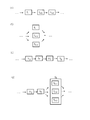
- or (D) is a figure explaining a serial procedure, a parallel procedure, and those combination.
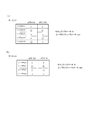
- (A) is a figure which shows a smart phone function in a table
- (B) is a figure which shows the relationship between a procedure and a probability in a table
- (A) is a diagram showing the relationship between costs and security parameters in a tabular format
- (B) is a diagram showing the relationship between scenarios, attack probabilities, and user failure probabilities in a tabular format. It is a figure which illustrates the example of composition of the system of an embodiment. It is a figure explaining the example of the scenario selection with respect to each service.
- Smartphones have an Internet connection function, and applications use the Internet function to provide various services. Many services over the Internet require authentication, and there is a need to verify the “identity” of the user. There is a secure element as an effective authentication means for confirming “identity”. Moreover, a means for inputting information depending on the user's memory and a plurality of sensors are incorporated. An example of the functions of a smartphone will be listed, and what kind of authentication scenarios can be considered for smartphones in the future will be examined.
- the request to the smartphone is transmitted through the input device of the smartphone.
- Possible inputs for commercially available devices are as shown in the “input device” column of FIG.
- the smartphone of this example includes a touch panel, a microphone, a button, a camera, a fingerprint sensor, and the like as input devices.
- a gyro sensor detects an action (gesture) taken by a user holding a smartphone.
- a GPS (Global Positioning System) sensor detects the position of the smartphone.
- the optical sensor detects ambient light (illuminance).
- the Geiger counter is, for example, a smartphone-connected radiation detector.
- the external connection target connected to the smartphone is a mobile phone network, Bluetooth (registered trademark of Bluetooth SIG, Inc), NFC (Near Field Communication), WiFi (Wireless Fidelity: WiFi is WiFi Alliance) Registered trademark), USB (UniversalUniversSerial Bus), CTIA (Cellular Telephone Industries Association), and the like.
- the output includes a display device of a smartphone, a speaker, a light, vibration by a vibrator, a memory, an SD card, and the like.
- the secure element is a secure area for managing secret information.
- carrier SIM Trusted Platform Module
- Felica registered trademark of Sony Corporation
- software SIM cloud SIM, and the like.
- ID password authentication when inputting an ID and a password, a procedure called ID password authentication is realized by combining the functions of a smartphone as shown in FIG. By combining such procedures, for example, the following multi-factor authentication can be realized.
- ⁇ Activate the SIM by biometric authentication and log in (input fingerprint, voice, input pattern, etc.); ⁇ Activate the corresponding function with the wearable terminal and log in using the terminal ID; ⁇ Activate the corresponding function with a contactless card and log in using the terminal ID;
- multi-factor authentication combining multiple elements (functions) has become possible.
- multi-factor authentication is limited to limited use in a system that presupposes the use of a dedicated token (for example, a Y-time token generated by hardware or the like) or a random number table passed in advance. For this reason, it is not necessary to provide a unified evaluation axis for a plurality of elements.
- no comparison or analysis is made with respect to the load on the system or the user, particularly usability.
- smartphones having functions applicable to multi-factor authentication are used.
- smartphones having functions applicable to multi-factor authentication are used.
- a framework that enables frequent updates (updates) of the application has been systematized, it is also necessary to change the elements flexibly.
- the evaluation criteria (evaluation axis) of multi-factor authentication is configured by using a probability model of security and usability for each scenario, and it is possible to provide a continuous service.
- Authentication means a person who has registered an “execution entity” by verifying the identity of the “execution entity” of an action and the “registration information” performed by the entity through a network.
- Or device refers to a process that establishes the credibility of the device (see Non-Patent Document 5, for example).
- U represents a set of all users.
- the service provider checks the authority as to whether or not the user is authorized to receive the service in a certain transaction tra.
- Authenticating is not required for services that can be performed by anyone, assuming that authority confirmation is required. On the other hand, authentication is necessary for services that only authorized persons can receive. It is assumed that the authorized user u is provided with the service srvc with a certain intention.
- the transaction tra is performed via online.
- an online service for example, a Web shopping site, an EC (Electronic Commerce) site such as an auction, and an SNS (Social Networking Service) site are assumed.
- the user u requests the provision of a service (not a service that the user u does not continuously access with only one setting at the time of system registration or the like). For this reason, the system often requests authentication from the user u who requests provision of services.
- the user does not connect directly to the network, but connects to the Internet via a terminal (smart phone or PC) possessed by the user. Note that the description will be made assuming that the user u receives the service even if the service is provided through the terminal or the like.
- biometric authentication even if the user u tries to input correct biometric information, the information may not be acquired correctly at the time of input, for example, due to failure in grounding the fingerprint. Further, there may be a case where an erroneous detection that is recognized as an input by an input user u different from the user u occurs. In the following, it is assumed that the authentication result of each element is uniquely determined in biometric authentication, and is detected when it is possible to trace later whether the value is correct or incorrect.
- multi-factor authentication is performed.
- authentication factors touch panel, sensor, etc.
- smartphone which authentication factors are selected and combined is different for each service.
- a combination of multiple authentication factors can be selected.
- ⁇ Procedure (factor)> In the combination of authentication factors, it is assumed that a plurality of procedures (factors) f ⁇ F (F is a set of procedures) of the scenario S can be arranged in a predetermined order (the following equation (1)).
- the procedure (factor) f ⁇ F indicates, for example, an authentication element by storing ID and password, or fingerprint authentication.
- Each procedure is composed of a plurality of elements e ⁇ E (E is an element set).
- an element is an action required for each procedure f.
- the procedure f is composed of one or a plurality of elements, for example, as in the following equation (3). ... (3)
- scenario S is selected that combines ID, password, and fingerprint authentication.
- the scenario S is represented by the following formula (4), for example.
- S includes ID password authentication and fingerprint authentication.
- f 1 is an ID password authentication factor
- f 2 is a fingerprint authentication factor.
- Each f returns a binary value (0, 1) of 1 if the authentication is correct and 0 if the authentication is not correct as the authentication result.
- the scenario S that is a combination of authentication factors is not necessarily one.
- the fact that a plurality of authentication factors can be selected means that a combination of a plurality of scenarios is also possible. That is, there are a plurality of scenarios, which can be selected. As a result, when one scenario (a combination of authentication factors) cannot be used for the user u, another scenario (a different combination of authentication factors) can be selected. Therefore, it is possible to provide continuous service.
- ⁇ Serial procedure> The authentication proceeds in steps. For example, obtaining the ID and password and then obtaining the input from the random number table corresponds to a serial procedure.
- the order of the procedures (f 1 , 1), (f 2 , 2),... (F n , n) has a meaning as a multi-step authentication order.
- Authentication is evaluated in parallel. For example, this corresponds to the case where the SIM card ID of the smartphone is confirmed in parallel with the input of the ID and password. For example, as shown in FIG. 2B, confirming a certain procedure f i + 1 and another procedure f i + 2 in parallel is called a “parallel procedure”.
- the scenario S is expressed by the following equation (6).
- FIG. 2C shows a series procedure scenario S1, S2, S4 and a parallel procedure scenario S3 'combined in series.
- FIG. 2D is an expanded view of the parallel procedure scenario S3 'and is expressed by the following equation (8).
- the user u uses the ID u to perform the procedure f, and the procedure for returning 1 is f + (u), and the probability is p (f + (u)
- the probability of success may be 100% for a certain period. This is because an application such as a browser may play the role of the contents (password corresponding to the ID) that the user u should originally store.
- the probability of success cannot be 1 because shaking occurs when the user inputs. That is, p ⁇ 1 cannot be achieved.
- the probability that the user u succeeds in the procedure f with the ID u is expressed as p (f + (u)
- the probability that the user u succeeds through the scenario S is represented by p (S +
- the scenario when the user u authenticates is determined by the probability by the parallel procedure and the serial procedure as follows.
- the occurrence probability of the event changes in the case where there is a correlation due to the fact that f 1 ,..., F i ⁇ 1 are performed before the procedure f i (i ⁇ N) is performed.
- F i ⁇ 1 are performed before the procedure f i (i ⁇ N) is performed.
- Equation (17) the parallel probability can be calculated assuming that there is no prior probability, and can be generalized to a series procedure.
- Security evaluation is important for authenticating multiple factors.
- the user u always succeeds and the attacker a does not succeed for each procedure.
- the probability that the attacker a will succeed is preferably zero.
- the attacker a 1, when there are ⁇ a n, the probability that a certain procedure 1 to be successful, p (S + (u)
- a i ) 0 ... (18) Is desirable.
- security evaluation is required. What is considered here as the security evaluation is to set the security evaluation so that the security parameter k is not exceeded when an attack with a high skill level such as a brute force attack is being performed.
- the service srvc is started for the usability parameter ub ′ of the scenario S itself that satisfies a certain level.
- the usability parameter ub ' is included in the usability parameter ub.
- security parameter k and usability parameter ub are not necessarily unique. For example, if you want to transfer a small amount to a place where you have made many deposits in the past by bank transfer, select a higher security parameter k, and if you want to transfer a high amount to an account number that has never been transferred, A flexible response such as selecting a lower security parameter k is conceivable.
- a scenario may be selected according to the security parameter k, or conversely, the security parameter k may be set according to the scenario.
- each parameter can be set for each service srvc1, srvc2, srvc3... As shown in FIG. Security parameters and usability parameters are set for each service.
- the cost column is the cost of each service.
- the safety of each procedure in the scenario is not always the same as that set at the start of the service. There is a possibility that an attack against each procedure is always proposed, and the system is compromised by improving the computer performance, etc., which is different from the setting time (the target is exposed to security risk due to some action or change of situation) Is possible). In addition, for example, it is necessary to consider a decrease in safety due to a sudden increase in attacks in a certain period, such as frequent attacks on a specific date.
- the user can use the authentication method that is currently being used, be compatible with other methods, or change to another method that has been prepared to some extent. Sexuality and convenience are important.
- a high-level attack includes a password list attack in the case of an ID password, and an attack on biometric authentication includes, for example, a gummy finger and a wolf attack.
- a determined by the administrator at time t i ) Is replaced with the previously set value of the security parameter k ′.
- a) of all users is changed.
- the value of the security parameter k ′ is not necessarily unique. It may change to various values depending on the attack level.
- a) is not only measured for each user u i but also the values of a plurality of users are observed. Included in j when p (S +
- scenario Si when p (S + (u j )
- Scenario changes need to be considered including usability evaluation and service impact.
- scenario As to which scenario is to be accepted next, it is necessary to present the next scenario for each scenario S by considering the relationship between the user failure rate and the usability parameter ub using Table 4.
- the scenario order cannot be evaluated only by the value of p (S + (u j )
- a completely new scenario may be set after evaluation in each scenario.
- the service itself may be changed due to security measures. For example, the upper limit of bank transfer may be temporarily reduced, or the chargeable amount may be reduced. In this case, it is necessary to select an appropriate service while comparing FIG. 4 (A) and FIG. 4 (B).
- the service provider stops the service srvc. Further, in consideration of the usability ub of the scenario S, the service srvc is also stopped when the user convenience is significantly reduced.
- the scenario in multi-factor authentication can be changed after the service is started due to the spread of high-functional portable terminals such as smartphones. It is possible to implement a unified system that continues to evaluate multi-factor authentication dynamically. In the case where the authentication security evaluation as determined at the start of the service is not sufficient for selecting the authentication method, countermeasures such as scenario change, for example, update of the success probability for each scenario is performed.
- FIG. 5 is a diagram illustrating an example of a system configuration of the present embodiment.
- a multi-factor authentication device 20 including a server device connected via a network 30 is provided.
- the network 30 includes, for example, a radio access network, a mobile communication network, an Internet network, and the like.
- the multi-factor authentication device 20 including a server device may be installed in a server device that provides services to clients, or may be configured as a server device that is different from the server devices that provide services to clients.
- the multi-factor authentication device 20 stores a scenario S composed of a combination of multi-factor authentication procedures f required for receiving a service in association with the service (see, for example, FIG. 6).
- the storage unit 21 that stores the probability of success of the procedure (see FIG. 3B) and the probability of success through the scenario S of the service are calculated based on the probability of the procedure.
- An evaluation unit (evaluation unit) 23 that evaluates at least one of security and usability based on the success probability, and a control unit (control unit) 24 that controls a service to be provided according to the evaluation result by the evaluation unit 23.
- the security parameter k and the usability parameter ub are stored and managed in the storage unit 21 corresponding to the service (see FIG. 4A).
- the management means (management unit) 22 manages the update of the procedure f corresponding to the scenario stored in the storage unit 21, the probability that the procedure f will be successful, the setting, holding, or changing of the security parameter k and the usability parameter ub for the service. I do. At least one or all of these means (units) may realize their functions by a program executed by a computer (processor, CPU (Central Processing Unit)) of the server device 20.
- the program is stored and held in a computer-readable memory (for example, a medium such as a semiconductor storage or a magnetic / optical recording medium).
- control unit 24 may control the start, continuation, or stop of the service based on the evaluation result by the evaluation unit 23.
- the evaluation means 23 uses the success probability p (S + (u)
- u) is evaluated.
- control means 24 has a success probability p (S + (u)
- u of the user u through the scenario S of the service (srvc) is greater than the usability parameter ub (Equation (23)). Start or continue the service (srvc) through S.
- the control means 24 when the success probability p (S + (u)
- the service (srvc) according to ' may be provided.
- each procedure (f) is represented as a procedure f that returns 1 if the procedure (f) succeeds and returns 0 if the procedure (f) fails, and the probability is a procedure performed by the user u and the attacker a. It includes the probability p (f + (u)
- the success rate of the user through the scenario S of the service (srvc) according to the procedure f constituting the scenario S being parallel connection, series connection, or a combination thereof, by the attacker The success probability is calculated (see the above formulas (15) to (17)).
- FIG. 6 is a diagram for explaining an example of processing of the evaluation unit 23 of FIG.
- the symbol ⁇ indicates the success probability p (S + (u)
- the security parameter is smaller than the security parameter k1 set for the service 1 (expression (22)), and the symbol x indicates that p (S + (u)
- the symbol ⁇ indicates that the success probability p (S + (u)
- the service 1 in FIG. 6A includes scenarios A1 to A5.
- the evaluation means (23/16 in FIG. 5) indicates that for each of the scenarios A1 to A5, the success probability p (S + (u)
- the service 2 in FIG. 6B includes scenarios B1 to B4, and it is assumed that the security parameter k2 and usability parameter ub2 set for the service 2 are set.
- the evaluation means (23/16 in FIG. 5) indicates that the success probability p (S + (u)
- a multi-factor authentication device for communication connection to a terminal, A scenario comprising a combination of multi-factor authentication procedures required for the terminal to receive service provision is stored in correspondence with the service, and the probability of success of the procedure in correspondence with each procedure.
- a storage unit for storing An evaluation means (evaluation unit) that calculates a success probability through the service scenario based on the probability related to the procedure, and evaluates at least one of security and usability based on the success probability;
- Control means for controlling the service for the terminal according to the evaluation result;
- a multi-factor authentication device comprising:
- Appendix 2 The multi-factor authentication apparatus according to appendix 1, wherein the control means (control unit) controls start, continuation, or stop of the service for the terminal based on the evaluation result.
- the evaluation means calculates the success probability of the user through the scenario of the service, and the success probability by the attacker, A security parameter to be compared with the success probability by the attacker, and a usability parameter value to be compared with the success probability of the user, respectively,
- the control means is configured such that a probability of success by the attacker through the service scenario is smaller than the security parameter, and a success probability of the user through the service scenario is smaller than the usability parameter.
- the multi-factor authentication apparatus according to appendix 1 or 2, wherein the start or continuation of the service for the terminal is controlled under the condition that the service is too large.
- control means stops providing the service through the scenario to the terminal.
- the supplementary note is characterized in that the terminal is controlled to provide the service after changing to a scenario in which a probability of success by the attacker through the service scenario is smaller than the security parameter.
- Each of the procedures is represented as a procedure f that returns 1 if the procedure succeeds and 0 if it fails,
- the probability includes a probability that the procedure f performed by the user or the attacker is successful and 1 is returned,
- Supplementary notes 1 to 4 characterized in that the scenario constituting the scenario calculates a success probability of the user through the scenario of the service and a probability of success by the attacker according to a parallel connection, a serial connection, or a combination thereof.
- the multi-factor authentication device according to any one of the above.
- management means for managing a procedure for a scenario stored in the storage part, a probability of success of the procedure, setting, holding, or changing security and usability for the service
- the multi-factor authentication device according to any one of 1 to 5.
- Appendix 7 A server device including the multi-factor authentication device according to any one of appendices 1 to 6.
- Appendix 8 An authentication system comprising a terminal and the multi-factor authentication device according to any one of appendices 1 to 6.
- a scenario consisting of a combination of multi-factor authentication procedures required for receiving a service provided by a terminal for communication connection is stored in the storage unit in association with the service, and the procedure is associated with each procedure. Is stored in the storage unit, Calculating a probability of success through the service scenario based on the probability for the procedure, and evaluating at least one of security and usability based on the success probability; The multi-factor authentication method, wherein the service for the terminal is controlled according to the evaluation result.
- Appendix 10 The multi-factor authentication method according to appendix 9, wherein start, continuation, or stop of the service for the terminal is controlled based on the evaluation result.
- Each of the procedures is represented as a procedure f that returns 1 if the procedure succeeds and 0 if it fails,
- the probability includes a probability that the procedure f performed by the user or the attacker is successful and 1 is returned,
- the procedure for constructing the scenario calculates a success probability of the user through the scenario of the service and a probability of success by the attacker according to a parallel connection, a serial connection, or a combination thereof.
- the multi-factor authentication method according to any one of appendices 9 to 12.
- a scenario consisting of a combination of multi-factor authentication procedures required for receiving a service provided by a terminal for communication connection is stored in the storage unit in association with the service, and the procedure is associated with each procedure. Storing the probability of success in the storage unit, An evaluation process for calculating a probability of success through the scenario of the service based on the probability of the procedure, and evaluating at least one of security and usability based on the success probability; and Control processing for controlling the service for the terminal according to the evaluation result; A program that causes a computer to execute.
- the evaluation process calculates the success probability of the user through the scenario of the service, and the success probability by the attacker, A security parameter to be compared with the success probability by the attacker, and a usability parameter value to be compared with the success probability of the user, respectively,
- the success probability by the attacker through the service scenario is smaller than the security parameter
- the success probability of the user through the service scenario is larger than the usability parameter.
- Each of the procedures is represented as a procedure f that returns 1 if the procedure succeeds and 0 if it fails,
- the probability includes a probability that the procedure f performed by the user or the attacker is successful and 1 is returned,
- Additional remarks 14 to 17 characterized in that the success rate of the user through the scenario of the service and the success rate by the attacker are calculated according to the procedure constituting the scenario according to parallel connection, serial connection, or a combination thereof.
- the program as described in any one of.
- Appendix 20 A computer-readable storage medium recording the program according to any one of appendices 14 to 19.
Landscapes
- Engineering & Computer Science (AREA)
- Computer Security & Cryptography (AREA)
- Signal Processing (AREA)
- Computer Networks & Wireless Communication (AREA)
- Computer Hardware Design (AREA)
- General Engineering & Computer Science (AREA)
- Theoretical Computer Science (AREA)
- Computing Systems (AREA)
- Software Systems (AREA)
- General Physics & Mathematics (AREA)
- Physics & Mathematics (AREA)
- Biomedical Technology (AREA)
- General Health & Medical Sciences (AREA)
- Health & Medical Sciences (AREA)
- Biodiversity & Conservation Biology (AREA)
- Life Sciences & Earth Sciences (AREA)
- Multimedia (AREA)
- Technology Law (AREA)
- Telephone Function (AREA)
- Telephonic Communication Services (AREA)
Abstract
本発明は、セキュリティ環境に応じた認証に変更可能な装置、システム、方法、プログラムを提供する。通信接続する端末がサービスの提供を受けるために必要とされる多要素認証の手順の組み合わせからなるシナリオを、前記サービスに対応させて記憶管理するとともに、前記各手順に対応させて、前記手順が成功する確率を記憶管理し、前記手順に関する前記確率に基づき、前記サービスのシナリオを通しての成功確率を算出し、前記成功確率に基づきセキュリティ及びユーザビリティの少なくも一方を評価し、前記評価結果にしたがって、前記端末に対する前記サービスを制御する。
Description
(関連出願についての記載)
本発明は、日本国特許出願:特願2015-008162号(2015年1月19日出願)の優先権主張に基づくものであり、同出願の全記載内容は引用をもって本書に組み込み記載されているものとする。
本発明は、認証装置、方法、システムとプログラム並びにサーバ装置に関する。
本発明は、日本国特許出願:特願2015-008162号(2015年1月19日出願)の優先権主張に基づくものであり、同出願の全記載内容は引用をもって本書に組み込み記載されているものとする。
本発明は、認証装置、方法、システムとプログラム並びにサーバ装置に関する。
スマートフォン等の高機能携帯端末の普及により、複数のセンサやアプリケーションの常時アップデートを利用することで、より安全かつ現実的に多要素認証(Multi-Factor Authentication)が可能となるに到っている。例えばスマートフォンやタブレットPC(Personal Computer)等のスマートデバイスを利用する際のセキュリティを向上するための認証サービスを行うクラウドサービスでは、ソフトウェア証明書を用いた2要素認証が採用されている。この場合、例えばスマートデバイスからID(Identity:識別情報)/パスワードを入力することで、許可されたデバイスと利用者が識別され、当該スマートデバイスから例えば業務アプリケーション等へのアクセスが可能となる。
多要素認証手法は各種提案されているが、それぞれの認証精度について一定の評価軸が未だ提供されていないというのが実情である。
EC(Electronic Commerce:電子商取引)サイトのログインにおける認証には、ほとんどのサイトで、IDとパスワードが利用されている(例えば非特許文献1参照)。しかしながら、IDとパスワードだけの認証では、セキュリティ上の問題があると言われている。例えばパスワードリスト攻撃と呼ばれる攻撃が多発する等、IDとパスワードだけでは、ログイン認証におけるセキュリティを十分に担保することができない、という状態になっている(例えば非特許文献2参照)。
スマートデバイスには、複数のセンサやセキュアエレメントを予め実装したものが製造、販売されている。特に、端末そのものに、生体認証機能を実装したものや、SIM(Subscriber Identity Module)のセキュアエレメントを利用した端末認証を利用した決済等が利用され始めている。すなわち、IDやパスワードは、ユーザの記憶と入力によるが、ユーザの記憶と入力だけによらない認証が利用され始めている。
また、通常のアクセス元と異なるIP(Internet Protocol)でのログイン時に不正の可能性を指摘することや、過去のショッピングやWeb閲覧の履歴を活用することで、本人らしさについて検討する方法等、行動に基づく認証方式の可能性も広がってきている。例えば、通常日本でログインしているユーザが海外でのログインを行った際に、パスワードのアラートが出るような仕組みも提案されている(例えば非特許文献4参照)。
株式会社シマンテック/日本べリサイン株式会社,「個人・企業のパスワード管理」に関する意識調査結果のご報告,2013.10,[2014.12.15検索], インターネット<URL: https://www.jp.websecurity.symantec.com/welcome/pdf/password_management_survey.pdf>
IPA,オンライン本人認証方式の実態調査,2014.8,[2014.12.15検索], インターネット<URL:https://www.ipa.go.jp/security/fy26/reports/ninsho/>
ゆうちょ銀行,リスクベース認証(画像・合い言葉)について,[2014.12.15検索], インターネット〈URL: http://www.jp-bank.japanpost.jp/direct/pc/security/dr_pc_sc_riskbase.html>
Google,前回のアカウント アクティビティ,[2014.12.15検索], インターネット〈URL: https://support.google.com/mail/answer/45938?hl=ja>
内閣官房,オンライン手続におけるリスク評価及び電子署名・認証ガイドライン,2010.8,[2014.12.15検索], インターネット〈URL: http://www.kantei.go.jp/jp/singi/it2/guide/guide_line/guideline100831.pdf>
以下に関連技術の分析を与える。
認証方式の多くは、一つの認証要素によって認証の成功失敗を判断するような方式である。また、複数の認証要素を組み合わせた多要素認証も、例えばID・パスワードと例えば乱数表の提示のような、事前に設定された要素を利用したものである。
また、リスクベース認証のように、利用者の振る舞いが「通常と異なる」時にだけ、認証要素を追加する等(例えば非特許文献3参照)、常に同じ形式での認証要求を行わないようなサービスも増えてきている。リスクベース認証は、例えばいつもと同じユーザ情報等でのアクセスに対しては、例えば固定のパスワード等で認証し、いつもと異なるユーザ情報等でアクセスがあった場合、例えばパスワード等のユーザ情報が盗まれたリスクが高いとして、事前に登録しておいた追加の質問に回答させる等の追加認証を行う。
また近年は特にスマートフォンの高機能端末の普及によって、新しいアプリケーションの導入と、該端末に実装された各種センサ等の活用によって、手順の頻繁な変更を可能とする環境も整いつつある、ともいえる。
このように、多様かつ可変な認証要素の組み合わせをダイナミックに変更して利用するためには、認証全体に対する評価方式が必要である。また、この評価方式は、例えば、実際にサービスがスタートしたときに、別の認証方式への変更が可能となるような、柔軟で利便性の高い方式が望まれている。
本発明は、上記課題に鑑みて創案されたものであって、その目的は、認証要素の組み合わせをダイナミックに変更して利用可能とする装置、方法、システムとプログラム並びにサーバ装置を提供することにある。
本発明の1つの側面によれば、端末と通信接続し、多要素認証を行う装置であって、端末がサービスの提供を受けるために必要とされる多要素認証の手順の組み合わせからなるシナリオを、前記サービスに対応させて記憶するとともに、前記各手順に対応させて、前記手順が成功する確率を記憶する記憶部と、
前記手順に関する前記確率に基づき、前記サービスのシナリオを通しての成功確率を算出し、前記成功確率に基づきセキュリティ及びユーザビリティの少なくも一方を評価する評価手段(評価部)と、
前記評価結果にしたがって、前記端末に対する前記サービスを制御する制御手段(制御部)と、
を備えた多要素認証装置が提供される。
前記手順に関する前記確率に基づき、前記サービスのシナリオを通しての成功確率を算出し、前記成功確率に基づきセキュリティ及びユーザビリティの少なくも一方を評価する評価手段(評価部)と、
前記評価結果にしたがって、前記端末に対する前記サービスを制御する制御手段(制御部)と、
を備えた多要素認証装置が提供される。
本発明によれば、端末と、上記多要素認証装置を備えた認証システムが提供される。
本発明の別の側面によれば、上記多要素認証装置を備えたサーバ装置が提供される。
本発明のさらに別の側面によれば、通信接続する端末がサービスの提供を受けるために必要とされる多要素認証の手順の組み合わせからなるシナリオを前記サービスに対応させて記憶部で記憶するとともに、前記各手順に対応させて、前記手順が成功する確率を前記記憶部で記憶し、
前記手順に関する前記確率に基づき、前記サービスのシナリオを通しての成功確率を算出し、前記成功確率に基づきセキュリティ及びユーザビリティの少なくも一方を評価し、
前記評価結果にしたがって、前記端末に対する前記サービスを制御する多要素認証方法が提供される。
前記手順に関する前記確率に基づき、前記サービスのシナリオを通しての成功確率を算出し、前記成功確率に基づきセキュリティ及びユーザビリティの少なくも一方を評価し、
前記評価結果にしたがって、前記端末に対する前記サービスを制御する多要素認証方法が提供される。
本発明のさらに別の側面によれば、端末に通信接続し、多要素認証を行うコンピュータに、通信接続する端末がサービスの提供を受けるために必要とされる多要素認証の手順の組み合わせからなるシナリオを前記サービスに対応させて記憶部で記憶するとともに、前記各手順に対応させて、前記手順が成功する確率を前記記憶部で記憶する処理、
前記手順に関する前記確率に基づき、前記サービスのシナリオを通しての成功確率を算出し、前記成功確率に基づきセキュリティ及びユーザビリティの少なくも一方を評価する処理、及び、
前記評価結果にしたがって、前記端末に対する前記サービスを制御する処理、を実行させるプログラムが提供される。
前記手順に関する前記確率に基づき、前記サービスのシナリオを通しての成功確率を算出し、前記成功確率に基づきセキュリティ及びユーザビリティの少なくも一方を評価する処理、及び、
前記評価結果にしたがって、前記端末に対する前記サービスを制御する処理、を実行させるプログラムが提供される。
本発明によれば、上記プログラムを記録したコンピュータ読み出し可能な記録媒体(半導体メモリ、磁気/光・記録媒体等)が提供される。
本発明によれば、認証要素の組み合わせをダイナミックに変更して利用可能としている。
はじめに本発明の概要について説明したあと、実施形態について説明する。以下では、
(A)スマートフォン等における多要素認証に利用可能な手段について複数のシナリオを検討することの必要性について説明する。
(B)サービスの提供に複数のシナリオがある場合、それぞれの確率モデルを利用したセキュリティ評価が必要である。そこで、セキュリティ評価の更新についても説明する。
(C)さらに、セキュリティ評価だけでなく、ユーザの利便性についても、同様の評価をし、双方を含めた評価結果を更新しつづけることで、実際のサービスにおいてどのようにシナリオ選択を行うのか等について説明する。
(A)スマートフォン等における多要素認証に利用可能な手段について複数のシナリオを検討することの必要性について説明する。
(B)サービスの提供に複数のシナリオがある場合、それぞれの確率モデルを利用したセキュリティ評価が必要である。そこで、セキュリティ評価の更新についても説明する。
(C)さらに、セキュリティ評価だけでなく、ユーザの利便性についても、同様の評価をし、双方を含めた評価結果を更新しつづけることで、実際のサービスにおいてどのようにシナリオ選択を行うのか等について説明する。
スマートフォンにおける機能の一例を列挙し、認証手段として複数の要素を組み合わせる多要素認証が現実的に適用可能となりつつある点を分析する。また、多要素認証方式をセキュリティ評価するための枠組みとしてどのようなモデルがよいのかについて検討する。また、このモデルの活用方法について説明する。
スマートフォンは、インターネット接続機能を備え、アプリケーションはインターネット機能を活用して様々なサービスを提供する。インターネットを介したサービスの多くは、認証を必要としており、ユーザの「本人性」を確かめる必要性がある。「本人性」を確かめるために有効な認証手段として、セキュアエレメントがある。また、ユーザの記憶に頼る情報を入力するための手段や、複数のセンサを内蔵している。スマートフォンがもつ機能の一例について列挙し、今後スマートフォンにおいて、どのような認証のシナリオが考えられるかについて検討する。
スマートフォンがもつユーザとインタラクション可能な機能について説明する。ここでは複数の機能が列挙されているが、各機能それぞれが入力等だけに限定された機能ではない場合もある。主にどちらに利用されているのかについて説明する。
ユーザがスマートフォンに対して何らかの操作を行う際、スマートフォンがもつ入力機器を通してスマートフォンへの要求を伝える。市販されている機器において考えられる入力は、図3(A)の「入力機器」列のとおりである。特に制限されないが、この例のスマートフォンでは、入力機器として、タッチパネル、マイク、ボタン、カメラ、指紋センサ等がある。
センサのうちジャイロセンサ(加速度センサ)は、スマートフォンを手にしたユーザのとる動作(ジェスチャ)を検出する。GPS(Global Positioning System)センサはスマートフォンの位置を検出する。光センサは例えば環境光(照度)を検出する。ガイガーカウンタは、例えばスマートフォン接続型の放射線検出器である。スマートフォンが接続する外部接続対象は、基地局を介して携帯電話網、Bluetooth(Bluetooth SIG, Incの登録商標)、 NFC(Near Field Communication:近接距離通信)、WiFi(Wireless Fidelity:WiFiはWiFi Allianceの登録商標)、USB(Universal Serial Bus)、CTIA(Cellular Telephone Industries Association)等がある。出力は、スマートフォンの表示装置、スピーカ、ライト、バイブレータによる振動、メモリ、SDカード等がある。セキュアエレメントは、秘密情報を管理するためのセキュアな領域である。キャリアSIM、TPM(Trusted Platform Module)、Felica(ソニー株式会社の登録商標)、ソフトウェアSIM、クラウドSIM等がある。
なお、耐タンパ装置であっても複数の攻撃をよって安全性が脅かされる危険性もあるので、ある時間軸の中で安全性を考慮する必要性がある。
スマートフォンにおいて、単体の認証として既に利用されているものや、複数の認証を組み合わせることで多要素認証として既に実現されているものが存在する。スマートフォンの機能の1つ1つを要素とし、要素を組み合わせることで、各手順が実現される。
例えば、IDの入力とパスワードの入力を行う場合、図1のように、スマートフォンの機能を組み合わせることで、IDパスワード認証という手順を実現している。このような手順を組み合わせることで、例えば、以下のような多要素認証を実現することができる。
・SIMを生体認証で該当する機能を活性化し、ログイン(指紋、声、入力パターン等の入力);
・ウェラブル端末によって該当する機能を活性化し、端末IDを利用してログイン;
・非接触カードによって該当する機能を活性化し、端末IDを利用してログイン;
・ウェラブル端末によって該当する機能を活性化し、端末IDを利用してログイン;
・非接触カードによって該当する機能を活性化し、端末IDを利用してログイン;
このように、複数の要素(機能)を組み合わせた多要素認証が実現可能となってきている。しかしながら、多要素認証は、専用トークン(例えばハードウェア等で生成されるワイタイムトークン)や事前に渡した乱数表の利用を前提としたシステムでの限定的な利用に限られている。このため、複数要素の統一的な評価軸を設けることは必要とされていない。また、システムやユーザの負荷、特にユーザビリティについても、セキュリティとの対比や分析は行われていない。
例えば、複数のセンサやセキュアエレメントの実装等、多要素認証に適用可能な機能を具備しているスマートフォンが利用されている。また、アプリケーションの頻繁な更新(アップデート)が可能となる枠組みもシステム化されていることから、要素の柔軟な変更も必要である。一方で、一旦、始めたサービスの提供をやめることは難しい。したがって、継続性の観点も検討しなければならない。
このように、統一的で柔軟、継続可能なサービス実現に向けた多要素認証の安全性をダイナミックに評価する枠組みが求められている。
本発明は、多要素認証の評価基準(評価軸)を、シナリオごとのセキュリティとユーザビリティの確率モデルを利用することで構成し、継続的なサービスを提供可能としながら、例えばセキュリティ環境の変化等に応じた認証手法を、ダイナミックに変更可能とする枠組みを提案する。
以下では、本発明による多要素認証についてより詳細に説明する。
<認証>
「認証」とは、ある行為の「実行主体」と、当該主体が行った「登録情報」との同一性を、ネットワークを介した状態で検証することによって、「実行主体」が登録された人物(あるいは装置)であることの信用を碓立するプロセスをいう(例えば非特許文献5参照)。
「認証」とは、ある行為の「実行主体」と、当該主体が行った「登録情報」との同一性を、ネットワークを介した状態で検証することによって、「実行主体」が登録された人物(あるいは装置)であることの信用を碓立するプロセスをいう(例えば非特許文献5参照)。
以下、ある行為の実行主体を、ユーザu∈Uとする。ここで、Uは、ユーザ全体の集合を表している。また、認証が求められる場面では、あるサービスsrvcをユーザが受ける際、あるトランザクションtraにおいてサービスを受ける権限があるか否かについて、サービス提供者が権限を確認する。
権限の確認が必要な場面として想定しているのは、誰に対しても行うことができるようなサービスにおいては、認証は必要ない。一方、権限のある人だけが受けられるサービスに対しては認証が必要である。権限があるユーザuは、ある意図を持って、サービスsrvcの提供を受けているとする。
また、トランザクションtraは、オンライン経由で行うこととする。オンラインでのサービスとして、例えばWebショッピングサイトやオークションのようなEC(Electronic Commerce)サイト、SNS(Social Networking Service)といったコミュニケーションを目的としたサイトを想定する。これらのサイトは、ユーザuに利用の意思がある場合、ユーザuはサービスの提供を求める(システム登録時等に、一度の設定のみでユーザuが継続的にはアクセスしないサービスではない)。このため、システムはサービスの提供を求めるユーザuに対して、たびたび、認証を求める。このようなサービスを受ける際、ユーザは、直接ネットワークに接続することはなく、ユーザの持つ端末(スマートフォンやPC)等を介して、インターネットに接続する。なお、端末等を通したサービス提供であっても、ユーザuがサービスを受けているものとして説明する。
生体認証においては、ユーザuが正しい生体情報の入力を試みたにもかかわらず、入力時に、例えば指紋の接地に失敗する等して、情報が正しく取得されない場合がある。また、ユーザuとは別の人の入力ユーザuの入力と認識される誤検知が発生する場合もある。以下では、生体認証において各要素の認証結果が一意に決まるものとし、その値が正しいか間違っているかについて、後からの追跡が可能である場合において、検知されるものとする。
まず、ユーザuがあるサービスsrvcをうける際、IDやパスワードのような記憶や乱数表の活用等、複数の要素を利用して、ログインするものとする。また、ユーザuになりすまそうとする攻撃者α∈Aの存在(Aは攻撃者の集合)を想定する。
ユーザuがあるサービスを受ける際、多要素認証が行われる。スマートフォン等のように複数の認証要素(タッチパネルやセンサ等)がある場合には、どの認証要素を選択し組み合わせるかについては、サービスごとに、異なるものとする。
また、サービスによっては、複数の認証要素の組み合わせを選択できるものとする。
<シナリオ>
このような認証要素の組み合わせのことを「シナリオ」という。
このような認証要素の組み合わせのことを「シナリオ」という。
<手順(ファクタ)>

認証要素の組み合わせにおいて、シナリオSの複数の手順(ファクタ)f∈F (Fは手順の集合)を、ある定められた順番で配置することが可能であるとする(次式(1))。ここで手順(ファクタ)f∈Fとは、例えばIDとパスワードという記憶による認証要素や、指紋認証を指す。
認証要素の組み合わせにおいて、シナリオSの複数の手順(ファクタ)f∈F (Fは手順の集合)を、ある定められた順番で配置することが可能であるとする(次式(1))。ここで手順(ファクタ)f∈Fとは、例えばIDとパスワードという記憶による認証要素や、指紋認証を指す。
<シナリオと手順>
 ・・・(1)
また、手順fの順番を定めずに示すこともできる。その場合、シナリオは次式(2)で与えられるものとする。
・・・(2)
<エレメント>
また、各手順は複数のエレメントe∈E (Eはエレメント集合)によって構成される。
また、各手順は複数のエレメントe∈E (Eはエレメント集合)によって構成される。
ここで、エレメントとは手順fごとに必要な行動である。
<手順とエレメント>
手順fは、例えば次式(3)のように、1又は複数のエレメントからなる。
 ・・・(3)
手順fは、例えば次式(3)のように、1又は複数のエレメントからなる。
例えば、IDとパスワードと指紋認証を組み合わせたようなシナリオSを選択するとする。シナリオSは例えば次式(4)で表される。

ここで、Sは、IDパスワード認証と指紋認証からなる。f1がIDパスワード認証要素、f2が指紋認証要素である。
((e1、1),・・・)、((e2、1),・・・)の各(e1、1)、(e2、1)は、図1のような一つ一つのエレメント(入力、計算等)とする。
各fは、認証結果として、認証が正しいとされた場合は1、認証が正しいとされなかった場合は、0の二値(0、1)を返す。
ユーザuに対して、サービスを提供するにあたり、認証要素の組み合わせであるシナリオSは一つとは限らない。複数の認証要素の選択が可能である、ということは、複数のシナリオの組み合わせも可能である。すなわち、複数のシナリオが存在し、その選択が可能とされる。これによって、ユーザuに対して、一つのシナリオ(ある認証要素の組み合わせ)が利用できなくなった際、他のシナリオ(認証要素の別の組み合わせ)の選択を可能としていることで、ユーザuに対して、継続的なサービス提供を図ることが可能となる。
多要素認証を実施するに当たり、それぞれの要素がどのように関係していくのかについて、説明する。多要素認証は、直列手順、並列手順の二つのパターンのシナリオが考えられる。
<直列手順>
認証は、段階的に手順が進む。例えば、IDとパスワードの入力を求めた後、乱数表からの入力を求めることは、直列手順にあたる。
認証は、段階的に手順が進む。例えば、IDとパスワードの入力を求めた後、乱数表からの入力を求めることは、直列手順にあたる。
図2(A)のように、ある手順f1を行ったあと、次の手順であるf2の要求が行われ、次に手順f3という具合に、一つ一つの認証を多段階でつなげることがある。この手順を直列手順と呼ぶ。この場合、シナリオSは次式(5)で表される。

式(5)において、手順(f1,1)、(f2,2)、・・・(fn,n)の順番は、多段階の認証の順番としての意味をもつ。
<並列手順>
認証は、並列に評価を行う。例えば、IDとパスワードの入力と並行して、スマートフォンがもつSIMカードのIDを確認している場合がこれにあたる。例えば図2(B)に示すように、ある手順fi+1と別の手順fi+2を並列に確認することを「並列手順」という。この場合、シナリオSは次式(6)で表される。
認証は、並列に評価を行う。例えば、IDとパスワードの入力と並行して、スマートフォンがもつSIMカードのIDを確認している場合がこれにあたる。例えば図2(B)に示すように、ある手順fi+1と別の手順fi+2を並列に確認することを「並列手順」という。この場合、シナリオSは次式(6)で表される。

式(6)において、手順(f1,1)、(f2,2)、・・・(fn,n)の順番は、意味をもたない。このため、次式(7)のように表記する。

直列手順と並列手順とを組み合わせてシステムを構成することもある。図2(C)は、直列手順のシナリオS1、S2、S4と並列手順のシナリオS3’を直列に組み合わせたものである。図2(D)は、並列手順のシナリオS3’を展開して示した図であり、次式(8)と表される。

次に、本実施形態における直列認証と成功確率について説明する。
<手順ごとの成功確率>
各手順ごとに成功する確率について図3(B)を利用して説明する。認証の手順を、f∈Fとしたとき、手順fは、成功した場合、1を返し、失敗した場合、0を返す。
各手順ごとに成功する確率について図3(B)を利用して説明する。認証の手順を、f∈Fとしたとき、手順fは、成功した場合、1を返し、失敗した場合、0を返す。
fという手順を利用した際、ユーザuのIDによって手順を行う場合には、f(u)と表記する。また、1が返る手順をf+、0が返る手順をf-とする。
ユーザuが、uというIDを利用して、手順fを行い、1が返る手順をf+(u)とし、確率をp(f+(u)|u)とする。また、uになりすまして成功しようとする攻撃者aが成功する確率をp(f+(u)|a)とする。
次に、uが手順fを失敗した場合、その失敗した場合の確率をp(f-(u)|u)とする。次式(9)、(10)が成り立つ(図3(B)参照)。


あるシナリオSが1つの手順fだけ含む場合、確率p(f+(u)|u)が、Sの成功確率となる。
知識を利用している場合、成功確率が、一定の間、100%になりうることがある。これは、本来、ユーザuが記憶しているべき内容(IDに対応するパスワード)等について、ブラウザ等のアプリケーションが記憶することで、その役割を果たすことがあるためである。
この場合、ユーザは失敗のしようがなく、必ず、確率p(f+(u)|u)は、p=1、すなわち成功する。
一方、生体認証の場合、ユーザの入力時に、ゆれ等が生じるので、成功確率が1にはなりえない。つまり、p<1にしかなりえない。
<シナリオごとの多要素認証の成功確率>
ユーザuが、認証要素の組み合わせとして、シナリオSを選択し、複数の手順f1~fnを行ったものとする。
ユーザuが、認証要素の組み合わせとして、シナリオSを選択し、複数の手順f1~fnを行ったものとする。

ここで、ユーザuがuというIDで手順fを成功する確率をp(f+(u)|u)と表記する。
また、ユーザuがシナリオSを通して成功する確率をp(S+|u)で表す。
ここで、ユーザuが認証する場合のシナリオを並列手順と直列手順で確率で下記のように定める。
<並列手順の成功確率>
シナリオSの中で手順fが全て並列であるとする。並列の場合、各手順と他の手順の成功確率は独立であるとすると、シナリオSを通して成功する確率p(S+(u)|u)は、次式(12)のように表される。
シナリオSの中で手順fが全て並列であるとする。並列の場合、各手順と他の手順の成功確率は独立であるとすると、シナリオSを通して成功する確率p(S+(u)|u)は、次式(12)のように表される。

また、攻撃者aがユーザuになりすまして試行を行った場合、シナリオSを通して成功する確率p(S+(u)|a)は、次式(13)のように表される。

<直列手順と事前確率>
直列手順が組み合わされたシナリオS:
 ・・・(14)
をユーザuが成功する確率p(S+(u)|u)は以下のようになる。
直列手順が組み合わされたシナリオS:
をユーザuが成功する確率p(S+(u)|u)は以下のようになる。
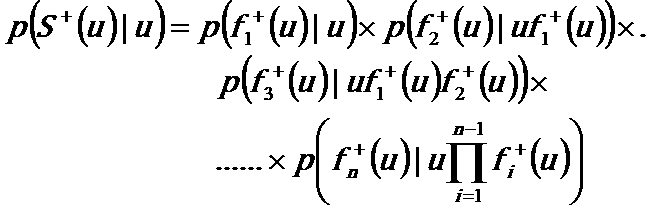
直列の場合、手順fi(i∈N)が行われる前にf1,・・・,fi-1が行われたことによって、事象の発生確率が相関がある場合において変化する。ここで、事前確率を考慮して次式(15)で与えられる。
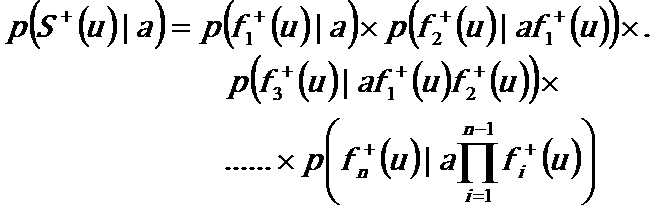
また、攻撃者aが式(14)のシナリオSを成功する確率p(S+(u)|a)は次式(16)で与えられる。
<並列手順と直列手順の組み合わせの確率計算>
並列手順と直列手順が組み合わさったシナリオSをユーザuが成功する確率p(S+(u)|a)は次式(17)で与えられる。
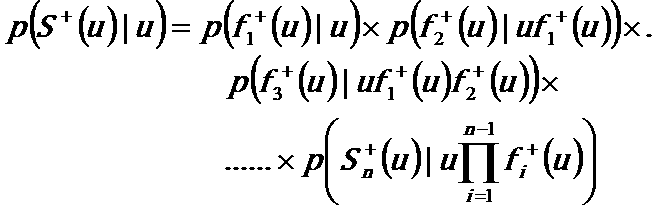 ・・・(17)
並列手順と直列手順が組み合わさったシナリオSをユーザuが成功する確率p(S+(u)|a)は次式(17)で与えられる。
式(17)において、並列確率は事前確率が存在しないとして計算し、直列手順に一般化できる。
<多要素認証確率の適用例>
次に、実施形態における多要素認証確率の適用例について説明する。
次に、実施形態における多要素認証確率の適用例について説明する。
スマートフォン等、複数の認証方式を活用するようなサービスがある。このようなサービスを継続的、かつ動的にセキュリティ評価を行っていく手法への適用例について説明する。本実施形態では、サービスを評価するにあたり、セキュリティパラメータとユーザビリティパラメータについて説明する。
複数の要素の認証を行う上でのセキュリティ評価が重要となる。認証においては、各手順に対して、常にユーザuが成功し、攻撃者aが成功しない状況が望ましい。言換すれば、攻撃者aが成功する確率は0が望ましい。攻撃者a1、・・・anがいるとき、ある手順1が成功する確率は、
p(S+(u)|ai)=0
・・・(18)
が望ましい。
p(S+(u)|ai)=0
・・・(18)
が望ましい。
しかしながら、各手順は、ある時点t0にサービスをリリースする際に、攻撃者の成功確率を完全に0としておくことはできない。このためセキュリティ評価が必要となる。ここでセキュリティ評価として検討されることは、総当たり攻撃のようなスキルレベルの高くない攻撃が行われている場合には、セキュリティパラメータkを超えることがないようにセキュリティ評価を設定する。
そこでセキュリティパラメータkについて、
p(S+(u)|a)<k
・・・(19)
として、サービスsrvcをスタートする。
p(S+(u)|a)<k
・・・(19)
として、サービスsrvcをスタートする。
また、攻撃者aがユーザuに対して行った攻撃を行った結果、セキュリティの評価が、セキュリティパラメータk以上となったときに、何らかの対策が必要である、といえる。
ユーザuにとっては、いくらセキュリティが高かったとしても、いつも自身の入力が拒否されるような仕組みであっては、使い勝手はよくない。例えば、ユーザビリティのみに重点を置き、各手順において、常にユーザの入力が成功するように設定するためには、
p(S+(u)|u)=1
・・・(20)
となるようなシステムの構築を目指す必要がある。
p(S+(u)|u)=1
・・・(20)
となるようなシステムの構築を目指す必要がある。
また、ユーザの入力ミスや生体認証における入力のゆらぎのように、常に一定の入力がないこと等が予想されるため、常にユーザの入力が成功するシステムを構築することは現実的でない。
そのため、ユーザビリティパラメータubについて、
p(S+(u)|u)>ub
・・・(21)
として、サービスsrvcをスタートする。
p(S+(u)|u)>ub
・・・(21)
として、サービスsrvcをスタートする。
また、選択されたシナリオSの流れが、ユーザに利用しやすいか否かに関するユーザビリティについても考慮する必要性がある。例えばシナリオSそのもののユーザビリティパラメータub'について、ある一定の水準をみたしたものについて、サービスsrvcをスタートする。以後は、ユーザビリティパラメータub’について、ユーザビリティパラメータubに含まれているものとみなす。
セキュリティパラメータkやユーザビリティパラメータubの値は、一意とは限らない。例えば、銀行振り込みで、過去に何度も入金しているところへ、少ない金額を振り込む場合には、高めのセキュリティパラメータkを選択し、一度も振り込んでいない口座番号へ高額を振り込む場合には、低めのセキュリティパラメータkを選択する等、柔軟な対応が考えられる。
このように、提供するサービスに合わせたセキュリティパラメータkの選択や、逆に、あわせたサービス提供についても、検討の必要がある。同様に、セキュリティパラメータkによって、シナリオが選択されたり、逆に、シナリオによってセキュリティパラメータkを設定する構成としてもよい。
ユーザビリティパラメータubによって、サービスが変更されることも多くある。例えば、一般にセキュリティが高いシステムが望まれるが、セキュリティ過剰なシステム構築がサービス上適切なこととは限らない。ここは、セキュリティとユーザの使い勝手等に配慮した、サービス全体の質に対する考慮が必要なところであり、判断が難しい。
そこで、図4(A)のように、各サービスsrvc1、srvc2、srvc3・・・に対して、各パラメータを設定可能とすることが重要である。各サービスに対して、セキュリティパラメータ、ユーザビリティパラメータが設定されている。コスト欄は各サービスのコストである。
<多要素認証における更新>
次に、本実施形態における多要素認証における値の更新について説明する。
次に、本実施形態における多要素認証における値の更新について説明する。
シナリオにおける各手順の安全性は、サービスのスタート時に設定された通りになるとは限らない。常に、各手順に対しての攻撃も提案される可能性があり、設定時とは異なるコンピュータ性能の向上等からシステムの危殆化(何らかの作為や状況の変化により、対象が保安上の危険にさらされること)等も考えられる。また、例えば、ある特定の日付に攻撃が多発するような、ある期間で急激に攻撃が増えることによる安全性の低下等も考慮しなければならない。
システムだけでは見つけることができないような攻撃が流行ることによって、ある手順の安全性を急に下げる必要が生じる場合もある。つまり、各要素ごとの成功確率は、様々な要素によって変化する(下がる)ことが考えられる。一方、サービスは継続的に提供され続ける必要がある。攻撃の流行った日のサービスをやめるということよりも、対策を施しながらのサービス継続性を重視する必要がある。
ユーザにとっては、その都度新しい認証方式を強要されるよりは、今利用している認証方式を利用しつつ、他の方式と両立したり、ある程度準備されていた他の方式への変更等、柔軟性や利便性が、重要である。
そこで、過去の経験や予測による反映や、急に流行っている攻撃への対応、徐々に増えてきた攻撃によって代わった確率の反映等を行うために、「値の更新」が必要となる。
成功確率をある時間ti(i∈N、Nは1以上の正整数)までの成功確率を時間ti-1までの成功確率で、評価し続けるとする。この場合、サービスsrvcが行われあるシナリオSi(i∈N)が行われている限り、成功確率p(S+
i(u)|a)の値は変化し続ける可能性がある。
また、攻撃が起こる等の事象に対しても、ユーザや攻撃者の成功確率の頻度を正確に更新し続けることによって、システムのリスクを正確に見積もることが可能になる。
サービスを行う上で、システムは、システム管理者等によって管理されているものであるため、攻撃があるとされた場合は、急に成功確率が変化することを予想すること、別のユーザにおいて攻撃が増えたと判断して対応すること、急激にpの値が変化しうると判断して対応する場合がある。
特に、サービスに対して、レベルの高い攻撃が行われることが予測されたり、サービスに対して何かレベルの高い攻撃が行われたことが散見された場合、対策を行う必要性がある。レベルの高い攻撃とは、IDパスワードの場合のパスワードリスト攻撃や、生体認証への攻撃は例えばグミ指、ウルフ攻撃も含む。
ある時間に攻撃が急速に増える等の予測によって、時刻ti∈Tにある攻撃が多々増える場合への対応:時刻tiに、管理者が決めた成功確率p(S+
i(u)|a)の値を事前に設定されていたセキュリティパラメータk'の値に入れ替える。この場合、全てのユーザのp(S+
i(u)|a)が変更される。セキュリティパラメータk'の値は、一意とは限らない。攻撃のレベルによって多様な値に変化する場合がある。
成功確率p(S+
i(u)|a)はユーザuiごとだけが計測されているだけでなく、複数のユーザの値も観測されている。あるサービスSごとに、ユーザu∈U(Uはユーザ集合)のうち、事前に決められた人数j人のユーザのp(S+|a)がセキュリティパラメータkを超えた時、jに含まれていない他のユーザのp(S+|a)をセキュリティパラメータk'に入れ替えるようにしてもよい。
例えばパスワードリストの漏洩等、他によっておきた攻撃によって、サービスにも攻撃が来ることも予想される。そのような予測がされた場合、ある時点(時刻)tiに、管理者が決めたp(S+
i|a)の値を、事前に設定されたセキュリティパラメータk’の値に入れ替えるようにしてもよい。
<多要素認証確率の変化とシナリオの変更>
シナリオSの攻撃者の成功確率p(S+|a)がセキュリティパラメータkを超えた際、サービスの手順の変更が必要である。この場合、例えば、このシナリオの変更や、サービスsrvcの拒否が行われる。ある時間tに成功確率p(S+|a)がセキュリティパラメータkを超えた場合、シナリオSの変更等の対策が施される。以下では、いくつかの対策について説明する。サービスsrvcが行われている際、シナリオごとにセキュリティパラメータkが計算されている。p(S+(uj)|a)はセキュリティの観点での評価となり、また、p(S+(uj)|u)は、ユーザビリティの観点となる。
シナリオSの攻撃者の成功確率p(S+|a)がセキュリティパラメータkを超えた際、サービスの手順の変更が必要である。この場合、例えば、このシナリオの変更や、サービスsrvcの拒否が行われる。ある時間tに成功確率p(S+|a)がセキュリティパラメータkを超えた場合、シナリオSの変更等の対策が施される。以下では、いくつかの対策について説明する。サービスsrvcが行われている際、シナリオごとにセキュリティパラメータkが計算されている。p(S+(uj)|a)はセキュリティの観点での評価となり、また、p(S+(uj)|u)は、ユーザビリティの観点となる。
図4(B)に示すように、シナリオごとに攻撃の成功だけでなく各シナリオのユーザがどの程度失敗したのか等についても評価に含めることで、より利用しやすいシステムの構築が可能となる。
ユーザujへのサービスの提供にあたり、以下の条件:
p(S+(uj)|a)<k
・・・(22)
p(S+(uj)|u)>ub
・・・(23)
を満たすようにして、サービスsrvcをスタートする。
p(S+(uj)|a)<k
・・・(22)
p(S+(uj)|u)>ub
・・・(23)
を満たすようにして、サービスsrvcをスタートする。
シナリオSiにおいて、ユーザujに対するp(S+(uj)|a)がセキュリティパラメータkを超えた際、シナリオSを通したサービス提供を止め、p(S+(uj)|a)<kとなるようなシナリオSによるサービスsrvcを受け付けるようにしてもよい。
シナリオの変更は、ユーザビリティの評価やサービスへの影響も含めて検討する必要性がある。どのシナリオを次に受け付けるかについては、シナリオSごとに、表4を利用して、ユーザの失敗率とユーザビリティパラメータubの関係を考慮し、次のシナリオを提示する必要性がある。p(S+(uj)|a)の値だけでは、シナリオの順番は評価できない。
本実施形態では、各シナリオでの評価を行ったあと、全く新しいシナリオを設定する場合もある。サービスを行うにあたり、セキュリティ対策の上で、サービスそのものを変更する場合もある。例えば、銀行振り込みの上限金額を一時的に下げたり、チャージできる金額を下げる等である。この場合、図4(A)と図4(B)を見比べながら、適切なサービスの選択を行う必要性がある。
また、サービスsrvcが取り得る全てのシナリオにおいて、p(S+|a)>kとなるとき、サービス提供者は、サービスsrvcを停止する。また、シナリオSのユーザビリティubを考慮して、著しくユーザの利便性が下がる場合も、サービスsrvcを停止する。
<作用効果>
本実施形態によれば、スマートフォン等高機能型携帯端末の普及によって、多要素認証におけるシナリオを、サービス開始後に変更可能としている。多要素認証をダイナミックに評価し続ける統一的な仕組みの実装を可能としている。認証方式の選択は、サービス開始時に定めたような認証のセキュリティ評価だけでは不十分である場合に対して、シナリオ変更等の対策、例えば、シナリオごとの成功確率の更新が行われる。
本実施形態によれば、スマートフォン等高機能型携帯端末の普及によって、多要素認証におけるシナリオを、サービス開始後に変更可能としている。多要素認証をダイナミックに評価し続ける統一的な仕組みの実装を可能としている。認証方式の選択は、サービス開始時に定めたような認証のセキュリティ評価だけでは不十分である場合に対して、シナリオ変更等の対策、例えば、シナリオごとの成功確率の更新が行われる。
<システム構成例>
次に、上記した多要素認証システムの例を説明する。図5は、本実施形態のシステム構成の一例を示す図である。図5を参照すると、ネットワーク30を介して接続されたサーバ装置等からなる多要素認証装置20を備えている。ネットワーク30は、例えば無線アクセス網、モバイル通信網、インターネット網等を含む。サーバ装置からなる多要素認証装置20は、クライアントにサービスを提供するサーバ装置内に実装してもよいし、クライアントにサービスを提供するサーバ装置とは別のサーバ装置として構成してもよい。
次に、上記した多要素認証システムの例を説明する。図5は、本実施形態のシステム構成の一例を示す図である。図5を参照すると、ネットワーク30を介して接続されたサーバ装置等からなる多要素認証装置20を備えている。ネットワーク30は、例えば無線アクセス網、モバイル通信網、インターネット網等を含む。サーバ装置からなる多要素認証装置20は、クライアントにサービスを提供するサーバ装置内に実装してもよいし、クライアントにサービスを提供するサーバ装置とは別のサーバ装置として構成してもよい。
多要素認証装置20は、サービスの提供を受けるために必要とされる多要素認証の手順fの組み合わせからなるシナリオSを、前記サービスに対応させて、記憶する(例えば図6参照)とともに、前記各手順fに対応して、前記手順が成功する確率(図3(B)参照)を記憶する記憶部21と、前記手順に関する前記確率に基づき、前記サービスのシナリオSを通しての成功確率を算出し、成功確率に基づき、セキュリティ及びユーザビリティの少なくも一方を評価する評価手段(評価部)23と、評価手段23による評価結果にしたがって、提供するサービスを制御する制御手段(制御部)24と、を備える。セキュリティパラメータk及びユーザビリティパラメータubは、当該サービスに対応して記憶部21で記憶管理される(図4(A)参照)。管理手段(管理部)22は、記憶部21に記憶されるシナリオに対応する手順f、手順fが成功する確率、サービスに対するセキュリティパラメータk及びユーザビリティパラメータubの設定、保持、あるいは変更等の更新管理を行う。これら各手段(各部)の少なくとも1つ又は全ては、サーバ装置20のコンピュータ(プロセッサ、CPU(Central Processing Unit))で実行されるプログラムによりその機能を実現するようにしてもよい。該プログラムはコンピュータで読み出し可能なメモリ(例えば半導体ストレージ、磁気/光記録媒体等の媒体)に記憶保持される。
本実施形態において、制御手段24は、評価手段23による評価結果に基づき、サービスのスタート、継続、又は、停止を制御するようにしてもよい。
本実施形態において、評価手段23は、サービス(srvc)のシナリオSを通してのユーザu(サービスを受ける利用者)の成功確率p(S+(u)|u)、及び、攻撃者a(利用した攻撃者)による成功確率p(S+(u)|a)を算出し、攻撃者による成功確率p(S+(u)|a)と比較されるセキュリティパラメータk、及び、ユーザの成功確率p(S+(u)|u)と比較されるユーザビリティパラメータubの値をそれぞれ評価する。
本実施形態において、制御手段24は、サービス(srvc)のシナリオSを通した攻撃者aによる成功確率p(S+(u)|a)が前記セキュリティパラメータkより小であり(式(22))、前記サービス(srvc)のシナリオSを通した前記ユーザuの成功確率p(S+(u)|uが前記ユーザビリティパラメータubよりも大である(式(23))という条件で、前記シナリオSを通した前記サービス(srvc)をスタート又は継続する。
本実施形態において、制御手段24は、前記サービス(srvc)のシナリオSを通した前記攻撃者aによる成功確率p(S+(u)|a)が前記セキュリティパラメータkを超えた場合、前記シナリオSを通したサービス(srvc)の提供を止め、前記サービス(srvc)のシナリオSを通した前記攻撃者aによる成功確率が前記セキュリティパラメータkよりも小であるシナリオS’に変更し、シナリオS’による前記サービス(srvc)を提供するようにしてもよい。
本実施形態において、前記各手順(f)は、前記手順(f)が成功すると1を返し、失敗すると0を返す手順fとして表され、前記確率は、ユーザu、攻撃者aが行った手順fが成功して1が返す確率p(f+(u)|)、p(f+(u)|a)を含む。
本実施形態において、評価手段23において、シナリオSを構成する手順fが並列接続、直列接続、又はこれらの組み合わせ、にしたがって前記サービス(srvc)のシナリオSを通してのユーザの成功確率、前記攻撃者による成功確率を計算する(上式(15)~(17)参照)。
図6は、図5の評価手段23の処理の例を説明するための図である。図6(A)において、各シナリオに対するp(S+(u)|a)の欄において、記号○は、当該シナリオを通した攻撃者aによる成功確率p(S+(u)|a)が、サービス1に対して設定されたセキュリティパラメータk1よりも小であることを表し(式(22))、記号×は、該p(S+(u)|a)がセキュリティパラメータk1を超えている(以上である)ことを表している。また、p(S+(u)|u)の欄において、記号○は、当該シナリオを通したユーザuによる成功確率p(S+(u)|u)が、サービス1に対して設定されたユーザビリティパラメータub1よりも大であることを表し(式(23))、記号×は、p(S+(u)|u)がユーザビリティパラメータub1以下であることを表している。
図6(A)のサービス1には、シナリオA1~シナリオA5があるとする。評価手段(図5の23/16)は、シナリオA1~シナリオA5のそれぞれについて、当該シナリオを通した攻撃者aによる成功確率p(S+(u)|a)がセキュリティパラメータk1より小であり、且つ、ユーザuの成功確率p(S+(u)|u)がユーザビリティパラメータub1よりも大であるかという条件を満たすか否かチェックする。図6(A)の例では、シナリオA2だけが、該条件を満たしている。前述したように、シナリオSにおいて、攻撃者aによる成功確率p(S+(u)|a)がkを超えた際、シナリオSを通したサービス提供を止め、p(S+(uj)|a)<kとなるようなシナリオA2、A5によるサービスを受け付けるようにしてもよい。
図6(B)のサービス2には、シナリオB1~シナリオB4があり、該サービス2に対して設定されたセキュリティパラメータk2、ユーザビリティパラメータub2が設定されているものとする。評価手段(図5の23/16)は、シナリオB1~シナリオB4のそれぞれについて、当該シナリオを通した攻撃者aによる成功確率p(S+(u)|a)がセキュリティパラメータk2より小であり、且つ、ユーザuの成功確率p(S+(u)|u)がユーザビリティパラメータub2よりも大であるかという条件を満たすか否かチェックする。図6(B)の例では、シナリオB2、B3だけが、該条件を満たしており、シナリオB1、B2は、セキュリティ、ユーザビリティに関する条件(式(22)、式(23))を満たしていない。
なお、図6等に示した例は、多要素認証の評価例を説明するためのものであり、本発明がかかる構成に制限されるものでないことは勿論である。
なお、上記の非特許文献の各開示を、本書に引用をもって繰り込むものとする。本発明の全開示(請求の範囲を含む)の枠内において、さらにその基本的技術思想に基づいて、実施形態ないし実施例の変更・調整が可能である。また、本発明の請求の範囲の枠内において種々の開示要素(各付記の各要素、各実施例の各要素、各図面の各要素等を含む)の多様な組み合わせ乃至選択が可能である。すなわち、本発明は、請求の範囲を含む全開示、技術的思想にしたがって当業者であればなし得るであろう各種変形、修正を含むことは勿論である。
上記した実施形態は例えば以下のように付記される(ただし以下に制限されない)。
(付記1)
端末に通信接続する多要素認証装置であって、
前記端末がサービスの提供を受けるために必要とされる多要素認証の手順の組み合わせからなるシナリオを、前記サービスに対応させて記憶するとともに、前記各手順に対応させて、前記手順が成功する確率を記憶する記憶部と、
前記手順に関する前記確率に基づき、前記サービスのシナリオを通しての成功確率を算出し、前記成功確率に基づきセキュリティ及びユーザビリティの少なくも一方を評価する評価手段(評価部)と、
前記評価結果にしたがって、前記端末に対する前記サービスを制御する制御手段(制御部)と、
を備えた、ことを特徴とする多要素認証装置。
端末に通信接続する多要素認証装置であって、
前記端末がサービスの提供を受けるために必要とされる多要素認証の手順の組み合わせからなるシナリオを、前記サービスに対応させて記憶するとともに、前記各手順に対応させて、前記手順が成功する確率を記憶する記憶部と、
前記手順に関する前記確率に基づき、前記サービスのシナリオを通しての成功確率を算出し、前記成功確率に基づきセキュリティ及びユーザビリティの少なくも一方を評価する評価手段(評価部)と、
前記評価結果にしたがって、前記端末に対する前記サービスを制御する制御手段(制御部)と、
を備えた、ことを特徴とする多要素認証装置。
(付記2)
前記制御手段(制御部)は、前記評価結果に基づき、前記端末に対する前記サービスのスタート、継続、又は、停止を制御する、ことを特徴とする付記1記載の多要素認証装置。
前記制御手段(制御部)は、前記評価結果に基づき、前記端末に対する前記サービスのスタート、継続、又は、停止を制御する、ことを特徴とする付記1記載の多要素認証装置。
(付記3)
前記評価手段(評価部)は、前記サービスのシナリオを通してのユーザの成功確率、及び、攻撃者による成功確率を算出し、
前記攻撃者による成功確率と比較されるセキュリティパラメータ、及び、前記ユーザの成功確率と比較されるユーザビリティパラメータの値をそれぞれ評価し、
前記制御手段(制御部)は、前記サービスのシナリオを通した前記攻撃者による成功確率が前記セキュリティパラメータより小であり、且つ、前記サービスのシナリオを通した前記ユーザの成功確率が前記ユーザビリティパラメータよりも大であるという条件で、前記端末に対する前記サービスの開始又は継続を制御する、ことを特徴とする付記1又は2記載の多要素認証装置。
前記評価手段(評価部)は、前記サービスのシナリオを通してのユーザの成功確率、及び、攻撃者による成功確率を算出し、
前記攻撃者による成功確率と比較されるセキュリティパラメータ、及び、前記ユーザの成功確率と比較されるユーザビリティパラメータの値をそれぞれ評価し、
前記制御手段(制御部)は、前記サービスのシナリオを通した前記攻撃者による成功確率が前記セキュリティパラメータより小であり、且つ、前記サービスのシナリオを通した前記ユーザの成功確率が前記ユーザビリティパラメータよりも大であるという条件で、前記端末に対する前記サービスの開始又は継続を制御する、ことを特徴とする付記1又は2記載の多要素認証装置。
(付記4)
前記制御手段(制御部)は、前記サービスのシナリオを通した前記攻撃者による成功確率が前記セキュリティパラメータを超えた場合、前記端末に対する前記シナリオを通したサービスの提供を止め、
前記サービスのシナリオを通した前記攻撃者による成功確率が前記セキュリティパラメータよりも小であるシナリオに変更した上で、前記端末に対して前記サービスを提供するように制御する、ことを特徴とする付記3記載の多要素認証装置。
前記制御手段(制御部)は、前記サービスのシナリオを通した前記攻撃者による成功確率が前記セキュリティパラメータを超えた場合、前記端末に対する前記シナリオを通したサービスの提供を止め、
前記サービスのシナリオを通した前記攻撃者による成功確率が前記セキュリティパラメータよりも小であるシナリオに変更した上で、前記端末に対して前記サービスを提供するように制御する、ことを特徴とする付記3記載の多要素認証装置。
(付記5)
前記各手順は、前記手順が成功すると1を返し、失敗すると0を返す手順fとして表され、
前記確率は、ユーザ、攻撃者が行った前記手順fが成功して1が返す確率を含み、
前記評価手段(評価部)において、
前記シナリオを構成する手順が並列接続、直列接続、又はこれらの組み合わせ、にしたがって前記サービスのシナリオを通してのユーザの成功確率、前記攻撃者による成功確率を計算する、ことを特徴とする付記1乃至4のいずれか一に記載の多要素認証装置。
前記各手順は、前記手順が成功すると1を返し、失敗すると0を返す手順fとして表され、
前記確率は、ユーザ、攻撃者が行った前記手順fが成功して1が返す確率を含み、
前記評価手段(評価部)において、
前記シナリオを構成する手順が並列接続、直列接続、又はこれらの組み合わせ、にしたがって前記サービスのシナリオを通してのユーザの成功確率、前記攻撃者による成功確率を計算する、ことを特徴とする付記1乃至4のいずれか一に記載の多要素認証装置。
(付記6)
前記記憶部に記憶されるシナリオに対する手順、前記手順が成功する確率、前記サービスに対するセキュリティ及びユーザビリティの設定、保持、又は変更を管理する管理手段(管理部)を備えた、ことを特徴とする付記1乃至5のいずれか一に記載の多要素認証装置。
前記記憶部に記憶されるシナリオに対する手順、前記手順が成功する確率、前記サービスに対するセキュリティ及びユーザビリティの設定、保持、又は変更を管理する管理手段(管理部)を備えた、ことを特徴とする付記1乃至5のいずれか一に記載の多要素認証装置。
(付記7)
付記1乃至6のいずれか一に記載の多要素認証装置を含むサーバ装置。
付記1乃至6のいずれか一に記載の多要素認証装置を含むサーバ装置。
(付記8)
端末と、付記1乃至6のいずれか一に記載の多要素認証装置とを備えた認証システム。
端末と、付記1乃至6のいずれか一に記載の多要素認証装置とを備えた認証システム。
(付記9)
通信接続する端末がサービスの提供を受けるために必要とされる多要素認証の手順の組み合わせからなるシナリオを前記サービスに対応させて記憶部で記憶するとともに、前記各手順に対応させて、前記手順が成功する確率を前記記憶部で記憶し、
前記手順に関する前記確率に基づき、前記サービスのシナリオを通しての成功確率を算出し、前記成功確率に基づきセキュリティ及びユーザビリティの少なくも一方を評価し、
前記評価結果にしたがって、前記端末に対する前記サービスを制御する、ことを特徴とする多要素認証方法。
通信接続する端末がサービスの提供を受けるために必要とされる多要素認証の手順の組み合わせからなるシナリオを前記サービスに対応させて記憶部で記憶するとともに、前記各手順に対応させて、前記手順が成功する確率を前記記憶部で記憶し、
前記手順に関する前記確率に基づき、前記サービスのシナリオを通しての成功確率を算出し、前記成功確率に基づきセキュリティ及びユーザビリティの少なくも一方を評価し、
前記評価結果にしたがって、前記端末に対する前記サービスを制御する、ことを特徴とする多要素認証方法。
(付記10)
前記評価結果に基づき、前記端末に対する前記サービスのスタート、継続、又は、停止を制御する、ことを特徴とする付記9記載の多要素認証方法。
前記評価結果に基づき、前記端末に対する前記サービスのスタート、継続、又は、停止を制御する、ことを特徴とする付記9記載の多要素認証方法。
(付記11)
前記評価にあたり、前記サービスのシナリオを通してのユーザの成功確率、及び、攻撃者による成功確率を算出し、前記攻撃者による成功確率と比較されるセキュリティパラメータ、及び、前記ユーザの成功確率と比較されるユーザビリティパラメータの値をそれぞれ評価し、
前記サービスのシナリオを通した前記攻撃者による成功確率が前記セキュリティパラメータより小であり、且つ、前記サービスのシナリオを通した前記ユーザの成功確率が前記ユーザビリティパラメータよりも大であるという条件で、前記端末に対する前記サービスの開始又は継続を制御する、ことを特徴とする付記9又は10記載の多要素認証方法。
前記評価にあたり、前記サービスのシナリオを通してのユーザの成功確率、及び、攻撃者による成功確率を算出し、前記攻撃者による成功確率と比較されるセキュリティパラメータ、及び、前記ユーザの成功確率と比較されるユーザビリティパラメータの値をそれぞれ評価し、
前記サービスのシナリオを通した前記攻撃者による成功確率が前記セキュリティパラメータより小であり、且つ、前記サービスのシナリオを通した前記ユーザの成功確率が前記ユーザビリティパラメータよりも大であるという条件で、前記端末に対する前記サービスの開始又は継続を制御する、ことを特徴とする付記9又は10記載の多要素認証方法。
(付記12)
前記サービスのシナリオを通した前記攻撃者による成功確率が前記セキュリティパラメータを超えた場合、前記端末に対する前記シナリオを通したサービスの提供を止め、前記サービスのシナリオを通した前記攻撃者による成功確率が前記セキュリティパラメータよりも小であるシナリオに変更した上で、前記端末に対して前記サービスを提供するように制御する、ことを特徴とする付記11記載の多要素認証方法。
前記サービスのシナリオを通した前記攻撃者による成功確率が前記セキュリティパラメータを超えた場合、前記端末に対する前記シナリオを通したサービスの提供を止め、前記サービスのシナリオを通した前記攻撃者による成功確率が前記セキュリティパラメータよりも小であるシナリオに変更した上で、前記端末に対して前記サービスを提供するように制御する、ことを特徴とする付記11記載の多要素認証方法。
(付記13)
前記各手順は、前記手順が成功すると1を返し、失敗すると0を返す手順fとして表され、
前記確率は、ユーザ、攻撃者が行った前記手順fが成功して1が返す確率を含み、
前記評価手段において、前記シナリオを構成する手順が並列接続、直列接続、又はこれらの組み合わせ、にしたがって前記サービスのシナリオを通してのユーザの成功確率、前記攻撃者による成功確率を計算する、ことを特徴とする付記9乃至12のいずれか一に記載の多要素認証方法。
前記各手順は、前記手順が成功すると1を返し、失敗すると0を返す手順fとして表され、
前記確率は、ユーザ、攻撃者が行った前記手順fが成功して1が返す確率を含み、
前記評価手段において、前記シナリオを構成する手順が並列接続、直列接続、又はこれらの組み合わせ、にしたがって前記サービスのシナリオを通してのユーザの成功確率、前記攻撃者による成功確率を計算する、ことを特徴とする付記9乃至12のいずれか一に記載の多要素認証方法。
(付記14)
通信接続する端末がサービスの提供を受けるために必要とされる多要素認証の手順の組み合わせからなるシナリオを前記サービスに対応させて記憶部で記憶するとともに、前記各手順に対応させて、前記手順が成功する確率を前記記憶部で記憶する処理、
前記手順に関する前記確率に基づき、前記サービスのシナリオを通しての成功確率を算出し、前記成功確率に基づきセキュリティ及びユーザビリティの少なくも一方を評価する評価処理、及び、
前記評価結果にしたがって、前記端末に対する前記サービスを制御する制御処理、
をコンピュータに実行させるプログラム。
通信接続する端末がサービスの提供を受けるために必要とされる多要素認証の手順の組み合わせからなるシナリオを前記サービスに対応させて記憶部で記憶するとともに、前記各手順に対応させて、前記手順が成功する確率を前記記憶部で記憶する処理、
前記手順に関する前記確率に基づき、前記サービスのシナリオを通しての成功確率を算出し、前記成功確率に基づきセキュリティ及びユーザビリティの少なくも一方を評価する評価処理、及び、
前記評価結果にしたがって、前記端末に対する前記サービスを制御する制御処理、
をコンピュータに実行させるプログラム。
(付記15)
前記制御処理は、前記評価結果に基づき、前記端末に対する前記サービスのスタート、継続、又は、停止を制御する、ことを特徴とする付記14記載のプログラム。
前記制御処理は、前記評価結果に基づき、前記端末に対する前記サービスのスタート、継続、又は、停止を制御する、ことを特徴とする付記14記載のプログラム。
(付記16)
前記評価処理は、前記サービスのシナリオを通してのユーザの成功確率、及び、攻撃者による成功確率を算出し、
前記攻撃者による成功確率と比較されるセキュリティパラメータ、及び、前記ユーザの成功確率と比較されるユーザビリティパラメータの値をそれぞれ評価し、
前記制御処理は、前記サービスのシナリオを通した前記攻撃者による成功確率が前記セキュリティパラメータより小であり、且つ、前記サービスのシナリオを通した前記ユーザの成功確率が前記ユーザビリティパラメータよりも大であるという条件で、前記端末に対する前記サービスの開始又は継続を制御する、ことを特徴とする付記14又は15記載のプログラム。
前記評価処理は、前記サービスのシナリオを通してのユーザの成功確率、及び、攻撃者による成功確率を算出し、
前記攻撃者による成功確率と比較されるセキュリティパラメータ、及び、前記ユーザの成功確率と比較されるユーザビリティパラメータの値をそれぞれ評価し、
前記制御処理は、前記サービスのシナリオを通した前記攻撃者による成功確率が前記セキュリティパラメータより小であり、且つ、前記サービスのシナリオを通した前記ユーザの成功確率が前記ユーザビリティパラメータよりも大であるという条件で、前記端末に対する前記サービスの開始又は継続を制御する、ことを特徴とする付記14又は15記載のプログラム。
(付記17)
前記制御処理は、前記サービスのシナリオを通した前記攻撃者による成功確率が前記セキュリティパラメータを超えた場合、前記端末に対する前記シナリオを通したサービスの提供を止め、
前記サービスのシナリオを通した前記攻撃者による成功確率が前記セキュリティパラメータよりも小であるシナリオに変更した上で、前記端末に対して前記サービスを提供するように制御する、ことを特徴とする付記14記載のプログラム。
前記制御処理は、前記サービスのシナリオを通した前記攻撃者による成功確率が前記セキュリティパラメータを超えた場合、前記端末に対する前記シナリオを通したサービスの提供を止め、
前記サービスのシナリオを通した前記攻撃者による成功確率が前記セキュリティパラメータよりも小であるシナリオに変更した上で、前記端末に対して前記サービスを提供するように制御する、ことを特徴とする付記14記載のプログラム。
(付記18)
前記各手順は、前記手順が成功すると1を返し、失敗すると0を返す手順fとして表され、
前記確率は、ユーザ、攻撃者が行った前記手順fが成功して1が返す確率を含み、
前記評価処理において、
前記シナリオを構成する手順が並列接続、直列接続、又はこれらの組み合わせ、にしたがって前記サービスのシナリオを通してのユーザの成功確率、前記攻撃者による成功確率を計算する、ことを特徴とする付記14乃至17のいずれか一に記載のプログラム。
前記各手順は、前記手順が成功すると1を返し、失敗すると0を返す手順fとして表され、
前記確率は、ユーザ、攻撃者が行った前記手順fが成功して1が返す確率を含み、
前記評価処理において、
前記シナリオを構成する手順が並列接続、直列接続、又はこれらの組み合わせ、にしたがって前記サービスのシナリオを通してのユーザの成功確率、前記攻撃者による成功確率を計算する、ことを特徴とする付記14乃至17のいずれか一に記載のプログラム。
(付記19)
前記記憶部に記憶されるシナリオに対する手順、前記手順が成功する確率、前記サービスに対するセキュリティ及びユーザビリティの設定、保持、変更を管理する処理を前記コンピュータに実行させる付記14乃至18のいずれか一に記載のプログラム。
前記記憶部に記憶されるシナリオに対する手順、前記手順が成功する確率、前記サービスに対するセキュリティ及びユーザビリティの設定、保持、変更を管理する処理を前記コンピュータに実行させる付記14乃至18のいずれか一に記載のプログラム。
(付記20)
付記14乃至19のいずれか一のプログラムを記録したコンピュータ読み出し可能な記憶媒体。
付記14乃至19のいずれか一のプログラムを記録したコンピュータ読み出し可能な記憶媒体。
1 入力
2 計算
3 出力
4 計算
5 外部への接続
20 サーバ(多要素認証装置)
21 記憶部
22 管理手段(管理部)
23 評価手段(評価部)
24 制御手段(制御部)
2 計算
3 出力
4 計算
5 外部への接続
20 サーバ(多要素認証装置)
21 記憶部
22 管理手段(管理部)
23 評価手段(評価部)
24 制御手段(制御部)
Claims (14)
- 端末に通信接続し、多要素認証を行う装置であって、
前記端末がサービスの提供を受けるために必要とされる多要素認証の手順の組み合わせからなるシナリオを、前記サービスに対応させて記憶するとともに、前記各手順に対応させて、前記手順が成功する確率を記憶する記憶部と、
前記手順に関する前記確率に基づき、前記サービスのシナリオを通しての成功確率を算出し、前記成功確率に基づきセキュリティ及びユーザビリティの少なくも一方を評価する評価手段と、
前記評価結果にしたがって、前記端末に対する前記サービスを制御する制御手段と、
を備えた、ことを特徴とする多要素認証装置。 - 前記制御手段は、前記評価結果に基づき、前記端末に対する前記サービスのスタート、継続、又は、停止を制御する、ことを特徴とする請求項1記載の多要素認証装置。
- 前記評価手段は、前記サービスのシナリオを通してのユーザの成功確率、及び、攻撃者による成功確率を算出し、
前記攻撃者による成功確率と比較されるセキュリティパラメータ、及び、前記ユーザの成功確率と比較されるユーザビリティパラメータの値をそれぞれ評価し、
前記制御手段は、前記サービスのシナリオを通した前記攻撃者による成功確率が前記セキュリティパラメータより小であり、且つ、前記サービスのシナリオを通した前記ユーザの成功確率が前記ユーザビリティパラメータよりも大であるという条件で、前記端末に対する前記サービスの開始又は継続を制御する、ことを特徴とする請求項1又は2記載の多要素認証装置。 - 前記制御手段は、前記サービスのシナリオを通した前記攻撃者による成功確率が前記セキュリティパラメータを超えた場合、前記端末に対する前記シナリオを通したサービスの提供を止め、
前記サービスのシナリオを通した前記攻撃者による成功確率が前記セキュリティパラメータよりも小であるシナリオに変更した上で、前記端末に対して前記サービスを提供するように制御する、ことを特徴とする請求項3記載の多要素認証装置。 - 前記各手順は、前記手順が成功すると1を返し、失敗すると0を返す手順fとして表され、
前記確率は、ユーザ、攻撃者が行った前記手順fが成功して1が返す確率を含み、
前記評価手段において、
前記シナリオを構成する手順が並列接続、直列接続、又はこれらの組み合わせ、にしたがって前記サービスのシナリオを通してのユーザの成功確率、前記攻撃者による成功確率を計算する、ことを特徴とする請求項1乃至4のいずれか1項に記載の多要素認証装置。 - 前記記憶部に記憶される前記シナリオに対する手順、前記手順が成功する確率、前記サービスに対するセキュリティ及びユーザビリティの少なくとも一方の設定、保持、又は変更を管理する管理手段を備えた、ことを特徴とする請求項1乃至5のいずれか1項に記載の多要素認証装置。
- 請求項1乃至6のいずれか1項に記載の多要素認証装置を含むサーバ装置。
- 端末と、請求項1乃至6のいずれか1項に記載の多要素認証装置とを備えた認証システム。
- 通信接続する端末がサービスの提供を受けるために必要とされる多要素認証の手順の組み合わせからなるシナリオを前記サービスに対応させて記憶部で記憶するとともに、前記各手順に対応させて、前記手順が成功する確率を前記記憶部で記憶し、
前記手順に関する前記確率に基づき、前記サービスのシナリオを通しての成功確率を算出し、前記成功確率に基づきセキュリティ及びユーザビリティの少なくも一方を評価し、
前記評価結果にしたがって、前記端末に対する前記サービスを制御する、ことを特徴とする多要素認証方法。 - 前記評価結果に基づき、前記端末に対する前記サービスのスタート、継続、又は、停止を制御する、ことを特徴とする請求項9記載の多要素認証方法。
- 前記評価にあたり、前記サービスのシナリオを通してのユーザの成功確率、及び、攻撃者による成功確率を算出し、前記攻撃者による成功確率と比較されるセキュリティパラメータ、及び、前記ユーザの成功確率と比較されるユーザビリティパラメータの値をそれぞれ評価し、
前記サービスのシナリオを通した前記攻撃者による成功確率が前記セキュリティパラメータより小であり、且つ、前記サービスのシナリオを通した前記ユーザの成功確率が前記ユーザビリティパラメータよりも大であるという条件で、前記端末に対する前記サービスの開始又は継続を制御する、ことを特徴とする請求項9又は10記載の多要素認証方法。 - 前記サービスのシナリオを通した前記攻撃者による成功確率が前記セキュリティパラメータを超えた場合、前記端末に対する前記シナリオを通したサービスの提供を止め、前記サービスのシナリオを通した前記攻撃者による成功確率が前記セキュリティパラメータよりも小であるシナリオに変更した上で、前記端末に対して前記サービスを提供するように制御する、ことを特徴とする請求項11記載の多要素認証方法。
- 前記各手順は、前記手順が成功すると1を返し、失敗すると0を返す手順fとして表され、
前記確率は、ユーザ、攻撃者が行った前記手順fが成功して1が返す確率を含み、
前記評価手段において、前記シナリオを構成する手順が並列接続、直列接続、又はこれらの組み合わせ、にしたがって前記サービスのシナリオを通してのユーザの成功確率、前記攻撃者による成功確率を計算する、ことを特徴とする請求項9乃至12のいずれか1項に記載の多要素認証方法。 - 端末に通信接続し、多要素認証を行うコンピュータに、
前記端末がサービスの提供を受けるために必要とされる多要素認証の手順の組み合わせからなるシナリオを前記サービスに対応させて記憶部で記憶するとともに、前記各手順に対応させて、前記手順が成功する確率を前記記憶部で記憶する処理、
前記手順に関する前記確率に基づき、前記サービスのシナリオを通しての成功確率を算出し、前記成功確率に基づきセキュリティ及びユーザビリティの少なくも一方を評価する処理、及び、
前記評価結果にしたがって、前記端末に対する前記サービスを制御する処理、
を実行させるプログラム。
Priority Applications (3)
| Application Number | Priority Date | Filing Date | Title |
|---|---|---|---|
| JP2016570624A JP6570079B2 (ja) | 2015-01-19 | 2016-01-18 | 認証装置、方法、システムとプログラム並びにサーバ装置 |
| US15/543,263 US10579781B2 (en) | 2015-01-19 | 2016-01-18 | Authentication apparatus, method, system and program, and server apparatus |
| US16/750,267 US11030286B2 (en) | 2015-01-19 | 2020-01-23 | Authentication apparatus, method, system and program, and server apparatus |
Applications Claiming Priority (2)
| Application Number | Priority Date | Filing Date | Title |
|---|---|---|---|
| JP2015008162 | 2015-01-19 | ||
| JP2015-008162 | 2015-01-19 |
Related Child Applications (2)
| Application Number | Title | Priority Date | Filing Date |
|---|---|---|---|
| US15/543,263 A-371-Of-International US10579781B2 (en) | 2015-01-19 | 2016-01-18 | Authentication apparatus, method, system and program, and server apparatus |
| US16/750,267 Continuation US11030286B2 (en) | 2015-01-19 | 2020-01-23 | Authentication apparatus, method, system and program, and server apparatus |
Publications (1)
| Publication Number | Publication Date |
|---|---|
| WO2016117500A1 true WO2016117500A1 (ja) | 2016-07-28 |
Family
ID=56417045
Family Applications (1)
| Application Number | Title | Priority Date | Filing Date |
|---|---|---|---|
| PCT/JP2016/051268 Ceased WO2016117500A1 (ja) | 2015-01-19 | 2016-01-18 | 認証装置、方法、システムとプログラム並びにサーバ装置 |
Country Status (3)
| Country | Link |
|---|---|
| US (2) | US10579781B2 (ja) |
| JP (1) | JP6570079B2 (ja) |
| WO (1) | WO2016117500A1 (ja) |
Cited By (3)
| Publication number | Priority date | Publication date | Assignee | Title |
|---|---|---|---|---|
| JP2020035305A (ja) * | 2018-08-31 | 2020-03-05 | ベーステクノロジー株式会社 | 認証システムおよびその方法、並びにそのプログラム |
| JP2022087192A (ja) * | 2018-08-31 | 2022-06-09 | ベーステクノロジー株式会社 | 認証システムおよびその方法、並びにそのプログラム |
| JP2022137255A (ja) * | 2022-04-07 | 2022-09-21 | ベーステクノロジー株式会社 | アクセス制御システムおよびその方法、並びにそのプログラム |
Families Citing this family (4)
| Publication number | Priority date | Publication date | Assignee | Title |
|---|---|---|---|---|
| US11336682B2 (en) * | 2019-07-09 | 2022-05-17 | Nice Ltd. | System and method for generating and implementing a real-time multi-factor authentication policy across multiple channels |
| US11558370B2 (en) | 2021-06-14 | 2023-01-17 | Bank Of America Corporation | Electronic system for generation of authentication tokens using digital footprint |
| CN114363095B (zh) * | 2022-03-18 | 2022-07-12 | 深圳市永达电子信息股份有限公司 | 基于petri网的系统脆弱性分析方法、系统和介质 |
| US12282533B2 (en) | 2023-01-04 | 2025-04-22 | Nice Ltd. | System and method for detecting agent sharing credentials |
Citations (3)
| Publication number | Priority date | Publication date | Assignee | Title |
|---|---|---|---|---|
| JP2008250446A (ja) * | 2007-03-29 | 2008-10-16 | Nippon Telegr & Teleph Corp <Ntt> | 通信端末および通信プログラム |
| JP2009175984A (ja) * | 2008-01-23 | 2009-08-06 | Nippon Telegr & Teleph Corp <Ntt> | 本人認証装置、本人認証方法および本人認証プログラム |
| US20130055346A1 (en) * | 2011-08-25 | 2013-02-28 | Alcatel-Lucent Usa Inc. | Event Driven Multi-Factor Authentications For Internet Transactions |
Family Cites Families (8)
| Publication number | Priority date | Publication date | Assignee | Title |
|---|---|---|---|---|
| US9003488B2 (en) * | 2007-06-06 | 2015-04-07 | Datavalet Technologies | System and method for remote device recognition at public hotspots |
| EP2083399B1 (en) * | 2008-01-25 | 2016-03-23 | BlackBerry Limited | Method, system and mobile device employing enhanced user authentication |
| US11429272B2 (en) * | 2010-03-26 | 2022-08-30 | Microsoft Technology Licensing, Llc | Multi-factor probabilistic model for evaluating user input |
| US8528054B2 (en) * | 2010-08-31 | 2013-09-03 | Yahoo! Inc. | Multi-step challenge-response test |
| CN102904885B (zh) * | 2012-09-26 | 2015-04-29 | 北京工业大学 | 多身份认证信息特征复合认证方法 |
| US9407614B2 (en) * | 2013-03-13 | 2016-08-02 | Paypal, Inc. | Systems and methods for determining an authentication attempt threshold |
| US9659158B2 (en) * | 2014-06-15 | 2017-05-23 | Intel Corporation | Technologies for determining confidence of user authentication |
| US10440016B2 (en) * | 2014-12-09 | 2019-10-08 | Duo Security, Inc. | System and method for applying digital fingerprints in multi-factor authentication |
-
2016
- 2016-01-18 JP JP2016570624A patent/JP6570079B2/ja active Active
- 2016-01-18 WO PCT/JP2016/051268 patent/WO2016117500A1/ja not_active Ceased
- 2016-01-18 US US15/543,263 patent/US10579781B2/en active Active
-
2020
- 2020-01-23 US US16/750,267 patent/US11030286B2/en active Active
Patent Citations (3)
| Publication number | Priority date | Publication date | Assignee | Title |
|---|---|---|---|---|
| JP2008250446A (ja) * | 2007-03-29 | 2008-10-16 | Nippon Telegr & Teleph Corp <Ntt> | 通信端末および通信プログラム |
| JP2009175984A (ja) * | 2008-01-23 | 2009-08-06 | Nippon Telegr & Teleph Corp <Ntt> | 本人認証装置、本人認証方法および本人認証プログラム |
| US20130055346A1 (en) * | 2011-08-25 | 2013-02-28 | Alcatel-Lucent Usa Inc. | Event Driven Multi-Factor Authentications For Internet Transactions |
Non-Patent Citations (1)
| Title |
|---|
| ISOO UENO ET AL.: "An Evaluation Method of Combined Authentication Techniques Including Biometric Authentication Techniques", IEICE TECHNICAL REPORT, vol. 110, no. 372, 13 January 2011 (2011-01-13), pages 1 - 6 * |
Cited By (5)
| Publication number | Priority date | Publication date | Assignee | Title |
|---|---|---|---|---|
| JP2020035305A (ja) * | 2018-08-31 | 2020-03-05 | ベーステクノロジー株式会社 | 認証システムおよびその方法、並びにそのプログラム |
| JP2022087192A (ja) * | 2018-08-31 | 2022-06-09 | ベーステクノロジー株式会社 | 認証システムおよびその方法、並びにそのプログラム |
| JP7112799B2 (ja) | 2018-08-31 | 2022-08-04 | ベーステクノロジー株式会社 | 認証システムおよびその方法、並びにそのプログラム |
| JP7112727B2 (ja) | 2018-08-31 | 2022-08-04 | ベーステクノロジー株式会社 | 認証システムおよびその方法、並びにそのプログラム |
| JP2022137255A (ja) * | 2022-04-07 | 2022-09-21 | ベーステクノロジー株式会社 | アクセス制御システムおよびその方法、並びにそのプログラム |
Also Published As
| Publication number | Publication date |
|---|---|
| US20200159893A1 (en) | 2020-05-21 |
| JP6570079B2 (ja) | 2019-09-04 |
| US11030286B2 (en) | 2021-06-08 |
| US10579781B2 (en) | 2020-03-03 |
| JPWO2016117500A1 (ja) | 2017-11-24 |
| US20180032707A1 (en) | 2018-02-01 |
Similar Documents
| Publication | Publication Date | Title |
|---|---|---|
| US12058114B2 (en) | Device identification scoring | |
| US12192211B2 (en) | Multi-factor authentication using confidant verification of user identity | |
| JP6570079B2 (ja) | 認証装置、方法、システムとプログラム並びにサーバ装置 | |
| KR101721032B1 (ko) | 보안 챌린지 지원 패스워드 프록시 | |
| US9491155B1 (en) | Account generation based on external credentials | |
| CN106575281B (zh) | 用于实施托管的验证服务的系统和方法 | |
| US12132831B2 (en) | Method employed in user authentication system and information processing apparatus included in user authentication system | |
| US9578022B2 (en) | Multi-factor authentication techniques | |
| US11368849B1 (en) | Subscriber identification module (SIM) authentication protections | |
| US11070556B2 (en) | Context-based possession-less access of secure information | |
| Yadav et al. | A security and usability analysis of local attacks against FIDO2 | |
| WO2014140426A1 (en) | Multi-factor authentication techniques | |
| Reimair et al. | Emulating U2F authenticator devices | |
| Msgna et al. | WYK: Mobile Device Authentication Using the User’s Address Book | |
| HK1236637A1 (en) | System and method for implementing a hosted authentication service | |
| HK1219326A1 (zh) | 高级验证技术和应用 |
Legal Events
| Date | Code | Title | Description |
|---|---|---|---|
| 121 | Ep: the epo has been informed by wipo that ep was designated in this application |
Ref document number: 16740107 Country of ref document: EP Kind code of ref document: A1 |
|
| ENP | Entry into the national phase |
Ref document number: 2016570624 Country of ref document: JP Kind code of ref document: A |
|
| NENP | Non-entry into the national phase |
Ref country code: DE |
|
| 122 | Ep: pct application non-entry in european phase |
Ref document number: 16740107 Country of ref document: EP Kind code of ref document: A1 |