WO2016060179A1 - 臭気性組成物 - Google Patents
臭気性組成物 Download PDFInfo
- Publication number
- WO2016060179A1 WO2016060179A1 PCT/JP2015/079087 JP2015079087W WO2016060179A1 WO 2016060179 A1 WO2016060179 A1 WO 2016060179A1 JP 2015079087 W JP2015079087 W JP 2015079087W WO 2016060179 A1 WO2016060179 A1 WO 2016060179A1
- Authority
- WO
- WIPO (PCT)
- Prior art keywords
- pheromone
- methylpentanal
- asr
- hexanal
- component
- Prior art date
- Legal status (The legal status is an assumption and is not a legal conclusion. Google has not performed a legal analysis and makes no representation as to the accuracy of the status listed.)
- Ceased
Links
Images







Classifications
-
- A—HUMAN NECESSITIES
- A01—AGRICULTURE; FORESTRY; ANIMAL HUSBANDRY; HUNTING; TRAPPING; FISHING
- A01M—CATCHING, TRAPPING OR SCARING OF ANIMALS; APPARATUS FOR THE DESTRUCTION OF NOXIOUS ANIMALS OR NOXIOUS PLANTS
- A01M29/00—Scaring or repelling devices, e.g. bird-scaring apparatus
- A01M29/12—Scaring or repelling devices, e.g. bird-scaring apparatus using odoriferous substances, e.g. aromas, pheromones or chemical agents
-
- A—HUMAN NECESSITIES
- A01—AGRICULTURE; FORESTRY; ANIMAL HUSBANDRY; HUNTING; TRAPPING; FISHING
- A01N—PRESERVATION OF BODIES OF HUMANS OR ANIMALS OR PLANTS OR PARTS THEREOF; BIOCIDES, e.g. AS DISINFECTANTS, AS PESTICIDES OR AS HERBICIDES; PEST REPELLANTS OR ATTRACTANTS; PLANT GROWTH REGULATORS
- A01N35/00—Biocides, pest repellants or attractants, or plant growth regulators containing organic compounds containing a carbon atom having two bonds to hetero atoms with at the most one bond to halogen, e.g. aldehyde radical
- A01N35/02—Biocides, pest repellants or attractants, or plant growth regulators containing organic compounds containing a carbon atom having two bonds to hetero atoms with at the most one bond to halogen, e.g. aldehyde radical containing aliphatically bound aldehyde or keto groups, or thio analogues thereof; Derivatives thereof, e.g. acetals
Definitions
- the present invention relates to an odorous composition that suppresses the behavior and emotions of mammals.
- Repellents (insect repellents) against sanitary pests such as mosquitoes, fleas and house dust mites are widely used for the purpose of preventing malaria mediated by mosquitoes, for example. Many of these repellents were developed based on pheromone research.
- Pheromones are chemical substances that are released from individual animals and cause specific reactions in other individuals of the same species.
- the alarm pheromone is one of the most widely released pheromones by plants and animals, and alerts other individuals of the same kind nearby when the organism is stressed (Non-patent Document 1).
- Rats release alarm pheromones when they receive a foot shock (Non-Patent Document 2).
- This rat alarm pheromone has unique characteristics compared to other known pheromones in rodents.
- rat alarm pheromones are secreted directly from the body surface into the air (Non-patent Document 3).
- it affects emotion and amplifies anxiety (Non-Patent Documents 4 and 5).
- an object of the present invention is to provide an odorous composition containing an alarm pheromone that can be used as a repellent for mammals, particularly rodents.
- the present inventor examined the effect of components released from mammals on the startle reflex using auditory startle reflex (ASR), and methylpentanal and hexanal alone did not affect the startle reflex, respectively. Regardless, the present invention has been completed by finding that a combination of the two can amplify a clear startle reflection.
- ASR auditory startle reflex
- the present invention provides the following [1] to [11].
- [6] The odorous composition according to any one of [1] to [5], wherein the mass ratio (A / B) of the component (A) and the component (B) is 0.01 to 10.
- a method for controlling behavior and emotion of a non-human mammal comprising using the odorous composition according to any one of [1] to [6].
- [8] Use of a composition containing (A) methylpentanal and (B) hexanal for behavioral and emotional control of a non-human mammal.
- [10] Use of [8] or [9], wherein (A) methylpentanal is 4-methylpentanal.
- the odorous composition of the present invention it is possible to activate a neural circuit related to anxiety for mammals, particularly rodents, and to control behavior and emotion. Therefore, the odorous composition of the present invention is useful as a research material as a new mammalian alarm pheromone, and is further useful as a repellent for mammals, particularly rodents.
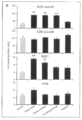
- the ASR result (positive (+), negative (-)) of each fraction of volatile matter from the perianal area of the donor (8 cases) is shown.
- E Results for 3 fractions.
- F Results for fraction 1-1 and fraction 1-2.
- G GC and mass spectrometry analysis result of fraction 1-1.
- H Result of positive fraction.
- I Results of fractions not containing 4-methylpentanal and n-hexanal (negative (-)).
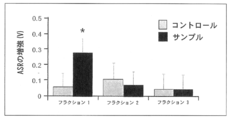
- Results of ASR for fractions 1, 2, and 3 are shown (14 additional examples).
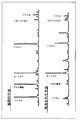
- the identification result of the main peak detected in the fraction 1 is shown.
- the ASR result of fraction 1-1 is shown.
- FIG. 1 Shown are total ion chromatograms of volatiles collected using the first version of the device (top) and the improved system (bottom).
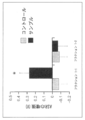
- the results of ASR when 4-methylpentanal and n-hexanal are used alone or in combination are shown.
- the ASR result of a mixture of 4-methylpentanal and n-hexanal is shown.
- Figure 6 shows verification of vaginal resection (VNX) surgery.
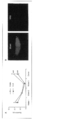
- FIG. 1 (B) Photomicrograph showing binding of soy agglutinin to the accessory olfactory bulb of rats undergoing VNX (left panel) or sham surgery (right panel). The left side is the rostral part. The horizontal bar indicates 500 ⁇ m. The result of ASR by a vaginal resection rat is shown.
- a schematic diagram of an improved open field test is shown. The improved open field test results are shown. The c-Fos expression in the rostral part and caudal part of AOB is shown. The c-Fos expression in the rostral part and caudal part of AOB is shown.
- the odorous composition of the present invention contains (A) methylpentanal and (B) hexanal.
- methylpentanal examples include 4-methylpentanal and 2-methylpentanal, among which 4-methylpentanal is preferable.
- 4-Methylpentanal is a colorless liquid and is used as an intermediate and solvent for organic synthesis, but it is not known at all that it can be part of a mammalian alarm pheromone.
- Hexanal that is, n-hexanal, is a component contained in essential oils such as apple, strawberry, and lemon, and is known as a component that imparts a green fragrance.
- essential oils such as apple, strawberry, and lemon
- hexanal can be part of a mammalian alarm pheromone.
- the odorous composition of the present invention contains both the component (A) and the component (B). That is, either one of the component (A) or the component (B) does not function as an alarm pheromone, and acts as an alarm pheromone by using both in combination.
- the mass ratio (A / B) of the component (A) and the component (B) is preferably 0.01 to 10, more preferably 0.05 to 10, and further preferably 0.05 to 5.
- the odorous composition of the present invention is useful as a warning pheromone for mammals or a odorous composition for behavioral and emotional control of mammals. That is, the odorous composition of the present invention functions as a modulator pheromone that affects the emotions of mammals. Specifically, it enhances the startle reflex through olfaction to mammals. More specifically, when two molecules of the component (A) and the component (B) are simultaneously recognized by two olfactory systems, a neural circuit related to anxiety is activated and a mammal's behavior and emotion are modulated.
- the odorous composition of the present invention can be used, for example, as a mammal repellent.
- the target mammal for which the odorous composition of the present invention suppresses behavior and emotion is preferably a rodent, and examples thereof include rats, mice, guinea pigs, rabbits, weasels, and skunks.
- the content of the component (A) and (B) components of the odor composition of the present invention varies depending on its form, the component (A) is preferably a concentration of 10 -3 ⁇ 10 -7 M, 10 - A concentration of 4 to 10 ⁇ 7 M is more preferable, and a concentration of 10 ⁇ 4 to 10 ⁇ 6 M is particularly preferable.
- the component (B) preferably has a concentration of 10 ⁇ 3 to 10 ⁇ 7 M, more preferably a concentration of 10 ⁇ 4 to 10 ⁇ 7 M, and particularly preferably a concentration of 10 ⁇ 4 to 10 ⁇ 6 M.
- the odorous composition of the present invention can further contain other rodent repellent components.
- Other repellent ingredients include mint oil, capsaicin and the like.
- the dosage form of the odorous composition of the present invention is not particularly limited.
- the active ingredient is dissolved or dispersed in a solvent (liquid carrier), mixed with a solid carrier, or adsorbed or impregnated on a solid carrier.
- a solvent liquid carrier
- a solid carrier or adsorbed or impregnated on a solid carrier.
- Etc. and can be formulated.
- Specific examples of such dosage forms include, for example, sprays, aerosols, pumps, coatings, mats (sheets), tapes, honeycombs, liquids, powders, granules, sustained release agents, and the like. It is done.
- the solvent examples include water, alcohols such as methyl alcohol and ethyl alcohol, glycols, ketones such as acetone and methyl ethyl ketone, ethers such as tetrahydrofuran and dioxane, and aliphatic hydrocarbons such as hexane, kerosene, and paraffin. , Aromatic hydrocarbons such as benzene and toluene, and esters such as ethyl acetate can be used. These solvents may be used alone or in combination of two or more.
- the solid carrier examples include minerals or inorganic powders such as kaolin, talc, bentonite, clay, diatomaceous earth, calcium carbonate, silica, zeolite, plant powders such as wood powder, soybean powder, wheat flour, starch powder, phenol resin, Plastics such as polyamide and polybutadiene, azobisisobutyronitrile (AIBN), fiber or rubber powder, sublimable powder such as camphor, naphthalene, paradichlorobenzene, triisopropyl-S-trioxane, cyclododecane, adamantane, etc. can be used. .
- These solid carriers may be used alone or in combination of two or more.
- the shape is preferably a simple structure with high air permeability, and examples thereof include a honeycomb shape, a net shape, a slit shape, a lattice shape, or a paper structure provided with openings. It is done.
- the odorous composition of the present invention may further include a rodent control agent, an insecticide, a gastropod control agent, a pest repellent, a bactericide, an antifungal agent, a fragrance, an antioxidant, An oil repellent and the like can be contained.
- rodent control agents such as warfarin, pyrethroid insecticides, carbamate insecticides, organophosphorus insecticides, fluorine insecticides, insect growth control insecticides, N, N-diethyl-m-toluamide Pest repellents such as dimethyl phthalate and amidoamine, gastropod control agents such as metaldehyde, bactericides such as parachlorometaxylate, antioxidants such as butylhydroxyanisole, dibutylhydroxytoluene, tocopherol and ⁇ -oryzanol, lemons
- various fragrances such as rose and green, waxes, fats and oils, metal soaps, and water and oil repellents such as fluorine-based oil repellents can be contained.
- the non-human mammal behavior / emotion control method of the present invention uses the component (A) and the component (B). In use thereof, for example, it may be distributed, sprayed, applied, vaporized by means such as blow-off volatilization, etc., in the place of infestation of rodents, places of infestation and damage. Moreover, you may install the paper, cloth, resin containing (A) component and (B) component in the habitat etc. of a rodent.
- the application amount of the component (A) and the component (B) used in the behavior / emotion control method of the present invention may be determined as appropriate according to the dosage form, application method, application location, etc.
- the amount of the active ingredient per place 1 to 10 m 2 (total amount of (A) and (B)) may be 10 mg to 20 g, preferably about 10 mg to 10 g.
- Example 1 Auditory startle reflex (ASR) was used as a marker for pheromone activity.
- ASR is related to the rapid contraction of facial and body muscles caused by sudden strong acoustic stimulation, which is found in various mammals including humans (Prog. Neurobiol. 59, 107-128).
- Fundamental studies involving animals and humans revealed that the amplitude of ASR increases with the subject's level of anxiety (Prog. Neurobiol. 59, 107-128).
- rats the amplitude of ASR is indicated by the change in voltage of the accelerometer output displayed by the movement of the rat in the animal holder.
- Our previous study found that exposure to alarm pheromones increased ASR in rats (Physiol. Behav. 93, 606-611). Therefore, the pheromone activity of a sample was defined as positive (+) when the ASR amplitude significantly increased upon exposure.
- fraction 1 was further fractionated into two (fraction 1-1 and fraction 1-2) (FIG. 1F). When these fractions were exposed to rats, fraction 1-1 enhanced rat ASR (FIGS. 1F and 5), suggesting that pheromone molecules are present in this small fraction. However, no peaks related to pheromone molecules were detected in this fraction. Therefore, we decided to drastically improve the pheromone capture system.
- neither synthetic 4-methylpentanal (1.3 ⁇ 10 ⁇ 6 M) nor n-hexanal (8.7 ⁇ 10 ⁇ 6 M) enhanced ASR in rats (FIG. 7).
- 4-methylpentanal (1.3 ⁇ 10 ⁇ 6 M) + n-hexanal (8.7 ⁇ 10 ⁇ 6 M) the total concentration of the two compounds: 10 ⁇ 5 M), because the mixture enhanced ASR (FIG.
- the mixture should cause other responses commonly induced by alarm pheromones, as well as an increase in ASR.
- behavioral studies modified open field tests (Physiol. Behav. 87, 383-387)) were chosen, and rats were either in an open arena in the presence of the test substance, It was chosen whether to hide in a small safety box in the corner of the device opposite the test substance (FIG. 11).
- the presence of the mixture reduced the time in the open arena and increased the time to look outside while staying in a small safety box (FIG. 12). Also, the time spent in a small safety box tended to be longer (FIG. 12).
- Example 3 By identifying 4-methylpentanal and n-hexanal, the neural mechanism underlying alarm pheromone communication can be analyzed. Using c-Fos expression as a marker, the role of the vomeronasal system in pheromone recognition was identified.
- the vomeronasal receptor is known to consist of two multigene families, V1R and V2R (Philos. Trans. R. Soc. Lond. B Biol. Sci. 355, 1801-1812).
- the vomeronasal nerves that express the V1R receptor and the V2R receptor project axons to the rostral part and caudal part of the accessory olfactory bulb (AOB), respectively (Philos. Trans. R. Soc.
- the alarm pheromone is a “modulator” of the stress response that, when presented with stress factors, exacerbates the HPA axis response and increases anxiety (Brain Res. 1043, 145-147, Brain Res. 237, 230-237).
- information transmitted by the vomeronasal V1R receptor regarding the presence of 4-methylpentanal simultaneously requires n-hexanal information and activates the neural circuit responsible for anxiety.
Landscapes
- Life Sciences & Earth Sciences (AREA)
- Wood Science & Technology (AREA)
- General Health & Medical Sciences (AREA)
- Environmental Sciences (AREA)
- Health & Medical Sciences (AREA)
- Engineering & Computer Science (AREA)
- Zoology (AREA)
- Birds (AREA)
- Pest Control & Pesticides (AREA)
- Insects & Arthropods (AREA)
- Toxicology (AREA)
- Agronomy & Crop Science (AREA)
- Plant Pathology (AREA)
- Dentistry (AREA)
- Agricultural Chemicals And Associated Chemicals (AREA)
- Catching Or Destruction (AREA)
Abstract
哺乳類、特にげっ歯類等の忌避剤として使用し得る警報フェロモンを含有する臭気性組成物の提供。 (A)メチルペンタナール及び(B)ヘキサナールを含有する臭気性組成物。
Description
本発明は、哺乳類の行動・情動を抑制する臭気性組成物に関する。
カ、ノミ、イエダニ等の衛生害虫に対する忌避剤(虫よけ剤)は、例えばカによって媒介されるマラリアの防止の目的で広く使用されている。これらの忌避剤の多くは、フェロモンの研究を基礎として開発されたものである。
フェロモンとは、動物の個体から放出され、同種の他の個体に特異的な反応を引き起こす化学物質である。そのうち警報フェロモンは、植物や動物により最も広く放出されるフェロモンの一つであり、生物がストレスを受けた時に、近くにいる同種の他の個体に注意を促す(非特許文献1)。ラットは、フットショックを受けると警報フェロモンを放出する(非特許文献2)。このラットの警報フェロモンは、げっ歯類における公知の他のフェロモンに比べ、独特な特徴を有する。尿や涙などの体液中に存在する多くのフェロモンと異なり、ラットの警報フェロモンは、体表から直接空気中へ分泌される(非特許文献3)。更に、典型的な忌避反応を引き起こすというよりも、情動に影響を及ぼし、不安を増幅させる(非特許文献4、5)。
Vitam. Horm. 83, 215-239
Physiol. Behav. 72, 45-50
Chem. Senses 29, 35-40
Pharmacol. Biochem. Behav. 94, 575-579
Physiol. Behav. 87, 383-387
しかしながら、昆虫のフェロモンに比べて、発見されている哺乳類のフェロモンは極めて少なく、警報フェロモンについては報告がない。
従って、本発明の課題は、哺乳類、特にげっ歯類等の忌避剤として使用し得る警報フェロモンを含有する臭気性組成物を提供することにある。
従って、本発明の課題は、哺乳類、特にげっ歯類等の忌避剤として使用し得る警報フェロモンを含有する臭気性組成物を提供することにある。
そこで本発明者は、聴覚性驚愕反射(ASR)を用いて哺乳類から放出される成分が驚愕反射に及ぼす影響を検討したところ、メチルペンタナールとヘキサナールは、それぞれ単独では驚愕反射に影響しないにもかかわらず、両者を併用すると明確な驚愕反射を増幅させることを見出し、本発明を完成した。
すなわち、本発明は、次の〔1〕~〔11〕を提供するものである。
〔1〕(A)メチルペンタナール及び(B)ヘキサナールを含有する臭気性組成物。
〔2〕哺乳類用臭気性組成物である〔1〕記載の臭気性組成物。
〔3〕哺乳類の行動・情動制御用臭気性組成物である〔1〕又は〔2〕記載の臭気性組成物。
〔4〕哺乳類が、げっ歯類である〔2〕又は〔3〕記載の臭気性組成物。
〔5〕(A)メチルペンタナールが、4-メチルペンタナールである〔1〕~〔4〕のいずれかに記載の臭気性組成物。
〔6〕(A)成分と(B)成分の含有質量比(A/B)が、0.01~10である〔1〕~〔5〕のいずれかに記載の臭気性組成物。
〔7〕〔1〕~〔6〕のいずれかに記載の臭気性組成物を使用することを特徴とする非ヒト哺乳類の行動・情動制御方法。
〔8〕(A)メチルペンタナール及び(B)ヘキサナールを含有する組成物の、非ヒト哺乳類の行動・情動制御のための使用。
〔9〕非ヒト哺乳類が、げっ歯類である〔7〕記載の使用。
〔10〕(A)メチルペンタナールが、4-メチルペンタナールである〔8〕又は〔9〕記載の使用。
〔11〕(A)成分と(B)成分の含有質量比(A/B)が、0.01~10である〔8〕~〔10〕のいずれかに記載の使用。
〔2〕哺乳類用臭気性組成物である〔1〕記載の臭気性組成物。
〔3〕哺乳類の行動・情動制御用臭気性組成物である〔1〕又は〔2〕記載の臭気性組成物。
〔4〕哺乳類が、げっ歯類である〔2〕又は〔3〕記載の臭気性組成物。
〔5〕(A)メチルペンタナールが、4-メチルペンタナールである〔1〕~〔4〕のいずれかに記載の臭気性組成物。
〔6〕(A)成分と(B)成分の含有質量比(A/B)が、0.01~10である〔1〕~〔5〕のいずれかに記載の臭気性組成物。
〔7〕〔1〕~〔6〕のいずれかに記載の臭気性組成物を使用することを特徴とする非ヒト哺乳類の行動・情動制御方法。
〔8〕(A)メチルペンタナール及び(B)ヘキサナールを含有する組成物の、非ヒト哺乳類の行動・情動制御のための使用。
〔9〕非ヒト哺乳類が、げっ歯類である〔7〕記載の使用。
〔10〕(A)メチルペンタナールが、4-メチルペンタナールである〔8〕又は〔9〕記載の使用。
〔11〕(A)成分と(B)成分の含有質量比(A/B)が、0.01~10である〔8〕~〔10〕のいずれかに記載の使用。
本発明の臭気性組成物を用いれば、哺乳類、特にげっ歯類に対して不安に関連する神経回路を活性化させ、行動・情動を制御することができる。従って、本発明の臭気性組成物を用いれば、新たな哺乳類の警報フェロモンとしての研究材料として有用であり、さらに哺乳類、特にげっ歯類の忌避剤として有用である。
本発明の臭気性組成物は、(A)メチルペンタナール及び(B)ヘキサナールを含有する。
(A)メチルペンタナールとしては、4-メチルペンタナール、2-メチルペンタナール等が挙げられるが、このうち4-メチルペンタナールが好ましい。4-メチルペンタナールは、無色の液体であり、有機合成の中間体や溶剤として使用されるが、哺乳類の警報フェロモンの一部となり得ることは全く知られていない。
(B)ヘキサナール、すなわち、n-ヘキサナールは、アップル、ストロベリー、レモンなどの精油中に含まれる成分であり、グリーン香を与える成分として知られている。しかし、ヘキサナールが哺乳類の警報フェロモンの一部となり得ることは全く知られていない。
本発明の臭気性組成物は、(A)成分と(B)成分の両方を含有することが重要である。すなわち、(A)成分又は(B)成分のいずれか一方では、警報フェロモンとして機能せず、両者を併用することにより、警報フェロモンとして作用する。
(A)成分と(B)成分の含有質量比(A/B)は、0.01~10であるのが好ましく、0.05~10がより好ましく、0.05~5がさらに好ましい。
(A)成分と(B)成分の含有質量比(A/B)は、0.01~10であるのが好ましく、0.05~10がより好ましく、0.05~5がさらに好ましい。
本発明の臭気性組成物は、哺乳類に対して警報フェロモン、あるいは哺乳類の行動・情動制御用臭気性組成物として有用である。すなわち、本発明の臭気性組成物は、哺乳類の情動に影響を及ぼすモジュレーターフェロモンとして機能するものである。具体的には、哺乳類に対して嗅覚を介して驚愕反射を増強する。より具体的には、(A)成分と(B)成分の2つの分子が同時に2つの嗅覚系に認識されたとき、不安に関連する神経回路を活性化し、哺乳類の行動・情動を変調させる。本発明臭気性組成物は、例えば、哺乳動物の忌避剤としても用いることができる。
本発明臭気性組成物が行動・情動を抑制する対象哺乳類としては、げっ歯類が好ましく、ラット、マウス、モルモット、ウサギ、イタチ、スカンク等が挙げられる。
本発明の臭気性組成物中の(A)成分と(B)成分の含有量は、その形態によって相違するが、(A)成分は10-3~10-7Mの濃度が好ましく、10-4~10-7M濃度がより好ましく、10-4~10-6Mの濃度が特に好ましい。また、(B)成分は、10-3~10-7Mの濃度が好ましく、10-4~10-7M濃度がより好ましく、10-4~10-6Mの濃度が特に好ましい。
本発明の臭気性組成物には、さらに他のげっ歯類忌避成分を含有させることができる。他の忌避成分としては、ハッカ油、カプサイシン等が挙げられる。
本発明の臭気性組成物の剤形は、特に限定されないが、例えば、前記有効成分を、溶媒(液体担体)に溶解又は分散させたり、固体担体と混合したり、固体担体に吸着又は含浸させるなどして、製剤化することができる。そのような剤形の具体例としては、例えば、噴霧剤、エアゾール剤、ポンプ剤、塗布剤、マット(シート)剤、テープ剤、ハニカム剤、液剤、粉剤、顆粒剤、徐放剤等が挙げられる。
前記溶媒としては、例えば、水、メチルアルコール、エチルアルコール等のアルコール類、グリコール類、アセトン、メチルエチルケトン等のケトン類、テトラヒドロフラン、ジオキサン等のエーテル類、ヘキサン、ケロシン、パラフィン等の脂肪族炭化水素類、ベンゼン、トルエン等の芳香族炭化水素類、酢酸エチル等のエステル類等が使用できる。これら溶媒は、単独で用いてもよいし、2種以上を併用してもよい。
前記固体担体としては、例えば、カオリン、タルク、ベントナイト、クレー、珪藻土、炭酸カルシウム、シリカ、ゼオライト等の鉱物又は無機質粉末、木粉、大豆粉、小麦粉、澱粉粉等の植物質粉末、フェノール樹脂、ポリアミド、ポリブタジエン等のプラスチック、アゾビスイソブチロニトリル(AIBN)、繊維又はゴムの粉末、樟脳、ナフタレン、パラジクロロベンゼン、トリイソプロピル-S-トリオキサン、シクロドデカン、アダマンタン等の昇華性粉末等が使用できる。これら固体担体は、単独で用いてもよいし、2種以上を併用してもよい。また、その形状は、一般に、簡単な構造で、通気性の大きいものが好ましく、例えば、ハニカム形状、網形状、スリット形状、格子形状、もしくは開孔を設けた紙類等の構造のものが挙げられる。
本発明の臭気性組成物には、さらに、必要に応じて、げっ歯類防除剤、殺虫剤、腹足類防除剤、害虫忌避剤、殺菌剤、防黴剤、香料、酸化防止剤、撥水・撥油剤等を含有させることができる。例えば、ワルファリンなどの齧歯類防除剤、ピレスロイド系殺虫剤、カーバメイト系殺虫剤、有機リン系殺虫剤、フッ素系殺虫剤、昆虫成長制御剤等の殺虫剤、N,N-ジエチル-m-トルアミド、ジメチルフタレート、アミドアミン等の害虫忌避剤、メタアルデヒド等の腹足類防除剤、パラクロロメタキシレート等の殺菌剤、ブチルヒドロキシアニソール、ジブチルヒドロキシトルエン、トコフェロール、γ-オリザノール等の酸化防止剤、レモン系、ローズ系、グリーン系等の各種香料、ロウ、油脂、金属セッケン、フッ素系撥油剤等の撥水・撥油剤等の1種又は2種以上を含有させることができる。
本発明の非ヒト哺乳類の行動・情動制御方法は、前記(A)成分及び(B)成分を用いる。その使用にあたっては、例えば、げっ歯類の生息場所や侵入食害場所等に、撒布したり、噴霧したり、塗布したり、送風式揮散などの手段で気化させるなどすればよい。また、(A)成分及び(B)成分を含有する紙、布、樹脂をげっ歯類の生息場所などに設置するなどしてもよい。
本発明の行動・情動制御方法に用いる(A)成分及び(B)成分の適用量は、剤形や適用方法、適用場所等に応じて適宜決定すればよく、特に制限されないが、通常、適用場所1~10m2当たりの有効成分量((A)及び(B)の合計量)が10mg~20g、好ましくは10mg~10g程度となる量を目安とすればよい。
以下に実施例を挙げて本発明を更に詳細に説明するが、本発明は、これらの実施例に限定されるものではない。
実施例1
フェロモン活性のマーカーとして聴覚性驚愕反射(ASR)を用いた。ASRは、突発的な強い音響刺激により引き起こされる顔及び身体の筋肉の急激な収縮に関し、これはヒトを含む種々の哺乳類でみられる(Prog. Neurobiol. 59, 107-128)。動物及びヒトに関わる基礎的な研究により、ASRの振幅が、対象の不安レベルとともに増大することが明らかになった(Prog. Neurobiol. 59, 107-128)。ラットでは、ASRの振幅は、動物ホルダーにいるラットの動きにより表示される加速度計の出力の電圧変化で示される。我々の前回の研究では、警報フェロモンに暴露されると、ラットのASRが亢進することが分かった(Physiol. Behav. 93, 606-611)。従って、暴露によりASRの振幅が顕著に増大した場合、サンプルのフェロモン活性は陽性(+)であると定義した。
フェロモン活性のマーカーとして聴覚性驚愕反射(ASR)を用いた。ASRは、突発的な強い音響刺激により引き起こされる顔及び身体の筋肉の急激な収縮に関し、これはヒトを含む種々の哺乳類でみられる(Prog. Neurobiol. 59, 107-128)。動物及びヒトに関わる基礎的な研究により、ASRの振幅が、対象の不安レベルとともに増大することが明らかになった(Prog. Neurobiol. 59, 107-128)。ラットでは、ASRの振幅は、動物ホルダーにいるラットの動きにより表示される加速度計の出力の電圧変化で示される。我々の前回の研究では、警報フェロモンに暴露されると、ラットのASRが亢進することが分かった(Physiol. Behav. 93, 606-611)。従って、暴露によりASRの振幅が顕著に増大した場合、サンプルのフェロモン活性は陽性(+)であると定義した。
まず、警報フェロモンを含むサンプルからのみ生じるフェロモン特異的な分子を直接検出することを試みた。肛門腺がフェロモンの有力な発生源と考えられるため(Chem. Senses. 29, 35-40)、肛門腺から揮発性分子を抽出し、フェロモン分子を特定しようとした。しかし、ラットの肛門腺は、肛門縁のすぐ内側にある皮脂腺であるため(Am. J. Anat. 81, 39-61)、通常の状態では肛門腺は見えない。また、肛門腺は極めて小さく、周辺組織に密着しているため、単離は難しかった。更に、肛門腺を含む皮膚と含まない皮膚からの抽出物を分析、比較したが、数多くの化学物質が検出され、肛門腺に関連性がある特定の分子を特定することが出来なかった。従って、分泌された警報フェロモンを採取することにした。
ラットは、フットショックを受けると警報フェロモンを放出する(Physiol. Behav. 72, 45-50)。肛門周囲部に電気刺激を与えることで、麻酔下のラットに警報フェロモンを分泌させることができる(Chem. Senses. 29, 35-40)。そこで、フェロモンドナーとして麻酔をかけたラットを、活性炭を通した空気で満たした円柱状のガラス容器に置き、ドナーラットの肛門周囲部近くにガラス漏斗を固定した。この漏斗は、幅広い揮発性分子を捕捉できる吸着剤テナックス(Tenax)を含むガラス管に接続した。その後、肛門周囲部に電気刺激を与え、漏斗を通じて空気を吸い込み(300mL/min)、揮発性分子を吸着剤に捕捉した。1頭のドナーから得られる警報フェロモンがフェロモンの効果を誘導するのに十分であることを踏まえ(Physiol. Behav. 96, 749-752)、分析のため、8頭のドナーから得られるフェロモンを吸着剤に蓄えた。しかし、ガスクロマトグラフィー(GC)を用いて吸着剤の内容物を分析したところ、クロマトグラムには明確なフェロモン特異的ピークを検出できなかった。手順を検証するため、ASRをマーカーとして利用し、同様に抽出したサンプルのフェロモン活性を評価した。抽出サンプルはASRを亢進させたので、警報フェロモン分子が抽出サンプルに存在することが示唆された。従って、有効量のフェロモンは、量が少なすぎて目に見えるピークとしては検出されなかったということである。
次に、連続分画による警報フェロモン分子の同定を試みた。上記と同じ手順を行い、ドナーの肛門周囲部からの揮発分を捕集した。吸着剤から3つの画分(画分1、画分2及び画分3)を調製したところ、画分1のみがASRを亢進させたので(図1及び図2)、フェロモン分子は画分1にのみ存在することが示唆された。さらに、GC及び質量分析(GC-MS)により画分1をより詳細に分析したところ、31種の化学物質が存在することが明らかとなった。11種の化学物質が主たる分子で、周囲からの混入物と思われた(図3のA~K)。従って、残りの20種の化学物質に着目した(図3の1~20)。しかし、これら20種の化学物質の混合物はASRを亢進せず(図4)、画分1がASRを亢進したとしても、フェロモン分子は不明瞭な小さなピークとして検出されたか、8頭のドナーから得られたフェロモン分子の量がGC-MSシステムの検出閾値を依然下回っていたことが示唆された。そこで、画分1をさらに2つに分画した(画分1-1及び画分1-2)(図1F)。これらの画分をラットに暴露したところ、画分1-1がラットのASRを亢進したので(図1F及び図5)、フェロモン分子はこの小画分に存在することが示唆された。しかし、この画分中にフェロモン分子に関連するピークは検出されなかった。従って、フェロモン捕捉システムを抜本的に改善することとした。
周囲の分子の混入を減らすため、肛門周囲部から放出された揮発性分子を内部のガラス管に捕集できる一方、漏斗と内部のガラス管の間に合成空気を吹き込むことで周囲の他の分子を排除できるガラス漏斗を開発した。さらに、円柱状のガラス容器を、陽圧に維持され、清潔な合成空気が供給されるグローブボックスに変更した。これらの変更点により、周囲からの分子の混入を減らすことができた(図6)。この改善したシステムを用い、吸着剤を調製するのに用いるドナー数を8頭から50頭に増やした。この吸着剤から調製した画分1-1の分析により、4-メチルペンタナールがフェロモン捕捉吸着剤でのみ見られ(図1G)、バックグラウンドの吸着剤ではみられなかったので(図1H)、ラットの警報フェロモンの候補分子であることが示された。また、n-ヘキサナールの、バックグラウンドの吸着剤における量に比べて(図1H)、フェロモン捕捉吸着剤における量が増えている(図1G)ことが観察された。
実施例2
4-メチルペンタナールとn-ヘキサナールの混合物がラットの警報フェロモンを構成しているのかを確認するため、ラットをこれらの化学物質に暴露させた。しかし、合成4-メチルペンタナール(1.3×10⁻⁶M)、n-ヘキサナール(8.7×10⁻⁶M)のいずれもラットのASRを亢進しなかった(図7)。しかし、これらの2分子を吸着剤中で検出されるのと同じ割合で混合したところ(13:87、4-メチルペンタナール(1.3×10⁻⁶M)+n-ヘキサナール(8.7×10⁻⁶M)、2化合物の合計濃度:10-5M)、混合物はASRを亢進したので(図7)、この混合物が警報フェロモンを構成することが考えられた。フェロモンの定義に基づくと、当該混合物は、微量であってもASRを亢進できるはずである。2化合物の合計濃度が10-6Mであっても、ASRの亢進が観察されたので(図8)、当該混合物はフェロモンの定義を満たすことが示唆された。さらに、鋤鼻系が当該混合物により誘導される反応を仲介するはずである(Chem. Senses 32, 57-64、Chem. Senses 38, 661-668)。主嗅覚系の機能を維持しながら外科的に鋤鼻器を取り除いた鋤鼻器切除(VNX)ラットを準備したところ(図9)、当該混合物はASRを亢進せず(図10)、鋤鼻系が、警報フェロモンにより生じる反応同様、当該混合物により誘導される反応を仲介していることが示唆された。当該混合物が警報フェロモンであるなら、ASRの亢進は、ジアゼパムといったベンゾジアゼピンに感受性であるが、ブスピロンといったセロトニン系抗不安薬には非感受性のはずである(Pharmacol. Biochem. Behav. 94, 575-579、Physiol. Behav. 93, 606-611)。ラットにブスピロンでまたはジアゼパムを前投与したところ、混合物によるASRの亢進は、ジアゼパムのみで用量依存的に弱くなったので(図10)、混合物が警報フェロモンに特徴的な不安と同タイプの不安を増大させることが示唆された。最後に、混合物は、ASRの亢進の他、警報フェロモンにより一般的に誘導される他の反応も引き起こすはずである。フェロモンの効果をみたいくつかの試験から、行動学的な試験(改良型オープンフィールド試験(Physiol. Behav. 87, 383-387))を選び、ラットに、試験物質存在下のオープンアリーナにいるか、試験物質とは反対側の、装置の隅にある小さな安全箱に隠れるかを選択させた(図11)。混合物が存在すると、オープンアリーナにいる時間が減り、小さな安全箱にとどまりながら外を調べる時間が増えた(図12)。また、小さな安全箱にとどまる時間は長くなる傾向にあった(図12)。これらの結果は、天然の警報フェロモンを用いた先の試験結果と酷似しており(Physiol. Behav. 87, 383-387)、混合物の効果は、ASRにのみ特異的なものではないことが示唆された。以上より、4-メチルペンタナールとn-ヘキサナールの混合物は、ラットの警報フェロモンであることが結論づけられる。
4-メチルペンタナールとn-ヘキサナールの混合物がラットの警報フェロモンを構成しているのかを確認するため、ラットをこれらの化学物質に暴露させた。しかし、合成4-メチルペンタナール(1.3×10⁻⁶M)、n-ヘキサナール(8.7×10⁻⁶M)のいずれもラットのASRを亢進しなかった(図7)。しかし、これらの2分子を吸着剤中で検出されるのと同じ割合で混合したところ(13:87、4-メチルペンタナール(1.3×10⁻⁶M)+n-ヘキサナール(8.7×10⁻⁶M)、2化合物の合計濃度:10-5M)、混合物はASRを亢進したので(図7)、この混合物が警報フェロモンを構成することが考えられた。フェロモンの定義に基づくと、当該混合物は、微量であってもASRを亢進できるはずである。2化合物の合計濃度が10-6Mであっても、ASRの亢進が観察されたので(図8)、当該混合物はフェロモンの定義を満たすことが示唆された。さらに、鋤鼻系が当該混合物により誘導される反応を仲介するはずである(Chem. Senses 32, 57-64、Chem. Senses 38, 661-668)。主嗅覚系の機能を維持しながら外科的に鋤鼻器を取り除いた鋤鼻器切除(VNX)ラットを準備したところ(図9)、当該混合物はASRを亢進せず(図10)、鋤鼻系が、警報フェロモンにより生じる反応同様、当該混合物により誘導される反応を仲介していることが示唆された。当該混合物が警報フェロモンであるなら、ASRの亢進は、ジアゼパムといったベンゾジアゼピンに感受性であるが、ブスピロンといったセロトニン系抗不安薬には非感受性のはずである(Pharmacol. Biochem. Behav. 94, 575-579、Physiol. Behav. 93, 606-611)。ラットにブスピロンでまたはジアゼパムを前投与したところ、混合物によるASRの亢進は、ジアゼパムのみで用量依存的に弱くなったので(図10)、混合物が警報フェロモンに特徴的な不安と同タイプの不安を増大させることが示唆された。最後に、混合物は、ASRの亢進の他、警報フェロモンにより一般的に誘導される他の反応も引き起こすはずである。フェロモンの効果をみたいくつかの試験から、行動学的な試験(改良型オープンフィールド試験(Physiol. Behav. 87, 383-387))を選び、ラットに、試験物質存在下のオープンアリーナにいるか、試験物質とは反対側の、装置の隅にある小さな安全箱に隠れるかを選択させた(図11)。混合物が存在すると、オープンアリーナにいる時間が減り、小さな安全箱にとどまりながら外を調べる時間が増えた(図12)。また、小さな安全箱にとどまる時間は長くなる傾向にあった(図12)。これらの結果は、天然の警報フェロモンを用いた先の試験結果と酷似しており(Physiol. Behav. 87, 383-387)、混合物の効果は、ASRにのみ特異的なものではないことが示唆された。以上より、4-メチルペンタナールとn-ヘキサナールの混合物は、ラットの警報フェロモンであることが結論づけられる。
実施例3
4-メチルペンタナールとn-ヘキサナールの同定により、警報フェロモンコミュニケーションの根本となる神経メカニズムを解析することができる。マーカーとして、c-Fos発現を利用して、フェロモン認識における鋤鼻系の役割を特定した。鋤鼻受容体は2つの多重遺伝子ファミリーである、V1RとV2Rからなることが知られている(Philos. Trans. R. Soc. Lond. B Biol. Sci. 355,1801-1812)。V1R受容体とV2R受容体を発現する鋤鼻神経は、それぞれ、副嗅球(AOB)の吻側部と尾側部へ軸索を投射している(Philos. Trans. R. Soc. Lond. B Biol. Sci. 355,1801-1812)。よって、我々は、AOBの吻側部と尾側部におけるc-Fos発現を観察することによって2つ分子を認識する際に、V1RとV2R受容体の役割と同様、鋤鼻系の関与について評価した。我々は、AOBをそのGiα-2発現(Philos. Trans. R. Soc. Lond. B Biol. Sci. 355,1801-1812)に基づき、吻側部と尾側部に分割して、それぞれの側部の僧帽/房飾細胞層におけるc-Fos発現を解析した(図13)ところ、4-メチルペンタナールがAOBの吻側部を活性化することが明らかとなった(図13と図14)。これは、この分子が、鋤鼻系におけるV1R受容体により感知されることを示唆している。一方、n-ヘキサナールは、AOBを活性化しなかった(図13と図14)。これは、ラットが、他の嗅覚系を使用してn-ヘキサナールを感知したことを示唆している。ラットが、主嗅覚系を使用してn-ヘキサナールを感知することが多くのレポートで示唆されている(Philos. Trans. R. Soc. Lond. B Biol. Sci. 355,1801-1812、Sci. Signal 2, ra9、Nat. Neurosci. 3, 1035-1043)。脳が2つの異なる嗅覚系からの情報をどのように処理するのかについて解析した。4-メチルペンタナールとn-ヘキサナールが、混合物として存在する時のみ、不安感について重要な役割を担う分界条床核(BNST)(Neuropsychopharmacology 35, 105-135)が活性化されたことがわかった(図14)。一方、警報フェロモンも混合物もいずれも、視床下部-下垂体-副腎(HPA)軸応答において、極めて重要な役割を担う視床下部の室傍核(PVN)を活性化しなかった(図14)。これは、警報フェロモン自体が、ストレス因子として働かなったことを示唆している。よって、警報フェロモンは、ストレス因子を提示されると、HPA軸応答を悪化させて、不安を増大させるストレス反応の“モジュレーター”であることが示唆された(Brain Res. 1043, 145-147、Brain Res. 237, 230-237)。このように、4-メチルペンタナールの存在に関する鋤鼻系のV1R受容体によって伝達された情報は、同時にn-ヘキサナール情報を必要として、不安を司る神経回路を活性化する。これらの発見は、VNXラットにおけるフェロモンの影響を検出できなかったという現象と一致する(Chem. Senses 32, 57-64、Chem. Senses 38, 661-668)。VNXラットがn-ヘキサナールの存在を検出した時でさえも、4-メチルペンタナールに関する情報を感知できなかったため、VNXラットの不安を司る神経回路は活性化されなかった。
4-メチルペンタナールとn-ヘキサナールの同定により、警報フェロモンコミュニケーションの根本となる神経メカニズムを解析することができる。マーカーとして、c-Fos発現を利用して、フェロモン認識における鋤鼻系の役割を特定した。鋤鼻受容体は2つの多重遺伝子ファミリーである、V1RとV2Rからなることが知られている(Philos. Trans. R. Soc. Lond. B Biol. Sci. 355,1801-1812)。V1R受容体とV2R受容体を発現する鋤鼻神経は、それぞれ、副嗅球(AOB)の吻側部と尾側部へ軸索を投射している(Philos. Trans. R. Soc. Lond. B Biol. Sci. 355,1801-1812)。よって、我々は、AOBの吻側部と尾側部におけるc-Fos発現を観察することによって2つ分子を認識する際に、V1RとV2R受容体の役割と同様、鋤鼻系の関与について評価した。我々は、AOBをそのGiα-2発現(Philos. Trans. R. Soc. Lond. B Biol. Sci. 355,1801-1812)に基づき、吻側部と尾側部に分割して、それぞれの側部の僧帽/房飾細胞層におけるc-Fos発現を解析した(図13)ところ、4-メチルペンタナールがAOBの吻側部を活性化することが明らかとなった(図13と図14)。これは、この分子が、鋤鼻系におけるV1R受容体により感知されることを示唆している。一方、n-ヘキサナールは、AOBを活性化しなかった(図13と図14)。これは、ラットが、他の嗅覚系を使用してn-ヘキサナールを感知したことを示唆している。ラットが、主嗅覚系を使用してn-ヘキサナールを感知することが多くのレポートで示唆されている(Philos. Trans. R. Soc. Lond. B Biol. Sci. 355,1801-1812、Sci. Signal 2, ra9、Nat. Neurosci. 3, 1035-1043)。脳が2つの異なる嗅覚系からの情報をどのように処理するのかについて解析した。4-メチルペンタナールとn-ヘキサナールが、混合物として存在する時のみ、不安感について重要な役割を担う分界条床核(BNST)(Neuropsychopharmacology 35, 105-135)が活性化されたことがわかった(図14)。一方、警報フェロモンも混合物もいずれも、視床下部-下垂体-副腎(HPA)軸応答において、極めて重要な役割を担う視床下部の室傍核(PVN)を活性化しなかった(図14)。これは、警報フェロモン自体が、ストレス因子として働かなったことを示唆している。よって、警報フェロモンは、ストレス因子を提示されると、HPA軸応答を悪化させて、不安を増大させるストレス反応の“モジュレーター”であることが示唆された(Brain Res. 1043, 145-147、Brain Res. 237, 230-237)。このように、4-メチルペンタナールの存在に関する鋤鼻系のV1R受容体によって伝達された情報は、同時にn-ヘキサナール情報を必要として、不安を司る神経回路を活性化する。これらの発見は、VNXラットにおけるフェロモンの影響を検出できなかったという現象と一致する(Chem. Senses 32, 57-64、Chem. Senses 38, 661-668)。VNXラットがn-ヘキサナールの存在を検出した時でさえも、4-メチルペンタナールに関する情報を感知できなかったため、VNXラットの不安を司る神経回路は活性化されなかった。
Claims (11)
- (A)メチルペンタナール及び(B)ヘキサナールを含有する臭気性組成物。
- 哺乳類用臭気性組成物である請求項1記載の臭気性組成物。
- 哺乳類の行動・情動制御用臭気性組成物である請求項1又は2記載の臭気性組成物。
- 哺乳類が、げっ歯類である請求項2又は3記載の臭気性組成物。
- (A)メチルペンタナールが、4-メチルペンタナールである請求項1~4のいずれかに記載の臭気性組成物。
- (A)成分と(B)成分の含有質量比(A/B)が、0.01~10である請求項1~5のいずれかに記載の臭気性組成物。
- 請求項1~6のいずれかに記載の臭気性組成物を使用することを特徴とする非ヒト哺乳類の行動・情動制御方法。
- (A)メチルペンタナール及び(B)ヘキサナールを含有する組成物の、非ヒト哺乳類の行動・情動制御のための使用。
- 非ヒト哺乳類が、げっ歯類である請求項7記載の使用。
- (A)メチルペンタナールが、4-メチルペンタナールである請求項8又は9記載の使用。
- (A)成分と(B)成分の含有質量比(A/B)が、0.01~10である請求項8~10のいずれかに記載の使用。
Applications Claiming Priority (2)
| Application Number | Priority Date | Filing Date | Title |
|---|---|---|---|
| JP2014-209897 | 2014-10-14 | ||
| JP2014209897A JP2016079113A (ja) | 2014-10-14 | 2014-10-14 | 臭気性組成物 |
Publications (1)
| Publication Number | Publication Date |
|---|---|
| WO2016060179A1 true WO2016060179A1 (ja) | 2016-04-21 |
Family
ID=55746721
Family Applications (1)
| Application Number | Title | Priority Date | Filing Date |
|---|---|---|---|
| PCT/JP2015/079087 Ceased WO2016060179A1 (ja) | 2014-10-14 | 2015-10-14 | 臭気性組成物 |
Country Status (2)
| Country | Link |
|---|---|
| JP (1) | JP2016079113A (ja) |
| WO (1) | WO2016060179A1 (ja) |
Families Citing this family (1)
| Publication number | Priority date | Publication date | Assignee | Title |
|---|---|---|---|---|
| JP2025161449A (ja) * | 2024-04-12 | 2025-10-24 | フマキラー株式会社 | 動物忌避用定量噴射型エアゾール製品及び動物忌避方法 |
-
2014
- 2014-10-14 JP JP2014209897A patent/JP2016079113A/ja active Pending
-
2015
- 2015-10-14 WO PCT/JP2015/079087 patent/WO2016060179A1/ja not_active Ceased
Non-Patent Citations (5)
| Title |
|---|
| DAVID B. JOSEPHSON.: "Identification of volatile aroma compounds from oxidized frozen whitefish (Coregonus clupeaformis", CANADIAN INSTITUTE OF FOOD SCIENCE AND TECHNOLOGY JOURNAL, vol. 17, no. 3, 1984, pages 178 - 182 * |
| HIDEAKI INAGAKI ET AL.: "Identification of a pheromone that increases anxiety in rats", PROCEEDINGS OF THE NATIONAL ACADEMY OF SCIENCES OF THE UNITED STATES OF AMERICA, vol. 111, no. 52, 30 December 2014 (2014-12-30), pages 18751 - 18756 * |
| KATSUMI UMANO ET AL.: "Aroma Chemicals Isolated and Identified from Leaves of Aloe arborescens Mill. Var. natalensis Berger", JOURNAL OF AGRICULTURAL AND FOOD CHEMISTRY, vol. 47, no. 9, 1999, pages 3702 - 3705 * |
| KATUMI UMANO ET AL.: "Volatile Chemicals Identified in Extracts from Leaves of Japanese Mugwort (Artemisia princeps Pamp.", JOURNAL OF AGRICULTURAL AND FOOD CHEMISTRY, vol. 48, no. 8, 2000, pages 3463 - 3469 * |
| SEIJI HASHIMOTO ET AL.: "Volatile flavor components of Allium grayi Regal", JOURNAL OF THE SCIENCE OF FOOD AND AGRICULTURE, vol. 35, no. 3, 1984, pages 353 - 356 * |
Also Published As
| Publication number | Publication date |
|---|---|
| JP2016079113A (ja) | 2016-05-16 |
Similar Documents
| Publication | Publication Date | Title |
|---|---|---|
| Wickham et al. | Evidence for a female‐produced, long range pheromone of Anoplophora glabripennis (Coleoptera: Cerambycidae) | |
| Singh et al. | Potential of essential oil-based pesticides and detergents for bed bug control | |
| Jiang et al. | High‐throughput screening method for evaluating spatial repellency and vapour toxicity to mosquitoes | |
| WO2004100971A1 (en) | Compositions and methods for controlling insects | |
| Chang et al. | Repellency of Cinnamomum cassia bark compounds and cream containing cassia oil to Aedes aegypti (Diptera: Culicidae) under laboratory and indoor conditions | |
| Wang et al. | Repellency of selected chemicals against the bed bug (Hemiptera: Cimicidae) | |
| Brunetti et al. | Frog volatile compounds: application of in vivo SPME for the characterization of the odorous secretions from two species of Hypsiboas treefrogs | |
| He et al. | Eugenol derivatives: Strong and long-lasting repellents against both undisturbed and disturbed red imported fire ants | |
| EP3358950B1 (en) | Composition for attracting bed bugs | |
| Regueiro et al. | Development of a high-throughput method for the determination of organochlorinated compounds, nitromusks and pyrethroid insecticides in indoor dust | |
| GB2572384A (en) | Mosquito attractants | |
| Olson et al. | Two compounds in bed bug feces are sufficient to elicit off‐host aggregation by bed bugs, Cimex lectularius | |
| US20080226685A1 (en) | Product and Method for Controlling Flying Insects | |
| Douglas III | Prenuptial perfume: alloanointing in the social rituals of the crested auklet (Aethia cristatella) and the transfer of arthropod deterrents | |
| Altuzar et al. | Electrophysiological and behavioural responses of Scyphophorus acupunctatus (Col., Curculionidae) to Agave tequilana volatiles | |
| Mendki et al. | Aggregation responses of Cimex hemipterus F. to semiochemicals identified from their excreta | |
| Ramírez-Godoy et al. | Evaluation of yellow sticky traps baited with citrus scents, coconut oil, and commercial lures as a simple tool to monitor Diaphorina citri (Hemiptera: Liviidae) under tropical dry forest conditions | |
| Ruther et al. | Mites as matchmakers: semiochemicals from host-associated mites attract both sexes of the parasitoid Lariophagus distinguendus | |
| Kanno et al. | Attractiveness of a four-component pheromone blend to male navel orangeworm moths | |
| Alfaro et al. | Solid phase microextraction of volatile emissions of Ceratitis capitata (Wiedemann)(Diptera: Tephritidae): influence of fly sex, age, and mating status | |
| Manzoor et al. | Chemical Composition of Essential Oils Derived from Eucalyptus and Lemongrass and Their Antitermitic Activities Angainst Microtermes mycophagus (Desneux). | |
| WO2016060179A1 (ja) | 臭気性組成物 | |
| González‐Orellana et al. | Behavioural and electrophysiological responses of Liothrips jatrophae (Thysanoptera: Phlaeothripidae) to conspecific extracts and some of its identified compounds | |
| Rasıb et al. | Constituents and termiticide potential of some wood extracts against Coptotermes heimi (Wasmann)(Isoptera: Rhinotermitidae) | |
| Minoli et al. | Dislodgement effect of natural semiochemicals released by disturbed triatomines: a possible alternative monitoring tool |
Legal Events
| Date | Code | Title | Description |
|---|---|---|---|
| 121 | Ep: the epo has been informed by wipo that ep was designated in this application |
Ref document number: 15851496 Country of ref document: EP Kind code of ref document: A1 |
|
| NENP | Non-entry into the national phase |
Ref country code: DE |
|
| 122 | Ep: pct application non-entry in european phase |
Ref document number: 15851496 Country of ref document: EP Kind code of ref document: A1 |