WO2015195240A1 - Grp78 targeted conjugates - Google Patents
Grp78 targeted conjugates Download PDFInfo
- Publication number
- WO2015195240A1 WO2015195240A1 PCT/US2015/030856 US2015030856W WO2015195240A1 WO 2015195240 A1 WO2015195240 A1 WO 2015195240A1 US 2015030856 W US2015030856 W US 2015030856W WO 2015195240 A1 WO2015195240 A1 WO 2015195240A1
- Authority
- WO
- WIPO (PCT)
- Prior art keywords
- conjugate
- amino acid
- signal
- peptide
- cancer
- Prior art date
- Legal status (The legal status is an assumption and is not a legal conclusion. Google has not performed a legal analysis and makes no representation as to the accuracy of the status listed.)
- Ceased
Links
Classifications
-
- A—HUMAN NECESSITIES
- A61—MEDICAL OR VETERINARY SCIENCE; HYGIENE
- A61K—PREPARATIONS FOR MEDICAL, DENTAL OR TOILETRY PURPOSES
- A61K49/00—Preparations for testing in vivo
- A61K49/001—Preparation for luminescence or biological staining
- A61K49/0013—Luminescence
- A61K49/0017—Fluorescence in vivo
- A61K49/0019—Fluorescence in vivo characterised by the fluorescent group, e.g. oligomeric, polymeric or dendritic molecules
- A61K49/0021—Fluorescence in vivo characterised by the fluorescent group, e.g. oligomeric, polymeric or dendritic molecules the fluorescent group being a small organic molecule
- A61K49/0041—Xanthene dyes, used in vivo, e.g. administered to a mice, e.g. rhodamines, rose Bengal
- A61K49/0043—Fluorescein, used in vivo
-
- A—HUMAN NECESSITIES
- A61—MEDICAL OR VETERINARY SCIENCE; HYGIENE
- A61K—PREPARATIONS FOR MEDICAL, DENTAL OR TOILETRY PURPOSES
- A61K31/00—Medicinal preparations containing organic active ingredients
- A61K31/16—Amides, e.g. hydroxamic acids
-
- A—HUMAN NECESSITIES
- A61—MEDICAL OR VETERINARY SCIENCE; HYGIENE
- A61K—PREPARATIONS FOR MEDICAL, DENTAL OR TOILETRY PURPOSES
- A61K33/00—Medicinal preparations containing inorganic active ingredients
- A61K33/24—Heavy metals; Compounds thereof
-
- A—HUMAN NECESSITIES
- A61—MEDICAL OR VETERINARY SCIENCE; HYGIENE
- A61K—PREPARATIONS FOR MEDICAL, DENTAL OR TOILETRY PURPOSES
- A61K33/00—Medicinal preparations containing inorganic active ingredients
- A61K33/24—Heavy metals; Compounds thereof
- A61K33/242—Gold; Compounds thereof
-
- A—HUMAN NECESSITIES
- A61—MEDICAL OR VETERINARY SCIENCE; HYGIENE
- A61K—PREPARATIONS FOR MEDICAL, DENTAL OR TOILETRY PURPOSES
- A61K33/00—Medicinal preparations containing inorganic active ingredients
- A61K33/24—Heavy metals; Compounds thereof
- A61K33/243—Platinum; Compounds thereof
-
- A—HUMAN NECESSITIES
- A61—MEDICAL OR VETERINARY SCIENCE; HYGIENE
- A61K—PREPARATIONS FOR MEDICAL, DENTAL OR TOILETRY PURPOSES
- A61K33/00—Medicinal preparations containing inorganic active ingredients
- A61K33/24—Heavy metals; Compounds thereof
- A61K33/244—Lanthanides; Compounds thereof
-
- A—HUMAN NECESSITIES
- A61—MEDICAL OR VETERINARY SCIENCE; HYGIENE
- A61K—PREPARATIONS FOR MEDICAL, DENTAL OR TOILETRY PURPOSES
- A61K47/00—Medicinal preparations characterised by the non-active ingredients used, e.g. carriers or inert additives; Targeting or modifying agents chemically bound to the active ingredient
- A61K47/50—Medicinal preparations characterised by the non-active ingredients used, e.g. carriers or inert additives; Targeting or modifying agents chemically bound to the active ingredient the non-active ingredient being chemically bound to the active ingredient, e.g. polymer-drug conjugates
- A61K47/51—Medicinal preparations characterised by the non-active ingredients used, e.g. carriers or inert additives; Targeting or modifying agents chemically bound to the active ingredient the non-active ingredient being chemically bound to the active ingredient, e.g. polymer-drug conjugates the non-active ingredient being a modifying agent
- A61K47/62—Medicinal preparations characterised by the non-active ingredients used, e.g. carriers or inert additives; Targeting or modifying agents chemically bound to the active ingredient the non-active ingredient being chemically bound to the active ingredient, e.g. polymer-drug conjugates the non-active ingredient being a modifying agent the modifying agent being a protein, peptide or polyamino acid
- A61K47/64—Drug-peptide, drug-protein or drug-polyamino acid conjugates, i.e. the modifying agent being a peptide, protein or polyamino acid which is covalently bonded or complexed to a therapeutically active agent
-
- A—HUMAN NECESSITIES
- A61—MEDICAL OR VETERINARY SCIENCE; HYGIENE
- A61K—PREPARATIONS FOR MEDICAL, DENTAL OR TOILETRY PURPOSES
- A61K49/00—Preparations for testing in vivo
- A61K49/001—Preparation for luminescence or biological staining
- A61K49/0013—Luminescence
- A61K49/0017—Fluorescence in vivo
- A61K49/005—Fluorescence in vivo characterised by the carrier molecule carrying the fluorescent agent
- A61K49/0056—Peptides, proteins, polyamino acids
-
- A—HUMAN NECESSITIES
- A61—MEDICAL OR VETERINARY SCIENCE; HYGIENE
- A61K—PREPARATIONS FOR MEDICAL, DENTAL OR TOILETRY PURPOSES
- A61K51/00—Preparations containing radioactive substances for use in therapy or testing in vivo
- A61K51/02—Preparations containing radioactive substances for use in therapy or testing in vivo characterised by the carrier, i.e. characterised by the agent or material covalently linked or complexing the radioactive nucleus
- A61K51/04—Organic compounds
- A61K51/08—Peptides, e.g. proteins, carriers being peptides, polyamino acids, proteins
- A61K51/088—Peptides, e.g. proteins, carriers being peptides, polyamino acids, proteins conjugates with carriers being peptides, polyamino acids or proteins
-
- A—HUMAN NECESSITIES
- A61—MEDICAL OR VETERINARY SCIENCE; HYGIENE
- A61N—ELECTROTHERAPY; MAGNETOTHERAPY; RADIATION THERAPY; ULTRASOUND THERAPY
- A61N5/00—Radiation therapy
-
- A—HUMAN NECESSITIES
- A61—MEDICAL OR VETERINARY SCIENCE; HYGIENE
- A61K—PREPARATIONS FOR MEDICAL, DENTAL OR TOILETRY PURPOSES
- A61K33/00—Medicinal preparations containing inorganic active ingredients
-
- A—HUMAN NECESSITIES
- A61—MEDICAL OR VETERINARY SCIENCE; HYGIENE
- A61K—PREPARATIONS FOR MEDICAL, DENTAL OR TOILETRY PURPOSES
- A61K38/00—Medicinal preparations containing peptides
- A61K38/16—Peptides having more than 20 amino acids; Gastrins; Somatostatins; Melanotropins; Derivatives thereof
- A61K38/43—Enzymes; Proenzymes; Derivatives thereof
-
- G—PHYSICS
- G01—MEASURING; TESTING
- G01N—INVESTIGATING OR ANALYSING MATERIALS BY DETERMINING THEIR CHEMICAL OR PHYSICAL PROPERTIES
- G01N33/00—Investigating or analysing materials by specific methods not covered by groups G01N1/00 - G01N31/00
- G01N33/48—Biological material, e.g. blood, urine; Haemocytometers
- G01N33/50—Chemical analysis of biological material, e.g. blood, urine; Testing involving biospecific ligand binding methods; Immunological testing
- G01N33/68—Chemical analysis of biological material, e.g. blood, urine; Testing involving biospecific ligand binding methods; Immunological testing involving proteins, peptides or amino acids
Definitions
- GRP78 Glucose regulated protein 78
- UPR unfolded protein response
- metastatic melanoma has the fastest growing cancer incidence in the world today; however, current therapies increase life expectancy by only months. Additionally, drug resistance to traditional chemotherapeutics often arises quickly.
- GRP78 glucose regulated protein 78
- X is a direct bond or a linking group
- D is a detectable agent
- n 1 to 4.
- Certain embodiments of the invention provide a pharmaceutical composition comprising a conjugate of formula (I) and a pharmaceutically acceptable excipient.
- Certain embodiments of the invention provide a method for treating or preventing cancer in an animal (e.g., a human) comprising administering a therapeutically effective amount of a conjugate of formula (I) (e.g., a conjugate comprising a therapeutic radionuclide) to the animal.
- a conjugate of formula (I) e.g., a conjugate comprising a therapeutic radionuclide
- Certain embodiments of the invention provide a conjugate of formula (I) for use in medical therapy.
- Certain embodiments of the invention provide a conjugate of formula (I) for the prophylactic or therapeutic treatment of cancer.
- Certain embodiments of the invention provide the use of a conjugate of formula (I) to prepare a medicament for treating cancer in an animal (e.g. a human).
- Certain embodiments of the invention provide a method of detecting a GRP78 molecule, comprising contacting a cell in vitro or in vivo with a conjugate of formula (I).
- Certain embodiments of the invention provide a method of detecting cancer cells in a test tissue sample, comprising contacting the test sample with a conjugate of formula (I) and measuring a signal from the detectable agent, wherein a signal from the test sample that is greater than a signal from a non-cancerous control sample indicates the presence of cancer cells in the test tissue sample.
- Certain embodiments of the invention provide a method of detecting cancer in an animal (e.g., a human), comprising administering a conjugate of any one of claims 1-48 to the animal and measuring a signal from the detectable agent, wherein a signal greater than a signal from a control animal without cancer indicates the animal has cancer.
- an animal e.g., a human
- Certain embodiments of the invention provide a method of determining the effectiveness of a cancer therapy in an animal (e.g., a human), comprising
- PEP42 (CTVALPGGYVRKC) (SEQ ID NO:l) is a 13 amino acid cyclized peptide sequence which is believed to bind with GRP 78 with high specificity.
- Figure 1 A shows chemical structures of N-terminus conjugated DOTA and fluorescein conjugates of PEP42.
- Figure IB shows chemical structures of Lys-conjugated DOTA and fluorescein conjugates of PEP42.
- Figure 1C is the pictorial representation of the PEP42 analogs.
- Figure 2A shows the chemical structures of the synthesized peptides SK- 1 (WDLAWMFRLPVG) (SEQ ID NO:2), SK-2 (WIFPWIQL) (SEQ ID NO:3), and SK-3(GWAFSIPL) (SEQ ID NO:4). These peptides generally have hydrophobic amino acids at even positions, which are complimentary to the binding sites on the GRP78 according to the literature.
- Figure 2B shows synthesized DOTA conjugates of peptides SK-1 (WDLAWMFRLPVG) (SEQ ID NO:2), SK-2 (WIFPWIQL) (SEQ ID NO:3), and SK- 3(GWAFSIPL) (SEQ ID NO:4). These peptides were labeled with Ga-68.
- Figure 3 Radiolabeling efficiency of PEP42 conjugates and Fluorescent Imaging for PEP42 conjugates.
- Figure 3 A Shows the high radiolabeling efficiency of N-DOTA-PEP42.
- Figure 3B lOx confocal image of B16 tumor tissue cross section, which was incubated for 1 hour at room temperature with 20 ⁇ of N-FAM PEP42.
- Figure 4A Pictorial representation of DOTA conjugated to the N-terminus of the SK-2 peptide.
- Figure 4B Counts per minute (cpm) v. Retention time (s) for Ga- DOTA-SK2.
- Figure 4C 68 Ga-DOTA-SK2 binding curve (Counts per sec (cps) v.
- 1-LN (10°) cells were incubated with increasing concentration of Ga- DOTA-S 2 (0.01-100 nM) for an hour to obtain a saturation curve.
- Figure 5A shows the expression of GRP78 in B16 mouse melanoma tumor tissue cross section.
- the left figure shows the remarkable difference in the expression of GRP78 between the tumor tissue and surrounding muscle tissue by IHC using a goat-anti-GRP78 antibody.
- the right figure shows a high expression of GRP78 in B16 tumor tissue cross section by immunofluorescence.
- Figure 5B The left figure shows expression of GRP78 on the surface of 1-LN prostate cancer cells (Uma K. Misra et. al. The Journal of Biological Sciences (2002), Vol. 277, No. 44, 42082-42089) using a flow cytometer.
- the right figure shows the expression of GRP78 in 1 -LN prostate cancer cells using microscopy. As melanoma cell lines show low expression in- vitro, 1-LN cells will be used for in- vitro peptide binding assays.
- Figure 6 A & B Schematic of certain conjugates described herein.
- the radionuclide may be altered depending on the use of the conjugate (e.g., 90 Y may be used for therapeutic purposes (A) and 68 Ga may be used for imaging (B)).
- Figure 8 Illustration of a conjugate of the invention binding to GRP78 at the surface of a cell.
- Figure 10 Illustration showing steps of a phage display study to select targeted peptides.
- Figure 12 Illustration showing possible parameters for peptide design based on the GRP78 binding site.
- FIG. 13 Cell surface expression of GRP78 and AKT/PI3K pro-survival pathway. Immunoprecipitation assay (left panel) and data (right panel).
- Figures 14-19 Examples, using a model peptide, of conjugate/peptide modifications that may be made to alter, e.g., the affinity, selectivity and/or stability of a peptide/conjugate described herein.
- IC 50 is shown for each example.
- Figure 20 Stability of sample peptides in human serum.
- Figure 21 The left hand panel shows IHC staining on B-16 mouse melanoma tissue cross-section. There is a significantly high GRP78 expression in the tissue relative to the surrounding muscle tissue. The tumor tissue cross section was obtained from B-16 xenografts. The right hand panel shows a confocal image of the tumor tissue (20x magnification).
- Figure 22 (a) The increase in DHE oxidation shows increasing levels of OS, which lead to increase in cell-surface GRP78 expression as shown in panels (b) and (c). Cell-surface GRP78 expression are analyzed by flow-cytometry using anti-human GRP78 alexa 488 tagged antibody. The cells are incubated at 4°C for 40 min and fluorescence is measured and normalized with respect to the control.
- Glucose regulating peptide receptor is a protein that has long been considered to be confined to an intracellular organelle called the endoplasmic reticulum, where it plays a major role in appropriate protein folding and a cellular process known as the unfolded protein response. Emerging evidence is demonstrating that this protein can also be exported from the internal organelle to the surface of the cell. Although the mechanism and reasons for the protein to be present on the surface of cells is not well understood, it is increasingly being related to intra ⁇ extra cellular stresses that are associated with tumor mircoenvironment.
- molecules e.g., small amino acid sequences, i.e., peptides
- these molecules comprise a chelator that can be labeled with a radionuclide for diagnostic imaging (e.g., PET imaging) or radiation therapy for cancer.
- these molecules comprise a fluorescent molecular functional group that can be used for assays designed to identify and quantify the concentrate on of GRP78 on cell surfaces.
- GRP78 glucose regulated protein 78
- X is a direct bond or a linking group
- D is a detectable agent or is a pharmaceutically active agent; and n is 1 to 4.
- GRP78 glucose regulated protein 78
- X is a direct bond or a linking group
- D is a detectable agent
- n 1 to 4.
- GRP78 glucose regulated protein 78
- X is a linking group
- D is a detectable agent
- n 1 to 4.
- n is 1, 2, 3, 4. In certain embodiments, n is 1. In certain embodiments, n is 2. In certain embodiments, when n is greater than 1, -(X-D) is
- one D may be a detectable agent and one D may be a pharmaceutically active agent; or, e.g., one D may be a radiolabeled chelating group and another D may be a fluorescent group).
- the invention also provides processes and intermediates disclosed herein that are useful for preparing conjugates of formula I.
- P is a peptide that binds to a glucose regulated protein 78 (GRP78). Ideally, the peptide binds to GRP78 with a high affinity and specificity.
- GRP78 glucose regulated protein 78
- the peptide binds to GRP78 with an IC 50 of about 100 pM to about 100 nM. In certain embodiments, the peptide has an IC 50 of about 300 pM to about 100 nM. In certain embodiments, the peptide has an IC 50 of about 500 pM to about 100 nM. In certain embodiments, the peptide has an IC 50 of about 800 pM to about 100 nM. In certain embodiments, the peptide has an IC 50 of about 1 nM to about 100 nM. In certain embodiments, the peptide has an IC50 of about, e.g., 10 to about 90 nM, of about 20 to about 80 nM, of about 30 to about 70 nM, or of about 40 to about 60 nM.
- a conjugate of formula (I) binds to GRP78 with an IC50 of about 100 pM to about 100 nM. In certain embodiments, a conjugate of formula (I) has an IC 0 of about 300 pM to about 100 nM. In certain embodiments, a conjugate of formula (I) has an IC 50 of about 500 pM to about 100 nM. In certain embodiments, a conjugate of formula (I) has an IC 0 of about 800 pM to about 100 nM. In certain embodiments, a conjugate of formula (I) has an IC 50 of about 1 nM to about 100 nM.
- a conjugate of formula (I) has an IC50 of about, e.g., 10 to about 90 nM, of about 20 to about 80 nM, of about 30 to about 70 nM, or of about 40 to about 60 nM.
- the peptide is stable and/or has favorable pharmacodynamics (e.g., may be evaluated using imaging and bio distribution).
- amino acid comprises the residues of the natural amino acids (e.g. Ala, Arg, Asn, Asp, Cys, Glu, Gin, Gly, His, Hyl, Hyp, He, Leu, Lys, Met, Phe, Pro, Ser, Thr, Trp, Tyr, and Val) in D or L form, as well as unnatural amino acids (e.g.
- the term also comprises natural and unnatural amino acids bearing a conventional amino protecting group (e.g.
- acetyl or benzyloxycarbonyl as well as natural and unnatural amino acids protected at the carboxy terminus (e.g. as a (Ci-Ce) alkyl, phenyl or benzyl ester or amide; or as an a-methylbenzyl amide).
- suitable amino and carboxy protecting groups are known to those skilled in the art (See for example, T.W. Greene, Protecting Groups In Organic Synthesis; Wiley: New York, 1981, and references cited therein).
- An amino acid can be linked to the remainder of a conjugate of formula I through the carboxy terminus, the amino terminus, or through any other convenient point of attachment, such as, for example, through the sulfur of a cysteine.
- peptide describes a sequence of 2 to 25 (e.g., 3, 4, 5, 6, 7, 8, 9, 10, 1 1, 12, 13, 14, 15, 16, 17, 18, 19, 20, 21 , 22, 23 or 24) amino acids (e.g. as defined hereinabove) or peptidyl residues.
- the sequence may be linear or cyclic.
- a cyclic peptide can be prepared or may result from the formation of disulfide bridges between two cysteine residues in a sequence or may be cyclized by copper free click chemistry reactions.
- Peptide derivatives can be prepared as disclosed in U.S. Patent Numbers 4,612,302; 4,853,371 ; and 4,684,620, or as described in the Examples herein below. Peptide sequences specifically recited herein are written with the amino terminus on the left and the carboxy terminus on the right.
- a peptide can be linked to the remainder of a conjugate of formula I at its carboxy terminus, amino terminus, or through any other convenient point of attachment (e.g., attached to an amino acid located within the internal portion of the peptide), such as, for example, through the sulfur of a cysteine or through a free amine of an amino acid.
- X may be covalently attached to the peptide at any synthetically feasible position. Ideally, X is covalently attached to the peptide at a position that does not interfere with or destroy its GRP78 binding capabilities and does not interfere with or destroy the functionality of the detectable agent. In certain embodiments, X is covalently attached through an amine group of an amino acid (e.g., generating an amide).
- X is covalently attached through an amine group of an amino acid, wherein the amino acid is not located at the N-terminus of the peptide.
- X is covalently attached through an alcohol group of an amino acid (e.g., generating an ester).
- X is covalently attached to a cysteine, tryptophan or glycine located at the N-terminus of the peptide through an amine group.
- X is covalently attached to an amine group of a lysine located within the internal portion of the amino acid sequence.
- the peptide is 4 to 20 amino acids in length. In certain embodiments, the peptide is 4 to 17 amino acids in length. In certain embodiments, the peptide is 5 to 16 amino acids in length. In certain embodiments, the peptide is 6 to 15 amino acids in length. In certain embodiments, the peptide is 7 to 14 amino acids in length. In certain embodiments, the peptide is 8 to 13 amino acids in length. In certain embodiments the peptide is 8 amino acids in length. In certain embodiments the peptide is 12 amino acids in length. In certain embodiments, the peptide is 13 amino acids in length.
- Amino acids may be categorized based on their side chains. For example, alanine, isoleucine, leucine and valine have hydrophobic aliphatic side chains; phenylalanine, tryptophan and tyrosine have hydrophobic aromatic side chains; asparagine, methionine, cysteine, serine, glutamine and threonine have polar neutral side chains; aspartic acid and glutamic acid have charged acidic side chains; arginine, histidine and lysine have charged basic side chains; and glycine and proline are considered unique amino acids.
- amino acids may be ranked based on a hydrophobicity index, which is a measure of the relative hydrophobicity, or how soluble an amino acid is in water.
- hydrophobic amino acids are likely to be found in the interior, whereas hydrophilic amino acids are likely to be in contact with the aqueous environment. Based on this index, leucine, isoleucine, phenylalanine, tryptophan, valine, tyrosine, alanine, methionine and cysteine may be considered hydrophobic.
- the peptide comprises at least one hydrophobic amino acid (e.g., leucine, isoleucine, phenylalanine, tryptophan, valine, tyrosine, alanine and cysteine).
- the peptide comprises at least two hydrophobic amino acids.
- the at least two hydrophobic amino acids may be the same.
- the at least two hydrophobic amino acids may be different.
- the peptide comprises at least three hydrophobic amino acids.
- the peptide comprises at least four hydrophobic amino acids.
- the peptide comprises at least five hydrophobic amino acids.
- the peptide comprises at least six hydrophobic amino acids. In certain embodiments, the peptide comprises at least seven hydrophobic amino acids. In certain embodiments, the hydrophobic amino acids may be the same. In certain embodiments, the hydrophobic amino acids may be different.
- hydrophobic amino acids are located at the even positions within the peptide, which may result in increased binding affinity to GRP78.
- an even position is used to refer to an amino acid at position 2, 4, 6, 8, 10, 12, 14, etc., when the amino acids within the peptide are numbered consecutively beginning with the first amino acid at the N-terminus of the peptide and moving towards the C-terminus.
- the peptide comprises at least one even position hydrophobic amino acid. In certain embodiments, the peptide comprises at least two even position hydrophobic amino acids, independently selected. In certain embodiments, the peptide comprises at least three even position hydrophobic amino acids, independently selected. In certain embodiments, the peptide comprises at least four even position hydrophobic amino acids, independently selected.
- the peptide comprises an amino acid sequence selected from formulas (II), (III), (IV), (V) and (VI):
- Xi is 0-8 amino acids (e.g., any amino acid);
- a 0 is any amino acid
- amino acid is independently an amino acid with a polar neutral side chain (e.g., asparagine, cysteine, glutamine, methionine, serine and threonine);
- a polar neutral side chain e.g., asparagine, cysteine, glutamine, methionine, serine and threonine
- a 2 is independently an amino acid with a hydrophobic aliphatic side chain (e.g., alanine, isoleucine, leucine and valine);
- a 3 is independently a unique amino acid (e.g., glycine and proline);
- A4 is independently an amino acid with a hydrophobic aromatic side chain (e.g., phenylalanine, tryptophan and tyrosine);
- a 5 is independently an amino acid with a basic side chain (e.g., arginine, histidine and lysine);
- A is independently an amino acid with a hydrophobic aliphatic or aromatic side chain (e.g., alanine, isoleucine, leucine, valine, phenylalanine, tryptophan and tyrosine); and.
- a hydrophobic aliphatic or aromatic side chain e.g., alanine, isoleucine, leucine, valine, phenylalanine, tryptophan and tyrosine
- a 7 is independently an amino acid with an acidic side chain (e.g., aspartic acid and glutamic acid).
- X ⁇ is 1, 2, 3, 4, 5, 6 or 7 amino acids (e.g., any amino acid).
- the peptide comprises an amino acid sequence selected from CTVALPGGYVRKC (SEQ ID NO:l), WDLAWMFRLPVG (SEQ ID NO:2), WIFPWIQL (SEQ ID NO:3), and GWAFSIPL (SEQ ID NO:4).
- the peptide comprises an amino acid sequence of formula
- the peptide consists of an amino acid sequence of formula
- the peptide comprises SEQ ID NO. l .
- the peptide consists of SEQ ID NO: 1.
- the peptide comprises an amino acid sequence of formula
- the peptide comprises an amino acid sequence of formula
- the peptide consists of an amino acid sequence of formula
- the peptide consists of an amino acid sequence of formula
- the peptide comprises SEQ ID NO:2.
- the peptide consists of SEQ ID NO:2.
- the peptide comprises an amino acid sequence of formula
- the peptide comprises an amino acid sequence of formula
- the peptide consists of an amino acid sequence of formula
- the peptide consists of an amino acid sequence of formula
- the peptide comprises SEQ ID NO:3.
- the peptide consists of SEQ ID NO: 3.
- the peptide comprises an amino acid sequence of formula
- the peptide comprises an amino acid sequence of formula
- the peptide consists of an amino acid sequence of formula
- the peptide consists of an amino acid sequence of formula
- the peptide comprises SEQ ID NO:4.
- the peptide consists of SEQ ID NO:4.
- the peptide comprises an amino acid sequence of formula
- the peptide comprises an amino acid sequence of formula
- A4a is independently selected from tryptophan and phenylalanine
- a 6a is independently selected from tryptophan, phenylalanine, isoleucine, leucine and tyrosine.
- the peptide consists of an amino acid sequence of formula
- the peptide consists of an amino acid sequence of formula
- A4 a is independently selected from tryptophan and phenylalanine
- a a is independently selected from tryptophan, phenylalanine, isoleucine, leucine and tyrosine.
- X is a linking group that joins the detectable agent (D) to a peptide that binds to a GRP78 (P).
- the nature of the linking group X is not critical provided the resulting conjugates retain the useful biological properties described herein (e.g., the peptide retains its GRP78 binding capabilities and the detectable agent retains its functionality).
- the linking group has a molecular weight of from about 20 daltons to about 20,000 daltons.
- the linking group has a molecular weight of from about 20 daltons to about 5,000 daltons.
- the linking group has a molecular weight of from about 20 daltons to about 1 ,000 daltons.
- the linking group has a molecular weight of from about 20 daltons to about 200 daltons.
- the linking group has a length of about 5 angstroms to about 60 angstroms. In another embodiment of the invention the linking group separates the peptide from the remainder of the conjugate of formula I by about 5 angstroms to about 40 angstroms, inclusive, in length.
- the linking group is a divalent, branched or unbranched, saturated or unsaturated, hydrocarbon chain, having from 2 to 25 carbon atoms, wherein one or more (e.g. 1, 2, 3, or 4) of the carbon atoms is optionally replaced by (-0-), and wherein the chain is optionally substituted on carbon with one or more (e.g.
- the linking group is a divalent, branched or unbranched, saturated or unsaturated, hydrocarbon chain, having from 2 to 10 carbon atoms, wherein one or more (e.g. 1 , 2, 3, or 4) of the carbon atoms is optionally replaced by (-0-), and wherein the chain is optionally substituted on carbon with one or more (e.g.
- substituents selected from (Q-Ce ⁇ lko y, (C3-C6)cycloalkyl, (Q-C ⁇ alkanoyl, (Q- C )alkanoyloxy, (C C 6 )al
- substituents selected from (Ci-C 6 )alkoxy, (C 3 -C 6 )cycloalkyl, (C 1 -C 6 )alkanoyl, (C ⁇ - C 6 )alkanoyl
- the linking group is a divalent, branched or unbranched, saturated or unsaturated, hydrocarbon chain, having from 2 to 10 carbon atoms.
- the linking group is a divalent, branched or unbranched, saturated hydrocarbon chain, having from 2 to 10 carbon atoms. In another embodiment of the invention the linking group is a divalent, unbranched, saturated hydrocarbon chain, having from 2 to 10 carbon atoms.
- the linking group is a divalent, unbranched, saturated hydrocarbon chain, having from 2 to 6 carbon atoms.
- the linking group is a divalent, unbranched, saturated hydrocarbon chain, having from 2 to 4 carbon atoms.
- polyethyleneoxy chain In another embodiment of the invention the polyethyleneoxy chain comprises 2, 3, 4, 5, 6, 7, 8, 9, or 10 repeating ethyleneoxy units.
- the linking group is a divalent radical formed from a protein.
- the linking group is a divalent radical formed from a peptide.
- the linking group is a divalent radical formed from an amino acid.
- the carboxylic acid of the detectable group is reacted with an amine of the peptide to form an amide bond.
- X is a direct bond. In certain embodiments, X is a direct bond and P is bonded to D through an amide bond.
- conjugates of formula (I) comprise one or more detectable agents.
- Detectable agents include, but are not limited to, fluorescent groups and chelating groups, which may be labeled with radionuclides.
- the detectable groups and linking groups are independently selected, and therefore, may be the same or may be different.
- a chelating group, which may be labeled with a radionuclide, and a fluorescent group may be linked to a peptide via individual linking groups (X).
- the detectable agent (D) comprises a chelating group, which may be labeled with a radionuclide.
- the conjugates may be used for, e.g., diagnostic imaging (e.g., PET imaging, MRI) or radiation therapy for cancer (e.g., which may circumvent drug resistance associated with other forms of therapy).
- diagnostic imaging e.g., PET imaging, MRI
- radiation therapy for cancer e.g., which may circumvent drug resistance associated with other forms of therapy.
- the conjugates may be used to select patients that may benefit most from the therapy or to monitor response to therapy - a step toward more personalized medicine for cancer patients.
- the detectable agent comprises a fluorescent group
- the resulting conjugates may be used, e.g., for assays designed to identify and quantify the concentration of GRP78 on cell surfaces.
- the detectable agent is not DOTA or fluorescein.
- the detectable agent comprises a chelating group.
- a "chelating group” is a group that can include a detectable group, e.g., a radionuclide ⁇ e.g., a metallic radioisotope). Any suitable chelating group can be employed. Suitable chelating groups are disclosed, e.g., in Rockey et al., Bioorganic & Medicinal Chemistry 19 (2011) 4080-4090; Poster Sessions, Proceedings of the 46th Annual Meeting, J. Nuc.Med., p. 316, No. 1386; Scientific Papers, Proceedings of the 46th Annual Meeting, J. Nuc.Med., p. 123, No.
- the detectable agent comprises a chelating group selected from:
- the detectable agent comprises DOTA.
- the detectable agent does not comprise DOTA.
- Conjugates of the invention are useful as imaging agents for imaging cells and tissues that include GRP78, as well as for therapy. Accordingly, in certain embodiments, the invention also provides conjugates of formula I, wherein D comprises a chelating group that includes one or more detectable radionuclides (e.g., one or more metallic radionuclides, e.g., emits a signal). Methods for making such detectable agents are known to the art worker. Such conjugates can be useful to image tissues expressing GRP78 in vivo or in vitro or for therapeutic purposes.
- D comprises a chelating group that includes one or more detectable radionuclides (e.g., one or more metallic radionuclides, e.g., emits a signal).
- detectable radionuclides e.g., one or more metallic radionuclides, e.g., emits a signal.
- a "detectable radionuclide” is any suitable radionuclide (i.e., a radioisotope) useful in an imaging procedure, e.g., a diagnostic procedure, in vivo or in vitro, or for, e.g., therapy, e.g., cancer therapy.
- Suitable detectable radionuclides include metallic radionuclides (i.e., metallic radioisotopes).
- Suitable metallic radionuclides i.e., metallic radioisotopes or metallic
- paramagnetic ions include Antimony- 124, Antimony- 125, Arsenic-74, Barium- 103, Barium- 140, Beryllium-7, Bismuth-206, Bismuth-207, Cadmium-109, Cadmium-115m, Calcium-45, Cerium-139, Cerium-141, Cerium-144, Cesium-137, Chromium-51, Cobalt-55, Cobalt-56, Cobalt-57, Cobalt-58, Cobalt-60, Cobalt-64, Copper-64, Copper-67, Erbium-169, Europium- 152, Gallium-64, Gallium-68, Gadolinium- 153, Gadolinium- 157 Gold-195, Gold-199, Hafnium-175, Hafnium-175-181, Holmium-166, Indium-1 10, Indium-I l l, Iridium-192, Iron- 55, Iron-59, Krypton-85, Lead-210, Manganese-54, Mercury- 197
- the radionuclide is Gallium-68, Copper-64 or Yttrium-90.
- the radionuclide is Gallium-68.
- the radionuclide is not Gallium-68.
- D is not a DOTA chelating group including Gallium-68.
- the chelating group can include more than one independently selected metallic radioisotope.
- the detectable chelating group can include 2 to about 10, 2 to about 8, 2 to about 6, or 2 to about 4 independently selected metallic radioisotopes.
- the detectable agent comprises a fluorescent group, which may also be called a "fluorescent tag” or a "fluorophore”.
- a fluorescent group which may also be called a "fluorescent tag” or a "fluorophore”.
- the resulting conjugates may be used, e.g., for assays designed to identify and quantify the concentration of GRP78 on cell surfaces.
- a fluorophore is a molecule that absorbs light (i.e. excites) at a characteristic wavelength and emits light (i.e. fluoresces and emits a signal) at a second lower-energy wavelength.
- the detectable agent may include, but is not limited to, one or more of the following fluorescent groups: fluorescein, tetrachlorofluorescein, hexachlorofluorescein, tetramethylrhodamine, rhodamine, cyanine-derivative dyes, Texas Red, Bodipy, and Alexa dyes. Characteristic absorption and emission wavelengths for each of these are well known to those of skill in the art.
- the fluorescent group is fluorescein.
- the fluorescent group is not fluorescein.
- the fluorophore is one or more of the fluorophores listed in Table 2.
- the fluorophore emits in the near infrared range, such as in the 650-900 nm range.
- D is a pharmaceutically active agent.
- the pharmaceutically active agent may have activity when it is linked to the peptide or may become active when the linking group is hydrolyzed and the pharmaceutically active agent is released from the remainder of the conjugate.
- the pharmaceutically active agent is a chemotherapeutic agent.
- a conjugate of formula (I) is selected from:
- Conjugates of formula (I) may be synthesized using methods known in the art or using methods described herein (e.g., Example 1).
- the peptides described herein may be generated using solid phase synthesis and subsequently characterized using, e.g., HPLC, LCMS or Mass Spec.
- a detectable agent (D) such as chelators or fluorophores, may be conjugated to the peptides as described herein via a linking group (X), and subsequently characterized using, e.g., HPLC, LCMS or Mass Spec.
- the conjugate may then be purified using, e.g., HPLC.
- Certain embodiments of the invention provide a GRP78 targeting peptide comprising amino acid sequence GWAFSIPL (SEQ ID NO:4).
- GRP78 targeting peptide consisting of amino acid sequence GWAFSIPL (SEQ ID NO:4).
- GWAFSIPL amino acid sequence GWAFSIPL
- halo is fluoro, chloro, bromo, or iodo.
- Alkyl, alkoxy, alkenyl, alkynyl, etc. denote both straight and branched groups; but reference to an individual radical such as propyl embraces only the straight chain radical, a branched chain isomer such as isopropyl being specifically referred to.
- Aryl denotes a phenyl radical or an ortho-fused bicyclic carbocyclic radical having about nine to ten ring atoms in which at least one ring is aromatic.
- Heteroaryl encompasses a radical of a monocyclic aromatic ring containing five or six ring atoms consisting of carbon and one to four heteroatoms each selected from the group consisting of non-peroxide oxygen, sulfur, and N(X) wherein X is absent or is H, O, (C 1 -C 4 )alkyl, phenyl or benzyl, as well as a radical of an ortho-fused bicyclic heterocycle of about eight to ten ring atoms comprising one to four heteroatoms each selected from the group consisting of non-peroxide oxygen, sulfur, and N(X).
- (C ! -C )alkyl can be methyl, ethyl, propyl, isopropyl, butyl, iso-butyl, sec-butyl, pentyl, 3-pentyl, or hexyl;
- (C3-C 6 )cycloalkyl can be cyclopropyl, cyclobutyl, cyclopentyl, or cyclohexyl;
- (C 3 -C6)cycloalkyl(Ci-C )alkyl can be cyclopropylmethyl, cyclobutylmethyl, cyclopentylmethyl, cyclohexylmethyl, 2-cyclopropylethyl, 2- cyclobutylethyl, 2-cyclopentylethyl, or 2-cyclohexylethyl;
- (Ci-C 6 )alkoxy can be methoxy, ethoxy, propoxy, isopropoxy, butoxy, iso
- Certain embodiments of the invention provide a pharmaceutical composition comprising a conjugate of formula I and a pharmaceutically acceptable excipient.
- Certain embodiments of the invention provide a method for treating or preventing cancer in an animal (e.g., a human) comprising administering a therapeutically effective amount of a conjugate (e.g., comprising a therapeutic radionuclide) of formula I to the animal.
- a conjugate e.g., comprising a therapeutic radionuclide
- beneficial or desired clinical results include, but are not limited to, alleviation of symptoms, diminishment of extent of disease, stabilized (i.e., not worsening) state of disease, delay or slowing of disease progression, amelioration or palliation of the disease state, and remission (whether partial or total), whether detectable or undetectable.
- Treatment can also mean prolonging survival as compared to expected survival if not receiving treatment.
- Those in need of treatment include those already with the condition or disorder as well as those prone to have the condition or disorder or those in which the condition or disorder is to be prevented.
- terapéuticaally effective amount means an amount of a compound of the present invention that (i) treats the particular disease, condition, or disorder, (ii) attenuates, ameliorates, or eliminates one or more symptoms of the particular disease, condition, or disorder, or (iii) prevents or delays the onset of one or more symptoms of the particular disease, condition, or disorder described herein.
- the therapeutically effective amount of the drug may reduce the number of cancer cells; reduce the tumor size; inhibit (i.e., slow to some extent and preferably stop) cancer cell infiltration into peripheral organs; inhibit (i.e., slow to some extent and preferably stop) tumor metastasis; inhibit, to some extent, tumor growth; and/or relieve to some extent one or more of the symptoms associated with the cancer.
- the drug may prevent growth and/or kill existing cancer cells, it may be cytostatic and/or cytotoxic.
- efficacy can be measured, for example, by assessing the time to disease progression (TTP) and/or
- cancer refers to or describe the physiological condition in mammals that is typically characterized by unregulated cell growth.
- a “tumor” comprises one or more cancerous cells. Examples of cancer include, but are not limited to, carcinoma, lymphoma, blastoma, sarcoma, and leukemia or lymphoid malignancies. More particular examples of such cancers include squamous cell cancer (e.g., epithelial squamous cell cancer), lung cancer including small- cell lung cancer, non-small cell lung cancer
- NSCLC adenocarcinoma of the lung and squamous carcinoma of the lung, cancer of the peritoneum, hepatocellular cancer, gastric or stomach cancer including gastrointestinal cancer, pancreatic cancer, glioblastoma, cervical cancer, ovarian cancer, liver cancer, bladder cancer, hepatoma, breast cancer, colon cancer, rectal cancer, colorectal cancer, endometrial or uterine carcinoma, salivary gland carcinoma, kidney or renal cancer, prostate cancer, vulval cancer, thyroid cancer, hepatic carcinoma, anal carcinoma, penile carcinoma, head and neck cancer, and melanoma.
- the invention also provides a conjugate of formula I for use in medical therapy.
- the invention also provides a conjugate of formula I for the prophylactic or therapeutic treatment of cancer.
- the invention also provides the use of a conjugate of formula (I) to prepare a medicament for treating cancer in an animal (e.g. a mammal such as a human).
- an animal e.g. a mammal such as a human.
- the cancer is melanoma, breast cancer or prostate cancer.
- the cancer is melanoma.
- Certain embodiments of the invention provide a method of detecting a GRP78 molecule, comprising contacting a cell with a conjugate of formula (I).
- the detectable agent comprises a chelating group labeled with a radionuclide. In certain embodiments, the detectable agent comprises a fluorescent group. In certain embodiments, the method further comprises quantifying the concentration of GRP78 on the surface of the cell by measuring a signal from the detectable agent (e.g., a fluorescent signal or a radioactive signal). Methods of measuring a signal from a detectable agent, such as a radioactive signal or fluorescent signal, are known in the art; for example, such methods may include flow cytometery or confocal microscopy for detecting a fluorescent signal or the use of a scintillation counter to measure a radioactive signal. Accordingly, in certain
- the method further comprises quantifying the concentration of GRP78 on the surface of the cell by measuring a signal from the detectable agent using flow cytometry or confocal microscopy. In certain embodiments, the method further comprises quantifying the concentration of GRP78 on the surface of the cell by measuring a signal from the detectable agent using a scintillation counter.
- the extent of GRP78 expression on a cell surface is also associated with the progression and stage of cancer (e.g., melanoma). Accordingly, in certain embodiments, the invention relates to methods of using the conjugates for in vitro, in situ, and in vivo diagnosis of cancer (such as melanoma), as well as for determining the effectiveness of a cancer treatment.
- Certain embodiments of the invention provide a method of detecting cancer cells in a test tissue sample, comprising contacting the test sample with a conjugate of formula (I) and measuring a signal from the detectable agent (e.g., a radioactive signal or fluorescent signal), wherein a signal greater than a signal from a non-cancerous control sample indicates the presence of cancer cells in the test tissue sample.
- the detectable agent e.g., a radioactive signal or fluorescent signal
- the signal from the test sample is 1-100% greater than the signal from the control sample.
- the signal from the test sample is 10%, 20%, 30%, 40%, 50%, 60%, 70%, 80%, or 90% greater than the signal from the control sample.
- the signal from the detectable agent is measured using a scintillation counter, confocal microscopy or flow cytometry.
- Certain embodiments of the invention provide an in vivo method of detecting cancer in an animal (e.g., a human patient), comprising administering a conjugate of formula (I) to the animal and measuring a signal (e.g., a radioactive signal or fluorescent signal emitting in the near infrared range) from the detectable agent, wherein a signal greater than a signal from a control animal without cancer indicates the animal has cancer.
- a signal e.g., a radioactive signal or fluorescent signal emitting in the near infrared range
- the signal from the animal is 1-100% greater than the signal from the control animal.
- the signal from the animal is 10%, 20%, 30%, 40%, 50%, 60%, 70%, 80%, or 90% greater than the signal from the control animal.
- the signal from the detectable agent is measured using PET imaging or MRI.
- Certain embodiments of the invention provide a method for determining the effectiveness of a cancer therapy in an animal (e.g., a human patient), comprising
- a first test sample from the animal and measuring a first signal (e.g., a radioactive signal or fluorescent signal) from the detectable agent;
- a first signal e.g., a radioactive signal or fluorescent signal
- the first and second signals are measured using a scintillation counter, confocal microscopy or flow cytometry.
- Certain embodiments of the invention provide a method for determining the effectiveness of a cancer therapy in an animal (e.g., a human patient), comprising
- a conjugate of formula (I) administered to the animal and measuring a first signal (e.g., a radioactive signal or fluorescent signal emitting in the near infrared range) from the detectable agent;
- a first signal e.g., a radioactive signal or fluorescent signal emitting in the near infrared range
- a conjugate of formula (I) administered to the animal and measuring a second signal (e.g., a radioactive signal or fluorescent signal emitting in the near infrared range) from the detectable agent; and
- a second signal e.g., a radioactive signal or fluorescent signal emitting in the near infrared range
- the second signal is 1-100% less than the first signal.
- the first signal is 10%, 20%, 30%, 40%, 50%, 60%, 70%, 80%, or 90% less than the first signal.
- the signal from the detectable agent is measured using PET imaging or by MRI. In certain embodiments of the invention, the signal from the detectable agent is measured using PET imaging.
- Certain embodiments of the invention provide a method of treating a cancer in an animal (e.g., a human patient), comprising
- a conjugate of formula (I) administered to the animal and measuring a first signal (e.g., a radioactive signal or fluorescent signal emitting in the near infrared range) from the detectable agent;
- a first signal e.g., a radioactive signal or fluorescent signal emitting in the near infrared range
- a conjugate of formula (I) administered to the animal and measuring a second signal (e.g., a radioactive signal or fluorescent signal emitting in the near infrared range) from the detectable agent; and
- a second signal e.g., a radioactive signal or fluorescent signal emitting in the near infrared range
- kits comprising:
- kits comprising:
- the conjugates of formula I can be formulated as pharmaceutical compositions and administered to a mammalian host, such as a human patient in a variety of forms adapted to the chosen route of administration, i.e., orally or parenterally, by intravenous, intramuscular, topical or subcutaneous routes.
- the present conjugates may be systemically administered, e.g., orally, in combination with a pharmaceutically acceptable vehicle such as an inert diluent or an assimilable edible carrier. They may be enclosed in hard or soft shell gelatin capsules, may be compressed into tablets, or may be incorporated directly with the food of the patient's diet.
- a pharmaceutically acceptable vehicle such as an inert diluent or an assimilable edible carrier.
- the conjugates may be combined with one or more excipients and used in the form of ingestible tablets, buccal tablets, troches, capsules, elixirs, suspensions, syrups, wafers, and the like.
- Such compositions and preparations should contain at least 0.1% of conjugates.
- the percentage of the compositions and preparations may, of course, be varied and may conveniently be between about 2 to about 60% of the weight of a given unit dosage form.
- the amount of the conjugates in such therapeutically useful compositions is such that an effective dosage level will be
- the tablets, troches, pills, capsules, and the like may also contain the following: binders such as gum tragacanth, acacia, corn starch or gelatin; excipients such as dicalcium phosphate; a disintegrating agent such as corn starch, potato starch, alginic acid and the like; a lubricant such as magnesium stearate; and a sweetening agent such as sucrose, fructose, lactose or aspartame or a flavoring agent such as peppermint, oil of wintergreen, or cherry flavoring may be added.
- a liquid carrier such as a vegetable oil or a polyethylene glycol.
- any material may be present as coatings or to otherwise modify the physical form of the solid unit dosage form.
- tablets, pills, or capsules may be coated with gelatin, wax, shellac or sugar and the like.
- a syrup or elixir may contain the conjugates, sucrose or fructose as a sweetening agent, methyl and propylparabens as preservatives, a dye and flavoring such as cherry or orange flavor.
- any material used in preparing any unit dosage form should be pharmaceutically acceptable and substantially non-toxic in the amounts employed.
- the conjugates may be incorporated into sustained-release preparations and devices.
- the conjugates may also be administered intravenously or intraperitoneally by infusion or injection.
- Solutions of the conjugates can be prepared in water, optionally mixed with a nontoxic surfactant.
- Dispersions can also be prepared in glycerol, liquid polyethylene glycols, tnacetin, and mixtures thereof and in oils. Under ordinary conditions of storage and use, these preparations contain a preservative to prevent the growth of microorganisms.
- a conjugate of formula (I), wherein the detectable group comprises a chelating group labeled with a radionuclide is formulated for administration by infusion.
- the pharmaceutical dosage forms suitable for injection or infusion can include sterile aqueous solutions or dispersions or sterile powders comprising the conjugates which are adapted for the extemporaneous preparation of sterile injectable or infusible solutions or dispersions, optionally encapsulated in liposomes.
- the ultimate dosage form should be sterile, fluid and stable under the conditions of manufacture and storage.
- the liquid carrier or vehicle can be a solvent or liquid dispersion medium comprising, for example, water, ethanol, a polyol (for example, glycerol, propylene glycol, liquid
- the proper fluidity can be maintained, for example, by the formation of liposomes, by the maintenance of the required particle size in the case of dispersions or by the use of surfactants.
- the prevention of the action of microorganisms can be brought about by various antibacterial and antifungal agents, for example, parabens, chlorobutanol, phenol, sorbic acid, thimerosal, and the like. In many cases, it will be preferable to include isotonic agents, for example, sugars, buffers or sodium chloride. Prolonged absorption of the injectable compositions can be brought about by the use in the compositions of agents delaying absorption, for example, aluminum monostearate and gelatin.
- Sterile injectable solutions are prepared by incorporating the conjugates in the required amount in the appropriate solvent with various of the other ingredients enumerated above, as required, followed by filter sterilization.
- the preferred methods of preparation are vacuum drying and the freeze drying techniques, which yield a powder of the conjugates plus any additional desired ingredient present in the previously sterile-filtered solutions.
- the present conjugates may be applied in pure form, i.e., when they are liquids. However, it will generally be desirable to administer them to the skin as compositions or formulations, in combination with a dermatologically acceptable carrier, which may be a solid or a liquid.
- Useful solid carriers include finely divided solids such as talc, clay, microcrystalline cellulose, silica, alumina and the like.
- Useful liquid carriers include water, alcohols or glycols or water-alcohol/glycol blends, in which the present conjugates can be dissolved or dispersed at effective levels, optionally with the aid of non-toxic surfactants.
- Adjuvants such as fragrances and additional antimicrobial agents can be added to optimize the properties for a given use.
- the resultant liquid compositions can be applied from absorbent pads, used to impregnate bandages and other dressings, or sprayed onto the affected area using pump-type or aerosol sprayers.
- Thickeners such as synthetic polymers, fatty acids, fatty acid salts and esters, fatty alcohols, modified celluloses or modified mineral materials can also be employed with liquid carriers to form spreadable pastes, gels, ointments, soaps, and the like, for application directly to the skin of the user.
- Examples of useful dermatological compositions which can be used to deliver the conjugates of formula I to the skin are known to the art; for example, see Jacquet et al. (U.S. Pat. No. 4,608,392), Geria (U.S. Pat. No. 4,992,478), Smith et al. (U.S. Pat. No. 4,559,157) and Wortzman (U.S. Pat. No. 4,820,508).
- Useful dosages of the conjugates of formula I can be determined by comparing their in vitro activity, and in vivo activity in animal models. Methods for the extrapolation of effective dosages in mice, and other animals, to humans are known to the art; for example, see U.S. Pat. No. 4,938,949.
- the amount of the conjugates, or derivative thereof, required for use in treatment will vary with the route of administration, the nature of the condition being treated and the age and condition of the patient and will be ultimately at the discretion of the attendant physician or clinician.
- the desired dose may conveniently be presented in a single dose or as divided doses administered at appropriate intervals, for example, as two, three, four or more sub-doses per day.
- the sub-dose itself may be further divided, e.g., into a number of discrete loosely spaced administrations.
- Conjugates of the invention can also be administered in combination with other therapeutic agents, for example, other agents that are useful for the treating cancer.
- agents include chemotherapeutic agents.
- the invention also provides a composition comprising a conjugate of formula I, at least one other therapeutic agent, and a pharmaceutically acceptable diluent or carrier.
- the invention also provides a kit comprising a conjugate of formula I, at least one other therapeutic agent, packaging material, and instructions for administering the conjugate of formula I and the other therapeutic agent or agents to an animal to treat cancer.
- GRP78 is a 78 kDa molecular chaperone that resides primarily in the endoplasmic reticulum however emerging evidences have shown translocation of GRP78 on the cell surface in the tumor microenvironment (Amy. S. Lee Cancer Res (2007); 77:3496-3499). As described herein the potential of GRP78 targeted peptides for molecular imaging and targeted radionuclide therapy were evaluated. Two sets of GRP78 targeted peptides were synthesized. The PEP42 analogues (N-DOTA/flourescein-PEP42 and Lys-DOTA/flourescein-PEP42) are 13-mer cyclized peptides in which the position of DOTA was varied.
- SK peptides which have hydrophobic amino acids at even positions and the DOTA conjugated at the N-terminus, were also evaluated.
- the DOTA conjugates of these peptides were successfully labeled with 68 Ga in 0.1 M acetate buffer at 99 C with 12 min incubation. Difference in the binding potential of these peptides are evaluated using B16-tumor tissue cross sections and 1-LN prostate cancer cells.
- GRP78 is member of the heat shock protein family and a molecular chaperone that has long been considered to be confined to the endoplasmic reticulum, where it plays a major role in mediating appropriate protein folding and the unfolded protein response (UPR) in the cell (J. Li et.al. Cell Death and Differentiation (2008) 15, 1460-1471). Emerging evidences have demonstrated that GRP78 is exported from the internal organelle to the surface of the cell under conditions of stress (e.g., oxidative stress) (Amy. S. Lee Cancer Res (2007);
- GRP78 is a potential target for molecular imaging (e.g., PET imaging) and targeted radionuclide therapy (e.g., cancer therapy, such as melanoma) using molecules, such as peptides, that are designed to bind with high affinity to it.
- molecules small amino acid sequences like PEP42 (Ying Liu et. al. Molecular Pharmaceutics (2007)) and SK-2) and their DOTA/fluorescein conjugates have been synthesized to study their affinity and specificity towards GRP78.
- GRP78 targeted peptides Based on the initial biological evaluation of these GRP78 targeted peptides, further modification of the structure of these peptides may be performed to increase their stability, binding affinity and specificity towards GRP78 (e.g., by modifying peptide sequence, type of chelating/fluorescent group, linking group, or attachment point of the chelating/fluorescent group as described herein; see examples shown in Figures 14-19).
- PEP 42 is a 13-mer cyclic peptide that is shown to bind with GRP78 in cell free binding assays (Ying Liu et. al. Molecular Pharmaceutics (2007) ( Figure 1 A).
- the PEP42 peptide has an amino acid sequence: CTVALPGGYVRKC (SEQ ID NO:l).
- DOTA was conjugated to the N-terminus of PEP42 via an amide
- DOTA conjugated peptides can be labeled with °°Ga.
- °°Ga was obtained using an IGG100 generator (Eckert Ziegler, GmBH, Berlin, De) and peptides labeled by published procedures. Briefly, 68 Ga (-900 MBq) was eluted with 10 mL of 0.1 M HCl (2 mL per minute) and adsorbed to a cation exchange (Telos SPE Columns).
- N-FAM PEP 42 FAM is fluorophore that can be conjugated to the N-terminus or any free amine via an amide bond ( Figure 1 A and 1 C).
- This PEP42 derivative was synthesized to evaluate the binding affinity of PEP42 with GRP78 by microscopy. B16 tumor tissue cross section was incubated with 20 ⁇ of N-FAM PEP42 for an hour and the unbound peptide was washed away by subsequent PBS washes. The confocal image shows that the
- SK-2 is a 8 amino acid linear peptide sequence that is designed based on a scoring system which is obtained by a phage display study (Sylvie Blond-Elguindi et. al. Cell (1993), Vol. 75, 717-728) ( Figure 2A; see also Figure 10).
- the SK-2 peptide has an amino acid sequence: WIFPWIQL (SEQ ID NO:3).
- GRP78 expression was studied in B16 melanoma tumors, HepG2 and melanocytes by immunochemistry (IHC).
- GRP78 is a potential target for PET imaging and targeted therapy for cancer.
- Cell surface expression appears to be mediated by stress mechanisms.
- DOTA conjugated GRP78 targeted peptides can be labeled with Ga-68 for PET. It has been hypothesized that the peptides with large hydrophobic amino acid residues at even positions bind to GRP78 with a higher affinity.
- GRP78 glucose regulated protein
- UPR unfolded protein response
- ER endoplasmic reticulum
Landscapes
- Health & Medical Sciences (AREA)
- Life Sciences & Earth Sciences (AREA)
- Animal Behavior & Ethology (AREA)
- Veterinary Medicine (AREA)
- Public Health (AREA)
- General Health & Medical Sciences (AREA)
- Epidemiology (AREA)
- Pharmacology & Pharmacy (AREA)
- Medicinal Chemistry (AREA)
- Chemical & Material Sciences (AREA)
- Engineering & Computer Science (AREA)
- Proteomics, Peptides & Aminoacids (AREA)
- Inorganic Chemistry (AREA)
- Biomedical Technology (AREA)
- Bioinformatics & Cheminformatics (AREA)
- Optics & Photonics (AREA)
- Physics & Mathematics (AREA)
- Molecular Biology (AREA)
- Pathology (AREA)
- Nuclear Medicine, Radiotherapy & Molecular Imaging (AREA)
- Radiology & Medical Imaging (AREA)
- Peptides Or Proteins (AREA)
- Medicines That Contain Protein Lipid Enzymes And Other Medicines (AREA)
- Medicines Containing Antibodies Or Antigens For Use As Internal Diagnostic Agents (AREA)
Abstract
Accordingly, certain embodiments of the invention provide a conjugate of formula (I): P-(X-D)n, wherein P is a peptide that binds to a glucose regulated protein 78 (GRP78); X is a direct bond or a linking group; D is a detectable agent; and n is 1 to 4. Certain embodiments of the invention provide a pharmaceutical composition comprising a conjugate of formula (I) and a pharmaceutically acceptable excipient. Certain embodiments of the invention provide a method for treating or preventing cancer in an animal (e.g., a human) comprising administering a therapeutically effective amount of a conjugate of formula (I) (e.g., a conjugate comprising a therapeutic radionuclide) to the animal.
Description
GRP78 TARGETED CONJUGATES
RELATED APPLICATION
This application claims the benefit of priority of U.S. Provisional Application Serial No. 62/009,749 filed on June 9, 2014, which application is herein incorporated by reference.
GOVERNMENT FUNDING
This invention was made with government support under 1R01CA167632-01 and K25CA172218-01 Al awarded by the National Institutes of Health and NRC-HQ-12-G-38- 0041 awarded by the Nuclear Regulatory Commission. The government has certain rights in the invention.
BACKGROUND OF THE INVENTION
Glucose regulated protein 78 (GRP78) is a molecular chaperone that has long been considered to be confined to the endoplasmic reticulum, where it plays a major role in mediating appropriate protein folding and the unfolded protein response (UPR) in the cell (J. Li et.al. Cell Death and Differentiation (2008) 15, 1460-1471). Emerging evidences have demonstrated that GRP78 is exported from the internal organelle to the surface of the cell under conditions of stress (e.g., oxidative stress) (Amy. S. Lee Cancer Res (2007); 77:3496- 3499). Although the mechanism and reasons for the protein to be present on the surface of cells is not well understood, it is increasingly being related to intracellular and extra cellular stresses that are associated with tumor microenvironment. The extent of GRP78 expression on cell surface has also been shown to be associated with the progression and stage of cancer (e.g., melanoma) (Liquing Zhuang et al. Histopathology (2009), 54,462-470).
As the incidence of cancer is growing and therapies that provide lasting benefit have been slow to be developed, new targets for cancer diagnostics and therapy are needed. For example, metastatic melanoma has the fastest growing cancer incidence in the world today; however, current therapies increase life expectancy by only months. Additionally, drug resistance to traditional chemotherapeutics often arises quickly.
Thus, there is a need for agents that are useful for diagnosing, treating and/or preventing cancer.
SUMMARY OF THE INVENTION
Accordingly, certain embodiments of the invention provide a conjugate of formula (I):
P-(X-D)n (I) wherein:
P is a peptide that binds to a glucose regulated protein 78 (GRP78);
X is a direct bond or a linking group;
D is a detectable agent; and
n is 1 to 4.
Certain embodiments of the invention provide a pharmaceutical composition comprising a conjugate of formula (I) and a pharmaceutically acceptable excipient.
Certain embodiments of the invention provide a method for treating or preventing cancer in an animal (e.g., a human) comprising administering a therapeutically effective amount of a conjugate of formula (I) (e.g., a conjugate comprising a therapeutic radionuclide) to the animal.
Certain embodiments of the invention provide a conjugate of formula (I) for use in medical therapy.
Certain embodiments of the invention provide a conjugate of formula (I) for the prophylactic or therapeutic treatment of cancer.
Certain embodiments of the invention provide the use of a conjugate of formula (I) to prepare a medicament for treating cancer in an animal (e.g. a human).
Certain embodiments of the invention provide a method of detecting a GRP78 molecule, comprising contacting a cell in vitro or in vivo with a conjugate of formula (I).
Certain embodiments of the invention provide a method of detecting cancer cells in a test tissue sample, comprising contacting the test sample with a conjugate of formula (I) and measuring a signal from the detectable agent, wherein a signal from the test sample that is greater than a signal from a non-cancerous control sample indicates the presence of cancer cells in the test tissue sample.
Certain embodiments of the invention provide a method of detecting cancer in an animal (e.g., a human), comprising administering a conjugate of any one of claims 1-48 to the animal and measuring a signal from the detectable agent, wherein a signal greater than a
signal from a control animal without cancer indicates the animal has cancer.
Certain embodiments of the invention provide a method of determining the effectiveness of a cancer therapy in an animal (e.g., a human), comprising
1) administering a conjugate of formula (I) to the animal and measuring a first signal (e.g., a radioactive signal) from the detectable agent;
2) administering a cancer therapy;
3) administering a conjugate of formula (I) to the animal and measuring a second signal (e.g., a radioactive signal) from the detectable agent; and
4) comparing the first signal with the second signal, wherein the cancer therapy is effective if the second signal is less than the first signal.
Certain embodiments of the invention provide a kit comprising:
1) a conjugate of formula (I);
2) instructions for loading a radionuclide into the conjugate to generate a radiolabeled conjugate; and
4) instructions for administering the radiolabeled conjugate to an animal.
BRIEF DESCRIPTION OF THE FIGURES
Figure 1. PEP42 (CTVALPGGYVRKC) (SEQ ID NO:l) is a 13 amino acid cyclized peptide sequence which is believed to bind with GRP 78 with high specificity. Figure 1 A shows chemical structures of N-terminus conjugated DOTA and fluorescein conjugates of PEP42. Figure IB shows chemical structures of Lys-conjugated DOTA and fluorescein conjugates of PEP42. Figure 1C is the pictorial representation of the PEP42 analogs.
Figure 2. SK peptides. Figure 2A shows the chemical structures of the synthesized peptides SK- 1 (WDLAWMFRLPVG) (SEQ ID NO:2), SK-2 (WIFPWIQL) (SEQ ID NO:3), and SK-3(GWAFSIPL) (SEQ ID NO:4). These peptides generally have hydrophobic amino acids at even positions, which are complimentary to the binding sites on the GRP78 according to the literature. Figure 2B shows synthesized DOTA conjugates of peptides SK-1 (WDLAWMFRLPVG) (SEQ ID NO:2), SK-2 (WIFPWIQL) (SEQ ID NO:3), and SK- 3(GWAFSIPL) (SEQ ID NO:4). These peptides were labeled with Ga-68.
Figure 3. Radiolabeling efficiency of PEP42 conjugates and Fluorescent Imaging for PEP42 conjugates. Figure 3 A. Shows the high radiolabeling efficiency of N-DOTA-PEP42. Figure 3B. lOx confocal image of B16 tumor tissue cross section, which was incubated for 1 hour at room temperature with 20 μΜ of N-FAM PEP42.
Figure 4. Figure 4A. Pictorial representation of DOTA conjugated to the N-terminus of the SK-2 peptide. Figure 4B. Counts per minute (cpm) v. Retention time (s) for Ga- DOTA-SK2. Figure 4C. 68Ga-DOTA-SK2 binding curve (Counts per sec (cps) v.
Concentration (nM)). 1-LN (10°) cells were incubated with increasing concentration of Ga- DOTA-S 2 (0.01-100 nM) for an hour to obtain a saturation curve.
Figure 5. Cell Surface Expression of GRP78. Figure 5A shows the expression of GRP78 in B16 mouse melanoma tumor tissue cross section. The left figure shows the remarkable difference in the expression of GRP78 between the tumor tissue and surrounding muscle tissue by IHC using a goat-anti-GRP78 antibody. The right figure shows a high expression of GRP78 in B16 tumor tissue cross section by immunofluorescence. Figure 5B. The left figure shows expression of GRP78 on the surface of 1-LN prostate cancer cells (Uma K. Misra et. al. The Journal of Biological Sciences (2002), Vol. 277, No. 44, 42082-42089) using a flow cytometer. The right figure shows the expression of GRP78 in 1 -LN prostate cancer cells using microscopy. As melanoma cell lines show low expression in- vitro, 1-LN cells will be used for in- vitro peptide binding assays.
Figure 6 A & B. Schematic of certain conjugates described herein. For example, the radionuclide may be altered depending on the use of the conjugate (e.g., 90Y may be used for therapeutic purposes (A) and 68 Ga may be used for imaging (B)).
Figure 7. GRP78 expression v. melanoma progression.
Figure 8. Illustration of a conjugate of the invention binding to GRP78 at the surface of a cell.
Figure 9. Synthesis of N-DOTA-PEP42.
Figure 10. Illustration showing steps of a phage display study to select targeted peptides.
Figure 11. PEP42 and phage binding assay.
Figure 12. Illustration showing possible parameters for peptide design based on the GRP78 binding site.
Figure 13. Cell surface expression of GRP78 and AKT/PI3K pro-survival pathway. Immunoprecipitation assay (left panel) and data (right panel).
Figures 14-19. Examples, using a model peptide, of conjugate/peptide modifications that may be made to alter, e.g., the affinity, selectivity and/or stability of a peptide/conjugate described herein. IC50 is shown for each example.
Figure 20. Stability of sample peptides in human serum.
Figure 21. The left hand panel shows IHC staining on B-16 mouse melanoma tissue cross-section. There is a significantly high GRP78 expression in the tissue relative to the surrounding muscle tissue. The tumor tissue cross section was obtained from B-16 xenografts. The right hand panel shows a confocal image of the tumor tissue (20x magnification).
Figure 22: (a) The increase in DHE oxidation shows increasing levels of OS, which lead to increase in cell-surface GRP78 expression as shown in panels (b) and (c). Cell-surface GRP78 expression are analyzed by flow-cytometry using anti-human GRP78 alexa 488 tagged antibody. The cells are incubated at 4°C for 40 min and fluorescence is measured and normalized with respect to the control.
DETAILED DESCRIPTION
Glucose regulating peptide receptor (GRP78) is a protein that has long been considered to be confined to an intracellular organelle called the endoplasmic reticulum, where it plays a major role in appropriate protein folding and a cellular process known as the unfolded protein response. Emerging evidence is demonstrating that this protein can also be exported from the internal organelle to the surface of the cell. Although the mechanism and reasons for the protein to be present on the surface of cells is not well understood, it is increasingly being related to intra\extra cellular stresses that are associated with tumor mircoenvironment.
Accordingly, described herein are molecules (e.g., small amino acid sequences, i.e., peptides) that are designed to bind to cell surface GRP78. In certain embodiments, these molecules comprise a chelator that can be labeled with a radionuclide for diagnostic imaging (e.g., PET imaging) or radiation therapy for cancer. In certain embodiments, these molecules comprise a fluorescent molecular functional group that can be used for assays designed to identify and quantify the concentrate on of GRP78 on cell surfaces.
Thus, certain embodiments of the invention provide a conjugate of formula (I):
P-(X-D)n (I)
wherein:
P is a peptide that binds to a glucose regulated protein 78 (GRP78);
X is a direct bond or a linking group;
D is a detectable agent or is a pharmaceutically active agent; and
n is 1 to 4.
Certain embodiments of the invention also provide a conjugate of formula (I):
P-(X-D)n (I)
wherein:
P is a peptide that binds to a glucose regulated protein 78 (GRP78);
X is a direct bond or a linking group;
D is a detectable agent; and
n is 1 to 4.
Certain embodiments of the invention provide a conjugate of formula (I):
P-(X-D)n (I)
wherein:
P is a peptide that binds to a glucose regulated protein 78 (GRP78);
X is a linking group;
D is a detectable agent; and
n is 1 to 4.
In certain embodiments, n is 1, 2, 3, 4. In certain embodiments, n is 1. In certain embodiments, n is 2. In certain embodiments, when n is greater than 1, -(X-D) is
independently selected, and therefore, may be the same or different (e.g., one D may be a detectable agent and one D may be a pharmaceutically active agent; or, e.g., one D may be a radiolabeled chelating group and another D may be a fluorescent group).
The invention also provides processes and intermediates disclosed herein that are useful for preparing conjugates of formula I.
P: Peptides that Bind to GRP78
As described herein, P is a peptide that binds to a glucose regulated protein 78 (GRP78). Ideally, the peptide binds to GRP78 with a high affinity and specificity.
Accordingly, in certain embodiments, the peptide binds to GRP78 with an IC50 of about 100 pM to about 100 nM. In certain embodiments, the peptide has an IC50 of about 300 pM to about 100 nM. In certain embodiments, the peptide has an IC50 of about 500 pM to about 100 nM. In certain embodiments, the peptide has an IC50 of about 800 pM to about 100 nM. In certain embodiments, the peptide has an IC50 of about 1 nM to about 100 nM. In certain
embodiments, the peptide has an IC50 of about, e.g., 10 to about 90 nM, of about 20 to about 80 nM, of about 30 to about 70 nM, or of about 40 to about 60 nM.
In certain embodiments, a conjugate of formula (I) binds to GRP78 with an IC50 of about 100 pM to about 100 nM. In certain embodiments, a conjugate of formula (I) has an IC 0 of about 300 pM to about 100 nM. In certain embodiments, a conjugate of formula (I) has an IC50 of about 500 pM to about 100 nM. In certain embodiments, a conjugate of formula (I) has an IC 0 of about 800 pM to about 100 nM. In certain embodiments, a conjugate of formula (I) has an IC50 of about 1 nM to about 100 nM. In certain embodiments, a conjugate of formula (I) has an IC50 of about, e.g., 10 to about 90 nM, of about 20 to about 80 nM, of about 30 to about 70 nM, or of about 40 to about 60 nM.
In certain embodiments, the peptide is stable and/or has favorable pharmacodynamics (e.g., may be evaluated using imaging and bio distribution).
The term "amino acid," comprises the residues of the natural amino acids (e.g. Ala, Arg, Asn, Asp, Cys, Glu, Gin, Gly, His, Hyl, Hyp, He, Leu, Lys, Met, Phe, Pro, Ser, Thr, Trp, Tyr, and Val) in D or L form, as well as unnatural amino acids (e.g. phosphoserine, phosphothreonine, phosphotyrosine, hydroxyproline, gamma-carboxyglutamate; hippuric acid, octahydroindole-2-carboxylic acid, statine, l,2,3,4,-tetrahydroisoquinoline-3-carboxylic acid, penicillamine, ornithine, citruline, a-methyl-alanine, para-benzoylphenylalanine, phenylglycine, propargylglycine, sarcosine, and tert-butylglycine). The term also comprises natural and unnatural amino acids bearing a conventional amino protecting group (e.g. acetyl or benzyloxycarbonyl), as well as natural and unnatural amino acids protected at the carboxy terminus (e.g. as a (Ci-Ce) alkyl, phenyl or benzyl ester or amide; or as an a-methylbenzyl amide). Other suitable amino and carboxy protecting groups are known to those skilled in the art (See for example, T.W. Greene, Protecting Groups In Organic Synthesis; Wiley: New York, 1981, and references cited therein). An amino acid can be linked to the remainder of a conjugate of formula I through the carboxy terminus, the amino terminus, or through any other convenient point of attachment, such as, for example, through the sulfur of a cysteine.
The term "peptide" describes a sequence of 2 to 25 (e.g., 3, 4, 5, 6, 7, 8, 9, 10, 1 1, 12, 13, 14, 15, 16, 17, 18, 19, 20, 21 , 22, 23 or 24) amino acids (e.g. as defined hereinabove) or peptidyl residues. The sequence may be linear or cyclic. For example, a cyclic peptide can be prepared or may result from the formation of disulfide bridges between two cysteine residues in a sequence or may be cyclized by copper free click chemistry reactions. Peptide derivatives can be prepared as disclosed in U.S. Patent Numbers 4,612,302; 4,853,371 ; and
4,684,620, or as described in the Examples herein below. Peptide sequences specifically recited herein are written with the amino terminus on the left and the carboxy terminus on the right.
A peptide can be linked to the remainder of a conjugate of formula I at its carboxy terminus, amino terminus, or through any other convenient point of attachment (e.g., attached to an amino acid located within the internal portion of the peptide), such as, for example, through the sulfur of a cysteine or through a free amine of an amino acid. Specifically, X may be covalently attached to the peptide at any synthetically feasible position. Ideally, X is covalently attached to the peptide at a position that does not interfere with or destroy its GRP78 binding capabilities and does not interfere with or destroy the functionality of the detectable agent. In certain embodiments, X is covalently attached through an amine group of an amino acid (e.g., generating an amide). In certain embodiments, X is covalently attached through an amine group of an amino acid, wherein the amino acid is not located at the N-terminus of the peptide. In certain embodiments, X is covalently attached through an alcohol group of an amino acid (e.g., generating an ester). In certain embodiments, X is covalently attached to a cysteine, tryptophan or glycine located at the N-terminus of the peptide through an amine group. In certain embodiments, X is covalently attached to an amine group of a lysine located within the internal portion of the amino acid sequence.
In certain embodiments the peptide is 4 to 20 amino acids in length. In certain embodiments, the peptide is 4 to 17 amino acids in length. In certain embodiments, the peptide is 5 to 16 amino acids in length. In certain embodiments, the peptide is 6 to 15 amino acids in length. In certain embodiments, the peptide is 7 to 14 amino acids in length. In certain embodiments, the peptide is 8 to 13 amino acids in length. In certain embodiments the peptide is 8 amino acids in length. In certain embodiments the peptide is 12 amino acids in length. In certain embodiments, the peptide is 13 amino acids in length.
Amino acids may be categorized based on their side chains. For example, alanine, isoleucine, leucine and valine have hydrophobic aliphatic side chains; phenylalanine, tryptophan and tyrosine have hydrophobic aromatic side chains; asparagine, methionine, cysteine, serine, glutamine and threonine have polar neutral side chains; aspartic acid and glutamic acid have charged acidic side chains; arginine, histidine and lysine have charged basic side chains; and glycine and proline are considered unique amino acids. Additionally, amino acids may be ranked based on a hydrophobicity index, which is a measure of the relative hydrophobicity, or how soluble an amino acid is in water. In a protein, hydrophobic
amino acids are likely to be found in the interior, whereas hydrophilic amino acids are likely to be in contact with the aqueous environment. Based on this index, leucine, isoleucine, phenylalanine, tryptophan, valine, tyrosine, alanine, methionine and cysteine may be considered hydrophobic.
In certain embodiments, the peptide comprises at least one hydrophobic amino acid (e.g., leucine, isoleucine, phenylalanine, tryptophan, valine, tyrosine, alanine and cysteine). In certain embodiments, the peptide comprises at least two hydrophobic amino acids. In certain embodiments, the at least two hydrophobic amino acids may be the same. In certain embodiments, the at least two hydrophobic amino acids may be different. In certain embodiments, the peptide comprises at least three hydrophobic amino acids. In certain embodiments, the peptide comprises at least four hydrophobic amino acids. In certain embodiments, the peptide comprises at least five hydrophobic amino acids. In certain embodiments, the peptide comprises at least six hydrophobic amino acids. In certain embodiments, the peptide comprises at least seven hydrophobic amino acids. In certain embodiments, the hydrophobic amino acids may be the same. In certain embodiments, the hydrophobic amino acids may be different.
In certain embodiments, hydrophobic amino acids are located at the even positions within the peptide, which may result in increased binding affinity to GRP78. As used herein, the phrase "an even position" is used to refer to an amino acid at position 2, 4, 6, 8, 10, 12, 14, etc., when the amino acids within the peptide are numbered consecutively beginning with the first amino acid at the N-terminus of the peptide and moving towards the C-terminus.
Accordingly, in certain embodiments, the peptide comprises at least one even position hydrophobic amino acid. In certain embodiments, the peptide comprises at least two even position hydrophobic amino acids, independently selected. In certain embodiments, the peptide comprises at least three even position hydrophobic amino acids, independently selected. In certain embodiments, the peptide comprises at least four even position hydrophobic amino acids, independently selected.
In certain embodiments, the peptide comprises an amino acid sequence selected from formulas (II), (III), (IV), (V) and (VI):
X1-A1-A1-A2-A2-A2-A3-A3-A3-A4-A2-A5-A5-A1-X1 (II)
X1-A0-A7-A0-A2-A0-A1-A0-A5-A0-A3-A0-A3-X1 (III)
X1-A0-A2-A0-A3-Ao-A2-A0-A2-X1 (IV)
 Xi-Ao-A^Ao-A-rAo-Ae-Ao-Ae-X! (VI)
wherein:
Xi is 0-8 amino acids (e.g., any amino acid);
A0 is any amino acid;
is independently an amino acid with a polar neutral side chain (e.g., asparagine, cysteine, glutamine, methionine, serine and threonine);
A2 is independently an amino acid with a hydrophobic aliphatic side chain (e.g., alanine, isoleucine, leucine and valine);
A3 is independently a unique amino acid (e.g., glycine and proline);
A4 is independently an amino acid with a hydrophobic aromatic side chain (e.g., phenylalanine, tryptophan and tyrosine);
A5 is independently an amino acid with a basic side chain (e.g., arginine, histidine and lysine);
A is independently an amino acid with a hydrophobic aliphatic or aromatic side chain (e.g., alanine, isoleucine, leucine, valine, phenylalanine, tryptophan and tyrosine); and.
A7 is independently an amino acid with an acidic side chain (e.g., aspartic acid and glutamic acid).
In certain embodiments, X\ is 1, 2, 3, 4, 5, 6 or 7 amino acids (e.g., any amino acid).
In certain embodiments, the peptide comprises an amino acid sequence selected from CTVALPGGYVRKC (SEQ ID NO:l), WDLAWMFRLPVG (SEQ ID NO:2), WIFPWIQL (SEQ ID NO:3), and GWAFSIPL (SEQ ID NO:4).
In certain embodiments, the peptide comprises an amino acid sequence of formula
(II).
In certain embodiments, the peptide consists of an amino acid sequence of formula
(II) .
In certain embodiments, the peptide comprises SEQ ID NO. l .
In certain embodiments, the peptide consists of SEQ ID NO: 1.
In certain embodiments, the peptide comprises an amino acid sequence of formula
(III) .
In certain embodiments, the peptide comprises an amino acid sequence of formula
(Ilia):
X1-A4-A7-A2-A2-A4-A1-A4-A5-A2-A3-A2-A3-X1 (Ilia).
In certain embodiments, the peptide consists of an amino acid sequence of formula
(III) .
In certain embodiments, the peptide consists of an amino acid sequence of formula
(Ilia).
In certain embodiments, the peptide comprises SEQ ID NO:2.
In certain embodiments, the peptide consists of SEQ ID NO:2.
In certain embodiments, the peptide comprises an amino acid sequence of formula
(IV) .
In certain embodiments, the peptide comprises an amino acid sequence of formula
(IVa):
X1-A4-A2-A4-A3-A4-A2-A1-A2-X1 (IVa).
In certain embodiments, the peptide consists of an amino acid sequence of formula
(IV) .
In certain embodiments, the peptide consists of an amino acid sequence of formula
(IVa).
In certain embodiments, the peptide comprises SEQ ID NO:3.
In certain embodiments, the peptide consists of SEQ ID NO: 3.
In certain embodiments, the peptide comprises an amino acid sequence of formula
(V) .
In certain embodiments, the peptide comprises an amino acid sequence of formula
(Va):
X1-A3-A4-A2-A4-A1-A2-A3-A2-X! (Va).
In certain embodiments, the peptide consists of an amino acid sequence of formula
(V) .
In certain embodiments, the peptide consists of an amino acid sequence of formula
(Va).
In certain embodiments, the peptide comprises SEQ ID NO:4.
In certain embodiments, the peptide consists of SEQ ID NO:4.
In certain embodiments, the peptide comprises an amino acid sequence of formula
(VI) .
In certain embodiments, the peptide comprises an amino acid sequence of formula
(Via):
X1-A0-A4a-Ao-A4a-Ao-A6a-Ao-A6a-X1 (Via)
wherein:
A4a is independently selected from tryptophan and phenylalanine; and
A6a is independently selected from tryptophan, phenylalanine, isoleucine, leucine and tyrosine.
In certain embodiments, the peptide consists of an amino acid sequence of formula
(VI).
In certain embodiments, the peptide consists of an amino acid sequence of formula
(Via):
X i - Ao- A4a- A0- A4a- A0- A6a- A0- A6a-X i (Via)
wherein:
A4a is independently selected from tryptophan and phenylalanine; and
A a is independently selected from tryptophan, phenylalanine, isoleucine, leucine and tyrosine.
Linking Group X
In certain embodiments of the invention X is a linking group that joins the detectable agent (D) to a peptide that binds to a GRP78 (P). The nature of the linking group X is not critical provided the resulting conjugates retain the useful biological properties described herein (e.g., the peptide retains its GRP78 binding capabilities and the detectable agent retains its functionality).
In one embodiment of the invention the linking group has a molecular weight of from about 20 daltons to about 20,000 daltons.
In one embodiment of the invention the linking group has a molecular weight of from about 20 daltons to about 5,000 daltons.
In one embodiment of the invention the linking group has a molecular weight of from about 20 daltons to about 1 ,000 daltons.
In one embodiment of the invention the linking group has a molecular weight of from about 20 daltons to about 200 daltons.
In another embodiment of the invention the linking group has a length of about 5 angstroms to about 60 angstroms.
In another embodiment of the invention the linking group separates the peptide from the remainder of the conjugate of formula I by about 5 angstroms to about 40 angstroms, inclusive, in length.
In another embodiment of the invention the linking group is a divalent, branched or unbranched, saturated or unsaturated, hydrocarbon chain, having from 2 to 25 carbon atoms, wherein one or more (e.g. 1, 2, 3, or 4) of the carbon atoms is optionally replaced by (-0-), and wherein the chain is optionally substituted on carbon with one or more (e.g. 1 , 2, 3, or 4) substituents selected from ( -C^alkoxy, (C3-C6)cycloalkyl, (CrC6)alkanoyl, (Q- C6)alkanoyloxy, (C1-C6)alkoxycarbonyl, (C1-C6)alkylthio, azido, cyano, nitro, halo, hydroxy, oxo (=0), carboxy, aryl, aryloxy, heteroaryl, and heteroaryloxy.
In another embodiment of the invention the linking group is a divalent, branched or unbranched, saturated or unsaturated, hydrocarbon chain, having from 2 to 10 carbon atoms, wherein one or more (e.g. 1 , 2, 3, or 4) of the carbon atoms is optionally replaced by (-0-), and wherein the chain is optionally substituted on carbon with one or more (e.g. 1 , 2, 3, or 4) substituents selected from (Q-C^alkoxy, (C3-C6)cycloalkyl, (C1-C6)alkanoyl, (Ci- C6)alkanoyloxy, (C1-C )alkoxycarbonyl, (C1-C6)alkylthio, azido, cyano, nitro, halo, hydroxy, oxo (=0), carboxy, aryl, aryloxy, heteroaryl, and heteroaryloxy.
In another embodiment of the invention the linking group is a divalent, branched or unbranched, saturated or unsaturated, hydrocarbon chain, having from 2 to 25 carbon atoms, wherein the chain is optionally substituted on carbon with one or more (e.g. 1 , 2, 3, or 4) substituents selected from (Q-Ce^lko y, (C3-C6)cycloalkyl, (Q-C^alkanoyl, (Q- C )alkanoyloxy, (C C6)alkoxycarbonyl, (C1-C6)alkylthio, azido, cyano, nitro, halo, hydroxy, oxo (=0), carboxy, aryl, aryloxy, heteroaryl, and heteroaryloxy.
In another embodiment of the invention the linking group is a divalent, branched or unbranched, saturated or unsaturated, hydrocarbon chain, having from 2 to 10 carbon atoms, wherein the chain is optionally substituted on carbon with one or more (e.g. 1 , 2, 3, or 4) substituents selected from (Ci-C6)alkoxy, (C3-C6)cycloalkyl, (C1-C6)alkanoyl, (C\- C6)alkanoyloxy, (Q-Ceialkoxycarbonyl,
 azido, cyano, nitro, halo, hydroxy, oxo (=0), carboxy, aryl, aryloxy, heteroaryl, and heteroaryloxy.
In another embodiment of the invention the linking group is a divalent, branched or unbranched, saturated or unsaturated, hydrocarbon chain, having from 2 to 10 carbon atoms.
In another embodiment of the invention the linking group is a divalent, branched or unbranched, saturated hydrocarbon chain, having from 2 to 10 carbon atoms.
In another embodiment of the invention the linking group is a divalent, unbranched, saturated hydrocarbon chain, having from 2 to 10 carbon atoms.
In another embodiment of the invention the linking group is a divalent, unbranched, saturated hydrocarbon chain, having from 2 to 6 carbon atoms.
In another embodiment of the invention the linking group is a divalent, unbranched, saturated hydrocarbon chain, having from 2 to 4 carbon atoms.
In another embodiment of the invention the linking group comprises a
polyethyleneoxy chain. In another embodiment of the invention the polyethyleneoxy chain comprises 2, 3, 4, 5, 6, 7, 8, 9, or 10 repeating ethyleneoxy units.
In another embodiment of the invention the linking group is -C(=0)-.
In another embodiment of the invention the linking group is a divalent radical formed from a protein.
In another embodiment of the invention the linking group is a divalent radical formed from a peptide.
In another embodiment of the invention the linking group is a divalent radical formed from an amino acid.
In another embodiment of the invention the carboxylic acid of the detectable group is reacted with an amine of the peptide to form an amide bond.
In certain embodiments of the invention, X is a direct bond. In certain embodiments, X is a direct bond and P is bonded to D through an amide bond.
D: Detectable Agent or Pharmaceutically Active Agent
As described herein, conjugates of formula (I) comprise one or more detectable agents. Detectable agents include, but are not limited to, fluorescent groups and chelating groups, which may be labeled with radionuclides. When more than one detectable group is attached to the peptide, the detectable groups and linking groups are independently selected, and therefore, may be the same or may be different. For example, in certain embodiments, a chelating group, which may be labeled with a radionuclide, and a fluorescent group may be linked to a peptide via individual linking groups (X).
Accordingly, in certain embodiments, the detectable agent (D) comprises a chelating group, which may be labeled with a radionuclide. Thus, depending on the type of radionuclide selected, the conjugates may be used for, e.g., diagnostic imaging (e.g., PET imaging, MRI) or radiation therapy for cancer (e.g., which may circumvent drug resistance
associated with other forms of therapy). Further, when the detectable agent comprises a diagnostic radionuclide, the conjugates may be used to select patients that may benefit most from the therapy or to monitor response to therapy - a step toward more personalized medicine for cancer patients.
In certain other embodiments, the detectable agent comprises a fluorescent group, and the resulting conjugates may be used, e.g., for assays designed to identify and quantify the concentration of GRP78 on cell surfaces.
In certain embodiments, the detectable agent is not DOTA or fluorescein.
Chelating Groups and Radionuclides
In certain embodiments of the invention, the detectable agent comprises a chelating group. As used herein, a "chelating group" is a group that can include a detectable group, e.g., a radionuclide {e.g., a metallic radioisotope). Any suitable chelating group can be employed. Suitable chelating groups are disclosed, e.g., in Rockey et al., Bioorganic & Medicinal Chemistry 19 (2011) 4080-4090; Poster Sessions, Proceedings of the 46th Annual Meeting, J. Nuc.Med., p. 316, No. 1386; Scientific Papers, Proceedings of the 46th Annual Meeting, J. Nuc.Med., p. 123, No. 499; Scientific Papers, Proceedings of the 46th Annual Meeting, J. Nuc.Med., p. 102, No. 413; Scientific Papers, Proceedings of the 46th Annual Meeting, J. Nuc.Med., p. 102, No. 414; Scientific Papers, Proceedings of the 46th Annual Meeting, J. Nuc.Med., p. 103, No. 415; Poster Sessions, Proceedings of the 46th Annual Meeting, J. Nuc.Med., p. 318, No. 1396; Poster Sessions, Proceedings of the 46th Annual Meeting, J. Nuc.Med., p. 319, No. 1398; M. Moi et al, J. Amer. Chem., Soc, 49, 2639 (1989); S. V. Deshpande et al, J. Nucl. Med., 31, 473 (1990); G. Kuser et al, Bioconj. Chem., 1, 345 (1990); C. J. Broan et al, J. C. S. Chem. Comm., 23, 1739 (1990); C. J.
Anderson et al, J. Nucl. Med. 36, 850 (1995); U.S. Pat. No. 5,739,313; and U.S. Pat. No. 6,004,533. Additionally, certain chelating groups are available from Macrocyclics
(https://macrocyclics.com/shop/) and are listed in Table 1 below.
Table 1.


In certain embodiments, the detectable agent comprises a chelating group selected from:

and

In certain embodiments, the detectable agent comprises DOTA.
In certain embodiments, the detectable agent does not comprise DOTA.
Conjugates of the invention, e.g., radiolabeled conjugates of formula I, are useful as imaging agents for imaging cells and tissues that include GRP78, as well as for therapy. Accordingly, in certain embodiments, the invention also provides conjugates of formula I, wherein D comprises a chelating group that includes one or more detectable radionuclides (e.g., one or more metallic radionuclides, e.g., emits a signal). Methods for making such detectable agents are known to the art worker. Such conjugates can be useful to image tissues expressing GRP78 in vivo or in vitro or for therapeutic purposes.
As used herein, a "detectable radionuclide" is any suitable radionuclide (i.e., a radioisotope) useful in an imaging procedure, e.g., a diagnostic procedure, in vivo or in vitro, or for, e.g., therapy, e.g., cancer therapy. Suitable detectable radionuclides include metallic radionuclides (i.e., metallic radioisotopes).
Suitable metallic radionuclides (i.e., metallic radioisotopes or metallic
paramagnetic ions) include Antimony- 124, Antimony- 125, Arsenic-74, Barium- 103, Barium- 140, Beryllium-7, Bismuth-206, Bismuth-207, Cadmium-109, Cadmium-115m, Calcium-45, Cerium-139, Cerium-141, Cerium-144, Cesium-137, Chromium-51, Cobalt-55, Cobalt-56, Cobalt-57, Cobalt-58, Cobalt-60, Cobalt-64, Copper-64, Copper-67, Erbium-169, Europium- 152, Gallium-64, Gallium-68, Gadolinium- 153, Gadolinium- 157 Gold-195, Gold-199, Hafnium-175, Hafnium-175-181, Holmium-166, Indium-1 10, Indium-I l l, Iridium-192, Iron- 55, Iron-59, Krypton-85, Lead-210, Manganese-54, Mercury- 197, Mercury-203,
Molybdenum-99, Neodymium-147, Neptunium-237, Nickel-63, Niobium-95, Osmium- 185+191, Palladium- 103, Platinum- 195m, Praseodymium- 143, Promethium-147,
Protactinium-233, Radium-226, Rhenium-186, Rhenium-188, Rubidium-86, Ruthenium- 103, Ruthenium- 106, Scandium-44, Scandium-46, Selenium-75, Silver-l lOm, Silver-I l l, Sodium-22, Strontium-85, Strontium-89, Strontium-90, Sulfur-35, Tantalum- 182,
Technetium-99m, Tellurium- 125, Tellurium- 132, Thallium-204, Thorium-228, Thorium-232, Thallium-170, Tin-113, Tin-114, Tin-117m, Titanium-44, Tungsten-185, Vanadium-48,
Vanadium-49, Ytterbium- 169, Yttrium-86, Yttrium-88, Yttrium-90, Yttrium-91, Zinc-65, and Zirconium-95.
In certain embodiments, the radionuclide is Gallium-68, Copper-64 or Yttrium-90.
In certain embodiments, the radionuclide is Gallium-68.
In certain embodiments, the radionuclide is not Gallium-68.
In certain embodiments, D is not a DOTA chelating group including Gallium-68.
In some embodiments of the invention, the chelating group can include more than one independently selected metallic radioisotope. In some embodiments, the detectable chelating group can include 2 to about 10, 2 to about 8, 2 to about 6, or 2 to about 4 independently selected metallic radioisotopes.
Fluorescent Groups
In certain embodiments, the detectable agent comprises a fluorescent group, which may also be called a "fluorescent tag" or a "fluorophore". Thus, the resulting conjugates may be used, e.g., for assays designed to identify and quantify the concentration of GRP78 on cell surfaces.
A fluorophore is a molecule that absorbs light (i.e. excites) at a characteristic wavelength and emits light (i.e. fluoresces and emits a signal) at a second lower-energy wavelength. The detectable agent may include, but is not limited to, one or more of the following fluorescent groups: fluorescein, tetrachlorofluorescein, hexachlorofluorescein, tetramethylrhodamine, rhodamine, cyanine-derivative dyes, Texas Red, Bodipy, and Alexa dyes. Characteristic absorption and emission wavelengths for each of these are well known to those of skill in the art.
In certain embodiments, the fluorescent group is fluorescein.
In certain embodiments, the fluorescent group is not fluorescein.
In certain embodiments, the fluorophore is one or more of the fluorophores listed in Table 2.
Table 2


In certain in vivo embodiments, the fluorophore emits in the near infrared range, such as in the 650-900 nm range. (Weissleder et al., "Shedding light onto live molecular targets, Nature Medicine, 9:123-128 (2003)).
In certain embodiments, D is a pharmaceutically active agent. The pharmaceutically active agent may have activity when it is linked to the peptide or may become active when the linking group is hydrolyzed and the pharmaceutically active agent is released from the remainder of the conjugate. In certain embodiments, the pharmaceutically active agent is a chemotherapeutic agent.
Certain Conjugate Embodiments
In certain embodiments, a conjugate of formula (I) is selected from:

N-DOTA-Pep42

Lys-DOTA-Pep42

Lys-f lou resei n-Pep42

Conjugates of formula (I) may be synthesized using methods known in the art or using methods described herein (e.g., Example 1). For example, the peptides described herein may be generated using solid phase synthesis and subsequently characterized using, e.g., HPLC, LCMS or Mass Spec. A detectable agent (D), such as chelators or fluorophores, may be conjugated to the peptides as described herein via a linking group (X), and subsequently characterized using, e.g., HPLC, LCMS or Mass Spec. The conjugate may then be purified using, e.g., HPLC.
Certain embodiments of the invention provide a GRP78 targeting peptide comprising amino acid sequence GWAFSIPL (SEQ ID NO:4).
Certain embodiments of the invention provide a GRP78 targeting peptide consisting of amino acid sequence GWAFSIPL (SEQ ID NO:4).
As used herein, the following definitions are used, unless otherwise described: halo is fluoro, chloro, bromo, or iodo. Alkyl, alkoxy, alkenyl, alkynyl, etc. denote both straight and branched groups; but reference to an individual radical such as propyl embraces only the straight chain radical, a branched chain isomer such as isopropyl being specifically referred to. Aryl denotes a phenyl radical or an ortho-fused bicyclic carbocyclic radical having about nine to ten ring atoms in which at least one ring is aromatic. Heteroaryl encompasses a radical of a monocyclic aromatic ring containing five or six ring atoms consisting of carbon and one to four heteroatoms each selected from the group consisting of non-peroxide oxygen, sulfur, and N(X) wherein X is absent or is H, O, (C1-C4)alkyl, phenyl or benzyl, as well as a radical of an ortho-fused bicyclic heterocycle of about eight to ten ring atoms comprising one to four heteroatoms each selected from the group consisting of non-peroxide oxygen, sulfur, and N(X).
Specific values listed below for radicals, substituents, and ranges, are for illustration only; they do not exclude other defined values or other values within defined ranges for the radicals and substituents.
Specifically, (C!-C )alkyl can be methyl, ethyl, propyl, isopropyl, butyl, iso-butyl, sec-butyl, pentyl, 3-pentyl, or hexyl; (C3-C6)cycloalkyl can be cyclopropyl, cyclobutyl, cyclopentyl, or cyclohexyl; (C3-C6)cycloalkyl(Ci-C )alkyl can be cyclopropylmethyl, cyclobutylmethyl, cyclopentylmethyl, cyclohexylmethyl, 2-cyclopropylethyl, 2- cyclobutylethyl, 2-cyclopentylethyl, or 2-cyclohexylethyl; (Ci-C6)alkoxy can be methoxy, ethoxy, propoxy, isopropoxy, butoxy, iso-butoxy, sec-butoxy, pentoxy, 3-pentoxy, or hexyloxy; (C2-C )alkenyl can be vinyl, allyl, 1-propenyl, 2-propenyl, 1 -butenyl, 2-butenyl, 3- butenyl, 1,-pentenyl, 2-pentenyl, 3-pentenyl, 4-pentenyl, 1- hexenyl, 2-hexenyl, 3-hexenyl, 4- hexenyl, or 5-hexenyl; (C2-C6)alkynyl can be ethynyl, 1-propynyl, 2-propynyl, 1-butynyl, 2- butynyl, 3-butynyl, 1-pentynyl, 2-pentynyl, 3-pentynyl, 4-pentynyl, 1- hexynyl, 2-hexynyl, 3- hexynyl, 4-hexynyl, or 5 -hexynyl; (C1-C6)alkanoyl can be acetyl, propanoyl or butanoyl; (Ci-C6)alkoxycarbonyl can be methoxycarbonyl, ethoxycarbonyl, propoxycarbonyl, isopropoxycarbonyl, butoxycarbonyl, pentoxycarbonyl, or hexyloxy carbonyl; (C2- C6)alkanoyloxy can be acetoxy, propanoyloxy, butanoyloxy, isobutanoyloxy, pentanoyloxy, or hexanoyloxy; aryl can be phenyl, indenyl, or naphthyl; and heteroaryl can be furyl, imidazolyl, triazolyl, triazinyl, oxazoyl, isoxazoyl, thiazolyl, isothiazoyl, pyrazolyl, pyrrolyl, pyrazinyl, tetrazolyl, pyridyl, (or its N-oxide), thienyl, pyrimidinyl (or its N-oxide), indolyl, isoquinolyl (or its N-oxide) or quinolyl (or its N-oxide).
Treatment and Diagnostic Methods
Certain embodiments of the invention provide a pharmaceutical composition comprising a conjugate of formula I and a pharmaceutically acceptable excipient.
Certain embodiments of the invention provide a method for treating or preventing cancer in an animal (e.g., a human) comprising administering a therapeutically effective amount of a conjugate (e.g., comprising a therapeutic radionuclide) of formula I to the animal.
The terms "treat" and "treatment" refer to both therapeutic treatment and prophylactic or preventative measures, wherein the object is to prevent or slow down (lessen) an undesired physiological change or disorder, such as the growth, development or spread of cancer. For purposes of this invention, beneficial or desired clinical results include, but are not limited to, alleviation of symptoms, diminishment of extent of disease, stabilized (i.e., not worsening) state of disease, delay or slowing of disease progression, amelioration or palliation of the disease state, and remission (whether partial or total), whether detectable or undetectable. "Treatment" can also mean prolonging survival as compared to expected survival if not receiving treatment. Those in need of treatment include those already with the condition or disorder as well as those prone to have the condition or disorder or those in which the condition or disorder is to be prevented.
The phrase "therapeutically effective amount" means an amount of a compound of the present invention that (i) treats the particular disease, condition, or disorder, (ii) attenuates, ameliorates, or eliminates one or more symptoms of the particular disease, condition, or disorder, or (iii) prevents or delays the onset of one or more symptoms of the particular disease, condition, or disorder described herein. In the case of cancer, the therapeutically effective amount of the drug may reduce the number of cancer cells; reduce the tumor size; inhibit (i.e., slow to some extent and preferably stop) cancer cell infiltration into peripheral organs; inhibit (i.e., slow to some extent and preferably stop) tumor metastasis; inhibit, to some extent, tumor growth; and/or relieve to some extent one or more of the symptoms associated with the cancer. To the extent the drug may prevent growth and/or kill existing cancer cells, it may be cytostatic and/or cytotoxic. For cancer therapy, efficacy can be measured, for example, by assessing the time to disease progression (TTP) and/or
determining the response rate (RR).
The terms "cancer" and "cancerous" refer to or describe the physiological condition in mammals that is typically characterized by unregulated cell growth. A "tumor" comprises one or more cancerous cells. Examples of cancer include, but are not limited to, carcinoma, lymphoma, blastoma, sarcoma, and leukemia or lymphoid malignancies. More particular examples of such cancers include squamous cell cancer (e.g., epithelial squamous cell cancer), lung cancer including small- cell lung cancer, non-small cell lung cancer
("NSCLC"), adenocarcinoma of the lung and squamous carcinoma of the lung, cancer of the peritoneum, hepatocellular cancer, gastric or stomach cancer including gastrointestinal cancer, pancreatic cancer, glioblastoma, cervical cancer, ovarian cancer, liver cancer, bladder cancer, hepatoma, breast cancer, colon cancer, rectal cancer, colorectal cancer, endometrial or uterine carcinoma, salivary gland carcinoma, kidney or renal cancer, prostate cancer, vulval cancer, thyroid cancer, hepatic carcinoma, anal carcinoma, penile carcinoma, head and neck cancer, and melanoma.
The invention also provides a conjugate of formula I for use in medical therapy.
The invention also provides a conjugate of formula I for the prophylactic or therapeutic treatment of cancer.
The invention also provides the use of a conjugate of formula (I) to prepare a medicament for treating cancer in an animal (e.g. a mammal such as a human).
In certain embodiments, the cancer is melanoma, breast cancer or prostate cancer.
In certain embodiments, the cancer is melanoma.
Certain embodiments of the invention provide a method of detecting a GRP78 molecule, comprising contacting a cell with a conjugate of formula (I). In certain
embodiments, the detectable agent comprises a chelating group labeled with a radionuclide. In certain embodiments, the detectable agent comprises a fluorescent group. In certain embodiments, the method further comprises quantifying the concentration of GRP78 on the surface of the cell by measuring a signal from the detectable agent (e.g., a fluorescent signal or a radioactive signal). Methods of measuring a signal from a detectable agent, such as a radioactive signal or fluorescent signal, are known in the art; for example, such methods may include flow cytometery or confocal microscopy for detecting a fluorescent signal or the use of a scintillation counter to measure a radioactive signal. Accordingly, in certain
embodiments, the method further comprises quantifying the concentration of GRP78 on the surface of the cell by measuring a signal from the detectable agent using flow cytometry or confocal microscopy. In certain embodiments, the method further comprises quantifying the
concentration of GRP78 on the surface of the cell by measuring a signal from the detectable agent using a scintillation counter.
As described herein, the extent of GRP78 expression on a cell surface is also associated with the progression and stage of cancer (e.g., melanoma). Accordingly, in certain embodiments, the invention relates to methods of using the conjugates for in vitro, in situ, and in vivo diagnosis of cancer (such as melanoma), as well as for determining the effectiveness of a cancer treatment.
Certain embodiments of the invention provide a method of detecting cancer cells in a test tissue sample, comprising contacting the test sample with a conjugate of formula (I) and measuring a signal from the detectable agent (e.g., a radioactive signal or fluorescent signal), wherein a signal greater than a signal from a non-cancerous control sample indicates the presence of cancer cells in the test tissue sample. In certain embodiments, the signal from the test sample is 1-100% greater than the signal from the control sample. In certain
embodiments, the signal from the test sample is 10%, 20%, 30%, 40%, 50%, 60%, 70%, 80%, or 90% greater than the signal from the control sample. In certain embodiments, the signal from the detectable agent is measured using a scintillation counter, confocal microscopy or flow cytometry.
Certain embodiments of the invention provide an in vivo method of detecting cancer in an animal (e.g., a human patient), comprising administering a conjugate of formula (I) to the animal and measuring a signal (e.g., a radioactive signal or fluorescent signal emitting in the near infrared range) from the detectable agent, wherein a signal greater than a signal from a control animal without cancer indicates the animal has cancer. In certain embodiments, the signal from the animal is 1-100% greater than the signal from the control animal. In certain embodiments, the signal from the animal is 10%, 20%, 30%, 40%, 50%, 60%, 70%, 80%, or 90% greater than the signal from the control animal. In certain embodiments of the invention, the signal from the detectable agent is measured using PET imaging or MRI.
Certain embodiments of the invention provide a method for determining the effectiveness of a cancer therapy in an animal (e.g., a human patient), comprising
1) administering a conjugate of formula (I) to the animal;
2) obtaining a first test sample from the animal and measuring a first signal (e.g., a radioactive signal or fluorescent signal) from the detectable agent;
3) administering a cancer therapy;
4) administering a conjugate of formula (I) to the animal;
5) obtaining a second test sample from the animal and measuring a second signal (e.g., a radioactive signal or fluorescent signal) from the detectable agent; and
6) comparing the first signal with the second signal, wherein the cancer therapy is effective if the second signal is less than the first signal.
In certain embodiments, the first and second signals are measured using a scintillation counter, confocal microscopy or flow cytometry.
Certain embodiments of the invention provide a method for determining the effectiveness of a cancer therapy in an animal (e.g., a human patient), comprising
1) administering a conjugate of formula (I) to the animal and measuring a first signal (e.g., a radioactive signal or fluorescent signal emitting in the near infrared range) from the detectable agent;
2) administering a cancer therapy;
3) administering a conjugate of formula (I) to the animal and measuring a second signal (e.g., a radioactive signal or fluorescent signal emitting in the near infrared range) from the detectable agent; and
4) comparing the first signal with the second signal, wherein the cancer therapy is effective if the second signal is less than the first signal.
In certain embodiments, the second signal is 1-100% less than the first signal. In certain embodiments, the first signal is 10%, 20%, 30%, 40%, 50%, 60%, 70%, 80%, or 90% less than the first signal. In certain embodiments of the invention, the signal from the detectable agent is measured using PET imaging or by MRI. In certain embodiments of the invention, the signal from the detectable agent is measured using PET imaging.
Certain embodiments of the invention provide a method of treating a cancer in an animal (e.g., a human patient), comprising
1) administering a conjugate of formula (I) to the animal and measuring a first signal (e.g., a radioactive signal or fluorescent signal emitting in the near infrared range) from the detectable agent;
2) administering a cancer therapy;
3) administering a conjugate of formula (I) to the animal and measuring a second signal (e.g., a radioactive signal or fluorescent signal emitting in the near infrared range) from the detectable agent; and
4) comparing the first signal with the second signal, wherein the cancer therapy is effective if the second signal is less than the first signal.
Certain embodiments of the invention provide a kit comprising:
1) a conjugate of formula (I); and
2) instructions for administering the conjugate to an animal.
Certain embodiments of the invention provide a kit comprising:
1) a conjugate of formula (I);
2) instructions for loading a radionuclide into the conjugate to generate a radiolabeled conjugate; and
3) instructions for administering the radiolabeled conjugate to an animal. Certain embodiments of the invention provide a kit comprising:
1) a conjugate of formula (I);
2) a radionuclide;
3) instructions for loading the radionuclide into the conjugate to generate a radiolabeled conjugate; and
4) instructions for administering the radiolabeled conjugate to an animal.
Administration
The conjugates of formula I can be formulated as pharmaceutical compositions and administered to a mammalian host, such as a human patient in a variety of forms adapted to the chosen route of administration, i.e., orally or parenterally, by intravenous, intramuscular, topical or subcutaneous routes.
Thus, the present conjugates may be systemically administered, e.g., orally, in combination with a pharmaceutically acceptable vehicle such as an inert diluent or an assimilable edible carrier. They may be enclosed in hard or soft shell gelatin capsules, may be compressed into tablets, or may be incorporated directly with the food of the patient's diet. For oral therapeutic administration, the conjugates may be combined with one or more excipients and used in the form of ingestible tablets, buccal tablets, troches, capsules, elixirs, suspensions, syrups, wafers, and the like. Such compositions and preparations should contain at least 0.1% of conjugates. The percentage of the compositions and preparations may, of course, be varied and may conveniently be between about 2 to about 60% of the weight of a given unit dosage form. The amount of the conjugates in such therapeutically useful compositions is such that an effective dosage level will be obtained.
The tablets, troches, pills, capsules, and the like may also contain the following: binders such as gum tragacanth, acacia, corn starch or gelatin; excipients such as dicalcium phosphate; a disintegrating agent such as corn starch, potato starch, alginic acid and the like;
a lubricant such as magnesium stearate; and a sweetening agent such as sucrose, fructose, lactose or aspartame or a flavoring agent such as peppermint, oil of wintergreen, or cherry flavoring may be added. When the unit dosage form is a capsule, it may contain, in addition to materials of the above type, a liquid carrier, such as a vegetable oil or a polyethylene glycol. Various other materials may be present as coatings or to otherwise modify the physical form of the solid unit dosage form. For instance, tablets, pills, or capsules may be coated with gelatin, wax, shellac or sugar and the like. A syrup or elixir may contain the conjugates, sucrose or fructose as a sweetening agent, methyl and propylparabens as preservatives, a dye and flavoring such as cherry or orange flavor. Of course, any material used in preparing any unit dosage form should be pharmaceutically acceptable and substantially non-toxic in the amounts employed. In addition, the conjugates may be incorporated into sustained-release preparations and devices.
The conjugates may also be administered intravenously or intraperitoneally by infusion or injection. Solutions of the conjugates can be prepared in water, optionally mixed with a nontoxic surfactant. Dispersions can also be prepared in glycerol, liquid polyethylene glycols, tnacetin, and mixtures thereof and in oils. Under ordinary conditions of storage and use, these preparations contain a preservative to prevent the growth of microorganisms.
In certain embodiments, a conjugate of formula (I), wherein the detectable group comprises a chelating group labeled with a radionuclide, is formulated for administration by infusion.
The pharmaceutical dosage forms suitable for injection or infusion can include sterile aqueous solutions or dispersions or sterile powders comprising the conjugates which are adapted for the extemporaneous preparation of sterile injectable or infusible solutions or dispersions, optionally encapsulated in liposomes. In all cases, the ultimate dosage form should be sterile, fluid and stable under the conditions of manufacture and storage. The liquid carrier or vehicle can be a solvent or liquid dispersion medium comprising, for example, water, ethanol, a polyol (for example, glycerol, propylene glycol, liquid
polyethylene glycols, and the like), vegetable oils, nontoxic glyceryl esters, and suitable mixtures thereof. The proper fluidity can be maintained, for example, by the formation of liposomes, by the maintenance of the required particle size in the case of dispersions or by the use of surfactants. The prevention of the action of microorganisms can be brought about by various antibacterial and antifungal agents, for example, parabens, chlorobutanol, phenol, sorbic acid, thimerosal, and the like. In many cases, it will be preferable to include isotonic
agents, for example, sugars, buffers or sodium chloride. Prolonged absorption of the injectable compositions can be brought about by the use in the compositions of agents delaying absorption, for example, aluminum monostearate and gelatin.
Sterile injectable solutions are prepared by incorporating the conjugates in the required amount in the appropriate solvent with various of the other ingredients enumerated above, as required, followed by filter sterilization. In the case of sterile powders for the preparation of sterile injectable solutions, the preferred methods of preparation are vacuum drying and the freeze drying techniques, which yield a powder of the conjugates plus any additional desired ingredient present in the previously sterile-filtered solutions.
For topical administration, the present conjugates may be applied in pure form, i.e., when they are liquids. However, it will generally be desirable to administer them to the skin as compositions or formulations, in combination with a dermatologically acceptable carrier, which may be a solid or a liquid.
Useful solid carriers include finely divided solids such as talc, clay, microcrystalline cellulose, silica, alumina and the like. Useful liquid carriers include water, alcohols or glycols or water-alcohol/glycol blends, in which the present conjugates can be dissolved or dispersed at effective levels, optionally with the aid of non-toxic surfactants. Adjuvants such as fragrances and additional antimicrobial agents can be added to optimize the properties for a given use. The resultant liquid compositions can be applied from absorbent pads, used to impregnate bandages and other dressings, or sprayed onto the affected area using pump-type or aerosol sprayers.
Thickeners such as synthetic polymers, fatty acids, fatty acid salts and esters, fatty alcohols, modified celluloses or modified mineral materials can also be employed with liquid carriers to form spreadable pastes, gels, ointments, soaps, and the like, for application directly to the skin of the user.
Examples of useful dermatological compositions which can be used to deliver the conjugates of formula I to the skin are known to the art; for example, see Jacquet et al. (U.S. Pat. No. 4,608,392), Geria (U.S. Pat. No. 4,992,478), Smith et al. (U.S. Pat. No. 4,559,157) and Wortzman (U.S. Pat. No. 4,820,508).
Useful dosages of the conjugates of formula I can be determined by comparing their in vitro activity, and in vivo activity in animal models. Methods for the extrapolation of effective dosages in mice, and other animals, to humans are known to the art; for example, see U.S. Pat. No. 4,938,949.
The amount of the conjugates, or derivative thereof, required for use in treatment will vary with the route of administration, the nature of the condition being treated and the age and condition of the patient and will be ultimately at the discretion of the attendant physician or clinician.
The desired dose may conveniently be presented in a single dose or as divided doses administered at appropriate intervals, for example, as two, three, four or more sub-doses per day. The sub-dose itself may be further divided, e.g., into a number of discrete loosely spaced administrations.
Conjugates of the invention can also be administered in combination with other therapeutic agents, for example, other agents that are useful for the treating cancer. Examples of such agents include chemotherapeutic agents. Accordingly, one embodiment the invention also provides a composition comprising a conjugate of formula I, at least one other therapeutic agent, and a pharmaceutically acceptable diluent or carrier. The invention also provides a kit comprising a conjugate of formula I, at least one other therapeutic agent, packaging material, and instructions for administering the conjugate of formula I and the other therapeutic agent or agents to an animal to treat cancer.
The invention will now be illustrated by the following non-limiting Example.
EXAMPLE 1
Abstract
GRP78 is a 78 kDa molecular chaperone that resides primarily in the endoplasmic reticulum however emerging evidences have shown translocation of GRP78 on the cell surface in the tumor microenvironment (Amy. S. Lee Cancer Res (2007); 77:3496-3499). As described herein the potential of GRP78 targeted peptides for molecular imaging and targeted radionuclide therapy were evaluated. Two sets of GRP78 targeted peptides were synthesized. The PEP42 analogues (N-DOTA/flourescein-PEP42 and Lys-DOTA/flourescein-PEP42) are 13-mer cyclized peptides in which the position of DOTA was varied. SK peptides, which have hydrophobic amino acids at even positions and the DOTA conjugated at the N-terminus, were also evaluated. The DOTA conjugates of these peptides were successfully labeled with 68Ga in 0.1 M acetate buffer at 99 C with 12 min incubation. Difference in the binding potential of these peptides are evaluated using B16-tumor tissue cross sections and 1-LN prostate cancer cells.
Introduction
GRP78 is member of the heat shock protein family and a molecular chaperone that has long been considered to be confined to the endoplasmic reticulum, where it plays a major role in mediating appropriate protein folding and the unfolded protein response (UPR) in the cell (J. Li et.al. Cell Death and Differentiation (2008) 15, 1460-1471). Emerging evidences have demonstrated that GRP78 is exported from the internal organelle to the surface of the cell under conditions of stress (e.g., oxidative stress) (Amy. S. Lee Cancer Res (2007);
77:3496-3499). Although the mechanism and reasons for the protein to be present on the surface of cells is not well understood, it is increasingly being related to intracellular and extra cellular stresses that are associated with tumor microenvironment. The extent of GRP78 expression on cell surface is also associated with progression and stage of cancer (e.g., melanoma) (Liquing Zhuang et al. Histopathology (2009), 54,462-470). Cell surface re- localization also plays a role in drug resistance.
As described herein, GRP78 is a potential target for molecular imaging (e.g., PET imaging) and targeted radionuclide therapy (e.g., cancer therapy, such as melanoma) using molecules, such as peptides, that are designed to bind with high affinity to it. Thus, molecules (small amino acid sequences like PEP42 (Ying Liu et. al. Molecular Pharmaceutics (2007)) and SK-2) and their DOTA/fluorescein conjugates have been synthesized to study their affinity and specificity towards GRP78. Based on the initial biological evaluation of these GRP78 targeted peptides, further modification of the structure of these peptides may be performed to increase their stability, binding affinity and specificity towards GRP78 (e.g., by modifying peptide sequence, type of chelating/fluorescent group, linking group, or attachment point of the chelating/fluorescent group as described herein; see examples shown in Figures 14-19).
Materials and Methods
GRP78 Targeted Peptides and Their Conjugates
Seven GRP78 targeted peptide derivatives with micromolar affinity (8 to 13-mer in length) were synthesized based on previous studies in which peptides with were selected by bacteriophage techniques for other applications (J. Li et.al. Cell Death and Differentiation (2008) 15, 1460-1471 ; Liquing Zhuang et. Al Histopathology (2009), 54,462-470; and Ying Liu et. al. Molecular Pharmaceutics (2007)). Three linear and four cyclized derivatives were modified with a DOTA chelator and a fluorescent (fluorescein) moiety {see, Figures 1-2). DOTA conjugates were labeled with Ga-68 in acetate buffer at 99 °C. Specific methods are
included below.
PEP 42. PEP42 is a 13-mer cyclic peptide that is shown to bind with GRP78 in cell free binding assays (Ying Liu et. al. Molecular Pharmaceutics (2007) (Figure 1 A). The PEP42 peptide has an amino acid sequence: CTVALPGGYVRKC (SEQ ID NO:l).
N-DOTA-PEP42. DOTA was conjugated to the N-terminus of PEP42 via an amide
68 68
bond (Figure 1 A and 1C). DOTA conjugated peptides can be labeled with °°Ga. °°Ga was obtained using an IGG100 generator (Eckert Ziegler, GmBH, Berlin, De) and peptides labeled by published procedures. Briefly, 68Ga (-900 MBq) was eluted with 10 mL of 0.1 M HCl (2 mL per minute) and adsorbed to a cation exchange (Telos SPE Columns). The column is air dried and 68Ga is eluted with a mixture of 500 of 5.5 M HCl and 12.5 of 5M NaCl directly in a glass vial containing known amount of DOTA-peptide dissolved in 4 mL acetic acid-acetate buffer (pH=3.8). This solution was then heated at 100°C for 12 min. The radiolabeling efficiency was obtained by radio HPLC (see, Figure 3 A).
N-FAM PEP 42. FAM is fluorophore that can be conjugated to the N-terminus or any free amine via an amide bond (Figure 1 A and 1 C). This PEP42 derivative was synthesized to evaluate the binding affinity of PEP42 with GRP78 by microscopy. B16 tumor tissue cross section was incubated with 20 μΜ of N-FAM PEP42 for an hour and the unbound peptide was washed away by subsequent PBS washes. The confocal image shows that the
fluorophore binding to cells in the tissue sample (Figure 3B). However fluorescein cyclized derivatives were internalized and binding affinity did not depend on the position of
DOTA/fluorescein.
SK-2. SK-2 is a 8 amino acid linear peptide sequence that is designed based on a scoring system which is obtained by a phage display study (Sylvie Blond-Elguindi et. al. Cell (1993), Vol. 75, 717-728) (Figure 2A; see also Figure 10). The SK-2 peptide has an amino acid sequence: WIFPWIQL (SEQ ID NO:3).
N-DOTA-SK2. DOTA was conjugated to the N-terminus of the peptide (Figures 2B
68
and 4A). It was labeled with Ga with a high efficiency (Specific activity: 1.37 MBq/ nmole) (see, Figure 4B). 1-LN (10 ) cells were incubated with increasing concentration of Ga labeled peptide (0.01-100 nM) for an hour to obtain a saturation curve. The unbound peptide was removed by washing once with PBS. The counts per sec (cps) was obtained on a gamma counter (see, Figure 4C).
GRP78 Expression
Variation in GRP78 expression was studied in B16 melanoma tumors, HepG2 and
melanocytes by immunochemistry (IHC).
Results
IHC staining of melanoma tumor cross sections shows a remarkable difference in the expression of GRP78 in tumors vs adjacent tissue (Figure 5A). Immunofluorescence studies show expression of GRP78 on the surface of HepG2 cells increases upon incubation with 50 μΜ hydrogen peroxide - evidence that enhanced expression can be induced by oxidative stress. Fluorescein-labeled-cyclized derivatives were internalized and binding affinity did not depend on the position of DOTA/fluorescein. DOTA derivatives were efficiently labeled with Ga-68. Additional experiments may be performed to evaluate the effect of hypoxia, redox imbalance and ER stress induces on the cell surface expression of GRP78.
Conclusion
As described herein, GRP78 is a potential target for PET imaging and targeted therapy for cancer. Cell surface expression appears to be mediated by stress mechanisms. DOTA conjugated GRP78 targeted peptides can be labeled with Ga-68 for PET. It has been hypothesized that the peptides with large hydrophobic amino acid residues at even positions bind to GRP78 with a higher affinity.
EXAMPLE 2
Cell-Surface Expression of GRP78 in Melanoma.
Emerging evidence suggests that glucose regulated protein (GRP78) has potential as a new cell-surface target for metastatic melanoma. GRP78 has long been known as a molecular chaperone and master regulator of the unfolded protein response (UPR) confined to the endoplasmic reticulum (ER). However, a growing body of evidence demonstrates that tumor- cell stresses not only increase intracellular GRP78, but also lead to elevated cell-surface GRP78 in melanoma cells. In addition, clinical evidence correlates cell-surface GRP78 with melanoma progression, suggesting a protective role in melanoma.
The expression of GRP78 was examined in B-16 mouse melanoma tissue using immunohistochemistry (IHC) and immunofluorescence (Figure 21). The IHC revealed significantly higher GRP78 expression in the tumor tissue relative to the surrounding muscle tissue. Additionally, increases in DHE oxidation shows increasing levels of ROS, which lead to increases in cell-surface GRP78 expression (Figure 22).
All publications, patents, and patent documents are incorporated by reference herein, as though individually incorporated by reference. The invention has been described with reference to various specific and preferred embodiments and techniques. However, it should be understood that many variations and modifications may be made while remaining within the spirit and scope of the invention.
Claims
CLAIMS is claimed is: A conjugate of formula (I):
P-(X-D)n (I) wherein:
P is a peptide that binds to a glucose regulated protein 78 (GRP78);
X is a direct bond or a linking group;
D is a detectable agent; and
n is 1 to 4.
2. The conjugate of claim 1 , wherein the peptide has an IC50 of about 100 pM to about 100 nM.
3. The conjugate of claim 1 or 2, wherein the peptide is 4 to 20 amino acids in length.
4. The conjugate of claim 1 or 2, wherein the peptide is 8 to 13 amino acids in length.
5. The conjugate of any one of claims 1-4, wherein the peptide comprises at least one hydrophobic amino acid.
6. The conjugate of claim 5, wherein the hydrophobic amino acid is located at an even position within the peptide.
7. The conjugate of any one of claims 1-4, wherein the peptide comprises at least two hydrophobic amino acids.
8. The conjugate of claim 7, wherein the hydrophobic amino acids are located at even positions within the peptide.
9. The conjugate of any one of claims 5-8, wherein the hydrophobic amino acid(s) is independently selected from leucine, isoleucine, phenylalanine, tryptophan, valine, tyrosine, alanine and cysteine.
10. The conjugate of any one of claims 1-6, wherein the peptide comprises an amino acid sequence selected from formulas (II), (III), (IV), (V) and (VI):
Xi-A1-A1-A2-A2-A2-A3-A3-A3-A4-A2-A5-A5-A1-X1 (II)
X1-Ao-A7-Ao-A2-A0-A1-Ao-A5-Ao-A3-A0-A3-X1 (III)
Xi-Ao-A2-Ao-A3-Ao-A2-Ao-A2-Xi (IV)
X1-Ao-A4-Ao-A4-Ao-A2-Ao-A2-X1 (V)
Xi-Ao-At-Ao-Aj-Ao-Ae-Ao-Afi-Xi (VI)
wherein:
Xi is 0-8 amino acids;
A0 is any amino acid;
A[ is independently an amino acid with a polar neutral side chain;
A2 is independently an amino acid with a hydrophobic aliphatic side chain;
A3 is independently a unique amino acid;
A4 is independently an amino acid with a hydrophobic aromatic side chain; A5 is independently an amino acid with a basic side chain;
A is independently an amino acid with a hydrophobic aliphatic or aromatic side chain; and
A7 is independently an amino acid with an acidic side chain.
1 1. The conjugate of claim 10, wherein Αχ is independently selected from asparagine, cysteine, glutamine, methionine, serine and threonine.
12. The conjugate of claim 10 or 1 1 , wherein A2 is independently selected from alanine, isoleucine, leucine and valine.
13. The conjugate of any one of claims 10-12, wherein A3 independently selected from glycine and proline.
14. The conjugate of any one of claims 10-13, wherein A4 is independently selected from phenylalanine, tryptophan and tyrosine.
15. The conjugate of any one of claims 10-14, wherein A5 is independently selected from arginine, histidine and lysine.
16. The conjugate of any one of claims 10-15, wherein A6 is independently selected from alanine, isoleucine, leucine, valine, phenylalanine, tryptophan and tyrosine.
17. The conjugate of any one of claims 10-16, wherein A7 is independently selected from aspartic acid and glutamic acid.
18. The conjugate of any one of claims 10-17, wherein the peptide comprises an amino acid sequence of formula (II).
19. The conjugate of claim 18, wherein the peptide comprises amino acid sequence: CTVALPGGYVRKC (SEQ ID NO:l).
20. The conjugate of any one of claims 10-17, wherein the peptide comprises an amino acid sequence of formula (III).
21. The conjugate of claim 20, wherein the peptide comprises an amino acid sequence of formula (Ilia):
X1-A4-A7-A2-A2-A4-A1-A4-A5-A2-A3-A2-A3-X1 (Ilia).
22. The conjugate of claim 20 or 21, wherein the peptide comprises amino acid sequence: WDLAWMFRLPVG (SEQ ID NO:2).
23. The conjugate of any one of claims 10-17, wherein the peptide comprises an amino acid sequence of formula (IV).
24. The conjugate of claim 23, wherein the peptide comprises an amino acid sequence of formula (IVa):
X1-A4-A2-A4-A3-A4-A2-Ai-A2-X1 (IVa).
25. The conjugate of claim 23 or 24, wherein the peptide comprises amino acid sequence: WIFPWIQL (SEQ ID NO:3).
26. The conjugate of any one of claims 10-17, wherein the peptide comprises an amino acid sequence of formula (V).
27. The conjugate of claim 26, wherein the peptide comprises an amino acid sequence of formula (Va):
Χ1-Α3-Α4-Α2-Α4-Α1-Α2-Α3-Α2-Χ1 (Va).
28. The conjugate of claim 26 or 27, wherein the peptide comprises amino acid sequence: GWAFSIPL (SEQ ID NO:4).
29. The conjugate of any one of claims 10-17, wherein the peptide comprises an amino acid sequence of formula (VI).
30. The conjugate of claim 29, wherein the peptide comprises an amino acid sequence of formula (Via):
X1-A0-A4a-Ao-A4a-Ao-A6a-Ao-A6a-Xi (Via)
wherein:
ia is independently selected from tryptophan and phenylalanine;
A6a is independently selected from tryptophan, phenylalanine, isoleucine, leucine and tyrosine.
31. The conjugate of any one of claims 1 -30, wherein X is covalently attached to the N- terminus of the peptide.
32. The conjugate of any one of claims 1-30, wherein X is covalently attached to an amino acid that is not located at the N-terminus or C-terminus of the peptide.
33. The conjugate of any one of claims 1-32, wherein X is covalently attached through an amino acid amine group.
34. The conjugate of any one of claims 1-32, wherein X is a direct bond.
35. The conjugate of any one of claims 1-33, wherein X is a linking group.
36. The conjugate of claim 35, wherein X is a divalent, branched or unbranched, saturated or unsaturated, hydrocarbon chain, having from 2 to 25 carbon atoms, wherein one or more (e.g. 1, 2, 3, or 4) of the carbon atoms is optionally replaced by (-0-), and wherein the chain is optionally substituted on carbon with one or more (e.g. 1, 2, 3, or 4) substituents selected from (Ci-C )alkoxy, (C3-C6)cycloalkyl, (C1-C6)alkanoyl, (C1-C )alkanoyloxy, (Cj- C6)alkoxycarbonyl, (C1-C )alkylthio, azido, cyano, nitro, halo, hydroxy, oxo (=0), carboxy, aryl, aryloxy, heteroaryl, and heteroaryloxy.
37. The conjugate of claim 35, wherein X is a divalent, branched or unbranched, saturated or unsaturated, hydrocarbon chain, having from 2 to 10 carbon atoms.
38. The conjugate of any one of claims 1-37, wherein D comprises a chelating group.
39. The conjugate of claim 38, wherein the chelating group is selected from


The conjugate of claim 39, wherein the chelating group is DOTA
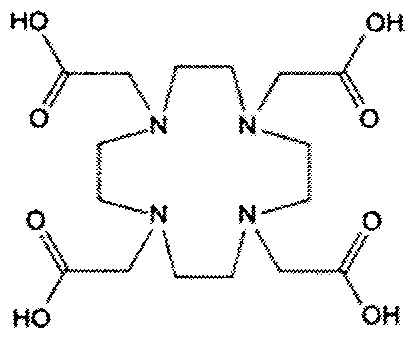
41. The conjugate of any one of claims 38-40, wherein the chelating group includes a radionuclide.
42. The conjugate of claim 41, wherein the radionuclide is metallic.
43. The conjugate of claim 41 or 42, wherein the radionuclide is selected from Antimony- 124, Antimony- 125, Arsenic-74, Barium- 103, Barium- 140, Beryllium-7, Bismuth-206, Bismuth-207, Cadmium-109, Cadmium- 115m, Calcium-45, Cerium-139, Cerium-141 , Cerium-144, Cesium-137, Chromium-51, Cobalt-55, Cobalt-56, Cobalt-57, Cobalt-58, Cobalt-60, Cobalt-64, Copper-64, Copper-67, Erbium- 169, Europium- 152, Gallium-64, Gallium-68, Gadolinium- 153, Gadolinium- 157 Gold-195, Gold-199, Hafnium-175, Hafnium- 175-181, Holmium-166, Indium-110, Indium-1 1 1, Iridium-192, Iron-55, Iron-59, Krypton- 85, Lead-210, Manganese-54, Mercury-197, Mercury-203, Molybdenum-99, Neodymium- 147, Neptunium-237, Nickel-63, Niobium-95, Osmium-185+191, Palladium- 103, Platinum- 195m, Praseodymium- 143, Promethium-147, Protactinium-233, Radium-226, Rhenium-186, Rhenium-188, Rubidium-86, Ruthenium- 103, Ruthenium- 106, Scandium-44, Scandium-46, Selenium-75, Silver-l lOm, Silver-I l l, Sodium-22, Strontium-85, Strontium-89, Strontium- 90, Sulfur-35, Tantalum-182, Technetium-99m, Tellurium- 125, Tellurium- 132, Thallium- 204, Thorium-228, Thorium-232, Thallium-170, Tin-113, Tin-114, Tin-117m, Titanium-44, Tungsten-185, Vanadium-48, Vanadium-49, Ytterbium- 169, Yttrium-86, Yttrium-88, Yttrium-90, Yttrium-91, Zinc-65, and Zirconium-95.
44. The conjugate of claim 43, wherein the radionuclide is Gallium-68, Copper-64 or Yttrium-90.
45. The conjugate of any one of claims 1-44, wherein D comprises a fluorescent group.
46. The conjugate of claim 45, wherein the fluorescent group is selected from fluorescein, tetrachlorofluorescein, hexachlorofluorescein, tetramethylrhodamine, rhodamine, cyanine- derivative dyes, Texas Red, Bodipy, and Alexa dyes.
47. The conjugate of claim 46, wherein the fluorescent group is fluorescein.
48. The conjugate of claim 1 , wherein a conjugate of formula (I) is selected from:

N-DOTA-Pep42

- ouresce n- ep4

Lys-DOTA-Pep42

Lys-flouresein-Pep42


49. A GRP78 targeting peptide comprising amino acid sequence GWAFSIPL (SEQ ID NO:4).
50. A pharmaceutical composition comprising the conjugate of any one of claims 1-48 and a pharmaceutically acceptable excipient.
51. A method for treating or preventing cancer in an animal (e.g., a human) comprising administering a therapeutically effective amount of a conjugate of any one of claims 1-48 (e.g., a conjugate comprising a therapeutic radionuclide) to the animal.
52. The method of claim 51 , wherein the cancer is melanoma, breast cancer or prostate cancer.
53. A conjugate of any one of claims 1-48 for use in medical therapy.
54. A conjugate of any one of claims 1-48 for the prophylactic or therapeutic treatment of cancer.
55. The use of a conjugate of any one of claims 1-48 to prepare a medicament for treating or preventing cancer in an animal (e.g. a human).
56. A method of detecting a GRP78 molecule, comprising contacting a cell with a conjugate of any one of claims 1-48.
57. A method of detecting cancer cells in a test tissue sample, comprising contacting the test sample with a conjugate of any one of claims 1-48 and measuring a signal from the detectable agent, wherein a signal from the test sample that is greater than a signal from a non-cancerous control sample indicates the presence of cancer cells in the test tissue sample.
58. The method of claim 57, wherein the signal from the test sample is 1-100% greater than the signal from the control sample.
59. A method of detecting cancer in an animal (e.g., a human), comprising administering a conjugate of any one of claims 1-48 to the animal and measuring a signal from the detectable agent, wherein a signal greater than a signal from a control animal without cancer indicates the animal has cancer.
60. The method of claim 59, wherein the signal from the animal is 1-100% greater than the signal from the control animal.
61. The method of claim 59 or 60, wherein the signal from the detectable agent is measured using PET imaging.
62. A method of determining the effectiveness of a cancer therapy in an animal (e.g., a human), comprising
1) administering a conjugate of any one of claims 1-48 to the animal and measuring a first signal (e.g., a radioactive signal) from the detectable agent;
2) administering a cancer therapy;
3) administering a conjugate of any one of claims 1-48 to the animal and measuring a second signal (e.g., a radioactive signal) from the detectable agent; and
4) comparing the first signal with the second signal, wherein the cancer therapy is effective if the second signal is less than the first signal.
63. The method of claim 62, wherein the second signal is 1-100% less than the first signal.
64. The method of claim 62 or 63, wherein the first and second signals are measured using PET imaging.
65. A kit comprising:
1) a conjugate of any one of claims 1-48;
2) instructions for loading a radionuclide into the conjugate to generate a radiolabeled conjugate; and
4) instructions for administering the radiolabeled conjugate to an animal.
66. The kit of claim 65, further comprising a radionuclide.
Priority Applications (1)
| Application Number | Priority Date | Filing Date | Title |
|---|---|---|---|
| US15/316,585 US20170290929A1 (en) | 2014-06-09 | 2015-05-14 | Grp78 targeted conjugates |
Applications Claiming Priority (2)
| Application Number | Priority Date | Filing Date | Title |
|---|---|---|---|
| US201462009749P | 2014-06-09 | 2014-06-09 | |
| US62/009,749 | 2014-06-09 |
Publications (1)
| Publication Number | Publication Date |
|---|---|
| WO2015195240A1 true WO2015195240A1 (en) | 2015-12-23 |
Family
ID=54935962
Family Applications (1)
| Application Number | Title | Priority Date | Filing Date |
|---|---|---|---|
| PCT/US2015/030856 Ceased WO2015195240A1 (en) | 2014-06-09 | 2015-05-14 | Grp78 targeted conjugates |
Country Status (2)
| Country | Link |
|---|---|
| US (1) | US20170290929A1 (en) |
| WO (1) | WO2015195240A1 (en) |
Cited By (1)
| Publication number | Priority date | Publication date | Assignee | Title |
|---|---|---|---|---|
| CN114591398A (en) * | 2022-02-24 | 2022-06-07 | 山西大学 | A kind of polypeptide-modified fluorescein derivative and its preparation method and application |
Families Citing this family (2)
| Publication number | Priority date | Publication date | Assignee | Title |
|---|---|---|---|---|
| WO2021163097A1 (en) * | 2020-02-14 | 2021-08-19 | Chang Gung Memorial Hospital | Tandem repeat cancer-targeting peptides for molecular conjugation or engineering and uses thereof in cancer theranostics |
| CN112546242B (en) * | 2020-12-14 | 2023-06-06 | 武汉工程大学 | Nine-peptide-based magnetic resonance and fluorescence dual-mode imaging diagnostic agent and preparation method thereof |
Citations (2)
| Publication number | Priority date | Publication date | Assignee | Title |
|---|---|---|---|---|
| US20080287658A1 (en) * | 2005-03-22 | 2008-11-20 | Salamone Salvatore J | Docetaxel Immunoassay |
| US20110003754A1 (en) * | 2008-01-05 | 2011-01-06 | Sloan-Kettering Institute For Cancer Research | Peptide-Conjugated Oligonucleotide Therapeutic and Method of Making and Using Same |
-
2015
- 2015-05-14 WO PCT/US2015/030856 patent/WO2015195240A1/en not_active Ceased
- 2015-05-14 US US15/316,585 patent/US20170290929A1/en not_active Abandoned
Patent Citations (2)
| Publication number | Priority date | Publication date | Assignee | Title |
|---|---|---|---|---|
| US20080287658A1 (en) * | 2005-03-22 | 2008-11-20 | Salamone Salvatore J | Docetaxel Immunoassay |
| US20110003754A1 (en) * | 2008-01-05 | 2011-01-06 | Sloan-Kettering Institute For Cancer Research | Peptide-Conjugated Oligonucleotide Therapeutic and Method of Making and Using Same |
Non-Patent Citations (5)
| Title |
|---|
| JOSHI ET AL.: "Exogenous Molecular Probes for Targeted Imaging in Cancer: Focus on Multi-modal Imaging", CANCERS, vol. 2, 11 June 2010 (2010-06-11), pages 1251 - 1287, XP055245668 * |
| LARSON ET AL.: "Synergistic enhancement of cancer therapy using a combination of heat shock protein targeted HPMA copolymer-drug conjugates and gold nanorod induced hyperthermia", JOURNAL OF CONTROLLED RELEASE, vol. 170, 17 April 2013 (2013-04-17), pages 41 - 50, XP028574934 * |
| LIU ET AL.: "Mechanistic Studies of a Peptidic GRP78 Ligand for Cancer Cell -Specific Drug Delivery", MOLECULAR PHARMACEUTICS, vol. 4, no. 3, 21 March 2007 (2007-03-21), pages 435 - 447, XP055245666 * |
| SCHULTZ ET AL.: "GRP78-Targeting Peptides", 1 July 2015 (2015-07-01), pages 1., XP055245670, Retrieved from the Internet <URL:https://research.uiowa.edu/uirf/pages/technologies/p/320/development-of-grp78-targeted-peptides-for-molecular-imaging-and-targeted-radionuclide-therapy> [retrieved on 20150831] * |
| UCKUN ET AL.: "Inducing apoptosis in chemotherapy-resistant B-lineage acute lymphoblastic leukaemia cells by targeting HSPA5, a master regulator of the anti-apoptotic unfolded protein response signalling network", BRITISH JOURNAL OF HAEMATOLOGY, vol. 153, 25 April 2011 (2011-04-25), pages 741 - 752, XP055131235 * |
Cited By (2)
| Publication number | Priority date | Publication date | Assignee | Title |
|---|---|---|---|---|
| CN114591398A (en) * | 2022-02-24 | 2022-06-07 | 山西大学 | A kind of polypeptide-modified fluorescein derivative and its preparation method and application |
| CN114591398B (en) * | 2022-02-24 | 2023-09-22 | 山西大学 | A polypeptide-modified fluorescein derivative and its preparation method and application |
Also Published As
| Publication number | Publication date |
|---|---|
| US20170290929A1 (en) | 2017-10-12 |
Similar Documents
| Publication | Publication Date | Title |
|---|---|---|
| Worm et al. | Targeting of peptide‐binding receptors on cancer cells with peptide‐drug conjugates | |
| US8053415B2 (en) | Compounds having RD targeting motifs | |
| AU785505B2 (en) | Cobalamin conjugates useful as imaging and therapeutic agents | |
| KR20020059618A (en) | Cobalamin conjugates useful as imaging agents and as antitumor agents | |
| US20210330819A1 (en) | Design and development of neurokinin-1 receptor-binding agent delivery conjugates | |
| US8133471B2 (en) | CLK-peptide and SLK-peptide | |
| US11389544B2 (en) | Formation of functionalized cancer targeting nanoparticles by supramolecular co-assembly | |
| US20170290929A1 (en) | Grp78 targeted conjugates | |
| US7468432B2 (en) | Cobalamin conjugates useful as antitumor agents | |
| Kim et al. | In vivo tumor imaging using polo-box domain of polo-like kinase 1 targeted peptide | |
| US20230130831A1 (en) | Methods for detecting and treating joint disease | |
| CA2370419A1 (en) | Cobalamin conjugates useful as antitumor agents | |
| KR20240068777A (en) | Fibronectin-binding peptide for use in the diagnosis and treatment of tumors or fibrosis | |
| WO2023113843A2 (en) | Borylated di-peptide amino acid compositions for use in boron neutron capture therapy and methods thereof | |
| Zhang et al. | DiWB‐1: A Luteinizing Hormone Releasing Hormone (LHRH)‐Targeted Peptide‐Drug Conjugate (PDC) With Enhanced Tumor Selectivity and PI3K Inhibition Efficacy | |
| WO2025061971A1 (en) | Functionalized peptides for in-vivo addressing of pd-l1 expression | |
| US7591995B2 (en) | Cobalamin conjugates useful as imaging and therapeutic agents | |
| EP4709424A1 (en) | Lyophilized products, pharmaceutical compositions, and kits comprising dye-peptide conjugates and derivatives | |
| HK40033441A (en) | 177lu-dota-hynic-ipsma as a therapeutic radiopharmaceutical | |
| Doligalski | Design and Development of Peptidomimetic Ligands for Targeting Radiopharmaceuticals, Imaging Probes, and Immunotherapeutics in Oncologic Disease |
Legal Events
| Date | Code | Title | Description |
|---|---|---|---|
| 121 | Ep: the epo has been informed by wipo that ep was designated in this application |
Ref document number: 15809463 Country of ref document: EP Kind code of ref document: A1 |
|
| WWE | Wipo information: entry into national phase |
Ref document number: 15316585 Country of ref document: US |
|
| NENP | Non-entry into the national phase |
Ref country code: DE |
|
| 122 | Ep: pct application non-entry in european phase |
Ref document number: 15809463 Country of ref document: EP Kind code of ref document: A1 |