WO2015191002A1 - Methods for selective and sensitive milk fat quantitation and milk quality control using bodipy-based milk fat fluorescent sensors - Google Patents
Methods for selective and sensitive milk fat quantitation and milk quality control using bodipy-based milk fat fluorescent sensors Download PDFInfo
- Publication number
- WO2015191002A1 WO2015191002A1 PCT/SG2015/050146 SG2015050146W WO2015191002A1 WO 2015191002 A1 WO2015191002 A1 WO 2015191002A1 SG 2015050146 W SG2015050146 W SG 2015050146W WO 2015191002 A1 WO2015191002 A1 WO 2015191002A1
- Authority
- WO
- WIPO (PCT)
- Prior art keywords
- fluorescence
- milk
- liquid medium
- change
- sample
- Prior art date
- Legal status (The legal status is an assumption and is not a legal conclusion. Google has not performed a legal analysis and makes no representation as to the accuracy of the status listed.)
- Ceased
Links
Classifications
-
- G—PHYSICS
- G01—MEASURING; TESTING
- G01N—INVESTIGATING OR ANALYSING MATERIALS BY DETERMINING THEIR CHEMICAL OR PHYSICAL PROPERTIES
- G01N21/00—Investigating or analysing materials by the use of optical means, i.e. using sub-millimetre waves, infrared, visible or ultraviolet light
- G01N21/62—Systems in which the material investigated is excited whereby it emits light or causes a change in wavelength of the incident light
- G01N21/63—Systems in which the material investigated is excited whereby it emits light or causes a change in wavelength of the incident light optically excited
- G01N21/64—Fluorescence; Phosphorescence
- G01N21/645—Specially adapted constructive features of fluorimeters
- G01N21/6452—Individual samples arranged in a regular 2D-array, e.g. multiwell plates
-
- C—CHEMISTRY; METALLURGY
- C07—ORGANIC CHEMISTRY
- C07F—ACYCLIC, CARBOCYCLIC OR HETEROCYCLIC COMPOUNDS CONTAINING ELEMENTS OTHER THAN CARBON, HYDROGEN, HALOGEN, OXYGEN, NITROGEN, SULFUR, SELENIUM OR TELLURIUM
- C07F5/00—Compounds containing elements of Groups 3 or 13 of the Periodic Table
- C07F5/02—Boron compounds
- C07F5/022—Boron compounds without C-boron linkages
-
- G—PHYSICS
- G01—MEASURING; TESTING
- G01N—INVESTIGATING OR ANALYSING MATERIALS BY DETERMINING THEIR CHEMICAL OR PHYSICAL PROPERTIES
- G01N21/00—Investigating or analysing materials by the use of optical means, i.e. using sub-millimetre waves, infrared, visible or ultraviolet light
- G01N21/62—Systems in which the material investigated is excited whereby it emits light or causes a change in wavelength of the incident light
- G01N21/63—Systems in which the material investigated is excited whereby it emits light or causes a change in wavelength of the incident light optically excited
- G01N21/64—Fluorescence; Phosphorescence
- G01N21/6428—Measuring fluorescence of fluorescent products of reactions or of fluorochrome labelled reactive substances, e.g. measuring quenching effects, using measuring "optrodes"
-
- G—PHYSICS
- G01—MEASURING; TESTING
- G01N—INVESTIGATING OR ANALYSING MATERIALS BY DETERMINING THEIR CHEMICAL OR PHYSICAL PROPERTIES
- G01N33/00—Investigating or analysing materials by specific methods not covered by groups G01N1/00 - G01N31/00
- G01N33/48—Biological material, e.g. blood, urine; Haemocytometers
- G01N33/50—Chemical analysis of biological material, e.g. blood, urine; Testing involving biospecific ligand binding methods; Immunological testing
- G01N33/52—Use of compounds or compositions for colorimetric, spectrophotometric or fluorometric investigation, e.g. use of reagent paper and including single- and multilayer analytical elements
-
- G—PHYSICS
- G01—MEASURING; TESTING
- G01N—INVESTIGATING OR ANALYSING MATERIALS BY DETERMINING THEIR CHEMICAL OR PHYSICAL PROPERTIES
- G01N33/00—Investigating or analysing materials by specific methods not covered by groups G01N1/00 - G01N31/00
- G01N33/48—Biological material, e.g. blood, urine; Haemocytometers
- G01N33/50—Chemical analysis of biological material, e.g. blood, urine; Testing involving biospecific ligand binding methods; Immunological testing
- G01N33/92—Chemical analysis of biological material, e.g. blood, urine; Testing involving biospecific ligand binding methods; Immunological testing involving lipids, e.g. cholesterol, lipoproteins, or their receptors
Definitions
- the invention in a first main aspect, relates to a method for fluorescence-based detection of milk fat in a liquid medium, the method comprising: (a) diluting a sample of milk to a concentration to fully quench background fluorescence signals of the milk, to form a liquid medium; (b) contacting a sample of the liquid medium with a compound of Formula (I), or a pharmaceutically acceptable salt thereof; (c) incubating the sample of step (b) for a period of time sufficient to enable visualization of milk fat by fluorescence if present in the liquid medium; and (d) detecting fluorescence in the incubated sample, wherein a change in fluorescence as compared to fluorescence of the compound of Formula (I) not in the presence of the sample of liquid medium is indicative of the presence of milk fat in the liquid medium.
- the compound of Formula (I) is represented by the following structure: (Formula I),
- R is (C 6 -Ci 0 )aryl, (C 5 -Ci 0 )heteroaryl, (C 6 -Cio)aryl(C2-C 6 )alkenyl or 2-4 member polycyclyl, wherein each 2-4 member polycyclyl optionally and independently contains 1-2 ring heteroatoms selected from oxygen, nitrogen and sulfur; and wherein R is optionally and independently substituted with 1-4 substituents independently selected from (Ci-C 6 )alkyl, (C 2 - C 6 )alkenyl, halo(Ci-C 6 )alkyl, hydroxy(Co-C 6 )alkyl, (Ci-C 6 )alkoxy, halo(Ci-C 6 )alkoxy, halogen, amino, nitro, -B(OH) 2 , (Ci-C 6 )alkyl-S(0) n , -(Ci-C 6 )alkylamino, (C
- R is thiophenyl, optionally substituted with 1-3 substituents independently selected from halogen, halo(Ci-C 6 )alkyl, (Ci-C 6 )alkoxy, halo(Ci-C 6 )alkoxy and hydroxy(Co-C 6 )alkyl.
- the compound of Formula (I) is:
- the invention in another aspect, relates to a method for fluorescence-based detection of milk fat in a liquid medium, the method comprising: (a) diluting a sample of milk to a concentration to fully quench background fluorescence signals of the milk, to form a liquid medium; (b) contacting a sample of the liquid medium with a compound of Formula (II), or a pharmaceutically acceptable salt thereof; (c) incubating the sample of step (b) for a period of time sufficient to enable visualization of milk fat by fluorescence if present in the liquid medium; and (d)detecting fluorescence in the incubated sample, wherein a change in fluorescence as compared to fluorescence of the compound of Formula (II) not in the presence of the sample of liquid medium is indicative of the presence of milk fat in the liquid medium.
- the compound of Formula (II) is represented by the following structure:
- each Ri is independently (Ci-C 6 )alkyl, (C2-C 6 )alkenyl, halo(Ci-C 6 )alkyl, hydroxy(Co-C 6 )alkyl, (Ci-C 6 )alkoxy, halo(Ci-C 6 )alkoxy, halogen, amino, nitro, -B(OH) 2 , (Ci- C 6 )alkyl-S(0) favor, -(Ci-C 6 )alkylamino, (Ci-C 6 )dialkylamino, (C 3 -C 8 )cycloalkyl, (C 3 - C 8 )heterocycloalkyl, (C 6 -Cio)aryl, or (C5-Cio)heteroaryl, wherein each (C 3 -C 8 )cycloalkyl, (C 3 - C 8 )heterocycloalkyl, (C 6 -
- detecting the incubated sample by fluorescence comprises analysis by fluorescence reader, fluorescence meter or fluorescence spectroscopy. In another embodiment, detecting the incubated sample by fluorescence comprises qualitative visual analysis of the sample.
- the change in fluorescence in the method of the invention can be a change in fluorescence intensity or a change in the color of the fluorescence.
- the change in fluorescence intensity is an increase in fluorescence intensity.
- the change in the color of the fluorescence is detectable under visible light or a wavelength portion thereof or ultraviolet light.
- the change in the color of the fluorescence to a yellow-colored fluorescence at a wavelength between about 530 nm and about 700 nm is indicative of the presence of whole milk in the liquid medium.
- the change in the color of the fluorescence to a pinkish orange-colored fluorescence at a wavelength between about 530 nm and about 700 nm is indicative of the presence of low fat milk in the liquid medium.
- the change in the color of the fluorescence to a pale pink-colored fluorescence at a wavelength between about 530 nm and about 700 nm is indicative of the presence of skim milk in the liquid medium.
- the method of the invention further comprises quantification of the amount of fat present in the liquid medium by measuring the change in fluorescence as compared to fluorescence of the compound of Formula (I) not in the presence of the sample of liquid medium sample.
- the method of the invention further comprises quantification of the amount of fat present in the liquid medium by measuring the change in fluorescence as compared to fluorescence of the compound of Formula (II) not in the presence of the sample of liquid medium sample.
- FIG. 1 shows the structure and chemical/physical information of a milk fat sensor, Milk Orange (MO).
- FIG. 2 illustrates a fluorescence image-based hyper-throughput screening approach.
- FIG. 2(a) is a schematic of the setup of the black box imaging system used in the hyper- throughput screening.
- FIG. 2(b) shows a schematic of a 96-well plate that is used for the hyper- throughput screening and fluorescent images acquired before and after addition of milk.
- FIG. 2(c) shows fluorescence spectrum analysis of a hyper-throughput screening library containing various BODIPY -based fluorescent ligands and milk.
- FIG. 3(a) shows fluorescence spectrum analysis of MO-fat interaction at various at a concentration of fat (0.1% to 3.7%) and 10 ⁇ MO.
- FIG. 3(b) is a linear graph of fluorescence intensity and increasing fat concentration.
- FIG. 4 is a graph of illustrating the change in fluorescence intensity as a result of a change in fat concentration.
- the linear line is derived from one type of milk (Greenfields). All other data sets are plotted on the graph based on their respective fat concentration and fluorescence intensity.
- Alkyl as used alone or as part of a larger moiety as in “arylalkyl” or “aryloxyalkyl” means a saturated aliphatic branched or straight-chain monovalent hydrocarbon radicals, typically Ci-C 16 , preferably C 1 -C 12 .
- (Ci-C 6 ) alkyl means a radical having from 1- 6 carbon atoms in a linear or branched arrangement.
- (Ci-C 6 )alkyl includes methyl, ethyl, propyl, butyl, tert-butyl, pentyl and hexyl.
- Alkylene means a saturated aliphatic straight-chain divalent hydrocarbon radical and is represented by -[CH 2 ] Z -, wherein z is a positive integer, preferably from one to eight, more preferably from one to four.
- (Ci-C 6 )alkylene means a divalent saturated aliphatic radical having from 1- 6 carbon atoms in a linear arrangement.
- (Ci-C 6 )alkylene includes methylene, ethylene, propylene, butylene, pentylene and hexylene.
- Heterocyclyl means a saturated or partially unsaturated (3-7 membered) monocyclic heterocyclic ring containing one nitrogen atom and optionally 1 additional heteroatom independently selected from N, O or S. When one heteroatom is S, it can be optionally mono- or di-oxygenated (i.e., -S(O)- or -S(0) 2 -). Examples of monocyclic heterocycle include, but not limited to, azetidine, pyrrolidine, piperidine, piperazine,
- Heterocycloalkyl means a cyclic 4- to 12-membered saturated aliphatic ring containing 1, 2, 3, 4 or 5 heteroatoms independently selected from N, O or S. When one heteroatom is S, it can be optionally mono- or di-oxygenated (i.e. -S(O)- or -S(0) 2 -).
- a heterocycloalkyl moiety can be monocyclic, fused bicyclic, bridged bicyclic, spiro bicyclic, or polycyclic.
- monocyclic (C 3 -C 8 ) heterocycloalkyl means a 3- to 8 membered saturated aliphatic ring containing 1, 2, 3, 4, or 5 heteroatoms independently selected from N, O or S arranged in a monocyclic ring.
- monocyclic heterocycloalkyls include, but are not limited to, azetidine, pyrrolidine, piperidine, piperazine, azepane, hexahydropyrimidine, tetrahydrofuran, tetrahydropyran, morpholine, thiomorpholine, thiomorpholine 1,1 -dioxide, tetrahydro-2H-l,2-thiazine, tetrahydro-2H-l,2-thiazine 1,1 -dioxide, isothiazolidine, isothiazolidine 1,1 -dioxide.
- Cycloalkyl means saturated aliphatic cyclic hydrocarbon ring.
- C 3 -C 8 cycloalkyl means (3-8 membered) saturated aliphatic cyclic hydrocarbon ring.
- C 3 -C 8 cycloalkyl includes, but is not limited to cyclopropyl, cyclobutyl, cyclopentyl, cyclohexyl, cycloheptyl, and cyclooctyl.
- cycloalkyl is C 3 -C 6 cycloalkyl.
- alkoxy means -O-alkyl
- arylalkoxy means an alkoxy group substituted at any carbon by an aryl group
- hydroxyalkyl means alkyl substituted with hydroxy
- arylalkyl means alkyl substituted with an aryl group
- alkoxyalkyl mean alkyl substituted with an alkoxy group
- alkylamine means amine substituted with an alkyl group
- cycloalkylalkyl means alkyl substituted with cycloalkyl;
- dialkylamine means amine substituted with two alkyl groups;
- alkylcarbonyl means -C(0)-A*, wherein A* is alkyl;
- alkoxycarbonyl means -C(0)-OA*, wherein A* is alkyl; and where alkyl is as defined above.
- Alkoxy is preferably 0(Ci-C6)alkyl and includes methoxy, ethoxy, propoxy, butoxy, pentoxy and hexoxy.
- Cycloalkoxy means an cycloalkyl-O- group wherein the cycloalkyl is as defined above.
- Exemplary (C 3 -C7)cycloalkyloxy groups include cyclopropoxy, cyclobutoxy,
- Hetero refers to the replacement of at least one carbon atom member in a ring system with at least one heteroatom selected from N, S, and O.
- a hetero ring system may have 1 or 2 carbon atom members replaced by a heteroatom.
- Halogen and "halo” are interchangeably used herein and each refers to fluorine, chlorine, bromine, or iodine.
- Cyano means -C ⁇ N.
- an amino group may be a primary (-NH 2 ), secondary (-NHR X ), or tertiary (-NR x R y ), wherein R x and R y may be any alkyl, aryl, heterocyclyl, cycloalkyl or alkenylene, each optionally and independently substituted with one or more substituents described above.
- the R x and R y substituents may be taken together to form a "ring", wherein the "ring”, as used herein, is cyclic amino groups such as piperidine and pyrrolidine, and may include heteroatoms such as in morpholine.
- haloalkyl means alkyl, cycloalkyl, or alkoxy, as the case may be, substituted with one or more halogen atoms.
- halogen or halo means F, CI, Br or I.
- the halogen in a haloalkyl or haloalkoxy is F.
- acyl group means -C(0)B*, wherein B* is an optionally substituted alkyl group or aryl group (e.g., optionally substituted phenyl).
- (C 6 -Cio)aryl used alone or as part of a larger moiety as in “arylalkyl", “arylalkenyl”, “arylalkoxy”, “aryloxy”, or “aryloxyalkyl”, means carbocyclic aromatic rings.
- carbocyclic aromatic group may be used interchangeably with the terms “aryl”, “aryl ring” “carbocyclic aromatic ring”, “aryl group” and “carbocyclic aromatic group”.
- An aryl group typically has 6-10 ring atoms.
- a "substituted aryl group” is substituted at any one or more substitutable ring atom.
- C 6 -Ci 6 aryl as used herein means a monocyclic, bicyclic or tricyclic carbocyclic ring system containing from 6 to 16 carbon atoms and includes phenyl (Ph), naphthyl, anthracenyl, 1,2-dihydronaphthyl, 1,2,3,4-tetrahydronaphthyl, fluorenyl, indanyl, indenyl and the like.
- the (C 6 -Cio)aryl(Ci-C 6 )alkyl group connects to the rest of the molecule through the (Ci-C 6 )alkyl portion of the (C 6 -Cio)aryl(Ci-C 6 )alkyl group.
- benzyl (Bn) refers to -CH 2 Ph.
- heteroaryl refers to aromatic ring groups having five to fourteen total ring atoms selected from carbon and at least one (typically 1 - 4, more typically 1 or 2) heteroatoms (e.g., oxygen, nitrogen or sulfur). They include monocyclic rings and polycyclic rings in which a monocyclic heteroaromatic ring is fused to one or more other carbocyclic aromatic or
- heteroaromatic rings The term "5-14 membered heteroaryl” as used herein means a monocyclic, bicyclic or tricyclic ring system containing one or two aromatic rings and from 5 to 14 total atoms of which, unless otherwise specified, one, two, three, four or five are heteroatoms independently selected from N, NH, N(Ci_ 6 alkyl), O and S.
- (C3-Cio)heteroaryl includes furyl, thiophenyl, pyridinyl, pyrrolyl, imidazolyl, and in preferred embodiments of the invention, heteroaryl is (C3-Cio)heteroaryl.
- 2-4 member polycyclyl is a cyclic compound with 2-4 hydrocarbon loop or ring structures (e.g., benzene rings).
- the term generally includes all polycyclic aromatic compounds, including the polycyclic aromatic hydrocarbons, the heterocyclic aromatic compounds containing sulfur, nitrogen, oxygen, or another non-carbon atoms, and substituted derivatives of these.
- alkenyl means a straight or branched hydrocarbon radical having a specified number of carbon atoms and includes at least one double bond.
- An alkenyl group generally has between 2 and 6 carbon atoms.
- the (C 6 -Cio)aryl(C 2 -C 6 )alkenyl group connects to the remainder of the molecule through the (C 2 -C 6 )alkenyl portion of (C 6 -Cio)aryl(C 2 -C 6 )alkenyl.
- compositions of the present invention are also included.
- an acid salt of a compound of the present invention containing an amine or other basic group can be obtained by reacting the compound with a suitable organic or inorganic acid, resulting in pharmaceutically acceptable anionic salt forms.
- anionic salts include the acetate, benzenesulfonate, benzoate, bicarbonate, bitartrate, bromide, calcium edetate, camsylate, carbonate, chloride, citrate, dihydrochloride, edetate, edisylate, estolate, esylate, fumarate, glyceptate, gluconate, glutamate, glycollylarsanilate, hexylresorcinate, hydrobromide, hydrochloride, hydroxynaphthoate, iodide, isethionate, lactate, lactobionate, malate, maleate, mandelate, mesylate, methylsulfate, mucate, napsylate, nitrate, pamoate, pantothenate, phosphate/diphosphate, polygalacturonate, salicylate, stearate, subacetate, succinate, sulfate, tannate,
- Salts of the compounds of the present invention containing a carboxylic acid or other acidic functional group can be prepared by reacting with a suitable base. Such a
- pharmaceutically acceptable salt may be made with a base which affords a pharmaceutically acceptable cation, which includes alkali metal salts (especially sodium and potassium), alkaline earth metal salts (especially calcium and magnesium), aluminum salts and ammonium salts, as well as salts made from physiologically acceptable organic bases such as trimethylamine, triethylamine, morpholine, pyridine, piperidine, picoline, dicyclohexylamine, ⁇ , ⁇ '- dibenzylethylenediamine, 2-hydroxyethylamine, bis-(2-hydroxyethyl)amine, tri-(2- hydroxyethyl)amine, procaine, dibenzylpiperidine, dehydroabietylamine, ⁇ , ⁇ ' - bisdehydroabietylamine, glucamine, N-methylglucamine, collidine, quinine, quinoline, and basic amino acids such as lysine and arginine.
- a base which affords a pharmaceutically acceptable cation, which
- spectroscopy encompasses any method by which matter reacts with radiated energy. This includes, but is in no way limited to, microscopy, fluorescence
- a "liquid medium” as used herein, is a mixture of milk and a solvent.
- the types of milk that can be used to generate a liquid medium include, but are not limited to, non-fat milk containing between about 0% to about 1.0% fat, low fat milk containing between about 1% to about 3.0% fat, and whole milk containing greater than about 3.0% fat.
- the solvents that can be used in the liquid medium include, but are not limited to, DMSO, water, methanol, and ethanol, or a combination thereof.
- the liquid medium may be a homogenous mixture such as a solution or a heterogeneous mixture and can have a concentration of milk between about 1% to about 99%.
- the liquid mixture is a mixture of milk and a solvent wherein the milk is diluted to 50 times the original concentration. In another embodiment, the liquid mixture is a mixture of milk and a solvent wherein the milk is diluted to 100 times the original concentration. In yet another embodiment, the liquid mixture is a mixture of milk and a solvent wherein the milk is diluted to 150 times the original concentration.
- a "change in fluorescence" as used herein can be used to indicate a change in the fluorescence intensity of a sample after exposure to an analyte, as compared to a baseline exposure.
- a fluorophore such as a BODIPY-based fluorophore having the structure of Formula (I)
- the change in fluorescence intensity is an increase in fluorescence intensity.
- a change in fluorescence can be a change in the color of the fluorescence.
- a change in the color of the fluorescence can be a change in the color hue of the fluorescence (e.g. a yellow hue versus a pinkish-orange hue), or can be a change in the tint or saturation of the fluorescence (e.g. a light or pale pink versus a dark pink).
- incubating means mixing a sample. Alternately, incubating means mixing and heating a sample. “Mixing” can comprise mixing by diffusion, or alternately by agitation of a sample.
- detecting, determining, or analyzing a sample by fluorescence means detecting, determining, or analyzing utilizing a fluorescence reader, fluorescence spectroscopy, fluorescence meter or another method that can quantify fluorescence.
- "analyzing a sample by fluorescence” or "detecting a sample by fluorescence” means a visual analysis carried out by the human eye.
- fluorescence analysis by visual analysis is carried out under visible light.
- fluorescence analysis by visual analysis is carried out under certain wavelengths of light, e.g. about 365 nm (ultra-violet light), 530 nm (green laser light).
- FIG. 1 shows the discovery of the first fluorescent sensor for milk fat and dubbed it as Milk Orange (MO).
- MO Milk Orange
- FIG. 1 It exhibits beautiful, yet selective turn-on feature towards fat molecules even in complicated milk matrix. Its fluorescence response is not affected by the amount of proteins or carbohydrates. Furthermore, it provides a convenient and rapid tool to measure fat amount, simply by mixing with diluted milk samples. We believe this discovery could revolutionize the milk fat detection process and provide end-point consumer-friendly products for easy milk fat level testing.
- Image-based screening method was used to conduct a hyper-throughput sensor development process.
- the box consists of a sample chamber and a signal concentration chamber on the top.
- the signal concentration chamber could efficiently filter off noises from outside the box and from the light source itself.
- the light source emits 365 nm ultra-violet (UV) signals, which is able to excite versatile fluorescent scaffolds.
- UV ultra-violet
- the auto- fluorescence signals of milk itself were carefully measured and the milk sample was serially diluted until the background was fully quenched. Removal of any background signals ensures that any change of fluorescence signals observed will be derived from the dyes.
- our hyper-throughput imaging system thousands of fluorescent dyes were rapidly screened in the format of 96- well plates.
- MO displays high quantum yield of 0.99 in DMSO and has great potential for visualized milk fat detection.
- skim milk (0.1% fat) displays a very dim signal, which is almost invisible through naked eyes.
- an orange colour from MO appears as an intrinsic orange fluorescence upon increasing the amount of milk fat in the sample from 0.5% to 2.0%.
- Further increasing the milk fat will lead to higher density of fat emulsion particles, which in turn increases the scattering of milk auto-fluorescence, providing a sample that is green in colour.
- the fluorescence emission signals exhibit highly linear response towards milk fat, with the Pearson Coefficient of Determination R2 of more than 0.99. This indicates that MO can be directly used to quantitatively measure milk fat amount in milk samples. Thus based on the milk fat-dependent fluorescence colour change and linear response curve, it was determined that MO is able to achieve both qualitative and quantitative
- MO Due to the various milk sources, procession procedures and delivery time of different brands of milk, there can be significant differences in fat conformation or variations of other ingredients. Yet MO is able to tell the approximate milk fat amount with their distinct colour changes. Thus, MO can be used and developed into a rapid and versatile milk fat detector.
- MO is capable of not only qualitatively estimating the amount of milk fat, but also qualitatively calculating the fat concentration in various milk samples.
- the ingredient tables showed significant variations among proteins, sugars and minerals in the different milk brands, yet despite these discrepancies MO provided a rapid qualitative estimation and quantitative measurement of milk fat.
- Scheme 1 synthetic scheme of Milk orange through aldehyde condensation.
- BODIPY precursor 1' 25 mg, 60 ⁇
- thiophene-2-carbaldehyde 2' 27 mg/21 ⁇ ,, 240 ⁇ , 4 equiv.
- acetic acid 20 mg
- the mixture was shaken at 95 °C for 5 minutes, followed by immediate cooling down to 0 °C.
- SpectroMax M2 plate reader or measured by a constructed fat detector.
- Greenfields, Pura, Meiji, Farmhouse, Marigold, Magnolia, and Daisy milk was added into 99 ⁇ ⁇ of dye-water mixture, mixed well by pipetting, and an image of each sample was taken.
- MO is capable of not only qualitatively estimating the milk fat amount, but also qualitatively calculating the fat concentration in various milk samples.
- the ingredient tables for each brand showed significant variations among proteins, sugars and minerals contained within the different milk brands, yet MO could largely overlook these discrepancies and provide us with a rapid qualitative estimation and quantitative measurement of milk fat.
Landscapes
- Health & Medical Sciences (AREA)
- Life Sciences & Earth Sciences (AREA)
- Chemical & Material Sciences (AREA)
- Immunology (AREA)
- Engineering & Computer Science (AREA)
- Physics & Mathematics (AREA)
- Hematology (AREA)
- Molecular Biology (AREA)
- Analytical Chemistry (AREA)
- Biochemistry (AREA)
- General Health & Medical Sciences (AREA)
- General Physics & Mathematics (AREA)
- Pathology (AREA)
- Urology & Nephrology (AREA)
- Biomedical Technology (AREA)
- Cell Biology (AREA)
- Biotechnology (AREA)
- Organic Chemistry (AREA)
- Microbiology (AREA)
- Nuclear Medicine, Radiotherapy & Molecular Imaging (AREA)
- Food Science & Technology (AREA)
- Medicinal Chemistry (AREA)
- Endocrinology (AREA)
- Biophysics (AREA)
- Chemical Kinetics & Catalysis (AREA)
- Optics & Photonics (AREA)
- Investigating, Analyzing Materials By Fluorescence Or Luminescence (AREA)
Abstract
Methods for the fluorescence-based detection and quantification of milk fat in milk using a BODIPY-based fluorescent sensor are disclosed. The BODIPY-based fluorescent sensors of the invention are selective for fat molecules being unaffected by the presence of other milk ingredients, such as proteins and carbohydrates. The methods provide a convenient and rapid tool for milk fat detection.
Description
METHODS FOR SELECTIVE AND SENSITIVE MILK FAT QUANTITATION AND MILK QUALITY CONTROL USING BODIPY-BASED MILK FAT FLUORESCENT SENSORS
RELATED APPLICATION(S)
[0001] This application claims the benefit of U.S. Provisional Application No.: 62/011,869 filed June 13, 2014. The entire teachings of the above application are incorporated herein by reference. The entire teachings of the above application(s) are incorporated herein by reference.
BACKGROUND OF THE INVENTION
[0002] Traditional milk fat detection methods include many procedures, such as
destabilization of fat by adding sulfuric acid, separation of the fatty acids by centrifugation and measurement. The complicated handling and use of toxic corrosive chemicals make it unfavorable for untrained people. Instruments utilizing infrared absorbance of specific bond vibrations are available, however their high.
[0003] Currently, there is no easy tool available to measure milk fat level rapidly and quantitatively. Nor is there any fluorescent sensor targeting milk fat. Most methods require sophisticated and expensive instruments and well-trained hands to operate them, thus they are not applicable to resource-limited regions or normal dairy farms. Therefore, a need remains for safer and more cost effective methods for milk fat detection.
SUMMARY OF THE INVENTION
[0004] In a first main aspect, the invention relates to a method for fluorescence-based detection of milk fat in a liquid medium, the method comprising: (a) diluting a sample of milk to a concentration to fully quench background fluorescence signals of the milk, to form a liquid medium; (b) contacting a sample of the liquid medium with a compound of Formula (I), or a pharmaceutically acceptable salt thereof; (c) incubating the sample of step (b) for a period of time sufficient to enable visualization of milk fat by fluorescence if present in the liquid medium; and (d) detecting fluorescence in the incubated sample, wherein a change in fluorescence as compared to fluorescence of the compound of Formula (I) not in the presence of the sample of liquid medium is indicative of the presence of milk fat in the liquid medium. The compound of Formula (I) is represented by the following structure:
 (Formula I),
[0005] wherein R is (C6-Ci0)aryl, (C5-Ci0)heteroaryl, (C6-Cio)aryl(C2-C6)alkenyl or 2-4 member polycyclyl, wherein each 2-4 member polycyclyl optionally and independently contains 1-2 ring heteroatoms selected from oxygen, nitrogen and sulfur; and wherein R is optionally and independently substituted with 1-4 substituents independently selected from (Ci-C6)alkyl, (C2- C6)alkenyl, halo(Ci-C6)alkyl, hydroxy(Co-C6)alkyl, (Ci-C6)alkoxy, halo(Ci-C6)alkoxy, halogen, amino, nitro, -B(OH)2, (Ci-C6)alkyl-S(0)n, -(Ci-C6)alkylamino, (Ci-C6)dialkylamino, (C3- C8)cycloalkyl, (C3-C8)heterocycloalkyl, (C6-Cio)aryl, and (C5-Cio)heteroaryl, wherein each (C3- C8)cycloalkyl, (C3-C8)heterocycloalkyl, (C6-Cio)aryl, and (C5-Cio)heteroaryl is optionally and independently substituted with 1-4 substituents independently selected from (Ci-C6)alkyl, (C2- C6)alkenyl, halo(Ci-C6)alkyl, hydroxy(Co-C6)alkyl, (Ci-C6)alkoxy, halo(Ci-C6)alkoxy, and halogen; and n is 0, 1, or 2;
[0006] In one embodiment, R is thiophenyl, optionally substituted with 1-3 substituents independently selected from halogen, halo(Ci-C6)alkyl, (Ci-C6)alkoxy, halo(Ci-C6)alkoxy and hydroxy(Co-C6)alkyl. In another embodiment the compound of Formula (I) is:

[0007] or a pharmaceutically acceptable salt thereof.
[0008] In another aspect, the invention relates to a method for fluorescence-based detection of milk fat in a liquid medium, the method comprising: (a) diluting a sample of milk to a concentration to fully quench background fluorescence signals of the milk, to form a liquid medium; (b) contacting a sample of the liquid medium with a compound of Formula (II), or a pharmaceutically acceptable salt thereof; (c) incubating the sample of step (b) for a period of time sufficient to enable visualization of milk fat by fluorescence if present in the liquid medium; and (d)detecting fluorescence in the incubated sample, wherein a change in fluorescence as
compared to fluorescence of the compound of Formula (II) not in the presence of the sample of liquid medium is indicative of the presence of milk fat in the liquid medium. The compound of Formula (II) is represented by the following structure:

[0009] wherein: each Ri is independently (Ci-C6)alkyl, (C2-C6)alkenyl, halo(Ci-C6)alkyl, hydroxy(Co-C6)alkyl, (Ci-C6)alkoxy, halo(Ci-C6)alkoxy, halogen, amino, nitro, -B(OH)2, (Ci- C6)alkyl-S(0)„, -(Ci-C6)alkylamino, (Ci-C6)dialkylamino, (C3-C8)cycloalkyl, (C3- C8)heterocycloalkyl, (C6-Cio)aryl, or (C5-Cio)heteroaryl, wherein each (C3-C8)cycloalkyl, (C3- C8)heterocycloalkyl, (C6-Cio)aryl, and (C5-Cio)heteroaryl is optionally and independently substituted with 1-4 substituents independently selected from (Ci-C6)alkyl, (C2-C6)alkenyl, halo(Ci-C6)alkyl, hydroxy(Co-C6)alkyl, (Ci-C6)alkoxy, halo(Ci-C6)alkoxy, and halogen; n is 0, 1, or 2; and m is 0, 1, or 2;
[0010] In one embodiment, detecting the incubated sample by fluorescence comprises analysis by fluorescence reader, fluorescence meter or fluorescence spectroscopy. In another embodiment, detecting the incubated sample by fluorescence comprises qualitative visual analysis of the sample.
[0011] The change in fluorescence in the method of the invention can be a change in fluorescence intensity or a change in the color of the fluorescence. In one embodiment, the change in fluorescence intensity is an increase in fluorescence intensity. In another embodiment, the change in the color of the fluorescence is detectable under visible light or a wavelength portion thereof or ultraviolet light.
[0012] In one embodiment, the change in the color of the fluorescence to a yellow-colored fluorescence at a wavelength between about 530 nm and about 700 nm is indicative of the presence of whole milk in the liquid medium. In another embodiment, the change in the color of the fluorescence to a pinkish orange-colored fluorescence at a wavelength between about 530 nm
and about 700 nm is indicative of the presence of low fat milk in the liquid medium. In yet another embodiment, the change in the color of the fluorescence to a pale pink-colored fluorescence at a wavelength between about 530 nm and about 700 nm is indicative of the presence of skim milk in the liquid medium.
[0013] In second aspect, the method of the invention further comprises quantification of the amount of fat present in the liquid medium by measuring the change in fluorescence as compared to fluorescence of the compound of Formula (I) not in the presence of the sample of liquid medium sample.
[0014] In another aspect, the method of the invention further comprises quantification of the amount of fat present in the liquid medium by measuring the change in fluorescence as compared to fluorescence of the compound of Formula (II) not in the presence of the sample of liquid medium sample.
BRIEF DESCRIPTION OF THE DRAWINGS
[0015] FIG. 1 shows the structure and chemical/physical information of a milk fat sensor, Milk Orange (MO).
[0016] FIG. 2 illustrates a fluorescence image-based hyper-throughput screening approach. FIG. 2(a) is a schematic of the setup of the black box imaging system used in the hyper- throughput screening. FIG. 2(b) shows a schematic of a 96-well plate that is used for the hyper- throughput screening and fluorescent images acquired before and after addition of milk. FIG. 2(c) shows fluorescence spectrum analysis of a hyper-throughput screening library containing various BODIPY -based fluorescent ligands and milk.
[0017] FIG. 3(a) shows fluorescence spectrum analysis of MO-fat interaction at various at a concentration of fat (0.1% to 3.7%) and 10 μΜ MO. FIG. 3(b) is a linear graph of fluorescence intensity and increasing fat concentration.
[0018] FIG. 4 is a graph of illustrating the change in fluorescence intensity as a result of a change in fat concentration. The linear line is derived from one type of milk (Greenfields). All other data sets are plotted on the graph based on their respective fat concentration and fluorescence intensity.
DETAILED DESCRIPTION OF THE INVENTION
DEFINITIONS
[0019] All definitions of substituents set forth below are further applicable to the use of the term in conjunction with another substituent.
[0020] "Alkyl" as used alone or as part of a larger moiety as in "arylalkyl" or "aryloxyalkyl" means a saturated aliphatic branched or straight-chain monovalent hydrocarbon radicals, typically Ci-C16, preferably C1-C12. For example, "(Ci-C6) alkyl" means a radical having from 1- 6 carbon atoms in a linear or branched arrangement. "(Ci-C6)alkyl" includes methyl, ethyl, propyl, butyl, tert-butyl, pentyl and hexyl.
[0021] "Alkylene" means a saturated aliphatic straight-chain divalent hydrocarbon radical and is represented by -[CH2]Z-, wherein z is a positive integer, preferably from one to eight, more preferably from one to four. Thus, "(Ci-C6)alkylene" means a divalent saturated aliphatic radical having from 1- 6 carbon atoms in a linear arrangement. "(Ci-C6)alkylene" includes methylene, ethylene, propylene, butylene, pentylene and hexylene.
[0022] An "alkenylene group" is an alkylene in which at least a pair of adjacent methylenes are replaced with -CH=CH-.
[0023] "Heterocyclyl" means a saturated or partially unsaturated (3-7 membered) monocyclic heterocyclic ring containing one nitrogen atom and optionally 1 additional heteroatom independently selected from N, O or S. When one heteroatom is S, it can be optionally mono- or di-oxygenated (i.e., -S(O)- or -S(0)2-). Examples of monocyclic heterocycle include, but not limited to, azetidine, pyrrolidine, piperidine, piperazine,
hexahydropyrimidine, tetrahydrofuran, tetrahydropyran, morpholine, thiomorpholine, thiomorpholine 1,1 -dioxide, tetrahydro-2H-l,2-thiazine, tetrahydro-2H-l,2-thiazine 1,1 -dioxide, isothiazolidine, or isothiazolidine 1,1-dioxide.
[0024] "Heterocycloalkyl" means a cyclic 4- to 12-membered saturated aliphatic ring containing 1, 2, 3, 4 or 5 heteroatoms independently selected from N, O or S. When one heteroatom is S, it can be optionally mono- or di-oxygenated (i.e. -S(O)- or -S(0)2-). When one heteroatom is N, it can be optionally substituted with alkyl, cycloalkyl, alkylene-cycloalkyl, heterocycloalkyl, alkylene -heterocycloalkyl, aryl, alkylene-aryl, heteroaryl, alkylene-heteroaryl, each of which can be optionally substituted with one or more halogen, =0, hydroxy, alkoxy, haloalkyl, alkyl, etc.
[0025] A heterocycloalkyl moiety can be monocyclic, fused bicyclic, bridged bicyclic, spiro bicyclic, or polycyclic. For example, monocyclic (C3-C8) heterocycloalkyl means a 3- to 8 membered saturated aliphatic ring containing 1, 2, 3, 4, or 5 heteroatoms independently selected from N, O or S arranged in a monocyclic ring. Examples of monocyclic heterocycloalkyls include, but are not limited to, azetidine, pyrrolidine, piperidine, piperazine, azepane, hexahydropyrimidine, tetrahydrofuran, tetrahydropyran, morpholine, thiomorpholine, thiomorpholine 1,1 -dioxide, tetrahydro-2H-l,2-thiazine, tetrahydro-2H-l,2-thiazine 1,1 -dioxide, isothiazolidine, isothiazolidine 1,1 -dioxide.
[0026] "Cycloalkyl" means saturated aliphatic cyclic hydrocarbon ring. Thus, "C3-C8 cycloalkyl" means (3-8 membered) saturated aliphatic cyclic hydrocarbon ring. C3-C8 cycloalkyl includes, but is not limited to cyclopropyl, cyclobutyl, cyclopentyl, cyclohexyl, cycloheptyl, and cyclooctyl. Preferably, cycloalkyl is C3-C6 cycloalkyl.
[0027] The term "alkoxy" means -O-alkyl; "arylalkoxy" means an alkoxy group substituted at any carbon by an aryl group; "hydroxyalkyl" means alkyl substituted with hydroxy;
"arylalkyl" means alkyl substituted with an aryl group; "alkoxyalkyl" mean alkyl substituted with an alkoxy group; "alkylamine" means amine substituted with an alkyl group;
"cycloalkylalkyl" means alkyl substituted with cycloalkyl; "dialkylamine" means amine substituted with two alkyl groups; "alkylcarbonyl" means -C(0)-A*, wherein A* is alkyl;
"alkoxycarbonyl" means -C(0)-OA*, wherein A* is alkyl; and where alkyl is as defined above. Alkoxy is preferably 0(Ci-C6)alkyl and includes methoxy, ethoxy, propoxy, butoxy, pentoxy and hexoxy.
[0028] "Cycloalkoxy" means an cycloalkyl-O- group wherein the cycloalkyl is as defined above. Exemplary (C3-C7)cycloalkyloxy groups include cyclopropoxy, cyclobutoxy,
cyclopentoxy, cyclohexoxy and cycloheptoxy.
[0029] "Hetero" refers to the replacement of at least one carbon atom member in a ring system with at least one heteroatom selected from N, S, and O. A hetero ring system may have 1 or 2 carbon atom members replaced by a heteroatom.
[0030] "Halogen" and "halo" are interchangeably used herein and each refers to fluorine, chlorine, bromine, or iodine.
[0031] "Cyano" means -C≡N.
[0032] "Nitro" means -N02.
[0033] As used herein, an amino group may be a primary (-NH2), secondary (-NHRX), or tertiary (-NRxRy), wherein Rx and Ry may be any alkyl, aryl, heterocyclyl, cycloalkyl or alkenylene, each optionally and independently substituted with one or more substituents described above. The Rx and Ry substituents may be taken together to form a "ring", wherein the "ring", as used herein, is cyclic amino groups such as piperidine and pyrrolidine, and may include heteroatoms such as in morpholine.
[0034] The terms "haloalkyl", "halocycloalkyl" and "haloalkoxy" mean alkyl, cycloalkyl, or alkoxy, as the case may be, substituted with one or more halogen atoms. The term "halogen" or "halo" means F, CI, Br or I. Preferably the halogen in a haloalkyl or haloalkoxy is F.
[0035] The term "acyl group" means -C(0)B*, wherein B* is an optionally substituted alkyl group or aryl group (e.g., optionally substituted phenyl).
[0036] The term "(C6-Cio)aryl" used alone or as part of a larger moiety as in "arylalkyl", "arylalkenyl", "arylalkoxy", "aryloxy", or "aryloxyalkyl", means carbocyclic aromatic rings. The term "carbocyclic aromatic group" may be used interchangeably with the terms "aryl", "aryl ring" "carbocyclic aromatic ring", "aryl group" and "carbocyclic aromatic group". An aryl group typically has 6-10 ring atoms. A "substituted aryl group" is substituted at any one or more substitutable ring atom. The term "C6-Ci6 aryl" as used herein means a monocyclic, bicyclic or tricyclic carbocyclic ring system containing from 6 to 16 carbon atoms and includes phenyl (Ph), naphthyl, anthracenyl, 1,2-dihydronaphthyl, 1,2,3,4-tetrahydronaphthyl, fluorenyl, indanyl, indenyl and the like. The (C6-Cio)aryl(Ci-C6)alkyl group connects to the rest of the molecule through the (Ci-C6)alkyl portion of the (C6-Cio)aryl(Ci-C6)alkyl group.
[0037] The term benzyl (Bn) refers to -CH2Ph.
[0038] The term "heteroaryl", "heteroaromatic", "heteroaryl ring", "heteroaryl group" and "heteroaromatic group", used alone or as part of a larger moiety as in "heteroarylalkyl" or "heteroarylalkoxy", refers to aromatic ring groups having five to fourteen total ring atoms selected from carbon and at least one (typically 1 - 4, more typically 1 or 2) heteroatoms (e.g., oxygen, nitrogen or sulfur). They include monocyclic rings and polycyclic rings in which a monocyclic heteroaromatic ring is fused to one or more other carbocyclic aromatic or
heteroaromatic rings. The term "5-14 membered heteroaryl" as used herein means a monocyclic, bicyclic or tricyclic ring system containing one or two aromatic rings and from 5 to 14 total atoms of which, unless otherwise specified, one, two, three, four or five are heteroatoms independently selected from N, NH, N(Ci_6alkyl), O and S. (C3-Cio)heteroaryl includes furyl,
thiophenyl, pyridinyl, pyrrolyl, imidazolyl, and in preferred embodiments of the invention, heteroaryl is (C3-Cio)heteroaryl.
[0039] The term "2-4 member polycyclyl" is a cyclic compound with 2-4 hydrocarbon loop or ring structures (e.g., benzene rings). The term generally includes all polycyclic aromatic compounds, including the polycyclic aromatic hydrocarbons, the heterocyclic aromatic compounds containing sulfur, nitrogen, oxygen, or another non-carbon atoms, and substituted derivatives of these.
[0040] The term "alkenyl" means a straight or branched hydrocarbon radical having a specified number of carbon atoms and includes at least one double bond. An alkenyl group generally has between 2 and 6 carbon atoms. The (C6-Cio)aryl(C2-C6)alkenyl group connects to the remainder of the molecule through the (C2-C6)alkenyl portion of (C6-Cio)aryl(C2-C6)alkenyl.
[0041] Pharmaceutically acceptable salts of the compounds of the present invention are also included. For example, an acid salt of a compound of the present invention containing an amine or other basic group can be obtained by reacting the compound with a suitable organic or inorganic acid, resulting in pharmaceutically acceptable anionic salt forms. Examples of anionic salts include the acetate, benzenesulfonate, benzoate, bicarbonate, bitartrate, bromide, calcium edetate, camsylate, carbonate, chloride, citrate, dihydrochloride, edetate, edisylate, estolate, esylate, fumarate, glyceptate, gluconate, glutamate, glycollylarsanilate, hexylresorcinate, hydrobromide, hydrochloride, hydroxynaphthoate, iodide, isethionate, lactate, lactobionate, malate, maleate, mandelate, mesylate, methylsulfate, mucate, napsylate, nitrate, pamoate, pantothenate, phosphate/diphosphate, polygalacturonate, salicylate, stearate, subacetate, succinate, sulfate, tannate, tartrate, teoclate, tosylate, and triethiodide salts.
[0042] Salts of the compounds of the present invention containing a carboxylic acid or other acidic functional group can be prepared by reacting with a suitable base. Such a
pharmaceutically acceptable salt may be made with a base which affords a pharmaceutically acceptable cation, which includes alkali metal salts (especially sodium and potassium), alkaline earth metal salts (especially calcium and magnesium), aluminum salts and ammonium salts, as well as salts made from physiologically acceptable organic bases such as trimethylamine, triethylamine, morpholine, pyridine, piperidine, picoline, dicyclohexylamine, Ν,Ν'- dibenzylethylenediamine, 2-hydroxyethylamine, bis-(2-hydroxyethyl)amine, tri-(2- hydroxyethyl)amine, procaine, dibenzylpiperidine, dehydroabietylamine, Ν,Ν' -
bisdehydroabietylamine, glucamine, N-methylglucamine, collidine, quinine, quinoline, and basic amino acids such as lysine and arginine.
[0043] As used herein, "spectroscopy" encompasses any method by which matter reacts with radiated energy. This includes, but is in no way limited to, microscopy, fluorescence
microscopy, UV/Vis spectrometry, and flow cytometry.
[0044] A "liquid medium" as used herein, is a mixture of milk and a solvent. The types of milk that can be used to generate a liquid medium include, but are not limited to, non-fat milk containing between about 0% to about 1.0% fat, low fat milk containing between about 1% to about 3.0% fat, and whole milk containing greater than about 3.0% fat. The solvents that can be used in the liquid medium include, but are not limited to, DMSO, water, methanol, and ethanol, or a combination thereof. The liquid medium may be a homogenous mixture such as a solution or a heterogeneous mixture and can have a concentration of milk between about 1% to about 99%. In one embodiment, the liquid mixture is a mixture of milk and a solvent wherein the milk is diluted to 50 times the original concentration. In another embodiment, the liquid mixture is a mixture of milk and a solvent wherein the milk is diluted to 100 times the original concentration. In yet another embodiment, the liquid mixture is a mixture of milk and a solvent wherein the milk is diluted to 150 times the original concentration.
[0045] A "change in fluorescence" as used herein, can be used to indicate a change in the fluorescence intensity of a sample after exposure to an analyte, as compared to a baseline exposure. For example, a fluorophore, such as a BODIPY-based fluorophore having the structure of Formula (I), exhibits a change in fluorescence intensity after exposure to an analyte such as milk fat. In some embodiments of the invention, the change in fluorescence intensity is an increase in fluorescence intensity. Alternately, a change in fluorescence can be a change in the color of the fluorescence. A change in the color of the fluorescence can be a change in the color hue of the fluorescence (e.g. a yellow hue versus a pinkish-orange hue), or can be a change in the tint or saturation of the fluorescence (e.g. a light or pale pink versus a dark pink).
[0046] As used herein, "incubating" a sample means mixing a sample. Alternately, incubating means mixing and heating a sample. "Mixing" can comprise mixing by diffusion, or alternately by agitation of a sample.
[0047] In some embodiments of the invention, "detecting, determining, or analyzing a sample by fluorescence" means detecting, determining, or analyzing utilizing a fluorescence reader, fluorescence spectroscopy, fluorescence meter or another method that can quantify
fluorescence. In alternate embodiments of the invention, "analyzing a sample by fluorescence" or "detecting a sample by fluorescence" means a visual analysis carried out by the human eye. In some embodiments of the invention, fluorescence analysis by visual analysis is carried out under visible light. In other embodiments of the invention, fluorescence analysis by visual analysis is carried out under certain wavelengths of light, e.g. about 365 nm (ultra-violet light), 530 nm (green laser light).
[0048] Herein we describe the discovery of the first fluorescent sensor for milk fat and dubbed it as Milk Orange (MO). (FIG. 1) It exhibits magnificent, yet selective turn-on feature towards fat molecules even in complicated milk matrix. Its fluorescence response is not affected by the amount of proteins or carbohydrates. Furthermore, it provides a convenient and rapid tool to measure fat amount, simply by mixing with diluted milk samples. We believe this discovery could revolutionize the milk fat detection process and provide end-point consumer-friendly products for easy milk fat level testing.
[0049] A description of example embodiments of the invention follows.
[0050] Image-based screening method was used to conduct a hyper-throughput sensor development process. Firstly, we setup a black box with formalized signal detection system. The box consists of a sample chamber and a signal concentration chamber on the top. The signal concentration chamber could efficiently filter off noises from outside the box and from the light source itself. The light source emits 365 nm ultra-violet (UV) signals, which is able to excite versatile fluorescent scaffolds. To fully expand the chances of hit discovery, the auto- fluorescence signals of milk itself were carefully measured and the milk sample was serially diluted until the background was fully quenched. Removal of any background signals ensures that any change of fluorescence signals observed will be derived from the dyes. With the help of our hyper-throughput imaging system, thousands of fluorescent dyes were rapidly screened in the format of 96- well plates.
CHEMICAL STRUCTURE AND OPTICAL PROPERTIES OF MILK ORANGE
[0051] By analyzing the pictures taken before and after the addition of milk, we were able to identify any dramatic signal change. We then proceeded to a more systematic confirmation step and measured the dose-dependent spectra change of milk fat towards the selected fluorescent dyes. Different milk fat concentrations were prepared from a combination of skim milk, low fat milk and whole milk, which were chosen from the same brand with identical amounts of ingredients other than milk fat. Screening of more than 5,000 fluorescent dyes, allowed
identification of various BODIPY -based sensors, which exhibited strong responses towards milk fat and directly visible emission colour differences. One dye identified was Milk Orange (MO) (FIG. 1) which was further analyzed.
APPLICATION OF MILK ORANGE INTO VERSATILE MILK FAT DETECTOR
[0052] MO displays high quantum yield of 0.99 in DMSO and has great potential for visualized milk fat detection. By carefully analyzing the milk-MO response pictures, it was observed that skim milk (0.1% fat) displays a very dim signal, which is almost invisible through naked eyes. However, an orange colour from MO appears as an intrinsic orange fluorescence upon increasing the amount of milk fat in the sample from 0.5% to 2.0%. Further increasing the milk fat will lead to higher density of fat emulsion particles, which in turn increases the scattering of milk auto-fluorescence, providing a sample that is green in colour. The mixture of milk auto-fluorescence and the MO fluorescence providing clear yellow colour, indicates a milk fat range of 2.3% to 3.7%. Furthermore, the fluorescence emission signals exhibit highly linear response towards milk fat, with the Pearson Coefficient of Determination R2 of more than 0.99. This indicates that MO can be directly used to quantitatively measure milk fat amount in milk samples. Thus based on the milk fat-dependent fluorescence colour change and linear response curve, it was determined that MO is able to achieve both qualitative and quantitative
differentiation of skim milk, low fat milk and whole milk.
[0053] To investigate the visual differentiation capacity of MO and to fully explore the applicability of MO, we systematically examined its performance in various milk samples using various brands of milk. The high quantum yield and significant differentiation capacity of MO allows us to visually identify milk samples with high, low or skim milk fat amount. The milk used in our studies came from batches of different brands. From each brand, we obtained at least two types of milk, ensuring consistent milk processing procedures and largely identical ingredients. By comparing fluorescence images of milk with different fat amount within the same brand, it was observed that whole milk displays a yellow colour, low fat milk displays a pinkish orange colour, and skim milk displays a pale pink fluorescence. This phenomenon was consistent for all the five brands of milk we acquired, indicating that MO shows remarkable reproducibility. Due to the various milk sources, procession procedures and delivery time of different brands of milk, there can be significant differences in fat conformation or variations of other ingredients. Yet MO is able to tell the approximate milk fat amount with their distinct
colour changes. Thus, MO can be used and developed into a rapid and versatile milk fat detector.
[0054] To corroborate the observed fluorescence-based milk fat differentiation, we proceeded to estimate the specific milk fat amount based on fluorescence intensity and the standard linear line acquired. Through the information listed in the ingredient table we were able to determine the exact concentrations of milk fat found in each sample. The milk fat
concentrations that were measured with the fluorimeter corresponded remarkably with the listed milk fat data. The results clearly indicate that MO is capable of not only qualitatively estimating the amount of milk fat, but also qualitatively calculating the fat concentration in various milk samples. The ingredient tables showed significant variations among proteins, sugars and minerals in the different milk brands, yet despite these discrepancies MO provided a rapid qualitative estimation and quantitative measurement of milk fat.
EXPERIMENTAL
[0055] All reactions were performed in oven-dried glassware under a positive pressure of nitrogen. Unless otherwise noted, starting materials and solvents were purchased from Aldrich and Acros organics and used without further purification. Analytical TLC was carried out on Merck 60 F254 silica gel plate (0.25 mm layer thickness) and visualization was done with UV light. Column chromatography was performed on Merck 60 silica gel (230-400 mesh). Mass of all the compounds was determined by LC-MS of Agilent Technologies with an electrospray ionization source. All fluorescence assays were performed with a SpectraMax M2 plate reader.
EXAMPLE 1: Synthesis of Milk Orange

Scheme 1 : synthetic scheme of Milk orange through aldehyde condensation.
[0056] BODIPY precursor 1' (25 mg, 60 μιηοΐ) and thiophene-2-carbaldehyde 2' (27 mg/21 μΐ,, 240 μιηοΐ, 4 equiv.) were dissolved in 2.5 mL acetonitrile, with 4 equiv. of pyrrolidine (29 uL) and 4 equiv. of acetic acid (20 The mixture was shaken at 95 °C for 5 minutes, followed by immediate cooling down to 0 °C. The resulting crude mixture was concentrated
under vacuum and purified by flash column chromatography on silica gel (dichloromethane- methanol: 99.8:0.2) to afford 3' as a dark purple solid (12.5 mg, 24 μιηοΐ, 40% yield, 99.9% purity. 1H NMR (500 MHz, CDC13) δ 7.47 (s, 1H), 7.46 (s, 1H), 7.43 (s, 1H), 7.38 - 7.32 (m, 2H), 7.06 (s, 1H), 6.88 (d, J = 3.9 Hz, 1H), 6.69 (s, 1H), 6.31 (d, J = 3.9 Hz, 1H), 4.78 (s, 2H), 3.39 (t, J = 7.5 Hz, 2H), 2.96 (t, J = 7.5 Hz, 2H), 2.30 (s, 3H). 13C NMR (126 MHz, CDC13) δ 171.03, 157.27, 155.73, 143.03, 139.38, 136.80, 133.75, 132.51, 127.24, 126.75, 126.38, 125.52, 122.12, 118.72, 116.66, 116.56, 94.92, 74.10, 31.92, 22.68, 11.38. HRMS
(C2iHi8BCl3F2N202S): calc. [M + Na]+: 539.0120, found [M + Na]+: 539.0112; calc. [M - F]+: 497.0236, found [M-F]+: 497.0230.
EXAMPLE 2: High-Throughput Screening of Fluorescent Dyes for Milk Fat Detection
[0057] In high-throughput screening approach, black Greiner 96-well plates were pre-filled with the fluorescence dyes at 1 nmol quantity and were dissolved in 1 μL· DMSO to make 1 mM solutions. In each well, 98 μΐ^ DI water was added, mixed well and the plate image was taken one time as dye background. After taking image, 1 μϊ^ of milk sample was added into the well, mixed well and the plate image was taken again. Both images were imported into Adobe Photoshop program and compared side-by-side to grant discovery of potential hit compounds. In other non-plate tests such as cuvettes, 1 mM sensor solution was first prepared and diluted with DI water, followed by addition of milk (1% (v/v)). The samples were then inserted into
SpectroMax M2 plate reader or measured by a constructed fat detector.
EXAMPLE 3: Milk fat fluorescence determination
[0058] 98 μΐ^ DI water was added, mixed well and an image was taken one time as dye background. After taking an image, 1 μL· of milk of several brands of milk including
Greenfields, Pura, Meiji, Farmhouse, Marigold, Magnolia, and Daisy milk was added into 99 μΐ^ of dye-water mixture, mixed well by pipetting, and an image of each sample was taken.
[0059] The official milk nutrients (fat, protein, carbohydrates) were obtained directly from labeling on milk packages. Through milk fat and fluorescence measurements of Greenfields milk, a linear line graph of milk fat relative to fluorescence intensity (y = 1976.3x + 251.78) was generated. The fluorescence data obtained for the other samples of known fat concentrations were then plotted on the linear line graph. (FIG. 4).
[0060] The results clearly indicate that MO is capable of not only qualitatively estimating the milk fat amount, but also qualitatively calculating the fat concentration in various milk samples.
The ingredient tables for each brand showed significant variations among proteins, sugars and minerals contained within the different milk brands, yet MO could largely overlook these discrepancies and provide us with a rapid qualitative estimation and quantitative measurement of milk fat.
Table 1. Comparison of fat concentrations acquired from fluorescence measurement and ingredient tables listed on milk package.
Official report Fluorescence test
Brands of milk (g/lOOml) (g/lOOml)
Protein Carbohydrate Fat Fat
Pura Skim 4.0 5.4 0.1 0.11 + 0.01
Low fat 3.6 5.0 1.4 1.42+ 0.01
Fresh 3.2 4.9 3.4 3.42+ 0.02
Meiji Skim 3.2 6.9 0.1 0.10+ 0.01
Low fat 3.2 7.0 1.2 1.18+ 0.01
Fresh 3.3 ~ 4.1 4.09+ 0.02
Farmhouse Low fat 4.0 5.5 1.5 1.52+ 0.01
Fresh 3.2 4.8 3.8 3.80+ 0.02
Marigold Low fat 5.0 5.3 1.0 1.00+ 0.01
Fresh 3.5 5.0 3.6 3.59+ 0.01
Magnolia Low fat 3.7 5.0 1.5 1.52+ 0.00
Fresh 4.0 5.0 4.0 3.98+ 0.01
Daisy Low fat 3.5 5.2 1.0 1.00+ 0.01
[0061] While this invention has been particularly shown and described with references to example embodiments thereof, it will be understood by those skilled in the art that various changes in form and details may be made therein without departing from the scope of the invention encompassed by the appended claims.
Claims
CLAIMS is claimed is: A compound of the following structural formula:
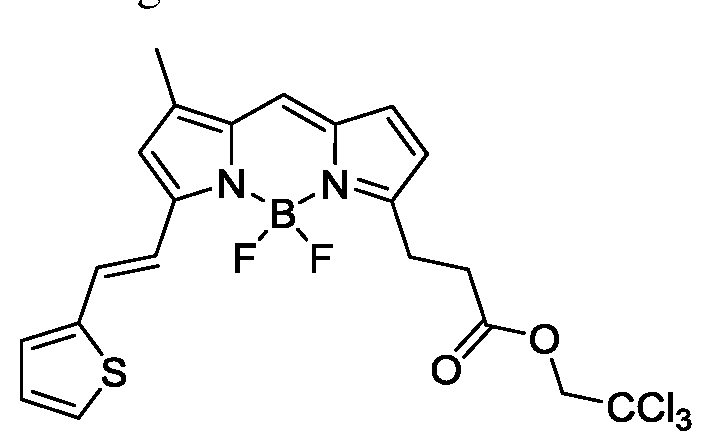
or a pharmaceutically acceptable salt thereof.
2. A method for fluorescence-based detection of milk fat in a liquid medium, the method comprising:
(a) diluting a sample of milk to a concentration to fully quench background fluorescence signals of the milk, to form a liquid medium;
(b) contacting a sample of the liquid medium with a compound of Formula (I), or a pharmaceutically acceptable salt thereof:

wherein:
R is (C6-Cio)aryl, (C5-Cio)heteroaryl, (C6-Cio)aryl(C2-C6)alkenyl or 2-4 member polycyclyl, wherein each 2-4 member polycyclyl optionally and independently contains 1-2 ring heteroatoms selected from oxygen, nitrogen and sulfur; and wherein R is optionally and independently substituted with 1-4 substituents independently selected from (Ci-C6)alkyl, (C2-C6)alkenyl, halo(Ci-C6)alkyl, hydroxy(C0-C6)alkyl, (d- C6)alkoxy, halo(Ci-C6)alkoxy, halogen, amino, nitro, -B(OH)2, (Ci-C6)alkyl-S(0)n, -(Ci- C6)alkylamino, (Ci-C6)dialkylamino, (C3-C8)cycloalkyl, (C3-C8)heterocycloalkyl, (C6- Cio)aryl, and (C5-Cio)heteroaryl, wherein each (C3-C8)cycloalkyl, (C3- C8)heterocycloalkyl, (C6-Cio)aryl, and (C5-Cio)heteroaryl is optionally and independently
substituted with 1-4 substituents independently selected from (Ci-C6)alkyl, (C2- C6)alkenyl, halo(Ci-C6)alkyl, hydroxy(Co-C6)alkyl, (Ci-C6)alkoxy, halo(Ci-C6)alkoxy, and halogen; and
n is 0, 1, or 2;
(c) incubating the sample of step (b) for a period of time sufficient to enable visualization of milk fat by fluorescence if present in the liquid medium; and
(d) detecting fluorescence in the incubated sample, wherein a change in fluorescence as compared to fluorescence of the compound of Formula (I) not in the presence of the sample of liquid medium is indicative of the presence of milk fat in the liquid medium.
The method of Claim 2, wherein R is thiophenyl, optionally substituted with 1-3 substituents independently selected from halogen, halo(Ci-C6)alkyl, (Ci-C6)alkoxy, halo(Ci-C6)alkoxy and hydroxy(Co-C6)alkyl.
The method of Claim 2 or 3, wherein the compound of Formula (I) is:

The method of any one of Claims 2-4, wherein detecting the incubated sample by fluorescence comprises analysis by fluorescence reader, fluorescence meter or fluorescence spectroscopy.
The method of any one of Claims 2-5, wherein detecting the incubated sample by fluorescence comprises qualitative visual analysis of the sample.
7. The method of any one of Claims 2-6, wherein the change in fluorescence is a change in fluorescence intensity or a change in the color of the fluorescence.
8. The method of Claim 7, wherein the change in fluorescence intensity is an increase in fluorescence intensity.
9. The method of Claim 7, wherein the change in the color of the fluorescence is detectable under visible light or a wavelength portion thereof or ultraviolet light.
10. The method of Claim 9, wherein the change in the color of the fluorescence to a yellow- colored fluorescence at a wavelength between about 530 nm and about 700 nm is indicative of the presence of whole milk in the liquid medium.
11. The method of Claim 9, wherein the change in the color of the fluorescence to a pinkish orange-colored fluorescence at a wavelength between about 530 nm and about 700 nm is indicative of the presence of low fat milk in the liquid medium.
12. The method of Claim 9, wherein the change in the color of the fluorescence to a pale pink-colored fluorescence at a wavelength between about 530 nm and about 700 nm is indicative of the presence of skim milk in the liquid medium.
13. The method of any one of Claims 2-12, further comprising quantification of the amount of fat present in the liquid medium by measuring the change in fluorescence as compared to fluorescence of the compound of Formula (I) not in the presence of the sample of liquid medium sample.
A method for fluorescence-based detection of milk fat in a liquid medium, the method comprising:
(a) diluting a sample of milk to a concentration to fully quench background fluorescence signals of the milk, to form a liquid medium;
(b) contacting a sample of the liquid medium with a compound of Formula (II), or a pharmaceutically acceptable salt thereof:

n is 0, 1, or 2; and
m is 0, 1, or 2;
(c) incubating the sample of step (b) for a period of time sufficient to enable visualization of milk fat by fluorescence if present in the liquid medium; and
(d) detecting fluorescence in the incubated sample, wherein a change in fluorescence as compared to fluorescence of the compound of Formula (II) not in the presence of the sample of liquid medium is indicative of the presence of milk fat in the liquid medium.
15. The method of Claim 14, wherein detecting the incubated sample by fluorescence comprises analysis by fluorescence reader, fluorescence meter or fluorescence spectroscopy.
16. The method of Claim 14 or 15, wherein detecting the incubated sample by fluorescence comprises qualitative visual analysis of the sample.
17. The method of any one of Claims 14-16, wherein the change in fluorescence is a change in fluorescence intensity or a change in the color of the fluorescence.
18. The method of Claim 17, wherein the change in fluorescence intensity is an increase in fluorescence intensity.
19. The method of Claim 17, wherein the change in the color of the fluorescence is detectable under visible light or a wavelength portion thereof or ultraviolet light.
20. The method of Claim 19, wherein the change in the color of the fluorescence to a yellow- colored fluorescence at a wavelength between about 530 nm and about 700 nm is indicative of the presence of whole milk in the liquid medium.
21. The method of Claim 19, wherein the change in the color of the fluorescence to a pinkish orange-colored fluorescence at a wavelength between about 530 nm and about 700 nm is indicative of the presence of low fat milk in the liquid medium.
22. The method of Claim 19, wherein the change in the color of the fluorescence to a pale pink-colored fluorescence at a wavelength between about 530 nm and about 700 nm is indicative of the presence of skim milk in the liquid medium.
The method of any one of Claims 14-22, further comprising quantification of the amount of fat present in the liquid medium by measuring the change in fluorescence as compared to fluorescence of the compound of Formula (II) not in the presence of the sample of liquid medium sample.
Applications Claiming Priority (2)
| Application Number | Priority Date | Filing Date | Title |
|---|---|---|---|
| US201462011869P | 2014-06-13 | 2014-06-13 | |
| US62/011,869 | 2014-06-13 |
Publications (1)
| Publication Number | Publication Date |
|---|---|
| WO2015191002A1 true WO2015191002A1 (en) | 2015-12-17 |
Family
ID=54833965
Family Applications (1)
| Application Number | Title | Priority Date | Filing Date |
|---|---|---|---|
| PCT/SG2015/050146 Ceased WO2015191002A1 (en) | 2014-06-13 | 2015-06-08 | Methods for selective and sensitive milk fat quantitation and milk quality control using bodipy-based milk fat fluorescent sensors |
Country Status (1)
| Country | Link |
|---|---|
| WO (1) | WO2015191002A1 (en) |
Citations (2)
| Publication number | Priority date | Publication date | Assignee | Title |
|---|---|---|---|---|
| SU365636A1 (en) * | 1971-02-02 | 1973-01-08 | Всесоюзный научно исследовательский , конструкторский институт научного приборостроени | BIBL1 ' |
| SU1698715A1 (en) * | 1989-01-24 | 1991-12-15 | Украинская сельскохозяйственная академия | Method of determining fat content of milk and milk products |
-
2015
- 2015-06-08 WO PCT/SG2015/050146 patent/WO2015191002A1/en not_active Ceased
Patent Citations (2)
| Publication number | Priority date | Publication date | Assignee | Title |
|---|---|---|---|---|
| SU365636A1 (en) * | 1971-02-02 | 1973-01-08 | Всесоюзный научно исследовательский , конструкторский институт научного приборостроени | BIBL1 ' |
| SU1698715A1 (en) * | 1989-01-24 | 1991-12-15 | Украинская сельскохозяйственная академия | Method of determining fat content of milk and milk products |
Non-Patent Citations (6)
| Title |
|---|
| DATABASE WPI Derwent World Patents Index; * |
| DATABASE WPI Derwent World Patents Index; Class D13 * |
| NTAKATSANE, M.P. ET AL.: "Rapid detection of milk fat adulteration with vegetable oil by fluorescence spectroscopy", JOURNAL OF DAIRY SCIENCE, vol. 96, no. 4, 2013, pages 2130 - 2136 * |
| SCOLOZZI, C. ET AL.: "A method for identification and characterization of ewe's milk fat globules", MILCHWISSENSCHAFT, vol. 58, 2003, pages 490 - 493 * |
| XU, W. ET AL.: "Milk quality control: instant and quantitative milk fat determination with a BODIPY sensor-based fluorescence detector", CHEMICAL COMMUNICATIONS, vol. 50, 2014, pages 10398 - 10401 * |
| ZHAI, D. ET AL.: "Synthesis of a novel BODIPY library and its application in the discovery of a fructose sensor", ACS COMBINATORIAL SCIENCE, vol. 14, no. 2, 2012, pages 81 - 84, XP055245945 * |
Similar Documents
| Publication | Publication Date | Title |
|---|---|---|
| Hinde et al. | Biosensor Förster resonance energy transfer detection by the phasor approach to fluorescence lifetime imaging microscopy | |
| Wu et al. | A ratiometric fluorescent system for carboxylesterase detection with AIE dots as FRET donors | |
| US5182214A (en) | Method for detection and determination of human serum albumin | |
| Zhao et al. | 1, 8-Naphthalimide-based ‘turn-on’fluorescent sensor for the detection of zinc ion in aqueous media and its applications for bioimaging | |
| Yang et al. | A new highly copper-selective fluorescence enhancement chemosensor based on BODIPY excitable with visible light and its imaging in living cells | |
| Wei et al. | A two-step responsive colorimetric probe for fast detection of formaldehyde in weakly acidic environment | |
| He et al. | Design and synthesis of a fluorescent probe based on naphthalene anhydride and its detection of copper ions | |
| Zhang et al. | An effective fluorescent probe for detection of phosgene based on naphthalimide dyes in liquid and gaseous phases | |
| Liu et al. | Real-time monitoring of newly acidified organelles during autophagy enabled by reaction-based BODIPY dyes | |
| Bayindir et al. | A simple oxindole-based colorimetric HSO4¯ sensor: Naked-eye detection and spectroscopic analysis | |
| Wu et al. | A highly selective visible light excitable boron dipyrromethene probe for cysteine over homocysteine and glutathione based on a Michael addition reaction | |
| CN104193666A (en) | 1,3-disubstituted maleimide compound and application thereof as fluorescent probe for detecting critical micelle concentration of surfactant | |
| Lv et al. | A new double-emission fluorescent probe for fast detection of thiophenols in aqueous solution and living cells | |
| Garbagnoli et al. | Biophysical assays for investigating modulators of macromolecular complexes: an overview | |
| WO2014088512A1 (en) | Ratiometric fluorescent dye for the detection of glutathione in cell and tissue | |
| CN106103430A (en) | A bis-triflate-based fluorescent probe for the detection of superoxide anion radicals | |
| Sevillano-Arredondo et al. | A turn-on fluorescence sensor based on water-soluble amino-pyridyl-benzothiazole-derivatives for measuring cellular Zn2+ | |
| Al-Farhan et al. | Innovative analytical approach using’on-on++ RRS’signal enhancement response of erythrosine B, a food dye, for nano-level quantification of Sertraline drug in different matrices with sustainability evaluation | |
| WO2014109713A1 (en) | Fluorescent cell cycle probe having m-phase specificity | |
| Aguilar-Vazquez et al. | Development of an automatic high-throughput assay for tetracycline determination by using Eu2O3 nanoparticles and dry-reagent technology | |
| CN1886661B (en) | Improved uniform time-resolved energy transfer assay | |
| Zhu et al. | A naphthalene derivative as ‘turn‐on’fluorescent chemosensor for the highly selective and sensitive detection of Al3+ | |
| WO2015191002A1 (en) | Methods for selective and sensitive milk fat quantitation and milk quality control using bodipy-based milk fat fluorescent sensors | |
| Metias et al. | High‐throughput spectrofluorimetric approach for one-step, sensitive, and green assays of alfuzosin hydrochloride using a 96-well microplate reader: application to tablet formulations and human urine | |
| Almalki | Efficient and environmentally friendly spectrofluorimetric determination of cariprazine: An analytical and green chemistry approach |
Legal Events
| Date | Code | Title | Description |
|---|---|---|---|
| 121 | Ep: the epo has been informed by wipo that ep was designated in this application |
Ref document number: 15805812 Country of ref document: EP Kind code of ref document: A1 |
|
| NENP | Non-entry into the national phase |
Ref country code: DE |
|
| 122 | Ep: pct application non-entry in european phase |
Ref document number: 15805812 Country of ref document: EP Kind code of ref document: A1 |