WO2015182471A1 - Itシステムにおけるサーバの性能の抽象化方法および資源管理方法 - Google Patents
Itシステムにおけるサーバの性能の抽象化方法および資源管理方法 Download PDFInfo
- Publication number
- WO2015182471A1 WO2015182471A1 PCT/JP2015/064574 JP2015064574W WO2015182471A1 WO 2015182471 A1 WO2015182471 A1 WO 2015182471A1 JP 2015064574 W JP2015064574 W JP 2015064574W WO 2015182471 A1 WO2015182471 A1 WO 2015182471A1
- Authority
- WO
- WIPO (PCT)
- Prior art keywords
- server
- management system
- performance
- virtual machine
- abstraction
- Prior art date
- Legal status (The legal status is an assumption and is not a legal conclusion. Google has not performed a legal analysis and makes no representation as to the accuracy of the status listed.)
- Ceased
Links
Images




Classifications
-
- G—PHYSICS
- G06—COMPUTING OR CALCULATING; COUNTING
- G06F—ELECTRIC DIGITAL DATA PROCESSING
- G06F9/00—Arrangements for program control, e.g. control units
- G06F9/06—Arrangements for program control, e.g. control units using stored programs, i.e. using an internal store of processing equipment to receive or retain programs
- G06F9/46—Multiprogramming arrangements
-
- G—PHYSICS
- G06—COMPUTING OR CALCULATING; COUNTING
- G06F—ELECTRIC DIGITAL DATA PROCESSING
- G06F9/00—Arrangements for program control, e.g. control units
- G06F9/06—Arrangements for program control, e.g. control units using stored programs, i.e. using an internal store of processing equipment to receive or retain programs
- G06F9/46—Multiprogramming arrangements
- G06F9/50—Allocation of resources, e.g. of the central processing unit [CPU]
Definitions
- the present invention relates to a server performance abstraction method and resource management method in an IT system, and in particular, derives abstraction level information related to server performance that enables selection of a server suitable as a resource allocation destination.
- the present invention relates to a server performance abstraction method and a resource management method in an IT system for realizing resource allocation by selecting a server suitable as a resource allocation destination based on information.
- a domain In information systems (IT systems) such as computers and communications, a group unit configuration called a domain is adopted.
- a domain is configured for each management company, for each organizational unit of a company, or for each service, and information models and parameters may differ between domains.
- Each domain has a physical server (host).
- a virtual machine (VM) may be placed on a physical server.
- Each domain is managed by a management system provided individually corresponding to each domain.
- the management system In order to centrally manage hosts and virtual machines in all domains in the IT system, a configuration in which the management system is hierarchized is used. In a configuration in which the management system is hierarchized, the lower layer management system (lower layer management system) manages each domain, and the upper layer management system (upper layer management system) centrally manages all domains. .
- FIG. 7 is a block diagram showing a management form of an IT system with a conventional hierarchical structure. In FIG. 7, domains 1 and 2 are shown, but more domains may exist.
- Domain 1 has physical servers (hosts) 1-1, 1-2, ..., and virtual machines (VMs) 2-1, 2-2, ... are placed on physical server 1-1 And virtual machines 3-1, 3-2,... Are arranged on the physical server 1-2. Further, physical servers 4-1, 4-2,... Are provided in the domain 2, and virtual machines 5-1, 5-2,. Virtual machines 6-1, 6-2, ... are arranged on 4-2. In addition, physical servers 1-1, 1-2, ..., 4-1,4-2, ... virtual machines 2-1,2-2, ..., 3-1,3- 2, ..., 5-1,5-2, ..., 6-1,6-2, ... arrangement of hypervisors 7-1,7-2, ..., 8-1 , 8-2,...
- the lower layer management systems 9-1 and 9-2 and the upper layer management system 10 are configured in a hierarchy, and the lower layer management system 9-1 includes physical servers 1-1, 1-2, ... and virtual machines 2-1, 2-2, ..., 3-1, 3-2, ..., and the lower layer management system 9-2 is a physical server 4 in the domain 2 Manages 1,4-2, ... and virtual machines 5-1,5-2, ..., 6-1,6-2, ...
- the lower layer management system 9-1 includes physical servers 1-1, 1-2,... And virtual machines 2-1, 2-2,. ...
- the lower level management system 9-2 acquires physical servers 4-1, 4-2, ... and virtual machines 5-1, 5-2, ..., 6-1, Get information about 6-2, ...
- interfaces 11-1 and 11-2 are defined between the lower layer management systems 9-1 and 9-2 and the upper layer management system 10, and the upper layer management system 10 is connected via the interface 11 Physical servers 1-1, 1-2, ..., 4-1,4-2, ... and virtual machines 2-1,2-2, ..., 3-1, in domains 1 and 2 3-1, ..., 5-1,5-2, ..., 6-1,6-2, ... are centrally managed.
- the physical servers and virtual machines in each domain are individually managed by the lower layer management system of the hierarchical configuration, and the physical servers and virtual machines in all domains are centrally managed by the upper layer management system. Is preferable from the viewpoint of scaleability (enlargement by a collection of a plurality of management systems) and domain independence. Note that domains, physical servers, and virtual machines may be added as IT systems are expanded.
- Patent Document 1 relates to a resource allocation system and method in a cloud environment, a virtual hypervisor is generated as an application programming interface (API), and a cluster of virtual machines having similar characteristics is generated using the hypervisor. It is described that a domain is partitioned and instantiated in advance.
- API application programming interface
- the cloud manager (abstraction level management system) can select a domain according to the requirements of the user, and a certain degree of optimal setting can be made. It becomes possible.
- an existing IT system is usually used as a base, and it is usually expanded step by step. In the process of expansion, the management system may be hierarchized. In such cases, the existing IT system must be used as the foundation.
- the management form described in the cited document 1 is not compatible with expansion based on the existing IT system, and it is necessary to change the design of the existing IT system in order to make this management form compatible with the expansion of the IT system. . However, this is not practical because it not only requires a large amount of man-hours but also affects the current service.
- An object of the present invention is to derive abstraction level information related to server performance that solves the above-described problems and enables selection of a server that is suitable as a resource allocation destination, and is suitable as a resource allocation destination based on the abstraction level information. It is an object of the present invention to provide a server performance abstraction method and a resource management method in an IT system that realize resource allocation by selecting a server.
- a server performance abstraction method in an IT system uses one or both of a physical server in an IT system and a virtual machine arranged on the physical server as a target server.
- An identifier for each software environment is assigned to the environment, a numerical value representing the surplus performance of each server is derived, and the identifier assigned to the software environment of the server and the surplus performance derived for the server.
- the first characteristic is that the numerical value representing the server is used as the abstraction level information of the performance of the server.
- the server performance abstraction method in the IT system of the present invention is characterized in that the virtual machine performance abstraction level information further includes the identifier of the physical server on which the own virtual machine is arranged. There is.
- the numerical value representing the surplus performance of each server is a separate numerical value representing the remaining CPU performance, memory performance and I / O performance, or these numerical values are
- the numerical value representing the surplus performance of each server is a separate numerical value representing the remaining CPU performance, memory performance and I / O performance, or these numerical values are
- the numerical value representing the surplus performance of each server is a separate numerical value representing the remaining CPU performance, memory performance and I / O performance, or these numerical values are
- it is a numerical value obtained by a combination calculation.
- the resource management method in the IT system of the present invention is based on the abstraction level information derived by the server performance abstraction method described above, and selects a server suitable for the resource allocation destination and performs resource allocation. There is a first feature.
- the lower-level management system and the higher-level management system are hierarchically configured, and the higher-level management system passes through the lower-level management system to the resource allocation destination based on the abstraction level information.
- a second feature is that a resource is allocated by selecting a suitable server.
- the resource management method in the IT system of the present invention uses a virtual machine as a target server, and the upper management system selects a virtual machine suitable for an application program placement destination based on the abstraction level information,
- a third feature is that the lower-level management system places an application program on the virtual machine.
- a physical server is a target server
- the upper management system selects a physical server suitable for a virtual machine placement destination based on the abstraction level information
- a fourth feature is that the lower-level management system places virtual machines on the physical server.
- the resource management method in the IT system of the present invention is directed to a virtual machine as a target server, the upper management system advertises the requirements of the allocated resources to the lower management system, and the lower management system responds to the advertisement.
- the higher management system requests resource allocation according to the response, and the lower management system selects a virtual machine suitable for the resource allocation destination based on the abstraction level information according to the request.
- the fifth feature is that the application program is arranged on the virtual machine.
- a physical server is a target server
- the upper management system advertises the requirement of the allocated resource to the lower management system
- the lower management system responds to the advertisement.
- the higher management system requests resource allocation according to this response
- the lower management system selects a physical server suitable for the resource allocation destination based on the abstraction level information according to this request.
- the sixth feature is that a virtual machine is arranged on the physical server.
- the minimum information that can determine whether the physical server and the virtual machine are suitable for the resource allocation destination that is, the identifier for each software environment and the surplus of the server Since numerical values representing performance are derived and used as abstraction level information for physical servers and virtual machines, abstraction level information that can determine whether physical servers and virtual machines are suitable as resource placement destinations can be derived .
- the upper layer management system can maintain the system scale and maintain the abstraction. It becomes possible to design resource allocation at the level of optimization, and to deal with gradual expansion of existing IT systems in the lower-level management system.
- one or both of a physical server and a virtual machine is a server, and the minimum information necessary for determining whether the server is suitable as a resource allocation destination or not. Is used as abstraction level information.
- the following describes the case of deriving information that can determine whether a physical server and a virtual machine are suitable as placement destinations of virtual machines and application programs.
- the server performance in the IT system of the present invention is described below.
- information that can determine whether one of the physical servers is suitable as a placement destination of a virtual machine or information that can determine whether a virtual machine is suitable as a placement destination of an application program is available. May be derived.
- an identifier for each software environment for example, an integer value is assigned to the software environment.
- a numerical value representing the surplus performance of each physical server and each virtual machine is assigned to each physical server and each existing virtual machine.
- the performance of each physical server and each virtual machine is represented by abstraction level information consisting of identifiers and numerical values for the physical server and virtual machine. Based on the identifiers and numerical values for each physical server and each virtual machine, it is possible to determine whether the physical server and the virtual machine are suitable as the placement destination of the virtual machine and the application program.
- FIG. 1 shows a concrete example of abstraction level information, and the abstraction level information of this concrete example is composed of (Color, Performance, Bind) attributes.
- the Color attribute is an identifier for each software environment. For example, an integer value (1, 2,..., N) for each software environment is assigned to the argument.
- FIG. 1 shows an example in which integer values (10, 50) are assigned to the software environments of the hypervisor and the virtual machine.
- the Color attribute uses an integer value allocated in advance for each software environment such as a hypervisor or an OS as an argument.
- the Color attribute it is possible to select a physical server and virtual machine suitable for the resource placement destination in consideration of the software environment, or to exclude an inappropriate physical server and virtual machine.
- the Color attribute can also be used for rating (evaluation) when designing resource allocation, etc., depending on the difference between the Color attribute and the recommended software environment or operable software environment.
- FIG. 2 shows a specific example of the Color attribute.
- the arguments (10, 20, 30, 40, 50) for the software environment (VMware, VMware vSphere 4.0, VM ware vSphere 5.5, KVM, Ubuntu, Ubuntu 14.04, ...), respectively. , 60, 7) are allocated in advance.
- VMware, VMware VMware 4.0, VMware VM vSphere 5.5 and KVM are hypervisor types, and this software environment is considered when a virtual machine is arranged on a physical server.
- Ubuntu and Ubuntu 14.04 are the types of OSs of virtual machines, and this software environment is taken into consideration when placing application programs on virtual machines.
- the Performance attribute takes a normalized numerical value representing the surplus performance of each physical server and each existing virtual machine as an argument.
- the surplus performance of the physical server can be derived from ( ⁇ H A * ⁇ H B * ⁇ H C)
- the surplus performance of the virtual machine can be derived from ( ⁇ VM A * ⁇ VM B * ⁇ VM C).
- A, B, and C are the CPU performance index, memory performance index, and I / O performance index of the physical server or virtual machine, respectively.
- the surplus performance of the physical server and the virtual machine is weighted with coefficients ⁇ and ⁇ , respectively.
- weights of coefficients ⁇ H , ⁇ H , and ⁇ H are respectively added to the CPU performance index A memory performance of the virtual machine.
- weights of coefficients ⁇ VM , ⁇ VM , and ⁇ VM are given to each. Note that * represents multiplication (the same applies below).
- the Performance attribute is used for rating when selecting a virtual machine or physical server suitable for the resource placement destination.
- the CPU performance index A can be derived from E (1-CPU usage rate) * number of clocks * number of cores * number of threads.
- E represents averaging at intervals such as update intervals or fixed intervals (for example, 5 minutes) (and so on).
- the number of cores means the number that can be processed in parallel in the CPU, and the number of threads means the number that can be processed in parallel in one core.
- the memory performance index B can be derived from E (1-memory usage rate) * total memory.
- the I / O performance index C can be derived from the maximum packet processing amount (pps)-E ( ⁇ (number of processed packets)).
- Bind attribute is the identifier of the physical server where the virtual machine is located, for example, the name or IP address of the host.
- the Bind attribute is given to a virtual machine. For example, when a virtual machine image (virtual machine OS and application program) is moved (migration) between physical servers, it is suitable for the destination.
- a physical server can be selected.
- the following is an example of calculating the Performance attribute.
- an example of calculating the Performance attribute for a virtual machine is shown, but the same calculation can be made for a physical server.
- the virtual machine usage rate (averaged at the averaging interval) is 0.4, the virtual machine clock count is 8000 MHz, the number of cores is 4, the number of threads is 10, and the memory usage rate (averaged at the averaging interval) is Assuming 0.5, the total amount of memory is 10000 Mbytes, the maximum packet processing amount of I / O is 80 Mpps, and the number of processed packets (accumulation, averaging at the averaging interval) is 25 Mpps.
- the Performance attribute is
- the Performance attribute is calculated for other virtual machines.
- a virtual machine with a higher Performance attribute value has higher surplus performance.
- the denominator value for each index value is a coefficient determined in consideration of the baseline value and weight of each index value. For example, from a statistical or empirical viewpoint, an average CPU performance index, a memory performance index, and In the case of an I / O performance index, the Performance attribute is determined to be 1.
- an abstraction level that can determine whether a physical server and a virtual machine are suitable for resource (virtual machine and application program) placement destination or not. Information can be derived.
- resource allocation is performed based on the abstraction level information derived as described above.
- FIG. 3 is a block diagram showing an IT system to which the resource management method in the IT system of the embodiment of the present invention is applied.
- the same or equivalent parts as in FIG. The configuration of this IT system is the same as that shown in FIG. 7, but the upper-level management system performs management based on the abstract level information, and the lower-level management system performs management based on the detailed level information.
- the abstraction level management system selects (discovers) the resource allocation destination, it sends and receives inquiries, responses to them, and resource allocation requests and responses between the detail level management system and the abstraction level management system.
- An interface that defines the interface is called a discovery interface.
- the abstraction level management device 10 makes an inquiry to the detail level management systems 9-1 and 9-2, acquires the abstraction level information derived as described above, and based on the abstraction level information. Next, a physical server or virtual machine suitable for the resource (virtual machine or application program) placement destination in the IP system is selected. To realize this, discovery interfaces 11-1 and 11-2 are defined between the detail level management systems 9-1 and 9-2 and the abstraction level management system 10, and the discovery interfaces 11-1 and 11- Through 2, the inquiry and response, and the resource allocation request and response are exchanged.
- FIG. 4 is a timing chart showing a resource management procedure in the IT system of FIG.
- the (Color, Performance, Bind) attribute is assigned to each physical server and each existing virtual machine, and these attributes are exchanged as abstraction level information.
- the Bind attribute is given only to the virtual machine.
- Detail level management systems 9-1 and 9-2 derive and manage abstraction level information (attributes) (S1).
- the abstraction level management system 10 inquires the detail level management systems 9-1 and 9-2 (S2), and responds to each of the physical servers 1-1, 1-2,. 4-2, ... and each existing virtual machine 2-1, 2-2, ..., 3-1, 3-2, ..., 5-1, 5-2, ..., 6
- the (Color, Performance, Bind) attributes for -1,6-2,... are acquired (S3) and stored as a list corresponding to each physical server and each virtual machine (S4).
- Inquiries from the abstract level management system 10 to the detail level management systems 9-1 and 9-2 may be made periodically or non-periodically (for example, immediately before resource allocation), and a response to the inquiry Accordingly, the (Color, Performance, Bind) attributes held by the abstraction level management system 10 are updated.
- a push operation is periodically performed from the detailed level management systems 9-1 and 9-2 to Servers 1-1, 1-2, ..., 4-1, 4-2, ... and existing virtual machines 2-1, 2-2, ..., 3-1, 3-2 ..., (Color, Performance, Bind) attributes for 5-1, 5-2, ..., 6-1, 6-2, ... are sent to the abstraction level management system 10. Also good.
- the abstraction level management system 10 holds the physical servers 1-1, 1-2,. , 4-2, ... and each existing virtual machine 2-1,2-2, ..., 3-1,3-2, ..., 5-1,5-2, ..., Based on the (Color, Performance, Bind) attributes for 6-1, 6-2, ..., select the resource placement destination (S6) and request the resource placement to the detail level management systems 9-1, 9-2 Is transmitted (S7).
- the (Color, Performance) attribute is the minimum required to select a physical server or virtual machine suitable for placement when placing a virtual machine on a physical server or placing an application program on a virtual machine.
- the Color attribute is used to select a physical server or virtual machine that is suitable for placement or to exclude a physical server or virtual machine that is not suitable, depending on the suitability of the software environment such as the hypervisor or OS. It is effective.
- the Color attribute can be used for rating such as whether to provide an operation-guaranteed or recommended software environment or an operable software environment.
- the performance required by one application program for the virtual machine is sufficiently small, and when a virtual machine is placed on a physical server, one virtual program for the physical server Normally, the performance required by a machine is small enough, and assuming this, even if the performance of a physical server or virtual machine is abstracted by the Performance attribute, a physical server or virtual machine suitable for placement can be selected without problems. In the selection, there is no need to consider the information model and parameters for each domain in the abstraction level management system. Therefore, the abstraction based on the Performance attribute is effective for selecting a physical server or a virtual machine suitable as a placement destination.
- the Performance attribute is effective for selecting physical servers and virtual machines that are suitable for surplus performance, and for excluding unsuitable physical servers and virtual machines.
- the one with the highest value of the Performance attribute or the value of the Performance attribute may be selected from the physical server or virtual machine selected from the suitability of the software environment.
- the one with the highest value of the Performance attribute or the value of the Performance attribute may be selected from the physical server or virtual machine selected from the suitability of the software environment.
- the operation of the OS on the CPU and the minimum operating memory capacity can be sufficiently guaranteed, and the uneven resource allocation can be eliminated.
- an appropriate one may be selected from them.
- the detail level management systems 9-1 and 9-2 When the detail level management systems 9-1 and 9-2 receive a resource allocation request from the abstraction level management system 10, the detail level management systems 9-1 and 9-2 execute the resource allocation in each domain according to the request (S8), and send the response to the abstraction level. Return to the management system 10 (S9). Thus, the resource allocation for the resource allocation request from the abstraction level management system 10 is completed.
- FIG. 5 is a block diagram showing an IT system to which a resource management method in an IT system according to another embodiment of the present invention is applied. The same reference numerals are given to the same or equivalent parts as in FIG.
- the configuration of this IT system is the same as that of FIG. 3, but the detail level management system 10 selects (filters) the resource allocation destination, so that the detail level management systems 9-1 and 9-2 and the abstraction level management system 10
- An interface that defines the requirement, the availability of correspondence, the resource allocation request and the response to the request is referred to as a filtering interface.
- the abstraction level management device 10 derives the software environment and performance requirements required by the application program or the placement of the virtual machine and advertises them to the detailed level management systems 9-1 and 9-2.
- the level management system 9-1, 9-2 responds whether or not it can respond to the request in its own domain. Request the placement of the application or virtual machine, and the detail level management systems 9-1 and 9-2 select the resource placement destination and place the application or virtual machine.
- FIG. 6 is a timing chart showing a resource management procedure in the IT system of FIG.
- the detail level management systems 9-1 and 9-2 derive and manage the (Color, Performance, Bind) attributes (S11).
- the abstraction level management device 10 derives the software environment and performance requirements required for the placement of the application program or virtual machine ( The requirement is advertised to the detail level management systems 9-1 and 9-2 (S14).
- the required software environment requirements are the same as those in the above embodiment, and the required performance requirements are the same as the CPU performance index, memory performance index, and I / O performance index in the above embodiment.
- the CPU performance index, the memory performance index, and the I / O performance index may be derived and the Performance attribute calculated from them.
- the detailed level management systems 9-1 and 9-2 receive the advertisement and respond with response information indicating whether or not the own domain is compatible with the advertised requirements (S15). It can be determined from the advertised requirements and the managed (Color, ⁇ Performance, Bind) attributes whether or not the own domain is compatible. For example, it is determined from the Color attribute that there is a physical server with a software environment that matches the advertised software environment in the domain, and the physical server has performance exceeding the advertised performance requirement from the Performance attribute. If it is determined, response information is returned.
- the abstraction level management system 10 selects a domain that can be handled according to the response availability information (S16), and requests the detailed level management system 9-1 (9-2) of the domain to allocate resources (S17).
- the detail level management system 9-1 (9-2) selects a physical server or virtual machine in the domain as a resource placement destination based on the managed (Color, Performance, Bind) attributes, and creates a virtual Deploy machines or application programs.
- a physical server or virtual machine that matches the software environment is selected from the compatibility of the software environment, and then the physical server or virtual machine selected by this is selected.
- a host or virtual machine with the highest Performance attribute value or a physical server or virtual machine with a Performance attribute value equal to or greater than a certain value may be selected from the machines. If a plurality of physical servers or virtual machines are selected as appropriate, an appropriate one may be selected from them.
- the present invention is not limited to the above embodiment.
- both the placement of the virtual machine on the physical server or the placement of the application program on the virtual machine is possible.
- Only the (Color, Performance) attributes of physical servers 1-1, 1-2, ..., 4-1,4-2, ... are returned to the abstraction level management system 10, and the abstraction level management system If you request only the placement of virtual machines from 10 to the detail level management system 9-1, 9-2, physical servers 1-1, 1-2, ..., 4-1,4-2, ... ⁇ ⁇ Only virtual machines can be placed at the abstraction level.
- the CPU performance index, the memory performance index, and the I / O performance index are combined to derive the surplus performance of the physical server or the virtual machine, but they are written together independently without combining them. Then, it may be the surplus performance of the physical server or the virtual machine. A value obtained by synthesizing the performance attribute of the physical server and the virtual machine arranged on the physical server may be derived.
- the Color attribute may include an identifier of a type such as a management company, an organization department signature, or a security policy.
- a physical server under an appropriate management company, organization department signature, security policy, etc. can be selected as the resource allocation destination, or an inappropriate management company, organization department signature, security It is possible to exclude physical servers under the policy of the resource from the resource allocation destination.
- the Color attribute is first used, and then the Performance attribute is used.
- the Performance attribute may be used, and then the Color attribute may be used.
- Performance attribute when calculating the Performance attribute, a plurality of combinations of weights to be given to each performance index may be prepared and selected as appropriate. By changing this weighting, it is possible to select a resource allocation destination that emphasizes CPU performance, memory performance, or I / O performance.
- 1-1,1-2,4-1,4-2 ... Physical server (host), 21-1,2-2,3-1,3-2,5-1,5-2,6- 1,6-2 ... Virtual machine (VM), 7-1,7-2,8-1,8-1 ... Hypervisor, 9-1,9-2 ... Management system (detail level) Or lower level), 10 ... management system (abstraction level or higher level), 11-1, 11-2 ... interface, 12-1, 12-2 ... discovery interface, 13-1, 13-2 ⁇ ⁇ ⁇ Filtering interface
Landscapes
- Engineering & Computer Science (AREA)
- Software Systems (AREA)
- Theoretical Computer Science (AREA)
- Physics & Mathematics (AREA)
- General Engineering & Computer Science (AREA)
- General Physics & Mathematics (AREA)
- Stored Programmes (AREA)
Abstract
資源配置先として適するサーバを選択可能とする、サーバの性能に関する抽象化レベル情報を導出し、資源配置先として適するサーバを選択して資源配置を実現可能にする。 ソフトウエア環境に対してソフトウエア環境ごとの整数値からなる識別子を付与し、サーバの余剰性能を表す数値を導出し、当該サーバのソフトウエア環境に対して付与された識別子および当該サーバに対して導出された余剰性能を表す数値を当該サーバの性能の抽象化レベル情報とする。抽象化レベル管理装置10が詳細レベル管理システム9-1,9-2に問い合わせて抽象化レベル情報を取得し、その抽象化レベル情報を基に、IPシステムにおける資源配置先を選択する。
Description
本発明は、ITシステムにおけるサーバの性能の抽象化方法および資源管理方法に関し、特に、資源配置先として適するサーバを選択可能とする、サーバの性能に関する抽象化レベル情報を導出し、この抽象化レベル情報を基に、資源配置先として適するサーバを選択して資源配置を実現する、ITシステムにおけるサーバの性能の抽象化方法および資源管理方法に関する。
コンピュータや通信などの情報システム(ITシステム)においては、ドメインと称されるグループ単位の構成が採用される。ドメインは、例えば、管理会社ごと、企業の組織部署ごと、あるいはサービスごとに構成され、ドメイン間では、情報モデルやパラメータなどが異なることもある。各ドメイン内には物理サーバ(ホスト)が備えられる。物理サーバ上に仮想マシン(VM)が配置されることもある。各ドメインは、それらに対応して個別に設けられた管理システムにより管理される。
ITシステムにおける全てのドメイン内のホストや仮想マシンを一元的に管理するために、管理システムを階層化した構成が用いられる。管理システムを階層化した構成では、下位階層の管理システム(下位階層管理システム)が各ドメイン内を管理し、上位階層の管理システム(上位階層管理システム)が全てのドメイン内を一元的に管理する。
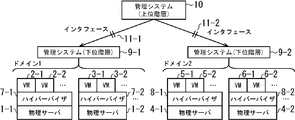
図7は、従来の階層化構成によるITシステムの管理形態を示すブロック図である。図7では、ドメイン1,2を示しているが、より多くのドメインが存在してもよい。
ドメイン1内には物理サーバ(ホスト)1-1,1-2,・・・が備えられ、物理サーバ1-1上に仮想マシン(VM)2-1,2-2,・・・が配置され、物理サーバ1-2上に仮想マシン3-1,3-2,・・・が配置されている。また、ドメイン2内には物理サーバ4-1,4-2,・・・が備えられ、物理サーバ4-1上に仮想マシン5-1,5-2,・・・が配置され、物理サーバ4-2上に仮想マシン6-1,6-2,・・・が配置されている。なお、物理サーバ1-1,1-2,・・・,4-1,4-2,・・・上への仮想マシン2-1,2-2,・・・,3-1,3-2,・・・,5-1,5-2,・・・,6-1,6-2,・・・の配置は、ハイパーバイザ7-1,7-2,・・・,8-1,8-2,・・・により実現される。
下位階層管理システム9-1,9-2および上位階層管理システム10は、階層化して構成されており、下位階層管理システム9-1は、ドメイン1内の物理サーバ1-1,1-2,・・・および仮想マシン2-1,2-2,・・・,3-1,3-2,・・・を管理し、下位階層管理システム9-2は、ドメイン2内の物理サーバ4-1,4-2,・・・および仮想マシン5-1,5-2,・・・,6-1,6-2,・・・を管理する。この管理のため、下位階層管理システム9-1は、物理サーバ1-1,1-2,・・・および仮想マシン2-1,2-2,・・・,3-1,3-2,・・・に関する情報を取得し、下位階層管理システム9-2は、物理サーバ4-1,4-2,・・・および仮想マシン5-1,5-2,・・・,6-1,6-2,・・・に関する情報を取得する。
また、下位階層管理システム9-1,9-2と上位階層管理システム10の間にはインタフェース11-1,11-2が定義されており、上位階層管理システム10は、インタフェース11を介して、ドメイン1,2内の物理サーバ1-1,1-2,・・・,4-1,4-2,・・・および仮想マシン2-1,2-2,・・・,3-1,3-2,・・・,5-1,5-2,・・・,6-1,6-2,・・・を一元的に管理する。
このように、階層化構成の下位階層管理システムにより各ドメイン内の物理サーバおよび仮想マシンを個別に管理し、上位階層管理システムにより全てのドメイン内の物理サーバおよび仮想マシンを一元的に管理することは、スケール性(複数の管理システムの集合による大規模化)やドメインの独立性の観点から好ましいものである。なお、ドメイン、物理サーバおよび仮想マシンは、ITシステムの拡張に伴って追加されることもある。
特許文献1には、クラウド環境内の資源配分システムおよび方法に関し、仮想ハイパーバイザをアプリケーション・プログラミング・インタフェース(API)として生成し、このハイパーバイザを用いて、同様の特性を持つ仮想マシンの固まりを予めドメインとして区画し、インスタンス化することが記載されている。
しかし、従来の階層化構成によるITシステムの管理形態では、各ドメインでの情報モデルやパラメータが異なる場合の対処が困難である。すなわち、管理会社や企業の組織部署やサービスの相違により、ドメイン間で情報モデルやパラメータが異なる場合が多く、このような場合、上位階層管理システムにおいて全てのドメイン内の物理サーバや仮想マシンにおける資源量、性能、配置場所、稼働状況などを把握することが困難であり、ITシステムにおける全てのドメイン内の状況を考慮して、資源配置先に適する物理サーバや仮想マシンを選択して資源配置を行うといった資源管理が困難である。
特許文献1記載のクラウド環境内の資源配分システムおよび方法によれば、クラウド・マネージャ(抽象化レベルの管理システム)は、利用者の要件に合わせてドメインを選択するだけで、ある程度の最適設定が可能となる。しかし、ITシステムでは、既存のITシステムを基盤として、それを段階的に拡張することが普通に行われており、その拡張の過程で、管理システムが階層化構成にされる場合もある。このような場合、既存のITシステムを基盤とせざるを得ない。引用文献1記載の管理形態は、既存のITシステムを基盤とした拡張に対応できるものでなく、この管理形態をITシステムの拡張に対応させるには、既存のITシステムを設計変更する必要がある。しかし、これには、多大な工数を要するだけでなく、現行サービスへの影響も生じるので、現実的でない。
各下位階層管理システムが管理している詳細レベル情報を統合し、統合された情報を上位階層管理システムで管理することも考えられるが、ドメイン間で相違する情報モデルやパラメータなどを統合することは、困難であり、現実的でない。
本発明の目的は、上記課題を解決し、資源配置先として適するサーバを選択可能とする、サーバの性能に関する抽象化レベル情報を導出し、この抽象化レベル情報を基に、資源配置先として適するサーバを選択して資源配置を実現する、ITシステムにおけるサーバの性能の抽象化方法および資源管理方法を提供することにある。
上記課題を解決するため、本発明のITシステムにおけるサーバの性能の抽象化方法は、ITシステムにおける物理サーバおよび該物理サーバ上に配置された仮想マシンの一方または両方を対象のサーバとし、ソフトウエア環境に対してソフトウエア環境ごとの識別子を付与し、各サーバの余剰性能を表す数値を導出し、当該サーバのソフトウエア環境に対して付与された識別子および当該サーバに対して導出された余剰性能を表す数値を当該サーバの性能の抽象化レベル情報とする点に第1の特徴がある。
また、本発明のITシステムにおけるサーバの性能の抽象化方法は、仮想マシンの性能の抽象化レベル情報が、さらに、自仮想マシンが配置されている物理サーバの識別子を含む点に第2の特徴がある。
また、本発明のITシステムにおけるサーバの性能の抽象化方法は、各サーバの余剰性能を表す数値が、残余のCPU性能、メモリ性能およびI/O性能を表す別々の数値、あるいはそれらの数値が組み合わせ演算された数値である点に第3の特徴がある。
また、本発明のITシステムにおける資源管理方法は、上記のサーバの性能の抽象化方法により導出された抽象化レベル情報を基に、資源配置先に適するサーバを選択して資源配置を行う点に第1の特徴がある。
また、本発明のITシステムにおける資源管理方法は、下位管理システムと上位管理システムとが階層的に構成され、上位管理システムが下位管理システムを通して、前記抽象化レベル情報を基に、資源配置先に適するサーバを選択して資源配置を行う点に第2の特徴がある。
また、本発明のITシステムにおける資源管理方法は、仮想マシンを対象のサーバとし、前記上位管理システムが、前記抽象化レベル情報を基に、アプリケーションプログラムの配置先に適する仮想マシンを選択し、前記下位管理システムが該仮想マシン上にアプリケーションプログラムを配置する点に第3の特徴がある。
また、本発明のITシステムにおける資源管理方法は、物理サーバを対象のサーバとし、前記上位管理システムが、前記抽象化レベルの情報を基に、仮想マシンの配置先に適する物理サーバを選択し、前記下位管理システムが該物理サーバ上に仮想マシンを配置する点に第4の特徴がある。
また、本発明のITシステムにおける資源管理方法は、仮想マシンを対象のサーバとし、前記上位管理システムが、配置資源の要件を前記下位管理システムに広告し、前記下位管理システムが、この広告に対して対応可否を応答し、前記上位管理システムが、この応答に従って資源配置を依頼し、前記下位管理システムが、この依頼に従って、前記抽象化レベル情報を基に、資源配置先に適する仮想マシンを選択して該仮想マシン上にアプリケーションプログラムを配置する点に第5の特徴がある。
さらに、本発明のITシステムにおける資源管理方法は、物理サーバを対象のサーバとし、前記上位管理システムが、配置資源の要件を前記下位管理システムに広告し、前記下位管理システムが、この広告に対して対応可否を応答し、前記上位管理システムが、この応答に従って資源配置を依頼し、前記下位管理システムが、この依頼に従って、前記抽象化レベル情報を基に、資源配置先に適する物理サーバを選択して該物理サーバ上に仮想マシンを配置する点に第6の特徴がある。
本発明のITシステムにおけるサーバの性能の抽象化方法では、物理サーバおよび仮想マシンが資源配置先に適するか適しないかを判定できる最低限の情報、すなわち、ソフトウエア環境ごとの識別子とサーバの余剰性能を表す数値を導出し、それを物理サーバおよび仮想マシンについての抽象化レベル情報とするので、物理サーバおよび仮想マシンが資源配置先として適するか適しないかを判定できる抽象化レベル情報を導出できる。
また、本発明のITシステムにおける資源管理方法では、下位階層管理システムと上位階層管理システムの間で上記抽象化レベル情報を授受するので、上位階層管理システムで、システムスケール性を維持しながら、抽象化レベルで資源配置の設計が可能になり、また、下位階層管理システムで、既存のITシステムの段階的な拡張に対して対処できるようになる。
まず、本発明のITシステムにおけるサーバの性能の抽象化方法について説明する。本発明のITシステムにおけるサーバの性能の抽象化方法では、物理サーバおよび仮想マシンの一方または両方をサーバとし、そのサーバが資源配置先として適するか適しないかの判定に必要となる最低限の情報を導出し、それを抽象化レベルの情報とする。
以下では、物理サーバと仮想マシンの両者について、それが仮想マシンおよびアプリケーションプログラムの配置先として適するか適しないかを判定できる情報を導出する場合について説明するが、本発明のITシステムにおけるサーバの性能の抽象化方法は、その一方について、すなわち、物理サーバが仮想マシンの配置先として適するか適しないかを判定できる情報、あるいは仮想マシンがアプリケーションプログラムの配置先として適するか適しないかを判定できる情報を導出ものであってもよい。
サーバが資源配置先として適するか適しないかの判定に必要となる最低限の情報として、具体的には、ソフトウエア環境に対してソフトウエア環境ごとの識別子、例えば、整数値を付与し、また、各物理サーバおよび既設の各仮想マシンに対して該各物理サーバおよび各仮想マシンの余剰性能を表す数値を付与する。そして、各物理サーバおよび各仮想マシンの性能を、その物理サーバおよび仮想マシンについての識別子および数値からなる抽象化レベル情報で表す。各物理サーバおよび各仮想マシンについての識別子および数値により、物理サーバおよび仮想マシンが、仮想マシンおよびアプリケーションプログラムの配置先として適するか適しないかを判定できる。
図1は、抽象化レベル情報の具体例を示し、この具体例の抽象化レベル情報は、(Color, Performance, Bind)属性からなる。
Color属性は、ソフトウエア環境ごとの識別子であり、その引数には、例えば、ソフトウエア環境ごとの整数値(1,2,・・・,N)を割り振る。図1では、ハイパーバイザおよび仮想マシンのソフトウエア環境に対して整数値(10,50)が付与された例を示している。このように、Color属性は、例えば、ハイパーバイザやOSなどのソフトウエア環境ごとに予め割り振られた整数値を引数とする。
Color属性により、ソフトウエア環境を考慮して、資源配置先に適する物理サーバおよび仮想マシンを選択したり、あるいは適しない物理サーバや仮想マシンを除外したりすることが可能となる。また、Color属性は、それと推奨されるソフトウエア環境や動作可能なソフトウエア環境との異同により、資源配置の設計などの際のレーティング(評価)に用いることもできる。
図2は、Color属性の具体例を示す。この具体例では、ソフトウエア環境(VMware, VMware vSphere4.0, VM ware vSphere5.5, KVM, Ubuntu, Ubuntu14.04, ・・・)に対してそれぞれ、引数(10, 20, 30, 40, 50, 60, ・・・)を予め割り振っている。ここで、VMware, VMware vSphere4.0, VM ware vSphere5.5および KVMは、ハイパーバイザの種別であり、このソフトウエア環境は、物理サーバ上に仮想マシンを配置する際に考慮される。また、Ubuntu, Ubuntu14.04は、仮想マシンのOSの種別であり、このソフトウエア環境は、仮想マシン上にアプリケーションプログラムを配置する際に考慮される。
Performance属性は、各物理サーバおよび既設の各仮想マシンの余剰性能を表す正規化された数値を引数とする。例えば、物理サーバの余剰性能は(αHA*βHB*χHC)で導出でき、仮想マシンの余剰性能は(αVMA*βVMB*χVMC)で導出できる。ここで、A、B、Cはそれぞれ、物理サーバあるいは仮想マシンのCPU性能指標、メモリ性能指標、I/O性能指標である。
物理サーバおよび仮想マシンの余剰性能に対してはそれぞれ係数φ、γの重みを付ける。また、物理サーバのCPU性能指標Aとメモリ性能指標BとI/O性能指標Cと合成するに際してそれぞれに係数αH、βH、χHの重みを付け、仮想マシンのCPU性能指標Aメモリ性能指標BとI/O性能指標Cを合成するに際してそれぞれに係数αVM、βVM、χVMの重みを付ける。なお、*は、乗算を表す(以下でも同じ)。Performance属性は、資源配置先に適する仮想マシンや物理サーバを選択する際のレーティングに用いられる。
CPU性能指標Aは、E(1-CPU使用率)*クロック数*コア数*スレッド数で導出できる。ここで、Eは、アップデート間隔あるいは固定間隔(例えば5分)などの間隔での平均化を表す(以下でも同じ)。なお、コア数は、CPU中での並列処理可能数を意味し、スレッド数は、1コア中での並列処理可能数を意味する。
メモリ性能指標Bは、E(1-メモリ使用率)*メモリ総量で導出できる。
I/O性能指標Cは、最大パケット処理量(pps)-E(Σ(処理パケット数))で導出できる。
Bind属性は、仮想マシンが配置されている物理サーバの識別子、例えば、ホストの名前あるいはIPアドレスである。Bind属性は、仮想マシンに対して付与されるものであり、これにより、例えば、物理サーバ間で仮想マシンイメージ(仮想マシンのOSとアプリケーションプログラム)を移動(マイグレーション)させる場合に、移動先に適する物理サーバを選択できる。
以下に、Performance属性の算出例を示す。ここでは、仮想マシンについてのPerformance属性の算出例を示すが、物理サーバについても同様に算出できる。
仮想マシンの 使用率(平均化間隔での平均化)を0.4、仮想マシンのクロック数を8000MHz、コア数を4、スレッド数を10とし、メモリの 使用率(平均化間隔での平均化)を0.5、メモリ総量を10000Mbytes、I/Oの最大パケット処理量を80Mpps、処理パケット数(積算、平均化間隔での平均化)を25Mppsとすると、
CPU性能指標A =0.6*8000MHz*4(コア)*10(スレッド)=192000MHz
メモリ性能指標B =0.5*10000Mbytes=5000Mbytes
I/O性能指標C=80Mpps-25Mpps=55Mpps
となる。
となる。
これらの値を用いてPerformance属性を計算すると、Performance属性は、
(192000/150000)*(5000/7500)*(55/50)=0.929
となる。
他の仮想マシンについても同様にPerformance属性を算出する。Performance属性の値が大きい仮想マシンほど余剰性能が高いものとなる。なお、各指標値に対する分母の数値は、各指標値のベースライン値と重みを考慮して決定した係数であり、例えば、統計上あるいは経験上から、平均的なCPU性能指標、メモリ性能指標およびI/O性能指標の場合にPerformance属性が1になるように決定される。
となる。
他の仮想マシンについても同様にPerformance属性を算出する。Performance属性の値が大きい仮想マシンほど余剰性能が高いものとなる。なお、各指標値に対する分母の数値は、各指標値のベースライン値と重みを考慮して決定した係数であり、例えば、統計上あるいは経験上から、平均的なCPU性能指標、メモリ性能指標およびI/O性能指標の場合にPerformance属性が1になるように決定される。
以上のように、本発明のITシステムにおけるサーバの性能の抽象化方法によれば、物理サーバおよび仮想マシンが資源(仮想マシンおよびアプリケーションプログラム)配置先に適するか適しないかを判定できる抽象化レベル情報を導出できる。
次に、本発明のITシステムにおける資源管理方法について説明する。本発明のITシステムにおける資源管理方法では、上記のようにして導出された抽象化レベル情報を基に、資源配置を行う。
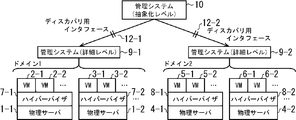
図3は、本発明の実施形態のITシステムにおける資源管理方法が適用されたITシステムを示すブロック図である。なお、図3において、図7と同一あるいは同等部分には同じ符号を付してある。このITシステムの構成は、図7と同様であるが、上位階層の管理システムは、抽象化レベル情報を基に管理を行い、下位階層の管理システムは、詳細レベル情報を基に管理を行うので、以下では、それらを抽象化レベル管理システム、詳細レベル管理システムと称する。また、抽象化レベル管理システムが資源配置先を選択(ディスカバリ)するので、詳細レベル管理システムと抽象化レベル管理システムの間で、問い合わせやそれに対する応答、資源配置要求やそれに対する応答を授受することを定義するインタフェースをディスカバリ用インタフェースと称する。
この実施形態では、抽象化レベル管理装置10が詳細レベル管理システム9-1,9-2に問い合わせて、上記のようにして導出された抽象化レベル情報を取得し、この抽象化レベル情報を基に、IPシステムにおける資源(仮想マシンまたはアプリケーションプログラム)配置先に適する物理サーバまたは仮想マシンを選択する。これを実現するため、詳細レベル管理システム9-1,9-2と抽象化レベル管理システム10間で、ディスカバリ用インタフェース11-1,11-2を定義し、ディスカバリ用インタフェース11-1,11-2を通して、問い合わせやそれに対する応答、資源配置要求やそれに対する応答を授受するようにする。
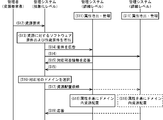
図4は、図3のITシステムでの資源管理手順を示すタイミングチャートである。以下では、各物理サーバおよび既設の各仮想マシンに対してそれぞれ、(Color, Performance, Bind)属性が付与され、これらの属性が抽象化レベル情報として授受されるものとして説明する。ただし、Bind属性は、仮想マシンのみに対して与えられる。
詳細レベル管理システム9-1,9-2は、抽象化レベル情報(属性)を導出して管理している(S1)。抽象化レベルの管理システム10は、詳細レベルの管理システム9-1,9-2に問い合わせ(S2)、その応答として、各物理サーバ1-1,1-2,・・・,4-1,4-2,・・・および既設の各仮想マシン2-1,2-2,・・・,3-1,3-2,・・・,5-1,5-2,・・・,6-1,6-2,・・・についての(Color, Performance, Bind)属性を取得し(S3)、各物理サーバおよび各仮想マシン対応にリストとして保持する(S4)。なお、物理サーバ1-1,1-2,・・・,4-1,4-2,・・・についての属性はBind属性を含まない。
抽象化レベル管理システム10からの詳細レベル管理システム9-1,9-2への問い合わせは、定期的に行っても非定期的(例えば資源配置の直前)に行ってもよく、その問い合わせに対する応答に従って、抽象化レベル管理システム10が保持する(Color, Performance, Bind)属性が更新される。なお、抽象化レベル管理システム10から詳細レベル管理システム9-1,9-2へ問い合わせを行うことなく、詳細レベル管理システム9-1,9-2から定期的にプッシュ動作を行って、各物理サーバ1-1,1-2,・・・,4-1,4-2,・・・および既設の各仮想マシン2-1,2-2,・・・,3-1,3-2,・・・,5-1,5-2,・・・,6-1,6-2,・・・についての(Color, Performance, Bind)属性を抽象化レベル管理システム10に送出するようにしてもよい。
ここで、管理者(資源要求者)から資源要求があると(S5)、抽象化レベル管理システム10は、保持している各物理サーバ1-1,1-2,・・・,4-1,4-2,・・・および既設の各仮想マシン2-1,2-2,・・・,3-1,3-2,・・・,5-1,5-2,・・・,6-1,6-2,・・・についての(Color, Performance, Bind)属性を基に、資源配置先を選択し(S6)、詳細レベル管理システム9-1,9-2に資源配置要求を送出する(S7)。
(Color, Performance)属性は、物理サーバ上に仮想マシンを配置したり、仮想マシン上へアプリケーションプログラムを配置したりする際に、配置先として適する物理サーバまたは仮想マシンを選択するのに最低限必要となる情報であり、Color属性は、ハイパーバイザやOSなどのソフトウエア環境の適合性により、配置先として適する物理サーバや仮想マシンを選択したり、適しない物理サーバや仮想マシンを除外したりするのに有効である。また、動作保証あるいは推奨のソフトウエア環境を提供するか、動作可能なソフトウエア環境を提供するか、などのレーティングにColor属性を用いることもできる。
仮想マシン上にアプリケーションプログラムを配置する場合に仮想マシンに対して1つのアプリケーションプログラムが要求する性能は十分に小さく、また、物理サーバ上に仮想マシンを配置する場合に物理サーバに対して1つの仮想マシンが要求する性能は十分に小さいのが普通であり、これを前提とすると、Performance属性により物理サーバや仮想マシンの性能を抽象化しても、配置先として適する物理サーバや仮想マシンを問題なく選択でき、その選択に際しては抽象化レベル管理システムにおいて、ドメインごとの情報モデルやパラメータなどを考慮する必要がない。したがって、Performance属性による抽象化は、配置先として適する物理サーバや仮想マシンの選択に有効なものとなる。
Performance属性は、余剰性能において適する物理サーバや仮想マシンを選択したり、適しない物理サーバや仮想マシンを除外したりするのに有効である。
例えば、ソフトウエア環境の適合性から選択された物理サーバまたは仮想マシンの中から、Performance属性の値が最も高いもの、あるいはPerformance属性の値が一定値以上のものを選択すればよい。これにより、CPUでのOSの動作や最小稼働メモリ容量を十分に保証でき、また、資源配置の偏りをなくすことができる。なお、複数の物理サーバや仮想マシンが適するとして選択された場合には、その中から適宜の1つを選択すればよい。
詳細レベル管理システム9-1,9-2は、抽象化レベル管理システム10から資源配置要求を受けると、その要求に従って各ドメイン内での資源配置を実行し(S8)、その応答を抽象化レベル管理システム10に返す(S9)。以上により、抽象化レベル管理システム10からの資源配置要求に対する資源配置が完了する。
以上のように、Color属性およびPerformance属性を付与して抽象化レベル情報とすることにより、仮想マシンの配置に適した物理サーバを選択したり、アプリケーションプログラムの配置に適した仮想マシンを選択したりすることができる。なお、この選択は、仮想マシン間でのアプリケーションプログラムの移動の際の選択やホスト間での仮想マシンイメージの移動の際の選択であっても構わない。
図5は、本発明の他の実施形態のITシステムにおける資源管理方法が適用されたITシステムを示すブロック図であり、図3と同一あるいは同等部分には同じ符号を付してある。
図5は、本発明の他の実施形態のITシステムにおける資源管理方法が適用されたITシステムを示すブロック図であり、図3と同一あるいは同等部分には同じ符号を付してある。
このITシステムの構成は、図3と同様であるが、詳細レベル管理システム10が資源配置先を選択(フィルタリング)するので、詳細レベル管理システム9-1,9-2と抽象化レベル管理システム10の間で、要件や対応可否、資源配置依頼やそれに対する応答を授受することを定義するインタフェースをフィルタリング用インタフェースと称する。
この実施形態では、抽象化レベル管理装置10が、アプリケーションプログラムまたは仮想マシンの配置で要求されソフトウエア環境および性能要件を導出して詳細レベルの管理システム9-1,9-2に広告し、詳細レベル管理システム9-1,9-2が、自ドメインでその要求に対応可能かどうかを応答し、抽象化レベル管理装置10が、対応可能なドメインの詳細レベル管理システム9-1,9-2にアプリケーションまたは仮想マシンの配置を依頼し、詳細レベルの管理システム9-1,9-2が資源配置先を選択してアプリケーションまたは仮想マシンを配置する。
図6は、図5のITシステムでの資源管理手順を示すタイミングチャートである。詳細レベル管理システム9-1,9-2は、(Color, Performance, Bind)属性を導出して管理している(S11)。ここで、管理者(資源要求者)から資源要求があると(S12)、抽象化レベルの管理装置10は、アプリケーションプログラムまたは仮想マシンの配置で要求されるソフトウエア環境および性能要件を導出し(S13)、該要件を詳細レベル管理システム9-1,9-2に広告する(S14)。なお、要求されるソフトウエア環境要件は、上記実施形態と同様であり、また、要求される性能要件は、上記実施形態のCPU性能指標、メモリ性能指標およびI/O性能指標に合わせて、要求されるCPU性能指標、メモリ性能指標およびI/O性能指標を導出し、それらからPerformance属性を算出すればよい。
詳細レベル管理システム9-1,9-2は、その広告を受けて、広告された要件に自ドメイン内が対応可能かどうかの対応可否情報を応答する(S15)。自ドメイン内が対応可能かどうかは、広告された要件と管理している(Color, Performance, Bind)属性とから判定できる。例えば、Color属性から、ドメイン内に、広告されたソフトウエア環境に適合するソフトウエア環境の物理サーバが存在すると判定され、Performance属性から、その物理サーバが、広告された性能要件以上の性能を持つと判定されれば、対応可情報が応答される。
抽象化レベル管理システム10は、応答可否情報に従って対応可能なドメインを選択し(S16)、該ドメインの詳細レベル管理システム9-1(9-2)に資源配置を依頼する(S17)。詳細レベル管理システム9-1(9-2)は、この依頼に従って、管理している(Color, Performance, Bind)属性を基に、ドメイン内の物理サーバまたは仮想マシンを資源配置先に選択し仮想マシンまたはアプリケーションプログラムを配置する。
ここでも、例えば、まず、Color 属性を参照して、ソフトウエア環境の適合性から、適合するがソフトウエア環境の物理サーバあるいは仮想マシンを選択し、次に、これにより選択された物理サーバあるいは仮想マシンの中から、Performance属性の値が最も高いホストや仮想マシン、あるいはPerformance属性の値が一定値以上の物理サーバや仮想マシンを選択すればよい。なお、複数の物理サーバあるいは仮想マシンが適するとして選択された場合には、その中から適宜の1つを選択すればよい。
以上実施形態について説明したが、本発明は、上記実施形態に限定されるものでない。例えば、上記実施形態では、物理サーバ上への仮想マシンの配置または仮想マシン上へアプリケーションプログラムの配置の両者が可能なものとして説明したが、例えば、詳細レベル管理システム9-1,9-2から抽象化レベル管理システム10へ物理サーバ1-1,1-2,・・・,4-1,4-2,・・・についての(Color, Performance)属性だけを応答し、抽象化レベル管理システム10から詳細レベル管理システム9-1,9-2へ仮想マシンの配置だけを要求するようにすれば、物理サーバ1-1,1-2,・・・,4-1,4-2,・・・上への仮想マシンの配置だけを抽象化レベルで行うことができる。
また、詳細レベル管理システム9-1,9-2から抽象化レベル管理システム10へ仮想マシン2-1,2-2,・・・,3-1,3-2,・・・,5-1,5-2,・・・,6-1,6-2,・・・についての(Color, Performance, Bind)属性だけを応答し、抽象化レベル管理システム10から詳細レベル管理システム9-1,9-2へアプリケーションプログラムの配置だけを要求するようにすれば、仮想マシン2-1,2-2,・・・,3-1,3-2,・・・,5-1,5-2,・・・,6-1,6-2,・・・上へのアプリケーションプログラムの配置だけを抽象化レベルで行うことができる。
また、上記実施形態では、CPU性能指標とメモリ性能指標とI/O性能指標を合成して物理サーバあるいは仮想マシンの余剰性能を導出するものとしたが、それらを合成することなく、独立に併記して、物理サーバあるいは仮想マシンの余剰性能としてもよい。物理サーバと該物理サーバ上に配置された仮想マシンのPerformance属性を合成した値を導出してもよい。
また、Color属性には、管理会社、組織部署名、セキュリティのポリシーなどの種別の識別子があってもよい。Color属性に上記種別の識別子を含ませることにより、適切な管理会社、組織部署名、セキュリティのポリシーなどの下の物理サーバを資源配置先に選択したり、適切でない管理会社、組織部署名、セキュリティのポリシーなどの下の物理サーバを資源配置先から除外したりすることができる。
また、上記実施形態では、資源配置先を選択するために、まず、Color属性を用い、次に、Performance属性を用いるようにしているが、資源配置の設計に際し、Color属性とPerformance属性の何れを先に用いるかは任意であり、まず、Performance属性を用い、次に、Color属性を用いるようにしてもよい。
さらに、Performance属性を算出する際に各性能指標に対して付与する重みの組み合わせを複数用意しておき、それを適宜選択するようにするようにしてもよい。この重み付けを変えることにより、CPU性能、メモリ性能あるいはI/O性能を重視した資源配置先の選択が可能になる。
1-1,1-2,4-1,4-2・・・物理サーバ(ホスト)、21-1,2-2,3-1,3-2,5-1,5-2,6-1,6-2・・・仮想マシン(VM)、7-1,7-2,8-1,8-1・・・ハイパーバイザ、9-1,9-2・・・管理システム(詳細レベルまたは下位階層)、10・・・管理システム(抽象化レベルまたは上位階層)、11-1,11-2・・・インタフェース、12-1,12-2・・・ディスカバリ用インタフェース、13-1,13-2・・・フィルタリング用インタフェース
Claims (9)
- ITシステムにおける物理サーバおよび該物理サーバ上に配置された仮想マシンの一方または両方を対象のサーバとし、
ソフトウエア環境に対してソフトウエア環境ごとの識別子を付与し、
各サーバの余剰性能を表す数値を導出し、
当該サーバのソフトウエア環境に対して付与された識別子および当該サーバに対して導出された余剰性能を表す数値を当該サーバの性能の抽象化レベル情報とすることを特徴とするITシステムにおけるサーバの性能の抽象化方法。 - 仮想マシンの性能の抽象化レベル情報は、さらに、自仮想マシンが配置されている物理サーバの識別子を含むことを特徴とする請求項1に記載のITシステムにおけるサーバの性能の抽象化方法。
- 各サーバの余剰性能を表す数値は、残余のCPU性能、メモリ性能およびI/O性能を表す別々の数値、あるいはそれらの数値が組み合わせ演算された数値であることを特徴とする請求項1または2に記載のITシステムにおけるサーバの性能の抽象化方法。
- 請求項1ないし3のいずれか1つに記載のサーバの性能の抽象化方法により導出された抽象化レベル情報を基に、資源配置先に適するサーバを選択して資源配置を行うことを特徴とするITシステムにおける資源管理方法。
- 下位管理システムと上位管理システムとが階層的に構成され、上位管理システムが下位管理システムを通して、前記抽象化レベル情報を基に、資源配置先に適するサーバを選択して資源配置を行うことを特徴とする請求項4に記載のITシステムにおける資源管理方法。
- 仮想マシンを対象のサーバとし、
前記上位管理システムが、前記抽象化レベル情報を基に、アプリケーションプログラムの配置先に適する仮想マシンを選択し、前記下位管理システムが該仮想マシン上にアプリケーションプログラムを配置することを特徴とする請求項5に記載のITシステムにおける資源管理方法。 - 物理サーバを対象のサーバとし、
前記上位管理システムが、前記抽象化レベルの情報を基に、仮想マシンの配置先に適する物理サーバを選択し、前記下位管理システムが該物理サーバ上に仮想マシンを配置することを特徴とする請求項5または6に記載のITシステムにおける資源管理方法。 - 仮想マシンを対象のサーバとし、
前記上位管理システムが、配置資源の要件を前記下位管理システムに広告し、前記下位管理システムが、この広告に対して対応可否を応答し、前記上位管理システムが、この応答に従って資源配置を依頼し、前記下位管理システムが、この依頼に従って、前記抽象化レベル情報を基に、資源配置先に適する仮想マシンを選択して該仮想マシン上にアプリケーションプログラムを配置することを特徴とする請求項5に記載のITシステムにおける資源管理方法。 - 物理サーバを対象のサーバとし、
前記上位管理システムが、配置資源の要件を前記下位管理システムに広告し、前記下位管理システムが、この広告に対して対応可否を応答し、前記上位管理システムが、この応答に従って資源配置を依頼し、前記下位管理システムが、この依頼に従って、前記抽象化レベル情報を基に、資源配置先に適する物理サーバを選択して該物理サーバ上に仮想マシンを配置することを特徴とする請求項5または8に記載のITシステムにおける資源管理方法。
Applications Claiming Priority (2)
| Application Number | Priority Date | Filing Date | Title |
|---|---|---|---|
| JP2014110324A JP6207463B2 (ja) | 2014-05-28 | 2014-05-28 | Itシステムにおけるサーバの性能の抽象化方法および資源管理方法 |
| JP2014-110324 | 2014-05-28 |
Publications (1)
| Publication Number | Publication Date |
|---|---|
| WO2015182471A1 true WO2015182471A1 (ja) | 2015-12-03 |
Family
ID=54698807
Family Applications (1)
| Application Number | Title | Priority Date | Filing Date |
|---|---|---|---|
| PCT/JP2015/064574 Ceased WO2015182471A1 (ja) | 2014-05-28 | 2015-05-21 | Itシステムにおけるサーバの性能の抽象化方法および資源管理方法 |
Country Status (2)
| Country | Link |
|---|---|
| JP (1) | JP6207463B2 (ja) |
| WO (1) | WO2015182471A1 (ja) |
Cited By (1)
| Publication number | Priority date | Publication date | Assignee | Title |
|---|---|---|---|---|
| JPWO2021260908A1 (ja) * | 2020-06-26 | 2021-12-30 |
Families Citing this family (2)
| Publication number | Priority date | Publication date | Assignee | Title |
|---|---|---|---|---|
| JP7246381B2 (ja) | 2017-09-30 | 2023-03-27 | オラクル・インターナショナル・コーポレイション | 環境要件に基づくコンテナのデプロイメント |
| BR112020018990A8 (pt) * | 2018-03-23 | 2023-02-28 | Carolina Cloud Exchange Inc | Quantificação do uso de recursos informáticos díspares numa unidade única de medida |
Citations (3)
| Publication number | Priority date | Publication date | Assignee | Title |
|---|---|---|---|---|
| JP2009223497A (ja) * | 2008-03-14 | 2009-10-01 | Nec Corp | 管理マシン、管理システム、管理プログラム、および、管理方法 |
| JP2011198332A (ja) * | 2010-03-24 | 2011-10-06 | Fujitsu Ltd | 仮想マシン管理プログラム及び仮想マシン管理装置 |
| JP2012501021A (ja) * | 2008-08-25 | 2012-01-12 | インターナショナル・ビジネス・マシーンズ・コーポレーション | ネーム・リゾリューションを使用して仮想資源をプロビジョンする方法 |
-
2014
- 2014-05-28 JP JP2014110324A patent/JP6207463B2/ja not_active Expired - Fee Related
-
2015
- 2015-05-21 WO PCT/JP2015/064574 patent/WO2015182471A1/ja not_active Ceased
Patent Citations (3)
| Publication number | Priority date | Publication date | Assignee | Title |
|---|---|---|---|---|
| JP2009223497A (ja) * | 2008-03-14 | 2009-10-01 | Nec Corp | 管理マシン、管理システム、管理プログラム、および、管理方法 |
| JP2012501021A (ja) * | 2008-08-25 | 2012-01-12 | インターナショナル・ビジネス・マシーンズ・コーポレーション | ネーム・リゾリューションを使用して仮想資源をプロビジョンする方法 |
| JP2011198332A (ja) * | 2010-03-24 | 2011-10-06 | Fujitsu Ltd | 仮想マシン管理プログラム及び仮想マシン管理装置 |
Cited By (4)
| Publication number | Priority date | Publication date | Assignee | Title |
|---|---|---|---|---|
| JPWO2021260908A1 (ja) * | 2020-06-26 | 2021-12-30 | ||
| WO2021260908A1 (ja) * | 2020-06-26 | 2021-12-30 | 日本電信電話株式会社 | サーバ群選択システム、サーバ群選択方法、および、プログラム |
| JP7468651B2 (ja) | 2020-06-26 | 2024-04-16 | 日本電信電話株式会社 | サーバ群選択システム、サーバ群選択方法、および、プログラム |
| US12585554B2 (en) | 2020-06-26 | 2026-03-24 | Ntt, Inc. | Server group selection system, server group selection method, and program |
Also Published As
| Publication number | Publication date |
|---|---|
| JP6207463B2 (ja) | 2017-10-04 |
| JP2015225524A (ja) | 2015-12-14 |
Similar Documents
| Publication | Publication Date | Title |
|---|---|---|
| US11575748B2 (en) | Data storage method and apparatus for combining different data distribution policies | |
| US11915049B2 (en) | Method and apparatus for scaling a custom resource with custom metrics in a containerized application handling system | |
| US10701139B2 (en) | Life cycle management method and apparatus | |
| JP6435050B2 (ja) | クラウドシステムにおけるリソース管理 | |
| US10771351B2 (en) | Fast provisioning service for cloud computing | |
| US9596302B2 (en) | Migrating applications between networks | |
| AU2015419073B2 (en) | Life cycle management method and device for network service | |
| JP5691062B2 (ja) | 仮想計算機の制御方法及び管理計算機 | |
| JP5352890B2 (ja) | 計算機システムの運用管理方法、計算機システム及びプログラムを記憶する計算機読み取り可能な媒体 | |
| US11397622B2 (en) | Managed computing resource placement as a service for dedicated hosts | |
| CN112099938A (zh) | 使用多维元数据标签集确定分布式计算环境中的资源分配 | |
| US9184982B2 (en) | Balancing the allocation of virtual machines in cloud systems | |
| US9329906B2 (en) | Virtual machine mobility using resource pools | |
| JP2016170669A (ja) | 負荷分散機能配備方法、負荷分散機能配備装置および負荷分散機能配備プログラム | |
| US10581757B2 (en) | Pooling public cloud resources from different subscriptions using reservations | |
| Liu et al. | Towards a multi-QoS human-centric cloud computing load balance resource allocation method | |
| CN112035244A (zh) | 在多租户环境中虚拟节点集群的部署 | |
| US11093288B2 (en) | Systems and methods for cluster resource balancing in a hyper-converged infrastructure | |
| JP6207463B2 (ja) | Itシステムにおけるサーバの性能の抽象化方法および資源管理方法 | |
| Sahasrabudhe et al. | Comparing openstack and VMware | |
| KR20140018076A (ko) | 복수의 사용자 계정들을 갖는 클라이언트에 대한 가상 데스크톱 서비스 시스템 | |
| CN112468458B (zh) | 一种基于neutron分层机制的调度方法 | |
| US12367074B1 (en) | Network management software-as-a-service system for allocating resources (also termed threads) of containers for performance of a job | |
| US10536510B2 (en) | Subscription-agnostic deployment of workloads to a public cloud | |
| CN120386539A (zh) | 一种微服务实例更新方法以及相关设备 |
Legal Events
| Date | Code | Title | Description |
|---|---|---|---|
| 121 | Ep: the epo has been informed by wipo that ep was designated in this application |
Ref document number: 15799493 Country of ref document: EP Kind code of ref document: A1 |
|
| NENP | Non-entry into the national phase |
Ref country code: DE |
|
| 122 | Ep: pct application non-entry in european phase |
Ref document number: 15799493 Country of ref document: EP Kind code of ref document: A1 |