WO2015148806A1 - Anti-influenza b virus hemagglutinin antibodies and methods of use - Google Patents
Anti-influenza b virus hemagglutinin antibodies and methods of use Download PDFInfo
- Publication number
- WO2015148806A1 WO2015148806A1 PCT/US2015/022758 US2015022758W WO2015148806A1 WO 2015148806 A1 WO2015148806 A1 WO 2015148806A1 US 2015022758 W US2015022758 W US 2015022758W WO 2015148806 A1 WO2015148806 A1 WO 2015148806A1
- Authority
- WO
- WIPO (PCT)
- Prior art keywords
- antibody
- seq
- amino acid
- acid sequence
- hvr
- Prior art date
- Legal status (The legal status is an assumption and is not a legal conclusion. Google has not performed a legal analysis and makes no representation as to the accuracy of the status listed.)
- Ceased
Links
Classifications
-
- C—CHEMISTRY; METALLURGY
- C07—ORGANIC CHEMISTRY
- C07K—PEPTIDES
- C07K16/00—Immunoglobulins [IG], e.g. monoclonal or polyclonal antibodies
- C07K16/08—Immunoglobulins [IG], e.g. monoclonal or polyclonal antibodies against material from viruses
- C07K16/10—RNA viruses
- C07K16/108—Orthomyxoviridae (F), e.g. influenza virus
-
- A—HUMAN NECESSITIES
- A61—MEDICAL OR VETERINARY SCIENCE; HYGIENE
- A61K—PREPARATIONS FOR MEDICAL, DENTAL OR TOILETRY PURPOSES
- A61K31/00—Medicinal preparations containing organic active ingredients
- A61K31/21—Esters, e.g. nitroglycerine, selenocyanates
- A61K31/215—Esters, e.g. nitroglycerine, selenocyanates of carboxylic acids
-
- A—HUMAN NECESSITIES
- A61—MEDICAL OR VETERINARY SCIENCE; HYGIENE
- A61K—PREPARATIONS FOR MEDICAL, DENTAL OR TOILETRY PURPOSES
- A61K39/00—Medicinal preparations containing antigens or antibodies
- A61K39/395—Antibodies; Immunoglobulins; Immune serum, e.g. antilymphocytic serum
- A61K39/39583—Antibodies; Immunoglobulins; Immune serum, e.g. antilymphocytic serum against materials not provided for elsewhere, e.g. haptens, coenzymes
-
- A—HUMAN NECESSITIES
- A61—MEDICAL OR VETERINARY SCIENCE; HYGIENE
- A61K—PREPARATIONS FOR MEDICAL, DENTAL OR TOILETRY PURPOSES
- A61K45/00—Medicinal preparations containing active ingredients not provided for in groups A61K31/00 - A61K41/00
- A61K45/06—Mixtures of active ingredients without chemical characterisation, e.g. antiphlogistics and cardiaca
-
- A—HUMAN NECESSITIES
- A61—MEDICAL OR VETERINARY SCIENCE; HYGIENE
- A61P—SPECIFIC THERAPEUTIC ACTIVITY OF CHEMICAL COMPOUNDS OR MEDICINAL PREPARATIONS
- A61P31/00—Antiinfectives, i.e. antibiotics, antiseptics, chemotherapeutics
- A61P31/12—Antivirals
- A61P31/14—Antivirals for RNA viruses
- A61P31/16—Antivirals for RNA viruses for influenza or rhinoviruses
-
- A—HUMAN NECESSITIES
- A61—MEDICAL OR VETERINARY SCIENCE; HYGIENE
- A61K—PREPARATIONS FOR MEDICAL, DENTAL OR TOILETRY PURPOSES
- A61K39/00—Medicinal preparations containing antigens or antibodies
- A61K2039/505—Medicinal preparations containing antigens or antibodies comprising antibodies
-
- C—CHEMISTRY; METALLURGY
- C07—ORGANIC CHEMISTRY
- C07K—PEPTIDES
- C07K2317/00—Immunoglobulins specific features
- C07K2317/50—Immunoglobulins specific features characterized by immunoglobulin fragments
- C07K2317/51—Complete heavy chain or Fd fragment, i.e. VH + CH1
-
- C—CHEMISTRY; METALLURGY
- C07—ORGANIC CHEMISTRY
- C07K—PEPTIDES
- C07K2317/00—Immunoglobulins specific features
- C07K2317/50—Immunoglobulins specific features characterized by immunoglobulin fragments
- C07K2317/515—Complete light chain, i.e. VL + CL
-
- C—CHEMISTRY; METALLURGY
- C07—ORGANIC CHEMISTRY
- C07K—PEPTIDES
- C07K2317/00—Immunoglobulins specific features
- C07K2317/50—Immunoglobulins specific features characterized by immunoglobulin fragments
- C07K2317/56—Immunoglobulins specific features characterized by immunoglobulin fragments variable (Fv) region, i.e. VH and/or VL
- C07K2317/565—Complementarity determining region [CDR]
-
- C—CHEMISTRY; METALLURGY
- C07—ORGANIC CHEMISTRY
- C07K—PEPTIDES
- C07K2317/00—Immunoglobulins specific features
- C07K2317/70—Immunoglobulins specific features characterized by effect upon binding to a cell or to an antigen
- C07K2317/76—Antagonist effect on antigen, e.g. neutralization or inhibition of binding
Definitions
- the present invention provides anti-influenza B virus hemagglutinin antibodies, compositions comprising anti-influenza B virus hemagglutinin antibodies, and methods of using the same.
- Influenza virus infection causes between three and five million cases of severe illness and between 250,000 and 500,000 deaths every year around the world. In the United States alone, 5% to 20% of the population becomes infected with influenza virus each year, with the majority of these infections caused by influenza A virus. (See, e.g., Dushoff et al, (2006) Am J Epidemiology 163: 181-187; Thompson et al, (2004) JAMA 292: 1333-1340; Thompson et al, (2003) JAMA 289: 179-186.) Influenza B virus infections, however, account for approximately 10,000-100,000 hospitalized influenza cases per year in the United States alone, displaying a high year-to-year variability (l%-40% of all hospitalized influenza virus cases are influenza B virus infections, with a mean of 17%).
- Neuraminidase inhibitors are approved for outpatient treatment and prophylaxis for influenza A and B virus infection.
- Oseltamivir (Tamifiu®) is a widely used prophylactic and early therapeutic treatment option for influenza A and B virus infection.
- Kandel and Hartshorn 2001) BioDrugs: Clinical Immunotherapy, Biopharmaceuticals and Gene Therapy 15:303-323; Nicholson et al, (2000) Lancet 355: 1845-1850; Treanor et al, (2000) JAMA 283: 1016-1024; and Welliver et al, (2001) JAMA 285:748-754.
- oseltamivir treatment must begin within 48 hours of symptom onset to provide a significant clinical benefit.
- influenza B virus lineages Two highly distinct antigenic variants of influenza B virus emerged from ancestral influenza B virus lineages. These viruses were antigenically related to either influenza B virus B/Victoria/2/87 or B/Y amagata/16/88. (See, e.g., Rota et al. (1990) Virology 175:59-68.) It is therefore desirable to develop a therapy for influenza B virus infection that is effective against ancestral, Victoria, and Yamagata lineages of influenza B virus. Recent reports have described monoclonal antibodies (mAb) that bind hemagglutinin and neutralize influenza B virus. (See Kubota-Koketsu et al.
- the present invention provides anti-influenza B virus hemagglutinin antibodies (i.e., anti- hemagglutinin antibodies, anti-influenza B virus antibodies), compositions comprising anti- influenza B virus hemagglutinin antibodies, and methods of using the same.
- anti-influenza B virus hemagglutinin antibodies i.e., anti- hemagglutinin antibodies, anti-influenza B virus antibodies
- compositions comprising anti- influenza B virus hemagglutinin antibodies, and methods of using the same.
- an isolated anti-hemagglutinin antibody of the present invention comprises three heavy chain hypervariable regions (HVR-Hl, HVR-H2, and HVR-H3) and three light chain hypervariable regions (HVR-Ll, HVR-L2, and HVR-L3), wherein:
- HVR-Hl comprises the amino acid sequence of SEQ ID NO:61;
- HVR-H3 comprises the amino acid sequence of SEQ ID NO: 75;
- HVR-Ll comprises the amino acid sequence of SEQ ID NO:55;
- HVR-L3 comprises the amino acid sequence of SEQ ID NO:59.
- the invention provides an isolated anti-hemagglutinin antibody comprising: at least one, two, three, four, five and/or six hypervariable region (HVR) sequences, wherein:
- HVR hypervariable region
- HVR-H2 comprises an amino acid sequence selected from the group consisting of SEQ ID Nos:64 and 65;
- HVR-H3 comprises the amino acid sequence of SEQ ID NO: 75;
- HVR-Ll comprises the amino acid sequence of SEQ ID NOs:55;
- HVR-L3 comprises the amino acid sequence of SEQ ID NO:59.
- HVR-Ll comprises the amino acid sequence of SEQ ID NO:55;
- HVR-L2 comprises the amino acid sequence of SEQ ID NO:57;
- HVR-H3 comprises the amino acid sequence of SEQ ID NO: 75.
- HVR-H2 comprises an amino acid sequence selected from the group consisting of
- HVR-H3 comprises the amino acid sequence of SEQ ID NO: 75.
- an isolated anti-hemagglutinin antibody of the present invention comprises a heavy chain variable region and a light chain variable region, wherein the heavy chain variable region comprises an amino acid sequence selected from the group consisting of SEQ ID NOs:79 and 83, and the light chain variable region comprises an amino acid sequence selected from the group consisting of SEQ ID NOs:78, 82, and 86.
- an isolated anti-hemagglutinin antibody of the present invention comprises a light chain variable region comprising an amino acid sequence selected from the group consisting of SEQ ID NOs:78, 82, and 86.
- an isolated anti-hemagglutinin antibody of the present invention comprises a heavy chain variable region comprises an amino acid sequence selected from the group consisting of SEQ ID NOs:79 and 83.
- an isolated anti-hemagglutinin antibody of the present invention comprises a heavy chain and a light chain, wherein the heavy chain comprises an amino acid sequence selected from the group consisting of SEQ ID NOs:81, 85, and 88, and the light chain comprises an amino acid sequence selected from the group consisting of SEQ ID NOs:80, 84, and 87.
- an isolated anti-hemagglutinin antibody of the present invention comprises three heavy chain hypervariable regions (HVR-Hl, HVR-H2, and HVR-H3) and three light chain hypervariable regions (HVR-L1, HVR-L2, and HVR-L3), wherein:
- HVR-Hl comprises the amino acid sequence of SEQ ID NO:62;
- HVR-H2 comprises the amino acid sequence of SEQ ID NO:66;
- HVR-H3 comprises the amino acid sequence of SEQ ID NO:76;
- HVR-L1 comprises the amino acid sequence of SEQ ID NO:55;
- HVR-L2 comprises the amino acid sequence of SEQ ID NO:57;
- HVR-L3 comprises the amino acid sequence of SEQ ID NO:59.
- the invention provides an isolated anti-hemagglutinin antibody comprising: at least one, two, three, four, five and/or six hypervariable region (HVR) sequences, wherein:
- HVR hypervariable region
- HVR-Hl comprises the amino acid sequence of SEQ ID NO:62;
- HVR-H2 comprises the amino acid sequence of SEQ ID NO:66;
- HVR-H3 comprises the amino acid sequence of SEQ ID NO:76;
- HVR-Ll comprises the amino acid sequence of SEQ ID NO:55;
- HVR-L2 comprises the amino acid sequence of SEQ ID NO:57;
- HVR-L3 comprises the amino acid sequence of SEQ ID NO:59.
- the invention provides an isolated anti-hemagglutinin antibody comprising three light chain hypervariable regions (HVR-Ll, HVR-L2, and LVR-L3), wherein:
- HVR-Ll comprises the amino acid sequence of SEQ ID NO:55;
- HVR-L2 comprises the amino acid sequence of SEQ ID NO:57;
- HVR-H2 comprises the amino acid sequence of SEQ ID NO:66;
- HVR-L2 comprises the amino acid sequence of SEQ ID NO:57;
- HVR-L3 comprises the amino acid sequence of SEQ ID NO:59.
- HVR-H2 comprises the amino acid sequence of SEQ ID NO:66;
- HVR-H3 comprises the amino acid sequence of SEQ ID NO: 76.
- an isolated anti-hemagglutinin antibody of the present invention comprises a heavy chain comprising the amino acid sequence of SEQ ID NO: 90.
- HVR-H2 comprises an amino acid sequence selected from the group consisting of
- HVR-L3 comprises the amino acid sequence of SEQ ID NO:60.
- HVR-H2 comprises an amino acid sequence selected from the group consisting of SEQ ID NOs:67, 68, 69, 70, 71, 72, 73, and 74;
- HVR-H2 comprises an amino acid sequence selected from the group consisting of SEQ ID NOs:67, 68, 69, 70, 71, 72, 73, and 74;
- the invention provides an isolated anti-hemagglutinin antibody comprising: at least one, two, and/or three heavy chain hypervariable region (HVR) sequences, wherein:
- HVR heavy chain hypervariable region
- an isolated anti-hemagglutinin antibody of the present invention comprises a heavy chain and a light chain, wherein the heavy chain comprises an amino acid sequence selected from the group consisting of SEQ ID NOs:94, 96, 98, 100, 102, 104, 106, and 108, and the light chain comprises the amino acid sequence of SEQ ID NO: 93.
- an isolated anti-hemagglutinin antibody of the present invention comprises a heavy chain comprising an amino acid sequence selected from the group consisting of SEQ ID NOs:94, 96, 98, 100, 102, 104, 106, and 108.
- the isolated anti-hemagglutinin antibody of the present invention is a monoclonal antibody.
- the isolated anti-hemagglutinin antibody of the present invention specifically binds influenza B virus hemagglutinin.
- the isolated anti-hemagglutinin antibody is an isolated anti-hemagglutinin monoclonal antibody that specifically binds influenza B virus hemagglutinin.
- Figures 9A and 9B set forth data showing percent survival of mice infected with influenza B virus B/Wisconsin/2010 and B/Victoria/2000, respectively, and administered various amounts of monoclonal antibody 46B8C at 72 hours post-infection.
- Figures 10A and 10B set forth data showing percent survival and percent body weight (BW) change, respectively, of mice infected with influenza B virus B/Victoria/2000 and administered either monoclonal antibody 46B8C or oseltamivir (Tamiflu).
- Figure 22 sets forth the amino acid sequences of light chain variable region, heavy chain variable region, light chain, and heavy chain of mAb 46B8E.
- Figure 25 sets forth the amino acid sequences of light chain variable region, heavy chain variable region, light chain, and heavy chain of mAb 46B8H.
- an antibody that binds to hemagglutinin has a dissociation constant (Kd) of ⁇ ⁇ , ⁇ 100 nM, ⁇ 10 nM, ⁇ 1 nM, ⁇ 0.1 nM, ⁇ 0.01 nM, or ⁇ 0.001 nM (e.g., 10 ⁇ 8 M or less, e.g., from 10 ⁇ 8 M to 10 "13 M, e.g., from 10 "9 M to 10 "13 M).
- Kd dissociation constant
- an anti-hemagglutinin antibody binds to an epitope of hemagglutinin of influenza B virus that is conserved among hemagglutinin from different strains, subtypes, and isolates of influenza B viruses, such as that of hemagglutinin of influenza B viruses of ancestral, Victoria, or
- antibody herein is used in the broadest sense and encompasses various antibody structures, including but not limited to monoclonal antibodies, polyclonal antibodies, multispecific antibodies (e.g., bispecific antibodies), and antibody fragments so long as they exhibit the desired antigen-binding activity.
- An “antibody fragment” refers to a molecule other than an intact antibody that comprises a portion of an intact antibody that binds the antigen to which the intact antibody binds.
- An antibody fragment also refers to a molecule other than an intact antibody that comprises a portion of an intact antibody that binds hemagglutinin and neutralizes influenza A virus.
- chimeric antibody refers to an antibody in which a portion of the heavy and/or light chain is derived from a particular source or species, while the remainder of the heavy and/or light chain is derived from a different source or species.
- the "class" of an antibody refers to the type of constant domain or constant region possessed by its heavy chain.
- IgG 4 IgAi, and IgA 2 .
- the heavy chain constant domains that correspond to the different classes of immunoglobulins are called ⁇ , ⁇ , ⁇ , ⁇ , and ⁇ , respectively.
- cytotoxic agent refers to a substance that inhibits or prevents a cellular function and/or causes cell death or destruction. Cytotoxic agents include, but are not
- Radioactive isotopes e.g. , At , 1 , 1 , Y , Re , Re , Sm , Bi , P ,
- Antibody effector functions refer to those biological activities attributable to the Fc region of an antibody, which vary with the antibody isotype. Examples of antibody effector functions include: Clq binding and complement dependent cytotoxicity (CDC); Fc receptor binding; antibody-dependent cell-mediated cytotoxicity (ADCC); phagocytosis; down regulation of cell surface receptors (e.g. , B cell receptor); and B cell activation.
- an “effective amount” of an agent refers to an amount effective, at dosages and for periods of time necessary, to achieve the desired therapeutic or prophylactic result.
- the term "Fc region” herein is used to define a C-terminal region of an immunoglobulin heavy chain that contains at least a portion of the constant region. The term includes native sequence Fc regions and variant Fc regions. In one embodiment, a human IgG heavy chain Fc region extends from Cys226, or from Pro230, to the carboxyl-terminus of the heavy chain. However, the C-terminal lysine (Lys447) of the Fc region may or may not be present.
- EU numbering system also called the EU index, as described in Kabat et al., Sequences of Proteins of Immunological Interest, 5th Ed. Public Health Service, National Institutes of Health, Bethesda, MD, 1991.
- host cell refers to cells into which exogenous nucleic acid has been introduced, including the progeny of such cells.
- Host cells include “transformants” and “transformed cells,” which include the primary transformed cell and progeny derived therefrom without regard to the number of passages. Progeny may not be completely identical in nucleic acid content to a parent cell, but may contain mutations. Mutant progeny that have the same function or biological activity as screened or selected for in the originally transformed cell are included herein.
- a "human antibody” is an antibody which possesses an amino acid sequence which
- a "human consensus framework” is a framework which represents the most commonly occurring amino acid residues in a selection of human immunoglobulin VL or VH framework sequences. Generally, the selection of human immunoglobulin VL or VH sequences is from a subgroup of variable domain sequences. Generally, the subgroup of sequences is a subgroup as in Kabat et al., Sequences of Proteins of Immunological Interest, Fifth Edition, NIH
- the subgroup is subgroup kappa I as in Kabat et al, supra.
- the subgroup is subgroup III as in Kabat et al., supra.
- a "humanized” antibody refers to a chimeric antibody comprising amino acid residues from non-human HVRs and amino acid residues from human FRs.
- a humanized antibody will comprise substantially all of at least one, and typically two, variable domains, in which all or substantially all of the HVRs (e.g., CDRs) correspond to those of a non-human antibody, and all or substantially all of the FRs correspond to those of a human antibody.
- a humanized antibody optionally may comprise at least a portion of an antibody constant region derived from a human antibody.
- a "humanized form" of an antibody, e.g., a non-human antibody refers to an antibody that has undergone humanization.
- hypervariable region refers to each of the regions of an antibody variable domain which are hypervariable in sequence ("complementarity determining regions” or “CDRs") and/or form structurally defined loops ("hypervariable loops") and/or contain the antigen-contacting residues ("antigen contacts").
- CDRs complementarity determining regions
- hypervariable loops form structurally defined loops
- antigen contacts Generally, antibodies comprise six HVRs: three in the VH (HI, H2, H3), and three in the VL (LI, L2, L3).
- Exemplary HVRs herein include:
- an “immunoconjugate” is an antibody conjugated to one or more heterologous molecule(s), including but not limited to a cytotoxic agent.
- mammals include, but are not limited to, domesticated animals (e.g., cows, sheep, cats, dogs, and horses), primates (e.g., humans and non-human primates such as monkeys), rabbits, and rodents (e.g., mice and rats).
- domesticated animals e.g., cows, sheep, cats, dogs, and horses
- primates e.g., humans and non-human primates such as monkeys
- rabbits e.g., mice and rats
- rodents e.g., mice and rats.
- the individual or subject is a human.
- an “isolated” antibody is one which has been separated from a component of its natural environment.
- an antibody is purified to greater than 95% or 99% purity as determined by, for example, electrophoretic (e.g., SDS-PAGE, isoelectric focusing (IEF), capillary electrophoresis) or chromatographic (e.g., ion exchange or reverse phase HPLC).
- electrophoretic e.g., SDS-PAGE, isoelectric focusing (IEF), capillary electrophoresis
- chromatographic e.g., ion exchange or reverse phase HPLC
- nucleic acid refers to a nucleic acid molecule that has been separated from a component of its natural environment.
- An isolated nucleic acid includes a nucleic acid molecule contained in cells that ordinarily contain the nucleic acid molecule, but the nucleic acid molecule is present extrachromosomally or at a chromosomal location that is different from its natural chromosomal location.
- each monoclonal antibody of a monoclonal antibody preparation is directed against a single determinant on an antigen.
- the modifier "monoclonal” indicates the character of the antibody as being obtained from a substantially homogeneous population of antibodies, and is not to be construed as requiring production of the antibody by any particular method.
- the monoclonal antibodies to be used in accordance with the present invention may be made by a variety of techniques, including but not limited to the hybridoma method, recombinant DNA methods, phage-display methods, and methods utilizing transgenic animals containing all or part of the human immunoglobulin loci, such methods and other exemplary methods for making monoclonal antibodies being described herein.
- naked antibody refers to an antibody that is not conjugated to a heterologous moiety (e.g., a cytotoxic moiety) or radiolabel.
- the naked antibody may be present in a pharmaceutical formulation.
- Native antibodies refer to naturally occurring immunoglobulin molecules with varying structures.
- native IgG antibodies are heterotetrameric glycoproteins of about 150,000 daltons, composed of two identical light chains and two identical heavy chains that are disulfide-bonded. From N- to C-terminus, each heavy chain has a variable region (VH), also called a variable heavy domain or a heavy chain variable domain, followed by three constant domains (CHI, CH2, and CH3).
- VH variable region
- VL variable region
- the light chain of an antibody may be assigned to one of two types, called kappa ( ⁇ ) and lambda ( ⁇ ), based on the amino acid sequence of its constant domain.
- package insert is used to refer to instructions customarily included in commercial packages of therapeutic products, that contain information about the indications, usage, dosage, administration, combination therapy, contraindications and/or warnings concerning the use of such therapeutic products.
- Percent (%) amino acid sequence identity with respect to a reference polypeptide sequence is defined as the percentage of amino acid residues in a candidate sequence that are identical with the amino acid residues in the reference polypeptide sequence, after aligning the sequences and introducing gaps, if necessary, to achieve the maximum percent sequence identity, and not considering any conservative substitutions as part of the sequence identity. Alignment for purposes of determining percent amino acid sequence identity can be achieved in various ways that are within the skill in the art, for instance, using publicly available computer software such as BLAST, BLAST-2, ALIGN or Megalign (DNASTAR) software. Those skilled in the art can determine appropriate parameters for aligning sequences, including any algorithms needed to achieve maximal alignment over the full length of the sequences being compared.
- % amino acid sequence identity values are generated using the sequence comparison computer program ALIGN-2.
- the ALIGN-2 sequence comparison computer program was authored by Genentech, Inc., and the source code has been filed with user documentation in the U.S. Copyright Office, Washington D.C., 20559, where it is registered under U.S. Copyright Registration No. TXU510087.
- the ALIGN-2 program is publicly available from Genentech, Inc., South San Francisco, California, or may be compiled from the source code.
- the ALIGN-2 program should be compiled for use on a UNIX operating system, including digital UNLX V4.0D. All sequence comparison parameters are set by the ALIGN-2 program and do not vary.
- the % amino acid sequence identity of a given amino acid sequence A to, with, or against a given amino acid sequence B is calculated as follows: 100 times the fraction X/Y
- pharmaceutical formulation refers to a preparation which is in such form as to permit the biological activity of an active ingredient contained therein to be effective, and which contains no additional components which are unacceptably toxic to a subject to which the formulation would be administered.
- a “pharmaceutically acceptable carrier” refers to an ingredient in a pharmaceutical
- pharmaceutically acceptable carrier includes, but is not limited to, a buffer, excipient, stabilizer, or preservative.
- hemagglutinin refers to any native hemagglutinin from any influenza virus source, unless otherwise indicated.
- the term encompasses "full-length,” unprocessed hemagglutinin as well as any form of hemagglutinin that results from processing in an influenza virus or an influenza virus-infected cell.
- the term also encompasses naturally occurring variants of hemagglutinin, e.g., splice variants or allelic variants.
- the amino acid sequences of exemplary hemagglutinin proteins from various influenza B virus strains or lineages are readily available in the art.
- treatment refers to clinical intervention in an attempt to alter the natural course of the individual being treated, and can be performed either for prophylaxis or during the course of clinical pathology.
- Desirable effects of treatment include, but are not limited to, preventing occurrence or recurrence of disease (e.g., preventing occurrence or recurrence of influenza B virus infection), reduction (e.g., reducing) or alleviation of symptoms, diminishment of any direct or indirect pathological consequences of the disease, decreasing the rate of disease progression, amelioration or palliation of the disease state, and remission or improved prognosis.
- variable region or “variable domain” refers to the domain of an antibody heavy or light chain that is involved in binding the antibody to antigen.
- the variable domains of the heavy chain and light chain (VH and VL, respectively) of a native antibody generally have similar structures, with each domain comprising four conserved framework regions (FRs) and three hypervariable regions (HVRs).
- FRs conserved framework regions
- HVRs hypervariable regions
- VH or VL domain may be sufficient to confer antigen-binding specificity.
- antibodies that bind a particular antigen may be isolated using a VH or VL domain from an antibody that binds the antigen to screen a library of complementary VL or VH domains, respectively. See, e.g., Portolano et al, J. Immunol.
- vector refers to a nucleic acid molecule capable of propagating another nucleic acid to which it is linked.
- the term includes the vector as a self-replicating nucleic acid structure as well as the vector incorporated into the genome of a host cell into which it has been introduced.
- Certain vectors are capable of directing the expression of nucleic acids to which they are operatively linked. Such vectors are referred to herein as "expression vectors.”
- the invention is based, in part, on anti-hemagglutinin antibodies and uses thereof.
- antibodies that bind to hemagglutinin are provided.
- Antibodies of the invention are useful, e.g., for the diagnosis, treatment, or prevention of influenza A virus infection.
- the invention provides isolated antibodies that bind to hemagglutinin.
- an anti-hemagglutinin antibody of the present invention binds hemagglutinin, binds hemagglutinin from influenza B virus, binds hemagglutinin from the Yamagata lineage of influenza B viruses, binds hemagglutinin from the Victoria lineage of influenza B viruses, binds hemagglutinin from ancestral lineages of influenza B virus, or binds hemagglutinin from the Yamagata lineage, the Victoria lineage, and ancestral lineages of influenza B virus.
- an anti-hemagglutinin antibody of the present invention neutralizes influenza B virus in vitro.
- an anti-hemagglutinin antibody of the present invention neutralizes influenza B virus in vivo.
- an anti- hemagglutinin antibody of the present invention reduces influenza B virus infection, prevents influenza B virus infection, inhibits influenza B virus infection, or treats influenza B virus infection.
- an anti-hemagglutinin antibody of the present invention prevents, inhibits, or reduces hemagglutinin-mediated fusion between influenza virus membrane and infected cell endosomal membranes (thus preventing, inhibiting, or reducing viral RNA entry into the infected cell cytoplasm, thus preventing, inhibiting, or reducing further propagation of influenza virus infection.)
- the invention provides an anti-hemagglutinin antibody comprising at least one, two, three, four, five, or six HVRs selected from (a) HVR-H1 comprising the amino acid sequence of SEQ ID NO:61; (b) HVR-H2 comprising the amino acid sequence of SEQ ID NO:64; (c) HVR-H3 comprising the amino acid sequence of SEQ ID NO:75; (d) HVR-L1 comprising the amino acid sequence of SEQ ID NO:55; (e) HVR-L2 comprising the amino acid sequence of SEQ ID NO:57; and (f) HVR-L3 comprising the amino acid sequence of SEQ ID NO:59.
- HVR-H1 comprising the amino acid sequence of SEQ ID NO:61
- HVR-H2 comprising the amino acid sequence of SEQ ID NO:64
- HVR-H3 comprising the amino acid sequence of SEQ ID NO:75
- HVR-L1 comprising the amino acid sequence of SEQ ID NO:55
- HVR-L2
- the invention provides an anti-hemagglutinin antibody comprising at least one, two, three, four, five, or six HVRs selected from (a) HVR-H1 comprising the amino acid sequence of SEQ ID NO:61; (b) HVR-H2 comprising the amino acid sequence of SEQ ID NO:65; (c) HVR-H3 comprising the amino acid sequence of SEQ ID NO:75; (d) HVR-L1 comprising the amino acid sequence of SEQ ID NO:55; (e) HVR-L2 comprising the amino acid sequence of SEQ ID NO:57; and (f) HVR-L3 comprising the amino acid sequence of SEQ ID NO:59.
- HVR-H1 comprising the amino acid sequence of SEQ ID NO:61
- HVR-H2 comprising the amino acid sequence of SEQ ID NO:65
- HVR-H3 comprising the amino acid sequence of SEQ ID NO:75
- HVR-L1 comprising the amino acid sequence of SEQ ID NO:55
- HVR-L2
- the invention provides an antibody comprising at least one, at least two, or all three VH HVR sequences selected from (a) HVR-H1 comprising the amino acid sequence of SEQ ID NO:61; (b) HVR-H2 comprising the amino acid sequence of SEQ ID NO:64; and (c) HVR-H3 comprising the amino acid sequence of SEQ ID NO: 75.
- the invention provides an antibody comprising at least one, at least two, or all three VH HVR sequences selected from (a) HVR-H1 comprising the amino acid sequence of SEQ ID NO:61; (b) HVR-H2 comprising the amino acid sequence of SEQ ID NO: 65; and (c) HVR-H3 comprising the amino acid sequence of SEQ ID NO: 75.
- the invention provides an antibody comprising at least one, at least two, or all three VL HVR sequences selected from (a) HVR-Ll comprising the amino acid sequence of SEQ ID NO:55; (b) HVR-L2 comprising the amino acid sequence of SEQ ID NO:57; and (c) HVR-L3 comprising the amino acid sequence of SEQ ID NO:59.
- the invention provides an antibody comprising (a) HVR-H1 comprising the amino acid sequence of SEQ ID NO:61; (b) HVR-H2 comprising the amino acid sequence of SEQ ID NO:64; (c) HVR-H3 comprising the amino acid sequence of SEQ ID NO:75; (d) HVR-Ll comprising the amino acid sequence of SEQ ID NO:55; (e) HVR-L2 comprising the amino acid sequence of SEQ ID NO:57; and (f) HVR-L3 comprising the amino acid sequence selected from SEQ ID NO:59.
- the invention provides an antibody comprising (a) HVR-H1 comprising the amino acid sequence of SEQ ID NO:61; (b) HVR-H2 comprising the amino acid sequence of SEQ ID NO:65; (c) HVR-H3 comprising the amino acid sequence of SEQ ID NO:75; (d)
- HVR-Ll comprising the amino acid sequence of SEQ ID NO:55; (e) HVR-L2 comprising the amino acid sequence of SEQ ID NO:57; and (f) HVR-L3 comprising the amino acid sequence selected from SEQ ID NO:59.
- the invention provides an antibody comprising a heavy chain variable region comprising an amino acid sequence selected from the group consisting of SEQ ID NOs:79 and 83.
- the invention provides an antibody comprising a light chain variable region comprising an amino acid sequence selected from the group consisting of SEQ ID NOs:78, 82, and 86.
- the invention provides an antibody comprising a heavy chain variable region comprising an amino acid sequence selected from the group consisting of SEQ ID NOs:79 and 83 and a light chain variable region comprising an amino acid sequence selected from the group consisting of SEQ ID NOs:78, 82 and 86.
- the invention provides an antibody comprising a heavy chain variable region comprising the amino acid sequence of SEQ ID NO:79 and a light chain variable region comprising the amino acid sequence of SEQ ID NO:78.
- the invention provides an antibody comprising a heavy chain variable region comprising the amino acid sequence of SEQ ID NO: 83 and a light chain variable region comprising the amino acid sequence of SEQ ID NO: 82.
- the invention provides an antibody comprising a heavy chain variable region comprising the amino acid sequence of SEQ ID NO: 83 and a light chain variable region comprising the amino acid sequence of SEQ ID NO:86.
- the invention provides an antibody comprising a heavy chain comprising an amino acid sequence selected from the group consisting of SEQ ID NOs:81, 85, and 88.
- the invention provides an antibody comprising a light chain comprising an amino acid sequence selected from the group consisting of SEQ ID NOs:80, 84, and 87.
- the invention provides an antibody comprising a heavy chain comprising an amino acid sequence selected from the group consisting of SEQ ID NOs:81, 85, and 88 and a light chain comprising an amino acid sequence selected from the group consisting of SEQ ID NOs:80, 84, and 87.
- the invention provides an antibody comprising a heavy chain comprising the amino acid sequence of SEQ ID NO:81 and a light chain comprising the amino acid sequence of SEQ ID NO:80.
- the invention provides an antibody comprising a heavy chain comprising the amino acid sequence SEQ ID NO: 85 and a light chain comprising the amino acid sequence selected from the group consisting of SEQ ID NO:84.
- the invention provides an antibody comprising a heavy chain comprising the amino acid sequence of SEQ ID NO: 88 and a light chain comprising the amino acid sequence of SEQ ID NO:87.
- the invention provides an anti-hemagglutinin antibody comprising at least one, two, three, four, five, or six HVRs selected from (a) HVR-H1 comprising the amino acid sequence of SEQ ID NO:62; (b) HVR-H2 comprising the amino acid sequence of SEQ ID NO:66; (c) HVR-H3 comprising the amino acid sequence of SEQ ID NO:76; (d) HVR-Ll comprising the amino acid sequence of SEQ ID NO:55; (e) HVR-L2 comprising the amino acid sequence of SEQ ID NO:57; and (f) HVR-L3 comprising the amino acid sequence of SEQ ID NO:59.
- the invention provides an antibody comprising at least one, at least two, or all three VH HVR sequences selected from (a) HVR-H1 comprising the amino acid sequence of SEQ ID NO:62; (b) HVR-H2 comprising the amino acid sequence of SEQ ID NO:66; and (c) HVR-H3 comprising the amino acid sequence of SEQ ID NO: 76.
- the invention provides an antibody comprising at least one, at least two, or all three VL HVR sequences selected from (a) HVR-Ll comprising the amino acid sequence of SEQ ID NO:55; (b) HVR-L2 comprising the amino acid sequence of SEQ ID NO:57; and (c) HVR-L3 comprising the amino acid sequence of SEQ ID NO:59.
- the invention provides an antibody comprising (a) HVR-H1 comprising the amino acid sequence of SEQ ID NO:62; (b) HVR-H2 comprising the amino acid sequence of SEQ ID NO:66; (c) HVR-H3 comprising the amino acid sequence of SEQ ID NO:76; (d) HVR-Ll comprising the amino acid sequence of SEQ ID NO:55; (e) HVR-L2 comprising the amino acid sequence of SEQ ID NO:57; and (f) HVR-L3 comprising the amino acid sequence selected from SEQ ID NO:59.
- the invention provides an antibody comprising a heavy chain variable region comprising the amino acid sequence of SEQ ID NO:89. In another aspect, the invention provides an antibody comprising a light chain variable region comprising the amino acid sequence of SEQ ID NO:78. In one embodiment, the invention provides an antibody comprising a heavy chain variable region comprising the amino acid sequence of SEQ ID NO: 89 and a light chain variable region comprising the amino acid sequence of SEQ ID NO:78. In one embodiment, the invention provides an antibody comprising a heavy chain comprising the amino acid sequence of SEQ ID NO: 90 and a light chain comprising the amino acid sequence of SEQ ID NO:80.
- the invention provides an anti-hemagglutinin antibody comprising at least one, two, three, four, five, or six HVRs selected from (a) HVR-H1 comprising the amino acid sequence of SEQ ID NO: 63; (b) HVR-H2 comprising an amino acid sequence selected from the group consisting of SEQ ID NOs:67, 68, 69, 70, 71, 72, 73, and 74; (c) HVR-H3 comprising the amino acid sequence of SEQ ID NO:77; (d) HVR-L1 comprising the amino acid sequence of SEQ ID NO:56; (e) HVR-L2 comprising the amino acid sequence of SEQ ID NO:58; and (f) HVR-L3 comprising the amino acid sequence of SEQ ID NO: 60.
- HVR-H1 comprising the amino acid sequence of SEQ ID NO: 63
- HVR-H2 comprising an amino acid sequence selected from the group consisting of SEQ ID NOs:67, 68, 69, 70, 71
- the invention provides an anti-hemagglutinin antibody comprising at least one, two, three, four, five, or six HVRs selected from (a) HVR-H1 comprising the amino acid sequence of SEQ ID NO: 63; (b) HVR-H2 comprising the amino acid sequence of SEQ ID NO:67; (c) HVR-H3 comprising the amino acid sequence of SEQ ID NO:77; (d) HVR-L1 comprising the amino acid sequence of SEQ ID NO:56; (e) HVR-L2 comprising the amino acid sequence of SEQ ID NO:58; and (f) HVR-L3 comprising the amino acid sequence of SEQ ID NO:60.
- HVR-H1 comprising the amino acid sequence of SEQ ID NO: 63
- HVR-H2 comprising the amino acid sequence of SEQ ID NO:67
- HVR-H3 comprising the amino acid sequence of SEQ ID NO:77
- HVR-L1 comprising the amino acid sequence of SEQ ID NO:56
- the invention provides an anti-hemagglutinin antibody comprising at least one, two, three, four, five, or six HVRs selected from (a) HVR-H1 comprising the amino acid sequence of SEQ ID NO: 63; (b) HVR-H2 comprising the amino acid sequence of SEQ ID NO:68; (c) HVR-H3 comprising the amino acid sequence of SEQ ID NO:77; (d) HVR-L1 comprising the amino acid sequence of SEQ ID NO:56; (e) HVR-L2 comprising the amino acid sequence of SEQ ID NO:58; and (f) HVR-L3 comprising the amino acid sequence of SEQ
- the invention provides an anti-hemagglutinin antibody comprising at least one, two, three, four, five, or six HVRs selected from (a) HVR-H1 comprising the amino acid sequence of SEQ ID NO: 63; (b) HVR-H2 comprising the amino acid sequence of SEQ ID NO:69; (c) HVR-H3 comprising the amino acid sequence of SEQ ID NO:77; (d) HVR-L1 comprising the amino acid sequence of SEQ ID NO:56; (e) HVR-L2 comprising the amino acid sequence of SEQ ID NO:58; and (f) HVR-L3 comprising the amino acid sequence of SEQ ID NO:60.
- HVR-H1 comprising the amino acid sequence of SEQ ID NO: 63
- HVR-H2 comprising the amino acid sequence of SEQ ID NO:69
- HVR-H3 comprising the amino acid sequence of SEQ ID NO:77
- HVR-L1 comprising the amino acid sequence of SEQ ID NO:56
- the invention provides an anti-hemagglutinin antibody comprising at least one, two, three, four, five, or six HVRs selected from (a) HVR-H1 comprising the amino acid sequence of SEQ ID NO: 63; (b) HVR-H2 comprising the amino acid sequence of SEQ ID NO:70; (c) HVR-H3 comprising the amino acid sequence of SEQ ID NO:77; (d) HVR-L1 comprising the amino acid sequence of SEQ ID NO:56; (e) HVR-L2 comprising the amino acid sequence of SEQ ID NO:58; and (f) HVR-L3 comprising the amino acid sequence of SEQ ID NO:60.
- HVR-H1 comprising the amino acid sequence of SEQ ID NO: 63
- HVR-H2 comprising the amino acid sequence of SEQ ID NO:70
- HVR-H3 comprising the amino acid sequence of SEQ ID NO:77
- HVR-L1 comprising the amino acid sequence of SEQ ID NO:56
- the invention provides an anti-hemagglutinin antibody comprising at least one, two, three, four, five, or six HVRs selected from (a) HVR-H1 comprising the amino acid sequence of SEQ ID NO: 63; (b) HVR-H2 comprising the amino acid sequence of SEQ ID NO:71; (c) HVR-H3 comprising the amino acid sequence of SEQ ID NO:77; (d) HVR-L1 comprising the amino acid sequence of SEQ ID NO:56; (e) HVR-L2 comprising the amino acid sequence of SEQ ID NO:58; and (f) HVR-L3 comprising the amino acid sequence of SEQ ID NO:60.
- HVR-H1 comprising the amino acid sequence of SEQ ID NO: 63
- HVR-H2 comprising the amino acid sequence of SEQ ID NO:71
- HVR-H3 comprising the amino acid sequence of SEQ ID NO:77
- HVR-L1 comprising the amino acid sequence of SEQ ID NO:56
- the invention provides an anti-hemagglutinin antibody comprising at least one, two, three, four, five, or six HVRs selected from (a) HVR-H1 comprising the amino acid sequence of SEQ ID NO:63; (b) HVR-H2 comprising the amino acid sequence of SEQ ID NO:63;
- HVR-H3 comprising the amino acid sequence of SEQ ID NO:77;
- HVR-L1 comprising the amino acid sequence of SEQ ID NO:56;
- HVR-L2 comprising the amino acid sequence of SEQ ID NO:58; and
- HVR-L3 comprising the amino acid sequence of SEQ ID NO:60.
- the invention provides an anti-hemagglutinin antibody comprising at least one, two, three, four, five, or six HVRs selected from (a) HVR-H1 comprising the amino acid sequence of SEQ ID NO: 63; (b) HVR-H2 comprising the amino acid sequence of SEQ ID NO:73; (c) HVR-H3 comprising the amino acid sequence of SEQ ID NO:77; (d) HVR-L1 comprising the amino acid sequence of SEQ ID NO:56; (e) HVR-L2 comprising the amino acid sequence of SEQ ID NO:58; and (f) HVR-L3 comprising the amino acid sequence of SEQ ID NO:60.
- HVR-H1 comprising the amino acid sequence of SEQ ID NO: 63
- HVR-H2 comprising the amino acid sequence of SEQ ID NO:73
- HVR-H3 comprising the amino acid sequence of SEQ ID NO:77
- HVR-L1 comprising the amino acid sequence of SEQ ID NO:56
- the invention provides an anti-hemagglutinin antibody comprising at least one, two, three, four, five, or six HVRs selected from (a) HVR-H1 comprising the amino acid sequence of SEQ ID NO: 63; (b) HVR-H2 comprising the amino acid sequence of SEQ ID NO:74; (c) HVR-H3 comprising the amino acid sequence of SEQ ID NO:77; (d) HVR-L1 comprising the amino acid sequence of SEQ ID NO:56; (e) HVR-L2 comprising the amino acid sequence of SEQ ID NO:58; and (f) HVR-L3 comprising the amino acid sequence of SEQ
- the invention provides an antibody comprising at least one, at least two, or all three VH HVR sequences selected from (a) HVR-H1 comprising the amino acid sequence of SEQ ID NO:63; (b) HVR-H2 comprising the amino acid sequence of SEQ ID NO:67; and (c)
- HVR-H3 comprising the amino acid sequence of SEQ ID NO: 77.
- the invention provides an antibody comprising at least one, at least two, or all three VH HVR sequences selected from (a) HVR-H1 comprising the amino acid sequence of SEQ ID NO:63; (b) HVR-H2 comprising the amino acid sequence of SEQ ID NO:68; and (c)
- HVR-H3 comprising the amino acid sequence of SEQ ID NO: 77.
- the invention provides an antibody comprising at least one, at least two, or all three VH HVR sequences selected from (a) HVR-H1 comprising the amino acid sequence of SEQ ID NO:63; (b) HVR-H2 comprising the amino acid sequence of SEQ ID NO:69; and (c)
- HVR-H3 comprising the amino acid sequence of SEQ ID NO: 77.
- the invention provides an antibody comprising at least one, at least two, or all three VH HVR sequences selected from (a) HVR-H1 comprising the amino acid sequence of SEQ ID NO:63; (b) HVR-H2 comprising the amino acid sequence of SEQ ID NO:70; and (c)
- HVR-H3 comprising the amino acid sequence of SEQ ID NO: 77.
- the invention provides an antibody comprising at least one, at least two, or all three VH HVR sequences selected from (a) HVR-H1 comprising the amino acid sequence of SEQ ID NO: 63; (b) HVR-H2 comprising the amino acid sequence of SEQ ID NO:71; and (c) HVR-H3 comprising the amino acid sequence of SEQ ID NO: 77.
- the invention provides an antibody comprising at least one, at least two, or all three VH HVR sequences selected from (a) HVR-H1 comprising the amino acid sequence of
- HVR-H2 comprising the amino acid sequence of SEQ ID NO:72
- HVR-H3 comprising the amino acid sequence of SEQ ID NO: 77.
- the invention provides an antibody comprising at least one, at least two, or all three VH HVR sequences selected from (a) HVR-H1 comprising the amino acid sequence of
- HVR-H2 comprising the amino acid sequence of SEQ ID NO: 73
- HVR-H3 comprising the amino acid sequence of SEQ ID NO: 77.
- the invention provides an antibody comprising at least one, at least two, or all three VH HVR sequences selected from (a) HVR-H1 comprising the amino acid sequence of
- HVR-H2 comprising the amino acid sequence of SEQ ID NO:74
- HVR-H3 comprising the amino acid sequence of SEQ ID NO: 77.
- the invention provides an antibody comprising at least one, at least two, or all three VL HVR sequences selected from (a) HVR-Ll comprising the amino acid sequence of
- HVR-L2 comprising the amino acid sequence of SEQ ID NO:58
- HVR-L3 comprising the amino acid sequence of SEQ ID NO: 60.
- the invention provides an antibody comprising (a) HVR-H1 comprising the amino acid sequence of SEQ ID NO:63; (b) HVR-H2 comprising the amino acid sequence of
- HVR-H3 comprising the amino acid sequence of SEQ ID NO:77;
- HVR-Ll comprising the amino acid sequence of SEQ ID NO:56;
- HVR-L2 comprising the amino acid sequence of SEQ ID NO:58; and
- HVR-L3 comprising the amino acid sequence selected from SEQ ID NO:60.
- the invention provides an antibody comprising (a) HVR-H1 comprising the amino acid sequence of SEQ ID NO: 63; (b) HVR-H2 comprising the amino acid sequence of SEQ ID NO:68; (c) HVR-H3 comprising the amino acid sequence of SEQ ID NO:77; (d) HVR-Ll comprising the amino acid sequence of SEQ ID NO:56; (e) HVR-L2 comprising the amino acid sequence of SEQ ID NO:58; and (f) HVR-L3 comprising the amino acid sequence selected from SEQ ID NO:60.
- the invention provides an antibody comprising (a) HVR-H1 comprising the amino acid sequence of SEQ ID NO: 63; (b) HVR-H2 comprising the amino acid sequence of
- HVR-H3 comprising the amino acid sequence of SEQ ID NO:77;
- HVR-L1 comprising the amino acid sequence of SEQ ID NO:56;
- HVR-L2 comprising the amino acid sequence of SEQ ID NO:58; and
- HVR-L3 comprising the amino acid sequence selected from SEQ ID NO:60.
- the invention provides an antibody comprising (a) HVR-H1 comprising the amino acid sequence of SEQ ID NO: 63; (b) HVR-H2 comprising the amino acid sequence of SEQ ID NO:70; (c) HVR-H3 comprising the amino acid sequence of SEQ ID NO:77; (d) HVR-L1 comprising the amino acid sequence of SEQ ID NO:56; (e) HVR-L2 comprising the amino acid sequence of SEQ ID NO:58; and (f) HVR-L3 comprising the amino acid sequence selected from SEQ ID NO:60.
- the invention provides an antibody comprising (a) HVR-H1 comprising the amino acid sequence of SEQ ID NO: 63; (b) HVR-H2 comprising the amino acid sequence of SEQ ID NO:71; (c) HVR-H3 comprising the amino acid sequence of SEQ ID NO:77; (d)
- HVR-L1 comprising the amino acid sequence of SEQ ID NO:56; (e) HVR-L2 comprising the amino acid sequence of SEQ ID NO:58; and (f) HVR-L3 comprising the amino acid sequence selected from SEQ ID NO:60.
- the invention provides an antibody comprising (a) HVR-H1 comprising the amino acid sequence of SEQ ID NO: 63; (b) HVR-H2 comprising the amino acid sequence of SEQ ID NO:72; (c) HVR-H3 comprising the amino acid sequence of SEQ ID NO:77; (d) HVR-L1 comprising the amino acid sequence of SEQ ID NO:56; (e) HVR-L2 comprising the amino acid sequence of SEQ ID NO:58; and (f) HVR-L3 comprising the amino acid sequence selected from SEQ ID NO:60.
- the invention provides an antibody comprising (a) HVR-H1 comprising the amino acid sequence of SEQ ID NO: 63; (b) HVR-H2 comprising the amino acid sequence of SEQ ID NO:73; (c) HVR-H3 comprising the amino acid sequence of SEQ ID NO:77; (d) HVR-L1 comprising the amino acid sequence of SEQ ID NO:56; (e) HVR-L2 comprising the amino acid sequence of SEQ ID NO:58; and (f) HVR-L3 comprising the amino acid sequence selected from SEQ ID NO: 60.
- the invention provides an antibody comprising (a) HVR-H1 comprising the amino acid sequence of SEQ ID NO: 63; (b) HVR-H2 comprising the amino acid sequence of SEQ ID NO:74; (c) HVR-H3 comprising the amino acid sequence of SEQ ID NO:77; (d) HVR-L1 comprising the amino acid sequence of SEQ ID NO:56; (e) HVR-L2 comprising the amino acid sequence of SEQ ID NO:58; and (f) HVR-L3 comprising the amino acid sequence selected from SEQ ID NO:60.
- the invention provides an antibody comprising a heavy chain variable region comprising an amino acid sequence selected from the group consisting of SEQ ID NOs:92, 95, 97, 99, 101, 103, 105, and 107.
- the invention provides an antibody comprising a light chain variable region comprising the amino acid sequence of SEQ ID NO:91.
- the invention provides an antibody comprising a heavy chain variable region comprising an amino acid sequence selected from the group consisting of SEQ ID NOs: 92, 95,
- the invention provides an antibody comprising a heavy chain variable region comprising the amino acid sequence of SEQ ID NO:92 and a light chain variable region comprising the amino acid sequence of SEQ ID NO:91.
- the invention provides an antibody comprising a heavy chain variable region comprising the amino acid sequence of SEQ ID NO:95 and a light chain variable region comprising the amino acid sequence of SEQ ID NO:91.
- the invention provides an antibody comprising a heavy chain variable region comprising the amino acid sequence of SEQ ID NO:97 and a light chain variable region comprising the amino acid sequence of SEQ ID NO:91. In one embodiment, the invention provides an antibody comprising a heavy chain variable region comprising the amino acid sequence of SEQ ID NO:99 and a light chain variable region comprising the amino acid sequence of SEQ ID NO:91.
- the invention provides an antibody comprising a heavy chain variable region comprising the amino acid sequence of SEQ ID NO: lOland a light chain variable region comprising the amino acid sequence of SEQ ID NO:91. In one embodiment, the invention provides an antibody comprising a heavy chain variable region comprising the amino acid sequence of SEQ ID NO: 103 and a light chain variable region comprising the amino acid sequence of SEQ ID NO:91.
- the invention provides an antibody comprising a heavy chain variable region comprising the amino acid sequence of SEQ ID NO : 105 and a light chain variable region comprising the amino acid sequence of SEQ ID NO:91.
- the invention provides an antibody comprising a heavy chain variable region comprising the amino acid sequence of SEQ ID NO: 107 and a light chain variable region comprising the amino acid sequence of SEQ ID NO:91.
- the invention provides an antibody comprising a heavy chain comprising an amino acid sequence selected from the group consisting of SEQ ID NOs:94, 96, 98, 100, 102, 104, 106, and 108.
- the invention provides an antibody comprising a light chain comprising the amino acid sequence of SEQ ID NO: 93.
- the invention provides an antibody comprising a heavy chain comprising an amino acid sequence selected from the group consisting of SEQ ID NOs: 94, 96, 98, 100, 102,
- the invention provides an antibody comprising a heavy chain comprising the amino acid sequence of SEQ ID NO: 94 and a light chain comprising the amino acid sequence of SEQ ID NO:93.
- the invention provides an antibody comprising a heavy chain comprising the amino acid sequence of SEQ ID NO: 96 and a light chain comprising the amino acid sequence of SEQ ID NO:93.
- the invention provides an antibody comprising a heavy chain comprising the amino acid sequence of SEQ ID NO:98 and a light chain comprising the amino acid sequence of SEQ ID NO:93.
- the invention provides an antibody comprising a heavy chain comprising the amino acid sequence of SEQ ID NO: 100 and a light chain comprising the amino acid sequence of SEQ ID NO:93.
- the invention provides an antibody comprising a heavy chain comprising the amino acid sequence of SEQ ID NO: 102 and a light chain comprising the amino acid sequence of SEQ ID NO:93.
- the invention provides an antibody comprising a heavy chain comprising the amino acid sequence of SEQ ID NO: 104 and a light chain comprising the amino acid sequence of SEQ ID NO:93. In one embodiment, the invention provides an antibody comprising a heavy chain comprising the amino acid sequence of SEQ ID NO: 106 and a light chain comprising the amino acid sequence of SEQ ID NO:93.
- the invention provides an antibody comprising a heavy chain comprising the amino acid sequence of SEQ ID NO: 108 and a light chain comprising the amino acid sequence of SEQ ID NO:93.
- an anti-hemagglutinin antibody of the present invention is humanized.
- an anti-hemagglutinin antibody comprises HVRs as in any of the above embodiments, and further comprises an acceptor human framework, e.g., a human immunoglobulin framework or a human consensus framework.
- an anti-hemagglutinin antibody of the present comprises a heavy chain variable domain (VH) sequence having at least 90%, 91%, 92%, 93%, 94%, 95%, 96%, 97%,
- VH heavy chain variable domain
- the anti hemagglutinin antibody comprises the VH sequence in SEQ ID NO:79, 83, 89, 92, 95, 97, 99, 101, 103, 105, or 107, including post-translational modifications of that sequence.
- Antigen is diluted with 10 mM sodium acetate, pH 4.8, to 5 ⁇ g/ml (-0.2 ⁇ ) before injection at a flow rate of 5 ⁇ /minute to achieve approximately 10 response units (RU) of coupled protein.
- 1 M ethanolamine is injected to block unreacted groups.
- two-fold serial dilutions of Fab (0.78 nM to 500 nM) are injected in PBS with 0.05% polysorbate 20 (TWEEN-20TM) surfactant (PBST) at 25°C at a flow rate of approximately 25 ⁇ /min.
- Association rates (k on ) and dissociation rates (k 0 ff) are examples of association rates (k on ) and dissociation rates (k 0 ff)
- a chimeric antibody is a humanized antibody.
- a non-human antibody is humanized to reduce immunogenicity to humans, while retaining the specificity and affinity of the parental non-human antibody.
- a humanized antibody comprises one or more variable domains in which HVRs, e.g., CDRs, (or portions thereof) are derived from a non-human antibody, and FRs (or portions thereof) are derived from human antibody sequences.
- HVRs e.g., CDRs, (or portions thereof) are derived from a non-human antibody
- FRs or portions thereof
- a humanized antibody optionally will also comprise at least a portion of a human constant region.
- Human framework regions that may be used for humanization include but are not limited to: framework regions selected using the "best- fit” method (see, e.g., Sims et al. J. Immunol.
- Antibodies of the invention may be isolated by screening combinatorial libraries for antibodies with the desired activity or activities. For example, a variety of methods are known in the art for generating phage display libraries and screening such libraries for antibodies possessing the desired binding characteristics. Such methods are reviewed, e.g., in Hoogenboom et al. in Methods in Molecular Biology 178: 1-37 (O'Brien et al, ed., Human Press, Totowa, NJ, 2001) and further described, e.g., in the McCafferty et al., Nature 348:552-554; Clackson et al, Nature 352: 624-628 (1991); Marks et al. , J. Mol. Biol.
- an antibody provided herein is a multispecific antibody, e.g., a bispecific antibody.
- Multispecific antibodies are monoclonal antibodies that have binding specificities for at least two different sites.
- one of the binding specificities is for hemagglutinin and the other is for any other antigen.
- antibody variants having one or more amino acid substitutions are provided.
- Sites of interest for substitutional mutagenesis include the HVRs and FRs.
- affinity maturation diversity is introduced into the variable genes chosen for maturation by any of a variety of methods (e.g., error-prone PCR, chain shuffling, or oligonucleotide-directed mutagenesis).
- a secondary library is then created. The library is then screened to identify any antibody variants with the desired affinity.
- HVR-directed approaches in which several HVR residues (e.g., 4-6 residues at a time) are randomized.
- HVR residues involved in antigen binding may be specifically identified, e.g., using alanine scanning mutagenesis or modeling.
- CDR-H3 and CDR-L3 in particular are often targeted.
- a useful method for identification of residues or regions of an antibody that may be targeted for mutagenesis is called "alanine scanning mutagenesis" as described by Cunningham and Wells (1989) Science, 244: 1081-1085.
- a residue or group of target residues e-g-, charged residues such as arg, asp, his, lys, and glu
- a neutral or negatively charged amino acid e.g. , alanine or polyalanine
- Amino acid sequence insertions include amino- and/or carboxyl-terminal fusions ranging in length from one residue to polypeptides containing a hundred or more residues, as well as intrasequence insertions of single or multiple amino acid residues.
- terminal insertions include an antibody with an N-terminal methionyl residue.
- Other insertional variants of the antibody molecule include the fusion to the N- or C-terminus of the antibody to an enzyme (e.g., for ADEPT) or a polypeptide which increases the serum half- life of the antibody.
- ADEPT enzyme
- an antibody provided herein is altered to increase or decrease the extent to which the antibody is glycosylated.
- Addition or deletion of glycosylation sites to an antibody may be conveniently accomplished by altering the amino acid sequence such that one or more glycosylation sites is created or removed.
- antibody variants having a carbohydrate structure that lacks fucose attached (directly or indirectly) to an Fc region.
- the amount of fucose in such antibody may be from 1% to 80%, from 1% to 65%, from 5% to 65% or from 20% to 40%.
- the amount of fucose is determined by calculating the average amount of fucose within the sugar chain at Asn297, relative to the sum of all glycostructures attached to Asn 297 (e.g., complex, hybrid and high mannose structures) as measured by MALDI-TOF mass
- Asn297 refers to the asparagine residue located at about position 297 in the Fc region (Eu numbering of Fc region residues); however, Asn297 may also be located about ⁇ 3 amino acids upstream or downstream of position 297, i.e., between positions 294 and 300, due to minor sequence variations in antibodies. Such fucosylation variants may have improved ADCC function. See, e.g., US Patent Publication Nos. US 2003/0157108 (Presta, L.); US 2004/0093621 (Kyowa Hakko
- Examples of cell lines capable of producing defucosylated antibodies include Lecl3 CHO cells deficient in protein fucosylation (Ripka et al, Arch. Biochem. Biophys. 249:533-545 (1986); US Pat Appl No US 2003/0157108 Al, Presta, L; and WO 2004/056312 Al, Adams et al, especially at Example 11), and knockout cell lines, such as alpha- 1,6-fucosyltransferase gene,
- FUT8 knockout CHO cells (see, e.g., Yamane-Ohnuki et al, Biotech. Bioeng. 87: 614 (2004); Kanda, Y. et al, Biotechnol. Bioeng., 94(4):680-688 (2006); and WO2003/085107).
- Antibodies variants are further provided with bisected oligosaccharides, e.g., in which a biantennary oligosaccharide attached to the Fc region of the antibody is bisected by GlcNAc.
- one or more amino acid modifications may be introduced into the Fc region of an antibody provided herein, thereby generating an Fc region variant.
- the Fc region variant may comprise a human Fc region sequence ⁇ e.g., a human IgGl, IgG2, IgG3 or IgG4 Fc region) comprising an amino acid modification ⁇ e.g. a substitution) at one or more amino acid positions.
- the invention contemplates an antibody variant that possesses some but not all effector functions, which make it a desirable candidate for applications in which the half life of the antibody in vivo is important yet certain effector functions (such as complement and ADCC) are unnecessary or deleterious.
- In vitro and/or in vivo cytotoxicity assays can be conducted to confirm the reduction/depletion of CDC and/or ADCC activities. For example,
- Fc receptor (FcR) binding assays can be conducted to ensure that the antibody lacks FcyR binding (hence likely lacking ADCC activity), but retains FcRn binding ability.
- FcR expression on hematopoietic cells is summarized in Table 3 on page 464 of Ravetch and Kinet, Annu. Rev. Immunol. 9:457-492 (1991).
- Non-limiting examples of in vitro assays to assess ADCC activity of a molecule of interest is described in U.S. Patent No. 5,500,362 (see, e.g. Hellstrom, I.
- ADCC activity of the molecule of interest may be assessed in vivo, e.g., in a animal model such as that disclosed in Clynes et al. Proc. Nat 'lAcad. Sci. USA
- Clq binding assays may also be carried out to confirm that the antibody is unable to bind Clq and hence lacks CDC activity. See, e.g., Clq and C3c binding ELISA in WO 2006/029879 and WO 2005/100402.
- a CDC assay may be performed (see, for example, Gazzano-Santoro et al., J. Immunol. Methods 202: 163 (1996); Cragg, M.S. et al, Blood 101 : 1045-1052 (2003); and Cragg, M.S. and M.J. Glennie, Blood 103:2738-2743 (2004)).
- FcRn binding and in vivo clearance/half life determinations can also be performed using methods known in the art (see, e.g., Petkova, S.B. et al., Int 'l. Immunol. 18(12): 1759-1769 (2006)).
- Antibodies with reduced effector function include those with substitution of one or more of Fc region residues 238, 265, 269, 270, 297, 327 and 329 (U.S. Patent No. 6,737,056).
- Fc mutants include Fc mutants with substitutions at two or more of amino acid positions 265, 269, 270, 297 and 327, including the so-called "DANA" Fc mutant with substitution of residues 265 and 297 to alanine (US Patent No. 7,332,581).
- an antibody variant comprises an Fc region with one or more amino acid substitutions which improve ADCC, e.g., substitutions at positions 298, 333, and/or 334 of the Fc region (EU numbering of residues).
- alterations are made in the Fc region that result in altered (i.e., either improved or diminished) Clq binding and/or Complement Dependent Cytotoxicity (CDC), e.g., as described in US Patent No. 6,194,551, WO 99/51642, and Idusogie et al. J. Immunol. 164: 4178-4184 (2000).
- CDC Complement Dependent Cytotoxicity
- FcRn neonatal Fc receptor
- cysteine engineered antibodies e.g., "thioMAbs”
- one or more residues of an antibody are substituted with cysteine residues.
- the substituted residues occur at accessible sites of the antibody.
- reactive thiol groups are thereby positioned at accessible sites of the antibody and may be used to conjugate the antibody to other moieties, such as drug moieties or linker-drug moieties, to create an immunoconjugate, as described further herein.
- any one or more of the following residues may be substituted with cysteine: V205 (Kabat numbering) of the light chain; Al 18 (EU numbering) of the heavy chain; and S400 (EU numbering) of the heavy chain Fc region.
- an antibody provided herein may be further modified to contain additional nonproteinaceous moieties that are known in the art and readily available.
- the moieties suitable for derivatization of the antibody include but are not limited to water soluble polymers.
- Non-limiting examples of water soluble polymers include, but are not limited to, polyethylene glycol (PEG), copolymers of ethylene glycol/propylene glycol,
- carboxymethylcellulose dextran, polyvinyl alcohol, polyvinyl pyrrolidone, poly-1 , 3- dioxolane, poly-1 , 3, 6-trioxane, ethylene/maleic anhydride copolymer, polyaminoacids (either homopolymers or random copolymers), and dextran or poly(n- vinyl pyrrolidone)polyethylene glycol, propropylene glycol homopolymers, prolypropylene oxide/ethylene oxide co-polymers, polyoxyethylated polyols (e.g., glycerol), polyvinyl alcohol, and mixtures thereof.
- dextran polyvinyl alcohol
- polyvinyl pyrrolidone poly-1 , 3- dioxolane, poly-1 , 3, 6-trioxane
- polyaminoacids either homopolymers or random copolymers
- dextran or poly(n- vinyl pyrrolidone)polyethylene glycol proprop
- Polyethylene glycol propionaldehyde may have advantages in manufacturing due to its stability in water.
- the polymer may be of any molecular weight, and may be branched or unbranched.
- the number of polymers attached to the antibody may vary, and if more than one polymer are attached, they can be the same or different molecules. In general, the number and/or type of polymers used for derivatization can be determined based on considerations including, but not limited to, the particular properties or functions of the antibody to be improved, whether the antibody derivative will be used in a therapy under defined conditions, etc.
- conjugates of an antibody and nonproteinaceous moiety that may be selectively heated by exposure to radiation are provided. In one embodiment, the
- nonproteinaceous moiety is a carbon nanotube (Kam et al., Proc. Natl. Acad. Sci. USA 102: 11600-11605 (2005)).
- the radiation may be of any wavelength, and includes, but is not limited to, wavelengths that do not harm ordinary cells, but which heat the nonproteinaceous moiety to a temperature at which cells proximal to the antibody-nonproteinaceous moiety are killed.
- Antibodies may be produced using recombinant methods and compositions, e.g., as described in U.S. Patent No. 4,816,567.
- isolated nucleic acid encoding an anti- hemagglutinin antibody described herein is provided.
- Such nucleic acid may encode an amino acid sequence comprising the VL and/or an amino acid sequence comprising the VH of the antibody ⁇ e.g., the light and/or heavy chains of the antibody).
- one or more vectors e.g., expression vectors
- a host cell comprising such nucleic acid is provided.
- a host cell comprises ⁇ e.g., has been transformed with): (1) a vector comprising a nucleic acid that encodes an amino acid sequence comprising the VL of the antibody and an amino acid sequence comprising the VH of the antibody, or (2) a first vector comprising a nucleic acid that encodes an amino acid sequence comprising the VL of the antibody and a second vector comprising a nucleic acid that encodes an amino acid sequence comprising the VH of the antibody.
- the host cell is eukaryotic, e.g. a Chinese Hamster Ovary (CHO) cell or lymphoid cell ⁇ e.g., Y0, NS0, Sp20 cell).
- a method of making an anti-hemagglutinin antibody comprises culturing a host cell comprising a nucleic acid encoding the antibody, as provided above, under conditions suitable for expression of the antibody, and optionally recovering the antibody from the host cell (or host cell culture medium).
- nucleic acid encoding an antibody is isolated and inserted into one or more vectors for further cloning and/or expression in a host cell.
- nucleic acid may be readily isolated and sequenced using conventional procedures ⁇ e.g., by using oligonucleotide probes that are capable of binding specifically to genes encoding the heavy and light chains of the antibody).
- Suitable host cells for cloning or expression of antibody-encoding vectors include prokaryotic or eukaryotic cells described herein.
- antibodies may be produced in bacteria, in particular when glycosylation and Fc effector function are not needed.
- expression of antibody fragments and polypeptides in bacteria see, e.g., U.S. Patent Nos. 5,648,237,
- the antibody may be isolated from the bacterial cell paste in a soluble fraction and can be further purified.
- eukaryotic microbes such as filamentous fungi or yeast are suitable cloning or expression hosts for antibody-encoding vectors, including fungi and yeast strains whose glycosylation pathways have been "humanized,” resulting in the production of an antibody with a partially or fully human glycosylation pattern. See Gerngross, Nat. Biotech. 22: 1409-1414 (2004), and Li et al., Nat. Biotech. 24:210-215 (2006).
- Suitable host cells for the expression of glycosylated antibody are also derived from
- invertebrates and vertebrates multicellular organisms (invertebrates and vertebrates). Examples of invertebrate cells include plant and insect cells. Numerous baculoviral strains have been identified which may be used in conjunction with insect cells, particularly for transfection of Spodoptera frugiperda cells.
- Plant cell cultures can also be utilized as hosts. See, e.g., US Patent Nos. 5,959,177, 6,040,498, 6,420,548, 7,125,978, and 6,417,429 (describing PLANTIBODIESTM technology for producing antibodies in transgenic plants). Vertebrate cells may also be used as hosts.
- mammalian cell lines that are adapted to grow in suspension may be useful.
- Other examples of useful mammalian host cell lines are monkey kidney CV1 line transformed by SV40 (COS-7); human embryonic kidney line (293 or 293 cells as described, e.g., in Graham et al., J. Gen Virol.
- TM4 cells as described, e.g., in Mather, Biol. Reprod. 23:243- 251 (1980)); monkey kidney cells (CV1); African green monkey kidney cells (VERO-76); human cervical carcinoma cells (HELA); canine kidney cells (MDCK; buffalo rat liver cells (BRL 3A); human lung cells (W138); human liver cells (Hep G2); mouse mammary tumor (MMT 060562); TRI cells, as described, e.g., in Mather et al., Annals N. Y. Acad. Sci. 383:44- 68 (1982); MRC 5 cells; and FS4 cells.
- CHO Chinese hamster ovary
- DHFR " CHO cells (Urlaub et ah, Proc. Natl. Acad. Sci. USA 77:4216 (1980)); and myeloma cell lines such as Y0, NSO and Sp2/0.
- CHO Chinese hamster ovary
- myeloma cell lines such as Y0, NSO and Sp2/0.
- Anti-hemagglutinin antibodies provided herein may be identified, screened for, or
- an antibody of the invention is tested for its antigen binding activity, e.g., by known methods such as ELISA, Western blot, etc.
- competition assays may be used to identify an antibody that competes for binding of hemagglutinin with any anti-hemagglutinin antibody described herein.
- a competing antibody binds to the same epitope ⁇ e.g., a linear or a conformational epitope) that is bound by an anti-hemagglutinin antibody described here (e.g., an anti-hemagglutinin antibody comprising a VH sequence of SEQ ID NO: 79 and a VL sequence of SEQ ID NO:78; a VH sequence of SEQ ID NO:83 and a VL sequence of SEQ ID NO: 82; a VH sequence of SEQ ID NO: 83 and a VL sequence of SEQ ID NO: 86; a VH sequence of SEQ ID NO:89 and a VL sequence of SEQ ID NO:78; a VH sequence of SEQ ID NO:92 and a VL sequence of SEQ ID NO:91; a VH sequence
- immobilized hemagglutinin is incubated in a solution comprising a first labeled antibody that binds to hemagglutinin and a second unlabeled antibody that is being tested for its ability to compete with the first antibody for binding to hemagglutinin.
- the second antibody may be present in a hybridoma supernatant.
- immobilized hemagglutinin is incubated in a solution comprising the first labeled antibody but not the second unlabeled antibody. After incubation under conditions permissive for binding of the first antibody to hemagglutinin, excess unbound antibody is removed, and the amount of label associated with immobilized hemagglutinin is measured.
- assays are provided for identifying anti-hemagglutinin antibodies and fragments thereof having biological activity.
- Biological activity may include, e.g. , specifically binding to influenza B virus hemagglutinin, neutralizing influenza B virus, etc.
- Antibodies and compositions comprising antibodies or fragments thereof having such biological activity in vivo and/or in vitro are also provided.
- an antibody of the invention is tested for such biological activity. See
- the invention also provides immunoconjugates comprising an anti-hemagglutinin antibody herein conjugated to one or more cytotoxic agents, such as chemotherapeutic agents or drugs, growth inhibitory agents, toxins ⁇ e.g., protein toxins, enzymatically active toxins of bacterial, fungal, plant, or animal origin, or fragments thereof), or radioactive isotopes.
- cytotoxic agents such as chemotherapeutic agents or drugs, growth inhibitory agents, toxins ⁇ e.g., protein toxins, enzymatically active toxins of bacterial, fungal, plant, or animal origin, or fragments thereof
- toxins ⁇ e.g., protein toxins, enzymatically active toxins of bacterial, fungal, plant, or animal origin, or fragments thereof
- radioactive isotopes radioactive isotopes.
- an immunoconjugate is an antibody-drug conjugate (ADC) in which an antibody is conjugated to one or more drugs, including but not limited to a maytansinoid (see U.S. Patent Nos. 5,208,020, 5,416,064 and European Patent EP 0 425 235 Bl); an auristatin such as monomethyl auristatin drug moieties DE and DF (MMAE and MMAF) (see U.S. Patent Nos. 5,635,483 and 5,780,588, and 7,498,298); a dolastatin; a calicheamicin or derivative thereof (see U.S. Patent Nos. 5,712,374, 5,714,586, 5,739,116, 5,767,285, 5,770,701,
- an immunoconjugate comprises an antibody as described herein conjugated to an enzymatically active toxin or fragment thereof, including but not limited to diphtheria A chain, nonbinding active fragments of diphtheria toxin, exotoxin A chain (from Pseudomonas aeruginosa), ricin A chain, abrin A chain, modeccin A chain, alpha-sarcin, Aleurites fordii proteins, dianthin proteins, Phytolaca americana proteins (PAPI, PAPII, and
- PAP-S momordica charantia inhibitor
- curcin crotin
- sapaonaria officinalis inhibitor gelonin
- mitogellin mitogellin
- restrictocin phenomycin, enomycin, and the tricothecenes.
- an immunoconjugate comprises an antibody as described herein conjugated to a radioactive atom to form a radioconjugate.
- a radioactive atom to form a radioconjugate.
- radioactive isotopes are available for the production of radioconjugates. Examples include At 211 , 1 131 , 1 125 , Y 90 ,
- the radioconjugate When used for detection, it may comprise a radioactive atom for scintigraphic studies, for example tc99m or 1123, or a spin label for nuclear magnetic resonance (NMR) imaging (also known as magnetic resonance imaging, mri), such as iodine-123 again, iodine-131, indium- 111, fluorine-
- NMR nuclear magnetic resonance
- Conjugates of an antibody and cytotoxic agent may be made using a variety of bifunctional protein coupling agents such as N-succinimidyl-3-(2-pyridyldithio) propionate (SPDP), succinimidyl-4-(N-maleimidomethyl) cyclohexane-l-carboxylate (SMCC), iminothiolane (IT), bifunctional derivatives of imidoesters (such as dimethyl adipimidate HC1), active esters (such as disuccinimidyl suberate), aldehydes (such as glutaraldehyde), bis-azido compounds (such as bis (p-azidobenzoyl) hexanediamine), bis-diazonium derivatives (such as bis-(p- diazoniumbenzoyl)-ethylenediamine), diisocyanates (such as toluene 2,6-diisocyanate), and bis-active fluorine compounds (such as
- a ricin immunotoxin can be prepared as described in Vitetta et al., Science 238: 1098 (1987).
- Carbon- 14-labeled l-isothiocyanatobenzyl-3-methyldiethylene triaminepentaacetic acid (MX-DTPA) is an exemplary chelating agent for conjugation of radionucleotide to the antibody. See
- the linker may be a "cleavable linker" facilitating release of a cytotoxic drug in the cell.
- a "cleavable linker” facilitating release of a cytotoxic drug in the cell.
- an acid-labile linker, peptidase-sensitive linker, photolabile linker, dimethyl linker or disulfide-containing linker (Chari et al., Cancer Res. 52: 127-131 (1992); U.S. Patent No. 5,208,020) may be used.
- the immunuoconjugates or ADCs herein expressly contemplate, but are not limited to such conjugates prepared with cross-linker reagents including, but not limited to, BMPS, EMCS, GMBS, HBVS, LC-SMCC, MBS, MPBH, SBAP, SIA, SIAB, SMCC, SMPB, SMPH, sulfo- EMCS, sulfo-GMBS, sulfo-KMUS, sulfo-MBS, sulfo-SIAB, sulfo-SMCC, and sulfo-SMPB, and SVSB (succinimidyl-(4-vinylsulfone)benzoate) which are commercially available ⁇ e.g., from Pierce Biotechnology, Inc., Rockford, IL., U.S.A).
- cross-linker reagents including, but not limited to, BMPS, EMCS, GMBS, HBVS,
- any of the anti-hemagglutinin antibodies provided herein is useful for detecting the presence of hemagglutinin or influenza B virus in a biological sample.
- the term "detecting" as used herein encompasses quantitative or qualitative detection.
- a biological sample comprises a cell or tissue, such as, for example, lung, upper respiratory tract, nasal canal, blood, sputum, or comprises a biological sample obtained by nasal or throat swab.
- an anti-hemagglutinin antibody for use in a method of diagnosis or detection is provided.
- a method of detecting the presence of hemagglutinin or influenza B virus in a biological sample comprises contacting the biological sample with an anti-hemagglutinin antibody as described herein under conditions permissive for binding of the anti-hemagglutinin antibody to hemagglutinin, and detecting whether a complex is formed between the anti-hemagglutinin antibody and hemagglutinin.
- Such method may be an in vitro or in vivo method.
- an anti-hemagglutinin antibody is used to select subjects eligible for therapy with an anti-hemagglutinin antibody, e.g. , where hemagglutinin is a biomarker for selection of patients.
- hemagglutinin is a biomarker for selection of patients.
- Exemplary disorders that may be diagnosed using an antibody of the invention include influenza A virus infection, including influenza B virus infection in children, infants, adults, and the elderly.
- labeled anti-hemagglutinin antibodies include, but are not limited to, labels or moieties that are detected directly (such as fluorescent, chromophoric, electron-dense, chemiluminescent, and radioactive labels), as well as moieties, such as enzymes or ligands, that are detected indirectly, e.g., through an enzymatic reaction or
- Exemplary labels include, but are not limited to, the radioisotopes P,
- fluorophores such as rare earth chelates or fluorescein and its derivatives, rhodamine and its derivatives, dansyl, umbelliferone, luceriferases, e.g., firefly luciferase and bacterial luciferase (U.S. Patent No.
- luciferin 2,3-dihydrophthalazinediones
- horseradish peroxidase HRP
- alkaline phosphatase alkaline phosphatase
- ⁇ -galactosidase glucoamylase
- lysozyme saccharide oxidases, e.g., glucose oxidase, galactose oxidase, and glucose-6-phosphate dehydrogenase
- heterocyclic oxidases such as uricase and xanthine oxidase, coupled with an enzyme that employs hydrogen peroxide to oxidize a dye precursor such as HRP
- HRP horseradish peroxidase
- compositions of an anti-hemagglutinin antibody as described herein are prepared by mixing such antibody having the desired degree of purity with one or more optional pharmaceutically acceptable carriers (Remington's Pharmaceutical Sciences 16th edition, Osol, A. Ed. (1980)), in the form of lyophilized formulations or aqueous solutions.
- Pharmaceutically acceptable carriers are generally nontoxic to recipients at the dosages and concentrations employed, and include, but are not limited to: buffers such as phosphate, citrate, and other organic acids; antioxidants including ascorbic acid and methionine; preservatives (such as octadecyldimethylbenzyl ammonium chloride; hexamethonium chloride;
- benzalkonium chloride benzethonium chloride
- phenol butyl or benzyl alcohol
- alkyl parabens such as methyl or propyl paraben
- catechol resorcinol
- cyclohexanol 3-pentanol
- m- cresol low molecular weight polypeptides
- proteins such as serum albumin, gelatin, or immunoglobulins
- hydrophilic polymers such as
- polyvinylpyrrolidone amino acids such as glycine, glutamine, asparagine, histidine, arginine, or lysine; monosaccharides, disaccharides, and other carbohydrates including glucose, mannose, or dextrins; chelating agents such as EDTA; sugars such as sucrose, mannitol, trehalose or sorbitol; salt-forming counter-ions such as sodium; metal complexes (e.g. Zn- protein complexes); and/or non-ionic surfactants such as polyethylene glycol (PEG).
- amino acids such as glycine, glutamine, asparagine, histidine, arginine, or lysine
- monosaccharides, disaccharides, and other carbohydrates including glucose, mannose, or dextrins chelating agents such as EDTA
- sugars such as sucrose, mannitol, trehalose or sorbitol
- salt-forming counter-ions such as
- Exemplary pharmaceutically acceptable carriers herein further include insterstitial drug dispersion agents such as soluble neutral-active hyaluronidase glycoproteins (sHASEGP), for example, human soluble PH-20 hyaluronidase glycoproteins, such as rHuPH20 (HYLENEX ® , Baxter International, Inc.).
- sHASEGP soluble neutral-active hyaluronidase glycoproteins
- rHuPH20 HYLENEX ® , Baxter International, Inc.
- Certain exemplary sHASEGPs and methods of use, including rHuPH20 are described in US Patent Application Publication Nos. 2005/0260186 and 2006/0104968.
- a sHASEGP is combined with one or more additional glycosaminoglycanases such as chondroitinases.
- Exemplary lyophilized antibody formulations are described in US Patent No. 6,267,958.
- Aqueous antibody formulations include those described in US Patent No. 6,171,586 and WO2006/044908, the latter formulations including a histidine-acetate buffer.
- the formulation herein may also contain more than one active ingredients as necessary for the particular indication being treated, preferably those with complementary activities that do not adversely affect each other. For example, it may be desirable to further provide a
- neuraminidase inhibitor an anti-hemagglutinin antibody, an anti-M2 antibody, etc.
- active ingredients are suitably present in combination in amounts that are effective for the purpose intended.
- Active ingredients may be entrapped in microcapsules prepared, for example, by coacervation techniques or by interfacial polymerization, for example, hydroxymethylcellulose or gelatin- microcapsules and poly-(methylmethacylate) microcapsules, respectively, in colloidal drug delivery systems (for example, liposomes, albumin microspheres, microemulsions, nano- particles and nanocapsules) or in macroemulsions.
- colloidal drug delivery systems for example, liposomes, albumin microspheres, microemulsions, nano- particles and nanocapsules
- Sustained-release preparations may be prepared. Suitable examples of sustained-release preparations include semipermeable matrices of solid hydrophobic polymers containing the antibody, which matrices are in the form of shaped articles, e.g. films, or microcapsules.
- the formulations to be used for in vivo administration are generally sterile. Sterility may be readily accomplished, e.g., by filtration through sterile filtration membranes.
- anti -hemagglutinin antibodies may be used in therapeutic methods.
- an anti-hemagglutinin antibody for use as a medicament is provided.
- an anti-hemagglutinin antibody for use in treating, preventing, or inhibiting influenza B virus infection is provided.
- an anti-hemagglutinin antibody for use in a method of treatment is provided.
- the invention provides an anti- hemagglutinin antibody for use in a method of treating an individual having influenza B virus infection comprising administering to the individual an effective amount of the anti- hemagglutinin antibody.
- the method further comprises administering to the individual an effective amount of at least one additional therapeutic agent, e.g., as described below.
- the invention provides an anti-hemagglutinin antibody for use in preventing, inhibiting, or reducing hemagglutinin-mediated fusion between influenza B virus viral membrane and infected cell endosomal membranes, thus preventing viral R A entry into the infected cell cytoplasm and preventing further propagation of infection.
- the invention provides an anti-hemagglutinin antibody for use in a method of preventing, inhibiting, or treating influenza B virus infection in an individual comprising administering to the individual an effective amount of the anti- hemagglutinin antibody to prevent, inhibit, or treat influenza B virus infection.
- “individual” according to any of the above embodiments is preferably a human.
- the invention provides for the use of an anti-hemagglutinin antibody in the manufacture or preparation of a medicament.
- the medicament is for treatment of influenza B virus infection.
- the medicament is for use in a method of treating influenza B virus infection comprising administering to an individual having influenza B virus infection an effective amount of the medicament.
- the method further comprises administering to the individual an effective amount of at least one additional therapeutic agent, e.g., as described below.
- the medicament is for preventing, inhibiting, or reducing hemagglutinin-mediated fusion between influenza B virus viral membrane and infected cell endosomal membranes, thus preventing viral RNA entry into the infected cell cytoplasm and preventing further propagation of infection.
- the medicament is for use in a method of preventing, inhibiting, or treating influenza B virus infection in an individual comprising administering to the individual an amount effective of the medicament to prevent, inhibit, or reduce, influenza B virus infection.
- An "individual" according to any of the above embodiments may be a human.
- the invention provides a method for treating influenza B virus infection.
- the method comprises administering to an individual having such influenza B virus infection an effective amount of an anti-hemagglutinin antibody. In one such
- the method further comprises administering to the individual an effective amount of at least one additional therapeutic agent, as described herein.
- An "individual” according to any of the above embodiments may be a human.
- the present invention provides anti-hemagglutinin antibodies effective at inhibiting, preventing, or treating influenza B virus infection in an individual (e.g., a subject or a patient).
- an anti-hemagglutinin antibody of the present invention is effective at prophylactically treating an individual in order to prevent influenza B virus infection of the individual.
- an individual suitable for treatment with an anti-hemagglutinin antibody of the present invention is an individual having or suspected having influenza B virus infection.
- such individuals include infants, children, adults, and the elderly.
- the individual is hospitalized with influenza B virus infection.
- the individual having influenza B virus infection has one or more comorbidities, such as, for example, immunodeficiency, pregnancy, lung disease, heart disease, renal disease, or co-infection (e.g., a bacterial infection or a viral infection, such as bacterial or viral pneumonia).
- treatment of an individual with an anti-hemagglutinin antibody of the present invention reduces influenza B virus infection severity, reduces the length of influenza B virus infection, or reduces influenza B virus infectivity.
- treatment of influenza B virus infection with an anti-hemagglutinin antibody of the present invention provides additional benefit, including a reduction in the length of hospital stay, reduction or prevention of the need for intensive care unit (ICU) use, reduction or prevention of the need for assisted or mechanical ventilation, reduction or prevention of the need for supplemental oxygen use, and reduction of mortality.
- the reduction in the length of hospital stay is 1 day, 2 days, 3 days, 4 days, 5 days, or longer than 5 days.
- the reduction in the need for intensive care unit use is 1 day, 2 days, 3 days, 4 days, 5 days, or longer than 5 days.
- the reduction in need for assisted or mechanical ventilation is 1 day, 2 days, 3 days, 4 days, 5 days, or longer than 5 days.
- the reduction in the need for supplemental oxygen is 1 day, 2 days, 3 days, 4 days, 5 days, or longer than 5 days.
- treatment of an individual with an anti-hemagglutinin antibody of the present invention reduces influenza B virus infection disease symptoms, such as, for example, fever, coryza, chills, sore throat, muscle pain, body aches, headache, cough, nasal congestion, weakness or fatigue, irritated or watering eyes, and general discomfort.
- treatment of an individual with an anti-hemagglutinin antibody of the present invention reduces the time to normalization of respiratory function, such as a reduction of time to normalization of respiratory rate, or a reduction of time to normalization of oxygen saturation.
- treatment of an individual with an anti-hemagglutinin antibody of the present invention reduces the time to return to normal oxygen saturation, e.g., to an oxygen saturation of about 92% or greater, as measured over a 24 hour period without supplemental oxygen administration.
- treatment of an individual with an anti-hemagglutinin antibody of the present invention reduces the time to normalization of vital signs, such as heart rate, blood pressure, respiratory rate, and temperature.
- treatment of an individual with an anti-hemagglutinin antibody of the present invention improves virologic endpoints, such as, for example, influenza virus titer.
- Virus titer can be measured by various ways known to one of skill in the art, such as, for example, viral area under the curve (AUC), as measured by, for example, qPCR or tissue culture infective dose (TCID50).
- AUC viral area under the curve
- TCID50 tissue culture infective dose
- the treatment results in greater than or equal to 50% reduction in viral AUC as measured by qPCR or TCID50.
- an anti-hemagglutinin antibody provided herein is effective at treating influenza B virus infection when administered at about 12 hours, at about
- an anti-hemagglutinin antibody provided herein is effective at treating influenza B virus infection when administered between about 24 hours and 48 hours after onset of symptoms (e.g., the individual has been symptomatic for between 24 and 48 hours), when administered between about 48 hours and 72 hours after onset of symptoms, or when administered between about 72 hours and 96 hours after onset of symptoms.
- an anti-hemagglutinin antibody of the present invention is effective at treating or reducing influenza B virus infection and extends the treatment window of current standard of care (e.g., oseltamivir) beyond 48 hours after onset of symptoms.
- current standard of care e.g., oseltamivir
- the invention provides pharmaceutical formulations comprising any of the anti-hemagglutinin antibodies provided herein, e.g., for use in any of the above therapeutic methods.
- a pharmaceutical formulation comprises any of the anti- hemagglutinin antibodies provided herein and a pharmaceutically acceptable carrier.
- a pharmaceutical formulation comprises any of the anti-hemagglutinin antibodies provided herein and at least one additional therapeutic agent, e.g. , as described below.
- Antibodies of the invention can be used either alone or in combination with other agents in a therapy.
- an antibody of the invention may be co-administered with at least one additional therapeutic agent.
- an additional therapeutic agent is a neuraminidase inhibitor (e.g., zanamivir, oseltamivir phosphate, amantadine, rimantadine), an anti-M2 antibody, an anti-hemagglutinin antibody, etc.
- a neuraminidase inhibitor e.g., zanamivir, oseltamivir phosphate, amantadine, rimantadine
- combination therapies noted above encompass combined administration (where two or more therapeutic agents are included in the same or separate formulations), and separate administration, in which case, administration of the antibody of the invention can occur prior to, simultaneously, and/or following, administration of the additional therapeutic agent or agents.
- an additional therapeutic agent occur within about one month, or within about one, two, or three weeks, within about one, two, three, four, five, or six days, or within about one, two, three, four, five, six, eight, ten, twelve, sixteen, twenty, or twenty- four hours of each other.
- An antibody of the invention (and any additional therapeutic agent) can be administered by any suitable means, including parenteral, intrapulmonary, and intranasal, and, if desired for local treatment, intralesional administration.
- Parenteral infusions include intramuscular, intravenous, intraarterial, intraperitoneal, or subcutaneous administration. Dosing can be by any suitable route, e.g.
- injections such as intravenous or subcutaneous injections, depending in part on whether the administration is brief or chronic.
- Various dosing schedules including but not limited to single or multiple administrations over various time-points, bolus administration, and pulse infusion are contemplated herein.
- Antibodies of the invention would be formulated, dosed, and administered in a fashion consistent with good medical practice. Factors for consideration in this context include the particular disorder being treated, the particular mammal being treated, the clinical condition of the individual patient, the cause of the disorder, the site of delivery of the agent, the method of administration, the scheduling of administration, and other factors known to medical practitioners.
- the antibody need not be, but is optionally formulated with one or more agents currently used to prevent or treat the disorder in question. The effective amount of such other agents depends on the amount of antibody present in the formulation, the type of disorder or treatment, and other factors discussed above. These are generally used in the same dosages and with administration routes as described herein, or about from 1 to 99% of the dosages described herein, or in any dosage and by any route that is empirically/clinically determined to be appropriate.
- an antibody of the invention when used alone or in combination with one or more other additional therapeutic agents, will depend on the type of disease to be treated, the type of antibody, the severity and course of the disease, whether the antibody is administered for preventive or therapeutic purposes, previous therapy, the patient's clinical history and response to the antibody, and the discretion of the attending physician.
- the antibody is suitably administered to the patient at one time or over a series of treatments.
- about 1 ⁇ g/kg to about 45 mg/kg ⁇ e.g., about 1.0 mg/kg to about 15 mg/kg) of antibody can be an initial candidate dosage for administration to the patient, whether, for example, by one or more separate administrations, or by continuous infusion.
- One typical daily dosage might range from about 1 ⁇ g/kg to 100 mg/kg or more, depending on the factors mentioned above.
- the treatment would generally be sustained until a desired suppression of disease symptoms occurs.
- Exemplary dosages of the antibody would be in the range from about 1.0 mg/kg to about 45 mg/kg, from about 1.0 mg/kg to about 30 mg/kg, from about 1.0 mg/kg to about 15 mg/kg, from about 1.0 mg/kg to about 10 mg/kg, or from about 1.0 mg/kg to about 5 mg/kg.
- one or more doses of about 1.0 mg/kg, 2.5 mg/kg, 5.0 mg/kg, 10 mg/kg, 15 mg/kg, 30 mg/kg, or 45 mg/kg (or any combination thereof) may be administered to the patient.
- Such doses may be administered intermittently, e.g., every day, every two days, every three days, etc. An initial higher loading dose, followed by one or more lower doses may be administered.
- Dosing can also be at a fixed dose, such as, for example, 200 mg, 400 mg, 600 mg, 800 mg, 1000 mg, 1200 mg, 1400 mg, 1500 mg, 1600 mg, 1800 mg, 2000 mg, 2200 mg, 2400 mg, 2500 mg, 2600 mg, 2800 mg, 3000 mg, 3200 mg, 3400 mg, 3600 mg, etc.
- the progress of this therapy is easily monitored by conventional techniques and assays. It is understood that any of the above formulations or therapeutic methods may be carried out using an immunoconjugate of the invention in place of or in addition to an anti-hemagglutinin antibody.
- an article of manufacture containing materials useful for the treatment, prevention and/or diagnosis of the disorders described above comprises a container and a label or package insert on or associated with the container.
- Suitable containers include, for example, bottles, vials, syringes, IV solution bags, etc.
- the containers may be formed from a variety of materials such as glass or plastic.
- the container holds a composition which is by itself or combined with another composition effective for treating, preventing and/or diagnosing the condition and may have a sterile access port (for example the container may be an intravenous solution bag or a vial having a stopper pierceable by a hypodermic injection needle).
- At least one active agent in the composition is an antibody of the invention.
- the label or package insert indicates that the composition is used for treating the condition of choice.
- the article of manufacture may comprise (a) a first container with a composition contained therein, wherein the composition comprises an antibody of the invention; and (b) a second container with a composition contained therein, wherein the composition comprises a further cytotoxic or otherwise therapeutic agent.
- the article of manufacture in this embodiment of the invention may further comprise a package insert indicating that the compositions can be used to treat a particular condition.
- the article of manufacture may further comprise a second (or third) container comprising a pharmaceutically-acceptable buffer, such as bacteriostatic water for injection (BWFI), phosphate-buffered saline, Ringer's solution and dextrose solution. It may further include other materials desirable from a commercial and user standpoint, including other buffers, diluents, filters, needles, and syringes.
- BWFI bacteriostatic water for injection
- phosphate-buffered saline such as bacteriostatic water for injection (BWFI), phosphate-buffered saline, Ringer's solution and dextrose solution.
- BWFI bacteriostatic water for injection
- phosphate-buffered saline such as bacteriostatic water for injection (BWFI), phosphate-buffered saline, Ringer's solution and dextrose solution.
- BWFI bacteriostatic water for injection
- Ringer's solution such as phosphate
- any of the above articles of manufacture may include an immunoconjugate of the invention in place of or in addition to an anti-hemagglutinin antibody.
- PBMCs Peripheral blood mononuclear cells
- PBMCs In vivo antigen-driven plasmablast enrichment and expansion was performed using intraspenic transplantation of PBMCs as follows. Isolated PBMCs were resuspended with hemagglutinin antigens (see below) (0.1-2 ⁇ g antigen for each one million B cells) and incubated for 30 minutes at 37°C (PBMC/antigen pre-mix). Following this incubation, the PBMCs were washed to remove unbound antigens.
- hemagglutinin antigens see below
- the hemagglutinin antigen variants used for PBMC/antigen pre-mix and single cell sorting were specifically chosen to differ from the hemagglutinin antigen variants contained within the influenza Fluvirin® vaccine.
- Hemagglutinin antigens used in this study therefore, included hemagglutinin from influenza B virus isolates: B/HongKong/1973 (used in antigen-pre-mix and FACS); B/Maryland/1/1959 and B/Wisconsin/2010 (used in ELISA screen); and B/Brisbane/2008 (in vaccine and used in ELISA screen).
- the hemagglutinin antigens were produced at Genentech using standard molecular biology techniques.
- mice 6-8 week old female SCID/beige mice (Charles River Laboratories, Hollister, CA) were sub- lethally irradiated with 350 rads using a Cesium- 137 source. Polymyxin B (110 mg/L) and neomycin (1.1 g/L) were added to the drinking water for 7 days following irradiation. Four hours after irradiation, the left flank of each mouse was shaved and prepped with Betadine® (Purdue Pharma, Stamford, CT) and 70% alcohol. Surgical procedures were performed under anesthesia using aseptic surgical procedures. A 1-cm skin incision was made just below the costal border of each mouse, followed by an incision of the abdominal wall and the peritoneum. The spleen of each mouse was carefully exposed and injected with 50 x 10 6 human
- mice PBMCs resuspened in 30 PBS. The incisions were closed in the muscular layer and in the skin using 5-0 Vicryl® sutures (Ethicon, Somerville, NJ) and surgical staples, respectively. For antigen-specific cell sorting experiments, mice were sacrificed at 8 days posttransplantation, and their spleens harvested.
- Single cell suspensions of spleen cells obtained from the mice were stained with a cocktail of anti-human monoclonal antibodies CD38 PECy7 (BD Biosciences, San Jose, CA) and IgG Dylight (Jackson ImmunoResearch Laboratories, Inc., West Grove, PA) which define human IgG+ plasmablasts as CD38 high /IgG+ expression.
- CD38 PECy7 BD Biosciences, San Jose, CA
- IgG Dylight Jackson ImmunoResearch Laboratories, Inc., West Grove, PA
- antigen-specific plasmablasts Of approximately 2,018 antigen-specific plasmablasts identified using the methods described above, seven mAbs showed viral neutralization against at least one influenza B virus strain, and three mAbs displayed viral neutralization against all influenza B virus strains tested, including influenza B virus strains from ancestral, Yamagata, and Victoria lineages.
- Influenza B virus hemagglutinin cross-reactive human plasmablasts were single-cell sorted, resulting in approximately 2,018 antigen-specific plasmablasts.
- Single plasmablasts were sorted directly into U-bottom 96-well micro-well plates containing 50 ⁇ RPMI containing 5% Low IgG fetal bovine serum. The plates were centrifuged for 5 minutes at 600 x g (Beckman Coulter, Brea, CA) and the media was carefully removed by aspiration. The cells were re-suspended and washed twice in 90 ⁇ of PBS following the same procedure.
- each cell was re- suspended in 6 ⁇ of Reverse Transcriptase (RT) reaction mixture containing 2 units RNaseout
- IgGi_ 4 constant GAAGTAGTCCTTGACCAGGCAG (SEQ ID NO: l)
- the reaction was incubated for 3 x 30-minute intervals at 45°C, 50°C, and 55° C each.
- PCR polymerase chain reactions
- IGVH2 CAGGTCACCTTGAAGGAGTCTGGTCC (SEQ ID NO 6)
- IGVH4 CAGGTGCAGCTGCAGGAGTCGGGCCC (SEQ ID NO 8)
- IGVH6 CAGGTACAGCTGCAGCAGTCAGGTCC (SEQ ID NO 10)
- Heavy chain and light chain PCR amplification reactions were each divided into two reactions as follows: heavy chain families VH.1,2,3 (primers IGVHla, IGVHlb, IGVH2, IGVH3) and VH.4,5,6,7 (primers IGVH4, IGVH5, IGVH6, and IGVH7); kappa chain families VK.1,2,3 (primers IGKV1, IGKV2, and IGKV3) and VK.4,5,6 (primers IGVK4, IGVK5, and IGVK6); and lambda chain families VL.1,2,3,4,5 (IGLV1, IGLV2, IGLV3, IGLV4, and IGLV5) and VL.6,7,8,9 (primers IGLV6, IGLV7, IGLV8, and IGLV9).
- a touchdown PCR amplification protocol was used for temperature cycling.
- PCR amplification products were treated with Exonucleasel (Exo) and Shrimp Alkaline Phosphatase (SAP) to remove excess nucleotides and primers from each of the PCR amplification reactions (U.S. Biologicals, Marblehead, MA).
- Exo Exonucleasel
- SAP Shrimp Alkaline Phosphatase
- Second nested PCR amplifications were performed using germline-matched heavy chain and light chain variable oligonucleotides in order to insert a mammalian signal and constant region cloning sequences using the following oligonucleotide primers. sVHla :
- PCR amplification reactions were set up using PrimeStar HS DNA Polymerase with GC (Takara Bio, Shiga, Japan) according to the manufacturer's recommendation. Following the PCR amplification reactions, the amplification products were treated with Exo/SAP as described above. Heavy variable chain and light variable chain encoding PCR amplification products were inserted into a mammalian expression vector using restriction endonuclease free procedures. 20 ⁇ of the PCR amplification products were annealed onto single stranded DNA human templates for IgGi, kappa, and lambda chain using the Kunkel mutagenesis protocol. (See Kunkel (1985) PNAS 82:488-492.) Correctly inserted constructs were confirmed by DNA sequencing.
- Plasmids containing nucleic acids encoding heavy chains and light chains were co-transfected into 293T human embryonic kidney cells using Fugene transfection reagent (Roche Diagnostic, Indianapolis, IN) for transient expression, and analyzed for expression and binding as described below.
- Fugene transfection reagent Roche Diagnostic, Indianapolis, IN
- Example 3 Hemagglutinin ELISA screening assay
- each monoclonal anti-hemagglutinin antibody i.e., anti-influenza B virus antibody obtained as described above to bind various hemagglutinin subtypes from different influenza B virus isolates was examined by ELISA as follows.
- Various hemagglutinin- expressing plasmids were transfected into 293T cells; these included hemagglutinin from influenza B virus strains B/Maryland/1/1959, B/Victoria/2000, and B/Brisbane/2008.
- the plates were washed and incubated with various dilutions of the anti-hemagglutinin antibodies and subsequently with a goat-anti-human-HRP secondary antibody (Jackson). Plates were washed and processed for TMB (3,3',5,5'-tetramethylbenzidine) substrate detection.
- the ability of the anti-influenza B virus hemagglutinin antibodies of the present invention to elicit broad hemagglutinin subtype binding and neutralization of a panel of influenza B virus isolates in vitro was examined as follows. MDCK cells were grown in DMEM media supplemented with 10% FBS as a 25% confluent monolayer in 96-well black- wall with clear- bottom imaging plates (Costar 3904). Each Influenza B virus subtype was diluted in influenza media (DMEM, 0.2%BSA from Gibco Cat# 15260, 10 mM HEPES,
- Penicillin/Streptomycin/Glutamin from Gibco Cat# 10378, 2 ug/mL TPCK treated Trypsin from Sigma Cat# T1426) to an MOI of 1 and incubated for 1 hour at 37°C with varying concentrations of mAb 34B5A and mAb 33F8 ranging from 0.02 to 1,600 nM.
- Each antibody/influenza virus cocktail was then allowed to infect the MDCK cells for 16 hours at 37°C in a 5% C0 2 incubator prior to fixation of the cells with cold 100% ethanol.
- the fixed cells were then stained with Hoechst 33342 (Invitrogen Cat# H3570) to visualize cell nuclei and determine total cell number.
- the cells were also stained sequentially with a broadly reactive monoclonal antibody (Millipore Cat# MAB8258) specific for the influenza B virus nucleoprotein (NP) and an Alexa Fluor 488-conjugated goat anti-mouse secondary antibody (Invitrogen Cat# Al 1029) to determine the number of infected cells.
- NP influenza B virus nucleoprotein
- Alexa Fluor 488-conjugated goat anti-mouse secondary antibody Invitrogen Cat# Al 1029
- the percentage of infected cells was determined and plotted on the Y-axis versus the antibody concentration (Logio) on the X-axis. All neutralization assays were completed in triplicate and data is reported as IC50 values in nM with 95% confidence intervals (95%> CI). The data were fit with a nonlinear regression dose response curve to generate the IC50 and 95% CI.
- Figures 1 A and IB show neutralization curves of mAb 34B5A and mAb 33F8 against a panel of influenza B virus strains, respectively. As shown in Figures 1 A and IB, mAb 34B5A and mAb 33F8 were effective at in vitro neutralization of a broad panel of influenza B virus strains, including in vitro neutralization activity against ancestral influenza B virus lineages, as well as influenza B viruses from Yamagata and Victoria lineages.
- Table 2 below shows in vitro neutralization activity calculations from the experiments described above for mAb 34B5A.
- Figure 2 shows in vitro neutralization curves of mAb 46B8A against a panel of influenza B virus strains. Additionally, as shown in Figure 2, mAb 46B8A was effective at in vitro neutralization of a broad panel of influenza B virus strains, including in vitro neutralization activity against ancestral influenza B virus lineages, as well as influenza B viruses from
- Example 5 Influenza B virus hemagglutination inhibition assay
- hemagglutination inhibition (HI) assays were performed using two influenza B viruses:
- B/Victoria/504/2000 and B/Wisconsin/1/2010 For each influenza B virus, eight serial dilutions in 5-fold steps were made in duplicate in phosphate buffered saline (PBS), starting at 1 :5. Fifty ⁇ of each dilution was transferred into V-bottom 96-well plate (Costar 3894).
- PBS phosphate buffered saline
- Turkey red blood cells (TRBCs, from Lampire Biological Laboratories Cat# 7249408) were diluted to 0.5% in PBS and 50 ⁇ was added to each well containing virus. The plate was incubated at room temperature for 1 hour. The last virus dilution (corresponding to the lowest virus concentration) that prevented TRBC aggregation was determined by direct visualization and used for hemagglutination inhibition (HI) assay.
- TRBCs turkey red blood cells
- HI assay was performed with mAb 46B8C and mAb 34B5C, two human monoclonal antibodies (huMab) with broad influenza B virus hemagglutinin subtype binding, and a control huMab gD5237, which is specific for the glycoprotein D of Herpes Simplex Virus (HSV).
- HSV Herpes Simplex Virus
- TRBCs were diluted to 0.5% in PBS and 50 ⁇ was added to each well containing 50 ⁇ virus-antibody mixtures. Each plate was incubated at room temperature for 1 hour and HI titers (i.e., lowest antibody concentration effective at inhibition of hemagglutination) were determined for each antibody by direct visualization.
- mAb 34B5C was effective at inhibition of hemagglutination of turkey red blood cells (TRBCs) by both B/Victoria/504/2000 and B/Wisconsin/1/2010 influenza B viruses.
- TRBCs turkey red blood cells
- neither mAb 46B8C nor the control gD5237 antibody showed inhibition of hemagglutination by either influenza B virus, even at the highest antibody concentration tested.
- mAb 34B5C binds to the receptor-binding domain in the head group of influenza B virus hemagglutinin and thus prevents the binding of the viruses to the sialic acid receptor on TRBC.
- mAb 46B8C binds to an area on influenza B virus hemagglutinin that is outside the receptor-binding domain (e.g., the stalk (or stem) region).
- influenza B virus titer was determined by plague assay as follows. MDCK cells were grown in DMEM media supplemented with 10% FBS as a confluent monolayer in 6-well tissue culture plates (Costar 3516). All influenza B virus strains used in these studies were purchased from ViraPur (Dan Diego, CA). For virus titer determination, each virus stock was diluted in influenza media
- MDCK cells were grown in DMEM media supplemented with 10% FBS as a confluent monolayer in 6-well tissue culture plates (Costar 3516).
- FBS fetal bovine serum
- the amount of virus that resulted in 20 to 200 plaques per well in a 6-well plate was used in the plaque inhibition assay.
- Six serial dilutions of mAb 46B8C in 3-fold steps ranging from 0.16 to 38.4 nM were mixed with each virus in influenza media and incubated at 37°C for 1 hour.
- One ml of the virus-antibody mixture was used to infect MDCK cells in 6-well plates, and each infection was carried out in 3 triplicate plates.
- mAb 46B8C The same serial dilutions of mAb 46B8C were made in 2X influenza media and mixed at 1 : 1 with 2% agarose. Two hours after infection, virus-antibody mixture was removed and cells were overlaid with 2 ml of the antibody-agarose mixture. The plates were kept at room temperature for 30 minutes and then incubated at 37°C in a 5% C0 2 incubator. Five to six days later, plaques were counted by direct observation under opaque light. The percentage of infection was determined by normalizing to the highest plaque number (at the lowest antibody concentration) and plotted on the Y-axis versus the Log 10 antibody concentration on the X-axis. The data were fit with a nonlinear regression dose response curve to generate the IC50 (concentration that gave 50% inhibition) values with 95% confidence intervals (95 % CI).
- mAb 46B8C blocked in vitro plaque formation against all influenza B virus strains tested in a dose-dependent manner.
- IC50 values calculated from the data generated in the plaque formation assay with mAb 46B8C described above is shown in Table 3 below. As seen in Table 3, mAb 46B8C blocked plaque formation at very low concentrations, exhibiting IC50 values less than 1 nM.
- Example 7 Influenza B virus hemagglutinin fusion inhibition assay
- TPCK trypsin (Sigma Cat# T1426) in PBS for 7 minutes at 37°C. Trypsin was removed, culture media containing 50 mg/ml soybean trypsin inhibitor (CalBiochem Cat# 65035) was added and cells were incubated for 10 minutes at 37°C. Cells were then incubated at 37°C in culture media containing 20 mg/ml or 200 mg/ml of mAb 46B8C, mAb 34B5C, or control human mAb gD5237, specific for the glycoprotein D of Herpes Simplex Virus (HSV).
- HSV Herpes Simplex Virus
- Syncytia appeared within a few hours of the pH drop and fully developed after overnight culture.
- mAb 46B8C inhibited syncytia formation at both 20 ⁇ g/ml and 200 ⁇ g/ml; in contrast, neither mAb 34B5C nor control mAb gD5237 blocked cell-cell fusion, at either concentration examined. (See Figure 5.)
- 34B5C likely binds to the head group of hemagglutinin and neutralizes influenza B virus by blocking the initial receptor binding step, a step which is bypassed in the cell-cell fusion assay described herein.
- Example 8 Affinity of mAb 46B8C to various influenza B virus hemagglutinins
- the affinity of mAb46B8 to various influenza B virus hemagglutinins was determined as follows.
- HEPES pH 7.2 and 0.1% sodium azide
- 293 cells transiently expressing influenza B viruses of various strains were added to the competition reaction mixtures at a density of 50,000 cells per 0.2 ml in binding buffer.
- Competition reactions with cells were incubated for 2 hours at room temperature. After the 2-hour incubation, the competition reactions were transferred to a Millipore Multiscreen filter plate and washed four times with binding buffer to separate the free from bound iodinated antibody.
- the filters were counted on a Wallac Wizard 1470 gamma counter (PerkinElmer Life and Analytical Sciences; Wellesley, MA).
- the binding data were evaluated using New Ligand software (Genentech), which uses the fitting algorithm of Munson and Rodbard to determine the binding affinity (Munson and Rodbard (1980) Anal Biochem 7:2239).
- Table X shows Scatchard binding analysis of mAb 46B8C to hemagglutinin trimers from various influenza B viruses recombinantly expressed on the surface of 293T cells. As shown in Table 4 below, mAb 46B8C displayed low-nM affinity to various influenza B virus hemagglutinins.
- mice The in vivo efficacy of mAb 34B5A to influenza B virus infection in mice was performed as follows. DBA/2J mice (Jackson Lab, Bar Harbor, ME) were infected intra-nasally with 50 ⁇ of influenza B virus strain B/Victoria/2000 diluted in influenza media (DMEM, 0.2% BSA, 2 ⁇ g/mL TPCK-treated trypsin) at the minimum LDioo dose (1 x 10 4 virus/mouse). Influenza virus infection was allowed to progress for 72 hours (for B/Victoria/2000 infection) prior to the intravenous administration of mAb 34B5A.
- DMEM influenza B/Victoria/2000 diluted in influenza media
- DMEM 0.2% BSA, 2 ⁇ g/mL TPCK-treated trypsin
- mAb 34B5A After 72 hours post influenza B virus B/Victoria/2000 infection, various amounts of mAb 34B5A were administered intravenously to the mice at a dose of 15 mg/kg, 3 mg/kg, 0.6 mg/kg, and 0.12 mg/kg in 200 ⁇ PBS. Control treated animals were administered mAb gD5237 at the highest tested equivalent dose of mAb 34B5A (i.e., approximately 15 mg/kg). Mice were monitored daily for body conditioning and survival, and also weighed daily, until 21 days after infection. Figure 6A shows percent survival (over time, in days) of mice administered various amounts of mAb 34B5A 72 hours after infection with influenza B virus B/Victoria/2000.
- Tamiflu oseltamivir
- Tamiflu was administered at 10 mg/kg, 30 mg/kg, or 100 mg/kg BID, beginning 72 hours post- virus infection. While Tamiflu did provide some protection to mice infected with influenza B virus B/Victoria/2000 compared to that of vehicle control treated animals,
- Example 10 In vivo efficacy of mAb 34B5C in mice against influenza B virus
- mice The in vivo efficacy of mAb 34B5C to influenza B virus infection in mice was performed as follows. DBA/2J mice (Jackson Lab, Bar Harbor, ME) were infected intra-nasally with 50 ⁇ of influenza B virus strain B/Wisconsin/2010 diluted in influenza media (DMEM, 0.2% BSA, 2 ⁇ g/mL TPCK-treated trypsin) at the minimum LDioo dose (1 x 10 6 virus/mouse). Influenza virus infection was allowed to progress for either 48 hours or 72 hours prior to the intravenous administration of mAb 34B5C.
- mice After 48 hours or 72 hours post influenza B virus B/Wisconsin/2010 infection, various amounts of mAb 34B5C were administered intravenously to the mice at a dose of 15 mg/kg, 5 mg/kg, and 1.7 mg/kg in 200 ⁇ PBS. Control treated animals were administered mAb gD5237 at the highest tested equivalent dose of mAb 34B5C (i.e., approximately 15 mg/kg). Mice were monitored daily for body conditioning and survival, and also weighed daily, until 21 days after infection.
- Figures 7A and 7B show percent survival (over time, in days) of mice administered various amounts of mAb 34B5C at 48 or 72 hours after infection with influenza B virus
- mice infected with four different influenza B virus strains (B/Wisconsin/2010, B/Victoria/2000, B/Russia/1969, and B/Mass/1966).
- DBA/2J mice Jackson Lab , Bar Harbor, ME
- DMEM 0.2% BSA
- TPCK ug/mL TPCK treated trypsin
- influenza B virus isolates were used:
- Example 12 In vivo efficacy of mAb 46B8C in mice when administered 72 hours post influenza B virus infection
- mice The in vivo efficacy of various doses of mAb 46B8C to influenza B virus infection in mice was performed as follows. DBA/2J mice (Jackson Lab, Bar Harbor, ME) were infected intranasally with 50 ⁇ of influenza B virus strain B/Wisconsin/2010 or B/Victoria/2000 diluted in influenza media (DMEM, 0.2% BSA, 2 ⁇ g/mL TPCK-treated trypsin) at the minimum LDioo dose. Influenza virus infection was allowed to progress for 72 hours prior to the intravenous administration of various doses of mAb 46B8C.
- DMEM 0.2% BSA, 2 ⁇ g/mL TPCK-treated trypsin
- mice After 72 hours post influenza virus B infection, various amounts of mAb 46B8C were administered intravenously to the mice at a dose of 45 mg/kg, 15 mg/kg, or 5 mg/kg in 200 ⁇ PBS. Control treated animals were administered mAb gD5237 at the highest tested equivalent dose of approximately 45 mg/kg. Mice were monitored daily for body conditioning and survival, and also weighed daily, until 21 days after infection.
- mAb 46B8C administration of mAb 46B8C at either 45 mg/kg or 15 mg/kg at 72 hours post influenza B virus infection resulted in 100% survival of mice infected with either B/Wisconsin/2010 or B/Victoria/2000, respectively. Even at a dose of 5 mg/kg, administration of mAb 46B8C showed therapeutic treatment efficacy against influenza B virus B/Wisconsin/2010 and B/Victoria/2000 as measured by percent survival of the mice, as compared to control-treated animals. This data indicated that mAb 46B8C was effective at treating influenza B virus infection when administered at least up to 72 hours post influenza B virus infection.
- Example 13 Comparison of in vivo efficacy of mAb 46B8C and oseltamivir in severe influenza B virus infection in mice
- mice (Charles River Laboratories, Hollister, CA) at 6-weeks old were infected intranasally with 50 ⁇ influenza B virus strain B/Victoria/2000 at 4x LDioo- At 48 hours post infection, anti-hemagglutinin antibody mAb 46B8C was administered as a single dose of 45 mg/kg or control IgG in 200 ⁇ PBS intravenously.
- Example 14 mAb 46B8C is safe in combination with Tamiflu and reduces lung titer
- mice (Charles River Laboratories, Hollister, CA) at 6-weeks old were infected intranasally with 50 ⁇ influenza B virus strain B/Victoria/2000 at lx LDioo- At 48 hours post infection, anti-hemagglutinin antibody mAb 46B8C was administered as a single dose of 15 mg/kg or control IgG in 200 ⁇ PBS intravenously.
- an oseltamivir dosing regimen consisting of 2 mg dosed twice daily (BID) for five days (100 mg/kg) was compared with a single i.v. does of -15 mg/kg of mAb 46B8C. Combination treatment was also performed.
- Tamiflu showed a reduction of influenza B virus lung titer compared to that observed in control-treated animals or in animals treated with Tamiflu alone.
- mice (Charles River Laboratories, Hollister, CA) at 6-weeks old were infected intranasally with 50 ⁇ influenza B virus strain B/Victoria/2000 at 4x LDioo- At 48 hours post infection, anti-hemagglutinin antibody mAb 46B8C was administered as a single dose of either 15 mg/kg or 5 mg/kg, or control IgG in 200 ⁇ PBS intravenously.
- an oseltamivir dosing regimen consisting of 2 mg dosed twice daily (BID) for five days was compared with a single i.v. does of ⁇ 15 mg/kg of mAb 46B8C.
- hemagglutinin influenza B virus e.g., B/Victoria/2000, B/Wisconsin/2010, etc.
- Hemagglutinin-coated ELISA plates are allowed to bind test antibody at various concentrations (X-axis) prior to the addition of saturating concentrations of biotin labeled monoclonal antibody of the present invention (e.g., mAb 48B8C, etc).
- biotin labeled monoclonal antibody of the present invention e.g., mAb 48B8C, etc.
- the biotin ELISA signal Y-axis
- the binding data are fit with a non- linear dose response curve to determine the EC 50 value given in nM.
- Monoclonal antibody of the present invention is biotinylated through amine coupling according to the manufacturer's recommended protocol (Sulfo-NHS-LC-LC, Pierce, Rockford, IL). Final stock concentration of the biotinylated mAb is, for example, 13.2 mM. To determine the optimal concentration for usage, the biotinylated mAb is serially titrated against immobilized hemagglutinin from influenza B virus. Recombinant hemagglutinin proteins are diluted to 2 ⁇ g/ml in phosphate buffered saline (PBS) and dispensed (100 ⁇ ) onto 96-well Nunc Maxisorp plates (Nunc, Rochester, NY). The plates are coated overnight at 4°C, rinsed in PBS, and then blocked for 1-hour at room temperature with PBS containing 1% bovine serum albumin (BSA,
- Each plate then receives 100 ⁇ of serially diluted biotinylated mAb starting at an initial concentration of 88 nM with 1/3 dilutions in PBS containing 1.0% BSA and 0.05%
- mice were infected intranasally with a minimum of 1 x LDioo dose (1X10 4 PFU/mouse) of influenza B virus B/Brisbane/2008.
- 1 x LDioo dose (1X10 4 PFU/mouse) of influenza B virus B/Brisbane/2008.
- 8 female mice/group were administered intravenously mAb 46B8C at 15 mg/kg in 0.1 mL PBS. Mice were monitored for survival, and weighed until 21 days post-infection.
- a group of infected mice were treated with human IgGl antibody anti-gD (no known target in mouse) at 15 mg/kg 72 hours post-infection.
- FIG. 26A 100% mortality was observed in the control treatment group by day 1 1 in mice administered influenza B virus B/Brisbane/2008.
- a single dose of mAb 46B8C at 15 mg/kg administered at 24, 48, or 72 hours following infection with influenza B virus B/Brisbane/2008 resulted in 100%) survival of the mice.
- Figure 26B shows changes in body weight in the mice under the various conditions and treatments described above.
Landscapes
- Health & Medical Sciences (AREA)
- Life Sciences & Earth Sciences (AREA)
- Chemical & Material Sciences (AREA)
- Medicinal Chemistry (AREA)
- General Health & Medical Sciences (AREA)
- Virology (AREA)
- Organic Chemistry (AREA)
- Veterinary Medicine (AREA)
- Public Health (AREA)
- Pharmacology & Pharmacy (AREA)
- Animal Behavior & Ethology (AREA)
- Epidemiology (AREA)
- Immunology (AREA)
- Molecular Biology (AREA)
- Biophysics (AREA)
- Genetics & Genomics (AREA)
- Proteomics, Peptides & Aminoacids (AREA)
- Biochemistry (AREA)
- Emergency Medicine (AREA)
- Engineering & Computer Science (AREA)
- Bioinformatics & Cheminformatics (AREA)
- Mycology (AREA)
- Microbiology (AREA)
- Pulmonology (AREA)
- Communicable Diseases (AREA)
- Oncology (AREA)
- Nuclear Medicine, Radiotherapy & Molecular Imaging (AREA)
- Chemical Kinetics & Catalysis (AREA)
- General Chemical & Material Sciences (AREA)
- Peptides Or Proteins (AREA)
- Medicines Containing Antibodies Or Antigens For Use As Internal Diagnostic Agents (AREA)
- Micro-Organisms Or Cultivation Processes Thereof (AREA)
- Acyclic And Carbocyclic Compounds In Medicinal Compositions (AREA)
- Preparation Of Compounds By Using Micro-Organisms (AREA)
Abstract
Description


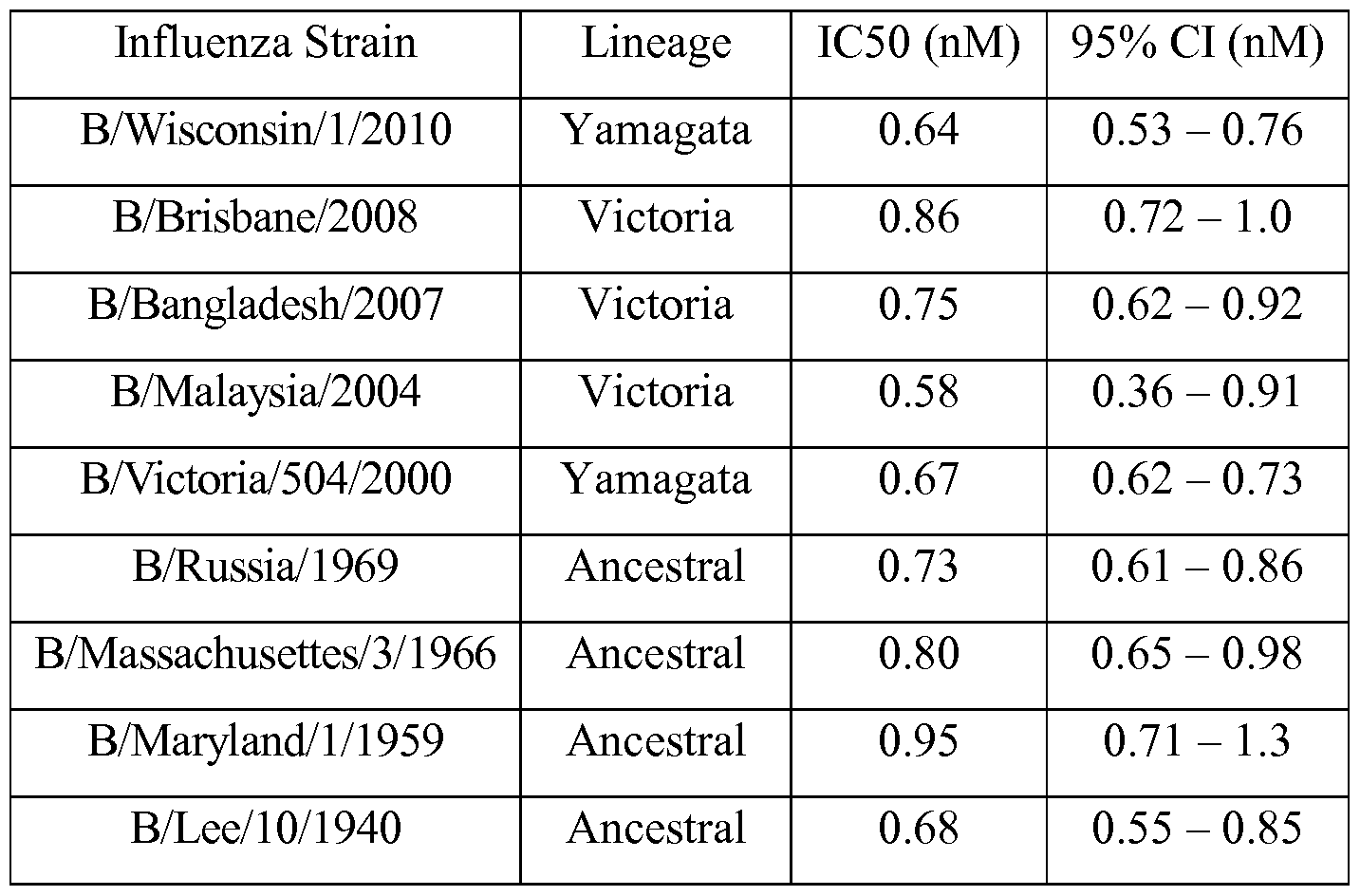

Claims
Priority Applications (13)
| Application Number | Priority Date | Filing Date | Title |
|---|---|---|---|
| CR20160502A CR20160502A (en) | 2014-03-27 | 2015-03-26 | HEMAGLUTININE ANTIBODIES AGAINST THE INFLUENZA B VIRUS AND METHODS OF USE |
| CN201580016217.4A CN106132987A (en) | 2014-03-27 | 2015-03-26 | Anti-influenza B virus hemagglutinin antibody and method of use |
| EA201691945A EA201691945A1 (en) | 2014-03-27 | 2015-03-26 | ANTIBODIES TO HEMAGGLUTININ VIRUS OF TYPE B VIRUS AND METHODS OF THEIR APPLICATION |
| MX2016012530A MX2016012530A (en) | 2014-03-27 | 2015-03-26 | Anti-influenza b virus hemagglutinin antibodies and methods of use. |
| KR1020167029658A KR20160135830A (en) | 2014-03-27 | 2015-03-26 | Anti-influenza b virus hemagglutinin antibodies and methods of use |
| JP2016559331A JP2017512471A (en) | 2014-03-27 | 2015-03-26 | Anti-influenza B virus hemagglutinin antibodies and methods of use |
| CA2942820A CA2942820A1 (en) | 2014-03-27 | 2015-03-26 | Anti-influenza b virus hemagglutinin antibodies and methods of use |
| AU2015235983A AU2015235983A1 (en) | 2014-03-27 | 2015-03-26 | Anti-influenza B virus hemagglutinin antibodies and methods of use |
| SG11201607945UA SG11201607945UA (en) | 2014-03-27 | 2015-03-26 | Anti-influenza b virus hemagglutinin antibodies and methods of use |
| EP15716285.0A EP3122771A1 (en) | 2014-03-27 | 2015-03-26 | Anti-influenza b virus hemagglutinin antibodies and methods of use |
| BR112016022113A BR112016022113A2 (en) | 2014-03-27 | 2015-03-26 | anti-hemagglutinin antibodies to influenza b virus and methods of use |
| IL247870A IL247870A0 (en) | 2014-03-27 | 2016-09-18 | Anti-influenza b virus hemagglutinin antibodies and methods of use |
| PH12016501873A PH12016501873A1 (en) | 2014-03-27 | 2016-09-22 | Anti-influenza b virus hemagglutinin antibodies and methods of use |
Applications Claiming Priority (2)
| Application Number | Priority Date | Filing Date | Title |
|---|---|---|---|
| US201461971123P | 2014-03-27 | 2014-03-27 | |
| US61/971,123 | 2014-03-27 |
Publications (1)
| Publication Number | Publication Date |
|---|---|
| WO2015148806A1 true WO2015148806A1 (en) | 2015-10-01 |
Family
ID=52829396
Family Applications (1)
| Application Number | Title | Priority Date | Filing Date |
|---|---|---|---|
| PCT/US2015/022758 Ceased WO2015148806A1 (en) | 2014-03-27 | 2015-03-26 | Anti-influenza b virus hemagglutinin antibodies and methods of use |
Country Status (20)
| Country | Link |
|---|---|
| US (2) | US9745365B2 (en) |
| EP (1) | EP3122771A1 (en) |
| JP (1) | JP2017512471A (en) |
| KR (1) | KR20160135830A (en) |
| CN (1) | CN106132987A (en) |
| AR (1) | AR099855A1 (en) |
| AU (1) | AU2015235983A1 (en) |
| BR (1) | BR112016022113A2 (en) |
| CA (1) | CA2942820A1 (en) |
| CL (2) | CL2016002413A1 (en) |
| CR (1) | CR20160502A (en) |
| EA (1) | EA201691945A1 (en) |
| IL (1) | IL247870A0 (en) |
| MA (1) | MA39803A (en) |
| MX (1) | MX2016012530A (en) |
| PE (1) | PE20161376A1 (en) |
| PH (1) | PH12016501873A1 (en) |
| SG (1) | SG11201607945UA (en) |
| TW (1) | TW201620932A (en) |
| WO (1) | WO2015148806A1 (en) |
Cited By (14)
| Publication number | Priority date | Publication date | Assignee | Title |
|---|---|---|---|---|
| WO2017196902A2 (en) | 2016-05-10 | 2017-11-16 | Genentech, Inc. | Methods of decreasing trisulfide bonds during recombinant production of polypeptides |
| WO2019126634A2 (en) | 2017-12-22 | 2019-06-27 | Genentech, Inc. | Targeted integration of nucleic acids |
| WO2019191552A1 (en) | 2018-03-29 | 2019-10-03 | Genentech, Inc. | Modulating lactogenic activity in mammalian cells |
| WO2020132165A1 (en) | 2018-12-21 | 2020-06-25 | Genentech, Inc. | Targeted integration of nucleic acids |
| WO2021195464A2 (en) | 2020-03-26 | 2021-09-30 | Genentech, Inc. | Modified mammalian cells |
| WO2021262798A1 (en) | 2020-06-24 | 2021-12-30 | Genentech, Inc. | Targeted integration of nucleic acids |
| WO2021262783A1 (en) | 2020-06-24 | 2021-12-30 | Genentech, Inc. | Apoptosis resistant cell lines |
| WO2022047222A2 (en) | 2020-08-28 | 2022-03-03 | Genentech, Inc. | Crispr/cas9 multiplex knockout of host cell proteins |
| WO2022225880A1 (en) | 2021-04-19 | 2022-10-27 | Genentech, Inc. | Modified mammalian cells |
| WO2022246259A1 (en) | 2021-05-21 | 2022-11-24 | Genentech, Inc. | Modified cells for the production of a recombinant product of interest |
| US11780907B2 (en) | 2018-01-26 | 2023-10-10 | Regeneron Pharmaceuticals, Inc. | Human antibodies to influenza hemagglutinin |
| WO2024104947A2 (en) | 2022-11-14 | 2024-05-23 | Janssen Vaccines & Prevention B.V. | Influenza b virus vaccines and uses thereof |
| WO2024107879A1 (en) | 2022-11-15 | 2024-05-23 | Genentech, Inc. | Combined transposon-mediated integration and targeted integration of nucleic acids into host cells |
| WO2024151974A1 (en) | 2023-01-12 | 2024-07-18 | Genentech, Inc. | Combinatorial vector cloning and transfection strategies for targeted integration of nucleic acids |
Families Citing this family (12)
| Publication number | Priority date | Publication date | Assignee | Title |
|---|---|---|---|---|
| RU2714246C1 (en) * | 2018-12-28 | 2020-02-13 | Федеральное государственное бюджетное учреждение "Научно-исследовательский институт гриппа имени А.А. Смородинцева" Министерства здравоохранения Российской Федерации | Monoclonal antibodies specific to different strains of influenza b virus |
| JP7611908B2 (en) * | 2019-10-28 | 2025-01-10 | リジェネロン・ファーマシューティカルズ・インコーポレイテッド | Anti-hemagglutinin antibodies and methods of use thereof |
| MX2022008901A (en) * | 2020-01-24 | 2022-08-16 | Regeneron Pharma | Protein-antiviral compound conjugates. |
| CN114316032B (en) * | 2020-09-27 | 2022-12-27 | 东莞市朋志生物科技有限公司 | Anti-influenza B virus antibody, reagent and kit for detecting influenza B virus |
| US12319747B2 (en) | 2023-07-03 | 2025-06-03 | Medicovestor, Inc. | Methods of using anti-SP17 immunotherapeutics |
| US12649790B2 (en) | 2023-07-03 | 2026-06-09 | Medicovestor, Inc. | Proteins that bind SP17 including fully-human anti-SP17 antibodies |
| US12624097B2 (en) | 2023-07-03 | 2026-05-12 | Medicovestor, Inc. | Nucleic acids, vectors, and cells that encode anti-Sp17 antibodies and other Sp17 binding proteins |
| US12364777B2 (en) | 2023-10-20 | 2025-07-22 | Medicovestor, Inc. | Homodimeric antibodies for use in treating cancers and methods of use |
| US12116410B1 (en) | 2023-12-26 | 2024-10-15 | Medicovestor, Inc. | Methods of manufacturing dimeric antibodies |
| US12673991B2 (en) | 2023-12-26 | 2026-07-07 | Medicovestor, Inc. | Methods of crosslinking IgG |
| US12600795B2 (en) | 2023-12-26 | 2026-04-14 | Medicovestor, Inc. | Oligomeric IgG for immunotherapeutics and diagnostics |
| US12121587B1 (en) | 2023-12-26 | 2024-10-22 | Medicovestor, Inc. | Dimeric antibodies |
Citations (3)
| Publication number | Priority date | Publication date | Assignee | Title |
|---|---|---|---|---|
| WO2013007770A1 (en) * | 2011-07-14 | 2013-01-17 | Crucell Holland B.V. | Human binding molecules capable of neutralizing influenza a viruses of phylogenetic group 1 and phylogenetic group 2 and influenza b viruses |
| WO2013114885A1 (en) * | 2012-01-31 | 2013-08-08 | Osaka University | Human monoclonal antibodies broadly protective against influenza b virus and methods of using the same |
| WO2013132007A1 (en) * | 2012-03-08 | 2013-09-12 | Crucell Holland B.V. | Human binding molecules capable of binding to and neutralizing influenza b viruses and uses thereof |
Family Cites Families (3)
| Publication number | Priority date | Publication date | Assignee | Title |
|---|---|---|---|---|
| FR2921928B1 (en) | 2007-10-08 | 2011-03-04 | Sanofi Pasteur | MONOCLONAL ANTIBODIES SPECIFIC TO INFLUENZA VIRUS HEMAGGLUTININ |
| BE1018561A3 (en) | 2008-12-24 | 2011-03-01 | Galactic Sa | PROCESS FOR PURIFYING LACTIC ACID BY CRYSTALLIZATION |
| EP2380976A4 (en) | 2008-12-25 | 2012-11-07 | Univ Osaka | HUMAN ANTI-VIRUS ANTIBODIES OF HUMAN INFLUENZA |
-
2015
- 2015-03-26 MX MX2016012530A patent/MX2016012530A/en unknown
- 2015-03-26 AR ARP150100900A patent/AR099855A1/en unknown
- 2015-03-26 SG SG11201607945UA patent/SG11201607945UA/en unknown
- 2015-03-26 EA EA201691945A patent/EA201691945A1/en unknown
- 2015-03-26 CA CA2942820A patent/CA2942820A1/en not_active Abandoned
- 2015-03-26 PE PE2016001760A patent/PE20161376A1/en unknown
- 2015-03-26 TW TW104109843A patent/TW201620932A/en unknown
- 2015-03-26 US US14/669,317 patent/US9745365B2/en not_active Expired - Fee Related
- 2015-03-26 EP EP15716285.0A patent/EP3122771A1/en not_active Withdrawn
- 2015-03-26 MA MA039803A patent/MA39803A/en unknown
- 2015-03-26 BR BR112016022113A patent/BR112016022113A2/en not_active IP Right Cessation
- 2015-03-26 KR KR1020167029658A patent/KR20160135830A/en not_active Withdrawn
- 2015-03-26 AU AU2015235983A patent/AU2015235983A1/en not_active Abandoned
- 2015-03-26 CN CN201580016217.4A patent/CN106132987A/en active Pending
- 2015-03-26 JP JP2016559331A patent/JP2017512471A/en active Pending
- 2015-03-26 WO PCT/US2015/022758 patent/WO2015148806A1/en not_active Ceased
- 2015-03-26 CR CR20160502A patent/CR20160502A/en unknown
-
2016
- 2016-09-18 IL IL247870A patent/IL247870A0/en unknown
- 2016-09-22 PH PH12016501873A patent/PH12016501873A1/en unknown
- 2016-09-26 CL CL2016002413A patent/CL2016002413A1/en unknown
-
2017
- 2017-07-24 US US15/657,433 patent/US20170320937A1/en not_active Abandoned
-
2018
- 2018-10-09 CL CL2018002874A patent/CL2018002874A1/en unknown
Patent Citations (3)
| Publication number | Priority date | Publication date | Assignee | Title |
|---|---|---|---|---|
| WO2013007770A1 (en) * | 2011-07-14 | 2013-01-17 | Crucell Holland B.V. | Human binding molecules capable of neutralizing influenza a viruses of phylogenetic group 1 and phylogenetic group 2 and influenza b viruses |
| WO2013114885A1 (en) * | 2012-01-31 | 2013-08-08 | Osaka University | Human monoclonal antibodies broadly protective against influenza b virus and methods of using the same |
| WO2013132007A1 (en) * | 2012-03-08 | 2013-09-12 | Crucell Holland B.V. | Human binding molecules capable of binding to and neutralizing influenza b viruses and uses thereof |
Non-Patent Citations (3)
| Title |
|---|
| GERALD NAKAMURA ET AL: "An In Vivo Human-Plasmablast Enrichment Technique Allows Rapid Identification of Therapeutic Influenza A Antibodies", CELL HOST & MICROBE, vol. 14, no. 1, 1 July 2013 (2013-07-01), pages 93 - 103, XP055103733, ISSN: 1931-3128, DOI: 10.1016/j.chom.2013.06.004 * |
| KUBOTA-KOKETSU R ET AL: "Broad neutralizing human monoclonal antibodies against influenza virus from vaccinated healthy donors", BIOCHEMICAL AND BIOPHYSICAL RESEARCH COMMUNICATIONS, ACADEMIC PRESS INC. ORLANDO, FL, US, vol. 387, no. 1, 11 September 2009 (2009-09-11), pages 180 - 185, XP026378974, ISSN: 0006-291X, [retrieved on 20090704], DOI: 10.1016/J.BBRC.2009.06.151 * |
| MAYO YASUGI ET AL: "Human Monoclonal Antibodies Broadly Neutralizing against Influenza B Virus", PLOS PATHOGENS, PUBLIC LIBRARY OF SCIENCE, US, vol. 9, no. 2, 1 February 2013 (2013-02-01), pages e1003150 - 1, XP002738825, ISSN: 1553-7374, [retrieved on 20130207], DOI: 10.1371/JOURNAL.PPAT.1003150 * |
Cited By (17)
| Publication number | Priority date | Publication date | Assignee | Title |
|---|---|---|---|---|
| WO2017196902A2 (en) | 2016-05-10 | 2017-11-16 | Genentech, Inc. | Methods of decreasing trisulfide bonds during recombinant production of polypeptides |
| WO2019126634A2 (en) | 2017-12-22 | 2019-06-27 | Genentech, Inc. | Targeted integration of nucleic acids |
| US12129480B2 (en) | 2017-12-22 | 2024-10-29 | Genentech, Inc. | Targeted integration of nucleic acids |
| US11780907B2 (en) | 2018-01-26 | 2023-10-10 | Regeneron Pharmaceuticals, Inc. | Human antibodies to influenza hemagglutinin |
| WO2019191552A1 (en) | 2018-03-29 | 2019-10-03 | Genentech, Inc. | Modulating lactogenic activity in mammalian cells |
| US12286619B2 (en) | 2018-03-29 | 2025-04-29 | Genentech, Inc. | Modulating lactogenic activity in mammalian cells |
| WO2020132165A1 (en) | 2018-12-21 | 2020-06-25 | Genentech, Inc. | Targeted integration of nucleic acids |
| US12098365B2 (en) | 2020-03-26 | 2024-09-24 | Genentech, Inc. | Modified mammalian cells |
| WO2021195464A2 (en) | 2020-03-26 | 2021-09-30 | Genentech, Inc. | Modified mammalian cells |
| WO2021262798A1 (en) | 2020-06-24 | 2021-12-30 | Genentech, Inc. | Targeted integration of nucleic acids |
| WO2021262783A1 (en) | 2020-06-24 | 2021-12-30 | Genentech, Inc. | Apoptosis resistant cell lines |
| WO2022047222A2 (en) | 2020-08-28 | 2022-03-03 | Genentech, Inc. | Crispr/cas9 multiplex knockout of host cell proteins |
| WO2022225880A1 (en) | 2021-04-19 | 2022-10-27 | Genentech, Inc. | Modified mammalian cells |
| WO2022246259A1 (en) | 2021-05-21 | 2022-11-24 | Genentech, Inc. | Modified cells for the production of a recombinant product of interest |
| WO2024104947A2 (en) | 2022-11-14 | 2024-05-23 | Janssen Vaccines & Prevention B.V. | Influenza b virus vaccines and uses thereof |
| WO2024107879A1 (en) | 2022-11-15 | 2024-05-23 | Genentech, Inc. | Combined transposon-mediated integration and targeted integration of nucleic acids into host cells |
| WO2024151974A1 (en) | 2023-01-12 | 2024-07-18 | Genentech, Inc. | Combinatorial vector cloning and transfection strategies for targeted integration of nucleic acids |
Also Published As
| Publication number | Publication date |
|---|---|
| MX2016012530A (en) | 2017-01-05 |
| AR099855A1 (en) | 2016-08-24 |
| CL2018002874A1 (en) | 2018-12-14 |
| PH12016501873A1 (en) | 2017-01-09 |
| CN106132987A (en) | 2016-11-16 |
| MA39803A (en) | 2017-02-01 |
| US20170320937A1 (en) | 2017-11-09 |
| EP3122771A1 (en) | 2017-02-01 |
| AU2015235983A1 (en) | 2016-10-06 |
| EA201691945A1 (en) | 2017-02-28 |
| US9745365B2 (en) | 2017-08-29 |
| CA2942820A1 (en) | 2015-10-01 |
| TW201620932A (en) | 2016-06-16 |
| JP2017512471A (en) | 2017-05-25 |
| IL247870A0 (en) | 2016-11-30 |
| BR112016022113A2 (en) | 2017-10-31 |
| US20150274812A1 (en) | 2015-10-01 |
| KR20160135830A (en) | 2016-11-28 |
| SG11201607945UA (en) | 2016-10-28 |
| PE20161376A1 (en) | 2016-12-26 |
| CL2016002413A1 (en) | 2017-06-23 |
| CR20160502A (en) | 2017-02-03 |
Similar Documents
| Publication | Publication Date | Title |
|---|---|---|
| US9745365B2 (en) | Anti-influenza B virus hemagglutinin antibodies and methods of use | |
| US9908931B2 (en) | Anti-hemagglutinin antibodies and methods of use | |
| AU2020203547A1 (en) | Anti-Jagged1 antibodies and methods of use | |
| US9879066B2 (en) | Influenza A H7N9 virus therapies | |
| US20180362620A1 (en) | Humanized anti-ebola virus glycoprotein antibodies and methods of use | |
| HK1215856B (en) | Anti-hemagglutinin antibodies and methods of use | |
| HK1231087A1 (en) | Anti-influenza b virus hemagglutinin antibodies and methods of use | |
| HK1228424A1 (en) | H7n9 influenza a therapies with anti-h7 virus antibodies |
Legal Events
| Date | Code | Title | Description |
|---|---|---|---|
| 121 | Ep: the epo has been informed by wipo that ep was designated in this application |
Ref document number: 15716285 Country of ref document: EP Kind code of ref document: A1 |
|
| ENP | Entry into the national phase |
Ref document number: 2942820 Country of ref document: CA |
|
| REEP | Request for entry into the european phase |
Ref document number: 2015716285 Country of ref document: EP |
|
| WWE | Wipo information: entry into national phase |
Ref document number: 2015716285 Country of ref document: EP |
|
| WWE | Wipo information: entry into national phase |
Ref document number: 247870 Country of ref document: IL |
|
| WWE | Wipo information: entry into national phase |
Ref document number: 12016501873 Country of ref document: PH |
|
| ENP | Entry into the national phase |
Ref document number: 2016559331 Country of ref document: JP Kind code of ref document: A |
|
| WWE | Wipo information: entry into national phase |
Ref document number: MX/A/2016/012530 Country of ref document: MX |
|
| NENP | Non-entry into the national phase |
Ref country code: DE |
|
| WWE | Wipo information: entry into national phase |
Ref document number: 001760-2016 Country of ref document: PE |
|
| WWE | Wipo information: entry into national phase |
Ref document number: NC2016/0002503 Country of ref document: CO |
|
| ENP | Entry into the national phase |
Ref document number: 2015235983 Country of ref document: AU Date of ref document: 20150326 Kind code of ref document: A |
|
| ENP | Entry into the national phase |
Ref document number: 20167029658 Country of ref document: KR Kind code of ref document: A |
|
| WWE | Wipo information: entry into national phase |
Ref document number: DZP2016000536 Country of ref document: DZ Ref document number: 201691945 Country of ref document: EA Ref document number: CR2016-000502 Country of ref document: CR |
|
| WWE | Wipo information: entry into national phase |
Ref document number: 2016502 Country of ref document: CR |
|
| WWE | Wipo information: entry into national phase |
Ref document number: A201610787 Country of ref document: UA |
|
| REG | Reference to national code |
Ref country code: BR Ref legal event code: B01A Ref document number: 112016022113 Country of ref document: BR |
|
| WWP | Wipo information: published in national office |
Ref document number: CR2016-000502 Country of ref document: CR |
|
| ENP | Entry into the national phase |
Ref document number: 112016022113 Country of ref document: BR Kind code of ref document: A2 Effective date: 20160926 |