WO2015132802A2 - A process for synthesis of single layer metal sheets - Google Patents
A process for synthesis of single layer metal sheets Download PDFInfo
- Publication number
- WO2015132802A2 WO2015132802A2 PCT/IN2015/000117 IN2015000117W WO2015132802A2 WO 2015132802 A2 WO2015132802 A2 WO 2015132802A2 IN 2015000117 W IN2015000117 W IN 2015000117W WO 2015132802 A2 WO2015132802 A2 WO 2015132802A2
- Authority
- WO
- WIPO (PCT)
- Prior art keywords
- metal
- nanosheets
- toluene
- nickel
- substrate
- Prior art date
- Legal status (The legal status is an assumption and is not a legal conclusion. Google has not performed a legal analysis and makes no representation as to the accuracy of the status listed.)
- Ceased
Links
Classifications
-
- C—CHEMISTRY; METALLURGY
- C23—COATING METALLIC MATERIAL; COATING MATERIAL WITH METALLIC MATERIAL; CHEMICAL SURFACE TREATMENT; DIFFUSION TREATMENT OF METALLIC MATERIAL; COATING BY VACUUM EVAPORATION, BY SPUTTERING, BY ION IMPLANTATION OR BY CHEMICAL VAPOUR DEPOSITION, IN GENERAL; INHIBITING CORROSION OF METALLIC MATERIAL OR INCRUSTATION IN GENERAL
- C23C—COATING METALLIC MATERIAL; COATING MATERIAL WITH METALLIC MATERIAL; SURFACE TREATMENT OF METALLIC MATERIAL BY DIFFUSION INTO THE SURFACE, BY CHEMICAL CONVERSION OR SUBSTITUTION; COATING BY VACUUM EVAPORATION, BY SPUTTERING, BY ION IMPLANTATION OR BY CHEMICAL VAPOUR DEPOSITION, IN GENERAL
- C23C18/00—Chemical coating by decomposition of either liquid compounds or solutions of the coating forming compounds, without leaving reaction products of surface material in the coating; Contact plating
- C23C18/02—Chemical coating by decomposition of either liquid compounds or solutions of the coating forming compounds, without leaving reaction products of surface material in the coating; Contact plating by thermal decomposition
- C23C18/12—Chemical coating by decomposition of either liquid compounds or solutions of the coating forming compounds, without leaving reaction products of surface material in the coating; Contact plating by thermal decomposition characterised by the deposition of inorganic material other than metallic material
- C23C18/125—Process of deposition of the inorganic material
- C23C18/1275—Process of deposition of the inorganic material performed under inert atmosphere
-
- C—CHEMISTRY; METALLURGY
- C23—COATING METALLIC MATERIAL; COATING MATERIAL WITH METALLIC MATERIAL; CHEMICAL SURFACE TREATMENT; DIFFUSION TREATMENT OF METALLIC MATERIAL; COATING BY VACUUM EVAPORATION, BY SPUTTERING, BY ION IMPLANTATION OR BY CHEMICAL VAPOUR DEPOSITION, IN GENERAL; INHIBITING CORROSION OF METALLIC MATERIAL OR INCRUSTATION IN GENERAL
- C23C—COATING METALLIC MATERIAL; COATING MATERIAL WITH METALLIC MATERIAL; SURFACE TREATMENT OF METALLIC MATERIAL BY DIFFUSION INTO THE SURFACE, BY CHEMICAL CONVERSION OR SUBSTITUTION; COATING BY VACUUM EVAPORATION, BY SPUTTERING, BY ION IMPLANTATION OR BY CHEMICAL VAPOUR DEPOSITION, IN GENERAL
- C23C18/00—Chemical coating by decomposition of either liquid compounds or solutions of the coating forming compounds, without leaving reaction products of surface material in the coating; Contact plating
- C23C18/02—Chemical coating by decomposition of either liquid compounds or solutions of the coating forming compounds, without leaving reaction products of surface material in the coating; Contact plating by thermal decomposition
- C23C18/08—Chemical coating by decomposition of either liquid compounds or solutions of the coating forming compounds, without leaving reaction products of surface material in the coating; Contact plating by thermal decomposition characterised by the deposition of metallic material
-
- C—CHEMISTRY; METALLURGY
- C23—COATING METALLIC MATERIAL; COATING MATERIAL WITH METALLIC MATERIAL; CHEMICAL SURFACE TREATMENT; DIFFUSION TREATMENT OF METALLIC MATERIAL; COATING BY VACUUM EVAPORATION, BY SPUTTERING, BY ION IMPLANTATION OR BY CHEMICAL VAPOUR DEPOSITION, IN GENERAL; INHIBITING CORROSION OF METALLIC MATERIAL OR INCRUSTATION IN GENERAL
- C23C—COATING METALLIC MATERIAL; COATING MATERIAL WITH METALLIC MATERIAL; SURFACE TREATMENT OF METALLIC MATERIAL BY DIFFUSION INTO THE SURFACE, BY CHEMICAL CONVERSION OR SUBSTITUTION; COATING BY VACUUM EVAPORATION, BY SPUTTERING, BY ION IMPLANTATION OR BY CHEMICAL VAPOUR DEPOSITION, IN GENERAL
- C23C18/00—Chemical coating by decomposition of either liquid compounds or solutions of the coating forming compounds, without leaving reaction products of surface material in the coating; Contact plating
- C23C18/02—Chemical coating by decomposition of either liquid compounds or solutions of the coating forming compounds, without leaving reaction products of surface material in the coating; Contact plating by thermal decomposition
- C23C18/12—Chemical coating by decomposition of either liquid compounds or solutions of the coating forming compounds, without leaving reaction products of surface material in the coating; Contact plating by thermal decomposition characterised by the deposition of inorganic material other than metallic material
- C23C18/1204—Chemical coating by decomposition of either liquid compounds or solutions of the coating forming compounds, without leaving reaction products of surface material in the coating; Contact plating by thermal decomposition characterised by the deposition of inorganic material other than metallic material inorganic material, e.g. non-oxide and non-metallic such as sulfides, nitrides based compounds
Definitions
- US 20080149322 Al discloses Graphite films with a metal coating of at most 100 nm thick and are produced, for example by a continuous vapor deposition process on graphite film.
- the graphite films can be connected to one another or to other components of metal or metal-coated materials by soldering.
- the thin metal coating protects the surface of the graphite film against particles breaking out or peeling or flaking off.
- WO 1987001724 Al reports a composition for use in removing polysulfide sealants or coatings.
- the composition comprises a thiolate such as an alkyl or phenyl thiolate with an alkali metal or Quaternary ammonium ion in a solution of dimethyl formamide or dimethyl acetamide either alone or in admixture with an aromatic solvent such as toluene or xylene.
- a disulfide compound such as diphenyl disulfide or tert butyl disulfide in the composition provides a synergistic improvement in the desealing rate.
- Nickel sulfide - nickel Ni 3 S 2 -Ni
- step (a) delaminating the layered complex of step (a) into its individual sheets by immersing in a solvent
- the transition metal is in the form of a metal salt.
- the ligand is a moiety containing groups selected from thiols, amines and carboxylic acids, preferably, octanethiol, dodecanethiol, decanethiol, hexadecanethiol, and octadecanethiol, either alone or combination thereof.
- the substrate is selected from the group consisting of glass, quartz, silicon and mica.
- said process further provides nanosheets of metal sulphides.
- Ni 3 S 2 and Ni 3 S 2 -Ni nanosheets exhibits ferromagnetic behaviour at room temperature with a saturation magnetization value of 10 emu/g.
- Figure 2 represents a) DLS for samples at different concentrations viz. from 100% w/v to 1.67% w/v in toluene.
- the solid lines represent fitting curves obtained using equation 2.
- Figure 8 represents electrochemical hydrogen evolution reaction, a) Linear sweep voltammetry (LSV) curves for the nickel sulfide and nickel sulfide - nickel metal nanosheets and their corresponding nanodisks. b) Table summarizing the electrochemical hydrogen generation properties of the nanosheets and nanodisks.
- LSV Linear sweep voltammetry
- Fig 9 represents SQUID measurements, a) Room temperature magnetization plotted with magnetic field for the samples Ni 3 S 2 and Ni3S2-Ni show ferromagnetism in both the samples. Inset in the Figure a) is for clarity regarding the plot of the Ni 3 S 2 sample which shows a diamagnetic contribution along with the noticeable ferromagnetism. b) Fully magnified trace from the Figure a) reveals coercivity values of about 50 Oe for both the samples Ni 3 S 2 and Ni 3 S 2 -Ni. c) Plot of magnetization with temperature i.e.
- the metal in the process is a transition metal selected from Ni, Pb, Pd, Au, Ag, Cu, Sn, Hg, Co, Fe, Mn, Cd, Pt or metal salts and such like, either alone or combination thereof.
- the ligand is selected from thiols, preferably octanethiol, dodecanethiol, decanethiol, hexadecanethiol, and octadecanethiol) either alone or combination thereof.
- the substrate is selected from silicon, glass, quartz, mica and such like.
- the solvent for delaminating may be a non-polar solvent, selected from chloroform, toluene, hexane, cyclohexane, tert- butyl-toluene, carbon tetrachloride and such like.
- the coating of the delaminated sheet may be carried out by processes selected from spin coating or dip coating.
- the present invention provides a process for the preparation of Ni 3 S 2 and Ni 3 S 2 -Ni nanosheets from nickel octanethiolate comprising heating the sample in a tube- furnace equipped with gas flow maintaining a constant temperature of 750 °C and at a constant gas flow rate of 2 ml/ sec for 6 hours duration followed by cooling the sample back to room temperature to obtain the final product.
- PTFE Polytetrafluoroethylene
- DLS was then recorded on the 100% w/v sample.
- the 100% w/v sample was then diluted scrupulously to get subsequent dilutions of 60% w/v, 50% w/v, 40% w/v, 30% w/v, 20% w/v, 10% w/v, 5% w/v, 1.667% w/v, 0.56 % w/v by filtering toluene (analytical reagent grade) into the preceding concentrated sample in the sample cell through a 0.2 ⁇ hydrophobic PTFE filter.
- 100% w/v sample in solution was prepared separately by dissolving 1000 mg of the sample in 1000 ⁇ . of toluene. DLS measurements were then made on each sample at a constant angle 90° for 30 seconds.
- Multi angle DLS was performed on Pd-octanethiolate sample at 50% w/v, 40% w/v, 30% w/v, 20% w/v and 10% w/v. The data were collected at angles 45-60-75-90- 105-120 degrees. This was repeated for at least three times and the results were consistent. (Table 1)
- WAXD Wide angle X-ray diffraction
- HDPE film high density polyethylene film used as a reference for all the samples was hanged between the sample and the beam stop and kept at constant position for all the samples.
- WAXD experiments were performed on the individually prepared 500% w/v, 300% w/v, 100% w/v samples of palladium octanethiolate in toluene. The images were analyzed using 'image J' software from NIH and to plot the corresponding graphs in ID.
- a high density polyethylene film (HDPE film) used as a standard was hung between the sample holder and the detector in the Rigaku rotating anode diffractometer. Initially scattering from only the cylindrical borosilicate glass capillary was measured, next the capillary filled with toluene was subjected to WAXD experiment. The scattering data from the empty glass capillary and the toluene containing glass capillary were used for correcting the sample scattering for the samples taken in the glass capillary in toluene solution. Then, the WAXD measurements were performed on samples 500%, 300% and 100% w/v concentrations respectively prepared separately in the same glass capillary. Thus subtraction of scattering from the empty glass and the glass containing toluene solvent could be possible for all the samples. As HDPE film was hung for all the measurements, there isn't any ambiguity in the data.
- EDX Energy Dispersive X-ray Analysis
- Nickel octanethiolate powder sample was heated in a tube-furnace equipped with Argon gas flow maintaining a constant temperature of 750°C and at a constant gas flow rate of 2 ml/ sec for 6 hours duration. After 6 hours of heating the sample was cooled back to room temperature and the final product was collected.
- Nickel octanethiolate powder sample was heated in a tube-furnace equipped with Hydrogen + Argon (in 1:1 ratio) gas flow maintaining a constant temperature of 750 °C and at a constant gas flow rate of 2 ml/ sec for 6 hours duration. After 6 hours of heating the sample was cooled back to room temperature and the final product was collected.
- Microstructural morphological features of the samples were obtained from a field emission scanning electron microscopy (FE-SEM) with FEI Nova nano SEM 450.
- Nickel octanethiolate sample was subjected to thermogravimetric analysis utilizing a TG50 analyzer (Mettler-Toledo) or a SDT Q600 TG-DTA analyzer under nitrogen atmosphere at 10 °C m f 1 heating rate within a temperature range of 20-900 °C.
- Electrochemical hydrogen evolution reaction (HER) (Fig: 8, 10)
- Metal sulfide nanosheets resulted from the heating of their precursor metal thiolates coated from their solutions in organic apolar solvents such as chloroform, toluene etc. on to substrates like quartz.
- Electrochemical hydrogen generation was achieved in the nickel sulfide-nickel nanosheets (Ni 3 S 2 -Ni) and also in the nickel sulfide (Ni 3 S 2 ) nanosheets.
Landscapes
- Chemical & Material Sciences (AREA)
- Engineering & Computer Science (AREA)
- Physics & Mathematics (AREA)
- Thermal Sciences (AREA)
- General Chemical & Material Sciences (AREA)
- Chemical Kinetics & Catalysis (AREA)
- Materials Engineering (AREA)
- Mechanical Engineering (AREA)
- Metallurgy (AREA)
- Organic Chemistry (AREA)
- Inorganic Chemistry (AREA)
- Inorganic Compounds Of Heavy Metals (AREA)
- Chemically Coating (AREA)
Abstract
A novel solution process for the preparation of at least one atom thick layer of a metal on a substrate in the form of nanosheets is disclosed. Further, a process for the preparation of Ni3S2 and Ni3S2-Ni nanosheets exhibiting ferromagnetic behaviour at room temperature is disclosed.
Description
A PROCESS FOR SYNTHESIS OF SINGLE LAYER METAL SHEETS
FIELD OF THE INVENTION
[0001] Present invention relates to a process for the preparation of at least one atom thick layer of a metal on a substrate. Particularly, present invention relates to a solution process for the preparation of at least one atom thick layer of a metal on a substrate.
BACKGROUND AND PRIOR ART OF THE INVENTION
[0002] Materials that exist as two-dimensional single molecule thick sheets are in great demand because they hold promise as precursors for synthesis of layered functional materials. There is currently tremendous interest in novel "designer" two-dimensional van der Waal's heterostructures driven by their promise for unprecedented electronic properties. A key challenge in this emerging area of layered van der Waal's heterostructures is their synthesis. Processes for thin film deposition such as atomic layer deposition and chemical vapor deposition require sophisticated instrumentation and they can only deposit the materials onto so ne standard substrates. Substrates such as metals/metal oxides could be used, for example palladium can be deposited onto metal substrates like Ir, W, Si etc. and metal oxides such as alumina, silica etc. and even on polymer substrates.
[0003] US 5744245 A disclose a homogeneous composition for forming on firing a film of precious metal, which is one or more of platinum, palladium, gold and silver, on a substrate, for instance to decorate table ware, comprises polymeric resin and a solution, in water and a co-solvent, of thiolate of the precious metal, the composition containing 3- 22% by weight of the precious metal as the thiolate, and the co-solvent, resin and thiolate being such that as the composition on a substrate dries and is progressively heated in firing, the water evaporates off to leave a homogeneous composition of the resin and thiolate in the co-solvent, then the co-solvent evaporates off to leave a homogeneous composition of the thiolate in the resin, and then the thiolate decomposes to the precious metal while the resin volatilize.
[0004] Article titled, "Growth, solvent effects, and thermal desorption behavior of octylthiocyanate self-assembled monolayers on Au(l l l )" by Lee et. al. in Phys. Chem. Chem. Phys., 2013,15, 3609-3617 relates to the growth process, solvent effects, and
thermal desorption behavior of octylthiocyanate self-assembled monolayers (SAMs) on Au(l l l)
[0005] Article titled, "Thin Films, Monomolecular Layers" by Abraham Ulman in 2000. irk-Othmer Encyclopedia of Chemical Technology reports Monomolecular layers, the thinnest of thin films, can be prepared by Langmuir-Blodgett techniques or can result from self-assembly of monolayers. The former generally takes place at a solvent- air interface. Self-assembled monolayers generally form by adsorption of a surfactant-like molecule on a solid substrate placed in a solution. Layers generally consist of large surfactant molecules, having both hydrophilic and hydrophobic sections. The design, preparation, and properties of these films are discussed. The various types of multilayer films are presented, as are the types of substrates employed. Whereas commercial production of these films has yet to be realized, the potential for monomolecular layers in sensors, electrooptics, and semiconductors is large.
[0006] US 20080149322 Al discloses Graphite films with a metal coating of at most 100 nm thick and are produced, for example by a continuous vapor deposition process on graphite film. In spite of the small thickness of the metal layer, the graphite films can be connected to one another or to other components of metal or metal-coated materials by soldering. Furthermore, the thin metal coating protects the surface of the graphite film against particles breaking out or peeling or flaking off.
[0007] US 5,100,737 discloses flexible layer composites containing at least one layer of graphite sheet having a metal layer, for example of copper or nickel, on at least one of its surfaces. The thickness of the graphite sheet is from 0.1 to 10 mm, and that of the metal layer is from 1 to 200 μηι, preferably from 3 to 50 μιτι.
[0008] WO 1987001724 Al reports a composition for use in removing polysulfide sealants or coatings. The composition comprises a thiolate such as an alkyl or phenyl thiolate with an alkali metal or Quaternary ammonium ion in a solution of dimethyl formamide or dimethyl acetamide either alone or in admixture with an aromatic solvent such as toluene or xylene. In some circumstances a disulfide compound such as diphenyl disulfide or tert butyl disulfide in the composition provides a synergistic improvement in the desealing rate.
[0009] Article titled, "Interfacial growth of large-area single-layer metal-organic framework nanosheets" by Rie Makiura in Scientific Reports, 3, 2506, 2013 reports that the air/liquid interface is an excellent platform to assemble two-dimensional (2D) sheets of materials by enhancing spontaneous organizational features of the building components and encouraging large length scale in-plane growth. We have grown 2D molecularly-thin crystalline metal-organic-framework (MOF) nanosheets composed of porphyrin building units and metal-ion joints (NAFS-13) under operationally simple ambient conditions at the air/liquid interface.
[0010] So there is a need to provide a simple process for synthesis of a layer of metal on a substrate. Further, there is an urgent need to devise suitable precursors and establish synthetic routes to such materials. Metal thiolates have several advantages in this context. Several metal thiolates exist as lamellar structures. This opens up the exciting possibility of exploring such materials as building blocks for the preparation of novel two- dimensional Van der Waals hetero structures. Further, metal thiolates can be easily synthesized in large quantities and, are readily "soluble" in non-polar solvents such as chloroform and toluene, affording solution routes to hetero structure assembly.
OBJECT OF INVENTION
[0011] Main object of the present invention is to provide a process for the preparation of at least one atom thick layer of a metal on a substrate.
ABBREVIATIONS USED
[0012] Nickel sulfide: Ni3S2
[0013] Nickel sulfide - nickel: Ni3S2-Ni
SUMMARY OF THE INVENTION
[0014] Accordingly, present invention provides a solution process for the preparation of at least one atom thick layer of a metal on a substrate in the form of a nanosheet comprising the steps of:
a) reacting a transition metal and a ligand to form a layered complex;
b) delaminating the layered complex of step (a) into its individual sheets by immersing in a solvent; and
c) coating the delaminated sheet on a substrate, heating in a furnace, maintaining temperature in the range of 500-1200°C, at a constant gas
flow rate followed by cooling to temperature in the range of 20-30°C to obtain the nanosheets.
[0015] In an embodiment of the present invention, the transition metal is selected from the group consisting of Ni, Pb, Pd, Au, Ag, Cu, Sn, Hg, Co, Fe, Mn, Cd or Pt, either alone or combination thereof.
[0016] In an embodiment of the present invention, the transition metal is in the form of a metal salt.
[0017] In another embodiment of the present invention, the ligand is a moiety containing groups selected from thiols, amines and carboxylic acids, preferably, octanethiol, dodecanethiol, decanethiol, hexadecanethiol, and octadecanethiol, either alone or combination thereof.
[0018] In yet another embodiment of the present invention, the substrate is selected from the group consisting of glass, quartz, silicon and mica.
[0019] In yet another embodiment of the present invention, the solvent for delaminating is a non-polar solvent selected from the group consisting of chloroform, toluene, hexane, cyclohexane, tert-butyl-toluene and carbon tetrachloride.
[0020] In yet another embodiment of the present invention, the coating of the delaminated sheet is carried out by a processes selected from spin coating or dip coating.
[0021] In an embodiment of the present invention the gas is Argon or mixture of hydrogen and argon in the ratio 1 : 1.
[0022] In yet another embodiment of the present invention, said process further provides nanosheets of metal sulphides.
[0023] In yet another embodiment of the present invention, said metal sulphide is nickel sulphide, nickel-nickel sulphide and platinum silphide.
[0024] In yet another embodiment of the present invention, Ni3S2 and Ni3S2-Ni nanosheets exhibits ferromagnetic behaviour at room temperature with a saturation magnetization value of 10 emu/g.
BRIEF DESCRIPTION OF THE DRAWINGS
[0025] Figure 1 represents a) Powder XRD pattern of Pd-octanethiolate showing lamellar (001) reflections (inset shows photographs of Pd-octanethiolate in a solvent-free state (1 g material) and after solvent addition (50 mg in 5 mL of toluene)), (b) Plausible
structure of the palladium thiolate lamellae, (c, d, e, and f) 2D WAXD patterns for the samples at 500% w/v, 300% w/v, 100% w/v, and 90% w/v. (g) The corresponding ID plots of the WAXD for the same samples.
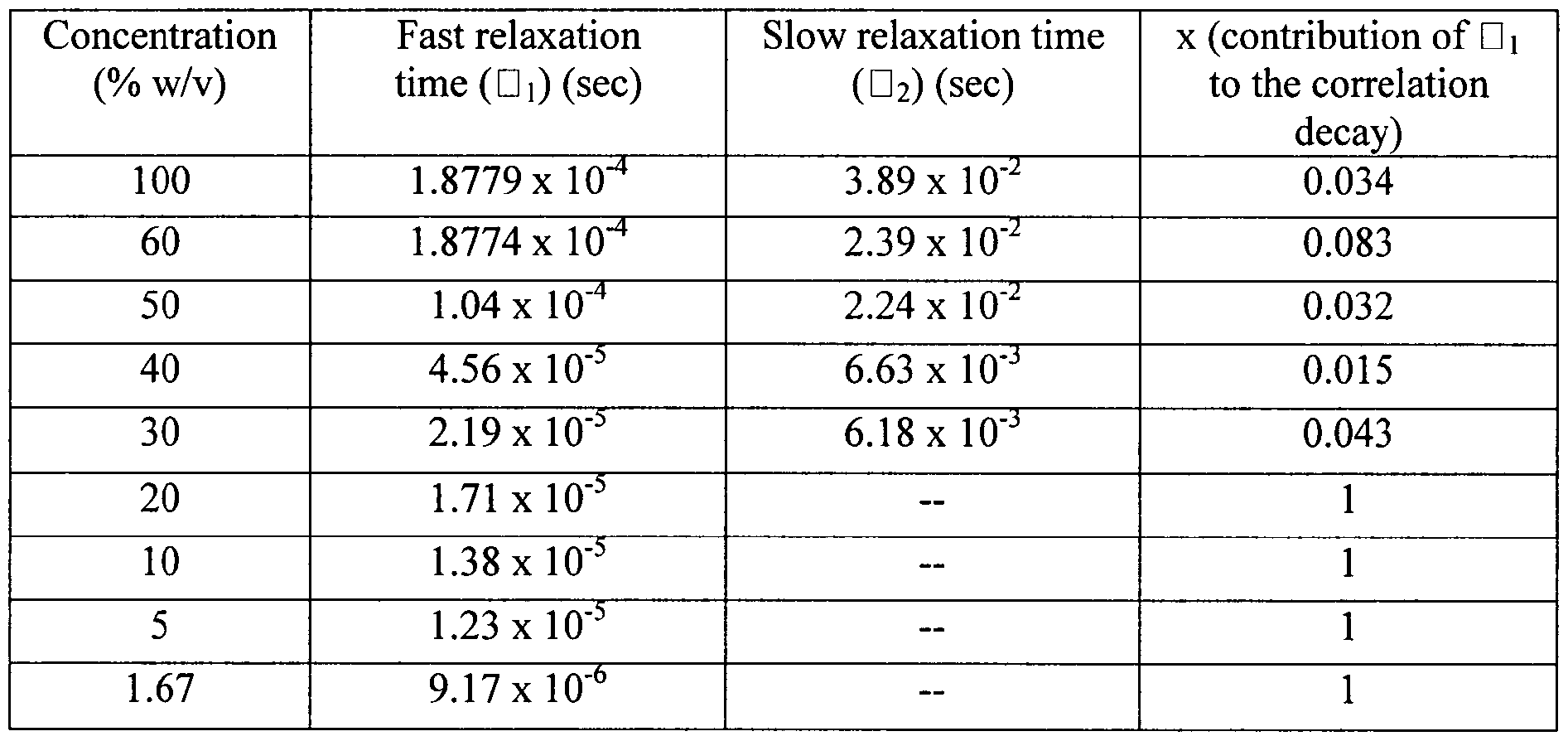
[0026] Figure 2 represents a) DLS for samples at different concentrations viz. from 100% w/v to 1.67% w/v in toluene. The solid lines represent fitting curves obtained using equation 2. b) Plot showing the relation between relaxation times and the concentration. Concentrations from 30% w/v to 100% w/v show two distinct decay times (τ\ and τ2) whereas samples at 20% w/v and below show single relaxation (x ). c) Fast relaxation time scales from multi angle DLS of palladium octanethiolate sample at different concentrations from 50% w/v to 10% w/v through 40% w/v, 30% w/v and 20% w/v plotted as a function of 1/q show linear dependence.
[0027] Figure 3 represents a) Solution state FTIR plot highlighting the C-H stretching progressions of the end CH3 for different concentrations of the sample in CC14. b) The corresponding graph for ratio of the C-H symmetric to anti-symmetric stretching bands of the end CH3. c) TEM image of palladium octanethiolate prepared from a sample at 1.67% w/v. The encircled portions (I), (II) & (III) are cartoon representations of the events occurring when palladium octanethiolate gets dissolved in a solvent.
[0028] Figure 4 represents a) PXRD plots of (i) nickel octanethiolate (ii) mercury octanethiolate, (iii) lead octanethiolate, and TEM images of b) nickel octanethiolate, c) mercury octanethiolate d) Lead octanethioalte. Insets of b), c) and d) are photographs of the clear solutions of nickel octanethiolate, mercury octanethiolate and lead octanethiolate respectively in chloroform.
[0029] Figure 5 represents a) PXRD pattern of Pd(0) sheets indexed as per JCPDS card no. 05-0681 ; b) Enlarged HRTEM image of the Pd(0) sheets showing lattice fringes with separation of 0.23 nm between the fringes, c) FFT image for the Pd(0) sheets showing indexing for the Pd(0) sheets, d) HRTEM image of Pd(0) crystals showing sheet like morphology.
[0030] Figure 6 represents Thermogravimetric analysis (TGA) of Pd-octanethiolate.
[0031] Figure 7 represents a) PXRD pattern of PdS sheets (comparable to JCPDS card no. 25-1234); b) ED AX analysis of PdS sheets, notice that the atomic percentage of sulfur peak is almost as much as palladium peak, c) HRTEM image of PdS (insets-(d)
shows enlarged HRTEM image revealing the lattice fringes corresponding to PdS sheets and (e) shows FFT view for these Pd(0) sheets).
[0032] Figure 8 represents electrochemical hydrogen evolution reaction, a) Linear sweep voltammetry (LSV) curves for the nickel sulfide and nickel sulfide - nickel metal nanosheets and their corresponding nanodisks. b) Table summarizing the electrochemical hydrogen generation properties of the nanosheets and nanodisks.
[0033] Fig 9 represents SQUID measurements, a) Room temperature magnetization plotted with magnetic field for the samples Ni3S2 and Ni3S2-Ni show ferromagnetism in both the samples. Inset in the Figure a) is for clarity regarding the plot of the Ni3S2 sample which shows a diamagnetic contribution along with the noticeable ferromagnetism. b) Fully magnified trace from the Figure a) reveals coercivity values of about 50 Oe for both the samples Ni3S2 and Ni3S2-Ni. c) Plot of magnetization with temperature i.e. FC - ZFC curves for the sample Ni3S2 displays non - overlapping curves indicating higher than room temperature Curie temperature, d) Similar FC - ZFC curves for the Ni3S2-Ni sample also indicate higher than room temperature Curie temperature inferred from the non - overlapping curves as evidenced in the inset of the Figure d).
[0034] Figure 10 represents Tafel plots for the nanodisks of both the samples.
DETAILED DESCRIPTION OF THE INVENTION
[0035] Present invention provides a solution process for the preparation of at least one atom thick layer of a metal on a substrate comprising:
a) reacting a transition metal and a ligand to form a layered complex;
b) delaminating the layered complex of step (a) into its individual sheets by immersing in a solvent;
c) coating the delaminated sheet of step (b) on a substrate to obtain at least one atom thick layer of the metal on the substrate.
[0036] The metal in the process is a transition metal selected from Ni, Pb, Pd, Au, Ag, Cu, Sn, Hg, Co, Fe, Mn, Cd, Pt or metal salts and such like, either alone or combination thereof.
[0037] The ligand is selected from thiols, preferably octanethiol, dodecanethiol, decanethiol, hexadecanethiol, and octadecanethiol) either alone or combination thereof. The substrate is selected from silicon, glass, quartz, mica and such like.
[0038] Present invention provides a process wherein the solvent for delaminating may be a non-polar solvent, selected from chloroform, toluene, hexane, cyclohexane, tert- butyl-toluene, carbon tetrachloride and such like.
[0039] The coating of the delaminated sheet may be carried out by processes selected from spin coating or dip coating.
[0040] The present invention provides a process for the preparation of Ni3S2 and Ni3S2-Ni nanosheets from nickel octanethiolate comprising heating the sample in a tube- furnace equipped with gas flow maintaining a constant temperature of 750 °C and at a constant gas flow rate of 2 ml/ sec for 6 hours duration followed by cooling the sample back to room temperature to obtain the final product.
[0041] The present invention provides a process for the preparation of Ni3S2 and Ni3S2- Ni nanosheets wherein gas is Argon or mixture of hydrogen and argon in the ratio 1 : 1. The present invention provides Ni3S2 and Ni3S2-Ni nanosheets exhibiting ferromagnetic behaviour at room temperature (20 to 35°C) with a saturation magnetization value of 10 emu/g.
[0042] The present invention provides the nickel sulfide - nickel nanosheets (Ni3S2-Ni) and nickel sulfide (Ni3S2) nanosheets which can be used for electrochemical hydrogen generation reaction.
EXAMPLES
[0043] Following examples are given by way of illustration and therefore should not be construed to limit the scope of the invention.
EXPERIMENTAL SECTION
Materials
[0044] Palladium acetate, sodium tetrachloropalladate(II), mercuric nitrate, octanethiol and dodecanethiol were purchased from Sigma Aldrich and used as received. Nickel acetylacetonate, lead acetate (II) trihydrate were purchased from Merck chemicals. Toluene (analytical reagent grade) purchased from Merck chemicals was distilled and used for the synthesis as well as for the spectroscopic and microscopic studies, 4-tert- butyl-toluene was used as received from Sigma Aldrich. Distilled CCI4 was used for the solution state FTIR analysis.
UV-vis spectroscopy
[0045] UV-vis spectra were recorded on Jasco V-570 UV/Vis/NIR spectrophotometer operated at a resolution of 2 nm.
Powder XRD (Fig: 7)
[0046] A few drops of the sample dissolved in toluene were drop-cast onto a glass plate and the sample was dried at room temperature to yield a thin film on the glass plate. Powder XRD profile of these samples were recorded on X'pert Pro model PANalytical diffractometer from Philips PANalytical instruments operated at a voltage of 40 kV and a current of 30 mA with CuKa (1.5418 A) radiation. The samples were scanned in the 2Θ ranging from 3° to 15° with a scan rate of 0.4° per minute.
Solution state FTIR
[0047] Solution state FTIR spectra for the sample at various concentrations starting from 500% w/v of the sample to 0.56% w/v through 100% w/v, 90% w/v, 80% w/v, 70% w/v, 60% w/v, 50% w/v, 40% w/v, 30% w/v, 20% w/v, 10% w/v, 5% w/v, 1.667% w/v and 0.56% w/v were recorded on a Bruker Optics ALPHA-E spectrometer operated at a resolution of 4 cm-1 with a universal Zn-Se ATR accessory in the 600-4000 cm-1 region. Samples at different concentrations were prepared separately and each sample was drop- cast onto the base in the solution state FTIR instrument for the measurement. The base was thoroughly cleaned with the solvent after recording the spectra for every concentration of the sample.
Dynamic Light Scattering (DLS)
[0048] Dynamic light scattering measurements were performed on the sample at different concentrations using a 3D-DLS equipment (LS instruments) employing a Ile-Ne laser (Uniphase) of wavelength 632.8 nm with an inbuilt auto-correlator. 1000 mg of the sample dissolved in 1 ml of toluene (analytical reagent grade) to get 100% w/v of the sample in solution was filtered carefully through a 0.2 μηι hydrophobic Polytetrafluoroethylene (PTFE) filter into a pre-cleaned cylindrical glass sample cell and immersed the sample cell into a vat pre-filled with dust free toluene (viscosity of toluene = 1.496 Cp) kept constant at 25 °C. DLS was then recorded on the 100% w/v sample. The 100% w/v sample was then diluted scrupulously to get subsequent dilutions of 60% w/v, 50% w/v, 40% w/v, 30% w/v, 20% w/v, 10% w/v, 5% w/v, 1.667% w/v, 0.56 % w/v by filtering toluene (analytical reagent grade) into the preceding concentrated sample in the
sample cell through a 0.2 μηι hydrophobic PTFE filter. 100% w/v sample in solution was prepared separately by dissolving 1000 mg of the sample in 1000 μΐ. of toluene. DLS measurements were then made on each sample at a constant angle 90° for 30 seconds.
[0049] Multi angle DLS was performed on Pd-octanethiolate sample at 50% w/v, 40% w/v, 30% w/v, 20% w/v and 10% w/v. The data were collected at angles 45-60-75-90- 105-120 degrees. This was repeated for at least three times and the results were consistent. (Table 1)
Static light scattering
[0050] Static light scattering was performed on palladium octanethiolate starting from 50% w/v and then subsequently up to 1.667% w/v by dilution through 40% w/v, 30% w/v, 20% w/v, 10% w/v and 5% w/v. Intensity versus q was plotted in log-linear scale. Wide Angle X-ray Diffraction (WAXD)
[0051] Wide angle X-ray diffraction (WAXD) data for samples at different concentrations in solution were collected on an R-axis IV image plate with a Rigaku rotating anode diffractometer having CuKa (λ = 1.54 A) source. Samples were packed into hollow cylindrical borosilicate glass capillaries of average diameter 2 mm and WAXD was performed on such capillaries. The scanning time was set at 1 minute for all the samples. Distance between the samples mounted on the rotating anode to the detector was kept constant at 80 mm for all the samples. Rotational oscillations of the rotating anode were set at +/- 0.5° per minute with the measurements being taken at a constant angle 0°. A high density polyethylene film (HDPE film) used as a reference for all the samples was hanged between the sample and the beam stop and kept at constant position for all the samples. WAXD experiments were performed on the individually prepared 500% w/v, 300% w/v, 100% w/v samples of palladium octanethiolate in toluene. The images were analyzed using 'image J' software from NIH and to plot the corresponding graphs in ID.
Detailed experimental set up for the WAXD measurements
[0052] A high density polyethylene film (HDPE film) used as a standard was hung between the sample holder and the detector in the Rigaku rotating anode diffractometer. Initially scattering from only the cylindrical borosilicate glass capillary was measured, next the capillary filled with toluene was subjected to WAXD experiment. The scattering
data from the empty glass capillary and the toluene containing glass capillary were used for correcting the sample scattering for the samples taken in the glass capillary in toluene solution. Then, the WAXD measurements were performed on samples 500%, 300% and 100% w/v concentrations respectively prepared separately in the same glass capillary. Thus subtraction of scattering from the empty glass and the glass containing toluene solvent could be possible for all the samples. As HDPE film was hung for all the measurements, there isn't any ambiguity in the data.
TEM/HRTEM (Fig: 7)
[0053] Samples dissolved in chloroform at various concentrations (1.667% w/v, 10% w/v) were drop casted onto the 200 mesh carbon coated copper grids (ICON Analytical) and studied using the Transmission Electron Microscope (TEM) FEI model TECNAI G2 F20 instrument operating at an accelerating voltage of 200 kV. High Resolution Transmission Electron Microscope (HRTEM) FEI model TECNAI G2 F30 instrument operating at an accelerating voltage of 300 kV was employed to clearly visualize the stacked layers in the palladium octanethiolate lamellae.
Electron Dispersive X-ray Analysis (Fig 7)
[0054] Energy Dispersive X-ray Analysis (EDX) measurements on the palladium octanethiolate sample were obtained from a Scanning Electron Microscope (SEM) FEI model Quanta 200 3D equipped with EDX attachment at an operating voltage of 30 kV. Energy Dispersive X-ray Analysis (EDX) measurement on the ultrathin palladium metallic layers was performed using the HRTEM-FEI model TECNAI G2 F30 instrument operating at an accelerating voltage of 300 kV.
Synthesis of precursor materials
Example 1
Synthesis of palladium octanethiolate (Fig: 1, 2 and 3)
[0055] 3 mg of Palladium acetate was dissolved in 1.5 mL of distilled toluene in an eppendorf centrifuge tube (2 mL capacity) and 2.3 μΐ. of octanethiol was added to it. The mixture was shaken vigorously till it turned to orange-red. Many such tubes were used to synthesize the material and the material in all the tubes was later added into a round- bottom flask. The sample in the flask was washed thoroughly with methanol and the solvent was removed to result in a highly viscous waxy material.
Example 2
Synthesis of mercury octanethiolate (Fig: 4)
[0056] To 50 mg mercuric nitrate taken in an eppendorf tube of 2 mL capacity, 300 μΐ. of octanethiol was added and the tube was shaken vigorously. Caution should be maintained while shaking the reaction mixture as the reaction is highly exothermic. The reaction mixture turned colorless instantaneously. The mixture was washed thoroughly with 0.5 mL ethanol for 5-6 times and the white product thus obtained was air-dried at room temperature 25°C. The white powder goes readily into organic solvents such as chloroform, toluene, CC14 etc. and the powder was characterized using PXRD, TEM. Example 3
Synthesis of lead octanethiolate (Fig: 4)
[0057] To 50 mg lead acetate (II) trihydrate taken in an eppendorf tube of 2 mL capacity, 300 of octanethiol was added and the tube was shaken vigorously. The reaction mixture turned yellow in color instantaneously. The mixture was washed thoroughly with 0.5 mL ethanol for 5-6 times and the yellow product was air-dried at room temperature ie. 27°C. The obtained yellow powder goes readily into organic solvents such as chloroform, toluene, CC14 etc. and the powder was characterized using PXRD, TEM.
Example 4
Synthesis of nickel octanethiolate (Fig: 4)
[0058] To 50 mg nickel acetylacetonate taken in an eppendorf tube of 2 mL capacity, 300 of octanethiol was added and the tube was shaken vigorously. The reaction mixture turned black instantaneously. The mixture was washed thoroughly with 0.5 mL ethanol for 5-6 times and the black product was air-dried at room temperature. The obtained black powder goes readily into organic solvents such as chloroform, toluene, CC14 etc. and the powder was characterized using PXRD, TEM, UV-visible spectroscopy.
Example 5
Synthesis of Palladium dodecanethiolate hexamer
[0059] To 0.588 g of Na2PdCl4 taken into 10 mL 4-tert-butyl toluene in a round bottom flask, 0.98 mL of dodecanethiol was added and the reaction mixture was refluxed in an
oil bath under argon atmosphere at 192 °C for 1 hour. The flask was then removed and cooled and the mixture was poured into 100 mL ethanol taken in another round bottom flask. This mixture was stirred vigorously. Overnight stirring resulted in orange precipitates. The product was centrifuged and washed with ethanol and dried.
Example 6
Synthesis of palladium dodecanethiolate
[0060] To 50 mg palladium acetate taken in an eppendorf tube of 2 mL capacity, 300 μΐ, of octanethiol was added and the tube was shaken vigorously. The reaction mixture turned yellowish-red instantaneously. The mixture was washed thoroughly with 0.5 mL ethanol for 5-6 times and the yellowish-red product was air-dried at room temperature. The obtained yellowish-red powder goes readily into organic solvents such as chloroform, toluene, CC14 etc. and the powder was characterized using PXRD, TEM. Example 7: General procedure to make nanosheets
[0061] Making nanosheets from bulk metal-thiolates: To obtain single sheets, the metal thiolate samples are first dissolved in chloroform at low concentrations (1.667% w/v to
10% w/v) and are then spin coated or dip coated on a substrate. Subsequently, these are heated in a tube-furnace equipped with gas flow, maintaining temperature in the range of
500-1200°C and at a constant gas flow rate followed by cooling in the range of 20-30°C.
The obtained materials are dispersed into organic solvents like ethanol using sonication and were drop casted onto the 200 mesh carbon coated copper grids to visualize individual metal sheets.
Example 8
Preparation of palladium metallic sheets
[0062] 10% w/v Palladium octanethiolate in chloroform was spin coated onto a 1 cm x 1 cm quartz plate and it was heated to 950°C under argon atmosphere for 6 hrs. The grey product formed was separated from the quartz substrate through mechanical vibration into ethanol. The ethanol solution containing the palladium metallic layers was drop-cast onto a carbon coated copper TEM grid and observed under TEM.
Example 9
Synthesis of Ni3S2nanosheets
[0063] Nickel octanethiolate powder sample was heated in a tube-furnace equipped with Argon gas flow maintaining a constant temperature of 750°C and at a constant gas flow rate of 2 ml/ sec for 6 hours duration. After 6 hours of heating the sample was cooled back to room temperature and the final product was collected.
Example 10
Synthesis of Ni3S2-Ni nanosheets
[0064] Nickel octanethiolate powder sample was heated in a tube-furnace equipped with Hydrogen + Argon (in 1:1 ratio) gas flow maintaining a constant temperature of 750 °C and at a constant gas flow rate of 2 ml/ sec for 6 hours duration. After 6 hours of heating the sample was cooled back to room temperature and the final product was collected.
Characterization of ( i3S2-Ni) and (Ni3S2) nanosheets
SQUID (Superconducting Quantum Interference Device)
[0065] Field dependent and temperature dependent magnetization measurements were performed on a Quantum Design MPMS 7T SQUID VSM. Field was set in the 3T to -3T range and room temperature was maintained during the field dependent magnetization measurements. Temperature dependent magnetization values were extracted from 5K to
300K while the applied magnetic field was set at 500 Oe.
FESEM (Field Emission Scanning Electron Microscopy)
[0066] Microstructural morphological features of the samples were obtained from a field emission scanning electron microscopy (FE-SEM) with FEI Nova nano SEM 450.
PXRD (Powder X-ray Diffraction)
[0067] Finely ground powder samples of Ni3S2 and Ni3S2-Ni were used to obtain the powder XRD spectra using an X'pert Pro model PANalytical diffractometer from Philips PANalytical instrument within a 2Θ range of 20° to 90° with a scan rate of 0.6° per minute. The operated voltage and current were maintained respectively at 40 kV and 30 mA and Cu a (1.5418 A) radiation was used as the source.
HRTEM and EDS (High Resolution Transmission Electron Microscopy and Enegry Dispersive X-ray Spectroscopy)
[0068] Samples subjected to ultra-sonication for 30 minutes were used for coating onto the carbon coated copper TEM grids and microscopic characterization was performed on
these samples using a high resolution transmission electron microscope (HRTEM, FEI model TECNAI G2 F30) operating at an accelerating voltage of 300 kV. Energy dispersive X-ray spectroscopy (EDS) equipped to the same HRTEM instrument was utilized to characterize the samples.
TGA (Thermogravimetric Analysis)
[0069] Nickel octanethiolate sample was subjected to thermogravimetric analysis utilizing a TG50 analyzer (Mettler-Toledo) or a SDT Q600 TG-DTA analyzer under nitrogen atmosphere at 10 °C m f1 heating rate within a temperature range of 20-900 °C.
MFM (Magnetic Force Microscopy)
[0070] Ultrasonicated samples of Ni3S2 and Ni3S2-Ni were drop cast separately onto two neatly cut cleaned mica wafers and the morphological features and magnetic phase shift features of the samples were imaged through contact tapping mode force microscopy from the 'Asylum Research MFP3D Instrument' by employing a magnetic Cr/Co coated tip from Budget Sensors that has a force constant 'k' of 3 N/m and a resonant frequency of 78 KHz with placing the tip at a tip lift height or delta height of 50 nm.
Example 10
Electrochemical hydrogen evolution reaction (HER) (Fig: 8, 10)
[0071] Metal sulfide nanosheets resulted from the heating of their precursor metal thiolates coated from their solutions in organic apolar solvents such as chloroform, toluene etc. on to substrates like quartz.
[0072] Electrochemical hydrogen generation was achieved in the nickel sulfide-nickel nanosheets (Ni3S2-Ni) and also in the nickel sulfide (Ni3S2) nanosheets.
[0073] The electrochemical experimental conditions utilized for the HER are as follow:
• Electrolyte: 1M H2S04 solution
• Reference electrode: Ag/AgCl in KC1 solution
• Counter electrode: Platinum wire
• Working electrode: Our material on Glassy carbon RD electrode
· Rotating Speed of Electrode: 1500 RPM
[0074] Structural transformation of the nanosheets to nanodisks was observed on electrochemical cycling of the nanosheets for at least 500 cycles.
Table 1. DLS relaxation time scales. Relaxation times from dynamic light scattering of palladium octanethiolate and contribution of fast relaxation time to the correlation decay.
[0075] ADVANTAGES OF INVENTION
• Simple process
• Does not involve sophisticated instrumentation
• Can possess high end applications in electronics
Claims
1. A solution process for the preparation of at least one atom thick layer of a metal on a substrate in the form of a nanosheet comprising the steps of:
a) reacting a transition metal and a ligand to form a layered complex;
b) delaminating the layered complex of step (a) into its individual sheets by immersing in a solvent; and
c) coating the delaminated sheet on a substrate, heating in a furnace, maintaining temperature in the range of 500-1200°C, at a constant gas flow rate followed by cooling to temperature in the range of 20-30°C to obtain the nanosheets.
2. The process as claimed in claim 1, wherein the transition metal is selected from the group consisting of Ni, Pb, Pd, Au, Ag, Cu, Sn, Hg, Co, Fe, Mn, Cd or Pt, either alone or combination thereof.
3. The process as claimed in claim 1 , wherein the transition metal is in the form of a metal salt.
4. The process as claimed in claim 1 , wherein the ligand is a moiety containing groups selected from thiols, amines and carboxylic acids, preferably, octanethiol, dodecanethiol, decanethiol, hexadecanethiol, and octadecanethiol, either alone or combination thereof.
5. The process as claimed in claim 1 , wherein the substrate is selected from the group consisting of glass, quartz, silicon and mica.
6. The process as claimed in claim 1 , wherein the solvent for delaminating is a non- polar solvent selected from the group consisting of chloroform, toluene, hexane, cyclohexane, tert-butyl-toluene and carbon tetrachloride.
7. The process as claimed in claim 1 , wherein the coating of the delaminated sheet is carried out by processes selected from spin coating or dip coating.
8. The process as claimed in claim 1 , wherein the gas is Argon or mixture of hydrogen and argon in the ratio 1 : 1.
9. The process as claimed in claim 1, wherein said process further provides nanosheets of metal sulphides.
10. The process as claimed in claim 9, wherein said metal sulphide is nickel sulphide, nickel-nickel sulphide and platinum silphide.
11. The process as claimed in claim 10, wherein Ni3S2 and Ni3S2-Ni nanosheets exhibits ferromagnetic behaviour at room temperature with a saturation magnetization value of 10 emu/g.
Applications Claiming Priority (2)
| Application Number | Priority Date | Filing Date | Title |
|---|---|---|---|
| IN612/DEL/2014 | 2014-03-05 | ||
| IN612DE2014 | 2014-03-05 |
Publications (2)
| Publication Number | Publication Date |
|---|---|
| WO2015132802A2 true WO2015132802A2 (en) | 2015-09-11 |
| WO2015132802A3 WO2015132802A3 (en) | 2015-11-19 |
Family
ID=53181317
Family Applications (1)
| Application Number | Title | Priority Date | Filing Date |
|---|---|---|---|
| PCT/IN2015/000117 Ceased WO2015132802A2 (en) | 2014-03-05 | 2015-03-05 | A process for synthesis of single layer metal sheets |
Country Status (1)
| Country | Link |
|---|---|
| WO (1) | WO2015132802A2 (en) |
Citations (4)
| Publication number | Priority date | Publication date | Assignee | Title |
|---|---|---|---|---|
| WO1987001724A1 (en) | 1985-09-18 | 1987-03-26 | The Commonwealth Of Australia | Desealing compositions |
| US5100737A (en) | 1989-11-16 | 1992-03-31 | Le Carbone Lorraine | Multi-layer material comprising flexible graphite which is reinforced mechanically, electrically and thermally by a metal and a process for the production thereof |
| US5744245A (en) | 1991-05-17 | 1998-04-28 | Johnson Matthey Public Limited Company | Precious metal composition |
| US20080149322A1 (en) | 2005-06-21 | 2008-06-26 | Sgl Carbon Aktiengesellschaft | Metal Coated Graphite Sheet |
Family Cites Families (2)
| Publication number | Priority date | Publication date | Assignee | Title |
|---|---|---|---|---|
| DE4405423C2 (en) * | 1994-02-21 | 1996-05-30 | Cerdec Ag | Mono-noble metal dithiolates, process for their preparation and their use |
| EP0668265B1 (en) * | 1994-02-21 | 1997-06-18 | Cerdec Aktiengesellschaft Keramische Farben | Mono-noble-metal dithiolates and their use in the preparation of noble metal containing decorations on substrates capable of being fired |
-
2015
- 2015-03-05 WO PCT/IN2015/000117 patent/WO2015132802A2/en not_active Ceased
Patent Citations (4)
| Publication number | Priority date | Publication date | Assignee | Title |
|---|---|---|---|---|
| WO1987001724A1 (en) | 1985-09-18 | 1987-03-26 | The Commonwealth Of Australia | Desealing compositions |
| US5100737A (en) | 1989-11-16 | 1992-03-31 | Le Carbone Lorraine | Multi-layer material comprising flexible graphite which is reinforced mechanically, electrically and thermally by a metal and a process for the production thereof |
| US5744245A (en) | 1991-05-17 | 1998-04-28 | Johnson Matthey Public Limited Company | Precious metal composition |
| US20080149322A1 (en) | 2005-06-21 | 2008-06-26 | Sgl Carbon Aktiengesellschaft | Metal Coated Graphite Sheet |
Non-Patent Citations (3)
| Title |
|---|
| ABRAHAM ULMAN: "Thin Films, Monomolecular Layers", KIRK-OTHMER ENCYCLOPEDIA OF CHEMICAL TECHNOLOGY REPORTS MONOMOLECULAR LAYERS, 2000 |
| LEE: "Growth, solvent effects, and thermal desorption behavior of octylthiocyanate self-assembled monolayers on Au(I 11", PHYS. CHEM. CHEM. PHYS., vol. 15, 2013, pages 3609 - 3617 |
| RIE MAKIURA: "|nterfacial growth of large-area single-layer metal-organic framework nanosheets", SCIENTIFIC REPORTS, vol. 3, 2013, pages 2506 |
Also Published As
| Publication number | Publication date |
|---|---|
| WO2015132802A3 (en) | 2015-11-19 |
Similar Documents
| Publication | Publication Date | Title |
|---|---|---|
| KR101795088B1 (en) | Metal ink compositions, conductive patterns, methods, and devices | |
| Shim et al. | An organometallic route to highly monodispersed silver nanoparticles and their application to ink-jet printing | |
| Chaudret | Organometallic approach to nanoparticles synthesis and self-organization | |
| Monteiro et al. | Use of dialkyldithiocarbamato complexes of bismuth (III) for the preparation of nano-and microsized Bi2S3 particles and the X-ray crystal structures of [Bi {S2CN (CH3)(C6H13)} 3] and [Bi {S2CN (CH3)(C6H13)} 3 (C12H8N2)] | |
| Tang et al. | One-pot synthesis and self-assembly of colloidal copper (I) sulfide nanocrystals | |
| Shen et al. | Generalized synthesis of metal sulfide nanocrystals from single-source precursors: size, shape and chemical composition control and their properties | |
| JP4284283B2 (en) | Silver particle powder manufacturing method | |
| JP5108502B2 (en) | Silver particle powder and method for producing the same | |
| Jana et al. | Electrospray deposition-induced ambient phase transition in copper sulphide nanostructures | |
| Khan et al. | Phase pure deposition of flower-like thin films by aerosol assisted chemical vapor deposition and solvent mediated structural transformation in copper sulfide nanostructures | |
| Maji et al. | Deposition of nanocrystalline CuS thin film from a single precursor: Structural, optical and electrical properties | |
| Nithiyanantham et al. | Shape-selective formation of MnWO 4 nanomaterials on a DNA scaffold: magnetic, catalytic and supercapacitor studies | |
| Palve | Deposition of zinc sulfide thin films from zinc (II) thiosemicarbazones as single molecular precursors using aerosol assisted chemical vapor deposition technique | |
| Rezaei et al. | Electrodeposited silver nanodendrites electrode with strongly enhanced electrocatalytic activity | |
| JP5861912B2 (en) | Composite of organic compound and nano copper particles, composite of organic compound and nano copper(I) oxide particles, and method for producing the same | |
| Bera et al. | Nanocrystalline copper sulfide of varying morphologies and stoichiometries in a low temperature solvothermal process using a new single-source molecular precursor | |
| Chen et al. | Controlled Growth of Cubic Cadmium Sulfide Nanoparticles Using Patterned Self‐Assembled Monolayers as a Template | |
| Fard et al. | Sonochemical synthesis of new nano-two-dimensional lead (II) coordination polymer: As precursor for preparation of PbO nano-structure | |
| Sadeghzadeh et al. | Sonochemical synthesis and characterization of nano-belt lead (II) coordination polymer: new precursor to produce pure phase nano-sized lead (II) oxide | |
| Xie et al. | Formulating nickel metal organic decomposition ink with low sintering temperature and high conductivity for ink jet printing applications | |
| Trabelsi et al. | Aerosol-assisted chemical vapor deposited Cu2S structured films with photo activated NO2 sensing properties | |
| Mlowe et al. | Morphological influence of deposition routes on lead sulfide thin films | |
| Akhbari et al. | Preparation of silver nanoparticles from silver (I) nano-coordination polymer | |
| Rashid et al. | Low-temperature polymer-assisted synthesis of shape-tunable zinc oxide nanostructures dispersible in both aqueous and non-aqueous media | |
| Welearegay et al. | Fabrication and characterisation of ligand-functionalised ultrapure monodispersed metal nanoparticle nanoassemblies employing advanced gas deposition technique |
Legal Events
| Date | Code | Title | Description |
|---|---|---|---|
| NENP | Non-entry into the national phase |
Ref country code: DE |
|
| 122 | Ep: pct application non-entry in european phase |
Ref document number: 15723052 Country of ref document: EP Kind code of ref document: A2 |