WO2015084731A1 - Aldehyde dehydrogenase inhibitors and methods of use thereof - Google Patents
Aldehyde dehydrogenase inhibitors and methods of use thereof Download PDFInfo
- Publication number
- WO2015084731A1 WO2015084731A1 PCT/US2014/067943 US2014067943W WO2015084731A1 WO 2015084731 A1 WO2015084731 A1 WO 2015084731A1 US 2014067943 W US2014067943 W US 2014067943W WO 2015084731 A1 WO2015084731 A1 WO 2015084731A1
- Authority
- WO
- WIPO (PCT)
- Prior art keywords
- substituted
- alkyl
- cancer
- aryl
- compound
- Prior art date
- Legal status (The legal status is an assumption and is not a legal conclusion. Google has not performed a legal analysis and makes no representation as to the accuracy of the status listed.)
- Ceased
Links
- 0 CCN(C(*)=O)c1c(*)cc(C)cc1C Chemical compound CCN(C(*)=O)c1c(*)cc(C)cc1C 0.000 description 3
- ORYSFKVWQQMDAX-UHFFFAOYSA-N CCN(c(cccc1)c1C1=O)C1=O Chemical compound CCN(c(cccc1)c1C1=O)C1=O ORYSFKVWQQMDAX-UHFFFAOYSA-N 0.000 description 1
- XICVNIWRISOITG-UHFFFAOYSA-N O=C(c1ccccc1N1CCc2ccccc2)C1=O Chemical compound O=C(c1ccccc1N1CCc2ccccc2)C1=O XICVNIWRISOITG-UHFFFAOYSA-N 0.000 description 1
Classifications
-
- A—HUMAN NECESSITIES
- A61—MEDICAL OR VETERINARY SCIENCE; HYGIENE
- A61K—PREPARATIONS FOR MEDICAL, DENTAL OR TOILETRY PURPOSES
- A61K31/00—Medicinal preparations containing organic active ingredients
- A61K31/33—Heterocyclic compounds
- A61K31/395—Heterocyclic compounds having nitrogen as a ring hetero atom, e.g. guanethidine or rifamycins
- A61K31/535—Heterocyclic compounds having nitrogen as a ring hetero atom, e.g. guanethidine or rifamycins having six-membered rings with at least one nitrogen and one oxygen as the ring hetero atoms, e.g. 1,2-oxazines
- A61K31/5375—1,4-Oxazines, e.g. morpholine
- A61K31/5377—1,4-Oxazines, e.g. morpholine not condensed and containing further heterocyclic rings, e.g. timolol
-
- A—HUMAN NECESSITIES
- A61—MEDICAL OR VETERINARY SCIENCE; HYGIENE
- A61K—PREPARATIONS FOR MEDICAL, DENTAL OR TOILETRY PURPOSES
- A61K31/00—Medicinal preparations containing organic active ingredients
- A61K31/33—Heterocyclic compounds
- A61K31/395—Heterocyclic compounds having nitrogen as a ring hetero atom, e.g. guanethidine or rifamycins
- A61K31/40—Heterocyclic compounds having nitrogen as a ring hetero atom, e.g. guanethidine or rifamycins having five-membered rings with one nitrogen as the only ring hetero atom, e.g. sulpiride, succinimide, tolmetin, buflomedil
- A61K31/403—Heterocyclic compounds having nitrogen as a ring hetero atom, e.g. guanethidine or rifamycins having five-membered rings with one nitrogen as the only ring hetero atom, e.g. sulpiride, succinimide, tolmetin, buflomedil condensed with carbocyclic rings, e.g. carbazole
- A61K31/404—Indoles, e.g. pindolol
-
- A—HUMAN NECESSITIES
- A61—MEDICAL OR VETERINARY SCIENCE; HYGIENE
- A61K—PREPARATIONS FOR MEDICAL, DENTAL OR TOILETRY PURPOSES
- A61K31/00—Medicinal preparations containing organic active ingredients
- A61K31/33—Heterocyclic compounds
- A61K31/395—Heterocyclic compounds having nitrogen as a ring hetero atom, e.g. guanethidine or rifamycins
- A61K31/41—Heterocyclic compounds having nitrogen as a ring hetero atom, e.g. guanethidine or rifamycins having five-membered rings with two or more ring hetero atoms, at least one of which being nitrogen, e.g. tetrazole
- A61K31/4164—1,3-Diazoles
- A61K31/4178—1,3-Diazoles not condensed 1,3-diazoles and containing further heterocyclic rings, e.g. pilocarpine, nitrofurantoin
-
- A—HUMAN NECESSITIES
- A61—MEDICAL OR VETERINARY SCIENCE; HYGIENE
- A61K—PREPARATIONS FOR MEDICAL, DENTAL OR TOILETRY PURPOSES
- A61K31/00—Medicinal preparations containing organic active ingredients
- A61K31/33—Heterocyclic compounds
- A61K31/395—Heterocyclic compounds having nitrogen as a ring hetero atom, e.g. guanethidine or rifamycins
- A61K31/495—Heterocyclic compounds having nitrogen as a ring hetero atom, e.g. guanethidine or rifamycins having six-membered rings with two or more nitrogen atoms as the only ring heteroatoms, e.g. piperazine or tetrazines
- A61K31/496—Non-condensed piperazines containing further heterocyclic rings, e.g. rifampin, thiothixene or sparfloxacin
-
- A—HUMAN NECESSITIES
- A61—MEDICAL OR VETERINARY SCIENCE; HYGIENE
- A61K—PREPARATIONS FOR MEDICAL, DENTAL OR TOILETRY PURPOSES
- A61K45/00—Medicinal preparations containing active ingredients not provided for in groups A61K31/00 - A61K41/00
- A61K45/06—Mixtures of active ingredients without chemical characterisation, e.g. antiphlogistics and cardiaca
Definitions
- Aldehyde Dehydrogenases comprise a superfamily of enzymes that catalyze the NAD(P) + - dependent oxidation of aldehydes to their corresponding carboxylic acids. Enzymes in this superfamily exhibit diversity in their specificity for substrates. Detrimental changes in their contributions to specific metabolic pathways lead to several disease states, including Sjogren-Larsson syndrome, type II hyperprolinemia, hyperammonemia, alcohol flushing disease, as well as cancer.
- the present disclosure provides compounds that are selective inhibitors of an ALDH isozyme.
- the present disclosure provides treatment methods that involve use of the selective inhibitors.
- composition comprising:
- R 1 is H, alkyl, substituted alkyl, alkenyl, substituted alkenyl, alkynyl, substituted alkynyl, cycloalkyl, substituted cycloalkyl, heterocycloalkyl, substituted heterocycloalkyl, aryl, substituted aryl, heteroaryl or substituted heteroaryl;
- R 5 is H, alkyl, substituted alkyl, halo, alkoxy or substituted alkoxy; and [0013] R 7 is H or halo;
- the present disclosure provides a pharmaceutical composition comprising a compound of Formula I, as described above.
- R 1 is alkyl, substituted alkyl, heterocycloalkyl or substituted heterocycloalkyl.
- R 5 is H or halo.
- R 7 is H.
- composition comprising:
- Y is alkyl, substituted alkyl, alkenyl, substituted alkenyl, alkynyl or substituted alkynyl;
- R 5 is H, alkyl, substituted alkyl, halo, alkoxy or substituted alkoxy;
- R 7 is H or halo
- R 8 is cycloalkyl, substituted cycloalkyl, heterocycloalkyl, substituted heterocycloalkyl, aryl, substituted aryl, heteroaryl or substituted heteroaryl;
- the present disclosure provides a pharmaceutical composition comprising a compound of Formula II, as described above.
- Y is alkyl or alkenyl.
- R 5 is H or halo.
- R 7 is H.
- R 8 is heterocycloalkyl, substituted heterocycloalkyl, aryl or substituted aryl.
- composition comprising:
- n 1 or 2;
- W is N or O, and when W is O, then R 9 is not present;
- R 5 is H, alkyl, substituted alkyl, halo, alkoxy or substituted alkoxy;
- R 7 is H or halo;
- R 9 is H or -(CH 2 ) m R 10 , where m is an integer from 1 to 6;
- R 10 is H, cycloalkyl, substituted cycloalkyl, heterocycloalkyl, substituted heterocycloalkyl, aryl, substituted aryl, heteroaryl or substituted heteroaryl;
- the present disclosure provides a pharmaceutical composition comprising a compound of Formula
- n is 2.
- W is N.
- R 5 is H or halo.
- R 7 is H.
- R 9 is -CH 2 R 10 .
- R 10 is heterocycloalkyl, substituted heterocycloalkyl, aryl or substituted aryl.
- the present disclosure provides a method of treating cancer in an individual, the method comprising administering to the individual a pharmaceutical composition of any one of Formulas Till, as described above, wherein the compound is a selective inhibitor of ALDHl Al .
- the present disclosure provides a method of treating cancer in an individual, the method comprising administering to the individual a compound of any one of Formulas Till, or a pharmaceutically acceptable salt, solvate, or prodrug thereof, wherein the compound is a selective inhibitor of ALDHl Al.
- a method of the present disclosure for treating cancer can comprise, in addition to administering a selective inhibitor of ALDH1A1 of any one of Formulas I-III, administering a cancer
- the chemo therapeutic agent is selected from non-peptidic (non-proteinaceous) compounds that reduce proliferation of cancer cells, cytotoxic agents, cytostatic agents, alkylating agents, nitrosoureas, antimetabolites, antitumor antibiotics, taxanes, microtubule affecting agents, metal complexes, steroid hormones, tyrosine kinase and/or serine/threonine inhibitors, inhibitors of angiogenesis, colony-stimulating factors, histone- deacetylase inhibitors (HDAC inhibitors), and antagonists of tumor necrosis factor.
- the non-proteinaceous compounds that reduce proliferation of cancer cells is selected from tumor- associated antigen antagonists, antibodies that bind specifically to a tumor antigen, apoptosis receptor agonists, inter leukin-2, interferon-alpha (a), interferon-gamma ( ⁇ ), colony-stimulating factors, inhibitors of angiogenesis, and antagonists of tumor necrosis factor.
- the method further comprises administering ionizing radiation; for example, in some cases, the ionizing radiation is administered via external beam radiation therapy or brachytherapy.
- the present disclosure provides a method of treating cancer in an individual, the method comprising administering to the individual a first amount of a compound of any one of Formulas Till in a first treatment procedure, and a second amount of radiation in a second treatment procedure wherein, the first and second amounts together comprise a therapeutically effective amount.
- the radiation is a radiopharmaceutical agent.
- the radiation is an ionizing radiation administered via external beam radiation therapy or brachytherapy.
- the cancer can be selected from solid tumors, skin cancers, myeloma, lymphoma, leukemia, ovarian cancer, lung cancer, brain cancer, pancreatic cancer, prostate cancer, colon cancer, colorectal cancer, breast cancer, liver cancer, kidney cancer, oral cancer, head cancer, neck cancer, throat cancer, and thyroid cancer.
- the present disclosure provides a method of treating in a subject, the method comprising
- a cancer chemotherapeutic agent e.g., a cancer chemotherapeutic agent other than a selective inhibitor of ALDH2
- the chemotherapeutic agent is selected from an alkylating agent, a nitrosourea, an antimetabolite, an antitumor antibiotic, a plant (vinca) alkaloid, and a steroid hormone.
- the alkylating agent is selected from nitrogen mustards, nitrosoureas, ethylenimine derivatives, alkyl sulfonates, and triazenes, including, but not limited to, mechlorethamine, cyclophosphamide, melphalan (L- sarcolysin), carmustine (BCNU), lomustine (CCNU), semustine (methyl-CCNU), streptozocin, chlorozotocin, uracil mustard, chlormethine, ifosfamide, chlorambucil, pipobroman,
- the ionizing radiation is administered via external beam radiation therapy or
- the administration of the compound or pharmaceutical composition reduces the amount of the chemotherapeutic agent or the ionizing radiation required to treat the cancer.
- the present disclosure provides a method of treating cancer in an individual, the method comprising administering to the individual a compound of any one of Formulas I-III, or a pharmaceutically acceptable salt, solvate, or prodrug thereof, wherein the compound is a selective inhibitor of
- the method further comprises administering a cancer chemotherapeutic agent other than an ALDH inhibitor.
- the chemotherapeutic agent is selected from non- peptidic (non-proteinaceous) compounds that reduce proliferation of cancer cells, cytotoxic agents, cytostatic agents, alkylating agents, nitrosoureas, antimetabolites, antitumor antibiotics, taxanes, microtubule affecting agents, metal complexes, steroid hormones, tyrosine kinase and/or
- the non- proteinaceous compounds that reduce proliferation of cancer cells is selected from tumor-associated antigen antagonists, antibodies that bind specifically to a tumor antigen, apoptosis receptor agonists, interleukin-2, interferon-alpha (a), interferon-gamma ( ⁇ ), colony-stimulating factors, inhibitors of angiogenesis, and antagonists of tumor necrosis factor.
- the compound of one of Formulas I-III and the chemotherapeutic agent are administered simultaneously, staggered, alternating, or sequentially.
- the method further comprises administering ionizing radiation.
- the ionizing radiation is administered via external beam radiation therapy or brachytherapy.
- Figures 1A and IB depict interactions of ALDiB 13 with ALDH2.
- Figures 2A and 2B depict interactions of ALDiB 33 with ALDH2.
- Figures 3 A and 3B depict interactions of ALDiB 12 with ALDH3A1.
- Figures 4A and 4B depict interactions of compounds (ALDiB 13 and ALDiB33) with ALDH2.
- Figure 5 provides Table 1.
- Figure 6 provides Table 2.
- Figure 7 provides Table 3.
- Figure 8 provides Table 4.
- Figures 9A and 9B provide the amino acid sequence of human ALDH2 (SEQ ID NO:l) and the amino acid sequence of an E487K variant of human ALDH2, respectively.
- Figures 10A and 10B provide exemplary ALDH1 amino acid sequences.
- Figure 11 provides an exemplary ALDH3 amino acid sequence.
- aldehyde dehydrogenase refers to an enzyme that oxidizes an aldehyde (e.g., a xenogenic aldehyde, a biogenic aldehyde, or an aldehyde produced from a compound that is ingested, inhaled, or absorbed) to its corresponding acid in an NAD + -dependent or an NADP + - dependent reaction.
- ALDH oxidizes aldehydes derived from the breakdown of compounds, e.g., toxic compounds that are ingested, that are absorbed, that are inhaled, or that are produced during normal metabolism.
- a biogenic aldehyde is acetaldehyde produced as a product of alcohol dehydrogenase activity on ingested ethanol.
- aldehyde dehydrogenase refers to an enzyme that oxidizes an aldehyde (e.g., a xenogenic aldehyde, a biogenic aldehyde, or an aldehyde produced from a compound that is ingested, inhaled, or absorbed) to its corresponding acid in an NAD + -dependent or an NADP + - dependent reaction.
- an aldehyde e.g., a xenogenic aldehyde, a biogenic aldehyde, or an aldehyde produced from a compound that is ingested, inhaled, or absorbed
- ALDH oxidizes aldehydes derived from the breakdown of compounds, e.g., toxic compounds that are ingested, that are absorbed, that are inhaled, that are produced as a result of oxidative stress, or that are produced during normal metabolism, e.g., conversion of retinaldehyde to retinoic acid.
- a biogenic aldehyde is acetaldehyde produced as a product of alcohol dehydrogenase activity on ingested ethanol.
- An aldehyde dehydrogenase can also exhibit esterase activity and/or reductase activity.
- ALDH encompasses ALDH found in the cytosol, in the mitochondria, microsome, or other cellular compartment.
- ALDH encompasses ALDH found primarily in one or a few tissues, e.g., cornea, saliva, liver, etc., or in stem cells and embryos.
- ALDH encompasses any of the known ALDH isozymes, including ALDH1, ALDH2, ALDH3, ALDH4, ALDH5, etc.
- mitochondrial aldehyde dehydrogenase-2 refers to an enzyme that oxidizes an aldehyde (e.g., a xenogenic aldehyde, a biogenic aldehyde, or an aldehyde produced from a compound that is ingested, inhaled, or absorbed) to its corresponding acid in an NAD + - dependent reaction.
- ALDH2 oxidizes aldehydes derived from the breakdown of compounds, e.g., toxic compounds that are ingested, that are absorbed, that are inhaled, or that are produced during normal metabolism.
- Mitochondrial ALDH2 is naturally found in mitochondria.
- ALDH2 encompasses ALDH2 from various species. Amino acid sequences of ALDH2 from various species are publicly available. For example, a human ALDH2 amino acid sequence is found under GenBank Accession Nos. AAH02967 and NP 000681; a mouse ALDH2 amino acid sequence is found under GenBank Accession No. NP 033786; and a rat ALDH2 amino acid sequence is found under GenBank Accession No. NP l 15792.
- the term “ALDH2” encompasses an aldehyde dehydrogenase that exhibits substrate specificity, e.g., that preferentially oxidizes aliphatic aldehydes.
- ADH2 encompasses an enzymatically active polypeptide having at least about 75%, at least about 80%, at least about 85%, at least about 90%, at least about 95%, at least about 98%, at least about 99%, or 100%, amino acid sequence identity to amino acids 18-517 of the amino acid sequence set forth in SEQ ID NO:l ( Figure 9A) or SEQ ID NO:2 ( Figure 9B).
- ALDH2 as used herein also encompasses fragments, fusion proteins, and variants (e.g., variants having one or more amino acid substitutions, addition, deletions, and/or insertions) that retain ALDH2 enzymatic activity. Specific enzymatically active ALDH2 variants, fragments, fusion proteins, and the like can be verified by adapting the methods described herein.
- An example of an ALDH2 variant is an ALDH2 polypeptide that comprises a Glu-to-Lys substitution at amino acid position 487 of human ALDH2, as depicted in Figure 9B (amino acid 504 of SEQ ID NO:2), or at a position corresponding to amino acid 487 of human ALDH2.
- E487K mutation This mutation is referred to as the "E487K mutation”; the “E487K variant”; or as the "Glu504Lys polymorphism”. See, e.g., Larson et al. (2005) J. Biol. Chem. 280:30550; and Li et al. (2006) J. Clin. Invest. 116:506.
- An ALDH2 variant retains at least about 1% of the enzymatic activity of a corresponding wild-type ALDH2 enzyme.
- the E487 variant retains at least about 1% of the activity of an enzyme comprising the amino acid sequence depicted in Figure 9A (SEQ ID NO:l).
- ADH2 includes an enzyme that converts acetaldehyde into acetic acid, e.g., where the acetaldehyde is formed in vivo by the action of alcohol dehydrogenase on ingested ethanol.
- ADHl refers to a cytosolic aldehyde dehydrogenase that oxidizes an aldehyde (e.g., a xenogenic aldehyde, a biogenic aldehyde, or an aldehyde produced from a compound that is ingested, inhaled, or absorbed) to its corresponding acid in an NAD + -dependent reaction.
- ALDHl encompasses ALDHl from various species. Amino acid sequences of ALDHl from various species are publicly available. See, e.g., GenBank Accession Nos. AAC51652 (Homo sapiens ALDHl); NP_000680 (Homo sapiens ALDHl); AAH61526 (Rattus norvegicus ALDHl); AAI05194 (Bos taurus ALDHl); and NP_036051 (Mus musculus ALDHl).
- ALDHl as used herein also encompasses fragments, fusion proteins, and variants (e.g., variants having one or more amino acid substitutions, addition, deletions, and/or insertions) that retain ALDHl enzymatic activity.
- ALDHl encompasses an aldehyde dehydrogenase that oxidizes aromatic aldehydes, including those of the naphthaldehyde, phenanthrenealdehyde, and coumarinaldehyde series, as well as complex polyaromatic aldehydes.
- ALDHl encompasses a cytosolic aldehyde dehydrogenase. ALDHl does not accept the coenzyme NADP + , but instead uses the coenzyme NAD + .
- ADHl encompasses an enzymatically active polypeptide having at least about 75%, at least about 80%, at least about 85%, at least about 90%, at least about 95%, at least about 98%, at least about 99%, or 100%, amino acid sequence identity to the amino acid sequence set forth in SEQ ID NO:3 or SEQ ID NO:4 (depicted in Figures 10A and 10B, respectively).
- ALDHl Al encompasses ALDHl Al from various species. Amino acid sequences of
- ALDH1A1 are publicly available. For example, a human ALDHl Al amino acid sequence is found under GenBank Accession Nos. NM 000689; a mouse ALDHl Al amino acid sequence is found under GenBank Accession No. NM 013467; and a rat ALDHl Al amino acid sequence is found under GenBank Accession No. NM 022407.
- the term "ALDHl Al” as used herein also encompasses fragments, fusion proteins, and variants (e.g., variants having one or more amino acid substitutions, addition, deletions, and/or insertions) that retain ALDH1A1 enzymatic activity. Specific
- an ALDHl Al variant is an ALDHl Al with a 17 base pair (bp) deletion (-416/-432) or a 3 bp insertion (-524) in the ALDHl Al promoter region, designated as ALDHl Al*2 and ALDH1A 3, respectively (Alcohol Clin Exp Res. 2003, 27: 1389- 94.)
- An ALDHl Al variant retains at least about 1% of the enzymatic activity of a corresponding wild-type ALDH1A1 enzyme.
- ALDH3 encompasses ALDH3 from various species. Amino acid sequences of ALDH3 from various species are publicly available. See, e.g., GenBank Accession Nos. AAB26658 (Homo sapiens ALDH3), NP 000683 (Homo sapiens ALDH3), P30838 (Homo sapiens ALDH3),
- AAH70924 Raster norvegicus ALDH3
- AAH3 aldehyde dehydrogenase that exhibits specificity toward aromatic aldehydes, e.g., oxidizing aromatic aldehydes of the 2-naphthaldehyde series, but inactive toward 1 -naphthaldehydes and higher polyaromatic aldehydes.
- ADH3 encompasses an aldehyde dehydrogenase that can use both NAD + and NADP + as co- substrate.
- the term “ALDH3” encompasses aldehyde dehydrogenase found naturally in saliva and in the cornea.
- ADH3 encompasses an enzymatically active polypeptide having at least about 75%, at least about 80%, at least about 85%, at least about 90%, at least about 95%, at least about 98%, at least about 99%, or 100%, amino acid sequence identity to the amino acid sequence set forth in SEQ ID NO:5 (as depicted in Figure 11).
- ADH5 also referred to as “succinic semialdehyde dehydrogenase” encompasses an
- ALDH5 is involved in the catabolism of 4-aminobutyric acid (GABA). Naturally-occurring ALDH5 can be found in the mitochondria of eukaryotic cells.
- GABA 4-aminobutyric acid
- ALDH5 encompasses an enzymatically active polypeptide having at least about 75%, at least about 80%, at least about 85%, at least about 90%, at least about 95%, at least about 98%, at least about 99%, or 100%, amino acid sequence identity to the amino acid sequence set forth in GenBank Accession No. AAH34321.
- isolated compound means a compound which has been substantially separated from, or enriched relative to, other compounds with which it occurs in nature. Isolated compounds are at least about 80%, at least about 90% pure, at least about 95% pure, at least about 98% pure, or at least about 99% pure, by weight. The present disclosure is meant to comprehend diastereomers as well as their racemic and resolved, enantiomerically pure forms and pharmaceutically acceptable salts thereof.
- Treating" or “treatment” of a condition or disease includes: (1) preventing at least one symptom of the conditions, i.e., causing a clinical symptom to not significantly develop in a mammal that may be exposed to or predisposed to the disease but does not yet experience or display symptoms of the disease, (2) inhibiting the disease, i.e., arresting or reducing the development of the disease or its symptoms, or (3) relieving the disease, i.e., causing regression of the disease or its clinical symptoms.
- a “therapeutically effective amount” or “efficacious amount” means the amount of a compound that, when administered to a mammal or other subject for treating a disease, is sufficient, in combination with another agent, or alone in one or more doses, to effect such treatment for the disease.
- the “therapeutically effective amount” will vary depending on the compound, the disease and its severity and the age, weight, etc., of the subject to be treated.
- subject means a member or members of any mammalian or non-mammalian species that may have a need for the pharmaceutical methods, compositions and treatments described herein.
- Subjects and patients thus include, without limitation, primate (including humans), canine, feline, ungulate (e.g., equine, bovine, swine (e.g., pig)), avian, and other subjects.
- primate including humans
- canine canine
- feline ungulate
- equine bovine
- swine e.g., pig
- avian avian
- Humans and non-human mammals having commercial importance are of particular interest.
- mammalian refers to a member or members of any mammalian species, and includes, by way of example, canines; felines; equines; bovines; ovines; rodentia, etc. and primates, e.g., humans.
- Non- human animal models particularly mammals, e.g. a non-human primate, a murine (e.g., a mouse, a rat), lagomorpha, etc. may be used for experimental investigations.
- unit dosage form refers to physically discrete units suitable as unitary dosages for human and animal subjects, each unit containing a predetermined quantity of a subject compound calculated in an amount sufficient to produce the desired effect in association with a pharmaceutically acceptable diluent, carrier or vehicle.
- the specifications for the novel unit dosage forms of the present invention depend on the particular compound employed and the effect to be achieved, and the pharmacodynamics associated with each compound in the host.
- physiological conditions is meant to encompass those conditions compatible with living cells, e.g., predominantly aqueous conditions of a temperature, H, salinity, etc. that are compatible with living cells.
- a "pharmaceutically acceptable excipient,” “pharmaceutically acceptable diluent,” “pharmaceutically acceptable carrier,” and “pharmaceutically acceptable adjuvant” means an excipient, diluent, carrier, and adjuvant that are useful in preparing a pharmaceutical composition that are generally safe, nontoxic and neither biologically nor otherwise undesirable, and include an excipient, diluent, carrier, and adjuvant that are acceptable for veterinary use as well as human pharmaceutical use.
- pharmaceutically acceptable excipient, diluent, carrier and adjuvant as used in the specification and claims includes one and more than one such excipient, diluent, carrier, and adjuvant.
- a “pharmaceutical composition” is meant to encompass a composition suitable for administration to a subject, such as a mammal, especially a human.
- a “pharmaceutical composition” is sterile, and is free of contaminants that are capable of eliciting an undesirable response within the subject (e.g., the compound(s) in the pharmaceutical composition is
- compositions can be designed for administration to subjects or patients in need thereof via a number of different routes of administration including oral, buccal, rectal, parenteral, intraperitoneal, intradermal, intracheal and the like.
- the composition is suitable for administration by a transdermal route, using a penetration enhancer other than dimethylsulfoxide (DMSO).
- DMSO dimethylsulfoxide
- the pharmaceutical compositions are suitable for administration by a route other than transdermal administration.
- a pharmaceutical composition will in some embodiments include a subject compound and a pharmaceutically acceptable excipient.
- a pharmaceutically acceptable excipient is other than DMSO.
- pharmaceutically acceptable derivatives of a compound of the invention include salts, esters, enol ethers, enol esters, acetals, ketals, orthoesters, hemiacetals, hemiketals, acids, bases, solvates, hydrates or prodrugs thereof.
- Such derivatives may be readily prepared by those of skill in this art using known methods for such derivatization.
- the compounds produced may be administered to animals or humans without substantial toxic effects and are either pharmaceutically active or are prodrugs.
- a "pharmaceutically acceptable salt” of a compound means a salt that is pharmaceutically acceptable and that possesses the desired pharmacological activity of the parent compound.
- Such salts include: (1) acid addition salts, formed with inorganic acids such as hydrochloric acid, hydrobromic acid, sulfuric acid, nitric acid, phosphoric acid, and the like; or formed with organic acids such as acetic acid, propionic acid, hexanoic acid, cyclopentanepropionic acid, glycolic acid, pyruvic acid, lactic acid, malonic acid, succinic acid, malic acid, maleic acid, fumaric acid, tartaric acid, citric acid, benzoic acid, 3-(4-hydroxybenzoyl)benzoic acid, cinnamic acid, mandelic acid, methanesulionic acid, ethanesulfonic acid, 1 ,2-ethanedisulfonic acid, 2-hydroxyethanesulfonic acid, benzenesul
- a "pharmaceutically acceptable ester” of a compound of the invention means an ester that is
- pharmaceutically acceptable and that possesses the desired pharmacological activity of the parent compound includes, but is not limited to, alkyl, alkenyl, alkynyl, aryl, heteroaryl, aralkyl, heteroaralkyl, cycloalkyl and heterocyclyl esters of acidic groups, including, but not limited to, carboxylic acids, phosphoric acids, phosphinic acids, sulfonic acids, sulfuric acids and boronic acids.
- a "pharmaceutically acceptable solvate or hydrate" of a compound of the invention means a solvate or hydrate complex that is pharmaceutically acceptable and that possesses the desired
- pharmacological activity of the parent compound includes, but is not limited to, complexes of a compound of the invention with one or more solvent or water molecules, or 1 to about 100, or 1 to about 10, or one to about 2, 3 or 4, solvent or water molecules.
- Pro-drugs means any compound that releases an active parent drug according to one or more of the generic formulas shown below in vivo when such prodrug is administered to a mammalian subject.
- Prodrugs of a compound of one or more of the generic formulas shown below are prepared by modifying functional groups present in the compound of the generic formula in such a way that the modifications may be cleaved in vivo to release the parent compound.
- Prodrugs include compounds of one or more of the generic formulas shown below wherein a hydroxy, amino, or sulfhydryl group in one or more of the generic formulas shown below is bonded to any group that may be cleaved in vivo to regenerate the free hydroxyl, amino, or sulfhydryl group, respectively.
- Examples of prodrugs include, but are not limited to esters (e.g., acetate, formate, and benzoate derivatives), carbamates (e.g., ⁇ , ⁇ -dimethylaminocarbonyl) of hydroxy functional groups in compounds of one or more of the generic formulas shown below, and the like.
- Alkyl refers to monovalent saturated aliphatic hydrocarbyl groups having from 1 to 10 carbon atoms such as 1 to 6 carbon atoms, or 1 to 4 carbon atoms, or 1 to 3 carbon atoms. This term includes, by way of example, linear and branched hydrocarbyl groups such as methyl (CH 3 -), ethyl (CH 3 CH 2 -), n-propyl (CH 3 CH 2 CH 2 -), isopropyl ((CH 3 ) 2 CH-), n-butyl (CH 3 CH 2 CH 2 CH 2 -), isobutyl ((CH 3 ) 2 CHCH 2 -), sec-butyl ((CH 3 )(CH 3 CH 2 )CH-), t-butyl ((CH 3 ) 3 C-), n-pentyl
- substituted alkyl refers to an alkyl group as defined herein wherein one or more carbon atoms in the alkyl chain have been optionally replaced with a heteroatom such as -0-, -N-, -S-, - S(0) n - (where n is 0 to 2), -NR- (where R is hydrogen or alkyl) and having from 1 to 5 substituents selected from the group consisting of alkoxy, substituted alkoxy, cycloalkyl, substituted cycloalkyl, cycloalkenyl, substituted cycloalkenyl, acyl, acylamino, acyloxy, amino, aminoacyl, aminoacyloxy, oxyaminoacyl, azido, cyano, halogen, hydroxyl, oxo, thioketo, carboxyl, carboxylalkyl, thioaryloxy, thioheteroaryloxy, thioheter
- Alkylene refers to divalent aliphatic hydrocarbyl groups, for example having from 1 to 6, such as from 1 to 3 carbon atoms, that are either straight-chained or branched, and which are optionally interrupted with one or more groups selected from -0-, -NR 10 -, -NR 10 C(O)-, -C(0)NR 10 - and the like.
- This term includes, by way of example, methylene (-CH 2 -), ethylene (-CH 2 CH 2 -), n-propylene (-CH 2 CH 2 CH 2 -), iso-propylene (-CH 2 CH(CH 3 )-), (-C(CH 3 ) 2 CH 2 CH 2 -), (-C(CH 3 ) 2 CH 2 C(0)-), (-C(CH 3 ) 2 CH 2 C(0)NH-), (-CH(CH 3 )CH 2 -), and the like.
- Substituted alkylene refers to an alkylene group having from 1 to 3 hydrogens replaced with
- alkane refers to alkyl group and alkylene group, as defined herein.
- alkylaminoalkyl refers to the groups
- R NHR - where R is alkyl group as defined herein and R is alkylene, alkenylene or alkynylene group as defined herein.
- alkaryl or "aralkyl” refers to the groups -alkylene-aryl and -substituted alkylene-aryl where alkylene, substituted alkylene and aryl are defined herein.
- Alkoxy refers to the group -O-alkyl, wherein alkyl is as defined herein. Alkoxy includes, by way of example, methoxy, ethoxy, n-propoxy, isopropoxy, n-butoxy, t-butoxy, sec-butoxy, n-pentoxy, and the like.
- alkoxy also refers to the groups alkenyl-O-, cycloalkyl-O, cycloalkenyl-O-, and alkynyl-O-, where alkenyl, cycloalkyl, cycloalkenyl, and alkynyl are as defined herein.
- substituted alkoxy refers to the groups substituted alkyl-O-, substituted alkenyl-O-,
- alkoxyamino refers to the group -NH-alkoxy, wherein alkoxy is defined herein.
- haloalkoxy refers to the groups alkyl-O- wherein one or more hydrogen atoms on the alkyl group have been substituted with a halo group and include, by way of examples, groups such as trifluoromethoxy, and the like.
- haloalkyl refers to a substituted alkyl group as described above, wherein one or more hydrogen atoms on the alkyl group have been substituted with a halo group.
- groups include, without limitation, fluoroalkyl groups, such as trifluoromethyl, difluoromethyl, trifluoroethyl and the like.
- alkylalkoxy refers to the groups -alkylene-O-alkyl, alkylene-O-substituted alkyl, substituted alkylene-O-alkyl, and substituted alkylene-O-substituted alkyl wherein alkyl, substituted alkyl, alkylene and substituted alkylene are as defined herein.
- Alkenyl refers to straight chain or branched hydrocarbyl groups having from 2 to 6 carbon atoms and preferably 2 to 4 carbon atoms and having at least 1 and preferably from 1 to 2 sites of double bond unsaturation. This term includes, by way of example, bi-vinyl, allyl, and but-3-en-l -yl. Included within this term are the cis and trans isomers or mixtures of these isomers.
- substituted alkenyl refers to an alkenyl group as defined herein having from 1 to 5 substituents, or from 1 to 3 substituents, selected from alkoxy, substituted alkoxy, cycloalkyl, substituted cycloalkyl, cycloalkenyl, substituted cycloalkenyl, acyl, acylamino, acyloxy, amino, substituted amino, aminoacyl, aminoacyloxy, oxyaminoacyl, azido, cyano, halogen, hydroxyl, oxo, thioketo, carboxyl, carboxylalkyl, thioaryloxy, thioheteroaryloxy, thioheterocyclooxy, thiol, thioalkoxy, substituted thioalkoxy, aryl, aryloxy, heteroaryl, heteroaryloxy, heterocyclyl, heterocyclooxy, hydroxyamino, alkoxy
- Alkynyl refers to straight or branched monovalent hydrocarbyl groups having from 2 to 6 carbon atoms and preferably 2 to 3 carbon atoms and having at least 1 and preferably from 1 to 2 sites of triple bond unsaturation. Examples of such alkynyl groups include acetylenyl (-C ⁇ CH), and propargyl (-CH 2 C ⁇ CH).
- substituted alkynyl refers to an alkynyl group as defined herein having from 1 to 5 substituents, or from 1 to 3 substituents, selected from alkoxy, substituted alkoxy, cycloalkyl, substituted cycloalkyl, cycloalkenyl, substituted cycloalkenyl, acyl, acylamino, acyloxy, amino, substituted amino, aminoacyl, aminoacyloxy, oxyaminoacyl, azido, cyano, halogen, hydroxyl, oxo, thioketo, carboxyl, carboxylalkyl, thioaryloxy, thioheteroaryloxy, thioheterocyclooxy, thiol, thioalkoxy, substituted thioalkoxy, aryl, aryloxy, heteroaryl, heteroaryloxy, heterocyclyl, heterocyclooxy, hydroxyamino, al
- Alkynyl oxy refers to the group -O-alkynyl, wherein alkynyl is as defined herein.
- Alkynyloxy includes, by way of example, ethynyloxy, propynyloxy, and the like.
- Acyl refers to the groups H-C(O)-, alkyl-C(O)-, substituted alkyl-C(O)-, alkenyl-C(O)-, substituted alkenyl-C(O)-, alkynyl-C(O)-, substituted alkynyl-C(O)-, cycloalkyl-C(O)-, substituted cycloalkyl-C(O)-, cycloalkenyl-C(O)-, substituted cycloalkenyl-C(O)-, aryl-C(O)-, substituted aryl-C(O)-, heteroaryl-C(O)-, substituted heteroaryl-C(O)-, heterocyclyl-C(O)-, and substituted heterocyclyl-C(O)-, wherein alkyl, substituted alkyl, alkenyl, substituted alkenyl, alkynyl, substituted alkenyl-C
- Acylamino refers to the groups -NR 20 C(O)alkyl, -NR 20 C(O)substituted alkyl, N
- R 20 C(O)cycloalkyl, -NR 20 C(O)substituted cycloalkyl, -NR 0 C(O)cycloalkenyl, -NR 20 C(O)substituted cycloalkenyl, -NR 20 C(O)alkenyl, -NR 20 C(O)substituted alkenyl, -NR 20 C(O)alkynyl, - NR 20 C(O)substituted alkynyl, - R 20 C(O)aryl, -NR 0 C(O)substituted aryl, -NR 20 C(O)heteroaryl, -NR 0 C(O)substituted heteroaryl, -NR 20 C(O)heterocyclic, and -NR 20 C(O)substituted heterocyclic, wherein R 20 is hydrogen or alkyl and wherein alkyl, substituted alkyl, alkenyl
- cycloalkenyl, aryl, substituted aryl, heteroaryl, substituted heteroaryl, heterocyclic, and substituted heterocyclic are as defined herein.
- aminocarbonyl or the term “aminoacyl” refers to the group -C(0) R 21 R 22 , wherein R 21 and
- R 22 independently are selected from the group consisting of hydrogen, alkyl, substituted alkyl, alkenyl, substituted alkenyl, alkynyl, substituted alkynyl, aryl, substituted aryl, cycloalkyl, substituted cycloalkyl, cycloalkenyl, substituted cycloalkenyl, heteroaryl, substituted heteroaryl, heterocyclic, and substituted heterocyclic and where R 21 and R 22 are optionally joined together with the nitrogen bound thereto to form a heterocyclic or substituted heterocyclic group, and wherein alkyl, substituted alkyl, alkenyl, substituted alkenyl, alkynyl, substituted alkynyl, cycloalkyl, substituted cycloalkyl, cycloalkenyl, substituted cycloalkenyl, aryl, substituted aryl, heteroaryl, substituted heteroaryl, heterocyclic, and substituted heterocyclic are as defined herein
- alkoxycarbonylamino refers to the group -NRC(0)OR where each R is
- acyloxy refers to the groups alkyl-C(0)0-, substituted alkyl-C(0)0-, cycloalkyl-
- Aryl or “Ar” refers to a monovalent aromatic carbocyclic group of from 6 to 14 carbon atoms having a single ring (e.g., phenyl) or multiple condensed rings (e.g., naphthyl or anthryl) which condensed rings may or may not be aromatic, provided that the point of attachment is through an atom of the aromatic aryl group.
- This term includes, by way of example, phenyl and naphthyl.
- such aryl groups can optionally be substituted with from 1 to 5 substituents, or from 1 to 3 substituents, selected from acyloxy, hydroxy, thiol, acyl, alkyl, alkoxy, alkenyl, alkynyl, cycloalkyl, cycloalkenyl, substituted alkyl, substituted alkoxy, substituted alkenyl, substituted alkynyl, substituted cycloalkyl, substituted cycloalkenyl, amino, substituted amino, aminoacyl, acylamino, alkaryl, aryl, aryloxy, carboxyl, carboxylalkyl, cyano, halogen, nitro, heteroaryl, heteroaryloxy, heterocyclyl, heterocyclooxy, aminoacyloxy, oxyacylamino and trihalomethyl.
- Aryloxy refers to the group -O-aryl, wherein aryl is as defined herein, including, by way of example, phenoxy, naphthoxy, and the like, including optionally substituted aryl groups as also defined herein.
- Amino refers to the group -NH 2 .
- substituted amino refers to the group -NRR where each R is independently
- Carboxyl refers to -CO 2 H or salts thereof.
- Carboxyl ester or “carboxy ester” or the terms “carboxyalkyl” or “carboxylalkyl” refers to the groups -C(0)0-alkyl, -C(0)0-substituted alkyl, -C(0)0-alkenyl, -C(0)0-substituted alkenyl, -C(0)0-alkynyl, -C(0)0-substituted alkynyl, -C(0)0-aryl, -C(0)0-substituted aryl,
- alkyl, substituted alkyl, alkenyl, substituted alkenyl, alkynyl, substituted alkynyl, cycloalkyl, substituted cycloalkyl, cycloalkenyl, substituted cycloalkenyl, aryl, substituted aryl, heteroaryl, substituted heteroaryl, heterocyclic, and substituted heterocyclic are as defined herein.
- Cycloalkyl refers to cyclic alkyl groups of from 3 to 10 carbon atoms having single or multiple cyclic rings including fused, bridged, and spiro ring systems.
- suitable cycloalkyl groups include, for instance, adamantyl, cyclopropyl, cyclobutyl, cyclopentyl, cyclooctyl and the like.
- Such cycloalkyl groups include, by way of example, single ring structures such as cyclopropyl, cyclobutyl, cyclopentyl, cyclooctyl, and the like, or multiple ring structures such as adamantanyl, and the like.
- substituted cycloalkyl refers to cycloalkyl groups having from 1 to 5 substituents, or from 1 to 3 substituents, selected from alkyl, substituted alkyl, alkoxy, substituted alkoxy, cycloalkyl, substituted cycloalkyl, cycloalkenyl, substituted cycloalkenyl, acyl, acylamino, acyloxy, amino, substituted amino, aminoacyl, aminoacyloxy, oxyaminoacyl, azido, cyano, halogen, hydroxyl, oxo, thioketo, carboxyl, carboxylalkyl, thioaryloxy, thioheteroaryloxy, thioheterocyclooxy, thiol, thioalkoxy, substituted thioalkoxy, aryl, aryloxy, heteroaryl, heteroaryloxy, heterocyclyl, heterocyclooxy,
- Cycloalkenyl refers to non-aromatic cyclic alkyl groups of from 3 to 10 carbon atoms having single or multiple rings and having at least one double bond and preferably from 1 to 2 double bonds.
- substituted cycloalkenyl refers to cycloalkenyl groups having from 1 to 5
- substituents or from 1 to 3 substituents, selected from alkoxy, substituted alkoxy, cycloalkyl, substituted cycloalkyl, cycloalkenyl, substituted cycloalkenyl, acyl, acylamino, acyloxy, amino, substituted amino, aminoacyl, aminoacyloxy, oxyaminoacyl, azido, cyano, halogen, hydroxyl, keto, thioketo, carboxyl, carboxylalkyl, thioaryloxy, thioheteroaryloxy, thioheterocyclooxy, thiol, thioalkoxy, substituted thioalkoxy, aryl, aryloxy, heteroaryl, heteroaryloxy, heterocyclyl, heterocyclooxy, hydroxyamino, alkoxyamino, nitro, -SO-alkyl, -SO-substituted alkyl, -SO-aryl, -SO
- Cycloalkynyl refers to non-aromatic cycloalkyl groups of from 5 to 10 carbon atoms having single or multiple rings and having at least one triple bond.
- Cycloalkoxy refers to -O-cycloalkyl
- Cycloalkenyloxy refers to -O-cycloalkenyl.
- Halo or "halogen” refers to fluoro, chloro, bromo, and iodo.
- Heteroaryl refers to an aromatic group of from 1 to 10 carbon atoms and 1 to 4 heteroatoms selected from the group consisting of oxygen, nitrogen, and sulfur within the ring.
- Such heteroaryl groups can have a single ring (e.g., pyridinyl, imidazolyl or furyl) or multiple condensed rings (e.g., indolizinyl, quinolinyl, benzimidazolyl or benzothienyl), wherein the condensed rings may or may not be aromatic and/or contain a heteroatom, provided that the point of attachment is through an atom of the aromatic heteroaryl group.
- the nitrogen and/or sulfur ring atom(s) of the heteroaryl group are optionally oxidized to provide for the N-oxide (N ⁇ 0), sulfmyl, or sulfonyl moieties.
- This term includes, by way of example, pyridinyl, pyrrolyl, indolyl, thiophenyl, and furanyl.
- heteroaryl groups can be optionally substituted with 1 to 7 substituents, or from 1 to 5 substituents, or from 1 to 3 substituents, selected from acyloxy, hydroxy, thiol, acyl, alkyl, alkoxy, alkenyl, alkynyl, cycloalkyl, cycloalkenyl, substituted alkyl, substituted alkoxy, substituted alkenyl, substituted alkynyl, substituted cycloalkyl, substituted cycloalkenyl, amino, substituted amino, aminoacyl, acylamino, alkaryl, aryl, aryloxy, carboxyl, carboxylalkyl, cyano, halogen, nitro, heteroaryl, heteroaryloxy, heterocyclyl, heterocyclooxy, aminoacyloxy, oxyacylamino, and trihalomethyl.
- heteroaryl refers to the groups -alkylene-heteroaryl where alkylene and
- heteroaryl are defined herein. This term includes, by way of example, pyridylmethyl, pyridylethyl, indolylmethyl, and the like.
- Heteroaryloxy refers to -O-heteroaryl.
- Heterocycle refers to a saturated or unsaturated group having a single ring or multiple condensed rings, including fused bridged and spiro ring systems, and having from 3 to 15 ring atoms, including 1 to 4 hetero atoms.
- These ring atoms are selected from the group consisting of nitrogen, sulfur, or oxygen, wherein, in fused ring systems, one or more of the rings can be cycloalkyl, aryl, or heteroaryl, provided that the point of attachment is through the non-aromatic ring.
- the nitrogen and/or sulfur atom(s) of the heterocyclic group are optionally oxidized to provide for the N-oxide, -S(O)-, or -S0 2 - moieties.
- heterocycles and heteroaryls include, but are not limited to, azetidine, pyrrole, imidazole, pyrazole, pyridine, pyrazine, pyrimidine, pyridazine, indolizine, isoindole, indole, dihydroindole, indazole, purine, quinolizine, isoquinoline, quinoline, phthalazine, naphthylpyridine, quinoxaline, quinazoline, cinnoline, pteridine, carbazole, carboline, phenanthridine, acridine, phenanthroline, isothiazole, phenazine, isoxazole, phenoxazine, phenothiazine, imidazolidine, imidazoline, piperidine, piperazine, indoline, phthalimide, 1, 2,3, 4-tetrahydroisoquino line,
- heterocyclic groups can be optionally substituted with 1 to 5, or from 1 to 3 substituents, selected from alkoxy, substituted alkoxy, cycloalkyl, substituted cycloalkyl, cycloalkenyl, substituted cycloalkenyl, acyl, acylamino, acyloxy, amino, substituted amino, aminoacyl, aminoacyloxy, oxyaminoacyl, cyano, halogen, hydroxyl, oxo, carboxyl, carboxylalkyl, aryl, aryloxy, heteroaryl, heteroaryloxy, heterocyclyl, heterocyclooxy, hydroxyamino, alkoxyamino, nitro, and fused heterocycle.
- substituents selected from alkoxy, substituted alkoxy, cycloalkyl, substituted cycloalkyl, cycloalkenyl, substituted cycloalkenyl, acyl, acylamino, acyloxy, amino, substitute
- Heterocyclyloxy refers to the group -O-heterocyclyl.
- heterocyclene refers to the diradical group formed from a heterocycle, as defined herein.
- hydroxyamino refers to the group -NHOH.
- Neitro refers to the group -N0 2 .
- aminocarbonyloxy refers to the group -OC(0)NR where each R is
- alkyl, substituted alkyl, aryl, heteroaryl, or heterocyclic independently hydrogen, alkyl, substituted alkyl, aryl, heteroaryl and heterocyclic are as defined herein.
- substituted when used to modify a specified group or radical, can also mean that one or more hydrogen atoms of the specified group or radical are each, independently of one another, replaced with the same or different substituent groups as defined below.
- heterocycloalkyl which may optionally include from 1 to 4 of the same or different additional heteroatoms selected from the group consisting of O, N and S, of which N may have -H or C 1-C3 alkyl substitution; and each M + is a counter ion with a net single positive charge.
- Each M + may independently be, for example, an alkali ion, such as K + , Na + , Li + ; an ammonium ion, such as +N(R 60 )4; or an alkaline earth ion, such as [Ca 2+ ] 0 .5, [Mg 2+ ] 0 . 5 , or [Ba 2+ ] 0 .5 (“subscript 0.5 means e.g.
- -NR 80 R 80 is meant to include -NH 2 , -NH-alkyl, N-pyrrolidinyl, jV-piperazinyl, 4jV-methyl- piperazin-l-yl and N-morpholinyl.
- substituent groups for hydrogens on unsaturated carbon atoms in "substituted" alkene, alkyne, aryl and heteroaryl groups are, unless otherwise specified, -R 60 , halo, -0 " M + , -OR 70 , -SR 70 , -S ⁇ M + , -NR 80 R 80 , trihalomethyl, -CF 3 , -CN, -OCN, -SCN, -NO, -N0 2 , -N 3 , -S0 2 RTM, -S0 3 TV1 + , -S0 3 R 70 , -OS0 2 R 7 °, -OS0 3 M + , -OS0 3 R 70 , -P0 3 "2 (M + ) 2 , -P(O)(OR 70 )O M + , -P(O)(OR 70 ) 2 ,
- substituted heteroalkyl and cycloheteroalkyl groups are, unless otherwise specified, -R 60 , -0 " M + , -OR 70 , -SR 70 , -S M + , -NR 80 R 80 , trihalomethyl, -CF 3 , -CN, -NO, -N0 2 , -S(0) 2 RTM, -S(0) 2 O M + , -S(0) 2 OR 70 , -OS(0) 2 R 70 , -OS(0) 2 O M + , -OS(0) 2 OR 70 , -P(0)(0 ) 2 (M ⁇ ) 2 , -P(O)(OR 70 )O M + ,
- a group that is substituted has 1,
- the subject compounds include all stereochemical isomers arising from the substitution of these compounds.
- heterocyclo group optionally mono- or di- substituted with an alkyl group means that the alkyl may, but need not, be present, and the description includes situations where the heterocyclo group is mono- or disubstituted with an alkyl group and situations where the heterocyclo group is not substituted with the alkyl group.
- isomers Compounds that have the same molecular formula but differ in the nature or sequence of bonding of their atoms or the arrangement of their atoms in space are termed “isomers.” Isomers that differ in the arrangement of their atoms in space are termed “stereoisomers.” Stereoisomers that are not mirror images of one another are termed “diastereomers” and those that are non-superimposable mirror images of each other are termed “enantiomers.” When a compound has an asymmetric center, for example, it is bonded to four different groups, a pair of enantiomers is possible.
- An enantiomer can be characterized by the absolute configuration of its asymmetric center and is described by the R- and S-sequencing rules of Cahn and Prelog, or by the manner in which the molecule rotates the plane of polarized light and designated as dextrorotatory or levorotatory (i.e., as (+) or (-)-isomers respectively).
- a chiral compound can exist as either individual enantiomer or as a mixture thereof. A mixture containing equal proportions of the enantiomers is called a "racemic mixture.”
- a subject compound may possess one or more asymmetric centers; such compounds can therefore be produced as individual (R)- or (S)- stereoisomers or as mixtures thereof.
- R R
- S S
- the description or naming of a particular compound in the specification and claims is intended to include both individual enantiomers and mixtures, racemic or otherwise, thereof.
- the methods for the determination of stereochemistry and the separation of stereoisomers are well-known in the art (see, e.g., the discussion in Chapter 4 of "Advanced Organic Chemistry", 4th edition J. March, John Wiley and Sons, New York, 1992).
- in combination can also refer to regimen involving administration of two or more compounds.
- “In combination with” as used herein also refers to administration of two or more compounds which may be administered in the same or different formulations, by the same of different routes, and in the same or different dosage form type.
- the present disclosure provides compounds that function as ALDH inhibitors (also referred to herein as "ALDH antagonists").
- ALDH antagonists of the present disclosure utilize a common mechanistic feature, and achieve selectivity through elaboration of the common functional group, indole-2,3-dione.
- an ALDH antagonist of the present disclosure is a selective inhibitor of ALDH1A1 enzymatic activity.
- an ALDH antagonist of the present disclosure is a selective inhibitor of ALDH2 enzymatic activity.
- an ALDH antagonist of the present disclosure is a selective inhibitor of ALDH3A1 enzymatic activity.
- a subject ALDH inhibitor will in some embodiments decrease an enzymatic activity of an
- a subject ALDH inhibitor decreases an enzymatic activity of an ALDH3 enzyme for complex polyaromatic aldehydes such as phenanthrenealdehyde.
- a subject ALDH inhibitor decreases an enzymatic activity of an ALDHIAI enzyme for a substrate such as phenylacetaldehyde.
- a subject ALDH inhibitor decreases an enzymatic activity of an ALDHIAI enzyme for a naphthaldehyde derivative of the phenanthrene series.
- a subject ALDH inhibitor decreases an enzymatic activity of an ALDH3 enzyme for a long-chain aliphatic aldehyde (e.g., 6- methyoxy-2 -naphthaldehyde; 2-naphthaldehyde; 6-dimethylamino-2-naphthaldehyde; etc.).
- a subject ALDH inhibitor decreases an enzymatic activity of an ALDH2 enzyme (either wild-type or E487K variant, or both) for acetaldehyde.
- the present disclosure provides ALDH antagonists that are selective inhibitors of ALDH2 enzymatic activity.
- an ALDH inhibitor of the present disclosure inhibits enzymatic activity of ALDH2, but does not substantially inhibit enzymatic activity of any other ALDH isozyme.
- an ALDH inhibitor of the present disclosure inhibits enzymatic activity of ALDH2, and inhibits an ALDH isozyme other than ALDH2, if at all, with an IC 50 of greater than 5 ⁇ , or greater than 10 ⁇ .
- a subject ALDH antagonist inhibits ALDH2 enzymatic activity with an IC 5 o of from about 1 nM to about 5 ⁇ , e.g., from about 1 nM to about 5 nM, from about 5 nM to about 10 nM, from about 10 nM to about 20 nM, from about 20 nM to about 30 nM, from about 30 nM to about 40 nM, from about 40 nM to about 50 nM, from about 50 nM to about 100 nM, from about 100 nM to about 500 nM, from about 500 nM to about 1 ⁇ , or from about 1 ⁇ to about 5 ⁇ .
- a subject ALDH antagonist inhibits ALDH2 enzymatic activity with an IC 50 of less than 1 ⁇ , less than 500 nM, less than 100 nM, or less than 50 nM. In some cases, a subject ALDH antagonist inhibits ALDH2 enzymatic activity with an IC 5 o of from about 1 nM to about 50 nM, from about 1 nM to about 40 nM, or from about 1 nM to about 30 nM.
- Antagonists of ALDH2 are useful for treating or preventing disorders such as cancer, e.g., where the ALDH2 antagonist is used as an adjuvant to a standard cancer therapy. Antagonists of ALDH2 are also useful for treating or preventing alcoholism. Antagonists of ALDH2 are also useful for treating or preventing narcotic addiction.
- the present disclosure provides ALDH antagonists that are selective inhibitors of ALDH1 Al enzymatic activity.
- an ALDH inhibitor of the present disclosure inhibits enzymatic activity of ALDH1A1, but does not substantially inhibit enzymatic activity of any other ALDH isozyme.
- an ALDH inhibitor of the present disclosure inhibits enzymatic activity of ALDH1A1, and inhibits an ALDH isozyme other than ALDH1A1, if at all, with an IC 50 of greater than 5 ⁇ , or greater than 10 ⁇ .
- a subject ALDH antagonist inhibits ALDH1A1 enzymatic activity with an IC 5 0 of from about 1 nM to about 5 ⁇ , e.g., from about 1 nM to about 5 nM, from about 5 nM to about 10 nM, from about 10 nM to about 20 nM, from about 20 nM to about 30 nM, from about 30 nM to about 40 nM, from about 40 nM to about 50 nM, from about 50 nM to about 100 nM, from about 100 nM to about 500 nM, from about 500 nM to about 1 ⁇ , or from about 1 ⁇ to about 5 ⁇ .
- a subject ALDH antagonist inhibits ALDH1 Al enzymatic activity with an IC 50 of less than 1 ⁇ , less than 500 nM, less than 100 nM, or less than 50 nM. In some cases, a subject ALDH antagonist inhibits ALDH1 Al enzymatic activity with an IC 50 of from about 1 nM to about 50 nM, from about 1 nM to about 40 nM, or from about 1 nM to about 30 nM.
- dehydrogenase activity of ALDH1 Al are known in the art, and any known assay can be used.
- dehydrogenase assays are found in various publications, including, e.g., Russo and Hilton, 1998, Cancer Res. 48:2963-8; Ho et al., 2006, Biochemistry 45:9445-53; Sheikh et al., 1997, J. Biol. Chem. 272: 18817-18822; Vallari and Pietruszko, 1984, J. Biol. Chem. 259:4922; and Farres et al., 1994, J. Biol. Chem. 269:13854-13860.
- the assays generally comprise two parts; one is the preparation of human ALDH1 Al recombinant enzyme; and the other is the determination of the enzyme inhibition by a compound in the present disclosure.
- human ALDH1A1 recombinant enzyme full-length human ALDHl Al cDNA may be synthesized based on published DNA sequence (e.g., GenBank ID: NM 000689).
- the synthetic gene may be cloned into the Nhel/EcoRI sites of the His-tag vector, pTrcHis, for protein expression. All the vectors are transformed into BL21 E. coli host cells and subjected to 0.5 mM isopropyl ⁇ -D-l -thiogalactopyranoside (IPTG) induction for protein expression at 30 °C.
- IPTG isopropyl ⁇ -D-l -thiogalactopyranoside
- the reaction cocktails are added into the wells in a 96-well plate and then put on a shaker for mixing. After 5 minutes of mixing, 2 ⁇ , of recombinant ALDHl Al enzyme is added to each well with DMSO as blank control in the plate. The plate is again put on shaker for another 5 minutes of shaking to enhance bonding between testing compounds and the enzyme. 2 iL of 1M acetaldehyde in water is then added to each of wells containing the above reaction mixture. After a short vigorous mixing, the UV plate is fed into a plate reader to measure kinetic optical density (O.D.) at wavelength 340 nm at 25 °C over 4 minutes. Each point of measurement is taken at a time interval of 40 seconds.
- O.D. kinetic optical density
- the present disclosure provides ALDH antagonists that are selective inhibitors of ALDH3A1 enzymatic activity.
- an ALDH inhibitor of the present disclosure inhibits enzymatic activity of ALDH3A1, but does not substantially inhibit enzymatic activity of any other ALDH isozyme.
- an ALDH inhibitor of the present disclosure inhibits enzymatic activity of ALDH3A1, and inhibits an ALDH isozyme other than ALDH3A1, if at all, with an IC 50 of greater than 5 ⁇ , or greater than 10 ⁇ .
- a subject ALDH antagonist inhibits ALDH3A1 activity with an IC 5 o of from about 1 nM to about 5 ⁇ , e.g., from about 1 nM to about 5 nM, from about 5 nM to about 10 nM, from about 10 nM to about 20 nM, from about 20 nM to about 30 nM, from about 30 nM to about 40 nM, from about 40 nM to about 50 nM, from about 50 nM to about 100 nM, from about 100 nM to about 500 nM, from about 500 nM to about 1 ⁇ , or from about 1 ⁇ to about 5 ⁇ .
- a subject ALDH antagonist inhibits ALDH3A1 activity with an IC 50 of less than 1 ⁇ , less than 500 nM, less than 100 nM, or less than 50 nM. In some cases, a subject ALDH antagonist inhibits ALDH3A1 enzymatic activity with an IC 50 of from about 1 nM to about 50 nM, from about 1 nM to about 40 nM, or from about 1 nM to about 30 nM.
- Whether a compound inhibits ALDH3A1 enzymatic activity can be determined using any known assay.
- assays for dehydrogenase activity of ALDH are known in the art, and any known assay can be used. Examples of dehydrogenase assays are found in various publications, including, e.g., Sheikh et al. ((1 97) J. Biol. Chem. 272: 18817-18822); Vallari and Pietruszko (1984) J. Biol. Chem. 259:4922; and Farres et al. ((1994) J. Biol. Chem. 269: 13854-13860).
- ALDH aldehyde dehydrogenase activity is assayed at 25°C in 50 mM sodium pyrophosphate HC1 buffer, pH 9.0, 100 mM sodium phosphate buffer, pH 7.4, or 50 mM sodium phosphate buffer, pH 7.4, where the buffer includes NAD + (e.g., 0.8 mM NAD + , or higher, e.g., 1 mM, 2 mM, or 5 mM NAD + ) and an aldehyde substrate such as 14 ⁇ propionaldehyde. Reduction of NAD + is monitored at 340 nm using a
- Enzymatic activity can be assayed using a standard spectrophotometric method, e.g., by measuring a reductive reaction of the oxidized form of nicotinamide adenine dinucleotide (NAD + ) to its reduced form, NADH, at 340 nm, as described in US 2005/0171043; and WO 2005/057213, and as depicted schematically in Figure 4.
- NAD + nicotinamide adenine dinucleotide
- the reaction is carried out at 25°C in 0.1 sodium pyrophosphate (NaPPi) buffer, pH 9.0, 2.4 mM NAD + and 10 mM acetaldehyde as the substrate.
- Enzymatic activity is measured by a reductive reaction of NAD + to NADH at 340 nm, as described in US 2005/0171043; and WO 2005/057213.
- the production of NADH can be coupled with another enzymatic reaction that consumes NADH and that provides for a detectable signal.
- an enzymatic reaction is a diaphorase-based reaction, which reduces resazurin to its oxidized fluorescent compound resorufin, as described in US 2005/0171043; and WO 2005/057213.
- Detection of fluorescent resorufin at 590 nm provides amplified and more sensitive signals for any change in ALDH aldehyde dehydrogenase enzymatic activity.
- NADP + can be used in place of NAD + in this assay.
- a substrate other than the substrate depicted in Figure 4 is used. Suitable substrates include, but are not limited to, octylaldehyde, phenylacetaldehyde, retinaldehyde, and 4- hydr oxynonenal .
- ALDH polypeptide can be assayed as described in Wierzchowski et al. ((1996) Analytica Chimica Acta 319:209), in which a fluorogenic synthetic substrate, e.g., 7-methoxy-l-naphthaldehyde is used.
- the reaction could include 7-methoxy-l -naphthaldehyde, NAD + , an ALDH polypeptide, and an ALDH agonist to be tested; fluorescence (excitation, 330 nm; emission 390 nm) is measured as a readout of enzymatic activity.
- a cell-based ALDEFLUOR assay can also be used to determine the effect of a compound on
- BAAA-DA BODIPYTM-aminoacetaldehyde diethylacetal
- BAAA BODIPYTM- amino-acetaldehyde
- Intracellular ALDH converts BAAA into bodipy- amino acetate (BAA), which is retained
- compositions comprising a subject
- the pharmaceutical composition includes a subject ALDH inhibitor of
- R 1 is H, alkyl, substituted alkyl, alkenyl, substituted alkenyl, alkynyl, substituted alkynyl, cycloalkyl, substituted cycloalkyl, heterocycloalkyl, substituted heterocycloalkyl, aryl, substituted aryl, heteroaryl or substituted heteroaryl;
- R 5 is H, alkyl, substituted alkyl, halo, alkoxy or substituted alkoxy;
- R 7 is H or halo
- R 1 is H, alkyl, substituted alkyl, alkenyl, substituted alkenyl, alkynyl, substituted alkynyl, cycloalkyl, substituted cycloalkyl, heterocycloalkyl, substituted heterocycloalkyl, aryl, substituted aryl, heteroaryl or substituted heteroaryl.
- R 1 is H.
- R 1 is alkyl or substituted alkyl.
- R 1 is alkenyl or substituted alkenyl.
- R 1 is alkynyl or substituted alkynyl.
- R 1 is cycloalkyl or substituted cycloalkyl. In some embodiments, R 1 is heterocycloalkyl or substituted heterocycloalkyl. In some embodiments, R 1 is aryl or substituted aryl. In some embodiments, R 1 is heteroaryl or substituted heteroaryl.
- R 1 is alkyl or substituted alkyl.
- R 1 is alkyl, such as Ci_ 6 alkyl, or C M alkyl, or C 1 . 3 alkyl.
- R 1 may be methyl, ethyl, propyl, butyl, pentyl or hexyl.
- R 1 is pentyl.
- R 1 is substituted alkyl, such as substituted Ci_ 6 alkyl, or substituted C M alkyl, or substituted Ci_ 3 alkyl. In some
- R 1 is a substituted methyl. In some embodiments, R 1 is a substituted ethyl. In some embodiments, R 1 is a substituted propyl. In some embodiments, R 1 is substituted alkyl, where the alkyl is substituted with one or more groups selected from cycloalkyl, substituted cycloalkyl, heterocycloalkyl, substituted heterocycloalkyl, aryl, substituted aryl, heteroaryl and substituted heteroaryl. In some embodiments, R 1 is substituted alkyl, where the alkyl is substituted with an aryl or substituted aryl, such as phenyl or substituted phenyl.
- R 1 is substituted alkyl, where the alkyl is substituted with a heterocycloalkyl, such as a piperazinyl, imidazolidinyl or morpholinyl. In some embodiments, R 1 is substituted alkyl, where the alkyl is substituted with a substituted heterocycloalkyl, such as a substituted piperazinyl or a substituted imidazolidinyl.
- R 1 is alkenyl or substituted alkenyl.
- R 1 is alkenyl, such as Ci_ 6 alkenyl, or C M alkenyl, or C 1 . 3 alkenyl.
- R 1 may be ethenyl, propenyl, butenyl, pentenyl or hexenyl.
- R 1 is propenyl.
- R 1 is substituted alkenyl, such as substituted Ci_ 6 alkenyl, or substituted C 1 . 4 alkenyl, or substituted C L _ 3 alkenyl. In some embodiments, R 1 is a substituted propenyl. In some embodiments, R 1 is substituted alkenyl, where the alkenyl is substituted with one or more groups selected from cycloalkyl, substituted cycloalkyl, heterocycloalkyl, substituted heterocycloalkyl, aryl, substituted aryl, heteroaryl and substituted heteroaryl. In some embodiments, R 1 is substituted alkenyl, where the alkenyl is substituted with an aryl or substituted aryl, such as phenyl or substituted phenyl.
- R 5 is H, alkyl, substituted alkyl, halo, alkoxy or substituted alkoxy. In some embodiments, R 5 is H. In some embodiments, R 5 is alkyl or substituted alkyl. For example, R 5 may be Ci_ 6 alkyl, such as Ci_ 4 alkyl, or Ci_ 3 alkyl. In some cases, R 5 is methyl. In some
- R 5 is halo.
- R 5 may be F, CI, Br or I.
- R 5 is F.
- R 5 is CI.
- R 5 is Br.
- R 5 is alkoxy or substituted alkoxy.
- R 5 may be Ci_ 6 alkoxy, such as Ci_ 4 alkoxy, or Ci_ 3 alkoxy.
- R 5 is methoxy.
- R 7 is H or halo. In some embodiments, R 7 is H. In some embodiments,
- R 7 is halo.
- R 7 may be F, CI, Br or I.
- R 7 is F.
- R 7 is CI.
- R 7 is Br.
- compositions comprising a subject
- the pharmaceutical composition includes a subject ALDH inhibitor of
- R 1 is H, alkyl, substituted alkyl, alkenyl, substituted alkenyl, alkynyl, substituted alkynyl, cycloalkyl, substituted cycloalkyl, heterocycloalkyl, substituted heterocycloalkyl, aryl, substituted aryl, heteroaryl or substituted heteroaryl;
- R 5 is H, alkyl, substituted alkyl, halo, alkoxy or substituted alkoxy;
- R 7 is H or halo
- R 1 is H, alkyl, substituted alkyl, alkenyl, substituted alkenyl, alkynyl, substituted alkynyl, cycloalkyl, substituted cycloalkyl, heterocycloalkyl, substituted heterocycloalkyl, aryl, substituted aryl, heteroaryl or substituted heteroaryl.
- R 1 is H.
- R 1 is alkyl or substituted alkyl.
- R 1 is alkenyl or substituted alkenyl.
- R 1 is alkynyl or substituted alkynyl. In some embodiments, R 1 is cycloalkyl or substituted cycloalkyl. In some embodiments, R 1 is heterocycloalkyl or substituted heterocycloalkyl. In some embodiments, R 1 is aryl or substituted aryl. In some embodiments, R 1 is heteroaryl or substituted heteroaryl.
- R 1 is alkyl or substituted alkyl.
- R 1 is alkyl, such as Ci_ 6 alkyl, or C alkyl, or Ci_ 3 alkyl.
- R 1 may be methyl, ethyl, propyl, butyl, pentyl or hexyl.
- R 1 is pentyl.
- R 1 is substituted alkyl, such as substituted Ci_ 6 alkyl, or substituted C M alkyl, or substituted Ci_ 3 alkyl. In some
- R 1 is a substituted methyl. In some embodiments, R 1 is a substituted ethyl. In some embodiments, R 1 is a substituted propyl. In some embodiments, R 1 is substituted alkyl, where the alkyl is substituted with one or more groups selected from cycloalkyl, substituted cycloalkyl, heterocycloalkyl, substituted heterocycloalkyl, aryl, substituted aryl, heteroaryl and substituted heteroaryl. In some embodiments, R 1 is substituted alkyl, where the alkyl is substituted with an aryl or substituted aryl, such as phenyl or substituted phenyl.
- R 1 is substituted alkyl, where the alkyl is substituted with a hetercycloalkyl, such as a piperazinyl, imidazolidinyl or morpholinyl. In some embodiments, R 1 is substituted alkyl, where the alkyl is substituted with a substituted hetercycloalkyl, such as a substituted piperazinyl or a substituted imidazolidinyl.
- R 1 is alkenyl or substituted alkenyl.
- R 1 is alkenyl, such as Ci_ 6 alkenyl, or C M alkenyl, or C1. 3 alkenyl.
- R 1 may be ethenyl, propenyl, butenyl, pentenyl or hexenyl.
- R 1 is propenyl.
- R 1 is substituted alkenyl, such as substituted Ci_ 6 alkenyl, or substituted Ci_ 4 alkenyl, or substituted Ci_ 3 alkenyl.
- R 1 is a substituted propenyl.
- R 1 is substituted alkenyl, where the alkenyl is substituted with one or more groups selected from cycloalkyl, substituted cycloalkyl, heterocycloalkyl, substituted heterocycloalkyl, aryl, substituted aryl, heteroaryl and substituted heteroaryl.
- R 1 is substituted alkenyl, where the alkenyl is substituted with an aryl or substituted aryl, such as phenyl or substituted phenyl.
- R 5 is H, alkyl, substituted alkyl, halo, alkoxy or substituted alkoxy.
- R 5 is H.
- R 5 is alkyl or substituted alkyl.
- R 5 may be Ci_ 6 alkyl, such as Ci_ 4 alkyl, or Ci_ 3 alkyl.
- R 5 is methyl.
- R 5 is halo.
- R 5 may be F, CI, Br or I.
- R 5 is F.
- R 5 is CI.
- R 5 is Br.
- R 5 is alkoxy or substituted alkoxy.
- R 7 is H or halo. In some embodiments, R 7 is H. In some embodiments, R 7 is halo. For example, R 7 may be F, CI, Br or I. In some instances, R 7 is F. In some instances, R 7 is CI. In some instances, R 7 is Br.
- compositions comprising a subject
- the pharmaceutical composition includes a subject ALDH inhibitor of
- R 1 is H, alkyl, substituted alkyl, alkenyl, substituted alkenyl, alkynyl, substituted alkynyl, cycloalkyl, substituted cycloalkyl, heterocycloalkyl, substituted heterocycloalkyl, aryl, substituted aryl, heteroaryl or substituted heteroaryl; and
- R 5 is H, alkyl, substituted alkyl, halo, alkoxy or substituted alkoxy;
- R 1 is H, alkyl, substituted alkyl, alkenyl, substituted alkenyl, alkynyl, substituted alkynyl, cycloalkyl, substituted cycloalkyl, heterocycloalkyl, substituted heterocycloalkyl, aryl, substituted aryl, heteroaryl or substituted heteroaryl.
- R 1 is H.
- R 1 is alkyl or substituted alkyl.
- R 1 is alkenyl or substituted alkenyl.
- R 1 is alkynyl or substituted alkynyl.
- R 1 is cycloalkyl or substituted cycloalkyl. In some embodiments, R 1 is heterocycloalkyl or substituted heterocycloalkyl. In some embodiments, R 1 is aryl or substituted aryl. In some embodiments, R 1 is heteroaryl or substituted heteroaryl.
- R 1 is alkyl or substituted alkyl.
- R 1 is alkyl, such as Ci_ 6 alkyl, or C M alkyl, or Ci_ 3 alkyl.
- R 1 may be methyl, ethyl, propyl, butyl, pentyl or hexyl.
- R 1 is pentyl.
- R 1 is substituted alkyl, such as substituted Ci_ 6 alkyl, or substituted C M alkyl, or substituted Ci_ 3 alkyl.
- R 1 is a substituted methyl. In some embodiments, R 1 is a substituted ethyl. In some embodiments, R 1 is a substituted propyl. In some embodiments, R 1 is substituted alkyl, where the alkyl is substituted with one or more groups selected from cycloalkyl, substituted cycloalkyl, heterocycloalkyl, substituted heterocycloalkyl, aryl, substituted aryl, heteroaryl and substituted heteroaryl. In some embodiments, R 1 is substituted alkyl, where the alkyl is substituted with an aryl or substituted aryl, such as phenyl or substituted phenyl.
- R 1 is substituted alkyl, where the alkyl is substituted with a hetercycloalkyl, such as a piperazinyl, imidazolidinyl or morpholinyl. In some embodiments, R 1 is substituted alkyl, where the alkyl is substituted with a substituted hetercycloalkyl, such as a substituted piperazinyl or a substituted imidazolidinyl.
- R 1 is alkenyl or substituted alkenyl.
- R 1 is alkenyl, such as Ci_ 6 alkenyl, or C M alkenyl, or C 1 . 3 alkenyl.
- R 1 may be ethenyl, propenyl, butenyl, pentenyl or hexenyl.
- R 1 is propenyl.
- R 1 is substituted alkenyl, such as substituted Ci_ 6 alkenyl, or substituted C 1 . 4 alkenyl, or substituted C L _ 3 alkenyl. In some embodiments, R 1 is a substituted propenyl. In some embodiments, R 1 is substituted alkenyl, where the alkenyl is substituted with one or more groups selected from cycloalkyl, substituted cycloalkyl, heterocycloalkyl, substituted heterocycloalkyl, aryl, substituted aryl, heteroaryl and substituted heteroaryl. In some embodiments, R 1 is substituted alkenyl, where the alkenyl is substituted with an aryl or substituted aryl, such as phenyl or substituted phenyl.
- R 5 is H, alkyl, substituted alkyl, halo, alkoxy or substituted alkoxy.
- R 5 is H.
- R 5 is alkyl or substituted alkyl.
- R 5 may be Ci_ 6 alkyl, such as Ci_ 4 alkyl, or Ci_ 3 alkyl.
- R 5 is methyl.
- R 5 is halo.
- R 5 may be F, CI, Br or I.
- R 5 is F.
- R 5 is CI.
- R 5 is Br.
- R 5 is alkoxy or substituted alkoxy.
- compositions comprising a subject
- the pharmaceutical composition includes a subject ALDH inhibitor of
- Y is alkyl, substituted alkyl, alkenyl, substituted alkenyl, alkynyl or substituted alkynyl;
- R 5 is H, alkyl, substituted alkyl, halo, alkoxy or substituted alkoxy;
- R 7 is H or halo
- R 8 is cycloalkyl, substituted cycloalkyl, heterocycloalkyl, substituted heterocycloalkyl, aryl, substituted aryl, heteroaryl or substituted heteroaryl;
- Y is alkyl, substituted alkyl, alkenyl, substituted alkenyl, alkynyl or substituted alkynyl. In some embodiments, Y is alkyl or substituted alkyl. In some embodiments, Y is alkyl, such as C alkyl, or C alkyl, or C1.3 alkyl. For example, Y may be methyl, ethyl, propyl, butyl, pentyl or hexyl. In some embodiments, Y is methyl. In some embodiments, Y is ethyl. In some embodiments, Y is propyl. In some embodiments, Y is alkenyl or substituted alkenyl.
- Y is alkenyl, such as Ci_ 6 alkenyl, or Ci_ 4 alkenyl, or Ci_ 3 alkenyl.
- Y may be ethenyl, propenyl, butenyl, pentenyl or hexenyl.
- Y is propenyl.
- Y is alkynyl or substituted alkynyl.
- R 5 is H, alkyl, substituted alkyl, halo, alkoxy or substituted alkoxy. In some embodiments, R 5 is H. In some embodiments, R 5 is alkyl or substituted alkyl. For example, R 5 may be Ci_ 6 alkyl, such as Ci_ 4 alkyl, or Ci_ 3 alkyl. In some cases, R 5 is methyl. In some
- R 5 is halo.
- R 5 may be F, CI, Br or I.
- R 5 is F.
- R 5 is CI.
- R 5 is Br.
- R 5 is alkoxy or substituted alkoxy.
- R 5 may be Ci_ 6 alkoxy, such as Ci_ 4 alkoxy, or Ci_ 3 alkoxy.
- R 5 is methoxy.
- R 7 is H or halo. In some embodiments, R 7 is H. In some embodiments,
- R 7 is halo.
- R 7 may be F, CI, Br or I.
- R 7 is F.
- R 7 is CI.
- R 7 is Br.
- R 8 is cycloalkyl, substituted cycloalkyl, heterocycloalkyl, substituted heterocycloalkyl, aryl, substituted aryl, heteroaryl or substituted heteroaryl. In some embodiments, R 8 is cycloalkyl or substituted cycloalkyl. In some embodiments, R 8 is heterocycloalkyl or substituted heterocycloalkyl. In some embodiments, R 8 is heterocycloalkyl, such as piperazinyl, imidazolidinyl or morpholinyl. In some embodiments, R 8 is substituted heterocycloalkyl, such as a substituted piperazinyl or a substituted imidazolidinyl.
- R 8 is aryl or substituted aryl. In some embodiments, R 8 is aryl, such as phenyl. In some embodiments, R 8 is substituted aryl, such as substituted phenyl. In some embodiments, R 8 is heteroaryl or substituted heteroaryl.
- compositions comprising a subject
- the pharmaceutical composition includes a subject ALDH inhibitor of
- Y is alkyl, substituted alkyl, alkenyl, substituted alkenyl, alkynyl or substituted alkynyl;
- R 5 is H, alkyl, substituted alkyl, halo, alkoxy or substituted alkoxy;
- R 7 is H or halo; and R is cycloalkyl, substituted cycloalkyl, heterocycloalkyl, substituted heterocycloalkyl, aryl, substituted aryl, heteroaryl or substituted heteroaryl;
- Y is alkyl, substituted alkyl, alkenyl, substituted alkenyl, alkynyl or substituted alkynyl. In some embodiments, Y is alkyl or substituted alkyl. In some embodiments, Y is alkyl, such as Ci_ 6 alkyl, or C alkyl, or C 1 . 3 alkyl. For example, Y may be methyl, ethyl, propyl, butyl, pentyl or hexyl. In some embodiments, Y is methyl. In some embodiments, Y is ethyl. In some embodiments, Y is propyl.
- Y is alkenyl or substituted alkenyl.
- Y is alkenyl, such as Ci_ 6 alkenyl, or Ci_ 4 alkenyl, or Ci_ 3 alkenyl.
- Y may be ethenyl, propenyl, butenyl, pentenyl or hexenyl.
- Y is propenyl.
- Y is alkynyl or substituted alkynyl.
- R 5 is H, alkyl, substituted alkyl, halo, alkoxy or substituted alkoxy. In some embodiments, R 5 is H. In some embodiments, R 5 is alkyl or substituted alkyl. For example, R 5 may be Ci_ 6 alkyl, such as Ci_ 4 alkyl, or Ci_ 3 alkyl. In some cases, R 5 is methyl. In some
- R 5 is halo.
- R 5 may be F, CI, Br or I.
- R 5 is F.
- R 5 is CI.
- R 5 is Br.
- R 5 is alkoxy or substituted alkoxy.
- R 5 may be Ci_ 6 alkoxy, such as Ci_ 4 alkoxy, or Ci_ 3 alkoxy.
- R 5 is methoxy.
- R 7 is H or halo. In some embodiments, R 7 is H. In some embodiments,
- R 7 is halo.
- R 7 may be F, CI, Br or I.
- R 7 is F.
- R 7 is CI.
- R 7 is Br.
- R 8 is cycloalkyl, substituted cycloalkyl, heterocycloalkyl, substituted heterocycloalkyl, aryl, substituted aryl, heteroaryl or substituted heteroaryl. In some embodiments, R 8 is cycloalkyl or substituted cycloalkyl. In some embodiments, R 8 is heterocycloalkyl or substituted heterocycloalkyl. In some embodiments, R 8 is heterocycloalkyl, such as piperazinyl, imidazolidinyl or morpholinyl. In some embodiments, R 8 is substituted heterocycloalkyl, such as a substituted piperazinyl or a substituted imidazolidinyl.
- R 8 is aryl or substituted aryl. In some embodiments, R 8 is aryl, such as phenyl. In some embodiments, R 8 is substituted aryl, such as substituted phenyl. In some embodiments, R 8 is heteroaryl or substituted heteroaryl.
- compositions comprising a subject
- the pharmaceutical composition includes a subject ALDH inhibitor of
- Y is alkyl, substituted alkyl, alkenyl or substituted alkenyl
- R 5 is H, alkyl, substituted alkyl, halo, alkoxy or substituted alkoxy;
- R 8 is aryl, substituted aryl, heteroaryl or substituted heteroaryl
- Y is alkyl, substituted alkyl, alkenyl or substituted alkenyl. In some embodiments, Y is alkyl or substituted alkyl. In some embodiments, Y is alkyl, such as Ci_ 6 alkyl, or Ci_4 alkyl, or Ci_ 3 alkyl. For example, Y may be methyl, ethyl, propyl, butyl, pentyl or hexyl. In some embodiments, Y is methyl. In some embodiments, Y is ethyl. In some embodiments, Y is propyl. In some embodiments, Y is alkenyl or substituted alkenyl.
- Y is alkenyl, such as Ci_6 alkenyl, or Ci_ 4 alkenyl, or Ci_ 3 alkenyl.
- Y may be ethenyl, propenyl, butenyl, pentenyl or hexenyl. In some embodiments, Y is propenyl.
- R 5 is H, alkyl, substituted alkyl, halo, alkoxy or substituted alkoxy. In some embodiments, R 5 is H. In some embodiments, R 5 is alkyl or substituted alkyl. For example, R 5 may be Ci_ 6 alkyl, such as Ci_ 4 alkyl, or Ci_ 3 alkyl. In some cases, R 5 is methyl. In some
- R 5 is halo.
- R 5 may be F, CI, Br or I.
- R 5 is F.
- R 5 is CI.
- R 5 is Br.
- R 5 is alkoxy or substituted alkoxy.
- R 5 may be Ci_ 6 alkoxy, such as Ci_ 4 alkoxy, or Ci_ 3 alkoxy.
- R 5 is methoxy.
- R 8 is aryl, substituted aryl, heteroaryl or substituted heteroaryl. In some embodiments, R 8 is aryl or substituted aryl. In some embodiments, R 8 is aryl, such as phenyl. In some embodiments, R 8 is substituted aryl, such as substituted phenyl. In some embodiments, R 8 is heteroaryl or substituted heteroaryl.
- compositions comprising a subject
- ALDH inhibitor of Formula lie and a pharmaceutically acceptable excipient.
- the pharmaceutical composition includes a subject ALDH inhibitor of
- Y is alkyl or substituted alkyl
- R 5 is H, alkyl, substituted alkyl, halo, alkoxy or substituted alkoxy;
- R 8 is cycloalkyl, substituted cycloalkyl, heterocycloalkyl or substituted heterocycloalkyl;
- Y is alkyl or substituted alkyl. In some embodiments, Y is alkyl or substituted alkyl. In some embodiments, Y is alkyl, such as Ci_ 6 alkyl, or C alkyl, or C1. 3 alkyl. For example, Y may be methyl, ethyl, propyl, butyl, pentyl or hexyl. In some embodiments, Y is methyl.
- R 5 is H, alkyl, substituted alkyl, halo, alkoxy or substituted alkoxy. In some embodiments, R 5 is H. In some embodiments, R 5 is alkyl or substituted alkyl. For example, R 5 may be C e alkyl, such as C1. 4 alkyl, or C1. 3 alkyl. In some cases, R5 is methyl. In some
- R 5 is halo.
- R 5 may be F, CI, Br or I.
- R 5 is F.
- R 5 is CI.
- R 5 is Br.
- R 5 is alkoxy or substituted alkoxy.
- R 5 may be Ci_e alkoxy, such as C1. 4 alkoxy, or C1. 3 alkoxy.
- R 5 is methoxy.
- R 8 is cycloalkyl, substituted cycloalkyl, heterocycloalkyl, substituted heterocycloalkyl, aryl, substituted aryl, heteroaryl or substituted heteroaryl.
- R ! is cycloalkyl or substituted cycloalkyl.
- R 8 is heterocycloalkyl or substituted heterocycloalkyl.
- R 8 is heterocycloalkyl, such as piperazinyl, imidazolidinyl or morpholinyl.
- R 8 is substituted heterocycloalkyl, such as a substituted piperazinyl or a substituted imidazolidinyl.
- compositions comprising a subject
- the pharmaceutical composition includes a subject ALDH inhibitor of
- n 1 or 2;
- W is N or O, and when W is O, then R 9 is not present;
- R 5 is H, alkyl, substituted alkyl, halo, alkoxy or substituted alkoxy;
- R 7 is H or halo
- R 9 is H or -(CH 2 ) m R 10 , where m is an integer from 1 to 6;
- R 10 is H, cycloalkyl, substituted cycloalkyl, heterocycloalkyl, substituted heterocycloalkyl, aryl, substituted aryl, heteroaryl or substituted heteroaryl;
- n is 1 or 2. In some embodiments, n is 1. In some embodiments, n is
- W is N or O. In some embodiments, W is N or O. In some embodiments, W is N or O. In some embodiments, W is N or O. In some embodiments, W is N or O.
- W is N. In some embodiments, W is O. In embodiments where W is O, then R 9 is not present.
- R 5 is H, alkyl, substituted alkyl, halo, alkoxy or substituted alkoxy. In some embodiments, R 5 is H. In some embodiments, R 5 is alkyl or substituted alkyl. For example, R 5 may be Ci_ 6 alkyl, such as C M alkyl, or C 1 . 3 alkyl. In some cases, R 5 is methyl. In some
- R 5 is halo.
- R 5 may be F, CI, Br or I.
- R 5 is F.
- R 5 is CI.
- R 5 is Br.
- R 5 is alkoxy or substituted alkoxy.
- R 5 may be Ci_ 6 alkoxy, such as C1. 4 alkoxy, or C1. 3 alkoxy.
- R 5 is methoxy.
- R 7 is H or halo. In some embodiments, R 7 is H. In some embodiments,
- R 7 is halo.
- R 7 may be F, CI, Br or I.
- R 7 is F.
- R 7 is CI.
- R 7 is Br.
- R 9 is H or -(CH 2 ) m R 10 , where m is an integer from 1 to 6. In some embodiments, R 9 is H. In some embodiments, R 9 is -(CH 2 ) m R 10 . In some embodiments, m is an integer from 1 to 6. In some embodiments, m is 1. In some embodiments, m is 2. In some embodiments, m is 3. In some embodiments, m is 4. In some embodiments, m is 5. In some embodiments, m is 6.
- R 10 is cycloalkyl, substituted cycloalkyl, heterocycloalkyl, substituted heterocycloalkyl, aryl, substituted aryl, heteroaryl or substituted heteroaryl. In some embodiments, R 10 is cycloalkyl or substituted cycloalkyl. In some embodiments, R 10 is heterocycloalkyl or substituted heterocycloalkyl. In some embodiments, R 10 is heterocycloalkyl, such as pyrrolidinyl. In some embodiments, R 10 is substituted heterocycloalkyl, such as substituted pyrrolidinyl. In some embodiments, R 10 is aryl or substituted aryl. In some embodiments, R 10 is aryl, such as phenyl. In some embodiments, R 10 is substituted aryl, such as substituted phenyl. In some embodiments, R 10 is heteroaryl or substituted heteroaryl.
- R 10 is substituted heterocycloalkyl.
- R 10 may be a
- R 10 is a substituted heterocycloalkyl, where the heterocycloalkyl is substituted with one or more groups selected from alkyl, substituted alkyl, alkenyl, substituted alkenyl, alkynyl, substituted alkynyl, halo, hydroxyl, alkoxy, substituted alkoxy, oxo, carboxyl,carboxyl ester, amino, substituted amino, cyano, cycloalkyl, substituted cycloalkyl, heterocycloalkyl, substituted heterocycloalkyl, aryl, substituted aryl, heteroaryl and substituted heteroaryl.
- R 10 is a substituted
- R 10 is a substituted heterocycloalkyl, where the heterocycloalkyl is substituted with one or more groups selected from oxo and aryl.
- R 10 is a substituted heterocycloalkyl, where the heterocycloalkyl is substituted with one or more oxo groups.
- R 10 is a substituted heterocycloalkyl, where the heterocycloalkyl is substituted with an aryl.
- R 10 is a substituted heterocycloalkyl, where the heterocycloalkyl is substituted with one or more oxo groups and an aryl.
- the substituted heterocycloalkyl together with the aryl substituent forms a multiple cyclic ring system, including embodiments where the substituted heterocycloalkyl together with the aryl substituent form a fused ring system, such as an indole or substituted indole.
- R 10 is substituted aryl.
- R 10 may be a substituted aryl, where the aryl is substituted with one or more groups selected from alkyl, substituted alkyl, alkenyl, substituted alkenyl, alkynyl, substituted alkynyl, halo, hydroxyl, alkoxy, substituted alkoxy, oxo, carboxyl,carboxyl ester, amino, substituted amino, cyano, cycloalkyl, substituted cycloalkyl, heterocycloalkyl, substituted heterocycloalkyl, aryl, substituted aryl, heteroaryl and substituted heteroaryl.
- R 10 is a substituted aryl, where the aryl is substituted with one or more groups selected from halo, cycloalkyl, substituted cycloalkyl, heterocycloalkyl, substituted heterocycloalkyl, aryl, substituted aryl, heteroaryl and substituted heteroaryl.
- R 10 is a substituted aryl, where the aryl is substituted with one or more halo, such as F, CI, Br or I.
- R 10 is a substituted aryl, where the aryl is substituted with one or more F.
- R 10 is a substituted aryl, where the aryl is substituted with one or more CI.
- R 10 is a substituted aryl, where the aryl is substituted with one or more Br.
- R 10 is a substituted aryl, where the aryl is substituted with a heterocycloalkyl or substituted heterocycloalkyl.
- the aryl together with the heterocycloalkyl or substituted heterocycloalkyl substituent forms a multiple cyclic ring system, including embodiments where the substituted aryl together with the heterocycloalkyl or substituted heterocycloalkyl substituent form a fused ring system, such as a 1,3-benzodioxole or substituted 1,3-benzodioxole.
- compositions comprising a subject
- the pharmaceutical composition includes a subject ALDH inhibitor of
- n 1 or 2;
- R 5 is H, alkyl, substituted alkyl, halo, alkoxy or substituted alkoxy;
- R 7 is H or halo
- R 9 is H or -(CH 2 ) m R 10 , where m is an integer from 1 to 6;
- R 10 is H, cycloalkyl, substituted cycloalkyl, heterocycloalkyl, substituted heterocycloalkyl, aryl, substituted aryl, heteroaryl or substituted heteroaryl; or a pro-drug, a pharmaceutically acceptable salt, an analog, or a derivative thereof.
- n is 1 or 2. In some embodiments, n is 1. In some embodiments, n is
- R 5 is H, alkyl, substituted alkyl, halo, alkoxy or substituted alkoxy. In some embodiments, R 5 is H. In some embodiments, R 5 is alkyl or substituted alkyl. For example, R 5 may be Ci_6 alkyl, such as C1.4 alkyl, or C1.3 alkyl. In some cases, R5 is methyl. In some
- R 5 is halo.
- R 5 may be F, CI, Br or I.
- R 5 is F.
- R 5 is CI.
- R 5 is Br.
- R 5 is alkoxy or substituted alkoxy.
- R 5 may be Ci_e alkoxy, such as C1.4 alkoxy, or C1.3 alkoxy.
- R 5 is methoxy.
- R 7 is H or halo. In some embodiments, R 7 is H. In some embodiments,
- R 7 is halo.
- R 7 may be F, CI, Br or I.
- R 7 is F.
- R 7 is CI.
- R 7 is Br.
- R 9 is H or -(CH2) m R 10 , where m is an integer from 1 to 6. In some embodiments, R 9 is H. In some embodiments, R 9 is -(CH 2 ) m R 10 . In some embodiments, m is an integer from 1 to 6. In some embodiments, m is 1. In some embodiments, m is 2. In some embodiments, m is 3. In some embodiments, m is 4. In some embodiments, m is 5. In some embodiments, m is 6.
- R 10 is cycloalkyl, substituted cycloalkyl, heterocycloalkyl, substituted heterocycloalkyl, aryl, substituted aryl, heteroaryl or substituted heteroaryl. In some embodiments, R 10 is cycloalkyl or substituted cycloalkyl. In some embodiments, R 10 is heterocycloalkyl or substituted heterocycloalkyl. In some embodiments, R 10 is heterocycloalkyl, such as pyrrolidinyl. In some embodiments, R 10 is substituted heterocycloalkyl, such as substituted pyrrolidinyl. In some embodiments, R 10 is aryl or substituted aryl. In some embodiments, R 10 is aryl, such as phenyl. In some embodiments, R 10 is substituted aryl, such as substituted phenyl. In some embodiments, R 10 is heteroaryl or substituted heteroaryl.
- R 10 is substituted heterocycloalkyl.
- R 10 may be a
- R 10 is a substituted heterocycloalkyl, where the heterocycloalkyl is substituted with one or more groups selected from alkyl, substituted alkyl, alkenyl, substituted alkenyl, alkynyl, substituted alkynyl, halo, hydroxyl, alkoxy, substituted alkoxy, oxo, carboxyl,carboxyl ester, amino, substituted amino, cyano, cycloalkyl, substituted cycloalkyl, heterocycloalkyl, substituted heterocycloalkyl, aryl, substituted aryl, heteroaryl and substituted heteroaryl.
- R 10 is a substituted
- R 10 is a substituted heterocycloalkyl, where the heterocycloalkyl is substituted with one or more groups selected from oxo and aryl.
- R 10 is a substituted heterocycloalkyl, where the heterocycloalkyl is substituted with one or more oxo groups.
- R 10 is a substituted heterocycloalkyl, where the heterocycloalkyl is substituted with an aryl.
- R 10 is a substituted heterocycloalkyl, where the heterocycloalkyl is substituted with one or more oxo groups and an aryl.
- the substituted heterocycloalkyl together with the aryl substituent forms a multiple cyclic ring system, including embodiments where the substituted heterocycloalkyl together with the aryl substituent form a fused ring system, such as an indole or substituted indole.
- R 10 is substituted aryl.
- R 10 may be a substituted aryl, where the aryl is substituted with one or more groups selected from alkyl, substituted alkyl, alkenyl, substituted alkenyl, alkynyl, substituted alkynyl, halo, hydroxyl, alkoxy, substituted alkoxy, oxo, carboxyl,carboxyl ester, amino, substituted amino, cyano, cycloalkyl, substituted cycloalkyl, heterocycloalkyl, substituted heterocycloalkyl, aryl, substituted aryl, heteroaryl and substituted heteroaryl.
- R 10 is a substituted aryl, where the aryl is substituted with one or more groups selected from halo, cycloalkyl, substituted cycloalkyl, heterocycloalkyl, substituted heterocycloalkyl, aryl, substituted aryl, heteroaryl and substituted heteroaryl.
- R 10 is a substituted aryl, where the aryl is substituted with one or more halo, such as F, CI, Br or I.
- R 10 is a substituted aryl, where the aryl is substituted with one or more F.
- R 10 is a substituted aryl, where the aryl is substituted with one or more CI.
- R 10 is a substituted aryl, where the aryl is substituted with one or more Br.
- R 10 is a substituted aryl, where the aryl is substituted with a heterocycloalkyl or substituted heterocycloalkyl.
- the aryl together with the heterocycloalkyl or substituted heterocycloalkyl substituent forms a multiple cyclic ring system, including embodiments where the substituted aryl together with the heterocycloalkyl or substituted heterocycloalkyl substituent form a fused ring system, such as a 1,3-benzodioxole or substituted 1,3-benzodioxole.
- compositions comprising a subject
- the pharmaceutical composition includes a subject ALDH inhibitor of
- R 5 is H, alkyl, substituted alkyl, halo, alkoxy or substituted alkoxy;
- R 10 is H, cycloalkyl, substituted cycloalkyl, heterocycloalkyl, substituted heterocycloalkyl, aryl, substituted aryl, heteroaryl or substituted heteroaryl;
- R 5 is H, alkyl, substituted alkyl, halo, alkoxy or substituted alkoxy.
- R 5 is H.
- R 5 is alkyl or substituted alkyl.
- R 5 may be Ci_ 6 alkyl, such as CM alkyl, or C 1 .3 alkyl.
- R 5 is methyl.
- R 5 is halo.
- R 5 may be F, CI, Br or I.
- R 5 is F.
- R 5 is CI.
- R 5 is Br.
- R 5 is alkoxy or substituted alkoxy.
- R 5 may be Ci_6 alkoxy, such as C1.4 alkoxy, or C1.3 alkoxy.
- R 5 is methoxy.
- R 10 is cycloalkyl, substituted cycloalkyl, heterocycloalkyl, substituted heterocycloalkyl, aryl, substituted aryl, heteroaryl or substituted heteroaryl. In some embodiments, R 10 is cycloalkyl or substituted cycloalkyl. In some embodiments, R 10 is heterocycloalkyl or substituted heterocycloalkyl. In some embodiments, R 10 is heterocycloalkyl, such as pyrrolidinyl. In some embodiments, R 10 is substituted heterocycloalkyl, such as substituted pyrrolidinyl. In some embodiments, R 10 is aryl or substituted aryl. In some embodiments, R 10 is aryl, such as phenyl. In some embodiments, R 10 is substituted aryl, such as substituted phenyl. In some embodiments, R 10 is heteroaryl or substituted heteroaryl.
- R 10 is substituted heterocycloalkyl.
- R 10 may be a
- R 10 is a substituted heterocycloalkyl, where the heterocycloalkyl is substituted with one or more groups selected from alkyl, substituted alkyl, alkenyl, substituted alkenyl, alkynyl, substituted alkynyl, halo, hydroxyl, alkoxy, substituted alkoxy, oxo, carboxyl,carboxyl ester, amino, substituted amino, cyano, cycloalkyl, substituted cycloalkyl, heterocycloalkyl, substituted heterocycloalkyl, aryl, substituted aryl, heteroaryl and substituted heteroaryl.
- R 10 is a substituted
- R 10 is a substituted heterocycloalkyl, where the heterocycloalkyl is substituted with one or more groups selected from oxo and aryl.
- R 10 is a substituted heterocycloalkyl, where the heterocycloalkyl is substituted with one or more oxo groups.
- R 10 is a substituted heterocycloalkyl, where the heterocycloalkyl is substituted with an aryl.
- R 10 is a substituted heterocycloalkyl, where the heterocycloalkyl is substituted with one or more oxo groups and an aryl.
- the substituted heterocycloalkyl together with the aryl substituent forms a multiple cyclic ring system, including embodiments where the substituted heterocycloalkyl together with the aryl substituent form a fused ring system, such as an indole or substituted indole.
- R 10 is substituted aryl.
- R 10 may be a substituted aryl, where the aryl is substituted with one or more groups selected from alkyl, substituted alkyl, alkenyl, substituted alkenyl, alkynyl, substituted alkynyl, halo, hydroxyl, alkoxy, substituted alkoxy, oxo, carboxyl,carboxyl ester, amino, substituted amino, cyano, cycloalkyl, substituted cycloalkyl, heterocycloalkyl, substituted heterocycloalkyl, aryl, substituted aryl, heteroaryl and substituted heteroaryl.
- R 10 is a substituted aryl, where the aryl is substituted with one or more groups selected from halo, cycloalkyl, substituted cycloalkyl, heterocycloalkyl, substituted heterocycloalkyl, aryl, substituted aryl, heteroaryl and substituted heteroaryl.
- R 10 is a substituted aryl, where the aryl is substituted with one or more halo, such as F, CI, Br or I.
- R 10 is a substituted aryl, where the aryl is substituted with one or more F.
- R 10 is a substituted aryl, where the aryl is substituted with one or more CI.
- R 10 is a substituted aryl, where the aryl is substituted with one or more Br.
- R 10 is a substituted aryl, where the aryl is substituted with a heterocycloalkyl or substituted heterocycloalkyl.
- the aryl together with the heterocycloalkyl or substituted heterocycloalkyl substituent forms a multiple cyclic ring system, including embodiments where the substituted aryl together with the heterocycloalkyl or substituted heterocycloalkyl substituent form a fused ring system, such as a 1,3-benzodioxole or substituted 1,3-benzodioxole.
- Particular pharmaceutical compositions of interest include a subject ALDH inhibitor as shown in Table 5.
- compositions of interest include a subject ALDH inhibitor, and salts or solvates or stereoisomers thereof, selected from:
- compositions of interest include a subject ALDH inhibitor, and salts or solvates or stereoisomers thereof, selected from:
- compositions of interest include a subject ALDH inhibitor, and salts or solvates or stereoisomers thereof, selected from:
- compositions of interest include a subject ALDH inhibitor, and salts or solvates or stereoisomers thereof, selected from:
- compositions of interest include a subject ALDH inhibitor, and salts or solvates or stereoisomers thereof, such as 3- ⁇ [4-(l ,3-benzodioxol-5-ylmethyl)-l- piperazinyl] methyl ⁇ -6 -methoxy- 1 , 3 -benzoxazo 1-2(3 H) -one ( ALDiB22) .
- the subject compounds can be synthesized via a variety of different synthetic routes using commercially available starting materials and/or starting materials prepared by conventional synthetic methods.
- Scheme 1 may be used to synthesize a compound of the present disclosure where a brominated derivative, e.g., a brominated Rl derivative, such as an alkyl-Br as shown in Scheme 1, is conjugated to the indole-2,3-dione.
- a brominated derivative e.g., a brominated Rl derivative, such as an alkyl-Br as shown in Scheme 1
- the subject compounds may be synthesized following a general procedure as described in Scheme 2 as follows.
- Scheme 2 may be used to synthesize a compound of the present disclosure where a brominated derivative is conjugated to the indole-2,3-dione, as shown in Scheme 2 above.
- the reaction conditions used in Scheme 2 may be as follows: (a) NaH or K 2 CO 3 , DMF, 4 °C to room temperature, 20 min to 3 h; (b) KI, 50 °C, 18 h. Additional description of the general procedure described in Scheme 2 is found in L. Matesic et al., Bioorganic & Med. Chem. 16 (2008) 31 18-3124, the disclosure of which is incorporated herein by reference.
- the subject compounds may be synthesized following a general procedure as described in Scheme 3 as follows.
- Scheme 3 may be used to synthesize a compound of the present disclosure where a morpholine or piperazine derivative is conjugated to the indole-2,3-dione, as shown in Scheme 3 above. Additional description of the general procedure described in Scheme 3 is found in D. Sriram et al., Bioorg. Med. Chem. 13 (2005) 5774-5778, the disclosure of which is incorporated herein by reference.
- Compounds as described herein can be purified by any procedures known in the art, including chromatography, such as high performance liquid chromatography (HPLC), preparative thin layer chromatography, flash column chromatography and ion exchange chromatography. Any suitable stationary phase can be used, including normal and reversed phases, as well as ionic resins.
- HPLC high performance liquid chromatography
- Any suitable stationary phase can be used, including normal and reversed phases, as well as ionic resins.
- the disclosed compounds are purified via silica gel and/or alumina chromatography. See, e.g., Introduction to Modern Liquid Chromatography, 2nd Edition, ed. L. R. Snyder and J. J.
- the present disclosure provides pharmaceutical compositions comprising a compound of the present disclosure (where an ALDH activity inhibitor of the present disclosure (e.g., a selective ALDH2 inhibitor; a selective ALDH1 Al inhibitor; or a selective ALDH3A1 inhibitor of the present disclosure) is also referred to herein as "active agent" of the present disclosure, or "subject active agent” or “subject compound”).
- an ALDH activity inhibitor of the present disclosure e.g., a selective ALDH2 inhibitor; a selective ALDH1 Al inhibitor; or a selective ALDH3A1 inhibitor of the present disclosure
- a compound of the present disclosure can be formulated with one or more pharmaceutically acceptable excipients.
- a wide variety of pharmaceutically acceptable excipients are known in the art and need not be discussed in detail herein. Pharmaceutically acceptable excipients have been amply described in a variety of publications, including, for example, A.
- the pharmaceutically acceptable excipients such as vehicles, adjuvants, carriers or diluents, are readily available to the public.
- pharmaceutically acceptable auxiliary substances such as pH adjusting and buffering agents, tonicity adjusting agents, stabilizers, wetting agents and the like, are readily available to the public.
- a subject ALDH activity inhibitor e.g., a selective ALDH2 inhibitor; a selective ALDH1 Al inhibitor; or a selective ALDH3A1 inhibitor of the present disclosure
- a subject ALDH activity inhibitor e.g., a selective ALDH2 inhibitor; a selective ALDH1A1 inhibitor; or a selective ALDH3A1 inhibitor of the present disclosure
- a subject ALDH activity inhibitor e.g., a selective ALDH2 inhibitor; a selective ALDH1 Al inhibitor; or a selective ALDH3A1 inhibitor of the present disclosure
- a subject ALDH activity inhibitor can be formulated into pharmaceutical compositions by combination with appropriate, pharmaceutically acceptable carriers or diluents, and may be formulated into preparations in solid, semi-solid, liquid or gaseous forms, such as tablets, capsules, powders, granules, ointments, solutions, suppositories, injections, inhalants and aerosols.
- a subject active agent may be administered in the form of their pharmaceutically acceptable salts, or a subject active agent may be used alone or in appropriate association, as well as in combination, with other pharmaceutically active compounds.
- the following methods and excipients are merely exemplary and are in no way limiting.
- a subject active agent can be used alone or in combination with
- appropriate additives to make tablets, powders, granules or capsules for example, with conventional additives, such as lactose, mannitol, corn starch or potato starch; with binders, such as crystalline cellulose, cellulose derivatives, acacia, corn starch or gelatins; with disintegrators, such as corn starch, potato starch or sodium carboxymethylcellulose; with lubricants, such as talc or magnesium stearate; and if desired, with diluents, buffering agents, moistening agents, preservatives and flavoring agents.
- conventional additives such as lactose, mannitol, corn starch or potato starch
- binders such as crystalline cellulose, cellulose derivatives, acacia, corn starch or gelatins
- disintegrators such as corn starch, potato starch or sodium carboxymethylcellulose
- lubricants such as talc or magnesium stearate
- diluents buffering agents, moistening agents
- a subject active agent can be formulated into preparations for injection by dissolving
- suspending or emulsifying them in an aqueous or nonaqueous solvent such as vegetable or other similar oils, synthetic aliphatic acid glycerides, esters of higher aliphatic acids or propylene glycol; and if desired, with conventional additives such as solubilizers, isotonic agents, suspending agents, emulsifying agents, stabilizers and preservatives.
- a subject active agent can be utilized in aerosol formulation to be administered via inhalation.
- a subject active agent can be formulated into pressurized acceptable propellants such as
- a subject active agent can be made into suppositories by mixing with a variety of bases such as emulsifying bases or water-soluble bases.
- An active agent can be administered rectally via a suppository.
- the suppository can include vehicles such as cocoa butter, carbowaxes and polyethylene glycol monomethyl ethers, which melt at body temperature, yet are solidified at room temperature.
- Unit dosage forms for oral or rectal administration such as syrups, elixirs, and suspensions may be provided wherein each dosage unit, for example, teaspoonful, tablespoonful, tablet or suppository, contains a predetermined amount of the subject active agent.
- unit dosage forms for injection or intravenous administration may comprise a subject active agent in a composition as a solution in sterile water, normal saline or another pharmaceutically acceptable carrier.
- unit dosage form refers to physically discrete units suitable as unitary dosages for human and animal subjects, each unit containing a predetermined quantity of a subject active agent calculated in an amount sufficient to produce the desired effect in association with a pharmaceutically acceptable diluent, carrier or vehicle.
- the specifications for a subject active agent depend on the particular compound employed and the effect to be achieved, and the pharmacodynamics associated with each compound in the host.
- a subject active agent can be formulated for administration by injection.
- injectable compositions are prepared as liquid solutions or suspensions; solid forms suitable for solution in, or suspension in, liquid vehicles prior to injection may also be prepared.
- the preparation may also be emulsified or the active ingredient encapsulated in liposome vehicles.
- a subject active agent is delivered by a continuous delivery system.
- continuous delivery system is used interchangeably herein with “controlled delivery system” and encompasses continuous (e.g., controlled) delivery devices (e.g., pumps) in combination with catheters, injection devices, and the like, a wide variety of which are known in the art.
- controlled delivery devices e.g., pumps
- Suitable excipient vehicles are, for example, water, saline, dextrose, glycerol, ethanol, or the like, and combinations thereof.
- the vehicle may contain minor amounts of auxiliary substances such as wetting or emulsifying agents or pH buffering agents.
- auxiliary substances such as wetting or emulsifying agents or pH buffering agents.
- Actual methods of preparing such dosage forms are known, or will be apparent, to those skilled in the art. See, e.g., Remington's Pharmaceutical Sciences, Mack Publishing Company, Easton, Pa., 17th edition, 1985.
- the composition or formulation to be administered will, in any event, contain a quantity of the agent adequate to achieve the desired state in the subject being treated.
- the subject compounds may be administered in dosages of, for example, 0.1 ⁇ g to 10 mg/kg body weight per day.
- the range is broad, since in general the efficacy of a therapeutic effect for different mammals varies widely with doses typically being 20, 30 or even 40 times smaller (per unit body weight) in man than in the rat.
- the mode of administration can have a large effect on dosage.
- oral dosages may be about ten times the injection dose. Higher doses may be used for localized routes of delivery.
- an ALDH activity inhibitor of the present disclosure can be administered in an amount of from about 1 mg to about 1000 mg per dose, e.g., from about 1 mg to about 5 mg, from about 5 mg to about 10 mg, from about 10 mg to about 20 mg, from about 20 mg to about 25 mg, from about 25 mg to about 50 mg, from about 50 mg to about 75 mg, from about 75 mg to about 100 mg, from about 100 mg to about 125 mg, from about 125 mg to about 150 mg, from about 150 mg to about 175 mg, from about 175 mg to about 200 mg, from about 200 mg to about 225 mg, from about 225 mg to about 250 mg, from about 250 mg to about 300 mg, from about 300 mg to about 350 mg, from about 350 mg to about 400 mg, from about 400 mg to about 450 mg, from about 450 mg to about 500 mg, from about 500 mg to about
- An exemplary dosage may be a solution suitable for intravenous administration; a tablet taken from two to six times daily, or one time-release capsule or tablet taken once a day and containing a proportionally higher content of active ingredient, etc.
- the time-release effect may be obtained by capsule materials that dissolve at different pH values, by capsules that release slowly by osmotic pressure, or by any other known means of controlled release.
- dose levels can vary as a function of the specific compound, the severity of the symptoms and the susceptibility of the subject to side effects. Preferred dosages for a given compound are readily determinable by those of skill in the art by a variety of means.
- Unit dosage forms for oral or rectal administration such as syrups, elixirs, and suspensions may be provided wherein each dosage unit, for example, teaspoonful, tablespoonful, tablet or suppository, contains a predetermined amount of the composition containing one or more compounds of the present disclosure.
- unit dosage forms for injection or intravenous administration may comprise the compound (s) in a composition as a solution in sterile water, normal saline or another pharmaceutically acceptable carrier.
- multiple doses of a subject compound are administered.
- the frequency of administration of a subject compound can vary depending on any of a variety of factors, e.g., severity of the symptoms, etc.
- a subject compound is administered once per month, twice per month, three times per month, every other week (qow), once per week (qw), twice per week (biw), three times per week (tiw), four times per week, five times per week, six times per week, every other day (qod), daily (qd), twice a day (qid), or three times a day (tid).
- a subject compound is administered continuously.
- the duration of administration of a subject compound can vary, depending on any of a variety of factors, e.g., patient response, etc.
- a subject compound can be administered over a period of time ranging from about one day to about one week, from about two weeks to about four weeks, from about one month to about two months, from about two months to about four months, from about four months to about six months, from about six months to about eight months, from about eight months to about 1 year, from about 1 year to about 2 years, or from about 2 years to about 4 years, or more.
- a subject compound is administered for the lifetime of the individual.
- An ALDH activity inhibitor of the present disclosure e.g., a selective ALDH2 inhibitor; a selective ALDHl Al inhibitor; or a selective ALDH3A1 inhibitor of the present disclosure
- a selective ALDH2 inhibitor e.g., a selective ALDH2 inhibitor; a selective ALDHl Al inhibitor; or a selective ALDH3A1 inhibitor of the present disclosure
- Administration can be acute (e.g., of short duration, e.g., a single administration, administration for one day to one week), or chronic (e.g., of long duration, e.g., administration for longer than one week, e.g., administration over a period of time from about 2 weeks to about one month, from about one month to about 3 months, from about 3 months to about 6 months, from about 6 months to about 1 year, or longer than one year).
- routes of administration include intranasal, intramuscular, intratracheal, subcutaneous, intradermal, transdermal, sublingual, topical application, intravenous, rectal, nasal, oral, and other enteral and parenteral routes of administration. Routes of administration may be combined, if desired, or adjusted depending upon the agent and/or the desired effect. The compound can be administered in a single dose or in multiple doses.
- a subject active agent can be administered to a host using any available conventional methods and routes suitable for delivery of conventional drugs, including systemic or localized routes.
- routes of administration contemplated by the present disclosure include, but are not necessarily limited to, enteral, parenteral, or inhalational routes.
- Parenteral routes of administration other than inhalation administration include, but are not necessarily limited to, topical, transdermal, subcutaneous, intramuscular, intraorbital, intracapsular, intraspinal, intrasternal, and intravenous routes, i.e., any route of administration other than through the alimentary canal.
- Parenteral administration can be carried to effect systemic or local delivery of the agent. Where systemic delivery is desired, administration typically involves invasive or systemically absorbed topical or mucosal administration of pharmaceutical preparations.
- a subject active agent can also be delivered to the subject by enteral administration.
- Enteral routes of administration include, but are not necessarily limited to, oral and rectal (e.g., using a suppository) delivery.
- Methods of administration of the agent through the skin or mucosa include, but are not
- transdermal transmission a suitable pharmaceutical preparation
- transdermal transmission absorption promoters or iontophoresis are suitable methods.
- Iontophoretic transmission may be accomplished using commercially available "patches" which deliver their product continuously via electric pulses through unbroken skin for periods of several days or more.
- the present disclosure provides various treatment and prevention methods, generally
- Treating includes any effect, e.g., lessening, reducing, modulating, or eliminating, that results in the improvement of the condition, disease, disorder, etc.
- Treating or “treatment” of a disease state includes: (1) inhibiting the disease state, i.e., arresting the development of the disease state or its clinical symptoms; (2) relieving the disease state, i.e., causing temporary or permanent regression of the disease state or its clinical symptoms; or (3) reducing or lessening the symptoms of the disease state.
- Preventing refers to causing the clinical symptoms of the disease state not to develop in a subject that may be exposed to or predisposed to the disease state, but does not yet experience or display symptoms of the disease state.
- a compound of the present disclosure is useful for treating cancer in an individual.
- a compound of the present disclosure is useful for treating cancer in an individual, where a compound of the present disclosure is administered in combination therapy with one or more additional cancer chemotherapeutic agents.
- a compound of the present disclosure is useful for treating cancer in an individual, where a compound of the present disclosure is administered to an individual who is also undergoing radiation treatment for the cancer.
- a compound of the present disclosure is useful for treating cancer in an individual, where a compound of the present disclosure is administered in conjunction with surgical treatment for the cancer.
- a compound of the present disclosure is useful for treating cancer in an
- a compound of the present disclosure is useful for treating cancer in an individual, where the individual has been treated with a cancer chemo therapeutic agent (other than an ALDH inhibitor); and has relapsed, i.e., the patient initially responded to treatment with the cancer chemo therapeutic agent (other than an ALDH inhibitor), but the cancer subsequently returned.
- a compound of the present disclosure is useful for treating cancer in an individual, where a compound of the present disclosure is administered in combination therapy with one or more additional cancer chemotherapeutic agents other than an ALDH inhibitor.
- a compound of the present disclosure sensitizes cancer cells in the individual to the one or more additional cancer chemotherapeutic agents.
- administering provides for a synergistic effect in one or more of reducing tumor size, reducing cancer cell number, and reducing the rate of cancer cell growth in the individual being treated.
- a method of the present disclosure is suitable for treating a wide variety of cancers, including carcinomas, sarcomas, leukemias, and lymphomas.
- the individual being treated can have a cancer such as a carcinoma, a sarcoma, a leukemia, or a lymphoma.
- Carcinomas that can be treated using a subject method include, but are not limited to,
- esophageal carcinoma hepatocellular carcinoma, basal cell carcinoma (a form of skin cancer), squamous cell carcinoma (various tissues), bladder carcinoma, including transitional cell carcinoma (a malignant neoplasm of the bladder), bronchogenic carcinoma, colon carcinoma, colorectal carcinoma, gastric carcinoma, lung carcinoma, including small cell carcinoma and non-small cell carcinoma of the lung, adrenocortical carcinoma, thyroid carcinoma, pancreatic carcinoma, breast carcinoma, ovarian carcinoma, prostate carcinoma, adenocarcinoma, sweat gland carcinoma, sebaceous gland carcinoma, papillary carcinoma, papillary adenocarcinoma, cystadenocarcinoma, medullary carcinoma, renal cell carcinoma, ductal carcinoma in situ or bile duct carcinoma, choriocarcinoma, seminoma, embryonal carcinoma, Wilm's tumor, cervical carcinoma, uterine carcinoma, testicular carcinoma, osteogenic carcinoma, epithelieal carcinoma, and nasopharyngeal carcinoma, etc.
- Sarcomas that can be treated using a subject method include, but are not limited to,
- fibrosarcoma myxosarcoma, liposarcoma, chondrosarcoma, chordoma, osteogenic sarcoma, osteosarcoma, angiosarcoma, endotheliosarcoma, lymphangiosarcoma,
- lymphangioendotheliosarcoma synovioma
- mesothelioma Ewing's sarcoma
- leiomyosarcoma rhabdomyosarcoma
- other soft tissue sarcomas other soft tissue sarcomas.
- Other solid tumors that can be treated using a subject method include, but are not limited to, glioma, astrocytoma, medulloblastoma, craniopharyngioma, ependymoma, pinealoma,
- Leukemias that can be treated using a subject method include, but are not limited to, a) chronic myeloproliferative syndromes (neoplastic disorders of multipotential hematopoietic stem cells); b) acute myelogenous leukemias (neoplastic transformation of a multipotential hematopoietic stem cell or a hematopoietic cell of restricted lineage potential; c) chronic lymphocytic leukemias (CLL; clonal proliferation of immunologically immature and functionally incompetent small lymphocytes), including B-cell CLL, T-cell CLL prolymphocytic leukemia, and hairy cell leukemia; and d) acute lymphoblastic leukemias (characterized by accumulation of
- a subject method is effective to reduce a tumor load by at least about 5%, at least about 10%, at least about 20%, at least about 25%, at least about 50%, at least about 75%, at least about 85%, or at least about 90%, up to total eradication of the tumor, when compared to a suitable control.
- an "effective amount" of a subject compound is an amount sufficient to reduce a tumor load by at least about 5%, at least about 10%, at least about 20%, at least about 25%, at least about 50%, at least about 75%, at least about 85%, or at least about 90%, up to total eradication of the tumor, when compared to a suitable control.
- a suitable control may be a genetically identical animal not treated with the agent.
- a suitable control may be the tumor load present before administering the agent.
- Other suitable controls may be a placebo control.
- Whether a tumor load has been decreased can be determined using any known method, including, but not limited to, measuring solid tumor mass; counting the number of tumor cells using cytological assays; fluorescence-activated cell sorting (e.g., using antibody specific for a tumor- associated antigen); computed tomography scanning, magnetic resonance imaging, and/or x-ray imaging of the tumor to estimate and/or monitor tumor size; measuring the amount of tumor- associated antigen in a biological sample, e.g., blood; and the like.
- Treatment methods comprising administering an ALDH1A1 antagonist
- the present disclosure provides a method of treating or preventing cancer comprising administering to a subject a pharmaceutical composition as described herein, where the pharmaceutical composition comprises a compound of the present disclosure that selectively inhibits ALDH1A1 enzymatic activity. In one embodiment, the present disclosure provides a method of treating or preventing cancer comprising administering to a subject a compound as described herein. In one embodiment, the present disclosure provides a method of treating or preventing cancer comprising administering to a subject a compound of one of Formulas I -III, or a pharmaceutically acceptable salt, solvate, or prodrug thereof.
- a treatment method as described herein comprises administering an
- the ALDH1 Al inhibitor further comprises administering at least a second therapeutic agent, e.g., a cancer chemo therapeutic agent other than an ALDH1 Al inhibitor.
- the chemotherapeutic agent is selected from non-peptidic (non-proteinaceous) compounds that reduce proliferation of cancer cells, cytotoxic agents, cytostatic agents, alkylating agents, nitrosoureas, antimetabolites, antitumor antibiotics, taxanes, microtubule affecting agents, metal complexes, steroid hormones, tyrosine kinase and/or serine/threonine inhibitors, inhibitors of angiogenesis, colony- stimulating factors, histone-deacetylase inhibitors (HDAC inhibitors), and antagonists of tumor necrosis factor.
- HDAC inhibitors histone-deacetylase inhibitors
- the proteinaceous compounds that reduce proliferation of cancer cells is selected from tumor-associated antigen antagonists, antibodies that bind specifically to a tumor antigen, apoptosis receptor agonists, interleukin-2, interferon- alpha (a), interferon-gamma ( ⁇ ), colony-stimulating factors, inhibitors of angiogenesis, and antagonists of tumor necrosis factor.
- the compound and the chemotherapeutic agent are administered
- the method as described herein further comprises administering ionizing radiation.
- the ionizing radiation is administered via external beam radiation therapy or brachytherapy.
- the present disclosure provides a method of treating or preventing cancer in a subject comprising administering to the subject a first amount of a compound as described herein in a first treatment procedure, and a second amount of radiation in a second treatment procedure wherein, the first and second amounts together comprise a therapeutically effective amount.
- the radiation is a radiopharmaceutical agent.
- the radiation is an ionizing radiation administered via external beam radiation therapy or brachytherapy.
- the cancer is selected from solid tumors, skin cancers, myeloma, lymphoma, leukemia, ovarian cancer, lung cancer, brain cancer, pancreatic cancer, prostate cancer, colon cancer, colorectal cancer, breast cancer, liver cancer, kidney cancer, oral cancer, head cancer, neck cancer, throat cancer, and thyroid cancer.
- the cancer is high-grade ductal carcinoma.
- the cancer is multiple myeloma.
- the cancer is acute myeloid leukemia.
- the cancer is ovarian cancer.
- the method described herein provides a synergistic effect in the treatment of cancer.
- the present disclosure relates to a method of increasing the sensitivity of a cancerous cells or cancer stem cells to a chemotherapeutic agent comprising administering to a subject a compound as described herein or a pharmaceutical composition as described herein.
- the chemotherapeutic agent is selected from non-peptidic (non-proteinaceous) compounds that reduce proliferation of cancer cells, cytotoxic agents, cytostatic agents, alkylating agents, nitrosoureas, antimetabolites, antitumor antibiotics, taxanes, microtubule affecting agents, metal complexes, steroid hormones, tyrosine kinase and/or serine/threonine inhibitors, inhibitors of angiogenesis, colony-stimulating factors, histone-deacetylase inhibitors (HDAC inhibitors), and antagonists of tumor necrosis factor.
- non-peptidic (non-proteinaceous) compounds that reduce proliferation of cancer cells
- cytotoxic agents cytostatic agents
- alkylating agents nitrosoureas
- antimetabolites antitumor antibiotics
- taxanes taxanes
- microtubule affecting agents metal complexes
- steroid hormones e.g., tyrosine kinase and/
- the proteinaceous compounds that reduce proliferation of cancer cells is selected from tumor-associated antigen antagonists, antibodies that bind specifically to a tumor antigen apoptosis receptor agonists, interleukin-2 interferon-alpha (a), interferon-gamma ( ⁇ ), colony-stimulating factors, inhibitors of angiogenesis, and antagonists of tumor necrosis factor.
- the present disclosure provides methods of treating or preventing cancer in a subject.
- the methods generally involve administering to a subject an effective amount of a compound of the present disclosure in conjunction with a standard cancer therapy.
- Standard cancer therapies include surgery (e.g., surgical removal of cancerous tissue), radiation therapy, bone marrow transplantation, chemo therapeutic treatment, biological response modifier treatment, and certain combinations of the foregoing.
- Radiation therapy includes, but is not limited to, x-rays or gamma rays that are delivered from either an externally applied source such as a beam, or by implantation of small radioactive sources.
- Chemo therapeutic agents are compounds that reduce proliferation of cancer cells.
- Non-limiting examples of chemo therapeutic agents include alkylating agents, nitrosoureas, antimetabolites, antitumor antibiotics, plant (vinca) alkaloids, and steroid hormones.
- Agents that act to reduce cellular proliferation are known in the art and widely used.
- Such agents include alkylating agents, such as nitrogen mustards, nitrosoureas, ethylenimine derivatives, alkyl sulfonates, and triazenes, including, but not limited to, mechlorethamine, cyclophosphamide (Cytoxan.TM.), melphalan (L-sarcolysin), carmustine (BCNU), lomustine (CCNU), semustine (methyl-CCNU), streptozocin, chlorozotocin, uracil mustard, chlormethine, ifosfamide, chlorambucil, pipobroman, triethylenemelamine, triethylenethiophosphoramine, busulfan, dacarbazine, and temozolomide.
- alkylating agents such as nitrogen mustards, nitrosoureas, ethylenimine derivatives, alkyl sulfonates, and tria
- Antimetabolite agents include folic acid analogs, pyrimidine analogs, purine analogs, and adenosine deaminase inhibitors, including, but not limited to, cytarabine (CYTOSAR-U), cytosine arabinoside, fluorouracil (5-FU), floxuridine (FudR), 6-thioguanine, 6-mercaptopurine (6-MP), pentostatin, 5-fluorouracil (5-FU), methotrexate, 10-propargyl-5,8-dideazafolate (PDDF, CB3717), 5,8-dideazatetrahydrofolic acid (DDATHF), leucovorin, fludarabine phosphate, pentostatine, and gemcitabine.
- CYTOSAR-U cytarabine
- cytosine arabinoside including, but not limited to, fluorouracil (5-FU), floxuridine (FudR), 6-thioguanine, 6-mercap
- Suitable natural products and their derivatives include, but are not limited to, Ara-C, paclitaxel (Taxol®), docetaxel (Taxotere®), deoxycoformycin, mitomycin-C, L-asparaginase, azathioprine; brequinar; alkaloids, e.g. vincristine, vinblastine, vinorelbine, vindesine, etc.; podophyllotoxins, e.g. etoposide, teniposide, etc.; antibiotics, e.g.
- anthracycline daunorubicin hydrochloride (daunomycin, rubidomycin, cerubidine), idarubicin, doxorubicin, epirubicin and morpholino derivatives, etc.; phenoxizone biscyclopeptides, e.g. dactinomycin; basic glycopeptides, e.g. bleomycin; anthraquinone glycosides, e.g. plicamycin (mithramycin); anthracenediones, e.g. mitoxantrone; azirinopyrrolo indolediones, e.g. mitomycin; macrocyclic immunosuppressants, e.g. cyclosporine, FK-506
- anti-pro liferative cytotoxic agents are navelbene, CPT-11, anastrazole, letrazole, capecitabine, reloxafine, cyclophosphamide, ifosamide, and droloxafine.
- Microtubule affecting agents that have antiproliferative activity are also suitable for use and include, but are not limited to, allocolchicine (NSC 406042), Halichondrin B (NSC 609395), colchicine (NSC 757), colchicine derivatives (e.g., NSC 33410), dolstatin 10 (NSC 376128), maytansine (NSC 153858), rhizoxin (NSC 332598), paclitaxel (Taxol®), Taxol® derivatives, docetaxel (Taxotere®), thiocolchicine (NSC 361792), trityl cysterin, vinblastine sulfate, vincristine sulfate, natural and synthetic epothilones including but not limited to, eopthilone A, epothilone B, discodermolide; estramustine, nocodazole, and the like.
- Hormone modulators and steroids that are suitable for use include, but are not limited to, adrenocorticosteroids, e.g. prednisone, dexamethasone, etc.; estrogens and pregestins, e.g. hydroxyprogesterone caproate, medroxyprogesterone acetate, megestrol acetate, estradiol, clomiphene, tamoxifen; etc.; and adrenocortical suppressants, e.g.
- adrenocorticosteroids e.g. prednisone, dexamethasone, etc.
- estrogens and pregestins e.g. hydroxyprogesterone caproate, medroxyprogesterone acetate, megestrol acetate, estradiol, clomiphene, tamoxifen; etc.
- adrenocortical suppressants e.g.
- estradiosteroids may inhibit T cell proliferation.
- chemotherapeutic agents include metal complexes, e.g. cisp latin (cis-DDP),
- ureas e.g. hydroxyurea
- hydrazines e.g. N-methylhydrazine
- epidophyllotoxin e.g. epidophyllotoxin
- topoisomerase inhibitor e.g. procarbazine
- mitoxantrone e.g. mitoxantrone
- leucovorin tegafur
- Other antiproliferative agents of interest include immunosuppressants, e.g.
- mycophenolic acid mycophenolic acid, thalidomide, desoxyspergualin, azasporine, leflunomide, mizoribine, azaspirane (SKF 105685); Iressa® (ZD 1839, 4-(3-chloro-4-fluorophenylamino)-7-methoxy-6-(3-(4-mo holinyl)propoxy)qu- inazoline); etc.
- Taxanes include paclitaxel, as well as any active taxane derivative or pro-drug.
- Paclitaxel as well as any active taxane derivative or pro-drug.
- Biological response modifiers suitable for use in connection with the methods of the present disclosure include, but are not limited to, (1) inhibitors of tyrosine kinase (RTK) activity; (2) inhibitors of serine/threonine kinase activity; (3) tumor-associated antigen antagonists, such as antibodies that bind specifically to a tumor antigen; ( 4) apoptosis receptor agonists; (5) interleukin-2; (6) interferon-a.; (7) interferon - ⁇ ; (8) colony-stimulating factors; (9) inhibitors of angiogenesis; and (10) antagonists of tumor necrosis factor.
- RTK tyrosine kinase
- Treatment methods comprising administering an ALDH2 antagonist
- Antagonists of ALDH2 are useful for treating or preventing disorders such as cancer, where the ALDH2 antagonist is used as an adjuvant to a standard cancer therapy. Antagonists of ALDH2 are also useful for treating or preventing alcoholism. Antagonists of ALDH2 are also useful for treating or preventing narcotic addiction.
- the present disclosure provides therapeutic methods involving administering a subject compound, where the compound is a selective ALDH2 inhibitor or a subject pharmaceutical composition such a selective ALDH2 inhibitor.
- ALDH2 antagonists also referred to as "ALDH2 inhibitors"
- pharmaceutical compositions comprising ALDH2 antagonists.
- ALDH2 antagonists are useful for treating or preventing alcohol addiction.
- ALDH2 antagonists increase the sensitivity of a cancerous cell to a cancer chemo therapeutic agent.
- ALDH2 antagonists are useful as adjuvants to standard cancer therapies, in the treatment or prevention of cancer.
- Whether a compound is an ALDH2 antagonist can be readily ascertained.
- Assays for ALDH2 are known in the art, and any known assay can be used. Examples of assays are found in various publications, including, e.g., Sheikh et al. ((1997) J. Biol. Chem. 272:18817-18822) and Farres et al. ((1994) J. Biol. Chem. 269:13854-13860).
- ALDH2 is assayed at 25 °C in 50 mM sodium pyrophosphate HC1 buffer, pH 9.0, 100 mM sodium phosphate buffer, pH 7.4, or 50 mM sodium phosphate buffer, pH 7.4, where the buffer includes NAD + (e.g., 0.8 mM NAD + , or higher, e.g., 1 mM, 2 mM, or 5 mM NAD + ) and a substrate such as 14 ⁇ propionaldehyde. Reduction of NAD + is monitored at 340 nm using a spectrophotometer, or by fluorescence increase using a fluoromicrophotometer.
- NAD + e.g., 0.8 mM NAD + , or higher, e.g., 1 mM, 2 mM, or 5 mM NAD +
- Reduction of NAD + is monitored at 340 nm using a spectrophotometer, or by fluorescence increase using a fluoromicrophoto
- Enzymatic activity can be assayed using a standard spectrophotometric method, e.g., by measuring a reductive reaction of the oxidized form of nicotinamide adenine dinucleotide (NAD + ) to its reduced form, NADH, at 340 nm, as described in US 2005/0171043; and WO 2005/057213.
- NAD + nicotinamide adenine dinucleotide
- the reaction is carried out at 25 °C in 0.1 NaPPi buffer, pH 9.5, 2.4 mM NAD + and 10 mM acetaldehyde as the substrate.
- Enzymatic activity is measured by a reductive reaction of NAD + to NADH at 340 nm, as described in US 2005/0171043; and WO 2005/057213.
- the production of NADH can be coupled with another enzymatic reaction that consumes NADH and that provides for a detectable signal.
- An example of such an enzymatic reaction is a diaphorase-based reaction, which reduces resazurin to its oxidized fluorescent compound resorufin, as described in US 2005/0171043; and WO 2005/057213. Detection of fluorescent resorufin at 590 nm provides amplified and more sensitive signals for any change in ALDH2 enzymatic activity.
- subjects to be treated are humans.
- a human to be treated according to a subject method is one that has two "wild-type" ALDH2 alleles, e.g., the ALDH2 encoded by the two wild-type ALDH2 alleles has a glutamic acid at position 487.
- a human to be treated according to a subject method is one that has one or two "ALDH2*2" alleles, e.g., the ALDH2 encoded by one or both ALDH2 alleles comprises a lysine as amino acid position 487. See US 2011/0105602 for details of the amino acid sequence.
- the E487K polymorphism is a semidominant polymorphism, and results in an ALDH2 tetramer that has significantly lower enzymatic activity than "wild-type" ALDH2.
- subjects who are heterozygous or homozygous for the ALDH2*2 allele have much lower in vivo ALDH2 activity levels than subjects who are homozygous for the "wild-type" ALDH2 allele.
- the present disclosure provides methods of treating or preventing cancer in a subject.
- the methods generally involve administering to a subject an effective amount of a compound of the present disclosure in conjunction with a standard cancer therapy.
- Standard cancer therapies include surgery (e.g., surgical removal of cancerous tissue), radiation therapy, bone marrow transplantation, chemo therapeutic treatment, biological response modifier treatment, and certain combinations of the foregoing.
- the present disclosure provides methods for increasing the susceptibility of a solid tumor to ischemic damage by decreasing the level and/or activity of ALDH2.
- the methods generally involve administering to a subject having a solid tumor an effective amount of an agent that reduces a level and/or activity of ALDH2.
- an agent that decreases a level and/or activity of ALDH2 is
- Standard cancer therapies include surgery (e.g., surgical removal of cancerous tissue), radiation therapy, bone marrow transplantation, chemo therapeutic treatment, biological response modifier treatment, and certain combinations of the foregoing.
- Radiation therapy includes, but is not limited to, x-rays or gamma rays that are delivered from either an externally applied source such as a beam, or by implantation of small radioactive sources.
- Chemotherapeutic agents are non-peptidic (i.e., non-proteinaceous) compounds that reduce proliferation of cancer cells, and encompass cytotoxic agents and cytostatic agents.
- Non-limiting examples of chemotherapeutic agents include alkylating agents, nitrosoureas, antimetabolites, antitumor antibiotics, plant (vinca) alkaloids, and steroid hormones.
- Agents that act to reduce cellular proliferation are known in the art and widely used.
- Such agents include alkylating agents, such as nitrogen mustards, nitrosoureas, ethylenimine derivatives, alkyl sulfonates, and triazenes, including, but not limited to, mechlorethamine, cyclophosphamide (Cytoxan®), melphalan (L-sarcolysin), carmustine (BCNU), lomustine (CCNU), semustine (methyl- CCNU), streptozocin, chlorozotocin, uracil mustard, chlormethine, ifosfamide, chlorambucil, pipobroman, triethylenemelamine, triethylenethiophosphoramine, busulfan, dacarbazine, and temozolomide.
- alkylating agents such as nitrogen mustards, nitrosoureas, ethylenimine derivatives, alkyl sulfonates, and triazen
- Antimetabolite agents include folic acid analogs, pyrimidine analogs, purine analogs, and adenosine deaminase inhibitors, including, but not limited to, cytarabine (CYTOSAR-U), cytosine arabinoside, fluorouracil (5-FU), floxuridine (FudR), 6-thioguanine, 6-mercaptopurine (6-MP), pentostatin, 5-fluorouracil (5-FU), methotrexate, 10-propargyl-5,8-dideazafolate (PDDF, CB3717), 5,8-dideazatetrahydrofolic acid (DDATHF), leucovorin, fludarabine phosphate, pentostatine, and gemcitabine.
- CYTOSAR-U cytarabine
- cytosine arabinoside including, but not limited to, fluorouracil (5-FU), floxuridine (FudR), 6-thioguanine, 6-mercap
- Suitable natural products and their derivatives include, but are not limited to, Ara-C, paclitaxel (Taxol®), docetaxel (Taxotere®), deoxycoformycin, mitomycin-C, L-asparaginase, azathioprine; brequinar; alkaloids, e.g. vincristine, vinblastine, vinorelbine, vindesine, etc.; podophyllotoxins, e.g. etoposide, teniposide, etc.; antibiotics, e.g.
- anthracycline daunorubicin hydrochloride (daunomycin, rubidomycin, cerubidine), idarubicin, doxorubicin, epirubicin and morpho lino derivatives, etc.; phenoxizone biscyclopeptides, e.g. dactinomycin; basic glycopeptides, e.g. bleomycin; anthraquinone glycosides, e.g. plicamycin (mithramycin); anthracenediones, e.g. mitoxantrone; azirinopyrrolo indolediones, e.g. mitomycin; macrocyclic immunosuppressants, e.g. cyclosporine, FK-506
- anti-pro liferative cytotoxic agents are navelbene, CPT-11, anastrazole, letrazole, capecitabine, reloxafine, cyclophosphamide, ifosamide, and droloxafine.
- Microtubule affecting agents that have antiproliferative activity are also suitable for use and include, but are not limited to, allocolchicine (NSC 406042), Halichondrin B (NSC 609395), colchicine (NSC 757), colchicine derivatives (e.g., NSC 33410), dolstatin 10 (NSC 376128), maytansine (NSC 153858), rhizoxin (NSC 332598), paclitaxel (Taxol®), Taxol® derivatives, docetaxel (Taxotere®), thiocolchicine (NSC 361792), trityl cysterin, vinblastine sulfate, vincristine sulfate, natural and synthetic epothilones including but not limited to, eopthilone A, epothilone B, discodermolide; estramustine, nocodazole, and the like.
- Hormone modulators and steroids that are suitable for use include, but are not limited to, adrenocorticosteroids, e.g. prednisone, dexamethasone, etc.; estrogens and pregestins, e.g. hydroxyprogesterone caproate, medroxyprogesterone acetate, megestrol acetate, estradiol, clomiphene, tamoxifen; etc.; and adrenocortical suppressants, e.g.
- adrenocorticosteroids e.g. prednisone, dexamethasone, etc.
- estrogens and pregestins e.g. hydroxyprogesterone caproate, medroxyprogesterone acetate, megestrol acetate, estradiol, clomiphene, tamoxifen; etc.
- adrenocortical suppressants e.g.
- estradiosteroids may inhibit T cell proliferation.
- chemotherapeutic agents include metal complexes, e.g. cisplatin (cis-DDP),
- ureas e.g. hydroxyurea
- hydrazines e.g. N-methylhydrazine
- epidophyllotoxin e.g. epidophyllotoxin
- topoisomerase inhibitor e.g. procarbazine
- mitoxantrone e.g. mitoxantrone
- leucovorin tegafur
- Other antiproliferative agents of interest include immunosuppressants, e.g.
- mycophenolic acid mycophenolic acid, thalidomide, desoxyspergualin, azasporine, leflunomide, mizoribine, azaspirane (SKF 105685); Iressa® (ZD 1839, 4-(3-chloro-4-fluorophenylamino)-7-methoxy-6-(3-(4-morpholinyl)propoxy)quinazoline); etc.
- Taxanes include paclitaxel, as well as any active taxane derivative or pro-drug.
- Paclitaxel as well as any active taxane derivative or pro-drug.
- Paclitaxel should be understood to refer to not only the common chemically available form of paclitaxel, but analogs and derivatives (e.g., Taxotere® docetaxel, as noted above) and paclitaxel conjugates (e.g., paclitaxel-PEG, paclitaxel-dextran, or paclitaxel-xylose).
- analogs and derivatives e.g., Taxotere® docetaxel, as noted above
- paclitaxel conjugates e.g., paclitaxel-PEG, paclitaxel-dextran, or paclitaxel-xylose.
- Taxane also included within the term "taxane” are a variety of known derivatives, including both hydrophilic derivatives, and hydrophobic derivatives. Taxane derivatives include, but not limited to, galactose and mannose derivatives described in International Patent Application No. WO 99/18113; piperazino and other derivatives described in WO 99/14209; taxane derivatives described in WO 99/09021 , WO 98/22451 , and U.S. Pat. No. 5,869,680; 6-thio derivatives described in WO 98/28288; sulfenamide derivatives described in U.S. Pat. No. 5,821,263; and taxol derivative described in U.S. Pat. No. 5,415,869. It further includes prodrugs of paclitaxel including, but not limited to, those described in WO 98/58927; WO 98/13059; and U.S. Pat. No. 5,824,701.
- Biological response modifiers suitable for use in connection with the methods of the present disclosure include, but are not limited to, (1) inhibitors of tyrosine kinase (RTK) activity; (2) inhibitors of serine/threonine kinase activity; (3) tumor-associated antigen antagonists, such as antibodies that bind specifically to a tumor antigen; (4) apoptosis receptor agonists; (5) interleukin-2; (6) IFN-.alpha.; (7) IFN-.gamma.; (8) colony-stimulating factors; (9) inhibitors of angiogenesis; and (10) antagonists of tumor necrosis factor.
- RTK tyrosine kinase
- Subjects suitable for treatment with a subject agent and or a subject method, where the agent decreases a level and/or activity of ALDH2, include subjects having a solid tumor.
- Solid tumors include, but are not limited to, histiocytic lymphoma, cancers of the brain, genitourinary tract, lymphatic system, stomach, larynx and lung, including lung adenocarcinoma and small cell lung cancer.
- Treatment methods comprising administering a selective inhibitor of ALDH3A1
- Diseases and conditions associated with ALDH3A1 include cancer.
- the present disclosure provides a method of treating or preventing cancer comprising administering to a subject a pharmaceutical composition as described herein, where the pharmaceutical composition comprises a compound of the present disclosure that selectively inhibits ALDH3A1 enzymatic activity.
- the present disclosure provides a method of treating or preventing cancer comprising administering to a subject a compound as described herein.
- the present disclosure provides a method of treating or preventing cancer comprising administering to a subject a compound of one of Formulas I -III, or a pharmaceutically acceptable salt, solvate, or prodrug thereof.
- a treatment method as described herein comprises administering an
- the ALDH3A1 inhibitor further comprises administering at least a second therapeutic agent, e.g., a cancer chemo therapeutic agent other than an ALDH3A1 inhibitor.
- the chemotherapeutic agent is selected from non-peptidic (non-proteinaceous) compounds that reduce proliferation of cancer cells, cytotoxic agents, cytostatic agents, alkylating agents, nitrosoureas, antimetabolites, antitumor antibiotics, taxanes, microtubule affecting agents, metal complexes, steroid hormones, tyrosine kinase and/or serine/threonine inhibitors, inhibitors of angiogenesis, colony- stimulating factors, histone-deacetylase inhibitors (HDAC inhibitors), and antagonists of tumor necrosis factor.
- HDAC inhibitors histone-deacetylase inhibitors
- the proteinaceous compounds that reduce proliferation of cancer cells is selected from tumor-associated antigen antagonists, antibodies that bind specifically to a tumor antigen, apoptosis receptor agonists, interleukin-2, interferon-alpha (a), interferon-gamma ( ⁇ ), colony-stimulating factors, inhibitors of angiogenesis, and antagonists of tumor necrosis factor.
- the compound and the chemotherapeutic agent are administered
- the method as described herein further comprises administering ionizing radiation.
- the ionizing radiation is administered via external beam radiation therapy or brachytherapy.
- the present disclosure provides a method of treating or preventing cancer in a subject comprising administering to the subject a first amount of a compound as described herein in a first treatment procedure, and a second amount of radiation in a second treatment procedure wherein, the first and second amounts together comprise a therapeutically effective amount.
- the radiation is a radiopharmaceutical agent.
- the radiation is an ionizing radiation administered via external beam radiation therapy or brachytherapy.
- the method described herein provides a synergistic effect in the treatment of cancer.
- the present disclosure relates to a method of increasing the sensitivity of a cancerous cells or cancer stem cells to a chemo therapeutic agent comprising administering to a subject a compound as described herein or a pharmaceutical composition as described herein.
- the chemotherapeutic agent is selected from non-peptidic (non-proteinaceous) compounds that reduce proliferation of cancer cells, cytotoxic agents, cytostatic agents, alkylating agents, nitrosoureas, antimetabolites, antitumor antibiotics, taxanes, microtubule affecting agents, metal complexes, steroid hormones, tyrosine kinase and/or serine/threonine inhibitors, inhibitors of angiogenesis, colony-stimulating factors, histone-deacetylase inhibitors (HDAC inhibitors), and antagonists of tumor necrosis factor.
- non-peptidic (non-proteinaceous) compounds that reduce proliferation of cancer cells
- cytotoxic agents cytostatic agents
- alkylating agents nitrosoureas
- antimetabolites antitumor antibiotics
- taxanes taxanes
- microtubule affecting agents metal complexes
- steroid hormones e.g., tyrosine kinase and/
- the proteinaceous compounds that reduce proliferation of cancer cells is selected from tumor-associated antigen antagonists, antibodies that bind specifically to a tumor antigen apoptosis receptor agonists, interleukin-2 interferon-alpha (a), interferon-gamma ( ⁇ ), colony-stimulating factors, inhibitors of angiogenesis, and antagonists of tumor necrosis factor.
- the present disclosure provides methods of treating or preventing cancer in a subject.
- the methods generally involve administering to a subject an effective amount of a compound of the present disclosure in conjunction with a standard cancer therapy.
- Standard cancer therapies include surgery (e.g., surgical removal of cancerous tissue), radiation therapy, bone marrow transplantation, chemotherapeutic treatment, biological response modifier treatment, and certain combinations of the foregoing.
- Radiation therapy includes, but is not limited to, x-rays or gamma rays that are delivered from either an externally applied source such as a beam, or by implantation of small radioactive sources.
- Chemotherapeutic agents are compounds that reduce proliferation of cancer cells.
- chemotherapeutic agents include alkylating agents, nitrosoureas, antimetabolites, antitumor antibiotics, plant (vinca) alkaloids, and steroid hormones.
- Agents that act to reduce cellular proliferation are known in the art and widely used.
- Such agents include alkylating agents, such as nitrogen mustards, nitrosoureas, ethylenimine derivatives, alkyl sulfonates, and triazenes, including, but not limited to, mechlorethamine, cyclophosphamide (Cytoxan.TM.), melphalan (L-sarcolysin), carmustine (BCNU), lomustine (CCNU), semustine (methyl-CCNU), streptozocin, chlorozotocin, uracil mustard, chlormethine, ifosfamide, chlorambucil, pipobroman, triethylenemelamine, triethylenethiophosphoramine, busulfan, dacarbazine, and temozolomide.
- alkylating agents such as nitrogen mustards, nitrosoureas, ethylenimine derivatives, alkyl sulfonates, and tria
- Antimetabolite agents include folic acid analogs, pyrimidine analogs, purine analogs, and adenosine deaminase inhibitors, including, but not limited to, cytarabine (CYTOSAR-U), cytosine arabinoside, fluorouracil (5-FU), floxuridine (FudR), 6-thioguanine, 6-mercaptopurine (6-MP), pentostatin, 5-fluorouracil (5-FU), methotrexate, 10-propargyl-5,8-dideazafolate (PDDF, CB3717), 5,8-dideazatetrahydrofolic acid (DDATHF), leucovorin, fludarabine phosphate, pentostatine, and gemcitabine.
- CYTOSAR-U cytarabine
- cytosine arabinoside including, but not limited to, fluorouracil (5-FU), floxuridine (FudR), 6-thioguanine, 6-mercap
- Suitable natural products and their derivatives include, but are not limited to, Ara-C, paclitaxel (Taxol®), docetaxel (Taxotere®), deoxycoformycin, mitomycin-C, L-asparaginase, azathioprine; brequinar; alkaloids, e.g. vincristine, vinblastine, vinorelbine, vindesine, etc.; podophyllotoxins, e.g. etoposide, teniposide, etc.; antibiotics, e.g.
- anthracycline daunorubicin hydrochloride (daunomycin, rubidomycin, cerubidine), idarubicin, doxorubicin, epirubicin and morpho lino derivatives, etc.; phenoxizone biscyclopeptides, e.g. dactinomycin; basic glycopeptides, e.g. bleomycin; anthraquinone glycosides, e.g. plicamycin (mithramycin); anthracenediones, e.g. mitoxantrone; azirinopyrrolo indolediones, e.g. mitomycin; macrocyclic immunosuppressants, e.g. cyclosporine, FK-506
- anti-pro liferative cytotoxic agents are navelbene, CPT-11, anastrazole, letrazole, capecitabine, reloxafine, cyclophosphamide, ifosamide, and droloxafine.
- Microtubule affecting agents that have antiproliferative activity are also suitable for use and include, but are not limited to, allocolchicine (NSC 406042), Halichondrin B (NSC 609395), colchicine (NSC 757), colchicine derivatives (e.g., NSC 33410), dolstatin 10 (NSC 376128), maytansine (NSC 153858), rhizoxin (NSC 332598), paclitaxel (Taxol®), Taxol® derivatives, docetaxel (Taxotere®), thiocolchicine (NSC 361792), trityl cysterin, vinblastine sulfate, vincristine sulfate, natural and synthetic epothilones including but not limited to, eopthilone A, epothilone B, discodermolide; estramustine, nocodazole, and the like.
- Hormone modulators and steroids that are suitable for use include, but are not limited to, adrenocorticosteroids, e.g. prednisone, dexamethasone, etc.; estrogens and pregestins, e.g. hydroxyprogesterone caproate, medroxyprogesterone acetate, megestrol acetate, estradiol, clomiphene, tamoxifen; etc.; and adrenocortical suppressants, e.g.
- adrenocorticosteroids e.g. prednisone, dexamethasone, etc.
- estrogens and pregestins e.g. hydroxyprogesterone caproate, medroxyprogesterone acetate, megestrol acetate, estradiol, clomiphene, tamoxifen; etc.
- adrenocortical suppressants e.g.
- estradiosteroids may inhibit T cell proliferation.
- chemotherapeutic agents include metal complexes, e.g. cisplatin (cis-DDP),
- ureas e.g. hydroxyurea
- hydrazines e.g. N-methylhydrazine
- epidophyllotoxin e.g. epidophyllotoxin
- topoisomerase inhibitor e.g. procarbazine
- mitoxantrone e.g. mitoxantrone
- leucovorin tegafur
- Other antiproliferative agents of interest include immunosuppressants, e.g.
- Taxanes include paclitaxel, as well as any active taxane derivative or pro-drug.
- Biological response modifiers suitable for use in connection with the methods of the present disclosure include, but are not limited to, (1) inhibitors of tyrosine kinase (RTK) activity; (2) inhibitors of serine/threonine kinase activity; (3) tumor-associated antigen antagonists, such as antibodies that bind specifically to a tumor antigen; ( 4) apoptosis receptor agonists; (5) interleukin-2; (6) interferon-a.; (7) interferon - ⁇ ; (8) colony-stimulating factors; (9) inhibitors of angiogenesis; and (10) antagonists of tumor necrosis factor.
- RTK tyrosine kinase
- Standard abbreviations may be used, e.g., bp, base pair(s); kb, kilobase(s); pi, picoliter(s); s or sec, second(s); min, minute(s); h or hr, hour(s); aa, amino acid(s); kb, kilobase(s); bp, base pair(s); nt, nucleotide(s); i.m., intramuscular(ly); i.p.,
- ALDH3A1 and ALDH2 in that these compounds appear to interact directly with the catalytic nucleophile, Cys243, in ALDH3A1, but not in ALDH2.
- the 3-keto group is surrounded by the adjacent cysteine residues at positions 301 and 303.
- the orientation of the interaction changes depending on the nature of the substitutions on the basic indole ring structure and correlates well with the observed structure-activity relationships for each ALDH isoenzyme.
- ADiBOl l-benzyl-5-bromo-lH-indole-2,3-dione
- ADiB09 l-(2-phenylethyl)-lH-indole- 2,3-dione
- ADiB07 5-chloro-l -(2-phenylethyl)-lH-indole-2,3-dione
- compound BBV-138984 5- chloro-l -[(2E)-3-phenylprop-2-en-l -yl]-2,3-dihydro-lH-indole-2,3 -dione (ALDiB34), was purchased from MolPort as proof of the selective inhibition scheme. All other chemicals were purchased from Sigma Aldrich unless otherwise stated.
- Enzyme complexes with inhibitors were generated through direct soaking experiments by first equilibrating the crystals in solution containing 2% DMSO overnight, which were then supplemented with 100 ⁇ of ALDiB12. The crystals were directly frozen without any further addition of cryoprotectant.
- the structures of ALDH2 complexed with ALDiB 13 and ALDiB33 were solved by using the coordinates of the refined ALDH2 in the P2[ space group after removal of solvent and ligands (1CW3).
- the ALDH2 complex with ALDiB13 demonstrates high occupancy binding in subunits A and H and insufficient electron density for unequivocal assignment in the remaining subunits.
- the ALDH2 complex with ALDiB33 shows high occupancy binding in subunits A, B, E and H and insufficient electron density for unequivocal assignment in the remaining subunits.
- IC 50 inhibition curves for the inhibitors were measured using the activity of hALDH2, hALDHlAl, and hALDH3Al as described elsewhere (13). In short, the enzyme was incubated with the inhibitor and coenzyme for 2 minutes prior to initiation of the reaction with aldehyde substrate. The inhibition curves were fit to the four-parameter EC 50 equation using
- Inhibition of ALDH activity was measured using the activity of hALDH2, hALDHlAl, and hALDH3Al to determine the kinetic mode of inhibition versus varied coenzyme or aldehyde substrate.
- Coenzyme competition was determined by measuring ALDH activity for various concentrations of compound while varying the concentration of NAD + for hALDH2 and hALDHlAl, and of NADP + for hALDH3Al .
- substrate competition was determined for different concentrations of each compound while varying propionaldehyde concentration for hALDH2 and hALDHlAl , and benzaldehyde concentration for hALDH3Al .
- the concentration of the non-varied substrate was set to saturating levels and the varied substrate concentration ranged at least 10-fold spanning the calculated K M value.
- the concentration range for the inhibitors was varied a minimum of 5-fold, exclusive of the control (no inhibitor) reactions, which spanned the calculated 3 ⁇ 4 values.
- the kinetic mode of inhibition was determined by fitting data to the competitive, non-competitive, and uncompetitive inhibition equations and evaluating the goodness-of-fit to each equation (46). Data fitting and analysis was performed using SigmaPlot (version 11.0) with the Enzyme Kinetics module (version 1.3).
- ChemBridge was obtained; the ability of these compounds to inhibit ALDHl Al, ALDH2 and ALDH3A1, using NAD(P) + -dependent aldehyde oxidation to measure activity, was evaluated.
- the compounds in this study are all derived from the indole-2,3-dione parent compound, but three distinct structural groupings can be created based on the nature of the substitutions to the indole- 2,3-dione ring system and their ability to inhibit selected ALDH isoenzymes.
- Group 1 is represented by substitutions that lack additional ring systems. These were the least selective between ALDH isoenzymes and exhibited low ⁇ IC 50 values for ALDH2 and middle to high nM IC 50 values for ALDHl Al and ALDH3A1 (Table 1).
- Compounds in Group 2 are characterized by the addition of a benzyl moiety via an alkyl chain linker attached to the indole ring nitrogen atom, with and without halogen substitutions at the 5- position of the indole ring.
- This group comprises the most potent inhibitors of ALDHl Al and ALDH2.
- the nature of the substitutions can shift the potency 380-fold in favor of
- ALDH1A1 or 40-fold in favor of ALDH2 (ALDiB33 vs. ALDiB02, Table 1).
- longer alkyl- chain linkers favor ALDHl Al and ALDH3A1 inhibition.
- Halogens at the 5-position improve potency toward ALDH2, but 5-bromo-substitutions on the indole ring reduce the potency toward ALDHl Al.
- Substitution of either a 5-chlorine- or 5-bromine on the indole ring severely reduces potency toward ALDH3A1 (ALDiB09 vs. ALDiB02, Table 1).
- Group 3 compounds possess either a piperazine, morpholine, or imidazolidine non-aromatic ring linked to the indole nitrogen (Table 1). These compounds tend to be the most selective for hALDH3Al and show little if any inhibition of ALDH2. Only the compounds with the 5-bromo- substitution on the indole ring (ALDiB30) or those that lack the carbonyl at the 3 -position (ALDiB22) were poor inhibitors of hALDH3Al. The importance of the carbonyl at the 3 -position for binding to ALDH family members is demonstrated by the failure of ALDiB22 to potently inhibit any of the enzymes studied here (Table 1).
- ALDiB33 were chosen as representative compounds for substrate competition experiments. These inhibitors exhibited non-competitive mixed type inhibition with respect to varied coenzyme and exhibited competitive inhibition with respect to varied aldehyde substrate for all ALDH isoenzymes (Tables 2 & 3).
- ALDiB13 bound shows the compounds bound within the aldehyde substrate binding site with the 3- keto group sandwiched between the active site cysteine residues 301 and 303 ( Figures 1 & 2).
- the distance of interaction in these models suggest that both cysteine residues are interacting equivalently on either face of the carbonyl carbon, but do not appear to have formed formal adducts.
- the orientation of their indole-2,3-dione rings are flipped such that the opposing faces are interacting with Cys301 and Cys303 in the ALDiB13 versus the ALDiB33 structures.
- the 5-methyl substituent of ALDiB13 forms hydrophobic interactions with the side chains of Ty l77, Leul73 and Metl74, while the 7- bromo substituent is oriented toward the solvent exposed exit of the substrate-binding site.
- the 5-position of ALDiB33 is oriented toward solvent and the 1-benzyl substituent is tucked tightly into the substrate binding side adjacent to the side chain of Phe465, which is displaced from the position found in all other ALDH2 crystal structures.
- the close contacts between these aromatic rings is likely responsible for the relatively high IC 50 exhibited by ALDH2 for ALDiB33.
- the indole-2,3-diones of AldiB13 and AldiB33 maintain the same aromatic pi-stacking interactions with the side chains of Phel70 and Phe459.
- FIGs 1A and IB Interactions of ALDiB13 with ALDH2.
- A Side view of the protein surface containing the compound ALDiB13 (left);
- B Top view with the original unbiased figure-of- merit, sigmaA-weighted, 2F 0 -F C (blue; contoured at one standard deviation of the map) and F 0 -F c electron density map (green; contoured at 2.5 standard deviations of the map) for ALDiB13 prior to its inclusion in the model superimposed on the final refined model.
- Figures 2A and 2B Interactions of ALDiB33 with ALDH2.
- A Side view of the protein surface containing the compound ALDiB33 (left);
- B Top view with the original unbiased figure-of- merit, sigmaA -weighted, 2F 0 -F C (blue; contoured at one standard deviation of the map) and F 0 -F c electron density map (green; contoured at 2.5 standard deviations of the map) for ALDiB33 prior to its inclusion in the model superimposed on the final refined model.
- Figures 3A and 3B Interactions of ALDiB12 with ALDH3A1.
Landscapes
- Health & Medical Sciences (AREA)
- Chemical & Material Sciences (AREA)
- Medicinal Chemistry (AREA)
- Pharmacology & Pharmacy (AREA)
- Epidemiology (AREA)
- Life Sciences & Earth Sciences (AREA)
- Animal Behavior & Ethology (AREA)
- General Health & Medical Sciences (AREA)
- Public Health (AREA)
- Veterinary Medicine (AREA)
- Pharmaceuticals Containing Other Organic And Inorganic Compounds (AREA)
Abstract
The present disclosure provides compounds that are selective inhibitors of an ALDH isozyme. The present disclosure provides treatment methods that involve use of the selective inhibitors.
Description
ALDEHYDE DEHYDROGENASE INHIBITORS AND METHODS OF USE THEREOF
CROSS-REFERENCE
[0001] This application claims the benefit of U.S. Provisional Patent Application No. 61/910,750, filed December 2, 2013, which application is incorporated herein by reference in its entirety.
STATEMENT REGARDING FEDERALLY SPONSORED RESEARCH
[0002] This invention was made with Government support under contracts AAOl 1147 and AAOl 8123 awarded by the National Institutes of Health. The Government has certain rights in the invention.
INTRODUCTION
[0003] Aldehyde Dehydrogenases (ALDH) comprise a superfamily of enzymes that catalyze the NAD(P)+- dependent oxidation of aldehydes to their corresponding carboxylic acids. Enzymes in this superfamily exhibit diversity in their specificity for substrates. Detrimental changes in their contributions to specific metabolic pathways lead to several disease states, including Sjogren-Larsson syndrome, type II hyperprolinemia, hyperammonemia, alcohol flushing disease, as well as cancer.
[0004] There is a need in the art for compounds that selectively inhibit an ALDH isozyme.
Literature
[0005] US 2012/0010248; WO 2008/112164; WO 2010/062308; U.S. 8,389,522; US 2010/0063100; WO 2010/028175; Koppaka et al. (2012) Pharmacol. Reviews 64:A-T.
SUMMARY
[0006] The present disclosure provides compounds that are selective inhibitors of an ALDH isozyme. The present disclosure provides treatment methods that involve use of the selective inhibitors.
FEATURES
[0007] The present disclosure provides a pharmaceutical composition comprising:
[0008] (a) a compound of Formula I:
 Formula I
[0009] wherein
[0010] X is O or -C=0;
[0011] R1 is H, alkyl, substituted alkyl, alkenyl, substituted alkenyl, alkynyl, substituted alkynyl, cycloalkyl, substituted cycloalkyl, heterocycloalkyl, substituted heterocycloalkyl, aryl, substituted aryl, heteroaryl or substituted heteroaryl;
[0012] R5 is H, alkyl, substituted alkyl, halo, alkoxy or substituted alkoxy; and
[0013] R7 is H or halo;
[0014] or a pro-drug, a pharmaceutically acceptable salt, an analog, or a derivative thereof; and
[0015] (b) a pharmaceutically acceptable excipient.
[0016] The present disclosure provides a pharmaceutical composition comprising a compound of Formula I, as described above. In some instances, X is -C=0. In some instances, R1 is alkyl, substituted alkyl, heterocycloalkyl or substituted heterocycloalkyl. In some instances, R5 is H or halo. In some instances, R7 is H.
[0017] The present disclosure provides a pharmaceutical composition comprising:
[0018] (a) a compound of Formula II:
[0019]
 Formula II
[0020] wherein
[0021] X is O or -C=0;
[0022] Y is alkyl, substituted alkyl, alkenyl, substituted alkenyl, alkynyl or substituted alkynyl;
[0023] R5 is H, alkyl, substituted alkyl, halo, alkoxy or substituted alkoxy;
[0024] R7 is H or halo; and
[0025] R8 is cycloalkyl, substituted cycloalkyl, heterocycloalkyl, substituted heterocycloalkyl, aryl, substituted aryl, heteroaryl or substituted heteroaryl;
[0026] or a pro-drug, a pharmaceutically acceptable salt, an analog, or a derivative thereof; and
[0027] (b) a pharmaceutically acceptable excipient.
[0028] The present disclosure provides a pharmaceutical composition comprising a compound of Formula II, as described above. In some instances, X is -C=0. In some instances, Y is alkyl or alkenyl. In some instances, R5 is H or halo. In some instances, R7 is H. In some instances, R8 is heterocycloalkyl, substituted heterocycloalkyl, aryl or substituted aryl.
[0029] The present disclosure provides a pharmaceutical composition comprising:
[0030] (a) a compound of Formula III:

[0031] Formula III
[0032] wherein
[0033] n is 1 or 2;
[0034] X is O or -C=0;
[0035] W is N or O, and when W is O, then R9 is not present;
[0036] R5 is H, alkyl, substituted alkyl, halo, alkoxy or substituted alkoxy;
[0037] R7 is H or halo;
[0038] R9 is H or -(CH2)mR10, where m is an integer from 1 to 6; and
[0039] R10 is H, cycloalkyl, substituted cycloalkyl, heterocycloalkyl, substituted heterocycloalkyl, aryl, substituted aryl, heteroaryl or substituted heteroaryl;
[0040] or a pro-drug, a pharmaceutically acceptable salt, an analog, or a derivative thereof; and
[0041] (b) a pharmaceutically acceptable excipient.
[0042] The present disclosure provides a pharmaceutical composition comprising a compound of Formula
III, as described above. In some instances, n is 2. In some instances, X is -C=0. In some instances, W is N. In some instances, R5 is H or halo. In some instances, R7 is H. In some instances, R9 is -CH2R10. In some instances, R10 is heterocycloalkyl, substituted heterocycloalkyl, aryl or substituted aryl.
[0043] The present disclosure provides a method of treating cancer in an individual, the method comprising administering to the individual a pharmaceutical composition of any one of Formulas Till, as described above, wherein the compound is a selective inhibitor of ALDHl Al .
[0044] The present disclosure provides a method of treating cancer in an individual, the method comprising administering to the individual a compound of any one of Formulas Till, or a pharmaceutically acceptable salt, solvate, or prodrug thereof, wherein the compound is a selective inhibitor of ALDHl Al.
[0045] A method of the present disclosure for treating cancer can comprise, in addition to administering a selective inhibitor of ALDH1A1 of any one of Formulas I-III, administering a cancer
chemo therapeutic agent other than an ALDH inhibitor. In some cases, the chemo therapeutic agent is selected from non-peptidic (non-proteinaceous) compounds that reduce proliferation of cancer cells, cytotoxic agents, cytostatic agents, alkylating agents, nitrosoureas, antimetabolites, antitumor antibiotics, taxanes, microtubule affecting agents, metal complexes, steroid hormones, tyrosine kinase and/or serine/threonine inhibitors, inhibitors of angiogenesis, colony-stimulating factors, histone- deacetylase inhibitors (HDAC inhibitors), and antagonists of tumor necrosis factor. In some cases, the non-proteinaceous compounds that reduce proliferation of cancer cells is selected from tumor- associated antigen antagonists, antibodies that bind specifically to a tumor antigen, apoptosis receptor agonists, inter leukin-2, interferon-alpha (a), interferon-gamma (γ), colony-stimulating factors, inhibitors of angiogenesis, and antagonists of tumor necrosis factor.
[0046] In any of the methods involving administering a selective inhibitor of ALDHl Al of any one of
Formulas Till and administering a cancer chemotherapeutic agent other than an ALDH inhibitor, the compound of any one of Formulas Till and the chemotherapeutic agent are administered
simultaneously, staggered, alternating, or sequentially. In some cases, the method further comprises administering ionizing radiation; for example, in some cases, the ionizing radiation is administered via external beam radiation therapy or brachytherapy.
[0047] The present disclosure provides a method of treating cancer in an individual, the method comprising administering to the individual a first amount of a compound of any one of Formulas Till in a first
treatment procedure, and a second amount of radiation in a second treatment procedure wherein, the first and second amounts together comprise a therapeutically effective amount. In some cases, the radiation is a radiopharmaceutical agent. In some cases, the radiation is an ionizing radiation administered via external beam radiation therapy or brachytherapy.
[0048] In any of the methods of the present disclosure for treating cancer, the cancer can be selected from solid tumors, skin cancers, myeloma, lymphoma, leukemia, ovarian cancer, lung cancer, brain cancer, pancreatic cancer, prostate cancer, colon cancer, colorectal cancer, breast cancer, liver cancer, kidney cancer, oral cancer, head cancer, neck cancer, throat cancer, and thyroid cancer.
[0049] The present disclosure provides a method of treating in a subject, the method comprising
administering: a) a pharmaceutical composition of the present disclosure, as described above, wherein the compound is a selective inhibitor of ALDH2, or a compound of any one of Formulas I-III, or a pharmaceutically acceptable salt, solvate, or prodrug thereof, wherein the compound is a selective inhibitor of ALDH2; and b) a cancer chemotherapeutic agent (e.g., a cancer chemotherapeutic agent other than a selective inhibitor of ALDH2) or ionizing radiation, wherein the compound or composition and the cancer chemotherapeutic agent, or compound or composition and the ionizing radiation, are administered in combined effective amounts to treat the cancer. In some cases, the chemotherapeutic agent is selected from an alkylating agent, a nitrosourea, an antimetabolite, an antitumor antibiotic, a plant (vinca) alkaloid, and a steroid hormone. In some cases, the alkylating agent is selected from nitrogen mustards, nitrosoureas, ethylenimine derivatives, alkyl sulfonates, and triazenes, including, but not limited to, mechlorethamine, cyclophosphamide, melphalan (L- sarcolysin), carmustine (BCNU), lomustine (CCNU), semustine (methyl-CCNU), streptozocin, chlorozotocin, uracil mustard, chlormethine, ifosfamide, chlorambucil, pipobroman,
triethylenemelamine, triethylenethiophosphoramine, busulfan, dacarbazine, and temozolomide. In some cases, the ionizing radiation is administered via external beam radiation therapy or
brachytherapy. In some cases, the administration of the compound or pharmaceutical composition reduces the amount of the chemotherapeutic agent or the ionizing radiation required to treat the cancer.
[0050] The present disclosure provides a method of treating cancer in an individual, the method comprising administering to the individual a compound of any one of Formulas I-III, or a pharmaceutically acceptable salt, solvate, or prodrug thereof, wherein the compound is a selective inhibitor of
ALDH3A1. In some cases, the method further comprises administering a cancer chemotherapeutic agent other than an ALDH inhibitor. In some cases, the chemotherapeutic agent is selected from non- peptidic (non-proteinaceous) compounds that reduce proliferation of cancer cells, cytotoxic agents, cytostatic agents, alkylating agents, nitrosoureas, antimetabolites, antitumor antibiotics, taxanes, microtubule affecting agents, metal complexes, steroid hormones, tyrosine kinase and/or
serine/threonine inhibitors, inhibitors of angiogenesis, colony-stimulating factors, histone-deacetylase inhibitors (HDAC inhibitors), and antagonists of tumor necrosis factor. In some cases, the non-
proteinaceous compounds that reduce proliferation of cancer cells is selected from tumor-associated antigen antagonists, antibodies that bind specifically to a tumor antigen, apoptosis receptor agonists, interleukin-2, interferon-alpha (a), interferon-gamma (γ), colony-stimulating factors, inhibitors of angiogenesis, and antagonists of tumor necrosis factor. In some cases, the compound of one of Formulas I-III and the chemotherapeutic agent are administered simultaneously, staggered, alternating, or sequentially. In some cases, the method further comprises administering ionizing radiation. In some cases, the ionizing radiation is administered via external beam radiation therapy or brachytherapy.
BRIEF DESCRIPTION OF THE DRAWINGS
[0051] Figures 1A and IB depict interactions of ALDiB 13 with ALDH2.
[0052] Figures 2A and 2B depict interactions of ALDiB 33 with ALDH2.
[0053] Figures 3 A and 3B depict interactions of ALDiB 12 with ALDH3A1.
[0054] Figures 4A and 4B depict interactions of compounds (ALDiB 13 and ALDiB33) with ALDH2.
[0055] Figure 5 provides Table 1.
[0056] Figure 6 provides Table 2.
[0057] Figure 7 provides Table 3.
[0058] Figure 8 provides Table 4.
[0059] Figures 9A and 9B provide the amino acid sequence of human ALDH2 (SEQ ID NO:l) and the amino acid sequence of an E487K variant of human ALDH2, respectively.
[0060] Figures 10A and 10B provide exemplary ALDH1 amino acid sequences.
[0061] Figure 11 provides an exemplary ALDH3 amino acid sequence.
DEFINITIONS
[0062] As used herein, the term "aldehyde dehydrogenase" or "ALDH" refers to an enzyme that oxidizes an aldehyde (e.g., a xenogenic aldehyde, a biogenic aldehyde, or an aldehyde produced from a compound that is ingested, inhaled, or absorbed) to its corresponding acid in an NAD+-dependent or an NADP+- dependent reaction. For example, ALDH oxidizes aldehydes derived from the breakdown of compounds, e.g., toxic compounds that are ingested, that are absorbed, that are inhaled, or that are produced during normal metabolism. An example of a biogenic aldehyde is acetaldehyde produced as a product of alcohol dehydrogenase activity on ingested ethanol.
[0063] As used herein, the term "aldehyde dehydrogenase" or "ALDH" refers to an enzyme that oxidizes an aldehyde (e.g., a xenogenic aldehyde, a biogenic aldehyde, or an aldehyde produced from a compound that is ingested, inhaled, or absorbed) to its corresponding acid in an NAD+-dependent or an NADP+- dependent reaction. For example, ALDH oxidizes aldehydes derived from the breakdown of compounds, e.g., toxic compounds that are ingested, that are absorbed, that are inhaled, that are produced as a result of oxidative stress, or that are produced during normal metabolism, e.g.,
conversion of retinaldehyde to retinoic acid. An example of a biogenic aldehyde is acetaldehyde produced as a product of alcohol dehydrogenase activity on ingested ethanol. An aldehyde dehydrogenase can also exhibit esterase activity and/or reductase activity.
[0064] The term "ALDH" encompasses ALDH found in the cytosol, in the mitochondria, microsome, or other cellular compartment. The term "ALDH" encompasses ALDH found primarily in one or a few tissues, e.g., cornea, saliva, liver, etc., or in stem cells and embryos. The term "ALDH" encompasses any of the known ALDH isozymes, including ALDH1, ALDH2, ALDH3, ALDH4, ALDH5, etc.
[0065] As used herein, the term "mitochondrial aldehyde dehydrogenase-2" or "ALDH2" refers to an enzyme that oxidizes an aldehyde (e.g., a xenogenic aldehyde, a biogenic aldehyde, or an aldehyde produced from a compound that is ingested, inhaled, or absorbed) to its corresponding acid in an NAD+- dependent reaction. For example, ALDH2 oxidizes aldehydes derived from the breakdown of compounds, e.g., toxic compounds that are ingested, that are absorbed, that are inhaled, or that are produced during normal metabolism. Mitochondrial ALDH2 is naturally found in mitochondria.
[0066] The term "ALDH2" encompasses ALDH2 from various species. Amino acid sequences of ALDH2 from various species are publicly available. For example, a human ALDH2 amino acid sequence is found under GenBank Accession Nos. AAH02967 and NP 000681; a mouse ALDH2 amino acid sequence is found under GenBank Accession No. NP 033786; and a rat ALDH2 amino acid sequence is found under GenBank Accession No. NP l 15792. The term "ALDH2" encompasses an aldehyde dehydrogenase that exhibits substrate specificity, e.g., that preferentially oxidizes aliphatic aldehydes. The term "ALDH2" encompasses an enzymatically active polypeptide having at least about 75%, at least about 80%, at least about 85%, at least about 90%, at least about 95%, at least about 98%, at least about 99%, or 100%, amino acid sequence identity to amino acids 18-517 of the amino acid sequence set forth in SEQ ID NO:l (Figure 9A) or SEQ ID NO:2 (Figure 9B).
[0067] The term "ALDH2" as used herein also encompasses fragments, fusion proteins, and variants (e.g., variants having one or more amino acid substitutions, addition, deletions, and/or insertions) that retain ALDH2 enzymatic activity. Specific enzymatically active ALDH2 variants, fragments, fusion proteins, and the like can be verified by adapting the methods described herein. An example of an ALDH2 variant is an ALDH2 polypeptide that comprises a Glu-to-Lys substitution at amino acid position 487 of human ALDH2, as depicted in Figure 9B (amino acid 504 of SEQ ID NO:2), or at a position corresponding to amino acid 487 of human ALDH2. This mutation is referred to as the "E487K mutation"; the "E487K variant"; or as the "Glu504Lys polymorphism". See, e.g., Larson et al. (2005) J. Biol. Chem. 280:30550; and Li et al. (2006) J. Clin. Invest. 116:506. An ALDH2 variant retains at least about 1% of the enzymatic activity of a corresponding wild-type ALDH2 enzyme. For example, the E487 variant retains at least about 1% of the activity of an enzyme comprising the amino acid sequence depicted in Figure 9A (SEQ ID NO:l). "ALDH2" includes an enzyme that converts acetaldehyde into acetic acid, e.g., where the acetaldehyde is formed in vivo by the action of alcohol dehydrogenase on ingested ethanol.
[0068] As used herein, "ALDHl" refers to a cytosolic aldehyde dehydrogenase that oxidizes an aldehyde (e.g., a xenogenic aldehyde, a biogenic aldehyde, or an aldehyde produced from a compound that is ingested, inhaled, or absorbed) to its corresponding acid in an NAD+-dependent reaction.
[0069] The term "ALDHl" encompasses ALDHl from various species. Amino acid sequences of ALDHl from various species are publicly available. See, e.g., GenBank Accession Nos. AAC51652 (Homo sapiens ALDHl); NP_000680 (Homo sapiens ALDHl); AAH61526 (Rattus norvegicus ALDHl); AAI05194 (Bos taurus ALDHl); and NP_036051 (Mus musculus ALDHl). The term "ALDHl" as used herein also encompasses fragments, fusion proteins, and variants (e.g., variants having one or more amino acid substitutions, addition, deletions, and/or insertions) that retain ALDHl enzymatic activity. The term "ALDHl" encompasses an aldehyde dehydrogenase that oxidizes aromatic aldehydes, including those of the naphthaldehyde, phenanthrenealdehyde, and coumarinaldehyde series, as well as complex polyaromatic aldehydes. The term "ALDHl" encompasses a cytosolic aldehyde dehydrogenase. ALDHl does not accept the coenzyme NADP+, but instead uses the coenzyme NAD+.
[0070] The term "ALDHl" encompasses an enzymatically active polypeptide having at least about 75%, at least about 80%, at least about 85%, at least about 90%, at least about 95%, at least about 98%, at least about 99%, or 100%, amino acid sequence identity to the amino acid sequence set forth in SEQ ID NO:3 or SEQ ID NO:4 (depicted in Figures 10A and 10B, respectively).
[0071] The term "ALDHl Al" encompasses ALDHl Al from various species. Amino acid sequences of
ALDH1A1 are publicly available. For example, a human ALDHl Al amino acid sequence is found under GenBank Accession Nos. NM 000689; a mouse ALDHl Al amino acid sequence is found under GenBank Accession No. NM 013467; and a rat ALDHl Al amino acid sequence is found under GenBank Accession No. NM 022407. The term "ALDHl Al" as used herein also encompasses fragments, fusion proteins, and variants (e.g., variants having one or more amino acid substitutions, addition, deletions, and/or insertions) that retain ALDH1A1 enzymatic activity. Specific
enzymatically active ALDHl Al variants, fragments, fusion proteins, and the like can be verified by adapting the methods described herein. An example of an ALDHl Al variant is an ALDHl Al with a 17 base pair (bp) deletion (-416/-432) or a 3 bp insertion (-524) in the ALDHl Al promoter region, designated as ALDHl Al*2 and ALDH1A 3, respectively (Alcohol Clin Exp Res. 2003, 27: 1389- 94.) An ALDHl Al variant retains at least about 1% of the enzymatic activity of a corresponding wild-type ALDH1A1 enzyme.
[0072] The term "ALDH3" encompasses ALDH3 from various species. Amino acid sequences of ALDH3 from various species are publicly available. See, e.g., GenBank Accession Nos. AAB26658 (Homo sapiens ALDH3), NP 000683 (Homo sapiens ALDH3), P30838 (Homo sapiens ALDH3),
NP 001106196 (Mus musculus ALDH3), and AAH70924 (Rattus norvegicus ALDH3). The term "ALDH3" as used herein also encompasses fragments, fusion proteins, and variants (e.g., variants having one or more amino acid substitutions, addition, deletions, and/or insertions) that retain ALDH3
enzymatic activity. The term "ALDH3" encompasses an aldehyde dehydrogenase that exhibits specificity toward aromatic aldehydes, e.g., oxidizing aromatic aldehydes of the 2-naphthaldehyde series, but inactive toward 1 -naphthaldehydes and higher polyaromatic aldehydes. The term
"ALDH3" encompasses an aldehyde dehydrogenase that can use both NAD+ and NADP+ as co- substrate. The term "ALDH3" encompasses aldehyde dehydrogenase found naturally in saliva and in the cornea.
[0073] The term "ALDH3" encompasses an enzymatically active polypeptide having at least about 75%, at least about 80%, at least about 85%, at least about 90%, at least about 95%, at least about 98%, at least about 99%, or 100%, amino acid sequence identity to the amino acid sequence set forth in SEQ ID NO:5 (as depicted in Figure 11).
[0074] The term "ALDH5" (also referred to as "succinic semialdehyde dehydrogenase") encompasses an
NAD+-dependent enzyme that oxidizes succinic semialdehyde to succinate. ALDH5 is involved in the catabolism of 4-aminobutyric acid (GABA). Naturally-occurring ALDH5 can be found in the mitochondria of eukaryotic cells. The term "ALDH5" encompasses an enzymatically active polypeptide having at least about 75%, at least about 80%, at least about 85%, at least about 90%, at least about 95%, at least about 98%, at least about 99%, or 100%, amino acid sequence identity to the amino acid sequence set forth in GenBank Accession No. AAH34321.
[0075] The term "isolated compound" means a compound which has been substantially separated from, or enriched relative to, other compounds with which it occurs in nature. Isolated compounds are at least about 80%, at least about 90% pure, at least about 95% pure, at least about 98% pure, or at least about 99% pure, by weight. The present disclosure is meant to comprehend diastereomers as well as their racemic and resolved, enantiomerically pure forms and pharmaceutically acceptable salts thereof.
[0076] "Treating" or "treatment" of a condition or disease includes: (1) preventing at least one symptom of the conditions, i.e., causing a clinical symptom to not significantly develop in a mammal that may be exposed to or predisposed to the disease but does not yet experience or display symptoms of the disease, (2) inhibiting the disease, i.e., arresting or reducing the development of the disease or its symptoms, or (3) relieving the disease, i.e., causing regression of the disease or its clinical symptoms.
[0077] A "therapeutically effective amount" or "efficacious amount" means the amount of a compound that, when administered to a mammal or other subject for treating a disease, is sufficient, in combination with another agent, or alone in one or more doses, to effect such treatment for the disease. The "therapeutically effective amount" will vary depending on the compound, the disease and its severity and the age, weight, etc., of the subject to be treated.
[0078] The terms "subject," "individual," and "patient" are used interchangeably herein to a member or members of any mammalian or non-mammalian species that may have a need for the pharmaceutical methods, compositions and treatments described herein. Subjects and patients thus include, without limitation, primate (including humans), canine, feline, ungulate (e.g., equine, bovine, swine (e.g.,
pig)), avian, and other subjects. Humans and non-human mammals having commercial importance (e.g., livestock and domesticated animals) are of particular interest.
[0079] "Mammal" refers to a member or members of any mammalian species, and includes, by way of example, canines; felines; equines; bovines; ovines; rodentia, etc. and primates, e.g., humans. Non- human animal models, particularly mammals, e.g. a non-human primate, a murine (e.g., a mouse, a rat), lagomorpha, etc. may be used for experimental investigations.
[0080] The term "unit dosage form," as used herein, refers to physically discrete units suitable as unitary dosages for human and animal subjects, each unit containing a predetermined quantity of a subject compound calculated in an amount sufficient to produce the desired effect in association with a pharmaceutically acceptable diluent, carrier or vehicle. The specifications for the novel unit dosage forms of the present invention depend on the particular compound employed and the effect to be achieved, and the pharmacodynamics associated with each compound in the host.
[0081] The term "physiological conditions" is meant to encompass those conditions compatible with living cells, e.g., predominantly aqueous conditions of a temperature, H, salinity, etc. that are compatible with living cells.
[0082] A "pharmaceutically acceptable excipient," "pharmaceutically acceptable diluent," "pharmaceutically acceptable carrier," and "pharmaceutically acceptable adjuvant" means an excipient, diluent, carrier, and adjuvant that are useful in preparing a pharmaceutical composition that are generally safe, nontoxic and neither biologically nor otherwise undesirable, and include an excipient, diluent, carrier, and adjuvant that are acceptable for veterinary use as well as human pharmaceutical use. "A
pharmaceutically acceptable excipient, diluent, carrier and adjuvant" as used in the specification and claims includes one and more than one such excipient, diluent, carrier, and adjuvant.
[0083] As used herein, a "pharmaceutical composition" is meant to encompass a composition suitable for administration to a subject, such as a mammal, especially a human. In general a "pharmaceutical composition" is sterile, and is free of contaminants that are capable of eliciting an undesirable response within the subject (e.g., the compound(s) in the pharmaceutical composition is
pharmaceutical grade). Pharmaceutical compositions can be designed for administration to subjects or patients in need thereof via a number of different routes of administration including oral, buccal, rectal, parenteral, intraperitoneal, intradermal, intracheal and the like. In some embodiments the composition is suitable for administration by a transdermal route, using a penetration enhancer other than dimethylsulfoxide (DMSO). In other embodiments, the pharmaceutical compositions are suitable for administration by a route other than transdermal administration. A pharmaceutical composition will in some embodiments include a subject compound and a pharmaceutically acceptable excipient. In some embodiments, a pharmaceutically acceptable excipient is other than DMSO.
[0084] As used herein, "pharmaceutically acceptable derivatives" of a compound of the invention include salts, esters, enol ethers, enol esters, acetals, ketals, orthoesters, hemiacetals, hemiketals, acids, bases, solvates, hydrates or prodrugs thereof. Such derivatives may be readily prepared by those of skill in
this art using known methods for such derivatization. The compounds produced may be administered to animals or humans without substantial toxic effects and are either pharmaceutically active or are prodrugs.
[0085] A "pharmaceutically acceptable salt" of a compound means a salt that is pharmaceutically acceptable and that possesses the desired pharmacological activity of the parent compound. Such salts include: (1) acid addition salts, formed with inorganic acids such as hydrochloric acid, hydrobromic acid, sulfuric acid, nitric acid, phosphoric acid, and the like; or formed with organic acids such as acetic acid, propionic acid, hexanoic acid, cyclopentanepropionic acid, glycolic acid, pyruvic acid, lactic acid, malonic acid, succinic acid, malic acid, maleic acid, fumaric acid, tartaric acid, citric acid, benzoic acid, 3-(4-hydroxybenzoyl)benzoic acid, cinnamic acid, mandelic acid, methanesulionic acid, ethanesulfonic acid, 1 ,2-ethanedisulfonic acid, 2-hydroxyethanesulfonic acid, benzenesulfonic acid, 4- chlorobenzenesulfonic acid, 2 -naphthalene sulfonic acid, 4-toluenesulfonic acid, camphorsulfonic acid, glucoheptonic acid, 4,4'-methylenebis-(3-hydroxy-2-ene-l-carboxylic acid), 3-phenylpropionic acid, trimethylacetic acid, tertiary butylacetic acid, lauryl sulfuric acid, gluconic acid, glutamic acid, hydroxynaphthoic acid, salicylic acid, stearic acid, muconic acid, and the like; or (2) salts formed when an acidic proton present in the parent compound either is replaced by a metal ion, e.g., an alkali metal ion, an alkaline earth ion, or an aluminum ion; or coordinates with an organic base such as ethanolamine, diethanolamine, triethanolamine, tromethamine, N-methylglucamine, and the like.
[0086] A "pharmaceutically acceptable ester" of a compound of the invention means an ester that is
pharmaceutically acceptable and that possesses the desired pharmacological activity of the parent compound, and includes, but is not limited to, alkyl, alkenyl, alkynyl, aryl, heteroaryl, aralkyl, heteroaralkyl, cycloalkyl and heterocyclyl esters of acidic groups, including, but not limited to, carboxylic acids, phosphoric acids, phosphinic acids, sulfonic acids, sulfuric acids and boronic acids.
[0087] A "pharmaceutically acceptable enol ether" of a compound of the invention means an enol ether that is pharmaceutically acceptable and that possesses the desired pharmacological activity of the parent compound, and includes, but is not limited to, derivatives of formula C=C(OR) where R is hydrogen, alkyl, alkenyl, alkynyl, aryl, heteroaryl, aralkyl, heteroaralkyl, cycloalkyl or heterocyclyl.
[0088] A "pharmaceutically acceptable solvate or hydrate" of a compound of the invention means a solvate or hydrate complex that is pharmaceutically acceptable and that possesses the desired
pharmacological activity of the parent compound, and includes, but is not limited to, complexes of a compound of the invention with one or more solvent or water molecules, or 1 to about 100, or 1 to about 10, or one to about 2, 3 or 4, solvent or water molecules.
[0089] "Pro-drugs" means any compound that releases an active parent drug according to one or more of the generic formulas shown below in vivo when such prodrug is administered to a mammalian subject. Prodrugs of a compound of one or more of the generic formulas shown below are prepared by modifying functional groups present in the compound of the generic formula in such a way that the modifications may be cleaved in vivo to release the parent compound. Prodrugs include compounds of
one or more of the generic formulas shown below wherein a hydroxy, amino, or sulfhydryl group in one or more of the generic formulas shown below is bonded to any group that may be cleaved in vivo to regenerate the free hydroxyl, amino, or sulfhydryl group, respectively. Examples of prodrugs include, but are not limited to esters (e.g., acetate, formate, and benzoate derivatives), carbamates (e.g., Ν,Ν-dimethylaminocarbonyl) of hydroxy functional groups in compounds of one or more of the generic formulas shown below, and the like.
[0090] "Alkyl" refers to monovalent saturated aliphatic hydrocarbyl groups having from 1 to 10 carbon atoms such as 1 to 6 carbon atoms, or 1 to 4 carbon atoms, or 1 to 3 carbon atoms. This term includes, by way of example, linear and branched hydrocarbyl groups such as methyl (CH3-), ethyl (CH3CH2-), n-propyl (CH3CH2CH2-), isopropyl ((CH3)2CH-), n-butyl (CH3CH2CH2CH2-), isobutyl ((CH3)2CHCH2-), sec-butyl ((CH3)(CH3CH2)CH-), t-butyl ((CH3)3C-), n-pentyl
(CH3CH2CH2CH2CH2-), and neopentyl ((CH3)3CCH2-).
[0091] The term "substituted alkyl" refers to an alkyl group as defined herein wherein one or more carbon atoms in the alkyl chain have been optionally replaced with a heteroatom such as -0-, -N-, -S-, - S(0)n- (where n is 0 to 2), -NR- (where R is hydrogen or alkyl) and having from 1 to 5 substituents selected from the group consisting of alkoxy, substituted alkoxy, cycloalkyl, substituted cycloalkyl, cycloalkenyl, substituted cycloalkenyl, acyl, acylamino, acyloxy, amino, aminoacyl, aminoacyloxy, oxyaminoacyl, azido, cyano, halogen, hydroxyl, oxo, thioketo, carboxyl, carboxylalkyl, thioaryloxy, thioheteroaryloxy, thioheterocyclooxy, thiol, thioalkoxy, substituted thioalkoxy, aryl, aryloxy, heteroaryl, heteroaryloxy, heterocyclyl, heterocyclooxy, hydroxyamino, alkoxyamino, nitro, -SO- alkyl, -SO-aryl, -SO-heteroaryl, -S02-alkyl, -S02-aryl, -S02-heteroaryl, and -NRaRb, wherein R and R may be the same or different and are chosen from hydrogen, optionally substituted alkyl, cycloalkyl, alkenyl, cycloalkenyl, alkynyl, aryl, heteroaryl and heterocyclic.
[0092] "Alkylene" refers to divalent aliphatic hydrocarbyl groups, for example having from 1 to 6, such as from 1 to 3 carbon atoms, that are either straight-chained or branched, and which are optionally interrupted with one or more groups selected from -0-, -NR10-, -NR10C(O)-, -C(0)NR10- and the like. This term includes, by way of example, methylene (-CH2-), ethylene (-CH2CH2-), n-propylene (-CH2CH2CH2-), iso-propylene (-CH2CH(CH3)-), (-C(CH3)2CH2CH2-), (-C(CH3)2CH2C(0)-), (-C(CH3)2CH2C(0)NH-), (-CH(CH3)CH2-), and the like.
[0093] "Substituted alkylene" refers to an alkylene group having from 1 to 3 hydrogens replaced with
substituents as described for carbons in the definition of "substituted" below.
[0094] The term "alkane" refers to alkyl group and alkylene group, as defined herein.
[0095] The term "alkylaminoalkyl", "alkylaminoalkenyl" and "alkylaminoalkynyl" refers to the groups
R NHR - where R is alkyl group as defined herein and R is alkylene, alkenylene or alkynylene group as defined herein.
[0096] The term "alkaryl" or "aralkyl" refers to the groups -alkylene-aryl and -substituted alkylene-aryl where alkylene, substituted alkylene and aryl are defined herein.
[0097] "Alkoxy" refers to the group -O-alkyl, wherein alkyl is as defined herein. Alkoxy includes, by way of example, methoxy, ethoxy, n-propoxy, isopropoxy, n-butoxy, t-butoxy, sec-butoxy, n-pentoxy, and the like. The term "alkoxy" also refers to the groups alkenyl-O-, cycloalkyl-O, cycloalkenyl-O-, and alkynyl-O-, where alkenyl, cycloalkyl, cycloalkenyl, and alkynyl are as defined herein.
[0098] The term "substituted alkoxy" refers to the groups substituted alkyl-O-, substituted alkenyl-O-,
substituted cycloalkyl-O-, substituted cycloalkenyl-O-, and substituted alkynyl-O- where substituted alkyl, substituted alkenyl, substituted cycloalkyl, substituted cycloalkenyl and substituted alkynyl are as defined herein.
[0099] The term "alkoxyamino" refers to the group -NH-alkoxy, wherein alkoxy is defined herein.
[00100] The term "haloalkoxy" refers to the groups alkyl-O- wherein one or more hydrogen atoms on the alkyl group have been substituted with a halo group and include, by way of examples, groups such as trifluoromethoxy, and the like.
[00101] The term "haloalkyl" refers to a substituted alkyl group as described above, wherein one or more hydrogen atoms on the alkyl group have been substituted with a halo group. Examples of such groups include, without limitation, fluoroalkyl groups, such as trifluoromethyl, difluoromethyl, trifluoroethyl and the like.
[00102] The term "alkylalkoxy" refers to the groups -alkylene-O-alkyl, alkylene-O-substituted alkyl, substituted alkylene-O-alkyl, and substituted alkylene-O-substituted alkyl wherein alkyl, substituted alkyl, alkylene and substituted alkylene are as defined herein.
[00103] "Alkenyl" refers to straight chain or branched hydrocarbyl groups having from 2 to 6 carbon atoms and preferably 2 to 4 carbon atoms and having at least 1 and preferably from 1 to 2 sites of double bond unsaturation. This term includes, by way of example, bi-vinyl, allyl, and but-3-en-l -yl. Included within this term are the cis and trans isomers or mixtures of these isomers.
[00104] The term "substituted alkenyl" refers to an alkenyl group as defined herein having from 1 to 5 substituents, or from 1 to 3 substituents, selected from alkoxy, substituted alkoxy, cycloalkyl, substituted cycloalkyl, cycloalkenyl, substituted cycloalkenyl, acyl, acylamino, acyloxy, amino, substituted amino, aminoacyl, aminoacyloxy, oxyaminoacyl, azido, cyano, halogen, hydroxyl, oxo, thioketo, carboxyl, carboxylalkyl, thioaryloxy, thioheteroaryloxy, thioheterocyclooxy, thiol, thioalkoxy, substituted thioalkoxy, aryl, aryloxy, heteroaryl, heteroaryloxy, heterocyclyl, heterocyclooxy, hydroxyamino, alkoxyamino, nitro, -SO-alkyl, -SO-substituted alkyl, -SO-aryl, -SO- heteroaryl, -S02-alkyl, -S02-substituted alkyl, -S02-aryl and -S02-heteroaryl.
[00105] "Alkynyl" refers to straight or branched monovalent hydrocarbyl groups having from 2 to 6 carbon atoms and preferably 2 to 3 carbon atoms and having at least 1 and preferably from 1 to 2 sites of triple bond unsaturation. Examples of such alkynyl groups include acetylenyl (-C≡CH), and propargyl (-CH2C≡CH).
[00106] The term "substituted alkynyl" refers to an alkynyl group as defined herein having from 1 to 5 substituents, or from 1 to 3 substituents, selected from alkoxy, substituted alkoxy, cycloalkyl,
substituted cycloalkyl, cycloalkenyl, substituted cycloalkenyl, acyl, acylamino, acyloxy, amino, substituted amino, aminoacyl, aminoacyloxy, oxyaminoacyl, azido, cyano, halogen, hydroxyl, oxo, thioketo, carboxyl, carboxylalkyl, thioaryloxy, thioheteroaryloxy, thioheterocyclooxy, thiol, thioalkoxy, substituted thioalkoxy, aryl, aryloxy, heteroaryl, heteroaryloxy, heterocyclyl, heterocyclooxy, hydroxyamino, alkoxyamino, nitro, -SO-alkyl, -SO-substituted alkyl, -SO-aryl, -SO- heteroaryl, -S02-alkyl, -S02-substituted alkyl, -S02-aryl, and -S02-heteroaryl.
[00107] "Alkynyl oxy" refers to the group -O-alkynyl, wherein alkynyl is as defined herein.
Alkynyloxy includes, by way of example, ethynyloxy, propynyloxy, and the like.
[00108] "Acyl" refers to the groups H-C(O)-, alkyl-C(O)-, substituted alkyl-C(O)-, alkenyl-C(O)-, substituted alkenyl-C(O)-, alkynyl-C(O)-, substituted alkynyl-C(O)-, cycloalkyl-C(O)-, substituted cycloalkyl-C(O)-, cycloalkenyl-C(O)-, substituted cycloalkenyl-C(O)-, aryl-C(O)-, substituted aryl-C(O)-, heteroaryl-C(O)-, substituted heteroaryl-C(O)-, heterocyclyl-C(O)-, and substituted heterocyclyl-C(O)-, wherein alkyl, substituted alkyl, alkenyl, substituted alkenyl, alkynyl, substituted alkynyl, cycloalkyl, substituted cycloalkyl, cycloalkenyl, substituted cycloalkenyl, aryl, substituted aryl, heteroaryl, substituted heteroaryl, heterocyclic, and substituted heterocyclic are as defined herein. For example, acyl includes the "acetyl" group CH3C(0)-.
[00109] "Acylamino" refers to the groups -NR20C(O)alkyl, -NR20C(O)substituted alkyl, N
R20C(O)cycloalkyl, -NR20C(O)substituted cycloalkyl, -NR 0C(O)cycloalkenyl, -NR20C(O)substituted cycloalkenyl, -NR20C(O)alkenyl, -NR20C(O)substituted alkenyl, -NR20C(O)alkynyl, - NR20C(O)substituted alkynyl, - R20C(O)aryl, -NR 0C(O)substituted aryl, -NR20C(O)heteroaryl, -NR 0C(O)substituted heteroaryl, -NR20C(O)heterocyclic, and -NR20C(O)substituted heterocyclic, wherein R20 is hydrogen or alkyl and wherein alkyl, substituted alkyl, alkenyl, substituted alkenyl, alkynyl, substituted alkynyl, cycloalkyl, substituted cycloalkyl, cycloalkenyl, substituted
cycloalkenyl, aryl, substituted aryl, heteroaryl, substituted heteroaryl, heterocyclic, and substituted heterocyclic are as defined herein.
[00110] "Aminocarbonyl" or the term "aminoacyl" refers to the group -C(0) R21R22, wherein R21 and
R22 independently are selected from the group consisting of hydrogen, alkyl, substituted alkyl, alkenyl, substituted alkenyl, alkynyl, substituted alkynyl, aryl, substituted aryl, cycloalkyl, substituted cycloalkyl, cycloalkenyl, substituted cycloalkenyl, heteroaryl, substituted heteroaryl, heterocyclic, and substituted heterocyclic and where R21 and R22 are optionally joined together with the nitrogen bound thereto to form a heterocyclic or substituted heterocyclic group, and wherein alkyl, substituted alkyl, alkenyl, substituted alkenyl, alkynyl, substituted alkynyl, cycloalkyl, substituted cycloalkyl, cycloalkenyl, substituted cycloalkenyl, aryl, substituted aryl, heteroaryl, substituted heteroaryl, heterocyclic, and substituted heterocyclic are as defined herein.
[00111] The term "alkoxycarbonylamino" refers to the group -NRC(0)OR where each R is
independently hydrogen, alkyl, substituted alkyl, aryl, heteroaryl, or heterocyclyl wherein alkyl, substituted alkyl, aryl, heteroaryl, and heterocyclyl are as defined herein.
[00112] The term "acyloxy" refers to the groups alkyl-C(0)0-, substituted alkyl-C(0)0-, cycloalkyl-
C(0)0-, substituted cycloalkyl-C(0)0-, aryl-C(0)0-, heteroaryl-C(0)0-, and heterocyclyl-C(0)0- wherein alkyl, substituted alkyl, cycloalkyl, substituted cycloalkyl, aryl, heteroaryl, and heterocyclyl are as defined herein.
[00113] "Aryl" or "Ar" refers to a monovalent aromatic carbocyclic group of from 6 to 14 carbon atoms having a single ring (e.g., phenyl) or multiple condensed rings (e.g., naphthyl or anthryl) which condensed rings may or may not be aromatic, provided that the point of attachment is through an atom of the aromatic aryl group. This term includes, by way of example, phenyl and naphthyl. Unless otherwise constrained by the definition for the aryl substituent, such aryl groups can optionally be substituted with from 1 to 5 substituents, or from 1 to 3 substituents, selected from acyloxy, hydroxy, thiol, acyl, alkyl, alkoxy, alkenyl, alkynyl, cycloalkyl, cycloalkenyl, substituted alkyl, substituted alkoxy, substituted alkenyl, substituted alkynyl, substituted cycloalkyl, substituted cycloalkenyl, amino, substituted amino, aminoacyl, acylamino, alkaryl, aryl, aryloxy, carboxyl, carboxylalkyl, cyano, halogen, nitro, heteroaryl, heteroaryloxy, heterocyclyl, heterocyclooxy, aminoacyloxy, oxyacylamino and trihalomethyl.
[00114] "Aryloxy" refers to the group -O-aryl, wherein aryl is as defined herein, including, by way of example, phenoxy, naphthoxy, and the like, including optionally substituted aryl groups as also defined herein.
[00115] "Amino" refers to the group -NH2.
[00116] The term "substituted amino" refers to the group -NRR where each R is independently
selected from the group consisting of hydrogen, alkyl, substituted alkyl, cycloalkyl, substituted cycloalkyl, alkenyl, substituted alkenyl, cycloalkenyl, substituted cycloalkenyl, alkynyl, substituted alkynyl, aryl, heteroaryl, and heterocyclyl provided that at least one R is not hydrogen.
[00117] "Carboxyl," "carboxy" or "carboxylate" refers to -CO2H or salts thereof.
[00118] "Carboxyl ester" or "carboxy ester" or the terms "carboxyalkyl" or "carboxylalkyl" refers to the groups -C(0)0-alkyl, -C(0)0-substituted alkyl, -C(0)0-alkenyl, -C(0)0-substituted alkenyl, -C(0)0-alkynyl, -C(0)0-substituted alkynyl, -C(0)0-aryl, -C(0)0-substituted aryl,
-C(0)0-cycloalkyl, -C(0)0-substituted cycloalkyl, -C(0)0-cycloalkenyl, -C(0)0-substituted cycloalkenyl, -C(0)0-heteroaryl, -C(0)0-substituted heteroaryl, -C(0)0-heterocyclic, and
-C(0)0-substituted heterocyclic, wherein alkyl, substituted alkyl, alkenyl, substituted alkenyl, alkynyl, substituted alkynyl, cycloalkyl, substituted cycloalkyl, cycloalkenyl, substituted cycloalkenyl, aryl, substituted aryl, heteroaryl, substituted heteroaryl, heterocyclic, and substituted heterocyclic are as defined herein.
[00119] "Cyano" or "nitrile" refers to the group -CN.
[00120] "Cycloalkyl" refers to cyclic alkyl groups of from 3 to 10 carbon atoms having single or multiple cyclic rings including fused, bridged, and spiro ring systems. Examples of suitable cycloalkyl groups include, for instance, adamantyl, cyclopropyl, cyclobutyl, cyclopentyl, cyclooctyl
and the like. Such cycloalkyl groups include, by way of example, single ring structures such as cyclopropyl, cyclobutyl, cyclopentyl, cyclooctyl, and the like, or multiple ring structures such as adamantanyl, and the like.
[00121] The term "substituted cycloalkyl" refers to cycloalkyl groups having from 1 to 5 substituents, or from 1 to 3 substituents, selected from alkyl, substituted alkyl, alkoxy, substituted alkoxy, cycloalkyl, substituted cycloalkyl, cycloalkenyl, substituted cycloalkenyl, acyl, acylamino, acyloxy, amino, substituted amino, aminoacyl, aminoacyloxy, oxyaminoacyl, azido, cyano, halogen, hydroxyl, oxo, thioketo, carboxyl, carboxylalkyl, thioaryloxy, thioheteroaryloxy, thioheterocyclooxy, thiol, thioalkoxy, substituted thioalkoxy, aryl, aryloxy, heteroaryl, heteroaryloxy, heterocyclyl, heterocyclooxy, hydroxyamino, alkoxyamino, nitro, -SO-alkyl, -SO-substituted alkyl, -SO-aryl, -SO- heteroaryl, -S02-alkyl, -S02-substituted alkyl, -S02-aryl and -S02-heteroaryl. Examples of substituted cycloalkyl groups include, but are not limited to, isopinocampheyl, and the like.
[00122] "Cycloalkenyl" refers to non-aromatic cyclic alkyl groups of from 3 to 10 carbon atoms having single or multiple rings and having at least one double bond and preferably from 1 to 2 double bonds.
[00123] The term "substituted cycloalkenyl" refers to cycloalkenyl groups having from 1 to 5
substituents, or from 1 to 3 substituents, selected from alkoxy, substituted alkoxy, cycloalkyl, substituted cycloalkyl, cycloalkenyl, substituted cycloalkenyl, acyl, acylamino, acyloxy, amino, substituted amino, aminoacyl, aminoacyloxy, oxyaminoacyl, azido, cyano, halogen, hydroxyl, keto, thioketo, carboxyl, carboxylalkyl, thioaryloxy, thioheteroaryloxy, thioheterocyclooxy, thiol, thioalkoxy, substituted thioalkoxy, aryl, aryloxy, heteroaryl, heteroaryloxy, heterocyclyl, heterocyclooxy, hydroxyamino, alkoxyamino, nitro, -SO-alkyl, -SO-substituted alkyl, -SO-aryl, -SO- heteroaryl, -S02-alkyl, -S02-substituted alkyl, -S02-aryl and -S0 -heteroaryl.
[00124] "Cycloalkynyl" refers to non-aromatic cycloalkyl groups of from 5 to 10 carbon atoms having single or multiple rings and having at least one triple bond.
[00125] "Cycloalkoxy" refers to -O-cycloalkyl.
[00126] "Cycloalkenyloxy" refers to -O-cycloalkenyl.
[00127] "Halo" or "halogen" refers to fluoro, chloro, bromo, and iodo.
[00128] "Hydroxy" or "hydroxyl" refers to the group -OH.
[00129] "Heteroaryl" refers to an aromatic group of from 1 to 10 carbon atoms and 1 to 4 heteroatoms selected from the group consisting of oxygen, nitrogen, and sulfur within the ring. Such heteroaryl groups can have a single ring (e.g., pyridinyl, imidazolyl or furyl) or multiple condensed rings (e.g., indolizinyl, quinolinyl, benzimidazolyl or benzothienyl), wherein the condensed rings may or may not be aromatic and/or contain a heteroatom, provided that the point of attachment is through an atom of the aromatic heteroaryl group. In certain embodiments, the nitrogen and/or sulfur ring atom(s) of the heteroaryl group are optionally oxidized to provide for the N-oxide (N→0), sulfmyl, or sulfonyl moieties. This term includes, by way of example, pyridinyl, pyrrolyl, indolyl, thiophenyl, and
furanyl. Unless otherwise constrained by the definition for the heteroaryl substituent, such heteroaryl groups can be optionally substituted with 1 to 7 substituents, or from 1 to 5 substituents, or from 1 to 3 substituents, selected from acyloxy, hydroxy, thiol, acyl, alkyl, alkoxy, alkenyl, alkynyl, cycloalkyl, cycloalkenyl, substituted alkyl, substituted alkoxy, substituted alkenyl, substituted alkynyl, substituted cycloalkyl, substituted cycloalkenyl, amino, substituted amino, aminoacyl, acylamino, alkaryl, aryl, aryloxy, carboxyl, carboxylalkyl, cyano, halogen, nitro, heteroaryl, heteroaryloxy, heterocyclyl, heterocyclooxy, aminoacyloxy, oxyacylamino, and trihalomethyl.
[00130] The term "heteroaralkyl" refers to the groups -alkylene-heteroaryl where alkylene and
heteroaryl are defined herein. This term includes, by way of example, pyridylmethyl, pyridylethyl, indolylmethyl, and the like.
[00131] "Heteroaryloxy" refers to -O-heteroaryl.
[00132] "Heterocycle," "heterocyclic," "heterocycloalkyl," and "heterocyclyl" refer to a saturated or unsaturated group having a single ring or multiple condensed rings, including fused bridged and spiro ring systems, and having from 3 to 15 ring atoms, including 1 to 4 hetero atoms. These ring atoms are selected from the group consisting of nitrogen, sulfur, or oxygen, wherein, in fused ring systems, one or more of the rings can be cycloalkyl, aryl, or heteroaryl, provided that the point of attachment is through the non-aromatic ring. In certain embodiments, the nitrogen and/or sulfur atom(s) of the heterocyclic group are optionally oxidized to provide for the N-oxide, -S(O)-, or -S02- moieties.
[00133] Examples of heterocycles and heteroaryls include, but are not limited to, azetidine, pyrrole, imidazole, pyrazole, pyridine, pyrazine, pyrimidine, pyridazine, indolizine, isoindole, indole, dihydroindole, indazole, purine, quinolizine, isoquinoline, quinoline, phthalazine, naphthylpyridine, quinoxaline, quinazoline, cinnoline, pteridine, carbazole, carboline, phenanthridine, acridine, phenanthroline, isothiazole, phenazine, isoxazole, phenoxazine, phenothiazine, imidazolidine, imidazoline, piperidine, piperazine, indoline, phthalimide, 1, 2,3, 4-tetrahydroisoquino line, 4,5,6,7- tetrahydrobenzo[b]thiophene, thiazole, thiazolidine, thiophene, benzo[b]thiophene, morpholinyl, thiomorpholinyl (also referred to as thiamorpholinyl), 1,1-dioxothiomorpholinyl, piperidinyl, pyrrolidine, tetrahydrofuranyl, and the like.
[00134] Unless otherwise constrained by the definition for the heterocyclic substituent, such
heterocyclic groups can be optionally substituted with 1 to 5, or from 1 to 3 substituents, selected from alkoxy, substituted alkoxy, cycloalkyl, substituted cycloalkyl, cycloalkenyl, substituted cycloalkenyl, acyl, acylamino, acyloxy, amino, substituted amino, aminoacyl, aminoacyloxy, oxyaminoacyl, cyano, halogen, hydroxyl, oxo, carboxyl, carboxylalkyl, aryl, aryloxy, heteroaryl, heteroaryloxy, heterocyclyl, heterocyclooxy, hydroxyamino, alkoxyamino, nitro, and fused heterocycle.
[00135] "Heterocyclyloxy" refers to the group -O-heterocyclyl.
[00136] The term "heterocyclene" refers to the diradical group formed from a heterocycle, as defined herein.
[00137] The term "hydroxyamino" refers to the group -NHOH.
[00138] "Nitro" refers to the group -N02.
[00139] "Oxo" refers to the atom (=0).
[00140] The term "aminocarbonyloxy" refers to the group -OC(0)NR where each R is
independently hydrogen, alkyl, substituted alkyl, aryl, heteroaryl, or heterocyclic wherein alkyl, substituted alkyl, aryl, heteroaryl and heterocyclic are as defined herein.
[00141] In addition to the disclosure herein, the term "substituted," when used to modify a specified group or radical, can also mean that one or more hydrogen atoms of the specified group or radical are each, independently of one another, replaced with the same or different substituent groups as defined below.
[00142] In addition to the groups disclosed with respect to the individual terms herein, substituent groups for substituting for one or more hydrogens (any two hydrogens on a single carbon can be replaced with =0, =NR70, =N-OR70, =N2 or =S) on saturated carbon atoms in the specified group or radical are, unless otherwise specified, -R60, halo, =0, -OR70, -SR70, -NR80R80, trihalomethyl, -CN, -OCN, -SCN, -NO, -N02, =N2, -N3, -S02R70, -S02OTVI+, -S02OR7°, -OS02R70, -OS02OTVI+, -OS02OR70, -P(0)(0-)2(M+)2, -P(O)(OR70)OTvl+, -P(0)(OR70) 2, -C(0)R70, -C(S)R70, -C(NR70)R70, -C(0)OTVI+, -C(0)OR70, -C(S)OR70, -C(O)NR80R80, -C(NR70)NR80R80, -OC(0)R7°, -OC(S)R70, -OC(0)O M+, -OC(0)OR70, -OC(S)OR70, -NR70C(O)R70, -NR70C(S)R70, -NR70CO2TVI+, -NR70CO2R70, -NR70C(S)OR70, -NR70C(O)NR80R80, -NR70C(NR70)R70 and -NR70C(NR70)NR80R80, where R60 is selected from the group consisting of optionally substituted alkyl, cycloalkyl, heteroalkyl, heterocycloalkylalkyl, cycloalkylalkyl, aryl, arylalkyl, heteroaryl and heteroarylalkyl, each R70 is independently hydrogen or R60; each R80 is independently R70 or alternatively, two R80 s, taken together with the nitrogen atom to which they are bonded, form a 5-, 6- or 7-membered
heterocycloalkyl which may optionally include from 1 to 4 of the same or different additional heteroatoms selected from the group consisting of O, N and S, of which N may have -H or C 1-C3 alkyl substitution; and each M+ is a counter ion with a net single positive charge. Each M+ may independently be, for example, an alkali ion, such as K+, Na+, Li+; an ammonium ion, such as +N(R60)4; or an alkaline earth ion, such as [Ca2+]0.5, [Mg2+]0.5, or [Ba2+]0.5 ("subscript 0.5 means e.g. that one of the counter ions for such divalent alkali earth ions can be an ionized form of a compound of the invention and the other a typical counter ion such as chloride, or two ionized compounds of the invention can serve as counter ions for such divalent alkali earth ions, or a doubly ionized compound of the invention can serve as the counter ion for such divalent alkali earth ions). As specific examples, -NR80R80 is meant to include -NH2, -NH-alkyl, N-pyrrolidinyl, jV-piperazinyl, 4jV-methyl- piperazin-l-yl and N-morpholinyl.
[00143] In addition to the groups disclosed with respect to the individual terms herein, substituent groups for hydrogens on unsaturated carbon atoms in "substituted" alkene, alkyne, aryl and heteroaryl groups are, unless otherwise specified, -R60, halo, -0"M+, -OR70, -SR70, -S~M+, -NR80R80,
trihalomethyl, -CF3, -CN, -OCN, -SCN, -NO, -N02, -N3, -S02R™, -S03TV1+, -S03R70, -OS02R7°, -OS03 M+, -OS03R70, -P03 "2(M+)2, -P(O)(OR70)O M+, -P(O)(OR70)2, -C(0)R70, -C(S)R70,
-C(NR70)R70, -C02TVI+, -C02R70, -C(S)OR70, -C(O)NR80R80, -C(NR70)NR80R80, -OC(0)R70,
-OC(S)R70, -OC02 M+, -OC02R70, -OC(S)OR70, -NR70C(O)R70, -NR70C(S)R70, -NR70CO2TVi+, -NR70CO2R70, -NR70C(S)OR70, -NR70C(O)NR80R80, -NR70C(NR70)R70 and -NR70C(NR7O)NR80R80, where R60, R70, R80 and M+ are as previously defined, provided that in case of substituted alkene or alkyne, the substituents are not -0"M+, -OR70, -SR70, or -STVI+.
[00144] In addition to the disclosure herein, substituent groups for hydrogens on nitrogen atoms in
"substituted" heteroalkyl and cycloheteroalkyl groups are, unless otherwise specified, -R60, -0"M+, -OR70, -SR70, -S M+, -NR80R80, trihalomethyl, -CF3, -CN, -NO, -N02, -S(0)2R™, -S(0)2O M+, -S(0)2OR70, -OS(0)2R70, -OS(0)2O M+, -OS(0)2OR70, -P(0)(0 )2(M^)2, -P(O)(OR70)O M+,
-P(O)(OR70)(OR70), -C(0)R70, -C(S)R70, -C(NR70)R70, -C(0)OR70, -C(S)OR70, -C(O)NR80R80, -C(NR70)NR80R80, -OC(0)R70, -OC(S)R70, -OC(0)OR70, -OC(S)OR70, -NR70C(O)R70, -NR70C(S)R70, -NR70C(O)OR70, -NR70C(S)OR70, -NR70C(O)NR80R80, -NR70C(NR70)R70 and -NR70C(NR70)NR80R80, where R60, R70, R80 and M+ are as previously defined.
[00145] In addition to the disclosure herein, in a certain embodiment, a group that is substituted has 1,
2, 3, or 4 substituents, 1, 2, or 3 substituents, 1 or 2 substituents, or 1 substituent.
[00146] It is understood that in all substituted groups defined above, polymers arrived at by defining substituents with further substituents to themselves (e.g., substituted aryl having a substituted aryl group as a substituent which is itself substituted with a substituted aryl group, which is further substituted by a substituted aryl group, etc.) are not intended for inclusion herein. In such cases, the maximum number of such substitutions is three. For example, serial substitutions of substituted aryl groups are limited to substituted aryl-(substituted aryl)-substituted aryl.
[00147] Unless indicated otherwise, the nomenclature of substituents that are not explicitly defined herein are arrived at by naming the terminal portion of the functionality followed by the adjacent functionality toward the point of attachment. For example, the substituent "arylalkyloxycarbonyl" refers to the group (aryl)-(alkyl)-0-C(0)-.
[00148] As to any of the groups disclosed herein which contain one or more substituents, it is
understood, of course, that such groups do not contain any substitution or substitution patterns which are sterically impractical and/or synthetically non-feasible. In addition, the subject compounds include all stereochemical isomers arising from the substitution of these compounds.
[00149] "Optional" or "optionally" means that the subsequently described event, circumstance,
feature, or element may, but need not, occur, and that the description includes instances where the event or circumstance occurs and instances in which it does not. For example, "heterocyclo group optionally mono- or di- substituted with an alkyl group" means that the alkyl may, but need not, be present, and the description includes situations where the heterocyclo group is mono- or disubstituted with an alkyl group and situations where the heterocyclo group is not substituted with the alkyl group.
[00150] Compounds that have the same molecular formula but differ in the nature or sequence of bonding of their atoms or the arrangement of their atoms in space are termed "isomers." Isomers that differ in the arrangement of their atoms in space are termed "stereoisomers." Stereoisomers that are not mirror images of one another are termed "diastereomers" and those that are non-superimposable mirror images of each other are termed "enantiomers." When a compound has an asymmetric center, for example, it is bonded to four different groups, a pair of enantiomers is possible. An enantiomer can be characterized by the absolute configuration of its asymmetric center and is described by the R- and S-sequencing rules of Cahn and Prelog, or by the manner in which the molecule rotates the plane of polarized light and designated as dextrorotatory or levorotatory (i.e., as (+) or (-)-isomers respectively). A chiral compound can exist as either individual enantiomer or as a mixture thereof. A mixture containing equal proportions of the enantiomers is called a "racemic mixture."
[00151] A subject compound may possess one or more asymmetric centers; such compounds can therefore be produced as individual (R)- or (S)- stereoisomers or as mixtures thereof. Unless indicated otherwise, the description or naming of a particular compound in the specification and claims is intended to include both individual enantiomers and mixtures, racemic or otherwise, thereof. The methods for the determination of stereochemistry and the separation of stereoisomers are well-known in the art (see, e.g., the discussion in Chapter 4 of "Advanced Organic Chemistry", 4th edition J. March, John Wiley and Sons, New York, 1992).
[00152] "In combination with" as used herein refers to uses where, for example, the first compound is administered during the entire course of administration of the second compound; where the first compound is administered for a period of time that is overlapping with the administration of the second compound, e.g. where administration of the first compound begins before the administration of the second compound and the administration of the first compound ends before the administration of the second compound ends; where the administration of the second compound begins before the administration of the first compound and the administration of the second compound ends before the administration of the first compound ends; where the administration of the first compound begins before administration of the second compound begins and the administration of the second compound ends before the administration of the first compound ends; where the administration of the second compound begins before administration of the first compound begins and the administration of the first compound ends before the administration of the second compound ends. As such, "in combination" can also refer to regimen involving administration of two or more compounds. "In combination with" as used herein also refers to administration of two or more compounds which may be administered in the same or different formulations, by the same of different routes, and in the same or different dosage form type.
[00153] Except as otherwise noted, the methods and techniques of the present embodiments are generally performed according to conventional methods well known in the art and as described in various general and more specific references that are cited and discussed throughout the present
specification. See, e.g., Loudon, Organic Chemistry, Fourth Edition, New York: Oxford University Press, 2002, pp. 360-361, 1084-1085; Smith and March, March's Advanced Organic Chemistry: Reactions, Mechanisms, and Structure, Fifth Edition, Wiley-Interscience, 2001 ; or Vogel, A Textbook of Practical Organic Chemistry, Including Qualitative Organic Analysis, Fourth Edition, New York: Longman, 1978.
[00154] Before the present invention is further described, it is to be understood that this invention is not limited to particular embodiments described, as such may, of course, vary. It is also to be understood that the terminology used herein is for the purpose of describing particular embodiments only, and is not intended to be limiting, since the scope of the present invention will be limited only by the appended claims.
[00155] Where a range of values is provided, it is understood that each intervening value, to the tenth of the unit of the lower limit unless the context clearly dictates otherwise, between the upper and lower limit of that range and any other stated or intervening value in that stated range, is encompassed within the invention. The upper and lower limits of these smaller ranges may independently be included in the smaller ranges, and are also encompassed within the invention, subject to any specifically excluded limit in the stated range. Where the stated range includes one or both of the limits, ranges excluding either or both of those included limits are also included in the invention.
[00156] Unless defined otherwise, all technical and scientific terms used herein have the same
meaning as commonly understood by one of ordinary skill in the art to which this invention belongs. Although any methods and materials similar or equivalent to those described herein can also be used in the practice or testing of the present invention, the preferred methods and materials are now described. All publications mentioned herein are incorporated herein by reference to disclose and describe the methods and/or materials in connection with which the publications are cited.
[00157] It must be noted that as used herein and in the appended claims, the singular forms "a," "an," and "the" include plural referents unless the context clearly dictates otherwise. Thus, for example, reference to "an ALDH antagonist" includes a plurality of such antagonists and reference to "the pharmaceutically acceptable salt" includes reference to one or more pharmaceutically acceptable salts and equivalents thereof known to those skilled in the art, and so forth. It is further noted that the claims may be drafted to exclude any optional element. As such, this statement is intended to serve as antecedent basis for use of such exclusive terminology as "solely," "only" and the like in connection with the recitation of claim elements, or use of a "negative" limitation.
[00158] It is appreciated that certain features of the invention, which are, for clarity, described in the context of separate embodiments, may also be provided in combination in a single embodiment. Conversely, various features of the invention, which are, for brevity, described in the context of a single embodiment, may also be provided separately or in any suitable sub-combination. All combinations of the embodiments pertaining to the invention are specifically embraced by the present
invention and are disclosed herein just as if each and every combination was individually and explicitly disclosed. In addition, all sub-combinations of the various embodiments and elements thereof are also specifically embraced by the present invention and are disclosed herein just as if each and every such sub -combination was individually and explicitly disclosed herein.
[00159] The publications discussed herein are provided solely for their disclosure prior to the filing date of the present application. Nothing herein is to be construed as an admission that the present invention is not entitled to antedate such publication by virtue of prior invention. Further, the dates of publication provided may be different from the actual publication dates which may need to be independently confirmed.
DETAILED DESCRIPTION
[00160] The present disclosure provides compounds that function as ALDH inhibitors (also referred to herein as "ALDH antagonists"). In some cases, ALDH antagonists of the present disclosure utilize a common mechanistic feature, and achieve selectivity through elaboration of the common functional group, indole-2,3-dione. In some cases, an ALDH antagonist of the present disclosure is a selective inhibitor of ALDH1A1 enzymatic activity. In some cases, an ALDH antagonist of the present disclosure is a selective inhibitor of ALDH2 enzymatic activity. In some cases, an ALDH antagonist of the present disclosure is a selective inhibitor of ALDH3A1 enzymatic activity.
[00161] A subject ALDH inhibitor will in some embodiments decrease an enzymatic activity of an
ALDH for a particular substrate or class of substrates. For example, in some embodiments, a subject ALDH inhibitor decreases an enzymatic activity of an ALDH3 enzyme for complex polyaromatic aldehydes such as phenanthrenealdehyde. As another example, a subject ALDH inhibitor decreases an enzymatic activity of an ALDHIAI enzyme for a substrate such as phenylacetaldehyde. As another example, a subject ALDH inhibitor decreases an enzymatic activity of an ALDHIAI enzyme for a naphthaldehyde derivative of the phenanthrene series. As another example, a subject ALDH inhibitor decreases an enzymatic activity of an ALDH3 enzyme for a long-chain aliphatic aldehyde (e.g., 6- methyoxy-2 -naphthaldehyde; 2-naphthaldehyde; 6-dimethylamino-2-naphthaldehyde; etc.). As another example, a subject ALDH inhibitor decreases an enzymatic activity of an ALDH2 enzyme (either wild-type or E487K variant, or both) for acetaldehyde.
ALDH2 inhibitors
[00162] The present disclosure provides ALDH antagonists that are selective inhibitors of ALDH2 enzymatic activity. Thus, in some cases an ALDH inhibitor of the present disclosure inhibits enzymatic activity of ALDH2, but does not substantially inhibit enzymatic activity of any other ALDH isozyme. For example, in some cases, an ALDH inhibitor of the present disclosure inhibits enzymatic activity of ALDH2, and inhibits an ALDH isozyme other than ALDH2, if at all, with an IC50 of greater than 5 μΜ, or greater than 10 μΜ.
[00163] In some cases, a subject ALDH antagonist inhibits ALDH2 enzymatic activity with an IC5o of from about 1 nM to about 5 μΜ, e.g., from about 1 nM to about 5 nM, from about 5 nM to about 10 nM, from about 10 nM to about 20 nM, from about 20 nM to about 30 nM, from about 30 nM to about 40 nM, from about 40 nM to about 50 nM, from about 50 nM to about 100 nM, from about 100 nM to about 500 nM, from about 500 nM to about 1 μΜ, or from about 1 μΜ to about 5 μΜ. In some cases, a subject ALDH antagonist inhibits ALDH2 enzymatic activity with an IC50 of less than 1 μΜ, less than 500 nM, less than 100 nM, or less than 50 nM. In some cases, a subject ALDH antagonist inhibits ALDH2 enzymatic activity with an IC5o of from about 1 nM to about 50 nM, from about 1 nM to about 40 nM, or from about 1 nM to about 30 nM.
[00164] Antagonists of ALDH2 are useful for treating or preventing disorders such as cancer, e.g., where the ALDH2 antagonist is used as an adjuvant to a standard cancer therapy. Antagonists of ALDH2 are also useful for treating or preventing alcoholism. Antagonists of ALDH2 are also useful for treating or preventing narcotic addiction.
ALDH1A1 inhibitors
[00165] The present disclosure provides ALDH antagonists that are selective inhibitors of ALDH1 Al enzymatic activity. Thus, in some cases an ALDH inhibitor of the present disclosure inhibits enzymatic activity of ALDH1A1, but does not substantially inhibit enzymatic activity of any other ALDH isozyme. For example, in some cases, an ALDH inhibitor of the present disclosure inhibits enzymatic activity of ALDH1A1, and inhibits an ALDH isozyme other than ALDH1A1, if at all, with an IC50 of greater than 5 μΜ, or greater than 10 μΜ.
[00166] In some cases, a subject ALDH antagonist inhibits ALDH1A1 enzymatic activity with an IC50 of from about 1 nM to about 5 μΜ, e.g., from about 1 nM to about 5 nM, from about 5 nM to about 10 nM, from about 10 nM to about 20 nM, from about 20 nM to about 30 nM, from about 30 nM to about 40 nM, from about 40 nM to about 50 nM, from about 50 nM to about 100 nM, from about 100 nM to about 500 nM, from about 500 nM to about 1 μΜ, or from about 1 μΜ to about 5 μΜ. In some cases, a subject ALDH antagonist inhibits ALDH1 Al enzymatic activity with an IC50 of less than 1 μΜ, less than 500 nM, less than 100 nM, or less than 50 nM. In some cases, a subject ALDH antagonist inhibits ALDH1 Al enzymatic activity with an IC50 of from about 1 nM to about 50 nM, from about 1 nM to about 40 nM, or from about 1 nM to about 30 nM.
[00167] Whether a compound is an ALDH1A1 inhibitor can be readily determined. Assays for
dehydrogenase activity of ALDH1 Al are known in the art, and any known assay can be used.
Examples of dehydrogenase assays are found in various publications, including, e.g., Russo and Hilton, 1998, Cancer Res. 48:2963-8; Ho et al., 2006, Biochemistry 45:9445-53; Sheikh et al., 1997, J. Biol. Chem. 272: 18817-18822; Vallari and Pietruszko, 1984, J. Biol. Chem. 259:4922; and Farres et al., 1994, J. Biol. Chem. 269:13854-13860. The assays generally comprise two parts; one is the preparation of human ALDH1 Al recombinant enzyme; and the other is the determination of the enzyme inhibition by a compound in the present disclosure.
[00168] To prepare human ALDH1A1 recombinant enzyme, full-length human ALDHl Al cDNA may be synthesized based on published DNA sequence (e.g., GenBank ID: NM 000689). The synthetic gene may be cloned into the Nhel/EcoRI sites of the His-tag vector, pTrcHis, for protein expression. All the vectors are transformed into BL21 E. coli host cells and subjected to 0.5 mM isopropyl β-D-l -thiogalactopyranoside (IPTG) induction for protein expression at 30 °C. Purifications of the recombinant proteins by affinity nickel columns (e.g., HisTrap, GE Healthy Science, USA) are carried out using standard protocols according to manufacturer's instructions (e.g., Novagen, USA).
[00169] An example of the enzymatic assay is described as follows. The reaction cocktails are added into the wells in a 96-well plate and then put on a shaker for mixing. After 5 minutes of mixing, 2 μΐ, of recombinant ALDHl Al enzyme is added to each well with DMSO as blank control in the plate. The plate is again put on shaker for another 5 minutes of shaking to enhance bonding between testing compounds and the enzyme. 2 iL of 1M acetaldehyde in water is then added to each of wells containing the above reaction mixture. After a short vigorous mixing, the UV plate is fed into a plate reader to measure kinetic optical density (O.D.) at wavelength 340 nm at 25 °C over 4 minutes. Each point of measurement is taken at a time interval of 40 seconds.
ALDH3A1 inhibitors
[00170] The present disclosure provides ALDH antagonists that are selective inhibitors of ALDH3A1 enzymatic activity. Thus, in some cases an ALDH inhibitor of the present disclosure inhibits enzymatic activity of ALDH3A1, but does not substantially inhibit enzymatic activity of any other ALDH isozyme. For example, in some cases, an ALDH inhibitor of the present disclosure inhibits enzymatic activity of ALDH3A1, and inhibits an ALDH isozyme other than ALDH3A1, if at all, with an IC50 of greater than 5 μΜ, or greater than 10 μΜ.
[00171] In some cases, a subject ALDH antagonist inhibits ALDH3A1 activity with an IC5o of from about 1 nM to about 5 μΜ, e.g., from about 1 nM to about 5 nM, from about 5 nM to about 10 nM, from about 10 nM to about 20 nM, from about 20 nM to about 30 nM, from about 30 nM to about 40 nM, from about 40 nM to about 50 nM, from about 50 nM to about 100 nM, from about 100 nM to about 500 nM, from about 500 nM to about 1 μΜ, or from about 1 μΜ to about 5 μΜ. In some cases, a subject ALDH antagonist inhibits ALDH3A1 activity with an IC50 of less than 1 μΜ, less than 500 nM, less than 100 nM, or less than 50 nM. In some cases, a subject ALDH antagonist inhibits ALDH3A1 enzymatic activity with an IC50 of from about 1 nM to about 50 nM, from about 1 nM to about 40 nM, or from about 1 nM to about 30 nM.
[00172] Whether a compound inhibits ALDH3A1 enzymatic activity can be determined using any known assay. For example, assays for dehydrogenase activity of ALDH are known in the art, and any known assay can be used. Examples of dehydrogenase assays are found in various publications, including, e.g., Sheikh et al. ((1 97) J. Biol. Chem. 272: 18817-18822); Vallari and Pietruszko (1984) J. Biol. Chem. 259:4922; and Farres et al. ((1994) J. Biol. Chem. 269: 13854-13860).
[00173] As an example of an assay for dehydrogenase activity, ALDH aldehyde dehydrogenase activity is assayed at 25°C in 50 mM sodium pyrophosphate HC1 buffer, pH 9.0, 100 mM sodium phosphate buffer, pH 7.4, or 50 mM sodium phosphate buffer, pH 7.4, where the buffer includes NAD+ (e.g., 0.8 mM NAD+, or higher, e.g., 1 mM, 2 mM, or 5 mM NAD+) and an aldehyde substrate such as 14 μΜ propionaldehyde. Reduction of NAD+ is monitored at 340 nm using a
spectrophotometer, or by fluorescence increase using a fluoromicrophotometer. Enzymatic activity can be assayed using a standard spectrophotometric method, e.g., by measuring a reductive reaction of the oxidized form of nicotinamide adenine dinucleotide (NAD+) to its reduced form, NADH, at 340 nm, as described in US 2005/0171043; and WO 2005/057213, and as depicted schematically in Figure 4. In an exemplary assay, the reaction is carried out at 25°C in 0.1 sodium pyrophosphate (NaPPi) buffer, pH 9.0, 2.4 mM NAD+ and 10 mM acetaldehyde as the substrate. Enzymatic activity is measured by a reductive reaction of NAD + to NADH at 340 nm, as described in US 2005/0171043; and WO 2005/057213. Alternatively, the production of NADH can be coupled with another enzymatic reaction that consumes NADH and that provides for a detectable signal. An example of such an enzymatic reaction is a diaphorase-based reaction, which reduces resazurin to its oxidized fluorescent compound resorufin, as described in US 2005/0171043; and WO 2005/057213. Detection of fluorescent resorufin at 590 nm provides amplified and more sensitive signals for any change in ALDH aldehyde dehydrogenase enzymatic activity. NADP+ can be used in place of NAD+ in this assay. In some embodiments, a substrate other than the substrate depicted in Figure 4 is used. Suitable substrates include, but are not limited to, octylaldehyde, phenylacetaldehyde, retinaldehyde, and 4- hydr oxynonenal .
[00174] As another example, the effect of a compound on aldehyde dehydrogenase activity of an
ALDH polypeptide can be assayed as described in Wierzchowski et al. ((1996) Analytica Chimica Acta 319:209), in which a fluorogenic synthetic substrate, e.g., 7-methoxy-l-naphthaldehyde is used. For example, the reaction could include 7-methoxy-l -naphthaldehyde, NAD+, an ALDH polypeptide, and an ALDH agonist to be tested; fluorescence (excitation, 330 nm; emission 390 nm) is measured as a readout of enzymatic activity.
[00175] A cell-based ALDEFLUOR assay can also be used to determine the effect of a compound on
ALDH enzymatic activity. See, e.g., Moreb et al. (2007) Cytometry Part B: Clin. Cytometry 72B:281. In this assay, BODIPY™-aminoacetaldehyde diethylacetal (BAAA-DA) is converted to BODIPY™- amino-acetaldehyde (BAAA) by exposure to acid. BAAA is an uncharged, freely diffusable and fluorescent substrate for ALDH which can cross the plasma membrane of intact viable cells.
Intracellular ALDH converts BAAA into bodipy- amino acetate (BAA), which is retained
intracellularly due to its net negative charge. Cells expressing high levels of ALDH activity retain BAA and thus emit enhanced fluoresce from BAA. For example, cells can be treated with BAAA at a concentration of 1.0-20 μΜ for 30-45 minutes at 37°C and selected for highly fluorescent cells with higher ALDH enzymatic activity (Storms et al. (1999) Proc. Natl. Acad. Sci. U.S.A 96: 9118).
ALDH INHIBITORS
[00176]] Aspects of the present disclosure provide pharmaceutical compositions comprising a subject
ALDH inhibitor of Formula I and a pharmaceutically acceptable excipient.
[00177 ]] In some embodiments, the pharmaceutical composition includes a subject ALDH inhibitor of
Formula I, as shown below:
 Formula I
wherein
X is O or -C=0;
R1 is H, alkyl, substituted alkyl, alkenyl, substituted alkenyl, alkynyl, substituted alkynyl, cycloalkyl, substituted cycloalkyl, heterocycloalkyl, substituted heterocycloalkyl, aryl, substituted aryl, heteroaryl or substituted heteroaryl;
R5 is H, alkyl, substituted alkyl, halo, alkoxy or substituted alkoxy; and
R7 is H or halo;
or a pro-drug, a pharmaceutically acceptable salt, an analog, or a derivative thereof.
[00178] In some embodiments, X is O or -C=0. In some embodiments, X is O. In some
embodiments, X is -C=0.
[00179] In some embodiments, R1 is H, alkyl, substituted alkyl, alkenyl, substituted alkenyl, alkynyl, substituted alkynyl, cycloalkyl, substituted cycloalkyl, heterocycloalkyl, substituted heterocycloalkyl, aryl, substituted aryl, heteroaryl or substituted heteroaryl. In some embodiments, R1 is H. In some embodiments, R1 is alkyl or substituted alkyl. In some embodiments, R1 is alkenyl or substituted alkenyl. In some embodiments, R1 is alkynyl or substituted alkynyl. In some embodiments, R1 is cycloalkyl or substituted cycloalkyl. In some embodiments, R1 is heterocycloalkyl or substituted heterocycloalkyl. In some embodiments, R1 is aryl or substituted aryl. In some embodiments, R1 is heteroaryl or substituted heteroaryl.
[00180] In some embodiments, R1 is alkyl or substituted alkyl. In some embodiments, R1 is alkyl, such as Ci_6 alkyl, or CM alkyl, or C1.3 alkyl. For example, R1 may be methyl, ethyl, propyl, butyl, pentyl or hexyl. In some embodiments, R1 is pentyl. In some embodiments, R1 is substituted alkyl, such as substituted Ci_6 alkyl, or substituted CM alkyl, or substituted Ci_3 alkyl. In some
embodiments, R1 is a substituted methyl. In some embodiments, R1 is a substituted ethyl. In some embodiments, R1 is a substituted propyl. In some embodiments, R1 is substituted alkyl, where the alkyl is substituted with one or more groups selected from cycloalkyl, substituted cycloalkyl, heterocycloalkyl, substituted heterocycloalkyl, aryl, substituted aryl, heteroaryl and substituted heteroaryl. In some embodiments, R1 is substituted alkyl, where the alkyl is substituted with an aryl or substituted aryl, such as phenyl or substituted phenyl. In some embodiments, R1 is substituted alkyl, where the alkyl is substituted with a heterocycloalkyl, such as a piperazinyl, imidazolidinyl or
morpholinyl. In some embodiments, R1 is substituted alkyl, where the alkyl is substituted with a substituted heterocycloalkyl, such as a substituted piperazinyl or a substituted imidazolidinyl.
[00181] In some embodiments, R1 is alkenyl or substituted alkenyl. In some embodiments, R1 is alkenyl, such as Ci_6 alkenyl, or CM alkenyl, or C1.3 alkenyl. For example, R1 may be ethenyl, propenyl, butenyl, pentenyl or hexenyl. In some embodiments, R1 is propenyl. In some
embodiments, R1 is substituted alkenyl, such as substituted Ci_6 alkenyl, or substituted C1.4 alkenyl, or substituted CL_3 alkenyl. In some embodiments, R1 is a substituted propenyl. In some embodiments, R1 is substituted alkenyl, where the alkenyl is substituted with one or more groups selected from cycloalkyl, substituted cycloalkyl, heterocycloalkyl, substituted heterocycloalkyl, aryl, substituted aryl, heteroaryl and substituted heteroaryl. In some embodiments, R1 is substituted alkenyl, where the alkenyl is substituted with an aryl or substituted aryl, such as phenyl or substituted phenyl.
[00182] In some embodiments, R5 is H, alkyl, substituted alkyl, halo, alkoxy or substituted alkoxy. In some embodiments, R5 is H. In some embodiments, R5 is alkyl or substituted alkyl. For example, R5 may be Ci_6 alkyl, such as Ci_4 alkyl, or Ci_3 alkyl. In some cases, R5 is methyl. In some
embodiments, R5 is halo. For example, R5 may be F, CI, Br or I. In some instances, R5 is F. In some instances, R5 is CI. In some instances, R5 is Br. In some embodiments, R5 is alkoxy or substituted alkoxy. For example, R5 may be Ci_6 alkoxy, such as Ci_4 alkoxy, or Ci_3 alkoxy. In some embodiments, R5 is methoxy.
[00183] In some embodiments, R7 is H or halo. In some embodiments, R7 is H. In some
embodiments, R7 is halo. For example, R7 may be F, CI, Br or I. In some instances, R7 is F. In some instances, R7 is CI. In some instances, R7 is Br.
[00184] Aspects of the present disclosure provide pharmaceutical compositions comprising a subject
ALDH inhibitor of Formula la and a pharmaceutically acceptable excipient.
[00185] In some embodiments, the pharmaceutical composition includes a subject ALDH inhibitor of
Formula la, as shown below:

wherein
R1 is H, alkyl, substituted alkyl, alkenyl, substituted alkenyl, alkynyl, substituted alkynyl, cycloalkyl, substituted cycloalkyl, heterocycloalkyl, substituted heterocycloalkyl, aryl, substituted aryl, heteroaryl or substituted heteroaryl;
R5 is H, alkyl, substituted alkyl, halo, alkoxy or substituted alkoxy; and
R7 is H or halo;
or a pro-drug, a pharmaceutically acceptable salt, an analog, or a derivative thereof.
[00186] In some embodiments, R1 is H, alkyl, substituted alkyl, alkenyl, substituted alkenyl, alkynyl, substituted alkynyl, cycloalkyl, substituted cycloalkyl, heterocycloalkyl, substituted heterocycloalkyl, aryl, substituted aryl, heteroaryl or substituted heteroaryl. In some embodiments, R1 is H. In some embodiments, R1 is alkyl or substituted alkyl. In some embodiments, R1 is alkenyl or substituted alkenyl. In some embodiments, R1 is alkynyl or substituted alkynyl. In some embodiments, R1 is cycloalkyl or substituted cycloalkyl. In some embodiments, R1 is heterocycloalkyl or substituted heterocycloalkyl. In some embodiments, R1 is aryl or substituted aryl. In some embodiments, R1 is heteroaryl or substituted heteroaryl.
[00187] In some embodiments, R1 is alkyl or substituted alkyl. In some embodiments, R1 is alkyl, such as Ci_6 alkyl, or C alkyl, or Ci_3 alkyl. For example, R1 may be methyl, ethyl, propyl, butyl, pentyl or hexyl. In some embodiments, R1 is pentyl. In some embodiments, R1 is substituted alkyl, such as substituted Ci_6 alkyl, or substituted CM alkyl, or substituted Ci_3 alkyl. In some
embodiments, R1 is a substituted methyl. In some embodiments, R1 is a substituted ethyl. In some embodiments, R1 is a substituted propyl. In some embodiments, R1 is substituted alkyl, where the alkyl is substituted with one or more groups selected from cycloalkyl, substituted cycloalkyl, heterocycloalkyl, substituted heterocycloalkyl, aryl, substituted aryl, heteroaryl and substituted heteroaryl. In some embodiments, R1 is substituted alkyl, where the alkyl is substituted with an aryl or substituted aryl, such as phenyl or substituted phenyl. In some embodiments, R1 is substituted alkyl, where the alkyl is substituted with a hetercycloalkyl, such as a piperazinyl, imidazolidinyl or morpholinyl. In some embodiments, R1 is substituted alkyl, where the alkyl is substituted with a substituted hetercycloalkyl, such as a substituted piperazinyl or a substituted imidazolidinyl.
[00188] In some embodiments, R1 is alkenyl or substituted alkenyl. In some embodiments, R1 is alkenyl, such as Ci_6 alkenyl, or CM alkenyl, or C1.3 alkenyl. For example, R1 may be ethenyl, propenyl, butenyl, pentenyl or hexenyl. In some embodiments, R1 is propenyl. In some
embodiments, R1 is substituted alkenyl, such as substituted Ci_6 alkenyl, or substituted Ci_4 alkenyl, or substituted Ci_3 alkenyl. In some embodiments, R1 is a substituted propenyl. In some embodiments, R1 is substituted alkenyl, where the alkenyl is substituted with one or more groups selected from cycloalkyl, substituted cycloalkyl, heterocycloalkyl, substituted heterocycloalkyl, aryl, substituted aryl, heteroaryl and substituted heteroaryl. In some embodiments, R1 is substituted alkenyl, where the alkenyl is substituted with an aryl or substituted aryl, such as phenyl or substituted phenyl.
[00189] In some embodiments, R5 is H, alkyl, substituted alkyl, halo, alkoxy or substituted alkoxy. In some embodiments, R5 is H. In some embodiments, R5 is alkyl or substituted alkyl. For example, R5 may be Ci_6 alkyl, such as Ci_4 alkyl, or Ci_3 alkyl. In some cases, R5 is methyl. In some embodiments, R5 is halo. For example, R5 may be F, CI, Br or I. In some instances, R5 is F. In some instances, R5 is CI. In some instances, R5 is Br. In some embodiments, R5 is alkoxy or substituted alkoxy.
[00190] In some embodiments, R7 is H or halo. In some embodiments, R7 is H. In some embodiments, R7 is halo. For example, R7 may be F, CI, Br or I. In some instances, R7 is F. In some instances, R7 is CI. In some instances, R7 is Br.
[00191] Aspects of the present disclosure provide pharmaceutical compositions comprising a subject
ALDH inhibitor of Formula lb and a pharmaceutically acceptable excipient.
[00192] In some embodiments, the pharmaceutical composition includes a subject ALDH inhibitor of
Formula lb, as shown below:
 Formula lb
wherein
R1 is H, alkyl, substituted alkyl, alkenyl, substituted alkenyl, alkynyl, substituted alkynyl, cycloalkyl, substituted cycloalkyl, heterocycloalkyl, substituted heterocycloalkyl, aryl, substituted aryl, heteroaryl or substituted heteroaryl; and
R5 is H, alkyl, substituted alkyl, halo, alkoxy or substituted alkoxy;
or a pro-drug, a pharmaceutically acceptable salt, an analog, or a derivative thereof.
[00193] In some embodiments, R1 is H, alkyl, substituted alkyl, alkenyl, substituted alkenyl, alkynyl, substituted alkynyl, cycloalkyl, substituted cycloalkyl, heterocycloalkyl, substituted heterocycloalkyl, aryl, substituted aryl, heteroaryl or substituted heteroaryl. In some embodiments, R1 is H. In some embodiments, R1 is alkyl or substituted alkyl. In some embodiments, R1 is alkenyl or substituted alkenyl. In some embodiments, R1 is alkynyl or substituted alkynyl. In some embodiments, R1 is cycloalkyl or substituted cycloalkyl. In some embodiments, R1 is heterocycloalkyl or substituted heterocycloalkyl. In some embodiments, R1 is aryl or substituted aryl. In some embodiments, R1 is heteroaryl or substituted heteroaryl.
[00194] In some embodiments, R1 is alkyl or substituted alkyl. In some embodiments, R1 is alkyl, such as Ci_6 alkyl, or CM alkyl, or Ci_3 alkyl. For example, R1 may be methyl, ethyl, propyl, butyl, pentyl or hexyl. In some embodiments, R1 is pentyl. In some embodiments, R1 is substituted alkyl, such as substituted Ci_6 alkyl, or substituted CM alkyl, or substituted Ci_3 alkyl. In some
embodiments, R1 is a substituted methyl. In some embodiments, R1 is a substituted ethyl. In some embodiments, R1 is a substituted propyl. In some embodiments, R1 is substituted alkyl, where the alkyl is substituted with one or more groups selected from cycloalkyl, substituted cycloalkyl, heterocycloalkyl, substituted heterocycloalkyl, aryl, substituted aryl, heteroaryl and substituted heteroaryl. In some embodiments, R1 is substituted alkyl, where the alkyl is substituted with an aryl or substituted aryl, such as phenyl or substituted phenyl. In some embodiments, R1 is substituted alkyl, where the alkyl is substituted with a hetercycloalkyl, such as a piperazinyl, imidazolidinyl or
morpholinyl. In some embodiments, R1 is substituted alkyl, where the alkyl is substituted with a substituted hetercycloalkyl, such as a substituted piperazinyl or a substituted imidazolidinyl.
[00195] In some embodiments, R1 is alkenyl or substituted alkenyl. In some embodiments, R1 is alkenyl, such as Ci_6 alkenyl, or CM alkenyl, or C1.3 alkenyl. For example, R1 may be ethenyl, propenyl, butenyl, pentenyl or hexenyl. In some embodiments, R1 is propenyl. In some
embodiments, R1 is substituted alkenyl, such as substituted Ci_6 alkenyl, or substituted C1.4 alkenyl, or substituted CL_3 alkenyl. In some embodiments, R1 is a substituted propenyl. In some embodiments, R1 is substituted alkenyl, where the alkenyl is substituted with one or more groups selected from cycloalkyl, substituted cycloalkyl, heterocycloalkyl, substituted heterocycloalkyl, aryl, substituted aryl, heteroaryl and substituted heteroaryl. In some embodiments, R1 is substituted alkenyl, where the alkenyl is substituted with an aryl or substituted aryl, such as phenyl or substituted phenyl.
[00196] In some embodiments, R5 is H, alkyl, substituted alkyl, halo, alkoxy or substituted alkoxy. In some embodiments, R5 is H. In some embodiments, R5 is alkyl or substituted alkyl. For example, R5 may be Ci_6 alkyl, such as Ci_4 alkyl, or Ci_3 alkyl. In some cases, R5 is methyl. In some embodiments, R5 is halo. For example, R5 may be F, CI, Br or I. In some instances, R5 is F. In some instances, R5 is CI. In some instances, R5 is Br. In some embodiments, R5 is alkoxy or substituted alkoxy.
[00197] Aspects of the present disclosure provide pharmaceutical compositions comprising a subject
ALDH inhibitor of Formula II and a pharmaceutically acceptable excipient.
[00198] In some embodiments, the pharmaceutical composition includes a subject ALDH inhibitor of
Formula II, as shown below:
 Formula II
wherein
X is O or -C=0;
Y is alkyl, substituted alkyl, alkenyl, substituted alkenyl, alkynyl or substituted alkynyl;
R5 is H, alkyl, substituted alkyl, halo, alkoxy or substituted alkoxy;
R7 is H or halo; and
R8 is cycloalkyl, substituted cycloalkyl, heterocycloalkyl, substituted heterocycloalkyl, aryl, substituted aryl, heteroaryl or substituted heteroaryl;
or a pro-drug, a pharmaceutically acceptable salt, an analog, or a derivative thereof.
[00199] In some embodiments, X is O or -C=0. In some embodiments, X is O. In some
embodiments, X is -C=0.
[00200] In some embodiments, Y is alkyl, substituted alkyl, alkenyl, substituted alkenyl, alkynyl or substituted alkynyl. In some embodiments, Y is alkyl or substituted alkyl. In some embodiments, Y
is alkyl, such as C alkyl, or C alkyl, or C1.3 alkyl. For example, Y may be methyl, ethyl, propyl, butyl, pentyl or hexyl. In some embodiments, Y is methyl. In some embodiments, Y is ethyl. In some embodiments, Y is propyl. In some embodiments, Y is alkenyl or substituted alkenyl. In some embodiments, Y is alkenyl, such as Ci_6 alkenyl, or Ci_4 alkenyl, or Ci_3 alkenyl. For example, Y may be ethenyl, propenyl, butenyl, pentenyl or hexenyl. In some embodiments, Y is propenyl. In some embodiments, Y is alkynyl or substituted alkynyl.
[00201] In some embodiments, R5 is H, alkyl, substituted alkyl, halo, alkoxy or substituted alkoxy. In some embodiments, R5 is H. In some embodiments, R5 is alkyl or substituted alkyl. For example, R5 may be Ci_6 alkyl, such as Ci_4 alkyl, or Ci_3 alkyl. In some cases, R5 is methyl. In some
embodiments, R5 is halo. For example, R5 may be F, CI, Br or I. In some instances, R5 is F. In some instances, R5 is CI. In some instances, R5 is Br. In some embodiments, R5 is alkoxy or substituted alkoxy. For example, R5 may be Ci_6 alkoxy, such as Ci_4 alkoxy, or Ci_3 alkoxy. In some embodiments, R5 is methoxy.
[00202] In some embodiments, R7 is H or halo. In some embodiments, R7 is H. In some
embodiments, R7 is halo. For example, R7 may be F, CI, Br or I. In some instances, R7 is F. In some instances, R7 is CI. In some instances, R7 is Br.
[00203] In some embodiments, R8 is cycloalkyl, substituted cycloalkyl, heterocycloalkyl, substituted heterocycloalkyl, aryl, substituted aryl, heteroaryl or substituted heteroaryl. In some embodiments, R8 is cycloalkyl or substituted cycloalkyl. In some embodiments, R8 is heterocycloalkyl or substituted heterocycloalkyl. In some embodiments, R8 is heterocycloalkyl, such as piperazinyl, imidazolidinyl or morpholinyl. In some embodiments, R8 is substituted heterocycloalkyl, such as a substituted piperazinyl or a substituted imidazolidinyl. In some embodiments, R8 is aryl or substituted aryl. In some embodiments, R8 is aryl, such as phenyl. In some embodiments, R8 is substituted aryl, such as substituted phenyl. In some embodiments, R8 is heteroaryl or substituted heteroaryl.
[00204] Aspects of the present disclosure provide pharmaceutical compositions comprising a subject
ALDH inhibitor of Formula Ila and a pharmaceutically acceptable excipient.
[00205] In some embodiments, the pharmaceutical composition includes a subject ALDH inhibitor of
Formula Ila, as shown below:

wherein
Y is alkyl, substituted alkyl, alkenyl, substituted alkenyl, alkynyl or substituted alkynyl;
R5 is H, alkyl, substituted alkyl, halo, alkoxy or substituted alkoxy;
R7 is H or halo; and
R is cycloalkyl, substituted cycloalkyl, heterocycloalkyl, substituted heterocycloalkyl, aryl, substituted aryl, heteroaryl or substituted heteroaryl;
or a pro-drug, a pharmaceutically acceptable salt, an analog, or a derivative thereof.
[00206] In some embodiments, Y is alkyl, substituted alkyl, alkenyl, substituted alkenyl, alkynyl or substituted alkynyl. In some embodiments, Y is alkyl or substituted alkyl. In some embodiments, Y is alkyl, such as Ci_6 alkyl, or C alkyl, or C1.3 alkyl. For example, Y may be methyl, ethyl, propyl, butyl, pentyl or hexyl. In some embodiments, Y is methyl. In some embodiments, Y is ethyl. In some embodiments, Y is propyl. In some embodiments, Y is alkenyl or substituted alkenyl. In some embodiments, Y is alkenyl, such as Ci_6 alkenyl, or Ci_4 alkenyl, or Ci_3 alkenyl. For example, Y may be ethenyl, propenyl, butenyl, pentenyl or hexenyl. In some embodiments, Y is propenyl. In some embodiments, Y is alkynyl or substituted alkynyl.
[00207] In some embodiments, R5 is H, alkyl, substituted alkyl, halo, alkoxy or substituted alkoxy. In some embodiments, R5 is H. In some embodiments, R5 is alkyl or substituted alkyl. For example, R5 may be Ci_6 alkyl, such as Ci_4 alkyl, or Ci_3 alkyl. In some cases, R5 is methyl. In some
embodiments, R5 is halo. For example, R5 may be F, CI, Br or I. In some instances, R5 is F. In some instances, R5 is CI. In some instances, R5 is Br. In some embodiments, R5 is alkoxy or substituted alkoxy. For example, R5 may be Ci_6 alkoxy, such as Ci_4 alkoxy, or Ci_3 alkoxy. In some embodiments, R5 is methoxy.
[00208] In some embodiments, R7 is H or halo. In some embodiments, R7 is H. In some
embodiments, R7 is halo. For example, R7 may be F, CI, Br or I. In some instances, R7 is F. In some instances, R7 is CI. In some instances, R7 is Br.
[00209] In some embodiments, R8 is cycloalkyl, substituted cycloalkyl, heterocycloalkyl, substituted heterocycloalkyl, aryl, substituted aryl, heteroaryl or substituted heteroaryl. In some embodiments, R8 is cycloalkyl or substituted cycloalkyl. In some embodiments, R8 is heterocycloalkyl or substituted heterocycloalkyl. In some embodiments, R8 is heterocycloalkyl, such as piperazinyl, imidazolidinyl or morpholinyl. In some embodiments, R8 is substituted heterocycloalkyl, such as a substituted piperazinyl or a substituted imidazolidinyl. In some embodiments, R8 is aryl or substituted aryl. In some embodiments, R8 is aryl, such as phenyl. In some embodiments, R8 is substituted aryl, such as substituted phenyl. In some embodiments, R8 is heteroaryl or substituted heteroaryl.
[00210] Aspects of the present disclosure provide pharmaceutical compositions comprising a subject
ALDH inhibitor of Formula lib and a pharmaceutically acceptable excipient.
[00211] In some embodiments, the pharmaceutical composition includes a subject ALDH inhibitor of
Formula lib, as shown below:

Y is alkyl, substituted alkyl, alkenyl or substituted alkenyl;
R5 is H, alkyl, substituted alkyl, halo, alkoxy or substituted alkoxy; and
R8 is aryl, substituted aryl, heteroaryl or substituted heteroaryl;
or a pro-drug, a pharmaceutically acceptable salt, an analog, or a derivative thereof.
[00212] In some embodiments, Y is alkyl, substituted alkyl, alkenyl or substituted alkenyl. In some embodiments, Y is alkyl or substituted alkyl. In some embodiments, Y is alkyl, such as Ci_6 alkyl, or Ci_4 alkyl, or Ci_3 alkyl. For example, Y may be methyl, ethyl, propyl, butyl, pentyl or hexyl. In some embodiments, Y is methyl. In some embodiments, Y is ethyl. In some embodiments, Y is propyl. In some embodiments, Y is alkenyl or substituted alkenyl. In some embodiments, Y is alkenyl, such as Ci_6 alkenyl, or Ci_4 alkenyl, or Ci_3 alkenyl. For example, Y may be ethenyl, propenyl, butenyl, pentenyl or hexenyl. In some embodiments, Y is propenyl.
[00213] In some embodiments, R5 is H, alkyl, substituted alkyl, halo, alkoxy or substituted alkoxy. In some embodiments, R5 is H. In some embodiments, R5 is alkyl or substituted alkyl. For example, R5 may be Ci_6 alkyl, such as Ci_4 alkyl, or Ci_3 alkyl. In some cases, R5 is methyl. In some
embodiments, R5 is halo. For example, R5 may be F, CI, Br or I. In some instances, R5 is F. In some instances, R5 is CI. In some instances, R5 is Br. In some embodiments, R5 is alkoxy or substituted alkoxy. For example, R5 may be Ci_6 alkoxy, such as Ci_4 alkoxy, or Ci_3 alkoxy. In some embodiments, R5 is methoxy.
[00214] In some embodiments, R8 is aryl, substituted aryl, heteroaryl or substituted heteroaryl. In some embodiments, R8 is aryl or substituted aryl. In some embodiments, R8 is aryl, such as phenyl. In some embodiments, R8 is substituted aryl, such as substituted phenyl. In some embodiments, R8 is heteroaryl or substituted heteroaryl.
[00215] Aspects of the present disclosure provide pharmaceutical compositions comprising a subject
ALDH inhibitor of Formula lie and a pharmaceutically acceptable excipient.
[00216] In some embodiments, the pharmaceutical composition includes a subject ALDH inhibitor of
Formula lie, as shown below:

wherein
Y is alkyl or substituted alkyl;
R5 is H, alkyl, substituted alkyl, halo, alkoxy or substituted alkoxy; and
R8 is cycloalkyl, substituted cycloalkyl, heterocycloalkyl or substituted heterocycloalkyl;
or a pro-drug, a pharmaceutically acceptable salt, an analog, or a derivative thereof.
[00217] In some embodiments, Y is alkyl or substituted alkyl. In some embodiments, Y is alkyl or substituted alkyl. In some embodiments, Y is alkyl, such as Ci_6 alkyl, or C alkyl, or C1.3 alkyl. For example, Y may be methyl, ethyl, propyl, butyl, pentyl or hexyl. In some embodiments, Y is methyl.
[00218] In some embodiments, R5 is H, alkyl, substituted alkyl, halo, alkoxy or substituted alkoxy. In some embodiments, R5 is H. In some embodiments, R5 is alkyl or substituted alkyl. For example, R5 may be C e alkyl, such as C1.4 alkyl, or C1.3 alkyl. In some cases, R5 is methyl. In some
embodiments, R5 is halo. For example, R5 may be F, CI, Br or I. In some instances, R5 is F. In some instances, R5 is CI. In some instances, R5 is Br. In some embodiments, R5 is alkoxy or substituted alkoxy. For example, R5 may be Ci_e alkoxy, such as C1.4 alkoxy, or C1.3 alkoxy. In some embodiments, R5 is methoxy.
[00219] In some embodiments, R8 is cycloalkyl, substituted cycloalkyl, heterocycloalkyl, substituted heterocycloalkyl, aryl, substituted aryl, heteroaryl or substituted heteroaryl. In some embodiments, R! is cycloalkyl or substituted cycloalkyl. In some embodiments, R8 is heterocycloalkyl or substituted heterocycloalkyl. In some embodiments, R8 is heterocycloalkyl, such as piperazinyl, imidazolidinyl or morpholinyl. In some embodiments, R8 is substituted heterocycloalkyl, such as a substituted piperazinyl or a substituted imidazolidinyl.
[00220] Aspects of the present disclosure provide pharmaceutical compositions comprising a subject
ALDH inhibitor of Formula III and a pharmaceutically acceptable excipient.
[00221] In some embodiments, the pharmaceutical composition includes a subject ALDH inhibitor of
Formula III, as s
 Formula III
wherein
n is 1 or 2;
X is O or -C=0;
W is N or O, and when W is O, then R9 is not present;
R5 is H, alkyl, substituted alkyl, halo, alkoxy or substituted alkoxy;
R7 is H or halo;
R9 is H or -(CH2)mR10, where m is an integer from 1 to 6; and
R10 is H, cycloalkyl, substituted cycloalkyl, heterocycloalkyl, substituted heterocycloalkyl, aryl, substituted aryl, heteroaryl or substituted heteroaryl;
or a pro-drug, a pharmaceutically acceptable salt, an analog, or a derivative thereof.
[00222] In some embodiments, n is 1 or 2. In some embodiments, n is 1. In some embodiments, n is
2.
[00223] In some embodiments, X is O or -C=0. In some embodiments, X is O. In some embodiments, X is -C=0.
[00224] In some embodiments, W is N or O. In some embodiments, W is N or O. In some
embodiments, W is N. In some embodiments, W is O. In embodiments where W is O, then R9 is not present.
[00225] In some embodiments, R5 is H, alkyl, substituted alkyl, halo, alkoxy or substituted alkoxy. In some embodiments, R5 is H. In some embodiments, R5 is alkyl or substituted alkyl. For example, R5 may be Ci_6 alkyl, such as CM alkyl, or C1.3 alkyl. In some cases, R5 is methyl. In some
embodiments, R5 is halo. For example, R5 may be F, CI, Br or I. In some instances, R5 is F. In some instances, R5 is CI. In some instances, R5 is Br. In some embodiments, R5 is alkoxy or substituted alkoxy. For example, R5 may be Ci_6 alkoxy, such as C1.4 alkoxy, or C1.3 alkoxy. In some embodiments, R5 is methoxy.
[00226] In some embodiments, R7 is H or halo. In some embodiments, R7 is H. In some
embodiments, R7 is halo. For example, R7 may be F, CI, Br or I. In some instances, R7 is F. In some instances, R7 is CI. In some instances, R7 is Br.
[00227] In some embodiments, R9 is H or -(CH2)mR10, where m is an integer from 1 to 6. In some embodiments, R9 is H. In some embodiments, R9 is -(CH2)mR10. In some embodiments, m is an integer from 1 to 6. In some embodiments, m is 1. In some embodiments, m is 2. In some embodiments, m is 3. In some embodiments, m is 4. In some embodiments, m is 5. In some embodiments, m is 6.
[00228] In some embodiments, R10 is cycloalkyl, substituted cycloalkyl, heterocycloalkyl, substituted heterocycloalkyl, aryl, substituted aryl, heteroaryl or substituted heteroaryl. In some embodiments, R10 is cycloalkyl or substituted cycloalkyl. In some embodiments, R10 is heterocycloalkyl or substituted heterocycloalkyl. In some embodiments, R10 is heterocycloalkyl, such as pyrrolidinyl. In some embodiments, R10 is substituted heterocycloalkyl, such as substituted pyrrolidinyl. In some embodiments, R10 is aryl or substituted aryl. In some embodiments, R10 is aryl, such as phenyl. In some embodiments, R10 is substituted aryl, such as substituted phenyl. In some embodiments, R10 is heteroaryl or substituted heteroaryl.
[00229] In some embodiments, R10 is substituted heterocycloalkyl. For example, R10 may be a
substituted heterocycloalkyl, where the heterocycloalkyl is substituted with one or more groups selected from alkyl, substituted alkyl, alkenyl, substituted alkenyl, alkynyl, substituted alkynyl, halo, hydroxyl, alkoxy, substituted alkoxy, oxo, carboxyl,carboxyl ester, amino, substituted amino, cyano, cycloalkyl, substituted cycloalkyl, heterocycloalkyl, substituted heterocycloalkyl, aryl, substituted aryl, heteroaryl and substituted heteroaryl. In some embodiments, R10 is a substituted
heterocycloalkyl, where the heterocycloalkyl is substituted with one or more groups selected from oxo and aryl. In some embodiments, R10 is a substituted heterocycloalkyl, where the heterocycloalkyl is substituted with one or more oxo groups. In some embodiments, R10 is a substituted heterocycloalkyl,
where the heterocycloalkyl is substituted with an aryl. In some embodiments, R10 is a substituted heterocycloalkyl, where the heterocycloalkyl is substituted with one or more oxo groups and an aryl. In some embodiments, the substituted heterocycloalkyl together with the aryl substituent forms a multiple cyclic ring system, including embodiments where the substituted heterocycloalkyl together with the aryl substituent form a fused ring system, such as an indole or substituted indole.
[00230] In some embodiments, R10 is substituted aryl. For example, R10 may be a substituted aryl, where the aryl is substituted with one or more groups selected from alkyl, substituted alkyl, alkenyl, substituted alkenyl, alkynyl, substituted alkynyl, halo, hydroxyl, alkoxy, substituted alkoxy, oxo, carboxyl,carboxyl ester, amino, substituted amino, cyano, cycloalkyl, substituted cycloalkyl, heterocycloalkyl, substituted heterocycloalkyl, aryl, substituted aryl, heteroaryl and substituted heteroaryl. In some embodiments, R10 is a substituted aryl, where the aryl is substituted with one or more groups selected from halo, cycloalkyl, substituted cycloalkyl, heterocycloalkyl, substituted heterocycloalkyl, aryl, substituted aryl, heteroaryl and substituted heteroaryl. In some embodiments, R10 is a substituted aryl, where the aryl is substituted with one or more halo, such as F, CI, Br or I. In some instances, R10 is a substituted aryl, where the aryl is substituted with one or more F. In some instances, R10 is a substituted aryl, where the aryl is substituted with one or more CI. In some instances, R10 is a substituted aryl, where the aryl is substituted with one or more Br. R10 is a substituted aryl, where the aryl is substituted with a heterocycloalkyl or substituted heterocycloalkyl. In some embodiments, the aryl together with the heterocycloalkyl or substituted heterocycloalkyl substituent forms a multiple cyclic ring system, including embodiments where the substituted aryl together with the heterocycloalkyl or substituted heterocycloalkyl substituent form a fused ring system, such as a 1,3-benzodioxole or substituted 1,3-benzodioxole.
[00231] Aspects of the present disclosure provide pharmaceutical compositions comprising a subject
ALDH inhibitor of Formula Ilia and a pharmaceutically acceptable excipient.
[00232] In some embodiments, the pharmaceutical composition includes a subject ALDH inhibitor of
Formula Ilia, as sho

wherein
n is 1 or 2;
R5 is H, alkyl, substituted alkyl, halo, alkoxy or substituted alkoxy;
R7 is H or halo;
R9 is H or -(CH2)mR10, where m is an integer from 1 to 6; and
R10 is H, cycloalkyl, substituted cycloalkyl, heterocycloalkyl, substituted heterocycloalkyl, aryl, substituted aryl, heteroaryl or substituted heteroaryl;
or a pro-drug, a pharmaceutically acceptable salt, an analog, or a derivative thereof.
[00233] In some embodiments, n is 1 or 2. In some embodiments, n is 1. In some embodiments, n is
2.
[00234] In some embodiments, R5 is H, alkyl, substituted alkyl, halo, alkoxy or substituted alkoxy. In some embodiments, R5 is H. In some embodiments, R5 is alkyl or substituted alkyl. For example, R5 may be Ci_6 alkyl, such as C1.4 alkyl, or C1.3 alkyl. In some cases, R5 is methyl. In some
embodiments, R5 is halo. For example, R5 may be F, CI, Br or I. In some instances, R5 is F. In some instances, R5 is CI. In some instances, R5 is Br. In some embodiments, R5 is alkoxy or substituted alkoxy. For example, R5 may be Ci_e alkoxy, such as C1.4 alkoxy, or C1.3 alkoxy. In some embodiments, R5 is methoxy.
[00235] In some embodiments, R7 is H or halo. In some embodiments, R7 is H. In some
embodiments, R7 is halo. For example, R7 may be F, CI, Br or I. In some instances, R7 is F. In some instances, R7 is CI. In some instances, R7 is Br.
[00236] In some embodiments, R9 is H or -(CH2)mR10, where m is an integer from 1 to 6. In some embodiments, R9 is H. In some embodiments, R9 is -(CH2)mR10. In some embodiments, m is an integer from 1 to 6. In some embodiments, m is 1. In some embodiments, m is 2. In some embodiments, m is 3. In some embodiments, m is 4. In some embodiments, m is 5. In some embodiments, m is 6.
[00237] In some embodiments, R10 is cycloalkyl, substituted cycloalkyl, heterocycloalkyl, substituted heterocycloalkyl, aryl, substituted aryl, heteroaryl or substituted heteroaryl. In some embodiments, R10 is cycloalkyl or substituted cycloalkyl. In some embodiments, R10 is heterocycloalkyl or substituted heterocycloalkyl. In some embodiments, R10 is heterocycloalkyl, such as pyrrolidinyl. In some embodiments, R10 is substituted heterocycloalkyl, such as substituted pyrrolidinyl. In some embodiments, R10 is aryl or substituted aryl. In some embodiments, R10 is aryl, such as phenyl. In some embodiments, R10 is substituted aryl, such as substituted phenyl. In some embodiments, R10 is heteroaryl or substituted heteroaryl.
[00238] In some embodiments, R10 is substituted heterocycloalkyl. For example, R10 may be a
substituted heterocycloalkyl, where the heterocycloalkyl is substituted with one or more groups selected from alkyl, substituted alkyl, alkenyl, substituted alkenyl, alkynyl, substituted alkynyl, halo, hydroxyl, alkoxy, substituted alkoxy, oxo, carboxyl,carboxyl ester, amino, substituted amino, cyano, cycloalkyl, substituted cycloalkyl, heterocycloalkyl, substituted heterocycloalkyl, aryl, substituted aryl, heteroaryl and substituted heteroaryl. In some embodiments, R10 is a substituted
heterocycloalkyl, where the heterocycloalkyl is substituted with one or more groups selected from oxo and aryl. In some embodiments, R10 is a substituted heterocycloalkyl, where the heterocycloalkyl is substituted with one or more oxo groups. In some embodiments, R10 is a substituted heterocycloalkyl, where the heterocycloalkyl is substituted with an aryl. In some embodiments, R10 is a substituted heterocycloalkyl, where the heterocycloalkyl is substituted with one or more oxo groups and an aryl.
In some embodiments, the substituted heterocycloalkyl together with the aryl substituent forms a multiple cyclic ring system, including embodiments where the substituted heterocycloalkyl together with the aryl substituent form a fused ring system, such as an indole or substituted indole.
[00239] In some embodiments, R10 is substituted aryl. For example, R10 may be a substituted aryl, where the aryl is substituted with one or more groups selected from alkyl, substituted alkyl, alkenyl, substituted alkenyl, alkynyl, substituted alkynyl, halo, hydroxyl, alkoxy, substituted alkoxy, oxo, carboxyl,carboxyl ester, amino, substituted amino, cyano, cycloalkyl, substituted cycloalkyl, heterocycloalkyl, substituted heterocycloalkyl, aryl, substituted aryl, heteroaryl and substituted heteroaryl. In some embodiments, R10 is a substituted aryl, where the aryl is substituted with one or more groups selected from halo, cycloalkyl, substituted cycloalkyl, heterocycloalkyl, substituted heterocycloalkyl, aryl, substituted aryl, heteroaryl and substituted heteroaryl. In some embodiments, R10 is a substituted aryl, where the aryl is substituted with one or more halo, such as F, CI, Br or I. In some instances, R10 is a substituted aryl, where the aryl is substituted with one or more F. In some instances, R10 is a substituted aryl, where the aryl is substituted with one or more CI. In some instances, R10 is a substituted aryl, where the aryl is substituted with one or more Br. R10 is a substituted aryl, where the aryl is substituted with a heterocycloalkyl or substituted heterocycloalkyl. In some embodiments, the aryl together with the heterocycloalkyl or substituted heterocycloalkyl substituent forms a multiple cyclic ring system, including embodiments where the substituted aryl together with the heterocycloalkyl or substituted heterocycloalkyl substituent form a fused ring system, such as a 1,3-benzodioxole or substituted 1,3-benzodioxole.
[00240] Aspects of the present disclosure provide pharmaceutical compositions comprising a subject
ALDH inhibitor of Formula Illb and a pharmaceutically acceptable excipient.
[00241] In some embodiments, the pharmaceutical composition includes a subject ALDH inhibitor of
Formula Illb, as sho

wherein
R5 is H, alkyl, substituted alkyl, halo, alkoxy or substituted alkoxy;
R10 is H, cycloalkyl, substituted cycloalkyl, heterocycloalkyl, substituted heterocycloalkyl, aryl, substituted aryl, heteroaryl or substituted heteroaryl;
or a pro-drug, a pharmaceutically acceptable salt, an analog, or a derivative thereof.
[00242] In some embodiments, R5 is H, alkyl, substituted alkyl, halo, alkoxy or substituted alkoxy. In some embodiments, R5 is H. In some embodiments, R5 is alkyl or substituted alkyl. For example, R5 may be Ci_6 alkyl, such as CM alkyl, or C1.3 alkyl. In some cases, R5 is methyl. In some embodiments, R5 is halo. For example, R5 may be F, CI, Br or I. In some instances, R5 is F. In some
instances, R5 is CI. In some instances, R5 is Br. In some embodiments, R5 is alkoxy or substituted alkoxy. For example, R5 may be Ci_6 alkoxy, such as C1.4 alkoxy, or C1.3 alkoxy. In some embodiments, R5 is methoxy.
[00243] In some embodiments, R10 is cycloalkyl, substituted cycloalkyl, heterocycloalkyl, substituted heterocycloalkyl, aryl, substituted aryl, heteroaryl or substituted heteroaryl. In some embodiments, R10 is cycloalkyl or substituted cycloalkyl. In some embodiments, R10 is heterocycloalkyl or substituted heterocycloalkyl. In some embodiments, R10 is heterocycloalkyl, such as pyrrolidinyl. In some embodiments, R10 is substituted heterocycloalkyl, such as substituted pyrrolidinyl. In some embodiments, R10 is aryl or substituted aryl. In some embodiments, R10 is aryl, such as phenyl. In some embodiments, R10 is substituted aryl, such as substituted phenyl. In some embodiments, R10 is heteroaryl or substituted heteroaryl.
[00244] In some embodiments, R10 is substituted heterocycloalkyl. For example, R10 may be a
substituted heterocycloalkyl, where the heterocycloalkyl is substituted with one or more groups selected from alkyl, substituted alkyl, alkenyl, substituted alkenyl, alkynyl, substituted alkynyl, halo, hydroxyl, alkoxy, substituted alkoxy, oxo, carboxyl,carboxyl ester, amino, substituted amino, cyano, cycloalkyl, substituted cycloalkyl, heterocycloalkyl, substituted heterocycloalkyl, aryl, substituted aryl, heteroaryl and substituted heteroaryl. In some embodiments, R10 is a substituted
heterocycloalkyl, where the heterocycloalkyl is substituted with one or more groups selected from oxo and aryl. In some embodiments, R10 is a substituted heterocycloalkyl, where the heterocycloalkyl is substituted with one or more oxo groups. In some embodiments, R10 is a substituted heterocycloalkyl, where the heterocycloalkyl is substituted with an aryl. In some embodiments, R10 is a substituted heterocycloalkyl, where the heterocycloalkyl is substituted with one or more oxo groups and an aryl. In some embodiments, the substituted heterocycloalkyl together with the aryl substituent forms a multiple cyclic ring system, including embodiments where the substituted heterocycloalkyl together with the aryl substituent form a fused ring system, such as an indole or substituted indole.
[00245] In some embodiments, R10 is substituted aryl. For example, R10 may be a substituted aryl, where the aryl is substituted with one or more groups selected from alkyl, substituted alkyl, alkenyl, substituted alkenyl, alkynyl, substituted alkynyl, halo, hydroxyl, alkoxy, substituted alkoxy, oxo, carboxyl,carboxyl ester, amino, substituted amino, cyano, cycloalkyl, substituted cycloalkyl, heterocycloalkyl, substituted heterocycloalkyl, aryl, substituted aryl, heteroaryl and substituted heteroaryl. In some embodiments, R10 is a substituted aryl, where the aryl is substituted with one or more groups selected from halo, cycloalkyl, substituted cycloalkyl, heterocycloalkyl, substituted heterocycloalkyl, aryl, substituted aryl, heteroaryl and substituted heteroaryl. In some embodiments, R10 is a substituted aryl, where the aryl is substituted with one or more halo, such as F, CI, Br or I. In some instances, R10 is a substituted aryl, where the aryl is substituted with one or more F. In some instances, R10 is a substituted aryl, where the aryl is substituted with one or more CI. In some instances, R10 is a substituted aryl, where the aryl is substituted with one or more Br. R10 is a
substituted aryl, where the aryl is substituted with a heterocycloalkyl or substituted heterocycloalkyl. In some embodiments, the aryl together with the heterocycloalkyl or substituted heterocycloalkyl substituent forms a multiple cyclic ring system, including embodiments where the substituted aryl together with the heterocycloalkyl or substituted heterocycloalkyl substituent form a fused ring system, such as a 1,3-benzodioxole or substituted 1,3-benzodioxole. Particular pharmaceutical compositions of interest include a subject ALDH inhibitor as shown in Table 5.
Table 5


5-chloro-l-(2-phenylethyl)-lH-indole-2,3-dione (ALDiB07);

-(2-phenylethyl)- 1 H-indole-2,3 -dione (ALDiB09);

l-(3-phenyl-2-propen-l-yl)-lH-indole-2,3-dione (ALDiBl 1);

l-{[4-(l,3-benzodioxol-5-ylmethyl)-l -piperazinyl]methyl}-lH-indole-2,3-dione (ALDiB 12); dole-2,3 -dione (ALDiB 13);

-(3 -phenylpropyl)- 1 H-indole-2,3-dione (ALDiB 14);

1 -benzyl-5 -chloro-2,3-dihydro- 1 H-indole-2,3 -dione (ALDiB 15);

-pentyl-2,3-dihydro-lH-indole-2,3-dione (ALDiB17);
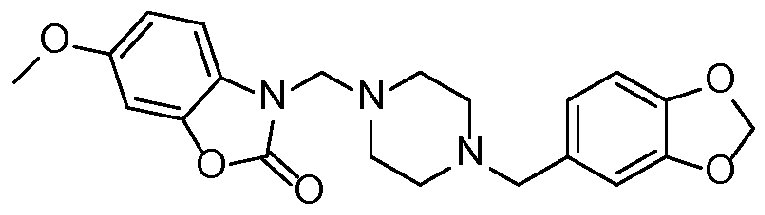
3-{[4-(l,3-benzodioxol-5-ylmethyl)-l -piperazinyl]methyl}-6-methoxy-l,3-benzoxazol-2(3H)-one

-{[4-(4-fluorobenzyl)-l -piperazinyl]methyl}-lH-indole-2,3-dione (ALDiB23);

-{[4-(3-chlorobenzyl)-l -piperazinyl]methyl}-lH-indole-2,3-dione (ALDiB24);

- {[4-(2-fluorobenzyl)-l -piperazinyl]methyl}-lH-indole-2,3-dione (ALDiB25);

-{[4-(3-fluorobenzyl)-l -piperazinyl]methyl}-lH-indole-2,3-dione (ALDiB26);
 1 - { [4-(3 -methoxybenzyl)-l -piperazinyl]methyl} - 1 H-indole-2,3-dione (ALDiB27);

'-[ 1 ,3 -imidazolidinediylbis(methylene)]bis( 1 H-indole-2,3-dione) (ALDiB28);

1 -[(4-methyl- 1 -piperazinyl)methyl] - 1 H-indole-2,3 -dione (ALDiB29) ;

l- {[4-(l,3-benzodioxol-5-ylmethyl)-l -piperazinyl]methyl}-5-bromo-lH-indole-2,3-dione

-(4-morpholinylmethyl)- 1 H-indole-2,3 -dione (ALDiB31);

-[(4-bcnzyl-l -piperazinyl)methyl]-lH-indole-2,3-dione (ALDiB32);

l-benzyl-2,3-dihydro-lH-indole-2,3-dione (ALDiB33); and

5-chloro-l-[(2E)-3-phenylprop-2-en-l-yl]-2,3-dihydro-lH-indole-2,3-dione (ALDiB34).
[00248] Particular pharmaceutical compositions of interest include a subject ALDH inhibitor, and salts or solvates or stereoisomers thereof, selected from:
7-bromo-5-methyl-lH-indole-2,3-dione (ALDiB13); and
1 -pentyl-2,3-dihydro- 1 H-indole-2,3-dione (ALDiBl 7).
[00249] Particular pharmaceutical compositions of interest include a subject ALDH inhibitor, and salts or solvates or stereoisomers thereof, selected from:
1 -benzyl-5-bromoindoline-2,3-dione (ALDiBOl);
5-bromo-l -(2-phenylethyl)-lH-indole-2,3-dione (ALDiB02);
5-chloro-l-(2-phenylethyl)-lH-indole-2,3-dione (ALDiB07);
1 -(2-phenylethyl)- 1 H-indole-2,3 -dione (ALDiB09);
l-(3-phenyl-2-propen-l-yl)-lH-indole-2,3-dione (ALDiBl 1);
1 -(3 -phenylpropyl)- 1 H-indole-2,3-dione (ALDiB 14);
1 -benzyl-5-chloro-2,3-dihydro- 1 H-indole-2,3 -dione (ALDiB 15);
l-benzyl-2,3-dihydro-lH-indole-2,3-dione (ALDiB33); and
5-chloro-l-[(2E)-3-phenylprop-2-en-l-yl]-2,3-dihydro-lH-indole-2,3-dione (ALDiB34).
[00250] Particular pharmaceutical compositions of interest include a subject ALDH inhibitor, and salts or solvates or stereoisomers thereof, selected from:
l-{[4-(l,3-benzodioxol-5-ylmethyl)-l -piperazinyl]methyl}-lH-indole-2,3-dione (ALDiB 12);
l-{[4-(4-fluorobenzyl)-l -piperazinyl]methyl}-lH-indole-2,3-dione (ALDiB23);
l-{[4-(3-chlorobenzyl)-l -piperazinyl]methyl}-lH-indole-2,3-dione (ALDiB24);
l-{[4-(2-fluorobenzyl)-l -piperazinyl]methyl}-lH-indole-2,3-dione (ALDiB25);
l-{[4-(3-fluorobenzyl)-l -piperazinyl]methyl}-lH-indole-2,3-dione (ALDiB26);
1 - { [4-(3 -methoxybenzyl)-l -piperazinyl]methyl} - 1 H-indole-2,3-dione (ALDiB27);
l,l'-[l,3-imidazolidinediylbis(methylene)]bis(lH-indole-2,3-dione) (ALDiB28);
1 -[(4-methyl- 1 -piperazinyl)methyl] - 1 H-indole-2,3 -dione (ALDiB29) ;
1 - { [4-(l ,3-benzodioxol-5-ylmethyl)-l -piperazinyl]methyl} -5-bromo- 1 H-indole-2,3-dione
(ALDiB 30);
l-(4-morpholinylmethyl)-lH-indole-2,3-dione (ALDiB31); and
1 - [ (4 -b enzy 1- 1 -pip er aziny l)methy 1] - lH-indole-2,3-dione (ALDiB 32).
[00251] Particular pharmaceutical compositions of interest include a subject ALDH inhibitor, and salts or solvates or stereoisomers thereof, such as 3-{[4-(l ,3-benzodioxol-5-ylmethyl)-l- piperazinyl] methyl } -6 -methoxy- 1 , 3 -benzoxazo 1-2(3 H) -one ( ALDiB22) .
Synthesis of compounds
[00252] The subject compounds can be synthesized via a variety of different synthetic routes using commercially available starting materials and/or starting materials prepared by conventional synthetic methods.
[00253] A general procedure for preparing a compound of the present disclosure is described in
Scheme 1 as follows.
Scheme 1

[00254] This general synthetic scheme can be used to synthesize a compound of the present
disclosure. For example, Scheme 1 may be used to synthesize a compound of the present disclosure where a brominated derivative, e.g., a brominated Rl derivative, such as an alkyl-Br as shown in Scheme 1, is conjugated to the indole-2,3-dione.
[00255] In some instances, the subject compounds may be synthesized following a general procedure as described in Scheme 2 as follows.
Scheme 2


[00256] For example, Scheme 2 may be used to synthesize a compound of the present disclosure where a brominated derivative is conjugated to the indole-2,3-dione, as shown in Scheme 2 above. In some instances, the reaction conditions used in Scheme 2 may be as follows: (a) NaH or K2CO3, DMF, 4 °C to room temperature, 20 min to 3 h; (b) KI, 50 °C, 18 h. Additional description of the general procedure described in Scheme 2 is found in L. Matesic et al., Bioorganic & Med. Chem. 16 (2008) 31 18-3124, the disclosure of which is incorporated herein by reference.
[00257] In some instances, the subject compounds may be synthesized following a general procedure as described in Scheme 3 as follows.
Scheme 3
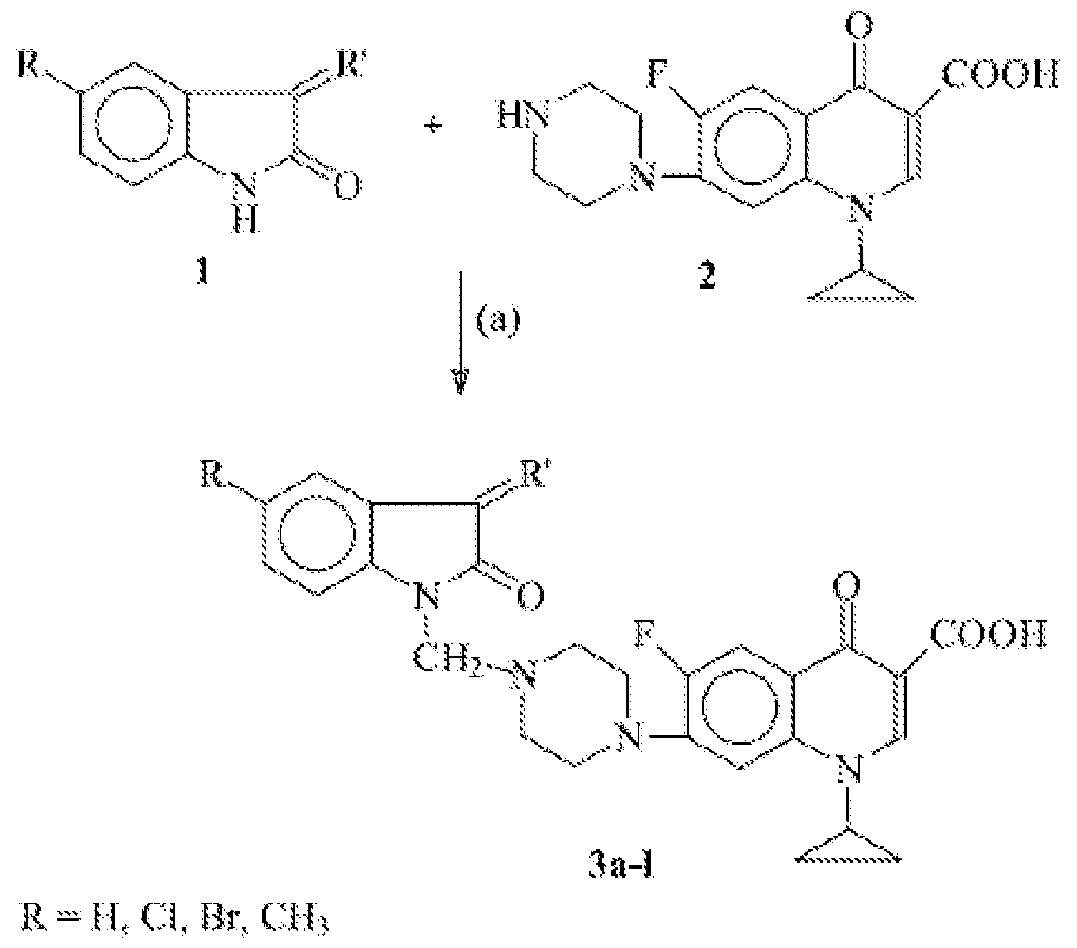
R - (X - I-ICO Hi, -NMHCSNHj
(a) HCHO, QHiOa reflux, 24
[00258] For example, Scheme 3 may be used to synthesize a compound of the present disclosure where a morpholine or piperazine derivative is conjugated to the indole-2,3-dione, as shown in Scheme 3 above. Additional description of the general procedure described in Scheme 3 is found in D. Sriram et al., Bioorg. Med. Chem. 13 (2005) 5774-5778, the disclosure of which is incorporated herein by reference.
[00259] Compounds as described herein can be purified by any procedures known in the art, including chromatography, such as high performance liquid chromatography (HPLC), preparative thin layer chromatography, flash column chromatography and ion exchange chromatography. Any suitable stationary phase can be used, including normal and reversed phases, as well as ionic resins. In some instances, the disclosed compounds are purified via silica gel and/or alumina chromatography. See, e.g., Introduction to Modern Liquid Chromatography, 2nd Edition, ed. L. R. Snyder and J. J.
Kirkland, John Wiley and Sons, 1979; and Thin Layer Chromatography, ed E. Stahl, Springer- Verlag, New York, 1969.
[00260] Although the synthetic schemes discussed may not illustrate the use of protecting groups, skilled artisans will recognize that in some instances certain substituents may include functional groups requiring protection. The exact identity of the protecting group used will depend upon, among other things, the identity of the functional group being protected and the reaction conditions used in the particular synthetic scheme, and will be apparent to those of skill in the art. Guidance for selecting protecting groups, their attachment and removal suitable for a particular application can be found, for example, in T. W. Greene and P. G. M. Wuts, "Protective Groups in Organic Synthesis", Fourth edition, Wiley, New York 2006.
PHARMACEUTICAL FORMULATIONS, DOSAGES, ROUTES OF ADMINISTRATION
[00261] The present disclosure provides pharmaceutical compositions comprising a compound of the present disclosure (where an ALDH activity inhibitor of the present disclosure (e.g., a selective ALDH2 inhibitor; a selective ALDH1 Al inhibitor; or a selective ALDH3A1 inhibitor of the present disclosure) is also referred to herein as "active agent" of the present disclosure, or "subject active agent" or "subject compound"). A compound of the present disclosure can be formulated with one or more pharmaceutically acceptable excipients. A wide variety of pharmaceutically acceptable excipients are known in the art and need not be discussed in detail herein. Pharmaceutically acceptable excipients have been amply described in a variety of publications, including, for example, A. Gennaro (2000) "Remington: The Science and Practice of Pharmacy," 20th edition, Lippincott, Williams, & Wilkins; Pharmaceutical Dosage Forms and Drug Delivery Systems (1999) H. C. Ansel et al., eds., 7th ed., Lippincott, Williams, & Wilkins; and Handbook of Pharmaceutical Excipients (2000) A. H. Kibbe et al., eds., 3rd ed. Amer. Pharmaceutical Assoc.
[00262] The pharmaceutically acceptable excipients, such as vehicles, adjuvants, carriers or diluents, are readily available to the public. Moreover, pharmaceutically acceptable auxiliary substances, such as pH adjusting and buffering agents, tonicity adjusting agents, stabilizers, wetting agents and the like, are readily available to the public.
[00263] In the subject methods, a subject ALDH activity inhibitor (e.g., a selective ALDH2 inhibitor; a selective ALDH1 Al inhibitor; or a selective ALDH3A1 inhibitor of the present disclosure) may be administered to the host using any convenient means capable of treating cancer. Thus, a subject ALDH activity inhibitor (e.g., a selective ALDH2 inhibitor; a selective ALDH1A1 inhibitor; or a selective ALDH3A1 inhibitor of the present disclosure) can be incorporated into a variety of formulations for therapeutic administration. More particularly, a subject ALDH activity inhibitor (e.g., a selective ALDH2 inhibitor; a selective ALDH1 Al inhibitor; or a selective ALDH3A1 inhibitor of the present disclosure) can be formulated into pharmaceutical compositions by combination with appropriate, pharmaceutically acceptable carriers or diluents, and may be formulated into preparations in solid, semi-solid, liquid or gaseous forms, such as tablets, capsules, powders, granules, ointments, solutions, suppositories, injections, inhalants and aerosols.
[00264] In pharmaceutical dosage forms, a subject active agent may be administered in the form of their pharmaceutically acceptable salts, or a subject active agent may be used alone or in appropriate association, as well as in combination, with other pharmaceutically active compounds. The following methods and excipients are merely exemplary and are in no way limiting.
[00265] For oral preparations, a subject active agent can be used alone or in combination with
appropriate additives to make tablets, powders, granules or capsules, for example, with conventional additives, such as lactose, mannitol, corn starch or potato starch; with binders, such as crystalline cellulose, cellulose derivatives, acacia, corn starch or gelatins; with disintegrators, such as corn starch,
potato starch or sodium carboxymethylcellulose; with lubricants, such as talc or magnesium stearate; and if desired, with diluents, buffering agents, moistening agents, preservatives and flavoring agents.
[00266] A subject active agent can be formulated into preparations for injection by dissolving,
suspending or emulsifying them in an aqueous or nonaqueous solvent, such as vegetable or other similar oils, synthetic aliphatic acid glycerides, esters of higher aliphatic acids or propylene glycol; and if desired, with conventional additives such as solubilizers, isotonic agents, suspending agents, emulsifying agents, stabilizers and preservatives.
[00267] A subject active agent can be utilized in aerosol formulation to be administered via inhalation.
A subject active agent can be formulated into pressurized acceptable propellants such as
dichlorodifluoromethane, propane, nitrogen and the like.
[00268] Furthermore, a subject active agent can be made into suppositories by mixing with a variety of bases such as emulsifying bases or water-soluble bases. An active agent can be administered rectally via a suppository. The suppository can include vehicles such as cocoa butter, carbowaxes and polyethylene glycol monomethyl ethers, which melt at body temperature, yet are solidified at room temperature.
[00269] Unit dosage forms for oral or rectal administration such as syrups, elixirs, and suspensions may be provided wherein each dosage unit, for example, teaspoonful, tablespoonful, tablet or suppository, contains a predetermined amount of the subject active agent. Similarly, unit dosage forms for injection or intravenous administration may comprise a subject active agent in a composition as a solution in sterile water, normal saline or another pharmaceutically acceptable carrier.
[00270] The term "unit dosage form," as used herein, refers to physically discrete units suitable as unitary dosages for human and animal subjects, each unit containing a predetermined quantity of a subject active agent calculated in an amount sufficient to produce the desired effect in association with a pharmaceutically acceptable diluent, carrier or vehicle. The specifications for a subject active agent depend on the particular compound employed and the effect to be achieved, and the pharmacodynamics associated with each compound in the host.
[00271] A subject active agent can be formulated for administration by injection. Typically, injectable compositions are prepared as liquid solutions or suspensions; solid forms suitable for solution in, or suspension in, liquid vehicles prior to injection may also be prepared. The preparation may also be emulsified or the active ingredient encapsulated in liposome vehicles.
[00272] In some embodiments, a subject active agent is delivered by a continuous delivery system.
The term "continuous delivery system" is used interchangeably herein with "controlled delivery system" and encompasses continuous (e.g., controlled) delivery devices (e.g., pumps) in combination with catheters, injection devices, and the like, a wide variety of which are known in the art.
[00273] Suitable excipient vehicles are, for example, water, saline, dextrose, glycerol, ethanol, or the like, and combinations thereof. In addition, if desired, the vehicle may contain minor amounts of
auxiliary substances such as wetting or emulsifying agents or pH buffering agents. Actual methods of preparing such dosage forms are known, or will be apparent, to those skilled in the art. See, e.g., Remington's Pharmaceutical Sciences, Mack Publishing Company, Easton, Pa., 17th edition, 1985. The composition or formulation to be administered will, in any event, contain a quantity of the agent adequate to achieve the desired state in the subject being treated.
[00274] Depending on the subject and condition being treated and on the administration route, the subject compounds may be administered in dosages of, for example, 0.1 μg to 10 mg/kg body weight per day. The range is broad, since in general the efficacy of a therapeutic effect for different mammals varies widely with doses typically being 20, 30 or even 40 times smaller (per unit body weight) in man than in the rat. Similarly the mode of administration can have a large effect on dosage. Thus, for example, oral dosages may be about ten times the injection dose. Higher doses may be used for localized routes of delivery.
[00275] For example, an ALDH activity inhibitor of the present disclosure (e.g., a selective ALDH2 inhibitor; a selective ALDH1 Al inhibitor; or a selective ALDH3A1 inhibitor of the present disclosure) can be administered in an amount of from about 1 mg to about 1000 mg per dose, e.g., from about 1 mg to about 5 mg, from about 5 mg to about 10 mg, from about 10 mg to about 20 mg, from about 20 mg to about 25 mg, from about 25 mg to about 50 mg, from about 50 mg to about 75 mg, from about 75 mg to about 100 mg, from about 100 mg to about 125 mg, from about 125 mg to about 150 mg, from about 150 mg to about 175 mg, from about 175 mg to about 200 mg, from about 200 mg to about 225 mg, from about 225 mg to about 250 mg, from about 250 mg to about 300 mg, from about 300 mg to about 350 mg, from about 350 mg to about 400 mg, from about 400 mg to about 450 mg, from about 450 mg to about 500 mg, from about 500 mg to about 750 mg, or from about 750 mg to about 1000 mg per dose.
[00276] An exemplary dosage may be a solution suitable for intravenous administration; a tablet taken from two to six times daily, or one time-release capsule or tablet taken once a day and containing a proportionally higher content of active ingredient, etc. The time-release effect may be obtained by capsule materials that dissolve at different pH values, by capsules that release slowly by osmotic pressure, or by any other known means of controlled release.
[00277] Those of skill in the art will readily appreciate that dose levels can vary as a function of the specific compound, the severity of the symptoms and the susceptibility of the subject to side effects. Preferred dosages for a given compound are readily determinable by those of skill in the art by a variety of means.
[00278] Unit dosage forms for oral or rectal administration such as syrups, elixirs, and suspensions may be provided wherein each dosage unit, for example, teaspoonful, tablespoonful, tablet or suppository, contains a predetermined amount of the composition containing one or more compounds of the present disclosure. Similarly, unit dosage forms for injection or intravenous administration may
comprise the compound (s) in a composition as a solution in sterile water, normal saline or another pharmaceutically acceptable carrier.
[00279] In some embodiments, multiple doses of a subject compound are administered. The frequency of administration of a subject compound can vary depending on any of a variety of factors, e.g., severity of the symptoms, etc. For example, in some embodiments, a subject compound is administered once per month, twice per month, three times per month, every other week (qow), once per week (qw), twice per week (biw), three times per week (tiw), four times per week, five times per week, six times per week, every other day (qod), daily (qd), twice a day (qid), or three times a day (tid). As discussed above, in some embodiments, a subject compound is administered continuously.
[00280] The duration of administration of a subject compound, e.g., the period of time over which a subject compound is administered, can vary, depending on any of a variety of factors, e.g., patient response, etc. For example, a subject compound can be administered over a period of time ranging from about one day to about one week, from about two weeks to about four weeks, from about one month to about two months, from about two months to about four months, from about four months to about six months, from about six months to about eight months, from about eight months to about 1 year, from about 1 year to about 2 years, or from about 2 years to about 4 years, or more. In some embodiments, a subject compound is administered for the lifetime of the individual.
[00281] An ALDH activity inhibitor of the present disclosure (e.g., a selective ALDH2 inhibitor; a selective ALDHl Al inhibitor; or a selective ALDH3A1 inhibitor of the present disclosure) is administered to an individual using any available method and route suitable for drug delivery, including in vivo and ex vivo methods, as well as systemic and localized routes of administration. Administration can be acute (e.g., of short duration, e.g., a single administration, administration for one day to one week), or chronic (e.g., of long duration, e.g., administration for longer than one week, e.g., administration over a period of time from about 2 weeks to about one month, from about one month to about 3 months, from about 3 months to about 6 months, from about 6 months to about 1 year, or longer than one year).
[00282] Conventional and pharmaceutically acceptable routes of administration include intranasal, intramuscular, intratracheal, subcutaneous, intradermal, transdermal, sublingual, topical application, intravenous, rectal, nasal, oral, and other enteral and parenteral routes of administration. Routes of administration may be combined, if desired, or adjusted depending upon the agent and/or the desired effect. The compound can be administered in a single dose or in multiple doses.
[00283] A subject active agent can be administered to a host using any available conventional methods and routes suitable for delivery of conventional drugs, including systemic or localized routes. In general, routes of administration contemplated by the present disclosure include, but are not necessarily limited to, enteral, parenteral, or inhalational routes.
[00284] Parenteral routes of administration other than inhalation administration include, but are not necessarily limited to, topical, transdermal, subcutaneous, intramuscular, intraorbital, intracapsular,
intraspinal, intrasternal, and intravenous routes, i.e., any route of administration other than through the alimentary canal. Parenteral administration can be carried to effect systemic or local delivery of the agent. Where systemic delivery is desired, administration typically involves invasive or systemically absorbed topical or mucosal administration of pharmaceutical preparations.
[00285] A subject active agent can also be delivered to the subject by enteral administration. Enteral routes of administration include, but are not necessarily limited to, oral and rectal (e.g., using a suppository) delivery.
[00286] Methods of administration of the agent through the skin or mucosa include, but are not
necessarily limited to, topical application of a suitable pharmaceutical preparation, transdermal transmission, injection and epidermal administration. For transdermal transmission, absorption promoters or iontophoresis are suitable methods. Iontophoretic transmission may be accomplished using commercially available "patches" which deliver their product continuously via electric pulses through unbroken skin for periods of several days or more.
TREATMENT METHODS
[00287] The present disclosure provides various treatment and prevention methods, generally
involving administering to a subject in need thereof an effective amount of a compound of the present disclosure.
[00288] "Treating", includes any effect, e.g., lessening, reducing, modulating, or eliminating, that results in the improvement of the condition, disease, disorder, etc. "Treating" or "treatment" of a disease state includes: (1) inhibiting the disease state, i.e., arresting the development of the disease state or its clinical symptoms; (2) relieving the disease state, i.e., causing temporary or permanent regression of the disease state or its clinical symptoms; or (3) reducing or lessening the symptoms of the disease state.
[00289] "Preventing", refers to causing the clinical symptoms of the disease state not to develop in a subject that may be exposed to or predisposed to the disease state, but does not yet experience or display symptoms of the disease state.
[00290] In some cases, as described below, a compound of the present disclosure is useful for treating cancer in an individual. In some cases, a compound of the present disclosure is useful for treating cancer in an individual, where a compound of the present disclosure is administered in combination therapy with one or more additional cancer chemotherapeutic agents. In some cases, a compound of the present disclosure is useful for treating cancer in an individual, where a compound of the present disclosure is administered to an individual who is also undergoing radiation treatment for the cancer. In some cases, a compound of the present disclosure is useful for treating cancer in an individual, where a compound of the present disclosure is administered in conjunction with surgical treatment for the cancer.
[00291] In some cases, a compound of the present disclosure is useful for treating cancer in an
individual, where the individual has been treated with a cancer chemotherapeutic agent (other than an
ALDH inhibitor); and the cancer is resistant to treatment with the cancer chemo therapeutic agent. In some cases, a compound of the present disclosure is useful for treating cancer in an individual, where the individual has been treated with a cancer chemo therapeutic agent (other than an ALDH inhibitor); and has relapsed, i.e., the patient initially responded to treatment with the cancer chemo therapeutic agent (other than an ALDH inhibitor), but the cancer subsequently returned.
[00292] As noted above, in some cases, a compound of the present disclosure is useful for treating cancer in an individual, where a compound of the present disclosure is administered in combination therapy with one or more additional cancer chemotherapeutic agents other than an ALDH inhibitor. In some of these embodiments, a compound of the present disclosure sensitizes cancer cells in the individual to the one or more additional cancer chemotherapeutic agents. In some cases,
administration of a compound of the present disclosure and one or more additional cancer chemotherapeutic agents (other than an ALDH inhibitor) provides for a synergistic effect in one or more of reducing tumor size, reducing cancer cell number, and reducing the rate of cancer cell growth in the individual being treated.
[00293] A method of the present disclosure is suitable for treating a wide variety of cancers, including carcinomas, sarcomas, leukemias, and lymphomas. Thus, the individual being treated can have a cancer such as a carcinoma, a sarcoma, a leukemia, or a lymphoma.
[00294] Carcinomas that can be treated using a subject method include, but are not limited to,
esophageal carcinoma, hepatocellular carcinoma, basal cell carcinoma (a form of skin cancer), squamous cell carcinoma (various tissues), bladder carcinoma, including transitional cell carcinoma (a malignant neoplasm of the bladder), bronchogenic carcinoma, colon carcinoma, colorectal carcinoma, gastric carcinoma, lung carcinoma, including small cell carcinoma and non-small cell carcinoma of the lung, adrenocortical carcinoma, thyroid carcinoma, pancreatic carcinoma, breast carcinoma, ovarian carcinoma, prostate carcinoma, adenocarcinoma, sweat gland carcinoma, sebaceous gland carcinoma, papillary carcinoma, papillary adenocarcinoma, cystadenocarcinoma, medullary carcinoma, renal cell carcinoma, ductal carcinoma in situ or bile duct carcinoma, choriocarcinoma, seminoma, embryonal carcinoma, Wilm's tumor, cervical carcinoma, uterine carcinoma, testicular carcinoma, osteogenic carcinoma, epithelieal carcinoma, and nasopharyngeal carcinoma, etc.
[00295] Sarcomas that can be treated using a subject method include, but are not limited to,
fibrosarcoma, myxosarcoma, liposarcoma, chondrosarcoma, chordoma, osteogenic sarcoma, osteosarcoma, angiosarcoma, endotheliosarcoma, lymphangiosarcoma,
lymphangioendotheliosarcoma, synovioma, mesothelioma, Ewing's sarcoma, leiomyosarcoma, rhabdomyosarcoma, and other soft tissue sarcomas.
[00296] Other solid tumors that can be treated using a subject method include, but are not limited to, glioma, astrocytoma, medulloblastoma, craniopharyngioma, ependymoma, pinealoma,
hemangioblastoma, acoustic neuroma, oligodendroglioma, menangioma, melanoma, neuroblastoma, and retinoblastoma.
[00297] Leukemias that can be treated using a subject method include, but are not limited to, a) chronic myeloproliferative syndromes (neoplastic disorders of multipotential hematopoietic stem cells); b) acute myelogenous leukemias (neoplastic transformation of a multipotential hematopoietic stem cell or a hematopoietic cell of restricted lineage potential; c) chronic lymphocytic leukemias (CLL; clonal proliferation of immunologically immature and functionally incompetent small lymphocytes), including B-cell CLL, T-cell CLL prolymphocytic leukemia, and hairy cell leukemia; and d) acute lymphoblastic leukemias (characterized by accumulation of lymphob lasts). Lymphomas that can be treated using a subject method include, but are not limited to, B-cell lymphomas (e.g., Burkitt's lymphoma); Hodgkin's lymphoma; and the like.
[00298] A subject method is effective to reduce a tumor load by at least about 5%, at least about 10%, at least about 20%, at least about 25%, at least about 50%, at least about 75%, at least about 85%, or at least about 90%, up to total eradication of the tumor, when compared to a suitable control. Thus, in these embodiments, an "effective amount" of a subject compound is an amount sufficient to reduce a tumor load by at least about 5%, at least about 10%, at least about 20%, at least about 25%, at least about 50%, at least about 75%, at least about 85%, or at least about 90%, up to total eradication of the tumor, when compared to a suitable control. In an experimental animal system, a suitable control may be a genetically identical animal not treated with the agent. In non-experimental systems, a suitable control may be the tumor load present before administering the agent. Other suitable controls may be a placebo control.
[00299] Whether a tumor load has been decreased can be determined using any known method, including, but not limited to, measuring solid tumor mass; counting the number of tumor cells using cytological assays; fluorescence-activated cell sorting (e.g., using antibody specific for a tumor- associated antigen); computed tomography scanning, magnetic resonance imaging, and/or x-ray imaging of the tumor to estimate and/or monitor tumor size; measuring the amount of tumor- associated antigen in a biological sample, e.g., blood; and the like.
Treatment methods comprising administering an ALDH1A1 antagonist
[00300] Diseases and conditions associated with ALDH1A1 include cancer. In some embodiments, the present disclosure provides a method of treating or preventing cancer comprising administering to a subject a pharmaceutical composition as described herein, where the pharmaceutical composition comprises a compound of the present disclosure that selectively inhibits ALDH1A1 enzymatic activity. In one embodiment, the present disclosure provides a method of treating or preventing cancer comprising administering to a subject a compound as described herein. In one embodiment, the present disclosure provides a method of treating or preventing cancer comprising administering to a subject a compound of one of Formulas I -III, or a pharmaceutically acceptable salt, solvate, or prodrug thereof.
[00301] In another embodiment, a treatment method as described herein comprises administering an
ALDH1 Al inhibitor, and further comprises administering at least a second therapeutic agent, e.g., a
cancer chemo therapeutic agent other than an ALDH1 Al inhibitor. In one embodiment, the chemotherapeutic agent is selected from non-peptidic (non-proteinaceous) compounds that reduce proliferation of cancer cells, cytotoxic agents, cytostatic agents, alkylating agents, nitrosoureas, antimetabolites, antitumor antibiotics, taxanes, microtubule affecting agents, metal complexes, steroid hormones, tyrosine kinase and/or serine/threonine inhibitors, inhibitors of angiogenesis, colony- stimulating factors, histone-deacetylase inhibitors (HDAC inhibitors), and antagonists of tumor necrosis factor. In one embodiment, the proteinaceous compounds that reduce proliferation of cancer cells is selected from tumor-associated antigen antagonists, antibodies that bind specifically to a tumor antigen, apoptosis receptor agonists, interleukin-2, interferon- alpha (a), interferon-gamma (γ), colony-stimulating factors, inhibitors of angiogenesis, and antagonists of tumor necrosis factor.
[00302] In one embodiment, the compound and the chemotherapeutic agent are administered
simultaneously, staggered, alternating, or sequentially.
[00303] In one embodiment, the method as described herein further comprises administering ionizing radiation. In one embodiment, the ionizing radiation is administered via external beam radiation therapy or brachytherapy.
[00304] In one embodiment, the present disclosure provides a method of treating or preventing cancer in a subject comprising administering to the subject a first amount of a compound as described herein in a first treatment procedure, and a second amount of radiation in a second treatment procedure wherein, the first and second amounts together comprise a therapeutically effective amount. In one embodiment, the radiation is a radiopharmaceutical agent. In one embodiment, the radiation is an ionizing radiation administered via external beam radiation therapy or brachytherapy.
[00305] Any of the above-mentioned cancers can be treated. In one embodiment, the cancer is selected from solid tumors, skin cancers, myeloma, lymphoma, leukemia, ovarian cancer, lung cancer, brain cancer, pancreatic cancer, prostate cancer, colon cancer, colorectal cancer, breast cancer, liver cancer, kidney cancer, oral cancer, head cancer, neck cancer, throat cancer, and thyroid cancer. In some cases, the cancer is high-grade ductal carcinoma. In some cases, the cancer is multiple myeloma. In some cases, the cancer is acute myeloid leukemia. In one embodiment, the cancer is ovarian cancer.
[00306] In another embodiment, the method described herein provides a synergistic effect in the treatment of cancer.
[00307] In one embodiment, the present disclosure relates to a method of increasing the sensitivity of a cancerous cells or cancer stem cells to a chemotherapeutic agent comprising administering to a subject a compound as described herein or a pharmaceutical composition as described herein. In one embodiment, the chemotherapeutic agent is selected from non-peptidic (non-proteinaceous) compounds that reduce proliferation of cancer cells, cytotoxic agents, cytostatic agents, alkylating agents, nitrosoureas, antimetabolites, antitumor antibiotics, taxanes, microtubule affecting agents, metal complexes, steroid hormones, tyrosine kinase and/or serine/threonine inhibitors, inhibitors of angiogenesis, colony-stimulating factors, histone-deacetylase inhibitors (HDAC inhibitors), and
antagonists of tumor necrosis factor. In one embodiment, the proteinaceous compounds that reduce proliferation of cancer cells is selected from tumor-associated antigen antagonists, antibodies that bind specifically to a tumor antigen apoptosis receptor agonists, interleukin-2 interferon-alpha (a), interferon-gamma (γ), colony-stimulating factors, inhibitors of angiogenesis, and antagonists of tumor necrosis factor.
[00308] The present disclosure provides methods of treating or preventing cancer in a subject. The methods generally involve administering to a subject an effective amount of a compound of the present disclosure in conjunction with a standard cancer therapy. Standard cancer therapies include surgery (e.g., surgical removal of cancerous tissue), radiation therapy, bone marrow transplantation, chemo therapeutic treatment, biological response modifier treatment, and certain combinations of the foregoing.
[00309] Radiation therapy includes, but is not limited to, x-rays or gamma rays that are delivered from either an externally applied source such as a beam, or by implantation of small radioactive sources.
[00310] Chemo therapeutic agents are compounds that reduce proliferation of cancer cells, and
encompass cytotoxic agents and cytostatic agents. Non-limiting examples of chemo therapeutic agents include alkylating agents, nitrosoureas, antimetabolites, antitumor antibiotics, plant (vinca) alkaloids, and steroid hormones.
[00311] Agents that act to reduce cellular proliferation are known in the art and widely used. Such agents include alkylating agents, such as nitrogen mustards, nitrosoureas, ethylenimine derivatives, alkyl sulfonates, and triazenes, including, but not limited to, mechlorethamine, cyclophosphamide (Cytoxan.TM.), melphalan (L-sarcolysin), carmustine (BCNU), lomustine (CCNU), semustine (methyl-CCNU), streptozocin, chlorozotocin, uracil mustard, chlormethine, ifosfamide, chlorambucil, pipobroman, triethylenemelamine, triethylenethiophosphoramine, busulfan, dacarbazine, and temozolomide.
[00312] Antimetabolite agents include folic acid analogs, pyrimidine analogs, purine analogs, and adenosine deaminase inhibitors, including, but not limited to, cytarabine (CYTOSAR-U), cytosine arabinoside, fluorouracil (5-FU), floxuridine (FudR), 6-thioguanine, 6-mercaptopurine (6-MP), pentostatin, 5-fluorouracil (5-FU), methotrexate, 10-propargyl-5,8-dideazafolate (PDDF, CB3717), 5,8-dideazatetrahydrofolic acid (DDATHF), leucovorin, fludarabine phosphate, pentostatine, and gemcitabine.
[00313] Suitable natural products and their derivatives, (e.g., vinca alkaloids, antitumor antibiotics, enzymes, lymphokines, and epipodophyllotoxins), include, but are not limited to, Ara-C, paclitaxel (Taxol®), docetaxel (Taxotere®), deoxycoformycin, mitomycin-C, L-asparaginase, azathioprine; brequinar; alkaloids, e.g. vincristine, vinblastine, vinorelbine, vindesine, etc.; podophyllotoxins, e.g. etoposide, teniposide, etc.; antibiotics, e.g. anthracycline, daunorubicin hydrochloride (daunomycin, rubidomycin, cerubidine), idarubicin, doxorubicin, epirubicin and morpholino derivatives, etc.; phenoxizone biscyclopeptides, e.g. dactinomycin; basic glycopeptides, e.g. bleomycin; anthraquinone
glycosides, e.g. plicamycin (mithramycin); anthracenediones, e.g. mitoxantrone; azirinopyrrolo indolediones, e.g. mitomycin; macrocyclic immunosuppressants, e.g. cyclosporine, FK-506
(tacrolimus, prograf), rapamycin, etc.; and the like.
[00314] Other anti-pro liferative cytotoxic agents are navelbene, CPT-11, anastrazole, letrazole, capecitabine, reloxafine, cyclophosphamide, ifosamide, and droloxafine.
[00315] Microtubule affecting agents that have antiproliferative activity are also suitable for use and include, but are not limited to, allocolchicine (NSC 406042), Halichondrin B (NSC 609395), colchicine (NSC 757), colchicine derivatives (e.g., NSC 33410), dolstatin 10 (NSC 376128), maytansine (NSC 153858), rhizoxin (NSC 332598), paclitaxel (Taxol®), Taxol® derivatives, docetaxel (Taxotere®), thiocolchicine (NSC 361792), trityl cysterin, vinblastine sulfate, vincristine sulfate, natural and synthetic epothilones including but not limited to, eopthilone A, epothilone B, discodermolide; estramustine, nocodazole, and the like.
[00316] Hormone modulators and steroids (including synthetic analogs) that are suitable for use include, but are not limited to, adrenocorticosteroids, e.g. prednisone, dexamethasone, etc.; estrogens and pregestins, e.g. hydroxyprogesterone caproate, medroxyprogesterone acetate, megestrol acetate, estradiol, clomiphene, tamoxifen; etc.; and adrenocortical suppressants, e.g. aminoglutethimide; 17a- ethinylestradiol; diethylstilbestrol, testosterone, fluoxymesterone, dromostanolone propionate, testolactone, methylprednisolone, methyl-testosterone, prednisolone, triamcinolone, chlorotrianisene, hydroxyprogesterone, aminoglutethimide, estramustine, medroxyprogesterone acetate, leuprolide, Flutamide (Drogenil), Toremifene (Fareston), and Zoladex®. Estrogens stimulate proliferation and differentiation; therefore, compounds that bind to the estrogen receptor are used to block this activity. Corticosteroids may inhibit T cell proliferation.
[00317] Other chemotherapeutic agents include metal complexes, e.g. cisp latin (cis-DDP),
carboplatin, etc.; ureas, e.g. hydroxyurea; and hydrazines, e.g. N-methylhydrazine; epidophyllotoxin; a topoisomerase inhibitor; procarbazine; mitoxantrone; leucovorin; tegafur; etc. Other antiproliferative agents of interest include immunosuppressants, e.g. mycophenolic acid, thalidomide, desoxyspergualin, azasporine, leflunomide, mizoribine, azaspirane (SKF 105685); Iressa® (ZD 1839, 4-(3-chloro-4-fluorophenylamino)-7-methoxy-6-(3-(4-mo holinyl)propoxy)qu- inazoline); etc.
[00318] "Taxanes" include paclitaxel, as well as any active taxane derivative or pro-drug. "Paclitaxel"
(which should be understood herein to include analogues, formulations, and derivatives such as, for example, docetaxel, TAXOL™, TAXOTERE™ (a formulation of docetaxel), 10-desacetyl analogs of paclitaxel and 3"N-desbenzoyl-3 TSr-t-butoxycarbonyl analogs of paclitaxel) may be readily prepared utilizing techniques known to those skilled in the art (see also WO 94/07882, WO 94/07881, WO 94/07880, WO 94/07876, WO 93/23555, WO 93/10076; U.S. Pat. Nos. 5,294,637; 5,283,253;
5,279,949; 5,274,137; 5,202,448; 5,200,534; 5,229,529; and EP 590,267), or obtained from a variety of commercial sources, including for example, Sigma Chemical Co., St. Louis, Mo. (T7402 from Taxus brevifolia; or T-1912 from Taxus yannanensis).
[00319] Biological response modifiers suitable for use in connection with the methods of the present disclosure include, but are not limited to, (1) inhibitors of tyrosine kinase (RTK) activity; (2) inhibitors of serine/threonine kinase activity; (3) tumor-associated antigen antagonists, such as antibodies that bind specifically to a tumor antigen; ( 4) apoptosis receptor agonists; (5) interleukin-2; (6) interferon-a.; (7) interferon -γ; (8) colony-stimulating factors; (9) inhibitors of angiogenesis; and (10) antagonists of tumor necrosis factor.
Treatment methods comprising administering an ALDH2 antagonist
[00320] Antagonists of ALDH2 are useful for treating or preventing disorders such as cancer, where the ALDH2 antagonist is used as an adjuvant to a standard cancer therapy. Antagonists of ALDH2 are also useful for treating or preventing alcoholism. Antagonists of ALDH2 are also useful for treating or preventing narcotic addiction. The present disclosure provides therapeutic methods involving administering a subject compound, where the compound is a selective ALDH2 inhibitor or a subject pharmaceutical composition such a selective ALDH2 inhibitor.
[00321] The present disclosure provides ALDH2 antagonists (also referred to as "ALDH2 inhibitors"), and pharmaceutical compositions comprising ALDH2 antagonists. In some embodiments, ALDH2 antagonists are useful for treating or preventing alcohol addiction. In other embodiments, ALDH2 antagonists increase the sensitivity of a cancerous cell to a cancer chemo therapeutic agent. Thus, in some embodiments, ALDH2 antagonists are useful as adjuvants to standard cancer therapies, in the treatment or prevention of cancer.
[00322] Whether a compound is an ALDH2 antagonist can be readily ascertained. Assays for ALDH2 are known in the art, and any known assay can be used. Examples of assays are found in various publications, including, e.g., Sheikh et al. ((1997) J. Biol. Chem. 272:18817-18822) and Farres et al. ((1994) J. Biol. Chem. 269:13854-13860). For example, ALDH2 is assayed at 25 °C in 50 mM sodium pyrophosphate HC1 buffer, pH 9.0, 100 mM sodium phosphate buffer, pH 7.4, or 50 mM sodium phosphate buffer, pH 7.4, where the buffer includes NAD+ (e.g., 0.8 mM NAD+, or higher, e.g., 1 mM, 2 mM, or 5 mM NAD+) and a substrate such as 14 μΜ propionaldehyde. Reduction of NAD+ is monitored at 340 nm using a spectrophotometer, or by fluorescence increase using a fluoromicrophotometer. Enzymatic activity can be assayed using a standard spectrophotometric method, e.g., by measuring a reductive reaction of the oxidized form of nicotinamide adenine dinucleotide (NAD+) to its reduced form, NADH, at 340 nm, as described in US 2005/0171043; and WO 2005/057213. In an exemplary assay, the reaction is carried out at 25 °C in 0.1 NaPPi buffer, pH 9.5, 2.4 mM NAD+ and 10 mM acetaldehyde as the substrate. Enzymatic activity is measured by a reductive reaction of NAD+ to NADH at 340 nm, as described in US 2005/0171043; and WO 2005/057213. Alternatively, the production of NADH can be coupled with another enzymatic reaction that consumes NADH and that provides for a detectable signal. An example of such an enzymatic reaction is a diaphorase-based reaction, which reduces resazurin to its oxidized fluorescent compound resorufin, as described in US 2005/0171043; and WO 2005/057213. Detection of fluorescent
resorufin at 590 nm provides amplified and more sensitive signals for any change in ALDH2 enzymatic activity.
[00323] In some embodiments, subjects to be treated are humans. In some embodiments, a human to be treated according to a subject method is one that has two "wild-type" ALDH2 alleles, e.g., the ALDH2 encoded by the two wild-type ALDH2 alleles has a glutamic acid at position 487. In other embodiments, a human to be treated according to a subject method is one that has one or two "ALDH2*2" alleles, e.g., the ALDH2 encoded by one or both ALDH2 alleles comprises a lysine as amino acid position 487. See US 2011/0105602 for details of the amino acid sequence. The E487K polymorphism is a semidominant polymorphism, and results in an ALDH2 tetramer that has significantly lower enzymatic activity than "wild-type" ALDH2. Thus, subjects who are heterozygous or homozygous for the ALDH2*2 allele have much lower in vivo ALDH2 activity levels than subjects who are homozygous for the "wild-type" ALDH2 allele.
[00324] The present disclosure provides methods of treating or preventing cancer in a subject. The methods generally involve administering to a subject an effective amount of a compound of the present disclosure in conjunction with a standard cancer therapy. Standard cancer therapies include surgery (e.g., surgical removal of cancerous tissue), radiation therapy, bone marrow transplantation, chemo therapeutic treatment, biological response modifier treatment, and certain combinations of the foregoing.
[00325] The present disclosure provides methods for increasing the susceptibility of a solid tumor to ischemic damage by decreasing the level and/or activity of ALDH2. The methods generally involve administering to a subject having a solid tumor an effective amount of an agent that reduces a level and/or activity of ALDH2.
[00326] In some embodiments, an agent that decreases a level and/or activity of ALDH2 is
administered as adjuvant therapy to a standard cancer therapy. Standard cancer therapies include surgery (e.g., surgical removal of cancerous tissue), radiation therapy, bone marrow transplantation, chemo therapeutic treatment, biological response modifier treatment, and certain combinations of the foregoing.
[00327] Radiation therapy includes, but is not limited to, x-rays or gamma rays that are delivered from either an externally applied source such as a beam, or by implantation of small radioactive sources.
[00328] Chemotherapeutic agents are non-peptidic (i.e., non-proteinaceous) compounds that reduce proliferation of cancer cells, and encompass cytotoxic agents and cytostatic agents. Non-limiting examples of chemotherapeutic agents include alkylating agents, nitrosoureas, antimetabolites, antitumor antibiotics, plant (vinca) alkaloids, and steroid hormones.
[00329] Agents that act to reduce cellular proliferation are known in the art and widely used. Such agents include alkylating agents, such as nitrogen mustards, nitrosoureas, ethylenimine derivatives, alkyl sulfonates, and triazenes, including, but not limited to, mechlorethamine, cyclophosphamide (Cytoxan®), melphalan (L-sarcolysin), carmustine (BCNU), lomustine (CCNU), semustine (methyl-
CCNU), streptozocin, chlorozotocin, uracil mustard, chlormethine, ifosfamide, chlorambucil, pipobroman, triethylenemelamine, triethylenethiophosphoramine, busulfan, dacarbazine, and temozolomide.
[00330] Antimetabolite agents include folic acid analogs, pyrimidine analogs, purine analogs, and adenosine deaminase inhibitors, including, but not limited to, cytarabine (CYTOSAR-U), cytosine arabinoside, fluorouracil (5-FU), floxuridine (FudR), 6-thioguanine, 6-mercaptopurine (6-MP), pentostatin, 5-fluorouracil (5-FU), methotrexate, 10-propargyl-5,8-dideazafolate (PDDF, CB3717), 5,8-dideazatetrahydrofolic acid (DDATHF), leucovorin, fludarabine phosphate, pentostatine, and gemcitabine.
[00331] Suitable natural products and their derivatives, (e.g., vinca alkaloids, antitumor antibiotics, enzymes, lymphokines, and epipodophyllotoxins), include, but are not limited to, Ara-C, paclitaxel (Taxol®), docetaxel (Taxotere®), deoxycoformycin, mitomycin-C, L-asparaginase, azathioprine; brequinar; alkaloids, e.g. vincristine, vinblastine, vinorelbine, vindesine, etc.; podophyllotoxins, e.g. etoposide, teniposide, etc.; antibiotics, e.g. anthracycline, daunorubicin hydrochloride (daunomycin, rubidomycin, cerubidine), idarubicin, doxorubicin, epirubicin and morpho lino derivatives, etc.; phenoxizone biscyclopeptides, e.g. dactinomycin; basic glycopeptides, e.g. bleomycin; anthraquinone glycosides, e.g. plicamycin (mithramycin); anthracenediones, e.g. mitoxantrone; azirinopyrrolo indolediones, e.g. mitomycin; macrocyclic immunosuppressants, e.g. cyclosporine, FK-506
(tacrolimus, prograf), rapamycin, etc.; and the like.
[00332] Other anti-pro liferative cytotoxic agents are navelbene, CPT-11, anastrazole, letrazole, capecitabine, reloxafine, cyclophosphamide, ifosamide, and droloxafine.
[00333] Microtubule affecting agents that have antiproliferative activity are also suitable for use and include, but are not limited to, allocolchicine (NSC 406042), Halichondrin B (NSC 609395), colchicine (NSC 757), colchicine derivatives (e.g., NSC 33410), dolstatin 10 (NSC 376128), maytansine (NSC 153858), rhizoxin (NSC 332598), paclitaxel (Taxol®), Taxol® derivatives, docetaxel (Taxotere®), thiocolchicine (NSC 361792), trityl cysterin, vinblastine sulfate, vincristine sulfate, natural and synthetic epothilones including but not limited to, eopthilone A, epothilone B, discodermolide; estramustine, nocodazole, and the like.
[00334] Hormone modulators and steroids (including synthetic analogs) that are suitable for use include, but are not limited to, adrenocorticosteroids, e.g. prednisone, dexamethasone, etc.; estrogens and pregestins, e.g. hydroxyprogesterone caproate, medroxyprogesterone acetate, megestrol acetate, estradiol, clomiphene, tamoxifen; etc.; and adrenocortical suppressants, e.g. aminoglutethimide; 17a- ethinylestradiol; diethylstilbestrol, testosterone, fluoxymesterone, dromostanolone propionate, testolactone, methylprednisolone, methyl-testosterone, prednisolone, triamcinolone, chlorotrianisene, hydroxyprogesterone, aminoglutethimide, estramustine, medroxyprogesterone acetate, leuprolide, Flutamide (Drogenil), Toremifene (Fareston), and Zoladex®. Estrogens stimulate proliferation and
differentiation, therefore compounds that bind to the estrogen receptor are used to block this activity. Corticosteroids may inhibit T cell proliferation.
[00335] Other chemotherapeutic agents include metal complexes, e.g. cisplatin (cis-DDP),
carboplatin, etc.; ureas, e.g. hydroxyurea; and hydrazines, e.g. N-methylhydrazine; epidophyllotoxin; a topoisomerase inhibitor; procarbazine; mitoxantrone; leucovorin; tegafur; etc. Other antiproliferative agents of interest include immunosuppressants, e.g. mycophenolic acid, thalidomide, desoxyspergualin, azasporine, leflunomide, mizoribine, azaspirane (SKF 105685); Iressa® (ZD 1839, 4-(3-chloro-4-fluorophenylamino)-7-methoxy-6-(3-(4-morpholinyl)propoxy)quinazoline); etc.
[00336] "Taxanes" include paclitaxel, as well as any active taxane derivative or pro-drug. "Paclitaxel"
(which should be understood herein to include analogues, formulations, and derivatives such as, for example, docetaxel, TAXOL®, TAXOTERE® (a formulation of docetaxel), 10-desacetyl analogs of paclitaxel and 3N-desbenzoyl-3TSi-t-butoxycarbonyl analogs of paclitaxel) may be readily prepared utilizing techniques known to those skilled in the art (see also WO 94/07882, WO 94/07881 , WO 94/07880, WO 94/07876, WO 93/23555, WO 93/10076; U.S. Pat. Nos. 5,294,637; 5,283,253;
5,279,949; 5,274,137; 5,202,448; 5,200,534; 5,229,529; and EP 590,267), or obtained from a variety of commercial sources, including for example, Sigma Chemical Co., St. Louis, Mo. (T7402 from Taxus brevifolia; or T-1912 from Taxus yannanensis).
[00337] Paclitaxel should be understood to refer to not only the common chemically available form of paclitaxel, but analogs and derivatives (e.g., Taxotere® docetaxel, as noted above) and paclitaxel conjugates (e.g., paclitaxel-PEG, paclitaxel-dextran, or paclitaxel-xylose).
[00338] Also included within the term "taxane" are a variety of known derivatives, including both hydrophilic derivatives, and hydrophobic derivatives. Taxane derivatives include, but not limited to, galactose and mannose derivatives described in International Patent Application No. WO 99/18113; piperazino and other derivatives described in WO 99/14209; taxane derivatives described in WO 99/09021 , WO 98/22451 , and U.S. Pat. No. 5,869,680; 6-thio derivatives described in WO 98/28288; sulfenamide derivatives described in U.S. Pat. No. 5,821,263; and taxol derivative described in U.S. Pat. No. 5,415,869. It further includes prodrugs of paclitaxel including, but not limited to, those described in WO 98/58927; WO 98/13059; and U.S. Pat. No. 5,824,701.
[00339] Biological response modifiers suitable for use in connection with the methods of the present disclosure include, but are not limited to, (1) inhibitors of tyrosine kinase (RTK) activity; (2) inhibitors of serine/threonine kinase activity; (3) tumor-associated antigen antagonists, such as antibodies that bind specifically to a tumor antigen; (4) apoptosis receptor agonists; (5) interleukin-2; (6) IFN-.alpha.; (7) IFN-.gamma.; (8) colony-stimulating factors; (9) inhibitors of angiogenesis; and (10) antagonists of tumor necrosis factor.
[00340] Subjects suitable for treatment with a subject agent and or a subject method, where the agent decreases a level and/or activity of ALDH2, include subjects having a solid tumor. Solid tumors include, but are not limited to, histiocytic lymphoma, cancers of the brain, genitourinary tract,
lymphatic system, stomach, larynx and lung, including lung adenocarcinoma and small cell lung cancer.
Treatment methods comprising administering a selective inhibitor of ALDH3A1
[00341] Diseases and conditions associated with ALDH3A1 include cancer. In some embodiments, the present disclosure provides a method of treating or preventing cancer comprising administering to a subject a pharmaceutical composition as described herein, where the pharmaceutical composition comprises a compound of the present disclosure that selectively inhibits ALDH3A1 enzymatic activity. In one embodiment, the present disclosure provides a method of treating or preventing cancer comprising administering to a subject a compound as described herein. In one embodiment, the present disclosure provides a method of treating or preventing cancer comprising administering to a subject a compound of one of Formulas I -III, or a pharmaceutically acceptable salt, solvate, or prodrug thereof.
[00342] In another embodiment, a treatment method as described herein comprises administering an
ALDH3A1 inhibitor, and further comprises administering at least a second therapeutic agent, e.g., a cancer chemo therapeutic agent other than an ALDH3A1 inhibitor. In one embodiment, the chemotherapeutic agent is selected from non-peptidic (non-proteinaceous) compounds that reduce proliferation of cancer cells, cytotoxic agents, cytostatic agents, alkylating agents, nitrosoureas, antimetabolites, antitumor antibiotics, taxanes, microtubule affecting agents, metal complexes, steroid hormones, tyrosine kinase and/or serine/threonine inhibitors, inhibitors of angiogenesis, colony- stimulating factors, histone-deacetylase inhibitors (HDAC inhibitors), and antagonists of tumor necrosis factor. In one embodiment, the proteinaceous compounds that reduce proliferation of cancer cells is selected from tumor-associated antigen antagonists, antibodies that bind specifically to a tumor antigen, apoptosis receptor agonists, interleukin-2, interferon-alpha (a), interferon-gamma (γ), colony-stimulating factors, inhibitors of angiogenesis, and antagonists of tumor necrosis factor.
[00343] In one embodiment, the compound and the chemotherapeutic agent are administered
simultaneously, staggered, alternating, or sequentially.
[00344] In one embodiment, the method as described herein further comprises administering ionizing radiation. In one embodiment, the ionizing radiation is administered via external beam radiation therapy or brachytherapy.
[00345] In one embodiment, the present disclosure provides a method of treating or preventing cancer in a subject comprising administering to the subject a first amount of a compound as described herein in a first treatment procedure, and a second amount of radiation in a second treatment procedure wherein, the first and second amounts together comprise a therapeutically effective amount. In one embodiment, the radiation is a radiopharmaceutical agent. In one embodiment, the radiation is an ionizing radiation administered via external beam radiation therapy or brachytherapy.
[00346] In another embodiment, the method described herein provides a synergistic effect in the treatment of cancer.
[00347] In one embodiment, the present disclosure relates to a method of increasing the sensitivity of a cancerous cells or cancer stem cells to a chemo therapeutic agent comprising administering to a subject a compound as described herein or a pharmaceutical composition as described herein. In one embodiment, the chemotherapeutic agent is selected from non-peptidic (non-proteinaceous) compounds that reduce proliferation of cancer cells, cytotoxic agents, cytostatic agents, alkylating agents, nitrosoureas, antimetabolites, antitumor antibiotics, taxanes, microtubule affecting agents, metal complexes, steroid hormones, tyrosine kinase and/or serine/threonine inhibitors, inhibitors of angiogenesis, colony-stimulating factors, histone-deacetylase inhibitors (HDAC inhibitors), and antagonists of tumor necrosis factor. In one embodiment, the proteinaceous compounds that reduce proliferation of cancer cells is selected from tumor-associated antigen antagonists, antibodies that bind specifically to a tumor antigen apoptosis receptor agonists, interleukin-2 interferon-alpha (a), interferon-gamma (γ), colony-stimulating factors, inhibitors of angiogenesis, and antagonists of tumor necrosis factor.
[00348] The present disclosure provides methods of treating or preventing cancer in a subject. The methods generally involve administering to a subject an effective amount of a compound of the present disclosure in conjunction with a standard cancer therapy. Standard cancer therapies include surgery (e.g., surgical removal of cancerous tissue), radiation therapy, bone marrow transplantation, chemotherapeutic treatment, biological response modifier treatment, and certain combinations of the foregoing.
[00349] Radiation therapy includes, but is not limited to, x-rays or gamma rays that are delivered from either an externally applied source such as a beam, or by implantation of small radioactive sources.
[00350] Chemotherapeutic agents are compounds that reduce proliferation of cancer cells, and
encompass cytotoxic agents and cytostatic agents. Non-limiting examples of chemotherapeutic agents include alkylating agents, nitrosoureas, antimetabolites, antitumor antibiotics, plant (vinca) alkaloids, and steroid hormones.
[00351] Agents that act to reduce cellular proliferation are known in the art and widely used. Such agents include alkylating agents, such as nitrogen mustards, nitrosoureas, ethylenimine derivatives, alkyl sulfonates, and triazenes, including, but not limited to, mechlorethamine, cyclophosphamide (Cytoxan.TM.), melphalan (L-sarcolysin), carmustine (BCNU), lomustine (CCNU), semustine (methyl-CCNU), streptozocin, chlorozotocin, uracil mustard, chlormethine, ifosfamide, chlorambucil, pipobroman, triethylenemelamine, triethylenethiophosphoramine, busulfan, dacarbazine, and temozolomide.
[00352] Antimetabolite agents include folic acid analogs, pyrimidine analogs, purine analogs, and adenosine deaminase inhibitors, including, but not limited to, cytarabine (CYTOSAR-U), cytosine arabinoside, fluorouracil (5-FU), floxuridine (FudR), 6-thioguanine, 6-mercaptopurine (6-MP), pentostatin, 5-fluorouracil (5-FU), methotrexate, 10-propargyl-5,8-dideazafolate (PDDF, CB3717),
5,8-dideazatetrahydrofolic acid (DDATHF), leucovorin, fludarabine phosphate, pentostatine, and gemcitabine.
[00353] Suitable natural products and their derivatives, (e.g., vinca alkaloids, antitumor antibiotics, enzymes, lymphokines, and epipodophyllotoxins), include, but are not limited to, Ara-C, paclitaxel (Taxol®), docetaxel (Taxotere®), deoxycoformycin, mitomycin-C, L-asparaginase, azathioprine; brequinar; alkaloids, e.g. vincristine, vinblastine, vinorelbine, vindesine, etc.; podophyllotoxins, e.g. etoposide, teniposide, etc.; antibiotics, e.g. anthracycline, daunorubicin hydrochloride (daunomycin, rubidomycin, cerubidine), idarubicin, doxorubicin, epirubicin and morpho lino derivatives, etc.; phenoxizone biscyclopeptides, e.g. dactinomycin; basic glycopeptides, e.g. bleomycin; anthraquinone glycosides, e.g. plicamycin (mithramycin); anthracenediones, e.g. mitoxantrone; azirinopyrrolo indolediones, e.g. mitomycin; macrocyclic immunosuppressants, e.g. cyclosporine, FK-506
(tacrolimus, prograf), rapamycin, etc.; and the like.
[00354] Other anti-pro liferative cytotoxic agents are navelbene, CPT-11, anastrazole, letrazole, capecitabine, reloxafine, cyclophosphamide, ifosamide, and droloxafine.
[00355] Microtubule affecting agents that have antiproliferative activity are also suitable for use and include, but are not limited to, allocolchicine (NSC 406042), Halichondrin B (NSC 609395), colchicine (NSC 757), colchicine derivatives (e.g., NSC 33410), dolstatin 10 (NSC 376128), maytansine (NSC 153858), rhizoxin (NSC 332598), paclitaxel (Taxol®), Taxol® derivatives, docetaxel (Taxotere®), thiocolchicine (NSC 361792), trityl cysterin, vinblastine sulfate, vincristine sulfate, natural and synthetic epothilones including but not limited to, eopthilone A, epothilone B, discodermolide; estramustine, nocodazole, and the like.
[00356] Hormone modulators and steroids (including synthetic analogs) that are suitable for use include, but are not limited to, adrenocorticosteroids, e.g. prednisone, dexamethasone, etc.; estrogens and pregestins, e.g. hydroxyprogesterone caproate, medroxyprogesterone acetate, megestrol acetate, estradiol, clomiphene, tamoxifen; etc.; and adrenocortical suppressants, e.g. aminoglutethimide; 17a- ethinylestradiol; diethylstilbestrol, testosterone, fluoxymesterone, dromostanolone propionate, testolactone, methylprednisolone, methyl-testosterone, prednisolone, triamcinolone, chlorotrianisene, hydroxyprogesterone, aminoglutethimide, estramustine, medroxyprogesterone acetate, leuprolide, Flutamide (Drogenil), Toremifene (Fareston), and Zoladex®. Estrogens stimulate proliferation and differentiation; therefore, compounds that bind to the estrogen receptor are used to block this activity. Corticosteroids may inhibit T cell proliferation.
[00357] Other chemotherapeutic agents include metal complexes, e.g. cisplatin (cis-DDP),
carboplatin, etc.; ureas, e.g. hydroxyurea; and hydrazines, e.g. N-methylhydrazine; epidophyllotoxin; a topoisomerase inhibitor; procarbazine; mitoxantrone; leucovorin; tegafur; etc. Other antiproliferative agents of interest include immunosuppressants, e.g. mycophenolic acid, thalidomide, desoxyspergualin, azasporine, leflunomide, mizoribine, azaspirane (SKF 105685); Iressa® (ZD 1839, 4-(3-chloro-4-fluorophenylamino)-7-methoxy-6-(3-(4-mo holinyl)propo y)quinazoline); etc.
[00358] "Taxanes" include paclitaxel, as well as any active taxane derivative or pro-drug. "Paclitaxel"
(which should be understood herein to include analogues, formulations, and derivatives such as, for example, docetaxel, TAXOL™, TAXOTERE™ (a formulation of docetaxel), 10-desacetyl analogs of paclitaxel and SK-desbenzoyl-SN-t-butoxycarbonyl analogs of paclitaxel) may be readily prepared utilizing techniques known to those skilled in the art (see also WO 94/07882, WO 94/07881, WO 94/07880, WO 94/07876, WO 93/23555, WO 93/10076; U.S. Pat. Nos. 5,294,637; 5,283,253;
5,279,949; 5,274,137; 5,202,448; 5,200,534; 5,229,529; and EP 590,267), or obtained from a variety of commercial sources, including for example, Sigma Chemical Co., St. Louis, Mo. (T7402 from Taxus brevifolia; or T-1912 from Taxus yannanensis).
[00359] Biological response modifiers suitable for use in connection with the methods of the present disclosure include, but are not limited to, (1) inhibitors of tyrosine kinase (RTK) activity; (2) inhibitors of serine/threonine kinase activity; (3) tumor-associated antigen antagonists, such as antibodies that bind specifically to a tumor antigen; ( 4) apoptosis receptor agonists; (5) interleukin-2; (6) interferon-a.; (7) interferon -γ; (8) colony-stimulating factors; (9) inhibitors of angiogenesis; and (10) antagonists of tumor necrosis factor.
EXAMPLES
[00360] The following examples are put forth so as to provide those of ordinary skill in the art with a complete disclosure and description of how to make and use the present invention, and are not intended to limit the scope of what the inventors regard as their invention nor are they intended to represent that the experiments below are all or the only experiments performed. Efforts have been made to ensure accuracy with respect to numbers used (e.g. amounts, temperature, etc.) but some experimental errors and deviations should be accounted for. Unless indicated otherwise, parts are parts by weight, molecular weight is weight average molecular weight, temperature is in degrees Celsius, and pressure is at or near atmospheric. Standard abbreviations may be used, e.g., bp, base pair(s); kb, kilobase(s); pi, picoliter(s); s or sec, second(s); min, minute(s); h or hr, hour(s); aa, amino acid(s); kb, kilobase(s); bp, base pair(s); nt, nucleotide(s); i.m., intramuscular(ly); i.p.,
intraperitoneal(ly); s.c, subcutaneous(ly); and the like.
Example 1 : Isozyme-specific ALDH antagonists
[00361] A class of substituted indole-2,3-diones that exhibit differential inhibition of ALDHIAI,
ALDH2 and ALDH3A1 has been identified. Kinetic and X-ray crystallography data suggest these inhibitors are competitive inhibitors toward substrate aldehyde binding, forming direct interactions with active site cysteine residues. However, the precise mode of interaction differs between
ALDH3A1 and ALDH2, in that these compounds appear to interact directly with the catalytic nucleophile, Cys243, in ALDH3A1, but not in ALDH2. In ALDH2, the 3-keto group is surrounded by the adjacent cysteine residues at positions 301 and 303. Surprisingly, the orientation of the
interaction changes depending on the nature of the substitutions on the basic indole ring structure and correlates well with the observed structure-activity relationships for each ALDH isoenzyme.
MATERIALS AND METHODS
[00362] Materials: Compounds used for the inhibitor screen were found using a 80% structure
similarity search against 5 -methyl- lH-indole-2,3-dione using the PubChem Project (41). The following compounds were purchased from ChemBridge for further in vitro assay screening:
5301889, l-benzyl-5-bromo-lH-indole-2,3-dione (ALDiBOl); 5192630, l -(2-phenylethyl)-lH-indole- 2,3-dione (ALDiB09); 7196590, 5-chloro-l -(2-phenylethyl)-lH-indole-2,3-dione (ALDiB07);
6047303, 5-bromo-l -(2-phenylethyl)-lH-indole-2,3-dione (ALDiB02); 6378722, 7-bromo-5-methyl- lH-indole-2,3-dione (ALDiB13); 6433626, l -(3-phenylpropyl)-lH-indole-2,3-dione (ALDiB14); 6997087, l-(3-phenyl-2-propen-l -yl)-lH-indole-2,3-dione (ALDiBl l); 6505720, l - {[4-(l,3- benzodioxol-5-ylmethyl)-l -piperazinyl]methyl}-lH-indole-2,3-dione (ALDiB12); 8918814, l - {[4-(4- fluorobenzyl)-l-piperazinyl]methyl} -lH-indole-2,3-dione (ALDiB23); 8918815, l-{[4-(3- chlorobenzyl)-l -piperazinyl]methyl} -lH-indole-2,3-dione (ALDiB24); 8918818, l - {[4-(2- fluorobenzyl)-l-piperazinyl]methyl} -lH-indole-2,3-dione (ALDiB25); 8918819, l-{[4-(3- fluorobenzyl)-l-piperazinyl]methyl} -lH-indole-2,3-dione (ALDiB26); 8919812, l- {[4-(3- methoxybenzyl)-l -piperazinyl]methyl}-lH-indole-2,3-dione (ALDiB27); 6989645, l - {[4-(l,3- benzodioxol-5-ylmethyl)-l -piperazinyl]methyl}-5-bromo-lH-indole-2,3-dione (ALDiB30); 5250099, l , l '-[l ,3-imidazolidinediylbis(methylene)]bis(lH-indole-2,3-dione) (ALDiB28); 5115436, l-(4- morpholinylmethyl)-lH-indole-2,3-dione (ALDiB31); 5260280, l -[(4-methyl-l -piperazinyl)methyl]- lH-indole-2,3-dione (ALDiB29); 51 15499, l -[(4-benzyl-l -piperazinyl)methyl]-lH-indole-2,3-dione (ALDiB32); 6909786, and 3- {[4-(l ,3-benzodioxol-5-ylmethyl)-l -piperazinyl]methyl} -6-methoxy- l ,3-benzoxazol-2(3H)-one (ALDiB22). The following compounds were purchased from ChemDiv for further screening: 0764-0625, 1 -pentyl-2,3-dihydro- 1 H-indole-2,3 -dione (ALDiBl 7); 0764-0628, 1 - benzyl-2,3-dihydro-lH-indole-2,3-dione (ALDiB33); and 5353-0854, l -benzyl-5-chloro-2,3-dihydro- lH-indole-2,3-dione (ALDiBl 5). Based on the SAR data collected, compound BBV-138984, 5- chloro-l -[(2E)-3-phenylprop-2-en-l -yl]-2,3-dihydro-lH-indole-2,3 -dione (ALDiB34), was purchased from MolPort as proof of the selective inhibition scheme. All other chemicals were purchased from Sigma Aldrich unless otherwise stated.
[00363] Protein Purification: Purification of human ALDH1A1 (hALDHlAl), ALDH2 (hALDH2) and human ALDH3A1 (hALDH3Al) were expressed and purified as described elsewhere
(13,33,42,43).
[00364] Inhibitor Screens: The ALDH2 and ALDH3A1 screening assays have been reported
previously (13). ALDH1A1 was screened using the same assay as that of ALDH2. Inhibitors that emerged from the screens were purchased from ChemBridge or ChemDiv and were designated ALDiBxx as they are as ALDH inhibitors and B designates that they are a structurally distinct class from Aldi-1 through Aldi-4.
[00365] Crystallization of ALDH3A1 and ALDH2 Complexes with Inhibitors: Crystals of ALDH3A1 at 3 mg/ml in 10 mM HEPES, pH 7.5 were grown from solutions containing 0.2 M potassium acetate and 18% PEG3350 at 25°C. Enzyme complexes with inhibitors were generated through direct soaking experiments by first equilibrating the crystals in solution containing 2% DMSO overnight, which were then supplemented with 100 μΜ of ALDiB12. The crystals were directly frozen without any further addition of cryoprotectant.
[00366] Crystals of ALDH2 were grown from protein solutions containing 8 mg/ml ALDH2, in 100 mM ACES, pH 6.2-6.8, 100 mM guanidine-HCl, 10 mM MgCl2, and 14-19% PEG 6000. The ALDH2 complexes with inhibitors were generated through direct soaking experiments by first equilibrating the crystals in solution containing 2% DMSO overnight, which were then supplemented with 100 μΜ of either ALDiB 13 or ALDiB33.
[00367] All diffraction data were collected at a wavelength of 0.9869 A and at 100 K. All diffraction data were indexed, integrated, and scaled using the HKL3000 program suite (44). Refinement was performed using Refmac5 within the CCP4 program suite (44,45). The structure of the ALDH3A1 complex with ALDiB12 was solved by molecular replacement using the ALDH3A1 apo structure (PDB code 3SZA). The presence of inhibitor was determined after inspection of the initial σ-Α weighted F0 - Fc electron density maps. The structures of ALDH2 complexed with ALDiB 13 and ALDiB33 were solved by using the coordinates of the refined ALDH2 in the P2[ space group after removal of solvent and ligands (1CW3). The ALDH2 complex with ALDiB13 demonstrates high occupancy binding in subunits A and H and insufficient electron density for unequivocal assignment in the remaining subunits. The ALDH2 complex with ALDiB33 shows high occupancy binding in subunits A, B, E and H and insufficient electron density for unequivocal assignment in the remaining subunits.
[00368] IC50 Determination: IC50 inhibition curves for the inhibitors were measured using the activity of hALDH2, hALDHlAl, and hALDH3Al as described elsewhere (13). In short, the enzyme was incubated with the inhibitor and coenzyme for 2 minutes prior to initiation of the reaction with aldehyde substrate. The inhibition curves were fit to the four-parameter EC50 equation using
SigmaPlot (version 10.0, StatSys). All data represent the average of three independent experiments.
[00369] Determination of Mode of Inhibition: Inhibition of ALDH activity was measured using the activity of hALDH2, hALDHlAl, and hALDH3Al to determine the kinetic mode of inhibition versus varied coenzyme or aldehyde substrate. Coenzyme competition was determined by measuring ALDH activity for various concentrations of compound while varying the concentration of NAD+ for hALDH2 and hALDHlAl, and of NADP+ for hALDH3Al . Likewise, substrate competition was determined for different concentrations of each compound while varying propionaldehyde concentration for hALDH2 and hALDHlAl , and benzaldehyde concentration for hALDH3Al . In each experiment the concentration of the non-varied substrate was set to saturating levels and the varied substrate concentration ranged at least 10-fold spanning the calculated KM value. Similarly, the
concentration range for the inhibitors was varied a minimum of 5-fold, exclusive of the control (no inhibitor) reactions, which spanned the calculated ¾ values. The kinetic mode of inhibition was determined by fitting data to the competitive, non-competitive, and uncompetitive inhibition equations and evaluating the goodness-of-fit to each equation (46). Data fitting and analysis was performed using SigmaPlot (version 11.0) with the Enzyme Kinetics module (version 1.3).
RESULTS
[00370] Four ALDH2 inhibitors with structural similarity to five ALDH3A1 inhibitors, some of which showed excellent selectivity toward ALDH3A1, were identified. To further characterize this group of compounds, we obtained an additional 33 structurally similar analogs from ChemDiv and
ChemBridge was obtained; the ability of these compounds to inhibit ALDHl Al, ALDH2 and ALDH3A1, using NAD(P)+-dependent aldehyde oxidation to measure activity, was evaluated.
[00371] The compounds in this study are all derived from the indole-2,3-dione parent compound, but three distinct structural groupings can be created based on the nature of the substitutions to the indole- 2,3-dione ring system and their ability to inhibit selected ALDH isoenzymes. Group 1 is represented by substitutions that lack additional ring systems. These were the least selective between ALDH isoenzymes and exhibited low μΜ IC50 values for ALDH2 and middle to high nM IC50 values for ALDHl Al and ALDH3A1 (Table 1).
[00372] Compounds in Group 2 are characterized by the addition of a benzyl moiety via an alkyl chain linker attached to the indole ring nitrogen atom, with and without halogen substitutions at the 5- position of the indole ring. This group comprises the most potent inhibitors of ALDHl Al and ALDH2. However, the nature of the substitutions can shift the potency 380-fold in favor of
ALDH1A1 or 40-fold in favor of ALDH2 (ALDiB33 vs. ALDiB02, Table 1). In general, longer alkyl- chain linkers favor ALDHl Al and ALDH3A1 inhibition. Halogens at the 5-position improve potency toward ALDH2, but 5-bromo-substitutions on the indole ring reduce the potency toward ALDHl Al. Substitution of either a 5-chlorine- or 5-bromine on the indole ring severely reduces potency toward ALDH3A1 (ALDiB09 vs. ALDiB02, Table 1). The addition of a double bond to the linker between the indole and benzyl rings almost eliminates potency toward ALDH2 (ALDiBl 1), but introduction of the 5-chloro group to the same molecule restores potency (ALDiB34).
[00373] Group 3 compounds possess either a piperazine, morpholine, or imidazolidine non-aromatic ring linked to the indole nitrogen (Table 1). These compounds tend to be the most selective for hALDH3Al and show little if any inhibition of ALDH2. Only the compounds with the 5-bromo- substitution on the indole ring (ALDiB30) or those that lack the carbonyl at the 3 -position (ALDiB22) were poor inhibitors of hALDH3Al. The importance of the carbonyl at the 3 -position for binding to ALDH family members is demonstrated by the failure of ALDiB22 to potently inhibit any of the enzymes studied here (Table 1).
[00374] To better understand the mechanism of inhibition for these compounds, ALDiBl 3 and
ALDiB33 were chosen as representative compounds for substrate competition experiments. These
inhibitors exhibited non-competitive mixed type inhibition with respect to varied coenzyme and exhibited competitive inhibition with respect to varied aldehyde substrate for all ALDH isoenzymes (Tables 2 & 3).
[00375] Consistent with the kinetic data, the crystal structure of ALDH2 with ALDiB33 and
ALDiB13 bound shows the compounds bound within the aldehyde substrate binding site with the 3- keto group sandwiched between the active site cysteine residues 301 and 303 (Figures 1 & 2). The distance of interaction in these models suggest that both cysteine residues are interacting equivalently on either face of the carbonyl carbon, but do not appear to have formed formal adducts. There is no evidence of any interaction with the side chain of Cys302. Interestingly, the orientation of their indole-2,3-dione rings are flipped such that the opposing faces are interacting with Cys301 and Cys303 in the ALDiB13 versus the ALDiB33 structures. The 5-methyl substituent of ALDiB13 forms hydrophobic interactions with the side chains of Ty l77, Leul73 and Metl74, while the 7- bromo substituent is oriented toward the solvent exposed exit of the substrate-binding site. In contrast, the 5-position of ALDiB33 is oriented toward solvent and the 1-benzyl substituent is tucked tightly into the substrate binding side adjacent to the side chain of Phe465, which is displaced from the position found in all other ALDH2 crystal structures. There is an inverse correlation between ordered positioning of the 1-N-benzyl group and that of Phe465, suggesting that one or the other is mobile in this complex. The close contacts between these aromatic rings is likely responsible for the relatively high IC50 exhibited by ALDH2 for ALDiB33. Despite the flipped orientations of their common ring system, the indole-2,3-diones of AldiB13 and AldiB33 maintain the same aromatic pi-stacking interactions with the side chains of Phel70 and Phe459.
[00376] In contrast, the crystal structure of ALDH3A1 in a complex with ALDiB12 (Figure 3) shows the 3-keto group of the indole-2,3-dione ring bound within the substrate binding site and forming an adduct with the active site nucleophile (Cys243 in ALDH3A1). The distance between Cys243 and the carbonyl-carbon, as well as the out-of-plane displacement of the carbonyl oxygen, is consistent with the formation of an adduct between these two reactive groups. That this covalent bond is reversible is supported by the fact that addition of dithiothreitol to the reaction solution after preincubation restores the enzymatic activity. There is sufficient electron density to model the indole-2,3-dione and the N- piperazine moiety, but insufficient electron density is present to model the terminal benzyl-dioxol moiety. Computational placement of the benzyl-dioxol moiety onto the crystallographically observed partial structure, suggests that the benzyl-dioxol lies at the interface between the exit of the substrate binding site and bulk solvent where it can apparently adopt multiple conformations.
[00377] Figures 1A and IB. Interactions of ALDiB13 with ALDH2. (A) Side view of the protein surface containing the compound ALDiB13 (left); (B) Top view with the original unbiased figure-of- merit, sigmaA-weighted, 2F0-FC (blue; contoured at one standard deviation of the map) and F0-Fc electron density map (green; contoured at 2.5 standard deviations of the map) for ALDiB13 prior to its inclusion in the model superimposed on the final refined model.
[00378] Figures 2A and 2B. Interactions of ALDiB33 with ALDH2. (A) Side view of the protein surface containing the compound ALDiB33 (left); (B) Top view with the original unbiased figure-of- merit, sigmaA -weighted, 2F0-FC (blue; contoured at one standard deviation of the map) and F0-Fc electron density map (green; contoured at 2.5 standard deviations of the map) for ALDiB33 prior to its inclusion in the model superimposed on the final refined model.
[00379] Figures 3A and 3B. Interactions of ALDiB12 with ALDH3A1. (A) Side view of the
protein surface containing the compound ALDiB12 (left); (B) Top view with the original unbiased figure-of-merit, sigmaA-weighted, 2F0-FC (blue; contoured at one standard deviation of the map) and F0-Fc electron density map (green; contoured at 2.5 standard deviations of the map) for ALDiB12 prior to its inclusion in the model superimposed on the final refined model.
[00380] Figures 4A and 4B. Comparison of ALDiB interactions with active site cysteines in
ALDH2 and ALDH3A1. (A) The crystal structures of ALDH2 with ALDiB 13 (grey) has been overlaid with that of ALDiB33 (magenta) to show how the steric hinderance of the surrounding hydrophobic residues determines the mode of binding. (B) The surface map of ALDiB33 (magenta) bound to ALDH2 (cyan) aligned to the structure of ALDiB 12 (orange) bound to ALDH3A1 (yellow). REFERENCES
1. Black, W., and Vasiliou, V. (2009) Human genomics 4, 136-142
2. Vasiliou, V., Pappa, A., and Petersen, D. R. (2000) Chemico-Biological Interactions 129, 1- 19
3. Rizzo, W. B., and Carney, G. (2005) Human Mutation 26, 1-10
4. Akaboshi, S., Hogema, B. M., Novelletto, A., Malaspina, P., Salomons, G. S., Maropoulos, G. D., Jakobs, C, Grompe, M., and Gibson, . M. (2003) Human Mutation 22, 442-450
5. Enomoto, N., Takase, S., Takada, N., and Takada, A. (1991) Hepatology 13, 1071-1075
6. Ginestier, C, Hur, M. FL, Charafe-Jauffret, E., Monville, F., Dutcher, J., Brown, M., Jacquemier, J., Viens, P., Kleer, C. G., Liu, S., Schott, A., Hayes, D., Birnbaum, D., Wicha, M. S., and Dontu, G. (2007) Cell Stem Cell 1, 555-567
7. Chen, C.-FL, Budas, G. R., Churchill, E. N., Disatnik, M.-H., Hurley, T. D., and Mochly- Rosen, D. (2008) Science 321, 1493-1495
8. Perez-Miller, S., Younus, H., Vanam, R., Chen, C.-H., Mochly-Rosen, D., and Hurley, T. D. (2010) Nat Struct Mol Biol 17, 159-164
9. Arolfo, M. P., Overstreet, D. H., Yao, L., Fan, P., Lawrence, A. J., Tao, G., Keung, W.-M., Vallee, B. L., Olive, M. F., Gass, J. T., Rubin, E., Anni, H., Hodge, C. W., Besheer, J., Zablocki, J., Leung, K., Blackburn, B. K., Lange, L. G., and Diamond, I. (2009) Alcoholism: Clinical and Experimental Research 33, 1935-1944
10. Hilton, J. (1984) Cancer Research 44, 5156-5160
11. von Eitzen, U., Meier-Tackmann, D., Agarwal, D. P., and Goedde, H. W. (1994) Cancer Letters 76, 45-49
12. Khanna, M., Chen, C.-H., Kimble-Hill, A., Parajuli, B., Perez-Miller, S., Baskaran, S., Kim, J., Dria, K., Vasiliou, V., Mochly-Rosen, D., and Hurley, T. D. (2011) Journal of Biological Chemistry 286, 43486-43494
13. Parajuli, B., Kimble-Hill, A. C, Khanna, M., Ivanova, Y., Meroueh, S., and Hurley, T. D. (2011) Chemico-Biological Interactions 191, 153-158
14. Riveros-Rosas, H., Gonzalez-Segura, L., Julian- Sanchez, A., Diaz-Sanchez, A. G., and Munoz-Clares, R. A. (2013) Chemico-Biological Interactions 202, 51-61
15. Nalwoga, H., Arnes, J. B., Wabinga, H., and Akslen, L. A. (2009) Br J Cancer 102, 369-375
16. Matsui, W., Wang, Q., Barber, J. P., Brennan, S., Smith, B. D., Borrello, I., McNiece, I., Lin, L., Ambinder, R. F., Peacock, C, Watkins, D. N., Huff, C. A., and Jones, R. J. (2008) Cancer Research 68, 190-197
17. Cheung, A. M. S., Wan, T. S. K., Leung, J. C. K., Chan, L. Y. Y., Huang, H., Kwong, Y. L., Liang, R., and Leung, A. Y. H. (2007) Leukemia 21, 1423-1430
18. Gerber, J. M., Qin, L., Kowalski, J., Smith, B. D., Griffin, C. A., Vala, M. S., Collector, M. I, Perkins, B., Zahurak, M., Matsui, W., Gocke, C. D., Sharkis, S. J., Levitsky, H. I., and Jones, R. J. (2011) American Journal of Hematology 86, 31 -37
19. Hope, K. J., Jin, L., and Dick, J. E. (2004) Nat Immunol 5, 738-743
20. Kantarjian, H. (2002) N. Engl. J. Med. 346, 645-652
21. Pearce, D. J., Taussig, D., Simpson, C, Allen, K., Rohatiner, A. Z., and Lister, T. A. (2005) Stem Cells 23, 752-760
22. Stirewalt, D. L., Meshinchi, S., Kopecky, K. J., Fan, W., Pogosova-Agadjanyan, E. L., Engel, J. H., Cronk, M. R., Dorcy, K. S., McQuary, A. R., Hockenbery, D., Wood, B., Heimfeld, S., and Radich, J. P. (2008) Genes, Chromosomes and Cancer 47, 8-20
23. Sutherland, H. J., Blair, A., and Zapf, R. W. (1996) Blood W, 4754-4761
24. Boelens, M. C, van den Berg, A., Fehrmann, R. S. Ν., Geerlings, M., de Jong, W. K., te Meerman, G. J., Sietsma, H., Timens, W., Postma, D. S., and Groen, H. J. M. (2009) The Journal of Pathology IIS, 182-191
25. Patel, M., Lu, L., Zander, D. S., Sreerama, L., Coco, D., and Moreb, J. S. (2008) Lung Cancer 59, 340-349
26. Spira, A., Beane, J., Shah, V., Liu, G., Schembri, F., Yang, X., Palma, J., and Brody, J. S. (2004) Proceedings of the National Academy of Sciences of the United States of America 101, 10143- 10148
27. Moreb, J., Muhoczy, D., Ostmark, B., and Zucali, J. (2007) Cancer Chemotherapy and Pharmacology 59, 127-136
28. Sladek, Ν. E. (1999) Current Pharmaceutical Design 5, 607-625
29. Beretta, M., Gruber, K., Kollau, A., Russwurm, M., Koesling, D., Goessler, W., Keung, W. M., Schmidt, K., and Mayer, B. (2008) Journal of Biological Chemistry 283, 17873-17880
30. Lang, B. S., Gorren, A. C. F., Oberdorfer, G., Wenzl, M. V., Furdui, C. M., Poole, L. B., Mayer, B., and Gruber, K. (2012) Journal of Biological Chemistry 287, 38124-38134
31. Suzuki, Y., Taniyama, M., Muramatsu, T., Higuchi, S., Ohta, S., Atsumi, Y., and Matsuoka, K. (2004) Alcoholism: Clinical and Experimental Research 28, 111S-116S
32. Wenzl, M. V., Beretta, M., Griesberger, M., Russwurm, M., Koesling, D., Schmidt, K., Mayer, B., and Gorren, A. C. F. (2011) Molecular Pharmacology 80, 258-266
33. Ni, L., Sheikh, S., and Weiner, H. (1997) Journal of Biological Chemistry 272, 18823-18826
34. Hartley, D. P., Ruth, J. A., and Petersen, D. R. (1995) Archives of Biochemistry and Biophysics 316, 197-205
35. Schaur, R. J. (2003) Molecular Aspects of Medicine 24, 149-159
36. Moore, S. A., Baker, H. M., Blythe, T. J., Kitson, K. E., Kitson, T. M., and Baker, E. N. (1998) Structure 6, 1541-1551
37. Hurley, T. D., Perez-Miller, S., and Breen, H. (2001) Chemico-Biological Interactions 130- 132, 3-14
38. Blackwell, L., Motion, R., MacGibbon, A., Hardman, M., and Buckley, P. (1987)
Biochemical Journal 242, 803
39. Ho, K. K., Allali-Hassani, A., Hurley, T. D., and Weiner, H. (2005) Biochemistry 44, 8022- 8029
40. Gonzalez- Segura, L., Rudino-Pinera, E., Munoz-Clares, R. A., and Horjales, E. (2009) Journal of Molecular Biology 385, 542-557
41. Bolton, E. E., Wang, Y., Thiessen, P. A., and Bryant, S. H. (2008) Chapter 12 PubChem: Integrated Platform of Small Molecules and Biological Activities, in Annual Reports in
Computational Chemistry (Ralph, A. W., and David, C. S. eds.), Elsevier, pp 217-241
42. Jeng, J., and Weiner, H. (1991) Archives of Biochemistry and Biophysics 289, 214-222
43. Perez-Miller, S. J., and Hurley, T. D. (2003) Biochemistry 42, 7100-7109
44. Minor, W., Cymborowski, M., Otwinowski, Z., and Chruszcz, M. (2006) Acta
Crystallographica Section D 62, 859-866
45. Emsley, P., and Cowtan, K. (2004) Acta Crystallographica Section D 60, 2126-2132
46. Segel, I. H. (1993) Enzyme kinetics : behavior and analysis of rapid equilibrium and steady- state enzyme systems, Wiley, New York, NY [u.a.] ] While the present invention has been described with reference to the specific embodiments thereof, it should be understood by those skilled in the art that various changes may be made and equivalents may be substituted without departing from the true spirit and scope of the invention. In addition, many modifications may be made to adapt a particular situation, material, composition of matter, process, process step or steps, to the objective, spirit and scope of the present invention. All such modifications are intended to be within the scope of the claims appended hereto.
Claims
1. A pharmaceutical composition comprising:
(a) a compound of Formula I:
 Formula I
wherein
X is O or -C=0;
R1 is H, alkyl, substituted alkyl, alkenyl, substituted alkenyl, alkynyl, substituted alkynyl, cycloalkyl, substituted cycloalkyl, heterocycloalkyl, substituted heterocycloalkyl, aryl, substituted aryl, heteroaryl or substituted heteroaryl;
R5 is H, alkyl, substituted alkyl, halo, alkoxy or substituted alkoxy; and
R7 is H or halo;
or a pro-drug, a pharmaceutically acceptable salt, an analog, or a derivative thereof; and (b) a pharmaceutically acceptable excipient.
2. The pharmaceutical composition of Claim 1 , wherein X is -C=0.
3. The pharmaceutical composition of Claim 1 , wherein R1 is alkyl, substituted alkyl, heterocycloalkyl or substituted heterocycloalkyl.
4. The pharmaceutical composition of Claim 1 , wherein R5 is H or halo.
5. The pharmaceutical composition of Claim 1 , wherein R7 is H.
6. A pharmaceutical composition comprising:
(a) a compound of Formula II:
 Formula II
wherein
X is O or -CO;
Y is alkyl, substituted alkyl, alkenyl, substituted alkenyl, alkynyl or substituted alkynyl; R5 is H, alkyl, substituted alkyl, halo, alkoxy or substituted alkoxy;
R7 is H or halo; and
R8 is cycloalkyl, substituted cycloalkyl, heterocycloalkyl, substituted heterocycloalkyl, aryl, substituted aryl, heteroaryl or substituted heteroaryl;
or a pro-drug, a pharmaceutically acceptable salt, an analog, or a derivative thereof; and (b) a pharmaceutically acceptable excipient.
7. The pharmaceutical composition of Claim 6, wherein X is -C=0.
8. The pharmaceutical composition of Claim 6, wherein Y is alkyl or alkenyl.
9. The pharmaceutical composition of Claim 6, wherein R5 is H or halo.
10. The pharmaceutical composition of Claim 6, wherein R7 is H.
11. The pharmaceutical composition of Claim 6, wherein R8 is heterocycloalkyl, substituted heterocycloalkyl, aryl or substituted aryl.
12. A pharmaceutical composition comprising:
(a) a compo
 Formula III wherein
n is 1 or 2;
X is O or -C=0;
W is N or O, and when W is O, then R9 is not present;
R5 is H, alkyl, substituted alkyl, halo, alkoxy or substituted alkoxy;
R7 is H or halo;
R9 is H or -(CH2)mR10, where m is an integer from 1 to 6; and
R10 is H, cycloalkyl, substituted cycloalkyl, heterocycloalkyl, substituted heterocycloalkyl, aryl, substituted aryl, heteroaryl or substituted heteroaryl;
or a pro-drug, a pharmaceutically acceptable salt, an analog, or a derivative thereof; and (b) a pharmaceutically acceptable excipient.
13. The pharmaceutical composition of Claim 12, wherein n is 2.
14. The pharmaceutical composition of Claim 12, wherein X is -C=0.
15. The pharmaceutical composition of Claim 12, wherein W is N.
16. The pharmaceutical composition of Claim 12, wherein R5 is H or halo.
17. The pharmaceutical composition of Claim 12, wherein R7 is H.
18. The pharmaceutical composition of Claim 12, wherein R9 is -CH2R10.
19. The pharmaceutical composition of Claim 12, wherein R10 is heterocycloalkyl, substituted heterocycloalkyl, aryl or substituted aryl.
20. A method of treating cancer in an individual, the method comprising administering to the individual a pharmaceutical composition of any one of claims 1-19, wherein the compound is a selective inhibitor of ALDH1A1.
21. A method of treating cancer in an individual, the method comprising administering to the individual a compound of any one of Formulas I-III, or a pharmaceutically acceptable salt, solvate, or prodrug thereof, wherein the compound is a selective inhibitor of ALDH1 Al .
22. The method of claim 20 or 21, further comprising administering a cancer chemotherapeutic agent other than an ALDH inhibitor.
23. The method of claim 22, wherein the chemotherapeutic agent is selected from non-peptidic (non-proteinaceous) compounds that reduce proliferation of cancer cells, cytotoxic agents, cytostatic agents, alkylating agents, nitrosoureas, antimetabolites, antitumor antibiotics, taxanes, microtubule affecting agents, metal complexes, steroid hormones, tyrosine kinase and/or serine/threonine inhibitors, inhibitors of angiogenesis, colony-stimulating factors, histone-deacetylase inhibitors (HDAC inhibitors), and antagonists of tumor necrosis factor.
24. The method of claim 23, wherein the non-proteinaceous compounds that reduce proliferation of cancer cells is selected from tumor-associated antigen antagonists, antibodies that bind specifically to a tumor antigen, apoptosis receptor agonists, interleukin-2, interferon-alpha (a), interferon-gamma (γ), colony-stimulating factors, inhibitors of angiogenesis, and antagonists of tumor necrosis factor.
25. The method of any one of claims 22-24, wherein the compound and the chemotherapeutic agent are administered simultaneously, staggered, alternating, or sequentially.
26. The method of any one of claims 20-25 further comprising administering ionizing radiation.
27. The method of claim 26, wherein the ionizing radiation is administered via external beam radiation therapy or brachytherapy.
28. A method of treating cancer in an individual, the method comprising administering to the individual a first amount of a compound of any one of Formulas I-III in a first treatment procedure, and a second amount of radiation in a second treatment procedure wherein, the first and second amounts together comprise a therapeutically effective amount.
29. The method of claim 28, wherein the radiation is a radiopharmaceutical agent.
30. The method of claim 28, wherein the radiation is an ionizing radiation administered via external beam radiation therapy or brachytherapy.
31. The method of any one of claims 20-30, wherein the cancer is selected from solid tumors, skin cancers, myeloma, lymphoma, leukemia, ovarian cancer, lung cancer, brain cancer, pancreatic cancer, prostate cancer, colon cancer, colorectal cancer, breast cancer, liver cancer, kidney cancer, oral cancer, head cancer, neck cancer, throat cancer, and thyroid cancer.
32. A method of treating in a subject, the method comprising administering: a) a pharmaceutical composition of any one of claims 1-19, wherein the compound is a selective inhibitor of ALDH2, or a compound of any one of Formulas I-III, or a pharmaceutically acceptable salt, solvate, or prodrug thereof, wherein the compound is a selective inhibitor of ALDH2; and b) a cancer chemo therapeutic agent or ionizing radiation, wherein the compound or composition and the cancer chemo therapeutic agent, or compound or composition and the ionizing radiation, are administered in combined effective amounts to treat the cancer.
33. The method of claim 32, wherein the chemo therapeutic agent is selected from an alkylating agent, a nitrosourea, an antimetabolite, an antitumor antibiotic, a plant (vinca) alkaloid, and a steroid hormone.
34. The method of claim 33, wherein the alkylating agent is selected from nitrogen mustards, nitrosoureas, ethylenimine derivatives, alkyl sulfonates, and triazenes, including, but not limited to, mechlorethamine, cyclophosphamide, melphalan (L-sarcolysin), carmustine (BCNU), lomustine (CC U), semustine (methyl-CC U), streptozocin, chlorozotocin, uracil mustard, chlormethine,
ifosfamide, chlorambucil, pipobroman, triethylenemelamine, triethylenethiophosphoramine, busulfan, dacarbazine, and temozolomide.
35. The method of claim 32, wherein the ionizing radiation is administered via external beam radiation therapy or brachytherapy.
36. The method of claim 32, wherein the administration of the compound or pharmaceutical composition reduces the amount of the chemotherapeutic agent or the ionizing radiation required to treat the cancer.
37. A method of treating cancer in an individual, the method comprising administering to the individual a compound of any one of Formulas I-III, or a pharmaceutically acceptable salt, solvate, or prodrug thereof, wherein the compound is a selective inhibitor of ALDH3 Al .
38. The method of claim 37, further comprising administering a cancer chemotherapeutic agent other than an ALDH inhibitor.
39. The method of claim 38, wherein the chemotherapeutic agent is selected from non-peptidic (non-proteinaceous) compounds that reduce proliferation of cancer cells, cytotoxic agents, cytostatic agents, alkylating agents, nitrosoureas, antimetabolites, antitumor antibiotics, taxanes, microtubule affecting agents, metal complexes, steroid hormones, tyrosine kinase and/or serine/threonine inhibitors, inhibitors of angiogenesis, colony-stimulating factors, histone-deacetylase inhibitors (HDAC inhibitors), and antagonists of tumor necrosis factor.
40. The method of claim 39, wherein the non-proteinaceous compounds that reduce proliferation of cancer cells is selected from tumor-associated antigen antagonists, antibodies that bind specifically to a tumor antigen, apoptosis receptor agonists, interleukin-2, interferon-alpha (a), interferon-gamma (γ), colony-stimulating factors, inhibitors of angiogenesis, and antagonists of tumor necrosis factor.
41. The method of any one of claims 38-40, wherein the compound and the chemotherapeutic agent are administered simultaneously, staggered, alternating, or sequentially.
42. The method of any one of claims 37-41, further comprising administering ionizing radiation.
43. The method of claim 42, wherein the ionizing radiation is administered via external beam radiation therapy or brachytherapy.
Applications Claiming Priority (2)
| Application Number | Priority Date | Filing Date | Title |
|---|---|---|---|
| US201361910750P | 2013-12-02 | 2013-12-02 | |
| US61/910,750 | 2013-12-02 |
Publications (1)
| Publication Number | Publication Date |
|---|---|
| WO2015084731A1 true WO2015084731A1 (en) | 2015-06-11 |
Family
ID=53274005
Family Applications (1)
| Application Number | Title | Priority Date | Filing Date |
|---|---|---|---|
| PCT/US2014/067943 Ceased WO2015084731A1 (en) | 2013-12-02 | 2014-12-01 | Aldehyde dehydrogenase inhibitors and methods of use thereof |
Country Status (1)
| Country | Link |
|---|---|
| WO (1) | WO2015084731A1 (en) |
Cited By (2)
| Publication number | Priority date | Publication date | Assignee | Title |
|---|---|---|---|---|
| CN111747883A (en) * | 2020-07-23 | 2020-10-09 | 中南大学 | 1-Benzylisatin derivative and its synthetic method and use |
| WO2020219531A1 (en) | 2019-04-22 | 2020-10-29 | The Penn State Research Foundation | Methods and compositions relating to inhibition of aldehyde dehydrogenases for treatment of cancer |
Citations (3)
| Publication number | Priority date | Publication date | Assignee | Title |
|---|---|---|---|---|
| US7521467B2 (en) * | 2000-04-13 | 2009-04-21 | Seroctin Research & Technology, Inc. | Compounds for use in weight loss and appetite suppression in humans |
| WO2010062308A1 (en) * | 2008-10-28 | 2010-06-03 | The Board Of Trustees Of The Leland Stanford Junior University | Modulators of aldehyde dehydrogenase and methods of use thereof |
| US20120010248A1 (en) * | 2007-03-08 | 2012-01-12 | Daria Mochly-Rosen | Mitochondrial Aldehyde Dehydrogenase-2 Modulators and Methods of Use Thereof |
-
2014
- 2014-12-01 WO PCT/US2014/067943 patent/WO2015084731A1/en not_active Ceased
Patent Citations (3)
| Publication number | Priority date | Publication date | Assignee | Title |
|---|---|---|---|---|
| US7521467B2 (en) * | 2000-04-13 | 2009-04-21 | Seroctin Research & Technology, Inc. | Compounds for use in weight loss and appetite suppression in humans |
| US20120010248A1 (en) * | 2007-03-08 | 2012-01-12 | Daria Mochly-Rosen | Mitochondrial Aldehyde Dehydrogenase-2 Modulators and Methods of Use Thereof |
| WO2010062308A1 (en) * | 2008-10-28 | 2010-06-03 | The Board Of Trustees Of The Leland Stanford Junior University | Modulators of aldehyde dehydrogenase and methods of use thereof |
Cited By (4)
| Publication number | Priority date | Publication date | Assignee | Title |
|---|---|---|---|---|
| WO2020219531A1 (en) | 2019-04-22 | 2020-10-29 | The Penn State Research Foundation | Methods and compositions relating to inhibition of aldehyde dehydrogenases for treatment of cancer |
| EP3958868A4 (en) * | 2019-04-22 | 2023-01-18 | The Penn State Research Foundation | METHODS AND COMPOSITIONS RELATING TO THE INHIBITION OF ALDEHYDE DEHYDROGENASES FOR THE TREATMENT OF CANCER |
| CN111747883A (en) * | 2020-07-23 | 2020-10-09 | 中南大学 | 1-Benzylisatin derivative and its synthetic method and use |
| CN111747883B (en) * | 2020-07-23 | 2022-07-01 | 中南大学 | 1-Benzylisatin derivative and its synthetic method and use |
Similar Documents
| Publication | Publication Date | Title |
|---|---|---|
| CN101669030B (en) | Mitochondrial aldehyde dehydrogenase-2 modulators and its using method | |
| JP6615769B2 (en) | Polycyclic amide binding to mitochondrial aldehyde dehydrogenase 2 (ALDH2) | |
| Kim et al. | Structure− Activity Relationships at the 5-Position of Thiolactomycin: An Intact (5 R)-Isoprene Unit Is Required for Activity against the Condensing Enzymes from Mycobacterium t uberculosis and Escherichia c oli | |
| CN105358531B (en) | Mitochondrial aldehyde dehydrogenase-2 modulators and methods of use thereof | |
| CN102209541B (en) | Modulators of aldehyde dehydrogenase activity and its using method | |
| CN102202669A (en) | Aldehyde dehydrogenase modulators and methods of use thereof | |
| KR20220075386A (en) | Radiolabeled MGL PET Ligand | |
| US20200237724A1 (en) | Adrenergic receptor modulating compounds and methods of using the same | |
| WO2015084731A1 (en) | Aldehyde dehydrogenase inhibitors and methods of use thereof | |
| JP6118808B2 (en) | Compounds comprising a MAO targeting / search moiety for treating human glioma | |
| WO2024097868A1 (en) | Structure-activity relationships for psilocybin, baeocystin, aeruginascin, and related analogues to produce pharmacological effects | |
| WO2020159942A1 (en) | Pyrazolopyrimidine modulators of ras gtpase | |
| JP2020512384A (en) | Substituted (4'-hydroxyphenyl) cycloalkane and (4'-hydroxyphenyl) cycloalkene compounds and methods of their use as selective agonists of estrogen receptor beta isoforms to improve memory consolidation | |
| WO2019023264A1 (en) | Glucose-6-phosphate dehydrogenase (g6pd)-modulating agents and methods of treating g6pd deficiency | |
| AU2014250605A1 (en) | Mitochondrial aldehyde dehydrogenase-2 modulators and methods of use thereof | |
| WO2014160034A1 (en) | Aldehyde dehydrogenase-1 modulators and methods of use thereof | |
| WO2025194027A1 (en) | Photosensitizer compounds for targeted cancer therapy | |
| Faller | Targeting N-RAS as a Therapeutic Approach for Melanoma | |
| Zeng et al. | Imaging the sigma-2 receptor for diagnosis and prediction of therapeutic response | |
| HK1233248A1 (en) | Mitochondrial aldehyde dehydrogenase 2 (aldh2) binding polycyclic amides and their use for the treatment of cancer | |
| HK1233248B (en) | Mitochondrial aldehyde dehydrogenase 2 (aldh2) binding polycyclic amides and their use for the treatment of cancer | |
| KR20110036314A (en) | A composition for treating mitochondrial disease comprising as an active ingredient a compound represented by formula (I) or a pharmaceutically acceptable salt thereof |
Legal Events
| Date | Code | Title | Description |
|---|---|---|---|
| 121 | Ep: the epo has been informed by wipo that ep was designated in this application |
Ref document number: 14868250 Country of ref document: EP Kind code of ref document: A1 |
|
| NENP | Non-entry into the national phase |
Ref country code: DE |
|
| 122 | Ep: pct application non-entry in european phase |
Ref document number: 14868250 Country of ref document: EP Kind code of ref document: A1 |