WO2015057945A1 - Hepatitis b viral assembly effectors - Google Patents
Hepatitis b viral assembly effectors Download PDFInfo
- Publication number
- WO2015057945A1 WO2015057945A1 PCT/US2014/060869 US2014060869W WO2015057945A1 WO 2015057945 A1 WO2015057945 A1 WO 2015057945A1 US 2014060869 W US2014060869 W US 2014060869W WO 2015057945 A1 WO2015057945 A1 WO 2015057945A1
- Authority
- WO
- WIPO (PCT)
- Prior art keywords
- group
- compound
- reaction
- composition according
- tlc
- Prior art date
- Legal status (The legal status is an assumption and is not a legal conclusion. Google has not performed a legal analysis and makes no representation as to the accuracy of the status listed.)
- Ceased
Links
Classifications
-
- A—HUMAN NECESSITIES
- A61—MEDICAL OR VETERINARY SCIENCE; HYGIENE
- A61K—PREPARATIONS FOR MEDICAL, DENTAL OR TOILETRY PURPOSES
- A61K31/00—Medicinal preparations containing organic active ingredients
- A61K31/33—Heterocyclic compounds
- A61K31/395—Heterocyclic compounds having nitrogen as a ring hetero atom, e.g. guanethidine or rifamycins
- A61K31/495—Heterocyclic compounds having nitrogen as a ring hetero atom, e.g. guanethidine or rifamycins having six-membered rings with two or more nitrogen atoms as the only ring heteroatoms, e.g. piperazine or tetrazines
- A61K31/505—Pyrimidines; Hydrogenated pyrimidines, e.g. trimethoprim
- A61K31/506—Pyrimidines; Hydrogenated pyrimidines, e.g. trimethoprim not condensed and containing further heterocyclic rings
-
- C—CHEMISTRY; METALLURGY
- C07—ORGANIC CHEMISTRY
- C07D—HETEROCYCLIC COMPOUNDS
- C07D239/00—Heterocyclic compounds containing 1,3-diazine or hydrogenated 1,3-diazine rings
- C07D239/02—Heterocyclic compounds containing 1,3-diazine or hydrogenated 1,3-diazine rings not condensed with other rings
- C07D239/24—Heterocyclic compounds containing 1,3-diazine or hydrogenated 1,3-diazine rings not condensed with other rings having three or more double bonds between ring members or between ring members and non-ring members
- C07D239/28—Heterocyclic compounds containing 1,3-diazine or hydrogenated 1,3-diazine rings not condensed with other rings having three or more double bonds between ring members or between ring members and non-ring members with hetero atoms or with carbon atoms having three bonds to hetero atoms with at the most one bond to halogen, directly attached to ring carbon atoms
- C07D239/46—Two or more oxygen, sulphur or nitrogen atoms
- C07D239/47—One nitrogen atom and one oxygen or sulfur atom, e.g. cytosine
-
- C—CHEMISTRY; METALLURGY
- C07—ORGANIC CHEMISTRY
- C07D—HETEROCYCLIC COMPOUNDS
- C07D239/00—Heterocyclic compounds containing 1,3-diazine or hydrogenated 1,3-diazine rings
- C07D239/02—Heterocyclic compounds containing 1,3-diazine or hydrogenated 1,3-diazine rings not condensed with other rings
- C07D239/24—Heterocyclic compounds containing 1,3-diazine or hydrogenated 1,3-diazine rings not condensed with other rings having three or more double bonds between ring members or between ring members and non-ring members
- C07D239/28—Heterocyclic compounds containing 1,3-diazine or hydrogenated 1,3-diazine rings not condensed with other rings having three or more double bonds between ring members or between ring members and non-ring members with hetero atoms or with carbon atoms having three bonds to hetero atoms with at the most one bond to halogen, directly attached to ring carbon atoms
- C07D239/46—Two or more oxygen, sulphur or nitrogen atoms
- C07D239/48—Two nitrogen atoms
Definitions
- HBV Hepatitis B
- liver cancer hepatocellular carcinoma
- interferon a or pegylated interferon the only FDA approved alternative to antiviral nucleoside/nucleotide analogs is treatment with interferon a or pegylated interferon, .
- interferon a or pegylated interferon the adverse event incidence and profile of inter.fero.n-a can result in poor tolerability, and many patients are unable to complete therapy.
- only a small percentage of patients are considered appropriate for interferon therapy, as only a small subset of patients who present with low viral loads and transaminitis greater than 2x the upper limit of normal are likely to have a sustained clinical response to a year-long course of interferon therapy.
- interferoo-based therapies are used in only a small percentage of all diagnosed patients who elect for treatment.
- Nucleoside analogs suppress virus production, treating the symptom, but leave the infection intact. Interferon a has severe side effects and less iolerability among patients and is successful as a finite treatment strategy in only a small minority of patients. There is a clear on-going need for more effective treatments for HBV infections.
- the present disclosure is directed in pan to 2,4-diaminopyrimidine compounds having activity against hepatitis B virus, for example, by affecting assembly of viral capsid proteins.
- disclosed compounds may be considered CpAMs core protein a! foste ic modifiers— which can lead to defective viral capsid assembly.
- CpAMs may affect steps "upstream" of capsid assembly by altering the concentrations of Cp (core protein) available as dinners as compared to capsid or other nrultirneric forms.
- Disclosed compounds or CpAMs may noticeably affect functions upstream of viral assembly, such as interfering with cccDNA transcription, RNA stability and/or protein- protein interactions.
- the present invention provides a pharmaceutical composition
- a pharmaceutical composition comprising', (i) a compound of Formula I having the structure:
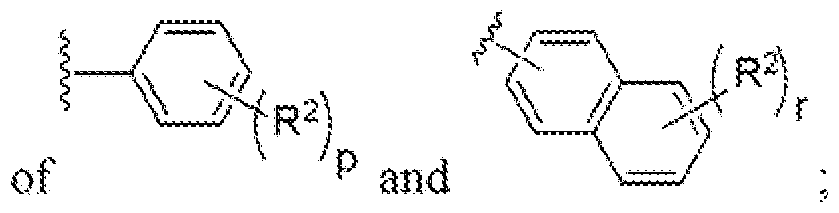
- X is selected from the group consisting of p and
- q 0, 1 , 2, 3 or 4;
- p 0, 1, 2, 3, or 4; is O, 1 , 2. 3, or 4;
- R ! is independently for each occurrence selected from the group consisting of -H, ⁇ C
- w 0, 1 or 2;
- R' is independently for each occurrence selected from the group consisting of -H and ⁇ Cj-
- R" is independently for each occurrence selected from the group consisting of ⁇ H and - CrC f> alkyl; or R' and R" are taken together with the nitrogen atom to which they are attached to form a 4-7 membered heterocyclic ring;
- R " is independently for each occurrence selected from the group consisting of -11, ⁇ Ci- Csalk l, ⁇ C]-Qal.koxy, -Ci-C ⁇ ;aJkyI-0 ⁇ Ci-C6alkyl, halogen, cyano, -OH.
- R* is selected from the group consisting of -H and -Ci-Gsalkyl
- CrC «alkyl or Cj-Csalkoxy may be independently for each occurrence optionally substituted with, one, two, or three halogens;
- the present disclosure provides a method of treating, ameliorating, preventing, or substantially delaying a hepatitis B viral infection in an individual, the method comprising administering to the individual a pharmaceutical composition disclosed herein.
- Treating includes any effect, e.g., lessening, reducing, modulating, or eliminating, that results in the improvement of the condition, disease, disorder and the like.
- alkenyl refers to an unsaturated straight or branched hydrocarbon having at least one carbon-carbon double bond, such as a straight or branched group of 2-6 or 3-4 carbon atoms, referred to herein for example as C-2-C-6 alkenyl, and CVC* alkenyl, respectively.
- alkenyl groups include, but are not limited to, vinyl, aliyl, butenyl, entenyi, etc.
- alkoxy refers to a straight or branched alky! group attached to an oxygen (a!kyl-O-).
- exemplary alkoxy groups include, but are not limited to, groups with an alkyl group of 1-6 or 2-6 " carbon atoms, referred to herein as O-Ce alkoxy, and Cj-Q alkoxy, respectively.
- exemplary alkoxy groups include, but are not limited to rnethoxy, ethoxy, isopropoxy, etc.
- alkyl refers to a saturated straight or branched hydrocarbon, such as a straight or branched group of 1-6, 1-4, or 1-3 carbon atoms, referred to herein as CrQ > alkyl, CrC 4 alkyl, and Cj- alkyl, respectively.
- alkyl groups include, but are not limited to, methyl, ethyl, propyl, isopropyl, 2-methy - 1 -propyl, 2 ⁇ methyl-2- propyl, 2-raeth.yl- l -butyl, 3 -methyl- 1 -butyl, 3-methyl-2-butyL 2,2-dimethyl- i -propyl, 2-methyl- .1 -pentyl, 3-methy 1- 1 -pentyl, 4-methyl-l -pentyl, 2 ⁇ methyi-2-pentyl, 3-methyl-2-pe «tyl ., 4-methyl- 2-pentyl, 2,2-dlmef yl- 1 -butyl, 3,3-dtmethyl- 1 -butyl, 2-ethyl- -butyl, butyl, isobutyl, t-butyl, pentyl, isopenryl, neopentyl, he
- alkytiyl refers to an unsaturated straight or branched hydrocarbon having at least one carbon-carbon triple bond, such as a straight or branched group of 2-6, or 3-6 carbon atoms, referred to herein as C , alkynyl and C3-Q a ' lkynyl, respectively.
- alkynyl groups include, but are not limited to, ethynyi propynyi, batynyl, pentynyl, hexynyl, methy!propynyl, etc.
- cycloalkyP refers to a monocyclic saturated or partially unsaturated hydrocarbon group of, for example 3-6, or 4-6 carbons, referred to herein, e.g., as C3-C6 cycloalkyl or C3 ⁇ 4 ⁇ Cs cycloalkyl.
- exemplary cycloalkyl groups include, bui are not limited to, cyclohexane, cyclohexene, cyelopentane, cyclobutane or, cyclopropane.
- halo or halogen as used herein refer to F, CI, Br, or L
- Phannaceutieally or pharmacologically acceptable include molecular entities and compositions that do not produce an adverse, allergic or other untoward reaction when administered to an animal, or a human, as appropriate.
- preparations should meet sterility, pyrogenicity, general safety, and purity standards as required by FDA Office of Biologies standards.
- compositions may also contain other active compounds providing supplemental, additional, or enhanced therapeutic functions.
- composition refers to a composition comprising at least one compound as disclosed herein formulated together with one or more pharmaceutically acceptable carriers,
- “Individual,” “patient,” or “subject” are used interchangeably and include any animal, including mammals, preferably mice, rats, other rodents, rabbits, dogs, cats, swine, cattle, sheep, horses, or primates, and most preferably humans.
- the compounds of the invention can be administered to a mammal, such as a human, but can also be administered to other mammals such as an animal in need of veterinary treatment, domestic animals ⁇ e,g., dogs, cats, and the like), farm animals (e.g., cows, sheep, pigs, horses, and the like) and laboratory animals (e.g., rats, mice, guinea pigs, and the like).
- the mammal treated in the methods of the invention is desirably a mammal in which treatment of hepatitis 8 is desired.
- “Modulation” includes antagonism (e.g., inhibition), agonism, partial antagonism and/or partial agonism.
- the term "therapeutically effective amount” means the amount of the subject compound ihat will elicit the biological or medical response of a tissue, system, animal or human that is being sought by the researcher, veterinarian, medical doctor or other clinician.
- the compounds of the invention are administered in therapeutically effective amounts to treat a disease.
- compositions that are basic in nature are capable of forming a wide variety of salts with various inorganic and organic acids.
- the acids that may be used to prepare pharmaceutically acceptable acid addition salts of such basic compounds are those that form non-toxic acid addition salts, i.e., salts containing pharmacologically acceptable anions, including but not limited to malate, oxalate, chloride, bromide, iodide, nitrate, sulfate, bisu!fate, phosphate, acid phosphate, isonicotmate, acetate, lactate, salicylate, citrate, tartrate, oleate, tannate, pantothenate, bi tartrate, ascorbate, succinate, ma!eate, gentisinate, funiarate, glu
- Compounds included in the present compositions that are acidic in nature are capable of forming base salts with various pharmacologically acceptable cations.
- Examples of such salts include alkali metal or alkaline earth metal salts and, particularly, calcium, magnesium, sodium, lithium, zinc, potassium, and iron salts.
- Compounds included in the present compositions that include a basic or acidic moiety may also form pharmaceutically acceptable salts with various amino acids.
- the compounds of the disclosure may contain both acidic and basic groups; for example, one amino and one carhoxyiic acid group. In such a case, the compound can exist as an acid addition salt, a zwitterion, or a base salt.
- the compounds of the disclosure may contain one or more chiral center and/or double bonds and, therefore, exist as stereoisomers, such as geometric isomers, enantiomers or diastereomers.
- stereoisomers when used herein consist of all geometric isomers, enantiomers or diastereomers. These compounds may be designated by the symbols “R.” or “S,” depending on the configuration of substituents around the stereogemc carbon atom.
- the present invention encompasses various stereoisomers of these compounds and mixtures thereof Stereoi somers include enantiomers and diastereomers. Mixtures of enantiomers or diastereomers may be designated ** ( ⁇ ) ** in nomenclature, but the ski lled artisan will recognize thai a structure may denote a chirai center implicitly.
- the compounds of the disclosure may contain one or more chirai centers and/or double bonds and, therefore, exist as geometric isomers, enantiomers or diastereomers.
- the enantiomer and diasiereomers may be designated by the symbols "( ⁇ + ⁇ ) > " "(-).' " or “S,” depending on the configuration of substituents around the stereogenic carbon atom, but the skilled artisan will recognize that a structure may denote a chirai center implicitly.
- Geometric isomers resulting from the arrangement of substiiuents around a carbon-carbon double bond or arrangement of substiiuents around a cycloalkyl or heterocyclic ring, can also exist in the compounds of the present invention.
- stereoisomers when used herein consist of all geometric isomers, enantiomers or diastereomers.
- the present invention encompasses various stereoisomers of these compounds and mixtures thereof
- Stereoselective syntheses a chemical or enzymatic reaction in which a single reactant forms an unequal mixture of stereoisomers during the creation of a new stereocenter or during the transformation of a pre-existing one, are well known in the art.
- Stereoselective syntheses encompass both enantio- and diastereoseiective n-ansformations.
- Carreira and Kvaerao Classics in Stereoselective Synthesis, Wiley- VCH: Weinheim, 2009, ⁇ 0032 j
- the compounds disclosed herein can exist in solvated as well as unsolvated forms with pharmaceutically acceptable solvents such as water, ethanol, and the like, and it is intended that the invention embrace both solvated and unsolvated forms.
- the compound is amorphous.
- the compound is a polymorph
- the compound is in a crystalline form.
- the invention also embraces isotopically-labeled compounds of the invention which are identical to those recited herein, except that one or more atoms are replaced by an atom having an atomic mass or mass number different from the atomic mass or mass number usually found in nature.
- isotopes thai can be incorporated into compounds of the invention include isotopes of hydrogen, carbon, nitrogen, oxygen, phosphorus, fluorine and chlorine, such as 3 ⁇ 4 3 H, W C, 54 C, ⁇ 5 N, 3 ⁇ 4, i 0, 31 P, M P, 35 S, !3 ⁇ 4 F, and 3 ⁇ ; C1, respectively.
- a compound of the invention may have one or more H atom replaced with deuterium.
- Certain isotopically-labeled disclosed compounds e.g., those labeled with 3 ⁇ 4 and
- Tritiated (i.e., H) and carbon- 14 (i.e., l C) isotopes are particularly preferred for their ease of preparation and detectability. Further, substitutio with heavier isotopes such as deuterium (te., ⁇ H) may afford certain therapeutic advantages resulting from greater metabolic stability (e.g., increased in vivo halt-life or reduced dosage requirements) and hence may be preferred in some circumstances.
- IsotopicalSy labeled compounds of the invention can generally be prepared by following procedures analogous to those disclosed in the e.g., Examples herein by substituting an isotopkail labeled reagent for a non-isoiopically labeled reagent,
- prodrug refers to compounds that are transformed m vivo to yield a disclosed compound or a pharmaceutically acceptable salt, hydrate or solvate of the compound.
- the transformation may occur by various mechanisms (such as by esterase, amidase, phosphatase, oxidative and or reductive metabolism) in various locations (such as in the intestinal lumen or upon transit of the intestine, blood or liver).
- Prodrugs are well known in the art (for example, see Rautio, Kumpulainen, el al, Nature Reviews Drug Discovery 2008, 7, 255).
- a pr odrug can comprise an ester formed by the replacement of the hydrogen atom of the acid group, for example with a group such as ( €] ⁇ C$)alkyl 3 (CrC)2 ⁇ alkanoyioxyhurlryl, 1 -(alkanoyloxy )ethyl having from.
- a prodrug can be formed by the replacement of the hydrogen atom of the alcohol group with a group such as, for example, (Cs-Cslalkanoyloxymeihyl, l -((C's intends)aSkanoyloxy)ethyL I-methyl-l-((CrC fJ )aikanoyloxy)ethyi (Ci-Cf,)alk.oxycarbonyloxymeth.yi, N-(C
- a prodrug can be formed, for example,, by creation of an amide or carbamate, an A3 ⁇ 4eyloxyakyi derivative. an (oxodioxoleayI)raethyl derivative, an N- annicb base, inline or enamine.
- a secondary amine can be metabolically cleaved to generate a bioactive primary amine, or a tertiary amine can metabolically cleaved to generate a bioactive primary or secondary amine.
- Tile present invention is based in part on the discovery of that certain classes of com pounds such as t hose described herein may acti vate assembl y of the viral capsid. independent of the norma! nucleating signals, e.g. act as core protein allosferic modulators having an effect against HBV.
- disclosed compounds may activate assembly of the viral capsid independent of the normal nucleating signals.
- Hepatitis B vims for example, consists of an envelope, a nucleoeapsid core, viral
- the viral DNA is converted into a covalently-closed circular
- cccDNA which codes for a pregenomic RNA (pg RNA) and other mRNAs.
- the pregenomic RNA exported to the cytoplasm, codes for core protein and the reverse transcriptase. Encapsidation of the pregenomic RNA and the reverse transcriptase by core protein results in the formation of immature HBV cores which matiiraie as the pregenomic RN A is reverse transcribed to the circular and partially double stranded DNA, completing the cycle.
- capsid assembly begins with an CpAM » Cp (Assembly effec ⁇ or " ore protein) complex instead of waiting for the biological RT « pgRNA nucleating complex; the resulting capsid is thus defective.
- CpAMs can leverage consumptio of a few molecules needed tor nucieation to consume for example up to 1 17 Cp diniers.
- CpAMs may have one or both of activities such as substantially interacting with or e.g., binding to Cp dimers, activating assembly, and/or substantially binding or interacting with capsids at e.g.. a higher affinity as compared to binding to the Cp dimer.
- O042 Core proteins also have roles upstream of capsid assembly and are associated with nuclear cccDNA and affect their stability and transcription; they are involved in export of the pregenomic R A from the nucleus,
- the compounds provided herein may affect virus assembly by interacting with core protein dimers as well as eapsids, and/or may affect core protein activity upstream of capsid assembly.
- Defective assembly can immediately suppress virus production. Suppressed Cp activity upstream of assembly can also interfere with activities of the virus required for stability of the infection itself.
- provided compounds may successfully treat HBV with a finite course of therapy (as opposed to the potentially life-long therapy necessary with current antiviral nucleosides/nucleotides), e.g. such finite therapy would result from a loss of new viral proteins and mRNA resulting from epigenetic modification of the viral cccDNA, as well as a reduction in new infectious virions.
- disclosed compounds may activate viral capsid assembly independent of the normal nucleating signals leading to defect e assembly, capsid assembly begins with an AE » Cp complex instead of waiting for the biological RT*pgRNA nucleating complex; the resulting capsid or aberrant complex, e.g., cannot support production of a new virion.
- disclosed compounds may leverage consumption of a few molecules needed for nucleation to consume up to 120 Cp dimers.
- disclosed compounds may, for example, alter the concentration of Cp (core protein), likely required for activities upstream of capsid assembly. Suppressing Cp activity upstream of assembly interferes with the Cp interactions with the viral reservoir (cccDNA). This may lead to clearance of the infection by reduction of viral proteins and cccDNA activity'',
- composition comprising; (i) a compound of Formula 1 ha ving the structure:
- q 0, 1, 2. 3 or 4;
- p 0, L 2, 3, or 4;
- r 0, 1, 2, 3, or 4;
- R l is independently for each occurrence selected from the group consisting of -H, -CV
- w 0, 1 or 2;
- R' is independently for each occurrence selected from the group consisting of -H and -C Cijalkyl
- .R is independently for eac occurrence selected from the group consisting of -H and - C ⁇ -C f. ;alkyl; or R' and R" are taken together with the nitrogen atom to which they are attached to form a 4-7 membered heterocyclic ring;
- R 2 is independently for each occurrence selected from the group consisting of -H, -C € 6 alkyJ, -Ci-Qalkoxy, -Ci-Csalkyi-O-d-Csalkyl, halogen, cyano, -OH, -C(Q)H.
- ' is selected from the group consisting of -H and -CVC ⁇ alkyl
- Cj -Chalky! or Ct-Cgalkoxy may he independently for eac occurrence optionally substituted with one, two ; or three halogens;
- p is 1 or 2.
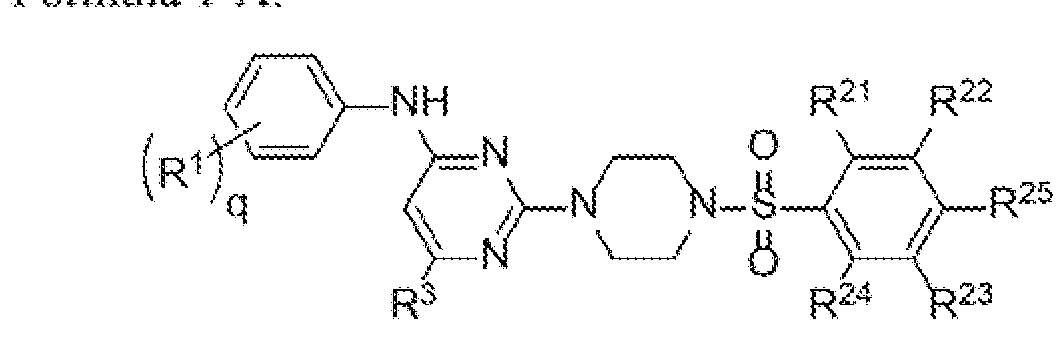
- the compound of Formula 1 is represented b Formula 1-
- R ! is independently for each occurrence selected from the group consisting of -H, ⁇ C
- R ⁇ is independently for each occurrence selected from the group consisting of -H and halogen
- R" is independently for each occurrence selected from the group consisting of -H, -Ci- Qalkyl, -Cj-Csalkoxy, -Ci-Qalkyl-O-CVQalkyl, halogen, cyano, -OH, - €(0) 1, -C0 2 R', - C(0)N ⁇ R')(R"), -C(0)CrC6alkyl, - R')(R") 5 -N0 2? -N(R')C(0)Ci-Gialky!, -S(0) w -Cr Cealky!, -N(R S(OVCj-C «alkyi, and -S(OVN(R')(R");
- R "" ' is independently for each occurrence selected from the group consisting of -H, ⁇ Ci- Csalk l, -C]-Qa1.koxy, -Cj-Qalkyl-O-Ci-Oiaikyl, halogen, cyano, -OH.
- R * * is independently for each occurrence selected from the group consisting of-H and halogen
- R " is independently for each occurrence selected from the group consisting of -H, -CV Qaikyk -Ci-C'calkoxy, -Ci-C «alkyl-0-C ⁇ -O#!kyl, halogen, cyano, -OH, -C(0)H 5 -CO2R', - C(0)N ⁇ R')(R"), -C ⁇ 0)Ci-Olkyl, -N(R ') ⁇ 3 ⁇ 4"), -NO3 ⁇ 4 ⁇ N(R i )C(0)CrC i! ai-kyl 3 -S(0)wCi- C 6 aIkyL
- q 0, .1 , 2, 3 or 4;
- R' is independently for each occurrence selected from the group consisting of -H and -C3 ⁇ 4- C ⁇ alky!;
- R" is independently for each occurrence selected from the group consisting of -H and - Cj-Cealkyi; or R' and R" are taken together with the nitrogen atom to which they are attached to form a 4-7 membered heterocyclic ring;
- R ':' is selected from the group consisting of-H and -Cj-Csalkyl
- Cj-Qalkyl or Ci-Csalkox may be independently for each occurrence optionally substituted with one, two,, or three halogens; wherein CrQalkyl or CVQalkoxy may be independently for each occurrence optionally substituted with one, two, or three halogens.
- R 2i and/or R ⁇ 4 is -HL
- R ** is selected from th group consisting of H, -Ci-
- R" is independently for each occurrence seleeted from the group consisting of ⁇ H, -Cj-Cgalkyl, and halogen.
- R 2 "' is selected from the group consisting of H, -O-
- R A ' is independently for each occurrence selected from the group consisting of -H, -Ci-Cealkyl. -C . t-C ⁇ > alkoxy, and halogen.
- Cealkyl, -C r C «aIkoxy, halogen, cyano, -COiR', -N(R C(O)Cj-C 6 alkyi s -C(0)N(R')(R"), -
- R f is seleeted independently for each occurrence from the group consisting of -H, -Cj-Qalkyl, -CrC ⁇ alkoxy, halogen, cyano, and -OH.
- q is 1 or 2.
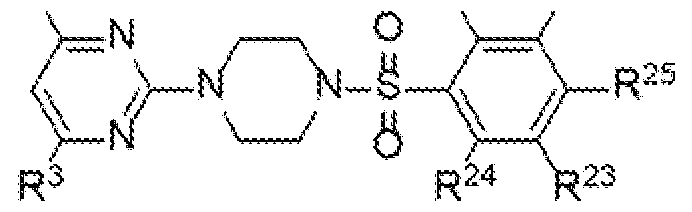
- the compound of Formula. I is represented by Formula 1-
- R* is selected from the group consisting o -H, - €3 ⁇ 4, -CH2CH3, -CF*, -F, ⁇ CI, -Br, cyano, -OCH3 ⁇ 4 and -OCl3 ⁇ 4
- R 2 is selected from the group consisting of ⁇ H, ⁇ C3 ⁇ 4, ⁇ F, and -OCH3; and 2 ' is selected from the group consisting of -H, - € ⁇ 3 ⁇ 4, -C3 ⁇ 4Ci3 ⁇ 4, -CH 2 CH 2 CH 2 CB*, -CF 3 , -F, -Ci, -OI L ⁇ GC3 ⁇ 4, ⁇ X3 ⁇ 4C)3 ⁇ 4, -OC(CS3 ⁇ 4) 3 , ⁇ OCB 2 CH 2 CTI 2 CH 3 , -N3 ⁇ 4, ⁇ NHCH 3 ⁇ - NHC(0)CFJ 3 , - HC(0)C i, -OCHF 2 , and -OCF3 ⁇ 4, with other R subsitituents as above.
- R of Formula 1 , 1 -A or 1 -B is selected from the group consisting of-CH 3 , -CH(CH 3. h, -CH 2 CH 2 CH 3 ⁇ 4 -CF 3> and -C(CH 3 ) 3 ,
- R * of Formula I, 1-A or 1-B is selected from the group consisting of -H, ⁇ CH 3j ⁇ CH 2 CH 3 , -CF 3 , -F, -CI, -Br, -CN, -OCi3 ⁇ 4, and -OCF3.
- the present disclosure provides a method of treating, ameliorating, preventing, or substantially delaying a hepatitis B viral infection in an individual, the method comprising administering to the individual a compound or a pharmaceutical composition disclosed herein.
- the present disclosure relates to use of a compound of Formula
- Disclosed compounds may be prepared by methods known in the art.
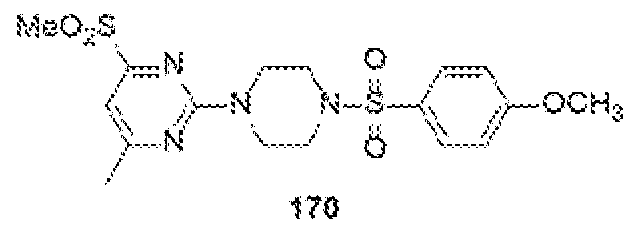
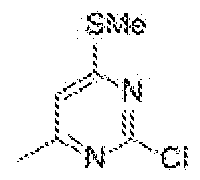
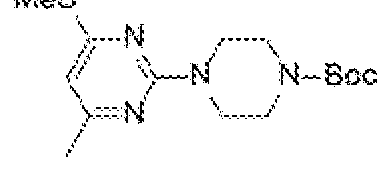
- a disclosed compound may be preparing using a method comprising providing 2,4-dichioro-6-substituted pyrimidine and a ⁇ substituted aniline group together in an organic solvent (wherein R may be selected from R l above), and then contacting a resultant compound with Z (e.g. pipera ine or 4- aniiiio aniline group).
- HBV infection e.g. an. acute or chronic HBV infection
- a method for treating HBV infection includes administering to a patient a pharmaceutical composition comprising a therapeutically effective amount of a disclosed compound.
- the appropriate dosage is expected to vary depending on, for example, the particular compound employed, the mode of administration, and the nature and severit of the infection to be treated as well as the specific infection to be treated and is within the purview of the treating physician.
- an indicated administration dose may be in the range between about 0.1 to about 15 mg/kg body weight.
- the administration dose of the compound may be less than 10 mg kg body weight.
- the administration dose may be less than 5 mg kg body weight.
- the administration dose may be in the range between about 0.1 to about I rag kg body weight.
- the dose may be conveniently administered once daily, or in divided doses up to, for example, four times a day or i sustained release town.
- a compound or composition may be administered by any conventional route, in particular: enieraSly, topically, orally, nasally, e.g. in the form of tablets or capsules, via suppositories, or parenteral ly, e.g. in the form of injectable solutions or suspensions, for intravenous, mtra-rmiscu!ar, sub-cutaneous, or intraperitoneal injection.
- Suitable formulations and pharmaceutical compositions will include those formulated in a conventional manner using one or more physiologically acceptable carriers or excipients, and any of those known and commercially available and currently employed in the clinical setting.
- the compounds may be formulated for oral, buccal, topical, parenteral, rectal or transdermal administration or in a form suitable for administration by inhalation or insufflation (either orally or nasally).
- compositions may take the form of. for example, tablets or capsules prepared by conventional means with pharmaceutically acceptable excipients such as binding agents (e.g. prege latinized maize starch, polyvinylpyrrolidone or hydroxy-propyl methylcellulose); fillers (e.g. lactose, macrocrystalline cellulose or calcium hydrogen phosphate); lubricants (e.g. magnesium stearate, talc or silica); disintegrants (e.g. potato starch or sodium, starch glycoHate); or wetting agents (e.g.. sodium lauryl sulfate). Tablets may be coated by methods well known in the art.
- pharmaceutically acceptable excipients such as binding agents (e.g. prege latinized maize starch, polyvinylpyrrolidone or hydroxy-propyl methylcellulose); fillers (e.g. lactose, macrocrystalline cellulose or calcium hydrogen phosphate); lubricants (e.g. magnesium stearate, talc
- Liquid preparations for oral administration may take the form of, for example, solutions, syrups or suspensions, or they may be presented as a dry product for constitution with water or other suitable vehicle before use.
- Such liquid preparations may be prepared by conventional means with pharmaceutically acceptable additives such as suspending agents (e.g. sorbitol syrup, cellulose derivatives or hydrogenated edible fats); emulsifying agents (e.g. lecithin or acacia); non-aqueous vehicles (e.g. almond oil. oily esters, ethyl alcohol or fractionated vegetable oils); and preservatives (e.g. methyl or propyl-p- hydroxybenzoates or sorbic acid). Preparations may also contain buffer salts, flavoring, coloring and sweetening agents as appropriate.
- suspending agents e.g. sorbitol syrup, cellulose derivatives or hydrogenated edible fats
- emulsifying agents e.g. lecithin or acacia
- non-aqueous vehicles
- compositions for oral administration may also be suitably formulated to give controlled-release or sustained release of the active compound(s) over an extended period.
- buccal administration the compositions may take the form of tablets or lozenges formulated in a conventional manner known to the skilled artisan.
- a compound may also be formulated for parenteral administration by injection e.g. by bolus injection or continuous infusion.
- Formulations for injection may be presented in unit dosage form e.g. in ampoules or in multi-dose containers, with an added preservative.
- the compositions may take such forms as suspensions, solutions or emulsions in oily or aqueous vehicles, and ma contain additives such as suspending, stabilizing and/or dispersing agents.
- the compound may be in powder form for constitution with a suitable vehicle, e.g. sterile pyrogen-free water, before use.
- Compounds ma also be formulated for rectal administratio as suppositories or retention enemas, e.g. containing conventional suppository bases such as cocoa butter or other glycerides.
- disclosed compounds may be administered as part of a combination therapy in conjunction with one or more antivirals.
- antivirals include nucleoside analogs, interferon a, and other assembly effectors, for instance heteroaryl.dihydropyrimidi.nes (HAPs) such as methyl 4-(2-chloro-4- ⁇ luorophenyl)-6-methyl-2- (pyridm-2-yl)- 1 ⁇ -dihydropj'rimidine-S-carboxylate.
- HAPs heteroaryl.dihydropyrimidi.nes
- This may involve administering to a subject a first amount of a disclosed compound In combination with a second amount of an antiviral, wherein the first and second amounts together comprise a pharmaceutically effective amount.
- the first amount, the second amount, or both may be the same, more, or less than effective amounts of each compound administered as monotherapies.
- Therapeutically effective amounts of disclosed compound and antiviral may be co-administered to the subject, i.e., administered to the subject simultaneously or separately, in any given order and by the same or different routes of administration, in some instances, it may be advantageous to initiate administration of a disclosed compound or composition first, for example one or more days or weeks prior to initiation of administration of the antiviral.
- additional drugs may be given in conjunction with the above combination therapy.
- reaction was monitored by TLC; after completion the reaction, the reaction mixture was diluted with CH 2 CI 2 (30 mL), washed with water (15 mL), 1 N HCl (10 mL), 10% aHCCn solution (15 mL), brine (15 mL), dried over sodium sulfate, filtered and concentrated in vacuo to obtain the crude product.
- the precipitated material was either directly dried in vacuo or triturated or purified by column chromatography to afford the desired target compounds.
- the reactioa was monitored by TLC; after completion of the reaction, the reaction mixture was diluted with C3 ⁇ 4Ck (30 mL), washed with i N HC1 (15 mL), 10% NaHC0 3 solution (20 mL), water (20 mL,), dried over sodium sulfate, filtered and concentrated in vacuo to obtain the crude product.
- the crude product was washed with diethyl ether (2 x 5 mL) and «-pentane (2 x 5 mL) and dried in vacuo to afford compound 64 (110 mg, 67%) as a white solid, TLC: 5% MeOH/ CH2CI2 (Rf.
- To a stirred solution of compound 65 (140 mg, 0.31 .mmol) in A ;i ,A' ⁇ diiuethylformam.ide ( DM F; 5 ml) under argon atmosphere were added potassium carbonate (1 10 mg, 0.79 mmol), methyl iodide (0.05 mL, 0.79 mmol) at 0 °C; warmed to 50 °C and stirred for 1 h.
- reaction was monitored by TLC; after completion the reaction, the reaction mixture was diluted with water (20 ml.) and extracted with C3 ⁇ 4C3 ⁇ 4 (2 x 20 mL). The combined organic extracts were dried over sodium sulfate, filtered and concentrated in vacuo to obtain the crude product.
- the crude product was purified through silica gel column
- reaction was monitored by TLC: after completion of the reaction, the reaction mixture was diluted with water (30 mL) arid extracted with CHjCi? (2 x 70 mL). The combined organic extracts were dried over sodium sulfate, filtered and concentrated hi vacuo to obtain the crude product. The crude product was purified through silica gel column chromatography using 20% EtOAc/ hexanes to afford compound 72 (160 mg, 37%) as an off- white solid. TLC: 40% EtOAc/ hexanes (R/.
- reaction was monitored by TLC; after completion of the reaction, the reaction mixture was diluted with water (20 mL) and extracted with C3 ⁇ 4C3 ⁇ 4 (2 x 30 mL); the combined organic extracts were dried over sodium sulfate, filtered and concentrated in vacuo to obtain the crude product.
- the crude product was purified through silica gel column chromatography using 20% EtOAc/ hexanes to afford compound 73 (40 rag, 23%) as an off-white solid.
- TLC 30% EtOAc/ hexanes (R/.
- the reaction was monitored by TLC; after completio of the reaction, the voiatiies were removed in vacuo to obtain the crude product.
- the crude product was purified through silica gel column chromatography using 15% EtOAc/ hexanes to afford compound 86 (65 mg, 68%) as a low me!ting colorless solid.
- reaction was monitored by TLC; after completion of the reaction.
- the reaction mixture was diluted with €33 ⁇ 4 ⁇ 3 ⁇ 4 (20 mL) and washed with 2 N HC! (2 x 10 mL).
- the organic layer was dried over sodium sulfate, filtered and concentrated in vacuo to obtain the crude product, which was precipitated with 20% EtOAc/ hexanes to afford 29 (25 mg, 45%) as an oil- white solid.
- TLC 5% CH 3 OH/ CH 2 C1 2 ⁇ Rf.
- Compound 9 may aiso be prepared from trichloropyrinridine and isopropyl magnesium chloride as described above.
- reaction was monitored by TLC; after completion of the reaction, the reaction mixture was diluted with water (15 mL), the pM was adjusted to ⁇ 8 with aqueous saturated NaHCOj solution (10 mL), and extracted with EtOAc (2 x 30 mL), The combined organic extracts were dried over sodium sulfate, filtered and concentrated in vacuo to obtain the crude compound 95 (50 mg, 87%) as white solid.
- reaction was monitored by T LC; after completion of the reaction, the reaction mixture was diluted with €3 ⁇ 4(3 ⁇ 4 (30 raL) and washed with I HCI (10 mL), followed by aqueous saturated NaHC ⁇ 3 ⁇ 4 solution (10 mL). The organic layer was dried over sodium sulfate, filtered and concentrated in vacuo to obtain the crude product, which was triturated with 2% Q3 ⁇ 4CI? »- pentane to afford 31 (30 mg, 40%) as a white solid, TLC: 5% CH3OH/ CH 2 C1 2 (Rf.
- reaction was monitored by TLC: after completion of the reaction, the reaction mixture was dilated with Q3 ⁇ 4(3 ⁇ 4 (15 mL), washed with 10% aqueous NaHC(1 ⁇ 4 solution (10 mL) and 1 N HC1 (2 15 ml). The organic layer was dried over sodium sulfate, filtered and concentrated in vacuo to obtain the crude product which was triturated with 5% EtOAc/ «-pentane (2 x 5 mL) to afford 33 (35 mg, 47%) as an off-white solid.
- reaction was monitored by TLC; after completion of the reac tion, the reaction mixture was diluted with ice cold water (20 mL) and the pH was iieuiralized with 6 N HCL The precipitated solid was filtered, washed with EtOAc (2 x 5 mL), water (2 x 10 mL) and dried in vacuo to afford compound 172 (1 g, 62%) as a yello syrup.
- TLC 40% EtOAc/ hexane (Rf.
- Target compound ' 5 is shown below and ma be prepared by known methods
- a screening for assembly effector activity was conducted based on a fluorescence quenching assay developed in the Ziotnick lab (Stray t al. y 2006; Ziotnick ei a/., 2007).
- a Cp mutant is specifically labeled with a fluorescent dye. In the dimeric state fluorescence is intense. However, when the Cp assembles, the dye moiecuies accumulate at fivefold and quasi-sixfold vertices to self quench by up to 95%.
- M the high throughput screen, the Cp concentration is chosen so that addition ofNaCl, typically 150 jnM or 300 ni is sufficient to induce about 25% assembly. Thus, assembly effectors that enhance assembly are readily detected.
- I ' etracycl e-free treatment medium 15 mL DMEM/F12 (1: 1) (cat S 30023.01, Hycione, x Pen/step (cat#; 30- 002-CL, Medtatech, Inc), with 2% BS, Tet-system approved (cat#; 631 106, Clontech) were then added to mix and spun at ⁇ 300 rpm for 5 min. Pelleted cells were then re- suspended/ washed with 50 mL of .1 BS 2 times and 10 mL treatment medium one time.
- AD38 cells were then re-suspended with 10 mL of treatment medium and counted.
- Well of a collagen coated 96-we!i NUNC microliter plate were seeded at 50,000/well in 180 ⁇ . of treatment medium, and 20 ⁇ of either 10% DMSO (Control) or a iOX solution of test compound in 1 % DMSO in treatment media was added for a final compound concentration 1, 3, or 10 ⁇ . (1 ,0% final [DMSO]) and plates were incubated for 5 days at 37 °C.
- Viral load was quantitated against known standards by using Vii ATM 7 Software. Viral load in the supernatant from wells with treated cells were compared against viral load in supernatant from DMSO control wells (> 3 per plate), hi Table 4, concentrations of test compound causing reductions in viral load greater than at least 3 standard deviations from the DMSO controls across all plates were consideired active, with (+) depicting meets criteria for significant activity, and ( ⁇ + ⁇ +) depicting exceeds criteria.
Landscapes
- Chemical & Material Sciences (AREA)
- Organic Chemistry (AREA)
- Health & Medical Sciences (AREA)
- Medicinal Chemistry (AREA)
- Pharmacology & Pharmacy (AREA)
- Epidemiology (AREA)
- Life Sciences & Earth Sciences (AREA)
- Animal Behavior & Ethology (AREA)
- General Health & Medical Sciences (AREA)
- Public Health (AREA)
- Veterinary Medicine (AREA)
- Pharmaceuticals Containing Other Organic And Inorganic Compounds (AREA)
- Acyclic And Carbocyclic Compounds In Medicinal Compositions (AREA)
Abstract
Description









Claims




Priority Applications (6)
| Application Number | Priority Date | Filing Date | Title |
|---|---|---|---|
| US15/030,378 US10220034B2 (en) | 2013-10-18 | 2014-10-16 | Hepatitis B viral assembly effectors |
| ES14853713T ES2739435T3 (en) | 2013-10-18 | 2014-10-16 | Hepatitis B viral assembly effectors |
| CN201480068103.XA CN105828823B (en) | 2013-10-18 | 2014-10-16 | Hepatitis B virus assembly effector |
| CA2927560A CA2927560A1 (en) | 2013-10-18 | 2014-10-16 | Hepatitis b viral assembly effectors |
| EP14853713.7A EP3057592B1 (en) | 2013-10-18 | 2014-10-16 | Hepatitis b viral assembly effectors |
| AU2014337298A AU2014337298B2 (en) | 2013-10-18 | 2014-10-16 | Hepatitis B viral assembly effectors |
Applications Claiming Priority (2)
| Application Number | Priority Date | Filing Date | Title |
|---|---|---|---|
| US201361892591P | 2013-10-18 | 2013-10-18 | |
| US61/892,591 | 2013-10-18 |
Publications (1)
| Publication Number | Publication Date |
|---|---|
| WO2015057945A1 true WO2015057945A1 (en) | 2015-04-23 |
Family
ID=52828690
Family Applications (1)
| Application Number | Title | Priority Date | Filing Date |
|---|---|---|---|
| PCT/US2014/060869 Ceased WO2015057945A1 (en) | 2013-10-18 | 2014-10-16 | Hepatitis b viral assembly effectors |
Country Status (7)
| Country | Link |
|---|---|
| US (1) | US10220034B2 (en) |
| EP (1) | EP3057592B1 (en) |
| CN (1) | CN105828823B (en) |
| AU (1) | AU2014337298B2 (en) |
| CA (1) | CA2927560A1 (en) |
| ES (1) | ES2739435T3 (en) |
| WO (1) | WO2015057945A1 (en) |
Cited By (40)
| Publication number | Priority date | Publication date | Assignee | Title |
|---|---|---|---|---|
| WO2017197051A1 (en) | 2016-05-10 | 2017-11-16 | C4 Therapeutics, Inc. | Amine-linked c3-glutarimide degronimers for target protein degradation |
| WO2017197055A1 (en) | 2016-05-10 | 2017-11-16 | C4 Therapeutics, Inc. | Heterocyclic degronimers for target protein degradation |
| WO2017197036A1 (en) | 2016-05-10 | 2017-11-16 | C4 Therapeutics, Inc. | Spirocyclic degronimers for target protein degradation |
| WO2017197046A1 (en) | 2016-05-10 | 2017-11-16 | C4 Therapeutics, Inc. | C3-carbon linked glutarimide degronimers for target protein degradation |
| US9873671B2 (en) | 2014-01-16 | 2018-01-23 | Novira Therapeutics, Inc. | Azepane derivatives and methods of treating hepatitis B infections |
| US9884818B2 (en) | 2013-05-17 | 2018-02-06 | Janssen Sciences Ireland Uc | Sulphamoylpyrrolamide derivatives and the use thereof as medicaments for the treatment of hepatitis B |
| US9895349B2 (en) | 2013-04-03 | 2018-02-20 | Janssen Sciences Ireland Us | N-phenyl-carboxamide derivatives and the use thereof as medicaments for the treatment of hepatitis B |
| US10071961B2 (en) | 2013-10-23 | 2018-09-11 | Janssen Sciences Ireland Uc | Carboxamide derivatives and the use thereof as medicaments for the treatment of hepatitis B |
| US10077239B2 (en) | 2015-09-29 | 2018-09-18 | Novira Therapeutics, Inc. | Crystalline forms of a hepatitis B antiviral agent |
| EP3283472A4 (en) * | 2015-04-17 | 2018-09-19 | Indiana University Research&Technology Corporation | Hepatitis b viral assembly effectors |
| US10125094B2 (en) | 2013-02-28 | 2018-11-13 | Janssen Sciences Ireland Uc | Sulfamoyl-arylamides and the use thereof as medicaments for the treatment of hepatitis B |
| US10160743B2 (en) | 2013-05-17 | 2018-12-25 | Janssen Sciences Ireland Uc | Sulphamoylthiophenamide derivatives and the use thereof as medicaments for the treatment of hepatitis B |
| US10196376B2 (en) | 2011-12-21 | 2019-02-05 | Novira Therapeutics, Inc. | Hepatitis B antiviral agents |
| US10213420B2 (en) | 2014-02-05 | 2019-02-26 | Novira Therapeutics, Inc. | Combination therapy for treatment of HBV infections |
| WO2019086142A1 (en) | 2017-11-02 | 2019-05-09 | Aicuris Gmbh & Co. Kg | Novel, highly active pyrazolo-piperidine substituted indole-2-carboxamides active against the hepatitis b virus (hbv) |
| WO2019086141A1 (en) | 2017-11-02 | 2019-05-09 | Aicuris Gmbh & Co. Kg | Novel, highly active amino-thiazole substituted indole-2-carboxamides active against the hepatitis b virus (hbv) |
| US10328053B2 (en) | 2016-08-26 | 2019-06-25 | Gilead Sciences, Inc. | Substituted pyrrolizine compounds and uses thereof |
| US10392349B2 (en) | 2014-01-16 | 2019-08-27 | Novira Therapeutics, Inc. | Azepane derivatives and methods of treating hepatitis B infections |
| US10441589B2 (en) | 2016-04-15 | 2019-10-15 | Novira Therapeutics, Inc. | Combinations and methods comprising a capsid assembly inhibitor |
| US10450270B2 (en) | 2013-07-25 | 2019-10-22 | Janssen Sciences Ireland Uc | Glyoxamide substituted pyrrolamide derivatives and the use thereof as medicaments for the treatment of hepatitis B |
| US10537580B2 (en) | 2015-03-19 | 2020-01-21 | Novira Therapeutics, Inc. | Azocane and azonane derivatives and methods of treating hepatitis B infections |
| EP3641762A1 (en) | 2017-06-20 | 2020-04-29 | C4 Therapeutics, Inc. | N/o-linked degrons and degronimers for protein degradation |
| WO2020089452A1 (en) | 2018-11-02 | 2020-05-07 | Aicuris Gmbh & Co. Kg | Novel urea 6,7-dihydro-4h-pyrazolo[4,3-c]pyridines active against the hepatitis b virus (hbv) |
| WO2020089456A1 (en) | 2018-11-02 | 2020-05-07 | Aicuris Gmbh & Co. Kg | Novel urea 6,7-dihydro-4h-pyrazolo[1,5-a]pyrazines active against the hepatitis b virus (hbv) |
| WO2020089459A1 (en) | 2018-11-02 | 2020-05-07 | Aicuris Gmbh & Co. Kg | Novel urea 6,7-dihydro-4h-pyrazolo[1,5-a]pyrazines active against the hepatitis b virus (hbv) |
| WO2020089460A1 (en) | 2018-11-02 | 2020-05-07 | Aicuris Gmbh & Co. Kg | Novel urea 6,7-dihydro-4h-thiazolo[5,4-c]pyridines active against the hepatitis b virus (hbv) |
| WO2020089453A1 (en) | 2018-11-02 | 2020-05-07 | Aicuris Gmbh & Co. Kg | Novel 6,7-dihydro-4h-pyrazolo[1,5-a]pyrazine indole-2-carboxamides active against the hepatitis b virus (hbv) |
| WO2020089455A1 (en) | 2018-11-02 | 2020-05-07 | Aicuris Gmbh & Co. Kg | 6,7-dihydro-4h-pyrazolo[1,5-a]pyrazine indole-2-carboxamides active against the hepatitis b virus (hbv) |
| US10676429B2 (en) | 2012-08-28 | 2020-06-09 | Janssen Sciences Ireland Uc | Sulfamoyl-arylamides and the use thereof as medicaments for the treatment of hepatitis B |
| WO2020132561A1 (en) | 2018-12-20 | 2020-06-25 | C4 Therapeutics, Inc. | Targeted protein degradation |
| WO2020221824A1 (en) | 2019-04-30 | 2020-11-05 | Aicuris Gmbh & Co. Kg | Novel indolizine-2-carboxamides active against the hepatitis b virus (hbv) |
| WO2020221826A1 (en) | 2019-04-30 | 2020-11-05 | Aicuris Gmbh & Co. Kg | Novel indole-2-carboxamides active against the hepatitis b virus (hbv) |
| WO2020221811A1 (en) | 2019-04-30 | 2020-11-05 | Aicuris Gmbh & Co. Kg | Novel oxalyl piperazines active against the hepatitis b virus (hbv) |
| WO2020221816A1 (en) | 2019-04-30 | 2020-11-05 | Aicuris Gmbh & Co. Kg | Novel phenyl and pyridyl ureas active against the hepatitis b virus (hbv) |
| US10836769B2 (en) | 2018-02-26 | 2020-11-17 | Gilead Sciences, Inc. | Substituted pyrrolizine compounds and uses thereof |
| US10875876B2 (en) | 2015-07-02 | 2020-12-29 | Janssen Sciences Ireland Uc | Cyclized sulfamoylarylamide derivatives and the use thereof as medicaments for the treatment of hepatitis B |
| US10973801B2 (en) | 2018-03-14 | 2021-04-13 | Janssen Sciences Ireland Unlimited Company | Capsid assembly modulator dosing regimen |
| US11078193B2 (en) | 2014-02-06 | 2021-08-03 | Janssen Sciences Ireland Uc | Sulphamoylpyrrolamide derivatives and the use thereof as medicaments for the treatment of hepatitis B |
| WO2022058745A3 (en) * | 2020-09-18 | 2022-04-21 | Imperial College Innovations Limited | Imidazo[1,2-a]pyridine compounds and their use in therapy |
| US11491148B2 (en) | 2019-05-06 | 2022-11-08 | Janssen Sciences Ireland Unlimited Company | Amide derivatives useful in the treatment of HBV infection or HBV-induced diseases |
Families Citing this family (1)
| Publication number | Priority date | Publication date | Assignee | Title |
|---|---|---|---|---|
| CN108976172B (en) * | 2017-05-31 | 2021-12-07 | 华东师范大学 | 4-pyrimidinediamine micromolecule organic compound and derivative and application thereof |
Citations (4)
| Publication number | Priority date | Publication date | Assignee | Title |
|---|---|---|---|---|
| WO2007035010A2 (en) | 2005-09-23 | 2007-03-29 | Equispharm Co., Ltd | 5,6-dimethylthieno[2,3-di] pyrimidine derivatives, the preparation method thereof and the pharmaceutical composition comprising the same for anti-virus |
| WO2010118367A2 (en) | 2009-04-10 | 2010-10-14 | Progenics Pharmaceuticals, Inc. | Antiviral pyrimidines |
| US20110288082A1 (en) * | 2010-05-07 | 2011-11-24 | Deshaies Raymond J | Methods and compositions for inhibition of the transitional endoplasmic reticulum atpase |
| WO2013019967A1 (en) * | 2011-08-02 | 2013-02-07 | Scripps Research Institute, A Not-For-Profit Public Benefit Corporation Of California | Modulators of virus assembly as antiviral agents |
Family Cites Families (4)
| Publication number | Priority date | Publication date | Assignee | Title |
|---|---|---|---|---|
| WO2006004776A1 (en) | 2004-06-29 | 2006-01-12 | Rigel Pharmaceuticals, Inc. | 4-pyrimidineamine compounds and their uses as anti-proliferative agents |
| US20060293343A1 (en) | 2005-05-18 | 2006-12-28 | Asahi Kasei Pharma Corporation | Pyrimidine derivatives |
| AU2012244550C1 (en) | 2011-04-21 | 2017-06-22 | Origenis Gmbh | Pyrazolo [4, 3-d] pyrimidines useful as kinase inhibitors |
| US9637491B2 (en) | 2012-10-19 | 2017-05-02 | Origenis Gmbh | Pyrazolo[4,3-D]pyrimidines as kinase inhibitors |
-
2014
- 2014-10-16 ES ES14853713T patent/ES2739435T3/en active Active
- 2014-10-16 WO PCT/US2014/060869 patent/WO2015057945A1/en not_active Ceased
- 2014-10-16 AU AU2014337298A patent/AU2014337298B2/en not_active Ceased
- 2014-10-16 CA CA2927560A patent/CA2927560A1/en not_active Abandoned
- 2014-10-16 EP EP14853713.7A patent/EP3057592B1/en not_active Not-in-force
- 2014-10-16 CN CN201480068103.XA patent/CN105828823B/en not_active Expired - Fee Related
- 2014-10-16 US US15/030,378 patent/US10220034B2/en not_active Expired - Fee Related
Patent Citations (4)
| Publication number | Priority date | Publication date | Assignee | Title |
|---|---|---|---|---|
| WO2007035010A2 (en) | 2005-09-23 | 2007-03-29 | Equispharm Co., Ltd | 5,6-dimethylthieno[2,3-di] pyrimidine derivatives, the preparation method thereof and the pharmaceutical composition comprising the same for anti-virus |
| WO2010118367A2 (en) | 2009-04-10 | 2010-10-14 | Progenics Pharmaceuticals, Inc. | Antiviral pyrimidines |
| US20110288082A1 (en) * | 2010-05-07 | 2011-11-24 | Deshaies Raymond J | Methods and compositions for inhibition of the transitional endoplasmic reticulum atpase |
| WO2013019967A1 (en) * | 2011-08-02 | 2013-02-07 | Scripps Research Institute, A Not-For-Profit Public Benefit Corporation Of California | Modulators of virus assembly as antiviral agents |
Non-Patent Citations (3)
| Title |
|---|
| CARREIRA; KVAERNO: "Classics in Stereoselective Synthesis", 2009, WILEY-VCH |
| RAUTIO, KUMPULAINEN ET AL., NATURE REVIEWS DRUG DISCOVERY, vol. 7, 2008, pages 255 |
| SIMPLICIO ET AL., MOLECULES, vol. 13, 2008, pages 519 |
Cited By (56)
| Publication number | Priority date | Publication date | Assignee | Title |
|---|---|---|---|---|
| US10196376B2 (en) | 2011-12-21 | 2019-02-05 | Novira Therapeutics, Inc. | Hepatitis B antiviral agents |
| US10676429B2 (en) | 2012-08-28 | 2020-06-09 | Janssen Sciences Ireland Uc | Sulfamoyl-arylamides and the use thereof as medicaments for the treatment of hepatitis B |
| US10995064B2 (en) | 2012-08-28 | 2021-05-04 | Janssen Sciences Ireland Uc | Sulfamoyl-arylamides and the use thereof as medicaments for the treatment of hepatitis B |
| US10941113B2 (en) | 2013-02-28 | 2021-03-09 | Janssen Sciences Ireland Uc | Sulfamoyl-arylamides and the use thereof as medicaments for the treatment of hepatitis B |
| US10125094B2 (en) | 2013-02-28 | 2018-11-13 | Janssen Sciences Ireland Uc | Sulfamoyl-arylamides and the use thereof as medicaments for the treatment of hepatitis B |
| US10398677B2 (en) | 2013-04-03 | 2019-09-03 | Janssen Sciences Ireland Uc | N-phenyl-carboxamide derivatives and the use thereof as medicaments for the treatment of hepatitis B |
| US9895349B2 (en) | 2013-04-03 | 2018-02-20 | Janssen Sciences Ireland Us | N-phenyl-carboxamide derivatives and the use thereof as medicaments for the treatment of hepatitis B |
| US10457638B2 (en) | 2013-05-17 | 2019-10-29 | Janssen Sciences Ireland Uc | Sulphamoylpyrrolamide derivatives and the use thereof as medicaments for the treatment of hepatitis B |
| US9884818B2 (en) | 2013-05-17 | 2018-02-06 | Janssen Sciences Ireland Uc | Sulphamoylpyrrolamide derivatives and the use thereof as medicaments for the treatment of hepatitis B |
| US10160743B2 (en) | 2013-05-17 | 2018-12-25 | Janssen Sciences Ireland Uc | Sulphamoylthiophenamide derivatives and the use thereof as medicaments for the treatment of hepatitis B |
| US10450270B2 (en) | 2013-07-25 | 2019-10-22 | Janssen Sciences Ireland Uc | Glyoxamide substituted pyrrolamide derivatives and the use thereof as medicaments for the treatment of hepatitis B |
| US10071961B2 (en) | 2013-10-23 | 2018-09-11 | Janssen Sciences Ireland Uc | Carboxamide derivatives and the use thereof as medicaments for the treatment of hepatitis B |
| US10377709B2 (en) | 2013-10-23 | 2019-08-13 | Janssen Sciences Ireland Uc | Carboxamide derivatives and the use thereof as medicaments for the treatment of hepatitis B |
| US9873671B2 (en) | 2014-01-16 | 2018-01-23 | Novira Therapeutics, Inc. | Azepane derivatives and methods of treating hepatitis B infections |
| US10392349B2 (en) | 2014-01-16 | 2019-08-27 | Novira Therapeutics, Inc. | Azepane derivatives and methods of treating hepatitis B infections |
| US10213420B2 (en) | 2014-02-05 | 2019-02-26 | Novira Therapeutics, Inc. | Combination therapy for treatment of HBV infections |
| US10632112B2 (en) | 2014-02-05 | 2020-04-28 | Novira Therapeutics, Inc. | Combination therapy for treatment of HBV infections |
| US11078193B2 (en) | 2014-02-06 | 2021-08-03 | Janssen Sciences Ireland Uc | Sulphamoylpyrrolamide derivatives and the use thereof as medicaments for the treatment of hepatitis B |
| US10537580B2 (en) | 2015-03-19 | 2020-01-21 | Novira Therapeutics, Inc. | Azocane and azonane derivatives and methods of treating hepatitis B infections |
| US10273228B2 (en) | 2015-04-17 | 2019-04-30 | Indiana University Research And Technology Corporation | Hepatitis B viral assembly effectors |
| EP3283472A4 (en) * | 2015-04-17 | 2018-09-19 | Indiana University Research&Technology Corporation | Hepatitis b viral assembly effectors |
| US10875876B2 (en) | 2015-07-02 | 2020-12-29 | Janssen Sciences Ireland Uc | Cyclized sulfamoylarylamide derivatives and the use thereof as medicaments for the treatment of hepatitis B |
| US10077239B2 (en) | 2015-09-29 | 2018-09-18 | Novira Therapeutics, Inc. | Crystalline forms of a hepatitis B antiviral agent |
| US11129834B2 (en) | 2016-04-15 | 2021-09-28 | Novira Therapeutics, Inc. | Combinations and methods comprising a capsid assembly inhibitor |
| US10441589B2 (en) | 2016-04-15 | 2019-10-15 | Novira Therapeutics, Inc. | Combinations and methods comprising a capsid assembly inhibitor |
| EP4483875A2 (en) | 2016-05-10 | 2025-01-01 | C4 Therapeutics, Inc. | Spirocyclic degronimers for target protein degradation |
| EP4491236A2 (en) | 2016-05-10 | 2025-01-15 | C4 Therapeutics, Inc. | Heterocyclic degronimers for target protein degradation |
| WO2017197046A1 (en) | 2016-05-10 | 2017-11-16 | C4 Therapeutics, Inc. | C3-carbon linked glutarimide degronimers for target protein degradation |
| WO2017197036A1 (en) | 2016-05-10 | 2017-11-16 | C4 Therapeutics, Inc. | Spirocyclic degronimers for target protein degradation |
| WO2017197055A1 (en) | 2016-05-10 | 2017-11-16 | C4 Therapeutics, Inc. | Heterocyclic degronimers for target protein degradation |
| WO2017197051A1 (en) | 2016-05-10 | 2017-11-16 | C4 Therapeutics, Inc. | Amine-linked c3-glutarimide degronimers for target protein degradation |
| US10874640B2 (en) | 2016-08-26 | 2020-12-29 | Gilead Sciences, Inc. | Substituted pyrrolizine compounds and uses thereof |
| US12161625B2 (en) | 2016-08-26 | 2024-12-10 | Gilead Sciences, Inc. | Substituted pyrrolizine compounds and uses thereof |
| US10328053B2 (en) | 2016-08-26 | 2019-06-25 | Gilead Sciences, Inc. | Substituted pyrrolizine compounds and uses thereof |
| EP4717317A2 (en) | 2017-06-20 | 2026-04-01 | C4 Therapeutics, Inc. | N/o-linked degrons and degronimers for protein degradation |
| EP3641762A1 (en) | 2017-06-20 | 2020-04-29 | C4 Therapeutics, Inc. | N/o-linked degrons and degronimers for protein degradation |
| WO2019086142A1 (en) | 2017-11-02 | 2019-05-09 | Aicuris Gmbh & Co. Kg | Novel, highly active pyrazolo-piperidine substituted indole-2-carboxamides active against the hepatitis b virus (hbv) |
| WO2019086141A1 (en) | 2017-11-02 | 2019-05-09 | Aicuris Gmbh & Co. Kg | Novel, highly active amino-thiazole substituted indole-2-carboxamides active against the hepatitis b virus (hbv) |
| US10836769B2 (en) | 2018-02-26 | 2020-11-17 | Gilead Sciences, Inc. | Substituted pyrrolizine compounds and uses thereof |
| US11420974B2 (en) | 2018-02-26 | 2022-08-23 | Gilead Sciences, Inc. | Substituted pyrrolizine compounds and uses thereof |
| US10973801B2 (en) | 2018-03-14 | 2021-04-13 | Janssen Sciences Ireland Unlimited Company | Capsid assembly modulator dosing regimen |
| WO2020089460A1 (en) | 2018-11-02 | 2020-05-07 | Aicuris Gmbh & Co. Kg | Novel urea 6,7-dihydro-4h-thiazolo[5,4-c]pyridines active against the hepatitis b virus (hbv) |
| WO2020089456A1 (en) | 2018-11-02 | 2020-05-07 | Aicuris Gmbh & Co. Kg | Novel urea 6,7-dihydro-4h-pyrazolo[1,5-a]pyrazines active against the hepatitis b virus (hbv) |
| WO2020089459A1 (en) | 2018-11-02 | 2020-05-07 | Aicuris Gmbh & Co. Kg | Novel urea 6,7-dihydro-4h-pyrazolo[1,5-a]pyrazines active against the hepatitis b virus (hbv) |
| WO2020089452A1 (en) | 2018-11-02 | 2020-05-07 | Aicuris Gmbh & Co. Kg | Novel urea 6,7-dihydro-4h-pyrazolo[4,3-c]pyridines active against the hepatitis b virus (hbv) |
| WO2020089455A1 (en) | 2018-11-02 | 2020-05-07 | Aicuris Gmbh & Co. Kg | 6,7-dihydro-4h-pyrazolo[1,5-a]pyrazine indole-2-carboxamides active against the hepatitis b virus (hbv) |
| WO2020089453A1 (en) | 2018-11-02 | 2020-05-07 | Aicuris Gmbh & Co. Kg | Novel 6,7-dihydro-4h-pyrazolo[1,5-a]pyrazine indole-2-carboxamides active against the hepatitis b virus (hbv) |
| WO2020132561A1 (en) | 2018-12-20 | 2020-06-25 | C4 Therapeutics, Inc. | Targeted protein degradation |
| WO2020221816A1 (en) | 2019-04-30 | 2020-11-05 | Aicuris Gmbh & Co. Kg | Novel phenyl and pyridyl ureas active against the hepatitis b virus (hbv) |
| WO2020221811A1 (en) | 2019-04-30 | 2020-11-05 | Aicuris Gmbh & Co. Kg | Novel oxalyl piperazines active against the hepatitis b virus (hbv) |
| WO2020221826A1 (en) | 2019-04-30 | 2020-11-05 | Aicuris Gmbh & Co. Kg | Novel indole-2-carboxamides active against the hepatitis b virus (hbv) |
| WO2020221824A1 (en) | 2019-04-30 | 2020-11-05 | Aicuris Gmbh & Co. Kg | Novel indolizine-2-carboxamides active against the hepatitis b virus (hbv) |
| US11491148B2 (en) | 2019-05-06 | 2022-11-08 | Janssen Sciences Ireland Unlimited Company | Amide derivatives useful in the treatment of HBV infection or HBV-induced diseases |
| JP2023542203A (en) * | 2020-09-18 | 2023-10-05 | インペリアル・カレッジ・イノベーションズ・リミテッド | Imidazo[1,2-a]pyridine compounds and their use in therapeutic methods |
| WO2022058745A3 (en) * | 2020-09-18 | 2022-04-21 | Imperial College Innovations Limited | Imidazo[1,2-a]pyridine compounds and their use in therapy |
| JP7843754B2 (en) | 2020-09-18 | 2026-04-10 | インペリアル・カレッジ・イノベーションズ・リミテッド | Imidazo[1,2-a]pyridine compounds and their use in therapeutic applications |
Also Published As
| Publication number | Publication date |
|---|---|
| CA2927560A1 (en) | 2015-04-23 |
| CN105828823A (en) | 2016-08-03 |
| CN105828823B (en) | 2019-06-14 |
| AU2014337298A1 (en) | 2016-05-05 |
| EP3057592A4 (en) | 2017-04-19 |
| ES2739435T3 (en) | 2020-01-31 |
| EP3057592A1 (en) | 2016-08-24 |
| AU2014337298B2 (en) | 2018-12-06 |
| US20160271130A1 (en) | 2016-09-22 |
| EP3057592B1 (en) | 2019-05-22 |
| US10220034B2 (en) | 2019-03-05 |
Similar Documents
| Publication | Publication Date | Title |
|---|---|---|
| EP3057592A1 (en) | Hepatitis b viral assembly effectors | |
| EP3283472B1 (en) | Hepatitis b viral assembly effectors | |
| EP2651899B1 (en) | Substituted 6,6-fused nitrogenous heterocyclic compounds and uses thereof | |
| JP2019023192A (en) | Bromodomain inhibitor | |
| CA3083122A1 (en) | Sulfone pyridine alkyl amide-substituted heteroaryl compounds | |
| JP2010514676A (en) | 5-Cyano-4- (pyrrolo [2,3B] pyridin-3-yl) -pyrimidine derivatives useful as protein kinase inhibitors | |
| CZ20031125A3 (en) | Novel compounds | |
| WO2012008564A1 (en) | Nitrogenated aromatic heterocyclic ring derivative | |
| KR20250016217A (en) | ANTIVIRAL INDOLINYL COMPOUNDS AND USES THEREOF | |
| CN101679426A (en) | 9- (pyrazol-3-yl) -9H-purin-2-amine and 3- (pyrazol-3-yl) -3H-imidazo [4, 5-b ] pyridin-5-amine derivatives and their use to treat cancer | |
| JP2006504728A (en) | Pyrazolopyridine derivative therapeutic compounds | |
| CN105722840B (en) | fused quinoline compound as PI3K, mTOR inhibitors | |
| JP5124471B2 (en) | Substituted bicyclic pyrimidone derivatives | |
| JP2022532877A (en) | JAK inhibitor | |
| JP2006525281A (en) | Pyridinyl acetonitriles | |
| JP6141334B2 (en) | Diaminopyrimidines useful as inhibitors of human respiratory polynuclear virus (RSV) | |
| EP3087060B1 (en) | Pyrimidone carboxamide compounds as pde2 inhibitors | |
| EP2716639A1 (en) | Inhibitors of viral replication, their process of preparation and their therapeutical uses | |
| WO2023244672A1 (en) | 2-(imidazo[1, 2-a]1,8-naphthyridin-8-yl)-1,3,4-oxadiazole derivatives as enhancers of innate immune response for the treatment of viral infections | |
| JP7143437B2 (en) | FMS-like tyrosine kinase inhibitor | |
| WO2026035899A1 (en) | Azetidine compounds for treatment of hsv | |
| EA043549B1 (en) | SGC STIMULANTS | |
| CN120757569A (en) | A thiazolopyrimidinone compound and its composition and use | |
| JP2025531008A (en) | Furopyrimidine derivatives | |
| JP2026516333A (en) | Isoquinolinone derivatives and 4H-quinolidinone derivatives and their pharmaceutical compositions for the treatment of diseases |
Legal Events
| Date | Code | Title | Description |
|---|---|---|---|
| 121 | Ep: the epo has been informed by wipo that ep was designated in this application |
Ref document number: 14853713 Country of ref document: EP Kind code of ref document: A1 |
|
| ENP | Entry into the national phase |
Ref document number: 2927560 Country of ref document: CA |
|
| NENP | Non-entry into the national phase |
Ref country code: DE |
|
| WWE | Wipo information: entry into national phase |
Ref document number: 15030378 Country of ref document: US |
|
| ENP | Entry into the national phase |
Ref document number: 2014337298 Country of ref document: AU Date of ref document: 20141016 Kind code of ref document: A |
|
| REEP | Request for entry into the european phase |
Ref document number: 2014853713 Country of ref document: EP |
|
| WWE | Wipo information: entry into national phase |
Ref document number: 2014853713 Country of ref document: EP |