[0001] C-HALOGEN BOND FORMATION
[0002] This application claims the benefit of U.S. Provisional
Application No. 61/888,721, filed October 9, 2013, and U.S. Provisional Application No. 61/948,391, filed March 5, 2014, both of which are incorporated herein by reference as if fully set forth.
[0003] This invention was made with government support under Grants
No. CHE-0616633 and CHE- 1148597 awarded by the National Science Foundation and with support from the Center for Catalytic Hydrocarbon Functionalization, an Energy Frontier Research Center funded by the U.S. Department of Energy, Office of Science, Office of Basic Energy Sciences under Award No. DE-SC0001298. The government has certain rights in this invention.
[0004] FIELD
[0005] The disclosure relates to halogenation of carbon containing compounds and the products of halogenation.
[0006] BACKGROUND
[0007] Halogenated organic compounds play a central role in organic chemistry, affording important components of a variety of biologically active molecules as well as pharmacologically active agents. Alkyl chlorides also find widespread use as intermediates in organic synthesis, as in cross-coupling reactions.
[0008] Manganese porphyrins and Schiff base complexes have long been known to be effective catalysts for the oxygenation of both unsaturated and saturated hydrocarbons. Nearly all of the advances in the field dealt with oxygenation reactions, particularly olefin epoxidation and alkane hydroxylation. Small amounts of halogenation were described in the original reports. However, most of these reactions resulted in poor selectivity for non- oxygen functionalization, since competitive oxygenation of substrates remains the main reaction. High selectivity of chlorination has been reported by Ricci
et al. in the nickel(salen)/hypochlorite system, but the substrate scope was limited and the reaction was likely propagated by chloroxy radical. (Querci, C; Strologo, S.; Ricci, M. Tetrahedron Lett. 1990, 31, 6577 -6580, which is incorporated herein by reference as if fully set forth). There are at present few if any ways to incorporate halogen atoms selectively into complex compounds.
[0009] Nature has found highly selective ways to transform aliphatic C-
H bonds into alcohols, halides and olefins using reactive metal-oxo intermediates within enzymes. A notable exception is aliphatic fluorination, for which there are no known biochemical precedents. There are also no direct ways to convert unreactive sp3 C-H bonds into C-F bonds through chemical catalysis.
[0010] Although strategies for aromatic C-H fluorination developed over the past five years have provided novel and unprecedented access to complex aryl fluorides, (Furuya, T.; Kamlet, A. S.; Ritter, T., Catalysis for Fluorination and Trifluoromethylation Nature2011, 473,470-477; P. P. Tang, T. Furuya, T. Ritter, J Am Chem Soc 132, 12150 (2010); and D. A. Watson et al. Science 325, 1661 (2009), which are incorporated herein by reference as if fully set forth) there is a notable lack of recent progress for the catalytic fluorination of aliphatic C-H bonds (P. Herrmann, J. Kvicala, V. Pouzar, H. Chodounska, Collect Czech Chem C 73, 1825 (2008); and Rozen, S.; Gal, C, Activating Unreactive Sites of Organic-Molecules Using Elemental Fluorine, J. Org. Chem.1987,52,2769-2779, which are incorporated herein by reference as if fully set forth). Traditional methods for introducing fluorine into a saturated framework require harsh conditions and highly toxic fluorine sources, such as elemental fluorine, that require specialized equipment and are not compatible with many typical substituents and functional groups (R. D. Chambers, A. M. Kenwright, M. Parsons, G. Sandford, J. S. Moilliet, J Chem Soc Perk T 1, 2190 (2002); S. Rozen. Eur. J. Org. Chem., 2433 (2005); and S. Rozen. Acc. Chem. Res. 38, 803 (2005), which are incorporated herein by reference as if fully set forth). Metal catalyzed direct benzylic C-H fluorination has been achieved recently with palladium catalysts and a source of "F+" (K. L. Hull, W. Q. Anani, M. S. Sanford. J. Am. Chem. Soc. 128, 7134 (2006); X. S. Wang, T. S.
Mei, J. Q. Yu. J. Am. Chem. Soc. 131, 7520 (2009); T. D. Beeson, D. W. C. MacMillan. J. Am. Chem. Soc. 127, 8826 (2005), which are incorporated herein by reference as if fully set forth). Also, advances in the field of enantioselective organocatalytic fluorination have been reported that are capable of introducing a fluorine atom adjacent to a carbonyl group (T. D. Beeson, D. W. C. MacMillan. J. Am. Chem. Soc. 127, 8826 (2005), which is incorporated herein by reference as if fully set forth) and via the ring-opening of epoxides with a fluoride nucleophile (J. A. Kalow, A. G. Doyle. J. Am. Chem. Soc. 132, 3268 (2010), which is incorporated herein by reference as if fully set forth). A chemo-enzymatic fluorination strategy via initial P450-mediated hydroxylation (R. Fasan, A. Rentmeister, F. H. Arnold. Nat. Chem. Biol. 5, 26 (2009), which is incorporated herein by reference as if fully set forth) and a stoichiometric chemical route involving initial decarboxylation (M. Rueda- Becerril et al. J. Am. Chem. Soc. 134, ASAP (2012), which is incorporated herein by reference as if fully set forth) have also been reported. Despite this impressive progress, a method for the selective and efficient incorporation of fluorine at unactivated C-H sites within a target molecule is singularly absent in the repertoire of chemical synthesis.
[0011] SUMMARY
[0012] In an aspect, the invention relates to a method of direct oxidative C-H fluorination of a carbon containing compound having an sp3 C- H bond comprising combining a carbon containing compound, a fluorinating agent, a fluorinating catalyst, and an oxidant.
[0013] In an aspect, the invention relates to a composition comprising the product of any method herein.
[0014] In an aspect, the invention relates to a method of visualization comprising fluorinating a carbon containing compound having an sp3 C-H bond by any method herein, wherein the fluorinating agent includes 18F and a product produced by the method includes 18F to create an imaging agent, administering the imaging agent to a patient, and performing positron emission tomography on the patient.
[0015] In an aspect, the invention relates to a composition comprising at least two or more of a carbon containing compound, a fluorinating agent, a fluorinating catalyst and an oxidant.
[0016] In an aspect, the invention relates to a composition comprising a trans- difluoromanganese(IV) porphyrin MnIV(TMP)F2.
[0017] In an aspect, the invention relates to a composition comprising a manganese complex having at least one fluoride ligand bound to the manganese and the formula L5Mn(IV)-F, where L is selected from the group including oxygen, nitrogen, and halide, and the manganese has octahedral coordination with six total ligands and a neutral overall charge.
[0018] In an aspect, the invention relates to a composition comprising a manganese complex having at least one fluoride ligand bound to the manganese and the formula L5Mn(V)-F, where L is selected from the group consisting of oxygen, nitrogen and halide, and the manganese has octahedral coordination with six total ligands and a neutral overall charge.
[0019] In an aspect, the invention relates to a composition comprising a manganese complex having one or two fluoride ligands bound to the manganese and the formula L5Mn(IV)-F or L4Mn(IV)-F2, where L is selected from the group consisting of oxygen, nitrogen and halide, and the manganese has octahedral coordination with six total ligands and a neutral overall charge.
[0020] In an aspect, the invention relates to a composition comprising a fluoro-buspirone.
[0021] In an aspect, the invention relates to a composition comprising at least two or more of a carbon containing compound having an sp3 C-H bond, a fluorinating agent, a fluorinating catalyst, or an oxidant.
[0022] In an aspect, the invention relates to a kit comprising one or more container, wherein each container includes at least one reactant for a fluorination reaction selected from the group consisting of a carbon containing compound, a fluorinating agent, a fluorinating catalyst, and an oxidant, wherein the each container includes at least one fewer substance than required to make a fluorination reaction proceed.
[0023] In an aspect, the invention relates to a composition comprising a product of a method of direct oxidative C-H fluorination of a carbon containing compound having an sp3 C-H bond. The method comprises combining the carbon containing compound, a fluorinating agent, a fluorinating catalyst, and an oxidant.
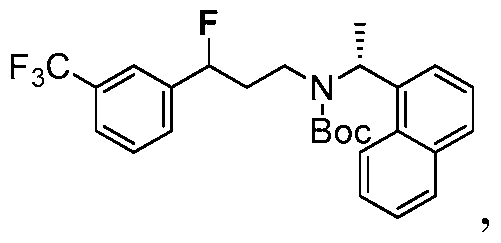
[0024] In an aspect, the invention relates to a composition comprising at least one compound selected from the group consisting of fluoro-ibuprofen or the methyl ester thereof, fluoro-rasagiline, fluoro-nabumetone, fluoro- celestolide, fluoro-celecoxib analog, fluoro-papaverine, fluoro-protected enalaprilat, fluoro-protected fingolimod, fluoro-protected dopamine, fluoro-N- Boc-cinacalcet, fluoro-JNJ41510417, fluoro-5-OH-FPPAT, fluoro-FEP, fluoro- Acl703. fluoro-BMIPP, fluoro-HAR, fluoro-flutemetamol, fluoro-MK-9470, fluoro-FACPC, fluoro-CURB, fluoro-MFES, FES, fluoro-2-ME, fluoro-PHNO, fluoro-PHNO, fluoro-fallypride, DMFP, fluoro-5-OH-FPPAT, fluoro-5-OH- DPAT, fluoro-NPA, fluoro-NNCH2, fluoro-SCH, fluoro-FDA, fluoro-MNPA, fluoro-MCH3, fluoro-SA4503, fluoro-SA6298, fluoro-BMS-747158-01, fluoro- PBR28, fluoro-PBR06, fluoro-FMPEP, fluoro-MePPEP, fluoro-FBzBMS, fluoro- FBFPA, fluoro-FEPPA, fluoro-telmisartan, fluoro-tacrine, fluoro- desloratadine, fluoro-etodolac, fluoro-cinacalcet, fluoro-tanshinone IIA, fluoro- indomethacin, fluoro-trimethoprim, fluoro-masoprocol, fluoro-dubutamine, fluoro-duloxetine, fluoro-ondansetron, and fluoro-benzbromarone, or pharmaceutically acceptable salts or solvates thereof.
[0025] In an aspect, the invention relates to a method of treatment comprising administering a fluorinated derivative of a drug to a subject in need thereof. The fluorinated derivative is a product of a method direct oxidative C-H fluorination of a carbon containing compound having an sp3 C- H bond. The method comprises combining the carbon containing compound, a fluorinating agent, a fluorinating catalyst, and an oxidant, and the carbon containing compound is the drug.
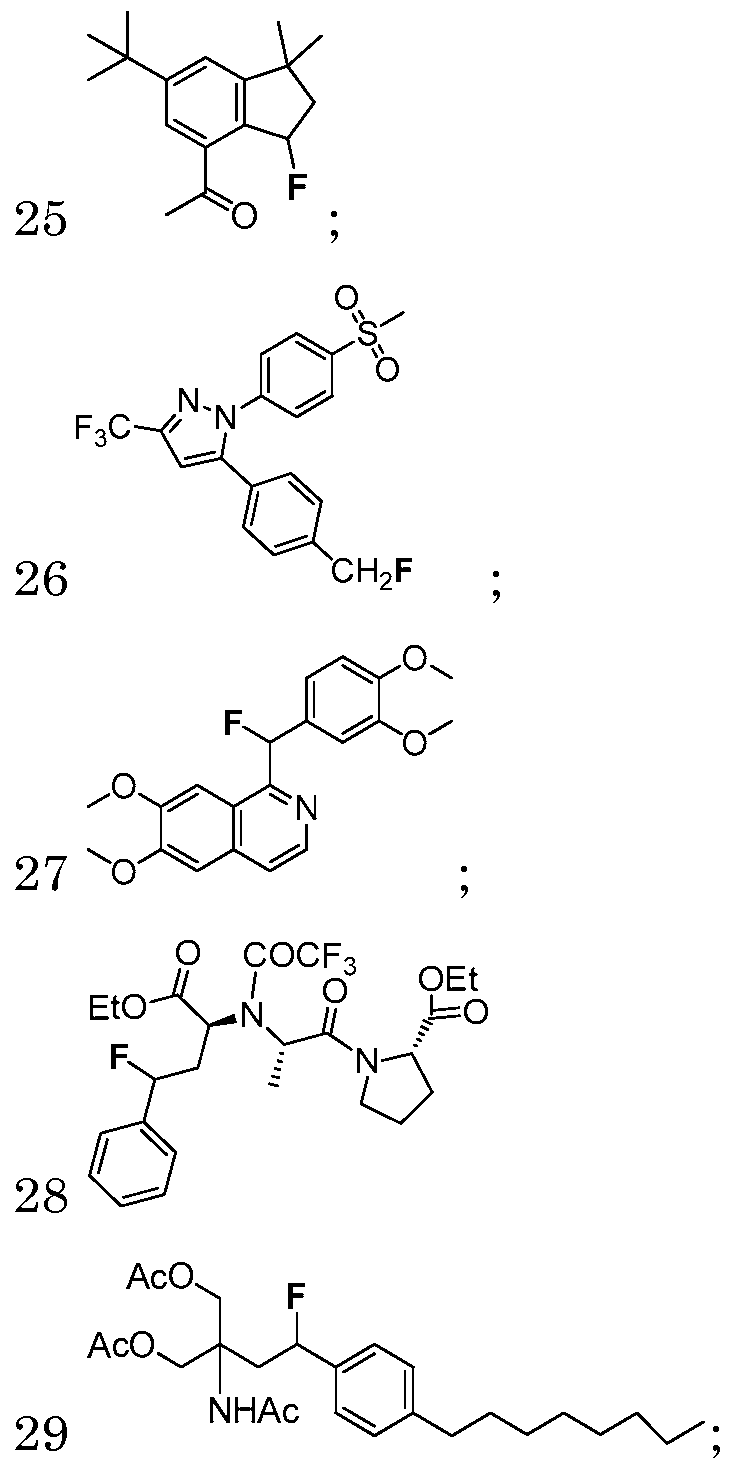
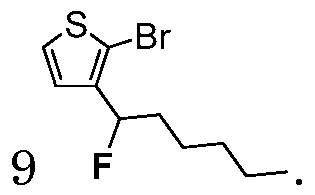
[0026] In an aspect, the invention relates to a composition comprising at least one 19-F containing compound selected from the group consisting of
C
ompound 13
Compound 1
Compound 1
Compound 1
Compound 1
Compound 20
; Compound 21
Compound 22
Diastereomer
Diastereomer
Compound 24
Compound 27
Compound 28
Compound 29
Compound 30
Compound 31
rmaceutically acceptable salts or solvates thereof.
[0027] In an aspect, the invention relates to a method of treatment comprising administering to a subject in need thereof a compound selected from the group consisting of fluoro-ibuprofen or the methyl ester thereof, fluoro-rasagiline, fluoro-nabumetone, fluoro-celecoxib analog, fluoro- papaverine, fluoro-protected enalaprilat, fluoro-protected fingolimod, fluoro- protected dopamine, fluoro-N-Boc-cinacalcet, fluoro-JNJ41510417, fluoro-5- OH-FPPAT, fluoro-FEP, fluoro-Acl703. fluoro-BMIPP, fluoro-HAR, fluoro- flutemetamol, fluoro-MK-9470, fluoro-FACPC, fluoro-CURB, fluoro-MFES, FES, fluoro-2-ME, fluoro-PHNO, fluoro-PHNO, fluoro-fallypride, DMFP, fluoro-5-OH-FPPAT, fluoro-5-OH-DPAT, fluoro-NPA, fluoro-NNCH2, fluoro- SCH, fluoro-FDA, fluoro-MNPA, fluoro-MCH3, fluoro- SA4503, fluoro- SA6298, fluoro-BMS-747158-01, fluoro-PBR28, fluoro-PBR06, fluoro-
FMPEP, fluoro-MePPEP, fluoro-FBzBMS, fluoro-FBFPA, fluoro-FEPPA, fluoro-telmisartan, fluoro-tacrine, fluoro-desloratadine, fluoro-etodolac, fluoro-cinacalcet, fluoro-tanshinone IIA, fluoro-indomethacin, fluoro- trimethoprim, fluoro-masoprocol, fluoro-dubutamine, fluoro-duloxetine, fluoro-ondansetron, and fluoro-benzbromarone, or pharmaceutically acceptable salts or solvates thereof.
[0028] BRIEF DESCRIPTION OF THE DRAWINGS
[0029] The following detailed description of the preferred embodiments of the present invention will be better understood when read in conjunction with the appended drawings. For the purpose of illustrating the invention, there are shown in the drawings embodiments which are presently preferred. It is understood, however, that the invention is not limited to the precise arrangements and instrumentalities shown. In the drawings:
[0030] FIGS. 1A - IB illustrate halogenation of complex substrates.
FIG. 1A illustrates steric effects that may lead to selective chlorination of 5a- cholestane at the C2 and C3 positions. NMR yields shown. FIG. IB illustrates C2-selective chlorination of sclareolide. Isolated yield shown.
[0031] FIGS. 2A - 2D illustrate manganese porphyrin catalyzed selective C-H fluorination of complex molecules. In FIG. 2A, fluorination of ircms-decalin gave predominantly (41%) methylene fluorination. In FIG 2B, steric and electronic effects lead to selective 5-exo-fluorination of bornyl- acetate (55%). In FIG. 2C, steric effects on 5ct-androstan-17-one lead to selective ring A fluorination (48%). In FIG. 2D, selective fluorination of sclareolide is illustrated.
[0032] FIGS. 3A - 3D: FIG. 3A illustrates a proposed catalytic cycle for a manganese porphyrin catalyzed C-H fluorination reaction. FIG. 3B illustrates inferred stereoelectronics for hydrogen abstraction. FIG. 3C illustrates the molecular structure of £ra«s-MnIV(TMP)F2 drawn at 50% probability of the electron density. FIG. 3D illustrates selected bond lengths and angles of ira«s-Mn:v(TMP)F2.
[0033] FIG. 4 illustrates synthesis of trans-Mn^(TMP)F2.
[0034] FIGS. 5A - 5B: FIG. 5A illustrates the UV-vis spectrum of trans-
MnIV(TMP)F2. FIG. 5B illustrates experimental (top) and simulated (bottom) EPR spectra of £rcms-MnIV(TMP)F2 (Detail parameters: X-band EPR (9.453GHz) using 50/50 v/v toluene/CH2Cl2 glasses at 10K. Modulation frequency 100 kHz, modulation amplitude 12.5G, time constant 163.84 ms, scan time 335s, microwave power 15.9 mW, and spectrometer gain 10000).
[0035] FIG. 6 illustrates the fluorine transfer of £rcms-MnIV(TMP)F2 to alkyl radical.
[0036] FIGS. 7A - 7D: FIG. 7A illustrates the product of buspirone precursor fluorination. FIG. 7B illustrates that fluorination of buspirone precursor affords fluorinated product with another unknown product. FIG. 7C illustrates the mass spectrum of the fluorinated buspirone peak. FIG. 7D illustrates the mass spectrum of the buspirone precursor starting material.
[0037] FIG. 8 illustrates the structure of Mn(TMP)F2.
[0038] FIGS. 9A - 9B illustrate fluorination of N-Phth amantadine.
[0039] FIGS. 10A - 10B illustrate fluorination of N-Phth Memantine.
[0040] FIGS. 11A - 11B illustrate fluorination of 2-adamantanone.
[0041] FIGS. 12A - 12B illustrate fluorination of rimantadine analogue.
[0042] FIGS. 13A - 13B illustrate fluorination of adapalene precursor.
[0043] FIGS. 14A - 14B illustrate fluorination of perindopril precursor.
[0044] FIGS. 15A - 15B illustrate fluorination of protected gabapentin.
[0045] FIGS. 16A - 16B illustrate fluorination of methyl octanoate.
[0046] FIGS. 17A - 17B illustrate fluorination of methyl nonanate.
[0047] FIGS. 18A - 18C illustrate fluorination of methyl hexanoate.
[0048] FIGS. 19A - 19C illustrate fluorination of cyclohexyl acetate.
[0049] FIGS. 20A - 20C illustrate fluorination of cyclohexane carboxylic acid methyl ester.
[0050] FIG. 21 illustrates lyrica (pregabalin) with venlafaxin-fluorine introduced into the cyclohexyl ring at positions C3 and C4.
[0051] FIG. 22 illustrates fluorine introduced into the secondary and tertiary positions of the isobutyl substituent.
[0052] FIGS. 23A - 23D illustrate examples of ligands that will assist C-
H fluorination. FIG. 23A illustrates a porphyrin. FIG. 23B illustrates phthalocyanine. FIG. 23C illustrates a porphyrazine. FIG. 23D illustrates tetra-N-methyl-tetra-2-pyridoporphyrazine.
[0053] FIGS. 24A - 24G illustrate examples of ligands that will assist oxidative C-H fluorination. FIG. 24A illustrates N-Pyridylmethyl-tri-aza- cycononane. FIG. 24B illustrates Ν,Ν-Dipyridylmethyl cyclohexadiamine. FIG. 24C illustrates tetra-aza-cyclotetra-decane. FIG. 24D illustrates N,N- dipyridylmethyl 2,2'-dipyrrolidine. FIG. 24E illustrates N,N-dipyridylmethyl ethylenediamine. FIG. 24F illustrates tripyridyl amine (TPA). FIG. 24G illustrates salen.
[0054] FIG. 25 illustrates a manganese porphyrin-catalyzed fluorination reaction scheme.
[0055] FIGS. 26A - 26D illustrate manganese porphyrin catalyzed selective C-H fluorinations. FIG. 26A illustrates methylene- selective fluorination of trans- decalin. FIG. 26B illustrates selective fluorination of sclareolide. FIG. 26C illustrates selective A ring fluorination of 5ct-androstan- 17-one. FIG. 26D illustrates selective 5-exo-fluorination of bornyl-acetate.
[0056] FIG. 27 illustrates an Mn^TMP^ structure.
[0057] FIG. 28 illustrates an EPR spectra of (X^MN^TMP complexes.
[0058] FIG. 29 illustrates a manganese salen catalyst.
[0059] FIG. 30 illustrates manganese salen catalyzed benzylic C-H fluorination.
[0060] FIG. 31 illustrates potential manganese salen catalyzed benzylic C-H fluorination substrates.
[0061] FIG. 32 illustrates a manganese salophen complex.
[0062] FIG. 33 illustrates a manganese salen complex.
[0063] FIG. 34 illustrates ira«s-difluoro-manganese(IV) salen complexes.
[0064] FIG. 35 illustrates ira«s-difluoro-manganese(IV) salen complexes.
[0065] FIG. 36 illustrates ira«s-difluoro-manganese(IV) cyclohxyl- salen.
[0066] FIG. 37 illustrates ira«s-difluoro-manganese(IV) salophen complexes.
[0067] FIG. 38 illustrates exemplary substrates that may be used in any method contained herein.
[0068] FIG. 39 illustrates exemplary substrates that may be used in any method contained herein.
[0069] FIGS. 40A, 40B, and 40C illustrate carbon containing compounds that may be provided in an embodiment herein.
[0070] FIGS. 41A and 41B illustrate further carbon containing compounds that may be provided in an embodiment herein.
[0071] FIG. 42 illustrates compounds provided in compositions and methods herein and fluorinated by a method(s) herein.
[0072] DETAILED DESCRIPTION OF THE PREFERRED
EMBODIMENTS
[0073] Certain terminology is used in the following description for convenience only and is not limiting. The words "a" and "one," as used in the claims and in the corresponding portions of the specification, are defined as including one or more of the referenced item unless specifically stated otherwise. The phrase "at least one" followed by a list of two or more items, such as "A, B, or C," means any individual one of A, B or C as well as any combination thereof.
[0074] Porphyrin catalysts and methods of use thereof are discussed in
U.S. Publication No. 2011/0306584; U.S. Publication No. 20100093688; U.S. Patent No. 6,969,707; U.S. Patent No. 6,448,239; U.S. Patent No. 6,002,026; and PCT/US2011/48396, which are incorporated herein by reference as if fully set forth. The embodiments described herein extend the knowledge of porphyrin catalysts and methods of use thereof. One or more of the porphyrin catalysts in U.S. Publication No. 2011/0306584; U.S. Publication No. 20100093688; U.S. Patent No. 6,969,707; U.S. Patent No. 6,448,239; U.S. Patent No. 6,002,026; and PCT/US2011/48396 may be utilized in an embodiment herein as a halogenating catalyst or a fluorinating catalyst.
[0075] Methods of halogenating carbon containing compounds are provided herein. An embodiment provides a method of halogenating a carbon containing compound comprising reacting a carbon containing compound with a halogenating agent in the presence of a halogenating catalyst and a phase transfer catalyst. A non-limiting example follows: Under a nitrogen atmosphere, 2 mL sodium hypochlorite (0.33 M) was added to a solution of Mn(TMP)Cl (0.033 mmol), tetrabutylammonium chloride (TBAC1, 0.027 mmol), and substrate (0.22 mmol) in lmL dichloromethane in a 4 mL sealed vial. The biphasic mixture was stirred smoothly under nitrogen. The reaction was monitored by GC/MS or TLC and additional sodium hypochlorite solution is added under nitrogen if the conversion of the substrate is low. The product was purified by flash column chromatography. The amount of hypochlorite could be 1-10 equivalents based on substrate or any specific amount within this range. The halogenating catalyst could be 1-20 mol%, 5-15 mol%, or any specific amount within these ranges. The phase transfer catalyst could be 1- 20 mol%, 5-15 mol%, or any specific amount within these ranges.
[0076] A carbon containing compound may include an sp3 C-H bond, and is also referred to as a substrate or target herein. Examples of carbon containing compounds include but are not limited to simple alkanes; neopentane; toluene; cyclohexane; norcarne; simple hydrocarbons; trans- decalin; 5a-cholestane; sclarolide; 1, 3, 5(10)-estratrien-17-one; (lR,4aS, 8aS)- octahydro-5,5,8a-trimethyl-l-(3-oxobutyl)-naphtalenone; (1R, 4S, 6S, 10S)-4, 12, 12-trimethyl-tricyclo[8.2.0.04,6]dodecan-9-one; levomethorphan; lupine; 20-methyl-5alpha(H)-pregnane; isolongifolanone; caryophyllene acetate; N- acetyl-gabapentin methyl ester; acetyl-amantidine; phthalimido-amantadine; methyloctanoate, and other saturated fatty acid esters; N- acetyl- Lyrica methyl ester; artemisinin, adapalene; finasteride; N-acetyl-methylphenidate; mecamylamine and N-acetyl-mecamylamine; N-acetyl-memantine; phthalimidi-memantine; N-acetyl-Enanapril precursor methyl ester; progesterone; artemisinin; adapalene; dopamine derivative; pregabalin; cholestane; finasteride; methylphenidate derivative; mecamylamine; gabapentin; memantine derivative; gabapentin; isoleucine derivative; leucine
derivative; valine derivative; pregesterone; tramadol; and (1R, 4aS, 8aS)-5, 5, 8a-trimethyl-l-(3-oxobutyl)octahydronaphthalen-2(lH)-one. A carbon containing compound may also be any one of the compounds in FIGS. 31, 38 or 39. Arrows in FIGS. 38 and 39 indicate positions that may be halogenated. A carbon containing compound may also include an analog of any carbon containing compound herein. An analog of a carbon containing compound may include substitution of a moiety in the compound for another moiety. The carbon containing compound may be a drug or drug candidate precursor of which non-limiting examples are found in FIGS. 31, 38, and 39.
[0077] In an embodiment, a carbon containing compound may be any compound illustrated in FIGS. 40A, 40B, 40C, 41A, or 41B, or a precursor thereof. The carbon containing compounds of FIGS. 41A and 41B include drug molecules and PET probes. For each compound in FIGS. 40A, 40B, 40C, 41A, and 41B, the position of labelling with a halogen may be the position circled. The hydrogens circled may be replaced by a halogen moiety by a method herein. An embodiment includes halogenated versions of any of the compounds of FIGS. 40A, 40B, 40C, 41A, or 41B. Each of these compounds could include stable isotopes or the isotope indicated.
[0078] Examples of halogenating agents include but are not limited to a hypohalite, N-chlorosuccinimide (NCS), N-bromosuccinimide, hypochlorous acid, hypobromous acid, hypochlorites, sodium hypochlorite, sodium hypobromite, calcium hypochlorite, and cyanuric chloride. The halogenating agent may be provided by setting conditions to produce a hypohalite in situ.
[0079] Examples of halogenating catalysts include but are not limited to metal porphyrins. Metal porphyrins may include manganese, copper, vanadium, chromium, iron, cobalt or nickel. Manganese porphyrin halogenating catalysts may include tetraphenylporphyrinatomanganese chloride (hereinafter "Mn(TPP)C '), tetramesitylporphyrinatomanganese (hereinafter "Mn(TMP)C ') and other similar manganese porphyrins. Manganese porphyrin halogenating catalysts may include tetraphenylporphyrinatomanganese (III) chloride ([Mnm(TPP)Cl]), 5, 10, 15, 20-tetramesitylporphyrinatomanganese (III) chloride ([Mnm(TMP)Cl]),
Mn(III)[tetra-2,6-dichlorophenyl porphyrin, Mn(III) [tetra-2-nitrophenyl porphyrin], Mn(III)[tetra-2-naphthyl porphyrin, Mn(III) [pentachlorophenyl porphyrin, Mn(III) [tetraphenyl-2,3, 7,8,12,13,17, 18-Octachloroporphyrin] , Mn(III) [tetraphenyl-2,3, 7,8, 12,13,17, 18-Octabromoporphyrin] , or Mn(III)[tetraphenyl-2,3,7,8,12,13,17,18-Octanitroporphyrin.
[0080] Examples of halogenating catalysts include but are not limited to a catalyst having a metal complexed with a ligand. The ligand may include but is not limited to a porphyrin, a phthalocyanine, a corrole, an N- pyridylmethyl-tri-aza-cycononane, an Ν,Ν-dipyridylmethyl cyclohexadiamine, a tetra-aza-cyclotetra-decane, an Ν,Ν-dipyridylmethyl 2,2'-dipyrrolidine, an Ν,Ν-dipyridylmethyl ethylenediamine, a tripyridyl amine (TP A), and a salen. The halogenating catalyst may be a t rans- difluoromanganese(IV) porphyrin, MnIV(TMP)F2. Halogenating catalysts may include a manganese complex in which manganese is in the 4+ or 5+ oxidation state and which has at least one fluoride ligand bound to manganese, L5Mn(IV)-F or L5Mn(V)-F, in which L can be oxygen, nitrogen or halide, such that manganese has octahedral coordination with six total ligands and a neutral overall charge. Halogenating catalysts may include a manganese complex in which manganese is in the 4+ oxidation state and which has one or two fluoride ligands bound to manganese, L5Mn(IV)-F or L4Mn(IV)-F2, in which L can be oxygen, nitrogen or halide, such that manganese has octahedral coordination with six total ligands and a neutral overall charge.
[0081] Examples of phase transfer catalysts include but are not limited to tetrabutylammonium chloride, tetraalkyl ammonium, mixed alkyl ammonium, aryl ammonium, benzyl-trimethylammonium chloride, benzalkonium chloride, benzyl tributylammonium chloride, benzyl triethylammonium chloride, tetrabutyl phosphonium chloride, tetramethyl phosphonium chloride, and dimethyldiphenyl phosphonium chloride.
[0082] An embodiment includes a composition including at least one of a carbon containing compound with an sp3 C-H bond, a halogenating agent, a halogenating catalyst or a phase transfer catalyst. An embodiment includes a composition including a partial mix of reactants. The partial mix includes at
least one of one of a carbon containing compound with an sp3 C-H bond, a halogenating agent, a halogenating catalyst, or a phase transfer catalyst ready for mixing with the remaining necessary reaction components. The partial mix may be provided in a method of halogenating a carbon containing compound with an sp3 C-H bond, where the remaining components of the reaction are combined with at least a portion of the partial mix. An embodiment includes a kit. The kit may include one or more containers or wells. A container may include at least one of the carbon containing compound with an sp3 C-H bond, a halogenating agent, a halogenating catalyst, or a phase transfer catalyst, but would only include a subset of the reactants such that the halogenating reaction does not proceed until all of the reactants are mixed. A container or well may include a solvent. The kit may include instructions for mixing all of the necessary reactants from the one or more container and, if needed, any other source in order to make a halogenation reaction proceed. All of the necessary reactants may include the carbon containing compound, the halogenating agent, the halogenating catalyst, and the phase transfer catalyst.
[0083] An embodiment provides a method of manganese porphyrin catalyzed halogenation. The method may include hypohalites as a halogen source. The method may include halogenating a carbon containing compound in the presence of catalytic amount of Mn(TPP)Cl and tetrabutylammonium chloride as phase transfer catalyst. A catalytic amount of Mn(TPP)Cl may be 1-20 mol%, 5-15 mol%, or any specific amount in these ranges. For example, reaction of sodium hypochlorite with cyclohexane in a biphasic system with Mn(TPP)Cl results in cyclohexyl chloride as the major product at room temperature. Only trace amounts of cyclohexanol, cyclohexanone and other chlorinated products were detected under optimal conditions. The method may be utilized to add any halogen, preferably CI, Br, I or At. Other halogenating catalysts may replace the Mn(TPP)Cl. In an embodiment, any halogenating catalyst contained herein may be used in place of the manganese porphyrin.
[0084] An embodiment provides a manganese porphyrin mediated aliphatic C-H bond chlorination using sodium hypochlorite as the chlorine source. In the presence of catalytic amounts of phase transfer catalyst and manganese porphyrin Mn(TPP)Cl, reaction of sodium hypochlorite with different unactivated alkanes afforded alkyl chlorides as the major products with only trace amounts of oxygenation products. A catalytic amount of phase transfer catalyst may be 1-20 mol%, 5-15 mol%, or any specific amount in these ranges. A catalytic amount of Mn(TPP)Cl may be 1-20 mol%, 5-15 mol%, or any specific amount in these ranges. Substrates with strong C-H bonds, for example (but not limited to) neopentane (BDE =~100 kcal/mol) can be also chlorinated with moderate yield. Chlorination of a diagnostic substrate, for example (but not limited to) norcarane, affords rearranged products indicating a long-lived carbon radical intermediate. Moreover, regioselective chlorination is provided by using a hindered catalyst, Mn(TMP)Cl. In an embodiment, chlorination of ira/is-decalin with Mn(TMP)Cl is provided. 95% selectivity for methylene-chlorinated products as well as a preference for the C2 position may be obtained in the chlorination of trans- decalin with Mn(TMP)Cl. Embodiments also include implementation of the novel halogenation system applied to complex substrates. With 5a-cholestane as the substrate, a method of chlorination is provided where only the C2 and C3 positions are chlorinated. Using this method, chlorination of 5a-cholestane at the C2 and C3 positions may be obtained at a 55% yield. The C2 and C3 positions correspond to the least sterically hindered methylene positions in the A-ring. Chlorination of sclareolide at the equatorial C2 chloride is provided. The reaction with 5a-cholestane is illustrative, and other carbon containing compounds may be similarly halogenated. In an embodiment, any halogenating catalyst contained herein may be used in place of the manganese porphyrin.
[0085] In an embodiment, a method is provided to prepare a cross- coupling reagent. The method includes halogenating a carbon containing compound as described herein with a CI or Br. A method is provided to fluorinate a compound by first modifying the compound with a CI or Br by a
method of halogenating herein, and then replacing the CI or Br with F. The CI or Br may be replaced with F by nucleophilic substitution. Nucleophilic conditions may include a source of fluoride ion in a suitable solvent. The source of fluoride ion may include but is not limited to silver fluoride, potassium-crown fluoride, tetraalkyl ammonium fluoride or trialkylamine trihydrofluoride. A suitable solvent may be but is not limited to acetonitrile.
[0086] An embodiment provides drug diversification via selective metal- catalyzed halogenation of carbon containing compounds that are drugs. Drug diversification may include fluorination of the carbon containing drug. Drug diversification may include halogenating a drug with a halogenating agent in the presence of a halogenating catalyst and a phase transfer catalyst. Halogenating with CI or Br may be followed by nucleophilic substitution with F. The method may be utilized for late-stage drug candidate diversification. The halogenating catalyst may be a manganese porphyrin.
[0087] The development of metalloporphyrin-catalyzed halogenations of unactivated hydrocarbons could provide a significant new avenue for late- stage drug candidate diversification. Drug diversification may include direct oxidative C-H fluorination of a drug. Further, the realization of such a process could provide insight into the mechanisms of halogenating enzymes such as chloroperoxidase, a heme-containing chlorinating enzyme, and Syr3, a nonheme Fe(II) R-ketoglutaratedependent halogenase.
[0088] Methods of manganese-catalyzed direct oxidative C-H fluorination using fluoride ion are embodiments herein. A method of direct oxidative fluorination of a carbon containing compound with an sp3 C-H bond includes reacting a carbon containing compound with a fluorinating agent in the presence of a fluorinating catalyst and an oxidant.
[0089] A carbon containing compound may have a sp3 C-H bond, and is also referred to as a substrate or target herein. Examples of carbon containing compounds that can be the target of direct oxidative C-H fluorination include but are not limited to those listed above with respect to halogenation, cyclic alkanes, steroids, steroid derivatives, 5a-androstan-17- one, bornyl acetate, azo-bis-a-phenylethane, trepanoids, simple hydrocarbons,
substituted alkanes, ester, tertiary alcohol, ketone and amine substituents, mono- substituted five and seven membered cycloalkanes, cyclohexane, ethylbenzene, methyl cyclopentanone, methyl cyclohexylcarboxylate, methyl cyclohexanol, cycloheylacetate, N-acetyl-gabapentin methyl ester; acetyl - amantidine; phthalimido-amantadine; methyloctanoate, and other saturated fatty acid esters; N-acetyl-Lyrica methyl ester; artemisinin, adapalene; finasteride; N-acetyl-methylphenidate; mecamylamine and N-acetyl- mecamylamine; N- acetyl- memantine; phthalimidi-memantine; N-acetyl- Enanapril precursor methyl ester; progesterone; artemisinin; adapalene; dopamine derivative; pregabalin; cholestane; finasteride; methylphenidate derivative; mecamylamine; gabapentin; memantine derivative; gabapentin; isoleucine derivative; leucine derivative; valine derivative; pregesterone; tramadol; and (1R, 4aS, 8aS)-5, 5, 8a-trimethyl-l-(3- oxobutyl)octahydronaphthalen-2(lH)-one. Carbon containing compounds utilized in direct fluorination may further include any compound illustrated in FIGS. 31, 38 and 39. Arrows in FIGS. 38 and 39 indicate positions that may be fluorinated. Similar fluorinations may occur to the targets in FIG. 31. A carbon containing compound may also include an analog of any carbon containing compound herein. An analog of a carbon containing compound may include substitution of a moiety in the compound for another moiety. The carbon containing compound may be a drug or drug candidate precursor of which non-limiting examples are found in FIGS. 31, 38, and 39.
[0090] In an embodiment, a carbon containing compound may be any compound illustrated in FIGS. 40A, 40B, 40C, 41A, or 41B, or a precursor thereof. The carbon containing compounds of FIGS. 41A and 41B include drug molecules and PET probes. For each compound in FIGS. 40A, 40B, 40C, 41A, and 41B, the position of labelling with a fluorine may be the position circled. The hydrogens circled may be replaced by a fluorine moiety by a method herein. An embodiment includes fluorinated versions of any of the compounds of FIGS. 40A, 40B, 40C, 41A, or 41B. Each of these compounds could include stable isotopes or the isotope indicated.
[0091] Examples of fluorinating agents include but are not limited to silver (I) fluoride, silver (II) fluoride, tetrabutyl ammonium fluoride ("TBAF"), sodium fluoride, potassium fluoride, tetra alkyl ammonium fluoride, trialkyl amine trihydrofluoride designated as R3N(HF)3 or as the ammonium salt [R3NH] [H2F3], and potassium crown ether fluoride.
[0092] Examples of fluorinating catalysts include but are not limited to a catalyst having a metal complexed with a ligand. The ligand may include but is not limited to a porphyrin, a phthalocyanine, a corrole, an N- pyridylmethyl-tri-aza-cycononane, an Ν,Ν-dipyridylmethyl cyclohexadiamine, a tetra-aza-cyclotetra-decane, an Ν,Ν-dipyridylmethyl 2,2'-dipyrrolidine, an Ν,Ν-dipyridylmethyl ethylenediamine, a tripyridyl amine (TP A), and a salen. The metal may be V, Mn, Fe, Co or Ni. Fluorinating catalysts may include manganese porphyrins including Mn(TPP)Cl, Mn(TMP)Cl , Mnm(TPP)C, Mnm(TMP)Cl or other similar manganese porphyrins. The fluorinating catalyst may be a ira«s-difluoromanganese(IV) porphyrin, MnIV(TMP)F2. Fluorinating catalysts may include a manganese complex in which manganese is in the 4+ or 5+ oxidation state and which has at least one fluoride ligand bound to manganese, L5Mn(IV)-F or L5Mn(V)-F, in which L can be oxygen, nitrogen or halide, such that manganese has octahedral coordination with six total ligands and a neutral overall charge. Fluorinating catalysts may include a manganese complex in which manganese is in the 4+ oxidation state and which has one or two fluoride ligands bound to manganese, L5Mn(IV)-F or L4Mn(IV)-F2, in which L can be oxygen, nitrogen or halide, such that manganese has octahedral coordination with six total ligands and a neutral overall charge.
[0093] Oxidants may be meto-chloroperoxybenzoic acid (mCPBA), idosylbenzene, peroxyacid, alkyl peroxide, peroxy sulfate(oxone), peroxycarbonate, peroxyborate, iodosyl mesitylene, pentafluoro- iodosylbenzene, benzene difluoroiodinane [phenyl-IF2], diacetoxyiodobenzene, 2-iodosylbenzoic acid, peroxyacetic acid, peroxyphthalic acid, and peroxytungstic acid.
[0094] An embodiment includes a composition including at least one of a carbon containing compound with an sp3 C-H bond, a fluormating agent, a fluormating catalyst, or an oxidant. An embodiment includes a composition including a partial mix of reactants. The partial mix includes at least one of one of a carbon containing compound with an sp3 C-H bond, a fluormating agent, a fluormating catalyst, or an oxidant ready for mixing with the remaining necessary reaction components. The partial mix may be provided in a method of fluormating a carbon containing compound, where the remaining components of the reaction are combined with at least a portion of the partial mix. An embodiment includes a kit. The kit may include one or more container. Each container would include at least one of a carbon containing compound, a fluormating agent, a fluormating catalyst, or an oxidant, but would only include a subset of the reactants such that the fluormating reaction does not proceed until all of the reactants are added. The kit may include instructions for mixing all of the necessary reactants from the one or more container and, if needed, any other source in order to make the reaction proceed. All of the necessary reactants may include the carbon containing compound, the fluormating agent, the fluormating catalyst, and the oxidant.
[0095] An embodiment includes a composition comprising a manganese complex in which manganese is in the 4+ or 5+ oxidation state and which has at least one fluoride ligand bound to manganese, L5Mn(IV)-F or L5Mn(V)-F, in which L can be oxygen, nitrogen or halide, such that manganese has octahedral coordination with six total ligands and a neutral overall charge. An embodiment includes a composition comprising a manganese complex in which manganese is in the 4+ oxidation state and which has one or two fluoride ligands bound to manganese, L5Mn(IV)-F or L4Mn(IV)-F2, in which L can be oxygen, nitrogen or halide, such that manganese has octahedral coordination with six total ligands and a neutral overall charge.
[0096] The manganese porphyrin-fluoride ion direct oxidative fluorination herein accomplishes this transformation under mild conditions. Simple alkanes, terpenoids and even steroids can be selectively fluorinated at
otherwise inaccessible sites in 50-80% yield. As an example, decalin was fluorinated predominantly at the C2 and C3 methylene positions. Also, bornyl acetate afforded exo-5-fluoro-bornyl acetate and 5ct-androstan- 17-one was fluorinated selectively in the A ring. Mechanistic analysis indicates that the regioselectivity for C-H bond cleavage is directed by an oxomanganese(V) catalyst intermediate, while fluorine delivery is suggested to occur via an unusual manganese(IV) fluoride that has been isolated and structurally characterized. This one-step C-H fluorination using fluoride ion is rapid enough to be applied to 18F radiofluorination for positron emission applications.
[0097] Embodiments herein place fluorine at such inaccessible sites in biomolecules and drug candidates. Fluorination of drugs can block sites of phase I metabolism by cytochrome P450 enzymes as well as improving target binding affinities. Further, the incorporation of 18F into biomolecules can allow direct imaging of metabolic activity and drug targets using the exquisite sensitivity of positron emission tomography. An embodiment includes any carbon containing compound halogenated or fluorinated by a method herein. The products include modified drugs and imaging agents.
[0098] An embodiment includes a method of creating fluorinated analogs of drug molecules, natural products and precursors thereof in which sp3 C-H bonds are replaced with fluorine using fluoride ion as a fluorine source.
[0099] An embodiment includes a method of incorporating 18F from fluoride ion into known drug molecules, natural products and precursors thereof in which sp3 C-H bonds are replaced with fluorine.
[0100] Direct oxidative fluorination herein is similar to the halogenation reactions described in examples 1— 6, but with several changes in the reaction conditions and reaction reagents to lead to fluorination. The method may include manganese porphyrin catalyzed halogenation where the halide is fluoride. The method may include at least one of silver(I) fluoride or silver(II) fluoride as a halogen source. The method may include halogenating a carbon containing compound in the presence of catalytic amount of Mn(TPP)Cl and
tetrabutylammonium fluoride, which can be an additional source of fluoride or may act as a phase transfer catalyst (PTC). The method may employ both silver(I) fluoride and tetrabutylammonium fluoride and fluorine sources. The method may also employ silver(I) (18-F)fluoride, silver(II) (18-F)fluoride and tetrabutylammonium (18-F)fluoride as sources and the 18-F labeled products may be used for positron emitting tomography (PET) applications. An oxidant may be used. The oxidant may be one such as a peroxyacid, alkyl peroxide, peroxy sulfate (Oxone®), peroxycarbonate or peroxyborate. For example, reaction of m-chloroperoxybenzoic acid with cyclooctane in a monophasic system employing either acetonitrile or methylene chloride as solvents, or both by direct oxidative fluorination results in cyclooctyl fluoride in greater than 50% conversion. Temperatures between and including 0°C and 80°C may be used. The temperature may be in a range between any two integer value temperatures selected from 0°C to 80°C. The temperature may be in a range between and including 0°C and 10°C, 10°C and 20°C, 20°C and 30°C, 30°C and 40°C, 40°C and 50°C, 50°C and 60°C, 60°C and 70°C, or 70°C and 80°C. The temperature may be any one integer value temperature selected from those including and between 0°C and 80°C. Temperatures between room temperature and 70°C may be used. The temperature may be any one temperature including and between room temperature and 70°C. Temperatures between 25°C and 70°C may be used. The temperature may be any temperature including and between 25°C and 70°C. Only trace amounts of cyclooctanol, cyclooctanone or other fluorinated or chlorinated products were detected under optimal conditions, as discussed in example 7, general procedures. The temperature ranges in this paragraph may also be provided in a method of halogenating herein.
[0101] An embodiment includes a composition comprising trans- difluoromanganese(IV) porphyrin, MnIV(TMP)F2. The structure of MnIV(TMP)F2 is illustrated in FIGS. 8 and 27.
[0102] An embodiment includes a method of fluorinating a compound with 18-F (or 18F), and the compounds produced thereby. Fluorinating a carbon containing compound with 18-F may be achieved by a method of
halogenation followed by nucleophilic substitution. Fluorinating a carbon containing compound with 18-F may be achieved by a method of direct oxidative C-H fluorination herein. The method may include fluorinating the compound with 18-F on site for delivery to the patient shortly after synthesis. The visualization of cellular processes by molecular imaging is a promising and non-invasive way to observe disease states and to improve the diagnoses (See Signore, A., Mather, S. J., Piaggio, G., Malviya, G., and Dierckx, R. A. Molecular imaging of inflammation/infection: nuclear medicine and optical imaging agents and methods. Chem. Rev. 2010, 110, 3112-3145; and Pysz, M. A., Gambhir, S. S., and Willmann, J. K. Molecular imaging: current status and emerging strategies. Clin. Radiol. 2010, 65, 500-516, which are incorporated herein by reference as if fully set forth). Positron-emission tomography (PET) in particular, has emerged as a modality of choice because it yields well- resolved images with excellent sensitivity (See Wong, F. C, and Kim, E. E. A review of molecular imaging studies reaching the clinical stage. Eur. J. Radiol. 2009, 70, 205-211; Ametamey, S. M., Honer, M., and Schubiger, P. A. Molecular imaging with PET. Chem. Rev. 2008, 108, 1501-1516; and Chen, K., and Conti, P. S. Target- specific delivery of peptide-based probes for PET imaging. Adv. Drug Delivery Rev. 2010, 62, 1005-1022, which are incorporated herein by reference as if fully set forth). Among the seven positron-emitting isotopes, 18F has the advantages of a two-hour half and a β+ -emission at 635 keV (See Miller, P. W., Long, N. J., Vilar, R., and Gee, A. D. Synthesis of UC, 18F, 150, and 13N radiolabels for positron emission tomography. Angew. Chem., Int. Ed. 2008, 47, 8998-9033; and Cai, L., Lu, S., and Pike, V. W. Chemistry with [18F] fluoride ion. Eur. J. Org. Chem. 2008, 2853-2873, which is incorporated herein by reference as if fully set forth). Imaging agents such as 18F-fluorodeoxyglucose (18F-FDG) have proved to be efficacious for imaging tissue and cells with high glucose metabolism (See Wadsak, W., and Mitterhauser, M. Basic principles of radiopharmaceuticals for PET/CT. Eur. J. Radiol. 2010, 73, 461-469, which is incorporated herein by reference as if fully set forth). A short-coming of current methods of 18F labeling is that the usual replacement of an oxygen functional group with
fluorine changes the polarity of the detection molecule. The method of direct oxidative fluorination herein allows for the one-step replacement of a carbon- bound hydrogen, which has the advantages of using 18F from a fluoride ion source and creating a detection molecule that does not change the hydrogen bonding pattern of the starting compound.
[0103] An embodiment includes visualization by steps including 1) direct oxidative C-H fluorination of a carbon containing compound by a method herein to create an imaging agent, 2) administration of the imaging agent to a patient, and 3) positron emission tomography of the patient. An embodiment includes visualization by steps including 1) CI or Br halogenation of a carbon containing compound with an sp3 C-H by a method herein, followed by nucleophilic substitution with F to create an imaging agent, 2) administration of the imaging agent to a patient, and 3) positron emission tomography of the patient.
[0104] An embodiment includes a composition including a partial mix of reactants necessary to create an imaging agent. The partial mix includes at least one of one of a carbon containing compound, a fluorinating agent, a fluorinating catalyst, or an oxidant ready for mixing with the remaining necessary reaction components. The fluorinating agent may include an 18F source. The partial mix may be provided in a method of fluorinating a carbon containing compound with 18F, where the remaining components of the reaction are combined with at least a portion of the partial mix. An embodiment includes a kit for the creation of an imaging agent. The kit may include one or more container. Each container would include at least one of a carbon containing compound, a fluorinating agent, a fluorinating catalyst, or an oxidant, but would only include a subset of the reactants such that the fluorinating reaction does not proceed until all of the reactants are added. The kit may include instructions for mixing all of the necessary reactants from the one or more container and, if needed, any other source in order to make the reaction proceed. All of the necessary reactants may include the carbon containing compound, the fluorinating agent, the fluorinating catalyst, and the oxidant. The fluorinating agent may include an 18F source.
[0105] An embodiment provides a manganese porphyrin mediated aliphatic C-H bond fluorination using tetrabutylammonium fluoride/silver(I) fluoride as the fluorine source. In the presence of catalytic amounts of manganese porphyrin Mn(TPP)Cl, or similar manganese porphyrins or phthalocyanines or porphyrazines, reaction of mCPBA or Oxone with different unactivated alkanes afforded alkyl fluorides as the major products with only trace amounts of oxygenation or chlorinated products. Substrates with strong C-H bonds, for example (but not limited to) neopentane (BDE =~100 kcal/mol) can be also fluorinated with moderate yield. Moreover, regioselective fluorination is provided by using a hindered catalyst. The hindered catalyst may be Mn(TMP)Cl. In an example, fluorination of ircms-decalin with Mn(TMP)Cl provided 85% selectivity for methylene-fluorinated products. A preference for the C2 position may be obtained in the fluorination of trans- decalin with Mn(TMP)Cl. Embodiments also include implementation of the novel method of direct oxidative fluorination system applied to complex substrates. The complex substrate may be but is not limited to 5a-cholestane, and the method of direct oxidative fluorination results in fluorination of positions in ring A of 5a-cholestane. Embodiments also include direct oxidative fluorination of sclareolide at the equatorial C2 position and fluorination of bornyl acetate at the C3 position under these conditions.
[0106] The combination of tetrabutylammonium fluoride, silver fluoride and various oxidants described above were observed to transform the starting manganese(III) chloride catalyst into the active fluorinating catalyst. These active forms of the catalyst include manganese(III) monofluoride as the axial metal ligand, a trans- difluoromanganese(III), a trans-oxo- fluoromanganese(IV) and trans- difluoromanganese(IV) and a trans- oxofluoromanganese(V). Manganese may be substituted with other first row transition metals including but not limited to copper, vanadium, chromium, iron, cobalt and nickel. An embodiment includes a composition including any of the catalysts above. An embodiment includes a composition including at least one of the catalysts above, a fluorinating agent, an oxidant or a carbon containing compound.
[0107] In some embodiments above, specific halogenating agents that are hypohalites are utilized. In situ production of hypohalite using said manganese porphyrins, a halide and a peroxide may also be provided in embodiments herein. See Lahaye, D. and Groves, J. T. J. Inorg. Biochem. 2007, 101, 1786 - 1797; and N. Jin, J. L. Bourassa, S. C. Tizio, and J. T. Groves, "Rapid, Reversible Oxygen Atom Transfer between an Oxomanganese(V) Porphyrin and Bromide. A Haloperoxidase Mimic with Enzymatic Rates." Angew. Chem. 2000, 39, 3849-3851, which are incorporated herein by reference as if fully set forth. In an embodiment, conditions may be provided that produce hypohalites in situ in place or in addition to directly utilizing a hypohalite. For example, a halogenating method may include providing peroxide, a halide and a manganese porphyrin along with the carbon containing compound. A halogenating method may include providing peroxide, a halide and a nickel porphyrin along with the carbon containing compound.
[0108] Embodiments include a composition comprising fluoro-buspirone and a method of synthesis thereof. Referring to FIG. 7 A, a fluoro-buspirone compound is illustrated. Example 26, below, outlines the synthesis of fluoro- buspirone.
[0109] In an embodiment, shorter reaction times for 18F applications may be present. For example, much shorter reaction times (about 1 hr) could be achieved by adding iodosylbenzene oxidant while maintaining the reaction mixture between 60 and 80°C. Also, by using mCPBA as the oxidant, up to 40% yields could be obtained within 1 hr at room temperature and up to 60°C. Each addition of 1 equiv. oxidant may be followed by another charge of Mn(TMP)Cl catalyst (13.2 mg, 1 mmol%) added dissolved in minimal amount of solvents.
[0110] An embodiment includes a composition comprising at least one halogenated compound described herein, or an analog thereof. An embodiment includes a composition comprising at least one fluorinated compound described herein, or an analog thereof. An embodiment includes a composition comprising an organic compound with a halogen in place of an
aliphatic hydrogen. The halogen replacing an aliphatic hydrogen is not limited to but may be CI, Br, or F. An embodiment includes a composition comprising an organic compound with an F in place of an aliphatic hydrogen. The F may be 19F or 18F.
[0111] An embodiment includes a composition comprising the product of a method of halogenating a carbon containing compound having an sp3 C-H bond herein. The product may be from the method as it is conducted on any target herein or an analog thereof.
[0112] An embodiment includes a composition comprising the product of a method of halogenating a carbon containing compound having an sp3 C-H bond herein with CI or Br to obtain a halogenated product, followed by nucleophilic substitution of the halogenated product with F. The product may be from the method as it is conducted on any target herein or an analog thereof.
[0113] An embodiment includes a composition comprising the product of a method herein of fluorinating a carbon containing compound having an sp3 C-H bond. The product may from the method as it is conducted on any target contained herein or an analog thereof. The composition may comprise one or more of fluoro-ibuprofen, fluoro-rasagiline, fluoro-nabumetone, fluoro- celestolide, fluoro-celecoxib analog, fluoro-papaverine, fluoro-protected enalaprilat, fluoro-protected fingolimod, fluoro-protected dopamine, or fluoro- N-Boc-cinacalcet, or pharmaceutically acceptable salts or solvates thereof. See FIG. 42 for examples. Pharmaceutically acceptable salts that may be included in embodiments herein can be found in Handbook of Pharmaceutical Salts: Properties, Selection, and Use, Stahl and Wermuth (Eds.), VHCA, Verlag Helvetica Chimica Acta (Zurich, Switzerland) and WILEY-VCH (Weinheim, Federal Republic of Germany); ISBN: 3-906390-26-8, which is incorporated herein by reference as if fully set forth. A composition herein may comprise a pharmaceutically acceptable carrier, which may be selected from but is not limited to one or more in the following list: ion exchangers, alumina, aluminum stearate, lecithin, serum proteins, human serum albumin, buffer substances, phosphates, glycine, sorbic acid, potassium sorbate, partial
glyceride mixtures of saturated vegetable fatty acids, water, salts or electrolytes, protamine sulfate, disodium hydrogen phosphate, potassium hydrogen phosphate, sodium chloride, zinc salts, colloidal silica, magnesium trisilicate, polyvinyl pyrrolidone, cellulose-based substances, polyethylene glycol, sodium carboxymethylcellulose, waxes, polyethylene glycol, starch, lactose, dicalcium phosphate, microcrystalline cellulose, sucrose, talc, magnesium carbonate, kaolin, non-ionic surfactants, edible oils, physiological saline, bacteriostatic water, Cremophor ELTM (BASF, Parsippany, N.J.) and phosphate buffered saline (PBS).
[0114] The fluorinated drug molecules created by methods herein will have nearly the same steric size as the parent drug. But they will contain only one, or possibly two or three fluorine atoms. Fluorine NMR spectroscopy is a very powerful tool for studying such molecules since 19F is NMR active and 100% abundant. Further fluorine has nearly as high a detection level as protons and, importantly, a much larger chemical shift range. Moreover, when a fluorinated molecule binds to another molecule, such as a protein receptor, the fluorine chemical shift can change by as much as 8 ppm, while proton chemical shift changes of only a few tenths (+/-0.3 ) of a ppm are observed in similar situations. The covalent structure of the molecule is not changed upon binding, but molecular electric fields are affected by such things as hydrogen bonding and hydrogen bonding does occur to fluorine. Accordingly, fluorinated derivatives of drug molecules have the utility of being detectable by fluorine NMR that will not be complicated by the large number of protons found in such molecules. Further, fluorine NMR chemical shift changes will indicate the degree of binding of the fluorinated molecule to a receptor binding site.
[0115] An embodiment is a method of treatment comprising administering a fluorinated derivative of a drug to a subject in need thereof. The subject may be a patient. The subject may be human. In methods where the drug or fluorinated derivative of the drug target the inflammatory response, the subject may suffer from or be at risk from suffering from any disease or condition in which inflammation is the root symptom or cause of secondary injury. The fluorinated derivative of a drug may be one described
herein or others prepared by the methods disclosed herein. The fluorinated derivative of a drug may be selected from fluoro-ibuprofen, fluoro-rasagiline, fluoro-nabumetone, fluoro-celecoxib analog, fluoro-papaverine, fluoro-protected enalaprilat, fluoro-protected fingolimod, fluoro-protected dopamine, or fluoro- N-Boc-cinacalcet. Examples are shown at FIG. 42. The subject in need thereof may be suffering from a condition the non-derivatized drug is used to treat. The dose of the fluorinated derivative of a drug may be similar to the dose of the non-derivatized drug for the particular condition and/or subject. The dose may be the amount effective to treat the condition, which may be assessed by routing methods. The dose may be any listed herein. The composition administered in a method of treatment herein may comprise the fluorinated derivative of a drug or a pharmaceutically acceptable salt or solvate thereof. The composition may further comprise one or more other drugs. The one or more other drugs may include an unmodified drug, an analog thereof, a fluorinated version of the one or more other drug, or a fluorinated version of the one or more other drug that is fluorinated at a position accessible by a method herein.
[0116] An embodiment includes fragrance composition including a fluorinated compound herein. The fluorinated compound may be fluoro- celestolide.
[0117] Referring to FIG. 42, an embodiment includes fluoro-ibuprofen, including 18F and/or 19F, and compositions including the same. Embodiments also include the methods of using or making a fluorinated compound described herein with respect to making fluoro-ibuprofen. Ibuprofen is a widely used NSAID analgesic agent. It is known to cross the blood brain barrier and has shown promising results in reducing inflammation associated with Alzheimer's disease. Any of the four stereoisomers of 2-(4-(2- methyl-l-fluoro-propyl)phenyl)propanoic acid or any combination thereof are embodiments herein (see structure below). All four of these stereoisomers were prepared by basic hydrolysis of the precursor fluoro-ibuprofen methyl ester. Enzyme inhibition studies have shown that the fluorinated derivatives have equal or greater inhibition of prostaglandin synthases (COX 1 and COX
2) than the parent drug. Further, 18F fluoro-ibuprofen may also bind to these targets. Thus, 18F fluoro-ibuprofen would be expected to bind to and detect the location of COX enzymes in the brain. This property could be used to detect areas of inflammation in the brain associated with disorders including but not limited to Alzheimer's disease. Methods of using a fluorinated compound herein include administering one or more of 18F fluoro-ibuprofen or fluoro-ibuprofen methyl ester.
R - - - -met y propy p eny propano c ac
Fluoro-ibuprofen
two racemic pairs
[0118] A method of treatment herein include administering fluoro- ibuprofen, preferably 19F fluoro-ibuprofen, to a subject in need thereof. The subject may suffer from or be at risk from suffering from any disease or condition in which inflammation is the root symptom or cause of secondary injury. The dose may be but is not limited to any value greater than zero in the range from zero to 3200 mg, or in a sub-range with endpoints chosen from any two values evenly divisible by two in the zero to 3200 mg range. The subject may be a dysmenorrhea subject. The adult dose for a dysmenorrhea patient may be 200 to 400 mg orally every 4 to 6 hours as needed. The subject may be an osteoarthritis subject. The adult dose for an osteoarthritis subject may be initially 400 to 800 mg orally every 6 to 8 hours. It may then be increased to a daily dose of 3200 mg based on subject response and tolerance. The subject may be a rheumatoid arthritis patient. The adult dose for a rheumatoid arthritis may initially be 400 to 800 mg orally every 6 to 8 hours. It may then be increased to a daily dose of 3200 mg based on subject response
and tolerance. The subject may be a headache subject. The adult dose for a headache subject may be 100 to 1000 mg. The timing of doses may be every three hours. The subject may suffer from inflammation, and the dose may be 200-800 mg every 4-6 hours. The method may include administering the fluoro-ibuprofen to a headache subject to prevent electroconvulsive therapy (ECT)-induced headache. The adult dose to prevent electroconvulsive therapy (ECT)-induced headache may be 600 mg orally. The dose may be given 90 minutes prior to the initial ECT session. The subject may be suffering from pain. The adult dose for pain may be 200 to 400 mg orally every 4 to 6 hours as needed for moderate pain. The dose may be 400 to 800 mg intravenously over 30 minutes every 6 hours as needed. The subject may be suffering from a fever. The adult dose for a fever may be 200 to 400 mg orally every 4 to 6 hours as needed. The adult dose for fever may initially be 400 mg intravenously over 30 minutes, and then 400 mg every 4 to 6 hours or 100 to 200 mg every 4 hours as needed. The pediatric dose for fever, for a child 6 months to 12 years, may be 5 mg/kg/dose for a temperature less than 102.5°F (39.2°C) orally every 6 to 8 hours as needed. The pediatric dose, for a child 6 months to 12 years, may be 10 mg/kg/dose for temperature greater than or equal to 102.5°F (39.2 °C) orally every 6 to 8 hours as needed. The pediatric dose as an analgesic, antipyretic may be: 6 months to 11 years: 7.5 mg/kg/dose every 6 to 8 hours. The pediatric dose for pain in infants and children may be: 4 to 10 mg/kg orally every 6 to 8 hours as needed. The subject may be a pediatric rheumatoid arthritis (6 months to 12 years) subject. The dose for pediatric rheumatoid arthritis may be 30 to 40 mg/kg/day in 3 to 4 divided doses. The treatment may include starting at the lower end of dosing range and titrate; patients with milder disease may be treated with 20 mg/kg/day. The subject may be a pediatric cystic fibrosis patient. The dose for pediatric cystic fibrosis may be as follows: Chronic (greater than 4 years) twice daily dosing adjusted to maintain serum concentration of 50 to 100 mcg/mL. The subject may be a pediatric ductus arteriosus victim. The fluoroibuprofen may be modified to be fluoro-ibuprofen lysine. The dose may be as follows: Gestational age 32 weeks or less, birth weight: 500 to 1500 g - an initial dose:
10 mg/kg, followed by two doses of 5 mg/kg after 24 and 48 hours. Birth weight may be used to calculate all doses. The method may include administering a precursor of fluoro-ibuprofen to the subject, and subsequent conversion of the precursor to fluoro-ibuprofen in vivo. A method of treatment herein include administering fluoro-methyl-ester ibuprofen, preferably 19F fluoro-methyl-ester ibuprofen, to a subject in need thereof. The doses and indications may be as set forth for fluoro-ibuprofen.
[0119] Still referring to FIG. 42, an embodiment includes fluoro- rasagiline, including 18F and/or 19F, and compositions including the same. Rasagiline is a monoamine oxidase-B (MAO-B) inhibitor, and is used to treat the symptoms of Parkinson's disease — sometimes in combination with levodopa. An embodiment includes compositions including fluoro-rasagiline, including either 18F or 19F, in combination with levodopa. An embodiment includes a method of treatment comprising administering fluoro-rasagiline, preferably 19F- fluoro-rasagiline, to a subject in need thereof. The subject may be a Parkinson's disease subject. The dose may be but is not limited to any value greater than zero in the range from zero to 10 mg, or in a sub-range with endpoints chosen from any two values evenly divisible by two in the zero to 10 mg range. The dose may be 0.2-2 mg daily. In an embodiment, the method includes monotherapy with rasagiline at 1 mg orally once daily. In an embodiment, the method includes adjunctive therapy (in combination with levodopa) with rasagailine at 0.5 mg orally once daily. The adjunctive therapy dose rasagiline of may be increased to 1 mg orally daily.
[0120] Still referring to FIG. 42, an embodiment includes fluoro- nabumetone, including 18F and/or 19F, and compositions including the same. Nabumetone reduces hormones that cause inflammation and pain in the body. One use of nabumetone is to treat pain or inflammation caused by arthritis. An embodiment includes a method of treatment comprising administering fluoro-nabumetone, preferably 19F- fluoro-nabumetone, to a subject in need thereof. The dose may be 200-2000 mg/day for inflammation. A single dose may be but is not limited to any value greater than zero in the range from zero to 1000 mg, or in a sub-range with endpoints chosen from any two values
evenly divisible by two in the zero to 1000 mg range. The subject may be suffering from pain. The subject may have arthritis, osteoarthritis, or rheumatoid arthritis. The initial dose when treating osteoarthritis may be 1000 mg once a day at bedtime. The maintenance dose when treating osteoarthritis may be 500 to 2000 mg orally in 1 to 2 divided doses. The initial dose when treating rheumatoid arthritis may be 1000 mg once a day at bedtime. The maintenance dose when treating rheumatoid arthritis may be 1500 to 2000 mg orally in 1 to 2 divided doses.
[0121] Still referring to FIG. 42, an embodiment includes fluoro- celestolide, including 18F and/or 19F, and compositions including the same.
[0122] Still referring to FIG. 42, an embodiment includes fluoro- celecoxib analog, including 18F and/or 19F, and compositions including the same. Celecoxib is used to treat pain or inflammation caused by many conditions, including arthritis, ankylosing spondylitis, and menstrual pain. Celecoxib is also used in the treatment of hereditary polyps in the colon. An embodiment includes a method of treatment comprising administering fluoro- celecoxib analog, preferably 19F- fluoro-celecoxib analog, to a subject in need thereof. The dose may be 200-2000 mg/day for inflammation. A single dose may be but is not limited to any value greater than zero in the range from zero to 400 mg, or in a sub-range with endpoints chosen from any two values evenly divisible by two in the zero to 400 mg range. The subject may be suffering from pain. The subject may by a dysmenorrhea subject, and the dose may be 400 mg initially, followed by 200 mg if needed on the first day. Then, 200 mg twice daily as needed. The subject may be a osteoarthritis subject, and the dose may be 200 mg orally once daily or 100 mg orally twice daily. The subject may be a rheumatoid arthritis subject and the dose may be 100 to 200 mg orally twice daily for subjects at greater than 25 kg. The juvenile (2 years and older) dose for rheumatoid arthritis may be 50 mg orally twice daily for subjects at 10 to less than or equal to 25 kg, and 100 mg orally twice daily for subjects greater than 25 kg. The subject may suffer from familial adenomatous polyposis, and the dose may be 400 mg orally twice daily with food. The subject may suffer from ankylosing spondylitis, and the dose may
be 200 mg orally once daily or 100 mg orally twice daily. If after 6 weeks of therapy no results are observed, a trial dose of 400 mg orally daily may be delivered.
[0123] Still referring to FIG. 42, an embodiment includes fluoro- papaverine, including 18F and/or 19F, and compositions including the same. Papaverine is a vasodilator that relaxes smooth muscles in blood vessels, causing dilation. This lowers blood pressure and allows blood to flow more easily through veins and arteries. Papaverine is used to treat many conditions that cause spasm of smooth muscle. This includes chest pain, circulation problems, heart attack, or disorders of the stomach or gallbladder. An embodiment includes a method of treatment comprising administering fluoro-papaverine, preferably 19F- fluoro-papaverine, to a subject in need thereof. The dose of fluoro-papaverine may be similar to that of papaverine for the various indications. The dose may be 50 to 500 mg 3 to 5 times daily for acute myocardial infarction (coronary occlusion), angina pectoris, peripheral andpulmonary embolism, or peripheral vascular disease.
[0124] Still referring to FIG. 42, an embodiment includes fluoro- protected enalaprilat, including 18F and/or 19F, and compositions including the same. Enalaprilat is an angiotensin- converting enzyme (ACE) inhibitor. An embodiment includes a method of treatment comprising administering fluoro-protected enalaprilat, preferably 19F- fluoro-protected enalaprilat, to a subject in need thereof. The dose of fluoro-protected enalaprilat may be similar to that of enalaprilat. The dose may be 1-20 mg/day ACE inhibitor for control of blood pressure.
[0125] Still referring to FIG. 42, an embodiment includes fluoro- protected fingolimod, including 18F and/or 19F, and compositions including the same. Fingolimod is an immunosuppressant that traps immune cells in lymph nodes, preventing their travel to the central nervous system. Fingolimod is used to treat relapsing multiple sclerosis (MS) in adults. An embodiment includes a method of treatment comprising administering fluoro- protected fingolimod, preferably 19F- fluoro-fingolimod, to a subject in need thereof. A single dose may be but is not limited to any value greater than zero
in the range from zero to 0.5 mg. The subject may suffer from multiple sclerosis, and the dosage may be 0.5 mg orally once a day. The subject may be a patient. The dose may be 0.1-1.0 mg/day for the treatment of patients with relapsing forms of multiple sclerosis (MS).
[0126] Still referring to FIG. 42, an embodiment includes fluoro- protected dopamine, including 18F and/or 19F, and compositions including the same. Dopamine improves the pumping strength of the heart and improves blood flow to the kidneys. Dopamine injection (Intropin) is used to treat certain conditions, including low pressure that may occur from shock, which may be caused by heart attack, trauma, surgery, heart failure, kidney failure, and other serious medical conditions. An embodiment includes a method of treatment comprising administering fluoro-protected dopamine, preferably 19F- fluoro-protected dopamine, to a subject in need thereof. The dose may be 200 - 500 mg orally twice a day, up to 2000 to 8000 mg/day in several doses for Parkinson's disease, 10-100 mg/day for restless leg syndrome. A single dose may be but is not limited to any value greater than zero in the range from zero to 50 mcg/kg/min, or in a sub-range with endpoints chosen from any two values evenly divisible by 5 in the zero to 50 mcg/kg/min range. The subject may suffer from nonobstructive oliguria, and the dose may be 1 to 5 mcg/kg/min by continuous IV infusion initially, and then titrated to desired response. The subject may suffer from shock, and the dose may be 1 to 5 mcg/kg/min by continuous IV infusion initially, and then titrated to a desired reponse. The subject may be pediatric and suffer from shock, and the dose may be 1 to 20 mcg/kg/min by continuous IV infusion initially, and then titrated to a desired response.
[0127] Still referring to FIG. 42, an embodiment includes fluoro-N-Boc- cinacalcet, including either 18F or 19F, and compositions including the same. Cinacalcet decreases levels of parathyroid hormone (PTH), calcium, and phosphorous in the body, and is used to treat hyperparathyroidism (overactive functioning of the parathyroid glands) in people who are on long-term dialysis for kidney disease. Cinacalcet is also used to lower calcium levels in people with cancer of the parathyroid gland. An embodiment includes a method of
treatment comprising administering fluoro-N-Boc-cinacalcet, preferably 19F- fluoro-N-Boc-cinacalcet, to a subject in need thereof. The dose may be 20-500 mg/day for primary hyperparathyroidism, secondary hyperparathyroidism, or hypercalcemia of malignancy. A single dose may be but is not limited to any value greater than zero in the range from zero to 360 mg, or in a sub-range with endpoints chosen from any two values evenly divisible by 2 in the zero to 180 mg range. The subject may suffer from secondary hyperparathyroidism, and the dose may initially be 30 mg orally once a day (and titrated every 2 to 4 weeks through sequential doses of 30, 60, 90, 120, and 180 mg orally once daily). The maintenance dose may be 0 to 180 mg orally once a day. The subject may suffer from hypercalcemia of malignancy, and the dose may initially be 30 mg orally twice a day (and titrated every 2 to 4 weeks through sequential doses of 30 mg twice daily, 60 mg twice daily, 90 mg twice daily, and 90 mg 3 or 4 times daily). The maintenance dose may be 60 mg to 360 mg orally per day. The subject may suffer from primary hyperparathyroidism, and the dose may initially be 0 mg orally twice a day (and titrated every 2 to 4 weeks through sequential doses of 30 mg twice daily, 60 mg twice daily, 90 mg twice daily, and 90 mg 3 or 4 times daily). The maintenance dose may be 60 mg to 360 mg orally per day.
[0128] Methods of preparing a PET scan probe and PET scanning described herein may include preparing either 18F probe or a precursor thereof and administering the same to a PET scan patient. The 18F probe may be 18F fluoro-ibuprofen. The precursor of 18F fluoro-ibuprofen may be 18F fluoro-ibuprofen methyl ester. The method may include PET scan of any area of the patient. The method may include a PET scan of an Alzheimer's Disease patient, and the area of the patient scanned may be the patient's brain.
[0129] Embodiments
[0130] The following list includes particular embodiments of the present invention. The list, however, is not limiting and does not exclude alternate embodiments, as would be appreciated by one of ordinary skill in the art.
1. A method of direct oxidative C-H fluorination of a carbon containing compound having an sp3 C-H bond comprising: combining a carbon containing compound, a fluorinating agent, a fluorinating catalyst, and an oxidant.
2. The method of embodiment 1, wherein the carbon containing compound is added in a concentration from 1 mM to 5 M, the fluorinating agent is added in a concentration from 1 mM to 5 M, the fluorinating catalyst is added in a concentration from 1 mol % to 20 mol %, and the oxidant is added in a concentration from 1 mM to 1 M in each addition.
3. The method of any one or more of the preceding embodiments further comprising allowing the combined carbon containing compound, fluorinating agent, fluorinating catalyst, and oxidant to react for 30 minutes to 12 hours.
4. The method of any one or more of the preceding embodiments further comprising maintaining the carbon containing compound, the fluorinating agent, the fluorinating catalyst, and the oxidant at a temperature from -20°C to +100 °C.
5. The method of any one or more of the preceding embodiments, wherein combining further comprises: mixing the fluorinating catalyst, the fluorinating agent, and the carbon containing compound in a solvent to form a first mixture; providing an inert gas over the first mixture; and adding the oxidant to the first mixture to form a second mixture.
6. The method of any one or more of the preceding embodiments, wherein the carbon containing compound includes a compound selected from the group consisting of neopentane; toluene; cyclohexane; norcarane; trans- decalin; 5a-cholestane; sclareolide; 1, 3, 5(10)-estratrien-17-one; (lR,4aS, 8aS)- octahydro-5,5,8a-trimethyl-l-(3-oxobutyl)-naphtalenone; (1R, 4S, 6S, 10S)-4, 12, 12-trimethyl-tricyclo[8.2.0.04,6]dodecan-9-one; levomethorphan; lupine; 20-methyl-5alpha(H)-pregnane; isolongifolanone; caryophyllene acetate; N- acetyl-gabapentin methyl ester; acetyl-amantidine; phthalimido-amantadine; methyloctanoate; saturated fatty acid esters; N- acetyl- Lyrica methyl ester; artemisinin, adapalene; finasteride; N-acetyl-methylphenidate; mecamylamine; N-acetyl-mecamylamine; N-acetyl-memantine; phthalimidi-
memantine; N-acetyl-enanapril precursor methyl ester; progesterone; artemisinin; adapalene; dopamine derivative; pregabalin; cholestane; finasteride; methylphenidate derivative; mecamylamine; gabapentin; memantine derivative; gabapentin; rimantadine derivative; isoleucine derivative; leucine derivative; valine derivative; pregesterone; tramadol; enalapril precursor; (1R, 4aS, 8aS)-5, 5, 8a-trimethyl-l-(3- oxobutyl)octahydronaphthalen-2(lH)-one; phenylalanine; donepezil precursor; amphetamine; δ-tocopherol form of vitamin E; tyrosine; melatonin; tryptophan; estrone acetate; progesterone; dopamine; homophenylalanine; DOPA; ibuprofen methyl ester; buspirone; eticyclidine; memantine; amantadine; lyrica; lubiprostone; penridopril; fosinopril; N-Phth amantadine; N-Phth Memantine; 2-adamantanone; rimantadine analogue; adapalene precursor; perindopril precursor; protected gabapentin; methyl octanoate; methyl nonanate; methyl hexanoate; cyclohexyl acetate; and cyclohexane carboxylic acid methyl ester; or an analog of any of the foregoing.
7. The method of any one or more of the preceding embodiments, wherein the carbon containing compound is a drug or drug candidate precursor.
8. The method of any one or more of the preceding embodiments, wherein the fluorinating agent is selected from the group consisting of silver (I) fluoride, silver (II) fluoride, tetrabutyl ammonium fluoride, sodium fluoride, potassium fluoride, silver fluoride and tetra alkyl ammonium fluoride, trialkyl amine trihydrofluoride R3N(HF)3, the ammonium salt [R3NH] [H2F3], and potassium crown ether fluoride.
9. The method of any one or more of the preceding embodiments, wherein the fluorinating catalyst includes a metal complexed with a ligand selected from the group consisting of a porphyrin, a phthalocyanine, a corrole, an N-pyridylmethyl-tri-aza-cycononane, an N,N-dipyridylmethyl cyclohexadiamine, a tetra-aza-cyclotetra-decane, an N,N-dipyridylmethyl 2,2'- dipyrrolidine, an Ν,Ν-dipyridylmethyl ethylenediamine, a tripyridyl amine (TP A), a salen, a salophen, a phthalocyanine, and a porphyrazine.
10. The method of embodiment 5, wherein the metal is selected from the group consisting of manganese, copper, vanadium, chromium, iron, cobalt and nickel.
11. The method of any one or more of the preceding embodiments, wherein the fluorinating catalyst is a manganese porphyrin.
12. The method of embodiment 11, wherein the manganese porphyrin is selected from the group consisting of Mn(TPP)Cl, Mn(TMP)Cl , Mniii(TPP)C, MnHi(TMP)Cl, Mniv(TMP)F2, Mn(III)[tetra-2,6-dichlorophenyl porphyrin, Mn(III) [tetra-2-nitrophenyl porphyrin], Mn(III)[tetra-2-naphthyl porphyrin, Mn(III) [pentachlorophenyl porphyrin, Mn(III)[tetraphenyl- 2,3,7,8,12,13,17, 18- Octachloroporphyrin] , Μη(ΙΠ) [tetraphenyl- 2,3,7,8,12,13,17, 18-Octabromoporphyrin] , and Mn(III) [tetraphenyl- 2,3,7,8,12,13,17,18-Octanitroporphyrin.
13. The method of any one or more of the preceding embodiments, wherein the fluorinating catalyst is a manganese complex having at least one fluoride ligand bound to the manganese and the formula L5Mn(IV)-F, where L is selected from the group including oxygen, nitrogen, and halide, and the manganese has octahedral coordination with six total ligands and a neutral overall charge.
14. The method of any one or more of the preceding embodiments, wherein the fluorinating catalyst is a manganese complex having at least one fluoride ligand bound to the manganese and the formula L5Mn(V)-F, where L is selected from the group consisting of oxygen, nitrogen and halide, and the manganese has octahedral coordination with six total ligands and a neutral overall charge.
15. The method of any one or more of the preceding embodiments, wherein the fluorinating catalyst is a manganese complex having one or two fluoride ligands bound to the manganese and the formula L5Mn(IV)-F or L4Mn(IV)-F2, where L is selected from the group consisting of oxygen, nitrogen and halide, and the manganese has octahedral coordination with six total ligands and a neutral overall charge.
16. The method of any one or more of the preceding embodiments, wherein the oxidant is selected from the group consisting of meta- chloroperoxybenzoic acid (mCPBA), idosylbenzene, peroxyacid, alkyl peroxide, peroxy sulfate(oxone), peroxycarbonate, peroxyborate, iodosyl mesitylene, pentafluoro-iodosylbenzene, benzene difluoroiodinane [phenyl-IF2], diacetoxyiodobenzene, 2-iodosylbenzoic acid, peroxyacetic acid, peroxyphthalic acid, and peroxytungstic acid.
17. The method of any one or more of the preceding embodiments, wherein the fluorinating agent includes 18F and a product produced by the method includes 18F.
18. A composition comprising the product of the method of any one of embodiments 1— 17.
19. A composition comprising the product of embodiment 17.
20. A method of visualization comprising: fluorinating a carbon containing compound having an sp3 C-H bond by the method of any one of embodiments 1 - 17, where the fluorinating agent includes 18F and a product produced by the method includes 18F to create an imaging agent; administering the imaging agent to a patient; and performing positron emission tomography on the patient.
21. A composition comprising at least two or more of a carbon containing compound, a fluorinating agent, a fluorinating catalyst and an oxidant.
22. A composition comprising a trans-difluoromanganese(IV) porphyrin MnIv(TMP)F2.
23. A composition comprising a manganese complex having at least one fluoride ligand bound to the manganese and the formula L5Mn(IV)-F, where L is selected from the group including oxygen, nitrogen, and halide, and the manganese has octahedral coordination with six total ligands and a neutral overall charge.
24. A composition comprising a manganese complex having at least one fluoride ligand bound to the manganese and the formula L5Mn(V)-F, where L is selected from the group consisting of oxygen, nitrogen and halide,
and the manganese has octahedral coordination with six total ligands and a neutral overall charge.
25. A composition comprising a manganese complex having one or two fluoride ligands bound to the manganese and the formula L5Mn(IV)-F or L4Mn(IV)-F2, where L is selected from the group consisting of oxygen, nitrogen and halide, and the manganese has octahedral coordination with six total ligands and a neutral overall charge.
26. A composition comprising a fluoro-buspirone.
27. A composition comprising at least two or more of a carbon containing compound having an sp3 C-H bond, a fluorinating agent, a fluorinating catalyst, or an oxidant.
28. The composition of embodiment 27, wherein the carbon containing compound includes a compound selected from the group consisting of neopentane; toluene; cyclohexane; norcarane; ircms-decalin; 5a-cholestane; sclareolide; 1, 3, 5(10)-estratrien-17-one; (lR,4aS, 8aS)-octahydro-5,5,8a- trimethyl-l-(3-oxobutyl)-naphtalenone; (1R, 4S, 6S, 10S)-4, 12, 12-trimethyl- tricyclo[8.2.0.04,6]dodecan-9-one; levomethorphan; lupine; 20-methyl- 5alpha(H)-pregnane; isolongifolanone; caryophyllene acetate; N-acetyl- gabapentin methyl ester; acetyl- amanti dine; phthalimido-amantadine; methyloctanoate; saturated fatty acid esters; N- acetyl- Lyrica methyl ester; artemisinin, adapalene; finasteride; N-acetyl-methylphenidate; mecamylamine; N-acetyl-mecamylamine; N-acetyl-memantine; phthalimidi- memantine; N-acetyl-enanapril precursor methyl ester; progesterone; artemisinin; adapalene; dopamine derivative; pregabalin; cholestane; finasteride; methylphenidate derivative; mecamylamine; gabapentin; memantine derivative; gabapentin; rimantadine derivative; isoleucine derivative; leucine derivative; valine derivative; pregesterone; tramadol; enalapril precursor; (1R, 4aS, 8aS)-5, 5, 8a-trimethyl-l-(3- oxobutyl)octahydronaphthalen-2(lH)-one; phenylalanine; donepezil precursor; amphetamine; δ-tocopherol form of vitamin E; tyrosine; melatonin; tryptophan; estrone acetate; progesterone; dopamine; homophenylalanine; DOPA; ibuprofen methyl ester; buspirone; eticyclidine; memantine;
amantadine; lyrica; lubiprostone; penridopril; fosinopril; N-Phth amantadine; N-Phth Memantine; 2-adamantanone; rimantadine analogue; adapalene precursor; perindopril precursor; protected gabapentin; methyl octanoate; methyl nonanate; methyl hexanoate; cyclohexyl acetate; and cyclohexane carboxylic acid methyl ester; or an analog of any one of the foregoing.
29. The composition of any one or more of the preceding embodiments, wherein the fluorinating agent is selected from the group consisting of silver (I) fluoride, silver (II) fluoride, tetrabutyl ammonium fluoride, sodium fluoride, potassium fluoride, silver fluoride and tetra alkyl ammonium fluoride, trialkyl amine trihydrofluoride R3N(HF)3, the ammonium salt [R3NH] [H2F3] and potassium crown ether fluoride.
30. The composition of any one or more of the preceding embodiments, wherein the fluorinating catalyst includes a metal complexed with a ligand selected from the group consisting of a porphyrin, a phthalocyanine, a corrole, an N-pyridylmethyl-tri-aza-cycononane, an N,N- dipyridylmethyl cyclohexadiamine, a tetra-aza-cyclotetra-decane, an N,N- dipyridylmethyl 2,2'-dipyrrolidine, an Ν,Ν-dipyridylmethyl ethylenediamine, a tripyridyl amine (TPA), a salen, a salophen, a phthalocyanine, and a porphyrazine.
31. The composition of embodiment 30, wherein the metal is selected from the group consisting of manganese, copper, vanadium, chromium, iron, cobalt and nickel.
32. The composition of any one or more of the preceding embodiments, wherein the fluorinating catalyst is a manganese porphyrin.
33. The composition of embodiment 32, wherein the manganese porphyrin is selected from the group consisting of Mn(TPP)Cl, Mn(TMP)Cl, Mnm(TPP)C, Mnm(TMP)Cl, MnIV(TMP)F2, Mn(III)[tetra-2,6-dichlorophenyl porphyrin, Mn(III) [tetra-2-nitrophenyl porphyrin], Mn(III)[tetra-2-naphthyl porphyrin, Mn(III) [pentachlorophenyl porphyrin, Mn(III)[tetraphenyl- 2,3,7,8,12,13,17, 18- Octachloroporphyrin] , Mn(III) [tetraphenyl- 2,3,7,8,12,13,17, 18-Octabromoporphyrin] , and Mn(III) [tetraphenyl- 2,3,7,8,12,13,17,18-Octanitroporphyrin.
34. The composition of any one or more of the preceding embodiments, wherein the fluorinating catalyst is a manganese complex having at least one fluoride ligand bound to the manganese and the formula L5Mn(IV)-F, where L is selected from the group consisting of oxygen, nitrogen, and halide, and the manganese has octahedral coordination with six total ligands and a neutral overall charge.
35. The composition of any one or more of the preceding embodiments, wherein the fluorinating catalyst is a manganese complex having at least one fluoride ligand bound to the manganese and the formula L5Mn(V)-F, where L is selected from the group consisting of oxygen, nitrogen and halide, and the manganese has octahedral coordination with six total ligands and a neutral overall charge.
36. The composition of any one or more of the preceding embodiments, wherein the fluorinating catalyst is a manganese complex having one or two fluoride ligands bound to the manganese and the formula L5Mn(IV)-F or L4Mn(IV)-F2, where L is selected from the group consisting of oxygen, nitrogen and halide, and the manganese has octahedral coordination with six total ligands and a neutral overall charge.
37. The composition of any one or more of the preceding embodiments, wherein the oxidant is selected from the group consisting of meto-chloroperoxybenzoic acid (mCPBA), idosylbenzene, peroxyacid, alkyl peroxide, peroxy sulfate(oxone), peroxycarbonate, peroxyborate, iodosyl mesitylene, pentafluoro-iodosylbenzene, benzene difluoroiodinane [phenyl- IF2], diacetoxyiodobenzene, 2-iodosylbenzoic acid, peroxyacetic acid, peroxyphthalic acid, and peroxytungstic acid.
38. The composition of any one or more of the preceding embodiments, wherein the fluorinating agent includes 18F.
39. A kit comprising one or more container, wherein each container includes at least one reactant for a fluorination reaction selected from the group consisting of a carbon containing compound, a fluorinating agent, a fluorinating catalyst, and an oxidant, wherein the composition includes at
least one fewer substance than required to make a fluorination reaction proceed.
40. The kit of embodiment 39, further comprising a container having a solvent.
41. The kit of any one or more of the preceding embodiments, wherein the one or more containers in combination include all the substances required to make the fluorination reaction proceed.
42. The kit of any one or more of the preceding embodiments, further comprising instructions for mixing the reactants from the at least one container.
43. A composition comprising a product of a method of direct oxidative C-H fluorination of a carbon containing compound having an sp3 C- H bond comprising combining a carbon containing compound, a fluorinating agent, a fluorinating catalyst, and an oxidant.
44. The composition of embodiment 43, wherein the carbon containing compound is neopentane; toluene; cyclohexane; norcarane; trans- decalin; 5a-cholestane; sclareolide; 1, 3, 5(10)-estratrien-17-one; (lR,4aS, 8aS)- octahydro-5,5,8a-trimethyl-l-(3-oxobutyl)-naphtalenone; (1R, 4S, 6S, 10S)-4, 12, 12-trimethyl-tricyclo[8.2.0.04,6]dodecan-9-one; levomethorphan; lupine; 20-methyl-5alpha(H)-pregnane; isolongifolanone; caryophyllene acetate; N- acetyl-gabapentin methyl ester; acetyl-amantidine; phthalimido-amantadine; methyloctanoate; saturated fatty acid esters; N- acetyl- Lyrica methyl ester; artemisinin, adapalene; finasteride; N-acetyl-methylphenidate; mecamylamine; N-acetyl-mecamylamine; N-acetyl-memantine; phthalimidi- memantine; N-acetyl-enanapril precursor methyl ester; progesterone; artemisinin; adapalene; dopamine derivative; pregabalin; cholestane; finasteride; methylphenidate derivative; mecamylamine; gabapentin; memantine derivative; gabapentin; rimantadine derivative; isoleucine derivative; leucine derivative; valine derivative; pregesterone; tramadol; enalapril precursor; (1R, 4aS, 8aS)-5, 5, 8a-trimethyl-l-(3- oxobutyl)octahydronaphthalen-2(lH)-one; phenylalanine; donepezil precursor; amphetamine; δ-tocopherol form of vitamin E; tyrosine; melatonin;
tryptophan; estrone acetate; progesterone; dopamine; homophenylalanine; DOPA; ibuprofen methyl ester; buspirone; eticyclidine; memantine; amantadine; lyrica; lubiprostone; penridopril; fosinopril; N-Phth amantadine; N-Phth Memantine; 2-adamantanone; rimantadine analogue; adapalene precursor; perindopril precursor; protected gabapentin; methyl octanoate; methyl nonanate; methyl hexanoate; cyclohexyl acetate; and cyclohexane carboxylic acid methyl ester; or an analog of any one of the foregoing.
45. A composition comprising any fluorinating catalyst herein.
46. A composition comprising the product of any reaction herein.
47. A composition comprising a product of a method direct oxidative C-H fluorination of a carbon containing compound having an sp3 C-H bond including combining the carbon containing compound, a fluorinating agent, a fluorinating catalyst, and an oxidant.
48. The composition of embodiment 47 further comprising a pharmaceutically acceptable carrier.
49. The composition of one or more of embodiments 47 or 48, wherein the carbon containing compound is selected from the group consisting of ibuprofen, ibuprofen methyl ester, rasagiline, nabumetone, celestolide, celecoxib analog, papaverine, protected enalaprilat, protected fingolimod, protected dopamine, N-Boc-cinacalcet, JNJ41510417, 5-OH-FPPAT, FEP, Acl703. BMIPP, HAR, flutemetamol, MK-9470, FACPC, CURB, MFES, FES, 2-ME, PHNO, PHNO, fallypride, DMFP, 5-OH-FPPAT, 5-OH-DPAT, NPA, NNC112, SCH, FDA, MNPA, MC113, SA4503, SA6298, BMS-747158-01, PBR28, PBR06, FMPEP, MePPEP, FBzBMS, FBFPA, FEPPA, telmisartan, tacrine, desloratadine, etodolac, cinacalcet, tanshinone IIA, indomethacin, trimethoprim, masoprocol, dubutamine, duloxetine, ondansetron, and benzbromarone.
50. The composition of any one or more of embodiments 47 - 49 further comprising a pharmaceutically acceptable carrier.
51. A composition comprising at least one compound selected from the group consisting of fluoro-ibuprofen or the methyl ester thereof, fluoro- rasagiline, fluoro-nabumetone, fluoro-celestolide, fluoro-celecoxib analog,
fluoro-papaverine, fluoro-protected enalaprilat, fluoro-protected fingolimod, fluoro-protected dopamine, fluoro-N-Boc-cinacalcet, fluoro-JNJ41510417, fluoro-5-OH-FPPAT, fluoro-FEP, fluoro-Acl703. fluoro-BMIPP, fluoro-HAR, fluoro-flutemetamol, fluoro-MK-9470, fluoro-FACPC, fluoro-CURB, fluoro- MFES, FES, fluoro-2-ME, fluoro-PHNO, fluoro-PHNO, fluoro-fallypride, DMFP, fluoro-5-OH-FPPAT, fluoro-5-OH-DPAT, fluoro-NPA, fluoro-NNCH2, fluoro-SCH, fluoro-FDA, fluoro-MNPA, fluoro-MCH3, fluoro-SA4503, fluoro- SA6298, fluoro-BMS-747158-01, fluoro-PBR28, fluoro-PBR06, fluoro-FMPEP, fluoro-MePPEP, fluoro-FBzBMS, fluoro-FBFPA, fluoro-FEPPA, fluoro- telmisartan, fluoro-tacrine, fluoro-desloratadine, fluoro-etodolac, fluoro- cinacalcet, fluoro-tanshinone IIA, fluoro-indomethacin, fluoro-trimethoprim, fluoro-masoprocol, fluoro-dubutamine, fluoro-duloxetine, fluoro-ondansetron, and fluoro-benzbromarone, or pharmaceutically acceptable salts or solvates thereof.
52. The composition of embodiment 51 further comprising a pharmaceutically acceptable carrier.
53. The composition of embodiment 52, wherein the pharmaceutically acceptable carrier includes one or more agent selected from the group consisting of carrier, ion exchangers, alumina, aluminum stearate, lecithin, serum proteins, human serum albumin, buffer substances, phosphates, glycine, sorbic acid, potassium sorbate, partial glyceride mixtures of saturated vegetable fatty acids, water, salts or electrolytes, protamine sulfate, disodium hydrogen phosphate, potassium hydrogen phosphate, sodium chloride, zinc salts, colloidal silica, magnesium trisilicate, polyvinyl pyrrolidone, cellulose-based substances, polyethylene glycol, sodium carboxymethylcellulose, waxes, polyethylene glycol, starch, lactose, dicalcium phosphate, microcrystalline cellulose, sucrose, talc, magnesium carbonate, kaolin, non-ionic surfactants, edible oils, physiological saline, bacteriostatic water, Cremophor ELTM (BASF, Parsippany, N.J.) and phosphate buffered saline (PBS).
54. The composition of one or more of embodiments 51— 53, wherein the at least one compound is fluoro-rasagiline, and the composition further comprises levodopa or a pharmaceutically acceptable salt or solvate thereof.
55. A method of treatment comprising administering a fluorinated derivative of a drug to a subject in need thereof, wherein the fluorinated derivative is a product of a method direct oxidative C-H fluorination of a carbon containing compound having an sp3 C-H bond including combining the carbon containing compound, a fluorinating agent, a fluorinating catalyst, and an oxidant, and the carbon containing compound is the drug.
56. The method of embodiment 55, wherein the drug is one selected from the group consisting of ibuprofen, ibuprofen methyl ester, rasagiline, nabumetone, celecoxib analog, papaverine, protected enalaprilat, protected fingolimod, protected dopamine, N-Boc-cinacalcet, JNJ41510417, 5-OH- FPPAT, FEP, Acl703. BMIPP, HAR, flutemetamol, MK-9470, FACPC, CURB, MFES, FES, 2-ME, PHNO, PHNO, fallypride, DMFP, 5-OH-FPPAT, 5-OH- DPAT, NPA, NNC112, SCH, FDA, MNPA, MCI 13, SA4503, SA6298, BMS- 747158-01, PBR28, PBR06, FMPEP, MePPEP, FBzBMS, FBFPA, FEPPA, telmisartan, tacrine, desloratadine, etodolac, cinacalcet, tanshinone IIA, indomethacin, trimethoprim, masoprocol, dubutamine, duloxetine, ondansetron, and benzbromarone.
57. The method of any one or more of embodiments 55— 56, wherein the product is one selected from the group consisting of fluoro-ibuprofen or the methyl ester thereof, fluoro-rasagiline, fluoro-nabumetone, fluoro-celecoxib analog, fluoro-papaverine, fluoro-protected enalaprilat, fluoro-protected fingolimod, fluoro-protected dopamine, fluoro-N-Boc-cinacalcet, fluoro- JNJ41510417, fluoro-5-OH-FPPAT, fluoro-FEP, fluoro-Acl703. fluoro-BMIPP, fluoro-HAR, fluoro-flutemetamol, fluoro-MK-9470, fluoro-FACPC, fluoro- CURB, fluoro-MFES, FES, fluoro-2-ME, fluoro-PHNO, fluoro-PHNO, fluoro- fallypride, DMFP, fluoro- 5-OH-FPPAT, fluoro-5-OH-DPAT, fluoro-NPA, fluoro-NNCH2, fluoro-SCH, fluoro-FDA, fluoro-MNPA, fluoro-MCH3, fluoro- SA4503, fluoro-SA6298, fluoro-BMS-747158-01, fluoro-PBR28, fluoro-PBR06, fluoro- FMPEP, fluoro-MePPEP, fluoro- FBzBMS, fluoro- FBFPA, fluoro-
FEPPA, fluoro-telmisartan, fluoro-tacrine, fluoro-desloratadine, fluoro- etodolac, fluoro-cinacalcet, fluoro-tanshinone IIA, fluoro-indomethacin, fluoro- trimethoprim, fluoro-masoprocol, fluoro-dubutamine, fluoro-duloxetine, fluoro- ondansetron, and fluoro-benzbromarone, or pharmaceutically acceptable salts or solvates thereof.
58. The method any one or more of embodiments 55 - 57, wherein the product is fluoro-ibuprofen, the methyl ester thereof, or a pharmaceutically acceptable salt or solvate of either, and the subject in need thereof is at risk of Alzheimer's disease.
59. The method of embodiment 58, wherein the dose of the product is 2 to 3200 mg per administration.
60. The method of any one or more of embodiments 55 - 57, wherein the product is fluoro-ibuprofen, the methyl ester thereof, or a pharmaceutically acceptable salt or solvate of either, and the subject in need thereof suffers from dysmenorrhea.
61. The method of embodiment 60, wherein the dose of the product is 200 to 400 mg orally every 4 to 6 hours.
62. The method of any one or more of embodiments 55 - 57, wherein the product is fluoro-ibuprofen, the methyl ester thereof, or a pharmaceutically acceptable salt or solvate of either, and the subject in need thereof suffers from arthritis.
63. The method of embodiment 62, wherein the dose of the product is 400 to 800 mg orally every 6 to 8 hours.
64. The method of embodiment 63, wherein the dose of the product is 400 to 3200 mg.
65. The method of any one or more of embodiments 55 - 57, wherein the product is fluoro-rasagiline or a pharmaceutically acceptable salt or solvate thereof, and the subject suffers from Parkinson's disease.
66. The method of embodiment 65, wherein the dose of the product is 2 to 10 mg daily.
67. The method of embodiment 66, wherein the dose is 1 mg daily.
68. The method of any one or more of embodiments 65 - 67 further comprising administering levodopa to the subject in need thereof.
69. A composition comprising at least one compound selected from the group consisting of
e
Compound
Compound
Compound
Compound
Compound
Compound
Compound
Compound
Compound
Compound
Compound
Compound
Compound
Compound
Compound
Compound
Compound
Compound
^"VTf
Diastereomer 23a
Compound
Compound
Compound
AcO ,NHBoc
Compound 30 AcO' d
Compound 31
or pharmaceutically acceptable salts or solvates thereof.
70. The composition of embodiment 69 further comprising a pharmaceutically acceptable carrier.
71. A method of treatment comprising administering to a subject in need thereof a compound selected from the group consisting of fluoro- ibuprofen or the methyl ester thereof, fluoro-rasagiline, fluoro-nabumetone, fluoro-celecoxib analog, fluoro-papaverine, fluoro-protected enalaprilat, fluoro- protected fingolimod, fluoro-protected dopamine, fluoro-N-Boc-cinacalcet, fluoro-JNJ41510417, fluoro-5-OH-FPPAT, fluoro-FEP, fluoro-Acl703. fluoro- BMIPP, fluoro-HAR, fluoro-flutemetamol, fluoro-MK-9470, fluoro-FACPC,
fluoro-CURB, fluoro-MFES, FES, fluoro-2-ME, fluoro-PHNO, fluoro-PHNO, fluoro-fallypride, DMFP, fluoro-5-OH-FPPAT, fluoro-5-OH-DPAT, fluoro-NPA, fluoro-NNCH2, fluoro-SCH, fluoro-FDA, fluoro-MNPA, fluoro-MCH3, fluoro- SA4503, fluoro-SA6298, fluoro-BMS-747158-01, fluoro-PBR28, fluoro-PBR06, fluoro-FMPEP, fluoro-MePPEP, fluoro-FBzBMS, fluoro-FBFPA, fluoro- FEPPA, fluoro-telmisartan, fluoro-tacrine, fluoro-desloratadine, fluoro- etodolac, fluoro-cinacalcet, fluoro-tanshinone IIA, fluoro-indomethacin, fluoro- trimethoprim, fluoro-masoprocol, fluoro-dubutamine, fluoro-duloxetine, fluoro- ondansetron, and fluoro-benzbromarone, or pharmaceutically acceptable salts or solvates thereof.
[0131] Further embodiments herein may be formed by supplementing an embodiment with one or more element from any one or more other embodiment herein, and/or substituting one or more element from one embodiment with one or more element from one or more other embodiment herein.
[0132] Examples - The following non-limiting examples are provided to illustrate particular embodiments. The embodiments throughout may be supplemented with one or more detail from one or more example below, and/or one or more element from an embodiment may be substituted with one or more detail from one or more example below.
[0133] As discussed herein, substrates and targets are carbon containing compounds that may be halogenated or fluorinated by the methods herein.
[0134] Example 1 - Mn(TPP)Cl catalyzed halogenation
[0135] It was found that a biphasic system with catalytic amounts of
Mn(TPP)Cl, tetrabutylammonium chloride as a phase transfer catalyst (PTC), and sodium hypochlorite transformed a variety of simple alkanes to alkyl chlorides with high selectivity (Table 1, below). Only trace amounts of oxygenated and other chlorinated products were detected under optimal conditions. There was negligible reaction in the absence of the Mn or PTC. Interestingly, even substrates with strong C-H bonds, such as neopentane (BDE =~100 kcal/mol) could be chlorinated with a useful yield by using
Mn(TMP)Cl, as the catalyst. When toluene was used as the substrate, the benzylic position was chlorinated exclusively. Interestingly, cyclohexane and toluene were found to have similar reactivities in a competitive reaction, despite the 11 kcal/mol difference in C-H BDE. Moreover, when norcarane was used as a diagnostic substrate, the major product was rearranged, indicating the involvement of a long-lived radical intermediate, similar to manganese porphyrin mediated hydroxylation reactions. The chlorination reaction may be expanded to bromination simply by replacing NaOCl with NaOBr. The bromination of cyclohexane provided cylcohexyl bromide as the main product with insignificant amounts of cyclohexyl chloride, indicating that the hypohalite is the halogen source rather than the solvent or the axial ligand.
[0136] Representative, non-limiting Materials.
[0137] Sodium hypochlorite (NaOCl, Aldrich) was standardized spectroscopically (Amax292nm, 8350M-lcm-l). Sodium hypobromite was prepared by mixing NaOCl with 10% excess sodium bromide (NaBr, 99.99% Aldrich) and used immediately. 5, 10, 15, 20- tetraphenylporphyrinatomanganese(III) chloride [Mnm(TPP)Cl] was purchased from Aldrich. 5, 10, 15, 20-tetramesitylporphyrinatomanganese(III) chloride [Mnm(TMP)Cl] was prepared by metallation of tetramesitylporphyrin. Bicyclo[4.1.0] heptane (norcarane) was prepared according to a literature method (Smith, R. D.; Simmons, H. E. Org. Synth.1961, 41, 72). Dichloromethane (HPLC grade) was distilled from CaH2. Water was distilled and deionized with a Millipore system. Other materials were purchased of the highest purity from Aldrich and used without further purification.
[0138] Instrumentation.
[0139] NMR spectra were obtained on a 500 MHz Varian INOVA spectrometer and are reported in ppm using solvent as an internal standard (CDC13 at 7.26 ppm). GC/MS analyses were performed on an Agilent 7890A Gas chromatograph equipped with an Agilent 5975 mass selective detector. Internal standards were used for quantification by measuring the relative response factors.
[0140] Catalytic chlorination of simple hydrocarbons.
[0141] Exemplary simple substrates (i.e., carbon containing compounds) are listed in Table 1, below, and the method exemplified here may be utilized with other substrates. Under a nitrogen atmosphere, 2 mL NaOCl(0.33MpH=ll) was added to a solution of manganese porphyrin (0.013mmol), tetrabutylammonium chloride (TBAC1, 0.027mmol), and substrate (2mmol) in lmL dichlormethane in a 4mL sealed vial. The biphasic mixture was stirred smoothly under nitrogen. Reactions were run at ambient temperature and completion of the reaction was indicated by disappearance of the brown red color of high valent porphyrin and formation of the green color of manganese(III) species. The catalysts were removed by a short silica gel column eluted by CH2CI2 and the solution was analyzed by GC/MS. Yields of chlorinated products were calculated based on oxidant added. The assignment of the products was based on the comparison of GC retention times and fragmentation with authentic samples.
Table 1. Halogenation of simple hydrocarbons3
M;n(TFP )Cl (2 moi%)
R-H + NaOCI ~~~~ →~ R-C.I
FTC (4 rao.1%), CH2CJ2, RT
Substrate Product Yieldb
Standard conditions: Substrate/oxidant/l/PTC=300: 100:2:4. b Yield based on oxidant. Yield determined by GC. c Mn(TMP)Cl was used as catalyst. d NaOBr, prepared by treatment of NaOCl with a slight excess of NaBr, was used as the oxidant.
[0142] Example 2 - chlorination of ircms-decalin
[0143] The chlorination of ircms-decalin catalyzed by Mn(TPP)Cl or
Mn(TMP)Cl was very revealing. With commonly employed chlorinating agents such as N-chlorosuccinimide (NCS) or hypochlorous acid, this substrate provides a mixture of products with poor regioselectivity and tertiary/secondary selectivities of -1.4 and ~3, respectively. Significantly, chlorination of ircms-decalin with Mn(TPP)Cl as the catalyst provided 95% selectivity for methylene-chlorinated products (Scheme 1, below). Furthermore, when the more hindered catalyst Mn(TMP)Cl was used, 2- chlorodecalins (3a, below) were obtained with 76% selectivity. Such a high selectivity for chlorination of unactivated methylene C-H bonds has not been observed before.
[0144] The products of ircms-decalin chlorination were assigned by comparing the GC retention time with authentic samples, prepared by treating corresponding alcohols with thionyl chloride. The ratio of equatorial and axial isomers was ~1 for both Cl and C2 chlorination.
Scheme 1: Chlorination of ircms-Decalin
3 3a 3b 3c
yield distribution
Mn(TPP)CI/NaOCI 55o/o 38 o/o 53% 4%
Mn(TMP)CI/NaOCI 51 % 76 o/o i g oo 5<>/0
[0145] Example 3 - methods for halogenating complex substrates
[0146] Referring to FIGS. 1A and IB, example methods for halogenating complex substrates are illustrated. An exemplary complex substrate may be
5a-cholestane but the method herein may be utilized with other substrates. The chlorination of 5a-cholestane, a saturated steroid that contains 48 unactivated C-H bonds, was examined. Remarkably, despite six tertiary C-H bonds and 13 possible methylene sites of chlorination, chlorination was only observed at the C2 and C3 positions, the least sterically hindered methylene positions in the A-ring, in a net 55% yield. Referring to FIG. 1A, the C2 chlorination afforded a 15:1 selectivity for the equatorial chloride (4a in FIG. 1A), while a mixture of epimers was found at C3 (4b in FIG. 1A). This example highlights the capacity of steric factors to produce high selectivity for the chlorination of secondary C-H bonds in a simple, intermolecular event.
[0147] 5a-cholestane chlorination: Under a nitrogen atmosphere,
2mLNaOCl (0.33M pH=ll) was added to a solution of Mn(TMP)Cl (0.033mmol), tetrabutylammonium chloride (TBAC1, 0.027mmol), cholestane (0.22mmol) in lmL dichloromethane in a 4mL sealed vial. The biphasic mixture was stirred smoothly under nitrogen. The aqueous layer was removed after 12 h and another equiv of fresh hypochlorite was added under N2. The reaction was run for another 12 h and the crude mixture was analyzed by XH NMR.
[0148] The Mn(TPP)Cl catalyzed chlorination of cholestane resulted in a more complex product mixture. Significantly, the ratio of equatorial to axial C2 chloride was approximately 1:1 compared to 15:1 for Mn(TMP)Cl, suggesting that a porphyrin species is involved in the halogen transfer step.
[0149] Sclareolide is a plant-derived terpenoid with antifungal and cytotoxic activities. Referring to FIG. IB, the Mn(TMP)Cl catalyzed chlorination of sclareolide afforded a 42% isolated yield of the C2 equatorial chloride (5a in FIG. IB). The structure was confirmed by observing the signature triplet of triplets at δ 4.22 (J ) 12.1, 4.2 Hz) in the Ή-NMR of 5a. The C2/C3 selectivity was 7:1. The method may be extended to any complex substrate.
[0150] Sclareolide chlorination: The procedure is similar to the cholestane chlorination described above, with the exception that products were purified by flash chromatography (5% EtOAc/hexanes) and starting
material was recycled twice. The assignment of the major product was based on the unique Ή NMR coupling pattern of the axial C2 proton Ha at δ 4.22, which displayed one large (anti) and one small (gauche) J-value (triplet of triplets). XH NMR (500 MHz, CDC13) δ 4.22 (tt, J=12.1, 4.2 Hz, 1H), 2,43 (dd, J=15.5, 14.8Hz, 1H), 2.27 (dd, J=16.1, 6.5Hz, 1H), 2.10 (dt, J=12.0, 3.4Hz, 1H), 2.05-1.96 (m, 3H), 1.90 (dq, J=14.3, 3.7Hz, 1H), 1.70 (td, J=12.6, 4.2Hz, 1H) 1.55-1.33 (m, 6H), 1.12(dd, J=9.9, 2.8Hz, 1H), 0.96 (s, 3H), 0.96 (s, 3H), 0.89 (s, 3H).
[0151] Regioselective chlorinations of unactivated methylene C-H bonds are rare, with the few known examples involving the use of internal directing groups. In the examples herein, the regioselectivity may derive from intermolecular interactions, rather than structurally enforced positioning of the catalyst.
[0152] A possible mechanism for this new transformation is outlined in
Scheme 2, below. While the details are yet to be elucidated, only the 0=MnIV- OH porphyrin or a very similar species were observed during catalysis. Further, the C-H selectivity depended upon the nature of the porphyrin meso- substituent. It is expected that basic sodium hypochlorite will oxidize the starting Mnm porphyrin to a dioxo- or oxohydroxoMnv complex. Subsequent hydrogen atom abstraction from the substrate would afford an alkyl radical and a hydroxoMnIV complex. For the product-forming step, it is suggested that a chlorine atom transfer from the L-MnIV-OCl complex to the incipient carbon radical center also regenerating the reactive oxoMnv species. For this chain reaction to work, the initially formed alkyl radical must escape the [L- MnIV-OH * R] cage, as evidenced by the rearrangement accompanying the chlorination of norcarane. It is expected that a second ligating hydroxide, or hypochlorite anion, would lower the redox potential of the L-MnIV-OH intermediate under these basic conditions (pH 12 in the aqueous phase), thus slowing down the rebound rate of the alkyl radical and preventing the formation of the oxygenated products. Other axial ligands such as pyridines led to a loss of the selectivity for halogenation. Further, the formation of MnIV
porphyrin species during C-H oxygenation reactions has been noted recently at high pH.
Scheme 2. Pro osed C-H Chlorination Mechanism
[0153] The preference for the least hindered methylene position is attributed to intermolecular nonbonded catalyst-substrate interactions resulting from the approach of the sissile C-H bond to the Mnv=0 (d7i-p7i) * frontier orbital. A collinear [Mnv=0--H---C] transition state geometry with σ- symmetry would not explain this obvious preference for methylene sites, whereas a bent, π-approach for H-atom abstraction would result in significant interactions between the meso-aryl groups of the Mn-porphyrin catalyst and steric bulk flanking the substrate C-H bond.
[0154] The results demonstrate that highly regioselective aliphatic halogenations can be achieved predictably with catalysts as simple as Mn(TPP)Cl and Mn(TMP)Cl and halogenating agents as ubiquitous as hypochlorite or hypobromite. OxoMnv species can also oxygenate halogen ions and similar halogenations may be accessible with other oxidants.
[0155] Example 4 - additional substrates for halogenation
[0156] A variety of useful substrates could be halogenated with the method of halogenating provided herein. In the exemplary, non-limiting substrates below, the hydrogen indicated by an arrow may be replaced by a halogen. A hydrogen on positions adjacent to the arrows may also be replaced with halogen. The halogen may be a fluorine, chlorine or bromine. H=possible activated hydrogen
1 ,3,5(10)-Estratrien-17-one (1 R,4aS,8aS)-octahydro- (1 R,4S,6S,10S)-4,12,12-trimethyl-
5,5,8a-trimethyl-1-(3-oxobutyl)- tricyclo[8.2.0.04,6]dodecan-9-one Naphthalenone,
Caryophyllene Acetate
Isolongifolanone
[0157] Exemplary simple substrates are listed above, and the method exemplified here may be utilized with other substrates. Under a nitrogen atmosphere, NaOCl (0.1 - 3 M, pH= 9 - 13) could be added to a solution of manganese porphyrin (0.001 — 1 mmol), tetrabutylammonium chloride (TBAC1, 0.005 - 0.5 mmol) and substrate (0.1 - 20 mmol) in dichlormethane
in a sealed vial. The biphasic mixture could be stirred smoothly under nitrogen. Reactions could be run at ambient temperature and completion of the reaction may be indicated by disappearance of the brown red color of high valent porphyrin and formation of the green color of manganese(III) species. The catalysts may be removed by a short silica gel column eluted by CH2CI2 and the solution analyzed by GC/MS. Yields of chlorinated products could be calculated based on oxidant added. The assignment of the products could be based on the comparison of GC retention times and fragmentation with authentic samples.
[0158] Example 5 - Brominations.
[0159] Substrates may be brominated by substituting hypochlorite with hypobromite. Likewise, added bromide ion may be oxidized in situ by equivalent amounts of hypochlorite to afford substrate bromination.
[0160] Example 6 - Fluorinations.
[0161] Alkyl chlorides and bromides obtained by any method herein can be converted to alkyl fluorides via nucleophilic substitution using literature methods. See, for example, Landini, D., Montanar, R., and Rolla, F. "Reaction of Alkyl-Halides and Methanesulfonates with Aqueous Potassium Fluoride in Presence of Phase-Transfer Catalysts - Facile Synthesis of Primary and Secondary Alkyl Fluorides" (1974) Synthesis-Stuttgart, Issue: 6, pages: 428- 430, which is incorporated herein by reference as if fully set forth. Such reactions may be provided in a combination with any method described herein.
[0162] Example 7 - Manganese porphyrin catalyzed direct C-H oxidative fluorination
[0163] In the presence of mCPBA as oxidant, silver fluoride and tetrabutylammonium fluoride as fluorine source, Mn(TMP)Cl as catalyst, different substrates can be selectively fluorinated. Different cyclic alkanes can be selectively fluorinated with moderate yield. Benzylic position can be also selectively fluorinated, albeit in a poor but unoptimized yield. Examples are provided in Tables 2 and 3, below. Referring to FIG. 25, a manganese porphyrin-catalyzed reaction scheme is illustrated.
Reactions run at 70 °C under N2 in 4:1 CH3CN/CH2CI2. Substrate: catalyst: oxidant: AgF= 1: 0.06: 6: 2. bYields based on total starting material determined by GC (yields based on converted starting material in
parentheses). cIdentified by the characteristic m-(CH2F) peak in the mass spectrum.
Table 3. Example Fluorinations.
mCPBA (6 equiv.) AgF (2 equiv. )
R-H » R-F
Mn(TMP)Cl (6mol %), TBAF 3H20 (1.5 equiv.)
CH3CN: CH2C12=5:1, 70°C
Yield based on substrate
[0164] Intrigued by this unusual fluorination reaction mediated by manganese porphyrin, the regioselective chlorination with t rans- decalin above as a model substrate was compared to the direct oxidative fluorination of the same compound. Interestingly, fluorination of this substrate gives similar regioselectivity as the chlorination reaction, indicating a similar C-H abstractor. Reaction of ircms-decalin under the same conditions afforded methylene fluorination products with a 3.5 to 1 preference for C2 over Cl (FIG. 2A). A reactive oxo- or dioxo-manganese(V) intermediate may be responsible for abstracting a hydrogen in the reaction. Less sterically hindered manganese porphyrin catalysts were less selective.
[0165] Fluorination reactions were run under nitrogen with no precautions taken to exclude moisture. Solvents were purified according to the method of Grubbs. (A. B. Pangborn, M. A. Giardello, R. H. Grubbs, R. K.
Rosen, F. J. Timmers. Organometallics 15, 1518 (1996), which is incorporated herein by reference as if fully set forth). 5, 10, 15, 20- tetramesitylporphyrinatomanganese(III) chloride [Mnm(TMP)Cl] was prepared by metallation of tetramesitylporphyrin. Iodosylbenzene was prepared by hydrolysis of iodobenzene diacetate with sodium hydroxide solution. Bicyclo[4.1.0] heptane (norcarane) was prepared according to a literature method. (Smith, R. D.; Simmons, H. E. Org. Synth.1961, 41, 72, which is incorporated herein by reference as if fully set forth). Other purchased materials were of the highest purity available from Aldrich and used without further purification. GC/MS analyses were performed on an Agilent 7890A gas chromatograph equipped with an Agilent 5975 mass selective detector. Ή NMR spectra were obtained on a Varian INOVA 400 (400 Hz) or a Bruker Avance 500 (500 MHz) spectrometer and are reported in ppm using solvent as an internal standard (CDCI3 at δ 7.26). Data reported as: chemical shift (δ or ppm), multiplicity (s= singlet, d = doublet, t = triplet, q = quartet, m = multiplet), coupling constant (Hz); integrated intensity. Proton decoupled 13C NMR spectra were recorded on a Bruker Avance 500 (125 MHz) spectrometer and are reported in ppm using solvents as an internal standard (CDCI3 at 77.15 ppm). 19F NMR spectra were obtained on a Varian INOVA 400 (375 Hz) spectrometer and are reported in ppm by adding external neat PhF (19F, δ -113.15 relative to CFCI3).
[0166] General procedures for Mn(TMP)Cl catalyzed C-H bond fluorinations.
[0167] An oven-dried 25 mL Schlenk flask equipped with a magnetic stir bar was charged with the following: the pre-catalyst, Mn(TMP)Cl (13.2 mg, 0.015 mmol, 1 mol%), TBAF -3H2O (0.3 mmol), AgF (4.5 mmol, 3 equiv.), substrate (1.5 mmol) and naphthalene (internal standard, 0.5 mmol). Under these conditions the UV-vis max observed for (TMP)Mnm-Cl (475 nm) changed immediately to that of a 1:2 mixture of (TMP)Mnm-F (453 nm) and [(TMP)Mnm(F)2]" (440 nm). The flask was capped and purged with nitrogen for 5 min. Then, CH3CN (1.5 mL) and CH2CI2 (0.5 mL) were added by syringe and the flask was heated at 50 °C in an oil bath. Iodosylbenzene (6-15 mmol,
4-10 equivalent) was added slowly to the reaction mixture in solid form over a period of 6-15 hours. Significant decreases in yield were noted when the iodosylbenzene was added rapidly. Much shorter reaction times (1-2 hours) could be achieved at higher temperatures. With mCPBA as the oxidant, up to 40% yields could be obtained within 1 hour. Each addition of 1 equiv. oxidant was followed by Mn(TMP)Cl (13.2 mg, 1 mmol%) added dissolved in minimal amount of solvents. When the reaction was completed, the solution was allowed to cool to room temperature and was then passed through a short pad of silica gel (washing with dichloromethane). The filtrate was analyzed by GC/MS and then concentrated under vacuum. Products were separated from the reaction residue by column chromatography.
[0168] Example 8 - 5a-Androstan-17-one fluorination (FIG. 26C):
[0169] Fluorine- substituted steroids, such as in flumethasone and fluasterone, have been found to be beneficial in blocking metabolic pathways (J. P. Begue, D. Bonnet-Delpon, J Fluorine Chem 127, 992 (2006), which are incorporated herein by reference as if fully set forth) and 18F- fluorodihydrotestosterone has shown promise as a new radiotracer for imaging prostate cancer in man. (P. B. Zanzonico et al. J. Nucl. Med. 45, 1966 (2004), which is incorporated herein by reference as if fully set forth). Since a direct, late- stage steroid fluorination protocol could greatly extend the applications of these important techniques, application of this manganese-catalyzed fluorination reaction to simple steroids was sought. The fluorination of 5a- androstan-17-one was examined, which contains 30 unactivated sp3 C-H bonds (FIG. 2C). Analysis of this molecule suggested that the carbonyl group would electronically deactivate ring D. Rings B and C are sterically hindered, leaving the methylene groups of A ring as the most likely sites for oxidation. Consistent with this analysis, and despite of the complexity of the molecule, only the C2 and C3 positions in ring A were fluorinated in a remarkable overall yield of 48% (81% net yield based on 59% conversion). The products of the reactions could be readily assigned from the diagnostic 19F-NMR spectrum and the characteristic proton J-couplings. Notably, a 5:1 α/β
diastereoselectivity was observed for both C2 and C3 positions, probably reflecting the steric effect of the axial methyl group at CIO.
[0170] The reaction was run according to the general procedure above using 5ct-Androstan-17-one as a substrate. After the reaction was over, the mixture was subjected to the workup protocol outlined in the general procedure and purified by column chromatography (hexanes and then 30% DCM/hexanes). The assignment of the product structures was based on the diagnostic F-NMR spectrum. 2a (-172.4 ppm, dm), 26 (-172.8 ppm, qt), 3a (- 181.5 ppm, qt), 36 (-168.3 ppm, dm).
[0171] Example 9 — Sclareolide fluorination: the reaction was run according to the general procedure in Example 7 above using sclareolide as a substrate. Sclareolide fluorination afforded C2 and C3 fluorinated products in a net 56% yield (FIG. 2D). C2-fluorination was favored by nearly 3:1, probably due to the steric hindrance of the gem-dimethyl groups at C4. A similar selectivity has been observed for this substrate by Baran and Eshenmoser for rhodium-catalyzed amination of sclareolide (P. S. Baran, T. Newhouse, Angew Chem Int Edit 50, 3362 (2011); and K. Chen, A. Eschenmoser, P. S. Baran, Angew Chem Int Edit 48, 9705 (2009), which are incorporated herein by reference as if fully set forth) and by White et al. for a Fe(pdp)/H202 oxidation system. (M. C. White, M. S. Chen. Science 318, 783 (2007), which is incorporated herein by reference as if fully set forth). After the reaction was over, the mixture was subjected to the workup protocol outlined in the general procedure and purified by column chromatography (hexanes and then 10% EtOAc/hexanes). The assignment of the product structures was based on the diagnostic F-NMR spectrum. 2a (-180.3 ppm, dm), 26 (-172.6 ppm, qt), 3a (- 187.8 ppm, qt), 36 (-185.6 ppm, dm). The major 2a-fluoro isomer could be isolated a white solid on a second column chromatography. Ή NMR (400 MHz, CDCls) δ 4.83 (dtt, J=48.0, 11.3, 4.6 Hz, 1H), 2.45 (dd, J=16.2, 14.7 Hz, 1H), 2.27 (dd, J=15.8, 6.5 Hz, 1H), 2.12-1.85 (m, 6H), 1.70 (td, J=12.6, 4.1 Hz, 1H), 1.43-1.30 (m, 6H), 0.99 (s, 3H), 0.95 (s, 3H), 0.89 (s, 3H). 19F NMR -180.3 ppm. MS (EI) m/z cal'd C16H25FO2 [M]+: 268.2, found 268.2.
[0172] Example 10 - Bornyl-acetate Fluorination (FIG. 26D): the reaction was run according to the general procedure in Example 7 above using bornyl acetate as a substrate. After the reaction was over, the mixture was subjected to the workup protocol outlined in the general procedure and purified by column chromatography using DCM:hexanes (1:4) as eluent. Reaction of bornyl acetate afforded a 55% isolated yield of the exo-5-fluoro- bornyl acetate (FIG. 2B). The characterization of the product was based on C- H correlation NMR spectroscopy and 19F-NMR spectroscopy. (L. F. Lourie et al., J Fluorine Chem 127, 377 (2006), which is incorporated herein by reference as if fully set forth). Ή NMR (500 MHz, CDC13) δ 4.71 (d, J=9.7 Hz, 1H), 4.56 (ddd, J=60, 7.6, 2.3 Hz, 1H), 2.33 (m, 1H), 1.98 (s, 1H), 1.63 (dd, J=35.3, 15.4 Hz, 1H), 0.97 (s, 3H), 0.85 (s, 3H), 0.83 (s, 3H), 0.68 (dd, J=14.5, 3.4 Hz, 1H). 13C NMR (125 MHz, CDCI3) δ 95.8 (d, 186 Hz), 77.6, 50.5 (d, 17.6 Hz), 37.5 (d, 18.0 Hz), 32.2 (d, 11.1 Hz), 21.3, 20.2, 19.4, 12.6. 19F NMR -158.2 ppm. MS (EI) m/z cal'd C12H19FO2 [M]+: 214.1, found 214.1. It was anticipated that the C5 position of camphor would also be accessible, in analogy to the selectivity of P450cam (CYP101). (I. Schlichting et al. Science 287, 1615 (2000), which is incorporated herein by reference as if fully set forth). However, treating camphor under the standard fluorination conditions resulted in 95% recovered starting material. The low reactivity in this case is attributed to the electron withdrawing carbonyl group, which apparently deactivates the entire molecule toward fluorination.
[0173] The catalytic cycle shown in FIG. 3A is suggested for this manganese porphyrin catalyzed fluorination. Oxidation of the resting Mn(TMP)Cl catalyst in the presence of fluoride ion could afford a reactive oxomanganese(V) species, 0=Mnv(TMP)F, which then abstracts a hydrogen atom from the substrate to produce a substrate-derived, carbon-centered radical and a HO-MnIV-F rebound intermediate. Fluoride binding to separately prepared MnIV(0)(TMP) was indicated by a UV spectral shift (423 nm to 427 nm) that was assigned to the formation of [MnIV(0)(F)(TMP)]~, in analogy to the well-characterized coordination of hydroxide to MnIV(0) (J. T. Groves, M. K. Stern. J. Am. Chem. Soc. 110, 8628 (1988), which is
incorporated herein by reference as if fully set forth). A step in forming the fluorinated products is capture of the incipient substrate radicals either by HO-MnIV-F or a ira«s-difluoro-manganese(IV) species, which forms by reaction with AgF. The unusual methylene selectivity observed in these reactions is attributed to stereoelectronically enforced steric clashes between the substrate and the approaching oxoMnv catalyst (FIG. 3B). The LUMOs in a low-spin, d2 oxoMnv complex are expected to be the two, orthogonal Mn-0 π* orbitals, which would direct the approach of the scissile C-H bond into a bent 7i*-approach trajectory. (Jin, N.; firahim, M.; Spiro, T. G.; Groves, J. T., Trans- dioxo manganese(V) Porphyrins, J. Am. Chem. Soc. 2007, 129, 12416-12418; and Jin, N.; Lahaye, D. E.; Groves, J. T., A "Push-Pull" Mechanism for Heterolytic 0-0 Bond Cleavage in Hydroperoxo Manganese Porphyrins, Inorg. Chem.2010, 24, 11516-11524, which are incorporated herein by reference as if fully set forth).
[0174] A number of experiments were conducted to examine this mechanistic hypothesis. Initial C-H hydroxylation was ruled out by controls showing that no fluorides were produced under these conditions with alcohols as starting materials. Initial C— H hydroxylation was ruled out by controls showing that cyclohexanol was oxidized to cyclohexanone under these conditions. No cyclohexylfluoride was detected. Also, the hydroxyl group of 1- methylcyclohexanol is stable to the reaction conditions (See entry 8 of Table 4, below). Deuterium kinetic isotope effects were evaluated by the reaction of a 1:1 mixture of cyclohexane and cyclohexane-(ii2, producing an intermolecular competitive KIE of 6.1. A similar value (5.7) was observed with a mixture of ethylbenzene and ethylbenzene-dis. The large KIE indicates that C-H bond cleavage is the rate-limiting step in the reaction, consistent with typical manganese porphyrins catalyzed hydroxylation reactions. Furthermore, reaction of norcarane, a diagnostic radical clock substrate, afforded 2- fluoronorcaranes and a significant amount of the rearranged fluorinated product, 3-fluoromethylcyclohexene, that is indicative of a carbon radical ring- opening process (Table 4, entry 6). The 2:1 ratio of these cyclopropylcarbinyl and homoallyl fluorides indicates a short radical lifetime of 2.5 ns, since the
ring-opening rate constant for the 2-norcaranyl radical is 2xl08 M^s 1. (J. T. Groves, J Inorg Biochem 100, 434 (2006), which is incorporated herein by reference as if fully set forth). Although a direct reaction between the incipient organic radical and silver fluoride cannot be ruled out at this point, the reaction between phenethyl radical, generated in situ by heating azo-bis-a- phenylethane with AgF, afforded only a trace amount of fluorinated products. Table 4. manganese porphyrin-catalyzed fluorination of simple molecules.
[0175] A trcms-MnIV(TMP)F2 (TMP: tetramesitylporphyrin), generated by ligand exchange between a hydroxyl manganese(IV) intermediate and fluoride source, was postulated to be the key intermediate that transfer
fluorine to the carbon radical and make alkyl fluorides. The identification of t rans- difluoroMnIV(TMP) as the likely fluorinating agent was made possible by its isolation and structural characterization. ra«s-MnIV(TMP)Cl2, which has been characterized by Gross et al. (L. Kaustov, M. E. Tal, A. I. Shames, Z. Gross, Inorg Chem 36, 3503 (1997), which is incorporated herein by reference as if fully set forth) was chosen as the synthetic precursor of trans- Mn:v(TMP)F2. Treating MnIv(TMP)Cl2 benzene solution with large access AgF ( > 50 equivalents) would lead to a color change from red to orange red within 30 minutes (FIG. 4). Pure crystals of the MnIV(TMP)F2 were obtained by treating MnIV(TMP)Cl2 (L. Kaustov, M. E. Tal, A. I. Shames, Z. Gross. Inorg. Chem. 36, 3503 (1997)., which is incorporated herein by reference as if fully set forth) with excess AgF. The molecular structure of this unique compound showed two axially bound fluoride ions with F-MnIV-F bond lengths of 1.7931(17) and 1.7968(16) A (FIG. 3C; Tables 5-9, below). These bond lengths are very close to those of diammonium hexafluoromanganate(IV), the only other fluoromanganese(IV) species to be structurally characterized to date. (S. Kaskel, J. Strahle, Z Anorg Allgem Chem 623, 1259 (1997), which is incorporated herein by reference as if fully set forth). MnIV(TMP)F2 could replace silver fluoride under the fluorination reaction conditions and that thermal decomposition of azo-bis-a-phenylethane in the presence of MnIV(TMP)F2 afforded a 41% yield of 1-fluoroethylbenzene. Further, treatment of MnIV(0)(TMP) with fluoride ion produced a UV spectral shift (423 nm to 427 nm) assigned to the formation of [MnIV(0)(F)(TMP)]-, in analogy to the well-characterized coordination of hydroxide to oxoMnIV (J. T. Groves, M. K. Stern. J. Am. Chem. Soc. 110, 8628 (1988), which is incorporated herein by reference as if fully set forth). These observations indicate that MnIV(TMP)F2 or the related hydroxy-fluoride may be involved in the fluorine delivery step and that the role of AgF is to replenish the manganese(IV) fluoride during turnover.
Table 5. Crystal data for MnIv(TMP)F2
Empirical formula C61¾4F2MnN4
Formula weight 946.10
Temperature 100 K
Wavelength Cu K radiation, λ = 1.54184 A
Crystal system Orthorhombic
Space group Pbca
Unit Cell dimensions a = 23.5969 (3) A
b = 16.1927 (2) A
c = 26.6602 (3) A
Volume 10186.8 (2) A3
7
Density (calculated) 1.234 Mg/m3
Absorption coefficient 2.50 mm"1
F(000) 4008
Crystal size 0.17 x 0.10 0.05 mm
Theta range for data collection 3.7 to 65.6°
Index ranges h = -26→27, k = -18→14, / = -31→20
Reflection collected 38219
Independent reflections 8519 [Rmt = 0.029]
Absorption correction multi-scan SADABS Υ200&/1 (Bruker AXS)
Table 6. Structural refinement details for MnIV(TMP)F2
Refinement on F2
Least-squares matrix: full
R[F2 > 2a(F2)] = 0.052
wR(F2) = 0.157
S = 1.07
Data completeness = 0.958
8519 reflections
614 parameters
3 restraints
Least-squares matrix: full
Primary atom site location: structure-invariant direct methods
Secondary atom site location: difference Fourier map
Hydrogen site location: inferred from neighbouring sites
H-atom parameters constrained
w = 1/[σ2(^0 2) + (0.0739 )2 + 11.7278P] where P = (F 2 + 2^c 2
( r)max = 0.001
A>max = 0.69 e A"3
A>min = -0.55 e A-3
The X-ray structure was of high quality.
[0176] The potential energy landscape and electronic structures of the intermediates and transition states proposed in FIGS. 3A-3D were explored using DFT and a polarizable continuum solvation model. Fluorine atom transfer from Mn(THP)F2 to a cyclohexyl radical in the equatorial configuration was predicted to occur with a surprisingly low activation barrier of only 3 kcal/mol, very similar to the oxygen rebound barrier for hydroxylation reactions catalyzed by oxomanganese porphyrins. A slightly higher transition state was located for delivery of fluorine to a cyclohexyl radical in an axial configuration (4.2 kcal/mol). Further, the calculated barrier for fluorine transfer was ~3 kcal/mol lower for the t rans- difluoroMnIV species (X = F) than for the analogous hydroxy-fluoride (X= OH). Thus, the manganese(IV) difluoride should react much faster with cyclohexyl radicals than its hydroxo-fluoro congener. Consistent with this low barrier for fluorine transfer, the transition state is very early in the reaction trajectory, showing an exceedingly long C— F distance of 2.48 A and a Mn— F distance that is only very slightly elongated from the starting the manganese(IV) difluoride.
[0177] UV-vis spectrum showed that a new species with intense absorption around 420nm, following two weaker absorptions at 520 and 680nm appeared (FIG. 5A, upper MnTMPCl2, lower MnTMPCl2 + AgF After 40 Min.). The EPR spectrum of the new species was shown in FIG. 5B (upper, experimental spectrum; lower, simulated spectrum). A strong signal at g ~ 4 and weaker signal at g ~ 2 is consistent with the characteristics of a high- spin d3 ion with a large zero-field- splitting (ZFS) constant in an environment of axial symmetry. The six-line hyperfine splitting caused by I = 5/2 55Mn nucleus display at both g ~ 4 and g ~ 2 regions. Further triplet splitting was observed at g ~ 4 region, suggesting the existence of two fluorides as the axial ligands, since I = 1/2 19F nucleus was known to give apparent superhyperfine splitting in EPR spectroscopy. (Thuesen, C. A.; Barra, A. L.; Glerup, J. Inorg. Chem. 2009, 48, 3198, which is incorporated herein by reference as if fully set forth). The crystal structure of this new complex was acquired (FIG. 3C). Referring to FIG. 3D, selected bond lengths and angles of £ra«s-MnIV(TMP)F2
are illustrated. The bond length between the manganese and the axial ligands are 1.797 and 1.794 A respectively, which is very similar to the Mn-F bond length of K2MnIVF6 (1.79A). (Bukovec, P.; Hoppe, R. J. Fluorine Chem. 1983, 23, 579, which is incorporated herein by reference as if fully set forth). The visible spectrum of the reaction mixture was complex, apparently due to the presence of several forms of the catalyst during turnover. However, the good yield of 1-fluoroethylbenzene from the generation of phenethyl radical in the presence of Mn(TMP)F2 provides experimental support for these computational predictions that manganese(IV) fluorides are excellent radical fluorinating agents.
[0178] Referring to FIG. 28, the EPR spectra of (X)2MNIVTMP complexes is illustrated. The spectra demonstrate the presence of the rate 4+ species, which is effective as a catalyst herein.
[0179] The results described herein show selective fluorination of simple hydrocarbons, terpenoids and steroid derivatives. The yields are sufficiently high and the techniques sufficiently simple that the reaction can be performed without specialized apparatus or complicated precautions, other than normal care that should be taken whenever strong oxidants or fluoride-containing reagents are used. Given that the source of fluorine in this one-step, one-pot protocol is fluoride ion, these techniques may be readily applied to the incorporation of 18F into a wide variety of biomolecules and synthetic building blocks. Moreover, the isolation and structural characterization of the trans- difluoromanganese(IV) porphyrin, MnIV(TMP)F2, suggest the existence of a rich chemistry of such transition metal fluorides for delivery of fluorine substituents.
[0180] The fluorine transfer ability of £rcms-MnIV(TMP)F2 was tested using a-azobis-phenylethane as substrate (FIG 10). Under 105 °C, the corresponding alkyl fluorides can be made within 2 min with 60% yield, with the changing of £rcms-MnIV(TMP)F2 to Mnm(TMP)F. The computational study supports this observation, as it showed that the energy barrier of fluorine transfer from MnIV(THP)F2 (THP: tetrahydroporphyrin) to a secondary alkyl
radical was only 3 kcal/mol. Referring to FIG. 6, the fluorine transfer of trans- MnIV(TMP)F2 to alkyl radical is illustrated.
[0181] A variety of simple alkanes and substituted alkanes, as well as larger natural product molecules, can be fluorinated effectively in the presence of catalytic amounts of the bulky manganese porphyrin, Mn(TMP)Cl. This oxidative aliphatic fluorination reaction is driven by iodosylbenzene as the oxo-transfer agent, using silver fluoride/tetrabutylammonium fluoride trihydrate as the fluoride source, both in stoichiometric excess. The excess of iodosylbenzene typically used in metalloporphyrin oxidations is due to the competing disproportionation of this reagent, which produces unreactive iodoxybenzene. The requirement for excess fluoride ion appears to derive from the stoichiometry of the fluorination reaction, which also produces hydroxide ions. AgF converts Mn-OH to Mn-F species and Ag2O. Ultra-dry conditions are not required. Results for the initial exploratory reactions of a panel of simple substrates are presented in Table 4. Cycloalkanes afforded mono- fluorinated products in ~50% yield. Typically, conversions were ~70% with small amounts (15-20%) of alcohols and ketones also being produced. No products were detected in control experiments that omitted the manganese porphyrin or iodosylbenzene, whereas a ~2:1 ratio of oxygenated to fluorinated products was formed in the absence of tetrabutylammonium fluoride. Only oxygenated products were formed without silver fluoride. The benefit of both AgF and tetrabutyammonium fluoride apparently derives from the limited solubility of AgF in the reaction medium and the need for a higher fluoride ion concentration than can be maintained by AgF alone. The UV-vis Amax observed for (TMP)Mnm-Cl (475 nm) changed immediately to that of a mixture of (TMP)Mnm-F (453 nm) and [(TMP)Mnm(F)2]- (440 nm) under the reaction conditions.
[0182] There were negligible amounts of difluorides produced at this level of conversion, probably due to the electron deficiency of the products induced by the fluorine atom. The high selectivity for monofluorination, the low reactivity of C-H bonds near carbonyl groups and the limited reactivity of
the solvents as well as the tetrabutylammonium ion seem to reflect a very strong polar effect in the C-H bond cleavage step in this reaction.
[0183] A preliminary investigation of the substrate scope led to the results shown in Table 4 (entries 7-12). A range of susbtituted molecules, including ester, tertiary alcohol, ketone and amide substituents, proved to be good substrates for fluorination with Mn(TMP)Cl. Fluorination of methyl cyclohexylcarboyxlate (entry 7) and methyl cyclohexanol (entry 8) afforded trans-CS fluorides as the major products. Mono- substituted five and seven- membered cycloalkanes (entries 9, 10, 12 ) were fluorinated exclusively at the C3 and C4 positions, respectively, suggesting subtle stereoelectronic effects on the selectivity of this reaction.
[0184] Having demonstrated that it is possible to redirect manganese- catalyzed hydroxylation to fluorination, we next aimed to apply this reaction to larger molecules. The reaction of ircms-decalin under the same conditions afforded methylene mono-fluorination products with a 3.5 to 1 preference for C2 over Cl in an overall 51% yield and a 75% conversion (FIG. 26A). Very high methylene regioselectivity was observed for this substrate (>95%), similar to that observed for the manganese-catalyzed chlorination reaction we have recently reported, (Liu, W.; Groves, J. T., Manganese Porphyrins Catalyze Selective C-H Bond Halogenations, J. Am. Chem. Soc.2010, 132, 12847- 12849, which is incorporated herein by reference as if fully set forth) suggesting that a similar reactive oxo- or dioxo-manganese(V) intermediate (Jin, N.; firahim, M.; Spiro, T. G.; Groves, J. T., Trans-dioxo manganese(V) Porphyrins, J. Am. Chem. Soc.2007, 129, 12416- 12418, which is incorporated herein by reference as if fully set forth) is responsible for the hydrogen abstraction step in both reactions.
[0185] Stoichiometric amounts of MnIV(TMP)F2 could replace silver fluoride in a single-turnover C-H fluorination of cyclooctane using Mn(TMP)Cl and iodosylbenzene. A 43% yield of cyclooctyl fluoride was obtained based on added MnIV(TMP)F2. Thermal decomposition of azo-bis-a- phenylethane to generate the phenethyl radical in the presence of MnIV(TMP)F2 led to a 41% yield of 1-fluoroethylbenzene. These observations
indicate that after initial hydrogen abstraction, MnIV(TMP)F2 can trap the substrate radicals in the fluorine delivery step (FIG. 3A). The moderate fluorination yields from these radical trapping experiments are probably due to the falling concentration of the manganese(IV) difluoride under these conditions. Crucial roles for silver fluoride in this scenario under catalytic conditions are first to convert the added Mn(TMP)Cl to the manganese(III) fluoride form of the catalyst and then to replenish the inventory of manganese(IV) fluoride during turnover. Although a direct reaction between the substrate radicals and AgF might also be considered, the reaction between AgF and phenethyl radicals generated in situ from azo-bis-a-phenylethane afforded only trace amounts of fluorinated products.
[0186] Example 11 - Fluorination of hydrocarbons (Table 4 Entry 1-5,
FIG. 3A)
[0187] The reaction was run according to the general procedure above using the hydrocarbon listed as the substrate. When the reaction was completed, the solution was allowed to cool to room temperature and was then passed through a short pad of silica gel (washing with dichloromethane). The filtrate was analyzed by GC/MS. The assignment of the products was based on the comparison of GC retention time and mass fragmentation with the authentic samples. The products of ircms-decalin fluorination were assigned by comparing the GC retention time with authentic samples, prepared by treating corresponding alcohols with DAST.
[0188] Example 12 - Fluorination of norcarane (Table 4 Entry 6)
[0189] The reaction was run according to the general procedure in
Example 7 above using bicyclo[4.1.0] heptane (norcarane) as a substrate (2) and 0.5 equiv. iodosylbenzene as the oxidant. When the reaction was completed, the solution was allowed to cool to room temperature and was then passed through a short pad of silica gel (washing with dichloromethane). The filtrate was analyzed by GC/MS. The rearranged product, 3- fluoromethylcyclohexene, was identified by the characteristic m-CF F peak in the mass spectrum.
[0190] Example 13 - Kinetic isotope effect of the fluorination reaction
[0191] The reaction was run according to the general procedure in
Example 7 above using
(1:1) or ethylbenzene/ethylbenzene-dio (1:1) as the substrate and 0.5 equiv. iodosylbenzene as the oxidant. When the reaction was completed, the solution was allowed to cool to room temperature and was then passed through a short pad of silica gel (washing with dichloromethane). The filtrate was analyzed by GC/MS. The kinetic isotope effect was determined by calculating the ratio of corresponding peak intensities (82/92 [M-HF]
+ for
and 105/114 [M-F]+ for ethylbenzene/ethylbenzene-dis).
[0192] Preparation of MnIV(TMP)F2
[0193] Mn:v(TMP)F2 was prepared by treating Mn:v(TMP)Cl2, prepared as previously reported (P. B. Zanzonico et al., J Nucl Med 45, 1966 (2004), which is incorporated herein by reference as if fully set forth), with excess silver fluoride. In a typical experiment, silver fluoride (1.6 mmol) was added in solid form to a solution of MnIV(TMP)Cl2 (30 mg, 0.033 mmol) in 1.5 mL benzene. The reaction was stirred vigorously at room temperature. After 2 hours, the solution was filtered to remove the insoluble silver salts, and the filtrate was concentrated under vacuum. The purple solid thus obtained was redissolved in 0.5 mL of benzene and the solution was filtered again. The solvent was removed under vacuum to afford MnIV(TMP)F2 as a purple solid (24 mg, 84% yield). The shiny purple crystals suitable for X-ray crystal structure analysis were grown by the diffusion of a pentane layer (3 mL) into 0.5 mL benzene solution at 2°C (Tables 5-6.
[0194] Example 14 - Reaction of azo-bis-a-phenylethane with
Mniv(TMP)F2
[0195] The thermal decomposition of azo-bis-a-phenylethane was conducted at 105 °C in the presence of freshly prepared MnIV(TMP)F2. In a typical experiment, silver fluoride (1.6 mmol) was added in solid form to a solution of MnIV(TMP)Cl2 (30 mg, 0.033 mmol) in 1.5 mL benzene-de. The reaction mixture was stirred vigorously at room temperature. After 2 hours, the solution was filtered into a 4 mL vial, and azo-bis-a-phenylethane (3 mg, 0.4 equiv) was added to the filtrate. The solution was degassed by three freeze-
pump-thaw cycles and was then heated at 105 °C for 4 min. The vial was then cooled to room temperature and the yield of (l-fluoroethyl)benzene was determined by 19F NMR (δ, -167.2 ppm) using trifluorotoluene as the internal standard.
[0196] Example 15 - Single turnover fluorination of cyclooctane with
Mniv(TMP)F2
[0197] The single turnover fluorination reaction was carried out in the presence of Mn(TMP)Cl with Mn:v(TMP)F2 in place of silver fluoride. In a typical experiment, an oven- dried 25 mL Schlenk flask equipped with a magnetic stir bar was charged with the following: Mn(TMP)Cl (30 mg, 0.034 mmol), TBAF - 3H20 (0.3 mmol) and MnIV(TMP)F2 (30 mg, 0.034 mmol. The flask was capped and purged with nitrogen for 5 min. Then, CH3CN (1.5 mL) and CH2CI2 (0.5 mL) containing cyclootane (1.5 mmol) were added via syringe and the flask was heated at 50 °C in an oil bath. Iodosylbenzene (11 mg, 0.05 mmol) was added in one portion to the mixture and the reaction was stirred for 30 minutes. The solution was allowed to cool to room temperature and was then passed through a short pad of silica gel (washing with dichloromethane). The filtrate was analyzed by GC/MS and the yield of cyclooctyl fluoride (43%) was calculated based on MnIV(TMP)F2 loaded using ethylbenzene as an internal standard. There was negligible fluorination under these conditions without MnIV(TMP)F2.
[0198] Example 16 - Table 4, Entry 7, Compound 8.
[0199] The reaction was run according to the general procedure in
Example 7 above using methyl cyclohexanecarboxylate as the substrate. Purification by column chromatography (hexanes and then 5% EtOAc/hexanes). The regiochemical assignment was made on the basis of the unsymmetrical 13C NMR. The stereochemical assignment was made on the basis of the obvious vicinal, trans-diaxial H-F J-coupling and small vicinal H- H couplings (δ 4.85, dtt, J=47.7, 5.7, 2.3 Hz). ONMR (500 MHz, CDCI3) δ 4.85 (dt, J=47.7, 2.3 Hz, 1H), 3.61 (s, 3H), 2.67 (tt, J=11.6, 3.8 Hz, 1H), 2.11 (m, 1H), 1.89 (m, 2H), 1.72-1.38 (m, 5H). APT NMR (125 MHz, CDCI3) 176,
88.6, 51.8, 37.8, 33.1, 30.2, 28.1, 19.6 ppm. 19F NMR -183.0 ppm. MS (EI) m/z cal'd C8Hi3F02 [M]+: 160.1, found 160.1.
[0200] Example 17 - Table 4, Entry 8, Compound 9.
[0201] The reaction was run according to the general procedure in
Example 7 above using methyl cyclohexanol as a substrate. Purification by column chromatography (hexanes and then 10% ethyl acetate/hexanes). The regiochemical assignment was made on the basis of the unsymmetrical 13C NMR. The stereochemical assignment was made on the basis of the obvious J- coupling between the fluorine and the hydroxyl proton, δ 2.50 (d, J=10.7 Hz). ONMR (500 MHz, CDC13) δ 4.86 (dtt, J=48.1, 5.3, 2.9 Hz, 1H), 2.50 (d, J=10.7 Hz, 1H), 1.97 (m, 1H), 1.84 (m, 2H), 1.64 (m, 2H), 1.41 (m, 3H), 1.14 (s, 3H). 13C NMR (125 MHz, CDCI3) 91.6, 42.8, 38.4, 30.4, 29.7, 16.7 ppm. 19F NMR - 179.2 ppm. MS (EI) m/z cal'd C7H13FO [M]+: 132.1 found 132.1.
[0202] Example 18 - Table 4, Entry 9, Compound 10.
[0203] The reaction was run according to the general procedure in
Example 7 above using methyl cycloheptanone as a substrate. Purification by column chromatography (hexanes and then 4% ethyl acetate/hexanes). The regiochemical assignment was made on the basis of the three-bond F-C2 coupling, 36.4 ppm (d, J=8.7 Hz). XHNMR (500 MHz, CDCI3) δ 4.75 (dtt, J=45.6, 7.4, 2.7 Hz, 1H), 2.73, (m, 1H), 2.49, (m, 1H), 2.40 (m, 1H), 2.30 (ddd, J=15.4, 9.2, 2.5 Hz, 1H), 2.08-1.76 (m, 5H). 1.58 (m, 1H). 13C APT NMR (125 MHz, CDCI3) 91.7, 43.5, 36.4, 35.4, 29.7, 17.6 ppm. 19F NMR -175.3 ppm. MS (EI) m/z cal'd C7H11FO [M]+: 130.1, found 130.1.
[0204] Example 19 - Table 4, Entry 10, Compound 11.
[0205] The reaction was run according to the general procedure in
Example 7 above using N-methyl-trifluoroacetylcyclopentylamine as the substrate. Purification by column chromatography (hexanes and then 4% ethyl acetate/hexanes). The regiochemical assignment was made the on the basis of the two-bond F-C2 coupling, 36.7 ppm (d, J=22.0 Hz). The stereochemical assignments were made on the basis of the 19FNMR chemical shifts. The cis- isomer (-171.0 ppm) exhibits a smaller upfield shift than the ircms-isomer (168.8) due to the shielding of the fluorine by the amide group. For trans-11:
!HNMR (500 MHz, CDC13) δ 5.13-4.39 (m, 2H), 2.93 (d, 3H), 2.23 (dddd, J=35.8, 15.9, 10.6, 5.0 Hz, 1H), 2.07 (m, 1H), 1.96-1.71 (m, 3H), 1.67-1.49 (m, 1H). 13C APT NMR (125 MHz, CDC13)157.2, 116.5, 94.5, 56.4, 54.0, 36.7, 35.5, 32.9, 29.0, 27.5, 25.8 ppm. 19F NMR -68.7 (s), -70.2 (s), -168.8 (m) ppm. MS (EI) m/z cal'd C7H11FO [M]+: 213.1, found 213.1.
[0206] Example 20 - Table 4, Entry 11, Compound 12a (cis).
[0207] The reaction was run according to the general procedure in
Example 7 above using cyclohexylacetate as a substrate. Purification by column chromatography (1% ethyl acetate/petroleum ether). The regiochemical assignment was made the on the basis of the symmetric 13C NMR. The stereochemical assignment was made on the basis of the obvious vicinal, trans-diaxial H-F J-coupling and the small vicinal H-H coupling, δ 4.63 (dtt, J=52.1, 5.8, 2.9 Hz). Ή NMR (500 MHz, CDCI3) δ 4.75-4.57 (m, 2H), 1.99 (s, 3H), 1.93 (m, 2H), 1.74 (m, 2H), 1.68-1.57 (m, 4H). 13C APT NMR (125 MHz, CDCI3) 170.7, 88.7, 70.6, 28.9 26.6, 21.5 ppm. 19F NMR -180.4 ppm. MS (EI) m/z cal'd C8Hi202 [M-HF]+: 140.1, found 140.1.
[0208] Example 21 - Table 4, Entry 11, Compound 12b (cis).
[0209] The regiochemical assignment was made the on the basis of the unsymmetrical 13C NMR. The stereochemical assignment was made on the basis of the H-F J-coupling and the large vicinal H-H coupling, δ 4.48 (dtt, J=48.0, 10.1, 4.4 Hz, 1H). Ή NMR (500 MHz, CDCI3) δ 4.65 (m, 1H), 4.48 (dtt, J=48.0, 10.1, 4.4 Hz, 1H), 2.28 (m, 1H), 2.04-1.93 (m, 2H), 1.98 (s, 3H). 1.81 (m, 2H), 1.60-1.40 (m, 3H), 13C APT NMR (125 MHz, CDCI3) 170.5, 89.5, 69.9, 37.9, 31.5, 30.5, 21.4, 18.8 ppm. 19F NMR -180.4 ppm. MS (EI) m/z cal'd C8Hi202 [M-HF]+: 140.1, found 140.1.
[0210] Compounds 12a (trans) and Compound 12b (trans) were isolated as an inseparable mixture. Ή NMR (500 MHz, CDCI3) δ 5.07-5.46 (m, 2H),
1.97 (s, 3H), 1.95-1.32 (m, 8H). 19F NMR -180.0, -181.1 ppm.
[0211] Example 22 - Table 4, Entry 12, Compound 13.
[0212] The reaction was run according to the general procedure above using cycloheptyl benzoate as the substrate. Purification by column chromatography (hexanes and then 1% ethyl acetate/hexanes) and products
isolated as a mixture of cis and trans isomers. The regiochemical assignment was made the on the basis of the three-bond F-C2 coupling, 26.6 ppm (d, J=10.0 Hz). !HNMR (500 MHz), CDCI3) δ 7.96 (m, 2H), 7.49 (m, 2H), 7.38 (m, 1H), 5.20-4.70 (m, 2H). 2.50-1.50 (m, 10H). 19F NMR -164.6, -166.7 ppm. MS (EI) m/z cal'd C14H17FO2 [M]+: 236.1, found 236.1.
[0213] Example 23 - FIG. 26B. Sclareolide fluorination
[0214] Reaction was run according to the general procedure in Example
7 above using sclareolide as a substrate. After the reaction was over, the mixture was subjected to the workup protocol outlined in the general procedure and purified by column chromatography (hexanes and then 10% EtOAc/hexanes). The assignment of the product structures was based on the diagnostic F-NMR spectrum. 2a (-180.3 ppm, dm), 26 (-172.6 ppm, qt), 3a (- 187.8 ppm, qt), 36 (-185.6 ppm, dm). The major 2a-fluoro isomer could be isolated a white solid on a second column chromatography. Ή NMR (400 MHz, CDCI3) δ 4.83 (dtt, J=48.0, 11.3, 4.6 Hz, 1H), 2.45 (dd, J=16.2, 14.7 Hz, 1H), 2.27 (dd, J=15.8, 6.5 Hz, 1H), 2.12-1.85 (m, 6H), 1.70 (td, J=12.6, 4.1 Hz, 1H), 1.43-1.30 (m, 6H), 0.99 (s, 3H), 0.95 (s, 3H), 0.89 (s, 3H); 19F NMR -180.3 ppm. MS (EI) m/z cal'd C16H25FO2 [M]+: 268.2, found 268.2.
[0215] Example 24 - FIG. 3C. 5a-Androstan-17-one fluorination
[0216] Reaction was run according to the general procedure in Example
7 above using 5a-androstan-17-one as a substrate. After the reaction was over, the mixture was subjected to the workup protocol outlined in the general procedure and purified by column chromatography (hexanes and then 30% DCM/hexanes). The assignment of the product structures was based on the diagnostic F-NMR spectrum. 2a (-172.4 ppm, dm), 26 (-172.8 ppm, qt), 3a (- 181.5 ppm, qt), 36 (-168.3 ppm, dm). The major product 3a-fluoro-5a- Androstan-17-one was isolated by a second column chromatography (4% ethyl acetate/hexanes). XHNMR (500 MHz, CDCI3) δ 4.75 (dm, J=48.7, 2.5 Hz, 1H), 2.37 (dd, J=19.1, 8.9 Hz, 1H), 2.01 (dt, J=19.4, 9.1 Hz, 1H), 1.85 (m, 2H), 1.73 (m, 2H), 1.60 (m, 3H), 1.53-1.32 (m, 6H), 1.28-1.09 (m, 6H) 0.95 (m, 1H), 0.79 (s, 3H), 0.74 (s, 3H). 13C APT NMR (125 MHz, CDCI3) 221.6, 89.4, 54.2, 51.4, 47.8, 39.4, 35.9, 35.0, 33.9, 32.4, 31.5, 30.8, 28.0, 27.1, 21.8, 20.1, 13.9, 11.2
ppm. 19F NMR -181.5 ppm. MS (EI) m/z cal'd C19H29FO [M]+: 292.2, found 292.2.
[0217] Example 25 - FIG. 26D. Bornyl- acetate Fluorination
[0218] Reaction was run according to the general procedure in Example
7 above using bornyl acetate as a substrate. After the reaction was over, the mixture was subjected to the workup protocol outlined in the general procedure and purified by column chromatography using DCM:hexanes (1:4) as eluent. The product was obtained in 55% yield. Colorless oil. Ή NMR (500 MHz, CDCI3) δ 4.71 (d, J=9.7 Hz, 1H), 4.56 (ddd, J=60, 7.6, 2.3 Hz, 1H), 2.33 (m, 2H), 2.05-1.95 (m, 1H) 1.98 (s, 3H), 1.63 (dd, J=35.3, 15.4 Hz, 1H), 0.97 (s, 3H), 0.85 (s, 3H), 0.83 (s, 3H), 0.68 (dd, J=14.5, 3.4 Hz, 1H). 13C APT NMR (125 MHz, CDCI3) 95.8 (d, 186 Hz), 77.6, 50.5 (d, 17.6 Hz), 37.5 (d, 18.0 Hz), 32.2 (d, 11.1 Hz), 21.3, 20.2, 19.4, 12.6 ppm. 19F NMR -158.2 ppm. MS (EI) m/z cal'd C12H19FO2 [M]+: 214.1, found 214.1. The XH-NMR splitting pattern of the proton at 4.55 (ddd) indicates that the fluorination occurred at a secondary carbon position adjacent to a methylene group. The 13C NMR spectrum displays a doublet for the C4 carbon with a coupling constant of 16 Hz, consistent with a 2 J 13C-F coupling, which, together with the XH NMR data, clearly designates C5 as the fluorination position. The exo-fluorine configuration was confirmed by the 19F-NMR signal at -158 ppm, whereas the endo product would have a signal at -190 ppm.
[0219] Example 26— exemplary fluorinations.
[0220] Referring to FIGS. 9A - 9B, fluorination of N-Phth amantadine is illustrated. Referring to FIGS. 10A - 10B, fluorination of N-Phth Memantine is illustrated. Referring to FIGS. 11A - 11B, fluorination of 2-adamantanone is illustrated. Referring to FIGS. 12A - 12B, fluorination of rimantadine analogue is illustrated. Referring to FIGS. 13A - 13B, fluorination of adapalene precursor is illustrated. Referring to FIGS. 14A - 14B, fluorination of perindopril precursor is illustrated. Referring to FIGS. 15A — 15B, fluorination of protected gabapentin is illustrated. Referring to FIGS. 16A - 16B, fluorination of methyl octanoate is illustrated. Referring to FIGS. 17A - 17B, fluorination of methyl nonanate is illustrated. Referring to FIGS. 18A -
18C, fluorination of methyl hexanoate is illustrated. Referring to FIGS. 19A - 19C, fluorination of cyclohexyl acetate is illustrated. Referring to FIGS. 20A - 20C, fluorination of cyclohexane carboxylic acid methyl ester is illustrated. Referring to FIG. 21, lyrica (pregabalin) with venlafaxin-fluorine introduced into the cyclohexyl ring at positions C3 and C4 is illustrated. Referring to FIG. 22, fluorine introduced into the secondary and tertiary positions of the isobutyl substituent is illustrated.
[0221] Example 27 - synthesis of fluoro-buspirone.
[0222] The parent drug, Buspirone (brand name Buspar) is a psychoactive drug and pharmaceutical medication of the piperazine and azapirone chemical classes. It is used primarily as an anxiolytic, specifically for generalized anxiety disorder. Bristol Myers Squibb gained FDA approval for buspirone in 1986 for generalized anxiety disorder, and it became available as a generic in 2001. Referring to FIG. 7 A, the fluorinated buspirone derivative is illustrated. FIG. 7B illustrates that fluorination of buspirone precursor affords fluorinated product with another unknown product. Referring to FIG. 7C, the mass spectrum of the fluorinated buspirone peak is illustrated. Referring to FIG. 7D, the mass spectrum of the buspirone precursor starting material is illustrated. The fluorinated derivative described here appears to be a new composition of matter. A large proportion of new drugs are fluorinated in particular places both the affect binding to their targets and to decrease the incidence of toxic metabolism. This new method produces a novel fluorinated derivative of the generic drug. There are at present few if any ways to incorporate fluorine atoms selectively into complex compounds. In this case we have incorporate fluorine into an otherwise inaccessible part of the molecular scaffold of this drug. The new fluorination technology previously described has been employed to incorporate fluorine either into the immediate anhydride precursor of buspirone and directly into the drug itself. The fluorine is located in the five-membered ring.
[0223] Example 28 - decarboxylative fluorination reaction
[0224] Since C-H fluorination can also be achieved at room temperature, reaction conditions under room temperature were searched. Cumene-like 2- methyl-2-phenylpropanoic acid was chosen as the substrate for reaction optimization. Initial investigation showed that in the presence of excess TBAF (the same as C-H fluorination conditions, about 30 equiv vs. catalyst), white solids would precipitated and the whole reaction solution became slurry. Accordingly, only trace amounts of fluorinated product could be detected by GC-MS under those conditions. This was attributed to the deprotonation of carboxylic acids aided by the large amount of basic TBAF, which then facilitated the formation of silver carboxylate and prevent the activation of carboxylic acids by oxomanganese porphyrin. The amount of TBAF was then decreased to 5 equiv vs. catalyst. Significantly, the yield of fluorination product was increased to 18% (based on oxidant, the same below), with 8% of desaturation product and less than 1% oxygenated product (FIG. 29). Control experiments omitting the manganese porphyrin showed no detectable fluorination product by GC-MS, suggesting the crucial importance of manganese porphyrin catalyst. The decarboxylative fluorination reaction based on the manganese porphyrin system will be very promising to be a powerful tool of fluorination. It appears that the unique and unprecedented manganese(IV) difluoride (Mn(TMP)F2) isolated and structurally characterized is the fluorinating catalyst. This is the first catalytic decarboxylative fluorination system to be reported to date. The reaction conditions are very mild and the yield may be largely increased by further optimized the reaction conditions.
[0225] Example 29 - additional halogenating catalysts
[0226] Additional halogenating catalysts may include additional metal ligand complexes. Referring to FIGS. 23A - 23D, examples of ligands that will assist C-H fluorination are illustrated. Referring to FIG. 23A, a porphyrin is illustrated. Referring to FIG. 23B a phthalocyanine is illustrated. Referring to FIG. 23C, a porphyrazine is illustrated. Referring to FIG. 23D, a tetra-N- methyl-tetra-2-pyridoporphyrazine is illustrated.
[0227] Further examples of ligands that may assist oxidative C-H fluorination are illustrated in FIGS. 24A - 24G. Referring to FIG. 24A an N- pyridylmethyl-tri-aza-cycononane is illustrated. Referring to FIG. 24B, an Ν,Ν-dipyridylmethyl cyclohexadiamme is illustrated. Referring to FIG. 24C, a tetra-aza-cyclotetra-decane is illustrated. Referring to FIG. 24D, an N,N- dipyridylmethyl 2,2'-dipyrrolidine is illustrated. Referring to FIG. 24E, an Ν,Ν-dipyridylmethyl ethylenediamine is illustrated. Referring to FIG. 24F, a tripyridyl amine (TPA). Referring to FIG. 24G, salen is illustrated. Any one or more of the ligands in FIGS. 23A - 24G, along with a metal, may be provided as a fluorinating catalyst.
[0228] Salen, salophen, phthalocyanine and porphyrazine ligands for manganese may also be used as a fluorinating catalyst. It was found that in the presence of a manganese salen (FIG. 29) species as the catalyst, different substrates with benzylic protons can be selectively fluorinated. Substrates that have been tested so far are illustrated in FIG. 30. Substrates that are likely to work by analogy are illustrated in FIG. 31. Reactions were run as described for the manganese porphyrin catalyst just substituting the manganese salen catalyst. Generalized ligand structures are illustrated in FIGS. 32 and 33. Referring to FIG. 32, a manganese salophen complex is illustrated. Axial ligands and the counter ion can typically be halide, acetate (or other carboxylic acids), perchlorate, etc. Typical substitutions at carbons b-h can be alkyl, aryl or halogen. Substituents could also be carboxylate, sulfonate or trialkylammonium to afford higher solubility on polar solvents such as water. Referring to FIG. 33, a manganese salen complex (M=Mn) is illustrated. Typical substituent groups can be alkyl, such as t-butyl, or aryl, such as phenyl, or halide. The groups R' can be alkyl or aryl, such as phenyl, in either the cis or trans stereochemical arrangement. The two R' groups together with the ethano group can form a cycloalkyl substituent such as cyclopentyl or cyclohxyl. The ring fusion in such cases can be cis or trans.
[0229] Referring to FIGS. 34 - 37, ira«s-difluoro-manganese(IV) complexes for C-H fluorination are illustrated. Referring to FIG. 34, trans- difluoro-manganese(IV) Salen complexes are illustrated where R can be alkyl
or aryl, and b-f can be alkyl, aryl or halogen. Referring to FIG. 35, trans- difluoro-manganese(IV) Salen complexes are illustrated where R can be alkyl or aryl, and b-f can be alkyl, aryl or halogen. Referring to FIG. 36, trans- difluoro-manganese(IV) cyclohxyl- salen is illustrated where b-f can be alkyl, aryl or halogen. Referring to FIG. 37, ira«s-difluoro-manganese(IV) salophen complexes are illustrated, where b-h can be alkyl, aryl or halogen.
[0230] Example 30 - additional substrates.
[0231] Referring to FIGS. 38 and 39, additional substrates are illustrated that may be used in any method contained herein in the form illustrated, or as an analog thereof.
[0232] As used herein, a carbon containing compound may also be referred to as a target or substrate. As used herein, an analog of a carbon containing compound refers to a compound of a similar structure and/or ring system in which one to several atoms or substituents are substituted for atoms or substituents in the parent structure but retaining the overall shape of the molecule. In some aspects, an analog may bind to the same biological target and exert a similar biological activity.
[0233] Example 31 - additional ligands.
[0234] The phenyl substituent in a tetraphenyl or tetramesityl porphyrin herein could be naphthyl, and these aryl groups could also have— ethyl, trifluoromethyl, halogen or -nitro substituents attached to the phenyl or aryl groups.
[0235] Example 32 - Ibuprofen
[0236] Ibuprofen is a widely used NSAID analgesic agent. It is known to cross the blood brain barrier and has shown promising results in reducing inflammation associated with Alzheimers disease.
[0237] Fluorinated ibuprofen was prepared and characterized and it was shown that it has anti-inflammatory activity. Fluorinating ibuprofen methyl ester was shown to work with 18F fluoride. 18F fluoro-ibuprofen was produced from this methyl ester precursor. The methyl ester can be hydrolyzed to form fluoro-ibuprofen (both 19F and 18F), which is the active
form of the drug. Fluoro-ibuprofen was made by basic hydrolysis (LiOH) of fluoro-ibuprofen methyl ester.
[0238] Enzyme inhibition studies have shown that the fluorinated derivatives have equal or greater inhibition of prostaglandin synthases (COX 1 and COX 2) than the parent drug.
[0239] The activity found, that fluoro-ibuprofen binds COX enzymes, indicates that 18F fluoro-ibuprofen may illuminate the locations of COX enzymes in the brain. Methods described herein may include 18F fluoro- ibuprofen in drug development or in diagnostic methods utilizing positron emission tomographic imaging (PET scanning). This property could be used to detect areas of inflammation in the brain associated with such disorders as Alzheimer's disease.
[0240] Direct fluorination of ibuprofen methyl ester was described above and reported by us in International Patent Application Nos. PCT/US2012/051628, filed August 20, 2012; and PCT/2012/051617, filed August 20, 2012, both of which are incorporated herein by reference as if fully set forth. A two-step fluorination of ibuprofen methyl ester has also been reported: Chemo-enzymatic fluorination of unactivated organic compounds Andrea Rentmeister, Frances H Arnold & Rudi Fasan, Nature Chemical Biology 5, 26 - 28 (2009), which is incorporated herein by reference as if fully set forth. But the two-step method is not a direct fluorination as reported herein.
[0241] Example 33— Further fluorinated compounds
[0242] This example provides further fluorinated compounds that may be in an embodiment herein, including compositions including any one or more of the fluorinated compounds. They may be 19-F fluorinated compounds. The carbon containing compound of an embodiment herein may be one of the below compounds where an H is in place of F. Methods of making the compounds and methods of using these compounds are also embodiments herein. Those that are drugs may be implemented in methods of treatment. Those that are building blocks may be used to synthesize compounds containing fluorine. All can be utilized as analogs for NMR spectroscopy.
[0243] As numbered below, compounds 24, 30, and 31 were prepared from the corresponding alcohols with DAST. Other compounds were prepared according to a manganese salen-catalyzed C-H fluorination procedure described herein. Namely, an oven-dried, 5 mL Schlenk flask was charged with a stir bar, Mn(Salen)Cl catalyst (100 mg, 0.16 mmol, 20 mol%) and substrate (0.8 mmol). The flask was evacuated and backfilled with N2 for three times. Under N2 atmosphere, TREAT HF (0.2 mL, 1.2 mmol, 1.5 equiv.) in 0.5 mL degassed CH3CN (0.5 mL) was added. The reaction mixture was then heated to 50°C. Under a stream of N2, iodosylbenzene (2.4 - 6.4 mmol, 3 - 8 equiv.) was added in small portions to the reaction mixture in solid form over a period of 3-8 h. The reaction progress was monitored by LC/MS or GC/MS.
After the addition of iodosylbenzene was complete, the solution was allowed to cool to room temperature and products were separated from the reaction residue by silica gel column chromatography. Each of the compounds of this example, and any other herein, could be utilized as a structural or spectroscopic model, as analogs for NMR spectroscopy. Each compound could also be used as a building block to create drugs or other compounds containing fluorine. Further, the compound's use as an analog for NMR spectroscopy could be used to validate the presence of at least a portion of the compound in the drugs or other compounds containing fluorine.
OMe
[0244] Compound 2
. Purification by column chromatography (10% EtOAc/hexanes).
XH NMR (500 MHz, CDCI3) 0.77 (d, J = 6.9 Hz, 3H), 0.94 (d, J = 6.8 Hz, 3H), 1.42 (dd, J = 7.3, 4.7 Hz, 3H), 2.01 (dh, J = 16.8, 6.7 Hz, 1H), 3.58 (s, 3H), 3.66 (q, J = 7.2 Hz, 1H), 5.00 (dd, J = 47.0, 6.9 Hz, 1H), 7.23 - 7.13 (m, 4H);
13C NMR (125 MHz, CDCI3) δ 17.6, 18.4, 18.6, 34.2, 34.4, 45.2, 52.1, 99.3, 126.46, 126.52, 127.5, 138.3, 140.7, 175.0;
19F NMR -179.0 ppm; MS (EI) m/z cal'd C14
+: 238.1, found 238.1.
[0245] Compound 3
. Purification by column chromatography (hexanes). Ή NMR (500 MHz, CDCI3) δ 1.65 (dd, J = 23.9,
6.4 Hz, 3H), 5.62 (dq, J = 47.5, 6.4 Hz, 1H), 7.32 - 7.18 (m, 2H), 7.62-7.47 (m, 2H);
13C NMR (125 MHz, CDC1
3) δ 23.0, 90.4, 122.2, 127.0, 131.6, 140.5;
19F NMR -168.5 ppm; MS (EI) m/z cal'd C
8H
8BrF [M]
+: 202.0, found 202.0.
[0246] Compound 4
Purification by column chromatography
(hexanes). XH NMR (500 MHz, CDCI3) δ 1.74 (dd, J = 23.8, 6.5 Hz, 3H), 5.80 (dq, J = 52.0, 6.3 Hz, 1H), 7.55 - 7.45 (m, 3H), 8.00 - 7.73 (m, 4H); 13C NMR (125 MHz, CDCI3) δ 23.1, 91.4, 123.3, 124.2, 126.2, 127.7, 128.1, 128.4, 128.8,
133.0, 133.1, 138.8; 19F NMR -167.4 ppm; MS (EI) m/z cal'd C12H11F [M]+:
174.1, found 174.1.
[0247] Compound 5
. Purification by flash chromatography
(hexanes). Ή NMR (300 MHz, CDCI3) δ 7.63 - 6.98 (m, 10H), 5.64 (ddd, J = 47.3, 8.1, 4.9 Hz, 2H), 3.57 - 2.76 (m, 2H); 13C NMR (75 MHz, CDCI3) 5139.8, 136.8, 129.6, 126.8, 128.5, 125.8, 95.0 (d, J = 174.3 Hz), 44.1 (d, J = 24.3 Hz); i9F NMR (282 MHz, CDCI3) -173.18 (ddd, J = 47.0, 28.8, 17.7 Hz); MS (EI) m/z cal'd C14H13F [M]+: 200.1, f und 200.1.
[0248] Compound 6
. Purification by flash chromatography
(hexanes to 5% EtOAc/hexanes). Ή NMR (300 MHz, CDCI3) δ 7.43 - 7.29 (m, 5H), 5.60 (ddd, J = 47.7, 8.6, 4.2 Hz, 1H), 2.01 (t, J = 2.6 Hz, 1H), 2.48 - 1.90 (m, 4H); 13C NMR (75 MHz, CDCI3) δ 139.8, 128.8, 128.6, 125.8, 125.7, 93.1 (d, J = 171.2 Hz), 83.2, 69.4, 36.2, 14.8; 19F NMR (282 MHz, CDCI3) -178.34 (ddd, J = 47.9, 30.0, 15.0 Hz); MS cal'd CnHnF [M]+: 162.1, found 162.1.
[0249] Compound 7
. Purification by flash chromatography
(hexanes).
XH NMR (500 MHz, CDCI3) 51.84 (dd, J = 23.8, 6.4 Hz, 3H), 6.37 (dq, J = 46.7, 7.0 Hz, 1H), 7.58 - 7.44 (m, 3H), 7.62 (d, J = 7.1 Hz, 1H), 7.91- 7.82 (m, 2H), 8.02 (d, J = 7.6, 1H);
13C NMR (125 MHz, acetone-de) 5 21.7, 88.6, 122.4, 123.4, 125.3, 125.8, 126.3, 128.7, 128.8, 130.0, 133.9, 137.3;
19F NMR -170.2 ppm; MS (EI) m/z cal'd C12H11F [M]
+: 174.1, found 174.1.
[0250] Compound 8
Purification by column chromatography
(hexanes). XH NMR (500 MHz, CDC13) δ 1.54 (dd, J = 23.8, 6.4 Hz, 3H), 5.52 (dq, J = 47.5, 6.4 Hz, 1H), 7.34 - 7.15 (m, 4H); 13C NMR (125 MHz, CDCI3) δ 23.3, 90.5, 126.8, 128.9, 134.1, 140.0; 19F NMR -166.4 ppm; MS (EI) m/z cal'd CsHsCIF [M]+: 158.3, fou
[0251] Compound
Purification by flash chromatography
(hexanes). XH NMR (300 MHz, acetone-d6) δ 7.58 (d, J = 5.7 Hz, 1H), 7.11 (d, J = 5.8 Hz, 1H), 5.52 (ddd, J = 47.4, 7.9, 5.7 Hz, 1H), 2.00 - 1.70 (m, 2H), 1.49 - 1.20 (m, 6H), 0.86 (m, 3H); 13C NMR (125 MHz, acetone-de) δ 141.1, 128.4, 126.8, 111.2, 90.1 (d, J = 167.9 Hz), 36.2, 32.1, 25.3, 23.2, 14.3; 19F NMR (125 MHz, acetone-de) -171.35 (ddd, J = 47.5, 26.3, 14.7 Hz, IF); MS (EI) m/z cal'd Ci0Hi4BrFS [M]+: 264.0, found 26
[0252] Compound 10
. Purification by column chromatography (4% EtOAc/hexanes). Ή NMR (500 MHz, CDCI3) δ 3.86 - 3.34 (m, 2H), 5.86 (ddd, J = 47.6, 9.7, 2.2 Hz, 1H), 7.70 - 7.19 (m, 6H), 8.28 - 7.93 (m, 2H);
13C NMR (125 MHz, CDCI3) δ 41.0, 90.5, 126.4, 127.5, 128.9, 130.2, 130.5, 130.6, 132.7, 132.8, 134.2, 136.2, 138.6, 139.2, 194.3;
19F NMR - 168.8 ppm; MS (EI) m/z cal'd C15H11FO [M]
+: 226.1, found 226.1.
[0253] Compound 11
. Purification by flash chromatography
(hexanes to 10% EtOAc/hexanes).
XH NMR (300 MHz, acetone-de) δ 7.61 (d, J = 5.2 Hz, 1H), 7.35 (d, J = 5.2 Hz, 1H), 6.03 (ddd, J = 51.7, 5.6, 3.5 Hz, 1H), 2.78 - 2.35 (m, 4H);
13C NMR (125 MHz, acetone-de) δ 191.8, 128.7, 125.2, 84.8 (d, J = 170.4 Hz), 34.4, 31.4;
19F NMR (125 MHz, acetone-de) -164.37 (ddd, J = 51.5, 26.0, 12.1 Hz, IF); MS (EI) m/z cal'd C
8H
7FOS [M]
+: 170.0, found 170.0.
[0254] Compound 12
Purification by column chromatography
(hexanes). XH NMR (300 MHz, Acetone-de) δ 7.66 - 7.49 (m, 2H), 7.46 - 7.33
(m, 2H), 5.71 (dq, J = 47.6, 6.4 Hz, 1H), 1.62 (dd, J = 23.9, 6.4 Hz, 3H); 13C
NMR (126 MHz, Acetone-de) δ 144.4, 131.1, 130.5, 128.1, 124.1, 122.0 , 89.8 (d,
J = 168.0 Hz), 22.3; 19F NMR (282 MHz, Acetone-de) δ -169.49 (dq, J = 47.4,
23.7 Hz); MS (EI) m/z cal'd C8H8BrF [M]+: 202.0, found 202.0.
F
r^ ^^COOMe
[0255] Compound 13 . Purification by column chromatography (10% EtOAc/hexanes). Ή NMR (500 MHz, CDC13) δ 2.40 -
2.02 (m, 2H), 2.63 - 2.45 (m, 2H), 3.70 (s, 3H), 5.53 (ddd, J = 47.9, 7.6, 5.0 Hz,
1H), 7.52 - 7.34 (m, 5H); 13C NMR (125 MHz, CDCI3) δ 29.5, 32.3, 51.8, 93.4,
125.4, 128.4, 128.5, 139.6, 173.3; 19F NMR -178.1 ppm; MS (EI) m/z cal'd
C11H13FO2 [M]+: 196.1, found 196.1.
[0256] Compound 14
. Purification by flash chromatography
(hexanes to 20% EtOAc/hexanes). Ή NMR (300 MHz, CDCI3) δ 7.45 - 7.29 (m,
5H), 5.58 (ddd, J = 47.6, 8.4, 4.1 Hz, 1H), 2.63 - 2.07 (m, 4H). 13C NMR (125
MHz, CDCI3) 5138.3, 129.1, 128.9, 125.4, 119.0, 92.2 (d, J = 173.5 Hz), 33.0,
13.5. 19F NMR (282 MHz, CDCI3) -179.5 (ddd, J = 47.8, 28.5, 16.6 Hz); MS (EI) m/z cal'd C10H10FN [M]+: 163.1, found 163.1.
[0257] Compound 15
. Purification by column chromatography (3%-20% EtOAc/hexanes). Ή NMR (500 MHz, CDCI3) 5 2.53 (m, 3H), 3.00 - 2.86 (m, 1H), 3.96 (s, 3H), 4.00 (s, 3H), 5.70 (dt, J=51.1, 4.5 Hz, 1H), 7.00 (s, 1H), 7.54 (s, 1H);
13C NMR (125 MHz, CDCI3) 5 30.0, 33.7, 56.2, 56.3, 88.0, 108.4, 109.5, 125.3, 135.0, 150.0, 154.0, 195.8;
19F NMR -169.6 ppm; HRMS (ESI) m/z cal'd C12H14FO3 [M+H]
+: 225.0927, found 225.0924.
[0258] Compound 16
. Purification by column chromatography
(hexanes). XH NMR (500 MHz, CDC13) 51.63 (dd, J = 23.9, 6.4 Hz, 3H), 5.59 (dq, J = 47.5, 6.4 Hz, 1H), 7.20 - 7.06 (m, 2H), 7.80 - 7.70 (m, 2H); 13C NMR (125 MHz, CDCI3) δ 23.1, 90.5, 93.8, 127.3, 137.7, 141.3; 19F NMR -168.7 ppm; MS (EI) m/z cal'd C8H8FI [ +: 250.0, found 250.0.
[0259] Compound 17
Purification by column chromatography (10% EtOAc/hexanes). Ή NMR (500 MHz, CDCI3) δ 2.69 - 2.00 (m, 2H), 3.92 (td, J = 7.2, 2.4 Hz, 2H), 5.56 (ddd, J = 47.9, 8.6, 4.2 Hz, 1H), 7.44 - 7.29 (m, 5H), 7.77 - 7.67 (m, 2H), 7.85 (m, 2H);
13C NMR (125 MHz, CDCI3) δ 34.6, 35.7, 92.6, 123.2, 125.6, 128.5, 128.6, 132.0, 134.0, 139.3, 168.3;
19F NMR -175.7 ppm; MS (EI) m/z cal'd C17H14FNO2 [M]
+: 283.1, found 283.1.
[0260] Compound 18
. Purification by column chromatography
(hexanes). XH NMR (500 MHz, Acetone) δ 7.62 (dt, J = 8.1, 1.2 Hz, 1H), 7.55 (dd, J = 7.8, 1.7 Hz, 1H), 7.47 (td, J = 7.6, 1.2 Hz, 1H), 7.30 (td, J = 7.7, 1.7 Hz, 1H), 5.90 (dq, J = 46.7, 6.3 Hz, 1H), 1.60 (dd, J = 23.9, 6.3 Hz, 3H). 13C NMR (126 MHz, Acetone) δ 141.8, 133.6, 130.9, 129.1, 127.4, 121.1, 90.6, 22.3 (s). 19F NMR -173.4 ppm; MS (EI) m/z cal'd C H8BrF [M]+: 202.0, found 202.0.
[0261] Compound 19 . Purification by flash chromatography
(hexanes, containing 1% gem-difluoride impurities) XH NMR (500 MHz, CDCI3) δ 7.43 - 7.36 (m, 2H), 7.36 - 7.31 (m, 2H), 5.48 (ddd, J = 48.1, 8.0, 3.9 Hz, 1H), 3.59 - 3.31 (m, 2H), 2.19 - 1.87 (m, 4H), 1.32 - 1.21 (m, 1H), 0.93 - 0.76 (m, 1H). 13C NMR (125 MHz, CDCI3) δ 139.8, 128.5, 125.4, 93.8 (d, J = 171.5 Hz), 35.7, 33.4, 28.3. 19F NMR (282 MHz, CDCI3) δ -176.03. MS (EI) m/z cal'd CioHi2BrF [M]+: 230.0, found 230.0.
[0262] Compound 20 0 C F3 . Purification by column chromatography (
10% EtOAc/hexanes). XH NMR (500 MHz, CDC13) δ 2.28 - 2.06 (m, 2H), 2.46 - 2.32 (m, 2H), 3.60 (ddd, J = 14.1, 12.3, 2.6 Hz, 1H), 4.17 - 3.96 (m, 1H), 5.48 (ddd, J = 50.9, 4.2, 2.5 Hz, 1H), 7.23 (t, J = 7.4 Hz, 1H), 7.37 - 7.31 (m, 1H), 7.43 (d, J = 7.7 Hz, 1H). 7.80 (br, 1H); 13C NMR (125 MHz, CDCI3) δ 30.8, 41.1, 84.4, 116.4, 124.1, 126.7, 129.68, 129.71, 130.7, 136.5, 155.5; 19F NMR -68.8, 151.4 ppm; MS (EI) m/z cal'd C11H19F4NO [M]+: 247.1, found 247.1.
[0263] Compound 21 \= \=/ x . Purification by column chromatography (hexanes). XH NMR (500 MHz, CDCI3) δ 1.60 (dd, J = 23.8, 6.4 Hz, 3H), 5.59 (dq, J = 47.7, 6.4 Hz, 1H), 7.42 - 7.22 (m, 4H), 7.57 - 7.45 (m, 5H); 13C NMR (125 MHz, CDCI3) δ 22.9, 90.7, 125.8, 127.1, 127.3, 127.5, 128.8, 140.7, 140.5, 141.3; 19F NMR -166.6 ppm; MS (EI) m/z cal'd C14H13F [M]+: 200.1, found 200.1.
[0264] Compound 22
. Purification by column chromatography (10% EtOAc/hexanes). Ή NMR (500 MHz, CDCI3) δ 1.66 (dd, J = 23.9, 6.4 Hz, 3H), 2.32 (s, 3H), 5.64 (dq, J = 47.6, 6.4 Hz, 1H), 7.20 - 7.04 (m, 2H), 7.46 - 7.35 (m, 2H);
13C NMR (125 MHz, CDCI3) δ 21.5, 23.0, 90.5, 121.8, 126.5, 139.0, 150.6, 169.6;
19F NMR -166.4 ppm; MS (EI) m/z cal'd C10H11FO2 [M]
+: 182.1, found 182.1.
[0265] Compound 23. Purification by flash chromatography (hexanes to
5% EtOAc/hexanes). Two diastereomers 23a and 23b were separated as shown below.
[0266] Diastereomer 23a
(containing two geometrical isomers in
2.8:1 ratio due to the amide moiety) Major isomer: XH NMR (500 MHz, Methylene Chloride-d2) δ 7.68 - 7.58 (m, 1H), 7.59 - 7.44 (m, 2H), 7.44 - 7.30 (m, 1H), 5.98 (ddd, J = 57.5, 7.3, 3.5 Hz, 1H), 5.52 (td, J = 7.8, 5.1 Hz, 1H),
5.36 (t, J = 1.1 Hz, 1H), 4.02 (dd, J = 17.2, 2.5 Hz, 1H), 3.74 (dd, J = 17.2, 2.5 Hz, 1H), 3.18 - 2.99 (m, 1H), 2.66 - 2.47 (m, 1H), 2.23 (t, J = 2.5 Hz, 1H); 13C NMR (126 MHz, Methylene Chloride-d2) δ 156.4, 140.6, 138.7, 130.8, 130.0, 126.0, 125.1, 116.6 (q, J = 287.5), 92.9 (d, J = 176.4 Hz), 78.6, 71.6, 59.5, 37.5, 32.9; 19F NMR (282 MHz, Methylene Chloride-d2) δ -68.41 (s), -156.54 (dddd, J = 57.7, 24.8, 16.4, 6.7 Hz); HRMS (ESI) m/z cal'd Ci4HiiF4NNaO [M+Na]+: 308.0674, found 308.0670.
[0267] Minor isomer: Ή NMR (500 MHz, Methylene Chloride-d2) δ 7.63
- 7.59 (m, 1H), 7.52 - 7.48 (m, 2H), 7.38 - 7.34 (m, 1H), 6.07 - 6.01 (m, 1H), 5.97 - 5.94 (m, 1H), 4.22 - 4.13 (m, 1H), 3.99 - 3.92 (m, 1H), 3.05 - 2.97 (m, 1H), 2.71 - 2.60 (m, 1H), 2.32 (t, J = 2.5 Hz, 1H); 13C NMR (126 MHz, Methylene Chloride-d2) 6156.4, 141.1, 139.6, 130.5, 129.5, 125.8, 125.3, 115.6 (q, J = 287.5), 93.5 (d, J = 176.4 Hz), 78.7, 72.8, 58.1, 36.5, 33.5; 19F NMR (282 MHz, Methylene Chloride-d2) δ -69.58 (s), -156.13.
[0268] Diastereomer 23b
(containing two geometrical isomers in 2.3:1 ratio due to the amide moiety) Major isomer:
XH NMR (500 MHz, CDCls) δ 1.66 (dd, J = 23.9, 6.4 Hz, 3H), 2.32 (s, 3H), 5.64 (dq, J = 47.6, 6.4 Hz, 1H), 7.20 - 7.04 (m, 2H), 7.46 - 7.35 (m, 2H);
13C NMR (125 MHz, CDCI3) δ 21.5, 23.0, 90.5, 121.8, 126.5, 139.0, 150.6, 169.6;
19F NMR
19F NMR (282 MHz, Methylene Chloride-d
2) δ -68.71 (s), -160.92 (ddd, J = 55.4, 30.9, 22.3 Hz); HRMS (ESI) m/z cal'd Ci
4Hi
2F
4NO [M+H]
+: 286.0855, found 286.0858.
[0269] Minor isomer: 19F NMR (282 MHz, Methylene Chloride-d2) -69.82,
-162.33.
[0270] Compound 24
. Purification by flash chromatography (hexanes to 15% EtOAc/hexanes).
XH NMR (300 MHz, Methylene Chloride-d
2) δ 7.87 - 7.74 (m, 3H), 7.48 (dt, J = 8.4, 1.1 Hz, 1H), 7.21 (dq, J = 5.3, 2.6 Hz, 2H), 6.09 (ddd, J = 46.9, 8.7, 4.0 Hz, 1H), 3.96 (s, 3H),
3.33 (ddd, J = 16.9, 14.7, 8.8 Hz, 1H), 2.96 (ddd, J = 32.0, 16.9, 4.0 Hz, 1H), 2.24 (s, 3H);
13C NMR (126 MHz, Methylene Chloride-d
2) δ 204.9, 158.7, 143.8, 135.2, 134.6, 130.0, 128.9, 127.8, 125.4, 124.3, 119.8, 106.1, 90.9 (d, J = 169.2 Hz), 55.8, 50.8, 31.1;
19F NMR (282 MHz, Methylene Chloride-d
2) δ -171.62 (ddd, J = 47.1, 32.0, 14.7 Hz); HRMS (ESI) m/z cal'd Ci
5Hi
5FNa0
2 [M+Na]
+: 269.0954, found.
[0271] Compound 25
. Purification by column chromatography (hexanes to 5% EtOAc/hexanes). Ή NMR (500 MHz, CDC1
3) 1.34 (s, 3H), 1.37 (s, 12H), 2.39 - 2.06 (m, 2H), 2.65 (s, 3H), 6.44 (ddd, J = 53.9, 5.9, 1.5 Hz, 1H), 7.43 (t, J = 1.5 Hz, 1H), 7.77 (d, J = 1.7 Hz, 1H); ^C NMR (125 MHz, CDCI3) δ 28.6, 29.0, 31.4, 31.5, 35.2, 42.7, 48.4, 93.9, 123.6, 125.7, 134.8, 135.2, 154.2, 155.9, 199.9;
19F NMR -158.6 ppm; MS (EI) m/z cal'd C17H23FO [M]
+: 262.2, foun
[0272] Compound
. Purification by flash chromatography (hexanes to 50% EtOAc/hexanes).
XH NMR (500 MHz, Methylene Chloride-d
2) δ 7.97 (d, J = 8.7 Hz, 2H), 7.58 (d, J = 8.7 Hz, 2H), 7.44 (dd, J = 8.2, 1.7 Hz, 2H), 7.39 - 7.30 (m, 2H), 6.88 (s, 1H), 5.45 (d, J = 47.4 Hz, 2H), 3.10 (s, 3H);
13C NMR (126 MHz, Methylene Chloride-d
2) δ 144.8 , 143.9 (q, J = 38.5 Hz), 143.2 , 140.2, 137.8 (d, J = 17.2 Hz), 129.1, 128.9, 128.6, 127.8, 125.7 , 121.2 (q, J = 268.9 Hz), 106.8, 83.9 (d, J = 166.7 Hz), 44.4;
19F NMR (282 MHz, Methylene Chloride-d
2) δ -62.81, -210.40 (t, J = 47.4 Hz); HRMS (ESI) m/z cal'd Ci
8Hi
6F
4 +H]
+: 399.0790, found 399.0785.
[0273] Compound 27
. Purification by flash chromatography (hexanes to 50% EtOAc/hexanes). Ή NMR (500 MHz, acetone-de) δ 8.39 (d, J = 5.5 Hz, 1H), 7.69 (d, J = 5.5 Hz, 1H), 7.65 (s, 1H),
7.39 (s, 1H), 7.19 (d, J = 1.9 Hz, 1H), 7.11 (d, J = 47.6 Hz, 1H), 7.01 (dt, J = 8.3, 1.6 Hz, 1H), 6.96 (d, J = 8.3 Hz, 1H), 4.01 (s, 3H), 3.74 (s, 3H), 3.81 (s, 3H), 3.80 (s, 3H);
13C NMR (126 MHz, acetone-de) δ 155.6, 155.4, 153.9, 151.29 , 150.5 , 150.3 , 141.3, 135.1, 132.5, 127.5, 122.8, 121.2, 119.8, 112.4, 111.1, 106.4, 104.5, 96.0 (d, J = 173.9 Hz), 56.3, 56.2, 56.1;
19F NMR (282 MHz, acetone-de) δ -172.05 (d, J = 47.4 Hz); HRMS (ESI) m/z cal'd C10H21FNO4 [M+H]
+: 358.1455, found 461.358.1463.
[0274] Compound 28
. Purification by flash chromatography (hexanes to 30% EtOAc/hexanes). Ή NMR (500 MHz, acetone- de) (~ 1.5:1 mixture of diastereomers with 6% unknown impurities) Ή NMR (500 MHz, Methylene Chloride-d
2) δ 7.35-7.45 (m, 5H), 5.86/5.48 (ddd, J = 49.4, 11.2, 1.7 Hz/J = 48.0, 9.7, 4.0 Hz, 1H), 5.00 - 4.80 (m, 2H), 4.44/4.34 (dd, J = 8.6, 4.1 Hz/J = 8.5, 4.2 Hz, 1H), 4.27 - 4.07 (m, 4H), 3.74 (m, 2H), 3.03/2.89 (m, 1H), 2.31 - 1.84 (m, 5H), 1.58 - 1.40 (m, 3H), 1.31 - 1.23 (m, 6H);
13C NMR (126 MHz, Methylene Chloride-d
2) δ 189.9, 171.5, 169.2 , 166.6,
156.2, 139.8/139.0, 128.9 , 128.7, 128.6, 128.3, 128.3, 126.1, 125.6/125.1, 124.3,
117.3, 115.0, 93.2(d, J = 170.3 Hz)/91.20 (d, J = 171.7 Hz), 61.7, 61.1, 59.9, 59.8, 54.5, 54.0, 46.6, 40.3, 36.8, 33.9, 32.3, 31.1, 28.9, 24.8, 17.0, 13.9; 19F NMR (282 MHz, Methylene Chloride-d2) δ -69.09, -180.67 (ddd, J = 49.2, 40.8, 14.5 Hz)/ δ -68.81, -174.72 (ddd, J = 47.7, 34.1, 13.7 Hz); HRMS (ESI) m/z cal'd C24H3oF4N2Na06 [M+Na]+: 541.1938, found 541.1940.
[0275] Compound 29
Purification by flash chromatography (hexanes to 60% EtOAc/hexanes).
XH NMR (300 MHz, Methylene Chloride-d
2) δ 7.30 - 7.13 (m, 4H), 5.97 (s, 1H), 5.64 (ddd, J = 49.0, 10.0, 2.0 Hz, 1H), 4.49 - 4.26 (m, 4H), 2.71 - 2.49 (m, 3H), 2.33 (ddd, J = 17.3, 15.6, 10.0 Hz, 1H), 2.09 (s, 3H), 2.03 (s, 3H), 1.95 (s, 3H), 1.63 (m, 2H), 1.36 - 1.22 (m, 10H), 0.86 (t, J = 6.8 Hz, 1H);
13C NMR (126 MHz, Methylene Chloride-d
2) δ 171.4, 170.8, 144.1, 137.8, 129.0, 125.7, 92.0 (d, J = 168.3 Hz),
65.6, 64.4, 58.1, 53.9, 39.7, 36.1, 32.4, 32.0, 29.9, 29.8, 24.4, 23.2, 21.1, 14.4;
19F NMR (282 MHz, Methylene Chloride-d
2) δ -171.25 (ddd, J = 49.0, 42.1, 17.5 Hz); HRMS (ESI) m/z cal'd C
25H
38FNNa0
5 [M+Na]
+: 474.2632, found 474.2632.
[0276] Compound 30
. Ή NMR (500 MHz, acetone- d
6) δ 7.38 - 7.27 (m, 3H), 6.38 (br, 1H), 5.60 (ddd, J = 47.6 7.6, 4.0 Hz, 1H), 3.58 - 3.44 (m, 2H), 2.29 (s, 3H), 2.28 (s, 3H), 1.43 (s, 9H).
13C NMR (126 MHz, acetone-de) δ 167.79, 167.78, 155.84, 142.65, 142.59, 136.60, 123.81, 123.70, 121.11, 91.96, 78.30, 45.94, 27.72, 19.67, 19.66;
19F NMR -182.20 ppm; MS (HR-ESI) m/z cal'd C17H23FNO6 [M+H]
+: 356.1509, found 356.1510.
[0277] Compound 31
. Purification by flash chromatography (hexanes to 10% EtOAc/hexanes). Ή NMR (500 MHz, Methylene Chloride-^) (~ 2.8:1 mixture of diastereomers) δ 8.20 - 8.07 (m, 1H), 7.94 - 7.77 (m, 2H), 7.58 - 7.41 (m, 5H), 7.37 (t, J = 7.7 Hz, 1H), 7.07 (d, J = 10.1 Hz, 2H), 6.17 (s, 1H), 5.10/4.67 (ddd, J = 47.9, 8.8, 3.8 Hz, 1H), 3.17 (s, 1H), 2.82 (ddd, J = 14.4, 9.7, 5.0 Hz, 1H), 1.77 (dtd, J = 20.0, 11.0, 10.3, 5.5 Hz, 1H), 1.61 (d, J = 6.9 Hz, 3H), 1.52 - 1.42 (m, 9H), 0.99 - 0.75 (m, 1H);
13C NMR (126 MHz, Methylene Chloride-d
2) δ 155.6, 141.5, 137.1, 134.3, 132.8, 129.5, 129.4, 129.3, 129.2, 129.1, 127.1, 126.4, 125.7, 125.3, 125.1, 125.0, 124.5, 122.2, 92.7 (d, J = 172.1 Hz), 80.4, 50.0, 39.2, 30.3, 28.8, 17.3;
19F NMR (282 MHz, Methylene Chloride-d
2) δ -62.96, -179.23/-181.13 ; HRMS (ESI) m/z cal'd C27H
29F
4NNa02 [M+K]
+: 498.2032, found 498.2032.
[0278] New compositions of matter including the compounds set forth above, which are fluorinated derivatives of known drug molecules, were prepared and utility was demonstrated for pharmaceutical applications. Due to the nature of fluorine substitution for hydrogen in a bio-active molecule, these compounds will likely also be active, perhaps even more so than the parent compounds.
[0279] Fluorinated derivatives of ibuprofen, as set forth above, and at least nine other molecules (rasagiline, nabumetone, celestolide, celecoxib analog, papaverine, protected enalaprilat, fingolimod, protected dopamine and N-boc-cinacalcet) have not been described in the literature before. See FIG. 42. These compounds are prepared and characterized herein and may be part of any embodiment herein. As expected, F-ibuprofen has anti-inflammatory activity. From these results it was concluded that 19F and 18F fluorinated drug molecules from various protected precursors could be made by the methods herein. Further, the protecting groups may hydrolyze spontaneously in vivo to form, for example, fluoro-ibuprofen (both 19F and 18F), which is the active form of the drug. Similar transformations are expected for the other derivatives.
[0280] The fluoro-ibuprofen is a novel composition of matter. The COX enzyme inhibition of fluoro-ibuprofen has not been demonstrated before. This activity indicates that 18F fluoro-ibuprofen will likely be able to illuminate the locations of COX enzymes in the brain. The fluorinated Celebrex derivative, likewise, will bind strongly to tissue expressing the COX2 enzyme, such as happens in Alzheimer's disease and near tumors.
[0281] Fluoro-ibuprofen was made by basic hydrolysis (LiOH) of fluoro- ibuprofen methyl ester. In addition, fluorinated derivatives of eight other drug molecules or protected derivatives have been prepared by the method herein. Preparation of fluorinated derivatives of rasagiline, nabumetone, celestolide, celecoxib analog, papaverine, protected enalaprilat, fingolimod, protected dopamine and N-boc-cinacalcet is described herein.
[0282] The references cited throughout this application are incorporated for all purposes apparent herein and in the references themselves as if each reference was fully set forth. For the sake of presentation, specific ones of these references are cited at particular locations herein. A citation of a reference at a particular location indicates a manner(s) in which the teachings of the reference are incorporated. However, a citation of a reference at a particular location does not limit the manner in which all of the teachings of the cited reference are incorporated for all purposes.
[0283] It is understood, therefore, that this invention is not limited to the particular embodiments disclosed, but is intended to cover all modifications which are within the spirit and scope of the invention as defined by the appended claims; the above description; and/or shown in the attached drawings.