WO2015045274A1 - Mobile radio communications network congestion - Google Patents
Mobile radio communications network congestion Download PDFInfo
- Publication number
- WO2015045274A1 WO2015045274A1 PCT/JP2014/004397 JP2014004397W WO2015045274A1 WO 2015045274 A1 WO2015045274 A1 WO 2015045274A1 JP 2014004397 W JP2014004397 W JP 2014004397W WO 2015045274 A1 WO2015045274 A1 WO 2015045274A1
- Authority
- WO
- WIPO (PCT)
- Prior art keywords
- access
- network
- radio
- user terminal
- bearer
- Prior art date
- Legal status (The legal status is an assumption and is not a legal conclusion. Google has not performed a legal analysis and makes no representation as to the accuracy of the status listed.)
- Ceased
Links
Images



Classifications
-
- H—ELECTRICITY
- H04—ELECTRIC COMMUNICATION TECHNIQUE
- H04L—TRANSMISSION OF DIGITAL INFORMATION, e.g. TELEGRAPHIC COMMUNICATION
- H04L47/00—Traffic control in data switching networks
- H04L47/70—Admission control; Resource allocation
-
- H—ELECTRICITY
- H04—ELECTRIC COMMUNICATION TECHNIQUE
- H04W—WIRELESS COMMUNICATION NETWORKS
- H04W28/00—Network traffic management; Network resource management
- H04W28/02—Traffic management, e.g. flow control or congestion control
- H04W28/0252—Traffic management, e.g. flow control or congestion control per individual bearer or channel
-
- H—ELECTRICITY
- H04—ELECTRIC COMMUNICATION TECHNIQUE
- H04W—WIRELESS COMMUNICATION NETWORKS
- H04W28/00—Network traffic management; Network resource management
- H04W28/02—Traffic management, e.g. flow control or congestion control
- H04W28/0268—Traffic management, e.g. flow control or congestion control using specific QoS parameters for wireless networks, e.g. QoS class identifier [QCI] or guaranteed bit rate [GBR]
-
- H—ELECTRICITY
- H04—ELECTRIC COMMUNICATION TECHNIQUE
- H04W—WIRELESS COMMUNICATION NETWORKS
- H04W28/00—Network traffic management; Network resource management
- H04W28/02—Traffic management, e.g. flow control or congestion control
- H04W28/0289—Congestion control
-
- H—ELECTRICITY
- H04—ELECTRIC COMMUNICATION TECHNIQUE
- H04W—WIRELESS COMMUNICATION NETWORKS
- H04W48/00—Access restriction; Network selection; Access point selection
- H04W48/02—Access restriction performed under specific conditions
- H04W48/06—Access restriction performed under specific conditions based on traffic conditions
Definitions
- the present invention relates to a mobile radio communications network, and user and network devices to be used therein, and related methods of operation, seeking to ease network congestion and overload.
- UE User Equipment
- Such an overload situation is further exasperated by users of UE devices who may feel their attempted network access is particularly important, for example for emergency purposes.
- Such users will repeatedly attempt to achieve their required network communication and thereby repeatedly attempt to send mobile originating traffic from their then RRC_Connected UE devices such that the network is forced to attempt to process the network access request related to that mobile originating traffic.
- the network reacts by discarding even emergency, and other high priority calls, which of course can prove particularly disadvantageous.
- NPL 1:3GPP TSG-RAN 2#83 (R2-132758)
- NPL 2:3GPP Technical Specification TS 36.331 "Radio Resource Control”
- NPL 3:3GPP work item description "Application Specific Access Control (ASAC)" (S1-131291)
- S1-131291 NPL 4:3GPP RAN2 work item description "Smart Congestion Mitigation” in RP-130870,
- Access Control Barring "ACB in CONNECTED" an existing Access Class Barring mechanism is applied to UE access class (UE access class represents a mobile population for PLMN access e.g. UEs dedicated to PLMN Staff, Emergency Services, Public Utilities (e.g. water/gas suppliers), Security Services, For PLMN Use or Specific high priority users have special access class compared to other UEs) and hence does not make any distinction on specific type of traffic.
- PLMN access class represents a mobile population for PLMN access e.g. UEs dedicated to PLMN Staff, Emergency Services, Public Utilities (e.g. water/gas suppliers), Security Services, For PLMN Use or Specific high priority users have special access class compared to other UEs) and hence does not make any distinction on specific type of traffic.
- RRC_Idle or IDLE i.e. when there is no RRC connection between the UE and the radio Access Network (RAN).
- RAN radio Access Network
- idle mode ACB does not take different bearers into account and is based on access classes stored in SIM. It is not dynamic e.g. some services are free and not operator controlled so an operator may not allow users to access such service at some point in time. Some services may be operator controlled and paid (high priority) and others operator controlled and unpaid (low priority).
- the network currently cannot know whether UE requests the RRC connection set-up for IMS voice or not. So it is not possible for the network to currently bar IMS voice calls.
- Random Access Channel "(RACH) procedure suspension” in which barring information is provided in Medium Access Control (MAC) layer and the access barring performed there.
- MAC Medium Access Control
- RRC Connection Release for group or all UEs
- the UEs' RRC connections are released so that they can apply legacy ACB from idle mode.
- SIP Session Initiation Protocol
- Application Specific Access Control S1-131291.
- S1-131291 Application Specific Access Control
- application specific congestion control for IMS voice or IMS video communication is applied to heavy congestion scenarios.
- this is not a dynamic mechanism because the UE has to be connected in order to receive the network information to apply them timely when network congestion occurs.
- the present invention seeks to provide for a method of network operation and mobile radio communication network elements, and their respective methods of operation, seeking to ease network congestion and having advantages over known such methods and network elements.
- a method of easing congestion in a mobile radio communications network including the step of applying access restriction at a mobile radio communications user terminal device towards the network and on the basis of a bearer characteristic.
- the invention provides for radio access network configuration of the user terminal.
- a radio access barring flag for new bearers can be provided.
- a radio access barring flag from ongoing bearers can be provided.
- an access probability factor can also be provided.
- radio access network as for example embodied by an evolved Node B (eNodeB) receives access restriction activation from the core network or by way of Core Network (CN) configuration or Operative And Maintenance (OAM) configuration.
- eNodeB evolved Node B
- CN Core Network
- OAM Operative And Maintenance
- the method can include delivering the access restriction by way of System Information Block (SIB) or RRC dedicated configuration signalling. Further, the user terminal then determines if its mobile originating signalling/data is related to the said new and/or on-going bearer.
- SIB System Information Block
- RRC dedicated configuration signalling the access restriction
- the access probability factor can be compared with a randomly generated number and the deployment of any access restriction controlled on the basis of such comparison.
- all access requests pertaining to new bearers and/or on-going bearers can then be barred so that network congestion is mitigated.
- the aforementioned probability factor can advantageously be employed so as to allow a particular proportion of access request to pass through to be processed by the network even though all, or some, bearer requests are barred.
- the user terminal can be arranged to release dedicated radio resources, such as Sounding Reference Signal (SRS), Scheduling Request, Channel Quality Indicator (CQI) and Semi-Persistent Scheduling (SPS) resources, so as to avoid L1 signalling and radio bearer signalling towards the congested network.
- dedicated radio resources such as Sounding Reference Signal (SRS), Scheduling Request, Channel Quality Indicator (CQI) and Semi-Persistent Scheduling (SPS) resources, so as to avoid L1 signalling and radio bearer signalling towards the congested network.
- SRS Sounding Reference Signal
- Scheduling Request Scheduling Request
- CQI Channel Quality Indicator
- SPS Semi-Persistent Scheduling
- network access priority is applied based on the quality of service of the bearers.
- the user terminal configuration can be Access Stratum based configuration with radio access network restriction first activated by way of the core network, or by way of the Operative and Maintenance.
- the access priority can be configured as an access priority bit map based on Quality of service Class Identified (QCI).
- the access stratum then forwards the received access restriction rules according to the access priority bit map to the user terminal Non-Access Stratum.
- the access restriction rules in the form of an access priority bit map based on QCI can be delivered directly from the core network to the user terminal non-access stratum.
- the access control towards the radio access network can include the provision of access priority based upon the bearer type as an example, of such different bearer types, the Guaranteed Bit Rate bearer type or a Non-Guaranteed Bit Rate bearer type.
- the configuration for the access control configuration for the user terminal can comprise Access Stratum based configuration with the radio access network receiving access restriction activation from the core network or from the Operator And Maintenance and the identification of the bearer type then being delivered from the radio access network to the user terminal access stratum for onward delivery to the user terminal non-access stratum.
- non-access stratum based configuration is conducted directly from the core network by means of identification of the bearer type.
- all of the requests pertaining to bearers depending on such factors are barred so as to mitigate network congestion.
- the service bearers that are likely most demanding of quality e.g. voice bearers, or GBR bearers, would be barred from network access.
- the access control towards the radio access network is arranged to allow the core network, for example a Mobility Management Entity to provide, configuration towards the user terminal device.
- such configuration comprises the assignment of access priority based on bearer class.
- Examples of different classes are that the bearers relate to unpaid services or operator controlled services.
- the core network delivers a barring indicator based on bearer class to the user terminal non-access stratum by way of the radio access network and in the non-access stratum the network access policies according to the barring indicator are applied to mobile originating signalling/data so as to determine whether the related signalling or data is to be delivered to the user terminal access stratum.
- a further level of network access restriction can be provided based upon identification of new and/or ongoing radio bearers in combination with an access probability factor as outlined above.
- This further level of access restriction based upon identification of new and/or ongoing bearers and the access probability factor can be arranged to be applied only to access requests allowed through by the user terminal non-access stratum to the user terminal non-access stratum to the user terminal access stratum.
- requests pertaining to bearers whose priorities have been lowered by the CN can be barred so that network congestion can be mitigated for, e.g. unpaid or not operator-controlled bearers.
- an access control method within a mobile radio communications device for access control towards a radio access network so as to ease congestion within the radio access network, and including the step of attempting access to the network based on a bearer characteristic.
- the user terminal is arranged for configuration by way of the radio access network.
- the method can include the user terminal receiving a radio access barring flag for new radio bearers and/or a radio access barring flag for ongoing bearers, and to determine if its mobile originating signalling/data is related to the new and/or ongoing bearer.
- the method within the user terminal can further include the steps of comparing an access probability factor received from the network with a randomly generated number, and controlling the deployment of access restriction on the basis of such comparison.
- the method within the user terminal can include steps of releasing dedicated radio resources, such as Sounding Reference Signal (SRS), Scheduling Request, CQI and Semi-Persistent Scheduling (SPS) resources, so as to avoid L1 signalling and radio bearer signalling towards the congested network.
- dedicated radio resources such as Sounding Reference Signal (SRS), Scheduling Request, CQI and Semi-Persistent Scheduling (SPS) resources, so as to avoid L1 signalling and radio bearer signalling towards the congested network.
- the method within the user terminal device of achieving access control towards the radio access can include the step determining radio bearer type, such as for example a Guaranteed Bit Rate (GBR) bearer or a Non-Guaranteed Bit Rate (GBR) bearer.
- GRR Guaranteed Bit Rate
- GRR Non-Guaranteed Bit Rate
- the method within the user terminal device can include AS based configuration, with the radio access network receiving access restriction activation from a Core Network or Operator And Maintenance element, and the identification of the bearer type then being delivered from the radio access network to the user terminal AS for onward delivery to the user terminal Non-Access Stratum (NAS).
- NAS Non-Access Stratum
- the method within the user terminal can include NAS based configuration as conducted directly from the core network by means of identification of the radio bearer type received at the NAS.
- the method within the user terminal device can alternatively include steps of receiving at a non-access stratum level an access barring indicator based on bearer class.
- the method within the terminal device can include steps of a further level of network access restriction based upon identification of new and/or ongoing radio bearers in combination with an access probability factor as outlined above.
- this further level of access restriction based upon identification of new and/or on-going bearers, and the access probability factor, can be applied only to access requests allowed through by the user terminal non-access stratum to the user terminal access stratum.
- a mobile radio communications user terminal device and arranged for access-control towards a radio access network so as to ease congestion within the radio access network, the user terminal device being arranged for attempting access to the network based on a radio bearer characteristic.
- the present invention also provides for a mobile radio communications device arranged to operate in accordance with a method as outlined above.
- a method within the mobile radio communications network device for controlling access of a mobile radio communications user terminal to a radio access network for easing congestion within the mobile radio communications network and including the step of applying radio network access restriction to the user terminal on the basis of a bearer characteristic.
- a radio access barring flag for new radio bearers can be provided from the network device.
- a radio access barring flag from on-going bearers can be provided from the network device.
- an access probability factor can also be provided for the control of access restriction.
- the method is provided at the radio access network, as for example embodied by an evolved Node B, and further includes the step of receiving access restriction activation from a CN element or OAM element.
- the method in the network device can include delivering the access restriction by way of SIB or RRC dedicated configuration signalling.
- the access control includes establishment of network access priority applied based on the quality of service of the radio bearers.
- the method can include configuring the access priority as an access priority bitmap based on Quality of service Class Identified (QCI).
- QCI Quality of service Class Identified
- the access control towards the radio access network can include the provision of access priority based upon the radio bearer type.
- Examples of such different bearer types comprise a Guaranteed Bit Rate bearer or a Non-Guaranteed Bit Rate bearer.
- configuration of the access restriction from the network device can comprise assignment of access priority based on radio bearer class.
- radio bearers relate to unpaid services or operator controlled services.
- a mobile radio communications network device arranged for controlling access of a mobile radio communications user terminal to a radio access network for easing congestion within the mobile radio communications network, and arranged to applying radio network access restriction to the user terminal on the basis of bearer characteristic.
- the invention provides for a mobile radio communications network device arranged to operate in accordance with a method as outlined above.
- the invention is related to access control towards Radio Access Network and particularly to the introduction of new information and new mechanisms allowing: The Radio Access Network (e.g. evolved NodeB) to configure towards the terminal or User Equipment (UE) with either: some radio access barring flag to new or/and ongoing bearers and access probability factor; and/or some access priority based on quality of service class.
- the Radio Access Network e.g. evolved NodeB
- UE User Equipment
- Such information could have been beforehand provided to RAN by Core Network or Operator And Maintenance configuration; and/or some access priority based on bearer type (e.g. GBR or non GBR bearer); and/or
- the Core Network e.g. Mobility Management Entity
- bearer class e.g. bearer for unpaid service or bearer for operator uncontrolled service.
- the bearers pertaining to emergency connectivity would not be subject to radio access control.
- network information above comprising bearer quality, and bearer class, would be indicated so as the UE would end up into barring requests for emergency bearers.
- Fig. 1 is a signalling diagram illustrative of network access control according to one aspect of the present invention
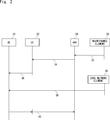
- Fig. 2 is a signalling diagram illustrative of network access control according to another aspect of the present invention
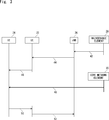
- Fig. 3 is a signalling diagram illustrative of network access control according to yet another aspect of the present invention
- Fig. 4 is a signalling diagram illustrative of network access control according to yet further aspect of the present invention
- Fig. 5 is a schematic representation of a mobile radio communications device arranged to operate in accordance with an embodiment of the present invention
- Fig. 6 is a schematic representation of a radio access network device arranged to operate in accordance with an embodiment of the present invention.
- FIG. 1 there is provided schematic representation of a user terminal device by which a user can access a mobile radio communications network and, particularly, the user terminal device access stratum 10, a radio access network represented by an evolved NodeB eNB 12 and the representation of a core network or operator and maintenance element 14.
- a radio access network represented by an evolved NodeB eNB 12
- Fig. 1 services in particular to illustrate how network access restriction can be performed depending upon whether the radio bearers concerned are identified as new or ongoing radio bearers.
- the procedure commences with a radio access network access restriction activation signal 16 delivered from the core network element 14 to the eNB 12 and which identifies an access be barred to new or ongoing bearers and also suggests an access probability factor.
- the eNB 12 forwards the access buying factors which are embodied as network policies to the UE 10 so as to activate the required access restrictions.
- These network policies are forwarded by the eNB 12 to the UE access stratum 10 by way of an SIB, or RRC dedicated configuration signalling 18.
- SIB short term evolution
- RRC dedicated configuration signalling 18 The user terminal, at its access stratum 10 and of course assuming that it is capable and/or subscribed to provide for the required access restriction applies the required network policies in seeking to provided mobile originating signalling/data.
- the UE can be arranged to generate a random number for comparison with the access probability factor and, responsive to the result of such comparison, the UE can send the related signalling/data.
- the UE 10 is arranged to release dedicated resources for SRS, scheduling request, CQI and SPS resources and consider access barred for all the errors. However, if, at the UE 10 all access restriction checks have been passed with no indication of barring required, then a Medium Access Control signal 20 is delivered from the UE 10 to the eNB 12.
- FIG. 2 this depicts how access restriction can be performed depending on quality of service of bearers and in the form of a signalling diagram relating to a UE device in-which its AS 22 and NAS 24 are separately indicated and, as before, a radio access network represented by an eNB 26 and a core network or operator and maintenance element 28.
- Fig. 2 in fact illustrates signalling according to a first option comprising access stratum based configuration, a second option comprising non-access stratum based configuration.
- a radio access network access restriction activation signal 32 identifying access priorities based upon QCI is delivered from the core network/operator and maintenance element 28 to the eNB 26.
- the eNB 26 forwards the network policies to the UE 22 24 so as to activate access restriction.
- the policies are delivered by the eNB 26 to the UE access stratum 22 by way of a SIB or RRC dedicated configuration 34 and which network policies are in the form of an access priority bit map based on QCI.
- the UE access stratum 22 these received access restriction rules to the UE non-access stratum 24.
- the core network element 30 can be arranged to deliver non-access stratum access control configuration signalling 38, again comprising access priority bit map based upon QCI, to the UE non-access stratum 24.
- the network policies represented thereby are checked and replied in relation to mobile originating signalling/data intending to be delivered from the UE from the UE non-access stratum 24.
- the related signal/data is not send from the UE non-access stratum 24.
- the UE non-access stratum 24 can simply be arranged to send higher priority requests before lower priority requests.
- signalling/data messages are delivered to the UE access stratum 22 for producing an ongoing Medium Access Control signal 40 to the eNB 26.
- the "Access priority (AP) bitmap based on QCI" information shown in the Figure hereafter can be implemented as follows.
- Option 1 ** 1 bit encoding of AP there would be 9 bits AP where e.g. the most significant bit would correspond to QCI 9 and be set to either 0 ("barred”) or 1 ("not barred”).
- Fig. 3 there is illustrated a signalling diagram representative of network access restriction performed on the basis of radio bearer type and, in particular, whether the radio bearer comprises a Guaranteed Bit Rate or non-Guaranteed Bit Rate bearer.
- the signalling is again illustrated in relation to the UE device of which are separately illustrated is access stratum 22 and non-access stratum 24, a eNB 26 of the radio access network and a core network or operator and maintenance element 28 or, as a second option, simply a core network element 30.
- the signalling again commences with a radio access network access restriction activation signal 42 from the core network/operator and maintenance element 28 delivered to the eNB 26 and which provides an indication of type of radio bearer to be barred and, if required, also an access probability factor such as that discussed above in relation to Fig. 1.
- the eNB 26 forwards the network policies identifying the type of bearer to be barred to the UE device 22, 24 to activate the required access restrictions.
- the eNB 26 delivers the access restriction policies by way of SIB or RRC dedicated configuration signalling 44, again comprising identity of the type of bearer to be barred, and the related access probability factor.
- SIB or RRC dedicated configuration signalling 44 again comprising identity of the type of bearer to be barred, and the related access probability factor.
- the received access restrictions are then forwarded from the UE access stratum 22 to the UE non-access stratum 24 by way of signalling 46.
- the UE non-access stratum 24 receives access control configuration signalling 48 directly from a core network element 30 in non-access stratum based configuration the access restrictions are again based upon the type of bearer and associated access probability factor.
- the UE checks at its non-access stratum 24 the network policies against any intended mobile originating signalling/data and if such signalling/data is limited to a type of bearer as identified within the access restriction policy the UE non-access stratum 24 does not send the related signalling/data to the UE access stratum 22.
- the signalling/data is delivered from the UE network access stratum 24 to the UE access stratum 22 by way of signalling 50 and for onward delivery of a Medium Access Control signal 52 to the eNB 26.
- FIG. 4 there is again illustrated a user terminal device by reference to a UE access stratum 22 and UE non-access stratum 24 and a radio access network represented by an eNB 26 a core network/operator and maintenance element 28 and a sole core network element 30.
- the signalling illustrated in Fig. 4 is illustrative of an access restriction example which can be performed depending upon the class of bearer as set by the core network. As will be appreciated from the subsequent discussion effectively two separate checks are applied to the intended mobile originating signalling data delivered to, and arriving at, the UE access stratum 22 before any Medium Access Control request is delivered to the eNB 26.
- a bar indicator serving to identify the class of bearers to be barred, for example whether relating to unpaid and/or operator-controlled services such that in the case of network congestion, access requests relating to such bearers would be barred from achieving network access.
- the barring indicator is delivered to the eNB 26 and then onward by way of a non-access stratum bearer signal 54 to the UE non-access stratum 24 where the network policies including the barring indicator are applied to any required mobile originating signalling/data. If it is determined in the UE non-access stratum 24 that such signalling/data does in fact relate to bearers of a restrictive class then the UE non-access stratum 24 does not send the related signalling/data to the UE access stratum.
- the related mobile originating signalling/data is delivered by way of signalling 58 to the UE access stratum 22.
- a Medium Access Control scheduling request is delivered from the UE access stratum 22 to the eNB 26 a further check is conducted at the UE access stratum 22 having regard to whether the bearer is a new or ongoing bearer, and having regard to an access probability factor, such as a procedure described in relation to Fig. 1.
- a radio access network access restriction activation signal can be delivered from the core network/operator and maintenance element 28 to the eNB 26 and, as before, in case of potential network congestion, the eNB 26 can forward the network policies representing the access restriction to the UE.
- the network policies and access restrictions are delivered by way of SIB signalling 60 to the UE access 22 where such a further check, and possible accessing barring can be conducted on any mobile originating signalling/data that successfully overcame the barring applied at the UE access 24 on the basis of bearer class.
- a Medium Access Control signal 26 can finally be delivered to the eNB 26.
- the present invention is advantageously insofar as, with a UE device in RRC_Connected mode it can prove possible to control the barring of access of the device to the network in a manner to ease network congestion so as to allow sufficient capacity for the delivery of essential communication signals which might commonly comprised packet-based communication applications such as disaster message board services and/or disaster voice messaging services.
- a mobile radio communications device such as a UE handset 64 including transceiver circuitry 66 operatively connected as shown to an antenna 68 and also operatively connected as shown to a user interface 70 and a controller 72 for controlling network access attempts.
- the controller 72 includes a bearer-characteristic determination section 74 allowing the UE 64 to determine a bearer characteristic of intended MO signalling/data requiring network access.
- the controller 72 also includes a barring-determination section 76, arranged to receive barring indicators from the RAN at the UE's AS or NAS as appropriate, which indicators are arranged to identify characteristics of bearers to be barred.
- a mobile radio communications network RAN device such as, for example, an eNB 80 of an LTE network and including transceiver circuitry 82 operatively connected to an antenna 84 and a controller 86.
- the controller 86 is arranged to identify at least one characteristic of a bearer that should not be employed in, i.e. be barred from, network access at a UE device (such as that 64 of Fig. 5) and to deliver signalling, such as for example SIB or RRC Dedicated Configuration, to the UE device accordingly.
- the identification of the relevant characteristic can occur within the eNodeB 80 or be received from a CN or OAM element and the barring protocol activated within a barring activation section 88.
- the relevant characteristic can comprise any one or more of identification of new or on-going bearers, bearer service quality, bearer type and/or bearer class, but is in no way restricted to such examples.
- the barring policy can be configured beforehand in Non Access Stratum based on some relevant characteristic. Then when the congestion or overload situation in the network happens, the Radio Access Network can provide an indication towards the UE so that the latter activates the barring policy in NAS.
- the UE device can include any appropriate further or alternative functionality for its required network connectivity and level of service, and the network device can comprise any appropriate network node device having regard to the particular Radio Access Technology to be employed.
Landscapes
- Engineering & Computer Science (AREA)
- Computer Networks & Wireless Communication (AREA)
- Signal Processing (AREA)
- Computer Security & Cryptography (AREA)
- Mobile Radio Communication Systems (AREA)
Abstract
Description
NPL 2:3GPP Technical Specification TS 36.331 "Radio Resource Control"
NPL 3:3GPP work item description "Application Specific Access Control (ASAC)" (S1-131291)
NPL 4:3GPP RAN2 work item description "Smart Congestion Mitigation" in RP-130870,
The Radio Access Network (e.g. evolved NodeB) to configure towards the terminal or User Equipment (UE) with either:
some radio access barring flag to new or/and ongoing bearers and access probability factor; and/or
some access priority based on quality of service class. Such information could have been beforehand provided to RAN by Core Network or Operator And Maintenance configuration; and/or
some access priority based on bearer type (e.g. GBR or non GBR bearer); and/or
The Core Network (e.g. Mobility Management Entity) to configure towards the terminal or User Equipment (UE),
some access priority based on bearer class (e.g. bearer for unpaid service or bearer for operator uncontrolled service).
12 ENB
14 CORE NETWORK OR OPERATOR AND MAINTENANCE ELEMENT
16 RADIO ACCESS NETWORK ACCESS RESTRICTION ACTIVATION SIGNAL
18 SIB, OR RRC DEDICATED CONFIGURATION SIGNALLING
20 MEDIUM ACCESS CONTROL SIGNAL
22 UE
24 UE
26 ENB
28 MAINTENANCE ELEMENT
30 CORE NETWORK ELEMENT
32 RADIO ACCESS NETWORK ACCESS RESTRICTION ACTIVATION SIGNAL
34 SIB OR RRC DEDICATED CONFIGURATION
36 SIGNALLING
38 NON-ACCESS STRATUM ACCESS CONTROL CONFIGURATION SIGNALLING
40 ONGOING MEDIUM ACCESS CONTROL SIGNAL
42 RADIO ACCESS NETWORK ACCESS RESTRICTION ACTIVATION SIGNAL
44 SIB OR RRC DEDICATED CONFIGURATION SIGNALING
46 SIGNALLING
48 ACCESS CONTROL CONFIGURATION SIGNALLING
50 SIGNALLING
52 MEDIUM ACCESS CONTROL SIGNAL
54 A NON-ACCESS STRATUM BEARER SIGNAL
56 RADIO ACCESS NETWORK ACCESS RESTRICTION ACTIVATION SIGNAL
58 SIGNALLING
60 SIB SIGNALLING
62 MEDIUM ACCESS CONTROL SIGNAL
64 UE
66 TRANSCEIVER CIRCUITRY
68 ANTENNA
70 USER INTERFACE
72 CONTROLLER
74 BEARER-CHARACTERISTIC DETERMINATION SECTION
76 BARRING-DETERMINATION SECTION
78 ACCESS BARRING SECTION
80 ENB
82 INCLUDING TRANSCEIVER CIRCUITRY
84 ANTENNA
86 CONTROLLER
88 BARRING ACTIVATION SECTION
Claims (38)
- A method of easing congestion in a mobile radio communications network including the step of applying access restriction at a mobile radio communications user terminal device towards the network and on the basis of a bearer characteristic.
- A method as claimed in Claim 1, and arranged to provide for radio access network configuration of the user terminal.
- A method as claimed in Claim 1 or 2, wherein access control data includes a radio access barring flag for new bearers is provided.
- A method as claimed in Claim 1, 2 or 3, wherein access control data includes a radio access barring flag for on-going bearers is provided.
- A method as claimed in Claim 1, 2, 3 or 4, and wherein access control data includes an access probability factor.
- A method as claimed in Claim 5, and including the step of comparing the access probability factor with a randomly generated number, and access restriction being provided on the basis of such comparison.
- A method as claimed in any one or more of the preceding claims, wherein access control data includes network access priority applied based on the quality of service of the bearers.
- A method as claimed in Claim 7, wherein the access priority is configured as an access priority bit map based on Quality of service Class Identified.
- A method as claimed in any one or more of the preceding claims wherein the access control towards the radio access network includes the provision of access priority based upon the bearer type.
- A method as claimed in any one or more of the preceding claims wherein the access control includes the assignment of access priority based on bearer class.
- A method as claimed in claim 10, including the step of core network delivery of a barring indicator based on bearer class to the user terminal non-access stratum by way of the radio access network and in the non-access stratum the network access policies according to the barring indicator are applied to mobile originating signalling/data so as to determine whether the related signalling such data is delivered to the user terminal access stratum.
- A method as claimed in Claim 10 or 11, including steps of a further level of network access restriction based upon identification of new and/or on-going radio bearers in combination with an access probability factor.
- An access-control method within a mobile radio communications device for access-control towards a radio access network so as to ease congestion within the radio access network, and including the step of attempting access to the network based on a bearer characteristic.
- A method as claimed in Claim 13, and including configuring the user terminal device by way of the radio access network.
- A method as claimed in Claim 13 or 14 and including the user terminal receiving a radio access barring flag for new radio bearers and/or a radio access barring flag for ongoing bearers, and to determine if its mobile originating signalling/data is related to the new and/or ongoing bearer.
- A method as claimed in Claim 13, 14 or 15, and further including the steps of comparing an access probability factor received from the network with a randomly generated number, and controlling the deployment of access restriction on the basis of such comparison.
- A method as claimed in Claim 13, 14, 15 or 16, wherein access control towards the radio access can include the step determining bearer type.
- A method as claimed in any one or more of Claims 13 to 17, and including steps of receiving at a non-access stratum level an access barring indicator based on bearer class.
- A method as claimed in Claim 18, and including the steps of providing a further level of network access restriction based upon identification of new and/or ongoing bearers in combination with an access probability factor.
- A mobile radio communications user terminal device, arranged for access control towards a radio access network so as to ease congestion within the radio access network, the user terminal device being arranged for attempting access to the network based on a radio bearer characteristic.
- A mobile radio communications user terminal device as claimed in Claim 20 and arranged to operate in accordance with one or more steps of a method as claimed in any one or more of Claims 13 to 20.
- A method within a mobile radio communications network device for controlling access of a mobile radio communications user terminal to a radio access network for easing congestion within the mobile radio communications network and including the step of applying radio network access restriction to the user terminal on the basis of a bearer characteristic.
- A method as claimed in Claim 22, and providing from the network device a barring flag for new bearers.
- A method as claimed in Claim 22 or 23 and providing from the network device a radio access barring flag for on-going bearers from the network device.
- A method as claimed in Claim 22, 23 or 24, and including the step of providing an access probability factor for the control of access restriction.
- A method as claimed in any one or more of Claims 22, 23 or 24, and provided at the radio access network.
- A method as claimed in any one or more of Claims 22 to 26, wherein the access control includes establishment of network access priority and applied based on the quality of service of the bearers.
- A method as claimed in Claim 27, and including configuring the access priority as an access priority bitmap based on quality of service indicators.
- A method as claimed in any one or more of Claims 22 to 28, and including, within the provision of access control towards the radio access network, access priority based upon the bearer type.
- A method as claimed in Claim 29, and including, within the provision of access control towards the radio access network, assignment of access priority based on bearer class.
- A mobile radio communications network device arranged for controlling access of a mobile radio communications user terminal to a radio access network for easing congestion within the mobile radio communications network, and arranged to applying radio network access restriction to the user terminal on the basis of bearer characteristic.
- A mobile radio communications network device as claimed in Claim 31 and arranged to operate in accordance with any one or more steps of a method as claimed in any one or more of Claims 22 to 30.
- A mobile radio communications network comprising a mobile radio communications user terminal device as claimed in Claim 20 or 21, and a mobile radio communications network device as claimed in Claim 30 or 31.
- A method of easing congestion in a mobile radio communications network substantially as hereinbefore described with reference to, and as illustrated in, Fig. 1, Fig. 2, Fig. 3 and Fig.4 of the accompanying drawings.
- An access-control method within a mobile radio communications device for access-control towards a radio access network and substantially as hereinbefore described with reference to, and as illustrated in, Fig. 1, Fig. 2, Fig. 3 and Fig.4 of the accompanying drawings.
- A method within a mobile radio communications network device for controlling access of a mobile radio communications user terminal to a radio access network, and substantially as hereinbefore described with reference to, and as illustrated in, Fig. 1, Fig. 2, Fig. 3 and Fig.4 of the accompanying drawings.
- A mobile radio communications user terminal device, arranged for access-control towards a radio access network substantially as hereinbefore described with reference to, and as illustrated in, Fig. 5 of the accompanying drawings.
- A mobile radio communications network substantially as hereinbefore described with reference to one or more of the accompanying drawings.
Priority Applications (2)
| Application Number | Priority Date | Filing Date | Title |
|---|---|---|---|
| US15/023,779 US10412622B2 (en) | 2013-09-25 | 2014-08-27 | Mobile radio communications network congestion |
| JP2016517567A JP6455509B2 (en) | 2013-09-25 | 2014-08-27 | Mobile radio communication network, user terminal device, mobile radio communication network device, and control method thereof |
Applications Claiming Priority (2)
| Application Number | Priority Date | Filing Date | Title |
|---|---|---|---|
| GB1317036.0 | 2013-09-25 | ||
| GB1317036.0A GB2518625A (en) | 2013-09-25 | 2013-09-25 | Mobile radio communications network congestion |
Publications (1)
| Publication Number | Publication Date |
|---|---|
| WO2015045274A1 true WO2015045274A1 (en) | 2015-04-02 |
Family
ID=49553406
Family Applications (1)
| Application Number | Title | Priority Date | Filing Date |
|---|---|---|---|
| PCT/JP2014/004397 Ceased WO2015045274A1 (en) | 2013-09-25 | 2014-08-27 | Mobile radio communications network congestion |
Country Status (4)
| Country | Link |
|---|---|
| US (1) | US10412622B2 (en) |
| JP (1) | JP6455509B2 (en) |
| GB (1) | GB2518625A (en) |
| WO (1) | WO2015045274A1 (en) |
Families Citing this family (12)
| Publication number | Priority date | Publication date | Assignee | Title |
|---|---|---|---|---|
| CN111586596B (en) * | 2013-10-30 | 2022-11-04 | 交互数字专利控股公司 | System and method for handling priority service congestion |
| US9544812B2 (en) * | 2015-01-30 | 2017-01-10 | Alcatel Lucent | System and method for mitigating network congestion using fast congestion detection in a wireless radio access network (RAN) |
| US9780997B2 (en) | 2015-01-30 | 2017-10-03 | Alcatel Lucent | Method and system for controlling an operation of an application by classifying an application type using data bearer characteristics |
| US10069738B2 (en) * | 2015-04-01 | 2018-09-04 | At&T Intellectual Property I, L.P. | One cellular radio to support multiple phone lines and data at a location |
| US10616901B2 (en) * | 2015-05-13 | 2020-04-07 | Lg Electronics Inc. | Method of configuring bearer for sending and receiving data in wireless communication system and apparatus supporting the method |
| WO2016191963A1 (en) * | 2015-05-29 | 2016-12-08 | 华为技术有限公司 | Method for bearer establishment, user equipment and base station |
| WO2017043903A1 (en) * | 2015-09-10 | 2017-03-16 | Lg Electronics Inc. | Method and apparatus for performing access barring check for high priority access in wireless communication system |
| WO2018137786A1 (en) * | 2017-01-27 | 2018-08-02 | Telefonaktiebolaget Lm Ericsson (Publ) | Access barring techniques in a connected mode |
| KR102489030B1 (en) * | 2017-03-31 | 2023-01-17 | 소니그룹주식회사 | Apparatus and method for mobile telecommunication system |
| US10863415B2 (en) * | 2017-05-06 | 2020-12-08 | Qualcomm Incorporated | Unified access control |
| WO2018231114A1 (en) * | 2017-06-16 | 2018-12-20 | Telefonaktiebolaget Lm Ericsson (Publ) | User equipment, computer program, carrier and method for controlling a data transmisson over a bearer in a wireless communications network |
| CN118467208B (en) * | 2024-07-11 | 2024-10-11 | 宁波银行股份有限公司 | Data processing method and device, electronic equipment and readable storage medium |
Citations (4)
| Publication number | Priority date | Publication date | Assignee | Title |
|---|---|---|---|---|
| JP2008042451A (en) * | 2006-08-04 | 2008-02-21 | Nec Corp | Wireless lan network system, policy control device, access point, and load control method |
| JP2009105758A (en) * | 2007-10-24 | 2009-05-14 | Ntt Docomo Inc | Transmission processing regulation method, mobile communication system, and mobile station |
| JP2012524463A (en) * | 2009-04-17 | 2012-10-11 | リサーチ イン モーション リミテッド | Mechanism for evolved packet system quality of service class identifier extension |
| JP2013062619A (en) * | 2011-09-12 | 2013-04-04 | Ricoh Co Ltd | Information processing device and communication system |
Family Cites Families (7)
| Publication number | Priority date | Publication date | Assignee | Title |
|---|---|---|---|---|
| WO2010018658A1 (en) * | 2008-08-12 | 2010-02-18 | パナソニック株式会社 | Wireless transmitting device and wireless receiving device |
| BRPI0902530A2 (en) * | 2009-07-29 | 2011-04-05 | Electrolux Do Brasil Sa | washing machine suspension system |
| US20110235569A1 (en) * | 2010-03-26 | 2011-09-29 | Qualcomm Incorporated | Radio bearer management at a donor base station in a wireless network with relays |
| GB2485233B (en) * | 2010-11-08 | 2015-02-04 | Sca Ipla Holdings Inc | Infrastructure equipment and method |
| US9622211B2 (en) * | 2012-01-30 | 2017-04-11 | Telefonaktiebolaget Lm Ericsson (Publ) | Access spreading with selective paging |
| EP4109948A1 (en) * | 2012-03-21 | 2022-12-28 | Samsung Electronics Co., Ltd. | Granular network access control and methods thereof |
| JP2015015562A (en) | 2013-07-04 | 2015-01-22 | 株式会社Nttドコモ | User device, and communication method |
-
2013
- 2013-09-25 GB GB1317036.0A patent/GB2518625A/en not_active Withdrawn
-
2014
- 2014-08-27 JP JP2016517567A patent/JP6455509B2/en not_active Expired - Fee Related
- 2014-08-27 WO PCT/JP2014/004397 patent/WO2015045274A1/en not_active Ceased
- 2014-08-27 US US15/023,779 patent/US10412622B2/en active Active
Patent Citations (4)
| Publication number | Priority date | Publication date | Assignee | Title |
|---|---|---|---|---|
| JP2008042451A (en) * | 2006-08-04 | 2008-02-21 | Nec Corp | Wireless lan network system, policy control device, access point, and load control method |
| JP2009105758A (en) * | 2007-10-24 | 2009-05-14 | Ntt Docomo Inc | Transmission processing regulation method, mobile communication system, and mobile station |
| JP2012524463A (en) * | 2009-04-17 | 2012-10-11 | リサーチ イン モーション リミテッド | Mechanism for evolved packet system quality of service class identifier extension |
| JP2013062619A (en) * | 2011-09-12 | 2013-04-04 | Ricoh Co Ltd | Information processing device and communication system |
Also Published As
| Publication number | Publication date |
|---|---|
| GB201317036D0 (en) | 2013-11-06 |
| US20160234715A1 (en) | 2016-08-11 |
| US10412622B2 (en) | 2019-09-10 |
| JP2016537846A (en) | 2016-12-01 |
| JP6455509B2 (en) | 2019-01-23 |
| GB2518625A (en) | 2015-04-01 |
Similar Documents
| Publication | Publication Date | Title |
|---|---|---|
| US10412622B2 (en) | Mobile radio communications network congestion | |
| JP7351395B2 (en) | UE and UE method | |
| US9565550B2 (en) | Method and program for cell barring in a cellular network | |
| KR101698285B1 (en) | Method for connecting ims-based service | |
| EP3028422B1 (en) | Smart congestion control for rrc idle mode in lte advanced systems | |
| CN107682848B (en) | Base station and terminal in wireless communication system and data communication method thereof | |
| CN102652446B (en) | Method and device in communication system | |
| EP2810518B1 (en) | Access spreading with selective paging | |
| CN110383894A (en) | The method and apparatus of the signaling class of access control mechanism are configured in a wireless communication system | |
| JP6012331B2 (en) | Base station and regulation method in mobile communication system | |
| CN105165065B (en) | Access control method and device | |
| Taylor et al. | Priority capabilities in LTE supporting national security and emergency preparedness next generation network priority services | |
| KR20140039573A (en) | Method and apparatus for control access of user equipment in radio communication system |
Legal Events
| Date | Code | Title | Description |
|---|---|---|---|
| 121 | Ep: the epo has been informed by wipo that ep was designated in this application |
Ref document number: 14849312 Country of ref document: EP Kind code of ref document: A1 |
|
| WWE | Wipo information: entry into national phase |
Ref document number: 15023779 Country of ref document: US |
|
| ENP | Entry into the national phase |
Ref document number: 2016517567 Country of ref document: JP Kind code of ref document: A |
|
| NENP | Non-entry into the national phase |
Ref country code: DE |
|
| 122 | Ep: pct application non-entry in european phase |
Ref document number: 14849312 Country of ref document: EP Kind code of ref document: A1 |