WO2015040573A1 - Mirabegron dimethyl sulphoxide solvate and its use for the treatment of overactive bladder - Google Patents
Mirabegron dimethyl sulphoxide solvate and its use for the treatment of overactive bladder Download PDFInfo
- Publication number
- WO2015040573A1 WO2015040573A1 PCT/IB2014/064642 IB2014064642W WO2015040573A1 WO 2015040573 A1 WO2015040573 A1 WO 2015040573A1 IB 2014064642 W IB2014064642 W IB 2014064642W WO 2015040573 A1 WO2015040573 A1 WO 2015040573A1
- Authority
- WO
- WIPO (PCT)
- Prior art keywords
- mirabegron
- formula
- dimethyl sulphoxide
- sulphoxide solvate
- solvate
- Prior art date
- Legal status (The legal status is an assumption and is not a legal conclusion. Google has not performed a legal analysis and makes no representation as to the accuracy of the status listed.)
- Ceased
Links
Classifications
-
- C—CHEMISTRY; METALLURGY
- C07—ORGANIC CHEMISTRY
- C07D—HETEROCYCLIC COMPOUNDS
- C07D277/00—Heterocyclic compounds containing 1,3-thiazole or hydrogenated 1,3-thiazole rings
- C07D277/02—Heterocyclic compounds containing 1,3-thiazole or hydrogenated 1,3-thiazole rings not condensed with other rings
- C07D277/20—Heterocyclic compounds containing 1,3-thiazole or hydrogenated 1,3-thiazole rings not condensed with other rings having two or three double bonds between ring members or between ring members and non-ring members
- C07D277/32—Heterocyclic compounds containing 1,3-thiazole or hydrogenated 1,3-thiazole rings not condensed with other rings having two or three double bonds between ring members or between ring members and non-ring members with hetero atoms or with carbon atoms having three bonds to hetero atoms with at the most one bond to halogen, e.g. ester or nitrile radicals, directly attached to ring carbon atoms
- C07D277/38—Nitrogen atoms
- C07D277/40—Unsubstituted amino or imino radicals
-
- A—HUMAN NECESSITIES
- A61—MEDICAL OR VETERINARY SCIENCE; HYGIENE
- A61P—SPECIFIC THERAPEUTIC ACTIVITY OF CHEMICAL COMPOUNDS OR MEDICINAL PREPARATIONS
- A61P3/00—Drugs for disorders of the metabolism
- A61P3/08—Drugs for disorders of the metabolism for glucose homeostasis
- A61P3/10—Drugs for disorders of the metabolism for glucose homeostasis for hyperglycaemia, e.g. antidiabetics
Definitions
- the present invention provides mirabegron dimethyl sulphoxide, processes for its preparation, a pharmaceutical composition comprising it, and its use for the treatment of overactive bladder.
- the present invention also provides processes for the preparation of mirabegron using mirabegron dimethyl sulphoxide solvate.
- Mirabegron is a beta-3 adrenergic agonist disclosed in U.S. Patent No. 6,346,532. It is chemically designated as 2-(2-aminothiazol-4-yl)-N-[4-[2- ⁇ [(2R)-2-hydroxy-2- phenylethyl]amino ⁇ ethyl)phenyl]acetamide, and has the structure depicted by Formula I.
- Mirabegron is marketed in the United States under the brand name Myrbetriq ® for the treatment of overactive bladder with symptoms of urinary incontinence, urgency, and urinary frequency.
- the present invention provides mirabegron dimethyl sulphoxide solvate, processes for its preparation, a pharmaceutical composition comprising it, and its use for the treatment of overactive bladder.
- the mirabegron dimethyl sulphoxide solvate of the present invention is stable, easily reproducible, and is suitable for the preparation of pharmaceutical compositions.
- the present invention also provides processes for the preparation of mirabegron by desolvation of the mirabegron dimethyl sulphoxide solvate.
- a first aspect of the present invention provides the mirabegron dimethyl sulphoxide solvate of Formula II:
- a second aspect of the present invention provides a process for the preparation of the mirabegron dimethyl sulphoxide solvate of Formula II:
- a third aspect of the present invention provides a process for the preparation of mirabegron of Formula I:
- a fourth aspect of the present invention provides a pharmaceutical composition
- a pharmaceutical composition comprising the mirabegron dimethyl sulphoxide solvate of Formula II and one or more pharmaceutically acceptable carriers, diluents, or excipients.
- a fifth aspect of the present invention provides the use of the mirabegron dimethyl sulphoxide solvate of Formula II for the treatment of overactive bladder with symptoms of urinary incontinence, urgency, and urinary frequency.
- Figure 1 X-ray Powder Diffraction (XRPD) pattern of the mirabegron dimethyl sulphoxide solvate of Formula II.
- FIG. 1 Differential Scanning Calorimetry (DSC) thermogram of the mirabegron dimethyl sulphoxide solvate of Formula II.
- FIG. 3 Thermogravimetric Analysis (TGA) of the mirabegron dimethyl sulphoxide solvate of Formula II.
- contacting includes dissolving, slurrying, stirring, or combinations thereof.
- Mirabegron dimethyl sulphoxide solvate of Formula II is characterized by an X-ray powder diffraction (XRPD) pattern having peaks at 17.25 (d-spacing at 5.14 A), 17.92 (4.95 A), 19.97 (4.45 A), 20.58 (4.32 A), and 26.28 (3.39 A) ⁇ 0.2 degrees 2 ⁇ . It may be further characterized by an XRPD pattern having peaks at 3.73 (23.71 A), 9.94 (8.90 A), 21.42 (4.15 A), 21.85 (4.07 A), and 22.94 (3.88 A) ⁇ 0.2 degrees 2 ⁇ . Table 1 summarizes the d-spacing values in A, and the corresponding 2 ⁇ values in degrees 2 ⁇ , of the mirabegron dimethyl sulphoxide solvate of Formula II.
- XRPD X-ray powder diffraction
- the mirabegron dimethyl sulphoxide solvate of Formula II may also be characterized by a DSC thermogram having endotherms at about 91.50°C and about 93.68°C.
- the mirabegron dimethyl sulphoxide solvate of Formula II may also be characterized by an XRPD pattern, a DSC thermogram, and a TGA as depicted in Figures 1-3, respectively.
- Mirabegron used for the preparation of the mirabegron dimethyl sulphoxide solvate of Formula II may be obtained by the methods known in the literature, such as those described in U.S. Patent No. 7,342,117 and PCT Publication No. WO 2012/156998 which are incorporated herein by reference.
- the preparation of the mirabegron dimethyl sulphoxide solvate of Formula II is carried out by contacting mirabegron of Formula I with dimethyl sulphoxide at a temperature of about 20°C to the reflux temperature of the solvent.
- the preparation of the mirabegron dimethyl sulphoxide solvate of Formula II may also be carried out using a solvent selected from the group comprising of aromatic hydrocarbons, alkyl acetates, and mixtures thereof. Examples of aromatic hydrocarbons include toluene and xylene.
- alkyl acetates examples include ethyl acetate, propyl acetate, isopropyl acetate, and t- butyl acetate.
- the preparation of the mirabegron dimethyl sulphoxide solvate of Formula II may also be carried out by stirring the reaction mixture at a temperature of about 20°C to about 40°C for about 15 minutes to about 4 hours.
- Isolation of the mirabegron dimethyl sulphoxide solvate of Formula II may be accomplished by crystallization, concentration, precipitation, cooling, filtration, centrifugation, or a combination thereof, followed by drying. Any suitable method of drying may be employed such as drying under reduced pressure, vacuum tray drying, air drying, or a combination thereof. Drying is carried out at a temperature of about 20°C to about 40°C for about 30 minutes to about 20 hours.
- the mirabegron dimethyl sulphoxide solvate of Formula II is prepared by dissolving mirabegron in a mixture of dimethyl sulphoxide and an aromatic hydrocarbon solvent, stirring the reaction mixture for about 15 minutes to about 2 hours at a temperature of about 20°C to about 40°C, followed by isolation.
- the mirabegron dimethyl sulphoxide solvate of Formula II is prepared by dissolving mirabegron in a mixture of dimethyl sulphoxide and an alkyl acetate solvent, stirring the reaction mixture for about 15 minutes to about 2 hours at a temperature of about 20°C to about 40°C, followed by isolation.
- the mirabegron dimethyl sulphoxide solvate of Formula II is prepared by using a mixture of dimethyl sulphoxide with toluene, or a mixture of dimethyl sulphoxide with i-butyl acetate as a solvent.
- the desolvation of the mirabegron dimethyl sulphoxide solvate is carried out by stirring a reaction mixture containing the mirabegron dimethyl sulphoxide solvate in a solvent selected from the group comprising of water, chlorinated hydrocarbons, alcohols, ketones, and mixtures thereof at a temperature of about 0°C to about 50°C.
- chlorinated hydrocarbons include dichloromethane and chloroform.
- Examples of alcohols include methanol, ethanol, iso-propanol, and butanol.
- ketones include acetone, dimethyl ketone, ethyl methyl ketone, and methyl iso-butyl ketone.
- the desolvation of the mirabegron dimethyl sulphoxide solvate of Formula II is carried out by contacting the mirabegron dimethyl sulphoxide solvate of Formula II with water at a temperature of about 25 °C to about 35°C.
- the reaction mixture is stirred for about 30 minutes to about 2 hours, filtered, and the solid obtained is dried at a temperature of about 40°C to about 50°C under vacuum.
- the desolvation of the mirabegron dimethyl sulphoxide solvate of Formula II is carried out by contacting the mirabegron dimethyl sulphoxide solvate of Formula II with acetone at a temperature of about 0°C to about 10°C.
- the reaction mixture is stirred for about 30 minutes to about 2 hours, filtered, and the solid obtained is dried at a temperature of about 20°C to about 40°C under vacuum.
- Mirabegron dimethyl sulphoxide solvate of Formula II may be administered as part of a pharmaceutical composition for the treatment of overactive bladder. Accordingly, in a further aspect, there is provided a pharmaceutical composition comprising mirabegron dimethyl sulphoxide solvate of Formula II, one or more pharmaceutically acceptable carriers, diluents, or excipients, and optionally other therapeutic ingredients.
- compositions comprising mirabegron dimethyl sulphoxide solvate of Formula II may be administered orally, topically, parenterally, by inhalation or spray, rectally, or in the form of injectables.
- the injectable compositions may include intravenous, intramuscular, subcutaneous, and parenteral injections, as well as use of infusion techniques.
- the X-ray powder diffraction (XRPD) pattern was recorded using a PANalytical ® X'pert PRO with X'celerator ® as the detector.
- the DSC was recorded using a Mettler-Toledo ® 82 le. Data collection parameters: Scanning rate: 10°C/minute; Temperature: 30°C to 300°C.
- the TGA was recorded using a TA Instruments ® Q500.
- Mirabegron (1.5 g) was suspended in a mixture of dimethyl sulphoxide (1.0 mL) and toluene (2 mL). The reaction mixture was stirred for about 30 minutes at a temperature of about 25°C to about 35°C. The reaction mixture was diluted with toluene (5 mL). The solid obtained was filtered, washed with toluene (40 mL), and dried in a vacuum tray dryer at a temperature of about 25°C to about 35°C for about 16 hours to obtain the mirabegron dimethyl sulphoxide solvate.
- Mirabegron (4.5 g) was suspended in a mixture of dimethyl sulphoxide (3 mL) and /-butyl acetate (45 mL). The reaction mixture was stirred at a temperature of about 25 °C to about 35°C for about 3 hours. The solid obtained was filtered, washed with i-butyl acetate (30 mL), and dried in a vacuum tray dryer at a temperature of about 25 °C to about 35°C for about 3 hours to obtain the mirabegron dimethyl sulphoxide solvate.
- Example 2 Preparation of mirabegron by desolvation of the mirabegron dimethyl sulphoxide solvate
Landscapes
- Health & Medical Sciences (AREA)
- Chemical & Material Sciences (AREA)
- Organic Chemistry (AREA)
- Diabetes (AREA)
- Chemical Kinetics & Catalysis (AREA)
- Nuclear Medicine, Radiotherapy & Molecular Imaging (AREA)
- Engineering & Computer Science (AREA)
- Bioinformatics & Cheminformatics (AREA)
- Hematology (AREA)
- Obesity (AREA)
- Emergency Medicine (AREA)
- General Chemical & Material Sciences (AREA)
- Medicinal Chemistry (AREA)
- Endocrinology (AREA)
- Pharmacology & Pharmacy (AREA)
- Life Sciences & Earth Sciences (AREA)
- Animal Behavior & Ethology (AREA)
- General Health & Medical Sciences (AREA)
- Public Health (AREA)
- Veterinary Medicine (AREA)
- Pharmaceuticals Containing Other Organic And Inorganic Compounds (AREA)
Abstract
The present invention provides mirabegron dimethyl sulphoxide, processes for its preparation, a pharmaceutical composition comprising it, and its use for the treatment of overactive bladder. The present invention also provides processes for the preparation of mirabegron using mirabegron dimethyl sulphoxide solvate.
Description
MIRABEGRON DIMETHYL SULPHOXIDE SOLVATE AND ITS USE FOR THE TREATMENT OF OVERACTIVE BLADDER
Field of the Invention
The present invention provides mirabegron dimethyl sulphoxide, processes for its preparation, a pharmaceutical composition comprising it, and its use for the treatment of overactive bladder. The present invention also provides processes for the preparation of mirabegron using mirabegron dimethyl sulphoxide solvate.
Background of the Invention
Mirabegron is a beta-3 adrenergic agonist disclosed in U.S. Patent No. 6,346,532. It is chemically designated as 2-(2-aminothiazol-4-yl)-N-[4-[2-{[(2R)-2-hydroxy-2- phenylethyl]amino}ethyl)phenyl]acetamide, and has the structure depicted by Formula I.

Formula I
Mirabegron is marketed in the United States under the brand name Myrbetriq® for the treatment of overactive bladder with symptoms of urinary incontinence, urgency, and urinary frequency.
The discovery of new polymorphic forms and solvates of a pharmaceutically useful compound provides new opportunities to improve the performance characteristics of a pharmaceutical product.
Polymorphs of mirabegron are disclosed in U.S. Patent No. 7,342, 117, PCT Publication No. WO 2012/156998, and IP.com disclosure No. IPCOM000228561D.
Solvates of mirabegron are not disclosed in the literature. The present invention provides mirabegron dimethyl sulphoxide solvate.
Summary of the Invention
The present invention provides mirabegron dimethyl sulphoxide solvate, processes for its preparation, a pharmaceutical composition comprising it, and its use for the treatment of overactive bladder. The mirabegron dimethyl sulphoxide solvate of the present invention is stable, easily reproducible, and is suitable for the preparation of
pharmaceutical compositions. The present invention also provides processes for the preparation of mirabegron by desolvation of the mirabegron dimethyl sulphoxide solvate.
A first aspect of the present invention provides the mirabegron dimethyl sulphoxide solvate of Formula II:

Formula II
characterized by X-ray diffraction peaks at d-spacings of 5.14, 4.95, 4.45, 4.32, and 3.39
A.
A second aspect of the present invention provides a process for the preparation of the mirabegron dimethyl sulphoxide solvate of Formula II:

Formula II
comprising contacting mirabegron of Formula I with dimethyl sulphoxide in the presence of a solvent.
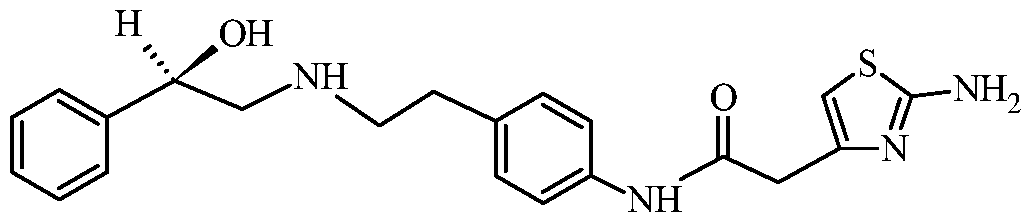
Formula I
A third aspect of the present invention provides a process for the preparation of mirabegron of Formula I:

Formula I
comprising desolvation of the mirabegron dimethyl sulphoxide solvate of Formula II.

Formula II
A fourth aspect of the present invention provides a pharmaceutical composition comprising the mirabegron dimethyl sulphoxide solvate of Formula II and one or more pharmaceutically acceptable carriers, diluents, or excipients.
A fifth aspect of the present invention provides the use of the mirabegron dimethyl sulphoxide solvate of Formula II for the treatment of overactive bladder with symptoms of urinary incontinence, urgency, and urinary frequency.
Other objects, features, advantages, and aspects of the present invention will become apparent to those skilled in the art from the description provided herein.
Brief Description of the Figures
Figure 1 : X-ray Powder Diffraction (XRPD) pattern of the mirabegron dimethyl sulphoxide solvate of Formula II.
Figure 2: Differential Scanning Calorimetry (DSC) thermogram of the mirabegron dimethyl sulphoxide solvate of Formula II.
Figure 3 : Thermogravimetric Analysis (TGA) of the mirabegron dimethyl sulphoxide solvate of Formula II.
Detailed Description of the Invention
Various embodiments and variants of the present invention are described hereinafter.
The term "contacting", as used herein, includes dissolving, slurrying, stirring, or combinations thereof.
The term "about", as used herein, refers to a variation of up to ±5% in the value of a parameter, such as temperature or stirring time.
Mirabegron dimethyl sulphoxide solvate of Formula II is characterized by an X-ray powder diffraction (XRPD) pattern having peaks at 17.25 (d-spacing at 5.14 A), 17.92 (4.95 A), 19.97 (4.45 A), 20.58 (4.32 A), and 26.28 (3.39 A) ± 0.2 degrees 2Θ. It may be
further characterized by an XRPD pattern having peaks at 3.73 (23.71 A), 9.94 (8.90 A), 21.42 (4.15 A), 21.85 (4.07 A), and 22.94 (3.88 A) ± 0.2 degrees 2Θ. Table 1 summarizes the d-spacing values in A, and the corresponding 2Θ values in degrees 2Θ, of the mirabegron dimethyl sulphoxide solvate of Formula II.
Table 1: XRPD peaks of mirabegron dimethyl sulphoxide solvate
d-spacing [A] Pos. [°2Θ] Rel. Int. [%]
23.71 3.73 35.47
11.90 7.43 4.20
8.90 9.94 34.36
8.56 10.33 9.93
7.41 11.94 12.56
6.88 12.87 5.92
6.17 14.35 3.51
5.70 15.54 17.39
5.51 16.10 7.16
5.14 17.25 79.04
5.05 17.57 34.61
4.95 17.92 80.93
4.77 18.59 30.41
4.70 18.88 38.11
4.58 19.36 20.56
4.45 19.97 100
4.32 20.58 78.31
4.15 21.42 26.62
4.07 21.85 47.93
3.97 22.40 56.35
3.88 22.94 54.84
3.77 23.64 27.43
3.71 23.97 16.60
3.66 24.33 36.13
3.59 24.77 19.29
3.54 25.16 22.72
3.50 25.42 28.39
3.47 25.68 11.29
3.39 26.28 69.78
3.27 27.30 27.39
3.18 27.70 23.27
3.10 28.01 11.60
3.22 28.83 10.01
3.06 29.22 28.56
2.99 29.88 18.13
2.90 30.87 10.65
2.86 31.32 17.42
2.83 31.63 21.78
2.78 32.20 9.63
2.71 33.03 10.45
2.65 33.84 13.26
2.61 34.39 14.20
2.56 35.01 11.40
2.52 35.57 6.29
2.48 36.25 7.74
2.41 37.32 7.00
2.35 38.30 8.44
2.27 39.73 10.62
The mirabegron dimethyl sulphoxide solvate of Formula II may also be characterized by a DSC thermogram having endotherms at about 91.50°C and about 93.68°C.
The mirabegron dimethyl sulphoxide solvate of Formula II may also be characterized by an XRPD pattern, a DSC thermogram, and a TGA as depicted in Figures 1-3, respectively.
Mirabegron used for the preparation of the mirabegron dimethyl sulphoxide solvate of Formula II may be obtained by the methods known in the literature, such as those described in U.S. Patent No. 7,342,117 and PCT Publication No. WO 2012/156998 which are incorporated herein by reference.
The preparation of the mirabegron dimethyl sulphoxide solvate of Formula II is carried out by contacting mirabegron of Formula I with dimethyl sulphoxide at a temperature of about 20°C to the reflux temperature of the solvent. The preparation of the mirabegron dimethyl sulphoxide solvate of Formula II may also be carried out using a solvent selected from the group comprising of aromatic hydrocarbons, alkyl acetates, and mixtures thereof. Examples of aromatic hydrocarbons include toluene and xylene.
Examples of alkyl acetates include ethyl acetate, propyl acetate, isopropyl acetate, and t- butyl acetate.
The preparation of the mirabegron dimethyl sulphoxide solvate of Formula II may also be carried out by stirring the reaction mixture at a temperature of about 20°C to about 40°C for about 15 minutes to about 4 hours.
Isolation of the mirabegron dimethyl sulphoxide solvate of Formula II may be accomplished by crystallization, concentration, precipitation, cooling, filtration, centrifugation, or a combination thereof, followed by drying. Any suitable method of
drying may be employed such as drying under reduced pressure, vacuum tray drying, air drying, or a combination thereof. Drying is carried out at a temperature of about 20°C to about 40°C for about 30 minutes to about 20 hours.
In an embodiment of the present invention, the mirabegron dimethyl sulphoxide solvate of Formula II is prepared by dissolving mirabegron in a mixture of dimethyl sulphoxide and an aromatic hydrocarbon solvent, stirring the reaction mixture for about 15 minutes to about 2 hours at a temperature of about 20°C to about 40°C, followed by isolation.
In another embodiment of the present invention, the mirabegron dimethyl sulphoxide solvate of Formula II is prepared by dissolving mirabegron in a mixture of dimethyl sulphoxide and an alkyl acetate solvent, stirring the reaction mixture for about 15 minutes to about 2 hours at a temperature of about 20°C to about 40°C, followed by isolation.
In the preferred embodiments of the present invention, the mirabegron dimethyl sulphoxide solvate of Formula II is prepared by using a mixture of dimethyl sulphoxide with toluene, or a mixture of dimethyl sulphoxide with i-butyl acetate as a solvent.
The desolvation of the mirabegron dimethyl sulphoxide solvate is carried out by stirring a reaction mixture containing the mirabegron dimethyl sulphoxide solvate in a solvent selected from the group comprising of water, chlorinated hydrocarbons, alcohols, ketones, and mixtures thereof at a temperature of about 0°C to about 50°C. Examples of chlorinated hydrocarbons include dichloromethane and chloroform. Examples of alcohols include methanol, ethanol, iso-propanol, and butanol. Examples of ketones include acetone, dimethyl ketone, ethyl methyl ketone, and methyl iso-butyl ketone.
In one embodiment of the present invention, the desolvation of the mirabegron dimethyl sulphoxide solvate of Formula II is carried out by contacting the mirabegron dimethyl sulphoxide solvate of Formula II with water at a temperature of about 25 °C to about 35°C. The reaction mixture is stirred for about 30 minutes to about 2 hours, filtered, and the solid obtained is dried at a temperature of about 40°C to about 50°C under vacuum.
In another embodiment of the present invention, the desolvation of the mirabegron dimethyl sulphoxide solvate of Formula II is carried out by contacting the mirabegron dimethyl sulphoxide solvate of Formula II with acetone at a temperature of about 0°C to
about 10°C. The reaction mixture is stirred for about 30 minutes to about 2 hours, filtered, and the solid obtained is dried at a temperature of about 20°C to about 40°C under vacuum.
Polymorphs and pseudomorphs of the mirabegron dimethyl sulphoxide solvate of Formula II are also included within the scope of the present invention.
Mirabegron dimethyl sulphoxide solvate of Formula II may be administered as part of a pharmaceutical composition for the treatment of overactive bladder. Accordingly, in a further aspect, there is provided a pharmaceutical composition comprising mirabegron dimethyl sulphoxide solvate of Formula II, one or more pharmaceutically acceptable carriers, diluents, or excipients, and optionally other therapeutic ingredients.
Pharmaceutical compositions comprising mirabegron dimethyl sulphoxide solvate of Formula II may be administered orally, topically, parenterally, by inhalation or spray, rectally, or in the form of injectables. The injectable compositions may include intravenous, intramuscular, subcutaneous, and parenteral injections, as well as use of infusion techniques.
In the foregoing section, embodiments are described by way of examples to illustrate the processes of invention. However, these are not intended in any way to limit the scope of the present invention. Variants of the examples that would be evident to persons ordinarily skilled in the art are within the scope of the present invention.
EXAMPLES
Method
The X-ray powder diffraction (XRPD) pattern was recorded using a PANalytical® X'pert PRO with X'celerator® as the detector.
The DSC was recorded using a Mettler-Toledo® 82 le. Data collection parameters: Scanning rate: 10°C/minute; Temperature: 30°C to 300°C.
The TGA was recorded using a TA Instruments® Q500.
The NMR spectrum was recorded using a Bruker® Avance III 400 MHz NMR spectrometer.
Example 1 : Preparation of mirabegron dimethyl sulphoxide solvate
Method A:
Mirabegron (1.5 g) was suspended in a mixture of dimethyl sulphoxide (1.0 mL) and toluene (2 mL). The reaction mixture was stirred for about 30 minutes at a temperature of about 25°C to about 35°C. The reaction mixture was diluted with toluene (5 mL). The solid obtained was filtered, washed with toluene (40 mL), and dried in a vacuum tray dryer at a temperature of about 25°C to about 35°C for about 16 hours to obtain the mirabegron dimethyl sulphoxide solvate.
Yield: 1.79 g
i-NMR (DMSO- e, 400 MHz) δ (in ppm): 1.80 (1H, s), 2.53 (6H, s), 2.59-2.67 (4H, m), 2.69-2.79 (2H, m), 3.44 (2H, s), 4.58-4.61 (1H, m), 5.23 (1H, s), 6.29 (1H, s), 6.89 (2H, s), 7.10-7.12 (2H, d), 7.18-7.23 (1H, m), 7.27-7.33 (4H, m), 7.48-7.50 (2H), 10.00 (1H, s).
Method B:
Mirabegron (4.5 g) was suspended in a mixture of dimethyl sulphoxide (3 mL) and /-butyl acetate (45 mL). The reaction mixture was stirred at a temperature of about 25 °C to about 35°C for about 3 hours. The solid obtained was filtered, washed with i-butyl acetate (30 mL), and dried in a vacuum tray dryer at a temperature of about 25 °C to about 35°C for about 3 hours to obtain the mirabegron dimethyl sulphoxide solvate.
Yield: 5.18 g
Example 2: Preparation of mirabegron by desolvation of the mirabegron dimethyl sulphoxide solvate
Method A:
Water (15 mL) was added to mirabegron dimethyl sulphoxide solvate (500 mg) at about 25°C to about 35°C. The reaction mixture was stirred for about 1 hour. The solid obtained was filtered and dried under vacuum at about 45 °C for about 3 hours to obtain mirabegron.
Yield: 0.37 g
Method B:
Acetone (10 mL) was added to mirabegron dimethyl sulphoxide solvate (500 mg). The reaction mixture was stirred for about 1 hour at about 0°C to about 5°C. The solid
obtained was filtered and dried under vacuum at about 25 °C to about 35°C for about 2 hours to obtain mirabegron.
Yield: 0.31 g.
Claims
1. Mirabegron dimethyl sulphoxide solvate of Formula II

Formula II
characterized by X-ray diffraction peaks at d-spacing of 5.14, 4.95, 4.45, 4.32, and 3.39 A.
2. The mirabegron dimethyl sulphoxide solvate of claim 1 further characterized by X- ray diffraction peaks at d-spacing of 23.71, 8.90, 4.15, 4.07, and 3.88 A.
3. The mirabegron dimethyl sulphoxide solvate of Formula II characterized by an XRPD pattern substantially as depicted in Figure 1.
4. The mirabegron dimethyl sulphoxide solvate of Formula II characterized by a DSC thermogram having endotherms at about 91.50°C and about 93.68°C.
5. The mirabegron dimethyl sulphoxide solvate of Formula II characterized by a DSC thermogram substantially as depicted in Figure 2.
6. The mirabegron dimethyl sulphoxide solvate of Formula II characterized by a TGA substantially as depicted in Figure 3.
7. A process for the preparation of the mirabegron dimethyl sulphoxide of Formula II

Formula II
comprising contacting mirabegron of Formula I

Formula I
with dimethyl sulphoxide in the presence of a solvent.
8. The process according to claim 7, wherein the solvent is selected from the group comprising of aromatic hydrocarbons, alkyl acetates, and mixtures thereof.
9. The process according to claim 8, wherein the aromatic hydrocarbons are selected from toluene and xylene.
10. The process according to claim 8, wherein the alkyl acetates are selected from ethyl acetate, propyl acetate, isopropyl acetate, and i-butyl acetate.
11. The process according to claim 7, wherein mirabegron is contacted with dimethyl sulphoxide at a temperature of about 20°C to the reflux temperature of the solvent.
12. A process for the preparation of mirabegron of Formula I

Formula I
comprising desolvation of the mirabegron dimethyl sulphoxide solvate of Formula II.

Formula II
13. The process according to claim 12, wherein the desolvation is carried out in the presence of a solvent selected from the group comprising of water, chlorinated hydrocarbons, alcohols, ketones, and mixtures thereof.
14. The process according to claim 13, wherein the chlorinated hydrocarbons are selected from dichloromethane and chloroform.
15. The process according to claim 13, wherein the alcohols are selected from methanol, ethanol, iso-propanol, and butanol.
16. The process according to claim 13, wherein the ketones are selected from acetone, dimethyl ketone, ethyl methyl ketone, and methyl iso-butyl ketone.
17. A pharmaceutical composition comprising the mirabegron dimethyl sulphoxide solvate of Formula II, and one or more pharmaceutically acceptable carriers, diluents, or excipients.
18. Use of the mirabegron dimethyl sulphoxide solvate of Formula II for the treatment of overactive bladder with symptoms of urinary incontinence, urgency, and urinary frequency.
Applications Claiming Priority (2)
| Application Number | Priority Date | Filing Date | Title |
|---|---|---|---|
| IN2800DE2013 | 2013-09-23 | ||
| IN2800/DEL/2013 | 2013-09-23 |
Publications (1)
| Publication Number | Publication Date |
|---|---|
| WO2015040573A1 true WO2015040573A1 (en) | 2015-03-26 |
Family
ID=51626112
Family Applications (1)
| Application Number | Title | Priority Date | Filing Date |
|---|---|---|---|
| PCT/IB2014/064642 Ceased WO2015040573A1 (en) | 2013-09-23 | 2014-09-18 | Mirabegron dimethyl sulphoxide solvate and its use for the treatment of overactive bladder |
Country Status (1)
| Country | Link |
|---|---|
| WO (1) | WO2015040573A1 (en) |
Cited By (1)
| Publication number | Priority date | Publication date | Assignee | Title |
|---|---|---|---|---|
| WO2016049749A1 (en) * | 2014-10-01 | 2016-04-07 | Apotex Inc. | Solid forms of mirabegron |
Citations (4)
| Publication number | Priority date | Publication date | Assignee | Title |
|---|---|---|---|---|
| US6346532B1 (en) | 1997-10-17 | 2002-02-12 | Yamanouchi Pharmaceutical Co., Ltd. | Amide derivatives or salts thereof |
| EP1440969A1 (en) * | 2001-10-30 | 2004-07-28 | Yamanouchi Pharmaceutical Co. Ltd. | Alpha-form or beta-form crystal of acetanilide derivative |
| WO2010147830A2 (en) * | 2009-06-15 | 2010-12-23 | Auspex Pharmaceuticals, Inc. | Aminothiazole modulators of beta-3-adrenoreceptor |
| WO2012156998A2 (en) | 2011-05-18 | 2012-11-22 | Dr. Reddy's Laboratories Limited | Amorphous mirabegron and processes for crystal forms of mirabegron |
-
2014
- 2014-09-18 WO PCT/IB2014/064642 patent/WO2015040573A1/en not_active Ceased
Patent Citations (5)
| Publication number | Priority date | Publication date | Assignee | Title |
|---|---|---|---|---|
| US6346532B1 (en) | 1997-10-17 | 2002-02-12 | Yamanouchi Pharmaceutical Co., Ltd. | Amide derivatives or salts thereof |
| EP1440969A1 (en) * | 2001-10-30 | 2004-07-28 | Yamanouchi Pharmaceutical Co. Ltd. | Alpha-form or beta-form crystal of acetanilide derivative |
| US7342117B2 (en) | 2001-10-30 | 2008-03-11 | Astellas Pharma Inc. | α-form or β-form crystal of acetanilide derivative |
| WO2010147830A2 (en) * | 2009-06-15 | 2010-12-23 | Auspex Pharmaceuticals, Inc. | Aminothiazole modulators of beta-3-adrenoreceptor |
| WO2012156998A2 (en) | 2011-05-18 | 2012-11-22 | Dr. Reddy's Laboratories Limited | Amorphous mirabegron and processes for crystal forms of mirabegron |
Non-Patent Citations (2)
| Title |
|---|
| A S MCKIM ET AL: "Dimethyl Sulfoxide USP, PhEur in Approved Pharmaceutical Products and Medical Devices Dimethyl sulfoxide USP in dosage forms and devices", 1 January 2007 (2007-01-01), XP055146360, Retrieved from the Internet <URL:http://www.gaylordchemical.com/uploads/images/pdfs/literature/166.pdf> [retrieved on 20141014] * |
| JULIEN DOUILLET ET AL: "Development of a solvate as an active pharmaceutical ingredient: Developability, crystallisation and isolation challenges", JOURNAL OF CRYSTAL GROWTH, vol. 342, no. 1, 1 March 2012 (2012-03-01), pages 2 - 8, XP055068245, ISSN: 0022-0248, DOI: 10.1016/j.jcrysgro.2011.05.023 * |
Cited By (1)
| Publication number | Priority date | Publication date | Assignee | Title |
|---|---|---|---|---|
| WO2016049749A1 (en) * | 2014-10-01 | 2016-04-07 | Apotex Inc. | Solid forms of mirabegron |
Similar Documents
| Publication | Publication Date | Title |
|---|---|---|
| AU645504B2 (en) | Bicyclic pyrimidine derivative, method of producing the same, and pharmaceutical preparation containing the same as active ingredient | |
| EP2398784B1 (en) | Crystalline forms of febuxostat | |
| EP2545049B1 (en) | Crystalline salts of a potent hcv inhibitor | |
| EP3248983B1 (en) | Crystal form a of obeticholic acid and preparation method therefor | |
| KR20070083471A (en) | Method for preparing cinacalcet hydrochloride crystalline form I | |
| EP3180343A1 (en) | Solid state forms of ibrutinib | |
| US20150376134A1 (en) | Process for the preparation of ivacaftor and solvates thereof | |
| US9676741B1 (en) | Co-crystal of dapagliflozin with citric acid | |
| JP2009542787A5 (en) | ||
| LU81396A1 (en) | PHENYLPIPERAZINE DERIVATIVES | |
| WO2016016766A2 (en) | A process for the preparation of isavuconazonium or its salt thereof | |
| WO2016092478A1 (en) | Process for preparation of luliconazole | |
| ZA200808176B (en) | Process for the synthesis of strontium ranelate and its hydrates | |
| JP6752283B2 (en) | EGFR kinase inhibitor and its production method and use | |
| WO2011080651A2 (en) | Polymorphic forms of febuxostat | |
| WO2012098501A1 (en) | Febuxostat co-crystals | |
| WO2017106641A1 (en) | Solid state forms of brexpiprazole | |
| WO2015040573A1 (en) | Mirabegron dimethyl sulphoxide solvate and its use for the treatment of overactive bladder | |
| CN112661668B (en) | N-substituted amide compound and preparation method thereof | |
| WO2018185711A1 (en) | Solvates of eluxadoline | |
| AU752993B2 (en) | Antidiabetic piperazine derivatives, processes for their preparation and compositions containing them | |
| WO2015040605A1 (en) | Crystalline form of mirabegron | |
| AU2012327934B2 (en) | Improved process for preparing an intermediate of the macrocyclic protease inhibitor TMC 435 | |
| WO2018185664A1 (en) | Solvates of eluxadoline | |
| WO2022071896A1 (en) | Eltrombopag novel salts |
Legal Events
| Date | Code | Title | Description |
|---|---|---|---|
| 121 | Ep: the epo has been informed by wipo that ep was designated in this application |
Ref document number: 14776740 Country of ref document: EP Kind code of ref document: A1 |
|
| NENP | Non-entry into the national phase |
Ref country code: DE |
|
| 122 | Ep: pct application non-entry in european phase |
Ref document number: 14776740 Country of ref document: EP Kind code of ref document: A1 |