WO2015025495A1 - Method and device for detecting concentration of tiny particulates in air sample - Google Patents
Method and device for detecting concentration of tiny particulates in air sample Download PDFInfo
- Publication number
- WO2015025495A1 WO2015025495A1 PCT/JP2014/004121 JP2014004121W WO2015025495A1 WO 2015025495 A1 WO2015025495 A1 WO 2015025495A1 JP 2014004121 W JP2014004121 W JP 2014004121W WO 2015025495 A1 WO2015025495 A1 WO 2015025495A1
- Authority
- WO
- WIPO (PCT)
- Prior art keywords
- particulates
- concentration
- total
- tiny
- container
- Prior art date
- Legal status (The legal status is an assumption and is not a legal conclusion. Google has not performed a legal analysis and makes no representation as to the accuracy of the status listed.)
- Ceased
Links
Images

Classifications
-
- G—PHYSICS
- G01—MEASURING; TESTING
- G01N—INVESTIGATING OR ANALYSING MATERIALS BY DETERMINING THEIR CHEMICAL OR PHYSICAL PROPERTIES
- G01N15/00—Investigating characteristics of particles; Investigating permeability, pore-volume or surface-area of porous materials
- G01N15/06—Investigating concentration of particle suspensions
-
- G—PHYSICS
- G01—MEASURING; TESTING
- G01N—INVESTIGATING OR ANALYSING MATERIALS BY DETERMINING THEIR CHEMICAL OR PHYSICAL PROPERTIES
- G01N1/00—Sampling; Preparing specimens for investigation
- G01N1/02—Devices for withdrawing samples
- G01N1/22—Devices for withdrawing samples in the gaseous state
- G01N1/2202—Devices for withdrawing samples in the gaseous state involving separation of sample components during sampling
- G01N1/2205—Devices for withdrawing samples in the gaseous state involving separation of sample components during sampling with filters
-
- G—PHYSICS
- G01—MEASURING; TESTING
- G01N—INVESTIGATING OR ANALYSING MATERIALS BY DETERMINING THEIR CHEMICAL OR PHYSICAL PROPERTIES
- G01N1/00—Sampling; Preparing specimens for investigation
- G01N1/02—Devices for withdrawing samples
- G01N1/22—Devices for withdrawing samples in the gaseous state
- G01N1/2273—Atmospheric sampling
-
- G—PHYSICS
- G01—MEASURING; TESTING
- G01N—INVESTIGATING OR ANALYSING MATERIALS BY DETERMINING THEIR CHEMICAL OR PHYSICAL PROPERTIES
- G01N1/00—Sampling; Preparing specimens for investigation
- G01N1/02—Devices for withdrawing samples
- G01N1/22—Devices for withdrawing samples in the gaseous state
- G01N1/24—Suction devices
-
- G—PHYSICS
- G01—MEASURING; TESTING
- G01N—INVESTIGATING OR ANALYSING MATERIALS BY DETERMINING THEIR CHEMICAL OR PHYSICAL PROPERTIES
- G01N15/00—Investigating characteristics of particles; Investigating permeability, pore-volume or surface-area of porous materials
- G01N2015/0042—Investigating dispersion of solids
- G01N2015/0046—Investigating dispersion of solids in gas, e.g. smoke
-
- G—PHYSICS
- G01—MEASURING; TESTING
- G01N—INVESTIGATING OR ANALYSING MATERIALS BY DETERMINING THEIR CHEMICAL OR PHYSICAL PROPERTIES
- G01N33/00—Investigating or analysing materials by specific methods not covered by groups G01N1/00 - G01N31/00
- G01N33/0004—Gaseous mixtures, e.g. polluted air
- G01N33/0009—General constructional details of gas analysers, e.g. portable test equipment
- G01N33/0011—Sample conditioning
-
- G—PHYSICS
- G08—SIGNALLING
- G08B—SIGNALLING SYSTEMS, e.g. PERSONAL CALLING SYSTEMS; ORDER TELEGRAPHS; ALARM SYSTEMS
- G08B17/00—Fire alarms; Alarms responsive to explosion
- G08B17/10—Actuation by presence of smoke or gases, e.g. automatic alarm devices for analysing flowing fluid materials by the use of optical means
- G08B17/117—Actuation by presence of smoke or gases, e.g. automatic alarm devices for analysing flowing fluid materials by the use of optical means by using a detection device for specific gases, e.g. combustion products, produced by the fire
Definitions
- the present disclosure relates to detection of air quality, and more particularly, to a method, device, sensor and air purifier capable of detecting a concentration of tiny particulates each having an aerodynamic equivalent diameter equal to or smaller than a predetermined value in an air sample.
- Patent Document CN102680349A discloses a PM2.5 monitoring device equipped with an inertial impactor. Although the inertial impactor works well in size separation, its high cost, large dimension and precise control of air flow rate limit its application in home scenarios.
- Patent Document JP2011179862 discloses a method for calculating sedimentation velocity of particulates in liquid phase. Although there is also a deposition process for particulates in the air, it is very different from the deposition process in liquid phase. The viscosity of air is much lower than that of liquid and thus the Brownian dispersion in the air cannot be neglected. Since the Brownian dispersion is sensitive to many factors such as concentration gradient, temperature and particulate size, it is difficult to detect the size distribution of suspended particulates in the air precisely using the deposition methods.
- An aspect of the invention provides a device for detecting a concentration of tiny particulates in an air sample, the tiny particulates each having an aerodynamic equivalent diameter equal to or smaller than a predetermined value, the device including:
- controller is configured to:
- Another aspect of the invention provides a sensor, including:
- a sensing unit having an air path through the sensing unit and operative to sense a concentration of particulates in an air sample within the air path;
- controller is configured to:
- Another aspect of the invention provides a method for detecting a concentration of tiny particulates in an air sample within a container, the tiny particulates each having an aerodynamic equivalent diameter equal to or smaller than a predetermined value, the method including:
- a device for detecting a concentration of tiny particulates in an air sample comprises: a container that contains the air sample and has an opening; a sealing mechanism that opens or seals the opening; a sensor provided in the container and operative to sense a total concentration of particulates in the air sample within the container; and a controller connected to the sensor and operative to control the sealing mechanism.
- the controller is configured to: control the sealing mechanism to open the opening and the sensor to sense a first total concentration of particulates; control the sealing mechanism to seal the opening, so as to seal the container for a predetermined time period, and then control the sensor to sense a second total concentration of particulates; calculate a ratio of a concentration of tiny particulates to a total concentration of particulates based on a predetermined relationship between the ratio of the concentration of tiny particulates to the total concentration of particulates and a ratio of the second total concentration of particulates to the first total concentration of particulates; and calculate the concentration of tiny particulates in the air sample based on the first total concentration of particulates and the ratio of the concentration of tiny particulates to the total concentration of particulates.
- the predetermined relationship is represented as a correction coefficient obtained by: injecting a reference air sample into the container, the reference air sample having a known ratio of the concentration of tiny particulates to the total concentration of particulates; sensing a first total reference concentration of particulates using the sensor; sensing a second total reference concentration of particulates using the sensor after the container has been sealed for the predetermined time period; and calculating the correction coefficient by dividing the known ratio of the concentration of tiny particulates to the total concentration of particulates by the ratio of the second total reference concentration of particulates to the first total reference concentration of particulates.
- the container further comprises a check valve that is opened while the opening is opened and closed while the opening is sealed.
- the device further comprises an air pump that pumps air from the container via the check valve while the opening is opened, so as to accelerate entry of air outside the container into the container via the opening and to accelerate dispersion of the particulates within the container.
- the opening is arranged below the sensor.
- the predetermined value is 2.5 micro meter.
- the predetermined time period is 3 minutes.
- a sensor comprises: a sensing unit having an air path through the sensing unit and operative to sense a concentration of particulates in an air sample within the air path; a sealing mechanism that opens or seals the air path; and a controller connected to the sensing unit and operative to control the sealing mechanism.
- the controller is configured to: control the sealing mechanism to open the air path and the sensing unit to sense a first total concentration of particulates; control the sealing mechanism to seal the air path for a predetermined time period, and then control the sensing unit to sense a second total concentration of particulates; calculate a ratio of a concentration of tiny particulates to a total concentration of particulates based on a predetermined relationship between the ratio of the concentration of tiny particulates to the total concentration of particulates and a ratio of the second total concentration of particulates to the first total concentration of particulates, the tiny particulates each having an aerodynamic equivalent diameter equal to or smaller than a predetermined value; and calculate the concentration of tiny particulates in the air sample based on the first total concentration of particulates and the ratio of the concentration of tiny particulates to the total concentration of particulates.
- the predetermined relationship is represented as a correction coefficient obtained by: injecting a reference air sample into the air path, the reference air sample having a known ratio of the concentration of tiny particulates to the total concentration of particulates; sensing a first total reference concentration of particulates using the sensing unit; sensing a second total reference concentration of particulates using the sensing unit after the air path has been sealed for the predetermined time period; and calculating the correction coefficient by dividing the known ratio of the concentration of tiny particulates to the total concentration of particulates by the ratio of the second total reference concentration of particulates to the first total reference concentration of particulates.
- the predetermined value is 2.5 micro meter.
- the predetermined time period is 3 minutes.
- an air purifier comprises the device according to the above first aspect or the sensor according to the above second aspect.
- a method for detecting a concentration of tiny particulates in an air sample within a container comprises: sensing an initial first total concentration of particulates in the air sample; sensing a second total concentration of particulates in the air sample after the container has been sealed for a predetermined time period; calculating a ratio of a concentration of tiny particulates to a total concentration of particulates based on a predetermined relationship between the ratio of the concentration of tiny particulates to the total concentration of particulates and a ratio of the second total concentration of particulates to the first total concentration of particulates; and calculating the concentration of tiny particulates in the air sample based on the first total concentration of particulates and the ratio of the concentration of tiny particulates to the total concentration of particulates.
- the predetermined relationship is represented as a correction coefficient obtained by: injecting a reference air sample into the container, the reference air sample having a known ratio of the concentration of tiny particulates to the total concentration of particulates; sensing a first total reference concentration of particulates; sensing a second total reference concentration of particulates after the container has been sealed for the predetermined time period; and calculating the correction coefficient by dividing the known ratio of the concentration of tiny particulates to the total concentration of particulates by the ratio of the second total reference concentration of particulates to the first total reference concentration of particulates.
- the method further comprises: using an air pump to accelerate entry of air outside the container into the container while the container is not sealed and to accelerate dispersion of the particulates within the container.
- the predetermined value is 2.5micro meter.
- the predetermined time period is 3 minutes.
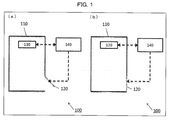
- Figs. 1(a) and 1(b) are schematic diagrams of a device for detecting a concentration of tiny particulates in an air sample according to an embodiment of the present disclosure
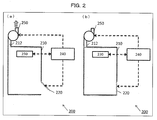
- Figs. 2(a) and 2(b) are schematic diagrams of a device for detecting a concentration of tiny particulates in an air sample according to another embodiment of the present disclosure
- Figs. 3(a) and 3(b) are schematic diagrams of a sensor according to an embodiment of the present disclosure
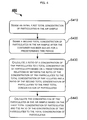
- Fig. 4 is a flowchart illustrating a method for detecting a concentration of tiny particulates in an air sample according to an embodiment of the present disclosure.
- a "tiny particulate” refers to a particulate matter having an aerodynamic equivalent diameter equal to or smaller than a predetermined value.
- a "tiny particulate” may refer to a particulate matter having an aerodynamic equivalent diameter equal to or smaller than 10 micro meter.
- a "tiny particulate” include a particulate matter having an aerodynamic equivalent diameter equal to or smaller than 2.5 micro meter (PM2.5).
- Figs. 1(a) and 1(b) are schematic diagrams of a device 100 for detecting a concentration of tiny particulates in an air sample according to an embodiment of the present disclosure.
- Figs. 1(a) and 1(b) show two operation states of the device 100, respectively.
- the device 100 includes: a container 110 that contains the air sample and has an opening; a sealing mechanism 120 that opens or seals the opening; and a sensor 130 provided in the container 110 and operative to sense a total concentration of particulates in the air sample within the container 110.
- the opening is arranged below the sensor 130, so as to prevent excessively large particulates in the air outside the container 110 from entering into the container 110, which may otherwise cause interference to the detection result.
- the device 100 further includes a controller 140 connected to the sensor 130 and operative to control the sealing mechanism 120.
- the controller 140 controls the sealing mechanism 120 to open the opening.
- the air sample inside the container is substantially the same as the air outside the container, i.e., they have the same concentration of particulates.
- the controller 140 controls the sensor 130 to sense a total concentration C1 of particulates (i.e., a total concentration of particulates in the air sample within the container 110 when the opening of the container 110 is opened).
- the controller 140 controls the sealing mechanism 120 to seal the opening, so as to seal the container 110 for a predetermined time period.
- the controller 140 controls the sensor 130 to sense a total concentration C2 of particulates (i.e., a total concentration of particulates in the air sample within the container 110 after the contained 110 has been sealed for the predetermined time period).
- the above predetermined time period is 3 minutes.
- the controller 140 calculates a ratio R of a concentration of tiny particulates to a total concentration of particulates based on a predetermined relationship between the ratio R of the concentration of tiny particulates to the total concentration of particulates and a ratio of the total concentration C2 of particulates to the total concentration C1 of particulates.
- the controller 140 calculates the concentration C of tiny particulates in the air sample based on the total concentration C1 of particulates and the ratio R of the concentration of tiny particulates to the total concentration of particulates.
- the predetermined relationship can be represented as a correction coefficient n obtained by: injecting a reference air sample into the container 110, the reference air sample having a known ratio r of the concentration of tiny particulates to the total concentration of particulates; sensing an initial total reference concentration c1 of particulates using the sensor 130; sensing a total reference concentration c2 of particulates using the sensor 130 after the container 110 has been sealed for the predetermined time period; and calculating the correction coefficient n by dividing the known ratio r of the concentration of tiny particulates to the total concentration of particulates by the ratio of the total reference concentration c2 of particulates to the total reference concentration c1 of particulates.
- the correction coefficient n may be dependent on a number of factors, such as the container 110's shape and size as well as the location of the sensor 130 in the container 110. Thus, it is difficult to calculate the correction coefficient n using a fixed mathematical equation. Rather, with the above experiments, it is possible to obtain n based on Equation (2).
- n can be represented in a form of a lookup table.
- An exemplary relationship between c2/c1 and n is listed in Table 1 below.
- the ratio R of the concentration of tiny particulates to the total concentration of particulates can be calculated as follows:
- Figs. 2(a) and 2(b) are schematic diagrams of a device 200 for detecting a concentration of tiny particulates in an air sample according to another embodiment of the present disclosure.
- the device 200 includes a container 210, a sealing mechanism 220, a sensor 230 and a controller 240.
- the configurations and operations of the container 210, sealing mechanism 220, sensor 230 and controller 240 are substantially the same as those of the container 110, sealing mechanism 120, sensor 130 and controller 140 as shown in Fig. 1 and the description thereof will thus be omitted here.
- the container 210 further includes a check valve 212 that is opened while the opening is opened (as shown in Fig. 2(a)) and closed while the opening is sealed (as shown in Fig. 2(b)).
- the device 200 further includes an air pump 250 that pumps air from the container 210 via the check valve 212 while the opening is opened, so as to accelerate entry of air outside the container 210 into the container 210 via the opening and to accelerate dispersion of the particulates within the container 210.
- Figs. 3(a) and 3(b) are schematic diagrams of a sensor 300 according to an embodiment of the present disclosure.
- the sensor 300 includes: a sensing unit 310 having an air path 312 through the sensing unit 310 and operative to sense a concentration of particulates in an air sample within the air path 312.
- the sensor 300 further includes: a sealing mechanism 320 that opens or seals the air path 312.
- the air path 312 has one end sealed and the other end connected to one end of a glass tube 314 that contains the air sample.
- the sealing mechanism 320 is capable of opening or sealing the other end of the glass tube, so as to open or seal the air path 312.
- the sealing mechanism 320 can be implemented using an electromagnetic element.
- Both ends of the air path can be opened or sealed by the sealing mechanism 320 (e.g., by providing a sealing mechanism 320 at each end of the air path).
- the glass tube 314 is optional. Without the glass tube 314, the sealing mechanism 320 can seal the air path 312 directly.
- the sensor 300 further includes a controller 330 connected to the sensing unit 310 and operative to control the sealing mechanism 320.
- the controller 330 controls the sealing mechanism 320 to open the air path 312 and the sensing unit 310 to sense a total concentration C1 of particulates (i.e., a total concentration of particulates in the air sample within the air path 312 when the air path 312 is opened).
- the controller 330 controls the sealing mechanism 320 to seal the air path 312 for a predetermined time period.
- the controller 330 controls the sensing unit 310 to sense a total concentration C2 of particulates (i.e., a total concentration of particulates in the air sample within the air path 312 after the air path 312 has been sealed for the predetermined time period).
- the above predetermined time period is 3 minutes.
- the controller 330 calculates a ratio R of a concentration of tiny particulates to a total concentration of particulates based on a predetermined relationship between the ratio R of the concentration of tiny particulates to the total concentration of particulates and a ratio of the total concentration C2 of particulates to the total concentration C1 of particulates.
- the controller 330 calculates the concentration C of tiny particulates in the air sample, based on the total concentration C1 of particulates and the ratio R of the concentration of tiny particulates to the total concentration of particulates.
- the predetermined relationship can be represented as a correction coefficient n obtained by: injecting a reference air sample into the air path 312, the reference air sample having a known ratio r of the concentration of tiny particulates to the total concentration of particulates; sensing an initial total reference concentration c1 of particulates using the sensing unit 310; sensing a total reference concentration c2 of particulates using the sensing unit 310 after the air path 312 has been sealed for the predetermined time period; and calculating the correction coefficient n by dividing the known ratio r of the concentration of tiny particulates to the total concentration of particulates by the ratio of the total reference concentration c2 of particulates to the total reference concentration c1 of particulates.
- the correction coefficient n can be obtained based on the above Equation (2) or Table 1. Then, the ratio R of the concentration of tiny particulates to the total concentration of particulates can be calculated based on the above Equation (3). Finally, the concentration C of tiny particulates can be calculated based on the above Equation (1).
- an air purifier is provided.
- the air purifier includes the above device 100, device 200 or sensor 300.
- a method 400 for detecting a concentration of tiny particulates in an air sample within a container is provided.
- the tiny particulates each have an aerodynamic equivalent diameter equal to or smaller than a predetermined value.
- the method 400 includes the following steps.
- step S410 an initial first total concentration of particulates in the air sample is sensed.
- a second total concentration of particulates in the air sample is sensed after the container has been sealed for a predetermined time period.
- a ratio of a concentration of tiny particulates to a total concentration of particulates is calculated based on a predetermined relationship between the ratio of the concentration of tiny particulates to the total concentration of particulates and a ratio of the second total concentration of particulates to the first total concentration of particulates.
- the concentration of tiny particulates in the air sample is calculated based on the first total concentration of particulates and the ratio of the concentration of tiny particulates to the total concentration of particulates.
- the predetermined relationship is represented as a correction coefficient obtained by: injecting a reference air sample into the container, the reference air sample having a known ratio of the concentration of tiny particulates to the total concentration of particulates; sensing a first total reference concentration of particulates; sensing a second total reference concentration of particulates after the container has been sealed for the predetermined time period; and calculating the correction coefficient by dividing the known ratio of the concentration of tiny particulates to the total concentration of particulates by the ratio of the second total reference concentration of particulates to the first total reference concentration of particulates.
- the method 400 further includes: using an air pump to accelerate entry of air outside the container into the container while the container is not sealed and to accelerate dispersion of the particulates within the container.
- the predetermined value is 2.5 micro meter.
- the predetermined time period is 3 minutes.
- the present disclosure provides a method, device, sensor and air purifier for detecting a concentration of tiny particulates each having an aerodynamic equivalent diameter equal to or smaller than a predetermined value in an air sample, capable of detecting the concentration of tiny particulates more precisely without a significant increase in cost.
Landscapes
- Chemical & Material Sciences (AREA)
- Dispersion Chemistry (AREA)
- Physics & Mathematics (AREA)
- Health & Medical Sciences (AREA)
- Life Sciences & Earth Sciences (AREA)
- Analytical Chemistry (AREA)
- Biochemistry (AREA)
- General Health & Medical Sciences (AREA)
- General Physics & Mathematics (AREA)
- Immunology (AREA)
- Pathology (AREA)
- Sampling And Sample Adjustment (AREA)
Abstract
Description


Claims (16)
- A device for detecting a concentration of tiny particulates in an air sample, the tiny particulates each having an aerodynamic equivalent diameter equal to or smaller than a predetermined value, the device comprising:
(a) a container that contains the air sample and has an opening;
(b) a sealing mechanism that opens or seals the opening;
(c) a sensor provided in the container and operative to sense a total concentration of particulates in the air sample within the container; and
(d) a controller connected to the sensor and operative to control the sealing mechanism,
wherein the controller is configured to:
(i) control the sealing mechanism to open the opening and the sensor to sense a first total concentration of particulates;
(ii) control the sealing mechanism to seal the opening, so as to seal the container for a predetermined time period, and then control the sensor to sense a second total concentration of particulates;
(iii) calculate a ratio of a concentration of tiny particulates to a total concentration of particulates based on a predetermined relationship between the ratio of the concentration of tiny particulates to the total concentration of particulates and a ratio of the second total concentration of particulates to the first total concentration of particulates; and
(iv) calculate the concentration of tiny particulates in the air sample based on the first total concentration of particulates and the ratio of the concentration of tiny particulates to the total concentration of particulates. - The device of claim 1, wherein the predetermined relationship is represented as a correction coefficient obtained by:
injecting a reference air sample into the container, the reference air sample having a known ratio of the concentration of tiny particulates to the total concentration of particulates;
sensing a first total reference concentration of particulates using the sensor;
sensing a second total reference concentration of particulates using the sensor after the container has been sealed for the predetermined time period; and
calculating the correction coefficient by dividing the known ratio of the concentration of tiny particulates to the total concentration of particulates by the ratio of the second total reference concentration of particulates to the first total reference concentration of particulates. - The device of claim 2, wherein
the container further comprises a check valve that is opened while the opening is opened and closed while the opening is sealed, and
the device further comprises an air pump that pumps air from the container via the check valve while the opening is opened, so as to accelerate entry of air outside the container into the container via the opening and to accelerate dispersion of the particulates within the container. - The device of claim 1, wherein the opening is arranged below the sensor.
- The device of any of claims 1-4, wherein the predetermined value is 2.5 micro meter.
- The device of any of claims 1-4, wherein the predetermined time period is 3 minutes.
- A sensor, comprising:
(a) a sensing unit having an air path through the sensing unit and operative to sense a concentration of particulates in an air sample within the air path;
(b) a sealing mechanism that opens or seals the air path; and
(c) a controller connected to the sensing unit and operative to control the sealing mechanism,
wherein the controller is configured to:
(i) control the sealing mechanism to open the air path and the sensing unit to sense a first total concentration of particulates;
(ii) control the sealing mechanism to seal the air path for a predetermined time period, and then control the sensing unit to sense a second total concentration of particulates;
(iii) calculate a ratio of a concentration of tiny particulates to a total concentration of particulates based on a predetermined relationship between the ratio of the concentration of tiny particulates to the total concentration of particulates and a ratio of the second total concentration of particulates to the first total concentration of particulates, the tiny particulates each having an aerodynamic equivalent diameter equal to or smaller than a predetermined value; and
(iv) calculate the concentration of tiny particulates in the air sample based on the first total concentration of particulates and the ratio of the concentration of tiny particulates to the total concentration of particulates. - The sensor of claim 7, wherein the predetermined relationship is represented as a correction coefficient obtained by:
injecting a reference air sample into the air path, the reference air sample having a known ratio of the concentration of tiny particulates to the total concentration of particulates;
sensing a first total reference concentration of particulates using the sensing unit;
sensing a second total reference concentration of particulates using the sensing unit after the air path has been sealed for the predetermined time period; and
calculating the correction coefficient by dividing the known ratio of the concentration of tiny particulates to the total concentration of particulates by the ratio of the second total reference concentration of particulates to the first total reference concentration of particulates. - The sensor of any of claims 7-8, wherein the predetermined value is 2.5 micro meter.
- The sensor of any of claims 7-8, wherein the predetermined time period is 3 minutes.
- An air purifier, comprising the device according to any of claims 1-6 or the sensor according to any of claims 7-10.
- A method for detecting a concentration of tiny particulates in an air sample within a container, the tiny particulates each having an aerodynamic equivalent diameter equal to or smaller than a predetermined value, the method comprising:
(a) sensing an initial first total concentration of particulates in the air sample;
(b) sensing a second total concentration of particulates in the air sample after the container has been sealed for a predetermined time period;
(c) calculating a ratio of a concentration of tiny particulates to a total concentration of particulates based on a predetermined relationship between the ratio of the concentration of tiny particulates to the total concentration of particulates and a ratio of the second total concentration of particulates to the first total concentration of particulates; and
(d) calculating the concentration of tiny particulates in the air sample based on the first total concentration of particulates and the ratio of the concentration of tiny particulates to the total concentration of particulates. - The method of claim 12, wherein the predetermined relationship is represented as a correction coefficient obtained by:
injecting a reference air sample into the container, the reference air sample having a known ratio of the concentration of tiny particulates to the total concentration of particulates;
sensing a first total reference concentration of particulates;
sensing a second total reference concentration of particulates after the container has been sealed for the predetermined time period; and
calculating the correction coefficient by dividing the known ratio of the concentration of tiny particulates to the total concentration of particulates by the ratio of the second total reference concentration of particulates to the first total reference concentration of particulates. - The method of claim 12, further comprising:
using an air pump to accelerate entry of air outside the container into the container while the container is not sealed and to accelerate dispersion of the particulates within the container. - The method of any of claims 12-14, wherein the predetermined value is 2.5 micro meter.
- The method of any of claims 12-14, wherein the predetermined time period is 3 minutes.
Priority Applications (2)
| Application Number | Priority Date | Filing Date | Title |
|---|---|---|---|
| US14/911,650 US9784658B2 (en) | 2013-08-20 | 2014-08-07 | Method and device for detecting concentration of tiny particulates in air sample |
| JP2016507919A JP6096374B2 (en) | 2013-08-20 | 2014-08-07 | Method and apparatus for detecting the concentration of particulates in an air sample |
Applications Claiming Priority (2)
| Application Number | Priority Date | Filing Date | Title |
|---|---|---|---|
| CN201310363270.4A CN104422638A (en) | 2013-08-20 | 2013-08-20 | Device and method for detecting concentration of micro-particulate matter in air sample |
| CN201310363270.4 | 2013-08-20 |
Publications (1)
| Publication Number | Publication Date |
|---|---|
| WO2015025495A1 true WO2015025495A1 (en) | 2015-02-26 |
Family
ID=52483290
Family Applications (1)
| Application Number | Title | Priority Date | Filing Date |
|---|---|---|---|
| PCT/JP2014/004121 Ceased WO2015025495A1 (en) | 2013-08-20 | 2014-08-07 | Method and device for detecting concentration of tiny particulates in air sample |
Country Status (4)
| Country | Link |
|---|---|
| US (1) | US9784658B2 (en) |
| JP (1) | JP6096374B2 (en) |
| CN (1) | CN104422638A (en) |
| WO (1) | WO2015025495A1 (en) |
Families Citing this family (7)
| Publication number | Priority date | Publication date | Assignee | Title |
|---|---|---|---|---|
| JP6515683B2 (en) * | 2015-05-29 | 2019-05-22 | 富士通株式会社 | Measuring device and measuring system |
| US10365197B2 (en) * | 2015-06-12 | 2019-07-30 | Koninklijke Philips N.V. | Optical particle sensor and sensing method |
| JP6651753B2 (en) * | 2015-09-09 | 2020-02-19 | 富士電機株式会社 | Particle composition analyzer |
| ES2943500T3 (en) * | 2019-02-04 | 2023-06-13 | Keraco S A | Gas absorber module comprising a gas sensor control device |
| CN113628399A (en) * | 2021-07-23 | 2021-11-09 | 新疆交通职业技术学院(新疆交通技师培训学院 新疆交通干部学校) | Safety monitoring system for new energy automobile |
| CN115598026B (en) * | 2022-12-14 | 2023-02-28 | 水利部交通运输部国家能源局南京水利科学研究院 | A system and method for measuring sediment deposition process in a tank |
| CN118583586B (en) * | 2024-08-06 | 2024-10-22 | 洛阳葛丰农业有限公司 | Vegetable greenhouse planting environment detection equipment |
Citations (5)
| Publication number | Priority date | Publication date | Assignee | Title |
|---|---|---|---|---|
| JPH08261904A (en) * | 1995-03-22 | 1996-10-11 | Mita Ind Co Ltd | Fine particle concentration measuring device |
| JP2004340897A (en) * | 2003-05-19 | 2004-12-02 | Shimadzu Corp | Method for measuring the density of suspended particulate matter in the atmosphere |
| JP2006349448A (en) * | 2005-06-15 | 2006-12-28 | Kowa Co | Atmospheric particulate measuring device |
| JP2008139294A (en) * | 2006-11-08 | 2008-06-19 | Honda Motor Co Ltd | Detection apparatus and method |
| JP3158839U (en) * | 2010-01-07 | 2010-04-22 | 独立行政法人産業技術総合研究所 | PM2.5 classifier for normal high volume air sampler |
Family Cites Families (8)
| Publication number | Priority date | Publication date | Assignee | Title |
|---|---|---|---|---|
| JPS5723840A (en) * | 1980-07-18 | 1982-02-08 | Shimadzu Corp | Measuring device for automatic particle size distribution |
| JP3391154B2 (en) * | 1995-06-30 | 2003-03-31 | 株式会社島津製作所 | Particle size distribution / density distribution simultaneous measurement device |
| CN101329249B (en) * | 2008-08-04 | 2011-10-12 | 天津信达北方科技有限公司 | Analytical method and instrument for tiny particles in gas |
| CN102369426B (en) * | 2009-04-01 | 2013-05-08 | 新日铁住金株式会社 | Continuous measurement device and measurement method of horizontal flux of dustfall in the atmosphere |
| JP2011179862A (en) | 2010-02-26 | 2011-09-15 | Kansai Electric Power Co Inc:The | Calculation method of particle sedimentation velocity |
| CN102680349B (en) | 2012-03-30 | 2016-03-30 | 北京安赛博技术有限公司 | The monitoring equipment of a kind of PM2.5 |
| CN102706780B (en) * | 2012-06-14 | 2014-01-08 | 江苏苏净集团有限公司 | Instrument for monitoring small particulate matters in air |
| CN102692366A (en) * | 2012-06-14 | 2012-09-26 | 苏州苏净仪器自控设备有限公司 | Instrument for monitoring microparticles in air |
-
2013
- 2013-08-20 CN CN201310363270.4A patent/CN104422638A/en active Pending
-
2014
- 2014-08-07 JP JP2016507919A patent/JP6096374B2/en not_active Expired - Fee Related
- 2014-08-07 US US14/911,650 patent/US9784658B2/en not_active Expired - Fee Related
- 2014-08-07 WO PCT/JP2014/004121 patent/WO2015025495A1/en not_active Ceased
Patent Citations (5)
| Publication number | Priority date | Publication date | Assignee | Title |
|---|---|---|---|---|
| JPH08261904A (en) * | 1995-03-22 | 1996-10-11 | Mita Ind Co Ltd | Fine particle concentration measuring device |
| JP2004340897A (en) * | 2003-05-19 | 2004-12-02 | Shimadzu Corp | Method for measuring the density of suspended particulate matter in the atmosphere |
| JP2006349448A (en) * | 2005-06-15 | 2006-12-28 | Kowa Co | Atmospheric particulate measuring device |
| JP2008139294A (en) * | 2006-11-08 | 2008-06-19 | Honda Motor Co Ltd | Detection apparatus and method |
| JP3158839U (en) * | 2010-01-07 | 2010-04-22 | 独立行政法人産業技術総合研究所 | PM2.5 classifier for normal high volume air sampler |
Also Published As
| Publication number | Publication date |
|---|---|
| CN104422638A (en) | 2015-03-18 |
| JP2016534322A (en) | 2016-11-04 |
| US20160195462A1 (en) | 2016-07-07 |
| US9784658B2 (en) | 2017-10-10 |
| JP6096374B2 (en) | 2017-03-15 |
Similar Documents
| Publication | Publication Date | Title |
|---|---|---|
| WO2015025495A1 (en) | Method and device for detecting concentration of tiny particulates in air sample | |
| EP3463623B1 (en) | Systems and methods for isolating condensate in a condensation particle counter | |
| EP3186628B1 (en) | Sensor system and sensing method | |
| CN105987820B (en) | Air purifier purification device life prediction method and system | |
| US20080152542A1 (en) | Fluidic system for a flow cytometer with temporal processing | |
| CN104132863B (en) | A kind of particulate matter continuous monitoring device and method | |
| CN103149060B (en) | Sampler for realizing automatic constant-speed constant-flow acquisition of particles having different particle sizes in flow gas | |
| CN109738584A (en) | An electronic nose system | |
| CN107796843A (en) | A kind of automatic condensation point detector with micro-pressure gradient method | |
| EP2820655B1 (en) | Method and device for controlling the dynamic confinement of an enclosure | |
| CN106990179A (en) | A kind of VOCs on-line detecting systems | |
| CN204903249U (en) | Portable mining dust sampler | |
| EP2697555A1 (en) | Method for determining condition of piping and a sequence controlled sample pump | |
| CN105510492A (en) | Analysis device and method of electronic-grade hydrogen chloride | |
| DE602004000896D1 (en) | Thermogravimetric device with a system for opening a sample holder | |
| CN203299097U (en) | Measurement device for in-situ non-destructive gas permeability of concrete | |
| CN103983482A (en) | Impact air microorganism sampler | |
| CN106440257A (en) | Replacing method and device for filtering net of air purifier | |
| CN207908463U (en) | Detection of Air Quality equipment | |
| CN104524982B (en) | Device for accurately measuring micro flux of filter membrane | |
| CN103954477A (en) | Disposable depth setting in-situ sampling bottle of volatile organic water sample | |
| JP2000193569A (en) | Gas collecting device and simplified method for measuring air pollutant using the same | |
| CN209027995U (en) | Surface enhanced Raman detection chip box for on-site rapid detection | |
| CN107525708A (en) | A kind of sample gas dilution system being operable with subnormal ambient | |
| CN213580274U (en) | Water sampling device for demulsifier performance evaluation experiment |
Legal Events
| Date | Code | Title | Description |
|---|---|---|---|
| 121 | Ep: the epo has been informed by wipo that ep was designated in this application |
Ref document number: 14837519 Country of ref document: EP Kind code of ref document: A1 |
|
| WWE | Wipo information: entry into national phase |
Ref document number: 14911650 Country of ref document: US |
|
| ENP | Entry into the national phase |
Ref document number: 2016507919 Country of ref document: JP Kind code of ref document: A |
|
| NENP | Non-entry into the national phase |
Ref country code: DE |
|
| 122 | Ep: pct application non-entry in european phase |
Ref document number: 14837519 Country of ref document: EP Kind code of ref document: A1 |