WO2014160409A1 - Rbp4 antagonists for the treatment of age-related macular degeneration and stargardt disease - Google Patents
Rbp4 antagonists for the treatment of age-related macular degeneration and stargardt disease Download PDFInfo
- Publication number
- WO2014160409A1 WO2014160409A1 PCT/US2014/026523 US2014026523W WO2014160409A1 WO 2014160409 A1 WO2014160409 A1 WO 2014160409A1 US 2014026523 W US2014026523 W US 2014026523W WO 2014160409 A1 WO2014160409 A1 WO 2014160409A1
- Authority
- WO
- WIPO (PCT)
- Prior art keywords
- compound
- retina
- alkyl
- rbp4
- mammal
- Prior art date
- Legal status (The legal status is an assumption and is not a legal conclusion. Google has not performed a legal analysis and makes no representation as to the accuracy of the status listed.)
- Ceased
Links
Classifications
-
- A—HUMAN NECESSITIES
- A61—MEDICAL OR VETERINARY SCIENCE; HYGIENE
- A61K—PREPARATIONS FOR MEDICAL, DENTAL OR TOILETRY PURPOSES
- A61K31/00—Medicinal preparations containing organic active ingredients
- A61K31/33—Heterocyclic compounds
- A61K31/395—Heterocyclic compounds having nitrogen as a ring hetero atom, e.g. guanethidine or rifamycins
- A61K31/495—Heterocyclic compounds having nitrogen as a ring hetero atom, e.g. guanethidine or rifamycins having six-membered rings with two or more nitrogen atoms as the only ring heteroatoms, e.g. piperazine or tetrazines
-
- A—HUMAN NECESSITIES
- A61—MEDICAL OR VETERINARY SCIENCE; HYGIENE
- A61K—PREPARATIONS FOR MEDICAL, DENTAL OR TOILETRY PURPOSES
- A61K31/00—Medicinal preparations containing organic active ingredients
- A61K31/16—Amides, e.g. hydroxamic acids
- A61K31/165—Amides, e.g. hydroxamic acids having aromatic rings, e.g. colchicine, atenolol, progabide
- A61K31/167—Amides, e.g. hydroxamic acids having aromatic rings, e.g. colchicine, atenolol, progabide having the nitrogen of a carboxamide group directly attached to the aromatic ring, e.g. lidocaine, paracetamol
-
- A—HUMAN NECESSITIES
- A61—MEDICAL OR VETERINARY SCIENCE; HYGIENE
- A61K—PREPARATIONS FOR MEDICAL, DENTAL OR TOILETRY PURPOSES
- A61K31/00—Medicinal preparations containing organic active ingredients
- A61K31/33—Heterocyclic compounds
- A61K31/395—Heterocyclic compounds having nitrogen as a ring hetero atom, e.g. guanethidine or rifamycins
- A61K31/435—Heterocyclic compounds having nitrogen as a ring hetero atom, e.g. guanethidine or rifamycins having six-membered rings with one nitrogen as the only ring hetero atom
- A61K31/44—Non condensed pyridines; Hydrogenated derivatives thereof
- A61K31/445—Non condensed piperidines, e.g. piperocaine
- A61K31/451—Non condensed piperidines, e.g. piperocaine having a carbocyclic group directly attached to the heterocyclic ring, e.g. glutethimide, meperidine, loperamide, phencyclidine, piminodine
-
- A—HUMAN NECESSITIES
- A61—MEDICAL OR VETERINARY SCIENCE; HYGIENE
- A61K—PREPARATIONS FOR MEDICAL, DENTAL OR TOILETRY PURPOSES
- A61K9/00—Medicinal preparations characterised by special physical form
- A61K9/0012—Galenical forms characterised by the site of application
- A61K9/0048—Eye, e.g. artificial tears
Definitions
- Age-related macular degeneration is the leading cause of blindness in developed countries. It is estimated that 62.9 million individuals worldwide have the most prevalent atrophic (dry) form of AMD; 8 million of them are Americans. Due to increasing life expectancy and current demographics this number is expected to triple by 2020. There is currently no FDA-approved treatment for dry AMD. Given the lack of treatment and high prevalence, development of drugs for dry AMD is of upmost importance. Clinically, atrophic AMD represents a slowly progressing neurodegenerative disorder in which specialized neurons (rod and cone photoreceptors) die in the central part of the retina called macula (1) .
- RPE retinal pigment epithelium
- cytotoxic autofluorescent lipid-protein-retinoid aggregates in the RPE is a major trigger of dry AMD (2-9) .
- dramatic accumulation of lipofuscin is the hallmark of Stargardt Disease (STGD) , an inherited form of juvenile-onset macular degeneration.
- STGD Stargardt Disease
- the major cytotoxic component of RPE lipofuscin is pyridinium bisretinoid A2E (Pig. 1). Additional cytotoxic bisretinoids are isoA2E, atRAL di-PE, and A2-DHP-PE (40, 41) .
- A2E and other lipofuscin bisretinoids begins in photoreceptor cells in a non-enzymatic manner and can be considered as a by-product of the properly functioning visual cycle.
- A2-DHP-PE A2-dihydropyridine- phosphatidylethanolamine
- atRALdi-PE all-trans-retinal dimer-phosphatidylethanolamine
- A2E is a product of condensation of all-trans retinaldehyde with phosphatidyl-ethanolamine which occurs in the retina in a non- enzymatic manner and, as illustrated in Fig. 4, can be considered a by-product of a properly functioning visual cycle (10).
- Light- induced isomerization of 11-cis retinaldehyde to its all-trans form is the first step in a signaling cascade that mediates light perception.
- the visual cycle is a chain of biochemical reactions that regenerate visual pigment (11-cis retinaldehyde conjugated to opsin) following exposure to light.
- partial pharmacological inhibition of the visual cycle may represent a treatment strategy for dry AMD and other disorders characterized by excessive accumulation of lipofuscin (25-27, 40, 41) .
- the present invention relates to a method for treating a disease characterized by excessive lipofuscin accumulation in the retina in a mammal afflicted therewith, comprising administering to the mammal an effective amount of a compound having the structure:
- ring A is benzene optionally further substituted
- R 1 is an optionally substituted branched Cj- ⁇ alkyl group
- X 1 is an 0, S, SO, S0 2 or NH
- X 2 is a bond or a C1 alkylene group
- ring B is azetidine, pyrrolidine or piperidine;
- X 3 is CO or S0 2 ;
- R 2 is a substituent, provided that
- R 2 is not a tert-butoxy group, or a salt thereof
- the present invention also relates to a method for treating a disease characterized by excessive lipofuscin accumulation in the retina in a mammal afflicted therewith, comprising administering
- ring A is a benzene ring optionally further substituted
- ring B is a piperazine ring optionally further substituted
- R is a subs itutent
- the present invention further relates to a method for treating a disease characterized by excessive lipofuscin accumulation in the retina in a mammal afflicted therewith, comprising administering to the mammal an effective amount of a compound having the structure;
- A is 0 , NH , or S
- B is a bond, - (C2 ) alkyl , - (C2 ) alkenyl , - (Cj- Ce) cycloalkyl , - (C2-Ci ) heteroalkyl , - (Cs-CaJheterocycloalkyl , - (Cj-Ca) cycloalkenyl , - ⁇ Cj-Cslheterocycloalkenyl;
- D is isopropyl, isobutyl, sec-butyl, tert-butyl, neopentyl, sec-pentyl, isopentyl, cyclopropyl, cyclobutyl, cyclopentyl, methylenecyc 1opropy 1 , me hylenecyclobutyl , methylenecyclopentyl
- G is OR 1 , - (Ci-Cs ) alkyl, - (Ci-CsJalkyl-OR 1 , halogen, -CO2R 1 , - (Ci-Cslalkyl-COjR 1 , NHR 1 , - (Ci-Ce) alkyl-NHR 1 , -(C ⁇ JNHR 1 , - (Ci-
- R 1 is H or - (Ci-Ce) alkyl
- X is a halogen
- the present invention yet further relates to a method for treating a disease characterized by excessive lipofuscin accumulation in the retina in a mammal afflicted therewith, comprising administering to the mammal an effective amount of a compound having the structure:
- ring A is a 5-membered non-aromatic heterocycla optionally further substituted by one substitutent
- ring B is an optionally further substituted benzene ring
- X is a bond, 0, CH 2 0, 0CH 2 , C3 ⁇ 4, (CH 2 ) 2 , S, C3 ⁇ 4S, SCH 2 , S(0), CH 2 S(0) , S(0)CHj, S(0) 2 , CHjS (Oh OR S(0) 2 CH 2 , provided that
- FIG. 1 Structure of bisretinoid A2E, a cytotoxic component of retinal lipofuscin.
- FIG. 2 Structure of bisretinoid atRAL di-PE (all-transretinal dimer-phosphatidyl ethanolamine) , a cytotoxiccomponent of retinal lipofuscin, Rl and R2 refer to various fatty acid constituents.
- FIG. 1 Structure of bisretinoid A2-DHP-PE, a cytotoxic component of retinal lipofuscin.
- FIG. 4 Visual cycle and biosynthesis of A2E.
- A2E biosynthesis begins when a portion of all-trans-retinal escapes the visual cycle ⁇ yellow box) and non-enzymatically reacts with phosphatidyl-ethanolamine forming the A2E precursor, A2-PE.
- FIG. 5 Three-dimensional structure of the RBP4-TTR-retinol complex. Tetrameic TTR is shown in blue, 1 ight blue, green and yellow (large boxed region). RBP is shown in red (unboxed region) and retinol is shown in gray (small boxed region) (28) .
- FIG. 1 Structure of fenretinide, [N- (4-hydroxy- phenyl ) retinamide, 4HRP] , a retinoid RBP4 antagonist.
- Figure 7 Schematic depiction of the HTRF-based assay format for characterization of RBP4 antagonists disrupting retinol-induced RBP4-TTR interaction.
- FIG. 11 Reduction in serum RBP4 in response to Compound 1 treatment. Effect of long-term oral A1120 administration on serum RBP4 in Ahead-/- mice. Serum RBP4 levels were measured with ELISA test in vehicle-treated wild-type mice (green columns), vehicle- treated Abca4-/- mice (blue columns ⁇ , and A1120- treated Abca4-/- mice (red columns) at indicated timepoints . A1120 formulated in a chow was dosed at 30 mg/kg. Compared with Day 0, statistically significant 64% RBP4 reduction at Week 3 and 75% RBP4 reduction at Week 6 is seen in the A1120 treatment group (p ⁇ 0.05 ) . Changes in RBP4 levels at different timepoints within the vehicle-treated wild-type and vehicle-treated Abca4-/- groups were not statistically significant.
- FIG. 13 Effect of A1120 treatment on the levels of lipofuscin fluorophores in eyes of the Abca4-/- mice.
- Bisretinoids were extracted from the eyecups of vehicle-treated wild-type mice, vehicle-treated Abca4-/- mice, and A1120-treated Abca4-/- mice after 6 weeks of dosing and analyzed by HPLC.
- 13A The representative reverse phase HPLC chromatogram (monitoring at 430 nm) of an extract from eyecups of A1120-treated Abca4-/- mice. Insets on the top show UV-visible absorbance spectra of A2E and iso-A2E.
- 13B Chromatographic monitoring at 510 nm, retention time 40-50 minutes, for A2-DHP-PE (A2-dihydropyridine- phosphatidylethanolamine) and atRALdi-PE (all-transretinal dimmer-phosphatidylethanolamine) detection with insets on the top showing absorbance UV-visible spectra of A2-DHP-PE and atRALdi- PE.
- 13C Levels of A2E, A2-DHP-PE and atRALdi-PE in vehicle- treated wild-type mice, vehicle-treated Abca4-/- mice, and A1120- treated Abca4-/- mice after 6 weeks of dosing showing 45-50% reduction in bisretinoid levels in response to A1120 treatment.
- Figure 14A Analysis of Compound 1 in SPA-based BP4 binding assay. Titration was conducted 7 times . ICso values calculated in seven experiments were 0.00579, 0.0229, 0.0148, 0.0138, 0.0126, 0.0156 and 0.00901 (in pM) .
- Figure 14B Analysis of Compound 1 in HTRF-based retinol-dependent RBP4-TTR interaction assay. Titration was conducted 9 times .
- ICso values calculated in nine experiments were 0.182, 0.119, 0.195, 0.139, 0.101, 0.109, 0.0848, 0.126 and 0.134 (in ⁇ ) .
- Figure 14C Analysis of Compound 64 in SPA-based RBP4 binding assay. ICso value calculated in this experiment was 0.0498 ⁇ .
- Figure 14D Analysis of Compound 64 in HTRF-based retlnol- dependent RBP4-TTR interaction assay. IC 5 0 value calculated in this experiment was 1.27 ⁇ .
- Figure 14E Analysis of Compound 65 in SPA-based RBP4 binding assay. ICso value calculated in this experiment was 0.0199 u .
- Figure 14F Analysis of Compound 65 in HTRF-based retinol-dependent RBP4-TTR interaction assay. ICso value calculated in this experiment was 0.199 uM.
- Figure 14G Analysis of Compound 48 in SPA-based RBP4 binding assay. ICso value calculated in this experiment was 0.00568 ⁇ .
- Figure 14H Analysis of Compound 48 in HTRF-based retinol-dependent RBP4-TTR interaction assay. ICso value calculated in this experiment was 0.106 uM.
- the present invention relates to a method for treating a disease characterized by excessive lipofuscin accumulation in the retina in a mammal afflicted therewith, comprising administering to the mammal an effective amount of a compound having the structure:
- ring A is benzene optionally further substituted
- R 1 is an optionally substituted branched Cj-s alkyl group
- X 1 is an 0, S, SO, SC3 ⁇ 4 or NH
- X 2 is a bond or a C1 alkylene group
- ring B is azetidine, pyrrolidine or piperidine;
- X 3 is CO or S0 2 ;
- R 2 is a substituent, provided that
- R 2 is not a tert-butoxy group, or a salt thereof
- the present invention also relates to a method for treating a disease characterized by excessive lipofuscin accumulation in the retina in a mammal afflicted therewith, comprising administering to the mammal an effective amount of a compound having the structure:
- ring A is a benzene ring optionally further substituted
- ring B is a piperazine ring optionally further substituted
- R is a substitutent
- the present invention further relates to a method for treating a disease characterized by excessive lipofuscin accumulation in the retina in a mammal afflicted therewith, comprising administering to the mammal an effective amount of a compound having the structure:
- A is O, NH, or S
- B is a bond, - (C2 alkyl , - (C2 ) alkenyl , -(Ci- cycloalkyl , - (C 2 ⁇ heteroalkyl, - (Ci-Cg) heterocycloalkyl , - ⁇ Cj-C « ) cycloalkeny1 , - (Cs-Cs) heterocycloalkenyl;
- D is isopropyl, isobutyl, sec-butyl, tert-butyl, neopentyl, sec-pentyl, isopentyl, cyclopropyl , cyclobutyl, cyclopentyl, methylenecyclopropyl , methylenecyclobutyl , methylenecyclopentyl ;
- R is H or
- R 1 is H or - (Ci-C «) alkyl
- X is a halogen
- the compound of Formula ( III ) has the following structure:
- A is 0, H, or S
- B is a bond, - alkyl , - (C 3 alkenyl , - (C 3 - Ca)cycloalkyl, - -C?)heteroalkyl, - (Cj-Ca)heterocycloalkyl, cycloalkenyl , - (Cs-Ce) heterocycloalkenyl ;
- R 1 is H or -(Ci-Cj)alkyl
- the present invention yet further relates to a method for treating a disease characterized by excessive lipofuscin accumulation in the retina in a mammal afflicted therewith, comprising administering to the mammal an effective amount of a compound having the structure:
- ring A is a 5-membered non-aromatic heterocycle optionally further substituted by one substitutent;
- ring B is an optionally further substituted benzene ring
- X is a bond, 0, CH 2 0, 0CH 2 , C3 ⁇ 4, (CH 2 ) 2 , S, CHjS, SCH 2 , S(0), CH 2 S(0), S(0)C3 ⁇ 4, S(0) 2 , CH 2 S(0) 2 OR S(0) 2 CH 2 , provided that
- the disease is further characterized by bisretinoid-mediated macular degeneration.
- the amount of the compound of the present method is effective to lower the serum concentration of RBP4 in the mammal .
- the amount of the compound of the present method is effective to lower the retinal concentration of a bisretinoid in lipofuscin in the mammal .
- the amount of the compound of the present method may be effective to lower the retinal concentration of a bisretinoid in lipofuscin in the mammal.
- the bisretinoid is A2E.
- the bisretinoid is isoA2E.
- the bisretinoid is A2- DHP-PE.
- the bisretinoid is atRAL di-PE.
- the disease characterized by excessive lipofuscin accumulation in the retina may be Age-Related Macular Degeneration or Stargardt Disease.
- the disease characterized by excessive lipofuscin accumulation in the retina is Age-Related Macular Degenera ion.
- the disease characterized by excessive lipofuscin accumulation in the retina is dry (atrophic) Age- Related Macular Degeneration.
- the disease characterized by excessive lipofuscin accumulation in the retina is Stargardt Disease.
- the disease characterized by excessive lipofuscin accumulation in the retina is Best disease.
- the disease characterized by excessive lipofuscin accumulation in the retina is adult vitelliform maculopathy.
- the disease characterized by excessive lipofuscin accumulation in the retina is Stargardt-like macular dystrophy .
- bisretinoid-mediated macular degeneration may be Age-Related Macular Degeneration or Stargardt Disease.
- the bisretinoid-mediated macular degeneration is Age-Related Macular Degeneration.
- the bis e inoid -mediated macular degeneration is dry (atrophic) Age-Related Macular Degeneration, In some embodiments, the bisretinoid-mediated macular degeneration is Stargardt Disease.
- the bisretinoid-mediated macular degeneration is Best disease.
- the bisretinoid-mediated macular degeneration is adult vitelliform maoulopathy.
- the bisretinoid-mediated macular degeneration is Stargardt-like macular dystrophy.
- the bisretinoid-mediated macular degeneration may comprise the accumulation of lipofuscin deposits in the retinal pigment epithelium.
- bisretinoid lipofuscin* is lipofuscin containing a cytotoxic bisretinoid.
- Cytotoxic bisretinoids include but are not necessarily limited to A2E, isoA2E, atRAL di-PE, and A2-DHP- PE (Fig. 1-3) .
- pharmaceutically active is used to characterize a substance, compound, or composition suitable for administration to a subject and furnishes biological activity or other direct effect in the treatment, cure, mitigation, diagnosis, or prevention of disease, or affects the structure or any function of the subject.
- Pharmaceutically active agents include, but are not limited to, substances and compounds described in the Physicians' Desk Reference (PDR Network, LLC; 64th edition; November 15, 2009) and "Approved Drug Products with Therapeutic Equivalence Evaluations" (U.S. Department of Health and Human Services, 30 th edition, 2010) , which are hereby incorporated by reference.
- Another aspect of the invention comprises a compound used in the method of the present invention as a pharmaceutical composition.
- the compounds used in the method of the present invention may be in a salt form.
- a “salt” is a salt of the instant compound which has been modified by making acid or base salts of the compounds .
- the salt is pharmaceutically acceptable.
- pharmaceutically acceptable salts include, but are not limited to, mineral or organic acid salts of basic residues such as amines.
- pharmaceutically acceptable salt refers to the relatively non-toxic, inorganic and organic base addition salts of the compounds. These salts can be prepared in situ during the final isolation and purification of the compounds, or by separately reacting purified compounds in their free acid form with a suitable organic or inorganic base, and isolating the salt thus formed .
- treating means slowing, stopping, or preventing the progression of a disease.
- An embodiment of “treating bisretinoid-mediated macular degeneration” is delaying or preventing the onset, progression, or mitigating severity of vision loss.
- the compounds used in the method of the present invention may be administered in various forms, including those detailed herein.
- the treatment with the compound may be a component of a combination therapy or an adjunct therapy, i.e. the mammal in need of the drug is treated or given another drug for the disease in conjunction with the compounds used in the method of the present invention.
- This combination therapy can be sequential therapy where the mammal is treated first with one drug and then the other or the two drugs are given simultaneously. These can be administered independently by the same route or by two or more different routes of administration depending on the dosage forms employed.
- a "pharmaceutically acceptable carrier” is a pharmaceutically acceptable solvent, suspending agent or vehicle, for delivering the instant compounds to the mammal.
- the carrier may be liquid or solid and is selected with the planned manner of administration in mind.
- Liposomes are also a pharmaceutically acceptable carrier.
- the dosage of the compounds administered in treatment will vary depending upon factors such as the pharmacodynamic characteristics of the compound and its mode and route of administration; the age, sex, metabolic rate, absorptive efficiency, health and weight of the recipient; the nature and extent of the symptoms; the kind of concurrent treatment being administered; the frequency of treatment with; and the desired therapeutic effect.
- a dosage unit of the compounds used in the method of the present invention may comprise the compound alone, or mixtures of the compound with additional compounds used to treat lipofuscin- mediated macular degeneration.
- the compounds can be administered in oral dosage forms as tablets, capsules, pills, powders, granules, elixirs, tinctures, suspensions, syrups, and emulsions.
- the compounds may also be administered in intravenous (bolus or infusion), intraperitoneal, subcutaneous, or intramuscular form, or introduced directly, e.g. by injection or other methods, into the eye, all using dosage forms well known to those of ordinary skill in the pharmaceutical arts.
- the compounds used in the method of the present invention can be administered in a mixture with suitable pharmaceutical diluents, extenders, excipients, or carriers (collectively referred to herein as a pharmaceutically acceptable carrier) suitably selected with respect to the intended form of administration and as consistent with conventional pharmaceutical practices .
- a pharmaceutically acceptable carrier suitably selected with respect to the intended form of administration and as consistent with conventional pharmaceutical practices .
- the unit will be in a form suitable for oral, rectal, topical, intravenous or direct injection or parenteral administration.
- the compounds can be administered alone but are generally mixed with
- a pharmaceutically acceptable carrier can be a solid or liquid, and the type of carrier is generally chosen based on the type of administration being used. In one embodiment the carrier can be a monoclonal antibody.
- the active agent can be co-administered in the form of a tablet or capsule, liposome, as an agglomerated powder or in a liquid form.
- suitable solid carriers include lactose, sucrose, gelatin and agar.
- Capsule or tablets can be easily formulated and can be made easy to swallow or chew; other solid forms include granules, and bulk powders. Tablets may contain suitable binders, lubricants, diluents, disintegrating agents, coloring agents, flavoring agents, flow-inducing agents, and melting agents.
- suitable liquid dosage forms include solutions or suspensions in water, pharmaceutically acceptable fats and oils, alcohols or other organic solvents , including esters, emulsions , syrups or elixirs, suspensions, solutions and/or suspensions reconstituted from non-effervescent granules and effervescent preparations reconstituted from effervescent granules.
- Such liquid dosage forms may contain, for example, suitable solvents, preservatives, emulsifying agents, suspending agents, diluents, sweeteners, thickeners, and melting agents.
- Oral dosage forms optionally contain flavorants and coloring agents .
- Parenteral and intravenous forms may also include minerals and other materials to make them compatible with the type of injection or delivery system chosen.
- Tablets may contain suitable binders, lubricants, disintegrating agents, coloring agents, flavoring agents, flow-inducing agents, and melting agents.
- the active drug component can be combined with an oral, non-toxic, pharmaceutically acceptable, inert carrier such as lactose, gelatin, agar, starch, sucrose, glucose, methyl cellulose, magnesium stearate, dicalcium phosphate, calcium sulfate, mannitol, sorbitol and the like.
- Suitable binders include starch, gelatin, natural sugars such as glucose or beta-lactose, corn sweeteners, natural and synthetic gums such as acacia, tragacanth, or sodium alginate, carboxymethylcellulose, polyethylene glycol, waxes, and the like.
- Lubricants used in these dosage forms include sodium oleate, sodium stearate, magnesium stearate, sodium benzoate, sodium acetate, sodium chloride, and the like.
- Disintegrators include, without limitation, starch, methyl cellulose, agar, bentonite, xanthan gum, and the like.
- the compounds used in the method of the present invention can also be administered in the form of liposome delivery systems,
- Liposomes can be formed from a variety of phospholipids, such as cholesterol, stearylamine, or phosphatidylcholines.
- the compounds may be administered as components of tissue-targeted emulsions.
- the compounds used in the method of the present invention may also be coupled to soluble polymers as targetable drug carriers or as a prodrug.
- soluble polymers include polyvinylpyrrolidone, pyran copolymer, polyhydroxylpropylroethacrylamide-phenol, polyhydroxy-ethylasparta-midephenol , or polyethyleneoxide- polylysine substituted with palmitoyl residues.
- the compounds used in the method of the present invention may be coupled to a class of biodegradable polymers useful in achieving controlled release of a drug, for example, polylactic acid, polyglycolic acid, copolymers of polylactic and polyglycolic acid, polyepsilon caprolactone, polyhydroxy butyric acid, polyorthoesters, polyacetals, polydihydropyrans, polycyanoacylates, and crosslinked or amphipathic block copolymers of hydrogels .
- a drug for example, polylactic acid, polyglycolic acid, copolymers of polylactic and polyglycolic acid, polyepsilon caprolactone, polyhydroxy butyric acid, polyorthoesters, polyacetals, polydihydropyrans, polycyanoacylates, and crosslinked or amphipathic block copolymers of hydrogels .
- the compounds used in the method of the present invention can be administered orally in solid dosage forms, such as capsules, tablets, and powders, or in liquid dosage forms, such as elixirs, syrups, and suspensions. It can also be administered parentally, in sterile liquid dosage forms.
- Gelatin capsules may contain the compounds used in the method of the present invention and powdered carriers, such as lactose, starch, cellulose derivatives, magnesium stearate, stearic acid, and the like. Similar diluents can be used to make compressed tablets. Both tablets and capsules can be manufactured as immediate release products or as sustained release products to provide for continuous release of medication over a period of hours. Compressed tablets can be sugar coated or film coated to mask any unpleasant taste and protect the tablet from the
- enteric coated for selective disintegration in the gastrointestinal tract.
- liquid dosage form the compounds used in the method of the present invention may be combined with any oral, non-toxic, pharmaceutically acceptable inert carrier such as ethanol, glycerol, water, and the like.
- suitable liquid dosage forms include solutions or suspensions in water, pharmaceutically acceptable fats and oils, alcohols or other organic solvents, including esters, emulsions, syrups or elixirs, suspensions, solutions and/or suspensions reconstituted from non- effervescent granules and effervescent preparations reconstituted from effervescent granules.
- Such liquid dosage forms may contain, for example, suitable solvents, preservatives, emulsifying agents, suspending agents, diluents, sweeteners, thickeners, and melting agents.
- Liquid dosage forms for oral administration can contain coloring and flavoring to increase patient acceptance.
- water a suitable oil, saline, aqueous dextrose (glucose) , and related sugar solutions and glycols such as propylene glycol or polyethylene glycols are suitable carriers for parenteral solutions.
- Solutions for parenteral administration preferably contain a water soluble salt of the active ingredient, suitable stabilizing agents, and if necessary, buffer substances.
- Antioxidlzing agents such as sodium bisulfite, sodium sulfite, or ascorbic acid, either alone or combined, are suitable stabilizing agents.
- citric acid and its salts and sodium EDTA are also used.
- parenteral solutions can contain preservatives, such as benzalkonium chloride, methyl- or propyl-paraben, and chlorobutanol .
- preservatives such as benzalkonium chloride, methyl- or propyl-paraben, and chlorobutanol .
- Suitable pharmaceutical carriers are described in Remington's Pharmaceutical Sciences, Mack Publishing Company, a standard reference text in this field.
- the compounds used in the method of the present invention may also be administered in intranasal form via use of suitable intranasal vehicles, or via transdermal routes, using those forms
- transdermal skia patches well known to those of ordinary skill in that art.
- the dosage administration will generally be continuous rather than intermittent throughout the dosage regimen .
- Parenteral and intravenous forms may also include minerals and other materials to make them compatible with the type of injection or delivery system chosen.
- the compounds used in the method of the present invention and compositions thereof of the invention can be coated onto stents for temporary or permanent implantation into the cardiovascular system of a subject.
- the compounds and compositions of the present invention are useful for the prevention and treatment of lipofusein-mediated macular degeneration.
- each stereogenic carbon may be of the R or S configuration.
- isomers arising from such asymmetry e.g., all enantiomers and diastereomers
- Such isomers can be obtained in substantially pure form by classical separation techniques and by stereochemically controlled synthesis, such as those described in "Enantiomers, Racemates and Resolutions" by J. Jacques, A. Collet and S. Wilen, Pub. John Wiley & Sons, NY, 1981.
- the resolution may be carried out by preparative chromatography on a chiral column.
- the subject invention is also intended to include all isotopes of atoms occurring on the compounds disclosed herein.
- Isotopes include those atoms having the same atomic number but different mass numbers.
- isotopes of hydrogen include tritium and deuterium.
- isotopes of carbon include C-13 and C-14.
- any notation of a carbon in structures throughout this application when used without further notation, are intended to represent all isotopes of carbon, such as 12 C, °C, or 1 C.
- any compounds containing 1J C or 14 C may specifically have the structure of any of the compounds disclosed herein.
- the compounds used in the method of the present invention may be prepared by techniques well know in organic synthesis and familiar to a practitioner ordinarily skilled in the art. However, these may not be the only means by which to synthesize or obtain the desired compounds .
- the compounds used in the method of the present invention may be prepared by techniques described in Vogel's Textbook of Practical Organic Chemistry, A.I. Vogel, A. R. Tatchell, B.S. Furnis, A.J. Hannaford, P.W.G. Smith, (Prentice Hall) 5 th Edition (1996), March's Advanced Organic Chemistry: Reactions, Mechanisms, and Structure, Michael B. Smith, Jerry March, (Wiley-Interscience) 5 th Edition (2007) , and references therein, which are incorporated by reference herein. However, these may not be the only means by which to synthesize or obtain the desired compounds.
- alkyl includes both branched and straight-chain saturated aliphatic hydrocarbon groups having the specified number of carbon atoms and may be unsubstituted or substituted.
- Ci-Cconnect as in “Ci-Cn alkyl” is defined to include groups having 1, 2, ... , n-1 or n carbons in a linear or branched arrangement.
- Ci-Ce as in “Ci-Ct alkyl” is defined to include groups having 1, 2, 3, 4, 5, or 6 carbons in a linear or branched
- any notation of a hydrogen in structures throughout this application when used without further notation, are intended to represent all isotopes of hydrogen, such as l H, 3 ⁇ 4, or 3 ⁇ 4.
- any compounds containing 2 H or ⁇ may specifically have the structure of any of the compounds disclosed herein.
- Isotopically-labeled compounds can generally be prepared by conventional techniques known to those skilled in the art using appropriate isotopically-labeled reagents in place of the non- labeled reagents employed.
- the compound 2 (4- (2- (trifluoromethyl) henyl) iperidine-1- carboxamido) benzoic acid has the structure:
- Compound 1 was obtained from Sigma (Sigma- Aldrich Corp., St. Louise MO, USA, Catalogue No. A3111 ) .
- Compound 1 is described in PCT/OS2011/061763 , the contents of which are hereby incorporated by reference.
- Compound 1 has also been called A1120 and may be made by the following techniques described in Motani et al . , 2009 as follows: A solution of methyl 2-isocyanatobenzoate (10.00 g, 56.4 mmol) in tetrahydrofuran ⁇ 30 ml) was slowly added to a solution of 4- (2- (trifluoromethyl) henyl) piperIdine hydrochloride (14.3 g, 53.8 mmol, Sigma) and triethylamine 99% (8.99 ml, 64.5 mmol) in tetrahydrofuran (120 ml) at 0 °C.
- TR-FRET Time-Resolved Fluorescence Resonance Energy Transfer
- the HTRF Homogeneous Time-Resolved Fluorescence
- RBP4-TTR interaction induces FRET that can be registered as increased ratio of 668/620 fluorescence signals.
- Binding of a desired RBP4 antagonist displaces retinol and induces hindrance for RBP4-TTR interaction resulting in the decreased FRET signal (Fig. 7) .
- the assay was developed using E. coli-expressed MBP-tagged RBP4 and commercially available TTR labeled directly with Eu3+ cryptate. In addition to MBP-RBP4 and Eu3+ (K)-TTR, a detector reagent anti-MBP-d2 was present in the mix.
- the assay was first optimized in the agonist mode; sensitivity and dynamic range of the assay was first mode in respect to RBP4, TTR and detection reagent concentrations. In order to determine the optimum concentration of all-trans retinol stimulating the RBP4-TTR interaction eight-point titration retinol titrations were performed along with titrations of Compound 1 and fenretinide (Fig. 8) .
- the assay was converted to the antagonist mode by testing fixed concentration of retinol within the 1-10 ⁇ range and using the saturating 40 ⁇ concentration of antagonists (fenretinide and Compound 1) .
- the optimum retinol concentration in the antagonist mode in regard of assay sensitivity and dynamic range was found to be in the 4.5-6.5 ⁇ range.
- Compound 1 was tested in wild-type and Abca4-/ ⁇ mice.
- the Abca4-/- mouse model manifests accelerated accumulation of lipofuscin in the RPE and is considered a preclinical efficacy model for a drug reducing lipofuscin accumulation.
- Compound 1 was orally dosed for 3 weeks at 30 mg/kg. There was approximately a 70% reduction in the serum RBP4 level in treated animals (Fig. 11) . Additionally, it was discovered that that the levels of A2E/isoA2E and other bisretinoids were reduced by approximately 50% in treated mice (Pig. 12) . The levels of A2-DHP-PE and atRAL di-PE were also reduced. These preclinical efficacy data show that Compound 1 is a potential small molecule treatment for dry AMD and Stargardt's disease .
- Abca4/Abcr null mutant mice (albino) homozygous for Rpe65-Leu450 are bred genotyped and housed.
- Posterior eyeeups of mice and RPE/choroids harvested from human donor eyes (National Disease Research Interchange, Philadelphia PA) are homogenized in phosphate buffered saline (PBS) using a glass tissue grinder and extracted in chloroform/methanol (2:1). Extracts are subsequently filtered through cotton and passed through a reverse phase cartridge (CB Sep-Pak, Millipore) with 0.1% TEA (Aldrich Chemical Company, Milwaukee, WI) in methanol. After evaporation of solvent under argon gas, the extract is dissolved in 50% methanolic
- HPLC quantification is carried out using the Empower* software to determine peak areas. Detection by photodiode array is set at 430 and 490 nm. Molar quantity per murine eye is determined using calibration curves constructed from known concentrations of purified external standards and by normalizing to the ratio of the HPLC injection volume (10 uL) versus total extract volume.
- MBP-RBP4 and untagged TTR were used in this assay.
- MBP maltose binding protein
- RBP4 human RBP4 fragment
- Amino acids 19-201 was expressed in the Gold (DE3 )pLysS E. coli strain (Stratagene) using the pMAL ⁇ c4x vector.
- recombinant RBP4 was purified from the soluble fraction using the ACTA FPLC system (GE Healthcare) equipped with the 5-ml the HBP Trap HP column.
- Human untagged TTR was purchased from Calbiochem.
- Untagged TTR was labeled directly with Eu 3 * Cryptate- HS using the HTRF Cryptate Labeling kit from CisBio following the manufacturer's recommendations.
- HTRF assay was performed in white low volume 384 well plates (Greiner-Bio) in a final assay volume of 16 ⁇ per well.
- the reaction buffer contained 10 mM Tris-HCl pH 7.5, 1 mM DTT, 0.05% NP-40, 0.05% Prionex, 6% glycerol, and 400 mM KF .
- Each reaction contained 60 nM MBP-RBP4 and 2 nM TTR-Eu along with 26.7nM of anti-MBP antibody conjugated with d2 (Cisbio) . Titration of test compounds in this assay was conducted in the presence of 1 ⁇ retinol. All reactions were assembled in the
- TR-FRET signal was measured in the SpectraMax M5a Multimode Plate Reader (Molecular Device) . Fluorescence was excited at 337 ran and two readings per well were taken: Reading 1 for time-gated energy transfer f om Eu ( ) to d2 (337 run excitation, 668 am emission, counting delay 75 microseconds, counting window 100 microseconds) and Reading 2 for Eu ( ) time- gated fluorescence (337 nm excitation, 620 ran emission, counting delay 400 microseconds, counting window 400 microseconds) , The TR-FRET signal was expressed as the ratio of fluorescence intensity: PlU6 t5 /PlUsao x 10,000.
- Untagged human RBP4 purified from urine of tubular proteinuria patients was purchased from Fitzgerald Industries International . It was biotinylated using the EZ-Link Sulfo-NHS-LC-Biotinylation kit from Pierce following the manufacturer's recommendations . Binding experiments were performed in 96-well plates (OptiPlate, PerkinElmer) in a final assay volume of 100 ⁇ per well in SPA buffer (IX PBS, pH 7.4, ImM EDTA, 0.1%BSA, 0.5%CHAPS) .
- SPA buffer IX PBS, pH 7.4, ImM EDTA, 0.1%BSA, 0.5%CHAPS
- the reaction mix contained 10 nM 'H-Retinol (48.7Ci/mmol; PerkinElmer), 0.3 mg/well Streptavidin-PVT beads , 50 nM biotinylated RBP and a test compound. Nonspecific binding was determined in the presence of 20 uM of unlabeled retinol.
- the reaction mix was assembled in the dark under dim red light. The plates were sealed with clear tape (TopSeal-A: 96-well microplate, PerkinElmer) , wrapped in the aluminum foil, and allowed to equilibrate 6 hours at room temperature followed by overnight incubation at +4°C. Radiocounts were measured using a TopCount NXT counter (Packard Instrument Company) .
- Blood samples were collected from a tail vein at days 0, 21 and 42 of the A1120 dosing. Whole blood was drawn into a centrifuge tube and was let clot at room temperature for 30 min followed by centrifugation at 2,000 x g for 15 minutes at +4"C to collect serum. Serum RBP4 was measured using the RBP4 (mouse/rat) dual ELISA kit (Enzo Life Sciences) following the manufacturer's instructions .
- posterior eye cups were pooled and homogenized in PBS using a tissue grinder. An equal volume of a mixture of chloroform and methanol (2:1) was added, and the sample was extracted three times. To remove insoluble material, extracts were filtered through cotton and passed through a reverse phase (CIS Sep- Pak, Millipore) cartridge with 0.1% TFA in methanol . After the solvent had been removed by evaporation under argon gas, the extract was dissolved in methanol containing 0.1% TFA, for HPLC analysis.
- CIS Sep- Pak, Millipore reverse phase
- A1120 has an effect on retinal production of lipofuscin fluorophores we administered the compound at the daily 30 mg/kg dose to Abca4-/- mice for a period of 6 weeks. Blood samples collected from the treatment and control groups at baseline. Day 21 and Day 42 were used to measure serum RBP4 in order to correlate RBP4 levels with reduction in formation of lipofuscin bisretinoids . As shown in Figure 13, chronic oral administration of A1120 at 30 mg/kg to Abca4-/- mice induced a 64% decrease in serum RBP4 level at Day 21 and a 75% decrease at Day 42. Levels of lipofuscin fluorophores (A2E, A2-DHP-PE and all-trans-retinal dimer-PE) were determined at the end of the 42- day treatment period using quantitative HPLC.
- Representativa chromatogram of lipofuscin fluorophores from eyecups of vehicle-treated Abca4-/- mice along with absorbance spectra for the indicated peaks is shown in Figure 14, A and B.
- C the levels of bisretinoid accumulation were 3-4 times higher in the vehicle-treated Abca4-/ ⁇ mice than in wild-type controls.
- Administration of A1120 reduces the production of A2E, A2-DHP-PE , and atRAL di-PE in Al 120- reated Abca4-/- mice in comparison to the vehicle-treated Abca4-/- animals by approximately 50%. This result clearly demonstrated that A1120 can inhibit in vivo accumulation of toxic lipofuscin bisretinoids in the animal model of enhanced lipofuscinogenesis .
- We did not note any obvious signs of compound toxicity such as weight loss or reduction in food consumption during the 6 week- long chronic A1120 dosing.
- An amount of a compound of Formula I as described herein is administered to the eye of a subject afflicted with AMD.
- the amount of the compound is effective to treat the subject.
- An amount of a compound of Formula I as described herein is administered to the eye of a subject afflicted with Stargardt disease.
- the amount of the compound is effective to treat the subject .
- An amount of a compound of Formula II as described herein is administered to the eye of a subject afflicted with AMD.
- the amount of the compound is effective to treat the subject.
- An amount of a compound of Formula II as described herein is administered to the eye of a subject afflicted with Stargardt disease.
- the amount of the compound is effective to treat the subject.
- An amount of a compound of Formula III as described herein is administered to the eye of a subject afflicted with AMD.
- the amount of the compound is effective to treat the subject.
- An amount of a compound of Formula III as described herein is administered to the eye of a subject afflicted with Stargardt disease.
- the amount of the compound is effective to treat the sub ect .
- An amount of a compound of Formula IV as described herein is administered to the eye of a subject afflicted with AMD.
- the amount of the compound is effective to treat the subject.
- An amount of a compound of Formula Iv as described herein is administered to the eye of a subject afflicted with Stargardt disease.
- the amount of the compound is effective to treat the subject .
- Age-related macular degeneration is the leading cause of blindness in developed countries. Its prevalence is higher than that of Alzheimer's disease. There is no treatment for the most common dry form of AMD. Dry AMD is triggered by abnormalities in the retinal pigment epithelium (RPE) that lies beneath the photoreceptor cells and provides critical metabolic support to these light-sensing ceils. RPE dysfunction induces secondary degeneration of photoreceptors in the central part of the retina called the macula. Experimental data indicate that high levels of lipofuscin induce degeneration of RPE and the adjacent photoreceptors in atrophic AMD retinas. In addition to AMD.
- RPE retinal pigment epithelium
- A2E formation occurs in the retina in a non-enzymatic manner and can be considered a by-product of a properly functioning visual cycle.
- A2E formation could lead to delay in visual loss in patients with dry AMD and STGD. It was suggested that small molecule visual cycle inhibitors may reduce the formation of A2E in the retina and prolong RPE and photoreceptor survival in patients with dry AMD and STGD.
- Rates of the visual cycle and A2E production in the retina depend on the influx of all-trans retinol from serum to the RPE.
- RPE retinol uptake depends on serum retinol concentrations.
- Pharmacological downregulation of serum retinol is a valid treatment strategy for dry AMD and STGD.
- Serum retinol is maintained in circulation as a tertiary complex with retinol-binding protein (RBP4) and transthyretin (TTR) . Without interacting with TTR, the RBP4-retinol complex is rapidly cleared due to glomerular filtration. Retinol binding to RBP4 is required for formation of the RBP4-TTR complex; apo-RBP4 does not interact with TTR.
- the retinol-binding site on RBP4 is sterically proximal to the interface mediating the RBP4-TTR
- Serum RBP4 as a drug target for pharmacological inhibition of the visual cycle
- Serum retinol is bound to retinol-binding protein (RBP4) and maintained in circulation as a tertiary complex with RBP4 and transthyretin (TTR) (Fig. 5) . Without interacting with TTR, the RBP4-retinol complex is rapidly cleared from circulation due to glomerular filtration. Additionally, formation of the RBP4 -TT -retinol complex is required for receptor-mediated all-trans retinol uptake from serum to the retina.
- RBP4 retinol-binding protein
- TTR transthyretin
- visual cycle inhibitors may reduce the formation of toxic bisretinoids and prolong RPE and photoreceptor survival in dry AMD. Rates of the visual cycle and A2E production depend on the influx of all- trans retinol from serum to the RPE. Formation of the tertiary retinol-binding protein 4 (RBP4) -transthyretin (TTR) -retinol complex in serum is required for retinol uptake from circulation to the RPE. Retinol-binding site on RBP4 is sterically proximal to the interface mediating the RBP4-TTR interaction. RBP4 antagonists that compete with serum retinol for binding to RBP4 while blocking the RBP4-TTR interaction would reduce serum retinol, slow down the visual cycle, and inhibit formation of cytotoxic bisretinoids.
- RBP4 antagonists that compete with serum retinol for binding to RBP4 while blocking the RBP4-TTR interaction would reduce serum retinol, slow down
- REP4 represents an attractive drug target for indirect pharmacological inhibition of the visual cycle and A2E formation.
- the retinol-binding site on RBP4 is sterically proximal to the interface mediating the RBP4-TTR interaction.
- Retinol antagonists competing with serum retinol for binding to HBP while blocking the RBP4-TTR interaction would reduce serum RBP4 and retinol levels which would lead to reduced uptake of retinol to the retina.
- the outcome would be visual cycle inhibition with subsequent reduction in the A2E synthesis.
- a synthetic retinoid called fenretinide [N- (4-hydroxy- phenyl) retinamide, 4HRP] previously considered as a cancer treatment (29) was found to bind to RBP4, displace all-trans retinol from RBP4 ⁇ 13 ) , and disrupt the RBP4-TTR interaction (13, 14) .
- Fenretinide was shown to reduce serum RBP4 and retinol (15), inhibit ocular all-trans retinol uptake and slow down the visual cycle (11). Importantly, fenretinide administration reduced A2E production in an animal model of excessive bisretinoid accumulation, Abca4 -/- mice (11) .
- fenretinide is non-selective and toxic. Independent of its activity as an antagonist of retinol binding to RBP4, fenretinide is an extremely active inducer of apoptosis in many cell types (16-19), including the retinal pigment epithelium cells (20).
- fenretinide has been suggested that fenretinide' s adverse effects are mediated by its action as a ligand of a nuclear receptor RAR (21- 24) . Additionally, similar to other retinoids, fenretinide is reported to stimulate formation of hemangiosarcomas in mice. Moreover, fenretinide is teratogenic, which makes its use problematic in Stargardt disease patients of childbearing age.
- Compound 1 was originally identified in a screen for compounds that may improve insulin sensitivity. It was confirmed that Compound 1 displaces retinol from RBP4, disrupt etinol-induced RBP4-TTR interaction, and reduce serum REBP4 levels. In addition, it was established that Compound 1 inhibits bisretinoid accumulation in the Abea -/- mouse model of excessive lipofuscinogenesis which justifies additional evaluation of Compound 1 and its analogues as a treatment for dry AMD and Stargardt disease.
- the present invention relates to compounds of Formulas I-IV for treatment of macular degeneration and Stargardt Disease.
- Disclosed herein is the ophthalmic use of RBP4 antagonist compounds of Formulas I-IV.
- Compound 1 also a RBP4 antagonis, was originally developed as an anti-diabetic agent (12) .
- RBP4 antagonis was originally developed as an anti-diabetic agent (12) .
- the compounds of Formulas I-IV disclosed herein behave analogously to Compound 1.
- the present invention identified non-retinoid RBP4 antagonists that are useful for the treatment of dry AMD and other conditions characterized by excessive accumulation of lipofuscin. Without wishing to be bound by any scientific theory, as accumulation of lipofuscin seems to be a direct cause of RPE and photoreceoptor demise in AMD and STGD retina, the compounds described herein are disease-modifying agents since they directly address the root cause of these diseases.
- the present invention provides novel methods of treatment that will preserve vision in AMD and Stargardt disease patients, and patients' suffereing from conditions characterized by excessive accumulation of lipofuscin.
- Fontana JA, Rishi AK Classical and novel retinoids: their targets in cancer therapy. Leukemia. 2002 Apr; 16 (4 ): 463-72.
- retinoic acid receptors regulate apoptosis, reactive oxygen species generation, and the expression of heme oxygenase-1 and Gaddl53. J Cell Physiol. 2006 Dec;209 (3 ): 854-65.
- N- (4-hydroxyphenyl) retinamide induces apoptosis in human retinal pigment epithelial cells: retinoic acid receptors regulate apoptosis, reactive oxygen
- transthyretin and retinol-binding protein plasma proteins: transthyretin and retinol-binding protein.
- Serum retinol binding protein 4 contributes to insulin resistance in obesity and type 2 diabetes.Nature. 2005 Jul 21 ; 436 (7049) : 356-62.
Landscapes
- Health & Medical Sciences (AREA)
- Chemical & Material Sciences (AREA)
- Medicinal Chemistry (AREA)
- Pharmacology & Pharmacy (AREA)
- Epidemiology (AREA)
- Life Sciences & Earth Sciences (AREA)
- Animal Behavior & Ethology (AREA)
- General Health & Medical Sciences (AREA)
- Public Health (AREA)
- Veterinary Medicine (AREA)
- Pain & Pain Management (AREA)
- Pharmaceuticals Containing Other Organic And Inorganic Compounds (AREA)
Abstract
A method for treating a disease characterized by excessive lipofuscin accumulation in the retina in a mammal afflicted therewith, comprising administering to the mammal an effective amount of a compound having the structure of any one of Formulas I- IV described herein, or a pharmaceutically acceptable salt thereof.
Description
HBP4 ANTAGONISTS FOR THE TREATHEMT OF ASE-REIATED M&COIAR
DEGEWERATION AMD STABGARDT DISEASE
This application claims priority of U.S. Provisional Application No. 61/785,227, filed March 14, 2013, the contents of which are hereby incorporated by reference.
Throughout this application, certain publications are referenced in parenthesis. Pull citations for these publications may be found immediately preceding the claims . The disclosures of these publications in their entireties are hereby incorporated by reference into this application in order to describe more fully the state of the art to which this invention relates.
This invention was made with government suppor under grant number NS067594, NS074476, EY019861, and EY012951 awarded by the National Institutes of Health. The government has certain rights in the invention.
Background of the Invention
Age-related macular degeneration (AMD) is the leading cause of blindness in developed countries. It is estimated that 62.9 million individuals worldwide have the most prevalent atrophic (dry) form of AMD; 8 million of them are Americans. Due to increasing life expectancy and current demographics this number is expected to triple by 2020. There is currently no FDA-approved treatment for dry AMD. Given the lack of treatment and high prevalence, development of drugs for dry AMD is of upmost importance. Clinically, atrophic AMD represents a slowly progressing neurodegenerative disorder in which specialized neurons (rod and cone photoreceptors) die in the central part of the retina called macula (1) . Histopathological and clinical imaging studies indicate that photoreceptor degeneration in dry AMD is triggered by abnormalities in the retinal pigment epithelium (RPE) that lies beneath photoreceptors and provides critical metabolic support to these light-sensing neuronal cells.
Experimerital and clinical data indicate that excessive accumulation of cytotoxic autofluorescent lipid-protein-retinoid aggregates ( lipofuscin) in the RPE is a major trigger of dry AMD (2-9) . In addition to AMD, dramatic accumulation of lipofuscin is the hallmark of Stargardt Disease (STGD) , an inherited form of juvenile-onset macular degeneration. The major cytotoxic component of RPE lipofuscin is pyridinium bisretinoid A2E (Pig. 1). Additional cytotoxic bisretinoids are isoA2E, atRAL di-PE, and A2-DHP-PE (40, 41) . Formation of A2E and other lipofuscin bisretinoids, such as A2-DHP-PE (A2-dihydropyridine- phosphatidylethanolamine) and atRALdi-PE (all-trans-retinal dimer-phosphatidylethanolamine) , begins in photoreceptor cells in a non-enzymatic manner and can be considered as a by-product of the properly functioning visual cycle.
A2E is a product of condensation of all-trans retinaldehyde with phosphatidyl-ethanolamine which occurs in the retina in a non- enzymatic manner and, as illustrated in Fig. 4, can be considered a by-product of a properly functioning visual cycle (10). Light- induced isomerization of 11-cis retinaldehyde to its all-trans form is the first step in a signaling cascade that mediates light perception. The visual cycle is a chain of biochemical reactions that regenerate visual pigment (11-cis retinaldehyde conjugated to opsin) following exposure to light.
As cytotoxic bisretinoids are formed during the course of a normally functioning visual cycle, partial pharmacological inhibition of the visual cycle may represent a treatment strategy for dry AMD and other disorders characterized by excessive accumulation of lipofuscin (25-27, 40, 41) .
Suromary of tha Invention
The present invention relates to a method for treating a disease characterized by excessive lipofuscin accumulation in the retina in a mammal afflicted therewith, comprising administering to the mammal an effective amount of a compound having the structure:

Formula (I)
wherein
ring A is benzene optionally further substituted;
R1 is an optionally substituted branched Cj-β alkyl group;
X1 is an 0, S, SO, S02 or NH;
X2 is a bond or a C1 alkylene group;
ring B is azetidine, pyrrolidine or piperidine;
X3 is CO or S02;
R2 is a substituent, provided that
(1) when -XJ-X2- is -NH- and ring B is piperidine, then X3 is CO;
(2) when X3 is CO, then R2 is not a tert-butoxy group, or a salt thereof,
or a pharmaceutically acceptable salt thereof.
The present invention also relates to a method for treating a disease characterized by excessive lipofuscin accumulation in the retina in a mammal afflicted therewith, comprising administering
to the mammal an effective amount of a compound having the structure :

Formula (II)
wherein
ring A is a benzene ring optionally further substituted; ring B is a piperazine ring optionally further substituted; and
R is a subs itutent,
or a pharmaceutically acceptable salt thereof.
The present invention further relates to a method for treating a disease characterized by excessive lipofuscin accumulation in the retina in a mammal afflicted therewith, comprising administering to the mammal an effective amount of a compound having the structure;

Formula (III)
wherein
A is 0 , NH , or S;
B is a bond, - (C2 ) alkyl , - (C2 ) alkenyl , - (Cj- Ce) cycloalkyl , - (C2-Ci ) heteroalkyl , - (Cs-CaJheterocycloalkyl , - (Cj-Ca) cycloalkenyl , - {Cj-Cslheterocycloalkenyl;
D is isopropyl, isobutyl, sec-butyl, tert-butyl, neopentyl, sec-pentyl, isopentyl, cyclopropyl, cyclobutyl, cyclopentyl, methylenecyc 1opropy 1 , me hylenecyclobutyl , methylenecyclopentyl
E is (C=0) -0R, -0- (C=0) -R, - (OO) -R, -OR, a carboxylic acid bioisostere, - (C-0 ) -NR1R/ NR1-(C=0)-R, - {C1 alkyl- (OO) - OR, or -(C1 alkyl- <C=0)NR1R

G is OR1, - (Ci-Cs ) alkyl, - (Ci-CsJalkyl-OR1, halogen, -CO2R1, - (Ci-Cslalkyl-COjR1, NHR1, - (Ci-Ce) alkyl-NHR1 , -(C^JNHR1, - (Ci-
C6 ) alkyl- (C=0)NHR1, -NHR1 ( C=0) R1 , - (Ci-C<s) alkyl-NHR1 (C=0) R1;
R1 is H or - (Ci-Ce) alkyl;
X is a halogen;
or an active metabolite, or a pharmaceutically acceptable prodrug, salt, or solvate thereof.
The present invention yet further relates to a method for treating a disease characterized by excessive lipofuscin accumulation in the retina in a mammal afflicted therewith, comprising administering to the mammal an effective amount of a compound having the structure:

Formula ( IV) wherein
ring A is a 5-membered non-aromatic heterocycla optionally further substituted by one substitutent ,- ring B is an optionally further substituted benzene ring; and
X is a bond, 0, CH20, 0CH2, C¾, (CH2)2, S, C¾S, SCH2, S(0), CH2S(0) , S(0)CHj, S(0)2, CHjS (Oh OR S(0)2CH2, provided that
{ (3S, 5R) -1- [4- (trifluoromethyUbenzyl] -5- [4-
(trifluoromethyl) henyl] yrro- lidin-3-yl }acetic acid,
{ (3S, 5R) -l-[2, 5-bis(trifluoromethyl) benzyl ] -5- [4- (trifluoromethyl) henyl] - pyrrolidin-3-yl )acetic acid,
C4-OXO-3- [ (3- (trifluoromethyl) henyl] -1, 3-thiazolidin-5- yUacetic acid,
{2-oxo-l- [3- ( trifluoromethyl) phenyl]pyrrolidin-3-yl}acetic acid,
{3- [4-fluoro-3- ( trifluoromethyl) henyl ] -4-oxo-l , 3- oxazolidin-5-yl}acetic acid,
{4-OXO-3- [3- { trifluoromethyl) phenyl] -1 , 3-oxazolidin-5- yl} cetic acid,
{3- [2-chloro-5- (trifluoromethyl)phenyl] -4-oxo-l, 3- thiazolidin-5-yl) cetic acid, and
{5-oxo-l- [3- (trifluoromethyl)phenyl] -4, 5-dihydro-ΙΗ-pyrazol- 3 -yl {acetic acid are excluded,
or a pharmaceutically acceptable salt thereof.
Brlef Description of the Figures
Figure 1. Structure of bisretinoid A2E, a cytotoxic component of retinal lipofuscin.
Figure 2, Structure of bisretinoid atRAL di-PE (all-transretinal dimer-phosphatidyl ethanolamine) , a cytotoxiccomponent of retinal lipofuscin, Rl and R2 refer to various fatty acid constituents.
Figure 3. Structure of bisretinoid A2-DHP-PE, a cytotoxic component of retinal lipofuscin.
Figure 4. Visual cycle and biosynthesis of A2E. A2E biosynthesis begins when a portion of all-trans-retinal escapes the visual cycle {yellow box) and non-enzymatically reacts with phosphatidyl-ethanolamine forming the A2E precursor, A2-PE.
Uptake of serum retinol to the RPE (gray box) fuels the cycle.
Figure 5. Three-dimensional structure of the RBP4-TTR-retinol complex. Tetrameic TTR is shown in blue, 1 ight blue, green and yellow (large boxed region). RBP is shown in red (unboxed region) and retinol is shown in gray (small boxed region) (28) .
Figure 6. Structure of fenretinide, [N- (4-hydroxy- phenyl ) retinamide, 4HRP] , a retinoid RBP4 antagonist.
Figure 7. Schematic depiction of the HTRF-based assay format for characterization of RBP4 antagonists disrupting retinol-induced RBP4-TTR interaction.
Figure 8. Dose titrations of all-trans retinol (panels A and B, blue) , Compound 1 (red, A) , and fenretinide (red, B) in the HTRF- based RBP4-TTR interaction assay.
Figure 9. Dose titrations of Compound 1 and fenretinide in the presence of all-trans retinol in the HTRF-based RBP4-TTR interaction assay.
Figur* 10, Compound 1 does not reduce ERG b-wave after photobleaching.
Figure 11. Reduction in serum RBP4 in response to Compound 1 treatment. Effect of long-term oral A1120 administration on serum RBP4 in Ahead-/- mice. Serum RBP4 levels were measured with ELISA test in vehicle-treated wild-type mice (green columns), vehicle- treated Abca4-/- mice (blue columns}, and A1120- treated Abca4-/- mice (red columns) at indicated timepoints . A1120 formulated in a chow was dosed at 30 mg/kg. Compared with Day 0, statistically significant 64% RBP4 reduction at Week 3 and 75% RBP4 reduction at Week 6 is seen in the A1120 treatment group (p<0.05 ) . Changes in RBP4 levels at different timepoints within the vehicle-treated wild-type and vehicle-treated Abca4-/- groups were not statistically significant.
Figure 12. Reduction of toxin bisretinoids by Compound 1.
Figure 13. Effect of A1120 treatment on the levels of lipofuscin fluorophores in eyes of the Abca4-/- mice. Bisretinoids were extracted from the eyecups of vehicle-treated wild-type mice, vehicle-treated Abca4-/- mice, and A1120-treated Abca4-/- mice after 6 weeks of dosing and analyzed by HPLC. 13A: The representative reverse phase HPLC chromatogram (monitoring at 430 nm) of an extract from eyecups of A1120-treated Abca4-/- mice. Insets on the top show UV-visible absorbance spectra of A2E and iso-A2E. 13B: Chromatographic monitoring at 510 nm, retention time 40-50 minutes, for A2-DHP-PE (A2-dihydropyridine- phosphatidylethanolamine) and atRALdi-PE (all-transretinal dimmer-phosphatidylethanolamine) detection with insets on the top showing absorbance UV-visible spectra of A2-DHP-PE and atRALdi- PE. 13C: Levels of A2E, A2-DHP-PE and atRALdi-PE in vehicle- treated wild-type mice, vehicle-treated Abca4-/- mice, and A1120- treated Abca4-/- mice after 6 weeks of dosing showing 45-50% reduction in bisretinoid levels in response to A1120 treatment.
igure 14. SPA Binding Assay for RBP4 and HTRF Assay for Antagonists of RBP4-TTR Interaction, Figure 14A: Analysis of Compound 1 in SPA-based BP4 binding assay. Titration was conducted 7 times . ICso values calculated in seven experiments were 0.00579, 0.0229, 0.0148, 0.0138, 0.0126, 0.0156 and 0.00901 (in pM) . Figure 14B: Analysis of Compound 1 in HTRF-based retinol-dependent RBP4-TTR interaction assay. Titration was conducted 9 times . ICso values calculated in nine experiments were 0.182, 0.119, 0.195, 0.139, 0.101, 0.109, 0.0848, 0.126 and 0.134 (in μΗ) . Figure 14C: Analysis of Compound 64 in SPA-based RBP4 binding assay. ICso value calculated in this experiment was 0.0498 μΜ. Figure 14D; Analysis of Compound 64 in HTRF-based retlnol- dependent RBP4-TTR interaction assay. IC50 value calculated in this experiment was 1.27 μΜ. Figure 14E: Analysis of Compound 65 in SPA-based RBP4 binding assay. ICso value calculated in this experiment was 0.0199 u . Figure 14F: Analysis of Compound 65 in HTRF-based retinol-dependent RBP4-TTR interaction assay. ICso value calculated in this experiment was 0.199 uM. Figure 14G. Analysis of Compound 48 in SPA-based RBP4 binding assay. ICso value calculated in this experiment was 0.00568 μΜ. Figure 14H: Analysis of Compound 48 in HTRF-based retinol-dependent RBP4-TTR interaction assay. ICso value calculated in this experiment was 0.106 uM.
Detailed Description of the Invention
The present invention relates to a method for treating a disease characterized by excessive lipofuscin accumulation in the retina in a mammal afflicted therewith, comprising administering to the mammal an effective amount of a compound having the structure:

Formula ( I )
wherein
ring A is benzene optionally further substituted;
R1 is an optionally substituted branched Cj-s alkyl group;
X1 is an 0, S, SO, SC¾ or NH;
X2 is a bond or a C1 alkylene group;
ring B is azetidine, pyrrolidine or piperidine;
X3 is CO or S02;
R2 is a substituent, provided that
(3) when - !-X2- is -NH- and ring B is piperidine, then X3 is CO;
(4) when X3 is CO, then R2 is not a tert-butoxy group, or a salt thereof,
or a pharmaceutically acceptable salt thereof.
Specific examples of compounds having Formula il) are described in, e.g., U.S. Patent Application Publication No. US 2010/0292206
Al, published on November 18, 2010, the entire content of which is hereby incorporated by reference herein.
The present invention also relates to a method for treating a disease characterized by excessive lipofuscin accumulation in the retina in a mammal afflicted therewith, comprising administering to the mammal an effective amount of a compound having the structure:

Formula (II) ring A is a benzene ring optionally further substituted; ring B is a piperazine ring optionally further substituted; and
R is a substitutent ,
or a pharmaceutically acceptable salt thereof.
Specific examples of compounds having Formula (II) are described in, e.g., PCT International Application Publicaiton No. WO 2010/119992 Al , published on October 21, 2010, the entire content of which is hereby incorporated by reference herein.
The present invention further relates to a method for treating a disease characterized by excessive lipofuscin accumulation in the retina in a mammal afflicted therewith, comprising administering to the mammal an effective amount of a compound having the structure:

Formula (III)
wherein
A is O, NH, or S;
B is a bond, - (C2 alkyl , - (C2 ) alkenyl , -(Ci- cycloalkyl , - (C2 Ϊ heteroalkyl, - (Ci-Cg) heterocycloalkyl , - < Cj-C« ) cycloalkeny1 , - (Cs-Cs) heterocycloalkenyl;
D is isopropyl, isobutyl, sec-butyl, tert-butyl, neopentyl, sec-pentyl, isopentyl, cyclopropyl , cyclobutyl, cyclopentyl, methylenecyclopropyl , methylenecyclobutyl , methylenecyclopentyl ;
E is (C=O)-0R, -0-(C=0)-R, -(C=0)-R, -OR, a carboxylic acid bioisostere, -(C=0)-NR¾, R1-(C=0)-R, - (C1 ) alkyl- (C=0) - OR, or -(C1 alkyl- (C=0)NR¾;
R is H or
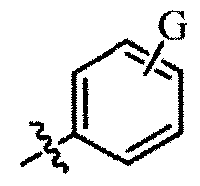
G is OR1, - (Ci-C.) alkyl, - (Ci-C«) alkyl-OR1, halogen, -CO2R1, -
 - (Ci- Ci) alkyl- (OO)NHR1, -NHR1 {C=Oi R1 , - ( Ci-C,) alkyl-NHR1 ίC=0) R1 ;
R1 is H or - (Ci-C«) alkyl;
X is a halogen;
or an active metabolite, or a pharmaceutically acceptable prodrug, salt, or solvate thereof.
In one aspect of method the compound of Formula ( III ) has the following structure:

wherein
A is 0, H, or S;
B is a bond, - alkyl , - (C3 alkenyl , - (C3- Ca)cycloalkyl, - -C?)heteroalkyl, - (Cj-Ca)heterocycloalkyl, cycloalkenyl , - (Cs-Ce) heterocycloalkenyl ;
E is (C=0)-0R, -0-(C=0!-R, -<C=0)-R, -OR, a carboxylic acid bioisostere, -(0=0)-ΝΗ¾, NR1-(C=0)-R, - alkyl- (C=0) - OR, or -(Ci-C7)alkyl-(C=0)NR1R;

G is OR1, -(Ci-Cs)alkyl, - (Ci-Ci)alkyl-OR1, halogen, -COaR1, - (Ci-Ce!alkyl-COjR1, NHR1, - (Ci-C«) alkyl-NHR1, - (C=0)NHR1, -(Ci- CiSalkyl- (OO)NHR1, -NHR1 (C-O) R1, -(Ci-Cs) alkyl-NHR1 (C=0) R1 ;
R1 is H or -(Ci-Cj)alkyl;
or an active metabolite, or a pharmaceutically acceptable prodrug, salt, or solvate thereof.
Specific examples of compounds having Formula (III) are described in, e.g., PCT International Application Publicaiton No. WO 2009/042444 A2 , published on April 2, 2009, the entire content of which, is hereby incorporated by reference herein.
The present invention yet further relates to a method for treating a disease characterized by excessive lipofuscin accumulation in the retina in a mammal afflicted therewith, comprising administering to the mammal an effective amount of a compound having the structure:

Formula (IV)
wherein
ring A is a 5-membered non-aromatic heterocycle optionally further substituted by one substitutent;
ring B is an optionally further substituted benzene ring; and
X is a bond, 0, CH20, 0CH2, C¾, (CH2)2, S, CHjS, SCH2, S(0), CH2S(0), S(0)C¾, S(0)2, CH2S(0)2 OR S(0)2CH2, provided that
{(3S,5R)~l-[4- (trifluoromethyl ) benzyl] -5- [4-
(trifluoromethyl) henyl Jpyrro- lidin-3-yl)acetic acid,
( (3S,5R)~l-[2, S-bis (trifluoromethyl) benzyl] -5-14-
( rifluoromethyl) phenyl]- pyrrolidin-3-yl )acetic acid, (4-OXO-3- [ (3- (tr fluoromethyl) henyl ] -1 , 3-thiazolidin-5- yljacetic acid,
(2-oxo-l- [ 3- ( trifluoromethyl ) henyl] yrrolidin-3-yl) cetic acid,
{3- [4-fluoro-3- ( trifluoromethyl ) henyl] -4-oxo-l , 3- oxazolidin-5-yl )acetic acid,
(4-OXO-3- [3- (trifluoromethyl) henyl] -1 , 3-oxazolidin-5- yljacetic acid,
{3- [2-chloro-5- ( rifluoromethyl) phenyl] -4-oxo-l, 3- thiazolidin-5-yl} cetic acid, and
(5-oxo-l- [3- (trifluoromethyl) henyl] -4, 5-dihydro-lH-pyrazol-
3-yl)acetic acid are excluded,
or a pharmaceutically acceptable salt thereof.
Specific examples of compounds having Formula (IV) are described in, e.g., U.S. Patent Application Publication No. US 2011/0251187 Al, published on October 13, 2011, the entire content of which is hereby incorporated by reference herein.
In some embodiments, the disease is further characterized by bisretinoid-mediated macular degeneration.
In some embodiments, the amount of the compound of the present method is effective to lower the serum concentration of RBP4 in the mammal .
In some embodiments, the amount of the compound of the present method is effective to lower the retinal concentration of a bisretinoid in lipofuscin in the mammal .
In some embodiments of the invention, the amount of the compound of the present method may be effective to lower the retinal concentration of a bisretinoid in lipofuscin in the mammal. In some embodiments, the bisretinoid is A2E. In some embodiments the bisretinoid is isoA2E. In some embodiments the bisretinoid is A2- DHP-PE. In some embodiments the bisretinoid is atRAL di-PE. In some embodiments, the disease characterized by excessive lipofuscin accumulation in the retina may be Age-Related Macular Degeneration or Stargardt Disease.
In some embodiments, the disease characterized by excessive lipofuscin accumulation in the retina is Age-Related Macular Degenera ion.
In some embodiments, the disease characterized by excessive lipofuscin accumulation in the retina is dry (atrophic) Age- Related Macular Degeneration.
In some embodiments, the disease characterized by excessive lipofuscin accumulation in the retina is Stargardt Disease.
In some embodiments, the disease characterized by excessive lipofuscin accumulation in the retina is Best disease.
In some embodiments, the disease characterized by excessive lipofuscin accumulation in the retina is adult vitelliform maculopathy.
In some embodiments, the disease characterized by excessive lipofuscin accumulation in the retina is Stargardt-like macular dystrophy .
In some embodiments, bisretinoid-mediated macular degeneration may be Age-Related Macular Degeneration or Stargardt Disease.
In some embodiments, the bisretinoid-mediated macular degeneration is Age-Related Macular Degeneration.
In some embodiments , the bis e inoid -mediated macular degeneration is dry (atrophic) Age-Related Macular Degeneration, In some embodiments, the the bisretinoid-mediated macular degeneration is Stargardt Disease.
In some embodiments, the bisretinoid-mediated macular degeneration is Best disease.
In some embodiments, the bisretinoid-mediated macular degeneration is adult vitelliform maoulopathy.
In some embodiments, the bisretinoid-mediated macular degeneration is Stargardt-like macular dystrophy.
The bisretinoid-mediated macular degeneration may comprise the accumulation of lipofuscin deposits in the retinal pigment epithelium.
As used herein, "bisretinoid lipofuscin* is lipofuscin containing a cytotoxic bisretinoid. Cytotoxic bisretinoids include but are not necessarily limited to A2E, isoA2E, atRAL di-PE, and A2-DHP- PE (Fig. 1-3) .
As used herein, the description "pharmaceutically active" is used to characterize a substance, compound, or composition suitable for administration to a subject and furnishes biological activity or other direct effect in the treatment, cure, mitigation, diagnosis, or prevention of disease, or affects the structure or any function of the subject. Pharmaceutically active agents include, but are not limited to, substances and compounds described in the Physicians' Desk Reference (PDR Network, LLC; 64th edition; November 15, 2009) and "Approved Drug Products with Therapeutic Equivalence Evaluations" (U.S. Department of Health and Human Services, 30th edition, 2010) , which are hereby incorporated by reference.
Another aspect of the invention comprises a compound used in the method of the present invention as a pharmaceutical composition.
The compounds used in the method of the present invention may be in a salt form. As used herein, a "salt" is a salt of the instant compound which has been modified by making acid or base salts of the compounds . In the case of the use of the compounds for treatment of bisretinoid-mediated macular degeneration, the salt is pharmaceutically acceptable. Examples of pharmaceutically acceptable salts include, but are not limited to, mineral or organic acid salts of basic residues such as amines. The term "pharmaceutically acceptable salt" in this respect, refers to the relatively non-toxic, inorganic and organic base addition salts of the compounds. These salts can be prepared in situ during the final isolation and purification of the compounds, or by separately reacting purified compounds in their free acid form with a suitable organic or inorganic base, and isolating the salt thus formed .
As used herein, "treating" means slowing, stopping, or preventing the progression of a disease. An embodiment of "treating bisretinoid-mediated macular degeneration" is delaying or preventing the onset, progression, or mitigating severity of vision loss.
The compounds used in the method of the present invention may be administered in various forms, including those detailed herein. The treatment with the compound may be a component of a combination therapy or an adjunct therapy, i.e. the mammal in need of the drug is treated or given another drug for the disease in conjunction with the compounds used in the method of the present invention. This combination therapy can be sequential therapy where the mammal is treated first with one drug and then the other or the two drugs are given simultaneously. These can be administered independently by the same route or by two or more different routes of administration depending on the dosage forms employed.
As used herein, a "pharmaceutically acceptable carrier" is a pharmaceutically acceptable solvent, suspending agent or vehicle, for delivering the instant compounds to the mammal. The carrier may be liquid or solid and is selected with the planned manner of administration in mind. Liposomes are also a pharmaceutically acceptable carrier.
The dosage of the compounds administered in treatment will vary depending upon factors such as the pharmacodynamic characteristics of the compound and its mode and route of administration; the age, sex, metabolic rate, absorptive efficiency, health and weight of the recipient; the nature and extent of the symptoms; the kind of concurrent treatment being administered; the frequency of treatment with; and the desired therapeutic effect.
A dosage unit of the compounds used in the method of the present invention may comprise the compound alone, or mixtures of the compound with additional compounds used to treat lipofuscin- mediated macular degeneration. The compounds can be administered in oral dosage forms as tablets, capsules, pills, powders, granules, elixirs, tinctures, suspensions, syrups, and emulsions. The compounds may also be administered in intravenous (bolus or infusion), intraperitoneal, subcutaneous, or intramuscular form, or introduced directly, e.g. by injection or other methods, into the eye, all using dosage forms well known to those of ordinary skill in the pharmaceutical arts.
The compounds used in the method of the present invention can be administered in a mixture with suitable pharmaceutical diluents, extenders, excipients, or carriers (collectively referred to herein as a pharmaceutically acceptable carrier) suitably selected with respect to the intended form of administration and as consistent with conventional pharmaceutical practices . The unit will be in a form suitable for oral, rectal, topical, intravenous or direct injection or parenteral administration. The compounds can be administered alone but are generally mixed with
a pharmaceutically acceptable carrier. This carrier can be a solid or liquid, and the type of carrier is generally chosen based on the type of administration being used. In one embodiment the carrier can be a monoclonal antibody. The active agent can be co-administered in the form of a tablet or capsule, liposome, as an agglomerated powder or in a liquid form. Examples of suitable solid carriers include lactose, sucrose, gelatin and agar. Capsule or tablets can be easily formulated and can be made easy to swallow or chew; other solid forms include granules, and bulk powders. Tablets may contain suitable binders, lubricants, diluents, disintegrating agents, coloring agents, flavoring agents, flow-inducing agents, and melting agents. Examples of suitable liquid dosage forms include solutions or suspensions in water, pharmaceutically acceptable fats and oils, alcohols or other organic solvents , including esters, emulsions , syrups or elixirs, suspensions, solutions and/or suspensions reconstituted from non-effervescent granules and effervescent preparations reconstituted from effervescent granules. Such liquid dosage forms may contain, for example, suitable solvents, preservatives, emulsifying agents, suspending agents, diluents, sweeteners, thickeners, and melting agents. Oral dosage forms optionally contain flavorants and coloring agents . Parenteral and intravenous forms may also include minerals and other materials to make them compatible with the type of injection or delivery system chosen.
Specific examples of pharmaceutical acceptable carriers and excipients that may be used to formulate oral dosage forms of the present invention are described in U. S. Pat. No. 3,903,297, issued Sept. 2, 1975. Techniques and compositions for making dosage forms useful in the present invention are described-in the following references: 7 Modern Pharmaceutics, Chapters 9 and 10 (Banker & Rhodes, Editors, 1979); Pharmaceutical Dosage Forms: Tablets {Lieberman et al., 1981); Ansel, Introduction to Pharmaceutical Dosage Forms 2nd Edition (1976); Remington's Pharmaceutical Sciences, 17th ed. (Mack Publishing Company,
Easton, Pa., 1985); Advances in Pharmaceutical Sciences (David Ganderton, Trevor Jones, Eds., 1992); Advances in Pharmaceutical Sciences Vol ?. (David Ganderton, Trevor Jones, James McGinity, Eds., 1995); Aqueous Polymeric Coatings for Pharmaceutical Dosage Forms (Drugs and the Pharmaceutical Sciences, Series 36 (James McGinity, Ed., 1989); Pharmaceutical Particulate Carriers: Therapeutic Applications: Drugs and the Pharmaceutical Sciences, Vol 61 (Alain Holland, Ed., 1993); Drug Delivery to the Gastrointestinal Tract (Ellis Horwood Books in the Biological Sciences. Series in Pharmaceutical Technology; J. G. Hardy, S. S. Davis, Clive G. Wilson, Eds.); Modem Pharmaceutics Drugs and the Pharmaceu ical Sciences, Vol 40 (Gilbert S. Banker, Christopher T. Rhodes, Eds.). All of the aforementioned publications are incorporated by reference herein.
Tablets may contain suitable binders, lubricants, disintegrating agents, coloring agents, flavoring agents, flow-inducing agents, and melting agents. For instance, for oral administration in the dosage unit form of a tablet or capsule, the active drug component can be combined with an oral, non-toxic, pharmaceutically acceptable, inert carrier such as lactose, gelatin, agar, starch, sucrose, glucose, methyl cellulose, magnesium stearate, dicalcium phosphate, calcium sulfate, mannitol, sorbitol and the like. Suitable binders include starch, gelatin, natural sugars such as glucose or beta-lactose, corn sweeteners, natural and synthetic gums such as acacia, tragacanth, or sodium alginate, carboxymethylcellulose, polyethylene glycol, waxes, and the like. Lubricants used in these dosage forms include sodium oleate, sodium stearate, magnesium stearate, sodium benzoate, sodium acetate, sodium chloride, and the like. Disintegrators include, without limitation, starch, methyl cellulose, agar, bentonite, xanthan gum, and the like.
The compounds used in the method of the present invention can also be administered in the form of liposome delivery systems,
such as small unilamellar vesicles, large unilamellar vesicles, and multilamellar vesicles. Liposomes can be formed from a variety of phospholipids, such as cholesterol, stearylamine, or phosphatidylcholines. The compounds may be administered as components of tissue-targeted emulsions.
The compounds used in the method of the present invention may also be coupled to soluble polymers as targetable drug carriers or as a prodrug. Such polymers include polyvinylpyrrolidone, pyran copolymer, polyhydroxylpropylroethacrylamide-phenol, polyhydroxy-ethylasparta-midephenol , or polyethyleneoxide- polylysine substituted with palmitoyl residues. Furthermore, The compounds used in the method of the present invention may be coupled to a class of biodegradable polymers useful in achieving controlled release of a drug, for example, polylactic acid, polyglycolic acid, copolymers of polylactic and polyglycolic acid, polyepsilon caprolactone, polyhydroxy butyric acid, polyorthoesters, polyacetals, polydihydropyrans, polycyanoacylates, and crosslinked or amphipathic block copolymers of hydrogels .
The compounds used in the method of the present invention can be administered orally in solid dosage forms, such as capsules, tablets, and powders, or in liquid dosage forms, such as elixirs, syrups, and suspensions. It can also be administered parentally, in sterile liquid dosage forms.
Gelatin capsules may contain the compounds used in the method of the present invention and powdered carriers, such as lactose, starch, cellulose derivatives, magnesium stearate, stearic acid, and the like. Similar diluents can be used to make compressed tablets. Both tablets and capsules can be manufactured as immediate release products or as sustained release products to provide for continuous release of medication over a period of hours. Compressed tablets can be sugar coated or film coated to mask any unpleasant taste and protect the tablet from the
atmosphere, or enteric coated for selective disintegration in the gastrointestinal tract.
For oral administration in liquid dosage form, the compounds used in the method of the present invention may be combined with any oral, non-toxic, pharmaceutically acceptable inert carrier such as ethanol, glycerol, water, and the like. Examples of suitable liquid dosage forms include solutions or suspensions in water, pharmaceutically acceptable fats and oils, alcohols or other organic solvents, including esters, emulsions, syrups or elixirs, suspensions, solutions and/or suspensions reconstituted from non- effervescent granules and effervescent preparations reconstituted from effervescent granules. Such liquid dosage forms may contain, for example, suitable solvents, preservatives, emulsifying agents, suspending agents, diluents, sweeteners, thickeners, and melting agents.
Liquid dosage forms for oral administration can contain coloring and flavoring to increase patient acceptance. In general, water, a suitable oil, saline, aqueous dextrose (glucose) , and related sugar solutions and glycols such as propylene glycol or polyethylene glycols are suitable carriers for parenteral solutions. Solutions for parenteral administration preferably contain a water soluble salt of the active ingredient, suitable stabilizing agents, and if necessary, buffer substances. Antioxidlzing agents such as sodium bisulfite, sodium sulfite, or ascorbic acid, either alone or combined, are suitable stabilizing agents. Also used are citric acid and its salts and sodium EDTA. In addition, parenteral solutions can contain preservatives, such as benzalkonium chloride, methyl- or propyl-paraben, and chlorobutanol . Suitable pharmaceutical carriers are described in Remington's Pharmaceutical Sciences, Mack Publishing Company, a standard reference text in this field.
The compounds used in the method of the present invention may also be administered in intranasal form via use of suitable intranasal vehicles, or via transdermal routes, using those forms
o£ transdermal skia patches well known to those of ordinary skill in that art. To be administered in the form of a transdermal delivery system, the dosage administration will generally be continuous rather than intermittent throughout the dosage regimen .
Parenteral and intravenous forms may also include minerals and other materials to make them compatible with the type of injection or delivery system chosen.
The compounds used in the method of the present invention and compositions thereof of the invention can be coated onto stents for temporary or permanent implantation into the cardiovascular system of a subject.
The compounds and compositions of the present invention are useful for the prevention and treatment of lipofusein-mediated macular degeneration.
Except where otherwise specified, when the structure of a compound of this invention includes an asymmetric carbon atom, it is understood that the compound occurs as a racemate, racemic mixture, and isolated single enantiomer. All such isomeric forms of these compounds are expressly included in this invention. Except where otherwise specified, each stereogenic carbon may be of the R or S configuration. It is to be understood accordingly that the isomers arising from such asymmetry (e.g., all enantiomers and diastereomers ) are included within the scope of this invention, unless indicated otherwise. Such isomers can be obtained in substantially pure form by classical separation techniques and by stereochemically controlled synthesis, such as those described in "Enantiomers, Racemates and Resolutions" by J. Jacques, A. Collet and S. Wilen, Pub. John Wiley & Sons, NY, 1981. For example, the resolution may be carried out by preparative chromatography on a chiral column.
The subject invention is also intended to include all isotopes of atoms occurring on the compounds disclosed herein. Isotopes include those atoms having the same atomic number but different mass numbers. By way of general example and without limitation, isotopes of hydrogen include tritium and deuterium. Isotopes of carbon include C-13 and C-14.
It will be noted that any notation of a carbon in structures throughout this application, when used without further notation, are intended to represent all isotopes of carbon, such as 12C, °C, or 1C. Furthermore, any compounds containing 1JC or 14C may specifically have the structure of any of the compounds disclosed herein.
The compounds used in the method of the present invention may be prepared by techniques well know in organic synthesis and familiar to a practitioner ordinarily skilled in the art. However, these may not be the only means by which to synthesize or obtain the desired compounds .
The compounds used in the method of the present invention may be prepared by techniques described in Vogel's Textbook of Practical Organic Chemistry, A.I. Vogel, A. R. Tatchell, B.S. Furnis, A.J. Hannaford, P.W.G. Smith, (Prentice Hall) 5th Edition (1996), March's Advanced Organic Chemistry: Reactions, Mechanisms, and Structure, Michael B. Smith, Jerry March, (Wiley-Interscience) 5th Edition (2007) , and references therein, which are incorporated by reference herein. However, these may not be the only means by which to synthesize or obtain the desired compounds.
As used herein, "alkyl" includes both branched and straight-chain saturated aliphatic hydrocarbon groups having the specified number of carbon atoms and may be unsubstituted or substituted. Thus, Ci-C„ as in "Ci-Cn alkyl" is defined to include groups having 1, 2, ... , n-1 or n carbons in a linear or branched arrangement. For example, Ci-Ce, as in "Ci-Ct alkyl" is defined to include groups having 1, 2, 3, 4, 5, or 6 carbons in a linear or branched
arrangement, and specifically includes methyl, ethyl, n-propyl, isopropyl, n-butyl, t-butyl, pentyl, hexyl, and octyl .
It will also be noted that any notation of a hydrogen in structures throughout this application, when used without further notation, are intended to represent all isotopes of hydrogen, such as lH, ¾, or ¾. Furthermore, any compounds containing 2H or Ή may specifically have the structure of any of the compounds disclosed herein.
Isotopically-labeled compounds can generally be prepared by conventional techniques known to those skilled in the art using appropriate isotopically-labeled reagents in place of the non- labeled reagents employed.
Each embodiment disclosed herein is contemplated as being applicable to each of the other disclosed embodiments. Thus, all combinations of the various elements described herein are within the scope of the invention.
This invention will be better understood by reference to the Examples which follow, but those skilled in the art will readily appreciate that the specific experiments detailed are only illustrative of the invention as described more fully in the claims which follow thereafter.
Exa-ttplae
Enan le 1. Synthesis of Compound 1
The compound 2 (4- (2- (trifluoromethyl) henyl) iperidine-1- carboxamido) benzoic acid has the structure:

termed "Compound 1" herein, and was obtained from Sigma (Sigma- Aldrich Corp., St. Louise MO, USA, Catalogue No. A3111 ) . Compound 1 is described in PCT/OS2011/061763 , the contents of which are hereby incorporated by reference.
Compound 1, has also been called A1120 and may be made by the following techniques described in Motani et al . , 2009 as follows: A solution of methyl 2-isocyanatobenzoate (10.00 g, 56.4 mmol) in tetrahydrofuran {30 ml) was slowly added to a solution of 4- (2- (trifluoromethyl) henyl) piperIdine hydrochloride (14.3 g, 53.8 mmol, Sigma) and triethylamine 99% (8.99 ml, 64.5 mmol) in tetrahydrofuran (120 ml) at 0 °C. The mixture was removed from the cooling bath and stirred at room temperature for 15 min, at which time LC/MS analysis indicated that the reaction was complete. EtOH (75 ml) and aqueous LiOH (2N, 95 ml) were then added, and the solution was stirred for 6 h at room temperature. Subsequently, aqueous HCl (2N, 150 ml) was added, and the resulting mixture was extracted with EtOAc (2 x 600 ml) . The EtOAc extract was dried over MgS04 and concentrated to an off- white solid. Recrystallization from EtOAc yielded 14.0 g (66%) of 2- (4- (2- (trifluoromethyl) henyl ) piperidine-1-carboxamido) benzoic acid as a white solid, which was homogeneous by analytical high- performance liquid chromatography (>99%) .
Example 2. TR-FRET assay for antagonists of retinol-induced RBP4- T R interaction
TR-FRET (Time-Resolved Fluorescence Resonance Energy Transfer) is an assay format that can be used in characterization of compounds affecting protein-protein interactions (31-33) . The HTRF (Homogeneous Time-Resolved Fluorescence) variant of TR-FRET is the most advanced as it has improved light capturing due to the use of Eu3+ cryptates. In the presence of retinol, RBP4-TTR interaction induces FRET that can be registered as increased ratio of 668/620 fluorescence signals. Binding of a desired RBP4 antagonist displaces retinol and induces hindrance for RBP4-TTR interaction resulting in the decreased FRET signal (Fig. 7) .
The assay was developed using E. coli-expressed MBP-tagged RBP4 and commercially available TTR labeled directly with Eu3+ cryptate. In addition to MBP-RBP4 and Eu3+ (K)-TTR, a detector reagent anti-MBP-d2 was present in the mix. The assay was first optimized in the agonist mode; sensitivity and dynamic range of the assay was first mode in respect to RBP4, TTR and detection reagent concentrations. In order to determine the optimum concentration of all-trans retinol stimulating the RBP4-TTR interaction eight-point titration retinol titrations were performed along with titrations of Compound 1 and fenretinide (Fig. 8) . It was demonstrated that all-trans retinol stimulates RBP4-TTR interaction in a dose dependent manner (Fig. 8) with EC50 of ~1.2 uM. As expected, RBP4 antagonists Compound 1 and fenretinide did not induce RBP4-TTR interaction (Fig. 8) .
Given that retinol is present in serum at micromolar concentrations and taking into account the results of retinol titrations, the assay was converted to the antagonist mode by testing fixed concentration of retinol within the 1-10 μΜ range and using the saturating 40 μΜ concentration of antagonists (fenretinide and Compound 1) . The optimum retinol concentration in the antagonist mode in regard of assay sensitivity and dynamic range was found to be in the 4.5-6.5 μΜ range. Titrations of
Compound 1 and fenretinide were conducted in the presence of retinol in order to characterize our starting compounds in the primary assay and prove that the assay is suitable for characterization of RBP4 antagonists (Pig, 9) .
The two compounds, Compound 1 and fenretinide, antagonized the retinol-induced RBP4-TTR interaction with ECso's in the μΜ range (2.2 μΜ for Compound 1 and Π.3 μΜ for fenretinide).
Example 3. Compound 1 Efficacy in a Mammalian Model
The effectiveness of Compound 1 was tested in wild-type and Abca4-/~ mice. The Abca4-/- mouse model manifests accelerated accumulation of lipofuscin in the RPE and is considered a preclinical efficacy model for a drug reducing lipofuscin accumulation. Compound 1 was orally dosed for 3 weeks at 30 mg/kg. There was approximately a 70% reduction in the serum RBP4 level in treated animals (Fig. 11) . Additionally, it was discovered that that the levels of A2E/isoA2E and other bisretinoids were reduced by approximately 50% in treated mice (Pig. 12) . The levels of A2-DHP-PE and atRAL di-PE were also reduced. These preclinical efficacy data show that Compound 1 is a potential small molecule treatment for dry AMD and Stargardt's disease .
Tissue extraction and HPLC analysis of Bisretinoids
Abca4/Abcr null mutant mice (albino) homozygous for Rpe65-Leu450 are bred genotyped and housed. Posterior eyeeups of mice and RPE/choroids harvested from human donor eyes (National Disease Research Interchange, Philadelphia PA) are homogenized in phosphate buffered saline (PBS) using a glass tissue grinder and extracted in chloroform/methanol (2:1). Extracts are subsequently filtered through cotton and passed through a reverse phase cartridge (CB Sep-Pak, Millipore) with 0.1% TEA (Aldrich Chemical Company, Milwaukee, WI) in methanol. After evaporation of solvent under argon gas, the extract is dissolved in 50% methanolic
chloroform containing 0.1% TFA. An Alliance system (Waters, Corp, Mil ford, MA) equipped with 2695 Separation Module, 2996 Photodiode Array Detector, a 2475 Multi λ Fluorescence Detector and operating with Empower* software is used for HPLC analysis. An Atlantis® dC18 column (3 um, 4.6 x 150 mm. Waters, USA) and a Delta Fak» C4 column (5 um, 3.9 x ISO mm. Waters, USA) are employed. Gradients of water and acetonitrile (Fisher, Fair Lawn, NJ) with 0.1 % of TPA are used for mobile phase; details are provided in figure legends. HPLC quantification is carried out using the Empower* software to determine peak areas. Detection by photodiode array is set at 430 and 490 nm. Molar quantity per murine eye is determined using calibration curves constructed from known concentrations of purified external standards and by normalizing to the ratio of the HPLC injection volume (10 uL) versus total extract volume.
Example 4. TR-FRET assay for retinol-induced RBP4-TTR interaction
Bacterially expressed MBP-RBP4 and untagged TTR were used in this assay. For the use in the TR-PRET assay the maltose binding protein (MBP) -tagged human RBP4 fragment (amino acids 19-201) was expressed in the Gold (DE3 )pLysS E. coli strain (Stratagene) using the pMAL~c4x vector. Following cell lysis, recombinant RBP4 was purified from the soluble fraction using the ACTA FPLC system (GE Healthcare) equipped with the 5-ml the HBP Trap HP column. Human untagged TTR was purchased from Calbiochem. Untagged TTR was labeled directly with Eu3* Cryptate- HS using the HTRF Cryptate Labeling kit from CisBio following the manufacturer's recommendations. HTRF assay was performed in white low volume 384 well plates (Greiner-Bio) in a final assay volume of 16 μΐ per well. The reaction buffer contained 10 mM Tris-HCl pH 7.5, 1 mM DTT, 0.05% NP-40, 0.05% Prionex, 6% glycerol, and 400 mM KF . Each reaction contained 60 nM MBP-RBP4 and 2 nM TTR-Eu along with 26.7nM of anti-MBP antibody conjugated with d2 (Cisbio) . Titration of test compounds in this assay was conducted in the presence of 1 μΜ retinol. All reactions were assembled in the
dark under dim red light and incubated overnight at +4°C wrapped in aluminum foil. TR-FRET signal was measured in the SpectraMax M5a Multimode Plate Reader (Molecular Device) . Fluorescence was excited at 337 ran and two readings per well were taken: Reading 1 for time-gated energy transfer f om Eu ( ) to d2 (337 run excitation, 668 am emission, counting delay 75 microseconds, counting window 100 microseconds) and Reading 2 for Eu ( ) time- gated fluorescence (337 nm excitation, 620 ran emission, counting delay 400 microseconds, counting window 400 microseconds) , The TR-FRET signal was expressed as the ratio of fluorescence intensity: PlU6t5/PlUsao x 10,000.
Example S, Scintillation proximity RKP4 binding assay
Untagged human RBP4 purified from urine of tubular proteinuria patients was purchased from Fitzgerald Industries International . It was biotinylated using the EZ-Link Sulfo-NHS-LC-Biotinylation kit from Pierce following the manufacturer's recommendations . Binding experiments were performed in 96-well plates (OptiPlate, PerkinElmer) in a final assay volume of 100 μΐ per well in SPA buffer (IX PBS, pH 7.4, ImM EDTA, 0.1%BSA, 0.5%CHAPS) . The reaction mix contained 10 nM 'H-Retinol (48.7Ci/mmol; PerkinElmer), 0.3 mg/well Streptavidin-PVT beads , 50 nM biotinylated RBP and a test compound. Nonspecific binding was determined in the presence of 20 uM of unlabeled retinol. The reaction mix was assembled in the dark under dim red light. The plates were sealed with clear tape (TopSeal-A: 96-well microplate, PerkinElmer) , wrapped in the aluminum foil, and allowed to equilibrate 6 hours at room temperature followed by overnight incubation at +4°C. Radiocounts were measured using a TopCount NXT counter (Packard Instrument Company) .
Example 6. Animal Studies
Ten week-old Abca4 null mutant mice (129/SV x C57BL/6J) bred as previously described were used in the study. Abca4-/- (knockout) and Abca4+/+ (wild-type) mice were raised under 12 h on-off
cyclic lighting with an in-cage illuminance of 30-50 lux. For long-term oral dosing A1120 was formulated into Purina 5035 rodent chow at Research Diets, Inc. {New Brunswick, NJ) to ensure consistent 30 mg/kg daily oral dosing. Animals were administered the A1120-containing chow for 6 weeks.
Example 7. Serum RBt>4 Masuramenta
Blood samples were collected from a tail vein at days 0, 21 and 42 of the A1120 dosing. Whole blood was drawn into a centrifuge tube and was let clot at room temperature for 30 min followed by centrifugation at 2,000 x g for 15 minutes at +4"C to collect serum. Serum RBP4 was measured using the RBP4 (mouse/rat) dual ELISA kit (Enzo Life Sciences) following the manufacturer's instructions .
Exam le 8. Biretinoid Extraction and Analysis
Following euthanasia, posterior eye cups were pooled and homogenized in PBS using a tissue grinder. An equal volume of a mixture of chloroform and methanol (2:1) was added, and the sample was extracted three times. To remove insoluble material, extracts were filtered through cotton and passed through a reverse phase (CIS Sep- Pak, Millipore) cartridge with 0.1% TFA in methanol . After the solvent had been removed by evaporation under argon gas, the extract was dissolved in methanol containing 0.1% TFA, for HPLC analysis. For quantification of bisretinoids of RPE lipofuscin, a Waters Alliance 2695 HPLC system was employed with an Atlantis dC18 column (Waters, 4.6 mm x 150 mm, 3 μπι) and the following gradient of acetonitrile in water (containing 0.1% trifluoroacetic acid): 90 to 100% from 0 to 10 min and 100% acetonitrile from 10 to 20 min, with a flow rate of 0.8 mL/min with monitoring at 430 ran. The injection volume was 10 μL. Extraction and injection for HPLC were performed under dim red light. Levels of bisretinoid were determined by reference to external standards of HPLC-purified compound.
Example 9. Compounds of Formulae I-IV
Compounds having the structure of any one of Formulas I-IV used in the method of the present invention function analogously to Compound 1. Synathsis of these compounds are described in, e.g., U.S. Patent Application Publication No. OS 2010/0292206 Al, PCT International Application Publicaiton No. WO 2010/119992 Al, PCT International Application Publicaiton No. WO 2009/042444 A2, and U.S. Patent Application Publication No. US 2011/0251187 Al, the entire content of each of which is hereby incorporated by reference herein.
Further, those having ordinary skill in the art of organic synthesis will appreciate that modifications to general procedures described herein and synthetic routes contained in this application can be used to synthesize compounds used in the method of the present invention. Suitable organic transformations are described in March's Advanced Organic Chemistry: Reactions, Mechanisms, and Structure (Wiley-Interscience 6th edition, 2007), the entire content of which is hereby incorporated by reference.
Example 10. Correlation between A1120~induced serum RBP4 reduction and inhibition of bisretinoid accumulation in the retina
To determine whether A1120 has an effect on retinal production of lipofuscin fluorophores we administered the compound at the daily 30 mg/kg dose to Abca4-/- mice for a period of 6 weeks. Blood samples collected from the treatment and control groups at baseline. Day 21 and Day 42 were used to measure serum RBP4 in order to correlate RBP4 levels with reduction in formation of lipofuscin bisretinoids . As shown in Figure 13, chronic oral administration of A1120 at 30 mg/kg to Abca4-/- mice induced a 64% decrease in serum RBP4 level at Day 21 and a 75% decrease at Day 42. Levels of lipofuscin fluorophores (A2E, A2-DHP-PE and all-trans-retinal dimer-PE) were determined at the end of the 42- day treatment period using quantitative HPLC.
Representativa chromatogram of lipofuscin fluorophores from eyecups of vehicle-treated Abca4-/- mice along with absorbance spectra for the indicated peaks is shown in Figure 14, A and B. As shown in Figure 14, C the levels of bisretinoid accumulation were 3-4 times higher in the vehicle-treated Abca4-/~ mice than in wild-type controls. Administration of A1120 reduces the production of A2E, A2-DHP-PE , and atRAL di-PE in Al 120- reated Abca4-/- mice in comparison to the vehicle-treated Abca4-/- animals by approximately 50%. This result clearly demonstrated that A1120 can inhibit in vivo accumulation of toxic lipofuscin bisretinoids in the animal model of enhanced lipofuscinogenesis . We did not note any obvious signs of compound toxicity such as weight loss or reduction in food consumption during the 6 week- long chronic A1120 dosing.
Example 11. Administration of a compound of Formula I
An amount of a compound of Formula I as described herein is administered to the eye of a subject afflicted with AMD. The amount of the compound is effective to treat the subject.
An amount of a compound of Formula I as described herein is administered to the eye of a subject afflicted with Stargardt disease. The amount of the compound is effective to treat the subject .
Example 12. Administration of a compound of Formula II
An amount of a compound of Formula II as described herein is administered to the eye of a subject afflicted with AMD. The amount of the compound is effective to treat the subject.
An amount of a compound of Formula II as described herein is administered to the eye of a subject afflicted with Stargardt disease. The amount of the compound is effective to treat the subject.
Kxaapla 13. Administration o£ m ccaeound of Toretila III
An amount of a compound of Formula III as described herein is administered to the eye of a subject afflicted with AMD. The amount of the compound is effective to treat the subject.
An amount of a compound of Formula III as described herein is administered to the eye of a subject afflicted with Stargardt disease. The amount of the compound is effective to treat the sub ect .
Example 14. Administration of a compound of Formula IV
An amount of a compound of Formula IV as described herein is administered to the eye of a subject afflicted with AMD. The amount of the compound is effective to treat the subject.
An amount of a compound of Formula Iv as described herein is administered to the eye of a subject afflicted with Stargardt disease. The amount of the compound is effective to treat the subject .
Dlscuaalon
Age-related macular degeneration (AMD) is the leading cause of blindness in developed countries. Its prevalence is higher than that of Alzheimer's disease. There is no treatment for the most common dry form of AMD. Dry AMD is triggered by abnormalities in the retinal pigment epithelium (RPE) that lies beneath the photoreceptor cells and provides critical metabolic support to these light-sensing ceils. RPE dysfunction induces secondary degeneration of photoreceptors in the central part of the retina called the macula. Experimental data indicate that high levels of lipofuscin induce degeneration of RPE and the adjacent photoreceptors in atrophic AMD retinas. In addition to AMD. dramatic accumulation of lipofuscin is the hallmark of Stargardt's disease (STGD), an inherited form of juvenile onset macular degeneration. The major cytotoxic component of RPE lipofuscin is a pyridinium bisretinoid A2E. A2E formation occurs in the retina in a non-enzymatic manner and can be considered a by-product of a properly functioning visual cycle. Given the established cytotoxic affects of A2E on RPE and photoreceptors, inhibition of A2E formation could lead to delay in visual loss in patients with dry AMD and STGD. It was suggested that small molecule visual cycle inhibitors may reduce the formation of A2E in the retina and prolong RPE and photoreceptor survival in patients with dry AMD and STGD. Rates of the visual cycle and A2E production in the retina depend on the influx of all-trans retinol from serum to the RPE. RPE retinol uptake depends on serum retinol concentrations. Pharmacological downregulation of serum retinol is a valid treatment strategy for dry AMD and STGD. Serum retinol is maintained in circulation as a tertiary complex with retinol-binding protein (RBP4) and transthyretin (TTR) . Without interacting with TTR, the RBP4-retinol complex is rapidly cleared due to glomerular filtration. Retinol binding to RBP4 is required for formation of the RBP4-TTR complex; apo-RBP4 does not interact with TTR. Importantly, the retinol-binding site on RBP4 is sterically proximal to the interface mediating the RBP4-TTR
interaction. Without wishing to be bound by any scientific theory, the data herein show that small molecule RBP4 antagonists displacing ratinol from RBP4 and disrupting the RBP4-TTR interaction will reduce serum retinol concentration, inhibit retinol uptake into the retina and act as indirect visual cycle inhibitors reducing formation of cytotoxic A2E.
Serum RBP4 as a drug target for pharmacological inhibition of the visual cycle
As rates of the visual cycle and A2E production in the retina depend on the influx of all-trans retinol from serum to the RPE (Fig. 4), it has been suggested that partial pharmacological down-regulation of serum retinol may represent a target area in dry AMD treatment (11). Serum retinol is bound to retinol-binding protein (RBP4) and maintained in circulation as a tertiary complex with RBP4 and transthyretin (TTR) (Fig. 5) . Without interacting with TTR, the RBP4-retinol complex is rapidly cleared from circulation due to glomerular filtration. Additionally, formation of the RBP4 -TT -retinol complex is required for receptor-mediated all-trans retinol uptake from serum to the retina.
Without wishing to be bound by any scientific theory, visual cycle inhibitors may reduce the formation of toxic bisretinoids and prolong RPE and photoreceptor survival in dry AMD. Rates of the visual cycle and A2E production depend on the influx of all- trans retinol from serum to the RPE. Formation of the tertiary retinol-binding protein 4 (RBP4) -transthyretin (TTR) -retinol complex in serum is required for retinol uptake from circulation to the RPE. Retinol-binding site on RBP4 is sterically proximal to the interface mediating the RBP4-TTR interaction. RBP4 antagonists that compete with serum retinol for binding to RBP4 while blocking the RBP4-TTR interaction would reduce serum retinol, slow down the visual cycle, and inhibit formation of cytotoxic bisretinoids.
REP4 represents an attractive drug target for indirect pharmacological inhibition of the visual cycle and A2E formation. The retinol-binding site on RBP4 is sterically proximal to the interface mediating the RBP4-TTR interaction. Retinol antagonists competing with serum retinol for binding to HBP while blocking the RBP4-TTR interaction would reduce serum RBP4 and retinol levels which would lead to reduced uptake of retinol to the retina. The outcome would be visual cycle inhibition with subsequent reduction in the A2E synthesis.
A synthetic retinoid called fenretinide [N- (4-hydroxy- phenyl) retinamide, 4HRP] previously considered as a cancer treatment (29) was found to bind to RBP4, displace all-trans retinol from RBP4 { 13 ) , and disrupt the RBP4-TTR interaction (13, 14) .
Fenretinide was shown to reduce serum RBP4 and retinol (15), inhibit ocular all-trans retinol uptake and slow down the visual cycle (11). Importantly, fenretinide administration reduced A2E production in an animal model of excessive bisretinoid accumulation, Abca4 -/- mice (11) . Pre-clinical experiments with fenretinide validated RBP4 as a drug target for dry AMD. However, fenretinide is non-selective and toxic. Independent of its activity as an antagonist of retinol binding to RBP4, fenretinide is an extremely active inducer of apoptosis in many cell types (16-19), including the retinal pigment epithelium cells (20). It has been suggested that fenretinide' s adverse effects are mediated by its action as a ligand of a nuclear receptor RAR (21- 24) . Additionally, similar to other retinoids, fenretinide is reported to stimulate formation of hemangiosarcomas in mice. Moreover, fenretinide is teratogenic, which makes its use problematic in Stargardt disease patients of childbearing age.
As fenretinide' s safety profile may be incompatible with long- term dosing in individuals with blinding but non-life threatening conditions, identification of new classes of RBP4 antagonists is of significant importance. Compound 1, a non-retinoid RBP4
ligand, was originally identified in a screen for compounds that may improve insulin sensitivity. It was confirmed that Compound 1 displaces retinol from RBP4, disrupt etinol-induced RBP4-TTR interaction, and reduce serum REBP4 levels. In addition, it was established that Compound 1 inhibits bisretinoid accumulation in the Abea -/- mouse model of excessive lipofuscinogenesis which justifies additional evaluation of Compound 1 and its analogues as a treatment for dry AMD and Stargardt disease.
The present invention relates to compounds of Formulas I-IV for treatment of macular degeneration and Stargardt Disease. Disclosed herein is the ophthalmic use of RBP4 antagonist compounds of Formulas I-IV. Compound 1, also a RBP4 antagonis, was originally developed as an anti-diabetic agent (12) . However, its administration did not improve insulin sensitivity in mouse diabetes models. The compounds of Formulas I-IV disclosed herein behave analogously to Compound 1.
Currently, there is no FDA-approved treatment for dry AMD or Stargardt disease, which affects millions of patients. An over the counter, non FDA-approved cocktail of antioxidant vitamins and zinc (AREDS formula) is claimed to be beneficial in a subset of dry AMD patients. There are no treatments for Stargardt disease. The present invention identified non-retinoid RBP4 antagonists that are useful for the treatment of dry AMD and other conditions characterized by excessive accumulation of lipofuscin. Without wishing to be bound by any scientific theory, as accumulation of lipofuscin seems to be a direct cause of RPE and photoreceoptor demise in AMD and STGD retina, the compounds described herein are disease-modifying agents since they directly address the root cause of these diseases. The present invention provides novel methods of treatment that will preserve vision in AMD and Stargardt disease patients, and patients' suffereing from conditions characterized by excessive accumulation of lipofuscin.
Raferencaa
1. Petrukhin K . New therapeutic targets in atrophic age-related macular degeneration. Expert Opin. Ther. Targets. 2007, 11(5): 625-639.
2. C. Delori, D.G. Goger and C.K. Dorey, Age-related accumulation and spatial distribution of lipofuscin in RPE of normal subjects. Investigative Ophthalmology and Visual Science 42 (2001), pp. 1855-1866.
3. F.C. Delori, RPE lipofuscin in ageing and age-related macular degeneration. In: G. Coscas and F.C. Piccolino,
Editors, Retinal Pigment Epithelium and Macular Disease (Documenta Ophthalmologica) vol. 62, Kluwer Academic Publishers, Dordrecht, The Netherlands (1995), pp. 37-45.
4. C.K. Dorey, G. Wu, D. Ebenstein, A. Garsd and J.J. Weiter, Cell loss in the aging retina. Relationship to lipofuscin accumulation and macular degeneration. Investigative Ophthalmology and Visual Science 30 (1989), pp. 1691-1699.
5. L. Feeney-Burns , E.S. Hilderbrand and S. Eldridge, Aging human RPE: morphometric analysis of macular, equatorial, and peripheral cells. Investigative Ophthalmology and Visual
Science 25 (1984), pp. 195-200.
6. F.G. Holz, C. Bellman, S. Staudt, F. Schutt and H.E.
Volcker, Fundus autofluorescence and development of geographic atrophy in age-related macular degeneration. Investigative Ophthalmology and Visual Science 42 (2001) , pp. 1051-1056.
7. F.G. Holz, C. Bellmann, M. Margaritidis , F. Schutt, T.P.
Otto and H.E. Volcker, Patterns of increased in vivo fundus autofluorescence in the junctional zone of geographic atrophy of the retinal pigment epithelium associated with age-related macular degeneration. Graefe's Archive for
Clinical and Experimental Ophthalmology 237 (1999), pp. 145- 152.
A. von Ruckmann, F.W. Fitzke and A.C. Bird, Fundus autofluorescence in age-related macular disease imaged with a laser scanning ophthalmoscope. Investigative Ophthalmology and Visual Science 38 (1997), pp. 478-486.
F.G. Holz, C. Bellman, S. Staudt, P. Schutt and H.E. Volcker, Fundus autofluorescence and development of geographic atrophy in age-related macular degeneration. Investigative Ophthalmology and Visual Science 42 (2001), pp. 1051-1056.
Sparrow JR, Fishkin N, Zhou J, Cai B, Jang YP, Krane S, Itagaki Y, Nakanishi K. A2E, a byproduct of the visual cycle. Vision Res. 2003 Dec; 43 (28 ): 2983-90.
Radu RA, Han Y, Bui TV, Nusinowitz S, Bok D, Lichter J, Widder K, Travis GH, Mata NL. Reductions in serum vitamin A arrest accumulation of toxic retinal fluorophores : a potential therapy for treatment of lipofuscin-based retinal diseases. Invest Ophthalmol Vis Sci. 2005 Dec; 6 ( 12 ): 4393- 401.
Motani A, Wang Z, Conn M, Siegler X, Zhang Y, Liu 0, Johnstone S, Xu H, Thibault S, Wang Y, Fan P, Connors R, Le H, Xu G, Walker N, Shan B, Coward P. Identification and characterization of a non-retinoid ligand for retinol- binding protein 4 which lowers serum retinol-binding protein 4 levels in vivo. J Biol Chem. 2009 Mar 20 ; 284 ( 12 ): 673-80.
Berni R, Formelli F. In vitro interaction of fenretinide with plasma retinol-binding protein and its functional consequences. FEBS Lett. 1992 Aug 10,-308 ( 1 ): 43-5.
14. Schaffer EM, Ritter SJ, Smith JE. N-{4- hydroxyphenyl) retinamide (fenretinide) induces retinol-
binding protein secretion from liver and accumulation in the kidneys in rats. J Nutr . 1993 Sep; 123 (9) : 1497-503.
15. Adams WR, Smith JE, Green MH. Effects of N-(4- hydroxyphenyl ) retinamide on vitamin A metabolism in rats.
5 Proc Soc Exp Biol Med. 1995 Feb; 08 (2 ): 178-85.
16. Puduvalli VK, Saito Y, Xu R, Kouraklis GP, Levin VA, Kyritsis AP. Fenretinide activates caspases and induces apoptosis in gliomas. Clin Cancer Res. 1999 Aug; 5 ( 8 ) : 2230-5.
17. Holmes WF, Soprano DR, Soprano KJ. Synthetic retinoids as 10 inducers of apoptosis in ovarian carcinoma cell lines. J
Cell Physiol. 2004 Jun; 199 (3 ): 317-29.
18. Simeone AM, Ekmekcioglu S, Broemeling LD, Grimm EA, Tari AM.
A novel mechanism by which N- (4-hydroxyphenyl) retinamide inhibits breast cancer cell growth: the production of nitric
15 oxide. Mol Cancer Ther. 2002 Oct ; 1 (12 ): 1009-17.
19. Fontana JA, Rishi AK . Classical and novel retinoids: their targets in cancer therapy. Leukemia. 2002 Apr; 16 (4 ): 463-72.
20. Samuel W, Kutty RK, Nagineni S, Vijayasarathy C, Chandraratna RA, Wiggert B. N- ( 4-hydroxyphenyl) retinamide
20 induces apoptosis in human retinal pigment epithelial cells:
retinoic acid receptors regulate apoptosis, reactive oxygen species generation, and the expression of heme oxygenase-1 and Gaddl53. J Cell Physiol. 2006 Dec;209 (3 ): 854-65.
21. Fontana JA, Rishi AK. Classical and novel retinoids: their 25 targets in cancer therapy. Leukemia. 2002 Apr; 16 (4) :463-72.
22. Samuel W, Kutty RK, Nagineni S, Vijayasarathy C, Chandraratna RA, Wiggert B. N- (4-hydroxyphenyl) retinamide induces apoptosis in human retinal pigment epithelial cells: retinoic acid receptors regulate apoptosis, reactive oxygen
30 species generation, and the expression of heme oxygenase-1 and Gaddl53. J Cell Physiol. 2006 Dec ; 209 ( 3 ): 854-65.
14 026523
-44-
23. Sabichi AL, Xu H, Fischer S, Zou C, Yang X, Steele VE.
Kelloff GJ, Lotan R, Clifford JL. Retinoid receptor- dependent and independent biological activities of novel fenretinide analogues and metabolites. Clin Cancer Res. 2003
5 Oct 1;9 (12) .-4606-13.
24. Clifford JL, Menter DG, Wang M, Lotan R, Lippman SM.
Retinoid receptor-dependent and -independent effects of N- ( -hydroxyphenyl Jretinamide in F9 embryonal carcinoma cells.
Cancer Res. 1999 Jan 1 ; 59 j 1 ) : 14-8.
10 25. Gollapalli DR, Rando RR. The specific binding of retinoic
acid to RPE65 and approaches to the treatment of macular degeneration. Proc Natl Acad Sci U S A. 2004 Jul
6;101i27) :10030-5.
26. Haiti P, Kong J, Kim SR, Sparrow JR, Allikmets R, Rando RR.
15 Small molecule RPE65 antagonists limit the visual cycle and
prevent lipofuscin formation. Biochemistry. 2006 Jan
24;45(3) :852-60.
27. Radu RA, Ma a NL, Nusinowitz S, Liu X, Sieving PA, Travis
GH. Treatment with isotretinoin inhibits lipofuscin
20 accumulation in a mouse model of recessive Stargardt's
macular degeneration. Proc Natl Acad Sci U S A. 2003 Apr
15; 100 (8) :4742-7.
28. Monaco HL, Rizzi M, Coda A. Structure of a complex of two
plasma proteins: transthyretin and retinol-binding protein.
25 Science. 1995 May 19 ; 268 ( 5213 ): 1039-41.
29. Bonanni B, Lazzeroni M, Veronesi U. Synthetic retinoid
fenretinide in breast cancer chemoprevention. Expert Rev
Anticancer Ther. 2007 Apr; 7 (4) : 23-32.
30. Sunness JS, Margalit E, Srikumaran D, Applegate CA, Tian Y,
30 Perry D, Hawkins BS, Bressler M. The long-term natural
history of geographic atrophy from age-related macular
degeneration: enlargement of atrophy and implications for interventional clinical trials. Ophthalmology. 2007 Feb; 114 (2) : 271-7.
Glickman JF et al . A comparison of ALPHAScreen, TR-FRET, and TRP as assay methods for FXR nuclear receptors. J. Blomol . Screening 2002;7:3-10.
Fujimura t et al. Unique properties of coactivator recruitment caused by differential binding of FK614, an anti-diabetic agent, to PPARgamma. Biol. Pharm. Bull. 2006;29:423-429.
Zhou G et al. Suclear receptors have distinct affinities fo coactivators : characterization by FRET. Mol . Endocrinol. 1998;12 : 1594-1605.
Cogan U, Kopelman M, Mokady S, Shinitzky M . Binding affinities of retinol and related compounds to retinol binding proteins . Eur J Biochem. 1976 May 17 ; 65 ( 1 ) : 71-8.
Decensi A, Torrisi R, Polizzi A, Gesi R, Brezzo V, Rolando M, Rondanina G, Orengo MA, Formelli F, Costa A. Effect of the synthetic retinoid fenretinide on dark adaptation and the ocular surface.J Natl Cancer Inst. 1994 Jan 19;86(2) :105-10.
Conley B, 0' Shaughnessy J, Prindiville S, Lawrence J, Chow C, Jones E, Merino MJ, Kaiser-Kupfer MI, Caruso RC, Podgor M, Goldspiel B, Venzon D, Danforth D, Wu S, Noone M, Goldstein J, Cowan KH, Zujewski J. Pilot trial of the safety, tolerability, and retinoid levels of N-(4- hydroxyphenyl) retinamide in combination with tamoxifen in patients at high risk for developing invasive breast cancer. J Clin Oncol. 2000 Jan; 18 (2 ): 275-83.
Fain GL, Lisraan JE. Photoreceptor degeneration in vitamin A deprivation and retinitis pigmentosa: the equivalent light hypothesis. Exp Eye Res. 1993 Sep; 57 (3 ): 35-40.
Makimura H, Wei J, Dolan-Looby SE, Ricchiuti V, Grinspoon S. Re inol-Binding Protein Levels are Increased in Association with Gonadotropin Levels in Healthy Women, Metabolism. 2009 April; 58(4): 479-487.
Yang Q, Graham TE, Mody N, Preitner F, Peroni OD, Zabolotny J , Kotani K, Quadro L, Kehn BB. Serum retinol binding protein 4 contributes to insulin resistance in obesity and type 2 diabetes.Nature. 2005 Jul 21 ; 436 (7049) : 356-62.
Kim SR, Jang YP, Jockusch S, Fishkin NE, Turro NJ, Sparrow JR. The all-trans-retinal dinner series of lipofuscin pigments in retinal pigment epithelial cells in a recessive Stargardt disease model. PNAS. December 4, 2007, Vol. 104,
No. 49, 19273-8.
Wu Y, Fishkin NE, Pande A, Pande J, Sparrow RJ. Novel Lipofuscin Blsretinoids Prominent in Human Retina and in a Model of Recessive Stargardt Disease. Journal of Biological Chemistry. July 24, 2009, Vol. 284, No. 30, 20155-20166. F.G. Holz, C. Bellmann, M. Margaritidis , F. Schutt, T.P. Otto and H.E. Volcker, Patterns of increased in vivo fundus autofluorescence in the junctional zone of geographic atrophy of the retinal pigment epithelium associated with age-related macular degeneration. Graefe's Archive for
Clinical and Experimental Ophthalmology 237 (1999), pp. 145- 152.
Claims
What ia claimed is:
1, A method for treating a disease characterized by excessive lipofuscin accumulation in the retina in a mammal afflicted therewith, comprising administering to the mammal an effective amount of a compound having the structure:

Formula (IS
wherein
ring A is benzene optionally further substituted;
R1 is an optionally substituted branched alkyl group;
X1 is an 0, S, SO, S02 or NH;
X2 is a bond or a C1 alkylene group;
ring B is azetidine, pyrrolidine or piperidine;
X' is CO or S02;
R2 is a substituent, provided that
(5) when - !-X2- is -NH- and ring B is piperidine, then X3 is CO;
(6) whan X3 is CO, then R2 is not a tert-butoxy group, or a salt thereof,
or a pharmaceutically acceptable salt thereof.
2. A method for treating a disease characterized by excessive lipofuscin accumulation in the retina in a mammal afflicted therewith, comprising administering to the mammal an effective amount of a compound having the structure:
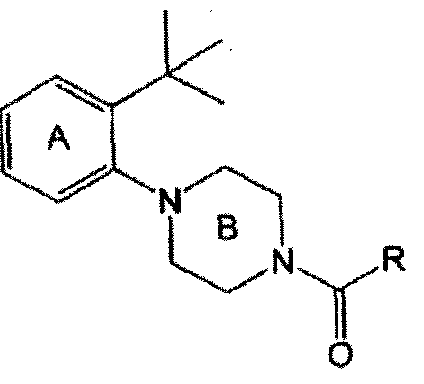
Formula ( II )
wherein
ring A is a benzene ring optionally further substituted; ring B is a piperazine ring optionally further substituted;
and
R is a substitutent ,
or a pharmaceutically acceptable salt thereof.
3. A method for treating a disease characterized by excessive lipofuscin accumulation in the retina in a mammal afflicted therewith, comprising administering to the mammal an effective amount of a compound having the structure:
-49-

Formula (III)
wherein
A is 0, NH, or S;
B is a bond, - (C2 ) alkyl , - (C2-Ci ) alkenyl , -<C3- C!cycloalkyl, - (C2-C ) heteroalkyl , -<C3-
CeJheterocycioalkyl, - iCj-C3) cycloalkenyl , - (C3-
Cs i heterocycloalkeny1 ;
D is isopropyl, isobutyl , sec-butyl, tert-butyl, neopentyl, sec-pentyl, isopentyl, cyclopropyl, cyclobutyl , cyclopentyl , methylenecyclopropyl, methylenecyolobutyl, rae hylenecyclopentyl ,-
E is (C=0) -OR, -0-(C=0)-R, -(OO)-R, -OR, a carboxylic acid bioisostere, -(C=0) -NR1R, NR1-(C=0)-R, - (C1 alkyl- (C=0)-0R, or -(C )alkyl-(C=0)NR1R;

G is OR1, -(Ci-Cs) alkyl, - (Ci-Ce) alkyl-OR1, halogen, -CO-.R1, -(Cx-Ceialkyl-COaR1, NHR1, - (Ci-C6) alkyl-NHR1, -(C=0)NHR1, - (Ci-C6)alkyl- (C^INHR1, -NHR1 (C=0)Rl, - (Ci-C6) alkyl-
NHR1 (C=0) R1;
Rl is H or -(Ci-Cs)alkyl;
X is a halogen;
or an active metabolite, or a pharmaceutically acceptable prodrug, salt, or solvate thereof.
. A method for treating a disease characterized by excessive lipofuscin accumulation in the retina in a mammal afflicted therewith, comprising administering to the mammal an effective amount of a compound having the structure:

Formula (IV)
wherein
ring A is a 5-membered non-aromatic heterocycle optionally further substituted by one substitutent;
ring B is an optionally further substituted benzene ring; and
X is a bond, 0, CH20, 0C¾, C¾, (C¾)2, S, C¾S, SCH2, S(0), C¾S{0), S(0)C¾, S(0)2, CH2S(0)2 OR S(0)2C¾, provided that
{ (3S, 5Rj -1- [4- (trifluoromethyl) benzyl] -5- [4- (trifluoromethyliphenyl]pyrro- lidin-3-yl}acetic acid,
{ <3S, 5R)-1- [2, 5-bis( trifluoromethyl) benzyl] -5- [4- (trifluoromethyl)phenyl] - pyrrolidin-3-yl}acetic acid.
-51-
(4-OXO-3- [ (3- ( trifluoromethyl) henyl ] -1 , 3-thiazolidin-5- yllacetic acid,
{2 -oxo -1- 13- ( trifluoromethyl) henyl] pyrrolidin-3- yl I acetic acid,
{3- [4-fluoro-3- (trifluoromethyl) henyl] -4-oxo-l , 3- oxazoiidin-S-yi } acetic acid,
(4-oxo- - [3- j t ifluoromethyl) henyl] -1 , 3-oxazolidin-5- yl}acetic acid,
{3- [2-chloro-5- (trifluoromethyl) phenyl] -4-oxo-l, 3- thiazolidin-5-yl)acetic acid, and
(5-oxo-l- [3- (trifluoromethyl) henyl] -4 , 5-dihydro-lH- pyrazol-3-yl } acetic acid are excluded,
or a pharmaceutically acceptable salt thereof ,
5. The method any one of claims 1-4, wherein the disease is further characterized by bisretinoid-mediated macular degeneration .
6. The method of any of claims 1-5, wherein the amount of the compound is effective to lower the serum concentration of RBP4 in the mammal .
7. The method of any of claims 1-5, wherein the amount of the compound is effective to lower the retinal concentration of a bisretinoid in lipofuscin in the mammal.
8. The method of claim 5, wherein the bisretinoid is A2E.
9. The method of claim 5, wherein the bisretinoid is isoA2E.
10. The method of claim 5, wherein the bisretinoid is A2-DHP-PE.
11. The method of claim 5, wherein the bisretinoid is atRAL di-PE.
12. The method of any one of claims 1-11, wherein the disease characterized by excessive lipofuscin accumulation in the retina is Age-Related Macular Degeneration.
13. The method of any one of claims 1-11, wherein the disease characterized by excessive lipofuscin accumulation in the retina is dry (atrophic) Age-Related Macular Degeneration.
14. The method of any one of claims 1-11, wherein the disease characterized by excessive lipofuscin accumulation in the retina is Stargardt Disease.
IS . The method of any one of claims 1-11, wherein the disease characterized by excessive lipofuscin accumulation in the retina is Best disease.
16. The method of any one of claims 1-11, wherein the disease characterized by excessive lipofuscin accumulation in the retina is adult vitelliform maculopathy.
17. The method of any one of claims 1-11, wherein the disease characterized by excessive lipofuscin accumulation in the retina is Stargardt-like macular dystrophy.
Priority Applications (2)
| Application Number | Priority Date | Filing Date | Title |
|---|---|---|---|
| US14/775,552 US20160030422A1 (en) | 2013-03-14 | 2014-03-13 | Rbp4 antagonists for the treatment of age-related macular degeneration and stargardt disease |
| US15/471,208 US20170258786A1 (en) | 2013-03-14 | 2017-03-28 | Rbp4 antagonists for the treatment of age-related macular degeneration and stargardt disease |
Applications Claiming Priority (2)
| Application Number | Priority Date | Filing Date | Title |
|---|---|---|---|
| US201361785227P | 2013-03-14 | 2013-03-14 | |
| US61/785,227 | 2013-03-14 |
Related Child Applications (2)
| Application Number | Title | Priority Date | Filing Date |
|---|---|---|---|
| US14/775,552 A-371-Of-International US20160030422A1 (en) | 2013-03-14 | 2014-03-13 | Rbp4 antagonists for the treatment of age-related macular degeneration and stargardt disease |
| US15/471,208 Continuation US20170258786A1 (en) | 2013-03-14 | 2017-03-28 | Rbp4 antagonists for the treatment of age-related macular degeneration and stargardt disease |
Publications (1)
| Publication Number | Publication Date |
|---|---|
| WO2014160409A1 true WO2014160409A1 (en) | 2014-10-02 |
Family
ID=51625424
Family Applications (1)
| Application Number | Title | Priority Date | Filing Date |
|---|---|---|---|
| PCT/US2014/026523 Ceased WO2014160409A1 (en) | 2013-03-14 | 2014-03-13 | Rbp4 antagonists for the treatment of age-related macular degeneration and stargardt disease |
Country Status (2)
| Country | Link |
|---|---|
| US (2) | US20160030422A1 (en) |
| WO (1) | WO2014160409A1 (en) |
Cited By (12)
| Publication number | Priority date | Publication date | Assignee | Title |
|---|---|---|---|---|
| US8980924B2 (en) | 2010-11-24 | 2015-03-17 | The Trustees Of Columbia University In The City Of New York | Non-retinoid RBP4 antagonist for treatment of age-related macular degeneration and stargardt disease |
| CN105477000A (en) * | 2014-10-06 | 2016-04-13 | 三星电子株式会社 | Composition for reducing cell senescence comprising RHO-kinase inhibitor and use thereof |
| US9333202B2 (en) | 2012-05-01 | 2016-05-10 | The Trustees Of Columbia University In The City Of New York | Non-retinoid antagonists for treatment of age-related macular degeneration and stargardt disease |
| US9434727B2 (en) | 2014-04-30 | 2016-09-06 | The Trustees Of Columbia University In The City Of New York | Substituted 4-phenylpiperidines, their preparation and use |
| US9637450B2 (en) | 2013-03-14 | 2017-05-02 | The Trustees Of Columbia University In The City Of New York | Octahydrocyclopentapyrroles, their preparation and use |
| US9938291B2 (en) | 2013-03-14 | 2018-04-10 | The Trustess Of Columbia University In The City Of New York | N-alkyl-2-phenoxyethanamines, their preparation and use |
| US9944644B2 (en) | 2013-03-14 | 2018-04-17 | The Trustees Of Columbia University In The City Of New York | Octahydropyrrolopyrroles their preparation and use |
| US10214498B2 (en) | 2014-10-24 | 2019-02-26 | Takeda Pharmaceutical Company Limited | Heterocyclic compound |
| US10245259B2 (en) | 2017-06-15 | 2019-04-02 | Belite Bio, Inc | Methods of treating RBP4 related diseases with triazolopyridines |
| US10273243B2 (en) | 2013-03-14 | 2019-04-30 | The Trustees Of Columbia University In The City Of New York | 4-phenylpiperidines, their preparation and use |
| US11389444B2 (en) | 2017-06-15 | 2022-07-19 | Belite Bio, Inc | Methods of treating metabolic diseases with fused bicyclic pyrazoles |
| US11951100B2 (en) | 2019-07-08 | 2024-04-09 | Belite Bio, Llc | Formulations of RBP4 inhibitors and methods of use |
Families Citing this family (1)
| Publication number | Priority date | Publication date | Assignee | Title |
|---|---|---|---|---|
| FR3105790B1 (en) * | 2019-12-26 | 2022-01-14 | Biophytis | Chemical compounds targeting the eye and their use in the treatment of ocular diseases |
Citations (5)
| Publication number | Priority date | Publication date | Assignee | Title |
|---|---|---|---|---|
| US20090088435A1 (en) * | 2007-09-27 | 2009-04-02 | Sirion Therapeutics, Inc. | Methods and compounds for treating retinol-related diseases |
| US20100292206A1 (en) * | 2007-10-18 | 2010-11-18 | Shizuo Kasai | Heterocyclic compound |
| US20110251187A1 (en) * | 2008-05-30 | 2011-10-13 | Shizuo Kasai | Heterocyclic compound |
| US20120071489A1 (en) * | 2009-04-16 | 2012-03-22 | Shizuo Kasai | Derivatives of n-acyl-n'-phenylpiperazine useful (inter alia) for the prophylaxis or treatment of diabetes |
| WO2012071369A2 (en) * | 2010-11-24 | 2012-05-31 | The Trustees Of Columbia University In The City Of New York | A non-retinoid rbp4 antagonist for treatment of age-related macular degeneration and stargardt disease |
-
2014
- 2014-03-13 US US14/775,552 patent/US20160030422A1/en not_active Abandoned
- 2014-03-13 WO PCT/US2014/026523 patent/WO2014160409A1/en not_active Ceased
-
2017
- 2017-03-28 US US15/471,208 patent/US20170258786A1/en not_active Abandoned
Patent Citations (5)
| Publication number | Priority date | Publication date | Assignee | Title |
|---|---|---|---|---|
| US20090088435A1 (en) * | 2007-09-27 | 2009-04-02 | Sirion Therapeutics, Inc. | Methods and compounds for treating retinol-related diseases |
| US20100292206A1 (en) * | 2007-10-18 | 2010-11-18 | Shizuo Kasai | Heterocyclic compound |
| US20110251187A1 (en) * | 2008-05-30 | 2011-10-13 | Shizuo Kasai | Heterocyclic compound |
| US20120071489A1 (en) * | 2009-04-16 | 2012-03-22 | Shizuo Kasai | Derivatives of n-acyl-n'-phenylpiperazine useful (inter alia) for the prophylaxis or treatment of diabetes |
| WO2012071369A2 (en) * | 2010-11-24 | 2012-05-31 | The Trustees Of Columbia University In The City Of New York | A non-retinoid rbp4 antagonist for treatment of age-related macular degeneration and stargardt disease |
Cited By (33)
| Publication number | Priority date | Publication date | Assignee | Title |
|---|---|---|---|---|
| US8980924B2 (en) | 2010-11-24 | 2015-03-17 | The Trustees Of Columbia University In The City Of New York | Non-retinoid RBP4 antagonist for treatment of age-related macular degeneration and stargardt disease |
| US9333202B2 (en) | 2012-05-01 | 2016-05-10 | The Trustees Of Columbia University In The City Of New York | Non-retinoid antagonists for treatment of age-related macular degeneration and stargardt disease |
| US10421720B2 (en) | 2013-03-14 | 2019-09-24 | The Trustees Of Columbia University In The City Of New York | Octahydrocyclopentapyrroles, their preparation and use |
| US11919913B2 (en) | 2013-03-14 | 2024-03-05 | The Trustees Of Columbia University In The City Of New York | 4-phenylpiperidines, their preparation and use |
| US10570148B2 (en) | 2013-03-14 | 2020-02-25 | The Trustees Of Columbia University In The City Of New York | N-alkyl-2-phenoxyethanamines, their preparation and use |
| US9637450B2 (en) | 2013-03-14 | 2017-05-02 | The Trustees Of Columbia University In The City Of New York | Octahydrocyclopentapyrroles, their preparation and use |
| US10787453B2 (en) | 2013-03-14 | 2020-09-29 | The Trustees Of Columbia University In The City Of New York | Octahydropyrrolopyrroles their preparation and use |
| US9926271B2 (en) | 2013-03-14 | 2018-03-27 | The Trustees Of Columbia University In The City Of New York | Octahydrocyclopentapyrroles, their preparation and use |
| US9938291B2 (en) | 2013-03-14 | 2018-04-10 | The Trustess Of Columbia University In The City Of New York | N-alkyl-2-phenoxyethanamines, their preparation and use |
| US9944644B2 (en) | 2013-03-14 | 2018-04-17 | The Trustees Of Columbia University In The City Of New York | Octahydropyrrolopyrroles their preparation and use |
| US12473302B2 (en) | 2013-03-14 | 2025-11-18 | The Trustees Of Columbia University In The City Of New York | 4-phenylpiperidines, their preparation and use |
| US11028098B2 (en) | 2013-03-14 | 2021-06-08 | The Trustees Of Columbia University In The City Of New York | 4-phenylpiperidines, their preparation and use |
| US10273243B2 (en) | 2013-03-14 | 2019-04-30 | The Trustees Of Columbia University In The City Of New York | 4-phenylpiperidines, their preparation and use |
| US10072016B2 (en) | 2014-04-30 | 2018-09-11 | The Trustees Of Columbia University In The City Of New York | Substituted 4-phenylpiperidines, their preparation and use |
| US12404277B2 (en) | 2014-04-30 | 2025-09-02 | The Trustees Of Columbia University In The City Of New York | Substituted 4-phenylpiperidines, their preparation and use |
| US10407433B2 (en) | 2014-04-30 | 2019-09-10 | The Trustees Of Columbia University In The City Of New York | Substituted 4-phenylpiperidines, their preparation and use |
| US11649240B2 (en) | 2014-04-30 | 2023-05-16 | The Trustees Of Columbia University In The City Of New York | Substituted 4-phenylpiperidines, their preparation and use |
| US10913746B2 (en) | 2014-04-30 | 2021-02-09 | The Trustees Of Columbia University In The City Of New York | Substituted 4-phenylpiperidines, their preparation and use |
| US9777010B2 (en) | 2014-04-30 | 2017-10-03 | The Trustees Of Columbia University In The City Of New York | Substituted 4-phenylpiperidines, their preparation and use |
| US9434727B2 (en) | 2014-04-30 | 2016-09-06 | The Trustees Of Columbia University In The City Of New York | Substituted 4-phenylpiperidines, their preparation and use |
| US9943525B2 (en) | 2014-10-06 | 2018-04-17 | Samsung Electronics Co., Ltd. | Composition for reducing cell senescence comprising Rho-kinase inhibitor and use thereof |
| CN105477000B (en) * | 2014-10-06 | 2019-11-01 | 三星电子株式会社 | For slowing down the composition and application thereof comprising RHO kinase inhibitor of cell ageing |
| EP3006028A1 (en) * | 2014-10-06 | 2016-04-13 | Samsung Electronics Co., Ltd | Composition for reducing cell senescence comprising rho-kinase inhibitor and use thereof |
| CN105477000A (en) * | 2014-10-06 | 2016-04-13 | 三星电子株式会社 | Composition for reducing cell senescence comprising RHO-kinase inhibitor and use thereof |
| US10975043B2 (en) | 2014-10-24 | 2021-04-13 | Takeda Pharmaceutical Company Limited | Heterocyclic compound |
| US10544111B2 (en) | 2014-10-24 | 2020-01-28 | Takeda Pharmaceutical Company Limited | Heterocyclic compound |
| US10214498B2 (en) | 2014-10-24 | 2019-02-26 | Takeda Pharmaceutical Company Limited | Heterocyclic compound |
| US11007186B2 (en) | 2017-06-15 | 2021-05-18 | Belite Bio, Inc | Methods of treating RBP4 related diseases with triazolopyridines |
| US11389444B2 (en) | 2017-06-15 | 2022-07-19 | Belite Bio, Inc | Methods of treating metabolic diseases with fused bicyclic pyrazoles |
| US10245259B2 (en) | 2017-06-15 | 2019-04-02 | Belite Bio, Inc | Methods of treating RBP4 related diseases with triazolopyridines |
| US12016853B2 (en) | 2017-06-15 | 2024-06-25 | Belite Bio, Inc | Methods of treating RBP4 related diseases with triazolopyridines |
| US12364693B2 (en) | 2017-06-15 | 2025-07-22 | Belite Bio, Inc | Methods of treating metabolic diseases with fused bicyclic pyrazoles |
| US11951100B2 (en) | 2019-07-08 | 2024-04-09 | Belite Bio, Llc | Formulations of RBP4 inhibitors and methods of use |
Also Published As
| Publication number | Publication date |
|---|---|
| US20170258786A1 (en) | 2017-09-14 |
| US20160030422A1 (en) | 2016-02-04 |
Similar Documents
| Publication | Publication Date | Title |
|---|---|---|
| US9333202B2 (en) | Non-retinoid antagonists for treatment of age-related macular degeneration and stargardt disease | |
| US20170258786A1 (en) | Rbp4 antagonists for the treatment of age-related macular degeneration and stargardt disease | |
| US8980924B2 (en) | Non-retinoid RBP4 antagonist for treatment of age-related macular degeneration and stargardt disease | |
| US12168664B2 (en) | Triazolopyrimidines, their preparation and use | |
| US9938291B2 (en) | N-alkyl-2-phenoxyethanamines, their preparation and use | |
| US20150057320A1 (en) | Transthyretin ligands capable of inhibiting retinol-dependent rbp4-ttr interaction for treatment of age-related macular degeneration, stargardt disease, and other retinal disease characterized by excessive lipofuscin accumulation | |
| JP5707489B2 (en) | Treatment of type 1 diabetes | |
| WO2020028723A1 (en) | Rbp4 antagonists for treatment and prevention of non-alcoholic fatty liver disease and gout | |
| US20110086031A1 (en) | Inhibition Of The Activity Of The Capsaicin Receptor In The Treatment Of Obesity Or Obesity-Related Diseases And Disorders | |
| WO2013166040A1 (en) | S-fta and s-fta analogues capable of inhibiting retinol-dependent rbp4-ttr interaction for treatment of age-related macular degeneration, stargardt disease, and other retinal disease characterized by excessive lipofuscin accumulation | |
| WO2010083385A2 (en) | Compounds for reducing drug resistance and uses thereof | |
| Leiva et al. | Pharmacological and electrophysiological characterization of novel NMDA receptor antagonists | |
| US7495127B2 (en) | Potassium channel opener | |
| US20220401430A1 (en) | Allosteric modulators of the mu opioid receptor | |
| JP2022502441A (en) | Methods and compositions for treating age-related dysfunction with CCR3 inhibitors | |
| EP4731618A2 (en) | Novel co-drug, co-administration, and sequential administration of selective ttr ligand and c20-d3-retinol |
Legal Events
| Date | Code | Title | Description |
|---|---|---|---|
| 121 | Ep: the epo has been informed by wipo that ep was designated in this application |
Ref document number: 14775560 Country of ref document: EP Kind code of ref document: A1 |
|
| NENP | Non-entry into the national phase |
Ref country code: DE |
|
| 122 | Ep: pct application non-entry in european phase |
Ref document number: 14775560 Country of ref document: EP Kind code of ref document: A1 |