WO2014136771A1 - メッシュポイント装置 - Google Patents
メッシュポイント装置 Download PDFInfo
- Publication number
- WO2014136771A1 WO2014136771A1 PCT/JP2014/055461 JP2014055461W WO2014136771A1 WO 2014136771 A1 WO2014136771 A1 WO 2014136771A1 JP 2014055461 W JP2014055461 W JP 2014055461W WO 2014136771 A1 WO2014136771 A1 WO 2014136771A1
- Authority
- WO
- WIPO (PCT)
- Prior art keywords
- communication
- route
- mesh point
- point device
- path
- Prior art date
- Legal status (The legal status is an assumption and is not a legal conclusion. Google has not performed a legal analysis and makes no representation as to the accuracy of the status listed.)
- Ceased
Links
Images
Classifications
-
- H—ELECTRICITY
- H04—ELECTRIC COMMUNICATION TECHNIQUE
- H04L—TRANSMISSION OF DIGITAL INFORMATION, e.g. TELEGRAPHIC COMMUNICATION
- H04L45/00—Routing or path finding of packets in data switching networks
- H04L45/12—Shortest path evaluation
- H04L45/123—Evaluation of link metrics
-
- H—ELECTRICITY
- H04—ELECTRIC COMMUNICATION TECHNIQUE
- H04L—TRANSMISSION OF DIGITAL INFORMATION, e.g. TELEGRAPHIC COMMUNICATION
- H04L45/00—Routing or path finding of packets in data switching networks
- H04L45/24—Multipath
Definitions
- the present invention relates to a mesh point device constituting a mesh network.
- each mesh point device transmits a packet to another mesh point device (adjacent node) capable of communication without using a centralized control device such as a base station, and sends the packet to a desired destination.
- a mesh network specifically, regulations such as 802.11s have been formulated.
- a communication path determined by a certain method is not necessarily an optimal path, and a communication failure may occur during communication.
- the present invention has been made in view of the above circumstances, and an object thereof is to provide a mesh point device that enables more stable communication.
- the present invention for solving the problems of the above-described conventional example is a mesh point device that is connected to each other and constitutes a mesh network, and each of the possible communication route candidates to the mesh point device as a communication destination is routed Calculating means for calculating a cost; path determining means for determining a communication path to be used for communication out of the possible communication path candidates based on the calculated path cost; and determining the determined communication path to another mesh Route notifying means for notifying the point device, wherein the calculating means calculates a plurality of path costs for each possible communication path candidate for each communication path candidate, and the path determining means is the communication path candidate.
- a plurality of communication paths from among the communication path candidates as communication paths used for communication based on a plurality of calculated path costs for each Constant and, the route notification means is obtained by the notifying the plurality of communication routes the determined other mesh point device.
- the mesh network to which the mesh point device 1 according to the embodiment of the present invention includes a plurality of mesh point devices 1.
- the plurality of mesh point devices 1 are connected to each other to form a mesh network.
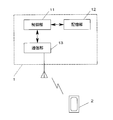
- Each mesh point device 1 includes a control unit 11, a storage unit 12, and a communication unit 13 as illustrated in FIG.
- the control unit 11 is a program control unit such as a CPU, and operates according to a program stored in the storage unit 12.
- the control unit 11 uses another mesh as a communication destination using HWMP (Hybrid Wireless Mesh Protocol) based on, for example, an RM-AODV (Radio-Metric-Ad-hoc-On-Demand-Distance-Vector) routing method.
- HWMP Hybrid Wireless Mesh Protocol
- RM-AODV Radio-Metric-Ad-hoc-On-Demand-Distance-Vector
- control unit 11 calculates a plurality of path costs for each of the possible communication path candidates for each communication path candidate, and based on the path costs calculated for each communication path candidate, A plurality of communication paths are determined as possible communication paths from among possible communication path candidates. Then, the control unit 11 notifies the determined plurality of communication paths to the other mesh point device 1. Each mesh point device 1 transmits a packet to be transmitted via the determined communication path. Details of the operation of the control unit 11 will be described later.
- the storage unit 12 is a memory device or the like and holds a program executed by the control unit 11.
- the program may be provided by being stored in a computer-readable recording medium and stored in the storage unit 12.
- the storage unit 12 also operates as a work memory for the control unit 11.
- the communication unit 13 is, for example, a wireless LAN interface, and exchanges information with other mesh point devices 1 that are adjacent (within a communicable range).
- the communication unit 13 transmits and receives data to and from the terminal device 2 wirelessly.
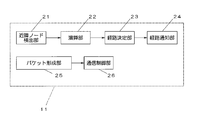
- control unit 11 functionally includes a neighboring node detection unit 21, a calculation unit 22, a route determination unit 23, a route notification unit 24, and a packet.
- the forming unit 25 and the communication control unit 26 are included.
- Oca, Op, and Bt are the channel access overhead, the protocol overhead, and the number of bits of data included in the test frame, and are constants predetermined for each protocol.
- At least one of the parameters included in the equation (1) (the transmission rate r in the above equation (2) is not limited to this but may be multiplied by a frame error rate, channel access overhead, etc.) by a random number.
- N different path metric values path metric values between the communicable i-th mesh point apparatus 1-i
- the range of variation of the random value Rj (the range of random numbers to be generated) may be determined empirically depending on which parameter is multiplied.
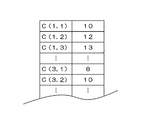
- Ca (i) calculated by the equation (1) is expressed as Ca (i, 0) for convenience.
- each mesh point device 1 virtually forms a plurality of virtual communication units 13-1, 13-2,..., 13-N by, for example, time division multiplexing of the communication units 13. Keep it.
- the same j-th virtual communication unit 13-j communicates with each other, and for different j and l, the virtual communication unit 13-j of one mesh point device 1 and It is set so that the virtual communication unit 13-l of the other mesh point device 1 does not communicate.
- This setting includes, for example, identification information (referred to as a slice ID) indicating which virtual communication unit 13-j performs communication in data (packet) to be transmitted / received, and each virtual communication unit 13- This can be realized by allowing j to receive a packet including its corresponding slice ID. That is, in the present embodiment, N independent networks identified by the slice ID are formed.
- a plurality of communication paths are obtained such that the overlap of the partial paths connecting them is relatively small.
- This route determination method uses a proactive type routing protocol such as RA-OLSR (Radio Aware-Optimized Link State Routing) or FSR (Fish-eye State Routing) for each network identified by the slice ID.
- RA-OLSR Radio Aware-Optimized Link State Routing
- FSR Far-eye State Routing
- a method using a reactive routing protocol such as AODV (Ad-Hoc-On-Demand-Distance-Vector-Routing), and a combination of these proactive routing protocols and reactive routing protocols as in 802.11s
- AODV Ad-Hoc-On-Demand-Distance-Vector-Routing
- the route determination unit 23 outputs route information representing the communication route acquired for each slice ID to the route notification unit 24.
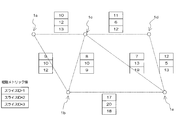
- an outline of the operation of the route determination unit 23 will be described using a mesh network including five mesh point devices 1 a to 1 e as an example. It is assumed that the mesh point devices 1a to 1e can be connected to each other as shown by the broken lines in FIG. That is, it is assumed that the mesh point devices 1a-1c, 1a-1b, 1b-1c, 1b-1e, 1c-1d, 1c-1e, 1d-1e can communicate with each other.
- the path metric value Ca between the mesh point devices 1a to 1c is “10” for the slice ID “1”, “12” for the slice ID “2”, and “13” for the slice ID “3”. To do.
- the path metric value is set as follows. 1a-1c: 10, 12, 13 1a-1b: 9, 10, 12 1b-1c: 8, 10, 9 1b-1e: 17, 20, 18 1c-1d: 11, 6, 12 1c-1e: 7, 13, 19 1d-1e: 12, 5, 13
- the possible communication path of the data that the mesh point device 1a transmits with the mesh point device 1e as the destination is 1a-1b-1e 1a-1b-1c-1e 1a-1b-1c-1d-1e 1a-1c-1e 1a-1c-1b-1e 1a-1c-1d-1e Can be enumerated.
- a method of expressing a communication path with 1a-1b-1e indicates that data is transmitted from the mesh point device 1a to the mesh point device 1b, and that the mesh point device 1b transmits the data to the mesh point device 1e. Is abbreviated.
- the path cost is the minimum for the slice ID “1” in the case of the communication path 1a-1c-1e, and the path cost is in the communication path 1a-1c-1d-1e in the case of the slice ID “2”. In the case of the slice ID “3”, the path cost is minimum in the communication paths 1a-1b-1e.
- the route determination unit 23 outputs a list (an example of route information) representing the communication route for each of the slice IDs “1”, “2”, and “3” to the route notification unit 24.
- the route notification unit 24 receives from the route determination unit 23 a list of mesh point devices in the communication route that minimizes the route cost for each slice ID. Then, the route notification unit 24 inputs the list and the list associated with the list to the mesh point device 1 specified by the information immediately before the information specifying the own mesh point device 1 in the received list. A response packet including the slice ID that has been sent is transmitted. The path notification unit 24 transmits a response packet including the slice ID “j” via the virtual communication unit 13-j corresponding to the slice ID. The response packet may further include route cost information associated with each list.
- the route notification unit 24 When the route notification unit 24 receives a response packet from another mesh point device 1, the mesh point specified by the information immediately before the information specifying the own mesh point device 1 in the list included in the response packet. The received response packet is sent as it is to the device 1. Again, the path notification unit 24 receives the response packet including the slice ID “j” via the virtual communication unit 13-j corresponding to the slice ID, and receives the corresponding virtual communication unit 13-j. It shall be sent as it is.
- the route notification unit 24 when information specifying the own mesh point device 1 is at the head of the list (when the response packet is addressed to itself), The included list and the slice ID are extracted and stored in the storage unit 12 in association with each other. At this time, if the list to be stored is the same as the list already associated with another slice ID and already stored in the storage unit 12, the list to be stored may not be stored. . As a result, lists representing the same communication path are excluded.
- the route notifying unit 24 transmits a response packet for notifying route information.
- the route notifying unit 24 is not limited to this, and the route notifying unit 24 adds the route information as a header or trailer of a packet to be exchanged by normal communication. May be transmitted.
- a path notification unit 24 finds a slice ID that is not stored in the storage unit 12 in association with the list.
- the virtual communication corresponding to the found slice ID includes a packet including the found slice ID, a request to update the path metric value by changing the random number, and a request identifier unique to the request. It is sent to another mesh point device 1 that can communicate through the unit 13-j.
- the mesh point device 1 side Upon receiving this request, the mesh point device 1 side refers to the request identifier included in the packet and determines whether or not a packet including the same request identifier as the request identifier has been received in the past. Here, if a packet including the same request identifier as the request identifier has not been received in the past, the mesh point device 1 updates the random value Rj corresponding to the virtual communication unit 13-j, and can communicate with the other. The received packet is sent as it is to the mesh point device 1 that is not the packet reception source via the virtual communication unit 13-j corresponding to the slice ID included in the packet. .
- each mesh point device 1 when the random value Rj is changed in this way, the route determination process in the network specified by the slice ID corresponding to the random value Rj is performed again.
- each mesh point device 1 may repeat the above process until a predetermined number of communication paths are obtained between the mesh point device 1 and the destination mesh point device 1.
- the packet Px includes packet identification information unique to each packet.
- the packet forming unit 25 obtains N ′ pieces of packets Px obtained by the division (N ′ is the number of pieces of route information representing different communication routes stored in the storage unit 12 and N ′ ⁇ N ) And is output to the communication control unit 26.
- the N ′ packets obtained by duplication include different slice IDs stored in association with different path information.
- the communication control unit 26 refers to the slice ID “s” included in each packet Px, and transmits the packet Px via the virtual communication unit 13-s corresponding to the slice ID. That is, the communication control unit 26 acquires the path information stored in association with the slice ID “s” as the operation of the virtual communication unit 13-s. Then, the packet Px is transmitted to the other mesh
- the communication control unit 26 when the communication control unit 26 receives a packet including the slice ID “s” from the virtual communication unit 13-s of another mesh point device 1, it determines whether or not the own mesh point device 1 is the destination. Investigate. If the own mesh point device 1 is not the destination, the communication control unit 26 reads information specifying the other mesh point device 1 to be transmitted next included in the route information received together with the packet. Then, the communication control unit 26 sends the route information, information for specifying the destination, and a packet to the virtual communication unit 13-s of the mesh point device 1 specified by the read information.
- the communication control unit 26 refers to the packet identification information of the received packet, and has already received a packet containing the same packet identification information as the packet identification information. If so, the received packet is discarded. If a packet containing the same packet identification information as the packet identification information has not been received, the received packet is stored or output, and the packet identification information is held in the storage unit 12.
- N ′ different communication paths are obtained using path metric values including variations due to random numbers, and the same packet is transmitted through each.
- the packet is received via a plurality of different communication paths determined to be optimal based on the path metric value given variation by the random value. As a result, more stable communication is possible.
- the packet forming unit 25 duplicates only N ′ packets Px obtained by dividing the data to be transmitted received from the terminal device 2. Is supposed to receive duplicate packets on the destination side.
- the packet forming unit 25 uses the erasure code (Erasure Coding) based on the packet Px obtained by dividing the data to be transmitted received from the terminal device 2, and N If there are q data fragments and q (q ⁇ N ′) data fragments, a data fragment capable of reproducing the original data (packet Px) is generated.
- erasure code for example, various codes such as RaptorQ (RFC6330) and polynomial oversampling can be adopted.
- Each packet Pxy obtained from this packet Px includes a different slice ID (slice ID “y” representing the y-th packet).
- the packet Pxy is transmitted to the other mesh point device 1 (virtual communication unit 13-y) to be the next transmission destination in the route information together with the route information and the information specifying the destination. Thereafter, the virtual communication unit 13-y of each mesh point device 1 performs the same processing as when a duplicate packet is transmitted.
- the destination mesh point device 1 reproduces the original packet Px when q of the packets Pxy that may arrive via N ′ different communication paths are received. Output. In this case, the rate of duplication can be reduced and communication efficiency can be further improved.
- each mesh point device 1 that has received a packet including the slice ID may treat the packet as an ordinary packet of 802.11s.
- each of the virtual communication units 13-j is assumed to form a logically virtualized network, but different networks may be formed using different physical communication devices.
Landscapes
- Engineering & Computer Science (AREA)
- Computer Networks & Wireless Communication (AREA)
- Signal Processing (AREA)
- Mobile Radio Communication Systems (AREA)
- Data Exchanges In Wide-Area Networks (AREA)
Abstract
相互に接続され、メッシュネットワークを構成するメッシュポイント装置であって、通信先となるメッシュポイント装置までの可能な通信経路候補の各々について経路コストを演算し、演算された経路コストに基づいて、可能な通信経路候補のうちから通信に使用する通信経路を決定して他のメッシュポイント装置に通知する。このとき可能な通信経路候補の各々についての経路コストを、通信経路候補ごとに複数演算し、通信経路候補ごとに複数演算された経路コストに基づいて、通信経路候補のうちから複数の通信経路を、通信に使用する通信経路として決定する。
Description
本発明は、メッシュネットワークを構成するメッシュポイント装置に関する。
基地局等の集中的な制御装置を用いずに、各メッシュポイント装置が、通信可能な他のメッシュポイント装置(隣接ノード)へパケットを送信していき、所望の送信先へパケットを送り届ける通信方式(メッシュネットワーク)が考えられている。こうしたメッシュネットワークとして、具体的には、802.11s等の規定が策定されている。
また、無線メッシュネットワークにおいて、発信元であるメッシュポイント装置(発信元ノード)と、宛先となるメッシュポイント装置(宛先ノード)との間の経路を決定するために、ビタビ・ルーティングアルゴリズムを利用する例が、特許文献1に開示されている。
しかしながら、メッシュネットワークにおける各メッシュポイント装置間の通信状況は刻々変化する。このため、一定の方法で定めた通信経路が必ずしも最適な経路であるとは限らず、通信中に通信障害が発生するケースもある。
本発明は上記実情に鑑みて為されたもので、より安定した通信を可能とするメッシュポイント装置を提供することを、その目的の一つとする。
上記従来例の問題点を解決するための本発明は、相互に接続され、メッシュネットワークを構成するメッシュポイント装置であって、通信先となるメッシュポイント装置までの可能な通信経路候補の各々について経路コストを演算する演算手段と、前記演算された経路コストに基づいて、前記可能な通信経路候補のうちから通信に使用する通信経路を決定する経路決定手段と、前記決定した通信経路を他のメッシュポイント装置に通知する経路通知手段と、を含み、前記演算手段が、前記可能な通信経路候補の各々についての経路コストを、通信経路候補ごとに複数演算し、前記経路決定手段は前記通信経路候補ごとに複数演算された経路コストに基づいて、前記通信経路候補のうちから複数の通信経路を、通信に使用する通信経路として決定し、前記経路通知手段は前記決定した複数の通信経路を他のメッシュポイント装置に通知することとしたものである。
本発明の実施の形態について図面を参照しながら説明する。本発明の実施の形態に係るメッシュポイント装置1が属するメッシュネットワークは、このメッシュポイント装置1を複数含む。これら複数のメッシュポイント装置1は相互に接続されて、メッシュネットワークを構成する。
各メッシュポイント装置1は、図1に例示するように、制御部11と、記憶部12と、通信部13とを含んで構成される。ここで制御部11はCPUなどのプログラム制御手段であり、記憶部12に格納されたプログラムに従って動作する。本実施の形態では、この制御部11は、例えばRM-AODV(Radio Metric Ad hoc On-Demand Distance Vector)ルーティング法を基礎としたHWMP(Hybrid Wireless Mesh Protocol)を用いて通信先となる他のメッシュポイント装置1までの可能な通信経路候補を探索する。そして探索された可能な通信経路候補の各々について経路コストを演算する。制御部11はこうして演算された経路コストに基づいて、通信経路候補のうちから通信に使用する通信経路を決定し、当該決定した通信経路を他のメッシュポイント装置1に通知する。
本実施の形態では、この制御部11は、上記可能な通信経路候補の各々についての経路コストを、通信経路候補ごとに複数演算し、通信経路候補ごとに複数演算された経路コストに基づいて、可能な通信経路候補のうちから複数の通信経路を、通信に使用する通信経路として決定する。そして制御部11は、当該決定した複数の通信経路を他のメッシュポイント装置1に通知する。各メッシュポイント装置1は、当該決定された通信経路を介して送信の対象となったパケットを伝達する。この制御部11の詳しい動作の内容については後に述べる。
記憶部12は、メモリデバイス等であり、制御部11によって実行されるプログラムを保持する。このプログラムはコンピュータ可読な記録媒体に格納されて提供され、この記憶部12に格納されたものであってもよい。記憶部12は、また、制御部11のワークメモリとしても動作する。通信部13は、例えば無線LANインタフェースであり、隣接する(通信可能な範囲にある)他のメッシュポイント装置1との間で情報を授受する。またこの通信部13は、端末装置2との間で無線にてデータを送受する。
具体的に本実施の形態の制御部11は、機能的には、図2に示すように、近隣ノード検出部21と、演算部22と、経路決定部23と、経路通知部24と、パケット形成部25と、通信制御部26とを含んで構成されている。
近隣ノード検出部21は、通信部13を介して互いに通信可能な他のメッシュポイント装置1の各々との間でテストフレームの送受を行い、伝送速度rとフレームエラーレートeptとの情報を得ておき、これから通信可能な各メッシュポイント装置1との間の経路メトリック値を演算する。具体的に通信可能なi番目のメッシュポイント装置1-iとの間の経路メトリック値Ca(i)(i=1,2,…)を、例えば
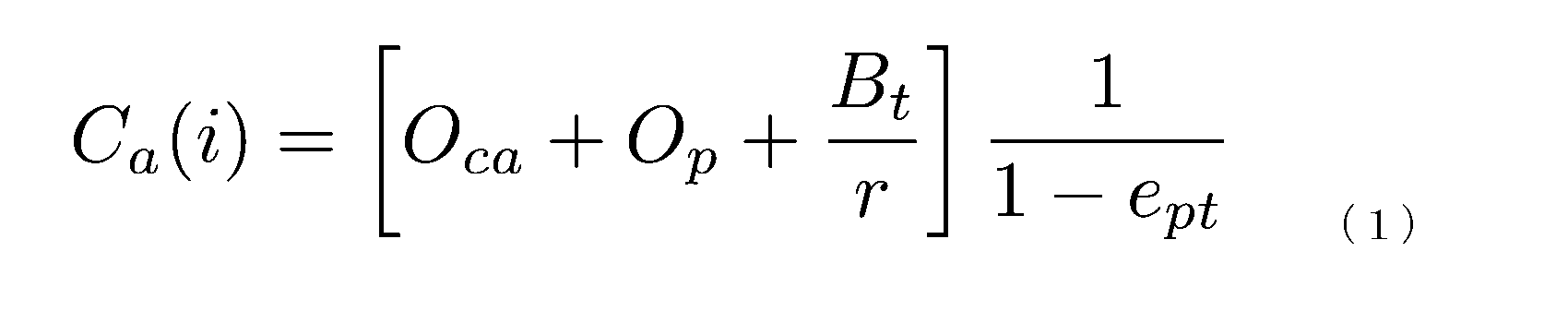
演算部22は、予め定められた多重化数N(N>1の整数)だけの個数の乱数Rj(j=1,2,…N)を発生させて記憶しておく。またこの演算部22は、通信可能なi番目のメッシュポイント装置1-iとの間の経路メトリック値Ca(i,j)(i=1,2,…;j=1,2,…N)を、例えば

すなわち(1)式に含まれるパラメータの少なくとも一つ(上記(2)式では伝送速度rとしているが、これに限らずフレームエラーレートや、チャネルアクセスオーバーヘッド等に乗じることとしてもよい)を乱数によって異ならせて、通信可能な他のメッシュポイント装置ごとにN個の相異なる経路メトリック値(通信可能なi番目のメッシュポイント装置1-iとの間の経路メトリック値)Ca(i,j)(i=1,2,…;j=1,2,…N)、及び、(1)式で演算したCa(i)を得る。
なお、乱数値Rjのばらつきの範囲(発生させる乱数の値域)は、どのパラメータに乗じるかにより経験的に定めるものとすればよい。また以下では説明のため、(1)式で演算したCa(i)を便宜的にCa(i,0)と表記する。演算部22は、こうして得たCa(i,j)(i=1,2,…;j=0,1,2,…N)を、記憶部12に格納して記憶しておく(図3)。
本実施の形態では、各メッシュポイント装置1はそれぞれ、例えば通信部13を時分割多重するなどして仮想的に複数の仮想的通信部13-1,13-2,…,13-Nを形成しておく。そして各メッシュポイント装置1は、互いに同じj番目の仮想的通信部13-j同士が通信を行うものとし、互いに異なるj,lについて、一方のメッシュポイント装置1の仮想的通信部13-jと、他方のメッシュポイント装置1の仮想的通信部13-lとが通信を行うことはないように設定しておく。この設定は、例えば送受するデータ(パケット)に、どの仮想的通信部13-jを介して通信を行うかを表す識別情報(スライスIDと呼ぶ)を含めておき、各仮想的通信部13-jが自己の対応するスライスIDを含むパケットを受信するようにしておくことで実現できる。すなわち本実施の形態ではスライスIDによって識別される、N個の互いに独立したネットワークが形成されることとなる。
そして経路決定部23は、これら仮想的通信部13-j(j=0,1,2,…N)のそれぞれにおいて、互いに通信経路上のノード(メッシュポイント装置1)や、エッジ(一対のノード間を接続する部分的な経路)の重複が比較的小さいような複数の通信経路を得る。
この経路決定の方法は、スライスIDで識別されるネットワークごとに、RA-OLSR(Radio Aware-Optimized Link State Routing)や、FSR(Fish-eye State Routing)等のプロアクティブ型のルーティングプロトコルを用いる方法や、AODV(Ad Hoc On-Demand Distance Vector Routing)等のリアクティブ型のルーティングプロトコルを用いる方法、さらに802.11sと同様に、これらプロアクティブ型のルーティングプロトコルとリアクティブ型のルーティングプロトコルとを組み合せる方法等、種々の方法を用いることとすればよいが、スライスIDが「s」であるネットワークでは、各メッシュポイント装置1において記憶している乱数値のうち、乱数値Rsを用いて、経路決定におけるパラメータのうち少なくとも一つを変更して可能な通信経路ごとの経路コストにばらつきを与える。
これにより、スライスIDによって識別されるネットワークの各々において互いに異なる経路コストを用いた通信経路の決定が行われることとなり、仮想的通信部13-j(j=0,1,2,…N)の各々は、互いに通信経路上のノード(メッシュポイント装置1)や、エッジ(一対のノード間を接続する部分的な経路)の重複が比較的小さいような複数の通信経路を得る。経路決定部23は、スライスIDごとに取得した通信経路を表す経路情報を経路通知部24に出力する。
具体例として、図4に例示するように、5つのメッシュポイント装置1aから1eを含むメッシュネットワークを例として、この経路決定部23の動作の概略を説明する。メッシュポイント装置1aないし1eが図4の破線に示すように相互に接続可能であるものとする。すなわち、メッシュポイント装置1a-1c,1a-1b,1b-1c,1b-1e,1c-1d,1c-1e,1d-1e間がそれぞれ通信可能であるとする。
そしてこのとき、メッシュポイント装置1a-1c間の経路メトリック値Caが、スライスID「1」について「10」、スライスID「2」について「12」、スライスID「3」について「13」であるとする。以下これを、
1a-1c:10,12,13
と表記することとして、次のように経路メトリック値が設定されたものとする。
1a-1c:10,12,13
1a-1b:9,10,12
1b-1c:8,10,9
1b-1e:17,20,18
1c-1d:11,6,12
1c-1e:7,13,19
1d-1e:12,5,13
1a-1c:10,12,13
と表記することとして、次のように経路メトリック値が設定されたものとする。
1a-1c:10,12,13
1a-1b:9,10,12
1b-1c:8,10,9
1b-1e:17,20,18
1c-1d:11,6,12
1c-1e:7,13,19
1d-1e:12,5,13
すると、メッシュポイント装置1aがメッシュポイント装置1eを宛先として送信するデータの可能な通信経路が、
1a-1b-1e
1a-1b-1c-1e
1a-1b-1c-1d-1e
1a-1c-1e
1a-1c-1b-1e
1a-1c-1d-1e
と列挙できる。なお、ここではメッシュポイント装置1aからメッシュポイント装置1bへとデータを送出し、メッシュポイント装置1bがメッシュポイント装置1eへと当該データを送出することを、1a-1b-1eと通信経路を表す方法で略記している。
1a-1b-1e
1a-1b-1c-1e
1a-1b-1c-1d-1e
1a-1c-1e
1a-1c-1b-1e
1a-1c-1d-1e
と列挙できる。なお、ここではメッシュポイント装置1aからメッシュポイント装置1bへとデータを送出し、メッシュポイント装置1bがメッシュポイント装置1eへと当該データを送出することを、1a-1b-1eと通信経路を表す方法で略記している。
このとき、各可能な通信経路における経路メトリック値の累算結果(経路コスト)は、スライスID「1」,「2」,「3」のそれぞれについて、先の場合と同じように表記する場合、
1a-1b-1e: 26,30,30
1a-1b-1c-1e: 24,33,40
1a-1b-1c-1d-1e:45,46,51
1a-1c-1e: 17,25,32
1a-1c-1b-1e: 35,42,40
1a-1c-1d-1e: 33,23,38
となる。
1a-1b-1e: 26,30,30
1a-1b-1c-1e: 24,33,40
1a-1b-1c-1d-1e:45,46,51
1a-1c-1e: 17,25,32
1a-1c-1b-1e: 35,42,40
1a-1c-1d-1e: 33,23,38
となる。
つまりスライスID「1」の場合に経路コストが最小となるのが、通信経路1a-1c-1eの場合であり、スライスID「2」の場合は通信経路1a-1c-1d-1eで経路コストが最小となり、また、スライスID「3」の場合は通信経路1a-1b-1eで経路コストが最小となる。
そこで経路決定部23は、スライスID「1」,「2」,「3」のそれぞれについて上記の通信経路を表すリスト(経路情報の一例)を経路通知部24に出力することとなる。
本実施の形態の一例では、経路通知部24は、スライスIDごとに経路コストが最小となる通信経路中にあるメッシュポイント装置のリストを経路決定部23から受け入れる。そしてこの経路通知部24は、当該受け入れたリストにおいて自メッシュポイント装置1を特定する情報の直前にある情報で特定されるメッシュポイント装置1に対して、当該リストと、当該リストに関連付けられて入力されたスライスIDとを含んだレスポンスパケットを送出する。この経路通知部24は、スライスID「j」を含むレスポンスパケットについては、このスライスIDに対応する仮想的通信部13-jを介して送出するものとする。なお、このレスポンスパケットには、各リストに関連付けられていた経路コストの情報をさらに含めてもよい。
またこの経路通知部24は、他のメッシュポイント装置1からレスポンスパケットを受信すると、当該レスポンスパケットに含まれるリストにおいて、自メッシュポイント装置1を特定する情報の直前にある情報で特定されるメッシュポイント装置1に対して、受信したレスポンスパケットをそのまま送出する。ここでも経路通知部24は、スライスID「j」を含むレスポンスパケットについては、このスライスIDに対応する仮想的通信部13-jを介して受信し、当該対応する仮想的通信部13-jを介してそのまま送出するものとする。
なお、経路通知部24は、当該レスポンスパケットに含まれるリストにおいて、自メッシュポイント装置1を特定する情報がリストの先頭にある場合(レスポンスパケットが自己宛であった場合)は、当該レスポンスパケットに含まれるリストと、スライスIDとを抽出して、これらを互いに関連付けて記憶部12に格納する。またこのとき、格納しようとしているリストが他のスライスIDに関連付けられて既に記憶部12に格納されているリストと全く同じであるときには、当該格納しようとしているリストの格納を行わないこととしてもよい。これにより互いに同じ通信経路を表すリストが排除されることとなる。なお、ここでは経路通知部24は経路情報を通知するレスポンスパケットを送信しているが、これに限らず、経路通知部24は、経路情報を通常の通信で授受するパケットのヘッダまたはトレイラとして付加して送信してもよい。
なお、このように排除される場合があることを考慮し、互いに同じ通信経路を表すリストが排除して残った通信経路の数が予め定めたしきい値を下回ることとなる場合、経路通知部24は、リストに関連付けて記憶部12に格納されていないスライスIDを見出す。そして当該見出したスライスIDを含み、乱数を変更して経路メトリック値を更新するべき旨の要求と、当該要求に固有な要求識別子とを含むパケットを、当該見出したスライスIDに対応する仮想的通信部13-jを介して、通信可能な他のメッシュポイント装置1に対して送出する。
この要求を受けたメッシュポイント装置1側では、パケットに含まれる要求識別子を参照して、過去に当該要求識別子と同じ要求識別子を含んだパケットを受信したか否かを判断する。ここで、過去に当該要求識別子と同じ要求識別子を含んだパケットを受信していなければ、メッシュポイント装置1は仮想的通信部13-jに対応する乱数値Rjを更新し、さらに通信可能な他のメッシュポイント装置1であって、パケットの受信元でないメッシュポイント装置1に対して、当該パケットに含まれるスライスIDに対応する仮想的通信部13-jを介して、受信したパケットをそのまま送出する。
また各メッシュポイント装置1では、こうして乱数値Rjを変更すると、当該乱数値Rjに対応するスライスIDで特定されるネットワークにおける経路決定処理をやり直す。そうして各メッシュポイント装置1は、宛先となるメッシュポイント装置1までの間に所定個数を上回る数の通信経路が得られるまで上記処理を繰返してもよい。
パケット形成部25は、端末装置2から受信した送信対象となるデータを、所定のデータサイズのパケットPx(x=1,2,…)に分割して含める。このパケットPxには、各パケットに固有のパケット識別情報を含める。またこのパケット形成部25は、この分割して得たパケットPxをそれぞれN′個(N′は記憶部12に格納された、互いに異なる通信経路を表す経路情報の数であってN′≦N)だけ複製して通信制御部26に出力する。このとき複製により得られたN′個のパケットにはそれぞれ、互いに異なる経路情報のそれぞれに関連付けて記憶されている互いに異なるスライスIDを含める。
通信制御部26は、N′個のパケットPx(x=1,2,…)をそれぞれ互いに異なる経路情報によって表される通信経路を介して送信されるよう制御する。具体的にこの通信制御部26は、各パケットPxに含まれるスライスID「s」を参照し、当該スライスIDに対応する仮想的通信部13-sを介してパケットPxを送出する。すなわち通信制御部26は、仮想的通信部13-sの動作として、スライスID「s」に関連付けられて記憶している経路情報を取得する。そして当該経路情報、及び宛先を特定する情報とともにパケットPxを、当該経路情報において次に送信先となるべき他のメッシュポイント装置1(の仮想的通信部13-s)に対して送信する。
またこの通信制御部26は、他のメッシュポイント装置1の仮想的通信部13-sからスライスID「s」を含んだパケットを受信すると、自メッシュポイント装置1が宛先となっているか否かを調べる。そして自メッシュポイント装置1が宛先となっていなければ、通信制御部26は、当該パケットとともに受信した経路情報に含まれる、次に送信すべき他のメッシュポイント装置1を特定する情報を読み出す。そして通信制御部26は、当該読み出した情報で特定されるメッシュポイント装置1の仮想的通信部13-sに対して、当該経路情報と宛先を特定する情報とパケットとを送出する。
さらに通信制御部26は、自メッシュポイント装置1が宛先となっている場合は、受信したパケットのパケット識別情報を参照し、既に当該パケット識別情報と同じパケット識別情報を含んだパケットが受信されていれば、当該受信したパケットを破棄する。また既に当該パケット識別情報と同じパケット識別情報を含んだパケットが受信されていなければ、当該受信したパケットを記憶、ないし出力するとともに、当該パケット識別情報を記憶部12に保持しておく。
以上説明した本実施の形態によれば、乱数によるばらつきを含めた経路メトリック値を用いてN′個の相異なる通信経路を得ておき、それぞれを介して同じパケットを送信する。受信側では、乱数値によってばらつきが与えられた経路メトリック値により最適と判断された複数の相異なる通信経路を介してパケットを受信することとなる。このことにより、より安定した通信が可能となる。
[イレージャ・コードの利用]
さらにここまでの説明においては、パケット形成部25は、端末装置2から受信した送信対象となるデータを分割して得たパケットPxを、それぞれN′個だけ複製することとしていたため、通信状況によっては宛先側で重複したパケットを受信することとなっている。
さらにここまでの説明においては、パケット形成部25は、端末装置2から受信した送信対象となるデータを分割して得たパケットPxを、それぞれN′個だけ複製することとしていたため、通信状況によっては宛先側で重複したパケットを受信することとなっている。
そこで本実施の形態の一例では、このパケット形成部25は、端末装置2から受信した送信対象となるデータを分割して得たパケットPxに基づき、イレージャ・コード(Erasure Coding)を用いて、N′個のデータフラグメントであって、q個(q<N′)のデータフラグメントがあれば、元のデータ(パケットPx)を再生可能なデータフラグメントを生成する。このイレージャ・コードとしては、例えばRaptorQ(RFC6330)や多項式オーバーサンプリング等種々のものを採用できる。
パケット形成部25は、生成したN′個のデータフラグメントをそれぞれ含んだN′個のパケットPxy(y=1,2…N′)を、通信制御部26に出力する。なお、このパケットPxから得られたパケットPxyにはそれぞれ異なるスライスID(y番目のパケットであることを表すスライスID「y」)を含めておく。
通信制御部26では、記憶部12に格納された経路情報であるリストを参照して、N′個のパケットPxy(x=1,2,…;y=1,2,…N′)をそれぞれ、各リストによって表される通信経路を介して送信されるよう制御する。具体的にこの通信制御部26は、各パケットPxyに含まれるスライスID「y」を参照し、当該スライスID「y」に対応する仮想的通信部13-yを介してパケットPxyを送出する。すなわち通信制御部26は、仮想的通信部13-yの動作として、スライスID「y」に関連付けられて記憶している経路情報を取得する。そして当該経路情報、及び宛先を特定する情報とともにパケットPxyを、当該経路情報において次に送信先となるべき他のメッシュポイント装置1(の仮想的通信部13-y)に対して送信する。以下、各メッシュポイント装置1の仮想的通信部13-yでは、複製されたパケットを送信する場合と同様の処理が行われる。
この場合、宛先となったメッシュポイント装置1では、N′個の相異なる通信経路を介して到来する可能性のあるパケットPxyのうち、q個を受信した時点で、元のパケットPxを再生して出力する。この場合、重複の割合を低減でき、通信の効率をより向上できる。
なお、このようにスライスIDを用いる場合、例えばスライスIDとして、複製またはイレージャ・コード化により得られたものでないことを表す識別情報を設定しておいてもよい。この場合、当該スライスIDを含んだパケットを受信した各メッシュポイント装置1は、当該パケットを802.11sの通常のパケットとして扱うこととしてもよい。
さらにここでは仮想的通信部13-jはそれぞれ論理的に仮想化されたネットワークを形成するものとしていたが、互いに異なる物理的な通信デバイスを用いて互いに異なるネットワークを形成することとしてもよい。
1 メッシュポイント装置、2 端末装置、11 制御部、12 記憶部、13 通信部、21 近隣ノード検出部、22 演算部、23 経路決定部、24 経路通知部、25 パケット形成部、26 通信制御部。
Claims (3)
- 相互に接続され、メッシュネットワークを構成するメッシュポイント装置であって、
通信先となるメッシュポイント装置までの可能な通信経路候補の各々について経路コストを演算する演算手段と、
前記演算された経路コストに基づいて、前記可能な通信経路候補のうちから通信に使用する通信経路を決定する経路決定手段と、
前記決定した通信経路を他のメッシュポイント装置に通知する経路通知手段と、
を含み、
前記演算手段が、前記可能な通信経路候補の各々についての経路コストを、通信経路候補ごとに複数演算し、
前記経路決定手段は前記通信経路候補ごとに複数演算された経路コストに基づいて、前記通信経路候補のうちから複数の通信経路を、通信に使用する通信経路として決定し、
前記経路通知手段は前記決定した複数の通信経路を他のメッシュポイント装置に通知するメッシュポイント装置。 - 請求項1記載のメッシュポイント装置であって、
前記経路決定手段は、前記通信経路候補ごとに複数演算された経路コストに基づいて、前記可能な通信経路候補のうちから互いに異なる所定個数を超える数の通信経路を、通信に使用する通信経路として決定するメッシュポイント装置。 - 請求項1記載のメッシュポイント装置であって、
送信対象となったデータに基づき、イレージャ・コードを用いて複数のデータフラグメントを得る手段と、
当該得られたデータフラグメントの各々を含むパケットを生成する手段と、をさらに含み、
前記生成されたパケットの各々を、前記決定された複数の互いに異なる通信経路をそれぞれ介して送出するメッシュポイント装置。
Applications Claiming Priority (2)
| Application Number | Priority Date | Filing Date | Title |
|---|---|---|---|
| JP2013-044594 | 2013-03-06 | ||
| JP2013044594A JP6161335B2 (ja) | 2013-03-06 | 2013-03-06 | メッシュポイント装置及びプログラム |
Publications (1)
| Publication Number | Publication Date |
|---|---|
| WO2014136771A1 true WO2014136771A1 (ja) | 2014-09-12 |
Family
ID=51491287
Family Applications (1)
| Application Number | Title | Priority Date | Filing Date |
|---|---|---|---|
| PCT/JP2014/055461 Ceased WO2014136771A1 (ja) | 2013-03-06 | 2014-03-04 | メッシュポイント装置 |
Country Status (2)
| Country | Link |
|---|---|
| JP (1) | JP6161335B2 (ja) |
| WO (1) | WO2014136771A1 (ja) |
Cited By (1)
| Publication number | Priority date | Publication date | Assignee | Title |
|---|---|---|---|---|
| US12363592B2 (en) | 2016-03-23 | 2025-07-15 | Nec Corporation | Core node, base station, radio terminal, communication method, radio resource allocation method, base station selection method, and readable medium |
Families Citing this family (1)
| Publication number | Priority date | Publication date | Assignee | Title |
|---|---|---|---|---|
| JP2547480Y2 (ja) | 1992-08-26 | 1997-09-10 | 鐘紡株式会社 | キャップ用トルクメータ |
Citations (4)
| Publication number | Priority date | Publication date | Assignee | Title |
|---|---|---|---|---|
| JP2005347879A (ja) * | 2004-05-31 | 2005-12-15 | Toyota Motor Corp | 無線通信システム |
| JP2012015668A (ja) * | 2010-06-30 | 2012-01-19 | Hitachi Ltd | 遅延を管理するトランスポート制御サーバ、ネットワークシステム及びトランスポート制御方法 |
| JP2012222809A (ja) * | 2011-04-04 | 2012-11-12 | Samsung Electro-Mechanics Co Ltd | データフレームの再送信減少方法及びこのための受信ノード |
| JP2013026710A (ja) * | 2011-07-19 | 2013-02-04 | Nec Corp | マルチエリアネットワークにおけるルーティングテーブル設定方法、通信システム及びノード |
-
2013
- 2013-03-06 JP JP2013044594A patent/JP6161335B2/ja not_active Expired - Fee Related
-
2014
- 2014-03-04 WO PCT/JP2014/055461 patent/WO2014136771A1/ja not_active Ceased
Patent Citations (4)
| Publication number | Priority date | Publication date | Assignee | Title |
|---|---|---|---|---|
| JP2005347879A (ja) * | 2004-05-31 | 2005-12-15 | Toyota Motor Corp | 無線通信システム |
| JP2012015668A (ja) * | 2010-06-30 | 2012-01-19 | Hitachi Ltd | 遅延を管理するトランスポート制御サーバ、ネットワークシステム及びトランスポート制御方法 |
| JP2012222809A (ja) * | 2011-04-04 | 2012-11-12 | Samsung Electro-Mechanics Co Ltd | データフレームの再送信減少方法及びこのための受信ノード |
| JP2013026710A (ja) * | 2011-07-19 | 2013-02-04 | Nec Corp | マルチエリアネットワークにおけるルーティングテーブル設定方法、通信システム及びノード |
Cited By (1)
| Publication number | Priority date | Publication date | Assignee | Title |
|---|---|---|---|---|
| US12363592B2 (en) | 2016-03-23 | 2025-07-15 | Nec Corporation | Core node, base station, radio terminal, communication method, radio resource allocation method, base station selection method, and readable medium |
Also Published As
| Publication number | Publication date |
|---|---|
| JP2014175725A (ja) | 2014-09-22 |
| JP6161335B2 (ja) | 2017-07-12 |
Similar Documents
| Publication | Publication Date | Title |
|---|---|---|
| US10320657B2 (en) | Device mobility in a mesh network | |
| EP3222108B1 (en) | Bit index explicit replication (bier) for efficient routing through a destination oriented directed acyclic graph (dodag) in resource constrained low-power and lossy networks (llns) | |
| US9176832B2 (en) | Providing a backup network topology without service disruption | |
| US8718055B2 (en) | Fast-tracking approach for building routing topologies in fast-moving networks | |
| EP3389310B1 (en) | Method for establishing routing table, electronic device and network | |
| US9172636B2 (en) | Efficient link repair mechanism triggered by data traffic | |
| US10038608B2 (en) | Leapfrog communications in a TSCH network | |
| US9628371B2 (en) | Controlling routing during scheduled node downtime | |
| US20150200810A1 (en) | Message reliability using multicast delivery to multiple parents | |
| US11050663B2 (en) | Fast and loss-free local recovery by a RPL parent device | |
| US9300569B2 (en) | Compressing data packet routing information using bloom filters | |
| JP6036841B2 (ja) | 通信制御方法、ネットワークシステム、および通信装置 | |
| CN104053208B (zh) | 无线自组网中基于信道分配的路由方法、装置 | |
| JP6161335B2 (ja) | メッシュポイント装置及びプログラム | |
| KR101524825B1 (ko) | 무선 메쉬 네트워크에서의 패킷 라우팅 방법, 패킷 라우팅 제어 장치 및 패킷 라우팅 시스템 | |
| KR100821301B1 (ko) | 애드혹 네트워크에서의 라우팅 성능 개선 방법 및 장치 | |
| CN103347289B (zh) | 利用频谱空间可重用性的单路径路由方法 | |
| CN107888495A (zh) | 一种路由计算方法和装置 | |
| JP2018006793A (ja) | 転送装置、サーバ装置、および、転送方法 | |
| JP2007243575A (ja) | アドホックネットワークシステム、そのシステムにおける経路修復方法、移動端末装置およびプログラム | |
| Park et al. | LTRE: Lightweight Traffic Redundancy Elimination in Software-Defined Wireless Mesh Networks | |
| KR20090052646A (ko) | 네트워크의 라우팅 장치 및 방법 |
Legal Events
| Date | Code | Title | Description |
|---|---|---|---|
| 121 | Ep: the epo has been informed by wipo that ep was designated in this application |
Ref document number: 14760348 Country of ref document: EP Kind code of ref document: A1 |
|
| NENP | Non-entry into the national phase |
Ref country code: DE |
|
| 122 | Ep: pct application non-entry in european phase |
Ref document number: 14760348 Country of ref document: EP Kind code of ref document: A1 |