WO2014086453A1 - Azaheterobicyclic compounds - Google Patents
Azaheterobicyclic compounds Download PDFInfo
- Publication number
- WO2014086453A1 WO2014086453A1 PCT/EP2013/003356 EP2013003356W WO2014086453A1 WO 2014086453 A1 WO2014086453 A1 WO 2014086453A1 EP 2013003356 W EP2013003356 W EP 2013003356W WO 2014086453 A1 WO2014086453 A1 WO 2014086453A1
- Authority
- WO
- WIPO (PCT)
- Prior art keywords
- thiadiazolo
- phenyl
- pyridin
- diaza
- bicyclo
- Prior art date
- Legal status (The legal status is an assumption and is not a legal conclusion. Google has not performed a legal analysis and makes no representation as to the accuracy of the status listed.)
- Ceased
Links
- YCXWRJNHRLSHIA-UHFFFAOYSA-N Brc1cc2n[s]nc2nc1 Chemical compound Brc1cc2n[s]nc2nc1 YCXWRJNHRLSHIA-UHFFFAOYSA-N 0.000 description 1
- GLKSOUAHEJDONI-UHFFFAOYSA-N CC(C)(C)OC(N(CC1)CCC1C(N1CCN(CCOc(cc2)ccc2Cl)CC1)=O)=O Chemical compound CC(C)(C)OC(N(CC1)CCC1C(N1CCN(CCOc(cc2)ccc2Cl)CC1)=O)=O GLKSOUAHEJDONI-UHFFFAOYSA-N 0.000 description 1
- JWOHBPPVVDQMKB-UHFFFAOYSA-N CC(C)(C)OC(N(CC1)CCC1C(O)=O)=O Chemical compound CC(C)(C)OC(N(CC1)CCC1C(O)=O)=O JWOHBPPVVDQMKB-UHFFFAOYSA-N 0.000 description 1
- 0 CC1(C2)*3(C)C(C4)C2C4NCC13 Chemical compound CC1(C2)*3(C)C(C4)C2C4NCC13 0.000 description 1
- IXEJISJUSXTOIU-UHFFFAOYSA-N CCOC(C(CC1)CCN1c1ccnc2n[s]nc12)=O Chemical compound CCOC(C(CC1)CCN1c1ccnc2n[s]nc12)=O IXEJISJUSXTOIU-UHFFFAOYSA-N 0.000 description 1
- RUJPPJYDHHAEEK-UHFFFAOYSA-N CCOC(C1CCNCC1)=O Chemical compound CCOC(C1CCNCC1)=O RUJPPJYDHHAEEK-UHFFFAOYSA-N 0.000 description 1
- DTOPBQLBZBMIFT-UHFFFAOYSA-N Clc(cc1)ccc1OCCN1CCNCC1 Chemical compound Clc(cc1)ccc1OCCN1CCNCC1 DTOPBQLBZBMIFT-UHFFFAOYSA-N 0.000 description 1
- YWLUPLQMXCFNHC-UHFFFAOYSA-N NC1C(N)=NC=NC1N Chemical compound NC1C(N)=NC=NC1N YWLUPLQMXCFNHC-UHFFFAOYSA-N 0.000 description 1
- VZOBKQJYQYLCHV-UHFFFAOYSA-N Nc1ncnc2n[s]nc12 Chemical compound Nc1ncnc2n[s]nc12 VZOBKQJYQYLCHV-UHFFFAOYSA-N 0.000 description 1
- WDBXZGKZVIXBNJ-UHFFFAOYSA-N O=C(C(CC1)CCN1c1ccnc2n[s]nc12)Nc1nc(cccc2)c2cc1 Chemical compound O=C(C(CC1)CCN1c1ccnc2n[s]nc12)Nc1nc(cccc2)c2cc1 WDBXZGKZVIXBNJ-UHFFFAOYSA-N 0.000 description 1
- MTGXLWMURDMEKS-UHFFFAOYSA-N O=C(C(CC1)CCN1c1ncnc2n[s]nc12)N1CCN(CCOc2ccc(C3[IH]C3)cc2)CC1 Chemical compound O=C(C(CC1)CCN1c1ncnc2n[s]nc12)N1CCN(CCOc2ccc(C3[IH]C3)cc2)CC1 MTGXLWMURDMEKS-UHFFFAOYSA-N 0.000 description 1
- BHTVNBDWTOYMKA-UHFFFAOYSA-N O=C(C1CCNCC1)N1CCN(CCOc(cc2)ccc2Cl)CC1 Chemical compound O=C(C1CCNCC1)N1CCN(CCOc(cc2)ccc2Cl)CC1 BHTVNBDWTOYMKA-UHFFFAOYSA-N 0.000 description 1
- GQSXADDWIGWBEW-UHFFFAOYSA-N OC(C(CC1)CCN1c1ccnc2n[s]nc12)=O Chemical compound OC(C(CC1)CCN1c1ccnc2n[s]nc12)=O GQSXADDWIGWBEW-UHFFFAOYSA-N 0.000 description 1
Classifications
-
- C—CHEMISTRY; METALLURGY
- C07—ORGANIC CHEMISTRY
- C07D—HETEROCYCLIC COMPOUNDS
- C07D471/00—Heterocyclic compounds containing nitrogen atoms as the only ring hetero atoms in the condensed system, at least one ring being a six-membered ring with one nitrogen atom, not provided for by groups C07D451/00 - C07D463/00
- C07D471/02—Heterocyclic compounds containing nitrogen atoms as the only ring hetero atoms in the condensed system, at least one ring being a six-membered ring with one nitrogen atom, not provided for by groups C07D451/00 - C07D463/00 in which the condensed system contains two hetero rings
- C07D471/04—Ortho-condensed systems
-
- A—HUMAN NECESSITIES
- A61—MEDICAL OR VETERINARY SCIENCE; HYGIENE
- A61P—SPECIFIC THERAPEUTIC ACTIVITY OF CHEMICAL COMPOUNDS OR MEDICINAL PREPARATIONS
- A61P35/00—Antineoplastic agents
-
- C—CHEMISTRY; METALLURGY
- C07—ORGANIC CHEMISTRY
- C07D—HETEROCYCLIC COMPOUNDS
- C07D487/00—Heterocyclic compounds containing nitrogen atoms as the only ring hetero atoms in the condensed system, not provided for by groups C07D451/00 - C07D477/00
- C07D487/02—Heterocyclic compounds containing nitrogen atoms as the only ring hetero atoms in the condensed system, not provided for by groups C07D451/00 - C07D477/00 in which the condensed system contains two hetero rings
- C07D487/04—Ortho-condensed systems
-
- C—CHEMISTRY; METALLURGY
- C07—ORGANIC CHEMISTRY
- C07D—HETEROCYCLIC COMPOUNDS
- C07D513/00—Heterocyclic compounds containing in the condensed system at least one hetero ring having nitrogen and sulfur atoms as the only ring hetero atoms, not provided for in groups C07D463/00, C07D477/00 or C07D499/00 - C07D507/00
- C07D513/02—Heterocyclic compounds containing in the condensed system at least one hetero ring having nitrogen and sulfur atoms as the only ring hetero atoms, not provided for in groups C07D463/00, C07D477/00 or C07D499/00 - C07D507/00 in which the condensed system contains two hetero rings
- C07D513/04—Ortho-condensed systems
Definitions
- the invention relates to a series of novel substituted azaheterobicyclic compounds that are useful in the treatment of hyperproliferative diseases such as cancer, as well as inflammatory or degenerative diseases, in mammals. Also encompassed by the present invention is the use of such compounds in the treatment of hyperproliferative,
- compositions containing such compounds are provided.
- Wnt proteins comprise a large family of cysteine-rich secreted ligands that are highly conserved among species.
- Wnt signaling three different pathways are believed to be activated by Wnt signaling: the canonical Wnt / ⁇ -catenin cascade, the noncanonical planar cell polarity pathway, and the Wnt/Ca 2+ pathway.
- the canonical pathway is best understood and has the highest cancer relevance. Therefore, this project is focusing on canonical Wnt / ⁇ -catenin signaling.
- ⁇ -catenin is the key mediator of Wnt signaling.
- Wnt ligands a protein complex, that contains Axin, adenomatous polyposis coli (APC), glycogen synthase kinase 3 ⁇ ( ⁇ 8 ⁇ 3 ⁇ ) and casein kinase 1 (CK1 ), functions in
- T cell factor / lymphoid enhancer factor TNF/LEF
- TNF/LEF DNA-binding T cell factor / lymphoid enhancer factor
- Many different target genes of canonical Wnt / ⁇ -catenin signaling have been described (e.g. c-Myc, Cyclin D1 , VEGF, survivin) which are involved in cell growth, migration and survival (Logan & Nusse, Annu Rev Cell Dev Biol. 2004;20:781- 810).
- the Wnt / ⁇ -catenin signaling cascade is frequently over-activated in different tumor types and several proteins of the pathway act as oncogenes or tumor suppressors (Giles et at., Biochim Biophys Acta. 2003 Jun 5;1653(1):1-24, van Es et al., Curr Opin Genet Dev. 2003 Feb;13(1):28-33).
- WO 2010/041054 discloses a series of chemical compounds which act on the Wnt pathway.
- the object of the present invention to provide novel Wnt pathway inhibitors useful in the treatment of inflammatory or hyperproliferative diseases, such as cancer in mammals, with superior pharmacological properties both with respect to their activities as well as their solubility, metabolic clearance and bioavailability characteristics.
- this invention provides novel substituted azaheterobicyclic compounds or their stereoisomers or tautomers, or pharmaceutically acceptable salts, that are Wnt pathway inhibitors and useful as medicaments, especially in the treatment of the diseases mentioned above and below.
- X is CH or N
- Y is C, CH or N
- Z is CH or S
- ⁇ is a mono- or binuclear, aliphatic or aromatic, 4, 5, 6, 7, 8, 9 or 10 membered homo- or heterocycle, having 0, 1 , 2, 3 or 4 N, O and/or S atoms, which may be mono- or independently di- or trisubstituted by Hal, OH, CN, LA, O(LA), CO(LA), and/or monosubstituted by an oxo group or L 2 -Cyc 3 ,
- LA is a mononuclear, aliphatic or aromatic, 5 or 6 membered homo- or heterocycle, having 0, 1 or 2 N, O and/or S atoms, which may be mono- or independently di- or trisubstituted by Hal, OH, CN, LA, O(LA), CON(LA), COO(LA), or monosubstituted by an oxo group, LA is unbranched or branched alkyl, having 1 , 2, 3, 4 or 5 carbon
- 1 CH 2 group may be replaced by -0-, -S0 2 -, -NH-, or -N(CH 3 )- Hal is F, CI, Br or I,
- the invention relates, in particular, to the compounds of the Formula (I) in which at least one of the said residues has one of the preferred meanings indicated below.
- Hal denotes fluorine, chlorine, bromine or iodine, in particular fluorine, chlorine or bromine.
- LA denotes for example methyl, ethyl, trifluoromethyl, difluoromethyl, 1 ,1 ,1- trifluoroethyl, propyl, isopropyl, methoxyethyl, dimethylaminomethyl, butyl, isobutyl, sec- butyl ortert-butyl, isopropenyl, ethenyl, ethynyl or prop-1-ynyl.
- L 2 are linker moieties and denote for example CO, NH, -CONH, -HNCO, -COCH 2 , - CH 2 CO, -NCH 2 , CH 2 , -COCH 2 0, -COCH 2 CH 2 , or a bond, wherein the "-" on the left part of the formula indicates connection to the cycle, and the right part is connected to Cyc 1 .
- Cyc 1 and “Cyc 2" denote, for example, cyclobutyl, cyclopentyl, cyclohexyl, azetidine-1-, 2- or 3-yl, oxazolidine-2-, 3-, 4- or 5-yl, isoxazolidine-2-, 3-, 4- or 5-yl, 2,3-dihydro-2-, -3-, -4- or -5-furyl, 2,5-dihydro-2-, -3-, -4- or -5-furyl, tetrahydro-2- or -3-furyl, tetrahydro-1-, -2- or -4-imidazolyl, 2,3-dihydro-1-, -2-, -3-, -4- or -5-pyrazolyl, tetrahydro-1-, -3- or -4- pyrazolyl, 1 ,4-dihydro-1-, -2-, -3- or -4-pyrid
- 5-benzimidazol l 1-, 3-, 4-, 5-, 6- or 7-benzopyrazolyl, 2-, 4-, 5-, 6- or 7-benzoxazolyl, 3-,
- 8- isoquinolinyl, 3-, 4-, 5-, 6-, 7- or 8-quinolinyl, 2-, 4-, 5-, 6-, 7- or 8-quinazolinyl, quin- oxalin-2-, 3-, 4- or 5-yl, 4-, 5-, or 6-phthalazinyl, 2-, 3-, 5-, 6-, 7- or 8-2H-benzo-1 ,4- oxazinyl, 1 ,3-benzodioxol-2-, 4- or 5-yl, indan-1-, 2-, 4- or 5-yl, 2-oxo-1 ,2-dihydro- thiazolo[5,4-b]pyridin-5, 6, or 7-yl, 7H-pyrrolo[2,3-d]pyrimidin-2, 3, 4 or 6-yl, 1 H- pyrrolo[2,3-c]pyridin-2, 3, 4, 5 or 7-yl.
- Cyc 3 denotes, for example, cyclopentyl, cyclohexyl, oxazolidine-2-, 3-, 4- or 5-yl, isoxazolidine-2-, 3-, 4- or 5-yl, 2,3-dihydro-2-, -3-, -4- or -5-furyl, 2,5-dihydro-2-, -3-, -4- or -5-furyl, tetrahydro-2- or -3-furyl, tetrahydro-1-, -2- or -4-imidazolyl, 2,3-dihydro-1-, -2-, -3- , -4- or -5-pyrazolyl, tetrahydro-1-, -3- or -4-pyrazolyl, 1 ,4-dihydro-1-, -2-, -3- or -4-pyridyl, 1 ,2,3,4-tetrahydro-1-, -2-, -3-,
- 5- pyrazolyl 2-, 3- or 4-pyridyl, 2-, 4-, 5- or 6-pyrimidinyl, pyrazin-2- or 3-yl, pyridazin-3- or 4-yl, 1 ,2,3-triazoM-, -4- or -5-yl, 1 ,2,4-triazoM-, -3- or 5-yl, 1- or 5-tetrazolyl.
- R 1 is H, methyl or NH 2 ,
- R 1 is H, methyl or NH 2 ,
- X is CH
- R 1 is H, methyl or NH 2 ,
- X is CH
- R 1 is H, methyl or NH 2 ,
- X is CH
- R 1 is H, methyl or NH 2 ,
- R 1 , X, Y, Z, n have the meanings indicated for either of Subformulae 1 to 5, l_i is a bond, 2013/003356
- Cyc 1 is phenyl or pyridyl, which may be mono- or independently
- Hal is F, CI or Br, and the remaining residues have the meaning as indicated for Formula (I).
- R ⁇ X, Y, Z, n have the meanings indicated for either of Subformulae 1 to 5, R 2 is H or OH,
- Li is a bond, CO, -CONH, CH 2 , -CH 2 CH 2 0, -CONHCH 2 ,
- Cyc 1 is phenyl, pyridyl, piperidine, piperazine, quinoline, thiazole, which may be mono- or independently di- or trisubstituted by Hal, LA, OH,
- Hal is F, CI or Br, in Subformula 8
- R ⁇ X, Y, Z, n have the meanings indicated for either of Subformulae 1 to 5, R 2 is H or OH,
- Li is a bond, CO, -CONH, CH 2 , -CH 2 CH 2 0, -CONHCH 2 ,
- Cyc 1 is phenyl, pyridyl, piperidine, piperazine, quinoline, thiazole,
- Cyc 2 is phenyl, pyridyl, pyrazole, imidazolin-2-one, oxadiazole, furan,
- R ⁇ X, Y, Z, n have the meanings indicated for either of Subformulae 1 to 5, R 2 is H or OH,
- Li is a bond, CO, -CONH, CH 2 , -CH 2 CH 2 0, -CONHCH 2 ,
- Cyc is phenyl, pyridyl, piperidine, piperazine, quinoline, thiazole, which is monosubstituted by L 2 -Cyc 2 ,
- L 2 is a bond, -CH 2 CH 2 0, -CONHCH 2 , -COCH 2 CH 2 , -COCH 2 0,
- Cyc 2 is phenyl, pyridyl, pyrazole, imidazolin-2-one, oxadiazole, which may be monosubstituted by Hal, LA,
- Hal is F, CI or Br, in Subformula 10
- R 1 , X, Y, Z, n have the meanings indicated for either of Subformulae 1 to 5, R 2 is H or OH,
- Li is a bond, CO, -CONH, CH 2 , -CH 2 CH 2 0, -CONHCH 2 ,
- Cyc 1 is phenyl, pyridyl, piperidine, piperazine, quinoline, thiazole, which is monosubstituted by L 2 -Cyc 2 ,
- L 2 is a bond, -CH 2 CH 2 0, -CONHCH 2 , -COCH 2 CH 2 , -COCH 2 0,
- Cyc 2 is phenyl, pyridyl, pyrazole, imidazolin-2-one, oxadiazole, which is monosubstituted by L 2 -Cyc 3 ,
- Cyc 3 is phenyl, pyridyl, piperidine which may be mono- or disubstituted by Hal, or LA,
- Hal is F, CI or Br, and the remaining residues have the meaning as indicated for Formula (I).
- the compounds of the Formula (I) may have one or more centres of chirality. They may accordingly occur in various enantiomeric forms and be in racemic or optically active form.
- the invention therefore, also relates to the optically active forms, enantiomers, racemates, diastereomers, collectively: stereoisomers, of these compounds.
- the pharmaceutical activity of the racemates or stereoisomers of the compounds according to the invention may differ, it may be desirable to use the enantiomers.
- the end product or even the intermediates can be separated into enantiomeric compounds by chemical or physical measures known to the person skilled in the art or even employed as such in the synthesis.
- diastereomers are formed from the mixture by reaction with an optically active resolving agent.
- suitable resolving agents are optically active acids, such as the R and S forms of tartaric acid, diacetyltartaric acid, dibenzoyltartaric acid, mandelic acid, malic acid, lactic acid, suitably N-protected amino acids (for example N-benzoylproline or N-benzenesulfonylproline), or the various optically active camphorsulfonic acids.
- optically active acids such as the R and S forms of tartaric acid, diacetyltartaric acid, dibenzoyltartaric acid, mandelic acid, malic acid, lactic acid, suitably N-protected amino acids (for example N-benzoylproline or N-benzenesulfonylproline), or the various optically active camphorsulfonic acids.
- N-protected amino acids for example N-benzoylproline or N-benzenesulfonylproline
- camphorsulfonic acids for example
- Suitable eluents for this purpose are aqueous or alcoholic solvent mixtures, such as, for example,
- isotopes which are readily commercially available and which can be incorporated into a compound of the present invention by well-known methods include isotopes of hydrogen, carbon, nitrogen, oxygen, phosphorus, fluorine and chlorine, for example 2 H, 3 H, 13 C, C, 5 N, 18 0, 17 0, 31 P, 32 P, 35 S, 18 F and 36 CI, respectively.
- the compounds of the present invention can be in the form of a prodrug compound.
- Prodrug compound means a derivative that is converted into a biologically active compound according to the present invention under physiological conditions in the living body, e.g., by oxidation, reduction, hydrolysis or the like, each of which is carried out enzymatically, or without enzyme involvement.
- prodrugs are compounds, wherein the amino group in a compound of the present invention is acylated, alkylated or phosphorylated, e.g., eicosanoylamino, alanylamino, pivaloyloxymethylamino or wherein the hydroxyl group is acylated, alkylated, phosphorylated or converted into the borate, e.g. acetyloxy, palmitoyloxy, pivaloyloxy, succinyloxy, fumaryloxy, alanyloxy or wherein the carboxyl group is esterified or amidated, or wherein a sulfhydryl group forms a disulfide bridge with a carrier molecule, e.g.
- a peptide that delivers the drug selectively to a target and/or to the cytosol of a cell.
- prodrugs are compounds, wherein the carboxylate in a compound of the present invention is for example converted into an alkyl-, aryl-, choline-, amino,
- tautomerism e.g., keto-enol tautomerism
- the individual forms e.g., the keto or the enol form
- stereoisomers e.g., enantiomers, cis/trans isomers, conformers and the like.
- isomers can be separated by methods well known in the art, e.g. by liquid chromatography. The same applies for enantiomers, e.g., by using chiral stationary phases. Additionally, enantiomers may be isolated by converting them into
- any enantiomer of a compound of the present invention may be obtained from stereoselective synthesis using optically pure starting materials
- the compounds of the present invention can be in the form of a pharmaceutically acceptable salt, a pharmaceutically acceptable solvate, or a pharmaceutically acceptable solvate of a pharmaceutically acceptable salt.
- the invention also comprises their corresponding pharmaceutically acceptable salts.
- the compounds of the present invention which contain acidic groups can be present in salt form, and can be used according to the invention, for example, as alkali metal salts, alkaline earth metal salts or as ammonium salts. More precise examples of such salts include sodium salts, potassium salts, calcium salts, magnesium salts or salts with ammonia or organic amines such as, for example, ethylamine, ethanolamine, triethanolamine or amino acids.
- Compounds of the present invention which contain one or more basic groups i.e.
- acids which can be protonated, can be present in salt form, and can be used according to the invention in the form of their addition salts with inorganic or organic acids.
- suitable acids include hydrogen chloride, hydrogen bromide, phosphoric acid, sulfuric acid, nitric acid, methanesulfonic acid, p-toluenesulfonic acid, naphthalenedisulfonic acids, oxalic acid, acetic acid, tartaric acid, lactic acid, salicylic acid, benzoic acid, formic acid, propionic acid, pivalic acid, diethylacetic acid, malonic acid, succinic acid, pimelic acid, fumaric acid, maleic acid, malic acid, sulfaminic acid, phenylpropionic acid, gluconic acid, ascorbic acid, isonicotinic acid, citric acid, adipic acid, and other acids known to the person skilled in the art.
- the invention also includes, in addition to the salt forms mentioned, inner salts or betaines (zwitterions).
- inner salts or betaines can be obtained by customary methods which are known to a person skilled in the art, for example by contacting these with an organic or inorganic acid or base in a solvent or dispersant, or by anion exchange or cation exchange with other salts.
- the present invention also includes all salts of the compounds of the present invention which, owing to low physiological compatibility, are not directly suitable for use in pharmaceuticals but which can be used, for example, as intermediates for chemical reactions or for the preparation of pharmaceutically acceptable salts.
- solvate formed is a hydrate, e.g. a mono- or dihydrate.
- solvent is alcohol
- the solvate formed is an alcoholate, e.g., a methanolate or ethanolate.
- solvent is an ether
- the solvate formed is an etherate, e.g., diethyl etherate.
- the present invention relates to pharmaceutical compositions comprising a compound of the present invention, or its stereoisomers or tautomers, or
- “Pharmaceutical composition” means one or more active ingredients, and one or more inert ingredients that make up the carrier, as well as any product which results, directly or indirectly, from combination, complexation or aggregation of any two or more of the ingredients, or from dissociation of one or more of the ingredients, or from other types of reactions or interactions of one or more of the ingredients. Accordingly, the
- compositions of the present invention encompass any composition made by admixing a compound of the present invention and a pharmaceutically acceptable carrier.
- a pharmaceutical composition of the present invention may additionally comprise one or more other compounds as active ingredients, such as one or more additional compounds of the present invention, or other Wnt pathway inhibitors.
- said compounds and pharmaceutical composition are for the treatment of cancer such as brain, lung, colon, epidermoid, squamous cell, bladder, gastric, pancreatic, breast, head & neck, renal, kidney, liver, ovarian, prostate, uterine, oesophageal, testicular, gynecological, thyroid cancer, melanoma, as well as
- the cancer to be treated is chosen from colon, lung, breast and hematological tumor types.
- said compounds and pharmaceutical composition are for the treatment of inflammatory diseases such as multiple sclerosis, rheumatoid arthritis, systemic lupus, inflammatory bowel diseases or degenerative diseases such as osteoarthritis and
- This invention also relates to a compound or pharmaceutical composition for inhibiting abnormal cell growth in a mammal which comprises an amount of a compound of the present invention, in combination with an amount of another anti-cancer therapeutic, wherein the amounts of the compound, and of the other anti-cancer therapeutic are together effective in inhibiting abnormal cell growth.
- a compound or pharmaceutical composition for inhibiting abnormal cell growth in a mammal which comprises an amount of a compound of the present invention, in combination with an amount of another anti-cancer therapeutic, wherein the amounts of the compound, and of the other anti-cancer therapeutic are together effective in inhibiting abnormal cell growth.
- Many anti-cancer therapeutics are presently known in the art.
- the anti-cancer therapeutic is a compound or pharmaceutical composition for inhibiting abnormal cell growth in a mammal which comprises an amount of a compound of the present invention, in combination with an amount of another anti-cancer therapeutic, wherein the amounts of the compound, and of the other anti-cancer therapeutic are together effective in inhibiting abnormal cell growth.
- chemotherapeutic selected from the group consisting of mitotic inhibitors, alkylating agents, anti-metabolites, intercalating antibiotics, cell cycle inhibitors, topoisomerase inhibitors, or a biological response modifiers, such as anti-hormones, angiogenesis inhibitors, integrin antagonists, such as cilengitide, and anti-androgens.
- the anti-cancer therapeutic is an antibody selected from the group
- the anti-cancer therapeutic is an inhibitor of a protein kinase, such as Akt, Axl, Aurora A, Aurora B, c- Met, dyrk2, epha2, fgfr3, igflr, IKK2, JNK3, Vegfrl , Vegfr2, Vegfr3 (also known as Flt-4), KDR, MEK, MET, Plk1, RSK1, Src, TrkA, Zap70, cKit, bRaf, EGFR, Jak2, PI3K, NPM- Alk, c-Abl, BTK, FAK, PDGFR, p70S6K, TAK1 , LimK, Flt-3, PDK1 and Erk.
- a protein kinase such as Akt, Axl, Aurora A, Aurora B, c- Met, dyrk2, epha2, fgfr3, igflr, IKK2, JNK3, Vegf
- This invention further relates to a method for inhibiting abnormal cell growth in a mammal or treating a hyperproliferative disorder that comprises administering to the mammal an amount of a compound of the present invention or pharmaceutical composition, in combination with radiation therapy, wherein the amounts of the compound or
- composition is in combination with the radiation therapy effective in inhibiting abnormal cell growth or treating the hyperproliferative disorder in the mammal.
- Techniques for administering radiation therapy are known in the art, and these
- this invention further relates to a method for sensitizing abnormal cells in a mammal to treatment with radiation which comprises administering to the mammal an amount of a compound of the present invention or pharmaceutical composition, which amount is effective in sensitizing abnormal cells to treatment with radiation.
- the amount of the compound in this method can be determined according to the means for
- the compounds of the present invention can be combined as the active ingredient in intimate admixture with a pharmaceutical carrier according to conventional pharmaceutical compounding techniques.
- the carrier may take a wide variety of forms depending on the form of preparation desired for administration, e.g., oral or parenteral (including intravenous).
- any of the usual pharmaceutical media may be employed, such as, for example, water, glycols, oils, alcohols, flavoring agents, preservatives, coloring agents and the like.
- any of the usual pharmaceutical media may be employed, such as, for example, suspensions, elixirs and solutions; or carriers such as starches, sugars, microcrystalline cellulose, diluents, granulating agents, lubricants, binders, disintegrating agents and the like.
- the composition may take forms such as, for example, powders, hard and soft capsules and tablets, with the solid oral preparations being preferred over the liquid preparations.
- tablets and capsules represent the most advantageous oral dosage unit form in which case solid pharmaceutical carriers are obviously employed. If desired, tablets may be coated by standard aqueous or
- compositions and preparations should contain at least 0.1 percent of active compound.
- the percentage of active compound in these compositions may, of course, be varied and may conveniently be between about 2 percent to about 60 percent of the weight of the unit.
- the amount of active compound in such therapeutically useful compositions is such that an effective dosage will be obtained.
- the active compounds can also be administered intranasally as, for example, liquid drops or spray.
- the tablets, pills, capsules, and the like may also contain a binder such as gum
- tragacanth acacia, corn starch or gelatin
- excipients such as dicalcium phosphate
- a disintegrating agent such as corn starch, potato starch, alginic acid
- a lubricant such as magnesium stearate
- a sweetening agent such as sucrose, lactose or saccharin.
- a dosage unit form is a capsule, it may contain, in addition to materials of the above type, a liquid carrier such as a fatty oil.
- tablets may be coated with shellac, sugar or both.
- a syrup or elixir may contain, in addition to the active ingredient, sucrose as a sweetening agent, methyl and propylparabens as preservatives, a dye and a flavoring such as cherry or orange flavor.
- Compounds of the present invention may also be administered parenterally. Solutions or suspensions of these active compounds can be prepared in water suitably mixed with a surfactant such as hydroxy-propylcellulose. Dispersions can also be prepared in glycerol, liquid polyethylene glycols and mixtures thereof in oils. Under ordinary conditions of storage and use, these preparations contain a preservative to prevent the growth of microorganisms.
- the pharmaceutical forms suitable for injectable use include sterile aqueous solutions or dispersions and sterile powders for the extemporaneous preparation of sterile injectable solutions or dispersions.
- the form must be sterile and must be fluid to the extent that easy syringability exists. It must be stable under the conditions of
- the carrier can be a solvent or dispersion medium containing, for example, water, ethanol, polyol (e.g., glycerol, propylene glycol and liquid polyethylene glycol), suitable mixtures thereof, and vegetable oils.
- Any suitable route of administration may be employed for providing a mammal, especially a human, with an effective dose of a compound of the present invention.
- oral, rectal, topical, parenteral, ocular, pulmonary, nasal, and the like may be employed.
- Dosage forms include tablets, troches, dispersions, suspensions, solutions, capsules, 03356 creams, ointments, aerosols, and the like.
- compounds of the present invention are administered orally.
- the effective dosage of active ingredient employed may vary depending on the particular compound employed, the mode of administration, the condition being treated and the severity of the condition being treated. Such dosage may be ascertained readily by a person skilled in the art.
- the compounds of the present invention are administered at a daily dosage of from about 0.01 milligram to about 100 milligram per kilogram of body weight, preferably given as a single daily dose.
- the total daily dosage is from about 0.1 milligrams to about 1000 milligrams, preferably from about 0.2 milligram to about 50 milligrams.
- the total daily dose will generally be from about 0.2 milligrams to about 200 milligrams. This dosage regimen may be adjusted to provide the optimal therapeutic response.
- the invention also relates to a set (kit) consisting of separate packs of
- the set comprises suitable containers, such as boxes, individual bottles, bags or ampoules.
- the set may comprise separate ampoules, each containing an effective amount of a compound according to the invention, and an effective amount of a further medicament active ingredient in dissolved or lyophilised form.
- the instant compounds are generally isolated in the form of their pharmaceutically acceptable salts, such as those described above.
- the amine-free bases corresponding to the isolated salts can be generated by neutralization with a suitable base, such as aqueous sodium hydrogencarbonate, sodium carbonate, sodium hydroxide and
- amine-free base isolated in this manner, can be further converted into another pharmaceutically acceptable salt by dissolution in an organic solvent, followed by addition of the appropriate acid and subsequent evaporation, precipitation or crystallization.
- LG is a leaving group typically used in nucleophilic aromatic substitutions, preferably Hal, such as F, CI or Br.
- Solvent A water + 0.1 % trifluoroacetic acid
- Solvent B acetonitrile + 0.1 % trifluoroacetic acid
- Tris-(dibenzylideneacetone)dipalladium(0) (46.0 mg, 0.05 mmol) was EP2013/003356 added and stirring was continued at 95 °C for 15 h.
- water and ethyl acetate were added and the organic layer separated. It was washed with water, saturated NaHC0 3 -solution, dried over sodium sulfate, filtered and the solvent was evaporated under reduced pressure to dryness. The residue was purified by chromatography (n-heptane/ethyl acetate) to yield in a colorless solid, which was characterized as compound 27 (160 mg, 0.47 mmol, 92%).
- ao.7-Chloro-[1 ,2,4]triazolo[1 ,5-a]pyrimidine 42 (50.0 mg, 0.32 mmol) and (1S,4S)-2-(2- methylphenyl)-2,5-diazabicyclo[2.2.1]heptane maleic acid (109 mg, 0.36 mmol) were dissolved in 1-butanol (2 mL), ethyldiisopropyl (0.16 mL. 0.94 mmol) was added and stirred for 30 min at 120°C under microwave irradiation. Ethyl acetate and water were added, the organic layer separated, washed with brine, dried over sodium sulphate, filtered and evaporated to dryness. The residue was purified by chromatography (dichloromethane/methanol) to yield in a colorless solid, which was characterized as 43 (20.8 mg, 0.07 mmol, 21%).
- IC 50 -values were determined, as shown in Table 1 below, whereby the following classification is used:
- luciferase reporter cell based assay A luciferase reporter cell line was developed in the colorectal adenocarcinoma HT29 cells which were stably transfected with the TOPflash plasmid (Merck Millipore, #21-170). This TCF driven reporter construct contains the Firefly luciferase reporter gene which is transcribed upon binding of nuclear ⁇ -Catenin to specific TCF binding sites. Due to their APC mutation, HT29 cells have a high constitutive Wnt pathway activation and thus a constitutive luciferase reporter expression which is blocked by treatment with Wnt pathway inhibitors:
- HT29_TOPflash cells are plated in 96 well plates with 2x10 4 cells per well. Next day, cells are treated with a serial-dilution of test compound in seven steps as triplicates with a final DMSO concentration of 0.3%. After 24 hours, cells are lysed with Steady-Glo- Luciferase reagent (Promega, #E2520) for 10 min in the dark. Luciferase activity is detected with the EnVision Microplate Reader according to the manufacturer's
- test compound treated samples were normalized against the untreated solvent control and fitted for determination of the IC 5 o values using the Assay Explorer software (Accelrys).
Landscapes
- Chemical & Material Sciences (AREA)
- Organic Chemistry (AREA)
- Health & Medical Sciences (AREA)
- General Chemical & Material Sciences (AREA)
- Medicinal Chemistry (AREA)
- Nuclear Medicine, Radiotherapy & Molecular Imaging (AREA)
- Chemical Kinetics & Catalysis (AREA)
- Pharmacology & Pharmacy (AREA)
- Life Sciences & Earth Sciences (AREA)
- Animal Behavior & Ethology (AREA)
- General Health & Medical Sciences (AREA)
- Public Health (AREA)
- Veterinary Medicine (AREA)
- Pharmaceuticals Containing Other Organic And Inorganic Compounds (AREA)
- Nitrogen And Oxygen Or Sulfur-Condensed Heterocyclic Ring Systems (AREA)
Abstract
The invention provides novel substituted azaheterobicyclic compounds according to Formula (I), their manufacture and use for the treatment of hyperproliferative diseases such as cancer, inflammatory or degenerative diseases.
Description
Azaheterobicyclic compounds
Field of the invention
The invention relates to a series of novel substituted azaheterobicyclic compounds that are useful in the treatment of hyperproliferative diseases such as cancer, as well as inflammatory or degenerative diseases, in mammals. Also encompassed by the present invention is the use of such compounds in the treatment of hyperproliferative,
inflammatory or degenerative diseases in mammals, especially humans, and
pharmaceutical compositions containing such compounds.
Summary of the related art
Wnt proteins comprise a large family of cysteine-rich secreted ligands that are highly conserved among species. Currently, three different pathways are believed to be activated by Wnt signaling: the canonical Wnt / β-catenin cascade, the noncanonical planar cell polarity pathway, and the Wnt/Ca2+ pathway. Of these three, the canonical pathway is best understood and has the highest cancer relevance. Therefore, this project is focusing on canonical Wnt / β-catenin signaling.
In the canonical pathway, β-catenin is the key mediator of Wnt signaling. In the absence of Wnt ligands, a protein complex, that contains Axin, adenomatous polyposis coli (APC), glycogen synthase kinase 3β (Θ8Κ3β) and casein kinase 1 (CK1 ), functions in
phosphorylating β-catenin and thereby marking it for destruction via ubiquitination and degradation by the proteasome. Following Wnt binding to a receptor complex composed of members of the Frizzled (Fz) family of seven transmembrane, serpentine receptors and low density lipoprotein receptor-related proteins 5/6 (LRP5/6), Disheveled (Dsh) and Axin are recruited to the plasma membrane. Subsequently, the Αχϊη-ΑΡΟ-ϋβΚββ complex is inhibited, non-phosphorylated β-catenin accumulates in the cytoplasm and then translocates into the nucleus where it regulates target gene expression in
combination with members of the DNA-binding T cell factor / lymphoid enhancer factor (TCF/LEF) family. Many different target genes of canonical Wnt / β-catenin signaling have been described (e.g. c-Myc, Cyclin D1 , VEGF, survivin) which are involved in cell
growth, migration and survival (Logan & Nusse, Annu Rev Cell Dev Biol. 2004;20:781- 810).
The Wnt / β-catenin signaling cascade is frequently over-activated in different tumor types and several proteins of the pathway act as oncogenes or tumor suppressors (Giles et at., Biochim Biophys Acta. 2003 Jun 5;1653(1):1-24, van Es et al., Curr Opin Genet Dev. 2003 Feb;13(1):28-33).
Most prominently, the tumor suppressor APC is mutated in nearly 60% of all colon cancers. In addition, many colon cancers express mutated β-catenin which cannot be phosphorylated and is therefore stabilized. Furthermore, loss of function mutations of the tumor suppressor Axin have been detected in hepatocellular, lung and colon cancers Thus, interference with Wnt / β-catenin signaling is a conceivable strategy for the treatment of cancer (reviewed in Dihlmann & von Knebel Doeberitz, Int. J. Cancer: 1 3, 515-524 (2005), Luu et al., Curr Cancer Drug Targets. 2004 Dec;4(8):653-71). WO 2010/041054 discloses a series of chemical compounds which act on the Wnt pathway.
However, as a therapeutic directed to this pathway has yet to be commercialized, a significant unmet medical need still exists, so that further promising Wnt pathway inhibitors have to be identified and developed.
Description of the invention
It is, therefore, the object of the present invention to provide novel Wnt pathway inhibitors useful in the treatment of inflammatory or hyperproliferative diseases, such as cancer in mammals, with superior pharmacological properties both with respect to their activities as well as their solubility, metabolic clearance and bioavailability characteristics.
As a result, this invention provides novel substituted azaheterobicyclic compounds or their stereoisomers or tautomers, or pharmaceutically acceptable salts, that are Wnt pathway inhibitors and useful as medicaments, especially in the treatment of the diseases mentioned above and below.
The compounds are defined by Formula (I):

wherein:
X is CH or N,
Y is C, CH or N,
Z is CH or S,
provided that, if Z is S then Y is not N,
is N or CR2,
is O or l ,
is 0, 1 or 2,
is H, LA, NH2, NH(LA) or N(LA)2,
is H, OH, Hal or NH2l
are independently CO, NH, -CONH, -HNCO, -CO(LA), -(LA)CO, -N(LA), LA, or a bond,
is a mono- or binuclear, aliphatic or aromatic, 4, 5, 6, 7, 8, 9 or 10 membered homo- or heterocycle, having 0, 1 , 2, 3 or 4 N, O and/or S atoms, which may be mono- or independently di- or trisubstituted by Hal, OH, CN, LA, O(LA), and/or monosubstituted by an oxo group or L2-Cyc2,
is a mono- or binuclear, aliphatic or aromatic, 4, 5, 6, 7, 8, 9 or 10 membered homo- or heterocycle, having 0, 1 , 2, 3 or 4 N, O and/or S atoms, which may be mono- or independently di- or trisubstituted by Hal, OH, CN, LA, O(LA), CO(LA), and/or monosubstituted by an oxo group or L2-Cyc3,
is a mononuclear, aliphatic or aromatic, 5 or 6 membered homo- or heterocycle, having 0, 1 or 2 N, O and/or S atoms, which may be mono- or independently di- or trisubstituted by Hal, OH, CN, LA, O(LA), CON(LA), COO(LA), or monosubstituted by an oxo group,
LA is unbranched or branched alkyl, having 1 , 2, 3, 4 or 5 carbon
atoms, which may be saturated or partially unsaturated, wherein 1 , 2 or 3 H atoms may be replaced by Hal, and/or
1 CH2 group may be replaced by -0-, -S02-, -NH-, or -N(CH3)- Hal is F, CI, Br or I,
and wherein a circle in a ring system indicates that the said ring system is aromatic.
In general, all residues which occur more than once may be identical or different, i.e. are independent of one another. Above and below, the residues and parameters have the meanings indicated for the Formula (I), unless expressly indicated otherwise.
Accordingly, the invention relates, in particular, to the compounds of the Formula (I) in which at least one of the said residues has one of the preferred meanings indicated below.
Hal denotes fluorine, chlorine, bromine or iodine, in particular fluorine, chlorine or bromine.
"LA" denotes for example methyl, ethyl, trifluoromethyl, difluoromethyl, 1 ,1 ,1- trifluoroethyl, propyl, isopropyl, methoxyethyl, dimethylaminomethyl, butyl, isobutyl, sec- butyl ortert-butyl, isopropenyl, ethenyl, ethynyl or prop-1-ynyl.
" L2" are linker moieties and denote for example CO, NH, -CONH, -HNCO, -COCH2, - CH2CO, -NCH2, CH2, -COCH20, -COCH2CH2, or a bond, wherein the "-" on the left part of the formula indicates connection to the cycle, and the right part is connected to Cyc1.
"Cyc1" and "Cyc2" denote, for example, cyclobutyl, cyclopentyl, cyclohexyl, azetidine-1-, 2- or 3-yl, oxazolidine-2-, 3-, 4- or 5-yl, isoxazolidine-2-, 3-, 4- or 5-yl, 2,3-dihydro-2-, -3-, -4- or -5-furyl, 2,5-dihydro-2-, -3-, -4- or -5-furyl, tetrahydro-2- or -3-furyl, tetrahydro-1-, -2- or -4-imidazolyl, 2,3-dihydro-1-, -2-, -3-, -4- or -5-pyrazolyl, tetrahydro-1-, -3- or -4- pyrazolyl, 1 ,4-dihydro-1-, -2-, -3- or -4-pyridyl, 1 ,2,3,4-tetrahydro-1-, -2-, -3-, -4-, -5- or -6- pyridyl, 1-, 2-, 3-, 1-, 5- or 6-piperidinyl, 2-, 3- or 4-morpholinyl, tetrahydro-2-, -3- or -4- pyranyl, 1 ,4-dioxanyl, 1 ,3-dioxan-2-, -4- or -5-yl, hexahydro- -, -3- or -4-pyridazinyl, hexahydro-1-, -2-, -4- or -5-pyrimidinyl, 1-, 2- or 3-piperazinyl, 1 ,2,3,4-tetrahydro-1-, -2-, -3-, -4-, -5-, -6-, -7- or -8-quinolyl, phenyl, 2- or 3-furyl, 2- or 3-thienyl, 1-, 2- or 3-pyrrolyl,
1- , 2- or 3-pyrrolidinyl, 1-, 2, 4- or 5-imidazolyl, 1-, 3-, 4- or 5-pyrazolyl, 2-, 3- or 4-pyridyl,
2- , 4-, 5- or 6-pyrimidinyl, pyrazin-2- or 3-yl, pyridazin-3- or 4-yl, 1 ,2,3-triazol-1-, -4- or -5- yl, 1 ,2,4-triazol-1-, -3- or 5-yl, 1- or 5-tetrazolyl, 1-, 2-, 3-, 4-, 5-, 6- or 7-indolyl, 2-, 3-, 4-, 5-, 6- or 7-indazolyl, 2-, 3-, 4- or 5-isoindolyl, 2-, 6, -or 8-purinyl, 1-, 2-, 4- or
5-benzimidazol l, 1-, 3-, 4-, 5-, 6- or 7-benzopyrazolyl, 2-, 4-, 5-, 6- or 7-benzoxazolyl, 3-,
4- , 5-, 6- or 7- benzisoxazolyl, 2-, 4-, 5-, 6- or 7-benzothiazolyl, 2-, 4-, 5-, 6- or
7- benzisothiazolyl, 4-, 5-, 6- or 7-benz-2,1 ,3-oxadiazolyl, 1-, 3-, 4-, 5-, 6-, 7- or
8- isoquinolinyl, 3-, 4-, 5-, 6-, 7- or 8-quinolinyl, 2-, 4-, 5-, 6-, 7- or 8-quinazolinyl, quin- oxalin-2-, 3-, 4- or 5-yl, 4-, 5-, or 6-phthalazinyl, 2-, 3-, 5-, 6-, 7- or 8-2H-benzo-1 ,4- oxazinyl, 1 ,3-benzodioxol-2-, 4- or 5-yl, indan-1-, 2-, 4- or 5-yl, 2-oxo-1 ,2-dihydro- thiazolo[5,4-b]pyridin-5, 6, or 7-yl, 7H-pyrrolo[2,3-d]pyrimidin-2, 3, 4 or 6-yl, 1 H- pyrrolo[2,3-c]pyridin-2, 3, 4, 5 or 7-yl.
"Cyc3" denotes, for example, cyclopentyl, cyclohexyl, oxazolidine-2-, 3-, 4- or 5-yl, isoxazolidine-2-, 3-, 4- or 5-yl, 2,3-dihydro-2-, -3-, -4- or -5-furyl, 2,5-dihydro-2-, -3-, -4- or -5-furyl, tetrahydro-2- or -3-furyl, tetrahydro-1-, -2- or -4-imidazolyl, 2,3-dihydro-1-, -2-, -3- , -4- or -5-pyrazolyl, tetrahydro-1-, -3- or -4-pyrazolyl, 1 ,4-dihydro-1-, -2-, -3- or -4-pyridyl, 1 ,2,3,4-tetrahydro-1-, -2-, -3-, -4-, -5- or -6-pyridyl, 1-, 2-, 3-, 1-, 5- or6-piperidinyl, 2-, 3- or 4-morpholinyl, tetrahydro-2-, -3- or -4-pyranyl, ,4-dioxanyl, 1 ,3-dioxan-2-, -4- or -5-yl, 2,3-dihydro-1 ,4-benzodioxin-2, 3, 5 or 6-yl, naphtalen-1 or 2-yl, hexahydro-1-, -3- or -4- pyridazinyl, hexahydro-1-, -2-, -4- or -5-pyrimidinyl, 1-, 2- or 3-piperazinyl, 1 ,2,3,4- tetrahydro-1-, -2-, -3-, -4-, -5-, -6-, -7- or -8-quinolyl, phenyl, 2- or 3-furyl, 2- or 3-thienyl, 1-, 2- or 3-pyrrolyl, 1-, 2- or 3-pyrrolidinyl, 1-, 2, 4- or 5-imidazolyl, 1-, 3-, 4- or
5- pyrazolyl, 2-, 3- or 4-pyridyl, 2-, 4-, 5- or 6-pyrimidinyl, pyrazin-2- or 3-yl, pyridazin-3- or 4-yl, 1 ,2,3-triazoM-, -4- or -5-yl, 1 ,2,4-triazoM-, -3- or 5-yl, 1- or 5-tetrazolyl.
In a preferred embodiment the compounds of Formula (I) conform to Formula (lla) or, more specifically, (lib)

or Formula (III)

Further preferred are compounds of Subformulae 1 to 5 of Formulae (I), (lis), (Mb) or (III) wherein in Subformula 1
R1 is H, methyl or NH2,
X is N,
Y is C,
Z is CH,
n is 1 ,
in Subformula 2
R1 is H, methyl or NH2,
X is CH,
Y is N,
z is CH,
n is O, in Subformula 3
R1 is H, methyl or NH2,
X is CH,
Y is C,
z is S,
n is 0, in Subformula 4
R1 is H, methyl or NH2,
X is CH,
Y is C,
z is CH,
n is 1 , in Subformula 5
R1 is H, methyl or NH2,
X is N,
Y is C,
z is S,
n is 0, and the remaining residues have the meaning as indicated for Formula (I)
Also preferred are compounds of Subformula 6 of Formula (lib) wherein
R1, X, Y, Z, n have the meanings indicated for either of Subformulae 1 to 5, l_i is a bond,
2013/003356
Cyc1 is phenyl or pyridyl, which may be mono- or independently
disubstituted by Hal, methyl, methoxy,
or which may be monosubstituted by pyrazol-1-ylmethyl,
Hal is F, CI or Br, and the remaining residues have the meaning as indicated for Formula (I).
Also preferred are compounds of Subformulae 7 to 10 of Formula (III) wherein in Subformula 7
R\ X, Y, Z, n have the meanings indicated for either of Subformulae 1 to 5, R2 is H or OH,
Li is a bond, CO, -CONH, CH2, -CH2CH20, -CONHCH2,
Cyc1 is phenyl, pyridyl, piperidine, piperazine, quinoline, thiazole, which may be mono- or independently di- or trisubstituted by Hal, LA, OH,
CN,
Hal is F, CI or Br, in Subformula 8
R\ X, Y, Z, n have the meanings indicated for either of Subformulae 1 to 5, R2 is H or OH,
Li is a bond, CO, -CONH, CH2, -CH2CH20, -CONHCH2,
Cyc1 is phenyl, pyridyl, piperidine, piperazine, quinoline, thiazole,
[1 ,2,4]oxadiazol, which is monosubstituted by L2-Cyc2,
is a bond, -CH2CH20, -CONHCH2, -COCH2CH2, -COCH20,
-COCH2, CO, -CONHCH2CH2, -CH2CONH, -CON(CH3)CH2,
-CH2CH2OCH2, CH2, -CH2CON(CH3)CH2, -CON(CH3),
-S02CH CH2, -CH2CH2S02,
Cyc2 is phenyl, pyridyl, pyrazole, imidazolin-2-one, oxadiazole, furan,
2,3-Dihydro-benzo[1 ,4]dioxin, Benzo[1 ,3]dioxol, naphthalen, isoxazol, benzofuran, [1,3,4]thiadiazol, thiazole, which may be monosubstituted by Hal, LA, CO(LA), O(LA), CN, in Subformula 9
R\ X, Y, Z, n have the meanings indicated for either of Subformulae 1 to 5,
R2 is H or OH,
Li is a bond, CO, -CONH, CH2, -CH2CH20, -CONHCH2,
Cyc is phenyl, pyridyl, piperidine, piperazine, quinoline, thiazole, which is monosubstituted by L2-Cyc2,
L2 is a bond, -CH2CH20, -CONHCH2, -COCH2CH2, -COCH20,
-COCH2,
Cyc2 is phenyl, pyridyl, pyrazole, imidazolin-2-one, oxadiazole, which may be monosubstituted by Hal, LA,
Hal is F, CI or Br, in Subformula 10
R1, X, Y, Z, n have the meanings indicated for either of Subformulae 1 to 5, R2 is H or OH,
Li is a bond, CO, -CONH, CH2, -CH2CH20, -CONHCH2,
Cyc1 is phenyl, pyridyl, piperidine, piperazine, quinoline, thiazole, which is monosubstituted by L2-Cyc2,
L2 is a bond, -CH2CH20, -CONHCH2, -COCH2CH2, -COCH20,
-COCH2,
Cyc2 is phenyl, pyridyl, pyrazole, imidazolin-2-one, oxadiazole, which is monosubstituted by L2-Cyc3,
Cyc3 is phenyl, pyridyl, piperidine which may be mono- or disubstituted by Hal, or LA,
Hal is F, CI or Br, and the remaining residues have the meaning as indicated for Formula (I).
The compounds of the Formula (I) may have one or more centres of chirality. They may accordingly occur in various enantiomeric forms and be in racemic or optically active form. The invention, therefore, also relates to the optically active forms, enantiomers, racemates, diastereomers, collectively: stereoisomers, of these compounds.
Since the pharmaceutical activity of the racemates or stereoisomers of the compounds according to the invention may differ, it may be desirable to use the enantiomers. In these cases, the end product or even the intermediates can be separated into enantiomeric compounds by chemical or physical measures known to the person skilled in the art or even employed as such in the synthesis.
In the case of racemic amines, diastereomers are formed from the mixture by reaction with an optically active resolving agent. Examples of suitable resolving agents are optically active acids, such as the R and S forms of tartaric acid, diacetyltartaric acid, dibenzoyltartaric acid, mandelic acid, malic acid, lactic acid, suitably N-protected amino acids (for example N-benzoylproline or N-benzenesulfonylproline), or the various optically active camphorsulfonic acids. Also advantageous is chromatographic enantio- mer resolution with the aid of an optically active resolving agent (for example
dinitrobenzoylphenylglycine, cellulose triacetate or other derivatives of carbohydrates or chiraily derivatised methacrylate polymers immobilised on silica gel). Suitable eluents for this purpose are aqueous or alcoholic solvent mixtures, such as, for example,
hexane/isopropanol/ acetonitrile, for example in the ratio 82:15:3.
An elegant method for the resolution of racemates containing ester groups (for example acetyl esters) is the use of enzymes, in particular esterases. It is well known that atoms may have atomic masses or mass numbers which differ from the atomic masses or mass numbers of the atoms which usually occur naturally.
Examples of isotopes which are readily commercially available and which can be incorporated into a compound of the present invention by well-known methods include isotopes of hydrogen, carbon, nitrogen, oxygen, phosphorus, fluorine and chlorine, for example 2H, 3H, 13C, C, 5N, 180, 170, 31 P, 32P, 35S, 18F and 36CI, respectively.
Incorporation of heavier isotopes, especially deuterium (2H), into a compound of the invention has therapeutic advantages owing to the higher metabolic stability of this isotope-labeled compound. Higher metabolic stability translates directly into an increased in vivo half-life or lower dosages. Therefore, these isotopes are included in the definition of atoms H, C, N etc., as used in the chemical compounds of this invention.
The compounds of the present invention can be in the form of a prodrug compound. "Prodrug compound" means a derivative that is converted into a biologically active compound according to the present invention under physiological conditions in the living body, e.g., by oxidation, reduction, hydrolysis or the like, each of which is carried out enzymatically, or without enzyme involvement. Examples of prodrugs are compounds, wherein the amino group in a compound of the present invention is acylated, alkylated or phosphorylated, e.g., eicosanoylamino, alanylamino, pivaloyloxymethylamino or wherein the hydroxyl group is acylated, alkylated, phosphorylated or converted into the borate, e.g. acetyloxy, palmitoyloxy, pivaloyloxy, succinyloxy, fumaryloxy, alanyloxy or wherein
the carboxyl group is esterified or amidated, or wherein a sulfhydryl group forms a disulfide bridge with a carrier molecule, e.g. a peptide, that delivers the drug selectively to a target and/or to the cytosol of a cell. These compounds can be produced from compounds of the present invention according to well-known methods. Other examples of prodrugs are compounds, wherein the carboxylate in a compound of the present invention is for example converted into an alkyl-, aryl-, choline-, amino,
acyloxymethylester, linolenoyl-ester.
Where tautomerism, e.g., keto-enol tautomerism, of compounds of the present invention or their prodrugs may occur, the individual forms, e.g., the keto or the enol form, are claimed separately and together as mixtures in any ratio. The same applies for stereoisomers, e.g., enantiomers, cis/trans isomers, conformers and the like.
If desired, isomers can be separated by methods well known in the art, e.g. by liquid chromatography. The same applies for enantiomers, e.g., by using chiral stationary phases. Additionally, enantiomers may be isolated by converting them into
diastereomers, i.e., coupling with an enantiomerically pure auxiliary compound, subsequent separation of the resulting diastereomers and cleavage of the auxiliary residue. Alternatively, any enantiomer of a compound of the present invention may be obtained from stereoselective synthesis using optically pure starting materials
The compounds of the present invention can be in the form of a pharmaceutically acceptable salt, a pharmaceutically acceptable solvate, or a pharmaceutically acceptable solvate of a pharmaceutically acceptable salt.
The term "pharmaceutically acceptable salts" refers to salts prepared from
pharmaceutically acceptable bases or acids, including inorganic bases or acids and organic bases or acids. In cases where the compounds of the present invention contain one or more acidic or basic groups, the invention also comprises their corresponding pharmaceutically acceptable salts. Thus, the compounds of the present invention which contain acidic groups can be present in salt form, and can be used according to the invention, for example, as alkali metal salts, alkaline earth metal salts or as ammonium salts. More precise examples of such salts include sodium salts, potassium salts, calcium salts, magnesium salts or salts with ammonia or organic amines such as, for example, ethylamine, ethanolamine, triethanolamine or amino acids. Compounds of the present invention which contain one or more basic groups, i.e. groups which can be protonated, can be present in salt form, and can be used according to the invention in the form of
their addition salts with inorganic or organic acids. Examples of suitable acids include hydrogen chloride, hydrogen bromide, phosphoric acid, sulfuric acid, nitric acid, methanesulfonic acid, p-toluenesulfonic acid, naphthalenedisulfonic acids, oxalic acid, acetic acid, tartaric acid, lactic acid, salicylic acid, benzoic acid, formic acid, propionic acid, pivalic acid, diethylacetic acid, malonic acid, succinic acid, pimelic acid, fumaric acid, maleic acid, malic acid, sulfaminic acid, phenylpropionic acid, gluconic acid, ascorbic acid, isonicotinic acid, citric acid, adipic acid, and other acids known to the person skilled in the art. If the compounds of the present invention simultaneously contain acidic and basic groups in the molecule, the invention also includes, in addition to the salt forms mentioned, inner salts or betaines (zwitterions). The respective salts can be obtained by customary methods which are known to a person skilled in the art, for example by contacting these with an organic or inorganic acid or base in a solvent or dispersant, or by anion exchange or cation exchange with other salts. The present invention also includes all salts of the compounds of the present invention which, owing to low physiological compatibility, are not directly suitable for use in pharmaceuticals but which can be used, for example, as intermediates for chemical reactions or for the preparation of pharmaceutically acceptable salts.
The term "pharmaceutically acceptable solvates" means addition forms with
pharmaceutically acceptable solvents that contain either stoichiometric or non
stoichiometric amounts of solvent. Some compounds have a tendency to trap a fixed molar ratio of solvent molecules in the crystalline solid state, thus forming a solvate. If the solvent is water the solvate formed is a hydrate, e.g. a mono- or dihydrate. If the solvent is alcohol, the solvate formed is an alcoholate, e.g., a methanolate or ethanolate. If the solvent is an ether, the solvate formed is an etherate, e.g., diethyl etherate.
Therefore, the following items are also in accordance with the invention:
a) all stereoisomers or tautomers of the compounds, including mixtures thereof in all ratios,
b) prodrugs of the compounds, or stereoisomers or tautomers of these prodrugs, c) pharmaceutically acceptable salts of the compounds and of the items mentioned under (a) and (b),
d) pharmaceutically acceptable solvates of the compounds and of the items
mentioned under (a), (b) and (c).
2013/003356
It should be understood that all references to compounds above and below are meant to include these items, in particular pharmaceutically acceptable solvates of the
compounds, or pharmaceutically acceptable solvates of their pharmaceutically
acceptable salts.
Furthermore, the present invention relates to pharmaceutical compositions comprising a compound of the present invention, or its stereoisomers or tautomers, or
pharmaceutically acceptable salts of each of the foregoing, including mixtures thereof in all ratios, as active ingredient, together with a pharmaceutically acceptable carrier.
"Pharmaceutical composition" means one or more active ingredients, and one or more inert ingredients that make up the carrier, as well as any product which results, directly or indirectly, from combination, complexation or aggregation of any two or more of the ingredients, or from dissociation of one or more of the ingredients, or from other types of reactions or interactions of one or more of the ingredients. Accordingly, the
pharmaceutical compositions of the present invention encompass any composition made by admixing a compound of the present invention and a pharmaceutically acceptable carrier. A pharmaceutical composition of the present invention may additionally comprise one or more other compounds as active ingredients, such as one or more additional compounds of the present invention, or other Wnt pathway inhibitors.
The pharmaceutical compositions include compositions suitable for oral, rectal, topical, parenteral (including subcutaneous, intramuscular, and intravenous), ocular (ophthalmic), pulmonary (nasal or buccal inhalation), or nasal administration, although the most suitable route in any given case will depend on the nature and severity of the conditions being treated and on the nature of the active ingredient. They may be conveniently presented in unit dosage form and prepared by any of the methods well-known in the art of pharmacy.
In one embodiment, said compounds and pharmaceutical composition are for the treatment of cancer such as brain, lung, colon, epidermoid, squamous cell, bladder, gastric, pancreatic, breast, head & neck, renal, kidney, liver, ovarian, prostate, uterine, oesophageal, testicular, gynecological, thyroid cancer, melanoma, as well as
hematologic malignancies such as acute myelogenous leukemia, multiple myeloma,
03356 chronic myelogneous leukemia, myeloid cell leukemia, Kaposi's sarcoma, or any other type of solid or liquid tumors. Preferably, the cancer to be treated is chosen from colon, lung, breast and hematological tumor types.
In addition, said compounds and pharmaceutical composition are for the treatment of inflammatory diseases such as multiple sclerosis, rheumatoid arthritis, systemic lupus, inflammatory bowel diseases or degenerative diseases such as osteoarthritis and
Alzheimer's disease.
This invention also relates to a compound or pharmaceutical composition for inhibiting abnormal cell growth in a mammal which comprises an amount of a compound of the present invention, in combination with an amount of another anti-cancer therapeutic, wherein the amounts of the compound, and of the other anti-cancer therapeutic are together effective in inhibiting abnormal cell growth. Many anti-cancer therapeutics are presently known in the art. In one embodiment, the anti-cancer therapeutic is a
chemotherapeutic selected from the group consisting of mitotic inhibitors, alkylating agents, anti-metabolites, intercalating antibiotics, cell cycle inhibitors, topoisomerase inhibitors, or a biological response modifiers, such as anti-hormones, angiogenesis inhibitors, integrin antagonists, such as cilengitide, and anti-androgens. In another embodiment the anti-cancer therapeutic is an antibody selected from the group
consisting of bevacizumab, CD40-specific antibodies, chTNT-1/B, denosumab, zanolimumab, IGF1 R-specific antibodies, lintuzumab, edrecolomab, WX G250, rituximab, ticilimumab, trastuzumab and cetuximab. In yet another embodiment the anti-cancer therapeutic is an inhibitor of a protein kinase, such as Akt, Axl, Aurora A, Aurora B, c- Met, dyrk2, epha2, fgfr3, igflr, IKK2, JNK3, Vegfrl , Vegfr2, Vegfr3 (also known as Flt-4), KDR, MEK, MET, Plk1, RSK1, Src, TrkA, Zap70, cKit, bRaf, EGFR, Jak2, PI3K, NPM- Alk, c-Abl, BTK, FAK, PDGFR, p70S6K, TAK1 , LimK, Flt-3, PDK1 and Erk.
This invention further relates to a method for inhibiting abnormal cell growth in a mammal or treating a hyperproliferative disorder that comprises administering to the mammal an amount of a compound of the present invention or pharmaceutical composition, in combination with radiation therapy, wherein the amounts of the compound or
pharmaceutical composition, is in combination with the radiation therapy effective in inhibiting abnormal cell growth or treating the hyperproliferative disorder in the mammal. Techniques for administering radiation therapy are known in the art, and these
techniques can be used in the combination therapy described herein. The administration
of a compound of the invention, or pharmaceutical composition, in this combination therapy can be determined as described herein. It is believed that the compounds of the present invention can render abnormal cells more sensitive to treatment with radiation for purposes of killing and/or inhibiting the growth of such cells.
Accordingly, this invention further relates to a method for sensitizing abnormal cells in a mammal to treatment with radiation which comprises administering to the mammal an amount of a compound of the present invention or pharmaceutical composition, which amount is effective in sensitizing abnormal cells to treatment with radiation. The amount of the compound in this method can be determined according to the means for
ascertaining effective amounts of such compounds described herein.
In practical use, the compounds of the present invention can be combined as the active ingredient in intimate admixture with a pharmaceutical carrier according to conventional pharmaceutical compounding techniques. The carrier may take a wide variety of forms depending on the form of preparation desired for administration, e.g., oral or parenteral (including intravenous). In preparing the compositions for oral dosage form, any of the usual pharmaceutical media may be employed, such as, for example, water, glycols, oils, alcohols, flavoring agents, preservatives, coloring agents and the like. In the case of oral liquid preparations, any of the usual pharmaceutical media may be employed, such as, for example, suspensions, elixirs and solutions; or carriers such as starches, sugars, microcrystalline cellulose, diluents, granulating agents, lubricants, binders, disintegrating agents and the like. In the case of oral solid preparations the composition may take forms such as, for example, powders, hard and soft capsules and tablets, with the solid oral preparations being preferred over the liquid preparations.
Because of their ease of administration, tablets and capsules represent the most advantageous oral dosage unit form in which case solid pharmaceutical carriers are obviously employed. If desired, tablets may be coated by standard aqueous or
nonaqueous techniques. Such compositions and preparations should contain at least 0.1 percent of active compound. The percentage of active compound in these compositions may, of course, be varied and may conveniently be between about 2 percent to about 60 percent of the weight of the unit. The amount of active compound in such therapeutically useful compositions is such that an effective dosage will be obtained. The active compounds can also be administered intranasally as, for example, liquid drops or spray.
EP2013/003356
The tablets, pills, capsules, and the like may also contain a binder such as gum
tragacanth, acacia, corn starch or gelatin; excipients such as dicalcium phosphate; a disintegrating agent such as corn starch, potato starch, alginic acid; a lubricant such as magnesium stearate; and a sweetening agent such as sucrose, lactose or saccharin. When a dosage unit form is a capsule, it may contain, in addition to materials of the above type, a liquid carrier such as a fatty oil.
Various other materials may be present as coatings or to modify the physical form of the dosage unit. For instance, tablets may be coated with shellac, sugar or both. A syrup or elixir may contain, in addition to the active ingredient, sucrose as a sweetening agent, methyl and propylparabens as preservatives, a dye and a flavoring such as cherry or orange flavor. Compounds of the present invention may also be administered parenterally. Solutions or suspensions of these active compounds can be prepared in water suitably mixed with a surfactant such as hydroxy-propylcellulose. Dispersions can also be prepared in glycerol, liquid polyethylene glycols and mixtures thereof in oils. Under ordinary conditions of storage and use, these preparations contain a preservative to prevent the growth of microorganisms.
The pharmaceutical forms suitable for injectable use include sterile aqueous solutions or dispersions and sterile powders for the extemporaneous preparation of sterile injectable solutions or dispersions. In all cases, the form must be sterile and must be fluid to the extent that easy syringability exists. It must be stable under the conditions of
manufacture and storage and must be preserved against the contaminating action of microorganisms such as bacteria and fungi. The carrier can be a solvent or dispersion medium containing, for example, water, ethanol, polyol (e.g., glycerol, propylene glycol and liquid polyethylene glycol), suitable mixtures thereof, and vegetable oils.
Any suitable route of administration may be employed for providing a mammal, especially a human, with an effective dose of a compound of the present invention. For example, oral, rectal, topical, parenteral, ocular, pulmonary, nasal, and the like may be employed. Dosage forms include tablets, troches, dispersions, suspensions, solutions, capsules,
03356 creams, ointments, aerosols, and the like. Preferably compounds of the present invention are administered orally.
The effective dosage of active ingredient employed may vary depending on the particular compound employed, the mode of administration, the condition being treated and the severity of the condition being treated. Such dosage may be ascertained readily by a person skilled in the art.
When treating inflammatory, degenerative or hyperproliferative diseases for which compounds of the present invention are indicated, generally satisfactory results are obtained when the compounds of the present invention are administered at a daily dosage of from about 0.01 milligram to about 100 milligram per kilogram of body weight, preferably given as a single daily dose. For most large mammals, the total daily dosage is from about 0.1 milligrams to about 1000 milligrams, preferably from about 0.2 milligram to about 50 milligrams. In the case of a 70 kg adult human, the total daily dose will generally be from about 0.2 milligrams to about 200 milligrams. This dosage regimen may be adjusted to provide the optimal therapeutic response.
The invention also relates to a set (kit) consisting of separate packs of
a) an effective amount of a compound according to the invention or its stereoisomers or tautomers, or pharmaceutically acceptable salts of each of the foregoing, including mixtures thereof in all ratios, and
b) an effective amount of a further medicament active ingredient.
The set comprises suitable containers, such as boxes, individual bottles, bags or ampoules.
By way of example, the set may comprise separate ampoules, each containing an effective amount of a compound according to the invention, and an effective amount of a further medicament active ingredient in dissolved or lyophilised form. Experimental Section
Some abbreviations that may appear in this application are as follows: Abbreviations

The compounds of the present invention can be prepared according to the procedures of the following Schemes and Examples, using appropriate materials and are further exemplified by the following specific examples.
Moreover, by utilizing the procedures described herein, in conjunction with ordinary skills in the art, additional compounds of the present invention claimed herein can be readily prepared. The compounds illustrated in the examples are not, however, to be construed
2013/003356 as forming the only genus that is considered as the invention. The examples further illustrate details for the preparation of the compounds of the present invention. Those skilled in the art will readily understand that known variations of the conditions and processes of the following preparative procedures can be used to prepare these compounds.
The instant compounds are generally isolated in the form of their pharmaceutically acceptable salts, such as those described above. The amine-free bases corresponding to the isolated salts can be generated by neutralization with a suitable base, such as aqueous sodium hydrogencarbonate, sodium carbonate, sodium hydroxide and
potassium hydroxide, and extraction of the liberated amine-free base into an organic solvent, followed by evaporation. The amine-free base, isolated in this manner, can be further converted into another pharmaceutically acceptable salt by dissolution in an organic solvent, followed by addition of the appropriate acid and subsequent evaporation, precipitation or crystallization.
The invention will be illustrated, but not limited, by reference to the specific embodiments described in the following examples. Unless otherwise indicated in the schemes, the variables have the same meaning as described above.
Unless otherwise specified, all starting materials are obtained from commercial suppliers and used without further purifications. Unless otherwise specified, all temperatures are expressed in °C and all reactions are conducted at RT. Compounds were purified by either silica chromatography or preparative HPLC. The present invention relates also to a process for the manufacture of compounds of Formula (I), wherein a compound of Formula (X)

is reacted with a compound of Formula (IX)
03356

to yield a compound of Formula (I).
LG is a leaving group typically used in nucleophilic aromatic substitutions, preferably Hal, such as F, CI or Br.
Examples HPLC method
Solvent A: water + 0.1 % trifluoroacetic acid
Solvent B: acetonitrile + 0.1 % trifluoroacetic acid
Flow: 2 mL/min, wave length: 220nm
Gradient: 0.0 min 1 % B
0.2 min 1 % B
3.8 min 100 % B
4.2 min 100% B
Column: Chromolith Speed ROD RP-18e 100-3.0 mm (Merck KGaA)
The working examples presented below are intended to illustrate particular embodiments of the invention, and are not intended to limit the scope of the specification or the claims in any way.
Chemical Synthesis
In this section experimental details are provided for a number of Example compounds according to Formula (I), and synthetic intermediates thereof.
P T/EP2013/003356
1. Synthesis of 7-[(1 S,4S)-5-(4-Fluoro-phenyl)-2,5-diaza-bicyclo[2.2. 1Jhept-2-yl]- [1, 2, 5]thiadiazolo[3, 4-b]pyridine 2

(heptane/dichloromethane) to yield in a colorless solid, which was characterized as compound 1 (19.5 g, 90.1 mmol, 70%).
b. 6-Bromo-[1 ,2,5]thiadiazolo[3,4-b]pyridine 1 (200 mg, 0.93 mmol) and (1S,4S)-2-(4- fluorophenyl)-2,5-diazabicyclo[2.2.1]heptane hydrobromide (303 mg, 1.1 1 mmol) were dissolved in water (0.5 mL) and N-ethyldiisopropyl amine (1.5 mL) and stirred for 2 d at 100°C. Dichloromethane (50 mL) was added to the reaction mixture and extracted with saturated NaHC03-solution. The organic phase was dried over sodium sulfate, filtered and the solvent was evaporated under reduced pressure. The residue was purified by chromatography (methanol/dichloromethane) to yield in a colorless solid, which was characterized as compound 2 (77.5 mg, 0.24 mmol, 26%).
1 H NMR (500 MHz, DMSO) ppm = 8.45 (s, 1 H), 7.06 - 6.87 (m, 2H), 6.71 - 6.54 (m, 2H), 6.39 - 6.06 (m, 1 H), 6.58 - 4.89 (m, 1 H), 4.73 (s, 1H), 4.45 - 3.32 (m, 3H), 3.10 (s, 1 H), 2.24 - 2.08 (m, 2H).
2. Synthesis of 1 '-[2-(4-Chloro-benzenesulfonyl)-ethyl]-1-[1, 2, 5]thiadiazolo[3, 4-b]pyridin- 7-yl-[4,4']bipiperidinyl 5 and 7-(4-{4-[2-(4-Chloro-phenoxy)-ethyl]-piperazin-1-ylmethyl}-

c. 6-Bromo-[1 ,2,53thiadiazolo[3,4-b]pyridine 1 (2.90 g, 13.4 mmol) was dissolved in
dioxane (50 mL), [4,4']-bipiperidinyl-1-carboxylic acid tert-butyl ester (3.60 g, 13.4 mmol), N-ethyldiissopropylamine (8.67 g, 67.1 mmol) and water (30 mmol) were added at room temperature and the reaction mixture was stirred at 100°C for 3 d. To the recooled mixture ethyl acetate was added and washed with water. The organic phase was dried over sodium sulfate, filtered and the solvent was evaporated under reduced pressure to result in a red oil. The residue was purified by chromatography (methanol/dichloromethane) to yield in a colorless solid, which was characterized as compound 3 (1.89 g, 4.71 mmol, 35 %).
d. 1'-[1 ,2,5]Thiadiazolo[3,4-b]pyridin-7-yl-[4,4']bipiperidinyl-1-carboxylic acid tert-butyl ester 3 (1 .89 g; 4.71 mmol) was dissolved in dioxane (60 mL) and HCI in dioxane (3 .0 ml; ca. 123 mmol) was added at room temperature. The solid formed was redissolved by adding methanol (10 ml) and the reaction mixture was stirred at room temperature for 15 h. The precipitation formed was filtered off and washed with dioxane and diethyl ether. The organic phase was dried over sodium sulfate, filtered and the solvent was evaporated under reduced pressure to result in a red oil. The
13 003356 brownish HC1 salt of 4 with high purity was used without further purification (1.25 g, 3.67 mmol, 78 %).
e. 1-[1 ,2,5]Thiadiazolo[3,4-b]pyridin-7-yl-[4,4']bipiperidinyl hxdrochloride 4 (100 mg, 0.29 mmol) was suspended in N,N-dimethylformamide (5 mL), cesium carbonate (479 mg; 1.47 mmol) and 2-chlorethyl-(4-chlorphenyl)-sulphone (70.4 mg; 0.29 mmol) were added and stirred was continued for 15 h at room temperature. Water (10 mL) was added to the mixture, the solid formed was filtered off and washed with water and diethyl ether. The resulting yellow solid was purified by preparative HPLC
(acetonitrile/water) to yield in a colorless solid, which was characterized as compound 5 (47.2 mg, 0.09 mmol, 32 %).
1 H NMR (500 MHz, DMSO) ppm = 8.55 (d, J=5.5, 1 H), 7.94 - 7.87 (m, 2H), 7.71 (d, J=8.1 , 2H), 6.68 (d, J=5.5, 1 H), 4.91 - 4.80 (m, 2H), 3.73 - 3.39 (m, 2H), 3.28 - 3.24 (m, 2H), 3.15 - 3.06 (m, 2H), 2.86 - 2.52 (m, 3H), 1.82 - 1.65 (m, 3H), 1.56 - 1.33 (m, 3H), 1.32 - 1.19 (m, 2H), 1.05 - 0.70 (m, 3H).
f. l-il ^^JThiadiazolofS^-blpyridin^-yl-H^'lbipiperidinyl hydrochloride 4 (100 mg, 0.29 mmol) was suspended in dicloromethane (5 mL) and 4-chlorophenoxy acetyl chloride (66,4 mg, 0.32 mmol) was added at RT. To this solution triethyl amine (89.3 mg, 0.88 mmol) was added and stirring was continued for 15 h at room temperature. The mixture was poured onto ice water and extracted with dichloromethane twice. The combined organic layers were washed with saturated NaHC03-solution, dried over sodium sulfate, filtered and the solvent was evaporated under reduced pressure. The resulting solid was purified by chromatography (dichloromethane/methanol) to yield in a colorless solid, which was characterized as compound 6 (52.7 mg, 0.11 mmol, 38 %)·
1 H NMR (500 MHz, DMSO) ppm = 8.56 (d, J=5.5, 1 H), 7.31 (d, J=9.0, 2H), 6.93 (d, _ J=9.0, 2H), 6.70 (d, J=5.5, 1 H), 4.95 - 4.74 (m, 4H), 4.35 (d, J=12.6, 1 H), 3.84 (d, J=13.2, 1 H), 3.17 - 3.09 (m, 1 H), 3.01 - 2.91 (m, 1 H), 1.83 (d, J=12.3, 2H), 1.72 (d, J=12.1 , 2H), 1.53 - 1.44 (m, 1 H), 1.42 - 1.13 (m, 6H), 1.09 - 0.96 (m, 1H). Synthesis of 1-[1,2,5]Thiadiazolo[3,4-b]pyridin-7-yl-piperidine-4-carboxylic acid quinolin- 2-ylamide 9

g. 6-Bromo-[1 ,2,5]thiadiazolo[3,4-b]pyridine 1 (10.0 g, 39.6 mmol) and ethyl 4- piperidinecarboxylate (39.9 g, 218 mmol) were stirred for 18 h at room temperature. Dichloromethane (500 mL) was added to the reaction mixture and washed twice with water followed by saturated NaHC03-solution. The organic phase was dried over sodium sulfate, filtered and the solvent was evaporated under reduced pressure. The residue was purified by chromatography (methanol/dichloromethane) to yield in a colorless solid, which was characterized as compound 7 (10.2 g, 35.0 mmol, 86%). h. 1-[1 ,2,5]Thiadiazolo[3,4-b]pyridin-7-yl-piperidine-4-carboxylic acid ethyl ester 7 (6.15 g; 2 .0 mmol) was dissolved in tetrahydrofurane (50 mL) and lithium hydroxide (98% purity, 1.54 g, 63.1 mmol) and water ( 0 mL) were added at room temperature. The reaction mixture was stirred at room temperature for 15 h. The solvent was
evaporated in vacuo and the remaining aqueous phase titrated to pH2 adding 2N HCI solution. To the mixture slowly added 2 N NaOH solution until neutral pH was reached. The yellow precipitation formed was filtered off and washed with water and diethyl ether and dried. 4.46 g (16.9 mmol, 80%) of a yellowish solid 8 was obtained with high purity was, which was used without further purification,
i. 1-[1 ,2,5]Thiadiazolo[3,4-b]pyridin-7-yl-piperidine-4-carboxylic acid 8 (50.0 mg; 0. 9 mmol) and hydroxybenzotriazole (25.6 mg, 0.19 mmol) were dissolved in N,N- dimethyl-formamide (2 mL). To this solution were added at room temperature 2- aminoquinoline (32.7 mg, 0.23 mmol), 4-methylmorpholine (57.4 mg, 0.57 mmol) and o-(7-azabenzotriazol-1-yl)-N,N,N',N'-tetramethyluronium hexafluoro-phosphate (108 mg, 0.28 mmol). The reaction mixture was stirred at 50°C for 5 h. To the recooled mixture water was added and the precipitation formed was filtered off and washed with water and diethyl ether and dried in vacuo. 45.1 mg (0.12 mmol, 61%) of a yellowish solid 9 was obtained with high purity.
1H N R (500 MHz, DMSO-d6) ppm = 10.87 (s, 1 H), 8.60 (d, J=5.4, 1 H), 8.36 - 8.27 (m, 2H), 7.93 - 7.89 (m, 1 H), 7.83 - 7.80 (m, 1H), 7.73 - 7.69 (m, 1 H), 7.51 - 7.46
(m, 1 H), 6.77 (d, J=5.5, 1 H), 4.91 - 4.84 (m, 2H), 3.38 - 3.30 (m, 2H), 3.04 - 2.96 (m, 1 H), 2.06 - 2.00 (m, 2H), 1.88 - 1.78 (m, 2H).
Synthesis of 7-(4-{4-[2-(4-Chloro^henoxy)-ethyl]^iperazin-1-ylm^
[1,2,5]thiadiazolo[3,4-b]pyridine 13

10 11 12 13 j. 1-[1 ,2,5]Thiadiazolo[3,4-b]pyridin-7-yl-piperidine-4-carboxylic acid ethyl ester 7 (3.75 g; 12.8 mmol) was dissolved in dichloromethane (300 mL) and cooled to -78°C. To this mixture diisopropylaluminum hydride (1 M in dichloromehane, 36.9 mL, 36.9 mmol) was added dropwiese at -78°C. It was stiired for 2 at -78°c anf warmed to room temperature. Methanol (70 mL) and water (70 mL) were added to the mixture and the residue formed filtered off. It was suspended in dichloromethane, filtered off and discarded. The combined filtrated were evaporated to dryness, redissolved in dichloromethane, dried over sodium sulphate, filtered, and the solvent was removed under reduced pressure. 3.02 g (12.1 mmol, 97%) of a yellowish solid 10 was obtained and used without further purification,
k. 1-[ ,2,5]Thiadiazolo[3,4-b]pyridin-7-yl-piperidine-4-carbaldehyde 10 (1.00 g, 4.03 mmol) and tert-Butyl 1-piperazinecarboxylate (0.75 g, 4.03 mmol) were dissolved in N,N-dimethyl-formamide (15 mL) and stirred for 30 min at room temperature. To this solution acetic acid (0.23 mL, 4,04 mmol) and sodium triacetoxyborhydride (95%, 1.71 g, 8.07 mmol) were added and stirring was continued at room temperature for 3 d. 40 mL 1 N NaOH solution was added and stirring continued at room temperature for 4 h. The formed residue was filtered off and washed with water and diethyl ether and dried in vacuo to yield in a colorless solid, which was characterized as compound 11 (1.17 g, 2.80 mmol, 69%).
I. 4-(1 -[1 ^.SJThiadiazolotS^-blpyridin-T-yl-piperidin^-ylmethy -piperazine-l -carboxylic acid tert-butyl ester 11 (1.17 g, 2.80 mmol) was dissolved in dioxane (20 mL), HCI in dioxane (4 N, 20 mL, ca. 80 mmol) was added at room temperature and stirred for 15 h. Diethyl ether (80 mL) was added and the precipitation formed was filtered off and washed with diethyl ether. The colorless Di-HCI salt 12 with high purity was used without further purification (1 .385 g, 3.50 mmol, 90 %).
m. 7-(4-Piperazin-1 -ylmethyl-piperidin-1 -yl)-[1 ,2,5]thiadiazolo[3,4-b]pyridine
dihydrochloride 12 (50 mg, 0.13 mmol), 4-chlorphnely-2-bromethylether (36.1 mg, 0.15 mmol) and cesium carbonate (208 mg, 0.64 mmol) were suspended in N,N- dimethyl-formamide (2 mL) at room temperature and stirring was continued for 15 h. Water (18 mL) was added to the mixture and extracted with dichloromethane twice. The combined organic layers were dried over sodium sulphate, filtered and the mixture was evaporated to dryness under reduced pressure. The resulting yellow solid was purified by preparative HPLC (acetonitrile/water/TFA) to yield in a colorless solid, which was characterized as the TFA salt of 13 (19.2 mg, 0.03 mmol, 25 %).
1 H NMR (400 MHz, DMSO) ppm = 8.55 (d, J=7.0, 1 H), 7.36 (d, J=8.9, 2H), 7.05 - 6.95 (m, 3H), 5.27 - 4.94 (m, 2H), 4.34 - 4.14 (m, 2H), 3.66 - 2.68 (m, 14H), 2.20 (s, 1 H), 2.04 - 1.95 (m, 2H), 1.45 - 1.31 (m, 2H). Synthesis of 1-(5-Methyl-[1,2,5]thiadiazolo[3,4-b]pyridin-7-yl)-piperidine-4-carboxylic acid (5-methyl-pyridin-2-yl)-amide 18, 1-(5-Methyl-[ 1, 2, 5]thiadiazolo[3, 4-bJpyridin- 7-yl)- piperidine-4-carboxylic acid (3-fluoro-4-methyl-phenyl)-amide 19 and 1-(5-Methyl- -b]pyridin-7-yl)-piperidine-4-carboxylic acid 3-chloro-benzylamide 20

18 19
n. 5-Bromo-6-methyl-pyridine-2,3-cliamine 14 (98%, .00 g, 4.85 mmol) was suspended in pyridine (15 mL), N-Thionylaniline (98%, 1.38 g, 9.70 mmol) was added at room temperature and the mixture was stirred for 30 min at 20°C under microwave irradiation. To the recooled mixture water (50 mL) was added and extracted twice with dichloromethane. The combined organic layers were washed with saturated NaHC03- solution, dried over sodium sulfate, filtered and the solvent was evaporated under reduced pressure. The residue was purified by chromatography (petrol
ether/dichloromethane) to yield in a colorless solid, which was characterized as compound 15 (1.08 g, 4.69 mmol, 97%).
o. 6-Bromo-5-methyl-[ ,2,5]thiadiazolo[3,4-b]pyridine 15 (1 .08 g, 4.69 mmol) and ethyl 4-piperidinecarboxylate (98%, 4.08 g, 25.4 mmol) were stirred for 18 h at room temperature. The solvent was removed under reduced pressure and the residue was purified directly by chromatography (methanol/dichloromethane) to yield in a colorless solid, which was characterized as compound 16 (0.81 g, 2.65 mmol, 57%).
p. 1-(5-Methyl-[1 ,2,5]thiadiazolo[3,4-bipyridin-7-yl)-piperidine-4-carboxylic acid ethyl ester 16 (0.81 g; 2.65 mmol) was dissolved in tetrahydrofurane (45 mL) and lithium hydroxide (98% purity, 194 mg, 7.95 mmol) and water (5 mL) were added at room temperature. The reaction mixture was stirred at room temperature for 8 h. The solvent was evaporated in vacuo and the residue was dried in vacuo. The lithium salts containing crude material was used without further purification. 0.92 g (ca. 80% purity, 2.65 mmol, 100%) of a yellowish solid 17 was obtained.
q. 1-(5-Methyl-[1 ,2,5]thiadiazolo[3,4-b]pyridin-7-yl)-piperidine-4-carboxylic acid 17 (80%, 156 mg; 0.45 mmol), 2-amino-5-methylpyridine (100 mg, 0.93 mmol) and 4- methylmorpholine (0.15 mL, 1.39 mmol) were dissolved in N,N-dimethyl-formamide (2 mL). To this solution were added at room temperature o-(7-azabenzotriazol-1 -yl)- Ν,Ν,Ν',Ν'-tetramethyluronium hexafluoro-phosphate (200 mg, 0.61 mmol) and hydroxybenzotriazole (22.0 mg, 0.16 mmol) and the reaction mixture was stirred at room temperature for 15 h. Water and ethyl acetate were added to the mixture. The organic layer was separated, washed with water, saturated NaHC03-solution, dried over sodium sulfate, filtered and the solvent was evaporated under reduced pressure. The residue was crystallized from methanol/water to yield in 75.2 mg (0.20 mmol, 45%) of an off-white solid 18 with high purity.
1 H N R (400 MHz, DMSO) ppm = 10.39 (s, 1 H), 8.14 (d, J-2.3, 1 H), 7.97 (d, J=8.4, 1 H), 7.57 (dd, J=8.5, 2.3, 1 H), 6.70 (s, 1 H), 4.85 - 4.75 (m, 2H), 3.29 - 3.15
(m, 2H), 2.94 - 2.82 (m, 1 H), 2.54 (s, 3H), 2.24 (s, 3H), 2.00 - 1.91 (m, 2H), 1.85 - 1.70 (m, 2H).
r. 1-(5-Methyl-[1 ,2,5]thiadiazolo[3,4-b]pyridin-7-yl)-piperidine-4-carboxylic acid 17 (80%, 62.6 mg; 0.18 mmol), N-iS-dimethylaminopropy -N'-ethylcarbodiimidhydrochloride (34.4 mg, 0.18 mmol) and hydroybenzotriazole (24.3 mg, 0.18 mmol) were
suspended in N,N-dimethyl-formamide (2 mL). To this solution were added at room temperature 3-fluoro-4-methylaniline (98%, 27.6 mg, 0.22 mmol) and 4- methylmorpholine (72.7 mg, 0.72 mmol) and stirring at room temperature was continued for 3 h. Water (20 ml) was added and the precipitation filtered off and washed with water an diethyl ether. The filter residue was resuspended in diethyl ether, filtered off and dried in vacuo to yield in 30.9 mg (0.08 mmol, 45%) of an off- white solid 19 with high purity.
1 H NMR (500 MHz, DMSO) ppm = 10.04 (s, 1 H), 7.58 - 7.50 (m, 1 H), 7.25 - 7.14 (m, 2H), 6.71 (s, 1H), 4.81 (d, J=13.1 , 2H), 3.28 - 3.22 (m, 2H), 2.76 - 2.65 (m, 1 H), 2.54 (s, 3H), 2.16 (s, 3H), 1.96 (d, J=11.0, 2H), 1.85 - 1.73 (m, 2H).
s. To a solution of 1 -(5-Methyl-[1 ,2,5]thiadiazolo[3,4-b]pyridin-7-yl)-piperidine-4- carboxylic acid (100%, 100 mg, 0.36 mmol), 3-Chloro-benzylamine (105 mg, 0.72 mmol) and 4-Methylmorpholin (0.064 mL, 0.58 mmol) in N,N-Dimethyl-formamide (2 mL), O-il H-Benzotriazol-l-y -N.N.N'.N'-tetramethyluroniumtetra fluorborat (83.0 mg, 0.26 mmol) and 1-Hydroxybenzotriazolhydrat (9.00 mg; 0.068 mmol) were added and stirred at room temperature for 18 h. Water was added to the mixture and the resulting precipitate was filtered-off and dried in vacuo. The solid was purified by chromatography (cyclohexane/ethyl acetate) to yield in 48.3 mg (0.12 mmol, 33%) of a colorless solid 20. 1H NMR (500 MHz, DMSO) ppm = 8.42 (t, J = 6.0 Hz, 1 H), 7.35 (td, J = 7.5, 1.1 Hz, 1 H), 7.31 - 7.27 (m, 2H), 7.20 (d, J = 7.6 Hz, 1 H), 6.69 (s, 1 H), 4.77 (d, J = 13.2 Hz, 2H), 4.27 (d, J = 6.0 Hz, 2H), 3.24 (td, J = 13.2, 2.5 Hz, 2H), 2.65-2.55 (m, 1 H), 2.53 (s, 3H), 1 .89 (dd, J = 13.2, 2.9 Hz, 2H), 1.78 - 1 .68 (m, 2H).
Synthesis of {4-[2-(4-Chloro-phenoxy)-ethyl]^iperazin-1-yl}-(1-[1,2,5]thiad^ d]pyrimidin- 7-yl-piperidin-4-yl)-methanone 26

21
Pyrimidine-4,5,6-triamine 21 (4.00 g, 32.0 mmol) was suspended in thionyl chloride (50 mL) and N,N-dimethyl-formamide (0.23 mL, 3.20 mmol) were added at room temperature. The mixture was stirred min at 80°C for 40 h. The solvent and reagents were removed under reduced pressure, the residue was resuspended in
water/methanol (45 ml, 8:1), brought to pH 8 by adding 1 N NaOH solution and stirring was continued at 60°C for 30 min. The mixture was cooled to 0°C, the precipitation formed filtered off, washed with ice-cold water and dried in vacuo to yield in an orange solid, which was characterized as compound 22 (4.80 g, 31.3 mmol, 98%).
1-Boc-piperazine-4-carboxylic acid (1.20 g, 5.23 mmol), N-(3-dimethylaminopropyl)- N"-ethylcarbodiimidhydrochloride (1.00 g, 5.23 mmol) and hydroxybenzotriazole (0.80 mg, 5.23 mmol) were dissolved in N,N-dimethyl-formamide (50 mL). To this solution were added at room temperature 1-[2-(4-chloro-phenoxy)-ethyl]-piperazine
hydrochloride 23 (1.45 g, 5.23 mmol) and 4-methylmorpholine (2.90 mL, 26.1 mmol) and stirring at room temperature was continued for 18 h. Water was added to the mixture and extracted with ethyl acetate twice. The combined layer was washed with saturated NaHC03-solution, dried over sodium sulfate, filtered and the solvent was evaporated under reduced pressure. The residue was used without further purification to yield in 2.10 g (94% purity, 4.34 mmol, 83%) of a brownish oil 24.
4-{4-[2-(4-Chloro-phenoxy)-ethyl]-piperazine-1 -carbonyl}-piperidine-1 -carboxylic acid tert-butyl ester 24 (94%, 2.10 g; 4,34 mmol) was dissolved in 2-propanol (25 mL), HCI in 2-propanol (5-6 N, 25 mL, ca. 125-150 mmol) was added at room temperature and stirred for 15 h. Diethyl ether (100 mL) was added and the precipitation formed was
filtered off and washed with diethyl ether. The colorless HCI salt 25 with high purity was used without further purification (1.60 g, 3.75 mmol, 86 %).
w. [1 ,2,5]Thiadiazolo[3,4-d]pyrimidin-7-ylamine 22 (250 mg, 1.63 mmol) was suspended in methanol (3 ml_), {4-[2-(4-Chloro-phenoxy)-ethyl]-piperazin-1-yl}-piperidin-4-yl- methanone hydrochloride 25 (634 mg; 1 ,63 mmol) was added and the mixture was stirred at 120°C for 72 h. The mixture was evaporated to dryness and the residue was taken up in methanol and diethyl ether. The resulting precipitate was filtered off and discarded. The filtrate was evaporated and the residue was purified preparative HPLC to yield in 04 mg (0.21 mmol, 3%) of a colorless solid 26.
1 H NMR (500 MHz, DMSO-d6) ppm = 8.51 (s, 1 H), 7.36 - 7.26 (m, 2H), 7.02 - 6.92 (m, 2H), 5.80 - 5.72 (m, 1 H), 5.07 (s, 1 H), 4.10 (t, J=5.7, 2H), 3.65 (d, J=20.7, 1 H), 3.61 - 3.55 (m, 2H), 3.49 - 3.43 (m, 2H), 3.34 - 3.21 (m, 1 H), 3.21 - 3.09 (m, 1 H), 2.73 (t, J=5.7, 2H), 2.56 - 2.50 (m, 2H), 2.47 - 2.41 (m, 2H), 1 .89 - 1.82 (m, 2H), 1 .78 - 1.53 (m, 2H).
Synthesis of 7-1(1 S, 4S)-5-(4-Trifluoromethyl-pyridin-2-yl)-2, 5-diaza-bicyclo[2.2.1 ]hept-2- yl]-[ 1, 2, 5]thiadiazolo[3, 4-d]pyrimidine 29

Under inert atmospere ( S,4S)-2,5-diaza-bicyclo[2.2.1]heptane-2-carboxylic acid tert- butyl ester (100 mg, 0.50 mmol), 2-chloro-4-trifluoromethyl-pyridine (0.24 ml_, 1.51 mmol), (SH-)-2,2'-bis(diphenylphosphino)-1 ,1'-binaphthyl (S)-BINAP (32.0 mg; 0.05 mmol) and sodium tert-butylat (145 mg, 1.51 mmol) was dissolved in toluene. To this mixture Tris-(dibenzylideneacetone)dipalladium(0) (46.0 mg, 0.05 mmol) was
EP2013/003356 added and stirring was continued at 95 °C for 15 h. To the recooled mixture water and ethyl acetate were added and the organic layer separated. It was washed with water, saturated NaHC03-solution, dried over sodium sulfate, filtered and the solvent was evaporated under reduced pressure to dryness. The residue was purified by chromatography (n-heptane/ethyl acetate) to yield in a colorless solid, which was characterized as compound 27 (160 mg, 0.47 mmol, 92%).
y. (1S,4S)-5-(4-Trifluoromethyl-pyridin-2-yl)-2,5-diaza-bicyclo[2.2.1]heptane-2-carboxylic acid tert-butyl ester 27 (160 mg; 0,47 mmol) was dissolved in 2-propanol (2 ml_), HCI in 2-propanol (5-6 N, 2 ml_, ca. 10-12 mmol) was added at room temperature and stirring was continued for 15 h. Additional 2 mL HCI in 2-propanol (5-6 N, ca. 10-12 mmol) was added at room temperature and stirring was continued for 15 h again. Diethyl ether (100 mL) was added and since the precipitation formed could not be filtered off the mixture was completely evaporated to dryness and the crude HCI salt of 28 was used without further purification (88% purity, 148 mg, 0.47 mmol, 100%). z. [1 ,2,5]Thiadiazolo[3,4-d]pyrimidin-7-ylamine 22 (72 mg, 0.47 mmol) and ( S,4S)-2-(4- trifluoromethyl-pyridin-2-yl)-2,5-diaza-bicyclo[2.2.1]heptane hydrochloride (88%, 148 mg; 0,47 mmol) were dissolved in methanol and stirred for 2 h at 120°C under microwave irradiation. The solvent was evaporated to dryness under reduced pressure and the residue was purified by preparative HPLC (acetonitrile/water/formic acid) to yield in a colorless solid, which was characterized as compound 29 (18.2 mg, 0.05 mmol, 10%).
H N R (500 MHz, DMSO-d6) ppm = 8.51 - 8.44 (m, 1 H), 8.28 (t, J=5.6, 1 H), 6.86 - 6.75 (m, 2H), 6.17 - 5.40 (m, 1 H), 5.16 (d, J=12.9, 1 H), 4.35 - 4.13 (m, 1 H), 3.92 - 3.80 (m, 1 H), 3.78 - 3.69 (m, 1 H), 3.56 (dd, J=27.3, 9.9, 1 H), 2.28 - 2.10 (m, 2H).
Synthesis of 7-[(1 S, 4S)-5-(4-Pyrazol-1-ylmethyl-pyridin-2-yl)-2, 5-diaza-bicyclo[2.2. IJhept- 2-yl]-[1, 2, 5]thiadiazolo[3, 4-d]pyrimidine 32

ab. (1S,4S)-5-(3-Pyrazol-1-ylmethyl-phenyl)-2,5-diaza-bicyclo[2.2.1]heptane-2-carboxylic acid tert-butyl ester (13.2 mg, 0.04 mmol) was dissolved in 2-propanole (3 ml), HCI in 2-propanole (5-6 N, 2.00 mL, 10-12 mmol) was added and the mixture was stirred for 18 h at room temperature. The mixture was evaporated to dryness and the crude HCI salt of 31 was used without further purification (92% purity, 11.6 mg, 0.04 mmol, 100%).
ac. [1 ,2,5]Thiadiazolo[3,4-d]pyrimidin-7-ylamine (5.60 mg, 0.04 mmol) was suspended in methanol (2 ml) and (1S,4S)-2-(3-pyrazol-1-ylmethyl-phenyl)-2,5-diaza- bicyclo[2.2.1]heptane hydrochloride (92%, 11.6 mg; 0,04 mmol) was added. The mixture was heated 4 hours at 120°C under microwave irradiation. The solvent was removed under reduced pressure and the residue was purified by preparative HPLC (acetonitrile/water/formic acid) to yield in a colorless solid, which was characterized as compound 32 (4.20 mg, 0.01 mmol, 29%).
1 H NMR (500 MHz, DMSO) ppm = 8.46 (d, J=23.7, 1 H), 7.75 (d, J=2.2, 1 H), 7.42 (t, J=1.6, 1 H), 7.08 (td, J=7.9, 2.5, 1 H), 6.67 - 6.50 (m, 2H), 6.46 - 6.37 (m, 1 H), 6.30 - 6.19 (m, 1 H), 6.14 - 5.44 (m, 1 H), 5.28 - 5.11 (m, 2H), 4.73 (d, J=33.5, 1 H), 4.29 - 4.09 (m, 1 H), 3.94 - 3.67 (m, 2H), 3.16 (dd, J=19.5, 9.2, 1 H), 2.27 - 2.03 (m, 2H).
Synthesis of 7-[(1S,4S)-5-(4-Chloro-phenyl)-2,5-diaza-bicyclo[2.2.1]hept-2-yl]- [1,2, 5]thiadiazolo[3, 4-d]pyrimidin-5-ylamine 34

ae. [1 ,2,5]Thiadiazolo[3,4-d]pyrimidine-5,7-diamine 33 (211 mg, 1.26 mmol) and (1 S.4S)- 2-(4-chlorophenyl)-2,5-diazabicyclo[2.2.1]heptane hydrobromide (727 mg, 2.51 mmol) were dissolved in methanol (7 mL) and stirred for 16 h at 80°C. The solvent was removed under reduced pressure and the residue was purified by preparative HPLC (acetonitrile/water/trifluoracetic acid) to yield in a colorless solid, which was characterized as the TFA salt of compound 34 (12.8 mg, 0.26 mmol, 21 %).
1 H NMR (500 MHz, DMSO) ppm = 8.49 - 7.98 (m, H), 7.88 - 7.38 (m, 1 H), 7.21 - 7.15 (m, 2H), 6.72 - 6.64 (m, 2H), 6.13 - 5.33 (m, 1 H), 4.77 (d, J=35.3, 1 H), 4.27 -
4.09 (m, 1 H), 3.84 - 3.78 (m, 1 H), 3.78 - 3.69 (m, 1 H), 3.25 - 3.15 (m, 1 H), 2.29 -
2.10 (m, 2H). Synthesis of 7-[(1S,4S)-5-(4-Chloro-phenyl)-2,5-diaza-bicyclo[2.2.1]h^
[1, 2, 5]thiadiazolo[3,4-d]pyrimidine 35

ag. 5-Methyl-[1 ,2,5]thiadiazolo[3,4-d]pyrimidin-7-ylamine 34 (225 mg, 1.25 mmol) and ( S,4S)-2-(4-chlorophenyl)-2,5-diazabicyclo[2.2.1]heptane hydrobromide (779 mg,
2.69 mmol) were dissolved in methanol (7 mL) and stirred for 16 h at 80°C. The solvent was removed under reduced pressure and the residue was purified by chromatography (methanol/dichloro methane) to yield in a colorless solid, which was characterized as compound 35 (152 mg, 0.42 mmol, 32%).
1 H NMR (500 MHz, DMSO) ppm = 7.15 (dd, J=9.0, 2.6, 2H), 6.70 - 6.63 (m, 2H), 6.10 - 5.41 (m, 1 H), 4.75 (d, J=37.4, 1 H), 4.24 - 4.09 (m, 1 H), 3.82 - 3.76 (m, 1H), 3.75 - 3.68 (m, 1 H), 3.20 - 3.13 (m, 1 H), 2.46 (d, J=34.9, 3H), 2.26 - 2.18 (m, 1 H), 2.12 (s, 1 H). Synthesis of 1-[4-(1-Pyrido[2, 3-ό^Γ8ζϊη-8-^-ρϊ θ ίη-4-^ωθ^Ι)φ βη^]-^ί03ζοΙΐ ϊη- 2-one 37

4-Chloropyridine-2,3-diamine (1.50 g, 10.4 mmol) was dissolved in
tetrahydrofurane (70 mL), gluoxale (30% in water, 2.01 g, 10.4 mmol) was added at room temperature and stirring was continued for 18 h at the same temperature. The mixture was evaporated to dryness and the yellowish residue used without further purification. It was characterized as compound 36 with 94% purity (1 .50 mg, 8.51 mmol, 82%).
ai. 8-Chloro-pyrido[2,3-b]pyrazine 36 (94%, 53.2 mg, 0.30 mmol), 1-(4-piperidin-4- ylmethyl-phenyl)-imidazolidin-2-one trifluoroacetic acid (1 13 mg, 0.30 mmol) and N- ethyldiisopropylamin (195 mg, 1.51 mmol) were suspended in water (0.5 ml_) and stirred for 16 h at 100°C. The solvent was removed under reduced pressure and the residue was purified by preparative HPLC chromatography
(acetonitrile/water/trifluoracetic acid) to yield in a colorless solid, which was
characterized as compound 37 (30.1 mg, 0.07 mmol, 24%).
1 H NMR (500 MHz, DMSO-d6) ppm = 8.98 (d, J=1 .7, 1 H), 8.83 (d, J=1.8, 1 H), 8.67 (d, J=5.5, 1 H), 7.51 - 7.42 (m, 2H), 7.17 - 7.10 (m, 2H), 7.03 (d, J=5.6, 1 H), 6.83 (s, 1 H), 4.49 - 4.41 (m, 2H), 3.86 - 3.77 (m, 2H), 3.42 - 3.35 (m, 2H), 3.09 - 3.00
(m, 2H), 2.56 - 2.50 (m, 2H), 1.88 - 1.76 (m, 1 H), 1 .75 - 1.68 (m, 2H), 1.47 - 1.35 (m, 2H).
Synthesis of 4-[(1 S, 4S)-5-(4-Fluoro-phenyl)-2, 5-diaza-bicyclo[2.2.1 ]hept-2-yl]-pteridin-2- ylamine 39

39
aj. 2,4,5,6-Tetraaminopyrimidine sulfate (97%, 500 mg, 2.10 mmol) was dissolved in tetrahydrofurane (15 ml_), gluoxale (30% in water, 406 mg, 2.1 mmol) was added at room temperature and stirring was continued for 18 h at the same temperature. The mixture was evaporated to dryness and the brownish residue was used without further purification. It was characterized as compound 38 with high purity (340 mg, 2.10 mmol, 100%).
ak. Pteridine-2,4-diamine 38 (16.5 mg, 0.10 mmol) and (1 S,4S)-2-(4-fluorophenyl)-2,5- diazabicyclo[2.2.1]heptane hydrobromide (27.8 mg, 0.10 mmol) were dissolved in methanol (2 mL) and stirred for 4 d at 100°C. The solvent was removed under reduced pressure and the residue was purified by preparative HPLC
(acetonitrile/water/trifluoracetic acid) to yield in a colorless solid, which was
characterized as 39 (5.2 mg, 0.015 mmol, 15%).
1 H NMR (500 MHz, DMSO, rotamers, d-TFA exchanged) ppm = 8.83 (d, J = 2.3 Hz, 0.5H), 8.76 (t, J = 2.0 Hz, 1 H), 8.67 (d, J = 2.3 Hz, 0.5H), 7.00 (q, J = 8.5 Hz, 2H), 6.72 - 6.62 (m, 2H), 6.48 (s, 0.5H), 5.54 - 5.48 (m, 0.5H), 4.80 - 4.67 (m, 1 H), 4.42 - 4.31 (m, 0.5H), 4.29 - 4.21 (m, 0.5H), 3.94 - 3.73 (m, 2H), 3.28 - 3.18 (m, 1 H), 2.30- 2.06 (m, 2H).
Synthesis of starting material Pteridin-4-ylamine 40

tetrahydrofurane (15 mL), gluoxale (30% in water, 433 mg, 2.24 mmol) was added at room temperature and stirring was continued for 18 h at the same temperature. The mixture was evaporated to dryness and the brownish residue was used without further purification. It was characterized as compound 40 with high purity (329 mg, 2.24 mmol, 100%).
Synthesis of 7-((1S,4S)-5-o-Tolyl-2,5-diaza-bicyclo[2.2.1]hept-2-yl)-[1,2,4]triazolo[1,5- ajpyrimidine 43

an. To phosphoryl chloride (36.7 mL, 240 mmol) was added at room temperature in small portions [1 ,2,4]triazolo[1 ,5-a]pyrimidin-7-ol 41 and heated to 105°C for 18 h. The precipitation formed after cooling was filtered off and washed with diethyl ether. To the filtrate toluene was added and the solvent and reagents were removed by distillation under reduced pressure. The residue was treated with diethyl ether and the precipitation formed was filtered off again and washed with diethyl ether. The combined solids were dried in vacuo to result in a colorless powder, which was characterized as compound 42 (3.50 g, 21.5 mmol, 73%) with high purity.
ao.7-Chloro-[1 ,2,4]triazolo[1 ,5-a]pyrimidine 42 (50.0 mg, 0.32 mmol) and (1S,4S)-2-(2- methylphenyl)-2,5-diazabicyclo[2.2.1]heptane maleic acid (109 mg, 0.36 mmol) were dissolved in 1-butanol (2 mL), ethyldiisopropyl (0.16 mL. 0.94 mmol) was added and stirred for 30 min at 120°C under microwave irradiation. Ethyl acetate and water were added, the organic layer separated, washed with brine, dried over sodium sulphate, filtered and evaporated to dryness. The residue was purified by chromatography (dichloromethane/methanol) to yield in a colorless solid, which was characterized as 43 (20.8 mg, 0.07 mmol, 21%).
H NMR (500 MHz, DMSO) ppm = 8.38 (s, 1 H), 8.25 (d, J = 5.7 Hz, 1 H), 7.05 (t, J = 7.4 Hz, 2H), 6.88 (d, J = 8.0 Hz, H), 6.75 (t, J = 7.3 Hz, 1 H), 6.30 (s, 1 H), 4.44 (s, H), 4.06 (dd, J = 10.5, 5.3 Hz, 1 H), 3.64 (dd, J = 9.4, 2.3 Hz, 1 H), 3.36 (d, J = 9.4 Hz, 1H), 3.17 (d, J = 5.2 Hz, 1H), 2.20 (s, 4H), 2.1 (s, 2H).
Biological Activity
To assess the inhibitory potential of the compounds on the Wnt pathway, IC50-values were determined, as shown in Table 1 below, whereby the following classification is used:
IC50 < 0.05 μΜ "Α"
0.05 μΜ < IC50 < 0.10 μΜ "Β"
0.10 μΜ≤ IC50 < 0.50 μΜ "C"
0.50 μΜ < ΙΟ50 < 1.00 μΜ "D"
1.00 μΜ < IC50 < 5.00 μΜ
1. Cellular Assay for Wnt Pathway Activity Inhibitory activity of the Wnt pathway was assessed using a luciferase reporter cell based assay. A luciferase reporter cell line was developed in the colorectal adenocarcinoma HT29 cells which were stably transfected with the TOPflash plasmid (Merck Millipore, #21-170). This TCF driven reporter construct contains the Firefly luciferase reporter gene which is transcribed upon binding of nuclear β-Catenin to specific TCF binding sites. Due to their APC mutation, HT29 cells have a high constitutive Wnt pathway activation and thus a constitutive luciferase reporter expression which is blocked by treatment with Wnt pathway inhibitors:
HT29_TOPflash cells are plated in 96 well plates with 2x10⁴ cells per well. Next day, cells are treated with a serial-dilution of test compound in seven steps as triplicates with a final DMSO concentration of 0.3%. After 24 hours, cells are lysed with Steady-Glo- Luciferase reagent (Promega, #E2520) for 10 min in the dark. Luciferase activity is detected with the EnVision Microplate Reader according to the manufacturer's
instructions. As controls, cells are treated with solvent alone (neutral control) and with the Wnt pathway reference inhibitor ICG-001 (3E-05 M) which serves as pharmacological blank. For analysis, the luciferase activity data of test compound treated samples were normalized against the untreated solvent control and fitted for determination of the IC5o values using the Assay Explorer software (Accelrys).
Table 1


benzylamide
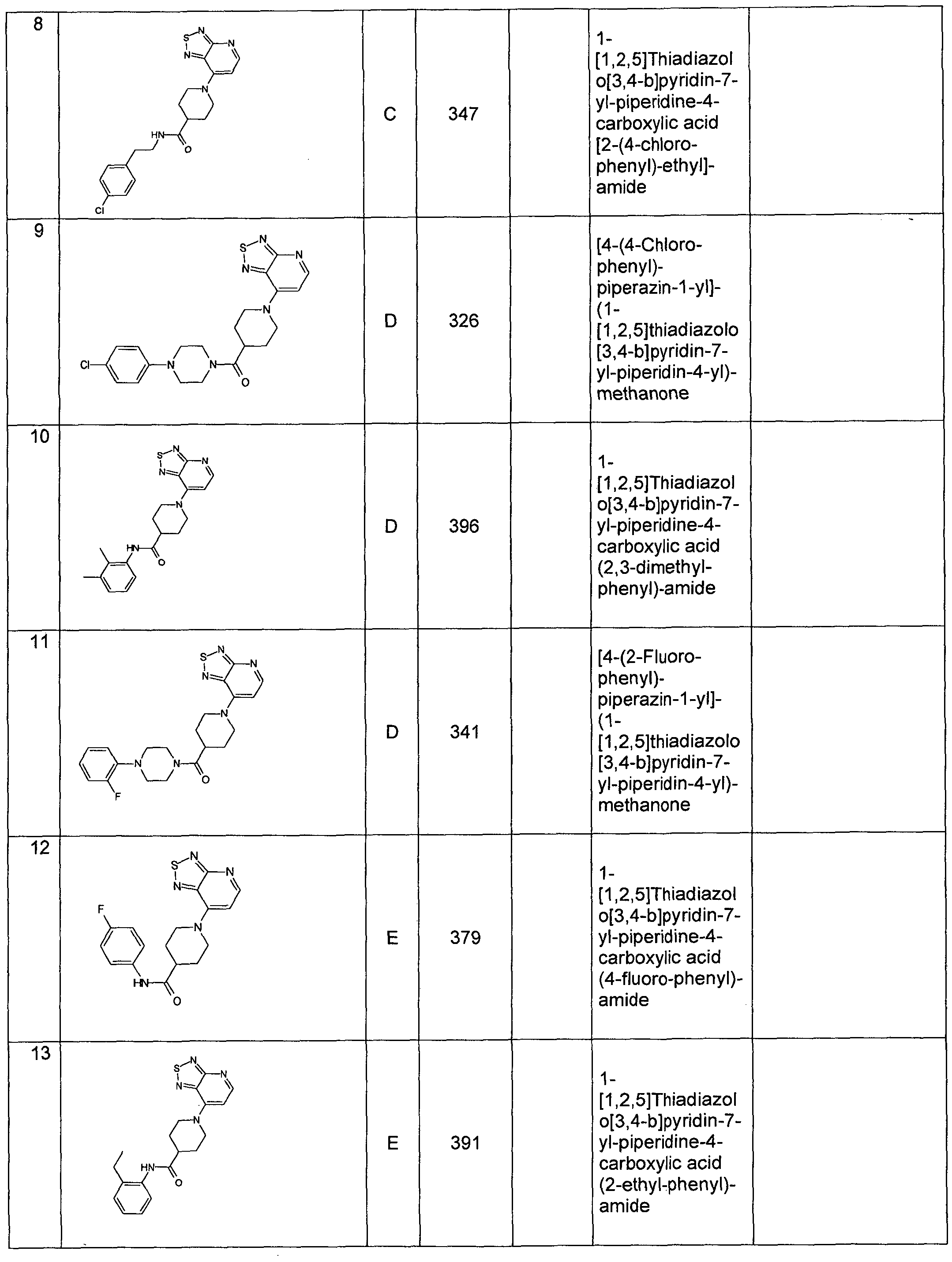 0 2-y)-amide


amide


ylmethyl-amine

amide


N— s F 2-yl)-amide


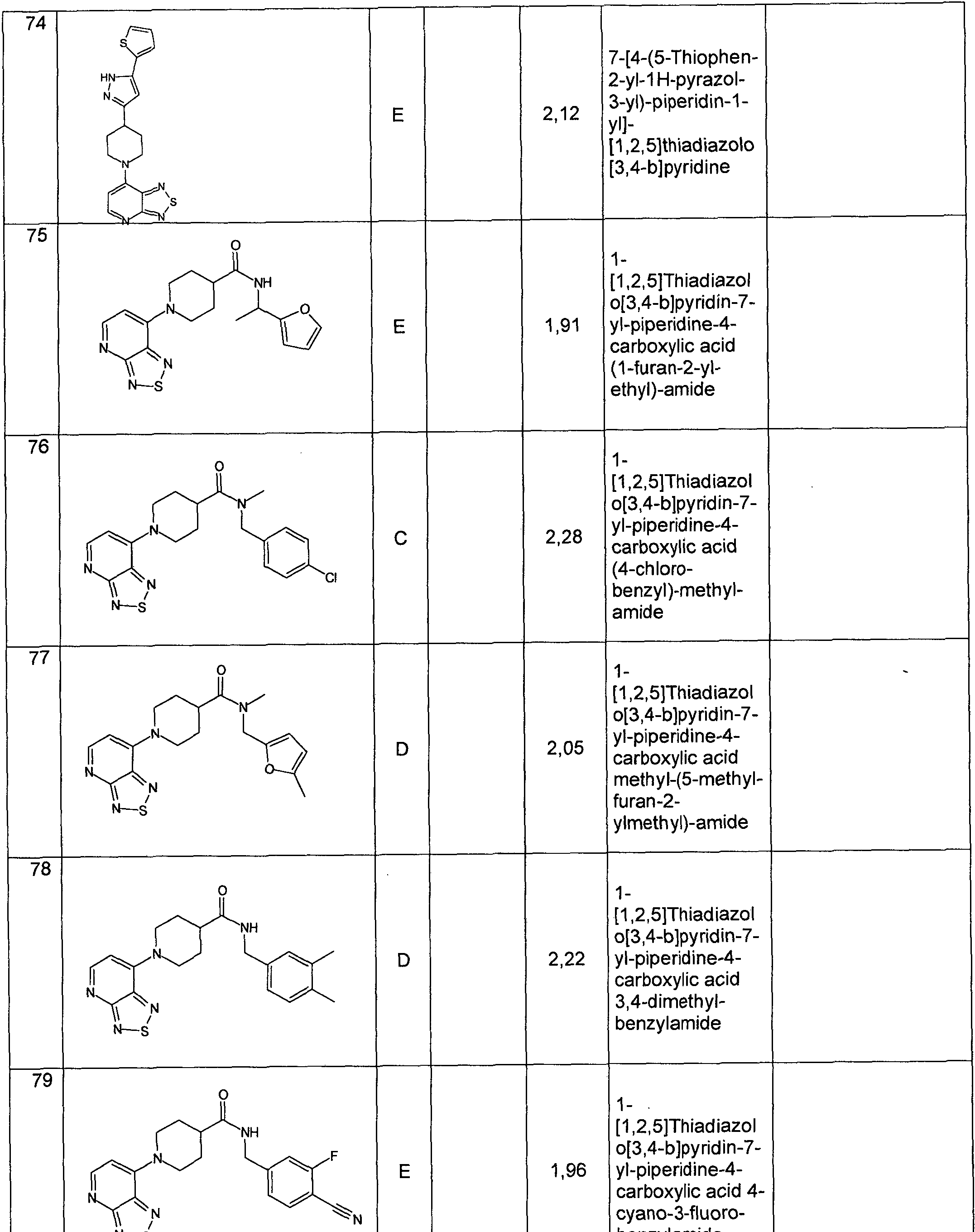
— S benzylamide
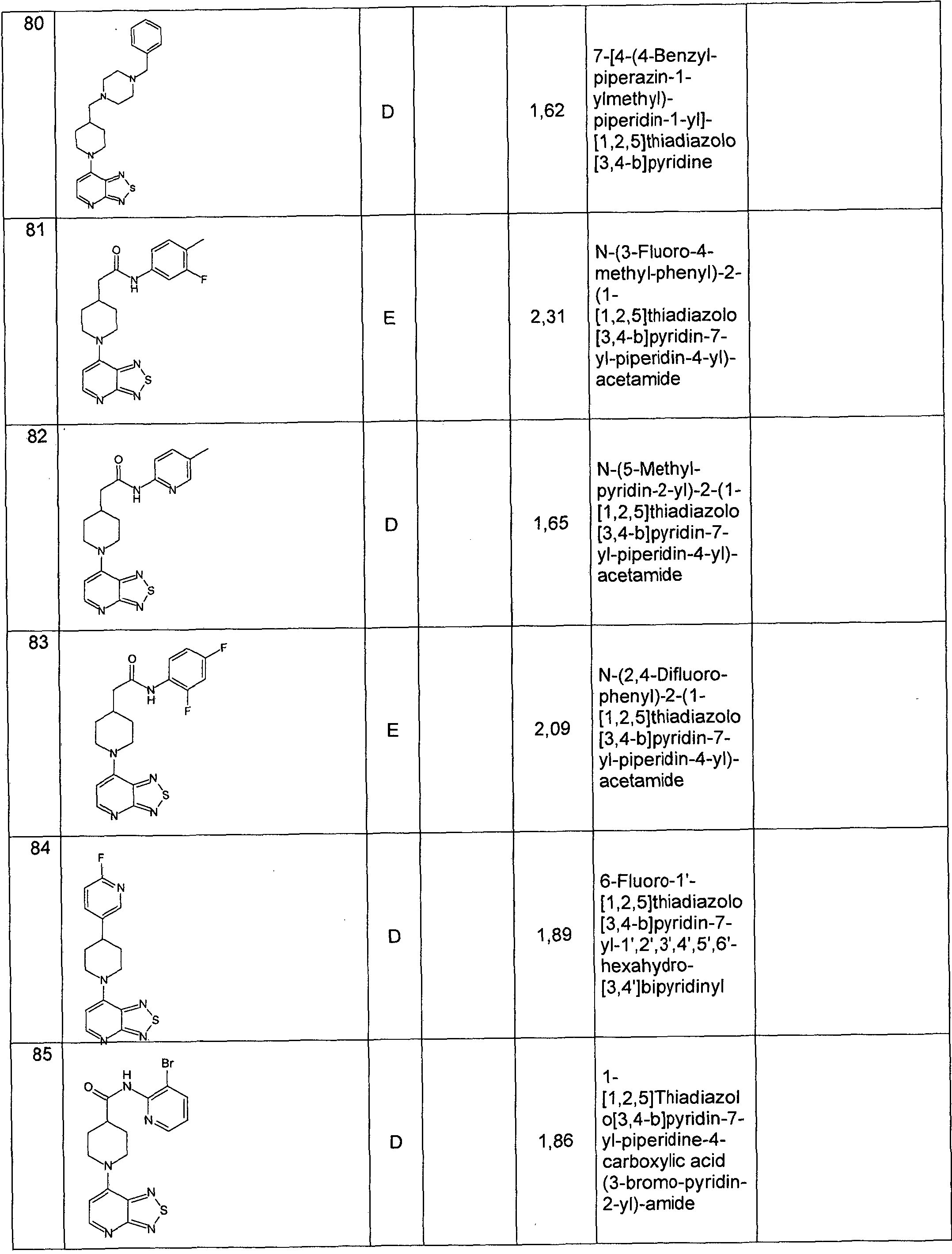

benzylamide


yam e
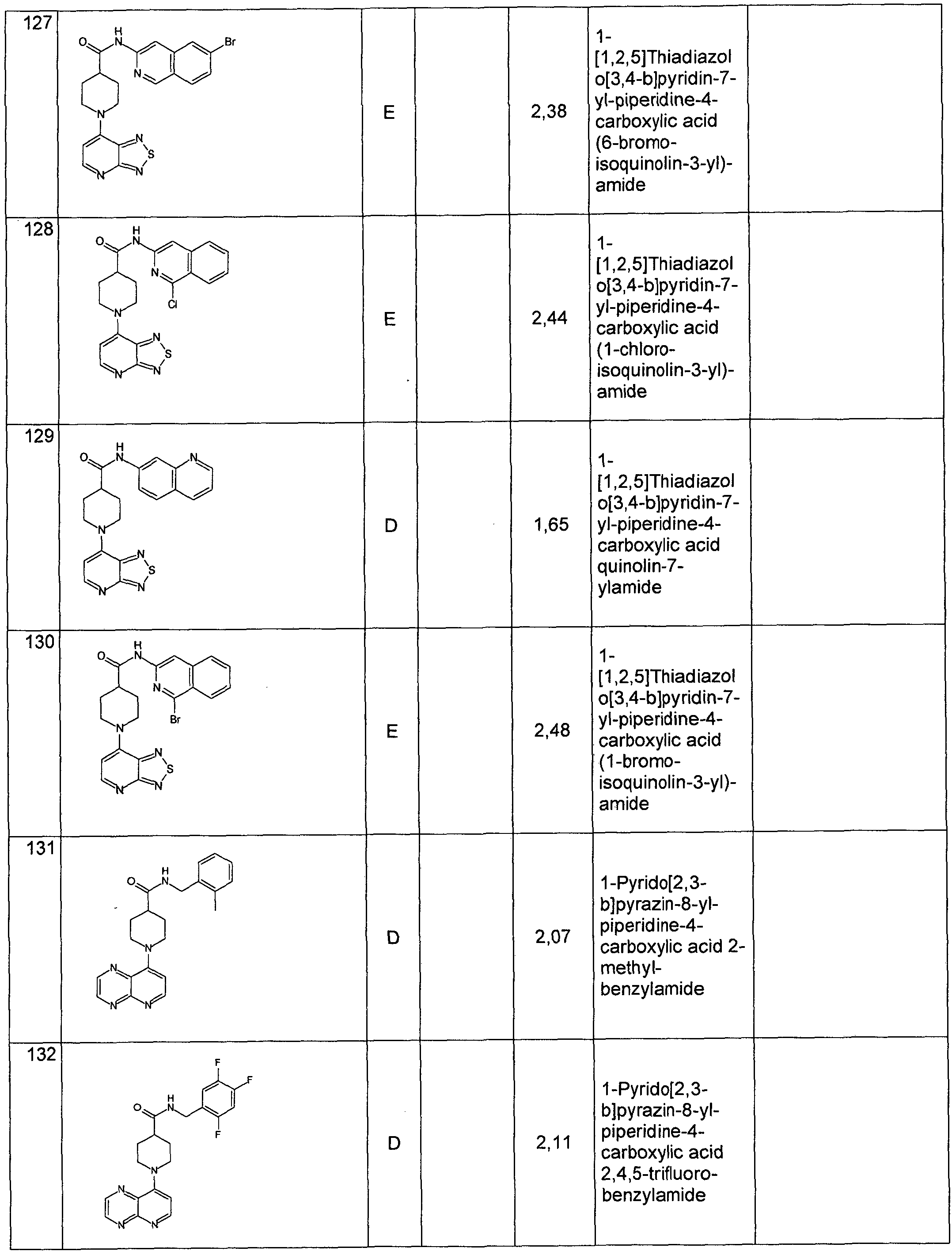


ami e


benzontrile


amide

¾> acetamide


[2,4']bipyridinyl


TO amide


amide
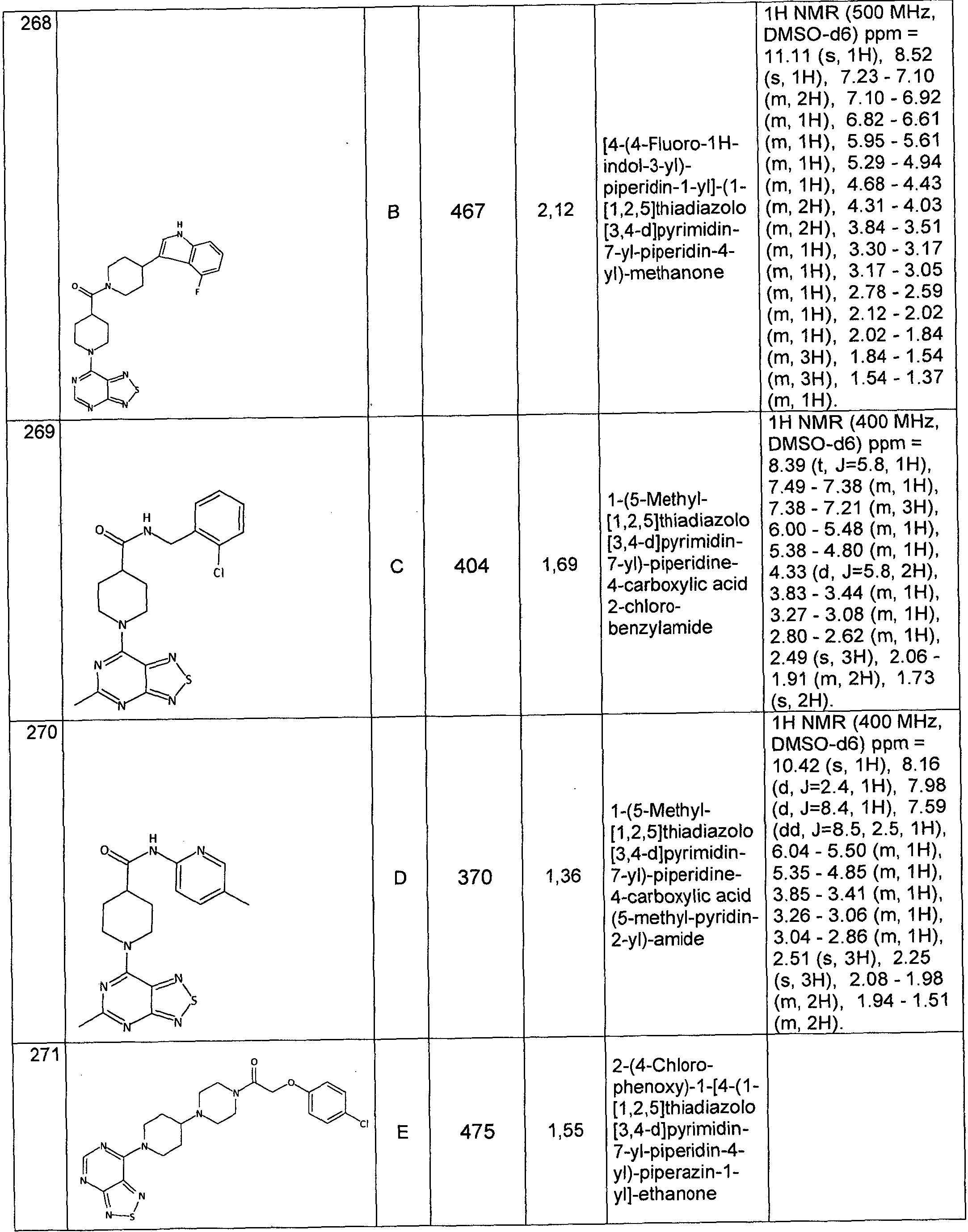


amide


Claims
Claims
1. A compound of Formula (I)

or its stereoisomers or tautomers, or pharmaceutically acceptable salts of each of the foregoing, including mixtures thereof in all ratios, wherein
X is CH or N,
Y is C, CH or N,
Z is CH or S,
provided that, if Z is S then Y is not N,
Q is N or CR2,
n is 0 or 1 ,
m is 0, 1 or 2,
R1 is H, LA, NH2, NH(LA) or N(LA)2,
R2 is H, OH, Hal or NH2,
l_2 are independently CO, NH, -CONH, -HNCO, -CO(LA), -(LA)CO,
-N(LA), LA, or a bond,
Cyc1 is a mono- or binuclear, aliphatic or aromatic, 4, 5, 6, 7, 8, 9 or 10 membered homo- or heterocycle, having 0, 1 , 2, 3 or 4 N, O and/or S atoms, which may be mono- or independently di- or trisubstituted by Hal, OH, CN, LA, O(LA), and/or monosubstituted by an oxo group or L2-Cyc2,
Cyc2 is a mono- or binuclear, aliphatic or aromatic, 4, 5, 6, 7, 8, 9 or 10 membered homo- or heterocycle, having 0, 1 , 2, 3 or 4 N, O and/or S atoms, which may be mono- or independently di- or trisubstituted
by Hal, OH, CN, LA, O(LA), CO(LA), and/or monosubstituted by an oxo group or L2-Cyc3,
is a mononuclear, aliphatic or aromatic, 5 or 6 membered homo- or heterocycle, having 0, 1 or 2 N, O and/or S atoms, which may be mono- or independently di- or trisubstituted by Hal, OH, CN, LA, O(LA), CON(LA), COO(LA), or monosubstituted by an oxo group, is unbranched or branched alkyl, having 1 , 2, 3, 4 or 5 carbon atoms, which may be saturated or partially unsaturated, wherein 1 , 2 or 3 H atoms may be replaced by Hal, and/or
1 CH2 group may be replaced by -0-, -SO2-, -NH-, or -N(CH3)- is F, CI, Br or I,
and wherein a circle in a ring system indicates that the said ring system is aromatic.
2. The compound according to Claim 1 , or its stereoisomers or tautomers, or
pharmaceutically acceptable salts of each of the foregoing, including mixtures thereof all ratios, which conforms to Formulae (lla), (lib),

or which conforms to Formula (III)
 wherein Q is CH, m is 0, and the remaining residues have the meaning indicated for Formula (I).
3. The compound according to Claim 1 or 2, or its stereoisomers or tautomers, or pharmaceutically acceptable salts of each of the foregoing, including mixtures thereof in all ratios, in which the residues not designated in greater detail have the meaning indicated for Formula (I), but in which in Subformula 1
R1 is H, methyl or NH2,
X is N,
Y is C,
Z is CH,
n is 1 , in Subformula 2
R1 is H, methyl or NH2,
X is CH,
Y is N,
Z is CH,
n is 0, in Subformula 3
R1 is H, methyl or NH2,
X is CH,
Y is C,
z is S,
n is 0, in Subformula 4
R1 is H, methyl or NH
X is CH,
Y is C,
Z is CH,
n is 1 , in Subformula 5
R1 is H, methyl or NH
X is N,
Y is C,
Z is S,
n is 0, and the remaining residues have the meaning as indicated for Formula (I).
4. The compound according to Claim 2, Formula (lib), or its stereoisomers or tautomers, or pharmaceutically acceptable salts of each of the foregoing, including mixtures thereof in all ratios, in which the residues not designated in greater detail have the meaning indicated for Formula (I), but in which in
Subformula 6 of Formula (lib)
R1, X, Y, Z, n have the meanings indicated for either of Subformulae 1 to 5
according to Claim 3,
Li is a bond,
Cyc1 is phenyl or pyridyl, which may be mono- or independently
disubstituted by Hal, methyl, methoxy,
or which may be monosubstituted by pyrazol-1-ylmethyl,
Hal is F, CI or Br, and the remaining residues have the meaning as indicated for Formula (I).
5. The compound according to Claim 2, Formula (III), or its stereoisomers or tautomers, or pharmaceutically acceptable salts of each of the foregoing, including mixtures thereof in all ratios, in which the residues not designated in greater detail have the meaning indicated for Formula (I), but in which in in Subformula 7 of Formula (III)
R1, X, Y, Z, n have the meanings indicated for either of Subformulae 1 to 5,
R2 is H or OH,
U is a bond, CO, -CONH, CH2, -CH2CH20, -CONHCH2,
Cyc1 is phenyl, pyridyl, piperidine, piperazine, quinoline, thiazole, which may be mono- or independently di- or trisubstituted by Hal, LA, OH, CN,
Hal is F, CI or Br, in Subformula 8 of Formula (III)
R1, X, Y, Z, n have the meanings indicated for either of Subformulae 1 to 5,
R2 is H or OH,
Li is a bond, CO, -CONH, CH2, -CH2CH20, -CONHCH2,
Cyc1 is phenyl, pyridyl, piperidine, piperazine, quinoline, thiazole,
[1 ,2,4]oxadiazol, which is monosubstituted by L2-Cyc2,
l_2 is a bond, -CH2CH20, -CONHCH2, -COCH2CH2, -COCH20,
-COCH2, CO, -CONHCH2CH2, -CH2CONH, -C0N(CH3)CH2, -CH2CH2OCH2, CH2, -CH2CON(CH3)CH2, -CON(CH3),
-S02CH2CH2, -CH2CH2S02,
Cyc2 is phenyl, pyridyl, pyrazole, imidazolin-2-one, oxadiazole, furan,
2,3-Dihydro-benzo[1 ,4]dioxin, Benzo[1 ,3]dioxol, naphthalen, isoxazol, benzofuran, [1 ,3,4]thiadiazol, thiazole, which may be monosubstituted by Hal, LA, CO(LA), O(LA), CN, in Subformula 9 of Formula (III)
R1, X, Y, Z, n have the meanings indicated for either of Subformulae 1 to 5,
R2 is H or OH,
L, " is a bond, CO, -CONH, CH2, -CH2CH20, -CONHCH2,
Cyc1 is phenyl, pyridyl, piperidine, piperazine, quinoline, thiazole, which is monosubstituted by L2-Cyc2,
is a bond, -CH2CH20, -CONHCH2, -COCH2CH2, -COCH20,
-COCH2l
is phenyl, pyridyl, pyrazole, imidazolin-2-one, oxadiazole, which may be monosubstituted by Hal, LA,
is F, CI or Br, in Subformula 10 of Formula (III)
R1 , X, Y, Z, n have the meanings indicated for either of Subformulae 1 to 5,
R2 is H or OH,
Li is a bond, CO, -CONH, CH2, -CH2CH20, -CONHCH2,
Cyc1 is phenyl, pyridyl, piperidine, piperazine, quinoline, thiazole, which is monosubstituted by L2-Cyc2,
l_2 is a bond, -CH2CH20, -CONHCH2, -COCH2CH2, -COCH20,
-COCH2,
Cyc2 is phenyl, pyridyl, pyrazole, imidazolin-2-one, oxadiazole, which is monosubstituted by L2-Cyc3,
Cyc3 is phenyl, pyridyl, piperidine which may be mono- or disubstitufed by Hal, or LA,
Hal is F, CI or Br, and the remaining residues have the meaning as indicated for Formula (I).
6. The compound according to Claim 1 , wherein the compound is selected from the group consisting of:
4-[(1 S,4S)-5-(4-Fluoro-phenyl)-2,5-diaza-bicyclo[2.2.1]hept-2-yl]-pteridin-2-ylamine,
3-(4-Fluoro-phenyl)-1-[1'-(5-methyl-[1 ,2,5]thiadiazolo[3,4-b]pyridin-7-yl)-[4,4']bipiperidinyl- 1-yl]-propan-1 -one,
{4-[2-(4-Chloro-phenoxy)-ethyl]-piperazin-1 -yl}-(1 -[1 ,2,5]thiadiazolo[3,4-d]pyrimidin-7-yl- piperidin-4-yl)-methanone,
7-((1 S,4S)-5-o-Tolyl-2,5-diaza-bicyclo[2.2.1]hept-2-yl)-[1 ,2,5]thiadiazolo[3,4-d]pyrimidine, 7-[(1S,4S)-5-(3-Fluoro-phenyl)-2,5-diaza-bicyclo[2.2.1]hept-2-yl]-[1 ,2,5]thiadiazolo[3,4- d]pyrimidine,
7-[(1S,4S)-5-(4-Trifluoromethyl-pyridin-2-yl)-2,5-diaza-bicyclo[2.2.1]hept-2-yl]- [1 ,2,5]thiadiazolo[3,4-d]pyrimidine,
7-((1 S,4S)-5-Phenyl-2,5-diaza-bicyclo[2.2.1]hept-2-ylH1 ,2,5]thiadiazolo[3,4-d]pyrimidine,
7-[(1S,4S)-5-(5-Chloro-pyridin-2-yl)-2,5-diaza-bicyclo[2.2.1]hept-2-yl]- [1 ,2,5]thiadiazolo[3,4-d]pyrimidine,
7-[(1 S,4S)-5-(4-Fluoro-phenyl)-2,5-diaza-bicyclo[2.2.1]hept-2-yl]-[1 ,2,5]thiadiazolo[3,4- b]pyridine,
7-[(1 S,4S)-5-(3-Pyrazol-1-ylmethyl-phenyl)-2,5-diaza-bicyclo[2.2.1]hept-2-yl]- [1 ,2,5]thiadiazolo[3,4-d]pyrimidine,
7-[(1 S,4S)-5-(4-Chloro-phenyl)-2,5-diaza-bicyclo[2 .1]hept-2-yl]-[1 ,2,5]thiadiazolo[3 d]pyrimidine,
,2,5]Thiadiazolo[3,4-d]pyrimidin-7-yl-piperidine-4-carboxylic acid quinolin-2-ylamide, 1-[1 ,2,5]Thiadiazolo[3,4-b]pyridin-7-yl-piperidine-4-carboxylic acid quinolin-2-ylamide,
2- (4-Chloro-phenoxy)-1 -(1 '-[1 ,2,5]thiadiazolo[3,4-b]pyridin-7-yl-[4,4']bipiperidinyl-1 -yl)- ethanone,
3- (4-Fluoro-phenyl)-1 -(1 '-[1 ,2,5]thiadiazolo[3,4-b]pyridin-7-yl-[4,4']bipiperidinyl-1 -yl)- propan-1-one,
7-[(1 S,4S)-5-(2,4-Difluoro-phenyl)-2,5-diaza-bicyclo[2.2.1]hept-2-yl]- [1 ,2,5]thiadiazolo[3,4-d]pyrimidine,
{4-[2-(4-Chloro-phenoxy)-ethyl]-piperazin-1 -yl}-(1 -[1 ,2,5]thiadiazolo[3,4-b]pyridin-7-yl- piperidin-4-yl)-methanone ,
1-[1 ,2,5]Thiadiazolo[3,4-b]pyridin-7-yl-piperid'ine-4-carboxylic acid (5-trifluoromethyl- pyridin-2-yl)-amide,
7-[(1 S,4S)-5-(4-Chloro-phenyl)-2,5-diaza-bicyclo[2.2.1]hept-2-yl]-[1 ,2,5]thiadiazolo[3,4- d]pyrimidin-5-ylamine,
7-[(1 S,4S)-5-(4-Trifluoromethyl-phenyl)-2,5-diaza-bicyclo[2.2.1]hept-2-yl]- [1 ,2,5]thiadiazolo[3,4-d]pyrimidine,
4-(4-{6-[(1-[1 ,2,5]Thiadiazolo[3,4-d]pyrimidin-7-yl-piperidine-4-carbonyl)-amino yl}-pyrazol-1-yl)-piperidine-1-carboxylic acid tert-butyl ester,
3-(4-Chloro-phenyl)-1 -[4-(1 -[1 ^.SlthiadiazololS^-blpyridin^-yl-piperidin^-y -piperazin- 1-yl]-propan-1 -one,
7-[(1 S,4S)-5-(5-Methyl-pyridin-2-yl)-2,5-diaza-bicyclo[2.2.1]hept-2-yl]- [1 ,2,5]thiadiazolo[3,4-d]pyrimidine,
7-[(1 S,4S)-5-(4-Fluoro-phenyl)-2,5-diaza-bicyclo[2.2.1 ]hept-2-yl]-[1 ,2,5]thiadiazolo[3,4- d]pyrimidin-5-ylamine,
7-[(1 S,4S)-5-(3,4-Difluoro-phenyl)-2,5-diaza-bicyclo[2.2.1]hept-2-yl]- [1 ,2,5]thiadiazolo[3,4-d]pyrimidine,
7-((1 S,4S)-5-o-Tolyl-2,5-diaza-bicyclo[2 .1]hept-2-yl)-[1 ,2)4]triazolo[1,5-a]pyrimidine,
7-[(1S,4S)-5-(4-Chloro-phenyl)-2,5-diaza-bicyclo[2.2.1]hept-2-ylH1 ,2,5]thiadiazolo[3,4- b]pyridine,
3-(4-Chloro-phenyl)-1-(r-[1,2,5]thiadiazolo[3,4-b]pyridin-7-yl-[4,4']bipiperidinyl-1-yl)- propan-1-one,
1-(5-Methyl-[1 ,2,5]thiadiazolo[3,4-b]pyridin-7-yl)-piperidine-4-carboxylic acid quinolin-2- ylamide,
1-[1 ,2,5]Thiadiazolo[3,4-d]pyrimidin-7-yl-piperidine-4-carboxylic acid (5-trifluoromethyl- pyridin-2-yl)-amide,
7-((1S,4S)-5-Phenyl-2,5-diaza-bicyclo[2.2.1]hept-2-ylH1,2,5]thiadiazolo[3,4-b]pyridine, ,2,5]Thiadiazoio[3,4-b]pyridin-7-yi-piperidine-4-carboxylic acid 3-chloro-benzylamide, 1-Pyrido[2,3-b]pyrazin-8-yl-piperidine-4-carboxylic acid quinolin-2-ylamide,
{4-[2-(4-Bromo-phenoxy)-ethyl]-piperazin-1-yl}-(1-[1 ,2,5]thiadiazolo[3,4-b]pyridin-7 piperidin-4-yl)-methanone,
7-[(1S,4S)-5-(4-Chloro-phenyl)-2,5-diaza-bicyclo[2.2.1]hept-2-yl]-5-methyl- [1 ,2,5]thiadiazolo[3,4-d]pyrimidine,
1-(5-Methyl-[1 ,2,5]thiadiazolo[3,4-b]pyridin-7-yl)-piperidine-4-carboxylic acid (3-fluoro-4- methyl-phenyl)-amide,
7-[(1S,4S)-5-(4-Fluoro-phenyl)-2,5-diaza-bicyclo[2.2.1]hept-2-yl]-5-methyl- [1 ,2,5]thiadiazolo[3,4-b]pyridine,
1-[4-(1-Pyrido[2,3-b]pyrazin-8-yl-piperidin-4-ylmethyl)-phenyl]-imidazoli
1 -[1 ,2,5]Thiadiazolo[3,4-d]pyrimidin-7-yl-piperidine-4-carboxylic acid (2-hydroxy-quinolin- 3-yl)-amide,
1-[1 ,2,5]Thiadiazolo[3,4-d]pyrimidin-7-yl-piperidine-4-carboxylic acid (3-pyrazol-1-yl- phenyl)-amide,
{4-[2-(4-Chloro-phenoxy)-ethyl]-piperazin-1 -yl}-[1 -(5-methyl-[1 ,2,5]thiadiazolo[3,4- b]pyridin-7-yl)-piperidin-4-yl]-methanone,
7-[(1S,4S)-5-(4-Fluoro-phenyl)-2,5-diaza-bicyclo[2.2.1]hept-2-yl]-[1 ,2,5]thiadiazolo[3,4- d]pyrimidine,
7-[(1S,4S)-5-(4-Methoxy-phenyl)-2,5-diaza-bicyclo[2.2.1]hept-2-yl]-[1 ,2,5]thiadiazolo[3,4- d]pyrimidine,
1-[1 ,2,5]Thiadiazolo[3,4-b]pyridin-7-yl-piperidine-4-carboxylic acid (2-hydroxy-quinolin-3- yl)-amide,
1-(5-Methyl-[1 ,2,5]thiadiazolo[3,4-b]pyridin-7-yl)-piperidine-4-carboxylic acid (5-methyl- pyridin-2-yl)-amide,
2- (3-Fluoro-4-methyl-phenyl)-1 -(1 '-Π^
1-yl)-ethanone,
3- (4-Fluoro-phenyl)-1-(r-[1 ,2,5]thi^
propan-1-one,
1 -[1 ,2,5]Thiadiazolo[3,4-b]pyriclin-7-yi-piperidine-4-carboxylic acid (5-bromo-pyridin-2-yl)- amide,
1-(5-Methyl-[1 ,2,5]thiadiazolo[3,4-b]pyridin-7-yl)-piperidine-4-carboxylic acid (2-hydroxy- quinolin-3-yl)-amide,
or its stereoisomers or tautomers, or pharmaceutically acceptable salts of each of the foregoing, including mixtures thereof in all ratios.
7. A pharmaceutical composition comprising a compound according to one or more of Claims 1 to 6, or its stereoisomers or tautomers, or pharmaceutically acceptable salts of each of the foregoing, including mixtures thereof in all ratios, as active ingredient, together with a pharmaceutically acceptable carrier.
8. A compound according to one or more of Claims 1 to 6, or its stereoisomers or tautomers, or pharmaceutically acceptable salts of each of the foregoing, including mixtures thereof in all ratios, for use in the treatment of a hyperproliferative, inflammatory or degenerative disease.
9. The compound for use according to Claim 8, or its stereoisomers or tautomers, or pharmaceutically acceptable salts of each of the foregoing, including mixtures thereof in all ratios, wherein the hyperproliferative disease is cancer.
10. The compound for use according to Claim 9, or its stereoisomers or tautomers, or pharmaceutically acceptable salts of each of the foregoing, including mixtures thereof in all ratios, wherein the cancer is selected from the group consisting of brain, lung, colon, epidermoid, squamous cell, bladder, gastric, pancreatic, breast, head & neck, renal, kidney, liver, ovarian, prostate, uterine, oesophageal, testicular, gynecological, thyroid cancer, melanoma, acute myelogenous leukemia, multiple myeloma, chronic
myelogneous leukemia, myeloid cell leukemia, Kaposi's sarcoma.
11. The compound for use according to Claim 8, or its stereoisomers or tautomers, or pharmaceutically acceptable salts of each of the foregoing, including mixtures thereof in
all ratios, wherein the inflammatory disease is selected from multiple sclerosis, rheumatoid arthritis, systemic lupus or inflammatory bowel disease.
12. The compound for use according to Claim 8, or its stereoisomers or tautomers, or pharmaceutically acceptable salts of each of the foregoing, including mixtures thereof in all ratios, wherein the degenerative disease is selected from osteoarthritis or Alzheimer's disease. 3. Use of a compound of one or more of Claims 1 to 6, or its stereoisomers or tautomers, or pharmaceutically acceptable salts of each of the foregoing, including mixtures thereof in all ratios, for the preparation of a medicament for the treatment of a hyperproliferative, inflammatory or degenerative disease.
14. Use according to claim 3 wherein the disease is cancer.
15. Use according to claim 14 wherein the cancer is selected from the group consisting of brain, lung, colon, epidermoid, squamous cell, bladder, gastric, pancreatic, breast, head & neck, renal, kidney, liver, ovarian, prostate, uterine, oesophageal, testicular, gynecological, thyroid cancer, melanoma, acute myelogenous leukemia, multiple myeloma, chronic myelogneous leukemia, myeloid cell leukemia, Kaposi's sarcoma.
16. A method for treating a hyperproliferative, inflammatory or degenerative disease, comprising administering to a subject a compound of any of claims 1 to 6, or its stereoisomers or tautomers, or pharmaceutically acceptable salts of each of the foregoing, including mixtures thereof in all ratios.
17. The method of claim 16, wherein the cancer is selected from the group consisting of brain, lung, colon, epidermoid, squamous cell, bladder, gastric, pancreatic, breast, head & neck, renal, kidney, liver, ovarian, prostate, uterine, oesophageal, testicular, gynecological, thyroid cancer, melanoma, acute myelogenous leukemia, multiple myeloma, chronic myelogneous leukemia, myeloid cell leukemia, Kaposi's sarcoma.
18. Set (kit) consisting of separate packs of
a) an effective amount of a compound according to one or more of Claims 1 to 6, or its stereoisomers or tautomers, or pharmaceutically acceptable salts of each of the foregoing, including mixtures thereof in all ratios, and
b) an effective amount of a further medicament active ingredient.
19. Process for the manufacture of compounds of Formula (I), wherein a compound of Formula (X)

is reacted with a compound of Formula (IX)

wherein
LG is a leaving group suitable for nucleophilic aromatic substitutions, and the remaining substituents have the meaning as indicated for Formula (I),
to yield a compound of Formula (I).
Applications Claiming Priority (2)
| Application Number | Priority Date | Filing Date | Title |
|---|---|---|---|
| EP12008195.5 | 2012-12-07 | ||
| EP12008195 | 2012-12-07 |
Publications (2)
| Publication Number | Publication Date |
|---|---|
| WO2014086453A1 true WO2014086453A1 (en) | 2014-06-12 |
| WO2014086453A8 WO2014086453A8 (en) | 2014-08-21 |
Family
ID=47325770
Family Applications (1)
| Application Number | Title | Priority Date | Filing Date |
|---|---|---|---|
| PCT/EP2013/003356 Ceased WO2014086453A1 (en) | 2012-12-07 | 2013-11-07 | Azaheterobicyclic compounds |
Country Status (2)
| Country | Link |
|---|---|
| AR (1) | AR093841A1 (en) |
| WO (1) | WO2014086453A1 (en) |
Cited By (7)
| Publication number | Priority date | Publication date | Assignee | Title |
|---|---|---|---|---|
| WO2017122754A1 (en) * | 2016-01-12 | 2017-07-20 | 日本ケミファ株式会社 | Voltage-dependent t-type calcium channel inhibitor |
| JP2017537080A (en) * | 2014-11-05 | 2017-12-14 | フレクサス・バイオサイエンシーズ・インコーポレイテッドFlexus Biosciences, Inc. | Immunomodulator |
| WO2019107992A1 (en) * | 2017-11-30 | 2019-06-06 | (주)인핸스드바이오 | Novel compound as inhibitor against binding of p34 protein to nedd4-1 protein and use thereof |
| JP2021098703A (en) * | 2015-12-17 | 2021-07-01 | メルク パテント ゲゼルシャフト ミット ベシュレンクテル ハフツングMerck Patent Gesellschaft mit beschraenkter Haftung | Polycyclic tlr7/8 antagonists and use thereof in the treatment of immune disorders |
| US11242319B2 (en) | 2014-11-05 | 2022-02-08 | Flexus Biosciences, Inc. | Immunoregulatory agents |
| CN114341125A (en) * | 2019-05-02 | 2022-04-12 | 星座制药公司 | TREX1 modulators |
| US11512069B2 (en) | 2016-08-08 | 2022-11-29 | Merck Patent Gmbh | TLR7/8 antagonists and uses thereof |
Citations (8)
| Publication number | Priority date | Publication date | Assignee | Title |
|---|---|---|---|---|
| US3457263A (en) * | 1967-01-17 | 1969-07-22 | En Nom Collectif Science Union | Purine compounds |
| EP1067123A1 (en) * | 1998-03-31 | 2001-01-10 | Kyowa Hakko Kogyo Co., Ltd. | Nitrogenous heterocyclic compounds |
| WO2003022214A2 (en) * | 2001-09-06 | 2003-03-20 | Millennium Pharmaceuticals, Inc. | Piperazine and homopiperazine compounds |
| WO2007125321A2 (en) * | 2006-04-25 | 2007-11-08 | Astex Therapeutics Limited | Purine and deazapurine derivatives as pharmaceutical compounds |
| WO2008017161A1 (en) * | 2006-08-09 | 2008-02-14 | Merck Frosst Canada Ltd. | Azacycloalkane derivatives as inhibitors of stearoyl-coenzyme a delta-9 desaturase |
| WO2009029609A1 (en) * | 2007-08-27 | 2009-03-05 | Wyeth | Imidazopyridine analogs and their use as agonists of the wnt-beta-catenin cellular messaging system |
| WO2010041054A1 (en) * | 2008-10-06 | 2010-04-15 | Cancer Research Technology Limited | Pyridine and pyrimidine based compounds as wnt signaling pathway inhibitors for the treatment of cancer |
| US20110166137A1 (en) * | 2009-12-30 | 2011-07-07 | Arqule, Inc. | Substituted Naphthalenyl-Pyrimidine Compounds |
-
2013
- 2013-11-07 WO PCT/EP2013/003356 patent/WO2014086453A1/en not_active Ceased
- 2013-12-06 AR ARP130104543A patent/AR093841A1/en unknown
Patent Citations (8)
| Publication number | Priority date | Publication date | Assignee | Title |
|---|---|---|---|---|
| US3457263A (en) * | 1967-01-17 | 1969-07-22 | En Nom Collectif Science Union | Purine compounds |
| EP1067123A1 (en) * | 1998-03-31 | 2001-01-10 | Kyowa Hakko Kogyo Co., Ltd. | Nitrogenous heterocyclic compounds |
| WO2003022214A2 (en) * | 2001-09-06 | 2003-03-20 | Millennium Pharmaceuticals, Inc. | Piperazine and homopiperazine compounds |
| WO2007125321A2 (en) * | 2006-04-25 | 2007-11-08 | Astex Therapeutics Limited | Purine and deazapurine derivatives as pharmaceutical compounds |
| WO2008017161A1 (en) * | 2006-08-09 | 2008-02-14 | Merck Frosst Canada Ltd. | Azacycloalkane derivatives as inhibitors of stearoyl-coenzyme a delta-9 desaturase |
| WO2009029609A1 (en) * | 2007-08-27 | 2009-03-05 | Wyeth | Imidazopyridine analogs and their use as agonists of the wnt-beta-catenin cellular messaging system |
| WO2010041054A1 (en) * | 2008-10-06 | 2010-04-15 | Cancer Research Technology Limited | Pyridine and pyrimidine based compounds as wnt signaling pathway inhibitors for the treatment of cancer |
| US20110166137A1 (en) * | 2009-12-30 | 2011-07-07 | Arqule, Inc. | Substituted Naphthalenyl-Pyrimidine Compounds |
Non-Patent Citations (2)
| Title |
|---|
| TRAN T D ET AL: "Design and optimisation of potent gp120-CD4 inhibitors", BIOORGANIC & MEDICINAL CHEMISTRY LETTERS, PERGAMON, GB, vol. 19, no. 17, 1 September 2009 (2009-09-01), pages 5250 - 5255, XP026458602, ISSN: 0960-894X, [retrieved on 20090704] * |
| YEEMAN K RAMTOHUL ET AL: "Bicyclic heteroaryl inhibitors of stearoyl-CoA desaturase: From systemic to liver-targeting inhibitors", BIOORGANIC & MEDICINAL CHEMISTRY LETTERS, PERGAMON, GB, vol. 21, no. 19, 5 August 2011 (2011-08-05), pages 5692 - 5696, XP028286344, ISSN: 0960-894X, [retrieved on 20110812], DOI: 10.1016/J.BMCL.2011.08.037 * |
Cited By (17)
| Publication number | Priority date | Publication date | Assignee | Title |
|---|---|---|---|---|
| AU2015342940B2 (en) * | 2014-11-05 | 2021-04-01 | Flexus Biosciences, Inc. | Immunoregulatory agents |
| JP2017537080A (en) * | 2014-11-05 | 2017-12-14 | フレクサス・バイオサイエンシーズ・インコーポレイテッドFlexus Biosciences, Inc. | Immunomodulator |
| US11932601B2 (en) | 2014-11-05 | 2024-03-19 | Flexus Biosciences, Inc. | Immunoregulatory agents |
| US11242319B2 (en) | 2014-11-05 | 2022-02-08 | Flexus Biosciences, Inc. | Immunoregulatory agents |
| US10533014B2 (en) | 2014-11-05 | 2020-01-14 | Flexus Biosciences, Inc. | Immunoregulatory agents |
| US11629134B2 (en) | 2015-12-17 | 2023-04-18 | Merck Patent Gmbh | TLR7/8 antagonists and uses thereof |
| JP2021098703A (en) * | 2015-12-17 | 2021-07-01 | メルク パテント ゲゼルシャフト ミット ベシュレンクテル ハフツングMerck Patent Gesellschaft mit beschraenkter Haftung | Polycyclic tlr7/8 antagonists and use thereof in the treatment of immune disorders |
| JP7317878B2 (en) | 2015-12-17 | 2023-07-31 | メルク パテント ゲゼルシャフト ミット ベシュレンクテル ハフツング | Polycyclic TLR7/8 antagonists and their use in treating immune disorders |
| JP2023126574A (en) * | 2015-12-17 | 2023-09-07 | メルク パテント ゲゼルシャフト ミット ベシュレンクテル ハフツング | Polycyclic TLR7/8 antagonists and their use in the treatment of immune disorders |
| JP7829523B2 (en) | 2015-12-17 | 2026-03-13 | メルク パテント ゲゼルシャフト ミット ベシュレンクテル ハフツング | Polycyclic TLR7/8 antagonists and their use in the treatment of immunodeficiency disorders |
| JP7086608B2 (en) | 2016-01-12 | 2022-06-20 | 日本ケミファ株式会社 | Voltage-gated T-type calcium channel inhibitor |
| US11420944B2 (en) | 2016-01-12 | 2022-08-23 | Nippon Chemiphar Co., Ltd. | Voltage-dependent t-type calcium channel blocker |
| WO2017122754A1 (en) * | 2016-01-12 | 2017-07-20 | 日本ケミファ株式会社 | Voltage-dependent t-type calcium channel inhibitor |
| JPWO2017122754A1 (en) * | 2016-01-12 | 2018-11-29 | 日本ケミファ株式会社 | Voltage-dependent T-type calcium channel inhibitor |
| US11512069B2 (en) | 2016-08-08 | 2022-11-29 | Merck Patent Gmbh | TLR7/8 antagonists and uses thereof |
| WO2019107992A1 (en) * | 2017-11-30 | 2019-06-06 | (주)인핸스드바이오 | Novel compound as inhibitor against binding of p34 protein to nedd4-1 protein and use thereof |
| CN114341125A (en) * | 2019-05-02 | 2022-04-12 | 星座制药公司 | TREX1 modulators |
Also Published As
| Publication number | Publication date |
|---|---|
| WO2014086453A8 (en) | 2014-08-21 |
| AR093841A1 (en) | 2015-06-24 |
Similar Documents
| Publication | Publication Date | Title |
|---|---|---|
| JP7300460B2 (en) | Substituted 1,2-dihydro-3H-pyrazolo[3,4-d]pyrimidin-3-ones | |
| AU2013212175B2 (en) | Azaheterocyclic compounds | |
| CN103649074B (en) | Be used for the treatment of the azacyclo-of the replacement of cancer | |
| AU2020255100B2 (en) | N-heteroaromatic amide derivatives for treatment of cancer | |
| AU2017209935B2 (en) | New substituted cyanoindoline derivatives as NIK inhibitors | |
| CA3038280A1 (en) | Heteroaryl derivatives as sepiapterin reductase inhibitors | |
| KR20120055608A (en) | Novel bicyclic urea compounds | |
| AU2021416682B2 (en) | 2-aminopyrimidine compound and pharmaceutical composition thereof and application thereof | |
| CA3027416A1 (en) | Heteroaromatic derivatives as nik inhibitors | |
| EP2844648B1 (en) | Benzyl piperidine compounds as lysophosphatidic acid (lpa) receptor antagonist | |
| WO2013020622A1 (en) | N-(benzimimdazol-2-yl)-cyclopropane carboxamides as lysophosphatidic acid antagonists | |
| CA3095568A1 (en) | Heterocyclic compound | |
| EP3532466A1 (en) | Modulators of hedgehog (hh) signalling pathway | |
| CA3234845A1 (en) | Wee1 inhibitor, preparation therefor, and use thereof | |
| AU2009333653B2 (en) | C-ring modified tricyclic benzonaphthiridinone protein kinase inhibitors and use thereof | |
| JP6522502B2 (en) | Wnt signal inhibitor | |
| EP4345101A1 (en) | Azole derivatives as shp2 inhibitors | |
| EA051811B1 (en) | Heterobicylic Amides as CD38 Inhibitors | |
| BR112020019595B1 (en) | HETEROCYCLIC COMPOUND INHIBITOR OF CYCLIN-DEPENDENT KINASE 12 (CDK12), AND, MEDICINE COMPRISING |
Legal Events
| Date | Code | Title | Description |
|---|---|---|---|
| 121 | Ep: the epo has been informed by wipo that ep was designated in this application |
Ref document number: 13789187 Country of ref document: EP Kind code of ref document: A1 |
|
| NENP | Non-entry into the national phase |
Ref country code: DE |
|
| 122 | Ep: pct application non-entry in european phase |
Ref document number: 13789187 Country of ref document: EP Kind code of ref document: A1 |