WO2014049995A1 - 匿名化を実行する情報処理装置、匿名化方法及びプログラムを記録した記録媒体 - Google Patents
匿名化を実行する情報処理装置、匿名化方法及びプログラムを記録した記録媒体 Download PDFInfo
- Publication number
- WO2014049995A1 WO2014049995A1 PCT/JP2013/005392 JP2013005392W WO2014049995A1 WO 2014049995 A1 WO2014049995 A1 WO 2014049995A1 JP 2013005392 W JP2013005392 W JP 2013005392W WO 2014049995 A1 WO2014049995 A1 WO 2014049995A1
- Authority
- WO
- WIPO (PCT)
- Prior art keywords
- record
- records
- group
- conclusion
- data set
- Prior art date
- Legal status (The legal status is an assumption and is not a legal conclusion. Google has not performed a legal analysis and makes no representation as to the accuracy of the status listed.)
- Ceased
Links
Images














Classifications
-
- G—PHYSICS
- G06—COMPUTING OR CALCULATING; COUNTING
- G06F—ELECTRIC DIGITAL DATA PROCESSING
- G06F21/00—Security arrangements for protecting computers, components thereof, programs or data against unauthorised activity
- G06F21/60—Protecting data
-
- G—PHYSICS
- G06—COMPUTING OR CALCULATING; COUNTING
- G06F—ELECTRIC DIGITAL DATA PROCESSING
- G06F16/00—Information retrieval; Database structures therefor; File system structures therefor
- G06F16/20—Information retrieval; Database structures therefor; File system structures therefor of structured data, e.g. relational data
- G06F16/24—Querying
- G06F16/245—Query processing
- G06F16/2458—Special types of queries, e.g. statistical queries, fuzzy queries or distributed queries
- G06F16/2465—Query processing support for facilitating data mining operations in structured databases
-
- G—PHYSICS
- G06—COMPUTING OR CALCULATING; COUNTING
- G06F—ELECTRIC DIGITAL DATA PROCESSING
- G06F16/00—Information retrieval; Database structures therefor; File system structures therefor
- G06F16/90—Details of database functions independent of the retrieved data types
- G06F16/95—Retrieval from the web
- G06F16/951—Indexing; Web crawling techniques
-
- G—PHYSICS
- G06—COMPUTING OR CALCULATING; COUNTING
- G06F—ELECTRIC DIGITAL DATA PROCESSING
- G06F21/00—Security arrangements for protecting computers, components thereof, programs or data against unauthorised activity
- G06F21/60—Protecting data
- G06F21/62—Protecting access to data via a platform, e.g. using keys or access control rules
- G06F21/6218—Protecting access to data via a platform, e.g. using keys or access control rules to a system of files or objects, e.g. local or distributed file system or database
- G06F21/6245—Protecting personal data, e.g. for financial or medical purposes
- G06F21/6254—Protecting personal data, e.g. for financial or medical purposes by anonymising data, e.g. decorrelating personal data from the owner's identification
Definitions
- the present invention relates to an information processing apparatus, anonymization method, and program for anonymizing information that is not preferably disclosed or used as it is, such as personal information.
- history information By analyzing the history information, it is possible to grasp a specific user's behavior pattern, grasp a unique tendency of a certain group, predict an event that may occur in the future, and analyze a factor for a past event.
- the service provider can reinforce and review its own business. Therefore, the history information is useful information having a very high utility value.
- a certain group is a group composed of a plurality of users.
- the history information held by such service providers is also useful for third parties other than service providers.
- the third party can obtain information that could not be obtained by himself / herself by using such history information. Therefore, this third party's own services and marketing can be strengthened.
- the service provider may request the third party to analyze the history information, or may disclose the history information for research purposes.
- history information with high utility value may include information that the subject of the history information does not want to be known to others or information that should not be known to a third party.
- sensitive information Sensitive Attribute (SA), Sensitive Value
- SA Sensitive Attribute
- Sensitive Value Sensitive Value
- history information is given a user identifier (user ID) that uniquely identifies a service user and a plurality of attributes (attribute information) that characterize the service user.
- the user identifier includes a name, a membership number, an insured number, and the like. Attributes that characterize service users include gender, date of birth, occupation, residential area, and postal code.
- the service provider records these user identifiers, multiple types of attributes, and sensitive information as one record. The service provider accumulates such records as history information every time the corresponding user (service user) enjoys the service.
- the third party can specify a service user by using the user identifier. For this reason, the problem of privacy infringement may occur.
- a certain individual can be identified by combining one or more attribute values given to each record from a data set composed of a plurality of records.
- Such an attribute that can specify an individual is called a quasi-identifier. That is, even in the history information from which the user identifier is removed, privacy infringement may occur if an individual can be identified based on the quasi-identifier.
- the statistical analysis is an analysis on history information from which all quasi-identifiers have been removed. Specifically, it is not possible to analyze a product that tends to be purchased by a certain age, or to analyze a specific injury or illness that affects residents living in a certain area.
- Anonymization is known as a method for converting a history information data set having such characteristics into a form in which privacy is protected while maintaining its original usefulness.
- Patent Document 1 classifies input data into quasi-identifiers or important information for each attribute, and “k-anonymity” in all the quasi-identifiers and “l-diversity” in all the important information.
- a technique for outputting a data set that satisfies the above is disclosed.
- Non-Patent Document 1 proposes k-anonymity, which is the most well-known anonymity index.
- the technique of satisfying k-anonymity for the data set to be anonymized is called “k-anonymization”.
- k-anonymization a process of converting the target quasi-identifier is performed so that at least k records having the same quasi-identifier exist in the data set to be anonymized.
- methods such as generalization and cutoff are known. In such generalization, the original detailed information is converted into abstracted information.
- Non-Patent Document 2 proposes l-diversity, which is one of the anonymity indicators developed from k-anonymity.
- a technique for satisfying such l-diversity in a data set to be anonymized is called “l-diversification”.
- l-diversification a process of converting the target quasi-identifier is performed so that a plurality of records having the same quasi-identifier include at least one or more different types of sensitive information.
- k-anonymization ensures that the number of records associated with the quasi-identifier is k or more.
- l-diversification ensures that there are more than one type of sensitive information associated with the quasi-identifier.
- an anonymization technique for a movement trajectory is known.
- Non-Patent Document 3 is a paper on a technique for anonymizing a movement locus in which position information is associated in time series. More specifically, the anonymization technique described in Non-Patent Document 3 is an anonymization technique that guarantees consistent k-anonymity by regarding the movement locus from the start point to the end point as a series of sequences. In this anonymization technique of a movement locus, a tube-like anonymous movement locus in which k or more movement loci that are geographically similar are bundled is generated. In the anonymization technique of the movement trajectory, an anonymous movement trajectory in which the geographical similarity is maximized is generated within the restriction of anonymity.
- Non-Patent Document 3 In the anonymization method of the movement trajectory represented by Non-Patent Document 3, a time-series order relationship is particularly maintained among the properties existing between records given the same user identifier.
- the “correspondence” information is information “correspondence between records having the same unique identifier (user identifier)”.
- the data set is, for example, a data set composed of a plurality of records including one or more record pairs each having the same unique identifier.
- l-diversity is determined for each record group including a part of the records.
- the data set is then anonymized to satisfy their l-diversity.
- the “correspondence between records having the same unique identifier” included in the anonymized data set may become too ambiguous compared to that of the original data set.
- Patent Document 1 does not consider information on “correspondence between records having the same unique identifier”.
- Non-Patent Document 1 does not disclose a technique related to l-diversity.
- Non-Patent Document 2 the main purpose is to construct an anonymous movement trajectory that maximizes geographical similarity, and the properties (correspondence) between records are not necessarily maintained. Further, Non-Patent Document 3 does not support guarantee of anonymity of l-diversity.
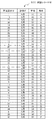
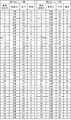
- FIG. 28 is a diagram showing an example of a pre-anonymization data set.
- the pre-anonymization data set shown in FIG. 28 includes a plurality of first records and a plurality of second records.
- the first record includes a unique identifier and attributes of a medical care month, age, and disease name, and the attribute value of the medical care month is “April”.
- the second record includes the unique identifier and the attributes of the medical care month, age, and disease name, and the attribute value of the medical care month is “May”.
- the pre-anonymization data set shown in FIG. 28 includes information on the correspondence between the first record and the second record having the same unique identifier.
- the correspondence relationship is the correspondence relationship between the attribute values “U” and “A” of the disease name included in each of the first record and the second record having the unique identifier “1” (hereinafter “U ⁇ ” A ”).
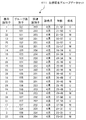
- FIG. 29 is a diagram illustrating an example of a data set after anonymization in which the data set before anonymization illustrated in FIG. 28 is anonymized.
- the records with unique identifiers “6”, “7”, and “9” are the same group in place of the unique identifier in the data set after anonymization shown in FIG.
- the identifier “101” is assigned.
- records having the same group identifier are generalized to the same attribute value of the attribute that is a quasi-identifier.
- the “correspondence between records having the same unique identifier” corresponding to the group identifier “101” is “YE”, “YD”, “ YC ”,“ XE ”,“ XD ”,“ XC ”,“ WE ”,“ WD ”, and“ WC ”. That is, the post-anonymization data set shown in FIG. 29 is “YC” and “W” that are “correspondences between records having the same unique identifier” that do not exist in the pre-anonymization data set shown in FIG. -E "has been added.
- An object of the present invention is to provide an information processing apparatus, an anonymization method, and a program therefor that solve the above-described problems.
- the information processing apparatus of the present invention includes a first record including a unique identifier and at least one first attribute, a second record including the same unique identifier and at least one second attribute as the unique identifier, A second record group that includes a plurality of the second records from a data set including a plurality of sets of sets, and that the second l-diversity can be satisfied, and is included in the second record group A first l-diversity can be satisfied in the first record group comprising the first record paired with the second record, and the first record and the second record Based on the abstraction level of the correspondence relationship existing between the record extraction means for extracting a plurality of the second records and the anonymous group consisting of the second records extracted by the record extraction means.
- a first data set comprising the first record that can satisfy the second l-diversity in the anonymous group data set and that forms a pair with a second record included in the anonymous group data set.
- Anonymity group generation means for generating and outputting so that the first l-diversity can be satisfied in the record group.
- a computer in the anonymization method of the present invention, includes a first record including a unique identifier and at least one first attribute, a second identifier including the same unique identifier as the unique identifier and at least one second attribute.
- a second record group consisting of the second record from a data set including a plurality of record pairs can satisfy the second l-diversity, and the second record group A first l-diversity can be satisfied in the first record group comprising the first record paired with the included second record; and the first record and the second record A plurality of the second records are extracted based on the abstraction level of the correspondence relationship existing between the anonymous group data set including the extracted second records and the anonymous group data set In the first record group consisting of the first records that can satisfy the second l-diversity in the group data set and that form a pair with the second record included in the anonymous group data set. Generate and output 1 l-diversity so that it can be satisfied.
- the program recorded on the computer-readable non-volatile recording medium of the present invention includes a first record including a unique identifier and at least one first attribute, a unique identifier identical to the unique identifier, and at least one second record.
- the second l-diversity can be satisfied in the second record group consisting of the second record from the data set including a plurality of pairs of the second record including the attribute of A first l-diversity can be satisfied in the first record group consisting of the first record paired with a second record included in the second record group; and A process of extracting a plurality of the second records based on the abstraction level of the correspondence relationship existing between the records and the second records, and whether the extracted second records
- the computer generates and outputs the first l-diversity so that the first l-diversity can be satisfied in the
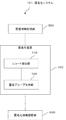
- FIG. 1 is a block diagram illustrating a configuration of the anonymization device according to the first embodiment.
- FIG. 2 is a block diagram illustrating a configuration of a system including the anonymization device according to the first embodiment.
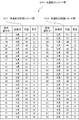
- FIG. 3 is a diagram illustrating an example of a data set.
- FIG. 4 is a diagram illustrating an example of sorted prerequisite records.
- FIG. 5 is a diagram illustrating an example of sorted conclusion records.
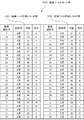
- FIG. 6 is a diagram illustrating an example of the premise anonymous group data set.
- FIG. 7 is a diagram illustrating an example of the conclusion anonymous group data set.
- FIG. 8 is a diagram illustrating an example of the extracted record group.
- FIG. 9 is a diagram illustrating an example of an extracted conclusion record group in which conclusion records are collected.
- FIG. 9 is a diagram illustrating an example of an extracted conclusion record group in which conclusion records are collected.
- FIG. 10 is a diagram illustrating an example of the common partial record group.
- FIG. 11 is a diagram illustrating an example of a common partial conclusion record group in which conclusion records are collected for each premise record having the same premise attribute value.
- FIG. 12 is a diagram illustrating an example of a conclusion sort record group.
- FIG. 13 is a diagram illustrating an example of a conclusion sort conclusion record group in which conclusion records having the same conclusion attribute value are collected.
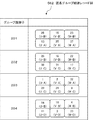
- FIG. 14 is a diagram illustrating an example of the anonymous group conclusion record group.
- FIG. 15 is a diagram illustrating an example of an anonymous group conclusion record group in which conclusion records are grouped for each group identifier.
- FIG. 16 is a diagram illustrating a hardware configuration of a computer that realizes the anonymization apparatus according to the present embodiment.
- FIG. 16 is a diagram illustrating a hardware configuration of a computer that realizes the anonymization apparatus according to the present embodiment.
- FIG. 17 is a flowchart showing the operation of the present embodiment.
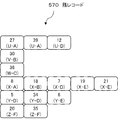
- FIG. 18 is a diagram illustrating an example of a remaining record.
- FIG. 19 is a diagram illustrating an example of the conclusion anonymous group.
- FIG. 20 is a diagram illustrating an example of the conclusion anonymous group.
- FIG. 21 is a diagram illustrating an example of the conclusion anonymous group.
- FIG. 22 is a block diagram showing a configuration of the anonymization apparatus 200 according to the second embodiment.
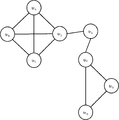
- FIG. 23 is a diagram illustrating an example of combinations of transition vectors.
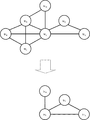
- FIG. 24 is a diagram illustrating an example of a combination of two transition vectors.
- FIG. 25 is a diagram showing whether the similarity between transition vectors is “0”.
- FIG. 26 is a diagram illustrating an example of transition vectors excluding used transition vectors.
- FIG. 27 is a diagram illustrating combinations between transition vectors.
- FIG. 28 is a diagram illustrating an example of a pre-anonymization data set.
- FIG. 29
- FIG. 1 is a block diagram showing the configuration of the anonymization device 100 according to the first embodiment of the present invention.
- the anonymization device (anonymization device 100) is also generally called an information processing device.
- the anonymization device 100 includes a record extraction unit 110 and an anonymous group generation unit 120.
- FIG. 2 is a block diagram showing a configuration of the anonymization system 101 including the anonymization apparatus 100 according to the present embodiment.
- the anonymization system 101 includes an anonymization device 100, a history information storage unit 500, and an anonymization information storage unit 600.
- the history information storage unit 500 stores a data set 510 as shown in FIG.
- the data set 510 is history information including a plurality of records including a unique identifier and attributes of a diagnosis month, age, and disease name.
- the data set 510 includes a record (premise record) having an attribute value “April” for “medical month” and a record (conclusion record) having an attribute value “May” for “medical month” having the same unique identifier. ) Is included.
- the premise record and the conclusion record do not have to include the same attribute.
- it may be a data set whose premise record includes only a unique identifier and certain sensitive attributes, and whose conclusion record includes only a unique identifier and other sensitive attributes.
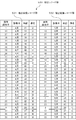
- FIGS. 4 and 5 are diagrams showing the data set 510 shown in FIG. 3 separately for the premise record (first record) and the conclusion record (second record) for convenience of the following description. That is, the premise record portion 521 and the conclusion record portion 522 shown in FIGS. 4 and 5 are not generated by the anonymization device 100 but are shown for convenience of explanation.
- FIG. 4 shows a premise record portion 521 composed of premise records.
- FIG. 5 shows a conclusion record portion 522 composed of conclusion records.
- the anonymization apparatus 100 extracts a plurality of conclusion records (a conclusion record group, also referred to as a first record group) from the data set 510, and further extracts a plurality of conclusion records from the conclusion record group based on the abstraction level of the correspondence relationship. Extract conclusion records.
- the plurality of conclusion records constituting the conclusion record group are a plurality of conclusion records that can satisfy the second l-diversity in the conclusion record group, and are combined with each of the conclusion records. Is a plurality of conclusion records such that the first l-diversity can be satisfied in a plurality of premise records (a premise record group, also referred to as a first record group).
- the anonymization device 100 generates and outputs a conclusion anonymous group data set (also referred to as an anonymous group data set) composed of conclusion records from the plurality of extracted conclusion records.
- the conclusion record satisfies the second l-diversity, and the first l- with respect to the first record group having a correspondence relationship with “the plurality of extracted conclusion records”. It is a record that can be anonymized to satisfy diversity.
- the anonymization apparatus 100 assigns a correspondence relationship between each of the premise records and the conclusion record to each of the premise records included in the premise anonymous group data set and each of the conclusion records included in the anonymous group data set. You may do it.
- the premise anonymous group data set is a data set in which a plurality of premise records forming a pair with each of the conclusion records included in the conclusion anonymous group data set are anonymized.
- FIG. 6 is a diagram illustrating an example of the premise anonymous group data set 611.
- FIG. 7 is a diagram illustrating an example of the conclusion anonymous group data set 612.
- each record of the premise anonymous group data set 611 and the conclusion anonymous group data set 612 includes a group identifier and a related identifier instead of the unique identifier.
- the unique identifier surrounded by a dotted frame is described for easy understanding of the relationship between each record of the premise record 521 and each record of the premise anonymous group data set 611. . Therefore, the unique identifier is not included in the premise anonymous group data set 611. Note that the unique identifier enclosed in the dotted frame in FIG. 7 is not included in the conclusion anonymous group data set 612 as well.
- the group identifier is an identifier that is identically assigned to a plurality of premise records included in a premise anonymous group. Similarly, the group identifier is an identifier that is identically assigned to a plurality of conclusion records included in a certain conclusion anonymous group.
- the related identifier is a group identifier of the other record having the same unique identifier. That is, a plurality of premise records corresponding to the same group identifier form one premise anonymous group. Similarly, a plurality of conclusion records corresponding to the same group identifier form one conclusion anonymous group.
- each of the record of the premise anonymous group data set 611 and the conclusion anonymous group data set 612 may include these unique identifiers.
- the anonymization information storage unit 600 may delete and output the unique identifiers in response to an acquisition request for the premise anonymous group data set 611 and the conclusion anonymous group data set 612 from the outside.
- the constituent elements shown in FIG. 1 may be constituent elements in hardware units or constituent elements divided into functional units of the computer apparatus.
- the components shown in FIG. 1 will be described as components divided into functional units of the computer apparatus.
- the record extraction unit 110 generates a transition vector.
- the transition vector includes each attribute of the second attribute (hereinafter referred to as the conclusion attribute) included in the conclusion record for each attribute value of the first attribute (hereinafter referred to as the prerequisite attribute) included in the prerequisite record.
- This is a vector whose element is the frequency at which the value appears in the conclusion record paired with the premise record.
- the transition vector is a vector whose element is the appearance frequency of each attribute value of the conclusion attribute for each attribute value of the premise attribute.
- the premise attribute is a first attribute included in the premise record.
- the conclusion attribute is a second attribute included in the conclusion record.
- the appearance frequency is paired with a frequency premise record that appears in the conclusion record in which each attribute value of the conclusion attribute forms a pair with the premise record.
- the record extraction unit 110 refers to the premise record portion 521 shown in FIG. 4 and the conclusion record portion 522 shown in FIG. 5 to calculate a transition vector as follows.
- the premise attribute included in the premise record is a disease name attribute of the premise record of the premise record portion 521 shown in FIG.
- the conclusion attribute included in the conclusion record is an attribute of the disease name of the record of the conclusion record portion 522 shown in FIG.
- the premise record whose disease name attribute value is “U” has unique identifiers “1”, “13”, “27”, “39”, “14”, “26”, “28”, “29”. , “38”, “11”, and “12”.
- the conclusion record paired with these premise records has the same unique identifiers “1”, “13”, “27”, “39”, “14”, “26”, “28”, “29”, “38”. ”,“ 11 ”, and“ 12 ”are conclusion records.
- the record extraction unit 110 calculates the appearance frequency of attribute values that appear as attributes of disease names included in these conclusion records.
- “E” and “F” that are attribute values of the disease name attribute of the conclusion record do not appear in the conclusion record that forms a pair with the premise record whose disease name attribute value is “U”. Therefore, the appearance frequencies of “E” and “F” are both “0”.
- the record extraction unit 110 generates the transition vector tr U for the attribute value “U” as follows.
- tr U (0.37, 0.28, 0.19, 0.19, 0.00, 0.00) T
- the record extraction unit 110 uses the transition vectors tr V , tr W , tr X , tr Y and the attribute values “V”, “W”, “X”, “Y”, and “Z”, respectively.
- Generate tr Z as follows.
- tr V (0.22, 0.44, 0.22, 0.11, 0.00, 0.00)
- T tr W (0.22, 0.33, 0.33, 0.11, 0.00, 0.00)
- T tr X (0.20, 0.20, 0.00, 0.20, 0.40, 0.00)
- T tr Y (0.00, 0.00, 0.00, 0.67, 0.33, 0.00)
- T tr Z (0.00, 0.00, 0.00, 0.00, 0.00, 0.00, 1.00) T
- the record extraction unit 110 calculates the similarity between these transition vectors. When any two transition vectors of the transition vectors can satisfy the second l-diversity in the conclusion record group, the record extraction unit 110 determines the transitions as the similarity between the transition vectors.
- the record extraction unit 110 may calculate not only the inner product but also the Euclidean distance, for example, as a distance as long as the similarity represents the similarity between vectors and the distance represents the dissimilarity between vectors. . Further, when any two transition vectors of the transition vectors cannot satisfy the second l-diversity in the conclusion record group, the record extraction unit 110 sets the similarity between the transition vectors to “0”. And
- two transition vectors can satisfy the second l-diversity in the conclusion record group means that the conclusion attribute value of the conclusion attribute of the conclusion record corresponding to each of the two transition vectors is the second That is, there are at least 1 type (for example, 2 types) of diversity. That is, it is the same in each conclusion record corresponding to each of the two transition vectors, and there are at least one kind of conclusion attribute value of the conclusion attribute of the second l-diversity (for example, two kinds). It is.
- the record extraction unit 110 calculates other similarities as follows.
- the record extraction unit 110 includes the premise attribute values corresponding to the transition vectors of the number of first l-diversity types in the order of transition vectors having the highest similarity (that is, in the order of decreasing abstraction).
- a premise record and a conclusion record that forms a pair with the premise record are extracted.
- “corresponding to the first l-diversity number of the transition vectors” is “a premise record group having a correspondence relationship (the first record comprising the first record paired with the second record, The first l-diversity can be satisfied in the (record group) ".
- the record extraction unit 110 may extract only the above-mentioned conclusion record.
- the record extraction unit 110 may refer to the premise record of the data set 510 based on the unique identifier of the extracted conclusion record in the subsequent processing.
- the record extraction unit 110 extracts a set of a premise record and a conclusion record as follows.
- the pair of the premise record and the conclusion record to be extracted may be extracted so that the abstraction level is small, and the order may be any order.
- the record extraction unit 110 selects the transition vector tr U corresponding to the premise attribute value of “U” having the maximum similarity. Next, the record extraction unit 110 selects the transition vector tr V and the transition vector tr W in descending order of the similarity with the transition vector tr U.
- the premise records corresponding to these and the conclusion records forming a pair with the premise records have unique identifiers “1”, “13”, “27”, “39”, “14”, “26”, “28”. , “29”, “38”, “11”, “12”, “2”, “25”, “10”, “15”, “16”, “30”, “24”, “31”, “ These records are “3”, “32”, “37”, “4”, “22”, “23”, “9”, “17”, “36”, and “33”.
- the record extraction unit 110 extracts these records.
- FIG. 8 is a diagram illustrating an example of the extracted record group 530 extracted by the record extraction unit 110 as described above.
- FIG. 8 is a diagram illustrating the extracted record group 530 as records in which the premise record and the conclusion record that form a pair are included in the extraction premise record group 531 and the extraction conclusion record group 532, respectively.
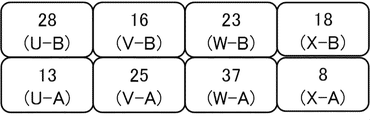
- FIG. 9 is a diagram illustrating an example of an extracted conclusion record group 532 in which conclusion records are collected for each premise record having the same premise attribute value with respect to the extraction record group 530 illustrated in FIG.
- the unique identifier for example, “1”
- the premise attribute value and the conclusion attribute value for example, “UA”
- a conclusion record corresponding to a premise record whose premise attribute value is “U” has unique identifiers “1”, “13”, “27”, “39”, “14”, The records are “26”, “28”, “29”, “38”, “11”, and “12”.
- the anonymous group generation unit 120 may extract only the above-described conclusion record.
- the anonymous group generation unit 120 may refer to the premise record of the data set 510 based on the unique identifier of the extracted conclusion record in the subsequent processing.
- the anonymous group generation unit 120 compares the number of conclusion records having the premise attribute values “U”, “V”, and “W” with the conclusion attribute values “A”, and the minimum value is 2. judge.
- the anonymous group generation unit 120 extracts two sets of the premise record and the conclusion record for each premise record having the same premise attribute value. For example, a set of a premise record whose premise attribute value is “U” and a premise record whose conclusion attribute value is “A” is a unique identifier of “1”, “13”, “27”, and “39”. ”Of the premise record and the conclusion record. Therefore, for example, the anonymous group generation unit 120 extracts a pair of a premise record and a conclusion record having unique identifiers “1” and “13”.
- FIG. 10 is a diagram illustrating an example of the common partial record group 540, with each of the premise record and the conclusion record forming a pair as records included in the common partial premise record group 541 and the common partial conclusion record group 542, respectively.
- the common partial record group 540 includes a set of a premise record and a conclusion record extracted from the extraction record group 530 illustrated in FIG.
- the premise record and the conclusion record are extracted so that a conclusion record group corresponding to each premise record having the same premise attribute value is common.
- the common part record group 540 includes the premise record and the conclusion record extracted as described above as the common part premise record group 541 and the common part conclusion record group 542, respectively.
- FIG. 11 is a diagram illustrating an example of the common partial conclusion record group 542 in which conclusion records are collected for each premise record having the same premise attribute value with respect to the common partial record group 540 illustrated in FIG.
- the number of conclusion records having the conclusion attribute value “A” corresponding to the respective assumption records having the assumption attribute value “U”, “V”, and “W” is 2 One.
- FIG. 12 is a diagram showing the common part record group 540 of FIG. 10 as the conclusion sort record group 550 in a state where the common part record group 540 is sorted by the conclusion attribute of the common part premise record group 541.
- the conclusion sort record group 550 shown in FIG. 12 is not generated by the anonymization apparatus 100 but is shown for convenience of explanation.
- FIG. 12 shows the conclusion sort as a record in which each of the pair of the premise record and the conclusion record forming a pair sorted in the conclusion attribute is included in each of the conclusion sort premise record group 551 and the conclusion sort conclusion record group 552.
- a record group 550 (common partial record group 540) is shown.
- FIG. 13 shows a conclusion sort conclusion record group 552 (see FIG. 12) in which the common partial conclusion record group 542 shown in FIG. 10 is sorted into the conclusion sort conclusion record group 552 shown in FIG. It is a figure showing an example of a common partial conclusion record group 542).
- a conclusion record having a conclusion attribute value “A” has two sets of combinations corresponding to the assumption records having the assumption attribute values “U”, “V”, and “W” (hereinafter, “ , Referred to as combination C).
- These two combinations C are, for example, combinations of unique identifiers “1”, “2”, and “32” and combinations of “13”, “25”, and “37”.
- the combination C may be any combination as long as it is a combination corresponding to each of the premise records whose premise attribute values are “U”, “V”, and “W”. That is, the combination C is a combination corresponding to the premise record satisfying the first l-diversity.
- the anonymous group generation unit 120 uses the common partial conclusion record group 542 to generate an anonymous group conclusion record group 562 including conclusion records grouped into conclusion anonymous groups satisfying the second l-diversity. Generate.
- the anonymous group generation unit 120 selects a combination C with a conclusion attribute value “B” and a combination C with a conclusion attribute value “A” from the conclusion sort conclusion record group 552, and generates a conclusion anonymous group.
- a group identifier (for example, “201”) is assigned to this.
- the anonymous group generation unit 120 may select the combination C so that the remaining number of combinations C is as uniform as possible for each conclusion attribute value.
- FIG. 14 is a diagram illustrating an example of the anonymous group conclusion record group 562 generated using the common partial conclusion record group 542.
- the premise record group enclosed with the dotted-line frame in a figure is described in order to make the relationship between a conclusion record and a premise record easy to understand, and is not included in the anonymous group conclusion record group 562.
- FIG. 15 is a diagram illustrating an example of the anonymous group conclusion record group 562 in which conclusion records are grouped for each group identifier with respect to the anonymous group conclusion record group 562 illustrated in FIG.
- anonymous group generation unit 120 assigns an attribute value of a quasi-identifier other than the conclusion attribute (here, an age attribute value). ) Is generalized (converted to the same value) to generate a conclusion anonymous group data set 612 shown in FIG. 7 and output as a conclusion anonymous group data set (second anonymous group data set).
- the conclusion anonymous group data set 612 shown in FIG. 7 is sorted by group identifier, the conclusion records of the conclusion anonymous group data set output by the anonymous group generation unit 120 may be in any arrangement order.
- the anonymous group generation unit 120 does not need to generalize the attribute values of the quasi-identifiers other than the conclusion attributes (here, the attribute values of the medical care month and the age) (for example, the conclusion record includes these attributes). If not, the anonymous group conclusion record group 562 may be output as it is as a conclusion anonymous group data set.
- premise anonymous group data set consisting of premise records
- the premise anonymous group data set is not limited to the following method, and may be generated by another anonymization device or method.
- the anonymous group generation unit 120 generates and outputs a premise anonymous group data set 611 shown in FIG. 6 using the common partial premise record group 541 shown in FIG.
- the anonymous group generation unit 120 combines the premise records corresponding to the premise attribute values of the number of types of the first l-diversity from the top of the common partial premise record group 541 (for example, the unique identifier is “1”). ”,“ 2 ”and“ 32 ”combination of the premise records) are sequentially extracted. And the anonymous group production
- generation part 120 provides a group identifier (for example, "101") to each of the extracted combination. That is, each of the extracted combinations forms a premise anonymous group.
- the anonymous group generation unit 120 generalizes (converts to the same value) the attribute values of the quasi-identifiers other than the premise attributes (here, the age attribute values) of the premise records to which the same group identifier is assigned. )
- the anonymous group generation unit 120 generates the premise anonymous group data set 611 shown in FIG. 6 using the group identifier of the conclusion record having the same unique identifier as the related identifier.
- FIG. 16 is a diagram illustrating a hardware configuration of a computer 700 that realizes the anonymization apparatus 100 according to the present embodiment.
- the computer 700 includes a CPU (Central Processing Unit) 701, a storage unit 702, a storage device 703, an input unit 704, an output unit 705, and a communication unit 706. Furthermore, the computer 700 includes a recording medium (or storage medium) 707 supplied from the outside.
- the recording medium 707 may be a non-volatile recording medium that stores information non-temporarily.
- the CPU 701 controls the overall operation of the computer 700 by operating an operating system (not shown).
- the CPU 701 reads a program and data from a recording medium 707 mounted on the storage device 703, for example, and writes the read program and data to the storage unit 702.
- the program is, for example, a program that causes the computer 700 to execute an operation of a flowchart shown in FIG.
- the CPU 701 executes various processes as the record extraction unit 110 and the anonymous group generation unit 120 shown in FIG. 1 according to the read program and based on the read data.
- the CPU 701 may download a program or data to the storage unit 702 from an external computer (not shown) connected to a communication network (not shown).
- the storage unit 702 stores programs and data.
- the storage unit 702 may store a data set 510, an extracted record group 530, a common partial record group 540, an anonymous group conclusion record group 562, a premise anonymous group data set 611, a conclusion anonymous group data set 612, and the like.
- the storage unit 702 may include a history information storage unit 500 and an anonymized information storage unit 600.
- the storage device 703 is, for example, an optical disk, a flexible disk, a magnetic optical disk, an external hard disk, and a semiconductor memory, and includes a recording medium 707.
- the storage device 703 (recording medium 707) stores the program in a computer-readable manner.
- the storage device 703 may store data.
- the storage device 703 may store the same data as the storage unit 702.
- the storage device 703 may include a history information storage unit 500 and an anonymized information storage unit 600.
- the input unit 704 is realized by, for example, a mouse, a keyboard, a built-in key button, and the like, and is used for an input operation.
- the input unit 704 is not limited to a mouse, a keyboard, and a built-in key button, and may be a touch panel, an accelerometer, a gyro sensor, a camera, or the like.
- the output unit 705 is realized by a display, for example, and is used for confirming the output.
- the communication unit 706 realizes an interface with the outside.
- the communication unit 706 is included as part of the record extraction unit 110 and the anonymous group generation unit 120.
- the functional unit block of the anonymization device 100 shown in FIG. 1 is realized by the computer 700 having the hardware configuration shown in FIG.
- the means for realizing each unit included in the computer 700 is not limited to the above.
- the computer 700 may be realized by one physically coupled device, or may be realized by two or more physically separated devices connected by wire or wirelessly and by a plurality of these devices. .
- the recording medium 707 in which the above-described program code is recorded may be supplied to the computer 700, and the CPU 701 may read and execute the program code stored in the recording medium 707.
- the CPU 701 may store the code of the program stored in the recording medium 707 in the storage unit 702, the storage device 703, or both. That is, the present embodiment includes an embodiment of a recording medium 707 that stores a program (software) executed by the computer 700 (CPU 701) temporarily or non-temporarily.
- FIG. 17 is a flowchart showing the operation of the present embodiment. Note that the processing according to this flowchart may be executed based on the above-described program control by the CPU. Further, the step name of the process is described by a symbol as in S601.
- the record extraction unit 110 generates a transition vector (S601).
- the record extraction unit 110 calculates the similarity between transition vectors (S602).
- the record extraction unit 110 sets a premise record including a premise attribute value corresponding to the transition vector of the number of types of the first l-diversity in the descending order of the similarity vector, and the premise record. And the conclusion record forming the above are extracted and output as the extracted record group 530 (S603).
- the anonymous group generation unit 120 reads, from the extracted record group 530, for each premise record having the same premise attribute value, “the number of conclusion records having the same conclusion attribute value corresponding to those premise records is common”. Thus, a set of a premise record and a conclusion record is extracted as the common partial record group 540 (S604).
- the anonymous group generation unit 120 generates an anonymous group conclusion record group 562 including conclusion records grouped into conclusion anonymous groups satisfying the second l-diversity using the common partial conclusion record group 542. (S606).
- the anonymous group generation unit 120 generalizes the attribute values of the quasi-identifiers other than the conclusion attribute for each group of the anonymous group conclusion record group 562, generates a conclusion anonymous group data set 612, and outputs the result as a conclusion anonymous group. (S607).
- the anonymous group generation unit 120 groups the premise records.
- the anonymous group generation unit 120 sequentially extracts the combination of the premise records corresponding to the premise attribute value of the number of types of the first l-diversity from the top of the common partial premise record group 541, and groups each of the extracted combinations.
- An identifier is assigned (S608).
- the premise records may be grouped by using the premise records as conclusion records and other record groups as premise records.
- the anonymous group generation unit 120 generalizes the attribute values of the quasi-identifiers other than the premise attributes of the premise records to which the same group identifier is assigned (S609).
- the anonymous group generation unit 120 generates and outputs the premise anonymous group data set 611 shown in FIG. 6 using the group identifier of the conclusion record having the same unique identifier as the related identifier (S610).
- the anonymous group generation unit 120 corresponds to the premise anonymous group data set (first anonymous group data set) and the conclusion anonymous group data set (second anonymous group data set) output in the operation shown in FIG. Add remaining records that can be added so as not to cause abstraction.
- the remaining records are conclusion records having other unique identifiers other than the unique identifiers of the conclusion records included in the conclusion anonymous group data set.
- FIG. 18 is a diagram illustrating an example of a remaining record 570 obtained by removing the conclusion anonymous group data set 612 illustrated in FIG. 7 from the conclusion record portion 522 illustrated in FIG.
- the anonymous group generation unit 120 adds a set of a plurality of premise records and conclusion records that meet the following conditions for a specific conclusion anonymous group.
- the first condition is that the plurality of premise records have the same premise attribute values that are different from the premise attribute values of any premise records that form a pair with the conclusion records included in the specific conclusion anonymous group.
- the second condition is that the plurality of conclusion records include all kinds of the premise attribute values of the premise records included in the specific conclusion anonymous group.
- the anonymous group generation unit 120 selects a group having a group identifier “201” as a specific conclusion anonymous group after step S606 illustrated in FIG.
- the anonymous group generation unit 120 leaves a conclusion record corresponding to the premise attribute values other than the premise attribute values “U”, “V”, and “W” and having the conclusion attribute values “A” and “B”. Extract from record 570.
- the anonymous group generation unit 120 assigns a group identifier of “201” to the extracted conclusion record.
- the anonymous group generation unit 120 executes the processing after step S607 shown in FIG. 7 including the extracted conclusion record and the corresponding premise record.
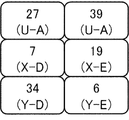
- FIG. 19 is a diagram schematically showing an example of the conclusion anonymous group formed as described above and having the group identifier “201”. As shown in FIG. 19, there are eight types of correspondence relationships for each unique identifier before anonymization. Further, when these conclusion records are all grouped under the same group identifier, that is, when the premise attribute value and the conclusion attribute value can be arbitrarily exchanged, there are still eight types of correspondences. That is, no correspondence abstraction occurs.
- the anonymous group generation unit 120 may add a set of a plurality of premise records and conclusion records that meet the following conditions for a specific conclusion anonymous group.
- the first condition is that the plurality of conclusion records have the same conclusion attribute value that is different from any of the conclusion attribute values of the conclusion records included in the particular conclusion anonymous group.
- the second condition is that each of the plurality of premise records includes all types of premise attribute values of the premise records corresponding to the conclusion records included in the specific conclusion anonymous group.
- FIG. 20 is a diagram schematically showing an example of the conclusion anonymous group formed based on the above-described conditions.
- the anonymous group generation unit 120 can make anonymization satisfying each of the first l-diversity and the second l-diversity from the remaining records, and a conclusion composed of a premise anonymous group consisting of premise records and a conclusion record Generate each anonymous group.
- the remaining record is a conclusion record having a unique identifier other than the unique identifier of the conclusion record included in the conclusion anonymous group data set output in the operation shown in FIG.
- FIG. 21 is a diagram showing an example of the conclusion anonymous group generated from the remaining record 570.
- the conclusion anonymous group generated as described above satisfies the second l-diversity
- the anonymous group including the premise records corresponding to the conclusion records is the first l-diversity.
- -Satisfy diversity there are five types of correspondences for each unique identifier before anonymization, whereas there are nine types of correspondences when grouped. Therefore, an abstraction of correspondence occurs.
- the record extraction unit 110 and the anonymous group generation unit 120 use the record whose attribute value for the medical care month is “April” as the premise record (first record), and the attribute value for the medical care month is “May. ”As a conclusion record (second record).
- the record extraction unit 110 and the anonymous group generation unit 120 use the record with the attribute value of “May” as the premise record (first record) and the record with the attribute value of the month as “April”. It is good also as a conclusion record (2nd record).
- the correspondence relationship may be a correspondence relationship in an arbitrary direction regardless of the physical property of the attribute.
- the record extraction unit 110 and the anonymous group generation unit 120 perform record extraction and selection in each operation in the order shown in view of only the relationship between the premise attribute value and the conclusion attribute value. I did it. However, the record extraction unit 110 and the anonymous group generation unit 120 perform record extraction and selection in each operation in consideration of anonymization of other attributes (for example, generalization of age) (for example, attribute values of age) (Records close to each other may be in the same group).
- attributes for example, generalization of age
- attribute values of age for example, attribute values of age
- step S608 to step S610 shown in FIG. 7 may be executed at any timing after step S604 while keeping the order.
- the anonymous group generation unit 120 may output the premise anonymous group data set and the conclusion anonymous data set separately, or may collectively output them as one data set.
- the anonymous group generation unit 120 may associate the group identifier of the corresponding premise record with the conclusion record of the conclusion anonymous group data set as a related identifier. In this case, the anonymous group generation unit 120 may not associate the related identifier with the premise record.
- the anonymous group generation unit 120 may match the group identifiers of the premise record of the premise anonymous group and the conclusion record of the conclusion anonymous group in correspondence. In this case, the anonymous group generation unit 120 may not associate the related identifier with the premise record and the conclusion record.
- the first effect of the present embodiment described above is that when anonymization is performed so that a data set including information of “correspondence between records having the same unique identifier” satisfies l-diversity, It is possible to prevent the correspondence information from becoming too ambiguous.
- the record extraction unit 110 extracts the premise record and the conclusion record based on the fact that the first and second l-diversity can be satisfied and the abstraction level of the correspondence relationship.
- the anonymous group generation unit 120 refers to the premise record extracted by the record extraction unit 110 and satisfies the first l-diversity and the second l-diversity from the extracted conclusion record.
- a conclusion anonymous record is generated by extracting a conclusion record as possible.
- the second effect of the present embodiment described above is that a data set including information on “correspondence between records having the same unique identifier” has l-diversity of l value different between the premise record and the conclusion record. Even when anonymization is performed so as to satisfy, it is possible to prevent the correspondence information from becoming too ambiguous.
- the reason is the same as the reason for the first effect.
- the third effect of the present embodiment described above is that the records included in the data set can be used more effectively.
- the reason is that the anonymous group generation unit 120 adds the remaining records that can be added to the premise anonymous group data set and the conclusion anonymous group data set so that the abstraction of the correspondence relationship does not occur. .
- the fourth effect of the present embodiment described above is that the records included in the data set can be used more effectively.
- the reason is that the anonymous group generation unit 120 generates each of the premise anonymous group and the conclusion anonymous group from the remaining records.
- the fifth effect of the present embodiment described above is that the data set can be anonymized so that the utility value is not lowered.
- the reason is that the record extraction unit 110 and the anonymous group generation unit 120 perform record extraction and selection in each operation in consideration of anonymization of other attributes.
- FIG. 22 is a block diagram showing a configuration of the anonymization apparatus 200 according to the second embodiment of the present invention.
- the components shown in FIG. 22 are not hardware-based components but functional-unit components. Note that the components shown in FIG. 22 may be components in hardware units or components divided into functional units of a computer device. Here, the components shown in FIG. 1 will be described as components divided into functional units of the computer apparatus.
- the anonymization device 200 further includes a transition vector extraction unit 230 as compared with the anonymization device 100 of the first embodiment, and replaces the record extraction unit 110 with a record extraction unit. 210.
- the transition vector extraction unit 230 extracts a combination of the two transition vectors as a calculation target when there are two or more types of co-occurrence of elements between the two transition vectors.
- the transition vector extraction unit 230 handles as processing are as follows.
- T tr A (0.3, 0.2, 0.2, 0.0, 0.0, 0.0, 0.0, 0.0, 0.1, 0.1, 0.0, 0.2)
- T tr B (0.2, 0.0, 0.2, 0.0, 0.0, 0.0, 0.0, 0.0, 0.1, 0.3, 0.2)
- T tr C (0.0, 0.0, 0.0, 0.0, 0.0, 0.0, 0.0, 0.1, 0.1, 0.2, 0.0)
- T tr D (0.0, 0.0, 0.1, 0.0, 0.2, 0.1, 0.1, 0.2, 0.2, 0.0, 0.0)
- T tr E (0.0, 0.0, 0.2, 0.1, 0.2, 0.0, 0.0, 0.0, 0.0, 0.0, 0.0, 0.0, 0.0)
- T tr F (0.0, 0.0, 0.0, 0.0, 0.0, 0.1, 0.2, 0.0, 0.0, 0.0, 0.0, 0.0, 0.0)
- the transition vector extraction unit 230 does not extract the combination of the transition vector tr A and the transition vector tr E as a calculation target.
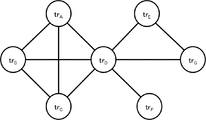
- FIG. 23 is a diagram illustrating an example of a combination of two transition vectors extracted by the transition vector extraction unit 230.
- each transition vector is a node, and a combination of two vectors to be calculated is indicated by an edge.
- the transition vector extraction unit 230 generates, for example, the following calculation target information.
- the transition vector extraction unit 230 has more than “l ⁇ 1” types of the first l-diversity as the other transition vectors whose similarity to the transition vector is not “0”. In this case, a combination of the transition vector and another transition vector is extracted as a calculation target.
- the transition vector extraction unit 230 calculates the similarity between the transition vectors by taking a logical product between the elements corresponding to the transition vectors. Is determined. That is, when all of the logical products between the elements are “0”, the transition vector extraction unit 230 determines that the similarity between the transition vectors is “0”. If any of the logical products between the elements is not “0”, the transition vector extraction unit 230 determines that the similarity between the transition vectors is not “0”.
- the transition vector extraction unit 230 handles a plurality of transition vectors to be handled by the process as shown in the first extraction operation.
- transition vector extraction unit 230 extracts a combination of the transition vector tr A , the transition vector tr B, and the transition vector tr C as a calculation target.
- transition vector extraction unit 230 does not extract a combination of the transition vector tr F and another transition vector as a calculation target.
- FIG. 24 is a diagram illustrating an example of a combination of two transition vectors extracted by the transition vector extraction unit 230.
- each transition vector is a node, and a combination of two vectors to be calculated is indicated by an edge.
- the transition vector extraction unit 230 generates, for example, the following calculation target information.
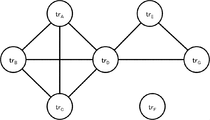
- FIG. 25 is a schematic diagram showing whether or not the similarity between transition vectors to be processed by the transition vector extraction unit 230 is “0”.
- FIG. 25 shows each transition vector as a node, and an edge indicates that the similarity between two transition vectors is not “0”.
- the transition vector extraction unit 230 determines the three transition vectors tr A , transition vector tr B, and transition vector tr C between the transition vectors. Since none of the similarities is “0” (there is an edge), a combination between these transition vectors is extracted as a calculation target. Further, since the transition vector tr D , the transition vector tr E, and the transition vector tr F have the similarity between the transition vector tr D and the transition vector tr F being “0”, the transition vector extraction unit 230 The combinations between the transition vectors are not extracted as calculation targets.
- the transition vector extraction unit 230 generates, for example, the following calculation target information.
- the transition vector extraction unit 230 may execute the first, second, and third extraction operations described above alone or in any combination.
- the record extraction unit 210 receives the extracted result from the transition vector extraction unit 230.
- the record extraction unit 210 outputs the generated transition vector to the transition vector extraction unit 230 subsequent to step S601 shown in FIG. Then, when the record extraction unit 210 receives the extracted result from the transition vector extraction unit 230, the record extraction unit 210 performs the operations after step S602.
- the record extraction unit 210 may output the transition vector excluding the used transition vector to the transition vector extraction unit 230 subsequent to step S603 shown in FIG. In this case, when the record extraction unit 210 receives the extracted result from the transition vector extraction unit 230, the record extraction unit 210 may execute the subsequent operations from step S602 again.
- the used transition vector is a transition vector corresponding to the premise record extracted in step S603.
- FIG. 26 is a diagram illustrating an example of transition vectors excluding used transition vectors output from the record extraction unit 210.
- the record extraction unit 210 uses three transition vectors tr A , transition vectors tr B, and transition vectors tr C in step S603 of FIG.
- the record extraction unit 210 obtains the transition vector tr D , the transition vector tr E , the transition vector tr G, and the transition vector tr H excluding the three transition vectors tr A , transition vector tr B, and transition vector tr C.
- the data is output to the transition vector extraction unit 230.
- FIG. 27 is a diagram illustrating combinations between transition vectors that the transition vector extraction unit 230 extracts as the calculation target for the transition vectors received from the record extraction unit 210.
- the transition vector extraction unit 230 generates the following calculation target information.
- transition vector extraction unit 230 generates calculation target information indicating the calculation target of similarity for a plurality of transition vectors, and the record extraction unit 210 calculates the similarity based on the calculation target information. Because. That is, the calculation process is not executed for the unnecessary similarity.
- the record extraction unit 210 outputs the transition vector excluding the used transition vector to the transition vector extraction unit 230 and acquires the calculation target information, it is possible to further improve the anonymization efficiency. Become.
- each component described in each of the above embodiments does not necessarily need to be an independent entity.
- each component may be realized as a module with a plurality of components.
- each component may be realized by a plurality of modules.
- Each component may be configured such that a certain component is a part of another component.
- Each component may be configured such that a part of a certain component overlaps a part of another component.
- each component and a module that realizes each component may be realized by hardware if necessary. Moreover, each component and the module which implement
- the program is provided by being recorded on a non-volatile computer-readable recording medium such as a magnetic disk or a semiconductor memory, and is read by the computer when the computer is started up.
- the read program causes the computer to function as a component in each of the above-described embodiments by controlling the operation of the computer.
- a plurality of operations are not limited to being executed at different timings. For example, another operation may occur during the execution of a certain operation, or the execution timing of a certain operation and another operation may partially or entirely overlap.
- each of the embodiments described above it is described that a certain operation becomes a trigger for another operation, but the description does not limit all relationships between the certain operation and other operations. For this reason, when each embodiment is implemented, the relationship between the plurality of operations can be changed within a range that does not hinder the contents.
- the specific description of each operation of each component does not limit each operation of each component. For this reason, each specific operation
- movement of each component may be changed in the range which does not cause trouble with respect to a functional, performance, and other characteristic in implementing each embodiment.
- Anonymization apparatus 101 Anonymization apparatus 110 Record extraction part 120 Anonymity group production
Landscapes
- Engineering & Computer Science (AREA)
- Theoretical Computer Science (AREA)
- Physics & Mathematics (AREA)
- Databases & Information Systems (AREA)
- General Engineering & Computer Science (AREA)
- General Physics & Mathematics (AREA)
- Health & Medical Sciences (AREA)
- General Health & Medical Sciences (AREA)
- Bioethics (AREA)
- Software Systems (AREA)
- Computer Security & Cryptography (AREA)
- Computer Hardware Design (AREA)
- Data Mining & Analysis (AREA)
- Medical Informatics (AREA)
- Computational Linguistics (AREA)
- Probability & Statistics with Applications (AREA)
- Mathematical Physics (AREA)
- Fuzzy Systems (AREA)
- Information Retrieval, Db Structures And Fs Structures Therefor (AREA)
Description
図1は、本発明の第1の実施形態に係る匿名化装置100の構成を示すブロック図である。尚、匿名化装置(匿名化装置100)は、一般的に情報処理装置とも呼ばれる。
履歴情報記憶部500は、図3に示すような、データセット510を記憶する。図3に示すように、例えば、データセット510は、固有識別子と、診療月、年齢及び病名の属性とを含む、複数のレコードから成る履歴情報である。また、データセット510は、同一の固有識別子を有する、「診療月」の属性値が「4月」のレコード(前提レコード)と「診療月」の属性値が「5月」のレコード(結論レコード)との間の対応関係の情報を含んでいる。
匿名化装置100は、データセット510の中から、複数の結論レコード(結論レコード群、第1のレコード群とも呼ばれる)を抽出し、更に対応関係の抽象度に基づいて、その結論レコード群から複数の結論レコードを抽出する。ここで、その結論レコード群を構成するその複数の結論レコードは、その結論レコード群において第2のl-多様性を充足可能な複数の結論レコードであり、かつ、それらの結論レコードのそれぞれと組を成す複数の前提レコード(前提レコード群、第1のレコード群とも呼ばれる)において第1のl-多様性を充足可能であるような、複数の結論レコードである。
匿名化情報記憶部600は、匿名化装置100が出力する、前提匿名グループデータセット及び結論匿名グループデータセットを含む、匿名グループデータセットを記憶する。
レコード抽出部110は、遷移ベクトルを生成する。例えば、その遷移ベクトルは、前提レコードに含まれる第1の属性(以下、前提属性と呼ぶ)の属性値毎の、結論レコードに含まれる第2の属性(以下、結論属性と呼ぶ)の各属性値が、その前提レコードと組を成す結論レコードに出現する頻度を要素とするベクトルである。換言すると、その遷移ベクトルは、前提属性の属性値毎の、結論属性の各属性値の出現頻度を要素とするベクトルである。ここで、前提属性は、前提レコードに含まれる第1の属性である。また、結論属性は、結論レコードに含まれる第2の属性である。その出現頻度は、結論属性の各属性値が、その前提レコードと組みを成す、その結論レコードに出現する頻度前提レコードと組みをなす。
同様にして、レコード抽出部110は、属性値の「V」、「W」、「X」、「Y」及び「Z」のそれぞれの、遷移ベクトルtrV、trW、trX、trY及びtrZを以下のとおり生成する。
trW=(0.22,0.33,0.33,0.11,0.00,0.00)T
trX=(0.20,0.20,0.00,0.20,0.40,0.00)T
trY=(0.00,0.00,0.00,0.67,0.33,0.00)T
trZ=(0.00,0.00,0.00,0.00,0.00,1.00)T
次に、レコード抽出部110は、これらの遷移ベクトル間の類似度を算出する。レコード抽出部110は、それらの遷移ベクトルのいずれか2つの遷移ベクトルが、結論レコード群において第2のl-多様性を充足可能である場合、それらの遷移ベクトル同士の類似度として、それらの遷移ベクトルの内積を算出する。尚、レコード抽出部110は、ベクトル間の類似性を表現する類似度、ベクトル間の非類似性を表現する距離であれば、内積に限らず、例えばユークリッド距離などを距離として算出してもよい。また、レコード抽出部110は、それらの遷移ベクトルのいずれか2つの遷移ベクトルが、結論レコード群において第2のl-多様性を充足可能でない場合、それらの遷移ベクトル同士の類似度を「0」とする。
sim(U、X)=0.16
sim(U、Y)=0.12
sim(U、Z)=0.00
sim(V、W)=0.28
sim(V、X)=0.16
sim(V、Y)=0.07
sim(V、Z)=0.00
sim(W、X)=0.13
sim(W、Y)=0.07
sim(W、Z)=0.00
sim(X、Y)=0.27
sim(X、Z)=0.00
sim(Y、Z)=0.00
次に、レコード抽出部110は、類似度の大きい遷移ベクトルの順(即ち抽象度が小さい順)に、第1のl-多様性の種類数のその遷移ベクトルに対応する、前提属性値を含む前提レコードと、その前提レコードと組を成す結論レコードと、を抽出する。尚、「第1のl-多様性の種類数のその遷移ベクトルに対応する」は、「対応関係を持つ前提レコード群(第2のレコードと組を成す第1のレコードから成る、第1のレコード群)において第1のl-多様性を充足可能である」と言われることもある。
匿名グループ生成部120は、抽出レコード群530から、前提属性値が同一の前提レコード毎に、前提レコードと結論レコードとの組を抽出する。その抽出の際、匿名グループ生成部120は、その前提属性値が同一の前提レコードに対応する、結論属性値が同一の結論レコードの数が共通になるように、その前提レコードとその結論レコードとの組を抽出する。即ち、匿名グループ生成部120は、その前提属性値が同一の前提レコード毎に対応する、その結論属性値が同一のその結論レコードの数の最小値の分だけ、前提レコードと結論レコードとの組を抽出する。
匿名グループ生成部120は、図17に示す動作において出力された前提匿名グループデータセット(第1の匿名グループデータセット)と結論匿名グループデータセット(第2の匿名グループデータセット)とに、対応関係の抽象化が発生しないように追加可能な、残レコードを追加する。ここで、その残レコードは、その結論匿名グループデータセットに含まれる結論レコードの有する固有識別子以外の、他の固有識別子を有する結論レコードである。
匿名グループ生成部120は、残レコードから、第1のl-多様性及び第2のl-多様性のそれぞれを充足する匿名化が可能な、前提レコードからなる前提匿名グループ及び結論レコードからなる結論匿名グループのそれぞれを生成する。ここで、その残レコードは、図17に示す動作において出力された結論匿名グループデータセットに含まれる結論レコードの有する固有識別子以外の、固有識別子を有する結論レコードである。
上述の説明においては、レコード抽出部110及び匿名グループ生成部120は、診療月の属性値が「4月」のレコードを前提レコード(第1のレコード)とし、診療月の属性値が「5月」のレコードを結論レコード(第2のレコード)として、処理した。しかし、レコード抽出部110及び匿名グループ生成部120は、診療月の属性値が「5月」のレコードを前提レコード(第1のレコード)とし、診療月の属性値が「4月」のレコードを結論レコード(第2のレコード)としてもよい。
上述の説明においては、レコード抽出部110及び匿名グループ生成部120は、各動作におけるレコードの抽出及び選択を、前提属性値と結論属性値との関係のみを考慮して、図示されている順番で行うようにした。しかし、レコード抽出部110及び匿名グループ生成部120は、他の属性の匿名化(例えば、年齢の汎化)を考慮して、各動作におけるレコードの抽出及び選択を行う(例えば、年齢の属性値が近いレコードを同一のグループにする)ようにしてもよい。
図7に示すステップS608からステップS610までの処理のそれぞれは、その順番を守った上で、ステップS604以降の、任意のタイミングで実行してもよい。
匿名グループ生成部120は、前提匿名グループデータセットと結論匿名データセットとを別々に出力してもよいし、纏めて1つのデータセットとして出力してもよい。
匿名グループ生成部120は、結論匿名グループデータセットの結論レコードに対して、対応する前提レコードのグループ識別子を、関連識別子として関連付けてもよい。この場合、匿名グループ生成部120は、前提レコードに関連識別子を関連付けないようにしてもよい。
匿名グループ生成部120は、対応関係にある前提匿名グループの前提レコードと結論匿名グループの結論レコードとについてグループ識別子を一致させてもよい。この場合、匿名グループ生成部120は、前提レコード及び結論レコードに関連識別子を関連付けないようにしてもよい。
次に、本発明の第2の実施形態について図面を参照して詳細に説明する。以下、本実施形態の説明が不明確にならない範囲で、前述の説明と重複する内容については説明を省略する。
遷移ベクトル抽出部230は、複数の遷移ベクトルについての類似度の算出対象を示す、算出対象情報を生成する。そして、遷移ベクトル抽出部230は、その算出対象情報をレコード抽出部210に出力する。
遷移ベクトル抽出部230は、2つの遷移ベクトル間に、第2のl-多様性のl種類以上の、要素の共起が存在する場合、その2つの遷移ベクトルの組み合わせを算出対象として抽出する。
trB=(0.2, 0.0, 0.2, 0.0, 0.0, 0.0, 0.0, 0.0, 0.1, 0.3, 0.2)T
trC=(0.0, 0.0, 0.0, 0.0, 0.0, 0.0, 0.0, 0.1, 0.1, 0.2, 0.0)T
trD=(0.0, 0.0, 0.1, 0.0, 0.2, 0.1, 0.1, 0.2, 0.2, 0.0, 0.0)T
trE=(0.0, 0.0, 0.2, 0.1, 0.2, 0.0, 0.0, 0.0, 0.0, 0.0, 0.0)T
trF=(0.0, 0.0, 0.0, 0.0, 0.0, 0.1, 0.2, 0.0, 0.0, 0.0, 0.0)T
trG=(0.0, 0.0, 0.1, 0.2, 0.2, 0.0, 0.0, 0.0, 0.0, 0.0, 0.0)T
この場合、遷移ベクトルtrAと遷移ベクトルtrBとは、1、3、9及び11番目の各要素が共起している。従って、遷移ベクトル抽出部230は、遷移ベクトルtrAと遷移ベクトルtrBとの組み合わせを算出対象として抽出する。
<<<第二の抽出操作>>>
遷移ベクトル抽出部230は、ある遷移ベクトルについて、その遷移ベクトルとの類似度が「0」ではない他の遷移ベクトルが、第1のl-多様性のl種類の「l-1」個以上存在する場合、その遷移ベクトルと他の遷移ベクトルとの組み合わせを算出対象として抽出する。
<<<第三の抽出操作>>>
遷移ベクトル抽出部230は、第1のl-多様性のl個のある遷移ベクトルについて、それらの遷移ベクトル間の類似度のいずれもが、「0」ではない場合、それらの遷移ベクトル間の組み合わせを算出対象として抽出する。
また、同様にして、第1のl-多様性のlが「4」の場合、遷移ベクトル抽出部230は、以下に示す算出対象情報を生成する。
以上が、算出対象情報に含まれる算出対象を抽出する操作の説明である。
レコード抽出部210は、生成した遷移ベクトルを遷移ベクトル抽出部230に出力する。そして、レコード抽出部210は、遷移ベクトル抽出部230からその抽出した結果を受け取る。
上述した本実施形態における第1の効果は、第1の実施形態の効果に加えて、効率よく匿名化することが可能になる点である。
101 匿名化システム
110 レコード抽出部
120 匿名グループ生成部
210 レコード抽出部
230 遷移ベクトル抽出部
500 履歴情報記憶部
510 データセット
521 前提レコード分
522 結論レコード分
530 抽出レコード群
531 抽出前提レコード群
532 抽出結論レコード群
540 共通部分レコード群
541 共通部分前提レコード群
542 共通部分結論レコード群
550 結論ソートレコード群
551 結論ソート前提レコード群
552 結論ソート結論レコード群
562 匿名グループ結論レコード群
570 残レコード
600 匿名化情報記憶部
611 前提匿名グループデータセット
612 結論匿名グループデータセット
700 コンピュータ
701 CPU
702 記憶部
703 記憶装置
704 入力部
705 出力部
706 通信部
707 記録媒体
5321 結論レコード
Claims (14)
- 固有識別子及び少なくとも1つの第1の属性を含む第1のレコードと、前記固有識別子と同一の固有識別子及び少なくとも1つの第2の属性を含む第2のレコードと、の組が複数件含まれるデータセットの中から、複数の前記第2のレコードを含む第2のレコード群において第2のl-多様性を充足可能であること、前記第2のレコード群に含まれる第2のレコードと組を成す前記第1のレコードから成る前記第1のレコード群において第1のl-多様性を充足可能であること、及び前記第1のレコードと前記第2のレコードとの間に存在する対応関係の抽象度に基づいて、複数の前記第2のレコードを抽出するレコード抽出手段と、
前記レコード抽出手段によって抽出された前記第2のレコードからなる匿名グループデータセットを、前記匿名グループデータセットにおいて前記第2のl-多様性を充足可能であり、かつ前記匿名グループデータセットに含まれる第2のレコードと組を成す前記第1のレコードからなる第1のレコード群において前記第1のl-多様性を充足可能であるように、生成し、出力する匿名グループ生成手段と、を備える
情報処理装置。 - 前記匿名グループ生成手段は、更に、前記匿名グループデータセット及び前記匿名グループデータセットに含まれる第2のレコードのそれぞれと組を成す複数の前記第1のレコードが匿名化された前提匿名グループデータセットに対し、前記匿名グループデータセットに含まれる第2のレコードと前記前提匿名グループデータセットに含まれる第1のレコードとの前記対応関係を示す情報を付与して出力する
ことを特徴とする請求項1記載の情報処理装置。 - 前記レコード抽出手段は、
前記第1のレコードに含まれる前記第1の属性の属性値毎の、前記第2のレコードに含まれる第2の属性の各第2の属性値が、前記第1のレコードと前記組を成す前記第2のレコードに出現する頻度を要素とする遷移ベクトルを生成し、
2つの前記遷移ベクトルのそれぞれに対応する前記第2のレコードのそれぞれ同士で同一である前記第2の属性の第2の属性値の数が、前記第2のl-多様性の種類数未満である前記遷移ベクトル間の類似度を最低値の0として、前記遷移ベクトル間の類似度を算出し、
前記類似度が相対的に大きい順の、前記第1のl-多様性の種類数の前記遷移ベクトルのそれぞれに対応する前記第1の属性値を含む第1レコードと組を成す前記第2のレコードを、前記抽象度が相対的に小さい前記第2のレコードとして抽出する、
ことを特徴とする請求項1または2記載の情報処理装置。 - 複数の前記遷移ベクトルについての前記類似度の算出対象を示す算出対象情報を生成し、前記算出対象情報を出力する遷移ベクトル抽出手段を更に含み、
前記レコード抽出手段は、前記生成した遷移ベクトルを前記遷移ベクトル抽出手段に出力し、前記遷移ベクトル抽出手段から前記算出対象情報を取得する
ことを特徴とする請求項3記載の情報処理装置。 - 前記レコード抽出手段は、前記抽出した第1のレコードに対応する前記遷移ベクトルを除いた、前記生成した遷移ベクトルを遷移ベクトル抽出手段に出力する
ことを特徴とする請求項4記載の情報処理装置。 - 前記匿名グループ生成手段は、前記匿名グループデータセットに含まれる第2のレコードの第2の属性の属性値と、匿名化された前記第1のレコード群に含まれる第1のレコードの第1の属性の属性値との間の前記対応関係の種類の数が増加しないように、前記匿名グループデータセットを生成する、
ことを特徴とする請求項1乃至5のいずれか1項に記載の情報処理装置。 - 前記匿名グループ生成手段は、更に、前記匿名グループデータセットに前記対応関係の抽象化が発生しないように追加可能な、前記匿名グループデータセットに含まれていない、前記第2のレコードを前記匿名グループデータセットに追加する、
ことを特徴とする請求項6記載の情報処理装置。 - 前記匿名グループ生成手段は、更に、前記匿名グループデータセットに含まれていない前記第2のレコードから、前記第2のl-多様性を充足する匿名化が可能な前記第2のレコードの組であって、前記第2のl-多様性を充足する匿名化が可能な前記第2のレコードと組を成す前記第1のレコードの組において前記第1のl-多様性を充足可能である、前記第2のレコードの組を抽出し、前記匿名グループデータセットに追加する
ことを特徴とする請求項6または7記載の情報処理装置。 - コンピュータが、
固有識別子及び少なくとも1つの第1の属性を含む第1のレコードと、前記固有識別子と同一の固有識別子及び少なくとも1つの第2の属性を含む第2のレコードと、の組が複数件含まれるデータセットの中から、前記第2のレコードからなる第2のレコード群において第2のl-多様性を充足可能であること、前記第2のレコード群に含まれる第2のレコードと組を成す前記第1のレコードから成る前記第1のレコード群において第1のl-多様性を充足可能であること、及び前記第1のレコードと前記第2のレコードとの間に存在する対応関係の抽象度に基づいて、複数の前記第2のレコードを抽出し、
前記抽出された前記第2のレコードからなる匿名グループデータセットを、前記匿名グループデータセットにおいて前記第2のl-多様性を充足可能であり、かつ前記匿名グループデータセットに含まれる第2のレコードと組を成す前記第1のレコードからなる第1のレコード群において前記第1のl-多様性を充足可能であるように、生成し、出力する
匿名化方法。 - 前記第2のレコードの抽出は、
前記第1のレコードに含まれる前記第1の属性の属性値毎の、前記第2のレコードに含まれる第2の属性の第2の各属性値が、前記第1のレコードと前記組を成す前記第2のレコードに出現する頻度を要素とする遷移ベクトルを生成し、
2つの前記遷移ベクトルそれぞれに対応する第2のレコードのそれぞれ同士で同一である、前記第2の属性の第2の属性値の数が、前記第2のl-多様性の種類数未満である前記遷移ベクトル間の類似度を最低値の0として、前記遷移ベクトル間の類似度を算出し、
前記類似度が相対的に大きい順の、前記第1のl-多様性の種類数の前記遷移ベクトルそれぞれに対応する前記第1の属性値を含む第1レコードと組を成す前記第2のレコードとを、前記抽象度が相対的に小さい前記第2のレコードとして抽出する、
ことを特徴とする請求項9記載の匿名化方法。 - 前記コンピュータが、更に、複数の前記遷移ベクトルについての前記類似度の算出対象を示す算出対象情報を生成し、前記算出対象情報を出力し、
前記第2のレコードの抽出において、前記生成した遷移ベクトルに対応する前記算出対象情報に基づいて、前記遷移ベクトル間の類似度を算出する
ことを特徴とする請求項10記載の匿名化方法。 - 固有識別子及び少なくとも1つの第1の属性を含む第1のレコードと、前記固有識別子と同一の固有識別子及び少なくとも1つの第2の属性を含む第2のレコードと、の組が複数件含まれるデータセットの中から、前記第2のレコードからなる第2のレコード群において第2のl-多様性を充足可能であること、前記第2のレコード群に含まれる第2のレコードと組を成す前記第1のレコードから成る前記第1のレコード群において第1のl-多様性を充足可能であること、及び前記第1のレコードと前記第2のレコードとの間に存在する対応関係の抽象度に基づいて、複数の前記第2のレコードを抽出する処理と、
前記抽出された前記第2のレコードからなる匿名グループデータセットを、前記匿名グループデータセットにおいて前記第2のl-多様性を充足可能であり、かつ前記匿名グループデータセットに含まれる第2のレコードと組を成す前記第1のレコードからなる第1のレコード群において前記第1のl-多様性を充足可能であるように、生成し、出力する処理と、をコンピュータに実行させるための
プログラムを記録したコンピュータ読み取り可能不揮発性記録媒体。 - 前記第2のレコードを抽出する処理において、
前記第1のレコードに含まれる前記第1の属性の属性値毎の、前記第2のレコードに含まれる第2の属性の各第2の属性値が、前記第1のレコードと前記組を成す前記第2のレコード出現する頻度を要素とする遷移ベクトルを生成し、
2つの前記遷移ベクトルそれぞれに対応する第2のレコードのそれぞれ同士で同一である、前記第2の属性の第2の属性値の数が、前記第2のl-多様性の種類数未満である前記遷移ベクトル間の類似度を最低値の0として、前記遷移ベクトル間の類似度を算出し、
前記類似度が相対的に大きい順の、前記第1のl-多様性の種類数の前記遷移ベクトルそれぞれに対応する前記第1の属性値を含む第1レコードと組を成す前記第2のレコードとを、前記抽象度が相対的に小さい前記第2のレコードとして抽出する、処理を前記コンピュータに実行させる
前記プログラムを記録した請求項12記載のコンピュータ読み取り可能不揮発性記録媒体。 - 複数の前記遷移ベクトルについての前記類似度の算出対象を示す算出対象情報を生成し、前記算出対象情報を出力する処理を、更に、前記コンピュータに実行させ、
前記第2のレコードの抽出において、前記生成した遷移ベクトルに対応する前記算出対象情報に基づいて、前記遷移ベクトル間の類似度を算出する、処理を前記コンピュータに実行させる
前記プログラムを記録した請求項13記載のプログラムを記録した不揮発性記録媒体。
Priority Applications (2)
| Application Number | Priority Date | Filing Date | Title |
|---|---|---|---|
| US14/431,145 US20150254462A1 (en) | 2012-09-26 | 2013-09-12 | Information processing device that performs anonymization, anonymization method, and recording medium storing program |
| JP2014538140A JP6079783B2 (ja) | 2012-09-26 | 2013-09-12 | 匿名化を実行する情報処理装置及び匿名化方法、及びプログラム |
Applications Claiming Priority (2)
| Application Number | Priority Date | Filing Date | Title |
|---|---|---|---|
| JP2012-212454 | 2012-09-26 | ||
| JP2012212454 | 2012-09-26 |
Publications (1)
| Publication Number | Publication Date |
|---|---|
| WO2014049995A1 true WO2014049995A1 (ja) | 2014-04-03 |
Family
ID=50387441
Family Applications (1)
| Application Number | Title | Priority Date | Filing Date |
|---|---|---|---|
| PCT/JP2013/005392 Ceased WO2014049995A1 (ja) | 2012-09-26 | 2013-09-12 | 匿名化を実行する情報処理装置、匿名化方法及びプログラムを記録した記録媒体 |
Country Status (3)
| Country | Link |
|---|---|
| US (1) | US20150254462A1 (ja) |
| JP (1) | JP6079783B2 (ja) |
| WO (1) | WO2014049995A1 (ja) |
Cited By (1)
| Publication number | Priority date | Publication date | Assignee | Title |
|---|---|---|---|---|
| JP2019014690A (ja) * | 2017-07-10 | 2019-01-31 | クラシエホームプロダクツ株式会社 | 洗浄剤組成物 |
Families Citing this family (5)
| Publication number | Priority date | Publication date | Assignee | Title |
|---|---|---|---|---|
| US11228653B2 (en) * | 2014-05-15 | 2022-01-18 | Samsung Electronics Co., Ltd. | Terminal, cloud apparatus, driving method of terminal, method for processing cooperative data, computer readable recording medium |
| US10565399B2 (en) * | 2017-10-26 | 2020-02-18 | Sap Se | Bottom up data anonymization in an in-memory database |
| WO2019189969A1 (ko) | 2018-03-30 | 2019-10-03 | 주식회사 그리즐리 | 빅데이터 개인정보 익명화 및 익명 데이터 결합 방법 |
| WO2020222140A1 (en) * | 2019-04-29 | 2020-11-05 | Telefonaktiebolaget Lm Ericsson (Publ) | Data anonymization views |
| US11775592B2 (en) * | 2020-08-07 | 2023-10-03 | SECURITI, Inc. | System and method for association of data elements within a document |
Citations (2)
| Publication number | Priority date | Publication date | Assignee | Title |
|---|---|---|---|---|
| WO2012090628A1 (ja) * | 2010-12-27 | 2012-07-05 | 日本電気株式会社 | 情報保護装置及び情報保護方法 |
| JP2012159982A (ja) * | 2011-01-31 | 2012-08-23 | Kddi Corp | 公開情報のプライバシー保護装置、公開情報のプライバシー保護方法およびプログラム |
Family Cites Families (2)
| Publication number | Priority date | Publication date | Assignee | Title |
|---|---|---|---|---|
| US8631500B2 (en) * | 2010-06-29 | 2014-01-14 | At&T Intellectual Property I, L.P. | Generating minimality-attack-resistant data |
| US20110202774A1 (en) * | 2010-02-15 | 2011-08-18 | Charles Henry Kratsch | System for Collection and Longitudinal Analysis of Anonymous Student Data |
-
2013
- 2013-09-12 WO PCT/JP2013/005392 patent/WO2014049995A1/ja not_active Ceased
- 2013-09-12 JP JP2014538140A patent/JP6079783B2/ja not_active Expired - Fee Related
- 2013-09-12 US US14/431,145 patent/US20150254462A1/en not_active Abandoned
Patent Citations (2)
| Publication number | Priority date | Publication date | Assignee | Title |
|---|---|---|---|---|
| WO2012090628A1 (ja) * | 2010-12-27 | 2012-07-05 | 日本電気株式会社 | 情報保護装置及び情報保護方法 |
| JP2012159982A (ja) * | 2011-01-31 | 2012-08-23 | Kddi Corp | 公開情報のプライバシー保護装置、公開情報のプライバシー保護方法およびプログラム |
Non-Patent Citations (2)
| Title |
|---|
| TAKAO TAKENOUCHI: "Fukusu no Data Teikyo no Tameno Tokumeika", COMPUTER SECURITY SYMPOSIUM 2013 RONBUNSHU, vol. 2013, no. 4, 14 October 2013 (2013-10-14), pages 893 - 900 * |
| TSUBASA TAKAHASHI: "Jikeiretsu Data ni Taisuru 1-Tayoka Hoshiki no Teian", DAI 4 KAI FORUM ON DATA ENGINEERING AND INFORMATION MANAGEMENT RONBUNSHU (DAI 10 KAI DATABASE SOCIETY OF JAPAN NENJI TAIKAI), 30 August 2012 (2012-08-30), Retrieved from the Internet <URL:http://db-event.jpn.org/deim2012/proceedings/final-pdf/a1-l.pdf> * |
Cited By (1)
| Publication number | Priority date | Publication date | Assignee | Title |
|---|---|---|---|---|
| JP2019014690A (ja) * | 2017-07-10 | 2019-01-31 | クラシエホームプロダクツ株式会社 | 洗浄剤組成物 |
Also Published As
| Publication number | Publication date |
|---|---|
| JP6079783B2 (ja) | 2017-02-15 |
| JPWO2014049995A1 (ja) | 2016-08-22 |
| US20150254462A1 (en) | 2015-09-10 |
Similar Documents
| Publication | Publication Date | Title |
|---|---|---|
| JP6079783B2 (ja) | 匿名化を実行する情報処理装置及び匿名化方法、及びプログラム | |
| JP6015658B2 (ja) | 匿名化装置、及び、匿名化方法 | |
| US20240143838A1 (en) | Apparatus and a method for anonymizing user data | |
| JP6398724B2 (ja) | 情報処理装置、および、情報処理方法 | |
| US20140317756A1 (en) | Anonymization apparatus, anonymization method, and computer program | |
| Feremans et al. | PETSC: pattern-based embedding for time series classification | |
| JPWO2014181541A1 (ja) | 匿名性を検証する情報処理装置及び匿名性検証方法 | |
| CN103345616A (zh) | 基于行为分析的指纹存储比对的系统 | |
| WO2015079647A1 (ja) | 情報処理装置および情報処理方法 | |
| CN115567305A (zh) | 基于深度学习的顺序网络攻击预测分析方法 | |
| CN118800381A (zh) | 根据原始数据集生成合成纵向数据集的系统和方法 | |
| JP6301767B2 (ja) | パーソナル情報匿名化装置 | |
| Kapoor | Data mining: Past, present and future scenario | |
| Maicha et al. | UML4NoSQL: a novel approach for modeling NoSQL document-oriented databases based on UML | |
| Chrimes et al. | Operational efficiencies and simulated performance of big data analytics platform over billions of patient records of a hospital system | |
| Dong et al. | GASP: graph-based approximate sequential pattern mining for electronic health records | |
| US20230410016A1 (en) | Methods and systems of facilitating provisioning contexts for business situations using a semantic graph | |
| Jagdev et al. | Implementation and applications of big data in health care industry | |
| El Ouazzani et al. | Proximity measurement for hierarchical categorical attributes in big data | |
| JP5649466B2 (ja) | 重要度判定装置、重要度判定方法およびプログラム | |
| Wang et al. | MapReduce-based frequent pattern mining framework with multiple item support | |
| JP5665685B2 (ja) | 重要度判定装置、重要度判定方法およびプログラム | |
| JP5875536B2 (ja) | 匿名化装置、匿名化方法、プログラム | |
| JP2021193480A (ja) | 情報処理プログラム、情報処理装置及び情報処理方法 | |
| Murphy et al. | Information Technology Systems |
Legal Events
| Date | Code | Title | Description |
|---|---|---|---|
| 121 | Ep: the epo has been informed by wipo that ep was designated in this application |
Ref document number: 13842310 Country of ref document: EP Kind code of ref document: A1 |
|
| ENP | Entry into the national phase |
Ref document number: 2014538140 Country of ref document: JP Kind code of ref document: A |
|
| WWE | Wipo information: entry into national phase |
Ref document number: 14431145 Country of ref document: US |
|
| NENP | Non-entry into the national phase |
Ref country code: DE |
|
| 122 | Ep: pct application non-entry in european phase |
Ref document number: 13842310 Country of ref document: EP Kind code of ref document: A1 |