WO2014047532A1 - Hydrohalogenation of vinyl-terminated macromonomers and functionalized derivatives - Google Patents
Hydrohalogenation of vinyl-terminated macromonomers and functionalized derivatives Download PDFInfo
- Publication number
- WO2014047532A1 WO2014047532A1 PCT/US2013/061114 US2013061114W WO2014047532A1 WO 2014047532 A1 WO2014047532 A1 WO 2014047532A1 US 2013061114 W US2013061114 W US 2013061114W WO 2014047532 A1 WO2014047532 A1 WO 2014047532A1
- Authority
- WO
- WIPO (PCT)
- Prior art keywords
- mol
- oligomer
- propylene
- vtm
- vinyl
- Prior art date
- Legal status (The legal status is an assumption and is not a legal conclusion. Google has not performed a legal analysis and makes no representation as to the accuracy of the status listed.)
- Ceased
Links
- WEXGSEQUJOCZRR-UHFFFAOYSA-N CCCON(C(c1ccccc11)=O)C1=O Chemical compound CCCON(C(c1ccccc11)=O)C1=O WEXGSEQUJOCZRR-UHFFFAOYSA-N 0.000 description 1
- CFMZSMGAMPBRBE-UHFFFAOYSA-N ON(C(c1c2cccc1)=O)C2=O Chemical compound ON(C(c1c2cccc1)=O)C2=O CFMZSMGAMPBRBE-UHFFFAOYSA-N 0.000 description 1
Classifications
-
- C—CHEMISTRY; METALLURGY
- C08—ORGANIC MACROMOLECULAR COMPOUNDS; THEIR PREPARATION OR CHEMICAL WORKING-UP; COMPOSITIONS BASED THEREON
- C08F—MACROMOLECULAR COMPOUNDS OBTAINED BY REACTIONS ONLY INVOLVING CARBON-TO-CARBON UNSATURATED BONDS
- C08F8/00—Chemical modification by after-treatment
- C08F8/18—Introducing halogen atoms or halogen-containing groups
- C08F8/20—Halogenation
-
- C—CHEMISTRY; METALLURGY
- C08—ORGANIC MACROMOLECULAR COMPOUNDS; THEIR PREPARATION OR CHEMICAL WORKING-UP; COMPOSITIONS BASED THEREON
- C08F—MACROMOLECULAR COMPOUNDS OBTAINED BY REACTIONS ONLY INVOLVING CARBON-TO-CARBON UNSATURATED BONDS
- C08F10/00—Homopolymers and copolymers of unsaturated aliphatic hydrocarbons having only one carbon-to-carbon double bond
- C08F10/14—Monomers containing five or more carbon atoms
-
- C—CHEMISTRY; METALLURGY
- C08—ORGANIC MACROMOLECULAR COMPOUNDS; THEIR PREPARATION OR CHEMICAL WORKING-UP; COMPOSITIONS BASED THEREON
- C08F—MACROMOLECULAR COMPOUNDS OBTAINED BY REACTIONS ONLY INVOLVING CARBON-TO-CARBON UNSATURATED BONDS
- C08F10/00—Homopolymers and copolymers of unsaturated aliphatic hydrocarbons having only one carbon-to-carbon double bond
- C08F10/04—Monomers containing three or four carbon atoms
- C08F10/06—Propene
-
- C—CHEMISTRY; METALLURGY
- C08—ORGANIC MACROMOLECULAR COMPOUNDS; THEIR PREPARATION OR CHEMICAL WORKING-UP; COMPOSITIONS BASED THEREON
- C08F—MACROMOLECULAR COMPOUNDS OBTAINED BY REACTIONS ONLY INVOLVING CARBON-TO-CARBON UNSATURATED BONDS
- C08F10/00—Homopolymers and copolymers of unsaturated aliphatic hydrocarbons having only one carbon-to-carbon double bond
- C08F10/04—Monomers containing three or four carbon atoms
- C08F10/08—Butenes
-
- C—CHEMISTRY; METALLURGY
- C08—ORGANIC MACROMOLECULAR COMPOUNDS; THEIR PREPARATION OR CHEMICAL WORKING-UP; COMPOSITIONS BASED THEREON
- C08F—MACROMOLECULAR COMPOUNDS OBTAINED BY REACTIONS ONLY INVOLVING CARBON-TO-CARBON UNSATURATED BONDS
- C08F10/00—Homopolymers and copolymers of unsaturated aliphatic hydrocarbons having only one carbon-to-carbon double bond
- C08F10/04—Monomers containing three or four carbon atoms
- C08F10/08—Butenes
- C08F10/10—Isobutene
Definitions
- This invention relates to functionalization of vinyl terminated polyolefins by hydrohalogenation.
- U.S. Patent No. 4,1 10,377 discloses secondary aliphatic amines alkylated with alpha-olefins, such as ethylene, propylene, hexene, and undecene.
- alpha-olefins such as ethylene, propylene, hexene, and undecene.
- several literature references disclose hydroaminoalkylation of olefins using various catalysts (see J. Am. Chem. Soc. 2008, 130, pp. 14940-14941 ; J. Am. Chem. Soc. 2007, 129, pp. 6690-6691; Angewandte Chemie, International Edition, 2009, 48, pp. 8361-8365; Angewandte Chemie, International Edition, 2009, 48, pp.
- U.S. Patent No. 8,399,725 discloses certain vinyl terminated polymers that are functionalized, optionally, for use in lubricant applications.
- U.S. Patent No. 8,372,930 discloses certain vinyl terminated polymers that are functionalized in U.S. Patent No. 8,399,725.
- U.S. Patent No. 8,283,419 discloses a process to functionalize propylene homo- or copolymer comprising contacting an alkene metathesis catalyst with a heteroatom containing alkene and a propylene homo- or copolymer having terminal unsaturation.
- Additional references of interest include Kropp Paul J. et al J. Am. Chem. Soc. 1990, 112, pp. 7433-7434) and Kennedy, J. P. in US 2011/0082259 ("Singly-Terminated Polyisobutylenes and Process for Making Same"), Journal of Polymer Science: Part A: Polymer Chemistry, 2008, 46, pp.
- End-functionalized polyolefins that feature a chemically reactive or polar end group are of interest for use in a broad range of applications as compatibilizers, tie-layer modifiers, surfactants, adhesives, and surface modifiers.
- compatibilizers such as acrylic acid, acrylic acid, and styrene.
- This method is useful for a range of vinyl terminated polyolefins, including isotactic polypropylene (iPP), atactic polypropylene (aPP), ethylene propylene copolymer (EP), polyethylene (PE), and particularly propylene copolymers with larger alpha-olefin comonomers such as butene, hexene octene, etc.
- the vinyl terminated polyolefin useful herein can be linear or branched.
- This invention relates to a polyolefin composition comprising one or more of the following formulae:
- the PO is the residual portion of a vinyl terminated macromonomer (VTM) having had a terminal unsaturated carbon of an allylic chain and a vinyl carbon adjacent to the terminal unsaturated carbon;
- VTM vinyl terminated macromonomer
- X is attached to the terminal portion of the VTM to provide PO-X or at the vinylidene carbon of the VTM to provide PO-CHXCH 3 ;
- X is CI, Br, I, or F.
- Figure 1 is a NMR spectrum of the product 2 from Example 3.
- the hydrobromination functionalization method as applied to VTMs described herein affords the 1-bromo polyolefin in high regioselectivity, presumably as a result of a peroxide effect.
- the source of the peroxide is believed to be the result of exposure of the VTM materials to open atmosphere leading to the formation of trace amount of peroxide in the material.
- No additional peroxide radical initiator is needed for the reaction to follow a radical addition mechanism. It is also understood that an ionic mechanism would lead to the 2-bromo polyolefin regioisomer via the intermediacy of a secondary carbocation.
- the VTM materials and hydrogen bromide reagent is preferably purified to eliminate traces of peroxide species. Definitions not explicitly disclosed herein, or descriptions of the VTM not found herein, are described in "Hydrohalogenation of Vinyl-Terminated Macromonomers and Functionalized Derivatives", U.S. S.N. , filed concurrently herewith.
- nucleophiles such as hydroxide and alkoxides can be used for illustration and other nucleophiles may also be used for introducing heteroatom polar functionalities.
- a non-exhaustive list of carbon, nitrogen, oxygen, phosphorus, and sulfur nucleophiles are provided below.
- Examples of carbon nucleophiles bearing acidic hydrogen(s) include but are not limited to dialkyl malonate, cyano ester, malononitrile, 1,3-diketone, cyanide, the alpha- carbanion of ketone, aldehydes, esters, nitriles, anions of terminal alkynes, phosphonate, phosphonium salts, sulfoxide anions, sulfone anions, cyclopentadienyl anions, indenyl anions, fluorenyl anions, alkyl metals, vinyl metals, aryl metals, heteroaryl metal reagents derived from Grignard reagents, organolithium reagents, organozinc reagents or organocuprate reagents, and the like.
- nitrogen nucleophiles include, but are not limited to, pyridine, quinoline, pyrrole, or imidazole.
- oxygen nucleophiles include, but are not limited to, water, hydroxide anion, alkoxide anions, phenoxide anions, naphthoxide anions, caboxylate anion (acetate, propanoate, benzoate, acrylate, methacrylate), or hydrogen peroxide.
- no peroxide radical initiator is added as reagent or in any step of the inventive process described herein.
- Examples of phosphorus nucleophiles include, but are not limited to, trialkyl phosphite, triaryl phosphite, trialkyl phosphine, triaryl phosphine, dialkyl phosphine, and diaryl phosphine.
- hydrogen sulfide and its salts alkyl monothiols and thiolate anions
- aromatic monothiol thiourea
- the bromine group on the polyolefin can be used for the formation of organometallic reagents through transmetallation (e.g., lithiation with n- butyllithium or sec-butyllithium or tert-butyllithium), oxidative addition with metal (e.g., zinc, magnesium and other activated metal).
- transmetallation e.g., lithiation with n- butyllithium or sec-butyllithium or tert-butyllithium
- metal e.g., zinc, magnesium and other activated metal
- the newly formed polyolefin organometallic reagent will be turned into a strong nucleophile for undergoing (i) nucleophilic addition to electrophiles (e.g., aldehyde, ketone, ester, thioester, anhydride, nitrile, epoxide, acetal, organic halide, etc.); (ii) transition metal catalyzed cross-coupling with alkyl, vinyl, aryl, heteroaryl halides; and (iii) cross-coupling with another polymer block bearing any of the said functional group(s) mentioned above to form a diblock or multi-block copolymer structures.
- electrophiles e.g., aldehyde, ketone, ester, thioester, anhydride, nitrile, epoxide, acetal, organic halide, etc.
- chain-end functionalized polymer examples include bromo terminated polystyrene or polyolefin derived from VTMs (polypropylene, EP, propyl ene/alpha olefin copolymer, polyalphaolefin, etc).
- this invention relates to a polyolefin composition
- a polyolefin composition comprising one or more of the following formulae:
- the PO is the residual portion of a vinyl terminated macromonomer (VTM) having had a terminal unsaturated carbon of an allylic chain and a vinyl carbon adjacent to the terminal unsaturated carbon;
- VTM vinyl terminated macromonomer
- X is attached to the terminal portion of the VTM to provide PO-X or at the vinylidene carbon of the VTM to provide PO-CHXCH 3 ;
- X is CI, Br, I, or F.
- this invention relates to a polyolefin composition
- a polyolefin composition comprising one or more of the following formulae:
- the PO is the residual portion of a vinyl terminated macromonomer (VTM, preferably any of those described herein) having had a terminal unsaturated carbon of an allylic chain and a vinyl carbon adjacent to the terminal unsaturated carbon;
- VTM vinyl terminated macromonomer
- Y is a hydroxyl, an ether group, a cyano, a C1-C20 alkyl group, a cyclopentadienyl, an aromatic group, or a phthalimide group.
- the ether group comprises the formula:
- R j is an alkyl or an aryl
- R > is a bond, an alkyl or an aryl
- R9 is an alkyl or an aryl
- n is from 1 to 500, preferably the ether group comprises the formula:
- each R and R 4 is, independently, an alkyl or an aryl
- R ⁇ is an alkyl or an aryl
- n is from 1 to 500.
- this invention relates to a method to functionalize a vinyl terminated macromonomer (VTM as described herein) comprising the step: contacting a VTM with a compound having the formula HX, wherein X is CI, I, Br, or F to provide an X functionalized VTM.
- the method further comprising the step of contacting the X functionalized VTM with a hydroxyl, an alkoxide, an aryl anion, a carbanion, a cyano or a phthalimide group.
- the alcohol group for the alkoxide comprises the formula:
- R is an alkyl or an aryl
- R > is a bond, an alkyl or an aryl
- R9 is an alkyl or an aryl
- n is from 1 to 500, preferably the alcohol group for the alkoxide comprises the formula:
- each R and R 4 is, independently, an alkyl or an aryl; R ⁇ is, an alkyl or an aryl; and is from 1 to 500.
- the method described above provides a 90% yield.
- the M w /M n of the VTM and/or X functionalized VTM is from 2 to 4, preferably from 1.1 to 1.02.
- a "vinyl terminated macromonomer,” also referred to as a “vinyl terminated polyolefin” as used herein, refers to one or more of:
- a vinyl terminated polymer having at least 5% allyl chain ends (preferably 15%, 20%, 30%, 40%, 50%, 60%, 70%, 80%, 90%, 95%, 98%, or 99%);
- a vinyl terminated polymer having an Mn of at least 160 g/mol, preferably at least 200 g/mol (measured by l R NMR) comprising of one or more C 4 to C 4 Q higher olefin derived units, where the higher olefin polymer comprises substantially no propylene derived units; and wherein the higher olefin polymer has at least 5% allyl chain ends;
- a copolymer having an Mn of 300 g/mol or more comprising (a) from 20 mol% to 99.9 mol% of at least one C5 to C 4 Q higher olefin, and (b) from 0.1 mol% to 80 mol% of propylene, wherein the higher olefin copolymer has at least 40% allyl chain ends;
- a copolymer having an Mn of 300 g/mol or more (measured by NMR), and comprises (a) from 80 mol% to 99.9 mol% of at least one C 4 olefin, (b) from 0.1 mol% to 20 mol% of propylene; and wherein the vinyl terminated macromonomer has at least 40% allyl chain ends relative to total unsaturation;
- a propylene oligomer comprising more than 90 mol% propylene and less than 10 mol% ethylene wherein the oligomer has: at least 93% allyl chain ends, a number average molecular weight (Mn) of 500 g/mol to 20,000 g/mol, an isobutyl chain end to allylic vinyl group ratio of 0.8: 1 to 1.35: 1.0, less than 100 ppm aluminum, and/or less than 250 regio defects per 10,000 monomer units;
- Mn number average molecular weight
- a propylene oligomer comprising: at least 50 mol% propylene and from 10 mol% to 50 mol% ethylene, wherein the oligomer has: at least 90% allyl chain ends, an Mn of 150 g/mol to 20,000 g/mol, preferably 10,000 g/mol, and an isobutyl chain end to allylic vinyl group ratio of 0.8: 1 to 1.2: 1.0, wherein monomers having four or more carbon atoms are present at from 0 mol% to 3 mol%;
- a propylene oligomer comprising: at least 50 mol% propylene, from 0.1 mol% to 45 mol% ethylene, and from 0.1 mol% to 5 mol% C 4 to olefin, wherein the oligomer has: at least 90% allyl chain ends, an Mn of 150 g/mol to 10,000 g/mol, and an isobutyl chain end to allylic vinyl group ratio of 0.8: 1 to 1.35: 1.0;
- a propylene oligomer comprising: at least 50 mol% propylene, from 0.1 mol% to 45 mol% ethylene, and from 0.1 mol% to 5 mol% diene, wherein the oligomer has: at least 90% allyl chain ends, an Mn of 150 g/mol to 10,000 g/mol, and an isobutyl chain end to allylic vinyl group ratio of 0.7: 1 to 1.35: 1.0;
- (x) a homo-oligomer, comprising propylene, wherein the oligomer has: at least 93% allyl chain ends, an Mn of 500 g/mol to 70,000 g/mol, alternately to 20,000 g/mol, an isobutyl chain end to allylic vinyl group ratio of 0.8: 1 to 1.2: 1.0, and less than 1400 ppm aluminum;
- vinyl terminated polyethylene having: (a) at least 50% allyl chain ends; (b) a molecular weight distribution of less than or equal to 4.0; (c) a g'(vis) of 0.95 or less; (d) an
- Mn (!HNMR) of at least 7,000 g/mol; and (e) a Mn (GPC)/Mn (!HNMR) in the range of from 0.8 to 1.2.
- VTM vinyl terminated macromonomer
- Preferred vinyl terminated polyolefins include isotactic polypropylene (iPP), atactic polypropylene (aPP), ethylene propylene copolymer (EP), polyethylene (PE), and particularly propylene copolymers with larger alpha-olefin comonomers such as butene, hexene octene, etc.
- propylene oligomers or polymers include atactic polypropylene, ethylene propylene copolymers, isotactic polypropylene and other propylene- based oligomers and polymers (having at least 50 wt% propylene derived units).
- the vinyl terminated polyolefin useful herein can be linear or branched.
- This invention relates to a process to functionalize polyolefins comprising contacting a vinyl terminated macromonomer with a hydrohalogenating agent.
- the reactants are typically combined in a reaction vessel at a temperature of - 50°C to 300°C (preferably 25°C, preferably 150°C). Likewise the reactants are typically combined at a pressure of 0 to 1000 MPa (preferably 0.5 to 500 MPa, preferably 1 to 250 MPa) for a residence time of 0.5 seconds to 10 hours (preferably 1 second to 5 hours, preferably 1 minute to 1 hour).
- the process is typically a solution process, although it may be a bulk or high pressure process. Homogeneous processes are preferred. (A homogeneous process is defined to be a process where at least 90 wt% of the product is soluble in the reaction media.)
- a bulk homogeneous process is particularly preferred.
- a bulk process is defined to be a process where reactant concentration in all feeds to the reactor is 70 vol% or more.
- no solvent or diluent is present or added in the reaction medium, (except for the small amounts used as the carrier for the catalyst or other additives, or amounts typically found with the reactants; e.g., propane in propylene).
- Suitable diluents/solvents for the process include non-coordinating, inert liquids.
- Examples include straight and branched-chain hydrocarbons such as isobutane, butane, pentane, isopentane, hexanes, isohexane, heptane, octane, dodecane, and mixtures thereof; cyclic and alicyclic hydrocarbons such as cyclohexane, cycloheptane, methylcyclohexane, methylcycloheptane, and mixtures thereof such as can be found commercially (IsoparTM); perhalogenated hydrocarbons such as perfluorinated C4-1Q alkanes, chlorobenzene, and aromatic and alkylsubstituted aromatic compounds such as benzene, toluene, mesitylene, and xylene.
- the feed concentration for the process is 60 vol% solvent or less, preferably 40 vol%
- the process may be batch, semi-batch or continuous.
- continuous means a system that operates without interruption or cessation.
- a continuous process to produce a polymer would be one where the reactants are continually introduced into one or more reactors and polymer product is continually withdrawn.
- Useful reaction vessels include reactors, including continuous stirred tank reactors, batch reactors, reactive extruders, tubular reactors, pipes or pumps.
- This invention further relates to a process, preferably an in-line process, preferably a continuous process, to produce functionalized polyolefins, comprising introducing macromonomer and hydrohalogenating agent(s) into a reactor, obtaining a reactor effluent containing functionalized terminated polyolefin, optionally removing (such as flashing off) solvent, unused monomer and/or other volatiles, obtaining functionalized terminated polyolefin (such as those described herein), preferably an in-line process, preferably a continuous process, to produce functionalized polyolefins, comprising introducing vinyl terminated polyolefin and a hydrohalogenating agent (as described herein) into a reaction zone (such as a reactor, an extruder, a pipe and/or a pump) and obtaining functionalized polyolefin (such as those described herein).
- a reaction zone such as a reactor, an extruder, a pipe and/or a pump
- Halides are synthesized by the hydrohalogenation of vinyl terminated macromonomers in high yield and purity.
- Hydrohalogenating reagents include those known to those having ordinary skill in the art and include HBr, HC1, HI, HF, and the like. They are often dissolved in another acid, such as acetic acid.
- hydrobromic acid can be prepared in water (48% HBr in water).
- Gaseous hydrogen bromide can be generated from metal bromide salts and strong acid such as NaBr + concentrated H2SO4.
- Hydrogen chloride is available as hydrochloric acid, gas, in 1,4-dioxane, acetic acid, diethyl ether, methanol, ethanol, 2-propanol, or 1- butanol from Sigma Aldrich Co and other commercial suppliers.
- the functionalized (and optionally derivitized) polyolefins produced by this invention may be blended with from 0.5 wt% to 99 wt% (typically 1.0 wt% to 98 wt%, and ideally 50 wt% to 98 wt%) of one or more other polymers, including but not limited to, thermoplastic polymer(s) and/or elastomer(s).
- thermoplastic polymer(s) a polymer that can be melted by heat and then cooled without appreciable change in properties.
- Thermoplastic polymers typically include, but are not limited to, polyolefins, polyamides, polyesters, polycarbonates, polysulfones, polyacetals, polylactones, acrylonitrile-butadiene-styrene resins, polyphenylene oxide, polyphenylene sulfide, styrene-acrylonitrile resins, styrene maleic anhydride, polyimides, aromatic polyketones, or mixtures of two or more of the above.
- Preferred polyolefins include, but are not limited to, polymers comprising one or more linear, branched or cyclic C2 to C40 olefins, preferably polymers comprising propylene copolymerized with one or more C3 to C40 olefins, preferably a C3 to C20 alpha-olefin, more preferably C3 to CIQ alpha-olefins. More preferred polyolefins include, but are not limited to, polymers comprising ethylene including but not limited to ethylene copolymerized with a C3 to C40 olefin, preferably a C3 to C20 alpha-olefin, more preferably propylene and/or butene.
- elastomers all natural and synthetic rubbers, including those defined in ASTM D1566.
- the functionalized (and optionally derivitized) polyolefins produced herein may further be combined with one or more of polybutene, ethylene vinyl acetate, low density polyethylene (density 0.915 to less than 0.935 g/cm 3 ) linear low density polyethylene, ultra low density polyethylene (density 0.86 to less than 0.90 g/cm 3 ), very low density polyethylene (density 0.90 to less than 0.915 g/cm 3 ), medium density polyethylene (density 0.935 to less than 0.945 g/cm 3 ), high density polyethylene (density 0.945 to 0.98 g/cm 3 ), ethylene vinyl acetate, ethylene methyl acrylate, copolymers of acrylic acid, polymethylmethacrylate or any other polymers polymerizable by a high-pressure free radical process, polyvinylchloride, polybutene-1, isotactic polybutene, ABS resins, ethylene
- Tackifiers may be blended with the functionalized (and optionally derivitized) polyolefins produced herein and/or with blends of the functionalized (and optionally derivitized) polyolefins produced by this inventions (as described above).
- tackifiers include, but are not limited to, aliphatic hydrocarbon resins, aromatic modified aliphatic hydrocarbon resins, hydrogenated polycyclopentadiene resins, polycyclopentadiene resins, gum rosins, gum rosin esters, wood rosins, wood rosin esters, tall oil rosins, tall oil rosin esters, polyterpenes, aromatic modified polyterpenes, terpene phenolics, aromatic modified hydrogenated polycyclopentadiene resins, hydrogenated aliphatic resin, hydrogenated aliphatic aromatic resins, hydrogenated terpenes and modified terpenes, and hydrogenated rosin esters.
- the tackifier is hydrogenated.
- the tackifier has a softening point (Ring and Ball, as measured by ASTM E-28) of 80°C to 140°C, preferably 100°C to 130°C.
- the tackifier if present, is typically present at 1 wt% to 50 wt%, based upon the weight of the blend, more preferably 10 wt% to 40 wt%, even more preferably 20 wt% to 40 wt%.
- the functionalized (and optionally derivitized) polyolefins of this invention, and/or blends thereof further comprise typical additives known in the art such as fillers, cavitating agents, antioxidants, surfactants, adjuvants, plasticizers, block, antiblock, color masterbatches, pigments, dyes, processing aids, UV stabilizers, neutralizers, lubricants, waxes, and/or nucleating agents.
- additives may be present in the typically effective amounts well known in the art, such as 0.001 wt% to 10 wt%.
- Preferred fillers, cavitating agents and/or nucleating agents include titanium dioxide, calcium carbonate, barium sulfate, silica, silicon dioxide, carbon black, sand, glass beads, mineral aggregates, talc, clay and the like.
- Preferred antioxidants include phenolic antioxidants, such as Irganox 1010, Irganox, 1076 both available from Ciba-Geigy.
- Preferred oils include paraffinic or naphthenic oils such as Primol 352, or Primol 876 available from ExxonMobil Chemical France, S.A. in Paris, France. More preferred oils include aliphatic naphthenic oils, white oils or the like.
- the functionalized (and optionally derivitized) polyolefins produced herein are combined with polymers (elastomeric and/or thermoplastic) having functional groups such as unsaturated molecules-vinyl bonds, ketones or aldehydes under conditions such that they react. Reaction may be confirmed by an at least 20% (preferably at least 50%, preferably at least 100%) increase in Mw as compared to the Mw of the functionalized polyolefin prior to reaction. Such reaction conditions may be increased heat (for example, above the Tm of the functionalized polyolefin), increased shear (such as from a reactive extruder), presence or absence of solvent.
- Conditions useful for reaction include temperatures from 150°C to 240°C and where the components can be added to a stream comprising polymer and other species via a side arm extruder, gravimetric feeder, or liquids pump.
- Useful polymers having functional groups that can be reacted with the functionalized polyolefins produced herein include polyesters, polyvinyl acetates, nylons (polyamides), polybutadiene, nitrile rubber, hydroxylated nitrile rubber.
- the functionalized (and optionally derivitized) polyolefin of this invention may be blended with up to 99 wt% (preferably up to 25 wt%, preferably up to 20 wt%, preferably up to 15 wt%, preferably up to 10 wt%, preferably up to 5 wt%), based upon the weight of the composition, of one or more additional polymers.
- Suitable polymers include those described as PM 1) to PM 7) in U.S. Patent No. 8,003,725.
- the functionalized VTMs of this invention may be used in any known thermoplastic or elastomer application.
- examples include uses in molded parts, films, tapes, sheets, tubing, hose, sheeting, wire and cable coating, adhesives, shoe soles, bumpers, gaskets, bellows, films, fibers, elastic fibers, nonwovens, spun bonds, corrosion protection coatings and sealants.
- Preferred uses include additives for lubricants and/or fuels.
- the functionalized vinyl terminated macromonomers produced herein are further functionalized (derivitized), such as described in U.S. Patent No. 6,022,929; A. Toyota, T. Tsutsui, and N. Kashiwa, Polymer Bulletin 48, pp. 213-219, 2002; J. Am. Chem. Soc, 1990, 1 12, pp. 7433-7434; and USSN 12/487,739 filed on June 19, 2009 (Published as WO 2009/155472).
- the functionalized vinyl terminated materials prepared herein may be used in oil additivation, lubricants, fuels and many other applications. Preferred uses include additives for lubricants and or fuels.
- the vinyl terminated macromonomers disclosed herein, or functionalized/derivitized analogs thereof, are useful as additives, preferably in a lubricant.
- the functionalized VTM's and/or derivitized VTM's produced herein have uses as lubricating additives which can act as dispersants, viscosity index improvers, or multifunctional viscosity index improvers. Additionally they may be used as disinfectants (functionalized amines) and or wetting agents.
- Functionalized VTMs and/or derivitized VTMs having uses as dispersants typically have Mn's g/mol)of less than 20,000, preferably less than 10,000 and most preferably less than 8,000 and typically can range from 500 to 10,000 (e.g., 500 to 5,000), preferably from 1,000 to 8, 000 (e.g., 1,000 to 5,000) and most preferably from 1,500 to 6,000 (e.g., 1,500 to 3,000).
- VTMs may be functionalized and derivitized to make multifunctional viscosity index improvers which also possess dispersant properties.
- the functionalized VTMs and/or derivitized VTMs described herein may be combined with other additives (such as viscosity index improvers, corrosion inhibitor, oxidation inhibitor, dispersant, lube oil flow improver, detergents, demulsifiers, rust inhibitors, pour point depressant, anti-foaming agents, antiwear agents, seal swellant, friction modifiers, and the like (described for example in U.S. Patent No. 6,022,929 at columns 60, line 42-column 78, line 54 and the references cited therein) to form compositions for many applications, including but not limited to lube oil additive packages, lube oils, and the like.
- additives such as viscosity index improvers, corrosion inhibitor, oxidation inhibitor, dispersant, lube oil flow improver, detergents, demulsifiers, rust inhibitors, pour point depressant, anti-foaming agents, antiwear agents, seal swellant, friction modifiers, and the like (
- compositions containing these additives are typically are blended into a base oil in amounts which are effective to provide their normal attendant function. Representative effective amounts of such additives are illustrated as follows:
- compositions (Typical) (Preferred)
- Anti-Foaming Agents 0.001-0.1 0.001-0.01
- Antiwear Agents 0.001-5 0.001-1.5
- wt%'s are based on active ingredient content of the additive, and/or upon the total weight of any additive-package, or formulation which will be the sum of the A.I. weight of each additive plus the weight of total oil or diluent
- additive concentrates comprising concentrated solutions or dispersions of the subject additives of this invention (in concentrate amounts hereinabove described), together with one or more of said other additives (said concentrate when constituting an additive mixture being referred to herein as an additive-package) whereby several additives can be added simultaneously to the base oil to form the lubricating oil composition. Dissolution of the additive concentrate into the lubricating oil may be facilitated by solvents and by mixing accompanied with mild heating, but this is not essential.
- the subject functionalized or derivitized VTMs of the present invention can be added to small amounts of base oil or other compatible solvents along with other desirable additives to form additive-packages containing active ingredients in collective amounts of typically from 2.5% to 90%, and preferably from 15% to 75%, and most preferably from 25% to 60% by weight additives in the appropriate proportions with the remainder being base oil.
- the final formulations may employ typically 10 wt% of the additive-package with the remainder being base oil.
- the vinyl terminated polyolefins described herein can be used in any process, blend or product disclosed in WO 2009/155472 or U.S. Patent No. 6,022,929.
- this invention relates to a fuel comprising any VTM produced herein.
- this invention relates to a lubricant comprising any VTM produced herein.
- l R NMR data was collected at either 25°C or 120°C (for purposes of the claims, 120°C shall be used) in a 5 mm probe using a spectrometer with a l R frequency of at least 400 MHz. Data was recorded using a maximum pulse width of 45° and either a 1 or 2 second delay between pulses.
- Typical NMR solvents such as CDCI3, CD 2 Cl2, or C ⁇ D 6 were purchased from Cambridge Isotope Laboratories or SigmaAldrich and were used at ambient temperatures in collection of the NMR data.
- 13 C NMR data was collected at 120°C using a spectrometer with a 13 C frequency of at least 100 MHz.
- the spectra were acquired with time averaging to provide a signal to noise level adequate to measure the signals of interest.
- Samples were dissolved in tetrachloroethane-d2 (TCE) for high temperature measurements.
- TCE tetrachloroethane-d2
- Other solvents such as CDCI3, CD 2 Cl2, or C ⁇ D 6 were used at ambient temperatures.
- MFD Size Exclusion Chromatograph
- DRI differential refractive index detector
- the molecular weight averages were defined by considering the discontinuous nature of the distribution in which the macromolecules exist in discrete fractions i containing Ni molecules of molecular weight M j .
- the weight-average molecular weight, M w was defined as the sum of the products of the molecular weight M j of each fraction multiplied by its weight fraction w;:
- the number-average molecular weight, M n is defined as the sum of the products of the molecular weight M i of each fraction multiplied by its mole fraction x
- Vinyl-terminated atactic homopolypropylene macromer A free from low-boiling materials, was obtained as a colorless liquid after volatiles had been removed from as-received macromonomer sample by heating at 85°C to 100°C under vacuum for several hours. Mn's of vinyl terminated macromonomers were determined by NMR in CDCI3.
- Vinyl Terminated Macromers used were made as previously as disclosed in U.S. Patent No. 8,318,998 and/or U.S. Patent No. 8,455,597.
- Vinylidene aPP was similarly synthesized using the catalyst system composed of a 1 to 1 molar amount of (CpHMe4)(CpH4n-propyl)ZrMe2 and dimethylanilinium tetrakisperfluoronaphthylborate.
- Anhydrous solvents such as toluene were purchased from Aldrich and dried over 3 A sieves.
- Dimethylanilinium tetrakisperfluoronaphthylborate was purchased from Grace- Davison.
- CpHMe4(CpH 4 n-propyl)ZrMe2 was purchased from Boulder.
Landscapes
- Chemical & Material Sciences (AREA)
- Health & Medical Sciences (AREA)
- Chemical Kinetics & Catalysis (AREA)
- Medicinal Chemistry (AREA)
- Polymers & Plastics (AREA)
- Organic Chemistry (AREA)
- General Chemical & Material Sciences (AREA)
- Addition Polymer Or Copolymer, Post-Treatments, Or Chemical Modifications (AREA)
- Crystallography & Structural Chemistry (AREA)
- Engineering & Computer Science (AREA)
- Materials Engineering (AREA)
Description
HYDROHALOGENATION OF VINYL-TERMINATED
MACROMONOMERS AND FUNCTIONALIZED DERIVATIVES
FIELD OF THE INVENTION
[0001] This invention relates to functionalization of vinyl terminated polyolefins by hydrohalogenation.
BACKGROUND OF THE INVENTION
[0002] Methods for the production of polyolefins with end-functionalized groups are typically multi-step processes that often create unwanted by-products and waste of reactants and energy. For reviews of methods to form end-functionalized polyolefins, see: (a) S. B. Amin and T. J. Marks, Angewandte Chemie, International Edition, 2008, 47, pp. 2006-2025; (b) T. C. Chung Prog. Polym. Sci. 2002, 27, pp. 39-85; (c) R. G. Lopez, F. D'Agosto, C. Boisson Prog. Polym. Sci. 2007, 32, pp. 419-454. A process with a reduced number of steps, even one step, would be desirable.
[0003] U.S. Patent No. 4,1 10,377 discloses secondary aliphatic amines alkylated with alpha-olefins, such as ethylene, propylene, hexene, and undecene. Likewise, several literature references disclose hydroaminoalkylation of olefins using various catalysts (see J. Am. Chem. Soc. 2008, 130, pp. 14940-14941 ; J. Am. Chem. Soc. 2007, 129, pp. 6690-6691; Angewandte Chemie, International Edition, 2009, 48, pp. 8361-8365; Angewandte Chemie, International Edition, 2009, 48, pp. 4892-4894; Yuki Gosei Kagaku Kyokaishi (2009), 67(8), pp. 843-844; Angewandte Chemie, International Edition (2009), 48(6), pp. 1153-1156; Tetrahedron Letters (2003), 44(8), pp. 1679-1683; Synthesis (1980), (4), pp. 305-306). Corey discloses low molecular weight olefins treated with hydrosilanes in the presence of CP2MCI2 and n-BuLi to prepare low molecular weight hydrosilylated products.
[0004] None of the above references however disclose functionalization of polyolefins, particularly polyolefins having Mn's over 500 g/mol having large amounts of vinyl terminal groups.
[0005] U.S. Patent No. 8,399,725 discloses certain vinyl terminated polymers that are functionalized, optionally, for use in lubricant applications.
[0006] U.S. Patent No. 8,372,930 discloses certain vinyl terminated polymers that are functionalized in U.S. Patent No. 8,399,725.
[0007] U.S. Patent No. 8,283,419 discloses a process to functionalize propylene homo- or copolymer comprising contacting an alkene metathesis catalyst with a heteroatom containing alkene and a propylene homo- or copolymer having terminal unsaturation.
[0008] Additional references of interest include Kropp Paul J. et al J. Am. Chem. Soc. 1990, 112, pp. 7433-7434) and Kennedy, J. P. in US 2011/0082259 ("Singly-Terminated Polyisobutylenes and Process for Making Same"), Journal of Polymer Science: Part A: Polymer Chemistry, 2008, 46, pp. 4236-4242 ("Quantitative Syntheses of Novel Polyisobutylenes Fitted with Terminal Primary -Br, -OH, -NH2, and Methacrylate Termini"); U.S. Patent Nos. 6, 11 1,027; 7, 183,359; 6,100,224; and 5,616, 153.
[0009] Thus, there is a need to develop a means to provide functionalized polyolefins (particularly end-functionalized) by efficient reactions, particularly reactions with good conversion, preferably under mild reaction conditions with a minimal number of steps, preferably one or two steps. The instant invention's use of hydrohalogenation to introduce a halogen functionality is both a commercially economical and an "atom-economical" route to end-functionalized polyolefins.
[0010] End-functionalized polyolefins that feature a chemically reactive or polar end group are of interest for use in a broad range of applications as compatibilizers, tie-layer modifiers, surfactants, adhesives, and surface modifiers. Herein is described a novel method for their production by the reaction of vinyl-terminated polyolefins with hydrohalogenated materials. This method is useful for a range of vinyl terminated polyolefins, including isotactic polypropylene (iPP), atactic polypropylene (aPP), ethylene propylene copolymer (EP), polyethylene (PE), and particularly propylene copolymers with larger alpha-olefin comonomers such as butene, hexene octene, etc. The vinyl terminated polyolefin useful herein can be linear or branched.
SUMMARY OF THE INVENTION
[0011] This invention relates to a polyolefin composition comprising one or more of the following formulae:
po x (I)
or
X
PO C CH3
H (II)
wherein the PO is the residual portion of a vinyl terminated macromonomer (VTM) having had a terminal unsaturated carbon of an allylic chain and a vinyl carbon adjacent to the terminal unsaturated carbon;
X is attached to the terminal portion of the VTM to provide PO-X or at the vinylidene carbon
of the VTM to provide PO-CHXCH3; and
X is CI, Br, I, or F.
[0012] Hydrohalogenation of vinyl terminated macromonomers have been shown, inter alia, herein to give the corresponding bromo terminated polyolefin for polypropylene, C3C4, and C3C6 copolymers having high vinyl content in the chain end. The bromination method uses simple and inexpensive reagents and affords products in high yield, purity, and regioselectivity. These polyolefin bromides have been further derivitized herein with common nucleophiles such as amines, polyamines, amino alcohols, polyetheramines, polyols, polyalkylene glycol, and hydroxide for introducing heteroatom polar functionalities. The resulting functionalized materials are useful additives and can serve as dispersants, corrosion inhibitors, detergents, surfactants and emulsifier, etc in engine oil, refinery, and oil field chemicals industries.
BRIEF DESCRIPTION OF THE FIGURES
[0013] Figure 1 is a NMR spectrum of the product 2 from Example 3.
DETAILED DESCRIPTION OF THE INVENTION
[0014] The hydrobromination functionalization method as applied to VTMs described herein affords the 1-bromo polyolefin in high regioselectivity, presumably as a result of a peroxide effect. The source of the peroxide is believed to be the result of exposure of the VTM materials to open atmosphere leading to the formation of trace amount of peroxide in the material. No additional peroxide radical initiator is needed for the reaction to follow a radical addition mechanism. It is also understood that an ionic mechanism would lead to the 2-bromo polyolefin regioisomer via the intermediacy of a secondary carbocation. In other words, if the 2-bromo regioisomer is the desired product, the VTM materials and hydrogen bromide reagent is preferably purified to eliminate traces of peroxide species. Definitions not explicitly disclosed herein, or descriptions of the VTM not found herein, are described in "Hydrohalogenation of Vinyl-Terminated Macromonomers and Functionalized Derivatives", U.S. S.N. , filed concurrently herewith.
[0015] Common nucleophiles such as hydroxide and alkoxides can be used for illustration and other nucleophiles may also be used for introducing heteroatom polar functionalities. A non-exhaustive list of carbon, nitrogen, oxygen, phosphorus, and sulfur nucleophiles are provided below.
[0016] Examples of carbon nucleophiles bearing acidic hydrogen(s) include but are not limited to dialkyl malonate, cyano ester, malononitrile, 1,3-diketone, cyanide, the alpha-
carbanion of ketone, aldehydes, esters, nitriles, anions of terminal alkynes, phosphonate, phosphonium salts, sulfoxide anions, sulfone anions, cyclopentadienyl anions, indenyl anions, fluorenyl anions, alkyl metals, vinyl metals, aryl metals, heteroaryl metal reagents derived from Grignard reagents, organolithium reagents, organozinc reagents or organocuprate reagents, and the like.
[0017] Examples of nitrogen nucleophiles include, but are not limited to, pyridine, quinoline, pyrrole, or imidazole.
[0018] Examples of oxygen nucleophiles include, but are not limited to, water, hydroxide anion, alkoxide anions, phenoxide anions, naphthoxide anions, caboxylate anion (acetate, propanoate, benzoate, acrylate, methacrylate), or hydrogen peroxide. Preferably, no peroxide radical initiator is added as reagent or in any step of the inventive process described herein.
[0019] Examples of phosphorus nucleophiles include, but are not limited to, trialkyl phosphite, triaryl phosphite, trialkyl phosphine, triaryl phosphine, dialkyl phosphine, and diaryl phosphine.
[0020] Examples of sulfur nucleophiles include, but are not limited to, hydrogen sulfide and its salts, alkyl monothiols and thiolate anions, aromatic monothiol, thiourea, thiol carboxylic acid (e.g., thioacetic acid salt, RC(=0)-S~), xanthate anion (dithiocarbonate, RO- C(=S)-S", e.g., from alcohol, KOH and carbon disulfide), or dithiocarbamate anion R2N- C(=S)-S-.
[0021] In addition to participating in nucleophilc substitution reaction where the bromide is acting as a good leaving group, the bromine group on the polyolefin can be used for the formation of organometallic reagents through transmetallation (e.g., lithiation with n- butyllithium or sec-butyllithium or tert-butyllithium), oxidative addition with metal (e.g., zinc, magnesium and other activated metal). The newly formed polyolefin organometallic reagent will be turned into a strong nucleophile for undergoing (i) nucleophilic addition to electrophiles (e.g., aldehyde, ketone, ester, thioester, anhydride, nitrile, epoxide, acetal, organic halide, etc.); (ii) transition metal catalyzed cross-coupling with alkyl, vinyl, aryl, heteroaryl halides; and (iii) cross-coupling with another polymer block bearing any of the said functional group(s) mentioned above to form a diblock or multi-block copolymer structures. Examples of chain-end functionalized polymer includes bromo terminated polystyrene or polyolefin derived from VTMs (polypropylene, EP, propyl ene/alpha olefin copolymer, polyalphaolefin, etc).
[0022] In one aspect, this invention relates to a polyolefin composition comprising one or
more of the following formulae:
PO X (I)
or
X
PO C CH3
H (II)
wherein the PO is the residual portion of a vinyl terminated macromonomer (VTM) having had a terminal unsaturated carbon of an allylic chain and a vinyl carbon adjacent to the terminal unsaturated carbon;
X is attached to the terminal portion of the VTM to provide PO-X or at the vinylidene carbon of the VTM to provide PO-CHXCH3; and
X is CI, Br, I, or F.
[0023] Preferably this invention relates to a polyolefin composition comprising one or more of the following formulae:
Y
PO C CH3
PO Y or H
wherein the PO is the residual portion of a vinyl terminated macromonomer (VTM, preferably any of those described herein) having had a terminal unsaturated carbon of an allylic chain and a vinyl carbon adjacent to the terminal unsaturated carbon;
Y is a hydroxyl, an ether group, a cyano, a C1-C20 alkyl group, a cyclopentadienyl, an aromatic group, or a phthalimide group. Preferably, the ether group comprises the formula:

wherein Rj is an alkyl or an aryl; R > is a bond, an alkyl or an aryl; R9 is an alkyl or an aryl; and n is from 1 to 500, preferably the ether group comprises the formula:

wherein each R and R4 is, independently, an alkyl or an aryl;
R§ is an alkyl or an aryl; and
n is from 1 to 500.
[0024] Preferably, this invention relates to a method to functionalize a vinyl terminated macromonomer (VTM as described herein) comprising the step: contacting a VTM with a
compound having the formula HX, wherein X is CI, I, Br, or F to provide an X functionalized VTM. Preferably, the method further comprising the step of contacting the X functionalized VTM with a hydroxyl, an alkoxide, an aryl anion, a carbanion, a cyano or a phthalimide group. Preferably, the alcohol group for the alkoxide comprises the formula:

wherein R is an alkyl or an aryl; R > is a bond, an alkyl or an aryl; R9 is an alkyl or an aryl; and n is from 1 to 500, preferably the alcohol group for the alkoxide comprises the formula:
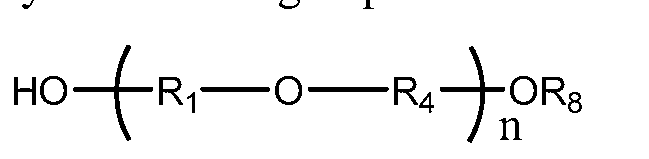
wherein each R and R4 is, independently, an alkyl or an aryl; R§ is, an alkyl or an aryl; and is from 1 to 500.
[0025] Preferably, the method described above provides a 90% yield.
[0026] Preferably, the Mw/Mn of the VTM and/or X functionalized VTM is from 2 to 4, preferably from 1.1 to 1.02.
Vinyl Terminated Macromonomers
[0027] A "vinyl terminated macromonomer," (also referred to as a "vinyl terminated polyolefin") as used herein, refers to one or more of:
(i) a vinyl terminated polymer having at least 5% allyl chain ends (preferably 15%, 20%, 30%, 40%, 50%, 60%, 70%, 80%, 90%, 95%, 98%, or 99%);
(ii) a vinyl terminated polymer having an Mn of at least 160 g/mol, preferably at least 200 g/mol (measured by lR NMR) comprising of one or more C4 to C4Q higher olefin derived units, where the higher olefin polymer comprises substantially no propylene derived units; and wherein the higher olefin polymer has at least 5% allyl chain ends;
(iii) a copolymer having an Mn of 300 g/mol or more (measured by NMR) comprising (a) from 20 mol% to 99.9 mol% of at least one C5 to C4Q higher olefin, and (b) from 0.1 mol% to 80 mol% of propylene, wherein the higher olefin copolymer has at least 40% allyl chain ends;
(iv) a copolymer having an Mn of 300 g/mol or more (measured by NMR), and comprises (a) from 80 mol% to 99.9 mol% of at least one C4 olefin, (b) from 0.1 mol% to 20 mol% of propylene; and wherein the vinyl terminated macromonomer has at least 40% allyl chain ends relative to total unsaturation;
(v) a co-oligomer having an Mn of 300 g/mol to 30,000 g/mol (measured by NMR)
comprising 10 mol% to 90 mol% propylene and 10 mol% to 90 mol% of ethylene, wherein the oligomer has at least X% allyl chain ends (relative to total unsaturations), where: 1) X = (-0.94*(mol% ethylene incorporated) + 100), when 10 mol% to 60 mol% ethylene is present in the co-oligomer, 2) X = 45, when greater than 60 mol% and less than 70 mol% ethylene is present in the co-oligomer, and 3) X = (1.83* (mol% ethylene incorporated) -83), when 70 mol% to 90 mol% ethylene is present in the co-oligomer;
(vi) a propylene oligomer, comprising more than 90 mol% propylene and less than 10 mol% ethylene wherein the oligomer has: at least 93% allyl chain ends, a number average molecular weight (Mn) of 500 g/mol to 20,000 g/mol, an isobutyl chain end to allylic vinyl group ratio of 0.8: 1 to 1.35: 1.0, less than 100 ppm aluminum, and/or less than 250 regio defects per 10,000 monomer units;
(vii) a propylene oligomer, comprising: at least 50 mol% propylene and from 10 mol% to 50 mol% ethylene, wherein the oligomer has: at least 90% allyl chain ends, an Mn of 150 g/mol to 20,000 g/mol, preferably 10,000 g/mol, and an isobutyl chain end to allylic vinyl group ratio of 0.8: 1 to 1.2: 1.0, wherein monomers having four or more carbon atoms are present at from 0 mol% to 3 mol%;
(viii) a propylene oligomer, comprising: at least 50 mol% propylene, from 0.1 mol% to 45 mol% ethylene, and from 0.1 mol% to 5 mol% C4 to olefin, wherein the oligomer has: at least 90% allyl chain ends, an Mn of 150 g/mol to 10,000 g/mol, and an isobutyl chain end to allylic vinyl group ratio of 0.8: 1 to 1.35: 1.0;
(ix) a propylene oligomer, comprising: at least 50 mol% propylene, from 0.1 mol% to 45 mol% ethylene, and from 0.1 mol% to 5 mol% diene, wherein the oligomer has: at least 90% allyl chain ends, an Mn of 150 g/mol to 10,000 g/mol, and an isobutyl chain end to allylic vinyl group ratio of 0.7: 1 to 1.35: 1.0;
(x) a homo-oligomer, comprising propylene, wherein the oligomer has: at least 93% allyl chain ends, an Mn of 500 g/mol to 70,000 g/mol, alternately to 20,000 g/mol, an isobutyl chain end to allylic vinyl group ratio of 0.8: 1 to 1.2: 1.0, and less than 1400 ppm aluminum;
(xi) vinyl terminated polyethylene having: (a) at least 60% allyl chain ends; (b) a molecular weight distribution of less than or equal to 4.0; (c) a g'(vis) of greater than 0.95; and (d) an Mn (!HNMR) of at least 20,000 g/mol; and
(xii) vinyl terminated polyethylene having: (a) at least 50% allyl chain ends; (b) a molecular weight distribution of less than or equal to 4.0; (c) a g'(vis) of 0.95 or less; (d) an
Mn (!HNMR) of at least 7,000 g/mol; and (e) a Mn (GPC)/Mn (!HNMR) in the range of
from 0.8 to 1.2.
[0028] It is understood by those of ordinary skill in the art that when the VTM's, as described here, are reacted with another material the "vinyl" (e.g. the allyl chain end) is involved in the reaction and has been transformed. Thus, the language used herein describing that a fragment of the final product (typically referred to as PO in the formulae herein) is the residual portion of a vinyl terminated macromonomer (VTM) having had a terminal unsaturated carbon of an allylic chain and a vinyl carbon adjacent to the terminal unsaturated carbon, is meant to refer to the fact that the VTM has been incorporated in the product. Similarly stating that a product or material comprises a VTM means that the reacted form of the VTM is present, unless the context clearly indicates otherwise (such as a mixture of ingredients that do not have a catalytic agent present.)
[0029] Preferred vinyl terminated polyolefins include isotactic polypropylene (iPP), atactic polypropylene (aPP), ethylene propylene copolymer (EP), polyethylene (PE), and particularly propylene copolymers with larger alpha-olefin comonomers such as butene, hexene octene, etc. So called "propylene oligomers" or polymers include atactic polypropylene, ethylene propylene copolymers, isotactic polypropylene and other propylene- based oligomers and polymers (having at least 50 wt% propylene derived units). The vinyl terminated polyolefin useful herein can be linear or branched.
Process to Functionalize Polyolefins
[0030] This invention relates to a process to functionalize polyolefins comprising contacting a vinyl terminated macromonomer with a hydrohalogenating agent.
[0031] The reactants are typically combined in a reaction vessel at a temperature of - 50°C to 300°C (preferably 25°C, preferably 150°C). Likewise the reactants are typically combined at a pressure of 0 to 1000 MPa (preferably 0.5 to 500 MPa, preferably 1 to 250 MPa) for a residence time of 0.5 seconds to 10 hours (preferably 1 second to 5 hours, preferably 1 minute to 1 hour).
[0032] Typically, from 0.5 to 1.0 moles or a slight excess of the hydrohalogenation reagent are charged to the reactor per mole of VTM charged.
[0033] The process is typically a solution process, although it may be a bulk or high pressure process. Homogeneous processes are preferred. (A homogeneous process is defined to be a process where at least 90 wt% of the product is soluble in the reaction media.)
A bulk homogeneous process is particularly preferred. (A bulk process is defined to be a process where reactant concentration in all feeds to the reactor is 70 vol% or more.)
Alternately, no solvent or diluent is present or added in the reaction medium, (except for the small amounts used as the carrier for the catalyst or other additives, or amounts typically found with the reactants; e.g., propane in propylene).
[0034] Suitable diluents/solvents for the process include non-coordinating, inert liquids. Examples include straight and branched-chain hydrocarbons such as isobutane, butane, pentane, isopentane, hexanes, isohexane, heptane, octane, dodecane, and mixtures thereof; cyclic and alicyclic hydrocarbons such as cyclohexane, cycloheptane, methylcyclohexane, methylcycloheptane, and mixtures thereof such as can be found commercially (IsoparTM); perhalogenated hydrocarbons such as perfluorinated C4-1Q alkanes, chlorobenzene, and aromatic and alkylsubstituted aromatic compounds such as benzene, toluene, mesitylene, and xylene. Preferably, the feed concentration for the process is 60 vol% solvent or less, preferably 40 vol% or less, preferably 20 vol% or less.
[0035] The process may be batch, semi-batch or continuous. As used herein, the term continuous means a system that operates without interruption or cessation. For example, a continuous process to produce a polymer would be one where the reactants are continually introduced into one or more reactors and polymer product is continually withdrawn.
[0036] Useful reaction vessels include reactors, including continuous stirred tank reactors, batch reactors, reactive extruders, tubular reactors, pipes or pumps.
[0037] This invention further relates to a process, preferably an in-line process, preferably a continuous process, to produce functionalized polyolefins, comprising introducing macromonomer and hydrohalogenating agent(s) into a reactor, obtaining a reactor effluent containing functionalized terminated polyolefin, optionally removing (such as flashing off) solvent, unused monomer and/or other volatiles, obtaining functionalized terminated polyolefin (such as those described herein), preferably an in-line process, preferably a continuous process, to produce functionalized polyolefins, comprising introducing vinyl terminated polyolefin and a hydrohalogenating agent (as described herein) into a reaction zone (such as a reactor, an extruder, a pipe and/or a pump) and obtaining functionalized polyolefin (such as those described herein).
[0038] Halides are synthesized by the hydrohalogenation of vinyl terminated macromonomers in high yield and purity.
Hydrohalogenation Reagents
[0039] Hydrohalogenating reagents include those known to those having ordinary skill in the art and include HBr, HC1, HI, HF, and the like. They are often dissolved in another acid,
such as acetic acid. For example, hydrobromic acid can be prepared in water (48% HBr in water). Gaseous hydrogen bromide can be generated from metal bromide salts and strong acid such as NaBr + concentrated H2SO4. Hydrogen chloride is available as hydrochloric acid, gas, in 1,4-dioxane, acetic acid, diethyl ether, methanol, ethanol, 2-propanol, or 1- butanol from Sigma Aldrich Co and other commercial suppliers.
Blends of Functionalized Polyolefins
[0040] Preferably, the functionalized (and optionally derivitized) polyolefins produced by this invention may be blended with from 0.5 wt% to 99 wt% (typically 1.0 wt% to 98 wt%, and ideally 50 wt% to 98 wt%) of one or more other polymers, including but not limited to, thermoplastic polymer(s) and/or elastomer(s).
[0041] By thermoplastic polymer(s) is meant a polymer that can be melted by heat and then cooled without appreciable change in properties. Thermoplastic polymers typically include, but are not limited to, polyolefins, polyamides, polyesters, polycarbonates, polysulfones, polyacetals, polylactones, acrylonitrile-butadiene-styrene resins, polyphenylene oxide, polyphenylene sulfide, styrene-acrylonitrile resins, styrene maleic anhydride, polyimides, aromatic polyketones, or mixtures of two or more of the above. Preferred polyolefins include, but are not limited to, polymers comprising one or more linear, branched or cyclic C2 to C40 olefins, preferably polymers comprising propylene copolymerized with one or more C3 to C40 olefins, preferably a C3 to C20 alpha-olefin, more preferably C3 to CIQ alpha-olefins. More preferred polyolefins include, but are not limited to, polymers comprising ethylene including but not limited to ethylene copolymerized with a C3 to C40 olefin, preferably a C3 to C20 alpha-olefin, more preferably propylene and/or butene.
[0042] By elastomers is meant all natural and synthetic rubbers, including those defined in ASTM D1566. Examples of preferred elastomers include, but are not limited to, ethylene propylene rubber, ethylene propylene diene monomer rubber, styrenic block copolymer rubbers (including SI, SIS, SB, SBS, SIBS, and the like, where S=styrene, I=isobutylene, and B=butadiene), butyl rubber, halobutyl rubber, copolymers of isobutylene and para- alkylstyrene, halogenated copolymers of isobutylene and para-alkylstyrene, natural rubber, polyisoprene, copolymers of butadiene with acrylonitrile, polychloroprene, alkyl acrylate rubber, chlorinated isoprene rubber, acrylonitrile chlorinated isoprene rubber, polybutadiene rubber (both cis and trans).
[0043] Preferably, the functionalized (and optionally derivitized) polyolefins produced herein may further be combined with one or more of polybutene, ethylene vinyl acetate, low
density polyethylene (density 0.915 to less than 0.935 g/cm3) linear low density polyethylene, ultra low density polyethylene (density 0.86 to less than 0.90 g/cm3), very low density polyethylene (density 0.90 to less than 0.915 g/cm3), medium density polyethylene (density 0.935 to less than 0.945 g/cm3), high density polyethylene (density 0.945 to 0.98 g/cm3), ethylene vinyl acetate, ethylene methyl acrylate, copolymers of acrylic acid, polymethylmethacrylate or any other polymers polymerizable by a high-pressure free radical process, polyvinylchloride, polybutene-1, isotactic polybutene, ABS resins, ethylene- propylene rubber (EPR), vulcanized EPR, EPDM, block copolymer, styrenic block copolymers, polyamides, polycarbonates, PET resins, crosslinked polyethylene, copolymers of ethylene and vinyl alcohol (EVOH), polymers of aromatic monomers such as polystyrene, poly-1 esters, polyacetal, polyvinylidine fluoride, polyethylene glycols and/or polyisobutylene. Preferred polymers include those available from ExxonMobil Chemical Company in Baytown, Texas under the tradenames EXCEED™ and EXACT™.
[0044] Tackifiers may be blended with the functionalized (and optionally derivitized) polyolefins produced herein and/or with blends of the functionalized (and optionally derivitized) polyolefins produced by this inventions (as described above). Examples of useful tackifiers include, but are not limited to, aliphatic hydrocarbon resins, aromatic modified aliphatic hydrocarbon resins, hydrogenated polycyclopentadiene resins, polycyclopentadiene resins, gum rosins, gum rosin esters, wood rosins, wood rosin esters, tall oil rosins, tall oil rosin esters, polyterpenes, aromatic modified polyterpenes, terpene phenolics, aromatic modified hydrogenated polycyclopentadiene resins, hydrogenated aliphatic resin, hydrogenated aliphatic aromatic resins, hydrogenated terpenes and modified terpenes, and hydrogenated rosin esters. Preferably the tackifier is hydrogenated. Preferably the tackifier has a softening point (Ring and Ball, as measured by ASTM E-28) of 80°C to 140°C, preferably 100°C to 130°C. The tackifier, if present, is typically present at 1 wt% to 50 wt%, based upon the weight of the blend, more preferably 10 wt% to 40 wt%, even more preferably 20 wt% to 40 wt%.
[0045] Preferably, the functionalized (and optionally derivitized) polyolefins of this invention, and/or blends thereof, further comprise typical additives known in the art such as fillers, cavitating agents, antioxidants, surfactants, adjuvants, plasticizers, block, antiblock, color masterbatches, pigments, dyes, processing aids, UV stabilizers, neutralizers, lubricants, waxes, and/or nucleating agents. The additives may be present in the typically effective amounts well known in the art, such as 0.001 wt% to 10 wt%. Preferred fillers, cavitating
agents and/or nucleating agents include titanium dioxide, calcium carbonate, barium sulfate, silica, silicon dioxide, carbon black, sand, glass beads, mineral aggregates, talc, clay and the like. Preferred antioxidants include phenolic antioxidants, such as Irganox 1010, Irganox, 1076 both available from Ciba-Geigy. Preferred oils include paraffinic or naphthenic oils such as Primol 352, or Primol 876 available from ExxonMobil Chemical France, S.A. in Paris, France. More preferred oils include aliphatic naphthenic oils, white oils or the like.
[0046] Most preferably, the functionalized (and optionally derivitized) polyolefins produced herein are combined with polymers (elastomeric and/or thermoplastic) having functional groups such as unsaturated molecules-vinyl bonds, ketones or aldehydes under conditions such that they react. Reaction may be confirmed by an at least 20% (preferably at least 50%, preferably at least 100%) increase in Mw as compared to the Mw of the functionalized polyolefin prior to reaction. Such reaction conditions may be increased heat (for example, above the Tm of the functionalized polyolefin), increased shear (such as from a reactive extruder), presence or absence of solvent. Conditions useful for reaction include temperatures from 150°C to 240°C and where the components can be added to a stream comprising polymer and other species via a side arm extruder, gravimetric feeder, or liquids pump. Useful polymers having functional groups that can be reacted with the functionalized polyolefins produced herein include polyesters, polyvinyl acetates, nylons (polyamides), polybutadiene, nitrile rubber, hydroxylated nitrile rubber. Preferably, the functionalized (and optionally derivitized) polyolefin of this invention may be blended with up to 99 wt% (preferably up to 25 wt%, preferably up to 20 wt%, preferably up to 15 wt%, preferably up to 10 wt%, preferably up to 5 wt%), based upon the weight of the composition, of one or more additional polymers. Suitable polymers include those described as PM 1) to PM 7) in U.S. Patent No. 8,003,725.
Applications
[0047] The functionalized VTMs of this invention (and blends thereof as described above) may be used in any known thermoplastic or elastomer application. Examples include uses in molded parts, films, tapes, sheets, tubing, hose, sheeting, wire and cable coating, adhesives, shoe soles, bumpers, gaskets, bellows, films, fibers, elastic fibers, nonwovens, spun bonds, corrosion protection coatings and sealants. Preferred uses include additives for lubricants and/or fuels.
[0048] Preferably the functionalized vinyl terminated macromonomers produced herein are further functionalized (derivitized), such as described in U.S. Patent No. 6,022,929; A.
Toyota, T. Tsutsui, and N. Kashiwa, Polymer Bulletin 48, pp. 213-219, 2002; J. Am. Chem. Soc, 1990, 1 12, pp. 7433-7434; and USSN 12/487,739 filed on June 19, 2009 (Published as WO 2009/155472).
[0049] The functionalized vinyl terminated materials prepared herein may be used in oil additivation, lubricants, fuels and many other applications. Preferred uses include additives for lubricants and or fuels.
[0050] The vinyl terminated macromonomers disclosed herein, or functionalized/derivitized analogs thereof, are useful as additives, preferably in a lubricant.
[0051] The functionalized VTM's and/or derivitized VTM's produced herein have uses as lubricating additives which can act as dispersants, viscosity index improvers, or multifunctional viscosity index improvers. Additionally they may be used as disinfectants (functionalized amines) and or wetting agents.
[0052] Functionalized VTMs and/or derivitized VTMs having uses as dispersants typically have Mn's g/mol)of less than 20,000, preferably less than 10,000 and most preferably less than 8,000 and typically can range from 500 to 10,000 (e.g., 500 to 5,000), preferably from 1,000 to 8, 000 (e.g., 1,000 to 5,000) and most preferably from 1,500 to 6,000 (e.g., 1,500 to 3,000).
[0053] The functionalized VTMs and/or derivitized VTMs described herein having Mn's
(g/mol) of greater than 10,000 g/mol, preferably greater than 10,000 to 100,000 g/mol
(preferably 20,000 to 60,000 g/mol) are useful for viscosity index improvers for lubricating oil compositions, adhesive additives, antifogging and wetting agents, ink and paint adhesion promoters, coatings, tackifiers and sealants, and the like. In addition, such VTMs may be functionalized and derivitized to make multifunctional viscosity index improvers which also possess dispersant properties. (For more information please see US 6,022,929.)
[0054] The functionalized VTMs and/or derivitized VTMs described herein may be combined with other additives (such as viscosity index improvers, corrosion inhibitor, oxidation inhibitor, dispersant, lube oil flow improver, detergents, demulsifiers, rust inhibitors, pour point depressant, anti-foaming agents, antiwear agents, seal swellant, friction modifiers, and the like (described for example in U.S. Patent No. 6,022,929 at columns 60, line 42-column 78, line 54 and the references cited therein) to form compositions for many applications, including but not limited to lube oil additive packages, lube oils, and the like.
[0055] Compositions containing these additives are typically are blended into a base oil in amounts which are effective to provide their normal attendant function. Representative
effective amounts of such additives are illustrated as follows:
Compositions (Typical) (Preferred)
wt %* wt %*
V.I. Improver 1-12 1-4
Corrosion Inhibitor 0.01-3 0.01-1.5
Oxidation Inhibitor 0.01-5 0.01-1.5
Dispersant 0.1-10 0.1-5
Lube Oil Flow Improver 0.01-2 0.01-1.5
Detergents and Rust inhibitors 0.01-6 0.01-3
Pour Point Depressant 0.01-1.5 0.01-1.5
Anti-Foaming Agents 0.001-0.1 0.001-0.01
Antiwear Agents 0.001-5 0.001-1.5
Seal Swellant 0.1-8 0.1-4
Friction Modifiers 0.01-3 0.01-1.5
Lubricating Base Oil Balance Balance
[0056] In the table above, wt%'s are based on active ingredient content of the additive, and/or upon the total weight of any additive-package, or formulation which will be the sum of the A.I. weight of each additive plus the weight of total oil or diluent
[0057] When other additives are employed, it may be desirable, although not necessary, to prepare additive concentrates comprising concentrated solutions or dispersions of the subject additives of this invention (in concentrate amounts hereinabove described), together with one or more of said other additives (said concentrate when constituting an additive mixture being referred to herein as an additive-package) whereby several additives can be added simultaneously to the base oil to form the lubricating oil composition. Dissolution of the additive concentrate into the lubricating oil may be facilitated by solvents and by mixing accompanied with mild heating, but this is not essential. The subject functionalized or derivitized VTMs of the present invention can be added to small amounts of base oil or other compatible solvents along with other desirable additives to form additive-packages containing active ingredients in collective amounts of typically from 2.5% to 90%, and preferably from 15% to 75%, and most preferably from 25% to 60% by weight additives in the appropriate proportions with the remainder being base oil.
[0058] The final formulations may employ typically 10 wt% of the additive-package with the remainder being base oil.
[0059] Preferably, the vinyl terminated polyolefins described herein can be used in any process, blend or product disclosed in WO 2009/155472 or U.S. Patent No. 6,022,929.
[0060] Preferably, this invention relates to a fuel comprising any VTM produced herein. Preferably, this invention relates to a lubricant comprising any VTM produced herein.
EXPERIMENTAL
Product Characterization
[0061] Products were characterized by lR NMR and 13C NMR as follows.
!H NMR
[0062] Unless otherwise stated, lR NMR data was collected at either 25°C or 120°C (for purposes of the claims, 120°C shall be used) in a 5 mm probe using a spectrometer with a lR frequency of at least 400 MHz. Data was recorded using a maximum pulse width of 45° and either a 1 or 2 second delay between pulses. Typical NMR solvents such as CDCI3, CD2Cl2, or C^D6 were purchased from Cambridge Isotope Laboratories or SigmaAldrich and were used at ambient temperatures in collection of the NMR data.
13C NMR
[0063] Unless otherwise stated, 13C NMR data was collected at 120°C using a spectrometer with a 13C frequency of at least 100 MHz. A 90 degree pulse, an acquisition time adjusted to give a digital resolution between 0.1 and 0.12 Hz, at least a 2 second pulse acquisition delay time with continuous broadband proton decoupling using swept square wave modulation without gating was employed during the entire acquisition period. The spectra were acquired with time averaging to provide a signal to noise level adequate to measure the signals of interest. Samples were dissolved in tetrachloroethane-d2 (TCE) for high temperature measurements. Other solvents such as CDCI3, CD2Cl2, or C^D6 were used at ambient temperatures.
[0064] All molecular weights are g/mol unless otherwise noted.
[0065] Weight-average molecular weight (Mw (GPC)), molecular weight distribution
(MWD), Mw (GPC)/Mn (GPC) where Mn (GPC) is the number-average molecular weight are characterized using a Size Exclusion Chromatograph (SEC), equipped with a differential refractive index detector (DRI). Tetrahydrofuran (THF) solvent is used for the SEC experiment. The THF was then degassed with an inline degasser. Sample solutions were prepared by placing the sample in a 10 ml glass vial with solvent resistant cap, adding the
desired amount of THF, then agitation for 1 hr. All quantities were measured gravimetrically. The injection concentration is 6 mg/mL. Prior to running a sample set, the DRI detector and the injector were purged. Flow rate in the apparatus was then increased to 1.0 mL/min, and the DRI was allowed to stabilize for 1 hr. The instrument conditions are listed in Table 1. The samples are analyzed using a poly iso-butylene calibration.
[0066] The molecular weight averages were defined by considering the discontinuous nature of the distribution in which the macromolecules exist in discrete fractions i containing Ni molecules of molecular weight Mj. The weight-average molecular weight, Mw, was defined as the sum of the products of the molecular weight Mj of each fraction multiplied by its weight fraction w;:
Mw≡∑ WiMi = (∑ iMi2/∑ iM
since the weight fraction wz- is defined as the weight of molecules of molecular weight Mi divided by the total weight of all the molecules present:
wi =NiMi/∑NiMi.
[0067] The number-average molecular weight, Mn, is defined as the sum of the products of the molecular weight Mi of each fraction multiplied by its mole fraction x
Mn≡∑xiMi =∑NiMi/∑Ni
since the mole fraction xz- is defined as Nj divided by the total number of molecules:
xi = Ni/∑Ni.
GPC Conditions

Example 1
[0068] Unless specified otherwise, all reagents and solvents were used as received. Vinyl-terminated atactic homopolypropylene macromer A, free from low-boiling materials, was obtained as a colorless liquid after volatiles had been removed from as-received macromonomer sample by heating at 85°C to 100°C under vacuum for several hours. Mn's of vinyl terminated macromonomers were determined by NMR in CDCI3.
[0069] Vinyl Terminated Macromers used were made as previously as disclosed in U.S. Patent No. 8,318,998 and/or U.S. Patent No. 8,455,597.
[0070] Vinylidene aPP was similarly synthesized using the catalyst system composed of a 1 to 1 molar amount of (CpHMe4)(CpH4n-propyl)ZrMe2 and dimethylanilinium tetrakisperfluoronaphthylborate.
[0071] Anhydrous solvents such as toluene were purchased from Aldrich and dried over 3 A sieves. Dimethylanilinium tetrakisperfluoronaphthylborate was purchased from Grace- Davison. (CpHMe4)(CpH4n-propyl)ZrMe2 was purchased from Boulder.
Starting Materials
- aPP-VTM (Macromer A), Mn = 486 by lH NMR, Vinyls = 97%, GPC (Mw = 874, Mn = 499, Mw/Mn = 1.75)
- C3C4-VTM (Macromer B), Mn = 1062 by lH NMR, Vinyls = 95%, C4 = 36 mol% by 13C NMR, GPC (Mw = 2197, Mn = 1030, Mw/Mn = 2.13)
- aPP-VTM (Macromer C), Mn = 1866 by lH NMR, Vinyls = 97%, GPC (Afw = 4789, Mn = 2289, Mw/Mn = 2.09)
- C2C3-VTM (Macromer D), Mn = 20831 by lR NMR, Vinyls = 62%
- C3C6-VTM (Macromer E), Mn = 1567 by lH NMR, Vinyls = 89%, C6 = 46 mol% by 13C NMR, GPC (Afw = 3143, Mn = 1488, Mw/Mn = 2.1 1)
- aPP-VTM (Macromer F), Mn = 1016 by lR NMR, Vinyls = 92%, GPC (Afw = 2387, Mn = 1069, Mw/Mn = 2.23)
- aPP-VTM (Macromer G), Mn = 307 by lH NMR, Vinyls = 97%, GPC (Afw = 290, Mn = 285, Mw/Mn = 1.02)
- aPP-VTM (Macromer H), Mn = 159 by NMR, Vinyls = 97%, GPC (Afw = 184, Mn = 175, Mw/Mn = 1.05)
- C3C6-VTM (Macromer I) Mn = 2307 by lH NMR, vinyls = 95%, C6 content = 43
mol% by 13C MR
- aPP-VTM (Macromer J) Mn = 2108, Vinyls = 97%
- C3C4-VTM (Macromer K) Mn = 2105 Vinyls = 87.5%, C4 = 47.6 mol% by 13C NMR
- C3C6-VTM (Macromer L) Mn = 2215, Vinyls = 82%, C6 content 45.2 mol% by 13C MR
- C3-VTM (Macromer M) Mn = 1600, Vinyls = 92%
- HR-PIB (BASF Glissopal 1000), Vinylidene -80-85%, GPC (Afw = 1765, Mn =
920, Mw/Mn = 1.92)
- Vinylidene aPP (Polymer N), Mn = 2272 by lR NMR, Vinylidene = 95%, GPC (Mw = 4475, Mn = 2256, Mw/Mn = 1.98)
Example 2
Preparation of bromo-terminated atactic C3 macromer C3-CH2-CH2-Br (1)

anti-Markovnikov addition arkovnikov addition
primary bromide secondary bromide
[0072] To a solution of vinyl-terminated atactic C3 macromer A (Mn 486 g/mol by ¾ NMR, 5.00 g, 10.29 mmol) in hexanes (4 ml) cooled to -10°C was added dropwise 33 wt% hydrogen bromide solution in acetic acid (3.06 ml, 16.8 mmol). After complete addition of the HBr solution, the mixture was stirred at -10°C for an additional 20 minutes. Ice-cold water (20 ml) was added to the mixture and the aqueous phase was extracted with hexanes. The organic extract was washed with water (2 x 50 ml), dried over MgS04, filtered and concentrated on a rotary evaporator to give a light yellow liquid product. The crude product was further purified by heating at 60°C to 65°C under high vacuum to afford a clear liquid (5.73 g). !H NMR supported the assignment of a primary bromide structure. NMR (400
MHz, CDCI3): δ (ppm) 4.20 (-CHBrCH3, br, 0.03 H, product lb), 3.86 (br, 0.03 H) 3.39 (- CH2-Br, t, J = 8.0 Hz, 2.0 H, product la), 1.87-1.78 (-CH2CH2-Br, m, 2.4 H), 1.71-1.36 (m, 13.3 H), 1.35-1.23 (m, 5.4 H), 1.23-0.94 (m, 19.9 H), 0.94-0.5 (m, 44.2 H). C NMR (100 MHz, CDCI3): δ (ppm) 47.8-43.7 (m), 36.8-34.9 (m), 34.2 (-CH2-Br, s), 30.5-29.4 (m, - CH2CH2-Br), 27.6-26.9 (m), 25.2-25.1 (m, -CH(CH3)2), 24.8-23.4 (m), 22.6-21.9 (m), 21.5- 19.0 (m). Elemental analysis: C, 72.78%; H, 12.58%; Br, 14.72%. GPC (Afw = 809, Mn =
473, Mw/Mn = 1.71).
Example 3
Preparation of bromo-terminated C3C4 macromer C C4-CH2-CH2-Br (2)

[0073] To a solution of vinyl-terminated C3C4 macromer B (Mn 1062 g/mol by lR NMR, 40.00 g, 37.66 mmol) in hexanes (50 ml) cooled to -10°C was added dropwise a mixture of 33 wt% hydrogen bromide solution in acetic acid (13.18 ml, 72.5 mmol) and hexanes (10 ml) from an addition funnel over 15 min. After complete addition of the HBr solution, the mixture was stirred between 0°C to 10°C for an additional 1.75 hours. Ice-cold water (100 ml) was added to the mixture and the aqueous phase was extracted with hexanes (30 ml). The organic extract was washed with water (2 x 150 ml), dried over MgS04, filtered and concentrated on a rotary evaporator to give a clear and light yellow liquid product. The crude product was further purified by heating at 60°C to 65°C under high vacuum to afford a clear liquid (40.90 g). lR NMR supported the assignment of a primary bromide structure. lR NMR (400 MHz, CDC13): δ (ppm) 4.20 (-CHBrCH3, br, 0.10 H, product 2b), 3.86 (br, 0.03 H) 3.39 (-CH2-Br, t, J= 8.0 Hz, 2.0 H, product 2a), 1.89-1.78 (-CH2CH2-Br, m, 2.3 H), 1.73- 1.48 (m, 14.8 H), 1.48-1.22 (m, 26.0 H), 1.22-0.91 (m, 44.3 H), 0.91-0.55 (m, 73.0 H). 13C NMR (100 MHz, CDC13): δ (ppm) 47.9-43.7 (m), 43.6-41.0 (m), 39.7-38.1 (m), 36.9-34.7 (m), 34.3-32.9 (m), 32.5-31.5 (m), 30.8-28.9 (m), 27.4 (s), 27.0-25.2 (m), 23.9-22.1 (m), 21.6-19.0 (m), 11.7-11.2 (m), 11.1-9.8 (m). Elemental analysis: C, 78.83%; H, 13.39%; Br, 7.55%. GPC (Afw = 2039, Mn = 924, Mw/Mn = 2.21). See Figure 1 for the lH NMR spectrum of the product 2.
Example 4
Preparation of bromo-terminated atactic C3 macromer C3-CH2-CH2-Br (3)
1 H HBr CH2-CH2— Br /C T-CH3
H
C 3a 3b
[0074] To a solution of vinyl-terminated atactic C3 macromer C ( n 1866 g/mol by ¾ NMR, 60.00 g, 32.16 mmol) in hexanes (50 ml) cooled to -10°C was added dropwise a mixture of 33 wt% hydrogen bromide solution in acetic acid (1 1.25 ml, 61.9 mmol) and
hexanes (10 ml) from an addition funnel over 20 minutes. After complete addition of the HBr solution, the mixture was stirred at -10°C for an additional 20 minutes and then at 0°C for 1.5 hours. Ice-cold water (150 ml) was added to the mixture and the aqueous phase was extracted with hexanes (80 ml). The organic extract was washed with water (2 x 150 ml), dried over MgS04, filtered and concentrated on a rotary evaporator to give a clear and colorless liquid product. The crude product was further purified by heating at 60°C to 65°C under high vacuum to afford a clear liquid (59.65 g). lR NMR supported the assignment of a primary bromide structure. lR NMR (400 MHz, CDC13): δ (ppm) 4.20 (-CHBrCH3, br, 0.04 H, product 3b), 3.86 (br, 0.01 H) 3.39 (-CH2-Br, t, J = 8.0 Hz, 2.0 H, product 3a), 1.95-1.79 (-CH2CH2-Br, m, 2.3 H), 1.78-1.48 (m, 45.8 H), 1.48-0.91 (m, 84.0 H), 0.91-0.55 (m, 146.8 H). 13C NMR (100 MHz, CDC13): δ (ppm) 48.0-43.8 (m), 36.8-36.2 (m), 35.6-34.9 (m), 34.0 (-CH2-Br, s), 30.7-30.4 (m), 29.7-29.5 (m), 27.9-27.1 (m), 25.3-25.2 (m), 23.9-23.3 (m), 22.7-22.1 (m), 21.6-19.1 (m). Elemental analysis: C, 82.06%; H, 13.84%; Br, 4.20%. GPC (Mw = 4544, Mn = 1978, Mw/Mn = 2.30).
Example 5
Preparation of bromo-terminated C C macromer C C -CH -CH -Br 4

[0075] To a solution of vinyl-terminated C2C3 macromer D (Mn 20831 g/mol by ¾ NMR, 6.66 g, 0.32 mmol) in hexanes (45 ml) cooled to 0°C was added dropwise 33 wt% hydrogen bromide solution in acetic acid (0.256 ml, 1.41 mmol) over 5 minutes. After complete addition of the HBr solution, the mixture was stirred between 0°C to 10°C for an additional 70 minutes. Ice-cold water (40 ml) was added to the mixture and the aqueous phase was extracted with hexanes (25 ml). The organic extract was washed with water (2 x 40 ml), dried over MgS04, filtered and concentrated on a rotary evaporator to give a clear and light brown viscous liquid product. The crude product was further purified by heating at 60°C to 65°C under high vacuum to afford a clear liquid (6.61 g). lR NMR supported the assignment of a primary bromide structure. ¾ NMR (400 MHz, CDCI3): δ (ppm) 4.84 (br, 0.38 H), 3.86 (m, 0.4 H), 3.49-3.46 (m, 0.4 H) 3.39 (-CH2-Br, t, J= 8.0 Hz, 2.0 H), 1.95-1.80 (-CH2CH2-Br, m, 2.5 H), 1.79-1.52 (br, 249.3 H), 1.52-1.42 (br, 182.2 H), 1.42-1.13 (br, 1034.9 H), 1.13-0.94 (m, 652.8 H), 0.93-0.55 (1606.7 H). 13C NMR (100 MHz, CDC13): δ
(ppm) 47.4-44.0 (m), 38.8-37.8 (m), 37.8-36.5 (m), 32.8 (s), 30.6-29.7 (m), 27.8-26.8 (m), 24.7-24.0 (m), 21.6-19.1 (m). Elemental analysis: C, 84.79%; H, 14.21%; Br, 0.65%. GPC (Afw = 37135, Mn = 16547, Mw/Mn = 2.24).
Example 6
Preparation of bromo-terminated C C macromer C3C6-CH2-CH2-Br (5)
1 H HBr CH2-CH2— Br .C T-CH3
H
E 5a 5b
[0076] To a solution of vinyl-terminated C3C6 macromer E (Mn 1567 g/mol by lR NMR, 40.00 g, 25.52 mmol) in hexanes (50 ml) cooled to -10°C was added dropwise a mixture of 33 wt% hydrogen bromide solution in acetic acid (8.93 ml, 49.1 mmol) and hexanes (10 ml) from an addition funnel over 40 min. After complete addition of the HBr solution, the mixture was stirred between 0°C to 10°C for an additional 80 minutes. Ice-cold water (100 ml) was added to the mixture and the aqueous phase was extracted with hexanes (60 ml). The organic extract was washed with water (2 x 150 ml), dried over MgSC^, filtered and concentrated on a rotary evaporator to give a clear and pale yellow liquid product. The crude product was further purified by heating at 60°C to 65 °C under high vacuum to afford a clear liquid (41.19 g). NMR supported the assignment of a primary bromide structure. ¾ NMR (400 MHz, CDC13): δ (ppm) 3.39 (-CH2-Br, t, J = 8.0 Hz, 2.0 H), 1.95-1.78 (-CH2 CH2-Br, m, 2.3 H), 1.71-1.48 (m, 22.6 H), 1.48-1.34 (br, 15.0 H), 1.34-1.10 (m, 98.5 H), 1.10-0.96 (33.9 H), 0.95-0.87 (53.5 H), 0.87-0.55 (m, 48.2 H). 13C NMR (100 MHz, CDCI3): δ (ppm) 48.0-44.4 (m), 44.2-41.7 (m), 40.7-39.2 (m), 35.0-32.8 (m), 32.8-31.8 (m), 30.7-29.1 (m), 29.1-27.9 (m), 27.9-27.2 (m), 23.7-22.8 (m), 21.6-19.1 (m), 14.3 (s). Elemental analysis: C, 80.65%; H, 13.66%; Br, 5.38%. GPC (Afw = 3004, Mn = 1407, Mw/Mn = 2.14).
Example 7
Preparation of bromo-terminated atactic C3 macromer C3-CH2-CH2-Br (6)
1 H HBr .CH2-CH2— Br ,C T— CH3
11 12a 12b
[0077] To a solution of vinyl -terminated atactic C3 macromer F (Mn 1016 g/mol by Ή NMR, 91.74 g, 90.32 mmol) in hexanes (130 ml) cooled to 0°C was added dropwise a
mixture of 33 wt% hydrogen bromide solution in acetic acid (28.90 ml, 159.0 mmol) and hexanes (20 ml) from an addition funnel over 30 minutes. After complete addition of the HBr solution, the mixture was stirred at 0°C for an additional 75 minutes. Ice-cold water (300 ml) was added to the mixture and the aqueous phase was extracted with hexanes (150 ml). The organic extract was washed with water (2 x 250 ml), dried over MgS04, filtered and concentrated on a rotary evaporator to give a clear and pale yellow liquid product. The crude product was further purified by heating at 60°C to 65°C under high vacuum to afford a clear liquid (96.13 g). lR NMR supported the assignment of a primary bromide structure. !H NMR (400 MHz, CDC13): δ (ppm) 4.20 (-CHBrCH3, br, 0.06 H, product 6b), 4.00 (br, 0.06 H), 3.86 (br, 0.06 H) 3.39 (-CH2-Br, t, J= 8.0 Hz, 2.0 H, product 6a), 2.09-2.15 (br, 0.06 H), 1.95-1.76 (-CH2CH2-Br, m, 2.5 H), 1.76-1.33 (m, 26.8 H), 1.33-0.91 (m, 45.7 H), 0.91- 0.62 (m, 79.8 H). NMR (100 MHz, CDC13): δ (ppm) 48.0-42.5 (m), 36.8-36.2 (m), 35.6- 35.0 (m), 34.0, 33.8 (-CH2-Br, s), 30.7-30.4 (m), 30.3-29.7 (m), 29.7-29.5 (m), 27.9-27.1 (m), 25.3-25.2 (m), 23.9-23.3 (m), 22.7-22.1 (m), 21.6-19.2 (m). Elemental analysis: C, 78.80%; H, 13.34%; Br, 7.51%. GPC (Afw = 2228, Mn = 994, Mw/Mn = 2.24).
Example 8
Preparation of bromo-terminated atactic C3 macromer Cg-CH2-CH2-Br (7) from atactic C3 distilled fraction macromer G (polydispersity index. Mw/Mn = 1.02)

[0078] To a solution of vinyl-terminated atactic C3 distilled fraction macromer G (Mn 307 g/mol by lR NMR, 6.0 g, 19.56 mmol) in hexanes (9 ml) cooled to -10°C was added dropwise 33 wt% hydrogen bromide solution in acetic acid (5.53 ml, 30.4 mmol). After complete addition of the HBr solution, the mixture was stirred between -10°C and -8°C for an additional 30 minutes. Ice-cold water (60 ml) was added to the mixture and the aqueous phase was extracted with hexanes (30 ml). The combined organic extract was washed with water, aqueous sodium carbonate solution, brine, dried over MgS04, filtered and concentrated on a rotary evaporator to give a clear and light yellow liquid product (7.45 g). ^H NMR supported the assignment of a primary bromide structure. ¾ NMR (400 MHz, CDCI3): δ (ppm) 4.20 (-CHBrCH3, br, 0.05 H, product 7b), 4.00 (br, 0.04 H), 3.86 (br, 0.04 H), 3.39 (-CH2-Br, t, J = 8.0 Hz, 2.0 H, product 7a), 1.95-1.75 (-CH2CH2-Br, m, 2.3 H),
1.75-1.49 (m, 6.0 H), 1.49-1.31 (m, 2.1 H), 1.31-0.91 (m, 12.0 H), 0.91-0.62 (m, 23.2 H). 13C NMR (100 MHz, CDC13): δ (ppm) 47.9-41.8 (m), 36.6-36.0 (m), 35.8-34.9 (m), 34.2 (s), 34.1 (-CH2-Br, s), 33.2-31.5 (m), 30.6-29.4 (m), 27.8-27.0 (m), 25.3-25.1 (m), 23.9-21.9 (m), 21.3-19.2 (m). Elemental analysis: C, 65.42%; H, 11.37%; Br: 22.81%.
Preparation of bromo-terminated atactic Cg macromer Cg-CH2-CH2-Br (8) from atactic Cg distilled fraction macromer H (polydispersity index. Mw/Mn = 1.05)

[0079] To a solution of vinyl-terminated atactic C3 distilled fraction macromer H (Mn 159 g/mol by lR NMR, 4.0 g, 25.1 1 mmol) in hexanes (12 ml) cooled to -10°C was added dropwise 33 wt% hydrogen bromide solution in acetic acid (6.82 ml, 37.5 mmol). After complete addition of the HBr solution, the mixture was stirred between -10°C and -8°C for an additional 30 minutes. Ice-cold water (80 ml) was added to the mixture and the aqueous phase was extracted with hexanes. The combined organic extract was washed with water, aqueous sodium carbonate solution, brine, dried over MgS04, filtered and concentrated on a rotary evaporator to give a clear and light yellow liquid product (5.46 g). Ή NMR supported the assignment of a primary bromide structure. ¾ NMR (400 MHz, CDCI3): δ (ppm) 4.20 (-CHBrCHg, br, 0.04 H, product 8b), 4.00 (br, 0.03 H), 3.86 (br, 0.02 H) 3.39 (-CH2-Br, t, J= 8.0 Hz, 2.0 H, product 8a), 1.95-1.75 (-CH2CH2-Br, m, 2.2 H), 1.75-1.59 (m, 1.3 H), 1.59-
I.46 (m, 1.7 H), 1.46-1.31 (m, 1.2 H), 1.31-1.16 (m, 1.3 H), 1.16-0.92 (3.3 H), 0.91-0.62 (m,
I I.8 H). 13C NMR (100 MHz, CDC13): δ (ppm) 47.53 (s), 46.66 (s), 46.54 (s), 45.82 (s), 45.45 (s), 45.42 (s), 44.88 (s), 44.77 (s), 43.98 (s), 36.32 (s), 35.78 (s), 35.23 (s), 34.22 (s),
34.05 (-CH2-Br, s), 30.49 (s), 30.42 (s), 30.36 (s), 29.72 (s), 29.65 (s), 29.53 (s), 29.46 (s), 29.42 (s), 29.36 (s), 27.55 (s), 27.50 (s), 27.43 (s), 27.4-27.2 (m), 25.15 (s), 25.08 (s), 23.66 (s), 23.63 (s), 23.38 (s), 23.32 (s), 23.23 (s), 23.17 (s), 23.05 (s), 22.74 (s), 22.48 (s), 22.45 (s), 22.39 (s), 22.32 (s), 22.23 (s), 22.11 (s), 22.05 (s), 20.32 (s), 20.16 (s), 20.12 (s), 20.08-
20.06 (m), 19.65 (s), 19.50 (s), 19.37 (s). Elemental analysis: C, 54.66%; H, 9.52%; Br: 35.85%.
Example 10
Preparation of bromo-terminated atactic Cg macromer Cg-CH2-CH2-Br (9)
1 H HBr CH2-CH2— Br /C T-CH3
Qj N ► Qg β
H
A 9a 9b
[0080] To a solution of vinyl-terminated atactic C3 macromer A (Mn 486 g/mol by ¾ NMR, 5.00 g, 10.29 mmol) in hexanes (4 ml) at 25°C was added dropwise 33 wt% hydrogen bromide solution in acetic acid (2.79 ml, 15.3 mmol). After complete addition of the HBr solution, the mixture was stirred at 25°C for an additional 20 minutes. Water (20 ml) was added to the mixture at 25°C and the aqueous phase was extracted with hexanes. The combined organic extract was washed with water, aqueous sodium carbonate solution, brine, dried over MgS04, filtered and concentrated on a rotary evaporator to give a clear and colorless liquid product (5.54 g). lR NMR supported the assignment of a primary bromide structure. lH NMR (400 MHz, CDC13): δ (ppm) 4.20 (-CHBrCH3, br, 0.08 H, product 9b), 3.86 (br, 0.08 H) 3.39 (-CH2-Br, t, J = 8.0 Hz, 2.0 H, product 9a), 1.95-1.77 (-CH2CH2-Br, m, 2.4 H), 1.76-1.32 (m, 13.9 H), 1.39-0.90 (m, 21.2 H), 0.90-0.55 (m, 41.1 H). 13C NMR (100 MHz, CDCI3): δ (ppm) 48.0-43.7 (m), 36.8-36.4 (m), 36.3-36.1 (m), 35.7-35.3 (m), 35.2-34.9 (m), 33.9 (-CH2-Br, s), 30.7-30.4 (m), 29.7-29.4 (m), 27.8-27.0 (m), 25.3-25.2 (m), 24.9-23.3 (m), 22.6-22.0 (m), 21.6-19.1 (m). Elemental analysis: C, 72.71%; H, 12.42%; Br, 15.00%.
Example 1 1
Preparation of C?C^-Br (10)
[0081] C3C6-VTM macromer I (Mn = 2307, 40.4 g) was dissolved in hexane (60 ml) and cooled to 0°C. A solution of HBr (7.0 ml, 33 wt% in acetic acid) was slowly added during a 15 minute time interval. An aliquot at 3 hours of reaction time indicated that all vinyl end groups were consumed. The reaction mixture was transferred to a separatory funnel and washed with H20 (3 x 100 ml). The volatiles were removed from the organic layer and the product dried in a vacuum oven at 80°C for 12 hours (38.0 g). lK NMR (500 MHz, CDC13): δ (ppm) 3.46 (t, 1 H), 2.0-0.5 (m, 211.7 H). C NMR (125 MHz, CDC13): δ (ppm) 34.4 (-CH2-Br, s, overlaps with other resonances) 30.8 (m, -CH2CH2-Br, 1.0 C), 25.6 (m, -CH (CH3)2, 1.2 C).
Example 12
Preparation of aPP-Br (11)
[0082] aPP-VTM macromer J (Mn = 2108, 91 g) was dissolved in hexane (100 ml) and cooled to 0°C. A solution of HBr (17 ml, 33 wt% in acetic acid) was added by addition funnel over a 30 minute time period. An aliquot at 2 hours of reaction time indicated the disappearance of all vinyl chain ends. The crude reaction was washed with H20 (3 x 200 ml) and volatiles were removed. The product was dried in a vacuum oven at 70°C for 12 hours. A foaming problem occurred while drying this particular product which resulted in a reduced yield (65.4 g). !H NMR (500 MHz, CDC13): δ (ppm) 3.35 (m, -CH2-Br, 1.0 H), 1.87 (m, - CH2-CH2-Br, 0.91 H), 1.76-0.40 (m, 164.9 H). There are additional peaks at 4.18 (0.02 H) and 3.94 (m, 0.01H) most likely due to addition of HBr to form secondary bromide. 13C NMR (125 MHz, CDCI3): δ (ppm) 34.0 (-CH2-Br, s, 1.0 C), 30.9 (m, -CH2-CH2-Br, 0.90 C), 25.45 (m, -CH(CH3)2, 1.10 C). Elemental analysis: C, 81.4%; H, 13.7%; Br, 2.4%.
Example 13
Preparation of C3C4-Br (12)
[0083] Similarly, this product was prepared with C3C4-VTM macromer K (Mn = 2105, 76 g) and HBr solution (14.3 ml, 33 wt% in acetic acid) for a yield of 40.3 g. Some loss of product occurred while drying.
Example 14
Preparation of C3 ,-Br (13)
[0084] Similarly, this product was prepared with C3C6-VTM macromer L (Mn = 2215, 114.5 g,) and HBr solution (20.3 ml, 33 wt% in acetic acid) for a yield of 96.3 g. lR NMR (500 MHz, CDCI3): δ (ppm) 3.37 (t, -CH2-Br, 1 H), 2.25-0.5 (m, 275.1 H).
Example 15
Preparation of C3 ,-Br (14)
[0085] Similarly, this product was prepared with C3C6-VTM macromer L (Mn = 2215, 54.2 g) and HBr solution (10 ml, 33 wt% in acetic acid) for a yield of 41.2 g. lR NMR (500 MHz, CDCI3): δ (ppm) 3.37 (t, 1 H), 2.25-0.5 (m, 275.1 H).
Example 16
Preparation of C3-Br (15)
[0086] Similarly, this product was prepared with C3-VTM macromer M (Mn = 1600, 136 g,) and HBr solution (34 ml, 33 wt% in acetic acid) for a yield of 132.5 g. lR NMR (500
MHz, CDCI3): δ (ppm) 4.1 (br s, .02 H) and 3.9- 3.75 (m, 0.03 H), 3.22 (t, 1 H), 2.25-0.5 (m,
154.1 H).
Example 17
Preparation of bromo-terminated polyisobutylene (16) from highly reactive polyisobutylene (Glissopal 1000)

Glissopal 1000
anti-Markovnikov addition Markovnikov addition primary bromide tertiary bromide
[0087] To a solution of predominately vinylidene-terminated polyisobutylene (Glissopal
1000 from BASF, 50.00 g) in hexanes (50 ml) cooled to -8°C was added dropwise a mixture of 33 wt% hydrogen bromide solution in acetic acid (18.62 ml, 93.1 mmol) and hexanes (10 ml) from an addition funnel over 15 minutes. After complete addition of the HBr solution, the mixture was stirred at between -8°C to 0°C for an additional 1.5 hours. Ice-cold water
(150 ml) was added to the mixture and the aqueous phase was extracted with hexanes (80 ml). The organic extract was washed with water (2 x 200 ml), dried over MgSC^, filtered and concentrated on a rotary evaporator to give a clear and pale yellow liquid as crude product. The crude product was further purified by heating at 60°C to 65°C under high vacuum to afford a clear liquid (52.20 g). ¾ NMR (400 MHz, CDC13): δ (ppm) 4.04-4.03
(m, 0.1 H), 3.42-3.39 (dd, 1.0 H), 3.29-3.25 (dd, 1.0 H), 1.97-1.85 (m, 1.3 H), 1.84-1.63 (br,
1.0 H), 1.61-1.51 (m, 2.7 H), 1.49-1.36 (m, 36.0 H), 1.36-1.29 (br, 5.6 H), 1.29-1.05 (m,
119.3 H), 1.04-0.94 (m, 22.9 H), 0.94-0.73 (m, 1.8 H). 13C NMR (100 MHz, CDC13): δ
(ppm) 59.5 (s), 59.4-59.3 (m), 58.89 (s), 58.28 (s), 56.83 (s), 51.23 (s), 43.41 (s), 38.20 (s),
38.14 (s), 37.93 (s), 37.83 (s), 35.90 (s), 32.64 (s), 32.59 (s), 32.54 (s), 31.62 (s), 31.37 (s),
31.30 (s), 31.17 (s), 30.92 (s), 29.32 (s), 29.15 (s), 22.16 (s). Elemental analysis: C, 79.59%;
H, 13.17%; Br, 7.39%. GPC (Afw = 1691, Mn = 909, Mw/Mn = 1.86).
Example 18
Preparation of bromo-terminated atactic polypropylene (17) from vinylidene-terminated polypropylene N
 [0088] To a solution of vinylidene-terminated atactic polypropylene N (Mn 2272 g/mol by lR NMR, 6.85 g, 3.02 mmol) in hexanes (24 ml) cooled to 0°C was added dropwise 33 wt% hydrogen bromide solution in acetic acid (1.06 ml, 5.3 mmol) over 3 minutes. After complete addition of the HBr solution, the mixture was stirred at 0°C for 30 minutes and then at 5°C for 2 hours. Ice-cold water (65 ml) was added to the mixture and the aqueous phase was extracted with hexanes (10 ml). The combined organic extract was washed with water (75 ml) and half-saturated brine (10 ml), dried over MgSC^, filtered and concentrated on a rotary evaporator to give a slightly cloudy and pale yellow liquid as crude product (6.84 g). !H NMR (400 MHz, CDC13): δ (ppm) 3.87 (br, 0.1 H), 3.80 (br, 0.08 H), 3.53-3.26 (m, 2.0 H), 2.17-1.82 (m, 2.0 H), 1.82-1.42 (m, 57.0 H), 1.42-1.23 (m, 31.1 H), 1.23-0.52 (m, 276.8 H). 13C NMR (100 MHz, CDC13): δ (ppm) 47.5-43.2 (m), 42.8-42.2 (m), 42.0-41.8 (m),
41.5- 41.2 (m), 40.8-40.2 (m), 39.6-38.8 (m), 33.1-32.7 (m), 32.5-32.3 (m), 27.8-27.2 (m),
21.6- 19.2 (m), 14.6-14.5 (m). Elemental analysis: C, 80.95%; H, 13.73%; Br, 4.17%. GPC (Mw = 4294, Mn = 2095, Mw/Mn = 2.05).
Example 19
Reaction of C3-Vinylidene with HBr (18)
[0089] C3-Vinylidene N (15.5 g) was dissolved in hexane (100 ml) and cooled to 0°C. A solution of HBr (6.8 ml, 33 wt% in acetic acid) was added over 15 minutes. The reaction was stirred and warmed to ambient temperatures over 2.5 hours and the reaction mixture subjected to the usual aqueous work-up as described above. The product was dried in a vacuum oven at 70°C for 12 hours (14.5 g). lH NMR (500 MHz, CDC13): δ (ppm) 3.6-3.0 (mm, 1.0 H), 2.5-0.5 (m, 168.8 H). There are additional peaks at 4.72 to 4.5 (m, .03 H) and 4.15 to 3.85 (m, 0.17 H).
Comparative Examples
Example 20
Reaction of C3C4 -bromide with phthalimide (19)

2 19
[0090] A mixture of potassium phthalimide (0.875 g, 4.72 mmol) and bromo-terminated
C3C4 macromer 2 (from Example 3, 2.50 g, 2.36 mmol of Br) in N,N-dimethylformamide (9 ml) and tetrahydrofuran (18 ml) was heated at 80°C (oil bath) for 13 hours under a nitrogen atmosphere. The mixture was cooled to 25°C, filtered and the solvent was removed in vacuo. The residue was dissolved in hexanes, washed with water, brine, dried over MgSC^, filtered and concentrated on a rotary evaporator to give a pale yellow oil product (2.60 g). NMR indicated consumption of the primary bromide. Elemental analysis: C, 82.62 %; H, 13.23%; N, 1.16%; Br, <0.25%.
Example 21
Reaction of C3C4 -bromide with potassium hydroxide (20)
KOH, H20
c3c4— O H HBr ^ c3c4— OH H0H
2 20
[0091] To a solution of bromo-terminated C3C4 macromer 2 (from Example 3, 3.79 g,
3.58 mmol of Br) in tetrahydrofuran (18 ml) and 1 -methyl-2-pyrrolidinone (9 ml) at 25 oC was added a solution of KOH (1.61 g, 28.65 mmol) in water (2 ml). The mixture was heated at 70°C for 20 hours. The mixture was cooled to 25°C and the aqueous phase was extracted with hexanes (25 ml). The organic extract was washed with water (2 x 45 ml), dried over
MgS04, filtered and concentrated on a rotary evaporator to give a light yellow viscous oil as crude product (3.68 g). lR NMR (400 MHz, CDCI3) indicated consumption of the primary bromide. Elemental analyses found C: 77.89%, H: 13.34%.
Example 22
Reaction of C3C4 -bromide with -hydroxyphthalimide (21)

2 21
[0092] A mixture of N-hydroxyphthalimide (0.475 g, 2.91 mmol) and potassium carbonate (0.575 g, 4.16 mmol) in NN-dimethylformamide (8 ml) was heated to 80°C for 10 minutes. To this brown mixture was added a solution of bromo-terminated C3C4 macromer 2
(from Example 3 , 2.20 g, 2.08 mmol of Br) in tetrahydrofuran (20 ml) and the resulting mixture was heated at 80°C (oil bath) for 19 hours under a nitrogen atmosphere. The mixture
was cooled to 25°C, filtered and the solvent was removed in vacuo. The residue was dissolved in hexanes, washed with water, brine, dried over MgS04, filtered and concentrated on a rotary evaporator to give a clear yellow oil product (2.10 g). NMR indicated consumption of the primary bromide. lR NMR (400 MHz, CDC13): δ (ppm) 7.85-7.82 (m, 2.0 H), 7.75-7.73 (m, 2.0 H), 4.19 (-CH2-0-N, t, 2.0 H), 1.93-1.72 (br, 2.5 H), 1.72-1.47 (m, 18.0 H), 1.47-1.22 (m, 39.0 H), 1.22-0.92 (m, 48.3 H), 0.92-0.55 (m, 92.5 H).
Example 23
Reaction -bromide with 4-fluorophenol (22)

5 22
[0093] A mixture of 4-fluorophenol (0.434 g, 3.87 mmol), potassium carbonate (0.745 g, 5.39 mmol), potassium iodide (0.056 g, 0.337 mmol) and bromo-terminated C^C^ macromer 5 (from Example 6, 5.00 g, 3.37 mmol of Br) in tetrahydrofuran (20 ml) and l-methyl-2- pyrrolidinone (10 ml) was heated at 85°C to 95°C (oil bath) overnight under a nitrogen atmosphere. The mixture was cooled to 25°C and the solvent was removed in vacuo. The residue was dissolved in hexanes, washed with water, brine, dried over MgS04, filtered and concentrated on a rotary evaporator to give a light yellow viscous oil product (4.88 g). Ή NMR indicated consumption of the primary bromide. lR NMR (400 MHz, CDCI3): δ (ppm) 6.97-6.93 (m, 2.2 H), 6.83-6.80 (m, 2.1 H), 3.89 (-CH2-0, t, 2.0 H), 2.07-1.67 (br, 3.3 H), 1.67-1.48 (m, 22.6 H), 1.48-1.34 (m, 16.6 H), 1.34-1.16 (m, 94.9 H), 1.16-0.93 (m, 57.1 H), 0.93-0.86 (m, 59.2 H), 0.86-0.55 (m, 55.5 H). Elemental analysis: C, 84.70%; H, 14.23%; F, 0.68%; Br, trace <0.25%.
Example 24
Reaction of Cg-Br with cvclopentadienyl lithium (CpLi) (23)
[0094] C3-Br (from Example 16, 29.4 g) was dissolved in THF (100 ml) and dried over 3 A sieves for 48 hours. The solution was decanted into a round bottom glass flask with stir bar and 1.3 g (CpLi, Strem) was added. The reaction mixture was refluxed under a N2 atmosphere overnight. The reaction was cooled to ambient temperature and an additional 1.3 g of CpLi was added. The reaction mixture was stirred for 48 hours. An aliquot analyzed by ^H NMR indicated that all CH2-Br groups had been consumed. The reaction mixture was diluted with hexane (90 ml) and washed with H20 (3 x 100 ml). The volatiles were removed
and the product dried in a vacuum oven at 70°C for 12 hours. lH NMR (500 MHz, CDC13): δ (ppm) 6.3-5.55 (m, 1.0 H), 2.8-2.65 (m, 0.8 H), 2.65-2.1 (m, 1.9 H), 2.0-0.5 (m, 118.2 H).
Claims
1. A polyolefin composition comprising one or more of the following formulae:
po x (I)
or
X
PO C CH3
H (II),
wherein the PO is the residual portion of a vinyl terminated macromonomer (VTM) having had a terminal unsaturated carbon of an allylic chain and a vinyl carbon adjacent to the terminal unsaturated carbon;
X is attached to the terminal portion of the VTM to provide PO-X or at the vinylidene carbon of the VTM to provide PO-CHXCH3; and
X is CI, Br, I, or F.
2. A polyolefin composition comprising one or more of the following formulae:
Y
PO C CH3
PO Y or H
wherein the PO is the residual portion of a vinyl terminated macromonomer (VTM) having had a terminal unsaturated carbon of an allylic chain and a vinyl carbon adjacent to the terminal unsaturated carbon;
Y is a hydroxyl, an ether group, a cyano, a C C2o alkyl group, a cyclopentadienyl, an aromatic group, or a phthalimide group.
3. The polyolefin of claims 1 or 2, wherein the VTM is one or more of:
(i) a vinyl terminated polymer having at least 5% allyl chain ends;
(ii) a vinyl terminated polymer having an Mn of at least 160 g/mol (measured by lR NMR) comprising of one or more C4 to C40 higher olefin derived units, where the higher olefin polymer comprises substantially no propylene derived units; and wherein the higher olefin polymer has at least 5% allyl chain ends;
(iii) a copolymer having an Mn of 300 g/mol or more (measured by NMR) comprising (a) from 20 mol% to 99.9 mol% of at least one C5 to C40 higher olefin, and (b) from 0.1 mol% to 80 mol% of propylene, wherein the higher olefin copolymer has at least 40% allyl chain ends;
(iv) a copolymer having an Mn of 300 g/mol or more (measured by NMR), and comprises (a) from 80 mol% to 99.9 mol% of at least one C4 olefin, (b) from
0.1 mol% to 20 mol% of propylene; and wherein the vinyl terminated macromonomer has at least 40% allyl chain ends relative to total unsaturation;
(v) a co-oligomer having an Mn of 300 g/mol to 30,000 g/mol (measured by NMR) comprising 10 mol% to 90 mol% propylene and 10 mol% to 90 mol% of ethylene, wherein the oligomer has at least X% allyl chain ends (relative to total unsaturations), where: 1) X = (-0.94*(mol% ethylene incorporated) + 100), when 10 mol% to 60 mol% ethylene is present in the co-oligomer, 2) X = 45, when greater than 60 mol% and less than 70 mol% ethylene is present in the co-oligomer, and 3) X = (1.83* (mol% ethylene incorporated) -83), when 70 mol% to 90 mol% ethylene is present in the co-oligomer;
(vi) a propylene oligomer, comprising more than 90 mol% propylene and less than 10 mol% ethylene wherein the oligomer has: at least 93% allyl chain ends, a number average molecular weight (Mn) of 500 g/mol to 20,000 g/mol, an isobutyl chain end to allylic vinyl group ratio of 0.8: 1 to 1.35: 1.0, less than 100 ppm aluminum, and/or less than 250 regio defects per 10,000 monomer units;
(vii) a propylene oligomer, comprising: at least 50 mol% propylene and from 10 mol% to 50 mol% ethylene, wherein the oligomer has: at least 90% allyl chain ends, an Mn of 150 g/mol to 20,000 g/mol, and an isobutyl chain end to allylic vinyl group ratio of 0.8: 1 to 1.2: 1.0, wherein monomers having four or more carbon atoms are present at from 0 mol% to 3 mol%;
(viii) a propylene oligomer, comprising: at least 50 mol% propylene, from 0.1 mol% to 45 mol% ethylene, and from 0.1 mol% to 5 mol% C4 to (¾ olefin, wherein the oligomer has: at least 90% allyl chain ends, an Mn of 150 g/mol to 10,000 g/mol, and an isobutyl chain end to allylic vinyl group ratio of 0.8: 1 to 1.35: 1.0;
(ix) a propylene oligomer, comprising: at least 50 mol% propylene, from 0.1 mol% to 45 mol% ethylene, and from 0.1 mol% to 5 mol% diene, wherein the oligomer has: at least 90% allyl chain ends, an Mn of 150 g/mol to 10,000 g/mol, and an isobutyl chain end to allylic vinyl group ratio of 0.7: 1 to 1.35: 1.0;
(x) a homo-oligomer, comprising propylene, wherein the oligomer has: at least
93% allyl chain ends, an Mn of 500 g/mol to 70,000 g/mol, an isobutyl chain
end to allylic vinyl group ratio of 0.8: 1 to 1.2: 1.0, and less than 1400 ppm aluminum;
(xi) vinyl terminated polyethylene having: (a) at least 60% allyl chain ends; (b) a molecular weight distribution of less than or equal to 4.0; (c) a g'(vis) of greater than 0.95; and (d) an Mn (!fTNMR) of at least 20,000 g/mol; and
(xii) vinyl terminated polyethylene having: (a) at least 50% allyl chain ends; (b) a molecular weight distribution of less than or equal to 4.0; (c) a g'(vis) of 0.95 or less; (d) an Mn (!pTNMR) of at least 7,000 g/mol; and (e) a Mn (GPC)/Mn (!HNMR) in the range of from 0.8 to 1.2.
The polyolefm composition of either of claims 1 or 2, wherein the ether group comprises the formula
 wherein Rj is an alkyl or an aryl;
R2 is a bond, an alkyl or an aryl;
R9 is an alkyl or an aryl; and
n is from 1 to 500.
The polyolefm composition of either of claims 1 or 2, wherein the ether group comprises the formul

wherein each R^ and R4 is, independently, an alkyl or an aryl;
R§ is an alkyl or an aryl; and
n is from 1 to 500.
The polyolefm compositions of any one of 1 through 6, wherein the composition is amorphous.
A method of making the polyolefm composition of any one of the preceding claims comprising the step: contacting the VTM with a compound having the formula HX, wherein X is CI, I, Br, or F to provide an X functionalized VTM.
The method of claim 7, further comprising the step of contacting the X functionalized VTM with a hydroxyl, an alkoxide, an aryl anion, a carbanion, a cyano or a phthalimide group.
The method of any one of claims 7 through 8, wherein the X functionalized VTM is
amorphous.
The method of any one of claims 7 through 9, wherein the method provides a 90% yield.
The method of any one of claims 7 through 10, wherein the Mw/Mn of the X functionalized VTM is from 2 to 4.
The method of any one of claims 7 through 11, wherein the Mw/Mn of the X functionalized VTM is from 1.1 to 1.02.
Applications Claiming Priority (2)
| Application Number | Priority Date | Filing Date | Title |
|---|---|---|---|
| US201261704743P | 2012-09-24 | 2012-09-24 | |
| US61/704,743 | 2012-09-24 |
Publications (1)
| Publication Number | Publication Date |
|---|---|
| WO2014047532A1 true WO2014047532A1 (en) | 2014-03-27 |
Family
ID=50339494
Family Applications (1)
| Application Number | Title | Priority Date | Filing Date |
|---|---|---|---|
| PCT/US2013/061114 Ceased WO2014047532A1 (en) | 2012-09-24 | 2013-09-23 | Hydrohalogenation of vinyl-terminated macromonomers and functionalized derivatives |
Country Status (2)
| Country | Link |
|---|---|
| US (1) | US9334343B2 (en) |
| WO (1) | WO2014047532A1 (en) |
Families Citing this family (1)
| Publication number | Priority date | Publication date | Assignee | Title |
|---|---|---|---|---|
| CN108484801B (en) * | 2018-05-09 | 2019-09-10 | 亚培烯科技(杭州)有限公司 | A kind of halogen-containing synthetic base oil and its preparation method and application |
Citations (3)
| Publication number | Priority date | Publication date | Assignee | Title |
|---|---|---|---|---|
| US6307081B1 (en) * | 1997-11-24 | 2001-10-23 | Dow Corning Silicone Company, Ltd. | Hyperbranched polymers and methods for the preparation, cure, and stabilization thereof |
| US20090318647A1 (en) * | 2008-06-20 | 2009-12-24 | Hagadorn John R | Olefin Functionalization By Metathesis Reaction |
| JP2011524461A (en) * | 2008-06-20 | 2011-09-01 | エクソンモービル・ケミカル・パテンツ・インク | Functionalized, propylene-based oligomers with a high proportion of vinyl end groups |
Family Cites Families (8)
| Publication number | Priority date | Publication date | Assignee | Title |
|---|---|---|---|---|
| IT1068433B (en) | 1976-10-28 | 1985-03-21 | Snam Progetti | PROCEDURE FOR THE LACHILATION OF SECONDARY ALIPHATIC AMINES |
| US5616153A (en) | 1995-10-03 | 1997-04-01 | Ethyl Corporation | Copolymer dispersants via vinyl terminated propene polymers |
| US6100224A (en) | 1997-10-01 | 2000-08-08 | Exxon Chemical Patents Inc | Copolymers of ethylene α-olefin macromers and dicarboxylic monomers and derivatives thereof, useful as additives in lubricating oils and in fuels |
| MXPA02002378A (en) | 2001-03-12 | 2002-09-24 | Ciba Sc Holding Ag | Romp with alkoxy ether groups. |
| US7183359B2 (en) | 2004-10-15 | 2007-02-27 | Baker Hughes Incorporated | Polypropylene having a high maleic anhydride content |
| EP2099831B1 (en) | 2006-11-30 | 2019-07-31 | The University of Akron | Polyisobutylenes and process for making same |
| CN101809062B (en) | 2007-06-19 | 2014-05-28 | 阿克伦大学 | Mono-terminated polyisobutylene and method for its manufacture |
| US8399725B2 (en) | 2008-06-20 | 2013-03-19 | Exxonmobil Chemical Patents Inc. | Functionalized high vinyl terminated propylene based oligomers |
-
2013
- 2013-09-23 US US14/033,608 patent/US9334343B2/en not_active Expired - Fee Related
- 2013-09-23 WO PCT/US2013/061114 patent/WO2014047532A1/en not_active Ceased
Patent Citations (3)
| Publication number | Priority date | Publication date | Assignee | Title |
|---|---|---|---|---|
| US6307081B1 (en) * | 1997-11-24 | 2001-10-23 | Dow Corning Silicone Company, Ltd. | Hyperbranched polymers and methods for the preparation, cure, and stabilization thereof |
| US20090318647A1 (en) * | 2008-06-20 | 2009-12-24 | Hagadorn John R | Olefin Functionalization By Metathesis Reaction |
| JP2011524461A (en) * | 2008-06-20 | 2011-09-01 | エクソンモービル・ケミカル・パテンツ・インク | Functionalized, propylene-based oligomers with a high proportion of vinyl end groups |
Non-Patent Citations (1)
| Title |
|---|
| UMMADISETTY, S. ET AL.: "Quantitative syntheses of novel polyisobutylenes fitted with terminal primary -Br, -OH, -NH2, and methacrylate termini", JOURNAL OF POLYMER SCIENCE: PART A: POLYMER CHEMISTRY, vol. 46, no. 12, 2008, pages 4236 - 4242 * |
Also Published As
| Publication number | Publication date |
|---|---|
| US20140088267A1 (en) | 2014-03-27 |
| US9334343B2 (en) | 2016-05-10 |
Similar Documents
| Publication | Publication Date | Title |
|---|---|---|
| US8501894B2 (en) | Hydrosilyation of vinyl macromers with metallocenes | |
| US8669326B2 (en) | Amine functionalized polyolefin and methods for preparation thereof | |
| RU2243239C2 (en) | Copolymers of iso-monoolefin and silane-grafted vinyl aromatic monomer | |
| WO2014047482A1 (en) | Hydrosilation of vinyl-terminated macromonomers | |
| US8835563B2 (en) | Block copolymers from silylated vinyl terminated macromers | |
| US7001966B2 (en) | Method for the production of isobutene polymers | |
| US8754170B2 (en) | Amphiphilic block polymers prepared by alkene | |
| EP2387592B1 (en) | Functionalization of polyolefins with phenoxy derivatives | |
| JP5945605B2 (en) | Polymerization initiation system and method for producing highly reactive olefin functional polymer | |
| US20060135721A1 (en) | Method for producing polyisobutenes | |
| WO2014047531A1 (en) | Hydroamination of aldehyde-containing macromonomers | |
| KR20050103198A (en) | Isobutene polymer functionalization by means of hydroboration | |
| CN106146691A (en) | Produce polymerization initiation system and the method for high response alkene functional polymer | |
| EP2688919A2 (en) | Block copolymers from silylated vinyl terminated macromers | |
| WO2014047262A1 (en) | Hydrothiolation of vinyl-terminated macromonomers with thiol-containing compounds | |
| EP2688920B1 (en) | Amine functionalized polyolefin and methods for preparation thereof | |
| WO2014047423A1 (en) | Friedel crafts alkylation of aromatics using vinyl terminated macromonomers | |
| WO2014047532A1 (en) | Hydrohalogenation of vinyl-terminated macromonomers and functionalized derivatives | |
| US20130066020A1 (en) | Free-Radical Curable Functional Macromonomers Prepared from Anhydride | |
| US9023970B2 (en) | Process for preparing polyisobutenes | |
| WO2012134725A2 (en) | Amphiphilic block polymers prepared by alkene metathesis | |
| JP3967790B2 (en) | Method for producing mercaptopolybutenyl derivative | |
| WO2014047343A1 (en) | Oxygenation of vinyl-terminated macromonomers | |
| WO2012134726A2 (en) | Hydrosilyation of vinyl macromers with metallocenes | |
| Campbell | Electrophilic Cleavage and Functionalization of Polyisobutylenes Bearing Unsaturations in the Backbone and Synthesis of Polymers for this Process |
Legal Events
| Date | Code | Title | Description |
|---|---|---|---|
| 121 | Ep: the epo has been informed by wipo that ep was designated in this application |
Ref document number: 13839857 Country of ref document: EP Kind code of ref document: A1 |
|
| NENP | Non-entry into the national phase |
Ref country code: DE |
|
| 122 | Ep: pct application non-entry in european phase |
Ref document number: 13839857 Country of ref document: EP Kind code of ref document: A1 |