WO2014033993A1 - System management apparatus, system management method, and program - Google Patents
System management apparatus, system management method, and program Download PDFInfo
- Publication number
- WO2014033993A1 WO2014033993A1 PCT/JP2013/003835 JP2013003835W WO2014033993A1 WO 2014033993 A1 WO2014033993 A1 WO 2014033993A1 JP 2013003835 W JP2013003835 W JP 2013003835W WO 2014033993 A1 WO2014033993 A1 WO 2014033993A1
- Authority
- WO
- WIPO (PCT)
- Prior art keywords
- server
- terminal
- load state
- management apparatus
- time
- Prior art date
- Legal status (The legal status is an assumption and is not a legal conclusion. Google has not performed a legal analysis and makes no representation as to the accuracy of the status listed.)
- Ceased
Links
Images




Classifications
-
- H—ELECTRICITY
- H04—ELECTRIC COMMUNICATION TECHNIQUE
- H04L—TRANSMISSION OF DIGITAL INFORMATION, e.g. TELEGRAPHIC COMMUNICATION
- H04L67/00—Network arrangements or protocols for supporting network services or applications
- H04L67/01—Protocols
- H04L67/02—Protocols based on web technology, e.g. hypertext transfer protocol [HTTP]
- H04L67/025—Protocols based on web technology, e.g. hypertext transfer protocol [HTTP] for remote control or remote monitoring of applications
-
- H—ELECTRICITY
- H04—ELECTRIC COMMUNICATION TECHNIQUE
- H04L—TRANSMISSION OF DIGITAL INFORMATION, e.g. TELEGRAPHIC COMMUNICATION
- H04L41/00—Arrangements for maintenance, administration or management of data switching networks, e.g. of packet switching networks
- H04L41/08—Configuration management of networks or network elements
- H04L41/0803—Configuration setting
- H04L41/0813—Configuration setting characterised by the conditions triggering a change of settings
- H04L41/082—Configuration setting characterised by the conditions triggering a change of settings the condition being updates or upgrades of network functionality
-
- H—ELECTRICITY
- H04—ELECTRIC COMMUNICATION TECHNIQUE
- H04L—TRANSMISSION OF DIGITAL INFORMATION, e.g. TELEGRAPHIC COMMUNICATION
- H04L67/00—Network arrangements or protocols for supporting network services or applications
- H04L67/50—Network services
- H04L67/52—Network services specially adapted for the location of the user terminal
Definitions
- the present invention relates to a system management apparatus, a system management method, and a program.
- Thin client systems have been in widespread use, which include a terminal and a server, only perform an input, a screen output, and a connection process to the server on the terminal side, and perform the execution of a program and the like on the server side.
- Thin client systems when maintenance on the server side is performed, there is a need to perform the maintenance in consideration of the influence of the client side terminal.
- Patent Document 1 discloses a technique that, in a thin client system, performs a decompression process of drawing data, which is transmitted toward a thin client terminal, on a thin client gateway (thin client GW) when a load state of the thin client terminal is greater than a load state of the thin client GW to thereby decrease a performance degradation due to the load state of the thin client terminal.
- an object of the invention is to provide a system management apparatus, a system management method, and a program, which are capable of presenting an execution period of maintenance having small influence on a work, in consideration of a positional relationship between a client terminal and a server.
- a system management apparatus including: a time difference calculation unit that acquires terminal positional information indicating a location of a terminal and server positional information indicating a location of a server, and calculates a time difference between a place where the terminal is located and a place where the server is located, on the basis of the terminal positional information and the server positional information; and a period estimation unit that reads out time table information from a state storage unit which stores the time table information in which a load state of the terminal which is defined in advance is associated with a period in which the terminal is changed to the load state based on the time at the location of the terminal, and estimates the period in which the terminal is changed to the load state based on the time at the location of the server, on the basis of the read out time table information and the calculated time difference.
- a system management method including: causing a system management apparatus to acquire terminal positional information indicating a location of a terminal and server positional information indicating a location of a server; causing a system management apparatus to calculate a time difference between a place where the terminal is located and a place where the server is located, on the basis of the terminal positional information and the server positional information; causing a system management apparatus to read out time table information from a state storage unit which stores the time table information in which a load state of the terminal which is defined in advance is associated with a period in which the terminal is changed to the load state based on the time at the location of the terminal; and causing a system management apparatus to estimate the period in which the terminal is changed to the load state based on the time at the location of the server, on the basis of the read out time table information and the calculated time difference.
- a program causing a computer to function as: a time difference calculation unit that acquires terminal positional information indicating a location of a terminal and server positional information indicating a location of a server, and calculates a time difference between a place where the terminal is located and a place where the server is located, on the basis of the terminal positional information and the server positional information; and a period estimation unit that reads out time table information from a state storage unit which stores the time table information in which a load state of the terminal which is defined in advance is associated with a period in which the terminal is changed to the load state based on the time at the location of the terminal, and estimates the period in which the terminal is changed to the load state based on the time at the location of the server, on the basis of the read out time table information and the calculated time difference.
- a system management apparatus capable of presenting an execution period of maintenance having small influence on a work, in consideration of a positional relationship between a client terminal and a server.
- FIG. 1 is a block diagram showing a configuration example of a remote terminal control system according to a first embodiment.
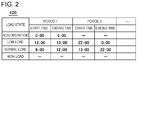
- FIG. 2 is a diagram showing an example of information stored in a state storage unit.
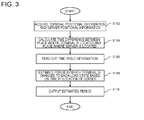
- FIG. 3 is a flow chart showing a processing flow of a management apparatus according to the first embodiment.
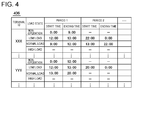
- FIG. 4 is a diagram showing another example of information stored in the state storage unit.
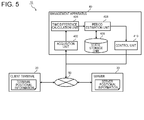
- FIG. 5 is a block diagram showing a configuration example of a remote terminal control system according to a second embodiment.
- FIG. 6 is a flow chart showing a processing flow of a management apparatus according to the second embodiment.
- FIG. 7 is a flow chart showing a processing flow of a management apparatus according to a modified example of the second embodiment.
- FIG. 1 is a block diagram showing a configuration example of a remote terminal control system according to a first embodiment.
- FIG. 2 is a diagram showing an example of information stored in a state storage unit.
- FIG. 3 is a flow chart showing a processing flow of a management apparatus according
- FIG. 8 is a block diagram showing a configuration example of a remote terminal control system according to a third embodiment.
- FIG. 9 is a diagram showing an example of acquired actual load information of a server.
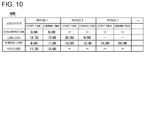
- FIG. 10 is a diagram showing an example of information stored in the state storage unit after updating.
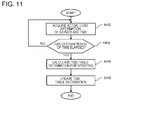
- FIG. 11 is a flow chart showing a processing flow of a management apparatus according to the third embodiment.
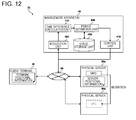
- FIG. 12 is a block diagram showing a configuration example of a remote terminal control system according to Example.
- FIG. 13 is a flow chart showing a processing flow of a management apparatus according to Example.
- FIG. 1 is a block diagram showing a configuration example of a remote terminal control system 10 according to a first embodiment.
- the remote terminal control system 10 has a client terminal 20, a server 30, and a management apparatus 40.
- the client terminal 20 and the server 30 are connected to each other through the network 50 so as to be capable of communicating with each other.
- the management apparatus 40 is connected to both the client terminal 20 and the server 30 through the network 50.
- the management apparatus 40 may be connected to any one of the client terminal 20 and the server 30 through the network 50, and may be connected to the other one without the network 50.
- the client terminal 20 has terminal positional information indicating the location of the client terminal 20.
- As the terminal positional information it is possible to use information (time zone) indicating all areas that use a common standard time.
- the time zone may be set in the client terminal 20 in advance, or positional information of the country, the state, the prefecture, and the like where the client terminal 20 is located may be acquired, and the positional information may be converted into a time zone.
- the positional information of the client terminal 20 can be acquired using a Global Positioning System (GPS) embedded in the client terminal 20, or can be acquired from an access point to which the client terminal 20 is connected.
- GPS Global Positioning System
- the client terminal 20 can acquire the positional information, for example, from an authenticator, a network switch, or the like that is used when being connected to a network through the access point.
- the standard time is expressed by a difference based on a coordinated universal time (UTC).
- UTC coordinated universal time
- a standard time used in Japan is 9 hours ahead of the coordinated universal time, and thus is expressed as "UTC+9".
- the server 30 has server positional information indicating the location of the server 30.
- a time zone can be used as the server positional information.
- the time zone used as the server positional information can be acquired in a manner similar to the terminal positional information, and thus the description thereof will not be repeated.
- the management apparatus 40 has an acquisition unit 402, a time difference calculation unit 404, a state storage unit 406, and a period estimation unit 408.
- the acquisition unit 402 acquires the terminal positional information of the client terminal 20 and the server positional information of the server 30.
- the acquisition unit 402 receives an instruction from, for example, a system manager through an input reception unit (not shown), and acquires the terminal positional information and the server positional information in response to the instruction.
- the time difference calculation unit 404 calculates a time difference between a place where the client terminal 20 is located and a place where the server 30 is located, on the basis of the terminal positional information and the server positional information that are acquired by the acquisition unit 402. For example, it is assumed that the terminal positional information is a time zone (UTC+9) corresponding to Japan and the server positional information is a time zone (UTC+5:30) corresponding to India. In this case, the time difference calculation unit 404 calculates that a time difference of three and a half hours occurs between the place where the client terminal 20 is located and the place where the server 30 is located.
- the state storage unit 406 stores time table information.
- the time table information is information in which a load state of the client terminal 20 which is defined in advance is associated with a period in which the client terminal 20 is changed to the load state. This period is based on the time at the location of the client terminal 20.
- FIG. 2 is a diagram showing an example of information stored in the state storage unit 406. As shown in FIG. 2, in the time table information, a plurality of periods corresponding to each of the load states may be stored, or any one period corresponding thereto may not be stored.
- each load state for example, when a ratio of a load of the client terminal is set to be L, a "non-operation state” can be set when L is 0%, a “low load state” can be set when L is greater than 0% and less than or equal to 33.3%, a “normal load state” can be set when L is greater than 33.3% and less than or equal to 66.7%, a "high load state” can be set when L is greater than 66.7% and less than or equal to 100%, and the like.
- this is just an example, and the range of each load state can be arbitrarily changed.
- the period estimation unit 408 estimates a period in which the client terminal 20 is changed to each load state when being based on the time at the location of the server 30, on the basis of the time difference calculated by the time difference calculation unit 404 and the time table information stored in the state storage unit 406.
- each component of the management apparatus 40 shown in each drawing indicates a function-based block instead of a hardware-based configuration.
- Each component of the management apparatus 40 is embodied by an arbitrary combination of hardware and software of an arbitrary computer based on a CPU, a memory, a program for embodying the components of the drawing which are loaded in the memory, a storage media such as a hard disk that stores the program, and an interface for network connection.
- the embodying method and apparatus thereof can be modified in various ways.
- FIG. 3 is a flow chart showing a processing flow of the management apparatus 40 according to the first embodiment.
- the management apparatus 40 performs a process to be described later by using the instruction from the system manager which is received from, for example, an input device, not shown, as a trigger.
- the management apparatus 40 acquires the terminal positional information held by the client terminal 20 and the server positional information held by the server 30 (S102).
- the management apparatus 40 acquires time zones as the terminal positional information and the server positional information.
- the information acquired by the management apparatus 40 may be positional information such as the countries or the sates where the client terminal 20 and the server 30 are located.
- the management apparatus 40 can also specify the time zones from the acquired positional information.
- the management apparatus 40 calculates a time difference based on the terminal positional information and the server positional information that are acquired in S102 (S104). For example, when the terminal is located in Japan and the server is located in India, the management apparatus 40 acquires the time zone (UTC+9:00) of Japan and the time zone (UTC+5:30) of India in S102. In this case, the management apparatus 40 can calculate the time difference based on India where the server 30 is located, to be " - three and a half hours", on the basis of the time zone (UTC+9:00) of Japan and the time zone (UTC+5:30) of India. In other words, the management apparatus 40 can determine that the time in India is three and a half hours behind Japan.
- the management apparatus 40 reads out the time table information stored in the state storage unit 406 (S106). Then, the management apparatus 40 estimates a period in which the client terminal 20 is changed to each load state when being based on the time at the location of the server 30, on the basis of the read out time table information and the time difference that is calculated in S104 (S108). For example, in the above-mentioned example, with regard to the period in which the client terminal 20 is changed to a non-operation state, a start time is "0:00", and an ending time is "9:00". For this reason, the management apparatus 40 can estimate the period based on the time at the location of the server 30 as "from 20:30 of the previous day to 5:30 of today", on the basis of these times and the time difference that is calculated in S104. In addition, the management apparatus 40 can also calculate periods in which the client terminal is changed to other load states in a similar manner.
- the management apparatus 40 outputs the estimated period on a display, a display device, or the like (S110). Thereby, it is possible to present a material for determining a period suitable for the maintenance of the server 30 to the system manager.
- the client terminal 20 and the server 30 are separated from each other to generate a time difference therebetween, it is possible to estimate and present a period in which the client terminal is in a non-operation state or a low load state, based on the location of the server 30. Thereby, it is possible to cause the system manager to easily ascertain a period in which the influence of the maintenance of the server 30 on the client terminal 20 is small.
- the state storage unit 406 may store time table information including a terminal ID for identifying each client terminal 20 connected to the server 30. Thereby, it is possible to ascertain a load state for each terminal and to present detailed information by the system manager.
- the management apparatus 40 presents to a display device the period in which the client terminal 20 is changed to each load state, however, it is also possible for the management apparatus 40 to present other information.
- the management apparatus 40 can also present a current load state of the client terminal 20.
- the management apparatus 40 may acquire a current time of the server 30 in addition to the terminal positional information and the server positional information.
- the management apparatus 40 can further calculate a current time of the client terminal 20 on the basis of a time difference to be calculated and the current time of the server 30.
- the management apparatus 40 can estimate a current load state of the client terminal 20 in the light of the period of the time table information that is read out in S106 and the current time of the client terminal 20 instead of estimating the period. In S110, the management apparatus 40 can present the estimated current load information of the client terminal 20.
- the management apparatus 40 of the second embodiment ascertains the period suitable for the maintenance based on the period estimated by the period estimation unit 408, and transmits an instruction for executing the maintenance to the server 30.
- FIG. 5 is a block diagram showing a configuration example of the remote terminal control system 10 according to the second embodiment.
- the remote terminal control system 10 in the embodiment is the same as that in the first embodiment except that the management apparatus 40 has a control unit 410.
- the control unit 410 transmits an instruction for executing the maintenance of the server 30 in a period in which it is estimated that the load state of the client terminal 20 is changed to a "non-operation state” and a "low load state".
- FIG. 6 is a flow chart showing a processing flow of the management apparatus 40 according to the second embodiment.
- the management apparatus 40 acquires the period in which it is estimated that the load state of the client terminal 20 is changed to a "non-operation state” or a "low load state” in the periods estimated in S108 (S202). Then, the management apparatus 40 writes an instruction for executing the maintenance (maintenance scheduling instruction) of the server 30 in the period acquired in S202, and transmits the instruction to the server 30 (S204). The server 30 having received the instruction starts a maintenance operation after standing by until the advent of a designated period.
- the management apparatus 40 may determine the period of the "non-operation state” to be prioritized, and may transmit the maintenance scheduling instruction in which the period of the "non-operation state” is set as the period in which the maintenance is executed.
- the management apparatus 40 may transmit the maintenance scheduling instruction in which the latest period is set, and may predetermine a time zone to be preferentially executed, and then transmit the maintenance scheduling instruction in which the period close to the time zone is set.
- the maintenance of the server 30 is classified into the maintenance performed in a non-operation state and also the maintenance performed in a low load state.
- the maintenance performed in the non-operation state is, for example, the updating of software of a server, the maintenance of hardware of a server, the updating of a virtual PC (VPC), the updating of a Hypervisor, and the backup and restoration of a file system.
- the maintenance performed in the low load state is, for example, the checking of virus, the backup of a file system, and the optimization of a file system.
- the management apparatus 40 may acquire only the period of "non-operation state" in S202.
- the management apparatus 40 when the management apparatus 40 is scheduled to execute the maintenance performed in the low load state, the management apparatus 40 may acquire only the period of "low load state" in S202. In addition, the management apparatus 40 can identify each maintenance process, for example, by using an identifier for determining in which load state the maintenance is executed.
- an instruction for executing the maintenance of the server 30 is transmitted. Thereby, it is possible to automatically execute the maintenance of the server 30 in a period in which it is estimated to have small influence on the client terminal 20.
- an actual load state of the server 30 is acquired before the control unit 410 executes maintenance, and it is determined whether to execute the maintenance in a period estimated on the basis of the load state.
- FIG. 7 is a flow chart showing a processing flow of the management apparatus 40 according to the modified example of the second embodiment.
- the management apparatus 40 acquires an actual load state of the server 30 after standing by until a period included in the instruction transmitted in S204 (S302). Then, the management apparatus 40 determines whether the acquired load state is a "non-operation state” or a "low load state” (S304). When it is determined that the acquired load state is the "non-operation state” or the "low load state” (S304: YES), the management apparatus 40 can determine that there is a high probability of the client terminal 20 connected to the server 30 being in an idle state. For this reason, the management apparatus 40 transmits a maintenance execution instruction to the server 30 (S306). The server 30 having received the maintenance execution instruction determines that maintenance may be executed in accordance with the maintenance scheduling instruction transmitted in S204, and thus executes the scheduled maintenance.
- the management apparatus 40 can determine that a work having more than a certain degree of load applied thereto is performed in the client terminal 20 connected to the server 30. For this reason, the management apparatus 40 reacquires the period in which it is estimated that the load state of the client terminal 20 is changed to the "non-operation state” or the "low load state", without transmitting the maintenance execution instruction to the server 30 (S202). At this time, the management apparatus 40 acquires a new period from periods other than periods that are set with respect to the transmitted maintenance scheduling instruction. Then, the management apparatus 40 sets the acquired period to be the maintenance scheduling instruction, and retransmits the maintenance scheduling instruction to the server 30 (S304).
- the maintenance scheduled on the basis of the estimation of the period estimation unit 408 is executed, it is possible to determine whether a work having a load applied thereto is performed on the client terminal 20, from actual load information of the server 30, and to prevent a user's work from being obstructed.
- the time table information stored in the state storage unit 406 is constant all the time. In this case, there is a concern that it is not possible to execute maintenance in an appropriate period because a variation in a user's life cycle, etc. are not considered. Therefore, the management apparatus 40 of the third embodiment updates the time table information stored in the state storage unit 406 in accordance with the user's life cycle.
- FIG. 8 is a block diagram showing a configuration example of the remote terminal control system 10 according to a third embodiment.
- the remote terminal control system 10 in the embodiment is the same as the first embodiment or the second embodiment except that the management apparatus 40 has a state learning unit 412. Meanwhile, FIG. 8 shows a configuration example based on the second embodiment.
- the acquisition unit 402 further acquires an actual load state of the server 30 and the time in which the server 30 is changed to the load state.
- the acquisition unit 402 may acquire the load state and the time at regular intervals or at a predetermined timing.
- the actual load state of the server 30 to be acquired can be set to information or the like indicating a change in the load state of the server 30 at regular intervals.
- the actual load information of the server 30 and the time thereof that are acquired by the acquisition unit 402 are temporarily stored in a storage unit, not shown, such as a hard disk drive.
- the state learning unit 412 calculates a period in which the client terminal 20 is changed to each load state, on the basis of the stored load information and time for a certain period, and updates the time table information of the state storage unit 406.
- a current state of the state storage unit 406 is a state as shown in FIG. 2, and it is assumed that the actual load state of the server 30 is acquired as shown in FIG. 9 at intervals of 30 minutes for a period from 11:00 to 13:00.
- a load state of "normal load” is acquired at the time of 11:00
- a load state of "high load” is acquired at the time of 11:30, and thus the state learning unit 412 calculates the time from 11:00 to 11:30 as a period of a "normal load state".
- the state learning unit 412 calculates the time from 11:30 to 12:00 as a period of a "high load state”, the time from 12:00 to 12:30 as a period of a "normal load state”, and the time from 12:30 to 13:00 as a period of a "low load state”.
- the state learning unit 412 updates the state storage unit 406 by replacing the calculated results with the existing time table information or by averaging the calculated results.
- FIG. 10 is a diagram showing an example of information stored in the state storage unit 406 after the updating. Meanwhile, FIG. 10 shows a case where the existing time table information is replaced with the results calculated by the state learning unit 412.
- FIG. 11 is a flow chart showing a processing flow of the management apparatus 40 according to the third embodiment.
- the management apparatus 40 further acquires an actual load state of the server 30 and the time in which the server 30 is changed to the load state (S402). As described above, the management apparatus 40 acquires the actual load state of the server 30 and the time thereof, for example, at regular intervals, and stores the actual load state of the server and the time in a storage unit, not shown. The management apparatus 40 acquires the actual load state of the server 30 and the time thereof, and determines whether or not a certain period of time has elapsed (S404). When the certain period of time has not elapsed (S404:NO), the management apparatus 40 continuously acquires the actual load state of the server 30 and the time thereof.
- the management apparatus 40 calculates time table information for updating, on the basis of the actual load state of the server 30 and the time thereof that are acquired in S402 (S406). Then, the management apparatus 40 updates the time table information of the state storage unit 406 on the basis of the time table information calculated in S406 (S408).
- the information of the state storage unit 406 is updated on the basis of the acquired actual load state of the server 30 and the time thereof, it is possible to improve the accuracy of estimation that is executed by the management apparatus 40.
- the management apparatus 40 may have a time table input unit (not shown) that receives the time table information for updating from a user.
- the management apparatus 40 can update the state storage unit 406, on the basis of a user's input that is received in the time table input unit. Thereby, it is possible to easily update the state storage unit 406, and to improve the accuracy of estimation that is executed by the management apparatus 40.
- FIG. 12 is a block diagram showing a configuration according to the Example.
- a physical server 30a and a physical server 30b are included.
- the VPC corresponding to the client terminal 20 operates on the physical server 30a.
- the Example is based on the second embodiment.
- FIG. 13 is a flow chart showing a processing flow according to Example.
- the management apparatus 40 performs a process to be described later by using an instruction from a system manager which is received, for example, from an input device, not shown, as a trigger.
- the management apparatus 40 acquires the terminal positional information held by the client terminal 20 and the server positional information held by the physical server 30a (S502).
- the management apparatus 40 calculates a time difference based on the terminal positional information and the server positional information that are acquired in S502 (S504).
- the management apparatus 40 reads out the time table information that is stored in the state storage unit 406 (S506).
- the management apparatus 40 estimates a period in which the client terminal 20 is changed to each load state when being based on the time at the location of the physical server 30a, on the basis of the read out time table information and the time difference that is calculated in S504 (S508).
- the management apparatus 40 acquires a period in which it is estimated that the load state of the client terminal 20 is changed to a "non-operation state” and a "low load state” in the periods estimated in S508 (S510). Then, the management apparatus 40 writes a maintenance scheduling instruction for moving the VPC operating on the physical server 30a in the acquired period to the physical server 30b, and transmits the maintenance scheduling instruction to the physical server 30b (S512).
- the management apparatus 40 stands by until a period included in the instruction transmitted in S512 and then acquires an actual load state of the VPC operating on the physical server 30a (S514). Then, the management apparatus 40 determines whether the acquired load state is a "non-operation state” or a "low load state” (S516). When the acquired load state is determined to be the "non-operation state” or the "low load state”(S516:YES), the management apparatus 40 can determine that there is a high probability of the client terminal 20, corresponding to the VPC which operates on the physical server 30a, being in an idle state. For this reason, the management apparatus 40 transmits a maintenance execution instruction for executing migration with respect to the physical server 30a (S518). The physical server 30a having received the maintenance execution instruction determines that maintenance may be executed in accordance with the maintenance scheduling instruction transmitted in S512, and thus executes the scheduled migration process.
- the management apparatus 40 can determine that a work having more than a certain degree of load applied thereto is performed in the client terminal 20 corresponding to the VPC operating on the physical server 30a. For this reason, the management apparatus 40 reacquires a period in which it is estimated that the load state of the client terminal 20 is changed to the "non-operation state” or the "low load state” without transmitting the maintenance execution instruction to the server 30 (S510). At this time, the management apparatus 40 acquires a new period in periods other than periods that are set with respect to the transmitted maintenance scheduling instruction. Then, the management apparatus 40 sets the acquired period to be the maintenance scheduling instruction, and retransmits the maintenance scheduling instruction to the physical server 30a (S512).
- the server 30 is described as a physical server.
- the present invention is not limited thereto, and the server may be a virtual server such as a VPC.
- a plurality of virtual servers may operate with respect to a physical server.
- the load state thereof may be divided into stages other than those stated above, that is, the load state is divided into, for example, 3 stages of a "non-operation state", a "low load state", and a "high load state”.
- the client terminal 20 may be a versatile computer such as a desktop computer or a notebook computer, or may be a smart phone, a tablet computer, a cellular phone, or the like.
- a system management apparatus including: a time difference calculation unit that acquires terminal positional information indicating a location of a terminal and server positional information indicating a location of a server, and calculates a time difference between a place where the terminal is located and a place where the server is located, on the basis of the terminal positional information and the server positional information; and a period estimation unit that reads out time table information from a state storage unit which stores the time table information in which a load state of the terminal which is defined in advance is associated with a period in which the terminal is changed to the load state based on the time at the location of the terminal, and estimates the period in which the terminal is changed to the load state based on the time at the location of the server, on the basis of the read out time table information and the calculated time difference.
- Addition 4 The system management apparatus according to any one of Additions 1 to 3, further including a state learning unit that updates the state storage unit on the basis of the actual load state of the server which is acquired for a certain period and the time at which the server is changed to the load state.
- Addition 5 The system management apparatus according to any one of Additions 1 to 4, wherein the system management apparatus acquires a time zone corresponding to the place where the terminal is located and a time zone corresponding to the place where the server is located, as the terminal positional information and the server positional information, respectively.
- a system management method including: causing a system management apparatus to acquire terminal positional information indicating a location of a terminal and server positional information indicating a location of a server; causing a system management apparatus to calculate a time difference between a place where the terminal is located and a place where the server is located, on the basis of the terminal positional information and the server positional information; causing a system management apparatus to read out time table information from a state storage unit which stores the time table information in which a load state of the terminal which is defined in advance is associated with a period in which the terminal is changed to the load state based on the time at the location of the terminal; and causing a system management apparatus to estimate the period in which the terminal is changed to the load state based on the time at the location of the server, on the basis of the read out time table information and the calculated time difference.
Landscapes
- Engineering & Computer Science (AREA)
- Computer Networks & Wireless Communication (AREA)
- Signal Processing (AREA)
- Computer And Data Communications (AREA)
Description
The present invention relates to a system management apparatus, a system management method, and a program.
Thin client systems have been in widespread use, which include a terminal and a server, only perform an input, a screen output, and a connection process to the server on the terminal side, and perform the execution of a program and the like on the server side. In such a system, when maintenance on the server side is performed, there is a need to perform the maintenance in consideration of the influence of the client side terminal.
[PTL 1] Japanese Unexamined Patent Publication No.2011-205264
Here, when the client terminal and the server are installed in different countries, there is a time difference between a place where the client terminal is located and a place where the server is located. In this case, in order to ascertain the influence of the execution of maintenance of the server on a user's work, a system manager needs to know what the time difference is between the place where the client terminal is located and the place where the server is located.
In view of the above-mentioned problem, an object of the invention is to provide a system management apparatus, a system management method, and a program, which are capable of presenting an execution period of maintenance having small influence on a work, in consideration of a positional relationship between a client terminal and a server.
According to the invention, there is provided a system management apparatus including: a time difference calculation unit that acquires terminal positional information indicating a location of a terminal and server positional information indicating a location of a server, and calculates a time difference between a place where the terminal is located and a place where the server is located, on the basis of the terminal positional information and the server positional information; and a period estimation unit that reads out time table information from a state storage unit which stores the time table information in which a load state of the terminal which is defined in advance is associated with a period in which the terminal is changed to the load state based on the time at the location of the terminal, and estimates the period in which the terminal is changed to the load state based on the time at the location of the server, on the basis of the read out time table information and the calculated time difference.
According to the invention, there is provided a system management method including: causing a system management apparatus to acquire terminal positional information indicating a location of a terminal and server positional information indicating a location of a server; causing a system management apparatus to calculate a time difference between a place where the terminal is located and a place where the server is located, on the basis of the terminal positional information and the server positional information; causing a system management apparatus to read out time table information from a state storage unit which stores the time table information in which a load state of the terminal which is defined in advance is associated with a period in which the terminal is changed to the load state based on the time at the location of the terminal; and causing a system management apparatus to estimate the period in which the terminal is changed to the load state based on the time at the location of the server, on the basis of the read out time table information and the calculated time difference.
According to the invention, there is provided a program causing a computer to function as: a time difference calculation unit that acquires terminal positional information indicating a location of a terminal and server positional information indicating a location of a server, and calculates a time difference between a place where the terminal is located and a place where the server is located, on the basis of the terminal positional information and the server positional information; and a period estimation unit that reads out time table information from a state storage unit which stores the time table information in which a load state of the terminal which is defined in advance is associated with a period in which the terminal is changed to the load state based on the time at the location of the terminal, and estimates the period in which the terminal is changed to the load state based on the time at the location of the server, on the basis of the read out time table information and the calculated time difference.
According to the invention, there are provided a system management apparatus, a system management method, and a program which are capable of presenting an execution period of maintenance having small influence on a work, in consideration of a positional relationship between a client terminal and a server.
The above-mentioned objects, other objects, features and advantages will be further apparent from the preferred embodiments described below, and the accompanying drawings as follows.
Hereinafter, embodiments of the invention will be described with reference to the accompanying drawings. In addition, in all the drawings, like reference numerals denote like components, and a description thereof will not be repeated.
(First Embodiment)
FIG. 1 is a block diagram showing a configuration example of a remoteterminal control system 10 according to a first embodiment. The remote terminal control system 10 has a client terminal 20, a server 30, and a management apparatus 40. The client terminal 20 and the server 30 are connected to each other through the network 50 so as to be capable of communicating with each other. In FIG. 1, the management apparatus 40 is connected to both the client terminal 20 and the server 30 through the network 50. However, the management apparatus 40 may be connected to any one of the client terminal 20 and the server 30 through the network 50, and may be connected to the other one without the network 50.
FIG. 1 is a block diagram showing a configuration example of a remote
The client terminal 20 has terminal positional information indicating the location of the client terminal 20. As the terminal positional information, it is possible to use information (time zone) indicating all areas that use a common standard time. The time zone may be set in the client terminal 20 in advance, or positional information of the country, the state, the prefecture, and the like where the client terminal 20 is located may be acquired, and the positional information may be converted into a time zone. The positional information of the client terminal 20 can be acquired using a Global Positioning System (GPS) embedded in the client terminal 20, or can be acquired from an access point to which the client terminal 20 is connected. The client terminal 20 can acquire the positional information, for example, from an authenticator, a network switch, or the like that is used when being connected to a network through the access point. Meanwhile, the standard time is expressed by a difference based on a coordinated universal time (UTC). For example, a standard time used in Japan is 9 hours ahead of the coordinated universal time, and thus is expressed as "UTC+9".
Similarly to the client terminal 20, the server 30 has server positional information indicating the location of the server 30. Similarly to the terminal positional information, a time zone can be used as the server positional information. Meanwhile, the time zone used as the server positional information can be acquired in a manner similar to the terminal positional information, and thus the description thereof will not be repeated.
The management apparatus 40 has an acquisition unit 402, a time difference calculation unit 404, a state storage unit 406, and a period estimation unit 408.
The acquisition unit 402 acquires the terminal positional information of the client terminal 20 and the server positional information of the server 30. The acquisition unit 402 receives an instruction from, for example, a system manager through an input reception unit (not shown), and acquires the terminal positional information and the server positional information in response to the instruction.
The time difference calculation unit 404 calculates a time difference between a place where the client terminal 20 is located and a place where the server 30 is located, on the basis of the terminal positional information and the server positional information that are acquired by the acquisition unit 402. For example, it is assumed that the terminal positional information is a time zone (UTC+9) corresponding to Japan and the server positional information is a time zone (UTC+5:30) corresponding to India. In this case, the time difference calculation unit 404 calculates that a time difference of three and a half hours occurs between the place where the client terminal 20 is located and the place where the server 30 is located.
The state storage unit 406 stores time table information. The time table information is information in which a load state of the client terminal 20 which is defined in advance is associated with a period in which the client terminal 20 is changed to the load state. This period is based on the time at the location of the client terminal 20. FIG. 2 is a diagram showing an example of information stored in the state storage unit 406. As shown in FIG. 2, in the time table information, a plurality of periods corresponding to each of the load states may be stored, or any one period corresponding thereto may not be stored. Meanwhile, with regard to the definition of each load state, for example, when a ratio of a load of the client terminal is set to be L, a "non-operation state" can be set when L is 0%, a "low load state" can be set when L is greater than 0% and less than or equal to 33.3%, a "normal load state" can be set when L is greater than 33.3% and less than or equal to 66.7%, a "high load state" can be set when L is greater than 66.7% and less than or equal to 100%, and the like. However, this is just an example, and the range of each load state can be arbitrarily changed.
The period estimation unit 408 estimates a period in which the client terminal 20 is changed to each load state when being based on the time at the location of the server 30, on the basis of the time difference calculated by the time difference calculation unit 404 and the time table information stored in the state storage unit 406.
Meanwhile, each component of the management apparatus 40 shown in each drawing indicates a function-based block instead of a hardware-based configuration. Each component of the management apparatus 40 is embodied by an arbitrary combination of hardware and software of an arbitrary computer based on a CPU, a memory, a program for embodying the components of the drawing which are loaded in the memory, a storage media such as a hard disk that stores the program, and an interface for network connection. The embodying method and apparatus thereof can be modified in various ways.
A processing flow of the embodiment will be described with reference to FIG. 3. FIG. 3 is a flow chart showing a processing flow of the management apparatus 40 according to the first embodiment.
The management apparatus 40 performs a process to be described later by using the instruction from the system manager which is received from, for example, an input device, not shown, as a trigger. When the management apparatus 40 receives the instruction, the management apparatus 40 acquires the terminal positional information held by the client terminal 20 and the server positional information held by the server 30 (S102). Specifically, the management apparatus 40 acquires time zones as the terminal positional information and the server positional information. In addition, the information acquired by the management apparatus 40 may be positional information such as the countries or the sates where the client terminal 20 and the server 30 are located. The management apparatus 40 can also specify the time zones from the acquired positional information.
The management apparatus 40 calculates a time difference based on the terminal positional information and the server positional information that are acquired in S102 (S104). For example, when the terminal is located in Japan and the server is located in India, the management apparatus 40 acquires the time zone (UTC+9:00) of Japan and the time zone (UTC+5:30) of India in S102. In this case, the management apparatus 40 can calculate the time difference based on India where the server 30 is located, to be " - three and a half hours", on the basis of the time zone (UTC+9:00) of Japan and the time zone (UTC+5:30) of India. In other words, the management apparatus 40 can determine that the time in India is three and a half hours behind Japan.
The management apparatus 40 reads out the time table information stored in the state storage unit 406 (S106). Then, the management apparatus 40 estimates a period in which the client terminal 20 is changed to each load state when being based on the time at the location of the server 30, on the basis of the read out time table information and the time difference that is calculated in S104 (S108). For example, in the above-mentioned example, with regard to the period in which the client terminal 20 is changed to a non-operation state, a start time is "0:00", and an ending time is "9:00". For this reason, the management apparatus 40 can estimate the period based on the time at the location of the server 30 as "from 20:30 of the previous day to 5:30 of today", on the basis of these times and the time difference that is calculated in S104. In addition, the management apparatus 40 can also calculate periods in which the client terminal is changed to other load states in a similar manner.
The management apparatus 40 outputs the estimated period on a display, a display device, or the like (S110). Thereby, it is possible to present a material for determining a period suitable for the maintenance of the server 30 to the system manager.
From the above, according to the embodiment, even when the client terminal 20 and the server 30 are separated from each other to generate a time difference therebetween, it is possible to estimate and present a period in which the client terminal is in a non-operation state or a low load state, based on the location of the server 30. Thereby, it is possible to cause the system manager to easily ascertain a period in which the influence of the maintenance of the server 30 on the client terminal 20 is small.
In addition, as shown in FIG. 4, for example, the state storage unit 406 may store time table information including a terminal ID for identifying each client terminal 20 connected to the server 30. Thereby, it is possible to ascertain a load state for each terminal and to present detailed information by the system manager.
Meanwhile, in this embodiment, an example is shown in which the management apparatus 40 presents to a display device the period in which the client terminal 20 is changed to each load state, however, it is also possible for the management apparatus 40 to present other information. For example, the management apparatus 40 can also present a current load state of the client terminal 20. In this case, in S102, the management apparatus 40 may acquire a current time of the server 30 in addition to the terminal positional information and the server positional information. In S104, the management apparatus 40 can further calculate a current time of the client terminal 20 on the basis of a time difference to be calculated and the current time of the server 30. In S108, the management apparatus 40 can estimate a current load state of the client terminal 20 in the light of the period of the time table information that is read out in S106 and the current time of the client terminal 20 instead of estimating the period. In S110, the management apparatus 40 can present the estimated current load information of the client terminal 20.
(Second Embodiment)
In the first embodiment, it is possible to cause the system manager to ascertain a period in which it is assumed to have small influence due to the maintenance, by notifying the period estimated by theperiod estimation unit 408. However, since the system manager performs a work after the period is notified, a work load is applied to the system manager. Therefore, the management apparatus 40 of the second embodiment ascertains the period suitable for the maintenance based on the period estimated by the period estimation unit 408, and transmits an instruction for executing the maintenance to the server 30.
In the first embodiment, it is possible to cause the system manager to ascertain a period in which it is assumed to have small influence due to the maintenance, by notifying the period estimated by the
FIG. 5 is a block diagram showing a configuration example of the remote terminal control system 10 according to the second embodiment. The remote terminal control system 10 in the embodiment is the same as that in the first embodiment except that the management apparatus 40 has a control unit 410.
The control unit 410 transmits an instruction for executing the maintenance of the server 30 in a period in which it is estimated that the load state of the client terminal 20 is changed to a "non-operation state" and a "low load state".
A processing flow in the embodiment will be described using FIG. 6. FIG. 6 is a flow chart showing a processing flow of the management apparatus 40 according to the second embodiment.
The management apparatus 40 acquires the period in which it is estimated that the load state of the client terminal 20 is changed to a "non-operation state" or a "low load state" in the periods estimated in S108 (S202). Then, the management apparatus 40 writes an instruction for executing the maintenance (maintenance scheduling instruction) of the server 30 in the period acquired in S202, and transmits the instruction to the server 30 (S204). The server 30 having received the instruction starts a maintenance operation after standing by until the advent of a designated period. Here, in S202, when the periods related to both the "non-operation state" and the "low load state" are acquired, for example, the management apparatus 40 may determine the period of the "non-operation state" to be prioritized, and may transmit the maintenance scheduling instruction in which the period of the "non-operation state" is set as the period in which the maintenance is executed. In addition, in S202, when a plurality of periods are acquired with respect to the same load state, the management apparatus 40 may transmit the maintenance scheduling instruction in which the latest period is set, and may predetermine a time zone to be preferentially executed, and then transmit the maintenance scheduling instruction in which the period close to the time zone is set.
Meanwhile, the maintenance of the server 30 is classified into the maintenance performed in a non-operation state and also the maintenance performed in a low load state. The maintenance performed in the non-operation state is, for example, the updating of software of a server, the maintenance of hardware of a server, the updating of a virtual PC (VPC), the updating of a Hypervisor, and the backup and restoration of a file system. In addition, the maintenance performed in the low load state is, for example, the checking of virus, the backup of a file system, and the optimization of a file system. When the management apparatus 40 is scheduled to execute the maintenance performed in the non-operation state, the management apparatus 40 may acquire only the period of "non-operation state" in S202. In addition, when the management apparatus 40 is scheduled to execute the maintenance performed in the low load state, the management apparatus 40 may acquire only the period of "low load state" in S202. In addition, the management apparatus 40 can identify each maintenance process, for example, by using an identifier for determining in which load state the maintenance is executed.
As described above, according to the embodiment, in the period in which it is estimated that the load state is changed to a "non-operation state" or a "low load state" by the management apparatus 40, an instruction for executing the maintenance of the server 30 is transmitted. Thereby, it is possible to automatically execute the maintenance of the server 30 in a period in which it is estimated to have small influence on the client terminal 20.
(Modified Example of Second Embodiment)
In a modified example of the second embodiment, in addition to the second embodiment, an actual load state of theserver 30 is acquired before the control unit 410 executes maintenance, and it is determined whether to execute the maintenance in a period estimated on the basis of the load state.
In a modified example of the second embodiment, in addition to the second embodiment, an actual load state of the
FIG. 7 is a flow chart showing a processing flow of the management apparatus 40 according to the modified example of the second embodiment.
The management apparatus 40 acquires an actual load state of the server 30 after standing by until a period included in the instruction transmitted in S204 (S302). Then, the management apparatus 40 determines whether the acquired load state is a "non-operation state" or a "low load state" (S304). When it is determined that the acquired load state is the "non-operation state" or the "low load state" (S304: YES), the management apparatus 40 can determine that there is a high probability of the client terminal 20 connected to the server 30 being in an idle state. For this reason, the management apparatus 40 transmits a maintenance execution instruction to the server 30 (S306). The server 30 having received the maintenance execution instruction determines that maintenance may be executed in accordance with the maintenance scheduling instruction transmitted in S204, and thus executes the scheduled maintenance.
On the other hand, when the load state is determined to be other than the "non-operation state" or the "low load state" (S304: NO), the management apparatus 40 can determine that a work having more than a certain degree of load applied thereto is performed in the client terminal 20 connected to the server 30. For this reason, the management apparatus 40 reacquires the period in which it is estimated that the load state of the client terminal 20 is changed to the "non-operation state" or the "low load state", without transmitting the maintenance execution instruction to the server 30 (S202). At this time, the management apparatus 40 acquires a new period from periods other than periods that are set with respect to the transmitted maintenance scheduling instruction. Then, the management apparatus 40 sets the acquired period to be the maintenance scheduling instruction, and retransmits the maintenance scheduling instruction to the server 30 (S304).
As described above, according to the configuration, when the maintenance scheduled on the basis of the estimation of the period estimation unit 408 is executed, it is possible to determine whether a work having a load applied thereto is performed on the client terminal 20, from actual load information of the server 30, and to prevent a user's work from being obstructed.
(Third Embodiment)
In the above-mentioned each embodiment, the time table information stored in thestate storage unit 406 is constant all the time. In this case, there is a concern that it is not possible to execute maintenance in an appropriate period because a variation in a user's life cycle, etc. are not considered. Therefore, the management apparatus 40 of the third embodiment updates the time table information stored in the state storage unit 406 in accordance with the user's life cycle.
In the above-mentioned each embodiment, the time table information stored in the
FIG. 8 is a block diagram showing a configuration example of the remote terminal control system 10 according to a third embodiment. The remote terminal control system 10 in the embodiment is the same as the first embodiment or the second embodiment except that the management apparatus 40 has a state learning unit 412. Meanwhile, FIG. 8 shows a configuration example based on the second embodiment.
In the embodiment, the acquisition unit 402 further acquires an actual load state of the server 30 and the time in which the server 30 is changed to the load state. The acquisition unit 402 may acquire the load state and the time at regular intervals or at a predetermined timing. In addition, the actual load state of the server 30 to be acquired can be set to information or the like indicating a change in the load state of the server 30 at regular intervals. The actual load information of the server 30 and the time thereof that are acquired by the acquisition unit 402 are temporarily stored in a storage unit, not shown, such as a hard disk drive.
The state learning unit 412 calculates a period in which the client terminal 20 is changed to each load state, on the basis of the stored load information and time for a certain period, and updates the time table information of the state storage unit 406. For example, a current state of the state storage unit 406 is a state as shown in FIG. 2, and it is assumed that the actual load state of the server 30 is acquired as shown in FIG. 9 at intervals of 30 minutes for a period from 11:00 to 13:00. In this example, a load state of "normal load" is acquired at the time of 11:00, and a load state of "high load" is acquired at the time of 11:30, and thus the state learning unit 412 calculates the time from 11:00 to 11:30 as a period of a "normal load state". Similarly, the state learning unit 412 calculates the time from 11:30 to 12:00 as a period of a "high load state", the time from 12:00 to 12:30 as a period of a "normal load state", and the time from 12:30 to 13:00 as a period of a "low load state". The state learning unit 412 updates the state storage unit 406 by replacing the calculated results with the existing time table information or by averaging the calculated results. FIG. 10 is a diagram showing an example of information stored in the state storage unit 406 after the updating. Meanwhile, FIG. 10 shows a case where the existing time table information is replaced with the results calculated by the state learning unit 412.
A processing flow in the embodiment will be described using FIG. 11. FIG. 11 is a flow chart showing a processing flow of the management apparatus 40 according to the third embodiment.
The management apparatus 40 further acquires an actual load state of the server 30 and the time in which the server 30 is changed to the load state (S402). As described above, the management apparatus 40 acquires the actual load state of the server 30 and the time thereof, for example, at regular intervals, and stores the actual load state of the server and the time in a storage unit, not shown. The management apparatus 40 acquires the actual load state of the server 30 and the time thereof, and determines whether or not a certain period of time has elapsed (S404). When the certain period of time has not elapsed (S404:NO), the management apparatus 40 continuously acquires the actual load state of the server 30 and the time thereof.
On the other hand, when certain period of time has elapsed (S404:YES), the management apparatus 40 calculates time table information for updating, on the basis of the actual load state of the server 30 and the time thereof that are acquired in S402 (S406). Then, the management apparatus 40 updates the time table information of the state storage unit 406 on the basis of the time table information calculated in S406 (S408).
As described above, according to the embodiment, since the information of the state storage unit 406 is updated on the basis of the acquired actual load state of the server 30 and the time thereof, it is possible to improve the accuracy of estimation that is executed by the management apparatus 40.
Meanwhile, in the embodiment, the management apparatus 40 may have a time table input unit (not shown) that receives the time table information for updating from a user. In this case, the management apparatus 40 can update the state storage unit 406, on the basis of a user's input that is received in the time table input unit. Thereby, it is possible to easily update the state storage unit 406, and to improve the accuracy of estimation that is executed by the management apparatus 40.
(Example)
As Example of maintenance used in the invention, an operation for executing a VPC migration will now be described. FIG. 12 is a block diagram showing a configuration according to the Example. In the Example, aphysical server 30a and a physical server 30b are included. In addition, in the Example, the VPC corresponding to the client terminal 20 operates on the physical server 30a. Meanwhile, the Example is based on the second embodiment.
As Example of maintenance used in the invention, an operation for executing a VPC migration will now be described. FIG. 12 is a block diagram showing a configuration according to the Example. In the Example, a
A processing flow of the VPC migration will now be described using FIG. 13. FIG. 13 is a flow chart showing a processing flow according to Example.
The management apparatus 40 performs a process to be described later by using an instruction from a system manager which is received, for example, from an input device, not shown, as a trigger. When the management apparatus 40 receives the instruction, the management apparatus 40 acquires the terminal positional information held by the client terminal 20 and the server positional information held by the physical server 30a (S502).
Then, the management apparatus 40 calculates a time difference based on the terminal positional information and the server positional information that are acquired in S502 (S504). The management apparatus 40 reads out the time table information that is stored in the state storage unit 406 (S506). Then, the management apparatus 40 estimates a period in which the client terminal 20 is changed to each load state when being based on the time at the location of the physical server 30a, on the basis of the read out time table information and the time difference that is calculated in S504 (S508).
The management apparatus 40 acquires a period in which it is estimated that the load state of the client terminal 20 is changed to a "non-operation state" and a "low load state" in the periods estimated in S508 (S510). Then, the management apparatus 40 writes a maintenance scheduling instruction for moving the VPC operating on the physical server 30a in the acquired period to the physical server 30b, and transmits the maintenance scheduling instruction to the physical server 30b (S512).
The management apparatus 40 stands by until a period included in the instruction transmitted in S512 and then acquires an actual load state of the VPC operating on the physical server 30a (S514). Then, the management apparatus 40 determines whether the acquired load state is a "non-operation state" or a "low load state" (S516). When the acquired load state is determined to be the "non-operation state" or the "low load state"(S516:YES), the management apparatus 40 can determine that there is a high probability of the client terminal 20, corresponding to the VPC which operates on the physical server 30a, being in an idle state. For this reason, the management apparatus 40 transmits a maintenance execution instruction for executing migration with respect to the physical server 30a (S518). The physical server 30a having received the maintenance execution instruction determines that maintenance may be executed in accordance with the maintenance scheduling instruction transmitted in S512, and thus executes the scheduled migration process.
On the other hand, when the load state is determined to be other than the "non-operation state" or the "low load state" (S516:NO), the management apparatus 40 can determine that a work having more than a certain degree of load applied thereto is performed in the client terminal 20 corresponding to the VPC operating on the physical server 30a. For this reason, the management apparatus 40 reacquires a period in which it is estimated that the load state of the client terminal 20 is changed to the "non-operation state" or the "low load state" without transmitting the maintenance execution instruction to the server 30 (S510). At this time, the management apparatus 40 acquires a new period in periods other than periods that are set with respect to the transmitted maintenance scheduling instruction. Then, the management apparatus 40 sets the acquired period to be the maintenance scheduling instruction, and retransmits the maintenance scheduling instruction to the physical server 30a (S512).
In this manner, it is possible to move the VPC in the non-operation state or the low load state. For this reason, it is possible to suppress an amount of memory change of the VPC while the VPC is moving. As a result, it is possible to reduce an amount of data transfer and to reduce a load of migration.
As described above, although the embodiments of the invention have been set forth with reference to the drawings, these are merely illustrative of the invention, and various configurations other than those stated above can be employed.
For example, in the above-mentioned embodiment, the server 30 is described as a physical server. However, the present invention is not limited thereto, and the server may be a virtual server such as a VPC. In addition, a plurality of virtual servers may operate with respect to a physical server.
For example, in the above-mentioned embodiment, a description has been made of a case where a load state of the client terminal 20 is divided into four stages. However, the load state thereof may be divided into stages other than those stated above, that is, the load state is divided into, for example, 3 stages of a "non-operation state", a "low load state", and a "high load state". In addition, the client terminal 20 may be a versatile computer such as a desktop computer or a notebook computer, or may be a smart phone, a tablet computer, a cellular phone, or the like.
Meanwhile, according to the above-mentioned embodiments, the following invention is disclosed.
(Addition 1)
A system management apparatus including:
a time difference calculation unit that acquires terminal positional information indicating a location of a terminal and server positional information indicating a location of a server, and calculates a time difference between a place where the terminal is located and a place where the server is located, on the basis of the terminal positional information and the server positional information; and
a period estimation unit that reads out time table information from a state storage unit which stores the time table information in which a load state of the terminal which is defined in advance is associated with a period in which the terminal is changed to the load state based on the time at the location of the terminal, and estimates the period in which the terminal is changed to the load state based on the time at the location of the server, on the basis of the read out time table information and the calculated time difference.
(Addition 2)
The system management apparatus according toAddition 1, further including a control unit that transmits an instruction for executing maintenance of the server in a period in which the period estimation unit estimates that the load state of the terminal is changed to a load state defined as a non-operation state or a load state defined as a low load state.
(Addition 3)
The system management apparatus according toAddition 2, wherein the control unit acquires an actual load state of the server before executing the maintenance, and further transmits an instruction whether or not to execute the maintenance on the basis of the acquired load state.
(Addition 4)
The system management apparatus according to any one ofAdditions 1 to 3, further including a state learning unit that updates the state storage unit on the basis of the actual load state of the server which is acquired for a certain period and the time at which the server is changed to the load state.
(Addition 5)
The system management apparatus according to any one ofAdditions 1 to 4, wherein the system management apparatus acquires a time zone corresponding to the place where the terminal is located and a time zone corresponding to the place where the server is located, as the terminal positional information and the server positional information, respectively.
(Addition 6)
A system management method including:
causing a system management apparatus to acquire terminal positional information indicating a location of a terminal and server positional information indicating a location of a server;
causing a system management apparatus to calculate a time difference between a place where the terminal is located and a place where the server is located, on the basis of the terminal positional information and the server positional information;
causing a system management apparatus to read out time table information from a state storage unit which stores the time table information in which a load state of the terminal which is defined in advance is associated with a period in which the terminal is changed to the load state based on the time at the location of the terminal; and
causing a system management apparatus to estimate the period in which the terminal is changed to the load state based on the time at the location of the server, on the basis of the read out time table information and the calculated time difference.
(Addition 7)
A program causing a computer to function as:
a time difference calculation unit that acquires terminal positional information indicating a location of a terminal and server positional information indicating a location of a server, and calculates a time difference between a place where the terminal is located and a place where the server is located, on the basis of the terminal positional information and the server positional information; and
a period estimation unit that reads out time table information from a state storage unit which stores the time table information in which a load state of the terminal which is defined in advance is associated with a period in which the terminal is changed to the load state based on the time at the location of the terminal, and estimates the period in which the terminal is changed to the load state based on the time at the location of the server, on the basis of the read out time table information and the calculated time difference.
(Addition 8)
The system management method according to Addition 6, in which the system management apparatus transmits an instruction for executing maintenance of the server in a period in which it is estimated that the load state of the terminal is changed to a load state defined as a non-operation state or a load state defined as a low load state.
(Addition 9)
The system management method according to Addition 8, in which the system management apparatus acquires an actual load state of the server before executing the maintenance, and further transmits an instruction whether or not to execute the maintenance on the basis of the acquired load state.
(Addition 10)
The system management method according to any one of Additions 6, 8, and 9, in which the system management apparatus updates the state storage unit on the basis of the actual load state of the server which is acquired for a certain period and the time at which the server is changed to the load state.
(Addition 11)
The system management method according to any one of Additions 6 and 8 to 10, in which the system management apparatus acquires a time zone corresponding to the place where the terminal is located and a time zone corresponding to the place where the server is located, as the terminal positional information and the server positional information, respectively.
(Addition 12)
The program according to Addition 7 which causes the computer to function as a control unit that transmits an instruction for executing maintenance of the server in a period in which it is estimated that the load state of the terminal is changed to a load state defined as a non-operation state or a load state defined as a low load state.
(Addition 13)
The program according to Addition 12 which causes the computer to function as a unit that acquires an actual load state of the server before executing the maintenance, and further transmits an instruction whether or not to execute the maintenance on the basis of the acquired load state.
(Addition 14)
The program according to any one of Additions 7, 12, and 13 which causes the computer to further function as a state learning unit that updates the state storage unit on the basis of the actual load state of the server which is acquired for a certain period and the time at which the server is changed to the load state.
(Addition 15)
The program according to any one of Additions 7 and 12 to 14 which causes the computer to function as a unit that acquires a time zone corresponding to the place where the terminal is located and a time zone corresponding to the place where the server is located, as the terminal positional information and the server positional information, respectively.
(Addition 1)
A system management apparatus including:
a time difference calculation unit that acquires terminal positional information indicating a location of a terminal and server positional information indicating a location of a server, and calculates a time difference between a place where the terminal is located and a place where the server is located, on the basis of the terminal positional information and the server positional information; and
a period estimation unit that reads out time table information from a state storage unit which stores the time table information in which a load state of the terminal which is defined in advance is associated with a period in which the terminal is changed to the load state based on the time at the location of the terminal, and estimates the period in which the terminal is changed to the load state based on the time at the location of the server, on the basis of the read out time table information and the calculated time difference.
(Addition 2)
The system management apparatus according to
(Addition 3)
The system management apparatus according to
(Addition 4)
The system management apparatus according to any one of
(Addition 5)
The system management apparatus according to any one of
(Addition 6)
A system management method including:
causing a system management apparatus to acquire terminal positional information indicating a location of a terminal and server positional information indicating a location of a server;
causing a system management apparatus to calculate a time difference between a place where the terminal is located and a place where the server is located, on the basis of the terminal positional information and the server positional information;
causing a system management apparatus to read out time table information from a state storage unit which stores the time table information in which a load state of the terminal which is defined in advance is associated with a period in which the terminal is changed to the load state based on the time at the location of the terminal; and
causing a system management apparatus to estimate the period in which the terminal is changed to the load state based on the time at the location of the server, on the basis of the read out time table information and the calculated time difference.
(Addition 7)
A program causing a computer to function as:
a time difference calculation unit that acquires terminal positional information indicating a location of a terminal and server positional information indicating a location of a server, and calculates a time difference between a place where the terminal is located and a place where the server is located, on the basis of the terminal positional information and the server positional information; and
a period estimation unit that reads out time table information from a state storage unit which stores the time table information in which a load state of the terminal which is defined in advance is associated with a period in which the terminal is changed to the load state based on the time at the location of the terminal, and estimates the period in which the terminal is changed to the load state based on the time at the location of the server, on the basis of the read out time table information and the calculated time difference.
(Addition 8)
The system management method according to Addition 6, in which the system management apparatus transmits an instruction for executing maintenance of the server in a period in which it is estimated that the load state of the terminal is changed to a load state defined as a non-operation state or a load state defined as a low load state.
(Addition 9)
The system management method according to Addition 8, in which the system management apparatus acquires an actual load state of the server before executing the maintenance, and further transmits an instruction whether or not to execute the maintenance on the basis of the acquired load state.
(Addition 10)
The system management method according to any one of Additions 6, 8, and 9, in which the system management apparatus updates the state storage unit on the basis of the actual load state of the server which is acquired for a certain period and the time at which the server is changed to the load state.
(Addition 11)
The system management method according to any one of Additions 6 and 8 to 10, in which the system management apparatus acquires a time zone corresponding to the place where the terminal is located and a time zone corresponding to the place where the server is located, as the terminal positional information and the server positional information, respectively.
(Addition 12)
The program according to Addition 7 which causes the computer to function as a control unit that transmits an instruction for executing maintenance of the server in a period in which it is estimated that the load state of the terminal is changed to a load state defined as a non-operation state or a load state defined as a low load state.
(Addition 13)
The program according to Addition 12 which causes the computer to function as a unit that acquires an actual load state of the server before executing the maintenance, and further transmits an instruction whether or not to execute the maintenance on the basis of the acquired load state.
(Addition 14)
The program according to any one of Additions 7, 12, and 13 which causes the computer to further function as a state learning unit that updates the state storage unit on the basis of the actual load state of the server which is acquired for a certain period and the time at which the server is changed to the load state.
(Addition 15)
The program according to any one of Additions 7 and 12 to 14 which causes the computer to function as a unit that acquires a time zone corresponding to the place where the terminal is located and a time zone corresponding to the place where the server is located, as the terminal positional information and the server positional information, respectively.
The application claims the priority based on Japanese Patent Application No. 2012-190858 filed on August 31, 2012, the content of which is incorporated herein by reference.
Claims (7)
- A system management apparatus comprising:
a time difference calculation unit that acquires terminal positional information indicating a location of a terminal and server positional information indicating a location of a server, and calculates a time difference between a place where the terminal is located and a place where the server is located, on the basis of the terminal positional information and the server positional information; and
a period estimation unit that reads out time table information from a state storage unit which stores the time table information in which a load state of the terminal which is defined in advance is associated with a period in which the terminal is changed to the load state based on the time at the location of the terminal, and estimates the period in which the terminal is changed to the load state based on the time at the location of the server, on the basis of the read out time table information and the calculated time difference.
- The system management apparatus according to claim 1, further comprising a control unit that transmits an instruction for executing maintenance of the server in a period in which the period estimation unit estimates that the load state of the terminal is changed to a load state defined as a non-operation state or a load state defined as a low load state.
- The system management apparatus according to claim 2, wherein the control unit acquires an actual load state of the server before executing the maintenance, and further transmits an instruction whether or not to execute the maintenance on the basis of the acquired load state.
- The system management apparatus according to any one of claims 1 to 3, further comprising a state learning unit that updates the state storage unit, on the basis of the actual load state of the server which is acquired for a certain period and the time at which the server is changed to the load state.
- The system management apparatus according to any one of claims 1 to 4, wherein the system management apparatus acquires a time zone corresponding to the place where the terminal is located and a time zone corresponding to the place where the server is located, as the terminal positional information and the server positional information, respectively.
- A system management method comprising:
causing a system management apparatus to acquire terminal positional information indicating a location of a terminal and server positional information indicating a location of a server;
causing a system management apparatus to calculate a time difference between a place where the terminal is located and a place where the server is located, on the basis of the terminal positional information and the server positional information;
causing a system management apparatus to read out time table information from a state storage unit which stores the time table information in which a load state of the terminal which is defined in advance is associated with a period in which the terminal is changed to the load state based on the time at the location of the terminal; and
causing a system management apparatus to estimate the period in which the terminal is changed to the load state based on the time at the location of the server, on the basis of the read out time table information and the calculated time difference.
- A program causing a computer to function as:
a time difference calculation unit that acquires terminal positional information indicating a location of a terminal and server positional information indicating a location of a server, and calculates a time difference between a place where the terminal is located and a place where the server is located, on the basis of the terminal positional information and the server positional information; and
a period estimation unit that reads out time table information from a state storage unit which stores the time table information in which a load state of the terminal which is defined in advance is associated with a period in which the terminal is changed to the load state based on the time at the location of the terminal, and estimates the period in which the terminal is changed to the load state based on the time at the location of the server, on the basis of the read out time table information and the calculated time difference.
Applications Claiming Priority (2)
| Application Number | Priority Date | Filing Date | Title |
|---|---|---|---|
| JP2012190858 | 2012-08-31 | ||
| JP2012-190858 | 2012-08-31 |
Publications (1)
| Publication Number | Publication Date |
|---|---|
| WO2014033993A1 true WO2014033993A1 (en) | 2014-03-06 |
Family
ID=50182836
Family Applications (1)
| Application Number | Title | Priority Date | Filing Date |
|---|---|---|---|
| PCT/JP2013/003835 Ceased WO2014033993A1 (en) | 2012-08-31 | 2013-06-20 | System management apparatus, system management method, and program |
Country Status (1)
| Country | Link |
|---|---|
| WO (1) | WO2014033993A1 (en) |
Cited By (2)
| Publication number | Priority date | Publication date | Assignee | Title |
|---|---|---|---|---|
| CN107609068A (en) * | 2017-08-30 | 2018-01-19 | 苏州朗动网络科技有限公司 | A kind of noninductive moving method of data |
| CN119226281A (en) * | 2024-12-03 | 2024-12-31 | 浙江大华技术股份有限公司 | Adaptive lifecycle dynamic management method for attribute graph based on multimodal data knowledge |
Citations (3)
| Publication number | Priority date | Publication date | Assignee | Title |
|---|---|---|---|---|
| JP2002279089A (en) * | 2001-03-15 | 2002-09-27 | Toyoda Mach Works Ltd | System for providing service using time difference |
| JP2008187388A (en) * | 2007-01-29 | 2008-08-14 | Ntt Docomo Inc | Mobile terminal device and schedule management system |
| JP2012088829A (en) * | 2010-10-18 | 2012-05-10 | Sony Corp | Information processing apparatus, information processing method, and program |
-
2013
- 2013-06-20 WO PCT/JP2013/003835 patent/WO2014033993A1/en not_active Ceased
Patent Citations (3)
| Publication number | Priority date | Publication date | Assignee | Title |
|---|---|---|---|---|
| JP2002279089A (en) * | 2001-03-15 | 2002-09-27 | Toyoda Mach Works Ltd | System for providing service using time difference |
| JP2008187388A (en) * | 2007-01-29 | 2008-08-14 | Ntt Docomo Inc | Mobile terminal device and schedule management system |
| JP2012088829A (en) * | 2010-10-18 | 2012-05-10 | Sony Corp | Information processing apparatus, information processing method, and program |
Cited By (2)
| Publication number | Priority date | Publication date | Assignee | Title |
|---|---|---|---|---|
| CN107609068A (en) * | 2017-08-30 | 2018-01-19 | 苏州朗动网络科技有限公司 | A kind of noninductive moving method of data |
| CN119226281A (en) * | 2024-12-03 | 2024-12-31 | 浙江大华技术股份有限公司 | Adaptive lifecycle dynamic management method for attribute graph based on multimodal data knowledge |
Similar Documents
| Publication | Publication Date | Title |
|---|---|---|
| US10484464B2 (en) | Connection control device, connection control system, and non-transitory computer readable medium | |
| CN110045965B (en) | Application management method and mobile terminal | |
| US10338964B1 (en) | Computing node job assignment for distribution of scheduling operations | |
| CN105917314B (en) | Application error detection method and its equipment and system for cloud stream service | |
| US8832183B2 (en) | Method for communication between server processing apparatus and client processing apparatus | |
| WO2020123048A1 (en) | Memory crash prevention for a computing device | |
| WO2023241071A1 (en) | Method and apparatus for performing detection on electronic expansion valve, and storage medium | |
| CN103065235A (en) | Event attendance notification system and method | |
| KR101604303B1 (en) | Apparatus and Method for Executing Update and Recording Medium Using the Same, Server and Method for Providing Update | |
| CN110972071A (en) | Multi-mode positioning method, positioning server, terminal and storage medium | |
| US10085140B2 (en) | Preventing mobile communication device data loss | |
| US9946640B2 (en) | Method and apparatus for securing sufficient memory in a device | |
| WO2014033993A1 (en) | System management apparatus, system management method, and program | |
| US11243597B2 (en) | Microprocessor power logging at a sub-process level | |
| US7546384B1 (en) | Maintaining relative time stamps when transferring files across network | |
| CN112948461A (en) | Method, apparatus, storage medium, and program product for schedule data processing | |
| AU2016253673B2 (en) | Streaming digital content synchronization | |
| US20200112849A1 (en) | Nomination of a primary cell phone from a pool of cell phones | |
| US20200143653A1 (en) | Information processing apparatus and information processing method | |
| US11888695B1 (en) | Confirmed commit with user specified automatic rollback configuration | |
| US9311337B2 (en) | Image subset determination and processing | |
| US20170127356A1 (en) | Method and apparatus for prolonging lasting time of inactive mode | |
| WO2016177219A1 (en) | Method and apparatus for detecting power consumption abnormality | |
| WO2018053916A1 (en) | Application download method, device and terminal, and computer storage medium | |
| CN118018529B (en) | A device serial number recovery method, control device and intelligent device |
Legal Events
| Date | Code | Title | Description |
|---|---|---|---|
| 121 | Ep: the epo has been informed by wipo that ep was designated in this application |
Ref document number: 13833618 Country of ref document: EP Kind code of ref document: A1 |
|
| NENP | Non-entry into the national phase |
Ref country code: DE |
|
| NENP | Non-entry into the national phase |
Ref country code: JP |
|
| 122 | Ep: pct application non-entry in european phase |
Ref document number: 13833618 Country of ref document: EP Kind code of ref document: A1 |