WO2013153162A1 - Polymorph of rilpivirine hydrochloride - Google Patents
Polymorph of rilpivirine hydrochloride Download PDFInfo
- Publication number
- WO2013153162A1 WO2013153162A1 PCT/EP2013/057597 EP2013057597W WO2013153162A1 WO 2013153162 A1 WO2013153162 A1 WO 2013153162A1 EP 2013057597 W EP2013057597 W EP 2013057597W WO 2013153162 A1 WO2013153162 A1 WO 2013153162A1
- Authority
- WO
- WIPO (PCT)
- Prior art keywords
- tablet
- rilpivirine hydrochloride
- rilpivirine
- pharmaceutical composition
- crystalline form
- Prior art date
- Legal status (The legal status is an assumption and is not a legal conclusion. Google has not performed a legal analysis and makes no representation as to the accuracy of the status listed.)
- Ceased
Links
- YIBOMRUWOWDFLG-ONEGZZNKSA-N Cc(cc(/C=C/C#N)cc1C)c1Nc1nc(Nc(cc2)ccc2C#N)ncc1 Chemical compound Cc(cc(/C=C/C#N)cc1C)c1Nc1nc(Nc(cc2)ccc2C#N)ncc1 YIBOMRUWOWDFLG-ONEGZZNKSA-N 0.000 description 1
Classifications
-
- C—CHEMISTRY; METALLURGY
- C07—ORGANIC CHEMISTRY
- C07D—HETEROCYCLIC COMPOUNDS
- C07D239/00—Heterocyclic compounds containing 1,3-diazine or hydrogenated 1,3-diazine rings
- C07D239/02—Heterocyclic compounds containing 1,3-diazine or hydrogenated 1,3-diazine rings not condensed with other rings
- C07D239/24—Heterocyclic compounds containing 1,3-diazine or hydrogenated 1,3-diazine rings not condensed with other rings having three or more double bonds between ring members or between ring members and non-ring members
- C07D239/28—Heterocyclic compounds containing 1,3-diazine or hydrogenated 1,3-diazine rings not condensed with other rings having three or more double bonds between ring members or between ring members and non-ring members with hetero atoms or with carbon atoms having three bonds to hetero atoms with at the most one bond to halogen, directly attached to ring carbon atoms
- C07D239/46—Two or more oxygen, sulphur or nitrogen atoms
- C07D239/48—Two nitrogen atoms
-
- A—HUMAN NECESSITIES
- A61—MEDICAL OR VETERINARY SCIENCE; HYGIENE
- A61P—SPECIFIC THERAPEUTIC ACTIVITY OF CHEMICAL COMPOUNDS OR MEDICINAL PREPARATIONS
- A61P31/00—Antiinfectives, i.e. antibiotics, antiseptics, chemotherapeutics
- A61P31/12—Antivirals
- A61P31/14—Antivirals for RNA viruses
- A61P31/18—Antivirals for RNA viruses for HIV
Definitions
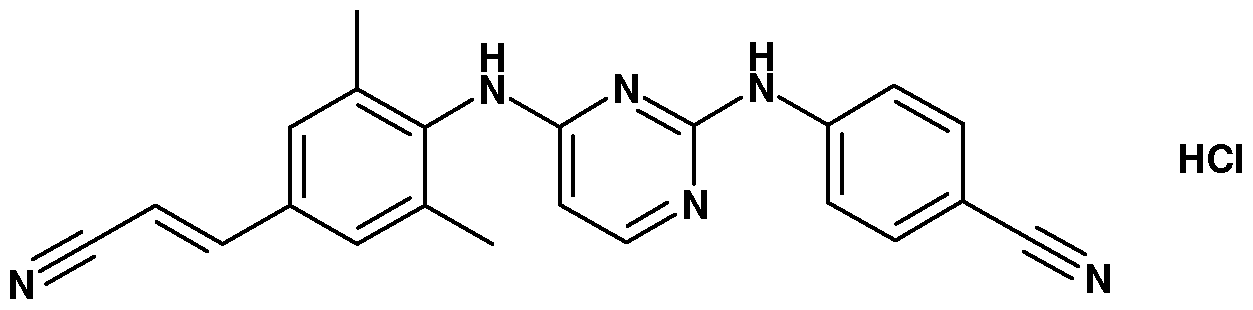
- Rilpivirine hydrochloride is represented by the following general formula (I):
- the crystalline forms A and C of EP1632232 B1 are difficult to make in a reliable manner because these forms are obtained from the same solvent system.
- the polymorphs A and C of rilpivirine hydrochloride are obtained from the same solvent system, namely acetic acid/water, the production processes are especially critical and sensitive because the single crystalline forms are only obtained in pure form in a quite narrow range of critical parameters, such as the crystallization temperature, as described in the concrete examples A.a) and A.c) of EP1632232 B1 .
- novel polymorph of rilpivirine hydrochloride of the present invention is easily obtained in polymorphically pure form in a reliable manner by applying the novel methanol solvate of the present invention as an intermediate in the process for the production of the novel polymorph.
- the methanol solvate is the only form obtained via crystallization from methanol and can be transformed to the novel polymorph of rilpivirine hydrochloride in a straight forward manner.
- Figure 1 X-ray powder diffractogram (XRPD) of rilpivirine hydrochloride form G
- room temperature indicates that the applied temperature is not critical and that no exact temperature value has to be kept. Usually, “room temperature” is understood to mean temperatures of about 15°C to about 25 °C [see e.g. EU Pharmacopoeia 7.5, 1 .2 (2012)].
- solvate as used herein describes a crystalline compound in which solvent molecules are incorporated into the crystal lattice of the compound in a stoichiometric or non- stoichiometric manner.
- the present invention also relates to a process for the preparation of form G of rilpivirine hydrochloride comprising heating the novel methanol solvate of rilpivirine hydrochloride of the present invention and recovering polymorph G.
- the bioavailability of a compound intended to be administered orally is dependent on the compounds solubility in aqueous systems such as e.g. water, as well as the compounds permeability as mentioned in EP1632232 B1 . It is known to the person skilled in the art that the solubility of a crystalline solvate form in the solvent, which is incorporated in this form, is smaller than the solubility of a non-solvated form of the same compound. This means that the solubility of a hydrate - wherein water is the incorporated solvent - in water is thus smaller than that of a corresponding non-hydrated form. This is particularly true for badly water soluble active pharmaceutical ingredients such as rilpivirine hydrochloride.
- example 3 if rilpivirine hydrochloride is recrystallized from methanol in order to obtain the novel methanol solvate of rilpivirine hydrochloride as an intermediate for polymorph G production.
- the applied concentration used in the process of preparing the methanol solvate is suitable for large scale production. Once the methanol solvate is obtained it can be easily transformed to polymorph G of rilpivirine hydrochloride according to the herein disclosed processes for form G production, also on large scale.
- compositions of the present invention comprising rilpivirine hydrochloride form G may further comprise one or more pharmaceutically acceptable excipients.
- excipients are preferably selected from the group consisting of fillers, sweeteners, buffering agents, glidants, flowing agents, flavouring agents, lubricants, preservatives, surfactants, wetting agents, binders, disintegrants and thickeners.
- Other excipients known in the field of pharmaceutical compositions may also be used.
- the pharmaceutical composition may comprise a combination of two or more excipients also within one of the members of the above mentioned group.
- EP1632232 B1 discloses examples of suitable diluents for the pharmaceutical compositions of the present invention comprising rilpivirine hydrochloride form G.
- suitable diluents which can also be used for the pharmaceutical compositions of the present invention, comprise e.g.
- EP1632232 B1 discloses examples of glidants for the pharmaceutical compositions of the present invention comprising rilpivirine hydrochloride form G.
- the preferred glidants, which can also be used for the pharmaceutical compositions of the present invention comprise talc, colloidal silicon dioxide, starch and magnesium stearate, whereat magnesium stearate is preferred.
- Paragraph [0078] of EP1632232 B1 discloses examples of disintegrants for the pharmaceutical compositions of the present invention comprising rilpivirine hydrochloride form G.
- the preferred disintegrants, which can also be used for the pharmaceutical compositions of the present invention comprise starch, ion exchange resins, e.g.
- EP1632232 B1 discloses examples of film coatings for the pharmaceutical compositions of the present invention comprising rilpivirine hydrochloride form G.
- the film coatings which can also be used for the pharmaceutical compositions of the present invention, are preferably immediate release film coatings comprising a film-forming polymer, optionally a plasticizer, optionally a pigment or an opacifier and/or optionally a filler of the coating layer.
- a suitable film-forming polymer is hydroxypropyl methylcellulose e.g. hypromellose 2910 mPa.s
- an example for a suitable plasticizer is polyethyleneglycol e.g.
- Another preferred tablet of the present invention comprises a tablet core comprising rilpivirine hydrochloride form G of the present invention, microcrystalline cellulose, polysorbate 20 (Tween 20), polyvinylpyrrolidone K30 (PVP K30), dibasic calcium phosphate (dihydrate or anhydrate e.g. Emcompress ® or anhydrous Emcompress ® ), magnesium stearate and starch and a tablet coating comprising hypromellose 2910 mPa.s, lactose monohydrate, macrogol 3000, triacetin and titanium dioxide.
- a particular tablet of the present invention may be prepared by direct compression comprising the steps of: d) dry blending rilpivirine hydrochloride form G of the present invention, croscarmellose sodium and magnesium stearate with lactose monohydrate and silicified microcrystalline cellulose,
- a preferred pharmaceutical combination of the present invention comprises 25 mg rilpivirine hydrochloride form G (calculated as free base), 200 mg emtricitabine and 245 mg tenofovir disoproxil fumarate (calculated as free base) and one or more pharmaceutically acceptable excipients.
- novel methanol solvate of rilpivirine hydrochloride can be characterized by showing an X-ray powder diffraction pattern comprising peaks at 2- theta angles of 8.2 ⁇ 0.2°, 8.4 ⁇ 0.2°, 13.0 ⁇ 0.2°, 15.1 ⁇ 0.2° and 23.7 ⁇ 0.2°.
- the crystalline methanol solvate of rilpivirine hydrochloride can be characterized by showing an infrared spectrum comprising peaks at wavenumbers of 3347 ⁇ 2 cm “1 , 2221 ⁇ 2 cm “1 , 1661 ⁇ 2 cm “1 , 1595 ⁇ 2 cm “1 and 1362 ⁇ 2 cm “1 .
- an optional filtration step may be applied, whereat the solution may be treated with charcoal prior to the filtration step. Thereafter the solution is cooled to room temperature at a cooling rate preferably ranging from about 0.1 °C/min to 10.0 °C/min, more preferably from about 0.3 °C/min to 5.0 °C/min and most preferably from about 0.5 °C/min to 2.0 °C/min.
- crystals are dried at a temperature preferably ranging from about 25 °C to 80 ⁇ €, more preferably from about 30 °C to 60 °C and most preferably from about 40 °C to 50 °C for a time preferably ranging from about 2 to 72 hours, more preferably from about 12 to 48 hours and most preferably from about 24 to 36 hours.
- the present invention also relates to the use of the crystalline methanol solvate of rilpivirine hydrochloride as an intermediate for the preparation of rilpivirine hydrochloride form G of the present invention.
- the X-ray powder diffractograms were obtained with an X'Pert PRO diffractometer (PANalytical, Almelo, The Netherlands) equipped with a theta/theta coupled goniometer in transmission geometry, programmable XYZ stage with well plate holder, Cu-Ka1 ,2 radiation source (wavelength 0.15419 nm) and a solid state PIX'cel detector.
- the diffractograms were recorded at a tube voltage of 40 kV, tube current of 40 mA.
- a typical precision of the 2-theta values is in the range of about ⁇ 0.2° 2-theta. Thus a diffraction peak that appears at 5.0° 2- theta can appear between 4.8 and 5.2° 2-theta on most X-ray diffractometers under standard conditions.
- Thermogravimetric analysis was performed with a TGA 7 thermogravimetric system (Perkin-Elmer). The sample was placed into a 50 ⁇ _ platinum pan and heated at a heating rate of 10 °C/min. The determination was performed under nitrogen purge (balance purge: 40 mLVmin, sample purge: 20 mLVmin).
- rilpivirine hydrochloride methanol solvate e.g. prepared according to example 3 were stored for 15 hours over P 2 0 5 (providing an atmosphere of about 0% relative humidity) resulting in polymorphically pure form G.
- Table 5 Crystal data and structure refinement of the methanol solvate of rilpivirine hydrochloride prepared according to example 3.
- Example 5 Tablet formulation comprising rilpivirine hydrochloride form G
Landscapes
- Health & Medical Sciences (AREA)
- Organic Chemistry (AREA)
- Chemical & Material Sciences (AREA)
- Life Sciences & Earth Sciences (AREA)
- Virology (AREA)
- Chemical Kinetics & Catalysis (AREA)
- Medicinal Chemistry (AREA)
- Tropical Medicine & Parasitology (AREA)
- Communicable Diseases (AREA)
- Oncology (AREA)
- AIDS & HIV (AREA)
- General Chemical & Material Sciences (AREA)
- Molecular Biology (AREA)
- Nuclear Medicine, Radiotherapy & Molecular Imaging (AREA)
- Pharmacology & Pharmacy (AREA)
- Animal Behavior & Ethology (AREA)
- General Health & Medical Sciences (AREA)
- Public Health (AREA)
- Veterinary Medicine (AREA)
- Medicinal Preparation (AREA)
Description
POLYMORPH OF RILPIVIRINE HYDROCHLORIDE
FIELD OF THE INVENTION
The present invention relates to a novel polymorph and to a novel methanol solvate of rilpivirine hydrochloride, as well as to their preparation. The novel methanol solvate is a valuable intermediate for the preparation of the novel polymorph of rilpivirine hydrochloride of the present invention. Moreover the present invention relates to the use of the novel polymorph for the preparation of a medicament. In addition the present invention relates to pharmaceutical compositions comprising an effective amount of the novel polymorph of rilpivirine hydrochloride and to methods of preparing the same. Finally the present invention relates to pharmaceutical combinations comprising an effective amount of the novel polymorph of rilpivirine hydrochloride and additional therapeutic agents.
BACKGROUND OF THE INVENTION
Rilpivirine hydrochloride, 4-[[4-[[4-(2-Cyanoethenyl)-2,6-dimethylphenyl]amino]-2- pyrimidinyl]amino]benzonitrile monohydrochloride, is a non-nucleoside reverse transcriptase inhibitor (NNRTI) of human immunodeficiency virus type 1 (HIV-1 ) and indicated for the treatment of HIV-1 infection in treatment-naive adult patients in combination with other antiretroviral agents. Rilpivirine hydrochloride was launched as film coated tablets in Europe and the US (brand name Edurant). In addition rilpivirine hydrochloride was launched as a combination product with nucleoside analog HIV-1 reverse transcriptase inhibitors in the EU (brand name Eviplera) and the US (brand name Complera). Rilpivirine hydrochloride is represented by the following general formula (I):

EP1419152 B1 discloses amongst others rilpivirine base and rilpivirine hydrochloride per se as well as pharmaceutical compositions comprising the same. However, only concrete examples for preparing rilpivirine base are given in said patent but no concrete examples describing the production of the hydrochloride salt are provided.
EP1632232 B1 discloses amongst others a solid pharmaceutical composition comprising crystalline forms A, B, C or D of rilpivirine hydrochloride. In addition said patent discloses a
process for the production of rilpivirine hydrochloride by reacting rilpivirine base with hydrochloric acid in the presence of a suitable acid, such as acetic acid.
Polymorphism is a phenomenon relating to the occurrence of different crystal forms for one molecule. There may be several different crystalline forms for the same molecule with distinct crystal structures and varying in physical properties like melting point, XRPD pattern and FTIR spectrum. These polymorphs are thus distinct solid forms which share the molecular formula of the compound from which the crystals are made up, however they may have distinct advantageous physical properties such as e.g. chemical stability, physical stability, hygroscopicity, solubility, dissolution rate or bioavailability. In addition the preparation process of a crystalline form, especially on large scale, plays an important role in the development of an active pharmaceutical ingredient. It is essential that the crystallization process is robust and reliably produces the desired crystalline form in polymorphically pure form, also on large scale.
The bioavailability of a compound intended to be administered orally, is dependent on the compounds solubility in aqueous systems such as e.g. water, as well as the compounds permeability as mentioned in EP1632232 B1 . It is known to the person skilled in the art that the solubility of a crystalline solvate form in the solvent, which is incorporated in this form, is smaller than the solubility of a non-solvated form of the same compound. This means that the solubility of a hydrate - wherein water is the incorporated solvent - in water is thus smaller than that of a corresponding non-hydrated form. This is particularly true for badly water soluble active pharmaceutical ingredients such as rilpivirine hydrochloride. Hence, an anhydrous form is preferred over a hydrated form for the formulation of an orally administered medicament comprising rilpivirine hydrochloride. Rilpivirine hydrochloride form D of EP1632232 B1 is a hydrate and thus not preferred for the preparation of an orally administered medicament, whereas the novel polymorph of the present invention is an anhydrous form and hence especially suitable for the preparation of an orally administered medicament.
In addition the crystalline forms A and C of EP1632232 B1 are difficult to make in a reliable manner because these forms are obtained from the same solvent system. As the polymorphs A and C of rilpivirine hydrochloride are obtained from the same solvent system, namely acetic acid/water, the production processes are especially critical and sensitive because the single crystalline forms are only obtained in pure form in a quite narrow range of critical parameters, such as the crystallization temperature, as described in the concrete examples A.a) and A.c) of EP1632232 B1 . In contrast the novel polymorph of rilpivirine hydrochloride of
the present invention is easily obtained in polymorphically pure form in a reliable manner by applying the novel methanol solvate of the present invention as an intermediate in the process for the production of the novel polymorph. The methanol solvate is the only form obtained via crystallization from methanol and can be transformed to the novel polymorph of rilpivirine hydrochloride in a straight forward manner.
According to example A.b) of EP1632232 B1 form B is obtained by recrystallizing rilpivirine hydrochloride from propanone using an initial rilpivirine hydrochloride concentration of 0.3 g/L. However, this concentration is not suitable for up-scaling as larger amounts of rilpivirine hydrochloride would require tremendous solvent volumina and hence the usage of tremendously large reaction vessels. In contrast the novel polymorph of rilpivirine hydrochloride of the present invention can be easily obtained also on large scale according to the process of the present invention, as the production of the methanol solvate of rilpivirine hydrochloride of the present invention, which is used as an intermediate for the production of the novel polymorph of rilpivirine hydrochloride of the present invention, can be performed by applying higher initial rilpivirine hydrochloride concentrations.
Hence the aim of the present invention is to circumvent the drawbacks of the known forms A, B, C and D of EP1632232 B1 by providing an anhydrous polymorph of rilpivirine hydrochloride, which is obtained in polymorphically pure form in an easy and reliable manner, also on large scale.
SUMMARY OF THE INVENTION
The inventors of the present invention have found a novel polymorph of rilpivirine hydrochloride, in the following named rilpivirine hydrochloride form G. Polymorph G is an anhydrous and non-solvated crystalline form and shows certain advantages compared to the known forms A, B, C and D of rilpivirine hydrochloride of EP1632232 B1 making it especially suitable for the preparation of an orally administered medicament.
Hence in a preferred embodiment the present invention relates to a novel polymorph of rilpivirine hydrochloride, in the following named rilpivirine hydrochloride form G. Form G of rilpivirine hydrochloride can be characterized by showing an X-ray powder diffractogram comprising characteristic peaks at 2-theta angles of 7.6 ± 0.2°, 8.4 ± 0.2°, 1 1 .4 ± 0.2°, 16.8 ± 0.2° and 19.6 ± 0.2°.
In a further preferred embodiment, the present invention relates to a process of preparing form G of rilpivirine hydrochloride, in which the novel methanol solvate of rilpivirine hydrochloride is employed as an intermediate.
Thus in an additional preferred embodiment the present invention relates to a novel methanol solvate of rilpivirine hydrochloride. The novel methanol solvate of rilpivirine hydrochloride can be characterized by showing an X-ray powder diffractogram comprising characteristic peaks at 2-theta angles of 8.2 ± 0.2°, 8.4 ± 0.2°, 13.0 ± 0.2°, 15.1 ± 0.2° and 23.7 ± 0.2°.
The present invention also relates to a method of preparing the novel methanol solvate of rilpivirine hydrochloride comprising the steps of recrystallizing rilpivirine hydrochloride from methanol and recovering the crystals.
Moreover the present invention relates to the use of the novel methanol solvate of rilpivirine hydrochloride as an intermediate for the preparation of the novel polymorph G of rilpivirine hydrochloride.
In addition the present invention relates to the use of the novel polymorph G of rilpivirine hydrochloride for the preparation of a medicament.
In another embodiment the present invention relates to pharmaceutical compositions comprising an effective amount of the novel polymorph G of rilpivirine hydrochloride and a pharmaceutically acceptable carrier and to processes of preparing the same.
Finally the present invention relates to pharmaceutical combinations comprising an effective amount of the novel polymorph G of rilpivirine hydrochloride and additional therapeutic agents.
BRIEF DESCRIPTION OF THE DRAWINGS
Figure 1 : X-ray powder diffractogram (XRPD) of rilpivirine hydrochloride form G
Figure 2: Fourier transform infrared (FTIR) spectrum of rilpivirine hydrochloride form G Figure 3: Unit cell of rilpivirine hydrochloride methanol solvate
Figure 4: X-ray powder diffractogram (XRPD) of rilpivirine hydrochloride methanol solvate Figure 5: Fourier transform infrared (FTIR) spectrum of rilpivirine hydrochloride methanol solvate
Figure 6: Desolvation process of rilpivirine hydrochloride methanol solvate detected by differential scanning calorimetry (DSC)
Figure 7: Desolvation process of rilpivirine hydrochloride methanol solvate detected by thermogravimetric analysis (TGA)
DETAILED DESCRIPTION OF THE INVENTION
As used herein the term "room temperature" indicates that the applied temperature is not critical and that no exact temperature value has to be kept. Usually, "room temperature" is understood to mean temperatures of about 15°C to about 25 °C [see e.g. EU Pharmacopoeia 7.5, 1 .2 (2012)].
The term "solvate" as used herein describes a crystalline compound in which solvent molecules are incorporated into the crystal lattice of the compound in a stoichiometric or non- stoichiometric manner.
The term "concentrated hydrochloric acid" as used herein means aqueous hydrochloric acid having a concentration of about 37 %.
Rilpivirine hydrochloride exists in two stereoisomeric forms, namely an E-isomeric form and a Z-isomeric form. The novel crystalline forms of rilpivirine hydrochloride of the present invention are preferably present as the pure E-isomer, whereat pure in this context refers to an E-isomer content of at least about 95 %, more preferably of at least about 98 % and most preferably of at least about 99 %.
The chemical structure of the E-isomeric form of rilpivirine hydrochloride is represented by the followin general formula (II):
The chemical structure of the Z-isomeric form of rilpivirine hydrochloride is represented by
HCI
 In a first aspect the present invention relates to a novel polymorph of rilpivirine hydrochloride (hereinafter also referred to as rilpivirine hydrochloride form G).
Form G of rilpivirine hydrochloride can be characterized by showing an X-ray powder diffractogram comprising characteristic peaks at 2-theta angles of 7.6 ± 0.2°, 8.4 ± 0.2°, 1 1.4 ± 0.2°, 16.8 ± 0.2° and 19.6 ± 0.2°. The X-ray powder diffractogram of form G of rilpivirine hydrochloride comprises additional characteristic peaks at 2-theta angles of 4.7 ± 0.2°, 6.4 ± 0.2°, 9.5 ± 0.2°, 1 1 .8 ± 0.2°, 12.4 ± 0.2°, 12.9 ± 0.2°, 13.3 ± 0.2°, 13.7 ± 0.2°, 15.0 ± 0.2°, 15.4 ± 0.2°, 17.5 ± 0.2°, 20.2 ± 0.2°, 20.6 ± 0.2°, 20.9 ± 0.2°, 21 .5 ± 0.2°, 22.2 ± 0.2°, 23.1 ± 0.2°, 23.6 ± 0.2°, 24.2 ± 0.2°, 24.9 ± 0.2°, 25.2 ± 0.2°, 26.1 ± 0.2°, 26.9 ± 0.2°, 28.4 ± 0.2°, 28.9 ± 0.2°, 29.3 ± 0.2° and 30.4 ± 0.2°. A representative diffractogram is displayed in figure 1.
In addition form G of rilpivirine hydrochloride can be characterized by showing an FTIR- spectrum comprising peaks at wavenumbers of 3058 ± 2 cm"1 , 2221 ± 2 cm"1 , 1655 ± 2 cm"1 , 978 ± 2 cm"1 and 838 ± 2 cm"1. The FTIR-spectrum of form G of rilpivirine hydrochloride comprises additional characteristic peaks at wavenumbers of 3186 ± 2 cm"1 , 2966 ± 2 cm"1 , 2925 ± 2 cm"1 , 2875 ± 2 cm"1 , 1636 ± 2 cm"1 , 1599 ± 2 cm"1 , 1562 ± 2 cm"1 , 1541 ± 2 cm"1 , 1520 ± 2 cm"1 , 1504 ± 2 cm"1 , 1442 ± 2 cm"1 , 1389 ± 2 cm"1 , 1341 ± 2 cm"1 , 1309 ± 2 cm"1 , 1273 ± 2 cm"1 , 1243 ± 2 cm"1 , 1212 ± 2 cm"1 , 1 178 ± 2 cm"1 , 1 155 ± 2 cm"1 , 1098 ± 2 cm"1 , 1070 ± 2 cm"1 , 1039 ± 2 cm"1 , 1017 ± 2 cm"1 , 873 ± 2 cm"1 , 826 ± 2 cm"1 , 792 ± 2 cm"1 and 762 ± 2 cm"1. A representative FTIR spectrum is displayed in figure 2.
Furthermore form G of rilpivirine hydrochloride can be characterized as being an anhydrous form containing less than about 1 .5 %, preferably less than about 1 .0 % water.
The present invention also relates to a process for the preparation of form G of rilpivirine hydrochloride comprising heating the novel methanol solvate of rilpivirine hydrochloride of the present invention and recovering polymorph G.
Typically the methanol solvate of rilpivirine hydrochloride of the present invention is heated to a temperature ranging from about 100 to 150 °C, preferably from about 1 10 to 140 °C for a certain period of time. Typically, dependent on the applied temperature, several minutes to several hours are required to complete the transformation, e.g. at a temperature of about 1 10 °C the transformation is complete in less than 2 hours. The transformation may be monitored by classical methods such as XRPD analysis.
Alternatively the crystals can be dried at room temperature by storing them at an atmosphere having a relative humidity of < 5 % e.g. by storing the crystals in a closed containment over a desiccant such as e.g. P205 or silica gel, whereat the storing time may range from about 2 to 72 hours, more preferably from about 6 to 48 hours and most preferably from about 12 to 24 hours. The storing time may be decreased by storing the crystals at < 5 % relative humidity and applying elevated temperatures preferably ranging from about 30 to 150 °C, more preferably from about 40 to 125 °C and most preferably from about 50 to 100 °C.
The particle size of rilpivirine hydrochloride form G obtained according to the process of the present invention typically ranges from about 1 to 60 μιη determined by optical light microscopy. However, the particle size can be decreased by any conventional method such as e.g. milling or grinding. In addition the particle size can be homogenized by applying an additional sieving step. Preferably milling and sieving are performed in such a manner that rilpivirine hydrochloride form G having a particle size ranging from about 0.1 to 50 μιη, more preferably from about 0.1 to 25 μιη and most preferably from about 0.1 to 15 μιη is obtained.
The bioavailability of a compound intended to be administered orally, is dependent on the compounds solubility in aqueous systems such as e.g. water, as well as the compounds permeability as mentioned in EP1632232 B1 . It is known to the person skilled in the art that the solubility of a crystalline solvate form in the solvent, which is incorporated in this form, is smaller than the solubility of a non-solvated form of the same compound. This means that the solubility of a hydrate - wherein water is the incorporated solvent - in water is thus smaller than that of a corresponding non-hydrated form. This is particularly true for badly water soluble active pharmaceutical ingredients such as rilpivirine hydrochloride. Hence an anhydrous form is preferred over a hydrated form for the formulation of an orally administered medicament comprising rilpivirine hydrochloride. Rilpivirine hydrochloride form D of EP1632232 B1 is a hydrate and thus not preferred for the preparation of an orally administered medicament, whereas the novel polymorph G of the present invention is an anhydrous form and hence especially suitable for the preparation of an orally administered medicament.
In addition the crystalline forms A and C of EP1632232 B1 are difficult to make in a reliable manner because these forms are obtained from the same solvent system. As the polymorphs A and C of rilpivirine hydrochloride are obtained from the same solvent system, namely acetic acid/water, the production processes are especially critical and sensitive because the single crystalline forms are only obtained in pure form in a quite narrow range of critical parameters, such as the crystallization temperature, as described in the concrete examples
A.a) and A.c) of EP1632232 B1 . In contrast the novel polymorph G of rilpivirine hydrochloride of the present invention is easily obtained in polymorphically pure form in a reliable manner via the novel methanol solvate of the present invention. The methanol solvate is the only form obtained via crystallization from methanol and can be transformed to the novel polymorph G of rilpivirine hydrochloride in a straight forward manner according to the herein disclosed processes for form G production.
According to example A.b) of EP1632232 B1 form B is obtained by recrystallizing rilpivirine hydrochloride from propanone using an initial rilpivirine hydrochloride concentration of 0.3 g/L. However, this concentration is not suitable for up-scaling as larger amounts of rilpivirine hydrochloride would require tremendous solvent volumina and hence the usage of tremendously large reaction vessels. In contrast the novel polymorph G of rilpivirine hydrochloride of the present invention can be easily obtained also on large scale. A preferred applied rilpivirine hydrochloride concentration ranges from e.g. about 10 g/L to 15 g/L (see e.g. example 3) if rilpivirine hydrochloride is recrystallized from methanol in order to obtain the novel methanol solvate of rilpivirine hydrochloride as an intermediate for polymorph G production. The applied concentration used in the process of preparing the methanol solvate is suitable for large scale production. Once the methanol solvate is obtained it can be easily transformed to polymorph G of rilpivirine hydrochloride according to the herein disclosed processes for form G production, also on large scale.
The novel polymorph G of rilpivirine hydrochloride of the present invention circumvents the drawbacks of the known forms A, B, C and D of EP1632232 B1 as it is an anhydrous form obtained in polymorphically pure form in an easy and reliable manner according to the processes of the present invention also on large scale.
Thus polymorph G of rilpivirine hydrochloride is the most favored form to be used in an oral antiviral pharmaceutical composition and may advantageously be employed in various pharmaceutical formulations for use in the treatment of HIV-1 infection. The present invention therefore also relates to pharmaceutical compositions comprising rilpivirine hydrochloride form G as described above and a pharmaceutically acceptable carrier.
Preferably the present invention relates to pharmaceutical compositions, wherein more than 95 % of rilpivirine hydrochloride is stably present as rilpivirine hydrochloride form G more preferably wherein rilpivirine hydrochloride form G is the only detectable crystalline form of rilpivirine hydrochloride. The absence of other crystalline forms of rilpivirine hydrochloride, such as forms A, B, C and D of EP1632232 B1 can be tested by comparing an XRPD taken
of any crystalline rilpivirine hydrochloride with the XRPD of form G as obtained e.g. from example 1 and shown in figure 1 , which for this comparison can be taken as an XRPD of 100 % form G.
"Stably present" as defined herein means that even after storage of the pharmaceutical composition for 180 days, and preferably even after storage for 3 years, the crystalline form of rilpivirine hydrochloride designated as rilpivirine hydrochloride form G initially comprised in the pharmaceutical composition is still present as rilpivirine hydrochloride form G after storage for the indicated period.
The pharmaceutical compositions of the present invention comprising rilpivirine hydrochloride form G may further comprise one or more pharmaceutically acceptable excipients. Such excipients are preferably selected from the group consisting of fillers, sweeteners, buffering agents, glidants, flowing agents, flavouring agents, lubricants, preservatives, surfactants, wetting agents, binders, disintegrants and thickeners. Other excipients known in the field of pharmaceutical compositions may also be used. Furthermore the pharmaceutical composition may comprise a combination of two or more excipients also within one of the members of the above mentioned group.
Examples of suitable excipients for pharmaceutical compositions of the present invention comprising rilpivirine hydrochloride form G are given e.g. in EP1632232 B1 , which is herein incorporated by reference in paragraphs [0063] to [0080].
Paragraph [0063] of EP1632232 B1 discloses examples of wetting agents for the pharmaceutical compositions of the present invention comprising rilpivirine hydrochloride form G. The preferred wetting agents, which can also be used for the pharmaceutical compositions of the present invention, comprise sodium lauryl sulphate, sodium dioctyl sulfosuccinate or wetting agents belonging to the group of the polyethylene glycol sorbitan fatty acid esters, such as wetting agents known as Tween, e.g. Tween 20, 60 and 80, whereat Tween 20 (= polysorbate 20) is most preferred.
Paragraphs [0065] to [0072] of EP1632232 B1 disclose examples of binders for the pharmaceutical compositions of the present invention comprising rilpivirine hydrochloride form G. The preferred binders, which can also be used for the pharmaceutical compositions of the present invention, comprise e.g. alkylcelluloses such as methylcellulose, hydroxyalkylcelluloses such as hydroxymethylcellulose, hydroxyethylcellulose, hydroxypropylcellulose and hydroxybutylcellulose, hydroxyalkylalkylcelluloses such as
hydroxyethylmethylcellulose and hydroxypropylmethylcellulose, carboxyalkylcelluoses such as carboxymethylcellulose, alkali metal salts of carboxyalkylcelluloses such as sodium carboxymethylcellulose, carboxyalkylalkylcelluloses such as carboxymethylethylcellulose, carboxyalkylcellulose esters, starches such as starch 1551 , pectins such as sodium carboxymethylamylopectin, chitin derivatives such as chitosan, heparin and heparinoids, polysaccharides such as alginic acid, alkali metal and ammonium salts thereof, carrageenans, galactomannans, tragacanth, agar-agar, gum arabic, guar gum and xanthan gum, polyacrylic acids and the salts thereof, polymethacrylic acids and the salts thereof, methacrylate copolymers, polyvinylalcohol, polyvinylpyrrolidone, copolymers of polyvinylpyrrolidone with vinyl acetate, polyalkylene oxides such as polyethylene oxide and polypropylene oxide and copolymers of ethylene oxide and propylene oxide, e.g. poloxamers and poloxamines, copovidone, whereat starch, polyvinylpyrrolidone or a cellulose ether e.g PVP K29-32, PVP K90, methyl cellulose, hydroxypropylcellulose, hydroxyethyl methylcellulose or hydroxypropyl methylcellulose (HPMC) are preferred.
Paragraph [0075] of EP1632232 B1 discloses examples of suitable diluents for the pharmaceutical compositions of the present invention comprising rilpivirine hydrochloride form G. The preferred diluents, which can also be used for the pharmaceutical compositions of the present invention, comprise e.g. calcium carbonate, dibasic calcium phosphate, dibasic calcium phosphate dihydrate, tribasic calcium phosphate, calcium sulphate, microcrystalline cellulose including silicified microcrystalline cellulose, powdered cellulose, dextrates, dextrin, dextrose excipient, fructose, kaolin, lactitol, lactose anhydrous, lactose monohydrate, mannitol, sorbitol, starch, modified starch, sodium chloride, sucrose, compressible sugar, confectioner's sugar, a spray-dried mixture of lactose monohydrate and microcrystalline cellulose (75:25), commercially available as Microcelac®, a co-processed spray-dried mixture of microcrystalline cellulose and colloidal silicon dioxide (98:2), commercially available as Prosolv®, whereat lactose monohydrate, microcrystalline cellulose silicified microcrystalline cellulose, starch, modified starch, dibasic calcium phosphate and dibasic calcium phosphate dihydrate are preferred.
Paragraph [0076] of EP1632232 B1 discloses examples of glidants for the pharmaceutical compositions of the present invention comprising rilpivirine hydrochloride form G. The preferred glidants, which can also be used for the pharmaceutical compositions of the present invention comprise talc, colloidal silicon dioxide, starch and magnesium stearate, whereat magnesium stearate is preferred.
Paragraph [0078] of EP1632232 B1 discloses examples of disintegrants for the pharmaceutical compositions of the present invention comprising rilpivirine hydrochloride form G. The preferred disintegrants, which can also be used for the pharmaceutical compositions of the present invention, comprise starch, ion exchange resins, e.g. Amberlite, cross-linked polyvinylpyrrolidone, modified cellulose gum, e.g croscarmellose sodium, sodium starch glycolate, sodium carboxymethylcellulose, sodium dodecyl sulphate, modified corn starch, microcrystalline cellulose, magnesium aluminium silicate, alginic acid, alginate and powdered cellulose, whereat croscarmellose sodium is preferred.
Paragraph [0079] of EP1632232 B1 discloses examples of lubricants for the pharmaceutical compositions of the present invention comprising rilpivirine hydrochloride form G. The preferred lubricants, which can also be used for the pharmaceutical compositions of the present invention, are e.g. magnesium stearate, calcium stearate, stearic acid, talc, polyethylene glycol, sodium lauryl sulphate and magnesium lauryl sulphate, whereat magnesium stearate is preferred.
In addition the pharmaceutical compositions of the present invention comprising rilpivirine hydrochloride form G may comprise other optional excipients such as, for example, flavors, sweeteners and colors.
Paragraph [0083] of EP1632232 B1 discloses examples of film coatings for the pharmaceutical compositions of the present invention comprising rilpivirine hydrochloride form G. The film coatings, which can also be used for the pharmaceutical compositions of the present invention, are preferably immediate release film coatings comprising a film-forming polymer, optionally a plasticizer, optionally a pigment or an opacifier and/or optionally a filler of the coating layer. An example for a suitable film-forming polymer is hydroxypropyl methylcellulose e.g. hypromellose 2910 mPa.s, an example for a suitable plasticizer is polyethyleneglycol e.g. macrogol 3000 or 6000 and/or triacetin, an example for a suitable pigment respectively opacifier is titanium dioxide and an example for a suitable filler is lactose monohydrate. A suitable commercially available ready to use film coating powder which can be applied for the preparation of the pharmaceutical composition of the present invention is e.g. Opadry® II White.
Examples of suitable processes for the preparation of the pharmaceutical compositions of the present invention, which are preferably film coated tablets, are given e.g. in EP1632232 B1 , which is herein incorporated by reference in paragraphs [0084] to [0086], wherein it is to be understood that whenever the term compound of formula (I), (la) or (l-b) or active
ingredient is used in EP1632232 B1 an equivalent amount of rilpivirine hydrochloride form G is to be used.
Concrete examples for the production of formulations of the present invention are given e.g. in EP1632232 B1 , paragraphs [0120] to [0137]. These examples can be repeated by substituting the compound of formula (1 -a) against rilpivirine hydrochloride form G of the present invention.
The pharmaceutical composition of the present invention comprising rilpivirine hydrochloride form G preferably is an oral dosage form, in particular a capsule or tablet.
A preferred tablet of the present invention comprises a tablet core comprising rilpivirine hydrochloride form G of the present invention, lactose monohydrate, silicified microcrystalline cellulose, croscarmellose sodium, polysorbate 20 (Tween 20), polyvinylpyrrolidone K30 (PVP K30) and magnesium stearate and a tablet coating comprising hypromellose 2910 mPa.s, lactose monohydrate, macrogol 3000, triacetin and titanium dioxide.
Another preferred tablet of the present invention comprises a tablet core comprising rilpivirine hydrochloride form G of the present invention, microcrystalline cellulose, polysorbate 20 (Tween 20), polyvinylpyrrolidone K30 (PVP K30), dibasic calcium phosphate (dihydrate or anhydrate e.g. Emcompress® or anhydrous Emcompress®), magnesium stearate and starch and a tablet coating comprising hypromellose 2910 mPa.s, lactose monohydrate, macrogol 3000, triacetin and titanium dioxide.
In addition, a preferred tablet of the present invention comprises a tablet core comprising rilpivirine hydrochloride form G of the present invention, microcrystalline cellulose, lactose monohydrate, polysorbate 20 (Tween 20), polyvinylpyrrolidone K30 (PVP K30), magnesium stearate and starch and a tablet coating comprising hypromellose 2910 mPa.s, lactose monohydrate, macrogol 3000, triacetin and titanium dioxide.
A further preferred tablet of the present invention comprises a tablet core comprising rilpivirine hydrochloride form G of the present invention, microcrystalline cellulose, modified starch, polysorbate 20 (Tween 20), polyvinylpyrrolidone K30 (PVP K30) and magnesium stearate and a tablet coating comprising hypromellose 2910 mPa.s, lactose monohydrate, macrogol 3000, triacetin and titanium dioxide.
In one embodiment, a tablet of the present invention may be prepared by wet granulation comprising the steps of:
a) dry blending rilpivirine hydrochloride form G of the present invention and a part of the diluent,
b) preparing a binder solution by dissolving a binder and a wetting agent in a suitable solvent,
c) spraying the binder solution of step b) on the mixture obtained in step a),
d) drying the obtained granulate and sieving the same,
e) mixing the obtained granulate with the remaining part of diluent and a disintegrant, f) adding an optional glidant and/or an optional lubricant to the mixture,
g) compressing the obtained mixture into a tablet and
h) optionally film-coating the obtained tablet.
Suitable solvents in step b) of the herein disclosed wet granulation process are e.g. water, acetic acid, acetone, anisole, 1 -butanol, 2-butanol, butyl acetate, tert-butylmethyl ether, cumene, dimethyl sulfoxide, ethanol, ethyl acetate, ethyl ether, ethyl formate, formic acid, heptane, isobutyl acetate, isopropyl acetate, methyl acetate, 3-methyl-1 -butanol, methylethyl ketone, methylisobutyl ketone, 2-methyl-1 -propanol, pentane, 1 -pentanol, 1 -propanol, 2- propanol, propyl acetate and tetrahydrofuran.
A particular tablet of the present invention may be prepared by wet granulation comprising the steps of:
a) dry blending rilpivirine hydrochloride form G of the present invention and lactose monohydrate,
b) preparing a binder solution by dissolving polyvinylpyrrolidone K30 (PVP K30) and polysorbate 20 (Tween 20) in a suitable solvent,
c) spraying the binder solution of step b) on the mixture obtained in step a),
d) drying the obtained granulate and sieving the same,
e) mixing the obtained granulate with silicified microcrystalline cellulose and croscarmellose sodium,
f) adding magnesium stearate to the mixture,
g) compressing the obtained mixture into a tablet and
h) optionally film-coating the obtained tablet.
Suitable solvents in step b) of the herein disclosed wet granulation process are e.g. water, acetic acid, acetone, anisole, 1 -butanol, 2-butanol, butyl acetate, tert-butylmethyl ether, cumene, dimethyl sulfoxide, ethanol, ethyl acetate, ethyl ether, ethyl formate, formic acid,
heptane, isobutyl acetate, isopropyl acetate, methyl acetate, 3-methyl-1 -butanol, methylethyl ketone, methylisobutyl ketone, 2-methyl-1 -propanol, pentane, 1 -pentanol, 1 -propanol, 2- propanol, propyl acetate and tetrahydrofuran.
A further preferred tablet of the present invention comprises a tablet core comprising rilpivirine hydrochloride form G of the present invention, lactose monohydrate, silicified microcrystalline cellulose, croscarmellose sodium and magnesium stearate and a tablet coating comprising hypromellose 2910 mPa.s, lactose monohydrate, macrogol 3000, triacetin and titanium dioxide.
Another preferred tablet of the present invention comprises a tablet core comprising rilpivirine hydrochloride form G of the present invention, microcrystalline cellulose, dibasic calcium phosphate (dihydrate or anhydrate e.g. Emcompress® or anhydrous Emcompress®), magnesium stearate and starch and a tablet coating comprising hypromellose 2910 mPa.s, lactose monohydrate, macrogol 3000, triacetin and titanium dioxide.
Moreover a preferred tablet of the present invention comprises a tablet core comprising rilpivirine hydrochloride form G of the present invention, microcrystalline cellulose, lactose monohydrate, magnesium stearate and starch and a tablet coating comprising hypromellose 2910 mPa.s, lactose monohydrate, macrogol 3000, triacetin and titanium dioxide.
In addition a preferred tablet of the present invention comprises a tablet core comprising rilpivirine hydrochloride form G of the present invention, microcrystalline cellulose, modified starch and magnesium stearate and a tablet coating comprising hypromellose 2910 mPa.s, lactose monohydrate, macrogol 3000, triacetin and titanium dioxide.
In another embodiment a tablet of the present invention may be prepared by direct compression comprising the steps of:
a) dry blending rilpivirine hydrochloride form G of the present invention, a disintegrant, an optional glidant and an optional lubricant with at least one diluent,
b) compressing the obtained mixture in the dry state into a tablet and
c) optionally film-coating the obtained tablet.
A particular tablet of the present invention may be prepared by direct compression comprising the steps of:
d) dry blending rilpivirine hydrochloride form G of the present invention, croscarmellose sodium and magnesium stearate with lactose monohydrate and silicified microcrystalline cellulose,
e) compressing the obtained mixture in the dry state into a tablet and
f) optionally film-coating the obtained tablet.
Formulations of the present invention typically comprise about 100 mg, preferably about 75 mg, more preferably about 50 mg and most preferably about 25 mg rilpivirine hydrochloride form G (calculated as rilpivirine free base).
The pharmaceutical compositions of the present invention comprising crystalline rilpivirine hydrochloride form G are preferably packaged or filled into containers. Containers are typically used for stable storage of the pharmaceutical compositions of the present invention, for example at a temperature of about 20 °C to 30 °C e.g. at about 25 °C for a prolonged time e.g. for at least 6 months, preferably at least about 24 months, for up to at least 24 months, e.g. for up to at least about 30 months, such as for up to about 60 months.
The container used for the stable storage of the pharmaceutical compositions of the present invention comprising crystalline form G of rilpivirine hydrochloride ensures an environment preferably having a relative humidity of about 0 to 70 %.
A preferred container is a bottle, in particular a polyethylene bottle e.g. a HDPE bottle or a glass bottle, having e.g. a screw closure with an aluminum induction seal liner, or is a blister, e.g. an aluminum blister or strip e.g. a blister consisting of two aluminum foils or strips or may be any other suitable container. More preferably said container is a gas-tight container, such as an air-tight container.
In a further embodiment the present invention relates to a pharmaceutical combination comprising an effective amount of rilpivirine hydrochloride form G and one or more additional therapeutic agents such as e.g. anti-virals, antibiotics, immunomodulators or vaccines for the treatment of viral infections. Preferably the additional therapeutic agents are chosen from e.g. emtricitabine, tenofovir, abacavir, lamivudine, efavirenz, ritonavir, atazanavir, raltegravir, darunavir, fosamprenavir, lopinavir, telaprevir, boceprevir and/or zidovudine, most preferably emtricitabine, tenofovir, abacavir and/or lamivudine are used for the pharmaceutical combinations.
The anti-viral agent for the pharmaceutical combination with rilpivirine hydrochloride form G of the present invention is preferably chosen from the class of nucleoside analog HIV-1 reverse transcriptase inhibitors, whereat emtricitabine and tenofovir are most preferred.
A preferred pharmaceutical combination of the present invention comprises 25 mg rilpivirine hydrochloride form G (calculated as free base), 200 mg emtricitabine and 245 mg tenofovir disoproxil fumarate (calculated as free base) and one or more pharmaceutically acceptable excipients.
In a second aspect the present invention relates to a novel crystalline methanol solvate of rilpivirine hydrochloride.
The novel crystalline methanol solvate can be characterized by exhibiting monoclinic unit cells having space group C12/c1 .
Preferably, these monoclinic unit cells are characterized by the following parameters as determined by X-ray structural analysis:
a = 26.69 +/- 0.5 A
b = 7.95 +/- 0.2 A
c = 23.68 +/- 0.5 A
a = 90 0
β = 1 18.2 0.5 0
γ = 90 0
Z = 8
In particular, these monoclinic unit cells are characterized by the following parameters as determined by X-ray structural analysis:
a = 26.6896 A
b = 7.9528 A
c = 23.6763 A
a = 90 0
β = 1 18.224 0
γ = 90 0
Z = 8
Moreover the novel methanol solvate of rilpivirine hydrochloride can be characterized by showing an X-ray powder diffraction pattern comprising peaks at 2- theta angles of 8.2 ±
0.2°, 8.4 ± 0.2°, 13.0 ± 0.2°, 15.1 ± 0.2° and 23.7 ± 0.2°. The X-ray powder diffractogram of the methanol solvate of rilpivirine hydrochloride comprises additional characteristic peaks at 2-theta angles of 1 1.8 ± 0.2°, 13.2 ± 0.2°, 13.7 ± 0.2°, 15.8 ± 0.2°, 16.4 ± 0.2°, 17.7 ± 0.2°, 18.5 ± 0.2°, 19.9 ± 0.2°, 20.4 ± 0.2°, 21 .4 ± 0.2°, 21 .7 ± 0.2°, 22.6 ± 0.2°, 23.2 ± 0.2°, 24.7 ± 0.2°, 24.9 ± 0.2°, 25.6 ± 0.2°, 25.9 ± 0.2°, 26.1 ± 0.2°, 26.6 ± 0.2°, 26.9 ± 0.2°, 27.2 ± 0.2°, 29.5 ± 0.2°, 30.0 ± 0.2° and 30.6 ± 0.2°. A representative diffractogram is displayed in figure 4.
In addition the crystalline methanol solvate of rilpivirine hydrochloride can be characterized by showing an infrared spectrum comprising peaks at wavenumbers of 3347 ± 2 cm"1 , 2221 ± 2 cm"1 , 1661 ± 2 cm"1 , 1595 ± 2 cm"1 and 1362 ± 2 cm"1. The FTI R-spectrum of the methanol solvate of rilpivirine hydrochloride comprises additional characteristic peaks at wavenumbers of 3202 ± 2 cm"1 , 3168 ± 2 cm"1 , 3098 ± 2 cm"1 , 3069 ± 2 cm"1 , 3022 ± 2 cm"1 , 2973 ± 2 cm"1 , 1635 ± 2 cm"1 , 1621 ± 2 cm"1 , 1582 ± 2 cm"1 , 1541 ± 2 cm"1 , 1524 ± 2 cm"1 , 1504 ± 2 cm"1 , 1445 ± 2 cm"1 , 1417 ± 2 cm"1 , 1380 ± 2 cm"1 , 1313 ± 2 cm"1 , 1277 ± 2 cm"1 , 1240 ± 2 cm"1 , 1 199 ± 2 cm"1 , 1 177 ± 2 cm"1 , 1 155 ± 2 cm"1 , 1099 ± 2 cm"1 , 1069 ± 2 cm"1 , 1027 ± 2 cm"1 , 972 ± 2 cm"1 , 873 ± 2 cm"1 , 827 ± 2 cm"1 , 781 ± 2 cm"1 , 762 ± 2 cm"1 , 711 ± 2 cm"1 and 623 ± 2 cm"1. A representative FTIR spectrum is displayed in figure 5.
In a further embodiment the present invention relates to a process for the preparation of the novel methanol solvate of rilpivirine hydrochloride comprising the steps of recrystallizing rilpivirine hydrochloride from methanol and recovering the crystals.
Any form of rilpivirine hydrochloride can be applied in the process e.g. crystalline rilpivirine hydrochloride, amorphous rilpivirine hydrochloride or mixtures thereof. Suitable crystalline forms are e.g. forms A, B, C and D of EP1632232 B1 , crystalline form G of the present invention or mixtures thereof.
In a first step the applied rilpivirine hydrochloride starting material is dissolved in methanol upon heating. Depending on the initial rilpivirine hydrochloride concentration applied the dissolution temperature may vary from e.g. room temperature to reflux temperature. The initial rilpivirine hydrochloride concentration preferably ranges from about 1 to 25 g/L, more preferably from about 5 to 20 g/L and most preferably from about 10 to 15 g/L.
After the rilpivirine hydrochloride starting material dissolved an optional filtration step may be applied, whereat the solution may be treated with charcoal prior to the filtration step.
Thereafter the solution is cooled to room temperature at a cooling rate preferably ranging from about 0.1 °C/min to 10.0 °C/min, more preferably from about 0.3 °C/min to 5.0 °C/min and most preferably from about 0.5 °C/min to 2.0 °C/min.
The obtained crystals are collected by any conventional methods such as filtration, centrifugation or evaporation of the solvent, most preferably by filtration.
Finally the crystals are dried at a temperature preferably ranging from about 25 °C to 80 <€, more preferably from about 30 °C to 60 °C and most preferably from about 40 °C to 50 °C for a time preferably ranging from about 2 to 72 hours, more preferably from about 12 to 48 hours and most preferably from about 24 to 36 hours.
The methanol solvate of rilpivirine hydrochloride prepared according to the process of the present invention preferably comprises about 0.8 to 1 .2 mols, more preferably about 0.9 to 1.1 mols methanol per mol rilpivirine hydrochloride.
The desolvation process of the crystalline methanol solvate of rilpivirine hydrochloride prepared according to the process of the present invention was detected by differential scanning calorimetry and the corresponding curve is displayed in figure 6. The DSC shows a broad endothermic peak around 120 °C, which indicates the desolvation process.
In addition the desolvation process of the crystalline methanol solvate of rilpivirine hydrochloride prepared according to the process of the present invention was detected by thermogravimetric analysis and the corresponding curve is displayed in figure 7. The TGA curve shows a mass loss of about 8 % up to a temperature of about 160 °C due to the desolvation process. The mass loss of about 8 % corresponds to about 1 mol methanol per mol rilpivirine hydrochloride.
Hence the methanol solvate of rilpivirine hydrochloride of the present invention can be characterized as being a monosolvate.
The novel methanol solvate of rilpivirine hydrochloride of the present invention is a valuable intermediate for the preparation of rilpivirine hydrochloride form G of the present invention. The methanol solvate of the present invention may be transformed to form G according to the process disclosed for form G production, in which the methanol solvate is heated to a temperature ranging from about 100 to 150 °C, preferably from about 110 to 140 °C for a certain period of time. Alternatively the crystals can be dried by storing them at an
atmosphere having a relative humidity of about < 5 %, whereat form G of rilpivirine hydrochloride is obtained.
Therefore the present invention also relates to the use of the crystalline methanol solvate of rilpivirine hydrochloride as an intermediate for the preparation of rilpivirine hydrochloride form G of the present invention.
Other objects, features, advantages and aspects of the present invention will become apparent to those of skill in the art from the following description. It should be understood, however, that the description and the following specific examples, while indicating preferred embodiments of the invention, are given by way of illustration only. Various changes and modifications within the spirit and scope of the disclosed invention will become readily apparent to those skilled in the art from reading the description and the other parts of the present disclosure.
EXAMPLES
The X-ray powder diffractograms (XRPD) were obtained with an X'Pert PRO diffractometer (PANalytical, Almelo, The Netherlands) equipped with a theta/theta coupled goniometer in transmission geometry, programmable XYZ stage with well plate holder, Cu-Ka1 ,2 radiation source (wavelength 0.15419 nm) and a solid state PIX'cel detector. The diffractograms were recorded at a tube voltage of 40 kV, tube current of 40 mA. A typical precision of the 2-theta values is in the range of about ± 0.2° 2-theta. Thus a diffraction peak that appears at 5.0° 2- theta can appear between 4.8 and 5.2° 2-theta on most X-ray diffractometers under standard conditions.
The Fourier transform infrared (FTIR) spectra were recorded with a Bruker IFS 25 spectrometer (Bruker GmbH, Karlsruhe, D) in the spectral range from 4000 to 600 cm"1. The samples were prepared on a ZnSe disk using the Bruker IR microscope I, with 15x- Cassegrain-objectives. A typical precision of the wavenumber values is in the range of about ± 2 cm "1. Thus, an infrared peak that appears at 1716 cm"1 can appear between 1714 and 1718 cm-1.
Intensity data for the crystal structure were collected with Mo (λ = 0.71073 A) radiation on an Oxford Diffraction Gemini-R Ultra diffractometer at 173 K. The structure was solved using the direct methods procedure in SHELXS97 and refined by full-matrix least squares on F2 using SHELXL97.
Differential scanning calorimetry (DSC) was performed with a DSC 7 (Perkin-Elmer, Norwalk, Ct., USA) using a Pyris 10.1 software. Samples were weighed into an Al-Pan and sealed with a perforated cover. The sample was heated at a heating rate of 10 °C/min. Dry nitrogen was used as purging gas (purge: 20 mLVmin).
Thermogravimetric analysis (TGA) was performed with a TGA 7 thermogravimetric system (Perkin-Elmer). The sample was placed into a 50 μΙ_ platinum pan and heated at a heating rate of 10 °C/min. The determination was performed under nitrogen purge (balance purge: 40 mLVmin, sample purge: 20 mLVmin).
Example 1 : Preparation of polymorph G of rilpivirine hydrochloride
95 mg of rilpivirine hydrochloride methanol solvate (e.g. prepared according to example 3) were kept in an oven at 1 10 ¾ for about 2 hours resulting in polymorphically pure form G.
Table 1 : XRPD angles 2-theta and relative intensities of polymorph G of rilpivirine hydrochloride prepared according to example 1
angle relative intensity angle relative intensity
[2-theta] [%] [2-theta] [%]
4.7 1 1 20.2 22
6.4 9 20.6 46
7.6 93 20.9 19
8.4 72 21 .5 27
9.5 17 22.2 94
11 .4 91 23.1 36
11 .8 37 23.6 55
12.4 1 1 24.2 55
12.9 19 24.9 67
13.3 23 25.2 61
13.7 41 26.1 59
15.0 42 26.9 24
15.4 21 28.4 32
16.8 96 28.9 33
17.5 45 29.3 23
19.6 100 30.4 15
Table 2: FTIR peaks of polymorph G of rilpivirine hydrochloride prepared according to example 1

Example 2: Preparation of polymorph G of rilpivirine hydrochloride
150 mg of rilpivirine hydrochloride methanol solvate (e.g. prepared according to example 3) were stored for 15 hours over P205 (providing an atmosphere of about 0% relative humidity) resulting in polymorphically pure form G.
Example 3: Preparation of the methanol solvate of rilpivirine hydrochloride
400 mg rilpivirine hydrochloride were dissolved in 28 mL methanol upon heating to reflux temperature. The obtained clear solution was filtrated and the filtrate was allowed to cool to room temperature, whereat crystallization occurred. The crystals were collected by filtration and dried.
Yield: 275 mg
Table 3: XRPD angles 2-theta and relative intensities of the methanol solvate of rilpivirine hydrochloride prepared according to example 3
angle relative intensity angle relative intensity
[2-theta] [%] [2-theta] [%]
8.2 46 22.6 18
8.4 60 23.2 55
11 .8 29 23.7 100
13.0 95 24.7 35
13.2 52 24.9 76
13.7 32 25.6 15
15.1 97 25.9 12
15.8 19 26.1 13
16.4 28 26.6 51
17.7 14 26.9 46
18.5 13 27.2 25
19.9 93 29.5 51
20.4 14 30.0 14
21 .4 35 30.6 12
21 .7 12
Table 4: FTIR peaks of the methanol solvate of rilpivirine hydrochloride prepared according to example 3

Table 5: Crystal data and structure refinement of the methanol solvate of rilpivirine hydrochloride prepared according to example 3


Goodness of fit on F2 1 .043
Example 4: Tablet formulation comprising rilpivirine hydrochloride form G

Example 5: Tablet formulation comprising rilpivirine hydrochloride form G
tablet core
rilpivirine hydrochloride form G 25.0 mg (calculated as free base) lactose monohydrate 55.145 mg
silicified microcrystalline cellulose 16.605 mg croscarmellose sodium 6.05 mg magnesium stearate 1.10 mg
tablet film coat coating powder Opadry® II White 4.4 mg purified water (not present in final tablet) q.s.
Claims
Claims
1 ) Crystalline form of rilpivirine hydrochloride having an X-ray powder diffraction pattern comprising peaks at 2- theta angles of 7.6 ± 0.2°, 8.4 ± 0.2°, 1 1 .4 ± 0.2°, 16.8 ± 0.2° and 19.6 ± 0.2°, preferably characterized by an X-ray powder diffraction pattern essentially in accordance with figure 1 .
2) The crystalline form of rilpivirine hydrochloride according to claim 1 characterized by an infrared spectrum comprising peaks at wavenumbers of 3058 ± 2 cm"1 , 2221 ± 2 cm"1 , 1655 ± 2 cm"1 , 978 ± 2 cm"1 and 838 ± 2 cm"1 , preferably characterized by an infrared spectrum essentially in accordance with figure 2.
3) The crystalline form of rilpivirine hydrochloride according to any of claims 1 to 2 having a water content of < 1 .5 %.
4) A pharmaceutical composition comprising a crystalline form of rilpivirine hydrochloride according to any of the claims 1 to 3 further comprising at least one pharmaceutically acceptable excipient.
5) The pharmaceutical composition according to claim 4, which is an oral dosage form, in particular a capsule or tablet.
6) A pharmaceutical composition according to any of the claims 4 to 5, which is a tablet, comprising a tablet core comprising a crystalline form of rilpivirine hydrochloride according to any of the claims 1 to 3, croscarmellose sodium, magnesium stearate, lactose monohydrate, polyvinylpyrrolidone K30 (PVP K30), polysorbate 20 (Tween 20) and silicified microcrystalline cellulose and a tablet coating comprising hypromellose 2910 mPa.s, lactose monohydrate, polyethylene glycol 3000, titanium dioxide and triacetin.
7) A pharmaceutical composition according to any of the claims 4 to 5, which is a tablet comprising a tablet core comprising rilpivirine hydrochloride according to any of the claims 1 to 3, microcrystalline cellulose, polysorbate 20 (Tween 20), polyvinylpyrrolidone K30 (PVP K30), dibasic calcium phosphate (dihydrate or anhydrate), magnesium stearate and starch and a tablet coating comprising hypromellose 2910 mPa.s, lactose monohydrate, macrogol 3000, triacetin and titanium dioxide.
8) A pharmaceutical composition according to any of the claims 4 to 5, which is a tablet comprising a tablet core comprising rilpivirine hydrochloride according to any of the claims 1 to 3, microcrystalline cellulose, lactose monohydrate, polysorbate 20 (Tween 20), polyvinylpyrrolidone K30 (PVP K30), magnesium stearate and starch and a tablet coating comprising hypromellose 2910 mPa.s, lactose monohydrate, macrogol 3000, triacetin and titanium dioxide.
9) A pharmaceutical composition according to any of the claims 4 to 5, which is a tablet comprising a tablet core comprising rilpivirine hydrochloride according to any of the claims 1 to 3, microcrystalline cellulose, modified starch, polysorbate 20 (Tween 20), polyvinylpyrrolidone K30 (PVP K30) and magnesium stearate and a tablet coating comprising hypromellose 2910 mPa.s, lactose monohydrate, macrogol 3000, triacetin and titanium dioxide.
10) A pharmaceutical composition according to any of the claims 4 to 5, which is a tablet, comprising a tablet core comprising a crystalline form of rilpivirine hydrochloride according to any of the claims 1 to 3, croscarmellose sodium, magnesium stearate, lactose monohydrate and silicified microcrystalline cellulose and a tablet coating comprising hypromellose 2910 mPa.s, lactose monohydrate, polyethylene glycol 3000, titanium dioxide and triacetin.
1 1 ) A pharmaceutical composition according to any of the claims 4 to 5, which is a tablet comprising a tablet core comprising rilpivirine hydrochloride according to any of the claims 1 to 3, microcrystalline cellulose, dibasic calcium phosphate (dihydrate or anhydrate), magnesium stearate and starch and a tablet coating comprising hypromellose 2910 mPa.s, lactose monohydrate, macrogol 3000, triacetin and titanium dioxide.
12) A pharmaceutical composition according to any of the claims 4 to 5, which is a tablet comprising a tablet core comprising rilpivirine hydrochloride according to any of the claims 1 to 3, microcrystalline cellulose, lactose monohydrate, magnesium stearate and starch and a tablet coating comprising hypromellose 2910 mPa.s, lactose monohydrate, macrogol 3000, triacetin and titanium dioxide.
13) A pharmaceutical composition according to any of the claims 4 to 5, which is a tablet comprising a tablet core comprising rilpivirine hydrochloride according to any of the claims 1 to 3, microcrystalline cellulose, modified starch and magnesium stearate and
a tablet coating comprising hypromellose 2910 mPa.s, lactose monohydrate, macrogol 3000, triacetin and titanium dioxide.
14) A wet granulation process for preparing a tablet according to any of the claims 6 to 9 comprising the steps of:
a) dry blending the crystalline form of rilpivirine hydrochloride according to any of the claims 1 to 3 and a part of the diluent,
b) preparing a binder solution by dissolving a binder and a wetting agent in a suitable solvent,
c) spraying the binder solution of step b) on the mixture obtained in step a), d) drying the obtained granulate and sieving the same,
e) mixing the obtained granulate with the remaining part of diluent and a disintegrant,
f) adding an optional glidant and/or an optional lubricant to the mixture, g) compressing the obtained mixture into a tablet and
h) optionally film-coating the obtained tablet.
15) The wet granulation process according to claim 14, wherein the solvent in step b) is selected from water, acetic acid, acetone, anisole, 1 -butanol, 2-butanol, butyl acetate, tert-butylmethyl ether, cumene, dimethyl sulfoxide, ethanol, ethyl acetate, ethyl ether, ethyl formate, formic acid, heptane, isobutyl acetate, isopropyl acetate, methyl acetate, 3-methyl-1 -butanol, methylethyl ketone, methylisobutyl ketone, 2-methyl-1 - propanol, pentane, 1 -pentanol, 1 -propanol, 2-propanol, propyl acetate and tetrahydrofuran.
16) A tablet according to any of the claims 6 to 9 prepared by the wet granulation process according to any of claims 14 to 15.
17) A wet granulation process for preparing a tablet according to claim 6, comprising the steps of:
a) dry blending the crystalline form of rilpivirine hydrochloride according to any of claims 1 to 3 and lactose monohydrate,
b) preparing a binder solution by dissolving polyvinylpyrrolidone K30 and
polysorbate 20 in a sovent,
c) spraying the binder solution of step b) on the mixture obtained in step a), d) drying the obtained granulate and sieving the same,
e) mixing the obtained granulate with silicified microcrystalline cellulose and
croscarmellose sodium,
f) adding magnesium stearate to the mixture,
g) compressing the obtained mixture into a tablet and
h) optionally film-coating the obtained tablet.
18) The wet granulation process according to claim 17, wherein the solvent in step b) is selected from water, acetic acid, acetone, anisole, 1 -butanol, 2-butanol, butyl acetate, tert-butylmethyl ether, cumene, dimethyl sulfoxide, ethanol, ethyl acetate, ethyl ether, ethyl formate, formic acid, heptane, isobutyl acetate, isopropyl acetate, methyl acetate, 3-methyl-1 -butanol, methylethyl ketone, methylisobutyl ketone, 2-methyl-1 - propanol, pentane, 1 -pentanol, 1 -propanol, 2-propanol, propyl acetate and tetrahydrofuran.
19) A tablet according to claim 6 prepared by the wet granulation process according to any of claims 17 to 18.
20) A process for preparing a tablet according to any of the claims 10 to 13 comprising the steps of:
a) dry blending the crystalline form of rilpivirine hydrochloride according to any of the claims 1 to 3, a disintegrant, an optional glidant and an optional lubricant with at least one diluent,
b) compressing the obtained mixture in the dry state into a tablet and
c) optionally film-coating the obtained tablet.
21 ) A tablet according to any of the claims 10 to 13 prepared by the direct compression process according to claim 20.
22) A process for preparing a tablet according to claim 10 comprising the steps of:
a) dry blending the crystalline form of rilpivirine hydrochloride according to any of claims 1 to 3, croscarmellose sodium and magnesium stearate with lactose monohydrate and silicified microcrystalline cellulose,
b) compressing the obtained mixture in the dry state into a tablet and
c) optionally film-coating the obtained tablet.
23) A tablet according to claim 10 prepared by the direct compression process according to claim 22.
24) Use of the crystalline form of rilpivirine hydrochloride according to any one of the claims 1 to 3 for the production of a pharmaceutical composition.
25) The pharmaceutical compositions as defined in any of the claims 4 to 13 or as obtained by the use according to claim 24 for use in the treatment of HIV-1 infections.
26) The tablet according to any of the claims 16, 19, 21 or 23 for use in the treatment of HIV-1 infections.
27) A crystalline methanol solvate of rilpivirine hydrochloride exhibiting monoclinic cells having space group C12/c1 and having the parameters
a = 26.69 +/- 0.5 A
b = 7.95 +/- 0.2 A
c = 23.68 +/- 0.5 A
a = 90 0
β = 118.2 0.5 0
γ = 90 0
Z = 8
as determined by X-ray structural analysis.
28) The crystalline methanol solvate of rilpivirine hydrochloride according to claim 27 having an X-ray powder diffraction pattern comprising peaks at 2- theta angles of 8.2 ± 0.2°, 8.4 ± 0.2°, 13.0 ± 0.2°, 15.1 ± 0.2° and 23.7 ± 0.2°, preferably characterized by an X-ray powder diffraction pattern essentially in accordance with figure 4.
29) The crystalline methanol solvate of rilpivirine hydrochloride according to any of the claims 27 to 28 characterized by an infrared spectrum comprising peaks at wavenumbers of 3347 ± 2 cm"1 , 2221 ± 2 cm"1 , 1661 ± 2 cm"1 , 1595 ± 2 cm"1 and 1362 ± 2 cm"1 , preferably characterized by an infrared spectrum essentially in accordance with figure 5.
30) The crystalline methanol solvate according to any of the claims 27 to 29, comprising methanol in the range of 0.8 to 1 .2 mols, preferably of 0.9 to 1 .1 mols per mol rilpivirine hydrochloride.
31 ) A method for the preparation of the crystalline methanol solvate of rilpivirine hydrochloride according to any of the claims 27 to 30 comprising the steps of recrystallizing rilpivirine hydrochloride from methanol and recovering the crystals.
32) A method for the preparation of the crystalline form of rilpivirine hydrochloride according to any one of the claims 1 to 3 comprising the steps of heating the
methanol solvate of rilpivirine hydrochloride according to any of the claims 27 to 30 to a temperature ranging from 100 °C to 150 °C, preferably ranging from 1 10 °C to 140 "C.
33) A method for the preparation of the crystalline form of rilpivirine hydrochloride according to any one of the claims 1 to 3 comprising the steps of storing the methanol solvate of rilpivirine hydrochloride according to any of the claims 27 to 30 at an atmosphere having a relative humidity of < 5 %.
34) The use of the crystalline methanol solvate of rilpivirine hydrochloride according to any of the claims 27 to 30 as an intermediate for the production of crystalline rilpivirine hydrochloride according to any of the claims 1 to 3.
35) A pharmaceutical combination comprising an effective amount of the crystalline form of rilpivirine hydrochloride according to any of the claims 1 to 3 and additional therapeutic agents selected from anti-viral agents, antibiotics, immunomodulators or vaccines for the treatment of viral infections.
36) A pharmaceutical combination according to claim 35, wherein the additional therapeutic agents are anti-viral agents.
37) The pharmaceutical combination according to claim 36, wherein the anti-viral agents are selected from nucleoside analog HIV-1 reverse transcriptase inhibitors.
38) The pharmaceutical combination according to claim 37, wherein the analog HIV-1 reverse transcriptase inhibitors are selected from emtricitabine and tenofovir.
39) The pharmaceutical composition according to any of the claims 4 to 13, having an equilibrium relative humidity ranging from 0 to 70 % determined according to the equilibrium relative humidity method.
40) The pharmaceutical composition of any of the claims 4 to 13, comprised in a container, preferably in a container containing means for keeping the equilibrium relative humidity of the pharmaceutical composition in a range from 0 to 70 % determined according to the equilibrium relative humidity method, preferably for an extended period of time, more preferably for at least 180 days, more preferably for at least 2 years.
41 ) A container comprising a pharmaceutical composition according to any of the claims 4 to 13, the container containing means for keeping the equilibrium relative humidity
of the pharmaceutical composition in a range of from 0 to 70 % determined according to the equilibrium relative humidity method, preferably for an extended period of time, more preferably for at least 180 days, more preferably for at least 2 years.
42) The crystalline form of rilpivirine hydrochloride according to any of the claims 1 to 3 having a particle size of < 50 μιη.
43) The crystalline form of rilpivirine hydrochloride according to any of the claims 1 to 3 having a particle size of < 25 μιη.
44) The crystalline form of rilpivirine hydrochloride according to any of the claims 1 to 3 having a particle size < 15 μιη.
Applications Claiming Priority (2)
| Application Number | Priority Date | Filing Date | Title |
|---|---|---|---|
| EP12163723.5 | 2012-04-11 | ||
| EP12163723 | 2012-04-11 |
Publications (1)
| Publication Number | Publication Date |
|---|---|
| WO2013153162A1 true WO2013153162A1 (en) | 2013-10-17 |
Family
ID=48095846
Family Applications (1)
| Application Number | Title | Priority Date | Filing Date |
|---|---|---|---|
| PCT/EP2013/057597 Ceased WO2013153162A1 (en) | 2012-04-11 | 2013-04-11 | Polymorph of rilpivirine hydrochloride |
Country Status (1)
| Country | Link |
|---|---|
| WO (1) | WO2013153162A1 (en) |
Cited By (1)
| Publication number | Priority date | Publication date | Assignee | Title |
|---|---|---|---|---|
| US20220331307A1 (en) * | 2015-01-27 | 2022-10-20 | Janssen Pharmaceutica Nv | Dispersible compositions |
Citations (5)
| Publication number | Priority date | Publication date | Assignee | Title |
|---|---|---|---|---|
| EP1632232A1 (en) * | 2004-09-02 | 2006-03-08 | Janssen Pharmaceutica N.V. | Salt of 4-[[4-[[4-(2-Cyanoethenyl)-2,6-dimethylphenyl]amino]-2-Pyrimidinyl]amino]benzonitrile |
| EP1419152B1 (en) | 2001-08-13 | 2011-07-27 | Janssen Pharmaceutica NV | Hiv inhibiting pyrimidines derivatives |
| WO2012143937A2 (en) * | 2011-04-15 | 2012-10-26 | Emcure Pharmaceuticals Limited | An improved rilpivirine process |
| WO2012147091A2 (en) * | 2011-04-25 | 2012-11-01 | Hetero Research Foundation | Process for rilpivirine |
| WO2013038425A1 (en) * | 2011-09-16 | 2013-03-21 | Hetero Research Foundation | Rilpivirine hydrochloride |
-
2013
- 2013-04-11 WO PCT/EP2013/057597 patent/WO2013153162A1/en not_active Ceased
Patent Citations (6)
| Publication number | Priority date | Publication date | Assignee | Title |
|---|---|---|---|---|
| EP1419152B1 (en) | 2001-08-13 | 2011-07-27 | Janssen Pharmaceutica NV | Hiv inhibiting pyrimidines derivatives |
| EP1632232A1 (en) * | 2004-09-02 | 2006-03-08 | Janssen Pharmaceutica N.V. | Salt of 4-[[4-[[4-(2-Cyanoethenyl)-2,6-dimethylphenyl]amino]-2-Pyrimidinyl]amino]benzonitrile |
| EP1632232B1 (en) | 2004-09-02 | 2011-05-11 | Janssen Pharmaceutica NV | Salt of 4[[4-[[4-(2-Cyanoethenyl)-2,6-dimethylphenyl]amino]-2-Pyrimidinyl]amino]benzonitrile |
| WO2012143937A2 (en) * | 2011-04-15 | 2012-10-26 | Emcure Pharmaceuticals Limited | An improved rilpivirine process |
| WO2012147091A2 (en) * | 2011-04-25 | 2012-11-01 | Hetero Research Foundation | Process for rilpivirine |
| WO2013038425A1 (en) * | 2011-09-16 | 2013-03-21 | Hetero Research Foundation | Rilpivirine hydrochloride |
Non-Patent Citations (1)
| Title |
|---|
| EU PHARMACOPOEIA, vol. 7.5, 2012, pages 1.2 |
Cited By (1)
| Publication number | Priority date | Publication date | Assignee | Title |
|---|---|---|---|---|
| US20220331307A1 (en) * | 2015-01-27 | 2022-10-20 | Janssen Pharmaceutica Nv | Dispersible compositions |
Similar Documents
| Publication | Publication Date | Title |
|---|---|---|
| CA2885266C (en) | Novel crystalline form of vortioxetine hydrobromide | |
| JP6770035B2 (en) | Amorphous letermovir and its solid pharmaceutical formulation for oral administration | |
| EP3177629B1 (en) | Novel hydrates of dolutegravir sodium | |
| ES2562843T3 (en) | Form IV of ivabradine hydrochloride | |
| US9957234B2 (en) | Polymorphs of Ivacaftor, process for its preparation and pharmaceutical composition thereof | |
| AU2014286308B2 (en) | 1-[2-(2,4-dimethylphenylsulfanyl) phenyl]piperazine acetate in crystalline form | |
| EP3749673B1 (en) | Crystalline form of bictegravir sodium | |
| WO2016097314A1 (en) | Amorphous and crystalline forms of idelalisib and process for forming the same | |
| WO2019020706A1 (en) | Pharmaceutical composition comprising sacubitril and valsartan | |
| WO2013153161A2 (en) | Novel polymorph of rilpivirine hydrochloride | |
| WO2013153162A1 (en) | Polymorph of rilpivirine hydrochloride | |
| EP3048104A1 (en) | Amorphous and crystalline forms of idelalisib and process for forming the same | |
| EP2628732A1 (en) | Novel crystalline form of rilpivirine hydrochloride | |
| EP2604593A1 (en) | Polymorph of Rilpivirine hydrochloride and its use as antiviral | |
| JP2015504913A (en) | Stable amorphous raltegravir potassium premix and preparation method thereof | |
| WO2013087794A1 (en) | Polymorph of rilpivirine hydrochloride and its use as antiviral | |
| CN113072583A (en) | Crystal of tenofovir alafenamide hemifumarate and preparation method thereof | |
| CN116836132A (en) | A kind of vortioxetine hydrobromide crystal form H and its preparation method and use | |
| US20170369475A1 (en) | Flibanserin Hydrate | |
| WO2014108921A2 (en) | Carvedilol phosphate solid dispersion | |
| WO2014102832A2 (en) | Saxagliptin hydrochloride solid dispersion |
Legal Events
| Date | Code | Title | Description |
|---|---|---|---|
| 121 | Ep: the epo has been informed by wipo that ep was designated in this application |
Ref document number: 13716277 Country of ref document: EP Kind code of ref document: A1 |
|
| NENP | Non-entry into the national phase |
Ref country code: DE |
|
| 122 | Ep: pct application non-entry in european phase |
Ref document number: 13716277 Country of ref document: EP Kind code of ref document: A1 |