WO2013076823A1 - 携帯端末の認証システム及びその方法 - Google Patents
携帯端末の認証システム及びその方法 Download PDFInfo
- Publication number
- WO2013076823A1 WO2013076823A1 PCT/JP2011/076948 JP2011076948W WO2013076823A1 WO 2013076823 A1 WO2013076823 A1 WO 2013076823A1 JP 2011076948 W JP2011076948 W JP 2011076948W WO 2013076823 A1 WO2013076823 A1 WO 2013076823A1
- Authority
- WO
- WIPO (PCT)
- Prior art keywords
- authentication
- mobile terminal
- time
- authentication server
- reply
- Prior art date
- Legal status (The legal status is an assumption and is not a legal conclusion. Google has not performed a legal analysis and makes no representation as to the accuracy of the status listed.)
- Ceased
Links
Images






Classifications
-
- G—PHYSICS
- G06—COMPUTING OR CALCULATING; COUNTING
- G06F—ELECTRIC DIGITAL DATA PROCESSING
- G06F21/00—Security arrangements for protecting computers, components thereof, programs or data against unauthorised activity
- G06F21/30—Authentication, i.e. establishing the identity or authorisation of security principals
- G06F21/44—Program or device authentication
-
- G—PHYSICS
- G06—COMPUTING OR CALCULATING; COUNTING
- G06F—ELECTRIC DIGITAL DATA PROCESSING
- G06F21/00—Security arrangements for protecting computers, components thereof, programs or data against unauthorised activity
- G06F21/70—Protecting specific internal or peripheral components, in which the protection of a component leads to protection of the entire computer
- G06F21/71—Protecting specific internal or peripheral components, in which the protection of a component leads to protection of the entire computer to assure secure computing or processing of information
- G06F21/72—Protecting specific internal or peripheral components, in which the protection of a component leads to protection of the entire computer to assure secure computing or processing of information in cryptographic circuits
- G06F21/725—Protecting specific internal or peripheral components, in which the protection of a component leads to protection of the entire computer to assure secure computing or processing of information in cryptographic circuits operating on a secure reference time value
-
- G—PHYSICS
- G06—COMPUTING OR CALCULATING; COUNTING
- G06F—ELECTRIC DIGITAL DATA PROCESSING
- G06F2221/00—Indexing scheme relating to security arrangements for protecting computers, components thereof, programs or data against unauthorised activity
- G06F2221/21—Indexing scheme relating to G06F21/00 and subgroups addressing additional information or applications relating to security arrangements for protecting computers, components thereof, programs or data against unauthorised activity
- G06F2221/2151—Time stamp
Definitions
- the present invention relates to a mobile terminal authentication system and method.
- the subscriber unique number is used for mobile phone authentication.
- One of the features is that the user does not need to memorize it like a password. Because it is easy to use, it is used for user authentication in Internet services.
- Patent Document 1 An authentication method using a mobile phone has been proposed (see, for example, Patent Documents 1 and 2).
- the reply timing is kept secret, and authentication is performed when the reply is transmitted at the secret timing.
- the invention of Patent Document 2 performs authentication by calling a mobile phone and instructing a predetermined operation input and performing an operation input in accordance with a voice message.
- the contractor's unique number is a convenient authentication method, but there is a drawback that it cannot be used with smartphones whose sales volume is currently increasing. This is because smartphones have a more general computer-like device configuration and network configuration.
- Patent Documents 1 and 2 have a problem that since a user inputs to a mobile terminal, the authorized user is authenticated as an authorized user if transferred to an unauthorized user.
- An object of the present invention is to provide a mobile terminal authentication system and a mobile terminal authentication method that can be used on a smartphone and that can identify a user from the authentication server side.
- the present invention changes the timing of sending a signal from the authentication server side to the user's portable terminal for each user, makes the reply from the portable terminal match the signal, and matches the timing of the reply. On the authentication server side.
- a mobile terminal authentication system is an authentication system in which an authentication server authenticates mobile terminals connected via a communication network, and the mobile terminal receives a timing signal from the authentication server. Each time a return signal is sent back to the authentication server, the authentication server sends the timing signal to the portable terminal a plurality of times, records each transmission time, receives the return signal, and sends each reply time Is recorded, and it is determined that the authentication is successful when the time interval between the transmission times and the time interval between the return times of the return signals substantially match.
- the mobile terminal authentication system performs authentication using the transmission / reception timing between the mobile terminal and the authentication server, and therefore can be used on a smartphone. Moreover, since the authentication system of the portable terminal which concerns on this invention authenticates using the reply timing of the signal for a return from a portable terminal, a user specifies a user from the authentication server side, without inputting into a portable terminal. be able to. Therefore, the mobile terminal authentication system according to the present invention can provide a mobile terminal authentication system and a mobile terminal authentication method that can be used by a smartphone and that can identify a user from the authentication server side.
- the authentication server determines that the authentication is successful when the difference between the time interval between the transmission times and the time interval between the return times of the return signals is within a predetermined time. You may judge.
- the mobile terminal receives the timing signal by an incoming call from the authentication server, and the authentication server makes a call to the mobile terminal by making a call.
- the authentication server makes a call to the mobile terminal by making a call.
- the mobile terminal receives the timing signal by stopping the incoming call from the authentication server, and the authentication server stops the outgoing call to the mobile terminal.
- the authentication is performed when the time interval of the call transmission stop time and the time interval of the return time of each return signal are substantially the same. It may be determined to be successful.
- the mobile terminal receives the timing signal when the incoming call from the authentication server or the incoming call is stopped, and the authentication server makes a call to the mobile terminal. And the timing signal is transmitted by stopping the telephone call, and when determining that the authentication is successful, the time interval from the telephone call to the stop of the telephone call and the return time of each return signal for the telephone call If the time interval until the return time of each return signal with respect to the stoppage of transmission substantially matches, the authentication may be determined to be successful.
- the authentication server further notifies the mobile terminal of an authentication telephone number in advance, and calls the mobile terminal using the authentication telephone number. Then, the portable terminal may determine whether or not the incoming call number is the authentication telephone number, and may return the return signal when the incoming call number is the authentication telephone number.
- the authentication server encrypts and notifies the authentication telephone number, and the mobile terminal receives the encrypted telephone number for authentication and is given in advance.
- the authentication telephone number may be decrypted using the existing encryption key.
- the mobile terminal transmits identification information of the mobile terminal to the authentication server, the authentication server receives the identification information from the mobile terminal, and the identification information is stored in advance. It may be determined whether or not it is stored, and when the identification information is stored in advance, a telephone call may be made to the telephone number of the mobile terminal stored in advance.
- the authentication server transmits the timing signal by transmitting a data element included in an HTML (HyperText Markup Language) file to the mobile terminal, and the mobile terminal May send the reply by sending a request signal requesting the data element to the authentication server.
- HTML HyperText Markup Language
- the authentication server when the authentication server transmits the timing signal, the authentication server transmits to the mobile terminal a command to read confidential information stored in the mobile terminal, and the authentication server When determining the success, if the confidential information received from the portable terminal and the confidential information stored in advance match, it is determined that the authentication is successful, and the portable terminal receives the command
- the confidential information that has been ordered may be read out and transmitted to the authentication server.
- the authentication server calls the mobile terminal via a telephone line after the transmission time of the timing signal and before receiving the return signal,
- the mobile terminal An incoming call from the authentication server may be received after the timing signal is received.
- the mobile terminal authentication method is triggered by the timing notification procedure for notifying the mobile terminal of timing from the authentication server and recording the timing notification time, and the timing notification in the timing notification procedure.
- an authentication determination procedure for determining that the authentication is successful when the time intervals of the reply times substantially match.
- the mobile terminal authentication method according to the present invention performs authentication using the transmission / reception timing between the mobile terminal and the authentication server, and therefore can be used on a smartphone. Moreover, since the authentication method of the portable terminal which concerns on this invention authenticates using the reply timing of the signal for a return from a portable terminal, a user specifies a user from the authentication server side, without inputting into a portable terminal. be able to. Therefore, the mobile terminal authentication method according to the present invention can provide a mobile terminal authentication system and a mobile terminal authentication method that can be used by a smartphone and that can identify a user from the authentication server side.
- the authentication determination procedure when the difference between the time interval of each transmission time and the time interval of the return time of each return signal is within a predetermined time, It may be determined that authentication is successful.
- the timing notification procedure in the timing notification procedure, the timing is notified by making a telephone call from the authentication server to the portable terminal, and the trigger in the reply procedure is an incoming call from the authentication server.
- the authentication determination procedure it may be determined that the authentication is successful when the time interval of the telephone call and the time interval of the reply time are substantially the same.
- the timing notification procedure in the timing notification procedure, the timing is notified by stopping the telephone call from the authentication server to the portable terminal, and the trigger in the reply procedure is from the authentication server. If the incoming call is stopped and the time interval for stopping the outgoing call and the time interval for the reply time are substantially the same in the authentication determination procedure, it may be determined that the authentication is successful.
- a telephone call is made from the authentication server to the mobile terminal, a telephone call is stopped from the authentication server to the mobile terminal, and the reply procedure in the reply procedure is performed.
- the trigger is the incoming call from the authentication server or the stop of the incoming call, and in the authentication determination procedure, the time interval from the outgoing call to the outgoing call stop and the reply time for the outgoing call from the return time to the outgoing call You may determine with authentication success, when the time interval to reply time is substantially in agreement.
- an authentication phone number notification procedure for notifying the mobile phone of the authentication phone number from the authentication server is further provided before the timing notification procedure, and in the timing notification procedure, Using the authentication telephone number notified in the authentication telephone number notification procedure, the authentication server sends a call from the authentication server to the mobile terminal.
- the reply procedure when the incoming call is received from the authentication telephone number, the mobile server authenticates the authentication server. You may reply to
- the identification information determination procedure for notifying the identification information of the portable terminal from the portable terminal to the authentication server and determining whether the identification information is stored in the authentication server is performed at the timing described above.
- the timing notification procedure when the identification information is stored in the authentication server, in the timing notification procedure, the mobile phone number stored in the authentication server is stored in the timing notification procedure. You may make a phone call.
- the timing notification procedure may have an arbitrary time interval that randomly changes between the reply procedure and the timing notification procedure.
- the reply procedure may have an arbitrary time interval that randomly changes between the timing notification procedure and the reply procedure.
- the present invention it is possible to provide a mobile terminal authentication system and a mobile terminal authentication method that can be used on a smartphone and that can identify a user from the authentication server side.
- the user since the user is specified from the authentication server side, it is possible to prevent unauthorized use of confidential information on the user side or authentication by unauthorized access that changes the regular authentication process.
- FIG. 10 shows a sequence diagram of an authentication method according to a fifth embodiment. An example of the authentication system which concerns on Embodiment 6 is shown.
- An example of the web page prepared by the data acquisition part is shown.
- the download process of the web page by HTML is shown.
- An example of a method for measuring the time interval of the transmission time and the time interval of the reply time when the mobile terminal performs pipeline processing is shown.
- Another example of the method for measuring the time interval of the transmission time and the time interval of the reply time is shown.
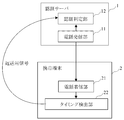
- FIG. 1 shows an example of an authentication system according to this embodiment.
- the secret information for each user used for authentication is time.
- the authentication system of this embodiment is an authentication system in which the authentication server 1 authenticates the mobile terminals 2 connected via a communication network.
- the timing notification procedure and the reply procedure are repeated a plurality of times in order at random timing, and then the authentication determination procedure is executed.
- the authentication server 1 transmits a timing signal to the mobile terminal 2 a plurality of times and records each transmission time.
- the mobile terminal 2 returns a return signal to the authentication server 1 every time a timing signal is received from the authentication server 1.
- the authentication server 1 receives the return signal and records each reply time.
- the authentication determination procedure it is determined that the authentication is successful when the time interval of each transmission time recorded in the timing notification procedure and the time interval of the response time recorded in the reply procedure are substantially the same.
- the timing signal and the return signal may be a signal transmitted using data communication or a signal transmitted using a telephone line.
- the authentication method repeats the timing notification procedure and the reply procedure a plurality of times in order at random timing.
- the timing notification procedure may have an arbitrary time interval that changes randomly between the reply procedure and the timing notification procedure.
- an arbitrary time interval that randomly changes may be provided between the timing notification procedure and the reply procedure.
- the reply time for transmitting a return signal from the authentication server 1 to the portable terminal 2 is designated, and the portable terminal 2 is designated.
- a return signal is returned at the reply time.
- the reply time an elapsed time after receiving the timing signal may be specified, or a time may be specified.
- the authentication server 1 may encrypt the reply time and transmit it to the mobile terminal 2, and the mobile terminal 2 may decrypt the reply time.
- the encryption key in this case may be information unique to the mobile terminal 2 stored in advance in the mobile terminal 2 or may be given in advance from the authentication server 1 to the mobile terminal 2.
- the information specific to the mobile terminal 2 is, for example, a SIM (Subscriber Identity Module), IMSI (International Mobile Subscriber Identity) or IMEI (Internal Mobile Identity) (IMID) address on a SIM (Subscriber Identity Module) phone. Number.
- SIM Subscriber Identity Module
- IMSI International Mobile Subscriber Identity
- IMEI Internal Mobile Identity
- IMID Internal Mobile Identity
- the encryption key is assigned from the authentication server 1 to the portable terminal 2 each time authentication is performed, and decryption is performed using a different encryption key for each authentication. Is preferred.
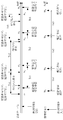
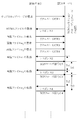
- FIG. 2 shows an example of the timing signal transmission time and the return signal return time according to the first embodiment.
- the authentication server 1 sends arbitrary information to the unique number of the mobile terminal 2 and records its transmission time ts 1 .
- the portable terminal 2 returns arbitrary information to the authentication server 1 as a return signal.
- the authentication server 1 first confirms that the same information as the transmitted arbitrary information is returned, and records the time when the return signal is received as the return time tr 1 .
- the authentication server 1 repeats transmission of arbitrary information, and randomly changes the transmission interval.
- the authentication server 1 records the transmission times ts 1 , ts 2 , ts 3 ,... Of arbitrary information and the reply times tr 1 , tr 2 , tr 3 ,.
- a reply time interval Ts1 of arbitrary information is returned.
- the time interval Tr1 of time is the same, the transmission time interval Ts2 of arbitrary information and the time interval Tr2 of reply time are the same, and the transmission time interval Ts3 of arbitrary information and the time interval Tr3 of reply time are the same.
- the authentication server 1 determines the difference between the time intervals Ts1, Ts2, Ts3,... Of each transmission time and the time intervals Tr1, Tr2, Tr3,. Is determined to be successful if the current time is within a certain period of time.
- Tr1 Ts1 ⁇ ⁇ 1
- Tr2 Ts2 ⁇ ⁇ 2
- Tr3 Ts3 ⁇ ⁇ 3
- a fixed time as a threshold value for authentication judgment is set to the maximum value ⁇ max of ⁇ obtained experimentally.
- Authentication repeats transmission of arbitrary information at random time intervals,
- ⁇ max is within ⁇ max in the case of a portable user 2 of a regular user, but if it is a person other than a regular user, a person other than the regular user can be set by setting it to a value exceeding ⁇ max. Can prevent spoofing.
- the authentication server 1 may transmit a command to read the confidential information stored in the mobile terminal 2 to the mobile terminal 2.
- the secret information is information previously given to the mobile terminal 2 and may be encryption or information unique to the mobile terminal.
- the portable terminal 2 in the reply procedure, when the portable terminal 2 receives the command, the portable terminal 2 reads out the confidential information with the command and transmits it to the authentication server 1.
- the authentication determination procedure it is further determined that the authentication is successful when the confidential information received from the mobile terminal 2 matches the confidential information stored in advance. Thereby, since an authentication factor increases, authentication precision can be raised.
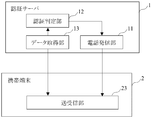
- FIG. 3 shows an example of an authentication system according to the second embodiment.
- the authentication server 1 includes a telephone transmission unit 11 and an authentication determination unit 12, and the mobile terminal 2 includes a telephone call reception unit 21 and a timing detection unit 22.
- the telephone transmission part 11 makes a telephone call
- the timing detection part 22 transmits incoming time information as a return signal.
- FIG. 4 shows an example of the timing signal transmission time and the return signal return time according to the second embodiment.
- the telephone transmission unit 11 notifies the timing by making a telephone call to the mobile terminal 2. Then, the authentication determination unit 12, telephone transmission time ts 1, ts 2 of the telephone call unit 11, records the ....
- the telephone receiving unit 21 receives a call from the authentication server 1 to receive a timing signal.
- the timing detector 22 detects and records the incoming times tn 1 , tn 2 ,. Then, the timing detection unit 22 returns the incoming time information of the telephone incoming call unit 21 to the authentication server 1 as a return signal.
- the return signal may be returned by performing data communication or by making a telephone call.
- the authentication determination unit 12 receives the arrival time information from the timing detection unit 22 and records the reception time as reply times tr 1 , tr 2 ,.
- the authentication determination unit 12 receives the time intervals Ts1, Ts2,... Of the telephone transmission times ts 1 , ts 2 ,... Of the telephone transmission unit 11 and the reception times tr 1 , tr 2 of the incoming time information.
- the time intervals Tr1, Tr2,... Of. For example, if the time interval Ts1 and the time interval Tr1 match, the time interval Ts2 and the time interval Tr2 match, and the time interval Ts3 and the time interval Tr3 match, it is determined that the authentication is successful.
- the authentication determination unit 12 uses the incoming times tn 1 , tn 2 ,... Included in the incoming time information to determine whether the telephone incoming unit 21 has received a call within an expected standard delay time. You may judge.
- the expected standard delay time is determined in consideration of a result measured at the time of initial registration of the user and data on other similar portable terminals.
- the time intervals Tn1, Tn2 of the incoming times tn 1 , tn 2 instead of the time intervals Tr1, Tr2,..., which are the reception times of the incoming call stop time information, the time intervals Tn1, Tn2 of the incoming times tn 1 , tn 2 ,. .. Are used. That is, the time intervals Ts1, Ts2,...
- the threshold value is determined in consideration of a result measured at the time of initial registration of the user and data on other similar mobile phones.
- the mobile terminal 2 transmits a return signal to the authentication server 1 when the incoming call stops.
- FIG. 5 shows an example of the timing signal transmission time and the return signal return time according to the third embodiment.
- the telephone transmission unit 11 notifies the timing by stopping the telephone transmission to the portable terminal 2. Then, the authentication determination unit 12, originating stop time ts 1, ts 2 of the telephone call unit 11, records the ....
- the telephone receiving unit 21 receives the timing signal by detecting the stop of the incoming telephone call from the authentication server 1.
- the timing detector 22 detects and records the incoming call stop times tn 1 , tn 2 ,. Then, the timing detection unit 22 returns the incoming call stop time information including the incoming call stop time of the telephone incoming call unit 21 to the authentication server 1 as a return signal.
- the authentication determination unit 12 receives the incoming call stop time information from the timing detection unit 22, and records the reception time of the incoming call stop time information as a reply time.
- the authentication determination unit 12 abbreviates the time intervals Ts1, Ts2,... Of the call stop time of the telephone transmission unit 11 and the time intervals Tr1, Tr2,. If they match, it is determined that the authentication is successful.
- the authentication determination unit 12 may determine whether the incoming call of the telephone reception unit 21 is stopped within the expected standard delay time using the incoming call stop time information. In this case, in place of the time intervals Tr1, Tr2,... Of the reception time of the incoming call stop time information, the time intervals Tn1, Tn2,. That is, the time intervals Ts1, Ts2,... Of outgoing call stop time of the authentication server 1 are compared with the time intervals Tn1, Tn2,. If the interval Tn1 is within the threshold value and the time interval Ts2 and the time interval Tn2 are within the threshold value, it is determined that the authentication is successful.
- the threshold value is determined in consideration of a result measured at the time of initial registration of the user and data on other similar mobile phones.
- the time interval from the telephone call from the authentication server to the call stoppage is used as the time intervals Ts1, Ts2, Ts3,...
- Time intervals up to the return time of the return signal are used as time intervals Tr1, Tr2, Tr3,.
- FIG. 6 shows an example of the timing signal transmission time and the return signal return time according to the fourth embodiment.
- the telephone transmission unit 11 notifies the timing by making a telephone call to the mobile terminal 2.
- the authentication determination unit 12 records the telephone call time ts 1 of the telephone call unit 11.
- the telephone receiving unit 21 receives a call from the authentication server 1 to receive a timing signal.
- the timing detector 22 detects and records the incoming time tn 1 of the telephone receiver 21. Then, the timing detection unit 22 returns the incoming time information of the telephone incoming call unit 21 to the authentication server 1 as a return signal.
- the authentication determination unit 12 receives the arrival time information from the timing detection unit 22 and records the reception time tr 1 .
- the telephone transmission unit 11 notifies the timing by stopping the telephone transmission toward the mobile terminal 2.
- the authentication determination unit 12 records the transmission stop time ts 2 of the telephone transmission unit 11.
- the telephone receiver 21 receives the timing signal when the incoming telephone call from the authentication server 1 is stopped.
- the timing detector 22 detects and records the incoming call stop time tn 2 of the telephone receiver 21. Then, the timing detection unit 22 returns the incoming call stop time information of the telephone incoming call unit 21 to the authentication server 1 as a return signal.
- Authentication determination unit 12 receives the incoming stop time information from the timing detection unit 22, and records the reception time tr 2.
- the first timing notification procedure, the first reply procedure, the second timing notification procedure, and the second reply procedure are executed in order. After performing the first timing notification procedure, the first reply procedure, the second timing notification procedure, and the second reply procedure at least once, the authentication determination procedure is performed.
- the authentication determination unit 12, for stopping the telephone call from the reception time tr 1 is a reply time of each return signal for the telephone call and the time interval Ts1 from the telephone transmission time ts 1 to outgoing stop time ts 2 if the time interval Tr1 to the reception time tr 2 is a reply time of each return signal is substantially coincident, it is determined that the authentication succeeds.
- the authentication server 1 obtains from the call time intervals Ts1, Ts2, Ts3,... Until the call is stopped over the telephone and the call is stopped, and the time received by the user mobile phone and the time when the call is stopped. Are compared, and if it is within the threshold value, the user's mobile phone is authenticated.
- the threshold value is determined in consideration of a result measured at the time of initial registration of the user and data on other similar mobile phones.
- the calling time by the authentication server 1 is changed randomly on the authentication server 1 side. As a result, it is possible to prevent unauthorized information from being transmitted to the authentication server 1 side.
- FIG. 7 shows a sequence diagram of the authentication method according to the fifth embodiment.
- the authentication method according to the present embodiment further includes an identification information determination procedure and an authentication telephone number notification procedure in order before the timing notification procedure.
- steps S101 to S104 are performed.
- step S ⁇ b> 101 the mobile terminal 2 makes an authentication request to the authentication server 1.
- step S ⁇ b> 102 the authentication server 1 requests the mobile terminal 2 for identification information of the mobile terminal 2.
- the identification information is, for example, an ID and a password (PW).
- step S ⁇ b> 103 the mobile terminal 2 transmits the ID and password (PW) to the authentication server 1.
- step S104 the authentication server 1 confirms whether the ID and password (PW) are registered in advance, and if they are authentic, the authentication telephone number notification procedure is performed. In the authentication telephone number notification procedure, the authentication server 1 notifies the mobile terminal 2 of the authentication telephone number.
- step S105 in the timing notification procedure, the authentication server 1 displays the caller number and makes a call. At this time, the authentication server 1 makes a call not only from the authentication telephone number notified in the authentication telephone number notification procedure but also from another telephone number.
- step S106 the portable terminal 2 performs a reply procedure only when a call is received from the notified authentication telephone number. That is, the portable terminal 2 transmits a return signal to the authentication server 1 only when a call is received from the notified authentication telephone number.
- Step S105 and step S106 are repeated. At this time, the authentication phone number is changed randomly. Then, an authentication determination procedure is performed (step S107), and when authentication is successful in the authentication determination procedure, the authentication server 1 notifies that the user is a legitimate user (step S108).
- the authentication server 1 before the authentication server 1 makes a call to the user's portable terminal 2, the authentication server 1 notifies the portable terminal 2 of the authentication telephone number on the authentication server 1 side and then uses it. A call is made to the person's mobile terminal 2. Thereby, since an authentication factor can be increased, authentication precision can be raised.
- the user's mobile terminal 2 does not display the authentication telephone number notified from the authentication server 1.
- dedicated software is used. Thereby, when the information is obtained from the authentication server 1 illegally, it is possible to prevent the incoming call from being selected.
- impersonation of the portable terminal 2 is performed such that a terminal that transmits / receives ID and PW is separated from a terminal that receives a call from the authentication server 1, there is an effect of improving authentication accuracy.
- the portable terminal 2 may transmit the authentication telephone number to the authentication server 1 in step S106.
- the authentication server 1 in the authentication determination procedure of step S107, the authentication server 1 further succeeds in the authentication when the authentication telephone number notified to the mobile terminal 2 matches the authentication telephone number received from the mobile terminal 2. May be determined.
- the authentication telephone number may be encrypted and notified in the authentication telephone number notification procedure in step S104.
- the data communication between the authentication server 1 and the portable terminal 2 is encrypted using, for example, SSL (Secure Socket Layer) / TLS (Transport Layer Security).
- the mobile terminal 2 receives the encrypted authentication telephone number and decrypts the authentication telephone number using a pre-assigned encryption key.
- the authentication telephone number notified from the authentication server 1 can be notified to the software of the portable terminal 2 without being abused by the user of the portable terminal 2.
- the authentication telephone number, the encryption algorithm, and the encryption key are preferably different for each user, that is, for each portable terminal 2.
- the authentication server 1 changes the software installed in the portable terminal 2 regularly, and in this case, it is preferable to manage the version of the software used by each portable terminal 2.
- the mobile terminal 2 preferably transmits the version information of the software to be used to the authentication server 1 each time authentication is performed, and it is preferable that the version information is encrypted and transmitted at this time.
- either the authentication telephone number notified from the authentication server 1 to the mobile terminal 2 or the algorithm or encryption key for encrypting the authentication telephone number is determined in advance. You may change for every group of the terminal 2.
- the timing signal is a signal transmitted using a telephone line and the return signal is a signal transmitted using data communication has been described.
- a signal transmitted using a telephone line may be used.
- FIG. 8 shows an example of an authentication system according to the sixth embodiment.
- the authentication server 1 includes a telephone transmission unit 11, an authentication determination unit 12, and a data acquisition unit 13, and the mobile terminal 2 includes a transmission / reception unit 23.
- the timing signal and the return signal are data transmission / reception.
- the authentication server 1 transmits a timing signal by transmitting a data element included in the HTML file to the mobile terminal 2.
- the portable terminal 2 sends back a return signal by transmitting a request signal for requesting a data element to the authentication server 1.
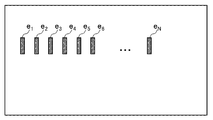
- FIG. 9 shows an example of a web page prepared in the data acquisition unit 13.
- the mobile terminal 2 connects to the authentication server 1 in order to authenticate the mobile terminal 2, the mobile terminal 2 accesses a web page as shown in FIG. In this page, data elements e 1 to e N such as a plurality of images are embedded.
- the browser of the mobile terminal 2 downloads this page, a plurality of request signals requesting the data elements e 1 to e N are generated.
- FIG. 10 shows a Web page download process using HTML.
- an HTML file of the page is first downloaded.
- the request GET 1 is transmitted from the mobile terminal 2, and the data acquisition unit 13 transmits the response 1 to the mobile terminal 2.
- the portable terminal 2 analyzes the HTML file acquired by the response 1 and then downloads each data element e 1 to e N included in the web page.
- the data acquisition unit 13 receives the request signal at a certain time interval. At this time, the data acquisition unit 13 measures the time interval of the request signal. As shown in FIG. 10, the response 1 to the response 2 are measured as the transmission time interval Ts1, and the request GET2 to the request GET3 are measured as the response time interval Tr1.
- Pipeline processing is processing that can speed up access to a page by sending request signals together.
- the portable terminal 2 a request GET2 a request signal of the image files e 1, a request GET3 a request signal of the image file e 2, a request signal of the image file e 3 Request GET4 is transmitted collectively.
- the portable terminal 2 since the portable terminal 2 transmits the request GET2 and the request GET3 almost simultaneously, even if the time from the request GET2 to the request GET3 is measured, the time interval Tr1 of the reply time , Tr2, Tr3,... Cannot be measured. Therefore, the data acquisition unit 13 of the authentication server 1 repeats reception of one request signal and transmission of one data element in order.
- the data acquisition unit 13 when the data acquisition unit 13 receives the request GET2, the request GET3, and the request GET4 collectively, the data acquisition unit 13 transmits a response 2 to the request GET2 to the portable terminal 2, and then closes the TCP connection. Thus, the response 3 and the response 4 are not transmitted to the request GET3 and the request GET4. Thereby, after receiving the response 2, the portable terminal 2 transmits the request GET3 again.
- the data acquisition unit 13 measures the time interval from receiving the request GET2 of the request GET2, request GET3, and request GET4 received together until receiving the retransmitted request GET3 as the time interval Tr1 of the reply time. To do.
- the data acquisition unit 13 that has received the request GET1 for requesting the web top page informs the portable terminal 2 that the pipeline processing is not supported.
- the pipeline processing of the portable terminal 2 may be stopped by transmitting. Specifically, a message indicating that the HTTP is HTTP (HyperText Transfer Protocol) /1.0 or HTTP / 0.9 is transmitted to the mobile terminal 2. By doing so, it is possible to perform measurement in which reception of one request signal and transmission of one data element are sequentially repeated as shown in FIG.
- FIG. 12 shows an example of a method for measuring the time intervals Ts1, Ts2, Ts3,... And the time intervals Tr1, Tr2, Tr3,.
- TCP Transmission Control Protocol
- FIN Transmission Control Protocol
- This method uses the TCP close signal (FIN), uses the time interval of the request signal of the authentication server 1 as the time interval Ts1, Ts2, Ts3,... Of the transmission time, and closes the data element after transmission.
- Time intervals for receiving signals are measured as time intervals Tr1, Tr2, Tr3,.
- This method is not a pipeline method but can be applied when multiple TCP connections are established simultaneously. Therefore, the transmission time intervals Ts1, Ts2, Ts3,... And the return time intervals Tr1, Tr2, Tr3,... Can be downloaded at high speed.
- the closing time for the GET sent later is delayed, so the time intervals Ts1, Ts2, Ts3,... Of the transmission time and the time intervals Tr1, Tr2, Tr3,. .. is expected to be long, but can be used as processing data.
- an authentication server calling procedure for calling the mobile terminal 2 from the authentication server 1 through the telephone line may be further provided between the timing notification procedure and the reply procedure.
- the authentication server 1 is after the timing signal transmission times ts1, ts2, ts3,... And before the return signal reception times tr1, tr2, tr3,.
- the telephone transmission unit 11 calls the mobile terminal 2 through a telephone line. For example, immediately after the data acquisition unit 13 receives the request GET 4, the telephone transmission unit 11 calls the mobile terminal 2. In this case, the mobile terminal 2 receives an incoming call from the authentication server 1 after receiving the timing signal, and the transmission of the request GET5 stops. For this reason, the data acquisition unit 13 cannot receive the request GET5.
- the authentication determination unit 12 determines whether there is a request signal from the mobile terminal 2 and determines that the authentication is successful, determines that the authentication is successful when there is no return signal.
- the absence of a request signal from the mobile terminal 2 can be determined by not receiving the request GET5 at the scheduled reception time of the request GET5.
- the inventions according to Embodiments 1 to 6 can be combined.
- transmission / reception of the timing signal and return signal for the first time uses the invention of any of Embodiments 2 to 5, and transmission / reception of the timing signal and return signal for the second time or later uses the invention of Embodiment 6.
- the authentication accuracy can be improved by combining the inventions according to Embodiments 1 to 6 in transmission and reception of the timing signal and the return signal.
- the present invention can be applied to the information and communication industry.
- Authentication server 2 Mobile terminal 11: Telephone transmission unit 12: Authentication determination unit 13: Data acquisition unit 21: Telephone reception unit 22: Timing detection unit 23: Transmission / reception unit
Landscapes
- Engineering & Computer Science (AREA)
- Theoretical Computer Science (AREA)
- Physics & Mathematics (AREA)
- Computer Hardware Design (AREA)
- Computer Security & Cryptography (AREA)
- Software Systems (AREA)
- General Engineering & Computer Science (AREA)
- General Physics & Mathematics (AREA)
- Mathematical Physics (AREA)
- Mobile Radio Communication Systems (AREA)
- Telephonic Communication Services (AREA)
Abstract
本発明は、認証サーバ側から利用者の携帯端末へ送る情報とそのタイミングを、利用者ごとに変えることに加え、認証サーバ側で制御するタイミング情報を、利用者の携帯端末から送り返すことで、認証サーバ側でタイミングの一致を確認する手法を採用する。 本発明に係る携帯端末の認証システムは、通信ネットワークで接続された携帯端末2を認証サーバ1が認証する認証システムであって、携帯端末2は、認証サーバ1からタイミング信号を受信する度に、認証サーバ1へ返送用信号を返信し、認証サーバ1は、タイミング信号を携帯端末2に複数回送信して各送信時刻を記録し、返送用信号を受信して各返信時刻を記録し、各送信時刻の時間間隔と各返送用信号の返信時刻の時間間隔とが略一致している場合に、認証成功と判定する。
Description
本発明は、携帯端末の認証システム及びその方法に関する。
現在、携帯電話認証には契約者固有番号が使用されている。利用者自身がパスワードのように記憶しておく必要がないことが特長のひとつである。使用方法が簡単なためインターネットサービスでの利用者認証に使われている。
携帯電話を用いた認証方法が提案されている(例えば、特許文献1及び2参照。)。特許文献1の発明は、返信のタイミングを秘匿にしておき、その秘匿のタイミングに送信されたことをもって認証を行う。特許文献2の発明は、携帯電話に電話をかけて所定の操作入力を指示し、音声メッセージに沿った操作入力がなされることをもって認証を行う。
契約者固有番号は利便性の高い認証方法であるが、現在、販売台数が伸びているスマートフォンでは使用できない欠点がある。スマートフォンでは、より一般的なコンピュータのような機器構成とネットワーク構成になることが原因である。
特許文献1及び2の発明は、利用者が携帯端末に入力するため、正規利用者が不正利用者に転送すれば正規ユーザであるとして認証される問題がある。
本発明は、スマートフォンでも利用できかつ認証サーバ側から利用者を特定することのできる携帯端末の認証システム及び携帯端末の認証方法を提供することを目的とする。
上記目的を達成するために、本発明は、認証サーバ側から利用者の携帯端末へ信号を送るタイミングを利用者ごとに変え、その信号に合わせて携帯端末から返信させて、返信のタイミングの一致を認証サーバ側で確認する。
具体的には、本発明に係る携帯端末の認証システムは、通信ネットワークで接続された携帯端末を認証サーバが認証する認証システムであって、前記携帯端末は、前記認証サーバからタイミング信号を受信する度に、前記認証サーバへ返送用信号を返信し、前記認証サーバは、前記タイミング信号を前記携帯端末に複数回送信して各送信時刻を記録し、前記返送用信号を受信して各返信時刻を記録し、前記各送信時刻の時間間隔と前記各返送用信号の返信時刻の時間間隔とが略一致している場合に、認証成功と判定する。
本発明に係る携帯端末の認証システムは、携帯端末と認証サーバとの送受信タイミングを用いて認証を行うため、スマートフォンでも利用することができる。また、本発明に係る携帯端末の認証システムは、携帯端末からの返送用信号の返信タイミングを用いて認証を行うため、利用者が携帯端末に入力することなく認証サーバ側から利用者を特定することができる。したがって、本発明に係る携帯端末の認証システムは、スマートフォンでも利用できかつ認証サーバ側から利用者を特定することのできる携帯端末の認証システム及び携帯端末の認証方法を提供することができる。
本発明に係る携帯端末の認証システムでは、前記認証サーバは、前記各送信時刻の時間間隔と前記各返送用信号の返信時刻の時間間隔との差が一定時間内である場合に、認証成功と判定してもよい。
本発明に係る携帯端末の認証システムでは、前記携帯端末は、前記認証サーバからの電話着信によって、前記タイミング信号を受信し、前記認証サーバは、前記携帯端末に向けて電話発信を行うことによって前記タイミング信号を送信し、前記認証成功と判定する際に、電話発信時刻の時間間隔と前記各返送用信号の返信時刻の時間間隔とが略一致している場合に、認証成功と判定してもよい。
本発明に係る携帯端末の認証システムでは、前記携帯端末は、前記認証サーバからの電話着信の停止によって、前記タイミング信号を受信し、前記認証サーバは、前記携帯端末に向けて電話発信の停止を行うことによって前記タイミング信号を送信し、前記認証成功と判定する際に、電話発信の停止時刻の時間間隔と前記各返送用信号の返信時刻の時間間隔とが略一致している場合に、認証成功と判定してもよい。
本発明に係る携帯端末の認証システムでは、前記携帯端末は、前記認証サーバからの電話着信又は電話着信の停止によって、前記タイミング信号を受信し、前記認証サーバは、前記携帯端末に向けて電話発信及び電話発信の停止を行うことによって前記タイミング信号を送信し、前記認証成功と判定する際に、電話発信から電話発信の停止までの時間間隔と電話発信に対する前記各返送用信号の返信時刻から電話発信の停止に対する前記各返送用信号の返信時刻までの時間間隔とが略一致している場合に、認証成功と判定してもよい。
本発明に係る携帯端末の認証システムでは、前記認証サーバは、さらに、前記携帯端末へ認証用電話番号を事前に通知しておき、前記認証用電話番号を用いて前記携帯端末に向けて電話発信し、前記携帯端末は、着信番号が前記認証用電話番号であるか否かを判定し、前記認証用電話番号である場合に前記返送用信号を返信してもよい。
本発明に係る携帯端末の認証システムでは、前記認証サーバは、前記認証用電話番号を暗号化して通知し、前記携帯端末は、暗号化された前記認証用電話番号を受信し、予め付与されている暗号鍵を用いて前記認証用電話番号を復号化してもよい。
本発明に係る携帯端末の認証システムでは、前記携帯端末は、自端末の識別情報を前記認証サーバに送信し、前記認証サーバは、前記携帯端末からの識別情報を受信し、当該識別情報が予め記憶されているか否かを判定し、前記識別情報が予め記憶されている場合に、予め記憶されている携帯端末の電話番号に電話発信を行ってもよい。
本発明に係る携帯端末の認証システムでは、前記認証サーバは、HTML(HyperText Markup Language)ファイルに包含されるデータ要素を前記携帯端末に向けて送信することによって前記タイミング信号を送信し、前記携帯端末は、前記データ要素を要求する要求信号を前記認証サーバへ送信することによって前記返信を行ってもよい。
本発明に係る携帯端末の認証システムでは、前記認証サーバは、前記タイミング信号を送信する際に、前記携帯端末に格納されている秘匿情報を読み出させる命令を前記携帯端末へ送信し、前記認証成功と判定する際に、さらに、前記携帯端末から受信した秘匿情報と予め記憶されている秘匿情報とが一致している場合に、認証成功と判定し、前記携帯端末は、前記命令を受信すると、命令のあった前記秘匿情報を読み出して前記認証サーバに送信してもよい。
本発明に係る携帯端末の認証システムでは、前記認証サーバは、前記タイミング信号の送信時刻の後でありかつ前記返送用信号の受信の前に、電話回線を通じて前記携帯端末へ発呼し、前記携帯端末からの前記返送用信号の返信があるか否かを判定し、前記認証成功と判定する際に、さらに、前記返送用信号の返信がない場合に、認証成功と判定し、前記携帯端末は、前記タイミング信号の受信の後に前記認証サーバからの着信を受けてもよい。
具体的には、本発明に係る携帯端末の認証方法は、認証サーバから携帯端末にタイミングを通知し、タイミングの通知時刻を記録するタイミング通知手順と、前記タイミング通知手順におけるタイミングの通知を契機に、携帯端末から認証サーバへ返信を行い、当該返信時刻を記録する返信手順と、をランダムなタイミングで順に複数回繰り返し、前記タイミング通知手順において記録した前記通知時刻の時間間隔と前記返信手順において記録した前記返信時刻の時間間隔とが略一致している場合に、認証成功と判定する認証判定手順と、を順に有する。
本発明に係る携帯端末の認証方法は、携帯端末と認証サーバとの送受信タイミングを用いて認証を行うため、スマートフォンでも利用することができる。また、本発明に係る携帯端末の認証方法は、携帯端末からの返送用信号の返信タイミングを用いて認証を行うため、利用者が携帯端末に入力することなく認証サーバ側から利用者を特定することができる。したがって、本発明に係る携帯端末の認証方法は、スマートフォンでも利用できかつ認証サーバ側から利用者を特定することのできる携帯端末の認証システム及び携帯端末の認証方法を提供することができる。
本発明に係る携帯端末の認証方法では、前記認証判定手順において、さらに、前記各送信時刻の時間間隔と前記各返送用信号の返信時刻の時間間隔との差が一定時間内である場合に、認証成功と判定してもよい。
本発明に係る携帯端末の認証方法では、前記タイミング通知手順において、認証サーバから携帯端末に向けて電話発信を行うことによってタイミングを通知し、前記返信手順における前記契機は、認証サーバからの電話着信であり、前記認証判定手順において、前記電話発信の時間間隔と前記返信時刻の時間間隔とが略一致している場合に、認証成功と判定してもよい。
本発明に係る携帯端末の認証方法では、前記タイミング通知手順において、認証サーバから携帯端末に向けて電話発信の停止を行うことによってタイミングを通知し、前記返信手順における前記契機は、認証サーバからの電話着信の停止であり、前記認証判定手順において、前記電話発信の停止の時間間隔と前記返信時刻の時間間隔とが略一致している場合に、認証成功と判定してもよい。
本発明に係る携帯端末の認証方法では、前記タイミング通知手順において、認証サーバから携帯端末に向けて電話発信を行い、認証サーバから携帯端末に向けて電話発信の停止を行い、前記返信手順における前記契機は、認証サーバからの電話着信又は電話着信の停止であり、前記認証判定手順において、前記電話発信から前記電話発信の停止までの時間間隔と電話発信に対する前記返信時刻から電話発信の停止に対する前記返信時刻までの時間間隔とが略一致している場合に、認証成功と判定してもよい。
本発明に係る携帯端末の認証方法では、認証サーバから携帯端末へ認証用電話番号を通知する認証用電話番号通知手順を、前記タイミング通知手順の前にさらに有し、前記タイミング通知手順において、前記認証用電話番号通知手順で通知した認証用電話番号を用いて認証サーバから携帯端末に向けて電話発信し、前記返信手順において、前記認証用電話番号からの着信を契機に、携帯端末から認証サーバへ返信を行ってもよい。
本発明に係る携帯端末の認証方法では、携帯端末から認証サーバに携帯端末の識別情報を通知し、当該識別情報が認証サーバに記憶されているか否かを判定する識別情報判定手順を、前記タイミング通知手順又は前記認証用電話番号通知手順の前にさらに有し、前記識別情報が認証サーバに記憶されている場合に、前記タイミング通知手順において、認証サーバの記憶している携帯端末の電話番号に電話発信を行ってもよい。
本発明に係る携帯端末の認証方法では、前記タイミング通知手順において、前記返信手順から前記タイミング通知手順までの間に、ランダムに変化する任意の時間間隔を有してもよい。
本発明に係る携帯端末の認証方法では、前記返信手順において、前記タイミング通知手順から前記返信手順までの間に、ランダムに変化する任意の時間間隔を有してもよい。
なお、上記各発明は、可能な限り組み合わせることができる。
本発明によれば、スマートフォンでも利用できかつ認証サーバ側から利用者を特定することのできる携帯端末の認証システム及び携帯端末の認証方法を提供することができる。本発明は、認証サーバ側から利用者を特定するため、利用者側での秘密情報の不正な利用や、正規の認証プロセス変えてしまうような不正なアクセスによる認証を防止することができる。
添付の図面を参照して本発明の実施形態を説明する。以下に説明する実施形態は本発明の実施の例であり、本発明は、以下の実施形態に制限されるものではない。なお、本明細書及び図面において符号が同じ構成要素は、相互に同一のものを示すものとする。
(実施形態1)
図1に、本実施形態に係る認証システムの一例を示す。本実施形態の認証システムは、認証に使用する利用者ごと秘密情報は時間である。本実施形態の認証システムは、通信ネットワークで接続された携帯端末2を認証サーバ1が認証する認証システムである。本実施形態に係る認証方法は、タイミング通知手順及び返信手順をランダムなタイミングで順に複数回繰り返し、その後に認証判定手順を実行する。
図1に、本実施形態に係る認証システムの一例を示す。本実施形態の認証システムは、認証に使用する利用者ごと秘密情報は時間である。本実施形態の認証システムは、通信ネットワークで接続された携帯端末2を認証サーバ1が認証する認証システムである。本実施形態に係る認証方法は、タイミング通知手順及び返信手順をランダムなタイミングで順に複数回繰り返し、その後に認証判定手順を実行する。
タイミング通知手順では、認証サーバ1は、タイミング信号を携帯端末2に複数回送信して各送信時刻を記録する。返信手順では、携帯端末2は、認証サーバ1からタイミング信号を受信する度に、認証サーバ1へ返送用信号を返信する。認証サーバ1は、返送用信号を受信して各返信時刻を記録する。認証判定手順では、タイミング通知手順において記録した各送信時刻の時間間隔と返信手順において記録した返信時刻の時間間隔とが略一致している場合に、認証成功と判定する。タイミング信号及び返送用信号は、データ通信を用いて伝送される信号であってもよいし、電話回線を用いて伝送される信号であってもよい。
ここで、本実施形態に係る認証方法は、タイミング通知手順及び返信手順をランダムなタイミングで順に複数回繰り返す。例えば、タイミング通知手順において、返信手順からタイミング通知手順までの間に、ランダムに変化する任意の時間間隔を有してもよい。また、返信手順において、タイミング通知手順から返信手順までの間に、ランダムに変化する任意の時間間隔を有してもよい。
タイミング通知手順から返信手順までの間に、ランダムに変化する任意の時間間隔を有する場合、認証サーバ1から携帯端末2へ返送用信号を送信する返信時間を指定し、携帯端末2は指定された返信時間に返送用信号を返信する。返信時間の指定は、タイミング信号を受信後の経過時間を指定してもよいし、時刻を指定してもよい。また、認証サーバ1が返信時間を暗号化して携帯端末2へ送信し、携帯端末2が返信時間を復号化してもよい。この場合の暗号鍵は、携帯端末2に予め格納されている携帯端末2固有の情報であってもよいし、認証サーバ1から携帯端末2へ予め付与しておいてもよい。携帯端末2固有の情報は、例えば、SIM(Subscriber Identity Module)カードにIMSI(International Mobile Subscriber Identity)若しくはIMEI(International Mobile Equipment Identifier)、MAC(Media Access Control)アドレス、IP(Internet Protocol)アドレス又は電話番号である。暗号鍵を認証サーバ1から携帯端末2へ付与する場合は、認証サーバ1から携帯端末2へ暗号鍵を認証の度に付与することで、認証の度に異なる暗号鍵を用いて復号化することが好ましい。また、携帯端末2の利用者が返信時間を見ることができないよう、携帯端末2に返信時間が表示されないようなプログラムを携帯端末2に組み込むことが好ましい。
図2に、実施形態1に係るタイミング信号の送信時刻と返送用信号の返信時刻の一例を示す。
(1)携帯端末2が認証サーバ1に最初にアクセスすると、それに対するレスポンスとして、認証サーバ1は携帯端末2の一意な番号に任意な情報を送り、その送信時刻ts1を記録する。
(2)携帯端末2は、任意な情報を返送用信号として認証サーバ1に返送する。
(3)認証サーバ1では、送信した任意な情報と同じものが返送されることをまず確認し、返送用信号を受信した時刻を返信時刻tr1として記録する。
(4)認証サーバ1は、任意な情報の送出を繰り返し、その送出間隔をランダムに変更する。
(5)その結果、認証サーバ1には、任意な情報の送信時刻ts1、ts2、ts3、・・・と、その返信時刻tr1、tr2、tr3、・・・が記録される。
(1)携帯端末2が認証サーバ1に最初にアクセスすると、それに対するレスポンスとして、認証サーバ1は携帯端末2の一意な番号に任意な情報を送り、その送信時刻ts1を記録する。
(2)携帯端末2は、任意な情報を返送用信号として認証サーバ1に返送する。
(3)認証サーバ1では、送信した任意な情報と同じものが返送されることをまず確認し、返送用信号を受信した時刻を返信時刻tr1として記録する。
(4)認証サーバ1は、任意な情報の送出を繰り返し、その送出間隔をランダムに変更する。
(5)その結果、認証サーバ1には、任意な情報の送信時刻ts1、ts2、ts3、・・・と、その返信時刻tr1、tr2、tr3、・・・が記録される。
(6)原理的には、携帯端末2が正規の利用者であり、登録されている一意な番号で認証サーバ1からの情報を受信していれば、任意な情報の送出時間間隔Ts1と返信時刻の時間間隔Tr1は同じであり、任意な情報の送出時間間隔Ts2と返信時刻の時間間隔Tr2は同じであり、任意な情報の送出時間間隔Ts3と返信時刻の時間間隔Tr3は同じになる。
実際の認証処理では、返信時刻の時間間隔Tr1、Tr2、Tr3、・・・に、認証サーバ1から携帯端末2までの往復遅延時間の変動と、携帯端末2内での処理時間の変動を考慮する必要がある。そこで、認証判定手順において、認証サーバ1は、各送信時刻の時間間隔Ts1、Ts2、Ts3、・・・と各返送用信号の返信時刻の時間間隔Tr1、Tr2、Tr3、・・・との差が一定時間内である場合に、認証成功と判定する。
例えば、本実施形態では、変動による誤差Δを考慮すると、以下のような関係となる。
Tr1=Ts1±Δ1
Tr2=Ts2±Δ2
Tr3=Ts3±Δ3
Tr1=Ts1±Δ1
Tr2=Ts2±Δ2
Tr3=Ts3±Δ3
このΔ1、Δ2、Δ3、・・・は、実験的に求める必要がある。実際の認証フローでは、実験的に求めたΔの最大値Δmaxに認証判断のしきい値となる一定時間を設定する。認証は、任意な情報の送出をランダムな時間間隔で繰り返し、
|Trn-Tsn|≦Δmax
であることが確認されれば、その利用者は正規の利用者と認証される。
|Trn-Tsn|≦Δmax
であることが確認されれば、その利用者は正規の利用者と認証される。
本実施形態に係る認証方法を用いることで、複数の携帯端末2が同時にアクセスしてきた場合は認証失敗になるため、複数人同時のなりすましを防ぐことができる。また、Δmaxを、正規の利用者の携帯端末2であればΔmax以内であるけれども、正規の利用者以外の者であればΔmax超となる値に設定することで、正規の利用者以外の者によるなりすましを防ぐことができる。
本実施形態では、タイミング通知手順において、認証サーバ1は、携帯端末2に格納されている秘匿情報を読み出させる命令を携帯端末2へ送信してもよい。秘匿情報は、予め携帯端末2に付与した情報であり、暗号であってもよいし、携帯端末固有の情報であってもよい。この場合、返信手順において、携帯端末2は、命令を受信すると、命令のあった秘匿情報を読み出して認証サーバ1に送信する。そして、認証判定手順において、さらに、携帯端末2から受信した秘匿情報と予め記憶されている秘匿情報とが一致している場合に、認証成功と判定する。これにより、認証要素が増えるため、認証精度を高めることができる。
(実施形態2)
図3に、実施形態2に係る認証システムの一例を示す。本実施形態に係る認証システムは、認証サーバ1が電話発信部11及び認証判定部12を備え、携帯端末2が電話着信部21及びタイミング検出部22を備える。本実施形態では、タイミング信号を送信するために電話発信部11が電話発信を行い、タイミング検出部22が返送用信号として着信時刻情報を送信する。
図3に、実施形態2に係る認証システムの一例を示す。本実施形態に係る認証システムは、認証サーバ1が電話発信部11及び認証判定部12を備え、携帯端末2が電話着信部21及びタイミング検出部22を備える。本実施形態では、タイミング信号を送信するために電話発信部11が電話発信を行い、タイミング検出部22が返送用信号として着信時刻情報を送信する。
図4に、実施形態2に係るタイミング信号の送信時刻と返送用信号の返信時刻の一例を示す。
タイミング通知手順において、電話発信部11が携帯端末2に向けて電話発信を行うことによってタイミングを通知する。そして、認証判定部12は、電話発信部11の電話発信時刻ts1、ts2、・・・を記録する。
タイミング通知手順において、電話発信部11が携帯端末2に向けて電話発信を行うことによってタイミングを通知する。そして、認証判定部12は、電話発信部11の電話発信時刻ts1、ts2、・・・を記録する。
返信手順において、電話着信部21が認証サーバ1からの電話を着信することによって、タイミング信号を受信する。タイミング検出部22は、電話着信部21の着信時刻tn1、tn2、・・・を検出して記録する。そして、タイミング検出部22は、電話着信部21の着信時刻情報を返送用信号として認証サーバ1に返信する。返送用信号の返信方法は、データ通信を行うことによって返信してもよいし、電話発信することによって返信してもよい。認証判定部12は、タイミング検出部22から着信時刻情報を受信し、その受信時刻を返信時刻tr1、tr2、・・・として記録する。
認証判定手順において、認証判定部12が、電話発信部11の電話発信時刻ts1、ts2、・・・の時間間隔Ts1、Ts2、・・・と着信時刻情報の受信時刻tr1、tr2、・・・の時間間隔Tr1、Tr2、・・・とが略一致している場合に、認証成功と判定する。例えば、時間間隔Ts1と時間間隔Tr1が一致し、かつ、時間間隔Ts2と時間間隔Tr2が一致し、かつ、時間間隔Ts3と時間間隔Tr3が一致する場合に、認証成功と判定する。
認証判定部12は、着信時刻情報に含まれる着信時刻tn1、tn2、・・・を用いて、予想される標準的な遅延時間内に電話着信部21が電話を着信したか否かを判断してもよい。予想される標準的な遅延時間は、利用者の初期登録時などで測定した結果と、他の同様な携帯端末でのデータとを考慮して決定する。この場合、着信停止時刻情報の受信時刻である返信時刻の時間間隔Tr1、Tr2、・・・に代えて、電話着信部21の着信時刻tn1、tn2、・・・の時間間隔Tn1、Tn2、・・・を用いる。すなわち、認証サーバ1が電話発信する送信時刻の時間間隔Ts1、Ts2、・・・と、電話着信部21の着信時刻の時間間隔Tn1、Tn2、・・・と、を比較し、時間間隔Ts1と時間間隔Tn1がしきい値以内であり、時間間隔Ts2と時間間隔Tn2がしきい値以内であり、時間間隔Ts3と時間間隔Tn3がしきい値以内であれば、認証成功と判定する。しきい値は、利用者の初期登録時などで測定した結果と、他の同様な携帯電話でのデータとを考慮して決定する。
(実施形態3)
本実施形態に係る認証システム及び認証方法は、携帯端末2が、着信による呼び出しが停止したときに、認証サーバ1に返送用信号を送信する。
本実施形態に係る認証システム及び認証方法は、携帯端末2が、着信による呼び出しが停止したときに、認証サーバ1に返送用信号を送信する。
図5に、実施形態3に係るタイミング信号の送信時刻と返送用信号の返信時刻の一例を示す。
タイミング通知手順において、電話発信部11が携帯端末2への電話発信の停止を行うことによってタイミングを通知する。そして、認証判定部12は、電話発信部11の発信停止時刻ts1、ts2、・・・を記録する。
タイミング通知手順において、電話発信部11が携帯端末2への電話発信の停止を行うことによってタイミングを通知する。そして、認証判定部12は、電話発信部11の発信停止時刻ts1、ts2、・・・を記録する。
返信手順において、電話着信部21が、認証サーバ1からの電話の着信の停止を検出することによって、タイミング信号を受信する。タイミング検出部22は、電話着信部21の着信停止時刻tn1、tn2、・・・を検出して記録する。そして、タイミング検出部22は、電話着信部21の着信停止時刻を含む着信停止時刻情報を、返送用信号として認証サーバ1に返信する。認証判定部12が、タイミング検出部22からの着信停止時刻情報を受信し、着信停止時刻情報の受信時刻を返信時刻として記録する。
認証判定手順において、認証判定部12が、電話発信部11の発信停止時刻の時間間隔Ts1、Ts2、・・・と着信停止時刻情報の受信時刻の時間間隔Tr1、Tr2、・・・とが略一致している場合に、認証成功と判定する。
認証判定部12は、着信停止時刻情報を用いて、予想される標準的な遅延時間内に電話着信部21の電話の着信が停止したか否かを判断してもよい。この場合、着信停止時刻情報の受信時刻の時間間隔Tr1、Tr2、・・・に代えて、電話着信部21の着信停止時刻の時間間隔Tn1、Tn2、・・・を用いる。すなわち、認証サーバ1の発信停止時刻の時間間隔Ts1、Ts2、・・・と、電話着信部21の着信停止時刻の時間間隔Tn1、Tn2、・・・と、を比較し、時間間隔Ts1と時間間隔Tn1がしきい値以内であり、時間間隔Ts2と時間間隔Tn2がしきい値以内であれば、認証成功と判定する。しきい値は、利用者の初期登録時などで測定した結果と、他の同様な携帯電話でのデータとを考慮して決定する。
(実施形態4)
本実施形態では、認証サーバからの電話発信から電話発信停止までの時間間隔を時間間隔Ts1、Ts2、Ts3、・・・として用い、電話発信に対する各返送用信号の返信時刻から電話発信停止に対する各返送用信号の返信時刻までの時間間隔を時間間隔Tr1、Tr2、Tr3、・・・として用いる。
本実施形態では、認証サーバからの電話発信から電話発信停止までの時間間隔を時間間隔Ts1、Ts2、Ts3、・・・として用い、電話発信に対する各返送用信号の返信時刻から電話発信停止に対する各返送用信号の返信時刻までの時間間隔を時間間隔Tr1、Tr2、Tr3、・・・として用いる。
図6に、実施形態4に係るタイミング信号の送信時刻と返送用信号の返信時刻の一例を示す。
第1のタイミング通知手順において、電話発信部11が携帯端末2に向けて電話発信を行うことによってタイミングを通知する。認証判定部12は、電話発信部11の電話発信時刻ts1を記録する。
第1の返信手順において、電話着信部21が認証サーバ1からの電話を着信することによって、タイミング信号を受信する。タイミング検出部22は、電話着信部21の着信時刻tn1を検出して記録する。そして、タイミング検出部22は、電話着信部21の着信時刻情報を返送用信号として認証サーバ1に返信する。認証判定部12は、タイミング検出部22から着信時刻情報を受信し、受信時刻tr1を記録する。
第1のタイミング通知手順において、電話発信部11が携帯端末2に向けて電話発信を行うことによってタイミングを通知する。認証判定部12は、電話発信部11の電話発信時刻ts1を記録する。
第1の返信手順において、電話着信部21が認証サーバ1からの電話を着信することによって、タイミング信号を受信する。タイミング検出部22は、電話着信部21の着信時刻tn1を検出して記録する。そして、タイミング検出部22は、電話着信部21の着信時刻情報を返送用信号として認証サーバ1に返信する。認証判定部12は、タイミング検出部22から着信時刻情報を受信し、受信時刻tr1を記録する。
第2のタイミング通知手順において、電話発信部11が携帯端末2に向けて電話発信の停止を行うことによってタイミングを通知する。認証判定部12は、電話発信部11の発信停止時刻ts2を記録する。
第2の返信手順において、電話着信部21が認証サーバ1からの電話着信の停止によって、タイミング信号を受信する。タイミング検出部22は、電話着信部21の着信停止時刻tn2を検出して記録する。そして、タイミング検出部22は、電話着信部21の着信停止時刻情報を返送用信号として認証サーバ1に返信する。認証判定部12は、タイミング検出部22から着信停止時刻情報を受信し、受信時刻tr2を記録する。
第2の返信手順において、電話着信部21が認証サーバ1からの電話着信の停止によって、タイミング信号を受信する。タイミング検出部22は、電話着信部21の着信停止時刻tn2を検出して記録する。そして、タイミング検出部22は、電話着信部21の着信停止時刻情報を返送用信号として認証サーバ1に返信する。認証判定部12は、タイミング検出部22から着信停止時刻情報を受信し、受信時刻tr2を記録する。
第1のタイミング通知手順、第1の返信手順、第2のタイミング通知手順及び第2の返信手順を順に実行する。第1のタイミング通知手順、第1の返信手順、第2のタイミング通知手順及び第2の返信手順を1度以上行った後に、認証判定手順を行う。
認証判定手順において、認証判定部12が、電話発信時刻ts1から発信停止時刻ts2までの時間間隔Ts1と電話発信に対する各返送用信号の返信時刻である受信時刻tr1から電話発信の停止に対する各返送用信号の返信時刻である受信時刻tr2までの時間間隔Tr1とが略一致している場合に、認証成功と判定する。
このように、認証サーバ1が電話をかけて呼び出し、呼び出しを停止するまでの呼び出し時間間隔Ts1、Ts2、Ts3、・・・と、利用者携帯電話が受信した時間と呼び出しが停止した時間から求められる呼び出し時間間隔Tr1、Tr2、Tr3、・・・を比較し、しきい値以内であれば、利用者携帯電話を認証する。しきい値は、利用者の初期登録時などで測定した結果と、他の同様な携帯電話でのデータとを考慮して決定する。
認証サーバ1による呼び出し時間は、認証サーバ1側でランダムに変化させる。これにより不正に認証サーバ1側に電話着信による情報を送信されることを防ぐことができる。
(実施形態5)
図7に、実施形態5に係る認証方法のシーケンス図を示す。本実施形態に係る認証方法は、タイミング通知手順の前に、識別情報判定手順及び認証用電話番号通知手順を更に順に有する。
図7に、実施形態5に係る認証方法のシーケンス図を示す。本実施形態に係る認証方法は、タイミング通知手順の前に、識別情報判定手順及び認証用電話番号通知手順を更に順に有する。
識別情報判定手順では、ステップS101~ステップS104を行う。
ステップS101では、携帯端末2が認証サーバ1に認証要求を行う。
ステップS102では、認証サーバ1が、携帯端末2の識別情報を携帯端末2に要求する。識別情報は、例えばID及びパスワード(PW)である。
ステップS103では、携帯端末2が、ID及びパスワード(PW)を認証サーバ1に送信する。
ステップS104では、認証サーバ1が、ID及びパスワード(PW)が予め登録された正規のものであるか確認し、正規のものである場合は、認証用電話番号通知手順を行う。認証用電話番号通知手順では、認証サーバ1から携帯端末2へ認証用電話番号を通知する。
ステップS101では、携帯端末2が認証サーバ1に認証要求を行う。
ステップS102では、認証サーバ1が、携帯端末2の識別情報を携帯端末2に要求する。識別情報は、例えばID及びパスワード(PW)である。
ステップS103では、携帯端末2が、ID及びパスワード(PW)を認証サーバ1に送信する。
ステップS104では、認証サーバ1が、ID及びパスワード(PW)が予め登録された正規のものであるか確認し、正規のものである場合は、認証用電話番号通知手順を行う。認証用電話番号通知手順では、認証サーバ1から携帯端末2へ認証用電話番号を通知する。
ステップS105では、タイミング通知手順において、認証サーバ1が、発信者番号を表示して電話をかける。このとき、認証サーバ1は、認証用電話番号通知手順で通知した認証用電話番号からだけでなく、他の電話番号からも電話をかける。
ステップS106では、携帯端末2が、通知された認証用電話番号から電話がかかってきたときにだけ返信手順を行う。すなわち、携帯端末2は、通知された認証用電話番号から電話がかかってきたときにだけ、返送用信号を認証サーバ1に送信する。
ステップS105及びステップS106を繰り返す。このとき、認証用電話番号ランダムに変更する。そして、認証判定手順を行い(ステップS107)、認証判定手順において認証が成功した場合、認証サーバ1は正規の利用者である旨を通知する(ステップS108)。
このように、本実施形態では、認証サーバ1が利用者の携帯端末2に電話をかける前に、認証サーバ1側から携帯端末2に認証サーバ1側の認証用電話番号を通知し、その後利用者の携帯端末2に電話をかける。これにより、認証要素を増やすことができるため、認証精度を高めることができる。
さらに、利用者の携帯端末2は、認証サーバ1から通知される認証用電話番号を表示しないことが好ましい。例えば、専用のソフトウェアを用いる。これにより、不正に認証サーバ1から情報を得ている場合には、電話着信を選択することができないようにすることができる。ID及びPWを送受信する端末と、認証サーバ1から電話を受ける端末を分けるような、携帯端末2のなりすましが行われた場合、認証精度を向上する効果がある。
本実施形態では、ステップS106において、携帯端末2は、認証用電話番号を認証サーバ1に送信してもよい。この場合、ステップS107の認証判定手順において、認証サーバ1は、さらに、携帯端末2に通知した認証用電話番号と携帯端末2から受信した認証用電話番号とが一致している場合に、認証成功と判定してもよい。
本実施形態では、ステップS104の認証用電話番号通知手順において、認証用電話番号を暗号化して通知してもよい。例えば、認証サーバ1と携帯端末2の間のデータ通信を、たとえばSSL(Secure Socket Layer)/TLS(Transport Layer Security)などで、インターネット上のデータ通信を暗号化する。この場合、携帯端末2は、暗号化された認証用電話番号を受信し、予め付与されている暗号鍵を用いて認証用電話番号を復号化する。これにより、認証サーバ1から通知される認証用電話番号を、携帯端末2の利用者に悪用されることなく、携帯端末2のソフトウエアに通知することができる。
ここで、認証用電話番号、暗号化アルゴリズム及び暗号鍵は、利用者ごとすなわち携帯端末2ごとに異なることが好ましい。また、認証サーバ1は、携帯端末2に搭載されるソフトウェアを定期的に変更することが好ましく、この場合は各携帯端末2の使用しているソフトウェアのバージョンを管理することが好ましい。携帯端末2は、認証の度に、使用するソフトウェアのバージョン情報を認証サーバ1へ送信することが好ましく、この際にバージョン情報を暗号化して送信することが好ましい。
本実施形態では、認証用電話番号通知手順において、認証サーバ1から携帯端末2へ通知する認証用電話番号又は認証用電話番号を暗号化するアルゴリズム若しくは暗号鍵のいずれかを、予め定められた携帯端末2のグループごとに変化させてもよい。
なお、実施形態2~実施形態5において、タイミング信号が電話回線を用いて伝送される信号であり、返送用信号がデータ通信を用いて伝送される信号である場合について説明したが、返送用信号に電話回線を用いて伝送される信号を用いてもよい。
(実施形態6)
図8に、実施形態6に係る認証システムの一例を示す。本実施形態に係る認証システムは、認証サーバ1が電話発信部11と、認証判定部12と、データ取得部13と、を備え、携帯端末2が送受信部23を備える。本実施形態では、タイミング信号及び返送用信号がデータの送受信である。
図8に、実施形態6に係る認証システムの一例を示す。本実施形態に係る認証システムは、認証サーバ1が電話発信部11と、認証判定部12と、データ取得部13と、を備え、携帯端末2が送受信部23を備える。本実施形態では、タイミング信号及び返送用信号がデータの送受信である。
具体的には、タイミング通知手順において、認証サーバ1は、HTMLファイルに包含されるデータ要素を携帯端末2に向けて送信することによってタイミング信号を送信する。返信手順において、携帯端末2は、データ要素を要求する要求信号を認証サーバ1へ送信することによって返送用信号の返信を行う。
図9に、データ取得部13に準備されているウェブページの一例を示す。携帯端末2を認証するために、携帯端末2が認証サーバ1に接続すると、携帯端末2は、図9に示すようなwebページにアクセスする。このページには、複数個の画像などのデータ要素e1~eNが埋め込まれている。携帯端末2のブラウザが、このページをダウンロードすると、データ要素e1~eNを要求する複数の要求信号が発生することになる。
図10は、HTMLによるWebページのダウンロードプロセスを示す。HTTPによるWebページのダウンロードでは、最初にそのページのHTMLファイルがダウンロードされる。このときに、リクエストGET1が携帯端末2から送信され、データ取得部13はレスポンス1を携帯端末2に送信する。携帯端末2は、レスポンス1によって取得したHTMLファイルを解析後、Webページに含まれている各データ要素e1~eNをダウンロードする。
携帯端末2がGETコマンドを使ってWebページ内のデータ要素をダウンロードすると、データ取得部13は、ある時間間隔で要求信号を受信することになる。このとき、データ取得部13で、要求信号の時間間隔を測定する。図10に示すように、レスポンス1からレスポンス2までを送信時刻の時間間隔Ts1として測定し、リクエストGET2からリクエストGET3までを返信時刻の時間間隔Tr1として測定する。
携帯端末2によってはパイプライン処理を行うものがある。パイプライン処理は、要求信号をまとめて送信することで、ページのアクセスを高速にすることができる処理である。例えば、図11に示すように、携帯端末2が、画像ファイルe1の要求信号であるリクエストGET2と、画像ファイルe2の要求信号であるリクエストGET3と、画像ファイルe3の要求信号であるリクエストGET4と、をまとめて送信する。このようなパイプライン処理を行う携帯端末2の場合、携帯端末2がリクエストGET2及びリクエストGET3をほぼ同時に送信するため、リクエストGET2からリクエストGET3までの時間を測定しても、返信時刻の時間間隔Tr1、Tr2、Tr3、・・・を測定することができない。そこで、認証サーバ1のデータ取得部13は、1つの要求信号の受信と1つのデータ要素の送信を順に繰り返す。
例えば、データ取得部13は、リクエストGET2、リクエストGET3及びリクエストGET4をまとめて受信すると、リクエストGET2に対するレスポンス2を携帯端末2に送信し、その後にTCPのコネクションをcloseする。このように、リクエストGET3及びリクエストGET4に対してはレスポンス3及びレスポンス4を送信しない。これにより、携帯端末2は、レスポンス2の受信後に、改めてリクエストGET3を送信する。
データ取得部13は、まとめて受信したリクエストGET2、リクエストGET3及びリクエストGET4のうちのリクエストGET2を受信してから、再送させたリクエストGET3を受信するまでの時間間隔を返信時刻の時間間隔Tr1として測定する。
また、パイプライン処理を行う携帯端末2に対応するために、ウェブのトップページを要求するリクエストGET1を受信したデータ取得部13は、パイプライン処理に対応していない旨の情報を携帯端末2に送信し、携帯端末2のパイプライン処理を停止させてもよい。具体的には、HTTP(HyperText Transfer Protocol)/1.0又はHTTP/0.9の仕様のHTTPである旨を携帯端末2に送信する。こうすることで、図10に示すような、1つの要求信号の受信と1つのデータ要素の送信を順に繰り返す測定を行うことができる。
図12に、データ取得部13における他の送信時刻の時間間隔Ts1、Ts2、Ts3、・・・及び返信時刻の時間間隔Tr1、Tr2、Tr3、・・・の測定方法の一例を示す。携帯端末2は、画像ファイルe2を受信すると、TCP(Transmission Control Protocol)のクローズ信号(FIN)C2を認証サーバ1に送信する。本方式は、このTCPのクローズ信号(FIN)を利用し、認証サーバ1の要求信号の時間間隔を送信時刻の時間間隔Ts1、Ts2、Ts3、・・・として用い、データ要素を送信後のクローズ信号を受信する時間間隔を返信時刻の時間間隔Tr1、Tr2、Tr3、・・・として測定する。
この方式は、パイプライン方式ではなく、TCPのコネクションを同時に複数確立する場合に適用できる。このため、複数のコネクションの数分だけ、同時に送信時刻の時間間隔Ts1、Ts2、Ts3、・・・及び返信時刻の時間間隔Tr1、Tr2、Tr3、・・・を測定することができるとともに、画像のダウンロードの高速化を図ることができる。画像のサイズが大きい場合には、後から送られたGETに対するクローズ時間が遅くなるので、送信時刻の時間間隔Ts1、Ts2、Ts3、・・・及び返信時刻の時間間隔Tr1、Tr2、Tr3、・・・が長くなることが予想されるが、処理データとして使用することができる。
本実施形態では、タイミング通知手順と前記返信手順の間に、認証サーバ1から電話回線を通じて携帯端末2へ発呼する認証サーバ発呼手順をさらに有してもよい。認証サーバ発呼手順では、認証サーバ1が、タイミング信号の送信時刻ts1、ts2、ts3、・・・の後でありかつ返送用信号の受信時刻tr1、tr2、tr3、・・・の前に、電話発信部11が電話回線を通じて携帯端末2へ発呼する。たとえば、データ取得部13がリクエストGET4を受信した直後に、電話発信部11が携帯端末2へ電話をかける。この場合、携帯端末2は、タイミング信号の受信の後に認証サーバ1からの着信を受け、リクエストGET5の送信が停止する。このため、データ取得部13はリクエストGET5の受信ができなくなる。そこで、認証判定部12が、携帯端末2からの要求信号があるか否かを判定し、認証成功と判定する際に、さらに、返送用信号の返信がない場合に、認証成功と判定する。ここで、携帯端末2からの要求信号がないことは、リクエストGET5の受信予定時刻にリクエストGET5を受信しないことによって判定することができる。
なお、実施形態1~実施形態6に係る発明は、いずれも組み合わせが可能である。例えば、1度目のタイミング信号と返送用信号の送受信は実施形態2~実施形態5のいずれかの発明を用い、2度目以降のタイミング信号と返送用信号の送受信は実施形態6の発明を用いる。このように、タイミング信号と返送用信号の送受信において実施形態1~実施形態6に係る発明を組み合わせることで、認証精度を高めることができる。
本発明は情報通信産業に適用することができる。
1:認証サーバ
2:携帯端末
11:電話発信部
12:認証判定部
13:データ取得部
21:電話着信部
22:タイミング検出部
23:送受信部
2:携帯端末
11:電話発信部
12:認証判定部
13:データ取得部
21:電話着信部
22:タイミング検出部
23:送受信部
Claims (20)
- 通信ネットワークで接続された携帯端末を認証サーバが認証する認証システムであって、
前記携帯端末は、前記認証サーバからタイミング信号を受信する度に、前記認証サーバへ返送用信号を返信し、
前記認証サーバは、前記タイミング信号を前記携帯端末に複数回送信して各送信時刻を記録し、前記返送用信号を受信して各返信時刻を記録し、前記各送信時刻の時間間隔と前記各返送用信号の返信時刻の時間間隔とが略一致している場合に、認証成功と判定する、
携帯端末の認証システム。 - 前記認証サーバは、前記各送信時刻の時間間隔と前記各返送用信号の返信時刻の時間間隔との差が一定時間内である場合に、認証成功と判定することを特徴とする請求項1に記載の携帯端末の認証システム。
- 前記携帯端末は、前記認証サーバからの電話着信によって、前記タイミング信号を受信し、
前記認証サーバは、前記携帯端末に向けて電話発信を行うことによって前記タイミング信号を送信し、前記認証成功と判定する際に、電話発信時刻の時間間隔と前記各返送用信号の返信時刻の時間間隔とが略一致している場合に、認証成功と判定する、
ことを特徴とする請求項1又は2に記載の携帯端末の認証システム。 - 前記携帯端末は、前記認証サーバからの電話着信の停止によって、前記タイミング信号を受信し、
前記認証サーバは、前記携帯端末に向けて電話発信の停止を行うことによって前記タイミング信号を送信し、前記認証成功と判定する際に、電話発信の停止時刻の時間間隔と前記各返送用信号の返信時刻の時間間隔とが略一致している場合に、認証成功と判定する、
ことを特徴とする請求項1又は2に記載の携帯端末の認証システム。 - 前記携帯端末は、前記認証サーバからの電話着信又は電話着信の停止によって、前記タイミング信号を受信し、
前記認証サーバは、前記携帯端末に向けて電話発信及び電話発信の停止を行うことによって前記タイミング信号を送信し、前記認証成功と判定する際に、電話発信から電話発信の停止までの時間間隔と電話発信に対する前記各返送用信号の返信時刻から電話発信の停止に対する前記各返送用信号の返信時刻までの時間間隔とが略一致している場合に、認証成功と判定する、
ことを特徴とする請求項1又は2に記載の携帯端末の認証システム。 - 前記認証サーバは、さらに、前記携帯端末へ認証用電話番号を事前に通知しておき、前記認証用電話番号を用いて前記携帯端末に向けて電話発信し、
前記携帯端末は、着信番号が前記認証用電話番号であるか否かを判定し、前記認証用電話番号である場合に前記返送用信号を返信する、
ことを特徴とする請求項3から5のいずれかに記載の携帯端末の認証システム。 - 前記認証サーバは、前記認証用電話番号を暗号化して通知し、
前記携帯端末は、暗号化された前記認証用電話番号を受信し、予め付与されている暗号鍵を用いて前記認証用電話番号を復号化する、
ことを特徴とする請求項6に記載の携帯端末の認証システム。 - 前記携帯端末は、自端末の識別情報を前記認証サーバに送信し、
前記認証サーバは、前記携帯端末からの識別情報を受信し、当該識別情報が予め記憶されているか否かを判定し、前記識別情報が予め記憶されている場合に、予め記憶されている携帯端末の電話番号に電話発信を行う、
ことを特徴とする請求項3から7のいずれかに記載の携帯端末の認証システム。 - 前記認証サーバは、HTML(HyperText Markup Language)ファイルに包含されるデータ要素を前記携帯端末に向けて送信することによって前記タイミング信号を送信し、
前記携帯端末は、前記データ要素を要求する要求信号を前記認証サーバへ送信することによって前記返信を行う、
ことを特徴とする請求項1又は2に記載の携帯端末の認証システム。 - 前記認証サーバは、前記タイミング信号を送信する際に、前記携帯端末に格納されている秘匿情報を読み出させる命令を前記携帯端末へ送信し、前記認証成功と判定する際に、さらに、前記携帯端末から受信した秘匿情報と予め記憶されている秘匿情報とが一致している場合に、認証成功と判定し、
前記携帯端末は、前記命令を受信すると、命令のあった前記秘匿情報を読み出して前記認証サーバに送信する、
ことを特徴とする請求項1から9のいずれかに記載の携帯端末の認証システム。 - 前記認証サーバは、前記タイミング信号の送信時刻の後でありかつ前記返送用信号の受信の前に、電話回線を通じて前記携帯端末へ発呼し、前記携帯端末からの前記返送用信号の返信があるか否かを判定し、前記認証成功と判定する際に、さらに、前記返送用信号の返信がない場合に、認証成功と判定し、
前記携帯端末は、前記タイミング信号の受信の後に前記認証サーバからの着信を受ける、
ことを特徴とする請求項1から10のいずれかに記載の携帯端末の認証システム。 - 認証サーバから携帯端末にタイミングを通知し、タイミングの通知時刻を記録するタイミング通知手順と、
前記タイミング通知手順におけるタイミングの通知を契機に、携帯端末から認証サーバへ返信を行い、当該返信時刻を記録する返信手順と、
をランダムなタイミングで順に複数回繰り返し、
前記タイミング通知手順において記録した前記通知時刻の時間間隔と前記返信手順において記録した前記返信時刻の時間間隔とが略一致している場合に、認証成功と判定する認証判定手順と、
を順に有する携帯端末の認証方法。 - 前記認証判定手順において、さらに、前記各送信時刻の時間間隔と前記各返送用信号の返信時刻の時間間隔との差が一定時間内である場合に、認証成功と判定することを特徴とする請求項12に記載の携帯端末の認証方法。
- 前記タイミング通知手順において、認証サーバから携帯端末に向けて電話発信を行うことによってタイミングを通知し、
前記返信手順における前記契機は、認証サーバからの電話着信であり、
前記認証判定手順において、前記電話発信の時間間隔と前記返信時刻の時間間隔とが略一致している場合に、認証成功と判定する、
ことを特徴とする請求項12又は13に記載の携帯端末の認証方法。 - 前記タイミング通知手順において、認証サーバから携帯端末に向けて電話発信の停止を行うことによってタイミングを通知し、
前記返信手順における前記契機は、認証サーバからの電話着信の停止であり、
前記認証判定手順において、前記電話発信の停止の時間間隔と前記返信時刻の時間間隔とが略一致している場合に、認証成功と判定する、
ことを特徴とする請求項12又は13に記載の携帯端末の認証方法。 - 前記タイミング通知手順において、認証サーバから携帯端末に向けて電話発信を行い、認証サーバから携帯端末に向けて電話発信の停止を行い、
前記返信手順における前記契機は、認証サーバからの電話着信又は電話着信の停止であり、
前記認証判定手順において、前記電話発信から前記電話発信の停止までの時間間隔と電話発信に対する前記返信時刻から電話発信の停止に対する前記返信時刻までの時間間隔とが略一致している場合に、認証成功と判定する、
ことを特徴とする請求項12又は13に記載の携帯端末の認証方法。 - 認証サーバから携帯端末へ認証用電話番号を通知する認証用電話番号通知手順を、前記タイミング通知手順の前にさらに有し、
前記タイミング通知手順において、前記認証用電話番号通知手順で通知した認証用電話番号を用いて認証サーバから携帯端末に向けて電話発信し、
前記返信手順において、前記認証用電話番号からの着信を契機に、携帯端末から認証サーバへ返信を行う、
ことを特徴とする請求項14から16のいずれかに記載の携帯端末の認証方法。 - 携帯端末から認証サーバに携帯端末の識別情報を通知し、当該識別情報が認証サーバに記憶されているか否かを判定する識別情報判定手順を、前記タイミング通知手順又は前記認証用電話番号通知手順の前にさらに有し、
前記識別情報が認証サーバに記憶されている場合に、前記タイミング通知手順において、認証サーバの記憶している携帯端末の電話番号に電話発信を行う、
ことを特徴とする請求項14から17のいずれかに記載の携帯端末の認証方法。 - 前記タイミング通知手順において、前記返信手順から前記タイミング通知手順までの間に、ランダムに変化する任意の時間間隔を有する、
ことを特徴とする請求項12から18のいずれかに記載の携帯端末の認証方法。 - 前記返信手順において、前記タイミング通知手順から前記返信手順までの間に、ランダムに変化する任意の時間間隔を有する、
ことを特徴とする請求項12から18のいずれかに記載の携帯端末の認証方法。
Priority Applications (2)
| Application Number | Priority Date | Filing Date | Title |
|---|---|---|---|
| JP2013545698A JP5850270B2 (ja) | 2011-11-22 | 2011-11-22 | 携帯端末の認証システム及びその方法 |
| PCT/JP2011/076948 WO2013076823A1 (ja) | 2011-11-22 | 2011-11-22 | 携帯端末の認証システム及びその方法 |
Applications Claiming Priority (1)
| Application Number | Priority Date | Filing Date | Title |
|---|---|---|---|
| PCT/JP2011/076948 WO2013076823A1 (ja) | 2011-11-22 | 2011-11-22 | 携帯端末の認証システム及びその方法 |
Publications (1)
| Publication Number | Publication Date |
|---|---|
| WO2013076823A1 true WO2013076823A1 (ja) | 2013-05-30 |
Family
ID=48469302
Family Applications (1)
| Application Number | Title | Priority Date | Filing Date |
|---|---|---|---|
| PCT/JP2011/076948 Ceased WO2013076823A1 (ja) | 2011-11-22 | 2011-11-22 | 携帯端末の認証システム及びその方法 |
Country Status (2)
| Country | Link |
|---|---|
| JP (1) | JP5850270B2 (ja) |
| WO (1) | WO2013076823A1 (ja) |
Cited By (5)
| Publication number | Priority date | Publication date | Assignee | Title |
|---|---|---|---|---|
| KR101671702B1 (ko) * | 2015-06-30 | 2016-11-03 | 경북대학교 산학협력단 | 비콘신호의 송출 시간차를 이용한 인증처리 기능을 갖는 비콘 통신시스템 및 그 인증방법 |
| JP2017502396A (ja) * | 2013-12-06 | 2017-01-19 | ゼットティーイー コーポレーションZte Corporation | アプリケーションプログラムのアップデート処理方法及び端末機器 |
| JP2018007204A (ja) * | 2016-07-08 | 2018-01-11 | マツダ株式会社 | 認証システム、故障診断ツール、車載通信システム及び認証方法 |
| US11968592B2 (en) | 2018-10-15 | 2024-04-23 | Paylessgate Corporation | Position determination system, position determination apparatus, position determination method, position determination program, and computer-readable storage medium and storage device |
| US12041509B2 (en) | 2018-10-15 | 2024-07-16 | Sinumy Corporation | Authentication-gaining apparatus, authentication apparatus, authentication request transmitting method, authentication method, and program |
Citations (2)
| Publication number | Priority date | Publication date | Assignee | Title |
|---|---|---|---|---|
| JP2006129083A (ja) * | 2004-10-28 | 2006-05-18 | Canon Inc | 無線通信装置の接続対象検出及び認証方法 |
| JP2007149026A (ja) * | 2005-11-30 | 2007-06-14 | Ntt Docomo Inc | ユーザ認証装置及びユーザ認証方法 |
-
2011
- 2011-11-22 JP JP2013545698A patent/JP5850270B2/ja not_active Expired - Fee Related
- 2011-11-22 WO PCT/JP2011/076948 patent/WO2013076823A1/ja not_active Ceased
Patent Citations (2)
| Publication number | Priority date | Publication date | Assignee | Title |
|---|---|---|---|---|
| JP2006129083A (ja) * | 2004-10-28 | 2006-05-18 | Canon Inc | 無線通信装置の接続対象検出及び認証方法 |
| JP2007149026A (ja) * | 2005-11-30 | 2007-06-14 | Ntt Docomo Inc | ユーザ認証装置及びユーザ認証方法 |
Cited By (6)
| Publication number | Priority date | Publication date | Assignee | Title |
|---|---|---|---|---|
| JP2017502396A (ja) * | 2013-12-06 | 2017-01-19 | ゼットティーイー コーポレーションZte Corporation | アプリケーションプログラムのアップデート処理方法及び端末機器 |
| KR101671702B1 (ko) * | 2015-06-30 | 2016-11-03 | 경북대학교 산학협력단 | 비콘신호의 송출 시간차를 이용한 인증처리 기능을 갖는 비콘 통신시스템 및 그 인증방법 |
| WO2017003099A1 (ko) * | 2015-06-30 | 2017-01-05 | 경북대학교산학협력단 | 비콘신호의 송출 시간차를 이용한 인증처리 기능을 갖는 비콘 통신시스템 및 그 인증방법 |
| JP2018007204A (ja) * | 2016-07-08 | 2018-01-11 | マツダ株式会社 | 認証システム、故障診断ツール、車載通信システム及び認証方法 |
| US11968592B2 (en) | 2018-10-15 | 2024-04-23 | Paylessgate Corporation | Position determination system, position determination apparatus, position determination method, position determination program, and computer-readable storage medium and storage device |
| US12041509B2 (en) | 2018-10-15 | 2024-07-16 | Sinumy Corporation | Authentication-gaining apparatus, authentication apparatus, authentication request transmitting method, authentication method, and program |
Also Published As
| Publication number | Publication date |
|---|---|
| JPWO2013076823A1 (ja) | 2015-04-27 |
| JP5850270B2 (ja) | 2016-02-03 |
Similar Documents
| Publication | Publication Date | Title |
|---|---|---|
| CN107113173B (zh) | 用于基于用户设备的标识符提供服务的方法和装置 | |
| JP6612358B2 (ja) | ネットワークアクセスデバイスをワイヤレスネットワークアクセスポイントにアクセスさせるための方法、ネットワークアクセスデバイス、アプリケーションサーバ、および不揮発性コンピュータ可読記憶媒体 | |
| AU2005273532B2 (en) | System for proximity determination | |
| JP6655616B2 (ja) | 移動端末間の通信の確立 | |
| KR101508360B1 (ko) | 데이터 전송 장치 및 방법, 그리고 그 방법을 컴퓨터에서 실행시키기 위한 프로그램을 기록한 기록매체 | |
| CN110278179B (zh) | 单点登录方法、装置和系统以及电子设备 | |
| US20130305325A1 (en) | Methods for Thwarting Man-In-The-Middle Authentication Hacking | |
| US11558499B2 (en) | System and method for controlling devices using short message service | |
| CN105634737B (zh) | 一种数据传输方法、终端及其系统 | |
| KR20150023230A (ko) | 장치 사이에서의 계정 전송 | |
| US20180248892A1 (en) | Location-Based Continuous Two-Factor Authentication | |
| JP5850270B2 (ja) | 携帯端末の認証システム及びその方法 | |
| KR20110083886A (ko) | 휴대용 단말기에서 다른 휴대용 단말기를 인증하는 장치 및 방법 | |
| JP2021519966A (ja) | リモート生体計測識別 | |
| CN104349318A (zh) | 无线局域网的自动认证方法、装置和系统 | |
| US10645570B1 (en) | Controlling devices using short message service from administrative devices | |
| US9231932B2 (en) | Managing remote telephony device configuration | |
| KR101692161B1 (ko) | 비콘 발신기와 일회성 패스워드를 이용한 인증 시스템 및 인증 방법 | |
| US20150319180A1 (en) | Method, device and system for accessing a server | |
| WO2013076821A1 (ja) | 携帯端末を認証する認証方法及び認証サーバ | |
| KR20160146090A (ko) | 스마트홈 시스템에서의 통신 방법 및 그 장치 | |
| US10701557B2 (en) | Authentication method for connecting a companion device when same is disconnected from a subscriber device | |
| CN111356136B (zh) | 对与服务器通信的转发器进行安全认证的方法 | |
| KR20140029067A (ko) | 전자신원확인 장치 및 방법 | |
| HK40032481A (en) | Method of securely authenticating a transponder in communication with a server |
Legal Events
| Date | Code | Title | Description |
|---|---|---|---|
| 121 | Ep: the epo has been informed by wipo that ep was designated in this application |
Ref document number: 11876159 Country of ref document: EP Kind code of ref document: A1 |
|
| ENP | Entry into the national phase |
Ref document number: 2013545698 Country of ref document: JP Kind code of ref document: A |
|
| NENP | Non-entry into the national phase |
Ref country code: DE |
|
| 122 | Ep: pct application non-entry in european phase |
Ref document number: 11876159 Country of ref document: EP Kind code of ref document: A1 |