WO2013004669A1 - Multivalent oligosaccharides - Google Patents
Multivalent oligosaccharides Download PDFInfo
- Publication number
- WO2013004669A1 WO2013004669A1 PCT/EP2012/062857 EP2012062857W WO2013004669A1 WO 2013004669 A1 WO2013004669 A1 WO 2013004669A1 EP 2012062857 W EP2012062857 W EP 2012062857W WO 2013004669 A1 WO2013004669 A1 WO 2013004669A1
- Authority
- WO
- WIPO (PCT)
- Prior art keywords
- aliphatic
- oligosaccharide
- independently selected
- group
- monosaccharide
- Prior art date
- Legal status (The legal status is an assumption and is not a legal conclusion. Google has not performed a legal analysis and makes no representation as to the accuracy of the status listed.)
- Ceased
Links
- 0 CCOc1cc(OCC)cc(OCC=*C)c1 Chemical compound CCOc1cc(OCC)cc(OCC=*C)c1 0.000 description 3
- GUHAJUQPFFDSBD-RWCSVBSMSA-N CC(C)(C)NC(CN([C@@H](C([C@H]1O)O)OC(CO)[C@H]1O[C@@H](C(C1O)O)OC(CO)[C@@H]1O)C(c(cc1)ccc1C(N(CC(NC(C)(C)C)=O)[C@@H](C(C1O)O)OC(CO)[C@H]1O[C@@H](C(C1O)O)OC(CO)[C@@H]1O)=O)=O)=O Chemical compound CC(C)(C)NC(CN([C@@H](C([C@H]1O)O)OC(CO)[C@H]1O[C@@H](C(C1O)O)OC(CO)[C@@H]1O)C(c(cc1)ccc1C(N(CC(NC(C)(C)C)=O)[C@@H](C(C1O)O)OC(CO)[C@H]1O[C@@H](C(C1O)O)OC(CO)[C@@H]1O)=O)=O)=O GUHAJUQPFFDSBD-RWCSVBSMSA-N 0.000 description 1
- XHCGZWKTTLOMKD-MIWZOWTISA-N C[C@](C1O)([C@H](O[C@H](C(CO)O[C@H](C2)N(CC(NCC(OC)=O)=O)C(c(cc3)cc(cc4)c3cc4C(N(CC(NCC(OC)=O)=O)[C@@H](C(C3O)O)OC(CO)[C@H]3O[C@@H](C(C3O)O)OC(CO)[C@@H]3O)=O)=O)C2O)OC(CO)[C@@H]1O)O Chemical compound C[C@](C1O)([C@H](O[C@H](C(CO)O[C@H](C2)N(CC(NCC(OC)=O)=O)C(c(cc3)cc(cc4)c3cc4C(N(CC(NCC(OC)=O)=O)[C@@H](C(C3O)O)OC(CO)[C@H]3O[C@@H](C(C3O)O)OC(CO)[C@@H]3O)=O)=O)C2O)OC(CO)[C@@H]1O)O XHCGZWKTTLOMKD-MIWZOWTISA-N 0.000 description 1
Classifications
-
- C—CHEMISTRY; METALLURGY
- C07—ORGANIC CHEMISTRY
- C07H—SUGARS; DERIVATIVES THEREOF; NUCLEOSIDES; NUCLEOTIDES; NUCLEIC ACIDS
- C07H13/00—Compounds containing saccharide radicals esterified by carbonic acid or derivatives thereof, or by organic acids, e.g. phosphonic acids
- C07H13/02—Compounds containing saccharide radicals esterified by carbonic acid or derivatives thereof, or by organic acids, e.g. phosphonic acids by carboxylic acids
- C07H13/04—Compounds containing saccharide radicals esterified by carbonic acid or derivatives thereof, or by organic acids, e.g. phosphonic acids by carboxylic acids having the esterifying carboxyl radicals attached to acyclic carbon atoms
-
- A—HUMAN NECESSITIES
- A61—MEDICAL OR VETERINARY SCIENCE; HYGIENE
- A61P—SPECIFIC THERAPEUTIC ACTIVITY OF CHEMICAL COMPOUNDS OR MEDICINAL PREPARATIONS
- A61P1/00—Drugs for disorders of the alimentary tract or the digestive system
-
- A—HUMAN NECESSITIES
- A61—MEDICAL OR VETERINARY SCIENCE; HYGIENE
- A61P—SPECIFIC THERAPEUTIC ACTIVITY OF CHEMICAL COMPOUNDS OR MEDICINAL PREPARATIONS
- A61P31/00—Antiinfectives, i.e. antibiotics, antiseptics, chemotherapeutics
- A61P31/10—Antimycotics
-
- C—CHEMISTRY; METALLURGY
- C07—ORGANIC CHEMISTRY
- C07H—SUGARS; DERIVATIVES THEREOF; NUCLEOSIDES; NUCLEOTIDES; NUCLEIC ACIDS
- C07H13/00—Compounds containing saccharide radicals esterified by carbonic acid or derivatives thereof, or by organic acids, e.g. phosphonic acids
- C07H13/02—Compounds containing saccharide radicals esterified by carbonic acid or derivatives thereof, or by organic acids, e.g. phosphonic acids by carboxylic acids
- C07H13/08—Compounds containing saccharide radicals esterified by carbonic acid or derivatives thereof, or by organic acids, e.g. phosphonic acids by carboxylic acids having the esterifying carboxyl radicals directly attached to carbocyclic rings
Definitions
- the present invention relates to novel glycoclusters that are anti-microbial agents for use in the treatment of gastric and intestinal diseases.
- the present invention further provides for a method for the synthesis of these compounds and for the use of the compounds as therapeutic agents.
- Oligosaccharides and proteins provide a complex environment where a variety of functions take place. These include cell-cell interactions involved in the immune response, inflammation, cell signalling and infection by pathogens.
- the glycans found in human milk function as soluble receptors that inhibit pathogens from adhering to their target receptors on the mucosal surface of the host gastrointestinal tract.
- monovalent carbohydrates typically bind to their putative receptors with low affinity.
- Multivalent oligosaccharides or glycoclusters have in some cases improved ability to inhibit protein-carbohydrate interactions because of glycoside cluster effect. There are a number of plausible mechanisms to explain why glycoclusters are more active, and this includes cases where cross-linking of glycan binding receptors can occur.
- the present invention provides for novel multivalent oligosaccharides for use in the treatment of gastrointestinal (Gl) disorders.
- multivalent oligosaccharide refers to a glycoside (or glycosylamine) in which a plurality of oligosaccharides are bonded to a spacer or linker moiety.
- the oligosaccharide of the present invention for use in the treatment of a Gl disorder may be of the general formula (la), a pharmaceutically acceptable salt thereof, an ester thereof, a solvate thereof or a hydrate thereof:
- each R 4 is independently selected from the group consisting of H, C-i-C-io aliphatic, CH 2 C(0)NHCH 2 C(0)OH, CH 2 C(O)NHCH 2 C(O)O(CrCi 0 aliphatic), and CH 2 C(0)NH(C Cio aliphatic);
- each A is absent, or A, N and R 4 together define a C 2 -C 6 aliphatic or aromatic heterocycle;
- each D is an oligosaccharide moiety comprising lactose
- n 2 - 20 such that the value of n will not exceed the valence of moiety B.
- n may be 2 - 6.
- the oligosaccharide may be of the general formula (lb), a pharmaceutically acceptable salt thereof, an ester thereof, a solvate thereof or a hydrate thereof:
- each R 1 is independently selected from the group consisting of OH, a hexose monosaccharide, a 6-deoxy-hexose monosaccharide, a pentose monosaccharide, and a methyl pentose monosaccharide;
- each R 2 is independently selected from the group consisting of OH, NHAc, and NHC(0)R 3 ; each R 3 is independently selected from C1-C10 aliphatic optionally interrupted by O, S or N, C3-C20 cycloaliphatic, C 2 -C 2 o heterocyclic aliphatic, C 5 -C 2 o aryl, C 2 -C 2 o heteroaryl, and combinations thereof;
- each R 4 is independently selected from the group consisting of H, C1-C10 aliphatic, CH 2 C(0)NHCH 2 C(0)OH, CH 2 C(0)N HCH 2 C(0)0(C Cio aliphatic), and CH 2 C(0)NH(C C10 aliphatic);
- each A is absent, or A, N and R 4 together define a C 2 -C 6 aliphatic or aromatic heterocycle;
- each R 5 is H, or may define a C 2 -C 20 aliphatic bridge together with R 5 or R 6 of an adjacent oligosaccharide;
- each R 6 is H, or may define a C 2 -C 20 aliphatic bridge together with R 5 or R 6 of an adjacent oligosaccharide;
- n 2 - 20 such that the value of n will not exceed the valence of moiety B.
- n may be 2 - 6.
- B may be selected from C1-C10 aliphatic, C1-C10 aliphatic ether, C1-C5 aliphatic thioether, C 6 -Ci 0 aryl, and combinations thereof.
- R 1 may selected from the group consisting of OH , L-fucose, L-rhamnose, and L- arabinose.
- R 1 may be OH or L-fucose.
- R 4 may be CH 2 C(O)N H(Ci-Ci 0 aliphatic).
- each R 4 is not H .
- An oligosaccharide may be of the general formula (Ic), a pharmaceutically acceptable salt thereof, an ester thereof, a solvate thereof or a hydrate thereof:
- each R 1 is independently selected from the group consisting of OH, a hexose monosaccharide, a 6-deoxy-hexose monosaccharide, a pentose monosaccharide, and a methyl pentose monosaccharide;
- each R 2 is independently selected from the group consisting of OH, NHAc, and NHC(0)R 3 ; each R 3 is independently selected from C1-C10 aliphatic optionally interrupted by O, S, or N, C3-C20 cycloaliphatic, C 2 -C 2 o heterocyclic aliphatic, C 5 -C 2 o aryl, C 2 -C 2 o heteroaryl, and combinations thereof;
- each R 4 is independently selected from the group consisting of H, C1-C10 aliphatic, CH 2 C(0)NHCH 2 C(0)OH, CH 2 C(0)NHCH 2 C(0)0(C Cio aliphatic), and CH 2 C(0)NH(C C10 aliphatic);
- each A is absent, or A, N and R 4 together define a C 2 -C 6 aliphatic or aromatic heterocycle;
- n 2 - 20 such that the value of n will not exceed the valence of moiety B.
- n may be 2 - 6.
- B may be selected from C1-C10 aliphatic, C1-C10 aliphatic ether, C1-C5 aliphatic thioether, C 6 -Ci 0 aryl, and combinations thereof.
- R 1 may selected from the group consisting of OH, L-fucose, L-rhamnose, and L- arabinose.
- R 1 may be OH or L-fucose.
- R 4 may be CH 2 C(O)NH(Ci-Ci 0 aliphatic).
- each R 4 is not H.
- the oligosaccharide may be of the general formula (Id), a pharmaceutically acceptable salt thereof, an ester thereof, a solvate thereof or a hydrate thereof:
- each R 1 is independently selected from the group consisting of OH , a hexose monosaccharide, a 6-deoxy-hexose monosaccharide, a pentose monosaccharide, and a methyl pentose monosaccharide;
- each R 2 is independently selected from the group consisting of OH, NHAc, and NHC(0)R 3 ; each R 3 is independently selected from C1-C1 0 aliphatic optionally interrupted by O, S or N , C3-C20 cycloaliphatic, C 2 -C 2 o heterocyclic aliphatic, C 5 -C 2 o aryl, C 2 -C 2 o heteroaryl, and combinations thereof;
- each R 4 is independently selected from the group consisting of H, C1-C1 0 aliphatic, CH 2 C(0)NHCH 2 C(0)OH, CH 2 C(0)NHCH 2 C(0)0(C Cio aliphatic), and CH 2 C(0)NH(C C10 aliphatic); and
- R 7 is absent or is selected from C1-C1 0 aliphatic optionally interrupted by O, S, or N , C 3 -C 20 cycloaliphatic, C 2 -C 20 heterocyclic aliphatic, C 5 -C 20 aryl, C 2 -C 20 heteroaryl, and combinations thereof.
- each R 1 and R 2 are OH, each R 4 is not H.
- Each R 1 may be independently selected from the group consisting of OH , a hexose monosaccharide, a 6-deoxy-hexose monosaccharide, a pentose monosaccharide, and a methyl pentose monosaccharide;
- each R 2 may be OH ;
- each R 4 may be independently selected from the group consisting of H , CH 2 C(O)N HCH 2 C(O)O(Ci-Ci 0 aliphatic), and CH 2 C(0)N H(C Cio aliphatic);
- R 7 may be absent or may be selected from C-I-C-IO aliphatic optionally interrupted by O, S, or N , C3-C20 cycloaliphatic, C 2 -C 2 o heterocyclic aliphatic, C 5 -C 20 aryl, C 2 -C 20 heteroaryl,
- R 7 may be absent or selected from C1-C10 aliphatic, C1-C10 aliphatic ether, C1-C5 aliphatic thioether, C 6 -Ci 0 aryl, and combinations thereof.
- R 1 may selected from the group consisting of OH , L-fucose, L-rhamnose, and L- arabinose.
- R 1 may be OH or L-fucose.
- R 4 may be CH 2 C(O)N H(C Ci 0 aliphatic).
- the Gl disorder may be associated with Campylobacter jejuni or Helicobacter pylori.
- the Gl disorder may be selected from the group consisting of gastric cancer, mucosa- associated lymphoid tissue (MALT) lymphoma, peptic ulcers, duodenal ulcers, chronic gastritis, non-ulcer dyspepsia, lymphocytic gastritis, granulomatous gastritis, gastric outlet obstruction, gastric hyperplastic polyps, Menetrier's disease, watery or bloody diarrhoea, abdominal cramps, traveller's diarrhoea, bacteraemia, immunoproliferative small intestinal disease, and
- the oligosaccharides of the present invention may also find use in the treatment of extra-gastric disorders caused by bacterial gastrointestinal pathogens, for example
- Such extra-gastric disorders may be selected from idiopathic thrombocytopenic purpura, iron deficiency anemia, chronic fatigue syndrome, chronic idiopathic urticaria, reactive arthritis, typhoid-like syndrome, Guillain-Barre syndrome, meningitis, myocarditis, myopericarditis, and acute atrial fibrillation.
- the present invention also provides for a method of treating a gastrointestinal disorder in a patient in need thereof, comprising administering a pharmaceutically acceptable amount of an oligosaccharide according to the present invention to the patient.
- the multivalent oligosaccharide of the present invention as defined supra may find use in the reduction and/or control of bacterial gastrointestinal pathogen carriage in animals.
- the multivalent oligosaccharide of the present invention as defined supra may find use in the reduction and/or control of Campylobacter jejuni or Helicobacter pylori carriage in animals.
- the animal may be a farm animal.
- the farm animal may be poultry.
- the poultry may be chicken.
- the present invention provides for an animal feed composition comprising a multivalent oligosaccharide of the present invention as defined supra.
- the animal feed composition may be chicken feed.
- the present invention provides for a compound of the general formula (lb):
- each R 1 is independently selected from the group consisting of OH, a hexose monosaccharide, a 6-deoxy-hexose monosaccharide, a pentose monosaccharide, and a methyl pentose monosaccharide;
- each R 2 is independently selected from the group consisting of OH, NHAc, and NHC(0)R 3 ; each R 3 is independently selected from C-I-C-IO aliphatic optionally interrupted by O, S or N , C3-C20 cycloaliphatic, C 2 -C 2 o heterocyclic aliphatic, C 5 -C 2 o aryl, C 2 -C 2 o heteroaryl, and combinations thereof;
- each R 4 is independently selected from the group consisting of H , C1-C1 0 aliphatic, CH 2 C(0)NHCH 2 C(0)OH, CH 2 C(0)NHCH 2 C(0)0(C Cio aliphatic), and CH 2 C(0)NH(C C10 aliphatic);
- each A is absent, or A, N and R 4 together define a C 2 -C 6 aliphatic or aromatic heterocycle;
- each R 5 is H, or may define a C 2 -Ci 0 aliphatic bridge together with R 5 or R 6 of an adjacent oligosaccharide;
- each R 6 is H, or may define a C 2 -Ci 0 aliphatic bridge together with R 5 or R 6 of an adjacent oligosaccharide;
- n 2 - 20 such that the value of n will not exceed the valence of moiety B
- n may be 2 - 6.
- B may be selected from C1-C10 aliphatic, C1-C10 aliphatic ether, C1-C5 aliphatic thioether, C 6 -Ci 0 aryl, and combinations thereof.
- R 1 may selected from the group consisting of OH , L-fucose, L-rhamnose, and L- arabinose.
- R 1 may be OH or L-fucose.
- R 4 may be CH 2 C(O)N H(Ci-Ci 0 aliphatic).
- each R 4 is not H .
- the compound of the present invention may be of the general formula (lc), a
- each R 1 is independently selected from the group consisting of OH, a hexose monosaccharide, a 6-deoxy-hexose monosaccharide, a pentose monosaccharide, and a methyl pentose monosaccharide;
- each R 2 is independently selected from the group consisting of OH, NHAc, and NHC(0)R 3 ; each R 3 is independently selected from C1-C10 aliphatic optionally interrupted by O, S, or N, C3-C20 cycloaliphatic, C 2 -C 2 o heterocyclic aliphatic, C 5 -C 2 o aryl, C 2 -C 2 o heteroaryl, and combinations thereof;
- each R 4 is independently selected from the group consisting of H, C1-C10 aliphatic, CH 2 C(0)NHCH 2 C(0)OH, CH 2 C(0)NHCH 2 C(0)0(C Cio aliphatic), and CH 2 C(0)NH(C C10 aliphatic);
- each A is absent, or A, N and R 4 together define a C 2 -C 6 aliphatic or aromatic heterocycle;
- n 2 - 20 such that the value of n will not exceed the valence of moiety B
- n may be 2 - 6.
- B may be selected from C1-C10 aliphatic, C1-C10 aliphatic ether, C1-C5 aliphatic thioether, C 6 -Ci 0 aryl, and combinations thereof.
- R 1 may selected from the group consisting of OH , L-fucose, L-rhamnose, and L- arabinose.
- R 1 may be OH or L-fucose.
- R 4 may be CH 2 C(O)N H(Ci-Ci 0 aliphatic).
- each R 4 is not H .
- Moiety B of the compound of the present invention may be selected from the group consisting of:
- the compound may be of the general formula (Id), a pharmaceutically acceptable salt thereof, an ester thereof, a solvate thereof or a hydrate thereof:
- each R 1 is independently selected from the group consisting of OH , a hexose monosaccharide, a 6-deoxy-hexose monosaccharide, a pentose monosaccharide, and a methyl pentose monosaccharide;
- each R 2 is independently selected from the group consisting of OH, NHAc, and NHC(0)R 3 ; each R 3 is independently selected from C1-C1 0 aliphatic optionally interrupted by O, S, or N , C3-C20 cycloaliphatic, C 2 -C 2 o heterocyclic aliphatic, C 5 -C 2 o aryl, C 2 -C 2 o heteroaryl, and combinations thereof;
- each R 4 is independently selected from the group consisting of H, C1-C1 0 aliphatic, CH 2 C(0)NHCH 2 C(0)OH, CH 2 C(0)NHCH 2 C(0)0(C Cio aliphatic), and CH 2 C(0)NH(C C10 aliphatic);
- R 7 is absent or is selected from C1-C1 0 aliphatic optionally interrupted by O, S, or N, C 3 -C 20 cycloaliphatic, C 2 -C 20 heterocyclic aliphatic, C 5 -C 20 aryl, C 2 -C 20 heteroaryl, and combinations thereof,
- R 7 of the compound of the present invention may be absent or selected from C1-C1 0 aliphatic, C1-C1 0 aliphatic ether, C1-C5 aliphatic thioether, C 6 -Ci 0 aryl, and combinations thereof.
- R 1 of the compound of the present invention may be selected from the group consisting of OH, L-fucose, L-rhamnose, and L-arabinose.
- R 1 may be OH or L-fucose.
- R 4 of the compound of the present invention may be CH 2 C(O)NH(Ci-Ci 0 aliphatic).
- each R 4 is not H.
- the present invention provides for a pharmaceutical composition
- a pharmaceutical composition comprising a compound according to the present invention and a pharmaceutically acceptable carrier.
- C x -C y aliphatic refers to linear, branched, saturated and unsaturated hydrocarbon chains comprising C x -C y carbon atoms (and includes C x -C y alkyl, C x -C y alkenyl and C x -C y alkynyl).
- the carbon atoms of the hydrocarbon chain may optionally be substituted one or more times with at least one of a cyano group, a nitro group, a halogen, a Ci- C10 ether, a C1-C10 thioether, a C1-C10 ester, C1-C10 ketone, C1-C10 ketimine, C1-C10 sulfone, d- C10 sulfoxide, a C1-C10 primary amide or a Ci-C 20 secondary amide.
- references to C x -C y alkyl, C x -C y alkenyl and C x -C y alkynyl include linear and branched C x -C y alkyl, C x -C y alkenyl and C x -C y alkynyl optionally substituted one or more times with at least one of a cyano group, a nitro group, a halogen, a C1-C1 0 ether, a C1-C1 0 thioether, a C1-C10 ester, C1-C10 ketone, C1-C10 ketimine, C1-C10 sulfone, C1-C10 sulfoxide, a C1-C10 primary amide or a Ci-C 20 secondary amide.
- C x -C y cycloaliphatic refers to unfused, fused, spirocyclic, polycyclic, saturated and unsaturated hydrocarbon rings comprising C x -C y carbon atoms (and includes C x -C y cycloalkyl, C x -C y cycloalkenyl and C x -C y cycloalkynyl).
- the carbon atoms of the hydrocarbon ring may optionally be substituted one or more times with at least one of a cyano group, a nitro group, a halogen, a C1-C10 ether, a C1-C10 thioether, a C1-C10 ester, C1-C10 ketone, C1-C10 ketimine, C1-C10 sulfone, C1-C10 sulfoxide, a C1-C10 primary amide or a C1-C20 secondary amide.
- references to C x -C y cycloalkyl, C x -C y cycloalkenyl and C x -C y cycloalkynyl embrace compounds in which the carbon atoms of the rings may optionally substituted one or more times with at least one of a cyano group, a nitro group, a halogen, a C 1 -C 10 ether, a C 1 -C 10 thioether, a C1-C10 ester, C1-C10 ketone, C1-C10 ketimine, C1-C10 sulfone, C1-C10 sulfoxide, a C C 10 primary amide or a C 1 -C 20 secondary amide.
- aryl/aromatic refers to an aromatic carbocyclic structure which is monocyclic or polycyclic and is unfused or fused.
- the carbon atoms of the aromatic ring may optionally be substituted one or more times with at least one of a cyano group, a nitro group, a halogen, a C1-C10 ether, a C1-C10 thioether, a C1-C10 ester, C1-C10 ketone, C1-C10 ketimine, d- C10 sulfone, C1-C10 sulfoxide, a C1-C10 primary amide or a C1-C20 secondary amide.
- heterocycle refers to cyclic compounds having as ring members atoms of at least two different elements.
- the cyclic compounds may be monocyclic or polycyclic and unfused or fused.
- heteroaromatic/heteroaryl refers to an aromatic heterocyclic structure having as ring members atoms of at least two different elements.
- the heterocycle may be monocyclic or polycyclic and unfused or fused.
- the carbon atoms of the heteroaromatic ring may optionally be substituted one or more times with at least one of a cyano group, a nitro group, a halogen, a C1-C10 ether, a C1-C10 thioether, a C1-C10 ester, C1-C10 ketone, C1-C10 ketimine, C1-C10 sulfone, C1-C10 sulfoxide, a C1-C10 primary amide or a C1-C20 secondary amide.
- the compounds of the present invention may be found or isolated in the form of prodrugs, esters, salts, hydrates or solvates - all of which are embraced by the present invention.
- Figure 1 illustrates the effect of the compounds of the present invention on the binding of C. jejuni to immobilized chicken large intestine mucin
- Figure 2 illustrates the ability of compounds of the present invention to bind C. jejuni already bound to chicken large intestine mucin, thereby releasing bound C. jejuni from the chicken large intestine mucin.
- Oxalic acid (7 mg, 0.08 mmol), lactosyl amine 1 (100 mg, 0.16 mmol), and formaldehyde (16 ⁇ _ of a 37% soln, 0.19 mmol) were suspended in MeOH (5 mL) and the mixture was stirred at rt for 1 h.
- Methyl isocyanoacetate (15 ⁇ , 0.16 mmol) was then added and the mixture was stirred at rt overnight. The reaction was then heated to 45 °C for 12 h and then solvent was removed under reduced pressure.
- reaction was quenched with triethylamine (3 mL) and diluted with CH 2 CI 2 .
- the reaction mixture was filtered and washed sequentially with sat. aq. Na 2 S 2 0 3 , sat. aq. NaHC0 3 , H 2 0, and brine, dried (Na 2 S0 ), filtered, and concentrated.
- the biphasic solution was then filtered through Celite and the organic layer extracted, washed with saturated NaHC0 3 solution (20 mL x 2), H 2 0 (20 mL x 2), dried (Na 2 S0 4 ) and concentrated in vacuo.
Landscapes
- Chemical & Material Sciences (AREA)
- Health & Medical Sciences (AREA)
- Organic Chemistry (AREA)
- General Health & Medical Sciences (AREA)
- Life Sciences & Earth Sciences (AREA)
- Engineering & Computer Science (AREA)
- Veterinary Medicine (AREA)
- Biotechnology (AREA)
- General Chemical & Material Sciences (AREA)
- Pharmacology & Pharmacy (AREA)
- Chemical Kinetics & Catalysis (AREA)
- Animal Behavior & Ethology (AREA)
- Nuclear Medicine, Radiotherapy & Molecular Imaging (AREA)
- Molecular Biology (AREA)
- Medicinal Chemistry (AREA)
- Public Health (AREA)
- Genetics & Genomics (AREA)
- Biochemistry (AREA)
- Communicable Diseases (AREA)
- Bioinformatics & Cheminformatics (AREA)
- Oncology (AREA)
- Pharmaceuticals Containing Other Organic And Inorganic Compounds (AREA)
Abstract
Helicobacter pylori infects over half of the world's population and thought to be a leading cause of chronic gastritis, peptic ulcer, and gastric cancer. Campylobacterjejuni is another enteric and gastric bacteria which is the most common cause of bacterial diarrhoea. Both of these microbes adhere to mucosa by binding blood group antigen-related or other carbohydrates expressed on epithelial cells. Breast feeding protects infants against these bacterial infections, which was proven to be a consequence of the presence of large quantities of antigen oligosaccharides in human milk. Multivalent oligosaccharides were synthesized with rigid and flexible scaffolds designed to present the carbohydrates diversely. These compounds were evaluated on purified chicken large intestine mucin. Some of the compounds inhibit the binding of bacteria to the mucin. These multivalent oligosaccharides are promising prophylactic and therapeutic antimicrobial agents for gastric and intestinal diseases.
Description
Title
Multivalent Oligosaccharides Field of the Invention
[0001] The present invention relates to novel glycoclusters that are anti-microbial agents for use in the treatment of gastric and intestinal diseases. The present invention further provides for a method for the synthesis of these compounds and for the use of the compounds as therapeutic agents.
Background to the Invention
[0002] Oligosaccharides and proteins, heterogeneously coated on cell surfaces, provide a complex environment where a variety of functions take place. These include cell-cell interactions involved in the immune response, inflammation, cell signalling and infection by pathogens.
[0003] The design, synthesis, and development of carbohydrate- and glycoconjugate-based drug molecules that interfere with the binding events at cell surfaces is a potential emerging therapeutic area. Helicobacter pylori infects over half of the world's population and thought to be a leading cause of chronic gastritis, peptic ulcer, and gastric cancer. Campylobacter jejuni is another enteric and gastric bacteria which is the most common cause of bacterial diarrhea.
[0004] Both of these microbes as well as many other pathogens adhere to mucosa by binding blood group antigen-related and other carbohydrates expressed on epithelial cells. Breast feeding protects infants against bacterial infections from these microbes, which has been shown to be linked to the presence of large quantities of antigen oligosaccharides in human milk (Newburg, D. S.; Ruiz-Palacios, G. M.; Morrow, A. L. Annu. Rev. Nutr. 2005, 25, 37-58).
[0005] The glycans found in human milk function as soluble receptors that inhibit pathogens from adhering to their target receptors on the mucosal surface of the host gastrointestinal tract. However, monovalent carbohydrates typically bind to their putative receptors with low affinity. Multivalent oligosaccharides or glycoclusters have in some cases improved ability to inhibit protein-carbohydrate interactions because of glycoside cluster effect. There are a number of plausible mechanisms to explain why glycoclusters are more active, and this includes cases where cross-linking of glycan binding receptors can occur.
[0006] Notwithstanding the state of the art there remains a need for novel therapeutics that can be utilised in the treatment of gastrointestinal disorders.
Summary of the Invention
[0007] The present invention provides for novel multivalent oligosaccharides for use in the treatment of gastrointestinal (Gl) disorders. As used herein the term multivalent oligosaccharide
refers to a glycoside (or glycosylamine) in which a plurality of oligosaccharides are bonded to a spacer or linker moiety.
[0008] The oligosaccharide of the present invention for use in the treatment of a Gl disorder may be of the general formula (la), a pharmaceutically acceptable salt thereof, an ester thereof, a solvate thereof or a hydrate thereof:

(la)
wherein:
each R4 is independently selected from the group consisting of H, C-i-C-io aliphatic, CH2C(0)NHCH2C(0)OH, CH2C(O)NHCH2C(O)O(CrCi0 aliphatic), and CH2C(0)NH(C Cio aliphatic);
each A is absent, or A, N and R4 together define a C2-C6 aliphatic or aromatic heterocycle;
B is selected from C=0, C=S, C(0)-C(0), C1-C10 aliphatic optionally interrupted by O, S, or N, C3-C20 cycloaliphatic, C2-C20 heterocyclic aliphatic, C5-C20 aryl, C2-C20 heteroaryl, and combinations thereof;
each D is an oligosaccharide moiety comprising lactose; and
n is 2 - 20 such that the value of n will not exceed the valence of moiety B.
[0009] n may be 2 - 6.
[0010] The oligosaccharide may be of the general formula (lb), a pharmaceutically acceptable salt thereof, an ester thereof, a solvate thereof or a hydrate thereof:
(lb)
wherein:
each R1 is independently selected from the group consisting of OH, a hexose monosaccharide, a 6-deoxy-hexose monosaccharide, a pentose monosaccharide, and a methyl pentose monosaccharide;
each R2 is independently selected from the group consisting of OH, NHAc, and NHC(0)R3;
each R3 is independently selected from C1-C10 aliphatic optionally interrupted by O, S or N, C3-C20 cycloaliphatic, C2-C2o heterocyclic aliphatic, C5-C2o aryl, C2-C2o heteroaryl, and combinations thereof;
each R4 is independently selected from the group consisting of H, C1-C10 aliphatic, CH2C(0)NHCH2C(0)OH, CH2C(0)N HCH2C(0)0(C Cio aliphatic), and CH2C(0)NH(C C10 aliphatic);
each A is absent, or A, N and R4 together define a C2-C6 aliphatic or aromatic heterocycle;
B is selected from C=0, C=S, C(0)-C(0), C1-C10 aliphatic optionally interrupted by O, S, or N, C3-C20 cycloaliphatic, C2-C20 heterocyclic aliphatic, C5-C20 aryl, C2-C20 heteroaryl, and combinations thereof;
each R5 is H, or may define a C2-C20 aliphatic bridge together with R5 or R6 of an adjacent oligosaccharide;
each R6 is H, or may define a C2-C20 aliphatic bridge together with R5 or R6 of an adjacent oligosaccharide; and
n is 2 - 20 such that the value of n will not exceed the valence of moiety B.
[0011] When R6 defines a C2-C20 aliphatic bridge together with R5 or R6 of an adjacent oligosaccharide it is to be construed as providing a structure as follows; for example, where n = 2 (a similar construction applies to the same definition for R5):

[0012] n may be 2 - 6. B may be selected from C1-C10 aliphatic, C1-C10 aliphatic ether, C1-C5 aliphatic thioether, C6-Ci0 aryl, and combinations thereof.
[0013] R1 may selected from the group consisting of OH , L-fucose, L-rhamnose, and L- arabinose. R1 may be OH or L-fucose. R4 may be CH2C(O)N H(Ci-Ci0 aliphatic).
[0014] In one embodiment, when each R1 and R2 are OH , each R4 is not H .
[0015] An oligosaccharide may be of the general formula (Ic), a pharmaceutically acceptable salt thereof, an ester thereof, a solvate thereof or a hydrate thereof:

(lc)
wherein:
each R1 is independently selected from the group consisting of OH, a hexose monosaccharide, a 6-deoxy-hexose monosaccharide, a pentose monosaccharide, and a methyl pentose monosaccharide;
each R2 is independently selected from the group consisting of OH, NHAc, and NHC(0)R3; each R3 is independently selected from C1-C10 aliphatic optionally interrupted by O, S, or N, C3-C20 cycloaliphatic, C2-C2o heterocyclic aliphatic, C5-C2o aryl, C2-C2o heteroaryl, and combinations thereof;
each R4 is independently selected from the group consisting of H, C1-C10 aliphatic, CH2C(0)NHCH2C(0)OH, CH2C(0)NHCH2C(0)0(C Cio aliphatic), and CH2C(0)NH(C C10 aliphatic);
each A is absent, or A, N and R4 together define a C2-C6 aliphatic or aromatic heterocycle;
B is selected from C=0, C=S, C(0)-C(0), C1-C10 aliphatic optionally interrupted by O, S, or N, C3-C20 cycloaliphatic, C2-C20 heterocyclic aliphatic, C5-C20 aryl, C2-C20 heteroaryl, and combinations thereof; and
n is 2 - 20 such that the value of n will not exceed the valence of moiety B.
[0016] n may be 2 - 6. B may be selected from C1-C10 aliphatic, C1-C10 aliphatic ether, C1-C5 aliphatic thioether, C6-Ci0 aryl, and combinations thereof.
[0017] R1 may selected from the group consisting of OH, L-fucose, L-rhamnose, and L- arabinose. R1 may be OH or L-fucose. R4 may be CH2C(O)NH(Ci-Ci0 aliphatic).
[0018] In one embodiment, when each R1 and R2 are OH, each R4 is not H.
[0019] Each R1 may be independently selected from the group consisting of OH, a hexose monosaccharide, a 6-deoxy-hexose monosaccharide, a pentose monosaccharide, and a methyl pentose monosaccharide; each R2 may be OH; each R4 may be independently selected from the group consisting of H, CH2C(0)NHCH2C(0)0(C Cio aliphatic), and CH2C(O)NH(C Ci0 aliphatic); each A may be absent, B may be selected from C(0)-C(0), C1-C10 aliphatic optionally interrupted by O, S, or N, C3-C20 cycloaliphatic, C2-C20 heterocyclic aliphatic, C5-C20 aryl, C2-C20 heteroaryl, and combinations thereof; and n is 2 - 6 such that the value of n will not exceed the valence of moiety B.

[0021] The oligosaccharide may be of the general formula (Id), a pharmaceutically acceptable salt thereof, an ester thereof, a solvate thereof or a hydrate thereof:

(Id)
wherein:
each R1 is independently selected from the group consisting of OH , a hexose monosaccharide, a 6-deoxy-hexose monosaccharide, a pentose monosaccharide, and a methyl pentose monosaccharide;
each R2 is independently selected from the group consisting of OH, NHAc, and NHC(0)R3; each R3 is independently selected from C1-C10 aliphatic optionally interrupted by O, S or N , C3-C20 cycloaliphatic, C2-C2o heterocyclic aliphatic, C5-C2o aryl, C2-C2o heteroaryl, and combinations thereof;
each R4 is independently selected from the group consisting of H, C1-C10 aliphatic, CH2C(0)NHCH2C(0)OH, CH2C(0)NHCH2C(0)0(C Cio aliphatic), and CH2C(0)NH(C C10 aliphatic); and
R7 is absent or is selected from C1-C10 aliphatic optionally interrupted by O, S, or N , C3-C20 cycloaliphatic, C2-C20 heterocyclic aliphatic, C5-C20 aryl, C2-C20 heteroaryl, and combinations thereof.
[0022] In one embodiment, when each R1 and R2 are OH, each R4 is not H.
[0023] Each R1 may be independently selected from the group consisting of OH , a hexose monosaccharide, a 6-deoxy-hexose monosaccharide, a pentose monosaccharide, and a methyl pentose monosaccharide; each R2 may be OH ; each R4 may be independently selected from the group consisting of H , CH2C(O)N HCH2C(O)O(Ci-Ci0 aliphatic), and CH2C(0)N H(C Cio aliphatic); R7 may be absent or may be selected from C-I-C-IO aliphatic optionally interrupted by O, S, or N , C3-C20 cycloaliphatic, C2-C2o heterocyclic aliphatic, C5-C20 aryl, C2-C20 heteroaryl, and combinations thereof.
[0024] R7 may be absent or selected from C1-C10 aliphatic, C1-C10 aliphatic ether, C1-C5 aliphatic thioether, C6-Ci0 aryl, and combinations thereof.
[0025] R1 may selected from the group consisting of OH , L-fucose, L-rhamnose, and L- arabinose. R1 may be OH or L-fucose.
[0026] R4 may be CH2C(O)N H(C Ci0 aliphatic).
[0027] The Gl disorder may be associated with Campylobacter jejuni or Helicobacter pylori.
[0028] The Gl disorder may be selected from the group consisting of gastric cancer, mucosa- associated lymphoid tissue (MALT) lymphoma, peptic ulcers, duodenal ulcers, chronic gastritis, non-ulcer dyspepsia, lymphocytic gastritis, granulomatous gastritis, gastric outlet obstruction, gastric hyperplastic polyps, Menetrier's disease, watery or bloody diarrhoea, abdominal cramps, traveller's diarrhoea, bacteraemia, immunoproliferative small intestinal disease, and
combinations thereof.
[0029] The oligosaccharides of the present invention may also find use in the treatment of extra-gastric disorders caused by bacterial gastrointestinal pathogens, for example
Campylobacter jejuni or Helicobacter pylori. Such extra-gastric disorders may be selected from idiopathic thrombocytopenic purpura, iron deficiency anemia, chronic fatigue syndrome, chronic idiopathic urticaria, reactive arthritis, typhoid-like syndrome, Guillain-Barre syndrome, meningitis, myocarditis, myopericarditis, and acute atrial fibrillation.
[0030] The present invention also provides for a method of treating a gastrointestinal disorder in a patient in need thereof, comprising administering a pharmaceutically acceptable amount of an oligosaccharide according to the present invention to the patient.
[0031 ] In a further aspect, the multivalent oligosaccharide of the present invention as defined supra may find use in the reduction and/or control of bacterial gastrointestinal pathogen carriage in animals. The multivalent oligosaccharide of the present invention as defined supra may find use in the reduction and/or control of Campylobacter jejuni or Helicobacter pylori carriage in animals. The animal may be a farm animal. The farm animal may be poultry. The poultry may be chicken.
[0032] This may be particularly advantageous in preventing human infection with such bacteria through the consumption of contaminated food.
[0033] In yet a further aspect, the present invention provides for an animal feed composition comprising a multivalent oligosaccharide of the present invention as defined supra. The animal feed composition may be chicken feed.
[0034] In yet a further aspect, the present invention provides for a compound of the general formula (lb):

(lb)
wherein:
each R1 is independently selected from the group consisting of OH, a hexose monosaccharide, a 6-deoxy-hexose monosaccharide, a pentose monosaccharide, and a methyl pentose monosaccharide;
each R2 is independently selected from the group consisting of OH, NHAc, and NHC(0)R3; each R3 is independently selected from C-I-C-IO aliphatic optionally interrupted by O, S or N , C3-C20 cycloaliphatic, C2-C2o heterocyclic aliphatic, C5-C2o aryl, C2-C2o heteroaryl, and combinations thereof;
each R4 is independently selected from the group consisting of H , C1-C10 aliphatic, CH2C(0)NHCH2C(0)OH, CH2C(0)NHCH2C(0)0(C Cio aliphatic), and CH2C(0)NH(C C10 aliphatic);
each A is absent, or A, N and R4 together define a C2-C6 aliphatic or aromatic heterocycle;
B is selected from C=0, C=S, C(0)-C(0), C1-C10 aliphatic optionally interrupted by O, S, or N, C3-C20 cycloaliphatic, C2-C20 heterocyclic aliphatic, C5-C20 aryl, C2-C20 heteroaryl, and combinations thereof;
each R5 is H, or may define a C2-Ci0 aliphatic bridge together with R5 or R6 of an adjacent oligosaccharide;
each R6 is H, or may define a C2-Ci0 aliphatic bridge together with R5 or R6 of an adjacent oligosaccharide; and
n is 2 - 20 such that the value of n will not exceed the valence of moiety B,
provided that:
i) when n = 2, each R1 = R2 = OH, each R5 = R6 = H , each A is absent, and each R4 is H or CH2C(0)NHCH2C02Me
 ii) when n = 2, each R1 = R2 = OH, each R5 = R6 = H, and each A, N and R4 together define a triazole

[0035] n may be 2 - 6. B may be selected from C1-C10 aliphatic, C1-C10 aliphatic ether, C1-C5 aliphatic thioether, C6-Ci0 aryl, and combinations thereof.
[0036] R1 may selected from the group consisting of OH , L-fucose, L-rhamnose, and L- arabinose. R1 may be OH or L-fucose. R4 may be CH2C(O)N H(Ci-Ci0 aliphatic).
[0037] In one embodiment, when each R1 and R2 are OH , each R4 is not H .
[0038] The compound of the present invention may be of the general formula (lc), a
pharmaceutically acceptable salt thereof, an ester thereof, a solvate thereof or a hydrate thereof:

(lc)
wherein:
each R1 is independently selected from the group consisting of OH, a hexose monosaccharide, a 6-deoxy-hexose monosaccharide, a pentose monosaccharide, and a methyl pentose monosaccharide;
each R2 is independently selected from the group consisting of OH, NHAc, and NHC(0)R3; each R3 is independently selected from C1-C10 aliphatic optionally interrupted by O, S, or N, C3-C20 cycloaliphatic, C2-C2o heterocyclic aliphatic, C5-C2o aryl, C2-C2o heteroaryl, and combinations thereof;
each R4 is independently selected from the group consisting of H, C1-C10 aliphatic, CH2C(0)NHCH2C(0)OH, CH2C(0)NHCH2C(0)0(C Cio aliphatic), and CH2C(0)NH(C C10 aliphatic);
each A is absent, or A, N and R4 together define a C2-C6 aliphatic or aromatic heterocycle;
B is selected from C=0, C=S, C(0)-C(0), C1-C10 aliphatic optionally interrupted by O, S, or N, C3-C20 cycloaliphatic, C2-C2o heterocyclic aliphatic, C5-C2o aryl, C2-C2o heteroaryl, and combinations thereof; and
n is 2 - 20 such that the value of n will not exceed the valence of moiety B,
provided that:
i) when n = 2, each R1 = R2 = OH, each A is absent, and each R4 is H or
CH2C(0)NHCH2C02Me
B is not
 = 2, each R1 R2 = OH, and each A, N and R4 together define a triazole

[0039] n may be 2 - 6. B may be selected from C1-C10 aliphatic, C1-C10 aliphatic ether, C1-C5 aliphatic thioether, C6-Ci0 aryl, and combinations thereof.
[0040] R1 may selected from the group consisting of OH , L-fucose, L-rhamnose, and L- arabinose. R1 may be OH or L-fucose. R4 may be CH2C(O)N H(Ci-Ci0 aliphatic).
[0041] In one embodiment, when each R1 and R2 are OH , each R4 is not H .
[0042] Each R1 may be independently selected from the group consisting of OH , a hexose monosaccharide, a 6-deoxy-hexose monosaccharide, a pentose monosaccharide, and a methyl pentose monosaccharide; each R2 may be OH ; each R4 may be independently selected from the group consisting of H , CH2C(0)N HCH2C(0)0(C Cio aliphatic), and CH2C(O)N H(C Ci0 aliphatic); each A may be absent, B may be selected from C(0)-C(0), C1-C10 aliphatic optionally interrupted by O, S, or N , C3-C20 cycloaliphatic, C2-C20 heterocyclic aliphatic, C5-C20 aryl, C2-C20 heteroaryl, and combinations thereof; and n is 2 - 6 such that the value of n will not exceed the valence of moiety B.
[0043] Moiety B of the compound of the present invention may be selected from the group consisting of:

[0044] The compound may be of the general formula (Id), a pharmaceutically acceptable salt thereof, an ester thereof, a solvate thereof or a hydrate thereof:

(Id)
wherein:
each R1 is independently selected from the group consisting of OH , a hexose monosaccharide, a 6-deoxy-hexose monosaccharide, a pentose monosaccharide, and a methyl pentose monosaccharide;
each R2 is independently selected from the group consisting of OH, NHAc, and NHC(0)R3; each R3 is independently selected from C1-C10 aliphatic optionally interrupted by O, S, or N , C3-C20 cycloaliphatic, C2-C2o heterocyclic aliphatic, C5-C2o aryl, C2-C2o heteroaryl, and combinations thereof;
each R4 is independently selected from the group consisting of H, C1-C10 aliphatic, CH2C(0)NHCH2C(0)OH, CH2C(0)NHCH2C(0)0(C Cio aliphatic), and CH2C(0)NH(C C10 aliphatic);
R7 is absent or is selected from C1-C10 aliphatic optionally interrupted by O, S, or N, C3-C20 cycloaliphatic, C2-C20 heterocyclic aliphatic, C5-C20 aryl, C2-C20 heteroaryl, and combinations thereof,
provided that:
i) when each R4 is H or CH2C(0)NHCH2C02Me

[0045] Each R1 may be independently selected from the group consisting of OH, a hexose monosaccharide, a 6-deoxy-hexose monosaccharide, a pentose monosaccharide, and a methyl pentose monosaccharide; each R2 may be OH; each R4 may be independently selected from the group consisting of H, CH2C(O)NHCH2C(O)O(Ci-Ci0 aliphatic), and CH2C(0)NH(C Cio aliphatic); R7 may be absent or may be selected from C1-C10 aliphatic optionally interrupted by O, S, or N, C3-C20 cycloaliphatic, C2-C2o heterocyclic aliphatic, C5-C20 aryl, C2-C20 heteroaryl, and combinations thereof.
[0046] R7 of the compound of the present invention may be absent or selected from C1-C10 aliphatic, C1-C10 aliphatic ether, C1-C5 aliphatic thioether, C6-Ci0 aryl, and combinations thereof.
[0047] R1 of the compound of the present invention may be selected from the group consisting of OH, L-fucose, L-rhamnose, and L-arabinose. R1 may be OH or L-fucose.
[0048] R4 of the compound of the present invention may be CH2C(O)NH(Ci-Ci0 aliphatic).
[0049] In one embodiment, when each R1 and R2 are OH, each R4 is not H.
[0050] In yet a further aspect the present invention provides for a pharmaceutical composition comprising a compound according to the present invention and a pharmaceutically acceptable carrier.
[0051] As used herein, the term Cx-Cy aliphatic refers to linear, branched, saturated and unsaturated hydrocarbon chains comprising Cx-Cy carbon atoms (and includes Cx-Cy alkyl, Cx-Cy alkenyl and Cx-Cy alkynyl). The carbon atoms of the hydrocarbon chain may optionally be substituted one or more times with at least one of a cyano group, a nitro group, a halogen, a Ci- C10 ether, a C1-C10 thioether, a C1-C10 ester, C1-C10 ketone, C1-C10 ketimine, C1-C10 sulfone, d- C10 sulfoxide, a C1-C10 primary amide or a Ci-C20 secondary amide.
[0052] Similarly, references to Cx-Cy alkyl, Cx-Cy alkenyl and Cx-Cy alkynyl include linear and branched Cx-Cy alkyl, Cx-Cy alkenyl and Cx-Cy alkynyl optionally substituted one or more times with at least one of a cyano group, a nitro group, a halogen, a C1-C10 ether, a C1-C10 thioether, a C1-C10 ester, C1-C10 ketone, C1-C10 ketimine, C1-C10 sulfone, C1-C10 sulfoxide, a C1-C10 primary amide or a Ci-C20 secondary amide.
[0053] As used herein, the term "Cx-Cy cycloaliphatic" refers to unfused, fused, spirocyclic, polycyclic, saturated and unsaturated hydrocarbon rings comprising Cx-Cy carbon atoms (and includes Cx-Cy cycloalkyl, Cx-Cy cycloalkenyl and Cx-Cy cycloalkynyl). The carbon atoms of the hydrocarbon ring may optionally be substituted one or more times with at least one of a cyano group, a nitro group, a halogen, a C1-C10 ether, a C1-C10 thioether, a C1-C10 ester, C1-C10
ketone, C1-C10 ketimine, C1-C10 sulfone, C1-C10 sulfoxide, a C1-C10 primary amide or a C1-C20 secondary amide.
[0054] Similarly, references to Cx-Cycycloalkyl, Cx-Cycycloalkenyl and Cx-Cycycloalkynyl embrace compounds in which the carbon atoms of the rings may optionally substituted one or more times with at least one of a cyano group, a nitro group, a halogen, a C1-C10 ether, a C1-C10 thioether, a C1-C10 ester, C1-C10 ketone, C1-C10 ketimine, C1-C10 sulfone, C1-C10 sulfoxide, a C C10 primary amide or a C1-C20 secondary amide.
[0055] As used herein, the term aryl/aromatic refers to an aromatic carbocyclic structure which is monocyclic or polycyclic and is unfused or fused. The carbon atoms of the aromatic ring may optionally be substituted one or more times with at least one of a cyano group, a nitro group, a halogen, a C1-C10 ether, a C1-C10 thioether, a C1-C10 ester, C1-C10 ketone, C1-C10 ketimine, d- C10 sulfone, C1-C10 sulfoxide, a C1-C10 primary amide or a C1-C20 secondary amide.
[0056] As used herein, the term heterocycle refers to cyclic compounds having as ring members atoms of at least two different elements. The cyclic compounds may be monocyclic or polycyclic and unfused or fused.
[0057] As used herein, the term heteroaromatic/heteroaryl refers to an aromatic heterocyclic structure having as ring members atoms of at least two different elements. The heterocycle may be monocyclic or polycyclic and unfused or fused. The carbon atoms of the heteroaromatic ring may optionally be substituted one or more times with at least one of a cyano group, a nitro group, a halogen, a C1-C10 ether, a C1-C10 thioether, a C1-C10 ester, C1-C10 ketone, C1-C10 ketimine, C1-C10 sulfone, C1-C10 sulfoxide, a C1-C10 primary amide or a C1-C20 secondary amide.
[0058] The compounds of the present invention may be found or isolated in the form of prodrugs, esters, salts, hydrates or solvates - all of which are embraced by the present invention.
[0059] Where suitable, it will be appreciated that all optional and/or preferred features of one embodiment of the invention may be combined with optional and/or preferred features of another/other embodiment(s) of the invention.
Brief Description of the Drawings
[0060] Additional features and advantages of the present invention are described in, and will be apparent from, the detailed description of the invention and from the drawings in which:
[0061] Figure 1 illustrates the effect of the compounds of the present invention on the binding of C. jejuni to immobilized chicken large intestine mucin; and
[0062] Figure 2 illustrates the ability of compounds of the present invention to bind C. jejuni already bound to chicken large intestine mucin, thereby releasing bound C. jejuni from the chicken large intestine mucin.
Detailed Description of the Drawings
[0063] It should be readily apparent to one of ordinary skill in the art that the examples disclosed herein below represent generalised examples only, and that other arrangements and methods capable of reproducing the invention are possible and are embraced by the present invention.
General synthetic routes to glycoclusters
[0064] Synthetic routes to bivalent glycoclusters containing lactose are commenced from lactosyl amine 1 (Scheme 1 ). The Ugi reaction of lactosyl amine 1 in the presence of formaldehyde, methyl isocyanoacetate, and isophthalic acid and subsequent Zemplen deacetylation resulted in the bivalent compound 2. When other dicarboxylic acid such as oxalic acid and 2,6-naphthalenedicarboxylic acid were used instead of terephthalic acid, compounds 3 and 4 were obtained, respectively (Scheme 2). When ie f-butyl isocyanide was reacted with lactosamine 1 , formaldehyde and the appropriate dicarboxylic acid in methanol, the bivalent compounds 5 and 6 were obtained as examples (Scheme 2).

Scheme 1

[0065] As a further illustration of the invention the synthesis of bivalent glycoclusters based on fucosyl lactose are shown (Scheme 3-6). Firstly the synthesis of trisaccharide 9 was achieved via glycosylation of acceptor 8 with fucosyl donor 7 (Wang, Z.; Zhou, L. Y.; El-Boubbou, K.; Ye,
X. S.; Huang, X. F. J. Org. C em. 2007, 72, 6409-6420.)- For the synthesis of the acceptor 8 an approach originally described by K. L. Matta and co-workers was used (Abbas, S. A.; Barlow, J. J.; Matta, K. L. Carbohydr. Res. 1981 , 88, 51 -60). Two promoter systems NIS/TfOH and benzensulfinylpiperidine (BSP)/ Tf20 have been investigated for the glycosylation to give the trisaccharide 9 in yields of 46% and 70%, respectively. In terms of reaction time and yield, the BSP/Tf20 system was substantially better than the NIS/TfOH system for glycosidation. The assignment of configuration to the glycosidic linkage between the fucosyl residue and the lactose residue was assigned based on the size of the coupling constant (Jr,2" = 3.3 Hz) in the 1 H NMR spectrum and the signal for C-1 " occurring at 95.2 ppm in the 13C NMR spectrum. A small amount of β-fucosyl anomer was isolated with the C-1 " chemical shift occurring at 102.6 ppm in the 13C NMR spectrum.
[0066] After debenzoylation of compound 9 with methanolic sodium methoxide, hydrolysis of the acetonide groups in 60% acetic acid at 60 °C provided the tri-O-benzyl trisaccharide 11 which was directly acetylated to afford compound 12. However the glycosidic bond between benzylated fucosyl building block and the acetylated lactosyl building block was very vulnerable to acidic conditions. Direct and indirect methods to introduce an azide at the anomeric position, including the use of TMSN3 & SnCI4, 33% HBr in AcOH, and BiBr3/TMSBr (Montero, J. L;
Winum, J. Y.; Leydet, A.; Kamal, M.; Pavia, A. A.; Roque, J. P. Carbohydr. Res. 1997, 297, 175- 180) all led to the cleavage of the fucosidic bond. To address this problem, the benzyl groups in compound 11 were removed by catalytic hydrogenolysis to give the free trisaccharide 14.
Subsequent acetylation followed by reaction of the product with SnCI4 and TMSN3 and then catalytic hydrogenation gave the amine 17 (Scheme 4) via 15 and 16.


Scheme 4
[0067] Coupling of 17 with terephthaloyi chloride in the presence of DIPEA and subsequent Zemplen deacetylation gave 19 via 18 (Scheme 5). Since the glycosyl amine 10 also contained a small amount of the oanomer, a mixture of diamides were obtained from the coupling reaction. The bivalent compound 19 was thus obtained after HPLC-based separation of the deacetylated diamide mixture (Scheme 5).

Scheme 5
[0068] The Ugi reaction did not succeed for the peracetylated-fucosyllactosamine 17. It is suggested that the acetylated 2'-fucosyl residue reduces the nucleophilicity of the anomeric
amine group, even though the fucose reside is somewhat remote from the amine. To address this problem, the benzyl groups on the fucosyl building block were preserved throughout the synthesis. Hence compound 11 was treated with a saturated solution of ammonium hydrogen carbonate as previously reported (Christiansenbrams, I.; Meldal, M.; Bock, K. J. Chem. Soc, Perkin Trans. 1 1993, 1461 -1471 ) to give a β-D-glycosylamine which was used in the subsequent steps. Thus for temporary amine protection, the fucosyl lactosamine 20 was treated with fluoren-9-lymethosylcarbonyl succinimide ester (Fmoc-OSu) in pyridine and acetylation of the hydroxyl groups was achieved by addition of acetic anhydride to give 21. The Fmoc was deprotected by morpholine in DMF from 21 to afford the fucosyllactosamine 22, which was subsequently reacted with formaldehyde, methyl isocyanoacetate, and terephthalic acid to give 23. Subsequent Zemplen deacetylation and hydrogenolysis resulted in bivalent fucosyllactoside 24 (Scheme 6).

Scheme 6
Experimental details
[0069] /V,/V'-Di(/3-D-galactopyranosyl-(1→4)-/3-D-glucopyranose)-/V,/V'-di[(1 - methoxycarbon-yl)methylamino-2-oxoethyl]isophthalamide (2).
[0070] Isophthalic acid (20 mg, 0.12 mmol), lactosyl amine 1 [Leyden, R.; Velasco-Torrijos, T.; Andre, S.; Gouin, S.; Gabius, H. J.; Murphy, P. V. J. Org. C em. 2009, 74, 9010-9026 and Aravind, S.; Park, W. K. C; Brochu, S.; Roy, R. Tetrahedron Lett. 1994, 35, 7739-7742] (152 mg, 0.24 mmol), and formaldehyde (23 μΙ_ of a 37% soln, 0.29 mmol) were suspended in MeOH (5 mL) and the mixture was stirred at rt for 1 h. Methyl isocyanoacetate (23 μΙ_, 0.24 mmol) was then added and the mixture was stirred at rt overnight. The reaction was then heated to 45 °C for 12 h and then solvent was removed under reduced pressure. Chromatography of the residue (CH2CI2-CH3OH, gradient elution, 70:1 to 60:1 to 50:1 ) gave the protected intermediate as a white amorphous solid (129 mg, 65%). Zemplen deacetylation of this intermediate and purification by BioGel P-2 gel column (eluent: H20) and C18 reverse column (gradient elution, H20 to H2O-CH3OH, 95:5) gave 2 as an interconverting mixture of EE and EZ isomers (3.75:1 ); [a]20 D +27.3 (c 0.6, D20); 1H-NMR (500 MHz, D20) data for EE isomer δ 7.72 (s, 1 H), 7.71 (s,
2H), 7.68 - 7.63 (m, 1 H), 4.76 (d, J = 8.8 Hz, 2H, H-1 ), 4.36 (d, J = 7.6 Hz, 2H, H-1 '), 4.31 (d, J = 1 1 .9 Hz, 4H), 4.07 (d, J = 3.5 Hz, 4H), 3.90 (d, J = 12.7 Hz, 2H), 3.85 (d, J = 3.3 Hz, 2H), 3.79 - 3.56 (m, 20H), 3.50-3.42 (m, 6H); selected 1H NMR data for EZ isomer δ 5.70 (d, J = 9.5 Hz, 2H), 4.42 (d, J = 7.2 Hz, 2H); 13C NMR (125 MHz, D20) δ 174.0 (C), 171 .8 (C), 134.0 (C), 130.0, 129.7, 102.8, 87.2, 77.5, 76.7, 75.3, 74.1 , 72.4, 70.8, 69.7, 68.5 (each CH), 61 .0 (CH2), 59.9 (CH2), 52.8( CH3) , 44.8 (CH2), 41 .3 (CH2); HRMS-ESI: calcd for C42H62N4028Na: 1093.3448; Found: 1093.3466.
[0071] yV,yV'-Di(j8-D-galactopyranosyl-(1→4)-j8-D-glucopyranose)-yV,yV'-di[(1 - methoxycarbon-yl) methylamino-2-oxoethyl]oxalamide (3).
[0072] Oxalic acid (7 mg, 0.08 mmol), lactosyl amine 1 (100 mg, 0.16 mmol), and formaldehyde (16 μΙ_ of a 37% soln, 0.19 mmol) were suspended in MeOH (5 mL) and the mixture was stirred at rt for 1 h. Methyl isocyanoacetate (15 μί, 0.16 mmol) was then added and the mixture was stirred at rt overnight. The reaction was then heated to 45 °C for 12 h and then solvent was removed under reduced pressure. Chromatography of the residue (CH2CI2-CH3OH, gradient elution, 80:1 to 60:1 to 50:1 ) gave the protected intermediate as a white amorphous solid (84 mg, 67%). Zemplen deacetylation of this intermediate and purification by BioGel P-2 gel column (eluent: H20) and C18 reverse column (elution, H20) gave 3 as an interconverting mixture of EE and EZ isomers (3.1 :1 ); [a]20 D +30.8 (c 0.5, D20); 1H-NMR (500 MHz, D20) data for EE isomer δ
4.83 (d, J = 8.8 Hz, 2H, H-1 ), 4.33 (d, J = 7.8 Hz, 2H, H-1 '), 4.20 (ABq, J = 16.7 Hz, 4H), 3.99- 3.90 (m, 4H), 3.86 - 3.75 (m, 4H), 3.74 - 3.48 (m, 24H), 3.41 (dd, J = 7.8, 10.0 Hz, 2H, H-2'); selected 1H NMR data for EZ isomer δ 5.51 (d, J = 9.4 Hz, 2H); 13C NMR (125 MHz, D20) δ 171 .8 (C), 170.5 (C), 165.1 (C), 102.8, 86.4, 77.3, 76.8, 75.3, 74.1 , 72.5, 70.9, 69.4, 68.5 (each
CH), 61 .0 (CH2), 59.8 (CH2), 52.8 ( CH3), 43.7 (CH2), 41 .2 (CH2); HRMS-ESI: calcd for
C36H58N4028Na: 1017.3135; Found: 1017.3108.
[0073] 2,6-[/V,/V'-Di(/3-D-galactopyranosyl-(1→4)-/3-D-glucopyranose)-/V,/V'-di(1 - methoxycarbo- nyl)methylamino-2-oxoethyl]Naphthalenedicarboxylamide(4).
[0074] 2,6-Naphthalenedicarbox-ylic acid (18 mg, 0.08 mmol), lactosyl amine 1 (100 mg, 0.16 mmol), and formaldehyde (16 μΙ_ of a 37% soln, 0.19 mmol) were suspended in MeOH (5 mL) and the mixture was stirred at rt for 1 h. Methyl isocyanoacetate (15 μΙ_, 0.24 mmol) was then added and the mixture was stirred at rt overnight. The reaction was then heated to 45 °C for 12 h and then solvent was removed under reduced pressure. Chromatography of the residue (CH2CI2-CH3OH, gradient elution, 70:1 to 60:1 to 50:1 ) gave the protected intermediate as a white amorphous solid (89 mg, 66%). Zemplen deacetylation of this intermediate and purification by BioGel P-2 gel column (eluent: H20) and C18 reverse column (gradient elution, H20 to H2O-CH3OH, 95:5) gave 4 as an interconverting mixture of EE and EZ isomers (4:1 ); [a]20 D +36 (c 0.2, D20); 1H-NMR (500 MHz, D20) data for EE isomer δ 8.09 (s, 2H), 8.03 (d, J =
8.5 Hz, 2H), 7.59 (d, J = 8.5 Hz, 2H), 4.74 (d, J = 8.9 Hz, 2H, H-1 ), 4.35 - 4.23 (m, 6H), 4.02 (s, 4H), 3.87 (d, J = 1 1 .9 Hz, 2H), 3.76 (d, J = 3.0 Hz, 2H), 3.72 - 3.45 (m, 20H), 3.39 - 3.23 (m, 6H); selected 1H N MR data for EZ isomer δ 5.66 (d, J = 9.0 Hz, 2H); 13C NMR (125 MHz, D20) δ 175.0 (C), 171 .93(C), 171 .87 (C), 132.9 (C), 132.4 (C), 129.7, 127.0, 124.7, 102.7, 87.4, 77.5, 76.9, 75.3, 74.1 , 72.4, 70.8, 69.7, 68.4 (each CH), 60.9 (CH2), 60.0 (CH2), 52.8 ( CH3),
44.7(CH2), 41 .3 (CH2); HRMS-ESI: calcd for C46H64N4028Na: 1 143.3605; Found: 1 143.3601 .
[0075] yV,yV'-Di(j8-D-galactopyranosyl-(1→4)-j8-D-glucopyranose)-yV,yV'-di[(tert- butylcarbamoyl) methyljterephthalamide (5).
[0076] Terephthalic acid (13.6 mg, 0.08 mmol), lactosyl amine 1 (100 mg, 0.16 mmol), and formaldehyde (16 μΙ_ of a 37% soln, 0.19 mmol) were suspended in MeOH (5 mL) and the mixture was stirred at rt for 1 h. tert-Butyl isocyanide (19 μΙ_, 0.16 mmol) was then added and the mixture was stirred at rt overnight. The reaction was then heated to 45 °C for 10 h and then solvent was removed under reduced pressure. Chromatography of the residue (CH2CI2-CH3OH, gradient elution, 70:1 to 60:1 to 50:1 ) gave the protected intermediate as a white amorphous solid (98 mg, 77%). Zemplen deacetylation of this intermediate and purification by BioGel P-2 gel column (eluent: H20) and C18 reverse column (gradient elution, H20 to H20-CH3OH, 95:5) gave 5 as an interconverting mixture of EE and EZ isomers (4:1 ); [a]20 D +28.0 (c 0.1 , D20); 1H-
NMR (500 MHz, D20) data for EE isomer δ 7.56 (s, 4H), 4.69 (d, J = 8.8 Hz, 2H, H-1 ), 4.29 (d, J = 7.8 Hz, 2H, H-1 '), 4.06 (ABq, J = 16.3 Hz, 4H), 3.85 (d, J = 12.5 Hz, 2H), 3.78 (d, J = 3.3 Hz, 2H), 3.70-3.49 (m, 14H), 3.44-3.36 (m, 6H), 1.23 (s, 18H); selected 1H N MR data for EZ isomer δ 7.50 (d, J = 7.8 Hz, 2H), 7.48 (d, J = 7.8 Hz, 2H), 5.62 (d, J = 9.3 Hz, 2H), 4.35 (d, J = 7.8 Hz, 2H); 13C NMR (125 MHz, D20) δ 174.1 (C), 169.9 (C), 135.9 (C), 127.5, 102.8, 87.2, 77.5, 76.7,
75.3, 74.0, 72.4, 70.8, 69.7, 68.5 (each CH), 61 .0 (CH2), 59.9 (CH2), 51 .5 (C), 45.5 (CH2), 27.6 (CH3); HRMS-ESI: calcd for C44H7oN4024Na: 1061 .4278; Found: 1061 .4293
[0077] yV,yV'-Di(j8-D-galactopyranosyl-(1→4)-j8-D-glucopyranose)-yV,yV'-di[(tert- butylcarbamoyl) methyljisophthalamide (6).
[0078] Isophthalic acid (13.6 mg, 0.08 mmol), lactosyl amine 1 (100 mg, 0.16 mmol), and formaldehyde (16 μΙ_ of a 37% soln, 0.19 mmol) were suspended in MeOH (5 mL) and the mixture was stirred at rt for 1 h. tert-Butyl isocyanide (19 μΙ_, 0.16 mmol) was then added and the mixture was stirred at rt overnight. The reaction was then heated to 45 °C for 12 h and then solvent was removed under reduced pressure. Chromatography of the residue (CH2CI2-CH3OH, gradient elution, 80:1 to 60:1 to 50:1 ) gave the protected intermediate as a white amorphous solid (101 mg, 79%). Zemplen deacetylation of this intermediate and purification by BioGel P-2 gel column (eluent: H20) and C18 reverse column (gradient elution, H20 to H2O-CH3OH, 95:5) gave 6 as an interconverting mixture of EE and EZ isomers (4:1 ); [a]20 D +22.3 (c 0.27, D20); 1H-
NMR (500 MHz, D20) data for EE isomer δ 7.62 - 7.53 (m, 4H), 4.63 (d, J = 8.9 Hz, 2H, H-1 ), 4.25 (d, J = 7.8 Hz, 2H, H-1 '), 4.02 (ABq, J = 16.4 Hz, 4H), 3.82 - 3.78 (m, 2H), 3.75 (d, J = 3.2 Hz, 2H), 3.68 - 3.45 (m, 14H), 3.42 - 3.26 (m, 6H), 1 .20 (s, 18H); selected 1H N MR data for EZ isomer δ 5.57 (d, J = 9.3 Hz, 2H), 4.32 (d, J = 7.3 Hz, 2H), 1 .00 (s, 18H); 13C NMR (125 MHz, D20) δ 174.1 (C), 169.9 (C), 134.1 (C), 130.0, 129.5, 102.8, 87.3, 77.5, 76.7, 75.3, 74.1 , 72.4, 70.8, 69.7, 68.5 (each CH), 61 .0 (CH2), 59.9 (CH2), 51 .5 (C), 45.7 (CH2), 27.6 (CH3); HRMS- ESI: calcd for C44H70N4O24Na: 1061 .4278; Found: 1061 .4257.
[0079] 0-(2,3,4-Tri-0-benzyl)-a-L-fucopyranosyl)-(1→2)-0-(6-0-benzoyl-3,4-0- isopropylidene-j8-D-galactopyranosyl)-(1→4)-2,3:5,6-di-0-isopropylidene-D-glucose dimethyl acetal (9).
[0080] Fucosyl donor 7 (1 .26 g, 2.34 mmol), disaccharide building block 8 (1 .30 g, 2.12 mmol), BSP (252 mg, 1.17 mmol) and 4 A MS were stirred in dry CH2CI2 (25 mL) at room temperature for 1 h under N2. The reaction mixture was cooled to -78°C, followed by the addition of Tf20 (219 μΙ_, 1 .27 mmol) and TTBP (598 mg, 2.34 mmol). Then the temperature was increased gradually from -78 °C to 0 °C within 2h and the mixture was stirred at 0 °C for an additional 4h. The reaction was quenched with triethylamine (3 mL) and diluted with CH2CI2. The reaction mixture was filtered and washed sequentially with sat. aq. Na2S203, sat. aq. NaHC03, H20, and brine, dried (Na2S0 ), filtered, and concentrated. The crude mixture was purified by flash column chromatography (PE-EtOAc, gradient elution, 7:1 to 6:1 ) to give the title compound 9 as a white foam (1 .54 g, 66%), Rf 0.5 (PE-EtOAc, 2.5:1 ) and β-fucosyl anomer (0.10 g), α/β = 15:1 . 1H- NMR (500 MHz, CDCI3) δ 8.05 (d, J = 7.5 Hz, 2H), 7.57 (t, J = 7.5 Hz, 1 H), 7.45 (t, J = 7.5 Hz, 2H), 7.40 - 7.24 (m, 15H), 5.60 (d, J = 3.3 Hz, H-1 "), 4.98 (d, J = 1 1 .6 Hz, 1 H), 4.87 (d, J = 1 1 .9 Hz, 1 H), 4.75 - 4.73 (m, 3H), 4.70 ( d, J = 8.0 Hz, 1 H, H-1 '), 4.65 (d, J = 1 1 .6 Hz, 1 H), 4.56 - 4.48 (m, 3H), 4.34 (d, J = 5.9 Hz, 1 H, H-1 ), 4.25 (dd, J = 1 1 .0, 5.8 Hz, 1 H), 4.21 (t, J = 6.0 Hz,
1H), 4.16 (dd, J= 5.6, 2.0 Hz, 1H), 4.10-4.00 (m, 7H), 3.90 (dd, J= 8.3, 6.7 Hz, 1H), 3.75 (dd, J= 7.8, 6.7 Hz, 1H), 3.66 (s, 1H), 3.36 (s, 3H), 3.33 (s, 3H), 1.49 (s, 3H), 1.43 (s, 3H), 1.37 (s, 6H), 1.33 (s,3H), 1.27 (s, 3H), 1.11 (d, J = 6.5Hz, 3H); 13C NMR (125 MHz, CDCI3)5166.3 (C), 139.3 (C), 139.1 (C), 138.9 (C), 133.1, 129.7, 128.4, 128.4, 128.3, 128.1, 128.1, 127.6, 127.4, 127.4, 127.3, 127.3 (each CH), 110.3 (C), 110.0 (C), 108.6 (C), 105.1 (CH, C-1), 101.3 (CH, C- 1'), 95.2 (C-1"), 80.2, 79.2, 78.1, 77.7, 77.5, 76.5, 75.4, 75.0 (each CH), 74.8 (CH2), 74.1 (CH),
73.8 (CH), 73.2 (CH2), 72.7 (CH2), 70.9 (CH), 66.5 (CH), 65.2 (CH2), 63.8 (CH2), 56.0 (CH3),
52.9 (CH3), 29.7 (CH3), 27.8 (CH3), 27.2 (CH3), 26.9 (CH3), 26.5 (CH3), 25.2 (CH3), 16.9 (CH3); LRMS (ESI) 1051.5 [M+Na]+; HRMS-ESI: calcd for C57H720i7Na: 1051.4667; Found: 1051.4664.
[0081 ] 0-(2,3,4-Tri-0-acetyl-a-L-fucopyranosyl)-(1→2)-0-(3,4,6-tri-0-acetyl-/3-D- galactopyran osyl)-(1→4)-1,2,3,6-tetra-0-acetyl-a/j8-D-glucopyranose (15).
[0082] A Solution of compound 10 (2.12 g, 2.33 mmol) in 30 mL aq 60% acetic acid was heated for 6h at 60°C. The reaction mixture was then diluted with toluene and concentrated. Then to a solution of the residue in THF/H20/AcOH (4:2:1, 14 mL), 10% Pd/C (50 mg) was added. The suspension was stirred under an atmosphere of hydrogen for 2 days at ambient temperature. When the reaction was completed, the mixture was followed to filtered over Celite and concentrated. The residue was co-concentrated with toluene (3 * 30 mL) to remove the acetic acid and water. Then the deprotected trisaccharide was dissolved in pyridine/acetic anhydride (2:1 , 30 mL) which was stirred overnight under an atmosphere of nitrogen at ambient temperature. After which the solvent was removed and the residue was participated by CH2CI2 (100 mL) and water (25 mL). The organic phase was washed by water (25 mL 2), dried by Na2S04 and concentrated. The crude residue was purified by flash chromatography (PE-EtOAc, gradient elution, 4:1 to 3:1) to give the title compound 15 as a white foam (1.67 mg, 79%), Rf 0.35 (PE-EtOAc, 1.5:1), which were mixture of anomers (β/α=1:1); 1H NMR (500 MHz, CDCI3) data for the β anomer: δ 5.69 (d, J = 8.3 Hz, 1 H, H-1) , 5.37 (d, J= 3.5 Hz, 1H, H-1"), 5.31- 5.27 (m, 2H), 5.21 (t, J= 9.5 Hz, 1H), 5.18-5.12 (m, 1H), 5.10 (t, J= 8.3 Hz, 1H), 5.00-4.95 (m, 2H), 4.50-4.38 (m, 3H), 4.27 (dd, J= 12.2, 5.6 Hz, 1H), 4.18-4.06 (m, 2H), 3.91 -3.80 (m, 4H), 2.18-1.97 (10s, 30H), 1.22 (d, J= 6.5 Hz, 3H); 1H NMR data for the a anomer: δ 6.30 (d, J= 3.7 Hz, 1H, H-1), 5.41 (t, J= 9.9 Hz, 1H), 5.37 (d, J= 3.5 Hz, 1H, H-1"), 5.31-5.27 (m, 2H), 5.18-5.12 (m, 1H), 5.05 (dd, J= 10.4, 3.7 Hz, 1H), 1H, 5.00 -4.95 (m, 2H), 4.50-4.38 (m, 3H), 4.27 (dd, J= 12.2, 5.6 Hz, 1H), 4.18-4.06 (m, 2H), 3.91 -3.80 (m, 4H), 2.18-1.97 (10s, 30H), .22 (d, J = 6.5 Hz, 3H); mixture 13C NMR (125 MHz, CDCI3) data for both a and β anomer: δ 171.1, 170.67, 170.65, 170.56, 170.51, 170.33, 170.27, 170.1, 169.98, 169.96, 169.8, 169.7, 169.6, 169.3, 168.8, 168.7 (each C), 100.2, 99.9, 95.7, 73.9, 73.8, 73.7, 73.4, 73.3, 71.7, 71.11, 71.09, 70.9, 70.8, 70.7, 70.3, 69.2, 69.1 , 68.1 , 68.0, 67.5, 67.3, 67.0, 65.0, 64.9 (each CH), 62.1, 61.9, 61.0, 60.8 (each CH2), 21.1, 21.0, 20.9, 20.8, 20.7, 20.65, 20.6, 20.5, 15.6, 15.4 (each CH3); Selected 13C NMR data for the a anomer: δ 89.0 (CH, C-1 ); Selected 13C NMR data
for the β anomer: δ 91 .5 (CH, C-1 ); LRMS (ESI) 926.3 [M+Na]+; HRMS-ESI: calcd for
C38H52N3025Na: 931 .2695; Found: 931 .2686.
[0083] 0-(2,3,4-Tri-0-acetyl-a-L-fucopyranosyl)-(1→2)-0-(3,4,6-tri-0-acetyl-/3-D- galactopyran osyl)-(1→4)-1 ,2,3,6-tetra-0-acetyl-a/j8-D-glucopyranosyl azide (16).
[0084] Compound 15 (1 .35 g, 1 .49 mmol) was dissolved in CH2CI2 (30 ml_, anhydrous) under an atmosphere of N2. To this solution was added TMSN3 (0.54 ml_, 4.46 mmol) followed by the dropwise addition of SnCI4 (88 μΙ_, 0.74 mmol). After 20h, the reaction was deemed complete by TLC analysis and the solution was diluted with CH2CI2, quenched by the addition of saturated NaHC03 solution (10 mL) and left stirring for a further 30 min. The biphasic solution was then filtered through Celite and the organic layer extracted, washed with saturated NaHC03 solution (20 mL x 2), H20 (20 mL x 2), dried (Na2S04) and concentrated in vacuo. The crude residue was purified by flash chromatography (PE- EtOAc=3:1 ) to give the title compound 16 as a white foam (1 .26 g, 95%), Rf 0.57 (PE-EtOAc, 1 :1 ); 1H N MR (500 MHz, CDCI3) data for the β anomer: 5 5.38 (d, J = 3.0 Hz, 1 H, H-1 "), 5.30 (dd, J = 12.5, 3.0 Hz, 2H), 5.18 - 5.09 (m, 2H), 4.98 (m, 2H), 4.92 (t, J = 9.5 Hz, 1 H), 4.64 (d, J = 9.0 Hz, 1 H, H-1 ), 4.54 (d, J = 12.0 Hz, 1 H), 4.1 1 -4.37 (m, 1 H), 4.10 (d, J = 7.5 Hz, 1 H, H-1 ')4.29 (dd, J = 12.0, 6.0 Hz, 1 H), 4.15 (dd, J = 1 1 .1 , 6.5 Hz, 1 H), 4.08 (dd, J = 1 1 .1 , 7.0 Hz, 1 H), 3.90 - 3.80 (m, 3H), 3.78 - 3.71 (m, 1 H), 2.16 (d, J = 1 .4 Hz, 6H), 2.12 (s, 3H), 2.1 1 - 2.03 (m, 9H), 2.02 - 1 .95 (m, 9H), 1.21 (d, J = 6.5 Hz, 3H);
Selected 1H NMR data for the a anomer: δ 5.35 (d, J = 3.0 Hz, 1 H), 5.21 (t, J = 9.2 Hz, 1 H), 5.10 (d, J = 8.0 Hz, 1 H), 4.86 (t, J = 9.1 Hz, 1 H), 4.63 (d, J = 8.7 Hz, 1 H), 3.83 - 3.66 (m, 1 H).13C NMR (125 MHz, CDCI) for the β anomer: δ 170.7 (C), 170.6 (C), 170.6 (C), 170.39 (C), 170.1 (C), 170.0 (C), 169.7 (C), 169.3 (C), 100.2 (CH), 95.5 (CH), 88.0 (CH), 75.2 (CH), 73.9 (CH), 73.4 (CH), 71 .8 (CH), 71 .3 (CH), 71 .0 (CH), 70.8 (CH), 70.5 (CH), 68.0 (CH), 67.4 (CH), 67.0 (CH), 64.9 (CH), 62.0 (CH2), 60.8 (CH2), 20.8 (CH3), 20.7 (CH3), 20.67 (CH3), 20.66 (CH3), 20.64 (CH3), 20.63 (CH3), 20.61 (CH3), 20.59 (CH3), 15.6 (CH3); Selected 13C NMR data for the a anomer: δ 101 .1 (CH), 87.7 (CH), 75.8 (CH), 74.8 (CH), 72.5 (CH), 71.0 (CH), 70.9 (CH), 70.8 (CH), 69.1 (CH), 66.6, 61 .7 (CH2), 60.4 (CH2), 14.2 (CH3); LRMS (ESI) 909.3(M+NH4 +), 914.3 [M+Na]+; HRMS-ESI: calcd for C36H49N3023Na: 914.2655; Found: 914.2621 .
[0085] 0-(2,3,4-Tri-0-acetyl-a-L-fucopyranosyl)-(1→2)-0-(3,4,6-tri-0-acetyl-/3-D- galactopyran osyl)-(1→4)-1 ,2,3,6-tetra-0-acetyl-a/j8-D-glucopyranosyl amine (17).
[0086] Compound 16 (1 .2 g, 1.35 mmol) was dissolved in EtOAc to which was added 10% Pd- C (0. 10 g). The reaction was left to stir overnight under a positive pressure of H2. Then the reaction was diluted with EtOAc and filtered through Celite. Removal of the solvent gave 17 as a white foam (1 .16 g, quantitative yield, mixture of anomers, β:α = 10:1 ) which was used without further purification; Rf 0.24, (EtOAc-CH2CI2, 9:1 ); 1H-NMR (500 MHz, CDCI3) data for the β anomer: 5 5.38 (d, J = 3.9 Hz, 1 H), 5.29 (dd, J = 10.3, 2.8 Hz, 2H), 5.16-5.13 (m, 2H), 5.01 - 4.94 (m, 2H), 4.78 (t, J = 9.4 Hz, 1 H), 4.48 (dd, J = 1 1 .9, 1 .8 Hz, 1 H), 4.45 - 4.38 (m, 2H), 4.24
(dd, J = 12.0, 6.1 Hz, 1 H), 4.17-4.1 1 (m, 3H), 4.1 1 - 4.04 (m, 1 H), 3.88 - 3.82 (m, 2H), 3.78 (t, J = 9.5 Hz, 1 H), 3.66 - 3.59 (m, 1 H), 2.16 (s, 3H), 2.15 (s, 3H), 2.12 (s, 3H), 2.08 (s, 3H), 2.07 (s, 3H), 2.06 (s, 3H), 2.00 (s, 3H), 1.98 (, 3H), 1.97 (s, 3H), 1.22 (d, J = 6.5 H, 3H). Selected 1H NMR data for the a anomer: δ 5.35 (d, J = 3.0 Hz, 1 H), 5.23 (t, J = 9.4 Hz, 1 H), 4.73 (t, J = 9.4 Hz, 1 H), 4.28 (dd, J = 12.0, 5.5 Hz, 1 H); 13C NMR (125 MHz, CDCI) for the β anomer: δ 170.7, 170.7, 170.6, 170.34, 170.30, 170.1 , 170.03, 170.01 , 169.67 (each C), 100.2, 95.5, 85.0, 74.7, 74.0, 73.5, 72.4, 72.0, 71 .4, 71 .1 , 70.7, 68.1 , 67.5, 67.1 , 64.8 (each CH), 62.7 (CH2), 60.9 (CH2), 20.9, 20.9, 20.8, 20.67, 20.66, 20.65, 20.63, 20.60, 20.59, 15.53 (each CH3); LRMS (ESI) 866.2 [M+H]+; HRMS-ESI: calcd for CseHssNiOzs: 866.2921 ; Found: 866.2930.
[0087] W,yV'-Di[0-2,3,4-tri-0-acetyl-a-L-fucopyranosyl-(1→2)-0-(3,4,6-tri-0-acetyl-j8-D- galactopyranosyl)-(1→4)-1 ,2,3,6-tetra-0-acetyl-j8-D-glucopyranosyl)]terephthalamide (18).
[0088] The lactosyl amine 17 (1 12 mg, 0.13 mmol) and DIPEA (0.16 ml_, 0.19 mmol) in dry THF (10 mL) were added dropwise at r.t. into freshly recrystallized terephthaloyl chloride (26 mg, 0.065 mmol) in dry THF. The reaction was stirred overnight and then the solvent was removed. Chromatography of the residue (EtOAc-PE, gradient elution, 1 :1 to 2:1 ) gave a white amorphous solid (105 mg, 87% including trace anomer); Rf 0.75 (PE-EtOAc, 1 :4); [α]20 β -77.2 (c
1 .1 , CHCI3); 1H-NMR (500 MHz, CDCI3) δ 7.82 (s, 4H), 7.03 (d, J = 9.0 Hz, 2H), 5.43 - 5.34 (m,
6H), 5.34 (d, J = 2.6 Hz, 2H), 5.30 (d, J = 3.6 Hz, 2H), 5.19 (dd, J = 1 1 .0, 3.2 Hz, 2H), 5.03 - 4.95 (m, 6H), 4.55 - 4.37 (m, 6H), 4.36 - 4.25 (m, 2H), 4.18 (dd, J = 1 1 .1 , 6.6 Hz, 2H), 4.08 (dd, J = 1 1 .1 , 6.8 Hz, 2H), 3.93 - 3.78 (m, 8H), 2.17 (s, 6H), 2.14 (s, 6H), 2.13 (s, 6H), 2.1 1 (s, 6H), 2.10 (s, 6H), 2.05 (s, 6H), 2.00 (s, 6H), 1 .98 (s, 6H), 1 .98 (s, 6H), 1 .25 (d, J = 6.7 Hz, 6H); 13C NMR (125 MHz, CDCI3) δ 171 .7, 170.7, 170.6, 170.5, 170.3, 170.2, 170.0, 169.7, 169.6, 165.9, 136.2 (each C), 127.7, 99.9, 95.7, 79.0, 74.9, 74.1 , 73.4, 71 .7, 71 .4, 71 .1 , 71 .0, 70.8, 68.1 , 67.4, 67.0, 65.0 (each CH), 62.3 (CH2), 61 .0 (CH2), 20.9, 20.8, 20.8, 20.7, 20.7, 20.7, 20.6, 20.6, 15.6 (each CH3); LRMS (ESI) 1883.4 [M+ Na]+; HRMS-ESI: calcd for CsoH^NzCUs Na: 1883.5656; Found: 1883.5609.
[0089] /V,/V'-Di(a-L-fucopyranosyl-(1→2)-j8-D-galactopyranosyl-(1→4)-j8-D-glucopyranosyl) terephthalamide (19).
[0090] Compound 18 (40 mg, 21 .5 μηηοΙ, including trace anomer) was dissolved in methanol (5 mL) to which a catalytic amount of NaOMe (0.1 mL of a 0.2 M solution in MeOH) was added and the resulting solution was stirred for 1 h at room temperature. Amberlite IR-120 (plus) was added to neutralize pH = 7, after which the resin was removed by filtration and washed with water. The solvent removed on a rotary evaporator to give 6 as a yellow solid (23 mg, 97%). The compound was further purified by Semipreparative HPLC (isocratic elution with water-CH3CN, 97:3, flow rate 10 mL/min, tR = 22 min) and after lyophilisation was a white solid; [a]20 D -41 .5 (c
0.325, D20); 1H-NMR (500 MHz, D20) δ 7.82 (s, 4H), 5.20 (d, J = 2.5 Hz, 2H, H-1 "), 5.09 (d, J = 9.2 Hz, 2H, H-1 ), 4.44 (d, J = 7.6 Hz, 2H, H-1 '), 4.14 (dd, J = 13.1 , 6.4 Hz, 2H), 3.85 (d, J = 1 1 .5
Hz, 2H), 3.77-3.49 (m, 28H), 1 .15 (d, J = 6.5 Hz, 6H); 13C NMR (125 MHz, D20) δ 171 .0 (C), 136.4 (C), 127.9, 100.2, 99.3, 79.8, 77.0, 76.2, 75.2, 75.1 , 73.5, 71 .6, 71 .5, 69.6, 69.1 , 68.1 , 66.9 (each CH), 61 .1 (CH2), 59.9 (CH2), 15.2 (CH3); HRMS-ESI : calcd for C44H68N203o Na:
1 127.3755; Found: 1 127.3728.
[0091 ] 0-(2,3,4-Tri-0-benzyl-a-L-fucopyranosyl)-(1→2)-0-(3,4,6-tri-0-acetyl-/3-D- galactopyran osyl)-(1→4)-1 ,2,3,6-tetra-0-acetyl-j8-D-glucopyranosyl amine (22).
[0092] Compound 1 1 (450 mg, 0.59 mmol) was dissolved in CH3OH/H20 (30 mL, 2: 1 ) and treated with an excess of ammonium hydrogencarbonate for 7 days at 30 °C. The solution was concentrated to half its original volume and diluted with water. This procedure was repeated twice and then water was removed. The resulting residue was co-concentrated with toluene (25 mL x 3). Then the residue was suspended in pyridine (25 mL), Fmoc-OSu (21 1 mg, 0.65 mmol) was added and the mixture was stirred overnight at ambient temperature. Acetic anhydride (12 mL) was added and the mixture was stirred for another 12h. After concentration and co- evaporation with toluene, the residue was purified by chromatography (EtOAc- PE, gradient elution, 5: 1 to 2: 1 ) to give colourless oil 21 . Then the obtained oil 21 was dissolved in DMF (5 mL) and morpholine (5 mL) was added. After 25 min the solution was diluted with toluene (10 mL) and concentrated. The residue was purified by chromatography (CH2CI2-CH3OH, gradient elution, 80: 1 to 70: 1 ) to give colourless oil 22 (237 mg, 40% for three steps), Rf 0.33 (CH2CI2- CH3OH, 40: 1 ). 1 H NMR (500 MHz, CDCI3) δ 7.34-7.26 (m, 15H), 5.32 (d, J = 2.5 Hz, 1 H, H-4'), 5.30 (s, 1 H), 5.22 (d, J = 3.4 Hz, 1 H, H-1 "), 5.13 (t, J = 9.6 Hz, 1 H, H-3), 5.05 (dd, J = 10.0, 3.4 Hz, 1 H, H-3'), 4.97 (d, J = 1 1 .6 Hz, 1 H), 4.75 (t, J = 9.5 Hz, 1 H, H-2), 4.72 - 4.61 (m, 5H), 4.49 (d, J = 1 1 .5 Hz, 1 H), 4.38 (d, J = 7.6 Hz, 1 H, H-1 '), 4.17-4.02 (m, 6H), 3.89 - 3.74 (m, 4H), 3.69 (s, 1 H), 3.57 - 3.46 (m, 1 H), 2.09-2.07 (4s, 12H), 2.04 (s, 3H), 1 .79 (s, 3H), 1 .19 (d, J = 6.4 Hz, 3H); 13C NMR (125 MHz, CDCI3): 170.4, 170.35, 170.31 , 170.0, 169.9, 169.8, 138.7, 138.6, 138.4 (each C), 128.4, 128.3, 128.2, 127.7, 127.6, 127.54, 127.50, 127.3, 100.9, 97.9, 84.9, 79.4, 77.7, 76.3 (each CH), 74.8 (CH2), 74.0 (CH), 73.8 (CH), 73.4 (CH2), 73.1 (CH), 73.0 (CH), 72.9 (CH2), 72.6 (CH), 72.1 (CH), 70.5(CH), 67.22 (CH), 67.20 (CH), 62.5 (CH2), 61 .0 (CH2), 20.91 , 20.88, 20.8, 20.7, 20.6, 16.5 (CH3). HRMS-ESI : calcd for C5i H64NO20Na: 1032.3841 ; Found: 1032.3837.
Biological Testing
[0093] The effect of some synthetic compounds on the binding of C. jejuni to purified chicken large intestine (LI) mucin
[0094] 5 μg aliquots of purified chicken large intestine mucin were immobilised onto methanol activated Polyvinylidene Fluoride (PVDF) membrane. Each test compound was suspended in dH20 to a final concentration of 1 mg/ml. C. jejuni was resuspended in either Phosphate- buffered Saline (PBS), 10μg ml chicken large intestine mucin as a positive control or one of the
test compounds of interest to a final concentration of 4x10⁵ cfu/ml and then overlayed onto the membrane. C.jejuni binding was detected using polyclonal antibodies (see Figure 1 ).
[0095] Compounds wgn-2 and compound 19 inhibited the ability of C. jejuni to bind to immobilised chicken large intestine mucin at a concentration of 1 mg/ml (see Figure 1 ). It is envisaged that compounds 2, 3, 4, 5, 6, and 24 will exhibit improved inhibition of the binding between C. jejuni and mucin.

Effect of compounds of the present invention on immobilised chicken mucin C. jejuni bound thereto
[0096] 5 μg aliquots of purified chicken large intestine mucin were immobilised onto a methanol activated Polyvinylidene Fluoride (PVDF) membrane. C. jejuni was resuspended in Phosphate- buffered Saline (PBS) to a final concentration of 4x10⁵ cfu/ml and then overlayed onto the membrane for 1 h. The membrane was washed twice with PBS and then one of PBS, 1 mg/ml of wgn-2, or 1 mg/ml of compound 19 was added to each slot and the blot was incubated for a further hour. Bound C. jejuni was detected using polyclonal antibodies (see Figure 2).
[0097] Compounds wgn-2 and 19 resulted in a reduction in C. jejuni bound to immobilised chicken large intestine mucin (see Figure 2).
[0098] The words "comprises/comprising" and the words "having/including" when used herein with reference to the present invention are used to specify the presence of stated features, integers, steps or components but do not preclude the presence or addition of one or more other features, integers, steps, components or groups thereof.
[0099] It is appreciated that certain features of the invention, which are, for clarity, described in the context of separate embodiments, may also be provided in combination in a single embodiment. Conversely, various features of the invention which are, for brevity, described in the context of a single embodiment, may also be provided separately or in any suitable subcombination.
Claims
Claims
A multivalent oligosaccharide for use in the treatment of a gastrointestinal disorder.
An oligosaccharide according to Claim 1 , wherein the oligosaccharide is of the general formula (la), a pharmaceutically acceptable salt thereof, an ester thereof, a solvate thereof or a hydrate thereof:

(la)
wherein:
each R4 is independently selected from the group consisting of H, C-I-C-IO aliphatic, CH2C(0)NHCH2C(0)OH, CH2C(O)NHCH2C(O)O(CrCi0 aliphatic), and CH2C(0)NH(C Cio aliphatic);
each A is absent, or A, N and R4 together define a C2-C6 aliphatic or aromatic heterocycle;
B is selected from C=0, C=S, C(0)-C(0), C1-C10 aliphatic optionally interrupted by O, S, or N, C3-C20 cycloaliphatic, C2-C20 heterocyclic aliphatic, C5-C20 aryl, C2-C20 heteroaryl, and combinations thereof;
each D is an oligosaccharide moiety comprising lactose; and
n is 2 - 20 such that the value of n will not exceed the valence of moiety B.
3. An oligosaccharide according to Claim 1 or 2, wherein the oligosaccharide is of the general formula (lb), a pharmaceutically acceptable salt thereof, an ester thereof, a solvate thereof or a hydrate thereof:

(lb)
wherein:
each R1 is independently selected from the group consisting of OH, a hexose monosaccharide, a 6-deoxy-hexose monosaccharide, a pentose monosaccharide, and a methyl pentose monosaccharide;
each R2 is independently selected from the group consisting of OH, NHAc, and NHC(0)R3; each R3 is independently selected from C1-C10 aliphatic optionally interrupted by O, S or N, C3-C20 cycloaliphatic, C2-C2o heterocyclic aliphatic, C5-C2o aryl, C2-C2o heteroaryl, and combinations thereof;
each R4 is independently selected from the group consisting of H, C1-C10 aliphatic, CH2C(0)NHCH2C(0)OH, CH2C(0)NHCH2C(0)0(C Cio aliphatic), and CH2C(0)NH(C C10 aliphatic);
each A is absent, or A, N and R4 together define a C2-C6 aliphatic or aromatic heterocycle;
B is selected from C=0, C=S, C(0)-C(0), C1-C10 aliphatic optionally interrupted by O, S, or N, C3-C20 cycloaliphatic, C2-C20 heterocyclic aliphatic, C5-C20 aryl, C2-C20 heteroaryl, and combinations thereof;
each R5 is H, or may define a C2-Ci0 aliphatic bridge together with R5 or R6 of an adjacent oligosaccharide;
each R6 is H, or may define a C2-Ci0 aliphatic bridge together with R5 or R6 of an adjacent oligosaccharide; and
n is 2 - 20 such that the value of n will not exceed the valence of moiety B.
4. An oligosaccharide according to any one of Claims 1 to 3, wherein the oligosaccharide is of the general formula (lc), a pharmaceutically acceptable salt thereof, an ester thereof, a solvate thereof or a hydrate thereof:

(lc)
wherein:
each R1 is independently selected from the group consisting of OH, a hexose monosaccharide, a 6-deoxy-hexose monosaccharide, a pentose monosaccharide, and a methyl pentose monosaccharide;
each R2 is independently selected from the group consisting of OH, NHAc, and NHC(0)R3; each R3 is independently selected from C1-C10 aliphatic optionally interrupted by O, S, or N, C3-C20 cycloaliphatic, C2-C20 heterocyclic aliphatic, C5-C20 aryl, C2-C20 heteroaryl, and combinations thereof;
each R4 is independently selected from the group consisting of H, C1-C10 aliphatic, CH2C(0)NHCH2C(0)OH, CH2C(O)NHCH2C(O)O(CrCi0 aliphatic), and CH2C(0)NH(C C10 aliphatic);
each A is absent, or A, N and R4 together define a C2-C6 aliphatic or aromatic heterocycle;
B is selected from C=0, C=S, C(0)-C(0), C1-C10 aliphatic optionally interrupted by O, S, or N, C3-C20 cycloaliphatic, C2-C20 heterocyclic aliphatic, C5-C20 aryl, C2-C20 heteroaryl, and combinations thereof; and
n is 2 - 20 such that the value of n will not exceed the valence of moiety B.
5. An oligosaccharide according to any one of Claims 2 to 4, wherein n is 2 - 6.
6. An oligosaccharide according to any one of Claims 2 to 4, wherein B is selected from the gro consisting of:
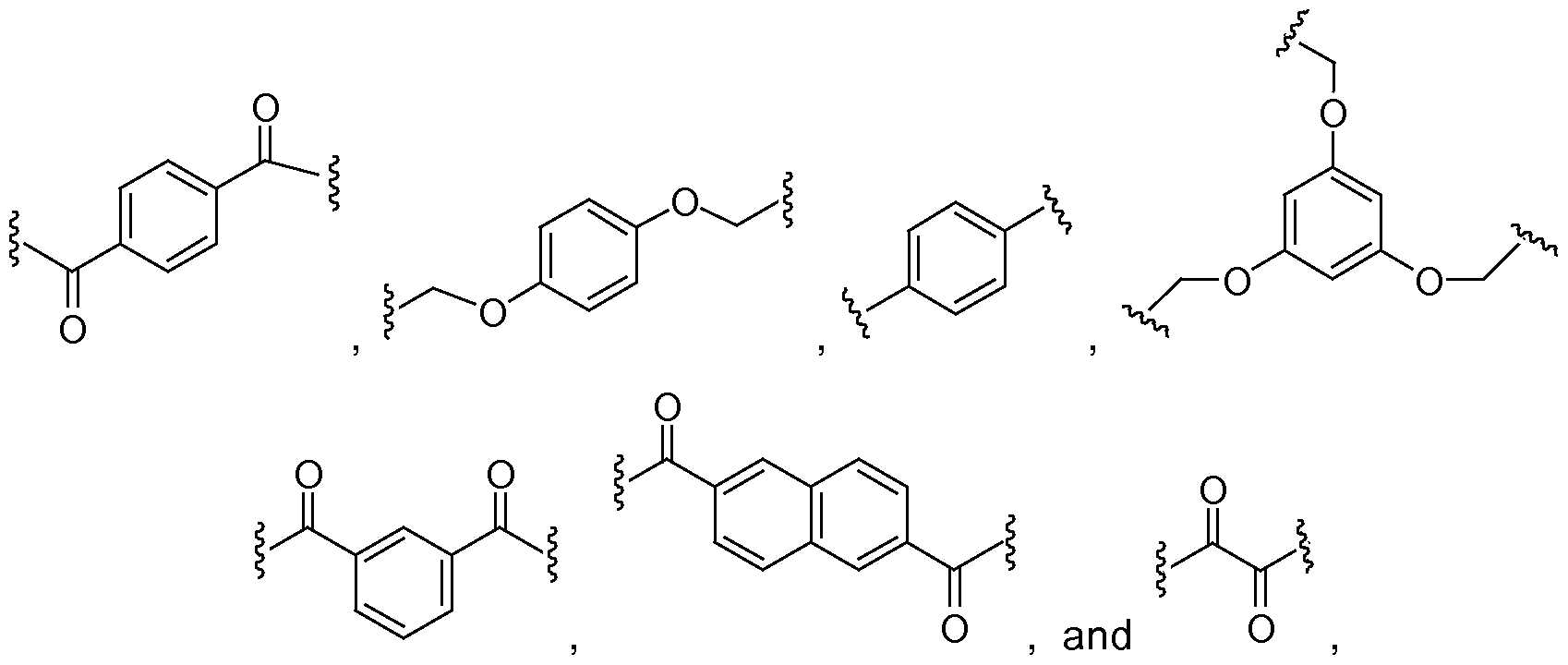
7. An oligosaccharide according to any one of Claims 1 to 5, wherein the oligosaccharide is of the general formula (Id), a pharmaceutically acceptable salt thereof, an ester thereof, a solvate thereof or a hydrate thereof:

(Id)
wherein:
each R1 is independently selected from the group consisting of OH, a hexose monosaccharide, a 6-deoxy-hexose monosaccharide, a pentose monosaccharide, and a methyl pentose monosaccharide;
each R2 is independently selected from the group consisting of OH, NHAc, and NHC(0)R3; each R3 is independently selected from C1-C10 aliphatic optionally interrupted by O, S or N, C3-C20 cycloaliphatic, C2-C2o heterocyclic aliphatic, C5-C2o aryl, C2-C2o heteroaryl, and combinations thereof;
each R4 is independently selected from the group consisting of H, C1-C10 aliphatic, CH2C(0)NHCH2C(0)OH, CH2C(0)NHCH2C(0)0(C Cio aliphatic), and CH2C(0)NH(C C10 aliphatic); and
R7 is absent or is selected from C1-C10 aliphatic optionally interrupted by O, S, or N, C3-C20 cycloaliphatic, C2-C20 heterocyclic aliphatic, C5-C20 aryl, C2-C20 heteroaryl, and combinations thereof.
8. An oligosaccharide according to Claim 7, wherein R7 is absent or is selected from C1-C10 aliphatic, C1-C10 aliphatic ether, C1-C5 aliphatic thioether, and C6-Ci0 aryl.
9. An oligosaccharide according to any one of Claims 3 to 8, wherein R1 is selected from the group consisting of OH, L-fucose, L-rhamnose, and L-arabinose.
10. An oligosaccharide according to any one of Claims 2 to 9, wherein R4 is CH2C(O)NH(Ci-Ci0 aliphatic).
1 1 . An oligosaccharide according to any one of Claims 3 to 10, wherein R1 is OH or L-fucose.
12. An oligosaccharide according to any one of Claims 1 to 1 1 , wherein the gastrointestinal disorder is associated with Campylobacter jejuni or Helicobacter pylori.
13. An oligosaccharide according to any one of Claims 1 to 1 1 , wherein the gastrointestinal disorder is selected from the group consisting of gastric cancer, mucosa-associated lymphoid tissue (MALT) lymphoma, peptic ulcers, duodenal ulcers, chronic gastritis, non-ulcer dyspepsia, lymphocytic gastritis, granulomatous gastritis, gastric outlet obstruction, gastric hyperplastic polyps, Menetrier's disease, watery or bloody diarrhoea, abdominal cramps, traveller's diarrhoea, bacteraemia, immunoproliferative small intestinal disease, and combinations thereof.
14. A multivalent oligosaccharide as defined in any one of claims 2 to 1 1 for use in the reduction and/or control of bacterial gastrointestinal pathogen carriage in animals.
15. An oligosaccharide according to Claim 14 wherein the bacterial gastrointestinal pathogen is Campylobacter jejuni or Helicobacter pylori.
16. An oligosaccharide according to Claim 14 or 15, wherein the animal is a farm animal.
17. An oligosaccharide according to Claim 16, wherein the farm animal is poultry.
18. An oligosaccharide according to Claim 17, wherein the poultry is chicken.
19. An animal feed composition comprising a multivalent oligosaccharide as defined in anyone of Claims 2 to 1 1 .
20. An animal feed composition according to Claim 19 wherein the animal feed is chicken feed.
21 . A compound of the general formula (lb):

(lb)
wherein:
each R1 is independently selected from the group consisting of OH, a hexose monosaccharide, a 6-deoxy-hexose monosaccharide, a pentose monosaccharide, and a methyl pentose monosaccharide;
each R2 is independently selected from the group consisting of OH, NHAc, and NHC(0)R3; each R3 is independently selected from C-I-C-IO aliphatic optionally interrupted by O, S or N, C3-C20 cycloaliphatic, C2-C2o heterocyclic aliphatic, C5-C2o aryl, C2-C2o heteroaryl, and combinations thereof;
each R4 is independently selected from the group consisting of H, C1-C10 aliphatic, CH2C(0)NHCH2C(0)OH, CH2C(0)NHCH2C(0)0(C Cio aliphatic), and CH2C(0)NH(C C10 aliphatic);
each A is absent, or A, N and R4 together define a C2-C6 aliphatic or aromatic heterocycle;
B is selected from C=0, C=S, C(0)-C(0), C1-C10 aliphatic optionally interrupted by O, S, or N, C3-C20 cycloaliphatic, C2-C2o heterocyclic aliphatic, C5-C2o aryl, C2-C2o heteroaryl, and combinations thereof;
each R5 is H, or may define a C2-Ci0 aliphatic bridge together with R5 or R6 of an adjacent oligosaccharide;
each R6 is H, or may define a C2-Ci0 aliphatic bridge together with R5 or R6 of an adjacent oligosaccharide; and
n is 2 - 20 such that the value of n will not exceed the valence of moiety B,
provided that:
i) when n = 2, each R1 = R2 = OH, each R5 = R6 = H, each A is absent, and each R4 is H or CH2C(0
B is not
 ii) when n = 2, each R1 = R2 = OH, each R5 = R6 = H, and each A, N and R4 together define a triazole

22. A compound according to Claim 21 , wherein the compound is of the general formula (Ic), a pharmaceutically acceptable salt thereof, an ester thereof, a solvate thereof or a hydrate thereof:

(Ic)
wherein:
each R1 is independently selected from the group consisting of OH, a hexose monosaccharide, a 6-deoxy-hexose monosaccharide, a pentose monosaccharide, and a methyl pentose monosaccharide;
each R2 is independently selected from the group consisting of OH, NHAc, and NHC(0)R3; each R3 is independently selected from C1-C10 aliphatic optionally interrupted by O, S, or N, C3-C20 cycloaliphatic, C2-C2o heterocyclic aliphatic, C5-C2o aryl, C2-C2o heteroaryl, and combinations thereof;
each R4 is independently selected from the group consisting of H, C1-C10 aliphatic, CH2C(0)NHCH2C(0)OH, CH2C(0)NHCH2C(0)0(C Cio aliphatic), and CH2C(0)NH(C C10 aliphatic);
each A is absent, or A, N and R4 together define a C2-C6 aliphatic or aromatic heterocycle;
B is selected from C=0, C=S, C(0)-C(0), C1-C10 aliphatic optionally interrupted by O, S, or N, C3-C20 cycloaliphatic, C2-C20 heterocyclic aliphatic, C5-C20 aryl, C2-C20 heteroaryl, and combinations thereof; and
n is 2 - 20 such that the value of n will not exceed the valence of moiety B,
provided that:
i) when n = 2, each R1 = R2 = OH, each A is absent, and each R4 is H or
CH2C(0)NHCH2C02Me
B is not
 ii) when n = 2, each R1 = R2 = OH, and each A, N and R4 together define a triazole

B is not ?
23. A compound according to any one of Claims 21 to 22, wherein n is 2 - 6.
24. A compound according to any one of Claims 21 to 22, wherein B is selected from the group consisting of:

25. A compound according to any one of Claims 21 to 23, wherein the compound is of the general formula (Id), a pharmaceutically acceptable salt thereof, an ester thereof, a solvate thereof or a hydrate thereof:

(Id)
wherein:
each R1 is independently selected from the group consisting of OH, a hexose monosaccharide, a 6-deoxy-hexose monosaccharide, a pentose monosaccharide, and a methyl pentose monosaccharide;
each R2 is independently selected from the group consisting of OH, NHAc, and NHC(0)R3; each R3 is independently selected from C1-C10 aliphatic optionally interrupted by O, S, or N, C3-C20 cycloaliphatic, C2-C2o heterocyclic aliphatic, C5-C2o aryl, C2-C2o heteroaryl, and combinations thereof;
each R4 is independently selected from the group consisting of H, C1-C10 aliphatic, CH2C(0)NHCH2C(0)OH, CH2C(0)NHCH2C(0)0(C Cio aliphatic), and CH2C(0)NH(C C10 aliphatic);
R7 is absent or is selected from C1-C10 aliphatic optionally interrupted by O, S, or N, C3-C20 cycloaliphatic, C2-C20 heterocyclic aliphatic, C5-C20 aryl, C2-C20 heteroaryl, and combinations thereof,
provided that:
i) when each R4 is H or CH2C(0)NHCH2C02Me
B is no

26. A compound according to Claim 25, wherein R7 is absent or is selected from C-I-C-IO
aliphatic, C1-C10 aliphatic ether, C1-C5 aliphatic thioether, and C6-Ci0 aryl.
27. A compound according to any one of Claims 21 to 26, wherein R1 is selected from the group consisting of OH, L-fucose, L-rhamnose, and L-arabinose.
28. A compound according to any one of Claims 21 to 27, wherein each R4 is CH2C(0)NH(Ci- C10 aliphatic).
29. A compound according to any one of Claims 21 to 28, wherein R1 is OH or L-fucose.
30. A pharmaceutical composition comprising a compound according to any one of Claims 21 to 29 and a pharmaceutically acceptable carrier.
31 . An oligosaccharide substantially as described herein and with reference to the
accompanying examples.
Applications Claiming Priority (2)
| Application Number | Priority Date | Filing Date | Title |
|---|---|---|---|
| GBGB1111263.8A GB201111263D0 (en) | 2011-07-01 | 2011-07-01 | Multivalent oligosaccharides |
| GB1111263.8 | 2011-07-01 |
Publications (1)
| Publication Number | Publication Date |
|---|---|
| WO2013004669A1 true WO2013004669A1 (en) | 2013-01-10 |
Family
ID=44511963
Family Applications (1)
| Application Number | Title | Priority Date | Filing Date |
|---|---|---|---|
| PCT/EP2012/062857 Ceased WO2013004669A1 (en) | 2011-07-01 | 2012-07-02 | Multivalent oligosaccharides |
Country Status (2)
| Country | Link |
|---|---|
| GB (1) | GB201111263D0 (en) |
| WO (1) | WO2013004669A1 (en) |
Cited By (3)
| Publication number | Priority date | Publication date | Assignee | Title |
|---|---|---|---|---|
| CN111943995A (en) * | 2020-08-21 | 2020-11-17 | 华东理工大学 | Oligosaccharide, glycoprotein conjugate and preparation method and application thereof |
| US11098075B2 (en) | 2014-09-12 | 2021-08-24 | Basf Se | Method for preparing 2′-O-fucosyllactose |
| WO2024038195A1 (en) * | 2022-08-19 | 2024-02-22 | Dsm Ip Assets B.V. | Synthesis of hmo propionate |
Citations (2)
| Publication number | Priority date | Publication date | Assignee | Title |
|---|---|---|---|---|
| WO1998045308A1 (en) * | 1997-04-09 | 1998-10-15 | Rhodia Inc. | Nonionic gemini surfactants having hydrophilic sugar groups |
| JP2008214256A (en) * | 2007-03-02 | 2008-09-18 | Yaizu Suisankagaku Industry Co Ltd | Method for producing double-headed glycoside compound, double-headed glycoside compound, and sugar chain recognition protein binder containing the double-headed glycoside compound |
-
2011
- 2011-07-01 GB GBGB1111263.8A patent/GB201111263D0/en not_active Ceased
-
2012
- 2012-07-02 WO PCT/EP2012/062857 patent/WO2013004669A1/en not_active Ceased
Patent Citations (2)
| Publication number | Priority date | Publication date | Assignee | Title |
|---|---|---|---|---|
| WO1998045308A1 (en) * | 1997-04-09 | 1998-10-15 | Rhodia Inc. | Nonionic gemini surfactants having hydrophilic sugar groups |
| JP2008214256A (en) * | 2007-03-02 | 2008-09-18 | Yaizu Suisankagaku Industry Co Ltd | Method for producing double-headed glycoside compound, double-headed glycoside compound, and sugar chain recognition protein binder containing the double-headed glycoside compound |
Non-Patent Citations (12)
| Title |
|---|
| ABBAS, S. A.; BARLOW, J. J.; MATTA, K. L., CARBOHYDR. RES., vol. 88, 1981, pages 51 - 60 |
| ARAVIND, S.; PARK, W. K. C.; BROCHU, S.; ROY, R., TETRAHEDRON LETT., vol. 35, 1994, pages 7739 - 7742 |
| CHRISTIANSENBRAMS, I.; MELDAL, M.; BOCK, K., J. CHEM. SOC., PERKIN TRANS., vol. 1, 1993, pages 1461 - 1471 |
| GANAN M ET AL: "Inhibition by pectic oligosaccharides of the invasion of undifferentiated and differentiated Caco-2 cells by Campylobacter jejuni", INTERNATIONAL JOURNAL OF FOOD MICROBIOLOGY, ELSEVIER SCIENCE PUBLISHERS, AMSTERDAM, NL, vol. 137, no. 2-3, 28 February 2010 (2010-02-28), pages 181 - 185, XP026862944, ISSN: 0168-1605, [retrieved on 20091213] * |
| LEYDEN, R.; VELASCO-TORRIJOS, T.; ANDRE, S.; GOUIN, S.; GABIUS, H. J.; MURPHY, P. V., J. ORG. CHEM., vol. 74, 2009, pages 9010 - 9026 |
| MASAKA R ET AL: "Molecular design of N-linked tetravalent glycosides bearing N-acetylglucosamine, N,N@?-diacetylchitobiose and N-acetyllactosamine: Analysis of cross-linking activities with WGA and ECA lectins", BIOORGANIC & MEDICINAL CHEMISTRY, PERGAMON, GB, vol. 18, no. 2, 15 January 2010 (2010-01-15), pages 621 - 629, XP026835893, ISSN: 0968-0896, [retrieved on 20091206] * |
| MONTERO, J. L.; WINUM, J. Y.; LEYDET, A.; KAMAL, M.; PAVIA, A. A.; ROQUE, J. P, CARBOHYDR. RES., vol. 297, 1997, pages 175 - 180 |
| NEWBURG, D. S.; RUIZ-PALACIOS, G. M.; MORROW, A. L., ANNU. REV. NUTR., vol. 25, 2005, pages 37 - 58 |
| PARK, WILLIAM K. C. ET AL: "Syntheses of clustered lactosides by telomerization", METHODS IN ENZYMOLOGY, vol. 242, 1994, pages 294 - 304, XP009162278, ISSN: 0076-6879, DOI: 10.1016/0076-6879(94)42029-7 * |
| SABINE ANDR ET AL: "Synthesis of bivalent lactosides and their activity as sensors for differences between lectins in inter- and intrafamily comparisons", BIOORGANIC & MEDICINAL CHEMISTRY LETTERS, PERGAMON, ELSEVIER SCIENCE, GB, vol. 22, no. 1, 2 November 2011 (2011-11-02), pages 313 - 318, XP028352327, ISSN: 0960-894X, [retrieved on 20111110], DOI: 10.1016/J.BMCL.2011.11.010 * |
| SIMON P M ET AL: "Inhibition of helicobacter pylori binding to gastrointestinal epithelial cells by sialic acid-containing oligosaccharides", INFECTION AND IMMUNITY, AMERICAN SOCIETY FOR MACROBIOLOGY, vol. 65, no. 2, 1 January 1997 (1997-01-01), pages 750 - 757, XP002972942, ISSN: 0019-9567 * |
| WANG, Z.; ZHOU, L. Y.; EI-BOUBBOU, K.; YE, X. S.; HUANG, X. F., J. ORG. CHEM., vol. 72, 2007, pages 6409 - 6420 |
Cited By (3)
| Publication number | Priority date | Publication date | Assignee | Title |
|---|---|---|---|---|
| US11098075B2 (en) | 2014-09-12 | 2021-08-24 | Basf Se | Method for preparing 2′-O-fucosyllactose |
| CN111943995A (en) * | 2020-08-21 | 2020-11-17 | 华东理工大学 | Oligosaccharide, glycoprotein conjugate and preparation method and application thereof |
| WO2024038195A1 (en) * | 2022-08-19 | 2024-02-22 | Dsm Ip Assets B.V. | Synthesis of hmo propionate |
Also Published As
| Publication number | Publication date |
|---|---|
| GB201111263D0 (en) | 2011-08-17 |
Similar Documents
| Publication | Publication Date | Title |
|---|---|---|
| Inamura et al. | Synthesis of peptidoglycan fragments and evaluation of their biological activity | |
| Ning et al. | Synthesis of β-(1→ 6)-branched β-(1→ 3) glucohexaose and its analogues containing an α-(1→ 3) linked bond with antitumor activity | |
| JP2021512069A (en) | Plesiomonas shigeroides O51 Serotype O-antigen oligosaccharide chemical synthesis method | |
| Ying et al. | General methods for the synthesis of glycopyranosyluronic acid azides | |
| Cao et al. | Chemical preparation of sialyl Lewis x using an enzymatically synthesized sialoside building block | |
| Zhu et al. | Synthesis of tetra-and hexasaccharide fragments corresponding to the O-antigenic polysaccharide of Klebsiella pneumoniae | |
| Uchiyama et al. | Design and synthesis of C-linked fucosides as inhibitors of E-selectin | |
| WO2016172615A1 (en) | Synthetic n-acetyl-muramic acid derivatives and uses thereof | |
| WO2013004669A1 (en) | Multivalent oligosaccharides | |
| Hribernik et al. | One pot synthesis of thio-glycosides via aziridine opening reactions | |
| Yamada et al. | Syntheses and Vero toxin-binding activities of carbosilane dendrimers periphery-functionalized with galabiose | |
| NO885594L (en) | POLYSACCARIDES AND MACROMOLECULAR CONJUGATES OF SUCH. | |
| Pedersen et al. | Synthesis of the repeating unit of the lipoteichoic acid of Streptococcus pneumoniae | |
| Bag et al. | Expedite synthesis of the pentasaccharide corresponding to the cell wall O-polysaccharide of Proteus penneri O80 strain | |
| Fukase et al. | Synthesis of Rubrivivax gelatinosus lipid A and analogues for investigation of the structural basis for immunostimulating and inhibitory activities | |
| Sahaji et al. | Convergent synthesis of the pentasaccharide repeating unit of the cell wall K116 capsular polysaccharide of Acinetobacter baumannii | |
| Oikawa et al. | Synthesis of 13C-Labeled Biosynthetic Precursor of Lipid A and Its Analogue with Shorter Acyl Chains. | |
| Bi et al. | Synthesis of a trisaccharide repeating unit of the O-antigen from Burkholderia cenocepacia and its dimer | |
| Pal et al. | Concise synthesis of the trisaccharide repeating unit of the O-polysaccharide from Aeromonas hydrophila A19 (O: 14) | |
| Ghotekar et al. | Circumventing aglycon transfer en route to the synthesis of pentasaccharide thioglycoside donor for the chain extension of Plesiomonas shigelloides strain 302-73 (serotype O1) repeating unit | |
| EP3049426A1 (en) | Glycoclusters and their pharmaceutical use as antibacterials | |
| Halder et al. | Chemical synthesis of the O-antigen repeating unit of Actinobacillus actinomycetemcomitans serotype f | |
| Basu et al. | Synthetic routes toward the trisaccharide related to the lipopolysaccharide of Burkholderia sp. HKI-402 (B4) | |
| Budhadev et al. | Convergent synthesis of the hexasaccharide related to the repeating unit of the O-antigen from E. coli O120 | |
| Jiao et al. | Synthesis of Simple Multivalent β-D-GalNAc-(1→ 4)-β-D-Gal Oligomers as Probes for Investigating the Interactions of P. Aeruginosa Pili with Multivalent Receptors |
Legal Events
| Date | Code | Title | Description |
|---|---|---|---|
| 121 | Ep: the epo has been informed by wipo that ep was designated in this application |
Ref document number: 12732641 Country of ref document: EP Kind code of ref document: A1 |
|
| NENP | Non-entry into the national phase |
Ref country code: DE |
|
| 122 | Ep: pct application non-entry in european phase |
Ref document number: 12732641 Country of ref document: EP Kind code of ref document: A1 |