WO2012154126A1 - A slow-releasing hydrogen sulphide donor in a method for the treatment of cancer - Google Patents
A slow-releasing hydrogen sulphide donor in a method for the treatment of cancer Download PDFInfo
- Publication number
- WO2012154126A1 WO2012154126A1 PCT/SG2012/000158 SG2012000158W WO2012154126A1 WO 2012154126 A1 WO2012154126 A1 WO 2012154126A1 SG 2012000158 W SG2012000158 W SG 2012000158W WO 2012154126 A1 WO2012154126 A1 WO 2012154126A1
- Authority
- WO
- WIPO (PCT)
- Prior art keywords
- alkyl
- ium
- alkoxy
- hydroxy
- heterocyclyl
- Prior art date
- Legal status (The legal status is an assumption and is not a legal conclusion. Google has not performed a legal analysis and makes no representation as to the accuracy of the status listed.)
- Ceased
Links
- YZTJYBJCZXZGCT-UHFFFAOYSA-N C(C1)NCCN1c1ccccc1 Chemical compound C(C1)NCCN1c1ccccc1 YZTJYBJCZXZGCT-UHFFFAOYSA-N 0.000 description 1
- YNAVUWVOSKDBBP-UHFFFAOYSA-N C1NCCOC1 Chemical compound C1NCCOC1 YNAVUWVOSKDBBP-UHFFFAOYSA-N 0.000 description 1
- KHHKBTRFZTUVRD-UHFFFAOYSA-N CCCSCCN Chemical compound CCCSCCN KHHKBTRFZTUVRD-UHFFFAOYSA-N 0.000 description 1
- PVOAHINGSUIXLS-UHFFFAOYSA-N CN1CCNCC1 Chemical compound CN1CCNCC1 PVOAHINGSUIXLS-UHFFFAOYSA-N 0.000 description 1
Classifications
-
- A—HUMAN NECESSITIES
- A61—MEDICAL OR VETERINARY SCIENCE; HYGIENE
- A61K—PREPARATIONS FOR MEDICAL, DENTAL OR TOILETRY PURPOSES
- A61K31/00—Medicinal preparations containing organic active ingredients
- A61K31/66—Phosphorus compounds
- A61K31/664—Amides of phosphorus acids
-
- A—HUMAN NECESSITIES
- A61—MEDICAL OR VETERINARY SCIENCE; HYGIENE
- A61K—PREPARATIONS FOR MEDICAL, DENTAL OR TOILETRY PURPOSES
- A61K31/00—Medicinal preparations containing organic active ingredients
- A61K31/66—Phosphorus compounds
- A61K31/675—Phosphorus compounds having nitrogen as a ring hetero atom, e.g. pyridoxal phosphate
-
- A—HUMAN NECESSITIES
- A61—MEDICAL OR VETERINARY SCIENCE; HYGIENE
- A61P—SPECIFIC THERAPEUTIC ACTIVITY OF CHEMICAL COMPOUNDS OR MEDICINAL PREPARATIONS
- A61P35/00—Antineoplastic agents
Definitions
- Hydrogen sulfide is synthesized naturally from cysteine by several enzymes including cystathionine ⁇ lyase (CSE), cystathionine ⁇ synthetase (CBS) and 3-mercaptosulfurtransferase (3-MST) in a wide range of mammalian and non- mammalian cells both in vitro and in vivo.
- CSE cystathionine ⁇ lyase
- CBS cystathionine ⁇ synthetase
- 3-MST 3-mercaptosulfurtransferase
- the slow-releasing hydrogen sulfide (3 ⁇ 4S) donor, GYY4137 caused concentration-dependent killing of seven different human cancer cell lines (HeLa, HCT- 116, Hep G2, HL-60, MCF-7, MV4- 11 and U20S) but did not affect survival of normal, human lung fibroblasts (IMR90, WI-38) as determined by trypan blue exclusion.
- Sodium hydrosulfide (NaHS) was less potent and not active in all cell lines.
- a structural analogue of GYY4137 (ZYJ1122) lacking sulfur and thence not able to release H2S was inactive. Similar results were obtained using a clonogenic assay.
- GYY4137 (100-300 mg/kg/day for 14 days) significantly reduced tumor growth following implantation of either HL-60 or MV4- 11 cells.
- GYY4137 exhibits anti-cancer activity by releasing H 2 S over a period of days, a combination of apoptosis and cell cycle arrest contributes to this effect and H2S donors can be used as potential anti-cancer agents (see Lee, ZW., et al., PLoS One, 6(6): 1 ⁇ Q11 (June 20, 2011) which is incorporated herein by reference).
- the invention is directed to a method of treating cancer in an individual in need thereof comprising administering an effective amount of a slow- releasing H 2 S compound.
- the invention is directed to a method of treating cancer in an individual in need thereof comprising administering an effective amount of a (one or more) slow-releasing H 2 S compound wherein the compound is represented by the following structural formula:
- the invention is directed to a method (e.g., in vitro; in vivo) of killing and/or inhibiting (e.g., selectively killing and/or inhibiting) the growth
- cancer cell(s) comprising contacting cells which comprise cancer cells (e.g., a heterogeneous population of cells) with an effective amount of a slow-releasing H 2 S compound.
- a combination is thereby produced and the combination is maintained under conditions in which H 2 S is slowly released in the presence of the cells, thereby killing and/or inhibiting the growth of the cancer cells.
- the compound is represented by th following structural formula:
- FIG. 1A H 2 S-releasing profile of NaHS, GYY4137 and ZYJ1 122.
- H 2 S released from NaHS, and GYY4137 (400 ⁇ ) was determined in aliquots (100 ⁇ ) of medium withdrawn at timed intervals (up to 7 days) from cultured MCF-7 cells.
- the chemical structures of GYY4137 and ZYJ1122 are shown in the inset.
- Figure 2C Representative photographs showing clonogenic survival assay of MCF-7 cells following exposure (5 days, 200-600 ⁇ ) to either NaHS (top row), GYY4137 (middle row) and ZYJ1122 (bottom row).
- NT non-treatment.
- Figure 3 A Cell cycle analysis of MCF-7 cells after 5 days (NT and ZYJ1122) and 5 and 8 days (GYY4137) drug treatment. Inset shows percentage distribution of cells in each cell phase. Results shown are indicative of 3 individual experiments. NT: non-treatment.
- Figure 3B Western blot analysis of apoptosis markers (a-PARP, a-cleaved- PARP, a-cleaved-caspase 9) of MCF-7 and IMR90 treated (5 days) with GYY4137 or ZYJ1122 (both 400 ⁇ ).
- the anti-cleaved caspase-9 antibody used detects the large fragment of caspase-9 following cleavage but does not recognize uncleaved procaspase-9.
- a-tubulin was used as a loading control. Results shown are indicative of 3 individual experiments.
- H 2 S protected colon cancer cells (HCT- 116) from apoptosis due to ⁇ -phenylethyl isothiocyanate (Rose, P., et al., World J
- H 2 S increases human colon cancer cell proliferation and reduces apoptosis in several cell lines (e.g. HCT-116) (Cai, WJ., et al, Cell Biol Int, 34(6):565-512 (2010)) whilst decreasing survival in other human colon cell lines (e.g. WiDR) (Cao, Q., et al, Antioxid Redox Signal, 12(9): 1101-1109 (2010)).
- Sulfide salts such as sodium hydrosulfide (NaHS) and sodium sulfide (Na 2 S) have been widely used to study the biological effects of this gas in many cells, tissues and animals.
- NaHS sodium hydrosulfide
- Na 2 S sodium sulfide
- these salts generate a large amount of H 2 S over a short time period. Since cell culture takes place over a period of hours or days it is likely that little, if any, H 2 S is present in medium within a short time of adding either NaHS or Na 2 S. As shown herein, it is likely that the concentration of H 2 S that cancer (or indeed other) non-cancer cells are exposed to during culture with NaHS will be high at the start and not sustained throughout the experiment. Thus, it is difficult to draw firm conclusions about the ability of H 2 S to affect cancer cell survival using sulfide salts as donor agents.
- GYY4137 exhibits anti -cancer activity by releasing 3 ⁇ 4S over a period of days.
- the invention is directed to a method of treating cancer in an individual in need thereof comprising administering to the individual an effective amount of a compound that generates H 2 S at low concentrations over a period of one or more (e.g., several) hours and/or one or more (e.g., several) days, referred to herein as a slow-releasing H 2 S compound or donor.
- administration of the slow- releasing H 2 S compound causes low H 2 S concentrations that exceed basal levels of H 2 S in an individual and/or cell (e.g., that exceeds a physiological (normal) level) for about one or more hours, or one or more days after administration.
- administering results in a sustained release of a low concentration of H 2 S, wherein the low concentration of H 2 S is above the basal level of H 2 S which is the level of H 2 S normally present in the individual and/or cell.
- the low concentration of 3 ⁇ 4S is less than the H 2 S concentration immediately released upon administration of, for example, NaHS (e.g., 400 ⁇ ).
- the low concentration of H 2 S is about 20 ⁇ .
- the low concentration of H 2 S is about 20 ⁇ .
- concentration of H 2 S is about ⁇ .
- the slow-releasing H S compound can release H 2 S for over one or more hours (e.g., for about 70 minutes, 80 minutes, 90 minutes, 100 minutes, 110 minutes, 120 minutes, 130 minutes, 140 minutes, 150 minutes, 160 minutes, 170 minutes, 180 minutes, 4 hours, 5 hours, 6 hours, 7 hours, 8 hours, 9 hours, 10 hours, 11 hours, 12 hours, 13 hours, 14 hours, 15 hours, 16 hours, 17 hours, 18 hours, 19 hours, 20 hours, 21 hours, 22 hours, 23 hours) after administration to the individual (in contrast to "explosively" (e.g., immediately or within one or several seconds or an hour or less after administration), or about one or more days (e.g., for about 1 day, 2 days, 3 days, 4 days, 5 days, 6 days, 7 days, 8 days, 9 days, 10 days, 11 days, 12 days, 13 days, 14 days, 15 days, 16 days, 17 days, 18 days, 19 days, 20 days, 21 days, 22 days, 23 days, 24 days, 25 days, 26 days, 27 days, 28
- treatment of cancer includes one or more of a variety of anti-cancer activities such as ameliorating one or more symptoms associated with the cancer, preventing or delaying the onset or progression of the cancer, and/or lessening the severity and/or frequency of symptoms and/or side effects of the cancer.
- the methods of treating cancer can include methods of reducing tumor cell growth in an individual.
- the invention is directed to a method of reducing tumor growth in an individual in need thereof comprising administering to the individual an effective amount of a slow-releasing H 2 S compound.
- the invention is directed to a method (e.g., in vitro; in vivo) of killing and/or inhibiting (e.g., selectively killing and/or inhibiting) the growth
- a (one or more) cancer cell(s) comprising contacting cells which comprise cancer cells with an effective amount of a slow-releasing H 2 S compound.
- a combination is thereby produced and the combination is maintained under conditions in which 3 ⁇ 4S is slowly released in the presence of the cells, thereby killing and/or inhibiting the growth of the cancer cells.
- selective killing and/or inhibition of growth refers to the ability of the slow-releasing H 2 S compound to kill and/or inhibit growth of cancer cells (e.g., tumor cells) but not non-cancer cells (e.g., normal cells).
- the method can be used to kill and/or inhibit the growth of cancer cells present in a homogeneous population of cells (e.g., a population of cells in which all or substantially all of the cells are cancer cells) or a heterogeneous population of cells that comprise cancer and non-cancer cells (e.g., a population of cells in which many or only some (e.g., a few) cancer cells are present).
- a homogeneous population of cells e.g., a population of cells in which all or substantially all of the cells are cancer cells
- a heterogeneous population of cells that comprise cancer and non-cancer cells e.g., a population of cells in which many or only some (e.g., a few) cancer cells are present.
- the methods can be used to kill and/or inhibit the growth of cancer cells in a tumor which can comprise cancer and non-cancer cells or to kill and/or inhibit the growth of cancer cells that have metastasized from one or more primary cancer sites in an individual.
- a variety of cancers can be treated using the methods described herein.
- cancers examples include cervical cancer, colorectal cancer (e.g., colon cancer; rectal cancer), liver cancer, bone cancer, breast cancer (e.g., breast adenocarcinoma), ovarian cancer, bone cancer (e.g., osteosarcoma), gastric cancer, leukemia (e.g., promyelocyte leukemia; myelomonocytic leukemia) and the like.
- cervical cancer colorectal cancer
- rectal cancer liver cancer
- bone cancer e.g., breast adenocarcinoma
- ovarian cancer e.g., osteosarcoma
- gastric cancer e.g., leukemia (e.g., promyelocyte leukemia; myelomonocytic leukemia) and the like.
- leukemia e.g., promyelocyte leukemia; myelomonocytic leukemia
- One or more slow-releasing H 2 S compounds are used in the methods described herein.
- the compound is represented by the following structural formula:
- the compound is morpholin-4-ium 4- methoxyphenyl(morpholino)phosphinodithioate (hereinafter referred to as GYY4137).
- alkyl used alone or as part of a larger moiety such as “arylalkyl” or “cycloalkylalkyl” means a straight or branched hydrocarbon radical having 1-10 carbon atoms and includes, for example, methyl, ethyl, n-propyl, isopropyl, n-butyl, sec -butyl, isohutyl, tert-butyl, n-pentyl, i-pentyl, n-hexyl, n-heptyl, n-octyl, n-nonyl, n-decyl and the like.
- exemplary substituents for a substituted alkyl group include the values and specific values described for R 4 .
- cycloalkyl means a monocyclic, bicyclic or tricyclic, saturated hydrocarbon ring having 3-12 carbon atoms and includes, for example, cyclopropyl, cyclobutyl, cyclopentyl, cyclohexyl, cycloheptyl, cyclooctyl, bicyclo[2.2.2]octyl, bicyclo[2.2.1]heptyl, spiro [4.4]nonane, adamantyl and the like.
- exemplary substituents for a substituted cycloalkyl group include the values and specific values described for R 4 .
- Aryl used alone or as part of a larger moiety as in “arylalkyl”, means a 6-10 membered carbocyclic aromatic monocyclic or polycyclic ring system. Examples include phenyl and naphthyl.
- aryl also includes phenyl rings fused to non- aromatic carbocyclic ring or to a heterocyclyl group.
- aryl may be used interchangeably with the terms “aromatic group”, “aryl ring” “aromatic ring”, “aryl group” and “aromatic group”.
- exemplary substituents for a substituted aryl group include the values and specific values described for R 4 .
- Hetero refers to the replacement of at least one carbon atom member in a ring system with at least one heteroatom selected from N, S, and O.
- a hetero ring may have 1, 2, 3, or 4 carbon atom members replaced by a heteroatom.
- Heterocyclyl refers to a saturated or unsaturated, non-aromatic, monocyclic or polycyclic ring system of 3 to 20 atoms, 3 to 12 atoms, or 3 to 8 atoms, containing one to four ring heteroatoms chosen from O, N and S.
- heterocyclyls include pyrrolidine, pyrrolidin-2-one, l-methylpyrrolidin-2-one, piperidine, piperidin-2-one, 2- pyridone, 4-pyridone, piperazine, l-(2,2,2-trifluoroethyl)piperazine, piperazin-2-one, 5,6-dihydropyrimidin-4-one, pyrimidin-4-one, tetrahydrofuran, tetrahydropyran, tetrahydrothiophene, tetrahydrothiopyran, isoxazolidine, 1,3-dioxolane, 1,3-dithiolane, 1,3-dioxane, 1,4-dioxane, 1,3-dithiane, 1 ,4-dithiane, oxazolidin-2-one, imidazolidin-2- one, jmidazolidine-2,4-dione, tetrahydropyr
- exemplary substituents for a substituted heterocyclyl group include the values and specific values described for R 4 .
- Heterocyclyl also includes heteroaryl groups.
- heteroaryl means a 5-10 membered monovalent heteroaromatic monocyclic and polycylic ring radical containing 1 to 4 heteroatoms independently selected from N, O, and S.
- heteroaryl also includes monocyclic heteroaryl ring fused to non-aromatic carbocyclic ring or to a heterocyclyl group.
- Heteroaryl groups include furyl, thienyl, thiophenyl, pyrrolyl, oxazolyl, thiazolyl, imidazolyl, pyrazolyl, isoxazolyl, isothiazolyl,
- oxadiazolyl triazolyl, thiadiazolyl, pyridinyl, pyridinyl-N-oxide, pyridazinyl, pyrimidinyl, pyrazinyl, indolizinyl, indolyl, isoindolyl, benzo[b] furyl, benzo[b]thienyl, indazolyl, benzimidazolyl, benzthiazolyl, purinyl, 4H-quinolizinyl, quinolinyl, isoquinolinyl, quinazolinyl, benzothienyl, benzofuranyl, 2,3-dihydrobenzofuranyl, benzodioxolyl, benzimidazolyl, indazolyl, benzisoxazolyl, benzoxazolyl,
- heteroaryl refers to a substituted heterocyclyl group
- exemplary substituents for a substituted heterocyclyl group include the values and specific values described for R 4 .
- One embodiment of the invention is a method of treating cancer in an individual in need thereof comprising administering an effective amount of a compound represented by Structural Formula (I):
- X is O or S and A + is present;
- X is halogen, OMs or OTs and A + is absent.
- OMs is a mesylate group represented by the chemical formula -OS(0) 2 CH 3 .
- OTs is tos late rou re resented by the chemical formula
- X is O or S and A + is present. In a specific embodiment, X is S and A + is present. In another embodiment, X is O and A + is present.
- X is halogen, OMs or OTs and A + is absent.
- X is halogen and A + is absent.
- X is CI and A + is absent.
- X is OMs and A + is absent.
- X is OTs and A + is absent.
- a + is a monovalent cation.
- a "cation” is a positively charged ion.
- monovalent means that the charge of the cation is +1. Cations can be monoatomic or polyatomic.
- the monovalent cation is a monoatomic cation.
- a monoatomic cation contains one positively charged atom. Examples of monoatomic cations include, but are not limited to H + , Li + , Na + , K + or Cu + .
- the monovalent cation is a metal cation.
- a + is selected from lithium, sodium or potassium. In another specific embodiment, A + is potassium.
- a + is H + .
- the monovalent cation is a polyatomic cation.
- polyatomic cation is a positively charged molecule that contains more than one atom.
- exemplary substituents for a substituted a polyatomic cation include the values and specific values described for R 4 .
- polyatomic cations include, but are not limited to NH 4 + , N(Ci- C 4 alkyl)H 3 + (for example, N(methyl)H 3 + or N(ethyl)H 3 + ), N(benzyl)H 3 + , N(phenyl)H 3 + , and 3 ⁇ 40 + .
- a + is selected from NH 4 + , N(Ci-C 4 alkyl)H3 + (for example, N(methyl)H 3 + or N(ethyl)H 3 + ), N(benzyl)H 3 + , and N(phenyl)H 3 + .
- a + is N(benzyl)H 3 + .
- a + is a polyatomic cation that includes a heterocyclyl or a heteroaryl, wherein each heterocyclyl or a heteroaryl contain a nitrogen atom that can be protonated.
- a + is selected from piperidinium, morpholin-4-ium, thiomorpholin-4-ium, piperazin-l-ium, 4-methylpiperazin-l-ium, 4-phenyl-piperazin-l- ium, pyridinium, pyridazin-l-ium, pyrimidin-l-ium, pyrazin-l-ium, lH-pyrrolium, 1H- pyrazol- 1 -ium, 1 H-imidazol- 1 -ium, pyrazolidin- 1 -ium, pyrrolidinium, imidazolidin- 1 - ium, each optionally substituted with one to three groups represented by R 4 .
- a + is selected from:
- R 1 and R 2 are each independently (a) hydrogen; or (b) (Ci-Cio)alkyl, (C 2 - Cio)alkenyl, (C 2 -Cio)alkynyl, aryl(Co-C 3 )alkyl, heteroaryl(C 0 -C 3 )alkyl, cycloalkyl(Co- C 3 )alkyl, heterocyclyl(Co-C 3 )alkyl, heteroaryl(Co-C3)alkyl, each optionally substituted with one to three groups represented by R 4 ; or
- heterocyclyl monocyclic heterocyclyl, wherein the heterocyclyl formed may contain 0, 1 or 2 heteroatoms in addition to the nitrogen atom, wherein the heterocyclyl is optionally substituted by one or more groups selected from halogen, hydroxy, (Ci-C 4 )alkyl, (C r C 4 )alkoxy, or phenyl, wherein the (Ci-C 4 )alkyl, (Ci-C 4 )alkoxy, or phenyl is optionally substituted with halogen, hydroxy, (CrC 4 )alkyl, or (C 1 -C 4 )alkoxy.
- R 1 and R 2 along with the nitrogen to which they are attached, form a heterocyclyl; and the heterocyclyl is selected from pyrrolidinyl, imidazolidinyl, pyrazolidinyl, dihydropyrrolyl, pyrrolyl, imidazolyl, pyrazolyl, triazolyl, oxazolidinyl, thiazolidinyl, oxazolyl, thiazolyl, piperidinyl, hydropyrimidinyl, piperazinyl, pyridinyl, pyridazinyl, pyrimidinyl, triazinyl, morpholinyl, and
- R and R along with the nitrogen to which they are attached, form a heterocyclyl, and the heterocyclyl is selected from pyrazolyl, piperidinyl, piperazinyl, morpholinyl, and thiomorpholinyl, each of which is optionally substituted by halogen, hydroxy, (C 1 -C 4 )alkyl, (Q- C 4 )alkoxy, or phenyl.
- Specific substituents for the heterocyclyl formed include methyl and phenyl.
- R 1 and R 2 are each independently (a) hydrogen; or (b); (Ci-C 10 )alkyl, (C 2 -C 10 )alkenyl, (C 2 -C I0 )alkynyl, aryl(C 0 -C 3 )alkyl, heteroaryl(C 0 - C 3 )alkyl, cycloalkyl(Co-C 3 )alkyl, heterocyclyl(Co-C 3 )alkyl, heteroaryl(Co-C 3 )alkyl, each optionally substituted with one to three groups represented by R 4 .
- R and R are each independently (a) hydrogen; or (b) (d-C 4 )alkyl, (C 2 - C 4 )alkenyl, (C 2 -C 4 )alkynyl, (C3-Cg)cycloalkyl, phenyl, benzyl, each optionally substituted with one to three groups represented by R 4 .
- R 1 and R 2 are the same. In an alternative specific embodiment, R 1 is different from R 2 .
- R is hydrogen and R is selected from (Ci-Cio)alkyl, (C 2 -Cio)alkenyl, (C 2 -Ci 0 )alkynyl, aryl(C 0 -C 3 )alkyl, heteroaryl(C 0 -C 3 )alkyl,
- R 1 is hydrogen or (Ci-C 4 )alkyl; and R 2 is (Ci-Q)alkyl or benzyl. In another specific embodiment, R 1 is hydrogen and R 2 is benzyl.
- Each R 3 is independently selected from halogen, hydroxy, (Q-G alkyl, haloCQ- C 4 )alkyl, hydroxy(Ci-C 4 )alkyl, (Ci-C 4 )alkoxy, halo(Ci-C 4 )alkoxy, and hydroxyiC t - C 4 )alkoxy.
- R 3 is halogen, hydroxy, methyl, ethyl, propyl, isopropyl, butyl, t-butyl, hydroxy methyl, hydroxyethyl, hydroxymethyoxy,
- Each R 4 is independently selected from halogen, hydroxy, (Ci-C 4 )alkyl, halo(Ci- C 4 )alkyl, hydroxy(Ci-C4)alkyl, (Ci-C 4 )alkoxy, halo(Ci-C 4 )alkoxy, and hydroxy(Ci- C 4 )alkoxy.
- R 3 is halogen, hydroxy, methyl, ethyl, propyl, isopropyl, butyl, t-butyl, hydroxy methyl, hydroxyethyl, hydroxymethyoxy,
- n is 0. In a specific embodiment n is 0 or 1. Alternatively, n is 1, 2 or 3. In a specific embodiment, n is 1. In another specific embodiment, n is 2. In yet another specific embodiment, n is 3. In one embodiment of Structural Formula (I),
- X is O or S and A + is present;
- X is CI, OMs or OTs and A + is absent;
- a + is a monovalent cation
- R 1 and R 2 are each independently (a) hydrogen; or (b) (C 1 -C 1 o)alkyl, (C 2 - Cio)alkenyl, (C 2 -C 10 )alkynyl, aryl(C 0 -C 3 )alkyl, heteroaryl(C 0 -C 3 )alkyl, cycloalkyl(Co-C 3 )alkyl, heterocyclyl(Co-C 3 )alkyl, heteroaryl(Co-C 3 )alkyl, each optionally substituted with one to three groups represented by R 4 ; or
- heterocyclyl monocyclic heterocyclyl, wherein the heterocyclyl formed may contain 0, 1 or 2 heteroatoms in addition to the nitrogen atom, wherein the heterocyclyl is optionally substituted by one or more groups selected from halogen, hydroxy, (Ci-C 4 )alkyl, (C t -C 4 )alkoxy, or phenyl, wherein the (Ci-C 4 )alkyl, (Ci-C 4 )alkoxy, or phenyl is optionally substituted with halogen, hydroxy, (C r C 4 )alkyl, or (Ci-C 4 )alkoxy;
- Each R 3 is independently selected from halogen, hydroxy, (Ci-C 4 )alkyl, halo(Ci- C )alkyl, hydroxy(Ci-C 4 )alkyl, (Ci-C 4 )alkoxy, halo(C r C 4 )alkoxy, and hydroxy(C i -C 4 )alkoxy;
- Each R 4 is independently selected from halogen, hydroxy, (Ci-C 4 )alkyl, halo(Ci- C 4 )alkyl, hydroxy(CrC 4 )alkyl, (Ci-C 4 )alkoxy, halo(C r C 4 )alkoxy, and hydroxy(Ci-C 4 )alkoxy; and
- n 0-3;
- X is S
- a + is selected from lithium, sodium or potassium. Specifically, A + is potassium. Alternatively, A + is H + .
- R and R are each independently (a) hydrogen; or (b) (Ci-Cio)alkyl, (C 2 - Cio)alkenyl, (C 2 -Cio)alkynyl, aryl(Co-C 3 )alkyl, heteroaryl(Co-C 3 )alkyl, cycloalkyl(Co- C 3 )alkyl, heterocyclyl(Co-C 3 )alkyl, heteroaryl(Co-C3)alkyl, each optionally substituted with one to three groups represented by R 4 .
- R 1 and R 2 are each independently (a) hydrogen; or (b) (CrC 4 )alkyl, (C 2 -C )alkenyl, (C 2 -C 4 )alkynyl, (C 3 - C 8 )cycloalkyl, phenyl, benzyl, each optionally substituted with one to three groups represented by R 4 .
- R l is hydrogen or (Q-G alkyl; and R 2 is (Q- C 4 )alkyl or benzyl.
- R 1 is hydrogen and R 2 is benzyl, or a pharmaceutically acceptable salt thereof, and the values and specific values of the remainder of the variables are as described for Structural Formula (I).
- X is S
- a + is selected from NH 4 + , N(C r C 4 alkyl)H 3 + (for example, N(methyl)H 3 + or N(ethyl)H 3 + ), N(benzyl)3 ⁇ 4 + , and N(phenyl)H 3 + .
- a + is N(benzyl)H 3 + .
- R 1 and R 2 are each independently (a) hydrogen; or (b) (Ci-Cio)alkyl, (C 2 - Cio)alkenyl, (C 2 -Cio)alkynyl, aryl(Co-C 3 )alkyl, heteroaryl(Co-C 3 )alkyl, cycloalkyl(Co- C 3 )alkyl, heterocyclyl(Co-C 3 )alkyl, heteroaryl(C 0 -C 3 )alkyl, each optionally substituted with one to three groups represented by R 4 .
- R 1 and R 2 are each independently (a) hydrogen; or (b) (CrC 4 )alkyl, (C 2 -C 4 )alkenyl, (C 2 -C 4 )alkynyl, (C 3 - C 8 )cycloalkyl, phenyl, benzyl, each optionally substituted with one to three groups represented by R 4 .
- R 1 is hydrogen or (Ci-C 4 )alkyl
- R 2 is (Ci- C 4 )alkyl or benzyl.
- R is hydrogen and R is benzyl, or a pharmaceutically acceptable salt thereof, and the values and specific values of the remainder of the variables are as described for Structural Formula (I).
- X is S;
- a + is selected from piperidinium, morpholin-4-ium, thiomorpholin-4-ium, piperazin-l-ium, 4-methylpiperazin-l-ium, 4-phenyl-piperazin-l-ium, pyridinium, pyridazin-l-ium, pyrimidin-l-ium, pyrazin-l-ium, lH-pyrrolium, IH-pyrazol-l-ium, 1 H-imidazol- 1 -ium, pyrazolidin- 1 -ium, pyrrolidinium, imidazolidin- 1 -ium.
- a + is selected from:
- R 1 and R 2 are each independently (a) hydrogen; or (b) (C 1 -C 1 o)alkyl, (C 2 - Cio)alkenyl, (C 2 -Cio)alkynyl, aryl(Co-C 3 )alkyl, heteroaryl(Co-C 3 )alkyl, cycloalkyl(Co- C 3 )alkyl, heterocyclyl(Co-C 3 )alkyl, heteroaryl(Co-C 3 )alkyl, each optionally substituted with one to three groups represented by R 4 .
- R 1 and R 2 are each independently (a) hydrogen; or (b) (C 1 -C 1 o)alkyl, (C 2 - Cio)alkenyl, (C 2 -Cio)alkynyl, aryl(Co-C 3 )alkyl, heteroaryl(Co-C 3 )alkyl, cycloalkyl(Co- C 3 )alkyl
- R 1 is hydrogen or (Ci-C4)alkyl; and R 2 is (C C 4 )alkyl or benzyl. Even more specifically, R 1 is hydrogen and R 2 is benzyl, or a pharmaceutically acceptable salt thereof, and the values and specific values of the remainder of the variables are as described for Structural Formula (I).
- X is S
- a + is selected from lithium, sodium or potassium. Specifically, A + is potassium. Alternatively, A + is H + .
- heterocyclyl monocyclic heterocyclyl, wherein the heterocyclyl formed may contain 0, 1 or 2 heteroatoms in addition to the nitrogen atom, wherein the heterocyclyl is optionally substituted by one or more groups selected from halogen, hydroxy, (CrC 4 )alkyl, (Q- C 4 )alkoxy, or phenyl, wherein the (Ci-C 4 )alkyl, (C 1 -C 4 )alkoxy, or phenyl is optionally substituted with halogen, hydroxy, (Ci-C 4 )alkyl, or (Ci-C )alkoxy.
- R ⁇ and R 2 along with the nitrogen to which they are attached, form a heterocyclyl; and the heterocyclyl is selected from pyrrolidinyl, imidazolidinyl, pyrazolidinyl, dihydropyrrolyl, pyrrolyl, imidazolyl, pyrazolyl, triazolyl, oxazolidinyl, thiazolidinyl, oxazolyl, thiazolyl, piperidinyl, hydropyrimidinyl, piperazinyl, pyridinyl, pyridazinyl, pyrimidinyl, triazinyl, morpholinyl, and thiomorpholinyl, each of which is optionally substituted by halogen, hydroxy, (Ci-C 4 )alkyl, (CrC 4 )alkoxy, or phenyl.
- the heterocyclyl is selected from pyrrolidinyl, imidazolidinyl, pyr
- R and R along with the nitrogen to which they are attached, form a heterocyclyl; and the heterocyclyl is selected from pyrazolyl, piperidinyl, piperazinyl, morpholinyl, and thiomorpholinyl, each of which is optionally substituted by halogen, hydroxy, (C(-C 4 )alkyl, (C(-C 4 )alkoxy, or phenyl, or a pharmaceutically acceptable salt thereof, and the values and specific values of the remainder of the variables are as described for Structural Formula (I).
- X is S
- a + is selected from NH 4 + , N(C r C alkyl)H 3 + (for example, N(methyl)H 3 + or N(ethyl)H 3 + ), N(benzyl)H 3 + , and N(phenyl)H 3 + .
- a + is N(benzyl)H 3 + .
- R and R along with the nitrogen to which they are attached, form a monocyclic heterocyclyl, wherein the heterocyclyl formed may contain 0, 1 or 2 heteroatoms in addition to the nitrogen atom, wherein the heterocyclyl is optionally substituted by one or more groups selected from halogen, hydroxy, (Ci-C 4 )alkyl, (Q- C 4 )alkoxy, or phenyl, wherein the (C 1 -C 4 )alkyl, (CpC 4 )alkoxy, or phenyl is optionally substituted with halogen, hydroxy, (CrC 4 )alkyl, or (Q-G alkoxy.
- R 1 and R 2 along with the nitrogen to which they are attached, form a heterocyclyl; and the heterocyclyl is selected from pyrrolidinyl, imidazolidinyl, pyrazolidinyl, dihydropyrrolyl, pyrrolyl, imidazolyl, pyrazolyl, triazolyl, oxazolidinyl, thiazolidinyl, oxazolyl, thiazolyl, piperidinyl, hydropyrimidinyl, piperazinyl, pyridinyl, pyridazinyl, pyrimidinyl, triazinyl, morpholinyl, and thiomorpholinyl, each of which is optionally substituted by halogen, hydroxy, (C[-C 4 )alkyl, (CrC 4 )alkoxy, or phenyl.
- the heterocyclyl is selected from pyrrolidinyl, imidazolidinyl, pyrazo
- R 1 and R 2 along with the nitrogen to which they are attached, form a heterocyclyl; and the heterocyclyl is selected from pyrazolyl, piperidinyl, piperazinyl, morpholinyl, and thiomorpholinyl, each of which is optionally substituted by halogen, hydroxy, (C 1 -C 4 )alkyl, (Ci-C 4 )alkoxy, or phenyl, or a pharmaceutically acceptable salt thereof, and the values and specific values of the remainder of the variables are as described for Structural Formula (I).
- X is S
- a + is selected from piperidinium, morpholin-4-ium, thiomorpholin-4-ium, piperazin- 1 -ium, 4-methylpiperazin- 1 -ium, 4-phenyl-piperazin- 1 -ium, pyridinium, pyridazin-l-ium, pyrimidin-l-ium, pyrazin-l-ium, lH-pyrrolium, lH-pyrazol-l-ium, lH-imidazol-l-ium, pyrazolidin-l-ium, pyrrolidinium, imidazolidin-l-ium.
- a + is selected from:
- R 1 and R 2 along with the nitrogen to which they are attached, form a monocyclic heterocyclyl, wherein the heterocyclyl formed may contain 0, 1 or 2 heteroatoms in addition to the nitrogen atom, wherein the heterocyclyl is optionally substituted by one or more groups selected from halogen, hydroxy, (C r C 4 )alkyl, (Q- C 4 )alkoxy, or phenyl, wherein the (Q-G alkyl, (Ci-C 4 )alkoxy, or phenyl is optionally substituted with halogen, hydroxy, (Q-G alkyl, or (Ci-C 4 )alkoxy.
- R and R along with the nitrogen to which they are attached, form a heterocyclyl; and the heterocyclyl is selected from pyrrolidinyl, imidazolidinyl, pyrazolidinyl, dihydropyrrolyl, pyrrolyl, imidazolyl, pyrazolyl, triazolyl, oxazolidinyl, thiazolidinyl, oxazolyl, thiazolyl, piperidinyl, hydropyrimidinyl, piperazinyl, pyridinyl, pyridazinyl, pyrimidinyl, triazinyl, morpholinyl, and thiomo holinyl, each of which is optionally substituted by halogen, hydroxy, (Ci-C 4 )alkyl, (Q-C alkoxy, or phenyl.
- the heterocyclyl is selected from pyrrolidinyl, imidazolidinyl, pyrazolidin
- R 1 and R 2 along with the nitrogen to which they are attached, form a heterocyclyl; and the heterocyclyl is selected from pyrazolyl, piperidinyl, piperazinyl, morpholinyl, and thiomorpholinyl, each of which is optionally substituted by halogen, hydroxy, (Ci-C 4 )alkyl, (Ci-C 4 )alkoxy, or phenyl, or a pharmaceutically acceptable salt thereof, and the values and specific values of the remainder of the variables are as described for Structural Formula (I).
- the heterocyclyl is selected from pyrazolyl, piperidinyl, piperazinyl, morpholinyl, and thiomorpholinyl, each of which is optionally substituted by halogen, hydroxy, (Ci-C 4 )alkyl, (Ci-C 4 )alkoxy, or phenyl, or a pharmaceutically acceptable salt thereof, and the values and specific values of the remainder of the variables
- X is O
- a + is selected from lithium, sodium or potassium. Specifically, A + is potassium. Alternatively, A + is H + .
- heterocyclyl monocyclic heterocyclyl, wherein the heterocyclyl formed may contain 0, 1 or 2 heteroatoms in addition to the nitrogen atom, wherein the heterocyclyl is optionally substituted by one or more groups selected from halogen, hydroxy, (C C 4 )alkyl, (Q- C 4 )alkoxy, or phenyl, wherein the (C C 4 )alkyl, (Ci-C 4 )alkoxy, or phenyl is optionally substituted with halogen, hydroxy, (C 1 -C 4 )alkyl, or (Q-G alkoxy.
- R 1 and R 2 along with the nitrogen to which they are attached, form a heterocyclyl; and the heterocyclyl is selected from pyrrolidinyl, imidazolidinyl, pyrazolidinyl, dihydropyrrolyl, pyrrolyl, imidazolyl, pyrazolyl, triazolyl, oxazolidinyl, thiazolidinyl, oxazolyl, thiazolyl, piperidinyl, hydropyrimidinyl, piperazinyl, pyridinyl, pyridazinyl, pyrimidinyl, triazinyl, morpholinyl, and thiomorpholinyl, each of hich is optionally substituted by halogen, hydroxy, (C[-C 4 )alkyl, (Ci-C 4 )alkoxy, or phenyl.
- the heterocyclyl is selected from pyrrolidinyl, imidazolidinyl,
- R 1 and R 2 along with the nitrogen to which they are attached, form a heterocyclyl; and the heterocyclyl is selected from pyrazolyl, piperidinyl, piperazinyl, morpholinyl, and thiomorpholinyl, each of which is optionally substituted by halogen, hydroxy, (Ci-C 4 )alkyl, (Ci-C 4 )alkoxy, or phenyl, or a pharmaceutically acceptable salt thereof, and the values and specific values of the remainder of the variables are as described for Structural Formula (I).
- the heterocyclyl is selected from pyrazolyl, piperidinyl, piperazinyl, morpholinyl, and thiomorpholinyl, each of which is optionally substituted by halogen, hydroxy, (Ci-C 4 )alkyl, (Ci-C 4 )alkoxy, or phenyl, or a pharmaceutically acceptable salt thereof, and the values and specific values of the remainder of the variables
- Another embodiment is a method of treating cancer in an individual in need thereof comprising administering an effective amount of morpholin-4-ium 4 methoxyphenyl(morpholino) phosphinodithioate (GYY4137) to the individual.
- Morpholin-4-ium 4 methoxyphenyl(morpholino) phosphinodithioate also referred to herein as GYY4137, is represented by the following structural formula:
- the compound is represe ula (II):
- X is halogen, OMs or OTs. In a specific embodiment, X is CI, OMs or OTs. In another specific embodiment, X is CI. Alternatively, X is OMs. Alternatively, X is OTs.
- R' and R are each independently (a) hydrogen; or (b) (Ci-Cio)alkyl, (C 2 - Cio)alkenyl, (C 2 -Ci 0 )alkynyl, aryl(C 0 -C 3 )alkyl, heteroaryl(C 0 -C 3 )alkyl, cycloalkyl(C 0 - C 3 )alkyl, heterocyclyl(Co-C 3 )alkyl, heteroaryl(Co-C 3 )alkyl, each optionally substituted with one to three groups represented by R 4 ; or
- R and R along with the nitrogen to which they are attached, form a monocyclic heterocyclyl, wherein the heterocyclyl formed may contain 0, 1 or 2 heteroatoms in addition to the nitrogen atom, wherein the heterocyclyl is optionally substituted by one or more groups selected from halogen, hydroxy, (CrC 4 )alkyl, (Ci- C 4 )alkoxy, or phenyl, wherein the (Ci-C 4 )alkyl, (Ci-C 4 )alkoxy, or phenyl is optionally substituted with halogen, hydroxy, (Cj-C 4 )alkyl, or (C)-C 4 )alkoxy.
- R 1 and R 2 along with the nitrogen to which they are attached, form a heterocyclyl, wherein the heterocyclyl is selected from pyrrolidinyl, imidazolidinyl, pyrazolidinyl, dihydropyrrolyl, pyrrolyl, imidazolyl, pyrazolyl, triazolyl, oxazolidinyl, thiazolidinyl, oxazolyl, thiazolyl, piperidinyl, hydropyrimidinyl, piperazinyl, pyridinyl, pyridazinyl, pyrimidinyl, triazinyl, morpholinyl, and
- R 1 and R 2 along with the nitrogen to which they are attached, form a heterocyclyl, wherein the heterocyclyl is selected from pyrazolyl, piperidinyl, piperazinyl, morpholinyl, and thiomorpholinyl, each of which is optionally substituted by halogen, hydroxy, (Ci-C 4 )alkyl, (C r
- R 1 and R 2 are each independently (a) hydrogen; or (b) (C 1 -Ci 0 )alkyl, (C 2 -C 10 )alkenyl, (C 2 -Ci 0 )alkynyl, aryl(C 0 -C 3 )alkyl, heteroaryl(C 0 -
- R 1 and R 2 are each independently (a) hydrogen; or (b) (C
- R 1 and R 2 are the same. In an alternative specific embodiment, R 1 is different from R 2 .
- R 1 is hydrogen and R 2 is selected from (Ci-Qoialkyl, (C 2 -Cio)alkenyl, (C 2 -C 10 )alkynyl, aryl(C 0 -C 3 )alkyl, heteroaryl(C 0 -C 3 )alkyl,
- R 1 is hydrogen or (C C 4 )alkyl; and R 2 is (Ci-C 4 )alkyl or benzyl. In another specific embodiment, R 1 is hydrogen and R 2 is benzyl.
- Each R 3 is independently selected from halogen, hydroxy, (Ci-C 4 )alkyl, halo(Ci- C 4 )alkyl, hydroxy(Ci-C 4 )alkyl, (Q-G alkoxy, halo(Ci-C 4 )alkoxy, and hydroxy(Cr C 4 )alkoxy.
- R 3 is halogen, hydroxy, methyl, ethyl, propyl, isopropyl, butyl, t-butyl, hydroxy methyl, hydroxyethyl, hydroxymethyoxy,
- Each R 4 is independently selected from halogen, hydroxy, (Ci-C 4 )alkyl, halo(Ci- C 4 )alkyl, hydroxy(C i -C 4 )alkyl, (C i -C 4 )alkoxy, halo(C i -C 4 )alkoxy, and hydroxy(C i - C 4 )alkoxy.
- R 3 is halogen, hydroxy, methyl, ethyl, propyl, isopropyl, butyl, t-butyl, hydroxy methyl, hydroxyethyl, hydroxymethyoxy,
- n is 0-3. In another specific embodiment, n is 0. In a specific embodiment m is 0 or 1. Alternatively, n is 1, 2 or 3. In a specific
- n is 1. In another specific embodiment, n is 2. In yet another specific embodiment, n is 3.
- X is CI
- R 1 and R 2 are each independently (a) hydrogen; or (b) (Ci-Cio)alkyl, (C 2 - Cio)alkenyl, (C 2 -Cio)alkynyl, aryl(Co-C 3 )alkyl, heteroaryl(C 0 -C 3 )alkyl, cycloalkyl(C 0 - C 3 )alkyl, heterocyclyl(Co-C 3 )alkyl, heteroaryl(C 0 -C 3 )alkyl, each optionally substituted with one to three groups represented by R 4 .
- R l and R 2 are each independently (a) hydrogen; or (b) (Ci-Cio)alkyl, (C 2 - Cio)alkenyl, (C 2 -Cio)alkynyl, aryl(Co-C 3 )alkyl, heteroaryl(C 0 -C 3 )alkyl, cycloalkyl(
- R 1 is hydrogen or (C ( -C 4 )alkyl; and R 2 is (Q- C 4 )alkyl or benzyl. Even more specifically, R 1 is hydrogen and R 2 is benzyl, or a pharmaceutically acceptable salt thereof, and the values and specific values of the remainder of the variables are as described for Structural Formula (II).
- X is CI; R 1 and R 2 , along with the nitrogen to which they are attached, form a monocyclic heterocyclyl, wherein the heterocyclyl formed may contain 0, 1 or 2 heteroatoms in addition to the nitrogen atom, wherein the heterocyclyl is optionally substituted by one or more groups selected from halogen, hydroxy, (Ci-C 4 )alkyl, (Q- C 4 )alkoxy, or phenyl, wherein the (Q-G alkyl, (Q-G alkoxy, or phenyl is optionally substituted with halogen, hydroxy, (Ci-C 4 )alkyl, or (C 1 -C 4 )alkoxy.
- R 1 and R 2 along with the nitrogen to which they are attached, form a heterocyclyl; and the heterocyclyl is selected from pyrrolidinyl, imidazolidinyl, pyrazolidinyl, dihydropyrrolyl, pyrrolyl, imidazolyl, pyrazolyl, triazolyl, oxazolidinyl, thiazolidinyl, oxazolyl, thiazolyl, piperidinyl, hydropyrimidinyl, piperazinyl, pyridinyl, pyridazinyl, pyrimidinyl, triazinyl, morpholinyl, and thiomorpholinyl, each of which is optionally substituted by halogen, hydroxy, (Ci-C 4 )alkyl, (Ci-C 4 )alkoxy, or phenyl.
- the heterocyclyl is selected from pyrrolidinyl, imidazolidinyl, pyr
- R and R along with the nitrogen to which they are attached, form a heterocyclyl; and the heterocyclyl is selected from pyrazolyl, piperidinyl, piperazinyl, morpholinyl, and thiomorpholinyl, each of which is optionally substituted by halogen, hydroxy, (Ci-C 4 )alkyl, (Ci-C 4 )alkoxy, or phenyl, or a pharmaceutically acceptable salt thereof, and the values and specific values of the remainder of the variables are as described for Structural Formula (II).
- Structural Formula (II) is selected from pyrazolyl, piperidinyl, piperazinyl, morpholinyl, and thiomorpholinyl, each of which is optionally substituted by halogen, hydroxy, (Ci-C 4 )alkyl, (Ci-C 4 )alkoxy, or phenyl, or a pharmaceutically acceptable salt thereof, and the values and specific values of the remainder
- X is OMs
- R 1 and R 2 are each independently (a) hydrogen; or (b) (C Cio)alkyl, (C 2 - C 10 )alkenyl, (C2-C 1 o)alkynyl, aryl(Co-C 3 )alkyl, heteroaryl(Co-C 3 )alkyl, cycloalkyl(Co- C 3 )alkyl, heterocyclyl(Co-C 3 )alkyl, heteroaryl(Co-C3)alkyl, each optionally substituted with one to three groups represented by R 4 .
- R l and R 2 are each independently (a) hydrogen; or (b) (Ci-C 4 )alkyl, (C2-C 4 )alkenyl, (C 2 -C 4 )alkynyl, (C 3 - C 8 )cycloalkyl, phenyl, benzyl, each optionally substituted with one to three groups represented by R 4 .
- R 1 is hydrogen or (Ci-C 4 )alkyl; and R 2 is (Q- C 4 )alkyl or benzyl.
- R is hydrogen and R is benzyl, or a pharmaceutically acceptable salt thereof, and the values and specific values of the remainder of the variables are as described for Structural Formula (II).
- X is OMs
- R 1 and R 2 along with the nitrogen to which they are attached, form a monocyclic heterocyclyl, wherein the heterocyclyl formed may contain 0, 1 or 2 heteroatoms in addition to the nitrogen atom, wherein the heterocyclyl is optionally substituted by one or more groups selected from halogen, hydroxy, (CpC 4 )alkyl, (Q- C 4 )alkoxy, or phenyl, wherein the (Ci-C 4 )alkyl, (Q-G alkoxy, or phenyl is optionally substituted with halogen, hydroxy, (Ci-C 4 )alkyl, or (CpC 4 )alkoxy.
- R 1 and R 2 along with the nitrogen to which they are attached, form a heterocyclyl; and the heterocyclyl is selected from pyrrolidinyl, imidazolidinyl, pyrazolidinyl, dihydropyrrolyl, pyrrolyl, imidazolyl, pyrazolyl, triazolyl, oxazolidinyl, thiazolidinyl, oxazolyl, thiazolyl, piperidinyl, hydropyrimidinyl, piperazinyl, pyridinyl, pyridazinyl, pyrimidinyl, triazinyl, morpholinyl, and thiomorpholinyl, each of which is optionally substituted by halogen, hydroxy, (Ci-C 4 )alkyl, (Q-C 4 )alkoxy, or phenyl.
- the heterocyclyl is selected from pyrrolidinyl, imidazolidinyl, pyrazo
- R and R along with the nitrogen to which they are attached, form a heterocyclyl; and the heterocyclyl is selected from pyrazolyl, piperidinyl, piperazinyl, morpholinyl, and thiomorpholinyl, each of which is optionally substituted by halogen, hydroxy, (Ci-C 4 )alkyl, (CrC 4 )alkoxy, or phenyl, or a pharmaceutically acceptable salt thereof, and the values and specific values of the remainder of the variables are as described for Structural Formula (II).
- Structural Formula (II) is selected from pyrazolyl, piperidinyl, piperazinyl, morpholinyl, and thiomorpholinyl, each of which is optionally substituted by halogen, hydroxy, (Ci-C 4 )alkyl, (CrC 4 )alkoxy, or phenyl, or a pharmaceutically acceptable salt thereof, and the values and specific values of the remainder of the
- X is OTs
- R 1 and R 2 are each independently (a) hydrogen; or (b) (Ci-Cio)alkyl, (C 2 - C)o)alkenyl, (C 2 -Ci 0 )alkynyl, aryl(Co-C 3 )alkyl, heteroaryl(Co-C 3 )alkyl, cycloalkyl(Co- C 3 )alkyl, heterocyclyl(C 0 -C 3 )alkyl, heteroaryl(Co-C 3 )alkyl, each optionally substituted with one to three groups represented by R 4 .
- R 1 and R 2 are each independently (a) hydrogen; or (b) (Ci-C4)alkyl, (C 2 -C 4 )alkenyl, (C 2 -C 4 )alkynyl, (C 3 - C 8 )cycloalkyl, phenyl, benzyl, each optionally substituted with one to three groups represented by R 4 .
- R 1 is hydrogen or (C 1 -C 4 )alkyl; and R 2 is (Ci- C 4 )alkyl or benzyl.
- R 1 is hydrogen and R 2 is benzyl, or a pharmaceutically acceptable salt thereof, and the values and specific values of the remainder of the variables are as described for Structural Formula (II).
- X is OTs
- R and R along with the nitrogen to which they are attached, form a monocyclic heterocyclyl, wherein the heterocyclyl formed may contain 0, 1 or 2 heteroatoms in addition to the nitrogen atom, wherein the heterocyclyl is optionally substituted by one or more groups selected from halogen, hydroxy, (Ci-C 4 )alkyl, (Q- C 4 )alkoxy, or phenyl, wherein the (Q-C alkyl, (C 1 -C 4 )alkoxy, or phenyl is optionally substituted with halogen, hydroxy, (Ci-C 4 )alkyl, or (C r C 4 )alkoxy.
- R and R along with the nitrogen to which they are attached, form a heterocyclyl; and the heterocyclyl is selected from pyrrolidinyl, imidazolidinyl, pyrazolidinyl, dihydropyrrolyl, pyrrolyl, imidazolyl, pyrazolyl, triazolyl, oxazolidinyl, thiazolidinyl, oxazolyl, thiazolyl, piperidinyl, hydropyrimidinyl, piperazinyl, pyridinyl, pyridazinyl, pyrimidinyl, triazinyl, morpholinyl, and thiomorpholinyl, each of which is optionally substituted by halogen, hydroxy, (Ci-C 4 )alkyl, (d-C 4 )alkoxy, or phenyl.
- the heterocyclyl is selected from pyrrolidinyl, imidazolidinyl, pyrazolidin
- R 1 and R 2 along with the nitrogen to which they are attached, form a heterocyclyl; and the heterocyclyl is selected from pyrazolyl, piperidinyl, piperazinyl, morpholinyl, and thiomorpholinyl, each of which is optionally substituted by halogen, hydroxy, (Ci-C 4 )alkyl, (C 1 -C 4 )alkoxy, or phenyl, or a pharmaceutically acceptable salt thereof, and the values and specific values of the remainder of the variables are as described for Structural Formula (II).
- the Structural Formula (II) is represented by the followi
- Stereoisomers are compounds that differ only in their spatial arrangement.
- Enantiomers are pairs of stereoisomers whose mirror images are not superimposable, most commonly because they contain an asymmetrically substituted carbon atom that acts as a chiral center. "Enantiomer” means one of a pair of molecules that are mirror images of each other and are not superimposable. Diastereomers are stereoisomers that are not related as mirror images, most commonly because they contain two or more asymmetrically substituted carbon atoms. The symbol “*" in a structural formula represents the presence of a chiral carbon center. "R” and "5"' represent the
- Racemate or “racemic mixture” means a compound of equimolar quantities of two enantiomers, wherein such mixtures exhibit no optical activity; i.e., they do not rotate the plane of polarized light.
- “Geometric isomer” means isomers that differ in the orientation of substituent atoms in relationship to a carbon-carbon double bond, to a cycloalkyl ring, or to a bridged bicyclic system. Atoms (other than H) on each side of a carbon-carbon double bond may be in an E (substituents are on opposite sides of the carbon-carbon double bond) or Z (substituents are oriented on the same side) configuration. "R,” “S,” “S*,” “R*,” “E,” “Z,” “cis,” and “trans,” indicate configurations relative to the core molecule.
- the compounds of the invention may be prepared as individual isomers by either isomer-specific synthesis or resolved from an isomeric mixture.
- Conventional resolution techniques include forming the salt of a free base of each isomer of an isomeric pair using an optically active acid (followed by fractional crystallization and regeneration of the free base), forming the salt of the acid form of each isomer of an isomeric pair using an optically active amine (followed by fractional crystallization and regeneration of the free acid), forming an ester or amide of each of the isomers of an isomeric pair using an optically pure acid, amine or alcohol (followed by
- the stereochemistry of a disclosed compound is named or depicted by structure
- the named or depicted stereoisomer is at least 60%, 70%, 80%, 90%, 99% or 99.9% by weight pure relative to the other stereoisomers.
- the depicted or named enantiomer is at least 60%, 70%, 80%, 90%, 99% or 99.9% by weight optically pure. Percent optical purity by weight is the ratio of the weight of the enantiomer over the weight of the enantiomer plus the weight of its optical isomer.
- the compounds of the invention may be present in the form of
- salts of the compounds of the invention refer to non-toxic “pharmaceutically acceptable salts.”
- Pharmaceutically acceptable salt forms include pharmaceutically acceptable acidic/anionic or
- Pharmaceutically acceptable acidic/anionic salts include, the acetate, benzenesulfonate, benzoate, bicarbonate, bitartrate, bromide, calcium edetate, camsylate, carbonate, chloride, citrate, dihydrochloride, edetate, edisylate, estolate, esylate, fumarate, glyceptate, gluconate, glutamate, glycollylarsanilate,
- hexylresorcinate hydrobromide, hydrochloride, hydroxynaphthoate, iodide, isethionate, lactate, lactobionate, malate, maleate, malonate, mandelate, mesylate, methylsulfate, mucate, napsylate, nitrate, pamoate, pantothenate, phosphate/diphospate, polygalacturonate, salicylate, stearate, subacetate, succinate, sulfate, hydrogensulfate, tannate, tartrate, teoclate, tosylate, and triethiodide salts.
- Pharmaceutically acceptable basic/cationic salts include, the sodium, potassium, calcium, magnesium, diethanolamine, N-methyl-D-glucamine, L-lysine, L- arginine, ammonium, ethanolamine, piperazine and triethanolamine salts.
- mammals refers to an animal, and in a particular aspect, a mammal.
- mammals include primates, a canine, a feline, a rodent, and the like.
- Specific examples include humans, dogs, cats, horses, cows, sheep, goats, rabbits, guinea pigs, rats and mice.
- the term "individual in need thereof” refers to an individual who is in need of treatment or prophylaxis as determined by a researcher, veterinarian, medical doctor or other clinician. In one embodiment, an individual in need thereof is a mammal, such as a human.
- the need or desire for administration according to the methods of the present invention is determined via the use of well known risk factors.
- the effective amount of a (one or more) particular compound is determined, in the final analysis, by the physician in charge of the case, but depends on factors such as the exact cancer to be treated, the severity of the cancer from which the patient suffers, the chosen route of administration, other drugs and treatments which the patient may concomitantly require, and other factors in the physician's judgment.
- an effective amount or “therapeutically effective amount” means an amount of the active compound that will elicit the desired biological or medical response in a tissue, system, subject, or human, which includes alleviation of the symptoms, in whole or in part, of the cancer being treated.
- the novel methods of treatment of this invention are for cancer disorders known to those skilled in the art.
- the amount (dosage) of H 2 S that is administered is from about 100 mg/kg to about 300mg/kg (e.g., about lOOmg/kg; about 125mg/kg; about 150mg/kg; about 175mg/kg; about 200mg/kg, about 225mg/kg; about 250mg/kg; about 275mg/kg; about 300 mg/kg) .
- the dosage is from about 200 ⁇ to about
- the dosage is about 200 ⁇ , 300 ⁇ , 400 ⁇ , 500 ⁇ , 600 ⁇ , 700 ⁇ , 800 ⁇ , 900 ⁇ or ⁇ .
- the compound can be administered in a single dose (e.g., in a day) or in multiple doses.
- the compound can be administered in one or more days (e.g. over several consecutive days or non-consecutive days).
- the compound can be administered over 2 days, 3 days, 4 days, 5 days, 6 days, 7 days, 8 days, 9 days, 10 days, 11 days, 12 days, 13 days, 14 days, 15 days, 16 days, 17 days, 18 days, 19 days, 20 days, 21 days, 22 days, 23 days 24 days, 25 days, 26 days, 27 days, 28 days, 29 days, 30 days, 31 days, etc.).
- the effective concentration of the H 2 S generated in the individual and/or cell delivered by the compound is about or less than about 20 ⁇ over one or more hours or one or more days. In other aspects, the effective concentration of the H 2 S generated in the individual and/or cell delivered by the compound is about or less than about 20 ⁇ , 19 ⁇ , 18 ⁇ , ⁇ , 16 ⁇ , 15 ⁇ , 14 ⁇ , 13 ⁇ , 12 ⁇ ,
- compositions can be administered to a subject as part of a pharmaceutical composition.
- routes of administration selected (e.g., solution, emulsion or capsule).
- a "pharmaceutical composition” comprises a (one or more) chemical compound described herein as the active ingredient and inert ingredient(s), such as pharmaceutically acceptable excipients, that make up the carrier. Standard
- Suitable pharmaceutical carriers for parenteral administration include, for example, sterile water, physiological saline, bacteriostatic saline (saline containing about 0.9% mg/ml benzyl alcohol), phosphate-buffered saline, Hank's solution, Ringer's lactate and the like. Formulations can also include small amounts of substances that enhance the effectiveness of the active ingredient (e.g., emulsifying, solubilizing, pH buffering, wetting agents). Methods of encapsulation compositions (such as in a coating of hard gelatin or cyclodextran) are known in the art. For inhalation, the agent can be solubilized and loaded into a suitable dispenser for administration (e.g., an atomizer or nebulizer or pressurized aerosol dispenser).
- a suitable dispenser for administration e.g., an atomizer or nebulizer or pressurized aerosol dispenser.
- Any suitable route of administration can be used, for example, oral, dietary, topical, transdermal, rectal, parenteral (e.g., intravenous, intraarterial, intramuscular, subcutaneous injection, intradermal injection), inhalation (e.g., intrabronchial, intranasal or oral inhalation, intranasal drops), ocular, pulmonary, nasal, and the like may be employed.
- parenteral e.g., intravenous, intraarterial, intramuscular, subcutaneous injection, intradermal injection
- inhalation e.g., intrabronchial, intranasal or oral inhalation, intranasal drops
- ocular, pulmonary, nasal, and the like may be employed.
- Administration can be local or systemic as indicated.
- the preferred mode of administration can vary depending on the particular agent chosen. Suitable dosage forms include tablets, troches, dispersions, suspensions, solutions, capsules, creams, ointments, aerosols, and the
- Morpholine (20 mmol) in methyl chloride (CH2CI2, 6 mL) is added dropwise (room, temperature) to a CH 2 C1 2 solution (6 mL) of 2,4-bis(4-methoxyphenyl)-2,4- dithioxo-l,3,2,4-dithiadiphosphetane (4.0 mmol).
- CH2CI2 methyl chloride
- 6 mL methyl chloride
- GYY4137 was synthesized chemically in house as described previously in Li, L., et al, Circulation, 117(18):2351-2360 (2008) which is incorporated herein by reference.
- ZYJ1122 morpholin-4-ium diphenylphosphinate was synthesized as follows. To a solution of diphenylphosphinic acid (1.0 mmol, 1.0 equiv.) in
- H 2 S The generation of H 2 S from either NaHS (Sigma), GYY4137 or ZYJ 1122 (all 400 ⁇ ) was determined in aliquots (100 ⁇ ) withdrawn at timed intervals (up to 7 days) from cultured MCF-7 cells maintained in Dulbecco's modified Eagle's medium (DMEM; Sigma) as described below.
- the concentration of H 2 S (determined as a colnbination of free H 2 S, HS " and S " ) was measured spectrophotometrically as described previously (Huang, S., et al, J Mol Biol, 396(3 ):708-718 (2010)).
- medium 100 ⁇
- 0.85% w/v zinc acetate/3% NaOH mixture 1: 1 ratio, 100 ⁇
- Methylene blue was then formed by the addition of N,N-dimethyl-p phenylenediamine- dihydrochloride dye and FeCl 3 (final concentrations, 2.5 mM and 3.3 mM respectively) and absorbance subsequently monitored at 670 nm.
- HeLa Human cervical carcinoma
- HCT-116 colorectal carcinoma
- Hep G2 hepatocellular carcinoma
- osteosarcoma U20S
- breast adenocarcinoma MCF-7
- human diploid lung fibroblasts IMR90 and WI-38
- HL-60 Human acute promyelocyte leukemia cells
- MV4-11 human myelomonocytic leukemia
- concentration response for GYY4137 were generated in MCF-7, HL-60 and MV4-11 exposed to drugs for 5 days and the ability to reduce survival assessed as IC50 values. Colony formation using MCF-7 cells was also assessed by a clonogenic survival assay as described elsewhere (Franken, NAP, et al, Nat Proc, 1(5 ):2315-2319 (2006)). Briefly, MCF-7 cells (10,000) were seeded in triplicate in 6 well plates in the presence of GYY4137, NaHS or ZYJ1122 (200 to 600 ⁇ ) for 10 days until colonies were readily visible. Colonies were then stained with crystal violet (5% w/v) and the representative pictures were captured using a ChemiGenius 2 Bio Imaging System (SynGene Ltd). Effect of GYY4137 on tumor growth
- mice Female, severe combined immunodeficiency (SCTD) mice (BALB-16, 17-20 g, 4-6 weeks old) were bred in house and maintained throughout in specific pathogen-free (SPF) isolators. Exponentially growing HL-60 and MV4-11 cells (l lO 7 ) cultured as described above (>95% viability) were washed twice in phosphate-buffered saline and injected subcutaneously into loose skin between the shoulder blades and left front leg of recipient mice. Animals were treated with
- GYY4137 100-300 mg/kg/day, i.p.) or saline (1 ml/kg/day, i.p.) for 14 days
- mice displayed palpable tumors of approx. 100 mm 3 .
- All animals were closely monitored, weighed, and tumor size was measured at daily intervals.
- IACUC Institutional Animal Care and Use Committee
- MCF-7 cells (40,000) were incubated in 6 well plates in the presence or absence of GYY4137 (400 ⁇ ) for either 5 or 8 days. Cells treated with ZYJ 1122 were used as control. To analyze the cell cycle profile, cells were fixed with 70% v/v ethanol on ice for at least 2 h and then stained in propidium iodide solution (20 g/ml propidium iodide, 100 ⁇ g/ml RNase A and 0.1 % v/v Triton X- 100) for 15 min at 37°C. Stained cells were then subject to DNA content analysis by flow cytometry (Dako CyAn ADP) and the data obtained was processed using Summit software (Beckman Coulter).
- PVDF polyvinylidene difluoride
- H 2 S from NaHS and GYY4137 in culture medium Incubation of either NaHS or GYY4137 in culture medium resulted in the release of detectable amounts of H 2 S as reflected by an increase in concentration of 3 ⁇ 4S ( ⁇ ) following removal of aliquots and assay for methylene blue formation. Release of H 2 S from NaHS was rapid - peaking at or before 20 min and declining to undetectable levels by 90 min. In stark contrast, 3 ⁇ 4S release from GYY4137 was much lower ( ⁇ 10% of that observed with NaHS) but was sustained, remaining higher than baseline for up to 7 days.
- the absolute degree of cell death caused by GYY4137 varied between cancer cell lines with greatest effect in HepG2, HL-60, MV4-11, MCF-7 and U20S cells and least effect in HCT-116 and HeLa cells. For this reason, subsequent experiments were conducted using one or more of HL-60, MCF-7 and MV4-11 cancer cells. Importantly, neither NaHS nor GYY4137 significantly changed the survival of human non-cancer WI-38 and JJVIR90 cells. The sulfur-lacking control compound, ZYJl 122, was without significant effect on the survival of any cell line, suggesting that the observed effects of GYY4137 on cancer cells are likely due to H 2 S release.
- the effect of GYY4137 (400 ⁇ , 5 or 8 days) on MCF-7 cells was also examined using cell cycle analysis.
- the sub-Gl population of MCF-7 cells exposed to GYY4137 was significantly higher (P ⁇ 0.05) compared either to non-treated cells or cells exposed to the same concentration of ZYJl 122 on day 5 ( Figure 3 A).
- the sub-Gl population of cells treated with GYY4137 represented 7.5% of the total cell population at day 5 and 14.8% at day 8 of treatment compared with approximately 1% of cells which either did not receive treatment or were exposed to ZYJl 122 ( Figure 3A).
- GYY4137 (but not NaHS) causes a concentration-dependent reduction in cancer cell survival, (ii) neither GYY4137 nor NaHS, using identical concentrations and experimental conditions, affected the survival of normal i.e.
- the H 2 S concentration detected in medium containing MCF-7 cells exceeded 'basal' levels for up to 7 days after exposure to GYY4137 but for less than 2 h after exposure to NaHS
- ZYJ1122, a control for GYY4137 lacking sulfur and thus unable to form H 2 S was inactive in all cases and,
- GYY4137 administered daily to immunodeficient mice for 14 days caused a dose- dependent reduction in tumor growth elicited by prior injection of one of two human leukemia cell lines.
- GYY4137 All cancer cells tested were susceptible to this compound albeit to different extents. It is now well established that NaHS releases large amounts of H 2 S over a short time period. In the experiments described herein it is shown that GYY4137, like NaHS, also releases H 2 S following incubation in culture medium containing MCF-7 cells thereby confirming our previous observation of spontaneous H 2 S generation in aqueous media (Li, LI, et al, Circulation 117(18):2351-2360 (2008)). Since ZYJ1122 exhibited no anti-cancer activity in any of the in vitro models we conclude that the anti-cancer activity of both GYY4137 and NaHS (at high concentration) is likely to be H 2 S- dependent.
- GYY4137 exhibited greater cancer cell killing activity than did NaHS in vitro even though it led to markedly lower concentrations of H 2 S in the cell medium.
- optimal killing of cancer cells by H 2 S under these experimental conditions would appear to occur at low concentrations of the gas spread over a period of several days as opposed to a much higher concentration achieved over a shorter time frame following exposure of cells to NaHS.
- concentrations of GYY4137 i.e. 400-800 ⁇
- the effective concentration of H 2 S generated is much less i.e. ⁇ 20 ⁇ based on
- H 2 S has previously been shown to affect both cell cycle and apoptosis.
- H 2 S promotes cell cycle entry and proliferation of intestinal EEC- 18 cell in vitro by activating MAPK (Deplancke, B., et al, FASEB J, 17(10): 1310-1312 (2003)).
- H 2 S can also exhibit both pro- (e.g. (Yang, G., et al, FASEB J, 18(14): 1782- 1784 (2004)) and anti- (e.g. (Hu, LF, et al, Mol
- GYY4137 exhibits anti -cancer cell activity both in vitro and in vitro. It is described herein that GYY4137 breaks down slowly to yield H 2 S which, by a combination of cell cycle arrest and promoting apoptosis, inhibits tumor growth. No cell death was apparent in non-cancer cells. Whether such cells simply break down H 2 S at a faster rate or whether cancer cells are uniquely sensitive to the killing effect of this gas requires further study. The finding that cancer cells can be killed selectively when exposed to relatively small amounts of H 2 S over a relatively long time period is key. This observation needs to be borne in mind in any future work examining the part played by 3 ⁇ 4S in cancer cell survival and also in the development of novel H 2 S-based anti-tumor agents.
- GYY 4137 The solubility of GYY 4137 was determined using multiscreen filter plates from Millipore. This method gives the kinetic solubility of GYY 4137. Briefly, a saturated solution of GYY 4137 was prepared in Universal Buffer pH 7.4, agitated for a fixed period of time, filtered and the concentration of the filtrate determined to give an estimate of solubility.
- GY 4137 has excellent aqueous solubility under these conditions, with solubility ranging from 68 - 82 mM, depending on agitation time.
- solubility method was modified in the following ways : (i) Addition of DMSO was omitted from the test and calibration solutions (ii) To construct the calibration curve, it was necessary to dilute the stock solutions (80 mM - 10 mM) with acetonitrile-buffer because uv/vis absorbances of the original stock solutions were too high and did not show variation. Two dilutions (100 fold and 150 fold) were carried out. As expected, solubility values were not affected by the extent of dilution.
- Solubility determinations were carried out after 3 h and 24 h of gentle agitation. Solubility was time dependent and lower after 24 h than 3 h, possibly due to equilibration after the longer period of agitation.
- the solubility of GYY 4137 was 81.59 mM ⁇ 1.85 at 3 hours and 67.77 ⁇ 1.42 at 24 hours.
- DMSO Dimethylsulfoxide
- Milli-Q water Milli-Q water (Millipore Corp., Direct Q-3 system, 18.2 ⁇ cm resistivity) Potassium acetate (ACS grade, Sigma Aldrich, Canada)
- Multiscreen H TS- PCF Filter Plate MSSLBPC10 (Millipore Corp., Ireland)
- Multiscreen Vacuum Manifold MAVM 0906 OR (Millipore Corp)
- BOECO Microtiter Plate Shaker BOECO
- GYY 4137 21.93 mg was weighed and dissolved in an 80:20 Universal Buffer: acetonitrile solution to give a 100 mM solution. Serial dilution was performed and 5 standard calibrators, 80 mM, 60 mM, 40 mM, 20 mM, 10 mM were prepared. 15 ⁇ . of each standard calibrator was pipetted to 1485 ⁇ . of 80:20 buffer: acetonitrile solution, i.e. a lOOx dilution from the mM stock solutions which resulted in a concentration range of 800 ⁇ , 600 ⁇ , 400 ⁇ , 200 ⁇ and 100 ⁇ .
- 100 ⁇ !_ of the resulting solution was pipetted into wells of a 96-well UV plate.
- 10 ⁇ of each standard calibrator was pipette to 1490 ⁇ , of 80:20 buffer: acetonitrile solution, i.e. a 150x dilution from the mM stock solutions which resulted in a concentration range of 533 ⁇ , 400 ⁇ , 266 ⁇ , 133 ⁇ and 66 ⁇ .
- 100 ⁇ _, of the resulting solution was pipette into wells of a 96-well UV plate.
- the plates were covered and agitated on the plate shaker (250rpm, 30 min) at room temperature (22.5 ⁇ 2.5°C). After this time, UV/Vis absorbance readings of wells were read on the Microplate Reader (wavelengths of 252 nm and 260 nm). Calibration curve was plotted for each wavelength and at each dilution.
- Effective Permeability (P e ) of GYY 4137 was determined by the parallel artificial membrane permeation assay (PAMPA) which is widely employed in the pharmaceutical industry to predict oral absorption potential of early drug candidates.
- PAMPA parallel artificial membrane permeation assay
- GYY 4137 varied from 0.12 x 10 "6 to 0.37 x 10 "6 cm/s, depending on conditions (i) and (ii). Its P e was found to be close to that of caffeine, suggesting low permeability under the present experimental conditions.
- P e determined with lecithin/dodecane as lipid barrier and after 15 hours may closely approximate physiological conditions.
- L-a-phosphatidylcholine lecithin
- n-dodecane ReagentPlus , Sigma Aldrich, USA
- DMSO dimethyl sulfoxide
- PBS Phosphate buffer saline
- Milli-Q water Milli-Q water (Millipore Corp., Direct Q-3 system, 18.2 ⁇ cm resistivity)
- MultiScreen-IP PAMPA assay plates (MAIPNTR10) (Millipore Corp., Ireland)
- MATRNPS50 Multiscreen Receiver Plate
- BOECO Microtiter Plate Shaker BOECO
- ImM stock solution of GYY 4137 was prepared in lx PBS solution and diluted to give standard calibrator solutions of 600 ⁇ , 500 ⁇ , 300 ⁇ , 200 ⁇ , 100 ⁇ , 50 ⁇ and 20 ⁇ . 300 ⁇ . of each standard calibrator solution was transferred to wells in a 96-well polypropylene, 2.4 mL deep-well plate. The plate was covered and agitated on a plate shaker (250rpm, 30 minutes) at room temperature (22.5 ⁇ 2.5°C). UV/Vis absorbance of each well was read at ⁇ max (269 nm) of GYY 4137 to give its calibration curve.
- 50mM stock solution of each compound was prepared in DMSO and diluted with IxPBS to give standard calibrator solutions of 500 ⁇ , 400 ⁇ , 200 ⁇ , 100 ⁇ , 50 ⁇ , 25 ⁇ , 5 ⁇ .
- concentration of DMSO in each solution was kept at 1% (v/v).
- 300 ⁇ _ of each standard calibrator solution was transferred to wells in a 96-well polypropylene, 2.4 mL deep-well plate. The plate was covered and agitated on a plate shaker (250rpm, 30 minutes) at room temperature (22.5 ⁇ 2.5 P C). UV/Vis absorbance of each well was read at ⁇ max of the standard compound to give its calibration curve.
- a 5% solution (w/v) of hexadecane in hexane was prepared. 15 ⁇ ⁇ of the solution was pipetted into a well on the donor plate. The hexane was removed by placing the plate in a fume hood (suction turned on and sash pulled down) for 1 hour. A uniform layer of hexadecane is formed at the base of the donor plate well.
- ImM stock solution of GYY 4137 was prepared in lx PBS. 450 ⁇ of the ImM stock solution was diluted with 1050 ⁇ L ⁇ of lx PBS buffer to give a 300 ⁇ solution.150 ⁇ L ⁇ of this solution was added to the well in the donor plate (with hexadecane). 300 ⁇ .
- the donor/acceptor plate unit was covered, placed in an air-tight container and agitated on a plate shaker (250rpm, 7 h) at room temperature (22.5 ⁇ 2.5°C). After this time, 100 ⁇ , ⁇ of the donor and 250 ⁇ of the acceptor plates were transfer to separate wells in a 96-well UV plate. The absorbances of the solutions were determined at ⁇ max of 269 nm on a microplate reader. The assay was repeated using a 2 nd stock solution (1 mM) of GYY 4137
- a 1% solution (w/v) of lecithin in dodecane was prepared. 5 ⁇ . of the 1% lecithin/dodecane was pipetted into the well of the donor plate. Steps 2-7 of the preceding protocol using hexadecane as lipid barrier were repeated. Permeability assay of standard compounds (caffeine, quinidine and verapamil) using Hexadecane in hexane as the lipid barrier.
- a 5% solution (w/v) of hexadecane in hexane was prepared. 15 of the solution was pipetted into a well in the donor plate. The hexane was removed by placing the plate in a fume hood (suction turned on and sash pulled down) for 1 hour. A uniform layer of hexadecane is formed at the base of the donor plate well. 50mM stock solution of the standard compound in DMSO was prepared. 15 ⁇ . of the 50mM stock solution was diluted with 1350 ⁇ , of lx PBS buffer to give a 300 ⁇ solution. Final concentration of DMSO in the solution is 1 % (v/v). 150 ⁇ .
- a donor plate with hexadecane
- 300 ⁇ _, of lx PBS buffer (containing 1% v/v DMSO) was added into the corresponding well of the acceptor plate.
- the donor plate was placed on top of the acceptor plate.
- the underside of the membrane in the donor plate must be in contact with the buffer in the acceptor well.
- the donor/acceptor plate unit was covered, placed in an air-tight container and agitated on a plate shaker (250rpm, 7 h) at room temperature (22.5 ⁇ 2. 5o C). After this time, 100 ⁇ of the donor and 250 ⁇ of the acceptor plates were transfer to separate wells in a 96- well UV plate.
- the absorbance of the solutions were determined at ⁇ max of the standard compound on a microplate reader (caffeine 247 nm, quinidine 332 nm, verapamil 278 nm). The assay was repeated using a 2 nd stock solution (50 mM) of the standard compounds.
- a 1% solution (w/v) of lecithin in dodecane was prepared. 5 ⁇ L ⁇ of the 1% lecithin/dodecane was pipette into the well of the donor plate. Steps 2-7 of the preceding protocol using hexadecane as lipid barrier were repeated.
- V A volume of acceptor well (150 ⁇ )
- V D volume of donor well (300 ⁇ )
- GYY4137 exhibited minimal toxicity towards TAMH or HL- 1 cells with IC50 values from 3 separate experiments of 6.83 mM and >10 mM respectively.
- TAMH Transforming growth factor-alpha mouse hepatocyte
- HL-1 Mae cardiomyocyte derived from AT-1 mouse atrial cardiomyocyte tumor lineage
- Cells were seeded at a cell density of 12,000 cells/well (60,000 cells/ml) in a 96-well plate (NUNC) a day before drug treatment. Cells were then treated across a wide concentration range as follows, starting from a concentration of 10 mM (10,000 ⁇ ):
- concentration is added into its respective wells. In this case, 10 ⁇ of each drug was added to 90 ⁇ of cell culture medium.
- Gentamicin sulfate 100 mg/kg; known nephrotoxic agent
- BUN Blood urea nitrogen
- CKMB Creatine-kinase muscle/brain
- mice of C57BL/5 strain were used as approved according to the IACUC 1 protocol number 035/11. Animals were subjected to an acclimatization period of 2 weeks in the animal facility before testing was carried out. The positive and negative controls and GYY4137 were then administered intraperionteally (i.p.) as per dose mentioned above.
- gentamicin sulfate, GYY4137 and water were administered (i.p.) every 24 hours, for 3 days.
- Blood was collected via cardiac puncture 24 hours and 72 hours (for gentamicin group) after drug administration.
- Samples were centrifuged at 13,000 rpm for 5 minutes for serum collection. Serum samples were dispatched to the Veterinary Diagnostic Laboratory (MD-2) for the testing of AST, ALT, serum creatinine, BUN and CKMB.
- MD-2 Veterinary Diagnostic Laboratory
- S9 mix (MOLTOX Inc; consists of rat liver microsomes, phosphate-buffered salt solution, glucose-6-phosphate and NADP)
- S. typhimurium strains were grown from bacterial discs in nutrient broth at 37°C in a shaking incubator (-150 rpm) for about 10 hours.
- the cultures were then measured for absorbance with a UV spectrophotometer at 660 nm.
- top agar was melted in a hot water bath or microwave oven and 2 ml volumes were aliquot into culture tubes. The tubes of agar were then maintained at 45°C.
- Controls 100 ⁇ of water and 2-AA was added to separate tubes containing top agar.
- GYY4137 100 ⁇ of GYY4137 at concentrations 50 mM and 0.5 mM were added to separate tubes containing top agar S9 mix: To all the tubes containing either controls or drug compounds, 500 ⁇ of S9 mix was added to the top agar.
- top agar containing all components from Steps 2-4 were immediately mixed and decant onto Minimal Glucose Agar Plate and swirled to obtain an even distribution of plating mixture over the agar surface.
- GYY4137 was very slowly metabolized in rat liver microsomes, degrading at most 25% in 45 min. Thus, GYY4137 is regarded to be very metabolic stable. Methodology employed
- GYY4137 was supplied by DDU, the internal standard (IS) probenecid, and NADPH were purchased from Sigma-Aldrich (St. Luois, MO, USA). Milli-Q water (Millipore Corp., Milford, MA, USA) was used throughout the experiment. All other chemicals and reagents were of analytical grade and solvents were of HPLC grade.
- a LC-MS/MS system used was composed of a model 1200 HPLC instrument (Agilent Technologies, Palo Alto, CA, USA) coupled to a Q TrapTM 3200 hybrid triple quadrupole linear ion trap mass spectrometer (Applied Biosystems/MDS Sciex, Concord, Ontario, Canada). Data processing was performed with AnalystTM 1.4.2 software package (Applied Biosystems, MA., USA). Chromatographic conditions
- Chromatographic separation was performed on an Eclipse Plus C18 column (4.6 X 150 mm, i.d., 3.5 ⁇ , Agilent Technologies, Palo Alto, CA, USA) with a Security Guard Cartridge (3.0 X 4 mm, Agilent Technologies, Palo Alto, CA, USA).
- the mobile phase consisted of methanol - lOmM ammonium formate and the flow rate was set at 0.5 mL/min.
- Table 1 A shows the liquid chromatography gradient parameters. For sample analysis, a 10 ⁇ L ⁇ full loop sample injection was used.
- the mass spectrometer was operated using ESI source in the negative ion detection mode.
- the optimized instrument parameters for monitoring GYY and IS by mass spectrometry are shown in Table IB as follow: source temperature (TEM), 400°C; turbo spray voltage (IS), 4500 V; curtain gas (CUR), 10; Nebulising gas (GS 1), 40; turbo ion spray gas (GS3), 40; collision gas (CAD), medium; and dwell time 200 ms.
- Phosphate buffer 100 mM, pH 7.4 containing 1 mM EDTA was prepared from 400 mM mono- and dibasic potassium phosphate stock solution. NADPH stock solutions (10 mM) in phosphate buffer were made fresh daily.
- Liver microsomal incubations were conducted in triplicate. Incubation mixtures consisted of 7.5 ⁇ . of 20 mg/mL FRLM and MRLM (final: 0.3 mg microsome protein/mL), 2.5 ⁇ . of 600 ⁇ GYY in methanol (final: 3 ⁇ ), 440 ⁇ of 0.1 M phosphate buffer (pH 7.4). The mixture was first shaken for 5 min for pre-incubation in a shaking water bath at 37°C. Reaction was initiated by adding 50 ⁇ , of 10 mM NADPH to obtain a final concentration of ImM NADPH in the mixture. The total volume of the reaction mixture was 500 ⁇ ..
- PC samples were prepared as described above, except the test compound was replaced with the known P450 substrate (Midazolam, 5 ⁇ ). The samples were assayed for the degradation of midazolam to evaluate the adequacy of the experimental conditions for drug metabolism study. Negative control samples were also prepared as described above but without NADPH.
- the AUCs obtained after i.v. administration of GYY4137 had a relative standard deviation (RSD) of less than 10%.
- the AUCs obtained after p.o. administration had a higher variation with RSD in the region of 50%.
- the animals were anaesthetized before a cannula was inserted into the jugular vein two days before the pharmacokinetic study. The rats would be given sufficient time to recuperate. The animals were fasted on the day before the actual study. GYY4137 was given at 2 mg/kg and 10 mg/kg in saline for the respective intravenous and oral administration.
- the blood samples were then collected from the catheter at various time points as indicated in Table 1. The blood samples were then processed to collect the plasma and stored at -80°C until they were analyzed for the drug levels.
- GYY4137 The estimated pharmacokinetic parameters of GYY4137 are shown below. Pharmacokinetic parameters of GYY4137 in Wistar rats following (A) intravenous injection of 2 mg/mL GYY4137 and (B) oral administration of 10 mg/mL GYY4137
- the AUCs obtained after intravenous administration of GYY4137 were found to have a small relative standard deviation (RSD) of less than 10%.
- the AUCs obtained after oral administration were shown to have a high variation with RSD in the region of 50%.
- RSD relative standard deviation
- its absorption appeared to be variable. It may take note that the time for was always at the first time point of sample collection at 15 min after oral administration. This suggests that the drug was very rapidly absorbed.
- the extent of absorption (bioavailability) which is equal to (AUC) oral ,x Dosetv / (AUC)iv x Dose ora i was quite low in the range of 8%. The low bioavailability is unlikely to be due to the first pass effect, as the drug has
- GYY4137 could be classified as type III under the biopharmaceutics
- GYY 4137 has very good aqueous solubility at ambient temperature (22 deg C) in Universal Buffer pH 7.4 as determined by the filtration method using multiscreen plates. Solubility values were in the range of 68 mM - 82 mM, depending on the period of agitation (3h, 24h).
- the PAMPA assay indicates that GYY 4137 has modest permeability across hexadecane and lecithin as lipid barriers after 6 or 15 h of incubation. Its effective permeability (Pe) approximates to that of caffeine determined under similar conditions.
- GYY4137 exhibits very limited toxicity against either TAMH (transforming growth factor-alpha mouse hepatocyte) or HL- 1 (mouse cardiomyocyte derived from AT-1 mouse atrial cardiomyocyte tumor lineage). IC50s are 6.83 mM and >10 mM respectively.
- GYY4137 exhibited negative genotoxicity (Ames test) at concentrations up to 50 mM.
- GYY4137 was very slowly metabolized in rat liver microsomes, degrading at most 25% in 45 min. Thus, this candidate is regarded to be very metabolic stable.
- Human cervical carcinoma (SiHa), gastric carcinoma cell lines (SNU1, SNU5), epithelial ovarian cancer cell lines (OVCA433, SKOV3 and OVCARIO), osteosarcoma (Saos2) and breast adenocarcinoma (MDA-MB-231) were cultured in DMEM supplemented with 10% v/v fetal bovine serum (FBS; HyClone),
- FIG. 5 Concentration-response curves showing the effect of GYY4137 treatment for 5 days on survival of
- GYY4137 significantly decreased epithelial ovarian cancer (OVCA433, SKOV3 and OVCARIO) survival in a concentration-dependent manner.
- GYY4137 (200 ⁇ ) dramatically decreased OVCA433 and SKOV3 cell survival to 60% and 40% respectively whilst a higher concentration (800 ⁇ ) decreased survival of OVCARIO to nearly 50% survival as compared to non-treated samples.
- GYY4137 similarly possessed anti-proliferative effect in two gastric carcinoma cell lines (SNU1 and SNU5).
- SiHa, Saos2 and MDA- MB-231 also showed positive anti -proliferative effect in response to GYY4137 treatment.
Landscapes
- Health & Medical Sciences (AREA)
- General Health & Medical Sciences (AREA)
- Chemical & Material Sciences (AREA)
- Medicinal Chemistry (AREA)
- Veterinary Medicine (AREA)
- Public Health (AREA)
- Pharmacology & Pharmacy (AREA)
- Life Sciences & Earth Sciences (AREA)
- Animal Behavior & Ethology (AREA)
- Epidemiology (AREA)
- General Chemical & Material Sciences (AREA)
- Organic Chemistry (AREA)
- Nuclear Medicine, Radiotherapy & Molecular Imaging (AREA)
- Chemical Kinetics & Catalysis (AREA)
- Pharmaceuticals Containing Other Organic And Inorganic Compounds (AREA)
Abstract
The invention is directed to a method of treating cancer in an individual in need thereof comprising administering an effective amount of a slow-releasing H2S compound. In another aspect, the invention is directed to a method (e.g., in vitro; in vivo) of killing and/or inhibiting (e.g., selectively killing and/or inhibiting) the growth (proliferation) of a (one or more) cancer cell(s) comprising contacting cells which comprise cancer cells (e.g., a heterogeneous population of cells) with an effective amount of a slow-releasing H2S compound. A combination is thereby produced and the combination is maintained under conditions in which H2S is slowly released in the presence of the cells, thereby killing and/or inhibiting the growth of the cancer cells.
Description
Inventors: Philip Keith Moore, Choon Hong Tan, Lih Wen Deng, and Ling Li Attorney's Docket No.: 4459.1021-001
A slow-releasing hydrogen sulphide donor in a method for the treatment of cancer
BACKGROUND OF THE INVENTION
Hydrogen sulfide (H2S) is synthesized naturally from cysteine by several enzymes including cystathionine γ lyase (CSE), cystathionine β synthetase (CBS) and 3-mercaptosulfurtransferase (3-MST) in a wide range of mammalian and non- mammalian cells both in vitro and in vivo. In the last decade, numerous physiological and pathophysiological roles have been proposed for this gas along with a plethora of cellular and molecular targets including a range of ion channels, enzymes and transcription factors (Li, L. et al.Annu Rev Pharmacol Toxicol, 57:169-187 (201 1)).
Apart from its potential roles in normal physiology there is also a
comprehensive literature describing the toxicity of H2S and its role as an environmental pollutant (Fiedler, N., et al, Environ Health Perspect, 116(1 ):78-85 (2008)). A number of studies have investigated the role of H2S in triggering cell death and evidence has been presented that this gas can exert both pro- and anti-apoptotic activity in cultured cells (HU, LF., et al, J Neurochem, 100(4):l \2\-\ \2% (2008); Taniguchi, S., et al, Br J Pharmacol, 162(5): \ 171-1178 (2011)). However, the precise mechanism(s) involved remain unclear.
Surprisingly, there have been few studies of the effect of H2S on cancer cells in vitro and no reports of its effect on tumor progression in vivo.
SUMMARY OF THE INVENTION As shown herein, the slow-releasing hydrogen sulfide (¾S) donor, GYY4137, caused concentration-dependent killing of seven different human cancer cell lines (HeLa, HCT- 116, Hep G2, HL-60, MCF-7, MV4- 11 and U20S) but did not affect survival of normal, human lung fibroblasts (IMR90, WI-38) as determined by trypan blue exclusion. Sodium hydrosulfide (NaHS) was less potent and not active in all cell lines. A structural analogue of GYY4137 (ZYJ1122) lacking sulfur and thence not able to release H2S was inactive. Similar results were obtained using a clonogenic assay. Incubation of GYY4137 (400 μΜ) in culture medium led to the generation of low (< 20 μΜ) concentrations of H2S sustained over 7 days. In contrast, incubation of NaHS (400 μΜ) in the same way led to much higher (up to 400 μΜ) concentrations of H2S which persisted for only 1 h. Mechanistic studies revealed that GYY4137 (400 μΜ) incubated (5 days) with MCF-7 but not DVIR90 cells caused the generation of cleaved PARP and cleaved caspase 9 indicative of a pro-apoptotic effect. GYY4137 (but not ZYJ112) also caused partial G2 M arrest of these cells. In xenograft experiments using
immunodeficient mice, GYY4137 (100-300 mg/kg/day for 14 days) significantly reduced tumor growth following implantation of either HL-60 or MV4- 11 cells. Thus, shown herein is that GYY4137 exhibits anti-cancer activity by releasing H2S over a period of days, a combination of apoptosis and cell cycle arrest contributes to this effect and H2S donors can be used as potential anti-cancer agents (see Lee, ZW., et al., PLoS One, 6(6): 1\Q11 (June 20, 2011) which is incorporated herein by reference).
Accordingly, the invention is directed to a method of treating cancer in an individual in need thereof comprising administering an effective amount of a slow- releasing H2S compound. In one aspect, the invention is directed to a method of treating cancer in an individual in need thereof comprising administering an effective amount of
a (one or more) slow-releasing H2S compound wherein the compound is represented by the following structural formula:

In another aspect, the invention is directed to a method (e.g., in vitro; in vivo) of killing and/or inhibiting (e.g., selectively killing and/or inhibiting) the growth
(proliferation) of a (one or more) cancer cell(s) comprising contacting cells which comprise cancer cells (e.g., a heterogeneous population of cells) with an effective amount of a slow-releasing H2S compound. A combination is thereby produced and the combination is maintained under conditions in which H2S is slowly released in the presence of the cells, thereby killing and/or inhibiting the growth of the cancer cells. In a particular aspect, the compound is represented by th following structural formula:

or a pharmaceutically acceptable salt thereof.
BRIEF DESCRIPTION OF THE DRAWINGS
Figure 1A: H2S-releasing profile of NaHS, GYY4137 and ZYJ1 122. H2S released from NaHS, and GYY4137 (400 μΜ) was determined in aliquots (100 μΐ) of
medium withdrawn at timed intervals (up to 7 days) from cultured MCF-7 cells.
Concentration of H2S amounts was assessed spectrophotometrically using N,N- dimethyl-p phenylenediamine-dihydrochloride and results show the ¾S concentration (μΜ). H2S release from GYY4137 was significantly different (P<0.05) from T=0 at all time points from 0.3 h to 7 days. H2S release from NaHS was significantly different (P<0.05) from T=0 at all time points up to 1.5 h. No detectable H2S was released from ZYJ1122 (400 μΜ) under identical experimental conditons. Results show mean ± s.e. mean, n=3. The chemical structures of GYY4137 and ZYJ1122 are shown in the inset.
Figure IB: Growth curve analyses of MCF-7, HL-60 and MV4-11 cells treated with NaHS, GYY4137 and ZYJ1122 (400 μΜ) over 5 days. Cell survival was determined by trypan blue staining. Results show cell growth as a percentage relative to NT cell numbers at day 5 and are mean ± s.e. mean, n=3.
Figure 2A: The effect of treatment (5 days) of a range of cancer and non-cancer cells with NaHS, GYY4137 and ZYJ1122 (400 μΜ or 800 μΜ ) as determined by trypan blue staining. Results show cell number as a % of cell viability following incubation in the absence of drug treatment i.e. no treatment (NT) and are mean ± s.e. mean, n=3, (*P <0.05; *P < 0.01),
Figure 2B: Concentration-response curves showing the effect of GYY4137 treatment for 5 days on survival of MCF-7, HL-60 and MV4- 11 cells. Results show mean ± s.e. mean, n=3.
Figure 2C: Representative photographs showing clonogenic survival assay of MCF-7 cells following exposure (5 days, 200-600 μΜ) to either NaHS (top row), GYY4137 (middle row) and ZYJ1122 (bottom row). NT= non-treatment.
Figure 3 A: Cell cycle analysis of MCF-7 cells after 5 days (NT and ZYJ1122) and 5 and 8 days (GYY4137) drug treatment. Inset shows percentage distribution of cells in each cell phase. Results shown are indicative of 3 individual experiments. NT: non-treatment.
Figure 3B: Western blot analysis of apoptosis markers (a-PARP, a-cleaved- PARP, a-cleaved-caspase 9) of MCF-7 and IMR90 treated (5 days) with GYY4137 or
ZYJ1122 (both 400 μΜ). The anti-cleaved caspase-9 antibody used detects the large fragment of caspase-9 following cleavage but does not recognize uncleaved procaspase-9. a-tubulin was used as a loading control. Results shown are indicative of 3 individual experiments.
Figures 4A-4B: Changes in volume of established tumors in, (4 A) HL-60 xenograft mice (4B) MV4- 11 xenograft mice treated daily with G Y Y4137 ( 100-300 mg/lg, i.p.) or an appropriate volume of vehicle as control. Treatment with GYY4137 significantly reduced the tumor volume in both animal models, in a dose-dependent manner. Results show change in tumor volume measured and are mean ± s.e. mean, n=4-6, # P<0.05; * P<0.01.
Figures 5A-5C: Concentration-response curves showing the effect of GYY4137 treatment for 5 days on survival of (5A) epithelial ovarian cancer cell lines (OVCA433, SKOV3 and OVCAR10); (5B) gastric carcinoma cell lines (SNU1 and SNU5); (5C) Cervical carcinoma (SiHa), osteosarcoma (Saos2) and breast adenocarcinoma (MDA- MB-231). Results show mean ± s.e. mean, n=3.
DETAILED DESCRIPTION OF THE INVENTION
A description of example embodiments of the invention follows.
Several years ago it was reported that H2S protected colon cancer cells (HCT- 116) from apoptosis due to β-phenylethyl isothiocyanate (Rose, P., et al., World J
Gastroenterol, 11(26) :3990-3991 (2005)). Others have subsequently reported that H2S increases human colon cancer cell proliferation and reduces apoptosis in several cell lines (e.g. HCT-116) (Cai, WJ., et al, Cell Biol Int, 34(6):565-512 (2010)) whilst decreasing survival in other human colon cell lines (e.g. WiDR) (Cao, Q., et al, Antioxid Redox Signal, 12(9): 1101-1109 (2010)). These disparate observations are difficult to reconcile. However, as shown herein one explanation may lie in the choice of H2S donor. Sulfide salts such as sodium hydrosulfide (NaHS) and sodium sulfide (Na2S) have been widely used to study the biological effects of this gas in many cells,
tissues and animals. On addition of water, these salts generate a large amount of H2S over a short time period. Since cell culture takes place over a period of hours or days it is likely that little, if any, H2S is present in medium within a short time of adding either NaHS or Na2S. As shown herein, it is likely that the concentration of H2S that cancer (or indeed other) non-cancer cells are exposed to during culture with NaHS will be high at the start and not sustained throughout the experiment. Thus, it is difficult to draw firm conclusions about the ability of H2S to affect cancer cell survival using sulfide salts as donor agents.
It was reported that GYY4137 releases H2S slowly both in aqueous media and when administered to intact animals over a period of hours to days. See Li, L., et al, Circulation, 117(18):235 l-2360 (2008) and Whiteman, M., et al, Antioxid Redox Signal, 12(10): 1147-1154 (2010), both of which are incorporated herein by reference. See also U.S. Application Publication No. 2010/0273743 Al which is also incorporated herein by reference. Described herein is a comparison of the effect of GYY4137 and NaHS on survival of a range of cancer and non-cancer cells in culture and a correlation of their effect with changes in concentration of H2S in the medium. In addition, the effect of GYY4137 on tumor growth using a xenograft model in immunodeficient mice was examined. Shown herein is that GYY4137 exhibits anti -cancer activity by releasing ¾S over a period of days.
Accordingly, the invention is directed to a method of treating cancer in an individual in need thereof comprising administering to the individual an effective amount of a compound that generates H2S at low concentrations over a period of one or more (e.g., several) hours and/or one or more (e.g., several) days, referred to herein as a slow-releasing H2S compound or donor. In one aspect, administration of the slow- releasing H2S compound causes low H2S concentrations that exceed basal levels of H2S in an individual and/or cell (e.g., that exceeds a physiological (normal) level) for about one or more hours, or one or more days after administration. In another aspect, administration of the slow-releasing H2S compound results in a sustained release of a low concentration of H2S, wherein the low concentration of H2S is above the basal level
of H2S which is the level of H2S normally present in the individual and/or cell. In one aspect, the low concentration of ¾S is less than the H2S concentration immediately released upon administration of, for example, NaHS (e.g., 400μΜ). In another aspect, the low concentration of H2S is about 20μΜ. In yet another aspect, the low
concentration of H2S is about ΙΟμΜ.
The slow-releasing H S compound can release H2S for over one or more hours (e.g., for about 70 minutes, 80 minutes, 90 minutes, 100 minutes, 110 minutes, 120 minutes, 130 minutes, 140 minutes, 150 minutes, 160 minutes, 170 minutes, 180 minutes, 4 hours, 5 hours, 6 hours, 7 hours, 8 hours, 9 hours, 10 hours, 11 hours, 12 hours, 13 hours, 14 hours, 15 hours, 16 hours, 17 hours, 18 hours, 19 hours, 20 hours, 21 hours, 22 hours, 23 hours) after administration to the individual (in contrast to "explosively" (e.g., immediately or within one or several seconds or an hour or less after administration), or about one or more days (e.g., for about 1 day, 2 days, 3 days, 4 days, 5 days, 6 days, 7 days, 8 days, 9 days, 10 days, 11 days, 12 days, 13 days, 14 days, 15 days, 16 days, 17 days, 18 days, 19 days, 20 days, 21 days, 22 days, 23 days, 24 days, 25 days, 26 days, 27 days, 28 days, 29 days, 30 days, etc), after administration to the individual.
In the methods described herein, treatment of cancer includes one or more of a variety of anti-cancer activities such as ameliorating one or more symptoms associated with the cancer, preventing or delaying the onset or progression of the cancer, and/or lessening the severity and/or frequency of symptoms and/or side effects of the cancer.
In one aspect, the methods of treating cancer can include methods of reducing tumor cell growth in an individual. Thus, the invention is directed to a method of reducing tumor growth in an individual in need thereof comprising administering to the individual an effective amount of a slow-releasing H2S compound.
In another aspect, the invention is directed to a method (e.g., in vitro; in vivo) of killing and/or inhibiting (e.g., selectively killing and/or inhibiting) the growth
(proliferation) of a (one or more) cancer cell(s) comprising contacting cells which comprise cancer cells with an effective amount of a slow-releasing H2S compound. A
combination is thereby produced and the combination is maintained under conditions in which ¾S is slowly released in the presence of the cells, thereby killing and/or inhibiting the growth of the cancer cells. As used herein, "selective killing and/or inhibition of growth" refers to the ability of the slow-releasing H2S compound to kill and/or inhibit growth of cancer cells (e.g., tumor cells) but not non-cancer cells (e.g., normal cells). Thus, the method can be used to kill and/or inhibit the growth of cancer cells present in a homogeneous population of cells (e.g., a population of cells in which all or substantially all of the cells are cancer cells) or a heterogeneous population of cells that comprise cancer and non-cancer cells (e.g., a population of cells in which many or only some (e.g., a few) cancer cells are present). Thus, the methods can be used to kill and/or inhibit the growth of cancer cells in a tumor which can comprise cancer and non-cancer cells or to kill and/or inhibit the growth of cancer cells that have metastasized from one or more primary cancer sites in an individual.
A variety of cancers can be treated using the methods described herein.
Examples of such cancers include cervical cancer, colorectal cancer (e.g., colon cancer; rectal cancer), liver cancer, bone cancer, breast cancer (e.g., breast adenocarcinoma), ovarian cancer, bone cancer (e.g., osteosarcoma), gastric cancer, leukemia (e.g., promyelocyte leukemia; myelomonocytic leukemia) and the like.
One or more slow-releasing H2S compounds are used in the methods described herein. In one aspect, the compound is represented by the following structural formula:

The term "alkyl", used alone or as part of a larger moiety such as "arylalkyl" or "cycloalkylalkyl" means a straight or branched hydrocarbon radical having 1-10 carbon atoms and includes, for example, methyl, ethyl, n-propyl, isopropyl, n-butyl, sec -butyl, isohutyl, tert-butyl, n-pentyl, i-pentyl, n-hexyl, n-heptyl, n-octyl, n-nonyl, n-decyl and the like. Unless otherwise described, exemplary substituents for a substituted alkyl group include the values and specific values described for R4.
The term "cycloalkyl" means a monocyclic, bicyclic or tricyclic, saturated hydrocarbon ring having 3-12 carbon atoms and includes, for example, cyclopropyl, cyclobutyl, cyclopentyl, cyclohexyl, cycloheptyl, cyclooctyl, bicyclo[2.2.2]octyl, bicyclo[2.2.1]heptyl, spiro [4.4]nonane, adamantyl and the like. Unless otherwise described, exemplary substituents for a substituted cycloalkyl group include the values and specific values described for R4.
"Aryl", used alone or as part of a larger moiety as in "arylalkyl", means a 6-10 membered carbocyclic aromatic monocyclic or polycyclic ring system. Examples include phenyl and naphthyl. The term "aryl" also includes phenyl rings fused to non- aromatic carbocyclic ring or to a heterocyclyl group. The term "aryl" may be used interchangeably with the terms "aromatic group", "aryl ring" "aromatic ring", "aryl group" and "aromatic group". Unless otherwise described, exemplary substituents for a substituted aryl group include the values and specific values described for R4.
"Hetero" refers to the replacement of at least one carbon atom member in a ring system with at least one heteroatom selected from N, S, and O. A hetero ring may have 1, 2, 3, or 4 carbon atom members replaced by a heteroatom.
"Heterocyclyl" refers to a saturated or unsaturated, non-aromatic, monocyclic or polycyclic ring system of 3 to 20 atoms, 3 to 12 atoms, or 3 to 8 atoms, containing one to four ring heteroatoms chosen from O, N and S. Exemplary heterocyclyls include pyrrolidine, pyrrolidin-2-one, l-methylpyrrolidin-2-one, piperidine, piperidin-2-one, 2- pyridone, 4-pyridone, piperazine, l-(2,2,2-trifluoroethyl)piperazine, piperazin-2-one,
5,6-dihydropyrimidin-4-one, pyrimidin-4-one, tetrahydrofuran, tetrahydropyran, tetrahydrothiophene, tetrahydrothiopyran, isoxazolidine, 1,3-dioxolane, 1,3-dithiolane, 1,3-dioxane, 1,4-dioxane, 1,3-dithiane, 1 ,4-dithiane, oxazolidin-2-one, imidazolidin-2- one, jmidazolidine-2,4-dione, tetrahydropyrimidin-2(lH)-one, mo holine, N- methylmorpholine, morpholin-3-one, l,3-oxazinan-2-one, thiomorpholine,
thiomorpholine 1,1 -dioxide, tetrahydro-l,2,5-thiaoxazole 1, 1 -dioxide, tetrahydro-2H- 1,2-thiazine 1,1-dioxide, hexahydro-l,2,6-thiadiazine 1,1-dioxide, tetrahydro- 1,2,5- thiadiazole 1,1-dioxide and isothiazolidine 1,1-dioxide. Unless otherwise described, exemplary substituents for a substituted heterocyclyl group include the values and specific values described for R4.
"Heterocyclyl" also includes heteroaryl groups. The term "heteroaryl" means a 5-10 membered monovalent heteroaromatic monocyclic and polycylic ring radical containing 1 to 4 heteroatoms independently selected from N, O, and S. The term "heteroaryl" also includes monocyclic heteroaryl ring fused to non-aromatic carbocyclic ring or to a heterocyclyl group. Heteroaryl groups include furyl, thienyl, thiophenyl, pyrrolyl, oxazolyl, thiazolyl, imidazolyl, pyrazolyl, isoxazolyl, isothiazolyl,
oxadiazolyl, triazolyl, thiadiazolyl, pyridinyl, pyridinyl-N-oxide, pyridazinyl, pyrimidinyl, pyrazinyl, indolizinyl, indolyl, isoindolyl, benzo[b] furyl, benzo[b]thienyl, indazolyl, benzimidazolyl, benzthiazolyl, purinyl, 4H-quinolizinyl, quinolinyl, isoquinolinyl, quinazolinyl, benzothienyl, benzofuranyl, 2,3-dihydrobenzofuranyl, benzodioxolyl, benzimidazolyl, indazolyl, benzisoxazolyl, benzoxazolyl,
benzothiazolyl, cinnolinyl, phthalzinyl, quinazolinyl, quinoxalinyl, 1,8-naphthyridinyl, 1,2,3-triazolyl, 1,2,4-triazolyl, 1,3,4-oxadiazolyl, 1,2,5-thiadiazolyl, 1,2,5-thiadiazolyl- 1 -oxide, 1,2,5-thiadiazolyl- 1,1 -dioxide, 1,3,4-thiadiazolyl, 1,2,4-triazinyl, 1,3,5- triazinyl, tetrazolyl, and pteridinyl. The terms "heteroaryl", "heteroaryl ring", and "heteroaryl group" are used interchangeably herein: Unless otherwise described, exemplary substituents for a substituted heterocyclyl group include the values and specific values described for R4.
One embodiment of the invention is a method of treating cancer in an individual in need thereof comprising administering an effective amount of a compound represented by Structural Formula (I):

(I), or a pharmaceutically acceptable salt thereof. Values and specific values for the variables of Structural Formula (I) are as follows:
X is O or S and A+ is present; or
X is halogen, OMs or OTs and A+ is absent. As used herein, "OMs" is a mesylate group represented by the chemical formula -OS(0)2CH3. As used herein, "OTs" is tos late rou re resented by the chemical formula

In one embodiment, X is O or S and A+ is present. In a specific embodiment, X is S and A+ is present. In another embodiment, X is O and A+ is present.
Alternatively, X is halogen, OMs or OTs and A+ is absent. In a specific alternative embodiment, X is halogen and A+ is absent. In another specific alternative embodiment, X is CI and A+ is absent. In another specific alternative embodiment, X is OMs and A+ is absent. In another specific alternative embodiment, X is OTs and A+ is absent.
When present, A+ is a monovalent cation. As used herein a "cation" is a positively charged ion. As used herein "monovalent" means that the charge of the cation is +1. Cations can be monoatomic or polyatomic.
In one embodiment, the monovalent cation is a monoatomic cation. A monoatomic cation contains one positively charged atom. Examples of monoatomic cations include, but are not limited to H+, Li+, Na+, K+ or Cu+. In one embodiment, the monovalent cation is a metal cation. In a specific embodiment, A+ is selected from lithium, sodium or potassium. In another specific embodiment, A+ is potassium.
Alternatively, A+ is H+.
In one embodiment, the monovalent cation is a polyatomic cation. A
polyatomic cation is a positively charged molecule that contains more than one atom. Unless otherwise described, exemplary substituents for a substituted a polyatomic cation include the values and specific values described for R4.
Examples of polyatomic cations include, but are not limited to NH4 +, N(Ci- C4alkyl)H3 + (for example, N(methyl)H3 + or N(ethyl)H3 +), N(benzyl)H3 +, N(phenyl)H3 +, and ¾0+. In a specific example, A+ is selected from NH4 +, N(Ci-C4alkyl)H3+ (for example, N(methyl)H3 + or N(ethyl)H3 +), N(benzyl)H3 +, and N(phenyl)H3 +. In another specific embodiment, A+ is N(benzyl)H3 +.
Alternatively, A+ is a polyatomic cation that includes a heterocyclyl or a heteroaryl, wherein each heterocyclyl or a heteroaryl contain a nitrogen atom that can be protonated. In one embodiment, A+ is selected from piperidinium, morpholin-4-ium, thiomorpholin-4-ium, piperazin-l-ium, 4-methylpiperazin-l-ium, 4-phenyl-piperazin-l- ium, pyridinium, pyridazin-l-ium, pyrimidin-l-ium, pyrazin-l-ium, lH-pyrrolium, 1H- pyrazol- 1 -ium, 1 H-imidazol- 1 -ium, pyrazolidin- 1 -ium, pyrrolidinium, imidazolidin- 1 - ium, each optionally substituted with one to three groups represented by R4. In a specific embodiment, A+ is selected from:

R1 and R2 are each independently (a) hydrogen; or (b) (Ci-Cio)alkyl, (C2- Cio)alkenyl, (C2-Cio)alkynyl, aryl(Co-C3)alkyl, heteroaryl(C0-C3)alkyl, cycloalkyl(Co- C3)alkyl, heterocyclyl(Co-C3)alkyl, heteroaryl(Co-C3)alkyl, each optionally substituted with one to three groups represented by R4; or
R1 and R2, along with the nitrogen to which they are attached, form a
monocyclic heterocyclyl, wherein the heterocyclyl formed may contain 0, 1 or 2 heteroatoms in addition to the nitrogen atom, wherein the heterocyclyl is optionally substituted by one or more groups selected from halogen, hydroxy, (Ci-C4)alkyl, (Cr C4)alkoxy, or phenyl, wherein the (Ci-C4)alkyl, (Ci-C4)alkoxy, or phenyl is optionally substituted with halogen, hydroxy, (CrC4)alkyl, or (C1-C4)alkoxy.
In a specific embodiment, R1 and R2, along with the nitrogen to which they are attached, form a heterocyclyl; and the heterocyclyl is selected from pyrrolidinyl, imidazolidinyl, pyrazolidinyl, dihydropyrrolyl, pyrrolyl, imidazolyl, pyrazolyl, triazolyl, oxazolidinyl, thiazolidinyl, oxazolyl, thiazolyl, piperidinyl, hydropyrimidinyl, piperazinyl, pyridinyl, pyridazinyl, pyrimidinyl, triazinyl, morpholinyl, and
thiomorpholinyl, each of which is optionally substituted by halogen, hydroxy, (Q- C4)alkyl, (CrC4)alkoxy, or phenyl. In a specific embodiment, R and R , along with the nitrogen to which they are attached, form a heterocyclyl, and the heterocyclyl is selected from pyrazolyl, piperidinyl, piperazinyl, morpholinyl, and thiomorpholinyl, each of which is optionally substituted by halogen, hydroxy, (C1-C4)alkyl, (Q-
C4)alkoxy, or phenyl. Specific substituents for the heterocyclyl formed include methyl and phenyl.
In an alternate embodiment, R1 and R2 are each independently (a) hydrogen; or (b); (Ci-C10)alkyl, (C2-C10)alkenyl, (C2-CI0)alkynyl, aryl(C0-C3)alkyl, heteroaryl(C0- C3)alkyl, cycloalkyl(Co-C3)alkyl, heterocyclyl(Co-C3)alkyl, heteroaryl(Co-C3)alkyl, each optionally substituted with one to three groups represented by R4. In a specific embodiment, R and R are each independently (a) hydrogen; or (b) (d-C4)alkyl, (C2- C4)alkenyl, (C2-C4)alkynyl, (C3-Cg)cycloalkyl, phenyl, benzyl, each optionally substituted with one to three groups represented by R4. In a specific embodiment, R1 and R2 are the same. In an alternative specific embodiment, R1 is different from R2.
1 2
In a specific embodiment, R is hydrogen and R is selected from (Ci-Cio)alkyl, (C2-Cio)alkenyl, (C2-Ci0)alkynyl, aryl(C0-C3)alkyl, heteroaryl(C0-C3)alkyl,
cycloalkyl(Co-C3)alkyl, heterocyclyl(C0-C3)alkyl, heteroaryl(Co-C3)alkyl, each optionally substituted with one to three groups represented by R4. In another specific embodiment, R1 is hydrogen or (Ci-C4)alkyl; and R2 is (Ci-Q)alkyl or benzyl. In another specific embodiment, R1 is hydrogen and R2 is benzyl.
Each R3 is independently selected from halogen, hydroxy, (Q-G alkyl, haloCQ- C4)alkyl, hydroxy(Ci-C4)alkyl, (Ci-C4)alkoxy, halo(Ci-C4)alkoxy, and hydroxyiCt- C4)alkoxy. In a specific embodiment, R3 is halogen, hydroxy, methyl, ethyl, propyl, isopropyl, butyl, t-butyl, hydroxy methyl, hydroxyethyl, hydroxymethyoxy,
hydroxyethyoxy, methoxy, ethoxy, propoxy, butoxy, t-butyloxy, or -CF3.
Each R4 is independently selected from halogen, hydroxy, (Ci-C4)alkyl, halo(Ci- C4)alkyl, hydroxy(Ci-C4)alkyl, (Ci-C4)alkoxy, halo(Ci-C4)alkoxy, and hydroxy(Ci- C4)alkoxy. In a specific embodiment, R3 is halogen, hydroxy, methyl, ethyl, propyl, isopropyl, butyl, t-butyl, hydroxy methyl, hydroxyethyl, hydroxymethyoxy,
hydroxyethyoxy, methoxy, ethoxy, propoxy, butoxy, t-butyloxy, or -CF3.
In another specific embodiment, n is 0. In a specific embodiment n is 0 or 1. Alternatively, n is 1, 2 or 3. In a specific embodiment, n is 1. In another specific embodiment, n is 2. In yet another specific embodiment, n is 3.
In one embodiment of Structural Formula (I),
X is O or S and A+ is present; or
X is CI, OMs or OTs and A+ is absent;
A+ is a monovalent cation;
R1 and R2 are each independently (a) hydrogen; or (b) (C1-C1o)alkyl, (C2- Cio)alkenyl, (C2-C10)alkynyl, aryl(C0-C3)alkyl, heteroaryl(C0-C3)alkyl, cycloalkyl(Co-C3)alkyl, heterocyclyl(Co-C3)alkyl, heteroaryl(Co-C3)alkyl, each optionally substituted with one to three groups represented by R4; or
R1 and R2, along with the nitrogen to which they are attached, form a
monocyclic heterocyclyl, wherein the heterocyclyl formed may contain 0, 1 or 2 heteroatoms in addition to the nitrogen atom, wherein the heterocyclyl is optionally substituted by one or more groups selected from halogen, hydroxy, (Ci-C4)alkyl, (Ct-C4)alkoxy, or phenyl, wherein the (Ci-C4)alkyl, (Ci-C4)alkoxy, or phenyl is optionally substituted with halogen, hydroxy, (CrC4)alkyl, or (Ci-C4)alkoxy;
Each R3 is independently selected from halogen, hydroxy, (Ci-C4)alkyl, halo(Ci- C )alkyl, hydroxy(Ci-C4)alkyl, (Ci-C4)alkoxy, halo(CrC4)alkoxy, and hydroxy(C i -C4)alkoxy;
Each R4 is independently selected from halogen, hydroxy, (Ci-C4)alkyl, halo(Ci- C4)alkyl, hydroxy(CrC4)alkyl, (Ci-C4)alkoxy, halo(CrC4)alkoxy, and hydroxy(Ci-C4)alkoxy; and
n is 0-3;
or a pharmaceutically acceptable salt thereof.
In a first specific embodiment of Structural Formula (I)
X is S;
A+ is selected from lithium, sodium or potassium. Specifically, A+ is potassium. Alternatively, A+ is H+.
R and R are each independently (a) hydrogen; or (b) (Ci-Cio)alkyl, (C2- Cio)alkenyl, (C2-Cio)alkynyl, aryl(Co-C3)alkyl, heteroaryl(Co-C3)alkyl, cycloalkyl(Co- C3)alkyl, heterocyclyl(Co-C3)alkyl, heteroaryl(Co-C3)alkyl, each optionally substituted with one to three groups represented by R4. Specifically, R1 and R2 are each independently (a) hydrogen; or (b) (CrC4)alkyl, (C2-C )alkenyl, (C2-C4)alkynyl, (C3- C8)cycloalkyl, phenyl, benzyl, each optionally substituted with one to three groups represented by R4. More specifically, Rl is hydrogen or (Q-G alkyl; and R2 is (Q- C4)alkyl or benzyl. Even more specifically, R1 is hydrogen and R2 is benzyl, or a pharmaceutically acceptable salt thereof, and the values and specific values of the remainder of the variables are as described for Structural Formula (I).
In a second specific embodiment of Structural Formula (I)
X is S;
A+ is selected from NH4 +, N(CrC4alkyl)H3 + (for example, N(methyl)H3 + or N(ethyl)H3 +), N(benzyl)¾+, and N(phenyl)H3 +. Specifically, A+ is N(benzyl)H3 +.
R1 and R2 are each independently (a) hydrogen; or (b) (Ci-Cio)alkyl, (C2- Cio)alkenyl, (C2-Cio)alkynyl, aryl(Co-C3)alkyl, heteroaryl(Co-C3)alkyl, cycloalkyl(Co- C3)alkyl, heterocyclyl(Co-C3)alkyl, heteroaryl(C0-C3)alkyl, each optionally substituted with one to three groups represented by R4. Specifically, R1 and R2 are each independently (a) hydrogen; or (b) (CrC4)alkyl, (C2-C4)alkenyl, (C2-C4)alkynyl, (C3- C8)cycloalkyl, phenyl, benzyl, each optionally substituted with one to three groups represented by R4. More specifically, R1 is hydrogen or (Ci-C4)alkyl; and R2 is (Ci- C4)alkyl or benzyl. Even more specifically, R is hydrogen and R is benzyl, or a pharmaceutically acceptable salt thereof, and the values and specific values of the remainder of the variables are as described for Structural Formula (I).
In a third specific embodiment of Structural Formula (I)
X is S;
A+ is selected from piperidinium, morpholin-4-ium, thiomorpholin-4-ium, piperazin-l-ium, 4-methylpiperazin-l-ium, 4-phenyl-piperazin-l-ium, pyridinium, pyridazin-l-ium, pyrimidin-l-ium, pyrazin-l-ium, lH-pyrrolium, IH-pyrazol-l-ium, 1 H-imidazol- 1 -ium, pyrazolidin- 1 -ium, pyrrolidinium, imidazolidin- 1 -ium.
Specifically, A+ is selected from:

R1 and R2 are each independently (a) hydrogen; or (b) (C1-C1o)alkyl, (C2- Cio)alkenyl, (C2-Cio)alkynyl, aryl(Co-C3)alkyl, heteroaryl(Co-C3)alkyl, cycloalkyl(Co- C3)alkyl, heterocyclyl(Co-C3)alkyl, heteroaryl(Co-C3)alkyl, each optionally substituted with one to three groups represented by R4. Specifically, R1 and R2 are each
independently (a) hydrogen; or (b) (Ci-C4)alkyl, (C2-C4)alkenyl, (C2-C4)alkynyl, (C3- C8)cycloalkyl, phenyl, benzyl, each optionally substituted with one to three groups represented by R4. More specifically, R1 is hydrogen or (Ci-C4)alkyl; and R2 is (C C4)alkyl or benzyl. Even more specifically, R1 is hydrogen and R2 is benzyl, or a pharmaceutically acceptable salt thereof, and the values and specific values of the remainder of the variables are as described for Structural Formula (I).
In a fourth specific embodiment of Structural Formula (I)
X is S;
A+ is selected from lithium, sodium or potassium. Specifically, A+ is potassium. Alternatively, A+ is H+.
R and R , along with the nitrogen to which they are attached, form a
monocyclic heterocyclyl, wherein the heterocyclyl formed may contain 0, 1 or 2
heteroatoms in addition to the nitrogen atom, wherein the heterocyclyl is optionally substituted by one or more groups selected from halogen, hydroxy, (CrC4)alkyl, (Q- C4)alkoxy, or phenyl, wherein the (Ci-C4)alkyl, (C1-C4)alkoxy, or phenyl is optionally substituted with halogen, hydroxy, (Ci-C4)alkyl, or (Ci-C )alkoxy.
Specifically, R■ and R2, along with the nitrogen to which they are attached, form a heterocyclyl; and the heterocyclyl is selected from pyrrolidinyl, imidazolidinyl, pyrazolidinyl, dihydropyrrolyl, pyrrolyl, imidazolyl, pyrazolyl, triazolyl, oxazolidinyl, thiazolidinyl, oxazolyl, thiazolyl, piperidinyl, hydropyrimidinyl, piperazinyl, pyridinyl, pyridazinyl, pyrimidinyl, triazinyl, morpholinyl, and thiomorpholinyl, each of which is optionally substituted by halogen, hydroxy, (Ci-C4)alkyl, (CrC4)alkoxy, or phenyl. Even more specifically, R and R , along with the nitrogen to which they are attached, form a heterocyclyl; and the heterocyclyl is selected from pyrazolyl, piperidinyl, piperazinyl, morpholinyl, and thiomorpholinyl, each of which is optionally substituted by halogen, hydroxy, (C(-C4)alkyl, (C(-C4)alkoxy, or phenyl, or a pharmaceutically acceptable salt thereof, and the values and specific values of the remainder of the variables are as described for Structural Formula (I).
In a fifth specific embodiment of Structural Formula (I)
X is S;
A+ is selected from NH4 +, N(CrC alkyl)H3 + (for example, N(methyl)H3 + or N(ethyl)H3 +), N(benzyl)H3 +, and N(phenyl)H3 +. Specifically, A+ is N(benzyl)H3 +.
R and R , along with the nitrogen to which they are attached, form a monocyclic heterocyclyl, wherein the heterocyclyl formed may contain 0, 1 or 2 heteroatoms in addition to the nitrogen atom, wherein the heterocyclyl is optionally substituted by one or more groups selected from halogen, hydroxy, (Ci-C4)alkyl, (Q- C4)alkoxy, or phenyl, wherein the (C1-C4)alkyl, (CpC4)alkoxy, or phenyl is optionally substituted with halogen, hydroxy, (CrC4)alkyl, or (Q-G alkoxy.
Specifically, R1 and R2, along with the nitrogen to which they are attached, form a heterocyclyl; and the heterocyclyl is selected from pyrrolidinyl, imidazolidinyl,
pyrazolidinyl, dihydropyrrolyl, pyrrolyl, imidazolyl, pyrazolyl, triazolyl, oxazolidinyl, thiazolidinyl, oxazolyl, thiazolyl, piperidinyl, hydropyrimidinyl, piperazinyl, pyridinyl, pyridazinyl, pyrimidinyl, triazinyl, morpholinyl, and thiomorpholinyl, each of which is optionally substituted by halogen, hydroxy, (C[-C4)alkyl, (CrC4)alkoxy, or phenyl. Even more specifically, R1 and R2, along with the nitrogen to which they are attached, form a heterocyclyl; and the heterocyclyl is selected from pyrazolyl, piperidinyl, piperazinyl, morpholinyl, and thiomorpholinyl, each of which is optionally substituted by halogen, hydroxy, (C1-C4)alkyl, (Ci-C4)alkoxy, or phenyl, or a pharmaceutically acceptable salt thereof, and the values and specific values of the remainder of the variables are as described for Structural Formula (I).
In a sixth specific embodiment of Structural Formula (I)
X is S;
A+ is selected from piperidinium, morpholin-4-ium, thiomorpholin-4-ium, piperazin- 1 -ium, 4-methylpiperazin- 1 -ium, 4-phenyl-piperazin- 1 -ium, pyridinium, pyridazin-l-ium, pyrimidin-l-ium, pyrazin-l-ium, lH-pyrrolium, lH-pyrazol-l-ium, lH-imidazol-l-ium, pyrazolidin-l-ium, pyrrolidinium, imidazolidin-l-ium.
Specifically, A+ is selected from:


R1 and R2, along with the nitrogen to which they are attached, form a monocyclic heterocyclyl, wherein the heterocyclyl formed may contain 0, 1 or 2 heteroatoms in addition to the nitrogen atom, wherein the heterocyclyl is optionally substituted by one or more groups selected from halogen, hydroxy, (CrC4)alkyl, (Q-
C4)alkoxy, or phenyl, wherein the (Q-G alkyl, (Ci-C4)alkoxy, or phenyl is optionally substituted with halogen, hydroxy, (Q-G alkyl, or (Ci-C4)alkoxy.
Specifically, R and R , along with the nitrogen to which they are attached, form a heterocyclyl; and the heterocyclyl is selected from pyrrolidinyl, imidazolidinyl, pyrazolidinyl, dihydropyrrolyl, pyrrolyl, imidazolyl, pyrazolyl, triazolyl, oxazolidinyl, thiazolidinyl, oxazolyl, thiazolyl, piperidinyl, hydropyrimidinyl, piperazinyl, pyridinyl, pyridazinyl, pyrimidinyl, triazinyl, morpholinyl, and thiomo holinyl, each of which is optionally substituted by halogen, hydroxy, (Ci-C4)alkyl, (Q-C alkoxy, or phenyl. Even more specifically, R1 and R2, along with the nitrogen to which they are attached, form a heterocyclyl; and the heterocyclyl is selected from pyrazolyl, piperidinyl, piperazinyl, morpholinyl, and thiomorpholinyl, each of which is optionally substituted by halogen, hydroxy, (Ci-C4)alkyl, (Ci-C4)alkoxy, or phenyl, or a pharmaceutically acceptable salt thereof, and the values and specific values of the remainder of the variables are as described for Structural Formula (I).
In a seventh specific embodiment of Structural Formula (I)
X is O;
A+ is selected from lithium, sodium or potassium. Specifically, A+ is potassium. Alternatively, A+ is H+.
R1 and R2, along with the nitrogen to which they are attached, form a
monocyclic heterocyclyl, wherein the heterocyclyl formed may contain 0, 1 or 2 heteroatoms in addition to the nitrogen atom, wherein the heterocyclyl is optionally substituted by one or more groups selected from halogen, hydroxy, (C C4)alkyl, (Q- C4)alkoxy, or phenyl, wherein the (C C4)alkyl, (Ci-C4)alkoxy, or phenyl is optionally substituted with halogen, hydroxy, (C1-C4)alkyl, or (Q-G alkoxy.
Specifically, R1 and R2, along with the nitrogen to which they are attached, form a heterocyclyl; and the heterocyclyl is selected from pyrrolidinyl, imidazolidinyl, pyrazolidinyl, dihydropyrrolyl, pyrrolyl, imidazolyl, pyrazolyl, triazolyl, oxazolidinyl, thiazolidinyl, oxazolyl, thiazolyl, piperidinyl, hydropyrimidinyl, piperazinyl, pyridinyl,
pyridazinyl, pyrimidinyl, triazinyl, morpholinyl, and thiomorpholinyl, each of hich is optionally substituted by halogen, hydroxy, (C[-C4)alkyl, (Ci-C4)alkoxy, or phenyl. Even more specifically, R1 and R2, along with the nitrogen to which they are attached, form a heterocyclyl; and the heterocyclyl is selected from pyrazolyl, piperidinyl, piperazinyl, morpholinyl, and thiomorpholinyl, each of which is optionally substituted by halogen, hydroxy, (Ci-C4)alkyl, (Ci-C4)alkoxy, or phenyl, or a pharmaceutically acceptable salt thereof, and the values and specific values of the remainder of the variables are as described for Structural Formula (I).
Another embodiment is method of treating cancer in an individual in need thereof comprising administering an effective amount of compound represented by a one of the following structural formulas:

thereof.
Another embodiment is a method of treating cancer in an individual in need thereof comprising administering an effective amount of morpholin-4-ium 4 methoxyphenyl(morpholino) phosphinodithioate (GYY4137) to the individual.
Morpholin-4-ium 4 methoxyphenyl(morpholino) phosphinodithioate, also referred to herein as GYY4137, is represented by the following structural formula:

In an eighth specific embodiment of Structural Formula (I), the compound is represe ula (II):

X is halogen, OMs or OTs. In a specific embodiment, X is CI, OMs or OTs. In another specific embodiment, X is CI. Alternatively, X is OMs. Alternatively, X is OTs.
R' and R are each independently (a) hydrogen; or (b) (Ci-Cio)alkyl, (C2- Cio)alkenyl, (C2-Ci0)alkynyl, aryl(C0-C3)alkyl, heteroaryl(C0-C3)alkyl, cycloalkyl(C0- C3)alkyl, heterocyclyl(Co-C3)alkyl, heteroaryl(Co-C3)alkyl, each optionally substituted with one to three groups represented by R4; or
R and R , along with the nitrogen to which they are attached, form a monocyclic heterocyclyl, wherein the heterocyclyl formed may contain 0, 1 or 2 heteroatoms in addition to the nitrogen atom, wherein the heterocyclyl is optionally substituted by one or more groups selected from halogen, hydroxy, (CrC4)alkyl, (Ci-
C4)alkoxy, or phenyl, wherein the (Ci-C4)alkyl, (Ci-C4)alkoxy, or phenyl is optionally substituted with halogen, hydroxy, (Cj-C4)alkyl, or (C)-C4)alkoxy.
In a specific embodiment, R1 and R2, along with the nitrogen to which they are attached, form a heterocyclyl, wherein the heterocyclyl is selected from pyrrolidinyl, imidazolidinyl, pyrazolidinyl, dihydropyrrolyl, pyrrolyl, imidazolyl, pyrazolyl, triazolyl, oxazolidinyl, thiazolidinyl, oxazolyl, thiazolyl, piperidinyl, hydropyrimidinyl, piperazinyl, pyridinyl, pyridazinyl, pyrimidinyl, triazinyl, morpholinyl, and
thiomorpholinyl, each of which is optionally substituted by halogen, hydroxy, (Q- C4)alkyl, (Ci-C4)alkoxy, or phenyl. In a specific embodiment, R1 and R2, along with the nitrogen to which they are attached, form a heterocyclyl, wherein the heterocyclyl is selected from pyrazolyl, piperidinyl, piperazinyl, morpholinyl, and thiomorpholinyl, each of which is optionally substituted by halogen, hydroxy, (Ci-C4)alkyl, (Cr
C4)alkoxy, or phenyl.
In an alternate embodiment, R1 and R2 are each independently (a) hydrogen; or (b) (C1-Ci0)alkyl, (C2-C10)alkenyl, (C2-Ci0)alkynyl, aryl(C0-C3)alkyl, heteroaryl(C0-
C3)alkyl, cycloalkyl(Co-C3)alkyl, heterocyclyl(Co-C3)alkyl, heteroaryl(Co-C3)alkyl, each optionally substituted with one to three groups represented by R4. In a specific embodiment, R1 and R2 are each independently (a) hydrogen; or (b) (C|-C4)alkyl, (C2- C4)alkenyl, (C2-C4)alkynyl, (C3-C8)cycloalkyl, phenyl, benzyl, each optionally substituted with one to three groups represented by R4. In a specific embodiment, R1 and R2 are the same. In an alternative specific embodiment, R1 is different from R2.
In a specific embodiment, R1 is hydrogen and R2 is selected from (Ci-Qoialkyl, (C2-Cio)alkenyl, (C2-C10)alkynyl, aryl(C0-C3)alkyl, heteroaryl(C0-C3)alkyl,
cycloalkyl(Co-C3)alkyl, heterocyclyl(Co-C3)alkyl, heteroaryl(Co-C3)alkyl, each optionally substituted with one to three groups represented by R4. In another specific embodiment, R1 is hydrogen or (C C4)alkyl; and R2 is (Ci-C4)alkyl or benzyl. In another specific embodiment, R1 is hydrogen and R2 is benzyl.
Each R3 is independently selected from halogen, hydroxy, (Ci-C4)alkyl, halo(Ci- C4)alkyl, hydroxy(Ci-C4)alkyl, (Q-G alkoxy, halo(Ci-C4)alkoxy, and hydroxy(Cr
C4)alkoxy. In a specific embodiment, R3 is halogen, hydroxy, methyl, ethyl, propyl, isopropyl, butyl, t-butyl, hydroxy methyl, hydroxyethyl, hydroxymethyoxy,
hydroxyethyoxy, methoxy, ethoxy, propoxy, butoxy, t-butyloxy, or -CF3.
Each R4 is independently selected from halogen, hydroxy, (Ci-C4)alkyl, halo(Ci- C4)alkyl, hydroxy(C i -C4)alkyl, (C i -C4)alkoxy, halo(C i -C4)alkoxy, and hydroxy(C i - C4)alkoxy. In a specific embodiment, R3 is halogen, hydroxy, methyl, ethyl, propyl, isopropyl, butyl, t-butyl, hydroxy methyl, hydroxyethyl, hydroxymethyoxy,
hydroxyethyoxy, methoxy, ethoxy, propoxy, butoxy, t-butyloxy, or -CF3.
In one emebodiment, n is 0-3. In another specific embodiment, n is 0. In a specific embodiment m is 0 or 1. Alternatively, n is 1, 2 or 3. In a specific
embodiment, n is 1. In another specific embodiment, n is 2. In yet another specific embodiment, n is 3.
In a first specific embodiment of Structural Formula (II)
X is CI;
R1 and R2 are each independently (a) hydrogen; or (b) (Ci-Cio)alkyl, (C2- Cio)alkenyl, (C2-Cio)alkynyl, aryl(Co-C3)alkyl, heteroaryl(C0-C3)alkyl, cycloalkyl(C0- C3)alkyl, heterocyclyl(Co-C3)alkyl, heteroaryl(C0-C3)alkyl, each optionally substituted with one to three groups represented by R4. Specifically, Rl and R2 are each
independently (a) hydrogen; or (b) (C1-C4)alkyl, (C2-C4)alkenyl, (C2-C4)alkynyl, (C3- C8)cycloalkyl, phenyl, benzyl, each optionally substituted with one to three groups represented by R4. More specifically, R1 is hydrogen or (C(-C4)alkyl; and R2 is (Q- C4)alkyl or benzyl. Even more specifically, R1 is hydrogen and R2 is benzyl, or a pharmaceutically acceptable salt thereof, and the values and specific values of the remainder of the variables are as described for Structural Formula (II).
In a second specific embodiment of Structural Formula (II)
X is CI;
R1 and R2, along with the nitrogen to which they are attached, form a monocyclic heterocyclyl, wherein the heterocyclyl formed may contain 0, 1 or 2 heteroatoms in addition to the nitrogen atom, wherein the heterocyclyl is optionally substituted by one or more groups selected from halogen, hydroxy, (Ci-C4)alkyl, (Q- C4)alkoxy, or phenyl, wherein the (Q-G alkyl, (Q-G alkoxy, or phenyl is optionally substituted with halogen, hydroxy, (Ci-C4)alkyl, or (C1-C4)alkoxy.
Specifically, R1 and R2, along with the nitrogen to which they are attached, form a heterocyclyl; and the heterocyclyl is selected from pyrrolidinyl, imidazolidinyl, pyrazolidinyl, dihydropyrrolyl, pyrrolyl, imidazolyl, pyrazolyl, triazolyl, oxazolidinyl, thiazolidinyl, oxazolyl, thiazolyl, piperidinyl, hydropyrimidinyl, piperazinyl, pyridinyl, pyridazinyl, pyrimidinyl, triazinyl, morpholinyl, and thiomorpholinyl, each of which is optionally substituted by halogen, hydroxy, (Ci-C4)alkyl, (Ci-C4)alkoxy, or phenyl.
1 2
Even more specifically, R and R , along with the nitrogen to which they are attached, form a heterocyclyl; and the heterocyclyl is selected from pyrazolyl, piperidinyl, piperazinyl, morpholinyl, and thiomorpholinyl, each of which is optionally substituted by halogen, hydroxy, (Ci-C4)alkyl, (Ci-C4)alkoxy, or phenyl, or a pharmaceutically acceptable salt thereof, and the values and specific values of the remainder of the variables are as described for Structural Formula (II). In a third specific embodiment of Structural Formula (II)
X is OMs;
R1 and R2 are each independently (a) hydrogen; or (b) (C Cio)alkyl, (C2- C10)alkenyl, (C2-C1o)alkynyl, aryl(Co-C3)alkyl, heteroaryl(Co-C3)alkyl, cycloalkyl(Co- C3)alkyl, heterocyclyl(Co-C3)alkyl, heteroaryl(Co-C3)alkyl, each optionally substituted with one to three groups represented by R4. Specifically, Rl and R2 are each independently (a) hydrogen; or (b) (Ci-C4)alkyl, (C2-C4)alkenyl, (C2-C4)alkynyl, (C3- C8)cycloalkyl, phenyl, benzyl, each optionally substituted with one to three groups represented by R4. More specifically, R1 is hydrogen or (Ci-C4)alkyl; and R2 is (Q- C4)alkyl or benzyl. Even more specifically, R is hydrogen and R is benzyl, or a
pharmaceutically acceptable salt thereof, and the values and specific values of the remainder of the variables are as described for Structural Formula (II).
In a fourth specific embodiment of Structural Formula (II)
X is OMs;
R1 and R2, along with the nitrogen to which they are attached, form a monocyclic heterocyclyl, wherein the heterocyclyl formed may contain 0, 1 or 2 heteroatoms in addition to the nitrogen atom, wherein the heterocyclyl is optionally substituted by one or more groups selected from halogen, hydroxy, (CpC4)alkyl, (Q- C4)alkoxy, or phenyl, wherein the (Ci-C4)alkyl, (Q-G alkoxy, or phenyl is optionally substituted with halogen, hydroxy, (Ci-C4)alkyl, or (CpC4)alkoxy.
Specifically, R1 and R2, along with the nitrogen to which they are attached, form a heterocyclyl; and the heterocyclyl is selected from pyrrolidinyl, imidazolidinyl, pyrazolidinyl, dihydropyrrolyl, pyrrolyl, imidazolyl, pyrazolyl, triazolyl, oxazolidinyl, thiazolidinyl, oxazolyl, thiazolyl, piperidinyl, hydropyrimidinyl, piperazinyl, pyridinyl, pyridazinyl, pyrimidinyl, triazinyl, morpholinyl, and thiomorpholinyl, each of which is optionally substituted by halogen, hydroxy, (Ci-C4)alkyl, (Q-C4)alkoxy, or phenyl. Even more specifically, R and R , along with the nitrogen to which they are attached, form a heterocyclyl; and the heterocyclyl is selected from pyrazolyl, piperidinyl, piperazinyl, morpholinyl, and thiomorpholinyl, each of which is optionally substituted by halogen, hydroxy, (Ci-C4)alkyl, (CrC4)alkoxy, or phenyl, or a pharmaceutically acceptable salt thereof, and the values and specific values of the remainder of the variables are as described for Structural Formula (II). In a fifth specific embodiment of Structural Formula (II)
X is OTs;
R1 and R2 are each independently (a) hydrogen; or (b) (Ci-Cio)alkyl, (C2- C)o)alkenyl, (C2-Ci0)alkynyl, aryl(Co-C3)alkyl, heteroaryl(Co-C3)alkyl, cycloalkyl(Co- C3)alkyl, heterocyclyl(C0-C3)alkyl, heteroaryl(Co-C3)alkyl, each optionally substituted
with one to three groups represented by R4. Specifically, R1 and R2 are each independently (a) hydrogen; or (b) (Ci-C4)alkyl, (C2-C4)alkenyl, (C2-C4)alkynyl, (C3- C8)cycloalkyl, phenyl, benzyl, each optionally substituted with one to three groups represented by R4. More specifically, R1 is hydrogen or (C1-C4)alkyl; and R2 is (Ci- C4)alkyl or benzyl. Even more specifically, R1 is hydrogen and R2 is benzyl, or a pharmaceutically acceptable salt thereof, and the values and specific values of the remainder of the variables are as described for Structural Formula (II).
In a sixth specific embodiment of Structural Formula (II)
X is OTs;
R and R , along with the nitrogen to which they are attached, form a monocyclic heterocyclyl, wherein the heterocyclyl formed may contain 0, 1 or 2 heteroatoms in addition to the nitrogen atom, wherein the heterocyclyl is optionally substituted by one or more groups selected from halogen, hydroxy, (Ci-C4)alkyl, (Q- C4)alkoxy, or phenyl, wherein the (Q-C alkyl, (C1-C4)alkoxy, or phenyl is optionally substituted with halogen, hydroxy, (Ci-C4)alkyl, or (CrC4)alkoxy.
Specifically, R and R , along with the nitrogen to which they are attached, form a heterocyclyl; and the heterocyclyl is selected from pyrrolidinyl, imidazolidinyl, pyrazolidinyl, dihydropyrrolyl, pyrrolyl, imidazolyl, pyrazolyl, triazolyl, oxazolidinyl, thiazolidinyl, oxazolyl, thiazolyl, piperidinyl, hydropyrimidinyl, piperazinyl, pyridinyl, pyridazinyl, pyrimidinyl, triazinyl, morpholinyl, and thiomorpholinyl, each of which is optionally substituted by halogen, hydroxy, (Ci-C4)alkyl, (d-C4)alkoxy, or phenyl. Even more specifically, R1 and R2, along with the nitrogen to which they are attached, form a heterocyclyl; and the heterocyclyl is selected from pyrazolyl, piperidinyl, piperazinyl, morpholinyl, and thiomorpholinyl, each of which is optionally substituted by halogen, hydroxy, (Ci-C4)alkyl, (C1-C4)alkoxy, or phenyl, or a pharmaceutically acceptable salt thereof, and the values and specific values of the remainder of the variables are as described for Structural Formula (II).
In a specific embodiment, the Structural Formula (II) is represented by the followi

Stereoisomers are compounds that differ only in their spatial arrangement.
Enantiomers are pairs of stereoisomers whose mirror images are not superimposable, most commonly because they contain an asymmetrically substituted carbon atom that acts as a chiral center. "Enantiomer" means one of a pair of molecules that are mirror images of each other and are not superimposable. Diastereomers are stereoisomers that are not related as mirror images, most commonly because they contain two or more asymmetrically substituted carbon atoms. The symbol "*" in a structural formula represents the presence of a chiral carbon center. "R" and "5"' represent the
configuration of substituents around one or more chiral carbon atoms. Thus, "/?*" and "S*" denote the relative configurations of substituents around one or more chiral carbon atoms.
"Racemate" or "racemic mixture" means a compound of equimolar quantities of two enantiomers, wherein such mixtures exhibit no optical activity; i.e., they do not rotate the plane of polarized light.
"Geometric isomer" means isomers that differ in the orientation of substituent atoms in relationship to a carbon-carbon double bond, to a cycloalkyl ring, or to a bridged bicyclic system. Atoms (other than H) on each side of a carbon-carbon double bond may be in an E (substituents are on opposite sides of the carbon-carbon double bond) or Z (substituents are oriented on the same side) configuration.
"R," "S," "S*," "R*," "E," "Z," "cis," and "trans," indicate configurations relative to the core molecule.
The compounds of the invention may be prepared as individual isomers by either isomer-specific synthesis or resolved from an isomeric mixture. Conventional resolution techniques include forming the salt of a free base of each isomer of an isomeric pair using an optically active acid (followed by fractional crystallization and regeneration of the free base), forming the salt of the acid form of each isomer of an isomeric pair using an optically active amine (followed by fractional crystallization and regeneration of the free acid), forming an ester or amide of each of the isomers of an isomeric pair using an optically pure acid, amine or alcohol (followed by
chromatographic separation and removal of the chiral auxiliary), or resolving an isomeric mixture of either a starting material or a final product using various well known chromatographic methods.
When the stereochemistry of a disclosed compound is named or depicted by structure, the named or depicted stereoisomer is at least 60%, 70%, 80%, 90%, 99% or 99.9% by weight pure relative to the other stereoisomers. When a single enantiomer is named or depicted by structure, the depicted or named enantiomer is at least 60%, 70%, 80%, 90%, 99% or 99.9% by weight optically pure. Percent optical purity by weight is the ratio of the weight of the enantiomer over the weight of the enantiomer plus the weight of its optical isomer.
When a disclosed compound is named or depicted by structure without indicating the stereochemistry, and the compound has at least one chiral center, it is to be understood that the name or structure encompasses one enantiomer of compound free from the corresponding optical isomer, a racemic mixture of the compound and mixtures enriched in one enantiomer relative to its corresponding optical isomer.
When a disclosed compound is named or depicted by structure without indicating the stereochemistry and has at least two chiral centers, it is to be understood that the name or structure encompasses a diastereomer free of other diastereomers, a pair of diastereomers free from other diastereomeric pairs, mixtures of diastereomers,
mixtures of diastereomeric pairs, mixtures of diastereomers in which one diastereomer is enriched relative to the other diastereomer(s) and mixtures of diastereomeric pairs in which one diastereomeric pair is enriched relative to the other diastereomeric pair(s).
The compounds of the invention may be present in the form of
pharmaceutically acceptable salts. For use in medicines, the salts of the compounds of the invention refer to non-toxic "pharmaceutically acceptable salts." Pharmaceutically acceptable salt forms include pharmaceutically acceptable acidic/anionic or
basic/cationic salts.
Pharmaceutically acceptable acidic/anionic salts include, the acetate, benzenesulfonate, benzoate, bicarbonate, bitartrate, bromide, calcium edetate, camsylate, carbonate, chloride, citrate, dihydrochloride, edetate, edisylate, estolate, esylate, fumarate, glyceptate, gluconate, glutamate, glycollylarsanilate,
hexylresorcinate, hydrobromide, hydrochloride, hydroxynaphthoate, iodide, isethionate, lactate, lactobionate, malate, maleate, malonate, mandelate, mesylate, methylsulfate, mucate, napsylate, nitrate, pamoate, pantothenate, phosphate/diphospate, polygalacturonate, salicylate, stearate, subacetate, succinate, sulfate, hydrogensulfate, tannate, tartrate, teoclate, tosylate, and triethiodide salts.
Pharmaceutically acceptable basic/cationic salts include, the sodium, potassium, calcium, magnesium, diethanolamine, N-methyl-D-glucamine, L-lysine, L- arginine, ammonium, ethanolamine, piperazine and triethanolamine salts.
As used herein an "individual" refers to an animal, and in a particular aspect, a mammal. Examples of mammals include primates, a canine, a feline, a rodent, and the like. Specific examples include humans, dogs, cats, horses, cows, sheep, goats, rabbits, guinea pigs, rats and mice.
The term "individual in need thereof refers to an individual who is in need of treatment or prophylaxis as determined by a researcher, veterinarian, medical doctor or other clinician. In one embodiment, an individual in need thereof is a mammal, such as a human.
The need or desire for administration according to the methods of the present invention is determined via the use of well known risk factors. The effective amount of a (one or more) particular compound is determined, in the final analysis, by the physician in charge of the case, but depends on factors such as the exact cancer to be treated, the severity of the cancer from which the patient suffers, the chosen route of administration, other drugs and treatments which the patient may concomitantly require, and other factors in the physician's judgment.
As used herein, "effective amount" or "therapeutically effective amount" means an amount of the active compound that will elicit the desired biological or medical response in a tissue, system, subject, or human, which includes alleviation of the symptoms, in whole or in part, of the cancer being treated. The novel methods of treatment of this invention are for cancer disorders known to those skilled in the art. In a particular aspect the amount (dosage) of H2S that is administered is from about 100 mg/kg to about 300mg/kg (e.g., about lOOmg/kg; about 125mg/kg; about 150mg/kg; about 175mg/kg; about 200mg/kg, about 225mg/kg; about 250mg/kg; about 275mg/kg; about 300 mg/kg) . In another aspect, the dosage is from about 200μΜ to about
1000μΜ, and in other aspects, the dosage is about 200μΜ, 300μΜ, 400μΜ , 500μΜ , 600μΜ , 700μΜ, 800μΜ, 900μΜ or ΙΟΟΟμΜ.
The compound can be administered in a single dose (e.g., in a day) or in multiple doses. In addition, the compound can be administered in one or more days (e.g. over several consecutive days or non-consecutive days). In particular aspects, the compound can be administered over 2 days, 3 days, 4 days, 5 days, 6 days, 7 days, 8 days, 9 days, 10 days, 11 days, 12 days, 13 days, 14 days, 15 days, 16 days, 17 days, 18 days, 19 days, 20 days, 21 days, 22 days, 23 days 24 days, 25 days, 26 days, 27 days, 28 days, 29 days, 30 days, 31 days, etc.).
In a particular aspect, the effective concentration of the H2S generated in the individual and/or cell delivered by the compound is about or less than about 20μΜ over one or more hours or one or more days. In other aspects, the effective concentration of the H2S generated in the individual and/or cell delivered by the compound is about or
less than about 20μΜ, 19μΜ, 18μΜ, ΠμΜ, 16μΜ, 15μΜ, 14μΜ, 13μΜ, 12μΜ,
1 ΙμΜ, ΙΟμΜ, 9μΜ, 8μΜ, 7μΜ, 6μΜ, 5μΜ, 4μΜ, 3μΜ, 2μΜ, ΙμΜ or a combination thereof over one or more hours or one or more days.
The chemical compounds used in the methods described herein can be administered to a subject as part of a pharmaceutical composition. Formulations will vary according to the route of administration selected (e.g., solution, emulsion or capsule). A "pharmaceutical composition" comprises a (one or more) chemical compound described herein as the active ingredient and inert ingredient(s), such as pharmaceutically acceptable excipients, that make up the carrier. Standard
pharmaceutical formulation techniques can be employed, such as those described in Remington's Pharmaceutical Sciences, Mack Publishing Company, Easton, PA.
Suitable pharmaceutical carriers for parenteral administration include, for example, sterile water, physiological saline, bacteriostatic saline (saline containing about 0.9% mg/ml benzyl alcohol), phosphate-buffered saline, Hank's solution, Ringer's lactate and the like. Formulations can also include small amounts of substances that enhance the effectiveness of the active ingredient (e.g., emulsifying, solubilizing, pH buffering, wetting agents). Methods of encapsulation compositions (such as in a coating of hard gelatin or cyclodextran) are known in the art. For inhalation, the agent can be solubilized and loaded into a suitable dispenser for administration (e.g., an atomizer or nebulizer or pressurized aerosol dispenser).
Any suitable route of administration can be used, for example, oral, dietary, topical, transdermal, rectal, parenteral (e.g., intravenous, intraarterial, intramuscular, subcutaneous injection, intradermal injection), inhalation (e.g., intrabronchial, intranasal or oral inhalation, intranasal drops), ocular, pulmonary, nasal, and the like may be employed. Administration can be local or systemic as indicated. The preferred mode of administration can vary depending on the particular agent chosen. Suitable dosage forms include tablets, troches, dispersions, suspensions, solutions, capsules, creams, ointments, aerosols, and the like.
Exemplification
Example 1 Example Synthesis of GYY4137
GYY4137

Chemical Synthesis of GYY4137:

Morpholine (20 mmol) in methyl chloride (CH2CI2, 6 mL) is added dropwise (room, temperature) to a CH2C12 solution (6 mL) of 2,4-bis(4-methoxyphenyl)-2,4- dithioxo-l,3,2,4-dithiadiphosphetane (4.0 mmol). The reaction mixture is stirred at room temperature for 2 hours. The precipitate is filtered and washed several times with CH2C12. The product is a white solid (67% yield) and pure as determined by Ή nuclear magnetic resonance.
Example 2 The Slow-releasing Hydrogen Sulfide Donor, GYY4137, Exhibits Novel Anti-Cancer Effects In Vitro and In Vivo
Material and Methods
Chemical synthesis of GYY4137 and ZYJ1122
GYY4137 was synthesized chemically in house as described previously in Li, L., et al, Circulation, 117(18):2351-2360 (2008) which is incorporated herein by
reference. ZYJ1122 (morpholin-4-ium diphenylphosphinate) was synthesized as follows. To a solution of diphenylphosphinic acid (1.0 mmol, 1.0 equiv.) in
dichloromethane (DCM; 2 ml) at room temperature, morpholine (2.0 mmol, 2.0 equiv.) was added drop-wise. The reaction was stirred at the same temperature for 1 h and the product subsequently collected by suction filtration. The pure product was obtained after washing with cold DCM. White solid was obtained as 56% yield. Ή NMR (500 MHz, CDCI3, ppm): δ = 7.77-7.74 (m, 4H), 7.38-7.32 (m, 6H), 3.77-3.75(m, 4H), 2.95- 2.93(m, 4H); LRMS (ESI) m/z 217.2 (M ).
Measurement of H2S
The generation of H2S from either NaHS (Sigma), GYY4137 or ZYJ 1122 (all 400 μΜ) was determined in aliquots (100 μΐ) withdrawn at timed intervals (up to 7 days) from cultured MCF-7 cells maintained in Dulbecco's modified Eagle's medium (DMEM; Sigma) as described below. The concentration of H2S (determined as a colnbination of free H2S, HS" and S") was measured spectrophotometrically as described previously (Huang, S., et al, J Mol Biol, 396(3 ):708-718 (2010)). Briefly, medium (100 μΐ) was mixed with 0.85% w/v zinc acetate/3% NaOH mixture (1: 1 ratio, 100 μΐ). Methylene blue was then formed by the addition of N,N-dimethyl-p phenylenediamine- dihydrochloride dye and FeCl3 (final concentrations, 2.5 mM and 3.3 mM respectively) and absorbance subsequently monitored at 670 nm. The concentration of H2S (defined as above) was determined using a standard curve of NaHS (0-160 μΜ; R2=0.9987).
Cell culture and cell viability
Human cervical carcinoma (HeLa), colorectal carcinoma (HCT-116), hepatocellular carcinoma (Hep G2), osteosarcoma (U20S), breast adenocarcinoma (MCF-7) and human diploid lung fibroblasts (IMR90 and WI-38) were cultured in DMEM supplemented with 10% v/v fetal bovine serum (FBS; HyClone),
penicillin/streptomycin (100 U/ml; Sigma) and L-glutamine (2 mM; Caisson) at 37°C in an atmosphere of 5% C02. Human acute promyelocyte leukemia cells (HL-60) were
cultured in DMEM containing 20% v/v FBS whilst human myelomonocytic leukemia (MV4-11) cells were cultured in RPMI with 10% v/v FBS under the same incubation conditions. Live cell populations incubated with either NaHS, GYY4137 or ZYJ1122 (400 or 800 μΜ) were collected after 5 days and counted in triplicate after staining with trypan blue using a haemocytometer. In addition, concentration response for GYY4137 (100-1000 μΜ) were generated in MCF-7, HL-60 and MV4-11 exposed to drugs for 5 days and the ability to reduce survival assessed as IC50 values. Colony formation using MCF-7 cells was also assessed by a clonogenic survival assay as described elsewhere (Franken, NAP, et al, Nat Proc, 1(5 ):2315-2319 (2006)). Briefly, MCF-7 cells (10,000) were seeded in triplicate in 6 well plates in the presence of GYY4137, NaHS or ZYJ1122 (200 to 600 μΜ) for 10 days until colonies were readily visible. Colonies were then stained with crystal violet (5% w/v) and the representative pictures were captured using a ChemiGenius 2 Bio Imaging System (SynGene Ltd). Effect of GYY4137 on tumor growth
All experimental protocols used have been described previously (Shen, J., Exp Hematol 35(1 j:75-83 (2007)). Briefly, female, severe combined immunodeficiency (SCTD) mice (BALB-16, 17-20 g, 4-6 weeks old) were bred in house and maintained throughout in specific pathogen-free (SPF) isolators. Exponentially growing HL-60 and MV4-11 cells (l lO7) cultured as described above (>95% viability) were washed twice in phosphate-buffered saline and injected subcutaneously into loose skin between the shoulder blades and left front leg of recipient mice. Animals were treated with
GYY4137 (100-300 mg/kg/day, i.p.) or saline (1 ml/kg/day, i.p.) for 14 days
commencing 14 days after injection of cells at which point mice displayed palpable tumors of approx. 100 mm3. All animals were closely monitored, weighed, and tumor size was measured at daily intervals. For tumor size measurement, length (L) and width (W) of the tumor were measured with a caliper, and tumor volume (TV) was calculated as TV = (LxW2)/2. All experiments were reviewed and conducted with the approval of
the Institutional Animal Care and Use Committee (IACUC) of National University of Singapore.
Cell Cycle Analysis and western blotting
MCF-7 cells (40,000) were incubated in 6 well plates in the presence or absence of GYY4137 (400 μΜ) for either 5 or 8 days. Cells treated with ZYJ 1122 were used as control. To analyze the cell cycle profile, cells were fixed with 70% v/v ethanol on ice for at least 2 h and then stained in propidium iodide solution (20 g/ml propidium iodide, 100 μg/ml RNase A and 0.1 % v/v Triton X- 100) for 15 min at 37°C. Stained cells were then subject to DNA content analysis by flow cytometry (Dako CyAn ADP) and the data obtained was processed using Summit software (Beckman Coulter). Cell lysates of MCF-7 were subjected to SDS-PAGE and transferred to polyvinylidene difluoride (PVDF) membranes. The membranes were blocked in Tris buffered saline (TBS) containing non-fat dry milk (5% w/v) and thereafter incubated with the relevant primary antibody (1 μg/ml) at 4°C overnight. Antibodies used were; a-PARP, a- cleaved-PARP, a-cleaved-caspase 9 (all Cell Signaling Ltd.) using a-tubulin (Sigma) as a loading control.
Statistical analysis
Cell survival, IC5o and tumor volumes were expressed as mean ± standard error
(SEM). For in vitro studies, cell survival of both non-treatment (NT) and treatment groups was analyzed using one-way ANOVA followed by a post-hoc t test. For in vivo studies, the comparisons between vehicle control group and different dosage treatments was analyzed using linear mixed model for longitudinal data analysis by SPSS software (ΓΒΜ). P< 0.05 was considered significant.
Results
Release of H2S from NaHS and GYY4137 in culture medium
Incubation of either NaHS or GYY4137 in culture medium resulted in the release of detectable amounts of H2S as reflected by an increase in concentration of ¾S (μΜ) following removal of aliquots and assay for methylene blue formation. Release of H2S from NaHS was rapid - peaking at or before 20 min and declining to undetectable levels by 90 min. In stark contrast, ¾S release from GYY4137 was much lower (<10% of that observed with NaHS) but was sustained, remaining higher than baseline for up to 7 days. No release of H2S was apparent from ZYJ1122, a control for GYY4137 lackin sulfur and thus unable to form H2S, under the same experimental conditions for up to 7 days (Figure 1A). The chemical structures of GYY4137 and ZYJ1122 are shown in the inset to Figure 1 A.
Effect of NaHS and GYY4137 on cell growth and viability
The effect of NaHS, GYY4137 and ZYJ1122 on growth of three cancer cell lines i.e. MCF-7, MV4-1 1 and HL-60, was monitored for 5 days. At each indicated interval, the number of live cells from each treatment group was recorded in triplicates. GYY4137 (400 μΜ) significantly reduced cell proliferation of all three cancer lines whereas both NaHS and ZYJ1122 were inactive (Figure IB).
To determine the effect of two different concentrations (400 μΜ and 800 μΜ) of GYY4137, NaHS and ZYJ1122 on a wider panel of human cancer cell lines, cell survival of a further four cancer cell lines of different origins i.e. cervical carcinoma (HeLa), colorectal carcinoma (HCT-116), hepatocellular carcinoma (Hep G2) and osteosarcoma (U20S) cells was determined in comparison with two normal human diploid fibroblasts (WI-38 and IMR90) (Figure 2A). Over a 5-day culture period, NaHS (400 μΜ) failed to influence the survival of any of the seven cancer lines tested. In contrast, the effect of GYY4137 on cell survival was much more profound with 30-70% (P<0.01) death in all cancer cell lines at the same concentration. A higher concentration of NaHS (800 μΜ) resulted in a further, albeit small, reduction in HCT- 116, Hep G2 and MCF-7 cell survival (approximately 15-30%) although again no significant difference in cell survival was apparent in HeLa, HL-60, U20S and MV4-11 cells. In
contrast, GYY4137 at the same concentration, markedly reduced survival by approximately 75-95% in all cancer cell lines. The absolute degree of cell death caused by GYY4137 varied between cancer cell lines with greatest effect in HepG2, HL-60, MV4-11, MCF-7 and U20S cells and least effect in HCT-116 and HeLa cells. For this reason, subsequent experiments were conducted using one or more of HL-60, MCF-7 and MV4-11 cancer cells. Importantly, neither NaHS nor GYY4137 significantly changed the survival of human non-cancer WI-38 and JJVIR90 cells. The sulfur-lacking control compound, ZYJl 122, was without significant effect on the survival of any cell line, suggesting that the observed effects of GYY4137 on cancer cells are likely due to H2S release. The concentration response relationship for GYY4137 (100-1000 μΜ) to reduce cell survival was also examined in MCF-7, HL-60 and MV4-11 cells. The IC50 values for this compound were 337.1 ± 15.4, 389.3 ± 16.8 and 341.8 ± 21.2 μΜ (all n=3) respectively (Figure 2B).
The effect of NaHS, GY Y4137 and ZYJ 1122 (200-600 μΜ) on survival of MCF-7 cells was also assessed in vitro using a clonogenic assay. Representative photographs are shown in Figure 2C. For these experiments, MCF-7 cells were plated in the presence or absence of drugs and cultured over a 10 day period. GYY4137 caused a concentration dependent loss of cell colony formation which was close to maximal at a concentration of 600 μΜ. Cell loss was not apparent in either NaHS or ZYJl 122 treated samples.
The effect of GYY4137 (400 μΜ, 5 or 8 days) on MCF-7 cells was also examined using cell cycle analysis. The sub-Gl population of MCF-7 cells exposed to GYY4137 was significantly higher (P<0.05) compared either to non-treated cells or cells exposed to the same concentration of ZYJl 122 on day 5 (Figure 3 A). Thus, the sub-Gl population of cells treated with GYY4137 represented 7.5% of the total cell population at day 5 and 14.8% at day 8 of treatment compared with approximately 1% of cells which either did not receive treatment or were exposed to ZYJl 122 (Figure 3A). In addition, there was a significant accumulation of 4N-DNA cell population in cells treated with GYY4137 (to 18.6% and 26.6% after 5 and 8 days of incubation
respectively) as compared to either untreated (14.8%) or ZYJ1122-treated (14%) cells (Figure 3A), In further experiments, the possibility that GYY4127 triggers cancer cell death by promoting apoptosis was also studied. A strong signal for cleaved-PARP and activated caspase 9 was detected in MCF-7 samples treated with GYY4137 (400 μΜ, 5 days) with a greatly reduced signal in cells treated with ZYJ1122 (Figure 3B).
Interestingly, no cleavage of PARP and no activation of caspase 9 were observed in IMR90 cells incubated with either GYY4137 or ZYJ1122.
Effect of GYY4137 on tumor growth in vivo
Subcutaneous transplantation of either HL-60 or MV4-1 1 cells resulted in time- dependent tumor growth in the SCDD mouse (Figure 4A, 4B). Tumor volume at the end of the experiment was 3024 ± 220 mm and 1166 ± 199 mm (n=4-6) in animals receiving daily vehicle injection and administered HL-60 and MV4-1 1 cells respectively. Administration of GYY4137 on a daily basis resulted in a significant (P<0.05) dose related inhibition of tumor growth in both sets of animals. GYY4137 (at the highest dose used i.e. 300 mg/kg) administered daily for 14 days reduced tumor volume by 52.5 ± 9.2% (n=6) and 55.3 ± 5.7% (n=4) in HL-60 and MV4-1 1 injected animals. Although not measured objectively in these experiments, GYY4137 treatment did not affect animal weight or gross behavior.
Discussion
Reported herein is that (i) GYY4137 (but not NaHS) causes a concentration- dependent reduction in cancer cell survival, (ii) neither GYY4137 nor NaHS, using identical concentrations and experimental conditions, affected the survival of normal i.e. non-cancer cells, (iii) GYY4137 promoted cancer cell (MCF-7) but not normal cell (IMR90) apoptosis as indicated by measurement of sub-Gl population and by observation of cleaved PARP and cleaved caspase 9 and triggered cell cycle arrest of MCF-J cells in the G2 M phase, (iv) the H2S concentration detected in medium containing MCF-7 cells exceeded 'basal' levels for up to 7 days after exposure to
GYY4137 but for less than 2 h after exposure to NaHS, (v) ZYJ1122, a control for GYY4137 lacking sulfur and thus unable to form H2S, was inactive in all cases and, (vi) GYY4137 administered daily to immunodeficient mice for 14 days caused a dose- dependent reduction in tumor growth elicited by prior injection of one of two human leukemia cell lines.
Thus, the present data reveals, for the first time, an anti-cancer effect of
GYY4137. All cancer cells tested were susceptible to this compound albeit to different extents. It is now well established that NaHS releases large amounts of H2S over a short time period. In the experiments described herein it is shown that GYY4137, like NaHS, also releases H2S following incubation in culture medium containing MCF-7 cells thereby confirming our previous observation of spontaneous H2S generation in aqueous media (Li, LI, et al, Circulation 117(18):2351-2360 (2008)). Since ZYJ1122 exhibited no anti-cancer activity in any of the in vitro models we conclude that the anti-cancer activity of both GYY4137 and NaHS (at high concentration) is likely to be H2S- dependent. Perhaps surprisingly, GYY4137 exhibited greater cancer cell killing activity than did NaHS in vitro even though it led to markedly lower concentrations of H2S in the cell medium. Thus, optimal killing of cancer cells by H2S under these experimental conditions would appear to occur at low concentrations of the gas spread over a period of several days as opposed to a much higher concentration achieved over a shorter time frame following exposure of cells to NaHS. It should be noted that whilst relatively high concentrations of GYY4137 (i.e. 400-800 μΜ) are required for this effect the effective concentration of H2S generated is much less i.e. <20 μΜ based on
measurements in culture medium. However, the possibility that GYY4137 may accumulate inside cancer cells and thereby release larger amounts of ¾S intracellularly cannot be ruled out. With this in mind, the present data implies that the rate at which cells are exposed to H2S as well as the concentration of ¾S encountered is important in determining the ability of this gas to promote cell killing.
Interestingly, neither GYY4137 nor NaHS caused significant killing of normal i.e. non-cancer cells suggesting that the effect of both H2S donors is specific for cancer
cells. The mechanism of action of the cancer cell killing effect of GYY4137 has also been investigated. Treatment of MCF-7 cells with GYY4137 resulted in cell cycle arrest in the G2 M phase and promotion of apoptosis as evidence by increased sub-Gl population as well as the presence of both cleaved PARP and cleaved caspase 9. No significant effect either on cell cycle or on apoptosis was apparent in ZYJ1122-treated cells again suggesting that both of these effects were secondary to the sustained exposure of cells to low levels of H2S. The ability of H2S to cause cancer cell killing in this way has not previously been reported. However, H2S has previously been shown to affect both cell cycle and apoptosis. For example, H2S promotes cell cycle entry and proliferation of intestinal EEC- 18 cell in vitro by activating MAPK (Deplancke, B., et al, FASEB J, 17(10): 1310-1312 (2003)). H2S can also exhibit both pro- (e.g. (Yang, G., et al, FASEB J, 18(14): 1782- 1784 (2004)) and anti- (e.g. (Hu, LF, et al, Mol
Pharmacol, 75(1):21- A (2009)) apoptotic activity depending on the cell type studied and the experimental conditions, particularly the concentration of H2S used. A number of potential molecular targets have been implicated in the effect of H2S on apoptosis including p38 and caspase-3 (Hu, LF, et al, Mol Pharmacol, 75(1 ):27-34 (2009);
Rinaldi, L., et al, Lab Invest, 86(4):39l-397 (2006)), other MAPK such as MEK and JNK (Yonezawa, D., et al, Toxicology, 241:1 1-18 (2009)) as well as augmented production of heat shock protein (HSP-90) (Jha, S., et al, Am J Physiol Heart Circ Physiol, 295(2):H801-806 (2008)).
In conclusion, GYY4137 exhibits anti -cancer cell activity both in vitro and in vitro. It is described herein that GYY4137 breaks down slowly to yield H2S which, by a combination of cell cycle arrest and promoting apoptosis, inhibits tumor growth. No cell death was apparent in non-cancer cells. Whether such cells simply break down H2S at a faster rate or whether cancer cells are uniquely sensitive to the killing effect of this gas requires further study. The finding that cancer cells can be killed selectively when exposed to relatively small amounts of H2S over a relatively long time period is key. This observation needs to be borne in mind in any future work examining the part
played by ¾S in cancer cell survival and also in the development of novel H2S-based anti-tumor agents.
Example 3 Characteristics of GYY4137
1. Solubility determination

Summary of data
The solubility of GYY 4137 was determined using multiscreen filter plates from Millipore. This method gives the kinetic solubility of GYY 4137. Briefly, a saturated solution of GYY 4137 was prepared in Universal Buffer pH 7.4, agitated for a fixed period of time, filtered and the concentration of the filtrate determined to give an estimate of solubility.
GY 4137 has excellent aqueous solubility under these conditions, with solubility ranging from 68 - 82 mM, depending on agitation time.
Some remarks on the method: In view of the good solubility of GYY 4137, the solubility method was modified in the following ways : (i) Addition of DMSO was omitted from the test and calibration solutions (ii) To construct the calibration curve, it was necessary to dilute the stock solutions (80 mM - 10 mM) with acetonitrile-buffer because uv/vis absorbances of the original stock solutions were too high and did not show variation. Two dilutions (100 fold and 150 fold) were carried out. As expected, solubility values were not affected by the extent of dilution.
Solubility determinations were carried out after 3 h and 24 h of gentle agitation. Solubility was time dependent and lower after 24 h than 3 h, possibly due to equilibration after the longer period of agitation. The solubility of GYY 4137 was 81.59 mM ± 1.85 at 3 hours and 67.77 ± 1.42 at 24 hours.
Absorbances of the test solution were read at two wavelengths (252 nm, 260 nm). There were negligible differences at these wavelengths and readings were averaged.
Methodology employed:
Reagents
Acetonitrile (HPLC grade, Tedia, USA)
Dimethylsulfoxide (DMSO) (ACS grade, Sigma Aldrich, USA)
Ethanolamine (ACS grade, Sigma Aldrich, Germany)
Methanol (HPLC grade, Tedia, USA)
Milli-Q water (Millipore Corp., Direct Q-3 system, 18.2 ΜΩ cm resistivity) Potassium acetate (ACS grade, Sigma Aldrich, Canada)
Potassium chloride (ACS grade, Merck, Germany)
Potassium dihydrogen phosphate (ACS grade, Merck, Germany)
Materials
Multiscreen HTS- PCF Filter Plate MSSLBPC10 (Millipore Corp., Ireland)
96-well Corning flat bottom transparent UV plate FIS#07-200-623 (Corning, USA) Nalgene Filter Unit - 500 mL with PES membrane (NALGENE, USA)
Instrumentation
Multiscreen Vacuum Manifold MAVM 0906 OR (Millipore Corp)
BOECO Microtiter Plate Shaker (BOECO)
Tecan Infinite M200 Microplate reader (Tecan)
Method
Preparation of universal aqueous buffer
500 mL of pH 7.4 universal aqueous buffer was prepared as follows:
250 mL Milli-Q water
1.36 mL (45mM) ethanolamine
3.08 g (45mM) potassium dihydrogen phosphate
2.21 g (45 mM) potassium acetate
The reagents were dissolved in water and thoroughly mixed. The pH of solution was adjusted to 7.4 ± 0.05 with 1.0 M HC1 and brought to 500 mL with 0.15 M KC1. The solution was then filtered through a Filter Unit.
Preparation of compound standards for calibration
21.93 mg of GYY 4137 was weighed and dissolved in an 80:20 Universal Buffer: acetonitrile solution to give a 100 mM solution. Serial dilution was performed and 5 standard calibrators, 80 mM, 60 mM, 40 mM, 20 mM, 10 mM were prepared. 15 μΐ. of each standard calibrator was pipetted to 1485 μΐ. of 80:20 buffer: acetonitrile solution, i.e. a lOOx dilution from the mM stock solutions which resulted in a concentration range of 800 μΜ, 600 μΜ, 400 μΜ, 200 μΜ and 100 μΜ. 100 μ!_ of the resulting solution was pipetted into wells of a 96-well UV plate. Separately, 10 ί of each standard calibrator was pipette to 1490 μΐ, of 80:20 buffer: acetonitrile solution, i.e. a 150x dilution from the mM stock solutions which resulted in a concentration range of 533 μΜ, 400 μΜ, 266 μΜ, 133 μΜ and 66 μΜ. 100 μΙ_, of the resulting solution was pipette into wells of a 96-well UV plate.The plates were covered and agitated on the plate shaker (250rpm, 30 min) at room temperature (22.5 ± 2.5°C). After this time, UV/Vis absorbance readings of wells were read on the Microplate Reader (wavelengths of 252 nm and 260 nm). Calibration curve was plotted for each wavelength and at each dilution.
Solubility analysis
24 hour solubility analysis
21.56 mg of GYY 4137 was weighed. 800 of universal aqueous buffer was added. The mixture was sonicated and vortexed. The resulting solution was turbid. 250 μΐ. of the mixture was transfer to the 3 wells of MultiScreen HTS- PCF filter plate. The plate was covered and incubated with gentle shaking (250rpm, 24 h) at room
temperature (22.5 ± 2.5°C). After the period of incubation (24 h), the filter plate was placed on a vacuum manifold and the contents filtered into a 96-well UV plate. After
filtration, 200 μΙ_ of filtrate was transferred from each well to another well in a 96-well UV plate. 50 μΙ_, of acetonitrile was added to each well. This will give the 80:20 buffer: acetonitrile composition of the calibration solutions. The absorbances of the solutions were read at 252 nm/260 nm. As the absorbances were > 3.0, further dilution was made as described in Step 8. 10 μL· of the filtrate from Step 6 was added to 1490 μΐ^ of 80:20 buffer: acetonitrile solution (150 fold dilution). Absorbance of solutions were read at two wavelengths (252 nm and 260 nm). Another dilution was attempted for confirmation. A 100 fold dilution was made by transferring 15 μί of the filtrate (from Step 6) to 1485 μL· buffer: acetonitrile solution. Absorbance readings were taken at 252 nm and 260 nm.
3 hour solubility analysis
22.60 mg of GYY 4137 was weighed. 700 ί of universal aqueous buffer was added. The mixture was sonicated and vortexed. 220 μΙ_, of the mixture was transfer to the 3 wells of Multiscreen HTS- PCF filter plate. Steps 4 - 9 of 2b (i) (24 hour solubility analysis) were repeated but this time after an incubation period of 3 hours.
Results:
Calibration curves
lOOx dilution

Solubility data
Incub Waveleng Dil Vol Absorbance Concentration (Cone) Back Calculate


a Mean and SD from readings obtained from two dilutions (150x and lOOx), n = 6
Conclusions

a Mean and SD from readings obtained from two dilutions (150x, lOOx) and two wavelengths (252 nm, 260 nm), n= 12
2. Permeability across artificial membranes

Effective Permeability (Pe) of GYY 4137 was determined by the parallel artificial membrane permeation assay (PAMPA) which is widely employed in the pharmaceutical industry to predict oral absorption potential of early drug candidates.
The Pe of three standard compounds (quinidine, verapamil, caffeine) were determined under similar experimental conditions as GYY 4137. Permeability of these standard compounds have been reported to vary in the sequence verapamil (most permeable) > quinidine > caffeine (least permeable).
In this investigation, permeability was assessed at pH7.4 under different
experimental conditions, namely (i) type of lipid employed (hexadecane/hexane or lecithin/dodecane) and (ii) time permitted for permeation (6h, 15 h at ambient temperature). Both conditions were found to influence permeation.
The e of GYY 4137 varied from 0.12 x 10"6 to 0.37 x 10"6 cm/s, depending on conditions (i) and (ii). Its Pe was found to be close to that of caffeine, suggesting low permeability under the present experimental conditions.
Pe determined with lecithin/dodecane as lipid barrier and after 15 hours may closely approximate physiological conditions. Pe of GYY 4137 under these conditions was 0.12 ± 0.01 (n = 3) as compared to 1.33 ± 0.05 (n = 3) for caffeine. Methodology employed:
Compounds
GYY 4137
Caffeine (Reagent, Sigma Aldrich, USA)
Quinidine (Monohydrate, Sigma Aldrich, USA)
Verapamil (Reagent, Sigma Aldrich, England)
Reagents
L-a-phosphatidylcholine (lecithin) (Lyophilized powder from egg yolk, Sigma Aldrich, USA)
n-dodecane (ReagentPlus , Sigma Aldrich, USA)
n-hexane (AR, Tedia, USA)
Hexadecane (Reagent grade, Sigma Aldrich, USA)
Dimethyl sulfoxide (DMSO) (ACS grade, Sigma Aldrich, USA)
lx Phosphate buffer saline (PBS) solution (Ultra pure grade, Vivantis Inc., Malaysia) Milli-Q water (Millipore Corp., Direct Q-3 system, 18.2 ΜΩ cm resistivity)
Materials
MultiScreen-IP PAMPA assay plates (MAIPNTR10) (Millipore Corp., Ireland)
Multiscreen Receiver Plate (MATRNPS50) (Millipore Corp., USA)
96-well flat bottom transparent UV plate (FIS#07-200-623) (Corning, USA)
Instrumentation
BOECO Microtiter Plate Shaker (BOECO)
Tecan Infinite M200 Microplate reader (Tecan)
Method
Calibration curve for GYY 4137
ImM stock solution of GYY 4137was prepared in lx PBS solution and diluted to give standard calibrator solutions of 600 μΜ, 500 μΜ, 300 μΜ, 200 μΜ, 100 μΜ, 50 μΜ and 20 μΜ. 300μΙ. of each standard calibrator solution was transferred to wells in a 96-well polypropylene, 2.4 mL deep-well plate. The plate was covered and agitated on a plate shaker (250rpm, 30 minutes) at room temperature (22.5 ± 2.5°C). UV/Vis absorbance of each well was read at λ max (269 nm) of GYY 4137 to give its calibration curve.
Calibration curves of standards (caffeine, quinidine, verapamil)
50mM stock solution of each compound was prepared in DMSO and diluted with IxPBS to give standard calibrator solutions of 500 μΜ, 400 μΜ, 200 μΜ, 100 μΜ,
50 μΜ, 25 μΜ, 5 μΜ. The concentration of DMSO in each solution was kept at 1% (v/v). 300μΙ_ of each standard calibrator solution was transferred to wells in a 96-well polypropylene, 2.4 mL deep-well plate. The plate was covered and agitated on a plate shaker (250rpm, 30 minutes) at room temperature (22.5 ± 2.5PC). UV/Vis absorbance of each well was read at λ max of the standard compound to give its calibration curve.
Permeability assay of GYY 4137 using Hexadecane in hexane as the lipid barrier
A 5% solution (w/v) of hexadecane in hexane was prepared. 15 ΐ^ of the solution was pipetted into a well on the donor plate. The hexane was removed by placing the plate in a fume hood (suction turned on and sash pulled down) for 1 hour. A uniform layer of hexadecane is formed at the base of the donor plate well. ImM stock solution of GYY 4137 was prepared in lx PBS. 450 μΐ of the ImM stock solution was diluted with 1050 μL· of lx PBS buffer to give a 300 μΜ solution.150 μL· of this solution was added to the well in the donor plate (with hexadecane). 300 μΐ. of lx PBS buffer was added into the corresponding well in the acceptor plate. The donor plate was placed on top of the acceptor plate. The underside of the membrane in the donor plate must be in contact with the buffer in the acceptor well. The donor/acceptor plate unit was covered, placed in an air-tight container and agitated on a plate shaker (250rpm, 7 h) at room temperature (22.5 ± 2.5°C). After this time, 100 μΙ,ΛνεΙΙ of the donor and 250 μίΛνεΙΙ of the acceptor plates were transfer to separate wells in a 96-well UV plate. The absorbances of the solutions were determined at λ max of 269 nm on a microplate reader. The assay was repeated using a 2nd stock solution (1 mM) of GYY 4137
Permeability assay of GYY 4137 using lecithin in dodecane as the lipid barrier
A 1% solution (w/v) of lecithin in dodecane was prepared. 5 μΐ. of the 1% lecithin/dodecane was pipetted into the well of the donor plate. Steps 2-7 of the preceding protocol using hexadecane as lipid barrier were repeated.
Permeability assay of standard compounds (caffeine, quinidine and verapamil) using Hexadecane in hexane as the lipid barrier.
A 5% solution (w/v) of hexadecane in hexane was prepared. 15 of the solution was pipetted into a well in the donor plate. The hexane was removed by placing the plate in a fume hood (suction turned on and sash pulled down) for 1 hour. A uniform layer of hexadecane is formed at the base of the donor plate well. 50mM stock solution of the standard compound in DMSO was prepared. 15 μΐ. of the 50mM stock solution was diluted with 1350 μΐ, of lx PBS buffer to give a 300 μΜ solution. Final concentration of DMSO in the solution is 1 % (v/v). 150 ΐ. of this solution was added to the well in a donor plate (with hexadecane). 300 μΙ_, of lx PBS buffer (containing 1% v/v DMSO) was added into the corresponding well of the acceptor plate. The donor plate was placed on top of the acceptor plate. The underside of the membrane in the donor plate must be in contact with the buffer in the acceptor well. The donor/acceptor plate unit was covered, placed in an air-tight container and agitated on a plate shaker (250rpm, 7 h) at room temperature (22.5 ± 2.5oC). After this time, 100 μίΛνεΙΙ of the donor and 250 μίΛνεΙΙ of the acceptor plates were transfer to separate wells in a 96- well UV plate. The absorbance of the solutions were determined at λ max of the standard compound on a microplate reader (caffeine 247 nm, quinidine 332 nm, verapamil 278 nm). The assay was repeated using a 2nd stock solution (50 mM) of the standard compounds.
Permeability assay of standard compounds (caffeine, quinidine and verapamil) using lecithin in dodecane as the lipid barrier
A 1% solution (w/v) of lecithin in dodecane was prepared. 5 μL· of the 1% lecithin/dodecane was pipette into the well of the donor plate. Steps 2-7 of the preceding protocol using hexadecane as lipid barrier were repeated.
Results
Calibration curve results for GYY4137
Concentration 600 500 300 200 100 50 20 0 (uM)
Absorbance 3.07 2.67 1.65 1.10 0.55 0.28 0.1 1 0.00 (260 nm)
Calibration curve results for standard conpounds Caffeine, Quinidine and Verapamil

Pt was calculated from Equation 1
Equation 1:
log P^ log iC x ln Cl- ^1-'"' )}
Where :
(i) [drug] acCeptor = concentration of test compound in acceptor well after period of shaking
(6 h or l5 h).
(ii)[drug]equiiibrium = sum of concentrations of test compound in acceptor and donor wells after period of shaking (6 h or 15 h).
(Hi) C = VD »VA/[(VD +VA) · Area«Time]
Where VA= volume of acceptor well (150 μί), VD = volume of donor well (300 ί),
Surface Area of lipid barrier = 0.24 cm2, Incubation time = 21600 s or 43200 s
Effective Permeability of test compounds with hexadecane as lipid barrier

Mean and SD of 3 determinations using two stock solutions of test compound.
Effective Permeability of test compounds with lecithin as lipid barrier

a Mean and SD of 3 determinations using two stock solutions of test compound. 3. Toxicity in vitro
Summary of data
GYY4137 exhibited minimal toxicity towards TAMH or HL- 1 cells with IC50 values from 3 separate experiments of 6.83 mM and >10 mM respectively. Methodology employed
Panels of proposed cell lines:
TAMH (Transforming growth factor-alpha mouse hepatocyte)
HL-1 (Mouse cardiomyocyte derived from AT-1 mouse atrial cardiomyocyte tumor lineage)
Reagents
Dimethyl sulfoxide (DMSO; Solvent control)
CellTiter-Glo® Cell Viability Assay (Promega Corporation)
Methods
Cells were seeded at a cell density of 12,000 cells/well (60,000 cells/ml) in a 96-well plate (NUNC) a day before drug treatment. Cells were then treated across a wide concentration range as follows, starting from a concentration of 10 mM (10,000 μΜ):

Drug samples were prepared such that an equal volume of each drug
concentration is added into its respective wells. In this case, 10 μΐ of each drug was added to 90 μΐ of cell culture medium.
Drug-treated cells were then incubated at 37°C for 24 hours. After 24 hours, cell viability was determined with CellTiter-Glo® Cell Viability Assay (Promega
Corporation) as per manufacturer's instructions. The cell-reagent mixture was then transferred to a solid white flat-bottom 96-well plate (Greiner) for luminescence reading. Luminescence was then recorded with an integration time of 0.25 second with a Tecan Infinite® M200 Microplate reader. Based on the analyses from the above mentioned concentration range, cell viability assay was repeated with a more focused drug concentration range.
4. Toxicity in vivo
Positive controls
Carbon tetrachloride (CC14; 0.5 ml/kg; known hepatotoxic agent)
Gentamicin sulfate (100 mg/kg; known nephrotoxic agent)
Doxorubicin hydrochloride (25 mg/kg; known cardiotoxic agent) Negative controls
Water (vehicle control for gentamicin, doxorubicin and GYY4137)
Olive oil (vehicle control for CC14)
Test compound
GYY4137 (25 mg/kg)
Serum injury markers tested
Liver
Aspartate transaminase (AST)
Alanine transaminase (ALT)
Kidney
Serum creatinine
Blood urea nitrogen (BUN)
Heart
Creatine-kinase muscle/brain (CKMB)
Cardiac troponin T (cTnT) Methodology
Mice of C57BL/5 strain were used as approved according to the IACUC1 protocol number 035/11. Animals were subjected to an acclimatization period of 2 weeks in the animal facility before testing was carried out.
The positive and negative controls and GYY4137 were then administered intraperionteally (i.p.) as per dose mentioned above.
Subsequently, gentamicin sulfate, GYY4137 and water were administered (i.p.) every 24 hours, for 3 days.
Blood was collected via cardiac puncture 24 hours and 72 hours (for gentamicin group) after drug administration.
Samples were centrifuged at 13,000 rpm for 5 minutes for serum collection. Serum samples were dispatched to the Veterinary Diagnostic Laboratory (MD-2) for the testing of AST, ALT, serum creatinine, BUN and CKMB.
Conclusion:
There were no significant toxicity effects observed in mice with the
administration of GYY4137 in vivo. No significant effects were exerted by GYY4137 on AST and ALT in mice after 24 hours (Olive oil n = 1; CC14 (0.5 ml/kg) n = 3;
GYY4137 (25 mg/kg) n = 4. No significant effect of GYY4137 was observed on serum creatinine in mice after repeated dosing for 3 days. A significant difference was observed between BUN levels of gentamicin and GYY4137 in mice after 3 days (Water n = 5; Gentamicin (GEN; 100 mg/kg) n = 5; GYY4137 (25 mg/kg) n = 4).
5. Genotoxicity
Salmonella t himurium strains tested:

Methodology employed:
Materials
Reagents
Water (Solvent control)
2-AA (Positive control)
S9 mix (MOLTOX Inc; consists of rat liver microsomes, phosphate-buffered salt solution, glucose-6-phosphate and NADP)
Histidine/biotin supplemented top agar
Minimal glucose agar
S. typhimurium strains (MOLTOX Inc)
Nutrient broth (Oxoid #2)
Equipment
Hitachi U-1800 UV Spectrophotometer
Voltex mixer
37°C shaking incubator
Growing of bacterial cultures
S. typhimurium strains were grown from bacterial discs in nutrient broth at 37°C in a shaking incubator (-150 rpm) for about 10 hours.
The cultures were then measured for absorbance with a UV spectrophotometer at 660 nm.
Cultures are ready for experiment at a density of approximately 1.0 to 1.2 absorbance reading
Drug treatment genotoxicity assay
The top agar was melted in a hot water bath or microwave oven and 2 ml volumes were aliquot into culture tubes. The tubes of agar were then maintained at 45°C.
Controls: 100 μΐ of water and 2-AA was added to separate tubes containing top agar.
GYY4137: 100 μΐ of GYY4137 at concentrations 50 mM and 0.5 mM were added to separate tubes containing top agar
S9 mix: To all the tubes containing either controls or drug compounds, 500 μΐ of S9 mix was added to the top agar.
Culture: 100 μΐ ofS. typhimurium strain (either TA98 or TA100) was added to the top agar.
The top agar containing all components from Steps 2-4 were immediately mixed and decant onto Minimal Glucose Agar Plate and swirled to obtain an even distribution of plating mixture over the agar surface.
After agar was set to harden, the plates were then incubated in a 37°C incubator for 48 hours.
Note: Duplicates were carried out for all experimental groups.
Results

GYY4137 exhibited no evidence of genotoxicity at the concentrations used.
6. In vitro stability
Summary of data
GYY4137 was very slowly metabolized in rat liver microsomes, degrading at most 25% in 45 min. Thus, GYY4137 is regarded to be very metabolic stable.
Methodology employed
Reagents
GYY4137 was supplied by DDU, the internal standard (IS) probenecid, and NADPH were purchased from Sigma-Aldrich (St. Luois, MO, USA). Milli-Q water (Millipore Corp., Milford, MA, USA) was used throughout the experiment. All other chemicals and reagents were of analytical grade and solvents were of HPLC grade.
Instrumentation
A LC-MS/MS system used was composed of a model 1200 HPLC instrument (Agilent Technologies, Palo Alto, CA, USA) coupled to a Q TrapTM 3200 hybrid triple quadrupole linear ion trap mass spectrometer (Applied Biosystems/MDS Sciex, Concord, Ontario, Canada). Data processing was performed with AnalystTM 1.4.2 software package (Applied Biosystems, MA., USA). Chromatographic conditions
Chromatographic separation was performed on an Eclipse Plus C18 column (4.6 X 150 mm, i.d., 3.5μπι, Agilent Technologies, Palo Alto, CA, USA) with a Security Guard Cartridge (3.0 X 4 mm, Agilent Technologies, Palo Alto, CA, USA). The mobile phase consisted of methanol - lOmM ammonium formate and the flow rate was set at 0.5 mL/min. Table 1 A shows the liquid chromatography gradient parameters. For sample analysis, a 10 μL· full loop sample injection was used.
MS/MS detection
The mass spectrometer was operated using ESI source in the negative ion detection mode. The optimized instrument parameters for monitoring GYY and IS by mass spectrometry are shown in Table IB as follow: source temperature (TEM), 400°C; turbo spray voltage (IS), 4500 V; curtain gas (CUR), 10; Nebulising gas (GS 1), 40; turbo ion spray gas (GS3), 40; collision gas (CAD), medium; and dwell time 200 ms.
Conditions for (A) separation and (B) detection of GYY4137 and the internal standard
(A) Gradient parameters for separation of GYY4137 and its IS (Solvent A:
Methanol: water 5/95, v/v containing lOmM ammonium formate, Solvent B:
Methanol: water 95/5, v/v containing l OmM ammonium formate) .
Time (min) Solvent A (%) Solvent B (%)
0 40% 60%
0.5 0% 100%
4 0% 100%
4.2 40% 60%
7.5 40% 60%
(B) MRM transition ions and compound-dependent parameters
Analyte MRM Declustering Entrance Collusion Collision transition Potential potential energy cell exit
(V) (V) (V) potential
(V)
GYY4137 288.2→187.0 -50 -5 -42 -3
IS 284.3→240.1 -30 -5 -27 -3
Microsomal incubation procedure
Phosphate buffer (100 mM, pH 7.4) containing 1 mM EDTA was prepared from 400 mM mono- and dibasic potassium phosphate stock solution. NADPH stock solutions (10 mM) in phosphate buffer were made fresh daily.
Sample preparation and incubation
Liver microsomal incubations were conducted in triplicate. Incubation mixtures consisted of 7.5 μΐ. of 20 mg/mL FRLM and MRLM (final: 0.3 mg microsome protein/mL), 2.5 μΐ. of 600 μΜ GYY in methanol (final: 3 μΜ), 440 μί of 0.1 M phosphate buffer (pH 7.4). The mixture was first shaken for 5 min for pre-incubation in a shaking water bath at 37°C. Reaction was initiated by adding 50 μί, of 10 mM
NADPH to obtain a final concentration of ImM NADPH in the mixture. The total volume of the reaction mixture was 500 μΐ.. For metabolic stability studies, aliquots of 50 iiL of the incubation sample mixture were collected at 0, 5, 15, 30, and 45 min. After collection of samples, the reaction was terminated with 100 μΐ. of chilled methanol containing the internal standard (4 μg/mL probenecid). The mixture was then centrifuged at 17,000 X g to remove the protein and the supernatant was subsequently applied to LC-MS/MS analyse.
Positive control (PC) samples were prepared as described above, except the test compound was replaced with the known P450 substrate (Midazolam, 5 μΜ). The samples were assayed for the degradation of midazolam to evaluate the adequacy of the experimental conditions for drug metabolism study. Negative control samples were also prepared as described above but without NADPH.
Metabolic stability calculations and statistical analysis
The corresponding MRM transition of this candidate was selected and used for peak configuration in Analyst 1.4.2 for semi-quantitation. In the determination of the in vitro half-life (Tt/2), the peak areas of drug were converted to parent remaining percentages, using the t = 0 peak area values as 100%. The remaining percentages of this candidate were plotted against the microsomal incubation time using Microsoft Excel. Data points were the average of three measurements with standard deviations as the error bars. The in vitro T 2 (in units of min) was calculated from the slope of the linear regression (k) of the natural logarithm of the parent remaining percentage versus incubation time according to the following formula.
Statistical analysis of data was performed using Microsoft Excel. All data were presented as means ± standard deviation (SD). Comparisons between GYY4137 in MRLM and FRLM were made using Student's independent-samples t-test. The statistical significance level was set at p < 0.05.
Results
Metabolic stability of GYY4137 in rat liver microsomes
Upon incubation at 37 °C, the mean percentages of remaining GYY4137 and PC relative to initial amount in RLM are shown in Table 2 and Fig. 1 respectively. Percentage of remaining GYY4137 and midazolam (PC) over time in the presence of RLM
Time (min) GYY-MRLM SD(n=3) GYY-FRLM SD(n=3) PC SD(n=3)
0 100.00% 2.54% 100.00% 1.43% 100.00% 3.58%
5 97.68% 0.61% 100.87% 5.69% 41.06% 1.23
15 91.87% 1.81% 99.70% 1.79% 8.57% 0.48%
30 85.51% 1,70% 97.83% 1.51% 1.55% 0.17%
45 77.95% 1.58% 97.75% 2.51% 1.14% 0.01%
The positive control (midazolam) was metabolized rapidly and the finding was consistent with the published result (1), indicating that the experimental conditions were validated to describe the metabolic stability of the test compound, GYY4137.
Significant differences were noted in K, CLjnt, ln Vitro and CLjnt, app describing the metabolic stability of GYY4137 between the MRLM and FRLM (P< 0.004), however there was no apparent difference in T)/2 as shown in Table 3 (p> 0.05). Nevertheless, based on the in vitro
 Clint, in vitro and Cljnt, app values, GYY4137 was very slowly metabolized in rat liver microsomes, degrading at most 25% in 45 min. Thus, this candidate is regarded to be very metabolic stable. The difference in metabolic stability between the males and females may not be important therapeutically. k, Ti/2, Clint, in vitro and Clint, apP values of 3 μΜ GYY4137 upon incubation at 37 C for 45 min
CLjnti in vitro CLjnt, app in vitro system k (l/min) Ti/2 (min) (uL/min/mg) (L/h/kg)
GYY-Male
RLM 0.0048±0.0004 209.4±18 16.0±1 1.9±0.2
GYY-Female
RLM 0.0018±0.0007 647.7±324 5.9±2 0.7±0.3
7. Pharmacokinetic profile (i.v. and ρ.ο.)
Summary
The AUCs obtained after i.v. administration of GYY4137 had a relative standard deviation (RSD) of less than 10%.
The AUCs obtained after p.o. administration had a higher variation with RSD in the region of 50%.
(AUC)orai x Doseiv / (AUC)rv x Doseorai was quite low in the range of 8%. Methodology
NB - Instrumentation, chromatographic and MS/MS analysis as described above.
Animal experimentation
The animals were anaesthetized before a cannula was inserted into the jugular vein two days before the pharmacokinetic study. The rats would be given sufficient time to recuperate. The animals were fasted on the day before the actual study. GYY4137 was given at 2 mg/kg and 10 mg/kg in saline for the respective intravenous and oral administration. The blood samples were then collected from the catheter at various time points as indicated in Table 1. The blood samples were then processed to collect the plasma and stored at -80°C until they were analyzed for the drug levels.
Results
The measured plasma levels of GYY4137 after dosing at 2 mg/kg intravenously and 10 mg/kg orally are shown below.
Plasma concentration (ng/mL) of GYY4137 in Wistar rats over time following (A) intravenous injection of 2 mg/mL GYY4137 and (B) oral administration of 10 mg/mL


The estimated pharmacokinetic parameters of GYY4137 are shown below.
Pharmacokinetic parameters of GYY4137 in Wistar rats following (A) intravenous injection of 2 mg/mL GYY4137 and (B) oral administration of 10 mg/mL GYY4137
(A)
parameter unit #l-rat #2-rat #3-rat Mean SD RSE
AU ug L*h 1883.255 1698.839 1555.535 1712.543 164.289 9.59
AUC0.∞ ug/L^h 1886.721 1723.3 1557.917 1722.646 164.403 9.54
MRT h 0.577 0.416 0.86 0.618 0.225 36.4 t{/2 h 1.774 5.199 1.498 2.824 2.062 73.0
(B)
parameter unit #l-rat #2-rat #3-rat Mean SD RSD
At/Co-t ug/L*h 1132.288 529.28 462.605 708.058 368.904 52. H
AUCQ.∞ ug/L*h 1137.316 565.965 481.729 728.337 356.682 48.9
MRT h 2.244 2.774 3.001 2.673 0.388 14.5 t\l2 h 1.623 2.891 2.845 2.453 0.719 29.3 tmax h 0.25 0.25 0.25 0.25 0 0
Cjriax ug/L 615 282 187 361.333 224.758 62.2!
Conclusions
The AUCs obtained after intravenous administration of GYY4137 were found to have a small relative standard deviation (RSD) of less than 10%. In contrast, the AUCs obtained after oral administration were shown to have a high variation with RSD in the region of 50%. This indicates that GYY4137 gave a steady plasma level once it has been introduced into the systemic circulation. However, its absorption appeared to be variable. It may take note that the time for was always at the first time point of sample collection at 15 min after oral administration. This suggests that the drug was very rapidly absorbed. Despite that, the extent of absorption (bioavailability) which is equal to (AUC)oral,x Dosetv / (AUC)iv x Doseorai was quite low in the range of 8%. The low bioavailability is unlikely to be due to the first pass effect, as the drug has
previously been found to be metabolic stable. It is more likely to be caused by its
moderate permeability as a result of its hydrophilic physicochemical properties.
Therefore, GYY4137 could be classified as type III under the biopharmaceutics
classification with high solubility but poor permeability. This is expected as the drug is hydrophilic and may not have the degree of lipophilicity for it to pass through the lipid
membrane. It warrants to explore if its biopharmaceutical properties could possibly be improved by either the ion pairing or formulation approach.
Summary
GYY 4137 has very good aqueous solubility at ambient temperature (22 deg C) in Universal Buffer pH 7.4 as determined by the filtration method using multiscreen plates. Solubility values were in the range of 68 mM - 82 mM, depending on the period of agitation (3h, 24h).
The PAMPA assay indicates that GYY 4137 has modest permeability across hexadecane and lecithin as lipid barriers after 6 or 15 h of incubation. Its effective permeability (Pe) approximates to that of caffeine determined under similar conditions.
GYY4137 exhibits very limited toxicity against either TAMH (transforming growth factor-alpha mouse hepatocyte) or HL- 1 (mouse cardiomyocyte derived from AT-1 mouse atrial cardiomyocyte tumor lineage). IC50s are 6.83 mM and >10 mM respectively.
GYY4137 exhibited negative genotoxicity (Ames test) at concentrations up to 50 mM.
GYY4137 was very slowly metabolized in rat liver microsomes, degrading at most 25% in 45 min. Thus, this candidate is regarded to be very metabolic stable.
In conscious rats, GYY4137 very rapidly absorbed after p.o. adminitsration.
Despite that, the extent of absorption (bioavailability) which is equal to (AUC)oral x Doseiv / (AUC)IV x Doseoral was quite low (approx. 8%). The low bioavailability is unlikely to be due to the first pass effect, as the drug has previously been found to be metabolic stable. It is more likely to be caused by moderate permeability as a result of its hydrophilic physicochemical properties. Therefore, GYY4137 is likely classified as type III under the biopharmaceutics classification with high solubility but poor permeability.
GYY4137 (50 mg/kg, i.p.) exhibited no demonstrable toxicity when
administered to the mouse in vivo and monitoring plasma markers of heart, liver 24 h) or kidney (72 h) injury Example 4 The slow-releasing hydrogen sulfide donor, GYY4137, exhibits anti- proliferation effects in vitro
Material and Methods - cell culture and cell viability
Human cervical carcinoma (SiHa), gastric carcinoma cell lines (SNU1, SNU5), epithelial ovarian cancer cell lines (OVCA433, SKOV3 and OVCARIO), osteosarcoma (Saos2) and breast adenocarcinoma (MDA-MB-231) were cultured in DMEM supplemented with 10% v/v fetal bovine serum (FBS; HyClone),
penicillin/streptomycin (100 U/ml; Sigma) and L-glutamine (2 mM; Caisson) at 37°C in an atmosphere of 5% C02. Live cell populations incubated with GYY4137 (200, 400, 600, 800 or 1000μΜ) were collected after 5 days and counted in triplicate after staining with trypan blue using a haemocytometer. The half maximal effective concentration (EC50) of GYY4137 on each of the above mentioned cell lines was estimated from the respective concentration response curve.
Figure 5 Concentration-response curves showing the effect of GYY4137 treatment for 5 days on survival of (5 A) epithelial ovarian cancer cell lines (OVCA433, SKOV3 and OVCARIO); (5B) gastric carcinoma (SNU1 and SNU5); (5C) cervical carcinoma (SiHa), osteosarcoma (Saos2) and breast adenocarcinoma (MDA-MB-231). Results show mean ± s.e. mean, n=3. Over a 5-day culture period, GYY4137 significantly decreased epithelial ovarian cancer (OVCA433, SKOV3 and OVCARIO) survival in a concentration-dependent manner. GYY4137 (200μΜ) dramatically decreased OVCA433 and SKOV3 cell survival to 60% and 40% respectively whilst a higher concentration (800μΜ) decreased survival of OVCARIO to nearly 50% survival as compared to non-treated samples. GYY4137 similarly possessed anti-proliferative effect in two gastric carcinoma cell lines (SNU1 and SNU5). SiHa, Saos2 and MDA-
MB-231 also showed positive anti -proliferative effect in response to GYY4137 treatment.
This work shows that GYY4137 possesses an anti-proliferative activity in a broad range of cancer cell types.
The teachings of all patents, published applications and references cited herein are incorporated by reference in their entirety.
While this invention has been particularly shown and described with references to example embodiments thereof, it will be understood by those skilled in the art that various changes in form and details may be made therein without departing from the scope of the invention encompassed by the appended claims.
Claims
CLAEMS is claimed is:
A method of treating cancer in an individual in need thereof comprising administering an effective amount of a slow-releasing hydrogen sulfide (H2S) compound to the individual.
2. The method of Claim 1 wherein the compound is represented by the following structural

A+ is a monovalent cation;
R1 and R2 are each independently (a) hydrogen; or (b) (Ci-Cio)alkyl, (C2- Cio)alkenyl, (C2-Cio)alkynyl, aryl(Co-C3)alkyl, heteroaryl(Co-C3)alkyl, cycloalkyl(Co-C3)alkyl, heterocyclyl(Co-C3)alkyl, heteroaryl(Co-C3)alkyl, each optionally substituted with one to three groups represented by R4; or
R1 and R2, along with the nitrogen to which they are attached, form a
monocyclic heterocyclyl, wherein the heterocyclyl formed may contain 0, 1 or 2 heteroatoms in addition to the nitrogen atom, wherein the heterocyclyl is Optionally substituted by one or more groups selected from halogen, hydroxy, (CrC4)alkyl, (d-C4)alkoxy, or phenyl, wherein the (Ci-C4)alkyl,
(CrC4)alkoxy, or phenyl is optionally substituted with halogen, hydroxy, (C C4)alkyl, or (Ci-C4)alkoxy;
Each R3 is independently selected from halogen, hydroxy, (Ci-C4)alkyl, halo(C]
C4)alkyl, hydroxy^ -C4)alkyl, (Ci-C4)alkoxy, halo(Ci-C4)alkoxy, and hydroxy(C i -C4)alkoxy ;
Each R4 is independently selected from halogen, hydroxy, (Ci-C4)alkyl, halo(Ci
C )alkyl, hydroxy(Ci-C4)alkyl, (C1-C4)alkoxy, halo(Ci-C4)alkoxy, and hydroxy(Ci-C4)alkoxy; and
n is 0-3;
or a pharmaceutically acceptable salt thereof.
The method of Claim 2, wherein
R1 and R2, along with the nitrogen to which they are attached, form a
heterocyclyl; and
the heterocyclyl is selected from pyrrolidinyl, imidazolidinyl, pyrazolidinyl, dihydropyrrolyl, pyrrolyl, imidazolyl, pyrazolyl, triazolyl, oxazolidinyl, thiazolidinyl, oxazolyl, thiazolyl, piperidinyl, hydropyrimidinyl, piperazinyl, pyridinyl, pyridazinyl, pyrimidinyl, triazinyl, morpholinyl, and thiomo holinyl, each of which is optionally substituted by halogen, hydroxy, (Ci-C- alkyl, (Ci-C4)alkoxy, or phenyl.
The method of Claim 3, wherein the heterocyclyl is selected from pyrazolyl, piperidinyl, piperazinyl, morpholinyl, and thiomorpholinyl, each of which is optionally substituted by halogen, hydroxy, (Ci-C4)alkyl, (C C4)alkoxy, or phenyl.
The method of Claim 2, wherein
R1 and R2 are each independently (a) hydrogen; or (b) (C!-C4)alkyl, (C2- C4)alkenyl, (C2-C4)alkynyl, (C3-Cs)cycloalkyl, phenyl, benzyl, each optionally substituted with one to three groups represented by R4.
The method of Claim 5, wherein
R is hydrogen or (Ci-C4)alkyl; and
R2 is (C]-C4)alkyl or benzyl.
The method of Claim 2, wherein A+ is selected from lithium, sodium or potassium.
8. The method of Claim 7, wherein A+ is potassium. 9. The method of Claim 2, wherein A+ is selected from:
A+ is selected from piperidinium, morpholin-4-ium, thiomorpholin-4-ium, piperazin- 1 -ium, 4-methylpiperazin- 1 -ium, 4-phenyl-piperazin- 1 -ium, pyridinium, pyridazin-l-ium, pyrimidin-l-ium, pyrazin-l-ium, 1H- pyrrolium, IH-pyrazol-l-ium, lH-irnidazol-l-ium, pyrazolidin-l-ium, pyrrolidinium, imidazolidin-l-ium, each optionally substituted with one to three groups represented by R4.
The method of Claim 9, wherein A+ is selected from:

or a pharmaceutically acceptable salt thereof.
11. The method of Claim 2 wherein X is S.
12. The method of Claim 2 wherein X is O.
13. The method of Claim 2, wherein the compound represented by a one of the

thereof.
The method of Claim 1 wherein administration of the compound results in a low concentration of H2S above basal level in the individual over one or more days.
The method of Claim 14 wherein the concentration is less than about 20μΜ.
The method of Claim 1 wherein from about lOOmg/kg to about 300mg/kg of the H2S is administered to the individual.
17. The method of Claim 1 wherein the H2S is administered intravenously,
intraperitoneally, intraarterially, intramuscularly, intrathecally, intranasally, or subcutaneously.
18. The method of Claim 1 wherein the individual is a mammal. 19. The method of Claim 18 wherein the mammal is a primate, a canine, a feline, or a rodent.
20. The method of Claim 19 wherein the primate is a human. 21. A method of treating cancer in an individual in need thereof comprising
administering to the individual an effective amount of compound represented by the following structure:

A method of treating cancer in an individual in need thereof comprising administering an effective amount of morpholin-4-ium 4
methoxyphenyl(morpholino) phosphinodithioate (GYY4137) to the individual.
A method of killing cancer cells, inhibiting the growth of cancer cells or a combination thereof, comprising contacting the cells with an effective amount of a slow-releasing hydrogen sulfide (¾S) compound.
24. The method of Claim 23 wherein the compound is represented by the following structural formula:
 , wherein
X is O or S;
A+ is a monovalent cation;
R1 and R2 are each independently (a) hydrogen; or (b) (Ci-Cio)alkyl, (C2- Cio)alkenyl, (C2-Cio)alkynyl, aryl(Co-C3)alkyl, heteroaryl(C0-C3)alkyl, cycloalkyl(Co-C3)alkyl, heterocyclyl(Q)-C3)alkyl, heteroaryl(Co-C3)alkyl, each optionally substituted with one to three groups represented by R4; or
R 1 and R 2 , along with the nitrogen to which they are attached, form a
monocyclic heterocyclyl, wherein the heterocyclyl formed may contain 0, 1 or 2 heteroatoms in addition to the nitrogen atom, wherein the heterocyclyl is optionally substituted by one or more groups selected from halogen, hydroxy, (Q-G alkyl, (Ci-C4)alkoxy, or phenyl, wherein the (Q-C4)alkyl, (Ci-C4)alkoxy, or phenyl is optionally substituted with halogen, hydroxy, (Ci-C4)alkyl, or (Ci-C4)alkoxy;
Each R is independently selected from halogen, hydroxy, (Ci-C4)alkyl, halo(Cj- C4)alkyl, hydroxy(Ci-C4)alkyl, (Ci-C4)alkoxy, halo(Ci-C4)alkoxy, and hydroxy(C i -C4)alkoxy;
Each R4 is independently selected from halogen, hydroxy, (CrC4)alkyl, halo(Ci- C4)alkyl, hydroxy(Ci-C4)alkyl, (Ci-C4)alkoxy, halo(Ci-C4)alkoxy, and hydroxy(Cj-C4)alkoxy; and
n is 0-3;
or a pharmaceutically acceptable salt thereof.
25. The method of Claim 24, wherein
1 2
R and R , along with the nitrogen to which they are attached, form a
heterocyclyl; and
the heterocyclyl is selected from pyrrolidinyl, imidazolidinyl, pyrazolidinyl, dihydropyrrolyl, pyrrolyl, imidazolyl, pyrazolyl, triazolyl, oxazolidinyl, thiazolidinyl, oxazolyl, thiazolyl, piperidinyl, hydropyrimidinyl, piperazinyl, pyridinyl, pyridazinyl, pyrimidinyl, triazinyl, n orpholinyl, and thiomorpholinyl, each of which is optionally substituted by halogen, hydroxy, (C1-C4)alkyl, (Ci-C4)alkoxy, or phenyl.
The method of Claim 25, wherein the heterocyclyl is selected from pyrazolyl, piperidinyl, piperazinyl, morpholinyl, and thiomorpholinyl, each of which is optionally substituted by halogen, hydroxy, (Ci-C4)alkyl, (CrC4)alkoxy, or phenyl.
The method of Claim 24, wherein
R1 and R2 are each independently (a) hydrogen; or (b) (C(-C4)alkyl, (C2- C4)alkenyl, (C2-C4)alkynyl, (C3-C8)cycloalkyl, phenyl, benzyl, each optionally substituted with one to three groups represented by R4.
The method of Claim 27, wherein
R1 is hydrogen or (Q-G alkyl; and
R2 is (Ci-C4)alkyl or benzyl.
29. The method of Claim 24, wherein A+ is selected from lithium, sodium or
potassium.
30. The method of Claim 29, wherein A+ is potassium.
31. The method of Claim 24, wherein A+ is selected from:
A+ is selected from piperidinium, morpholin-4-ium, thiomorpholin-4-ium, piperazin- 1-ium, 4-methylpiperazin- 1-ium, 4-phenyl-piperazin- 1-ium, pyridinium, pyridazin- 1-ium, pyrimi din- 1-ium, pyrazin- 1-ium, 1H- pyrrolium, lH-pyrazol- 1-ium, lH-imidazol- 1-ium, pyrazolidin- 1-ium, pyrrolidinium, imidazolidin-l-ium, each optionally substituted with one to three groups represented by R4.
The method of Claim 31, wherein A+ is selected from:
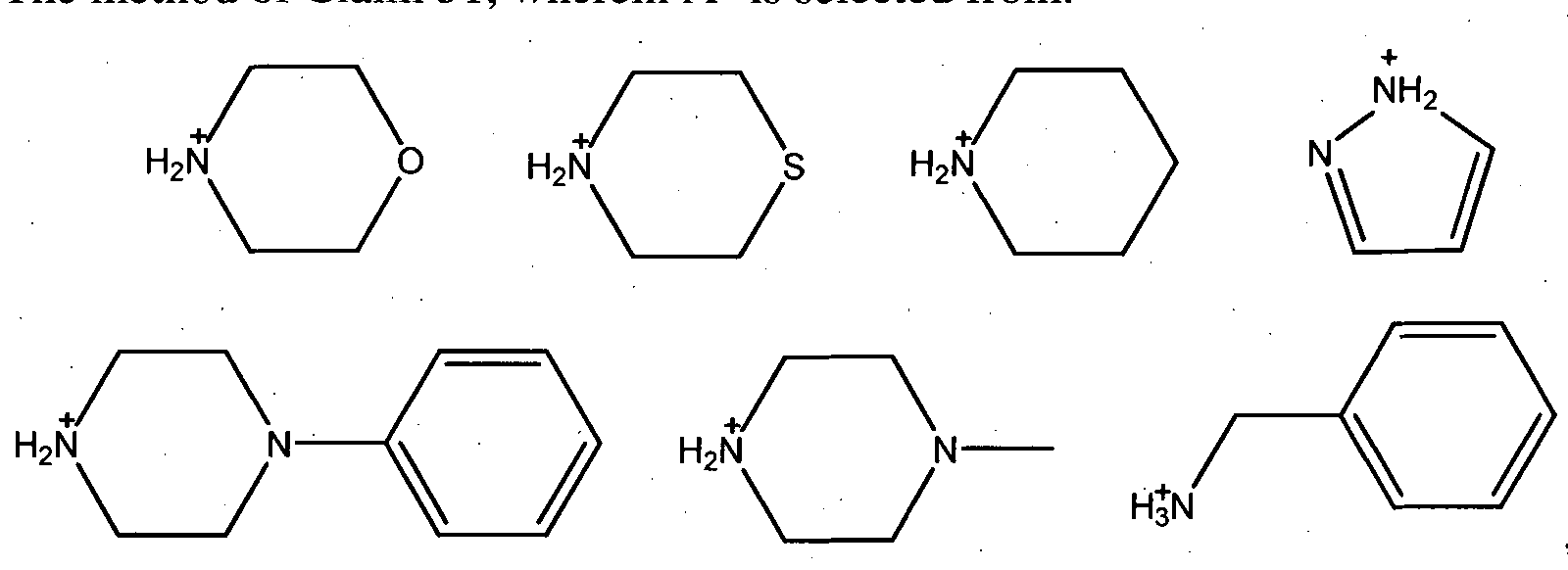
or a pharmaceutically acceptable salt thereof.
33. The method of Claim 24 wherein X is S.
34. The method of Claim 24 wherein X is O.
35. The method of Claim 24, wherein the compound represented by a one of the following structural formula:


37. The method of Claim 36 wherein the concentration is less than about 20μΜ.
38. A method of killing cancer cells, inhibiting the growth of cancer cells or a
combination thereof, comprising contacting the cells with an effective amount of a compound represented by the following structure:

39. A method of killing cancer cells, inhibiting the growth of cancer cells or a
combination thereof, comprising contacting the cells with an effective amount of
morpholin-4-ium 4 methoxyphenyl(morpholino) phosphinodithioate (GYY4137).
Applications Claiming Priority (2)
| Application Number | Priority Date | Filing Date | Title |
|---|---|---|---|
| US201161483402P | 2011-05-06 | 2011-05-06 | |
| US61/483,402 | 2011-05-06 |
Publications (1)
| Publication Number | Publication Date |
|---|---|
| WO2012154126A1 true WO2012154126A1 (en) | 2012-11-15 |
Family
ID=47139420
Family Applications (1)
| Application Number | Title | Priority Date | Filing Date |
|---|---|---|---|
| PCT/SG2012/000158 Ceased WO2012154126A1 (en) | 2011-05-06 | 2012-05-04 | A slow-releasing hydrogen sulphide donor in a method for the treatment of cancer |
Country Status (1)
| Country | Link |
|---|---|
| WO (1) | WO2012154126A1 (en) |
Cited By (6)
| Publication number | Priority date | Publication date | Assignee | Title |
|---|---|---|---|---|
| US8865684B2 (en) | 2009-04-24 | 2014-10-21 | National University Of Singapore | Morpholin-4-ium 4 methoxyphenyl (morpholino) phosphinodithioate (GYY4137) as a novel vasodilator agent |
| CN105307646A (en) * | 2013-03-01 | 2016-02-03 | 阿斯顿大学 | Hydrogen sulfide compound capable of stimulating H2S production in pregnant individuals |
| US10456410B2 (en) * | 2017-08-01 | 2019-10-29 | University Of South Carolina | Hydrogen sulfide (H2S) releasing donor compound for dermal wound regeneration |
| US10725055B1 (en) | 2016-04-15 | 2020-07-28 | University Of Oregon | Compounds for carbonyl sulfide/carbon disulfide/hydrogen sulfide release and methods of making and using the same |
| US11040942B1 (en) | 2018-01-31 | 2021-06-22 | University Of Oregon | Compound embodiments for hydrogen sulfide production and methods of making and using the same |
| US11078157B1 (en) | 2018-01-31 | 2021-08-03 | University Of Oregon | Compound embodiments that release H2S by reaction with a reactive compound and methods of making and using the same |
Citations (4)
| Publication number | Priority date | Publication date | Assignee | Title |
|---|---|---|---|---|
| WO2006024491A1 (en) * | 2004-08-30 | 2006-03-09 | Interstitial Therapeutics | Methods and compositions for the treatment of cell proliferation |
| US20060270635A1 (en) * | 2005-05-27 | 2006-11-30 | Wallace John L | Derivatives of 4- or 5-aminosalicylic acid |
| US20090304819A1 (en) * | 2002-06-19 | 2009-12-10 | Gabriel Gojon-Romanillos | Systemic Treatment of Pathological Conditions Resulting from Oxidative Stress and/or Redox Imbalance |
| US20090324682A1 (en) * | 2004-08-30 | 2009-12-31 | Youri Popowski | Medical stent provided with inhibitors of atp synthesis |
-
2012
- 2012-05-04 WO PCT/SG2012/000158 patent/WO2012154126A1/en not_active Ceased
Patent Citations (4)
| Publication number | Priority date | Publication date | Assignee | Title |
|---|---|---|---|---|
| US20090304819A1 (en) * | 2002-06-19 | 2009-12-10 | Gabriel Gojon-Romanillos | Systemic Treatment of Pathological Conditions Resulting from Oxidative Stress and/or Redox Imbalance |
| WO2006024491A1 (en) * | 2004-08-30 | 2006-03-09 | Interstitial Therapeutics | Methods and compositions for the treatment of cell proliferation |
| US20090324682A1 (en) * | 2004-08-30 | 2009-12-31 | Youri Popowski | Medical stent provided with inhibitors of atp synthesis |
| US20060270635A1 (en) * | 2005-05-27 | 2006-11-30 | Wallace John L | Derivatives of 4- or 5-aminosalicylic acid |
Cited By (8)
| Publication number | Priority date | Publication date | Assignee | Title |
|---|---|---|---|---|
| US8865684B2 (en) | 2009-04-24 | 2014-10-21 | National University Of Singapore | Morpholin-4-ium 4 methoxyphenyl (morpholino) phosphinodithioate (GYY4137) as a novel vasodilator agent |
| CN105307646A (en) * | 2013-03-01 | 2016-02-03 | 阿斯顿大学 | Hydrogen sulfide compound capable of stimulating H2S production in pregnant individuals |
| CN105307646B (en) * | 2013-03-01 | 2022-03-18 | 米尔酶治疗有限公司 | Capable of stimulating H in pregnant subjects2S produced hydrogen sulfide compounds |
| US10725055B1 (en) | 2016-04-15 | 2020-07-28 | University Of Oregon | Compounds for carbonyl sulfide/carbon disulfide/hydrogen sulfide release and methods of making and using the same |
| US10456410B2 (en) * | 2017-08-01 | 2019-10-29 | University Of South Carolina | Hydrogen sulfide (H2S) releasing donor compound for dermal wound regeneration |
| US11040942B1 (en) | 2018-01-31 | 2021-06-22 | University Of Oregon | Compound embodiments for hydrogen sulfide production and methods of making and using the same |
| US11078157B1 (en) | 2018-01-31 | 2021-08-03 | University Of Oregon | Compound embodiments that release H2S by reaction with a reactive compound and methods of making and using the same |
| US11981626B1 (en) | 2018-01-31 | 2024-05-14 | University Of Oregon | Compound embodiments for hydrogen sulfide production and methods of making and using the same |
Similar Documents
| Publication | Publication Date | Title |
|---|---|---|
| ES2895365T3 (en) | Pyrimidopyrimidinones useful as Wee-1 kinase inhibitors | |
| ES3036500T3 (en) | Pyrazine derivative as chk1 inhibitor | |
| WO2012154126A1 (en) | A slow-releasing hydrogen sulphide donor in a method for the treatment of cancer | |
| ES2588186T3 (en) | Imidazopyrazines substituted as Akt kinase inhibitors | |
| CN108368143B (en) | Monomaleimide functionalized platinum compounds for cancer therapy | |
| CN112367991A (en) | TAIRE family kinase inhibitors and uses thereof | |
| EP3217982B1 (en) | Spiropyrazine derivatives as inhibitors of non-apoptotic regulated cell-death | |
| JP2021524501A (en) | Amino acid salts of nicotinic acid mononucleotide and nicotinamide mononucleotide as anti-aging agents | |
| JP2026063054A (en) | Amino acid salts of nicotinic acid riboside as an anti-aging agent | |
| CN114599371A (en) | Phospholipid ether conjugates as cancer-targeted drug carriers | |
| WO2020227132A1 (en) | Compounds for treating cancer | |
| JP2021533195A (en) | Quaternary ammonium salts of nicotinic acid and nicotinamide mononucloetide and riboside as anti-aging agents | |
| CN114667288A (en) | Benzophenanthridine alkaloids and methods of use thereof | |
| WO2013138600A1 (en) | Radioprotector compounds | |
| CA3211860A1 (en) | Enamine n-oxides: synthesis and application to hypoxia-responsive prodrugs and imaging agents | |
| WO2009093206A2 (en) | 3-sulfonyl-pyrazolo[1,5-a] pyrimidines / antagonists of serotonin 5-ht6 receptors, methods for the production and the use thereof | |
| BR112019020058A2 (en) | innovative crystal forms of a pol1 inhibitor | |
| CN105566302A (en) | Dihydroindolone compound and crystal of dihydroindolone compound salt | |
| US20250019365A1 (en) | Compositions and methods for preserving and/or restoring neural function | |
| JP2015515986A (en) | Heterocyclic fused morphinans, their use and process for their production | |
| CN120569387A (en) | Small molecule modulators of PAR2 and uses thereof | |
| CN121758366A (en) | A benzopiperidine bisquaternary ammonium salt compound and its pharmaceutical applications | |
| CN120112529A (en) | A pyridine-containing compound and its preparation method and use | |
| CA3233083A1 (en) | Small molecules for dot1l degradation and uses thereof | |
| HK40075720A (en) | Phospholipid ether conjugates as cancer-targeting drug vehicles |
Legal Events
| Date | Code | Title | Description |
|---|---|---|---|
| 121 | Ep: the epo has been informed by wipo that ep was designated in this application |
Ref document number: 12782098 Country of ref document: EP Kind code of ref document: A1 |
|
| NENP | Non-entry into the national phase |
Ref country code: DE |
|
| 122 | Ep: pct application non-entry in european phase |
Ref document number: 12782098 Country of ref document: EP Kind code of ref document: A1 |