WO2012122338A1 - Process for the preparation of 1,2,4-oxadiazol-3-yl derivatives of carboxylic acid - Google Patents
Process for the preparation of 1,2,4-oxadiazol-3-yl derivatives of carboxylic acid Download PDFInfo
- Publication number
- WO2012122338A1 WO2012122338A1 PCT/US2012/028203 US2012028203W WO2012122338A1 WO 2012122338 A1 WO2012122338 A1 WO 2012122338A1 US 2012028203 W US2012028203 W US 2012028203W WO 2012122338 A1 WO2012122338 A1 WO 2012122338A1
- Authority
- WO
- WIPO (PCT)
- Prior art keywords
- formula
- compound
- reaction
- preparation
- until
- Prior art date
- Legal status (The legal status is an assumption and is not a legal conclusion. Google has not performed a legal analysis and makes no representation as to the accuracy of the status listed.)
- Ceased
Links
- 0 CC(C)Oc(ncc(C(ON=C(c(cc1)ccc1N[C@@]1C[C@](*)CC1)N)=O)c1)c1Cl Chemical compound CC(C)Oc(ncc(C(ON=C(c(cc1)ccc1N[C@@]1C[C@](*)CC1)N)=O)c1)c1Cl 0.000 description 4
- OEKZKQURAAWUJB-UHFFFAOYSA-N CC(C)Oc(ccc(/C(/N)=N/OC(c1ccc(C(C)(C)NC(C)=O)cc1)=O)c1)c1Cl Chemical compound CC(C)Oc(ccc(/C(/N)=N/OC(c1ccc(C(C)(C)NC(C)=O)cc1)=O)c1)c1Cl OEKZKQURAAWUJB-UHFFFAOYSA-N 0.000 description 3
- XSRWOPOIGSBMGY-UHFFFAOYSA-N CC(C)Oc(ccc(-c1n[o]c(-c2ccc(C(C)(C)N)cc2)n1)c1)c1Cl Chemical compound CC(C)Oc(ccc(-c1n[o]c(-c2ccc(C(C)(C)N)cc2)n1)c1)c1Cl XSRWOPOIGSBMGY-UHFFFAOYSA-N 0.000 description 2
- PZDIVDDFLGKWID-UHFFFAOYSA-N CC(C)Oc(c(Cl)c1)ncc1C(O)=O Chemical compound CC(C)Oc(c(Cl)c1)ncc1C(O)=O PZDIVDDFLGKWID-UHFFFAOYSA-N 0.000 description 1
- LMDJGVPLCKWXHO-UHFFFAOYSA-N CC(C)Oc(ccc(-c1n[o]c(-c2ccc(C(C)(C)NCCC(O)=O)cc2)n1)c1)c1Cl Chemical compound CC(C)Oc(ccc(-c1n[o]c(-c2ccc(C(C)(C)NCCC(O)=O)cc2)n1)c1)c1Cl LMDJGVPLCKWXHO-UHFFFAOYSA-N 0.000 description 1
- RBVKZGDWTYHGSB-UHFFFAOYSA-N CC(C)Oc(ccc(-c1n[o]c(-c2ccc(C(C)(C)NCCC(OC)=O)cc2)n1)c1)c1Cl Chemical compound CC(C)Oc(ccc(-c1n[o]c(-c2ccc(C(C)(C)NCCC(OC)=O)cc2)n1)c1)c1Cl RBVKZGDWTYHGSB-UHFFFAOYSA-N 0.000 description 1
- ZPWDDQOINOAZRR-AKAXFMLLSA-N CC(C)Oc(ncc(-c1nc(-c(cc2)ccc2O[C@H](C2)C[C@H]2C(O)=O)n[o]1)c1)c1Cl Chemical compound CC(C)Oc(ncc(-c1nc(-c(cc2)ccc2O[C@H](C2)C[C@H]2C(O)=O)n[o]1)c1)c1Cl ZPWDDQOINOAZRR-AKAXFMLLSA-N 0.000 description 1
- FPSCIMVBYJOODJ-YEORSEQZSA-N CC(C)Oc(ncc(-c1nc(-c(ccc(O[C@H](C2)C[C@@H]2C(O)=O)c2)c2Cl)n[o]1)c1)c1Cl Chemical compound CC(C)Oc(ncc(-c1nc(-c(ccc(O[C@H](C2)C[C@@H]2C(O)=O)c2)c2Cl)n[o]1)c1)c1Cl FPSCIMVBYJOODJ-YEORSEQZSA-N 0.000 description 1
- GYYSHUDYMRGZIS-CZIWCDLHSA-N CC(C)Oc(ncc(-c1nc(-c(ccc(O[C@H](C2)C[C@@H]2C(OC(C)(C)C)=O)c2)c2Cl)n[o]1)c1)c1Cl Chemical compound CC(C)Oc(ncc(-c1nc(-c(ccc(O[C@H](C2)C[C@@H]2C(OC(C)(C)C)=O)c2)c2Cl)n[o]1)c1)c1Cl GYYSHUDYMRGZIS-CZIWCDLHSA-N 0.000 description 1
- QGNLFTILGQJPIG-CZIWCDLHSA-N CC(C)Oc(ncc(C(O/N=C(/c(ccc(O[C@H](C1)C[C@@H]1C(OC(C)(C)C)=O)c1)c1Cl)\N)=O)c1)c1Cl Chemical compound CC(C)Oc(ncc(C(O/N=C(/c(ccc(O[C@H](C1)C[C@@H]1C(OC(C)(C)C)=O)c1)c1Cl)\N)=O)c1)c1Cl QGNLFTILGQJPIG-CZIWCDLHSA-N 0.000 description 1
- BDDVAWDNVWLHDQ-UHFFFAOYSA-N N#Cc(c(Cl)c1)ccc1O Chemical compound N#Cc(c(Cl)c1)ccc1O BDDVAWDNVWLHDQ-UHFFFAOYSA-N 0.000 description 1
Classifications
-
- C—CHEMISTRY; METALLURGY
- C07—ORGANIC CHEMISTRY
- C07C—ACYCLIC OR CARBOCYCLIC COMPOUNDS
- C07C253/00—Preparation of carboxylic acid nitriles
- C07C253/30—Preparation of carboxylic acid nitriles by reactions not involving the formation of cyano groups
-
- C—CHEMISTRY; METALLURGY
- C07—ORGANIC CHEMISTRY
- C07C—ACYCLIC OR CARBOCYCLIC COMPOUNDS
- C07C255/00—Carboxylic acid nitriles
- C07C255/49—Carboxylic acid nitriles having cyano groups bound to carbon atoms of six-membered aromatic rings of a carbon skeleton
- C07C255/54—Carboxylic acid nitriles having cyano groups bound to carbon atoms of six-membered aromatic rings of a carbon skeleton containing cyano groups and etherified hydroxy groups bound to the carbon skeleton
-
- C—CHEMISTRY; METALLURGY
- C07—ORGANIC CHEMISTRY
- C07C—ACYCLIC OR CARBOCYCLIC COMPOUNDS
- C07C255/00—Carboxylic acid nitriles
- C07C255/49—Carboxylic acid nitriles having cyano groups bound to carbon atoms of six-membered aromatic rings of a carbon skeleton
- C07C255/58—Carboxylic acid nitriles having cyano groups bound to carbon atoms of six-membered aromatic rings of a carbon skeleton containing cyano groups and singly-bound nitrogen atoms, not being further bound to other hetero atoms, bound to the carbon skeleton
-
- C—CHEMISTRY; METALLURGY
- C07—ORGANIC CHEMISTRY
- C07C—ACYCLIC OR CARBOCYCLIC COMPOUNDS
- C07C259/00—Compounds containing carboxyl groups, an oxygen atom of a carboxyl group being replaced by a nitrogen atom, this nitrogen atom being further bound to an oxygen atom and not being part of nitro or nitroso groups
- C07C259/12—Compounds containing carboxyl groups, an oxygen atom of a carboxyl group being replaced by a nitrogen atom, this nitrogen atom being further bound to an oxygen atom and not being part of nitro or nitroso groups with replacement of the other oxygen atom of the carboxyl group by nitrogen atoms, e.g. N-hydroxyamidines
- C07C259/18—Compounds containing carboxyl groups, an oxygen atom of a carboxyl group being replaced by a nitrogen atom, this nitrogen atom being further bound to an oxygen atom and not being part of nitro or nitroso groups with replacement of the other oxygen atom of the carboxyl group by nitrogen atoms, e.g. N-hydroxyamidines having carbon atoms of hydroxamidine groups bound to carbon atoms of six-membered aromatic rings
-
- C—CHEMISTRY; METALLURGY
- C07—ORGANIC CHEMISTRY
- C07C—ACYCLIC OR CARBOCYCLIC COMPOUNDS
- C07C2601/00—Systems containing only non-condensed rings
- C07C2601/04—Systems containing only non-condensed rings with a four-membered ring
Definitions
- Alkylcarboxylic acids possessing heterocyclic substituents are important intermediates for the preparation of a useful class of biologically-active molecules.
- these biologically active compounds include but are not limited to S1P1 agonists such as those described in WO 2008076356 Al and other publications.
- S 1P1 agonists are useful, e.g., in the treatment of inflammatory diseases and conditions, and in the treatment of other diseases and conditions.
- the invention provides a process for the preparation of a compound of Formula 4
- the invention provides a process for the preparation of a compound of Formula 6
- the invention provides a process for the preparation of a compound of Formula 8.
- the invention provides a process for the preparation of a compound of Formula 9
- the invention provides a process for the preparation of a compound of Formula 2
- the invention provides a process for the preparation of a compound of Formula 18
- the invention provides a process for the preparation of a compound of Formula 19
- R is alkyl
- R is alkyl
- the invention provides a process for the preparation of a compound of F
- R is alkyl
- the invention provides a process for the preparation of a compound of Formula 22
- R is alkyl
- the invention provides a process for the preparation of a compound of Formula 23
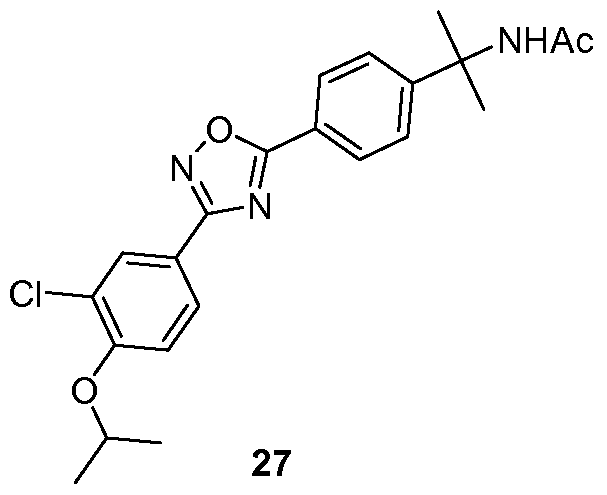
- the invention provides a process for the preparation of a compound of Formula 27
- the invention provides a process for the preparation of a compound of Formula 29 comprising the step of reacting a compound of Formula 28
- the invention provides a process for the preparation of a compound of Formula 30
- the invention provides a process for the preparation of a compound of Formula 10
- the invention provides a process for the preparation of a compound of Formula 1 1
- the invention provides a process for the preparation of a compound of Formula 13
- the invention provides a process for the preparation of a compound of Formula 14
- HPLC data are referenced to the table of LC/MS and HPLC conditions using the method number provided in Table 1. High-pressure liquid chromatography (HPLC) analytical data are either detailed within the experimental or referenced to Table 1 of LC/MS and HPLC conditions.
- Alcohol 3 ( ⁇ 50% solution in toluene, 1 equiv), phenol 5 (0.95 equiv) and triphenylphosphine (TPP, 1.2 equiv) in toluene (7 mL/g of 3) was cooled to about 0 - 5 °C and DEAD (40 % solution in toluene, 1.0 equiv) was added while maintaining the internal temperature at no more than 25 °C. The reaction mixture was then heated to about 25 - 30 °C for about 3 - 4 h. The mixture was cooled to about 20 °C and additional DEAD solution (0.2 equiv) was added while maintaining the internal temperature at about 30 °C.
- DEAD 40 % solution in toluene, 1.0 equiv
- the filter cake was washed with toluene-heptanes (1 : 1, 10 mL/g of 3) and the combined filtrate containing the product was concentrated in vacuo and chased with IPA (10 mL/g of 3) to approximately 4.5 mL/g of 3 volume.
- the mixture was diluted with IPA to approximately 6 mL/g of 3 volume and cooled to no more than about 10 °C.
- As product precipitation was observed the mixture was diluted with 2: 1 IPA-water (15 mL/g of 3) to precipitate the remaining product.
- the product was filtered, washed with IPA-water and dried under vacuum at about 50 °C. Typical yield of 4 was 75 - 80 % PA.
- CDl (1.05 equiv) was dissolved in ACN (18 mL/g of CDl).
- the CDl solution in then transferred into a reactor containing nicotinic acid 7 (1.05 equiv) over about 5 - 10 min to control the carbon dioxide evolution.
- the vessel used to prepare the CDl solution was rinsed with ACN (2 mL/g CDl) and the rinse was transferred into the reaction mixture. After about 0.5 h the completeness of the imidazolide formation was checked (in-process sample was quenched into IN DBU in methanol, followed by HPLC analysis; target less than 5% of 7 vs. its methyl ester).
- the solution of imidazolide was then transferred into a reactor containing imidoxime 6.
- TEA 1.7 equiv
- ethyl acetate 10 mL/g of 9 TMSOTf (1.6 equiv) was then added over about 30 min
- the reaction mixture was heated to about 70 °C and mixed at this temperature until the reaction was complete, (in-process test by HPLC: ⁇ 0.5 % starting material, about 2 h).
- the reaction mixture was cooled to about 20 °C and water (1 mL/g of 9) was added.
- the solvent was removed under vacuum (to about 3 mL volume/g of 9) to give a thick slurry.
- a mixture of ACN-water (1 :2, 3.5 mL/g of 9) was added and the batch concentrated again to about 3 mL volume/g of 9.
- the residue was diluted with ACN-water (1 :2, 17.5 mL/g of 9), and the pH of the mixture was adjusted to about 6.
- the slurry was mixed until product concentration in the supernatant drops to less than 0.5 mg/mL.
- the product was filtered and the cake was washed with ACN-water (1 :2, 3.5 mL/g of 9).
- the product was dried under vacuum at about 60 °C until the residual water was reduced to less than 0.5% (Karl Fisher test, about 15 h).
- a typical yield of 2 was 95-98%.
- the reaction mixture was cooled, diluted with MTBE (5 mL/g of 16) and water (10 mL/g of 16).
- the mixture was cooled to about 10 °C and concentrated HCl (0.7 g/g of 16) was added to dissolve solids.
- the aqueous layer was separated and the organic was extracted with 5% potassium carbonate solution.
- the product was precipitated via addition of concentrated HC1 to the combined aqueous layer to achieve pH 4 - 6.
- the product slurry was then cooled to about 10 °C.
- the product was filtered, washed with water (5 mL/g 12) and dried at 55 °C under vacuum.
- the yield for the amination step is typically 80%.
- Hydrogen chloride (2.3 equiv) was gassed into ethanol (8 mL/g 18) while maintaining an internal temperature of not more than 20 °C. The solution was then transferred to the acid 18 and the resulting solution was mixed until the reaction was complete (in process test by HPLC ⁇ 1%, typically 2 h). The reaction mixture was cooled to about 10 °C and triethylamine was added to achieve pH 7 - 8. The product was then precipitated by water addition (10 mL/g of 18). The product was filtered, washed with water (5 mL/g 18) and dried at about 55 °C under vacuum. The potency adjusted yield for the esterification is typically 90 -95 %.
- the combined organic layers were filtered through a 'FilterAid' cartridge to remove insoluble polymer.
- the solution was concentrated in vacuo and the solvent was switched to ACN.
- the ACN solution was concentrated to approximately 4 vol/ g of 19.
- the resulting solution was directly used in the following coupling step. Typical assay yield for this step is 80 - 85 %.
- Nicotinic acid 7 (1.05 equiv) was slurried in ACN (2 mL/g of 7).
- CDI (1.05 equiv) was slurried in CAN (10 mL/g of CDI). The CDI slurry was then transferred to the nicotinic acid slurry over about 10 -15 min to control carbon dioxide evolution.
- the vessel used to prepare the CDI slurry was washed with ACN (2 mL/g CDI) and the wash was transferred into the reaction mixture.
- the product was then precipitated by pH adjustment with 6N HC1 to pH 5-6. Agitation was continued at about 50 °C for not less than 1 h. Then the internal temperature was slowly adjusted to about 15 °C. The product was filtered off and washed with 1 : 1 ethanol/water, then with water. The product was dried under vacuum initially at 55 °C, then at 80 °C until the ethanol was reduced to less than 0.5 weight %. Typical product yield is 85 - 90 %.
- Benzoic acid 24 (1.03 equiv) was slurried in ACN (4 mL/g of 24).
- CDl 1.1 equiv
- ACN 1 1 mL/g of CDl
- the CDl slurry was then transferred to the benzoic acid slurry over 10-15 min to control carbon dioxide evolution.
- the vessel used to prepare the CDl slurry was washed with ACN (2 mL/g CDl) and the wash was transferred into the reaction mixture. After about 0.5 h the in process sample was taken to check for the completeness of the imidazolide formation (quench into MeOH/DBU, followed by HPLC analysis, target less than 5% of the acid vs. methyl ester).
- Amine HCI 28 was suspended in a mixture of Me-THF (15 mL/g 28) and 10% NaHC0 3 (7.5 mL/g 28). The mixing was continued until clear layers were formed. Layers were separated and the aqueous layer was extracted with more Me-THF (2x5 mL/g 28). The combined organic layers were washed with (2x 5 mL/g 28 and then concentrated to near dryness in vacuo. The residue was dissolved in methanol (6 mL/g 28) and methyl acrylate (5 equiv) was added. The mixture was refluxed until the reaction was complete (in process test by HPLC ⁇ 2 %, typically 15 -17 h).
- Benzoic acid 24 (1.03 equiv) was slurried in ACN (4 mL/g of 24).
- CDI 1.1 equiv
- ACN 1 1 mL/g of CDI
- the CDI slurry was then transferred to the benzoic acid slurry over 10-15 min to control carbon dioxide evolution.
- the vessel used to prepare the CDl slurry was washed with ACN (2 mL/g CDl) and the wash was transferred into the reaction mixture. After about 0.5 h the in process sample was taken to check for the completeness of the imidazolide formation (quench into MeOH/DBU, followed by HPLC analysis, target less than 5% of the acid vs. methyl ester).
- Amine HC1 28 was suspended in a mixture of Me-THF (15 mL/g 28) and 10% NaHC0 3 (7.5 mL/g 28). The mixing was continued until clear layers were formed. Layers were separated and the aqueous layer was extracted with more Me-THF (2x5 mL/g 28). The combined organic layers were washed with (2x 5 mL/g 28 and then concentrated to near dryness in vacuo. The residue was dissolved in methanol (6 mL/g 28) and methyl acrylate (5 equiv) was added. The mixture was refluxed until the reaction was complete (in process test by HPLC ⁇ 2 %, typically 15 -17 h).
Landscapes
- Chemical & Material Sciences (AREA)
- Organic Chemistry (AREA)
- Chemical Kinetics & Catalysis (AREA)
- Pharmaceuticals Containing Other Organic And Inorganic Compounds (AREA)
- Heterocyclic Carbon Compounds Containing A Hetero Ring Having Nitrogen And Oxygen As The Only Ring Hetero Atoms (AREA)
- Organic Low-Molecular-Weight Compounds And Preparation Thereof (AREA)
- Plural Heterocyclic Compounds (AREA)
Abstract
The present invention discloses processes for the preparation and isolation of [l,2,4]oxadiazo-3-yl derivatives of carboxylic acids. The derivativehe present invention discloses are useful in the treatment of inflammatory diseases and conditions.
Description
PROCESS FOR THE PREPARATION OF l,2,4-OXADIAZOL-3-YL
DERIVATIVES OF CARBOXYLIC ACID
CROSS REFERENCE TO RELATED APPLICATION
This application claims priority to U.S. Provisional Application Serial No. 61/450,437 filed on March 8, 201 1, the contents of which are incorporated herein.
BACKGROUND
Alkylcarboxylic acids possessing heterocyclic substituents are important intermediates for the preparation of a useful class of biologically-active molecules. In particular, these biologically active compounds include but are not limited to S1P1 agonists such as those described in WO 2008076356 Al and other publications. S 1P1 agonists are useful, e.g., in the treatment of inflammatory diseases and conditions, and in the treatment of other diseases and conditions.
SUMMARY OF THE INVENTION
In a first embodiment the invention provides a process for the preparation of a compound of Formula 4


5 in the presence of activators such as TPP, DEAD or DIAD until the reaction is substantially complete to form a compound of Formula 4

In a second embodiment the invention provides a process for the preparation of a compound of Formula 6


In a third embodiment the invention provides a process for the preparation of a compound of Formula 8

comprising the step of reacting compounds 6 and 7 in the presence of an activator such as carbonyldiimidazole, HATU or HOBT
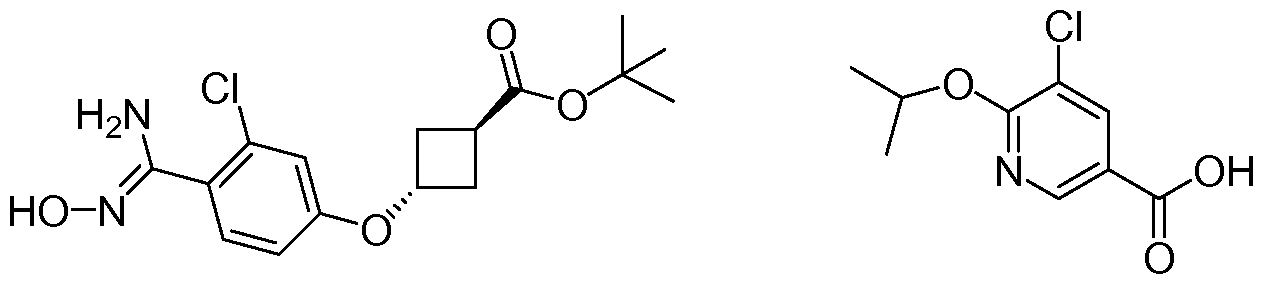
until the reaction is substantially complete to form a compound of Formula


comprising of the cyclization of a compound of Formula 8


In a fifth embodiment the invention provides a process for the preparation of a compound of Formula 2


In a sixth embodiment the invention provides a process for the preparation of a compound of Formula 18


15 16 in the presence of a base such as potassium carbonate until the reaction is substantially complete to form a compound of Formula 18
 In a seventh embodiment the invention provides a process for the preparation of a compound of Formula 19

19
wherein R is alkyl, comprising the step of reacting a compound of Formula 1

18 in a solution of hydrogen chloride gassed into an alcohol until the reaction is substantially complete to form a compound of Formula 19

19
In an eighth embodiment the invention provides a process for the preparation of a compound of Formul

20
wherein R is alkyl, comprising the step of reacting a compound of Formula 19

19
with hydroxylamine until the reaction is substantially complete to form a compound of
Formula 20

20
In a ninth embodiment the invention provides a process for the preparation of a compound of F

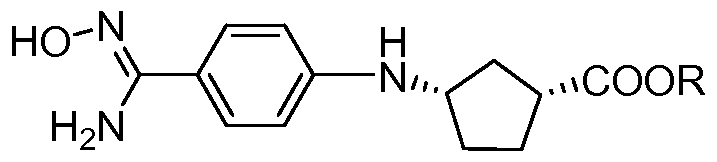
20
with DBU in THF until the reaction is substantially complete to form a compound of Formula 21

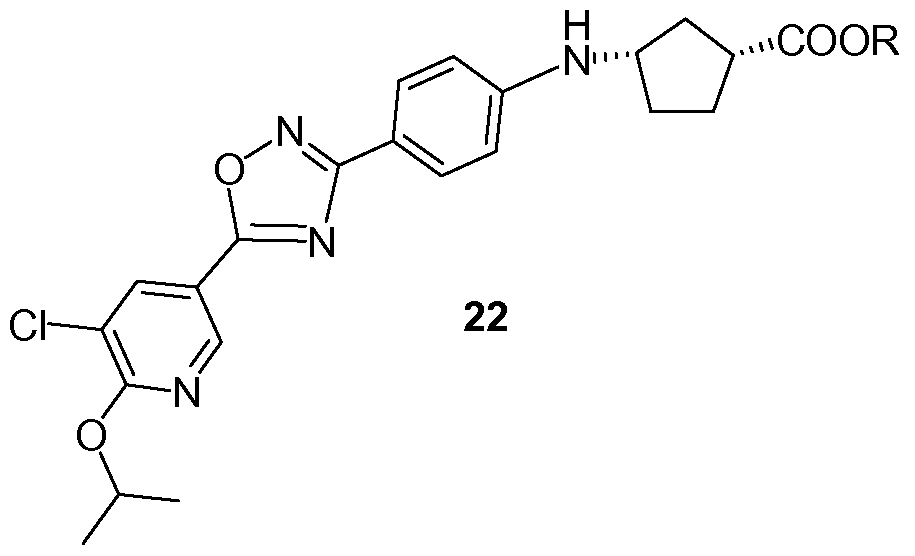
In a tenth embodiment the invention provides a process for the preparation of a compound of Formula 22


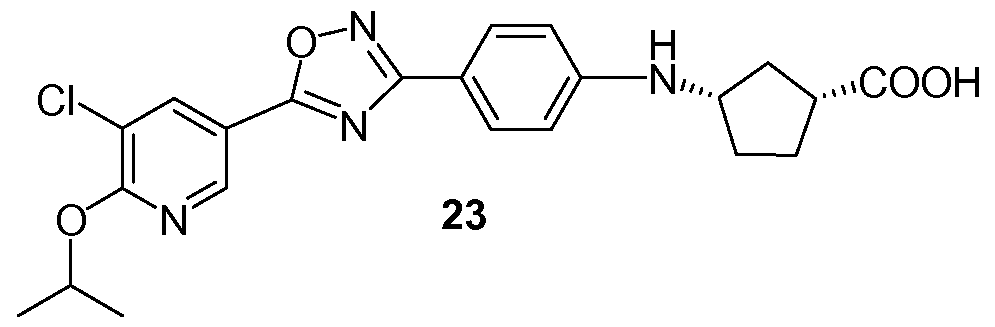
In an eleventh embodiment the invention provides a process for the preparation of a compound of Formula 23


In a twelfth embodiment the invention provides a process for the preparation of a compound of Formula

26
comprising the step of reacting compounds of Formula 24 and 25


In a fourteenth embodiment the invention provides a process for the preparation of a compound of Formu


In a fifteenth embodiment the invention provides a process for the preparation of a compound of Formula 29
 comprising the step of reacting a compound of Formula 28


In a sixteenth embodiment the invention provides a process for the preparation of a compound of Formula 30

30 comprising the steps of reacting a compound of Formula 29


30
In a seventeenth embodiment the invention provides a process for the preparation of a compound of Formula 10

10 comprising the step of reacting the mixture of compounds of Formulas 3 a and 3b

3a 3b with a compound of Formula 5

10
In an eighteenth embodiment the invention provides a process for the preparation of a compound of Formula 1 1

11 comprising the steps of reacting hydroxylamine with a compound of Formula 10

10
reaction is substantially complete, forming a compound of Formula 1 1

11
In a nineteenth embodiment the invention provides a process for the preparation of a compound of Formula 13


13
In a twentieth embodiment the invention provides a process for the preparation of a compound of Formula 14

14 comprising the step of reacting a compound of Formula 13


DETAILED DESCRIPTION
ABBREVIATIONS
ACN Acetonitrile
CAN Ceric ammonium nitrate
CDI Carbonyldiimidazole
DBU l,8-Diazabicyclo[5.4.0]undec-7-ene
DCM Dichloromethane (methylene chloride)
DEAD Diethyl azodicarboxylate
DIEA NN-Diisopropylethylamine
DMF NN-Dimethylformamide
DMSO Dimethyl sulfoxide
EDC N-(3-Dimethylaminopropyl)-N'-ethylcarbodiimide hydrochloride equiv Equivalent(s)
EtOH Ethanol
h Hour(s)
IPA Isopropyl alcohol
MTBE Methyl tert-buiyl ether
Rt Retention Time
TEA Triethylamine
THF Tetrahydrofuran
TMSOTf Trimethylsilyltrifluoromethane sulfonate
TPP Triphenylphosphine
TPPO Triphenylphosphine oxide
ANALYTICAL METHODS
Analytical data is included within the procedures below. Unless otherwise stated, all lH data were collected at 500 MHz; chemical shifts are quoted in parts per million (ppm), mobile phase A was 0.1% phosphoric acid, mobile phase B was HPLC grade acetonitrile. HPLC data are referenced to the table of LC/MS and HPLC conditions using the method number provided in Table 1. High-pressure liquid chromatography (HPLC) analytical data are either detailed within the experimental or referenced to Table 1 of LC/MS and HPLC conditions.
Table 1. LC/MS and HPLC methods

The general synthetic schemes that were utilized to construct the compounds disclosed in this application are described below.
The process for the synthesis and isolation of derivatives of carboxylic acids is shown in Schemes I-IV.
Scheme I. Route to (1R, 3R)-3-(3-chloro-4-[5-(5-chloro-6-isopropoxypyridin-3-yl)- [l,2,4]oxadiazol-3-yl]phenoxy)cyclobutanecarboxylic acid.
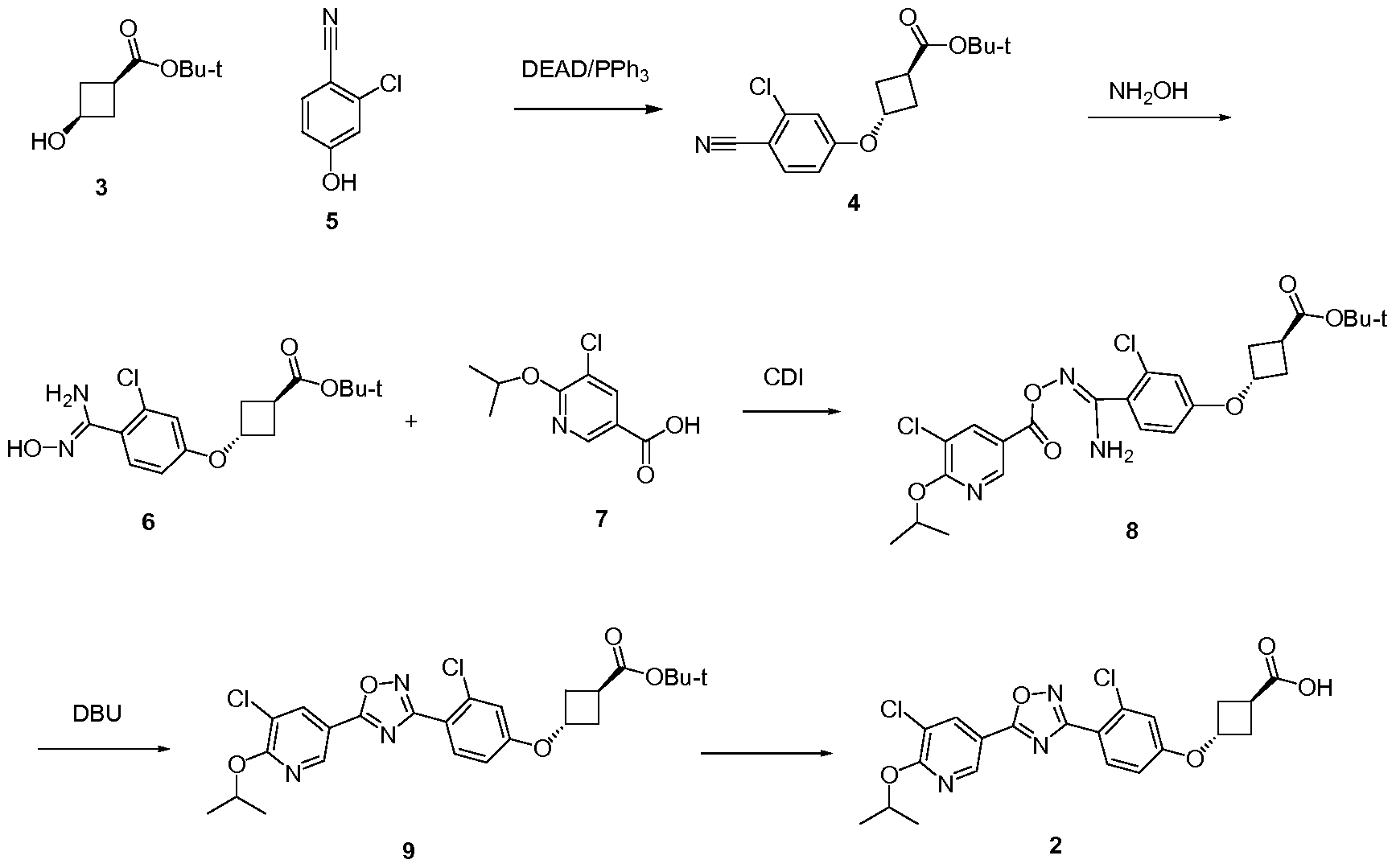
Example #1: (1R, 3i?)-3-{3-Chloro-4-[5-(5-chloro-6-isopropoxy-pyridin-3-yl)- [l,2,4]oxadiazol-3-yl]-phenoxy}cyclobutanecarboxylic acid
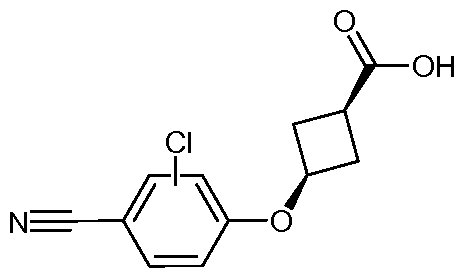
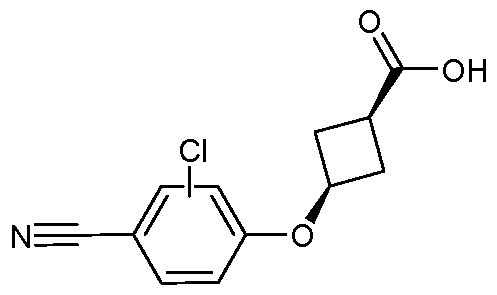
Step 1. Preparation of (1R,3R)- ter t-But \ 3-(3-chloro-4- cyanophenoxy)cyclobutanecarboxylate

¾ NMR (CDC13, δ, ppm) 1.48 (9H), 2.43 (2H), 2.68 (2H), 3.08 (1H), 4.90 (1H), 6.75 (1H), 6.88 (1H), 7.54 (1H). HPLC Method 1, Rt 9.1 min.
Step 2. Preparation of (\K3R)-tert-Buty\ 3-(3-chloro-4-((Z)-/V- hydroxycarbamimidoyl)phenoxy)cyclobutanecarboxylate

4 6
Hydroxylamine (50% in water, 4.8 equiv) was added to a solution of nitrile 4 in DMSO (6 mL/g of 4). The solution was slowly heated to about 50 °C and mixed at this temperature until the reaction was complete (in-process test: less than 1% starting material about 15 hours,). The reaction mixture was cooled to about 20 °C and diluted with ethanol (3.5 mL/g of 4) and water (5.2 mL/g of 4) to precipitate the product. The mixture was agitated until the product concentration in the supernatant was reduced to less than 5 mg/mL). The product was filtered and washed with EtOH-water (1 : 1.5) (3.6 g/g of 4). The product was dried under vacuum at about 50
°C until residual water by Karl Fisher test - drying time was less than 0.5%. Typical yield of 6 was 90-93%.
¾ NMR (DMSOdg, δ, ppm) 1.43 (9H), 2.32 (2H), 2.62 (2H), 3.05 (1H), 4.85 (1H), 5.72 (2H), 6.80 (1H), 6.87 (1H), 7.28 (1H), 9.37 (1H). HPLC Method 1, Rt 4.1 min.
Step 3. Preparation of (lR,3R)-tert-Buty\ 3-(3-chloro-4-((Z)-/V-(5-chloro-6- is

CDl (1.05 equiv) was dissolved in ACN (18 mL/g of CDl). The CDl solution in then transferred into a reactor containing nicotinic acid 7 (1.05 equiv) over about 5 - 10 min to control the carbon dioxide evolution. The vessel used to prepare the CDl solution was rinsed with ACN (2 mL/g CDl) and the rinse was transferred into the reaction mixture. After about 0.5 h the completeness of the imidazolide formation was checked (in-process sample was quenched into IN DBU in methanol, followed by HPLC analysis; target less than 5% of 7 vs. its methyl ester). The solution of imidazolide was then transferred into a reactor containing imidoxime 6. Within a few minutes the product precipitated from the initially formed clear solution. After about 30 min the mixture was analyzed for the reaction completion (in-process test: less than 5 % of 6 by HPLC). Then additional product was precipitated by water addition (9 mL/g of 6). The product was filtered, washed with 1 : 1 ACN - water (2 mL/g of 6) and dried under vacuum at no more than about 40 °C. Typical yield of 8 was 92 - 97%.
¾ NMR (DMSOds, δ, ppm) 1.36 (6H), 1.43 (9H), 2.33 (2H), 2.63 (2H), 3.07 (1H), 4.90 (1H), 5.40 (1H), 5.72 (2H), 6.88 (1H), 6.97 (1H), 7.40 (1H), 8.59 (1H), 8.86 (1H). HPLC Method 1, Rt 10.0 min.
Step 4. Preparation of (lR,3R)-tert-Buty\ 3-(3-chloro-4-(5-(5-chloro-6-isopropoxypyridin-3- yl)-l,2,4-oxadiazol-3-yl)phenoxy)cyclobutanecarboxylate.

DBU (2 equiv) was charged to a solution of intermediate 8 in THF (5 mL/g of 8). The solution was heated to about 60 °C and mixed at this temperature until the reaction was complete (in- process test by HPLC < 2 % starting material, typically less than about 1 h). The reaction mixture was cooled to about 20 °C and the product was precipitated by the addition of water (5 mL/g of 8). The product was filtered, washed with 1 : 1 THF-water (2 mL/g of 8) and dried under vacuum at no more than about 60 °C. Typical product yield was 95-99 %.
!H NMR (CDC13, δ, ppm) 1.44 (6H), 1.49 (9H), 2.45 (2H), 2.72 (2H), 3.09 (1H), 4.93 (1H), 5.47 (1H), 6.82 (1H), 6.92 (1H), 7.84 (1H), 8.36 (1H), 8.84 (1H). HPLC Method 1, Rt 12.9 min
Step 5. Preparation of (1R, 3i?)-3-{3-Chloro-4-[5-(5-chloro-6-isopropoxy-pyridin-3-yl)- [l,2,4]oxadiazol-3-yl]-phenoxy}-cyclobutanecarboxylic acid:

TEA (1.7 equiv) was added to a mixture of ?-butyl ester (9, 1 equiv) in ethyl acetate (10 mL/g of 9 TMSOTf (1.6 equiv) was then added over about 30 min The reaction mixture was heated to about 70 °C and mixed at this temperature until the reaction was complete, (in-process test by HPLC: < 0.5 % starting material, about 2 h). The reaction mixture was cooled to about 20 °C and water (1 mL/g of 9) was added. The solvent was removed under vacuum (to about 3 mL volume/g of 9) to give a thick slurry. A mixture of ACN-water (1 :2, 3.5 mL/g of 9) was added and the batch concentrated again to about 3 mL volume/g of 9. The residue was diluted with ACN-water (1 :2, 17.5 mL/g of 9), and the pH of the mixture was adjusted to about 6. The slurry was mixed until product concentration in the supernatant drops to less than 0.5 mg/mL. The product was filtered and the cake was washed with ACN-water (1 :2, 3.5 mL/g of 9). The product was dried under vacuum at about 60 °C until the residual water was reduced to less than 0.5% (Karl Fisher test, about 15 h). A typical yield of 2 was 95-98%.
lH NMR (CDCI3, δ, ppm) 1.44 (6H), 2.54 (2H), 2.83 (2H), 3.26 (IH), 4.97 (IH), 5.48 (IH), 5.72 (2H), 6.83 (IH), 6.96(1H), 7.95 (IH), 8.35 (IH), 8.84 (IH). HPLC Method 1, Rt 10.3 min
Scheme II. Route to (lR,3S)-3-(4-(5-(5-chloro-6-isopropoxypyridin-3-yl)- l,2,4-oxadiazol-3- yl)phenylamino)cyclopentanecarboxylic acid
Scheme II


Example #2 : (li?,35)-3-(4-(5-(5-chloro-6-isopropoxypyridin-3-yl)-l ,2,4-oxadiazol-3- yl)phenylamino)cyclopentanecarboxylic acid
Step 1. Amino acid arylation

15 16 17
A mixture of amino acid 16 (1.0 equiv), fluorobenzonitrile 15 (1.0 equiv), and potassium carbonate (milled -300 mesh, 2.2 equiv) in DMSO - water (20: 1 ; 6 mL/g of 15) was heated to about 105 °C with vigorous agitation until the reaction was complete (in process test by HPLC, typically about 16-20 h). The reaction mixture was cooled, diluted with MTBE (5 mL/g of 16) and water (10 mL/g of 16). The mixture was cooled to about 10 °C and concentrated HCl (0.7 g/g of 16) was added to dissolve solids. The aqueous layer was separated and the organic was
extracted with 5% potassium carbonate solution. The product was precipitated via addition of concentrated HC1 to the combined aqueous layer to achieve pH 4 - 6. The product slurry was then cooled to about 10 °C. The product was filtered, washed with water (5 mL/g 12) and dried at 55 °C under vacuum. The yield for the amination step is typically 80%.
lH NMR (DMSO-d6, δ, ppm) 1.50 (1H), 1.60 (1H), 1.84 (2H), 1.96 (1H), 2.30 (1H), 2.74 (1H), 3.77(1H), 6.60 (2H), 6.72 (1H), 7.41 (2H), 12.08 (1H). HPLC Method 4 Rt 12.0 min.
Step 2. Esterification

Hydrogen chloride (2.3 equiv) was gassed into ethanol (8 mL/g 18) while maintaining an internal temperature of not more than 20 °C. The solution was then transferred to the acid 18 and the resulting solution was mixed until the reaction was complete (in process test by HPLC < 1%, typically 2 h). The reaction mixture was cooled to about 10 °C and triethylamine was added to achieve pH 7 - 8. The product was then precipitated by water addition (10 mL/g of 18). The product was filtered, washed with water (5 mL/g 18) and dried at about 55 °C under vacuum. The potency adjusted yield for the esterification is typically 90 -95 %.
¾ NMR (DMSO-ds, δ, ppm) 1.15 (3H), 1.51 (1H), 1.63 (1H), 1.86 (2H), 1.97 (1H), 2.30 (1H), 2.81 (1H), 3.77(1H), 4.04 (2H), 6.60 (2H), 6.71 (1H), 7.41 (2H). HPLC Method 4, Rt 15.7 min.

Hydroxylamine (50% in water, 4 equiv) was added to a solution of nitrile 19 in DMSO (5 mL/g of 19 while maintaining an internal temperature of not more than 20 °C. The solution was slowly heated to about 50 °C and mixed until the reaction was complete (in process test by HPLC < 5 %., typically 6 h). The reaction mixture was cooled to about 20 °C and transferred into a mixture of water (10 mL/g of 19) and ethyl acetate (5 mL/g of 19). The organic layer was separated and the aqueous is extracted again with ethyl acetate (5 mL/g of 19). The combined organic layers were filtered through a 'FilterAid' cartridge to remove insoluble polymer. The solution was concentrated in vacuo and the solvent was switched to ACN. The ACN solution was concentrated
to approximately 4 vol/ g of 19. The resulting solution was directly used in the following coupling step. Typical assay yield for this step is 80 - 85 %.
!H NMR (DMSO-d6, δ, ppm) 1.16 (3H), 1.51 (1H), 1.60 (1H), 1.86 (2H), 1.97 (1H), 2.30 (1H), 2.81 (1H), 3.74(1H), 4.04 (2H), 5.51 (2H), 5.82 (1H), 6.50 (2H), 7.36 (2H), 9.17 (1H). HPLC Method 4, Rt 10.6 min.
Step 4. Coupling

Nicotinic acid 7 (1.05 equiv) was slurried in ACN (2 mL/g of 7). In a separate vessel CDI (1.05 equiv) was slurried in CAN (10 mL/g of CDI). The CDI slurry was then transferred to the nicotinic acid slurry over about 10 -15 min to control carbon dioxide evolution. The vessel used to prepare the CDI slurry was washed with ACN (2 mL/g CDI) and the wash was transferred into the reaction mixture. After about 0.5 h the in process, a sample was taken to check for the completeness of the imidazolide formation (quench into MeOH/DBU, followed by HPLC analysis, target less than 5% of the acid vs. methyl ester). The solution of imidoxime 20 was then added to the imidazolide solution over not less than 15 min resulting in the product precipitation. After about 30 min the mixture was analyzed for the reaction completion ( < 5 % of 20 by HPLC) and additional product was precipitated by addition of water (9 mL/g of 20). The product was filtered, washed with water (2 mL/g of 20) and dried under vacuum at not more than 40 °C. Typical product yield is 75 - 80 % for two steps (3-4).
lH NMR (DMSO-d6, δ, ppm) 1.16 (3H), 1.36 (6H), 1.51 (1H), 1.60 (1H), 1.86 (2H), 1.96 (1H), 2.30 (1H), 2.82 (1H), 3.78(1H), 4.04 (2H), 5.40 (1H), 6.10 (1H), 6.57 (2H), 6.72 (2H), 7.48 (2H), 8.54 (1H), 8.84 (1H). HPLC Method 4, Rt 19.0 min.
Step 5. Oxadiazole formation

lH NMR (DMSO-d6, δ, ppm) 1.16 (3H), 1.38 (6H), 1.51 (1H), 1.60 (1H), 1.88 (2H), 1.98 (1H), 2.33 (1H), 2.84 (1H), 3.81(1H), 4.04 (2H), 5.43 (1H), 6.41 (1H), 6.68 (2H), 7.77 (2H), 8.47 (1H), 8.85 (1H). HPLC Method 4, Rt22.1 min. Step 6. Deprotection

Sodium hydroxide (6.4% in water, 5 equiv) was charged to a slurry of intermediate 9 in THF (9 mL/g of 22) and ?-butanol (3 mL/g of 22). The solution was mixed at about 20 °C until the reaction was complete (in process test by HPLC < 0.5 %, about 20-22 h). The reaction mixture was cooled to about 10 °C and pH adjusted to 8 - 10 with concentrated HC1. The mixture was concentrated in vacuo to about 6 mL/g of 22 volume, then chased with ethanol to about 6 mL/g of 22 volume. The mixture was diluted with ethanol (20 mL/g of 22 volume) and heated to about 45 °C. The product was then precipitated by pH adjustment with 6N HC1 to pH 5-6. Agitation was continued at about 50 °C for not less than 1 h. Then the internal temperature was slowly adjusted to about 15 °C. The product was filtered off and washed with 1 : 1 ethanol/water, then with water.
The product was dried under vacuum initially at 55 °C, then at 80 °C until the ethanol was reduced to less than 0.5 weight %. Typical product yield is 85 - 90 %.
Ή NMR (DMSO-d6, δ, ppm) 1.38 (6H), 1.52 (IH), 1.60 (IH), 1.86 (2H), 1.98 (IH), 2.31 (IH), 2.75 (IH), 3.76(1H), 5.43 (IH), 6.45 (IH), 6.68 (2H), 7.76 (2H), 8.48 (IH), 8.85 (IH), 12.15 (IH). HPLC Method 4, Rt 20.0 min.
Scheme III. Route to 3-(2-(4-(3-(3-chloro-4-isopropoxyphenyl)-l,2,4-oxadiazol-5-yl)propane-2- ylamino)propanoic acid
Scheme III


24 25 26
Benzoic acid 24 (1.03 equiv) was slurried in ACN (4 mL/g of 24). In a separate vessel CDl (1.1 equiv) is slurried in ACN (1 1 mL/g of CDl). The CDl slurry was then transferred to the benzoic acid slurry over 10-15 min to control carbon dioxide evolution. The vessel used to prepare the CDl slurry was washed with ACN (2 mL/g CDl) and the wash was transferred into the reaction mixture. After about 0.5 h the in process sample was taken to check for the completeness of the imidazolide formation (quench into MeOH/DBU, followed by HPLC analysis, target less than 5% of the acid vs. methyl ester). The solution of imidoxime 25 (1.0 equiv) in ACN (4 mL/g of 25) was then added to the imidazolide solution over not less than about 15 min. After about 1 h the mixture was analyzed for the reaction completion (<5 % of 25 by HPLC) and concentrated in vacuo to about 10 mL/g of 25 volume, resulting in the product precipitation. The mixture was cooled to about 0 °C The product was filtered and dried under vacuum at not more than 45 °C. Typical product yield was 95 % .
ι¥ί NMR (DMSO-ds, δ, ppm) 1.31 (6H), 1.54 (6H), 1.83 (3H), 4.76 (1H), 6.90 (2H), 7.24 (1H), 7.43 (2H), 7.70 (1H), 7.81 (1H), 8.04 (2H), 8.17 (1H). HPLC Method 5, Rt 10.3 min.
Step 2. Cyclization

DBU (1.05 equiv) was charged to a slurry of intermediate 26 in dioxane (15 mL/g of 26). The solution was heated to about 100 °C and mixed at this temperature until the reaction was complete (in process test by HPLC < 2 %., typically 1 h). The reaction mixture was cooled to about 40 °C
and concentrated in vacuo to 5 mL/g of 26 volume. The product was precipitated by addition of water (15 mL/g of 26). The product was filtered, washed with water and dried under vacuum at not more than about 60 °C. Typical product yield was 85 %.
lH NMR (DMSO-d6, δ, ppm) 1.33 (6H), 1.56 (6H), 1.84 (3H), 4.80 (1H), 7.36 (1H), 7.55 (2H), 7.98 (1H), 8.03 (1H), 8.07 (2H), 8.21 (1H). HPLC Method 5, Rt 15.5 min.
Step 3. Deprotection

Pyridine (2 equiv) was charged to a solution of 27 in THF (17 mL/g of 27). The mixture was then cooled to about -5 °C and oxalyl chloride (1.5 equiv) was added slowly while maintaining not more than about 5 °C internal temperature. After mixing for about an additional 45 min at about 0 °C propylene glycol (2.5 equiv) was added slowly while maintaining not more than about 5 °C internal temperature. The reaction mixture was then heated to about 40 - 45 °C. The heating was continued until the reaction is complete (in process test by HPLC). The mixture was quenched with 6N hydrochloric acid (2.5 equiv). After additional 1 h at about 40 - 45 °C the mixture was cooled to ambient temperature and diluted with water (5.5 mL/g of 27). The mixture was then concentrated in vacuo to remove THF and diluted with methyltetrahydrofurane (13 mL/g 27). The aqueous layer was separated from the resulting biphasic mixture and re-extracted with methyltetrahydrofurane (6 mL/g 27). Combined organic layers were concentrated in vacuo to about 4.5 mL/g of 27 volume, and the product was precipitated by the addition of ACN (10 mL/g of 27). The product was filtered, washed with ACN and dried under vacuum at not more than about 45 °C. Typical product yield was 85 %.
!H NMR (DMSO-ds, δ, ppm) 1.33 (6H), 1.69 (6H), 4.80 (1H), 7.37 (1H), 7.84 (2H), 7.98 (1H), 8.03 (1H), 8.21 (2H), 8.92 (3H). HPLC Rt 9.2 min.
Step 4. Acrylate addition

Amine HCI 28 was suspended in a mixture of Me-THF (15 mL/g 28) and 10% NaHC03 (7.5 mL/g 28). The mixing was continued until clear layers were formed. Layers were separated and the aqueous layer was extracted with more Me-THF (2x5 mL/g 28). The combined organic layers were washed with (2x 5 mL/g 28 and then concentrated to near dryness in vacuo. The residue was dissolved in methanol (6 mL/g 28) and methyl acrylate (5 equiv) was added. The mixture was refluxed until the reaction was complete (in process test by HPLC < 2 %, typically 15 -17 h). The mixture was then concentrated in vacuo and the residue was dissolved in ACN (17 mL/g of 28). The pH was adjusted to 2 with 4N hydrochloric acid. The resulting precipitate was filtered off and dried under vacuum. Typical product yield was 95 %.
lH NMR (DMSO-d6, δ, ppm) 1.33 (6H), 1.78 (6H), 2.80 (4H), 3.58 (3H), 4.80 (1H), 7.37 (1H), 7.94 (2H), 7.98 (1H), 8.03 (1H), 8.23 (2H), 9.88 (2H). HPLC Rt 10.5 min. Step 5. Ester Hydrolysis

Sodium hydroxide (4 equiv, as IN solution in water) was added to the mixture of methyl ester 29 in dioxane (6 mL/g 29). The mixture was heated to about 50 °C until the reaction is complete (in process test by HPLC < 1 % , typically 1 h). The pH was then adjusted to 6 with IN hydrochloric acid resulting in the product precipitation. The product was filtered off and dried under vacuum at not more than about 55 °C. Typical product yield was 90 %.
ι¥ί NMR (DMSO-ds, δ, ppm) 1.33 (6H), 1.42 (6H), 2.28 (2H), 2.44 (2H), 4.80 (1H), 7.36 (1H), 7.72 (2H), 7.97 (1H), 8.02 (1H), 8.10 (2H). HPLC Rt 9.7 min.
Scheme IV. Route to 3-(2-(4-(3-(3-chloro-4-isopropoxyphenyl)-l,2,4-oxadiazol-5-yl)propane-2- ylamino)propanoic acid
Scheme IV

Example #4 : 3-(2-(4-(3-(3-Chloro-4-isopropoxyphenyl)-l ,2,4-oxadiazol-5-yl)propane-2- ylamino)propanoic acid

24 25 26
Benzoic acid 24 (1.03 equiv) was slurried in ACN (4 mL/g of 24). In a separate vessel CDI (1.1 equiv) is slurried in ACN (1 1 mL/g of CDI). The CDI slurry was then transferred to the benzoic
acid slurry over 10-15 min to control carbon dioxide evolution. The vessel used to prepare the CDl slurry was washed with ACN (2 mL/g CDl) and the wash was transferred into the reaction mixture. After about 0.5 h the in process sample was taken to check for the completeness of the imidazolide formation (quench into MeOH/DBU, followed by HPLC analysis, target less than 5% of the acid vs. methyl ester). The solution of imidoxime 25 (1.0 equiv) in ACN (4 mL/g of 25) was then added to the imidazolide solution over not less than about 15 min. After about 1 h the mixture was analyzed for the reaction completion (<5 % of 25 by HPLC) and concentrated in vacuo to about 10 mL/g of 25 volume, resulting in the product precipitation. The mixture was cooled to about 0 °C The product was filtered and dried under vacuum at not more than 45 °C. Typical product yield was 95 % .
ι¥ί NMR (DMSO-ds, δ, ppm) 1.31 (6H), 1.54 (6H), 1.83 (3H), 4.76 (1H), 6.90 (2H), 7.24 (1H), 7.43 (2H), 7.70 (1H), 7.81 (1H), 8.04 (2H), 8.17 (1H). HPLC Method 5, Rt 10.3 min.
Step 2. Cyclization

DBU (1.05 equiv) was charged to a slurry of intermediate 26 in dioxane (15 mL/g of 26). The solution was heated to about 100 °C and mixed at this temperature until the reaction was complete (in process test by HPLC < 2 %., typically 1 h). The reaction mixture was cooled to about 40 °C and concentrated in vacuo to 5 mL/g of 26 volume. The product was precipitated by addition of water (15 mL/g of 26). The product was filtered, washed with water and dried under vacuum at not more than about 60 °C. Typical product yield was 85 %.
lH NMR (DMSO-d6, δ, ppm) 1.33 (6H), 1.56 (6H), 1.84 (3H), 4.80 (1H), 7.36 (1H), 7.55 (2H), 7.98 (1H), 8.03 (1H), 8.07 (2H), 8.21 (1H). HPLC Method 5, Rt 15.5 min.
Step 3. Deprotection

Pyridine (2 equiv) was charged to a solution of 27 in THF (17 mL/g of 27). The mixture was then cooled to about -5 °C and oxalyl chloride (1.5 equiv) was added slowly while maintaining not more than about 5 °C internal temperature. After mixing for about an additional 45 min at about 0 °C propylene glycol (2.5 equiv) was added slowly while maintaining not more than about 5 °C internal temperature. The reaction mixture was then heated to about 40 - 45 °C. The heating was continued until the reaction is complete (in process test by HPLC). The mixture was quenched with 6N hydrochloric acid (2.5 equiv). After additional 1 h at about 40 - 45 °C the mixture was cooled to ambient temperature and diluted with water (5.5 mL/g of 27). The mixture was then concentrated in vacuo to remove THF and diluted with methyltetrahydrofurane (13 mL/g 27). The aqueous layer was separated from the resulting biphasic mixture and re-extracted with methyltetrahydrofurane (6 mL/g 27). Combined organic layers were concentrated in vacuo to about 4.5 mL/g of 27 volume, and the product was precipitated by the addition of ACN (10 mL/g of 27). The product was filtered, washed with ACN and dried under vacuum at not more than about 45 °C. Typical product yield was 85 %.
ι¥ί NMR (DMSO-ds, δ, ppm) 1.33 (6H), 1.69 (6H), 4.80 (1H), 7.37 (1H), 7.84 (2H), 7.98 (1H), 8.03 (1H), 8.21 (2H), 8.92 (3H). HPLC Rt 9.2 min.
Step 4. Acrylate addition

Amine HC1 28 was suspended in a mixture of Me-THF (15 mL/g 28) and 10% NaHC03 (7.5 mL/g 28). The mixing was continued until clear layers were formed. Layers were separated and the aqueous layer was extracted with more Me-THF (2x5 mL/g 28). The combined organic layers were washed with (2x 5 mL/g 28 and then concentrated to near dryness in vacuo. The
residue was dissolved in methanol (6 mL/g 28) and methyl acrylate (5 equiv) was added. The mixture was refluxed until the reaction was complete (in process test by HPLC < 2 %, typically 15 -17 h). The mixture was then concentrated in vacuo and the residue was dissolved in ACN (17 mL/g of 28). The pH was adjusted to 2 with 4N hydrochloric acid. The resulting precipitate was filtered off and dried under vacuum. Typical product yield was 95 %.
lH NMR (DMSO-d6, δ, ppm) 1.33 (6H), 1.78 (6H), 2.80 (4H), 3.58 (3H), 4.80 (1H), 7.37 (1H), 7.94 (2H), 7.98 (1H), 8.03 (1H), 8.23 (2H), 9.88 (2H). HPLC Rt 10.5 min.
Step 5. Ester Hydrolysis

Sodium hydroxide (4 equiv, as IN solution in water) was added to the mixture of methyl ester 29 in dioxane (6 mL/g 29). The mixture was heated to about 50 °C until the reaction is complete (in process test by HPLC < 1 % , typically 1 h). The pH was then adjusted to 6 with IN hydrochloric acid resulting in the product precipitation. The product was filtered off and dried under vacuum at not more than about 55 °C. Typical product yield was 90 %.
ι¥ί NMR (DMSO-ds, δ, ppm) 1.33 (6H), 1.42 (6H), 2.28 (2H), 2.44 (2H), 4.80 (1H), 7.36 (1H), 7.72 (2H), 7.97 (1H), 8.02 (1H), 8.10 (2H). HPLC Rt 9.7 min. The teachings of all references, including journal articles, patents and published patent applications, are incorporated herein by reference in their entirety.
Claims
What is claimed:
1. A process for the preparation of a compound of Formula 4
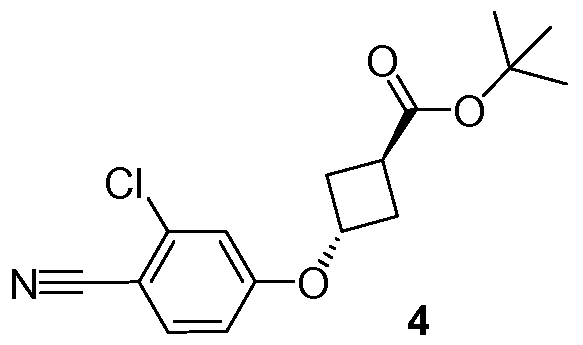


5 in the presence of activators such as TPP, DEAD or DIAD until the reaction is substantially complete to form a compound of Formula 4

2. A process for the preparation of a compound of Formula 6

comprising the steps of reacting hydroxylamine with a compound of Formula 4

until the reaction is substantially complete, forming a compound of Formula 6

3. A process for the preparation of a compound of Formula 8
 comprising the step of reacting compounds 6 and 7 in the presence of an activator such as carbonyldiimidazole, HATU or HOBT

until the reaction is substantially complete to form a compound of Formula 8

4. A process for the preparation of a compound of Formula 9 comprising of
 in the presence of a base such as tetrabutylammonium fluoride, diisopropylethylamine, DBU, or tetramethylguanidine until the reaction is substantially complete to form a compound of F

5. A process for the preparation of a compound of Formula 2

comprising the steps of reacting a compound of Formula 9


6. A process for the preparation of a compound of Formula 18


in the presence of a base such as potassium carbonate until the reaction is substantially complete to form a compound of Formula 18

18
7. A process for the preparation of a compound of Formula 19

19
wherein R is alkyl, comprising the step of reacting a compound of Formula 1

18
in a solution of hydrogen chloride gassed into an alcohol until the reaction is substantially complete to form a compound of Formula 19

19
A process for the preparation of a compound of Formula 20

20
wherein R is alkyl, comprising the step of reacting a compound of Formula 19

19
with hydroxylamine until the reaction is substantially complete to form a compound of Formula 20

20
9. A process for the preparation of a compound of Formula 21

wherein R is alkyl, comprising the step of reacting a compound of Formula 20

20
with DBU in THF until the reaction is substantially complete to form a compound of Formula 21
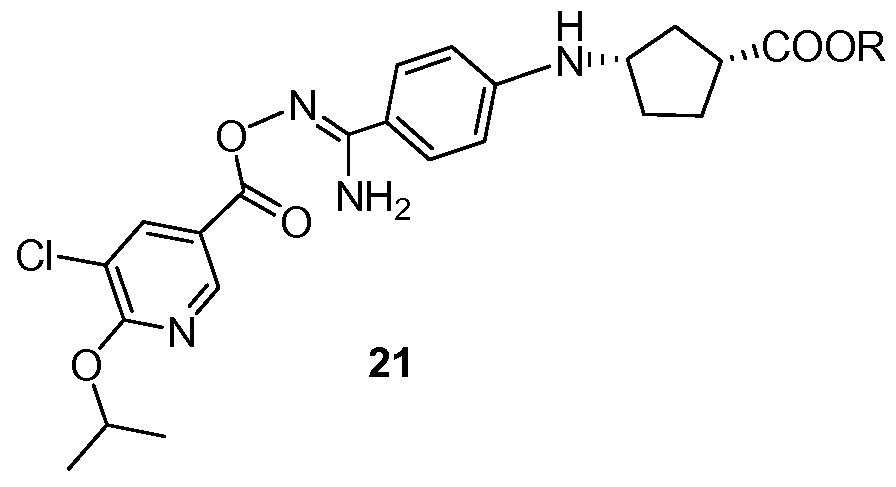
10. A process for the preparation of a compound of Formula 22


1. A process for the preparation of a compound of Formula 23

comprising the step of reacting sodium hydroxide and a compound of Formula 22
 wherein R is alkyl, until the reaction is substantially complete to form a compound of Formula 23
A process for the preparation of a compound of Formula 26

26
comprising the step of reacting compounds of Formula 24 and 25


26
13. A process for the preparation of a compound of Formula 27

comprising of cyclization of a compound of Formula 26

in the presence of a base such as until the reaction is substantially complete to form a
 comprising the step of reacting a compound of Formula 27

15. A process for the preparation of a compound of Formula 29


16. A process for the preparation of a compound of Formula 30

30 comprising the steps of reacting a compound of Formula 29


30
17. A process for the preparation of a compound of Formula 10

10
comprising the step of reacting the mixture of compounds of Formulas 3 a and 3b

3a 3b
with a compound of Formula 5

until the reaction is substantially complete to form a compound of Formula 10

10
18. A process for the preparation of a compound of Formula 1 1

11
comprising the steps of reacting hydroxylamine with a compound of Formula 10
10
reaction is substantially complete, forming a compound of Formula 1 1

11
A process for the preparation of a compound of Formula 13

13
comprising the step of reacting carbonyldiimidazole with compounds 1 1 and 12

until the reaction is substantially complete to form a compound of Formula 13
 A process for the preparation of a compound of Formula 14


Applications Claiming Priority (2)
| Application Number | Priority Date | Filing Date | Title |
|---|---|---|---|
| US201161450437P | 2011-03-08 | 2011-03-08 | |
| US61/450,437 | 2011-03-08 |
Publications (1)
| Publication Number | Publication Date |
|---|---|
| WO2012122338A1 true WO2012122338A1 (en) | 2012-09-13 |
Family
ID=46796130
Family Applications (1)
| Application Number | Title | Priority Date | Filing Date |
|---|---|---|---|
| PCT/US2012/028203 Ceased WO2012122338A1 (en) | 2011-03-08 | 2012-03-08 | Process for the preparation of 1,2,4-oxadiazol-3-yl derivatives of carboxylic acid |
Country Status (3)
| Country | Link |
|---|---|
| US (1) | US20120232277A1 (en) |
| TW (1) | TW201242932A (en) |
| WO (1) | WO2012122338A1 (en) |
Citations (4)
| Publication number | Priority date | Publication date | Assignee | Title |
|---|---|---|---|---|
| US6455528B1 (en) * | 1997-10-14 | 2002-09-24 | Mitsubishi Pharma Corporation | Piperazine compounds and medicinal use thereof |
| US20080280876A1 (en) * | 2006-12-15 | 2008-11-13 | Hobson Adrian D | Novel oxadiazole compounds |
| US20090118499A1 (en) * | 2004-04-02 | 2009-05-07 | Osi Pharmaceuticals, Inc. | 6,6-Bicyclic Ring Substituted Heterobicyclic Protein Kinase Inhibitors |
| US20100249057A1 (en) * | 2006-03-27 | 2010-09-30 | Otsuka Chemical Co., Ltd. | Trehalose compound and pharmaceutical comprising the compound |
-
2012
- 2012-03-08 US US13/415,054 patent/US20120232277A1/en not_active Abandoned
- 2012-03-08 TW TW101107965A patent/TW201242932A/en unknown
- 2012-03-08 WO PCT/US2012/028203 patent/WO2012122338A1/en not_active Ceased
Patent Citations (4)
| Publication number | Priority date | Publication date | Assignee | Title |
|---|---|---|---|---|
| US6455528B1 (en) * | 1997-10-14 | 2002-09-24 | Mitsubishi Pharma Corporation | Piperazine compounds and medicinal use thereof |
| US20090118499A1 (en) * | 2004-04-02 | 2009-05-07 | Osi Pharmaceuticals, Inc. | 6,6-Bicyclic Ring Substituted Heterobicyclic Protein Kinase Inhibitors |
| US20100249057A1 (en) * | 2006-03-27 | 2010-09-30 | Otsuka Chemical Co., Ltd. | Trehalose compound and pharmaceutical comprising the compound |
| US20080280876A1 (en) * | 2006-12-15 | 2008-11-13 | Hobson Adrian D | Novel oxadiazole compounds |
Non-Patent Citations (2)
| Title |
|---|
| FLETCHER ET AL.: "Structure-Based Design and Synthesis of Potent, Ethylenediamine-Based, Mammalian Farnesyltransferase Inhibitors as Anticancer Agents", J MED CHEM, vol. 53, no. 19, 2010, pages 6867 - 6888 * |
| KOENIG ET AL.: "A Facile Deprotection of Secondary Acetamides", ORG LETT, vol. 11, no. 2, 2009, pages 433 - 436, Retrieved from the Internet <URL:http://pubs.acs.org/doi/abs/10.1021/01802482d> * |
Also Published As
| Publication number | Publication date |
|---|---|
| US20120232277A1 (en) | 2012-09-13 |
| TW201242932A (en) | 2012-11-01 |
Similar Documents
| Publication | Publication Date | Title |
|---|---|---|
| AU2019202123B2 (en) | Method for producing substituted 5-fluoro-1H-pyrazolopyridines | |
| JP7022702B2 (en) | Benzazepine dicarboxamide compound having a secondary amide group | |
| JP7664971B2 (en) | Edoxaban manufacturing method | |
| US20050182055A1 (en) | Preparation process | |
| WO2004087650A2 (en) | Process and intermediates for the preparation of beta-amino acid amide dipeptidyl peptidase-iv inhibitors | |
| JP5735659B2 (en) | Method for producing sitagliptin intermediate | |
| EP4380932B1 (en) | Process for preparing aficamten | |
| KR20150041650A (en) | Processes for the preparation of (s)-3-4-((4-(morpholinomethyl) benzyl)oxy)-1-oxoisoindolin-2-yl) piperidine-2,6-dione and pharmaceutically acceptable forms thereof | |
| EP2796458A1 (en) | Crystalline raltegravir sodium salts | |
| EP2609099A2 (en) | Sitagliptin, salts and polymorphs thereof | |
| JP2018507858A (en) | Process for the preparation of topiroxostat and its intermediates | |
| AU2019201183A1 (en) | Synthesis of trans-8-chloro-5-methyl-1 -[4-(Pyridin-2-yloxy)-cyclohexyl]-5,6-dihydro-4H-2,3,5,10b-tetraaza-benzo[e]azulene and crytalline forms thereof | |
| US9688657B2 (en) | Synthesis of dabigatran | |
| CA2660736A1 (en) | Process and intermediates for the synthesis of 2-(quinolin-5-yl)-4,5 disubstituted-azole derivatives | |
| JP6625142B2 (en) | Novel intermediate for producing DPP-IV inhibitor, method for producing the same, and method for producing DPP-IV inhibitor using the same | |
| JP2003012672A (en) | Production and intermediates of growth hormone secretagogue | |
| CN106661033B (en) | The novel intermediates for being used to prepare the method for AZD5363 and using wherein | |
| JP2022512936A (en) | Method for preparing cytotoxic benzodiazepine derivative | |
| WO2011065420A1 (en) | Method for manufacturing a 6-substituted-1-methyl-1h-benzimidazole derivative, and manufacturing intermediate from said method | |
| US8703939B2 (en) | Method for preparing (R)-3-(3-fluoro-4-(1-methyl-5,6-dihydro-1,2,4-triazin-4(1H)-yl)phenyl)-5-(substituted methyl)oxazolidin-2-one derivatives | |
| TW202330535A (en) | Preparation method of DPP-IV inhibitor and key intermediate thereof | |
| US20120232277A1 (en) | Process for the preparation of 1,2,4-oxadiazol-3-yl derivatives of carboxylic acid | |
| HK40106451A (en) | Process for preparing aficamten | |
| NZ759478B2 (en) | Synthesis of trans-8-chloro-5-methyl-1-[4-(pyridin-2-yloxy)-cyclohexyl]-5,6-dihydro-4h-2,3,5,10b-tetraaza-benzo[e]azulene and crystalline forms thereof |
Legal Events
| Date | Code | Title | Description |
|---|---|---|---|
| 121 | Ep: the epo has been informed by wipo that ep was designated in this application |
Ref document number: 12755249 Country of ref document: EP Kind code of ref document: A1 |
|
| DPE2 | Request for preliminary examination filed before expiration of 19th month from priority date (pct application filed from 20040101) | ||
| NENP | Non-entry into the national phase |
Ref country code: DE |
|
| 122 | Ep: pct application non-entry in european phase |
Ref document number: 12755249 Country of ref document: EP Kind code of ref document: A1 |