WO2012109569A1 - The receptor for advanced glycation endproducts (rage) is a receptor for lysophosphatidic acid (lpa) - Google Patents
The receptor for advanced glycation endproducts (rage) is a receptor for lysophosphatidic acid (lpa) Download PDFInfo
- Publication number
- WO2012109569A1 WO2012109569A1 PCT/US2012/024701 US2012024701W WO2012109569A1 WO 2012109569 A1 WO2012109569 A1 WO 2012109569A1 US 2012024701 W US2012024701 W US 2012024701W WO 2012109569 A1 WO2012109569 A1 WO 2012109569A1
- Authority
- WO
- WIPO (PCT)
- Prior art keywords
- rage
- lpa
- antagonist
- subject
- receptor
- Prior art date
- Legal status (The legal status is an assumption and is not a legal conclusion. Google has not performed a legal analysis and makes no representation as to the accuracy of the status listed.)
- Ceased
Links
Classifications
-
- C—CHEMISTRY; METALLURGY
- C07—ORGANIC CHEMISTRY
- C07K—PEPTIDES
- C07K16/00—Immunoglobulins [IG], e.g. monoclonal or polyclonal antibodies
- C07K16/18—Immunoglobulins [IG], e.g. monoclonal or polyclonal antibodies against material from animals or humans
- C07K16/28—Immunoglobulins [IG], e.g. monoclonal or polyclonal antibodies against material from animals or humans against receptors, cell surface antigens or cell surface determinants
- C07K16/2803—Immunoglobulins [IG], e.g. monoclonal or polyclonal antibodies against material from animals or humans against receptors, cell surface antigens or cell surface determinants against the immunoglobulin superfamily
-
- A—HUMAN NECESSITIES
- A61—MEDICAL OR VETERINARY SCIENCE; HYGIENE
- A61K—PREPARATIONS FOR MEDICAL, DENTAL OR TOILETRY PURPOSES
- A61K31/00—Medicinal preparations containing organic active ingredients
-
- C—CHEMISTRY; METALLURGY
- C07—ORGANIC CHEMISTRY
- C07K—PEPTIDES
- C07K16/00—Immunoglobulins [IG], e.g. monoclonal or polyclonal antibodies
- C07K16/18—Immunoglobulins [IG], e.g. monoclonal or polyclonal antibodies against material from animals or humans
-
- A—HUMAN NECESSITIES
- A61—MEDICAL OR VETERINARY SCIENCE; HYGIENE
- A61K—PREPARATIONS FOR MEDICAL, DENTAL OR TOILETRY PURPOSES
- A61K39/00—Medicinal preparations containing antigens or antibodies
- A61K2039/505—Medicinal preparations containing antigens or antibodies comprising antibodies
Definitions
- LPA lysophosphatidic acid
- RAGE is a multi-ligand cell " "' surface receptor of the immunoglobulin superfamily comprised of three extracellular immunoglobulin (Ig) domains, a single transmembrane helix and a short disordered intracellular domain essential for RAGE- mediated signal transduction.
- Ig immunoglobulin
- 11 13
- Activation of RAGE by its ligands triggers a number of signaling cascades through the family of mitogen-activated protein kinases, and phosphatidylinositol 3-kinases.
- 12"16 Pharmacological antagonism or genetic modulation of RAGE has been shown to exert protection against disease pathologies characterized by up- regulation and accumulation of RAGE ligands, such as the complications of diabetes, atherosclerosis, inflammation, and tumors. 12 -"' 17"18
- a method for treating a lysophosphatidic acid (LPA) mediated disorder in a subject comprising administering to the subject an amount of an antagonist of receptor for advanced glycation endproducts (RAGE) effective to treat the LPA mediated disorder in the subject, wherein the RAGE antagonist inhibits the binding of RAGE with LPA.
- a method of treating a receptor for advanced glycation endproducts (RAGE) related disorder in a subject comprising administering to the subject an amount of an lysophosphatidic acid (LPA) antagonist effective to treat the RAGE related disorder in the subject, wherein the LPA antagonist inhibits the binding of LPA with RAGE.
- a method of treating ovarian cancer in a subject comprising administering to the subject an amount of an agent effective treat the ovarian cancer in the subject , ., wherein the agent inhibits the binding of receptor for advanced glycation endproducts (RAGE) with lysophosphatidic acid (LPA) .
- RAGE receptor for advanced glycation endproducts
- LPA lysophosphatidic acid
- Also provided is a method of inhibiting metastasis of ovarian cancer in a subject comprising administering to the subject an amount of an agent effective to inhibit metastasis of the ovarian cancer by inhibiting the binding, wherein the agent inhibits the binding of receptor for advanced glycation endproducts (RAGE) with lysophosphatidic acid (LPA) .
- RAGE receptor for advanced glycation endproducts
- LPA lysophosphatidic acid
- a method of treating atherosclerosis in a subject comprising administering to the subject an amount of an agent effective to treat the atherosclerosis in the subject, wherein the agent inhibits the binding of receptor for advanced glycation endproducts with lysophosphatidic acid (LPA) .
- LPA lysophosphatadic acid
- RAGE receptor for advanced glycation endproducts
- Also provided is a method for determining whether a compound inhibits the interaction of receptor for advanced glycation endproduct (RAGE) with lysophosphatidic acid ( LPA) comprising:
- step (c) comparing the amount of RAGE bound to LPA in step (b) with the amount determined when RAGE or fragment of RAGE is mixed with LPA in the absence of the compound, thereby determining whether the compound inhibits the interaction of LPA with RAGE, wherein a reduction of the amount of binding in the presence of the compound indicates that the compounds inhibits the interaction.
- FIGS 1A -ID RAGE is a functional LPA receptor in vascular smooth muscle cells .
- Fig. 1A and IB Quantified levels of phosphorylated/total AKT and ERK are shown in wild type and RAGE null smooth muscle cells (SMCs), upon 10 ⁇ LPA stimulation at the indicated times. Representative results from at least three independent experiments are shown.
- Figure 1C LPAi receptor levels as shown by Western blotting are equivalent in T and RAGE null SMCs. After probing with the primary anti-LPAi antibody, blots were stripped and reprobed with antibody to GAPDH .
- Figure ID Transiently-transfected vector control, RAGE- overexpressing and DN-RAGE-expressing primary murine aortic SMCs were stimulated with 10 ⁇ LPA for the indicated times.
- Total lysates were subjected to Western blotting with antibodies against total AKT or p-AKT. Quantified levels of phosphorylated/total Akt in the wild .type-transfected SMCs, upon LPA stimulation at different- times, are shown. Fold changes are relative to control. **P ⁇ 0.05.
- Figures 2A - 2G Direct binding of LPA to RAGE: Surface Plasmon Resonance and NMR.
- Figures 2A-2D SPR sensorgrams showing the interaction between RAGE and LPA.
- Figure 2A Binding of LPA (218 nM) to the immobilized RAGE surface on CM5 sensor chip.
- Figure 2B Binding of RAGE (4 nM) to the immobilized LPA surface on HPA sensor chip.
- Figure 2C Binding of RAGE V domain (1 ⁇ ) to the immobilized LPA surface.
- Figure 2D Binding of RAGE C2 domain (1 ⁇ ) to the immobilized LPA surface on .HPA sensor chip.
- Figure 2E Surface representation of ⁇ the V domain (PDB 3CJJ) colored by electrostatic field, . showing the highly - basic (blue) character of the LPA binding surface.
- Figure 2F NMR chemical shift perturbations mapped on the structure of the V domain (PDB 3CJJ) for LPA and Ca2+-loaded S100B. The significantly perturbed residues are highlighted in red.
- Figure 2G 15N-1H HSQC NMR spectrum of 15N-enriched C2 domain in the absence (black) and presence (red) of LPA.
- FIGS 3A - 3D LPA infusion into mouse hearts activates Akt signal transduction via RAGE .
- Figure 3A LPA (200 ⁇ of a 100 ⁇ solution) was infused directly into wild-type and RAGE null mice left ventricles. Aortas were retrieved and confocal microscopy was performed on aortic tissue and subjected to immunostaining for detection for p-Akt (15 mins). The left column reveals staining with a p-Akt-specific antibody; middle column reveals staining with monoclonal mouse smooth muscle actin antibody specific to SMC-actin; right column reveals the DAPI staining for nuclei.
- Figure 3B mice aortas were retrieved at 5 or 15 mins, lysed and LPA induced Akt phosphorylation was determined by immunoblotting .
- LPA stimulates SMC migration and proliferation via RAGE:
- Figures 3C and 3D Wild-type and RAGE-deficient SMCs were treated with 10 ⁇ LPA, S100B (10 pg/ml) or platelet-derived growth factor (PDGF)IO ng/ml for 5 or 48 hours, and at the end of that time, migration (Figure 3C) and (Figure 3D) proliferation, respectively, were assessed. Assays were performed in triplicate and result ' s shown are representative of three independent experiments. Error bars represent SD. *P ⁇ 0.005.
- RAGE is a functional LPA receptor on C6 glioma tumor cells , is required for autotoxin/LPA-mediated signaling in vivo, and LPA-induced growth of implanted ID8 tumor cells .
- Figure 4A Quantified levels of phosphorylated/total ERK in the C6, C6 full length-RAGE and C6 DN-RAGE cells upon LPA stimulation (10 ⁇ ) at different times, determined by immunoblotting are shown. Fold changes are relative to control.
- Figures 4D - Figures 41 ID8 ovarian cancer cells were implanted into immunocompetent T mice receiving PBS (Fig. 4D) , WT mice receiving LPA (Fig. 4E) , WT mice receiving LPA and sRAGE (Fig.
- FIG. 6 RAGE expression in transiently transfected vector, full length RAGE and DN-RAGE vascular SMCs .
- RAGE levels are shown by Western blotting in transfected SMCs and after probing with the primary anti-RAGE antibody, blots were stripped and reprobed with antibody to GAPDH.
- Figure 7 Immobilization of POPC liposomes and LPA-POPC liposomes on HPA sensor chip.
- a monolayer of POPC liposomes was formed on the flow cell 1 (dark blue)
- a monolayer of LPA-POPC liposomes was formed on the flow cell 2 (dark red) .
- Figure 8 15N-1H HSQC NMR complete spectrum of 15N-enriched C2 domain in the absence (black) and presence (red) of LPA .
- FIG. 9 Wound healing assay. Serum starved Wt SMCs and RAGE null SMCs were scratched and were treated with LPA (10 ⁇ ) or SlOOb (10 pg/ml) for 18hrs. LPA stimulated wound healing in Wt-SMCs but not in RAGE null SMCs . RAGE ligand SlOOb was used as reference.
- Figure 10 Expression of autotoxin in RAGE ' ' 7 *, MMTV-atx, and MMTV-abf/RAGE - ' mice.
- FIG. 11 Ovarian cancer ID8 cells express RAGE.
- RAGE expression is shown by Western blotting ID8 cells probing with the primary anti-RAGE antibody. The two left lanes show RAGE expression in lysates prepared from murine SMCs, and the right two lanes show RAGE expression in lysates prepared from murine ID8 cells. In each case, 20 g protein/lane was loaded.
- Figure 12 H&E staining of tumors from mice in (Figure 12A) WT-PBS, ( Figure 12B) WT-LPA, (Figure 12C) WT-LPA-sRAGE, ( Figure 12D) RAGE null PBS and (E) RAGE null LPA groups.
- This inventions provides a method for treating a lysophosphatidic acid (LPA) mediated disorder in a subject comprising administering to the.” subject an amount of an antagonist of receptor for advanced glycation endproducts (RAGE) effective to treat the LPA,, mediated disorder in the subject, wherein the RAGE antagonist inhibits the binding of RAGE with LPA.
- the antagonist of RAGE is a RAGE antibody.
- the antagonist of RAGE is a small molecule RAGE antagonist.
- the antagonist of RAGE is a fusion protein RAGE antagonist or a polypeptide RAGE antagonist.
- the LPA mediated disorder is correlated with elevated levels of LPA
- This invention also provides a method of treating a receptor for advanced glycation endproducts (RAGE) related disorder in a subject comprising administering to the subject an amount of an lysophosphatidic acid (LPA)- antagonist effective to treat the RAGE related disorder in the subject, wherein the LPA antagonist inhibits the binding of LPA with RAGE.
- RAGE receptor for advanced glycation endproducts
- the disorder is sepsis, atherosclerosis, multiple sclerosis, systemic lupus erythematosus, transplant rejection, asthma, arthritis, tumor growth, cancer, metastasis of cancer, complications due to diabetes, retinopathy, neuropathy, nephropathy, impotence, impaired wound healing, gastroparesis , Alzheimer's disease, Huntington's disease, amyotrophic lateral sclerosis, neointimal formation, amyloid angiopathy, inflammation, glomerular injury, seizure-induce neuronal damage, acute skin inflammation, chronic skin inflammation, psoriasis, atopic dermatitis, rheumatoid arthritis, lung inflammation, asthma, chronic obstructive pulmonary ' disease, diabetes, renal failure, hyperlipidemic atherosclerosis associated with diabetes, diabtes, diabetic late complication increased vascular permeability, diabetic late complication increase vascular permeability, diabetic late complication nephropathy
- the LPA antagonist is an anti-LPA antibody.
- the subject is a human.
- This invention also provides a method of treating ovarian cancer in a subject comprising administering to the subject an amount of an agent effective treat the ovarian cancer in the subject, wherein the agent inhibits the binding of receptor for advanced glycation endproducts (RAGE) with lysophosphatidic acid (LPA) .
- RAGE receptor for advanced glycation endproducts
- LPA lysophosphatidic acid
- Also provided is a method of inhibiting metastasis of ovarian cancer in a subject comprising- administering to the subject an amount of an agent effective to inhibit metastasis of the ovarian cancer by inhibiting the binding, wherein the agent inhibits the binding .of receptor for advanced glycation endproducts (RAGE) with lysophosphatidic acid (LPA) .
- This invention also provides a method of treating atherosclerosis in a subject comprising administering to the subject an amount of an agent effective to treat the atherosclerosis in the subject, wherein the agent inhibits the binding of receptor for advanced glycation endproducts with lysophosphatidic acid (LPA) .
- the agent is an antagonist of LPA.
- the antagonist of LPA is an anti-LPA antibody.
- the agent is an antagonist of RAGE.
- the antagonist of RAGE is a RAGE antibody, a small molecule RAGE antagonist, a fusion protein RAGE antagonist or a polypeptide RAGE antagonist.
- This invention provides a method for inhibiting lysophosphatadic acid (LPA) induced phosphorylation of Akt in a cell comprising administering to the cell an antagonist of receptor for advanced glycation endproducts (RAGE), thereby inhibiting the LPA induced phosphorylation of Akt in the cell.
- LPA lysophosphatadic acid
- RAGE advanced glycation endproducts
- the cell is a smooth muscle cell or an aortic smooth muscle cell.
- the antagonist of RAGE is a RAGE antibody, a small molecule RAGE antagonist, a fusion protein RAGE antagonist or a polypeptide RAGE antagonist .
- Also provided is a method for determining whether a compound inhibits the interaction of receptor for advanced glycation endproduct (RAGE) with lysophosphatidic acid (LPA) comprising :
- step (c) comparing the amount of RAGE bound to LPA in step (b) with the amount determined when RAGE or fragment of RAGE is mixed with LPA in the absence of the compound, thereby determining whether the compound inhibits the interaction of LPA with RAGE, wherein a reduction of the amount of binding in the presence of the compound indicates that the compounds inhibits the interaction.
- the RAGE of step (a) (iii) is fragment of RAGE.
- the fragment of RAGE is soluble RAGE, a fragment of RAGE which comprises the V-domain of RAGE, a fragment of RAGE which comprises amino acids 1-30 or 2-30 of the V-domain of RAGE, or a fragment of RAGE which binds to LPA.
- the compound is an organic molecule. In ⁇ other embodiments, the compound is a polypeptide, a nucleic acid, or an inorganic chemical.
- the compound is an antibody or a fragment thereof.
- the antibody or fragment thereof is an anti-LPA antibody or fragment thereof, such as, for example, any of the anti-LPA antibodies described herein.
- the antibody is a polyclonal or monoclonal antibody.
- the antibody is humanized, chimeric or primatized.
- the LPA is affixed to a solid surface.
- the RAGE or the fragment thereof is affixed to a solid surface.
- the LPA is detectably labeled.
- the RAGE or the fragment thereof is detectably labeled.
- the detectable label comprises fluorescence, biotin, or radioactivity.
- the amino acid sequence of human soluble RAGE is set forth in SEQ ID NO: 4.
- the amino acid sequence of human sRAGE without the signal sequence of amino acids 1-22 is set forth in SEQ ID NO : 5.
- the amino acid sequence of human sRAGE without the signal sequence of amino acids 1-23 is set forth in SEQ ID NO : 6.
- the amino acid sequence of the V-domain of human RAGE, withouht the signal sequence of amino acids 1-22, is set forth in SEQ ID NO : 7.
- the amino acid sequence of the V- domain of human RAGE, without the signal sequence of amino acids 1-33, is set forth in SEQ ID NO: SEQ ID NO : 8.
- N- terminal fragments of the V-domain of RAGE are set forth in SEQ ID Nos: 9 and 10. '
- Fragments of RAGE without the fir.st 19, 20, 21, 22 or 23 (leader sequence) amino acids are set forth, for example, in SEQ ID NOs ' :5, 6, 7, 8, 11, 12, 13, 14, ' 15, 16, 17, 18, 19, or 20.
- a "RAGE” antagonist is a chemical substance, for example a small molecule or an antibody, which reverses, reduces or blocks the physiological effect induced by RAGE acting as an agonist.
- LPA lipoprotein
- a "LPA” antagonist is a chemical substance, for example a small molecule or an antibody, which reverses, reduces or blocks the physiological effect induced by LPA acting as an agonist .
- a small molecule as used herein is an organic molecule or organic-based molecule having a molecular weight of less than 200 Daltons.
- the small molecules of the present invention are those having a molecular weight of less than 160 Daltons.
- the small molecule is an organic small molecule.
- Non-limiting examples of RAGE fusion proteins that can be used as RAGE antagonists in the present invention are described, for example, in the following publications: PCT International Application Publication No. WO/2008/100470; PCT International Application Publication No. WO/2004 /016229; PCT International Application Publication No. WO 2006/017647 Al; PCT International Application Publication No. WO 2006/017643 Al; U.S. Patent Application Publication No. US 2006/140933; U.S. Patent Application Publication No. US 2006/078562 ; U . S . Patent Application No. US 2006/0057679; U.S. Patent Application Publication No. 2006/0030527; PCT International Application Publication No. WO/2007/094926; U.S.
- RAGE fusion proteins which can be used as the RAGE antagonists recited in the present invention include those comprising soluble RAGE (sRAGE) (SEQ ID NO: 4) or a derivative thereof, for example a polypeptide being identical to SEQ ID NO: 4 except for a glycine as residue no.
- RAGE fusion proteins comprising fragments of these sequences may be used.
- the second polypeptide of the RAGE fusion proteins can comprise a non-RAGE polypeptide such as an immunoglobulin derived polypeptide, e.g.
- the second polypeptide of the RAGE fusion proteins can comprise a heavy chain fragment such as an Fc fragment, for example a heavy chain hinge polypeptide.
- the second polypeptide of the RAGE fusion protein is a C H 2 and/or C H 3 domain of an immunoglobulin (for example see SEQ ID NOs 21 and 22) .
- the second polypeptide of the RAGE fusion protein is a RAGE polypeptide as described above (e.g. sRAGE) linked to a polypeptide comprising a C H 2 domain of an immunoglobulin.
- the second polypeptide can comprise an interdomain linker derived from RAGE.
- the C H 2 domain comprises SEQ ID NO: 23.
- RAGE fusion proteins that may be employed as RAGE antagonists in the current invention are also described in PCT International Application Publication No. WO 2006/017643 which is hereby incorporated by reference in its entirety.
- the RAGE fusion protein is encode : d by the sequence set forth in SEQ ID NO:24 or SEQ ID NO:25.
- the RAGE fusion protein comprises the amino acid sequence set forth in one of SEQ ID NOs: 26-31.
- Non-limiting examples of other RAGE antagonists are described, for example, in the following publications: U.S. Patent Application Publication No. US 2008/119512; U.S. Patent No. 7,361,678; PCT International Application Publication No. WO/2003/075921; PCT International Application Publication No. WO 2007/089616; PCT International Application Publication No. WO 2007/076200; PCT International Application Publication No. WO 2007/0286858; PCT International Application Publication No. WO/2008/153957; PCT International Application Publication No. WO/2008/123914 ; PCT International Application Publication No. WO/2007 /130302 ; U.S. Patent No. 7,361,678; U.S. Patent No. 7,423,177; U.S. Patent No.
- anti-RAGE antibodies e.g., anti-RAGE antibodies
- RAGE antagonists are TransTech Pharma
- the RAGE antagonist is a
- the sma'll molecule is a
- LI is a C1-C4 alkyl group and L2 is a direct bond
- Aryli and Aryl 2 are aryl, wherein each of Aryli and Aryl 2
- Y and W are, independently selected from the group consisting of
- R18 and R19 are independently . selected from the group consisting of aryl, C1-C6 alkyl, C1-C6 alkylaryl, C1-C6 alkoxy, and C1-C6 alkoxyaryl;
- R20 is selected from the group consisting of aryl, C1-C6 alkyl, and C1-C6 alkylaryl;
- R7, R8, R9 and RIO are independently selected from the group consisting of hydrogen, aryl, C1-C6 alkyl, and C1-C6 alkylaryl; and wherein R7 and R8 may be taken together to form a ring having the formula -- (CH 2 )m--X— (CH 2 ) n-- bonded to the nitrogen atom to which R7 and R8 are attached, wherein m and n are, independently, 1, 2, 3, or 4; X is selected from the group consisting of CH2--, --0--, --S--, --S(0 2 )--, - -C(O)— , —CON(H)— , —NHC(O)-, — HCON(H)— , — HS0 2 — , — S0 2 N(H)— , —C(O)—O— , —O—C(O)— , —NHS0 2 NH— ,
- Aryl x and Aryl 2 are substituted with a lipophilic
- the small molecule is a compound having
- R x is -hydrogen, -alkyl, -alkenyl, or -alkynyl, Alis —N(R 2 )--
- R 2 is -phenyl
- G4 and G6 are independently selected from the group consisting of: alkylene, alkenylene, alkynylene, cycloalkylene, arylene, -alkylene-aryl, -alkenylene-aryl, alkenylene-heteroaryl, ' and a direct bond;
- G5 is --0--, --S--, --N(R 8 )--, --S(O)--, --S(0)2--, —C(0) ⁇ , --O--C(O)--, --C(0)--0— , —C(0)N(R 8 )-, —N(RB)C(0)— ,— S (0) 2 N(R 8 ) --, N (R 8 ) S (0) 2 --, .
- —O-alkylene-C (0)— , — (O)C- alkylene-0--, --O-alkylene-, -alkylene-0— , alkylene, alkenylene, alkynylene, cycloalkylene, arylene, fused cycloalkylarylene, or a direct bond, wherein R 3 is -hydrogen, -aryl, -alkyl, -alkylene-aryl, or -alkylene-O-aryl; wherein
- RT is -hydrogen, -aryl, -cycloalkyl, -alkyl, -alkenyl, - alkynyl, -alkylene-aryl, -alkylene-cycloalkyl, -fused cycloalkylaryl, or -alkylene-fused cycloalkylaryl;
- Yl and Wl are independently selected from the group consisting of -CH 2 — , —O— , — (H), -- ; S— , S0 2 — , —CON(H)— , --NHC(O)--, --NHCO (H) --, --NHS0 2 --, — S0 2 N(H)--, --C(0)--0--, - -NH SO2NH— , —0—CO— ,
- R12 and R13 are independently selected from the group consisting of: -aryl, -alkyl, -alkylene-aryl , -alkoxy, and - alkylene-O-aryl; and R 9 , Ri 0 , and Rll are independently selected, from the group consisting of: -aryl, -alkyl, and - alkylene-aryl;
- G6 is alkylene, alkenylene, alkynylene, cycloal kylene , heterocyclylene , arylene, heteroarylene , -alkylene-aryl, alkylene-heteroaryl , -alkenylene-aryl, -alkenylene- heteroaryl, or a direct bond;
- G5 is --0--, --S--, --N(R 8 ) ⁇ , --S(O)--, —S(0) 2 ⁇ , --C(O)--, —O--C(O)--, —C(O)—0- ⁇ -, —C(0)N(R 8 )— , N(R 8 )C(0)— ,— S (0) 2 N (R 8 ) --, N (R 8 ) S (0) 2 ⁇ --O-alkylene-C (O) --, --(O)C
- the aryl and/or alkyl group(s) in R 3 , R 7 , R B , Rg, Rio, Rii, R12, and R 13 may be optionally substituted 1-4 times with a substituent group, wherein said substituent group (s) are independently selected from the group consisting of:
- Y2 and W2 are independently selected from
- R 2 o are independently selected from the group consisting of: -hydrogen, -aryl, -alkyl, -al kylene-aryl , alkoxy, and -alkylene-O-aryl;
- R 18 is -aryl, -alkyl, -alkylene- aryl, or -alkylene-O-aryl;
- Y3 is selected from the group consisting of a direct bond, -- CH2--, --0--, --N(H), —S--, S0 2 — , —C(O)— , —CON(H)--, — NHC(O)--, --NHCON(H) --, --NHS0 2 ⁇ , --S0 2 N(H)— , --C (O) --0--, - -NHS0 2 NH-- , --0—CO--,
- R 27 and R 26 are independently selected from the group consisting of: -aryl, -alkyl, -alkylene-aryl, -alkoxy, and - alkyl-O-aryl ;
- alkylene groups may optionally contain one or more 0, S, S(0), or S0 2 atoms; and R23, R 24 , and R 25 are independently selected from the group consisting of: -hydrogen, -aryl, -alkyl, -alkylene-aryl, and -alkylene-O-aryl, and wherein
- R2 may be optionally substituted 1-4 times with a substituent group, wherein said substituent group (s) are independently selected from the group consisting of:
- Rig and R 20 are independently selected from the group consisting of: -hydrogen, -aryl, -alkyl, -alkylene-aryl , alkoxy, and -alkylene-O-aryl;
- Ri8 is -aryl, -alkyl, -alkylene-aryl, -alkylene-heteroaryl, or -alkylene-O-aryl;
- Y3 and Y5 are independently selected from the group consisting of a direct bond, --CH 2 --, --0--, --N(H), --S--, S0 2 — , --C(O)— ,
- R 27 and R 26 are independently selected from the group consisting of: -aryl, -alkyl, -alkylene-aryl, -alkoxy, and - alkyl-O-aryl;
- alkylene groups may optionally contain one or more O, S, S(O), or S0 2 atoms;
- heterocyclyl a) heterocyclyl , fused arylheterocyclyl , or fused heteroarylheterocyclyl, containing at least one basic nitrogen atom, or
- b) -imidazolyl, and f3 ⁇ 43 f R24 / and R 25 are independently selected .from the group consisting of: -hydrogen, -aryl, -heteroaryl, -alkylene- heteroaryl, -alkyl, -alkylene-aryl, -alkylene-O-aryl, and - alkylene-O-heteroaryl ; and R23 and R 2 may be taken together to form a five-membered ring having the formula -- (CH 2 ) S--X3-- (CH 2 )t-- bonded to the nitrogen atom to which R 23 and R 24 are attached wherein and t are, independently, 1, 2, 3, or is a direct bond, --CH 2 --, --0--, --E
- R 28 and R 2 9 are independently selected from the group consisting of: -hydrogen, -aryl, -heteroaryl, -alkyl, alkylene-aryl, and -alkylene-heteroaryl; wherein the alkyl and/or aryl groups in the optional substituents
- R2 may be optionally substituted 1-4 times with a substituent independently selected from the group consisting of:
- aryloxy and wherein the . aryl and/or alkyl group (s) . in R4 may be optionally substituted 1-4 times with a substituent group, wherein said substituent group(s) are independently selected from the group consisting of:
- Y2 and W2 are independently selected from the group consisting of --CH 2 --, --0--, --N(H), --S--, S0 2 --, --CON(H)--
- Ri 9 and R 2 o are independently selected from the group consisting of: -hydrogen, -aryl, -alkyl, -alkylene-aryl, alkoxy, and -alkylene-O-aryl;
- R18 is -aryl, -alkyl, -alkylene-aryl, -alkylene-heteroaryl, or -alkylene-O-aryl;
- Y3 and Y5 are independently selected from the group consisting of a direct bond, --CH2--, --0--, --N(H), --S--, S0 2 — , —C(O)— , —CON(H)— , -- HC(O)--, --NHC0N (H) --, NHS0 2 --, —S0 2 N(H)—, — e(0)--0— , —NHS0 2 NH— , —0—CO— ,
- R 27 and R 26 are independently selected from the group consisting of: -aryl, -alkyl, -alkylene-aryl, -alkoxy, and - alkyl-O-aryl ;
- alkylene groups may optionally contain one or more 0, S, S(0), or S0 2 atoms;
- heterocyclyl a) heterocyclyl , fused arylheterocyclyl , or fused heteroarylheterocyclyl, containing at least one basic nitrogen atom, or
- R23 2 and R 25 are independently selected from the group consisting of: -hydrogen, -aryl, -heteroaryl, -alkylene- heteroaryl, -alkyl, -al kylene-aryl , -al kylene-O-aryl , and - alkylene-O-heteroaryl; and 23 and R 24 may be taken together to form a five-membered ring having the formula -- (CH 2 ) S--X3-- (CH 2 )t-- bonded to the nitrogen atom to which R 2 3 and 2 4 are attached ' wherein s and t are, independently, 1, 2, 3, or 4; X3 is a direct bond, —CH 2 — , —0— , —S— , —S(0) 2 — , —C(0)- -, —CON(H)— , .
- R 28 and R 29 are independently selected from the group consisting of: -hydrogen, -aryl, -heteroaryl, -alkyl, alkylene-aryl , and -alkylene-heteroaryl; wherein the alkyl and/or aryl groups in the optional substituents
- R 2 and R 4 may be optionally abstituted 1-4 times with a substituent independently selected from the group consisting of:
- R 2 and R 4 is substituted with at least one group of the formula
- the antagonist is a compound having the structure :
- Rl and R2 are independently selected from
- R3 is selected from
- aryl is substituted by Cl-6 alkyl, Cl-6 alkoxy, Cl-6 alkylaryl, or Cl-6 alkoxyaryl;
- R4 is selected from
- R5 and R6 are independently selected from .the group consisting of hydrogen, C1-C6 alkyl, C1-C6 alkylaryl, and aryl; and wherein the aryl and/or alkyl group(s) in Ri, R 2 , R «, R5, R7, e, R 9 , R 10 , RIB, Ri9 and R 2 o may be optionally substituted 1-4 times with a substituent group, wherein said substituent group (s) or the term substituted refers to groups selected from the group consisting of:
- Y and are independently selected from the group consisting of --CH 2 --, --0--, --N(H), --S--, S0 2 --, --CON(H)--, -- NHC(O)— , —NHCON(H)—, —NHS0 2 --, —S0 2 N(H)— ,
- R 18 and R 19 are independently selected from the group consisting of aryl, C1-C6 alkyl, C1-C6 alkylaryl, C1-C6 alkoxy, and C1-C6 alkoxyaryl;
- R 2 o is selected from the group consisting of aryl, C1-C6 alkyl, and C1-C6 alkylaryl;
- R 7 , Re, 9 and Rio are independently selected from the group consisting of hydrogen, aryl C1-C6 alkyl, and C1-C6 alkylaryl; and wherein
- R 7 and R 8 may be taken together to form a ring having the formula -- (CH 2 ) m--X-- (CH 2 ) n -- bonded to the nitrogen atom to which R 7 and e are attached, and/or R5 and R 6 may, independently, be taken together to form a ring having the formula -- (CH 2 ) m--X-- (CH 2 ) n -- bonded to the nitrogen atoms to which R5 and R6 are attached, wherein m and n are, independently, 1, 2, 3, or 4; X is selected from the group consisting of —CH2 — , --0— , — " S--, --S(0 2 )--, —C(O)--, — CON(H)— , —NHC(O)— , — HCON(H)— , — HS0 2 — , —S0 2 N(H)— , - -C(0)—O— , —0—C(O
- Non-limiting examples of anti-LPA antibodies as LPA antagonists include the anti-LPA antibody LpathmobTM (LT3000) (LPath Inc., San Diego, CA) .
- LPA anti-LPA antibody LpathmobTM
- Such -anti-LPA antibodies are described in PCT International Application Publication NO. WO 2010/121093, published October 21, 2010, the entire contents of which are hereby incorporated by reference.
- LPA indications may be treated using RAGE antagonists.
- LPA has been associated with a number of diseases and disorders. For review, see Gardell et a'l . , (2006) Trends Mol . Med. 12(2): 65-75 and Chun J. and Rosen H., (2006) Curr. Pharma. Design 12:161-171.
- diseases and disorders include, for example, autoimmune disorders such as diabetes, multiple sclerosis and scleroderma; hyperproliferative disorders including cancer; disorders associated with angiogenesis and neovascularization; obesity; neurodegenerative diseases including Alzheimer's disease; schizophrenia; immune related disorders such as transplant rejection and graft-vs .
- RAGE indications may be treated using LPA antagonists.
- Ishiguro H (Prostate. 2005 Jun 15; 64(1): 92- 100) describes that the receptor for advanced glycation end. products (RAGE) and its ligand, amphoterin are overexpressed and associated with prostate cancer development.
- Hudson BI Pharm Res. 2004 Jul ; 21 ( 7 ) : 1079-86 ) describe that RAGE is a novel target for drug intervention in diabetic vascular disease.
- Flyvbjerg A describe the long-term renal effects of a neutralizing RAGE antibody in obese type 2 diabetic mice (Diabetes.
- an "immunoglobulin domain” is a sequence of amino acids that is structurally homologous, or identical to, a domain of an immunoglobulin.
- the length of the sequence of amino acids of an immunoglobulin domain may be up to 500 amino acids.
- an immunoglobulin domain may be less than 250 amino acids.
- an immunoglobulin domain may be about 80-150 amino acids in length. For example, the variable.
- the CHI, CH2, and CH3 regions of an IgG are each immunoglobulin domains.
- the variable, the CHI, CH2, CH3 and CH4 regions of an IgM are each immunoglobulin domains.
- a "RAGE immunoglobulin domain” is a sequence of amino acids from RAGE protein that is structurally homologous, or identical to, a domain of an immunoglobulin.
- a RAGE immunoglobulin domain may comprise the RAGE V-domain, the RAGE Ig-like C2-type 1 domain ("CI domain"), or the RAGE Ig-like C2- type 2 domain (“C2 domain”) .
- RAGE antagonsists or LPA antagonists described herein may be by way of compositions containing one of the antagonists and a pharmacetically acceptable carrier.
- a "pharmaceutical acceptable carrier” is a pharmaceutically acceptable solvent, suspending agent or vehicle, for delivering an active compound to a mammal, including humans.
- the carrier may be liquid, aerosol, gel or solid and is selected with the . planned manner of administration in mind.
- the pharmaceutical carrier is a sterile pharmaceutically acceptable solvent suitable for intravenous administration.
- the pharmaceutical carrier is a pharmaceutically acceptable solid suitable for oral administration.
- administering can be effected or performed using any of the various methods and delivery systems known to those skilled in the art.
- the administering can be, for example, intravenous, oral, intramuscular, intravascular, intra-arterial , intracoronary, intramyocardial, intraperitoneal, and subcutaneous.
- Other non-limiting examples include via topical coating of a blood vessel, coating of a device to be placed within the subject, coating of an instrument used during a procedure which, for example, otherwise results in blood vessel injury, or contacting blood of the subject during extracorporeal circulation.
- administration is effected by injection or via a catheter.
- Injectable drug delivery systems that may be employed in the methods described herein include solutions, suspensions, gels.
- Oral delivery systems include tablets and capsules. These can contain excipients such as binders (e.g., hydroxypropylmethylcellulose, polyvinyl pyrilodone, other cellulosic materials and starch), diluents (e.g., lactose and other sugars, starch, dicalcium phosphate and cellulosic materials), disintegrating agents (e.g., starch polymers and cellulosic materials) and lubricating agents (e.g., stearates and talc) .
- binders e.g., hydroxypropylmethylcellulose, polyvinyl pyrilodone, other cellulosic materials and starch
- diluents e.g., lactose and other sugars, starch, dicalcium phosphate and cellulosic materials
- disintegrating agents e
- Solutions, suspensions and powders for reconstitutable delivery systems include vehicles such as suspending agents (e.g., gums, zanthans, cellulosics and sugars), humectants (e.g., sorbitol), solubilizers (e.g., ethanol, water, PEG and propylene glycol), surfactants (e.g., sodium lauryl sulfate, Spans, Tweens, and cetyl pyridine) , preservatives and antioxidants (e.g., parabens, vitamins E and C, and ascorbic acid), anti-caking agents, coating agents, and chelating agents (e.g., EDTA) .
- suspending agents e.g., gums, zanthans, cellulosics and sugars
- humectants e.g., sorbitol
- solubilizers e.g., ethanol, water, PEG and propylene glyco
- the term "effective amount" refers to the quantity of a component that is sufficient to yield a desired therapeutic response without undue adverse side effects (such as toxicity, irritation, or allergic response) commensurate with a reasonable benefit/risk ratio when used in the manner of this invention, i.e. a therapeutically effective amount.
- the specific effective amount will : vary with such factors as the particular condition being treated, . the physical condition of the patient, the type of mammal being treated, the duration of the treatment, the nature of concurrent therapy (if any), and the specific formulations employed and the structure of the compounds or its derivatives.
- Treatment of the diseases recited herein, e.g. of a ovarian cancer, encompasses inducing inhibition, regression, or stasis. of the disorder.
- the methods of treatment described herein with the LPA antagonist or RAGE antagonist may be a component of a combination therapy or an adjunct therapy.
- This combination therapy can be sequential therapy ' where the patient is treated first with one drug and then the other, or the two drugs are given simultaneously. These can be administered independently by the same route or by two or more different routes of administration depending on the dosage forms employed.
- Lysophosphatidic acid is an endogenous phospholipid produced by stressed vascular cells and in tumors, by transformed cells as well as peri-tumor inflammatory, vascular and stromal cells. LPA regulates fundamental cellular processes such as proliferation, survival, motility and invasion, hence, in order to curtail aberrant vascular expansion and tumor growth, delineation of the precise molecular mechanisms by which LPA exerts its broad effects is essential. Although LPA may interact with G-protein coupled receptors (G-PCRs), abundant evidence implicates other unidentified LPA receptor (s) or possibly non-receptor pathways in the biological actions of this molecule.
- G-PCRs G-protein coupled receptors
- RAGE The receptor for advanced glycation endproducts
- RAGE The receptor for advanced glycation endproducts
- RAGE avidly binds LPA and the LPA binding site is mapped on RAGE.
- RAGE was required for LPA-mediated signal transduction in smooth muscle cells and C6 glioma cells, as well as proliferation and migration.
- LPA serves as a RAGE ligand in vascular cells in vivo
- LPA was infused into the left ventricles of wild-type and RAGE null mice and activation of signal transduction pathways was assayed.
- wild-type mice LPA induced rapid (15 minutes) activation of Akt in vivo in SMCs as revealed by immunostaining of aorta tissue sections and Western blotting for detection of phospho-Akt.
- RAGE null mice displayed significantly less Akt phosphorylation in the aorta after administration of LPA (Fig. 3A-B) .
- Fig. 3A-B shows that at 5 minutes- after infusion of LPA, no activation of Akt was evident in wild-type or RAGE null mice (Fig.
- LPA displays chemoattractant effects in vascular SMCs. 5"6
- SMCs retrieved from RAGE-expressing or RAGE null mouse aortas. Migration and proliferation responses to LPA in RAGE null SMCs were significantly lower than those observed in WT SMCs (Fig. 3C and 3D). Similar patterns of migration and proliferation were noted in SMCs exposed to a distinct RAGE ligand, SIOOB (Fig. 3C and 3D) .
- ERK mitogen-activated protein (MAP) kinase activity is stimulated by LPA in C6 glioma cells.
- MAP mitogen-activated protein
- C6 cells stably expressing vector control full-length RAGE or DN-RAGE .
- 13 C6 glioma cells stably expressing ⁇ full-length RAGE revealed strong phosphorylation of ERK- in response to LPA over 15 minutes stimulation which was greater than that seen in vector alone cells (Fig. 4A) .
- LPA stimulation of ERK phosphorylation was not detected in stably expressing DN- RAGE C6 cells (Fig. 4A) .
- Mammary glands were retrieved from female animals at age 6 weeks to determine the effects of RAGE deletion on modulation of early signal transduction pathways implicated in tumorigenesis 33 .
- mammary glands retrieved from those mice devoid of RAGE revealed significantly less phosphorylation of Akt (Fig. , 4B) and phosphorylation of cyclin Dl (Fig. 4C) .
- Levels of atx in the mammary tissue did not differ between MMTV-atx expressing rage versus MMTV-atx mice devoid of RAGE (Fig. 10) .
- Ligand-stimulated cellular migration contributes integrally to multiple facets of RAGE biology, notably in inflammatory processes and tumorigenesis. 12"14
- There is also substantial evidence of specific contribution ' s to diabetes pathogenesis and complications, as blockade of RAGE 1 - ' (i) limited influx of macrophages and lymphocytes into pancreatic islets in NOD/scid mice, 27 (ii) suppressed smooth muscle cell migration in injured arteries, 14,28 and (iii) mitigated macrophage and smooth muscle cell infiltration into atherosclerotic plaques in mice deficient in apolipoprotein E.
- LPA-RAGE axis may be a hitherto unrecognized etiological factor in chronic inflammatory diseases such as diabetes, "; atherosclerosis and in tumorigenesis .
- LPA has additional' links to RAGE, as mildly oxidized forms of LDL may contain LPA.
- AGE-containing epitopes within oxidized LDL contributed to its pro-inflammatory effects. 29 From the present work we infer that LPA species within oxidized LDL may signal via RAGE as well.
- RAGE ligands exhibit different structure, size and symmetry or even no symmetry as in the case of glycated proteins or amyloid ⁇ .
- LPA receptors were suggested by in vitro studies in cultured murine and human ovarian epithelial cancer cells in which small interfering RNAs or the LPA.
- receptori-2-3 inhibitor KH6425 decreased cellular invasion and migration. 31"32 Specific roles for these receptors in vivo have yet to be addressed in ovarian cancer models, but roles from LPA1-2-3 receptors have recently been demonstrated in mammary tumorigenesis in vivo 33 .
- Human sRAGE, V domain and- C2 domain proteins were expressed and purified as described 17 ⁇ 22"23 .
- LPA and LPA Liposomes 18:1 Lysophosphatidic Acid (LPA) or 18:1 Lyso PA l-oleoyl-2-hydroxy-sn-glycero-3-phosphate (sodium salt), 100 nm size LPA-POPC (1:10, w/w) liposomes and POPC (l-Palmitoyl-2-01eoyl-sn-Glycero-3-Phosphocholine) liposomes were obtained from Avanti Polar Lipids Inc.
- Lysophosphatidic acid (LPA) dilutions were prepared in HBS buffer and injected sequentially over two flow cells at a flow rate of 10 ⁇ /min. Surface regeneration was achieved using a 60 sec injection of 2 M NaCl . The response curve was obtained by subtraction of the signals over the reference surface from the binding response ' 'over RAGE immobilized surface. sRAGE and domains binding to LPA immobilized surface . LPA- liposomes were used to generate a stable 'mimic membrane' on the HPA sensor surfaces. The 18:1 Lysophosphatidic Acid (LPA), LPA-POPC (1:10, w/w) liposomes and POPC liposomes were obtained from Avanti Polar Lipids Inc.
- the chips were cleaned by washing with octyl glucoside for 1 min at 10 ⁇ /min, and 0.5 mM liposomes as prepared above were passed over the flow cells for 25 min at 4 ⁇ /min. The chips were washed with. a 30 sec injection of 50 mM sodium hydroxide twice to remove the loosely bound liposomes to obtain stable base line.
- a monolayer of l-palmitoyl-2-oleoyl-sn- glycero-3-phosphocholine (POPC) ' was deposited in flow cell 1 and referred to as POPC surface.
- a monolayer of LPA-POPC was deposited in flow cell 2 and referred to as LPA-POPC surface.
- Wild-type and RAGE null mice primary aortic vascular smooth muscle cells were isolated and employed through passage 5 to 7.
- Rat C6 glioma cells were obtained from ATCC .
- Murine epithelial ovarian cancer ID8 cells were a generous gift from Dr. Katherine Roby (Kansas University Medical Center) .
- Total cell or aorta lysates were immunoblotted and probed with LPA1, AKT-specific antibody, p-AKT-specific antibody, ERK, pERK (Cell Signaling Technology) , HRP-conj ugated donkey anti-rabbit IgG (Amersham Pharmacia Biotechnology) or HRP- conjugated sheep anti-mouse IgG' ⁇ (Amersham Pharmacia Biotechnology) was used to identify sites of binding of the primary antibody. After probing with the primary antibodies, membranes were stripped of bound immunoglobulins and reprobed with GAPDH (Abeam) or for relative total protein.
- Acetone-fixed cryostat aortic sections were preincubated with CAS-BLOCK (Zymed; Invitrogen) for 30 minutes followed by avidin-biotin block for 15 minutes; sections were then subjected to incubation with primary rabbit polyclonal RAGE IgG; Akt and p-Akt (Cell Signaling) 1 overnight at 4°C followed by goat anti-rabbit IgG (Vector Laboratories). Subsequently, Alexa Fluor 555 conjugate (Invitrogen) was incubated for 30 minutes.
- mouse monoclonal smooth muscle actin ( DakoCytomatin ) antibody was incubated for 1 hour followed by anti-rat or anti-mouse IgG for 30 minutes, and then incubated with Alexa Fluor 488 conjugate for 30 minutes, and finally mounted with 4 , 6-diamidino-2-phenylindole dihydrochloride (Vector Laboratories) .
- Rabbit IgG (Zymed; Invitrogen) or omission of the primary antibody was used as a negative control.
- Slides were mounted with Vectorshield mounting media (Vector) and observed with an oil immersion objective using a Nikon E800 microscope. Images were collected using a Bio-Rad Radiance 2000 Confocal System .and the Lasersharp 2000 software (Bio-Rad) . Smooth Muscle Cell Assays
- Vascular smooth muscle cells were cultured to 90% confluence. Cells were rinsed with PBS and placed in low serum media (1.5 ml; 0.5% - 0.1% serum in DMEM) overnight . A scratch line was then drawn using a sterile 200 ⁇ pipet tip. Three , separate scratch wounds through the cell monolayer moving perpendicular to the line were drawn in the step above. Cells were rinsed very gently with PBS and replaced with 1:5 ' ml of media containing additives (10 ⁇ LPA or 10 pg/ml S100B final concentration). Photographs were taken after 18 hours using phase contrast and 10X.
- mice were perfused through the- left ventricle with 2 ml of sterile phosphate buffered saline (PBS) to remove all blood.
- PBS sterile phosphate buffered saline
- the aorta at the level of the bifurcation 'of the femoral arteries was cross-clamped and 200 ⁇ of a 100 ⁇ solution of LPA was injected using a 22-gauge needle. Control animals received equal volumes of PBS. At 5 mins and 15 mins after injection, the aorta from the point distal to exit from the left ventricle to the clamp site was rapidly excised and placed in ice cold buffer. Western blotting for detection of phospho/total . Akt and immunohxstochemistry to detect phospho-Akt was performed.
- mice were injected by intraperitoneal (i.p.) route with 5 * 10 6 ID8 cells in 1 mL PBS and LPA was administered daily (100 pmol/L) in 200 pL PBS or PBS or LPA(100 pmol/L) in 200 pL PBS and sRAGE (50 pmol/L) in 200 pL PBS injections for 4 weeks.
- Tumorigenesis was recorded by counting the numbers and sizes of tumor foci on each organ.
- mice in the FVB genetic background were bred into RAGE null background (backcrossed >12 generations into FVB) 33 .
- RAGE-expressing and RAGE null MMTV-atx littermate mice were sacrificed at age 6 weeks and all mammary tissue collected and pooled for analysis by Western blotting.
- LPA Lysophosphatidic acid
- Leclerc, E. et al. S100B and S100A6 differentially modulate cell survival by interacting with distinct RAGE (receptor for advanced glycation end products) immunoglobulin domains. J Biol Chem. 282(43), 31317-3131 (2007) .
Landscapes
- Health & Medical Sciences (AREA)
- Chemical & Material Sciences (AREA)
- Immunology (AREA)
- Organic Chemistry (AREA)
- Medicinal Chemistry (AREA)
- Life Sciences & Earth Sciences (AREA)
- General Health & Medical Sciences (AREA)
- Biochemistry (AREA)
- Genetics & Genomics (AREA)
- Molecular Biology (AREA)
- Proteomics, Peptides & Aminoacids (AREA)
- Biophysics (AREA)
- Pharmacology & Pharmacy (AREA)
- Epidemiology (AREA)
- Animal Behavior & Ethology (AREA)
- Public Health (AREA)
- Veterinary Medicine (AREA)
- Medicines That Contain Protein Lipid Enzymes And Other Medicines (AREA)
Abstract
Provided herein are methods for treating a lysophosatidic acid (LPA) mediated disorder in a subject comprising administering antagonists of receptor for advanced glycation endproducts (RAGE). Also provided are methods of treating RAGE related disorders comprising administering LPA antagonists. Still further, provided are methods for treating ovarian cancer, inhibiting metastasis of ovarian cancer and treating atherosclerosis comprising administering an agent that inhibits the binding of RAGE with LPA. Also described are methods for inhibiting LPA induced phsophorylation of Akt in a cell comprising administering an antagonist of RAGE. Finally, described herein are methods for determining whether a compound inhibits the interaction of RAGE with LPA.
Description
THE RECEPTOR FOR ADVANCED GLYCATIQN ENDPRODUCTS (RAGE) IS A
RECEPTOR FOR LYSOPHOSPHATIDIC ACID (LPA)
This application claims priority of U.S. Provisional Application No. 61/442,061, filed February 11, 2011, the entire content of which is hereby incorporated by reference herein.
This invention was made with government support under HL60901 awarded by the National Heart, Lung, and Blood. Institute and GM62112 awarded by the National Institute of General Medical Science. The government has certain rights in the invention.
Throughout this application, ...'various publications are referenced by citation, in parentheses by number, or by superscript by number. Full citations for the numbered references may be found at the end of the specification immediately preceding the claims. The disclosures of all of these publications in their entireties are hereby incorporated by reference into this application to more fully describe the state of the art to which this invention pertains.
Background
Endogenous phospholipids such as lysophosphatidic acid (LPA) regulate cellular signal transduction cascades implicated in diverse homeostatic and pathological conditions.1"3 The production of LPA is tightly regulated through the activity of the enzyme autotaxin, the principal source of LPA in the tissues.4 In the vasculature and in tumors, LPA stimulates cellular proliferation, survival, motility, invasion, and production of growth factors.1-3 LPA appears to exert homeostatic effects in development, but in adult organisms, recrudescence of LPA signaling in stressed tissues is met
with pathological responses such as neointimal expansion and tumor growth and metastasis.1"6
RAGE is a multi-ligand cell ""' surface receptor of the immunoglobulin superfamily comprised of three extracellular immunoglobulin (Ig) domains, a single transmembrane helix and a short disordered intracellular domain essential for RAGE- mediated signal transduction.11"13 Activation of RAGE by its ligands triggers a number of signaling cascades through the family of mitogen-activated protein kinases, and phosphatidylinositol 3-kinases.12"16 Pharmacological antagonism or genetic modulation of RAGE has been shown to exert protection against disease pathologies characterized by up- regulation and accumulation of RAGE ligands, such as the complications of diabetes, atherosclerosis, inflammation, and tumors.12-"'17"18
Summary of the Invention
Provided is a method for treating a lysophosphatidic acid (LPA) mediated disorder in a subject comprising administering to the subject an amount of an antagonist of receptor for advanced glycation endproducts (RAGE) effective to treat the LPA mediated disorder in the subject, wherein the RAGE antagonist inhibits the binding of RAGE with LPA. Also provided is a method of treating a receptor for advanced glycation endproducts (RAGE) related disorder in a subject comprising administering to the subject an amount of an lysophosphatidic acid (LPA) antagonist effective to treat the RAGE related disorder in the subject, wherein the LPA antagonist inhibits the binding of LPA with RAGE.
Provided is a method of treating ovarian cancer in a subject comprising administering to the subject an amount of an agent effective treat the ovarian cancer in the subject,., wherein the agent inhibits the binding of receptor for advanced glycation endproducts (RAGE) with lysophosphatidic acid (LPA) .
Also provided is a method of inhibiting metastasis of ovarian cancer in a subject comprising administering to the subject an amount of an agent effective to inhibit metastasis of the ovarian cancer by inhibiting the binding, wherein the agent inhibits the binding of receptor for advanced glycation endproducts (RAGE) with lysophosphatidic acid (LPA) .
Still further, provided is a method of treating atherosclerosis in a subject comprising administering to the subject an amount of an agent effective to treat the atherosclerosis in the subject, wherein the agent inhibits the binding of receptor for advanced glycation endproducts with lysophosphatidic acid (LPA) .
Provided is a method for - inhibiting lysophosphatadic acid (LPA) induced phosphorylation of Akt in a cell comprising administering to the cell an antagonist of receptor for advanced glycation endproducts (RAGE) , thereby inhibiting the LPA induced phosphorylation of Akt in the cell.
Also provided is a method for determining whether a compound inhibits the interaction of receptor for advanced glycation endproduct (RAGE) with lysophosphatidic acid ( LPA) comprising:
(a) admixing:
(i) the compound,
(ii) LPA, and
(iii) RAGE or a fragment of RAGE which binds to LPA;
(b) determining the amount of RAGE bound to LPA; and
(c) comparing the amount of RAGE bound to LPA in step (b) with the amount determined when RAGE or fragment of RAGE is mixed with LPA in the absence of the compound, thereby determining whether the compound inhibits the interaction of LPA with RAGE, wherein a reduction of the amount of binding in the presence of the compound indicates that the compounds inhibits the interaction.
Brief Description of the Figures
Figures 1A -ID. RAGE is a functional LPA receptor in vascular smooth muscle cells .
Fig. 1A and IB: Quantified levels of phosphorylated/total AKT and ERK are shown in wild type and RAGE null smooth muscle cells (SMCs), upon 10 μΜ LPA stimulation at the indicated times. Representative results from at least three independent experiments are shown. Figure 1C: LPAi receptor levels as shown by Western blotting are equivalent in T and RAGE null SMCs. After probing with the primary anti-LPAi antibody, blots were stripped and reprobed with antibody to GAPDH . Figure ID: Transiently-transfected vector control, RAGE- overexpressing and DN-RAGE-expressing primary murine aortic SMCs were stimulated with 10 μΜ LPA for the indicated times. Total lysates were subjected to Western blotting with antibodies against total AKT or p-AKT. Quantified levels of phosphorylated/total Akt in the wild .type-transfected SMCs, upon LPA stimulation at different- times, are shown. Fold changes are relative to control. **P < 0.05.
Figures 2A - 2G. Direct binding of LPA to RAGE: Surface Plasmon Resonance and NMR. Figures 2A-2D: SPR sensorgrams showing the interaction between RAGE and LPA. Figure 2A: Binding of LPA (218 nM) to the immobilized RAGE surface on CM5 sensor chip. Figure 2B: Binding of RAGE (4 nM) to the immobilized LPA surface on HPA sensor chip. Figure 2C: Binding of RAGE V domain (1 μΜ) to the immobilized LPA surface. Figure 2D: Binding of RAGE C2 domain (1 μΜ) to the immobilized LPA surface on .HPA sensor chip. Figure 2E: Surface representation of■ the V domain (PDB 3CJJ) colored by electrostatic field, . showing the highly - basic (blue) character of the LPA binding surface. Figure 2F: NMR chemical shift perturbations mapped on the structure of the V domain (PDB 3CJJ) for LPA and Ca2+-loaded S100B. The significantly perturbed residues are highlighted in red. Figure 2G: 15N-1H HSQC NMR spectrum of 15N-enriched C2 domain in the absence
(black) and presence (red) of LPA.
Figures 3A - 3D . LPA infusion into mouse hearts activates Akt signal transduction via RAGE . Figure 3A: LPA (200 μΐ of a 100 μΜ solution) was infused directly into wild-type and RAGE null mice left ventricles. Aortas were retrieved and confocal microscopy was performed on aortic tissue and subjected to immunostaining for detection for p-Akt (15 mins). The left column reveals staining with a p-Akt-specific antibody; middle column reveals staining with monoclonal mouse smooth muscle actin antibody specific to SMC-actin; right column reveals the DAPI staining for nuclei. Figure 3B: mice aortas were retrieved at 5 or 15 mins, lysed and LPA induced Akt phosphorylation was determined by immunoblotting . LPA stimulates SMC migration and proliferation via RAGE: Figures 3C and 3D: Wild-type and RAGE-deficient SMCs were treated with 10 μΜ LPA, S100B (10 pg/ml) or platelet-derived growth factor (PDGF)IO ng/ml for 5 or 48 hours, and at the end of that time, migration (Figure 3C) and (Figure 3D) proliferation, respectively, were assessed. Assays were performed in triplicate and result's shown are representative of three independent experiments. Error bars represent SD. *P < 0.005. Figures 4A - 41. RAGE is a functional LPA receptor on C6 glioma tumor cells , is required for autotoxin/LPA-mediated signaling in vivo, and LPA-induced growth of implanted ID8 tumor cells . Figure 4A: Quantified levels of phosphorylated/total ERK in the C6, C6 full length-RAGE and C6 DN-RAGE cells upon LPA stimulation (10 μΜ) at different times, determined by immunoblotting are shown. Fold changes are relative to control. Figures 4B-4C: MMTV-atx mice were bred into the RAGE null background and these mice and littermate RAGE expressing MMTV-atx were studied; at age 6 weeks, mammary tissue from the mice was retrieved and subjected to Western blotting for detection of phosphorylated/total Akt and phosphorylated/total cyclin Dl .
N=at least 3 replicates per group; * indicates <0.005. Figures 4D - Figures 41: ID8 ovarian cancer cells were implanted into immunocompetent T mice receiving PBS (Fig. 4D) , WT mice receiving LPA (Fig. 4E) , WT mice receiving LPA and sRAGE (Fig. 4F) , RAGE null mice receiving PBS (Fig. 4G) , and RAGE null mice receiving LPA (Fig 4H) and tumor numbers/cm2 on day 28 are shown, n = 5 per group (Fig. 41). The dose of LPA was 200 μΐ of a 100 μΜ solution given per day, Soluble RAGE (200 μΐ of a 50 μΜ solution /day for 28 days) was administered to mice in D. Representative photographs of peritoneal cavity on day 28 of mice bearing ID8 cells tumors after the indicated treatments are shown. Error bars represent SD. **P < 0.05, *P < 0.005. Figure 5 : Relative expression of transcripts of LPA receptors . Real time PCR for LPA receptors 1-5 and RAGE gene products was performed, normalized to 18s transcript levels and expressed as fold change compared wild type vs. RAGE null SMCs . The graphs show relative fold of LPA receptor transcripts.
Figure 6: RAGE expression in transiently transfected vector, full length RAGE and DN-RAGE vascular SMCs . RAGE levels are shown by Western blotting in transfected SMCs and after probing with the primary anti-RAGE antibody, blots were stripped and reprobed with antibody to GAPDH.
Figure 7 : Immobilization of POPC liposomes and LPA-POPC liposomes on HPA sensor chip. A monolayer of POPC liposomes was formed on the flow cell 1 (dark blue) , and a monolayer of LPA-POPC liposomes was formed on the flow cell 2 (dark red) .
Figure 8 : 15N-1H HSQC NMR complete spectrum of 15N-enriched C2 domain in the absence (black) and presence (red) of LPA .
Figure 9: Wound healing assay. Serum starved Wt SMCs and RAGE null SMCs were scratched and were treated with LPA (10
μΜ) or SlOOb (10 pg/ml) for 18hrs. LPA stimulated wound healing in Wt-SMCs but not in RAGE null SMCs . RAGE ligand SlOOb was used as reference. Figure 10: Expression of autotoxin in RAGE''7*, MMTV-atx, and MMTV-abf/RAGE- ' mice. Mammary tissue from MMTV-a tx/RAGE+ + mice and MMTV-a tx/RAGE_ ~ mice was retrieved at age 6 weeks and subjected to Western blotting for detection of atx. N=3 ■ mice per group. Note that no differences in atx expression were observed between MMTX-atx expressing or devoid of RAGE^
Figure 11: Ovarian cancer ID8 cells express RAGE. RAGE expression is shown by Western blotting ID8 cells probing with the primary anti-RAGE antibody. The two left lanes show RAGE expression in lysates prepared from murine SMCs, and the right two lanes show RAGE expression in lysates prepared from murine ID8 cells. In each case, 20 g protein/lane was loaded.
Figure 12 : H&E staining of tumors from mice in (Figure 12A) WT-PBS, (Figure 12B) WT-LPA, (Figure 12C) WT-LPA-sRAGE, (Figure 12D) RAGE null PBS and (E) RAGE null LPA groups.. Arrow suggests tumors and each bar represents 100 μΜ.
Detailed Description of the Invention
This inventions provides a method for treating a lysophosphatidic acid (LPA) mediated disorder in a subject comprising administering to the." subject an amount of an antagonist of receptor for advanced glycation endproducts (RAGE) effective to treat the LPA,, mediated disorder in the subject, wherein the RAGE antagonist inhibits the binding of RAGE with LPA. In one embodiment, the antagonist of RAGE is a RAGE antibody. In other embodiments the antagonist of RAGE is a small molecule RAGE antagonist. In further embodiments, the antagonist of RAGE is a fusion protein RAGE antagonist or a polypeptide RAGE antagonist.
In one embodiment, the LPA mediated disorder is correlated with elevated levels of LPA,
This invention also provides a method of treating a receptor for advanced glycation endproducts (RAGE) related disorder in a subject comprising administering to the subject an amount of an lysophosphatidic acid (LPA)- antagonist effective to treat the RAGE related disorder in the subject, wherein the LPA antagonist inhibits the binding of LPA with RAGE.
The one embodiment the disorder is sepsis, atherosclerosis, multiple sclerosis, systemic lupus erythematosus, transplant rejection, asthma, arthritis, tumor growth, cancer, metastasis of cancer, complications due to diabetes, retinopathy, neuropathy, nephropathy, impotence, impaired wound healing, gastroparesis , Alzheimer's disease, Huntington's disease, amyotrophic lateral sclerosis, neointimal formation, amyloid angiopathy, inflammation, glomerular injury, seizure-induce neuronal damage, acute skin inflammation, chronic skin inflammation, psoriasis, atopic dermatitis, rheumatoid arthritis, lung inflammation, asthma, chronic obstructive pulmonary ' disease, diabetes, renal
failure, hyperlipidemic atherosclerosis associated with diabetes, diabtes, diabetic late complication increased vascular permeability, diabetic late complication increase vascular permeability, diabetic late complication nephropathy, diabetic late complication retinopathy, diabetic late complication neuropathy, neuronal cytotoxicity, multiple sclerosis, dementia associated with head trauma, neuronal degeneration, restenosis, amyloidosis, or periodontal disease.
In one embodiment the LPA antagonist is an anti-LPA antibody.
In one embodiment of any of the above-described methods, the subject is a human.
This invention also provides a method of treating ovarian cancer in a subject comprising administering to the subject an amount of an agent effective treat the ovarian cancer in the subject, wherein the agent inhibits the binding of receptor for advanced glycation endproducts (RAGE) with lysophosphatidic acid (LPA) .
Also provided is a method of inhibiting metastasis of ovarian cancer in a subject comprising- administering to the subject an amount of an agent effective to inhibit metastasis of the ovarian cancer by inhibiting the binding, wherein the agent inhibits the binding .of receptor for advanced glycation endproducts (RAGE) with lysophosphatidic acid (LPA) . This invention also provides a method of treating atherosclerosis in a subject comprising administering to the subject an amount of an agent effective to treat the atherosclerosis in the subject, wherein the agent inhibits the binding of receptor for advanced glycation endproducts with lysophosphatidic acid (LPA) .
In one embodiment of any of the above-described' methods, the agent is an antagonist of LPA. In one embodiment, the antagonist of LPA is an anti-LPA antibody. In another embodiment of any of the above-described methods, the agent is an antagonist of RAGE. , In other embodiments, the antagonist of RAGE is a RAGE antibody, a small molecule RAGE antagonist, a fusion protein RAGE antagonist or a polypeptide RAGE antagonist.
This invention provides a method for inhibiting lysophosphatadic acid (LPA) induced phosphorylation of Akt in a cell comprising administering to the cell an antagonist of receptor for advanced glycation endproducts (RAGE), thereby inhibiting the LPA induced phosphorylation of Akt in the cell.
In one embodiment of the above-method, the cell is a smooth muscle cell or an aortic smooth muscle cell.
·
In other embodiments of the above-method, the antagonist of RAGE is a RAGE antibody, a small molecule RAGE antagonist, a fusion protein RAGE antagonist or a polypeptide RAGE antagonist .
Also provided is a method for determining whether a compound inhibits the interaction of receptor for advanced glycation endproduct (RAGE) with lysophosphatidic acid (LPA) comprising :
(a) admixing:
(i) the compound,
(ii) LPA, and
( iii ) RAGE or a fragment of RAGE which binds to LPA;
(b) determining the amount of RAGE bound to LPA; and
(c) comparing the amount of RAGE bound to LPA in step (b) with the amount determined when RAGE or fragment of RAGE is mixed with LPA in the absence of the compound,
thereby determining whether the compound inhibits the interaction of LPA with RAGE, wherein a reduction of the amount of binding in the presence of the compound indicates that the compounds inhibits the interaction.
In one embodiment, the RAGE of step (a) (iii) is fragment of RAGE. In other embodiments, the fragment of RAGE is soluble RAGE, a fragment of RAGE which comprises the V-domain of RAGE, a fragment of RAGE which comprises amino acids 1-30 or 2-30 of the V-domain of RAGE, or a fragment of RAGE which binds to LPA.
In one embodiment, the compound is an organic molecule. In ■ other embodiments, the compound is a polypeptide, a nucleic acid, or an inorganic chemical.
In one embodiment, the compound is an antibody or a fragment thereof. In other embodiments, the antibody or fragment thereof is an anti-LPA antibody or fragment thereof, such as, for example, any of the anti-LPA antibodies described herein. In one embodiment, the antibody is a polyclonal or monoclonal antibody. In other embodiments, the antibody is humanized, chimeric or primatized. In one embodiment, the LPA is affixed to a solid surface. In other embodiments, the RAGE or the fragment thereof is affixed to a solid surface. In one embodiment, the LPA is detectably labeled. In another embodiment, the RAGE or the fragment thereof is detectably labeled. In other embodiments, the detectable label comprises fluorescence, biotin, or radioactivity.
Receptor for Advanced Glycation Endproducts
The amino acid sequence of the human multi-ligand Receptor for AGE (RAGE) :
MAAGTAVGA VLVLSL GAVVGAQ ITARIGEPLVL CKGAPKKPPQRLEWKLNTGRTEAW KVLSPQGGGPWDSVARVLPNGSLFLPAVGIQDEGIFRCQA NRNGKETKSNYRVRVYQIPG
KPEIVDSASELTAGVPNKVGTCVSEGSYPAGTLSWHLDGKPLVPNEKGVSVKEQTRRHPET GLFTLQSELMVfTPARGGDPRPTFSCSFSPGLPRHRALRTAPIQPRVWEPVPLEEVQLVVE PEGGAVAPGGTVTLTCEVPAQPSPQIHWMKDGVPLPLPPSPVLILPEIGPQDQGTYSCVAT HSSHGPQESRAVSISI IEPGEEGPTAGSVGGSGLGTLALALGILGGLGTAALLIGVILWQR RQRRGEERKAPENQEEEEERAELNQSEEPEAGESSTGGP (SEQ ID NO : 1 ) The amino acid sequence of human RAGE without the signal sequence of amino acids 1-22 is set forth in SEQ ID NO: 2. The amino acid sequence of human RAGE without the signal sequence of amino acids 1-23 is set forth in SEQ ID NO: 3.
The amino acid sequence of human soluble RAGE (sRAGE) is set forth in SEQ ID NO: 4. The amino acid sequence of human sRAGE without the signal sequence of amino acids 1-22 is set forth in SEQ ID NO : 5. The amino acid sequence of human sRAGE without the signal sequence of amino acids 1-23 is set forth in SEQ ID NO : 6.
The amino acid sequence of the V-domain of human RAGE, withouht the signal sequence of amino acids 1-22, is set forth in SEQ ID NO : 7. The amino acid sequence of the V- domain of human RAGE, without the signal sequence of amino acids 1-33, is set forth in SEQ ID NO: SEQ ID NO : 8. N- terminal fragments of the V-domain of RAGE are set forth in SEQ ID Nos: 9 and 10. '
. '
Fragments of RAGE without the fir.st 19, 20, 21, 22 or 23 (leader sequence) amino acids, are set forth, for example, in SEQ ID NOs':5, 6, 7, 8, 11, 12, 13, 14,' 15, 16, 17, 18, 19, or 20.
A "RAGE" antagonist is a chemical substance, for example a small molecule or an antibody, which reverses, reduces or blocks the physiological effect induced by RAGE acting as an agonist.
A "LPA" antagonist is a chemical substance, for example a small molecule or an antibody, which reverses, reduces or
blocks the physiological effect induced by LPA acting as an agonist .
A small molecule as used herein is an organic molecule or organic-based molecule having a molecular weight of less than 200 Daltons. In an embodiment, the small molecules of the present invention are those having a molecular weight of less than 160 Daltons. In an embodiment, the small molecule is an organic small molecule.
Non-limiting examples of RAGE fusion proteins that can be used as RAGE antagonists in the present invention are described, for example, in the following publications: PCT International Application Publication No. WO/2008/100470; PCT International Application Publication No. WO/2004 /016229; PCT International Application Publication No. WO 2006/017647 Al; PCT International Application Publication No. WO 2006/017643 Al; U.S. Patent Application Publication No. US 2006/140933; U.S. Patent Application Publication No. US 2006/078562 ; U . S . Patent Application No. US 2006/0057679; U.S. Patent Application Publication No. 2006/0030527; PCT International Application Publication No. WO/2007/094926; U.S. Patent Application Publication No. US 2006-0078562 Al; and U.S. Patent No. 7,470,521, all of which are hereby incorporated by reference in their entireties. RAGE fusion proteins which can be used as the RAGE antagonists recited in the present invention include those comprising soluble RAGE (sRAGE) (SEQ ID NO: 4) or a derivative thereof, for example a polypeptide being identical to SEQ ID NO: 4 except for a glycine as residue no. 1 instead of a methionine, those comprising the V-domain of RAGE (SEQ ID NO : 7 ; SEQ'" ID NO : 8 ) the RAGE ligand binding site (SEQ ID NO: 9; SEQ ID NO: 10), and those comprising RAGE (SEQ ID NO : 1 ) or a portion thereof but without the first 19, 20, 21, 22 or 23 (leader sequence) amino acids, for example SEQ ID NOs:5, 6, 7, 8, 11, 12, 13, 14, 15, 16, 17, or 18. In addition, fusion proteins comprising fragments of these sequences may be used. The
second polypeptide of the RAGE fusion proteins can comprise a non-RAGE polypeptide such as an immunoglobulin derived polypeptide, e.g. a human IgG-derived polypeptide. The second polypeptide of the RAGE fusion proteins can comprise a heavy chain fragment such as an Fc fragment, for example a heavy chain hinge polypeptide. In an embodiment the second polypeptide of the RAGE fusion protein is a CH2 and/or CH3 domain of an immunoglobulin (for example see SEQ ID NOs 21 and 22) . In an embodiment the second polypeptide of the RAGE fusion protein is a RAGE polypeptide as described above (e.g. sRAGE) linked to a polypeptide comprising a CH2 domain of an immunoglobulin. In an embodiment the second polypeptide can comprise an interdomain linker derived from RAGE. In an embodiment the CH2 domain comprises SEQ ID NO: 23. RAGE fusion proteins that may be employed as RAGE antagonists in the current invention are also described in PCT International Application Publication No. WO 2006/017643 which is hereby incorporated by reference in its entirety. In an embodiment the RAGE fusion protein is encode:d by the sequence set forth in SEQ ID NO:24 or SEQ ID NO:25. In an embodiment the RAGE fusion protein comprises the amino acid sequence set forth in one of SEQ ID NOs: 26-31.
Non-limiting examples of other RAGE antagonists are described, for example, in the following publications: U.S. Patent Application Publication No. US 2008/119512; U.S. Patent No. 7,361,678; PCT International Application Publication No. WO/2003/075921; PCT International Application Publication No. WO 2007/089616; PCT International Application Publication No. WO 2007/076200; PCT International Application Publication No. WO 2007/0286858; PCT International Application Publication No. WO/2008/153957; PCT International Application Publication No. WO/2008/123914 ; PCT International Application Publication No. WO/2007 /130302 ; U.S. Patent No. 7,361,678; U.S. Patent No. 7,423,177; U.S. Patent No.
7,087,632; U.S. Patent No. 7,361,678; U.S. Patent No. 7,067,554; U.S. Patent No. 6,613,801; U.S. Patent No.
5,864,018, all of which are hereby incorporated by reference
in their entireties.
Other examples of RAGE antagonists that can be employed in
the methods described herein are anti-RAGE antibodies (e.g.
see Lutterloh, E., Expert Opinion on Pharmacotherapy, June
2007, Vol. 8, No. 9, Pages 1193-1196 and Flyvbjerg et al.
Diabetes January 2004 vol. 53' no. 1 166-172; both of which
are hereby incorporated by reference in their entirety) . In
an embodiment the anti-RAGE antibody is a monoclonal
antibody. Examples are those disclosed in Lutterloh et al.,
Crit. Care 11(6):R122 (2007), ccforum.eom/content/ll/6/R122),
which is hereby incorporated by reference in its entirety. Other examples of RAGE antagonists are TransTech Pharma
TTP448 and TransTech Pharma TTP4000 (TransTech, North
Carolina, USA) . In an embodiment, the RAGE antagonist is a
small molecule. In one embodiment, the sma'll molecule is a
compound having the structure:

and Aryli and Aryl2 are aryl, wherein each of Aryli and Aryl2
are substituted by at least one lipophilic group selected
from the group consisting of
a) --Y-C1-6 alkyl;
b) --Y-aryl;
c) --Y--C-1-6 alkylaryl;
d) —Y—Cl-6-alkyl-NR7R8;
e) —Y—Cl-6-alkyl-W-R20;
wherein
Y and W are, independently selected from the group consisting
of --CH2--, --0--, --N(H), --S--, S02--, —CON(H)--,
NHC(O)— , --NHCON(H) --, --NHS02-, —S02 (H) --, ~C(0)—O— , — HS02NH— , —0—CO— ,

halogen, hydroxyl, cyano, carbamoyl, and carboxyl; wherein
R18 and R19 are independently . selected from the group consisting of aryl, C1-C6 alkyl, C1-C6 alkylaryl, C1-C6 alkoxy, and C1-C6 alkoxyaryl;
R20 is selected from the group consisting of aryl, C1-C6 alkyl, and C1-C6 alkylaryl;
R7, R8, R9 and RIO are independently selected from the group consisting of hydrogen, aryl, C1-C6 alkyl, and C1-C6 alkylaryl; and wherein R7 and R8 may be taken together to form a ring having the formula -- (CH2)m--X— (CH2) n-- bonded to the nitrogen atom to which R7 and R8 are attached, wherein m and n are, independently, 1, 2, 3, or 4; X is selected from the group consisting of CH2--, --0--, --S--, --S(02)--, - -C(O)— , —CON(H)— , —NHC(O)-, — HCON(H)— , — HS02— , — S02N(H)— , —C(O)—O— , —O—C(O)— , —NHS02NH— ,

least one of Arylx and Aryl2 is substituted with a lipophilic
group of the formula --Y--Cl-6-alkyl-NR7R8. In one embodiment,, the small molecule is a compound having
the structure:

wherein
R2 is -phenyl,
R3 is
a) -hydrogen,
b) -halogen,
c) -hydroxyl,
d) -cyano,
e) -carbamoyl,
f) -carboxyl,
g) -aryl,
h) -cycloalkyl,
i) -alkyl,
j ) -alkenyl ,
k) -alkynyl,
1) -al kylene-aryl ,
m) -alkylene-cycloalkyl,
n) -fused cycloalkylaryl,
o) -alkylene-fused cycloalkylaryl,
p) --C(O)—0-alkyl,
q) --C(O)—O-alkylene-aryl,
r) --C(O) --NH-alkyl,
s) --C(O)—NH-alkylene-aryl,
t) -S02-alkyl,
u) -S02-alkylene-aryl,
v) -S02-aryl,
w) —S02--NH-alkyl,
x) —S02NH— alkylene-aryl,
y) --C (0) -alkyl,
z) —C (0) -alkylene-aryl ,
aa) -G4-G5-G6-R7,
bb) -Yl-alkyl,
cc) -Yl-aryl,
dd)—Yl -alkylene-aryl ,
ee)—Yl-alkylene-NRgRio, or
f f )-Yl-alkylene-Wl-Rn, wherein
G4 and G6 are independently selected from the group consisting of: alkylene, alkenylene, alkynylene, cycloalkylene, arylene, -alkylene-aryl, -alkenylene-aryl, alkenylene-heteroaryl,' and a direct bond;
G5 is --0--, --S--, --N(R8)--, --S(O)--, --S(0)2--, —C(0)~, --O--C(O)--, --C(0)--0— , —C(0)N(R8)-, —N(RB)C(0)— ,— S (0)2N(R8) --, N (R8) S (0) 2--, . —O-alkylene-C (0)— , — (O)C- alkylene-0--, --O-alkylene-, -alkylene-0— , alkylene, alkenylene, alkynylene, cycloalkylene, arylene, fused cycloalkylarylene, or a direct bond, wherein R3 is -hydrogen, -aryl, -alkyl, -alkylene-aryl, or -alkylene-O-aryl; wherein
RT is -hydrogen, -aryl, -cycloalkyl, -alkyl, -alkenyl, - alkynyl, -alkylene-aryl, -alkylene-cycloalkyl, -fused cycloalkylaryl, or -alkylene-fused cycloalkylaryl;
Yl and Wl are independently selected from the group consisting of -CH2— , —O— , — (H), --;S— , S02— , —CON(H)— ,
--NHC(O)--, --NHCO (H) --, --NHS02--, — S02N(H)--, --C(0)--0--, - -NH SO2NH— , —0—CO— ,

R12 and R13 are independently selected from the group consisting of: -aryl, -alkyl, -alkylene-aryl , -alkoxy, and - alkylene-O-aryl; and R9 , Ri0 , and Rll are independently selected, from the group consisting of: -aryl, -alkyl, and - alkylene-aryl;
R is
a) -phenyl,
b) -phenylene-G5-G6-R7 ,
c) -phenylene-alkylene-G5-G6- R7 , or
d) -phenyl ene-a 1 kenylene-G5-G6- R7 , wherein G6 is alkylene, alkenylene, alkynylene, cycloal kylene , heterocyclylene , arylene, heteroarylene , -alkylene-aryl, alkylene-heteroaryl , -alkenylene-aryl, -alkenylene- heteroaryl, or a direct bond; G5 is --0--, --S--, --N(R8)~, --S(O)--, —S(0)2 ~ , --C(O)--, —O--C(O)--, —C(O)—0-·-, —C(0)N(R8)— , N(R8)C(0)— ,— S (0) 2N (R8) --, N (R8) S (0) 2~~ --O-alkylene-C (O) --, --(O)C- alkylene-O--, --0-alkylene-, -alkylene-O-- , alkylene, alkenylene, alkynylene, cycloalkylene, heterocyclylene, arylene, heteroarylene, fused cycloalkylarylene, fused cycloalkylheteroarylene , fused heterocyclylarylene, fused heterocyclylheteroarylene, or a direct bond, wherein
R8 is -hydrogen, -aryl, -alkyl, -alkylene-aryl, or -alkylene- O-aryl; ■ R7 is hydrogen, aryl, heteroaryl, cycloalkyl, heterocyclyl, alkyl, alkenyl, alkynyl, -alkylene-aryl, alkylene-heteroaryl, -alkylene-heterocyclyl, -alkylene- cycloalkyl, fused cycloalkylaryl, fused cycloalkylheteroaryl , fused heterocyclylaryl, fused heterocyclylheteroaryl, alkylene-fused cycloalkylaryl, -alkylene-fused cycloalkylheteroaryl, -alkylene-fused heterocyclylaryl, or - alkylene-fused heterocyclylheteroaryl; wherein
the aryl and/or alkyl group(s) in R3, R7, RB, Rg, Rio, Rii, R12, and R13, may be optionally substituted 1-4 times with a substituent group, wherein said substituent group (s) are independently selected from the group consisting of:
a) --H,
b) -halogen,
c) -hydroxyl ,
d) -cyano,
e) -carbamoyl ,
f) -carboxyl ,
g) --Y2-alkyl,
h) —Y2-aryl,
i) --Y2-alkylene-aryl,
j) —Y2-alkylene-W2—RiB,
k) —Y3—Y4—NR23R24,
1) —Y3--Y4— H—C (=NR25) NR23R24, and
m) --Y3-Y4-C (=NR25) NR23R24, wherein
Y2 and W2 are independently selected from
consisting of --CH2--, --0--, —N(H), --S--, S02—
, --NHC(O)--, --NHCON (H) --, --NHS02--, --S02N(H.)—
-, — HS02NH— , —0—S(0)2— , —0—CO— ,

wherein 19 and R2o are independently selected from the group consisting of: -hydrogen, -aryl, -alkyl, -al kylene-aryl , alkoxy, and -alkylene-O-aryl; R18 is -aryl, -alkyl, -alkylene- aryl, or -alkylene-O-aryl;
Y3 is selected from the group consisting of a direct bond, -- CH2--, --0--, --N(H), —S--, S02— , —C(O)— , —CON(H)--, — NHC(O)--, --NHCON(H) --, --NHS02~, --S02N(H)— , --C (O) --0--, - -NHS02NH-- , --0—CO--,

wherein R27 and R26 are independently selected from the group consisting of: -aryl, -alkyl, -alkylene-aryl, -alkoxy, and - alkyl-O-aryl ;
Y4 is
a) -alkylene,
b) -alkenylene,
c) -alkynylene,
d) -arylene,
e) -cycloalkylene,
f ) -alkylene-arylene ,
g) -alkylene-cycloal kylene
h) -arylene-alkylene,
i) -cycloalkylene-al kylene
j) --0—,
k) —S— ,
1) —S(0)2— , or
m) --S(O)--, wherein said alkylene groups may optionally contain one or more 0, S, S(0), or S02 atoms; and R23, R24, and R25 are independently selected from the group consisting of: -hydrogen, -aryl, -alkyl, -alkylene-aryl, and -alkylene-O-aryl, and wherein
R2 may be optionally substituted 1-4 times with a substituent group, wherein said substituent group (s) are independently selected from the group consisting of:
a) --H,
b) -halogen,
c) -hydroxyl ,
d) -cyano,
e) -carbamoyl ,
f ) -carboxyl ,
g) --Y2-alkyl,
h) --Y2-aryl,
i) --Y2-heteroaryl,
j) --Y2-alkylene-heteroaryl-aryl ,
k) --Y2-alkylene-aryl,
1) —Y2-alkylene-W2—R18,
m) --Y3--Y4--NR23R24,
n) --Y3--Y4--NH--C (=NR25)NR23 24,
o) —Y3--Y4—C (=NR25) NR23R24, and
P) -Y3--Y4--Y5-A2, wherein
Y2 and 2 are independently selected from
consisting of —CH2--, --0--, —N(H), —S— , S02-- , --NHC(O)--, --NHCO (H) --, —NHS02—, --S02N(H)- 0— , — HS02NH— , —0—S(0)2— , —0—CO— ,

Ri8 is -aryl, -alkyl, -alkylene-aryl, -alkylene-heteroaryl, or -alkylene-O-aryl;
Y3 and Y5 are independently selected from the group consisting of a direct bond, --CH2--, --0--, --N(H), --S--, S02— , --C(O)— ,
--CON(H)--, —NHC(O)--, --NHCON(H) --,
—NHS02— , —S02N(H)— , —C(O)—0— , —NHS02NH— , —O—CO— ,

wherein R27 and R26 are independently selected from the group consisting of: -aryl, -alkyl, -alkylene-aryl, -alkoxy, and - alkyl-O-aryl;
Y4 is
a) -alkylene,
b) -alkenylene,
c) -alkynylene,
d) -arylene ,
e) -heteroarylene,
f) -cycloalkylene,
g) -heterocyclylene,
h) -alkylene-arylene,
i) -alkylene-heteroarylene,
j) -alkylene-cycloalkylene ,
k) -alkylene-heterocyclylene,
1) -arylene-alkylene>
m) -heteroarylene-alkylene,
n) -cycloalkylene-alkylene,
o) -heterocyclylene-alkylene,
P). --0— ,
q) —s— ,
r) —S(0)2— , or
s) —S(O)—, wherein said alkylene groups may optionally contain one or more O, S, S(O), or S02 atoms;
Ά2 is
a) heterocyclyl , fused arylheterocyclyl , or fused heteroarylheterocyclyl, containing at least one basic nitrogen atom, or
b) -imidazolyl, and f¾3f R24/ and R25 are independently selected .from the group consisting of: -hydrogen, -aryl, -heteroaryl, -alkylene- heteroaryl, -alkyl, -alkylene-aryl, -alkylene-O-aryl, and - alkylene-O-heteroaryl ; and R23 and R2 may be taken together to form a five-membered ring having the formula -- (CH2) S--X3-- (CH2)t-- bonded to the nitrogen atom to which R23 and R24 are attached wherein
and t are, independently, 1, 2, 3, or is a direct bond, --CH2--, --0--, --E
--CON(H)— , --NHC(O)--, --NHCON(H)— ,
—C(O)—0— , —O—C(O)--, — HS02NH—


wherein R28 and R29 are independently selected from the group consisting of: -hydrogen, -aryl, -heteroaryl, -alkyl, alkylene-aryl, and -alkylene-heteroaryl; wherein the alkyl and/or aryl groups in the optional substituents
g) --Y2- -alkyl,
h) --Y2- -aryl,
i) --Y2- -heteroaryl,
j) --Y2- -alkylene-heteroaryl,
k) --Υ2· -alkylene-aryl,
1) --Y2- -alkylene-W2--Ri8,

n) --Y3- --Y4—NH—C (=NR25)NR23R24,
o) —Y3- --Y4—C (=NR25) NR23R24, and
P) --Υ3· --Y4—Υ5-Ά2,
of R2 may be optionally substituted 1-4 times with a substituent independently selected from the group consisting of:
a) halogen,
b) perhaloalkyl,
c) alkyl,
d) cyano,
e) alkyloxy,
f) aryl, and
g) aryloxy, and wherein the . aryl and/or alkyl group (s) . in R4 may be optionally substituted 1-4 times with a substituent group, wherein said substituent group(s) are independently selected from the group consisting of:
a) --H,
b) -halogen,
c) -hydroxyl ,
d) -cyano,
e) -carbamoyl ,
f) -carboxyl ,
g) —Y2-alkyl,
h) —Y2-aryl,
i) --Y2-heteroaryl,
j) --Y2-alkylene-heteroaryl-aryl,
k) --Y2-alkylene-aryl,
1) —Y2-alkylene-W2—R18,
m) --Y3--Y4--NR23R
n) —Y3—Y4—NH—C (=NR25) NR23R24, ·
o) —Y3—Y4—C (=NR25) NR23R2,,, and
P) —Y3—Y4—Υ5-Ά2, wherein
Y2 and W2 are independently selected from the group consisting of --CH2--, --0--, --N(H), --S--, S02--, --CON(H)--
, —NHC(O)— , —NHCON(H)— , —NHS02— , —S02N(H)— , —C(O)—0- -, —NHS02NH— , —0—S(0)2— , —O—CO—,

wherein Ri9 and R2o are independently selected from the group consisting of: -hydrogen, -aryl, -alkyl, -alkylene-aryl, alkoxy, and -alkylene-O-aryl;
R18 is -aryl, -alkyl, -alkylene-aryl, -alkylene-heteroaryl, or -alkylene-O-aryl;
Y3 and Y5 are independently selected from the group consisting of a direct bond, --CH2--, --0--, --N(H), --S--, S02— , —C(O)— , —CON(H)— , -- HC(O)--, --NHC0N (H) --, NHS02--, —S02N(H)—, — e(0)--0— , —NHS02NH— , —0—CO— ,
R'T R« R,7
f Γ
-O— Si— -Si— O- iUtd ■S Ii-
I I
R wherein R27 and R26 are independently selected from the group consisting of: -aryl, -alkyl, -alkylene-aryl, -alkoxy, and - alkyl-O-aryl ;
Y4 is
a) -alkylene,
b) -alkenylene,
c) -alkynylene,
d) -arylene,
e) -heteroarylene,
f) -cycloalkylene,
g) -heterocyclylene ,
h) -alkylene-arylene,
i) -alkylene-heteroarylene,
j) -alkylene-cycloalkylene,
k) -alkylene-heterocyclylene,
1) -arylene-alkylene,
m) -heteroarylene-alkylene,
n) -cycloalkylene-al kylene,
o) -heterocyclylene-alkylene,
P) —0—,
q) --S— ,
r) --S(0)2--, or
s) —S(O)— , wherein said alkylene groups may optionally contain one or more 0, S, S(0), or S02 atoms;
A2 is
a) heterocyclyl , fused arylheterocyclyl , or fused heteroarylheterocyclyl, containing at least one basic nitrogen atom, or
b) -imidazolyl, and
R23 2 and R25 are independently selected from the group consisting of: -hydrogen, -aryl, -heteroaryl, -alkylene- heteroaryl, -alkyl, -al kylene-aryl , -al kylene-O-aryl , and - alkylene-O-heteroaryl; and 23 and R24 may be taken together to form a five-membered ring having the formula -- (CH2) S--X3-- (CH2)t-- bonded to the nitrogen atom to which R23 and 24 are attached ' wherein s and t are, independently, 1, 2, 3, or 4; X3 is a direct bond, —CH2— , —0— , —S— , —S(0)2— , —C(0)- -, —CON(H)— , .--NHC(O)--, --NHC0N (H) --, — HS02--, --S02N(H)- -, --C{0)--0--, --O--C(O)--, --NHS02NH--,

wherein R28 and R29 are independently selected from the group consisting of: -hydrogen, -aryl, -heteroaryl, -alkyl, alkylene-aryl , and -alkylene-heteroaryl; wherein the alkyl and/or aryl groups in the optional substituents
g) --Y2-alkyl,
h) --Y2-aryl,
i) --Y2-heteroaryl,
j) --Y2-alkylene-heteroaryl ,
k) --Y2-alkylene-aryl,
1) —Y2-alkylene-W2—Ri8,
m) --Y3--Y4--NR23R24,
n) —Y3—Y4—NH--C (=NR25) NR23R24,
o) —Y3—Y4—C (=NR25) NR23R24, and
P) —Y3—Y4—Y5-A2,
of R2 and R4 may be optionally abstituted 1-4 times with a substituent independently selected from the group consisting of:
a) halogen,
b) perhaloalkyl ,
c) alkyl,
d) cyano,
e) alkyloxy,
f) aryl, and
g) aryloxy, and wherein the ring or rings containing a heteroatom in the heteroaryl, heteroarylene, heterocyclyl , heterocyclene , fused arylheterocyclyl , or fused heteroarylheterocyclyl groups in R2 or R4 or in a substituent of R2 or R4 is a five membered nitrogen containing ring, and wherein
at least one of R2 and R4 is substituted with at least one group of the formula
--Y3--Y4--NR23R24,
' —Y3—Y4—NH—C (=NR25) NR23R24 ,
—Y3—Y4—C (=NR25) R23R2 , or
—Y3—Y4—Y5-A2, with the proviso that no more than one of R23, R24, and R25 is aryl or heteroaryl;
or a pharmaceutically acceptable salt thereof.
In one embodiment, the antagonist is a compound having the structure :

Rl and R2 are independently selected from
a) —H;
b) --C1-6 alkyl;
c) -aryl;
d) —Cl-6 alkylaryl;
e) --C (0) --0--C1-6 alkyl;
f) —C(0)—O—Cl-6 alkylaryl;
h) --C (0) --NH--C1-6 alkylaryl; ·
i) --S02--C1-6 alkyl;
j) —S02—Cl-6 alkylaryl;
k) —S02-aryl;
1) -- S02—NH— Cl-6 alkyl;
m) —S02—NH—Cl-6 alkylaryl;
n)

o) --C(O)—Cl-6 alkyl; and
p)—C(O)—Cl-6 alkylaryl;
R3 is selected from
• . (a) -aryl; and
(b) --C1-3 alkylaryl,
wherein aryl is substituted by Cl-6 alkyl, Cl-6 alkoxy, Cl-6 alkylaryl, or Cl-6 alkoxyaryl;
R4 is selected from
a)

h

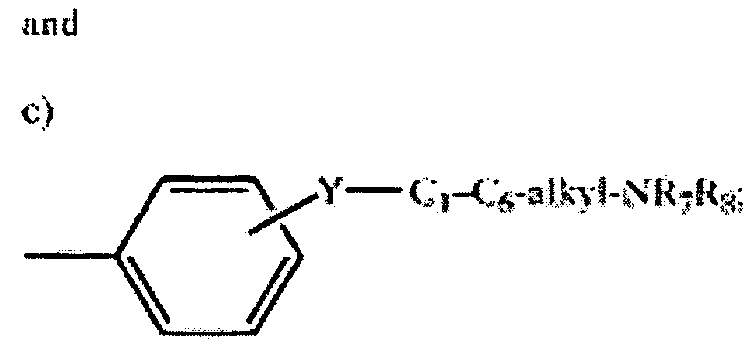
R5 and R6 are independently selected from .the group consisting of hydrogen, C1-C6 alkyl, C1-C6 alkylaryl, and aryl; and wherein the aryl and/or alkyl group(s) in Ri, R2, R«, R5, R7, e, R9, R10, RIB, Ri9 and R2o may be optionally substituted 1-4 times with a substituent group, wherein said substituent group (s) or the term substituted refers to groups selected from the group consisting of:
a) --H;
b) --Y--C1-6 alkyl;
--Y-aryl;
--Y-- Cl-6 alkylaryl;
—Y— Cl-6 -alkyl-NR7R8 ; and
—Y— Cl-6 -alkyl-W—R20 ; and
c) halogen, hydroxyl, cyano, carbamoyl, or carboxyl; and wherein
Y and are independently selected from the group consisting of --CH2 --, --0--, --N(H), --S--, S02 --, --CON(H)--, -- NHC(O)— , —NHCON(H)—, —NHS02 --, —S02 N(H)— ,
—C(O)—0— , — HS02 NH— , —0—CO— ,

R18 and R19 are independently selected from the group consisting of aryl, C1-C6 alkyl, C1-C6 alkylaryl, C1-C6 alkoxy, and C1-C6 alkoxyaryl;
R2o is selected from the group consisting of aryl, C1-C6 alkyl, and C1-C6 alkylaryl; R7, Re, 9 and Rio are independently selected from the group consisting of hydrogen, aryl C1-C6 alkyl, and C1-C6 alkylaryl; and wherein
R7 and R8 may be taken together to form a ring having the formula -- (CH2) m--X-- (CH2) n -- bonded to the nitrogen atom to which R7 and e are attached, and/or R5 and R6 may, independently, be taken together to form a ring having the formula -- (CH2) m--X-- (CH2) n -- bonded to the nitrogen atoms to which R5 and R6 are attached, wherein m and n are, independently, 1, 2, 3, or 4; X is selected from the group consisting of —CH2 — , --0— , —"S--, --S(02)--, —C(O)--, — CON(H)— , —NHC(O)— , — HCON(H)— , — HS02 — , —S02N(H)— , - -C(0)—O— , —0—C(O)— , —NHS02NH--,
 or a pharmaceutically acceptable salt thereof. It is understood that the above are all non-limiting examples of RAGE antagonists that can be employed in the present invention.
Non-limiting examples of anti-LPA antibodies as LPA antagonists include the anti-LPA antibody Lpathmob™ (LT3000) (LPath Inc., San Diego, CA) . Such -anti-LPA antibodies are described in PCT International Application Publication NO. WO 2010/121093, published October 21, 2010, the entire contents of which are hereby incorporated by reference.
As disclosed herein, LPA indications may be treated using RAGE antagonists. LPA has been associated with a number of diseases and disorders. For review, see Gardell et a'l . , (2006) Trends Mol . Med. 12(2): 65-75 and Chun J. and Rosen H., (2006) Curr. Pharma. Design 12:161-171. These diseases and disorders include, for example, autoimmune disorders such as diabetes, multiple sclerosis and scleroderma; hyperproliferative disorders including cancer; disorders associated with angiogenesis and neovascularization; obesity; neurodegenerative diseases including Alzheimer's disease; schizophrenia; immune related disorders such as transplant rejection and graft-vs . -host disease: All of the references cited in this paragraph are hereoy incorporated by reference in their entirety.
As disclosed herein, RAGE indications may be treated using LPA antagonists. Ishiguro H, (Prostate. 2005 Jun 15; 64(1): 92- 100) describes that the receptor for advanced glycation end. products (RAGE) and its ligand, amphoterin are overexpressed and associated with prostate cancer development. Hudson BI (Pharm Res. 2004 Jul ; 21 ( 7 ) : 1079-86 ) describe that RAGE is a novel target for drug intervention in diabetic vascular disease. Flyvbjerg A. describe the long-term renal effects of a neutralizing RAGE antibody in obese type 2 diabetic mice (Diabetes. 2004 Jan; 53 ( 1 ): 166-72 ) . The role of RAGE in cancer is discussed in Riehl A, Cell Commun Signal. 2009 May 8;7:12, "The receptor RAGE: Bridging inflammation and cancer" and Logsdon CD, Curr Mol Med. 2007 Dec; 7 ( 8 ): 777-89 "RAGE and RAGE ligands in cancer. The role of RAGE atherosclerosis and diabetes is discussed in Schmidt AM, Curr Atheroscler Rep. 2000 Sep; 2 (5) : 30-6, "Atherosclerosis and diabetes: the RAGE connection". Other RAGE indications are discussed in Koyama, H. et al. Arterioscler Thromb Vase Biol. 2005 Dec; 25 (12) : 2587-93 (Metabolic Syndrome); Katz, J. et al. J Periodontol. 2005 Jul (peridodontal disease, smoking- related); 76 ( 7 ) : 1171-4 ; Cataldegirmen, G. et al. J Exp Med. 2005 Feb 7 ; 201 ( 3 ): 4.73-84 (hepatocyte regeneration after partial hepatectomy) ; Sparvero, L.J. ;et al . J Transl Med. 2009 Mar 17; 7:17; Raman, K.G. et al . Am J Physiol Gastrointest Liver Physiol. 2006 Oct ; 291 ( 4 ) : G556- 65 (intestinal barrier dysfunction); Yan, S.F. et al. Expert Rev Mol Med. 2009 Mar 12; ll:e9 (neuropathy); and Yan, S.F. et al. J Mol Med. 2009 Mar; 87(3):235-47 (nephropathy). All of the references cited in this paragraph are hereby incorporated by reference in their entirety.
"Treating" a disorder/disease shall mean slowing, stopping or reversing the disorder's progression, and/or ameliorating, lessening, or removing symptoms of the disorder. Thus
treating a disorder encompasses reversing the disorder's progression, including up to the point of eliminating the disorder itself. As used herein, an "immunoglobulin domain" is a sequence of amino acids that is structurally homologous, or identical to, a domain of an immunoglobulin. The length of the sequence of amino acids of an immunoglobulin domain may be up to 500 amino acids. In one embodiment, an immunoglobulin domain may be less than 250 amino acids. In an example embodiment, an immunoglobulin domain may be about 80-150 amino acids in length. For example, the variable.' region, and the CHI, CH2, and CH3 regions of an IgG (including human IgG) are each immunoglobulin domains. In another example, the variable, the CHI, CH2, CH3 and CH4 regions of an IgM are each immunoglobulin domains.
As used herein, a "RAGE immunoglobulin domain" is a sequence of amino acids from RAGE protein that is structurally homologous, or identical to, a domain of an immunoglobulin. For example, a RAGE immunoglobulin domain may comprise the RAGE V-domain, the RAGE Ig-like C2-type 1 domain ("CI domain"), or the RAGE Ig-like C2- type 2 domain ("C2 domain") .
Further description of the various diseases recited in this disclosure may be found in The Merck Manual, 17th Edition (1999), Merck Research Laboratories, Whitehouse Station, NJ, U.S.A. which is hereby incorpbrated by reference for description of the diseases/disorders recited herein.
The administration of RAGE antagonsists or LPA antagonists described herein may be by way of compositions containing one of the antagonists and a pharmacetically acceptable carrier. As used herein, a "pharmaceutical acceptable carrier" is a pharmaceutically acceptable solvent, suspending agent or vehicle, for delivering an active compound to a mammal,
including humans. The carrier may be liquid, aerosol, gel or solid and is selected with the . planned manner of administration in mind. In an embodiment, the pharmaceutical carrier is a sterile pharmaceutically acceptable solvent suitable for intravenous administration. In an embodiment, the pharmaceutical carrier is a pharmaceutically acceptable solid suitable for oral administration.
"Administering" the antagonists described herein can be effected or performed using any of the various methods and delivery systems known to those skilled in the art. The administering can be, for example, intravenous, oral, intramuscular, intravascular, intra-arterial , intracoronary, intramyocardial, intraperitoneal, and subcutaneous. Other non-limiting examples include via topical coating of a blood vessel, coating of a device to be placed within the subject, coating of an instrument used during a procedure which, for example, otherwise results in blood vessel injury, or contacting blood of the subject during extracorporeal circulation. In embodiments, administration is effected by injection or via a catheter.
Injectable drug delivery systems that may be employed in the methods described herein include solutions, suspensions, gels. Oral delivery systems include tablets and capsules. These can contain excipients such as binders (e.g., hydroxypropylmethylcellulose, polyvinyl pyrilodone, other cellulosic materials and starch), diluents (e.g., lactose and other sugars, starch, dicalcium phosphate and cellulosic materials), disintegrating agents (e.g., starch polymers and cellulosic materials) and lubricating agents (e.g., stearates and talc) . Solutions, suspensions and powders for reconstitutable delivery systems 'include vehicles such as suspending agents (e.g., gums, zanthans, cellulosics and sugars), humectants (e.g., sorbitol), solubilizers (e.g., ethanol, water, PEG and propylene glycol), surfactants (e.g., sodium lauryl sulfate, Spans, Tweens, and cetyl pyridine) ,
preservatives and antioxidants (e.g., parabens, vitamins E and C, and ascorbic acid), anti-caking agents, coating agents, and chelating agents (e.g., EDTA) . As used herein, the term "effective amount" refers to the quantity of a component that is sufficient to yield a desired therapeutic response without undue adverse side effects (such as toxicity, irritation, or allergic response) commensurate with a reasonable benefit/risk ratio when used in the manner of this invention, i.e. a therapeutically effective amount. The specific effective amount will : vary with such factors as the particular condition being treated, . the physical condition of the patient, the type of mammal being treated, the duration of the treatment, the nature of concurrent therapy (if any), and the specific formulations employed and the structure of the compounds or its derivatives.
Treatment of the diseases recited herein, e.g. of a ovarian cancer, encompasses inducing inhibition, regression, or stasis. of the disorder.
As used herein "about" with regard to a stated number encompasses a range of +one percent to -one percent of the stated value. By way of example, "100" therefore includes 99, 99.1, 99.2, 99.3, 99.4, 99.5, 99.6, 99.7, 99.8, 99.9, 100, 100.1, 100.2, 100.3, 100.4, 100.5, ΊθΟ.6, 100.7, 100.8, 100.9 and 101. Accordingly, "about 100" includes, in an embodiment, 100. Where a range is given in the specification it is understood that the range includes all integers . and 0.1 units within that range, and any sub-range thereof. For example, a range of 77 to 90 includes 77, 78, 79, 80, and 81 etc., as well as 77 to 80 and 83-89, etc.
The methods of treatment described herein with the LPA antagonist or RAGE antagonist may be a component of a combination therapy or an adjunct therapy. This combination therapy can be sequential therapy' where the patient is
treated first with one drug and then the other, or the two drugs are given simultaneously. These can be administered independently by the same route or by two or more different routes of administration depending on the dosage forms employed.
This invention will be better understood by reference to the Experimental Details which follow, but those skilled in the art will readily appreciate that the specific experiments detailed are only illustrative of the invention as described more fully in the claims which follow thereafter.
Experimental Details
Summary
Lysophosphatidic acid (LPA) is an endogenous phospholipid produced by stressed vascular cells and in tumors, by transformed cells as well as peri-tumor inflammatory, vascular and stromal cells. LPA regulates fundamental cellular processes such as proliferation, survival, motility and invasion, hence, in order to curtail aberrant vascular expansion and tumor growth, delineation of the precise molecular mechanisms by which LPA exerts its broad effects is essential. Although LPA may interact with G-protein coupled receptors (G-PCRs), abundant evidence implicates other unidentified LPA receptor (s) or possibly non-receptor pathways in the biological actions of this molecule.1,6"10 The receptor for advanced glycation endproducts (RAGE.) has been implicated in vascular signaling, atherosclerosis and tumorigenesis . Here, it is shown that the receptor for advanced glycation endproducts (RAGE) avidly binds LPA and the LPA binding site is mapped on RAGE. In vitro, RAGE was required for LPA-mediated signal transduction in smooth muscle cells and C6 glioma cells, as well as proliferation and migration. In vivo, the administration of soluble RAGE and genetic deletion of RAGE mitigated (1) LPA-stimulated vascular Akt signaling, (2) autotoxin/LPA-driven phosphorylation of Akt and cyclin Dl in the mammary tissue of transgenic mice vulnerable to carcinogenesis, and (3) ovarian tumorigenesis. These findings identify novel roles for RAGE as a conduit for LPA signaling and indicate that therapeutic strategies to modify the pathological actions of LPA in vascular disease and tumorigenesis should include targeting the interaction of LPA with RAGE.
To test the hypothesis that LPA binds RAGE and initiates signal transduction through this receptor, we employed gain- and loss-of-function experiments using primary murine aortic smooth muscle cells (SMCs), as the full repertoire of LPA
receptors in. SMCs is not fully clarified.6,19 SMCs were retrieved from wild type and RAGE null mice.14,20 Activation of Akt and ERK was determined in wild type and RAGE null SMCs in response to LPA. Although LPA treatment activated Akt in wild type SMCs, LPA-stimulated activation of Akt was not observed in RAGE null SMCs (Fig. 1A) . In contrast, LPA- stimulated ERK phosphorylation and the degree of activation did not differ between wild-type and RAGE null SMCs (Fig. IB) . These data suggest that there are distinct functional receptors for LPA on SMCs, and that RAGE mediates the effects of LPA through Akt, . but not ERK signal transduction.
To be certain that RAGE deletion did not impact the major LPA receptors of the G-PCR family in SMCs, we determined the transcript levels for these receptors in both wild type and RAGE null SMCs (Fig. 5), and assessed protein expression of the major LPA! receptor and its potential dependence on RAGE (Fig. 1C) . These data reveal that known LPA receptors are equivalently expressed in both wild-type and RAGE null SMCs.
To verify that RAGE mediated the effects of LPA signaling, we transiently transfected WT SMCs, with full-length RAGE or signaling-deficient dominant negative (DN)-RAGE (Fig. 6). LPA induced robust phosphorylation of Akt in RAGE- overexpressing SMCs compared to vector control, but failed to induce Akt phosphorylation in SMCs expressing DN-RAGE (Fig. ID) .
Together, these data indicated that RAGE was essential for mediating Akt signaling in primary murine aortic SMCs. To support this hypothesis, we performed experiments to test for physical interactions between LPA and RAGE. The extracellular portion of RAGE (soluble RAGE, sRAGE) was immobilized on a carboxymethylated · dextran CM5 chip and high affinity LPA binding was observed by surface plasmon resonance (SPR) (Fig. 2A) . To confirm the . interaction, we reversed the binding assay and examined the binding of sRAGE to immobilized
lysophosphatidic acid ( 18 : 1 ) -l-Palmitoyl-2-Oleoyl-sn-Glycero- 3-Phosphocholine (POPC-LPA 10:1 w/w) and l-Palmitoyl-2- 01e,oyl-sn-Glycero-3-Phosphocholine (POPC) liposomes as a reference on HPA sensor chip (Fig. 7). The SPR binding response in these experiments validated that sRAGE bound LPA (Fig. 2B) .
It has been reported that ligand binding to RAGE occurs through the extracellular N-terminal V-type immunoglobulin domain and possibly through the C2 domain.21' To understand the mechanism by which RAGE binds LPA, the LPA-modified surface was used to further probe the binding of LPA to sRAGE using the isolated V domain and C2 domains. We observed high affinity binding of LPA to V domain with a dissociation constant of d 9 X 10"9 (Fig. 2C) , nearly the same as that to full-length sRAGE. The interaction of the C2 domain to an LPA-modified surface was 1000-fold weaker with the estimated Kd of 9 x 10~6 M (Fig. 2D) . To confirm that LPA binds directly to RAGE, heteronuclear NMR experiments were performed using samples of 15N-enriched V and C2 domains. Titrations of the V domain with LPA resulted in selective broadening of the NMR signals. The residues most perturbed by the addition of LPA include Lys52, Val63, Trp72, Gly9Q, GlnlOO, LysllO, Tyrll3 and Valll5, which map to a specific basic surface on the V domain structure (Fig. 2E-F) that is a logical site for interaction of negatively charged LPA. Previous work by our group and others has identified this surface as the site for binding the endogenous RAGE ligands S100B and AGE (Fig. 2F).22-23 In the titration of the C2 domain with LPA, a limited number of resonances exhibited perturbations in the intermediate to fast exchange regime on the NMR timescale (Fig. 2G, 8) . These observations indicate that the interaction of C2 with LPA is significantly weaker than that observed for the V domain and is consistent with the 1000-fold weaker binding reported by SPR. Overall, these studies indicate that LPA binding to RAGE is mediated through
the V domain, whereas the contribution of interaction with the C2 domain to LPA-induced RAGE activation remains uncertain due to LPA' s very low binding affinity for C2. Taken together, these in vitro experiments indicate that LPA physically interacts with RAGE and that Akt signaling in SMCs is stimulated, at least in part, by LPA activation of RAGE.
To test if LPA serves as a RAGE ligand in vascular cells in vivo, LPA was infused into the left ventricles of wild-type and RAGE null mice and activation of signal transduction pathways was assayed. In wild-type mice, LPA induced rapid (15 minutes) activation of Akt in vivo in SMCs as revealed by immunostaining of aorta tissue sections and Western blotting for detection of phospho-Akt. In. contrast, RAGE null mice displayed significantly less Akt phosphorylation in the aorta after administration of LPA (Fig. 3A-B) . Of note, at 5 minutes- after infusion of LPA, no activation of Akt was evident in wild-type or RAGE null mice (Fig. 3B) . LPA displays chemoattractant effects in vascular SMCs.5"6 To specifically test if RAGE contributed to LPA-mediated SMC migration and proliferation, we performed studies in SMCs retrieved from RAGE-expressing or RAGE null mouse aortas. Migration and proliferation responses to LPA in RAGE null SMCs were significantly lower than those observed in WT SMCs (Fig. 3C and 3D). Similar patterns of migration and proliferation were noted in SMCs exposed to a distinct RAGE ligand, SIOOB (Fig. 3C and 3D) . However, incubation of SMCs with a non-RAGE ligand, PDGF, 14 mediated comparable degrees of cellular migration in both wild-type and RAGE null SMCs (Fig. 3C) . In addition, experiments in' SMC wound healing assays confirmed roles for RAGE in LPA signaling (Fig. 9) . These data indicate that RAGE is required' for the actions of LPA on SMC proliferation and migration.
In addition to potent effects of LPA on vascular cell signaling, LPA plays key roles in the behavior of transformed
cells. Hence, we tested the potential role of RAGE in this process. ERK mitogen-activated protein (MAP) kinase activity is stimulated by LPA in C6 glioma cells.24 To test whether stimulation of RAGE by LPA leads to ERK phosphorylation in RAGE-expressing C6 glioma cells, we used C6 cells stably expressing vector control, full-length RAGE or DN-RAGE .13 C6 glioma cells stably expressing · full-length RAGE revealed strong phosphorylation of ERK- in response to LPA over 15 minutes stimulation which was greater than that seen in vector alone cells (Fig. 4A) . In contrast, LPA stimulation of ERK phosphorylation was not detected in stably expressing DN- RAGE C6 cells (Fig. 4A) .
In the above studies, we stimulated cells and animals exogenously with LPA. To be certain that RAGE transduced the signals stimulated by endogenously produced LPA, we employed transgenic mice overexpressing autotoxin (atx) under the control of the MMTV-LTR promoter. In the mammary tissues of MMTV-atx mice, phosphorylation of Akt and hyperplasia were previously shown to be significantly higher versus that observed in control wild-type mice of the FVB background33. To test the impact of RAGE, we bred ' MMTV-a tx mice into the RAGE null background and compared findings to those observed in littermate MMTV-atx mice expressing RAGE. Mammary glands were retrieved from female animals at age 6 weeks to determine the effects of RAGE deletion on modulation of early signal transduction pathways implicated in tumorigenesis33. Compared to MMTV-a.tx mice expressing RAGE, mammary glands retrieved from those mice devoid of RAGE revealed significantly less phosphorylation of Akt (Fig. , 4B) and phosphorylation of cyclin Dl (Fig. 4C) . Levels of atx in the mammary tissue did not differ between MMTV-atx expressing rage versus MMTV-atx mice devoid of RAGE (Fig. 10) . As it is established that LPA strikingly enhances tumorigenesis and metastasis of ID8 cells, a murine epithelial ovarian cancer .cell line, in immunocompetent
C57BL/6 mice, we tested the role of RAGE. When ID8 cells are injected by intraperitoneal administration, near complete dependence on LPA treatment to stimulate tumor growth and metastasis has been observed.25"26 Daily injections of LPA (100 pmol/L x 200 pL PBS/mouse) versus PBS alone for 4 weeks enhanced tumorigenesis of ID8 cells in RAGE-expressing wild- type mice (Fig. 4E vs. 4D, respectively and 41). RAGE- expressing-LPA-treated groups presented tumors on the peritoneal wall (Fig. 4E and 41), diaphragm, omentum, and mesentery, and tumors were also found on the surface of the spleen, liver, kidney, and small intestine in these mice.
We established that ID8 cells express RAGE (Fig. 11) . LPA- induced tumor numbers were significantly reduced in sRAGE- treated WT and RAGE null groups (Fig. 4 F, H, I) . Thus, sRAGE and the RAGE deficient environment significantly affected LPA-induced tumorigenesis and metastasis. The representative hematoxylin and eosin (H&E) staining of the tumors from all groups is shown in Figs. 12A - 12E.
Ligand-stimulated cellular migration contributes integrally to multiple facets of RAGE biology, notably in inflammatory processes and tumorigenesis.12"14 There is also substantial evidence of specific contribution's to diabetes pathogenesis and complications, as blockade of RAGE1-' (i) limited influx of macrophages and lymphocytes into pancreatic islets in NOD/scid mice,27 (ii) suppressed smooth muscle cell migration in injured arteries, 14,28 and (iii) mitigated macrophage and smooth muscle cell infiltration into atherosclerotic plaques in mice deficient in apolipoprotein E.20, 9 Surprisingly, little is known about, potential fate and actions of LPA in diabetes and its complications; the present results suggest that such investigation may reveal novel mechanisms in this disease for which targeted therapeutic approaches may be readily envisioned.
A particularly revealing finding in our studies is that LPA actions are attenuated upon introduction of RAGE-expressing ID8 cells into a RAGE, deficient environment. This suggests discrete roles for LPA both directly on tumor cells and within the tumor milieu. In mice, deficient in LPA2, reduced infiltration of macrophages and expression of monocyte • chemoattractant protein-1 and macrophage migration inhibitory factor were noted in parallel with fewer colonic tumor numbers in mice heterozygous for the adenomatous polyposis coli (Ape) allele.30 As RAGE has been implicated in multiple facets of the inflammatory response, 12 it is plausible that RAGE-dependent inflammatory responses triggered by LPA contribute to the significant decrease in ID8 tumor numbers in LPA-treated RAGE null mice. In. this context, in tumors and studies using chimeric mice bearing RAGE deficient bone marrow, RAGE-driven infiltration of bone marrow-derived inflammatory cells into dermal tumors was found to be important for early tumor promotion34. Hence, in settings such as vascular disease, inflammation and tumors, the complexity of LPA signaling is likely linked both to the repertoire of its receptors and to the discrete contributions of these receptors both directly in target cells as well as those cells influencing cellular stress in an autocrine or paracrine manner.
We thus surmise that the LPA-RAGE axis may be a hitherto unrecognized etiological factor in chronic inflammatory diseases such as diabetes, "; atherosclerosis and in tumorigenesis . LPA has additional' links to RAGE, as mildly oxidized forms of LDL may contain LPA.5 We previously showed that AGE-containing epitopes within oxidized LDL contributed to its pro-inflammatory effects.29 From the present work we infer that LPA species within oxidized LDL may signal via RAGE as well. RAGE ligands exhibit different structure, size and symmetry or even no symmetry as in the case of glycated proteins or amyloid β. The finding that LPA is a functional ligand for RAGE expands this repertoire of RAGE ligand
families. Although a role for the strongly positive electrostatic potential at the ligand binding 'surface is clearly evident, the mechanism of activation by the diverse chemical structures of the various RAGE ligands remains enigmatic. We do note however, that although they are chemically distinct, virtually all RAGE ligands are produced in the process of damage and stress within the cellular microenvironment . In human tumors, similar to the findings with LPA, multiple studies reported upregulation of RAGE in tumor versus adjacent non-tumor tissue in malignancies such as those arising in the esophagus, breast, liver, colon and rectum, prostate and brain (glioblastoma multiforme)35"40, and that in the case of colorectoral cancer, even higher levels of RAGE were observed in the more advanced cases with metastasis40. Hence, the finding of incomplete suppression of LPA' s effects in tumors in some experiments underscores the fact that LPA may exert its pathophysiological effects through multiple receptors. In this context, roles for LPA receptors were suggested by in vitro studies in cultured murine and human ovarian epithelial cancer cells in which small interfering RNAs or the LPA. receptori-2-3 inhibitor KH6425 decreased cellular invasion and migration.31"32 Specific roles for these receptors in vivo have yet to be addressed in ovarian cancer models, but roles from LPA1-2-3 receptors have recently been demonstrated in mammary tumorigenesis in vivo33.
Taken together, our data identify RAGE as a novel receptor for LPA and illustrate the complex signaling network induced by this biologically-active phospholipid. All previously- reported LPA receptors are members of the G-protein coupled receptor family;1 thus, our studies identify a unique receptor of the immunoglobulin' superfamily active in transducing LPA' s biological effects". Whether or not these
f
receptor families function alone or in concert, and their precise mechanism(s) of action, remain important questions
that must be addressed in future studies. We conclude that optimal therapeutic strategies in vascular disease and tumorigenesis should include targeting LPA/RAGE-stimulated signal transduction.
Materials and Methods sRAGE and its domains: expression and purification
Human sRAGE, V domain and- C2 domain proteins were expressed and purified as described17 ·22"23.
LPA and LPA Liposomes. 18:1 Lysophosphatidic Acid (LPA) or 18:1 Lyso PA l-oleoyl-2-hydroxy-sn-glycero-3-phosphate (sodium salt), 100 nm size LPA-POPC (1:10, w/w) liposomes and POPC (l-Palmitoyl-2-01eoyl-sn-Glycero-3-Phosphocholine) liposomes were obtained from Avanti Polar Lipids Inc.
Surface Plasmon Resonance (SPR) Experiments
All experiments were performed at 25 °C using a Biacore X with commercially available Biacore CM5 sensor chips or HPA sensor chips from GE Healthcare (Piscataway, USA) . HBS buffer (10 mM HEPES at pH 7.4 with 150 mM NaCl) was employed as running buffer. Proteins we're immobilized on the carboxymethyl dextran surface of flow cell 2 using amine- coupling chemistry with a flow rate of 5 μΐ/min. Flow cell 1 remained unmodified to serve as a reference cell for the subtraction of systematic instrument noise and drift. LPA was immobilized on the HPA sensor chip by solubilization in LPA liposomes .
LPA binding to the sRAGE immobilized surface. The carboxyl groups on the CM5 sensor chips were activated for 7 min using 0.1 M N-hydroxysuccinimide (NHS) and 0.4 M (N-ethyl-N ' - ( 3- dimethylaminopropyl ) carbodiimide (EDC) mixed at 1:1 (v/v) ratio. In the coupling step, a 30 μΐ injection of 0.16 mg/mL sRAGE (in sodium acetate buffer at pH 5.5) was flowed over the activated surface for 6 min. The remaining activated
sites on the chip surfaces were blocked with a 35 μΐ injection of an ethanolamine hydrochloride solution (1 M at pH 8.5), followed by a 60 sec wash with 2 M NaCl to remove any nonspecifically adsorbed materials. About 4000 RU of the immobilized sRAGE proteins were obtained.
Lysophosphatidic acid (LPA) dilutions were prepared in HBS buffer and injected sequentially over two flow cells at a flow rate of 10 μΐ/min. Surface regeneration was achieved using a 60 sec injection of 2 M NaCl . The response curve was obtained by subtraction of the signals over the reference surface from the binding response ' 'over RAGE immobilized surface. sRAGE and domains binding to LPA immobilized surface . LPA- liposomes were used to generate a stable 'mimic membrane' on the HPA sensor surfaces. The 18:1 Lysophosphatidic Acid (LPA), LPA-POPC (1:10, w/w) liposomes and POPC liposomes were obtained from Avanti Polar Lipids Inc. The chips were cleaned by washing with octyl glucoside for 1 min at 10 μΐ/min, and 0.5 mM liposomes as prepared above were passed over the flow cells for 25 min at 4 μΐ/min. The chips were washed with. a 30 sec injection of 50 mM sodium hydroxide twice to remove the loosely bound liposomes to obtain stable base line. In a typical experiment, a monolayer of l-palmitoyl-2-oleoyl-sn- glycero-3-phosphocholine (POPC)' was deposited in flow cell 1 and referred to as POPC surface. A monolayer of LPA-POPC was deposited in flow cell 2 and referred to as LPA-POPC surface. The dilutions of sRAGE, V domain and C2 domain were prepared in HBS buffer and injected sequentially over two flow cells at a flow rate of 30 μΐ/min for 150 s. The response curve was obtained by subtraction of the response signals over POPC surface from the binding response over LPA-POPC surface. The binding curves were analyzed using Biacore software.
NMR Binding Studies
Experiments were performed at 25 °C on a Bruker DRX500 spectrometer equipped with a Z-axis gradient cryoprobe . LPA was titrated into a solution of 50 μΜ 15N-labeled V domain in 20 mM phosphate at pH 6.0, and perturbations in NMR signals were monitored by acquiring 2D 15N-1H HSQC spectra. The corresponding experiments for C2 were carried out in 20 mM phosphate at pH 6.1. Acquired data were processed using Topspin'2.1 (Bruker) and analyzed using NMRViewJ. The ratios of intensities between spectra with and without LPA (I/Io) were calculated for all well resolved resonances. Chemical shift perturbations were measured using the equation Δδ = [ (0.17ΔδΝ)2 + (ΔδΗΝ)2]1 2·
Cell Lines and Materials
Wild-type and RAGE null mice primary aortic vascular smooth muscle cells were isolated and employed through passage 5 to 7. Rat C6 glioma cells were obtained from ATCC . Murine epithelial ovarian cancer ID8 cells were a generous gift from Dr. Katherine Roby (Kansas University Medical Center) .
Full-length and DN-RAGE cloning and mammalian expression and transfection
Full-length RAGE cDNA was generated from lung cDNA
(Clontech) by PCR as described11 and DN RAGE cDNA ,was generated as described.12 Where indicated, Nucleofector kits for primary smooth muscle cells were employed (Lonza) .
Real Time PCR
RNA was extracted from cells by using RNAeasy columns (Qiagen) . cDNA was prepared (Applied Biosystems) and used as a template for quantitative PCR. Primers and probes for LPA receptors 1-5 and murine RAGE were obtained from Applied Biosystems. Gene expression1 was normalized to the expression of 18S rRNA. Data were analyzed by the 2~ΔΔσΓ method.
Western blot analysis
Total cell or aorta lysates were immunoblotted and probed with LPA1, AKT-specific antibody, p-AKT-specific antibody, ERK, pERK (Cell Signaling Technology) , HRP-conj ugated donkey anti-rabbit IgG (Amersham Pharmacia Biotechnology) or HRP- conjugated sheep anti-mouse IgG' · (Amersham Pharmacia Biotechnology) was used to identify sites of binding of the primary antibody. After probing with the primary antibodies, membranes were stripped of bound immunoglobulins and reprobed with GAPDH (Abeam) or for relative total protein. Blots were scanned with an Alfalmager TM 2200 scanner with AlfaEase (Alfalmager) FC 2200 software. Results are reported as a relative absorbance of test antigen to GAPDH or relative total proteins. In all Western blot studies, at least 5 animals or cell lysates per group were used; results of representative experiments are shown.
Im/nunohistoc emistry
Acetone-fixed cryostat aortic sections were preincubated with CAS-BLOCK (Zymed; Invitrogen) for 30 minutes followed by avidin-biotin block for 15 minutes; sections were then subjected to incubation with primary rabbit polyclonal RAGE IgG; Akt and p-Akt (Cell Signaling) 1 overnight at 4°C followed by goat anti-rabbit IgG (Vector Laboratories). Subsequently, Alexa Fluor 555 conjugate (Invitrogen) was incubated for 30 minutes. After washing, mouse monoclonal smooth muscle actin ( DakoCytomatin ) antibody was incubated for 1 hour followed by anti-rat or anti-mouse IgG for 30 minutes, and then incubated with Alexa Fluor 488 conjugate for 30 minutes, and finally mounted with 4 , 6-diamidino-2-phenylindole dihydrochloride (Vector Laboratories) . Rabbit IgG (Zymed; Invitrogen) or omission of the primary antibody was used as a negative control. Slides were mounted with Vectorshield mounting media (Vector) and observed with an oil immersion objective using a Nikon E800 microscope. Images were collected using a Bio-Rad Radiance 2000 Confocal System .and the Lasersharp 2000 software (Bio-Rad) .
Smooth Muscle Cell Assays
Migration and proliferation assays were performed according to previously published methods.14 Vascular smooth muscle cells were cultured to 90% confluence. Cells were rinsed with PBS and placed in low serum media (1.5 ml; 0.5% - 0.1% serum in DMEM) overnight . A scratch line was then drawn using a sterile 200 μΐ pipet tip. Three, separate scratch wounds through the cell monolayer moving perpendicular to the line were drawn in the step above. Cells were rinsed very gently with PBS and replaced with 1:5' ml of media containing additives (10 μΜ LPA or 10 pg/ml S100B final concentration). Photographs were taken after 18 hours using phase contrast and 10X.
Animal Models
All animal experiments were approved by the Institutional Animal Care and Use Committee of Columbia University and conformed to the guidelines outlined in the National Institutes of Health Guide for Care and Use of Laboratory Animals (NIH Pub. No. 85-23, 1996) . Four- to six-week-old female C57/BL6 mice were purchased from Jackson Laboratories. Homozygous RAGE null mice backcrossed >12 generations were bred in our laboratory. To test the effects of LPA on vascular signaling, mice were perfused through the- left ventricle with 2 ml of sterile phosphate buffered saline (PBS) to remove all blood. The aorta at the level of the bifurcation 'of the femoral arteries was cross-clamped and 200 μΐ of a 100 μΜ solution of LPA was injected using a 22-gauge needle. Control animals received equal volumes of PBS. At 5 mins and 15 mins after injection, the aorta from the point distal to exit from the left ventricle to the clamp site was rapidly excised and placed in ice cold buffer. Western blotting for detection of phospho/total . Akt and immunohxstochemistry to detect phospho-Akt was performed. In the tumor model, mice were injected by intraperitoneal (i.p.) route with 5 * 106 ID8 cells in 1 mL PBS and LPA was
administered daily (100 pmol/L) in 200 pL PBS or PBS or LPA(100 pmol/L) in 200 pL PBS and sRAGE (50 pmol/L) in 200 pL PBS injections for 4 weeks. Tumorigenesis was recorded by counting the numbers and sizes of tumor foci on each organ.
In other studies, MMTV-atx mice in the FVB genetic background, generously provided by Dr. Gordon Mills (University of Texas M.D. Anderson Cancer Center) were bred into RAGE null background (backcrossed >12 generations into FVB)33. RAGE-expressing and RAGE null MMTV-atx littermate. mice were sacrificed at age 6 weeks and all mammary tissue collected and pooled for analysis by Western blotting.
Data analysis
The mean ± standard deviation (SD) is reported. Statistical comparisons among groups were determined using one-way analysis of variance (ANOVA) ; where indicated, individual comparisons were performed using Students' t-test.
van Corven, E.J. et al. Lysophosphatidate-induced cell proliferation: identification and dissection of signaling pathways mediated by G proteins. Cell. 59, 45- 5 (1989) .
Moolenaar, .H. et al. The ins and outs of lysophosphatidic acid signaling. Bioessays 26, 870-881 (2004).
Lin, M.E. et al. Lysophosphatidic acid (LPA) receptors: signaling properties and disease relevance. Prostaglandins Other Lipid Mediat. 91, 130-138 (2010) . Georas, S.N. Lysophosphatidic acid and autotaxin: emerging roles in innate and adaptive immunity . Immunol Res In press (2009)
Smyth, S. S. et al. Roles of lysophosphatidic acid in cardiovascular physiology and disease. Biochemica et Biophysica Acta 1781, 563 (2008) .
Panchatcharam, M. et al. Lysophosphatidic acid receptors 1 and 2 play roles in regulation of vascular injury responses but not blood pressure. Circ Res. 103(6), 662- 670 (2008) .
Contos, J. J. et al. Requirement for the lpAl lysophosphatidic acid receptor gene in normal suckling behavior. Proc. Natl Acad. Sci . USA 97, 13384-13389 (2000) .
Contos, J. J. et al. Characterization of lpa(2) (Edg4) and lpa (1) /lpa (2) (Edg2/Edg4) lysophosphatidic acid receptor knockout mice: signaling deficits without obvious phenotypic abnormality attributable to lpa (2). Mol. Cell. Biol., 22, 6921-6929 (2002) .
Kingsbury, M. A. et al. Non-proliferative effects of lysophosphatidic acid enhance cortical growth and folding. Nature Neurosci. 6, 1292-1299 (2003) .
Inoue, M. et al. Initiation of neuropathic pain requires lysophosphatidic acid receptor signaling. Nature Med. 10, 712-718 (2004 ) .
Neeper, M. et al. Cloning and expression of a cell surface receptor for advanced glycosylation end products of proteins. J. Biol Chem. 267, 14998-15004 (1992) . Hofmann, M. A. et al. RAGE mediates a novel proinflammatory axis: a central cell surface receptor for SlOO/calgranulin polypeptides. Cell 97,. 889-901 (1999).
Taguchi, A. et al. Blockade of RAGE-amphoterin signalling suppresses tumour growth and metastases. Nature 405, 354-360 (2000) .
Sakaguchi, T. et al. Central role of RAGE-dependent neointimal expansion in arterial restenosis. J. Clin. Investig. Ill, 959-972 (2003) .
Lander, H. M. et al. Activation of the receptor for advanced glycation end products triggers a p21(ras)- dependent ■ mitogen-activated protein kinase pathway regulated by oxidant stress. J. Biol. Chem. 272, 17810- 1714 (1997) .
Yeh, C. H. et al. Requirement for p38 and p44/p42 mitogen-activated protein kinases in RAGE-mediated nuclear factor-kappaB transcriptional activation and cytokine secretion., Diabetes 50, 1495-1504 (2001) .
Park, L. et al. Suppression of accelerated diabetic atherosclerosis by the soluble receptor t for advanced glycation endproducts. Nat. Med. 4, 1025-1031 (1998) . Kislinger, T. et al. Receptor for advanced glycation end products mediates inflammation and enhanced expression of tissue factor in .vasculature of diabetic apolipoprotein E-null mice. Arterioscler. Thromb. Vase. Biol . 21, 905-910 (2001) .
Kim, J. et al. Vascular smooth muscle migration and proliferation in response to lysophosphatidic acid (LPA) is mediated by LPA receptors couping to Gq. Cell Signal 18, 1695-1701.
Bu, D.et al. Activation of the R0CK1 branch of the transforming growth factor-beta pathway contributes- to RAGE-dependent acceleration of atherosclerosis in
diabetic ApoE-null mice. Clrc. Res. 106(6), 1040-1051 (2010) .
Leclerc, E. et al. S100B and S100A6 differentially modulate cell survival by interacting with distinct RAGE (receptor for advanced glycation end products) immunoglobulin domains. J Biol Chem. 282(43), 31317-3131 (2007) .
Dattilo BM . et al. The extracellular region of the receptor for advanced glycation end products is composed of two independent structural units. Biochemistry. 46(23) , 6957-6970 (2007) .
Koch, M. et al. Structural basis for ligand recognition and activation of RAGE. Structure 18, In Press (2010) . Cechin, S. R et. al. Signal transduction mechanisms involved in the proliferation' of C6 glioma cells induced by lysophosphatidic acid. Neurochem Res. 30(5), 603-611 (2005) .
Roby, K.F. et al. Development of a syngeneic mouse model for events related to ovarian cancer. Carcinogenesis 21, 585-591 (2000) .
Li, H. et al. Lysophosphatidic acid stimulates cell migration, invasion, and colony formation as well as tumorigenesis /metastasis of mouse ovarian cancer in immunocompetent mice. Mol Cancer Ther. 8(6), 1692-1701 (2009) .
Chen, Y.et al. Blockade of late stages of autoimmune diabetes by inhibition of the receptor for advanced glycation end products. J. Immunol. 173, 1399-1405 (2004) .
Zhou, Z. et al. Receptor for AGE (RAGE) mediates neointimal formation in response' to arterial injury. Circulation 107, 2238-2243 (2003)'.
Harja, E. et al. Vascular and inflammatory stresses mediate atherosclerosis via RAGE and its ligands in apoE-/- mice. J. Clin Invest 118, 183-194 (2008) .
Lin, S. et al. The absence of LPA2 attenuates tumor formation in an experimental model of colitis-associated cancer. Gastroenterology 136 , 1711-1720 (2009) .
Yu, S., et al. Lysophosphatidic acid receptors determine tumorigenicity and aggressiveness of ovarian cancer cells. J. Natl Cancer Inst 100, 1630-1642 (2008) .
Snider, A.J., et al. Epidermal growth factor increases lysophosphatidic acid production in human ovarian cancer cells: roles for phospholipase D2 and receptor transactivation. Am J Physiol Cell Physiol 298, C163-' C170 (2010) .
Liu, S., et al. Expression of autotoxin and lysophosphatidic acid receptors increases mammary tumorigenesis , invasion and matastases. Cancer Cell 15, 539-550 (2009) .
Gephardt, C, et al. RAGE signaling sustains inflammation and promotes tumor development. J. Exp. Med. 205, 275-285 (2008) .
Tafani, M., et al. Pro-inflammatory gene expression in solid glioblastoma microenvironment and in hypoxic stem cells from human glioblastoma'. J. Neuroinflamination 8, 32 (2011) .
Jing, R.R., et al. Tissue-specific expression ' profiling of receptor for advanced glycation endproducts and its soluble forms in esophageal and lung cancer. Genet Test Mol Biomarkers 14, 355-361 (2010) .
Tafani, M. , et al. Up-regulation of pro-inflammatory genes as adaptation to hypoxia in MCF-7 cells and in human mammary invasive carcinoma microenvironment. Cancer Sci 101, 1014-1023 (2010) .
Kostova, N., et al. The expression of HMGB1 and its receptor RAGE in human malignant tumors. Mol Cell Biochem 337 , 251-258 (2010) .
Ravenna, L., et al. Up-regulation of the inflammatory- reparative phenotype in human' prostate carcinoma. Prostate 69, 1245-1255 (2009) .
Kuniyasu, H. Co-expression of receptor for advanced glycation end products and the ligand amphoterin associates closely with metastasis of colorectal cancer. Oncol Rep 10 , 445-448 (2003) .
Claims
1. A method for treating a lysophosphatidic acid (LPA) mediated disorder in a subject comprising administering to the subject an amount of an antagonist of receptor for advanced glycation endproducts (RAGE) effective to treat the LPA mediated disorder in the subject, wherein the RAGE antagonist inhibits the binding of RAGE with LPA.
2. The method of claim 1, wherein the antagonist of RAGE is a RAGE antibody, a small molecule RAGE antagonist, a fusion protein RAGE antagonist of a polypeptide RAGE antagonist .
3. The method of claims 1 or 2, wherein the LPA mediated disorder is correlated with elevated levels of LPA.
4. A method of treating a receptor for advanced glycation endproducts (RAGE) related disorder in a subject comprising administering to the subject an amount of an lysophosphatidic acid (LPA) antagonist effective to treat the RAGE related disorder in the subject, wherein the LPA antagonist inhibits the binding of LPA with RAGE .
5. The method of claim 4, wherein the disorder is sepsis, atherosclerosis, multiple sclerosis, systemic lupus erythematosus, transplant rejection, asthma, arthritis, tumor growth, cancer, metastasis of cancer, complications due to diabetes, retinopathy, neuropathy, nephropathy, impotence, impaired wound healing, gastroparesis, Alzheimer's disease, Huntington's disease, amyotrophic lateral sclerosis, neointimal formation, amyloid angiopathy, inflammation, glomerular injury, seizure-induce neuronal damage, acute skin inflammation, chronic skin inflammation, psoriasis, atopic dermatitis, rheumatoid arthritis, lung inflammation, asthma, chronic obstructive pulmonary disease, diabetes, renal failure, hyperlipidemic atherosclerosis associated with diabetes, diabtes, diabetic late complication increased vascular permeability, diabetic late complication increase vascular permeability, diabetic late complication nephropathy, diabetic late complication retinopathy, diabetic late complication neuropathy, neuronal cytotoxicity, multiple sclerosis, dementia associated with head trauma, neuronal degeneration, restenosis, amyloidosis, or periodontal disease.
The method of claim 4 or 5, wherein the LPA antagonist is an anti-LPA antibody.
The method of any of claims 4, 5, or 6, wherein the subject is a human.
A method of treating ovarian cancer in a subject comprising administering to the subject an amount of an agent effective treat the ovarian cancer in the subject, wherein the agent inhibits the binding of receptor for advanced glycation endproducts (RAGE) with lysophosphatidic acid (LPA)
A method of inhibiting metastasis of ovarian cancer in a subject comprising administering to the subject an amount of an agent effective to inhibit metastasis of the ovarian cancer by inhibiting the binding, wherein the agent inhibits the binding of receptor for advanced glycation endproducts (RAGE) with lysophosphatidic acid (LPA) .
A method of treating atherosclerosis in a subject comprising administering to the subject an amount of an agent effective to treat the atherosclerosis in the subject, wherein the agent inhibits the binding of receptor for advanced glycation endproducts with lysophosphatidic acid (LPA) .
11. The method of any one of claims 8-10, wherein the agent is an antagonist of LPA.
12. The method of claim 11, wherein the antagonist of LPA is an anti-LPA antibody.
13. The method of any one of claims 8-10, wherein the agent is an antagonist of RAGE.
14. The method of claim 13, wherein the antagonist of RAGE is a RAGE antibody, a small molecule RAGE antagonist, a fusion protein RAGE antagonist of a polypeptide RAGE antagonist .
15. A method for inhibiting lysophosphatadic acid (LPA) induced phosphorylation of Akt in a cell comprising administering to the cell an antagonist of receptor for advanced glycation endproducts (RAGE) , thereby inhibiting the LPA induced phosphorylation of Akt in the cell .
16. The method of claim 15, wherein the cell is a smooth muscle cell or an aortic smooth muscle cell.
17. The method of claim 15 or 16, wherein the antagonist of RAGE is a RAGE antibody, a small molecule RAGE antagonist, a fusion protein RAGE antagonist of a polypeptide RAGE antagonist.
18. A method for determining whether a compound inhibits the interaction of receptor for advanced glycation endproduct (RAGE) with lysophosphatidic acid (LPA) comprising :
(a) admixing:
(i) the compound,
(ii) LPA, and
(iii) RAGE or a fragment of RAGE which binds to LPA;
(b) determining the amount of RAGE bound to LPA; and
(c) comparing the amount of RAGE bound to LPA in step (b) with the amount determined when RAGE or fragment of RAGE is mixed with LPA in the absence of the compound,
thereby determining whether the compound inhibits the interaction of LPA with RAGE, wherein a reduction of the amount of binding in the presence of the compound indicates that the compounds inhibits the interaction.
19. The method of claim 18, wherein the RAGE is a fragment of RAGE.
20. The method of claim 19, wherein the fragment of RAGE is soluble RAGE.
21. The method of claim 19, wherein the fragment of RAGE comprises the V-domain of RAGE.
22. The method of claim 19, wherein the fragment comprising amino acids 1-30 or 2-30 of the V-domain of RAGE.
23. The method of claim 18, wherein the compound is an organic molecule.
24. The method of claim 18, wherein the compound is a polypeptide, a nucleic acid, or an inorganic chemical.
25. The method of claim 18, wherein the compound is an antibody or a fragment thereof.
26. The method of claim 25, wherein the antibody or fragment thereof is an anti-LPA antibody or fragment thereof.
27. The method of claim 25 or 26, wherein the antibody is a polyclonal or monoclonal antibody.
28. The method of claim 25 or 26, wherein the antibody is humanized, chimeric or primatized.
29. The method of claim 18, wherein the LPA is affixed to a solid surface.
30. The method of claim 18, wherein the RAGE or the fragment thereof is affixed to a solid surface.
31. The method of claim 18, wherein the LPA is detectably labeled.
32. The method of claim 18, wherein the RAGE or the fragment thereof is detectably labeled.
33. The method of claim 31 or 32, wherein the detectable label comprises fluorescence, biotin, or radioactivity.
Applications Claiming Priority (2)
| Application Number | Priority Date | Filing Date | Title |
|---|---|---|---|
| US201161442061P | 2011-02-11 | 2011-02-11 | |
| US61/442,061 | 2011-02-11 |
Publications (1)
| Publication Number | Publication Date |
|---|---|
| WO2012109569A1 true WO2012109569A1 (en) | 2012-08-16 |
Family
ID=46638977
Family Applications (1)
| Application Number | Title | Priority Date | Filing Date |
|---|---|---|---|
| PCT/US2012/024701 Ceased WO2012109569A1 (en) | 2011-02-11 | 2012-02-10 | The receptor for advanced glycation endproducts (rage) is a receptor for lysophosphatidic acid (lpa) |
Country Status (1)
| Country | Link |
|---|---|
| WO (1) | WO2012109569A1 (en) |
Cited By (5)
| Publication number | Priority date | Publication date | Assignee | Title |
|---|---|---|---|---|
| WO2015200094A1 (en) * | 2014-06-20 | 2015-12-30 | Baylor Research Institute | Methods and compositions for systemic lupus erythematosus (sle) therapy |
| WO2019036753A1 (en) | 2017-08-22 | 2019-02-28 | Monash University | Screening assays, modulators and modulation of activation of receptor for advanced glycation end-products (rage) |
| US10406124B2 (en) | 2014-10-22 | 2019-09-10 | Swansea University | Method of treatment of gynecological cancer with anti-RAGE antibodies |
| WO2020032651A1 (en) * | 2018-08-09 | 2020-02-13 | 부산대학교 산학협력단 | Pharmaceutical composition for preventing or treating dentin-dental pulp disease or periodontal disease, containing lpar2 inhibitor |
| US12090166B2 (en) | 2018-08-09 | 2024-09-17 | Stemden usa, LLC | Pharmaceutical composition for preventing or treating dentin-dental pulp disease or periodontal disease, containing LPAR2 inhibitor |
Citations (2)
| Publication number | Priority date | Publication date | Assignee | Title |
|---|---|---|---|---|
| US7258857B2 (en) * | 1996-11-22 | 2007-08-21 | The Trustees Of Columbia University In The City Of New York | Rage-related methods for treating inflammation |
| US20080145360A1 (en) * | 2006-05-31 | 2008-06-19 | Sabbadini Roger A | Immune-Derived Moieties Reactive Against Lysophosphatidic Acid |
-
2012
- 2012-02-10 WO PCT/US2012/024701 patent/WO2012109569A1/en not_active Ceased
Patent Citations (2)
| Publication number | Priority date | Publication date | Assignee | Title |
|---|---|---|---|---|
| US7258857B2 (en) * | 1996-11-22 | 2007-08-21 | The Trustees Of Columbia University In The City Of New York | Rage-related methods for treating inflammation |
| US20080145360A1 (en) * | 2006-05-31 | 2008-06-19 | Sabbadini Roger A | Immune-Derived Moieties Reactive Against Lysophosphatidic Acid |
Cited By (5)
| Publication number | Priority date | Publication date | Assignee | Title |
|---|---|---|---|---|
| WO2015200094A1 (en) * | 2014-06-20 | 2015-12-30 | Baylor Research Institute | Methods and compositions for systemic lupus erythematosus (sle) therapy |
| US10406124B2 (en) | 2014-10-22 | 2019-09-10 | Swansea University | Method of treatment of gynecological cancer with anti-RAGE antibodies |
| WO2019036753A1 (en) | 2017-08-22 | 2019-02-28 | Monash University | Screening assays, modulators and modulation of activation of receptor for advanced glycation end-products (rage) |
| WO2020032651A1 (en) * | 2018-08-09 | 2020-02-13 | 부산대학교 산학협력단 | Pharmaceutical composition for preventing or treating dentin-dental pulp disease or periodontal disease, containing lpar2 inhibitor |
| US12090166B2 (en) | 2018-08-09 | 2024-09-17 | Stemden usa, LLC | Pharmaceutical composition for preventing or treating dentin-dental pulp disease or periodontal disease, containing LPAR2 inhibitor |
Similar Documents
| Publication | Publication Date | Title |
|---|---|---|
| US20230233571A1 (en) | Targeting dna-pkcs and b7-h1 to treat cancer | |
| US9878005B2 (en) | Method of promoting wound healing with hyodxia-induced mitogenic factor | |
| US20180177847A1 (en) | Compositions and methods for modulating pro-inflammatory immune response | |
| ES2647568T3 (en) | Cancer treatment | |
| WO2012109569A1 (en) | The receptor for advanced glycation endproducts (rage) is a receptor for lysophosphatidic acid (lpa) | |
| CN104220071A (en) | Inhibition of adaptor associated kinase 1 for the treatment of pain | |
| Smith et al. | Myostatin neutralization results in preservation of muscle mass and strength in preclinical models of tumor-induced muscle wasting | |
| JP2025111444A (en) | Fabp4 as therapeutic target in skin diseases | |
| RU2768186C2 (en) | Combined drugs containing pkm2 and hmgb1 modulators | |
| CN108135933A (en) | Protein 2 and cancer containing motile sperm structural domain | |
| Jeanne et al. | Identification of TAX2 peptide as a new unpredicted anti-cancer agent | |
| KR20210126264A (en) | Pharmaceutical Composition for Enhancing Anti-Cancer Effect of Immune Checkpoint Inhibitors Comprising Glutamine Transporter Inhibitor as an Active Ingredient | |
| Zhao et al. | Riboflavin protects against pancreatic cancer metastasis by targeting TGF-β receptor 1 | |
| JP2019522658A (en) | Wnt inhibitor for use in the treatment of fibrosis | |
| US12357691B2 (en) | Antibodies specifically binding to CD147 and uses thereof | |
| JP6909220B2 (en) | Combination of human anti-FGFR4 antibody and sorafenib | |
| CN106188232A (en) | Peptide combinations and treatment injury of lung, asthma, anaphylaxis, angioedema, the penetrating syndrome of system vascular and the method for nasal obstruction | |
| US20230121867A1 (en) | Compositions and methods for treating diseases and conditions by depletion of mitochondrial or genomic dna from circulation | |
| Wang et al. | MG53 suppresses tumor growth via transcriptional inhibition of KIF11 in pancreatic cancer | |
| US20130251702A1 (en) | Method for screening compounds for treating sepsis targeting nod2 signalling pathway and composition for treating sepsis comprising nod2 signalling pathway inhibitors | |
| US10190119B2 (en) | Mitochondrial phosphate carrier targets for treating soft-tissue calcification | |
| CN120265658A (en) | Inhibitory antibodies against GLUT1 | |
| CA3086001A1 (en) | Dimers of covalent nfkb inhibitors | |
| Bailey | Genetic and Pharmaceutical Targeting of HIF-1α Enhances PD-L1 Expression in Normal Tissue while Repressing It in Cancer: An Optimal Strategy for Combination Immunotherapy | |
| LI et al. | Galectin-3 Impairs Calcium Transients and β-Cell Function |
Legal Events
| Date | Code | Title | Description |
|---|---|---|---|
| 121 | Ep: the epo has been informed by wipo that ep was designated in this application |
Ref document number: 12744255 Country of ref document: EP Kind code of ref document: A1 |
|
| NENP | Non-entry into the national phase |
Ref country code: DE |
|
| 122 | Ep: pct application non-entry in european phase |
Ref document number: 12744255 Country of ref document: EP Kind code of ref document: A1 |