WO2012105283A1 - 吸収性物品 - Google Patents
吸収性物品 Download PDFInfo
- Publication number
- WO2012105283A1 WO2012105283A1 PCT/JP2012/050276 JP2012050276W WO2012105283A1 WO 2012105283 A1 WO2012105283 A1 WO 2012105283A1 JP 2012050276 W JP2012050276 W JP 2012050276W WO 2012105283 A1 WO2012105283 A1 WO 2012105283A1
- Authority
- WO
- WIPO (PCT)
- Prior art keywords
- sheet
- absorbent
- absorbent article
- colored portion
- closest
- Prior art date
- Legal status (The legal status is an assumption and is not a legal conclusion. Google has not performed a legal analysis and makes no representation as to the accuracy of the status listed.)
- Ceased
Links
Images


Classifications
-
- A—HUMAN NECESSITIES
- A61—MEDICAL OR VETERINARY SCIENCE; HYGIENE
- A61F—FILTERS IMPLANTABLE INTO BLOOD VESSELS; PROSTHESES; DEVICES PROVIDING PATENCY TO, OR PREVENTING COLLAPSING OF, TUBULAR STRUCTURES OF THE BODY, e.g. STENTS; ORTHOPAEDIC, NURSING OR CONTRACEPTIVE DEVICES; FOMENTATION; TREATMENT OR PROTECTION OF EYES OR EARS; BANDAGES, DRESSINGS OR ABSORBENT PADS; FIRST-AID KITS
- A61F13/00—Bandages or dressings; Absorbent pads
- A61F13/15—Absorbent pads, e.g. sanitary towels, swabs or tampons for external or internal application to the body; Supporting or fastening means therefor; Tampon applicators
- A61F13/45—Absorbent pads, e.g. sanitary towels, swabs or tampons for external or internal application to the body; Supporting or fastening means therefor; Tampon applicators characterised by the shape
- A61F13/47—Sanitary towels, incontinence pads or napkins
- A61F13/472—Sanitary towels, incontinence pads or napkins specially adapted for female use
-
- A—HUMAN NECESSITIES
- A61—MEDICAL OR VETERINARY SCIENCE; HYGIENE
- A61F—FILTERS IMPLANTABLE INTO BLOOD VESSELS; PROSTHESES; DEVICES PROVIDING PATENCY TO, OR PREVENTING COLLAPSING OF, TUBULAR STRUCTURES OF THE BODY, e.g. STENTS; ORTHOPAEDIC, NURSING OR CONTRACEPTIVE DEVICES; FOMENTATION; TREATMENT OR PROTECTION OF EYES OR EARS; BANDAGES, DRESSINGS OR ABSORBENT PADS; FIRST-AID KITS
- A61F13/00—Bandages or dressings; Absorbent pads
- A61F13/15—Absorbent pads, e.g. sanitary towels, swabs or tampons for external or internal application to the body; Supporting or fastening means therefor; Tampon applicators
- A61F13/84—Accessories, not otherwise provided for, for absorbent pads
- A61F2013/8497—Accessories, not otherwise provided for, for absorbent pads having decorations or indicia means
Definitions
- This disclosure relates to absorbent articles.
- an absorbent article for example, one in which a certain pattern can be seen from the top sheet side of a sanitary napkin is also known. .
- an object of the present disclosure is to provide an absorbent article in which a predetermined pattern can be seen from both the top sheet side and the back sheet side at low manufacturing costs.
- an absorption including a liquid-permeable top sheet, a liquid-impermeable back sheet, and an absorbent sheet between the top sheet and the back sheet.
- the absorbent sheet has a first surface having a colored portion and a second surface on the opposite side of the first surface through which the colored portion of the first surface cannot be seen.
- the absorbent sheet is disposed between the top sheet and the back sheet in a state in which the second sheet faces inward and is folded at least once along the folding line, and the top of the absorbent article.
- the colored portion disposed on the surface closest to the top sheet of the absorbent sheet can be seen through, and from the back sheet side of the absorbent article, the surface of the absorbent sheet closest to the back sheet Placed in The absorbent article, characterized in that appear the colored portion is transparent to have been found that can solve the above problems.
- the absorbent article in which a predetermined pattern can be seen from both sides of the top sheet side and the back sheet side of the present disclosure can be easily manufactured, so the manufacturing cost is low.
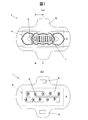
- FIG. 1 is a front view and a rear view of one embodiment of an absorbent article of the present disclosure.
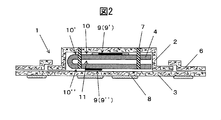
- FIG. 2 is a cross-sectional view taken along the line AA of the absorbent article 1 shown in FIG.
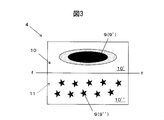
- FIG. 3 is a development view of the absorbent sheet 4 of the absorbent article 1 shown in FIG.
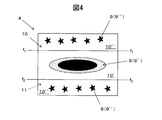
- FIG. 4 is a development view of an absorbent sheet in another embodiment of the absorbent article of the present disclosure.
- FIG. 5 is a view showing one embodiment of an absorbent article including the absorbent sheet 4 shown in FIG. 4.
- FIG. 6 is a diagram showing still another embodiment of the absorbent article of the present disclosure.
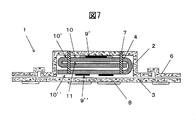
- FIG. 7 is a diagram showing still another embodiment of the absorbent article of the present disclosure.
- FIG. 1 is a front view and a rear view of one embodiment of an absorbent article of the present disclosure.
- FIG. 1A is a front view on the top sheet side
- FIG. 1B is a rear view on the back sheet side.
- the absorbent article 1 shown in FIG. 1 includes a liquid-permeable top sheet 2, a liquid-impermeable back sheet 3, an absorbent sheet 4, a side sheet 6, and a fixing portion 8 for underwear.
- a predetermined pattern 5 can be seen from both the top sheet side and the back sheet side.
- the absorbent article 1 shown by FIG. 1 has the pressing part 7.
- FIG. 1 has the pressing part 7.
- FIG. 2 is a cross-sectional view of the absorbent article 1 shown in FIG.
- the absorbent sheet 4 is disposed between the top sheet 2 and the back sheet 3, and the absorbent sheet 4 has a colored portion 9 (the colored portion 9 is closest to the top sheet).
- First surface 10 (first surface closest to the top sheet) divided into a colored portion 9 ′ of the first surface 10 ′ and a colored portion 9 ′′ of the surface 10 ′′ closest to the backsheet 10 ′ and the first surface 10 ′′ closest to the backsheet) and the second surface on the opposite side of the first surface 10 where the colored portion of the first surface 10 is not seen through 11.
- the absorbent article 1 shown in FIG. 2 has a pressing portion 7 formed by pressing the top sheet 2 and the absorbing sheet 4 together. Further, in the absorbent article 1 shown in FIG. 2, the side edges of the absorbent article 1 in the width direction of the first surface 10 ′ closest to the top sheet and the first surface 10 ′′ closest to the back sheet are used. The positions are approximately the same.
- the colored portion 9 ′ of the surface 10 ′ closest to the top sheet of the absorbent sheet 4 can be seen through from the side of the top sheet 2 of the absorbent article 1, thereby absorbing the absorbent article 4.
- a pattern visible from the top sheet 2 side of the absorbent article 1 is formed, and from the back sheet 3 side of the absorbent article 1, the colored portion 9 ′ of the surface 10 ′′ of the absorbent sheet 4 closest to the back sheet. 'Is seen through, thereby forming a pattern visible from the back sheet 3 side of the absorbent article 1.
- the absorbent sheet has a low total light transmittance and does not transmit the reflected light reflected by the colored portion.
- the colored part existing on the surface cannot be seen.
- the reflected light reflected by the colored portion 9 ′′ of the surface 10 ′′ closest to the back sheet does not pass through the absorbent sheet 4 and the top sheet of the absorbent article 1
- the reflected light that cannot be seen from the side 2 and reflected by the colored portion 9 ′ of the surface 10 ′ closest to the top sheet does not pass through the absorbent sheet 4 and is the same as that of the back sheet 3 of the absorbent article 1. I can't see it from the side.
- the absorbent article can further include an absorbent core, and the absorbent sheet covers the absorbent core.
- FIG. 3 is a development view of the absorbent sheet 4 of the absorbent article 1 shown in FIG.
- the absorbent sheet 4 has a first surface 10 having a colored portion 9 (the colored portion 9 includes a colored portion 9 ′ and a colored portion 9 ′′), and the colored portion 9 of the first surface 10 is transparent.
- the absorbent sheet 4 faces the second surface 11 inward and the absorbent article 1 is invisible. Is folded once along a fold line ff extending substantially in the longitudinal direction. In other words, the absorbent sheet 4 is folded once along the fold line ff with the first surface 10 facing outward.
- the first surface 10 is divided into a surface 10 ′ closest to the top sheet and a surface 10 ′′ closest to the back sheet, and the colored portion 9 Is divided into a colored portion 9 ′ on the surface 10 ′ closest to the top sheet and a colored portion 9 ′′ on the surface 10 ′′ closest to the backsheet.
- FIG. 4 is a development view of an absorbent sheet in another embodiment of the absorbent article of the present disclosure.
- the absorbent sheet 4 includes colored portions 9 (the colored portions 9 are colored portions 9 ′ on the surface 10 ′ closest to the top sheet and colored portions 9 ′′ on the surface 10 ′′ closest to the back sheet).
- a first surface 10 having a second surface 11 on the opposite side of the first surface 10 where the colored portion 9 of the first surface 10 cannot be seen through, and the absorbent sheet 4.
- the second surface 11 is directed inward, and 2 along two fold lines f 1 -f 1 and f 2 -f 2 extending in the substantially longitudinal direction of the absorbent article 1. Folded times.
- the first surface 10 has three surfaces, that is, the surface 10 ′ closest to one topsheet and The surface 10 '' closest to the two backsheets and the colored portion 9 'is above the surface 10' closest to the topsheet and the surface 10 closest to the two backsheets It is divided into a colored part 9 '' above ''. In the absorbent sheet 4, the colored portion 9 on the first surface 10 cannot be seen through from the second surface 11.
- the colored portion 9 ′′ is present on both of the surfaces 10 ′′ closest to the two backsheets, but in another embodiment, from the backsheet side of the absorbent article. As long as a visible pattern is formed, a colored portion may be present on any of the surfaces 10 ′′ closest to the backsheet.
- FIG. 5 is a view showing one embodiment of an absorbent article including the absorbent sheet shown in FIG. 4.
- FIG. 5 corresponds to a cross-sectional view of the absorbent article 1 shown in FIG. 1 taken along the line AA, and the pattern seen from the outside is equivalent to the absorbent article 1 shown in FIG.
- the absorbent article 1 shown in FIG. 5 includes a liquid-permeable top sheet 2, a liquid-impermeable back sheet 3, an absorbent sheet 4, a side sheet 6, and a fixing portion 8 for underwear.
- the absorbent sheet 4 is disposed between the top sheet 2 and the back sheet 3, and the absorbent article 1 shown in FIG. 5 includes the top sheet 2 and the absorbent sheet. 4 has a pressing part 7 formed by pressing together.
- the colored portion 9 ′ of the surface 10 ′ closest to the top sheet of the absorbent sheet 4 can be seen through from the side of the top sheet 2 of the absorbent article 1.
- a pattern visible from the top sheet 2 side of the article 1 is formed, and from the back sheet 3 side of the absorbent article 1, the colored portion 9 '' of the surface 10 '' of the absorbent sheet 4 closest to the back sheet is transparent.
- the pattern which can be seen from the back sheet 3 side of the absorbent article 1 is thereby formed.
- the positions of the side edges in the width direction of the absorbent article 1 of the two first surfaces 10 ′′ closest to the backsheet are substantially the same.
- the reflected light reflected by the colored portion 9 ′′ of the surface 10 ′′ closest to the back sheet does not pass through the absorbent sheet 4 and the top sheet of the absorbent article 1
- the reflected light that cannot be seen from the side 2 and reflected by the colored portion 9 ′ of the surface 10 ′ closest to the top sheet does not pass through the absorbent sheet 4 and is the same as that of the back sheet 3 of the absorbent article 1. I can't see it from the side.
- the absorbent sheet has folded portions F 1 and F 2 at both ends in the width direction of the absorbent article, and the right and left softness in the width direction of the absorbent article. Since the difference is less likely to occur, there is an effect of excellent wearing feeling. Moreover, since it is easy to deform
- FIG. 6 is a diagram showing still another embodiment of the absorbent article of the present disclosure.
- FIG. 6 corresponds to a cross-sectional view of the absorbent article 1 shown in FIG.
- the absorbent article 1 shown in FIG. 6 includes a liquid-permeable top sheet 2, a liquid-impermeable back sheet 3, an absorbent sheet 4, an absorbent core 12, a side sheet 6, and a fixing part to an undergarment. 8, the absorbent sheet 4 is disposed between the top sheet 2 and the back sheet 3, and the absorbent core 12 is covered with the absorbent sheet 4.
- the absorbent article 1 shown by FIG. 6 has the pressing part 7 formed by pressing the top sheet 2, the absorption sheet 4, and the absorption core 12 together.
- the absorbent sheet 4 is folded twice along the two fold lines f 1 -f 1 and f 2 -f 2 shown in FIG. 4 with the absorbent core 12 in between.
- An absorbent body including the absorbent sheet 4 and the absorbent core 12 is formed.
- the surface 10 ′ of the absorbent sheet 4 closest to the top sheet from the side of the top sheet 2 of the absorbent article 1 is the same as that shown in FIGS. 2 and 4.
- a pattern that is visible from the top sheet 2 side of the absorbent article 1 is formed, and from the back sheet 3 side of the absorbent article 1 to the back sheet of the absorbent sheet 4
- a pattern that can be seen from the back sheet side of the absorbent article 1 is formed by allowing the colored portion 9 '' of the near surface 10 '' to be seen through.
- the absorbent article as shown in FIG. 6 further includes an absorbent core, it can absorb a larger amount of menstrual blood, and further, after menstrual blood is absorbed, menstrual blood hardly reaches the back sheet side. The absorbed menstrual blood is less likely to be seen from the back sheet side.
- FIG. 7 is a diagram showing still another embodiment of the absorbent article of the present disclosure.
- FIG. 7 corresponds to a cross-sectional view of the absorbent article 1 shown in FIG.
- the absorbent article 1 shown in FIG. 7 includes a liquid-permeable top sheet 2, a liquid-impermeable back sheet 3, an absorbent sheet 4, a side sheet 6, and a fixing portion 8 for underwear.
- the absorbent sheet 4 is disposed between the top sheet 2 and the back sheet 3.
- the absorbent article 1 shown by FIG. 7 has the pressing part 7 formed by pressing the top sheet 2 and the absorption sheet 4 together.
- the absorbent sheet 4 in FIG. 7 includes three fold lines f 1 -f 1 and f 2 -f 2 extending substantially in the longitudinal direction of the absorbent article 1 in FIG. Arrange them so that the areas are substantially equal, and fold the absorbent sheet 4 at the fold line f 1 -f 1 and then fold the absorbent sheet 4 at the fold line f 2 -f 2 , or fold the line f 2 -f after folding the absorbent sheet 4 at the 2, it may be formed by folding the absorbent sheet 4 at the fold line f 1 -f 1.
- the absorbent sheet 4 shown in FIG. 7 has a colored portion 9 (colored portion 9 ′ and colored portion 9) on two surfaces, a surface 10 ′ closest to the top sheet and a surface 10 ′′ closest to the back sheet. ''), but in another embodiment of the present disclosure, the other surface, for example, the surface sandwiched between the surface 10 'closest to the topsheet and the surface 10' 'closest to the backsheet There may be colored portions.
- the surface 10 ′ of the absorbent sheet 4 closest to the top sheet from the side of the top sheet 2 of the absorbent article 1 is the same as that shown in FIGS. 2 and 4.
- the colored portion 9 ' can be seen through, thereby forming a pattern visible from the top sheet 2 side of the absorbent article 1, and from the back sheet 3 side of the absorbent article 1 to the back sheet of the absorbent sheet 4 most
- the colored portion 9 '' of the near surface 10 '' can be seen through, thereby forming a pattern that can be seen from the back sheet 3 side of the absorbent article 1.
- the absorbent article can further include an absorbent core, and the absorbent sheet covers the absorbent core.
- the term “invisible” used for the absorbent sheet is “total light transmittance” measured according to “Measurement method A” of 5.5.2 of JIS K7105-1981. Means 40% or less.
- the total light transmittance can be measured under the following conditions using, for example, a colorimetric color difference meter (model NDH-300A) manufactured by Nippon Denshoku Industries Co., Ltd.
- -Light receiving element Silicon photocell according to JIS K7105-1981-Filter: Color glass filter Y ⁇ Measurement area: ⁇ 12mm
- the total light transmittance is 40% or less, only 40% or less of the reflected light reflected by the colored portion of the first surface is transmitted to the second surface side.
- the colored part on the surface of 1 becomes difficult to see.
- the total light transmittance is preferably 35% or less, more preferably 30% or less, because the colored portion of the first surface cannot be seen through from the second surface. More preferably, it is 25% or less.
- the absorbent sheet is not particularly limited as long as it is capable of printing and the colored portion of the first surface is not visible through the second surface (having a hiding power), for example, Airlaid sheets composed of pulp, air-through nonwoven fabric, spunlace nonwoven fabric, and the like, and airlaid sheets are preferred. This is because the bulk is high, the total light transmittance tends to be low, and the colored portion is easily formed by printing or the like.
- the total light transmittance varies depending on, for example, the basis weight of the fiber constituting the absorbent sheet, the bulk, the thickness of the fiber, the pigment contained in the fiber, for example, the proportion of titanium oxide, etc.
- the transmittance is less than 40% by using a basis weight of about 85 g / m 2 and a thickness of about 0.7 mm.
- a basis weight of about 85 g / m 2 and a thickness of about 0.7 mm In the case of an air-through non-woven fabric, if it is attempted to achieve a transmittance of 40% or less with a large basis weight, about 180 g / m 2 (when the fiber diameter is about 2.2 dtex) is required, which is inferior in practicality. Therefore, when an absorbent sheet is formed from an air-through nonwoven fabric, it may be necessary to lower the total light transmittance by increasing the bulk or adding a pigment.
- the colored portion of the first surface is not particularly limited, and is formed by using a method usually used in the art, for example, a printing means such as gravure printing, screen printing, flexographic printing, or coloring. And the like formed by applying the applied hot melt or the like from a nozzle or the like.
- a colored portion can be formed on the first surface of the absorbent sheet while changing the amount per unit area with a single colored material.
- the means such as gravure printing is advantageous from the viewpoint of manufacturing cost because the density can be expressed from a single colored material by changing the amount per unit area.
- the colored portion can be formed on the first surface of the absorbent sheet with a plurality of colored materials having different colors using means such as screen printing and flexographic printing.
- the terms “visible through” or “visible” relating to the pattern that can be seen from the top sheet side and the back sheet side of the absorbent article are the total light transmittance of the top sheet side and the back sheet, respectively. , Meaning over 40%.
- the total light transmittance of the top sheet side and / or the back sheet is preferably more than 45%, more preferably more than 50%, and more than 55% so that the colored portion can be seen more transparently. More preferably.
- a nonwoven fabric, a woven fabric, or all or a part thereof is liquid.
- examples thereof include a resin film which is permeable and has a large number of liquid-permeable holes, and a net-like sheet having a large number of meshes.
- the nonwoven fabric include spunlace nonwoven fabric formed from cellulose fibers such as rayon, synthetic resin fibers, and the like, and air-through nonwoven fabric formed from the synthetic resin fibers.
- the resin film and net-like sheet include those formed from polypropylene, polyethylene, polyethylene terephthalate, and the like.
- the top sheet As the top sheet, if it is usually used in this technical field, the above-mentioned requirements for the total light transmittance are generally satisfied, and a predetermined pattern can be seen. Therefore, the top sheet is preferably in the range of about 5 to about 100 g / m 2 , more preferably in the range of about 20 to about 50 g / m 2 , and even more preferably about the performance as an absorbent article. It should have a basis weight in the range of 10 to about 40 g / m 2 .
- the total light transmittance is such that the larger the basis weight of the fibers constituting the top sheet, the higher the bulk, the thinner the fibers, and the fibers.
- the back sheet satisfying the light transmittance requirement those usually used in this technical field can be used without particular limitation as long as they have liquid impermeability, for example, low density A polyethylene sheet etc. are mentioned.
- the backsheet if it is usually used in the technical field, it generally satisfies the requirements of the total light transmittance and a predetermined pattern can be seen. Should have a basis weight in the range of about 15 to about 40 g / m 2 . In the back sheet as well, the total light transmittance tends to decrease as the thickness increases and the amount of colorant such as pigment increases.
- the sidesheet is an optional element and, if present, can be similar to the topsheet.
- the anchoring portion is an optional element and, if present, a pressure sensitive adhesive commonly used in the art, such as a hot melt pressure sensitive adhesive, for example, , Polyolefin (eg, polyethylene and polypropylene) hot melt adhesives, ethylene / vinyl acetate copolymer hot melt adhesives, synthetic rubber (eg, styrene copolymers, butadiene copolymers, isoprene copolymers) hot melt adhesives, An acrylic resin adhesive, a polyvinyl alcohol adhesive, etc. are mentioned.
- the fixing part may be an adhesive made of an acrylic emulsion having a hydrophilic protective colloid layer.
- the absorbent core is an optional element such as ground pulp, chemical pulp, cellulose fiber, and artificial cellulose fiber such as rayon and acetate, synthetic fiber, and a sheet formed therefrom, such as airlaid. Examples thereof include a sheet and a through-air nonwoven fabric.
- the absorbent core may further include a superabsorbent polymer, for example, a starch-based, acrylic acid-based, amino acid-based particulate or fibrous polymer.
- the absorbent article may be manufactured as follows. A liquid-permeable top sheet, a liquid-impermeable back sheet, an absorbent sheet, and an optional absorbent core are prepared, and then a colored portion is formed on the first surface of the absorbent sheet.
- the said colored part can be obtained by printing an absorption sheet using printing means, such as the above-mentioned gravure printing, screen printing, flexographic printing, for example.
- the absorbent sheet is folded, if desired, with the absorbent core in between, with the second surface facing inward, and folded at least one time, and the liquid-permeable top sheet, the liquid-impermeable back sheet, Are bonded together with the absorbent sheet in between.
- the liquid-permeable top sheet and the liquid-impermeable back sheet are bonded together with the absorbent sheet sandwiched therebetween, the liquid-permeable top sheet and the absorbent sheet are squeezed, A pressing part can also be formed. Moreover, a pressing part can also be formed by pressing only an absorption sheet.
- the top sheet and / or the back sheet may be provided with a pattern.
- a more complicated pattern can be formed by combining the pattern of the top sheet and / or the back sheet itself with the pattern formed by the colored portion arranged on the first surface of the absorbent sheet.
- Some embodiments of the absorbent article of the present disclosure include, for example, individually packaged sanitary napkins, panty liners, incontinence pads, disposable diapers, and the like, and can make absorbed menstrual blood less noticeable. Therefore, sanitary napkins and panty liners are preferred.
- the colored portion of the first surface can be seen through from the second surface, but when the absorbent sheet is combined with the absorbent core, An embodiment in which the colored portion of the first surface is not visible can be further included.
- the absorbent article according to the embodiment includes a liquid-permeable top sheet 2, a liquid-impermeable back sheet 3, an absorbent sheet 4, an absorbent core 12, and a side sheet 6.
- the fixing part 8 to the underwear the absorbent sheet 4 is disposed between the top sheet 2 and the back sheet 3 together with the absorbent core 12.
- the absorbent article 1 has the pressing part 7 formed by pressing the top sheet 2, the absorption sheet 4, and the absorption core 12 together.
- the absorbent sheet 4 is folded twice along two fold lines with the absorbent core 12 in between, thereby forming an absorbent body including the absorbent sheet 4 and the absorbent core 12 as shown in FIG. Yes.
- the colored portion 9 ′ and the colored portion 9 ′′ are disposed only on the surface 10 ′ closest to the top sheet and the surface 10 ′′ closest to the back sheet of the absorber.
- the absorbent sheet 4 alone can be seen through the colored portion 9 ′ and the colored portion 9 ′′ of the first surface 10 from the second surface 11, but by combining the absorbent sheet 4 and the absorbent core 12.
- the colored portion 9 ′′ of the surface 10 ′′ closest to the backsheet cannot be seen through from the surface 10 ′ closest to the topsheet, and the surface 10 ′′ closest to the backsheet
- the colored portion 9 ′ of the surface 10 ′ closest to is not seen through.
- an absorption sheet has a total light transmittance of 40% or more
- an absorber has a total light transmittance of 40% or less in the thickness direction.
- the colored portion 9 ′ disposed on the surface 10 ′ closest to the top sheet of the absorbent sheet 4 can be seen through, but the surface 10 closest to the back sheet can be seen through.
- the colored portion 9 ′′ disposed on ′′ cannot be seen through, and is disposed on the surface 10 ′′ of the absorbent sheet 4 closest to the back sheet from the back sheet 3 side of the absorbent article 1.
- the colored portion 9 '' can be seen through, but the colored portion 9 'disposed on the surface 10' closest to the top sheet cannot be seen through.
- An absorbent article comprising a liquid-permeable top sheet, a liquid-impermeable back sheet, and an absorbent sheet between the top sheet and the back sheet,
- the absorbent sheet has a first surface having a colored portion, and a second surface on the opposite side of the first surface, where the colored portion of the first surface is not seen through,
- the absorbent sheet is disposed between the top sheet and the back sheet in a state of being folded at least once along the folding line with the second surface facing inward.
- the colored portion arranged on the surface closest to the top sheet of the absorbent sheet is seen through, and from the back sheet side of the absorbent article, The colored portion arranged on the surface closest to the back sheet is seen through, The above absorbent article.
- An absorbent article comprising a liquid-permeable top sheet, a liquid-impermeable back sheet, and an absorbent core and an absorbent sheet between the top sheet and the back sheet,
- the said absorption sheet has the 1st surface which has a coloring part, and the 2nd surface on the opposite side of a 1st surface, and the said absorption sheet faces a 2nd surface inside, and the said absorption core Between the top sheet and the back sheet in a state of being folded at least twice along at least two folding lines.
- the colored portion is disposed only on the surface of the absorber closest to the top sheet and the surface closest to the back sheet, In the absorbent body, the colored portion of the surface closest to the back sheet from the surface closest to the top sheet cannot be seen through, and the colored portion of the surface closest to the back sheet from the surface closest to the top sheet cannot be seen through. , From the top sheet side of the absorbent article, the colored portion arranged on the surface closest to the top sheet of the absorbent sheet is seen through, and from the back sheet side of the absorbent article, The colored portion arranged on the surface closest to the back sheet is seen through, The above absorbent article.
- Example 1 Regarding the absorbent sheet, the relationship between the basis weight and the total light transmittance was investigated. An airlaid sheet (5 cm ⁇ 5 cm) composed of 100% softwood pulp and having a different basis weight was prepared as an absorbent sheet. The transmittance was measured according to the method described above using a colorimetric color difference meter (model NDH-300A) manufactured by Nippon Denshoku Industries Co., Ltd. The measurement was performed three times at different locations, and the average value was adopted. The results are shown in Table 1 below.
- a colored portion having a star pattern is formed on the first surface of the absorbent sheet by flexographic printing, and whether or not the pattern can be observed from the second surface on the opposite side is visually evaluated by a plurality of people. .
- the visual evaluation was performed under an indoor fluorescent lamp. The results are shown in Table 1.
- Table 1 “O” means that the pattern of the first surface was visible from the second surface, and “X” means that the pattern of the first surface was not visible.
- Example 2 As a typical example of the top sheet, an air-through nonwoven fabric (fiber diameter: 2.2 dtex, basis weight: 25 g / m 2 , thickness: about 0.3 mm) was prepared, and the total light transmittance was measured in the same manner as in Example 1. As a result of visual evaluation, the total light transmittance was 71.5%, and the result of the visual evaluation was ⁇ .
- a breathable back sheet (basis weight 35 g / m 2 ) made of a polyethylene film was prepared, and the total light transmittance was measured and visually evaluated in the same manner as in Example 1. The rate was 49.3%, and the result of visual evaluation was ⁇ . From the above, it can be seen that, with a standard topsheet and backsheet, the light transmittance exceeds 40%, and a predetermined pattern can be seen from both the topsheet side and the backsheet side.
Landscapes
- Health & Medical Sciences (AREA)
- Epidemiology (AREA)
- Engineering & Computer Science (AREA)
- Biomedical Technology (AREA)
- Heart & Thoracic Surgery (AREA)
- Vascular Medicine (AREA)
- Life Sciences & Earth Sciences (AREA)
- Animal Behavior & Ethology (AREA)
- General Health & Medical Sciences (AREA)
- Public Health (AREA)
- Veterinary Medicine (AREA)
- Absorbent Articles And Supports Therefor (AREA)
Abstract
本開示は、製造コストが低い、トップシート側及びバックシート側の両側から、あらかじめ定められた模様が見える吸収性物品を提供することを目的とする。本開示の吸収性物品は、以下の構成を有する。 液透過性のトップシートと、液不透過性のバックシートと、トップシート及びバックシートの間の吸収シートとを含む吸収性物品であって、上記吸収シートが、着色部を有する第1の面と、第1の面の着色部が透けて見えない、第1の面の反対側にある第2の面とを有し、上記吸収シートが、第2の面を内側に向け、折りたたみ線に沿って少なくとも1回折り畳まれた状態で上記トップシート及びバックシートの間に配置されており、上記吸収性物品のトップシート側から、上記吸収シートの、トップシートに最も近い面に配置されている上記着色部が透けて見え、そして上記吸収性物品のバックシート側から、上記吸収シートの、バックシートに最も近い面に配置されている上記着色部が透けて見えることを特徴とする吸収性物品。
Description
本開示は、吸収性物品に関する。
吸収性物品、例えば、生理用ナプキン、パンティーライナー等では、特許文献1に記載されるように、一見して、生理用ナプキンであることが分かりにくいように、そして吸収した経血が外側から見えないように、吸収性物品のバックシートに、一定の模様が印刷されたものが知られている。
一方、特許文献2に記載されるように、吸収性物品の吸収性能を視認させるために、吸収性物品、例えば、生理用ナプキンのトップシート側から、一定の模様が見えるものも知られている。
しかし、吸収性物品のトップシート側及びバックシート側の両方から、一定の模様が見える吸収性物品は知られておらず、また、吸収性物品に、トップシート側から見える模様を付す印刷ラインと、バックシート側から見える模様を付す印刷ラインとの2つの印刷ラインを設けることは、製造コストが高く、さらに製造機器のメンテナンス等の費用も高くなる。
従って、本開示は、製造コストが低い、トップシート側及びバックシート側の両側から、あらかじめ定められた模様が見える吸収性物品を提供することを目的とする。
従って、本開示は、製造コストが低い、トップシート側及びバックシート側の両側から、あらかじめ定められた模様が見える吸収性物品を提供することを目的とする。
本開示者らは、上記課題を解決するために鋭意検討した結果、液透過性のトップシートと、液不透過性のバックシートと、上記トップシート及びバックシートの間の吸収シートとを含む吸収性物品であって、上記吸収シートが、着色部を有する第1の面と、第1の面の着色部が透けて見えない、第1の面の反対側にある第2の面とを有し、上記吸収シートが、第2の面を内側に向け、折りたたみ線に沿って少なくとも1回折り畳まれた状態で、上記トップシート及びバックシートの間に配置されており、上記吸収性物品のトップシート側から、上記吸収シートの、トップシートに最も近い面に配置されている上記着色部が透けて見え、そして上記吸収性物品のバックシート側から、上記吸収シートの、バックシートに最も近い面に配置されている上記着色部が透けて見えることを特徴とする吸収性物品により、上記課題を解決できることを見出した。
本開示の、トップシート側及びバックシート側の両側から、あらかじめ定められた模様が見える吸収性物品は、簡易に製造されることができるので、製造コストが低い。
本開示の吸収性物品について、以下、詳細に説明する。
図1は、本開示の吸収性物品の実施形態の1つの正面図及び背面図である。図1(a)がトップシート側の正面図であり、そして図1(b)がバックシート側の背面図である。図1に示される吸収性物品1は、液透過性のトップシート2と、液不透過性のバックシート3と、吸収シート4と、サイドシート6と、下着への固定部8とを含み、トップシート側及びバックシート側の両側から、あらかじめ定められた模様5が見える。また、図1に示される吸収性物品1は、圧搾部7を有する。
図1は、本開示の吸収性物品の実施形態の1つの正面図及び背面図である。図1(a)がトップシート側の正面図であり、そして図1(b)がバックシート側の背面図である。図1に示される吸収性物品1は、液透過性のトップシート2と、液不透過性のバックシート3と、吸収シート4と、サイドシート6と、下着への固定部8とを含み、トップシート側及びバックシート側の両側から、あらかじめ定められた模様5が見える。また、図1に示される吸収性物品1は、圧搾部7を有する。
図2は、図1で示される吸収性物品1の、A-A断面における断面図である。図2に示される吸収性物品1において、吸収シート4は、トップシート2及びバックシート3の間に配置されており、吸収シート4は、着色部9(着色部9は、トップシートに最も近い第1の面10’の着色部9’と、バックシートに最も近い面10''の着色部9''とに分けられる)を有する第1の面10(トップシートに最も近い第1の面10’と、バックシートに最も近い第1の面10''とを含む)と、第1の面10の着色部が透けて見えない、第1の面10の反対側にある第2の面11とを有する。
なお、図2に示される吸収性物品1は、トップシート2と、吸収シート4とを一緒に圧搾することにより形成された圧搾部7を有する。また、図2に示される吸収性物品1では、トップシートに最も近い第1の面10’及びバックシートに最も近い第1の面10''の、吸収性物品1の幅方向の側縁の位置が、略一致している。
図2に示される吸収性物品1において、吸収性物品1のトップシート2の側から、吸収シート4の、トップシートに最も近い面10’の着色部9’が透けて見え、それにより、吸収性物品1のトップシート2の側から見える模様が形成されており、そして吸収性物品1のバックシート3の側から、吸収シート4の、バックシートに最も近い面10''の着色部9''が透けて見え、それにより、吸収性物品1のバックシート3の側から見える模様が形成されている。
本開示の吸収性物品のいくつかの実施形態では、吸収シートは、後述のように、全光線透過率が低く、着色部で反射した反射光を透過させないので、第2の面から、第1の面に存在する着色部を見ることができない。
従って、図2に示される吸収性物品1において、バックシートに最も近い面10''の着色部9''で反射した反射光は、吸収シート4を透過せず、吸収性物品1のトップシート2の側から見ることができず、そしてトップシートに最も近い面10’の着色部9’で反射した反射光は、同じく、吸収シート4を透過せず、吸収性物品1のバックシート3の側から見ることができない。
なお、本開示の吸収性物品の別の実施形態として、吸収性物品が吸収コアをさらに含み、そして吸収シートが、上記吸収コアを覆っている形態を挙げることができる。
なお、本開示の吸収性物品の別の実施形態として、吸収性物品が吸収コアをさらに含み、そして吸収シートが、上記吸収コアを覆っている形態を挙げることができる。
図3は、図2に示される吸収性物品1の吸収シート4の展開図である。吸収シート4は、着色部9(着色部9は、着色部9’と、着色部9''とを含む)を有する第1の面10と、第1の面10の着色部9が透けて見えない、第1の面10の反対側にある第2の面11とを有し、吸収シート4は、吸収性物品1の中では、第2の面11を内側に向け、吸収性物品1の略長手方向に延びる折り畳み線f-fに沿って1回折り畳まれている。言い換えると、吸収シート4は、第1の面10を外側に向け、折り畳み線f-fに沿って1回折り畳まれている。
折り畳み線f-fに沿って1回折り畳まれることにより、第1の面10が、トップシートに最も近い面10’と、バックシートに最も近い面10''とに分けられ、そして着色部9が、トップシートに最も近い面10’の上にある着色部9’と、バックシートに最も近い面10''の上にある着色部9''とに分けられる。
図4は、本開示の吸収性物品の別の実施形態における、吸収シートの展開図である。図4において、吸収シート4は、着色部9(着色部9は、トップシートに最も近い面10’の着色部9’と、バックシートに最も近い面10''の着色部9''とに分けられる)を有する第1の面10と、第1の面10の着色部9が透けて見えない、第1の面10の反対側にある第2の面11とを有し、吸収シート4は、吸収性物品1の中では、第2の面11を内側に向け、吸収性物品1の略長手方向に延びる2本の折り畳み線f1-f1及びf2-f2に沿って2回折り畳まれている。
2本の折り畳み線f1-f1及びf2-f2に沿って2回折り畳まれることにより、第1の面10が、3つの面、すなわち、1つのトップシートに最も近い面10’と、2つのバックシートに最も近い面10''とに分けられ、そして着色部9が、トップシートに最も近い面10’の上にある着色部9’と、2つのバックシートに最も近い面10''の上にある着色部9''とに分けられる。
なお、吸収シート4において、第2の面11から、第1の面10にある着色部9は、透けて見えない。
なお、吸収シート4において、第2の面11から、第1の面10にある着色部9は、透けて見えない。
なお、図4に示される吸収シート4では、2つのバックシートに最も近い面10''の両方に着色部9''が存在するが、別の実施形態では、吸収性物品のバックシート側から見える模様が形成されている限り、バックシートに最も近い面10''のどちらかに、着色部が存在していてもよい。
図5は、図4に示される吸収シートを含む吸収性物品の実施形態の1つを示す図である。図5は、図1で示される吸収性物品1の、A-A断面における断面図に相当し、そして外部から見える模様は、図1に示される吸収性物品1と同等である。
図5に示される吸収性物品1は、液透過性のトップシート2と、液不透過性のバックシート3と、吸収シート4と、サイドシート6と、下着への固定部8とを含む。図5に示される吸収性物品1において、吸収シート4は、トップシート2及びバックシート3の間に配置されており、そして図5に示される吸収性物品1は、トップシート2と、吸収シート4とを一緒に圧搾することにより形成された圧搾部7を有する。
図5に示される吸収性物品1は、液透過性のトップシート2と、液不透過性のバックシート3と、吸収シート4と、サイドシート6と、下着への固定部8とを含む。図5に示される吸収性物品1において、吸収シート4は、トップシート2及びバックシート3の間に配置されており、そして図5に示される吸収性物品1は、トップシート2と、吸収シート4とを一緒に圧搾することにより形成された圧搾部7を有する。
図5に示される吸収性物品1において、吸収性物品1のトップシート2の側から、吸収シート4の、トップシートに最も近い面10’の着色部9’が透けて見え、それにより吸収性物品1のトップシート2の側から見える模様が形成され、そして吸収性物品1のバックシート3の側から、吸収シート4の、バックシートに最も近い面10''の着色部9''が透けて見え、それにより吸収性物品1のバックシート3の側から見える模様が形成されている。また、図5に示される吸収性物品1では、2つの、バックシートに最も近い第1の面10''の、吸収性物品1の幅方向の側縁の位置が、略一致している。
また、図5に示される吸収性物品1において、バックシートに最も近い面10''の着色部9''で反射した反射光は、吸収シート4を透過せず、吸収性物品1のトップシート2の側から見ることができず、そしてトップシートに最も近い面10’の着色部9’で反射した反射光は、同じく、吸収シート4を透過せず、吸収性物品1のバックシート3の側から見ることができない。
図5に示されるような吸収性物品では、吸収シートが、吸収性物品の幅方向の両端部に、折り畳み部F1及びF2を有し、吸収性物品の幅方向の、軟らかさの左右差が生じにくくなるので、着用感に優れる効果がある。また、吸収性物品の幅方向の中心部(図5における符号C)を中心として、断面が逆V字形となるように変形しやすいので、着用時に身体にフィットしやすい効果が得られる。
図6は、本開示の吸収性物品のさらに別の実施形態を示す図である。図6は、図1で示される吸収性物品1の、A-A断面における断面図に相当する。
図6に示される吸収性物品1は、液透過性のトップシート2と、液不透過性のバックシート3と、吸収シート4と、吸収コア12と、サイドシート6と、下着への固定部8とを含み、吸収シート4は、トップシート2及びバックシート3の間に配置されており、そして吸収コア12は、吸収シート4に覆われている。また、図6に示される吸収性物品1は、トップシート2、吸収シート4、及び吸収コア12を一緒に圧搾することにより形成された圧搾部7を有する。
図6に示される吸収性物品1は、液透過性のトップシート2と、液不透過性のバックシート3と、吸収シート4と、吸収コア12と、サイドシート6と、下着への固定部8とを含み、吸収シート4は、トップシート2及びバックシート3の間に配置されており、そして吸収コア12は、吸収シート4に覆われている。また、図6に示される吸収性物品1は、トップシート2、吸収シート4、及び吸収コア12を一緒に圧搾することにより形成された圧搾部7を有する。
吸収シート4を、吸収コア12を間に挟んで、図4に示される2つの折り畳み線f1-f1及びf2-f2に沿って2回折り畳むことにより、図6に示されるような、吸収シート4及び吸収コア12を含む吸収体が形成されている。
図6に示される吸収性物品1では、図2及び図4に示されるものと同様に、吸収性物品1のトップシート2の側から、吸収シート4の、トップシートに最も近い面10’の着色部9’が透けて見えることにより、吸収性物品1のトップシート2の側から見える模様が形成され、そして吸収性物品1のバックシート3の側から、吸収シート4の、バックシートに最も近い面10''の着色部9''が透けて見えることにより、吸収性物品1のバックシート側から見える模様が形成されている。
図6に示されるような吸収性物品は、吸収コアをさらに含むので、より大量の経血を吸収することができ、さらに、経血を吸収後、経血がバックシート側まで到達しにくいので、バックシート側から、吸収された経血が見えにくくなる効果がある。
図7は、本開示の吸収性物品のさらに別の実施形態を示す図である。図7は、図1で示される吸収性物品1の、A-A断面における断面図に相当する。
図7に示される吸収性物品1は、液透過性のトップシート2と、液不透過性のバックシート3と、吸収シート4と、サイドシート6と、下着への固定部8とを含み、そして吸収シート4は、トップシート2及びバックシート3の間に配置されている。また、図7に示される吸収性物品1は、トップシート2と、吸収シート4とを一緒に圧搾することにより形成された圧搾部7を有する。
図7に示される吸収性物品1は、液透過性のトップシート2と、液不透過性のバックシート3と、吸収シート4と、サイドシート6と、下着への固定部8とを含み、そして吸収シート4は、トップシート2及びバックシート3の間に配置されている。また、図7に示される吸収性物品1は、トップシート2と、吸収シート4とを一緒に圧搾することにより形成された圧搾部7を有する。
図7における吸収シート4は、図4において、吸収性物品1の略長手方向に延びる2本の折り畳み線f1-f1及びf2-f2を、折り畳み線により区分けされる3つの面の面積がほぼ等しくなるように配置し、折り畳み線f1-f1のところで吸収シート4を折り畳んだ後、折り畳み線f2-f2のところで吸収シート4を折り畳むか、又は折り畳み線f2-f2のところで吸収シート4を折り畳んだ後、折り畳み線f1-f1のところで吸収シート4を折り畳むことにより形成されうる。
なお、図7に示される吸収性シート4は、トップシートに最も近い面10’と、バックシートに最も近い面10''との2つの面に着色部9(着色部9’及び着色部9'')が存在するが、本開示の別の実施形態では、その他の面、例えば、トップシートに最も近い面10’と、バックシートに最も近い面10''との間に挟まれた面に着色部が存在していてもよい。
図7に示される吸収性物品1では、図2及び図4に示されるものと同様に、吸収性物品1のトップシート2の側から、吸収シート4の、トップシートに最も近い面10’の着色部9’が透けて見え、それにより吸収性物品1のトップシート2の側から見える模様が形成され、そして吸収性物品1のバックシート3の側から、吸収シート4の、バックシートに最も近い面10''の着色部9''が透けて見え、それにより吸収性物品1のバックシート3の側から見える模様が形成されている。
なお、図7に示される実施形態のさらに別の実施形態として、吸収性物品が吸収コアをさらに含み、そして吸収シートが、吸収コアを覆っている形態を挙げることができる。
なお、図7に示される実施形態のさらに別の実施形態として、吸収性物品が吸収コアをさらに含み、そして吸収シートが、吸収コアを覆っている形態を挙げることができる。
本明細書において、吸収シートに関して用いられる「透けて見えない」の用語は、吸収シートの、JIS K7105-1981の5.5.2の「測定法A」に従って測定される「全光線透過率」が、40%以下であることを意味する。
上記全光線透過率は、例えば、日本電色工業株式会社製の測色色差計(型式NDH-300A)を用いて、以下の条件の下で測定することができる。
・受光素子:JIS K7105-1981に準拠するシリコンフォトセル
・フィルター:色ガラスフィルタ Y
・測定面積:φ12mm
・受光素子:JIS K7105-1981に準拠するシリコンフォトセル
・フィルター:色ガラスフィルタ Y
・測定面積:φ12mm
全光線透過率が40%以下であると、第1の面の着色部で反射した反射光のうち、40%以下の部分しか第2の面側に透過しないので、第2の面から、第1の面にある着色部が見えにくくなる。
なお、上記全光線透過率は、第2の面から、第1の面の着色部が透けて見えないために、35%以下であることが好ましく、30%以下であることがより好ましく、そして25%以下であることがさらに好ましい。
なお、上記全光線透過率は、第2の面から、第1の面の着色部が透けて見えないために、35%以下であることが好ましく、30%以下であることがより好ましく、そして25%以下であることがさらに好ましい。
上記吸収シートは、印刷ができ、そして第1の面の着色部が、第2の面から透けて見えないような(隠蔽力を有する)ものであれば、特に制限されるものではなく、例えば、パルプから構成されるエアレイドシート、エアスルー不織布、スパンレース不織布等が挙げられ、そしてエアレイドシートが好ましい。嵩が高いので、全光線透過率が低くなりやすく、そして印刷等により着色部を形成しやすいからである。
上記全光線透過率は、例えば、吸収シートを構成する繊維の坪量、嵩、繊維の太さ、繊維に含まれる顔料、例えば、酸化チタンの割合等によって変化し、繊維の坪量が多いほど、嵩が高いほど、繊維が細いほど、全光線透過率が低くなる(隠蔽率が高くなる)傾向がある。
例えば、パルプから構成されるエアレイドシートの場合には、坪量:約85g/m2、厚さ:約0.7mmのものを用いることにより、透過率が40%を下回る。また、エアスルー不織布の場合には、坪量の多さで透過率40%以下を達成しようとすると、約180g/m2(繊維径:約2.2dtexの場合)必要となり、実用性に劣る。従って、エアスルー不織布から吸収シートを形成する場合には、別途、嵩を高くする、顔料を含ませる等により全光線透過率を下げることが必要となるであろう。
第1の面の着色部としては、特に制限されず、当技術分野で通常用いられている手法、例えば、グラビア印刷、スクリーン印刷、フレキソ印刷等の印刷手段を用いて形成されたもの、又は着色されたホットメルト等をノズル等から塗布することにより形成されたもの等が挙げられる。
例えば、グラビア印刷を用いて、単一の着色材料で、その単位面積当りの量を変化させながら、吸収シートの第1の面に着色部を形成することができる。グラビア印刷等の手段は、単位面積当りの量を変化させることにより、単一の着色材料から、濃淡を表現することができるので、製造コストの観点から有利である。
あるいは、スクリーン印刷、フレキソ印刷等の手段を用いて、色彩の異なる複数の着色材料で、上記吸収シートの第1の面に着色部を形成することができる。
あるいは、スクリーン印刷、フレキソ印刷等の手段を用いて、色彩の異なる複数の着色材料で、上記吸収シートの第1の面に着色部を形成することができる。
本明細書において、吸収性物品のトップシート側及びバックシート側から見える模様に関する「透けて見える」又は「見える」の用語は、トップシート側及びバックシートの、上述の全光線透過率が、それぞれ、40%超であることを意味する。
上記全光線透過率が40%超であると、トップシート又はバックシートを透過した光が、それぞれ、トップシートに最も近い面の着色部、又はバックシートに最も近い面の着色部で反射し、人間の目が、上記着色部により形成される模様を認識しやすい。
なお、トップシート側及び/又はバックシートの全光線透過率は、着色部がより透けて見えるために、45%超であることが好ましく、50%超であることがより好ましく、そして55%超であることがさらに好ましい。
なお、トップシート側及び/又はバックシートの全光線透過率は、着色部がより透けて見えるために、45%超であることが好ましく、50%超であることがより好ましく、そして55%超であることがさらに好ましい。
上記光線透過率の要件を満たすトップシートとしては、当技術分野で通常用いられているものを、特に制限せずに選択することができ、例えば、不織布、織布、その全部又は一部が液透過性であり、多数の液透過孔が形成された樹脂フィルム、多数の網目を有するネット状シートが挙げられる。上記不織布としては、レーヨン等のセルロース繊維、合成樹脂繊維等から形成されたスパンレース不織布、上記合成樹脂繊維から形成されたエアスルー不織布等が挙げられる。
上記樹脂フィルム及びネット状シートとしては、ポリプロピレン、ポリエチレン、ポリエチレンテレフタレート等から形成されたものが挙げられる。
上記樹脂フィルム及びネット状シートとしては、ポリプロピレン、ポリエチレン、ポリエチレンテレフタレート等から形成されたものが挙げられる。
上記トップシートとしては、当技術分野で通常用いられているものであれば、概ね、上記全光線透過率の要件を満足し、あらかじめ定められた模様が見える。従って、上記トップシートは、吸収性物品としての性能を考慮して、好ましくは約5~約100g/m2の範囲、より好ましくは約20~約50g/m2の範囲、そしてさらに好ましくは約10~約40g/m2の範囲の坪量を有するべきである。
なお、上記トップシートにおいても、全光線透過率は、トップシートが繊維を含む場合には、当該トップシートを構成する繊維の坪量が多いほど、嵩が高いほど、繊維が細いほど、そして繊維に含まれる顔料の割合が高いほど、全光線透過率が低くなる傾向があり、そしてトップシートが樹脂フィルムの場合には、その厚さが厚いほど、顔料等の着色剤の量が多いほど、全光線透過率が低くなる傾向がある。
上記光線透過率の要件を満たすバックシートとしては、液不透過性を有するものであれば、当技術分野で通常用いられているものを、特に制限されずに用いることができ、例えば、低密度ポリエチレンシート等が挙げられる。
上記バックシートとしては、当技術分野で通常用いられているものであれば、概ね、上記全光線透過率の要件を満足し、あらかじめ定められた模様が見えるので、上記バックシートは、吸収性物品としての性能を考慮して、好ましくは約15~約40g/m2の範囲の坪量を有するべきである。
なお、上記バックシートにおいても、全光線透過率は、その厚さが厚いほど、顔料等の着色剤の量が多いほど、全光線透過率が低くなる傾向がある。
なお、上記バックシートにおいても、全光線透過率は、その厚さが厚いほど、顔料等の着色剤の量が多いほど、全光線透過率が低くなる傾向がある。
本開示の吸収性物品の実施形態の1つにおいて、サイドシートは、所望による要素であり、存在する場合には、トップシートと同様のものであることができる。
本開示の吸収性物品の実施形態の1つにおいて、固定部は、所望による要素であり、存在する場合には、当技術分野で通常用いられている粘着剤、例えば、ホットメルト粘着剤、例えば、ポリオレフィン(例えば、ポリエチレン及びポリプロピレン)系ホットメルト粘着剤、エチレン・酢酸ビニル共重合体系ホットメルト粘着剤、合成ゴム(例えば、スチレン系コポリマー、ブタジエン系コポリマー、イソプレン系コポリマー)系ホットメルト粘着剤、アクリル樹脂系粘着剤、ポリビニルアルコール系粘着剤等が挙げられる。
上記固定部は、親水性保護コロイド層を有するアクリル系エマルジョンから成る粘着剤であることもできる。
本開示の吸収性物品の実施形態の1つにおいて、固定部は、所望による要素であり、存在する場合には、当技術分野で通常用いられている粘着剤、例えば、ホットメルト粘着剤、例えば、ポリオレフィン(例えば、ポリエチレン及びポリプロピレン)系ホットメルト粘着剤、エチレン・酢酸ビニル共重合体系ホットメルト粘着剤、合成ゴム(例えば、スチレン系コポリマー、ブタジエン系コポリマー、イソプレン系コポリマー)系ホットメルト粘着剤、アクリル樹脂系粘着剤、ポリビニルアルコール系粘着剤等が挙げられる。
上記固定部は、親水性保護コロイド層を有するアクリル系エマルジョンから成る粘着剤であることもできる。
本明細書において、吸収コアは、所望による要素であり、例えば、粉砕パルプ、化学パルプ、セルロース繊維、及びレーヨン、アセテート等の人工セルロース繊維、合成繊維、並びにこれらから形成されたシート、例えば、エアレイドシート、スルーエア不織布等が挙げられる。上記吸収コアは、高吸収性ポリマー、例えば、デンプン系、アクリル酸系、アミノ酸系の粒子状又は繊維状のポリマーをさらに含むことができる。
本開示の吸収性物品の実施形態の1つでは、吸収性物品は、以下のように製造されうる。
液透過性のトップシートと、液不透過性のバックシートと、吸収シートと、所望による吸収コアとを準備し、次いで、吸収シートの第1の面に着色部を形成する。上記着色部は、例えば、上述のグラビア印刷、スクリーン印刷、フレキソ印刷等の印刷手段を用いて、吸収シートを印刷することにより得ることができる。
液透過性のトップシートと、液不透過性のバックシートと、吸収シートと、所望による吸収コアとを準備し、次いで、吸収シートの第1の面に着色部を形成する。上記着色部は、例えば、上述のグラビア印刷、スクリーン印刷、フレキソ印刷等の印刷手段を用いて、吸収シートを印刷することにより得ることができる。
次いで、上記吸収シートを、所望により吸収コアを間に挟んで、第2の面を内側に向け、少なくとも1回折り畳み、そして上記液透過性のトップシートと、上記液不透過性のバックシートとを、上記吸収シートを間に挟んで、貼り合わせる。
上記液透過性のトップシートと、上記液不透過性のバックシートとを、上記吸収シートを間に挟んで、貼り合わせる前に、液透過性のトップシートと、吸収シートとを圧搾して、圧搾部を形成することもできる。また、吸収シートのみを圧搾することにより、圧搾部を形成することもできる。
上記液透過性のトップシートと、上記液不透過性のバックシートとを、上記吸収シートを間に挟んで、貼り合わせる前に、液透過性のトップシートと、吸収シートとを圧搾して、圧搾部を形成することもできる。また、吸収シートのみを圧搾することにより、圧搾部を形成することもできる。
本開示の吸収性物品の実施形態の1つでは、トップシート及び/又はバックシートに模様が付されていてもよい。トップシート及び/又はバックシートそのものの模様と、吸収シートの第1の面に配置される着色部により形成される模様とを組み合わせることにより、さらに複雑な模様を形成することができる。
本開示の吸収性物品のいくつかの実施形態としては、例えば、個包装型の生理用ナプキン、パンティーライナー、失禁パッド、使い捨ておむつ等が挙げられ、吸収した経血を目立たなくすることができる観点から、生理用ナプキン及びパンティーライナーが好ましい。
本開示の吸収性物品の別の実施形態では、吸収シート単独では、第2の面から、第1の面の着色部が透けて見えるが、吸収シートが、吸収コアと一緒になることによって、第1の面の着色部が透けて見えない実施形態がさらに含まれうる。
上記実施形態の一例を、図6を用いて説明する。
上記実施形態にかかる吸収性物品は、図6に示されるように、液透過性のトップシート2と、液不透過性のバックシート3と、吸収シート4と、吸収コア12と、サイドシート6と、下着への固定部8とを含み、吸収シート4は、吸収コア12と共に、トップシート2及びバックシート3の間に配置されている。また、吸収性物品1は、トップシート2、吸収シート4、及び吸収コア12を一緒に圧搾することにより形成された圧搾部7を有する。
上記実施形態にかかる吸収性物品は、図6に示されるように、液透過性のトップシート2と、液不透過性のバックシート3と、吸収シート4と、吸収コア12と、サイドシート6と、下着への固定部8とを含み、吸収シート4は、吸収コア12と共に、トップシート2及びバックシート3の間に配置されている。また、吸収性物品1は、トップシート2、吸収シート4、及び吸収コア12を一緒に圧搾することにより形成された圧搾部7を有する。
吸収シート4を、吸収コア12を間に挟んで、2つの折り畳み線に沿って2回折り畳むことにより、図6に示されるような、吸収シート4及び吸収コア12を含む吸収体が形成されている。
吸収性物品1では、着色部9’及び着色部9''は、吸収体の、トップシートに最も近い面10’と、バックシートに最も近い面10''とにのみ配置されている。吸収シート4は、単独では、第2の面11から、第1の面10の着色部9’及び着色部9''が透けて見えるが、吸収シート4と、吸収コア12とを組み合わせることによって、吸収体において、トップシートに最も近い面10'から、バックシートに最も近い面10''の着色部9''が透けて見えず、そしてバックシートに最も近い面10''から、トップシートに最も近い面10’の着色部9’は、透けて見えない。
換言すると、上記実施形態では、吸収シートが40%以上の全光線透過率を有するが、吸収体は、その厚さ方向に、40%以下の全光線透過率を有する。
換言すると、上記実施形態では、吸収シートが40%以上の全光線透過率を有するが、吸収体は、その厚さ方向に、40%以下の全光線透過率を有する。
その結果、吸収性物品1のトップシート2の側から、吸収シート4の、トップシートに最も近い面10’に配置されている着色部9’が透けて見えるが、バックシートに最も近い面10''に配置されている着色部9''は透けて見えず、そして吸収性物品1のバックシート3の側から、吸収シート4の、バックシートに最も近い面10''に配置されている着色部9''が透けて見えるが、トップシートに最も近い面10’に配置されている着色部9’は透けて見えない。
具体的には、本開示は以下の態様に関する。
[態様1]
液透過性のトップシートと、液不透過性のバックシートと、上記トップシート及びバックシートの間の吸収シートとを含む吸収性物品であって、
上記吸収シートが、着色部を有する第1の面と、第1の面の着色部が透けて見えない、第1の面の反対側にある第2の面とを有し、
上記吸収シートが、第2の面を内側に向け、折りたたみ線に沿って少なくとも1回折り畳まれた状態で、上記トップシート及びバックシートの間に配置されており、
上記吸収性物品のトップシート側から、上記吸収シートの、トップシートに最も近い面に配置されている上記着色部が透けて見え、そして
上記吸収性物品のバックシート側から、上記吸収シートの、バックシートに最も近い面に配置されている上記着色部が透けて見えることを特徴とする、
上記吸収性物品。
[態様1]
液透過性のトップシートと、液不透過性のバックシートと、上記トップシート及びバックシートの間の吸収シートとを含む吸収性物品であって、
上記吸収シートが、着色部を有する第1の面と、第1の面の着色部が透けて見えない、第1の面の反対側にある第2の面とを有し、
上記吸収シートが、第2の面を内側に向け、折りたたみ線に沿って少なくとも1回折り畳まれた状態で、上記トップシート及びバックシートの間に配置されており、
上記吸収性物品のトップシート側から、上記吸収シートの、トップシートに最も近い面に配置されている上記着色部が透けて見え、そして
上記吸収性物品のバックシート側から、上記吸収シートの、バックシートに最も近い面に配置されている上記着色部が透けて見えることを特徴とする、
上記吸収性物品。
[態様2]
上記吸収シートが、上記吸収性物品の略長手方向に延びる2本の折り畳み線に沿って、第2の面を内側に向けて2回折り畳まれている、態様1に記載の吸収性物品。
[態様3]
上記吸収シートが、上記吸収性物品の略長手方向に延びる1本の折り畳み線に沿って、第2の面を内側に向けて折り畳まれている、態様1に記載の吸収性物品。
上記吸収シートが、上記吸収性物品の略長手方向に延びる2本の折り畳み線に沿って、第2の面を内側に向けて2回折り畳まれている、態様1に記載の吸収性物品。
[態様3]
上記吸収シートが、上記吸収性物品の略長手方向に延びる1本の折り畳み線に沿って、第2の面を内側に向けて折り畳まれている、態様1に記載の吸収性物品。
[態様4]
上記吸収シートに覆われている吸収コアをさらに含む、態様1~3のいずれか一つに記載の吸収性物品。
[態様5]
個包装型の生理用ナプキン、又はパンティーライナーである、態様1~4のいずれか一つに記載の吸収性物品。
上記吸収シートに覆われている吸収コアをさらに含む、態様1~3のいずれか一つに記載の吸収性物品。
[態様5]
個包装型の生理用ナプキン、又はパンティーライナーである、態様1~4のいずれか一つに記載の吸収性物品。
[態様6]
液透過性のトップシートと、液不透過性のバックシートと、上記トップシート及びバックシートの間の、吸収コア及び吸収シートから成る吸収体を含む吸収性物品であって、
上記吸収シートが、着色部を有する第1の面と、第1の面の反対側にある第2の面とを有し、上記吸収シートが、第2の面を内側に向け、上記吸収コアを間に挟んで、少なくとも2本の折りたたみ線に沿って、少なくとも2回折り畳まれた状態で、上記トップシート及びバックシートの間に配置されており、
上記着色部は、上記吸収体の、トップシートに最も近い面と、バックシートに最も近い面とにのみ配置され、
上記吸収体において、トップシートに最も近い面からバックシートに最も近い面の上記着色部が透けて見えず且つバックシートに最も近い面からトップシートに最も近い面の上記着色部が透けて見えず、
上記吸収性物品のトップシート側から、上記吸収シートの、トップシートに最も近い面に配置されている上記着色部が透けて見え、そして
上記吸収性物品のバックシート側から、上記吸収シートの、バックシートに最も近い面に配置されている上記着色部が透けて見えることを特徴とする、
上記吸収性物品。
液透過性のトップシートと、液不透過性のバックシートと、上記トップシート及びバックシートの間の、吸収コア及び吸収シートから成る吸収体を含む吸収性物品であって、
上記吸収シートが、着色部を有する第1の面と、第1の面の反対側にある第2の面とを有し、上記吸収シートが、第2の面を内側に向け、上記吸収コアを間に挟んで、少なくとも2本の折りたたみ線に沿って、少なくとも2回折り畳まれた状態で、上記トップシート及びバックシートの間に配置されており、
上記着色部は、上記吸収体の、トップシートに最も近い面と、バックシートに最も近い面とにのみ配置され、
上記吸収体において、トップシートに最も近い面からバックシートに最も近い面の上記着色部が透けて見えず且つバックシートに最も近い面からトップシートに最も近い面の上記着色部が透けて見えず、
上記吸収性物品のトップシート側から、上記吸収シートの、トップシートに最も近い面に配置されている上記着色部が透けて見え、そして
上記吸収性物品のバックシート側から、上記吸収シートの、バックシートに最も近い面に配置されている上記着色部が透けて見えることを特徴とする、
上記吸収性物品。
[態様7]
態様1~6のいずれか一項に記載の吸収性物品の製造方法であって、
次の各工程、
液透過性のトップシートと、液不透過性のバックシートと、吸収シートと、所望による吸収コアとを準備する工程、
上記吸収シートの第1の面に着色部を形成する工程、
上記吸収シートを、所望により吸収コアを間に挟んで、第2の面を内側に向け、少なくとも1回折り畳む工程、そして
上記液透過性のトップシートと、上記液不透過性のバックシートとを、上記吸収シートを間に挟んで、貼り合わせる工程、
を含む方法。
態様1~6のいずれか一項に記載の吸収性物品の製造方法であって、
次の各工程、
液透過性のトップシートと、液不透過性のバックシートと、吸収シートと、所望による吸収コアとを準備する工程、
上記吸収シートの第1の面に着色部を形成する工程、
上記吸収シートを、所望により吸収コアを間に挟んで、第2の面を内側に向け、少なくとも1回折り畳む工程、そして
上記液透過性のトップシートと、上記液不透過性のバックシートとを、上記吸収シートを間に挟んで、貼り合わせる工程、
を含む方法。
以下、例を挙げて本開示を説明するが、本開示はこれらの例に限定されるものではない。
[例1]
吸収シートに関して、坪量と、全光線透過率との関係を調査した。
吸収シートとして、針葉樹100%のパルプから構成され、坪量の異なるエアレイドシート(5cm×5cm)を準備した。
透過率は、日本電色工業株式会社製の測色色差計(型式NDH-300A)を用い、上述の方法に従って測定した。測定は、場所を変えて3回行い、その平均値を採用した。結果を、以下の表1に示す。
[例1]
吸収シートに関して、坪量と、全光線透過率との関係を調査した。
吸収シートとして、針葉樹100%のパルプから構成され、坪量の異なるエアレイドシート(5cm×5cm)を準備した。
透過率は、日本電色工業株式会社製の測色色差計(型式NDH-300A)を用い、上述の方法に従って測定した。測定は、場所を変えて3回行い、その平均値を採用した。結果を、以下の表1に示す。
また、上記吸収シートに、フレキソ印刷により、第1の面に、星型模様を有する着色部を形成し、反対側の第2の面から、上記模様が観察できるか、複数人で目視評価した。上記目視評価は、屋内の蛍光灯の下で実施された。結果を合わせて表1に示す。表1において、○は、第2の面から第1の面の模様が見えたことを意味し、そして×は、第1の面の模様が見えなかったことを意味する。

[例2]
トップシートの典型例として、エアスルー不織布(繊維径:2.2dtex、坪量:25g/m2、厚さ:約0.3mm)を準備し、例1と同様に全光線透過率を測定し、そして目視評価したところ、全光線透過率は71.5%であり、そして目視評価の結果は○であった。
トップシートの典型例として、エアスルー不織布(繊維径:2.2dtex、坪量:25g/m2、厚さ:約0.3mm)を準備し、例1と同様に全光線透過率を測定し、そして目視評価したところ、全光線透過率は71.5%であり、そして目視評価の結果は○であった。
バックシートの典型例として、ポリエチレンフィルムから成る、通気性バックシート(坪量35g/m2)を準備し、例1と同様に全光線透過率を測定し、そして目視評価したところ、全光線透過率は49.3%であり、そして目視評価の結果は○であった。
以上より、標準的なトップシート及びバックシートであれば、光線透過率は40%を超え、トップシート側及びバックシート側の両側から、あらかじめ定められた模様が見えることが分かる。
以上より、標準的なトップシート及びバックシートであれば、光線透過率は40%を超え、トップシート側及びバックシート側の両側から、あらかじめ定められた模様が見えることが分かる。
1 吸収性物品
2 トップシート
3 バックシート
4 吸収シート
5 模様
6 サイドシート
7 圧搾部
8 固定部
9,9’,9'' 着色部
10 第1の面
10’ トップシートに最も近い面
10'' バックシートに最も近い面
11 第2の面
12 吸収コア
2 トップシート
3 バックシート
4 吸収シート
5 模様
6 サイドシート
7 圧搾部
8 固定部
9,9’,9'' 着色部
10 第1の面
10’ トップシートに最も近い面
10'' バックシートに最も近い面
11 第2の面
12 吸収コア
Claims (7)
- 液透過性のトップシートと、液不透過性のバックシートと、前記トップシート及びバックシートの間の吸収シートとを含む吸収性物品であって、
前記吸収シートが、着色部を有する第1の面と、第1の面の着色部が透けて見えない、第1の面の反対側にある第2の面とを有し、
前記吸収シートが、第2の面を内側に向け、折りたたみ線に沿って少なくとも1回折り畳まれた状態で、前記トップシート及びバックシートの間に配置されており、
前記吸収性物品のトップシート側から、前記吸収シートの、トップシートに最も近い面に配置されている前記着色部が透けて見え、そして
前記吸収性物品のバックシート側から、前記吸収シートの、バックシートに最も近い面に配置されている前記着色部が透けて見えることを特徴とする、
前記吸収性物品。 - 前記吸収シートが、前記吸収性物品の略長手方向に延びる2本の折り畳み線に沿って、第2の面を内側に向けて折り畳まれている、請求項1に記載の吸収性物品。
- 前記吸収シートが、前記吸収性物品の略長手方向に延びる1本の折り畳み線に沿って、第2の面を内側に向けて折り畳まれている、請求項1に記載の吸収性物品。
- 前記吸収シートに覆われている吸収コアをさらに含む、請求項1~3のいずれか一項に記載の吸収性物品。
- 個包装型の生理用ナプキン、又はパンティーライナーである、請求項1~4のいずれか一項に記載の吸収性物品。
- 液透過性のトップシートと、液不透過性のバックシートと、前記トップシート及びバックシートの間の、吸収コア及び吸収シートから成る吸収体を含む吸収性物品であって、
前記吸収シートが、着色部を有する第1の面と、第1の面の反対側にある第2の面とを有し、前記吸収シートが、第2の面を内側に向け、前記吸収コアを間に挟んで、少なくとも2本の折りたたみ線に沿って、少なくとも2回折り畳まれた状態で、前記トップシート及びバックシートの間に配置されており、
前記着色部は、前記吸収体の、トップシートに最も近い面と、バックシートに最も近い面とにのみ配置され、
前記吸収体において、トップシートに最も近い面からバックシートに最も近い面の前記着色部が透けて見えず且つバックシートに最も近い面からトップシートに最も近い面の前記着色部が透けて見えず、
前記吸収性物品のトップシート側から、前記吸収シートの、トップシートに最も近い面に配置されている前記着色部が透けて見え、そして
前記吸収性物品のバックシート側から、前記吸収シートの、バックシートに最も近い面に配置されている前記着色部が透けて見えることを特徴とする、
前記吸収性物品。 - 請求項1~6のいずれか一項に記載の吸収性物品の製造方法であって、
次の各工程、
液透過性のトップシートと、液不透過性のバックシートと、吸収シートと、所望による吸収コアとを準備する工程、
前記吸収シートの第1の面に着色部を形成する工程、
前記吸収シートを、所望により吸収コアを間に挟んで、第2の面を内側に向け、少なくとも1回折り畳む工程、そして
前記液透過性のトップシートと、前記液不透過性のバックシートとを、前記吸収シートを間に挟んで、貼り合わせる工程、
を含む方法。
Applications Claiming Priority (2)
| Application Number | Priority Date | Filing Date | Title |
|---|---|---|---|
| JP2011023148A JP5783738B2 (ja) | 2011-02-04 | 2011-02-04 | 吸収性物品 |
| JP2011-023148 | 2011-02-04 |
Publications (1)
| Publication Number | Publication Date |
|---|---|
| WO2012105283A1 true WO2012105283A1 (ja) | 2012-08-09 |
Family
ID=46602504
Family Applications (1)
| Application Number | Title | Priority Date | Filing Date |
|---|---|---|---|
| PCT/JP2012/050276 Ceased WO2012105283A1 (ja) | 2011-02-04 | 2012-01-10 | 吸収性物品 |
Country Status (2)
| Country | Link |
|---|---|
| JP (1) | JP5783738B2 (ja) |
| WO (1) | WO2012105283A1 (ja) |
Cited By (2)
| Publication number | Priority date | Publication date | Assignee | Title |
|---|---|---|---|---|
| US12390376B2 (en) | 2018-02-28 | 2025-08-19 | Kimberly-Clark Worldwide, Inc. | Multi-layer absorbent cores and methods of manufacture |
| US12661277B2 (en) | 2021-03-30 | 2026-06-23 | Kimberly-Clark Worldwide, Inc. | Multi-layer absorbent cores and methods of manufacture |
Families Citing this family (2)
| Publication number | Priority date | Publication date | Assignee | Title |
|---|---|---|---|---|
| JP6073619B2 (ja) * | 2012-09-25 | 2017-02-01 | 大王製紙株式会社 | 吸収性物品 |
| JP6205450B1 (ja) * | 2016-03-31 | 2017-09-27 | ユニ・チャーム株式会社 | 吸収性物品 |
Citations (4)
| Publication number | Priority date | Publication date | Assignee | Title |
|---|---|---|---|---|
| JP2001258936A (ja) * | 2000-03-22 | 2001-09-25 | Kao Corp | 吸収性物品 |
| JP2006026080A (ja) * | 2004-07-15 | 2006-02-02 | Kao Corp | 吸収性シート |
| JP2006509577A (ja) * | 2002-12-13 | 2006-03-23 | キンバリー クラーク ワールドワイド インコーポレイテッド | 折り畳まれた基体を含む吸収性コア |
| JP2010531195A (ja) * | 2007-07-06 | 2010-09-24 | ザ プロクター アンド ギャンブル カンパニー | パンティライナー |
Family Cites Families (1)
| Publication number | Priority date | Publication date | Assignee | Title |
|---|---|---|---|---|
| JP2010172646A (ja) * | 2009-02-02 | 2010-08-12 | Kao Corp | 吸収性物品 |
-
2011
- 2011-02-04 JP JP2011023148A patent/JP5783738B2/ja not_active Expired - Fee Related
-
2012
- 2012-01-10 WO PCT/JP2012/050276 patent/WO2012105283A1/ja not_active Ceased
Patent Citations (4)
| Publication number | Priority date | Publication date | Assignee | Title |
|---|---|---|---|---|
| JP2001258936A (ja) * | 2000-03-22 | 2001-09-25 | Kao Corp | 吸収性物品 |
| JP2006509577A (ja) * | 2002-12-13 | 2006-03-23 | キンバリー クラーク ワールドワイド インコーポレイテッド | 折り畳まれた基体を含む吸収性コア |
| JP2006026080A (ja) * | 2004-07-15 | 2006-02-02 | Kao Corp | 吸収性シート |
| JP2010531195A (ja) * | 2007-07-06 | 2010-09-24 | ザ プロクター アンド ギャンブル カンパニー | パンティライナー |
Cited By (2)
| Publication number | Priority date | Publication date | Assignee | Title |
|---|---|---|---|---|
| US12390376B2 (en) | 2018-02-28 | 2025-08-19 | Kimberly-Clark Worldwide, Inc. | Multi-layer absorbent cores and methods of manufacture |
| US12661277B2 (en) | 2021-03-30 | 2026-06-23 | Kimberly-Clark Worldwide, Inc. | Multi-layer absorbent cores and methods of manufacture |
Also Published As
| Publication number | Publication date |
|---|---|
| JP2012161422A (ja) | 2012-08-30 |
| JP5783738B2 (ja) | 2015-09-24 |
Similar Documents
| Publication | Publication Date | Title |
|---|---|---|
| CN104780883B (zh) | 具有多层顶片的吸收性物品 | |
| US8563802B2 (en) | Absorbent article with pattern | |
| JP4185445B2 (ja) | 吸収性物品 | |
| JP5709398B2 (ja) | 吸収性物品 | |
| US20110060301A1 (en) | Absorbent article | |
| US20090012491A1 (en) | Pantiliner | |
| CN107920938A (zh) | 具有三维基底和标记的吸收制品 | |
| US10653569B2 (en) | Absorbent article | |
| JP5693273B2 (ja) | 吸収性物品 | |
| JP2003052743A (ja) | 吸収性物品 | |
| JP5783738B2 (ja) | 吸収性物品 | |
| JP5498138B2 (ja) | 体液処理用品 | |
| CN108348370B (zh) | 裤型吸收性物品例如尿裤、卫生裤或失禁裤 | |
| JP6485682B2 (ja) | 吸収性物品 | |
| JP5420943B2 (ja) | 吸収性物品 | |
| JP7298967B2 (ja) | 吸収性物品 | |
| JP6180181B2 (ja) | 吸収性物品 | |
| JP2025117111A (ja) | 吸収性物品 | |
| JP3172357U (ja) | 吸収性物品 |
Legal Events
| Date | Code | Title | Description |
|---|---|---|---|
| 121 | Ep: the epo has been informed by wipo that ep was designated in this application |
Ref document number: 12741937 Country of ref document: EP Kind code of ref document: A1 |
|
| NENP | Non-entry into the national phase |
Ref country code: DE |
|
| 122 | Ep: pct application non-entry in european phase |
Ref document number: 12741937 Country of ref document: EP Kind code of ref document: A1 |