WO2012102937A2 - Compounds that expand hematopoietic stem cells - Google Patents
Compounds that expand hematopoietic stem cells Download PDFInfo
- Publication number
- WO2012102937A2 WO2012102937A2 PCT/US2012/021898 US2012021898W WO2012102937A2 WO 2012102937 A2 WO2012102937 A2 WO 2012102937A2 US 2012021898 W US2012021898 W US 2012021898W WO 2012102937 A2 WO2012102937 A2 WO 2012102937A2
- Authority
- WO
- WIPO (PCT)
- Prior art keywords
- chromen
- carboxamide
- methyl
- cells
- phenyl
- Prior art date
- Legal status (The legal status is an assumption and is not a legal conclusion. Google has not performed a legal analysis and makes no representation as to the accuracy of the status listed.)
- Ceased
Links
Classifications
-
- C—CHEMISTRY; METALLURGY
- C07—ORGANIC CHEMISTRY
- C07D—HETEROCYCLIC COMPOUNDS
- C07D235/00—Heterocyclic compounds containing 1,3-diazole or hydrogenated 1,3-diazole rings, condensed with other rings
- C07D235/02—Heterocyclic compounds containing 1,3-diazole or hydrogenated 1,3-diazole rings, condensed with other rings condensed with carbocyclic rings or ring systems
- C07D235/04—Benzimidazoles; Hydrogenated benzimidazoles
- C07D235/24—Benzimidazoles; Hydrogenated benzimidazoles with hetero atoms or with carbon atoms having three bonds to hetero atoms with at the most one bond to halogen, e.g. ester or nitrile radicals, directly attached in position 2
- C07D235/30—Nitrogen atoms not forming part of a nitro radical
-
- A—HUMAN NECESSITIES
- A61—MEDICAL OR VETERINARY SCIENCE; HYGIENE
- A61P—SPECIFIC THERAPEUTIC ACTIVITY OF CHEMICAL COMPOUNDS OR MEDICINAL PREPARATIONS
- A61P35/00—Antineoplastic agents
-
- A—HUMAN NECESSITIES
- A61—MEDICAL OR VETERINARY SCIENCE; HYGIENE
- A61P—SPECIFIC THERAPEUTIC ACTIVITY OF CHEMICAL COMPOUNDS OR MEDICINAL PREPARATIONS
- A61P37/00—Drugs for immunological or allergic disorders
-
- A—HUMAN NECESSITIES
- A61—MEDICAL OR VETERINARY SCIENCE; HYGIENE
- A61P—SPECIFIC THERAPEUTIC ACTIVITY OF CHEMICAL COMPOUNDS OR MEDICINAL PREPARATIONS
- A61P7/00—Drugs for disorders of the blood or the extracellular fluid
-
- C—CHEMISTRY; METALLURGY
- C07—ORGANIC CHEMISTRY
- C07D—HETEROCYCLIC COMPOUNDS
- C07D213/00—Heterocyclic compounds containing six-membered rings, not condensed with other rings, with one nitrogen atom as the only ring hetero atom and three or more double bonds between ring members or between ring members and non-ring members
- C07D213/02—Heterocyclic compounds containing six-membered rings, not condensed with other rings, with one nitrogen atom as the only ring hetero atom and three or more double bonds between ring members or between ring members and non-ring members having three double bonds between ring members or between ring members and non-ring members
- C07D213/04—Heterocyclic compounds containing six-membered rings, not condensed with other rings, with one nitrogen atom as the only ring hetero atom and three or more double bonds between ring members or between ring members and non-ring members having three double bonds between ring members or between ring members and non-ring members having no bond between the ring nitrogen atom and a non-ring member or having only hydrogen or carbon atoms directly attached to the ring nitrogen atom
- C07D213/60—Heterocyclic compounds containing six-membered rings, not condensed with other rings, with one nitrogen atom as the only ring hetero atom and three or more double bonds between ring members or between ring members and non-ring members having three double bonds between ring members or between ring members and non-ring members having no bond between the ring nitrogen atom and a non-ring member or having only hydrogen or carbon atoms directly attached to the ring nitrogen atom with hetero atoms or with carbon atoms having three bonds to hetero atoms with at the most one bond to halogen, e.g. ester or nitrile radicals, directly attached to ring carbon atoms
- C07D213/72—Nitrogen atoms
- C07D213/75—Amino or imino radicals, acylated by carboxylic or carbonic acids, or by sulfur or nitrogen analogues thereof, e.g. carbamates
-
- C—CHEMISTRY; METALLURGY
- C07—ORGANIC CHEMISTRY
- C07D—HETEROCYCLIC COMPOUNDS
- C07D311/00—Heterocyclic compounds containing six-membered rings having one oxygen atom as the only hetero atom, condensed with other rings
- C07D311/02—Heterocyclic compounds containing six-membered rings having one oxygen atom as the only hetero atom, condensed with other rings ortho- or peri-condensed with carbocyclic rings or ring systems
- C07D311/04—Benzo[b]pyrans, not hydrogenated in the carbocyclic ring
- C07D311/22—Benzo[b]pyrans, not hydrogenated in the carbocyclic ring with oxygen or sulfur atoms directly attached in position 4
-
- C—CHEMISTRY; METALLURGY
- C07—ORGANIC CHEMISTRY
- C07D—HETEROCYCLIC COMPOUNDS
- C07D311/00—Heterocyclic compounds containing six-membered rings having one oxygen atom as the only hetero atom, condensed with other rings
- C07D311/02—Heterocyclic compounds containing six-membered rings having one oxygen atom as the only hetero atom, condensed with other rings ortho- or peri-condensed with carbocyclic rings or ring systems
- C07D311/04—Benzo[b]pyrans, not hydrogenated in the carbocyclic ring
- C07D311/22—Benzo[b]pyrans, not hydrogenated in the carbocyclic ring with oxygen or sulfur atoms directly attached in position 4
- C07D311/24—Benzo[b]pyrans, not hydrogenated in the carbocyclic ring with oxygen or sulfur atoms directly attached in position 4 with carbon atoms having three bonds to hetero atoms with at the most one bond to halogen, e.g. ester or nitrile radicals, directly attached in position 2
-
- C—CHEMISTRY; METALLURGY
- C07—ORGANIC CHEMISTRY
- C07D—HETEROCYCLIC COMPOUNDS
- C07D311/00—Heterocyclic compounds containing six-membered rings having one oxygen atom as the only hetero atom, condensed with other rings
- C07D311/02—Heterocyclic compounds containing six-membered rings having one oxygen atom as the only hetero atom, condensed with other rings ortho- or peri-condensed with carbocyclic rings or ring systems
- C07D311/04—Benzo[b]pyrans, not hydrogenated in the carbocyclic ring
- C07D311/22—Benzo[b]pyrans, not hydrogenated in the carbocyclic ring with oxygen or sulfur atoms directly attached in position 4
- C07D311/26—Benzo[b]pyrans, not hydrogenated in the carbocyclic ring with oxygen or sulfur atoms directly attached in position 4 with aromatic rings attached in position 2 or 3
- C07D311/28—Benzo[b]pyrans, not hydrogenated in the carbocyclic ring with oxygen or sulfur atoms directly attached in position 4 with aromatic rings attached in position 2 or 3 with aromatic rings attached in position 2 only
- C07D311/30—Benzo[b]pyrans, not hydrogenated in the carbocyclic ring with oxygen or sulfur atoms directly attached in position 4 with aromatic rings attached in position 2 or 3 with aromatic rings attached in position 2 only not hydrogenated in the hetero ring, e.g. flavones
-
- C—CHEMISTRY; METALLURGY
- C07—ORGANIC CHEMISTRY
- C07D—HETEROCYCLIC COMPOUNDS
- C07D311/00—Heterocyclic compounds containing six-membered rings having one oxygen atom as the only hetero atom, condensed with other rings
- C07D311/02—Heterocyclic compounds containing six-membered rings having one oxygen atom as the only hetero atom, condensed with other rings ortho- or peri-condensed with carbocyclic rings or ring systems
- C07D311/04—Benzo[b]pyrans, not hydrogenated in the carbocyclic ring
- C07D311/22—Benzo[b]pyrans, not hydrogenated in the carbocyclic ring with oxygen or sulfur atoms directly attached in position 4
- C07D311/26—Benzo[b]pyrans, not hydrogenated in the carbocyclic ring with oxygen or sulfur atoms directly attached in position 4 with aromatic rings attached in position 2 or 3
- C07D311/34—Benzo[b]pyrans, not hydrogenated in the carbocyclic ring with oxygen or sulfur atoms directly attached in position 4 with aromatic rings attached in position 2 or 3 with aromatic rings attached in position 3 only
- C07D311/36—Benzo[b]pyrans, not hydrogenated in the carbocyclic ring with oxygen or sulfur atoms directly attached in position 4 with aromatic rings attached in position 2 or 3 with aromatic rings attached in position 3 only not hydrogenated in the hetero ring, e.g. isoflavones
-
- C—CHEMISTRY; METALLURGY
- C07—ORGANIC CHEMISTRY
- C07D—HETEROCYCLIC COMPOUNDS
- C07D311/00—Heterocyclic compounds containing six-membered rings having one oxygen atom as the only hetero atom, condensed with other rings
- C07D311/02—Heterocyclic compounds containing six-membered rings having one oxygen atom as the only hetero atom, condensed with other rings ortho- or peri-condensed with carbocyclic rings or ring systems
- C07D311/04—Benzo[b]pyrans, not hydrogenated in the carbocyclic ring
- C07D311/42—Benzo[b]pyrans, not hydrogenated in the carbocyclic ring with oxygen or sulfur atoms in positions 2 and 4
-
- C—CHEMISTRY; METALLURGY
- C07—ORGANIC CHEMISTRY
- C07D—HETEROCYCLIC COMPOUNDS
- C07D401/00—Heterocyclic compounds containing two or more hetero rings, having nitrogen atoms as the only ring hetero atoms, at least one ring being a six-membered ring with only one nitrogen atom
- C07D401/02—Heterocyclic compounds containing two or more hetero rings, having nitrogen atoms as the only ring hetero atoms, at least one ring being a six-membered ring with only one nitrogen atom containing two hetero rings
- C07D401/04—Heterocyclic compounds containing two or more hetero rings, having nitrogen atoms as the only ring hetero atoms, at least one ring being a six-membered ring with only one nitrogen atom containing two hetero rings directly linked by a ring-member-to-ring-member bond
-
- C—CHEMISTRY; METALLURGY
- C12—BIOCHEMISTRY; BEER; SPIRITS; WINE; VINEGAR; MICROBIOLOGY; ENZYMOLOGY; MUTATION OR GENETIC ENGINEERING
- C12N—MICROORGANISMS OR ENZYMES; COMPOSITIONS THEREOF; PROPAGATING, PRESERVING, OR MAINTAINING MICROORGANISMS; MUTATION OR GENETIC ENGINEERING; CULTURE MEDIA
- C12N5/00—Undifferentiated human, animal or plant cells, e.g. cell lines; Tissues; Cultivation or maintenance thereof; Culture media therefor
- C12N5/06—Animal cells or tissues; Human cells or tissues
- C12N5/0602—Vertebrate cells
- C12N5/0634—Cells from the blood or the immune system
- C12N5/0647—Haematopoietic stem cells; Uncommitted or multipotent progenitors
-
- A—HUMAN NECESSITIES
- A61—MEDICAL OR VETERINARY SCIENCE; HYGIENE
- A61K—PREPARATIONS FOR MEDICAL, DENTAL OR TOILETRY PURPOSES
- A61K35/00—Medicinal preparations containing materials or reaction products thereof with undetermined constitution
- A61K35/12—Materials from mammals; Compositions comprising non-specified tissues or cells; Compositions comprising non-embryonic stem cells; Genetically modified cells
- A61K35/48—Reproductive organs
- A61K35/51—Umbilical cord; Umbilical cord blood; Umbilical stem cells
-
- C—CHEMISTRY; METALLURGY
- C12—BIOCHEMISTRY; BEER; SPIRITS; WINE; VINEGAR; MICROBIOLOGY; ENZYMOLOGY; MUTATION OR GENETIC ENGINEERING
- C12N—MICROORGANISMS OR ENZYMES; COMPOSITIONS THEREOF; PROPAGATING, PRESERVING, OR MAINTAINING MICROORGANISMS; MUTATION OR GENETIC ENGINEERING; CULTURE MEDIA
- C12N2501/00—Active agents used in cell culture processes, e.g. differentation
- C12N2501/30—Hormones
- C12N2501/38—Hormones with nuclear receptors
-
- C—CHEMISTRY; METALLURGY
- C12—BIOCHEMISTRY; BEER; SPIRITS; WINE; VINEGAR; MICROBIOLOGY; ENZYMOLOGY; MUTATION OR GENETIC ENGINEERING
- C12N—MICROORGANISMS OR ENZYMES; COMPOSITIONS THEREOF; PROPAGATING, PRESERVING, OR MAINTAINING MICROORGANISMS; MUTATION OR GENETIC ENGINEERING; CULTURE MEDIA
- C12N2501/00—Active agents used in cell culture processes, e.g. differentation
- C12N2501/60—Transcription factors
Definitions
- the present invention relates to compounds and compositions for expanding the number of CD34+ cells for transplantation.
- the invention further relates to a cell population comprising expanded hematopoietic stem cells (HSCs) and its use in autologous or allogeneic transplantation for the treatment of patients with inherited immunodeficient and autoimmune diseases and diverse hematopoietic disorders to reconstitute the hematopoietic cell lineages and immune system defense.
- HSCs expanded hematopoietic stem cells
- Hematopoietic stem cells are capable of regenerating all blood products throughout the life of an individual, balancing their self -renewal with progeny differentiation. Hematopoietic stem cells have therapeutic potential as a result of their capacity to restore blood and immune cells in transplant recipients. Furthermore, HSCs have the potential to generate cells for other tissues such as brain, muscle and liver. Human autologous and allogeneic bone marrow transplantation methods are currently used as therapies for leukemia, lymphoma, and other life-threatening diseases. For these procedures, a large number of stem cells must be isolated to ensure that there are enough HSCs for engraftment. The number of HSCs available for treatment is a clinical limitation.
- the present invention relates to compounds and compositions for expanding hematopoietic stem cell populations and uses thereof.
- the present invention provides a compound of Formula I:
- Ri is selected from hydrogen, cyano and halo
- R 2 is selected from hydrogen, halo and Ci- 4 alkyl
- R3 is selected from methyl, amino and pyridinyl
- R4 is selected from hydrogen and ethyl; or the N-oxide derivatives, prodrug derivatives, protected derivatives, individual isomers and mixture of isomers thereof; or the salts (preferably the pharmaceutically acceptable salts) and solvates (e.g. hydrates) of such compounds.
- alkyl as a group and as a structural element of other groups, for example halo-substituted-alkyl and alkoxy, can be either straight-chained or branched.
- alkyl includes methyl, ethyl, propyl, isopropyl, butyl, isobutyl, sec-butyl, t-butyl, etc.
- C 1 -4- alkoxy includes methoxy, ethoxy, and the like.
- Halo-substituted alkyl includes trifluoromethyl, pentafluoroethyl, and the like.
- Aryl means a monocyclic or fused bicyclic aromatic ring assembly containing six to ten ring carbon atoms.
- aryl may be phenyl or naphthyl, preferably phenyl.
- Arylene means a divalent radical derived from an aryl group.
- heteroaryl includes pyridinyl, indolyl, indazolyl, quinoxalinyl, quinolinyl, benzofuranyl, benzopyranyl, benzothiopyranyl, benzo[l,3]dioxole, imidazolyl, benzo-imidazolyl, pyrimidinyl, furanyl, oxazolyl, isoxazolyl, triazolyl, tetrazolyl, pyrazolyl, thienyl, etc.
- Cycloalkyl means a saturated or partially unsaturated, monocyclic, fused bicyclic or bridged polycyclic ring assembly containing the number of ring atoms indicated.
- C3_iocycloalkyl includes cyclopropyl, cyclobutyl, cyclopentyl, cyclohexyl, etc.
- Heterocycloalkyl means cycloalkyl, as defined in this application, provided that one or more of the ring carbons indicated, are replaced by a moiety selected
- Cs-gheterocycloalkyl as used in this application to describe compounds of the invention includes morpholino, pyrrolidinyl, piperazinyl, piperidinyl, piperidinylone, 2-Oxo-pyrrolidin-l-yl, l,4-dioxa-8-aza-spiro[4.5]dec-8-yl, etc.
- Halogen (or halo) preferably represents chloro or fluoro, but may also be bromo or iodo.
- Hematopoietic stem cells refer to immature blood cells having the capacity to self -renew and to differentiate into more mature blood cells comprising granulocytes (e.g., promyelocytes, neutrophils, eosinophils, basophils), erythrocytes (e.g., reticulocytes, erythrocytes), thrombocytes (e.g., megakaryoblasts, platelet producing megakaryocytes, platelets), and monocytes (e.g., monocytes, macrophages).
- HSCs are interchangeably described as stem cells throughout the specification. It is known in the art that such cells may or may not include CD34 + cells.
- CD34 + cells are immature cells that express the CD34 cell surface marker.
- CD34+ cells are believed to include a subpopulation of cells with the stem cell properties defined above.
- HSCs include pluripotent stem cells, multipotent stem cells (e.g., a lymphoid stem cell), and/or stem cells committed to specific hematopoietic lineages.
- the stem cells committed to specific hematopoietic lineages may be of T cell lineage, B cell lineage, dendritic cell lineage, Langerhans cell lineage and/or lymphoid tissue-specific macrophage cell lineage.
- HSCs also refer to long term HSC (LT-HSC) and short term HSC (ST-HSC).
- ST-HSCs are more active and more proliferative than LT-HSCs.
- LT-HSC have unlimited self renewal (i.e., they survive throughout adulthood), whereas ST-HSC have limited self renewal (i.e., they survive for only a limited period of time). Any of these HSCs can be used in any of the methods described herein.
- ST-HSCs are useful because they are highly proliferative and thus, quickly increase the number of HSCs and their progeny.
- Hematopoietic stem cells are optionally obtained from blood products.
- a blood product includes a product obtained from the body or an organ of the body containing cells of hematopoietic origin.
- Such sources include un-fractionated bone marrow, umbilical cord, peripheral blood, liver, thymus, lymph and spleen. All of the aforementioned crude or un-fractionated blood products can be enriched for cells having hematopoietic stem cell characteristics in ways known to those of skill in the art.
- Treatment refers to a method of alleviating or abating a disease and/or its attendant symptoms.
- “Expansion” in the context of cells refers to increase in the number of a characteristic cell type, or cell types, from an initial cell population of cells, which may or may not be identical.
- the initial cells used for expansion may not be the same as the cells generated from expansion.
- Cell population refers to eukaryotic mammalian, preferably human, cells isolated from biological sources, for example, blood product or tissues and derived from more than one cell.
- Enriched when used in the context of cell population refers to a cell population selected based on the presence of one or more markers, for example, CD34+.
- CD34+ cells refers to cells that express at their surface CD34 marker. CD34+ cells can be detected and counted using for example flow cytometry and fluorescently labeled anti-CD34 antibodies.
- CD34+ cells “Enriched in CD34+ cells” means that a cell population has been selected based on the presence of CD34 marker. Accordingly, the percentage of CD34+ cells in the cell population after selection method is higher than the percentage of CD34+ cells in the initial cell population before selecting step based on CD34 markers.
- CD34+ cells may represent at least 50%, 60%, 70%, 80% or at least 90% of the cells in a cell population enriched in CD34+ cells.
- Cord blood unit refers to the blood collected from umbilical cord of a single birth. Description of the Preferred Embodiments
- the present invention relates to methods and compositions for expanding
- HSC populations using an agent capable of down-regulating the activity and/or expression of aryl hydrocarbon receptor and/or a downstream effector of aryl hydrocarbon receptor pathway.
- said agent capable of down-regulating the activity and/or expression of aryl hydrocarbon receptor is a compound selected from: l-efhyl-2-mefhyl-N- phenyl- 1 H-benzo [d]imidazole-5-carboxamide (SR2) ; 1 -ethyl-N-(3 -fluorophenyl)-2-methyl- 1H- benzo[d]imidazole-5-carboxamide (SR10); 2-amino-l-ethyl-N-phenyl-lH-benzo[d]imidazole-5- carboxamide (SRl l); 2-(pyridin-4-yl)-N-p-tolyl-lH-benzo[d]imidazole-5-carboxamide (SR15); N-(3-cyanophenyl)-l-ethyl-2-methyl-lH-benzo[d]imidazole-5-carboxamide (SR16); N-(4-
- Ri is selected from hydrogen, cyano and fluoro; and R 2 is selected from hydrogen and methyl.
- [0027] are compounds selected from: 1 -ethyl -N-(3- fluorophenyl)-2-methyl-lH-benzo[d]imidazole-5-carboxamide (SR10); 2-amino-l-ethyl-N- phenyl-1 H-benzo [d]imidazole-5-carboxamide (SRI 1); 2-(pyridin-4-yl)-N-p-tolyl-lH- benzo[d]imidazole-5-carboxamide (SR15); and N-(3-cyanophenyl)-l-ethyl-2-methyl-lH- benzo [d] imidazole -5 -carboxamide (SR 16) .
- N-(2-chloro-4-methylphenyl)-4- cyanobenzamide (SR24).
- SR24 N-(2-chloro-4-methylphenyl)-4- cyanobenzamide
- SR24 N-(2-chloro-4-methylphenyl)-4- cyanobenzamide
- SR10 1- ethyl-2-methyl-N-phenyl-lH-benzo[d]imidazole-5-carboxamide
- SR10 l-ethyl-N-(3- fluorophenyl)-2-methyl-lH-benzo[d]imidazole-5-carboxamide (SR10); 2-amino-l-ethyl-N- phenyl-lH-benzo[d]imidazole-5-carboxamide (SRI 1); 2-(pyridin-4-yl)-N-p-tolyl-lH- benzo [d]imidazole-5-carboxamide (SRI 5) ; N-(3
- [0030] in another embodiment is a method in which the expansion of stem cells is in vivo, in vitro, or ex vivo.
- stem cells are human hematopoietic stem cells.
- [0032] in another embodiment is a cell population with expanded hematopoietic stem cells, as obtained or obtainable by the method of the invention.
- compositions comprising a cell population with expanded HSCs derived from one or two cord blood units, preferably one cord blood unit, wherein said composition contains a total amount of cells of at least 10 5 cells, 10 7 cells, 10 8 cells or 10 9 cells, and wherein between 20-100% of total cells are CD34+ cells, for example between 40-80% of total cells are CD34+.
- a method for treating a disease or disorder for which stem cell therapy would result in the prevention, treatment or eradication of said disorder is anticipated that as stem cell use progresses the diseases that can be treated by stem cell transplantation will expand. A non-limiting list of examples follows, infra.
- [0036] in another embodiment is the use of a compound selected from: l-efhyl-2- methyl-N-phenyl-lH-benzo[d]imidazole-5-carboxamide (SR2); 1 -ethyl -N-(3-fluorophenyl)-2- methyl-lH-benzo[d]imidazole-5-carboxamide (SR10); 2-amino-l -ethyl -N-phenyl-lH- benzo[d]imidazole-5-carboxamide (SRI 1); 2-(pyridin-4-yl)-N-p-tolyl-lH-benzo[d]imidazole-5- carboxamide (SR15); N-(3-cyanophenyl)-l-ethyl-2-methyl-lH-benzo[d]imidazole-5- carboxamide (SR16); N-(4-methoxyphenyl)-4-oxo-4H-chromene-2-
- the administration is an autologous transplantation and the hematopoietic disorder is selected from Multiple myeloma, Non-Hodgkin lymphoma, Hodgkin disease, Acute myeloid leukemia, Neuroblastoma, Germ cell tumors, Autoimmune disorders and Amyloidosis.
- the autoimmune disorders are selected from
- SLE Systemic lupus erythematosus
- the administration is an allogeneic transplantation and the hematopoietic disorder is selected from Acute myeloid leukemia, Acute lymphoblastic leukemia, Chronic myeloid leukemia, Chronic lymphocytic leukemia, Myeloproliferative disorders, Myelodysplasia syndromes, Multiple myeloma, Non-Hodgkin lymphoma, Hodgkin disease, Aplastic anemia, Pure red cell aplasia, Paroxysmal nocturnal
- hemoglobinuria Fanconi anemi, Thalassemia major, Sickle cell anemia, Severe combined immunodeficiency (SCID), Wiskott-Aldrich syndrome, Hemophagocytic lymphohistiocytosis (HLH) and inborn errors of metabolism.
- SCID Severe combined immunodeficiency
- HHL Hemophagocytic lymphohistiocytosis
- the inborn errors of metabolism are selected from mucopolysaccharidosis, Gaucher disease, metachromatic leukodystrophies and
- in another embodiment is a method for treating an inhereited immunodeficient disease, an autoimmune disease and/or a hematopoietic disorder comprising administration to a patient in need of such treatment hematopoietic stem cells expanded by a compound as described in the Summary of the Invention.
- the administration is an autologous transplantation and the hematopoietic disorder is selected from Multiple myeloma, Non-Hodgkin lymphoma, Hodgkin disease, Acute myeloid leukemia, Neuroblastoma, Germ cell tumors, Autoimmune disorders and Amyloidosis.
- the autoimmune disorders are selected from
- SLE Systemic lupus erythematosus
- the administration is an allogeneic transplantation and the hematopoietic disorder is selected from Acute myeloid leukemia, Acute lymphoblastic leukemia, Chronic myeloid leukemia, Chronic lymphocytic leukemia, Myeloproliferative disorders, Myelodysplasia syndromes, Multiple myeloma, Non-Hodgkin lymphoma, Hodgkin disease, Aplastic anemia, Pure red cell aplasia, Paroxysmal nocturnal
- hemoglobinuria Fanconi anemi, Thalassemia major, Sickle cell anemia, Severe combined immunodeficiency (SCID), Wiskott-Aldrich syndrome, Hemophagocytic
- lymphohistiocytosis (HLH) and inborn errors of metabolism.
- the inborn errors of metabolism are selected from mucopolysaccharidosis, Gaucher disease, metachromatic leukodystrophies and
- HSCs are primitive cells capable of regenerating all blood cells. During development, hematopoiesis translocates from the fetal liver to the bone marrow, which then remains the site of hematopoiesis throughout adulthood. Once hematopoiesis has been established in the bone marrow, the HSCs are not distributed randomly throughout the bone cavity. Instead, they are found in close proximity to the endosteal surfaces. The more mature stem cells increase in number as the distance from the bone surface increases. Finally, as the central longitudinal axis of the bone is approached terminal differentiation of mature cells occurs.
- HSC numbers are increased ex vivo.
- a method of increasing stem cell numbers is important as currently, approximately 25% of autologous donor transplants are prohibited for lack of sufficient stem cells. In addition, less than 25% of patients in need of allogeneic transplant can find a histocompatible donor.
- Umbilical cord blood banks currently exist and cover the broad racial make-up of the general population, but these banks are currently restricted to use in children due to inadequate stem cell numbers in the specimens for adult recipients.
- a method to increase stem cell numbers permits cord blood to be useful for adult patients, thereby expanding the use of allogeneic transplantation.
- Compounds of the invention can also be used to expand the progenitor cell numbers which are clinically useful, for example, to speed engraftment and decrease the duration of neutropenia.
- an increase in HSCs means that the subject has at least one more HSC, a 10% increase, a 20% increase, a 30% increase or greater.
- HSCs may consist of a subset of CD34+ cells, increase of HSCs can be measured indirectly by counting the number of CD34+ cells in a cell population and, optionally, by assessing the differentiation properties of the CD34+ cells by analyzing the colony forming units (CFU) as described in the experimental part below:
- CFU colony forming units
- the expanded population of HSCs is harvested, for example, from a bone marrow sample of a subject or from a culture.
- Harvesting HSCs is defined as the dislodging or separation of cells. This is accomplished using a number of methods, such as enzymatic, non-enzymatic, centrifugal, electrical, or size -based methods, or preferably, by flushing the cells using culture media (e.g., media in which cells are incubated) or buffered solution.
- culture media e.g., media in which cells are incubated
- buffered solution e.g., buffered solution.
- the cells are optionally collected, separated, and further expanded generating even larger populations of HSCs and differentiated progeny.
- a method for making an expanded population of HSCs comprises contacting an agent capable of down-regulating the activity and/or expression of AHR and/or a downstream effector of AHR, e.g., a compound of the invention, with a starting cell population (i.e., an unexpanded population of cells) comprising a mixture of HSCs and optionally HSC supporting cells.
- the administration step occurs ex vivo, in vivo and/or in vitro.
- the expanded population of HSCs is optionally administered to a subject.
- agent for HSC expansion e.g.
- a compound of the invention may be formulated in DMSO or some other suitable carrier, "washed" from the cells and the cells may be transferred, for example, into an infusion buffer.
- a DMSO formulation for example, can contain 0.3mg/ml of a compound of the invention in 60% DMSO/40% water solution.
- HSC supporting cell refers to cells naturally found in the vicinity of one or more HSCs such that factors released by HSC supporting cells reach the HSC by diffusion, for example.
- HSC supporting cells include, but are not limited to, lymphoreticular stromal cells.
- Lymphoreticular stromal cells as used herein include, but are not limited to, all cell types present in a lymphoid tissue which are not lymphocytes or lymphocyte precursors or progenitors.
- lymphoreticular stromal cells include osteoblasts, epithelial cells, endothelial cells, mesothelial cells, dendritic cells, splenocytes and macrophages.
- Lymphoreticular stromal cells also include cells that would not ordinarily function as lymphoreticular stromal cells, such as fibroblasts, which have been genetically altered to secrete or express on their cell surface the factors necessary for the maintenance, growth or differentiation of HSCs, including their progeny.
- Lymphoreticular stromal cells are optionally derived from the disaggregation of a piece of lymphoid tissue. Such cells are capable of supporting in vitro or in vivo the maintenance, growth or differentiation of HSCs, including their progeny.
- lymphoid tissue it is meant to include bone marrow, peripheral blood (including mobilized peripheral blood), umbilical cord blood, placental blood, fetal liver, embryonic cells (including embryonic stem cells), aortal-gonadal-mesonephros derived cells, and lymphoid soft tissue.
- Lymphoid soft tissue as used herein includes, but is not limited to, tissues such as thymus, spleen, liver, lymph node, skin, tonsil, adenoids and Peyer's patch, and combinations thereof.
- Lymphoreticular stromal cells provide the supporting microenvironment in the intact lymphoid tissue for the maintenance, growth or differentiation of HSCs, including their progeny.
- the microenvironment includes soluble and cell surface factors expressed by the various cell types which comprise the lymphoreticular stroma.
- the support which the lymphoreticular stromal cells provide is characterized as both contact-dependent and non- contact-dependent.
- Lymphoreticular stromal cells are autologous (self) or non- autologous (non-self, e.g., heterologous, allogeneic, syngeneic or xenogeneic) with respect to HSCs.
- Autologous refers to cells from the same subject.
- Allogeneic refers to cells of the same species that differ genetically.
- Syngeneic refers to cells of a different subject that are genetically identical to the cell in comparison.
- Xenogeneic refers to cells of a different species.
- Lymphoreticular stroma cells are obtained, for example, from the lymphoid tissue of a human or a non-human subject at any time after the organ/tissue has developed to a stage (i.e., the maturation stage) at which it can support the maintenance, growth or differentiation of HSCs.
- lymphoreticular stromal cells are derived usually determines the lineage -commitment HSCs undertake, resulting in the lineage-specificity of the differentiated progeny.
- the co-culture of HSCs (and progeny thereof) with lymphoreticular stromal cells usually occurs under conditions known in the art (e.g., temperature, CO 2 and O 2 content, nutritive media, duration, etc.).
- the time sufficient to increase the number of cells is a time that can be easily determined by a person skilled in the art, and varies depending upon the original number of cells seeded.
- the amounts of HSCs and lymphoreticular stromal cells initially introduced (and subsequently seeded) varies according to the needs of the experiment. The ideal amounts are easily determined by a person skilled in the art in accordance with needs.
- subjects include, for example, domesticated animals, such as cats and dogs, livestock (e.g., cattle, horses, pigs, sheep, and goats), laboratory animals (e.g., mice, rabbits, rats, and guinea pigs), mammals, non-human mammals, primates, non-human primates, rodents, birds, reptiles, amphibians, fish, and any other animal.
- livestock e.g., cattle, horses, pigs, sheep, and goats
- laboratory animals e.g., mice, rabbits, rats, and guinea pigs
- mammals non-human mammals, primates, non-human primates, rodents, birds, reptiles, amphibians, fish, and any other animal.
- the subject is optionally a mammal such as a primate or a human.
- the invention therefore relates to a method for expanding hematopoietic stem cells, comprising (a) providing a starting cell population comprising hematopoietic stem cells and (b) culturing said starting cell population ex vivo in presence of an agent capable of down- regulating the activity and/or expression of aryl hydrocarbon receptor and/or a down-stream effector of aryl hydrocarbon receptor pathway, under suitable conditions for expanding hematopoietic stem cells.
- the aryl hydrocarbon (dioxin) receptor (AHR) is a cytosolic ligand-activated transcription factor known to mediate a large number of toxic and carcinogenic effects in animals and possible in human (Safe S 2001 Toxicol Lett 120: 1-7).
- phase I xenobiotic-metabolizing enzymes such as the cytochromes P450 CYP1A1, CYP1A2, CYP1B1 and CYP2S1, and the phase II enzymes UDP-glucuronosyltransferase UGT1A6, NAD(P)H-dependent quinone oxidoreductase-1 (NQOl), the aldehyde dehydrogenase ALDH3A1, and several glutathione-S -transferase.
- phase I xenobiotic-metabolizing enzymes such as the cytochromes P450 CYP1A1, CYP1A2, CYP1B1 and CYP2S1, and the phase II enzymes UDP-glucuronosyltransferase UGT1A6, NAD(P)H-dependent quinone oxidoreductase-1 (NQOl), the aldehyde dehydrogenase ALDH3A1, and several glutathione-S
- an agent capable of down-regulating the activity and/or expression of aryl hydrocarbon receptor and/or a down-stream effector of aryl hydrocarbon receptor pathway is selected among the group consisting of: (i) an organic compound; (ii) a small interference RNA (siRNA) molecule capable of down-regulating the expression of AHR; and (iii) antisense oligonucleotide capable of down-regulating the expression of AHR.
- siRNA small interference RNA
- said method for expanding hematopoietic stem cells comprises (a) providing a starting cell population comprising hematopoietic stem cells and (b) culturing said starting cell population ex vivo in the presence of an agent capable of down- regulating the activity and/or expression of aryl hydrocarbon receptor and/or a down-stream effector of aryl hydrocarbon receptor pathway, under suitable conditions for expanding hematopoietic stem cells, wherein said agent capable of down-regulating the activity and/or expression of aryl hydrocarbon receptor and/or a down-stream effector of aryl hydrocarbon receptor pathway is not alpha-napthoflavone or 3'-methoxy-4'-nitroflavone.
- AHR antagonist Organic compound that inhibits AHR activity (also referred herein as AHR antagonist) have been described in the art, for example 2-mefhyl-2H-pyrazole-3-carboxylic acid (2-methyl-4-o-tolylazophenyl)amide (CH223191), alpha napthoflavone, resveratrol (Nutr.
- An inhibitor of AHR activity refers to a compound which decreases AHR activity to at least 10%, 20%, 30%, 50%, 60%, 70%, 80% or at least 90% the transcriptional activity of AHR as observed under activated conditions.
- An assay to measure AHR inhibitory activity is for example the dioxin-induced AHR dependent luciferase reporter gene assay as described in the Examples.
- an inhibitor of AHR activity is a compound that has an EC50 of less than 10 ⁇ , preferably less than 5 ⁇ as measured in the dioxin-induced AHR dependent luciferase reporter gene assay.
- AHR is a transcriptional factor regulating the transcription of various genes in human.
- a downstream effector of AHR pathway is a gene which is directly regulated at the transcriptional level by AHR. Examples of such genes are selected from
- AHR also functions in pathways outside of its well- characterized role in xenobiotic enzyme induction.
- Xenobiotic ligands of AHR have been shown to regulate beta catenin, STAT5, STAT1, HES-1, c-Myc, C/EBP, PU.l, ⁇ -catenin, p21, P27, pRb, deoxynucleotidyl transferase, CXCR4, and its chemokine ligand CXCL12 (SDF-1).
- an agent capable of down-regulating the activity and/or expression of aryl hydrocarbon receptor is a compound as defined in the Summary of the Invention.
- an agent capable of down-regulating the activity and/or expression of aryl hydrocarbon receptor is an antisense oligonucleotide or a small interfering RNA molecule (siRNA), capable of down-regulating AHR protein expression or the protein expression of one more down-stream effectors of AHR.
- siRNA small interfering RNA molecule
- Design of antisense oligonucleotides which can be used to efficiently inhibit the AHR protein expression must be effected in a way that such oligonucleotides specifically binds the designated mRNA within cells in a way which inhibits translation thereof.
- Sequence suitable for use in design and synthesis of antisense oligonucleotides which specifically bind to AHR mRNA, genomic DNA and/or its promoter or other control sequences are available in published sequence of AHR, in particular human AHR.
- algorithms for identifying sequences with the highest predicted binding affinity for their target mRNA based on thermodynamic cycle that accounts for the energetics of structural alterations in both the target mRNA and the oligonucleotides are also available.
- RNAi molecules suitable for use with the present invention can be affected as follows: First, the AHR mRNA sequence (or one or more of its down-stream effectors) is scanned downstream of the AUG start codon for AA-dinucleotide sequences.
- Potential target sites are compared to an appropriate genomic database (e.g, human, mouse, rat, etc.) using any sequence alignment software. Putative target site that exhibit significant homology to other coding sequences are filtered out. Preferred sequences are then those including low G/C content, in particular sequences with G/C content lower than 55%. Several target sites are then selected along the length of the target gene. Methods or algorithms to identify putative target site of siRNA are described for example in (Tilesi, et al., Curr. Opin. Mol. Ther. 11 : 156, 2009).
- the starting cell population comprising hematopoietic stem cells will be selected by the person skilled in the art depending on the envisaged use.
- Various sources of cells comprising hematopoietic stem cells have been described in the art, including bone marrow, peripheral blood, neonatal umbilical cord blood, placenta or other sources such as liver, particularly fetal liver.
- the cell population may first be subjected to enrichment or purification steps, including negative and/or positive selection of cells based on specific cellular markers in order to provide the starting cell population.
- Methods for isolating said starting cell population based on specific cellular markers may use fluorescent activated cell sorting (FACS) technology also called flow cytometry or solid or insoluble substrate to which is bound antibodies or ligands that interact with specific cell surface markers.
- FACS fluorescent activated cell sorting
- cells may be contacted with a solid substrate (e.g., column of beads, flasks, magnetic particles) containing the antibodies and any unbound cells are removed.
- a solid substrate comprising magnetic or paramagnetic beads
- cells bound to the beads can be readily isolated by a magnetic separator.
- said starting cell population is enriched in a desirable cell marker phenotype (e.g., CD34+, CD133+, CD90+) or based on efflux of dyes such as rhodamine, Hoechst or aldehyde dehydrogenase activity.
- said starting cell population is enriched in CD34+ cells.
- Methods for enriching blood cell population in CD34+ cells include kits commercialized by Miltenyi Biotec (CD34+ direct isolation kit, Miltenyi Biotec, Bergisch, Gladbach, Germany) or by Baxter (Isolex 3000).
- the amount of cord blood from a single birth is often inadequate to treat an adult or an older child.
- One advantage of the expansion methods using the compounds of the invention, or an agent capable of down-regulating the activity and/or expression of aryl hydrocarbon receptor and/or a down-stream effector of aryl hydrocarbon receptor pathway is that it enables the production of a sufficient amount of hematopoietic stem cells from only one cord blood unit.
- the starting cell population is derived from neonatal umbilical cord blood cells which have been enriched in CD34+ cells.
- said starting cell population is derived from one or two umbilical cord blood units.
- the starting cell population is derived from human mobilized peripheral blood cells which have been enriched in CD34+ cells.
- said starting cell population is derived from human mobilized peripheral blood cells isolated from only one patient.
- Said starting cell population may preferably contain at least 50% CD34+ cells, in some embodiments, more than 90% of CD34+ cells, and may comprise between 10 5 and 10 9 nucleated cells.
- the starting cell population may be used directly for expansion or frozen and stored for use at a later date.
- Conditions for culturing the starting cell population for hematopoietic stem cell expansion will vary depending, inter alia, on the starting cell population, the desired final number of cells, and desired final proportion of HSCs.
- the culturing conditions comprises the use of other cytokines and growth factors, generally known in the art for hematopoietic stem cell expansion.
- cytokines and growth factors include without limitation IL-1, IL-3, IL-6, IL-11, G-CSF, GM-CSF, SCF, F1T3-L, thrombopoietin (TPO), erythropoeitin, and analogs thereof.
- analogs include any structural variants of the cytokines and growth factors having the biological activity as the naturally occurring forms, including without limitation, variants with enhanced or decreased biological activity when compared to the naturally occurring forms or cytokine receptor agonists such as an agonist antibody against the TPO receptor (for example, VB22B sc(Fv)2 as detailed in patent publication WO 2007/145227, and the like). Cytokine and growth factor combinations are chosen to expand HSC and progenitor cells while limiting the production of terminally differentiated cells. In one specific embodiment, one or more cytokines and growth factors are selected from the group consisting of SCF, Flt3-L and TPO.
- At least TPO is used in a serum-free medium under suitable conditions for HSC expansion.
- a mixture of IL6, SCF, Flt3-L and TPO is used in the method for expanding HSCs in combination with the compound of the invention or an agent capable of down-regulating the activity and/or expression of aryl hydrocarbon receptor and/or a down-stream effector of aryl hydrocarbon receptor pathway.
- Human IL6 or interleukin-6 also known as B-cell stimulatory factor 2 has been described by (Kishimoto, Ann. review of Imm. 23: 1 2005) and is commercially available.
- Human SCF or stem cell factor also known as c-kit ligand, mast cell growth factor or Steel factor has been described (Smith, MA et al., ACTA Haematologica, 105, 3: 143, 2001) and is commercially available.
- Flt3-L or FLT-3 Ligand also referred as FL is a factor that binds to flt3- receptor. It has been described (Hannum C, Nature 368 (6472): 643-8) and is commercially available.
- TPO or thrombopoietin also known as megakarayocyte growth factor (MGDF) or c- Mpl ligand has been described (Kaushansky K (2006). N. Engl. J. Med. 354 (19): 2034-45) and is commercially available.
- MGDF megakarayocyte growth factor
- c- Mpl ligand has been described (Kaushansky K (2006). N. Engl. J. Med. 354 (19): 2034-45) and is commercially available.
- the expansion of HSC may be carried out in a basal medium, which is supplemented with the mixtures of cytokines and growth factors described above.
- a basal medium typically comprises amino acids, carbon sources, vitamins, serum proteins (e.g.
- HSC HSC
- basal medium appropriate for a method of expanding HSC include, without limitation, StemSpan ® SFEM - Serum-Free Expansion Medium (StemCell Technologies, Vancouver, Canada), StemSpan ® H3000 - Defined Medium (StemCell
- the compound of the invention or the agent capable of down-regulating the activity and/or expression of aryl hydrocarbon receptor and/or a downstream effector of aryl hydrocarbon receptor pathway is administered during the expansion method of said starting cell population under a concentration appropriate for HSC expansion.
- said compound or AhR modulating agent is administered at a concentration comprised between lpM and ⁇ , for example between ⁇ and ⁇ , or between ⁇ and ⁇ .
- starting cell population essentially consists of CD34+ enriched cells from one or two cord blood units
- the cells are grown under conditions for HSC expansion from about 3 days to about 90 days, for example between 7 and 2 days and/or until the indicated fold expansion and the characteristic cell populations are obtained.
- the cells are grown under conditions for HSC expansion not more than 21 days, 14 days or 7 days.
- the starting cell population is cultured during a time sufficient to reach an absolute number of CD34+ cells of at least 10 5 , 10 6 , 10 7 , 10 8 or 10 9 cells. In another embodiment, said starting cell population is cultured during a time sufficient for a 10 to 50000 fold expansion of CD34+ cells, for example between 100 and 10000 fold expansion.
- the cell population obtained after the expansion method may be used without further purification or may be subject to further purification or selection steps.
- the cell population may then be washed to remove the compound of invention or any other agent capable of down-regulating the activity and/or expression of aryl hydrocarbon receptor and/or a down-stream effector of aryl hydrocarbon receptor pathway and/or any other components of the cell culture and resuspended in an appropriate cell suspension medium for short term use or in a long-term storage medium, for example a medium suitable for cryopreservation.
- the invention further provides a cell population with expanded HSCs, obtainable or obtained by the expansion method described above.
- such cell population is resuspended in a pharmaceutically acceptable medium suitable for administration to a mammalian host, thereby providing a therapeutic composition.
- the invention relates to a composition
- a composition comprising a cell population with expanded HSCs derived from not more than one or two cord blood units, wherein said therapeutic composition contains a total amount of cells of at least 10 5 , 10 6 , 10 7 , 10 8 or 10 9 cells, with between 20-100%, for example between 40-80% of total cells being CD34+ cells.
- said composition contains between 0.1-40%, for example between 0.1-10% of total cells being CD34+ Thyl+ and 20-80% of cells being CD34+ CD45RA+.
- said composition contains between 10- 95% of cells being CD38+ and between 5-70% of cells being CD133+.
- the invention further provides the cell population with expanded HSCs or its composition for use in allogeneic or autologous stem cell transplantation in a mammalian subject.
- the subject referred to herein is, for example, a bone marrow donor or an individual with or at risk for depleted or limited blood cell levels.
- the subject is a bone marrow donor prior to bone marrow harvesting or a bone marrow donor after bone marrow harvesting.
- the subject is optionally a recipient of a bone marrow transplant.
- the methods described herein are particularly useful in subjects that have limited bone marrow reserve such as elderly subjects or subjects previously exposed to an immune depleting treatment or
- myeloablative treatment such as chemotherapy, e.g., for treating leukemia or lymphomas.
- the subject optionally, has a decreased blood cell level or is at risk for developing a decreased blood cell level as compared to a control blood cell level.
- control blood cell level refers to an average level of blood cells in a subject prior to or in the substantial absence of an event that changes blood cell levels in the subject.
- An event that changes blood cell levels in a subject includes, for example, anemia, trauma, chemotherapy, bone marrow transplant and radiation therapy.
- the subject has anemia or blood loss due to, for example, trauma.
- the expanded HSC population or the composition comprising the cell population with expanded HSCs is administered to the subject, for example, before, at the same time, or after chemotherapy, radiation therapy or a bone marrow transplant.
- the subject optionally has depleted bone marrow related to, for example, congenital, genetic or acquired syndrome characterized by bone marrow loss or depleted bone marrow.
- the subject is optionally a subject in need of hematopoiesis.
- the subject is a bone marrow donor or is a subject with or at risk for depleted bone marrow.
- Hematopoietic stem cell manipulation is useful as a supplemental treatment to chemotherapy or radiation therapy.
- HSCs are localized into the peripheral blood and then isolated from a subject that will undergo chemotherapy, and after the therapy the cells are returned.
- the subject is a subject undergoing or expected to undergo an immune cell depleting treatment such as chemotherapy, radiation therapy or serving as a donor for a bone marrow transplant.
- Bone marrow is one of the most prolific tissues in the body and is therefore often the organ that is initially damaged by chemotherapy drugs and radiation. The result is that blood cell production is rapidly destroyed during chemotherapy or radiation treatment, and chemotherapy or radiation must be terminated to allow the hematopoietic system to replenish the blood cell supplies before a patient is re -treated with chemotherapy. Therefore, as described herein, HSCs or blood cells made by the methods described herein are optionally administered to such subjects in need of additional blood cells.
- a therapeutic capable of enhancing the proliferation of HSCs in vivo, in vitro, or ex vivo for example, a small molecule, an antibody, or the like
- optionally at least one pharmaceutically acceptable excipient or carrier for example, a small molecule, an antibody, or the like
- a therapeutic capable of enhancing HSC proliferation is meant: an agonist antibody against the TPO receptor (for example, VB22B sc(Fv)2 as detailed in patent publication WO 2007/145227, and the like); a cytokine such as SCF, IL-6, Flt-3 ligand, TPO or a TPO mimetic (for example, such as described in WO/2007/022269; WO/2007/009120; WO/2004/054515;
- pharmaceutically acceptable is meant a material that is not biologically or otherwise undesirable, i.e., the material may be administered to a subject or cell, without causing undesirable biological effects or interacting in a deleterious manner with the other components of the pharmaceutical composition in which it is contained.
- the carrier or excipient is selected to minimize degradation of the active ingredient and to minimize adverse side effects in the subject or cell.
- compositions are formulated in any conventional manner for use in the methods described herein. Administration is via any route known to be effective by one of ordinary skill.
- the compositions is administered orally, parenterally (e.g., intravenously), by intramuscular injection, by intraperitoneal injection, transdermally, extracorporeally, intranasally or topically.
- the preferred method of administration is intravenous infusion.
- the number of cells transfused will take into consideration factors such as sex, age, weight, the types of disease or disorder, stage of the disorder, the percentage of the desired cells in the cell population and the amount of cells needed to produce a therapeutic benefit.
- the composition is administered by intravenous infusion and comprises at least 10 4 cells/kg, from 10 5 to 5xl0 7 cells/kg or more if necessary.
- the infused cells are all deriving from expanded cord blood cells from a single birth.
- a pharmaceutically acceptable carrier for infusion of a composition comprising cells into a patient typically comprise buffered saline with 5%HSA or
- compositions take the form of, for example, tablets or capsules prepared by conventional means with pharmaceutically acceptable excipients such as binding agents (e.g., pregelatinised maize starch, polyvinylpyrrolidone or hydro xypropyl methylcellulose); fillers (e.g., lactose, microcrystalline cellulose or calcium hydrogen phosphate); lubricants (e.g., magnesium stearate, talc or silica); disintegrants (e.g., potato starch or sodium starch glycolate); or wetting agents (e.g., sodium lauryl sulphate).
- binding agents e.g., pregelatinised maize starch, polyvinylpyrrolidone or hydro xypropyl methylcellulose
- fillers e.g., lactose, microcrystalline cellulose or calcium hydrogen phosphate
- lubricants e.g., magnesium stearate, talc or silica
- disintegrants e.g., potato star
- Liquid preparations for oral administration take the form of, for example, solutions, syrups or suspensions, or they may be presented as a dry product for constitution with water or other suitable vehicle before use.
- Such liquid preparations are prepared by conventional means with pharmaceutically acceptable additives such as suspending agents (e.g., sorbitol syrup, cellulose derivatives or hydrogenated edible fats); emulsifying agents (e.g., lecithin or acacia); non-aqueous vehicles (e.g., almond oil, oily esters, ethyl alcohol or fractionated vegetable oils); and preservatives (e.g., methyl or propyl-p-hydroxybenzoates or sorbic acid).
- the preparations optionally contain buffer salts, flavoring, coloring and sweetening agents as appropriate.
- compositions are formulated for parenteral administration by injection, e.g., by bolus injection or continuous infusion.
- Formulations for injection are presented in unit dosage form, e.g., in ampules or in multi-dose containers, with or without an added preservative.
- the compositions take such forms as suspensions, solutions or emulsions in oily or aqueous vehicles, and may contain formulatory agents such as suspending, stabilizing and/or dispersing agents.
- the active ingredient is in powder form for constitution with a suitable vehicle, e.g., sterile pyrogen-free water, before use.
- water suitable oil, saline, aqueous dextrose (glucose), and related sugar solutions and glycols such as propylene glycol or polyethylene glycols are suitable carriers for parenteral solutions.
- Solutions for parenteral administration contain, for example, a water soluble salt of the active ingredient, suitable stabilizing agents and, if necessary, buffer substances.
- Antioxidizing agents such as sodium bisulfate, sodium sulfite or ascorbic acid, either alone or combined, are suitable stabilizing agents.
- citric acid and its salts and sodium ethylenediaminetetraacetic acid (EDTA) are optionally used.
- parenteral solutions optionally contain preservatives such as benzalkonium chloride, methyl- or propyl-paraben and chlorobutanol.
- preservatives such as benzalkonium chloride, methyl- or propyl-paraben and chlorobutanol.
- Suitable pharmaceutical carriers are described in Remington: The Science and Practice of Pharmacy, 21st Edition, David B. Troy, ed., Lippicott Williams & Wilkins (2005), which is incorporated by reference in its entirety at least for the material related to pharmaceutical carriers and compositions.
- compositions are optionally formulated as a depot preparation. Such long acting formulations are optionally administered by implantation.
- the compositions are formulated with suitable polymeric or hydrophobic materials (for example as an emulsion in an acceptable oil) or ion exchange resins, or as sparingly soluble derivatives, for example, as a sparingly soluble salt.
- suitable polymeric or hydrophobic materials for example as an emulsion in an acceptable oil
- ion exchange resins for example as sparingly soluble derivatives, for example, as a sparingly soluble salt.
- the compositions are applied to or embedded with implants concurrent with or after surgical implant.
- control release preparations for example, polymers, polyesters, polyamino acids, polyvinyl, pyrolidone, ethylenevinylacetate, methyl cellulose, carboxymethyl cellulose or protamine sulfate.
- concentration of macromolecules as well as the methods of incorporation are adjusted in order to control release.
- the agent is incorporated into particles of polymeric materials such as polyesters, polyamino acids, hydrogels, poly (lactic acid) or ethylenevinylacetate copolymers. In addition to being incorporated, these agents are optionally used to trap the compound in microcapsules.
- a composition for use in the methods described herein is optionally formulated as a sustained and/or timed release formulation.
- sustained and/or timed release formulations are made by sustained release means or delivery devices that are well known to those of ordinary skill in the art.
- the compositions are used to provide slow or sustained release of one or more of the active ingredients using, for example, hydropropylmethyl cellulose, other polymer matrices, gels, permeable membranes, osmotic systems, multilayer coatings, microparticles, liposomes, microspheres or a combination thereof to provide the desired release profile in varying proportions.
- Suitable sustained release formulations are selected for use with the compositions described herein.
- administration such as, but not limited to, tablets, capsules, gelcaps, caplets, powders that are adapted for sustained release are used.
- compositions are optionally delivered by a controlled-release system.
- the composition is administered using intravenous infusion, an implantable osmotic pump, liposomes, or other modes of administration.
- a controlled release system is placed in proximity to the target.
- the composition is administered by injection into the bone marrow of a long bone, for example.
- Local administration is achieved, for example, by local infusion during surgery, topical application (e.g., in conjunction with a wound dressing after surgery), injection, catheter, suppository, or implant.
- An implant is of a porous, non-porous, or gelatinous material, including membranes, such as sialastic membranes, or fibers.
- compositions described herein are administered by any conventional means available for use in conjunction with pharmaceuticals, either as individual therapeutic active ingredients or in a combination of therapeutic active ingredients. They are optionally administered alone, but are generally administered with a pharmaceutical carrier selected on the basis of the chosen route of administration and standard pharmaceutical practice.
- compositions described herein are provided in a pharmaceutically acceptable form including pharmaceutically acceptable salts and derivatives thereof.
- pharmaceutically acceptable form refers to compositions including the compounds described herein that are generally safe, relatively non-toxic and neither biologically nor otherwise undesirable. These compositions optionally include pharmaceutically acceptable carriers or stabilizers that are nontoxic to the cell or subject being exposed thereto at the dosages and concentrations employed.
- physiologically acceptable carriers include buffers such as phosphate, citrate, and other organic acids; antioxidants including ascorbic acid; low molecular weight (less than about 10 residues) polypeptide; proteins, such as serum albumin, gelatin, or immunoglobulins; hydrophilic polymers such as polyvinylpyrrolidone; amino acids such as glycine, glutamine, asparagine, arginine or lysine; monosaccharides, disaccharides, and other carbohydrates including glucose, mannose, or dextrins; chelating agents such as EDTA; sugar alcohols such as mannitol or sorbitol; salt-forming counterions such as sodium; and/or nonionic surfactants such as TWEENTM (Uniqema, United Kingdom), polyethylene glycol (PEG), and PLURONICSTM (BASF, Germany).
- buffers such as phosphate, citrate, and other organic acids
- antioxidants including ascorbic acid
- pharmaceutically acceptable acid salts and derivatives refers to salts and derivatives of the compounds selected from: 1 -ethyl -2-mefhyl-N-phenyl-lH- benzo [d]imidazole-5-carboxamide (SR2) ; 1 -ethyl-N-(3 -fluorophenyl)-2-methyl- 1 H- benzo[d]imidazole-5-carboxamide (SR10); 2-amino-l-ethyl-N-phenyl-lH-benzo[d]imidazole-5- carboxamide (SRl l); 2-(pyridin-4-yl)-N-p-tolyl-lH-benzo[d]imidazole-5-carboxamide (SR15); N-(3-cyanophenyl)-l-ethyl-2-methyl-lH-benzo[d]imidazole-5-carboxamide (SR16); N-(4- methoxyphenyl)
- Pharmaceutically acceptable salts are formed, for example, with inorganic acids such as hydrochloric acid, hydrobromic acid, sulfuric acid, nitric acid, phosphoric acid and the like, and organic acids such as acetic acid, propionic acid, glycolic acid, pyruvic acid, oxalic acid, maleic acid, malonic acid, succinic acid, fumaric acid, tartaric acid, citric acid, benzoic acid, cinnamic acid, mandelic acid, methanesulfonic acid, ethanesulfonic acid, p-toluenesulfonic acid, salicylic acid, and the like.
- inorganic acids such as hydrochloric acid, hydrobromic acid, sulfuric acid, nitric acid, phosphoric acid and the like
- organic acids such as acetic acid, propionic acid, glycolic acid, pyruvic acid, oxalic acid, maleic acid, malonic acid, succinic acid, fumaric acid, tart
- composition comprising a compound selected from: l-ethyl-2-methyl-N-phenyl-lH-benzo[d]imidazole-5-carboxamide (SR2); l-ethyl-N-(3- fluorophenyl)-2-methyl-lH-benzo[d]imidazole-5-carboxamide (SR10); 2-amino-l-ethyl-N- phenyl-lH-benzo[d]imidazole-5-carboxamide (SRI 1); 2-(pyridin-4-yl)-N-p-tolyl-lH- benzo [d]imidazole-5-carboxamide (SRI 5) ; N-(3 -cyanophenyl)- 1 -ethyl-2-methyl- 1 H- benzo[d]imidazole-5-carboxamide (SR16); N-(4-methoxyphenyl)-4-oxo-4H-chromene-2
- the data obtained from the cell culture assays and animal studies are optionally used in formulating a range of dosage for use in humans.
- the dosage of such compounds lies preferably within a range of circulating concentrations that include little or no toxicity.
- the dosage varies within this range depending upon the dosage form employed and the route of administration utilized.
- the therapeutically effective dose is estimated initially from cell culture assays.
- kits comprising one or more containers filled with one or more of the ingredients described herein.
- kits optionally comprise solutions and buffers as needed or desired.
- the kit optionally includes an expanded population of stem cells made by the methods described above or can contain containers or compositions for making an expanded population of HSCs.
- the invention provides a kit for expanding ex vivo hematopoietic stem cells, comprising a compound selected from: l-ethyl-2-methyl-N-phenyl- lH-benzo[d]irmdazole-5-carboxamide (SR2); l-ethyl-N-(3-fluorophenyl)-2-mefhyl-lH- benzo[d]imidazole-5-carboxamide (SR10); 2-amino-l-ethyl-N-phenyl-lH-benzo[d]imidazole-5- carboxamide (SRl l); 2-(pyridin-4-yl)-N-p-tolyl-lH-benzo[d]imidazole-5-carboxamide (SR15); N-(3-cyanophenyl)-l-ethyl-2-methyl-lH-benzo[d]imidazole-5-carboxamide (SR16); N-(4- methoxy
- the kit may further comprise antibodies for monitoring production of the cells, such as anti-CD34, anti-CD133, anti-CD38, anti-CD45RA and/or anti-Thyl antibodies.
- such kit further include one or more cytokines or growth factors selected from the group consisting of IL6, FLT3-L, SCF and TPO.
- cytokines or growth factors selected from the group consisting of IL6, FLT3-L, SCF and TPO.
- instructions for use are instructions for use.
- kits for providing an effective amount of a compound of the invention to increase HSCs in a subject comprising one or more doses of the compound for use over a period of time, wherein the total number of doses of the compound of the invention in the kit equals the effective amount sufficient to increase HSCs in a subject.
- the period of time is from about one to several days or weeks or months. Thus, the period of time is from at least about 5, 6, 7, 8, 10, 12, 14, 20, 21, 30 or 60 days or more or any number of days between one and 90.
- the present invention also includes processes for the preparation of compounds of the invention.
- reactive functional groups for example hydroxy, amino, imino, thio or carboxy groups, where these are desired in the final product, to avoid their unwanted participation in the reactions.
- Conventional protecting groups can be used in accordance with standard practice, for example, see T.W. Greene and P. G. M. Wuts in "Protective Groups in Organic Chemistry", John Wiley and Sons, 1991.
- reaction scheme 1 details the preparation of compounds of the invention. It will be appreciated by one skilled in the art that, following introduction by the methods detailed below, any of the groups Ri, R 2 , R3 and R 4 can optionally be further elaborated by known transformations to arrive at the desired final compounds of the invention.
- a compound of formula I can be prepared by the following reaction scheme:
- R 1( R 2 , R3 and R4 are as described in the Summary of the Invention.
- a compound of formula 3 can be prepared by reacting a compound of formula 1 with a compound of formula 2a using the appropriate solvent (for example, THF, EtOH, and the like). The reaction proceeds at about room temperature and can take up to 4 hours to complete.
- a compound of formula 2b is further reacted with the product of the first step in the presence of a suitable coupling reagent (for example, DCC, DMAP, and the like) in a polar solvent (for example CH 2 CI 2 , or the like). The reaction proceeds at about room temperature and can take up to about 20 hours to complete.
- a suitable coupling reagent for example, DCC, DMAP, and the like
- a polar solvent for example CH 2 CI 2 , or the like
- SR10 can be prepared under reflux by reaction of a compound of formula 3 with a compound of formula 4 (or corresponding aldehyde under defined conditions) in the presence of a protic solvent (for example, MeOH, or the like). After reduction of the nitro-group into the corresponding primary amine in presence of a suitable reducing reagent (for example, SnCl 2, or the like), the final condensation reaction can take up to 12 hours to complete.
- a suitable reducing reagent for example, SnCl 2, or the like
- a compound of the invention can be prepared as a pharmaceutically acceptable acid addition salt by reacting the free base form of the compound with a
- a pharmaceutically acceptable inorganic or organic acid Alternatively, a pharmaceutically acceptable base addition salt of a compound of the invention can be prepared by reacting the free acid form of the compound with a pharmaceutically acceptable inorganic or organic base.
- salt forms of the compounds of the invention can be prepared using salts of the starting materials or intermediates.
- the free acid or free base forms of the compounds of the invention can be prepared from the corresponding base addition salt or acid addition salt form, respectively.
- a compound of the invention in an acid addition salt form can be converted to the corresponding free base by treating with a suitable base (e.g., ammonium hydroxide solution, sodium hydroxide, and the like).
- a compound of the invention in a base addition salt form can be converted to the corresponding free acid by treating with a suitable acid (e.g., hydrochloric acid, etc.).
- a suitable acid e.g., hydrochloric acid, etc.
- the nitrate salt of the compound of example 1 can be made using methods known to the skilled person.
- the powder X-ray diffraction pattern is disclosed in Fig 2 herein.
- Compounds of the invention in unoxidized form can be prepared from N- oxides of compounds of the invention by treating with a reducing agent (e.g., sulfur, sulfur dioxide, triphenyl phosphine, lithium borohydride, sodium borohydride, phosphorus trichloride, tribromide, or the like) in a suitable inert organic solvent (e.g. acetonitrile, ethanol, aqueous dioxane, or the like) at 0 to 80°C.
- a reducing agent e.g., sulfur, sulfur dioxide, triphenyl phosphine, lithium borohydride, sodium borohydride, phosphorus trichloride, tribromide, or the like
- a suitable inert organic solvent e.g. acetonitrile, ethanol, aqueous dioxane, or the like
- Prodrug derivatives of the compounds of the invention can be prepared by methods known to those of ordinary skill in the art (e.g., for further details see Saulnier et al., (1994), Bioorganic and Medicinal Chemistry Letters, Vol. 4, p. 1985).
- appropriate prodrugs can be prepared by reacting a non-derivatized compound of the invention with a suitable carbamylating agent (e.g., 1,1-acyloxyalkylcarbanochloridate, para-nitrophenyl carbonate, or the like).
- a suitable carbamylating agent e.g., 1,1-acyloxyalkylcarbanochloridate, para-nitrophenyl carbonate, or the like.
- Protected derivatives of the compounds of the invention can be made by means known to those of ordinary skill in the art. A detailed description of techniques applicable to the creation of protecting groups and their removal can be found in T. W. Greene, "Protecting Groups in Organic Chemistry", 3 rd edition, John Wiley
- Hydrates of compounds of the present invention can be conveniently prepared, or formed during the process of the invention, as solvates (e.g., hydrates). Hydrates of compounds of the present invention can be conveniently prepared by recrystallization from an aqueous/organic solvent mixture, using organic solvents such as dioxin, tetrahydrofuran or methanol.
- Compounds of the invention can be prepared as their individual stereoisomers by reacting a racemic mixture of the compound with an optically active resolving agent to form a pair of diastereoisomeric compounds, separating the diastereomers and recovering the optically pure enantiomers. While resolution of enantiomers can be carried out using covalent diastereomeric derivatives of the compounds of the invention, dissociable complexes are preferred (e.g., crystalline diastereomeric salts). Diastereomers have distinct physical properties (e.g., melting points, boiling points, solubilities, reactivity, etc.) and can be readily separated by taking advantage of these dissimilarities. The diastereomers can be separated by
- Powder X-ray diffraction spectra as enclosed herein were obtained using the instrument Bruker D8 Vario in transmission geometry, irradiation CuKa (30 kV, 40 mA), scan range 2°-40° (2 theta value), step time 90.3s.
- Differential scanning calorimetry (DSC) of Example 1 amorphous material was carried out using the instrument Perkin Elmer DSC7 at a heating rate of 40°C/min.
- the compounds of Formula I can be made by a process, which involves: (a) reaction scheme 1 ; and
- Step 1 Under vigorous stirring, ethylamine as a solution in EtOH, 33% 10 eq.) is added to a solution of 4-fluoro-3-nitro-benzoic acid (1 eq.) in MeOH (1 M). After stirring at room temperature for 2 hours, the reaction mixture is quenched with water, cooled to 5°C (ice bath) and pH adjusted to 5 by slowly adding 1 N HC1 (the orange red color turned to yellow). The resultant precipitate is collected by filtration, washed twice with water and dried under reduced pressure to afford the desired 4-ethylamino-3-nitrobenzoic acid as a yellow solid.
- Step 2 To a solution of the acid (1 eq.) and DMAP (1 eq.) in CH 2 C1 2 (0.5 M) at 0°C was added DCC (1.2 eq.). The mixture was stirred for 30 minutes and aniline (1.1 eq.) was added and stirred for 12 hours. The slurry reaction mixture was evaporated and adsorbed on silica gel to be purified by flash chromatography (hexanes: tert-butyl methyl ether, 9: 1) to give the desired product as a white powder.
- Step 3 Trimethylorthoacetate (1.2 eq.) was added dropwise to a suspension of crude 3-amino-4-(alkylamino)-benzylamide (l .eq.) in MeOH (0.5 M) and the mixture was heated to reflux overnight. The starting material dissolved upon heating, while the product precipitated as the reaction proceeded. The mixture was carefully cooled to 0°C and the precipitate was collected by filtration. The filtrate was then concentrated under reduced pressure to ca. one third of its volume, resulting in the precipitation of additional product. Drying of the combined precipitates gave the desired SR2 product.
- Step 1 Under vigorous stirring, ethylamine as a solution in EtOH, 33%10 eq.) is added to a solution of 4-fluoro-3-nitro-benzoic acid (1 eq.) in MeOH (1 M). After stirring at room temperature for 2 hours, the reaction mixture is quenched with water, cooled to 5°C (ice bath) and pH adjusted to 5 by slowly adding 1 N HC1 (the orange red color turned to yellow). The resultant precipitate is collected by filtration, washed twice with water and dried under reduced pressure to afford the desired 4-ethylamino-3-nitrobenzoic acid as a yellow solid.
- Step 2 To a solution of the acid (1 eq.) and DMAP (1 eq.) in CH 2 C1 2 (0.5 M) at 0°C was added DCC (1.2 eq.). The mixture was stirred for 30 minutes and m-fluoro-benzene (1.1 eq.) was added and stirred for 12 hours. The slurry reaction mixture was evaporated and adsorbed on silica gel to be purified by flash chromatography (hexanes: tert-butyl methyl ether, 9: 1) to give the desired product as a white powder.
- Step 3 Trimethylorthoacetate (1.2 eq.) was added dropwise to a suspension of crude 3-amino-4-(alkylamino)-benzylamide (l.eq.) in MeOH (0.5 M) and the mixture was heated to reflux overnight. The starting material dissolved upon heating, while the product precipitated as the reaction proceeded. The mixture was carefully cooled to 0 °C and the precipitate was collected by filtration. The filtrate was then concentrated under reduced pressure to ca. one third of its volume, resulting in the precipitation of additional product. Drying of the combined precipitates gave the desired SR10 product.
- HSC hematopoietic stem cell
- HSCs Primary adult CD34 + human hematopoietic stem cells
- CD34 expression the desired phenotype
- StemSpan SFEM medium is serum-free medium (StemCell
- cytokines thrombopoietin, interleukin-6, Flt-3 ligand, and stem cell factor (all from R&D Systems, Minneapolis, MN), each at a final concentration of 50 ng/mL, with vehicle (DMSO) or a compound of the invention.
- CD34 + cells Fresh human leukophoresed G-CSF mobilized peripheral blood from normal donors, CD34 + cells from adult bone marrow and cryopreserved human cord blood CD34 + cells are purchased from AllCells (Berkeley, CA). Human CD34 + cells are enriched from leukophoresed G-CSF mobilized peripheral blood using magnetic cell sorting (MACS, Direct CD34 Progenitor Cell Isolation Kit, Miltenyi Biotec, Bergisch Gladbach, Germany) and cryopreserved. CD34 + cell purity, checked by flow Cytometry, is higher than 90%. After thawing, the cell viability tested by trypan blue exclusion is higher than 70%.
- MCS Magnetic cell sorting
- the thawed cells are centrifuged and resuspended with StemSpan medium before being aliquoted for immediate culture.
- Cells are plated at 10 4 cells/mL in a 384 well plate (Greiner Bio-One, Monroe, North Carolina) with 50 ⁇ ⁇ of medium per well for 7 days. Every 7 days the cells are transferred to larger well plates and fresh medium is added to keep the cell density between 10 4 and 5 X 10 5 cells/mL.
- Cells were cultured at 37°C in 5% CO 2 . For transplantation, cells were cultured in 75 cm 2 flasks before the cells were transplanted into mice.
- Compounds of the invention were assayed in a dose response format (InM to 10 ⁇ ) to determine the effective concentration that produced the desired effect in 50% of the cells (EC 50 ).
- Compounds of the invention increased the total number and/or percent of CD34+ cells with an EC50 of less than 10 ⁇ . The results are shown in Table 1, supra.
- CFU-C Colony-Forming Units in Culture
- Mononuclear cells at 1000 per mL for cord blood 5 week and mPB 3 week culture and 100 cells per mL for CB 3 week and mPB 1 week culture were added to MethoCult SF H4436, serum-free methylcellulose medium containing methylcellulose in Iscove' s MDM, bovine serum albumin, 2-mercaptoethanol, L- glutamine, human transferring (iron saturated), recombinant human insulin, and recombinant human cytokines: stem cell factor, GM-CSF, IL-3, IL-6, G-CSF, and erythropoietin (StemCell Technologies).
- the MethoCult is supplemented with the following human recombinant cytokines: thrombopoietin, and Flt-3 ligand (R&D Systems), each at a final concentration of 50 ng/mL. After stirring, the mixture is divided into three 35-mm dishes. The dishes are incubated for 14 days at 37°C in a humidified atmosphere of 5% CO 2 in air. At the end of the incubation period, myeloid and erythroid colonies are counted under an inverted microscope at 40X magnification. CFU-C content of the expansion culture is calculated as follows: number of scored colonies per three dishes X total mononuclear cell number/input cell number. Up to one week, total mononuclear cells are determined by multiplying the number of cells per milliliter by the culture volume. From week 1 and on, the number of passages is also taken into account.
- human recombinant cytokines thrombopoietin, and Flt-3 ligand (R&
- CAFC Cobblestone area-forming cell
- the cultures are maintained in Iscove' s medium supplemented with 10% fetal calf serum (FCS), 2.5% horse serum (HS), 1% L-glutamine, 1% penicillin- streptomycin, and 1 X 10 "5 M hydrocortisone at 37°C in a humidified atmosphere of 5% CO 2 in air.
- FCS fetal calf serum
- HS horse serum
- 1% L-glutamine 1% penicillin- streptomycin
- 1 X 10 "5 M hydrocortisone at 37°C in a humidified atmosphere of 5% CO 2 in air.
- MNCs are added at 8 serial 1 :3 dilutions (starting at 25,000 cells/well), with 10 wells for each cell dose.
- the dilutions with wells with at least one phase -dark hematopoietic clone (cobblestone area) of at least five cells beneath the stromal layer are determined at week 4.
- the cells are washed with staining media (Hanks balanced salt solution containing FBS (2%) and EDTA (2mM)) and stained (at 4°C for 30 minutes) with indicated primary conjugated antibodies.
- the cells are washed in the previously described buffer and analyzed using a BD LSR II flow cytometer (Becton Dickinson, San Jose, CA).
- the cells are passed at a rate of up to 1000 cells/second using 488-nm argon and 633-nm HeNe laser beams as the light source for excitation. Emission of 10 4 cells is measured using logarithmic amplification and analyzed using FlowJo software (TreeStar Inc. Ashland, OR). Cells stained with primary conjugated isotype control antibodies are used to determine background fluorescence.
- CD34 + cell subsets The percentages of CD34 + cell subsets are determined from aliquots of the cell culture. Cells were stained with APC anti -Thy 1.1, PerCP anti-CD34, PECy7 anti CD45RA, FITC anti CD38, and PE anti-CD133 for determination of CD34 + Thyl.l + , CD34 + CD45RA " , CD34 + CD38 " , CD133 + CD38 " and CD34 + CD133 + cells. Antibodies to CD34, CD38, Thy 1.1 and CD45RA were purchased from Becton Dickinson and antibodies to CD133 were purchased Miltenyi Biotec. FACS analysis results of these subsets are given as percentage of the total population. The absolute number of each population of cells in the culture is calculated from the total number of cells multiplied by the percentage of each population.
- NOD/SCID To assess the in vivo repopulating capacity of CD34 + cells and their cultured progeny, uncultured CD34 + or the progenies of cultured CD34 + cells after 4 days (mPB) or 21 days (CB) with vehicle or a test compound were injected intravenously via the retro-orbital route into sub-lethally irradiated (3.0 Gy) 8- to 10-week-old NOD/SCID (for mPB HSC experiments) or NOD/SCIDgc-/- (for CB HSC experiments) mice. To monitor engraftment blood was drawn weekly via the retro-orbital and treated with erythrocyte lysis solution (Qiagen, Valencia, CA) to remove red blood cells, washed with staining media, and analyzed by flow Cytometry.
- erythrocyte lysis solution Qiagen, Valencia, CA
- Engraftment was measured by detection of anti-human CD45 + cells in the blood.
- the mice are sacrificed at 10 weeks post-transplantation; BM is collected from both femurs and tibiae. BM cells are washed in staining media and stained with anti-human antibodies. Following incubation, the suspension is treated with erythrocyte lysis solution (Qiagen, Valencia, CA) to remove red blood cells, washed with staining media, and analyzed by flow Cytometry, as described earlier.
- erythrocyte lysis solution Qiagen, Valencia, CA
- the culture medium used is StemSpan SFEM (StemCell Technologies, Cat.
- Compound dilution into media a 10,000x concentrate of a compound of the invention is used for the dilutions.
- the addition of compound into the culture media occurs in two steps.
- the first step is a 1: 100 dilution ( ⁇ of 10,000x concentrate into 990 ⁇ of complete culture media (containing cytokines) in a 1.5 mL effendorf tube [USA Scientific, Cat #1615-5500]) to generate a lOOx solution of compound in the culture media.
- the second step is a 1: 100 dilution into the culture media that will be used to initiate the cell culture.
- the volume of the culture is variable depending on the input number of cord blood (CB) CD34 + cells. For example, lxlO 6 CB CD34 + cells are seeded into 20 mL of media (5xl0 4 cells/mL).
- Cell culture initiation purified human CB CD34 + cells are used for the ex vivo expansion experiments. After thawing, the cell viability, tested by trypan blue exclusion, is higher than 50%. The thawed cells are diluted 5-fold with culture media (no cytokines or compounds of the invention) and centrifuged at 300g at 25 °C for 8 minutes. After aspirating the supernatant, the pellet is resuspended with the appropriate volume of culture medium before being injected (22 gauge needle, Air-Tite products; 20 mL syringe, BD cat # 309661) into AFC bags (Table 5) for immediate culture. Cells are cultured at 37 °C in 5% CO 2 .
- culture media no cytokines or compounds of the invention
- a composition comprising a population of cells with expanded HSCs appropriate for intravenous administration as an infusion can also be prepared.
- cultured cells are pelletted by centrifugation for 10 minutes at 300g and resuspended in infusion buffer consisting of 5% HSA (Baxter) at a concentration of between 10 6 to 10 8 cells /ml.
Landscapes
- Chemical & Material Sciences (AREA)
- Organic Chemistry (AREA)
- Health & Medical Sciences (AREA)
- Life Sciences & Earth Sciences (AREA)
- Engineering & Computer Science (AREA)
- Bioinformatics & Cheminformatics (AREA)
- General Health & Medical Sciences (AREA)
- Pharmacology & Pharmacy (AREA)
- Chemical Kinetics & Catalysis (AREA)
- Animal Behavior & Ethology (AREA)
- Medicinal Chemistry (AREA)
- Public Health (AREA)
- Veterinary Medicine (AREA)
- General Chemical & Material Sciences (AREA)
- Biomedical Technology (AREA)
- Nuclear Medicine, Radiotherapy & Molecular Imaging (AREA)
- Hematology (AREA)
- Zoology (AREA)
- Immunology (AREA)
- Genetics & Genomics (AREA)
- Biotechnology (AREA)
- Wood Science & Technology (AREA)
- Developmental Biology & Embryology (AREA)
- Microbiology (AREA)
- Cell Biology (AREA)
- Diabetes (AREA)
- Biochemistry (AREA)
- General Engineering & Computer Science (AREA)
- Medicines Containing Material From Animals Or Micro-Organisms (AREA)
- Pharmaceuticals Containing Other Organic And Inorganic Compounds (AREA)
Abstract
The present invention relates to compounds and compositions for expanding the number of CD34+ cells for transplantation. The invention further relates to a cell population comprising expanded hematopoietic stem cells (HSCs) and its use in autologous or allogeneic transplantation for the treatment of patients with inherited immunodeficient and autoimmune diseases and diverse hematopoietic disorders to reconstitute the hematopoietic cell lineages and immune system defense.
Description
COMPOUNDS THAT EXPAND HEMATOPOIETIC STEM CELLS
BACKGROUND OF THE INVENTION CROSS-REFERENCED TO RELATED APPLICATIONS
[0001] This application claims the benefit of priority to U.S. Provisional Patent
Application Number 61/436,025, filed 25 January 2011. The full disclosure of this application is incorporated herein by reference in its entirety and for all purposes.
Field of the Invention
[0002] The present invention relates to compounds and compositions for expanding the number of CD34+ cells for transplantation. The invention further relates to a cell population comprising expanded hematopoietic stem cells (HSCs) and its use in autologous or allogeneic transplantation for the treatment of patients with inherited immunodeficient and autoimmune diseases and diverse hematopoietic disorders to reconstitute the hematopoietic cell lineages and immune system defense.
Background
[0003] Hematopoietic stem cells (HSCs) are capable of regenerating all blood products throughout the life of an individual, balancing their self -renewal with progeny differentiation. Hematopoietic stem cells have therapeutic potential as a result of their capacity to restore blood and immune cells in transplant recipients. Furthermore, HSCs have the potential to generate cells for other tissues such as brain, muscle and liver. Human autologous and allogeneic bone marrow transplantation methods are currently used as therapies for leukemia, lymphoma, and other life-threatening diseases. For these procedures, a large number of stem cells must be isolated to ensure that there are enough HSCs for engraftment. The number of HSCs available for treatment is a clinical limitation.
[0004] The present invention relates to compounds and compositions for expanding hematopoietic stem cell populations and uses thereof.
SUMMARY OF THE INVENTION
[0005] In one aspect, the present invention provides a compound of Formula I:
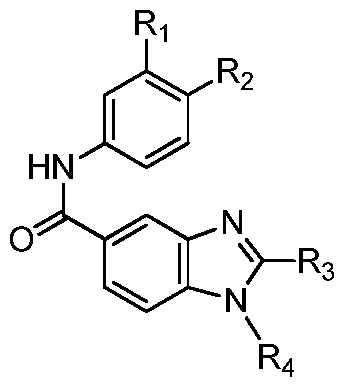
I
[0006] in which:
[0007] Ri is selected from hydrogen, cyano and halo;
[0008] R2 is selected from hydrogen, halo and Ci-4alkyl;
[0009] R3 is selected from methyl, amino and pyridinyl;
[0010] R4 is selected from hydrogen and ethyl; or the N-oxide derivatives, prodrug derivatives, protected derivatives, individual isomers and mixture of isomers thereof; or the salts (preferably the pharmaceutically acceptable salts) and solvates (e.g. hydrates) of such compounds.
DETAILED DESCRIPTION OF THE INVENTION
Definitions
[0011] "Alkyl" as a group and as a structural element of other groups, for example halo-substituted-alkyl and alkoxy, can be either straight-chained or branched. For example, alkyl includes methyl, ethyl, propyl, isopropyl, butyl, isobutyl, sec-butyl, t-butyl, etc. C1-4- alkoxy includes methoxy, ethoxy, and the like. Halo-substituted alkyl includes trifluoromethyl, pentafluoroethyl, and the like.
[0012] "Aryl" means a monocyclic or fused bicyclic aromatic ring assembly containing six to ten ring carbon atoms. For example, aryl may be phenyl or naphthyl, preferably phenyl. "Arylene" means a divalent radical derived from an aryl group.
[0013] "Heteroaryl" is as defined for aryl where one or more of the ring members are a heteroatom or moiety selected from -0-, -N=, -NR-, -C(O) -, -S-, -S(O) - or -S(0)2-, wherein R
is hydrogen,
 or a nitrogen protecting group. For example heteroaryl includes pyridinyl, indolyl, indazolyl, quinoxalinyl, quinolinyl, benzofuranyl, benzopyranyl, benzothiopyranyl, benzo[l,3]dioxole, imidazolyl, benzo-imidazolyl, pyrimidinyl, furanyl, oxazolyl, isoxazolyl, triazolyl, tetrazolyl, pyrazolyl, thienyl, etc.
[0014] "Cycloalkyl" means a saturated or partially unsaturated, monocyclic, fused bicyclic or bridged polycyclic ring assembly containing the number of ring atoms indicated. For example, C3_iocycloalkyl includes cyclopropyl, cyclobutyl, cyclopentyl, cyclohexyl, etc.
"Heterocycloalkyl" means cycloalkyl, as defined in this application, provided that one or more of the ring carbons indicated, are replaced by a moiety selected
from -0-, -N=, -NR-, -C(O) -, -S-, -S(O) - or -S(0)2-, wherein R is hydrogen, Ci_4alkyl or a nitrogen protecting group. For example, Cs-gheterocycloalkyl as used in this application to describe compounds of the invention includes morpholino, pyrrolidinyl, piperazinyl, piperidinyl, piperidinylone, 2-Oxo-pyrrolidin-l-yl, l,4-dioxa-8-aza-spiro[4.5]dec-8-yl, etc.
[0015] "Halogen" (or halo) preferably represents chloro or fluoro, but may also be bromo or iodo.
[0016] "Hematopoietic stem cells" (HSCs) as used herein refer to immature blood cells having the capacity to self -renew and to differentiate into more mature blood cells comprising granulocytes (e.g., promyelocytes, neutrophils, eosinophils, basophils), erythrocytes (e.g., reticulocytes, erythrocytes), thrombocytes (e.g., megakaryoblasts, platelet producing megakaryocytes, platelets), and monocytes (e.g., monocytes, macrophages). HSCs are interchangeably described as stem cells throughout the specification. It is known in the art that such cells may or may not include CD34+ cells. CD34+ cells are immature cells that express the CD34 cell surface marker. CD34+ cells are believed to include a subpopulation of cells with the stem cell properties defined above. It is well known in the art that HSCs include pluripotent stem cells, multipotent stem cells (e.g., a lymphoid stem cell), and/or stem cells committed to specific hematopoietic lineages. The stem cells committed to specific hematopoietic lineages may be of T cell lineage, B cell lineage, dendritic cell lineage, Langerhans cell lineage and/or lymphoid tissue-specific macrophage cell lineage. In addition, HSCs also refer to long term HSC (LT-HSC) and short term HSC (ST-HSC). ST-HSCs are more active and more proliferative than LT-HSCs. However, LT-HSC have unlimited self renewal (i.e., they survive throughout adulthood), whereas ST-HSC have limited self renewal (i.e., they survive for only a
limited period of time). Any of these HSCs can be used in any of the methods described herein. Optionally, ST-HSCs are useful because they are highly proliferative and thus, quickly increase the number of HSCs and their progeny. Hematopoietic stem cells are optionally obtained from blood products. A blood product includes a product obtained from the body or an organ of the body containing cells of hematopoietic origin. Such sources include un-fractionated bone marrow, umbilical cord, peripheral blood, liver, thymus, lymph and spleen. All of the aforementioned crude or un-fractionated blood products can be enriched for cells having hematopoietic stem cell characteristics in ways known to those of skill in the art.
[0017] "Treat", "treating" and "treatment" refer to a method of alleviating or abating a disease and/or its attendant symptoms.
[0018] "Expansion" in the context of cells refers to increase in the number of a characteristic cell type, or cell types, from an initial cell population of cells, which may or may not be identical. The initial cells used for expansion may not be the same as the cells generated from expansion.
[0019] "Cell population" refers to eukaryotic mammalian, preferably human, cells isolated from biological sources, for example, blood product or tissues and derived from more than one cell.
[0020] "Enriched" when used in the context of cell population refers to a cell population selected based on the presence of one or more markers, for example, CD34+.
[0021] The term "CD34+ cells" refers to cells that express at their surface CD34 marker. CD34+ cells can be detected and counted using for example flow cytometry and fluorescently labeled anti-CD34 antibodies.
[0022] "Enriched in CD34+ cells" means that a cell population has been selected based on the presence of CD34 marker. Accordingly, the percentage of CD34+ cells in the cell population after selection method is higher than the percentage of CD34+ cells in the initial cell population before selecting step based on CD34 markers. For example, CD34+ cells may represent at least 50%, 60%, 70%, 80% or at least 90% of the cells in a cell population enriched in CD34+ cells.
[0023] "Cord blood unit" refers to the blood collected from umbilical cord of a single birth.
Description of the Preferred Embodiments
[0024] The present invention relates to methods and compositions for expanding
HSC populations using an agent capable of down-regulating the activity and/or expression of aryl hydrocarbon receptor and/or a downstream effector of aryl hydrocarbon receptor pathway.
[0025] In one embodiment, said agent capable of down-regulating the activity and/or expression of aryl hydrocarbon receptor is a compound selected from: l-efhyl-2-mefhyl-N- phenyl- 1 H-benzo [d]imidazole-5-carboxamide (SR2) ; 1 -ethyl-N-(3 -fluorophenyl)-2-methyl- 1H- benzo[d]imidazole-5-carboxamide (SR10); 2-amino-l-ethyl-N-phenyl-lH-benzo[d]imidazole-5- carboxamide (SRl l); 2-(pyridin-4-yl)-N-p-tolyl-lH-benzo[d]imidazole-5-carboxamide (SR15); N-(3-cyanophenyl)-l-ethyl-2-methyl-lH-benzo[d]imidazole-5-carboxamide (SR16); N-(4- methoxyphenyl)-4-oxo-4H-chromene-2-carboxamide (SR3); (Z)-l-((2,4-dioxochroman-3- ylidene)methyl)urea (SR17); 7-amino-2-methyl-4H-chromen-4-one (SR18); 6-fluoro-4H- chromen-4-one (SR19); 6,7-dihydroxy-2-(4-hydroxyphenyl)-4H-chromen-4-one (SR20); 6- hydroxy-2-phenyl-4H-chromen-4-one (SR21); 7-hydroxy-2-phenyl-4H-chromen-4-one (SR5); 5- hydroxy-2-phenyl-4H-chromen-4-one (SR22); 7-methoxy-8-methyl-3-phenyl-4H-chromen-4- one (SR6); 4-cyano-N-p-tolylbenzamide (SR4); N-(5-chloropyridin-2-yl)-3,4- dimethylbenzamide (SR23); N-(2-chloro-4-methylphenyl)-4-cyanobenzamide (SR24); 4- isopropyl-N-(5-methylpyridin-2-yl)benzamide (SR25); 3-chloro-N-(5-chloropyridin-2-yl)-4- methylbenzamide (SR26); 4-methoxy-N-(pyridin-2-yl)benzamide (SR28); 3,4-dichloro-N-(5- methylpyridin-2-yl)benzamide (SR20); and N-(4,6-dimethylpyridin-2-yl)-2-methylbenzamide (SR30).
[0026] In one embodiment, with reference to compounds of Formula SR2 are compounds in which: Ri is selected from hydrogen, cyano and fluoro; and R2 is selected from hydrogen and methyl.
[0027] In a further embodiment are compounds selected from: 1 -ethyl -N-(3- fluorophenyl)-2-methyl-lH-benzo[d]imidazole-5-carboxamide (SR10); 2-amino-l-ethyl-N- phenyl-1 H-benzo [d]imidazole-5-carboxamide (SRI 1); 2-(pyridin-4-yl)-N-p-tolyl-lH- benzo[d]imidazole-5-carboxamide (SR15); and N-(3-cyanophenyl)-l-ethyl-2-methyl-lH- benzo [d] imidazole -5 -carboxamide (SR 16) .
[0028] In another embodiment is a compound N-(2-chloro-4-methylphenyl)-4- cyanobenzamide (SR24).
[0029] In another embodiment is a method of using a compound selected from: 1- ethyl-2-methyl-N-phenyl-lH-benzo[d]imidazole-5-carboxamide (SR2); l-ethyl-N-(3- fluorophenyl)-2-methyl-lH-benzo[d]imidazole-5-carboxamide (SR10); 2-amino-l-ethyl-N- phenyl-lH-benzo[d]imidazole-5-carboxamide (SRI 1); 2-(pyridin-4-yl)-N-p-tolyl-lH- benzo [d]imidazole-5-carboxamide (SRI 5) ; N-(3 -cyanophenyl)- 1 -ethyl-2-methyl- 1 H- benzo[d]imidazole-5-carboxamide (SR16); N-(4-methoxyphenyl)-4-oxo-4H-chromene-2- carboxamide (SR3); (Z)-l-((2,4-dioxochroman-3-ylidene)methyl)urea (SR17); 7-amino-2- methyl-4H-chromen-4-one (SRI 8); 6-fluoro-4H-chromen-4-one (SR19); 6,7-dihydroxy-2-(4- hydroxyphenyl)-4H-chromen-4-one (SR20); 6-hydroxy-2-phenyl-4H-chromen-4-one (SR21); 7- hydroxy-2-phenyl-4H-chromen-4-one (SR5); 5-hydroxy-2-phenyl-4H-chromen-4-one (SR22); 7- methoxy-8-methyl-3-phenyl-4H-chromen-4-one (SR6); 4-cyano-N-p-tolylbenzamide (SR4); N- (5-chloropyridin-2-yl)-3,4-dimethylbenzamide (SR23); N-(2-chloro-4-methylphenyl)-4- cyanobenzamide (SR24); 4-isopropyl-N-(5-methylpyridin-2-yl)benzamide (SR25); 3-chloro-N- (5-chloropyridin-2-yl)-4-methylbenzamide (SR26); 4-methoxy-N-(pyridin-2-yl)benzamide (SR28); 3,4-dichloro-N-(5-methylpyridin-2-yl)benzamide (SR20); and N-(4,6-dimefhylpyridin- 2-yl)-2-methylbenzamide (SR30) to stimulate the expansion of stem cells by increasing the number of divisions; said method comprising contacting the stem cells with a compound of Formula I.
[0030] In another embodiment is a method in which the expansion of stem cells is in vivo, in vitro, or ex vivo.
[0031] In another embodiment is a method in which the stem cells are human hematopoietic stem cells.
[0032] In another embodiment is a cell population with expanded hematopoietic stem cells, as obtained or obtainable by the method of the invention.
[0033] In a further embodiment is a composition comprising a cell population with expanded HSCs derived from one or two cord blood units, preferably one cord blood unit, wherein said composition contains a total amount of cells of at least 105 cells, 107 cells, 108 cells or 109 cells, and wherein between 20-100% of total cells are CD34+ cells, for example between 40-80% of total cells are CD34+.
[0034] In another embodiment is a method for treating a disease or disorder for which stem cell therapy would result in the prevention, treatment or eradication of said disorder.
[0035] It is anticipated that as stem cell use progresses the diseases that can be treated by stem cell transplantation will expand. A non-limiting list of examples follows, infra.
[0036] In another embodiment is the use of a compound selected from: l-efhyl-2- methyl-N-phenyl-lH-benzo[d]imidazole-5-carboxamide (SR2); 1 -ethyl -N-(3-fluorophenyl)-2- methyl-lH-benzo[d]imidazole-5-carboxamide (SR10); 2-amino-l -ethyl -N-phenyl-lH- benzo[d]imidazole-5-carboxamide (SRI 1); 2-(pyridin-4-yl)-N-p-tolyl-lH-benzo[d]imidazole-5- carboxamide (SR15); N-(3-cyanophenyl)-l-ethyl-2-methyl-lH-benzo[d]imidazole-5- carboxamide (SR16); N-(4-methoxyphenyl)-4-oxo-4H-chromene-2-carboxamide (SR3); (Z)-l- ((2,4-dioxochroman-3-ylidene)methyl)urea (SR17); 7-amino-2-methyl-4H-chromen-4-one (SR18); 6-fluoro-4H-chromen-4-one (SR19); 6,7-dihydroxy-2-(4-hydroxyphenyl)-4H-chromen- 4-one (SR20); 6-hydroxy-2-phenyl-4H-chromen-4-one (SR21); 7-hydroxy-2-phenyl-4H- chromen-4-one (SR5); 5-hydroxy-2-phenyl-4H-chromen-4-one (SR22); 7-methoxy-8-methyl-3- phenyl-4H-chromen-4-one (SR6); 4-cyano-N-p-tolylbenzamide (SR4); N-(5-chloropyridin-2-yl)- 3,4-dimethylbenzamide (SR23); N-(2-chloro-4-methylphenyl)-4-cyanobenzamide (SR24); 4- isopropyl-N-(5-methylpyridin-2-yl)benzamide (SR25); 3-chloro-N-(5-chloropyridin-2-yl)-4- methylbenzamide (SR26); 4-methoxy-N-(pyridin-2-yl)benzamide (SR28); 3,4-dichloro-N-(5- methylpyridin-2-yl)benzamide (SR20); and N-(4,6-dimethylpyridin-2-yl)-2-methylbenzamide (SR30, or a salt thereof, in the preparation of a composition for the treatment of an inhereited immunodeficient disease, an autoimmune disease and/or a hematopoietic disorder.
[0037] In a further embodiment, the administration is an autologous transplantation and the hematopoietic disorder is selected from Multiple myeloma, Non-Hodgkin lymphoma, Hodgkin disease, Acute myeloid leukemia, Neuroblastoma, Germ cell tumors, Autoimmune disorders and Amyloidosis.
[0038] In a further embodiment, the autoimmune disorders are selected from
Systemic lupus erythematosus (SLE) and systemic sclerosis.
[0039] In a further embodiment, the administration is an allogeneic transplantation and the hematopoietic disorder is selected from Acute myeloid leukemia, Acute lymphoblastic leukemia, Chronic myeloid leukemia, Chronic lymphocytic leukemia, Myeloproliferative disorders, Myelodysplasia syndromes, Multiple myeloma, Non-Hodgkin lymphoma, Hodgkin disease, Aplastic anemia, Pure red cell aplasia, Paroxysmal nocturnal
hemoglobinuria, Fanconi anemi, Thalassemia major, Sickle cell anemia, Severe combined
immunodeficiency (SCID), Wiskott-Aldrich syndrome, Hemophagocytic lymphohistiocytosis (HLH) and inborn errors of metabolism.
[0040] In a further embodiment, the inborn errors of metabolism are selected from mucopolysaccharidosis, Gaucher disease, metachromatic leukodystrophies and
adrenoleukodystrophies.
[0041] In another embodiment is a method for treating an inhereited immunodeficient disease, an autoimmune disease and/or a hematopoietic disorder comprising administration to a patient in need of such treatment hematopoietic stem cells expanded by a compound as described in the Summary of the Invention.
[0042] In a further embodiment, the administration is an autologous transplantation and the hematopoietic disorder is selected from Multiple myeloma, Non-Hodgkin lymphoma, Hodgkin disease, Acute myeloid leukemia, Neuroblastoma, Germ cell tumors, Autoimmune disorders and Amyloidosis.
[0043] In a further embodiment, the autoimmune disorders are selected from
Systemic lupus erythematosus (SLE) and systemic sclerosis.
[0044] In a further embodiment, the administration is an allogeneic transplantation and the hematopoietic disorder is selected from Acute myeloid leukemia, Acute lymphoblastic leukemia, Chronic myeloid leukemia, Chronic lymphocytic leukemia, Myeloproliferative disorders, Myelodysplasia syndromes, Multiple myeloma, Non-Hodgkin lymphoma, Hodgkin disease, Aplastic anemia, Pure red cell aplasia, Paroxysmal nocturnal
hemoglobinuria, Fanconi anemi, Thalassemia major, Sickle cell anemia, Severe combined immunodeficiency (SCID), Wiskott-Aldrich syndrome, Hemophagocytic
lymphohistiocytosis (HLH) and inborn errors of metabolism.
[0045] In a further embodiment, the inborn errors of metabolism are selected from mucopolysaccharidosis, Gaucher disease, metachromatic leukodystrophies and
adrenoleukodystrophies.
Utility
[0046] HSCs are primitive cells capable of regenerating all blood cells. During development, hematopoiesis translocates from the fetal liver to the bone marrow, which then remains the site of hematopoiesis throughout adulthood. Once hematopoiesis has been established in the bone marrow, the HSCs are not distributed randomly throughout the bone
cavity. Instead, they are found in close proximity to the endosteal surfaces. The more mature stem cells increase in number as the distance from the bone surface increases. Finally, as the central longitudinal axis of the bone is approached terminal differentiation of mature cells occurs.
[0047] Expanding the number of stem cells, whether from adult, umbilical cord blood, fetal, or embryonic sources, would have a huge impact on transplantation and other therapies for hematology and oncology diseases and disorders, the least of which would be increased safety and reduced costs. As described in the methods herein, HSC numbers are increased ex vivo. A method of increasing stem cell numbers is important as currently, approximately 25% of autologous donor transplants are prohibited for lack of sufficient stem cells. In addition, less than 25% of patients in need of allogeneic transplant can find a histocompatible donor. Umbilical cord blood banks currently exist and cover the broad racial make-up of the general population, but these banks are currently restricted to use in children due to inadequate stem cell numbers in the specimens for adult recipients. A method to increase stem cell numbers permits cord blood to be useful for adult patients, thereby expanding the use of allogeneic transplantation. Compounds of the invention can also be used to expand the progenitor cell numbers which are clinically useful, for example, to speed engraftment and decrease the duration of neutropenia.
[0048] Accordingly, a method for increasing the number of HSCs is provided. As used herein, an increase in HSCs means that the subject has at least one more HSC, a 10% increase, a 20% increase, a 30% increase or greater. HSCs may consist of a subset of CD34+ cells, increase of HSCs can be measured indirectly by counting the number of CD34+ cells in a cell population and, optionally, by assessing the differentiation properties of the CD34+ cells by analyzing the colony forming units (CFU) as described in the experimental part below: An increase of the number of CD34+ cells culture of a least 10%, preferably 20% increase or 30% increase or greater as compared with a control without expansion is indicative of HSC expansion. The expanded population of HSCs is harvested, for example, from a bone marrow sample of a subject or from a culture. Harvesting HSCs is defined as the dislodging or separation of cells. This is accomplished using a number of methods, such as enzymatic, non-enzymatic, centrifugal, electrical, or size -based methods, or preferably, by flushing the cells using culture media (e.g., media in which cells are incubated) or buffered solution. The cells are optionally
collected, separated, and further expanded generating even larger populations of HSCs and differentiated progeny.
[0049] A method for making an expanded population of HSCs comprises contacting an agent capable of down-regulating the activity and/or expression of AHR and/or a downstream effector of AHR, e.g., a compound of the invention, with a starting cell population (i.e., an unexpanded population of cells) comprising a mixture of HSCs and optionally HSC supporting cells. The administration step occurs ex vivo, in vivo and/or in vitro. As described herein, the expanded population of HSCs is optionally administered to a subject. For ex vivo expansion, such agent for HSC expansion, e.g. a compound of the invention, may be formulated in DMSO or some other suitable carrier, "washed" from the cells and the cells may be transferred, for example, into an infusion buffer. A DMSO formulation, for example, can contain 0.3mg/ml of a compound of the invention in 60% DMSO/40% water solution. Thus, provided are methods of providing an expanded population of HSCs to a subject comprising administering to the subject the expanded population of HSCs described herein or made by the methods described herein. The expanded population of HSCs is optionally used to make blood cells. The blood cells are optionally administered to a subject in need. Optionally, the subject is the same subject from which the unexpanded population of HSCs or mixture of HSCs and HSC supporting cells was derived.
[0050] As used herein, the term HSC supporting cell refers to cells naturally found in the vicinity of one or more HSCs such that factors released by HSC supporting cells reach the HSC by diffusion, for example. HSC supporting cells include, but are not limited to, lymphoreticular stromal cells. Lymphoreticular stromal cells as used herein include, but are not limited to, all cell types present in a lymphoid tissue which are not lymphocytes or lymphocyte precursors or progenitors. Thus, lymphoreticular stromal cells include osteoblasts, epithelial cells, endothelial cells, mesothelial cells, dendritic cells, splenocytes and macrophages.
Lymphoreticular stromal cells also include cells that would not ordinarily function as lymphoreticular stromal cells, such as fibroblasts, which have been genetically altered to secrete or express on their cell surface the factors necessary for the maintenance, growth or differentiation of HSCs, including their progeny. Lymphoreticular stromal cells are optionally derived from the disaggregation of a piece of lymphoid tissue. Such cells are capable of supporting in vitro or in vivo the maintenance, growth or differentiation of HSCs, including their
progeny. By lymphoid tissue it is meant to include bone marrow, peripheral blood (including mobilized peripheral blood), umbilical cord blood, placental blood, fetal liver, embryonic cells (including embryonic stem cells), aortal-gonadal-mesonephros derived cells, and lymphoid soft tissue. Lymphoid soft tissue as used herein includes, but is not limited to, tissues such as thymus, spleen, liver, lymph node, skin, tonsil, adenoids and Peyer's patch, and combinations thereof.
[0051] Lymphoreticular stromal cells provide the supporting microenvironment in the intact lymphoid tissue for the maintenance, growth or differentiation of HSCs, including their progeny. The microenvironment includes soluble and cell surface factors expressed by the various cell types which comprise the lymphoreticular stroma. Generally, the support which the lymphoreticular stromal cells provide is characterized as both contact-dependent and non- contact-dependent.
[0052] Lymphoreticular stromal cells, for example, are autologous (self) or non- autologous (non-self, e.g., heterologous, allogeneic, syngeneic or xenogeneic) with respect to HSCs. Autologous, as used herein, refers to cells from the same subject. Allogeneic, as used herein, refers to cells of the same species that differ genetically. Syngeneic, as used herein, refers to cells of a different subject that are genetically identical to the cell in comparison. Xenogeneic, as used herein, refers to cells of a different species. Lymphoreticular stroma cells are obtained, for example, from the lymphoid tissue of a human or a non-human subject at any time after the organ/tissue has developed to a stage (i.e., the maturation stage) at which it can support the maintenance, growth or differentiation of HSCs. The lymphoid tissue from which
lymphoreticular stromal cells are derived usually determines the lineage -commitment HSCs undertake, resulting in the lineage-specificity of the differentiated progeny.
[0053] The co-culture of HSCs (and progeny thereof) with lymphoreticular stromal cells, usually occurs under conditions known in the art (e.g., temperature, CO2 and O2 content, nutritive media, duration, etc.). The time sufficient to increase the number of cells is a time that can be easily determined by a person skilled in the art, and varies depending upon the original number of cells seeded. The amounts of HSCs and lymphoreticular stromal cells initially introduced (and subsequently seeded) varies according to the needs of the experiment. The ideal amounts are easily determined by a person skilled in the art in accordance with needs.
[0054] As used throughout, by a subject is meant an individual. Thus, subjects include, for example, domesticated animals, such as cats and dogs, livestock (e.g., cattle, horses,
pigs, sheep, and goats), laboratory animals (e.g., mice, rabbits, rats, and guinea pigs), mammals, non-human mammals, primates, non-human primates, rodents, birds, reptiles, amphibians, fish, and any other animal. The subject is optionally a mammal such as a primate or a human.
Methods For Expanding Hematopoietic Stem Cells
[0055] The invention therefore relates to a method for expanding hematopoietic stem cells, comprising (a) providing a starting cell population comprising hematopoietic stem cells and (b) culturing said starting cell population ex vivo in presence of an agent capable of down- regulating the activity and/or expression of aryl hydrocarbon receptor and/or a down-stream effector of aryl hydrocarbon receptor pathway, under suitable conditions for expanding hematopoietic stem cells.
[0056] The aryl hydrocarbon (dioxin) receptor (AHR) is a cytosolic ligand-activated transcription factor known to mediate a large number of toxic and carcinogenic effects in animals and possible in human (Safe S 2001 Toxicol Lett 120: 1-7). As a consequence of AHR activation by its ligands, many detoxification genes are transcriptionally induced, including those coding for phase I xenobiotic-metabolizing enzymes, such as the cytochromes P450 CYP1A1, CYP1A2, CYP1B1 and CYP2S1, and the phase II enzymes UDP-glucuronosyltransferase UGT1A6, NAD(P)H-dependent quinone oxidoreductase-1 (NQOl), the aldehyde dehydrogenase ALDH3A1, and several glutathione-S -transferase.
[0057] In one embodiment, an agent capable of down-regulating the activity and/or expression of aryl hydrocarbon receptor and/or a down-stream effector of aryl hydrocarbon receptor pathway is selected among the group consisting of: (i) an organic compound; (ii) a small interference RNA (siRNA) molecule capable of down-regulating the expression of AHR; and (iii) antisense oligonucleotide capable of down-regulating the expression of AHR.
[0058] In one specific embodiment, said method for expanding hematopoietic stem cells, comprises (a) providing a starting cell population comprising hematopoietic stem cells and (b) culturing said starting cell population ex vivo in the presence of an agent capable of down- regulating the activity and/or expression of aryl hydrocarbon receptor and/or a down-stream effector of aryl hydrocarbon receptor pathway, under suitable conditions for expanding hematopoietic stem cells, wherein said agent capable of down-regulating the activity and/or expression of aryl hydrocarbon receptor and/or a down-stream effector of aryl hydrocarbon receptor pathway is not alpha-napthoflavone or 3'-methoxy-4'-nitroflavone.
[0059] Organic compound that inhibits AHR activity (also referred herein as AHR antagonist) have been described in the art, for example 2-mefhyl-2H-pyrazole-3-carboxylic acid (2-methyl-4-o-tolylazophenyl)amide (CH223191), alpha napthoflavone, resveratrol (Nutr.
Metab. Cardiovasc. Dis., 2003 Apr; 13(2): 104-13), 3'-methoxy-4'-nitroflavone (Biochem.
Pharmacol., 2007 May 15; 73(10): 1622-34, Epub 2007 Jan 30), and 6-methyl- 1,3,8- trichlorodibenzofuran (Cancer Res., 2004, Apr 15;64(8):2889-97). An inhibitor of AHR activity refers to a compound which decreases AHR activity to at least 10%, 20%, 30%, 50%, 60%, 70%, 80% or at least 90% the transcriptional activity of AHR as observed under activated conditions. An assay to measure AHR inhibitory activity is for example the dioxin-induced AHR dependent luciferase reporter gene assay as described in the Examples. In one embodiment, an inhibitor of AHR activity is a compound that has an EC50 of less than 10μΜ, preferably less than 5μΜ as measured in the dioxin-induced AHR dependent luciferase reporter gene assay.
[0060] AHR is a transcriptional factor regulating the transcription of various genes in human. In one embodiment, a downstream effector of AHR pathway is a gene which is directly regulated at the transcriptional level by AHR. Examples of such genes are selected from
CyplBl, CyplAl, and AHRR. AHR also functions in pathways outside of its well- characterized role in xenobiotic enzyme induction. Xenobiotic ligands of AHR have been shown to regulate beta catenin, STAT5, STAT1, HES-1, c-Myc, C/EBP, PU.l, β-catenin, p21, P27, pRb, deoxynucleotidyl transferase, CXCR4, and its chemokine ligand CXCL12 (SDF-1).
[0061] In one specific embodiment, an agent capable of down-regulating the activity and/or expression of aryl hydrocarbon receptor is a compound as defined in the Summary of the Invention.
[0062] In another embodiment, an agent capable of down-regulating the activity and/or expression of aryl hydrocarbon receptor is an antisense oligonucleotide or a small interfering RNA molecule (siRNA), capable of down-regulating AHR protein expression or the protein expression of one more down-stream effectors of AHR.
[0063] Design of antisense oligonucleotides which can be used to efficiently inhibit the AHR protein expression must be effected in a way that such oligonucleotides specifically binds the designated mRNA within cells in a way which inhibits translation thereof. Sequence suitable for use in design and synthesis of antisense oligonucleotides which specifically bind to AHR mRNA, genomic DNA and/or its promoter or other control sequences are available in
published sequence of AHR, in particular human AHR. In addition, algorithms for identifying sequences with the highest predicted binding affinity for their target mRNA based on thermodynamic cycle that accounts for the energetics of structural alterations in both the target mRNA and the oligonucleotides are also available.
[0064] Synthesis of RNAi molecules suitable for use with the present invention can be affected as follows: First, the AHR mRNA sequence (or one or more of its down-stream effectors) is scanned downstream of the AUG start codon for AA-dinucleotide sequences.
Occurrence of each AA and the 19 3 '-adjacent is recorded as a potential siRNA target site. Then, potential target sites are compared to an appropriate genomic database (e.g, human, mouse, rat, etc.) using any sequence alignment software. Putative target site that exhibit significant homology to other coding sequences are filtered out. Preferred sequences are then those including low G/C content, in particular sequences with G/C content lower than 55%. Several target sites are then selected along the length of the target gene. Methods or algorithms to identify putative target site of siRNA are described for example in (Tilesi, et al., Curr. Opin. Mol. Ther. 11 : 156, 2009).
[0065] The starting cell population comprising hematopoietic stem cells will be selected by the person skilled in the art depending on the envisaged use. Various sources of cells comprising hematopoietic stem cells have been described in the art, including bone marrow, peripheral blood, neonatal umbilical cord blood, placenta or other sources such as liver, particularly fetal liver.
[0066] The cell population may first be subjected to enrichment or purification steps, including negative and/or positive selection of cells based on specific cellular markers in order to provide the starting cell population. Methods for isolating said starting cell population based on specific cellular markers may use fluorescent activated cell sorting (FACS) technology also called flow cytometry or solid or insoluble substrate to which is bound antibodies or ligands that interact with specific cell surface markers. For example, cells may be contacted with a solid substrate (e.g., column of beads, flasks, magnetic particles) containing the antibodies and any unbound cells are removed. When a solid substrate comprising magnetic or paramagnetic beads is used, cells bound to the beads can be readily isolated by a magnetic separator.
[0067] In one embodiment, said starting cell population is enriched in a desirable cell marker phenotype (e.g., CD34+, CD133+, CD90+) or based on efflux of dyes such as
rhodamine, Hoechst or aldehyde dehydrogenase activity. In one specific embodiment, said starting cell population is enriched in CD34+ cells. Methods for enriching blood cell population in CD34+ cells include kits commercialized by Miltenyi Biotec (CD34+ direct isolation kit, Miltenyi Biotec, Bergisch, Gladbach, Germany) or by Baxter (Isolex 3000).
[0068] The amount of cord blood from a single birth is often inadequate to treat an adult or an older child. One advantage of the expansion methods using the compounds of the invention, or an agent capable of down-regulating the activity and/or expression of aryl hydrocarbon receptor and/or a down-stream effector of aryl hydrocarbon receptor pathway, is that it enables the production of a sufficient amount of hematopoietic stem cells from only one cord blood unit.
[0069] Accordingly, in one embodiment, the starting cell population is derived from neonatal umbilical cord blood cells which have been enriched in CD34+ cells. In one related embodiment, said starting cell population is derived from one or two umbilical cord blood units.
[0070] In another embodiment, the starting cell population is derived from human mobilized peripheral blood cells which have been enriched in CD34+ cells. In one related embodiment, said starting cell population is derived from human mobilized peripheral blood cells isolated from only one patient.
[0071] Said starting cell population may preferably contain at least 50% CD34+ cells, in some embodiments, more than 90% of CD34+ cells, and may comprise between 105 and 109 nucleated cells.
[0072] The starting cell population may be used directly for expansion or frozen and stored for use at a later date.
[0073] Conditions for culturing the starting cell population for hematopoietic stem cell expansion will vary depending, inter alia, on the starting cell population, the desired final number of cells, and desired final proportion of HSCs.
[0074] In one specific embodiment, in particular, using a starting cell population from umbilical cord blood cells enriched in CD34+ cells, the culturing conditions comprises the use of other cytokines and growth factors, generally known in the art for hematopoietic stem cell expansion. Such cytokines and growth factors include without limitation IL-1, IL-3, IL-6, IL-11, G-CSF, GM-CSF, SCF, F1T3-L, thrombopoietin (TPO), erythropoeitin, and analogs thereof. As used herein, "analogs" include any structural variants of the cytokines and growth factors having
the biological activity as the naturally occurring forms, including without limitation, variants with enhanced or decreased biological activity when compared to the naturally occurring forms or cytokine receptor agonists such as an agonist antibody against the TPO receptor (for example, VB22B sc(Fv)2 as detailed in patent publication WO 2007/145227, and the like). Cytokine and growth factor combinations are chosen to expand HSC and progenitor cells while limiting the production of terminally differentiated cells. In one specific embodiment, one or more cytokines and growth factors are selected from the group consisting of SCF, Flt3-L and TPO. In one specific embodiment, at least TPO is used in a serum-free medium under suitable conditions for HSC expansion. In one related embodiment, a mixture of IL6, SCF, Flt3-L and TPO is used in the method for expanding HSCs in combination with the compound of the invention or an agent capable of down-regulating the activity and/or expression of aryl hydrocarbon receptor and/or a down-stream effector of aryl hydrocarbon receptor pathway.
[0075] Human IL6 or interleukin-6, also known as B-cell stimulatory factor 2 has been described by (Kishimoto, Ann. review of Imm. 23: 1 2005) and is commercially available. Human SCF or stem cell factor, also known as c-kit ligand, mast cell growth factor or Steel factor has been described (Smith, MA et al., ACTA Haematologica, 105, 3: 143, 2001) and is commercially available. Flt3-L or FLT-3 Ligand, also referred as FL is a factor that binds to flt3- receptor. It has been described (Hannum C, Nature 368 (6472): 643-8) and is commercially available. TPO or thrombopoietin, also known as megakarayocyte growth factor (MGDF) or c- Mpl ligand has been described (Kaushansky K (2006). N. Engl. J. Med. 354 (19): 2034-45) and is commercially available.
[0076] The expansion of HSC may be carried out in a basal medium, which is supplemented with the mixtures of cytokines and growth factors described above. A basal medium typically comprises amino acids, carbon sources, vitamins, serum proteins (e.g.
albumin), inorganic salts, divalent cations, buffers and any other element suitable for use in expansion of HSC. Examples of such basal medium appropriate for a method of expanding HSC include, without limitation, StemSpan® SFEM - Serum-Free Expansion Medium (StemCell Technologies, Vancouver, Canada), StemSpan® H3000 - Defined Medium (StemCell
Technologies, Vancouver, Canada), CellGro® SCGM (CellGenix, Freiburg
Germany), StemPro®-34 SFM (Invitrogen).
[0077] In one embodiment, the compound of the invention or the agent capable of down-regulating the activity and/or expression of aryl hydrocarbon receptor and/or a downstream effector of aryl hydrocarbon receptor pathway, is administered during the expansion method of said starting cell population under a concentration appropriate for HSC expansion. In one specific embodiment, said compound or AhR modulating agent is administered at a concentration comprised between lpM and ΙΟΟμΜ, for example between ΙΟρΜ and ΙΟμΜ, or between ΙΟΟρΜ and ΙμΜ.
[0078] In one specific embodiment where starting cell population essentially consists of CD34+ enriched cells from one or two cord blood units, the cells are grown under conditions for HSC expansion from about 3 days to about 90 days, for example between 7 and 2 days and/or until the indicated fold expansion and the characteristic cell populations are obtained. In one specific embodiment, the cells are grown under conditions for HSC expansion not more than 21 days, 14 days or 7 days.
[0079] In one embodiment, the starting cell population is cultured during a time sufficient to reach an absolute number of CD34+ cells of at least 105, 106, 107, 108 or 109 cells. In another embodiment, said starting cell population is cultured during a time sufficient for a 10 to 50000 fold expansion of CD34+ cells, for example between 100 and 10000 fold expansion.
[0080] The cell population obtained after the expansion method may be used without further purification or may be subject to further purification or selection steps.
[0081] The cell population may then be washed to remove the compound of invention or any other agent capable of down-regulating the activity and/or expression of aryl hydrocarbon receptor and/or a down-stream effector of aryl hydrocarbon receptor pathway and/or any other components of the cell culture and resuspended in an appropriate cell suspension medium for short term use or in a long-term storage medium, for example a medium suitable for cryopreservation.
Cell Population With Expanded HSCs As Obtained by the Expansion Method and Therapeutic Compositions
[0082] The invention further provides a cell population with expanded HSCs, obtainable or obtained by the expansion method described above. In one specific embodiment, such cell population is resuspended in a pharmaceutically acceptable medium suitable for administration to a mammalian host, thereby providing a therapeutic composition.
[0083] The compound selected from: l-ethyl-2-mefhyl-N-phenyl-lH- benzo [d]imidazole-5-carboxamide (SR2) ; 1 -ethyl-N-(3 -fluorophenyl)-2-methyl- 1 H- benzo[d]imidazole-5-carboxamide (SR10); 2-amino-l-ethyl-N-phenyl-lH-benzo[d]imidazole-5- carboxamide (SRl l); 2-(pyridin-4-yl)-N-p-tolyl-lH-benzo[d]imidazole-5-carboxamide (SR15); N-(3-cyanophenyl)-l-ethyl-2-methyl-lH-benzo[d]imidazole-5-carboxamide (SR16); N-(4- methoxyphenyl)-4-oxo-4H-chromene-2-carboxamide (SR3); (Z)-l-((2,4-dioxochroman-3- ylidene)methyl)urea (SR17); 7-amino-2-methyl-4H-chromen-4-one (SR18); 6-fluoro-4H- chromen-4-one (SR19); 6,7-dihydroxy-2-(4-hydroxyphenyl)-4H-chromen-4-one (SR20); 6- hydroxy-2-phenyl-4H-chromen-4-one (SR21); 7-hydroxy-2-phenyl-4H-chromen-4-one (SR5); 5- hydroxy-2-phenyl-4H-chromen-4-one (SR22); 7-methoxy-8-methyl-3-phenyl-4H-chromen-4- one (SR6); 4-cyano-N-p-tolylbenzamide (SR4); N-(5-chloropyridin-2-yl)-3,4- dimethylbenzamide (SR23); N-(2-chloro-4-methylphenyl)-4-cyanobenzamide (SR24); 4- isopropyl-N-(5-methylpyridin-2-yl)benzamide (SR25); 3-chloro-N-(5-chloropyridin-2-yl)-4- methylbenzamide (SR26); 4-methoxy-N-(pyridin-2-yl)benzamide (SR28); 3,4-dichloro-N-(5- methylpyridin-2-yl)benzamide (SR20); and N-(4,6-dimethylpyridin-2-yl)-2-methylbenzamide (SR30); or an agent capable of down-regulating the activity and/or expression of aryl hydrocarbon receptor and/or a down-stream effector of aryl hydrocarbon receptor pathway enables the expansion of HSCs, for example from only one or two cord blood units, to provide a cell population quantitatively and qualitatively appropriate for efficient short and long term engraftment in human patient in need thereof. In particular, the invention relates to a composition comprising a cell population with expanded HSCs derived from not more than one or two cord blood units, wherein said therapeutic composition contains a total amount of cells of at least 105, 106, 107, 108 or 109 cells, with between 20-100%, for example between 40-80% of total cells being CD34+ cells. In one related embodiment, said composition contains between 0.1-40%, for example between 0.1-10% of total cells being CD34+ Thyl+ and 20-80% of cells being CD34+ CD45RA+. In some specific embodiments, said composition contains between 10- 95% of cells being CD38+ and between 5-70% of cells being CD133+.
Use of Therapeutic Compositions
[0084] The invention further provides the cell population with expanded HSCs or its composition for use in allogeneic or autologous stem cell transplantation in a mammalian subject.
[0085] The subject referred to herein is, for example, a bone marrow donor or an individual with or at risk for depleted or limited blood cell levels. Optionally, the subject is a bone marrow donor prior to bone marrow harvesting or a bone marrow donor after bone marrow harvesting. The subject is optionally a recipient of a bone marrow transplant. The methods described herein are particularly useful in subjects that have limited bone marrow reserve such as elderly subjects or subjects previously exposed to an immune depleting treatment or
myeloablative treatment such as chemotherapy, e.g., for treating leukemia or lymphomas. The subject, optionally, has a decreased blood cell level or is at risk for developing a decreased blood cell level as compared to a control blood cell level. As used herein the term control blood cell level refers to an average level of blood cells in a subject prior to or in the substantial absence of an event that changes blood cell levels in the subject. An event that changes blood cell levels in a subject includes, for example, anemia, trauma, chemotherapy, bone marrow transplant and radiation therapy. For example, the subject has anemia or blood loss due to, for example, trauma.
[0086] The expanded HSC population or the composition comprising the cell population with expanded HSCs is administered to the subject, for example, before, at the same time, or after chemotherapy, radiation therapy or a bone marrow transplant. The subject optionally has depleted bone marrow related to, for example, congenital, genetic or acquired syndrome characterized by bone marrow loss or depleted bone marrow. Thus, the subject is optionally a subject in need of hematopoiesis. Optionally, the subject is a bone marrow donor or is a subject with or at risk for depleted bone marrow.
[0087] Hematopoietic stem cell manipulation is useful as a supplemental treatment to chemotherapy or radiation therapy. For example, HSCs are localized into the peripheral blood and then isolated from a subject that will undergo chemotherapy, and after the therapy the cells are returned. Thus, the subject is a subject undergoing or expected to undergo an immune cell depleting treatment such as chemotherapy, radiation therapy or serving as a donor for a bone marrow transplant. Bone marrow is one of the most prolific tissues in the body and is therefore often the organ that is initially damaged by chemotherapy drugs and radiation. The result is that blood cell production is rapidly destroyed during chemotherapy or radiation treatment, and chemotherapy or radiation must be terminated to allow the hematopoietic system to replenish the blood cell supplies before a patient is re -treated with chemotherapy. Therefore, as described
herein, HSCs or blood cells made by the methods described herein are optionally administered to such subjects in need of additional blood cells.
[0088] Provided are HSCs expanded by a compound of the invention or an agent capable of down-regulating the activity and/or expression of aryl hydrocarbon receptor and/or a down-stream effector of aryl hydrocarbon receptor pathway or the compositions with expanded HSCs as described above in combination with a therapeutic capable of enhancing the proliferation of HSCs in vivo, in vitro, or ex vivo (for example, a small molecule, an antibody, or the like) and optionally at least one pharmaceutically acceptable excipient or carrier. By a therapeutic capable of enhancing HSC proliferation is meant: an agonist antibody against the TPO receptor (for example, VB22B sc(Fv)2 as detailed in patent publication WO 2007/145227, and the like); a cytokine such as SCF, IL-6, Flt-3 ligand, TPO or a TPO mimetic (for example, such as described in WO/2007/022269; WO/2007/009120; WO/2004/054515;
WO/2003/103686; WO/2002/085343; WO/2002/049413; WO/2001/089457; WO/2001/039773; WO/2001/034585; WO/2001/021180; WO/2001/021180; WO/2001/017349; WO/2000/066112; WO/2000/035446; WO/2000/028987; WO/2008/028645; and the like); granulocyte colony stimulating factor (G-CSF); granulyte macrophage colony stimulating factor (GM-CSF); a prostaglandin or a prostaglandin receptor agonist (for example, prostaglandin E2 receptor- 1 (EP-I) agonist, prostaglandin E2 receptor-2 (EP-2) agonist, prostaglandin E2 receptor-3 (EP-3) agonist and prostaglandin E2 receptor-4 (EP-4) agonists, as detailed in patent publication WO/2008/073748); tetraethylenepentamine (TEPA); Notch-ligands (Delta-1); and/or a WNT agonist. In addition, culturing stem cells with mesenchymal stem cells (MSCs) prevents graft- versus-host disease (GVHD) and may help stem cell expansion. MSCs and stem cells can be transplanted as a whole culture.
[0089] By pharmaceutically acceptable is meant a material that is not biologically or otherwise undesirable, i.e., the material may be administered to a subject or cell, without causing undesirable biological effects or interacting in a deleterious manner with the other components of the pharmaceutical composition in which it is contained. The carrier or excipient is selected to minimize degradation of the active ingredient and to minimize adverse side effects in the subject or cell.
[0090] The compositions are formulated in any conventional manner for use in the methods described herein. Administration is via any route known to be effective by one of
ordinary skill. For example, the compositions is administered orally, parenterally (e.g., intravenously), by intramuscular injection, by intraperitoneal injection, transdermally, extracorporeally, intranasally or topically.
[0091] The preferred method of administration is intravenous infusion. The number of cells transfused will take into consideration factors such as sex, age, weight, the types of disease or disorder, stage of the disorder, the percentage of the desired cells in the cell population and the amount of cells needed to produce a therapeutic benefit. In one particular embodiment, the composition is administered by intravenous infusion and comprises at least 104 cells/kg, from 105 to 5xl07 cells/kg or more if necessary. In one specific embodiment, the infused cells are all deriving from expanded cord blood cells from a single birth.
[0092] A pharmaceutically acceptable carrier for infusion of a composition comprising cells into a patient typically comprise buffered saline with 5%HSA or
unsupplemented basal medium or medium as known in the art.
[0093] For oral administration, the compositions take the form of, for example, tablets or capsules prepared by conventional means with pharmaceutically acceptable excipients such as binding agents (e.g., pregelatinised maize starch, polyvinylpyrrolidone or hydro xypropyl methylcellulose); fillers (e.g., lactose, microcrystalline cellulose or calcium hydrogen phosphate); lubricants (e.g., magnesium stearate, talc or silica); disintegrants (e.g., potato starch or sodium starch glycolate); or wetting agents (e.g., sodium lauryl sulphate). The tablets are coated by methods well known in the art. Liquid preparations for oral administration take the form of, for example, solutions, syrups or suspensions, or they may be presented as a dry product for constitution with water or other suitable vehicle before use. Such liquid preparations are prepared by conventional means with pharmaceutically acceptable additives such as suspending agents (e.g., sorbitol syrup, cellulose derivatives or hydrogenated edible fats); emulsifying agents (e.g., lecithin or acacia); non-aqueous vehicles (e.g., almond oil, oily esters, ethyl alcohol or fractionated vegetable oils); and preservatives (e.g., methyl or propyl-p-hydroxybenzoates or sorbic acid). The preparations optionally contain buffer salts, flavoring, coloring and sweetening agents as appropriate.
[0094] The compositions are formulated for parenteral administration by injection, e.g., by bolus injection or continuous infusion. Formulations for injection are presented in unit dosage form, e.g., in ampules or in multi-dose containers, with or without an added preservative.
The compositions take such forms as suspensions, solutions or emulsions in oily or aqueous vehicles, and may contain formulatory agents such as suspending, stabilizing and/or dispersing agents. Alternatively, the active ingredient is in powder form for constitution with a suitable vehicle, e.g., sterile pyrogen-free water, before use. In general, water, suitable oil, saline, aqueous dextrose (glucose), and related sugar solutions and glycols such as propylene glycol or polyethylene glycols are suitable carriers for parenteral solutions. Solutions for parenteral administration contain, for example, a water soluble salt of the active ingredient, suitable stabilizing agents and, if necessary, buffer substances. Antioxidizing agents such as sodium bisulfate, sodium sulfite or ascorbic acid, either alone or combined, are suitable stabilizing agents. Also citric acid and its salts and sodium ethylenediaminetetraacetic acid (EDTA) are optionally used. In addition, parenteral solutions optionally contain preservatives such as benzalkonium chloride, methyl- or propyl-paraben and chlorobutanol. Suitable pharmaceutical carriers are described in Remington: The Science and Practice of Pharmacy, 21st Edition, David B. Troy, ed., Lippicott Williams & Wilkins (2005), which is incorporated by reference in its entirety at least for the material related to pharmaceutical carriers and compositions.
[0095] The compositions are optionally formulated as a depot preparation. Such long acting formulations are optionally administered by implantation. Thus, for example, the compositions are formulated with suitable polymeric or hydrophobic materials (for example as an emulsion in an acceptable oil) or ion exchange resins, or as sparingly soluble derivatives, for example, as a sparingly soluble salt. The compositions are applied to or embedded with implants concurrent with or after surgical implant.
[0096] Additionally, standard pharmaceutical methods are employed to control the duration of action. These include control release preparations and appropriate macromolecules, for example, polymers, polyesters, polyamino acids, polyvinyl, pyrolidone, ethylenevinylacetate, methyl cellulose, carboxymethyl cellulose or protamine sulfate. The concentration of macromolecules as well as the methods of incorporation are adjusted in order to control release. Optionally, the agent is incorporated into particles of polymeric materials such as polyesters, polyamino acids, hydrogels, poly (lactic acid) or ethylenevinylacetate copolymers. In addition to being incorporated, these agents are optionally used to trap the compound in microcapsules.
[0097] A composition for use in the methods described herein is optionally formulated as a sustained and/or timed release formulation. Such sustained and/or timed release
formulations are made by sustained release means or delivery devices that are well known to those of ordinary skill in the art. The compositions are used to provide slow or sustained release of one or more of the active ingredients using, for example, hydropropylmethyl cellulose, other polymer matrices, gels, permeable membranes, osmotic systems, multilayer coatings, microparticles, liposomes, microspheres or a combination thereof to provide the desired release profile in varying proportions. Suitable sustained release formulations are selected for use with the compositions described herein. Thus, single unit dosage forms suitable for oral
administration, such as, but not limited to, tablets, capsules, gelcaps, caplets, powders that are adapted for sustained release are used.
[0098] The compositions are optionally delivered by a controlled-release system. For example, the composition is administered using intravenous infusion, an implantable osmotic pump, liposomes, or other modes of administration. A controlled release system is placed in proximity to the target.
[0099] Optionally, it is desirable to administer the composition locally, i.e., to the area in need of treatment. For example, the composition is administered by injection into the bone marrow of a long bone, for example. Local administration is achieved, for example, by local infusion during surgery, topical application (e.g., in conjunction with a wound dressing after surgery), injection, catheter, suppository, or implant. An implant is of a porous, non-porous, or gelatinous material, including membranes, such as sialastic membranes, or fibers.
[00100] The pharmaceutical compositions described herein are administered by any conventional means available for use in conjunction with pharmaceuticals, either as individual therapeutic active ingredients or in a combination of therapeutic active ingredients. They are optionally administered alone, but are generally administered with a pharmaceutical carrier selected on the basis of the chosen route of administration and standard pharmaceutical practice.
[00101] The compounds described herein are provided in a pharmaceutically acceptable form including pharmaceutically acceptable salts and derivatives thereof. The term pharmaceutically acceptable form refers to compositions including the compounds described herein that are generally safe, relatively non-toxic and neither biologically nor otherwise undesirable. These compositions optionally include pharmaceutically acceptable carriers or stabilizers that are nontoxic to the cell or subject being exposed thereto at the dosages and concentrations employed. Examples of physiologically acceptable carriers include buffers such
as phosphate, citrate, and other organic acids; antioxidants including ascorbic acid; low molecular weight (less than about 10 residues) polypeptide; proteins, such as serum albumin, gelatin, or immunoglobulins; hydrophilic polymers such as polyvinylpyrrolidone; amino acids such as glycine, glutamine, asparagine, arginine or lysine; monosaccharides, disaccharides, and other carbohydrates including glucose, mannose, or dextrins; chelating agents such as EDTA; sugar alcohols such as mannitol or sorbitol; salt-forming counterions such as sodium; and/or nonionic surfactants such as TWEEN™ (Uniqema, United Kingdom), polyethylene glycol (PEG), and PLURONICS™ (BASF, Germany).
[00102] The term pharmaceutically acceptable acid salts and derivatives refers to salts and derivatives of the compounds selected from: 1 -ethyl -2-mefhyl-N-phenyl-lH- benzo [d]imidazole-5-carboxamide (SR2) ; 1 -ethyl-N-(3 -fluorophenyl)-2-methyl- 1 H- benzo[d]imidazole-5-carboxamide (SR10); 2-amino-l-ethyl-N-phenyl-lH-benzo[d]imidazole-5- carboxamide (SRl l); 2-(pyridin-4-yl)-N-p-tolyl-lH-benzo[d]imidazole-5-carboxamide (SR15); N-(3-cyanophenyl)-l-ethyl-2-methyl-lH-benzo[d]imidazole-5-carboxamide (SR16); N-(4- methoxyphenyl)-4-oxo-4H-chromene-2-carboxamide (SR3); (Z)-l-((2,4-dioxochroman-3- ylidene)methyl)urea (SR17); 7-amino-2-methyl-4H-chromen-4-one (SR18); 6-fluoro-4H- chromen-4-one (SR19); 6,7-dihydroxy-2-(4-hydroxyphenyl)-4H-chromen-4-one (SR20); 6- hydroxy-2-phenyl-4H-chromen-4-one (SR21); 7-hydroxy-2-phenyl-4H-chromen-4-one (SR5); 5- hydroxy-2-phenyl-4H-chromen-4-one (SR22); 7-methoxy-8-methyl-3-phenyl-4H-chromen-4- one (SR6); 4-cyano-N-p-tolylbenzamide (SR4); N-(5-chloropyridin-2-yl)-3,4- dimethylbenzamide (SR23); N-(2-chloro-4-methylphenyl)-4-cyanobenzamide (SR24); 4- isopropyl-N-(5-methylpyridin-2-yl)benzamide (SR25); 3-chloro-N-(5-chloropyridin-2-yl)-4- methylbenzamide (SR26); 4-methoxy-N-(pyridin-2-yl)benzamide (SR28); 3,4-dichloro-N-(5- methylpyridin-2-yl)benzamide (SR20); and N-(4,6-dimethylpyridin-2-yl)-2-methylbenzamide (SR30); described herein that retain the biological effectiveness and properties as described, and that are not biologically or otherwise undesirable. Pharmaceutically acceptable salts are formed, for example, with inorganic acids such as hydrochloric acid, hydrobromic acid, sulfuric acid, nitric acid, phosphoric acid and the like, and organic acids such as acetic acid, propionic acid, glycolic acid, pyruvic acid, oxalic acid, maleic acid, malonic acid, succinic acid, fumaric acid, tartaric acid, citric acid, benzoic acid, cinnamic acid, mandelic acid, methanesulfonic acid, ethanesulfonic acid, p-toluenesulfonic acid, salicylic acid, and the like.
[00103] The chemical stability of a composition comprising a compound selected from: l-ethyl-2-methyl-N-phenyl-lH-benzo[d]imidazole-5-carboxamide (SR2); l-ethyl-N-(3- fluorophenyl)-2-methyl-lH-benzo[d]imidazole-5-carboxamide (SR10); 2-amino-l-ethyl-N- phenyl-lH-benzo[d]imidazole-5-carboxamide (SRI 1); 2-(pyridin-4-yl)-N-p-tolyl-lH- benzo [d]imidazole-5-carboxamide (SRI 5) ; N-(3 -cyanophenyl)- 1 -ethyl-2-methyl- 1 H- benzo[d]imidazole-5-carboxamide (SR16); N-(4-methoxyphenyl)-4-oxo-4H-chromene-2- carboxamide (SR3); (Z)-l-((2,4-dioxochroman-3-ylidene)methyl)urea (SR17); 7-amino-2- methyl-4H-chromen-4-one (SRI 8); 6-fluoro-4H-chromen-4-one (SR19); 6,7-dihydroxy-2-(4- hydroxyphenyl)-4H-chromen-4-one (SR20); 6-hydroxy-2-phenyl-4H-chromen-4-one (SR21); 7- hydroxy-2-phenyl-4H-chromen-4-one (SR5); 5-hydroxy-2-phenyl-4H-chromen-4-one (SR22); 7- methoxy-8-methyl-3-phenyl-4H-chromen-4-one (SR6); 4-cyano-N-p-tolylbenzamide (SR4); N- (5-chloropyridin-2-yl)-3,4-dimethylbenzamide (SR23); N-(2-chloro-4-methylphenyl)-4- cyanobenzamide (SR24); 4-isopropyl-N-(5-methylpyridin-2-yl)benzamide (SR25); 3-chloro-N- (5-chloropyridin-2-yl)-4-methylbenzamide (SR26); 4-methoxy-N-(pyridin-2-yl)benzamide (SR28); 3,4-dichloro-N-(5-methylpyridin-2-yl)benzamide (SR20); and N-(4,6-dimefhylpyridin- 2-yl)-2-methylbenzamide (SR30); or a pharmaceutically acceptable salt or ester thereof is enhanced by methods known to those of skill in the art. For example, an alkanoic acid ester of a polyethoxylated sorbitol (a polysorbate) is added to a composition containing a compound of Formula I in an amount effective to enhance the chemical stability of the compound.
[00104] The data obtained from the cell culture assays and animal studies are optionally used in formulating a range of dosage for use in humans. The dosage of such compounds lies preferably within a range of circulating concentrations that include little or no toxicity. The dosage varies within this range depending upon the dosage form employed and the route of administration utilized. For any compound used in the provided methods, the therapeutically effective dose is estimated initially from cell culture assays.
[00105] Also provided herein is a pack or kit comprising one or more containers filled with one or more of the ingredients described herein. Such kits optionally comprise solutions and buffers as needed or desired. The kit optionally includes an expanded population of stem cells made by the methods described above or can contain containers or compositions for making an expanded population of HSCs. In particular, the invention provides a kit for expanding ex vivo hematopoietic stem cells, comprising a compound selected from: l-ethyl-2-methyl-N-phenyl-
lH-benzo[d]irmdazole-5-carboxamide (SR2); l-ethyl-N-(3-fluorophenyl)-2-mefhyl-lH- benzo[d]imidazole-5-carboxamide (SR10); 2-amino-l-ethyl-N-phenyl-lH-benzo[d]imidazole-5- carboxamide (SRl l); 2-(pyridin-4-yl)-N-p-tolyl-lH-benzo[d]imidazole-5-carboxamide (SR15); N-(3-cyanophenyl)-l-ethyl-2-methyl-lH-benzo[d]imidazole-5-carboxamide (SR16); N-(4- methoxyphenyl)-4-oxo-4H-chromene-2-carboxamide (SR3); (Z)-l-((2,4-dioxochroman-3- ylidene)methyl)urea (SR17); 7-amino-2-methyl-4H-cliromen-4-one (SR18); 6-fluoro-4H- chromen-4-one (SR19); 6,7-dihydroxy-2-(4-hydroxyplienyl)-4H-cliromen-4-one (SR20); 6- hydroxy-2-phenyl-4H-cliromen-4-one (SR21); 7-hydroxy-2-phenyl-4H-chromen-4-one (SR5); 5- hydroxy-2-phenyl-4H-cliromen-4-one (SR22); 7-methoxy-8-methyl-3-phenyl-4H-chromen-4- one (SR6); 4-cyano-N-p-tolylbenzamide (SR4); N-(5-chloropyridin-2-yl)-3,4- dimethylbenzamide (SR23); N-(2-chloro-4-methylphenyl)-4-cyanobenzamide (SR24); 4- isopropyl-N-(5-methylpyridin-2-yl)benzamide (SR25); 3-chloro-N-(5-chloropyridin-2-yl)-4- methylbenzamide (SR26); 4-methoxy-N-(pyridin-2-yl)benzamide (SR28); 3,4-dichloro-N-(5- methylpyridin-2-yl)benzamide (SR20); and N-(4,6-dimethylpyridin-2-yl)-2-methylbenzamide (SR30); and instructions for use of such compound in a method for HSC expansion and, optionally, one ore more cytokines or growth factors, or media for cell growth, in particular media for hematopoietic stem cell growth as described above. The kit may further comprise antibodies for monitoring production of the cells, such as anti-CD34, anti-CD133, anti-CD38, anti-CD45RA and/or anti-Thyl antibodies. In one specific embodiment, such kit further include one or more cytokines or growth factors selected from the group consisting of IL6, FLT3-L, SCF and TPO. Optionally associated with such pack(s) or kit(s) are instructions for use.
[00106] Also provided is a kit for providing an effective amount of a compound of the invention to increase HSCs in a subject comprising one or more doses of the compound for use over a period of time, wherein the total number of doses of the compound of the invention in the kit equals the effective amount sufficient to increase HSCs in a subject. The period of time is from about one to several days or weeks or months. Thus, the period of time is from at least about 5, 6, 7, 8, 10, 12, 14, 20, 21, 30 or 60 days or more or any number of days between one and 90.
Processes for Making Compounds of the Invention
[00107] The present invention also includes processes for the preparation of compounds of the invention. In the reactions described, it can be necessary to protect reactive
functional groups, for example hydroxy, amino, imino, thio or carboxy groups, where these are desired in the final product, to avoid their unwanted participation in the reactions. Conventional protecting groups can be used in accordance with standard practice, for example, see T.W. Greene and P. G. M. Wuts in "Protective Groups in Organic Chemistry", John Wiley and Sons, 1991.
[00108] The following reaction scheme 1 details the preparation of compounds of the invention. It will be appreciated by one skilled in the art that, following introduction by the methods detailed below, any of the groups Ri, R2, R3 and R4 can optionally be further elaborated by known transformations to arrive at the desired final compounds of the invention. A compound of formula I can be prepared by the following reaction scheme:
Reaction Scheme 1

[00109] wherein R1( R2, R3 and R4 are as described in the Summary of the Invention.
A compound of formula 3 can be prepared by reacting a compound of formula 1 with a compound of formula 2a using the appropriate solvent (for example, THF, EtOH, and the like). The reaction proceeds at about room temperature and can take up to 4 hours to complete. A compound of formula 2b is further reacted with the product of the first step in the presence of a suitable coupling reagent (for example, DCC, DMAP, and the like) in a polar solvent (for example CH2CI2, or the like). The reaction proceeds at about room temperature and can take up to about 20 hours to complete. A compound of formula SR2 (or any analogue, i.e. SR10) can be prepared under reflux by reaction of a compound of formula 3 with a compound of formula 4 (or corresponding aldehyde under defined conditions) in the presence of a protic solvent (for example, MeOH, or the like). After reduction of the nitro-group into the corresponding primary amine in presence of a suitable reducing reagent (for example, SnCl2, or the like), the final condensation reaction can take up to 12 hours to complete.
Detailed examples of the synthesis of a compound of Formula I can be found in the Examples, infra.
Additional Processes for Making Compounds of the Invention
[00110] A compound of the invention can be prepared as a pharmaceutically acceptable acid addition salt by reacting the free base form of the compound with a
pharmaceutically acceptable inorganic or organic acid. Alternatively, a pharmaceutically acceptable base addition salt of a compound of the invention can be prepared by reacting the free acid form of the compound with a pharmaceutically acceptable inorganic or organic base.
Alternatively, the salt forms of the compounds of the invention can be prepared using salts of the starting materials or intermediates.
[00111] The free acid or free base forms of the compounds of the invention can be prepared from the corresponding base addition salt or acid addition salt form, respectively. For example a compound of the invention in an acid addition salt form can be converted to the corresponding free base by treating with a suitable base (e.g., ammonium hydroxide solution, sodium hydroxide, and the like). A compound of the invention in a base addition salt form can be converted to the corresponding free acid by treating with a suitable acid (e.g., hydrochloric acid, etc.). The nitrate salt of the compound of example 1 can be made using methods known to the skilled person. The powder X-ray diffraction pattern is disclosed in Fig 2 herein.
[00112] Compounds of the invention in unoxidized form can be prepared from N- oxides of compounds of the invention by treating with a reducing agent (e.g., sulfur, sulfur dioxide, triphenyl phosphine, lithium borohydride, sodium borohydride, phosphorus trichloride, tribromide, or the like) in a suitable inert organic solvent (e.g. acetonitrile, ethanol, aqueous dioxane, or the like) at 0 to 80°C.
[00113] Prodrug derivatives of the compounds of the invention can be prepared by methods known to those of ordinary skill in the art (e.g., for further details see Saulnier et al., (1994), Bioorganic and Medicinal Chemistry Letters, Vol. 4, p. 1985). For example, appropriate prodrugs can be prepared by reacting a non-derivatized compound of the invention with a suitable carbamylating agent (e.g., 1,1-acyloxyalkylcarbanochloridate, para-nitrophenyl carbonate, or the like).
[00114] Protected derivatives of the compounds of the invention can be made by means known to those of ordinary skill in the art. A detailed description of techniques applicable to the creation of protecting groups and their removal can be found in T. W. Greene, "Protecting Groups in Organic Chemistry", 3rd edition, John Wiley and Sons, Inc., 1999.
[00115] Compounds of the present invention can be conveniently prepared, or formed during the process of the invention, as solvates (e.g., hydrates). Hydrates of compounds of the present invention can be conveniently prepared by recrystallization from an aqueous/organic solvent mixture, using organic solvents such as dioxin, tetrahydrofuran or methanol.
[00116] Compounds of the invention can be prepared as their individual stereoisomers by reacting a racemic mixture of the compound with an optically active resolving agent to form a pair of diastereoisomeric compounds, separating the diastereomers and recovering the optically pure enantiomers. While resolution of enantiomers can be carried out using covalent diastereomeric derivatives of the compounds of the invention, dissociable complexes are preferred (e.g., crystalline diastereomeric salts). Diastereomers have distinct physical properties (e.g., melting points, boiling points, solubilities, reactivity, etc.) and can be readily separated by taking advantage of these dissimilarities. The diastereomers can be separated by
chromatography, or preferably, by separation/resolution techniques based upon differences in solubility. The optically pure enantiomer is then recovered, along with the resolving agent, by any practical means that would not result in racemization. A more detailed description of the techniques applicable to the resolution of stereoisomers of compounds from their racemic mixture can be found in Jean Jacques, Andre Collet, Samuel H. Wilen, "Enantiomers, Racemates and Resolutions", John Wiley And Sons, Inc., 1981. Compounds of the invention can also be prepared as their individual stereoisomers by using chiral chromatography techniques, in particular, by use of HPLC or SFC chromatography using a chiral stationary phase.
[00117] Powder X-ray diffraction spectra as enclosed herein were obtained using the instrument Bruker D8 Vario in transmission geometry, irradiation CuKa (30 kV, 40 mA), scan range 2°-40° (2 theta value), step time 90.3s. Differential scanning calorimetry (DSC) of Example 1 amorphous material was carried out using the instrument Perkin Elmer DSC7 at a heating rate of 40°C/min.
[00118] In summary, the compounds of Formula I can be made by a process, which involves:
(a) reaction scheme 1 ; and
(b) optionally converting a compound of the invention into a pharmaceutically acceptable salt;
(c) optionally converting a salt form of a compound of the invention to a non-salt form;
(d) optionally converting an unoxidized form of a compound of the invention into a pharmaceutically acceptable N-oxide;
(e) optionally converting an N-oxide form of a compound of the invention to its unoxidized form;
(f) optionally resolving an individual isomer of a compound of the invention from a mixture of isomers;
(g) optionally converting a non-derivatized compound of the invention into a pharmaceutically acceptable prodrug derivative; and
(h) optionally converting a prodrug derivative of a compound of the invention to its non-derivatized form.
[00119] Insofar as the production of the starting materials is not particularly described, the compounds are known or can be prepared analogously to methods known in the art or as disclosed in the Examples hereinafter.
[00120] One of skill in the art will appreciate that the above transformations are only representative of methods for preparation of the compounds of the present invention, and that other well known methods can similarly be used.
Examples
[00121] The present invention is further exemplified, but not limited, by the following examples that illustrate the preparation of compounds of Formula I (Examples) according to the invention.
Example SR2
l-ethyl-2-methyl-N-phenyl-lH-benzordlimidazole-5-carboxamide

[00122] Step 1: Under vigorous stirring, ethylamine as a solution in EtOH, 33% 10 eq.) is added to a solution of 4-fluoro-3-nitro-benzoic acid (1 eq.) in MeOH (1 M). After stirring at room temperature for 2 hours, the reaction mixture is quenched with water, cooled to 5°C (ice bath) and pH adjusted to 5 by slowly adding 1 N HC1 (the orange red color turned to yellow). The resultant precipitate is collected by filtration, washed twice with water and dried under reduced pressure to afford the desired 4-ethylamino-3-nitrobenzoic acid as a yellow solid. Rf (CHCl3/MeOH 9/1): 0.30. Ή-NMR (400 MHz, (CD3)2SO): δ 1.32 (t, / = 7.0 Hz, 3H), 3.33 (brs, 1H), 4.29 (q, / = 7.0 Hz, 2H), 7.04 (d, / = 9.2 Hz, 1H), 7.97 (dd, / = 9.2, 1.9 Hz, 1H), 8.6 (d, / = 1.9 Hz, 1H), 12.84 (brs, 1H). HRMS (ESI): 211.0724 [M + H+]; calcd for [¾Η10Ν2Ο4 + H+] 211.0719.
[00123] Step 2: To a solution of the acid (1 eq.) and DMAP (1 eq.) in CH2C12 (0.5 M) at 0°C was added DCC (1.2 eq.). The mixture was stirred for 30 minutes and aniline (1.1 eq.) was added and stirred for 12 hours. The slurry reaction mixture was evaporated and adsorbed on silica gel to be purified by flash chromatography (hexanes: tert-butyl methyl ether, 9: 1) to give the desired product as a white powder. A mixture of the crude 4-(alkylamino)-3-nitrobenzoic acid (0.01 mol) and (0.05 mol) of SnCl2.2H20 in 20 mL of absolute ethanol is heated at 70°C under argon. Once the reaction is complete (-30 minutes) the solution is allowed to cool and then poured into ice. The pH is adjusted to 8 by addition of an aqueous solution of sodium bicarbonate (5%) and the desired compounds extracted with ethyl acetate (15 mL x 2). The organic phase is thoroughly washed with brine (30 mL x 3), treated with charcoal and dried over sodium sulfate. Combined organic phases were concentrated under reduced pressure to yield the 3-amino-4-(alkylamino)-benzamide derivative. This material was used in the next step without further purification.
[00124] Step 3: Trimethylorthoacetate (1.2 eq.) was added dropwise to a suspension of crude 3-amino-4-(alkylamino)-benzylamide (l .eq.) in MeOH (0.5 M) and the mixture was heated to reflux overnight. The starting material dissolved upon heating, while the product
precipitated as the reaction proceeded. The mixture was carefully cooled to 0°C and the precipitate was collected by filtration. The filtrate was then concentrated under reduced pressure to ca. one third of its volume, resulting in the precipitation of additional product. Drying of the combined precipitates gave the desired SR2 product.
Example SR10
l-ethyl-N-(3-fluorophenyl)-2-methyl-lH-benzordlimidazole-5-carboxamide

[00125] Step 1: Under vigorous stirring, ethylamine as a solution in EtOH, 33%10 eq.) is added to a solution of 4-fluoro-3-nitro-benzoic acid (1 eq.) in MeOH (1 M). After stirring at room temperature for 2 hours, the reaction mixture is quenched with water, cooled to 5°C (ice bath) and pH adjusted to 5 by slowly adding 1 N HC1 (the orange red color turned to yellow). The resultant precipitate is collected by filtration, washed twice with water and dried under reduced pressure to afford the desired 4-ethylamino-3-nitrobenzoic acid as a yellow solid. Rf (CHCl3/MeOH 9/1): 0.30. Ή-NMR (400 MHz, (CD3)2SO): δ 1.32 (t, / = 7.0 Hz, 3H), 3.33 (brs, 1H), 4.29 (q, / = 7.0 Hz, 2H), 7.04 (d, / = 9.2 Hz, 1H), 7.97 (dd, / = 9.2, 1.9 Hz, 1H), 8.6 (d, / = 1.9 Hz, 1H), 12.84 (brs, 1H). HRMS (ESI): 211.0724 [M + H+]; calcd for ¾Η10Ν2θ4 + H+] 211.0719.
[00126] Step 2: To a solution of the acid (1 eq.) and DMAP (1 eq.) in CH2C12 (0.5 M) at 0°C was added DCC (1.2 eq.). The mixture was stirred for 30 minutes and m-fluoro-benzene (1.1 eq.) was added and stirred for 12 hours. The slurry reaction mixture was evaporated and adsorbed on silica gel to be purified by flash chromatography (hexanes: tert-butyl methyl ether, 9: 1) to give the desired product as a white powder. A mixture of the crude 4-(alkylamino)-3- nitrobenzoic acid (0.01 mol) and (0.05 mol) of SnCl2.2H20 in 20 mL of absolute ethanol is heated at 70 °C under argon. Once the reaction is complete (-30 minutes) the solution is allowed to cool and then poured into ice. The pH is adjusted to 8 by addition of an aqueous solution of
sodium bicarbonate (5%) and the desired compounds extracted with ethyl acetate (15 mL x 2). The organic phase is thoroughly washed with brine (30 mL x 3), treated with charcoal and dried over sodium sulfate. Combined organic phases were concentrated under reduced pressure to yield the 3-amino-4-(alkylamino)-benzamide derivative. This material was used in the next step without further purification.
[00127] Step 3: Trimethylorthoacetate (1.2 eq.) was added dropwise to a suspension of crude 3-amino-4-(alkylamino)-benzylamide (l.eq.) in MeOH (0.5 M) and the mixture was heated to reflux overnight. The starting material dissolved upon heating, while the product precipitated as the reaction proceeded. The mixture was carefully cooled to 0 °C and the precipitate was collected by filtration. The filtrate was then concentrated under reduced pressure to ca. one third of its volume, resulting in the precipitation of additional product. Drying of the combined precipitates gave the desired SR10 product.
[00128] By repeating the procedures described in the above examples, using appropriate starting materials, the following compounds of Formula I, as identified in Table 1, are obtained.
Table 1


[00129] The following assays are used to assess the activity of the compounds of the invention to facilitate hematopoietic stem cell (HSC) expansion.
[00130] Primary adult CD34+ human hematopoietic stem cells (HSCs) are cultured and screened to identify compounds of the invention that facilitate HSC expansion. The cells are analyzed for the presence of the desired phenotype (CD34 expression). Compounds of the invention promote HSC expansion in a dose dependent manner.
[00131] Culture Medium: StemSpan SFEM medium is serum-free medium (StemCell
Technologies, Vancouver, BC) supplemented with the following human recombinant cytokines: thrombopoietin, interleukin-6, Flt-3 ligand, and stem cell factor (all from R&D Systems, Minneapolis, MN), each at a final concentration of 50 ng/mL, with vehicle (DMSO) or a compound of the invention.
[00132] Human Cell Culture: Fresh human leukophoresed G-CSF mobilized peripheral blood from normal donors, CD34+ cells from adult bone marrow and cryopreserved human cord blood CD34+ cells are purchased from AllCells (Berkeley, CA). Human CD34+ cells are enriched from leukophoresed G-CSF mobilized peripheral blood using magnetic cell sorting (MACS, Direct CD34 Progenitor Cell Isolation Kit, Miltenyi Biotec, Bergisch Gladbach, Germany) and cryopreserved. CD34+ cell purity, checked by flow Cytometry, is higher than 90%. After thawing, the cell viability tested by trypan blue exclusion is higher than 70%. The thawed cells are centrifuged and resuspended with StemSpan medium before being aliquoted for immediate culture. Cells are plated at 104 cells/mL in a 384 well plate (Greiner Bio-One, Monroe, North Carolina) with 50 μΐ^ of medium per well for 7 days. Every 7 days the cells are transferred to larger well plates and fresh medium is added to keep the cell density between 104 and 5 X 10⁵ cells/mL. Cells were cultured at 37°C in 5% CO2. For transplantation, cells were cultured in 75 cm2 flasks before the cells were transplanted into mice. Compounds of the invention were assayed in a dose response format (InM to 10μΜ) to determine the effective concentration that produced the desired effect in 50% of the cells (EC50). Compounds of the invention increased the total number and/or percent of CD34+ cells with an EC50 of less than 10 μΜ. The results are shown in Table 1, supra.
[00133] Colony-Forming Units in Culture (CFU-C) Assay: Mononuclear cells at 1000 per mL for cord blood 5 week and mPB 3 week culture and 100 cells per mL for CB 3 week and mPB 1 week culture were added to MethoCult SF H4436, serum-free methylcellulose medium containing methylcellulose in Iscove' s MDM, bovine serum albumin, 2-mercaptoethanol, L- glutamine, human transferring (iron saturated), recombinant human insulin, and recombinant human cytokines: stem cell factor, GM-CSF, IL-3, IL-6, G-CSF, and erythropoietin (StemCell Technologies). The MethoCult is supplemented with the following human recombinant cytokines: thrombopoietin, and Flt-3 ligand (R&D Systems), each at a final concentration of 50 ng/mL. After stirring, the mixture is divided into three 35-mm dishes. The dishes are incubated for 14 days at 37°C in a humidified atmosphere of 5% CO2 in air. At the end of the incubation period, myeloid and erythroid colonies are counted under an inverted microscope at 40X magnification. CFU-C content of the expansion culture is calculated as follows: number of scored colonies per three dishes X total mononuclear cell number/input cell number. Up to one week, total mononuclear cells are determined by multiplying the number of cells per milliliter by the culture volume. From week 1 and on, the number of passages is also taken into account.
[00134] Cobblestone area-forming cell (CAFC) assays: The FBMD-1 stromal cells are maintained in 25-cm2 flasks and are trypsinized after 1/3 confluence. Since this non-transformed line ages, and therefore gradually loses its potential to support CAFC growth at late stages, all feeders are used below passage 20. For supporting CAFC growth in 96-well plates, 1 X 10³ stromal cells are seeded per well. The cultures are maintained in Iscove' s medium supplemented with 10% fetal calf serum (FCS), 2.5% horse serum (HS), 1% L-glutamine, 1% penicillin- streptomycin, and 1 X 10"5 M hydrocortisone at 37°C in a humidified atmosphere of 5% CO2 in air. After stromal layers reach confluency, they are inoculated with CD34+ HSCs that have been cultured for 5 days with vehicle or a compound of the invention. MNCs are added at 8 serial 1 :3 dilutions (starting at 25,000 cells/well), with 10 wells for each cell dose. The dilutions with wells with at least one phase -dark hematopoietic clone (cobblestone area) of at least five cells beneath the stromal layer are determined at week 4.
[00135] Surface Antigen Analysis: The cells are washed with staining media (Hanks balanced salt solution containing FBS (2%) and EDTA (2mM)) and stained (at 4°C for 30 minutes) with indicated primary conjugated antibodies. The cells are washed in the previously described buffer and analyzed using a BD LSR II flow cytometer (Becton Dickinson, San Jose, CA). The cells are passed at a rate of up to 1000 cells/second using 488-nm argon and 633-nm HeNe laser beams as the light source for excitation. Emission of 104 cells is measured using logarithmic amplification and analyzed using FlowJo software (TreeStar Inc. Ashland, OR). Cells stained with primary conjugated isotype control antibodies are used to determine background fluorescence.
[00136] Determination of CD34+ cell subsets: The percentages of CD34+ cell subsets are determined from aliquots of the cell culture. Cells were stained with APC anti -Thy 1.1, PerCP anti-CD34, PECy7 anti CD45RA, FITC anti CD38, and PE anti-CD133 for determination of CD34+Thyl.l+, CD34+CD45RA", CD34+CD38", CD133+CD38" and CD34+CD133+ cells. Antibodies to CD34, CD38, Thy 1.1 and CD45RA were purchased from Becton Dickinson and antibodies to CD133 were purchased Miltenyi Biotec. FACS analysis results of these subsets are given as percentage of the total population. The absolute number of each population of cells in the culture is calculated from the total number of cells multiplied by the percentage of each population.
[00137] Transplantation of human CD34+ cells into NOD.CB 17-Prkdcscid mice
(NOD/SCID): To assess the in vivo repopulating capacity of CD34+ cells and their cultured progeny, uncultured CD34+ or the progenies of cultured CD34+ cells after 4 days (mPB) or 21 days (CB) with vehicle or a test compound were injected intravenously via the retro-orbital route into sub-lethally irradiated (3.0 Gy) 8- to 10-week-old NOD/SCID (for mPB HSC experiments) or NOD/SCIDgc-/- (for CB HSC experiments) mice. To monitor engraftment blood was drawn weekly via the retro-orbital and treated with erythrocyte lysis solution (Qiagen, Valencia, CA) to remove red blood cells, washed with staining media, and analyzed by flow Cytometry.
Engraftment was measured by detection of anti-human CD45+ cells in the blood. The mice are sacrificed at 10 weeks post-transplantation; BM is collected from both femurs and tibiae. BM cells are washed in staining media and stained with anti-human antibodies. Following incubation, the suspension is treated with erythrocyte lysis solution (Qiagen, Valencia, CA)
to remove red blood cells, washed with staining media, and analyzed by flow Cytometry, as described earlier.
Method of expanding HSCs from human neonatal umbilical cord blood
[00138] The culture medium used is StemSpan SFEM (StemCell Technologies, Cat.
#09650) supplemented with the following recombinant human cytokines: TPO, IL6, Flt3 ligand, and SCF each at a final concentration of 50 ng/mL. The culture media is prepared fresh the day of use.
[00139] Compound dilution into media: a 10,000x concentrate of a compound of the invention is used for the dilutions. The addition of compound into the culture media occurs in two steps. The first step is a 1: 100 dilution (ΙΟμί of 10,000x concentrate into 990μί of complete culture media (containing cytokines) in a 1.5 mL effendorf tube [USA Scientific, Cat #1615-5500]) to generate a lOOx solution of compound in the culture media. The second step is a 1: 100 dilution into the culture media that will be used to initiate the cell culture. The volume of the culture is variable depending on the input number of cord blood (CB) CD34+ cells. For example, lxlO6 CB CD34+ cells are seeded into 20 mL of media (5xl04 cells/mL).
[00140] Cell culture initiation: purified human CB CD34+ cells are used for the ex vivo expansion experiments. After thawing, the cell viability, tested by trypan blue exclusion, is higher than 50%. The thawed cells are diluted 5-fold with culture media (no cytokines or compounds of the invention) and centrifuged at 300g at 25 °C for 8 minutes. After aspirating the supernatant, the pellet is resuspended with the appropriate volume of culture medium before being injected (22 gauge needle, Air-Tite products; 20 mL syringe, BD cat # 309661) into AFC bags (Table 5) for immediate culture. Cells are cultured at 37 °C in 5% CO2.
[00141] Addition of media to the cell culture: for media volumes up to 80 mL the procedure above (compound dilution into media) is used. For media volumes larger than 80 mL the first 1: 100 dilution is carried out in 10 mL conical tubes (Corning, Cat #430052). The second step is a 1 :100 dilution into the culture media, in sterile containers, (BD Falcon, Cat #354015) that is added to the AFC bag (22 gauge needle, Air-Tite products; 60 mL syringe, BD cat # 309653).
[00142] The same protocol can be used starting from mobilized peripheral blood cells from a patient for autologous graft transplantation.
[00143] A composition comprising a population of cells with expanded HSCs appropriate for intravenous administration as an infusion can also be prepared. To prepare cells for infusion, cultured cells are pelletted by centrifugation for 10 minutes at 300g and resuspended in infusion buffer consisting of 5% HSA (Baxter) at a concentration of between 106 to 108 cells /ml.
[00144] It is understood that the examples and embodiments described herein are for illustrative purposes only and that various modifications or changes in light thereof will be suggested to persons skilled in the art and are to be included within the spirit and purview of this application and scope of the appended claims. All publications, patents, and patent applications cited herein are hereby incorporated by reference for all purposes.
Claims
1. A compound of Formula I:

I
in which:
Rx is selected from hydrogen, cyano and halo;
R2 is selected from hydrogen, halo and 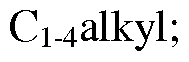
R3 is selected from methyl, amino and pyridinyl;
R4 is selected from hydrogen and ethyl; or a salt thereof.
2. The compound of claim 1 in which: Rx is selected from hydrogen, cyano and fluoro; and R2 is selected from hydrogen and methyl.
3. The compound of claim 2 selected from: l-ethyl-N-(3-fluorophenyl)-2- methyl- 1 H-benzo [d]imidazole-5-carboxamide; 2-amino- 1 -ethyl-N-phenyl- 1 H- benzo[d]imidazole-5-carboxamide; 2-(pyridin-4-yl)-N-p-tolyl-lH-benzo[d]imidazole-5- carboxamide; and N-(3-cyanophenyl)-l-ethyl-2-methyl-lH-benzo[d]imidazole-5- carboxamide.
4. A compound that is N-(2-chloro-4-methylphenyl)-4-cyanobenzamide.
5. A method of increasing the number of stem and progenitor cells; said method comprising contacting the stem cells with an agent capable of antagonizing the activity or expression of aryl hydrocarbon receptor or a down-stream effector of aryl hydrocarbon receptor pathway.
6. The method of Claim 5, wherein said agent capable of antagonizing the activity or expression of aryl hydrocarbon receptor or a down-stream effector of aryl hydrocarbon receptor pathway is selected from:
(i) an organic compound,
(ii) a small interfering RNA molecule inhibiting the expression of aryl hydrocarbon receptor, and,
(iii) an antisense oligonucleotide inhibiting the expression of aryl hydrocarbon receptor.
7. The method of Claim 5, wherein said agent capable of antagonizing the activity and/or expression of aryl hydrocarbon receptor is a compound selected from: 1- ethyl-2-methyl-N-phenyl-lH-benzo[d]imidazole-5-carboxamide; l-ethyl-N-(3- fluorophenyl)-2-methyl-lH-benzo[d]imidazole-5-carboxamide; 2-amino-l-ethyl-N-phenyl- lH-benzo[d]imidazole-5-carboxamide; 2-(pyridin-4-yl)-N-p-tolyl-lH-benzo[d]imidazole-5- carboxamide; N-(3-cyanophenyl)-l-ethyl-2-methyl-lH-benzo[d]imidazole-5-carboxamide; N-(4-methoxyphenyl)-4-oxo-4H-chromene-2-carboxamide; (Z)-l-((2,4-dioxochroman-3- ylidene)methyl)urea; 7-amino-2-methyl-4H-chromen-4-one; 6-fluoro-4H-chromen-4-one; 6,7-dihydroxy-2-(4-hydroxyphenyl)-4H-chromen-4-one; 6-hydroxy-2-phenyl-4H-chromen- 4-one; 7-hydroxy-2-phenyl-4H-chromen-4-one; 5-hydroxy-2-phenyl-4H-chromen-4-one; 7- methoxy-8-methyl-3-phenyl-4H-chromen-4-one; 4-cyano-N-p-tolylbenzamide; N-(5- chloropyridin-2-yl)-3,4-dimethylbenzamide; N-(2-chloro-4-methylphenyl)-4- cyanobenzamide; 4-isopropyl-N-(5-methylpyridin-2-yl)benzamide; 3-chloro-N-(5- chloropyridin-2-yl)-4-methylbenzamide; 4-methoxy-N-(pyridin-2-yl)benzamide; 3,4- dichloro-N-(5-methylpyridin-2-yl)benzamide; and N-(4,6-dimethylpyridin-2-yl)-2- methylbenzamide.
The method of claim 5 in which the method is carried out in vivo, in vitro or
9. The method of claim 8 in which the stem cells are human.
10. The method of claim 9 in which the stem cells are derived from bone marrow.
11. The method of claim 9 in which the stem cells are derived from umbilical cord blood.
12. The methods of claim 10 or 11 in which the stem cells are hematopoietic stem cells.
13. A method of expanding hematopoietic stem cells, comprising (a) providing a starting cell population comprising hematopoietic stem cells and (b) culturing said starting cell population ex vivo in presence of an agent capable of antagonizing the activity and/or expression of aryl hydrocarbon receptor and/or a down-stream effector of aryl hydrocarbon receptor pathway, under suitable conditions for expanding hematopoietic stem cells.
14. The method of Claim 13, wherein said agent capable of down-regulating the activity of aryl hydrocarbon receptor is selected from: (i) an organic compound, (ii) a small interfering RNA molecule inhibiting the expression of aryl hydrocarbon receptor, and, (iii) an antisense oligonucleotide inhibiting the expression of aryl hydrocarbon receptor.
15. The method of Claim 14, wherein said organic compound is selected from: 1- ethyl-2-methyl-N-phenyl-lH-benzo[d]imidazole-5-carboxamide; l-ethyl-N-(3- fluorophenyl)-2-methyl-lH-benzo[d]imidazole-5-carboxamide; 2-amino-l-ethyl-N-phenyl- lH-benzo[d]imidazole-5-carboxamide; 2-(pyridin-4-yl)-N-p-tolyl-lH-benzo[d]imidazole-5- carboxamide; N-(3-cyanophenyl)-l-ethyl-2-methyl-lH-benzo[d]imidazole-5-carboxamide; N-(4-methoxyphenyl)-4-oxo-4H-chromene-2-carboxamide; (Z)-l-((2,4-dioxochroman-3- ylidene)methyl)urea; 7-amino-2-methyl-4H-chromen-4-one; 6-fluoro-4H-chromen-4-one; 6,7-dihydroxy-2-(4-hydroxyphenyl)-4H-chromen-4-one; 6-hydroxy-2-phenyl-4H-chromen- 4-one; 7-hydroxy-2-phenyl-4H-chromen-4-one; 5-hydroxy-2-phenyl-4H-chromen-4-one; 7- methoxy-8-methyl-3-phenyl-4H-chromen-4-one; 4-cyano-N-p-tolylbenzamide; N-(5- chloropyridin-2-yl)-3,4-dimethylbenzamide; N-(2-chloro-4-methylphenyl)-4- cyanobenzamide; 4-isopropyl-N-(5-methylpyridin-2-yl)benzamide; 3-chloro-N-(5- chloropyridin-2-yl)-4-methylbenzamide; 4-methoxy-N-(pyridin-2-yl)benzamide; 3,4- dichloro-N-(5-methylpyridin-2-yl)benzamide; and N-(4,6-dimethylpyridin-2-yl)-2- methylbenzamide.
16. The method of Claim 13, wherein a down-stream effector of aryl hydrocarbon receptor pathway is selected from CyplBl, CyplAl, Beta catenin, AHRR, STAT5 and STAT1.
17. The method of Claim 13, wherein said agent capable of down-regulating the activity of aryl hydrocarbon receptor is a compound selected from: l-ethyl-2-methyl-N- phenyl- 1 H-benzo [d] imidazole-5 -carboxamide ; 1 -ethyl-N-(3 -fluorophenyl)-2-methyl- 1 H- benzo [d]imidazole-5-carboxamide; 2-amino- 1 -ethyl-N-phenyl- 1 H-benzo [d]imidazole-5- carboxamide; 2-(pyridin-4-yl)-N-p-tolyl-lH-benzo[d]irrudazole-5-carboxamide; N-(3- cyanophenyl)-l-ethyl-2-methyl-lH-benzo[d]imidazole-5-carboxamide; N-(4- methoxyphenyl)-4-oxo-4H-chromene-2-carboxamide; (Z)-l-((2,4-dioxochroman-3- ylidene)methyl)urea; 7-amino-2-methyl-4H-chromen-4-one; 6-fluoro-4H-chromen-4-one; 6,7-dihydroxy-2-(4-hydroxyphenyl)-4H-chromen-4-one; 6-hydroxy-2-phenyl-4H-chromen- 4-one; 7-hydroxy-2-phenyl-4H-chromen-4-one; 5-hydroxy-2-phenyl-4H-chromen-4-one; 7- methoxy-8-methyl-3-phenyl-4H-chromen-4-one; 4-cyano-N-p-tolylbenzamide; N-(5- chloropyridin-2-yl)-3,4-dimethylbenzamide; N-(2-chloro-4-methylphenyl)-4- cyanobenzamide; 4-isopropyl-N-(5-methylpyridin-2-yl)benzamide; 3-chloro-N-(5- chloropyridin-2-yl)-4-methylbenzamide; 4-methoxy-N-(pyridin-2-yl)benzamide; 3,4- dichloro-N-(5-methylpyridin-2-yl)benzamide; and N-(4,6-dimethylpyridin-2-yl)-2- methylbenzamide.
18. The method of Claim 13, wherein said starting cell population is enriched in CD34+ cells.
19. The method of Claim 13, wherein said starting cell population is derived from umbilical cord blood cells.
20. The method of Claim 13, wherein said starting cell population is derived from one or two cord blood units, preferably one cord blood unit.
21. The method of Claim 13, wherein said starting cell population is derived from mobilized peripheral blood cells.
22. The method of claim 21 wherein the mobilized peripheral blood cells are obtained from a single mammalian subject.
23. The method of Claim 13, wherein said starting cell population essentially consists of CD34+ cells purified from one or two cord blood units, preferably one cord blood unit.
24. The method of Claim 13, wherein said starting cell population essentially consists of CD34+ cells purified from one or two cord blood units using affinity
chromatography columns or magnetic beads comprising CD34 antigen binding antibody fragments.
25. The method of Claim 13, wherein said conditions for hematopoietic stem cell expansion include culturing said starting cell population in presence of a sufficient amount of IL6, Flt3-L, TPO and SCF and a compound selected from: l-ethyl-2-methyl-N-phenyl-lH- benzo [d]imidazole-5-carboxamide; 1 -ethyl-N-(3 -fluorophenyl)-2-methyl- 1 H- benzo [d]imidazole-5-carboxamide; 2-amino- 1 -ethyl-N-phenyl- 1 H-benzo [d]imidazole-5- carboxamide; 2-(pyridin-4-yl)-N-p olyl-lH-benzo[d]imidazole-5-carboxamide; N-(3- cyanophenyl)-l-ethyl-2-methyl-lH-benzo[d]imidazole-5-carboxamide; N-(4- methoxyphenyl)-4-oxo-4H-chromene-2-carboxamide; (Z)-l-((2,4-dioxochroman-3- ylidene)methyl)urea; 7-amino-2-methyl-4H-chromen-4-one; 6-fluoro-4H-chromen-4-one; 6,7-dihydroxy-2-(4-hydroxyphenyl)-4H-chromen-4-one; 6-hydroxy-2-phenyl-4H-chromen- 4-one; 7-hydroxy-2-phenyl-4H-chromen-4-one; 5-hydroxy-2-phenyl-4H-chromen-4-one; 7- methoxy-8-methyl-3-phenyl-4H-chromen-4-one; 4-cyano-N-p-tolylbenzamide; N-(5- chloropyridin-2-yl)-3,4-dimethylbenzamide; N-(2-chloro-4-methylphenyl)-4- cyanobenzamide; 4-isopropyl-N-(5-methylpyridin-2-yl)benzamide; 3-chloro-N-(5- chloropyridin-2-yl)-4-methylbenzamide; 4-methoxy-N-(pyridin-2-yl)benzamide; 3,4- dichloro-N-(5-methylpyridin-2-yl)benzamide; and N-(4,6-dimethylpyridin-2-yl)-2- methylbenzamide.
26. The method of Claim 13, wherein said compound selected from: 1 -ethyl -2- methyl-N-phenyl-lH-benzo[d]imidazole-5-carboxamide; l-ethyl-N-(3-fluorophenyl)-2- methyl- 1 H-benzo [d]imidazole-5-carboxamide; 2-amino- 1 -ethyl-N-phenyl- 1 H- benzo[d]imidazole-5-carboxamide; 2-(pyridin-4-yl)-N-p-tolyl-lH-benzo[d]imidazole-5- carboxamide; N-(3-cyanophenyl)-l-ethyl-2-methyl-lH-benzo[d]imidazole-5-carboxamide; N-(4-methoxyphenyl)-4-oxo-4H-chromene-2-carboxamide; (Z)-l-((2,4-dioxochroman-3- ylidene)methyl)urea; 7-amino-2-methyl-4H-chromen-4-one; 6-fluoro-4H-chromen-4-one; 6,7-dihydroxy-2-(4-hydroxyphenyl)-4H-chromen-4-one; 6-hydroxy-2-phenyl-4H-chromen- 4-one; 7-hydroxy-2-phenyl-4H-chromen-4-one; 5-hydroxy-2-phenyl-4H-chromen-4-one; 7- methoxy-8-methyl-3-phenyl-4H-chromen-4-one; 4-cyano-N-p-tolylbenzamide; N-(5- chloropyridin-2-yl)-3,4-dimethylbenzamide; N-(2-chloro-4-methylphenyl)-4- cyanobenzamide; 4-isopropyl-N-(5-methylpyridin-2-yl)benzamide; 3-chloro-N-(5- chloropyridin-2-yl)-4-methylbenzamide; 4-methoxy-N-(pyridin-2-yl)benzamide; 3,4- dichloro-N-(5-methylpyridin-2-yl)benzamide; and N-(4,6-dimethylpyridin-2-yl)-2- methylbenzamide; is administered in the cell culture medium at a concentration between lpM and ΙΟμΜ, for example between ΙΟρΜ and ΙΟΟμΜ.
27. The method of Claim 13, wherein said starting cell population essentially consists of CD34+ cells purified from one or two cord blood units, preferably one cord blood unit, and said starting cell population is cultured in presence of a compound of claim 1 from about 3 days to about 90 days, preferably between 7 to 35 days.
28. The method of Claim 13, wherein said starting cell population is cultured in presence of a compound of Claim 1 during a time sufficient for a 10 to 50000 fold expansion of CD34+ cells.
29. A kit for expanding hematopoietic stem cells, comprising a compound selected from: l-ethyl-2-methyl-N-phenyl-lH-benzo[d]imidazole-5-carboxamide; 1-ethyl-N- (3-fluorophenyl)-2-methyl-lH-benzo[d]imidazole-5-carboxamide; 2-amino- 1-efhyl-N- phenyl-lH-benzo[d]imidazole-5-carboxamide; 2-(pyridin-4-yl)-N-p-tolyl-lH- benzo [d]imidazole-5-carboxamide; N-(3 -cyanophenyl)- 1 -ethyl-2-methyl- 1 H- benzo[d]imidazole-5-carboxamide; N-(4-methoxyphenyl)-4-oxo-4H-chromene-2- carboxamide; (Z)-l-((2,4-dioxochroman-3-ylidene)methyl)urea; 7-amino-2-mefhyl-4H- chromen-4-one; 6-fluoro-4H-chromen-4-one; 6,7-dihydroxy-2-(4-hydroxyphenyl)-4H- chromen-4-one; 6-hydroxy-2-phenyl-4H-chromen-4-one; 7-hydroxy-2-phenyl-4H-chromen- 4-one; 5-hydroxy-2-phenyl-4H-chromen-4-one; 7-methoxy-8-methyl-3-phenyl-4H-chromen- 4-one; 4-cyano-N-p-tolylbenzamide; N-(5-chloropyridin-2-yl)-3,4-dimethylbenzamide; N- (2-chloro-4-methylplienyl)-4-cyanobenzamide; 4-isopropyl-N-(5-mefhylpyridin-2- yl)benzamide; 3-chloro-N-(5-chloropyridin-2-yl)-4-metliylbenzamide; 4-mefhoxy-N- (pyridin-2-yl)benzamide; 3,4-dichloro-N-(5-methylpyridin-2-yl)benzamide; and N-(4,6- dimethylpyridin-2-yl)-2-methylbenzamide and instructions for use in a method of Claim 13 and, optionally, one or more of the following: cytokines, growth factors and cell growth media.
30. The kit according to Claim 29, wherein said one or more cytokines or growth factors is selected from the group consisting of IL6, Flt3-L, SCF and TPO .
31. A cell population with expanded hematopoietic stem cells, obtainable or as obtained by the method of Claim 13.
32. A composition comprising the cell population of Claim 31 resuspended in a pharmaceutically acceptable medium suitable for administration to a mammalian host.
33. A composition comprising a cell population with expanded hematopoietic stem cells derived from one or two cord blood units, preferably one cord blood unit, wherein said composition contains a total amount of cells of at least 105 cells, 107 cells, 108 cells or 109 cells, and wherein between 20-100% of total cells are CD34+ cells.
34. The composition of Claim 33, wherein said composition contains between
0.1%-40% of total cells expressing CD34 and Thyl markers; 20-80% of total cells expressing CD34 and CD45RA markers; 10-95% of cells being CD38+; and 5-70% of cells being CD133+.
35. The composition according to any one of Claims 32-34 for use in allogeneic hematopoietic stem cell transplantation in mammalian subject.
36. The composition according to any one of Claims 32-34, for treating a patient suffering from impaired hematopoiesis.
37. The composition of Claim 36, wherein the patient is suffering from an inherited immunodeficient disease, an autoimmune disorder or hematopoietic disorder.
38. The composition of Claim 37, wherein said hematopoietic disorder is selected from Acute myeloid leukemia, Acute lymphoblastic leukemia, Chronic myeloid leukemia, Chronic lymphocytic leukemia, Myeloproliferative disorders, Myelodysplastic syndromes, Multiple myeloma, Non-Hodgkin lymphoma, Hodgkin disease, Aplastic anemia, Pure red cell aplasia, Paroxysmal nocturnal hemoglobinuria, Fanconi anemi, Thalassemia major, Sickle cell anemia, Severe combined immunodeficiency, Wiskott- Aldrich syndrome, Hemophagocytic lymphohistiocytosis and inborn errors of metabolism.
39. The composition of any on Claims 32-34, wherein said composition is appropriate for intravenous infusion and said composition comprises at least 104 cells / kg transfused in the patient, preferably between 105cells / kg and 109 cells / kg.
40. A method of treating an inherited immunodeficient disease, an autoimmune disease and/or a hematopoietic disorder comprising administration to a patient in need of such treatment hematopoietic stem cells expanded by an agent capable of down-regulating the activity and/or expression of aryl hydrocarbon receptor and/or a down-stream effector of AHR pathway.
41. The method of claim 40, wherein said agent capable of down-regulating the activity and/or expression of aryl hydrocarbon receptor is a compound selected from: 1- ethyl -2-methyl-N-phenyl-lH-benzo[d]imidazole-5-carboxamide; l-ethyl-N-(3- fiuorophenyl)-2-methyl-lH-benzo[d]imidazole-5-carboxamide; 2-amino-l-ethyl-N-phenyl- lH-benzo[d]imidazole-5-carboxamide; 2-(pyridin-4-yl)-N-p-tolyl-lH-benzo[d]imidazole-5- carboxamide; N-(3-cyanophenyl)-l-ethyl-2-methyl-lH-benzo[d]imidazole-5-carboxamide; N-(4-methoxyphenyl)-4-oxo-4H-chromene-2-carboxamide; (Z)-l-((2,4-dioxochroman-3- ylidene)methyl)urea; 7-amino-2-methyl-4H-chromen-4-one; 6-fiuoro-4H-chromen-4-one; 6,7-dihydroxy-2-(4-hydroxyphenyl)-4H-chromen-4-one; 6-hydroxy-2-phenyl-4H-chromen- 4-one; 7-hydroxy-2-phenyl-4H-chromen-4-one; 5-hydroxy-2-phenyl-4H-chromen-4-one; 7- methoxy-8-methyl-3-phenyl-4H-chromen-4-one; 4-cyano-N-p-tolylbenzamide; N-(5- chloropyridin-2-yl)-3,4-dimethylbenzamide; N-(2-chloro-4-mefhylphenyl)-4- cyanobenzamide; 4-isopropyl-N-(5-methylpyridin-2-yl)benzamide; 3-chloro-N-(5- chloropyridin-2-yl)-4-methylbenzamide; 4-methoxy-N-(pyridin-2-yl)benzamide; 3,4- dichloro-N-(5-methylpyridin-2-yl)benzamide; and N-(4,6-dimethylpyridin-2-yl)-2- methylbenzamide.
42. The method of claim 40, wherein the administration is an autologous transplantation and the hematopoietic disorder is selected from Multiple myeloma, Non- Hodgkin lymphoma, Hodgkin disease, Acute myeloid leukemia, Neuroblastoma, Germ cell tumors, Autoimmune disorders and Amyloidosis.
43. The method of claim 42 wherein the autoimmune disorders are selected from Systemic lupus erythematosus and systemic sclerosis.
44. The method of claim 43 wherein the administration is an allogeneic transplantation and the hematopoietic disorder is selected from Acute myeloid leukemia, Acute lymphoblastic leukemia, Chronic myeloid leukemia, Chronic lymphocytic leukemia, Myeloproliferative disorders, Myelodysplastic syndromes, Multiple myeloma, Non-Hodgkin lymphoma, Hodgkin disease, Aplastic anemia, Pure red cell aplasia, Paroxysmal nocturnal hemoglobinuria, Fanconi anemi, Thalassemia major, Sickle cell anemia, Severe combined immunodeficiency, Wiskott-Aldrich syndrome,
Hemophagocytic lymphohistiocytosis and inborn errors of metabolism.
45. The method of claim 44 wherein the inborn errors of metabolism are selected from mucopolysaccharidosis, Gaucher disease, metachromatic leukodystrophies and adrenoleukodystrophies.
Applications Claiming Priority (2)
| Application Number | Priority Date | Filing Date | Title |
|---|---|---|---|
| US201161436025P | 2011-01-25 | 2011-01-25 | |
| US61/436,025 | 2011-01-25 |
Publications (2)
| Publication Number | Publication Date |
|---|---|
| WO2012102937A2 true WO2012102937A2 (en) | 2012-08-02 |
| WO2012102937A3 WO2012102937A3 (en) | 2012-11-29 |
Family
ID=45562464
Family Applications (1)
| Application Number | Title | Priority Date | Filing Date |
|---|---|---|---|
| PCT/US2012/021898 Ceased WO2012102937A2 (en) | 2011-01-25 | 2012-01-19 | Compounds that expand hematopoietic stem cells |
Country Status (1)
| Country | Link |
|---|---|
| WO (1) | WO2012102937A2 (en) |
Cited By (7)
| Publication number | Priority date | Publication date | Assignee | Title |
|---|---|---|---|---|
| WO2016092327A1 (en) * | 2014-12-11 | 2016-06-16 | University Court Of The University Of Glasgow | Pro-survival compounds |
| WO2018055627A1 (en) * | 2016-09-25 | 2018-03-29 | Bar Ilan University | Wasp-protecting small molecules, compositions, methods and uses thereof in the treatment of innate and acquired immune-related disorders or conditions |
| WO2018167317A1 (en) * | 2017-03-17 | 2018-09-20 | Universität Zürich | Method for in-vitro stem cell expansion |
| JP2019531294A (en) * | 2016-09-20 | 2019-10-31 | サントル レオン ベラール | Benzimidazole derivatives as anticancer agents |
| EP3689420A1 (en) * | 2014-01-23 | 2020-08-05 | H. Lee Moffitt Cancer Center & Research Institute, Inc. | Icariin derivatives for use in treating myelodysplasia syndrome |
| WO2020051207A3 (en) * | 2018-09-04 | 2020-08-13 | Magenta Therapeutics Inc. | Aryl hydrocarbon receptor antagonists and methods of use |
| WO2023203161A1 (en) * | 2022-04-22 | 2023-10-26 | Universite Paris Cite | Compounds inducing production of proteins by immune cells |
Citations (17)
| Publication number | Priority date | Publication date | Assignee | Title |
|---|---|---|---|---|
| WO2000028987A1 (en) | 1998-11-17 | 2000-05-25 | Smithkline Beecham Corporation | Methods of treating thrombocytopenia |
| WO2000035446A1 (en) | 1998-12-17 | 2000-06-22 | Smithkline Beecham Corporation | Thrombopoietin mimetics |
| WO2000066112A1 (en) | 1999-05-03 | 2000-11-09 | Smithkline Beecham Corporation | Cxcr-4 receptor antagonists - thrombopoietin mimetics |
| WO2001017349A1 (en) | 1999-09-10 | 2001-03-15 | Smithkline Beckman Corporation | Thrombopoietin mimetics |
| WO2001021180A1 (en) | 1999-09-24 | 2001-03-29 | Smithkline Beecham Corporation | Thrombopoietin mimetics |
| WO2001034585A1 (en) | 1999-11-05 | 2001-05-17 | Smithkline Beecham Corporation | Semicarbazone derivatives and their use as thrombopoietin mimetics |
| WO2001039773A1 (en) | 1999-12-06 | 2001-06-07 | Smithkline Beecham Corporation | Thrombopoietin mimetics |
| WO2001089457A2 (en) | 2000-05-25 | 2001-11-29 | Smithkline Beecham Corporation | Thrombopoietin mimetics |
| WO2002049413A2 (en) | 2000-12-19 | 2002-06-27 | Smithkline Beecham Corporation | Thrombopoietin mimetics |
| WO2002085343A1 (en) | 2001-03-01 | 2002-10-31 | Smithkline Beecham Corporation | Thrombopoietin mimetics |
| WO2003103686A1 (en) | 2002-06-06 | 2003-12-18 | Smithkline Beecham Corporation | Thrombopoietin mimetics |
| WO2004054515A2 (en) | 2002-12-13 | 2004-07-01 | Smithkline Beecham Corporation | Thrombopoietin mimetics |
| WO2007009120A2 (en) | 2005-07-14 | 2007-01-18 | Irm Llc | Heterotetracyclic compounds as tpo mimetics |
| WO2007022269A2 (en) | 2005-08-15 | 2007-02-22 | Irm Llc | Compounds and compositions as tpo mimetics |
| WO2007145227A1 (en) | 2006-06-14 | 2007-12-21 | Chugai Seiyaku Kabushiki Kaisha | Hematopoietic stem cell proliferation promoter |
| WO2008028645A1 (en) | 2006-09-05 | 2008-03-13 | Aplagen Gmbh | Peptides binding the tpo receptor |
| WO2008073748A1 (en) | 2006-12-08 | 2008-06-19 | University Of Rochester | Expansion of hematopoietic stem cells |
Family Cites Families (5)
| Publication number | Priority date | Publication date | Assignee | Title |
|---|---|---|---|---|
| MX2007002727A (en) * | 2004-09-03 | 2008-03-04 | Prometic Biosciences Inc | Substituted purinyl derivatives with immunomodulator and chemoprotective activity and use alone or with medium-chain length fatty acids or glycerides. |
| CA2685540C (en) * | 2007-08-03 | 2018-10-16 | Graham Michael Wynne | Drug combinations for the treatment of duchenne muscular dystrophy |
| WO2009155362A1 (en) * | 2008-06-19 | 2009-12-23 | Ligand Pharmaceuticals Inc. | Small molecule hematopoietic growth factor mimetic compounds and their uses |
| UY32138A (en) * | 2008-09-25 | 2010-04-30 | Boehringer Ingelheim Int | SUBSTITUTED AMIDES 2- (2,6-DICLORO-PHENYLAMINE) -6-FLUORO-1-METHYL-1H-BENCIMIDAZOL-5-CARBOXYL AND ITS PHARMACEUTICALLY ACCEPTABLE SALTS |
| PE20100362A1 (en) * | 2008-10-30 | 2010-05-27 | Irm Llc | PURINE DERIVATIVES THAT EXPAND HEMATOPOYETIC STEM CELLS |
-
2012
- 2012-01-19 WO PCT/US2012/021898 patent/WO2012102937A2/en not_active Ceased
Patent Citations (17)
| Publication number | Priority date | Publication date | Assignee | Title |
|---|---|---|---|---|
| WO2000028987A1 (en) | 1998-11-17 | 2000-05-25 | Smithkline Beecham Corporation | Methods of treating thrombocytopenia |
| WO2000035446A1 (en) | 1998-12-17 | 2000-06-22 | Smithkline Beecham Corporation | Thrombopoietin mimetics |
| WO2000066112A1 (en) | 1999-05-03 | 2000-11-09 | Smithkline Beecham Corporation | Cxcr-4 receptor antagonists - thrombopoietin mimetics |
| WO2001017349A1 (en) | 1999-09-10 | 2001-03-15 | Smithkline Beckman Corporation | Thrombopoietin mimetics |
| WO2001021180A1 (en) | 1999-09-24 | 2001-03-29 | Smithkline Beecham Corporation | Thrombopoietin mimetics |
| WO2001034585A1 (en) | 1999-11-05 | 2001-05-17 | Smithkline Beecham Corporation | Semicarbazone derivatives and their use as thrombopoietin mimetics |
| WO2001039773A1 (en) | 1999-12-06 | 2001-06-07 | Smithkline Beecham Corporation | Thrombopoietin mimetics |
| WO2001089457A2 (en) | 2000-05-25 | 2001-11-29 | Smithkline Beecham Corporation | Thrombopoietin mimetics |
| WO2002049413A2 (en) | 2000-12-19 | 2002-06-27 | Smithkline Beecham Corporation | Thrombopoietin mimetics |
| WO2002085343A1 (en) | 2001-03-01 | 2002-10-31 | Smithkline Beecham Corporation | Thrombopoietin mimetics |
| WO2003103686A1 (en) | 2002-06-06 | 2003-12-18 | Smithkline Beecham Corporation | Thrombopoietin mimetics |
| WO2004054515A2 (en) | 2002-12-13 | 2004-07-01 | Smithkline Beecham Corporation | Thrombopoietin mimetics |
| WO2007009120A2 (en) | 2005-07-14 | 2007-01-18 | Irm Llc | Heterotetracyclic compounds as tpo mimetics |
| WO2007022269A2 (en) | 2005-08-15 | 2007-02-22 | Irm Llc | Compounds and compositions as tpo mimetics |
| WO2007145227A1 (en) | 2006-06-14 | 2007-12-21 | Chugai Seiyaku Kabushiki Kaisha | Hematopoietic stem cell proliferation promoter |
| WO2008028645A1 (en) | 2006-09-05 | 2008-03-13 | Aplagen Gmbh | Peptides binding the tpo receptor |
| WO2008073748A1 (en) | 2006-12-08 | 2008-06-19 | University Of Rochester | Expansion of hematopoietic stem cells |
Non-Patent Citations (14)
| Title |
|---|
| "Remington: The Science and Practice of Pharmacy", 2005, LIPPICOTT WILLIAMS & WILKINS |
| BIOCHEM. PHARMACOL., vol. 73, no. 10, 30 January 2007 (2007-01-30), pages 1622 - 34 |
| CANCER RES., vol. 64, no. 8, 15 April 2004 (2004-04-15), pages 2889 - 97 |
| HANNUM C, NATURE, vol. 368, no. 6472, pages 643 - 8 |
| JEAN JACQUES; ANDRE COLLET; SAMUEL H. WILEN: "Enantiomers, Racemates and Resolutions", 1981, JOHN WILEY AND SONS, INC. |
| KAUSHANSKY K, N. ENGL. J. MED., vol. 354, no. 19, 2006, pages 2034 - 45 |
| KISHIMOTO, ANN. REVIEW OF IMM., vol. 23, 2005, pages 1 |
| NUTR. METAB. CARDIOVASC. DIS., vol. 13, no. 2, April 2003 (2003-04-01), pages 104 - 13 |
| SAFE S, TOXICOL LETT, vol. 120, 2001, pages 1 - 7 |
| SAULNIER ET AL., BIOORGANIC AND MEDICINAL CHEMISTRY LETTERS, vol. 4, 1994 |
| SMITH, MA ET AL., ACTA HAEMATOLOGICA, vol. 105, no. 3, 2001, pages 143 |
| T. W. GREENE: "Protecting Groups in Organic Chemistry", 1999, JOHN WILEY AND SONS, INC. |
| T.W. GREENE; P. G. M. WUTS: "Protective Groups in Organic Chemistry", 1991, JOHN WILEY AND SONS |
| TILESI ET AL., CURR. OPIN. MOL. THER., vol. 11, 2009, pages 156 |
Cited By (15)
| Publication number | Priority date | Publication date | Assignee | Title |
|---|---|---|---|---|
| EP3689420A1 (en) * | 2014-01-23 | 2020-08-05 | H. Lee Moffitt Cancer Center & Research Institute, Inc. | Icariin derivatives for use in treating myelodysplasia syndrome |
| WO2016092327A1 (en) * | 2014-12-11 | 2016-06-16 | University Court Of The University Of Glasgow | Pro-survival compounds |
| US12509465B2 (en) | 2016-09-20 | 2025-12-30 | Centre Leon Berard | Benzoimidazole derivatives as anticancer agents |
| US11384081B2 (en) | 2016-09-20 | 2022-07-12 | Centre Leon Berard | Benzoimidazole derivatives as anticancer agents |
| JP2019531294A (en) * | 2016-09-20 | 2019-10-31 | サントル レオン ベラール | Benzimidazole derivatives as anticancer agents |
| US20190216794A1 (en) * | 2016-09-25 | 2019-07-18 | Bar Ilan University | Wasp-protecting small molecules, compositions, methods and uses thereof in the treatment of innate and acquired immune-related disorders or conditions |
| US11123339B2 (en) | 2016-09-25 | 2021-09-21 | Bar Ilan University | WASp-protecting small molecules, compositions, methods and uses thereof in the treatment of innate and acquired immune-related disorders or conditions |
| IL265595B (en) * | 2016-09-25 | 2022-12-01 | Univ Bar Ilan | Small molecules that protect the wasp protein, preparations that include them and their use in methods for treating acquired or genetic diseases of the immune system |
| IL265595B2 (en) * | 2016-09-25 | 2023-04-01 | Univ Bar Ilan | Wasp-protecting small molecules, compositions, methods and uses thereof in the treatment of innate and acquired immune-related disorders or conditions |
| US12150940B2 (en) | 2016-09-25 | 2024-11-26 | Bar Ilan University | WASp-protecting small molecules, compositions, methods and uses thereof in the treatment of innate and acquired immune-related disorders or conditions |
| WO2018055627A1 (en) * | 2016-09-25 | 2018-03-29 | Bar Ilan University | Wasp-protecting small molecules, compositions, methods and uses thereof in the treatment of innate and acquired immune-related disorders or conditions |
| WO2018167317A1 (en) * | 2017-03-17 | 2018-09-20 | Universität Zürich | Method for in-vitro stem cell expansion |
| WO2020051207A3 (en) * | 2018-09-04 | 2020-08-13 | Magenta Therapeutics Inc. | Aryl hydrocarbon receptor antagonists and methods of use |
| CN113260609A (en) * | 2018-09-04 | 2021-08-13 | 美真达治疗公司 | Aromatic receptor antagonists and methods of use thereof |
| WO2023203161A1 (en) * | 2022-04-22 | 2023-10-26 | Universite Paris Cite | Compounds inducing production of proteins by immune cells |
Also Published As
| Publication number | Publication date |
|---|---|
| WO2012102937A3 (en) | 2012-11-29 |
Similar Documents
| Publication | Publication Date | Title |
|---|---|---|
| US20210187033A1 (en) | Compounds that expand hematopoietic stem cells | |
| JP6250556B2 (en) | Pyrimido [4,5-b] indole derivatives and their use in the proliferation of hematopoietic stem cells | |
| AU2018253115B2 (en) | Aryl hydrocarbon receptor antagonists and uses thereof | |
| WO2012102937A2 (en) | Compounds that expand hematopoietic stem cells | |
| WO2014138485A1 (en) | Ex vivo production of platelets from hematopoietic stem cells and the product thereof | |
| JP2021501582A (en) | Its use in the proliferation of compounds and stem cells and / or progenitor cells | |
| CN109890805B (en) | Substituted azole derivatives for the production, proliferation and differentiation of hematopoietic stem and progenitor cells | |
| HK40011563A (en) | Expanded hematopoietic stem cells from cord blood and their therapeutic use | |
| WO2019136159A1 (en) | Compositions and methods for the expansion of hematopoietic stem and progenitor cells and treatment of inherited metabolic disorders | |
| HK1153999B (en) | Compounds that expand hematopoietic stem cells | |
| HK1153999A (en) | Compounds that expand hematopoietic stem cells | |
| AU2013203936A1 (en) | Compounds that expand hematopoietic stem cells |
Legal Events
| Date | Code | Title | Description |
|---|---|---|---|
| 121 | Ep: the epo has been informed by wipo that ep was designated in this application |
Ref document number: 12702366 Country of ref document: EP Kind code of ref document: A2 |
|
| NENP | Non-entry into the national phase |
Ref country code: DE |
|
| 122 | Ep: pct application non-entry in european phase |
Ref document number: 12702366 Country of ref document: EP Kind code of ref document: A2 |