WO2012083866A1 - Quinoline derivatives as anti-cancer agents - Google Patents
Quinoline derivatives as anti-cancer agents Download PDFInfo
- Publication number
- WO2012083866A1 WO2012083866A1 PCT/CN2011/084433 CN2011084433W WO2012083866A1 WO 2012083866 A1 WO2012083866 A1 WO 2012083866A1 CN 2011084433 W CN2011084433 W CN 2011084433W WO 2012083866 A1 WO2012083866 A1 WO 2012083866A1
- Authority
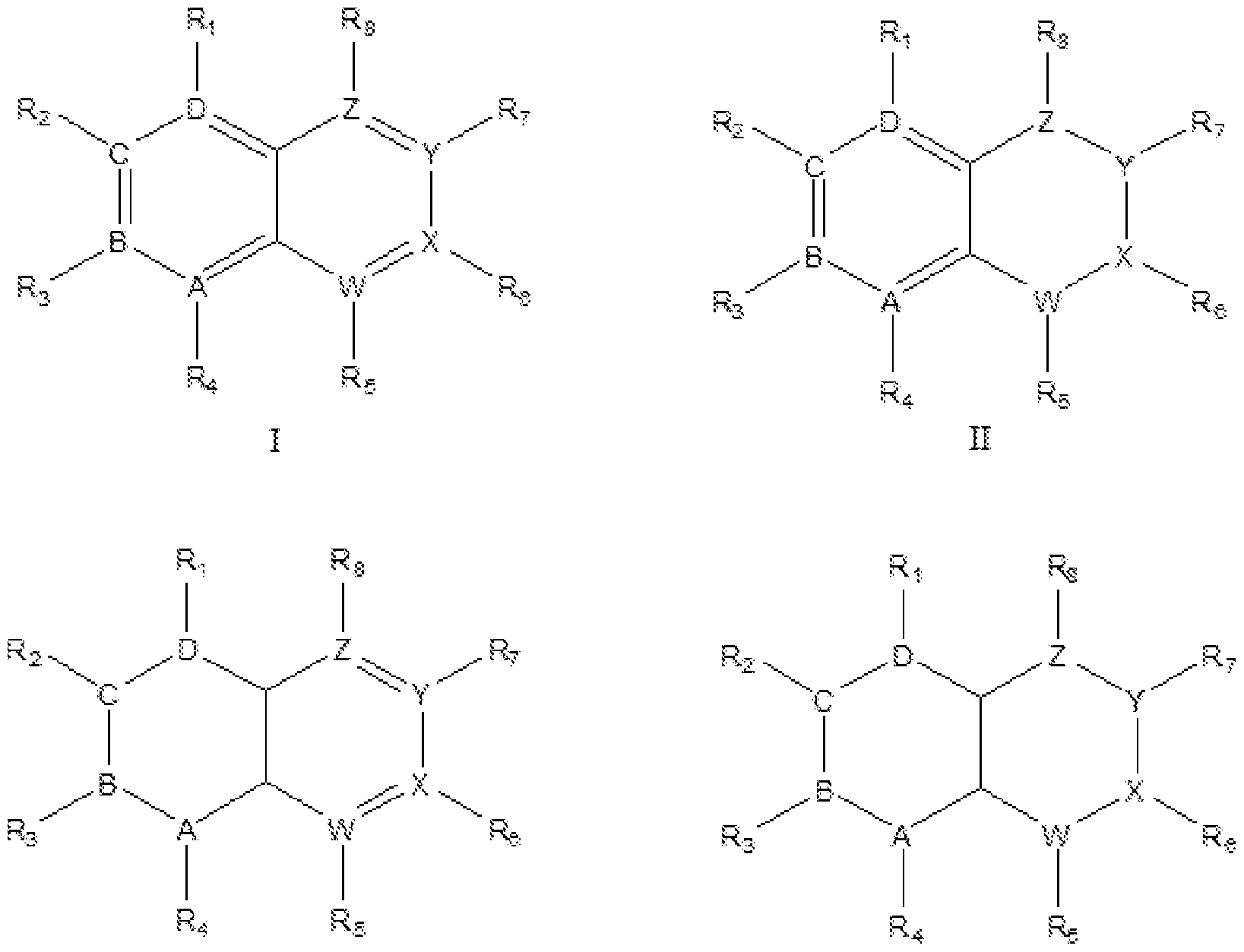
- WO
- WIPO (PCT)
- Prior art keywords
- substituted
- quinoline derivative
- alkenyl
- alkyl
- nmr
- Prior art date
- Legal status (The legal status is an assumption and is not a legal conclusion. Google has not performed a legal analysis and makes no representation as to the accuracy of the status listed.)
- Ceased
Links
- 0 C*(*)(*(*)*(C(C1*(B2C*)*)*(*)C2*)*=C)N1S Chemical compound C*(*)(*(*)*(C(C1*(B2C*)*)*(*)C2*)*=C)N1S 0.000 description 1
- WIPAITULBTYIST-UHFFFAOYSA-N CC(CC1)Nc2c1cccc2OCc1ccccc1 Chemical compound CC(CC1)Nc2c1cccc2OCc1ccccc1 WIPAITULBTYIST-UHFFFAOYSA-N 0.000 description 1
- DGDDNENNGRGKDE-UHFFFAOYSA-N Cc(ccc1ccc2)nc1c2OCc(cc1)ccc1[N+]([O-])=O Chemical compound Cc(ccc1ccc2)nc1c2OCc(cc1)ccc1[N+]([O-])=O DGDDNENNGRGKDE-UHFFFAOYSA-N 0.000 description 1
- ZETRNHKIVLFOCA-UHFFFAOYSA-N Cc1nc(c(OCCN2CCCCC2)ccc2)c2cc1 Chemical compound Cc1nc(c(OCCN2CCCCC2)ccc2)c2cc1 ZETRNHKIVLFOCA-UHFFFAOYSA-N 0.000 description 1
- SLBPIHCMXPQAIQ-UHFFFAOYSA-O Oc1cccc2c1[nH+]c(C=O)cc2 Chemical compound Oc1cccc2c1[nH+]c(C=O)cc2 SLBPIHCMXPQAIQ-UHFFFAOYSA-O 0.000 description 1
Classifications
-
- C—CHEMISTRY; METALLURGY
- C07—ORGANIC CHEMISTRY
- C07D—HETEROCYCLIC COMPOUNDS
- C07D215/00—Heterocyclic compounds containing quinoline or hydrogenated quinoline ring systems
- C07D215/02—Heterocyclic compounds containing quinoline or hydrogenated quinoline ring systems having no bond between the ring nitrogen atom and a non-ring member or having only hydrogen atoms or carbon atoms directly attached to the ring nitrogen atom
- C07D215/16—Heterocyclic compounds containing quinoline or hydrogenated quinoline ring systems having no bond between the ring nitrogen atom and a non-ring member or having only hydrogen atoms or carbon atoms directly attached to the ring nitrogen atom with hetero atoms or with carbon atoms having three bonds to hetero atoms with at the most one bond to halogen, e.g. ester or nitrile radicals, directly attached to ring carbon atoms
- C07D215/20—Oxygen atoms
-
- A—HUMAN NECESSITIES
- A61—MEDICAL OR VETERINARY SCIENCE; HYGIENE
- A61P—SPECIFIC THERAPEUTIC ACTIVITY OF CHEMICAL COMPOUNDS OR MEDICINAL PREPARATIONS
- A61P35/00—Antineoplastic agents
-
- A—HUMAN NECESSITIES
- A61—MEDICAL OR VETERINARY SCIENCE; HYGIENE
- A61P—SPECIFIC THERAPEUTIC ACTIVITY OF CHEMICAL COMPOUNDS OR MEDICINAL PREPARATIONS
- A61P35/00—Antineoplastic agents
- A61P35/02—Antineoplastic agents specific for leukemia
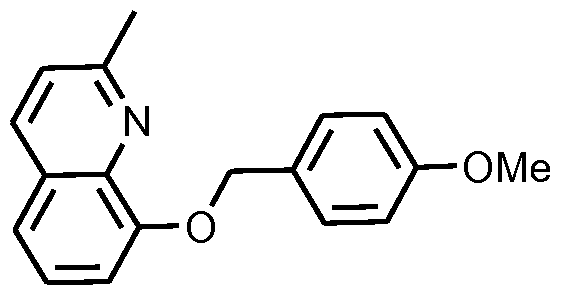
-
- C—CHEMISTRY; METALLURGY
- C07—ORGANIC CHEMISTRY
- C07D—HETEROCYCLIC COMPOUNDS
- C07D215/00—Heterocyclic compounds containing quinoline or hydrogenated quinoline ring systems
- C07D215/02—Heterocyclic compounds containing quinoline or hydrogenated quinoline ring systems having no bond between the ring nitrogen atom and a non-ring member or having only hydrogen atoms or carbon atoms directly attached to the ring nitrogen atom
- C07D215/12—Heterocyclic compounds containing quinoline or hydrogenated quinoline ring systems having no bond between the ring nitrogen atom and a non-ring member or having only hydrogen atoms or carbon atoms directly attached to the ring nitrogen atom with substituted hydrocarbon radicals attached to ring carbon atoms
- C07D215/14—Radicals substituted by oxygen atoms
-
- C—CHEMISTRY; METALLURGY
- C07—ORGANIC CHEMISTRY
- C07D—HETEROCYCLIC COMPOUNDS
- C07D215/00—Heterocyclic compounds containing quinoline or hydrogenated quinoline ring systems
- C07D215/02—Heterocyclic compounds containing quinoline or hydrogenated quinoline ring systems having no bond between the ring nitrogen atom and a non-ring member or having only hydrogen atoms or carbon atoms directly attached to the ring nitrogen atom
- C07D215/16—Heterocyclic compounds containing quinoline or hydrogenated quinoline ring systems having no bond between the ring nitrogen atom and a non-ring member or having only hydrogen atoms or carbon atoms directly attached to the ring nitrogen atom with hetero atoms or with carbon atoms having three bonds to hetero atoms with at the most one bond to halogen, e.g. ester or nitrile radicals, directly attached to ring carbon atoms
- C07D215/20—Oxygen atoms
- C07D215/22—Oxygen atoms attached in position 2 or 4
-
- C—CHEMISTRY; METALLURGY
- C07—ORGANIC CHEMISTRY
- C07D—HETEROCYCLIC COMPOUNDS
- C07D215/00—Heterocyclic compounds containing quinoline or hydrogenated quinoline ring systems
- C07D215/02—Heterocyclic compounds containing quinoline or hydrogenated quinoline ring systems having no bond between the ring nitrogen atom and a non-ring member or having only hydrogen atoms or carbon atoms directly attached to the ring nitrogen atom
- C07D215/16—Heterocyclic compounds containing quinoline or hydrogenated quinoline ring systems having no bond between the ring nitrogen atom and a non-ring member or having only hydrogen atoms or carbon atoms directly attached to the ring nitrogen atom with hetero atoms or with carbon atoms having three bonds to hetero atoms with at the most one bond to halogen, e.g. ester or nitrile radicals, directly attached to ring carbon atoms
- C07D215/20—Oxygen atoms
- C07D215/22—Oxygen atoms attached in position 2 or 4
- C07D215/227—Oxygen atoms attached in position 2 or 4 only one oxygen atom which is attached in position 2
Definitions
- This invention relates to a novel genus of compounds useful as anti-cancer agents. Particularly, it relates to a group of substituted quinoline derivatives which show potent anti-cancer effects.
- Substituted quinoline-type alkaloids are known for possessing interesting biological activities.
- 8-hydroxyquinoline derivatives were reported to possess activities against (i) Alzheimer's disease, (ii) rat mesenchymal stem cells (rMSCs) proliferation and (iii) antifungal properties.
- the compound, 8- aminoquinoline (sitamaquine) has been suggested to be a candidate agent for treating visceral leishmania leishmaniasis.
- the 8-hydroxyquinoline and its derivatives have been reported to possess good antifungal properties and can help the treatment of neurodegenerative disease.
- Asymmetric hydrogenation offers a new method for structural modification of this compound type to produce new chiral structural moiety and associated bioactivity.
- Zhou, Chan and others reported their effort in the asymmetric production of chiral tetrahydroquinoline with high enantioselectivities.
- the substituted quinoline-type alkaloids of the present invention that are useful for cancer treatment with good solubility and acceptable cell toxicity.
- the present invention provides quinoline derivatives of formula I - IV and their salts for anti-tumor activities.
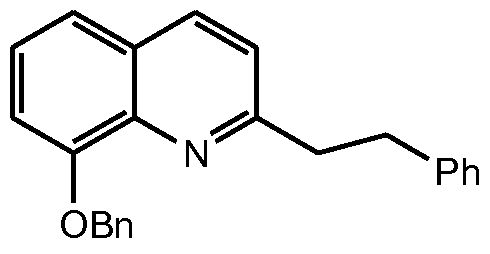
- Rj ,R 2 ,R 3 ,R4 ,R5 ,R6 / R7 and R 8 are each independently H, alkyl or substituted alkyl, alkenyl or substituted alkenyl, alkoxy or substituted alkoxy, hydroxyl or substituted hydroxyl, amino or substituted amino, thio or substituted thio, sulfonyl or substituted sulfonyl, sulfinyl or substituted sulfinyl, sulfonylamino or substituted sulfonylamino, halo, SO 3 H, amine, CN, CF 3 , acyl or substituted acyl, aryl or substituted aryl, heterocyclyl or substituted heterocyclyl, alkoxy or substituted alkoxy, aldehyde or substituted aldehyde or substituted phosphine; COR a , CSR a and CONHR a where R a
- the aforementioned A, B, C, D,W, X, Y and Z is each
- quinoline derivative of the present invention is the following formula:
- Rj, R 2 and R 3 are each independently H or Br; R 5 , R 7 and R 8 are
- R 6 is selected from the group consisting of CH 3 , CH 2 CH 3 , OBn, CH 2 CH 2 Ph, CH 2 OH; and R 4 is a substituted phenyl group, OBn, OH or OAc wherein said phenyl group is of the following formula:
- Ra is COH 2 , Rb is H, and Rc is Ph, F, CI, OCF 3 , CF 3 , CN, OMe or NO 2 ; or Ra is COH 2 , Rb is Ph, F, CI, OCF 3 , CN, OMe or NO 2 , and Rc is H.
- FIG. 1 shows the results of the MTS assays for compounds (+)-2b and (-)-2b on the carcinoma cell lines compared with CDDP
- FIG. 2 shows tumor volume change of subcutaneous KYSE150 xenografts with i.p. injection of (-) isomers of 2b and PEG control
- alkyl or substituted alkyl denotes such radicals as straight chain, branched chain or cyclic hydrocarbon groups with 1 to 10 carbon atoms. These alkyl groups are methyl, ethyl, propyl, isopropyl, butyl, isobutyl, sec-butyl, tert-butyl, pentyl, hexyl, heptyl, octyl, nonyl, decyl, cyclopropyl, cyclobutyl, cyclopentyl or cyclohexyl.
- alkenyl groups are vinyl, allyl, propenyl, butenyl, 2-butenyl, 3-butenyl, 1-pentenyl, 2-pentenyl, 3-pentenyl, 4-pentenyl, cyclopentenyl, 1-methyl- cyclopentenyl, 1-hexenyl, 2-hexenyl, 3-hexenyl, 4-hexenyl, 5-hexenyl, cyclohexenyl, 1-heptenyl, 2-heptenyl, 3-heptenyl, 4-heptenyl, 5-heptenyl, 6-heptenyl, 1-octenyl, cyclooctenyl, 1-nonenyl, 2-nonenyl, 3-nonenyl, 1-decenyl,
- acyl or substituted acyl denotes such radicals as aromatic, aliphatic or heterocyclic acyl group, the example the acyl groups are carbamoyl, straight or branch chain alkanoyl, such as, formyl, acetyl, propanoyl, butanoyl, isopropanoyl, pentanoyl, hexnoyl, heptanoyl, octanoyl, nonanoyl, decanoyl, undecanoyl, dodecanoyl, tridecanoyl, tetradecanoyl, pentadecanoyl, hexadecanoyl, heptadecanoyl, octadecanoyl, nonadecanoyl; alkoxycarbonyl, such as,
- cycloalkylcarbonyl such as, cyclopropylcarbonyl
- cyclobutylcarbonyl cyclopentyl, carbonyl or cyclohexylcarbonyl
- alkylsulfonyl such as, methylsulfonyl or ethylsulfonyl
- alkoxysulfonyl such as, methoxysulfonyl or ethoxysulfonyl
- aroyl such as, benxoyl, toluoyl or naphthoyl
- aralkanoyl such as, phenylacetyl, phenylpropanoyl, phenylbutanoyl, phenylisobutyl, phenylpentanoyl, phenylhexanoyl, naphthylacetyl, naphthylpropanoyl, naphthylbutanoyl
- aralkenoyl such as, phenylpropenoyl, pheny
- benzyloxy carbonyl aryloxy carbonyl, such as, phenoxyacetyl, naphthyloxy carbonyl; aryloxyalkanoyl, such as, phenoxyacetyl, phenoxypropionyl; ary carbamoyl, such as, phenylcarbamoyl, arylthiocarbamoyl, such as, phenylthiocarbamoyl; arylglyoxyloyl, such as, phenylglyoxyloyl, naphthylglyoxyloyl; arylsulfonyl, such as,
- phenylsulfonyl phenylsulfonyl, naphthylsulfonyl; heterocycliccarbonyl, heterocylclicalkanoyl, such as, thienylacetyl, thienylpropanoyl, thienylbutanoyl, thienylpentanoyl,
- heterocyclicalkenoyl such as, heterocyclicpropenoyl, heterocyclicbutenoyl, heterocyclicpentenoyl or heterocyclichexenoyl or heterocyclicglyoxyloyl, such as, thiazolylglyoxyloyl thienyglyoxyloyl.
- aryl or substituted aryl denotes such radicals as carbocyclic aromatic or heterocyclic aromatic system, such as, phenyl, naphthyl,
- tetrahydronaphthyl, indane or biphenyl may be unsubstituted of substituted by one or more groups, such as, halogen, haloalkyl, hydroxyl, alkoxy, carbonyl, amido, alkylamido, dialkylamido, nitro, amino, alkylamino, dialkylamino, carboxy, thio or thioalkyl.
- groups such as, halogen, haloalkyl, hydroxyl, alkoxy, carbonyl, amido, alkylamido, dialkylamido, nitro, amino, alkylamino, dialkylamino, carboxy, thio or thioalkyl.
- heterocyclyl ring or substituted heterocyclyl ring refers to monocyclic or poly cyclic heterocyclic groups containing at least one heteroatom, such as, N-containing saturated and unsaturated heterocyclic groups, for example, pyrrolidinyl, imidazolidinyl, piperidino, piperazinyl; pyrrolyl, pyrrolinyl, imidazolyl, pyrazolyl, pyridyl, pyrimidinyl, pyrazinyl, pyridazinyl, triazolyl, tetrazolyl; indolyl, isoindolyl, indolizinyl, benzimidazolyl, quinolyl, isoquinolyl, indazolyl, benzotriazolyl or tetrazolopyridazinyl; O-containing saturated and unsaturated heterocyclic groups, for example, pyranyl, furyLoxazo
- halo or halogen refer to fluorine, chlorine, bromine or iodine atom which can be one or more halogen atoms.
- hydroxyl refers to a hydrogen bond to an oxygen atom
- substituted hydroxyl denotes a hydroxyl group substituted with one or more groups, such as, halogen, protected hydroxyl, cyano, nitro, alkyl or substituted alkyl, alkenyl or substituted alkenyl, acyl or substituted acyl, aryl or substituted aryl, heterocyclyl ring or substituted heterocyclyl ring, alkoxy or substituted alkoxy, acyloxy or substituted acyloxy, carboxy or protected carboxy, carboxymethyl or protected carboxymethyl, hydroxymethyl or protected hydroxymethyl, amino or protected amino, carboxamide or protected carboxamide.
- alkoxy or substituted alkoxy refers to straight or branch chain oxo-containing atoms with alkyl, for example, methoxy, ethoxy, propoxy, butoxy, and tert-butoxy.
- thio or substituted thio refers to radicals containing -SH or -S- group, for examples, methylthio, ethylthio, propylthio, butylthio, hexylthio.
- sulfonyl or substituted sulfonyl refers to radicals containing - S(0) 2 - group, for examples, methylsulfonyl, ethylsulfonyl, propylsulfonyl,
- the mixture was transferred by a syringe to stainless steel autoclave, in which I 2 (4mg, 0.015mmol) and 5,7-dibromo-2-methylquinolin-8-ol 2a (95mg, 0.3mmol) in 0.5mL dried solvent were placed beforehand.
- the hydrogenation was performed at room temperature under H 2 for 20 h. After carefully releasing the hydrogen, the reaction mixture was quenched with saturated sodium carbonate solution (2.0mL) for 15 minutes. The aqueous layer was extracted with EA (3 x 3 mL). The combined organic layer was dried with sodium sulfate and concentrated in vacuo to give the crude product.
- a mixture of metal for example of [Ir(COD)Cl] 2 (1.0 mg, 0.0015 mmol) and the ligand (0.003 mmol) in dried solvent (1.0 mL) was stirred at room temperature for 30 minutes in a glovebox. The mixture was then transferred by a syringe to stainless steel autoclave, in which I 2 (4 mg, 0.015 mmol) and substrate (0.3 mmol) in 0.5 mL dried solvent were placed beforehand.
- Lung carcinoma cell line (A549) and hepatocellular carcinoma (HCC) cell line (Hep3B) were obtained from American Type of Culture Collection (ATCC).
- Esophageal squamous cell carcinoma cell line KYSE150 was purchased from DSMZ (Braunschweig, Germany) [13].
- Esophageal squamous cell carcinoma (ESCC) cell line HKESC1 was kindly provided by Professor Gopesh Srivastava of the ESCC cell line HKESC1 .
- ESCC cell line HKESC- 4 was kindly provided by Professor Simon Law of the Department of Surgery, The University of Hong Kong [15].
- Hep3B HCC and A549 lung carcinoma cell lines were maintained in DMEM and F12-K medium respectively with 10% of heat inactivated fetal bovine serum (Hy clone) together with antibiotics involving penicillin and streptomycin.
- All the ESCC cell lines (KYSE150, HKESC-1 and HKESC-4) were maintained in MEM supplemented with 10% of heat inactivated fetal bovine serum together with antibiotics involving penicillin and streptomycin. Cells were allowed to grow in a humidified cell culture incubator keeping at 5% carbon dioxide.
- Human liver cancer cell line Hep3B was used for purpose of preliminary anticancer screening for the selected alkaloids. Cancer cells (lxl0 4 per well) seeded in the 96 wells microtitre plates for 24 hours were prepared for the alkaloid screening. The selected compounds were prepared as a stock concentration of 50mg/ml in
- DMSO dimethylsulf oxide
- (+)-2b and (-)-2b were screened for their effects on cell proliferation and potential cytotoxicity in different cell lines. As shown in FIG. 1, both (+)-2b and (-)-2b showed considerable suppressing effects on cancer cell growth with MTS 50 ranging from 4 tolC ⁇ g/mL.
- (+)-2b and (-)-2b were carried out on the five carcinoma cell lines (Hep3B, A549, HKESC- 1, HKESC-4 and KYSE150) by means of MTS assay.
- (+)-2b exhibited a more than 2-fold cytotoxic activity to the cell line KYSE150 than CDDP, and (+)-2b also exhibited a 1.5- fold cytotoxic activity to the cell lines Hep3B, HKESC-1 and HKESC-4 than CDDP.
- (+)-2b and (-)-2b showed similar cytotoxic effects on Hep3B, HKESC-4 and A549.
- mice received intra-peritoneal (i.p.) injection daily with lOmg/kg of optically pure isomers with 6% polyethylene glycol (PEG Mn 8000) for 19 days.
- the control group of two mice was injected daily with 6% PEG only.
- Tumor dimensions were measured regularly with calipers, and tumor volumes were estimated using two-dimensional measurements of length and width and calculated with the formula [1 x (w) 2 ] x 0.52 (1 is length and w is width) as previously described.
- the overall results demonstrated that the compound (-)-2b
Landscapes
- Organic Chemistry (AREA)
- Chemical & Material Sciences (AREA)
- Health & Medical Sciences (AREA)
- Life Sciences & Earth Sciences (AREA)
- Medicinal Chemistry (AREA)
- Nuclear Medicine, Radiotherapy & Molecular Imaging (AREA)
- General Chemical & Material Sciences (AREA)
- Pharmacology & Pharmacy (AREA)
- Chemical Kinetics & Catalysis (AREA)
- Animal Behavior & Ethology (AREA)
- General Health & Medical Sciences (AREA)
- Public Health (AREA)
- Veterinary Medicine (AREA)
- Hematology (AREA)
- Oncology (AREA)
- Pharmaceuticals Containing Other Organic And Inorganic Compounds (AREA)
Abstract
Quinoline derivatives showing anticancer activities against cancer cell lines of hepatocellular carcinoma (Hep3B), lung carcinoma (A549), esophageal squamous cell carcinoma (HKESC-1, HKESC-4 and KYSE150). The quinoline derivatives have a backbone structure of the following formulas:
Description
QUINOLINE DERIVATIVES AS ANTI-CANCER AGENTS
CROSS REFERENCE TO RELATED APPLICATION
[1] This application claims benefit of U.S. Provisional Application No. 61/425,767, filed December 22, 2010, the content of which is incorporated herein in its entirety by references.
FIELD OF THE INVENTION
[2] This invention relates to a novel genus of compounds useful as anti-cancer agents. Particularly, it relates to a group of substituted quinoline derivatives which show potent anti-cancer effects.
BACKGROUND OF THE INVENTION
[3] Substituted quinoline-type alkaloids are known for possessing interesting biological activities. For example, 8-hydroxyquinoline derivatives were reported to possess activities against (i) Alzheimer's disease, (ii) rat mesenchymal stem cells (rMSCs) proliferation and (iii) antifungal properties. The compound, 8- aminoquinoline (sitamaquine), has been suggested to be a candidate agent for treating visceral leishmania leishmaniasis. The 8-hydroxyquinoline and its derivatives have been reported to possess good antifungal properties and can help the treatment of neurodegenerative disease.
[4] Asymmetric hydrogenation offers a new method for structural modification
of this compound type to produce new chiral structural moiety and associated bioactivity. Zhou, Chan and others reported their effort in the asymmetric production of chiral tetrahydroquinoline with high enantioselectivities. However, there is no known report of the substituted quinoline-type alkaloids of the present invention that are useful for cancer treatment with good solubility and acceptable cell toxicity.
SUMMARY OF THE INVENTION
[5] The present invention provides quinoline derivatives of formula I - IV and their salts for anti-tumor activities.

I II
Ri Re Ri Re

III IV
Formula I - IV
[6] where A, B, C, D and W, X, Y and Z in the ring moieties is C, O, N, P, or S.
[7] Rj ,R2 ,R3 ,R4 ,R5 ,R6 /R7 and R8 are each independently H, alkyl or substituted alkyl, alkenyl or substituted alkenyl, alkoxy or substituted alkoxy, hydroxyl or substituted hydroxyl, amino or substituted amino, thio or substituted thio, sulfonyl or substituted sulfonyl, sulfinyl or substituted sulfinyl, sulfonylamino or substituted sulfonylamino, halo, SO3H, amine, CN, CF3, acyl or substituted acyl, aryl or substituted aryl, heterocyclyl or substituted heterocyclyl, alkoxy or substituted alkoxy, aldehyde or substituted aldehyde or substituted phosphine; CORa, CSRa and CONHRa where Ra is H, alkyl or substituted alkyl, alkenyl or substituted alkenyl, hydroxyl or substituted hydroxyl, aryl or substituted aryl, optionally heterocyclyl ring or substituted heterocyclyl ring; ORb, SRb or NRbRc where Rb and Rc are H or independently each other, alkyl or substituted alkyl, alkenyl or substituted alkenyl, acyl or substituted acyl, heterocyclyl ring or substituted heterocyclyl ring, CN; Q to C4NRdRe, HCNNRdRe or HCNORd where Rd and Re are H or independently each other, alkyl or substituted alkyl, alkenyl or substituted alkenyl, acyl or substituted acyl, heterocyclyl ring or substituted heterocyclyl ring; SRf, ORf or NRfRg, where Rf and Rg are H or independently each other, alkyl or substituted alkyl, alkenyl or substituted alkenyl, acyl or substituted acyl, heterocyclyl ring or substituted heterocyclyl ring; SOzNR^ where Rh and R' are H or independently each other, alkyl or substituted alkyl, alkenyl or substituted alkenyl, acyl or substituted acyl,
heterocyclyl ring or substituted heterocyclyl ring.
[8] Preferably, the aforementioned A, B, C, D,W, X, Y and Z is each
independently C or N. More preferably, the quinoline derivative of the present invention is the following formula:

formula B formula A
[9] wherein Rj, R2 and R3 are each independently H or Br; R5, R7 and R8 are
H; R6 is selected from the group consisting of CH3, CH2CH3, OBn, CH2CH2Ph, CH2OH; and R4is a substituted phenyl group, OBn, OH or OAc wherein said phenyl group is of the following formula:

[10] wherein Ra is COH2, Rb is H, and Rc is Ph, F, CI, OCF3, CF3, CN, OMe or NO2; or Ra is COH2, Rb is Ph, F, CI, OCF3, CN, OMe or NO2, and Rc is H.
[11] The various features of novelty which characterize the invention are pointed out with particularity in the claims annexed to and forming a part of this disclosure.
For a better understanding of the invention, its operating advantages, and specific objects attained by its use, reference should be made to the drawings and the following description in which there are illustrated and described preferred embodiments of the invention.
BRIEF DESCRIPTION OF THE DRAWINGS
[12] FIG. 1 shows the results of the MTS assays for compounds (+)-2b and (-)-2b on the carcinoma cell lines compared with CDDP
[13] FIG. 2 shows tumor volume change of subcutaneous KYSE150 xenografts with i.p. injection of (-) isomers of 2b and PEG control
DETAILED DESCRIPTION OF THE INVENTION
[14] The term "alkyl or substituted alkyl" denotes such radicals as straight chain, branched chain or cyclic hydrocarbon groups with 1 to 10 carbon atoms. These alkyl groups are methyl, ethyl, propyl, isopropyl, butyl, isobutyl, sec-butyl, tert-butyl, pentyl, hexyl, heptyl, octyl, nonyl, decyl, cyclopropyl, cyclobutyl, cyclopentyl or cyclohexyl.
[15] The term "alkenyl or substituted alkenyl" denotes such radicals as straight chain, branched chain or cyclic hydrocarbon groups with at least one C=C double bond. These alkenyl groups are vinyl, allyl, propenyl, butenyl, 2-butenyl, 3-butenyl, 1-pentenyl, 2-pentenyl, 3-pentenyl, 4-pentenyl, cyclopentenyl, 1-methyl- cyclopentenyl, 1-hexenyl, 2-hexenyl, 3-hexenyl, 4-hexenyl, 5-hexenyl, cyclohexenyl,
1-heptenyl, 2-heptenyl, 3-heptenyl, 4-heptenyl, 5-heptenyl, 6-heptenyl, 1-octenyl, cyclooctenyl, 1-nonenyl, 2-nonenyl, 3-nonenyl, 1-decenyl, 3-decenyl, 1,3-butadienyl, 1,4-pentadienyl, 1,3-cyclopentadienyl, 1,3-hexadienyl, 1,4-hexadienyl, 1,3- cyclohexadienyl, 1,4-cyclohexadienyl, 1,3-cycloheptadienyl, as well as the straight and branched chain of the trienes.
[16] The term "acyl or substituted acyl" denotes such radicals as aromatic, aliphatic or heterocyclic acyl group, the example the acyl groups are carbamoyl, straight or branch chain alkanoyl, such as, formyl, acetyl, propanoyl, butanoyl, isopropanoyl, pentanoyl, hexnoyl, heptanoyl, octanoyl, nonanoyl, decanoyl, undecanoyl, dodecanoyl, tridecanoyl, tetradecanoyl, pentadecanoyl, hexadecanoyl, heptadecanoyl, octadecanoyl, nonadecanoyl; alkoxycarbonyl, such as,
methoxycarbonyl, ethoxycarbonyl, fefr-butoxy carbonyl, fefr-pentyloxycarbonyl or heptyloxycarbonyl; cycloalkylcarbonyl, such as, cyclopropylcarbonyl,
cyclobutylcarbonyl, cyclopentyl, carbonyl or cyclohexylcarbonyl; alkylsulfonyl, such as, methylsulfonyl or ethylsulfonyl; alkoxysulfonyl, such as, methoxysulfonyl or ethoxysulfonyl; aroyl, such as, benxoyl, toluoyl or naphthoyl; aralkanoyl, such as, phenylacetyl, phenylpropanoyl, phenylbutanoyl, phenylisobutyl, phenylpentanoyl, phenylhexanoyl, naphthylacetyl, naphthylpropanoyl, naphthylbutanoyl; aralkenoyl, such as, phenylpropenoyl, phenylpentenoyl, phenylhexenoyl, naphthylpropenoyl, naphthylbutenoyl, naphthylpentenoyl; aralkoxy carbonyl, such as,
benzyloxy carbonyl; aryloxy carbonyl, such as, phenoxyacetyl, naphthyloxy carbonyl;
aryloxyalkanoyl, such as, phenoxyacetyl, phenoxypropionyl; ary carbamoyl, such as, phenylcarbamoyl, arylthiocarbamoyl, such as, phenylthiocarbamoyl; arylglyoxyloyl, such as, phenylglyoxyloyl, naphthylglyoxyloyl; arylsulfonyl, such as,
phenylsulfonyl, naphthylsulfonyl; heterocycliccarbonyl, heterocylclicalkanoyl, such as, thienylacetyl, thienylpropanoyl, thienylbutanoyl, thienylpentanoyl,
thienylhexanoyl, thiazolylacetyl, thiadiazolylacetyl, or tetrazolylacetyl,
heterocyclicalkenoyl, such as, heterocyclicpropenoyl, heterocyclicbutenoyl, heterocyclicpentenoyl or heterocyclichexenoyl or heterocyclicglyoxyloyl, such as, thiazolylglyoxyloyl thienyglyoxyloyl.
[17] The term "aryl or substituted aryl" denotes such radicals as carbocyclic aromatic or heterocyclic aromatic system, such as, phenyl, naphthyl,
tetrahydronaphthyl, indane or biphenyl. These systems may be unsubstituted of substituted by one or more groups, such as, halogen, haloalkyl, hydroxyl, alkoxy, carbonyl, amido, alkylamido, dialkylamido, nitro, amino, alkylamino, dialkylamino, carboxy, thio or thioalkyl.
[18] The term "heterocyclyl ring or substituted heterocyclyl ring" refers to monocyclic or poly cyclic heterocyclic groups containing at least one heteroatom, such as, N-containing saturated and unsaturated heterocyclic groups, for example, pyrrolidinyl, imidazolidinyl, piperidino, piperazinyl; pyrrolyl, pyrrolinyl, imidazolyl, pyrazolyl, pyridyl, pyrimidinyl, pyrazinyl, pyridazinyl, triazolyl, tetrazolyl; indolyl, isoindolyl, indolizinyl, benzimidazolyl, quinolyl, isoquinolyl,
indazolyl, benzotriazolyl or tetrazolopyridazinyl; O-containing saturated and unsaturated heterocyclic groups, for example, pyranyl, furyLoxazolyl, isoxazolyl, oxadiazolyl, morpholinyl, benzoxazolyl or benzoxadiazolyl; S-containing saturated and unsaturated heterocyclic groups, for example, thienyl, thiazolyl, thiadiazolyl, thiazolidinyl or thiazolidinyl.
[19] The term "halo or halogen" refer to fluorine, chlorine, bromine or iodine atom which can be one or more halogen atoms.
[20] The term "hydroxyl" refers to a hydrogen bond to an oxygen atom, the term "substituted hydroxyl" denotes a hydroxyl group substituted with one or more groups, such as, halogen, protected hydroxyl, cyano, nitro, alkyl or substituted alkyl, alkenyl or substituted alkenyl, acyl or substituted acyl, aryl or substituted aryl, heterocyclyl ring or substituted heterocyclyl ring, alkoxy or substituted alkoxy, acyloxy or substituted acyloxy, carboxy or protected carboxy, carboxymethyl or protected carboxymethyl, hydroxymethyl or protected hydroxymethyl, amino or protected amino, carboxamide or protected carboxamide.
[21] The term "alkoxy or substituted alkoxy" refers to straight or branch chain oxo-containing atoms with alkyl, for example, methoxy, ethoxy, propoxy, butoxy, and tert-butoxy.
[22] The term "thio or substituted thio" refers to radicals containing -SH or -S- group, for examples, methylthio, ethylthio, propylthio, butylthio, hexylthio.
[23] The term "sulfonyl or substituted sulfonyl" refers to radicals containing - S(0)2- group, for examples, methylsulfonyl, ethylsulfonyl, propylsulfonyl,
trinuoromethanesulfonyl, trichloromethanesulfonyl or other halogen-substituted alky- or aryl-sulfonyl.
[24] The term "sulfinyl or substituted sulfinyl" refers to radicals containing - S(=0)-group, for examples, methylsulfinyl, ethylsulfinyl, butylsulfinyl, hexylsulfinyl.
Synthesis of Substituted Quinoline

[25] a) 5,7-Dibromo-2-methylquinolin-8-ol (2a): 2-methyl-8-quinolinol la (1.6 g, 10 mmol) was dissolved in 150 mL MeOH. 1 ml Br2 in MeOH was added into the solution dropwise. After completed reaction, Na2SO3 was added and the product was extracted by DCM to give the crude product. The crude product was purified by
silica gel column chromatography to give the pure product, 1H-NMR (500 MHz, CDCI3): δ 2.75 (s, 3H), 7.39 (d, 1H, / = 8.5 Hz), 7.79 (s, 1H), 8.26 (d, 1H, / = 8.5 Hz); 13C- NMR (125 MHz, CDC13): δ 25.40, 104.23, 110.64, 124.60, 125.47, 133.30, 136.64, 138.63, 149.76, 159.46; HRMS (ESI): Calcd. for C10H8NOBr2 [M+H]+, 315.8973; found
315.8981 ; Yield = 64.4%.
[26] b) 5,7-Dibromo-8-hydroxyquinoline-2-carbaldehyde (3a): 5,7-Dibromo-2- methylquinolin-8-ol 2a (950mg, 3 mmol), selenium dioxide (418mg, 3.8 mmol), 100 ml of pre-dried 1,4-dioxane, and 0.5 ml of water were mixed and stirred in a 500 mL round bottom flask. The resulting solution was refluxed for 24 h and the reaction was monitored until completion using TLC method. Then the mixture was filtered off, and the selenium metal was washed with DCM, and the combined filtrates were evaporated off under reduced pressure, the crude product was purified by silica gel chromatography to yield the pure product, ¾-NMR (500 MHz, CDC13): δ 8.06 (s, 1H), 8.17 (d, 1H, / = 8.5 Hz), 8.64 (d, 1H, / = 8.5 Hz), 10.25 (s, 1H); 13C-NMR (125 MHz, CDCI3): δ 106.02, 111.08, 119.83, 129.23, 137.30, 138.63, 138.78, 150.97, 151.72, 192.32; HRMS (ESI): Calcd. for C10H6NO2Br2 [M+H]+, 329.8765; found 329.8765 ; Yield = 98.0%.
[27] c) 5,7-Dibromo-l,2,3,4-tetrahydro-2-methylquinolin-8-ol (2b): A mixture of [Ir(COD)Cl]2 (l.Omg, 0.0015mmol) and the P-Phos (2.1mg, 0.0032mmol) or other C2- symmetric bidendate chiral diphosphines ligands in dried solvent (e.g. THF) (l.OmL) was stirred at room temperature for 30 minutes in a glovebox. The mixture was
transferred by a syringe to stainless steel autoclave, in which I2 (4mg, 0.015mmol) and 5,7-dibromo-2-methylquinolin-8-ol 2a (95mg, 0.3mmol) in 0.5mL dried solvent were placed beforehand. The hydrogenation was performed at room temperature under H2 for 20 h. After carefully releasing the hydrogen, the reaction mixture was quenched with saturated sodium carbonate solution (2.0mL) for 15 minutes. The aqueous layer was extracted with EA (3 x 3 mL). The combined organic layer was dried with sodium sulfate and concentrated in vacuo to give the crude product.
Purification by a silica gel column eluted with hexane/ E A gave the pure product. The enaiomeric excesses (ee) were determined by HPLC with chiral column, ¾- NMR (500 MHz, CDC13): δ 1.26 (d, 3H, / = 6.0 Hz), 1.53-1.61 (m, 1H), 1.96-2.01 (m, 1H), 2.59-2.66 (m, 1H), 2.80-2.85 (m, 1H), 3.35-3.39 (m, 1H), 6.96 (s, 1H); 13C-NMR (125 MHz, CDC13): δ 22.75, 27.89, 30.17, 46.90, 107.32, 116.76, 120.83, 120.97, 135.93, 138.33; HRMS (ESI): Calcd. for C10H12NOBr2 [M+H]+, 319.9286; found 319.9261; HPLC (OJ-H, elute: Hexanes / z'-PrOH = 99 / 1, detector: 254 nm, flow rate: 1.0 mL / min), (S) ti = 19.08 min, (R) t2= 20.45 min.
[28] Optical pure 5,7-Dibromo-l,2,3,4-tetrahydro-2-methylquinolin-8-ol (+)-(2b)/ (-)-(2b) was prepared by preparative HPLC with daicel OJ-H chiral preparative column (elute: Hexanes / z'-PrOH = 95 / 5, detector: 254 nm, flow rate: 5.0 mL / min), (S) ti = 37.6 min, (R) t2= 43.8 min.
[29] d) 8-Hydroxy-2-quinolinecarboxaldehyde (4a): 8-Hydroxy-2- methylquinoline la (12.4mmol, 1.97g), selenium dioxide (15.8mmol, 1.74g), 300 ml of
pre-dried 1,4-dioxane, and 1.5 ml of water were mixed and stirred in a 1-L round bottom flask. The resulting solution was refluxed for 24 h. The workup procedure can refer to step (b) in order to obtain pure, ¾-NMR (500 MHz, C6D6): δ 6.76-6.79 (m, IH), 7.05 (d, IH, / = 4.0 Hz), 7.12 (s, IH), 7.33 (d, IH, / = 9.0 Hz), 7.63 (d, IH, / = 9.0 Hz ), 8.02 (s, IH), 9.79 (s, IH); 13C-NMR (125 MHz, C6D6): δ 111.81, 118.33, 118.49, 130.98, 131.35, 137.81, 138.54, 150.99, 154.19, 192.58; LRMS (ESI): 174.05 [M+H]+; Melting point: 99.7°C
[30] e) l,2,3,4-Tetrahydro-2-(hydroxymethyl)quinolin-8-ol (5b): A mixture of 10 % Pd/C (500 mg), 8-hydroxy-2-quinolinecarboxaldehyde (500 mg, 2.89 mmol), and acetic acid (10 ml) was stirred in an autoclave under 100 bar hydrogen pressure at room temperature for 20 h. The mixture was filtered through a short pad of Celite, which was subsequently washed with MeOH (20 ml). Hydrochloric acid was added, and the solvent was removed under reduced pressure to give the crude product. Purification by a silica gel column eluted with hexane/ E A gave the pure product, ¾-NMR (500 MHz, CDC13): δ 1.60-1.67 (m, IH), 1.92-1.98 (m, IH), 2.71-2.80 (m, IH), 2.81-2.87 (m, IH), 3.51-3.54 (m, IH), 3.66-3.69 (m, IH), 6.45-6.54 (m, 3H); 13C-NMR (125 MHz, CDC13): δ 26.75, 27.59, 55.11, 67.92, 113.52, 119.16, 122.14, 124.57, 134.98, 146.30; HRMS (ESI): Calcd. for C10HnNO2Na [M+Na]+, 200.0687; found 200.0685.
Synthesis of Alkoxy-Substituted Quinaldine

[31] To a solution of hydroxyl-substituted halogenated or non-halogenated quinoline (3 mmol), alkyl halide (RX, 3 mmol, where X = Br" or CI) and K2C03 were stirred in 10 mL DMF. The reaction was run at room temperature and monitored by TLC. After the reaction was complete, the mixture was washed with Na2C03 and extracted with EA and then dried over anhydrous sodium sulfate. Then the solvent was removed under reduced pressure and the crude product was purified by silica gel column chromatography to give the pure product.
[32] 6-Propoxyquinoline (6a)

[33] H-NMR (500 MHz, CDC13): 51.03 (t, 3H, / = 7.5 Hz), 1.79-1.86 (m, 2H), 3.96 (t, 2H, / = 6.5 Hz), 6.98 (d, 1H, / = 2.5 Hz), 7.25-7.27 (m, 1H), 7.31-7.34 (m, 1H), 7.94-7.96 (m, 2H), 8.70-8.71 (m, 1H); 13C-NMR (125 MHz, CDC13): δ 11.12, 23.07, 70.31, 106.37, 121.82, 123.10, 129.89, 131.33, 135.23, 144.92, 148.36, 157.79; Yield = 82.6 %.
[34] 6-Butoxyquinoline (7a)
 [35] H-NMR (500 MHz, CDC13): δ 0.96 (t, 3H, / = 7.5 Hz), 1.47-1.51 (m, 2H), 1.76- 1.81 (m, 2H), 4.00 (t, 2H, / = 7.0 Hz), 6.99 (d, IH, / = 3.0 Hz), 7.25-7.27 (m, IH), 7.31- 7.34 (m, IH), 7.94-7.97 (m, 2H), 8.70-8.71 (m, IH); 13C-NMR (125 MHz, CDC13): δ 14.42, 19.85, 31.78, 68.52, 106.35, 121.82, 123.12, 129.90, 131.33, 135.23, 144.93, 148.36, 157.81; Yield = 93.7%.
[36] 8-(2-(Piperidin-l-yl)ethoxy)-2-methylquinoline (8a)

[37] H-NMR (500 MHz, CDC13): δ 1.46 (bs, 2H), 1.70 (bs, 4H), 2.71 (bs, 7H), 3.04 (bs, 2H), 4.34 (bs, 2H), 6.99 (d, IH, / = 7.0 Hz), 7.24 (d, IH, / = 9.0 Hz), 7.28-7.33 (m, 2H), 7.95 (d, IH, / = 8.5 Hz); 13C-NMR (125 MHz, CDC13): δ 23.81, 24.88, 25.31, 54.46, 57.31, 64.31, 109.36, 120.26, 122.95, 125.94, 127.98, 136.58, 139.62, 153.83, 158.46; LRMS (ESI): 271.21 [M+H]+
[38] 8-(3-nitrobenzyloxy)-2-methylquinoline (9a)

[39] H-NMR (500 MHz, CDC13): δ 2.82 (s, 3H), 5.52 (s, 2H), 7.00 (d, IH, / = 7.5 Hz), 7.32 (q, 2H, / = 9.0 Hz), 7.39 (d, IH, / = 8.0 Hz), 7.54 (t, IH, / = 7.5 Hz), 7.89 (d, IH, / =
7.5 Hz), 8.02 (d, 1H, / = 8.5 Hz), 8.16 (d, 1H, / = 8.5 Hz), 8.44 (s, 1H); -NMR (125 MHz, CDC13): δ 26.45, 70.59, 111.57, 121.40, 122.60, 123.41, 126.07, 128.52, 130.22, 133.57, 136.78, 140.26, 140.73, 149.11, 154.02, 159.18; HRMS (ESI): Calcd. for
C17H15N203 [M+H]+, 295.1083; found 295.1078; Melting Point = 94.4-95.2°C; Yield = 80.1 %.
[40] 8-(4-nitrobenzyloxy)-2-methylquinoline (10a)

[41] H-NMR (500 MHz, CDC13): δ 2.81 (s, 3H), 5.53 (s, 2H), 6.94 (d, 1H, / = 7.5 Hz), 7.26-7.39 (m, 3H), 7.69 (d, 2H, / = 8.5 Hz), 8.02 (d, 1H, / = 8.5 Hz), 8.22 (d, 2H, / = 9.0 Hz); 13C-NMR (125 MHz, CDC13): δ 26.40, 70.34, 111.18, 121.26, 123.38, 124.42, 125.60, 127.89, 128.46, 136.76, 140.56, 145.49, 148.05, 153.82, 159.10; HRMS (ESI): Calcd. for C17H15N203 [M+H]+, 295.1083; found 295.1089; Melting Point = 144.1-145.7°C; Yield = 50 %.
[42] 8-(4-methoxybenzyloxy)-2-methylquinoline (11a)
[43] H-NMR (500 MHz, CDC13): δ 2.80 (s, 3H), 3.80 (s, 3H), 5.38 (s, 2H), 6.90 (d, 2H, / = 8.0 Hz), 7.03 (d, 1H, / = 7.0 Hz), 7.26-7.34 (m, 3H), 7.45 (d, 2H, / = 8.5 Hz), 8.00
(d, 1H, / = 8.5 Hz); "C-NMR (125 MHz, CDC13): δ 25.95, 55.50, 70.86, 110.71, 114.18, 119.98, 122.75, 125.78, 127.96, 128.89, 129.46, 136.31, 140.32, 154.15, 158.36, 159.45; HRMS (ESI): Calcd. for C18H18N02 [M+H]+, 280.1338; found 280.1343; Melting Point = 130.8-131.5°C; Yield = 67.3 %.
[44] 8-(3-methoxybenzyloxy)-2-methylquinoline (12a)

[45] H-NMR (500 MHz, CDC13): δ 2.81 (s, 3H), 3.79 (s, 3H), 5.44 (s, 2H), 6.84 (d, 1H, / = 8.0 Hz), 7.01 (d, 1H, / = 8.0 Hz), 7.08-7.11 (m, 2H), 7.15-7.38 (m, 4H), 8.01 (d, 1H, / = 8.0 Hz); 13C-NMR (125 MHz, CDC13): δ 26.42, 55.90, 71.43, 111.20, 112.85, 113.99, 119.71, 120.53, 123.21, 126.21, 128.39, 130.25, 136.74, 139.67, 140.73, 154.52, 158.81, 160.53; HRMS (ESI): Calcd. for C18H18N02 [M+H]+, 280.1338; found 280.1337; Melting Point = 104.1-104.8°C ; Yield = 86 %.
[46] 4-((2-methylquinolin-8-yloxy)methyl)benzonitrile (13a)

[47] H-NMR (500 MHz, CDC13): δ 2.81 (s, 3H), 5.49 (s, 2H), 6.93 (d, 1H, / = 8.0 Hz), 7.28-7.39 (m, 3H), 7.63-7.67 (m, 4H), 8.03 (d, 1H, / = 8.5 Hz); 13C-NMR (125 MHz,
CDCI3): δ 26.03, 45.01, 70.15, 110.75, 111.72, 119.02, 120.80, 123.00, 125.64, 127.47, 128.08, 132.65, 136.39, 140.20, 143.09, 153.51, 158.71; HRMS (ESI): Calcd. for
C18H15N20 [M+H]+, 275.1184; found 275.1187; Melting Point = 124.1-125.3°C; Yield = 85.7 %.
[48] 8-(biphenyl-3-ylmethoxy)-2-methylquinoline (14a)

[49] H-NMR (500 MHz, CDC13): δ 2.82 (s, 3H), 5.53 (s, 2H), 7.05 (d, 1H, / = 7.5 Hz), 7.26-7.35 (m, 4H), 7.41-7.46 (m, 3H), 7.50-7.54 (m, 2H), 7.59-7.61 (m, 2H), 7.78 (s, 1H), 8.01 (d, 1H, / = 8.0 Hz); 13C-NMR (125 MHz, CDC13): δ 26.01, 71.24, 110.87, 120.18, 122.81, 125.80, 125.92, 126.08, 126.74, 127.46, 127.58, 128.00, 128.96, 129.24, 136.33, 138.12, 141.20, 141.72, 154.15, 158.43; HRMS (ESI): Calcd. for C23H20NO [M+H]+, 326.1545; found 326.1557; Melting Point = 89.8-99.4°C ; Yield = 85.7 %.
[50] 8-(4-(trifluoromethoxy)benzyloxy)-2-methylquinoline (15a)

[51] H-NMR (500 MHz, CDC13): δ 2.81 (s, 3H), 5.43 (s, 2H), 6.99 (d, 1H, / = 6.5 Hz), 7.22 (d, 2H, / = 7.5 Hz), 7.29-7.37 (m, 3H), 7.56 (d, 2H, / = 9.0 Hz), 8.01 (d, 1H, / = 8.5
Hz); 13C-NMR (125 MHz, CDC13): δ 26.00, 70.28, 110.72, 119.68, 120.43, 121.30, 121.31, 121.72, 122.88, 125.71, 128.02, 128.62, 136.21, 136.34, 140.26, 148.91, 153.84, 158.56; HRMS (ESI): Calcd. for C18H15N02F3 [M+H]+, 334.1055; found 334.1056; Melting Point = 103.9-104.6°C; Yield = 73.1 %.
[52] 8-(4-fluorobenzyloxy)-2-methylquinoline (16a)

[53] H-NMR (500 MHz, CDC13): δ 2.80 (s, 3H), 5.40 (s, 2H), 6.99 (d, 1H, / = 6.5 Hz), 7.05 (t, 2H, / = 6.5 Hz), 7.28-7.36 (m, 3H), 7.48-7.51 (m, 2H), 8.01 (d, 1H, / = 8.5 Hz); 13C-NMR (125 MHz, CDC13): δ 25.98, 70.47, 110.75, 115.59, 115.76, 120.29, 122.83, 125.72, 128.00, 129.02, 129.09, 133.17, 136.33, 140.28, 153.92, 158.48, 161.61, 163.56; HRMS (ESI): Calcd. for C17H15NOF [M+H]+, 268.1138; found 268.1144; Melting Point = 130-130.6°C; Yield = 80.5 %.
[54] 8-(4-(trifluoromethyl)benzyloxy)-2-methylquinoline (17a)

[55] H-NMR (500 MHz, CDC13): δ 2.82 (s, 3H), 5.50 (s, 2H), 6.95 (d, 1H, / = 8.0 Hz), 7.26-7.37 (m, 3H), 7.61-7.65 (m, 4H), 8.02 (d, 1H, / = 8.5 Hz); 13C-NMR (125 MHz, CDC13): δ 26.01, 70.30, 110.72, 120.55, 122.55, 125.62, 127.16, 128.05, 130.09, 136.37,
140.23, 141.65, 153.69, 158.62; HRMS (ESI): Calcd. for C18H15NOF3 [M+H]+, 318.1106; found 318.1118; Melting Point = 130.8-131.5°C; Yield = 82 %.
[56] 8-(4-chlorobenzyloxy)-2-methylquinoline (18a)

[57] H-NMR (500 MHz, CDC13): δ 2.80 (s, 3H), 5.41 (s, 2H), 6.96 (d, 1H, / = 6.5 Hz), 7.27-7.36 (m, 5H), 7.45 (d, 2H, / = 8.5 Hz), 8.01 (d, 1H, / = 8.5 Hz); 13C-NMR (125 MHz, CDC13): δ 26.01, 70.35, 110.76, 120.36, 122.86, 125.70, 128.01, 128.52, 128.96, 133.64, 136.01, 136.34, 140.27, 153.82, 158.52; HRMS (ESI): Calcd. for C17H15NOCl [M+H]+, 284.0842; found 284.0841; Melting Point = 118.7-119°C; Yield = 90.5 %.
[58] 2-Methylquinolin-8-yl(7,7-dimethyl-2-oxobicyclo[2.2.1]heptan-l- yl)methanesulfonate (19a)

[59] H-NMR (500 MHz, CDC13): δ 0,95 (s, 3H), 1.19 (s, 3H), 1.41-1.47 (m, 1H), 1.70- 1.76 (m, 1H), 1.95 (d, 1H, / = 18.5 Hz), 2.05-2.13 (m, 2H), 2.39-2.44 (m, 1H), 2.57-2.63 (m, 1H), 2.77 (s, 3H), 3.91 (d, 1H, / = 15.5 Hz), 4.44 (d, 1H, / = 15.0 Hz), 7.35 (d, 1H, / = 8.5 Hz), 7.48 (t, 1H, / = 8.0 Hz), 7.67 (d, 1H, / = 7.5 Hz), 7.73 (d, 1H, / = 8.0 Hz), 8.08 (d,
1H, / = 8.5 Hz); "C-NMR (125 MHz, CDC13): δ 19.99, 20.32, 25.42, 25.66, 27.16, 42.75, 43.20, 48.12, 49.71, 58.68, 123.18, 123.92, 125.60, 127.00, 128.37, 136.42, 141.24, 145.50, 160.15, 214.64; HRMS (ESI): 374.1438 [M+H]+; Yield = 65%.
[60] l-(4-fluorophenyl)-2-(2-methylquinolin-8-yloxy)ethanone (20a)

[61] H-NMR (500 MHz, CDC13): δ 2.77 (s, 3H), 5.56 (s, 2H), 6.97 (d, 1H, / = 7.5 Hz), 7.15 (t, 2H, / = 8.5 Hz), 7.32 (t, 2H, / = 7.5 Hz), 7.39 (d, 1H, / = 8.0 Hz); 8.01 (d, 1H, / = 8.0 Hz), 8.18-8.21 (m, 2H); 13C-NMR (125 MHz, CDC13): δ 26.17, 72.88, 105.32, 111.38, 116.51, 121.49, 123.24, 125.94, 128.44, 131.77, 136.67, 140.37, 153.77, 158.88, 165.64, 167.68, 193.97; HRMS (ESI): Calcd. for C18H15N02F [M+H]+, 296.1087; found 296.1090; Yield = 77.7%.
[62] 5,7-Dibromo-8-ethoxy-2-methylquinoline (21a)

[63] H-NMR (500 MHz, CDC13): δ 1.53 (t, 3H, / = 7.0 Hz), 2.77 (s, 3H), 4.45 (q, 2H, / = 7.0 Hz), 7.36 (d, 1H, / = 8.5 Hz), 7.88 (s, 1H), 8.30 (d, 1H, / = 8.5 Hz); 13C-NMR (125
MHz, CDCI3): δ 16.45, 26.13, 71.74, 116.44, 117.24, 123.93, 126.97, 133.12, 136.54, 144.09, 152.99, 160.44; HRMS (ESI): Calcd. for C12H12NOBr2 [M+H]+, 343.9286; found 343.9288; Yield = 83.5%.
[64] 2-(5,7-dibromo-2-methylquinolin-8-yloxy)-l-phenylethanone (22a)

[65] H-NMR (500 MHz, CDC13): δ 2.54 (s, 3H), 5.79 (s, 2H), 7.30 (d, 1H, / = 9.0 Hz), 7.48 (t, 2H, / = 8.0 Hz), 7.58 (t, 1H, / = 7.0 Hz), 7.89 (s, 1H), 8.13 (d, 2H, / = 8.0 Hz), 8.27 (d, 1H, / = 9.0 Hz); 13C-NMR (125 MHz, CDC13): δ 25.53, 77.05, 115.78, 116.17, 123.94, 126.88, 129.04, 129.30, 133.22, 134.08, 135.67, 136.65, 142.63, 151.55, 159.92, 195.12; HRMS (ESI): Calcd. for C18H14N02Br2 [M+H]+, 433.9391; found 433.9398; Yield = 87.7%.
Synthesis of 2,8-Bis(benzyloxy)quinoline and l-Benzyl-8-(benzyloxy)quinolin- 2(lH)-one

[66] 2,8-Bis(benzyloxy)quinoline (23a)

[67] H-NMR (500 MHz, CDC13): δ 5.26 (s, 2H), 5.51 (s, 2H), 6.90 (d, IH, / = 9.0 Hz), 7.04 (d, IH, / = 8.0 Hz), 7.16-7.20 (m, IH), 7.22-7.32 (m, 7H), 7.48 (q, 4H, / = 8.0 Hz), 7.89 (d, IH, / = 9.0 Hz); 13C-NMR (125 MHz, CDC13): δ 67.96, 71.60, 112.65, 113.70, 120.58, 124.21, 126.69, 127.52, 127.99, 128.09, 128.63, 128.72, 128.90, 137.66, 137.77, 138.68, 139.19, 153.56, 161.35; LRMS (ESI): 342.07 [M+H]+ ; Yield = 53.4%.
[68] l-Benzyl-8-(benzyloxy)quinolin-2(lH)-one (24a)

[69] H-NMR (500 MHz, CDC13): δ 4.88 (s, 2H), 5.94 (s, 2H), 6.79 (d, IH, / = 9.0 Hz), 6.90 (d, 2H, / = 7.5 Hz), 7.02 (d, IH, / = 8.0 Hz), 7.06-7.19 (m, 7H), 7.26-7.31 (m, 3H), 7.69 (d, IH, / = 7.5 Hz); 13C-NMR (125 MHz, CDC13): δ 49.70, 72.05, 115.22, 122.15, 122,33, 123.07, 123.52, 125.85, 126.28, 127.82, 128.37, 128.42, 128.83, 130.95, 136.14, 139.37, 140.14, 147.49, 163.80; LRMS (ESI): 342.07 [M+H]+ ; Yield = 31.4%.
Synthesis of l-Acetyl-2-methyl-l,2,3,4-tetrahydroquinolin-8-yl acetate and 2- Methyl-l,2,3,4-tetrahydroquinolin-8-yl acetate
 [70] Add slowly 100 mg (0.6mmol) of l,2,3,4-tetrahydro-2-methylquinolin-8-ol into a preheated solution of ZnCl2 (4%) (0.5g anhydrous ZnCl2 inl2.5 ml acetic anhydride) in a 50 ml round flask bottom which was attached with an air condenser. Then the mixture was heated on a water bath for another one hour. After the reaction was completed, cool the solution with cold water, and then pour into ice water (10 ml) and stir vigorously to assist the hydrolysis of unreacted acetic anhydride. Then the product was extracted with EA and dried over anhydrous sodium sulfate. The solvent was removed under reduced pressure and the crude product was purified by silica gel column chromatography to give the pure product.
[71] 2-Methyl-l,2,3,4-tetrahydroquinolin-8-yl acetate (25b)

[72] H-NMR (500 MHz, CDCL): δ 2.50 (s, 3H), 2.73 (s, 3H), 7.30 (d, 1H, / = 9.0 Hz), 7.40 (d, 1H, / = 7.5 Hz), 7.46 (t, 1H, / = 8.0 Hz), 7.67 (d, 1H, / = 8.5 Hz), 8.05(d, 1H, / = 9.0 Hz); 13C-NMR (125 MHz, CDCL): δ 21.23, 25.96, 31.15, 121.54, 122.89, 125.43, 125.80, 128.01, 136.22, 140.89, 147.24, 159.64, 170.21; LRMS (ESI): 202.09 [M+H]+ ; Yield = 91.1%.
[73] l-Acetyl-2-methyl-l,2,3,4-tetrahydroquinolin-8-yl acetate (26b)

[74] H-NMR (500 MHz, CDC13): δ 1.05 (d, 3H, / = 6.5 Hz), 1.20-1.26 (m, 1H), 2.01(s, 3H), 2.27 (s, 3H), 2.37-2.45 (m, 2H), 2.59-2.62 (m, 1H), 4.81 (q, 1H, / = 7.5 Hz), 7.02 (d, 1H, / = 8.5 Hz), 7.10 (d, 1H, / = 7.5 Hz), 7.21 (t, 1H, / = 8.0 Hz); 13C-NMR (125 MHz, CDC13): δ 20.96, 21.40, 22.19, 27.28, 33.63, 49.52, 121.59, 124.99, 126.99, 131.13, 139.60, 145.68, 168.93, 170.93; LRMS (ESI): 270.10 [M+Na]+
[75] Synthesis of 8-Benzyloxy Substituted Quinoline

[76] To a solution of 8-(Benzyloxy)-2-methylquinoline (3 mmol, 790 mg) in 15 mL ether was added a 1.6M solution of n-butyllithium in hexane (3.5 mmol, 2.2 mL) at 0 °C over 30 minutes. This solution was allowed to warm to room temperature and stirred for 1 h. The above mixture, a solution of BnBr (3 mmol) in 15 mL ether was added dropwise over 15 minutes with vigorous stirring while the temperature was cooled to 0 °C. The mixture was then stirred overnight and hydrolysed with a saturated aqueous ammonium chloride solution. The organic layer was separated and the aqueous layer was further extracted with ether (3 x 50 mL). The combined organic layers were washed with brine and dried over anhydrous sodium sulfate.
The solvent was removed under reduced pressure and the crude product was purified by silica gel column chromatography to give the pure product.
[77] 8-(Benzyloxy)-2-ethylquinoline (27a)

[78] H-NMR (500 MHz, CDC13): δ 1.43 (t, 3H, / = 7.5 Hz), 3.10 (q, 2H, / = 7.5 Hz), 5.47(s, 2H), 7.02 (d, 1H, / = 7.5 Hz), 7.30 (t, 2H, / = 7.5 Hz), 7.36 (t, 4H, / = 8.0 Hz), 7.54 (d, 2H, / = 7.5 Hz), 8.04 (d, 1H, / = 8.5 Hz); 13C-NMR (125 MHz, CDC13): 514.32, 32.62, 71.17, 110.97, 120.18, 121.49, 125.79, 127.18, 127.87, 128.24, 128.76, 136.47, 137.59, 140.32, 154.25, 163.34; LRMS (ESI): 264.10 [M+H]+.
[79] 8-(Benzyloxy)-2-phenethylquinoline (28a)
[80] H-NMR (500 MHz, CDC13): δ 3.22 (t, 2H, / = 7.0 Hz), 3.19 (t, 2H, / = 7.5 Hz), 5.47(s, 2H), 7.06 (d, 1H, / = 7.5 Hz), 7.30 (t, 2H, / = 7.5 Hz), 7.36 (t, 4H, / = 8.0 Hz), 7.56 (d, 2H, / = 7.5 Hz), 8.02 (d, 1H, / = 8.5 Hz); 13C-NMR (125 MHz, CDC13): δ 35.99, 41.03, 71.29, 111.22, 120.27, 122.22, 125.96, 126.16, 127.21, 127.90, 128.33, 128.59, 128.76, 128.83, 136.37, 137.59, 140.49, 141.98, 154.30, 161.05; HRMS (ESI):340.17 [M+H]+; Yield = 47.8%.
Synthesis of Alcohol Protected Quinoline

[81] To a stirred solution of 5,7-dibromo-8-hydroxyquinoline-2-carbaldehyde (200mg, 0.60 mmol) in dry MeOH (20 ml), hydrochloride gas was bubbled at room temperature, after complete reaction the result mixture was stirring for overnight. Then MeOH was removed under reduced pressure to give the designed product 5,7- Dibromo-2-(dimethoxymethyl)quinolin-8-ol (29a) ¾-NMR (500 MHz, CD3OD): δ 3.20 (s, 6H), 5.64 (s, 1H), 7.83 (d, 1H, / = 8.5 Hz), 7.91 (s, 1H), 8.63 (d, 1H, / = 9.0 Hz); 13C-NMR (125 MHz, CD3OD): δ 103.68, 110.12, 112.02, 123.21, 129.38, 137.27, 137.56, 142.59, 151.35, 158.59; HRMS (ESI): Calcd. for C12H12NO3Br2 [M+H]+, 375.9197; found 375.9184 ; Yield = 88.2%.
Asymmetric Synthesis of 1,2,3,4-Tetrahydroquinoline

[82] L* = Chiral P-Phos and its derivatives, C2-symmetric bidendate chiral diphosphines ligands or any other possible ligands; M = Any metal or non-metal complex.
[83] A mixture of metal for example of [Ir(COD)Cl]2 (1.0 mg, 0.0015 mmol) and the ligand (0.003 mmol) in dried solvent (1.0 mL) was stirred at room temperature for 30 minutes in a glovebox. The mixture was then transferred by a syringe to stainless steel autoclave, in which I2 (4 mg, 0.015 mmol) and substrate (0.3 mmol) in 0.5 mL dried solvent were placed beforehand. The hydrogenation was performed at room temperature under H2 for 20 h. After carefully releasing the hydrogen, the reaction mixture was quenched with saturated sodium carbonate solution (2.0 mL) for 15 minutes. The aqueous layer was extracted with EtOAc (3 x 3 mL). The combined organic layer was dried with sodium sulfate and concentrated in vacuo to give the crude product. Purification by a silica gel column eluted with hexane/ EtOAc gave the heterocyclic compound in pure state. The enantiomeric excesses (ee) were determined by chiral HPLC with chiral column (OJ-H, OD-H or OJ) [21].
[84] 8-(2-(Piperidin-l-yl)ethoxy)-l,2,3,4-tetrahydro-2-methylquinoline (8b)

[85] H-NMR (500 MHz, CDC13): δ 0.1 (s, 2H), 1.18 (d, 6H, J = 6.5 Hz), 2.11 (s, 4H), 2.53 (bs, 3H), 2.64-2.69 (m, 2H), 2.72-2.81 (m, 3H), 3.30-3.34 (m, 1H), 4.08 (bs, 2H), 6.46 (t, 1H, J = 8.0 Hz), 6.56 (t, 2H, J = 8.5 Hz); 13C-NMR (125 MHz, CDCL): δ 22.84, 24.20, 25.82, 26.60, 26.73, 30.26, 46.89, 55.03, 58.05, 66.03, 70.84, 109.38, 115.89, 121.57, 122.11,
135.24, 145,28; LRMS (ESI): 275.21 [M+H]+; 47% ee; HPLC (OD-H, elute: Hexanes / i- PrOH = 90 / 10, detector: 254 nm, flow rate: 1.0 mL / min), (S) tj = 8.3 min, (R) t2= 7.1 mm.
[86] 8-(Benzyloxy)-l,2,3,4-tetrahydro-2-methylquinoline (30b)

[87] H-NMR (500 MHz, CDC13): δ 1.25 (d, 3H, / = 6.5 Hz), 1.62-1.68 (m, IH), 1.93- 1.98 (m, IH), 2.75-2.80 (m, IH), 2.85-2.89 (m, IH), 3.39-3.43 (m, IH), 4.21 (bs, IH), 5.08 (q, 2H, / = 6 Hz), 6.56 (t, IH, / = 8.0 Hz), 6.68 ( q, 2H, / = 8.0 Hz), 7.35(t, IH, / = 7.0 Hz), 7.42 (t, 2H, / = 8.0 Hz), 7.46 ( d, 2H, / = 7.0 Hz); 13C-NMR (125 MHz, CDC13): δ 23.25, 27.04, 30.70, 47.34, 71.04, 109.63, 116.31, 121.96, 122.50, 128.29, 128.57, 129.20, 135.47, 138.06, 145.88; HRMS (ESI): Calcd. for C17H20NO [M+H]+, 254.1545; found 254.1542;
[a = +321 (c 0.0048, CHC13), 93% ee; HPLC (OD-H, elute: Hexanes / z-PrOH = 90 / 10, detector: 254 nm, flow rate: l.Oml/min), ti = 5.4 min (minor), (R) t2= 6.7 min (major).
[88] 8-(3-Nitrobenzyloxy)-l,2,3,4-tetrahydro-2-methylquinoline (9b)

(ESI): Calcd. for C17H19N203 [M+H]+, 299.1396; found 299.1405; [a = +33 (c 0.003, CHC13), 93% ee; HPLC (AD-H, elute: Hexanes / z'-PrOH = 99 / 1, detector: 254 nm, flow rate: 1.0 mL / min), ti = 14.0 min (minor), t2= 15.5 min (major).
[90] 8-(4-Nitrobenzyloxy)-l,2,3,4-tetrahydro-2-methylquinoline (10b)

[91] H-NMR (500 MHz, CDC13): δ 1.29 (d, 3H, / = 6.5 Hz), 1.62-1.69 (m, IH), 1.96- 2.01 (m, IH), 2.76-2.81 (m, IH), 2.86-2.93 (m, IH), 3.43-3.47 (m, IH), 4.16 (br, IH), 5.18 (q, 2H, / = 13 Hz), 6.55 (t, IH, / = 7.5 Hz), 6.61 ( d, 2H, / = 7.5 Hz), 6.70 (d, IH, / = 7.5 Hz), 7.60 (d, 2H, / = 8.5 Hz), 8.24 (d, 2H, / = 8.5 Hz); 13C-NMR (125 MHz, CDC13): δ 23.18, 26.95, 30.50, 47.32, 69.60, 109.54, 116.30, 122.29, 122.97, 124.37, 128.27, 135.31, 145.08, 145.44, 148.08; HRMS (ESI): Calcd. for C17H19N203 [M+H]+, 299.1396; found
299.1405; [a = +76 (c 0.0032, CHC13), 90% ee; HPLC (AD-H, elute: Hexanes / i- PrOH = 90 / 10, detector: 254 nm, flow rate: 1.0 mL / min), ti = 9.5 min (minor), t2 =
11.6 min (major).
[92] 8-(4-Methoxybenzyloxy)-l,2,3,4-tetrahydro-2-methylquinoline (1 lb)

[93] H-NMR (500 MHz, CDC13): δ 1.28 (d, 3H, / = 6.0 Hz), 1.64-1.72 (m, IH), 1.96- 2.01 (m, IH), 2.79-2.84 (m, IH), 2.89-2.95 (m, IH), 3.41-3.46 (m, IH), 3.87 (s, IH), 4.23 (br, IH), 5.03 (q, 2H, / = 11 Hz), 6.52 (t, IH, / = 8.0 Hz), 6.71 (d, IH, / = 7.5 Hz), 6.75 (d, IH, / = 8.0 Hz), 6.98 (d, 2H, / = 9.0 Hz), 7.42 (d, 2H, / = 8.5 Hz); 13C-NMR (125 MHz, CDC13): δ 23.18, 26.98, 30.65, 47.25, 55.86, 70.71, 109.54, 114.51, 116.25, 121.80, 122.34, 129.99, 130.01, 135.38, 145.88, 160.02; HRMS (ESI): Calcd. for
 [M+H]+,
284.1651; found 284.1657; [a = +277 (c 0.0033, CHC13) , 92% ee; HPLC (OD-H, elute: Hexanes / z-PrOH = 90 / 10, detector: 254 ran, flow rate: 1.0 mL / min), ti = 6.6 min (minor), t2= 9.2 min (major).
[94] 8-(3-Methoxybenzyloxy)-l,2,3,4-tetrahydro-2-methylquinoline (12b)

[95] H-NMR (500 MHz, CDC13): δ 1.26 (d, 3H, / = 6.5 Hz), 1.61-1.69 (m, IH), 1.93- 1.98 (m, IH), 2.75-2.80 (m, IH), 2.85-2.92 (m, IH), 3.40-3.44 (m, IH), 3.84 (s, IH), 4.22
(br, IH), 5.05 (q, 2H, / = 11.5 Hz), 6.56 (t, IH, / = 8.0 Hz), 6.68 (t, 2H, / = 8.5 Hz), 6.90 (d, IH, / = 7.5 Hz), 7.03 (t, 2H, / = 8.0 Hz), 7.33 (t, IH, / = 8.5 Hz); 13C-NMR (125 MHz, CDC13): δ 23.26, 27.03, 30.69, 47.32, 55.90, 70.96, 109.66, 113.71, 114.07, 116.31, 120.47, 121.95, 122.52, 130.24, 135.46, 139.66, 145.83, 160.44; HRMS (ESI): Calcd. for
C18H22N02, 284.1651; found 284.1657 [M+H]+; [a = +543 (c 0.0028, CHC13) , 95% ee; HPLC (OD-H, elute: Hexanes / z'-PrOH = 90 / 10, detector: 254 nm, flow rate: 1.0 mL / min), ti = 6.5 min (minor), t2= 8.1 min (major).
[96] 4-((l,2,3,4-Tetrahydro-2-methylquinolin-8-yloxy)methyl)benzonitrile (13b)

[97] H-NMR (500 MHz, CDC13): δ 1.28 (d, 3H, / = 6.5 Hz), 1.61-1.69 (m, IH), 1.96- 2.00 (m, IH), 2.76-2.81 (m, IH), 2.86-2.92 (m, IH), 3.42-3.46 (m, IH), 4.20 (br, IH), 5.14 (q, 2H, / = 13.5 Hz), 6.55 (t, IH, / = 8.0 Hz), 6.61 ( d, 2H, / = 8.0 Hz), 6.70 (d, IH, / = 7.5 Hz), 7.55 (d, 2H, / = 8.0 Hz), 7.68 (d, 2H, / = 8.0 Hz); 13C-NMR (125 MHz, CDC13): δ 23.16, 26.90, 30.47, 47.25, 69.80,109.50, 112.15, 116.24, 119.28, 122.17, 122.86, 128,20, 132.92, 135,26, 143.38, 145.09; HRMS (ESI): Calcd. for C18H19N20 [M+H]+, 279.1497; found 279.1510; [a = +294 (c 0.0012, CHC13) , 93% ee; HPLC (OD-H, elute: Hexanes / z'-PrOH = 90 / 10, detector: 254 nm, flow rate: 1.0 mL / min), ti = 12.2 min (minor), t2 = 20.5 min (major).
[98] 8-(Biphenyl-3-ylmethoxy)-2-methyl-l,2,3,4-tetrahydroquinoline (14b)

[99] H-NMR (500 MHz, CDC13): 51.30 (d, 3H, / = 6.0 Hz), 1.66-1.74 (m, IH), 1.98- 2.03 (m, IH), 2.81-2.86 (m, IH), 2.91-2.98 (m, IH), 3.44-3.50 (m, IH), 4.30 (br, IH), 5.18 (q, 2H, / = 11.5 Hz), 6.64 (t, IH, / = 8.0 Hz), 6.74 ( d, IH, / = 7.5 Hz), 6.79 (d, IH, / = 8.5 Hz), 7.43 (t, IH, / = 8.0 Hz), 7.48-7.55 (m, 4H), 7.64 (d, IH, / = 7.5 Hz), 7.69 (d, 2H, / = 7.0 Hz), 7.75 (s, IH); 13C-NMR (125 MHz, CDC13): δ 23.22, 27.02, 30.66, 47.30, 71.12, 109.74, 116.34, 121.94, 122.56, 127.08, 127.21, 127.36, 127.81, 128.06, 129.43, 129.64, 135.46, 138.56, 141.50, 142.12, 145.87; HRMS (ESI): Calcd. for C23H24NO [M+H]+,
330.1858; found 330.1874; [a = +131 (c 0.009, CHC13) , 94% ee; HPLC (OD-H, elute: Hexanes / z-PrOH = 90 / 10, detector: 254 ran, flow rate: 1.0 mL / min), tj = 7.1 min (minor), t2= 8.5 min (major).
[100] 8-(4-(Trifluoromethoxy)benzyloxy)-l,2,3,4-tetrahydro-2-methylquinoline (15b)

[101] H-NMR (500 MHz, CDC13): δ 1.29 (d, 3H, / = 6.0 Hz), 1.64-1.72 (m, IH), 1.97- 2.02 (m, IH), 2.79-2.84 (m, IH), 2.89-2.95 (m, IH), 3.42-3.48 (m, IH), 4.22 (br, IH), 5.09
(q, 2H, / = 12.0 Hz), 6.60 (t, IH, / = 7.5 Hz), 6.71 ( t, 2H, / = 8.5 Hz), 7.29 (d, 2H, / = 7.5 Hz), 7.50 (d, 2H, / = 9.0 Hz); 13C-NMR (125 MHz, CDC13): δ 23.19, 27.01, 30.62, 47.35, 70.10, 109.61, 116.34, 121.70, 122.12, 122.17, 122.74, 129.60, 135.41, 136.75, 145.57,
149.49; HRMS (ESI): Calcd. for C18H19N02F3 [M+H]+, 338.1368; found 338.1367; [a }2° = +30 (c 0.0039, CHC13), 94% ee; HPLC (OD-H, elute: Hexanes / z-PrOH = 90 / 10, detector: 254 ran, flow rate: 1.0 mL / min), ti = 5.0 min (minor), t2= 6.8 min (major).
[102] 8-(4-Fluorobenzyloxy)-l,2,3,4-tetrahydro-2-methylquinoline (16b)

[103] H-NMR (500 MHz, CDC13): δ 1.28 (d, 3H, / = 6.0 Hz), 1.63-1.71 (m, IH), 1.96- 2.01 (m, IH), 2.78-2.84 (m, IH), 2.88-2.95 (m, IH), 3.41-3.48 (m, IH), 4.22 (br, IH), 5.06 (q, 2H, / = 11.5 Hz), 6.60 (t, IH, / = 7.5 Hz), 6.71 (d, 2H, / = 8.0 Hz), 7.12 (t, 2H, / = 8.5 Hz), 7.45 (t, 2H, / = 8.0 Hz); 13C-NMR (125 MHz, CDC13): δ 23.19, 26.99, 30.62, 47.31, 70.29, 109.57, 116.13, 122.01, 122.59, 130.06, 130.13, 133.72, 133.75, 135.37, 145.66, 162.13, 164.09; HRMS (ESI): Calcd. for C17H19NOF [M+H]+, 272.1451; found 272.1458;
[a = +74 (c 0.0042, CHC13), 94% ee; HPLC (OD-H, elute: Hexanes / z-PrOH = 90 / 10, detector: 254 nm, flow rate: 1.0 mL / min), ti = 5.4 min (minor), t2= 7.1 min (major).
[104] 8-(4-(Trifluoromethyl)benzyloxy)-l,2,3,4-tetrahydro-2-methylquinoline (17b)

[105] Ή-NMR (500 MHz, CDC13): δ 1.30 (d, 3H, / = 6.0 Hz), 1.64-1.72 (m, IH), 1.97- 2.02 (m, IH), 2.79-2.84 (m, IH), 2.88-2.95 (m, IH), 3.44-3.48 (m, IH), 4.23 (br, IH), 5.16 (q, 2H, / = 12.5 Hz), 6.59 (t, IH, / = 8.0 Hz), 6.67 (d, IH, / = 8.0 Hz), 6.72 (d, IH, / = 7.5 Hz), 7.58 (d, 2H, / = 8.0 Hz), 7.69 (d, 2H, / = 8.5 Hz); 13C-NMR (125 MHz, CDC13): δ 23.22, 27.02, 30.61, 47.37, 70.11, 109.58, 116.35, 122.20, 122.83, 126.16, 128.14, 130.70, 135.39, 142.11, 145.44; HRMS (ESI): Calcd. for C18H19NOF3 [M+H]+, 322.1419; found
322.1417; [a = +60 (c 0.002, CHC13), 95% ee; HPLC (OD-H, elute: Hexanes / z-PrOH = 90 / 10, detector: 254 ran, flow rate: 1.0 mL / min), ti = 5.4 min (minor), t2= 7.7 min
(mojor).
[106] 8-(4-Chlorobenzyloxy)-l,2,3,4-tetrahydro-2-methylquinoline (18b)

[107] H-NMR (500 MHz, CDC13): δ 1.27 (d, 3H, / = 6.5 Hz), 1.61-1.69 (m, IH), 1.94- 1.99 (m, IH), 2.76-2.81 (m, IH), 2.86-2.93 (m, IH), 3.39-3.46 (m, IH), 4.18 (br, IH), 5.04 (q, 2H, / = 12.0 Hz), 6.57 (t, IH, / = 7.5 Hz), 6.68 (dd, 2H, / = 8.0 Hz), 7.39 (s, 4H); 13C- NMR (125 MHz, CDC13): δ 23.24, 27.01, 30.63, 47.33, 70.21, 109.58, 116.31, 122.07, 122.66, 129.36, 129.58, 134.34, 135.39, 136.50, 145.57; HRMS (ESI): Calcd. for
C17H19NOCl [M+H]+, 288.1155; found 288.1161; [a = +254 (c 0.0024, CHC13), 95% ee; HPLC (OD-H, elute: Hexanes / z'-PrOH = 90 / 10, detector: 254 nm, flow rate: 1.0 mL / min), ti = 5.5 min (minor), (t2= 7.4 min (major).
[108] 8-(Benzyloxy)-l,2,3,4-tetrahydro-2-phenethylquinoline (28b)

[109] H-NMR (500 MHz, CDC13): δ 1.74-1.78 (m, 1H), 1.79-1.97 (m, 2H), 2.06-2.11 (m, 1H), 2.78-2.94 (m, 4H), 3.33-3.38 (m, 1H), 4.41 (ds, 1H), 5.13 (q, 2H, / = 6.0 Hz), 6.62 (t, 1H, / = 8.0 Hz), 6.74 (dd, 2H, / = 8.0 Hz), 7.23-7.27 (m, 3H), 7.34 (t, 2H, / = 7.5 Hz), 7.39 (t, 1H, / = 7.0 Hz), 7.46 (t, 2H, / = 7.0 Hz), 7.51 (d, 2H, / = 7.0 Hz); 13C-NMR (125 MHz, CDC13): δ 26.59, 28.43, 32.77, 38.79, 51.05, 71.06, 109.80, 116.32, 122.05, 122.48, 126.54, 128.13, 128.54, 129.01, 129.08, 129.20, 135.25, 138.10, 142.52, 145.93; HRMS (ESI): Calcd. for C24H26NO[M+H]+, 344.2014; found 344.2029; HPLC (OD-H, elute: Hexanes / z'-PrOH = 90/10, detector: 254 nm, flow rate: 1.0 mL / min), ti = 8.15 min, t2= 11.38 min.
[110] 2-(3,4-Dimethoxyphenethyl)-l,2,3,4-tetrahydroquinoline (31b)

[111] H-NMR (500 MHz, CDC13): δ 1.67-1.75 (m, 1H), 1.82-1.87 (m, 2H), 2.00-2.05
(m, IH), 2.71-2.79 (m, 2H), 2.80-2.88 (m, 2H), 3.31-3.36 (m, IH), 3.90 (d, 6H, / = 8.0 Hz), 6.48 (d, IH, / = 7.5 Hz), 6.64 (t, IH, / = 7.5 Hz), 6.78 (d, 2H, / = 8.5 Hz), 6.84 (d, IH, / = 8.5 Hz), 6.99 (t, 2H, / = 7.0 Hz); 13C-NMR (125 MHz, CDC13): δ 26.79, 28.59, 32.40, 38.99, 51.79, 56.44, 56.54, 111.97, 112.28, 114.72, 117.59, 120.73, 121.84, 127.31, 129.82, 135.08, 145.11, 147.91, 149.56; HRMS (ESI): Calcd. for C19H24N02[M+H]+, 298.1807; found 298.1808.
[112] 5,7-dibromo-2-methyl-8-(4-(trifluoromethyl)benzyloxy)-l,2,3,4- tetrahydroquinoline (32b)

[113] H-NMR (500 MHz, CDC13): δ 1.13 (d, 3H, / = 6.0 Hz), 1.46-1.54 (m, IH), 1.93- 1.97 (m, IH), 2.57-2.64 (m, IH), 2.78-2.83 (m, IH), 3.22-3.26 (m, IH), 4.20 (bs, IH), 4.98 (q, 2H, / = 11 Hz), 7.06 (s, IH), 7.61 (d, 2H, / = 8.0 Hz), 7.67 (d, 2H, / = 8.5 Hz); 13C- NMR (125 MHz, CDC13): δ 22.62, 27.91, 29.94, 46.80, 73.62, 114.77, 121.42, 121.49, 122.64, 126.17, 126.20, 126.23, 126.26, 128.97, 131.07, 141.19, 141.51, 141.55; HRMS (ESI): Calcd. for C18H17NOF3Br2[M+H]+, 477.9629; found 477.9651; HPLC (OD-H, elute: Hexanes / z-PrOH = 90 / 10, detector: 254 ran, flow rate: 1.0 mL / min), (S) ti = 3.99 min, (R) t2= 4.89 min.
[114] 5,7-dibromo-2-methyl-8-(4-(trifluoromethoxy)benzyloxy)-l,2,3,4- tetrahydroquinoline (33b)

[115] H-NMR (500 MHz, CDC13): δ 1.13 (d, 3H, / = 6.0 Hz), 1.45-1.53 (m, IH), 1.92- 1.96 (m, IH), 2.56-2.63 (m, IH), 2.78-2.83 (m, IH), 3.19-3.24 (m, IH), 4.20 (bs, IH), 4.92 (q, 2H, / = 11 Hz), 7.05 (s, IH), 7.26 (d, 2H, / = 8.0 Hz), 7.52 (d, 2H, / = 8.5 Hz); 13C- NMR (125 MHz, CDC13): δ 22.58, 27.92, 29.95, 46.77, 73.69, 114.80, 120.10, 121.32, 121.39, 121.78, 122.15, 122.58, 130.56, 136.28, 141.19, 141.61, 149.91; HRMS (ESI): Calcd. for C18H17N02F3Br2[M+H]+, 493.9578; found 493.9572; HPLC (OD-H, elute: Hexanes / z'-PrOH = 90 / 10, detector: 254 nm, flow rate: 1.0 mL / min), (S) tj = 3.83 min, (R) t2= 4.54 min.
Synthesis of quinoline dimer

[117] l,6-bis(2-methylquinolin-8-yloxy)hexane (34a)

[118] H-NMR (500 MHz, CDCL): δ 1.52-1.55 (m, 4H), 1.94-1.97 (m, 4H), 2.64 (s, 6H), 4.13 (t, 4H, / = 7.0 Hz), 6.90 (d, 2H, / = 7.5 Hz), 7.14 (d, 2H, / = 8.5 Hz), 7.18 (d, 2H, / = 8.0 Hz), 7.23 (t, 2H, / = 8.0 Hz), 7.84 (d, 2H, / = 8.5 Hz); 13C-NMR (100 MHz, CDCL): δ 26.29, 26.51, 29.44, 69.52, 109.66, 119.88, 122.96, 126.22, 128.26, 136.56, 140.53, 154.89, 158.55; Yield = 41.8 %.
[119] Synthesis of soluble salts of quinoline compounds

[120] To a stirred solution of quinolines or tetrahydroquinolines (0.57 mmol) in dichloromethane (20 ml), hydrochloride gas was bubbled at room temperature. The precipitate was collected by filtration to give the designed product.

[121] H-NMR (500 MHz, DMSO): δ 3.73 (s, IH), 7.27 (d, IH, / = 7.5 Hz), 7.55 (d, IH, / = 8.5 Hz), 7.66 (t, IH, / =8.0 Hz), 8.00 (d, IH, / = 8.5 Hz), 8.55 (d, IH, / = 8.0 Hz), 10.19 (s, IH); 13C-NMR (125 MHz, DMSO): δ 113.49, 117.89, 118.55, 131.33, 131.46, 138.40, 138.91, 151.03, 155.15, 194.13; yield = 96.5%; Melting point: 185°C

[122] IH NMR (500 MHz, DMSO) : δ 1.46 (d, 3H, / = 6.5), 1.78-1.86 (m, IH), 2.03-2.06 (m, IH), 2.78-2.90 (m, 2H), 3.41-3.46 (m, IH), 6.73 (d, IH, / = 7.5), 7.00 (d, IH, / = 8.0), 7.16 (t, IH, / = 8.0), 10.59 (s, IH) , 11.06 (s, IH); 13C-NMR (125 MHz, DMSO): δ 18.97,
25.92, 27.43, 51.52, 114.45, 120.11, 120.94, 129.60, 133.43, 152.07; yield = 92.8%; Melting point: 252.6 °C .

[123] Ή NMR (500 MHz, DMSO) : δ 1.34 (d, 3H, / = 5.0), 1.63-1.71 (m, 1H), 1.98-2.03 (m, 1H), 2.59-2.66 (m, 1H), 2.69-2.74 (m, 1H), 3.37-3.41 (m, 1H), 6.42 (bs, 4H), 7.41 (s, 1H); 13C-NMR (125 MHz, DMSO): δ 20.52, 27.93, 28.30, 49.23, 110.22, 115.93, 126.81, 128.86, 131.33, 145.05.
[124] Lung carcinoma cell line (A549) and hepatocellular carcinoma (HCC) cell line (Hep3B) were obtained from American Type of Culture Collection (ATCC).
Esophageal squamous cell carcinoma cell line KYSE150 was purchased from DSMZ (Braunschweig, Germany) [13]. Esophageal squamous cell carcinoma (ESCC) cell line HKESC1 was kindly provided by Professor Gopesh Srivastava of the
Department of Pathology, The University of Hong Kong [14]. ESCC cell line HKESC- 4 was kindly provided by Professor Simon Law of the Department of Surgery, The University of Hong Kong [15]. Hep3B HCC and A549 lung carcinoma cell lines were maintained in DMEM and F12-K medium respectively with 10% of heat inactivated fetal bovine serum (Hy clone) together with antibiotics involving penicillin and streptomycin. All the ESCC cell lines (KYSE150, HKESC-1 and HKESC-4) were
maintained in MEM supplemented with 10% of heat inactivated fetal bovine serum together with antibiotics involving penicillin and streptomycin. Cells were allowed to grow in a humidified cell culture incubator keeping at 5% carbon dioxide.
In Vitro Cytotoxicity against Cancer Cell Lines
[125] Human liver cancer cell line Hep3B was used for purpose of preliminary anticancer screening for the selected alkaloids. Cancer cells (lxl04per well) seeded in the 96 wells microtitre plates for 24 hours were prepared for the alkaloid screening. The selected compounds were prepared as a stock concentration of 50mg/ml in
dimethylsulf oxide (DMSO) and were added at a concentration of 5C^g/ml and incubated for a further of 48 hours. Untreated control received either total complete medium or 0.1% of DMSO. Cisplatin (CDDP, also at 50μg/ml) was the positive reference which induced more than 95% in Hep3B. Afterwards, the evaluation of possible antiproliferative or cytotoxicity of those alkaloids was examined by the One Step ATP lite assay purchased from PerkinElmer according to the technical manual provided. Table 1 showed some preliminary results on antitumor activities. The relative MTS activities were compared with the untreated control and illustrated using symbols "+" (more cell death) and "-" (no cytotoxicity).
Table 1 Relative anticancer activity among quinoline compounds (50ug/ml)
Compound Rj R2 R3 R4 R5 R6 R7 Rs Relative
Formula B activity to

control

27a H H H OBn H CH2CH3
28a H H H OBn H CH2CH2Ph
Compound Relative Formula A activity to

2b Br H Br OH H CH3 H H +++++
5b H H H OH H CH2OH H H +++++
8b H H H N H CH3 H H +


b H H H OAc H CH3 H H + b H H H OAc Ac CH3 H H + a H H H OBn H CH2CH2Ph H H ++++

In Table 1, Formulas A and B are more clearly shown as follows.

Formula B

Formula A
MTS ([3-(4,5-dimethylthiazol-2-yl)-5-(3-carboxymethoxyphenyl)-2-(4-sulfophen- yl)-H-tetrazoliuml ) Assay
[126] Changes in the cellular viability of compound ll-17a, 9-18b and enantioselective (+)-2b and (-)-2b treated cells were monitored using the MTS activity assay which is known and was reported previously (see reference number 16 below). Results were tabulated in Table 2 and Table 3. Briefly, 1 x 10⁴ carcinoma cells were seeded at day 0. After 24 hours, medium was changed and various compounds were added at different concentrations. Cisplatin (CDDP), a commonly used anticancer agent, was also used as the positive control. After 48 hours of incubation, the medium was removed and MTS/PMS solution was added and they were incubated further for exactly 30 minutes. Afterwards, optical absorbance was determined at 490nm according to the user manual (Promega). All the assays were done in triplicates.
Table 2 Relative anticancer activity among quinoline compounds
Comp'd Relative MTS Activity at 50μg/mL Concentration
Hep3B A549 HKESC-1 HKESC-4 HKESC150
11a 0.320±0.017 0.527±0.018 0.817±0.076 0.488±0.017 0.797±0.083
12a 0.209±0.030 n.d. 0.535±0.032 0.794±0.005 0.648±0.013
14a 0.370±0.214 0.244±0.003 n.d. n.d. n.d.
15a 0.777±0.130 0.629±0.081 n.d. n.d. n.d.
17a 0.878±0.073 0.920±0.042 n.d. n.d. n.d.
9b 0.688±0.027 0.706±0.184 0.453±0.012 0.698±0.096 0.619±0.025
10b 1.264±0.030 1.659±0.173 1.337±0.145 1.056±0.050 1.097±0.036 lib 0.554±0.114 0.759±0.079 0.917±0.023 0.777±0.019 0.764±0.001
12b 0.726±0.065 n.d. 0.682±0.001 0.716±0.022 0.845±0.010
13b 0.842±0.024 n.d. 0.754±0.017 0.424±0.062 0.470±0.087
14b 0.510±0.068 1.238±0.066 n.d. n.d. n.d.
15b 0.760±0.090 0.840±0.029 n.d. n.d. n.d.
16b 0.412±0.017 0.908±0.063 n.d. n.d. n.d.
17b 0.734±0.024 0.983±0.001 n.d. n.d. n.d.
18b 0.609±0.042 1.089±0.039 n.d. n.d. n.d.
CDDP 0.116±0.031 0.216±0.075 0.135±0.017 0.158±0.081 0.205±0.032
In vitro studies of (+)-2b and (-)-2b
[128] We screened (+)-2b and (-)-2b for their effects on cell proliferation and potential cytotoxicity in different cell lines. As shown in FIG. 1, both (+)-2b and (-)-2b showed considerable suppressing effects on cancer cell growth with MTS50 ranging from 4 tolC^g/mL.
[129] In the present invention, studies of cytotoxic activity of (+)-2b and (-)-2b (example 11) were carried out on the five carcinoma cell lines (Hep3B, A549, HKESC- 1, HKESC-4 and KYSE150) by means of MTS assay. In vitro studies, the (+)-2b showed similar MTS50 activity (50% of MTS reduction ability by the chemical treated cell as compared with control) to (-)-2b against the cancer cell lines (MTS50 = ~5 μg/mL). Our preliminary results showed that the (+)-2b exhibited a more than 2-fold
cytotoxic activity to the cell line KYSE150 than CDDP, and (+)-2b also exhibited a 1.5- fold cytotoxic activity to the cell lines Hep3B, HKESC-1 and HKESC-4 than CDDP. (+)-2b and (-)-2b showed similar cytotoxic effects on Hep3B, HKESC-4 and A549. These interesting results prompt us to further investigate the underlying molecular mechanisms of antiproliferation.
In Vivo Anti-cancer effects of (-)-2b
[130] Optically pure compound (-)-2b (ee up 99%) was tested for their anti-cancer effects against the subcutaneous xenograft tumors of human esophageal cancer derived from the cell line KYSE150, which was purchased from DSMZ
(Braunschweig, Germany) and was cultured in a known way as previously described (for details see reference number 17).
[131] Each group of three mice received intra-peritoneal (i.p.) injection daily with lOmg/kg of optically pure isomers with 6% polyethylene glycol (PEG Mn 8000) for 19 days. The control group of two mice was injected daily with 6% PEG only. Tumor dimensions were measured regularly with calipers, and tumor volumes were estimated using two-dimensional measurements of length and width and calculated with the formula [1 x (w)2] x 0.52 (1 is length and w is width) as previously described. As shown in FIG. 2, the overall results demonstrated that the compound (-)-2b
(lOmg/kg/day) is effective in suppressing the volume growth of the KYSE150 xenograft tumors in nude mice compared with the negative control.
[132] Histological examination of liver, heart, lung and kidney sections of the mice after sacrifice showed no observable damage.
While there have been described and pointed out fundamental novel features of the invention as applied to a preferred embodiment thereof, it will be understood that various omissions and substitutions and changes, in the form and details of the embodiments illustrated, may be made by those skilled in the art without departing from the spirit of the invention. The invention is not limited by the embodiments described above which are presented as examples only but can be modified in various ways within the scope of protection defined by the appended patent claims.
REFERENCES
1. (a) Wang M., Marriott PJ., Chan WH., Lee AWM. and Huie CW. Journal of
chromatography A., 2006, 1112, 361-368. (c) Betz JM., Gay ML., Mossoba M., Adams S. and Portz BS. /. AOAC Int.1997, 80, 303-315. (d) Karch SB. and Cupp MJ. (Eds.) (2000), Toxicology and Clinical Pharmacology of Herbal Products, (p.11) Humana Press, Totowa. (e) Poon CY. and Chiu P. Tetrahedron Letters 2004, 45, 2985-2988. (f ) Ojo B., Findsen LA., Igarashi N., Kong B. and Chowdhury BK. Drug Design and Discovery, 1996, 14, 1-14.
2. Somberg JC, Ranade V. Optically active isomers of quinine and quinidine and their respective biological action.' 2001 (Int. patent no. WO/2001/046188)
3. Zeng HP, Wang TT., Ouyang XH., Zhou YD., Jing HL., Yuan GZ., Chen DR, Du SH., Li H. and Zhou JH. Bioorg. & Med. Chem.2006, 14, 5446-5450.
Musiol R., Jampilek J., Buchta V., Silva L., Niedbala H., Podeszwa B., Palka A., Majerz-Maniecka K., Oleksyn B. and Polanski J. Bioorganic & Medicinal Chemistry 2006, 14, 3592-3598.
Mandelbaum-Schmid J. Bull World Health Organ 2004, 82, 395-396.
Sherwood JA., Gachihi GS., Muigai RK., Skillman DR., Mugo M., Rashid JR., Wasunna KM., Were JB., Kasili SK. and Mbugua JM. Clin Infect Dis 1994, 19, 1034-1039.
Dietze R., Carvalho SE, Valli LC., Berman J., Brewer T., Milhous W., Sanchez J., Schuster B. and Grogl M. Am J Trop Med Hyg.2001, 65, 685-689.
Yeates C. Curr Opin Investig Drugs 2002, 3, 1446-1452.
Barnham K., Gautier E, Kok G. and Krippner G.2004, (Int. patent no.
WO/2004/007461).
Wang WB, Lu SM, Yang PY, Han XW. and Zhou YG. /. Am. Chem. Soc.2003, 125, 10536-10537. (b) Lu SM., Han XW. and Zhou YG. Adv. Synth. Catal, 2004, 346, 909- 912. (c) Yang PY. and Zhou YG. Tetrahedron: Asymmetry, 2004, 15, 1145-1149. (d) Lu SM., Wang YQ., Han XW. and Zhou YG. Angew. Chem. Int. Ed., 2006, 45, 2260- 2263. (e) Wang XB., Zhou YG., Journal of Organic Chemistry 2008, 73(14), 5640-5642. (f ) Xu LJ., Lam KH, Ji JX, Wu J, Fan QH, Lo WH and Chan ASC. Chem Commum, 2005, 11, 1390-1392. (g) Lam KH, Xu LJ, Feng LC, Fan QH, Lam FL, Lo WH and Chan ASC. Adv. Synth. Catal.2005, 347, 1755-1758. (h) Tang WJ, Zhu SF, Xu LJ, Zhou QL, Fan QH, Zhou HF, Lam KH and Chan ASC. Chem Commun, 2007, 613-
615. (i) Chan SH; Lam KH; Li YM; Xu LJ; Tang WJ; Lam FL; Lo WH; Yu WY; Fan QH; Chan ASC. Tetrahedron: Asymmetry, 2007, 18, 2625.
(a) Mrsic N, Lefort L, Boogers JAF, Minnaard AJ. Feringa BL, de Vries JG. Adv. Synth. Catal. 2008, 350(7), 1081-1089. (b) Deport C, Buchotte M, Abecassis K, Tadaoka H, Ayad T, Ohshima T, Genet JP, Mashima K, Ratovelomanana-Vidal V. Synlett. 2007, 17, 2743-2747. (c) Reetz MT, Li XG. Chem. Comm. 2006, 20, 2159-2160. Chan, ASC; Tang, JCO.; Lam, KH.; Chui, CH.; Kok, SHL.; Chan, SH; Cheung, F; Gambari, R.; Cheng, CH 'Method of Making and Administering Quinoline Derivatives as Anti-Cancer Agents.' 2009 (Int. patent no. WO2009024095A1) Shimada Y, Imamura M., Wagata T, Yamaguchi N. and Tobe T. Cancer 1992, 69, 277-284.
Hu YC, Lam KY, Wan TS., Fang W, Ma ES., Chan LC, Srivastava G. Cancer Genet Cytogenet 2000, 118, 112-20.
Cheung LCM., Tang JCO., Lee PY, Hu L., Guan XY, Tang WK., Srivastava G, Wong J., Luk J., Law S. Cancer Genetics and Cytogenetics 2007, 178 (1), 17-25.
(a) Chui, CH.; Cheng, GY; Ke, B.; Lau, FY; Wong, RS.; Kok, SH.; Fatima, S.;
Cheung, F.; Cheng, CH.; Chan, ASC. Tang, JCO. Int. }. Mol. Med. 2004, 14, 975-979; (b) Kok, SHL.; Chui, HC; Lam, WS.; Chen, J.; Lau, FY; Wong, RS. M.; Cheng, GYM.; Tang, WK.; Cheng, CH.; Tang, JCO.; Chan, ASC. Int. }. Mol. Med. 2006, 18, 375-379; (c) Kok, SHL.; Gambari, R.; Chui, HC; Lam, WS.; Chen, J.; Lau, FY;
Wong, RSM.; Cheng, GYM.; Lai, PBS.; Leung, TWT.; Chan, ASC; Tang, JCO.
Minerva Biotecnologica, 2006, 18, 153-157; (d) Kok, SHL.; Chui, HC; Lam, WS.; Chen, J.; Lau, FY; Wong, RSM.; Cheng, GYM.; Tang, WK.; Teo, ITN.; Cheung, F.; Cheng, CH.; Chan, ASC; Tang, JCO. Int. }. Mol. Med.2006, 18, 1217-1221; (e) Kok, SHL.; Chui, HC; Lam, WS.; Chen, J.; Lau, FY; Wong, RSM.; Cheng, GYM.; Lai, PBS.; Leung, TWT.; Tang, JCO.; Chan, ASC. Bioorg. Med. Chem. Lett.2007, 17, 1155- 1159.
Shimada Y, Imamura M., Wagata T, Yamaguchi N. and Tobe T. Cancer 1992, 69, 277-284.
Guba M., von Breitenbuch P., Steinbauer M., Koehl G., Flegel S., Hornung M., Bruns CJ., Zuelke C, Farkas S., Anthuber M., Jauch KW, Geissler EK. Nature Medicine 2002, 8, 128-35.
Claims
1. A quinoline derivative, comprising a structure of formula selected from formula I, II, III and IV:
2. The quinoline derivative of claim 1, wherein each of said A, B, C, D,W, X, Y and Z is independently C, N, O, P or S.
3. The quinoline derivative of claim 2, wherein said structure is of the following formula:
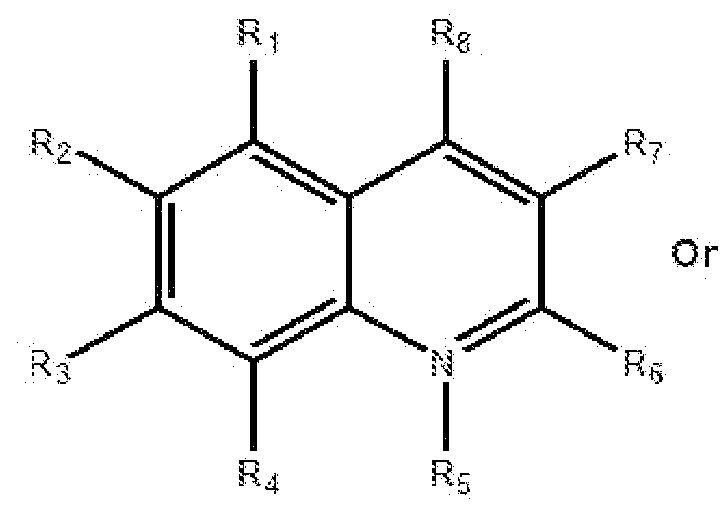
wherein Rj, R2 and R3 are each independently H or Br; R5, R7 and R8 are H; R6 is selected from the group consisting of CH3, CH2CH3, OBn, CH2CH2Ph, CH2OH; and R4 IS a substituted phenyl group, OBn, OH or OAc.
4. The quinoline derivative of claim 3, wherein said structure is of formula A:

5. The quinoline derivative of claim 3, wherein said structure is of formula B:

6. The quinoline derivative of claim 2, having a structure of the following formula: 
7. The quinoline derivative of claim 3, wherein said phenyl group is of the following formula: 
wherein Ra is COH2/ Rb is H, and Rc is Ph, F, CI, OCF3, CF3/ CN, OMe or N02; or Ra is CO ^ Rb is Ph, F, CI, OCF3, CN, OMe or NO2, and Rc is H.
8. The quinoline derivative of claim 7, wherein said structure is of formula B; Rj, R2 and R3 are H; R5, R7 and R8 are H; R6 is CH3, and R4 is a phenyl group wherein Ra is COH2, Rb is H, OMe, or Ph.
9. The quinoline derivative of claim 8, wherein Rb is H and Rc is OCF3or CF3.
10. The quinoline derivative of claim 3, wherein said structure is of formula B; R4 is OBn; and R6 is OBn, CH2CH2Ph or CH2CH3 .
11. The quinoline derivative of claim 3, wherein said structure is of formula A; R4 is OH and R6 is CH2OH or CH3 .
12. The quinoline derivative of claim 3, wherein said structure is of formula A; R4 is OAc; and R6 is CH2CH2Ph or CH3 .
13. The quinoline derivative of claim 7, wherein said structure is of formula A; Ri, R2 and R3 are H; R5, R7 and R8 are H; R6 is CH3, and R4 is a phenyl group wherein Ra is COH2 / Rb is H, OMe, NO2 or Ph.
14. The quinoline derivative of claim 13, wherein Rb is H and Rc is OMe, NO^ F, CI, CF3 or OCF3.
15. The quinoline derivative of claim 11, wherein Rj, R3 are Br, R2 is H, and R6 is CH3.
16. A method of treating cancer in mammals, comprising a step of administering a quinoline derivative of claim 1 in an amount from about 8 to about 12 mg/kg/day body weight with a pharmaceutically acceptable.
The method of Claim 16, wherein said quinoline derivative is administered over a continuous period of between 5 to 10 days.
18. The method of Claim 16, wherein said cancer is breast carcinoma, hepatocellulor carcinoma, or chronic myelogenous leukemia.
19. The method of claim 16, wherein said quinoline derivative is a chiral chiral tetrahydroquinoline derivative.
Applications Claiming Priority (2)
| Application Number | Priority Date | Filing Date | Title |
|---|---|---|---|
| US201061425767P | 2010-12-22 | 2010-12-22 | |
| US61/425,767 | 2010-12-22 |
Publications (1)
| Publication Number | Publication Date |
|---|---|
| WO2012083866A1 true WO2012083866A1 (en) | 2012-06-28 |
Family
ID=46313181
Family Applications (1)
| Application Number | Title | Priority Date | Filing Date |
|---|---|---|---|
| PCT/CN2011/084433 Ceased WO2012083866A1 (en) | 2010-12-22 | 2011-12-22 | Quinoline derivatives as anti-cancer agents |
Country Status (3)
| Country | Link |
|---|---|
| US (1) | US9493419B2 (en) |
| CN (1) | CN102603628B (en) |
| WO (1) | WO2012083866A1 (en) |
Cited By (26)
| Publication number | Priority date | Publication date | Assignee | Title |
|---|---|---|---|---|
| US9266892B2 (en) | 2012-12-19 | 2016-02-23 | Incyte Holdings Corporation | Fused pyrazoles as FGFR inhibitors |
| US9278960B2 (en) | 2011-11-03 | 2016-03-08 | Merck Sharp & Dohme Corp. | Quinoline carboxamide and quinoline carbonitrile derivatives as mGluR2-negative allosteric modulators, compositions, and their use |
| US9388185B2 (en) | 2012-08-10 | 2016-07-12 | Incyte Holdings Corporation | Substituted pyrrolo[2,3-b]pyrazines as FGFR inhibitors |
| US9533984B2 (en) | 2013-04-19 | 2017-01-03 | Incyte Holdings Corporation | Bicyclic heterocycles as FGFR inhibitors |
| US9533954B2 (en) | 2010-12-22 | 2017-01-03 | Incyte Corporation | Substituted imidazopyridazines and benzimidazoles as inhibitors of FGFR3 |
| US9580423B2 (en) | 2015-02-20 | 2017-02-28 | Incyte Corporation | Bicyclic heterocycles as FGFR4 inhibitors |
| US9611267B2 (en) | 2012-06-13 | 2017-04-04 | Incyte Holdings Corporation | Substituted tricyclic compounds as FGFR inhibitors |
| US9708318B2 (en) | 2015-02-20 | 2017-07-18 | Incyte Corporation | Bicyclic heterocycles as FGFR4 inhibitors |
| US9890156B2 (en) | 2015-02-20 | 2018-02-13 | Incyte Corporation | Bicyclic heterocycles as FGFR4 inhibitors |
| US10457679B2 (en) | 2015-09-17 | 2019-10-29 | Astrazeneca Ab | Imidazo[4,5-c]quinolin-2-one compounds and their use in treating cancer |
| US10611762B2 (en) | 2017-05-26 | 2020-04-07 | Incyte Corporation | Crystalline forms of a FGFR inhibitor and processes for preparing the same |
| US10851105B2 (en) | 2014-10-22 | 2020-12-01 | Incyte Corporation | Bicyclic heterocycles as FGFR4 inhibitors |
| US11174257B2 (en) | 2018-05-04 | 2021-11-16 | Incyte Corporation | Salts of an FGFR inhibitor |
| US11407750B2 (en) | 2019-12-04 | 2022-08-09 | Incyte Corporation | Derivatives of an FGFR inhibitor |
| US11466004B2 (en) | 2018-05-04 | 2022-10-11 | Incyte Corporation | Solid forms of an FGFR inhibitor and processes for preparing the same |
| US11566028B2 (en) | 2019-10-16 | 2023-01-31 | Incyte Corporation | Bicyclic heterocycles as FGFR inhibitors |
| US11591329B2 (en) | 2019-07-09 | 2023-02-28 | Incyte Corporation | Bicyclic heterocycles as FGFR inhibitors |
| US11607416B2 (en) | 2019-10-14 | 2023-03-21 | Incyte Corporation | Bicyclic heterocycles as FGFR inhibitors |
| US11628162B2 (en) | 2019-03-08 | 2023-04-18 | Incyte Corporation | Methods of treating cancer with an FGFR inhibitor |
| US11897891B2 (en) | 2019-12-04 | 2024-02-13 | Incyte Corporation | Tricyclic heterocycles as FGFR inhibitors |
| US11939331B2 (en) | 2021-06-09 | 2024-03-26 | Incyte Corporation | Tricyclic heterocycles as FGFR inhibitors |
| US12012409B2 (en) | 2020-01-15 | 2024-06-18 | Incyte Corporation | Bicyclic heterocycles as FGFR inhibitors |
| US12065494B2 (en) | 2021-04-12 | 2024-08-20 | Incyte Corporation | Combination therapy comprising an FGFR inhibitor and a Nectin-4 targeting agent |
| US12098148B2 (en) | 2018-10-22 | 2024-09-24 | C4X Discovery Limited | Therapeutic compounds |
| US12122767B2 (en) | 2019-10-01 | 2024-10-22 | Incyte Corporation | Bicyclic heterocycles as FGFR inhibitors |
| US12428420B2 (en) | 2021-06-09 | 2025-09-30 | Incyte Corporation | Tricyclic heterocycles as FGFR inhibitors |
Families Citing this family (32)
| Publication number | Priority date | Publication date | Assignee | Title |
|---|---|---|---|---|
| US10436790B2 (en) | 2011-09-28 | 2019-10-08 | Waters Technologies Corporation | Rapid fluorescence tagging of glycans and other biomolecules with enhanced MS signals |
| US11352325B2 (en) | 2011-09-28 | 2022-06-07 | Waters Technologies Corporation | Rapid fluorescence tagging of glycans and other biomolecules with enhanced MS signals |
| EP3974412A1 (en) | 2011-09-28 | 2022-03-30 | Waters Technologies Corporation | Rapid fluorescence tagging of glycans and other biomolecules with enhanced ms signals |
| CN102977368B (en) * | 2012-11-30 | 2014-09-17 | 武汉大学 | Polypyrazole formate and preparation method thereof |
| CN110627770A (en) | 2013-11-18 | 2019-12-31 | 福马疗法公司 | Tetrahydroquinoline compositions as BET bromodomain inhibitors |
| RU2720237C2 (en) | 2013-11-18 | 2020-04-28 | Форма Терапеутикс, Инк. | Compositions containing benzopiperazine as bromodomain bet inhibitors |
| CN115753702A (en) | 2014-10-30 | 2023-03-07 | 沃特世科技公司 | Method for rapid preparation of labeled glucosylamine and analysis of glycosylated biomolecules producing said labeled glucosylamine |
| US10502720B2 (en) | 2014-11-13 | 2019-12-10 | Waters Technologies Corporation | Methods for liquid chromatography calibration for rapid labeled N-glycans |
| KR102100470B1 (en) | 2015-08-21 | 2020-04-13 | (주)오토파지사이언스 | Novel catechol derivatives and pharmaceutical composition comprising the same |
| AR105911A1 (en) | 2015-09-03 | 2017-11-22 | Forma Therapeutics Inc | FUSIONED BICYCLIC HDAC8 INHIBITORS [6,6] |
| US11008290B2 (en) * | 2015-09-24 | 2021-05-18 | University Of Florida Research Foundation, Incorporated | Halogenated quinoline derivatives as antimicrobial agents |
| CN105399669B (en) * | 2015-11-27 | 2019-05-03 | 中国药科大学 | A kind of dihydroxyisoquinoline and its preparation method and application from centipede |
| WO2017222955A1 (en) | 2016-06-21 | 2017-12-28 | Waters Technologies Corporation | Methods of electrospray ionization of glycans modified with amphipathic, strongly basic moieties |
| US11061023B2 (en) | 2016-06-21 | 2021-07-13 | Waters Technologies Corporation | Fluorescence tagging of glycans and other biomolecules through reductive amination for enhanced MS signals |
| EP3479103B1 (en) | 2016-07-01 | 2022-04-20 | Waters Technologies Corporation | Methods for the rapid preparation of labeled glycosylamines from complex matrices using molecular weight cut off filtration and on-filter deglycosylation |
| CN106966969B (en) * | 2017-03-29 | 2019-11-19 | 南阳师范学院 | A kind of alkaloid compound and its preparation method and application |
| CN109535075B (en) * | 2017-09-21 | 2020-08-07 | 香港理工大学深圳研究院 | Quinoline dimer and preparation method and application thereof |
| CN111471012B (en) * | 2019-01-23 | 2023-04-25 | 鲁南制药集团股份有限公司 | Centipede quinoline compound, preparation method and application thereof |
| CN109988111A (en) * | 2019-05-06 | 2019-07-09 | 淮北师范大学 | A kind of impurity of indacaterol maleate and synthetic method thereof |
| WO2021257863A1 (en) | 2020-06-19 | 2021-12-23 | Incyte Corporation | Pyrrolotriazine compounds as jak2 v617f inhibitors |
| US11691971B2 (en) | 2020-06-19 | 2023-07-04 | Incyte Corporation | Naphthyridinone compounds as JAK2 V617F inhibitors |
| US11767323B2 (en) | 2020-07-02 | 2023-09-26 | Incyte Corporation | Tricyclic pyridone compounds as JAK2 V617F inhibitors |
| CR20230057A (en) | 2020-07-02 | 2023-08-15 | Incyte Corp | Tricyclic urea compounds as jak2 v617f inhibitors |
| US11661422B2 (en) | 2020-08-27 | 2023-05-30 | Incyte Corporation | Tricyclic urea compounds as JAK2 V617F inhibitors |
| US11919908B2 (en) | 2020-12-21 | 2024-03-05 | Incyte Corporation | Substituted pyrrolo[2,3-d]pyrimidine compounds as JAK2 V617F inhibitors |
| AR125273A1 (en) | 2021-02-25 | 2023-07-05 | Incyte Corp | SPIROCYCLIC LACTAMS AS JAK2 INHIBITORS V617F |
| US12060334B2 (en) | 2021-03-12 | 2024-08-13 | University Of Florida Research Foundation, Incorporated | 3-substituted phenazine derivatives as antimicrobial agents |
| CN113683644B (en) * | 2021-08-26 | 2022-05-20 | 玉林师范学院 | Bis-quinoline iridium complex for treating cisplatin-resistant cancer cells and preparation method and application thereof |
| PT4426434T (en) | 2021-11-02 | 2025-11-24 | Flare Therapeutics Inc | Pparg inverse agonists and uses thereof |
| AU2023235313A1 (en) | 2022-03-17 | 2024-10-03 | Incyte Corporation | Tricyclic urea compounds as jak2 v617f inhibitors |
| CN120209180A (en) * | 2023-12-27 | 2025-06-27 | 国家能源投资集团有限责任公司 | Internal electron donor, solid catalyst component, polymerization catalyst and application thereof |
| CN120058604B (en) * | 2025-02-28 | 2025-11-11 | 安徽工业大学 | A novel compound and its application in the preparation of drugs for treating triple-negative breast cancer |
Citations (1)
| Publication number | Priority date | Publication date | Assignee | Title |
|---|---|---|---|---|
| WO2009024095A1 (en) * | 2007-08-21 | 2009-02-26 | The Hong Kong Polytechnic University | Method of making and administering quinoline derivatives as anti-cancer agents |
Family Cites Families (13)
| Publication number | Priority date | Publication date | Assignee | Title |
|---|---|---|---|---|
| US2411670A (en) * | 1946-11-26 | Halogen-b-htdeoxy-qtjinaldines | ||
| US2596978A (en) * | 1947-09-17 | 1952-05-20 | Searle & Co | 8-hydroxy-1, 2, 3, 4-tetrahydroquinoline as a silver halide developer |
| IL37642A0 (en) * | 1970-09-10 | 1971-11-29 | Ciba Geigy Ag | Di-and tetrahydroquinolyl carbamates,their manufacture and their use as pesticides |
| CA1340821C (en) | 1988-10-06 | 1999-11-16 | Nobuyuki Fukazawa | Heterocyclic compounds and anticancer-drug reinforcing agents containing them as effective components |
| JPH059674A (en) | 1991-06-27 | 1993-01-19 | Furukawa Alum Co Ltd | Manufacture of aluminum alloy sheet excellent in formability |
| JPH0597674A (en) * | 1991-10-01 | 1993-04-20 | Nikko Kyodo Co Ltd | Collagenase inhibitor |
| FR2682107B1 (en) | 1991-10-03 | 1995-04-21 | Orstom Inst Fs Rech Scient | 2-SUBSTITUTED QUINOLEINS FOR THE TREATMENT OF LEISHMANIOSIS. |
| CZ296163B6 (en) | 1996-05-20 | 2006-01-11 | TNF and/or PDE-IV inhibiting quinoline carboxamides | |
| JPH10176053A (en) | 1996-12-19 | 1998-06-30 | Sumitomo Chem Co Ltd | Method for producing phenol condensate |
| GB0414639D0 (en) | 2004-06-30 | 2004-08-04 | Elam T Ltd | Electroluminescent materials and devices |
| US8163760B2 (en) | 2006-06-22 | 2012-04-24 | Prana Biotechnology Limited | Use of pyridopyrimidine compounds in the treatment of gliomas |
| US20100150844A1 (en) | 2006-07-28 | 2010-06-17 | The Johns Hopkins University | Use of 8-quinolinol and its analogs to target cancer stem cells |
| WO2011127192A2 (en) * | 2010-04-06 | 2011-10-13 | Brigham Young University | Antimetastatic compounds |
-
2011
- 2011-12-22 WO PCT/CN2011/084433 patent/WO2012083866A1/en not_active Ceased
- 2011-12-22 CN CN201110445497.4A patent/CN102603628B/en active Active
- 2011-12-22 US US13/334,073 patent/US9493419B2/en active Active
Patent Citations (1)
| Publication number | Priority date | Publication date | Assignee | Title |
|---|---|---|---|---|
| WO2009024095A1 (en) * | 2007-08-21 | 2009-02-26 | The Hong Kong Polytechnic University | Method of making and administering quinoline derivatives as anti-cancer agents |
Non-Patent Citations (1)
| Title |
|---|
| KATSUYA UCHIYAMA ET AL.: "Regioselective Synthesis of Quinolin-8-ols and 1,2,3,4-Tetrahydroquinolin-8-ols by the Cyclization of 2-(3-Hydroxyphenyl)ethyl Ketone 0-2,4-Dinitrophenyloximes", BULLETIN OF THE CHEMICAL SOCIETY OF JAPAN, vol. 71, no. 12, 1998, pages 2945 - 2955 * |
Cited By (57)
| Publication number | Priority date | Publication date | Assignee | Title |
|---|---|---|---|---|
| US10213427B2 (en) | 2010-12-22 | 2019-02-26 | Incyte Corporation | Substituted imidazopyridazines and benzimidazoles as inhibitors of FGFR3 |
| US10813930B2 (en) | 2010-12-22 | 2020-10-27 | Incyte Corporation | Substituted imidazopyridazines and benzimidazoles as inhibitors of FGFR3 |
| US9533954B2 (en) | 2010-12-22 | 2017-01-03 | Incyte Corporation | Substituted imidazopyridazines and benzimidazoles as inhibitors of FGFR3 |
| US9636337B2 (en) | 2011-11-03 | 2017-05-02 | Merck Sharp & Dohme Corp. | Quinoline carboxamide and quinoline carbonitrile derivatives as mGluR2-negative allosteric modulators, compositions, and their use |
| US9278960B2 (en) | 2011-11-03 | 2016-03-08 | Merck Sharp & Dohme Corp. | Quinoline carboxamide and quinoline carbonitrile derivatives as mGluR2-negative allosteric modulators, compositions, and their use |
| US9663506B2 (en) | 2011-11-03 | 2017-05-30 | Merck Sharp & Dohme Corp. | Quinoline carboxamide and quinoline carbonitrile derivatives as mGluR2-negative allosteric modulators, compositions, and their use |
| US9611267B2 (en) | 2012-06-13 | 2017-04-04 | Incyte Holdings Corporation | Substituted tricyclic compounds as FGFR inhibitors |
| US10131667B2 (en) | 2012-06-13 | 2018-11-20 | Incyte Corporation | Substituted tricyclic compounds as FGFR inhibitors |
| US11840534B2 (en) | 2012-06-13 | 2023-12-12 | Incyte Corporation | Substituted tricyclic compounds as FGFR inhibitors |
| US11053246B2 (en) | 2012-06-13 | 2021-07-06 | Incyte Corporation | Substituted tricyclic compounds as FGFR inhibitors |
| US12534463B2 (en) | 2012-06-13 | 2026-01-27 | Incyte Corporation | Substituted tricyclic compounds as FGFR inhibitors |
| US9745311B2 (en) | 2012-08-10 | 2017-08-29 | Incyte Corporation | Substituted pyrrolo[2,3-b]pyrazines as FGFR inhibitors |
| US9388185B2 (en) | 2012-08-10 | 2016-07-12 | Incyte Holdings Corporation | Substituted pyrrolo[2,3-b]pyrazines as FGFR inhibitors |
| US9266892B2 (en) | 2012-12-19 | 2016-02-23 | Incyte Holdings Corporation | Fused pyrazoles as FGFR inhibitors |
| US10947230B2 (en) | 2013-04-19 | 2021-03-16 | Incyte Corporation | Bicyclic heterocycles as FGFR inhibitors |
| US10450313B2 (en) | 2013-04-19 | 2019-10-22 | Incyte Holdings Corporation | Bicyclic heterocycles as FGFR inhibitors |
| US9533984B2 (en) | 2013-04-19 | 2017-01-03 | Incyte Holdings Corporation | Bicyclic heterocycles as FGFR inhibitors |
| US11530214B2 (en) | 2013-04-19 | 2022-12-20 | Incyte Holdings Corporation | Bicyclic heterocycles as FGFR inhibitors |
| US10040790B2 (en) | 2013-04-19 | 2018-08-07 | Incyte Holdings Corporation | Bicyclic heterocycles as FGFR inhibitors |
| US10851105B2 (en) | 2014-10-22 | 2020-12-01 | Incyte Corporation | Bicyclic heterocycles as FGFR4 inhibitors |
| US11667635B2 (en) | 2015-02-20 | 2023-06-06 | Incyte Corporation | Bicyclic heterocycles as FGFR4 inhibitors |
| US9708318B2 (en) | 2015-02-20 | 2017-07-18 | Incyte Corporation | Bicyclic heterocycles as FGFR4 inhibitors |
| US10632126B2 (en) | 2015-02-20 | 2020-04-28 | Incyte Corporation | Bicyclic heterocycles as FGFR4 inhibitors |
| US10738048B2 (en) | 2015-02-20 | 2020-08-11 | Incyte Corporation | Bicyclic heterocycles as FGFR4 inhibitors |
| US9890156B2 (en) | 2015-02-20 | 2018-02-13 | Incyte Corporation | Bicyclic heterocycles as FGFR4 inhibitors |
| US10251892B2 (en) | 2015-02-20 | 2019-04-09 | Incyte Corporation | Bicyclic heterocycles as FGFR4 inhibitors |
| US10016438B2 (en) | 2015-02-20 | 2018-07-10 | Incyte Corporation | Bicyclic heterocycles as FGFR4 inhibitors |
| US9801889B2 (en) | 2015-02-20 | 2017-10-31 | Incyte Corporation | Bicyclic heterocycles as FGFR4 inhibitors |
| US10214528B2 (en) | 2015-02-20 | 2019-02-26 | Incyte Corporation | Bicyclic heterocycles as FGFR4 inhibitors |
| US11173162B2 (en) | 2015-02-20 | 2021-11-16 | Incyte Corporation | Bicyclic heterocycles as FGFR4 inhibitors |
| US11014923B2 (en) | 2015-02-20 | 2021-05-25 | Incyte Corporation | Bicyclic heterocycles as FGFR4 inhibitors |
| US9580423B2 (en) | 2015-02-20 | 2017-02-28 | Incyte Corporation | Bicyclic heterocycles as FGFR4 inhibitors |
| US10457679B2 (en) | 2015-09-17 | 2019-10-29 | Astrazeneca Ab | Imidazo[4,5-c]quinolin-2-one compounds and their use in treating cancer |
| US11613539B2 (en) | 2015-09-17 | 2023-03-28 | Astrazeneca Ab | Imidazo[4,5-c]quinolin-2-one compounds and their use in treating cancer |
| US10882858B2 (en) | 2015-09-17 | 2021-01-05 | Astrazeneca Ab | Imidazo[4,5-c]quinolin-2-one compounds and their use in treating cancer |
| US11472801B2 (en) | 2017-05-26 | 2022-10-18 | Incyte Corporation | Crystalline forms of a FGFR inhibitor and processes for preparing the same |
| US10611762B2 (en) | 2017-05-26 | 2020-04-07 | Incyte Corporation | Crystalline forms of a FGFR inhibitor and processes for preparing the same |
| US12552792B2 (en) | 2018-05-04 | 2026-02-17 | Incyte Corporation | Solid forms of an FGFR inhibitor and processes for preparing the same |
| US11466004B2 (en) | 2018-05-04 | 2022-10-11 | Incyte Corporation | Solid forms of an FGFR inhibitor and processes for preparing the same |
| US12024517B2 (en) | 2018-05-04 | 2024-07-02 | Incyte Corporation | Salts of an FGFR inhibitor |
| US11174257B2 (en) | 2018-05-04 | 2021-11-16 | Incyte Corporation | Salts of an FGFR inhibitor |
| US12473286B2 (en) | 2018-05-04 | 2025-11-18 | Incyte Corporation | Salts of an FGFR inhibitor |
| US12098148B2 (en) | 2018-10-22 | 2024-09-24 | C4X Discovery Limited | Therapeutic compounds |
| US11628162B2 (en) | 2019-03-08 | 2023-04-18 | Incyte Corporation | Methods of treating cancer with an FGFR inhibitor |
| US11591329B2 (en) | 2019-07-09 | 2023-02-28 | Incyte Corporation | Bicyclic heterocycles as FGFR inhibitors |
| US12122767B2 (en) | 2019-10-01 | 2024-10-22 | Incyte Corporation | Bicyclic heterocycles as FGFR inhibitors |
| US11607416B2 (en) | 2019-10-14 | 2023-03-21 | Incyte Corporation | Bicyclic heterocycles as FGFR inhibitors |
| US12083124B2 (en) | 2019-10-14 | 2024-09-10 | Incyte Corporation | Bicyclic heterocycles as FGFR inhibitors |
| US11566028B2 (en) | 2019-10-16 | 2023-01-31 | Incyte Corporation | Bicyclic heterocycles as FGFR inhibitors |
| US12168660B2 (en) | 2019-12-04 | 2024-12-17 | Incyte Corporation | Derivatives of an FGFR inhibitor |
| US11897891B2 (en) | 2019-12-04 | 2024-02-13 | Incyte Corporation | Tricyclic heterocycles as FGFR inhibitors |
| US12552804B2 (en) | 2019-12-04 | 2026-02-17 | Incyte Corporation | Tricyclic heterocycles as FGFR inhibitors |
| US11407750B2 (en) | 2019-12-04 | 2022-08-09 | Incyte Corporation | Derivatives of an FGFR inhibitor |
| US12012409B2 (en) | 2020-01-15 | 2024-06-18 | Incyte Corporation | Bicyclic heterocycles as FGFR inhibitors |
| US12065494B2 (en) | 2021-04-12 | 2024-08-20 | Incyte Corporation | Combination therapy comprising an FGFR inhibitor and a Nectin-4 targeting agent |
| US11939331B2 (en) | 2021-06-09 | 2024-03-26 | Incyte Corporation | Tricyclic heterocycles as FGFR inhibitors |
| US12428420B2 (en) | 2021-06-09 | 2025-09-30 | Incyte Corporation | Tricyclic heterocycles as FGFR inhibitors |
Also Published As
| Publication number | Publication date |
|---|---|
| CN102603628A (en) | 2012-07-25 |
| US20120165370A1 (en) | 2012-06-28 |
| CN102603628B (en) | 2016-08-17 |
| US9493419B2 (en) | 2016-11-15 |
Similar Documents
| Publication | Publication Date | Title |
|---|---|---|
| US9493419B2 (en) | Quinoline derivatives as anti-cancer agents | |
| US9321730B2 (en) | Method of making and administering quinoline derivatives as anti-cancer agents | |
| DE69322033T2 (en) | Condensed pyridine derivatives as inhibitors of free radical effects | |
| TWI630194B (en) | Bicyclic analgesic compound | |
| ES2244967T3 (en) | NEW HYDROXIPIRIDINONES. | |
| TW201706262A (en) | DNA alkylating agent | |
| IE920395A1 (en) | New n-substituted quinoline derivatives, their preparation¹process, the new intermediates obtained, their use as¹medicaments and the pharmaceutical compositions containing¹them | |
| WO2012085003A1 (en) | 2-hydroxyisoquinoline-1,3(2h,4h)-diones and related compounds useful as hiv replication inhibitors | |
| RS52681B (en) | HYDROBENZOATE SALTS OF METHANICOTINE COMPOUND | |
| US7176313B2 (en) | Anti acid-fast bacterial agent containing pyridonecarboxylic acids as active ingredient | |
| KR20140016864A (en) | Neuroprotective and neuro-restorative iron chelators and monoamine oxidase inhibitors and uses thereof | |
| US11999747B2 (en) | Furoquinolinediones as inhibitors of TDP2 | |
| IE911024A1 (en) | Amine derivatives | |
| US6916831B2 (en) | Flavone acetic acid analogs and methods of use thereof | |
| JPS62187459A (en) | 5-amino and 5-hydroxy-6,8-difluoroquinolone compound | |
| CN109476649B (en) | Five-membered heterocyclic compound and preparation method, pharmaceutical composition and use thereof | |
| Rabbani et al. | Synthesis and Characterization of Some NH-Analogues of Ciprofloxacin on Antibacterial, Antifungal, and Cytotoxic Activities | |
| CN104586842B (en) | Anti-cancer activity indole derivative, synthesis method and uses thereof | |
| US10000452B1 (en) | Quinolone-based compounds, formulations, and uses thereof | |
| CN113185505B (en) | Quinolone oxazolidinone compound and preparation method and application thereof | |
| Rabbani et al. | Synthesis and Characterization of Some Mannich Base Analogues of Ciprofloxacin: Antibacterial, Antifungal, and Cytotoxic Activities | |
| JPS6270370A (en) | Quinolonecarboxylic acid derivative and production thereof | |
| US20260098012A1 (en) | Tetrahydroacridinone analogues for treatment and prevention of malaria | |
| CN102603731B (en) | One class Novel Quinolone derivative | |
| Kumari et al. | Synthesis of ternary metal complexes of bivalent metal ions with benzimidazole derivative and their antimicrobial studies |
Legal Events
| Date | Code | Title | Description |
|---|---|---|---|
| 121 | Ep: the epo has been informed by wipo that ep was designated in this application |
Ref document number: 11852062 Country of ref document: EP Kind code of ref document: A1 |
|
| NENP | Non-entry into the national phase |
Ref country code: DE |
|
| 122 | Ep: pct application non-entry in european phase |
Ref document number: 11852062 Country of ref document: EP Kind code of ref document: A1 |