WO2012076687A2 - Method for preparing urethane methacrylate resin - Google Patents
Method for preparing urethane methacrylate resin Download PDFInfo
- Publication number
- WO2012076687A2 WO2012076687A2 PCT/EP2011/072308 EP2011072308W WO2012076687A2 WO 2012076687 A2 WO2012076687 A2 WO 2012076687A2 EP 2011072308 W EP2011072308 W EP 2011072308W WO 2012076687 A2 WO2012076687 A2 WO 2012076687A2
- Authority
- WO
- WIPO (PCT)
- Prior art keywords
- resin composition
- methacrylate
- isocyanate
- resin
- zirconium
- Prior art date
- Legal status (The legal status is an assumption and is not a legal conclusion. Google has not performed a legal analysis and makes no representation as to the accuracy of the status listed.)
- Ceased
Links
Classifications
-
- C—CHEMISTRY; METALLURGY
- C08—ORGANIC MACROMOLECULAR COMPOUNDS; THEIR PREPARATION OR CHEMICAL WORKING-UP; COMPOSITIONS BASED THEREON
- C08G—MACROMOLECULAR COMPOUNDS OBTAINED OTHERWISE THAN BY REACTIONS ONLY INVOLVING UNSATURATED CARBON-TO-CARBON BONDS
- C08G18/00—Polymeric products of isocyanates or isothiocyanates
- C08G18/06—Polymeric products of isocyanates or isothiocyanates with compounds having active hydrogen
- C08G18/08—Processes
- C08G18/16—Catalysts
- C08G18/22—Catalysts containing metal compounds
-
- C—CHEMISTRY; METALLURGY
- C08—ORGANIC MACROMOLECULAR COMPOUNDS; THEIR PREPARATION OR CHEMICAL WORKING-UP; COMPOSITIONS BASED THEREON
- C08G—MACROMOLECULAR COMPOUNDS OBTAINED OTHERWISE THAN BY REACTIONS ONLY INVOLVING UNSATURATED CARBON-TO-CARBON BONDS
- C08G18/00—Polymeric products of isocyanates or isothiocyanates
- C08G18/06—Polymeric products of isocyanates or isothiocyanates with compounds having active hydrogen
- C08G18/28—Polymeric products of isocyanates or isothiocyanates with compounds having active hydrogen characterised by the compounds used containing active hydrogen
- C08G18/67—Unsaturated compounds having active hydrogen
- C08G18/671—Unsaturated compounds having only one group containing active hydrogen
- C08G18/672—Esters of acrylic or alkyl acrylic acid having only one group containing active hydrogen
Definitions
- the present invention relates to a method for the preparation of an urethane methacrylate resin composition comprising urethane methacrylate resin and reactive diluent, wherein the method comprises (1) preparing an urethane methacrylate resin by reacting at least a hydroxyl functional methacrylate and an isocyanate and optionally other alcohols in the presence of a reaction catalyst, whereby a secondary hydroxyalkyl methacrylate is used as methacrylate, and the isocyanate is an aromatic and/or aliphatic di- and/or tri- isocyanate, and (2) adding reactive diluent to the urethane methacrylate resin during and/or after its preparation.
- a standard catalyst for the preparation of such urethane methacrylate resins are organo stannous compounds, in particular dibutyl tin dilaurate, since this catalyst is very effective in view of its rate, conversion and selectivity.
- this catalyst has a negative toxicological profile, in other words it is poisonous and measures need to be taken to reduce or prevent environmental exposure. Consequently there is a need to replace such catalyst.
- the reaction of an isocyanate with a secondary hydroxyl functional methacrylate is much more difficult than with a primary hydroxyl functional methacrylate.
- the object of the present invention is to perform the urethane methacrylate resin preparation using a secondary hydroxyl functional methacrylate with a catalyst that is more environmentally benign, which catalyst has also a good selectivity, and at the same time has no or almost no negative influence on the curing efficiency of a resin composition comprising such urethane methacrylate resin and reactive diluent.
- the present invention relates to a method for the preparation of an urethane methacrylate resin composition comprising urethane methacrylate resin and reactive diluent, wherein the method comprises
- reaction catalyst whereby at least a secondary hydroxyalkyl methacrylate is used as methacrylate, and the isocyanate is an aromatic and/or aliphatic di- and/or tri- isocyanate, and a zirconium alkoxide and/or a zirconium carboxylate is used as reaction catalyst;
- a zirconium alkoxide or a zirconium carboxylate has no or almost no influence on the curing characteristics of the urethane methacrylate resin in the resin composition, both immediately after preparation (as demonstrated by gel time, peak time and/or peak temperature) as well after prolonged storage (as demonstrated by gel time drift tendency). It has surprisingly been found that the resin compositions according to the invention have low or even reduced gel time drift tendency.
- WO-A-03074579 describes liquid resin compositions comprising (a) an urethane (meth)acrylate, a Group IV metal compound, preferably a titanium or zirconium compound, and a phosphorus containing photoinitiator for UV- initiating the curing of the liquid resin composition.
- Non-limiting examples of secondary hydroxyalkyi methacrylates are 2-hydroxypropyl methacrylate, 2-hydroxybutyl methacrylate, 3-hydroxybutyl methacrylate, 2-hydroxycyclohexyl methacrylate and glycerol-1 ,3-dimethacrylate.
- a preferred secondary hydroxyalkyi methacrylate is 2-hydroxypropyl methacrylate.
- the methacrylate used for preparing the urethane methacrylate resin is a secondary hydroxyalkyi methacrylate.
- 2-hydroxypropyl methacrylate is used as secondary hydroxyalkyi methacrylate.
- the methacrylate used is 2-hydroxypropyl methacrylate.
- Non-limiting examples of aromatic and/or aliphatic di- and/or tri- isocyanates used for preparing the urethane methacrylate resin are toluene diisocyanate (TDI), 4,4'-methylene diphenyl diisocyanate (MDI), hexanediisocyanate (HDI), isopherone diisocyanate (IPDI) TDI trimers, HDI trimers, and polymeric MDI (pMDI).
- Preferred aromatic and/or aliphatic di- and/or tri- isocyanates are toluene diisocyanate (TDI), 4,4'-methylene diphenyl diisocyanate (MDI), hexanediisocyanate (HDI), isopherone diisocyanate (IPDI), TDI trimers, HDI trimers, and polymeric MDI (pMDI).
- TDI toluene diisocyanate
- MDI 4,4'-methylene diphenyl diisocyanate
- HDI hexanediisocyanate
- IPDI isopherone diisocyanate
- TDI trimers TDI trimers
- HDI trimers HDI trimers
- polymeric MDI polymeric MDI
- aromatic and/or aliphatic diisocyanate is used as isocyanate compound.
- the catalyst used for preparing the urethane methacrylate resin is a zirconium alkoxide and/or a zirconium carboxylate. More preferably, the catalyst used is a zirconium (IV) alkoxide and/or a zirconium (IV) carboxylate. Even more preferably, the catalyst used is a zirconium alkoxide and even more preferably a zirconium (IV) alkoxide.
- the amount of zirconium catalyst used for preparing the urethane methacrylate resin is preferably from 1 to 5000 ppm (relative to the total amount of reaction components used for preparing the urethane methacrylate resin).
- the method for preparing the urethane methacrylate resin may be performed in the presence of the reaction product of the isocyanate with a polyol, preferably a diol.
- polyols are glycerol, diethylene glycol, dipropylene glycol, triethylene glycol, tripropylene glycol, polyethylene oxide, polypropylene oxide, ethoxylated bisphenol A , ethoxylated bisphenol F, propoxylated bisphenol A, propoxylated bisphenol F.
- Preferred diols are dipropylene glycol, tripropylene glycol, ethoxylated bisphenol A , ethoxylated bisphenol F, propoxylated bisphenol A, propoxylated bisphenol F.
- the amount of secondary hydroxyl functional methacrylate used for preparing the urethane methacrylate resin is preferably chosen such that for each mole of isocyanate group at least one mole of secondary hydroxyl functional methacrylate is present. In one embodiment, a slight stoichiometric excess of the secondary hydroxyl functional methacrylate is added to ensure that only a minimum level of isocyanate groups remain after an acceptable reaction period in order to prevent that unreacted isocyanate will copolymerize with the reactive diluent (being an ethylenically unsaturated monomer that is added to the resin during and/or after its preparation) on subsequent curing.
- the reactive diluent being an ethylenically unsaturated monomer that is added to the resin during and/or after its preparation
- the process of the invention preferably further comprises adding another reactive diluent than a secondary hydroxyl functional methacrylate during the preparation of the urethane methacrylate resin and optionally adding additional reactive diluent (not necessarily the same as that used during the preparation) after the preparation of the urethane methacrylate resin.
- additional reactive diluent not necessarily the same as that used during the preparation
- an excess of the secondary hydroxyl functional methacrylate is added, resulting in that unreacted secondary hydroxyl functional methacrylate remains after the reaction period which secondary hydroxyl functional methacrylate is a reactive diluent for the prepared resin.
- the method according to the invention optionally further comprises adding, to the urethane methacrylate resin during and/or after its preparation, another reactive diluent than the secondary hydroxyalkyl methacrylate used for the preparation of the urethane methacrylate resin.
- the amount of optional polyol described above used for preparing the urethane methacrylate resin can vary with in wide ranges as long as an excess of isocyanate is present.
- the molar ratio between OH groups of the polyol and NCO groups of the isocyanate is general higher than 0.01 , more preferably higher than 0.05 and even more preferably higher than 0.1.
- the molar ratio between OH groups of the polyol and NCO groups of the isocyanate is preferably lower than 0.95, more preferably lower than 0.9 and even more preferably lower than 0.7.
- the method for preparing the urethane methacrylate resin comprises mixing the isocyanate component(s) with the zirconium catalyst, optionally adding the polyol to such mixture to allow reaction of the isocyanate with the polyol, preferably at a temperature of between 20 and 90°C, to obtain a first reaction product, and adding the secondary hydroxyl functional methacrylate, preferably at a temperature of between 20 and 90°C, to allow reaction with the first reaction product.
- conventional vinyl inhibitors may be used during the preparation of the resin, for example inhibitors like for instance benzoquinone, hydroquinone, tert. butyl catechol.
- the method according to the invention further comprises adding a tertiary aromatic amine to the urethane methacrylate resin after its preparation, to obtain a resin composition comprising an urethane methacrylate resin diluted in reactive diluent, zirconium alkoxide and/or zirconium carboxylate, which resin composition is pre-accelerated with a tertiary aromatic amine.
- a resin composition comprising an urethane methacrylate resin diluted in reactive diluent, zirconium alkoxide and/or zirconium carboxylate, which resin composition is pre-accelerated with a tertiary aromatic amine.
- the tertiary aromatic amine is added to the urethane methacrylate resin diluted in reactive diluent.
- the tertiary aromatic amine is preferably pre-mixed with reactive diluent and the so-obtained mixture is added to the urethane methacrylate resin.
- thermosetting resin composition comprising (a) an urethane methacrylate resin prepared by reacting at least a hydroxyl functional methacrylate and an isocyanate and optionally other alcohols in the presence of a reaction catalyst, wherein at least a secondary hydroxyalkyl methacrylate is used as methacrylate and the isocyanate is an aromatic and/or aliphatic di- and/or tri- isocyanate, and (b) a reactive diluent, wherein the resin composition further comprises (c) a tertiary aromatic amine and (d) a zirconium alkoxide and/or a zirconium carboxylate.
- the amounts and types of the reaction components for obtaining the urethane methacrylate resin are preferably as described above.
- the amount of zirconium alkoxide and zirconium carboxylate in the resin composition is preferably from 1 to 5000 ppm (relative to the urethane methacrylate resin).
- the zirconium alkoxide is preferably a zirconium (IV) alkoxide.
- the zirconium carboxylate is preferably a zirconium (IV) carboxylate.
- the resin composition comprises a zirconium alkoxide and even more preferably a zirconium (IV) alkoxide.
- tertiary aromatic amine has the following structure:
- R1 H, C1-C5 alkyl, 0(C1-C5)alkyl; R2 and R3 are independently selected from C1-C4 alkyl optionally substituted with hydroxyl or (poly) ether groups.
- R1 CH3.
- R2 and/or R3 are CH3, C2H5, C2H40H, C3H7 and
- N,N-ethoxylated or N,N- propoxylated anilines respectively ethoxylated or propoxylated toluidines may suitably be used and are considered to be encompassed in the group of suitable tertiary aromatic amines.
- the resin composition preferably comprises from 30 up to and including 85 wt.% of urethane methacrylate resin.
- the amount of reactive diluent in the resin composition is in the range from 15 up to and including 70 wt.%. As used herein, all amounts in wt.% are given relative to the total weight of the urethane methacrylate resin (a) and reactive diluent (b), unless otherwise specified.
- the amount of tertiary aromatic amine relative to the total amount of compounds (a) and (b) is preferably from 0.01 up to and including 10 wt.%, more preferably from 0.05 up to and including 8 wt.% and even more preferably from 0.1 to and including 5 wt.%.
- the urethane methacrylate resin preferably has the following structural formula (1):
- X C1-C6 (cyclo)alkyl.
- the urethane methacrylate resin more preferably has the following structural formula (2):
- a reactive diluent is a diluent for the urethane methacrylate resin which diluent is able to copolymerize with the urethane methacrylate resin.
- Ethylenically unsaturated compounds can be advantageously used as reactive diluent such as styrene, a-methylstyrene, 4-methylstyrene, (meth)acrylates, vinyl ethers, a vinyl esters, vinyl amines or vinyl amides or a mixture of at least two of these compounds.
- styrene and/or methacrylates are used as reactive diluent. More preferably, methacrylates are used as reactive diluent.
- Suitable examples of (meth)acrylate reactive diluents are hydroxyl ethyl (meth)acrylate, hydroxyl propyl (meth)acrylate, butyl (meth)acrylate, hexyl (meth)acrylate and cyclohexyl
- (meth)acrylate phenoxyethyl (meth)acrylate, tetrahydro furfuryl (meth)acrylate, allyl (meth)acrylate, PEG200 di(meth)acrylate, 1 ,4-butanediol di(meth)acrylate, 1 ,3- butanediol di(meth)acrylate, 2,3-butanedioldi(meth)acrylate, 1 ,6-hexanediol di(meth)acrylate and its isomers, diethyleneglycol di(meth)acrylate, triethyleneglycol di(meth)acrylate, glycerol di(meth)acrylate, trimethylolpropane di(meth)acrylate, trimethylolpropane tri(meth)acrylate neopentyl glycol di(meth)acrylate,
- PEG200 dipropyleneglycol di(meth)acrylate, tripropyleneglycol di(meth)acrylate, PPG250 di(meth)acrylate, tricyclodecane dimethylol di(meth)acrylate, 1 ,10-decanediol di(meth)acrylate and/or tetraethylene glycol dimethacrylate.
- Preferred methacrylate reactive diluents are hydroxyl ethyl (meth)acrylate, hydroxyl propyl (meth)acrylate, 1 ,4- butanediol di(meth)acrylate, neopentylglycol di(meth)acrylate, PEG200
- 2-hydroxypropyl methacylate is present as reactive diluent as in such a case an excess of 2-hydroxypropyl methacylate can be employed in the urethane synthesis.
- Other preferred reactive diluents in view of their labeling, are butane diol di methacrylate, PEG200 dimethacrylate and
- fillers can be present.
- a wide variety of fillers can be applied like for instance, without being limited thereto, silica, sand, cement, mica and talc.
- the resin composition may also be coloured by means of pigments.
- reinforcing fibers can be present, such as for example glass fibres, natural fibres and carbon fibres.
- other additives may be present in the resin compositions according to the invention such as for instance low profile additives.
- the resin composition according to the invention in addition optionally contains a filler in a weight ratio of 0.05:1 to 20:1 , preferably in a weight ratio of 0.2:1 to 3:1 , relative to the total weight of urethane methacrylate resin and the reactive diluent.
- Thermosetting resin compositions harden by chemical reaction, often generating heat when they are formed, and cannot be melted or readily re-formed once hardened.
- the resin compositions are liquids at normal temperatures and pressures, so can be used to impregnate reinforcements, for instance fibrous reinforcements, especially glass fibres, and/or fillers may be present in the resin composition, but, when treated with suitable radical forming initiators, the various unsaturated components of the resin composition crosslink with each other via a free radical copolymerization mechanism to produce a hard, thermoset plastic mass (also referred to as cured, structural part).
- the resin composition according to the invention preferably further comprises one or more inhibitors.
- the inhibitor of the resin composition of the invention can be any radical inhibitor known to the skilled man, preferably chosen from the group of phenolic compounds, stable radicals like galvinoxyl and N-oxyl based compounds and/or phenothiazines. Suitable examples of inhibitors that can be used in the resin compositions according to the invention are, for instance, 2-methoxyphenol,
- the amount of inhibitor in the resin composition according to the invention is in the range of from 0.00001 to 5 % by weight, preferably from 0.0001 to 2 % by weight, more preferably, from 0.001 to 1 % by weight
- preferred inhibitors are stable radicals like TEMPOL, TEMPON, 4-carboxy TEMPO, 3-carboxy proxyl and hydroquinones and catechols.
- TEMPOL stable radical inhibitor
- TEMPON 4-carboxy TEMPO
- 3-carboxy proxyl 3-carboxy proxyl
- hydroquinones and catechols hydroquinones and catechols.
- a very suitable combination is TEMPOL with catechol or t- butyl catechol.
- Curing of the resin composition according to the invention is preferably performed by mixing the resin composition with a peranhydride.
- the present invention also relates to a process for preparing a radically cured structural part by curing the resin composition according to the invention or obtained with the process according to the invention with a
- the curing is performed by mixing the resin composition with a peranhydride.
- the amount of peranhydride relative to the total amount of compounds (a) and (b) is from 0.01 up to and including 30 wt.%, more preferably from 0.05 up to and including 20 wt.% and even more preferably from 0.1 up to and including 15 wt.%.
- the molar amount of peranhydride relative to the molar amount of tertiary aromatic amine is preferably from 0.1 up to and including 10.
- the curing is preferably effected at a temperature in the range of from -20 to +150 °C, more preferably in the range of from -20 to +100 °C and even more preferably in the range of from -20 to + 40 °C.
- the present invention further also relates to structural objects as are being obtained by mixing the resin composition according to the invention with a peranhydride as described above and curing at appropriate conditions. These structural objects have excellent mechanical properties.
- the present invention therefore also relates to the use of the resin composition according to the invention together with peranhydride in adhesive applications, automotive parts, boats, roofing, construction, containers, relining, pipes, tanks, flooring, windmill blades or chemical anchoring.
- Viscosity was determined analogous to ISO 3219 using a physica MC1 viscometer equipped with a Z2 spindle.
- Curing was performed using 50 g resin to which 15 g Perkadox 20S, a peranhydride obtained from AkzoNobel, was added.
- the curing was monitored by means of standard gel time equipment. This is intended to mean that both the gel time (Tgei or T25->35°c) snd peak time (T pe ak or T25->peak) were determined by exotherm measurements according to the method of DIN 16945 when curing the resin with the peroxides as indicated in the Examples and Comparative Examples.
- the equipment used therefore was a Soform gel timer, with a Peakpro software package and National Instruments hardware; the waterbath and thermostat used were respectively Haake W26, and Haake DL30.
- zirconium catalysts according to the invention it is possible to have a good alternative for the environmentally suspected tin compounds. It should be noted that, with respect to gel time drift, the catalysts according to the invention show even a small improvement (Example 1 vs Comp C). Using the acetylacetonate salt of zirconium the Mw is slightly lower, the reactivity differs and a negative drift, indicative of a tendency to gel, is present (Comp A). With the titanium complex however (Comp B) the viscosity became too high which is an indication of side reactions during the urethane synthesis, and in addition, the pre-accelerated resin composition suffers from gel time drift. When no catalyst is applied (Comp D), IR analysis showed that almost no polymer is formed since almost all isocyanate was still present.
Landscapes
- Chemical & Material Sciences (AREA)
- Health & Medical Sciences (AREA)
- Chemical Kinetics & Catalysis (AREA)
- Medicinal Chemistry (AREA)
- Polymers & Plastics (AREA)
- Organic Chemistry (AREA)
- Polyurethanes Or Polyureas (AREA)
- Organic Low-Molecular-Weight Compounds And Preparation Thereof (AREA)
- Macromonomer-Based Addition Polymer (AREA)
Abstract
The present invention relates to a method for the preparation of an urethane methacrylate resin composition comprising urethane methacrylate resin and reactive diluent, wherein the method comprises (1) preparing an urethane methacrylate resin by reacting at least a hydroxyl functional methacrylate and an isocyanate and optionally other alcohols in the presence of a reaction catalyst, whereby a secondary hydroxyalkyl methacrylate is used as methacrylate, and the isocyanate is an aromatic and/or aliphatic di- and/or tri- isocyanate.and (2) adding reactive diluent to the urethane methacrylate resin during and/or after its preparation, wherein a zirconium alkoxide and/ or zirconium carboxylate is used as reaction catalyst and the process further comprises (3) adding a tertiary aromatic amine to the urethane methacrylate resin.
Description
METHOD FOR PREPARING URETHANE METHACRYLATE RESIN
The present invention relates to a method for the preparation of an urethane methacrylate resin composition comprising urethane methacrylate resin and reactive diluent, wherein the method comprises (1) preparing an urethane methacrylate resin by reacting at least a hydroxyl functional methacrylate and an isocyanate and optionally other alcohols in the presence of a reaction catalyst, whereby a secondary hydroxyalkyl methacrylate is used as methacrylate, and the isocyanate is an aromatic and/or aliphatic di- and/or tri- isocyanate, and (2) adding reactive diluent to the urethane methacrylate resin during and/or after its preparation.
Such methods are known in the art, see for example GB-A-2217722. A standard catalyst for the preparation of such urethane methacrylate resins are organo stannous compounds, in particular dibutyl tin dilaurate, since this catalyst is very effective in view of its rate, conversion and selectivity. However, this catalyst has a negative toxicological profile, in other words it is poisonous and measures need to be taken to reduce or prevent environmental exposure. Consequently there is a need to replace such catalyst. Furthermore, the reaction of an isocyanate with a secondary hydroxyl functional methacrylate is much more difficult than with a primary hydroxyl functional methacrylate. Consequently a good catalyst for the reaction of primary hydroxyl groups with an isocyanate is not per se a good catalyst for the reaction of secondary hydroxyl groups with an isocyanate. Moreover, as the catalysts are transition metal compounds, they can have a substantial negative influence on the cure reaction.
The object of the present invention is to perform the urethane methacrylate resin preparation using a secondary hydroxyl functional methacrylate with a catalyst that is more environmentally benign, which catalyst has also a good selectivity, and at the same time has no or almost no negative influence on the curing efficiency of a resin composition comprising such urethane methacrylate resin and reactive diluent.
The inventors have surprisingly found that by using a zirconium alkoxide and/or a zirconium carboxylate as reaction catalyst, the reaction of a secondary hydroxyalkyl methacrylate with an aromatic and/or aliphatic di- and/or tri- isocyanate can be executed efficiently; and that the peranhydride initiated curing of a resin composition comprising such urethane methacrylate resin, reactive diluent and a tertiary aromatic amine can in addition be effected efficiently.
Accordingly, the present invention relates to a method for the preparation of an urethane methacrylate resin composition comprising urethane methacrylate resin and reactive diluent, wherein the method comprises
(1) preparing an urethane methacrylate resin by reacting at least a hydroxyl
functional methacrylate and an isocyanate and optionally other alcohols in the presence of a reaction catalyst, whereby at least a secondary hydroxyalkyl methacrylate is used as methacrylate, and the isocyanate is an aromatic and/or aliphatic di- and/or tri- isocyanate, and a zirconium alkoxide and/or a zirconium carboxylate is used as reaction catalyst; and
(2) adding reactive diluent to the urethane methacrylate resin during and/or after its preparation to obtain a resin composition comprising urethane methacrylate resin, reactive diluent, and zirconium alkoxide and/or zirconium carboxylate; and
(3) adding a tertiary aromatic amine to the urethane methacrylate resin to obtain a resin composition comprising urethane methacrylate resin, reactive diluent, zirconium alkoxide and/or zirconium carboxylate, and a tertiary aromatic amine.
It has surprisingly been found that, compared with the state of the art tin catalyst, a zirconium alkoxide or a zirconium carboxylate has no or almost no influence on the curing characteristics of the urethane methacrylate resin in the resin composition, both immediately after preparation (as demonstrated by gel time, peak time and/or peak temperature) as well after prolonged storage (as demonstrated by gel time drift tendency). It has surprisingly been found that the resin compositions according to the invention have low or even reduced gel time drift tendency.
WO-A-03074579 describes liquid resin compositions comprising (a) an urethane (meth)acrylate, a Group IV metal compound, preferably a titanium or zirconium compound, and a phosphorus containing photoinitiator for UV- initiating the curing of the liquid resin composition. There is however no teaching in WO-A- 03074579 that using a zirconium alkoxide or zirconium carboxylate as reaction catalyst in the preparation of an urethane methacrylate resin, obtained by reacting at least a secondary hydroxyl functional methacrylate with an isocyanate, would result in selective urethane methacrylate resin preparation and at the same time in efficient peranhydride initiated curing of a resin composition comprising urethane methacrylate resin, reactive diluent and tertiary aromatic amine and also low or even reduced gel time drift tendency of such pre-accelerated resin compositions.
Non-limiting examples of secondary hydroxyalkyi methacrylates are 2-hydroxypropyl methacrylate, 2-hydroxybutyl methacrylate, 3-hydroxybutyl methacrylate, 2-hydroxycyclohexyl methacrylate and glycerol-1 ,3-dimethacrylate. A preferred secondary hydroxyalkyi methacrylate is 2-hydroxypropyl methacrylate.
In a preferred embodiment of the invention, the methacrylate used for preparing the urethane methacrylate resin is a secondary hydroxyalkyi methacrylate. In an even more preferred embodiment of the invention, 2-hydroxypropyl methacrylate is used as secondary hydroxyalkyi methacrylate. In an even more preferred embodiment of the invention, the methacrylate used is 2-hydroxypropyl methacrylate.
Non-limiting examples of aromatic and/or aliphatic di- and/or tri- isocyanates used for preparing the urethane methacrylate resin are toluene diisocyanate (TDI), 4,4'-methylene diphenyl diisocyanate (MDI), hexanediisocyanate (HDI), isopherone diisocyanate (IPDI) TDI trimers, HDI trimers, and polymeric MDI (pMDI). Preferred aromatic and/or aliphatic di- and/or tri- isocyanates are toluene diisocyanate (TDI), 4,4'-methylene diphenyl diisocyanate (MDI), hexanediisocyanate (HDI), isopherone diisocyanate (IPDI), TDI trimers, HDI trimers, and polymeric MDI (pMDI). Especially MDI and polymeric MDI are preferred diisocyanates. In a preferred embodiment of the invention, aromatic and/or aliphatic diisocyanate is used as isocyanate compound.
The catalyst used for preparing the urethane methacrylate resin is a zirconium alkoxide and/or a zirconium carboxylate. More preferably, the catalyst used is a zirconium (IV) alkoxide and/or a zirconium (IV) carboxylate. Even more preferably, the catalyst used is a zirconium alkoxide and even more preferably a zirconium (IV) alkoxide.
The amount of zirconium catalyst used for preparing the urethane methacrylate resin is preferably from 1 to 5000 ppm (relative to the total amount of reaction components used for preparing the urethane methacrylate resin).
The method for preparing the urethane methacrylate resin may be performed in the presence of the reaction product of the isocyanate with a polyol, preferably a diol. Non-limiting examples of polyols are glycerol, diethylene glycol, dipropylene glycol, triethylene glycol, tripropylene glycol, polyethylene oxide, polypropylene oxide, ethoxylated bisphenol A , ethoxylated bisphenol F, propoxylated bisphenol A, propoxylated bisphenol F. Preferred diols are dipropylene glycol, tripropylene glycol, ethoxylated bisphenol A , ethoxylated bisphenol F, propoxylated bisphenol A, propoxylated bisphenol F.
The amount of secondary hydroxyl functional methacrylate used for preparing the urethane methacrylate resin is preferably chosen such that for each mole of isocyanate group at least one mole of secondary hydroxyl functional methacrylate is present. In one embodiment, a slight stoichiometric excess of the secondary hydroxyl functional methacrylate is added to ensure that only a minimum level of isocyanate groups remain after an acceptable reaction period in order to prevent that unreacted isocyanate will copolymerize with the reactive diluent (being an ethylenically unsaturated monomer that is added to the resin during and/or after its preparation) on subsequent curing. In this embodiment, the process of the invention preferably further comprises adding another reactive diluent than a secondary hydroxyl functional methacrylate during the preparation of the urethane methacrylate resin and optionally adding additional reactive diluent (not necessarily the same as that used during the preparation) after the preparation of the urethane methacrylate resin. In another embodiment, an excess of the secondary hydroxyl functional methacrylate is added, resulting in that unreacted secondary hydroxyl functional methacrylate remains after the reaction period which secondary hydroxyl functional methacrylate is a reactive diluent for the prepared resin. In this embodiment, the method according to the invention optionally further comprises adding, to the urethane methacrylate resin during and/or after its preparation, another reactive diluent than the secondary hydroxyalkyl methacrylate used for the preparation of the urethane methacrylate resin.
The amount of optional polyol described above used for preparing the urethane methacrylate resin can vary with in wide ranges as long as an excess of isocyanate is present. The molar ratio between OH groups of the polyol and NCO groups of the isocyanate is general higher than 0.01 , more preferably higher than 0.05 and even more preferably higher than 0.1. The molar ratio between OH groups of the polyol and NCO groups of the isocyanate is preferably lower than 0.95, more preferably lower than 0.9 and even more preferably lower than 0.7.
In a preferred embodiment of the invention, the method for preparing the urethane methacrylate resin comprises mixing the isocyanate component(s) with the zirconium catalyst, optionally adding the polyol to such mixture to allow reaction of the isocyanate with the polyol, preferably at a temperature of between 20 and 90°C, to obtain a first reaction product, and adding the secondary hydroxyl functional methacrylate, preferably at a temperature of between 20 and 90°C, to allow reaction with the first reaction product. To prevent premature polymerization of the monomers in the reaction mixture, conventional vinyl inhibitors may be used during the preparation
of the resin, for example inhibitors like for instance benzoquinone, hydroquinone, tert. butyl catechol.
The method according to the invention further comprises adding a tertiary aromatic amine to the urethane methacrylate resin after its preparation, to obtain a resin composition comprising an urethane methacrylate resin diluted in reactive diluent, zirconium alkoxide and/or zirconium carboxylate, which resin composition is pre-accelerated with a tertiary aromatic amine. It has surprisingly been found that such resin compositions have low or even reduced gel time drift tendency and that such resin compositions can be efficiently radical copolymerized (cured) with a peranhydride. In a preferred embodiment, the tertiary aromatic amine is added to the urethane methacrylate resin diluted in reactive diluent. In case the urethane methacrylate resin is not yet diluted in reactive diluent, the tertiary aromatic amine is preferably pre-mixed with reactive diluent and the so-obtained mixture is added to the urethane methacrylate resin.
The present invention thus also relates to a thermosetting resin composition comprising (a) an urethane methacrylate resin prepared by reacting at least a hydroxyl functional methacrylate and an isocyanate and optionally other alcohols in the presence of a reaction catalyst, wherein at least a secondary hydroxyalkyl methacrylate is used as methacrylate and the isocyanate is an aromatic and/or aliphatic di- and/or tri- isocyanate, and (b) a reactive diluent, wherein the resin composition further comprises (c) a tertiary aromatic amine and (d) a zirconium alkoxide and/or a zirconium carboxylate. The amounts and types of the reaction components for obtaining the urethane methacrylate resin are preferably as described above. The amount of zirconium alkoxide and zirconium carboxylate in the resin composition is preferably from 1 to 5000 ppm (relative to the urethane methacrylate resin).
The zirconium alkoxide is preferably a zirconium (IV) alkoxide. The zirconium carboxylate is preferably a zirconium (IV) carboxylate. Even more preferably, the resin composition comprises a zirconium alkoxide and even more preferably a zirconium (IV) alkoxide.
Preferably the tertiary aromatic amine has the following structure:

in which R1 =H, C1-C5 alkyl, 0(C1-C5)alkyl; R2 and R3 are independently selected from C1-C4 alkyl optionally substituted with hydroxyl or (poly) ether groups. Preferably, R1 = CH3. Preferably R2 and/or R3 are CH3, C2H5, C2H40H, C3H7 and
CH2CH(OH)CH3.
Very suitable examples of tertiary aromatic amines are, for instance, 4-methoxy-N,N-dimethylaniline (R1 =OCH3, R2 and R3=CH3 , N,N-diethanolaniline (R1 =H R2,R3=CH2CH20H),N-methyl N-ethanol anililne (R1 =H R2=CH3,
R3=CH2CH20H) N,N-diethanoltoluidine(R1 =CH3 R2,R3=CH2CH20H), N,N- diethanolaniline mono-methylether (R1 =H R2=CH2CH20H,R3=CH2CH20CH3), N,N- diethanolaniline dimethylether (R1 =H R2,R3=CH2CH20CH3), N,N- diisopropanolaniline (R1 =H R2,R3=CH2CH(OH)CH3), N,N-diisopropanoltoluidine (R1 =CH3 R2,R3=CH2CH(OH)CH3), Ν,Ν-diisopropanoltoluidine monomethyl ether (R1 =CH3 R2=CH2CH(OCH3)CH3, R3=CH2CH(OH)CH3), N,N-diisopropanoltoluidine dimethyl ether((R1 =CH3 R2,R3=CH2CH(OCH3)CH3), N,N-diglycidyl-4- glycidyloxyaniline (R1 =OCH2CHOCH2 R2,R3= OCH2CHOCH2 and N,N- diglycidylaniline (R1 =H R2,R3= OCH2CHOCH2),. Also N,N-ethoxylated or N,N- propoxylated anilines, respectively ethoxylated or propoxylated toluidines may suitably be used and are considered to be encompassed in the group of suitable tertiary aromatic amines.
The resin composition preferably comprises from 30 up to and including 85 wt.% of urethane methacrylate resin. The amount of reactive diluent in the resin composition is in the range from 15 up to and including 70 wt.%. As used herein, all amounts in wt.% are given relative to the total weight of the urethane methacrylate resin (a) and reactive diluent (b), unless otherwise specified.
The amount of tertiary aromatic amine relative to the total amount of compounds (a) and (b) is preferably from 0.01 up to and including 10 wt.%, more
preferably from 0.05 up to and including 8 wt.% and even more preferably from 0.1 to and including 5 wt.%.
The urethane methacrylate resin preferably has the following structural formula (1):

in which X= C1-C10 (cyclo)alkyl or C1-C30 alkoxy; R = C1-C4 alkyl and P = a residue of the isocyanate optionally attached to a polymer. Preferably X= C1-C6 (cyclo)alkyl.
The urethane methacrylate resin more preferably has the following structural formula (2):

in which P a residue of the isocyanate optionally attached to a polymer.
For clarity purpose, a reactive diluent is a diluent for the urethane methacrylate resin which diluent is able to copolymerize with the urethane methacrylate resin. Ethylenically unsaturated compounds can be advantageously used as reactive diluent such as styrene, a-methylstyrene, 4-methylstyrene, (meth)acrylates, vinyl ethers, a vinyl esters, vinyl amines or vinyl amides or a mixture of at least two of these compounds. Preferably, styrene and/or methacrylates are used as reactive diluent. More preferably, methacrylates are used as reactive diluent. Suitable examples of (meth)acrylate reactive diluents are hydroxyl ethyl (meth)acrylate, hydroxyl propyl (meth)acrylate, butyl (meth)acrylate, hexyl (meth)acrylate and cyclohexyl
(meth)acrylate, phenoxyethyl (meth)acrylate, tetrahydro furfuryl (meth)acrylate, allyl (meth)acrylate, PEG200 di(meth)acrylate, 1 ,4-butanediol di(meth)acrylate, 1 ,3- butanediol di(meth)acrylate, 2,3-butanedioldi(meth)acrylate, 1 ,6-hexanediol di(meth)acrylate and its isomers, diethyleneglycol di(meth)acrylate, triethyleneglycol di(meth)acrylate, glycerol di(meth)acrylate, trimethylolpropane di(meth)acrylate, trimethylolpropane tri(meth)acrylate neopentyl glycol di(meth)acrylate,
dipropyleneglycol di(meth)acrylate, tripropyleneglycol di(meth)acrylate, PPG250
di(meth)acrylate, tricyclodecane dimethylol di(meth)acrylate, 1 ,10-decanediol di(meth)acrylate and/or tetraethylene glycol dimethacrylate. Preferred methacrylate reactive diluents are hydroxyl ethyl (meth)acrylate, hydroxyl propyl (meth)acrylate, 1 ,4- butanediol di(meth)acrylate, neopentylglycol di(meth)acrylate, PEG200
di(meth)acrylate, triethyleneglycol di(meth)acrylate and/or tripropylene glycol di(meth)acrylate.
In a preferred embodiment, 2-hydroxypropyl methacylate is present as reactive diluent as in such a case an excess of 2-hydroxypropyl methacylate can be employed in the urethane synthesis. Other preferred reactive diluents, in view of their labeling, are butane diol di methacrylate, PEG200 dimethacrylate and
trimethylolpropane trimethacrylate
In the resin composition according to the invention also fillers can be present. A wide variety of fillers can be applied like for instance, without being limited thereto, silica, sand, cement, mica and talc. The resin composition may also be coloured by means of pigments. In the resin composition according to the invention also reinforcing fibers can be present, such as for example glass fibres, natural fibres and carbon fibres. Besides fibres and/or fillers, other additives may be present in the resin compositions according to the invention such as for instance low profile additives.
The resin composition according to the invention in addition optionally contains a filler in a weight ratio of 0.05:1 to 20:1 , preferably in a weight ratio of 0.2:1 to 3:1 , relative to the total weight of urethane methacrylate resin and the reactive diluent..
Thermosetting resin compositions harden by chemical reaction, often generating heat when they are formed, and cannot be melted or readily re-formed once hardened. The resin compositions are liquids at normal temperatures and pressures, so can be used to impregnate reinforcements, for instance fibrous reinforcements, especially glass fibres, and/or fillers may be present in the resin composition, but, when treated with suitable radical forming initiators, the various unsaturated components of the resin composition crosslink with each other via a free radical copolymerization mechanism to produce a hard, thermoset plastic mass (also referred to as cured, structural part).
The resin composition according to the invention preferably further comprises one or more inhibitors. The inhibitor of the resin composition of the invention can be any radical inhibitor known to the skilled man, preferably chosen from the group of phenolic compounds, stable radicals like galvinoxyl and N-oxyl based compounds and/or phenothiazines. Suitable examples of inhibitors that can be used in the resin
compositions according to the invention are, for instance, 2-methoxyphenol,
4-methoxyphenol, 2,6-di-t-butyl-4-methylphenol, 2,6-di-t-butylphenol, 2,4,6-trimethyl- phenol, 2,4,6-tris-dimethylaminomethyl phenol, 4,4'-thio-bis(3-methyl-6-t-butylphenol), 4,4'-isopropylidene diphenol, 2,4-di-t-butylphenol, 6,6'-di-t-butyl-2,2'-methylene di-p-cresol, hydroquinone, 2-methylhydroquinone, 2-t-butylhydroquinone,
2.5- di-t-butylhydroquinone, 2,6-di-t-butylhydroquinone, 2,6-dimethylhydroquinone , 2,3,5-trimethylhydroquinone, catechol, 4-t-butylcatechol, 4,6-di-t-butylcatechol, benzoquinone, 2,3,5,6-tetrachloro-1 ,4-benzoquinone, methylbenzoquinone,
2.6- dimethylbenzoquinone, napthoquinone, 1 -oxyl-2,2,6,6-tetramethylpiperidine, 1-oxyl-2,2,6,6-tetramethylpiperidine-4-ol (a compound also referred to as TEMPOL), 1-oxyl-2,2,6,6-tetramethylpiperidine-4-one (a compound also referred to as TEMPON), 1-oxyl-2,2,6,6-tetramethyl-4-carboxyl-piperidine (a compound also referred to as 4-carboxy-TEMPO), 1-oxyl-2,2,5,5-tetramethylpyrrolidine, 1-oxyl-2,2,5,5-tetramethyl-3- carboxylpyrrolidine (also called 3-carboxy-PROXYL), aluminium-N-nitrosophenyl hydroxylamine, diethylhydroxylamine, phenothiazine and/or derivatives or combinations of any of these compounds.
Advantageously, the amount of inhibitor in the resin composition according to the invention is in the range of from 0.00001 to 5 % by weight, preferably from 0.0001 to 2 % by weight, more preferably, from 0.001 to 1 % by weightPreferred inhibitors are stable radicals like TEMPOL, TEMPON, 4-carboxy TEMPO, 3-carboxy proxyl and hydroquinones and catechols. In this case for some applications it is even more preferred to employ a combination of a stable radical inhibitor with an hydroquinone or catechol. A very suitable combination is TEMPOL with catechol or t- butyl catechol.
Curing of the resin composition according to the invention is preferably performed by mixing the resin composition with a peranhydride.
Accordingly, the present invention also relates to a process for preparing a radically cured structural part by curing the resin composition according to the invention or obtained with the process according to the invention with a
peranhydride. The curing is performed by mixing the resin composition with a peranhydride. The amount of peranhydride relative to the total amount of compounds (a) and (b) is from 0.01 up to and including 30 wt.%, more preferably from 0.05 up to and including 20 wt.% and even more preferably from 0.1 up to and including 15 wt.%. The molar amount of peranhydride relative to the molar amount of tertiary aromatic amine is preferably from 0.1 up to and including 10. The curing is preferably effected at
a temperature in the range of from -20 to +150 °C, more preferably in the range of from -20 to +100 °C and even more preferably in the range of from -20 to + 40 °C. The present invention further also relates to structural objects as are being obtained by mixing the resin composition according to the invention with a peranhydride as described above and curing at appropriate conditions. These structural objects have excellent mechanical properties. The present invention therefore also relates to the use of the resin composition according to the invention together with peranhydride in adhesive applications, automotive parts, boats, roofing, construction, containers, relining, pipes, tanks, flooring, windmill blades or chemical anchoring.
The invention is now demonstrated by means of a series of examples and comparative examples. All examples are supportive of the scope of claims. The invention, however, is not restricted to the specific embodiments as shown in the examples. Example 1 and Comparative Experiments A-D
A 300 ml reaction flask equipped with a mechanical stirrer was charged with 31.7 g MDI (4,4'-methylene diphenyl diisocyanate) and 0.015g catalyst (see Tablel). Next 3.9 gram dipropylene glycol was slowly added maintaining the temperature below 55 °C. After the addition was finished, the reaction mixture was stirred for an additional 15 min before slowly adding 94.9 g 2-hydroxypropyl methacrylate (HPMA) at such a rate that the temperature of the reaction was kept below 90 °C. After full addition of the HPMA, the reaction mixture was kept at 90 °C for an additional hour. Next 0.9g Tempol, 3.3g Ν,Ν-diisopropanoltoluidine (=N,N-bis(2- hydroxy propyl)-p-toluidine; being a tertiary aromatic amine), and 65g butane dioldimethacrylate were added and the reaction mixture was cooled to room temperature after which a diluted urethane methacrylate resin was obtained.
Viscosity was determined analogous to ISO 3219 using a physica MC1 viscometer equipped with a Z2 spindle.
Molecular weight Mw was determined with GPC calibrated with polystyrene standards analogous to ISO 16014-1 and ISO 1601 16014-3, set n° 1 , whereby the eluent used is prepared by adding 20 ml acetic acid to 2.5 I THF (BHT stable); and the chromatographic conditions were as follows : Flow: 1.0 ml/min.;
Column temperature: 40 °C; Refractive index detector temperature: 40 °C.
Curing was performed using 50 g resin to which 15 g Perkadox 20S, a peranhydride obtained from AkzoNobel, was added. The curing was monitored by
means of standard gel time equipment. This is intended to mean that both the gel time (Tgei or T25->35°c) snd peak time (Tpeak or T25->peak) were determined by exotherm measurements according to the method of DIN 16945 when curing the resin with the peroxides as indicated in the Examples and Comparative Examples. The equipment used therefore was a Soform gel timer, with a Peakpro software package and National Instruments hardware; the waterbath and thermostat used were respectively Haake W26, and Haake DL30.
Also the gel-time drift (Gtd) was calculated. This was done on the basis of the gel times determined at different dates of curing according to formula 1 :
Gtd = (T25->35°c at y-days " T25->35°C after mixing) T25->35°C after mixing 100%
(formula 1)
with "y" indicating the number of days after mixing.
Table 1

zirconium catalysts according to the invention, it is possible to have a good alternative for the environmentally suspected tin compounds. It should be noted that, with respect to gel time drift, the catalysts according to the invention show even a small improvement (Example 1 vs Comp C). Using the acetylacetonate salt of zirconium the Mw is slightly lower, the reactivity differs and a negative drift, indicative of a tendency to gel, is present (Comp A). With the titanium complex however (Comp B) the viscosity became too high which is an indication of side reactions during the urethane synthesis,
and in addition, the pre-accelerated resin composition suffers from gel time drift. When no catalyst is applied (Comp D), IR analysis showed that almost no polymer is formed since almost all isocyanate was still present.
Claims
1. Method for the preparation of an urethane methacrylate resin composition comprising urethane methacrylate resin and reactive diluent, wherein the method comprises
(1) preparing an urethane methacrylate resin by reacting at least a hydroxyl functional methacrylate and an isocyanate in the presence of a reaction catalyst, whereby a secondary hydroxyalkyl methacrylate is used as methacrylate, and the isocyanate is an aromatic and/or aliphatic di- and/or tri- isocyanate, and
(2) adding reactive diluent to the urethane methacrylate resin during and/or after its preparation, characterized in that a zirconium alkoxide and/ or a zirconium carboxylate is used as reaction catalyst and the process further comprises
(3) adding a tertiary aromatic amine to the urethane methacrylate resin.
2. Method according to claim 1 , wherein 2-hydroxypropyl methacrylate is used as secondary hydroxyalkyl methacrylate.
3. Method according to claim 1 or 2, wherein the catalyst is a zirconium (IV) alkoxide and/or a zirconium (IV) carboxylate.
4. Method according to claim 1 or 2, wherein the catalyst is a zirconium alkoxide.
5. Method according to anyone of the preceding claims, wherein the preparing of the urethane methacrylate resin is performed in the presence of the reaction product of a polyol and the isocyanate.
6. Method according to anyone of the preceding claims, wherein the urethane methacrylate resin is according to following formula

7. Method according to anyone of the preceding claims, wherein urethane
methacrylate resin is according to the following formula (2)
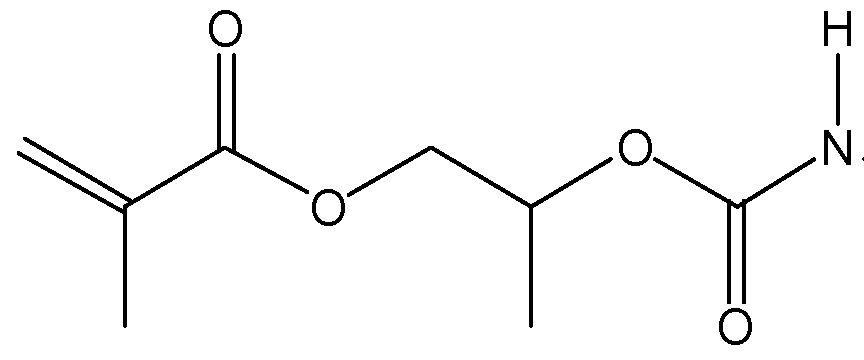
in which P a residue of the isocyanate.
Resin composition comprising (a) an urethane methacrylate resin prepared by reacting at least a hydroxyl functional methacrylate and an isocyanate in the presence of a reaction catalyst, wherein a secondary hydroxyalkyl methacrylate is used as methacrylate and the isocyanate is an aromatic and/or aliphatic di- and/or tri- isocyanate, and (b) a reactive diluent, wherein the resin composition further comprises (c) a tertiary aromatic amine and (d) a zirconium alkoxide and/or a zirconium carboxylate.
Resin composition according to claim 8, wherein the amount of zirconium alkoxide and zirconium carboxylate in the resin composition is from 1 to 5000 ppm (relative to the urethane methacrylate resin).
Resin composition according to claim 8 or 9, wherein the zirconium alkoxide is a zirconium (IV) alkoxide and the zirconium carboxylate is a zirconium (IV) carboxylate.
Resin composition according to anyone of claims 8-10, wherein the resin composition comprises a zirconium alkoxide.
Resin composition according to anyone of claims 8-11 , wherein the preparation of the urethane methacrylate resin is performed in the presence of the reaction product of a polyol and the isocyanate.
Resin composition according to anyone of claims 8-12, wherein 2- hydroxypropyl methacrylate is used as secondary hydroxyalkyl methacrylate.
Resin composition according to anyone of claims 8-13, wherein the resin composition comprises urethane methacrylate resin according to following formula (1)

Resin composition according to claim 14, wherein the urethane methacrylate resin is according to the following formula (2)

in which P a residue of the isocyanate.
16. Process for preparing a radically cured structural part, characterized in that the curing is performed by mixing a resin composition obtained by a method according to anyone of claims 1-7 or by mixing a resin composition according to anyone of claims 8-15 with a peranhydride.
17. Cured structural part obtained by mixing a resin composition obtained by a method according to anyone of claims 1-7 or a resin composition according to anyone of claims 8-15 with a peranhydride.
18. Use of the cured structural part of claim 17 in adhesive applications,
automotive, boats, chemical anchoring, roofing, construction, containers, relining, pipes, tanks, flooring or windmill blades.
Applications Claiming Priority (2)
| Application Number | Priority Date | Filing Date | Title |
|---|---|---|---|
| EP10194342.1 | 2010-12-09 | ||
| EP10194342 | 2010-12-09 |
Publications (2)
| Publication Number | Publication Date |
|---|---|
| WO2012076687A2 true WO2012076687A2 (en) | 2012-06-14 |
| WO2012076687A3 WO2012076687A3 (en) | 2013-06-27 |
Family
ID=43446364
Family Applications (2)
| Application Number | Title | Priority Date | Filing Date |
|---|---|---|---|
| PCT/EP2011/072307 Ceased WO2012076686A2 (en) | 2010-12-09 | 2011-12-09 | Method for preparing urethane methacrylate resin |
| PCT/EP2011/072308 Ceased WO2012076687A2 (en) | 2010-12-09 | 2011-12-09 | Method for preparing urethane methacrylate resin |
Family Applications Before (1)
| Application Number | Title | Priority Date | Filing Date |
|---|---|---|---|
| PCT/EP2011/072307 Ceased WO2012076686A2 (en) | 2010-12-09 | 2011-12-09 | Method for preparing urethane methacrylate resin |
Country Status (1)
| Country | Link |
|---|---|
| WO (2) | WO2012076686A2 (en) |
Cited By (1)
| Publication number | Priority date | Publication date | Assignee | Title |
|---|---|---|---|---|
| US20120168215A1 (en) * | 2009-09-02 | 2012-07-05 | Taiyo Holdings Co., Ltd | Curable resin composition |
Families Citing this family (6)
| Publication number | Priority date | Publication date | Assignee | Title |
|---|---|---|---|---|
| EP2604617A1 (en) * | 2011-12-12 | 2013-06-19 | Sika Technology AG | Iron(III) complexes as catalysts for polyurethane compositions |
| DE102012219477A1 (en) | 2012-10-24 | 2014-04-24 | Hilti Aktiengesellschaft | Process for the preparation of vinyl ester urethane resins based on dianhydrohexitol compounds and their use |
| EP2862847A1 (en) | 2013-10-21 | 2015-04-22 | HILTI Aktiengesellschaft | Method for the preparation of a resin composition on the basis of vinyl ester ethane resins, reaction-resin material containing the same and their use |
| JP2019510848A (en) | 2016-03-04 | 2019-04-18 | ダウ グローバル テクノロジーズ エルエルシー | Curable urethane acrylate composition |
| EP3428208A1 (en) | 2017-07-10 | 2019-01-16 | HILTI Aktiengesellschaft | Process for the preparation of a storage stable composition of a urethane resin containing tempol |
| TWI841164B (en) * | 2022-12-30 | 2024-05-01 | 上緯創新育成股份有限公司 | Method for degrading polyurethane acrylic resin material |
Citations (2)
| Publication number | Priority date | Publication date | Assignee | Title |
|---|---|---|---|---|
| GB2217722A (en) | 1988-04-29 | 1989-11-01 | Scott Bader Co | Vinyl terminated urethane containing resins |
| WO2003074579A1 (en) | 2002-03-04 | 2003-09-12 | Dsm N.V. | Curable liquid resin composition |
-
2011
- 2011-12-09 WO PCT/EP2011/072307 patent/WO2012076686A2/en not_active Ceased
- 2011-12-09 WO PCT/EP2011/072308 patent/WO2012076687A2/en not_active Ceased
Patent Citations (2)
| Publication number | Priority date | Publication date | Assignee | Title |
|---|---|---|---|---|
| GB2217722A (en) | 1988-04-29 | 1989-11-01 | Scott Bader Co | Vinyl terminated urethane containing resins |
| WO2003074579A1 (en) | 2002-03-04 | 2003-09-12 | Dsm N.V. | Curable liquid resin composition |
Cited By (1)
| Publication number | Priority date | Publication date | Assignee | Title |
|---|---|---|---|---|
| US20120168215A1 (en) * | 2009-09-02 | 2012-07-05 | Taiyo Holdings Co., Ltd | Curable resin composition |
Also Published As
| Publication number | Publication date |
|---|---|
| WO2012076686A2 (en) | 2012-06-14 |
| WO2012076686A3 (en) | 2013-06-27 |
| WO2012076687A3 (en) | 2013-06-27 |
Similar Documents
| Publication | Publication Date | Title |
|---|---|---|
| WO2012076687A2 (en) | Method for preparing urethane methacrylate resin | |
| EP2411470B1 (en) | Vinyl ester resin composition | |
| US8790762B2 (en) | Unsaturated polyester resin | |
| EP2097369B1 (en) | Resin composition suitable for (re)lining of tubes, tanks and vessels | |
| US11447597B2 (en) | Toughened urethane acrylate compositions | |
| WO2017151782A1 (en) | Styrene-free reactive diluents for urethane acrylate resin compositions | |
| EP2534185B1 (en) | Multicomponent resin system | |
| US9181129B2 (en) | Resin suitable for construction purposes comprising norbornene functional groups and thiols | |
| EP2714762B1 (en) | Resin composition | |
| US20200172655A1 (en) | Synergistic inhibitor combination for increased shelf life of urethane acrylate compositions | |
| AU2003256632B2 (en) | Urethane acrylate gel coat resin and method of making | |
| EP2691426B1 (en) | Process for radically curing a composition | |
| EP2203509B1 (en) | Unsaturated polyester resin compositions | |
| EP2691427B1 (en) | Process for radically curing a composition | |
| WO2013083632A1 (en) | Multi-component system | |
| WO2012130963A1 (en) | Unsaturated polyester resin composition | |
| US20230088879A1 (en) | Unsaturated Polyester Resin Compositions and Methods for Preparation Thereof | |
| EP3423506B1 (en) | Styrene-free reactive diluents for urethane acrylate resin compositions | |
| CA2881480A1 (en) | Process for curing thermoset resins | |
| EP2743313A1 (en) | Thermosetting resin composition |
Legal Events
| Date | Code | Title | Description |
|---|---|---|---|
| 121 | Ep: the epo has been informed by wipo that ep was designated in this application |
Ref document number: 11794723 Country of ref document: EP Kind code of ref document: A2 |
|
| 122 | Ep: pct app. not ent. europ. phase |
Ref document number: 11794723 Country of ref document: EP Kind code of ref document: A2 |